Gloucester, Mass. Great teacher at Gloucester High School, Shaun Goulart, creates a local history scavenger hunt trivia game for his 9th grade students that takes place weekly for 6 weeks. We’re taking the challenge paced one week after the students.
ANSWERS TO SHAUN GOULART’S LOCAL HISTORY TRIVIA WEEK FOUR
How did you do? Week two delved into Gloucester’s famous inventors. Stop here if you prefer to go back to see Week 4 questions only
Mr. Goulart’s Local History Trivia Scavenger Hunt Week 4 Inventors
1.John Hays Hammond Jr. “Jack”
Go to the location of his home and take a picture with a member in it.
What did he invent?
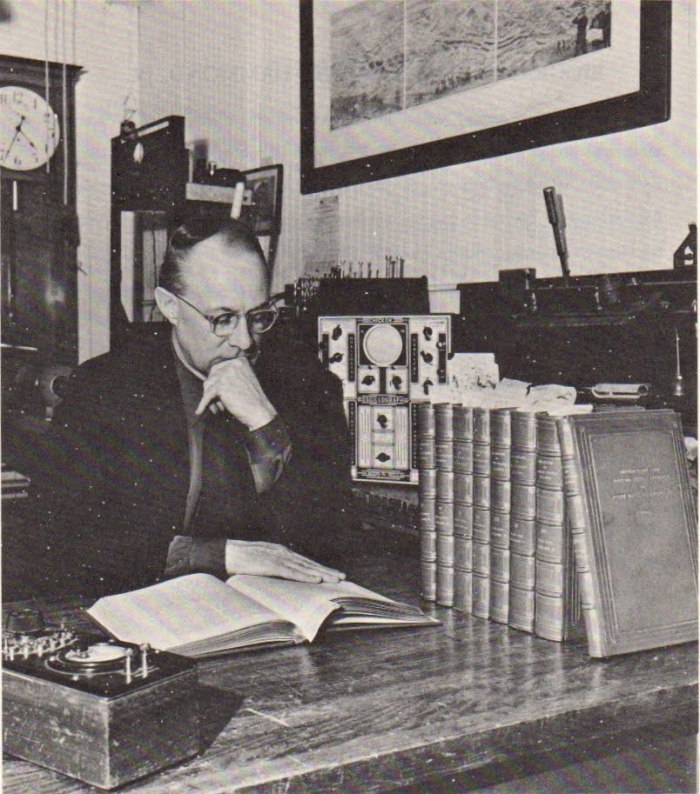
Answer: “Over the course of his professional career, he was awarded over 800 foreign and domestic patents resulting from over 400 of his inventions. Many of these began in radio control before extending to electronics, naval weapons, national defense, as well as various consumer products.” – Hammond Castle
“In connection with his radio researches Jack obtained most important patents for receiving and broadcasting and these he sold to RCA…” John Hays Hammond, Sr
Hammond Castle – I hope that one day the Trustees and Historic New England add this as a shared property among their preservation jewels, along with the Natalie Hammond property and much of the parents’ estate, Lookout Hill, with some portion of admission for the City. At one point Hammond Castle was one of the top attractions in Massachusetts.
2.Clarence Birdseye
Go to the location where his company was and take a picture with a member in it.
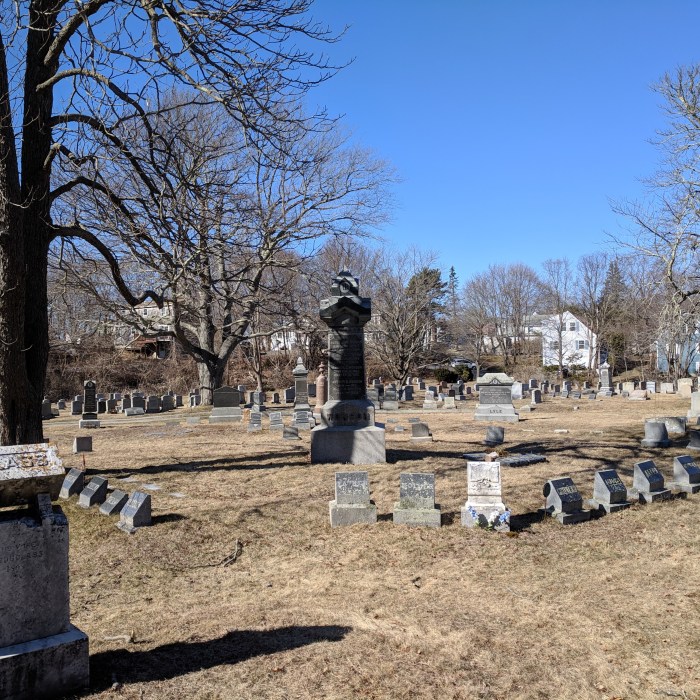
Go to the location of his grave and take a picture with a member in it.
Answer: Mt. Pleasant cemetery
What did he invent?
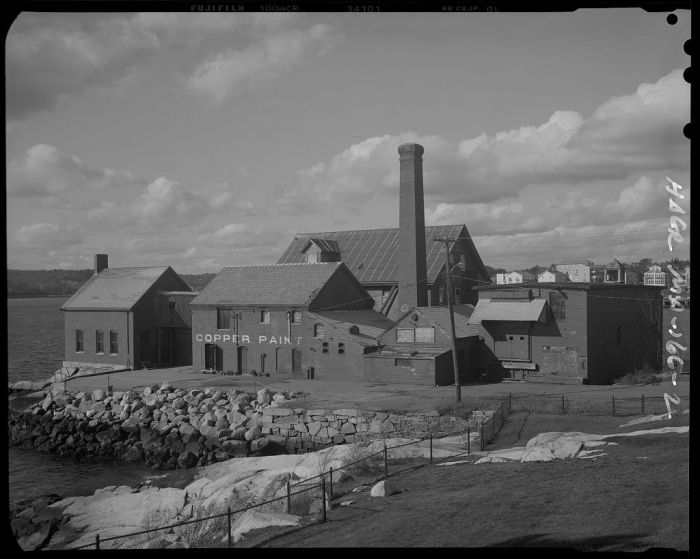
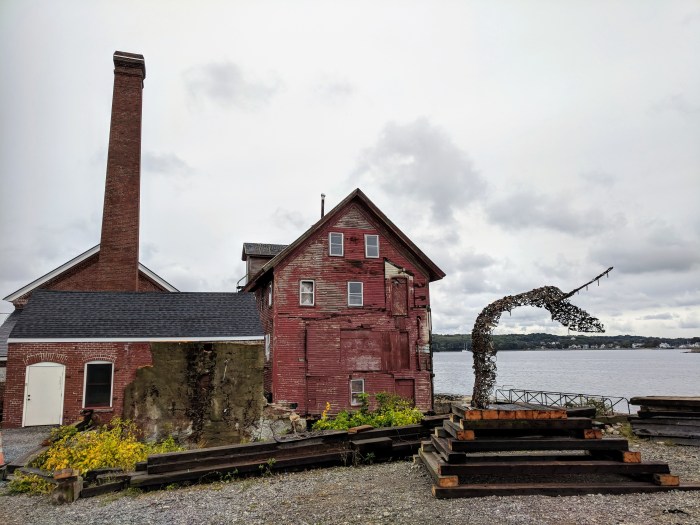
Answer: Augustus S Wonson invented antifouling copper paint to protect boats. Tarr & Wonson’s was established in 1863. The former factory and harbor icon is now Ocean Alliance.
Over six weeks I’m posting local history trivia questions from Shaun Goulart’s creative weekly scavenger project for his 9th grade history class at Gloucester High School– except we’ll be one week behind the students’ pace. He explains that the “questions are multi-layered and usually have an image required in the submission. All questions will deal with Gloucester’s local history. I recommended to the students to utilize friends and family so your student may be reaching out to you for help. It is a competition and the prizes will be calculated into the Term 4 grade” for the students.
Mr. Goulart’s Local History Trivia Scavenger Hunt Week 4 Inventors
1.John Hays Hammond Jr.
Go to the location of his home and take a picture with a member in it.
What did he invent?
2.Clarence Birdseye
Go to the location where his company was and take a picture with a member in it.
What did he invent?
3.Augustus H. Wonson
Go to the location of his grave and take a picture with a member in it.
What did he invent?
4.William Nelson Le Page
Go to the location where his company was after it moved from Rockport and take a picture with a member in it.
What did he invent?
Go to the location of Le Page’s company co-founder Ruben Brooks’ manor and take a picture with a member in it.
Gloucester, Mass.- Great teacher at Gloucester High School, Shaun Goulart, creates a local history scavenger hunt trivia game for his 9th grade students that takes place weekly for 6 weeks. We’re taking the challenge one week after the students. Good luck!
ANSWERS TO SHAUN GOULART’S LOCAL HISTORY TRIVIA WEEK THREE
How did you do? Week three was all about some famous Gloucester FIRSTS and there were many locations. Stop here if you prefer to go back to see Week 3 questions only.
1)The location of Gloucester’s first “Four Year High School”
Principal Albert Bacheler CENTRAL GRAMMAR
2)The location of Gloucester’s first Brick Building?
PURITAN HOUSE built in 1810by Col. James Tappan* is a historic house at 3 Washington Street and 2 Main Street. Also known as: Tappan’s Hotel, Gloucester Hotel (“Tappan’s Folly”), Atlantic House, Mason House, Community House, Capt Bills (1960s-70s), Puritan House & Pub (1977), Blackburn Tavern (1978-00s) *Tappan was taught by Daniel Webster
Excerpt from prior GMG post (read it here) about scenic tours by bike 1885: “And now let’s take our wheel for a short run along our harbor road to East Gloucester, and note the many points of interest on the way. The start is made at the Gloucester Hotel–the headquarters of all visiting wheelmen in the city–at the corner of Main and Washington streets; from thence the journey takes us over the rather uneven surface of Main street, going directly toward the east. In a few minutes we pass the Post Office on the left, and soon leave the noisy business portion of the street behind us, then, e’re we are aware of it, we reach and quickly climb the slight eminence known as Union Hill…” This brick building at Main and Washington now features Tonno Restaurant. Notice the chimneys and same stairs as when it was the Gloucester Hotel. The Blackburn Tavern sign was just marketing; this building has no connection. Blackburn’s Tavern is now Halibut Point restaurant at the other end of Main Street.
3)The first schoolmaster and town clerk’s house. (private property do not trespass)
“RIGG’S HOUSE” 27 Vine Street (Annisquam) Thomas Riggs House purchased in 1661
oldest house on Cape Ann, Gloucester, MA
4)A list of the first recorded Gloucester fishermen lost at sea. (Hint: 1716)
Look under the year on cenotaph surrounding Man At Wheel
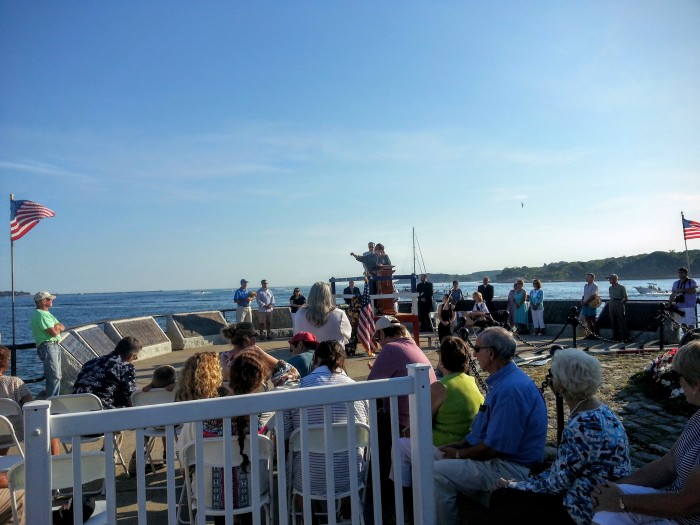
Mayor Romeo Theken, annual Fisherman’s Memorial Service, 2016
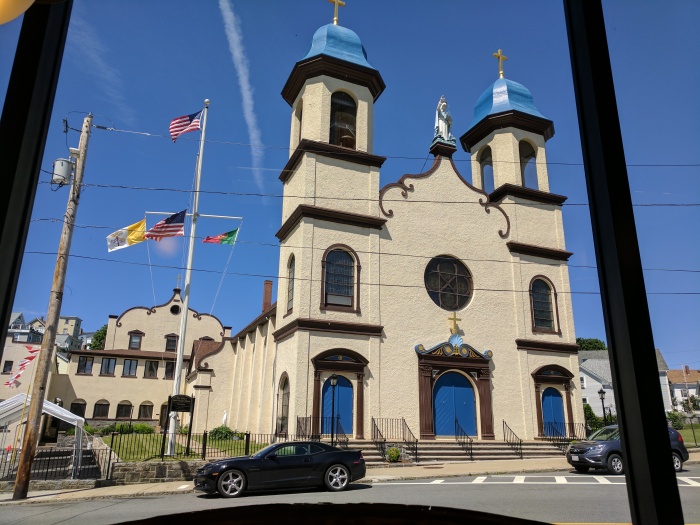
5)The location of the first carillon built in America.
Gloucester, Mass.- Great teacher at Gloucester High School, Shaun Goulart, creates a local history scavenger hunt trivia game for his 9th grade students that takes place weekly for 6 weeks. We’re taking the challenge one week after the students. Good luck!
ANSWERS TO SHAUN GOULART’S LOCAL HISTORY TRIVIA WEEK TWO
How did you do? Week two delved into scenes of historic battles. I’ve added some background. Stop here if you prefer to go back to see Week 2 questions only from 3/17/19
WEEK 2: DEFENDING GLOUCESTER Location #1
Who was the first governor of Massachusetts Bay Colony? ANSWER – ROGER CONANT
Go to the location of the fort named after him and take a picture with a member in it. *Stage Fort Park “Fisherman’s Field”
Bronze tribute plaques embedded in Tablet Rock at Stage Fort Park detail the site’s history and were commissioned and unveiled at different times. The monumental and stunning Founders plaque from 1907 on Tablet Rock itself is in fantastic condition. Two DAR plaques were inlaid on the glacial outcroppings past half moon beach on the way to the cannons. The Fisherman’s Field (ca.1930) is so worn it’s nearly indecipherable, though that’s part of its charm. The plaque compels close inspection, lingering and discovery. It’s a fun family activity for anyone who likes a challenge. For those who want help reading the content, I transcribed it back in 2010. Scroll down below the “read more” break in this post to open.
Stage Fort Fisherman’s Field plaque honoring all actions. My attribution is Harriet Hyatt_plaque refers to restoration of area 1930 by DAR
Revolutionary War tribute commissioned by DAR and installed 2013
During which war did it receive this name? ANSWER – FORT CONANT during the Civil War
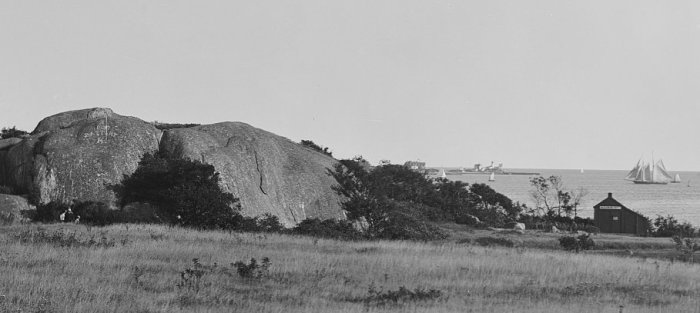
When you zoom in on this 1901 photograph, you can see the big ‘Battery K’- for the Spanish American War (Camp Hobson) Fort conant during Civil War
Scrutiny
1901 before the Tablet
Gloucester vs Plymouth / Captain John Hewes vs Miles Standish
DAR plaques marvelous glacial outcroppings Stage Fort Park
Founders Plaque
Gloucester HarborWalk #32
Location #2
location 2 courtesy photos
Take a picture at Fort Point with the former location of the Coast Guard Aviation Station behind you (must be visible in the picture) ANSWER – TEN POUND ISLAND
What was the fort called on Fort Point? ANSWER – FORT DEFIANCE Fort Point Hill, Fort Lillie (Lily)
Name a war it was utilized in. ANSWER – Efforts to fortify as early as 1703 (see Pringle) ATTACK OF CAPTAIN LINDSAY (OR LINZEE) 1775 –population about 5000 –REVOLUTIONARY WAR, WAR OF 1812, CIVIL WAR
“In 1743, what is known as the old fort on Commercial Street, now encroached upon and surrounded by buildings, was completed. On this point, well selected strategically, is a hill which effectually commands the inner harbor. In 1742 and 1742, the General Court appropriated 527 pounds to defray the cost of fortification. Breastworks were thrown up and eight 12-pounders placed in position in the fort. The immediate cause of its erection was the fear of French incursions, but these fears were never realized. An effort had been made as early as 1703 to fortify the place, but the petition of the selectmen to the General Court for an appropriation for the purpose was refused. The petition shows that he harbor, even at that early date was extensively frequent for shelter, and was “very seldom free from vessels.”
“In order to be better prepared for future assaults breastworks were thrown up at Stage Fort, the Cut, Duncan’s Point and Fort Point. This, however was the last attack by sea or land that the people experienced.”
Location #3
From Fort Point go to the location of the seven-gun earthwork battery and barracks in ramparts field. Take a picture with the old towers in the background (do not go on private property) ANSWER – EASTERN POINT FORT by eminent domain, Ramparts Field Road Fort Hill
Name a war it was utilized in ANSWER – CIVIL WAR
“Immediate action was taken toward the erection of fortifications. Land at Eastern Point, belonging to Thomas Niles was acquired by the government, and earthwork fort erected and manned…”
Screenshot
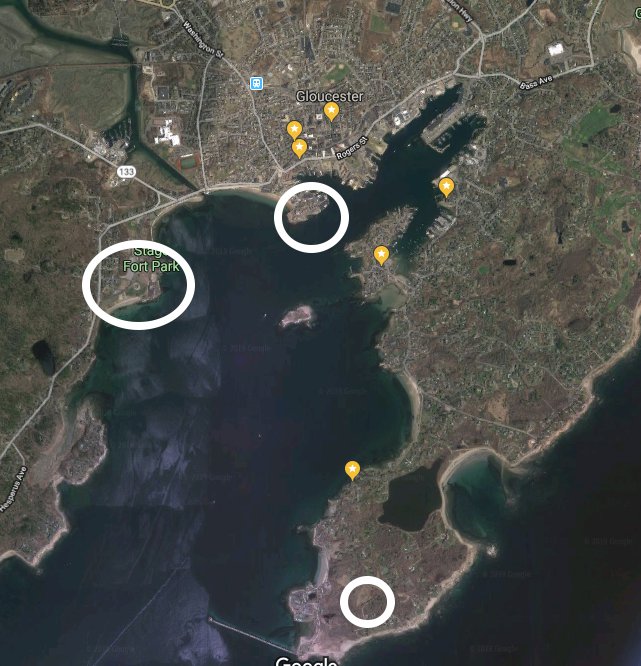
Screenshot Google Earth with all three above locations in it and circle them. Submit the image.
Over six weeks I’m posting local history trivia questions from Shaun Goulart’s creative weekly scavenger project for his 9th grade history class at Gloucester High School– except we’ll be one week behind the students’ pace. He explains that the “questions are multi-layered and usually have an image required in the submission. All questions will deal with Gloucester’s local history. I recommended to the students to utilize friends and family so your student may be reaching out to you for help. It is a competition and the prizes will be calculated into the Term 4 grade” for the students.
Mr. Goulart’s LOCAL HISTORY TRIVIA WEEK TWO
WEEK 2 of 6: DEFENDING GLOUCESTER
Location #1
Who was the first governor of Massachusetts Bay Colony?
Go to the location of the fort named after him and take a picture with a member in it.
During which war did it receive this name?
Location #2
Take a picture at Fort Point with the former location of the Coast Guard Aviation Station behind you (must be visible in the picture)
What was the fort called on Fort Point?
Name a war it was utilized in.
Location #3
From Fort Point go to the location of the seven-gun earthwork battery and barracks in ramparts field. Take a picture with the old towers in the background (do not go on private property)
Name a war it was utilized in?
Screenshot
Screenshot Google Earth with all three above locations in it and circle them. Submit the image.
Gloucester, Mass.- Great teacher at Gloucester High School, Shaun Goulart, creates a local history scavenger hunt trivia game for his 9th grade students that takes place weekly for 6 weeks. We’re taking the challenge one week after the students. Good luck!
ANSWERS TO SHAUN GOULART’S LOCAL HISTORY TRIVIA WEEK ONE
How did you do? Week one delved into the history of Cape Pond Ice. More than one player “had to call a friend”, Scott Memhard, owner of Cape Pond Ice and City Councilor. He kindly shared supplemental archival material included in this post. Stop here if you prefer to go back to see questions only from 3/10/19 Week One trivia questions
Continue to scroll for the answers.
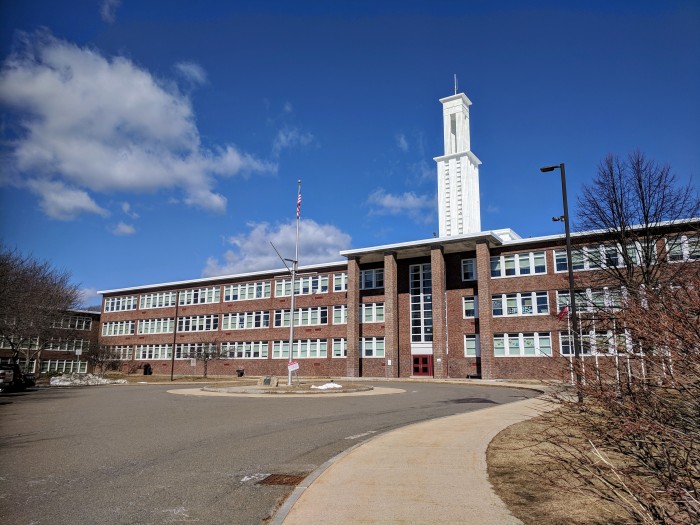
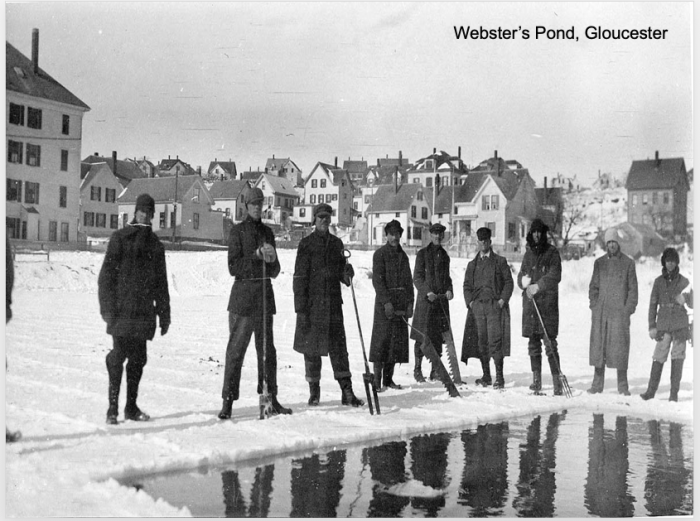
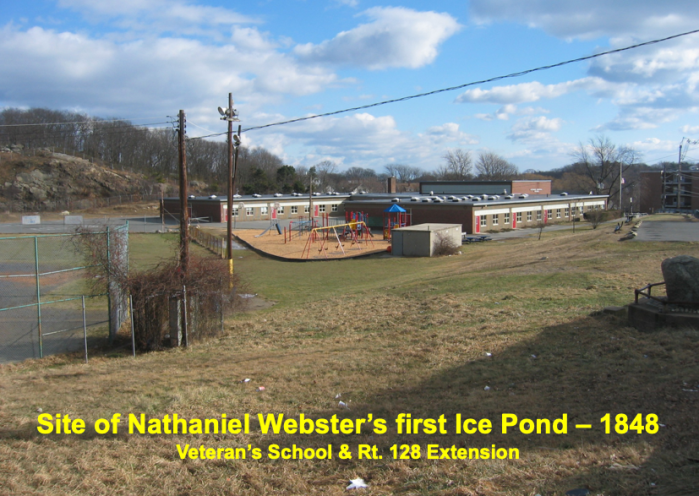
1)In 1848 a blacksmith named Nathaniel R. Webster started a company by damming a local brook. What did the brook become known as? ANSWER. VETERANS ELEMENTARY SCHOOL CAMPUS
2)What did Webster’s company become known as? ANSWER. CAPE POND ICE
3)Take a picture at the present day location of the company
4)Take a picture of the street named after him with a member in it. ANSWER. WEBSTER STREET
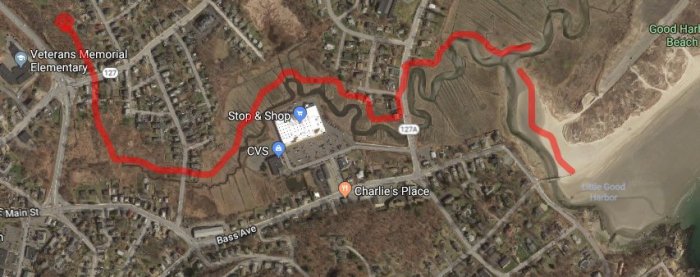
5)What is in place of the brook today? MATTOS FIELD- ABOVE = FRAT CLUB AND BELOW EVENTUALLY LEADS INTO LITTLE RIVER AT GOOD HARBOR BEACH
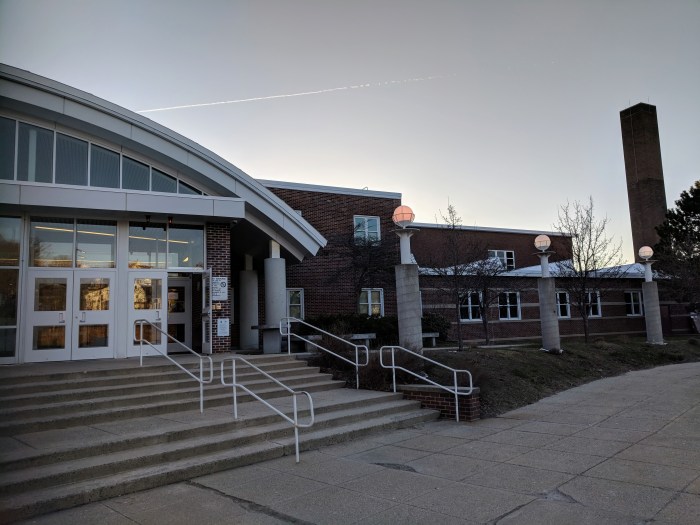
6)Take a picture at the location of the old dam with a member in front. ANSWER. THE SCHOOL
PART II
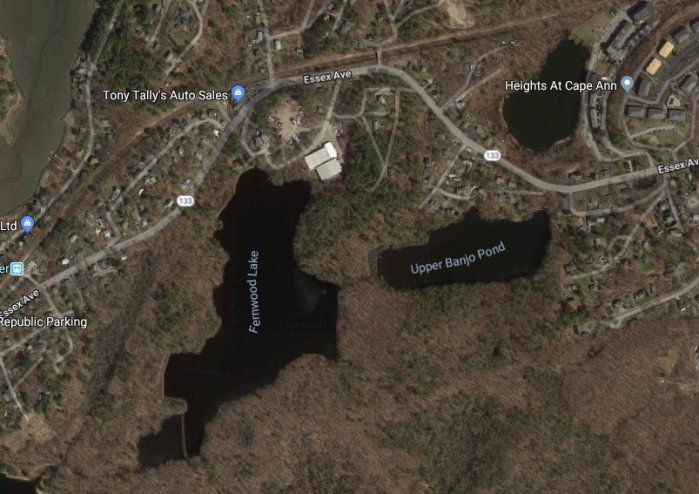
7)A competitor to Webster named Francis W. Homans in 1876 created a 32 acre man-made lake. What is the lake known as? ANSWER. FERNWOOD LAKE
8)Submit a screenshot of a map of the lake (Google Maps or Google Earth)
9)What year did the two companies merge? ANSWER. 1908
Courtesy photos below from Scott Memhard, Cape Pond Ice, Cape Ann Museum
Courtesy photo from David Collins-
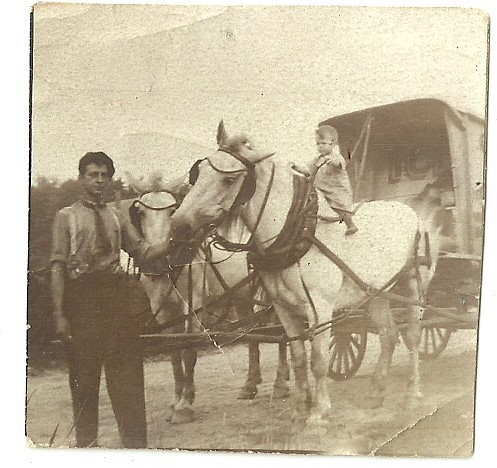
“My grandfather, Millard Collins, Sr., worked for one of the ice houses for a while. He died in 1918 at age 29 in the Spanish Flu pandemic. At that time he was working for LePages’s and had taken a leave of absence to care for his brother, Jacob, who had contracted the flu first. Jacob died October 17, 1918, and my grandfather died October 28, 1918…”
“I’m enclosing a picture of my grandfather and his horse-drawn ice wagon. You can see the word “ICE” faintly written on the inside back of the wagon. The youngster atop the horse is my father, who was born in July,1912, so I date the picture to about 1913 or so.”
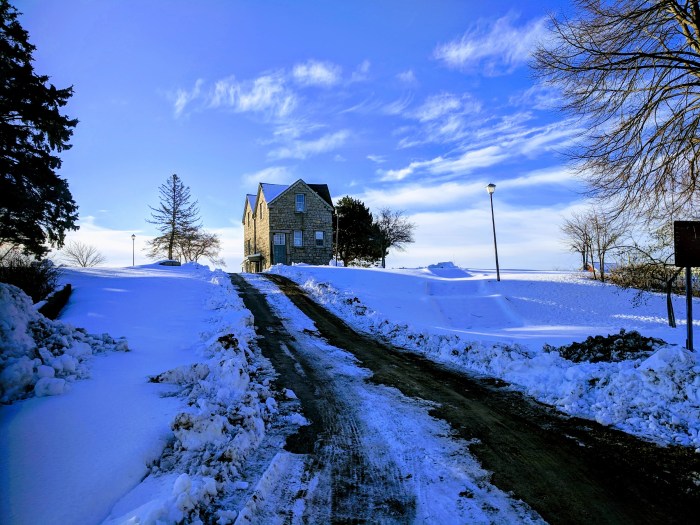
The stone jug was the historic studio and home of the artist Fitz Henry Lane (1804-1865) located on Harbor Loop in downtown Gloucester, Massachusetts. The city owns the building. Schooner Adventure, one of the city’s national historic landmarks, and fabulous Sail GHS work from here. Both are willing to share limited space with a cultural residency. I hope one day the Lane house may be recreated as an historic artist home and studio celebrating the artist and Gloucester and as such serve as a mini welcome center. Part of the maintenance and operating costs and helping the two organizations on site might be off set by integrating the Lane use back in some capacity. The Winslow Homer property in Portland has done well and is open for guided tours on specific days and times. It does not have staff on site.
Fitz Henry Lane home March 7, 2019 snow
Spread The GMG Love By Sharing With These Buttons:
Knowing how much Gloucester fans enjoy history and hearing when it’s integrated into the school curriculum, I thought GMG readers would like to know about a Local History Trivia game 2019 by Gloucester High School teacher, Shaun Goulart, AND to give it a go!
And who doesn’t like a great teacher story?
For the next six weeks I’ll post local history trivia questions from Shaun Goulart’s creative weekly scavenger hunt project for his 9th grade history class at Gloucester High School– except we’ll be one week behind the students’ pace. He explains that the “questions are multi-layered and usually have an image required in the submission. All questions will deal with Gloucester’s local history. I recommended to the students to utilize friends and family so your student may be reaching out to you for help. It is a competition and the prizes will be calculated into the Term 4 grade” for the students. No thoughts about what the prize could be for this tandem run.
I’ll post the quiz just after the students’ weekly deadline, and post the answers the following Wednesday. Leave your answers in the comments below( or email) — first all correct submission will earn top points.
The GMG point structure for Shaun Goulart’s local history trivia hunt 2019 will be as follows:
First submission correct on first day, Sunday = 5 points
Submitted Correctly first day, Sunday = 4 points
Submitted Correctly second day, Monday = 3 points
Submitted Correctly third day, Tuesday = 2 points
Submitted Correctly Wednesday = 1 point
LOCAL HISTORY TRIVIA WEEK ONE
1)In 1848 a blacksmith named Nathaniel R. Webster started a company by damming a local brook. What did the brook become known as?
2)What did Webster’s company become known as?
3)Take a picture at the present day location of the company (selfie or with a member in it)
4)Take a picture of the street named after him with a member in it.
5)What is in place of the brook today?
6)Take a picture at the location of the old dam with a member in front.
PART II
7)A competitor to Webster named Francis W. Homans in 1876 created a 32 acre man-made lake. What is the lake known as?
8)Submit a screenshot of a map of the lake (Google Maps or Google Earth)
9)What year did the two companies merge?
*We’ll see how the photo part plays out. Maybe there’s a bonus for great photos 🙂
What fun from teacher Shaun Goulart! The answers could be anywhere out there
Spread The GMG Love By Sharing With These Buttons:
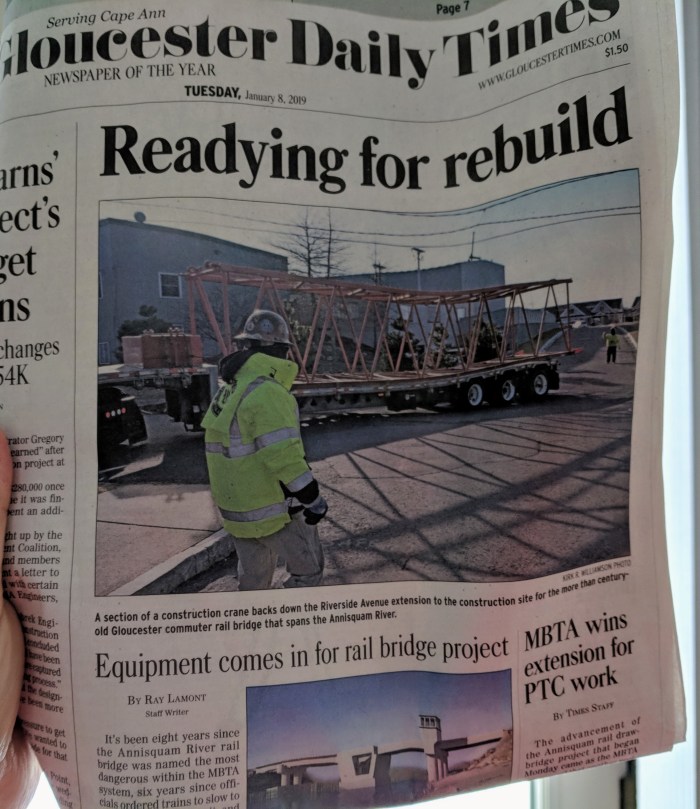
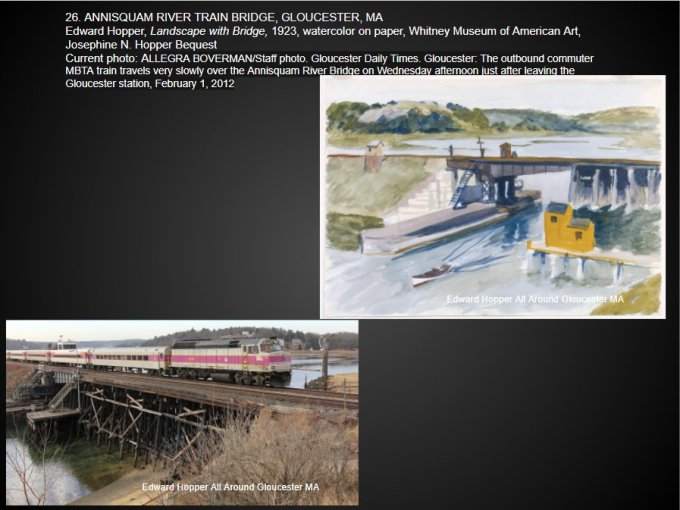
I don’t suggest that the treacherous bridge needs to be “preserved” or want to impede progress. However, I believe there is still time to repeat my pleas (since 2012). Great design impacts future investment. Is there a small way that the design can tip its hat to Edward Hopper, Gloucester, and New England for this landmark and beacon for Cape Ann, this cherished vista across the Great Marsh?
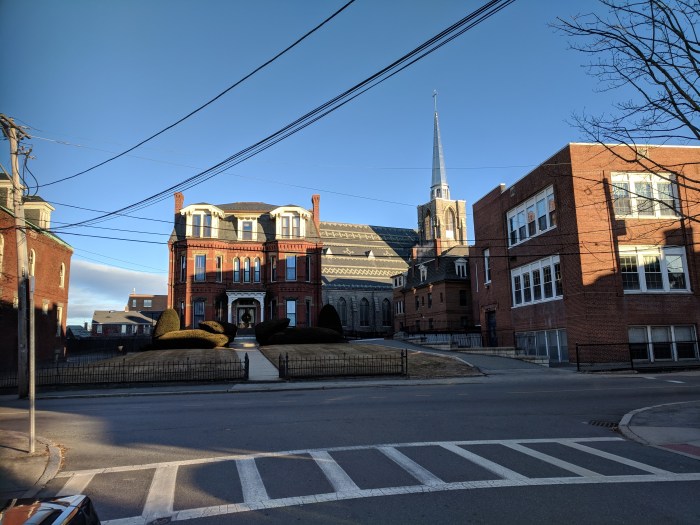
COMMONWEALTH OF MASSACHUSETTS SUPERIOR COURT DEPARTMENT OF THE TRIAL COURT SUFFOLK, SS. Case No. 1884CV03213C Roman Catholic Archbishop of Boston VS. Maura Healey, as she is the Attorney General of the Commonwealth of Massachusetts, and Free City Library Association TO: Free City Library Association You are hereby notified that a complaint has been filed against you by the above named plaintiff. This complaint concerns a certain parcel of land with building(s) known as 58 Prospect Street, located in Gloucester, Essex County, and said Commonwealth. Plaintiff seeks a judgment declaring that it owns said property through adverse possession, extinguishing any rights that you may have had to said property through the deed from
Jeremiah J. HealytoFree City Library Association dated April 24, 1900
and recorded with the Southern Essex District Registry of Deeds in Book 1607, Page 259, or for such further relief as the Court deems just and appropriate. This complaint may be examined at the Superior Court for Suffolk County, Boston, Massachusetts or a copy obtained from plaintiff’s attorney. If you intend to make any defense, you are hereby required to serve upon the plaintiff’s attorney, Kimberly Kroha, Esq., Baker, Braverman & Barbadoro, P.C. whose address is 300 Crown Colony Drive, Suite 500, Quincy, MA 02169-0904 a responsive pleading to the complaint on or before the 31st day of January, 2019, the return day, hereof, and a copy thereof must be filed in the Suffolk Superior Court on or before said day. If you fail to do so, judgment by default will be taken against you for the relief demanded in the complaint. Unless otherwise provided by Rule 13(a), your answer must state as a counterclaim any claim which you may have against the plaintiff which arise out of the transaction or occurrence that is the subject matter of the plaintiff’s claim or you will thereafter be barred from making such claim in any other action. GT – 12,28, 1/4, 1/11/19
Spread The GMG Love By Sharing With These Buttons:
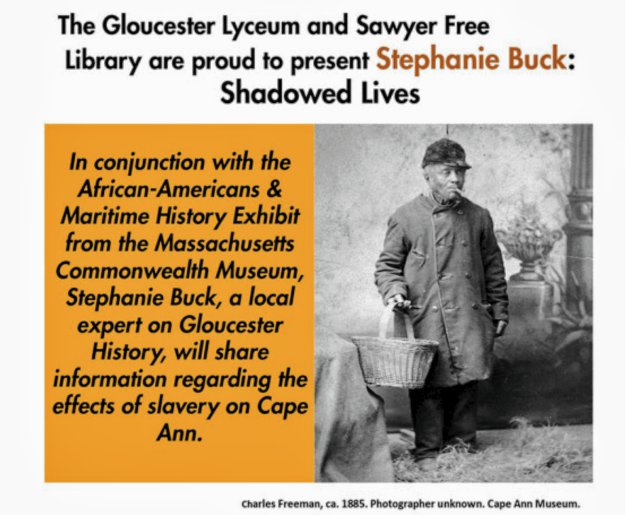
In conjunction with the African-Americans and Maritime History Exhibit from the Massachusetts Commonwealth Museum, From Slavery to Freedom, on view in the Matz Gallery, Stephanie Buck, a local expert on Gloucester History, will share information regarding the effects of slavery on Cape Ann.
Spread The GMG Love By Sharing With These Buttons:
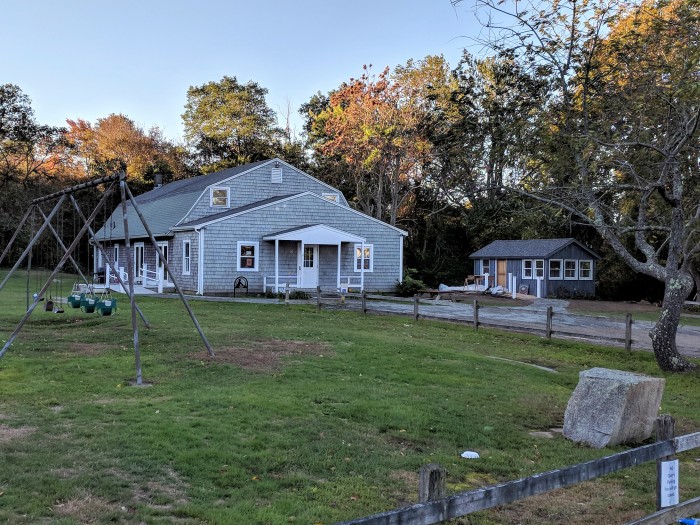
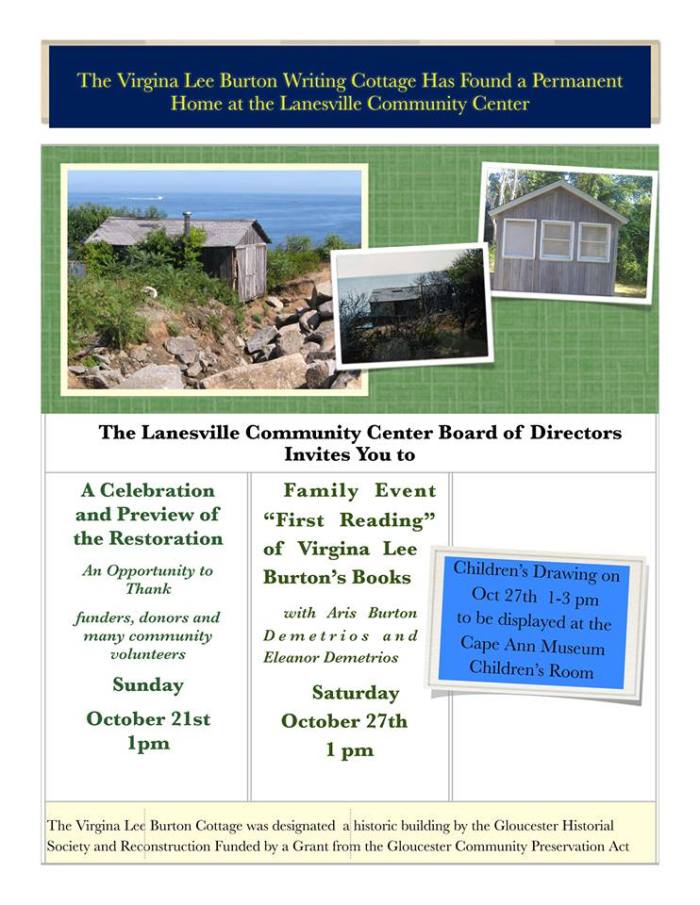
Don’t you love happy news! Virginia Lee Burton’s actual studio was saved and painstakingly and faithfully rebuilt and relocated to its new permanent home at Lanesville Community Center, Gloucester, Ma, with the help of many. “The rebuilding process of the Virginia Lee Burton (VLB) writing cottage has started with the much-needed help of volunteers, a Community Preservation Act (CPA) grant from the City of Gloucester, private donations and corporate donations from Dore and Whittier of Newburyport, MA, DMS Machine and Fabrication of Barre, VT and the Gloucester Building Center.”
Mark your calendars for upcoming events beginning this weekend!
The Lanesville Community Center Board of Directors invites you to
“A Celebration and Preview of the Restoration of the Virginia Lee Burton Writing Cottage: An opportunity to thank funders, donors and many community volunteers, Sunday, October 21, 1pm
Family Event: “First Reading” of Virginia Lee Burton’s books with Avis Burton Demetrios and Eleanor Demetrios, Saturday, October 27, 1pm
Children’s Drawing on October 27, 1-3pm to be displayed at the Cape Ann Museum children’s room
The Virginia Lee Burton Cottage was designated a historic building by the Gloucester Historical Society. Reconstruction was funded by a grant from the Gloucester Community Preservation Act.”
Learn more and enjoy before and after photographs by visiting the VLB writing cottage website. Don’t miss the 2018 interview with Lee Natti
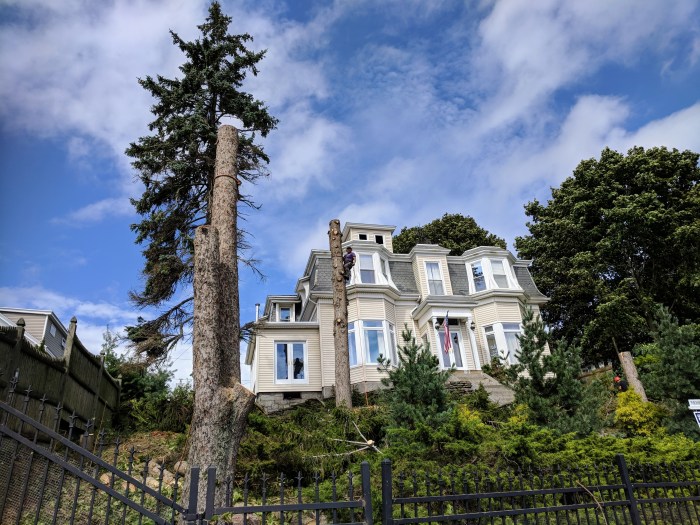
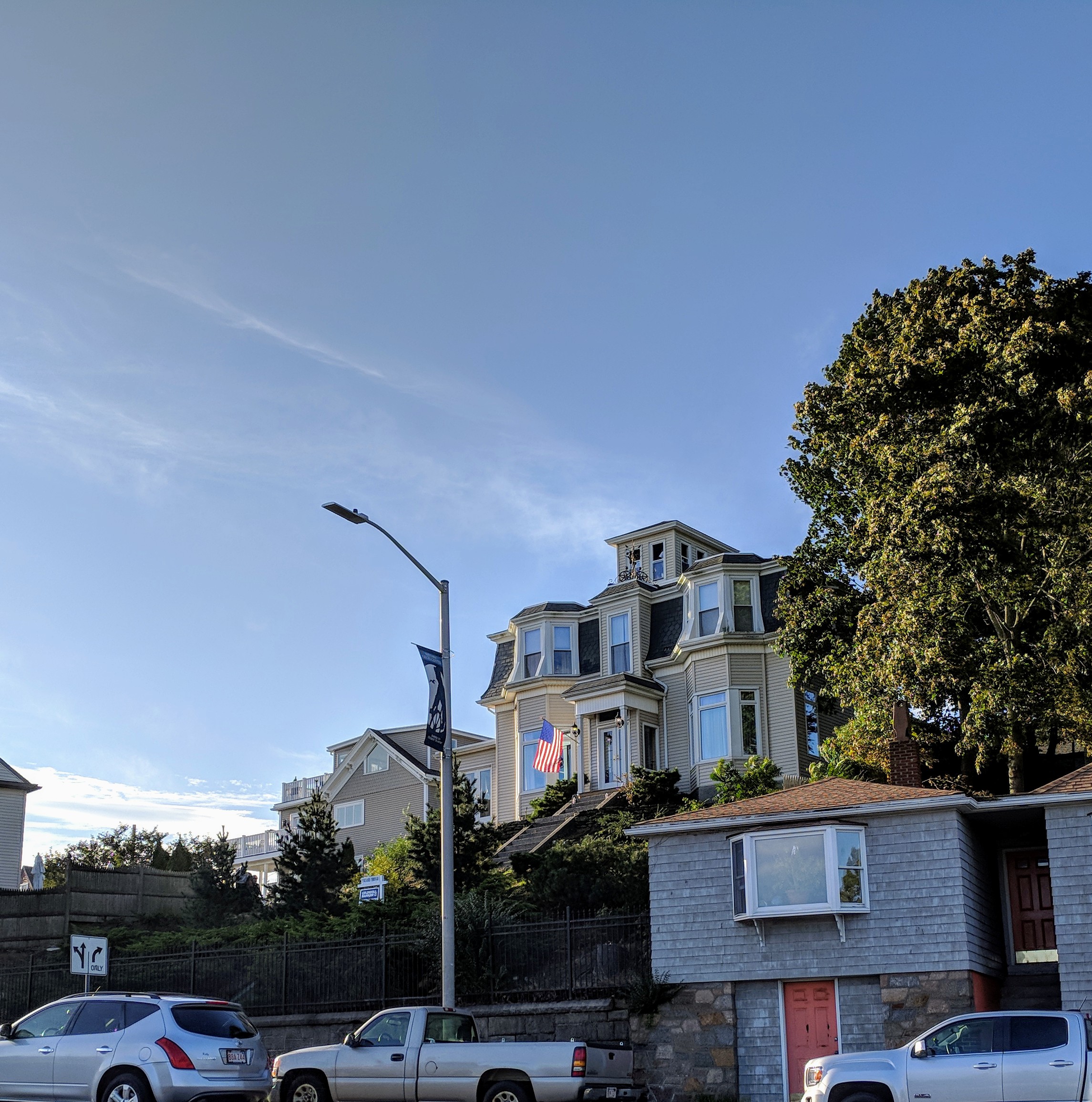
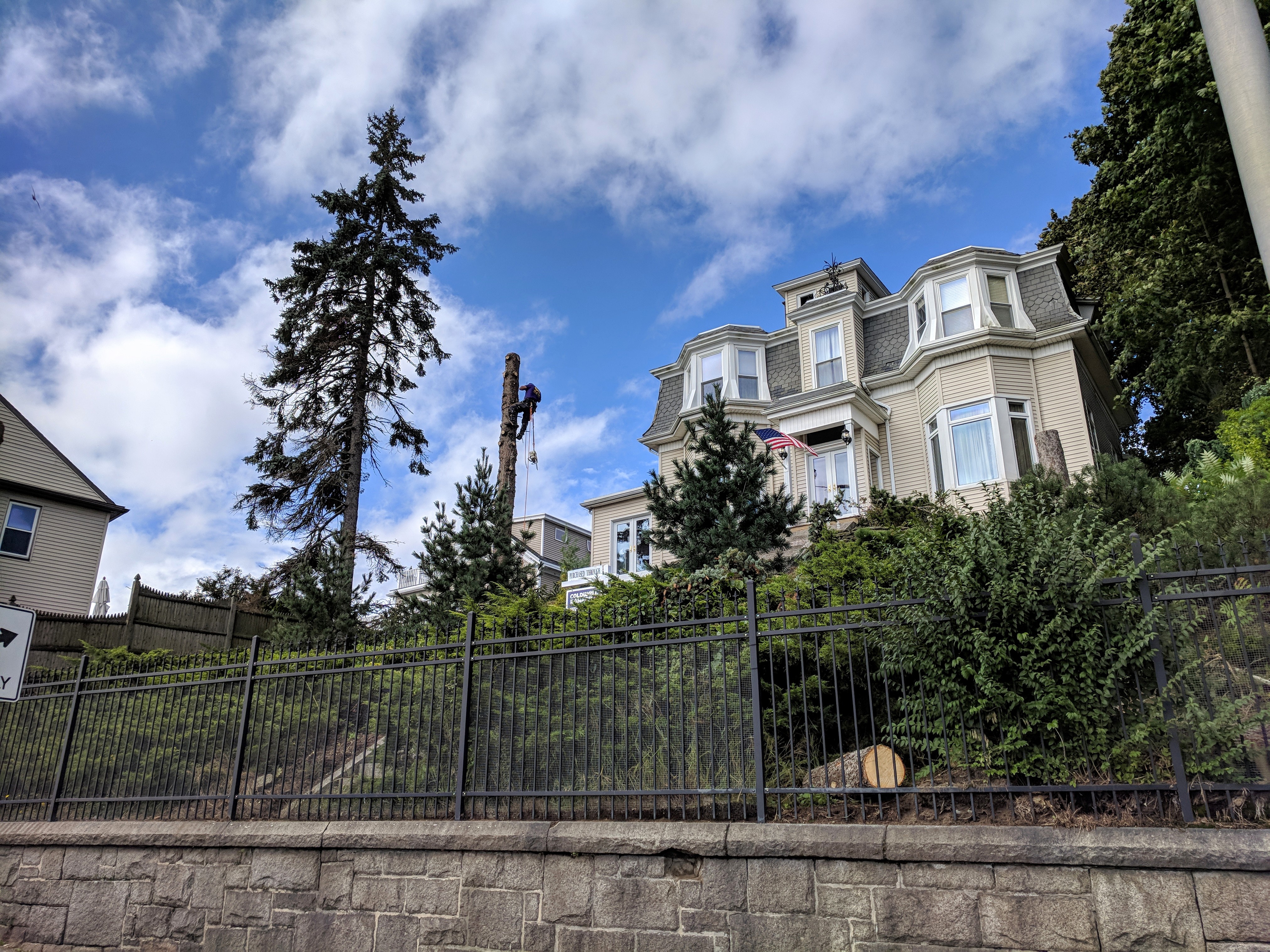
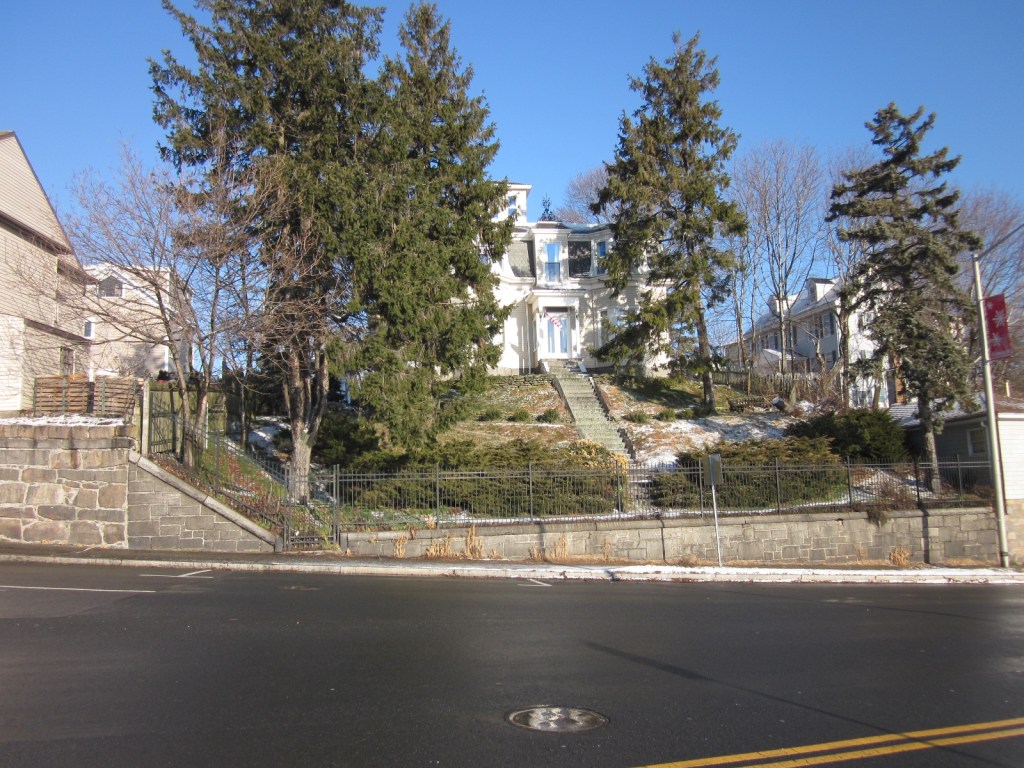
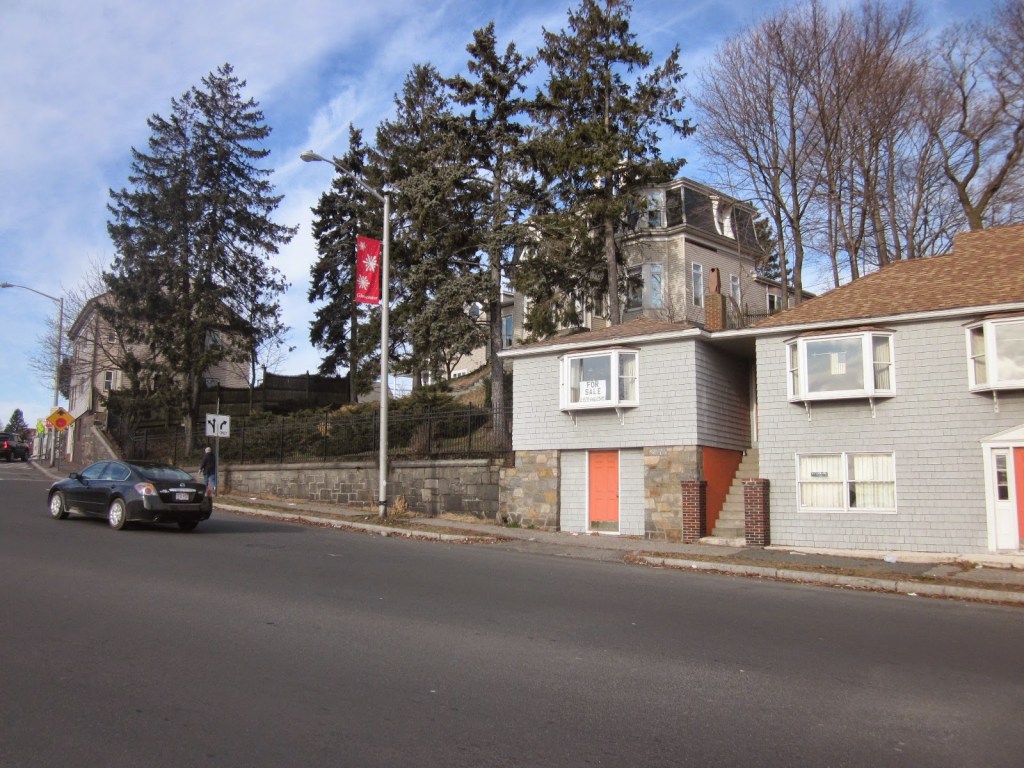
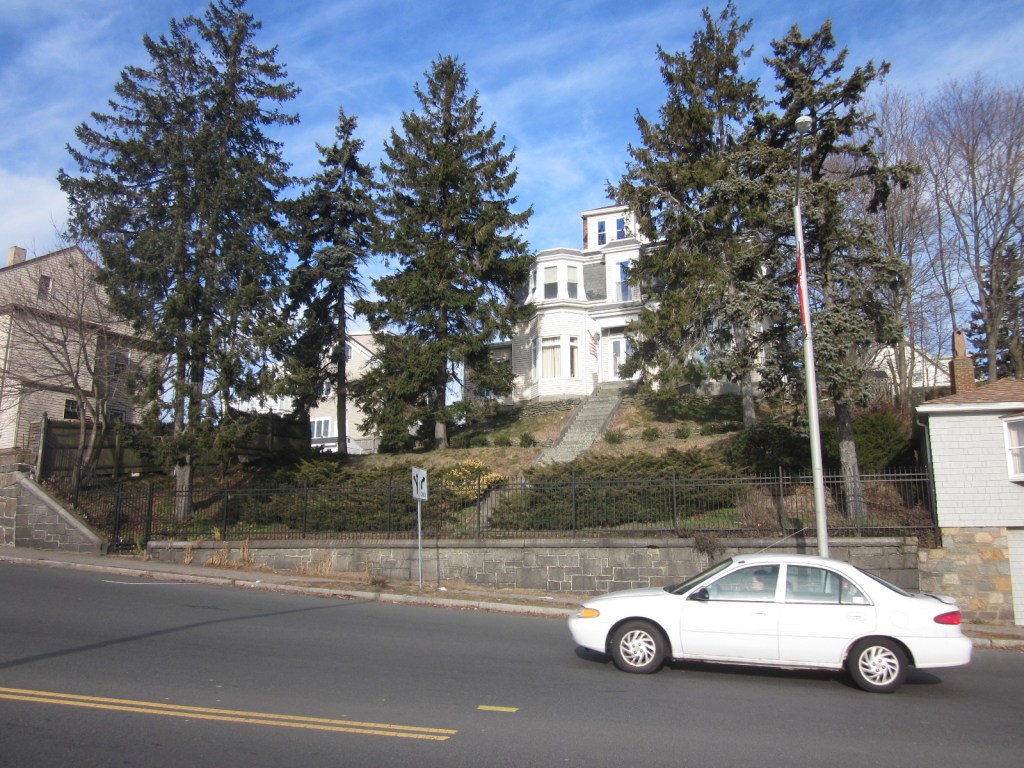
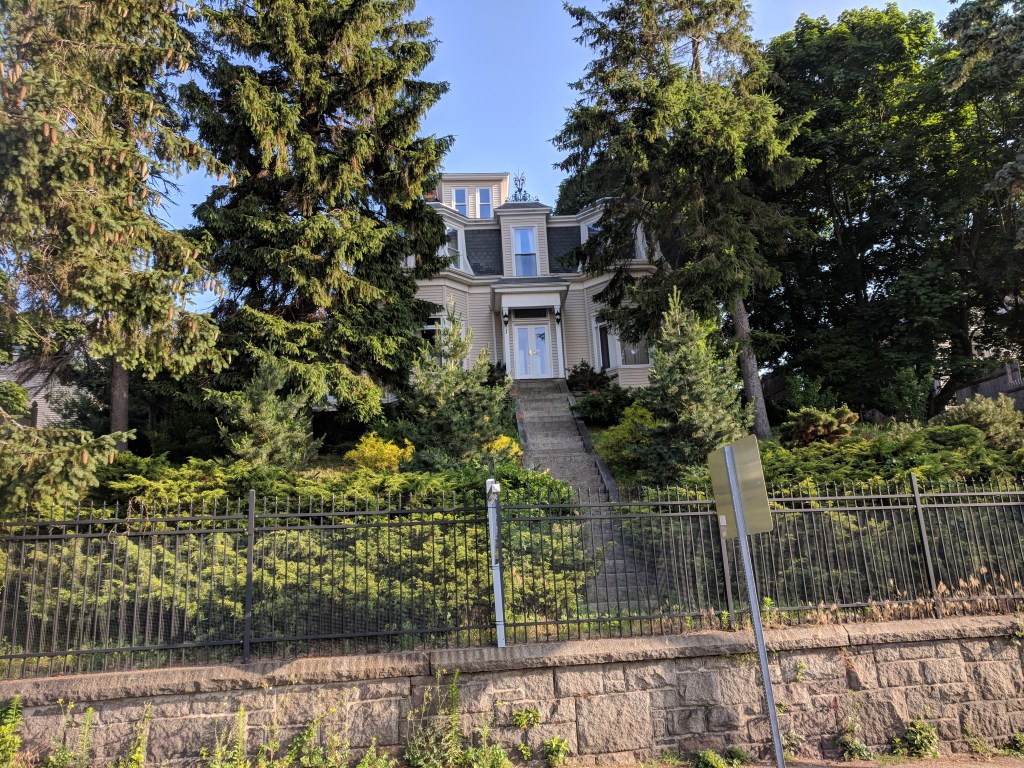
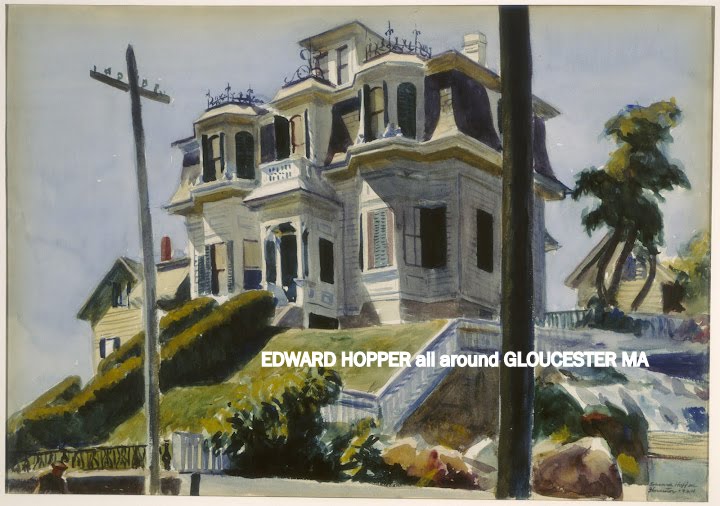
Haskell’s House, 316 Main Street, is one of more than 110 homes and vistas in Gloucester, Massachusetts, that inspired artist, Edward Hopper (1882-1967).
Gloucester merchant, public official (city councilor / state representative), and Master Mariner, Melvin Haskell (1848-1933), commissioned the house in 1884.
Hopper and artist, Jo Nivison (1883-1968), were married in 1924. They nicknamed the fancy house high atop the hill the Wedding Cake House. The famous drawing was originally purchased by American master painter, George Bellows (1882-1925), from a sensational Hopper solo exhibition held in the Frank K. M. Rehn Gallery in 1924. The watercolor changed hands and was eventually gifted to the National Gallery of Art, Washington, DC, by Mr. and Mrs. Herbert A. Goldstone in 1996. Hopper depicted the house in two other works, both side views from Prospect street rather than this view from Main Street.
The house was listed for sale at $830,000 throughout the spring and summer of 2018. Landscaping today involved major brush and tree removal. The result will be a scene closer to the one experienced by artists Edward Hopper and Jo Nivison in the 1920s. The scenic locale is a power spot: down the block from the Crow’s Nest and across the street from Gloucester’s Inner Harbor, Beauport Hospitality’s Cruiseport and Seaport Grill venues, Cape Ann Whale Watch, and Gorton’s.
Aymar, Jimmy, Edgar and Pedro were some of the adroit and brave tree climbing removal crew with ALZ Landscaping and Tree Service out of Lynn, Massachusetts. The unwieldy trees grew threateningly high.
“The premiere of My Station in Life a new play I wrote about Simon Geller, America’s last one-man radio broadcaster. Geller, the radio recluse who brought classical music to a hardscrabble fishing port, fights for survival against powerful forces that want what little he has. Actor Ken Baltin and supporting cast bring Geller’s quirky persona and corkscrew saga to the stage from October 12th through October 28th. ”
Produced by the Gloucester Stage Company and directed by Robert Walsh, Ken Riaf’s My Station in Life tickets are available now at My Station in Life.
Spread The GMG Love By Sharing With These Buttons:
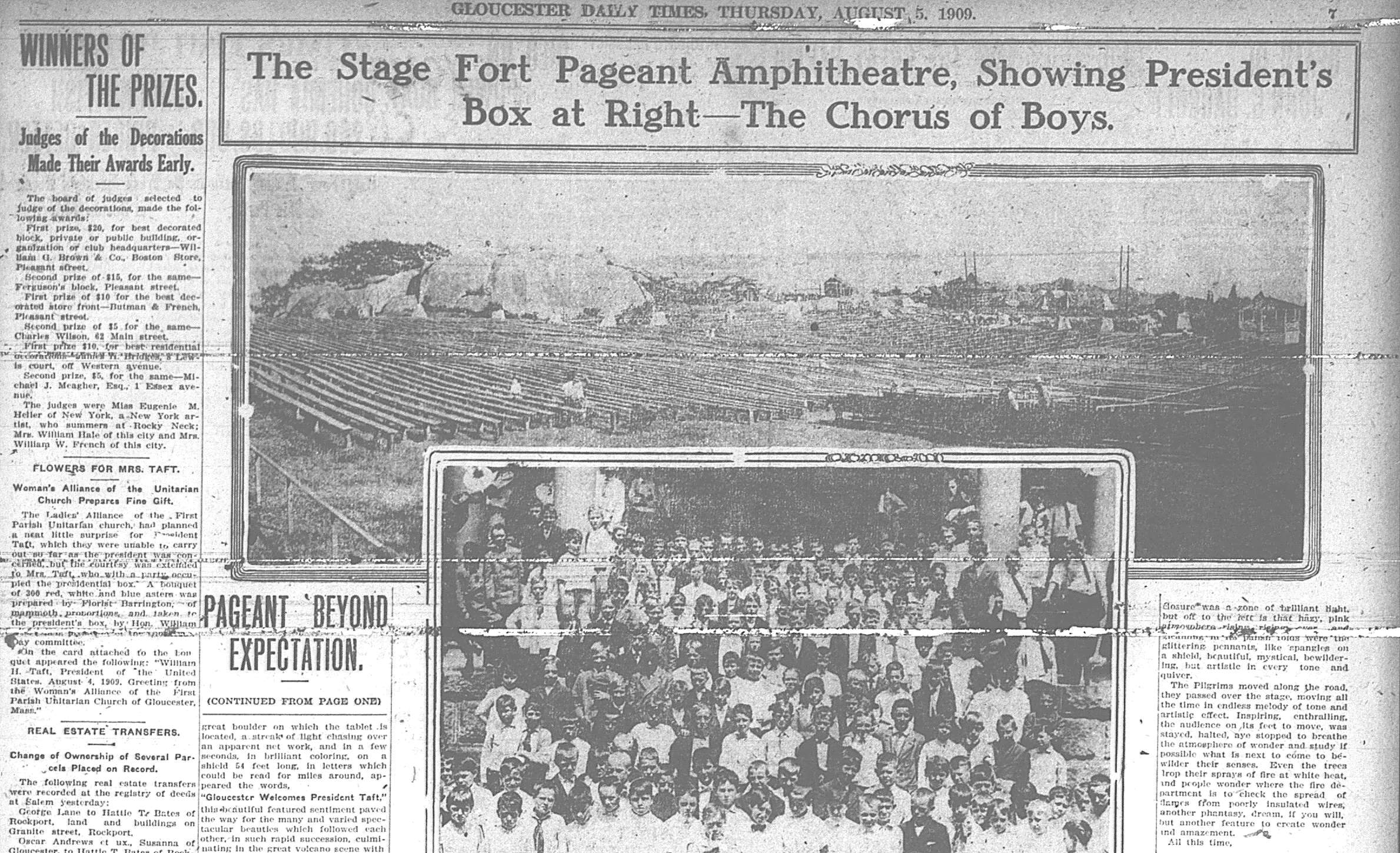
August 4, 1909, Gloucester Day brought an audience of 20,000 to Stage Fort Park in Gloucester, Massachusetts. The 1909 pageant of “The Canterbury Pilgrims” by Percy Wallace Mackaye was touted as the “greatest open air performance ever attempted in the country”.
“Stage Fort Park was the magnet which attracted thousands of people at the close of the grand afternoon parade yesterday, the procession in that direction, commencing early and continuing all through the evening, until between the hours of 7 and 8 o’clock, there was a continuous mass of moving color along both sides of the boulevard, with the middle of the street almost covered with the swifter moving carriages and automobiles. This scene was most inspiring, giving one something upon which to build an imagination for the greater display to come, when the play and pageant were presented for their consideration. The vast amphitheatre, with its great stage, were soon filled, the latter by nearly 20,000 spectators, in the boxes, on the seats and in automobiles, while the wings of the latter were filled with (thousands of) players.”
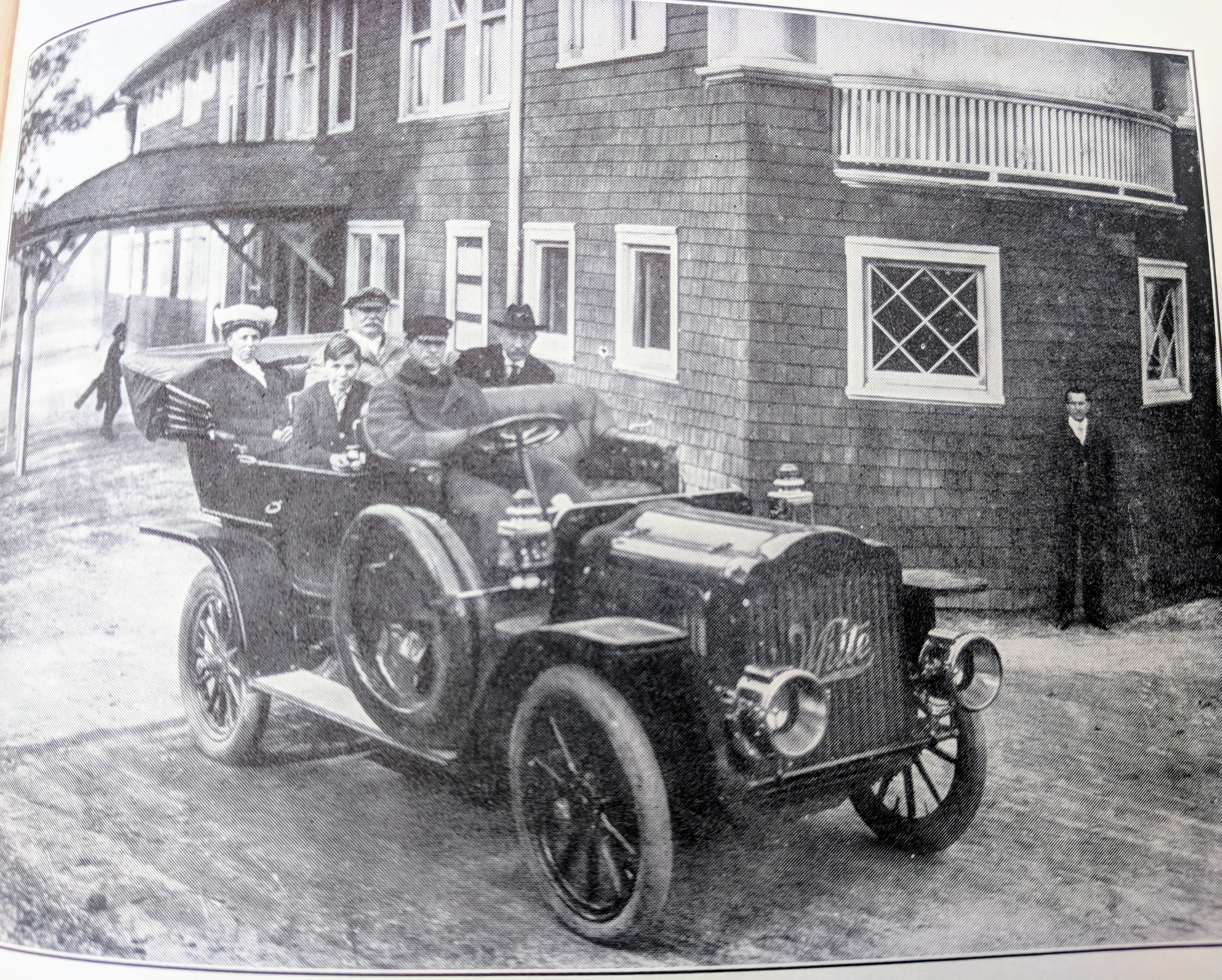
William H Taft (1857 – 1930), the 27th President of the United States from 1909-13, planned to be in attendance, thanks to host, John Hays Hammond, Sr., his boyhood friend and college classmate at Yale. The Mayor of Gloucester at the time of the 1909 pageant was Hon. Henry H. Parsons. Artist Eric Pape (b.Oct 17, 1870 San Francisco – d.Novembre 7, 1938), Master of the Pageant, directed the Canterbury performance. He was the lead design for Gloucester’s enormous bronze plaque and granite bas-relief commemorating the Founding of the Massachusetts Bay Colony set in tablet rock at Stage Fort Park and dedicated in 1907.
Few days left to bid! Link to more photos of the collectible and sale found here: sale on capeanntiques, ebay seller
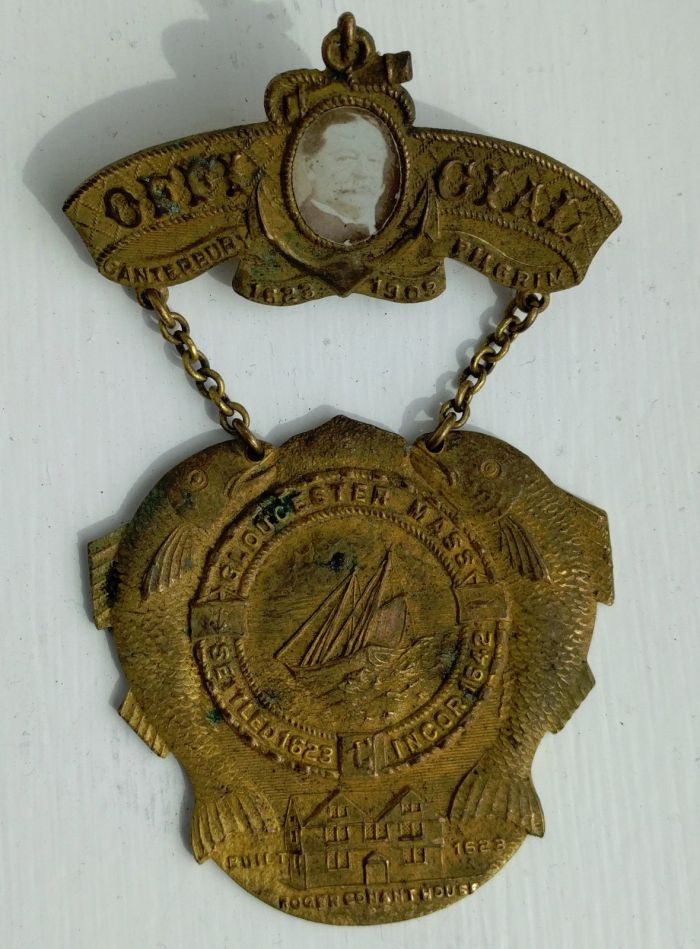
July 30, 1909 Gloucester Day Badge – Unique Design to Commemorate Event
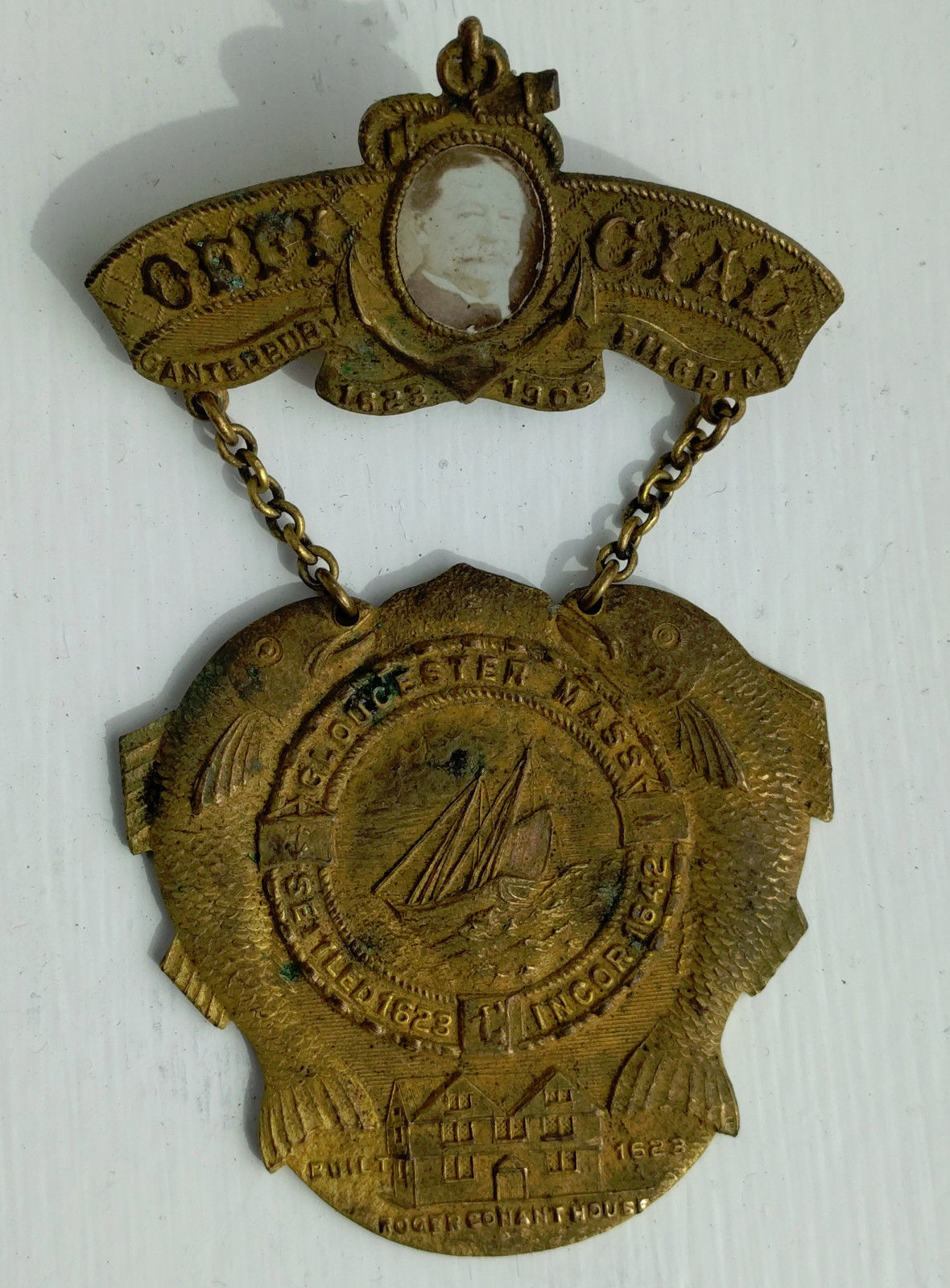
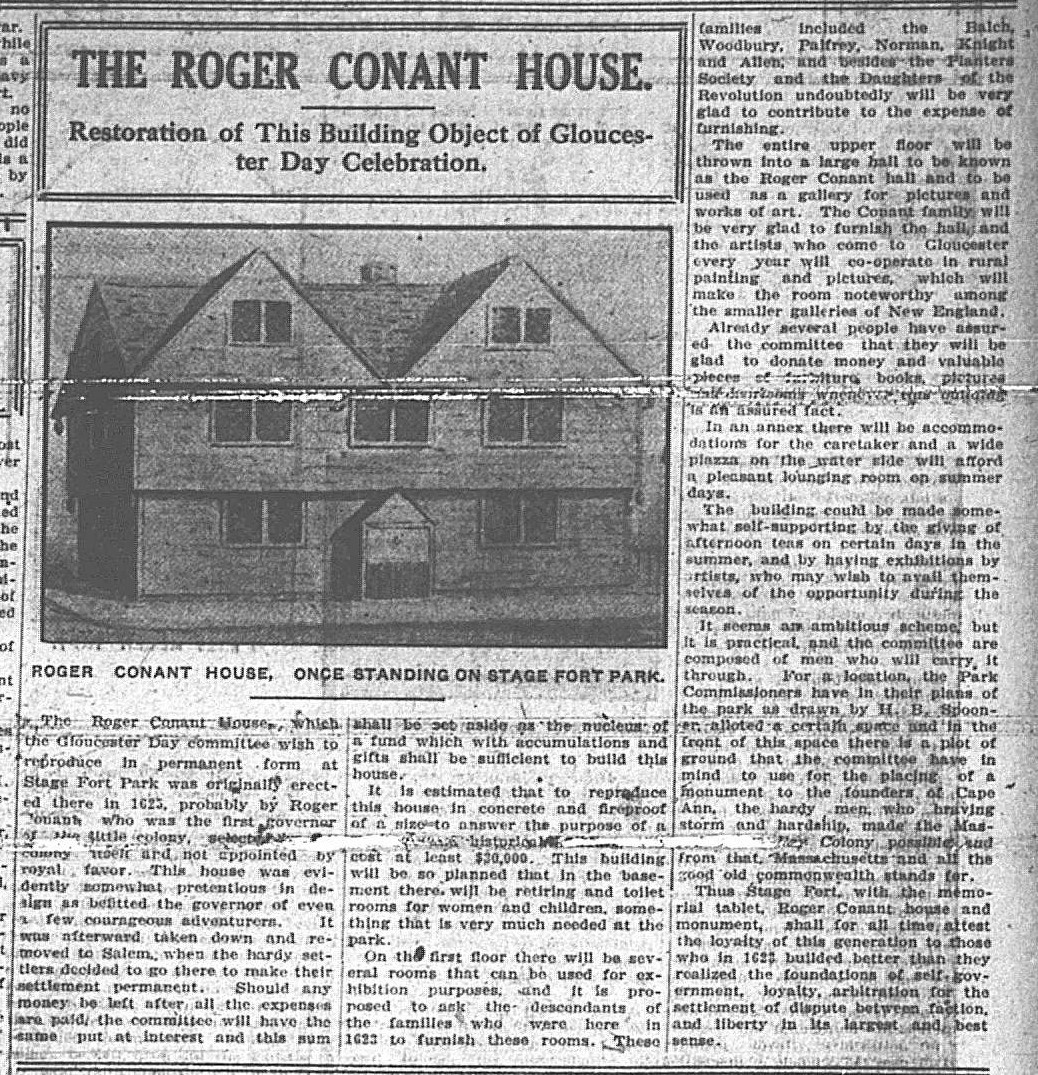
“The Gloucester Day badges have arrived and are certainly worthy of the occasion. The special gold badge to be presented to the president is fo the same design as the others. It consists of a bar, backed by anchor stock, with the cables running along each side, and in the center a miniature of President Taft, flanked by the dates 1623-1909. Suspended from this bar by two chains is the embossed shield, the central figure of which is a Georges handline fisherman, riding at anchor under bare poles. On either side, clinging griffin-like to the inner circle dividing th ose parts is the inscription, “Gloucester, mass. Settled 1623. Incorporated, 1642” and beneath this is a representation of the Roger Conant house, with the word “built” on one side and the date “1623” on the other, and the inscription, “Roger Conant House,” beneath.”
“May be worn as badges or watch fobs…Design selected after keen competition.” They were pre sold for 50 cents.
John Hays Hammond Sr. 2nd row with Taft family and driver
Pageant benefit to possibly rebuild Roger Conant House at Stage Fort Park
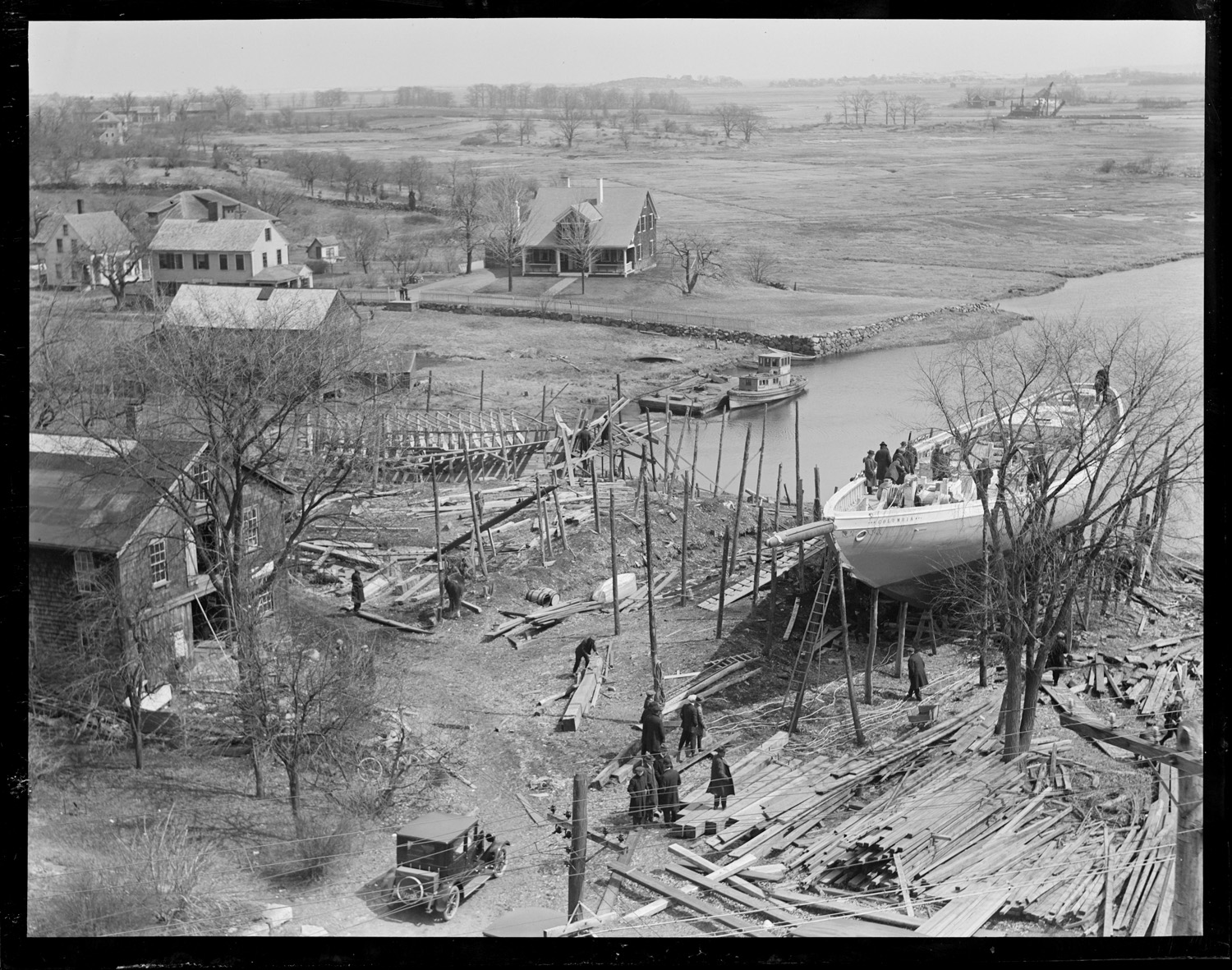
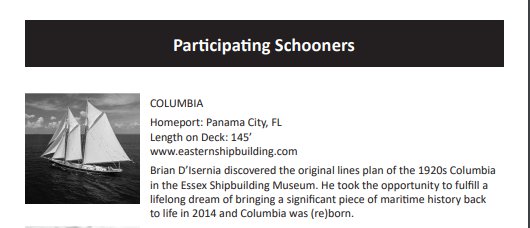
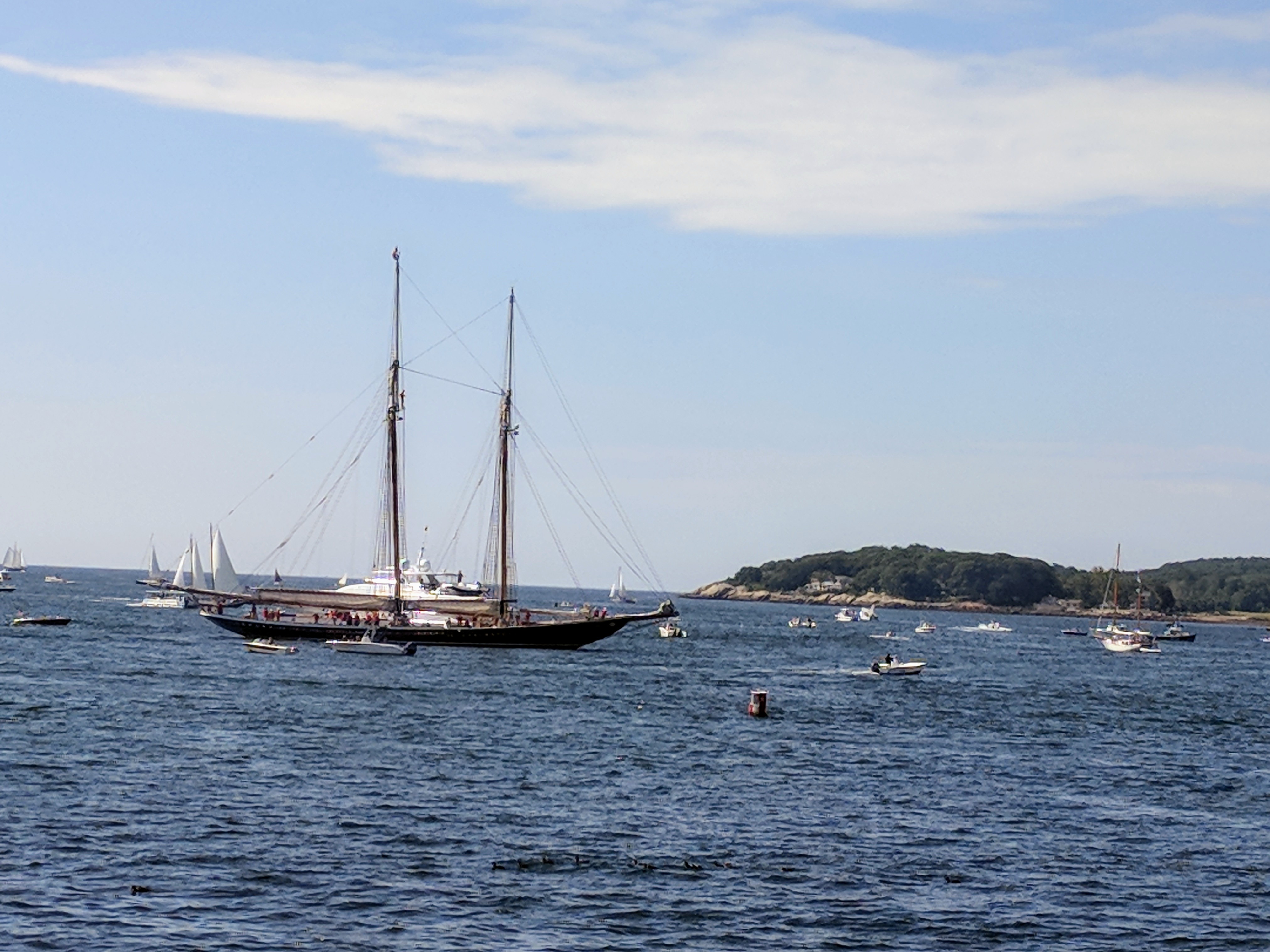
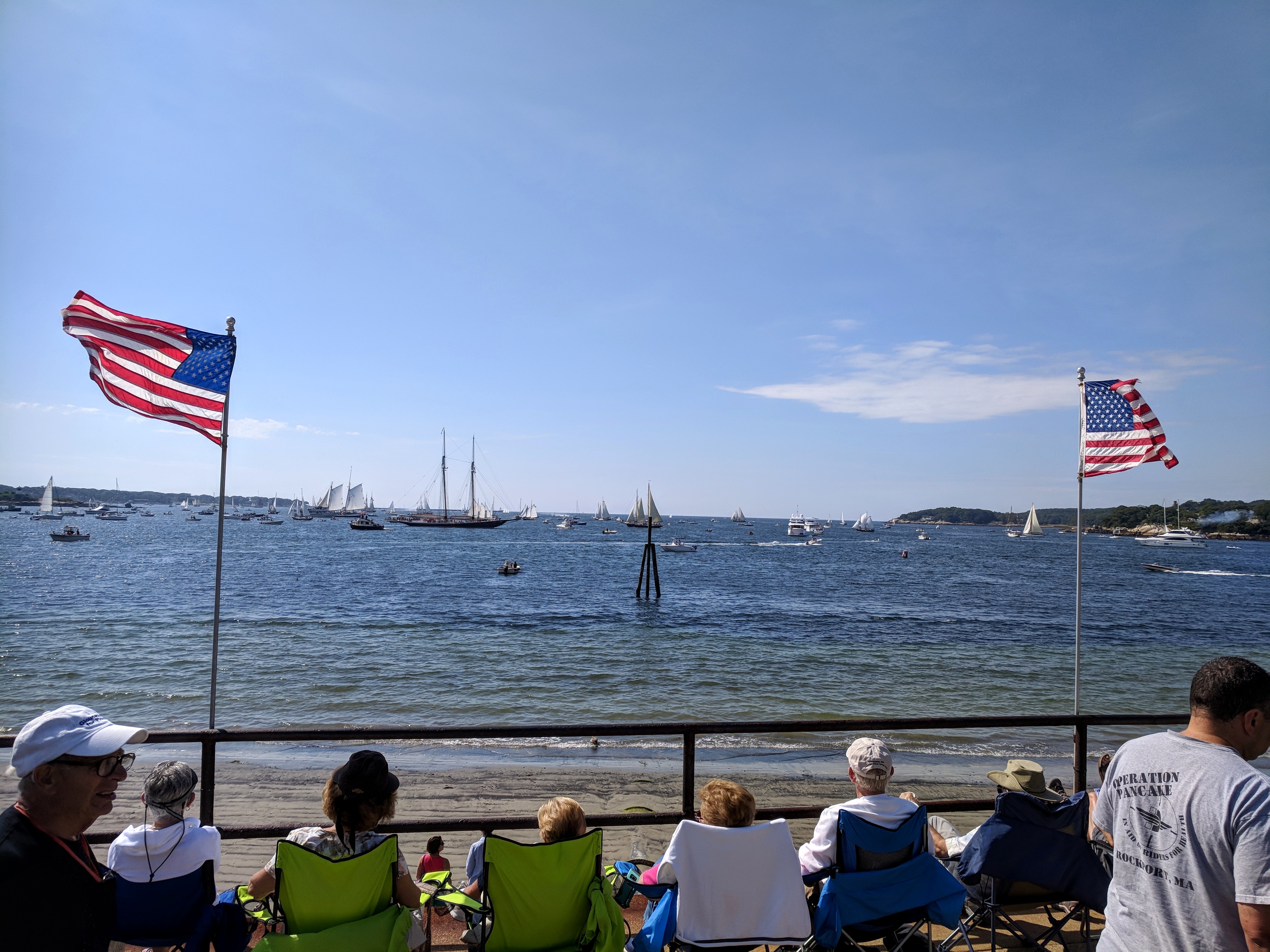
Columbia was designed by Starling Burgess. Shown here under construction at the Essex boat yard (Arthur Dana Story ship yard), launched, and sailing to Gloucester 1923. Leslie Jones photographs, from glass negatives Boston Public Library collection. It sank in 1946.
House History then and now for two former ‘old age homes’:
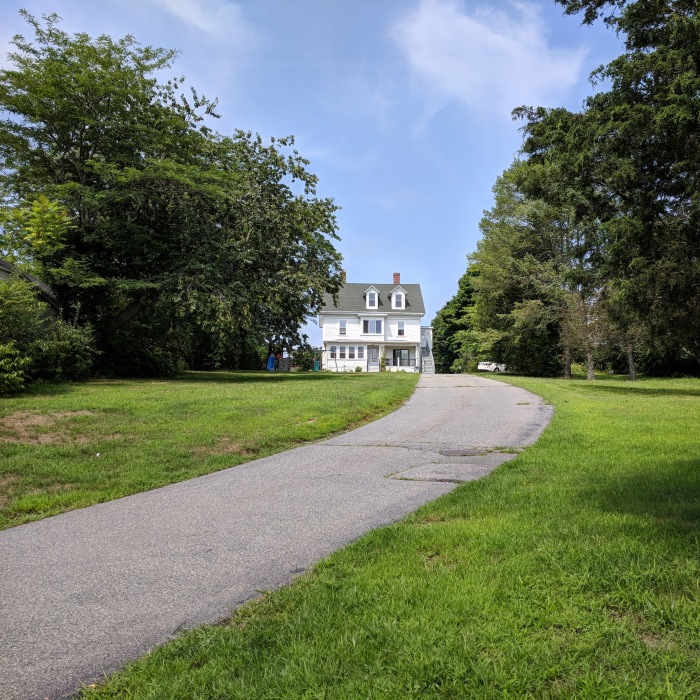
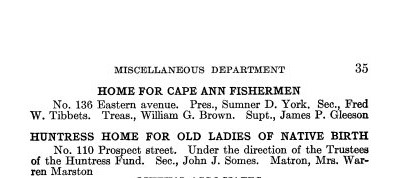
136 Eastern Avenue (Rt 127) 1911 and today- was a retirement home for fishermen
1911, Gloucester, Mass. “WILL OPEN ON CHRISTMAS DAY Several Old Sea Toilers Will Eat Christmas Dinner There Monday: Everything is in readiness for the opening of the Fishermen’s Home, formerly the Colby House, on Eastern avenue, and on Christmas day, a gathering of aged and disabled fishermen who have toiled their best days on the banks, but are no longer able to follow this hazardous occupation, will spend one of the happiest days of their lives and eat their first dinner in the new home…It would be a rather difficult undertaking to find a happier man today than Judge York. Two years ago after a conference with Dr. John Dixwell of Boston, who becoming interested in the work raised a fund among his friends for the relief of this class of men, who without friends or home were obliged to seek shelter in the house of coreection. Judge York went to Ipswich and secured the release of eight old fishermen, who were brought to this city and cared for at boarding houses during the winter months. Last winter the work was continued through the efforts of Dr. Dixwell and Judge York, and lately, their efforts were further crowned by the splendid gift of Mr. Hammond, who presented the home. The seven men who will become inmates of the home on Christmas Day are John Ryan, Joseph Alcott, John Nichools, Harris Atwood, James Halley, Robert Fraser and Henry Gormley.” article in the Gloucester Daily Times
The prior year “J. Hammond deeded lots for indigent fishermen at Beechbrook Cemetery.”- 1910 Gloucester Archives
After writing about his friendship with Captain Blackburn, “one of the most undaunted sailors America has ever had…I was proud to be one of the honorary pallbearers at his funeral…” John Hammond Sr. concluded his autobiography with more about Gloucester:
“I look back with the greatest pleasure on the hours I have spent with other old Gloucester fishermen. In the winter of 1910 several of these old fellow appeared before the district court and pleaded guilty to vagrancy. Without other means of gaining food or shelter, they were seeking some sort of sustenance in the poorhouse for the winter. In Washington, I read about this in the papers and got in touch with Judge York, Dr. Dickswell, Fred Shackelford, and others who were interested. We established a home to provide for these old fishermen. I learned to appreciate the fine traits of these men who were given refuge there. Often it was exceedingly difficult to persuade them that they were too old to stand the hardships of deep-sea fishing. Their truck garden faced the sea, and from there they could watch with their telescopes for the fishing vessels as they left and entered the harbor. Sailors, like miners, are notoriously spendthrifts and these of Gloucester were no exception. They would arrive at the Home in a destitute condition. Because they no longer went to sea, and there was no chance of their reaching the traditional sailors’ grave, they had a great dread of potter’s field. For that reason I provided a cemetery where all could be assured of decent burial. Above the gate is inscribed:
And here rest, brave toiler of the sea, sleep undistrubed, God’s peace be with thee.
Many of the inmates were choosey about the location of their graves. There were two in particular, bunkies since boyhood, who quarreled daily and, I fear, nightly, but who exacted from me a promise that they might be buried side by side.”
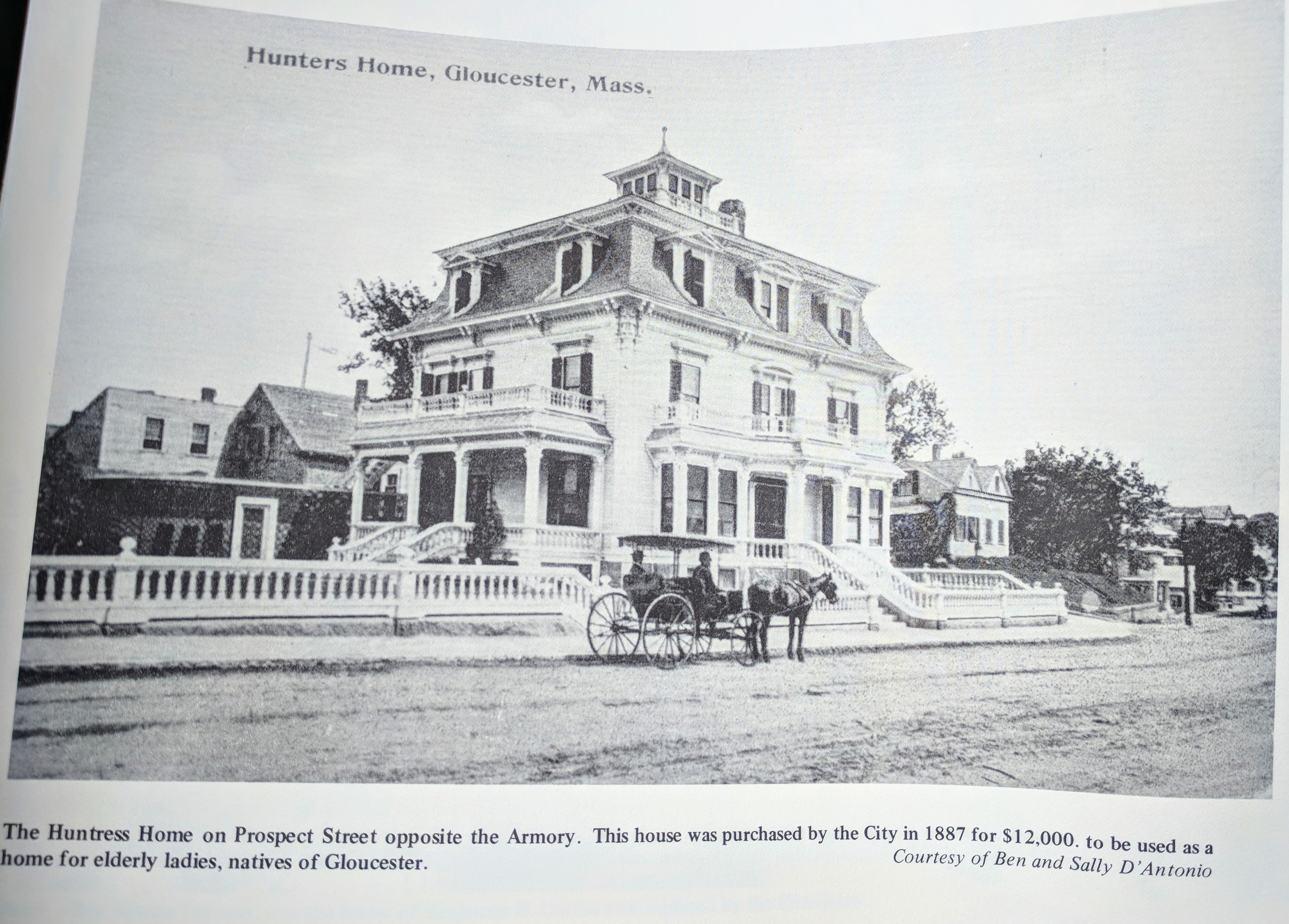
110 Prospect Street ca 1900 and today – was a former retirement home for senior women
Gloucester bought 110 Prospect Street in 1887 for $12,000 to establish the “Huntress Home for Old Ladies of Native Birth.” I’ll write more about this one later.
Here’s how both senior housing options were described in the 1913 Gloucester Directory (from Gloucester Archives):
photos & research – C. Ryan
Spread The GMG Love By Sharing With These Buttons:
In response to Searching for artist Byron Brooks (Part 1) and (Part 2), David Collins, a Good Morning Gloucester reader and amateur geneologist, was inspired to act. First he emailed a PDF family tree for artist, Byron Lloyd Brooks, and then shared vivid remembrances and vintage photographs in response to the artist’s timeline in Gloucester, Massachusetts. These are wonderful additions to filling out Brooks story and a peek into Gloucester and Stage Fort Park history. Thanks so much, David!
For a time, Brooks lived in 12 Stage Fort Avenue. Collins’ family lived in 7 Stage Fort Avenue 1940s-1960s. Does anyone know the neighbors Collins mentions or have more photographs of long gone homes and Barrett’s Camp at Stage Fort Park? I’m looking forward to scouting for that boulder.
Part 3 Searching for artist Byron Brooks – David Collins responds:
ca. 1950, courtesy photograph to assist with Byron Brooks research from David Collins (his sister with her friend by side entrance 12 Stage Fort Ave, Gloucester, Massachusetts )
“Hello, Catherine, Here is a little more information on the artist Byron L. Brooks, in case you are still interested. I have attached a family tree for him. It does also have some information on his two wives that I know of. I am not a professional genealogist, so don’t take the information as gospel. I grew up at what was then 7 Stage Fort Avenue (no “Park” in the address) in the late 1940s, 50s and early 60s in the house that is now 1 Anchor Lane, I believe. We moved to Connecticut in 1961 the week I turned 16. The house Byron lived in, 12 Stage Fort Avenue, was, back when I lived there, a 2-family house. Most of the other houses in that part of the neighborhood were, or had been, summer camps. Stage Fort Avenue Y-ed at our house and both parts, one going on to one of the Park’s parking lots and the other going past us to Barrett’s Camps, were named Stage Fort Avenue. The house in front of Byron’s, the address was 10 Stage Fort Avenue back then and is now 7 Stage Fort Avenue, didn’t exist – at least not in the large form it is in now. Sam and Marion (Kerr) Johnson lived there. I think the house burned down in about 1975.
Ralph and Evelyn (DeCoste) Bradstreet lived in the downstairs part of 12 Stage Fort Avenue and several families lived upstairs over the years. Byron must have lived in the neighborhood a while before my family did. I think my folks moved to #7 about 1939 or so. I don’t know when the Bradstreets moved into #12. That said, Byron Brooks was my mother’s 2nd cousin. They share Ephraim Brooks [1818-1905] and Ruth Ward [1816-1892] of Nova Scotia as great-grandparents.
However, I had never heard of Byron until your 2nd GoodMorningGloucester article. I even collect art by people who called Cape Ann home – Charles Movalli was my best friend growing up*. I also have an extensive family tree that I have worked on for many years. Still, I had no idea Byron existed! Of course, I had his parents in my mother’s part of our tree. I have now added information on him and his many siblings because of your articles. Thank-you! Hope this helps you, in return.” David Brooks 7/1/18
photo credit: 12 Stage Fort Avenue, Gloucester, MA. ca.1947 photo courtesy David Collins
photo credit below (click to enlarge): 7 Stage Fort Avenue ca.1947-57 (L), and Stage Coach Inn vintage postcard, both images courtesy David Collins
about the photo with the girls on the rock and Stage Fort Avenue homes THEN (now gone):
“This one is of my sister and the girl (and her dog) who lived upstairs at 12 Stage Fort Avenue for several years while we lived on Stage Fort Avenue and then moved to School Street in Manchester. Her father, originally from Rockport, was a 7th cousin of Byron Brooks but I doubt he knew. The girls are sitting on a rock outside the side entrance to downstairs #12, the one the people we called Auntie Evelyn and Uncle Emerson (Ralph Emerson) Bradstreet (both cousins of each of my parents) probably used most often. It led into their kitchen. The doorway at the stairs in front (in the other picture I sent you) led into a hall, with stairs running up to the 2nd floor apartment and also a door at the left into the downstairs apartment.
The building behind the girls and to the left was, at least at one time, a Barrett camp. I think sometimes people bought them and made them more permanent homes even if they didn’t live in them year-round. The family’s name sounded like Brown-eyes but I don’t remember how it was actually spelled. Oh, I do remember: William and Irene (Douglas) Brauneis. Irene Douglas’ brother (a close friend and fishing buddy of my uncle) and his wife and family and his parents lived in the large house at the top of the hill behind the camps that was not a camp. I think the Brauneis family lived in theirs, maybe even full time eventually, long after we had moved.
The next home which looks altogether different was rented out in the summer, too, but I have no idea who lived in it. In the next camp to that one, not in the picture, a Mrs. Morrison spent the summer and her daughter and family, the Kilroys, would join her for a few weeks. Mrs. Kilroy had grown up in Gloucester. I hung around with daughter Carol and brother Robert the part of the summer when they were in town…Henry and Pauline (Osmond) Garvey and family lived in the Barrett camp that abutted our property on (what was then) Stage Fort Avenue. Great family. They would summer there from Tuckahoe, New York, but both had been brought up in Gloucester. ”- David Collins
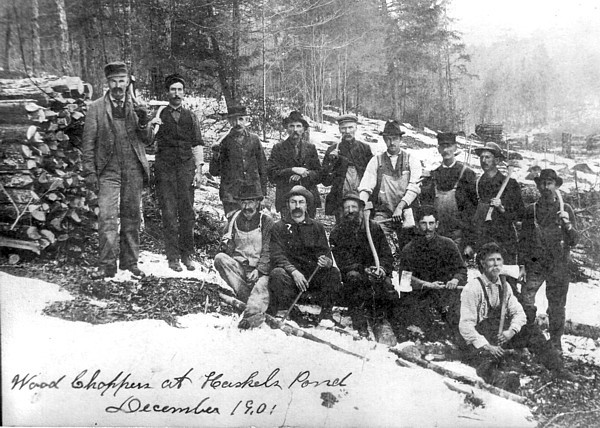
City of Gloucester officials are working towards a Phase 3 for the Haskell Pond Dam reconstruction which I wrote about last week (Part 1). I included information about the original monumental build. In response, Bruce Roberts was kind enough to share these amazing photographs of the impressive crews at the Haskell Pond construction site 1901. Bonus: they were annotated by his grandfather in 1958. West Gloucester families may recognize a surname or two, maybe a family resemblance. Please help ID if you can.
Bruce Roberts explains: “My grandfather, Edward F. Roberts, identified the individuals back in 1958. There are some folks he didn’t recognize, since he would have been pretty young when these images were taken. The first picture has the most identified individuals. One thing that has always been remarkable to me in the second image is how much Chester Andrews, my g-grandfather, resembled my father, Eugene Roberts, at that age.”
HASKELL’S POND CONSTRUCTION ca.1901-02 – (Individuals ID’d by Edward Roberts in 1958)
Photo 1, Dec 1901 (in snow): “Wood Choppers at Haskell’s Pond, December 1901” Front Row, L-R: 1. Otis Lufkin, 2. Matt Poland, 3. Loren (sp?) Harris, 4. Melvin Wilkins, 5. Jim White
Back Row: 1.Asa Sargent, 2. unknown, 3. Ed Lufkin, 4. James Chadbourne, 5. Joseph Abbott, 6. unknown, 7. Joshua Roberts, 8 & 9. unknown
All are invited to have fun, join in, share ideas for Gloucester’s 400th Anniversary possible celebrations in 2023. A public meeting will be held at City Hall on Saturday, April 28, 2018 from 1-3pm. Can’t attend? Email your input to the 400th steering committee: email gloucester400@gmail.com and check out the 400th Anniversary Facebook page For More Info
“Although Gloucester’s 400th Anniversary is five years away, we know that those years will go by quickly. 400 years deserves a year long celebration in 2023 and a steering committee has been meeting for the last six or seven months to get the process started. Three Captains have been chosen to lead the group: Bruce Tobey, Bob Gillis and Ruth Pino. The Committee is sponsoring a public meeting on Saturday April 28, 2018 in City Hall Auditorium…What should happen during 2023? What would you participate in? What would you miss if it didn’t happen?”
With so much advance notice, it’s fun to ruminate. Three words come quickly to mind for one idea: Virginia Lee Burton. Burton was one of the most influential children’s book author-illustrators of the 20th century and Folly Cove textile designer and founder. She received the Caldecott medal in 1943 for The Little House. Whether for the 400th Anniversary or not, I hope one day that there are tribute commissions for Virginia Lee Burton’s beloved characters Katy from Katy and the Big Snow and Mary Ann from Mike Mulligan and His Steam Shovel at Stage Fort playground. Life Story and Song of Robin Hood were also informed by landscape and her life in Gloucester. (The Burton tributes could be massive, interactive and accessible bronze sculptures. Tom Otterness commissions were completed at this scale. Why not Burton? They don’t have to be. Also bring back the monumental sea serpent and the big truck. These memorable imaginative expressions were wood in the past and maintained for years. Perhaps they could be recreated with modern decking materials. And add in Burton’s Little House! )
Archives
Gloucester has a history of producing major anniversary celebrations which makes looking back through archives* inspiring for future plans. Here are a few I’ve pulled:
*digitizing Gloucester Daily Times and Gloucester’s municipal archives is another oft repeated plea of mine and others–am sending that one along to a 400th dream wish list…
August 16, 1942– the city’s second (!) Tercentenary Celebration.
1923 Fighting for public art – the Fisherman at the Wheel memorial commission
On May 21, 1923, the Gloucester Daily Times published an article about the appropriations and planning for the city’s 300th Anniversary which is remarkable in content and its late date–the celebration was just months away! The idea itself and related costs concerning a public art commission –the one that would become Gloucester’s renowned Fisherman at the Wheel Memorial– were hammered out at a heated City Council meeting. Here’s the nearly complete transcription:
COUNCIL RECONSIDERS AND VOTES $5000 TO CELEBRATION: Equal Amount Will Be Reserved for Permanent Memorial Fund–Executive Committee Held Prolonged and Animated Session Saturday Evening. May 21, 1923 (*note ______ indicates illegible copy)
After three hours of discussion and a conference of the municipal council behind closed doors lasting about three-quarters of an hour on Saturday evening, it was voted to reconsider their action whereby the $10,000 appropriated for the anniversary committee should be alloted for a permanent memorial and voted for _____ committee to expend a sum not exceeding $5000 for the celebration, and the other $5000 to be used for the creation of a permanent memorial.
The agreement as finally reached is ______________ provide for the dedication in whole or in part of a permanent memorial to be erected and paid for jointly by the _______ city of Gloucester. “The municipal council agrees that a sum of $5000 of the amount appropriated by the city for the celebration will be for the general purposes of the committee if necessary, with the understanding that all expensea for additional police protection incurred by the committee on public safety will be paid for by the anniversary committee. And with the further understanding that the anniversary committee will do all possible to have this sum of money applied to the permanent memorial in addition to the sum reserved ____ by the municipal _____ surplus after the celebration is over, this surplus also to be for the purpose of a permanent memorial.” The meeting opened at 8.15 o’clock, with a reading of the records by Secretary Harold H. Parsons, and following this there came without hesitation_____ ing of the celebration from those present, and for a time, one was reminded of the old town meeting days. ___________ A Piatt Andrew ___________ carnival parade by members of the art colony of the city were accepted and adopted.
Plain Talk by Chairman Barrett- Chairman Barrett then arose and addressed the members present and said: “I sent a communication to the municipal council some time ago to find out just what standing this celebration had with them. The letter I received was not





















































 Good Morning Gloucester