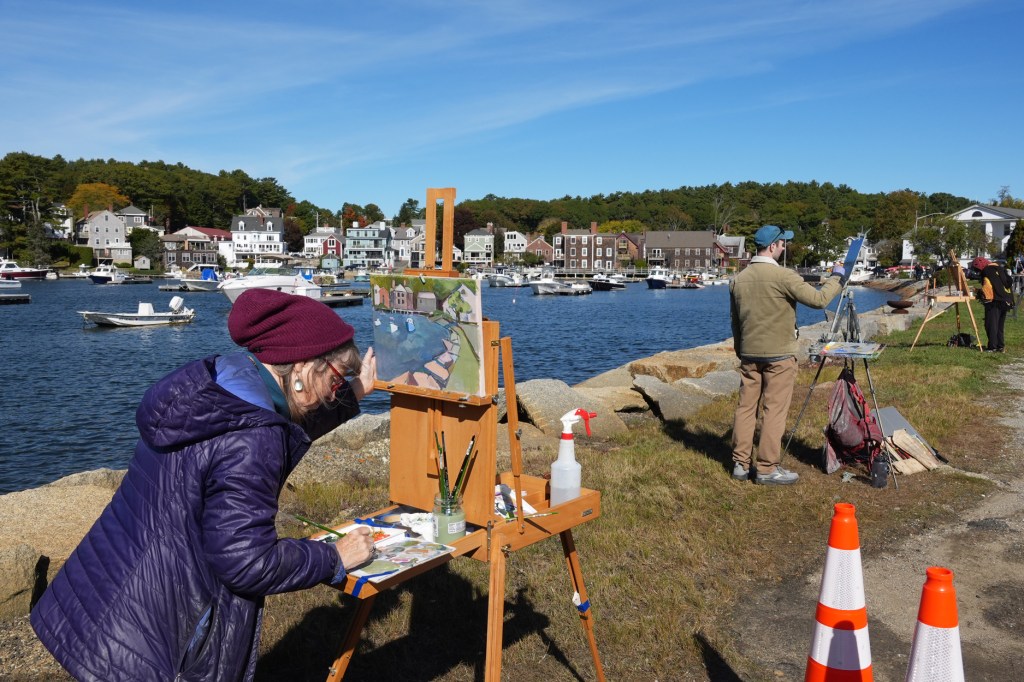
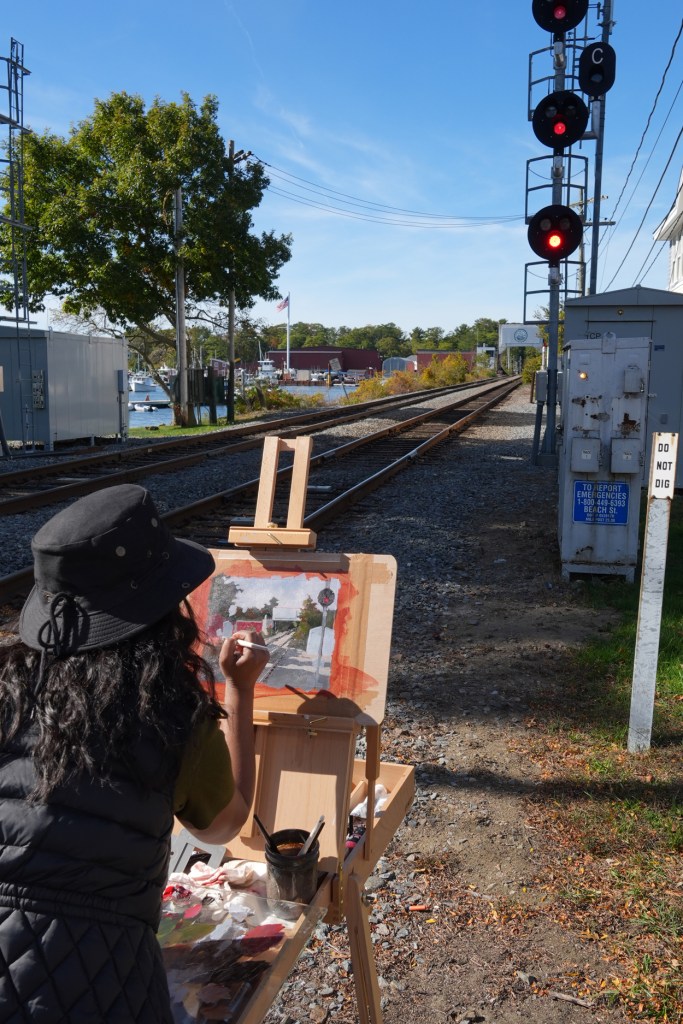
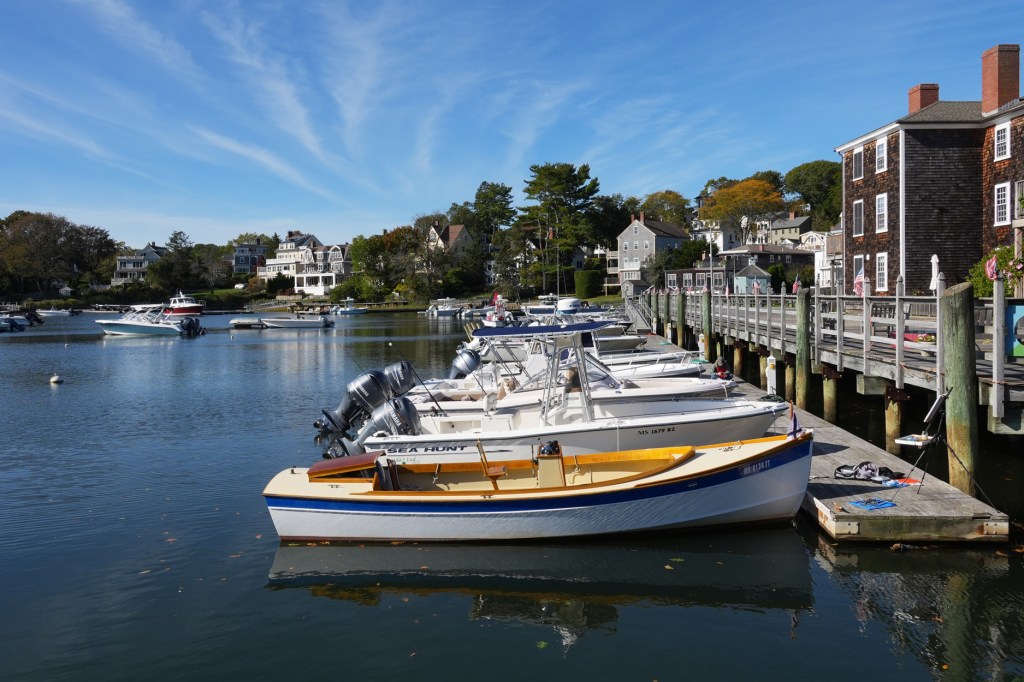
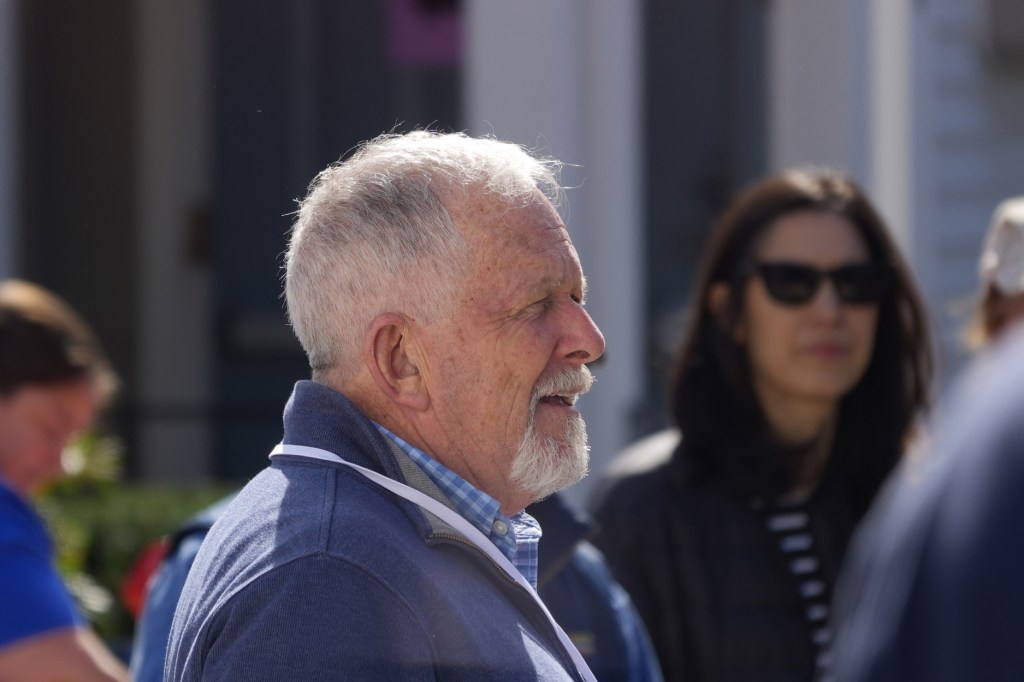
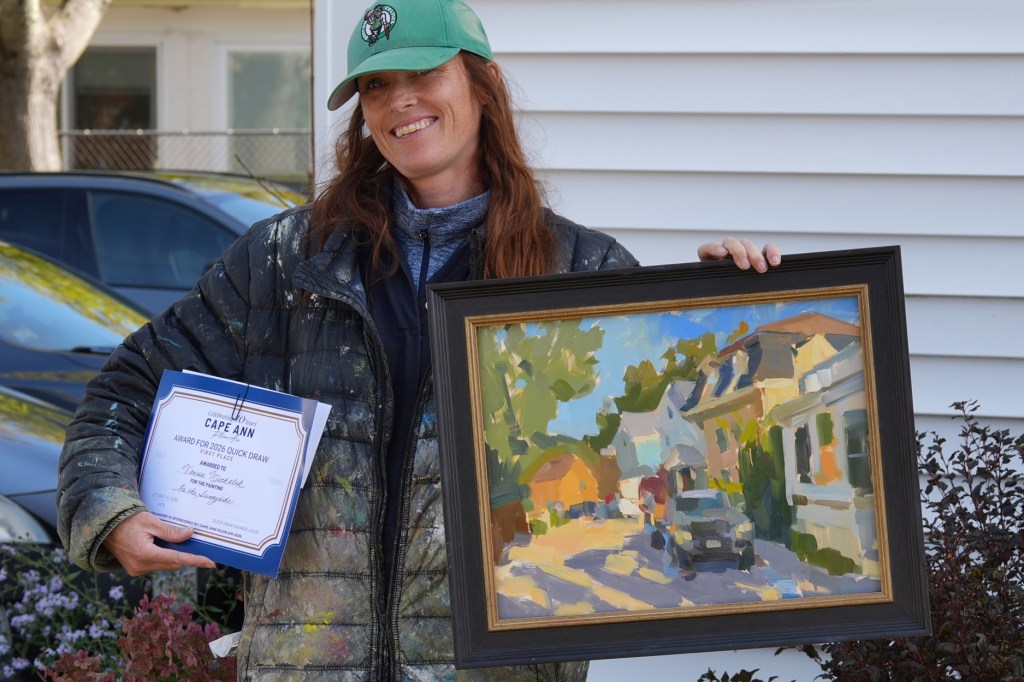
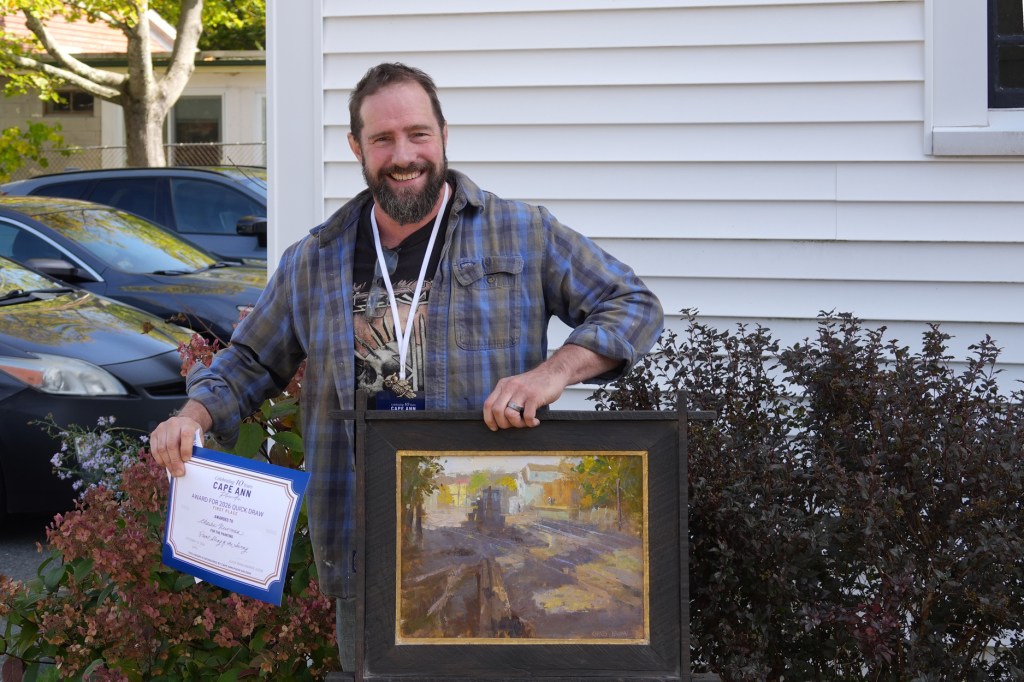
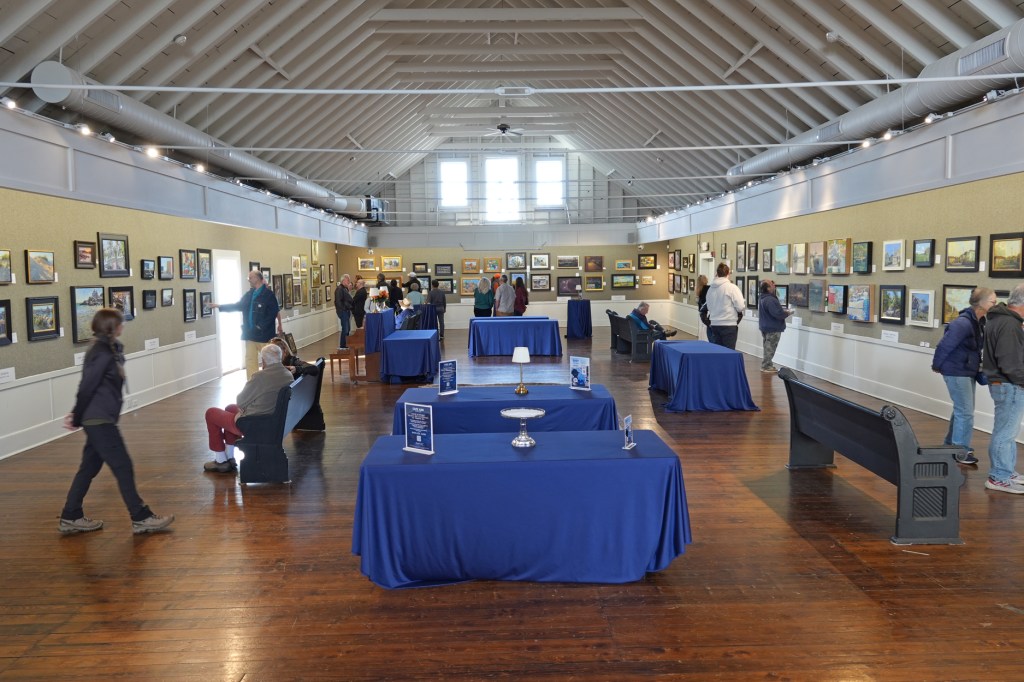
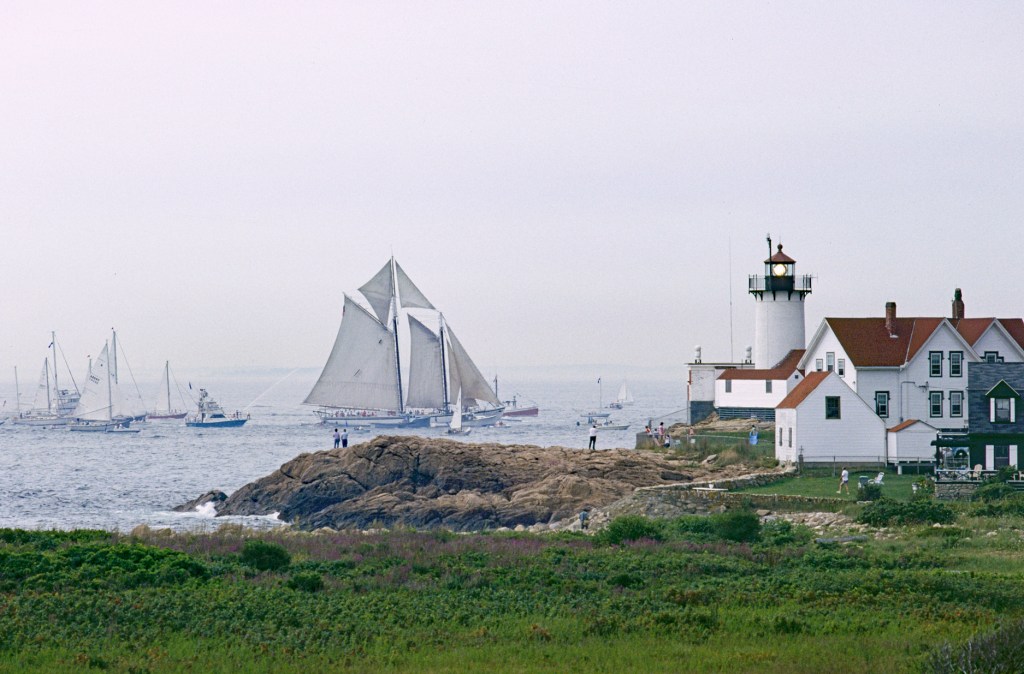
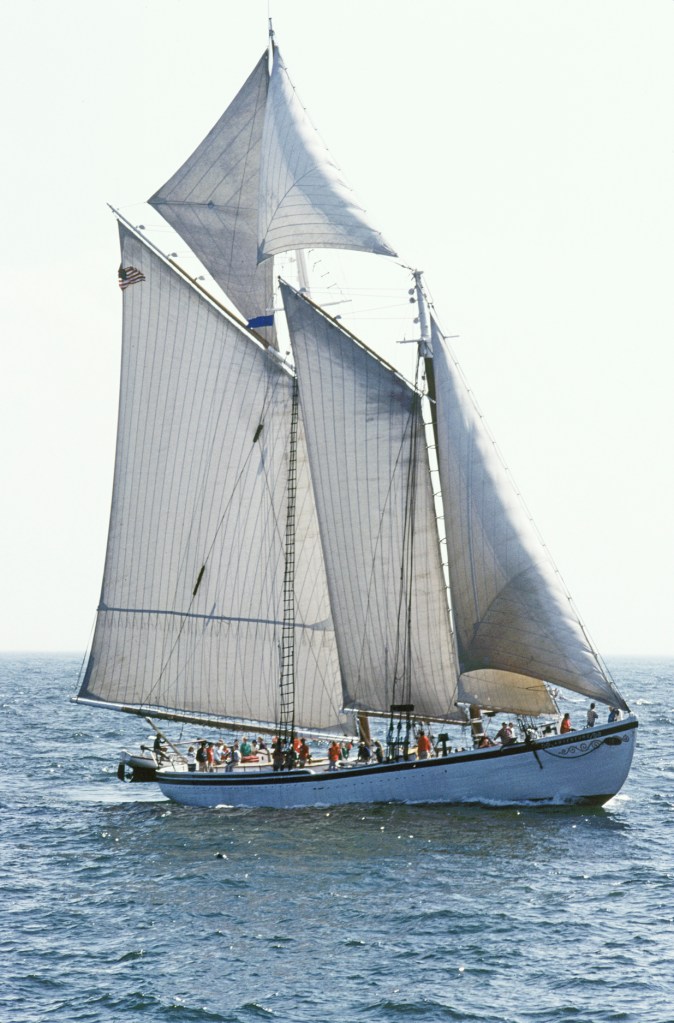
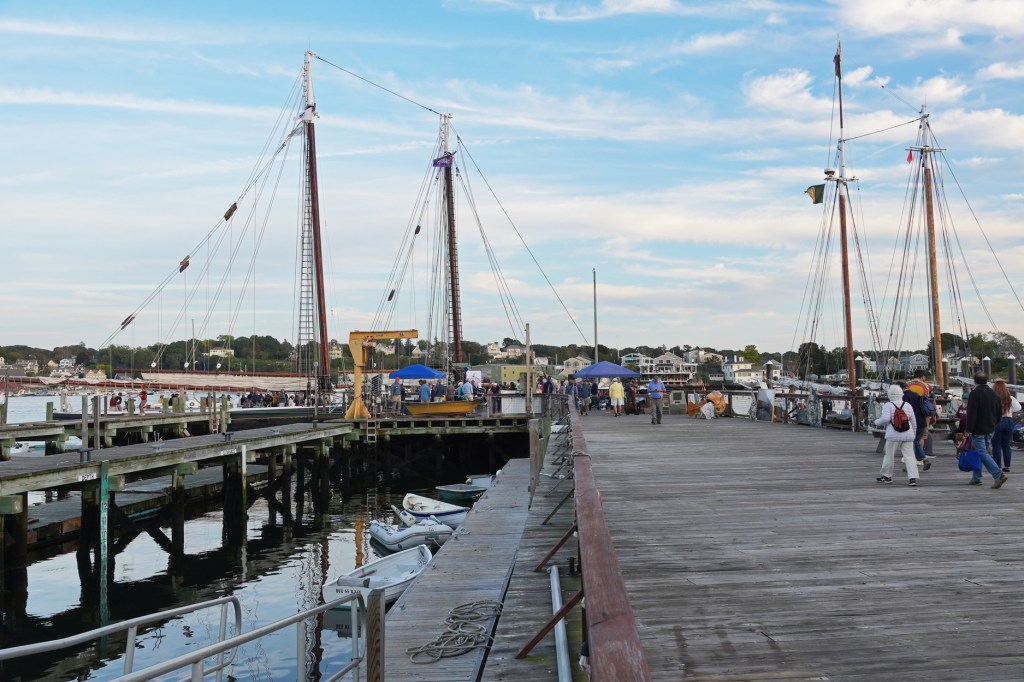
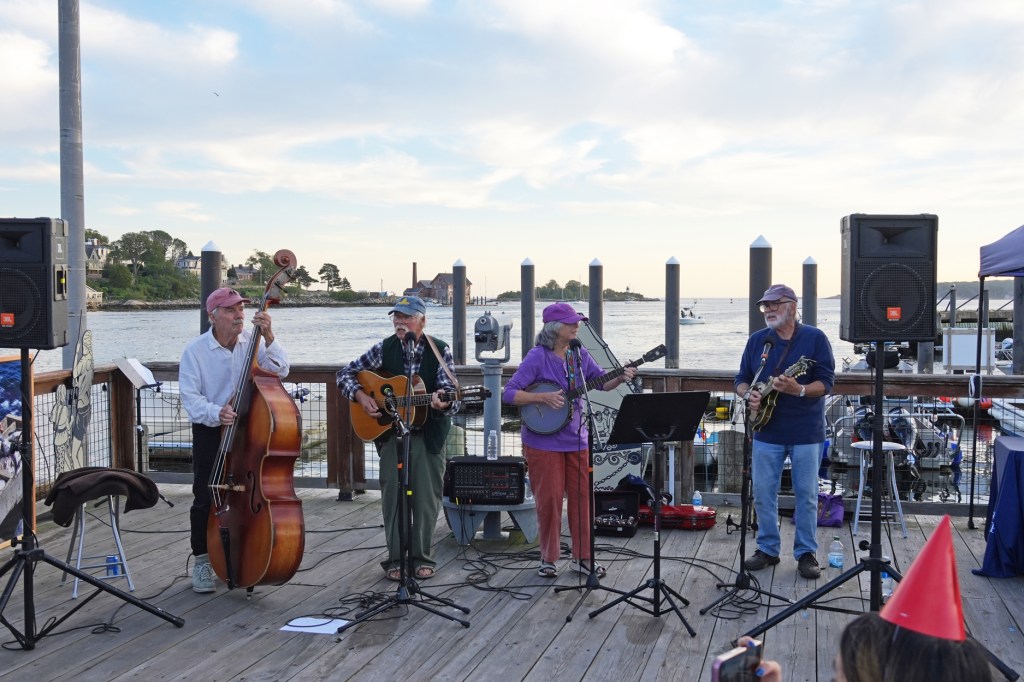
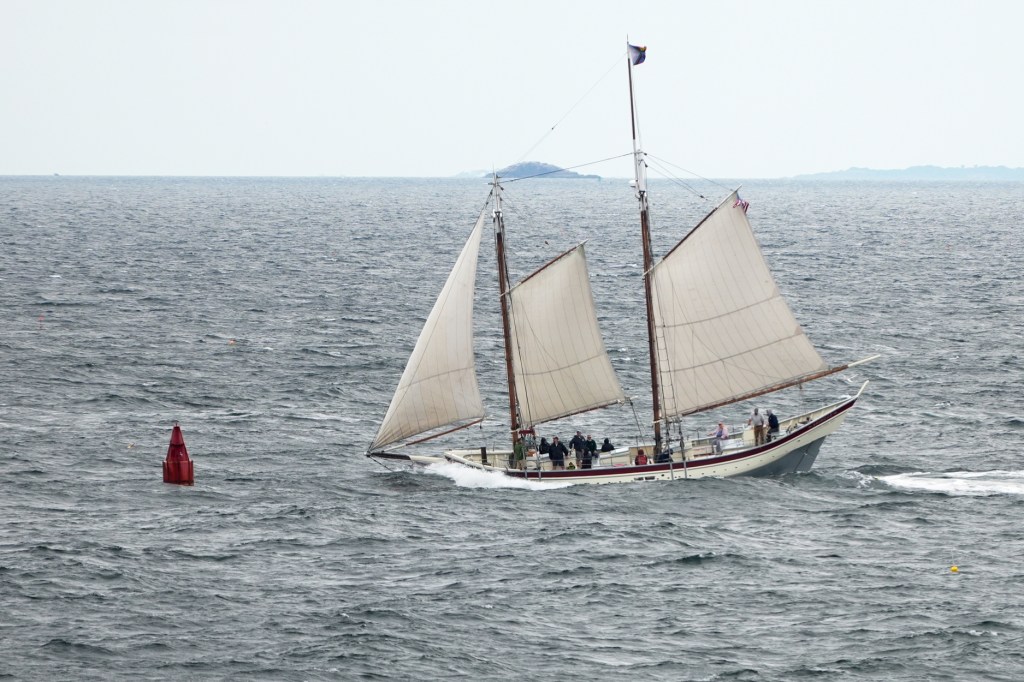
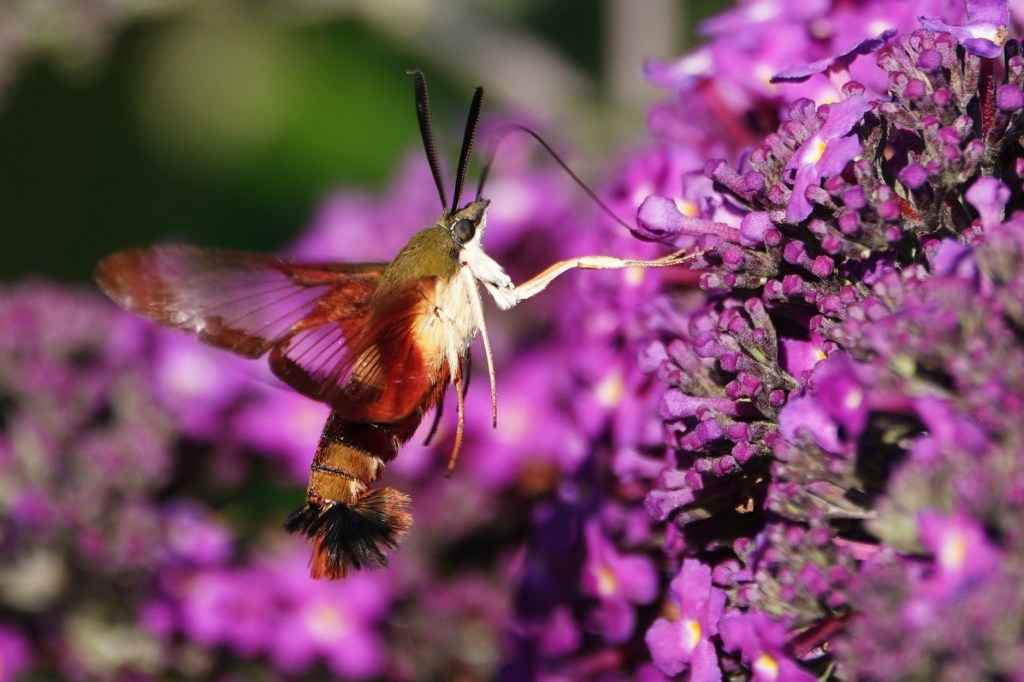
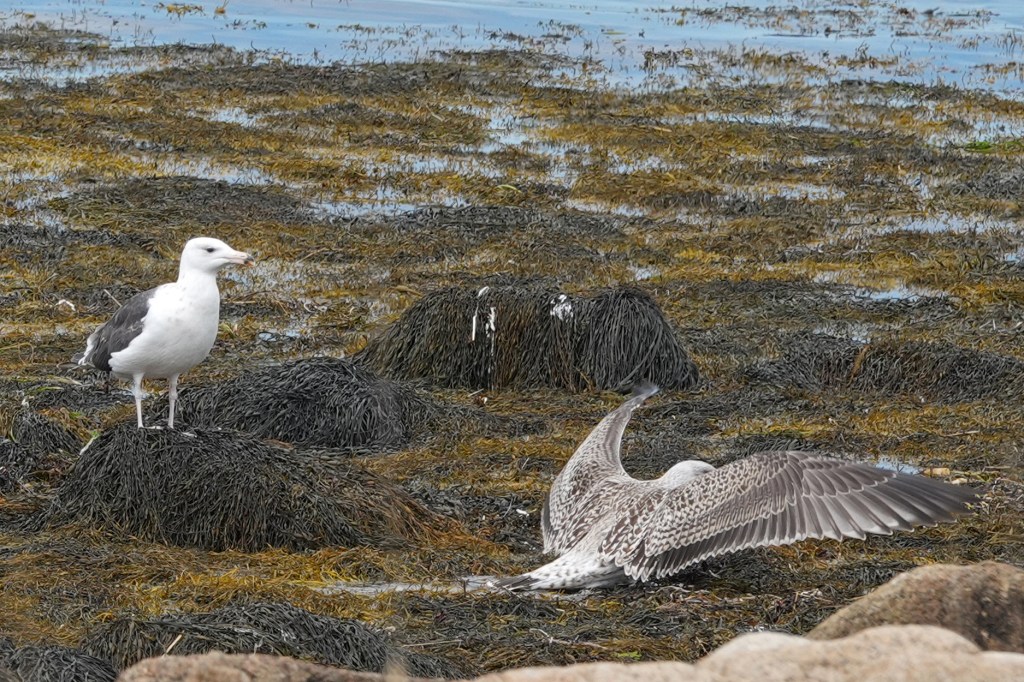
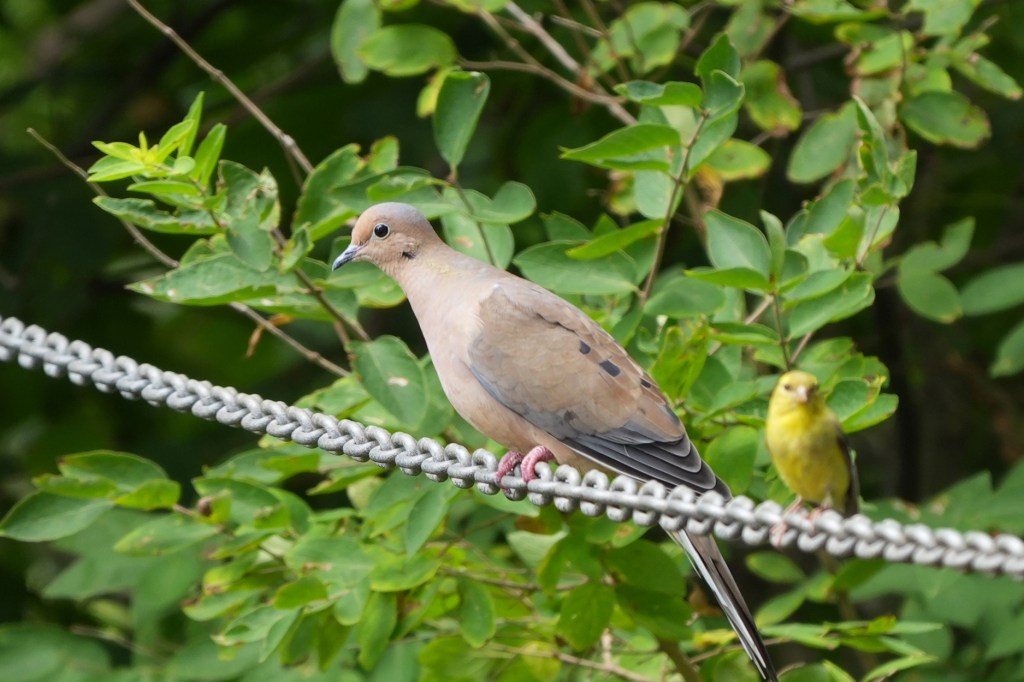
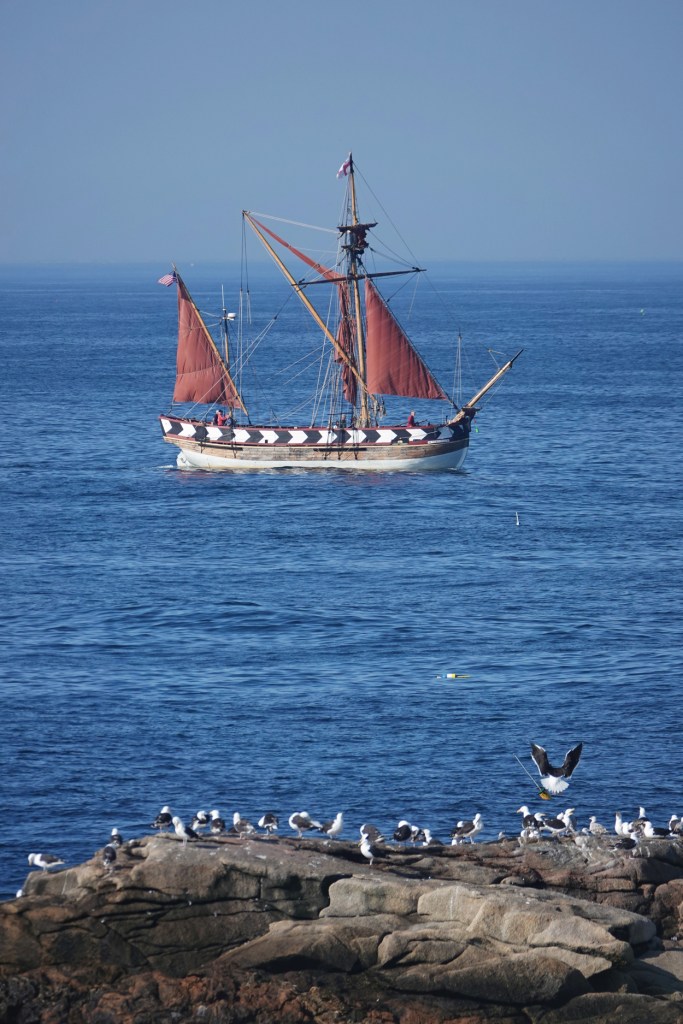
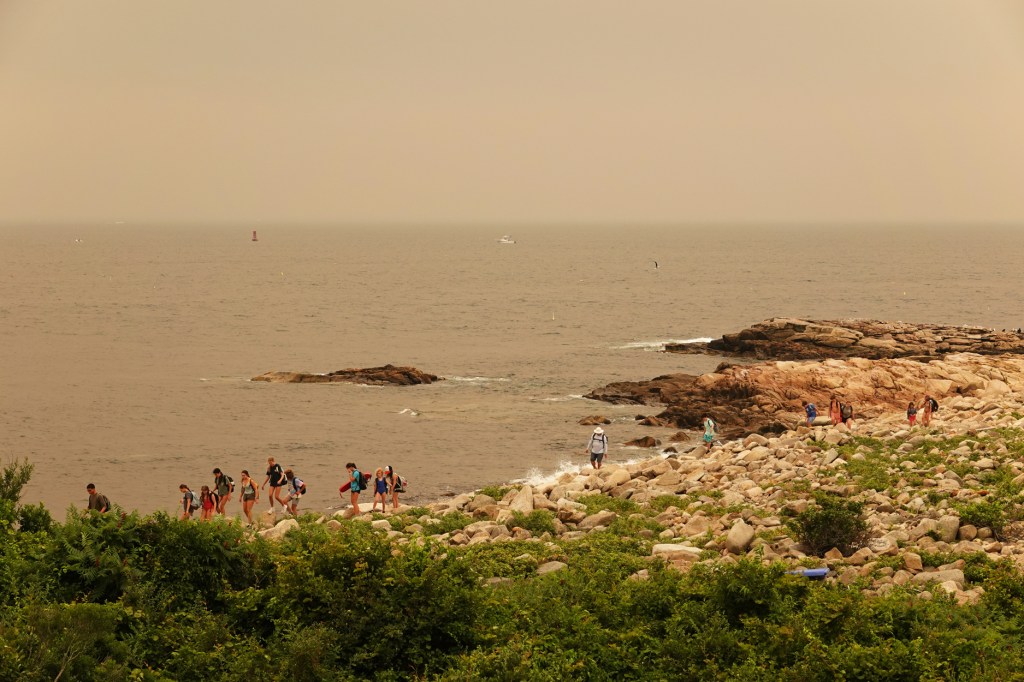
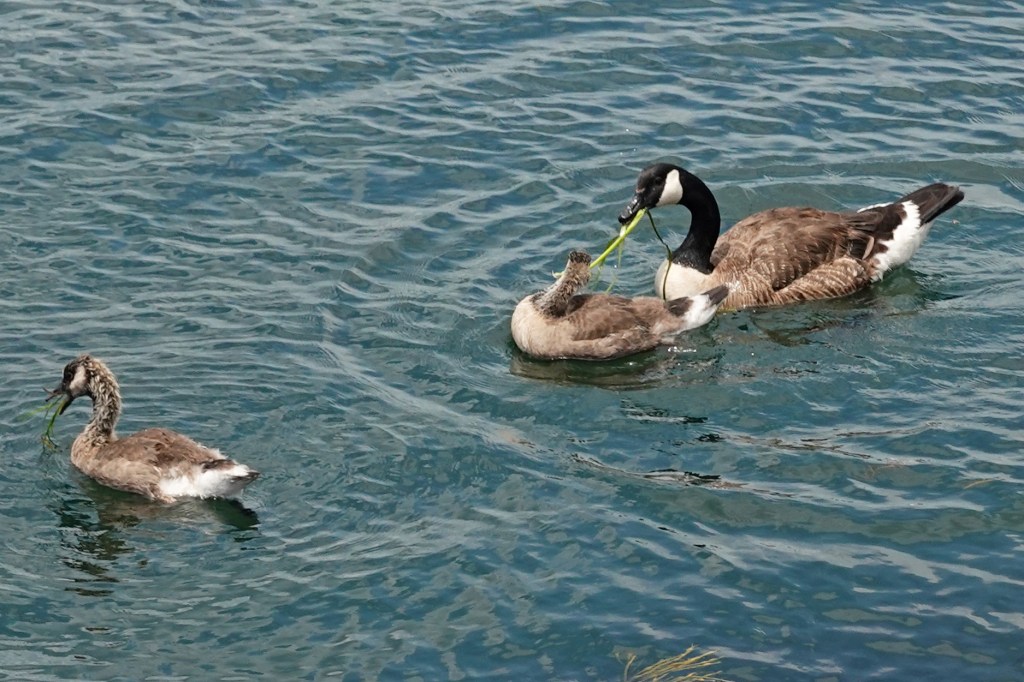
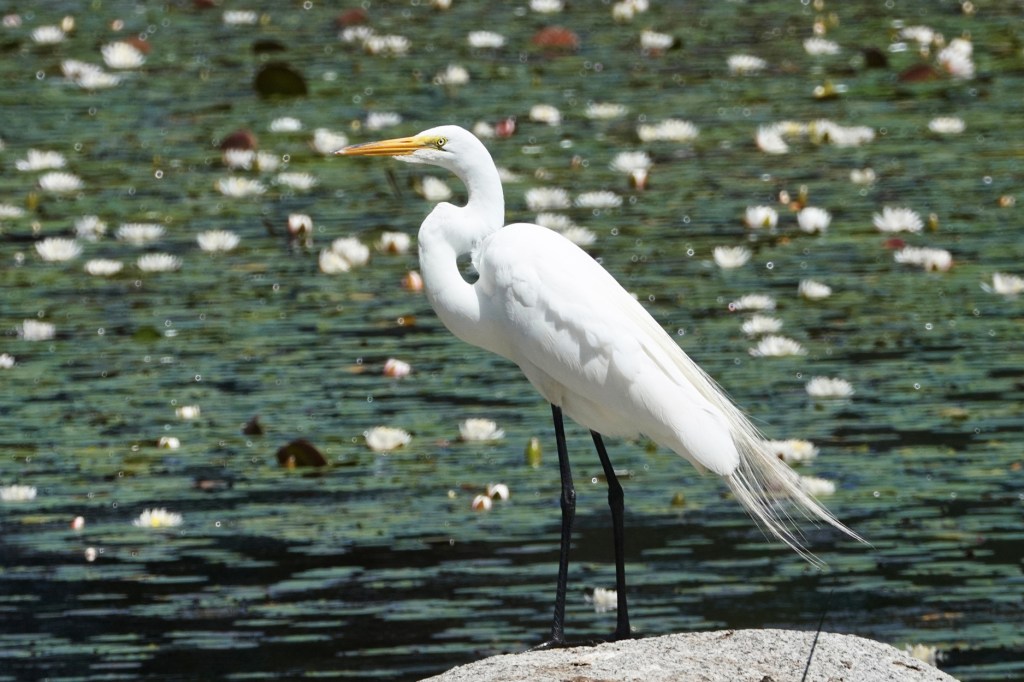
Over the last week, Greater Cape Ann hosted the 10th Cape Ann Plein Air event. Thirty-six “juried” artists from twenty states competed for awards. I always attend the final Quick Draw, when 100 local artists join the “juried” regulars for separate judging. Everone had 2-hours to complete their artwork, this year in Manchester-by the-Sea.
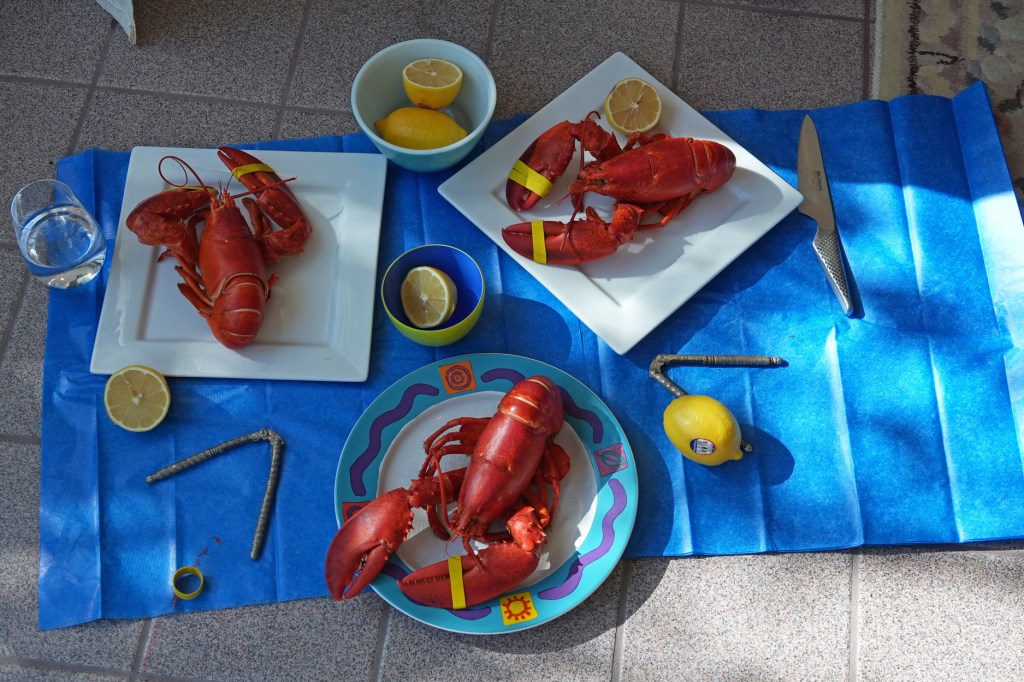
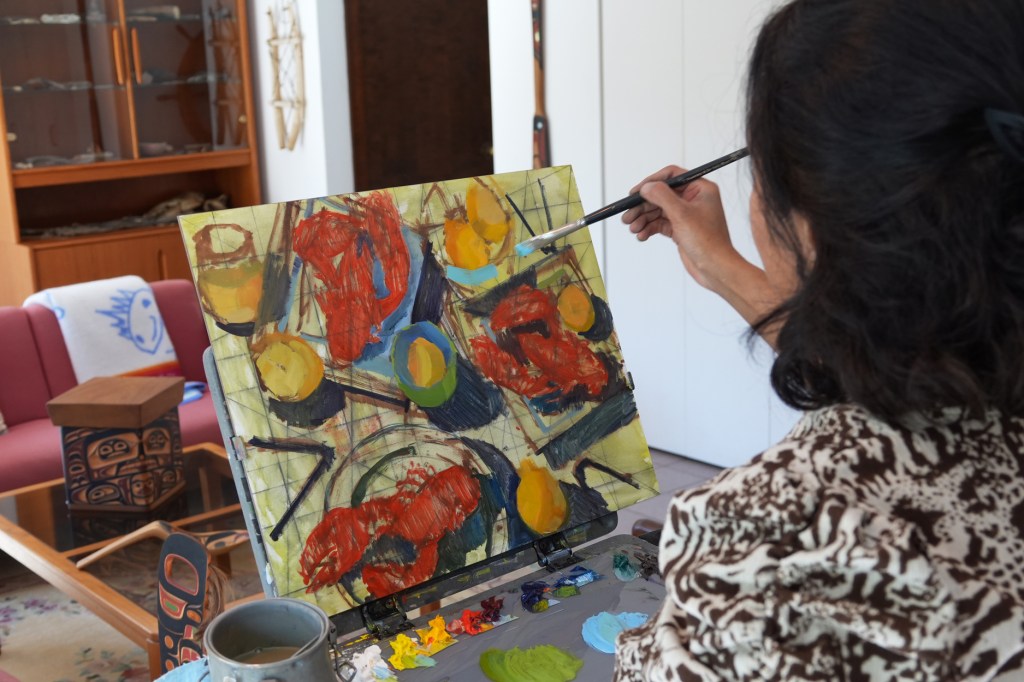
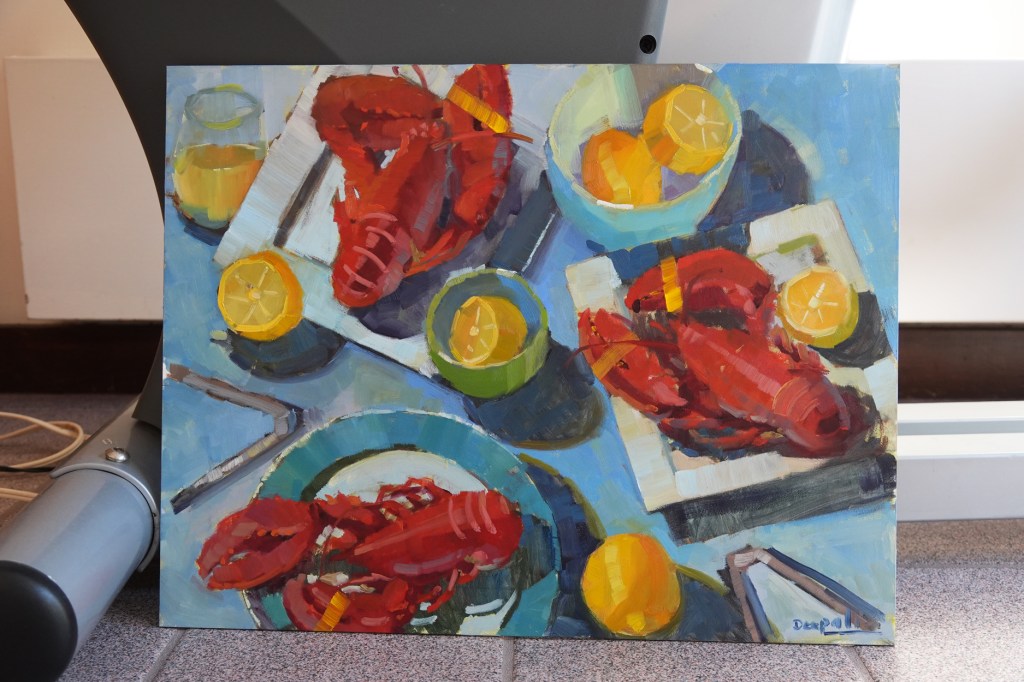
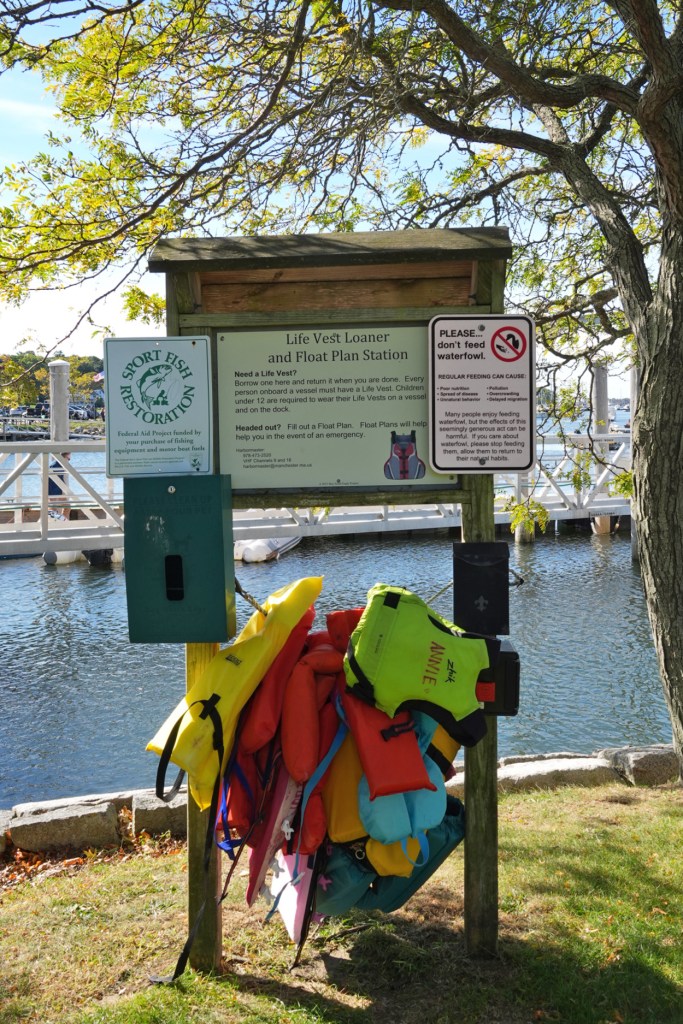
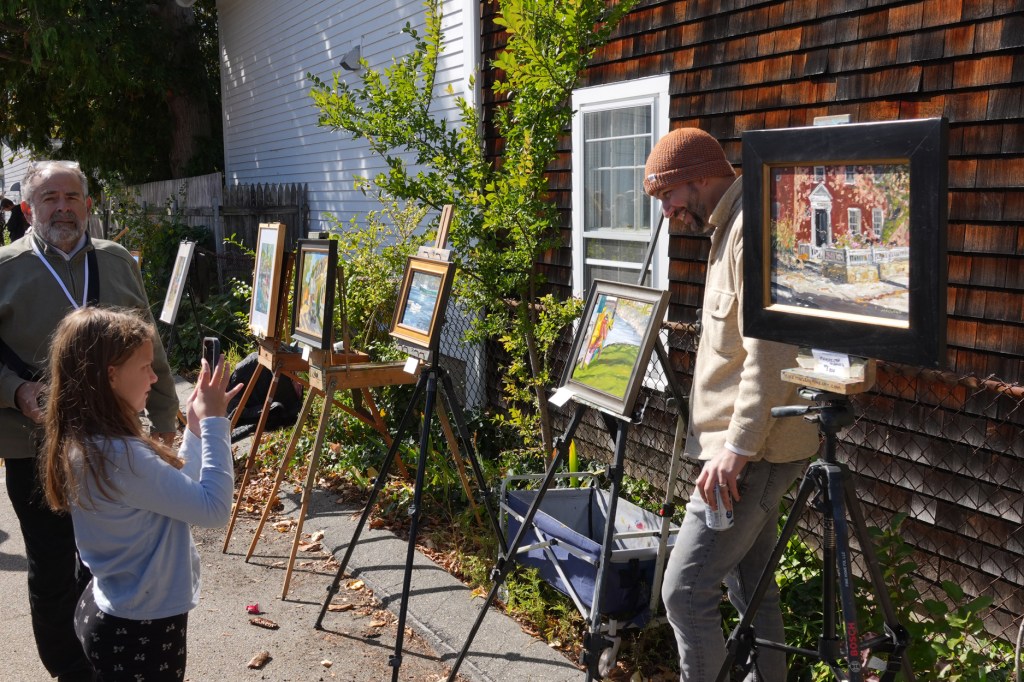
Dipali (Di), staying with us, wanted to paint a lobster still life, so I visited Joey (GMG) for live stage props.With the lobsters boiled and in place, Dipali laid out her painting.The finished composition. Anne-Lise and I enjoyed the lobsters for dinner.The total of 136 artists fanned out around downtown Manchester for the Quick Draw on the final Saturday.Some chosen locations were more precarious than others.There were plenty of photo-opportunities as well.I liked the ‘Life Vest Loaner’ station in Masconomo Park.And so did Jack, along with a young admirer, at the guest artists judging.Gloucester’s acclaimed Jeff Weaver was the overall Awards Judge for CAPA 2026.Vanesa took home 1st place for the Quick Draw guest artists.And Charlie was the winner among the weeklong juried participants.The judging, Gala, and art sale for the 36 artists took place at the North Shore Arts Association.
Spread The GMG Love By Sharing With These Buttons:
I am taking liberty with my Good Morning Gloucester postings, and leaving Cape Ann for the Pacific Northwest, to cruise the Columbia and Snake Rivers.
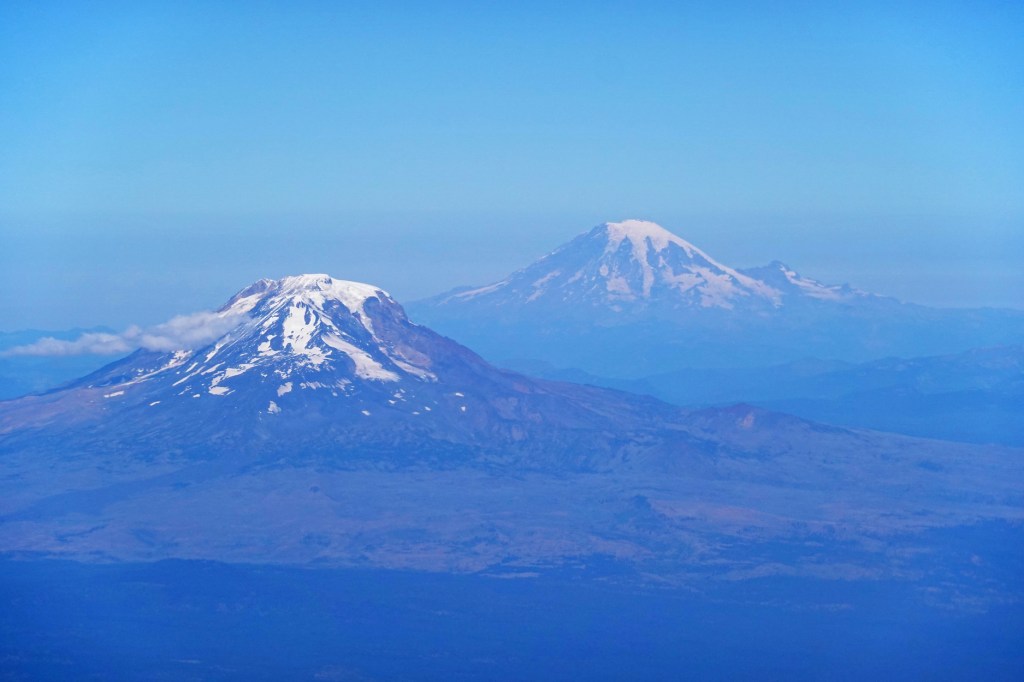
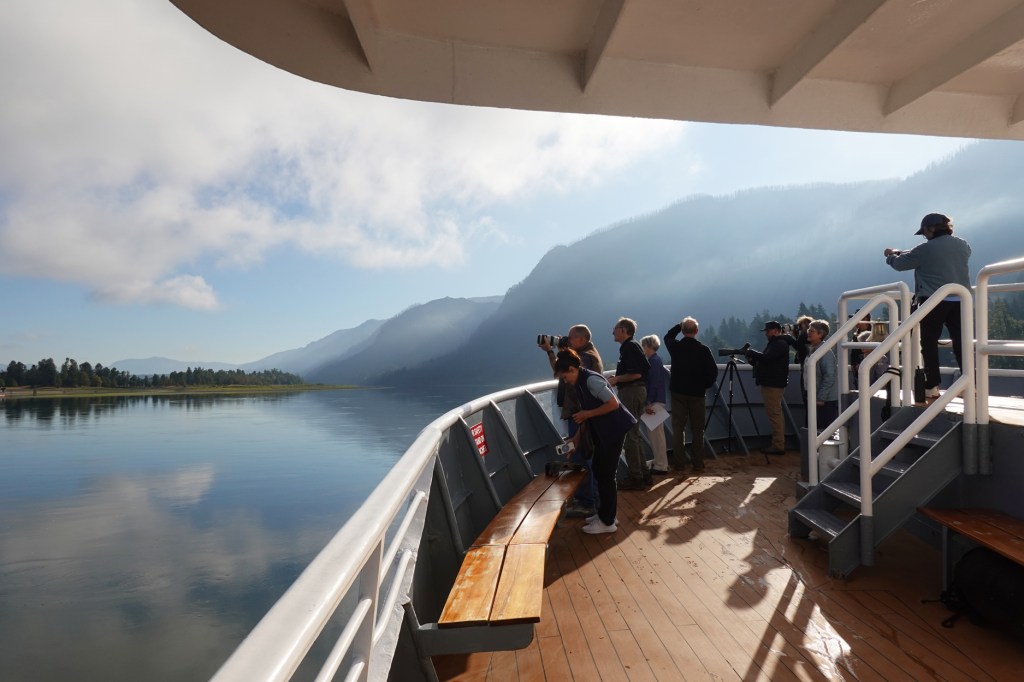
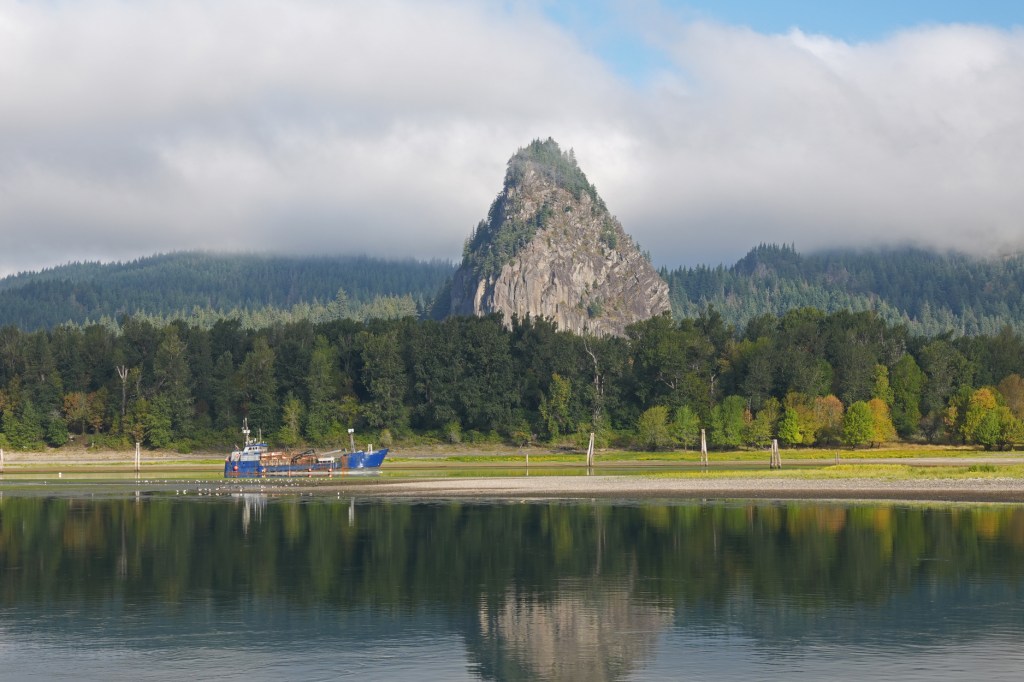
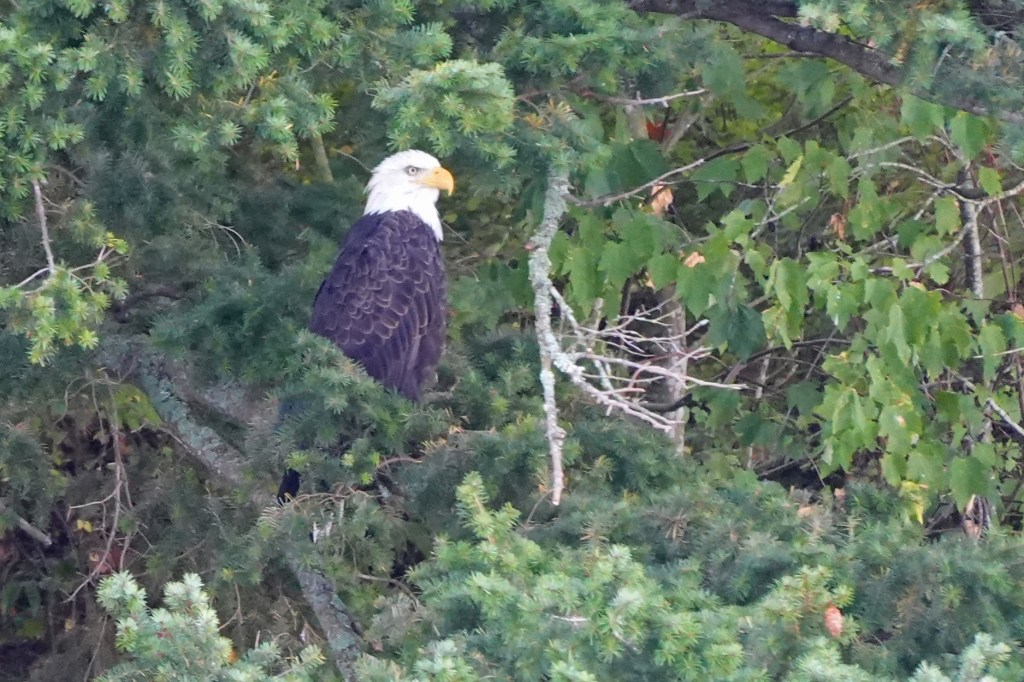
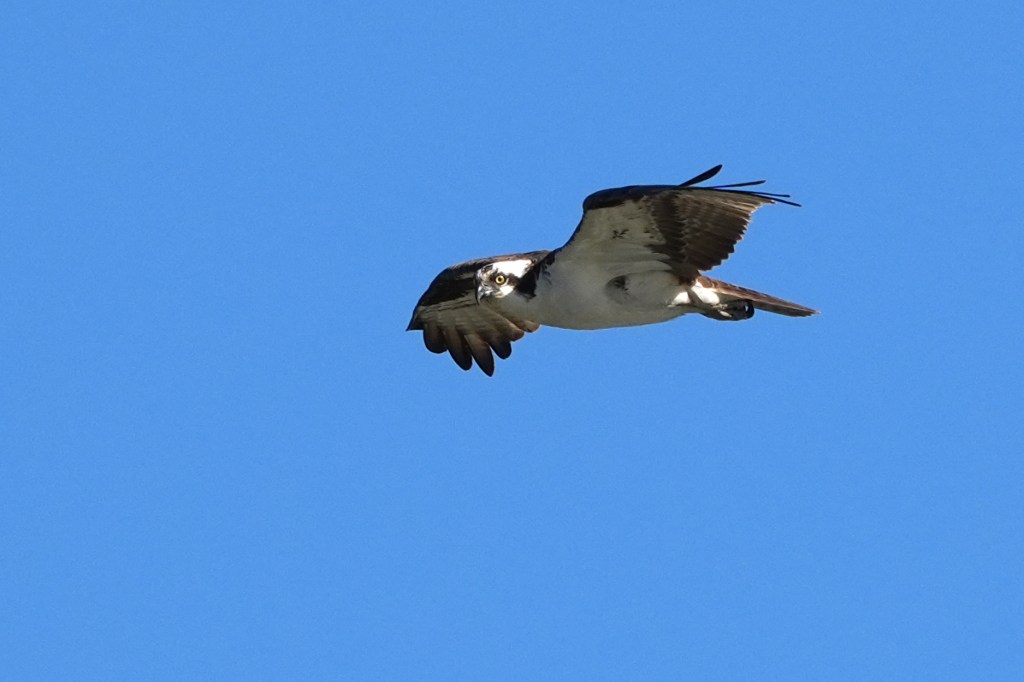
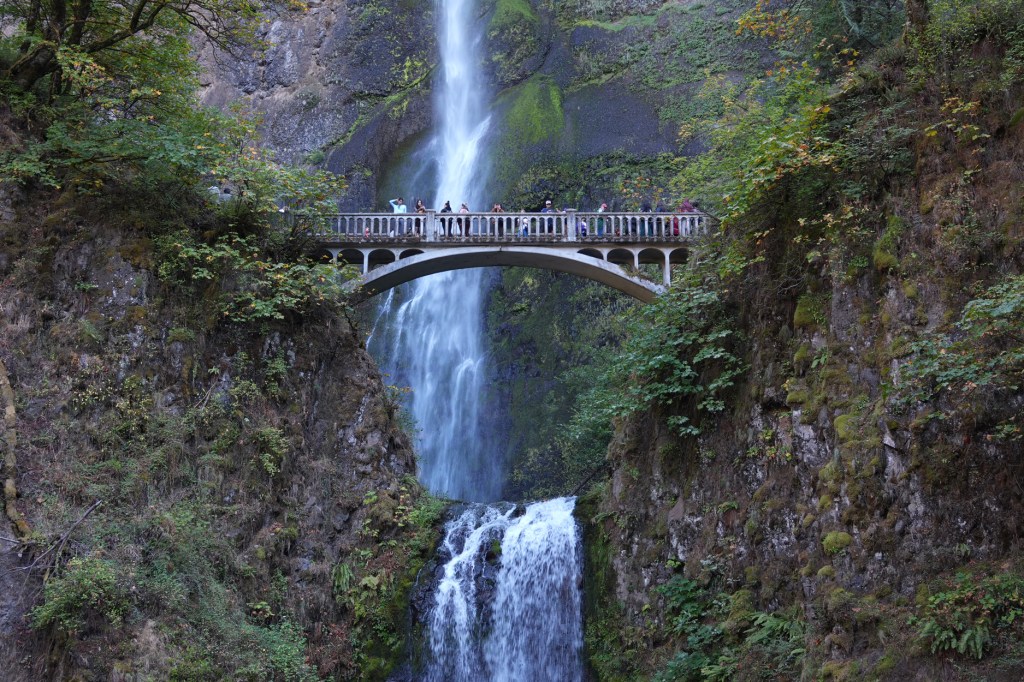
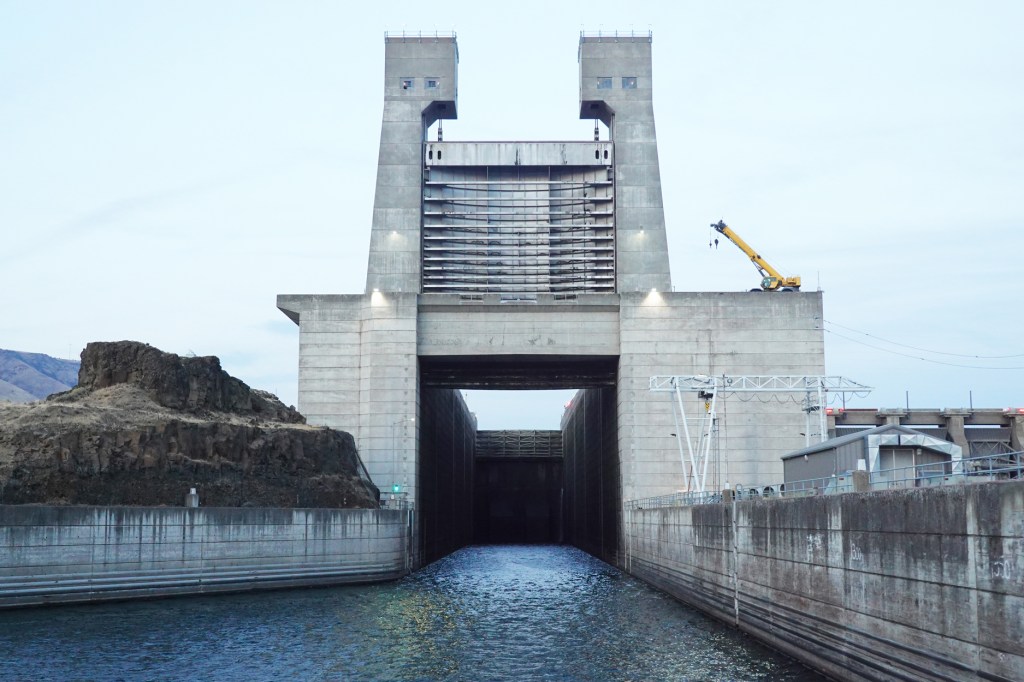
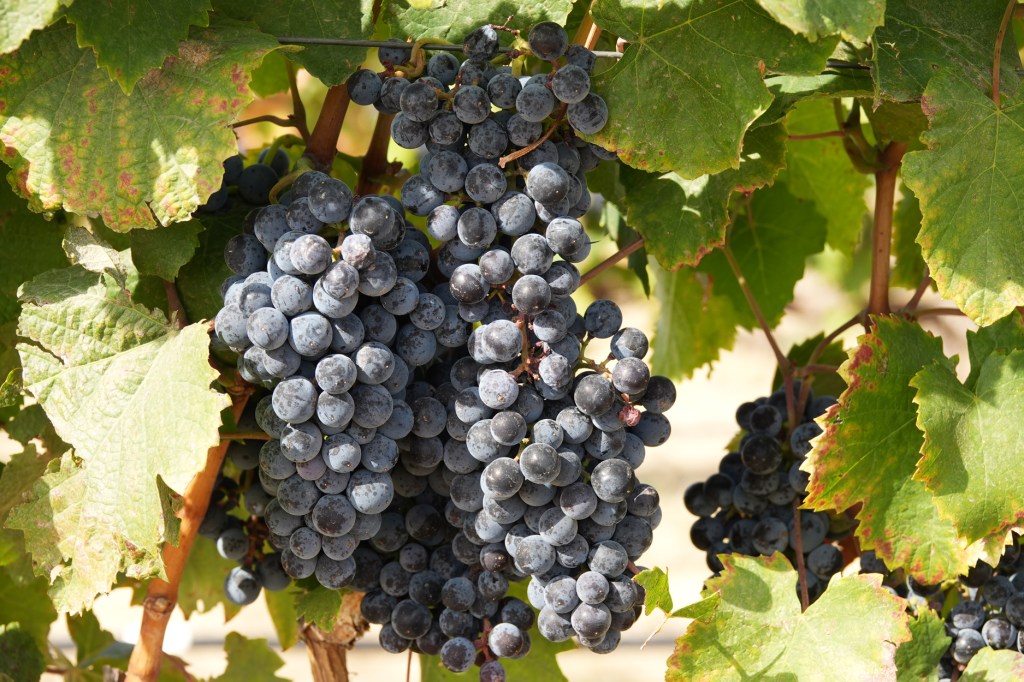
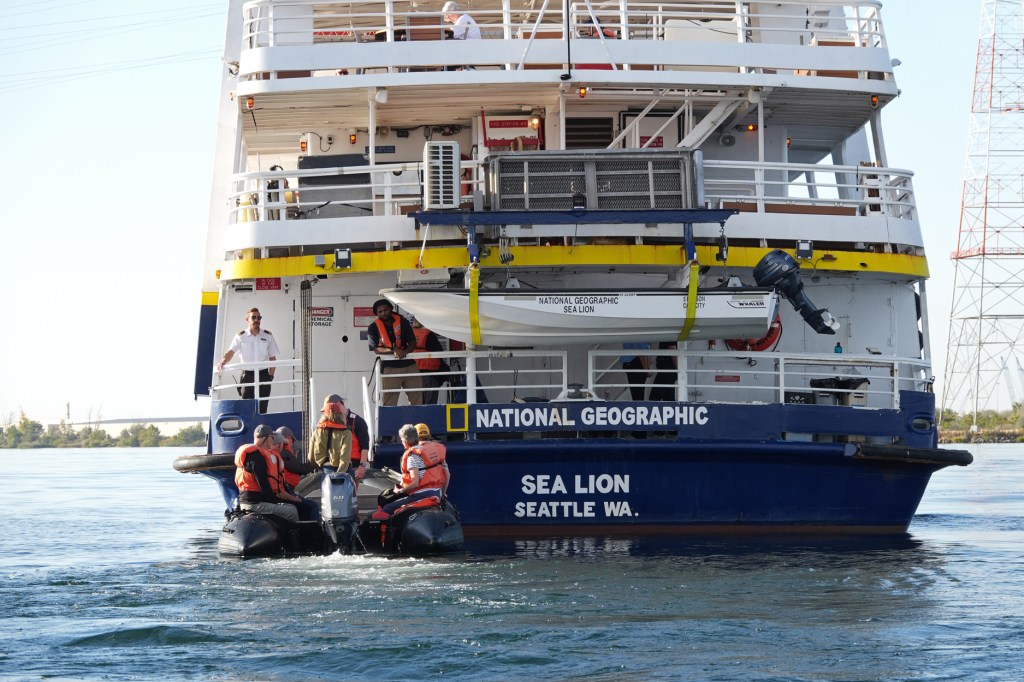
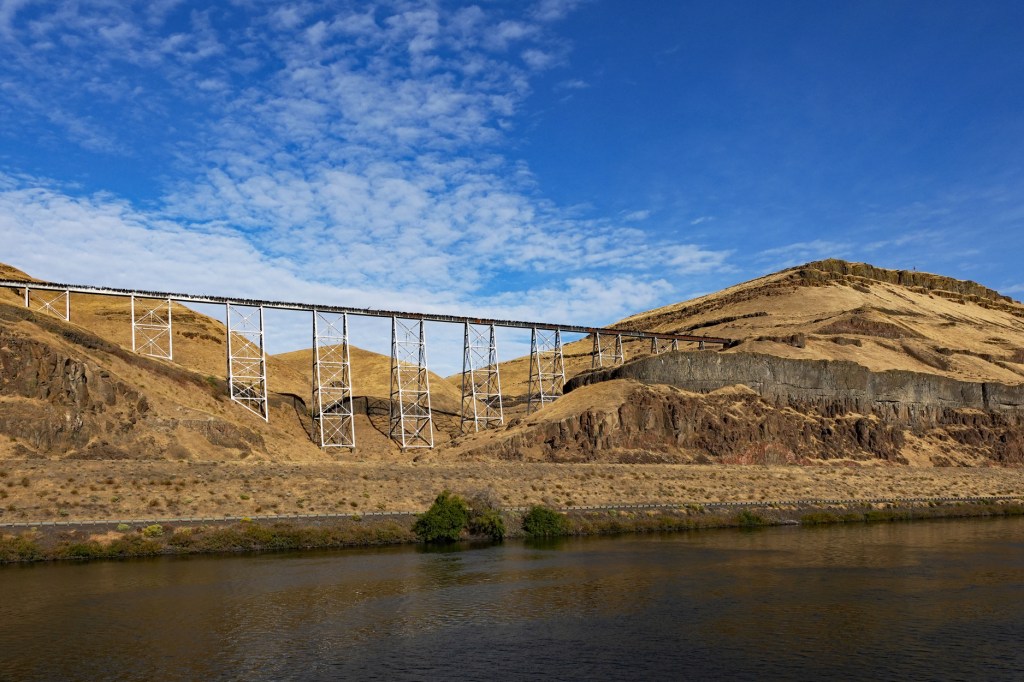
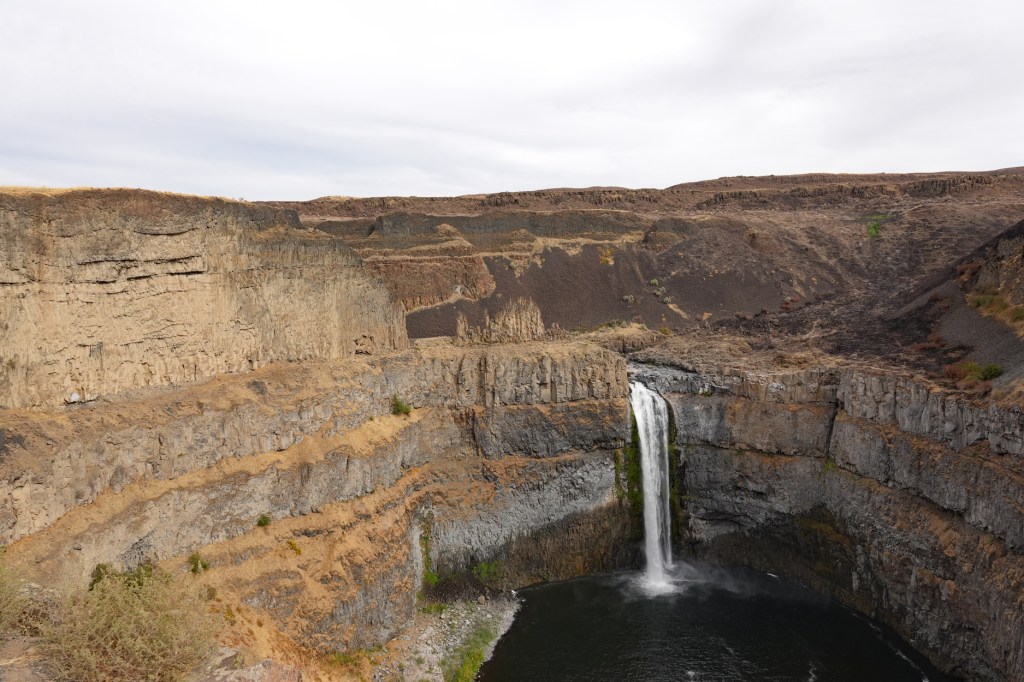
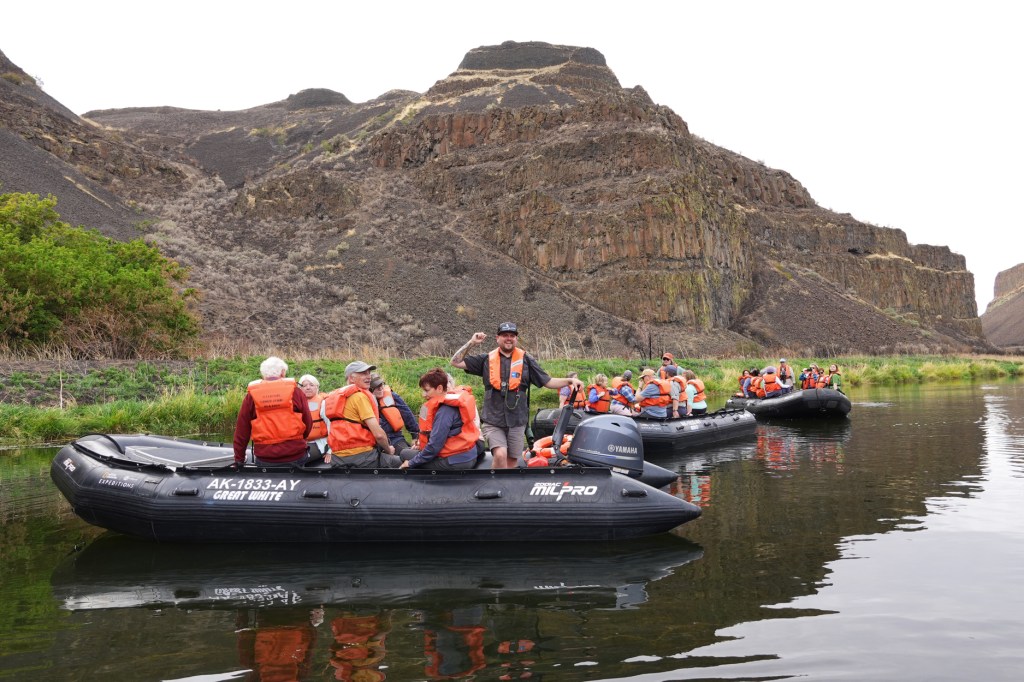
Flying into Portland, Oregon. Mt St Helens and Mt Adams are northeast of the city.Setting out eastward up the Columbia River before breakfast, on our quiet first morning.Climbing Beacon Rock was the most challenging of the 3 hikes offered onshore today.A Bald Eagle in the trees, along the shore.An Osprey supervised passage through our first lock at Bonneville Dam.Multnomah Falls is the most popular destination, on the Oregon side of Columbia Gorge.We got familiar with ‘guilloutine” locks where the downstream gate drops from above. On the upstream side (beyond), the gate doesn’t swing open when the lock is flooded, but vanishes to the bottom of the river.Washington and Oregon each have about 1,000 wineries, stretching east from the Pacific into Idaho, where our cruise ended. We had regular tastings at vineyards and on our National Geographic ship.Zodiacs were our transportation to shore events and to explore smaller rivers, like the Palouse.It was drier in eastern Washington State, where we branched onto the Snake River, which experienced drought and wildfires during the summer.Palouse Falls, up the narrowing Palouse River.Last exploration of nesting areas and 11,000 year old Indigenous habitation on the Palouse River.
Spread The GMG Love By Sharing With These Buttons:
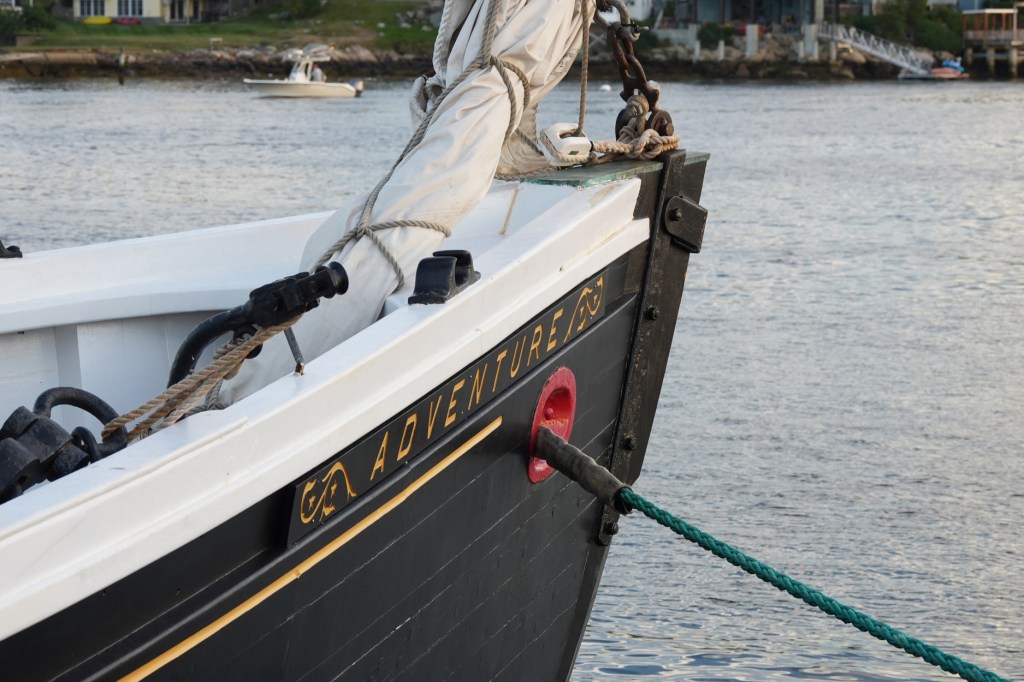
Gloucester’s Adventure is one of a couple of remaining knockabout (no bowsprit, for safety) Grand Banks fishing schooners. Yesterday on 9/16/26 she celebrated her 100th birthday, born a century ago in Essex.
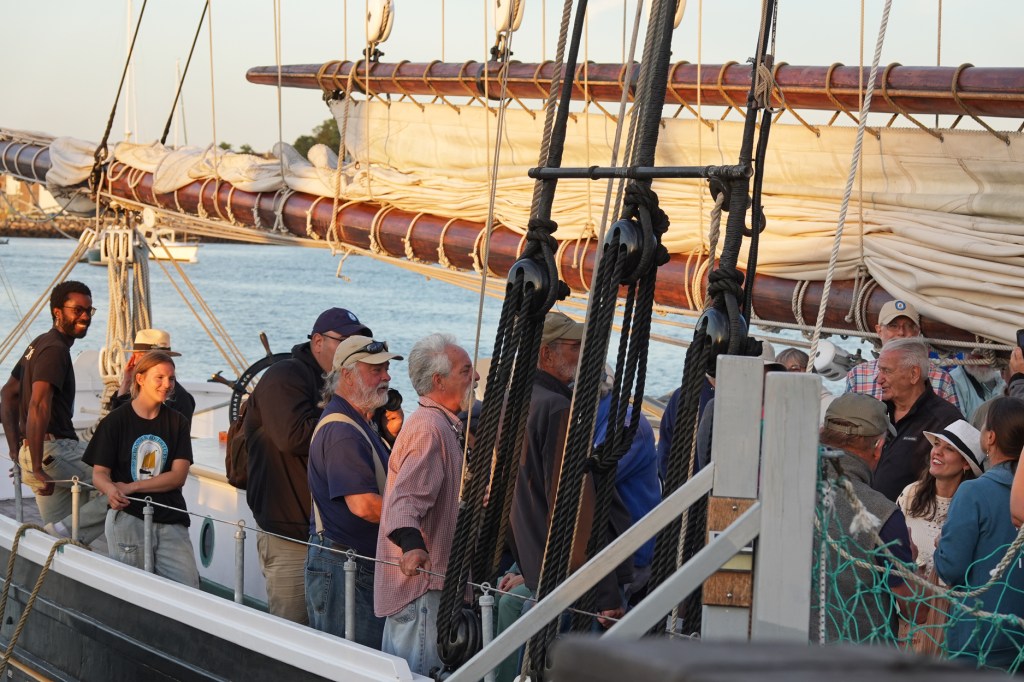
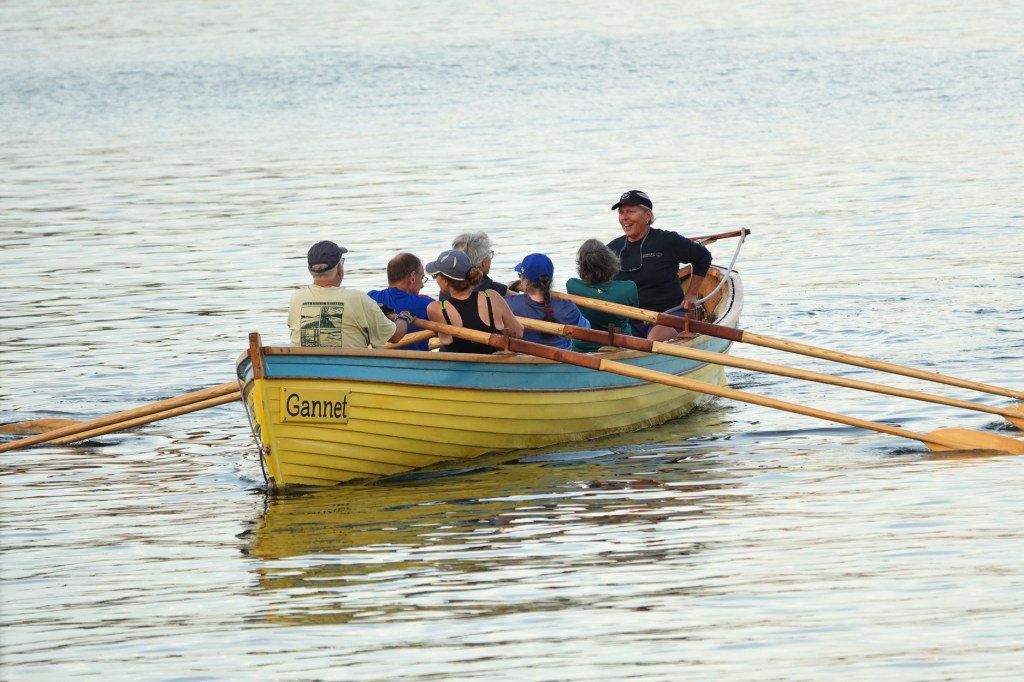
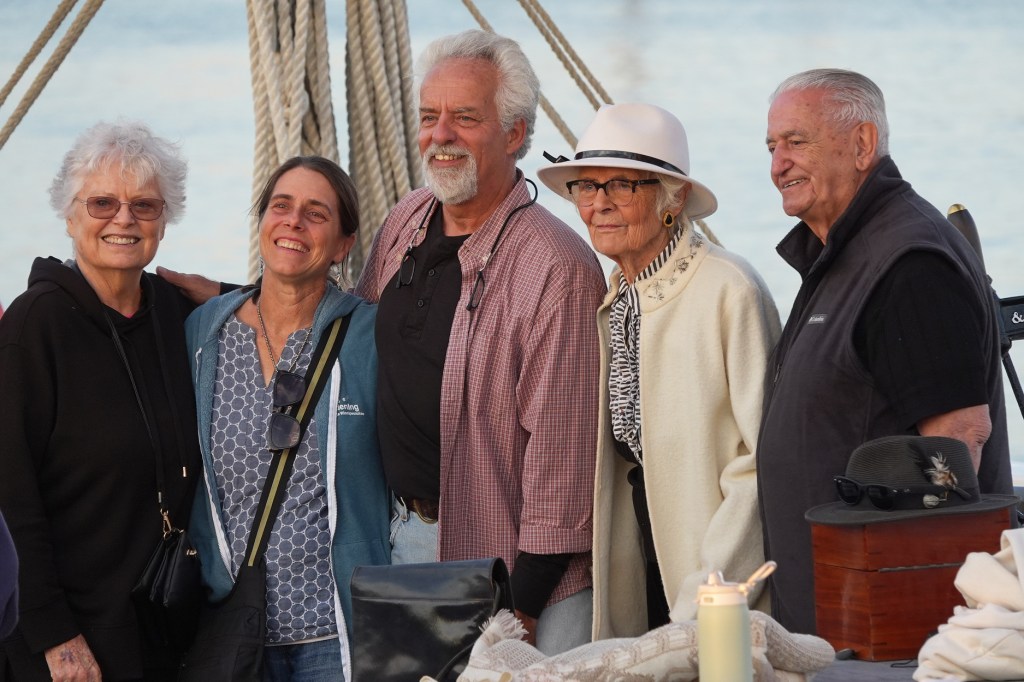
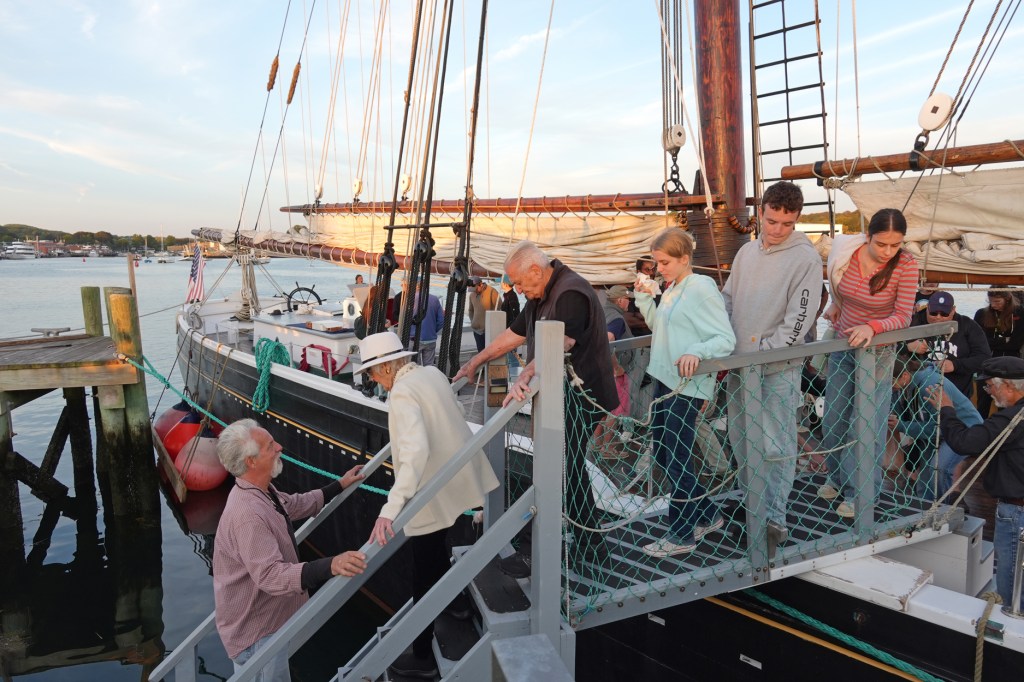
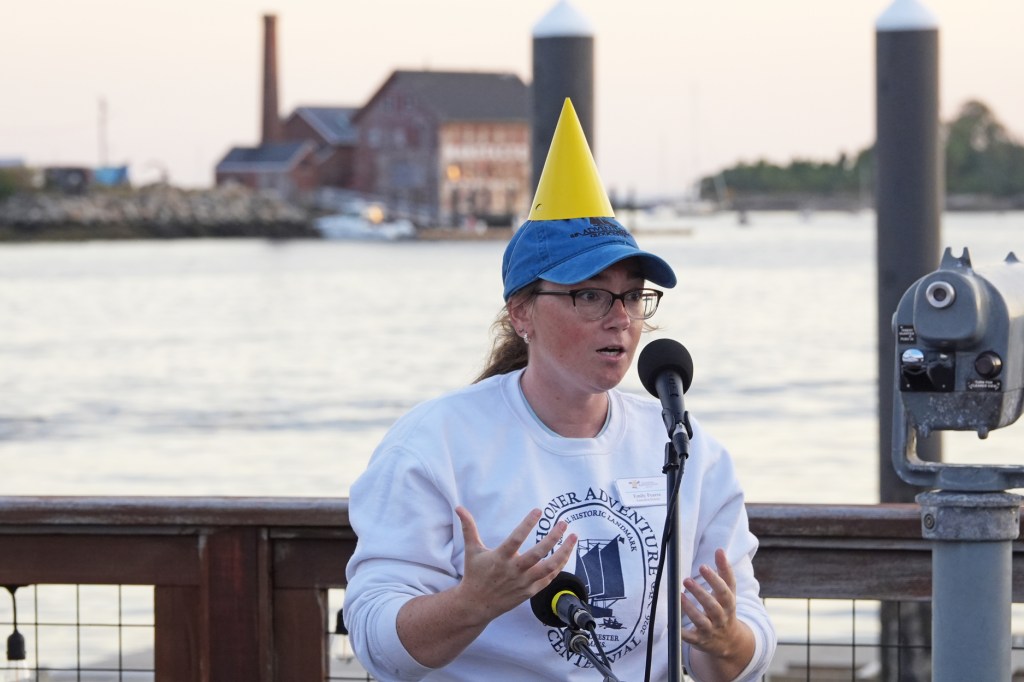
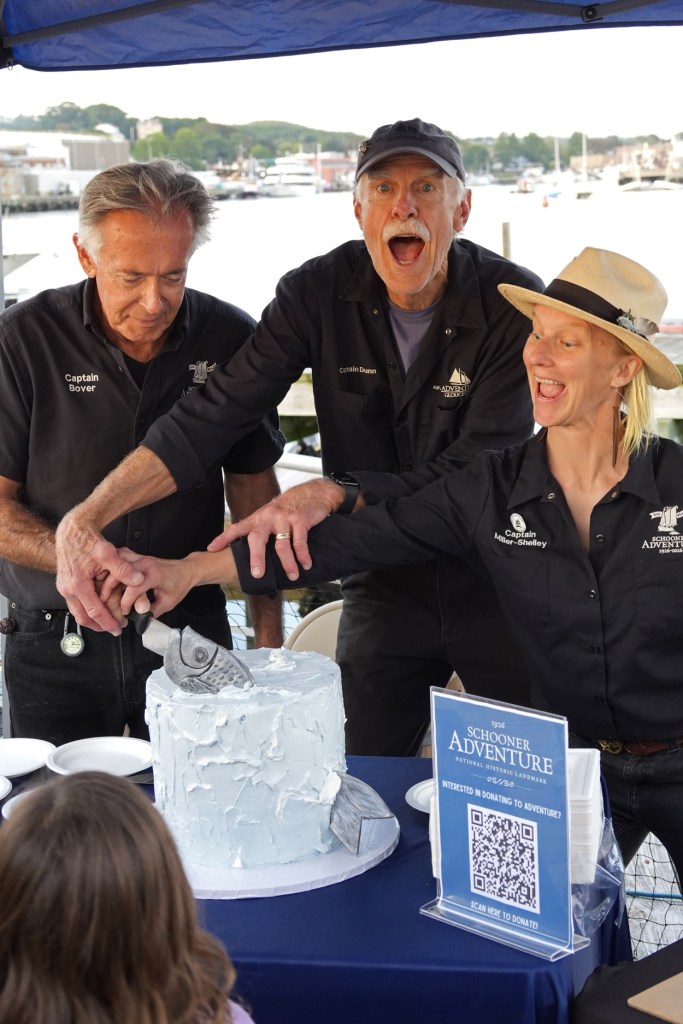
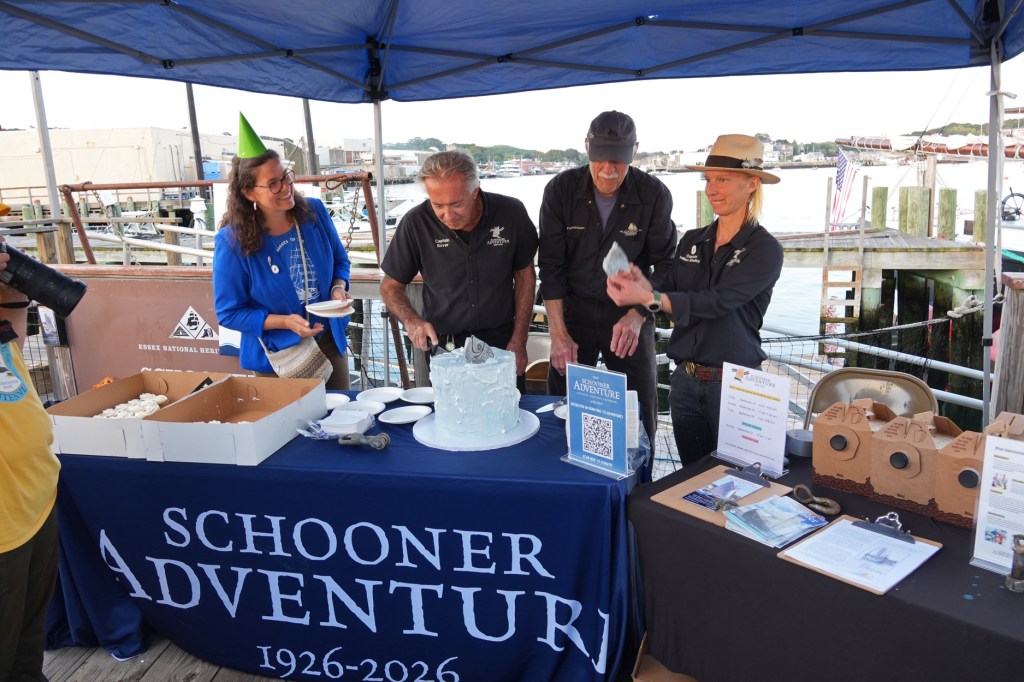
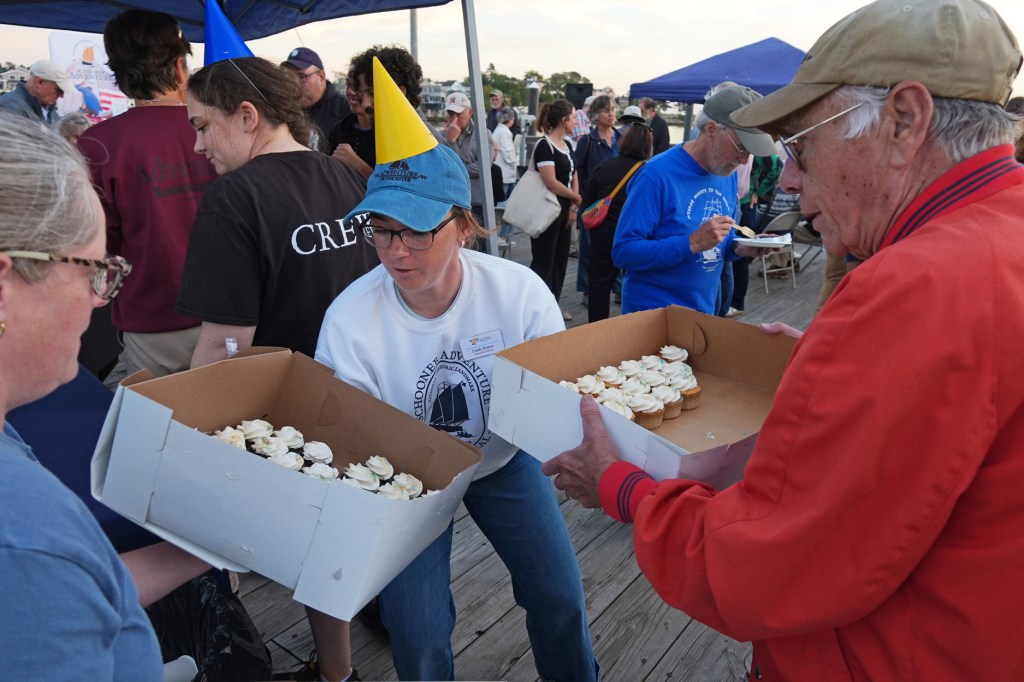
In 1988 we witnessed Adventure‘s triumphant and permanent return to Gloucester.Since then her rig, shown here with staysails, has been shortened and her hull painted black.Returning yesterday to her home at Maritime Gloucester, after a very special sail (L).‘Three Sheets to the Wind’ performed sea chanties and a particular song about Adventure.Safely docked for her celebration. Adventure is a National Historic Landmark.Some of the crew and guests onboard during the sail.Gloucester Gig Rowers in Gannet, passing by for a look.‘Dignitaries’ congregating around the helm before coming ashore.Disembarking for the birthday party.Schooner Adventure Executive Director Emily Pearce welcoming all to the historic event.Cutting the birthday cake. It was created by Gloucester’s Cake Ann and featured a sacred cod.Professionally cut half way down at first. We were all anxiously awaiting a slice.Emily carefully balanced boxes of accompanying cupcakes to pass around for those who couldn’t wait.
Spread The GMG Love By Sharing With These Buttons:
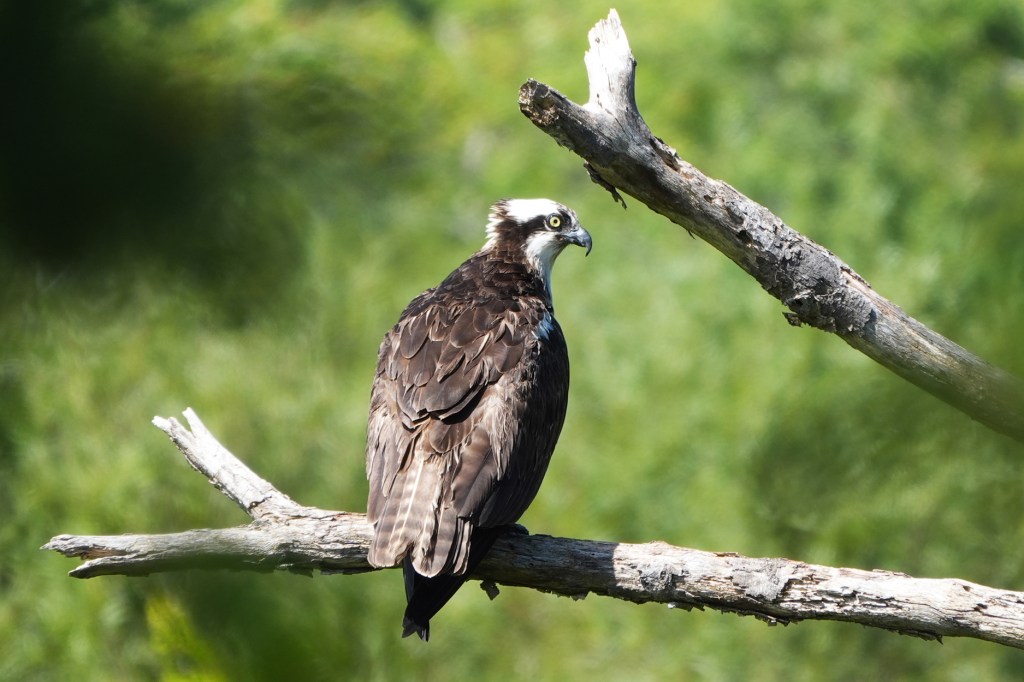
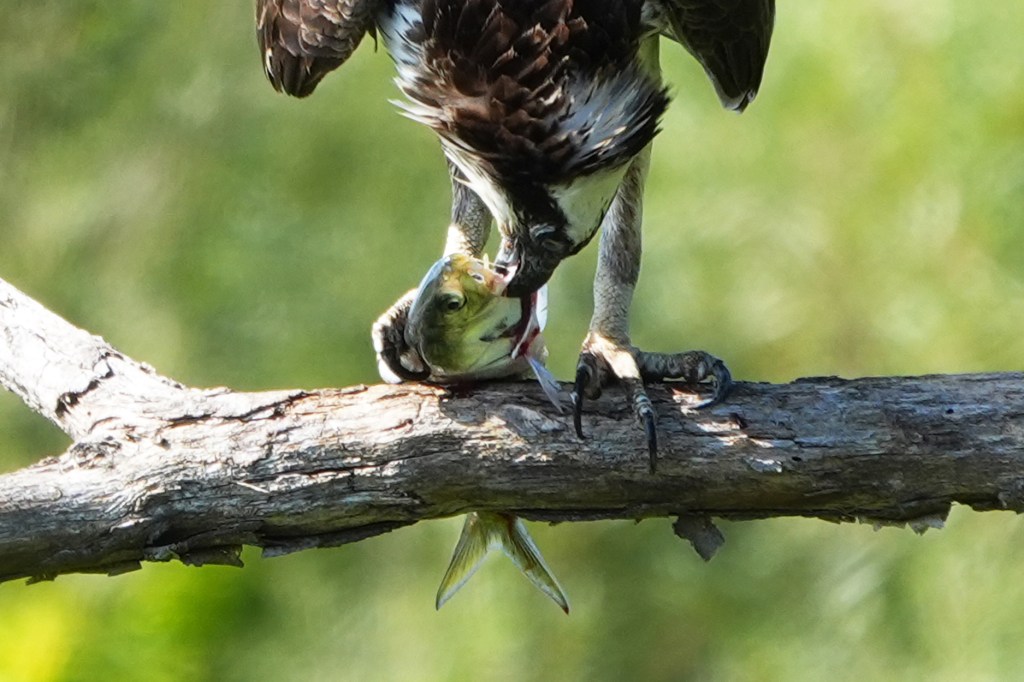
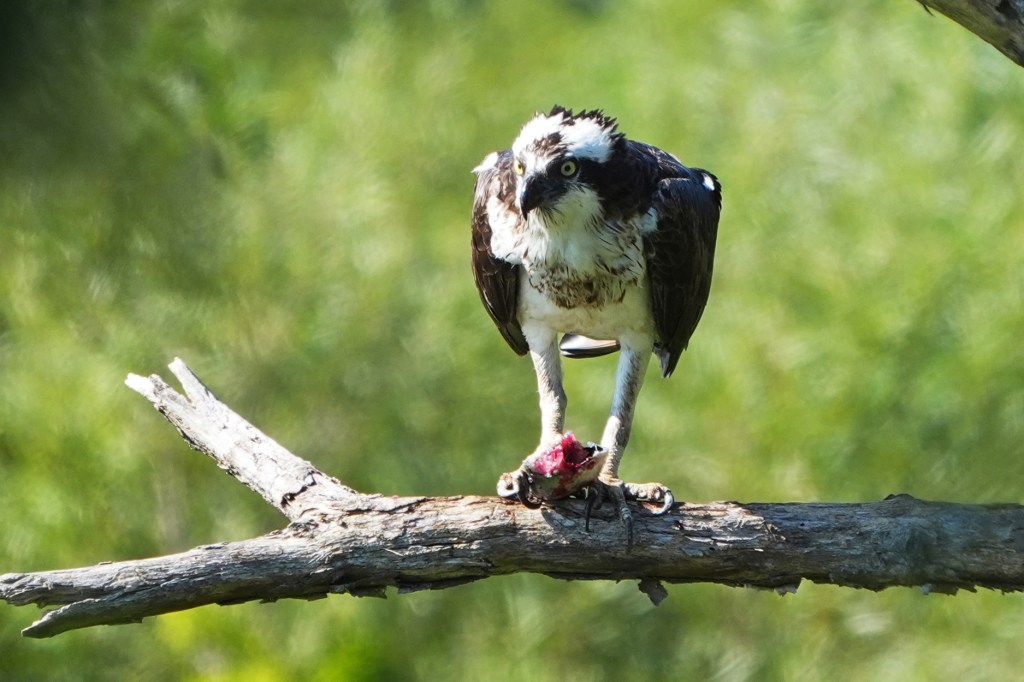
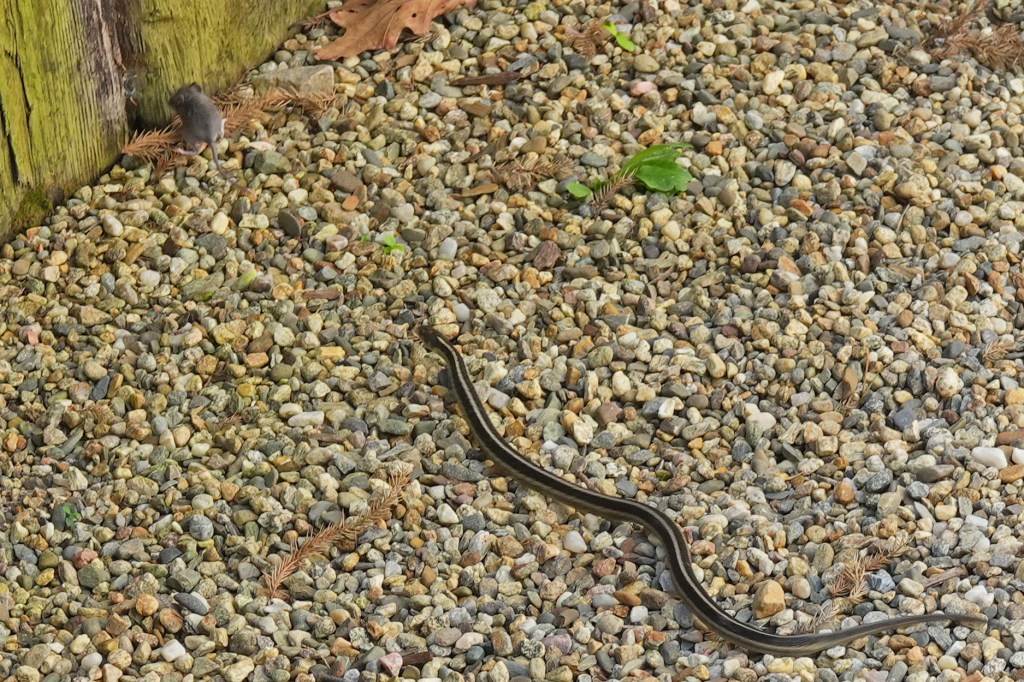
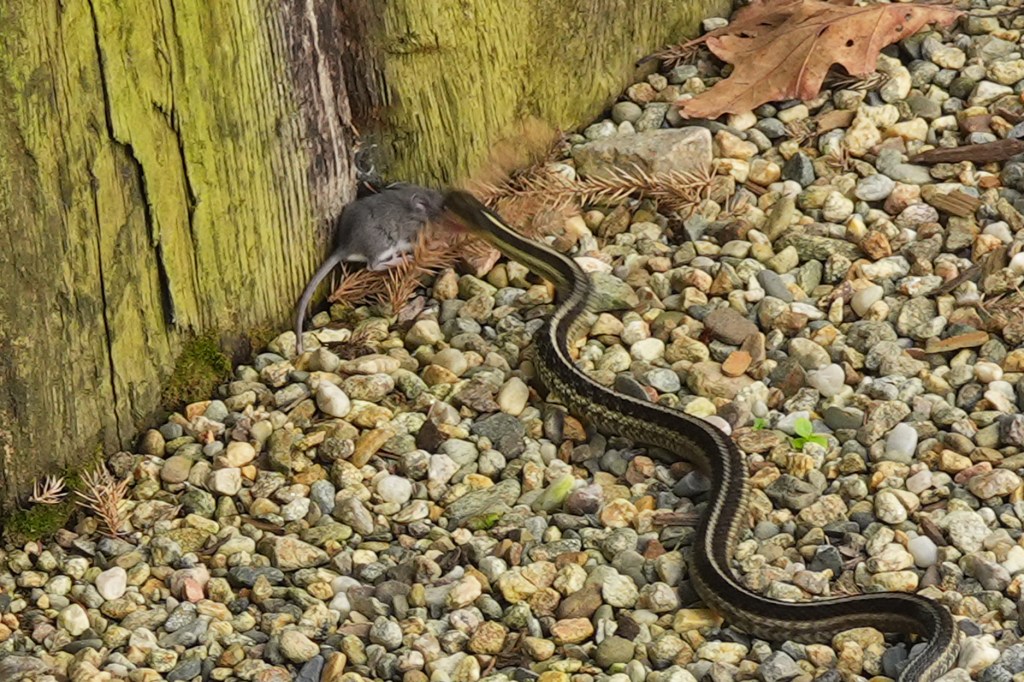
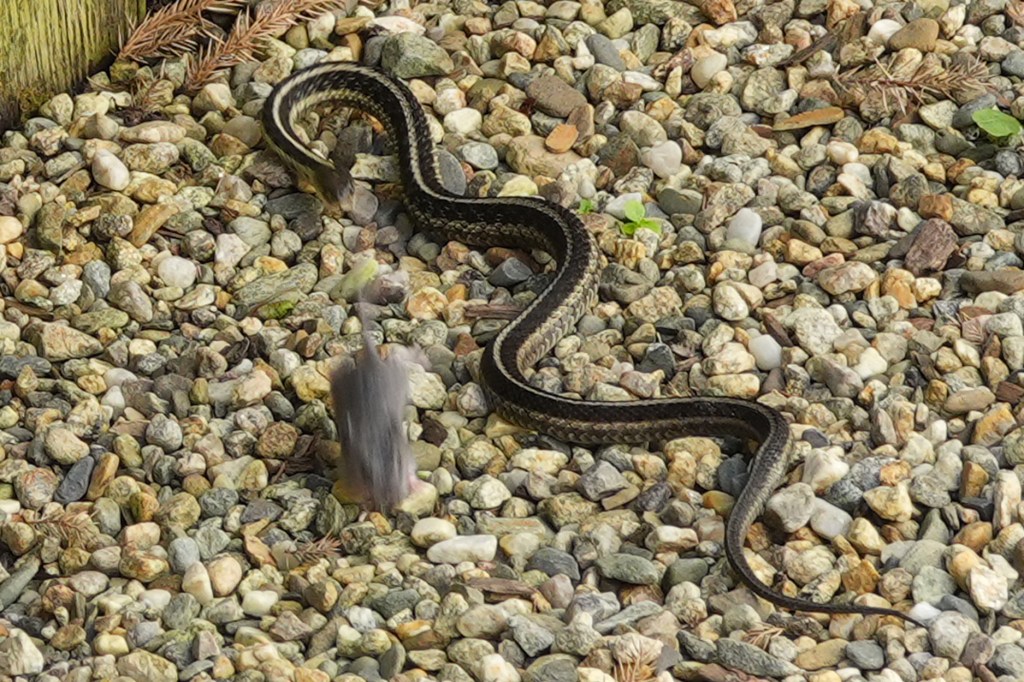
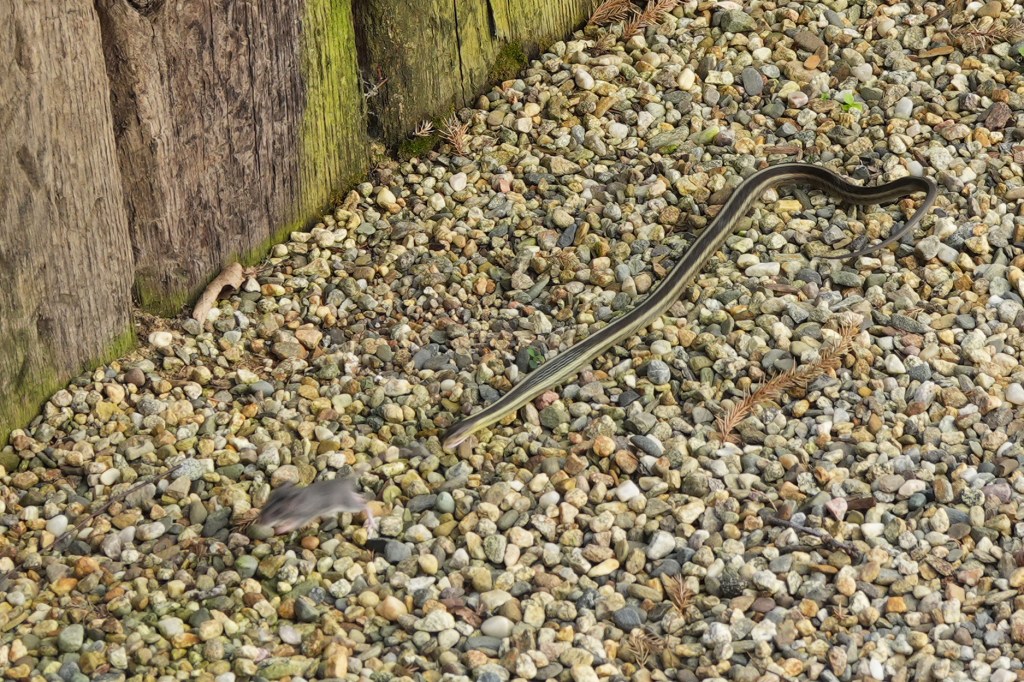
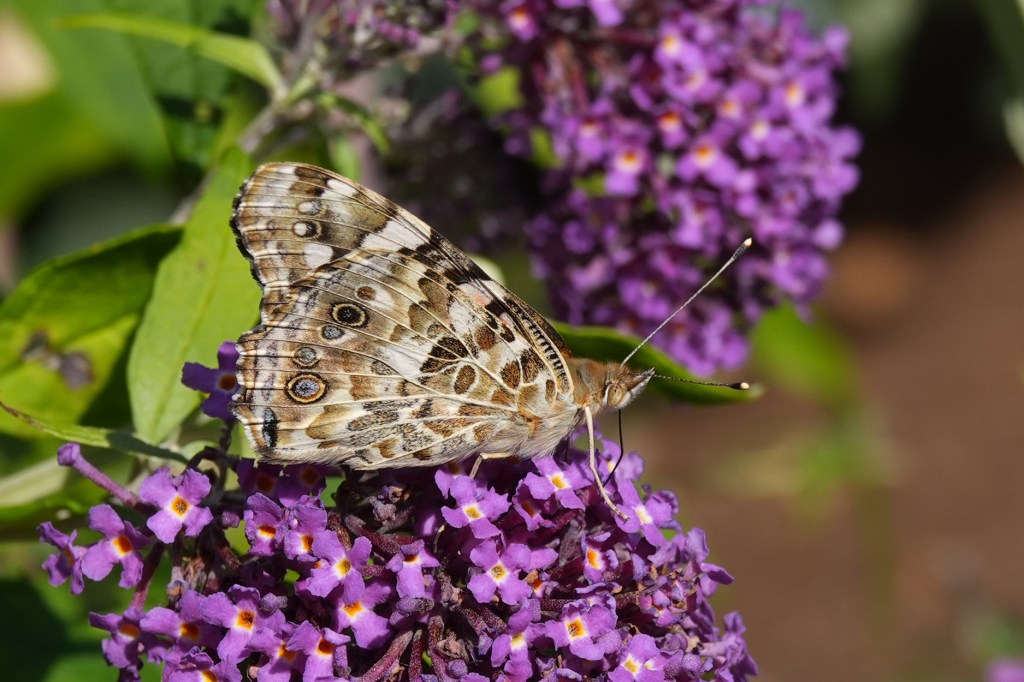
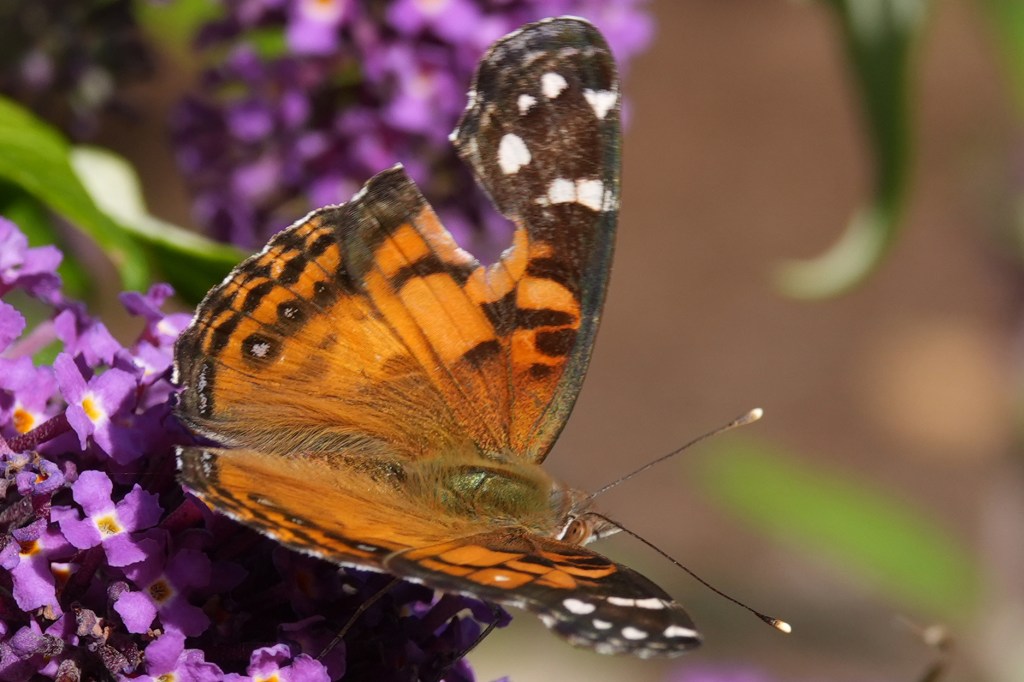
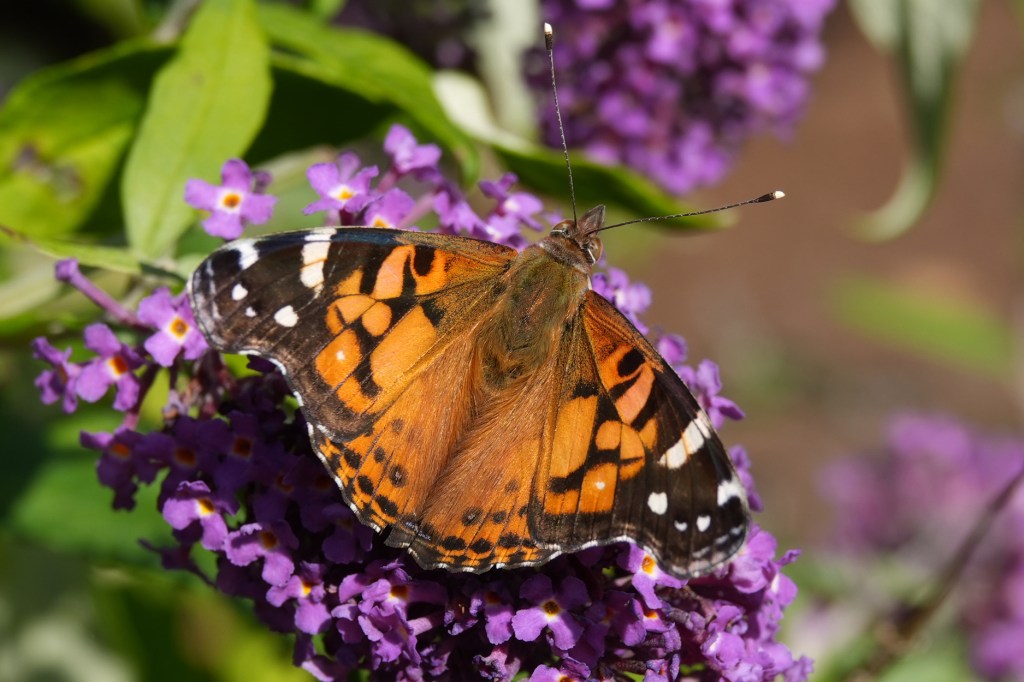
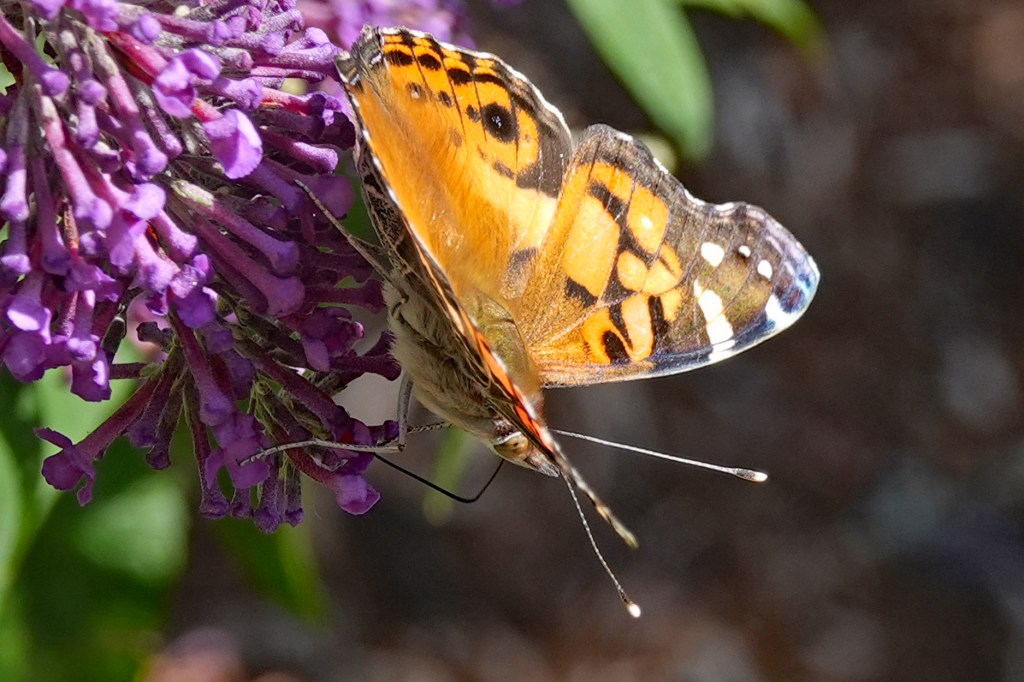
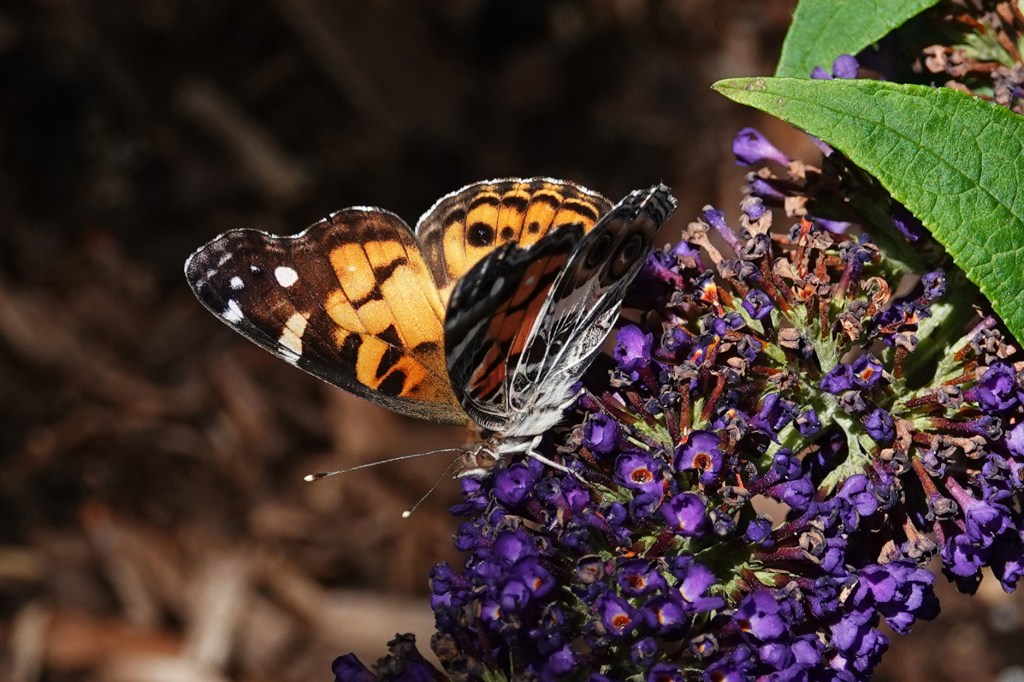
A young Osprey has taken over Hank (The Great Blue) Heron’s favorite branch near our house.It departed and came back with a fish that it promptly devoured.It could be one of Annie’s and Squam’s kids, Sunny or Stormy (seen on Essex Greenbelt’s Osprey cam).Returning after a walk, a Garter Snake was chasing a House Mouse at our front door.The snake headed the mouse off at a crack between RR ties, that was too narrow for the mouse.So, off in a different direction with the snake in chase.This continued until they both froze in place at a safe distance. I was betting on the mouse when we went inside.Many Painted Ladies were feeding on our butterfly bushes. Upright wing undersides provide camouflage.The open topsides are are bright like Monarchs. This butterfly is carrying on with a damaged wing.Whereas, this one has near-perfect symmetry.The proboscis (“straw”) that uncoils for the butterfly to sip nectar is pretty neat to watch.
Spread The GMG Love By Sharing With These Buttons:
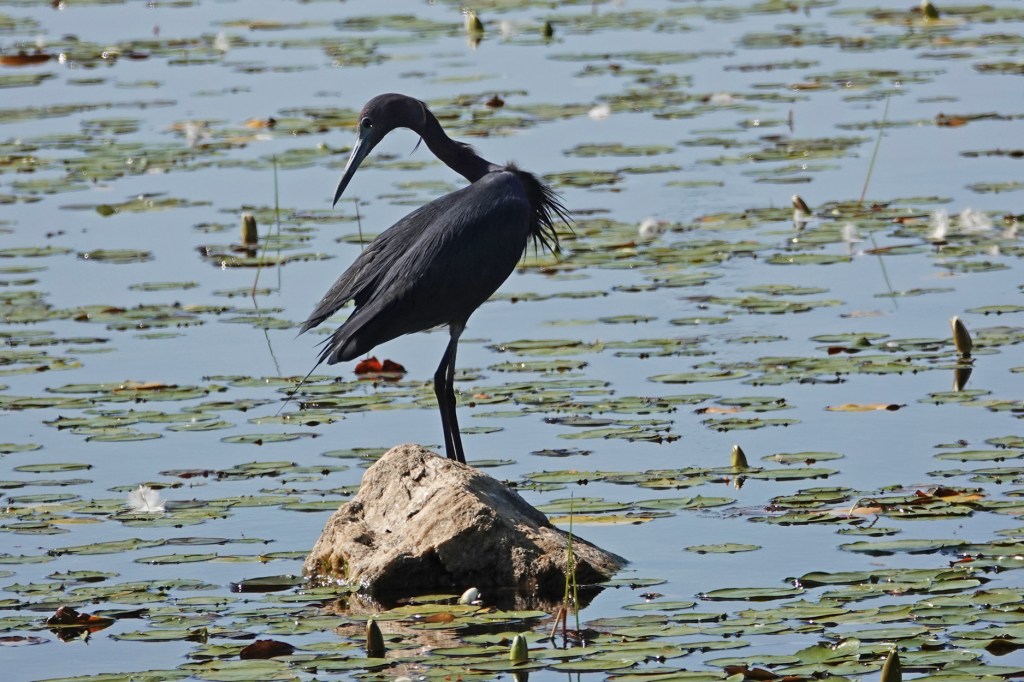
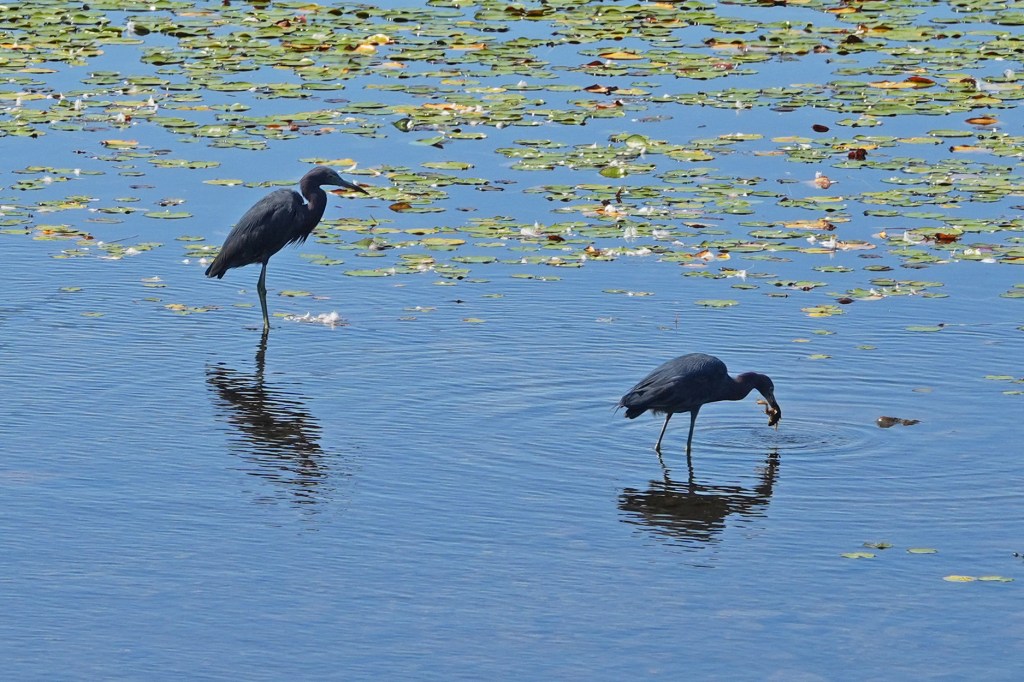
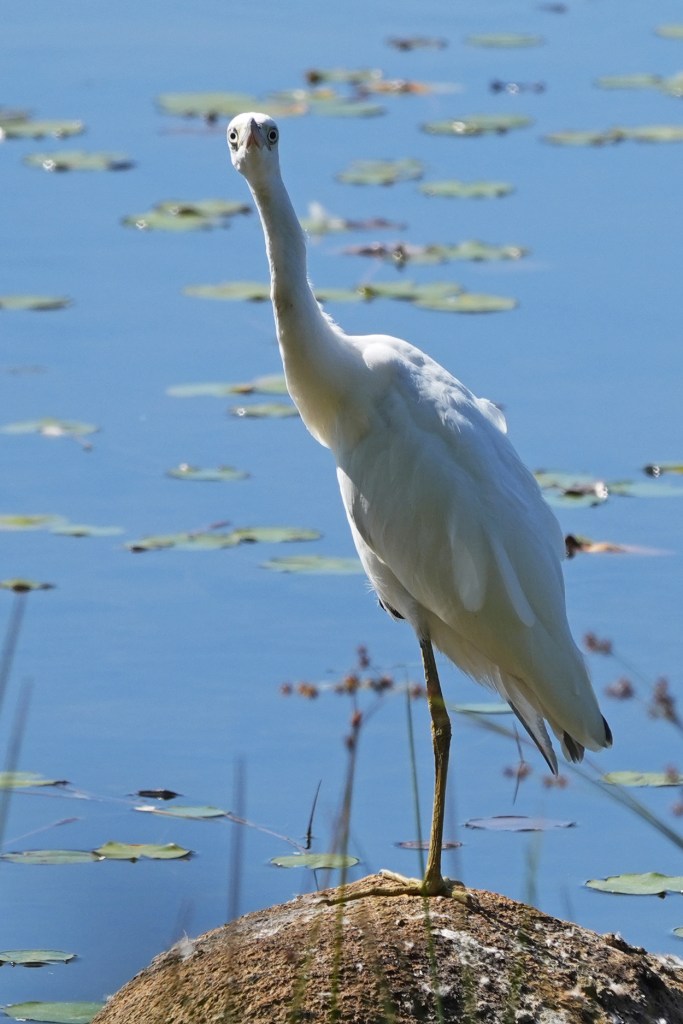
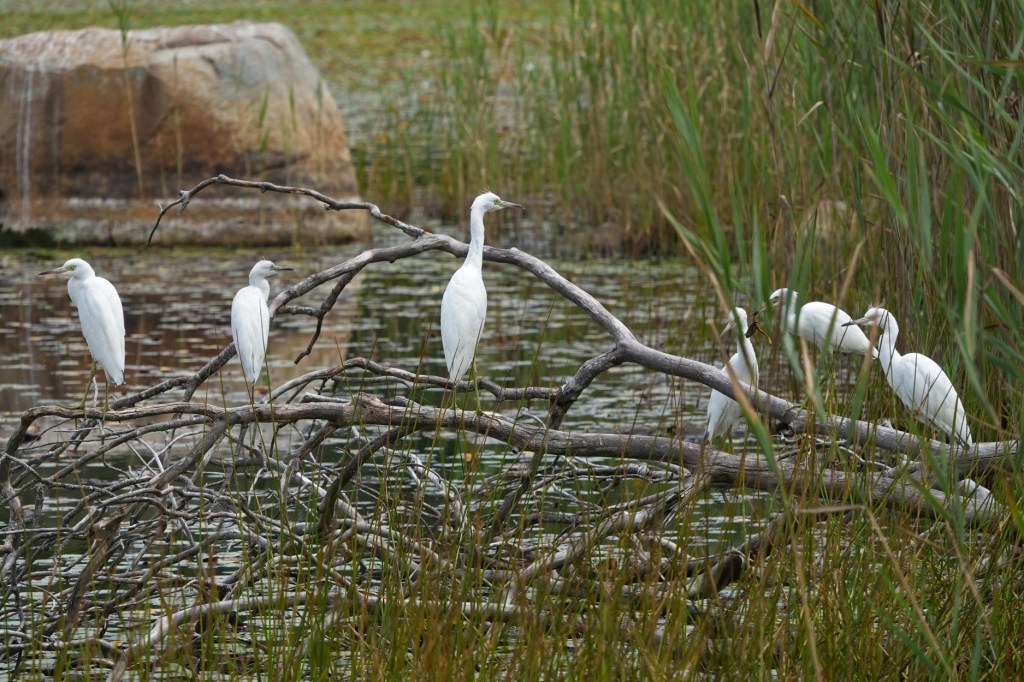
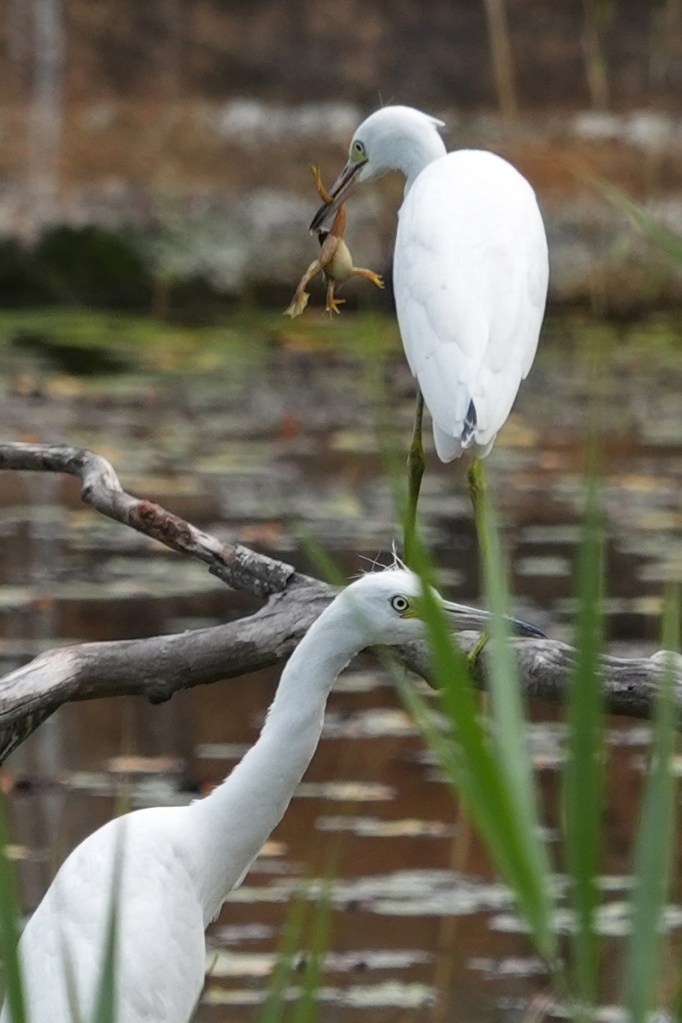
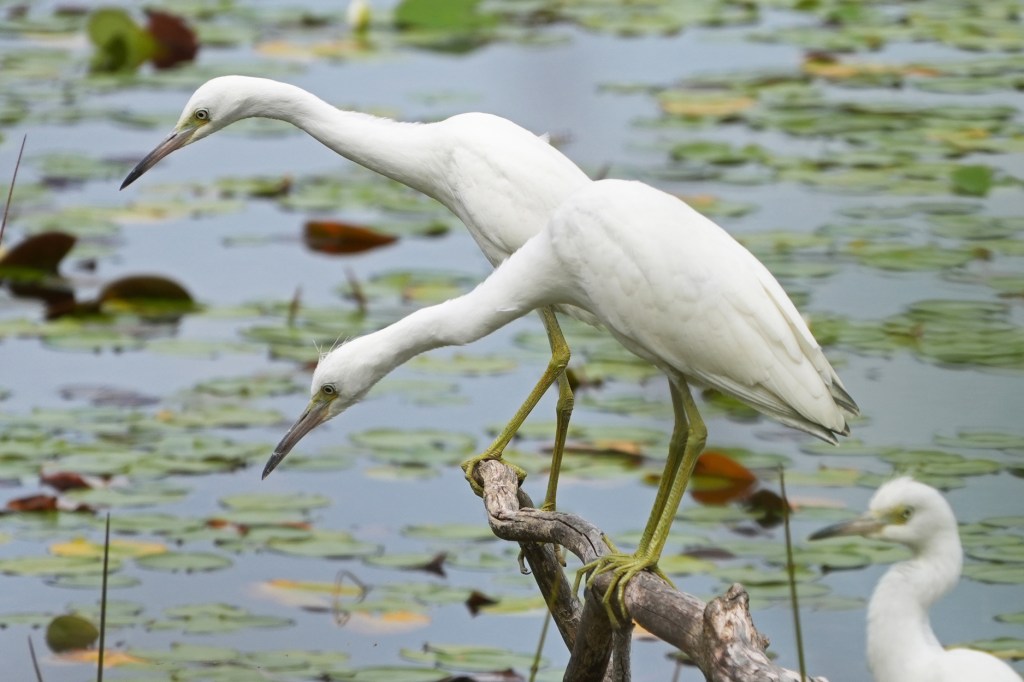
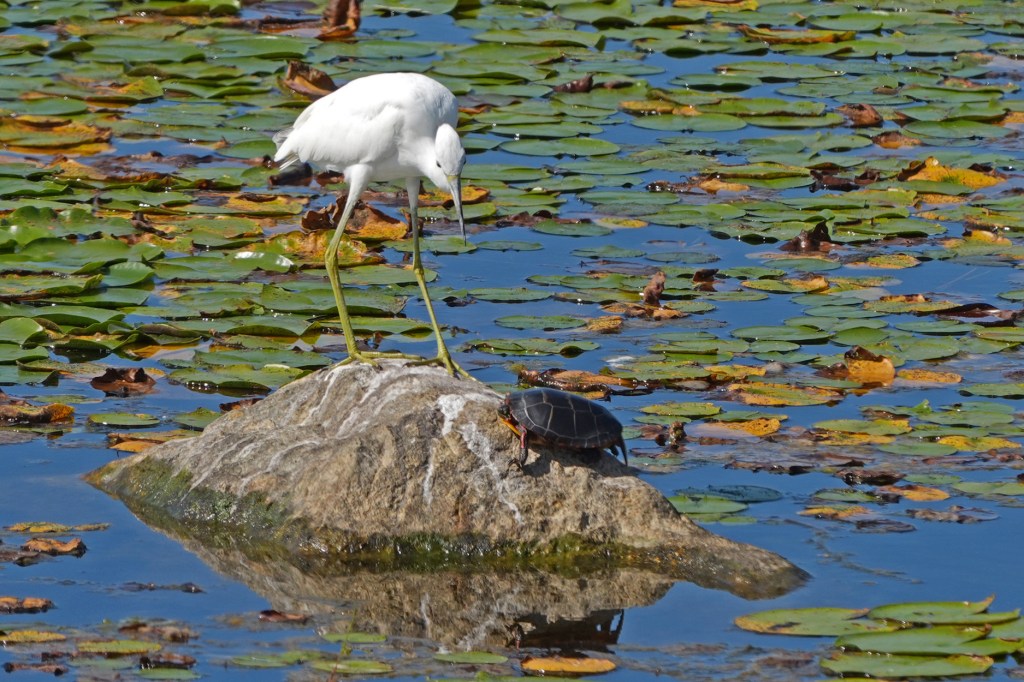
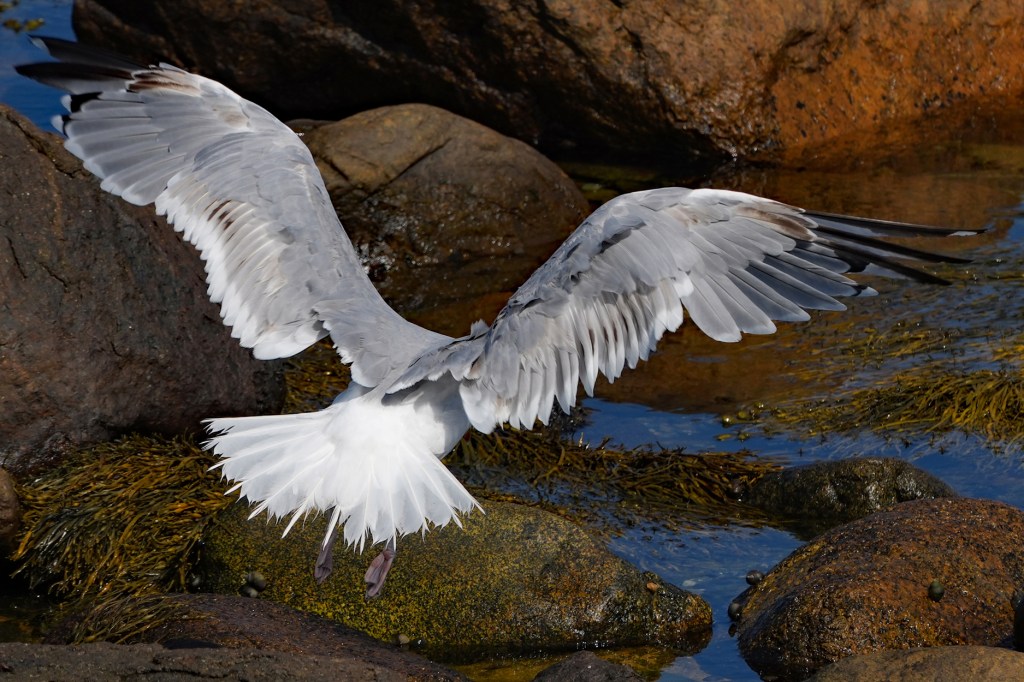
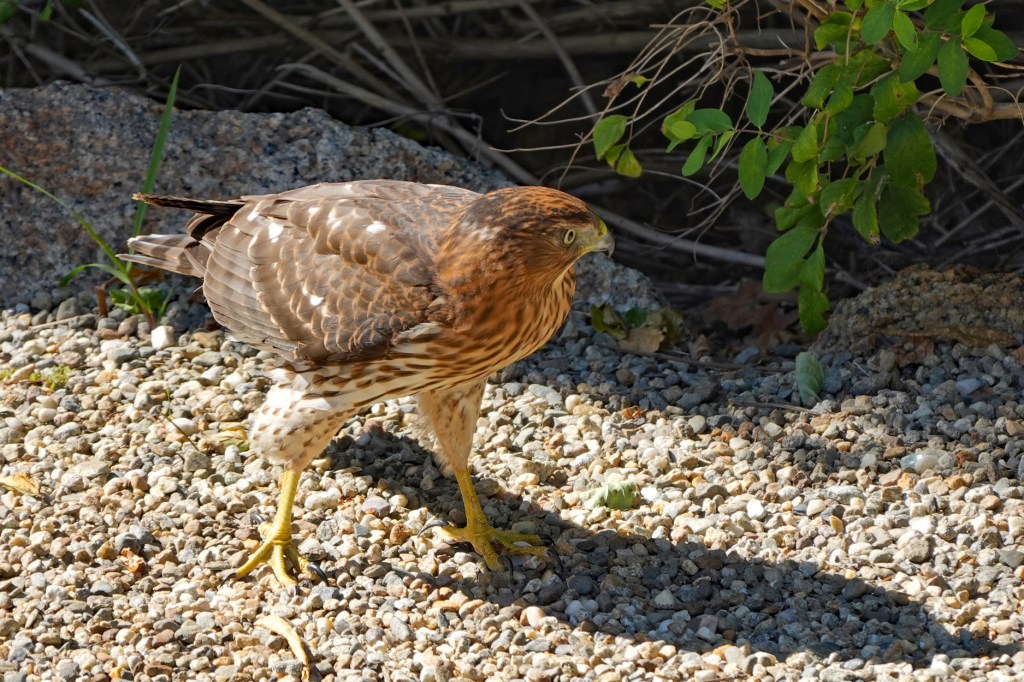
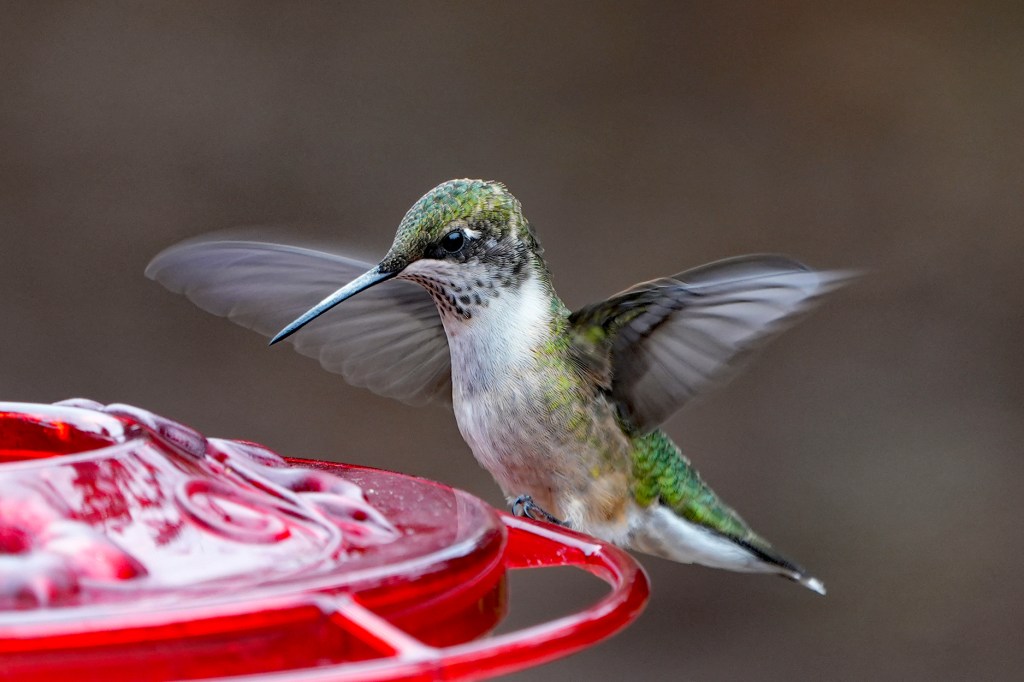
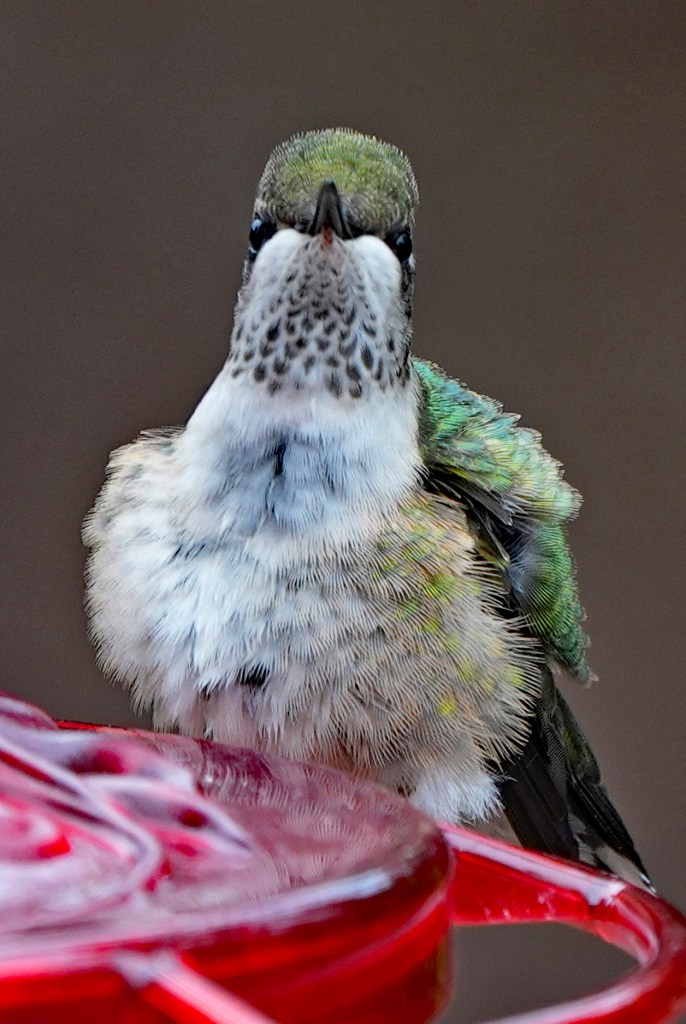
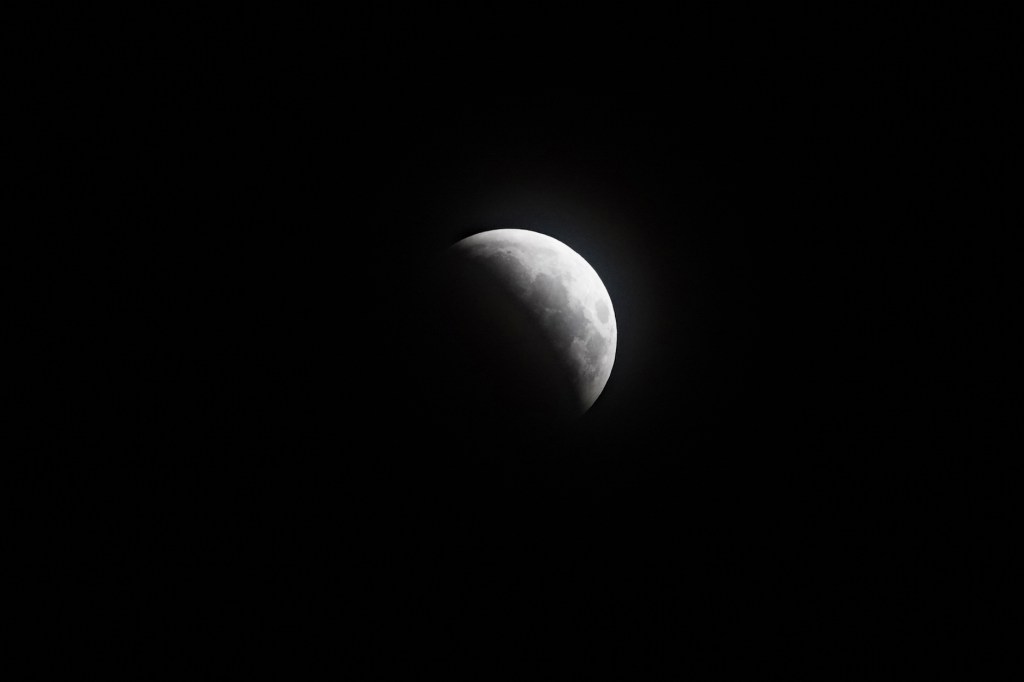
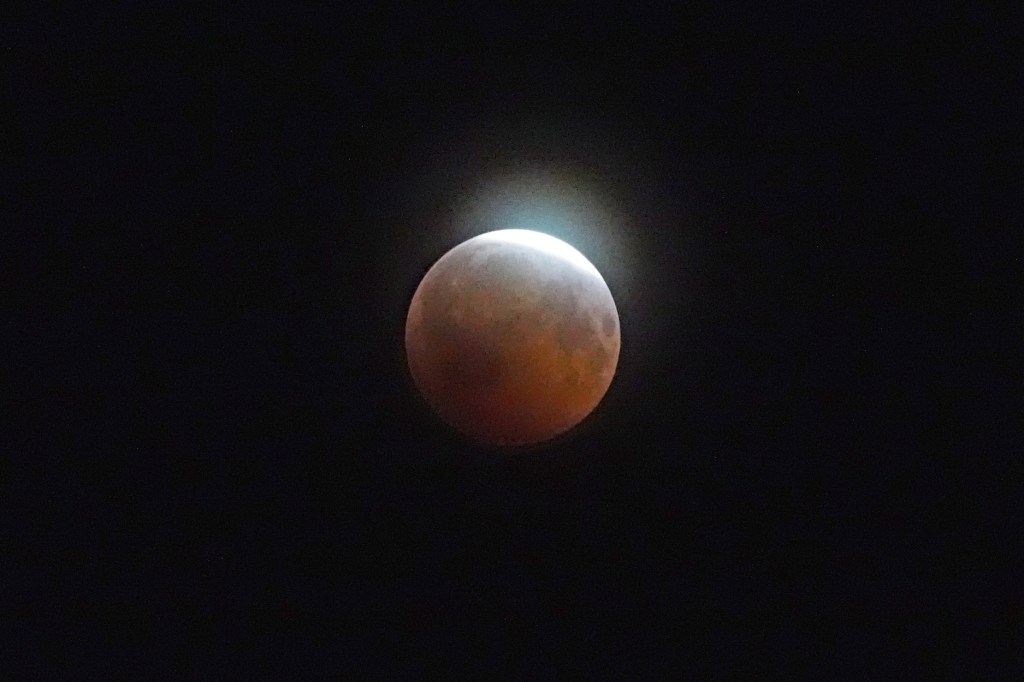
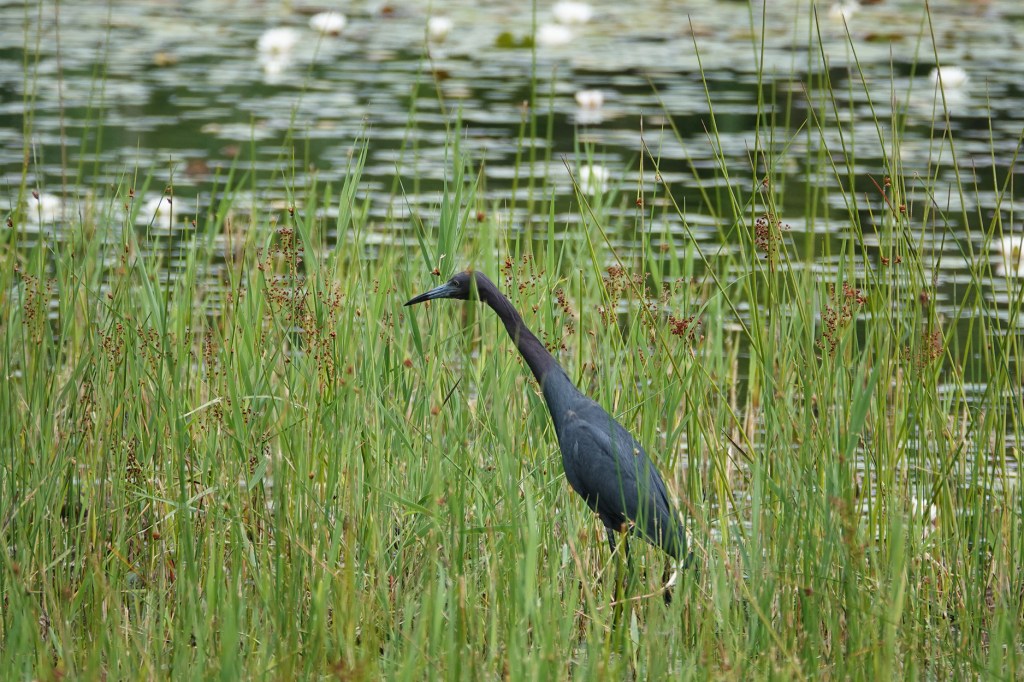
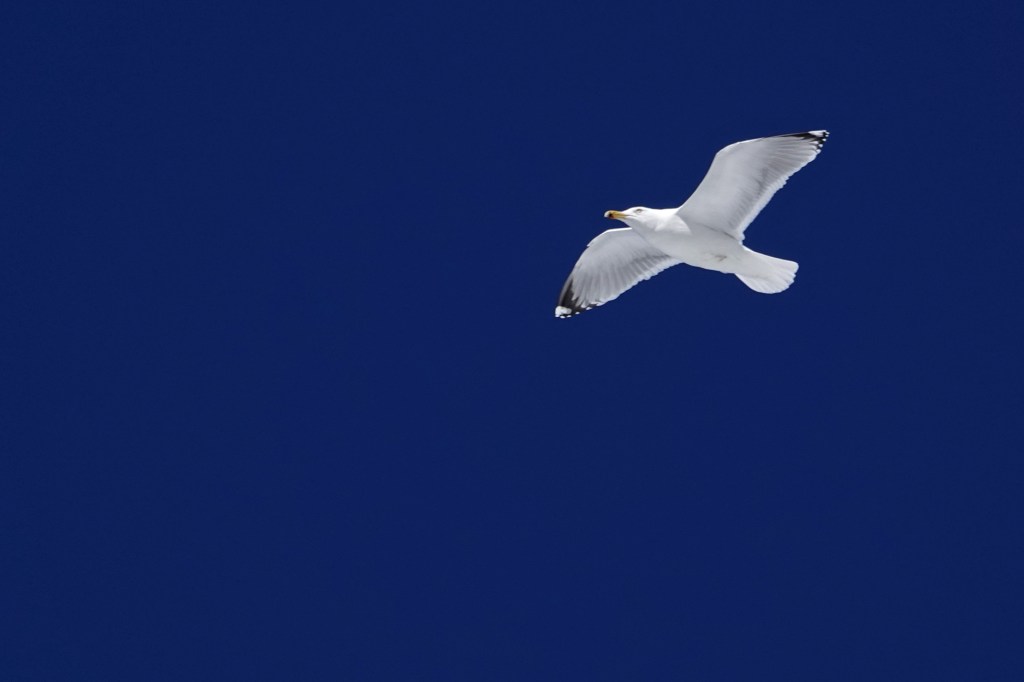
Little Blue Herons have taken over Niles Pond. The adults are slate-blue.It’s good fishing for frogs (R) in the shallow water during the drought.“I’m a juvenile Little Blue and I’m white until I’m a year old. I can stand on one leg all day.”A dozen just on this part of the pond. Second from right has a frog.And another frog.“Any more down there before we run out?”Turtle on rock. Little Blue lands. A couple of pecks and turtle retreats.Herring Gull with every feather properly deployed, landing at Brace Cove.Juvenile Cooper’s Hawk sneaking up on the bird feeders.Female Ruby-throated Hummingbird landing to indulge.“Wait a moment while I fluff up for the camera.”Last week’s partial lunar eclipse, at about 60%.A red cast glow at maximum 93% coverage, seen through a slightly hazy sky.
Spread The GMG Love By Sharing With These Buttons:
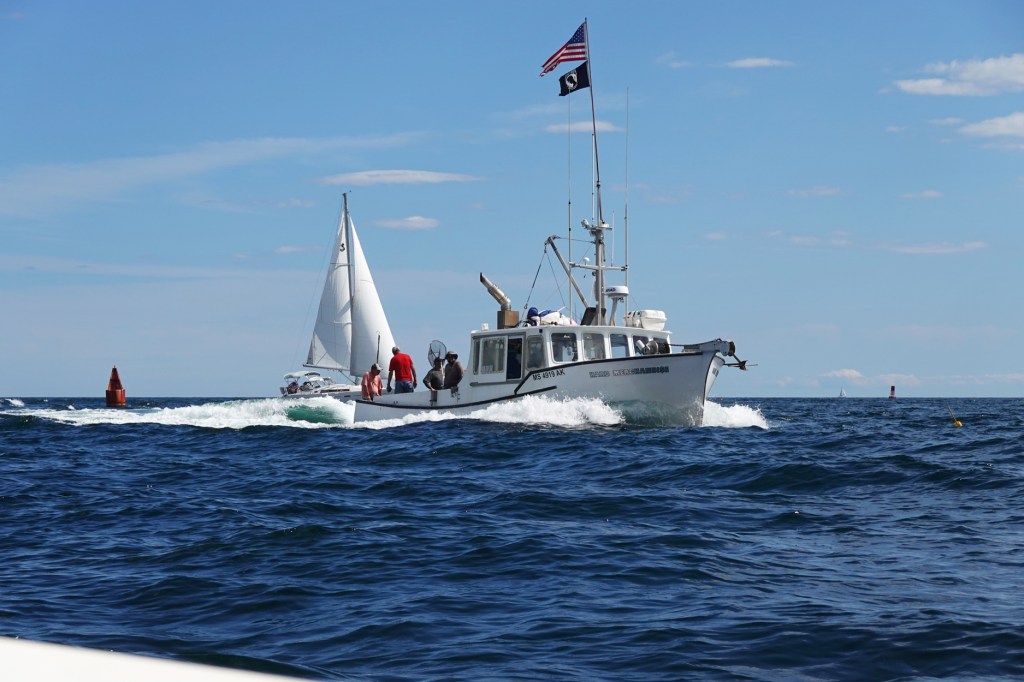
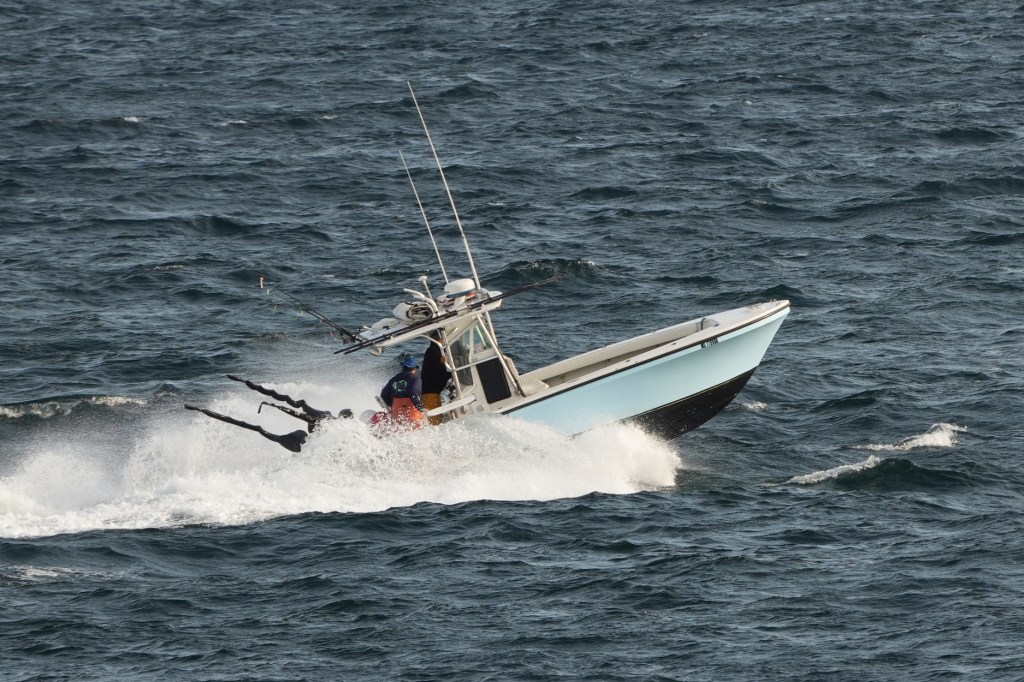
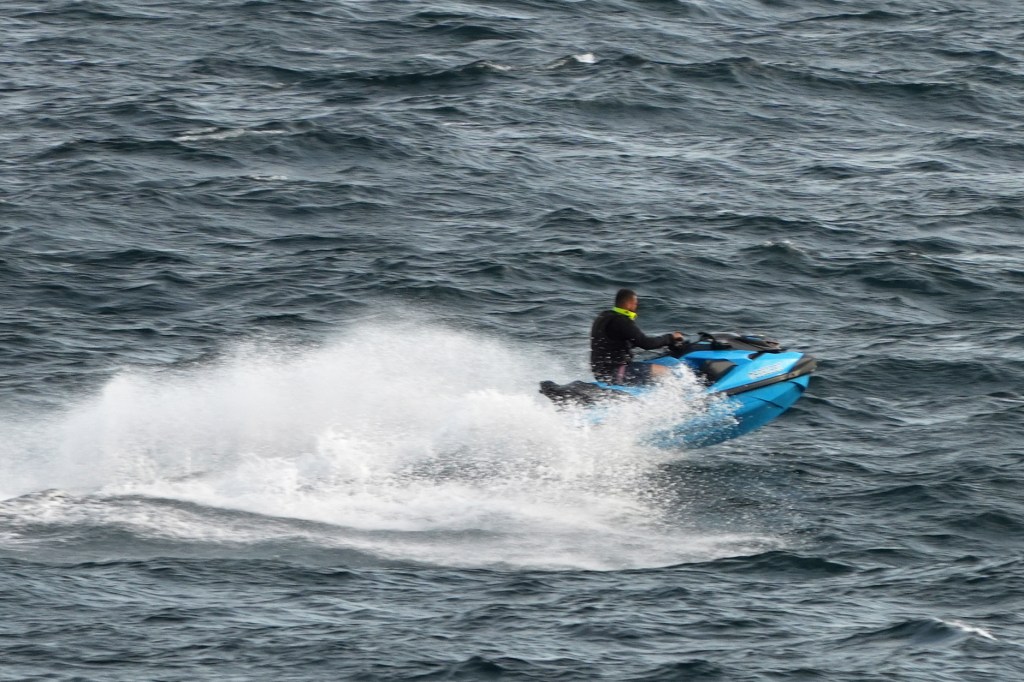
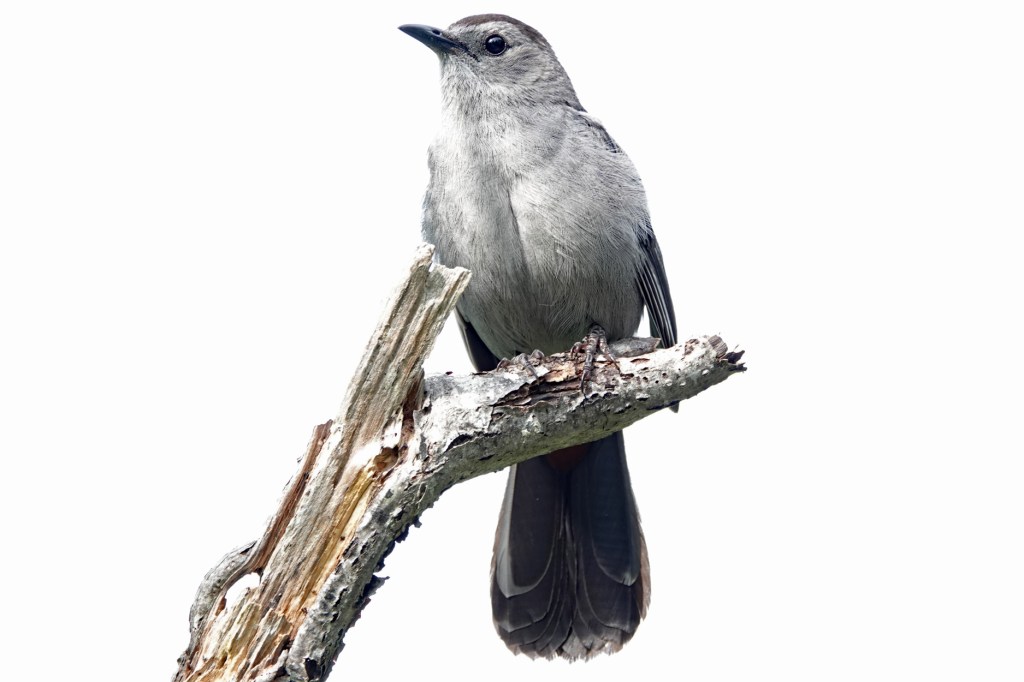
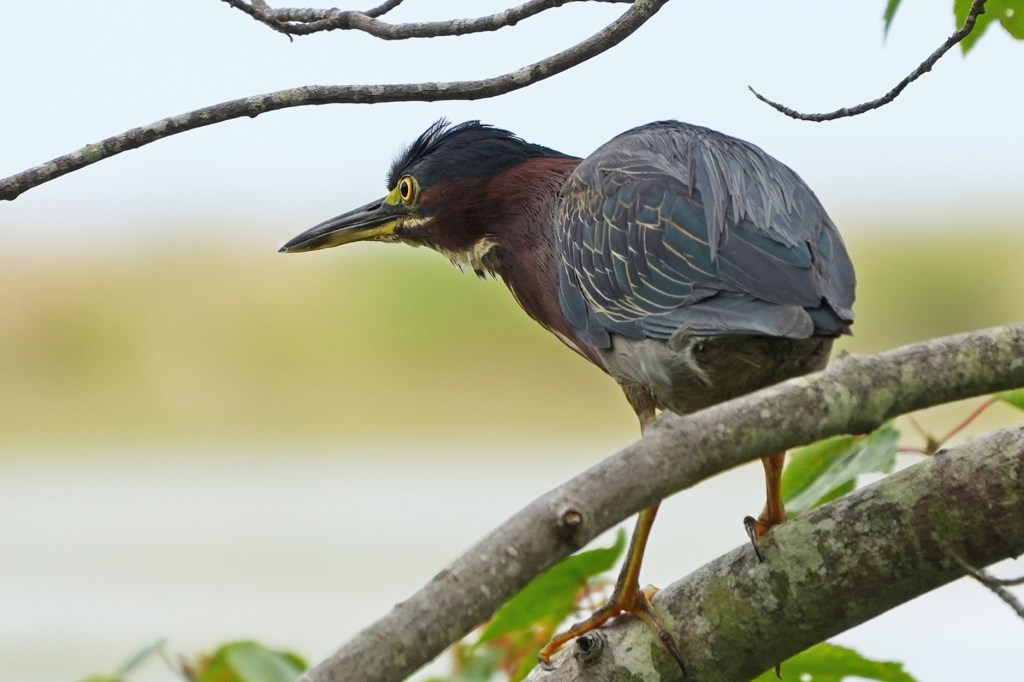
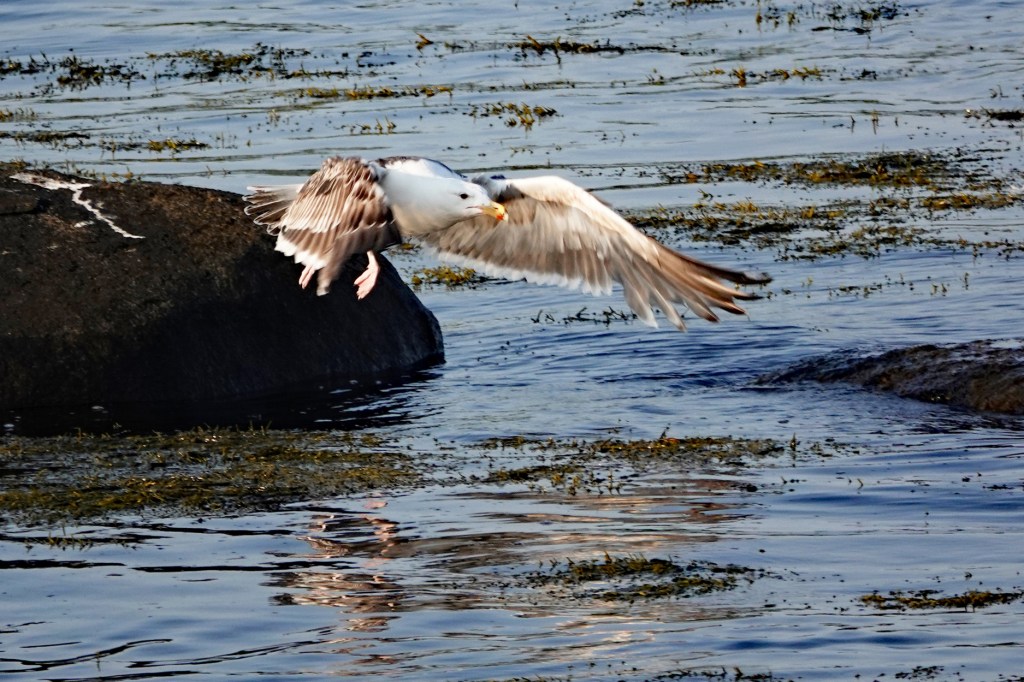
‘Hard Merchandise’ coming home at the end of the day, as seen from our sailboat ‘Troll.’A bit more wind, suddenly causing a chop.That’s an invitation for the jet-ski riders.This morning, there were leftover swells for ‘Ardelle.’Perhaps fewer guests than on calm sunny cruises.A Hummingbird Clearwing was attracted to our Butterfly Bushes.A busy Bumblebee with pollen “baskets” on its back legs.A young Black-backed Gull takes off with ease.Another still needs practice with its landings.The Odd Couple – a Mourning Dove and a Goldfinch.Gray Catbirds fly along with us daily.A Green Heron scanning Niles Pond for a Frogs Legs lunch.
Spread The GMG Love By Sharing With These Buttons:
Watching the behaviour of water birds is intriguing.
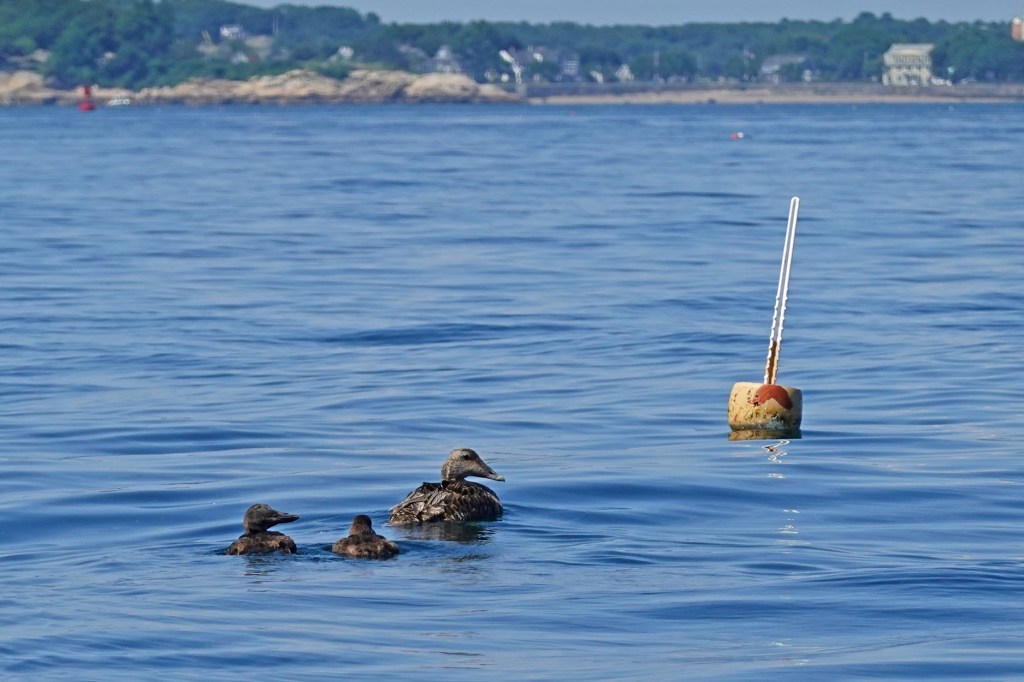
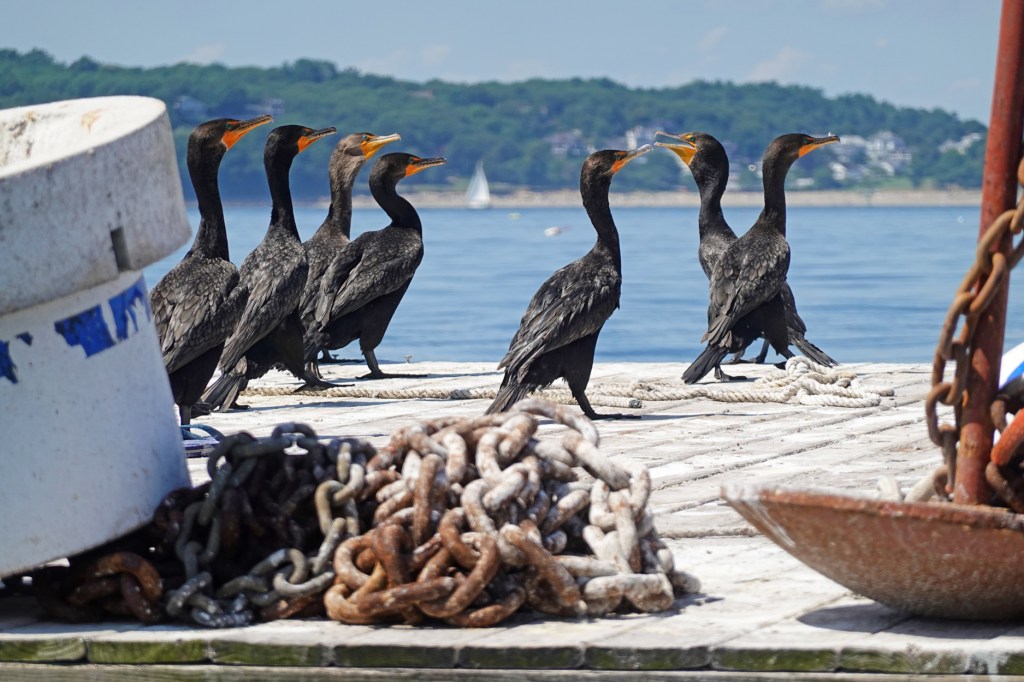
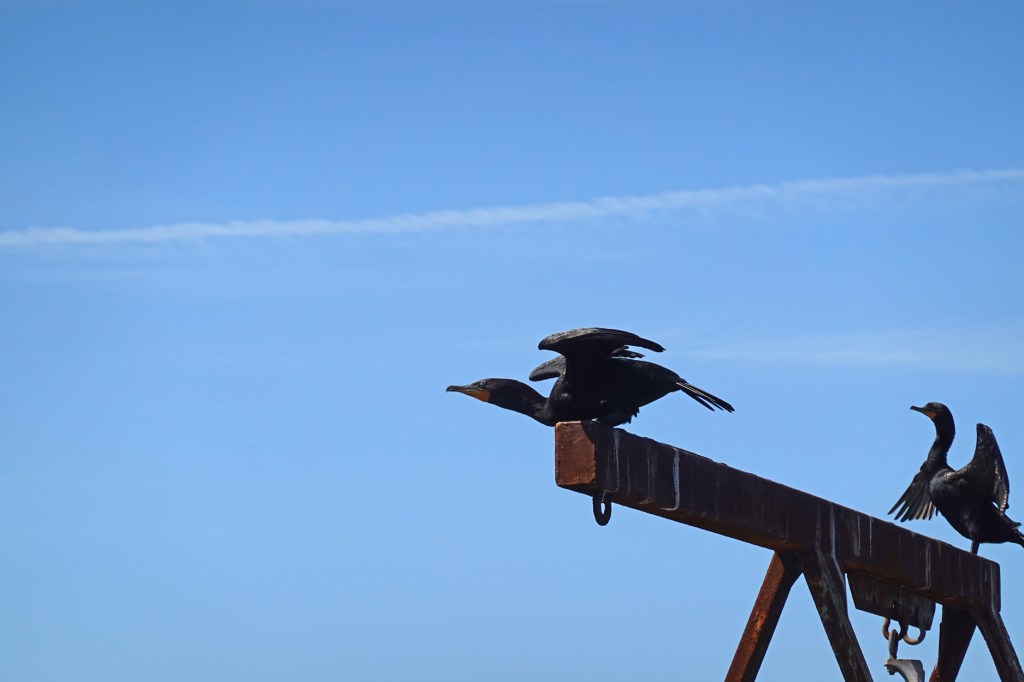
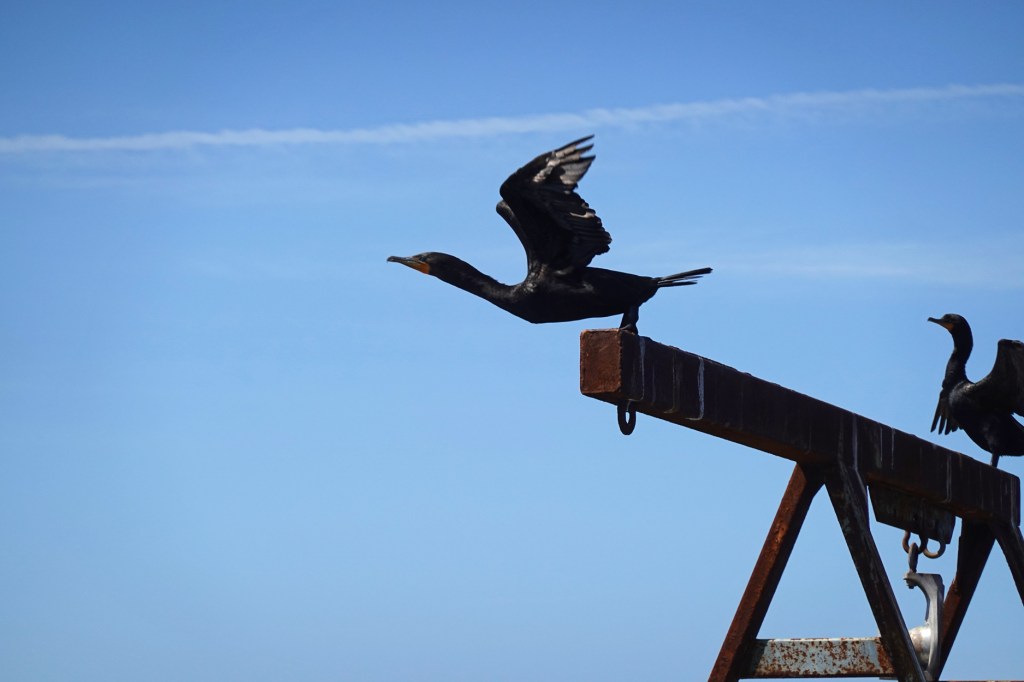
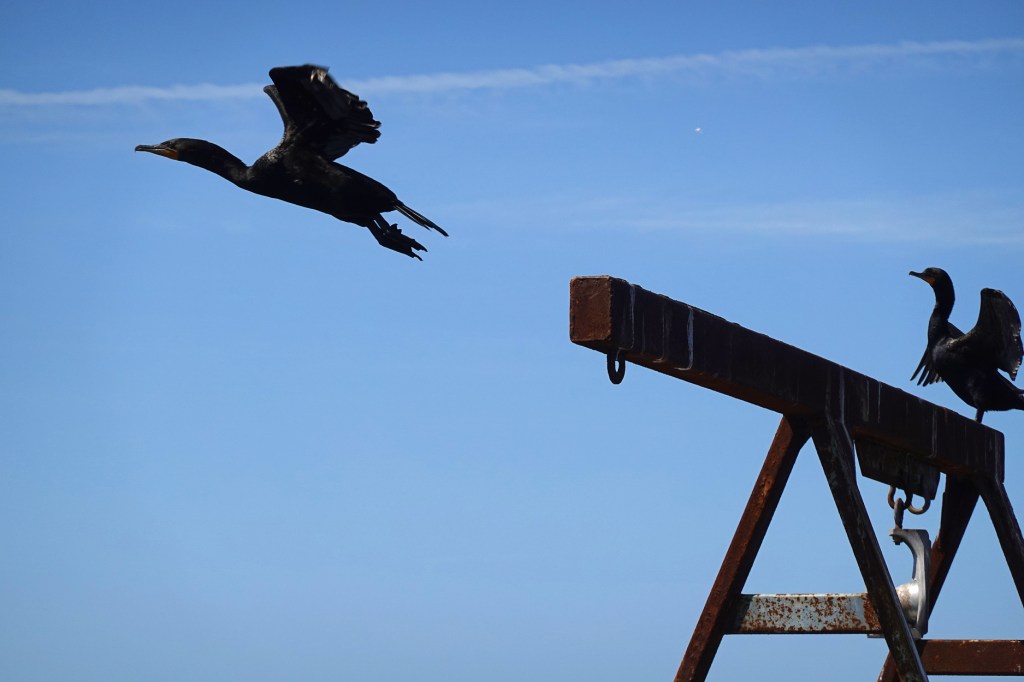
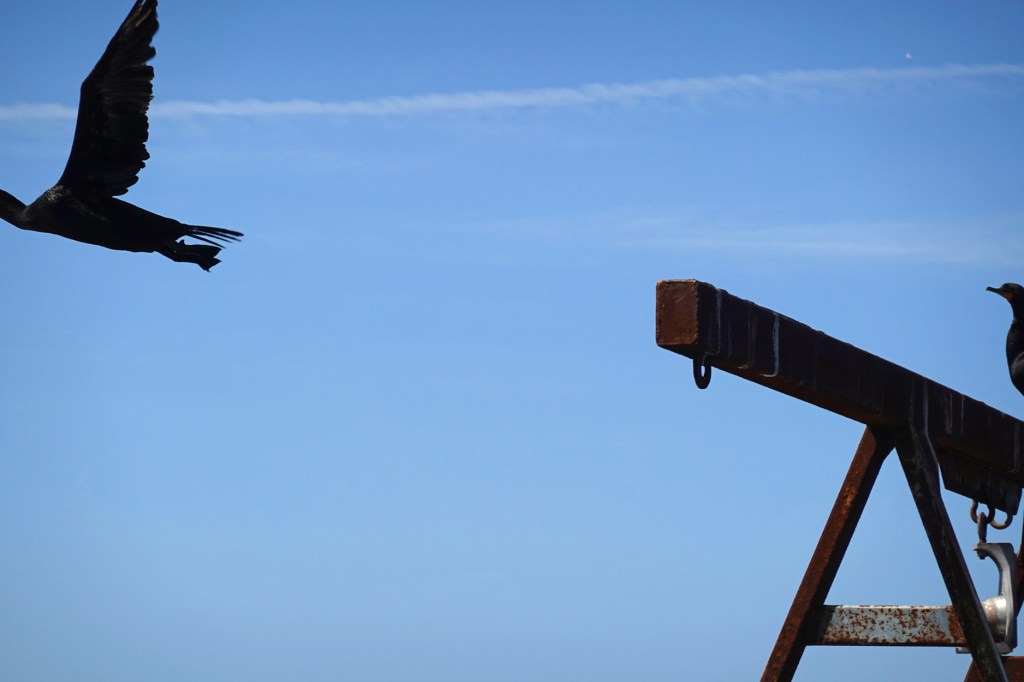
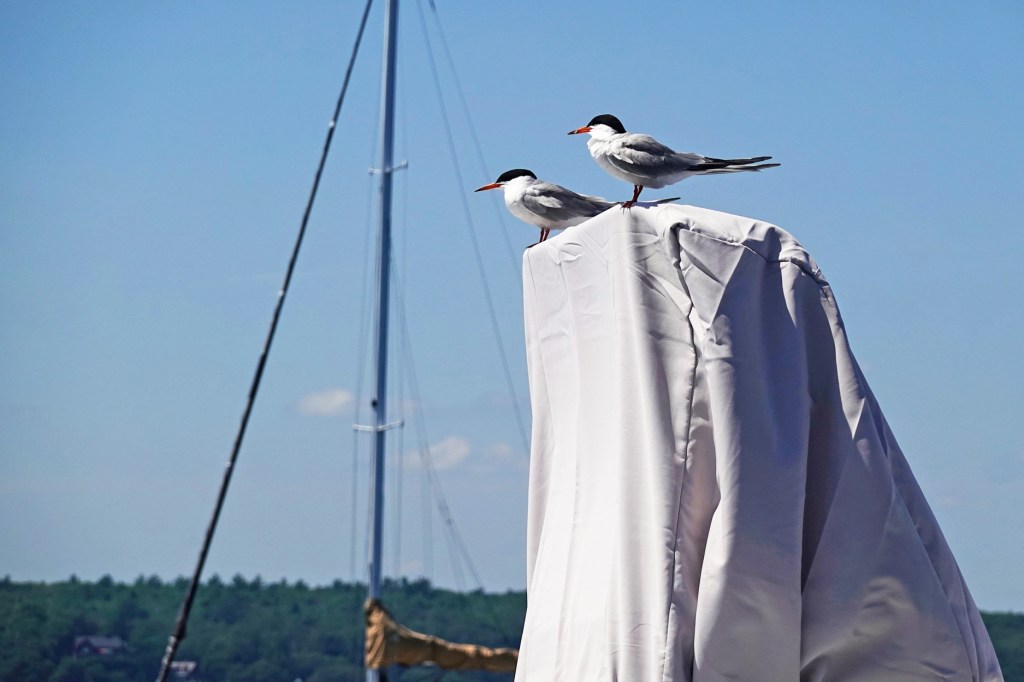
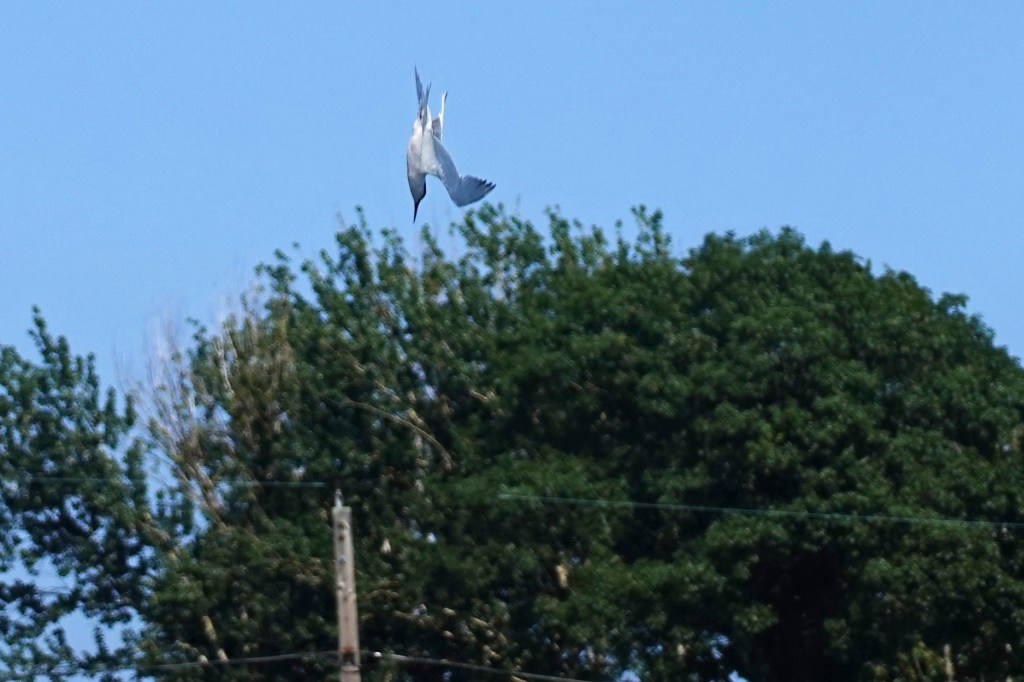
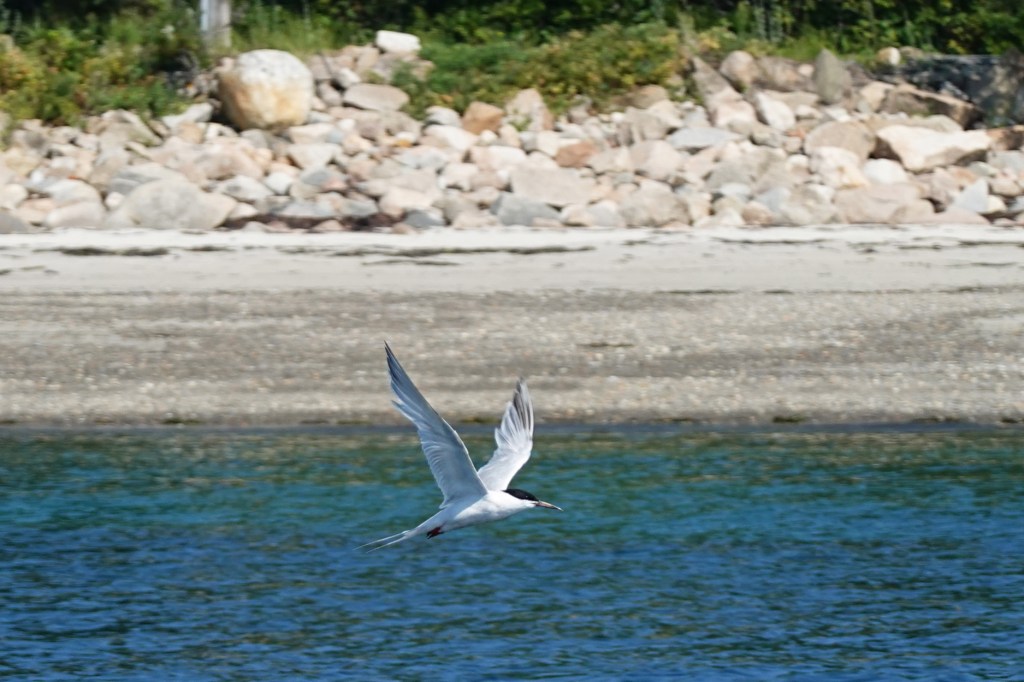
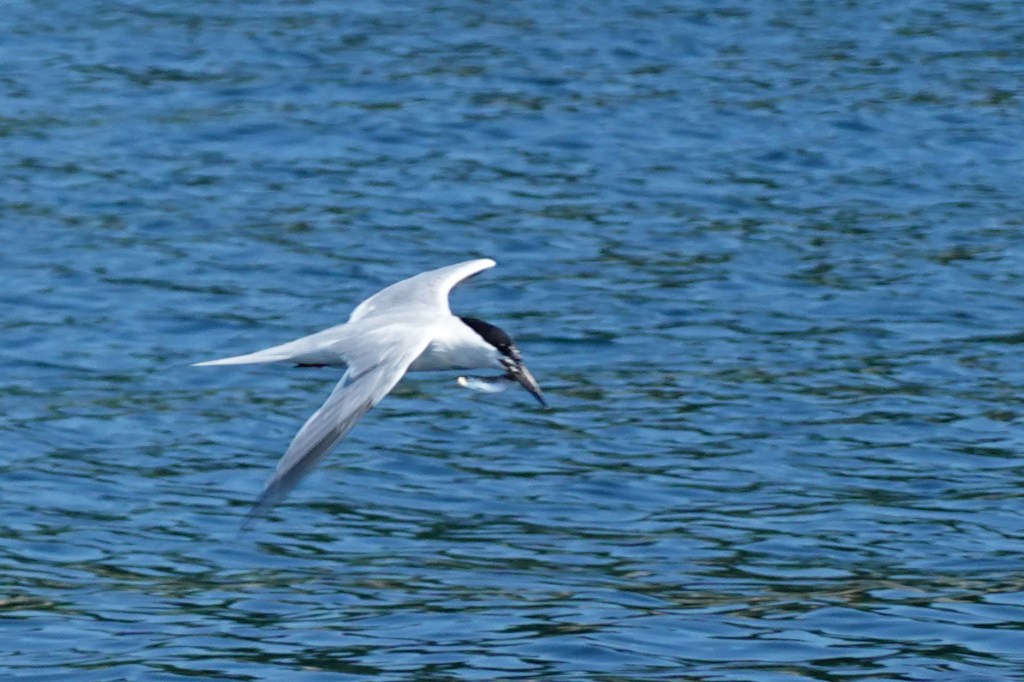
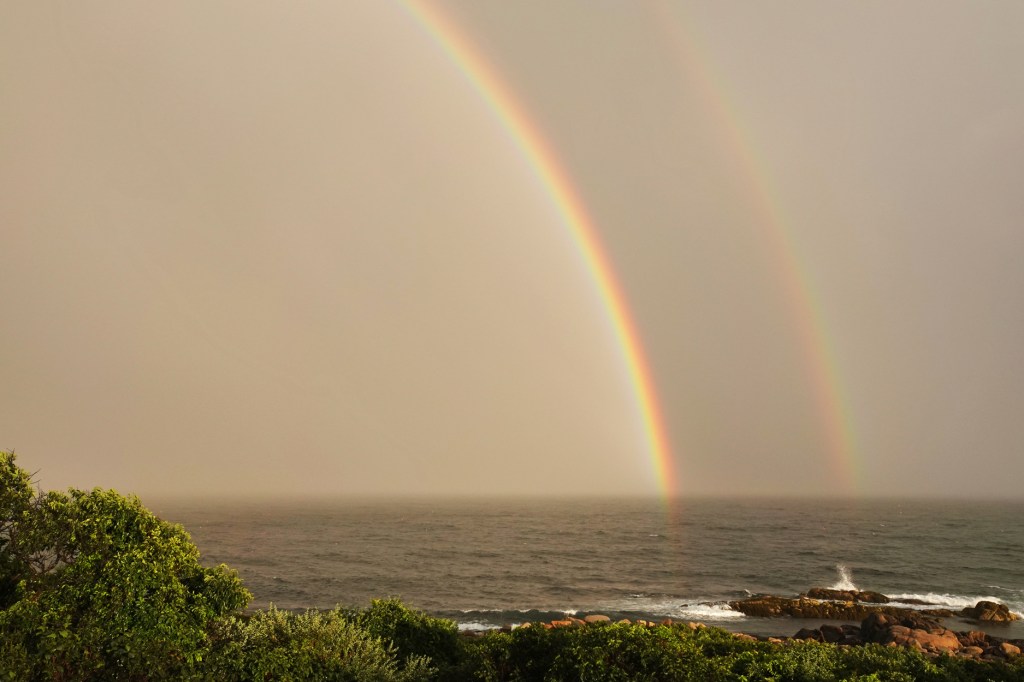
Gull taking flight at Brace Cove, dipping down while gaining speed. [May]“Now that I have your attention, here’s why I have called you together….” [March]“Can I help you? You’re interrupting my preening.” [July]Common Eider escorting her ducklings out into the middle of Gloucester Harbor. [August]Double-crested Cormorants have taken over the mooring float as a parade ground.Final countdown on the launch pad.We have ignition, and lift-off.The ‘Cormorant’ spacecraft has cleared the tower.And is off on a sub-orbital flight.Common Terns surveying an active fishing ground off Raymond Beach.Many terns are screeching while circling, and suddenly diving on targets at the surface.This one came up empty-billed, but bounced back up off the water into flight.While others came home with lunch.The summer’s most photographed double rainbow, at the end of a day on the water.
Spread The GMG Love By Sharing With These Buttons:
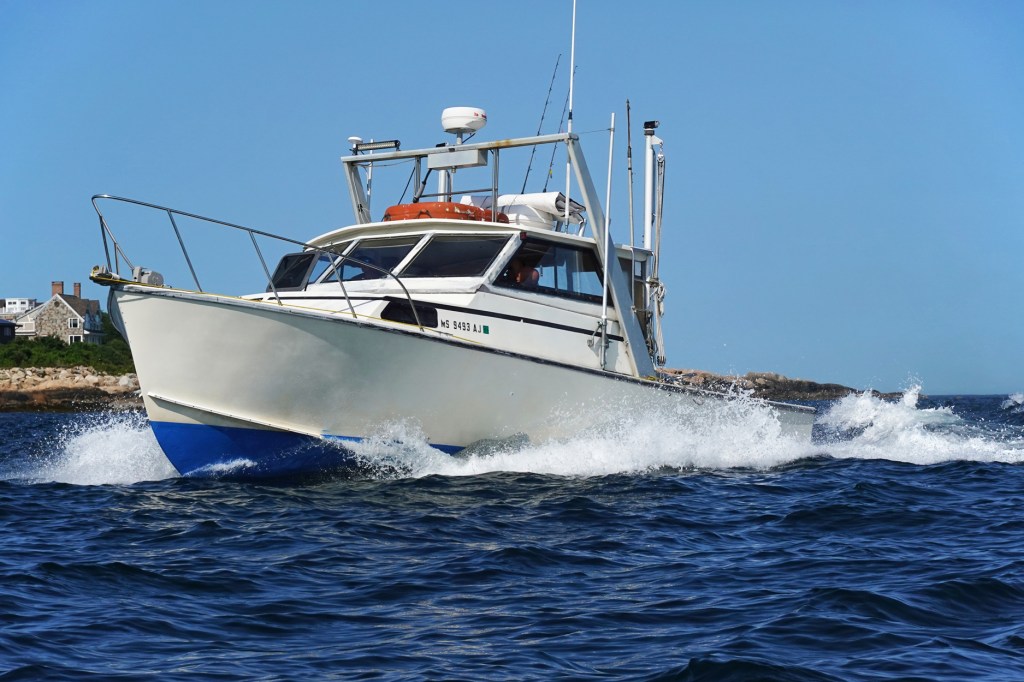
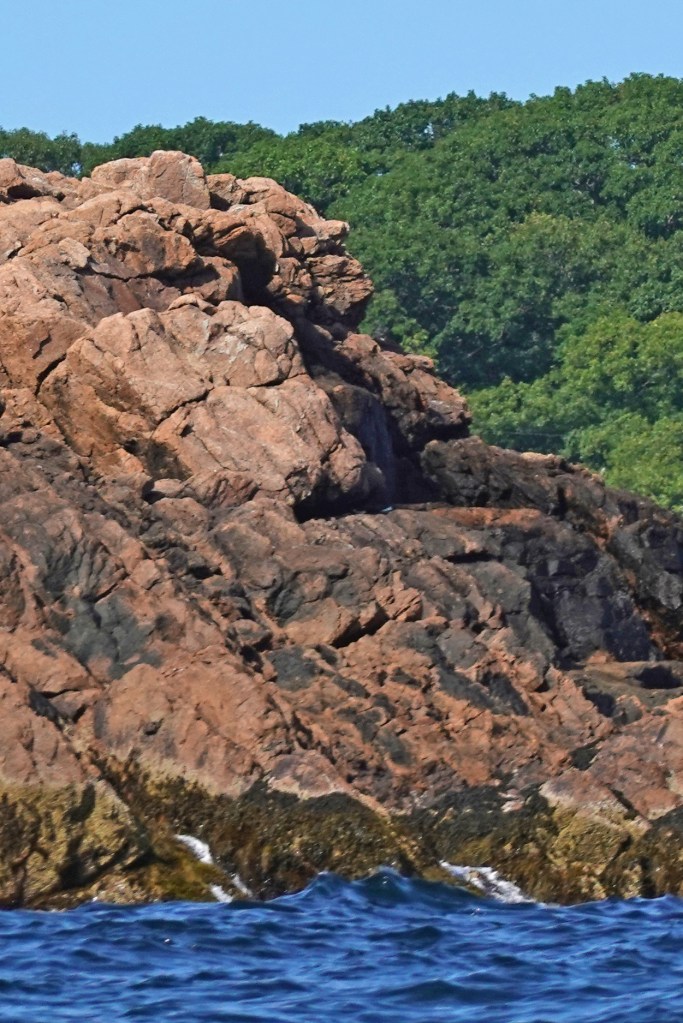
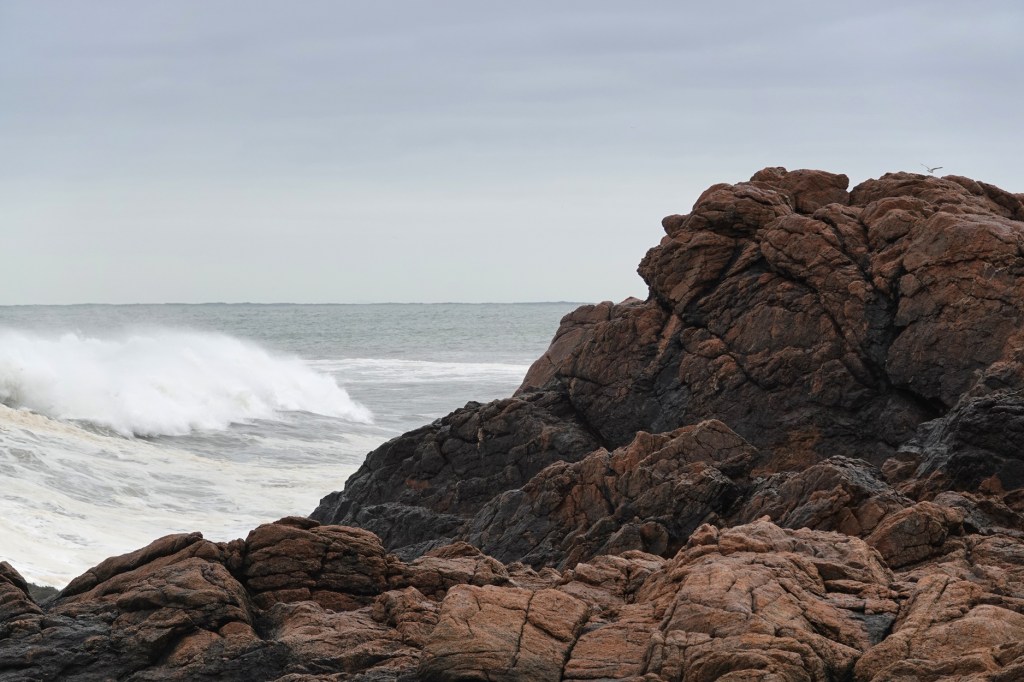
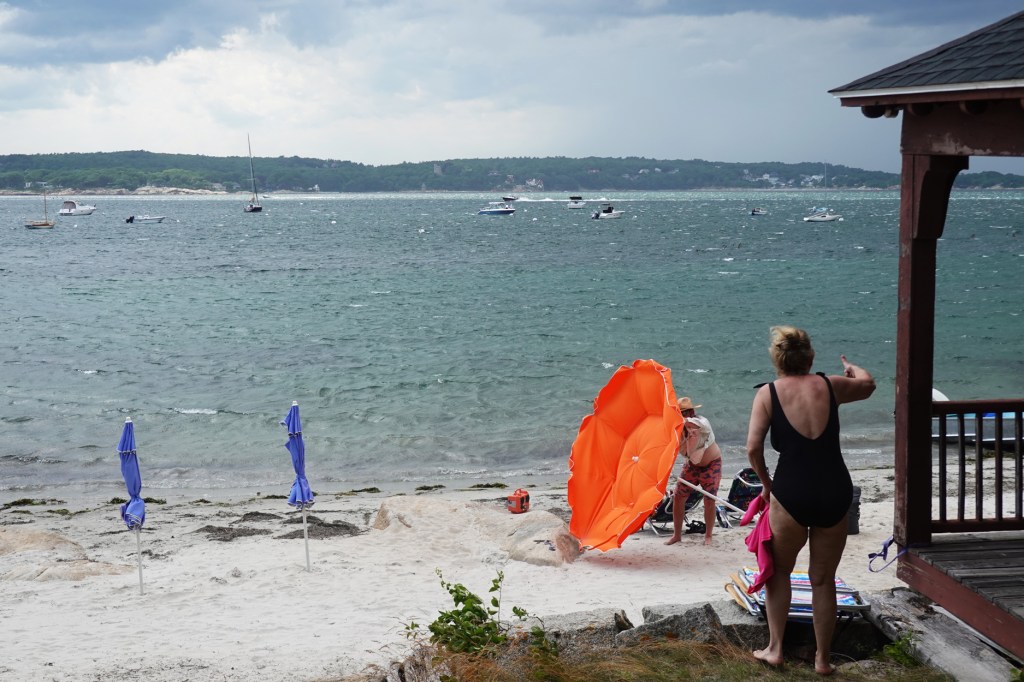
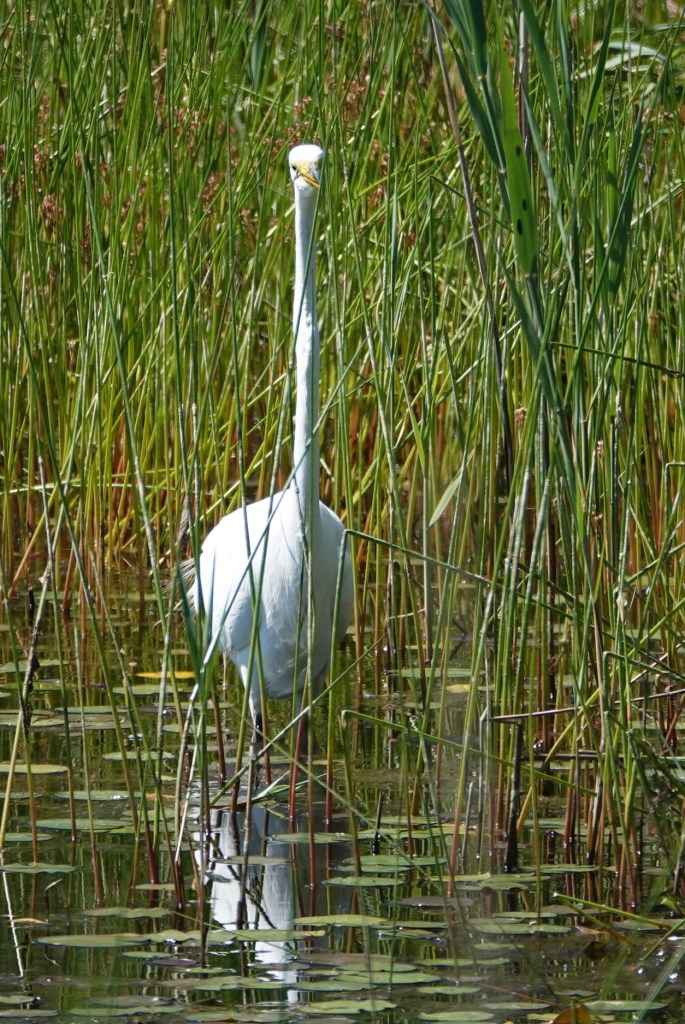
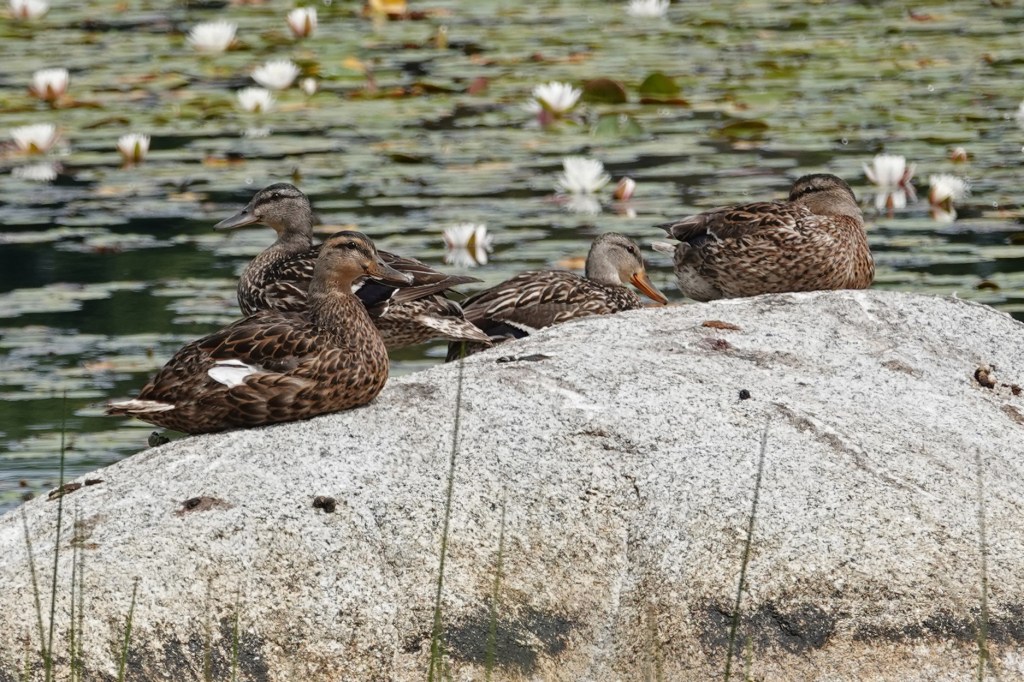
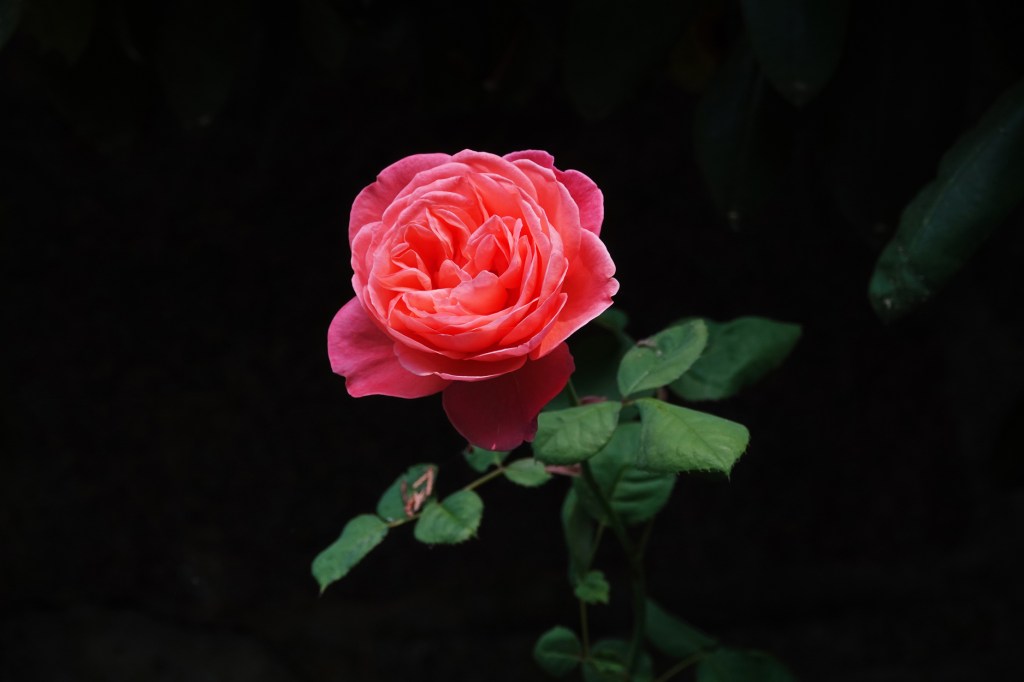
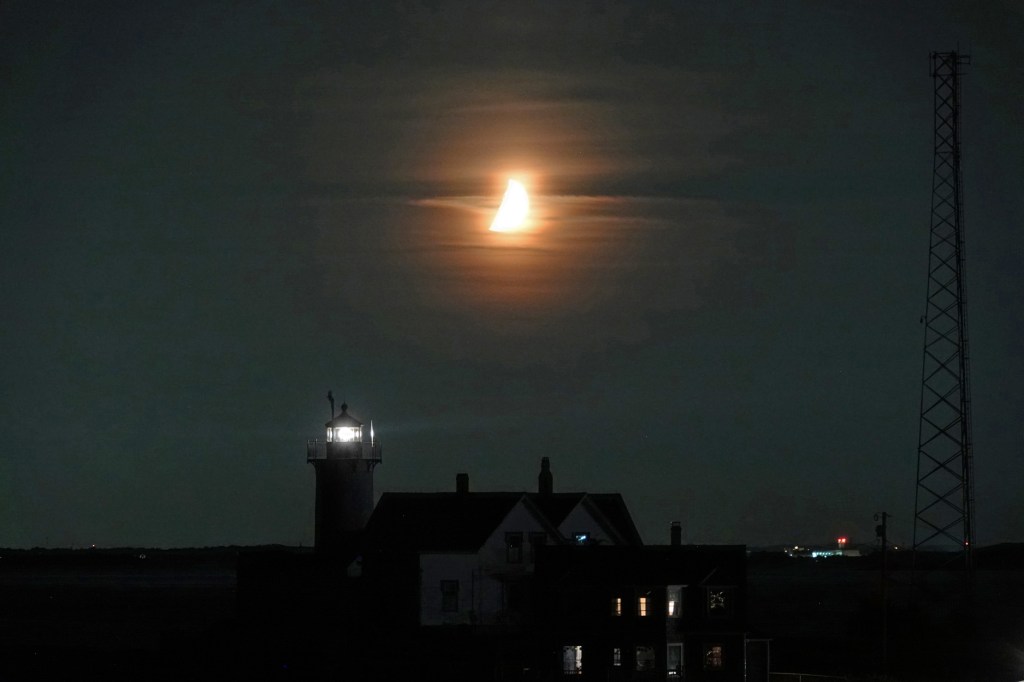
Fishing boat speeding home, passing our sailboat ‘Troll.’The profile of ‘Mother Ann’ has welcomed fishermen home for generations.I much prefer her profile looking from shore out to sea.Inside-out beach umbrella during a sudden wind squall.‘Virginia’ dropping in on her way from Bath, Maine to participate in Sail Boston.An orange sky under full sun, caused by smoke from Canadian wildfires.Mother Goose teaching her goslings how to bottom feed.Regal Eddy (the Great) Egret poses while relaxing.But it’s all business when he’s fishing, in periscope mode.While competing at Niles Pond with a Little Blue Heron.Mix of recovering molting males, and female Mallards.A single red rose spotlit by the sun, through the trees above.A hazy half-moon setting over Eastern Point light.
Spread The GMG Love By Sharing With These Buttons:
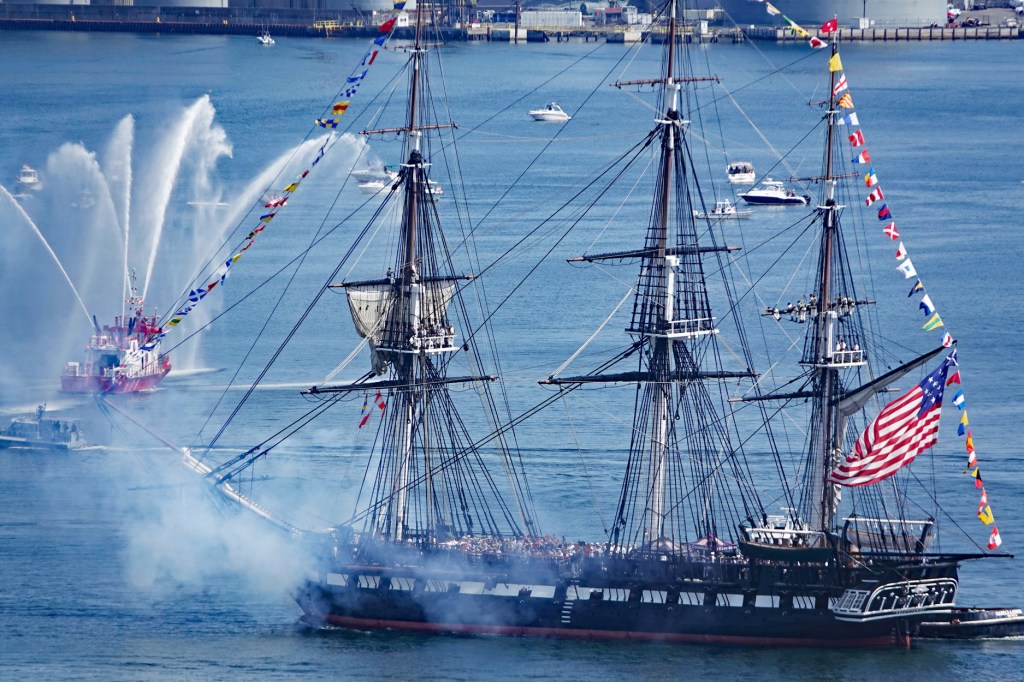
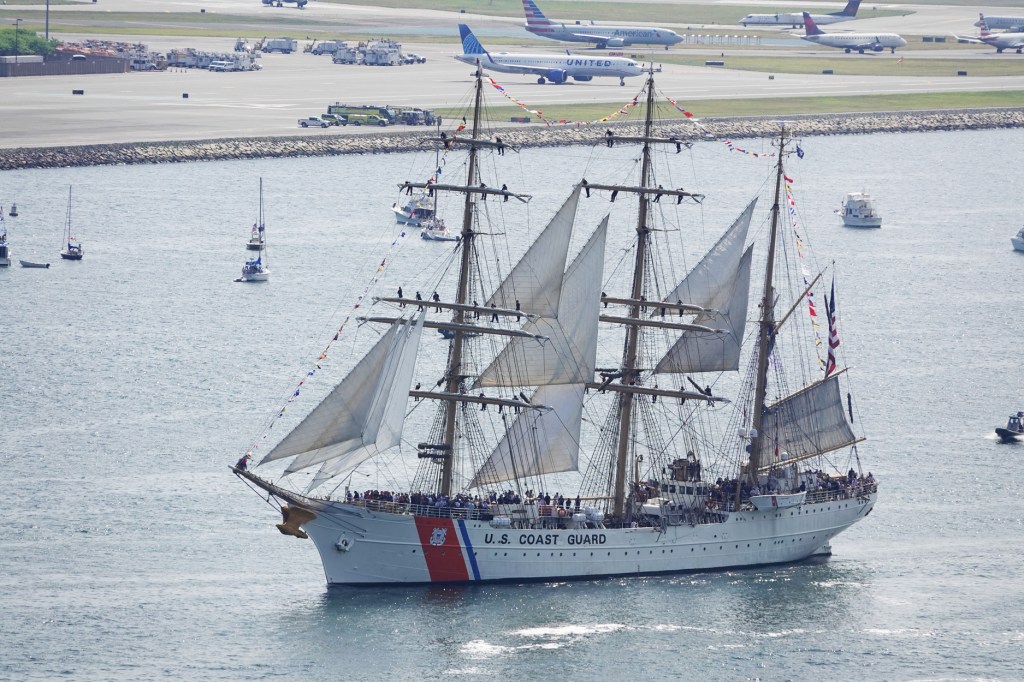
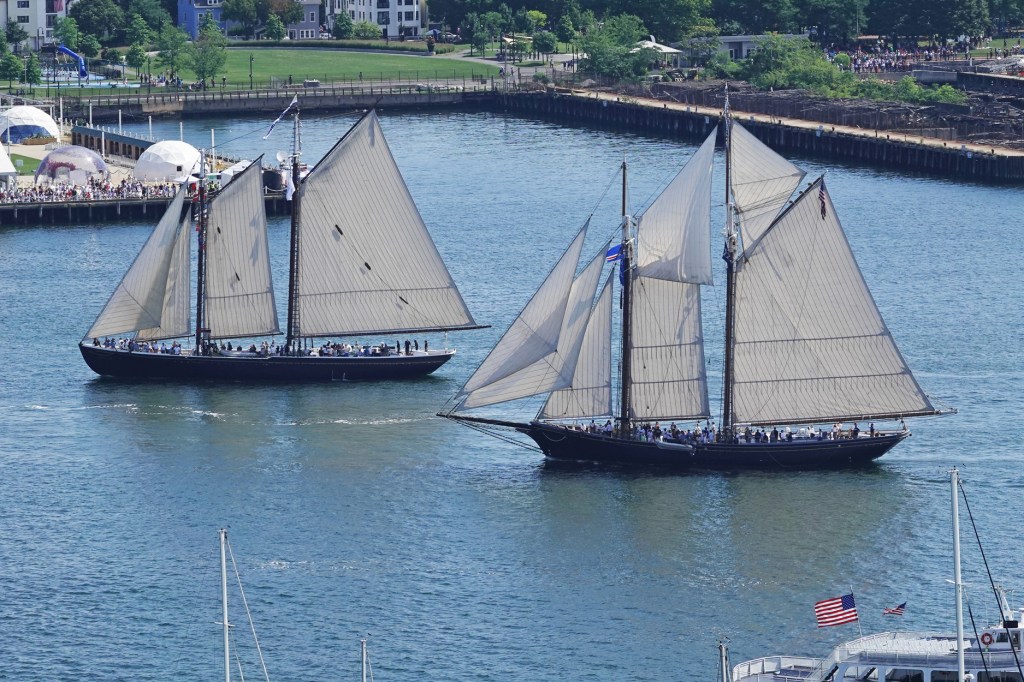
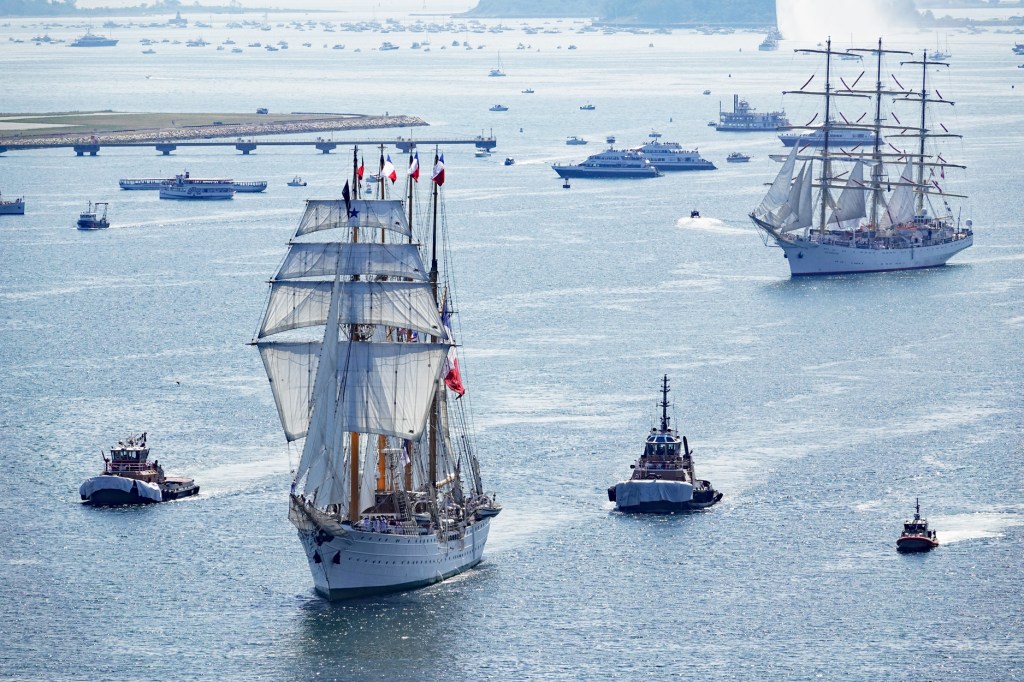
Last Saturday (7/11/2026), we were invited to watch the Parade of Sail with about 60 vessels celebrating the nation’s 250th anniversary, from a 25th floor apartment on the Boston waterfront. Cape Ann was well represented by our local schooners and past participants in Gloucester’s annual Labor Day Schooner Festival. They included: Adventure, American Eagle, Ardelle, Bluenose II (Nova Scotia), Columbia, Denis Sullivan, Ernestina-Morrissey, Fame, Harvey Gamage, Isabella, Lewis H Story, Lynx, Malabar II, Pride of Baltimore II, Thomas E Lannon, Tyrone, and When and If. Here are some of the vessels we watched.
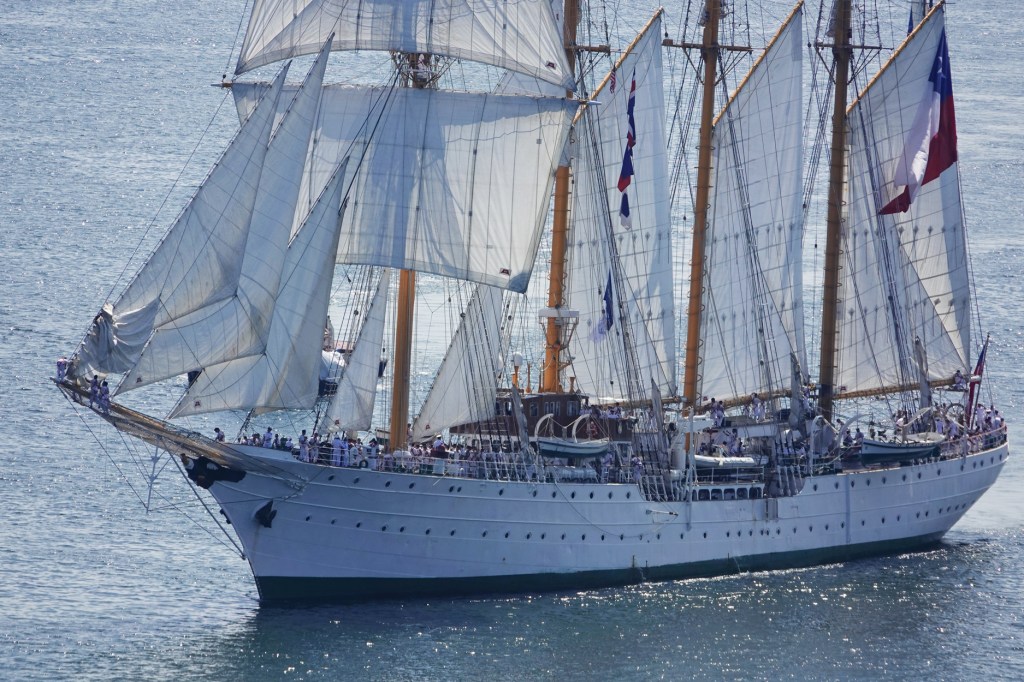
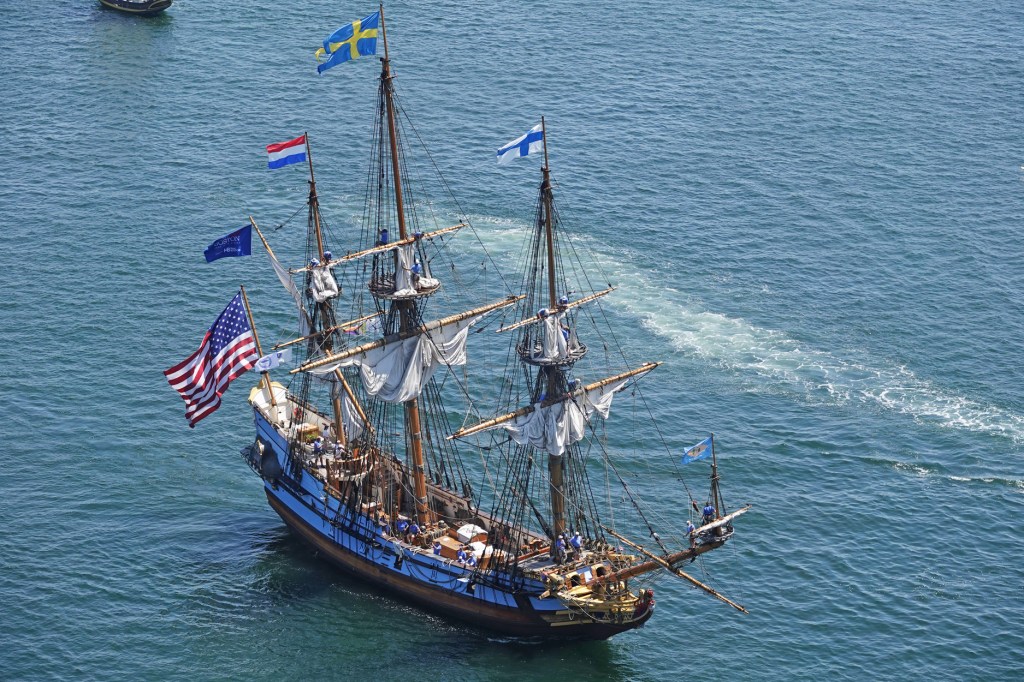
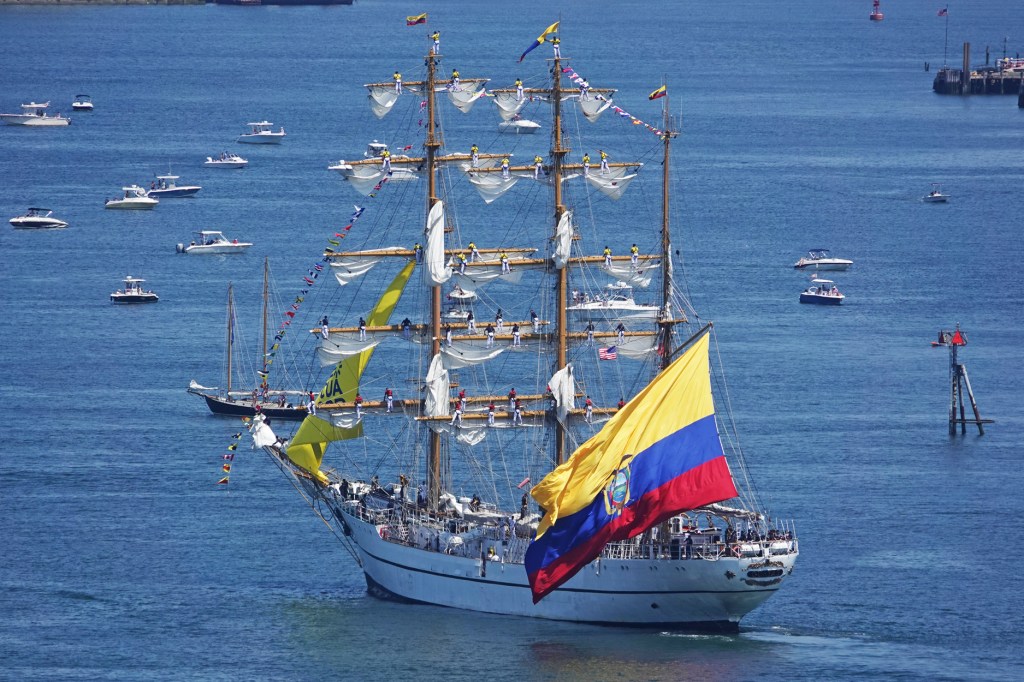
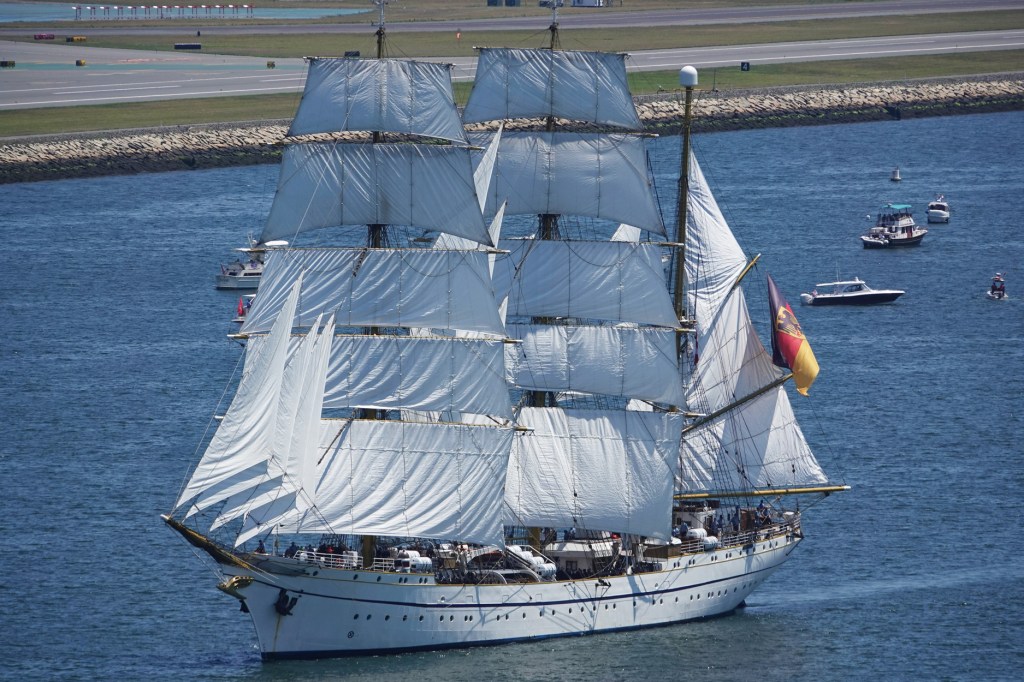
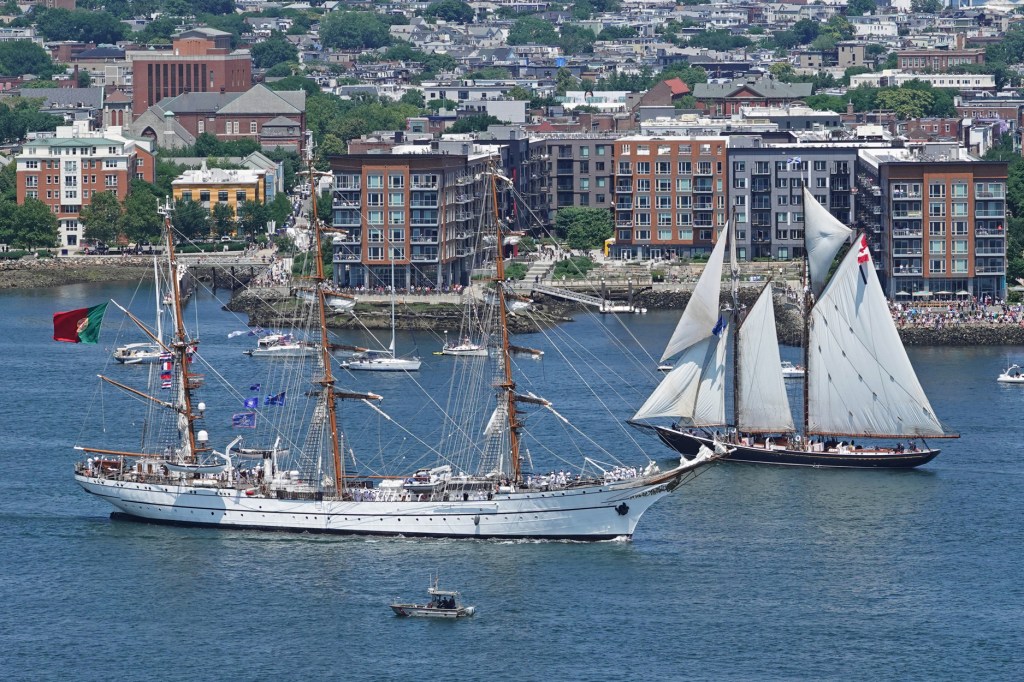
USS Constitution, a 305′ Frigate, led the Parade of about 60 vessels, issuing cannon salutes.US Coast Guard Eagle, a 295′ Barque and one of the 20 Tall Ships, was second in the all-day procession.Followed immediately by Gloucester’s Adventure, and New Bedford’s Ernestina-Morrissey.Esmeralda (Chile) and Dar Mlodziezy (Poland), being escortred in from the Outer Harbor by tugs.Esmeralda closer up. She is a 371′ Barquentine naval training ship, based in Valparaiso.Kalmar Nyckel is a replica of the armed merchant ship that founded New Sweden (Delaware).Naval cadets on the yardarms of BAE Gayas (Ecuador), a 257′ Barque, preparing to turn and dock.Gorch Fock (Germany), a 292′ Barque passing Logan Airport, entering the Inner Harbor.Sagres (Portugal), a 293′ Barque, passing schooner Bluenose II (Canada) in the Inner Harbor.
Spread The GMG Love By Sharing With These Buttons:
Here’s a look at our Fourth of July week, celebrating the country’s 250th around Gloucester.
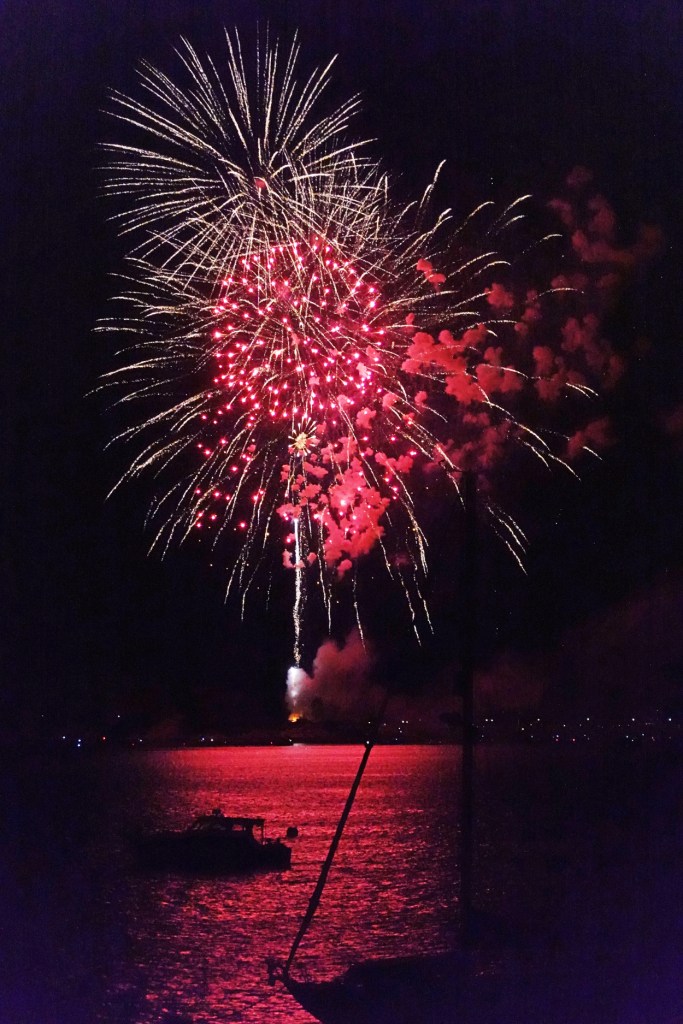
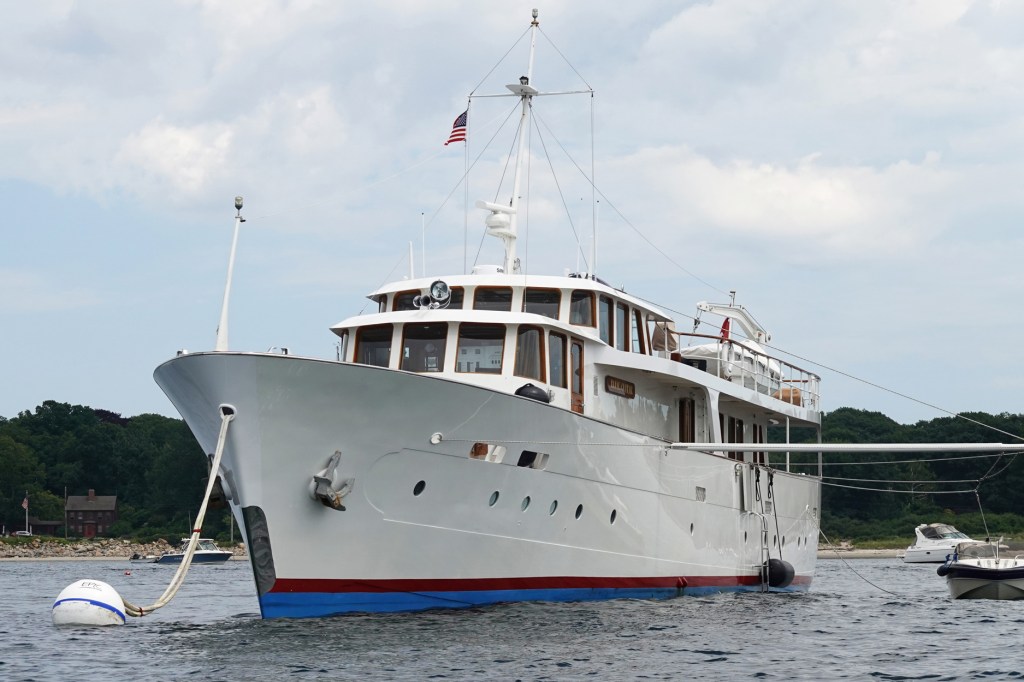
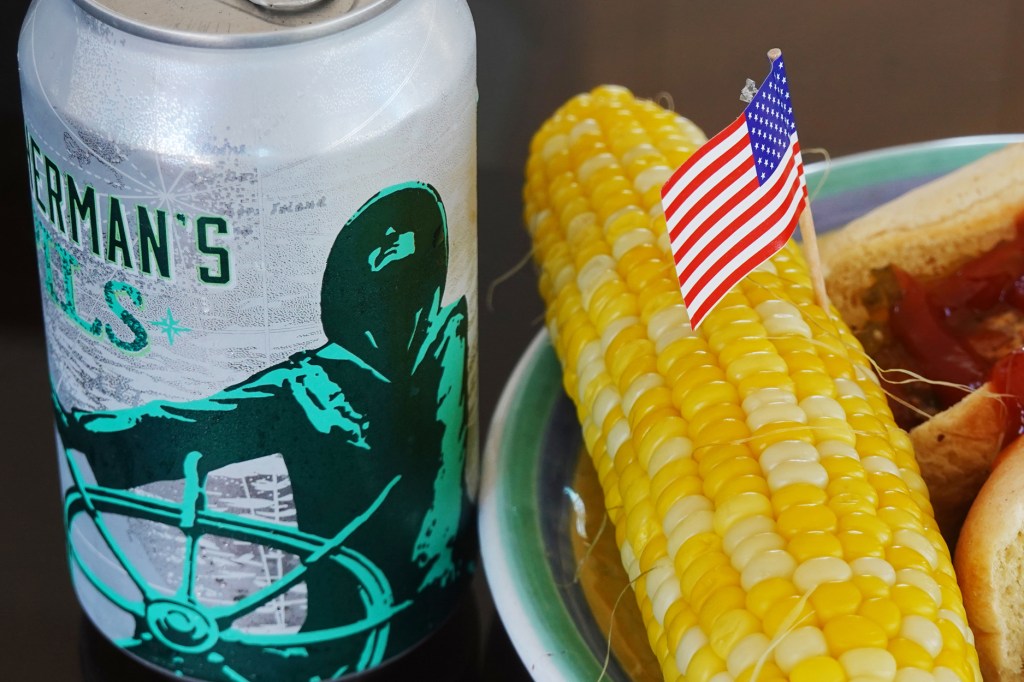
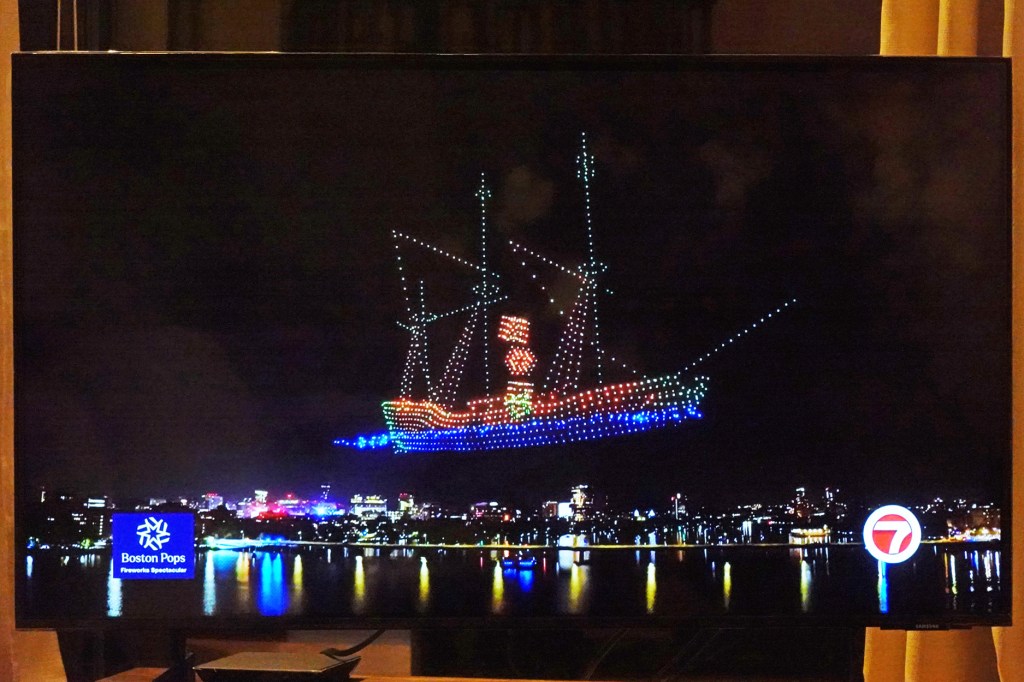
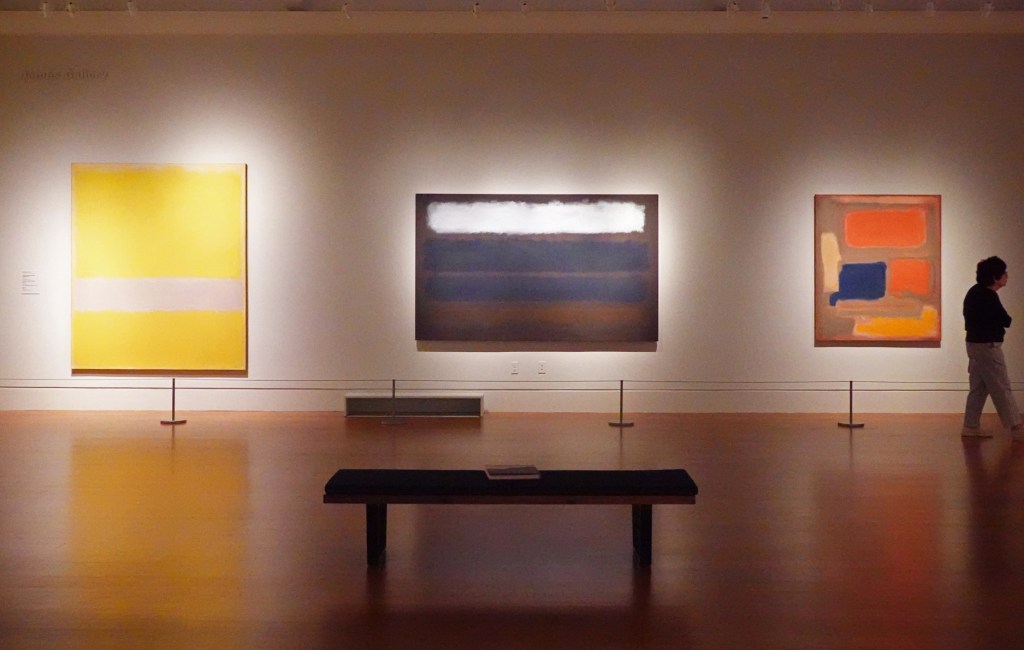
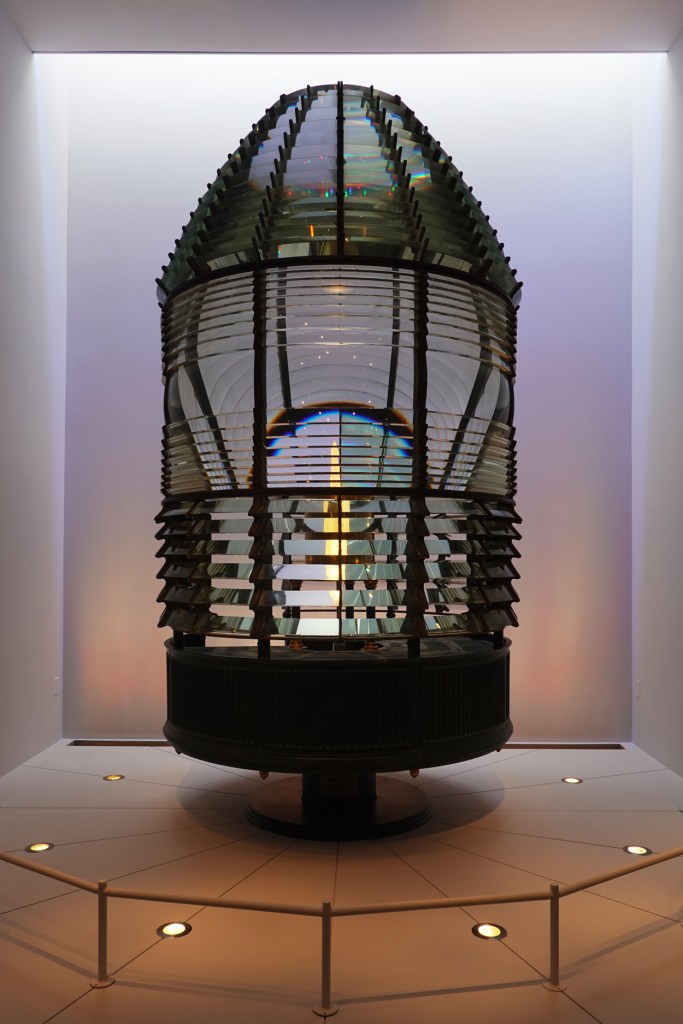
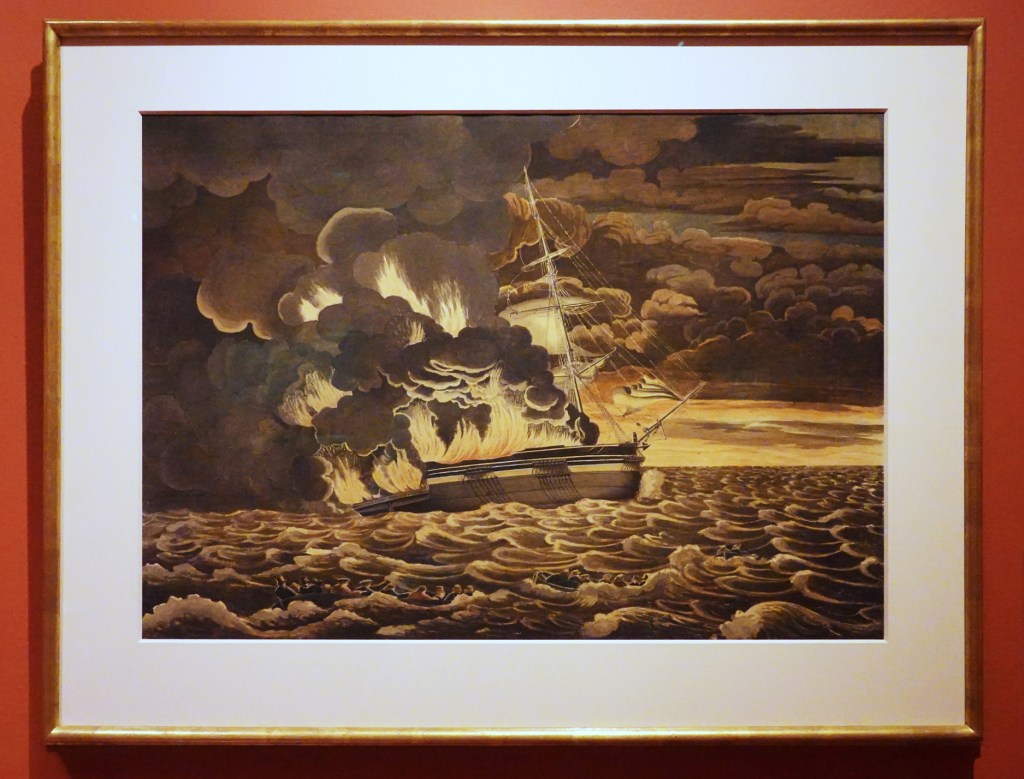
The right hand Mallard is also a male, just further along in his summer molt. Niles Pond.An ‘American Lady’ found our butterfly bushes.Gloucester’s 4th of July fireworks, on the 3rd.Celebrating the 4th with a sail on Troll. Eastern Point Yacht Club.London-registered Blue Guitar was back for a summer visit. [Eric Clapton never owned her.]Lunch on the 4th with our last ‘Fisherman’s Pils,’ after the Cape Ann Brewing Company closed in 2021.Boston Pops Fireworks Spectacular on TV – USS Constitution sailing above the Charles River Basin (drones).Untitled early Mark Rothko watercolor (1934), in the Cape Ann Museum’s exhibit highlighting the years Milton Avery, Adolph Gottlieb, and Mark Rothko painted together in Gloucester.The styles of all three grew more abstract later in life. Here is the comparison for Mark Rothko.The non-rotating Fresnel lens that was installed in the south lighthouse tower on Thacher Island in 1861.The museum’s 20-month renovation created fresh spaces for telling about Gloucester’s heritage.A newly exhibited early watercolor by Fitz Henry Lane, ‘Burning of the Packet Ship Boston,’ 1830.My favorites are still in the Fitz Henry Lane Room; for example ‘Three Master in Rough Seas,’ early 1850s.
Spread The GMG Love By Sharing With These Buttons:
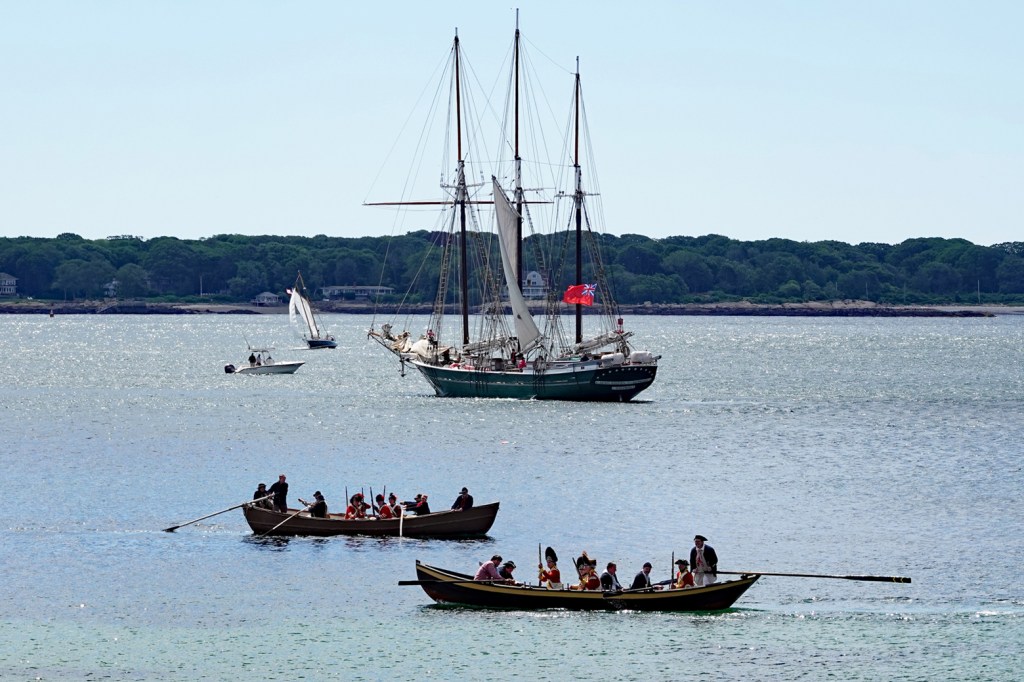
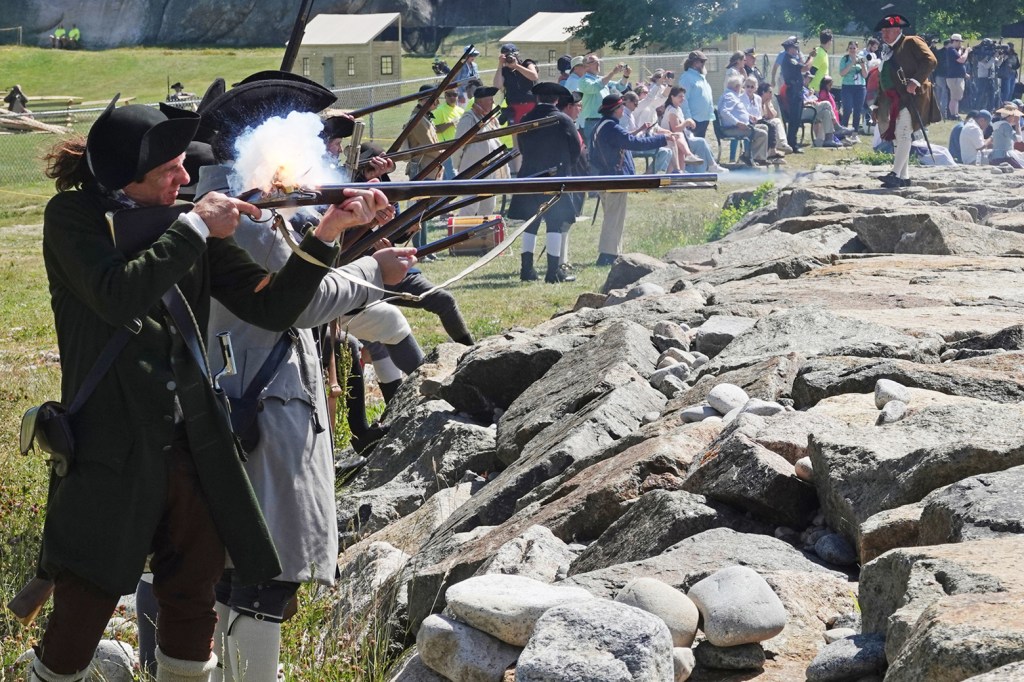
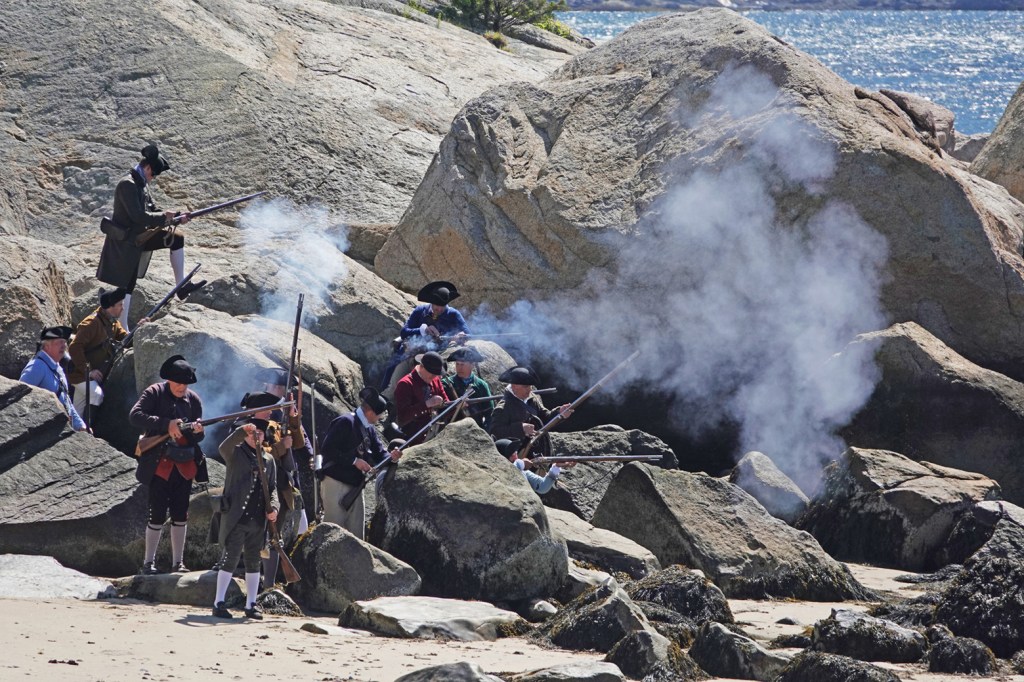
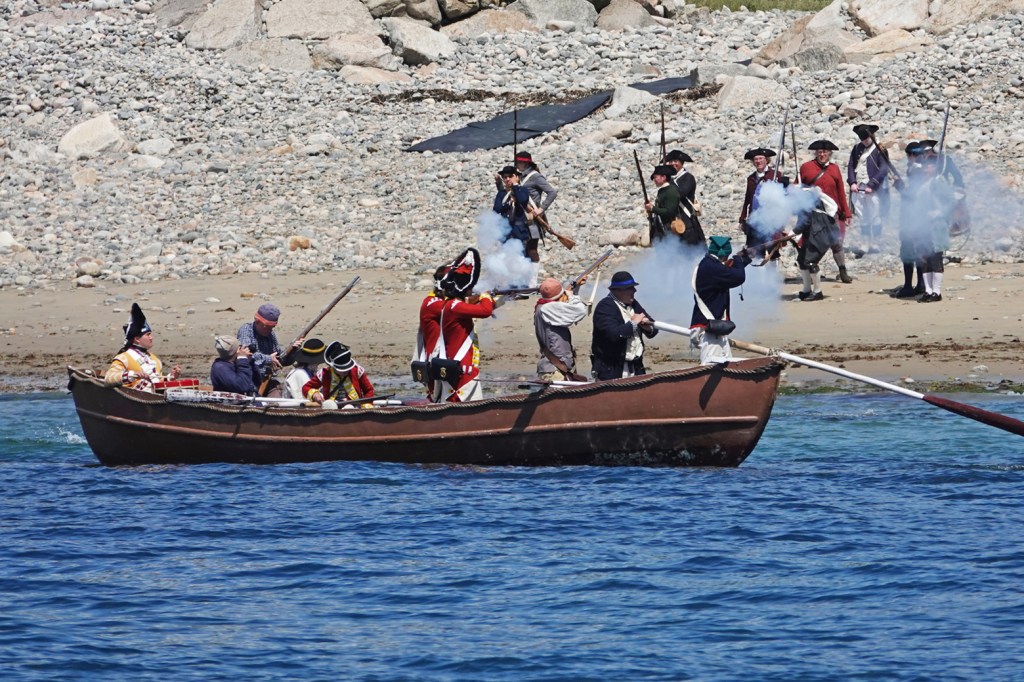
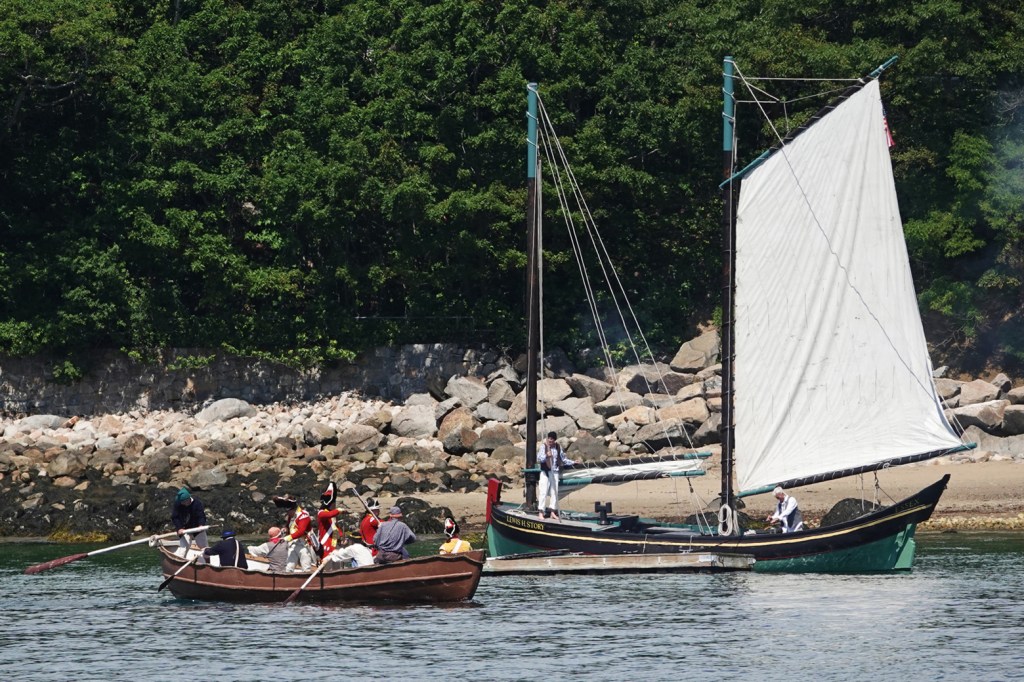
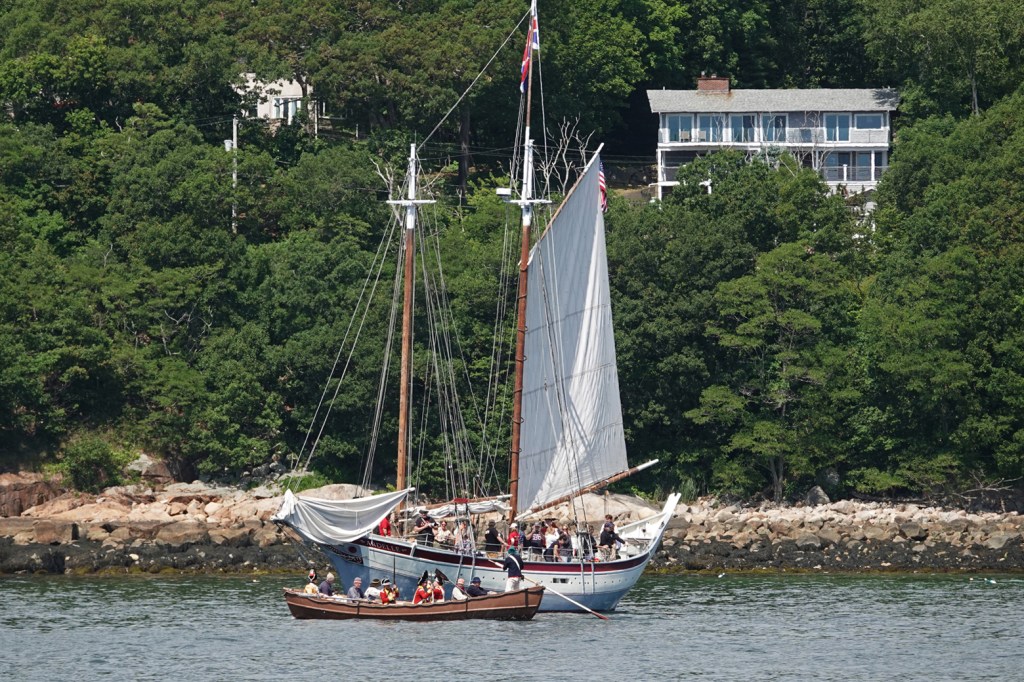
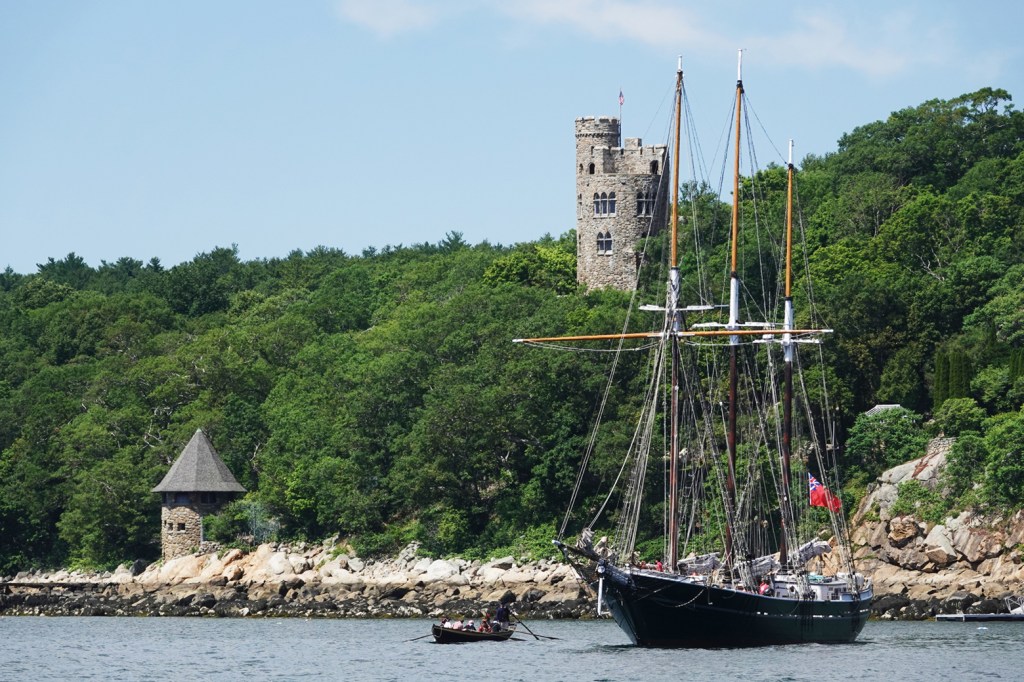
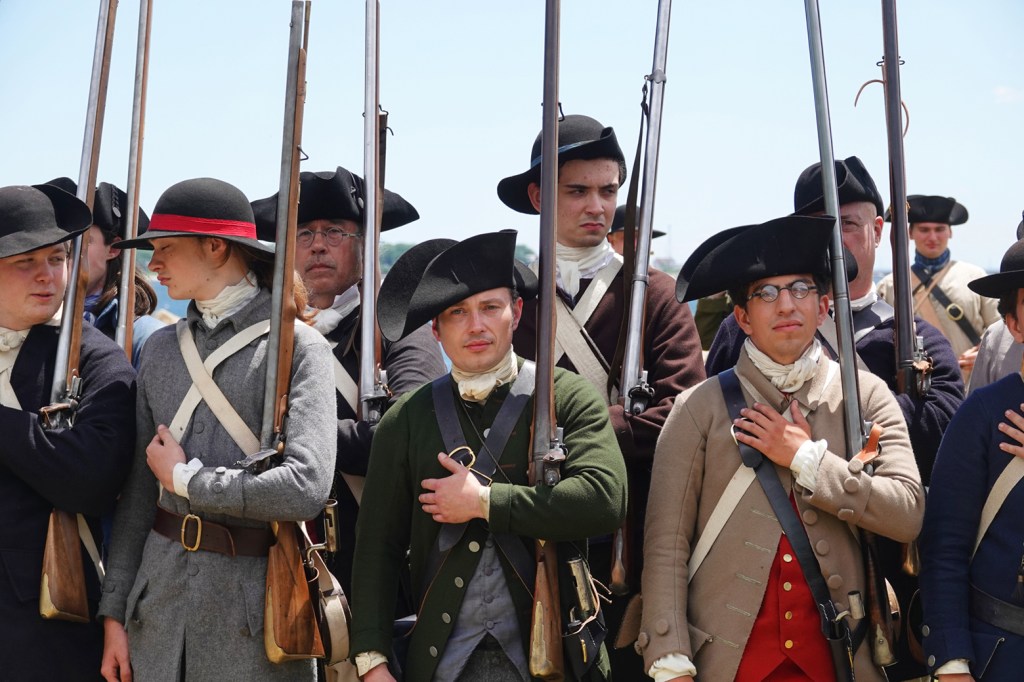
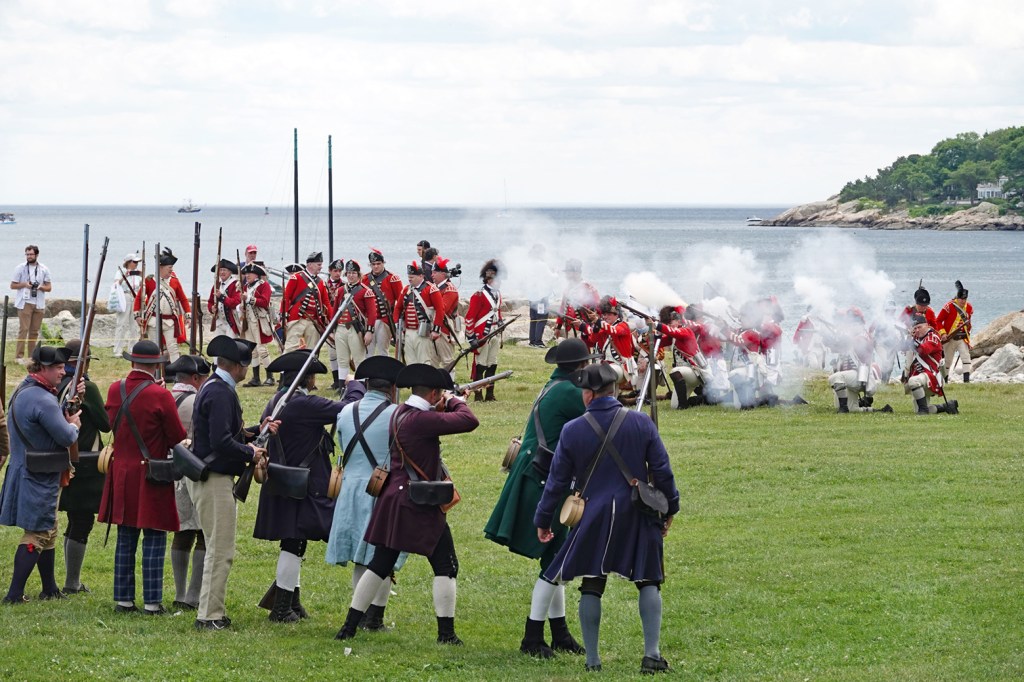
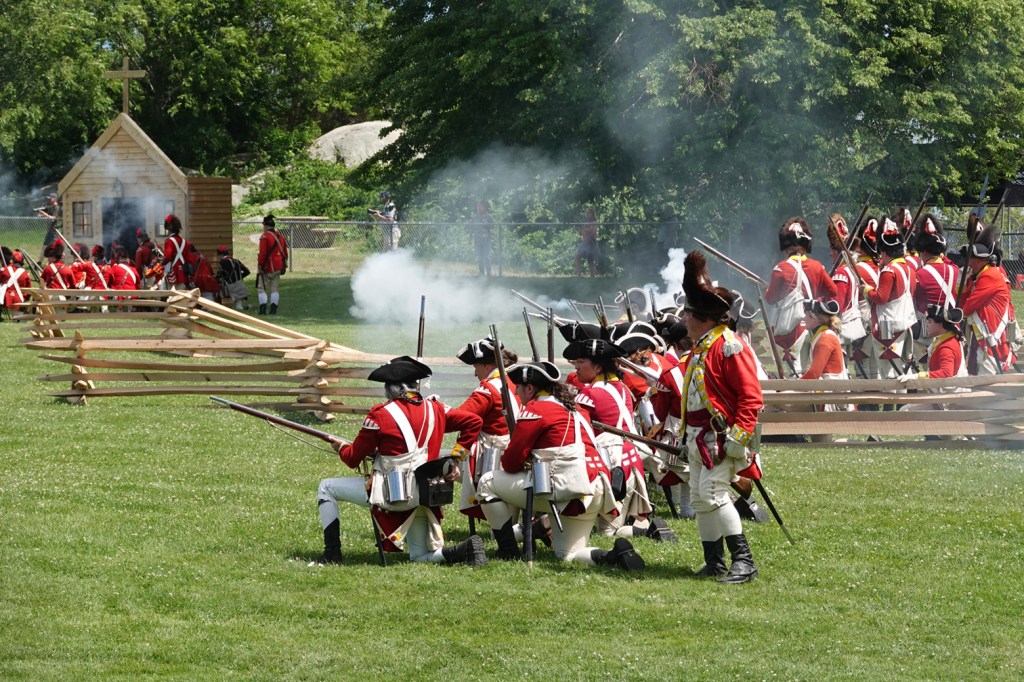
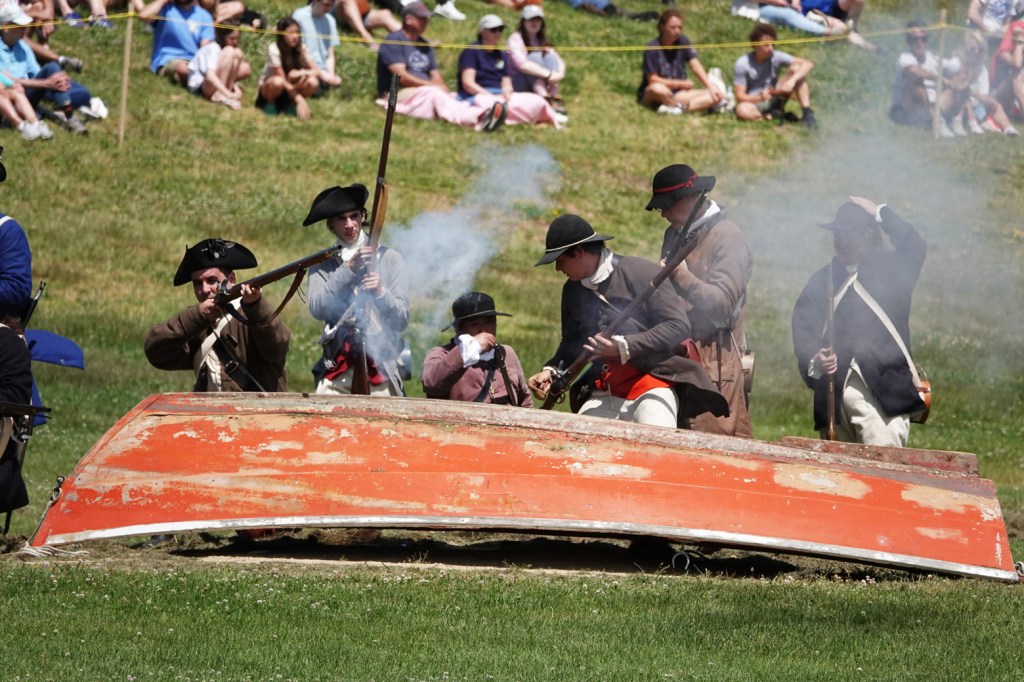
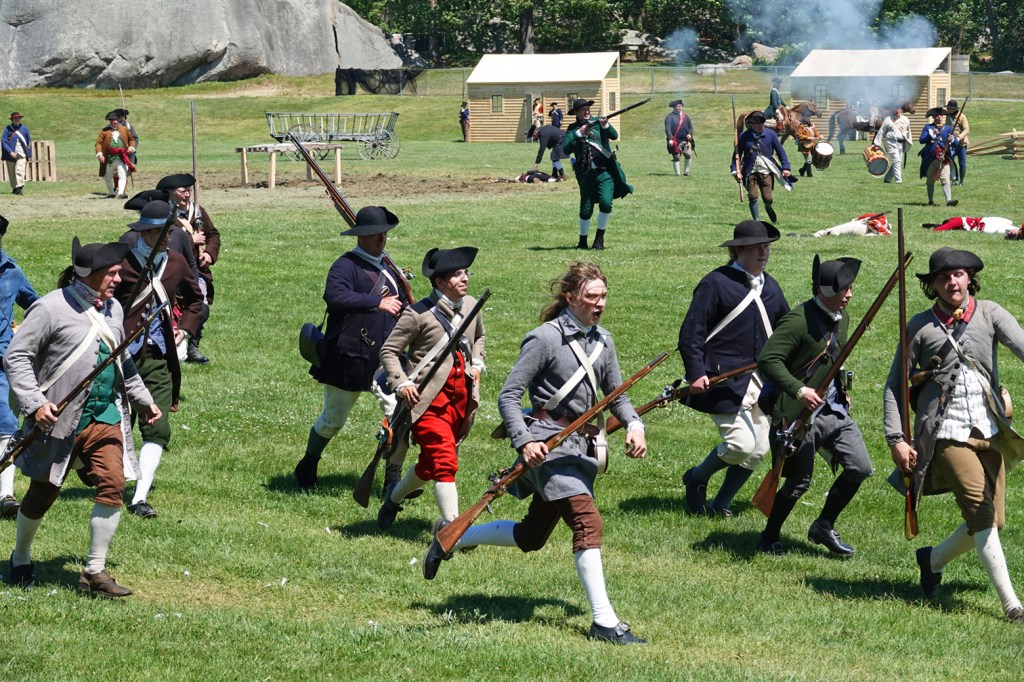
Last weekend I spent Saturday at Gloucester’s Stage Fort Park watching the reenactment of the ‘Battle of Gloucester,’ and on Sunday Anne-Lise and I were aboard Thomas E Lannon for a different angle on the repeated reenactment. Capt John Lindsay, commanding the British sloop of war HMS Falcon, was on assignment to seize supplies and food from ships and farms along the coast to support the British troops occupying Boston. He sailed Falcon into Gloucester Harbor on Aug 8, 1775 accompanied by a captured American merchantman schooner (reenacted by Ardelle), while chasing another (Lewis H Story). The second schooner purposely ran aground to avoid capture. Capt Lindsay sent longboats to refloat her, and a separate “distraction” crew ashore to set fire to the town. The Gloucester militia thwarted all of his actions.
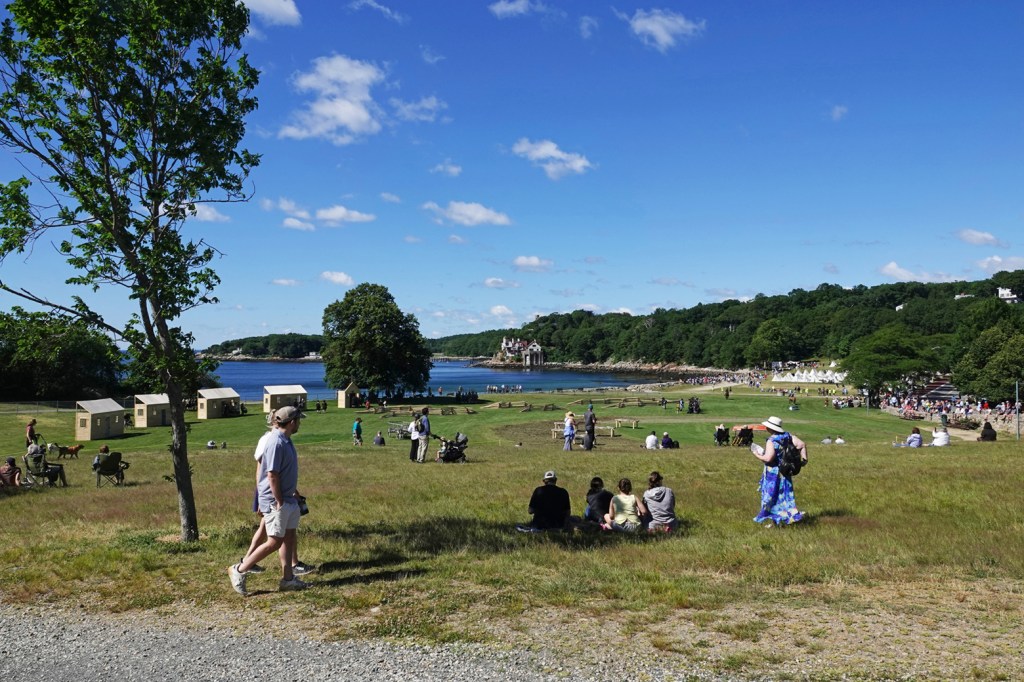
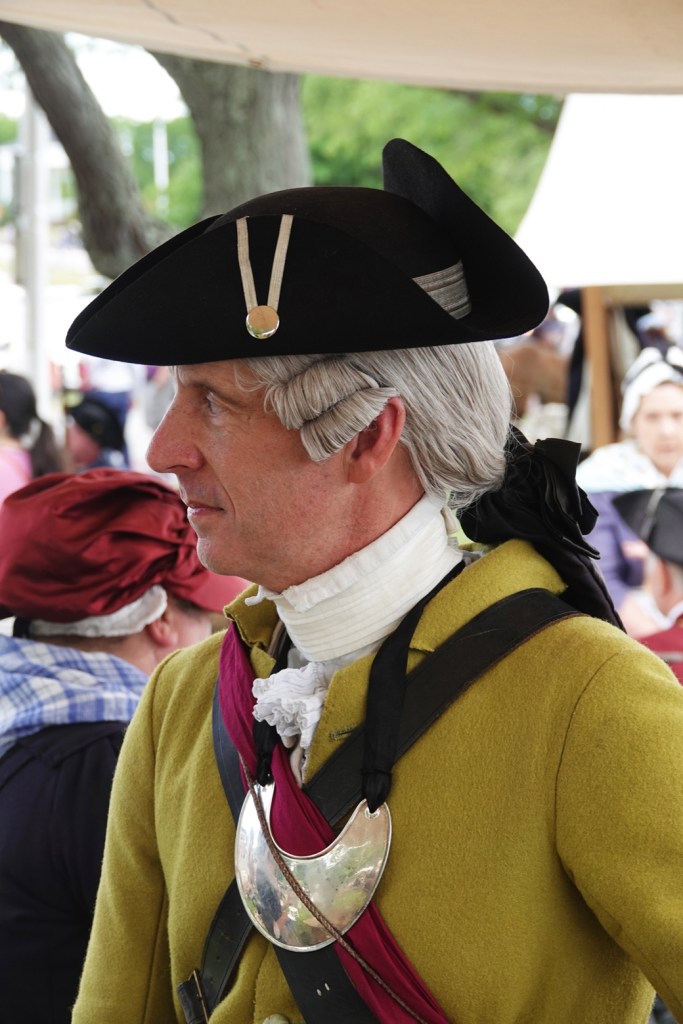
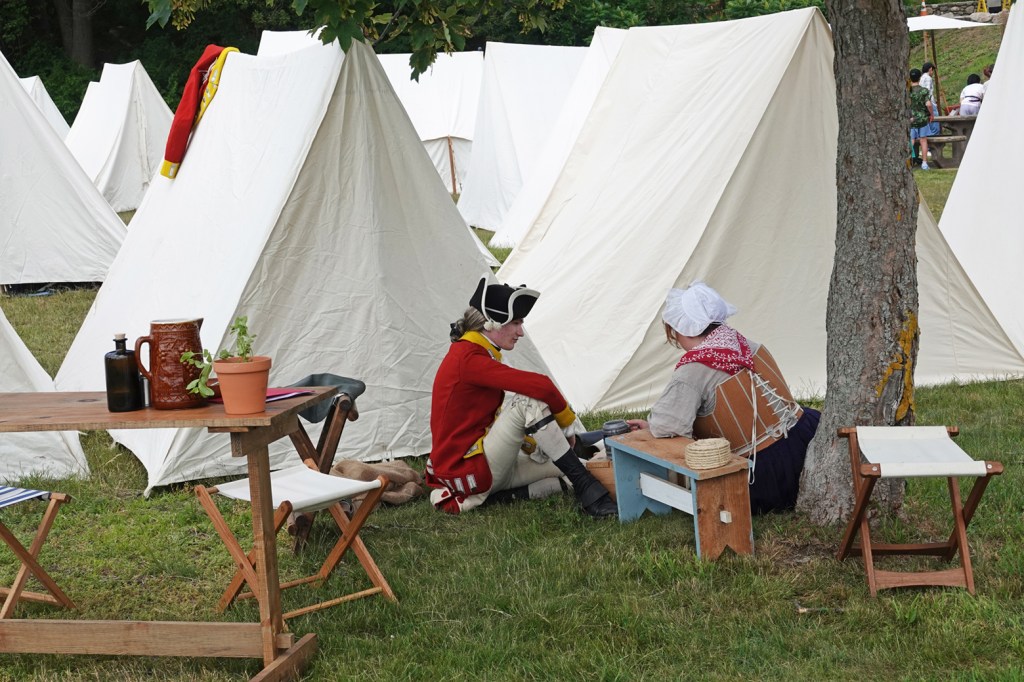
Stage Fort Park, with the town (L), and white tents (R) where the reenactors spent the night.HMS Falcon sent longboats in to silence the Gloucester militia which was firing from shore.Members of the town militia fired over the seawall at the longboats.While others shot from behind the rocks on the beach.British marines and sailors returned fire.One of the longboat crews boarded the grounded American schooner to, unsuccessfully, refloat and capture her. Militia fire from shore killed 3 of the British and pinned down the rest.Capt Lindsay ordered his naval prize schooner, with a British crew and American impressed (captured) sailors, to assist.A town militia officer, during our lunch and reenactor-public interaction break.A quiet moment in the British encampment, before the staged land battle.Capt Lindsay bombarded Gloucester from Falcon and sent more forces ashore to burn the town. The impressed Americans exploded the powder early before setting fires, and the militia captured the British.Gloucester’s fighting force of townspeople was ready to take on the king’s Royal Navy.They met the British marines emerging from the beach.Superior British firepower forceed the militia back through town.The Americans knew the terrain, regrouped, and pushed the British back twice.The third time, they routed the British down to the beach, their boats, and to Falcon to withdraw.
The score: Gloucester recaptured both American schooners, took 24 prisoners, freed American sailors impressed by the British, and lost 2 lives. HMS Falcon departed having accomplished none of her goals, losing American crew, and leaving 3 dead behind. This recounting of the battle at Stage Fort Park on June 20 and 21, 2026 is a combination of historical information, and how the reenactment was actually staged. They differ, particularly regarding the land battle.
Spread The GMG Love By Sharing With These Buttons:
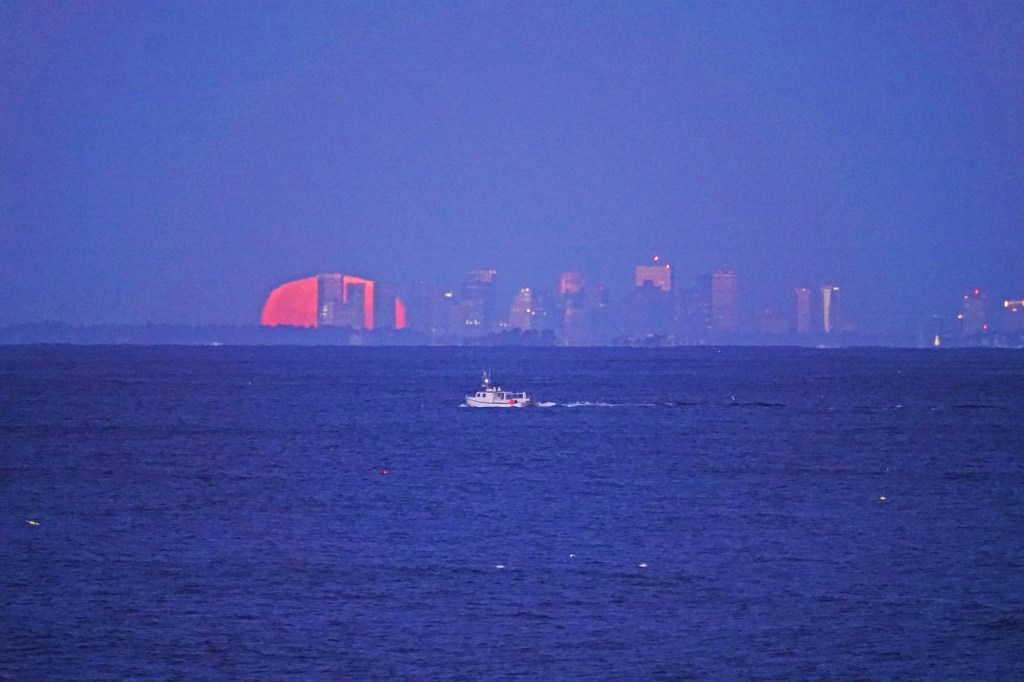
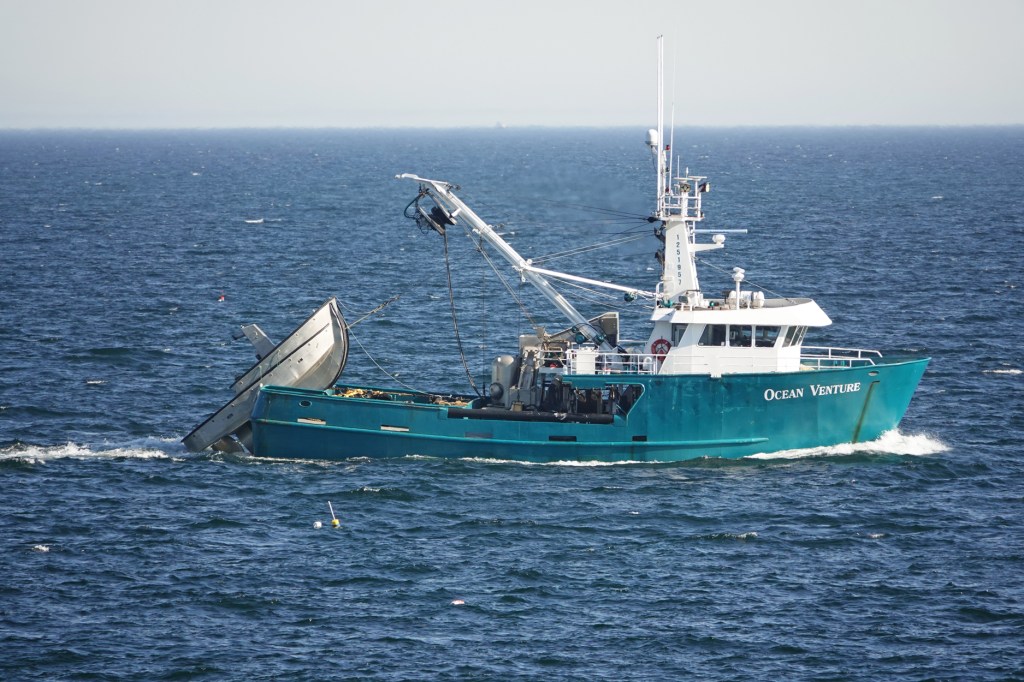
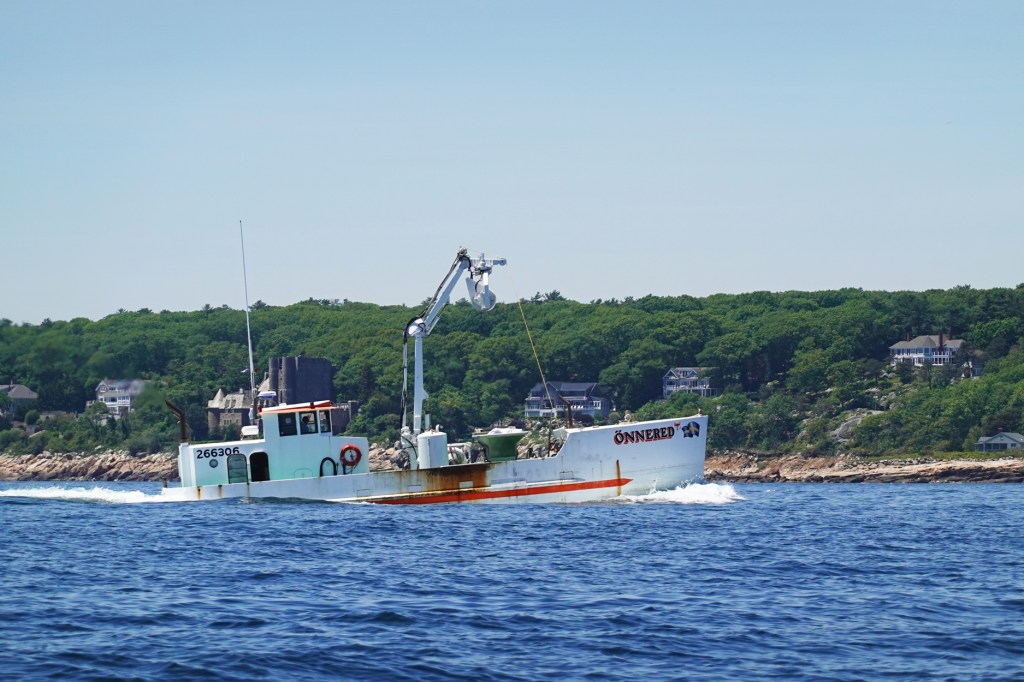
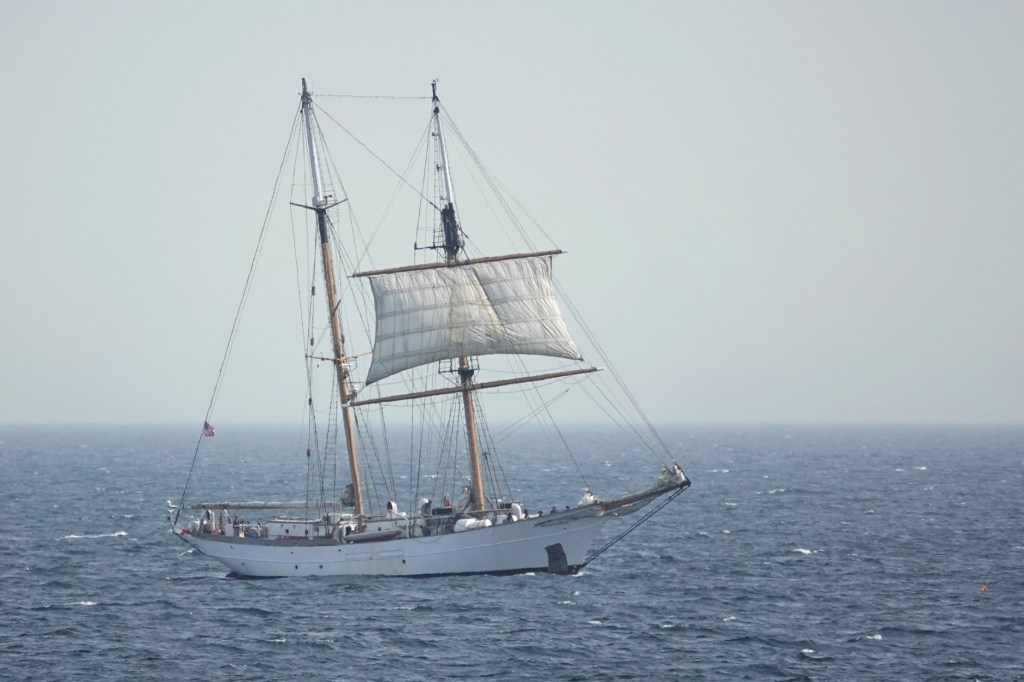
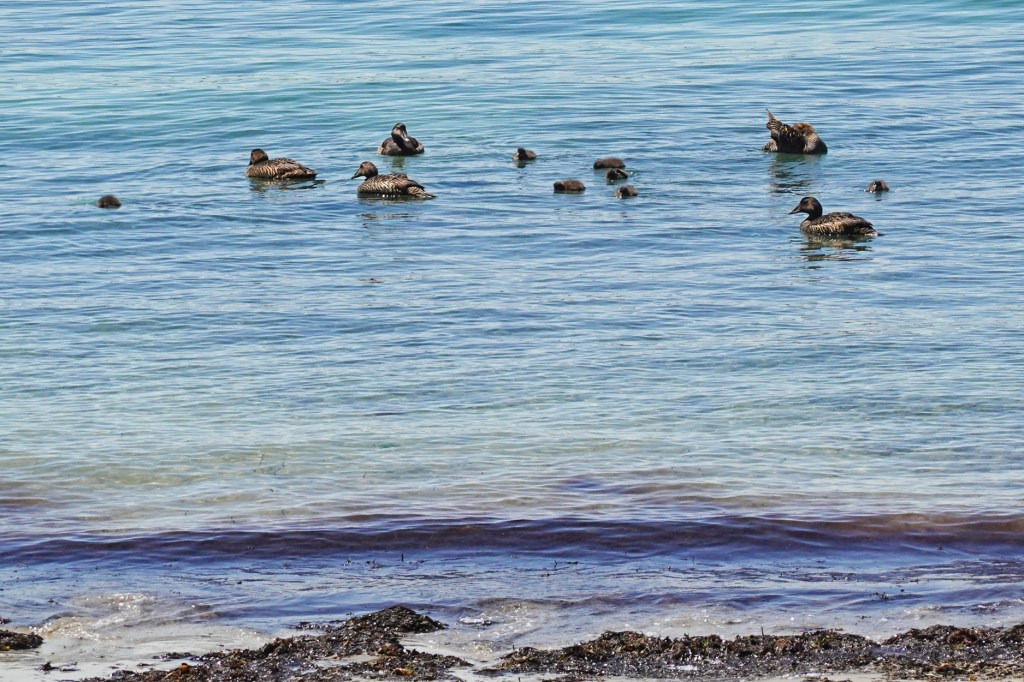
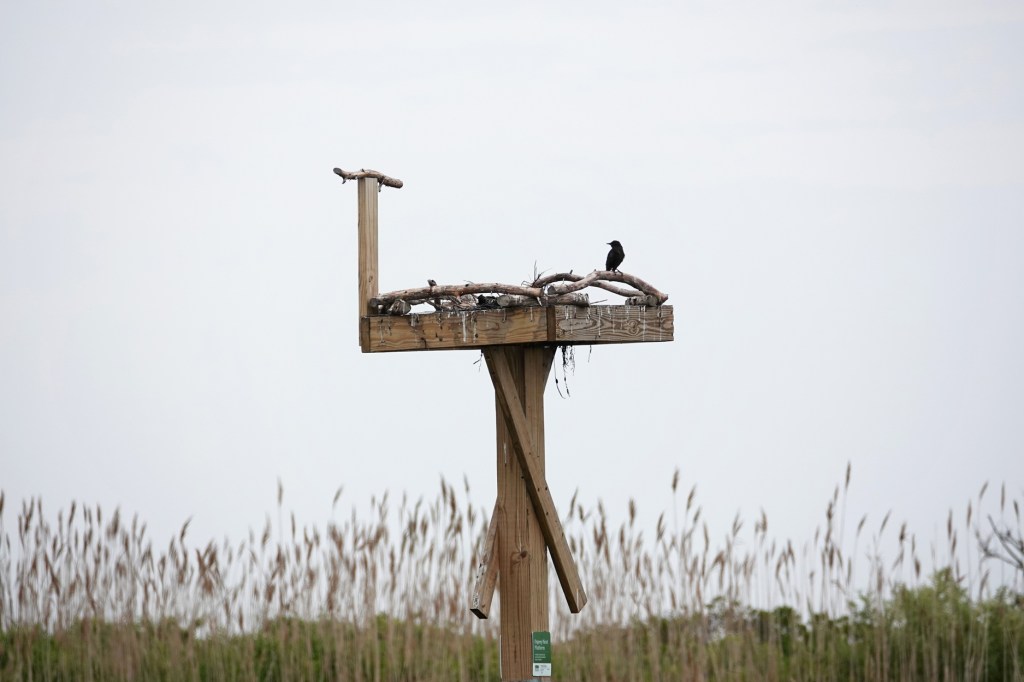
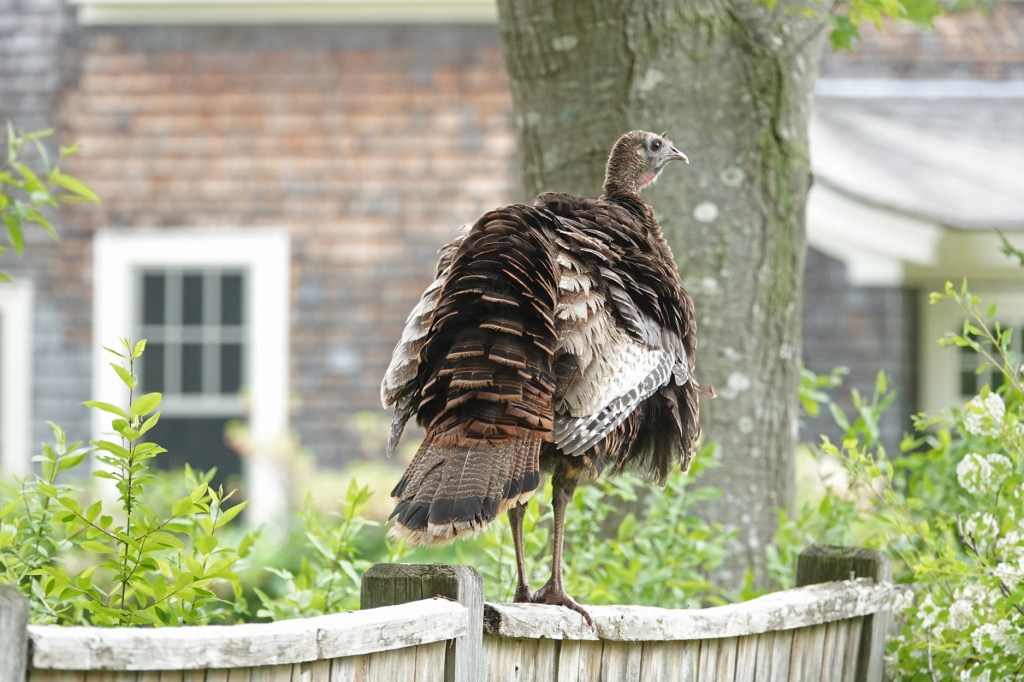
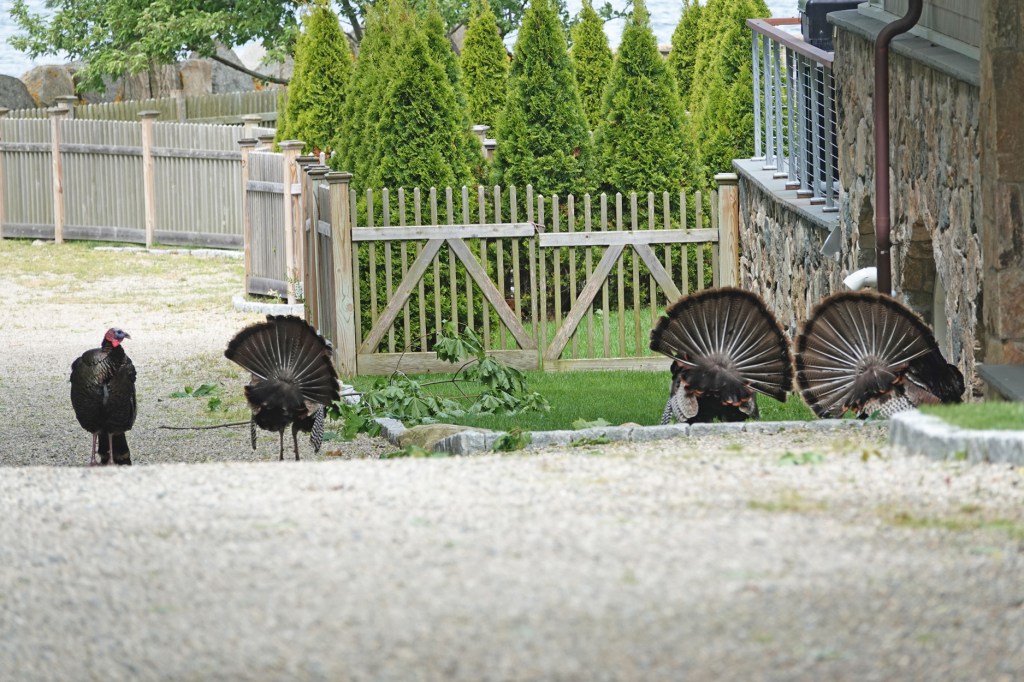
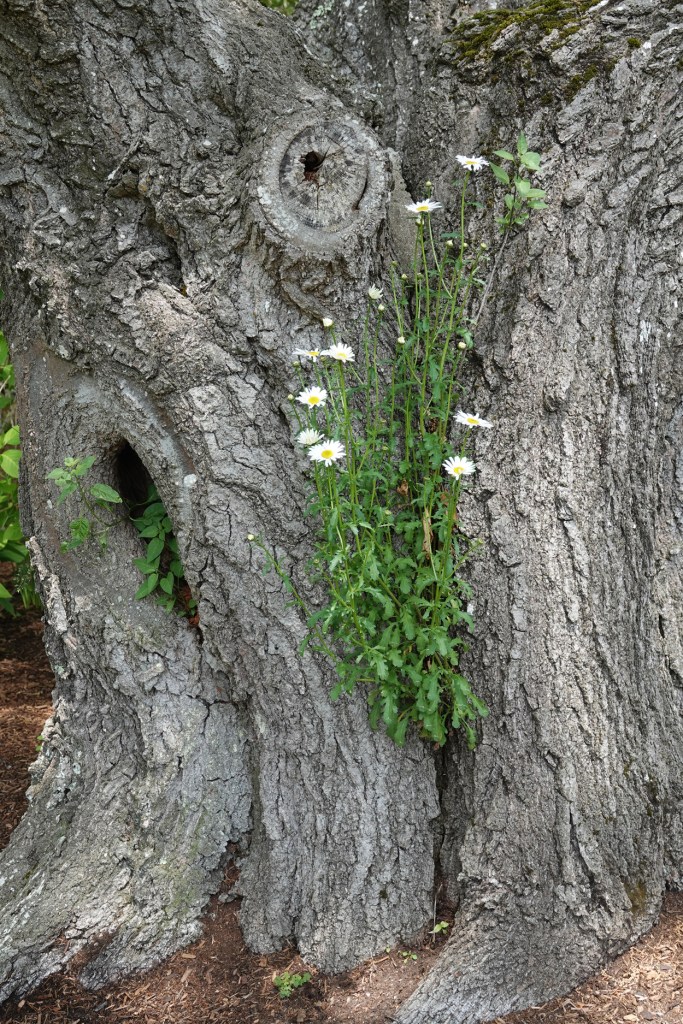
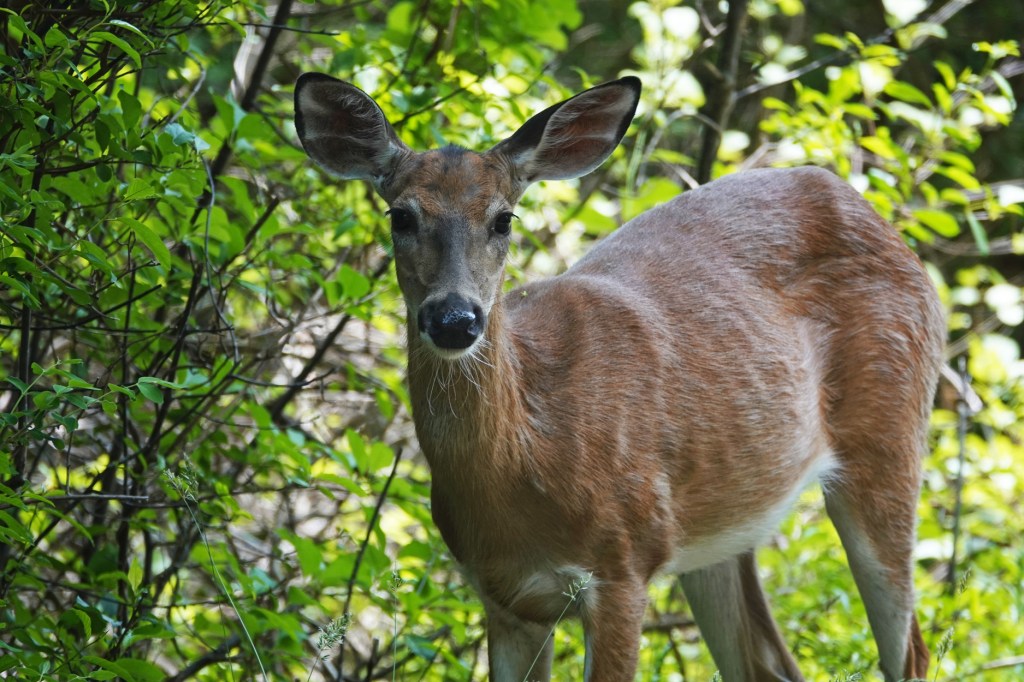
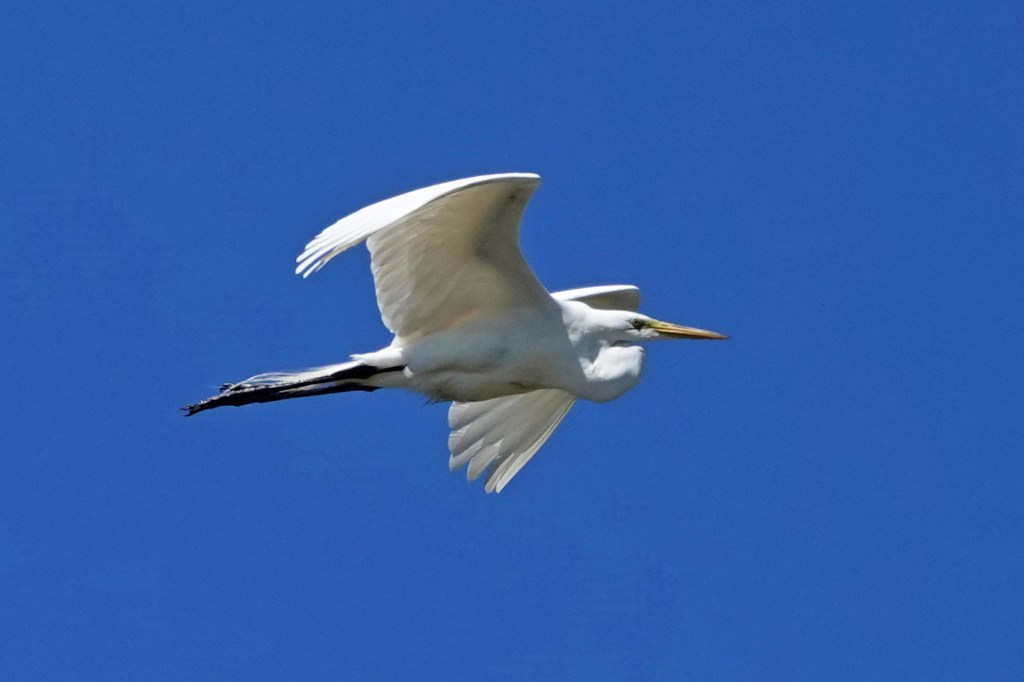
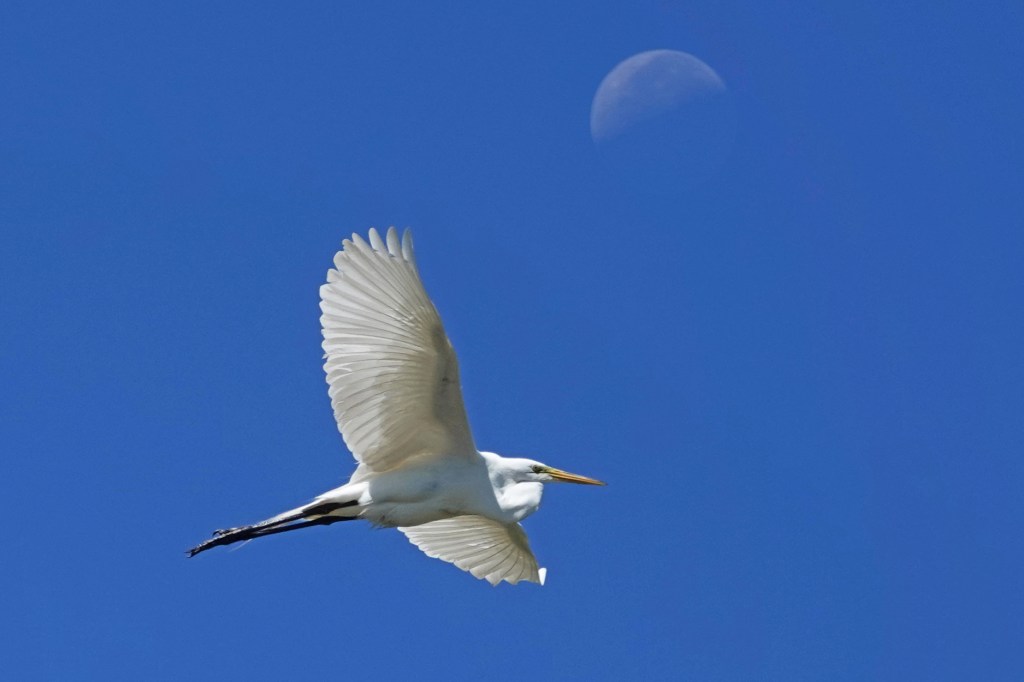
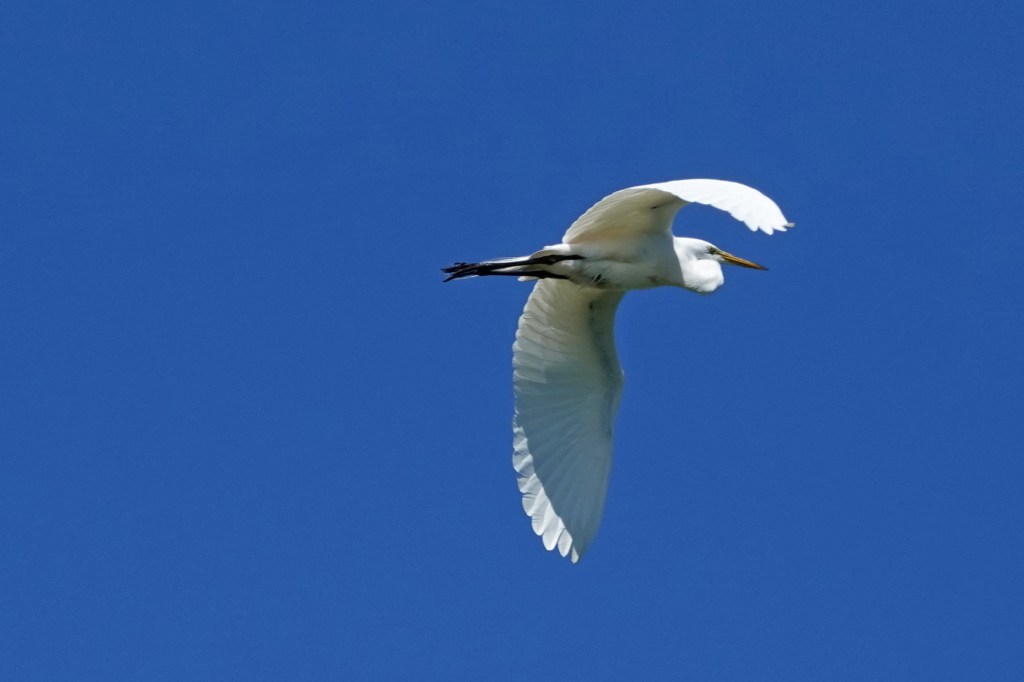
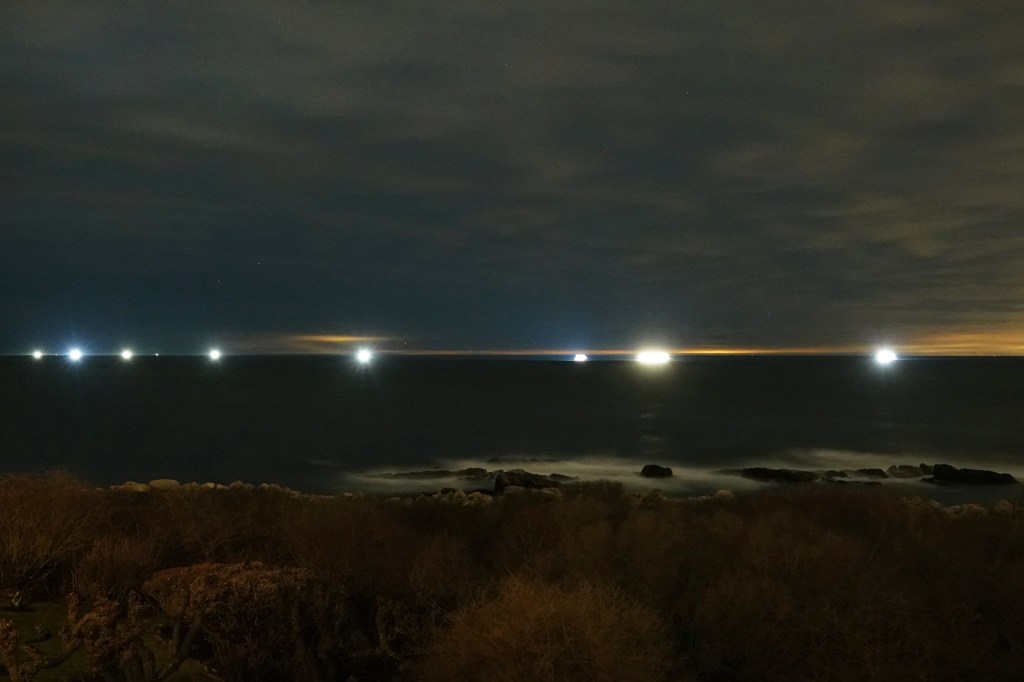
Starting the day before sunrise with the full moon setting behind the Boston skyline.Fishing vessels are all different. Ocean Venture can rig as a seiner (above) or a trawler.Onnered was built as a small tanker, and must now have Swedish fishing connections (see bow flag).Brigantine Corwith Cramer approaches Gloucester in the haze, doing just fine under one squaresail.Common Eider moms share their kids’ day care duties, at Raymond Beach.This surely isn’t an Osprey. But, we heard one landed nearby recently at the Eastern Point Audubon Sanctury.Turkey tightrope.Young males practicing their tail display techniques.We know daisies spread easily, but this is ridiculous.“Why did you humans name a tick after me? It’s humiliating.”Eddy Egret glides in over Niles Pond.Performs a Moon fly-by.And departs over the ocean.
Spread The GMG Love By Sharing With These Buttons:
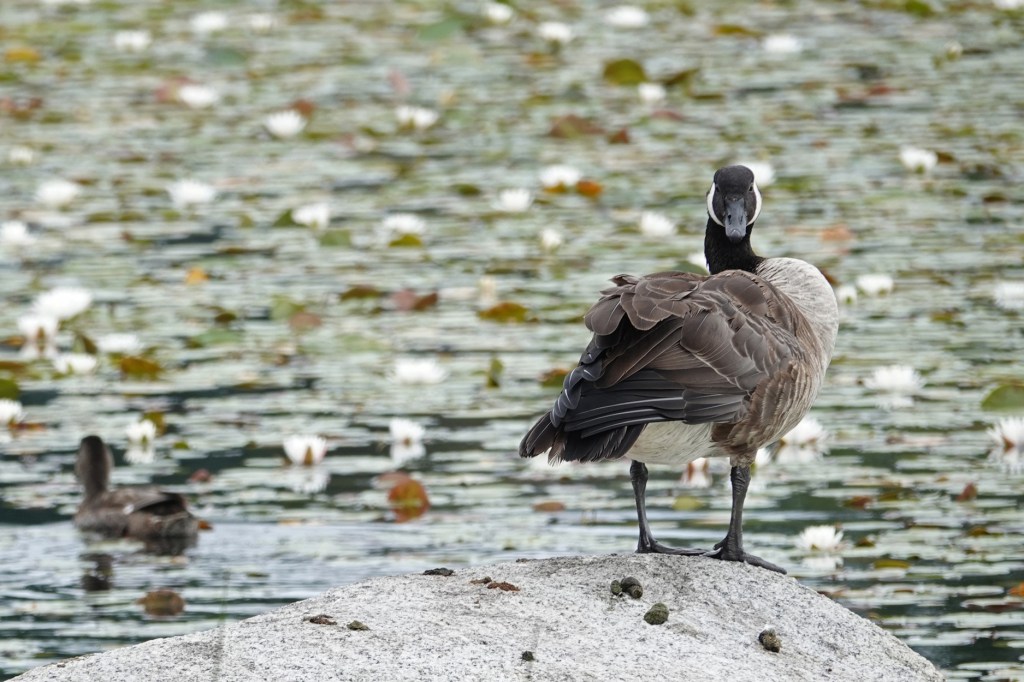
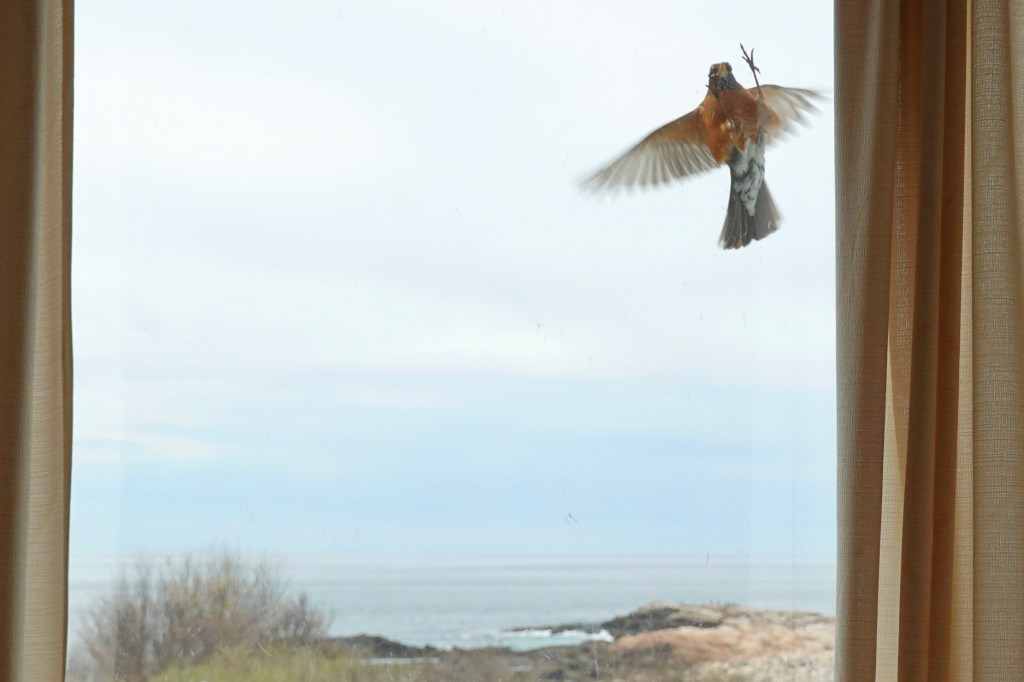
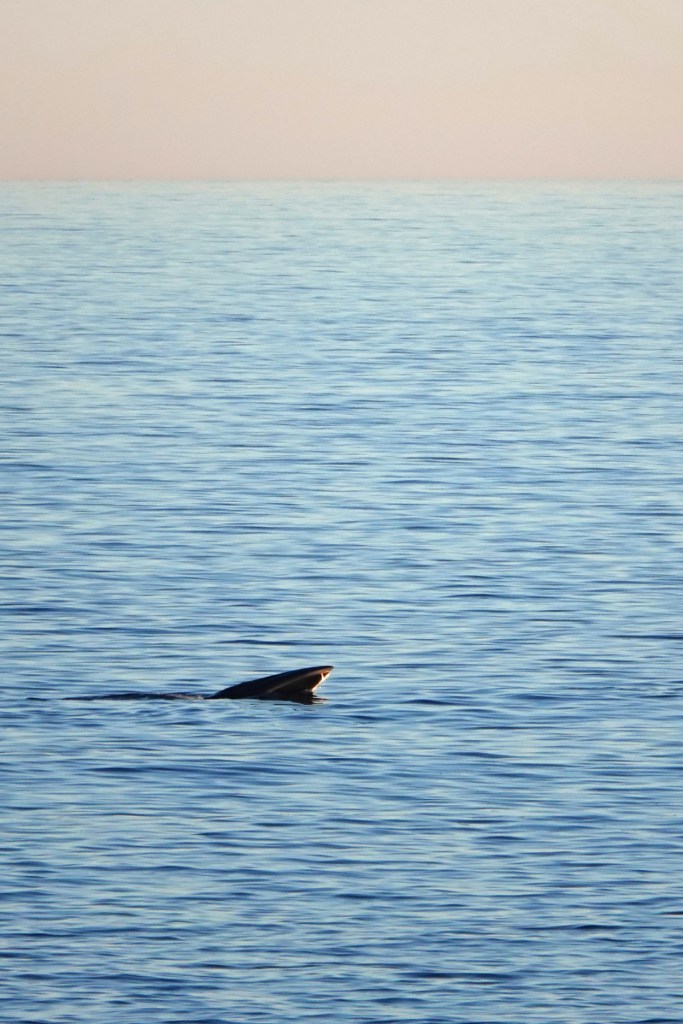
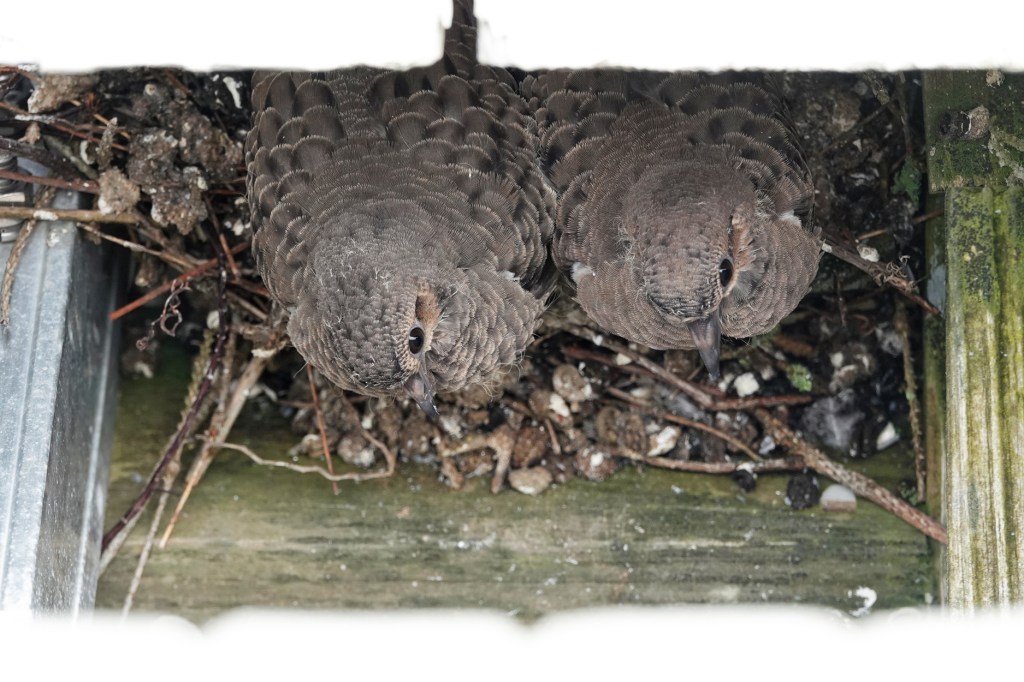
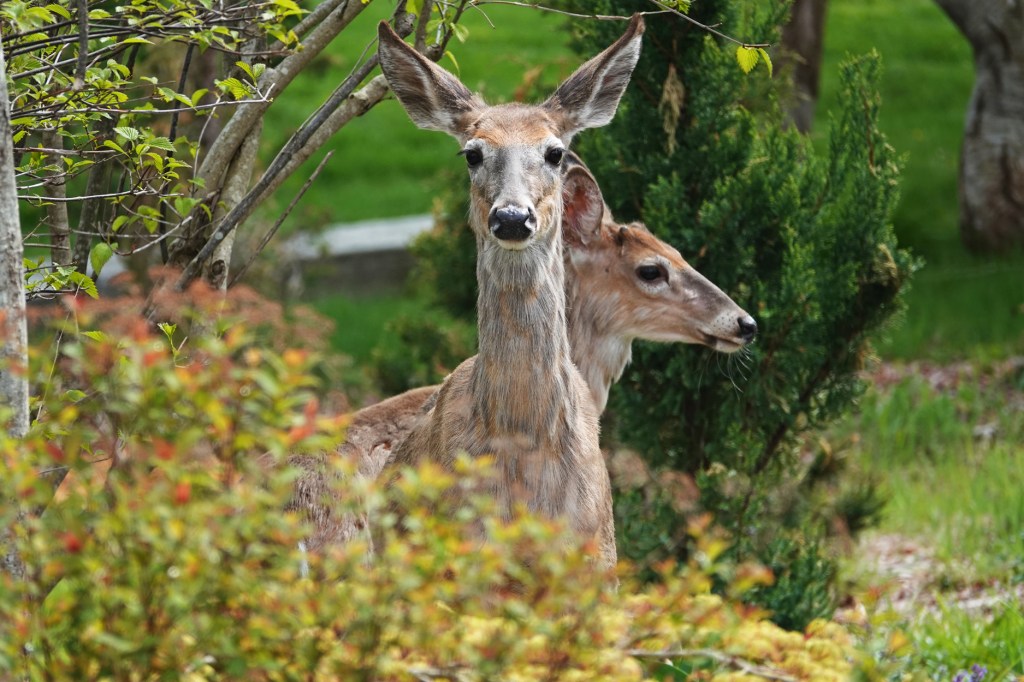
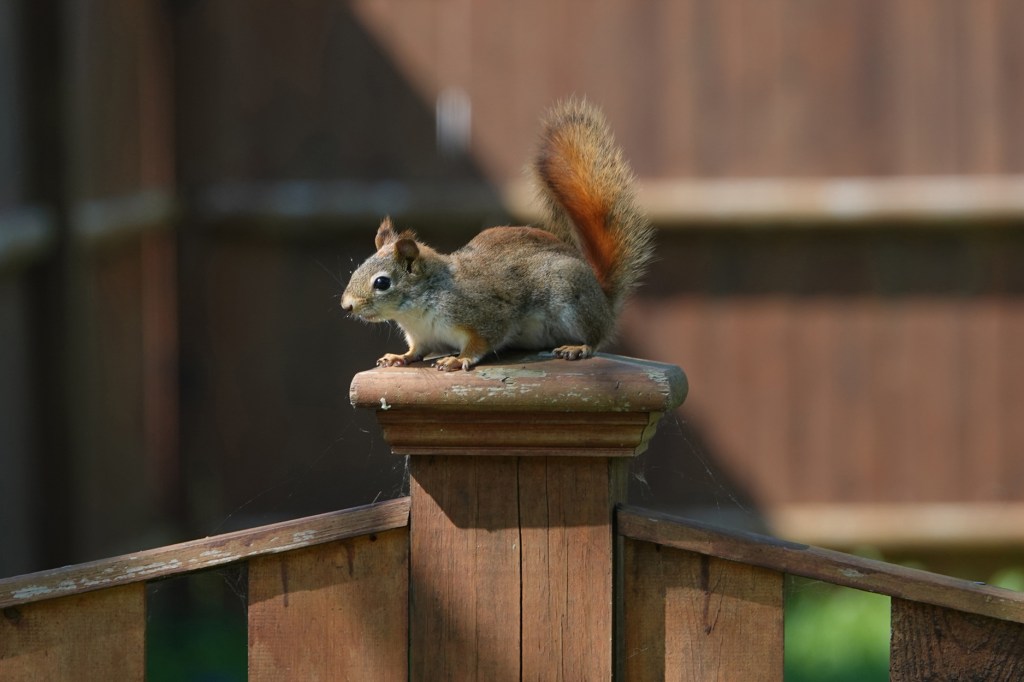
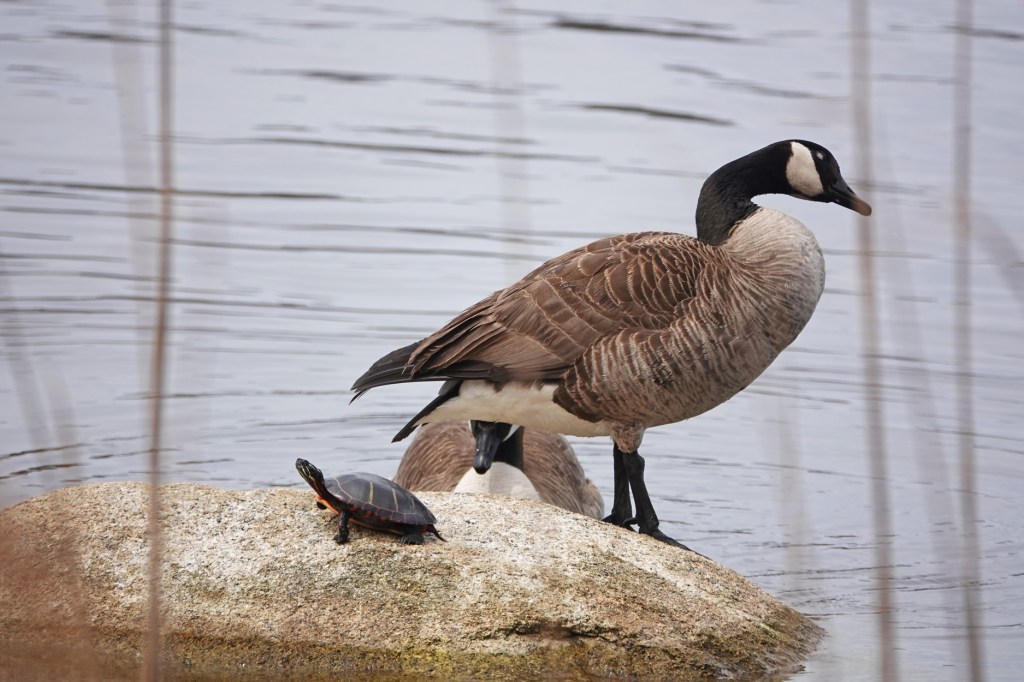
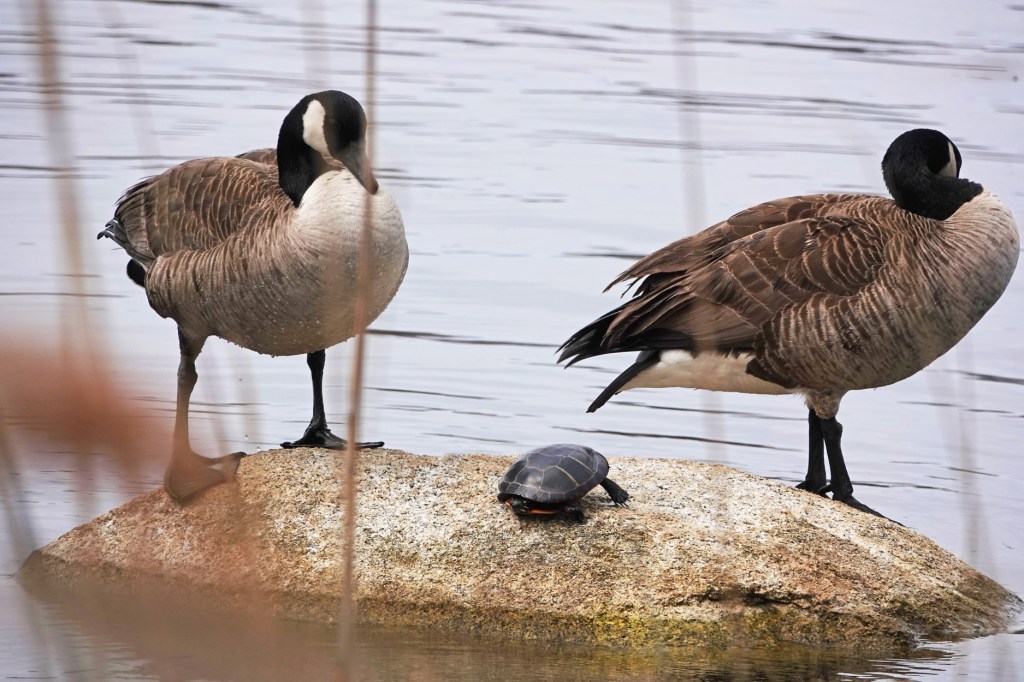
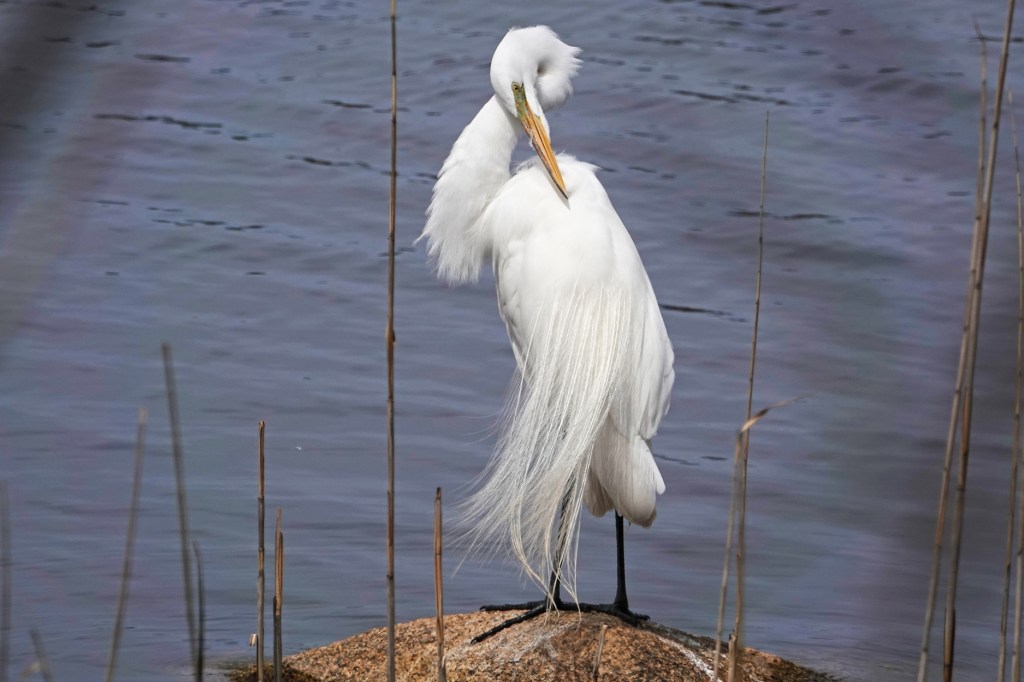
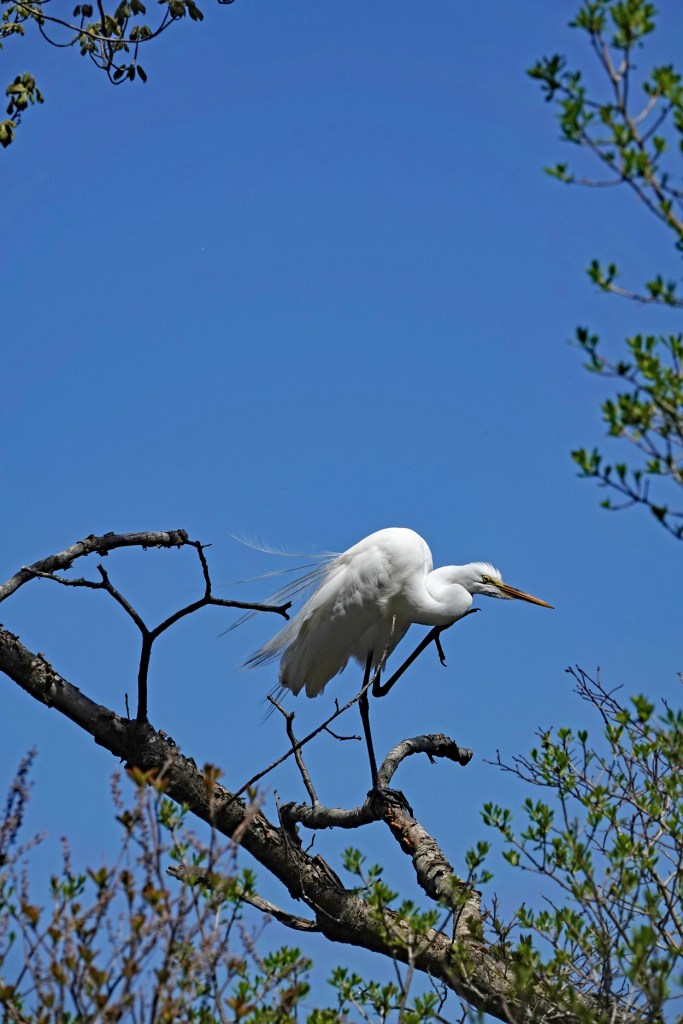
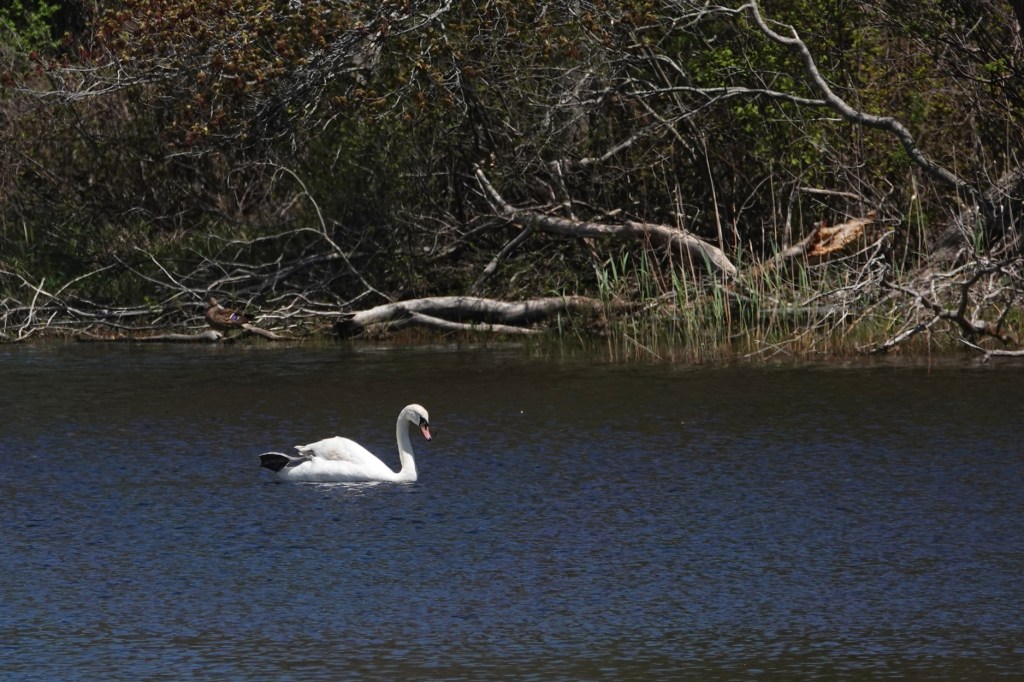
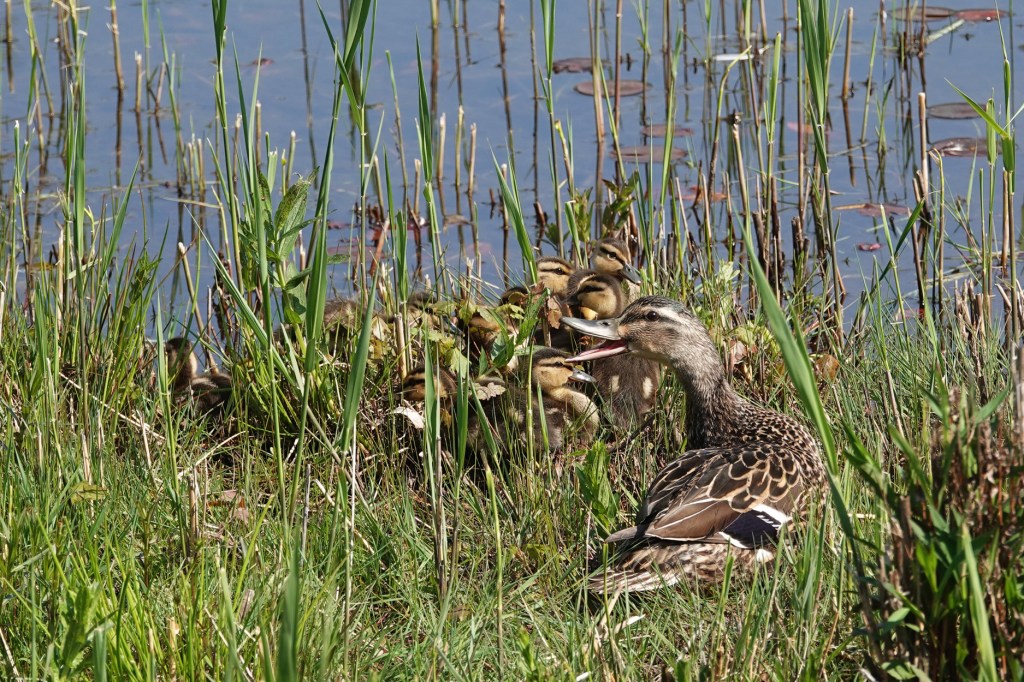
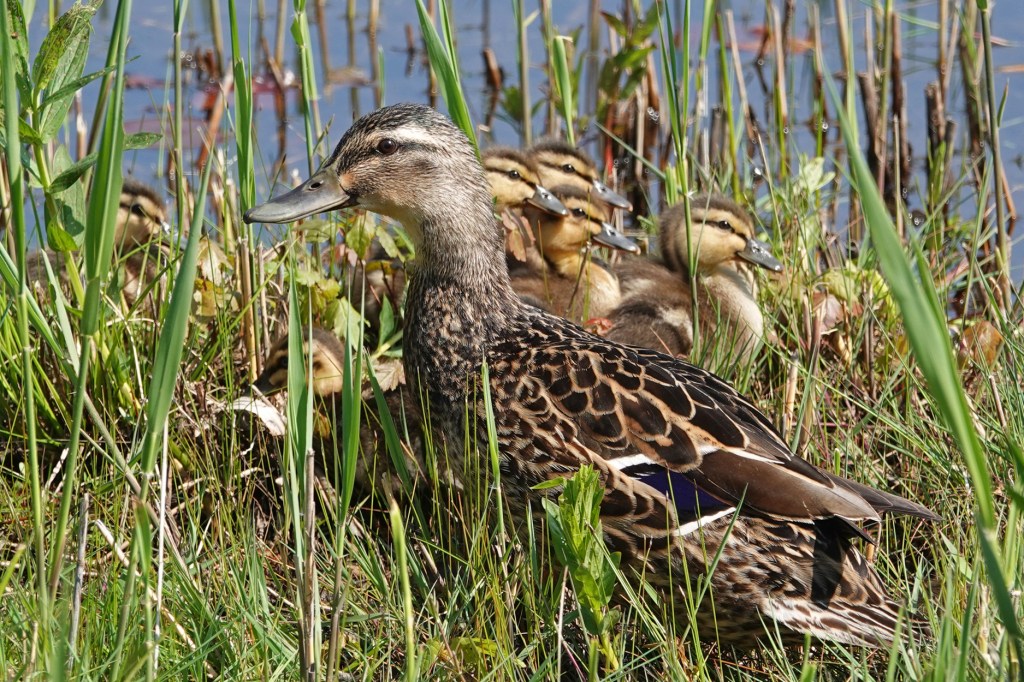
After 2 weeks of attacking his reflection, this Robin appears to have given up.An infrequent visitor, a Sei Whale swam by, skim feeding with open mouth.Our Mourning Dove couple is back, nesting above the solar panels.We’re hoping the deer now have plenty to eat elsewhere.This Red Squirrel found an appropriate color for its background.“I’ve got a problem if that second Cananda Goose wants to share my rock.”“I’m outta here!”On Niles Pond, Eddy (the Great) Egret never seems to get all his feathers in order.“Much better view of the pond from up here.”We haven’t had swans for years. I hope he/she has a mate.Mom Mallard, talking to her duckling at the far left – “No, we’re not going swimming yet.”And a proud mom, at that.
Spread The GMG Love By Sharing With These Buttons:
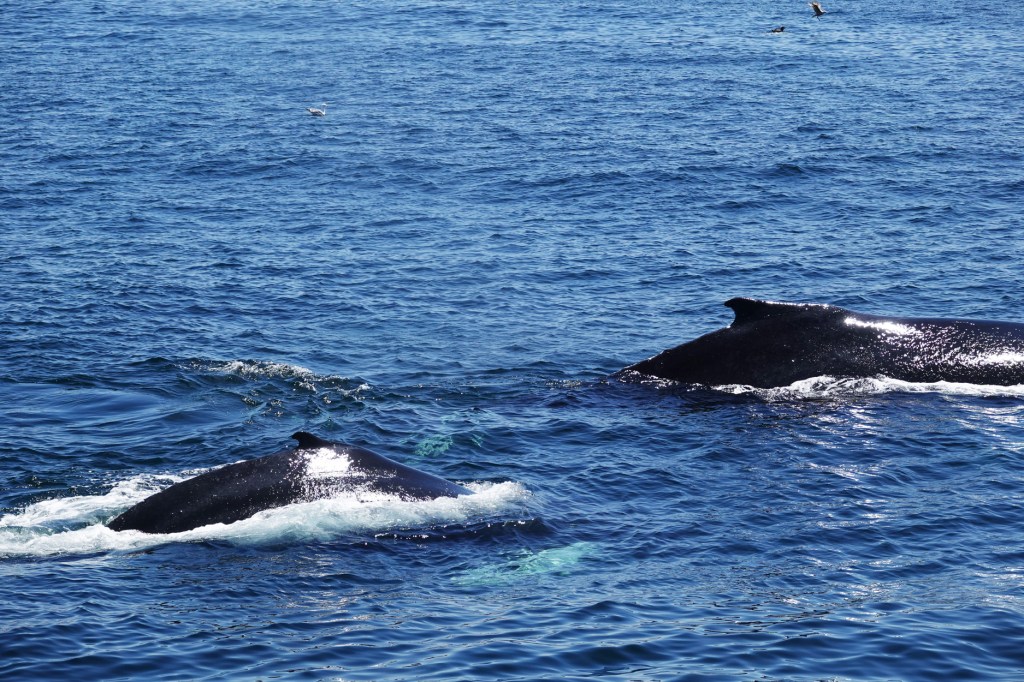
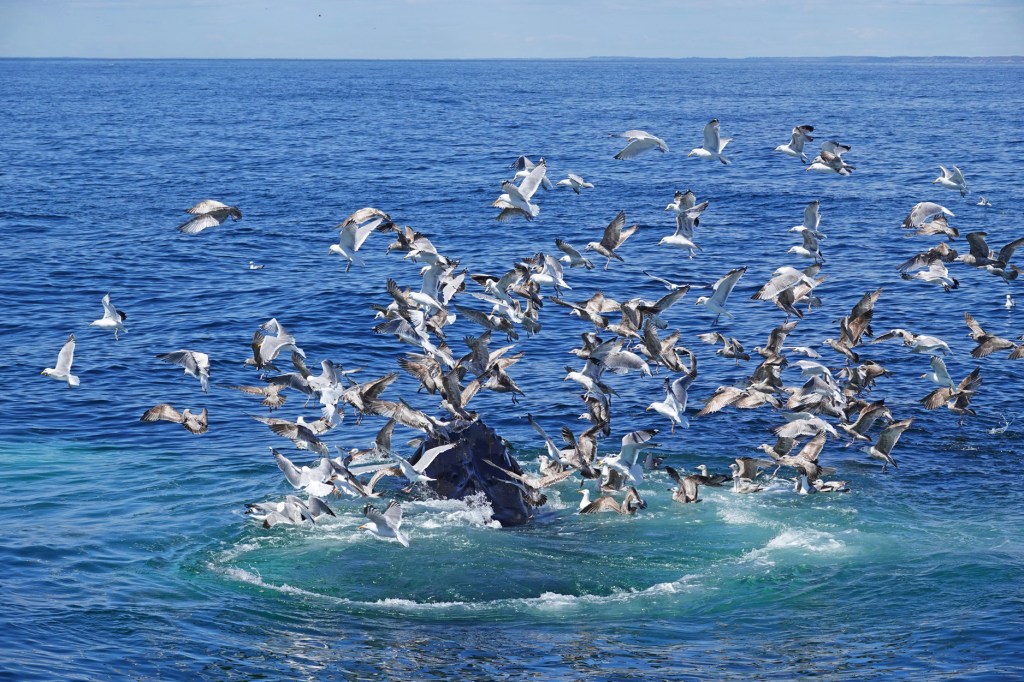
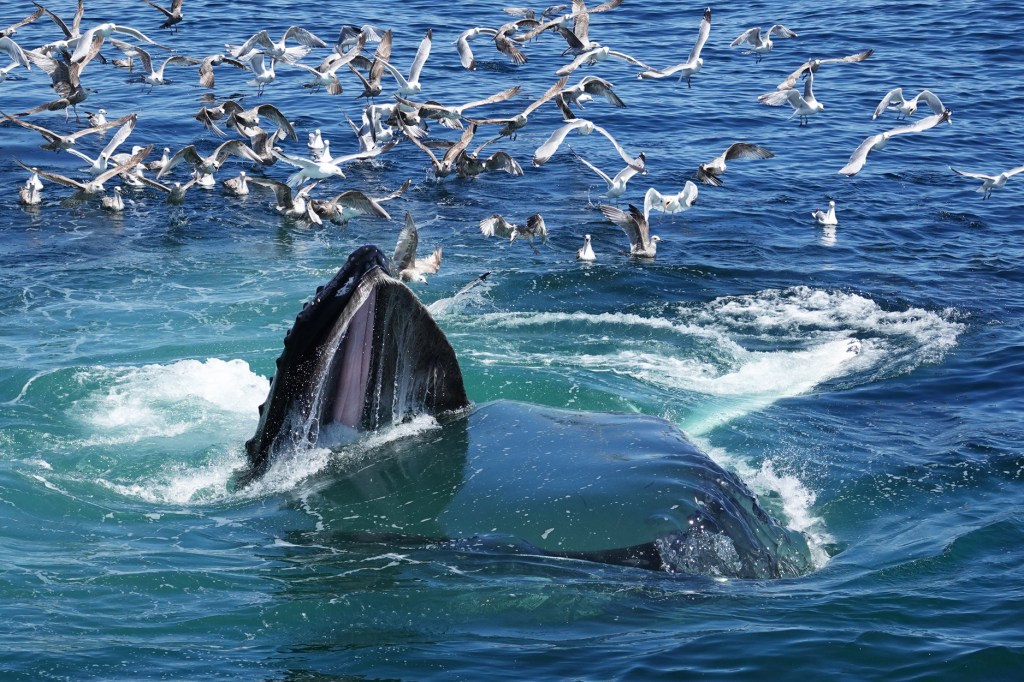
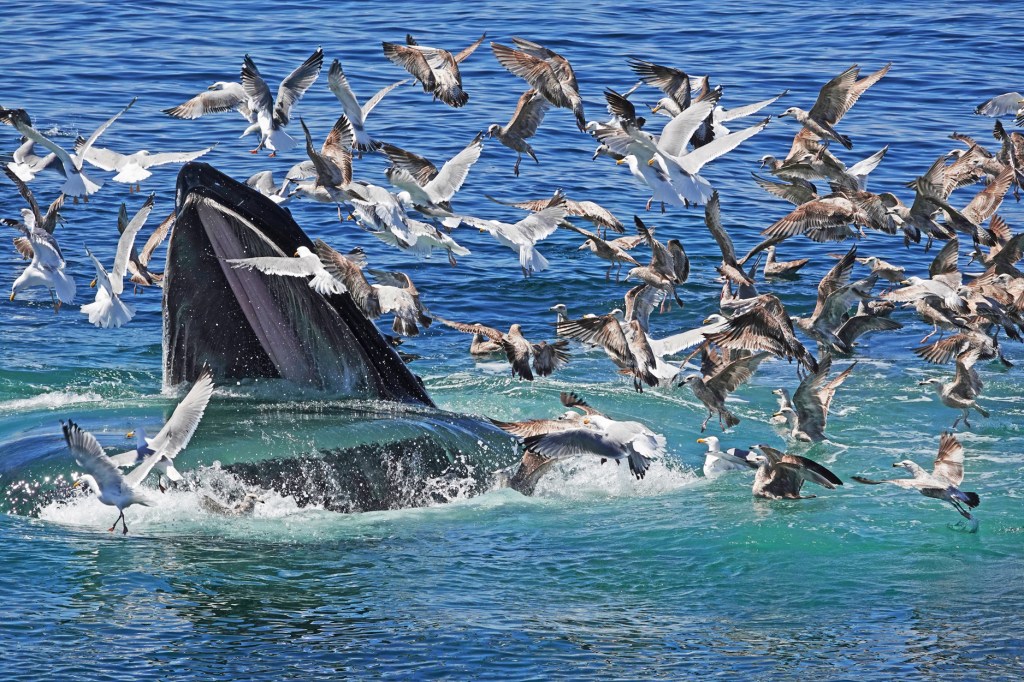
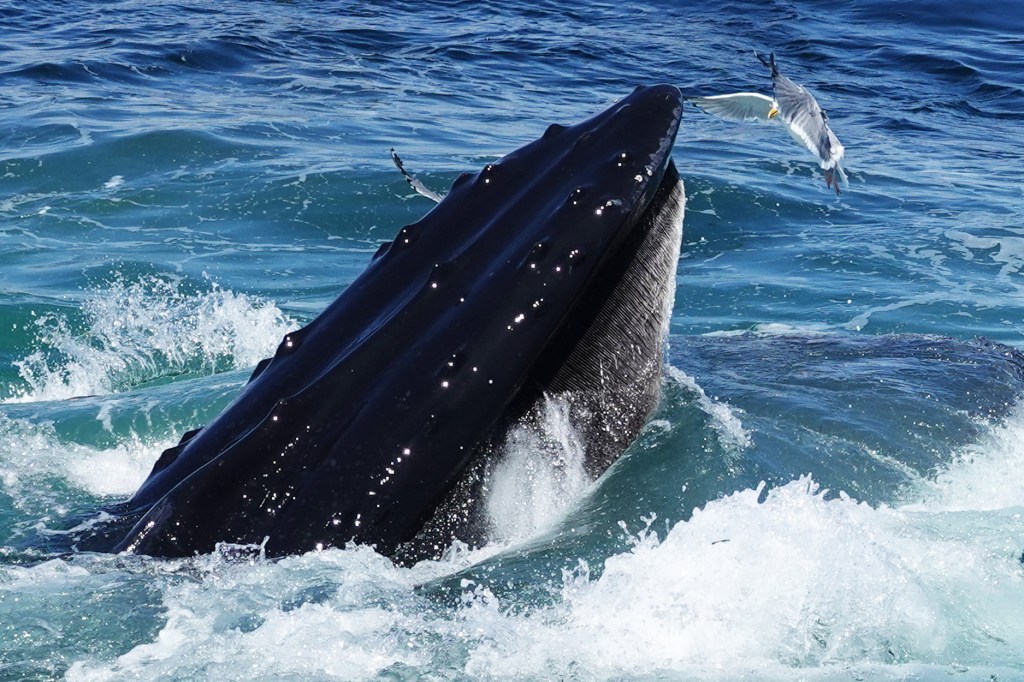
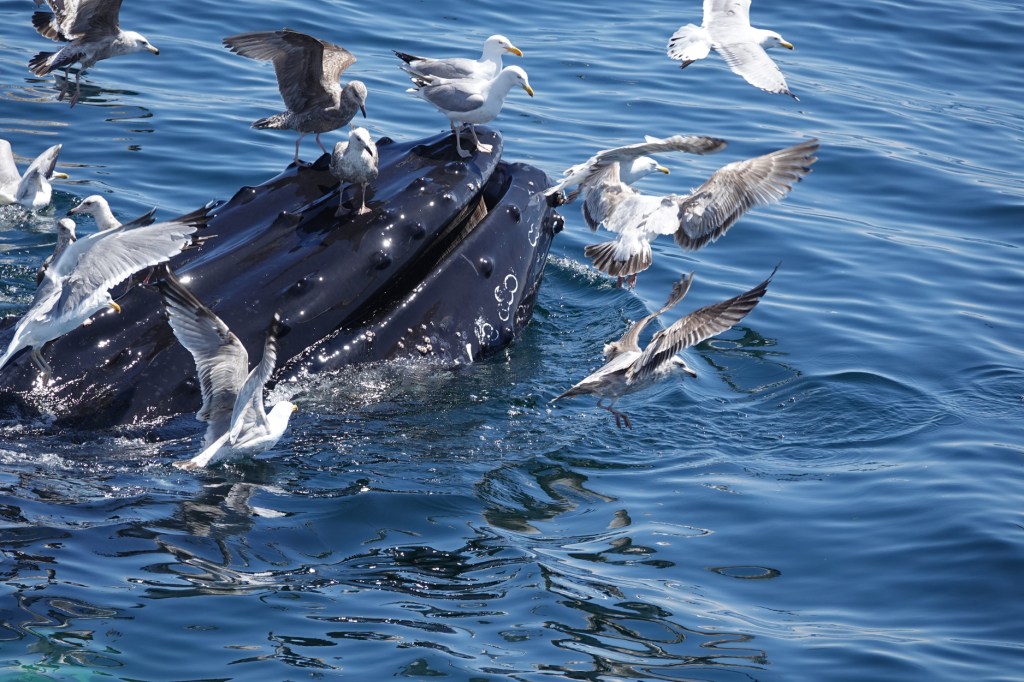
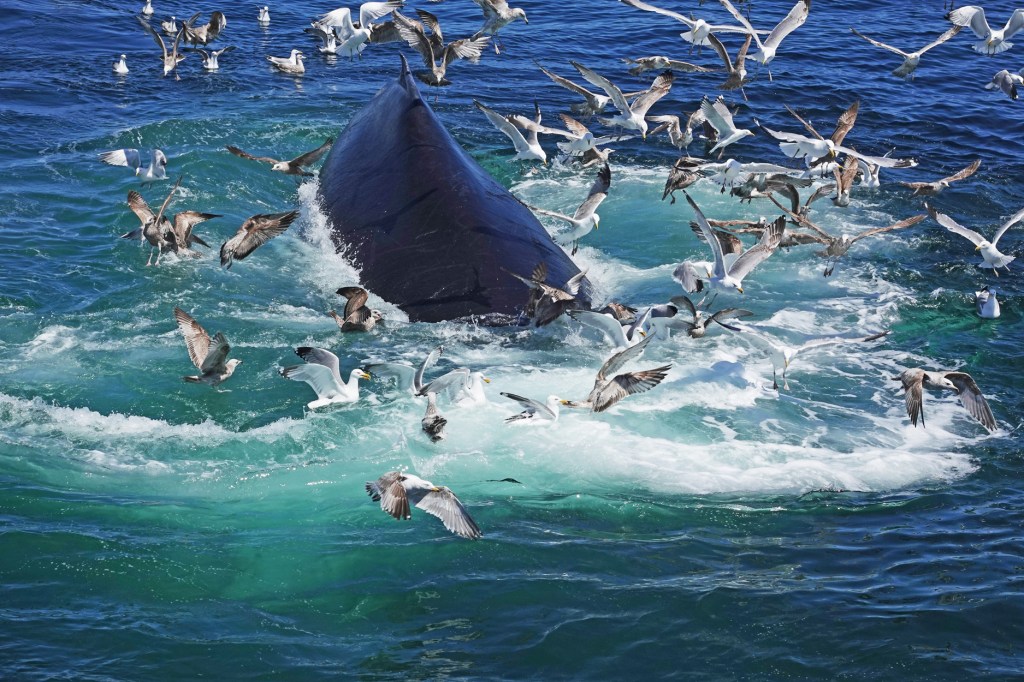
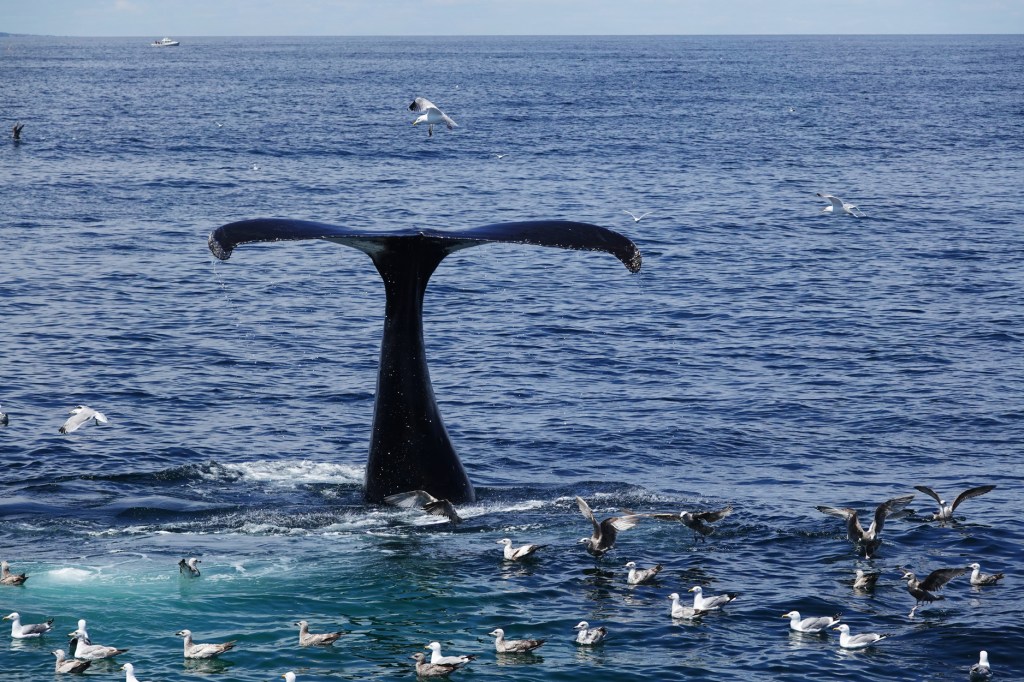
I was also out last week to Stellwagen Bank, on 7 Seas Whale Watch, to see what the excitement was all about.
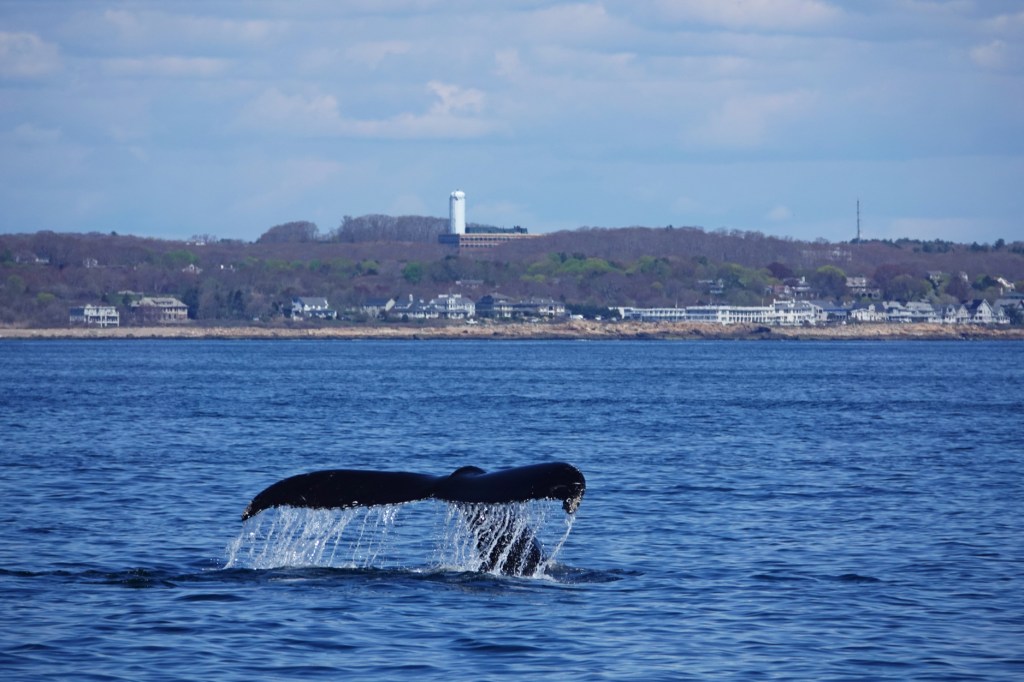
Our naturalist welcomed back this inshore Humpback mother, who had produced many calves in previous years.It was encouraging to see a number of mothers on Stellagen swimming with their youngsters.Bubble-net feeding was the highlight. Exhaled bubbles from the whale float krill and small fish to the surface.The whale surfaces through the prey with an open mouth, harboring dinner in its tremandous lower jaw.The gulls are quick to congregate for their own snacks around the swimming pool.The whale forces seawater out through a curtain of baleen plates hanging from its upper jaw, trapping its food.The gulls plead with the whale to open its mouth one more time.But settling back down in the water, it swallows its catch.This dinner is over, and the gulls wait for another of the many feeding whales around the horizon to surface.
Spread The GMG Love By Sharing With These Buttons:
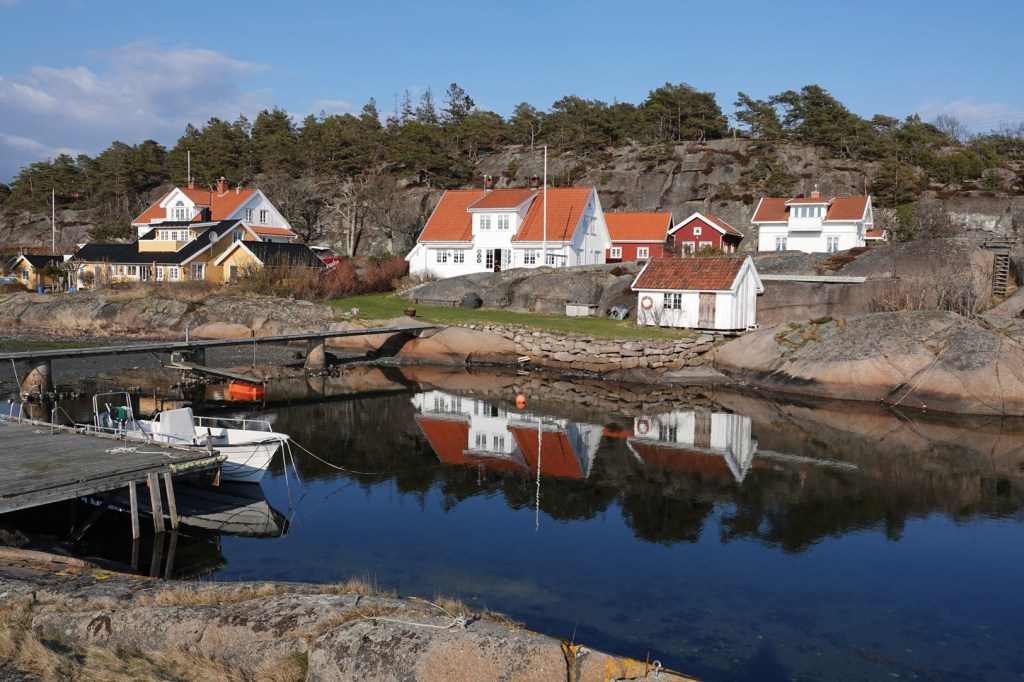
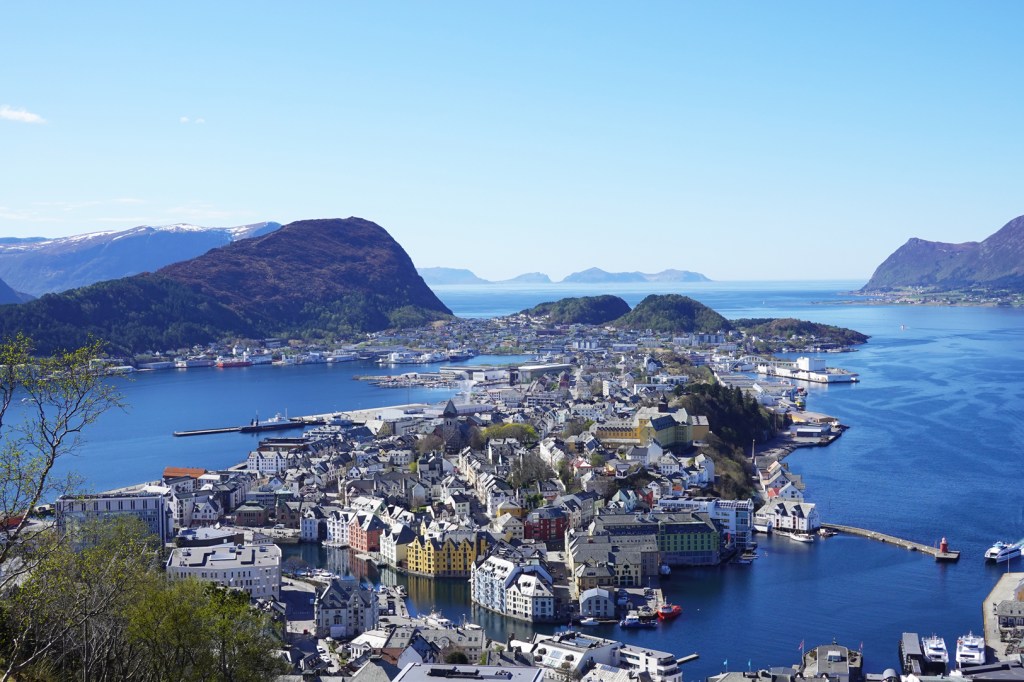
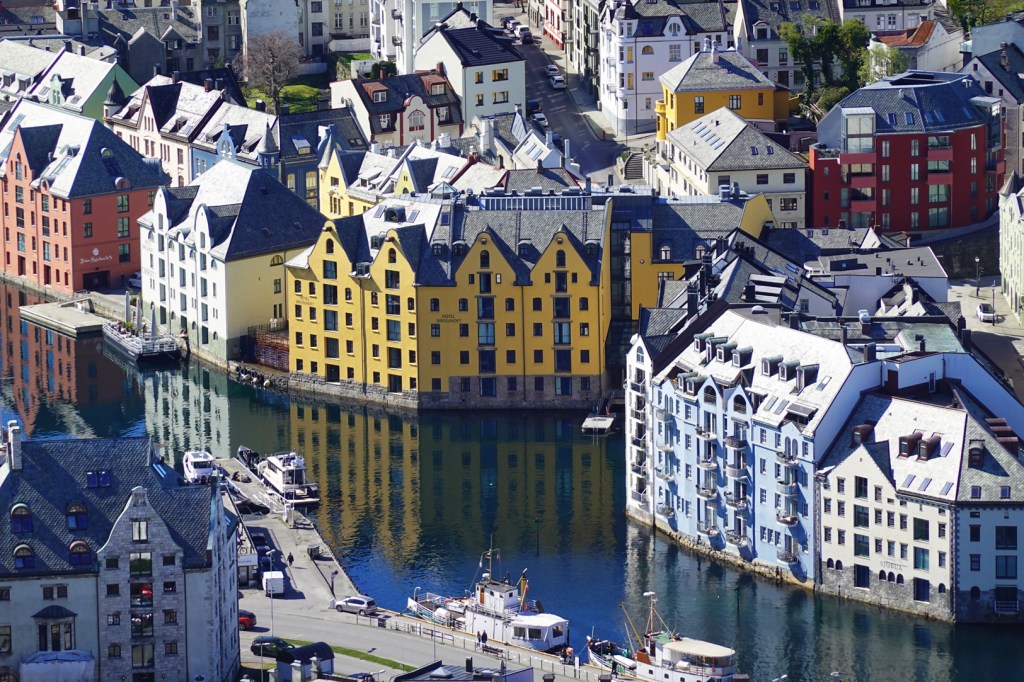
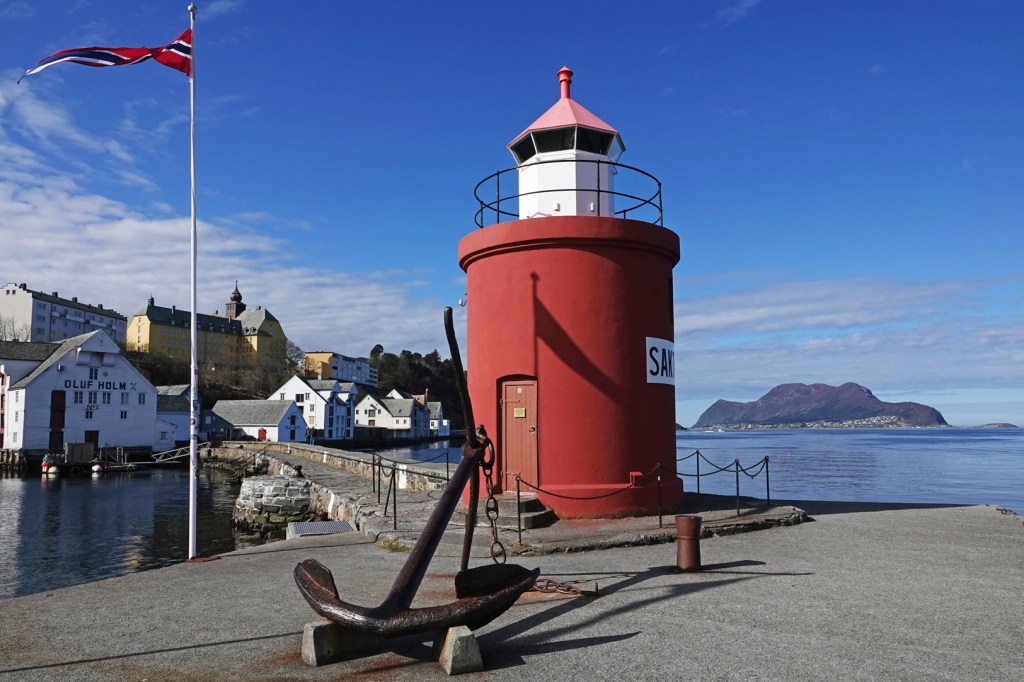
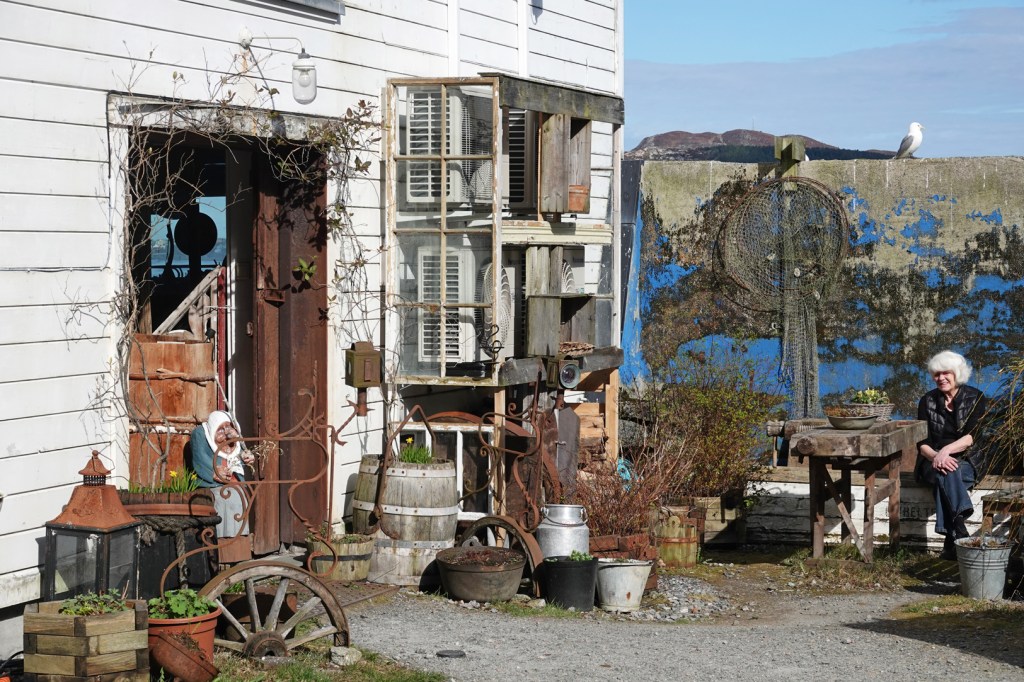
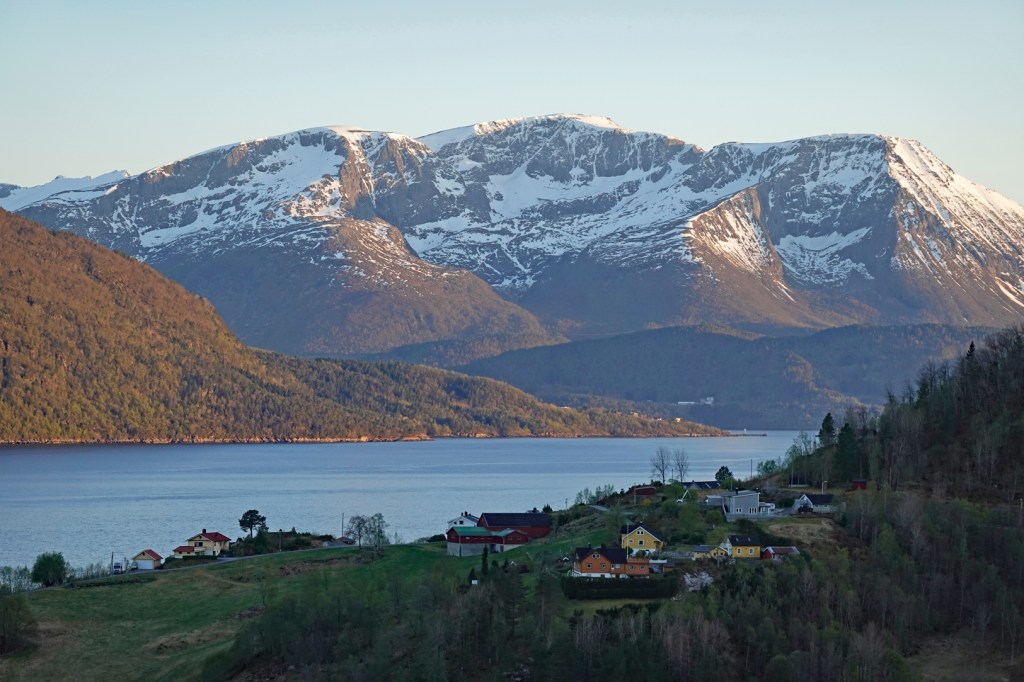
Anne-Lise and I are back from a trip to Norway to see her sister Berit and husband Jan at their home on the island of Tjome, south of Oslo, Norway. The latter part of our visit was to the Alesund area, half way up the west coast.
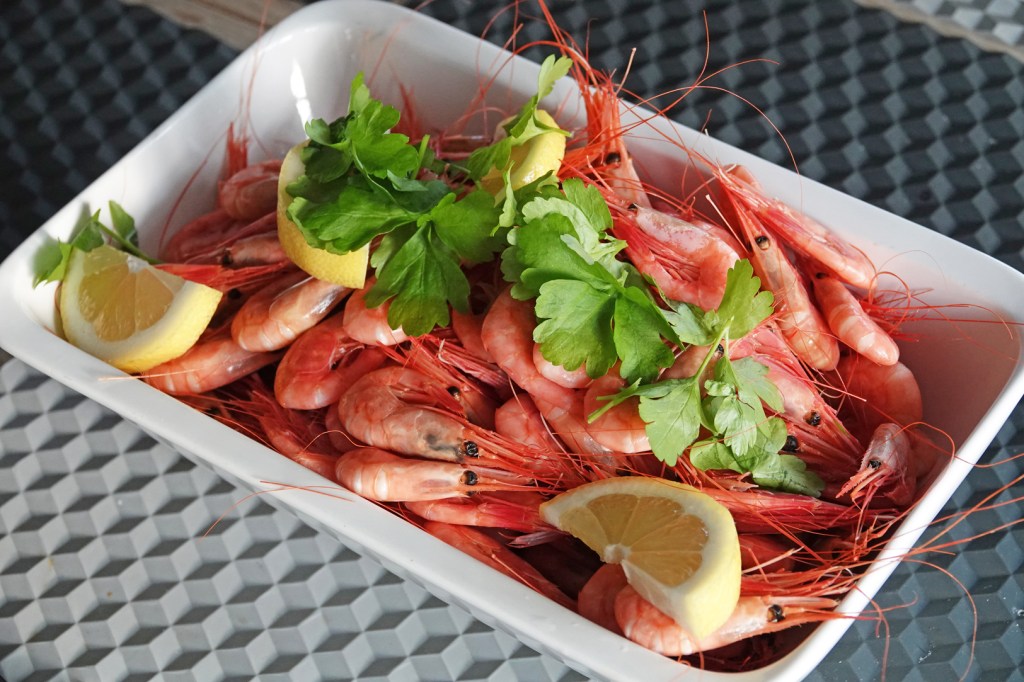
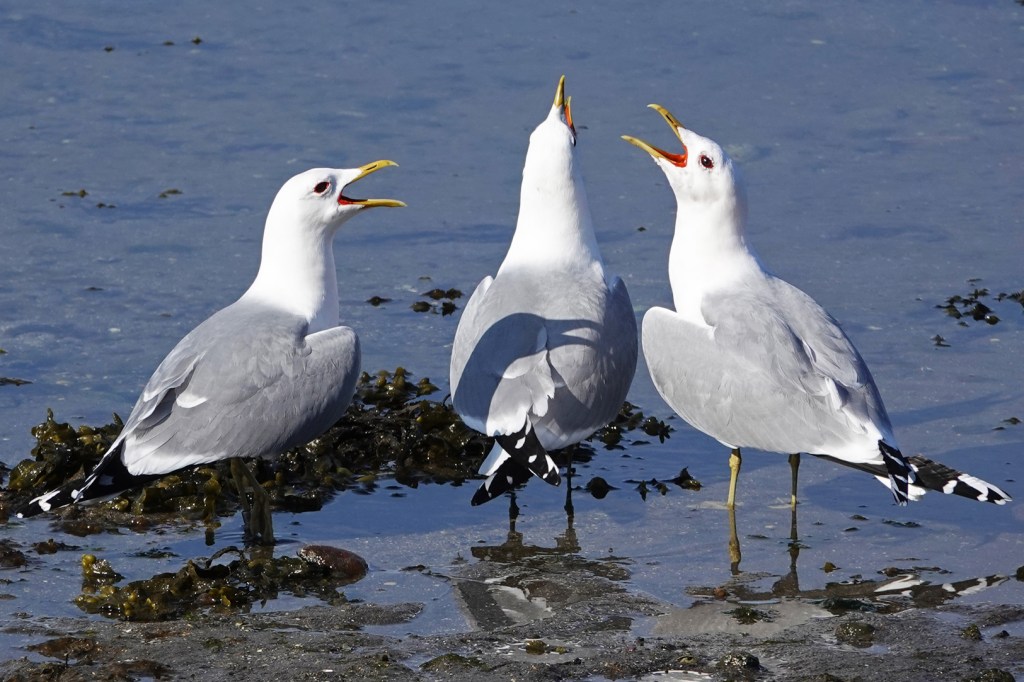
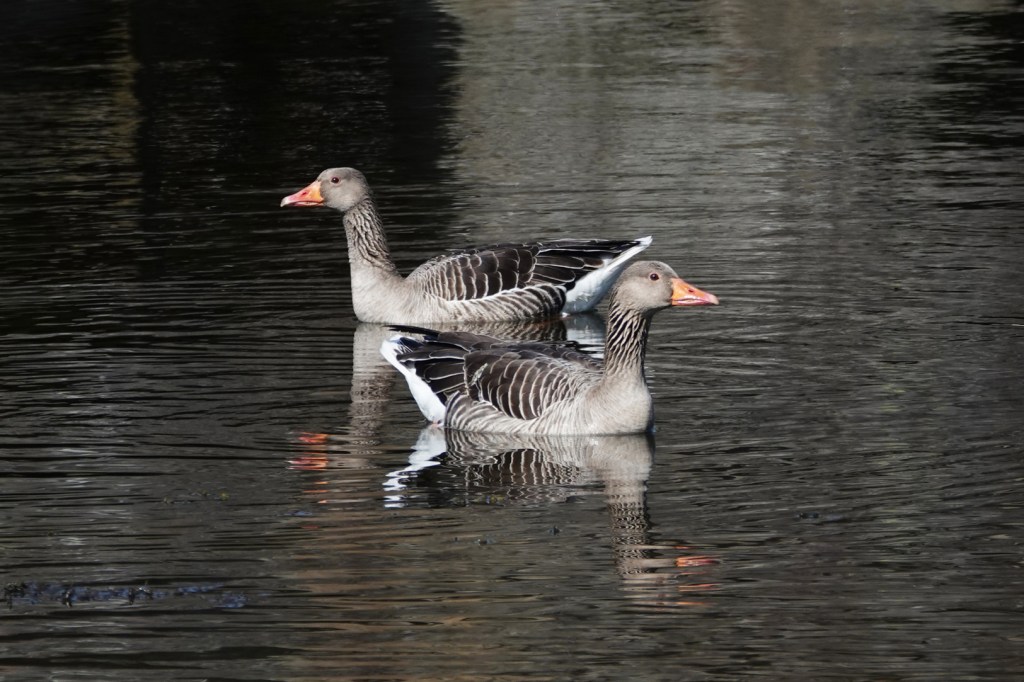
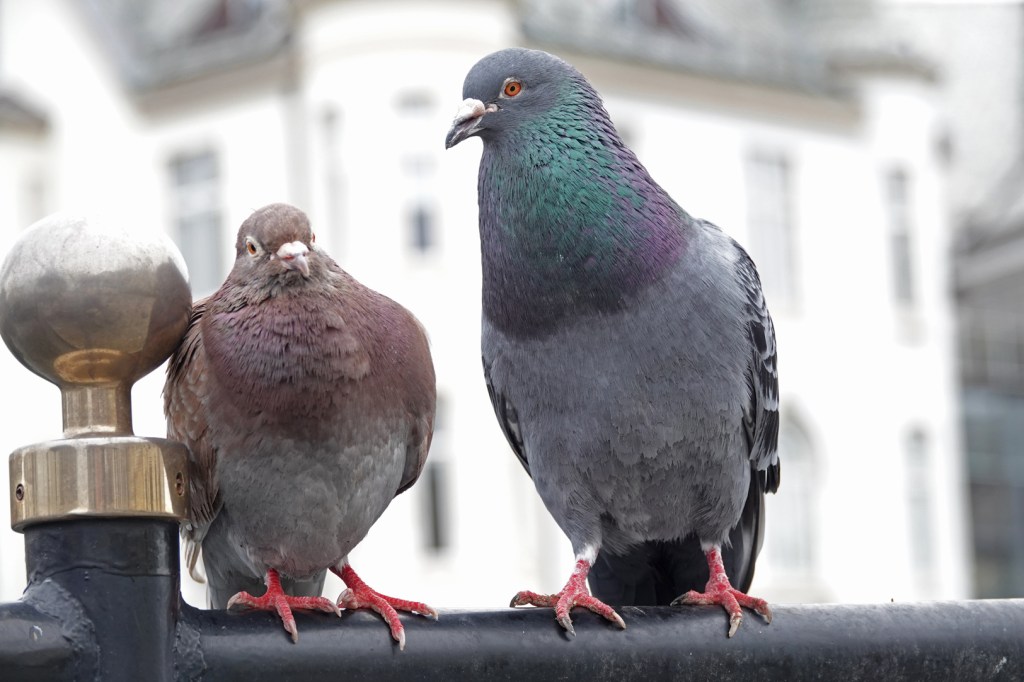
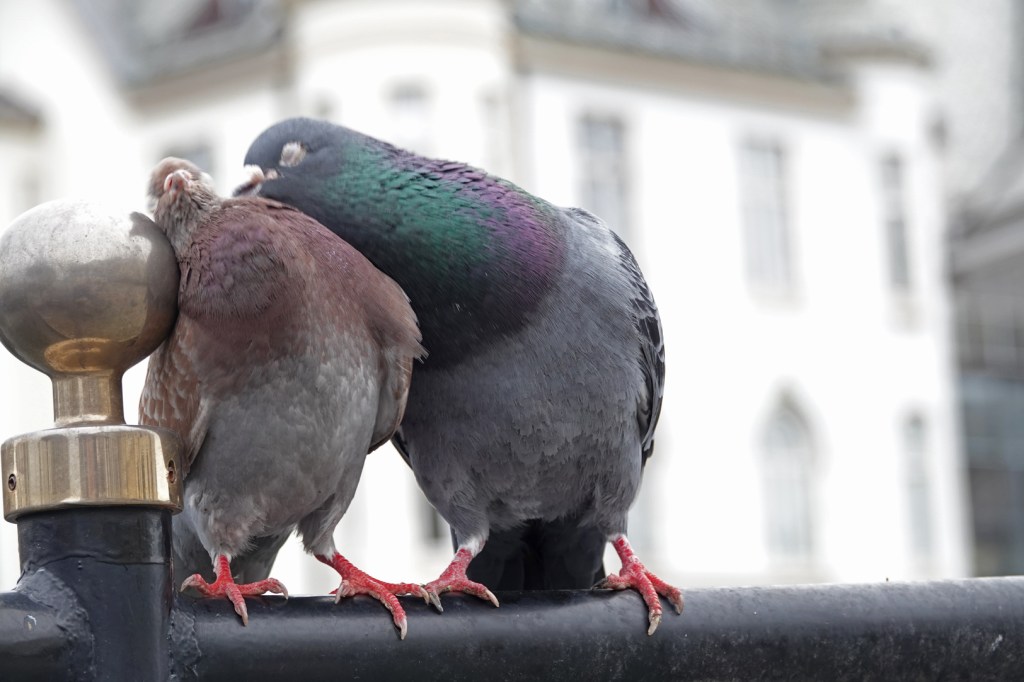
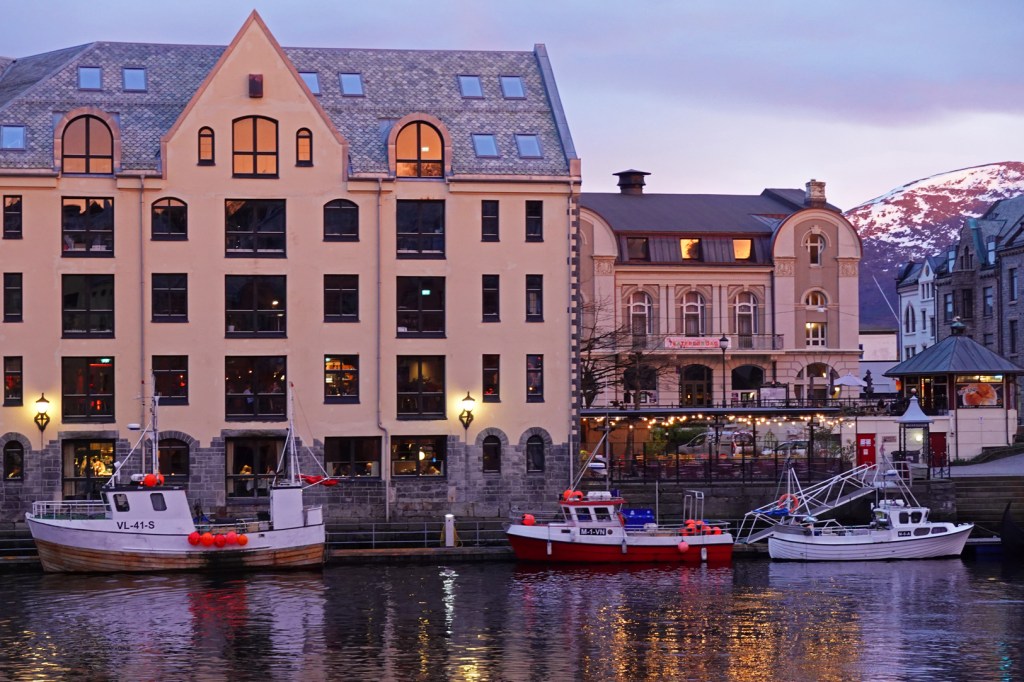
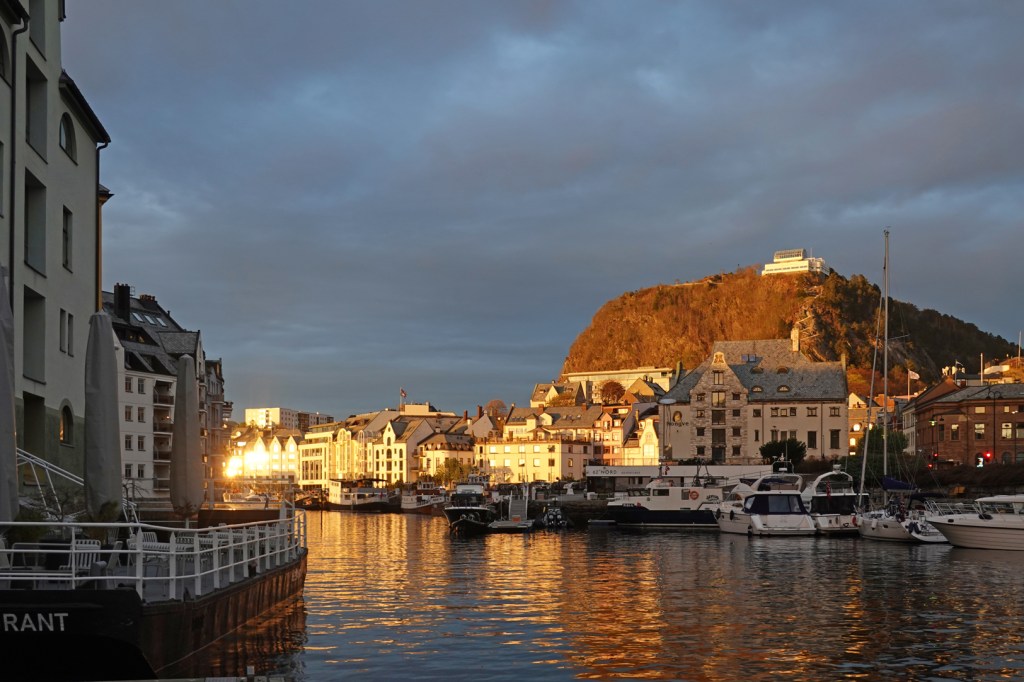
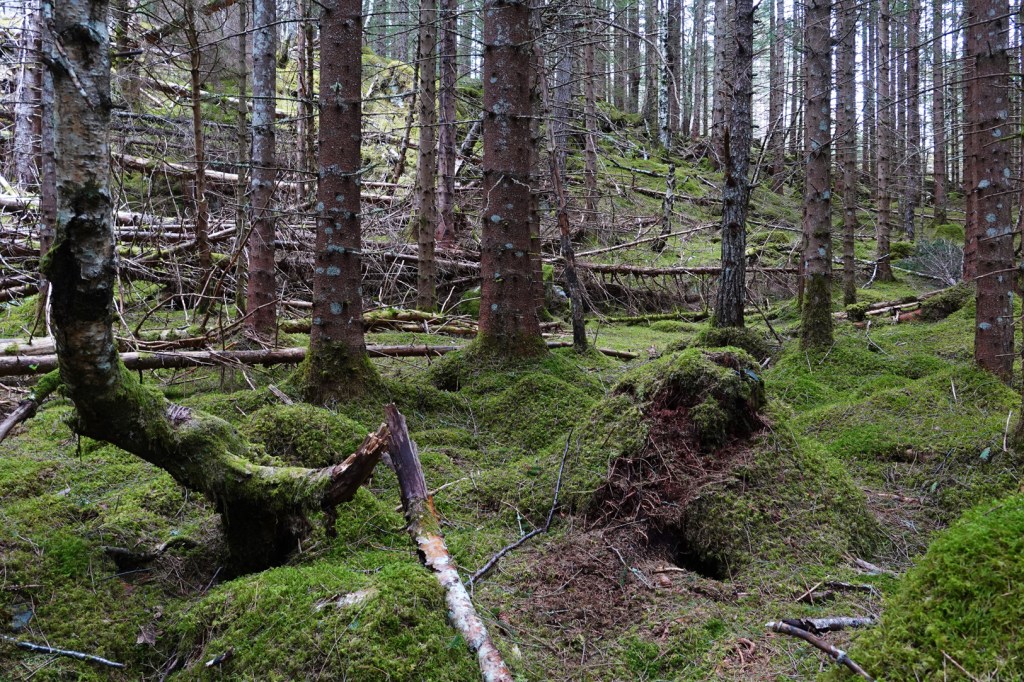
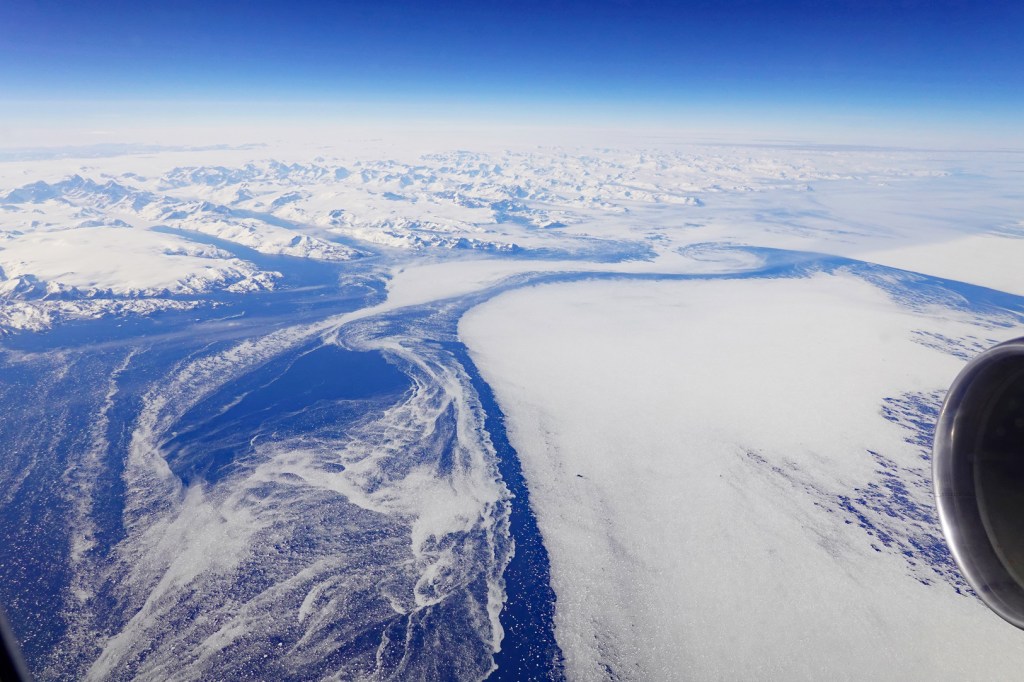
Berit’s and Jan’s house in Tjome (center), on the fjord.Gloucester’s shrimp season has been closed for years, but Norway’s remains open year round.Jan feeds the shells to the gulls – singing for their supper.Canada Geese are common for us. In Norway it’s the Greylag Goose.The classic view of Alesund. Most of the city burned in 1904 and was rebuilt in the Art Nouveau style.A hint of a Nordic Venice. We stayed at Hotel Brosundet (yellow bldg.), a former fishery warehouse.Like Cape Ann, Alesund has breakwaters, lighthouses, and commercial waterfront buildings, mixed with tourism.One of the surviving historic wood buildings, this antique shop could have been in Essex, MA. Towns have doves, and cities (including Alesund) have pigeons.I hope this Rock Pigeon is landing a kiss.Commercial fishing vessels tied up downtown.Sunset sneaking under the clouds, like here at home. The Gulf Stream allows boats to be in the water all year.Evening view from Storfjord Hotel, an hour’s drive up Storfjord from Alesund. Spring was ahead of Cape Ann.There were warning signs about Trolls on this hike through dark woods.The pack ice and coastal mountain range were vast, as we passed over the southern tip of Greenland.
Spread The GMG Love By Sharing With These Buttons:
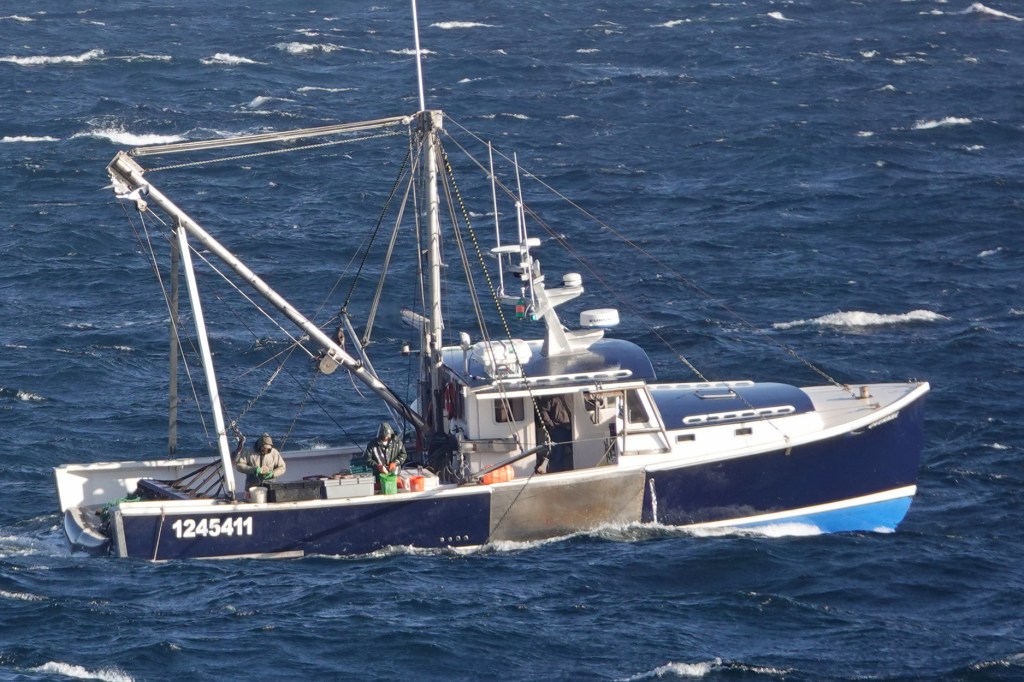
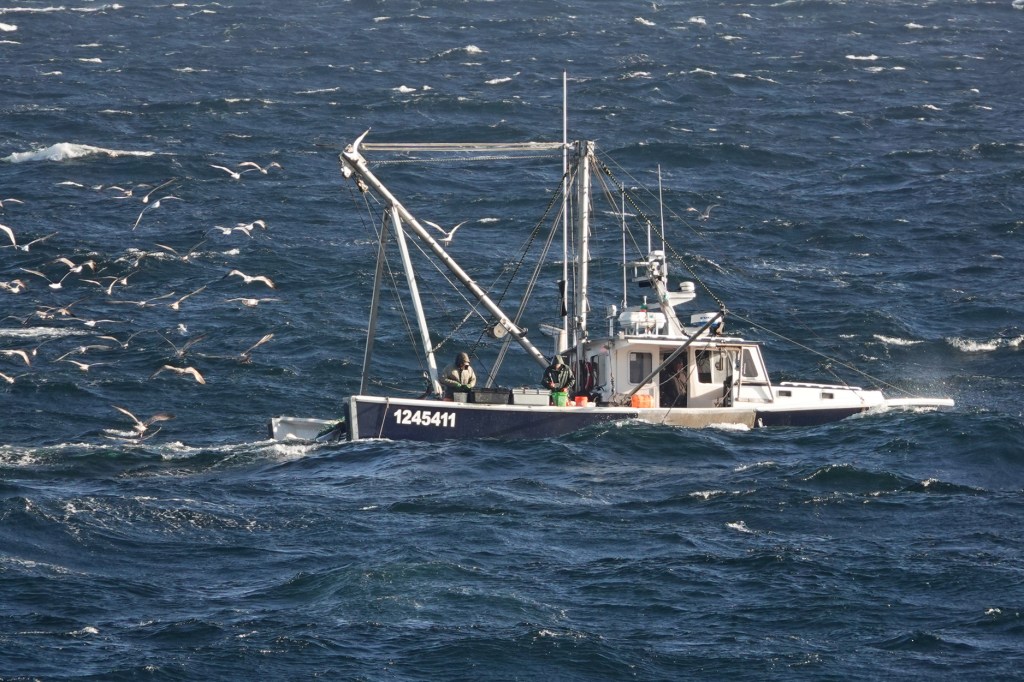
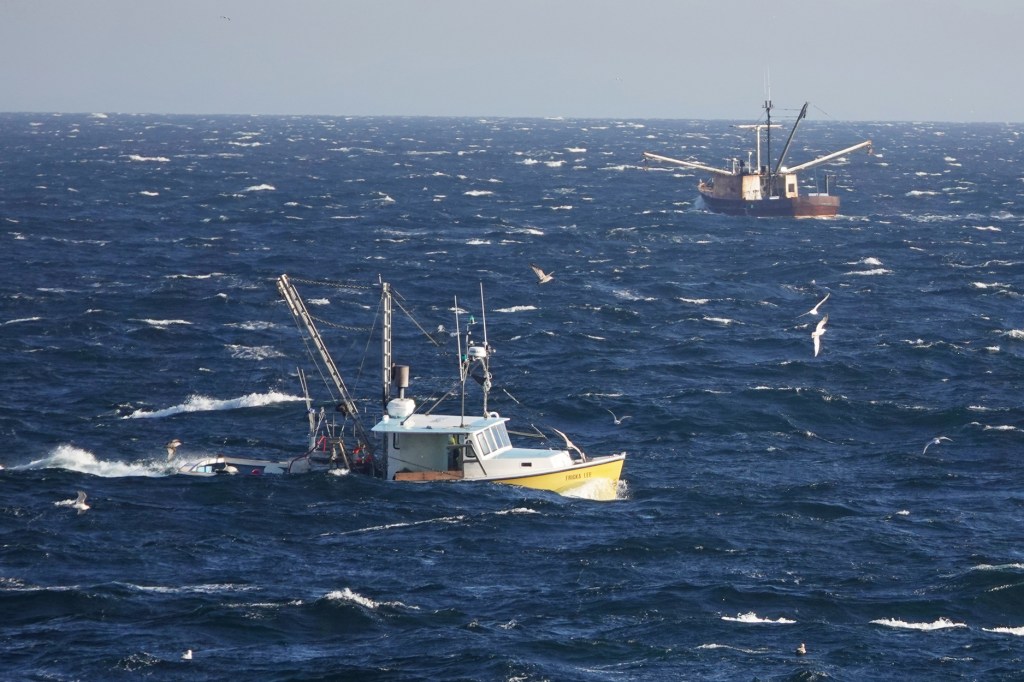
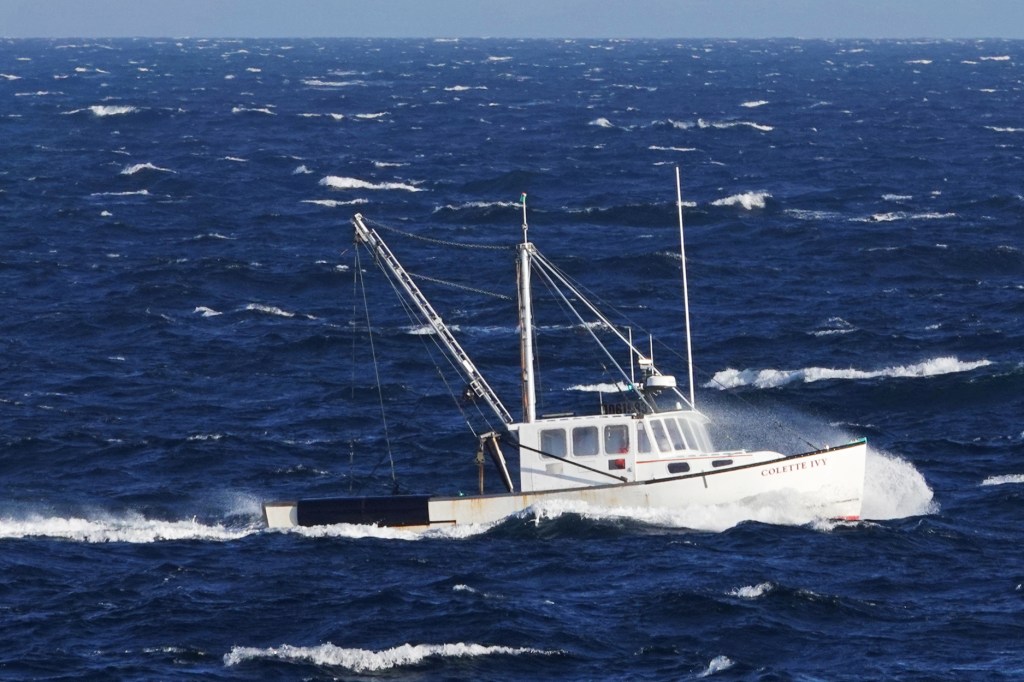
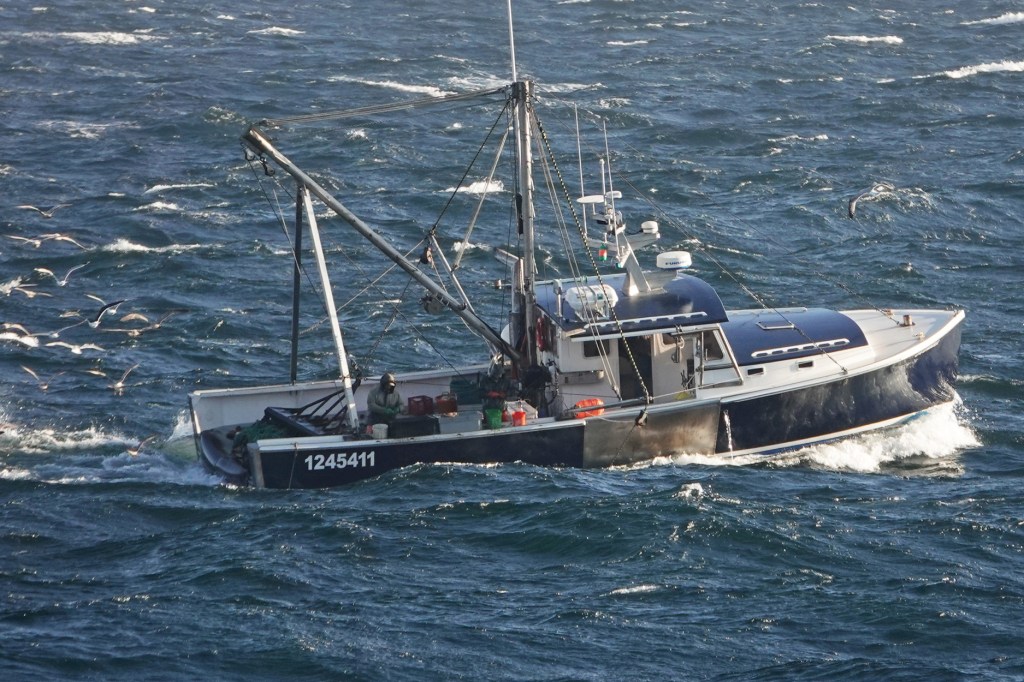
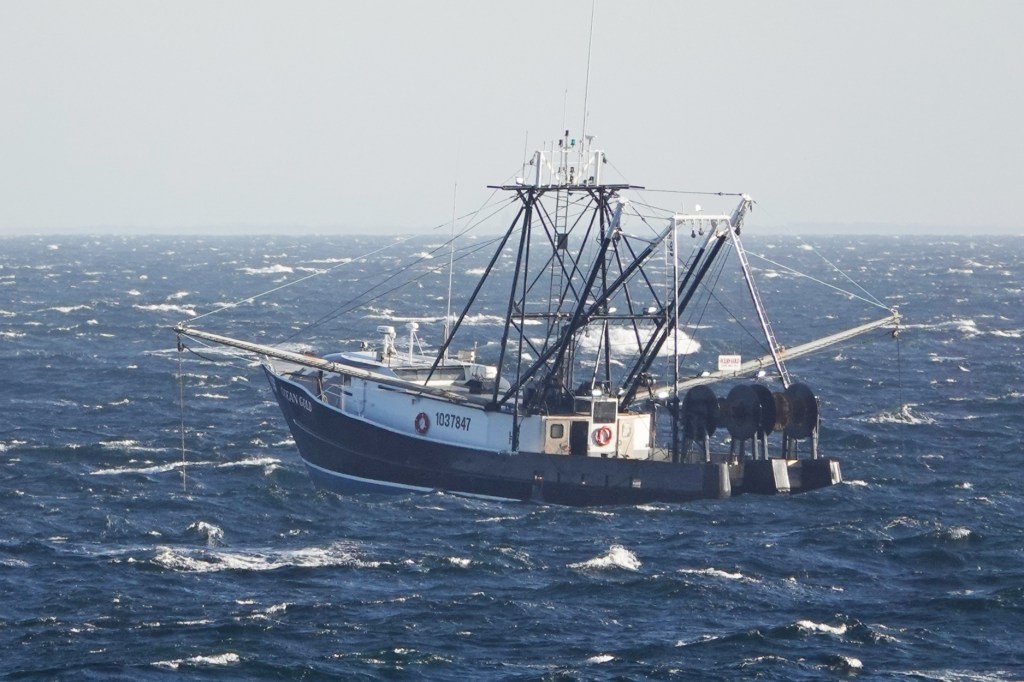
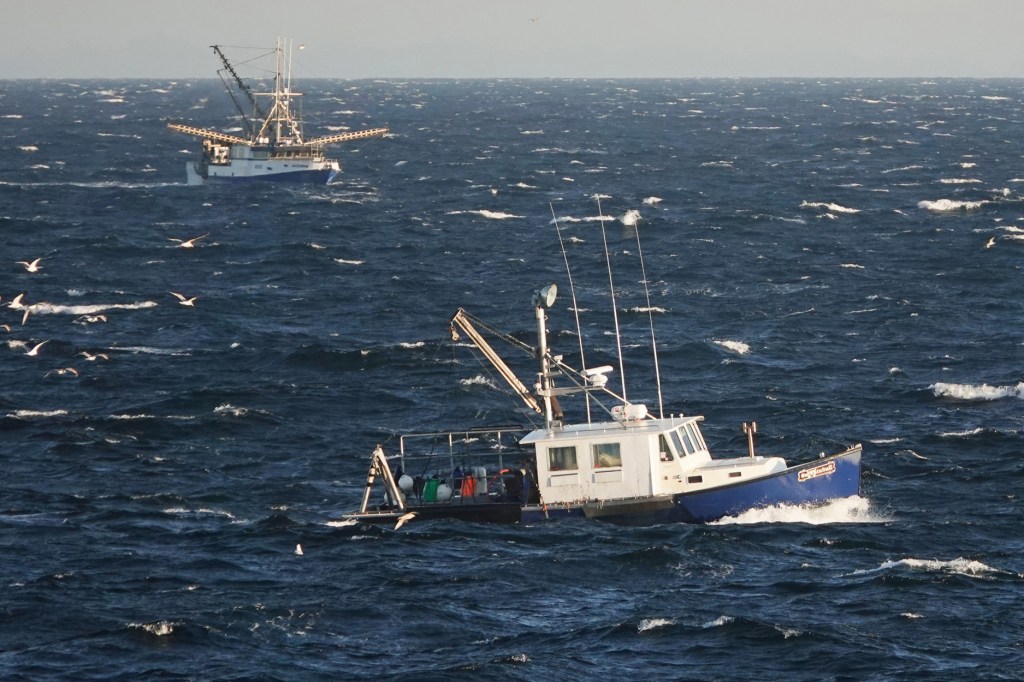
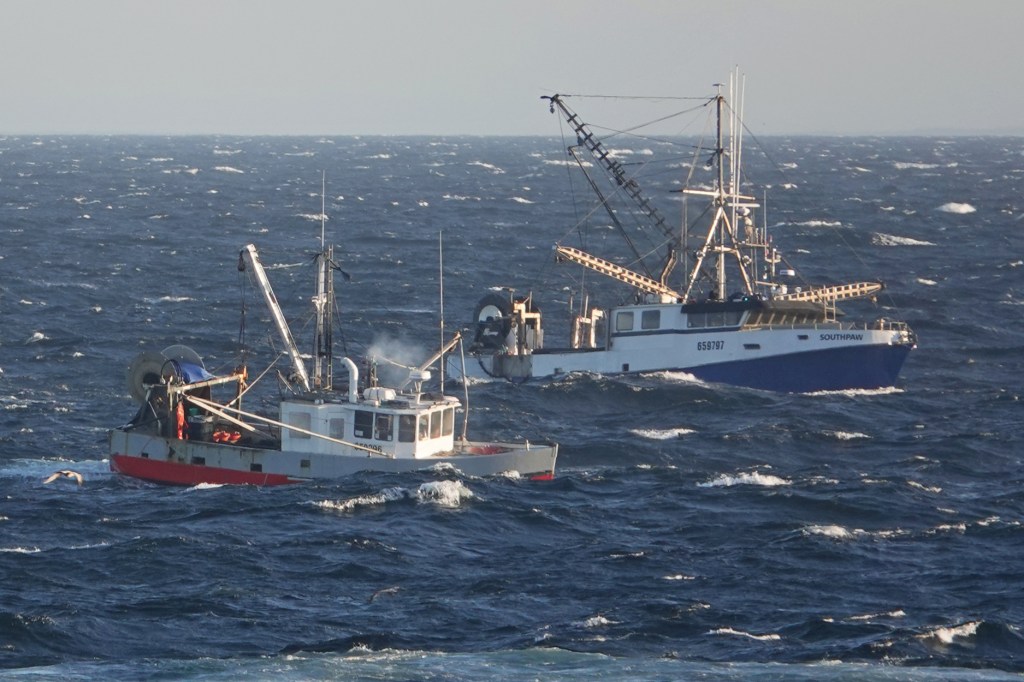
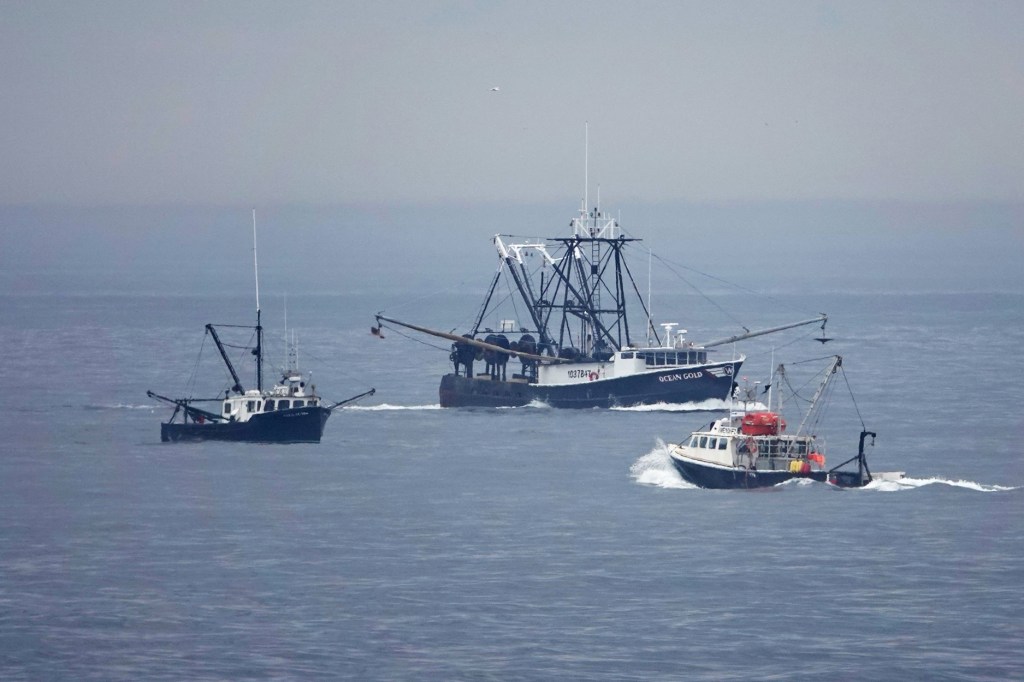
Yesterday was a windy afternoon, so the scallop boats were contending with a chop.
The scallops must be shucked and bagged on the way in, before landing …… no matter how unstable the working platform. The gulls were happy.Coming and going, working toward the short season’s quotas.Powering through.Further along toward the breakwater, still shucking.Larger boats headed back out, with outriggers to deploy the dredges.Scallopers aren’t the only boats out there this month.It’s lumpy for everyone, even though coming in is downwind.
Spread The GMG Love By Sharing With These Buttons:
People here are focused on the short April scallop season, but spring continues in other ways too.
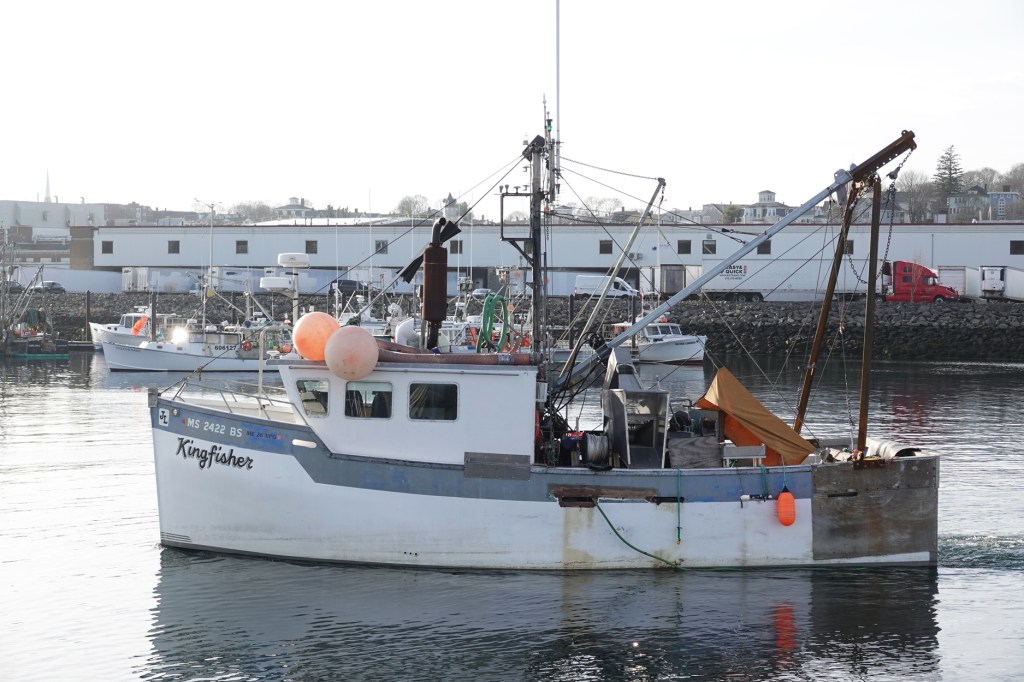
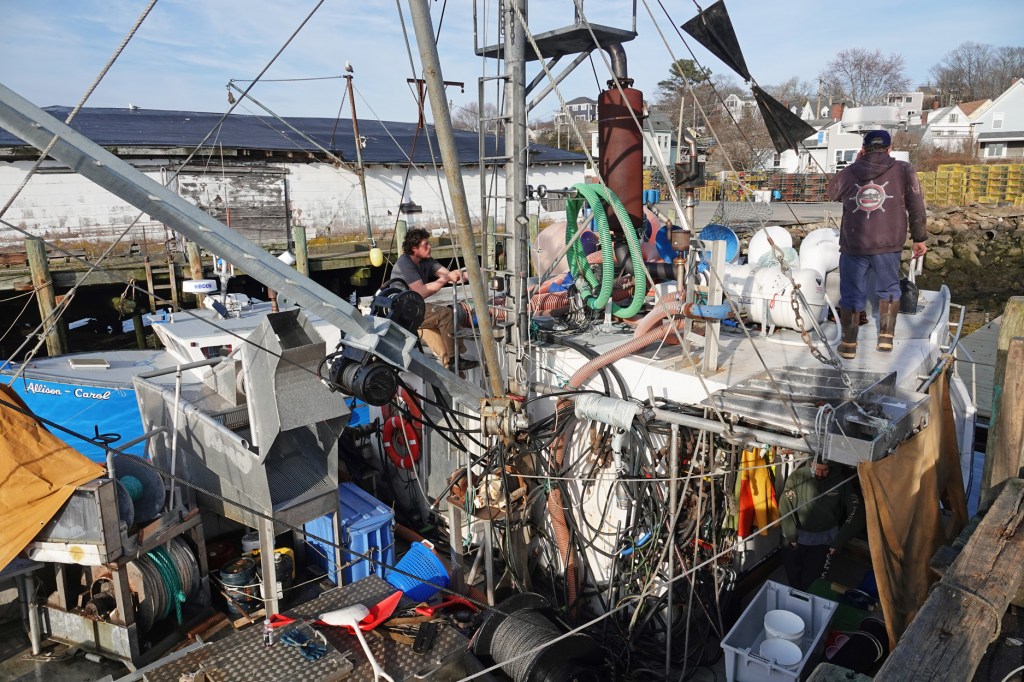
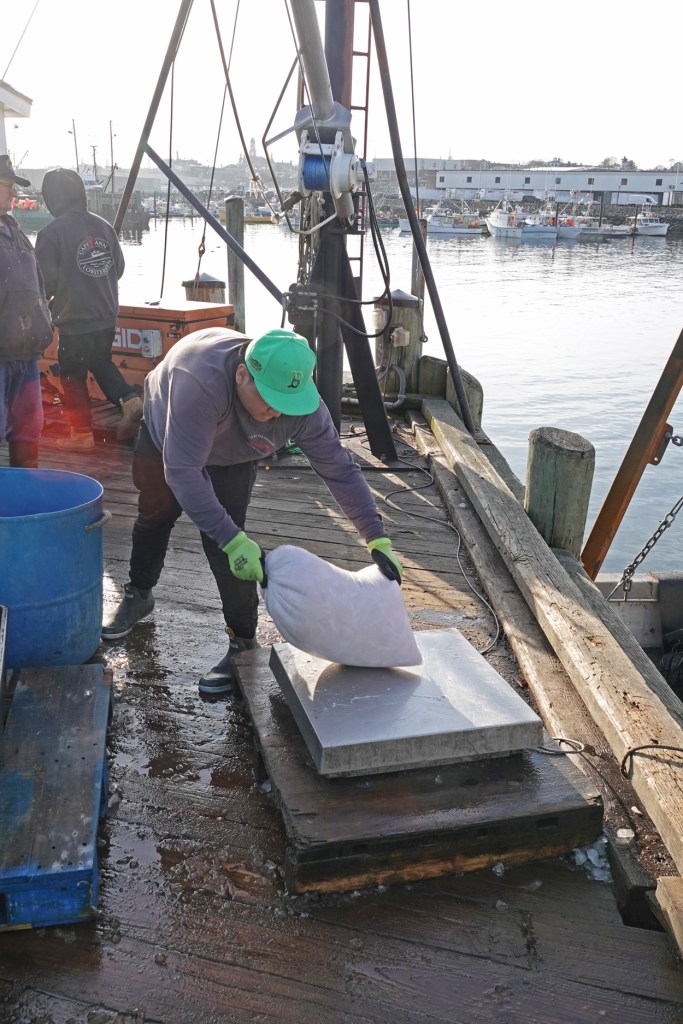
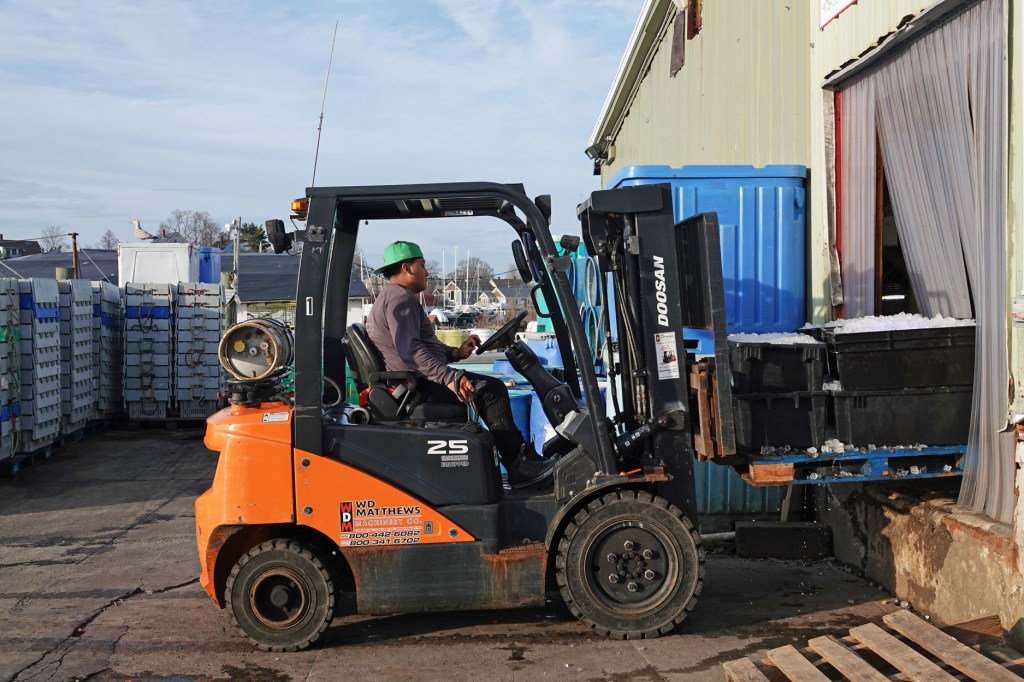
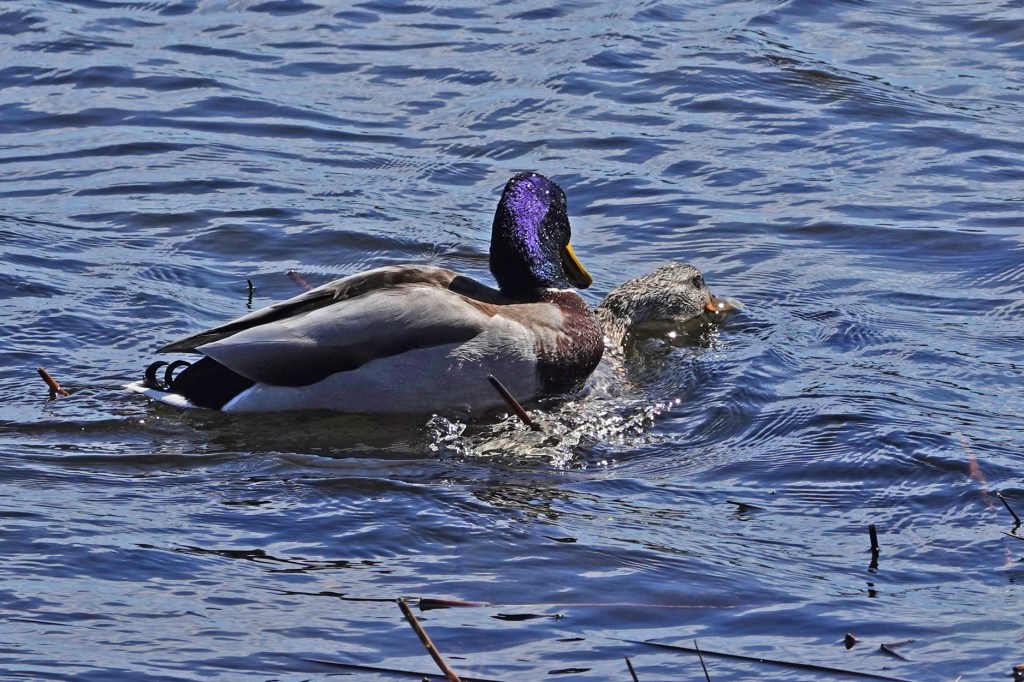
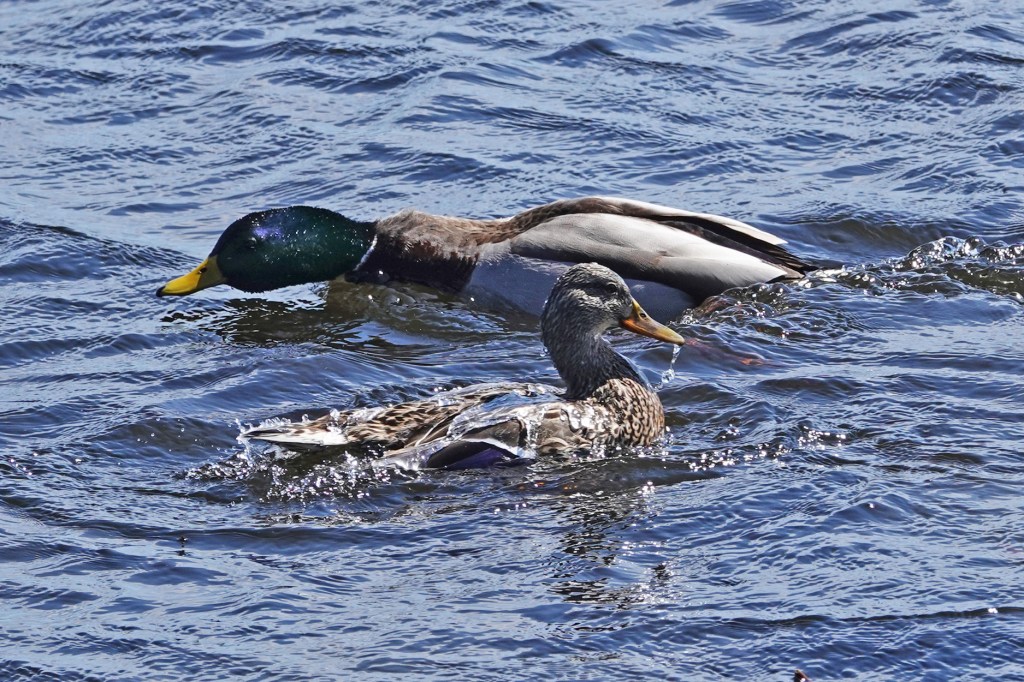
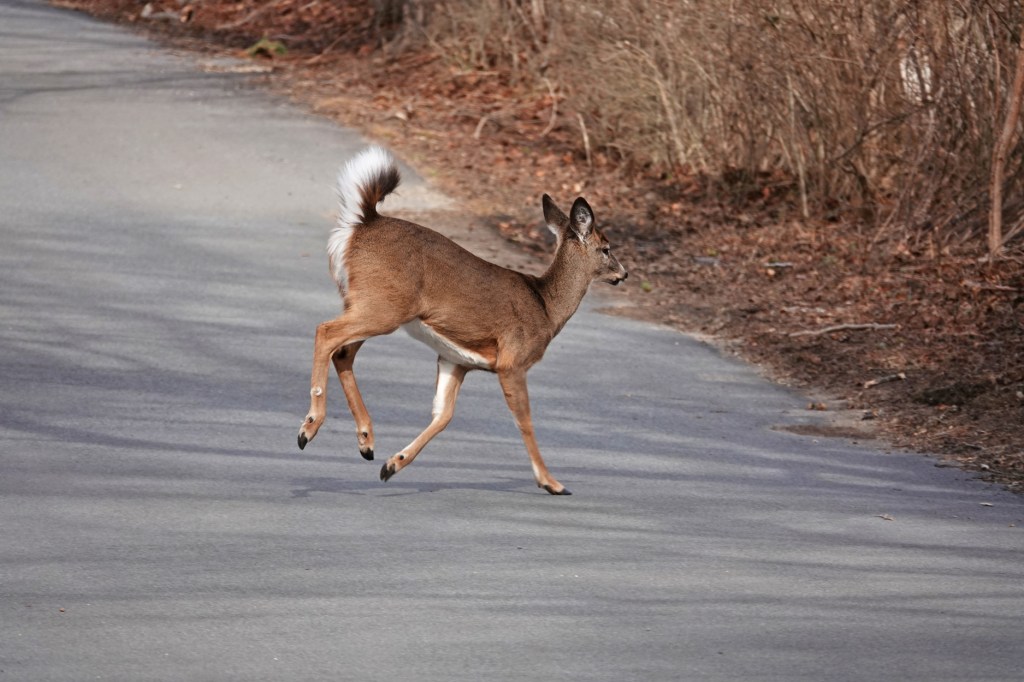
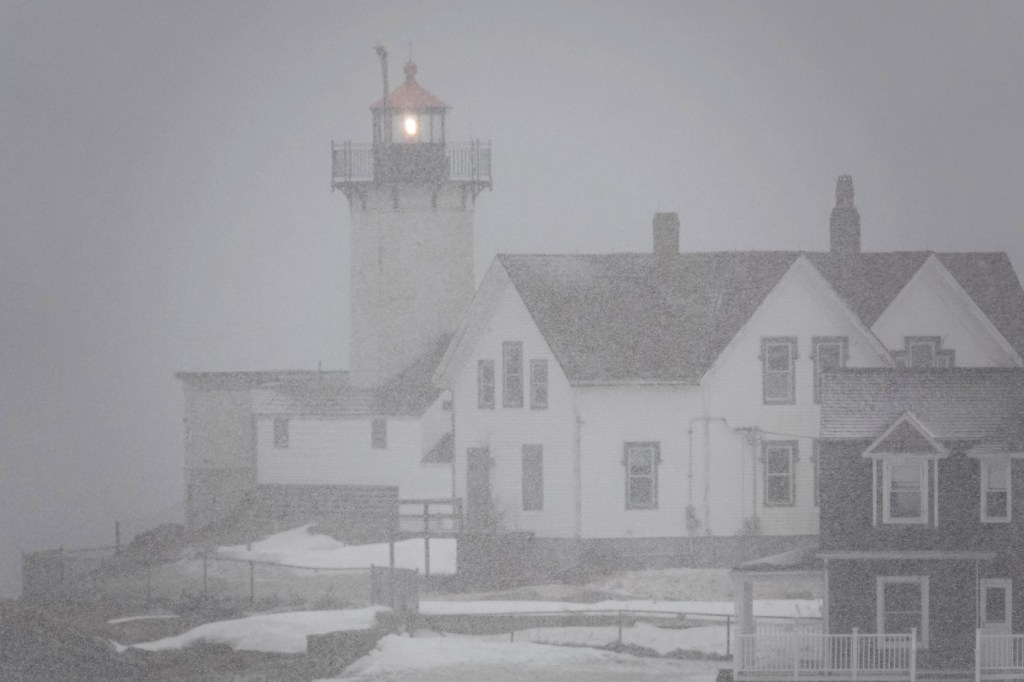
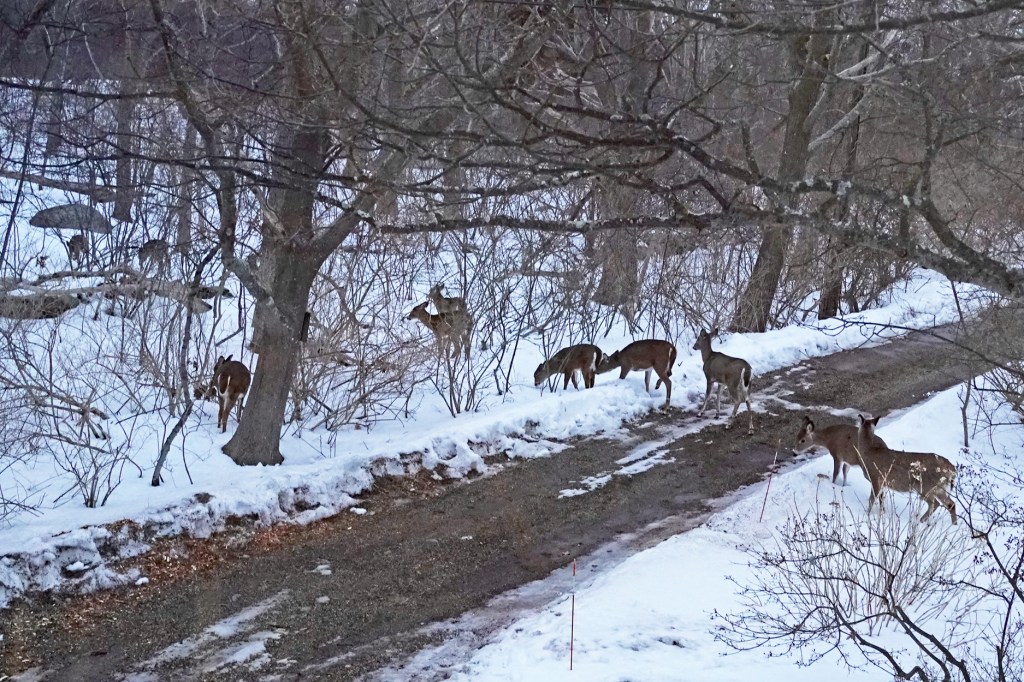
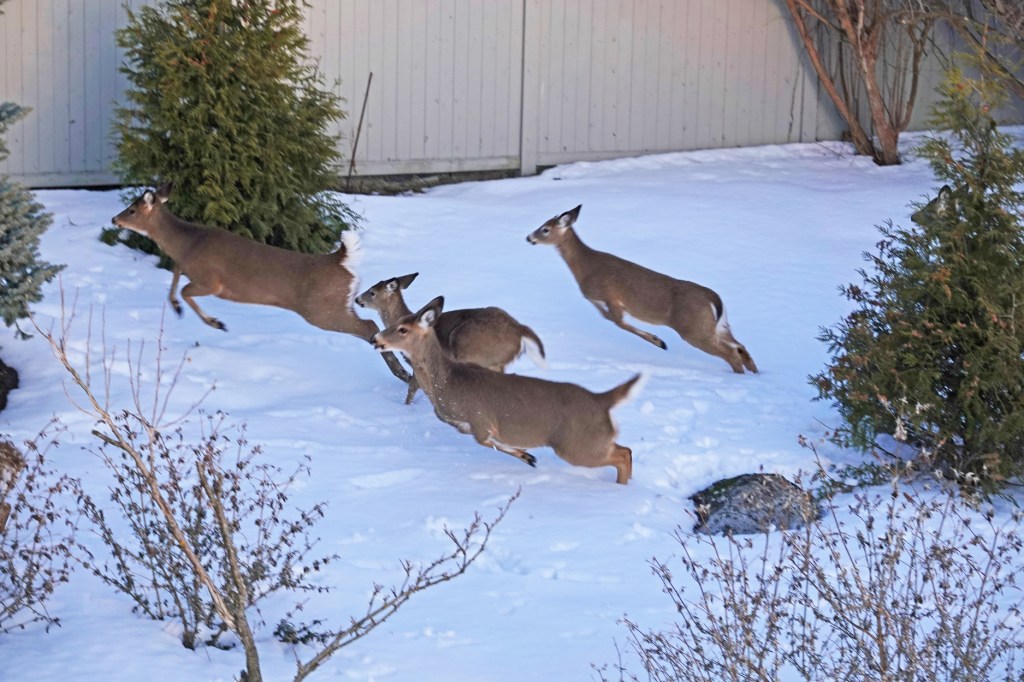
The fleet, mostly down from Maine and New Hampshire, is headed in and out 24/7.‘Kingfisher’ landed her catch at Cape Ann Lobstermen in East Gloucester.At the pier, the gear looks pretty complicated.Shucked and bagged scallops are weighed for payment.Then packed in ice and loaded indoors for processing.The parade continues during the night.Meanwhile the Mallards are mating on Niles Pond.The male celebrates with quick laps around the mother-to-be.Five of our deer overpopulation prance across the road.Is this how high they can reach at dinner time?It’s spring, so why not a few more snow showers a week into April?
Spread The GMG Love By Sharing With These Buttons:
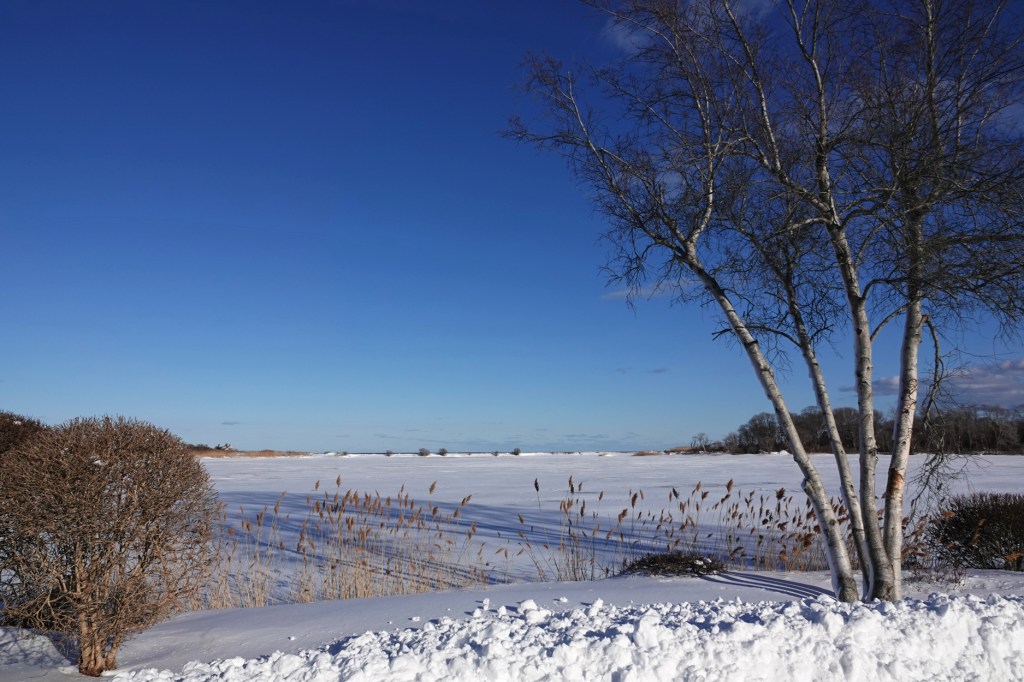
As we oscillate our way into spring, the snow banks have mostly melted and the ice is off the ponds.
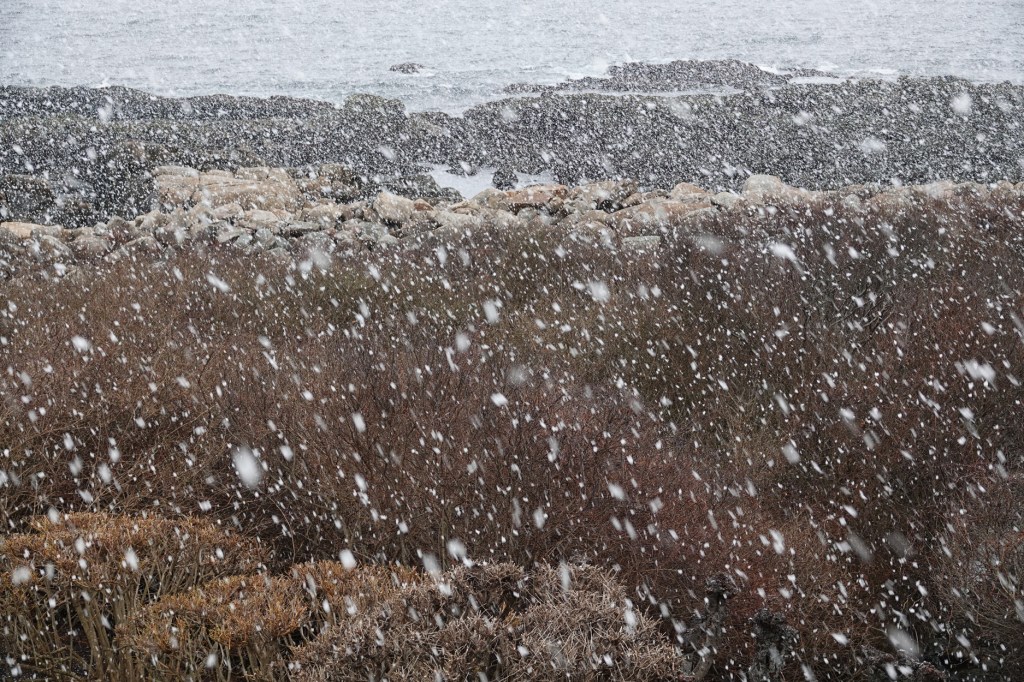
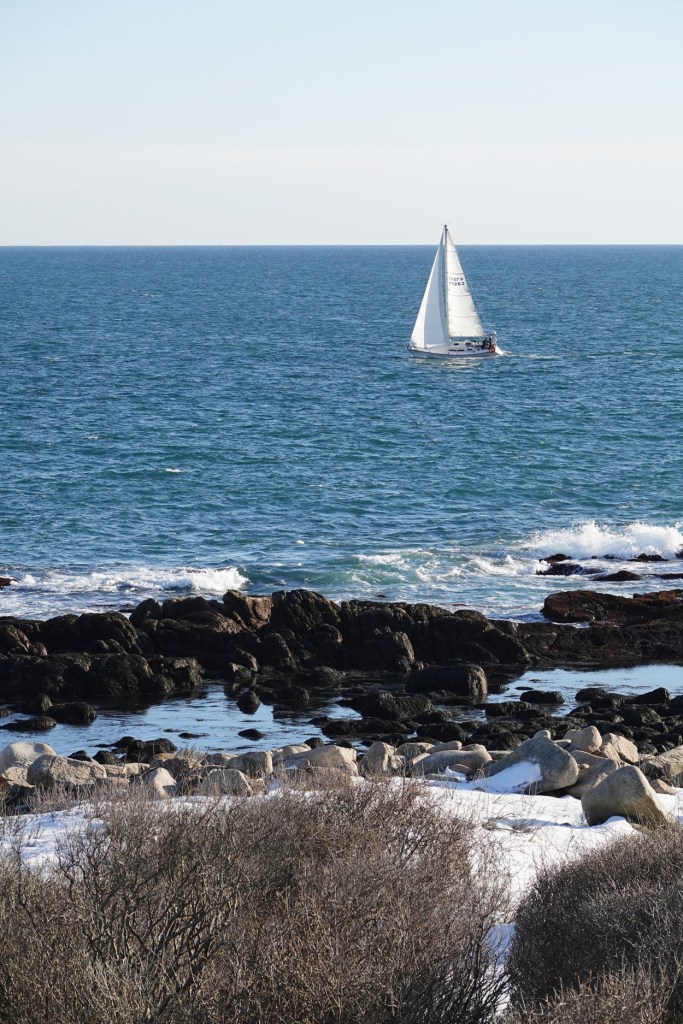
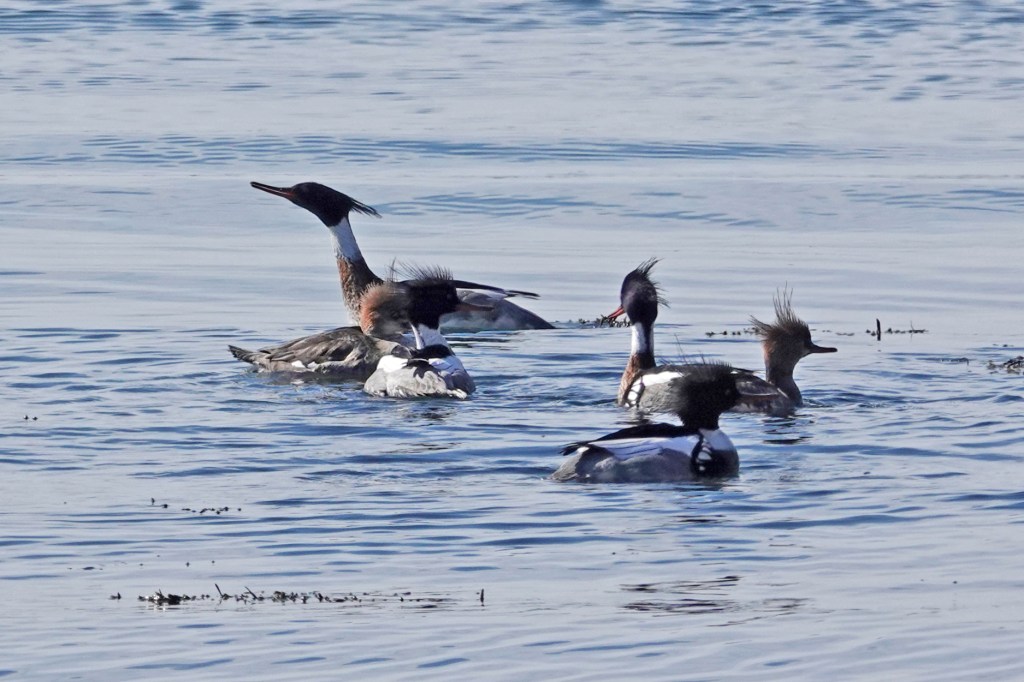
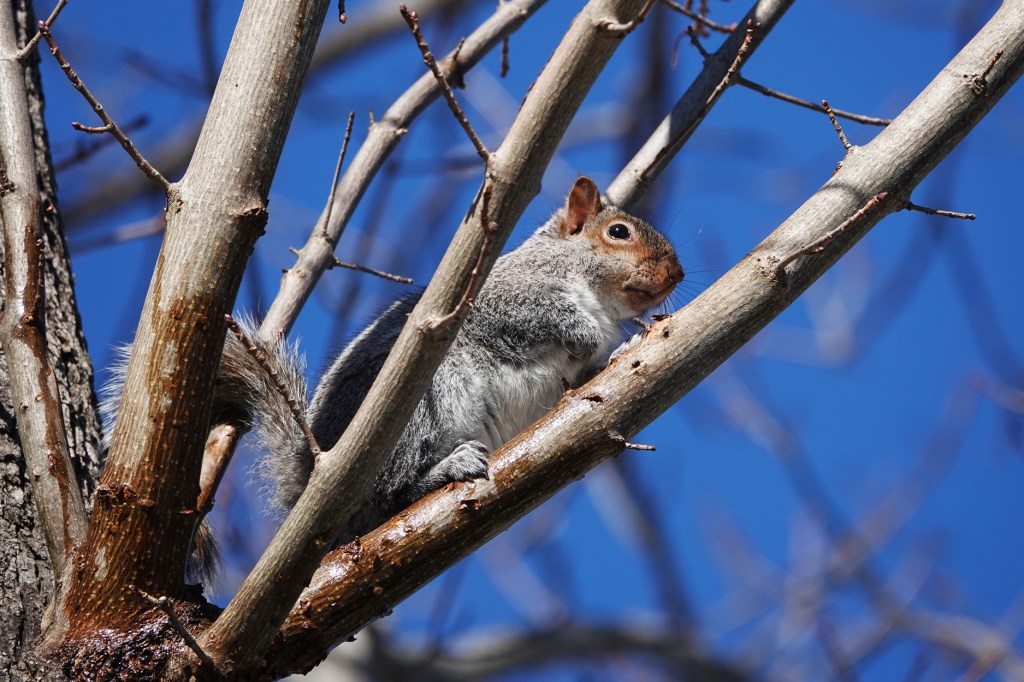
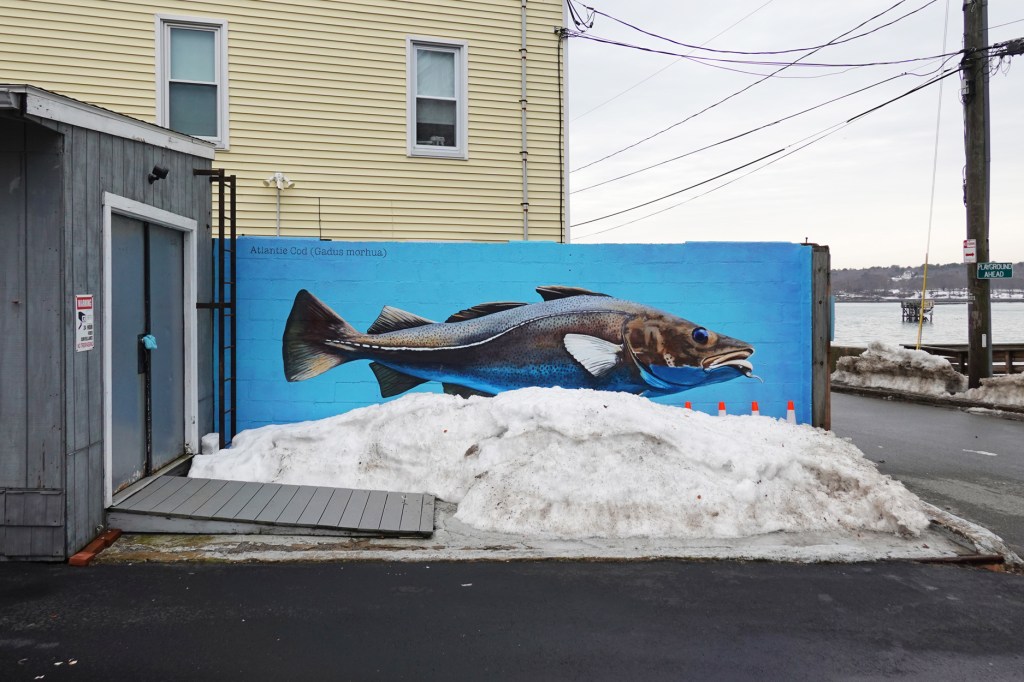
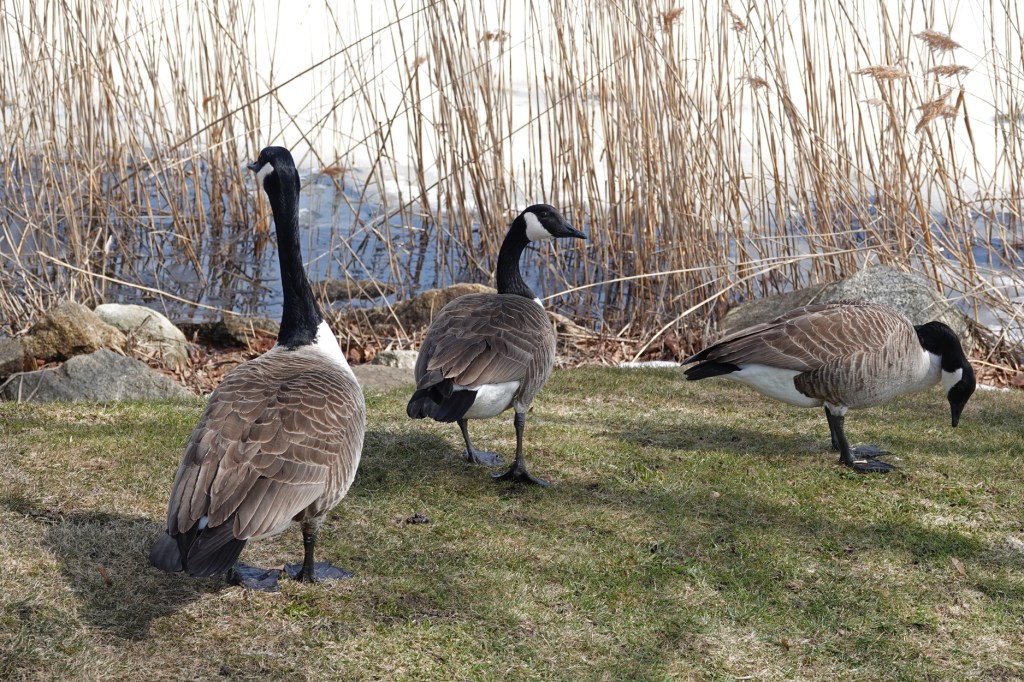
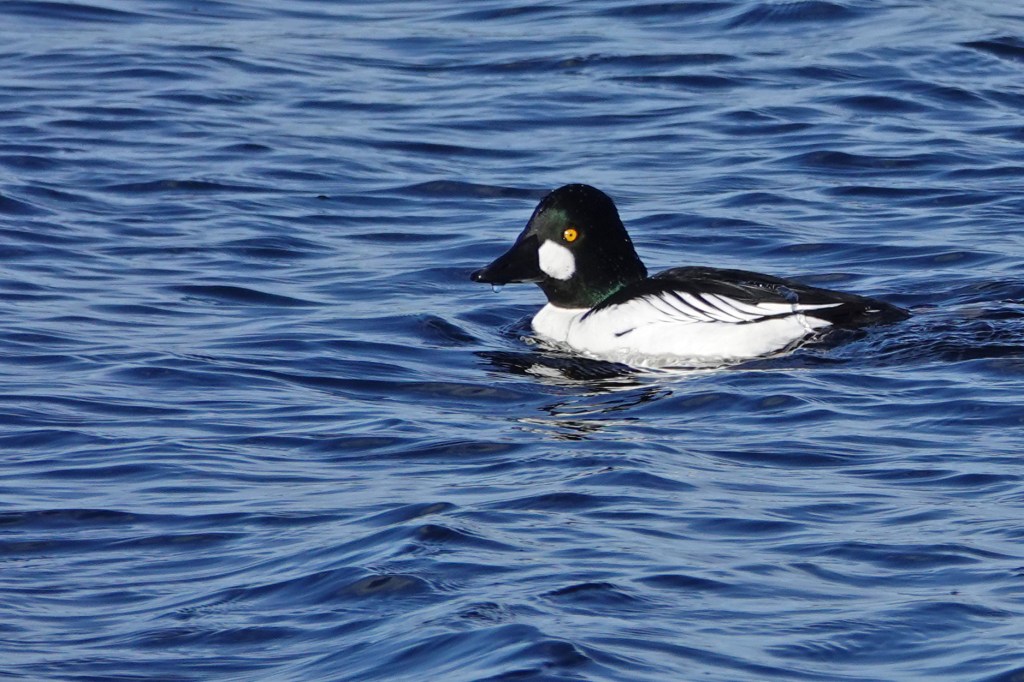
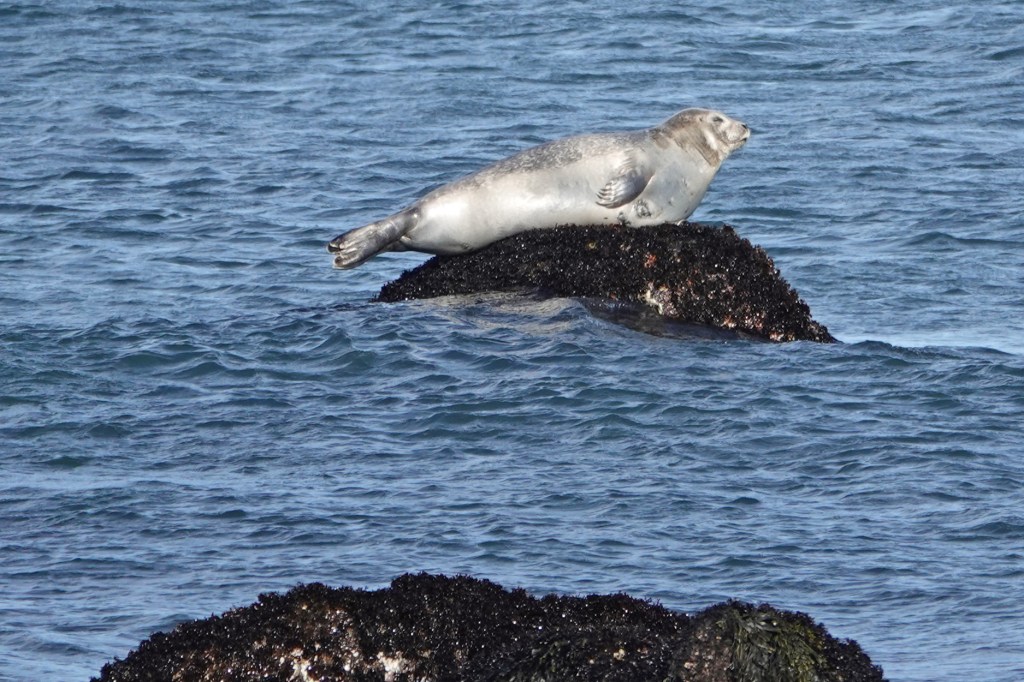
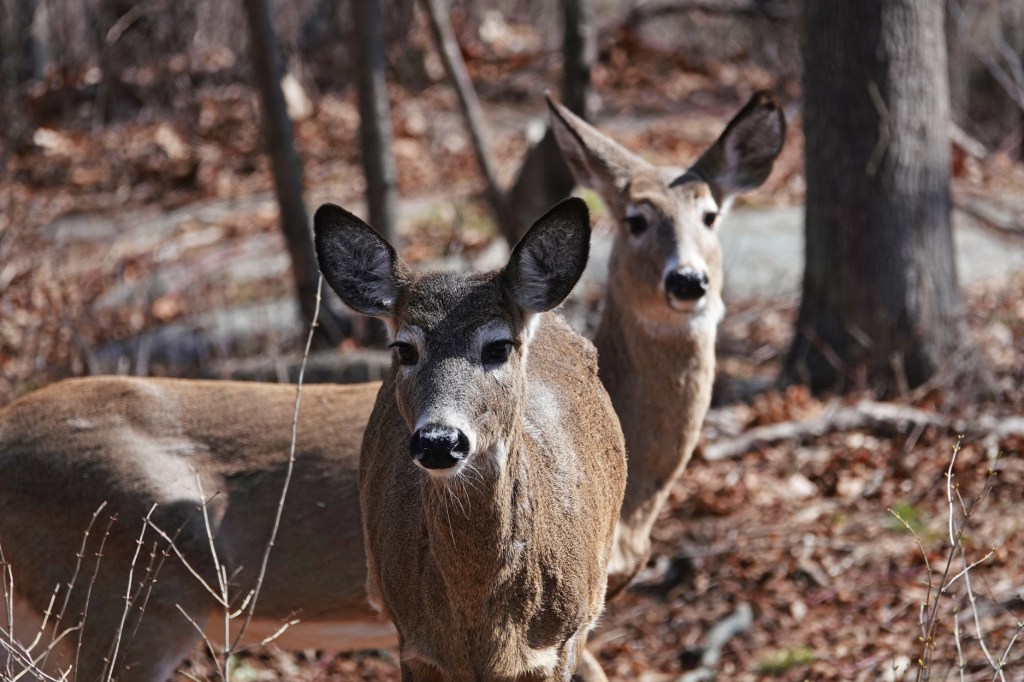
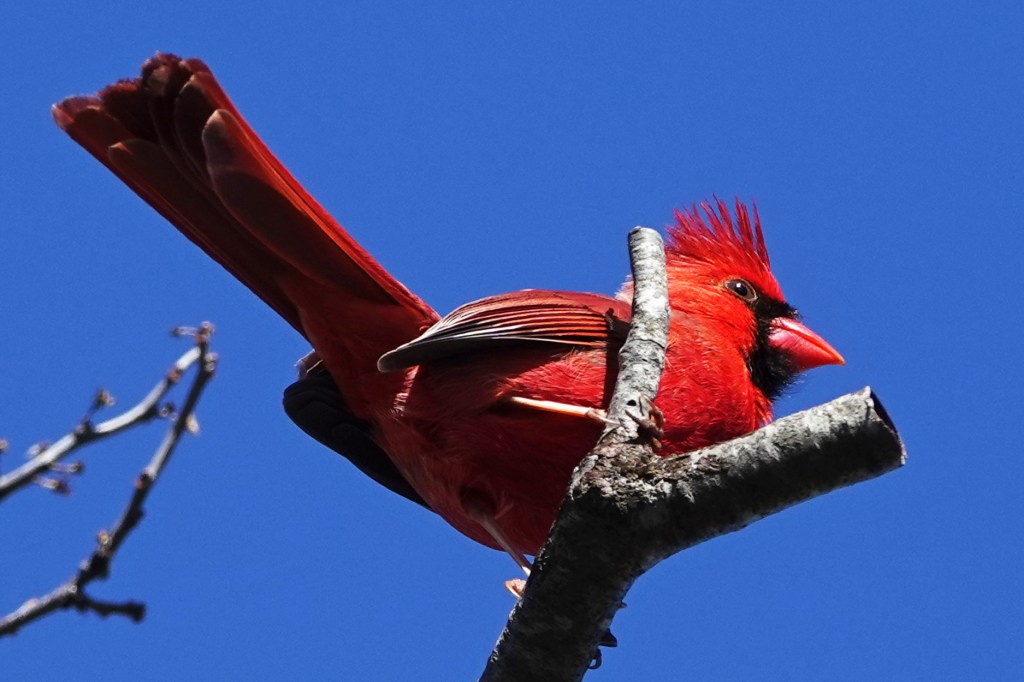
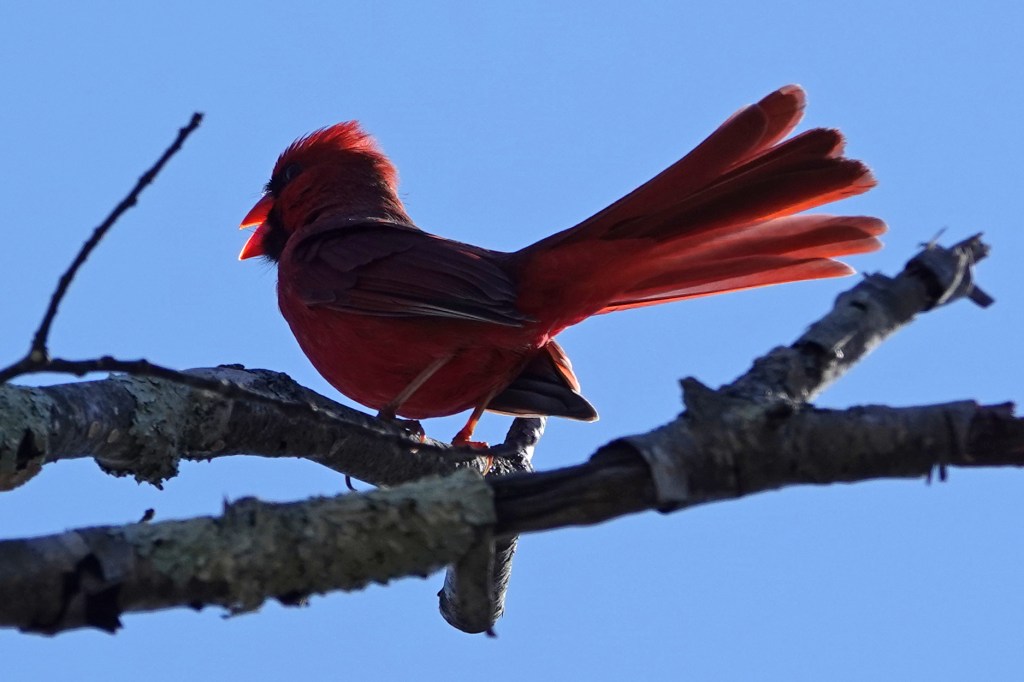
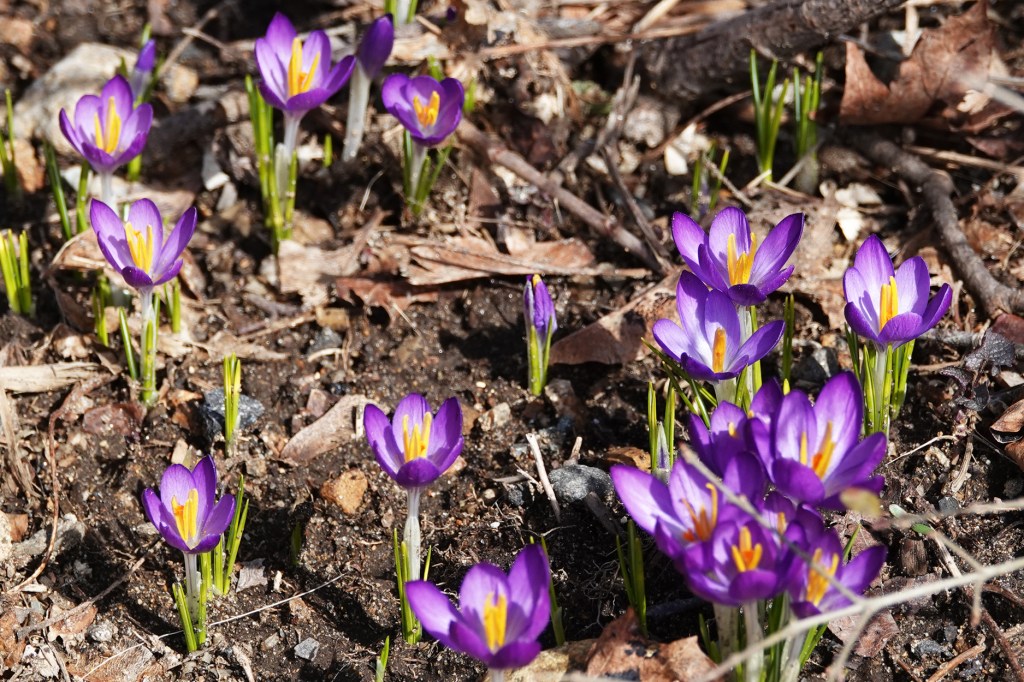
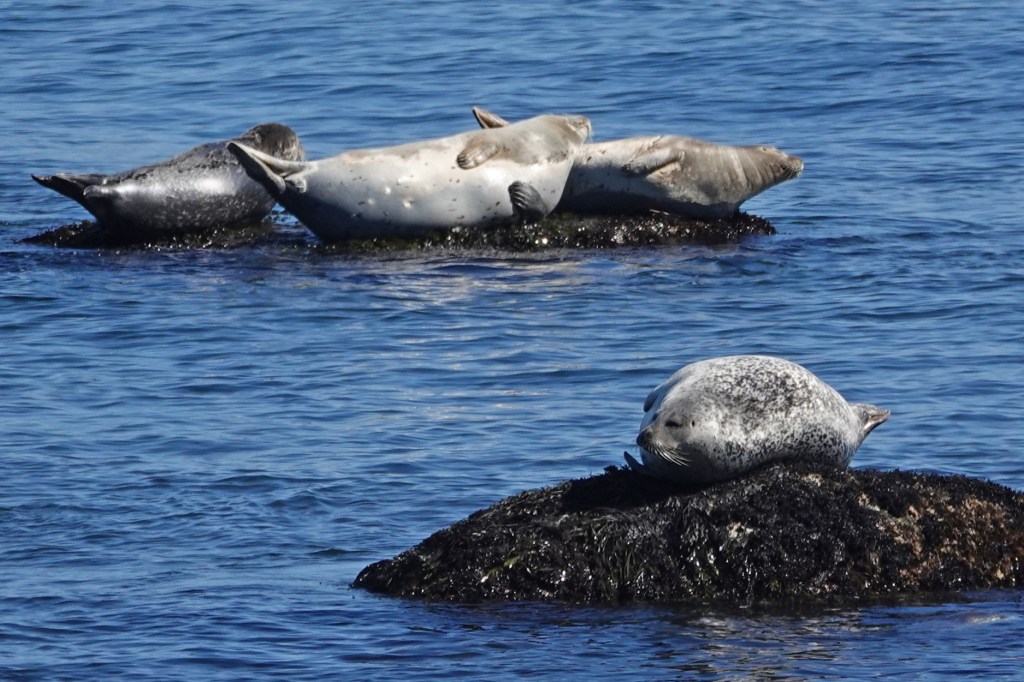
Exactly a month ago, an early sail outside the harbor. Snow still on the rocks.Quick clipper snow storms continued alternating with spring days.Seasonal Red-breasted Mergansers found unfrozen water in Lighthouse Cove.Squirrels traveled the tree branch network, waiting for more snow on the ground to melt.Josh Falk’s ‘Atlantic Cod’ looking apprehensive, swimming on snow.Canada Geese eyeing a narrow strip of blue water between ice and shore on Niles Pond.With the ice melted, a Common Goldeneye had free rein of the pond.One of a dozen Harbor Seals haulded out and sunning at Brace Cove.Foraging for food is easier without snow, for the White-tailed Deer. And they’re not afraid.A competetive Northern Cardinal protecting his area.Then calling for, or communicating with, his mate on a warm morning.Newly-blooming crocuses. They were snipped off by the deer before the next morning.
Spread The GMG Love By Sharing With These Buttons:
Gloucester and Boston reported a record high temperature of 74-degrees F yesterday, accelerating the snowmelt.
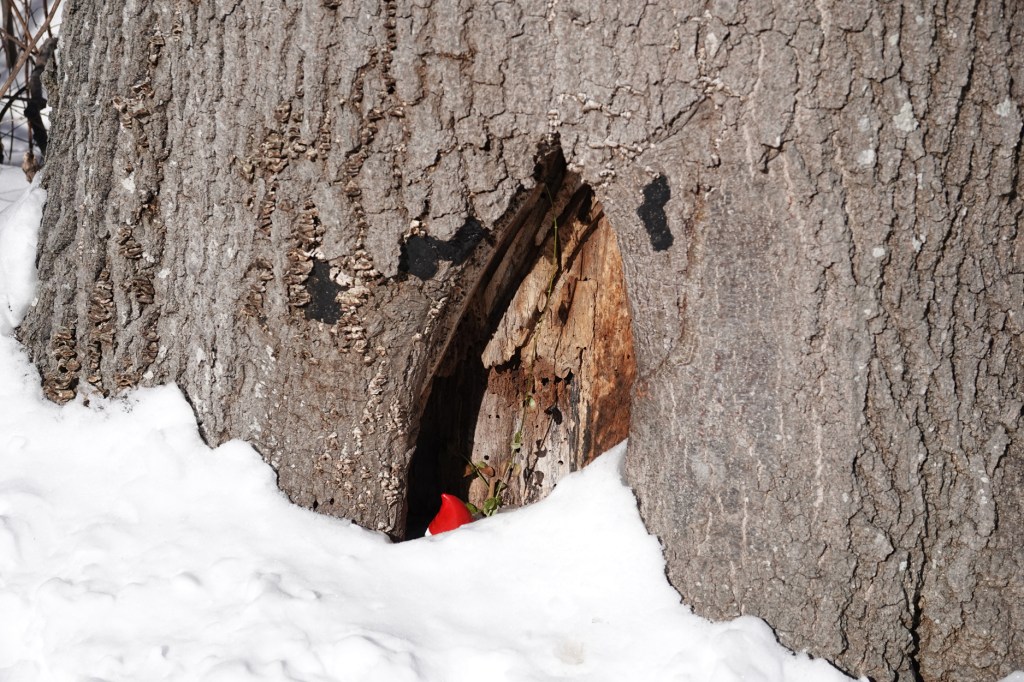
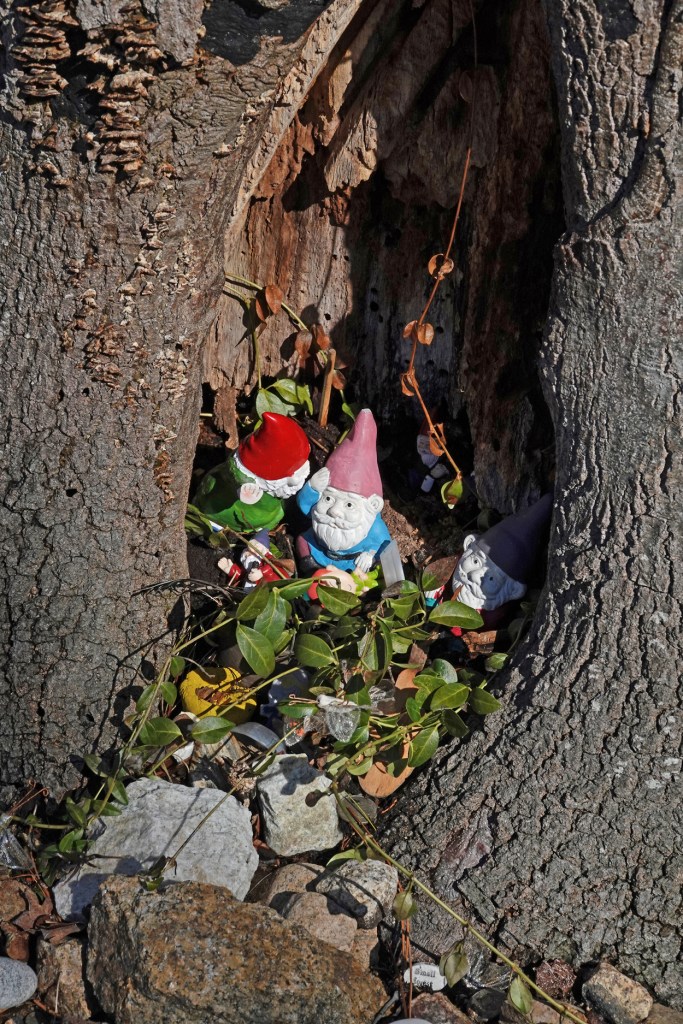
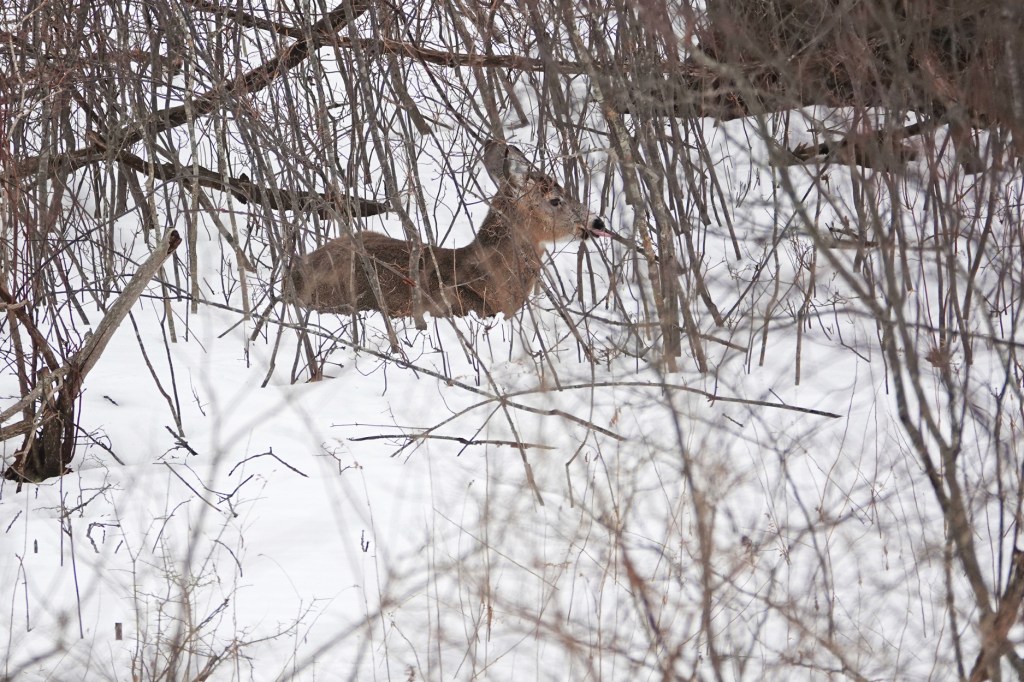
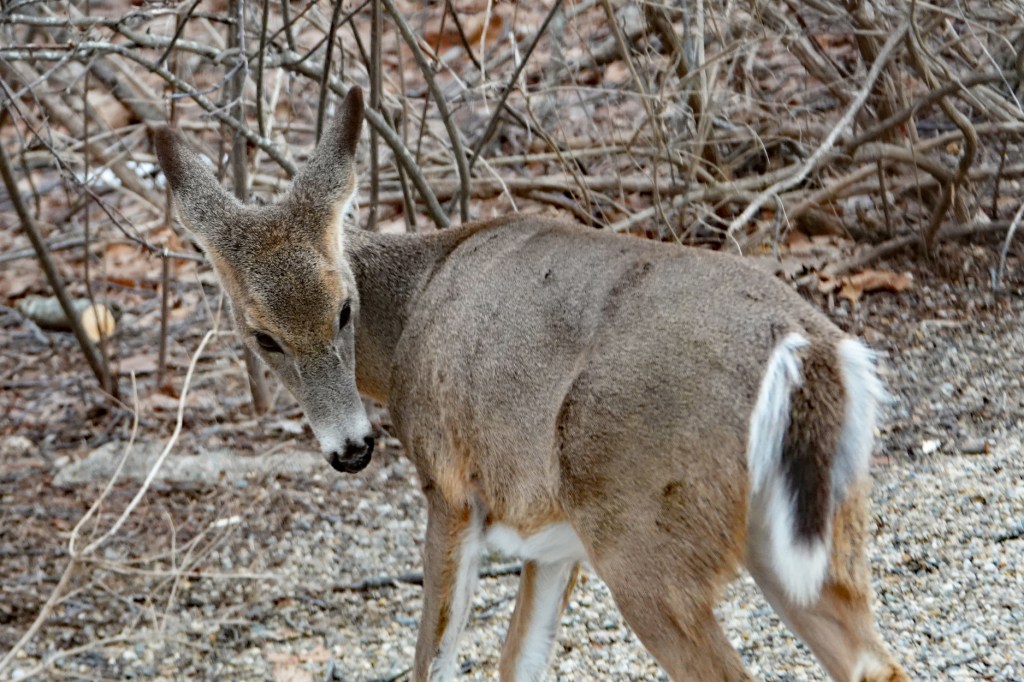
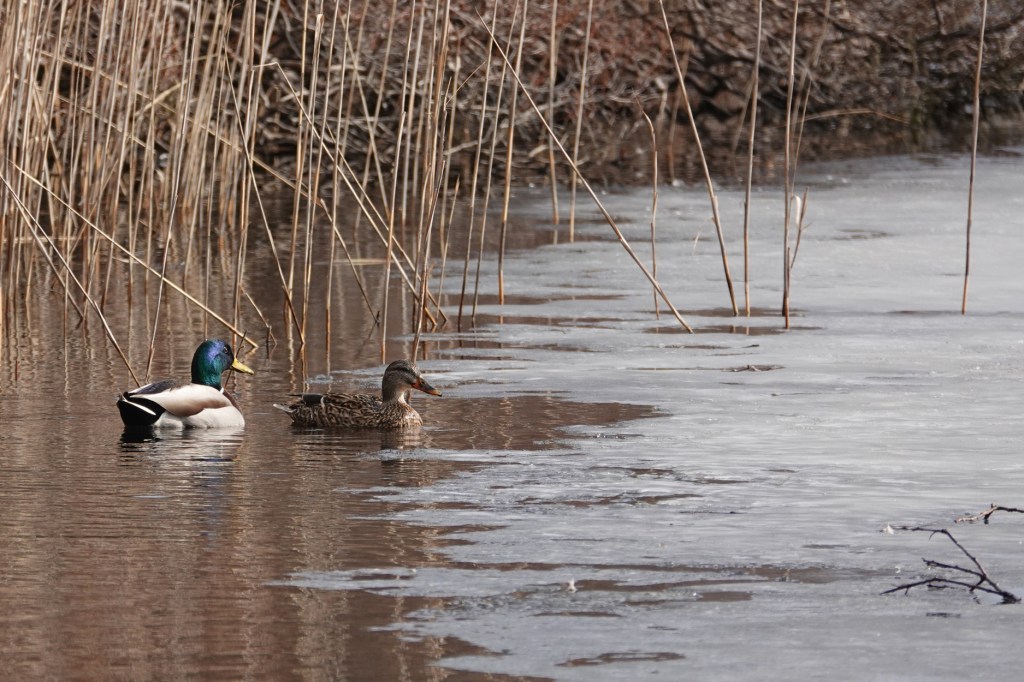
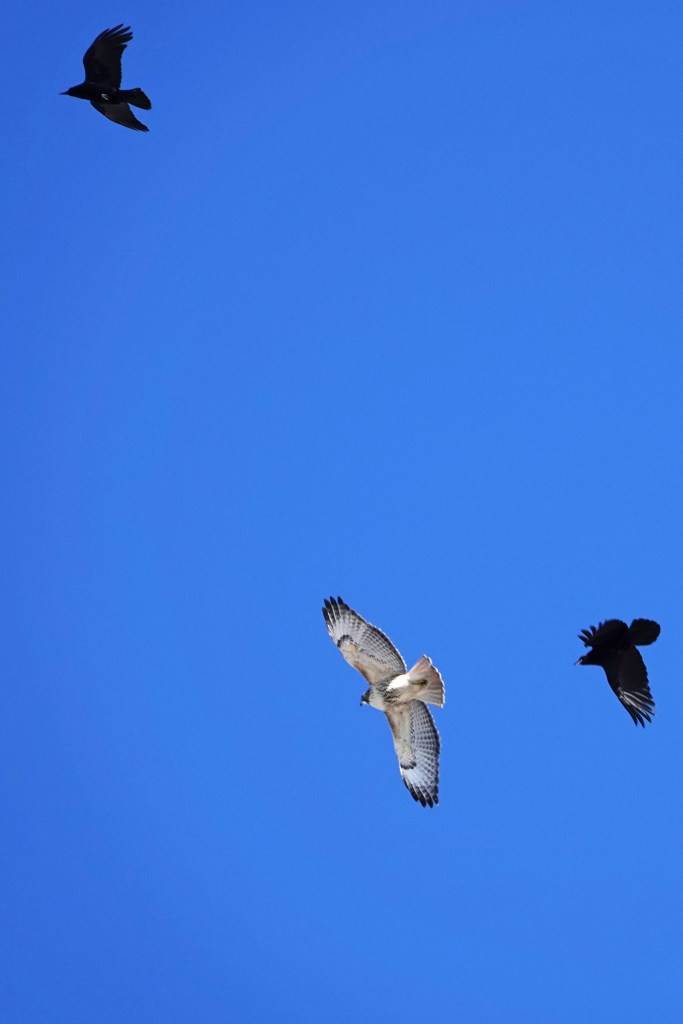
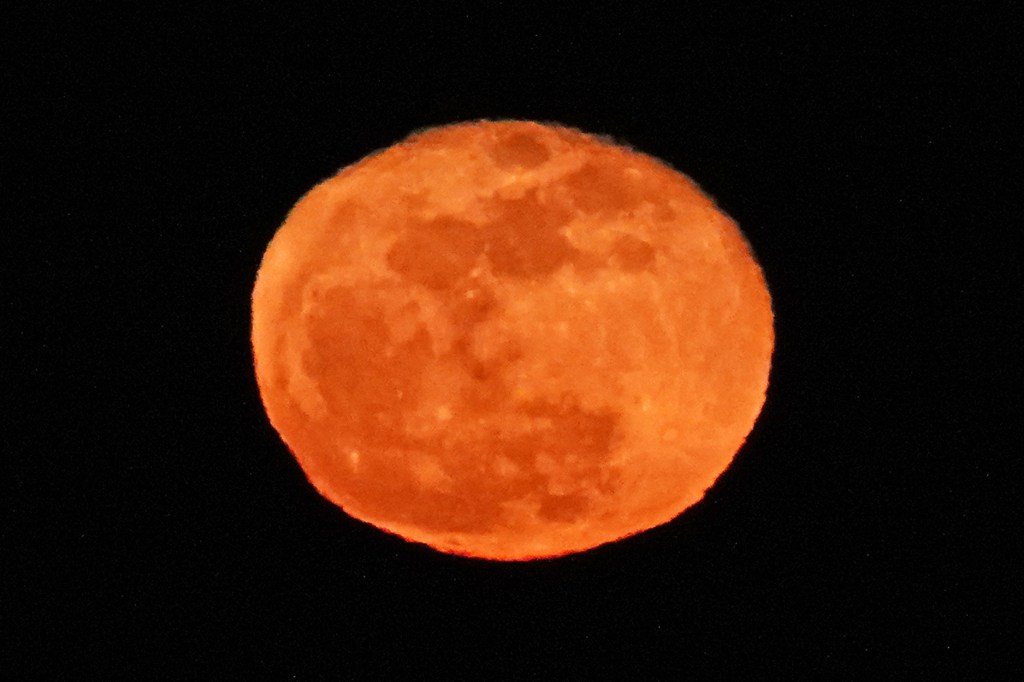
After our second storm two weeks ago, the snow has hung around during the cold.Then a couple of days ago, melting was well underway.The gnomes in the tree trunk began to reappear.Now it looks like spring, and they’re all smiles.It’s been tough for the animals foraging for food.This youngster appears to have come through OK (but don’t eat our plants).Niles Pond has been frozen solid with few signs of human or wildlife.Today, a little melting along the shore allowed the Mallards to swim again.Snow didn’t impede crows from harassing a Red-tailed Hawk.Brace Cove never froze, and yesterday 16 seals soaked up the unseasonal warmth.The full moon looked like a compacted hot ember, distorted just above the horizon.
Spread The GMG Love By Sharing With These Buttons:
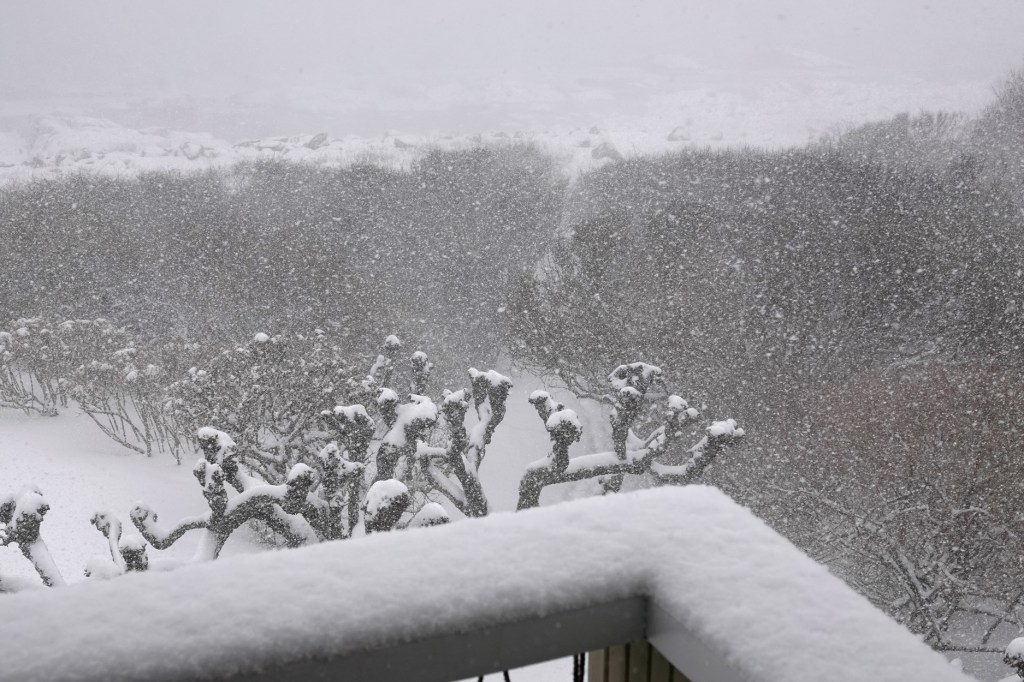
We have had snow on and off continually since our two feet the end of January. Another foot is expected during a Nor’easter coming in tomorrow evening.
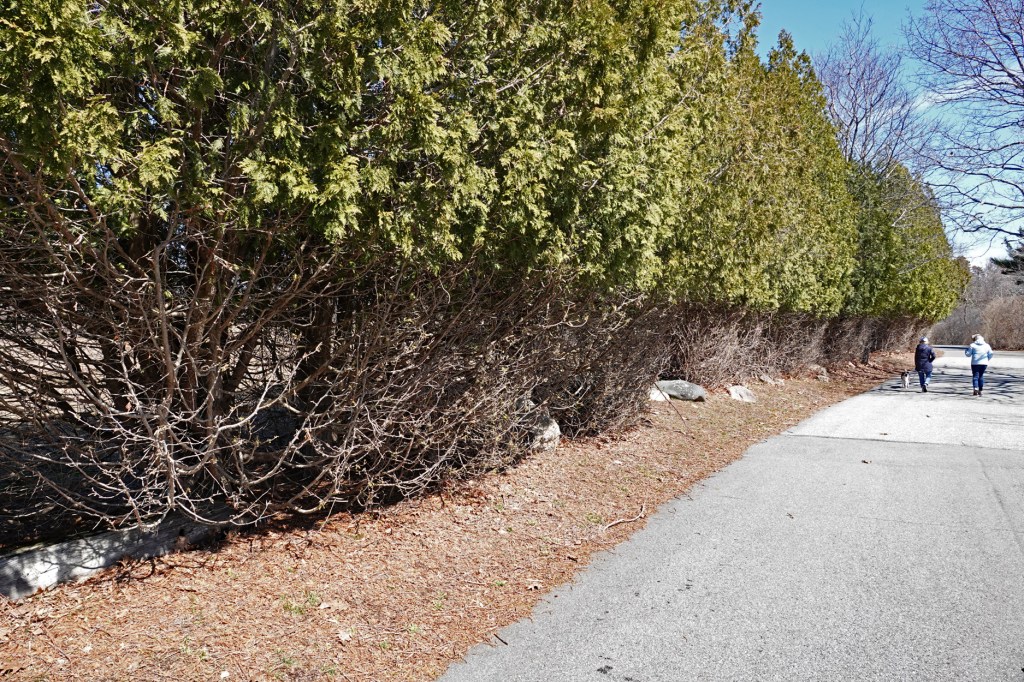
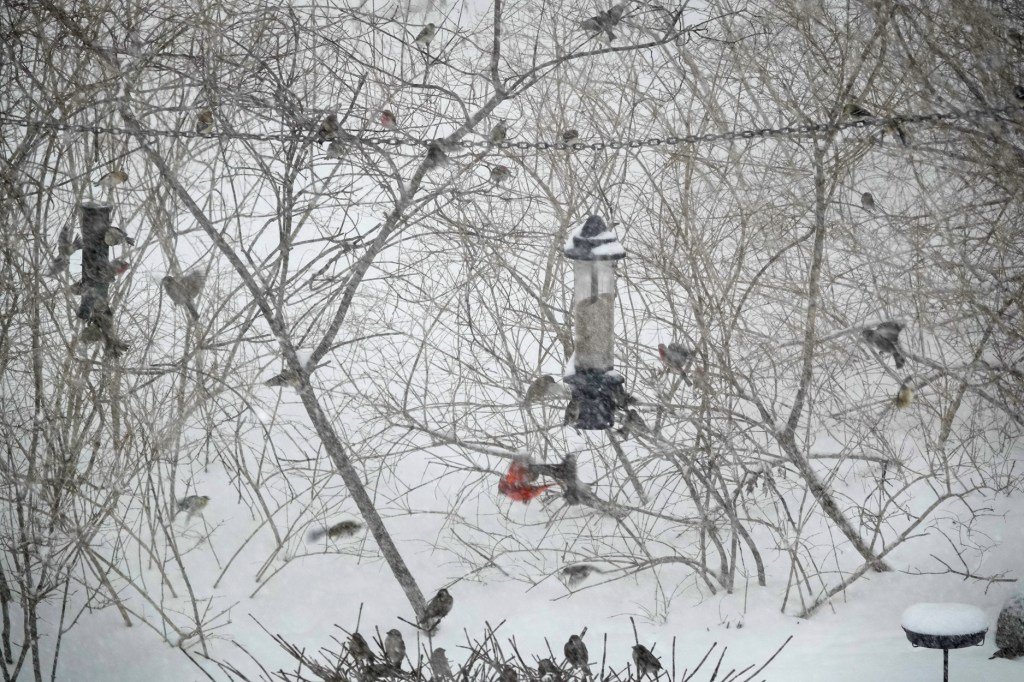
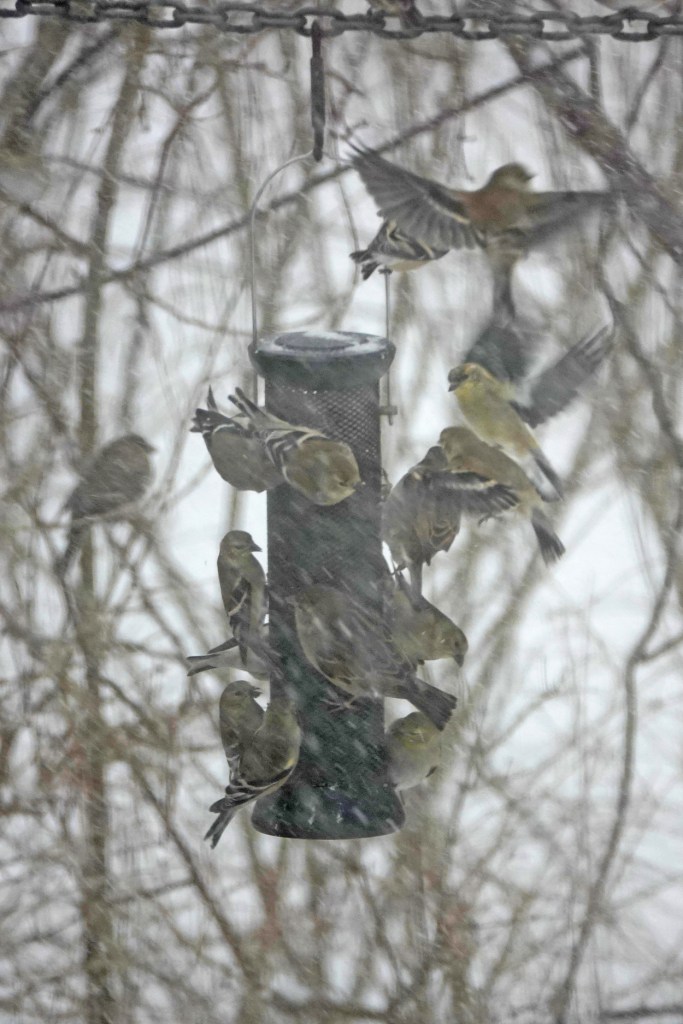
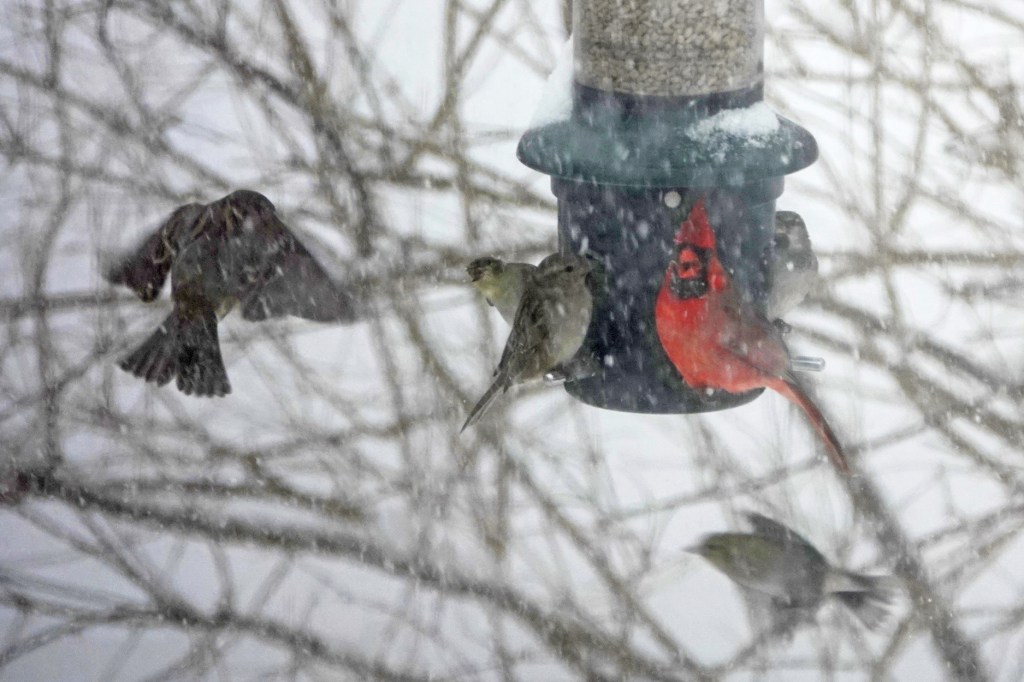
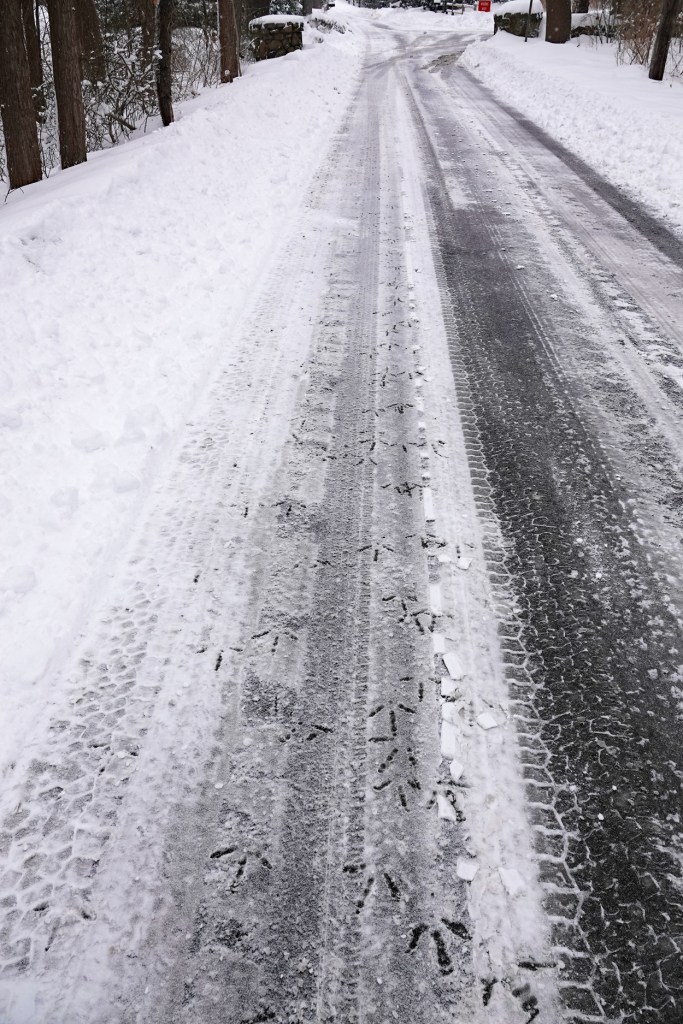
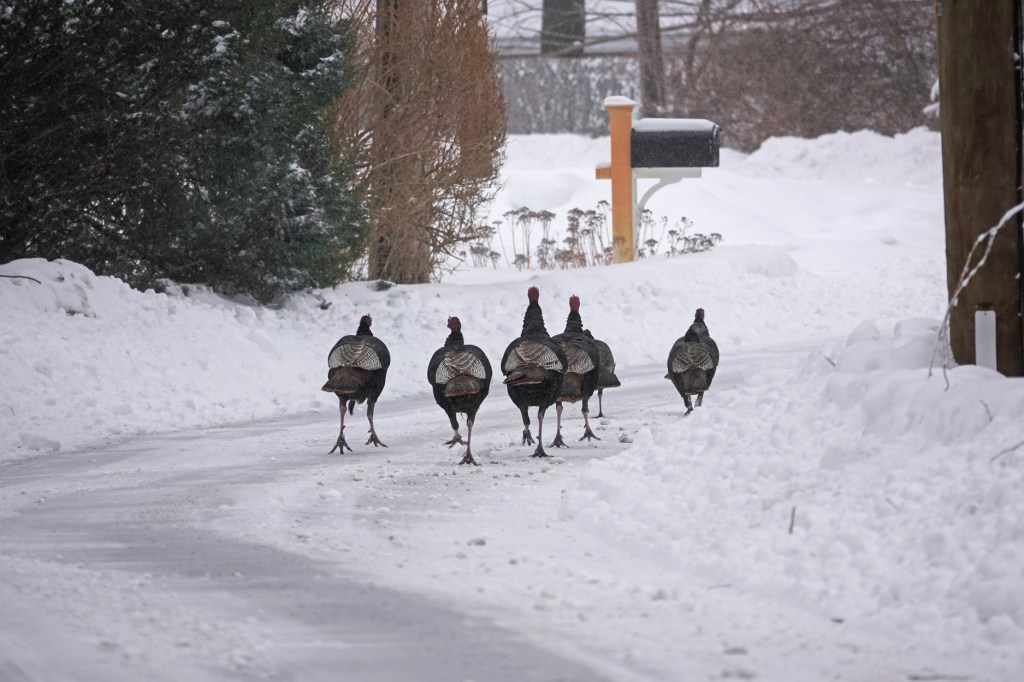
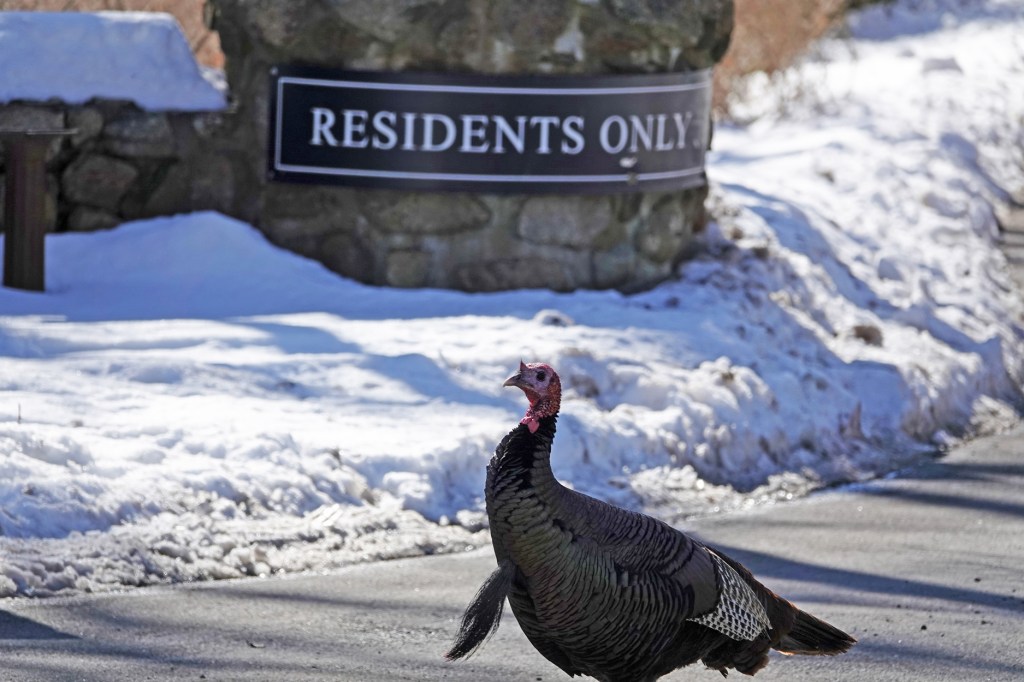
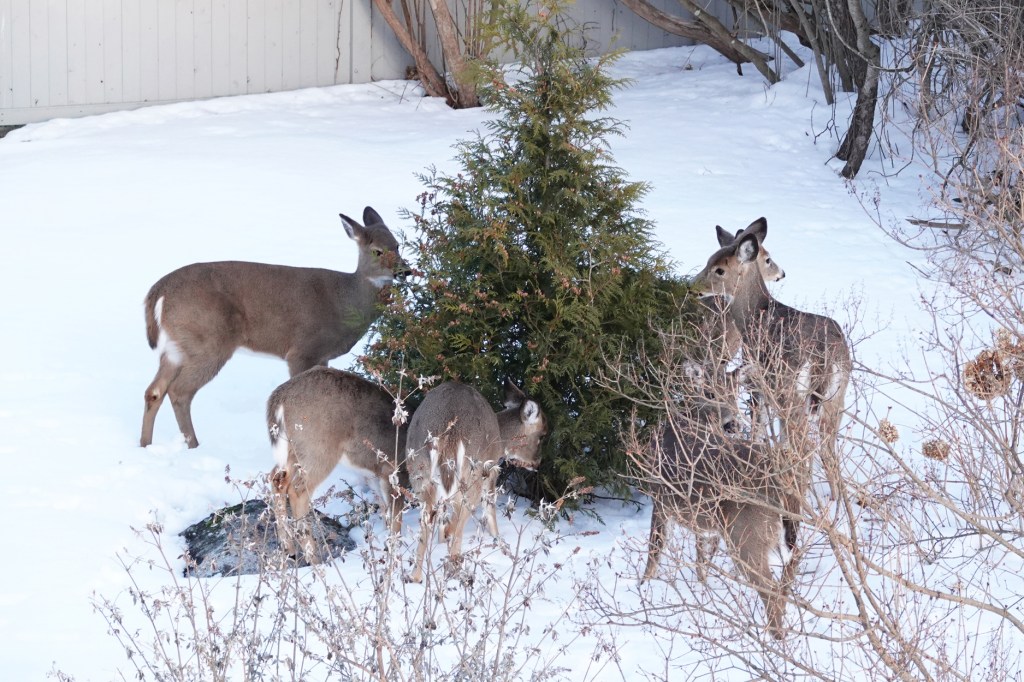
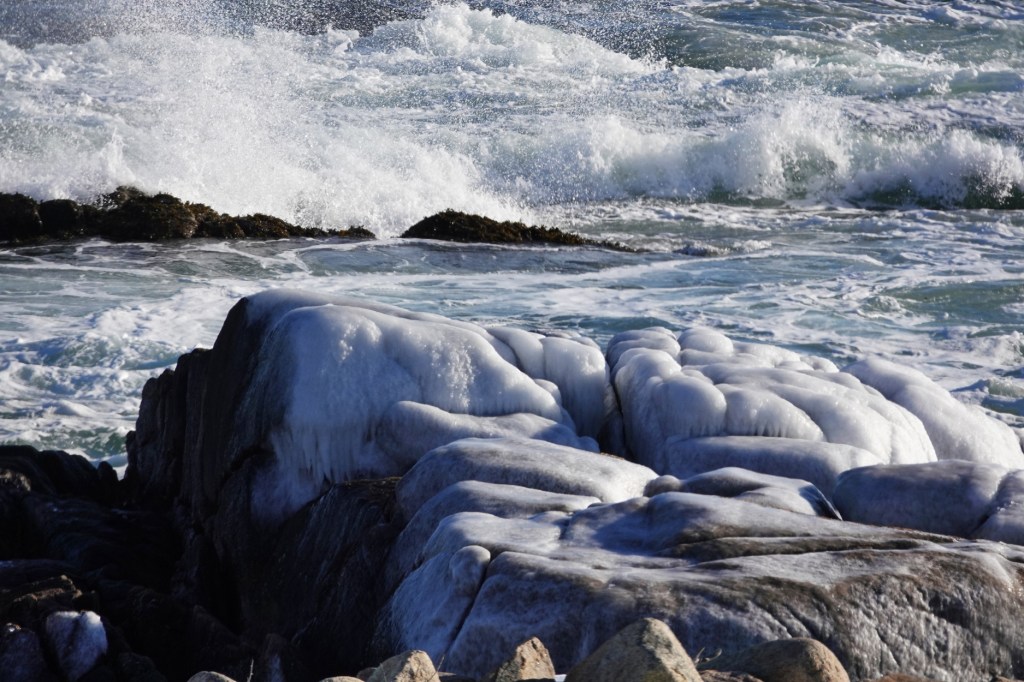
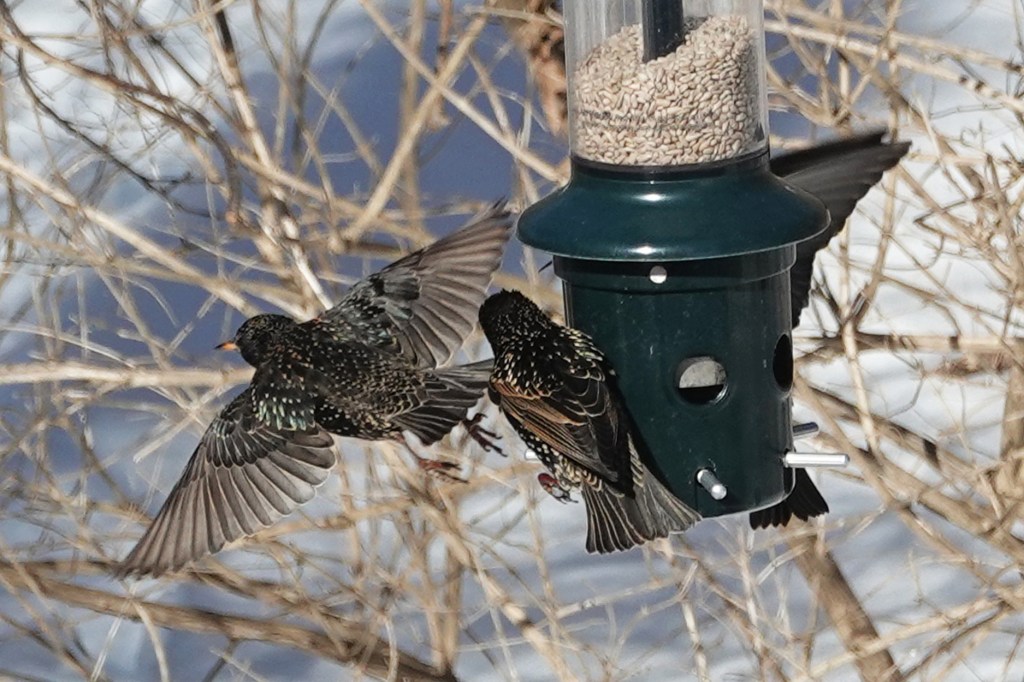
We’re getting used to this ocean view.The birds are getting more competetive.Goldfinches favor the Nyjer seeds.Mr Cardinal – “Thanks for replenishing the Sunflower seeds.”I suspect turkeys passed by here not long ago.Not at all long ago.“I’m a resident.”Ten deer at a time is too many.Our new Green Giant Arborvitae was supposed to be deer resistant.Anne-Lise counterattacked with an airhorn.We have also had sun between snowfalls, but the rocks remain glazed with ice.A large flock of Starlings took over the area in an unusual winter appearance.A Great Black-backed Gull with its white underbody observed while soaring above.
Spread The GMG Love By Sharing With These Buttons: