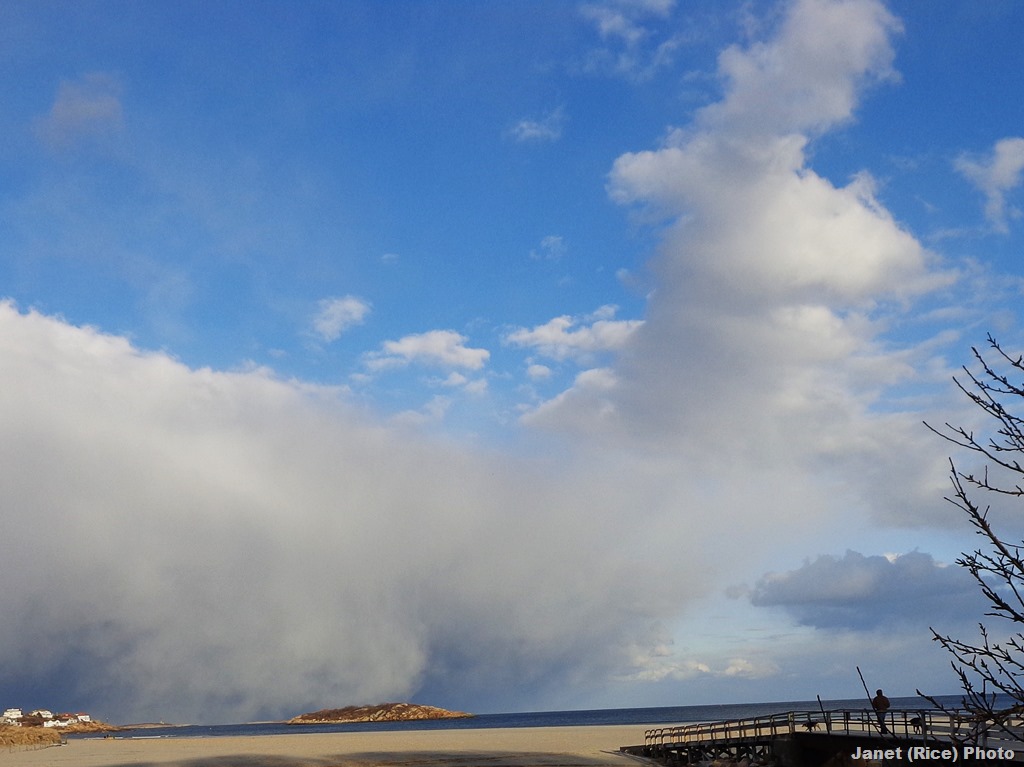
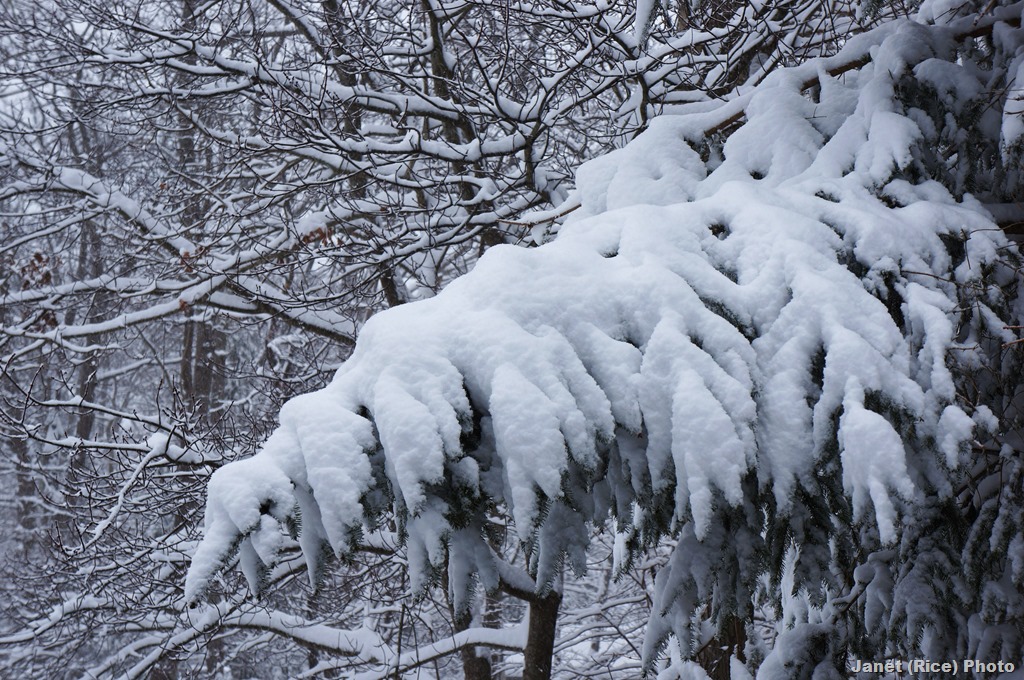
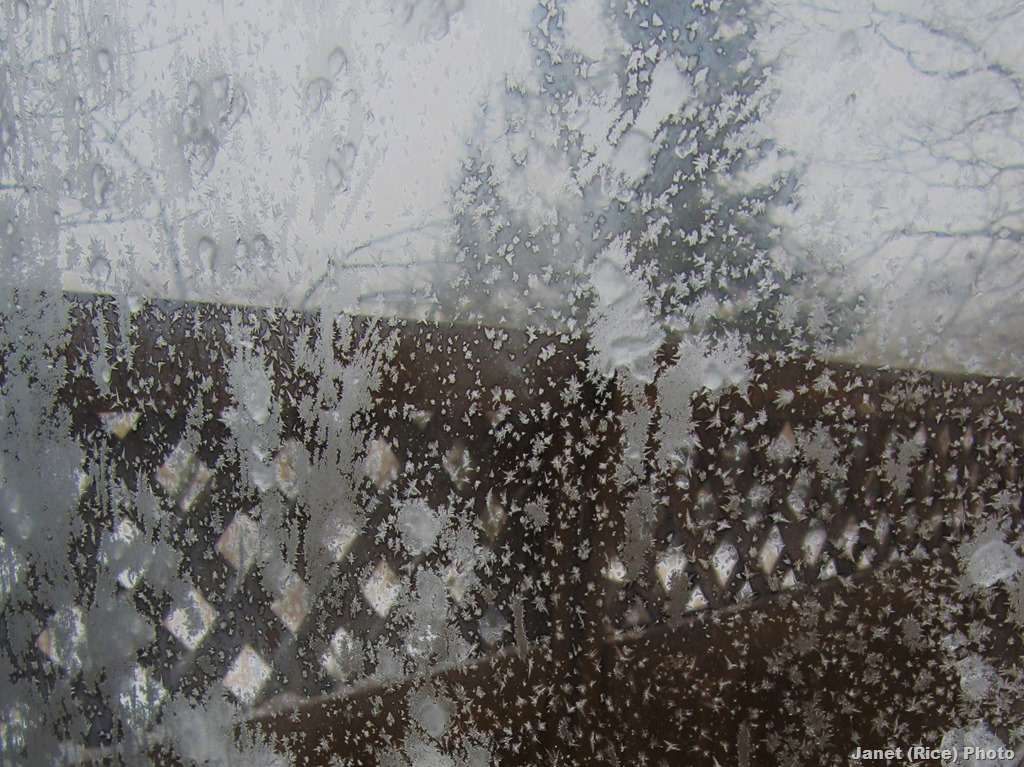
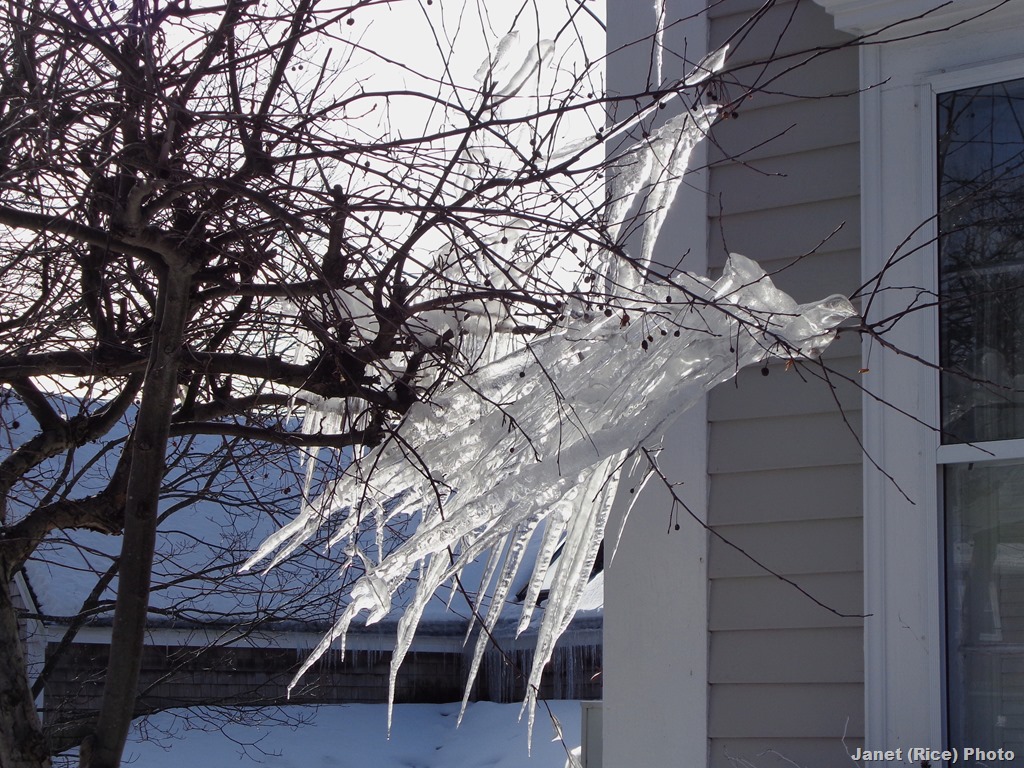
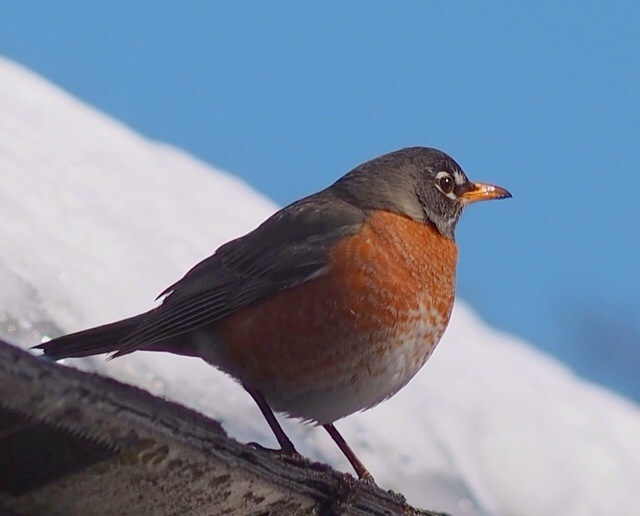
Examples of Mother Nature’s fabulous February artwork!
Best, Janet (Rice)
My View of Life on the Dock
Examples of Mother Nature’s fabulous February artwork!
Best, Janet (Rice)

 After the four-hour drive from Mexico City, across a wide valley of rustic farmland and over and around volcanic mountains, we arrived in the early evening at the sleepy town of Angangueo. Pitched on a steep mountainside, the narrow streets and closely packed buildings with shared stucco walls immediately reminded me of southern European villages. Especially lovely were the modest and many handmade outdoor altars gracing townspeople’s homes and gardens.
Angangueo is located in the far eastern part of the state of Michoacán in the central region of Mexico within the Trans-Mexican Volcanic Belt. During the late 1700s minerals were discovered. Large deposits of silver, gold, copper, and iron ore brought a rush of people into the area. Today, Angangueo is noted as home to two of the most beautiful Monarch Butterfly Biospheres, El Rosario and Sierra Chincua.

 Our guesthouse, the Hotel Don Bruno, was utterly charming. As with many of the buildings we passed on the way to Angangueo, a cheery row of glazed terra cotta pots brimming with red and pink geraniums lined the hotel entrance. Through the entryway door and past the front office, guests entered the beautiful inner courtyard garden. All the rooms faced into the courtyard and mine had a delightfully fragrant sunny yellow rose just outside the door. I quickly changed to meet my fellow travelers for dinner in the hotel’s second floor dining room. A long dining table arranged family style, running the length of the room, had been set up for our group, with a view onto the flowering courtyard below.
 As he did that evening, and every dinner and breakfast, Chef Jean Gabriel Salazar López had prepared an elegant feast of many different entrees, mostly native Mexican dishes, and including and combining a fabulous array of local fruits and vegetables. The proprietors and hotel staff could not have been more friendly and accommodating.
Dinner was followed by a discussion led by Dr. Emmel. Tom Emmel is the Director of the McGuire Center for Lepidoptera and Biodiversity, which is part of the University of Florida’s Museum of Natural History. He is also a professor of zoology and entomology and the author of 35 books (more about Dr. Emmel in the next installment). I recorded several of Dr. Emmel’s lectures and an interview atop the Sierra Chincua Biosphere and will be posting all on youtube.
 Mural in the center of town
At daybreak the following morning, I climbed the central outdoor stairwell to the top of the hotel to film the sleepy town awakening. Roosters crowed and the hotel’s freshly washed and drying sheets whipped to the wind in the crisp mountain air. The morning light did not disappoint. Kitty corner across from my rooftop vantage point was one of the small town’s several churches, with a walled courtyard and red and white banners fluttering in the breeze. The village’s main road leads up to the mountains and is lined with red tiled roofed-homes and sidewalks swept immaculately clean. The sun was just beginning to peek through the mountains when I had to leave to hurry down to breakfast.
Continue reading “Monarch Expedition: Part One ~ Angangueo Michoacán, Mexico”


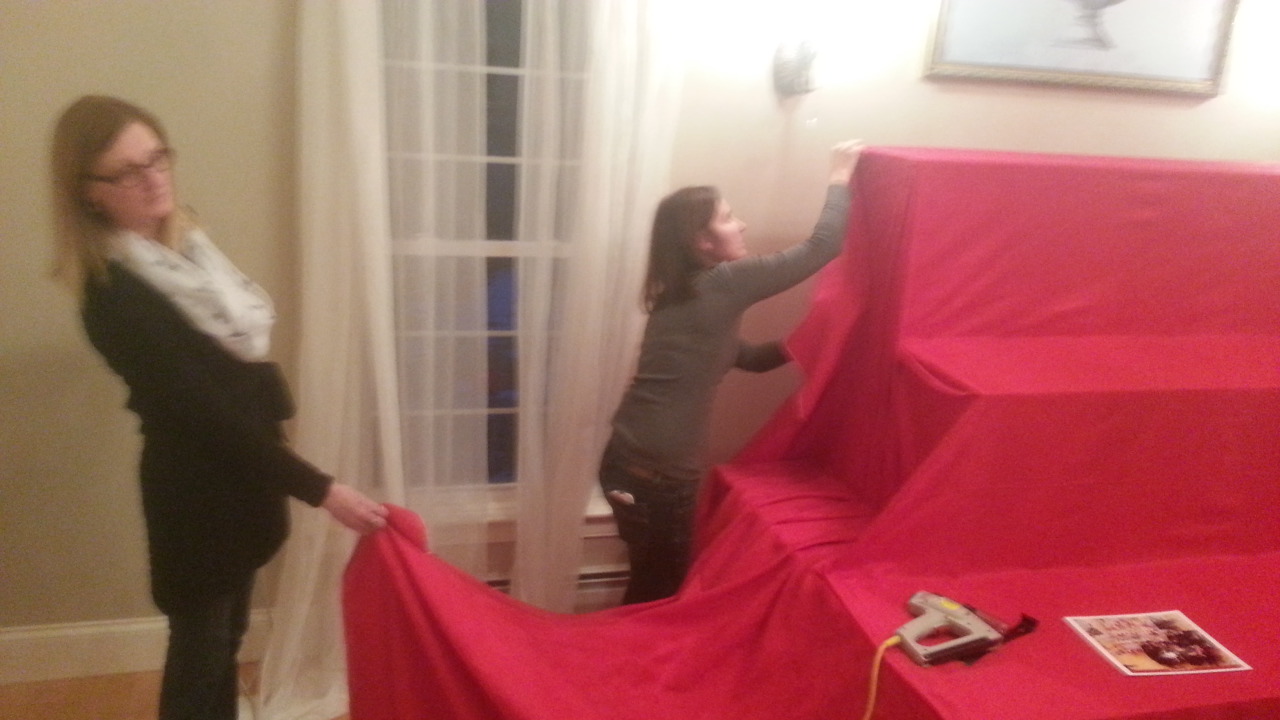
Update 6:53PM

7:19PM Update



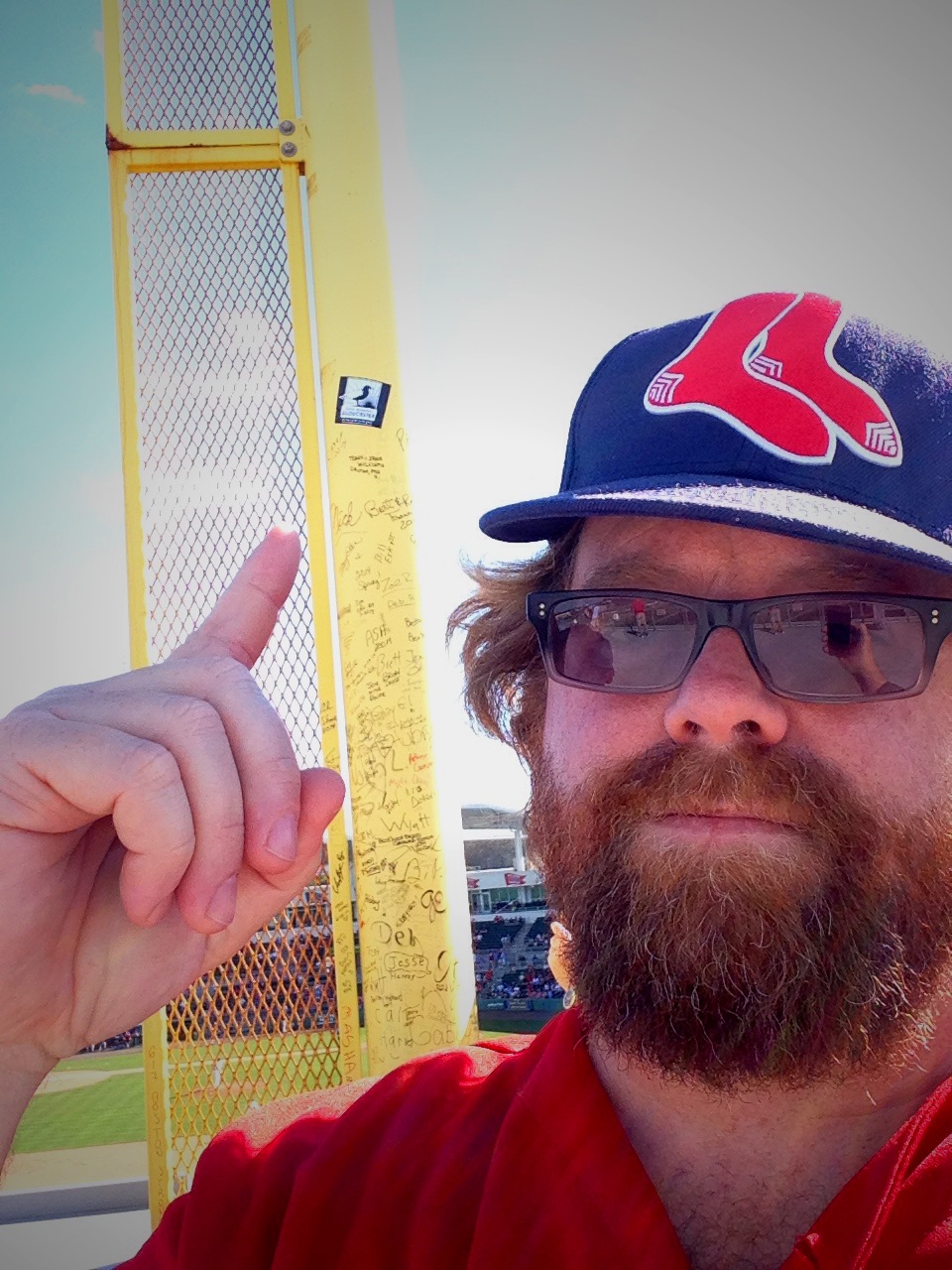
Step up ya sticka game folks! No more posing with the GMG stickas! STICK THEM WHERE IT COUNTS! I want to see folks leaving our mark, so stick em’ then pose or show us. Better yet, stick em’ and ask the FOB’s to guess where it’s at!
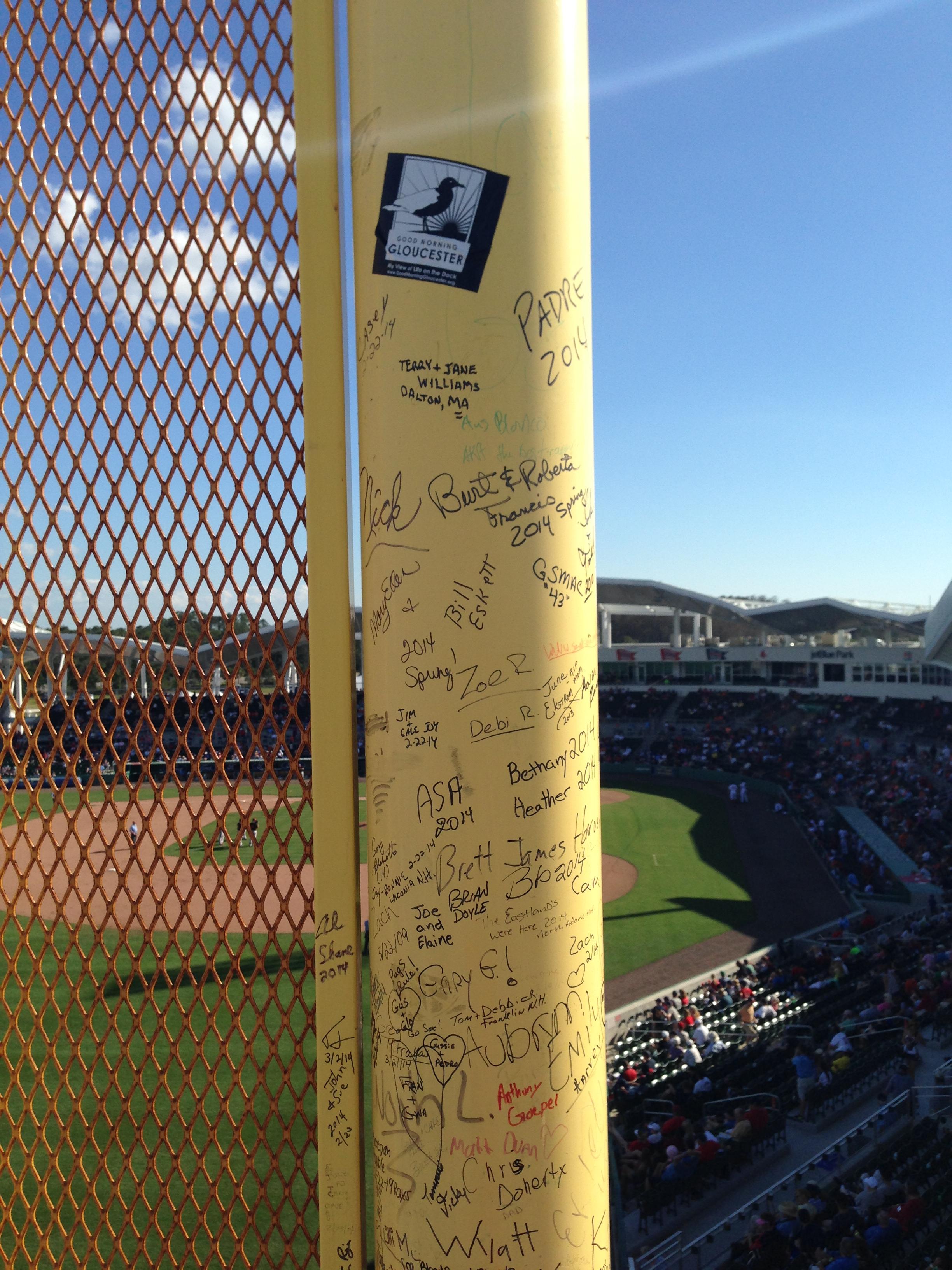
Game on.

Thank you to Voyager Marine Electronics in Essex for the tickets to the Boat Show. This year’s show was so much fun, with a Quad Ski, (it looks like an all terrain vehicle that can go from land to water, The Wicked Tuna crew signing autographs, the Tug Ranger boats, my favorite, Tobin from Cape Ann Marina, Manchester by the Sea Marina and boats that are electric and solar. Here is a couple of pictures from a fun day at the 2014 New England Boat Show.

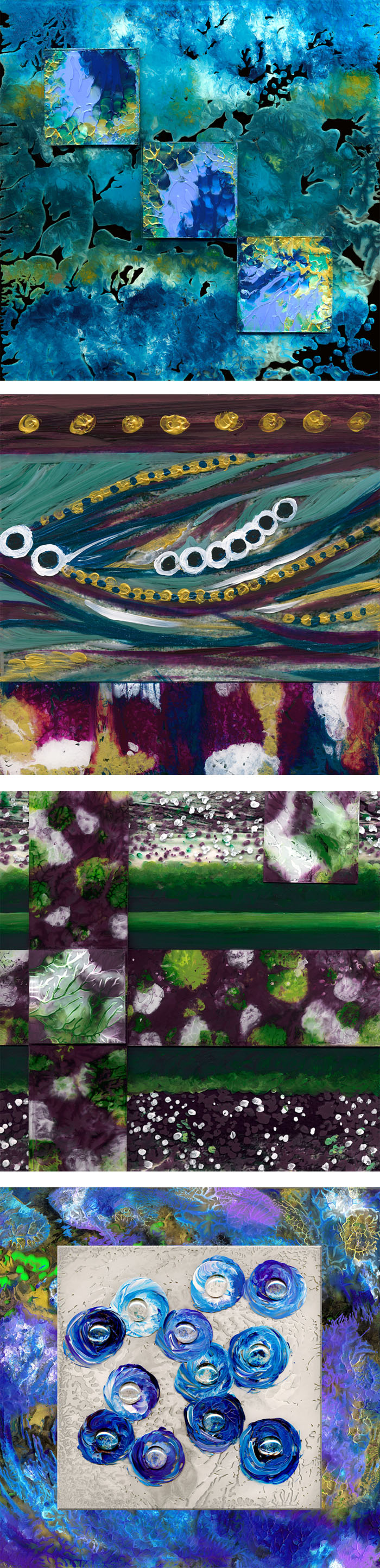
Normally winter is my time to be creative. My life’s path took me on some unexpected twists and turns this fall and winter, which made it impossible for me to get into my creative space. As I’m sure all creative people can attest, sometimes the muse goes away for a time. I used to fret, believing she might never return; but in her own time, she always does. She unexpectedly re-emerged a couple of weeks ago, and took me, as she always does, in a new direction. These are a few new pieces I have completed. This series is old and new. It is a mixed media combination of my abstract photos of last year, coupled with the glass painting of the prior year. While sorting things at my mother’s house, I came across a container of unused glass slides, which have and will make their way into many of these pieces. I have never worked in a square format before, which I am really enjoying, having been inspired by my artist friend, Tom Nihan’s work. All pieces are 8×8 multi-layered photos and glass paintings, and are whimsical and fun – just what I need now. In addition to brushes, I am using rubber ducks and ear plugs to paint with. Yes Paul, RD was instrumental in getting me going, although she has gotten a little messy with paint all over her bottom.
You can see some of my new work at the Spring Art Show at the Magnolia Historical Society Friday, April 11 from 6 till 9pm Opening, Saturday, April 12 2pm till 8pm and Sunday, April 13 Noon till 4pm. More details coming soon.
E.J. Lefavour

A test walk on some quarry trails. Right now most trails are 60% covered with lumpy hard ice especially where feet have walked through it and it has a light coating of new snow. So unless you walk like a constipated penguin or you are wearing Korkers you may be sitting on your ass.
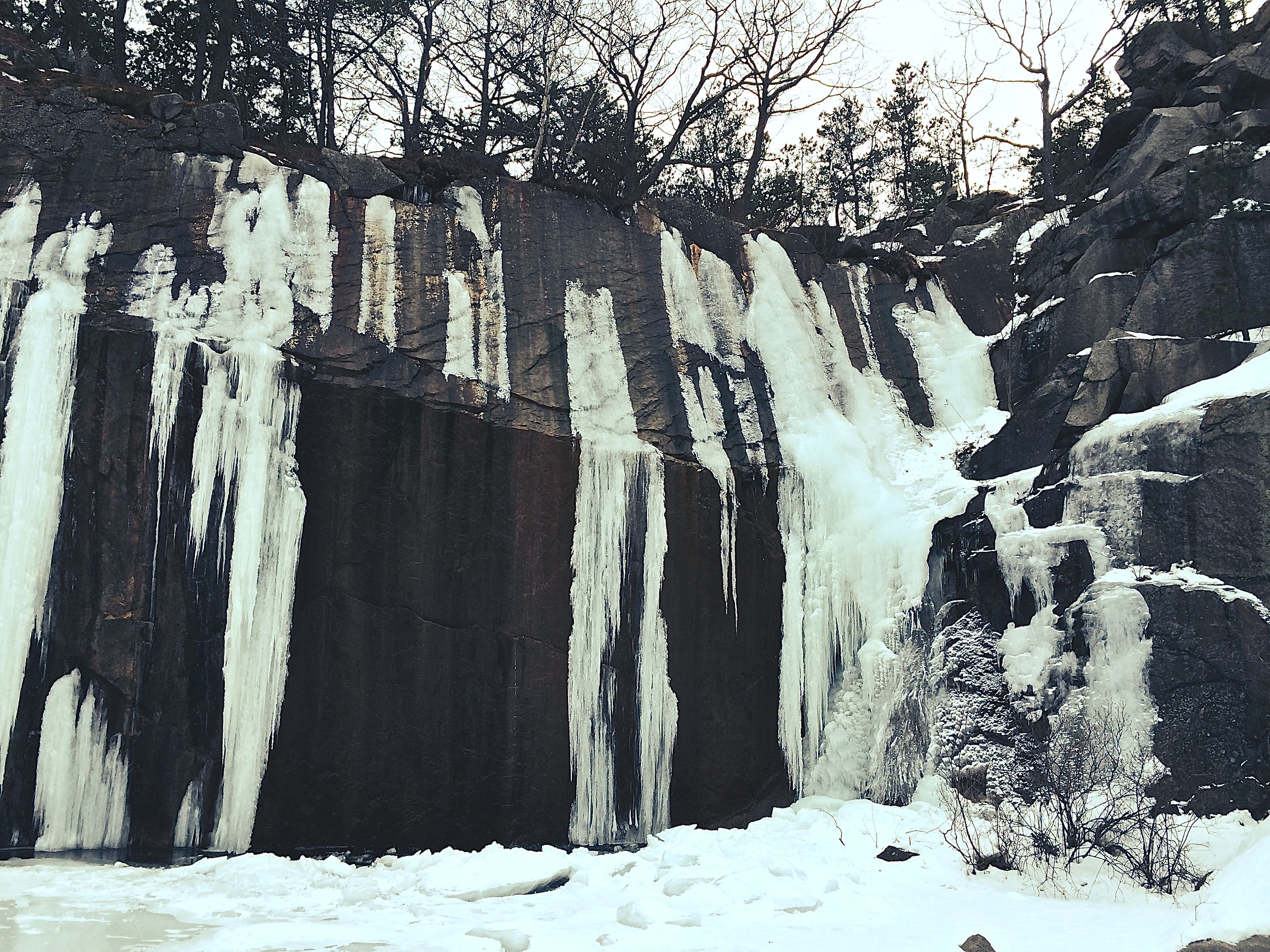
The frozen waterfalls are about a 3 on a scale of one to ten. Pretty cool and maybe if you got them in a nice morning light but right now so-so. In a week or so the trails will be impassable mud. A new layer of snow to ski on or another polar vortex would liven them up but who wants that? I might wait until there is witch hazel blooming. In fact there is some witch hazel blooming in the backyard and the forsythia I cut last week is blooming like crazy in the kitchen!
It would be jumping the gun to cut the wrap off the boat but a few weeks more and who knows? I still plan on planting peas on Saint Patrick’s even if I have to shovel snow. As traditional as bootin’ green beer!
Send in your April 1 Restaurant openings. Publishing them is the only way to drive the evil polar vortex away.


OK, tonight most of us will be celebrating films, but Oscar night is also a perfect time celebrate great songs — and this is a particularly good year for song nominations.
Our two favorites are “Happy” by Pharrell Williams (the guy with the funny Smokey the Bear hat who won the Record of the Year Grammy with Daft Punk and Nile Rodgers) from the movie Despicable Me 2; and “Ordinary Love” by U2 from the movie Mandella: Long Walk to Freedom. I particularly like Pharrell Williams’ “Happy” video (not from the movie). Check out this dancing!
Among the Best Picture nominees is American Hustle, part of which was filmed down the road in Salem.
If you like to be out on Oscar night and just follow the events on your phone, there’s plenty of excellent music, starting with The Jazz Brewers at the Brew Pub at 5pm and one of our favorites, Inge Berge, at The Rhumb Line at 7:30. See tonight’s full live music schedule here.
By Robert Newton on January 15, 2014

For roughly 50% of American families divorce is an unpleasant fact of life. Dealing with divorce and its effects destroys lives and bankrupts individuals every day. Family law, which barely existed for most of our country’s history, has morphed into a gigantic industry over the past several decades. Learn first-hand about the excesses and injustices rampant in the U.S. family court system. Do not miss the riveting film that offers a spotless condemnation of family courts across America. In interviews with top insiders and an array of litigants, a place aptly termed “the last fiefdom of lawlessness and tyranny,” is uncovered.
DATE:
SUNDAY, MARCH 9TH @ 4:00PM
TICKETS:
$10.00 ADULTS / $8.50 STUDENTS & SENIORS / $7.00 CINEMA MEMBERS


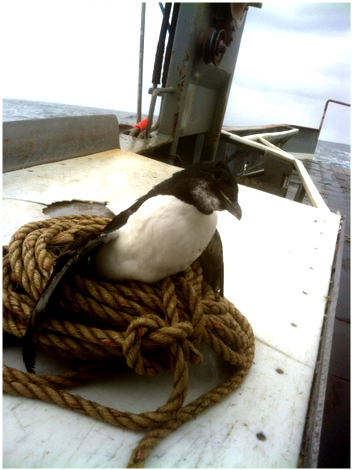
Photo Taken by a friend.


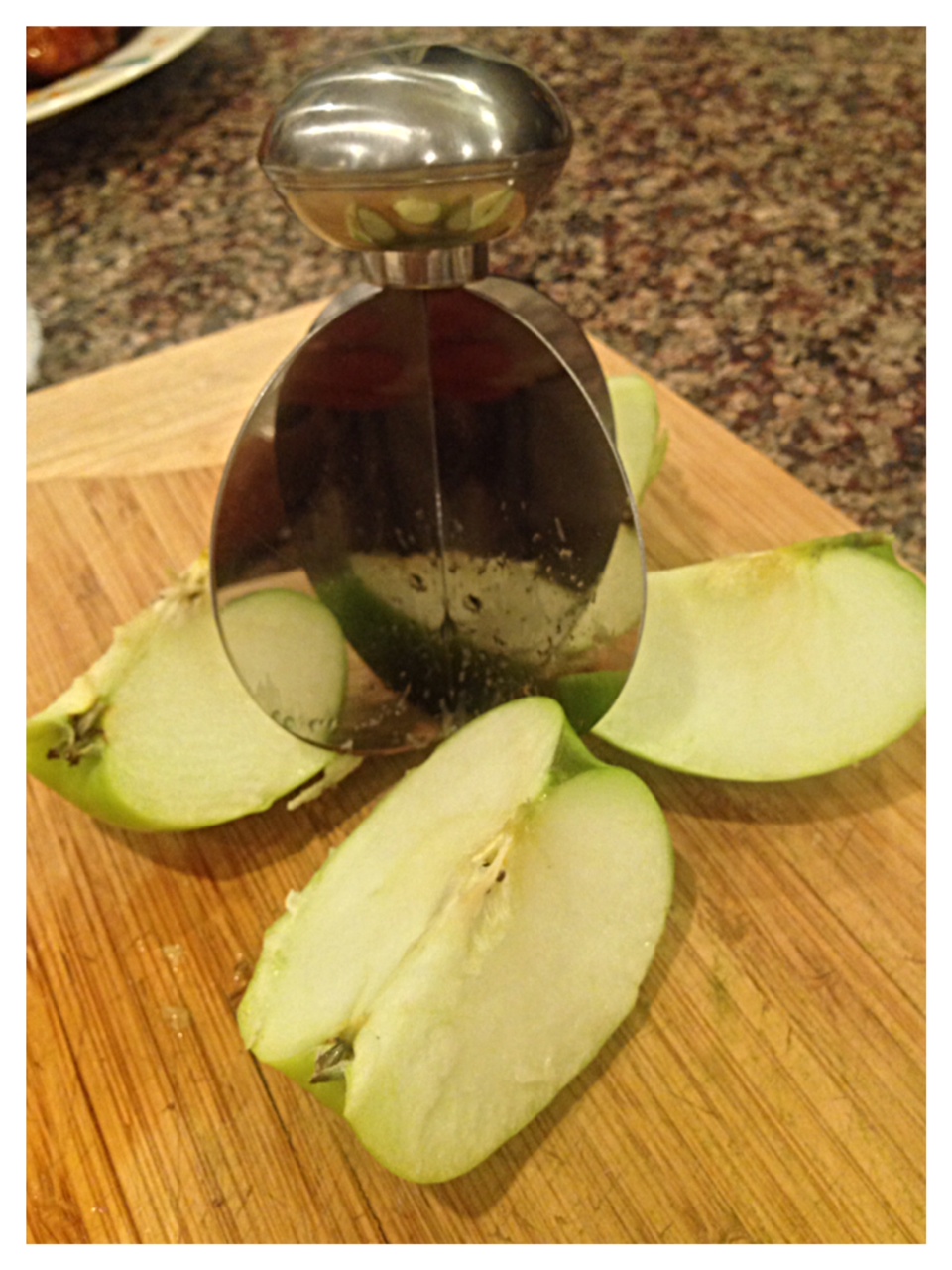
 I’m Loving this apple/fruit slicer by Tagliamela. I purchased my newest slicing gadget last week at Marshalls for $4.99. It’s going to come in handy preparing for the feast of St. Joseph later this month!


Hi Kim,



Need a new business hair and make-up look, professional head-shot and some free advertising?
I’m Co-hosting an awesome FREE event on Saturday, March 8, 2014 at Dolce Vita Salon in Rockport for local professional women!!
To schedule your FREE appointment today just call:
Dolce Vita Salon @ 978-546-9700.
See the picture below and attached. PLEASE SHARE with anyone who may be interested! Here is the FACEBOOK EVENT.
Also check out the facebook page that all these free headshots will be featured on: www.facebook.com/CapeAnnWomenInBusiness
What to do before the Academy Awards?
Get up and go to the
Gloucester Writers Center’s
5th 10-minute Playwriting
Workshop Staged Readings
Sunday, March 2nd, 4-6 pm Rocky Neck Cultural Center,
6 Wonson St. Rocky Neck
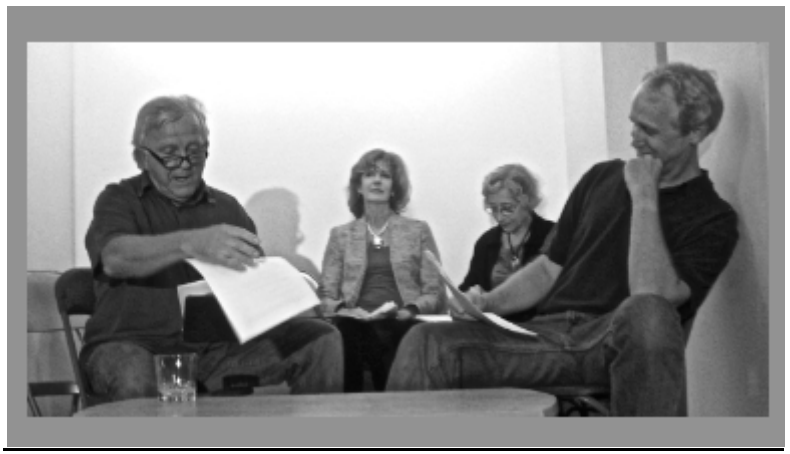
Event: Gloucester Writers Center 5th 10-minute Playwriting Workshop Staged
Readings. This fun event has been drawing crowds for the past few years, as
audiences get to watch and provide feedback for these new 10-minute plays in
progress, all written by our most talented local playwrights and performed by the
best of our local actors.
Who: Gloucester Writers Center 5th 10-Minute Play Workshop, taught by M.
Lynda Robinson, is presenting the new work of Carole Frohlich, Jeana Grady,
Barbara Harrison, Ann McArdle, M. Lynda Robinson and Constance Shute, in the
form of staged readings.
Donation suggested at door. No one turned away for lack of fun

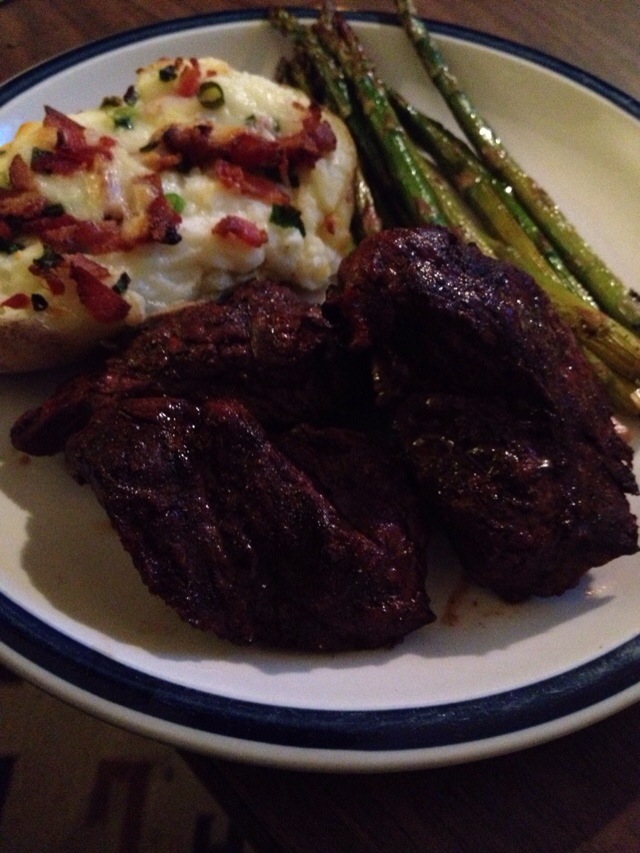
Best Twice Baked Potatoes Ever!

| CROSS-COUNTRY CHRONICLE
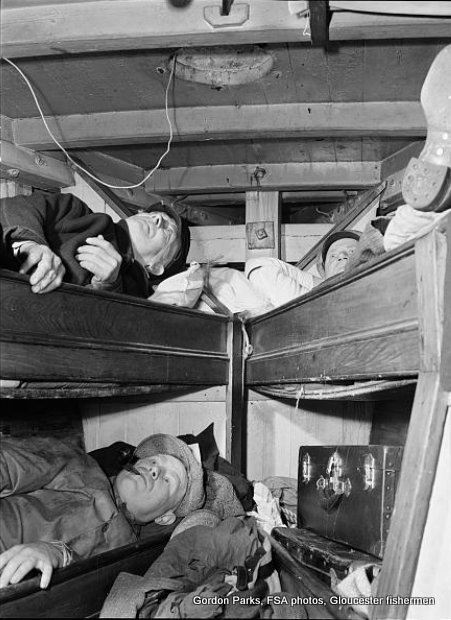
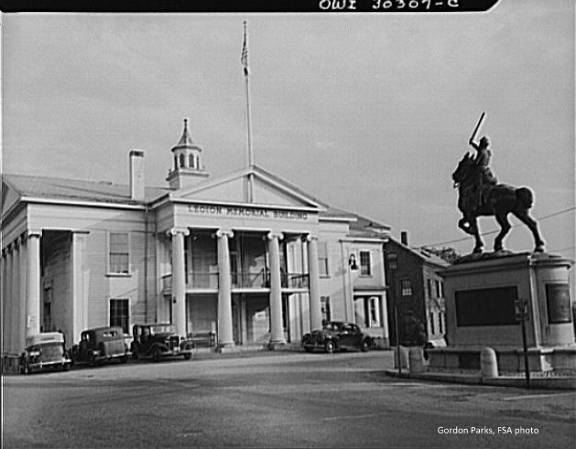
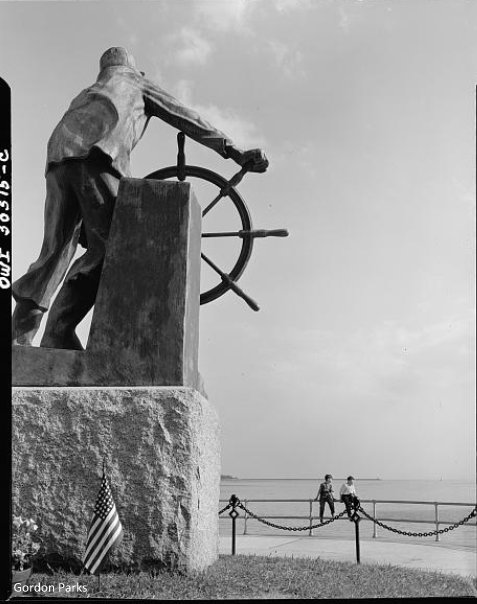
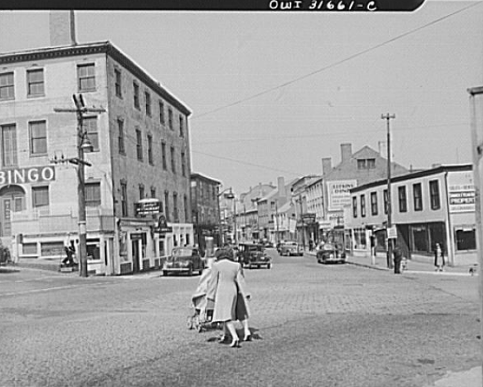
Catherine Ryan on Gloucester, MA in landmark Farm Security Administration/Office of War Information (FSA/OWI) documentary photographs. Part 1 Hey, Joey, Have a look at Gloucester from this important collection. First up—the Gordon Parks post. 1942. FOBs may recognize some of the faces, names, places. You recently featured the ‘American Gothic’Wallflowers, by this super artist on GMG which reminded me of the road less traveled within this historic collection of photographs archived at the Library of Congress and the New York Public Library. This post is Part 1 in a series on Gloucester images in this legendary FSA/OWI collection. If you are interested in the scope of any Gloucester material from this collection, we know that at least 4 of the FSA/OWI photographers came through Gloucester, MA. No surprise, each photographer took photo(s) of the Fisherman at the Wheel. They also show the impact of WWII. If you can id any of the Gloucesterpeople, please contact me. I’ve listed some known Gloucester names at the end of the post. In 1934 during the Great Depression, Fortune magazine dispatched Margaret Bourke-White to cover the Dust Bowl. She sent additional images to the New Masses and the Nation. In 1935, for one of its many New Deal programs, the US government sent photographers across the country on assignment. Initially their photographs were intended to illustrate the results of the country’s latest efforts to alleviate rural poverty. Ultimately, they created a legendary photographic record of 1935-1945. Here is a jaw-dropping list of established and future notables who Stryker hired for this incredible visual encyclopedia: Esther Bubley, John Collier, Walker Evans, Dorothea Lange, Russell Lee, GordonParks, Marion Post Walcott, Louise Rosskam, Arthur Rothstein, Ben Shahn, George Stoney, John Vachon, and Marion Post Walcott. Stryker also primed an extensive “orbit” of contacts and influence. What is the FSA/OWI collection? (See explanation at the end of this post.) |
| American Photographer GORDON PARKS (1912-2006)
119 FSA/OWI photos for Gloucester, MA, May and June 1942
|
| In 2012, the International Center of Photography in New York commemorated the centennial of GordonPark’s birth with a year-long installation featuring 50+ photos (one of the Gloucester ones was in there).
|
| Gordon Parks believed the positive reaction he received for some of his early fashion images was his first break (Melva Louis, Joe Louis’ first wife). This support pushed him to set up a photography portrait business in Chicago. He also photographed out in the streets. He was inspired by Norman Alley’s bombing of Panay coverage (1937). FSA/OWI photographer Jack Delano saw his work and urged him to try to enter Stryker’s program via a Rosenwald fellowship. He was 30 when he was brought on board and thrilled to join this famous group. He was the first African American to be hired by Stryker. He worked there less than two years as the program ended. He followed Stryker into a commercial job. Gordon Parks was a man of dazzling talents. His FSA/OWI photos hint at his many future creative pursuits. This work though was rarely seen. |
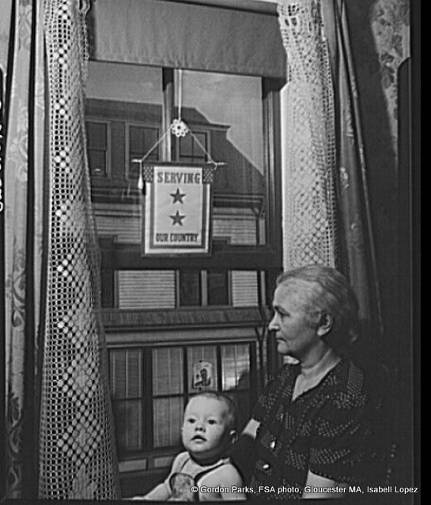
| You can see Parks skilled portrait photographs: leaders of faith, presidents of universities, people working and at home, such as Mrs. Isabell Lopez of Gloucester, mother of 6 holding her grandchild.
|
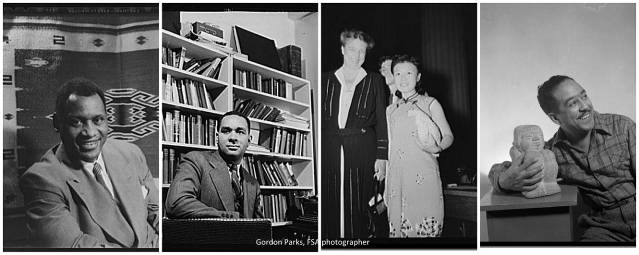
| There are celebrity portraits: Paul Robeson, Mrs. Roosevelt with Wang Yung, Langston Hughes, and Richard Wright. Portraits and fashion were his bread and butter back in Chicago, before landing a post with this famous group.
|
| You can see Gordon Parks the social activist. From left to right: pushing for safer streets, e.g. protection for our kids (devastating streetcar accidents); Jim Crow train FLA; his famous ‘American Gothic’ portrait of Ella Watson who cleaned nights at the FSA government office in Washington, DC. Parks thought this image heavy handed; there is essentially what amounts to a still-photo mini documentary of Ella Watson at home, with her family and at work for more of her story.
Gordon Parks did 1 Gloucester protection/safety photograph, a dangerous crossing.
|
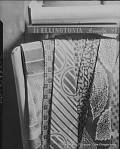
You can see Gordon Parks the fashion photographer. Welder on the left is Rosie the Riveter style; and on the right Mrs. Lopez’s daughter, at home Gloucester, MA. The still-lives are Duke Ellington’s colorful ties and one of Jay Thorpe’s Four Freedoms textiles.

|
| You can see Gordon Parks the humanist: ordinary big moments with Girls Scouts at a memorial service,Gloucester, MA; New York state camps where kids and staff are made up of diverse backgrounds; AldenCaptain and crew are relaxed, easy company together while in New York.
|
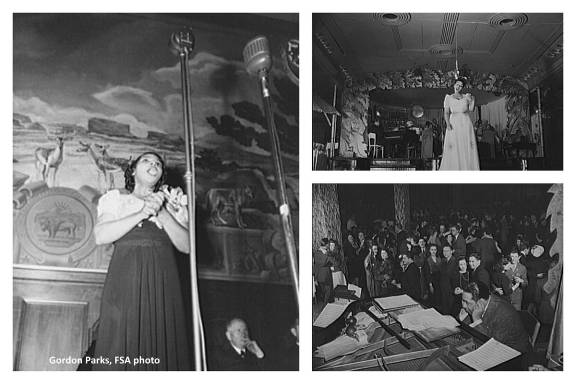
| You can glimpse Gordon Parks the musician/composer through the arts he selected to cover while on assignment for the FSA/OWI. Marian Anderson’s broadcast at a mural dedication commemorating her Lincoln Memorial concert. Duke Ellington and the Orchestra at the Hurricane Club Ballroom, in New York City, April 1943.
|
| There are also photos of Ellington trying to hear his band; Betty Rocha singing with the Orchestra; and individual portraits of musicians Rex Stewart, Ray Nance, Juan Tizol, Sunny Greer, and Johnny Hodges. The caption for Hodges includes the song title played during his portrait session, “Don’t Get around Much Anymore.” Parks also photographed the Club staff and customers
|
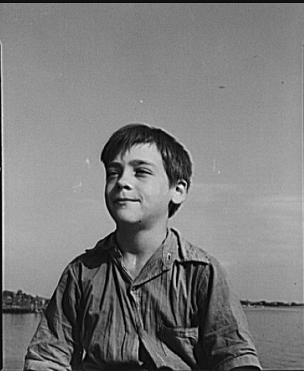
| You can see Gordon Parks the movie Director. Some of his FSA/OWI work looks ready for neorealist cinema. (Rome, Open City global 1946.) The image on the left features generations of the women of the Machado/Lopez family. The boys at the Leonard Craske Fisherman at the Wheel memorial are not identified (one close up).
The center mirror image reminds me of film school students and their emulation of Citizen Kane (1941) and other camera tricks. The image in the mirror is from one of Parks early assignments with the FSA. Mirrors and reflections tend toward symbolism anyhow. Parks is there photographing HowardUniversity. It feels like he snapped this on the sly when seen with the other ‘dailies’. It’s Thanksgiving Dinner and President of Howard University, Mordicai Johnson, is being served by an African American.
|
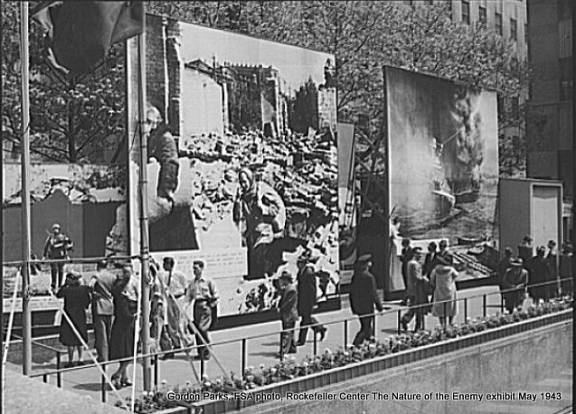
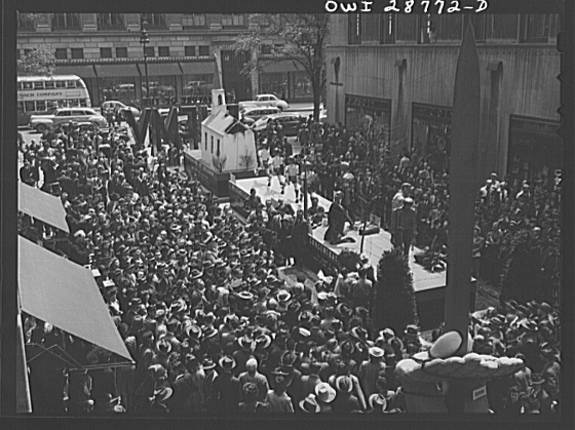
| There’s scene shots: movie-scale streets and crowd shots teeming in NYC or downtown Gloucester. Gordon Parks filed 50+ pictures for the Nature of the Enemy show, the second exhibition of the “This is Our War” series of outdoor installations on the promenade of RockefellerCenter, May – July, 1943. ForGloucester, it’s Memorial Day services. |
|

|
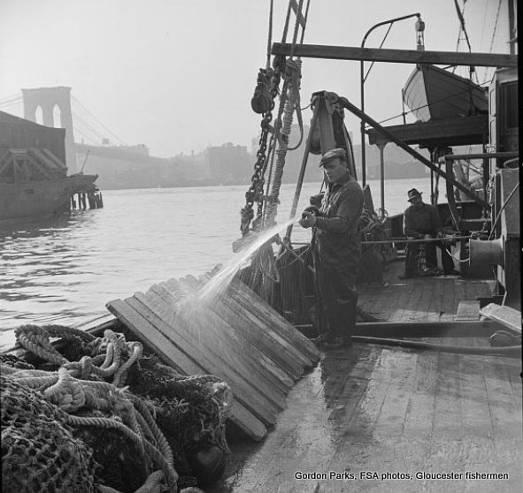
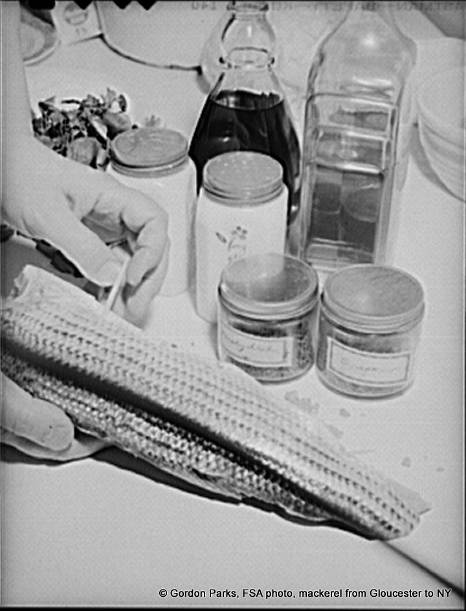
| You can see GordonParks the photo journalist and author through the captions he wrote. For the Gloucester FSA/OWI photos there is a complete photo-journalism expose where he tracks a journey from sea to plate that begins in Gloucester and ends up in New York. The collaboration of GMG Gloucester photographers Kathy Chapman and Marty Luster Fish on Fridays series is such an interesting connection.
|
| “The mackerel caught off the Gloucester coast ends up on the table of Mrs. Rose Carrendeno, NYC, for Friday’s supper. She prepared and served the fish that she bought earlier that day from Joseph DeMartino’s shop who buys his fish each morning from the Fulton Fish Market. She and her husband have three sons in the armed forces…She stops to chat with Mrs. DeMartino about the ration problems while Joseph DeMartino cleans the mackerel she has purchased.
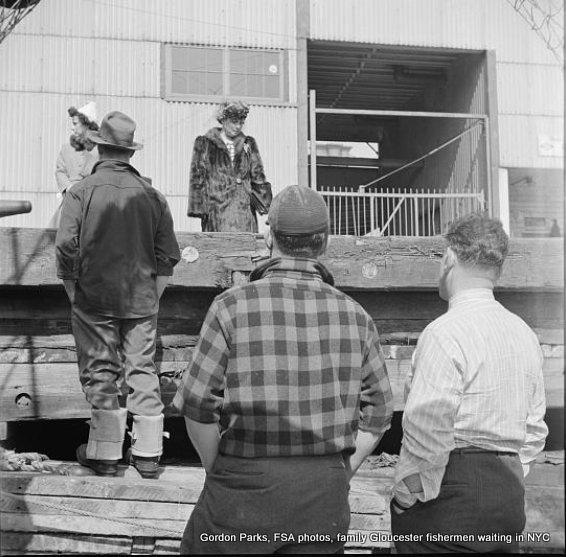
“Fishermen’s families often make trips down from New England towns to be in New York when the ship arrives. The fishermen consider that nothing is too good for their families.” |
 |
 |
 |
 |
 |
 |
 |
| Close up of Mrs. Carrendeno’s ingredients for FOB
|
| What is the FSA/OWI collection?
President Franklin Delano Roosevelt selected a social economist from ColumbiaUniversity, Rexford Tugwell, as Undersecretary of Agriculture in 1934. One of Tugwell’s policy directives included new analysis of assistance for dislocated farmers. He enticed a protégé, economist Roy E. Stryker, to come with him toWashington to direct the Resettlement Administration’s Historical Section. Stryker was the perfect hire, and successfully eked out the program from 1935-1942. He believed photography would be the key tool. At Columbia, he was a master at amassing visuals and presentations to illustrate economic topics. While a Professor, he insisted his students get out and survey what’s around them, walk “the field”, “see.” The FSA/OWI photographers documented daily life, the effects of the Depression and WWII across the country, the problems our country was facing, Main Streets, landmarks, portraits, workers, communities and families. There is great range of intention, style, subject and theme across the collection. Some of the FSA/OWI photographs received nearly instantaneous and phenomenal fame. The reputation of this work was so respected, so known, that employment in this program would later open doors to grants and commercial jobs, and for several artists, launched long illustrious careers. Stryker promoted and protected these artists and the work as the best art dealers do: fleshing out projects, orchestrating exhibits, doggedly getting their work out there to be seen, and placing it in print– whether for church pamphlets or major media publications, or into galleries and collections. When he moved back to the private sector, he hired them. Unlike the art created for some other WPA-era agencies that was lost or destroyed, Stryker and his team had the foresight to try to protect all of it for perpetuity. At the closure of this program, he sought approval from President Roosevelt to transfer the master collection to the Library of Congress (nearly 280,000 items) as part of our National Archives, which was granted. Throughout the program he shipped boxes of prints to the New York Public Library (41,000 items) so that there would be an additional repository if a safe haven in Washington, DC, did not come together. As a result there have been two outstanding collections to study and access. (Other collections and institutions have smaller holdings of vintage prints.) The Library of Congress remains the primary source for use and research. Through the 1950s, one could check out vintage prints along with books at the NYPL. As with many collections, the same images were often requested over and over. The Library of Congress digitized their FSA/OWI collection in the late 1980s and has been deeply committed to ongoing technological updates. In 2005 the NYPL determined that 1000 photos in their collection were actually “new” discoveries; they put these on line in 2012. There are over 270,000 items in the Library of Congress Farm Security Administration/Office of War Information (FSA/OWI) archives, all digitized. IF you haven’t seen these images in person, look for exhibitions of the true vintage prints. There are many iconic photographs. Some capture a gap between ideals and reality. They have been studied, published and featured many times over. As the Gloucester images show, the collection is not solely images of farmers, rural problems, and Western states. -Catherine Ryan / – all photos Library of Congress, FSA/OWI black and white photography collection |
| To search Gordon Parks FSA/OWI photographs for Gloucester, type in key words
Fishermen on the ALDEN
Gordon Pew Fisheries worker, Joseph Lopez and his family
Search for Gloucester landmarks. There are two or three photos in Rockport: the Pewter Shop and the owner Mrs. Whitney |
 |

Today I did. Dramatically and immediately. My neck and chest are still covered in red itchy hives. I had run out of our usual Ecover detergent and grabbed an old bottle of Dawn that was shoved deep in the far recesses of the kitchen cupboard. The reason we purchase the eco friendly soap is because the smell alone of most super market dish soaps gives me a terrible headache. I only needed to wash several dusty vases and hadn’t yet gone to the store this morning. I thought, what the heck, I could stand the sickly sweet odor of Dawn for a few vases. Within three minutes of washing the vases, I felt as though millions of itchy pins and needles were piercing my chest, neck, ears, and face–all areas that had been exposed to the steamy suds.
I jumped in the shower, which only helped a bit and have been putting ice on intermittently. After googling, this is what I have learned about Proctor and Gamble’s Dawn, which is one of the most toxic household products in our homes. Dawn contains Quaternium-15, which is a formaldehyde releaser*, and may cause severe dermatitis. Quaternium-15 can break down in the bottle or on the skin to release formaldehyde and its carcinogenicity is broadly accepted.
Dawn’s antibacterial dish soap label deceptively features baby seals and ducklings and the words, “1 Bottle = $1 Dollar to Save Wildlife.” Dawn donates soap to help clean up animals after oil spills, but the product itself contains the ingredient Triclosan, which is an antibacterial agent known to be harmful to animals. Triclosan has been officially declared to be toxic to aquatic life.
Have you had an allergic reaction to Dawn, or any hand dish washing soap for that matter? Please write and share your experiences with household cleaners. Thank you!
Environmental Working Group’s Hall of Shame
*Note: A formaldehyde releaser is a chemical compound that slowly releases formaldehyde.








 Good Morning Gloucester