Documentary filmmaker, photographer, landscape designer, author, and illustrator. "Beauty on the Wing: Life Story of the Monarch Butterfly" currently airing on PBS. Current film projects include Piping Plovers, Gloucester's Feast of St. Joseph, and Saint Peter's Fiesta. Visit my websites for more information about film and design projects at kimsmithdesigns.com, monarchbutterflyfilm.com, and pipingploverproject.org. Author/illustrator "Oh Garden of Fresh Possibilities! Notes from a Gloucester Garden."
View all posts by Kimsmithdesigns
Earlier that day that it died, I saw 4 of them stalking the birds in that exact spot. When I came home that evening, I saw it on the ice…such a shame…they keep the rat and other rodent populations in check. I am hoping someone didn’t shoot it. I do know the new wildlife guy was asking around about it.
Coyotes die of the same mishaps that befall other canids and wild species. I hope no one took it upon themselves to harm it. Coyotes are best left alone. In Western states, bounties were often paid for killing them, but it did little to reduce their overall numbers. Coyotes seem to have a built in system to maintain their population. Personally, I love hearing the “song dogs” calling to each other. I just yake necessary precautions to protect my domestic animals and go about my biz. http://www.mspca.org/programs/wildlife-resources/species-information/coyote/co-existing-with-coyotes.html
Well said I grew up around them out after moving from mass…They have moved more into city as the city moved into there original turf. It does seem when we mess with natural balance things can go out of whack…They would have to perform an autopsy to find the Cause of Death (COD) if no obvious wounds. I remember when there were not so many unless you went more rural and I did run into them while irrigating fields along ditches but they were quick to take off then. Ran into skunks too and when they stopped in leaned forward give them wide distance – even far away get a whiff phew!!! Our dogs found them the hard way and tomato baths… Here is some more as FYI:
Food Web:
Coyotes belong to the order of carnivores (meat eaters) but a much better description of their eating habits would be omnivore because they can eat anything. They eat plants, including fruits, seeds, nuts, cones, leaves and insects They eat other animals, including rabbits, birds, rodents and carrion . When food is scarce, coyotes may turn to domestic animals as a source of prey and go after chickens, turkeys, weak cattle or anything else they can catch. Coyotes have even eaten leather boots when they are hungry enough! Coyote diets vary with their habitat because they are very clever and resourceful and can make the best of whatever food sources are available.
Behavior:
Coyotes are extremely adaptable and resourceful animals. This is shown in their social structures. Some coyotes are loners and live alone or with their mates. Sometimes coyotes form packs similar to wolf packs. Food supply seems to be a major factor in determining social organization for coyotes. Often packs will gather around a dead deer or elk. Coyotes generally function at night (are nocturnal), though they are sometimes spotted during the day. They can run at speeds up to 40 m/hr and are good jumpers, but they can not climb very well. Surprisingly coyotes are very good swimmers!
Coyotes have many methods of communication. They use vocal signals which include squeaks, howls and distress calls. Coyotes use some visual signals, even though their eyesight is not very good. Coyotes share many social signals with other animals from the family canidae. They will scent-mark their territories and boundaries by urinating or defecating on stumps, bushes or rocks. Coyotes also use tactile (touching) signals and tactile contact may be important for forming social bonds.
Conservation:
Coyotes have a reputation as “tricksters” or “jokers” because of their determination and clever ways of surviving nearly anywhere. They may sometimes be victims of their own success and have often been hunted, trapped and poisoned as “pests” because they may attack livestock and domestic animals. In New Mexico coyotes are not considered game animals and are afforded limited protection. They are not classified as endangered, but measures are taken in some areas to protect coyotes and their habitat.
We saw this one last winter and wondered, too, what happened. That afternoon, its packmates seemed to not want to leave it as they circled around, sat down, started off and then returned. The mass of pawprints in the video tell that story. Touching,
I wonder, now, if it was ever removed or if the pond became its grave.
The coyote lay dead on the pond for over a month. Its mate remained close by the entire time. They do not eat their own as Ive been told. I called gloucester pd, eastern pt security, audobon, fisn n game, etc. She fell through the ice a couple weeks ago. Living so close to the coyotes all winter I realized they are not aggressive or out to hurt people, even when starving as they were this winter. Leave them alone and they leave you alone. They are clever opportunists. Keep your pets close to you and they will not bother you. They will lure and go after even large size dogs if the dogs are off leash. I watched them hunt a large sized lab that was chasing them. The lab fought back and the pack of five coyotes walked away. One other thing I noticed is they were not interested in eating the adult ducks. They walked right by them daily. They seem to like seagulls though. Nature can seem cruel at times. We need to live in harmony with all beings. Peace.
Coyotes are adaptive creatures, that is why they are doing so well. Do not imagine that just because they left you and your pet alone today, they will do so tomorrow or next year. They constantly test their environment. I agree with leaving them alone until they start taking pets and other domestic animals – at that time it would best to be rid of them. Just to bust a few myths – they are not indigenous to Cape Ann or Massachusetts. They are an invasive species. They have and are displacing the native Red Fox population. They are less effective at controlling rodents then a red fox would be in the same area. Some scientists believe the increase in lyme disease and ticks is due to the displacement of the red fox which bumped up the rodent population. Ticks – especially deer ticks spend part of their life cycle on rodents. More rodents equal ticks.
While I think coyotes are beautiful creatures and enjoy seeing them I would prefer to see our native red fox population.
Thanks so much to everyone who has written to share their opinions.
Arunas, your myth busting is right on target and I appreciate your taking the time to write.
Reading about and reporting on the coyotes that are living in our midst over the past several years I have learned nearly as much about about human nature as I have about coyotes. Despite facts and historical evidence to the contrary, people simply believe what they want to believe.
Coexistence is the answer. Chris Shadler gave an educational, eye opening and thorough lecture at the Manchester Essex Conservation Trust meeting last year. I recommend her as the go-to person for coyote FAQs. http://www.projectcoyote.org/contact.html
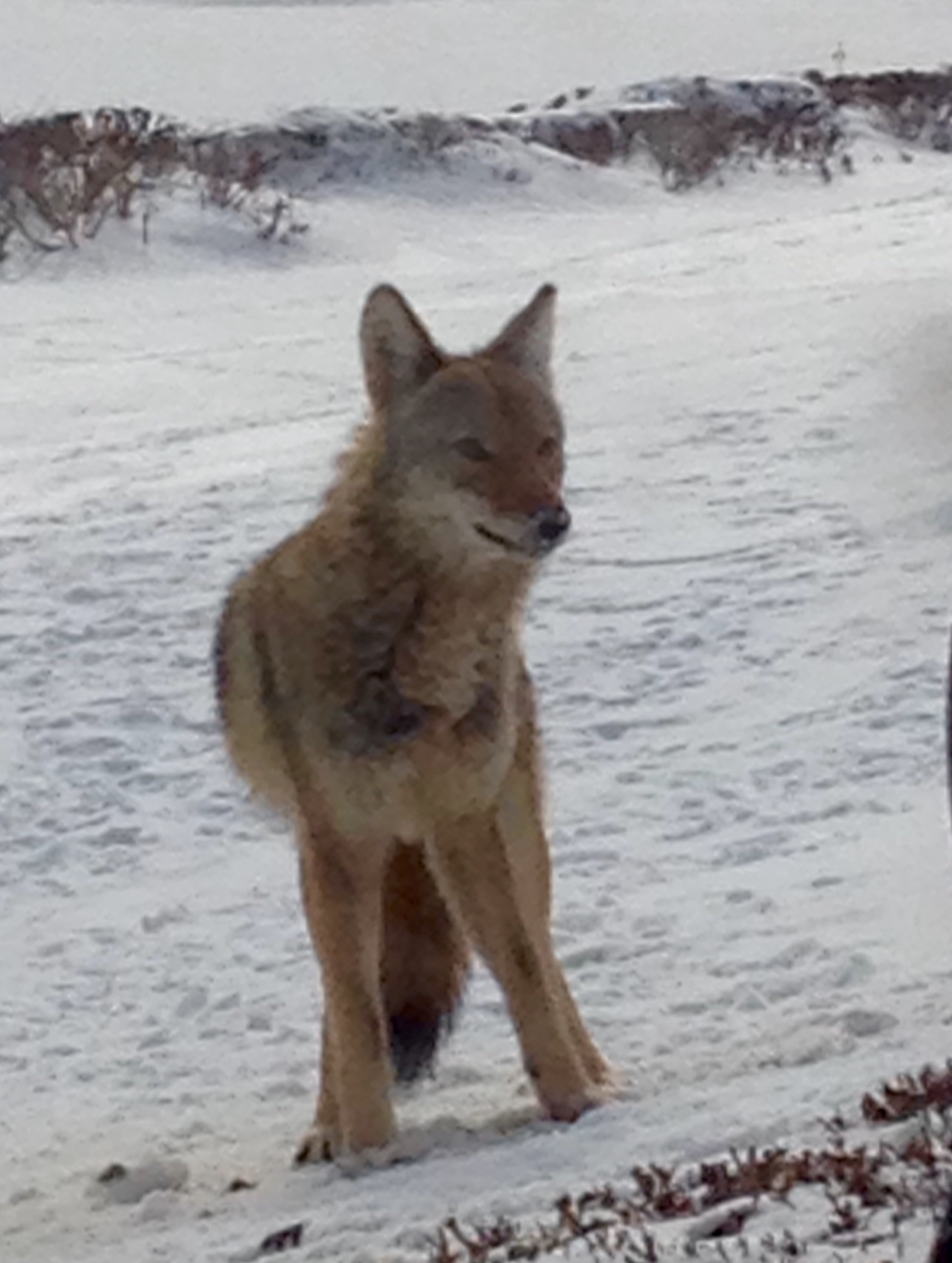
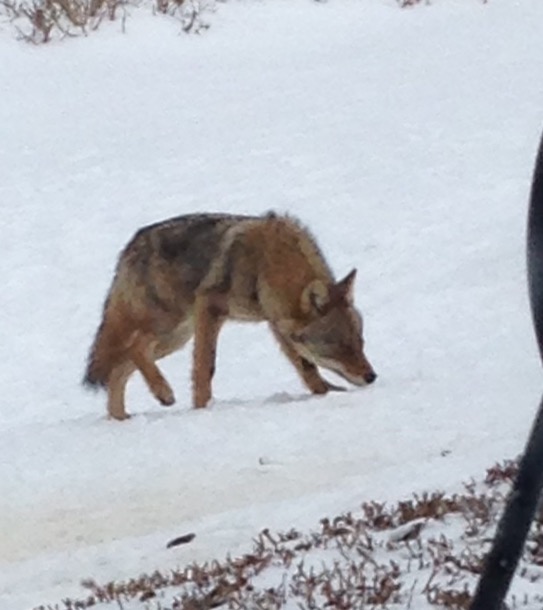
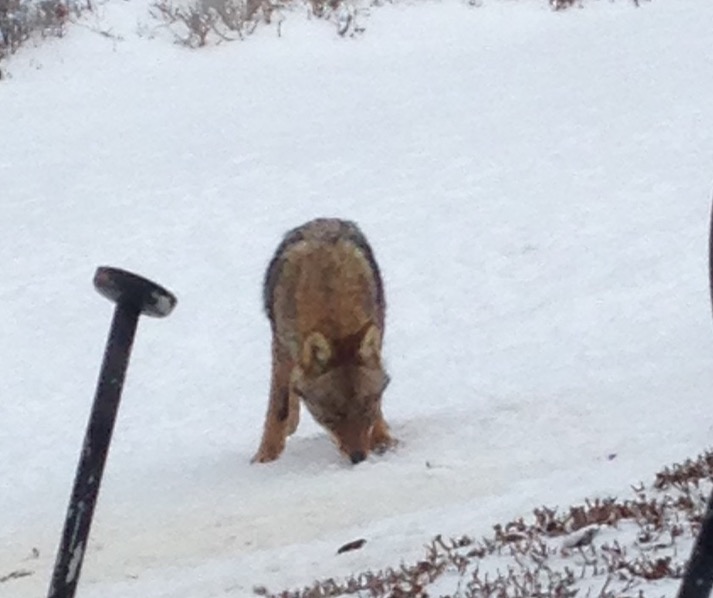 Coyote Eastern Point Gloucester

 Good Morning Gloucester
Nasty looking things!!
LikeLike
How so?
LikeLike
Did anyone find out how the coyote died?
LikeLike
I hope no one poisoned it. The Fish and Game people might do an autopsy if they were called. A shame, it looks healthy.
LikeLiked by 1 person
Earlier that day that it died, I saw 4 of them stalking the birds in that exact spot. When I came home that evening, I saw it on the ice…such a shame…they keep the rat and other rodent populations in check. I am hoping someone didn’t shoot it. I do know the new wildlife guy was asking around about it.
LikeLiked by 1 person
As soon as anyone finds out, can their be an update? Something seems odd about a coyote just laying dead.
LikeLiked by 1 person
Coyotes die of the same mishaps that befall other canids and wild species. I hope no one took it upon themselves to harm it. Coyotes are best left alone. In Western states, bounties were often paid for killing them, but it did little to reduce their overall numbers. Coyotes seem to have a built in system to maintain their population. Personally, I love hearing the “song dogs” calling to each other. I just yake necessary precautions to protect my domestic animals and go about my biz.
http://www.mspca.org/programs/wildlife-resources/species-information/coyote/co-existing-with-coyotes.html
LikeLiked by 1 person
Well said I grew up around them out after moving from mass…They have moved more into city as the city moved into there original turf. It does seem when we mess with natural balance things can go out of whack…They would have to perform an autopsy to find the Cause of Death (COD) if no obvious wounds. I remember when there were not so many unless you went more rural and I did run into them while irrigating fields along ditches but they were quick to take off then. Ran into skunks too and when they stopped in leaned forward give them wide distance – even far away get a whiff phew!!! Our dogs found them the hard way and tomato baths… Here is some more as FYI:
http://www.caveslime.org/kids/cavejourney/SpeciesAccounts/Coyotes.html
Food Web:
Coyotes belong to the order of carnivores (meat eaters) but a much better description of their eating habits would be omnivore because they can eat anything. They eat plants, including fruits, seeds, nuts, cones, leaves and insects They eat other animals, including rabbits, birds, rodents and carrion . When food is scarce, coyotes may turn to domestic animals as a source of prey and go after chickens, turkeys, weak cattle or anything else they can catch. Coyotes have even eaten leather boots when they are hungry enough! Coyote diets vary with their habitat because they are very clever and resourceful and can make the best of whatever food sources are available.
Behavior:
Coyotes are extremely adaptable and resourceful animals. This is shown in their social structures. Some coyotes are loners and live alone or with their mates. Sometimes coyotes form packs similar to wolf packs. Food supply seems to be a major factor in determining social organization for coyotes. Often packs will gather around a dead deer or elk. Coyotes generally function at night (are nocturnal), though they are sometimes spotted during the day. They can run at speeds up to 40 m/hr and are good jumpers, but they can not climb very well. Surprisingly coyotes are very good swimmers!
Coyotes have many methods of communication. They use vocal signals which include squeaks, howls and distress calls. Coyotes use some visual signals, even though their eyesight is not very good. Coyotes share many social signals with other animals from the family canidae. They will scent-mark their territories and boundaries by urinating or defecating on stumps, bushes or rocks. Coyotes also use tactile (touching) signals and tactile contact may be important for forming social bonds.
Conservation:
Coyotes have a reputation as “tricksters” or “jokers” because of their determination and clever ways of surviving nearly anywhere. They may sometimes be victims of their own success and have often been hunted, trapped and poisoned as “pests” because they may attack livestock and domestic animals. In New Mexico coyotes are not considered game animals and are afforded limited protection. They are not classified as endangered, but measures are taken in some areas to protect coyotes and their habitat.
LikeLiked by 1 person
We saw this one last winter and wondered, too, what happened. That afternoon, its packmates seemed to not want to leave it as they circled around, sat down, started off and then returned. The mass of pawprints in the video tell that story. Touching,
I wonder, now, if it was ever removed or if the pond became its grave.
LikeLiked by 1 person
The coyote lay dead on the pond for over a month. Its mate remained close by the entire time. They do not eat their own as Ive been told. I called gloucester pd, eastern pt security, audobon, fisn n game, etc. She fell through the ice a couple weeks ago. Living so close to the coyotes all winter I realized they are not aggressive or out to hurt people, even when starving as they were this winter. Leave them alone and they leave you alone. They are clever opportunists. Keep your pets close to you and they will not bother you. They will lure and go after even large size dogs if the dogs are off leash. I watched them hunt a large sized lab that was chasing them. The lab fought back and the pack of five coyotes walked away. One other thing I noticed is they were not interested in eating the adult ducks. They walked right by them daily. They seem to like seagulls though. Nature can seem cruel at times. We need to live in harmony with all beings. Peace.
LikeLiked by 1 person
Coyotes are adaptive creatures, that is why they are doing so well. Do not imagine that just because they left you and your pet alone today, they will do so tomorrow or next year. They constantly test their environment. I agree with leaving them alone until they start taking pets and other domestic animals – at that time it would best to be rid of them. Just to bust a few myths – they are not indigenous to Cape Ann or Massachusetts. They are an invasive species. They have and are displacing the native Red Fox population. They are less effective at controlling rodents then a red fox would be in the same area. Some scientists believe the increase in lyme disease and ticks is due to the displacement of the red fox which bumped up the rodent population. Ticks – especially deer ticks spend part of their life cycle on rodents. More rodents equal ticks.
While I think coyotes are beautiful creatures and enjoy seeing them I would prefer to see our native red fox population.
LikeLiked by 1 person
Thanks so much to everyone who has written to share their opinions.
Arunas, your myth busting is right on target and I appreciate your taking the time to write.
Reading about and reporting on the coyotes that are living in our midst over the past several years I have learned nearly as much about about human nature as I have about coyotes. Despite facts and historical evidence to the contrary, people simply believe what they want to believe.
LikeLike
Coexistence is the answer. Chris Shadler gave an educational, eye opening and thorough lecture at the Manchester Essex Conservation Trust meeting last year. I recommend her as the go-to person for coyote FAQs.
http://www.projectcoyote.org/contact.html
LikeLike