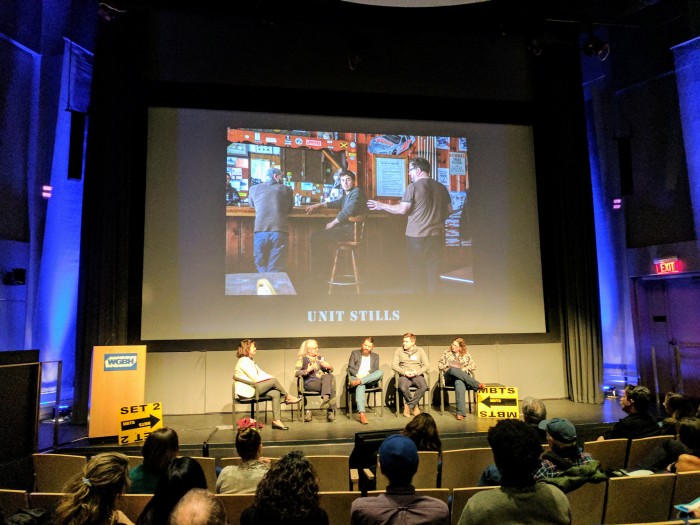
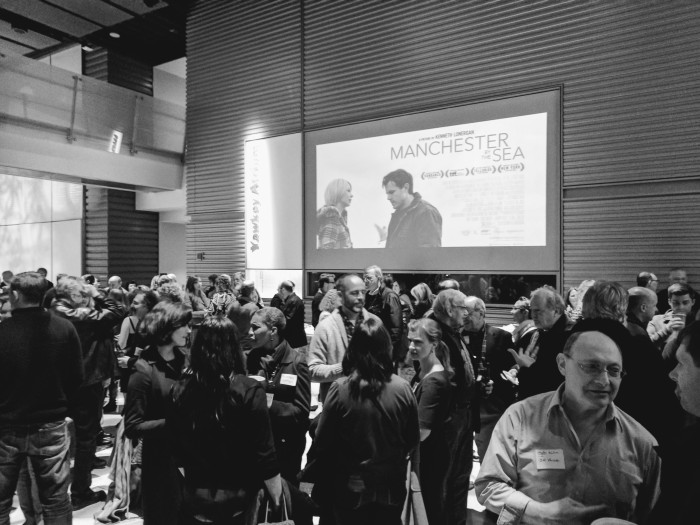
Talk about timing! The topics for the fascinating Massachusetts Production Coalition (MPC) event held at WGBH were planned in advance of any Academy Awards results. After a season of many accolades including the prior evening’s Oscars news, boy did that generate buzz. Conversations sparked with local names, industry folks, businesses and locales such as: Willow Rest, Pratty’s, local film folks, Gloucester Stage, Kenneth Lonergan, local police, Rt 128, and the Cape Ann Chamber of Commerce.
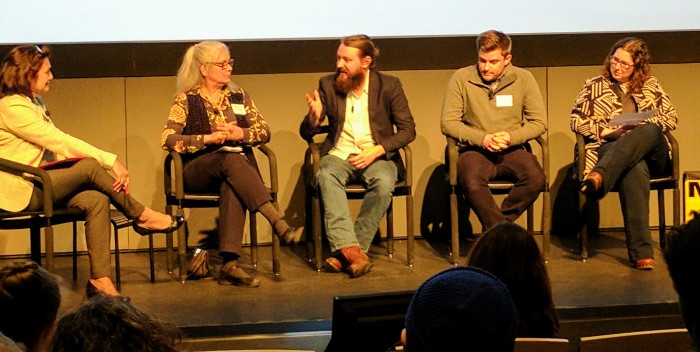
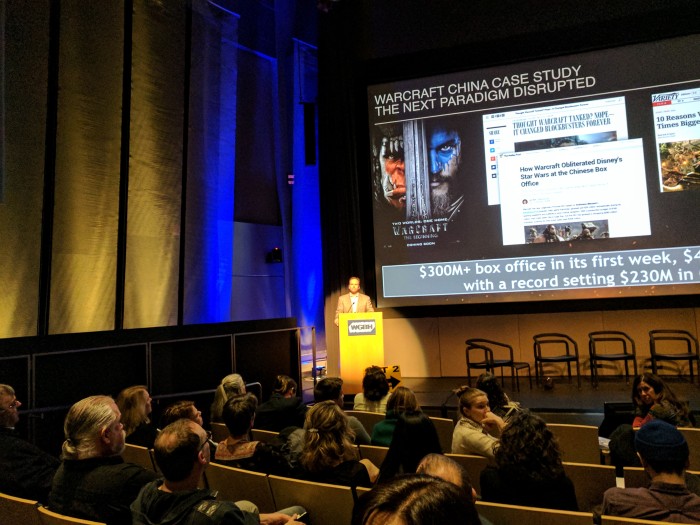
The two featured presentations were Legendary Entertainment’s Matt Marolda on analytics in film, followed by a Meg Montagnino-Jarrett led panel discussion on the making of Manchester by the Sea.
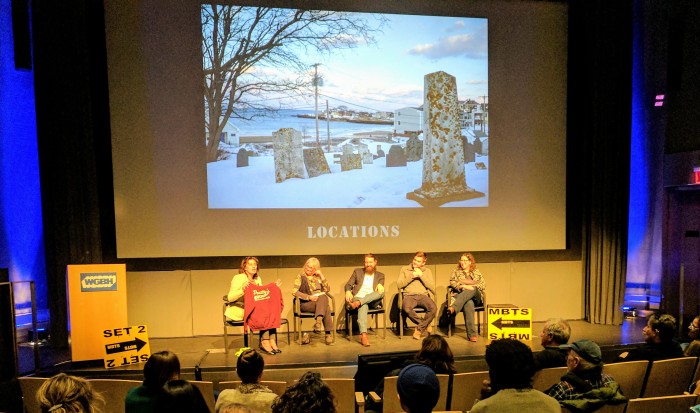
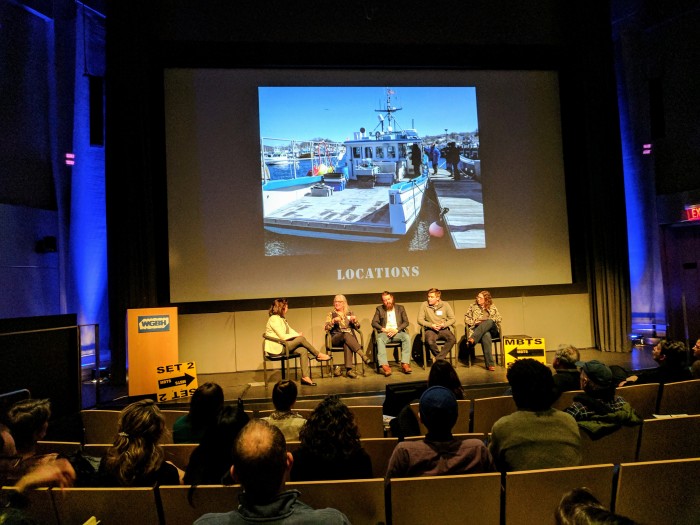
Manchester by the Sea behind the scenes panel discussion led by Meg Montagnino Jarrett, MPC winter event 2017 at WGBH. Projected photograph illustrates jobs on the movie such as the Unit Stills photographer on Manchester by the Sea, Claire FolgerMassachusetts Production Coalition reception at WGBHwardrobe Manchester by the Sea – requests for Pratty’s t-shirts
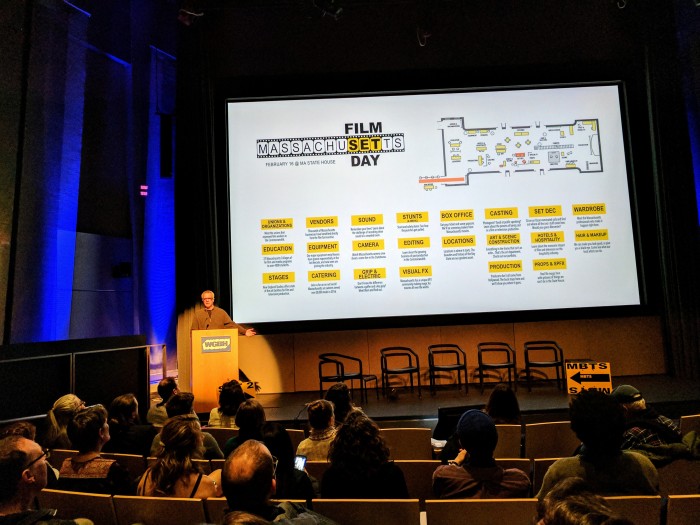
L-R: Meg Montagnino-Jarrett (Film Liaison Cape Ann) facilitated panel: Carolyn Pickman (casting director), Alex Berard (Location Manager) and Kai Quinlan (not pictured/ also Location manager), Ryan Johnson(Lead Man), Joanna Murphy (Asst Costume Designer), Joe Boreland (not pictured)Matthew Marolda, Legendary Entertainment, presentation at MPC winter 2017 event WGBH BostonMatthew Marolda from Legendary Entertainment, featured presentation on film and analytics at 2017 MPC winter event held at WGBHChris O’Donnell MPC update (slide shows Massachusetts Film Set Day at the State House in the Hall of Flags (brought the local movies production jobs to the statehouse)
What an opportunity to learn from someone in the top of the field! Tuesdays with Anna Vojtech begin March 28th (new dates announced) March 14th and continues weekly through May 2.
AnnaVojtech is a fine artist and an award winning children’s book illustrator and writer living in Gloucester. She grew up in Prague, Czechoslovakia, what is now the Czech Republic. She studied art and film animation at the Art Academy in Prague, in Antwerp, Belgium, and in Hamburg, Germany.
In 1971 Anna moved with her husband to Canada where she worked at the National Filmboard and for various film companies in Montreal. Her work in film animation led her to children’s book illustration.
Since 1979 Anna has worked with major publishing houses (“The First Strawberries” by Joseph Bruchac, Dial/Penguin, “Tough Beginnings” by Marylin Singer, Henry Holt & Co, “Over in the Meadow” by Olive Wadsworth, North-South Books (now Simon & Schuster), “Ten Flashing Fireflies” by Philemon Sturges, and many others).
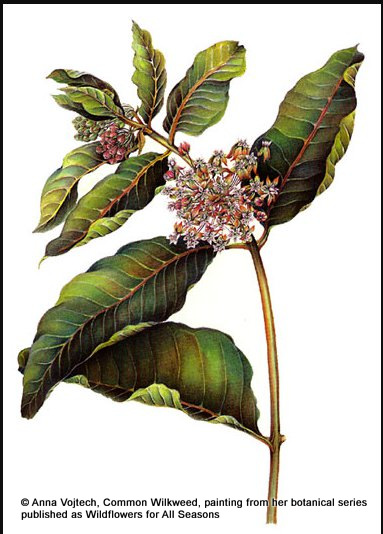
She became also known for her stunning botanical paintings, published by Crown Publishers as “Wild Flowers for All Seasons”.
For the last 18 years Anna has been living with her family in Gloucester, painting and illustrating in her Cripple Cove Studio. She is happy to live on Cape Ann and to share her life and art with the community.
Spread The GMG Love By Sharing With These Buttons:
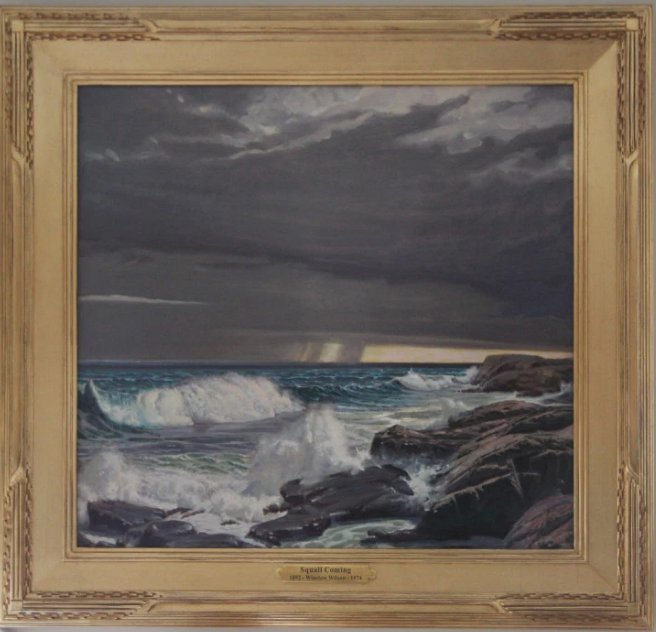
Granddaughter Claudia Wilson-Howard writes Good Morning Gloucester seeking any information, biographical “tidbits”, or recollections about fine artist Winslow Wilson who resided in Gloucester and had studios in Gloucester and Rockport ca. 1946-1972.She is working on an excellent project: a digital resource about her grandfather.
“I am the granddaughter of Winslow Wilson,” she writes, “an artist who spent most of his life on Cape Ann, painting under two names in two studios. One studio, in Gloucester, the second in Rockport, and a member of the Rockport Art Association from 1946-1972, he was an active member of the art community. I have developed a website (www.winslowwilson.com), which is a work in progress. I am attempting to develop as detailed a biography as possible, and was hoping …to reach out to the community to help gather any tidbit of information. Thank you very much!”
Arthur William “Winslow” “Tex” Wilson, also known as Pico Miran was an American artist–primarily a painter– born on July 20, 1892 in Brady, Texas. His family moved to Junction, TX, where he graduated from high school, also the address he used while attending Harvard. Wilson was a veteran of the First World War (National Guard, AEF) deployed to France 1918-1919. He died November 18, 1974 in Miami, FLA.
At Harvard
Wilson transferred from Texas A&M University to Harvard. Roy Follett his professor at Texas A&M described Wilson’s impact on him as “atomic”, possessed with a creative intellect that surpassed the teacher’s. And then the unthinkable…
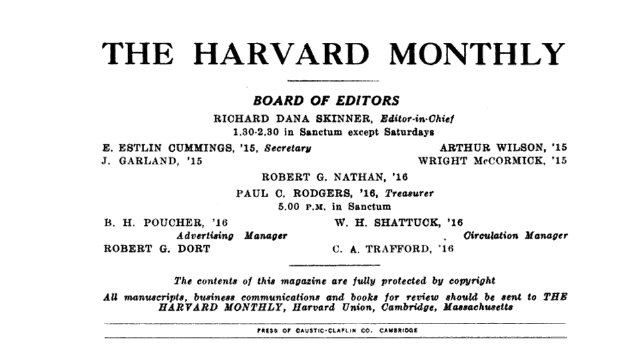
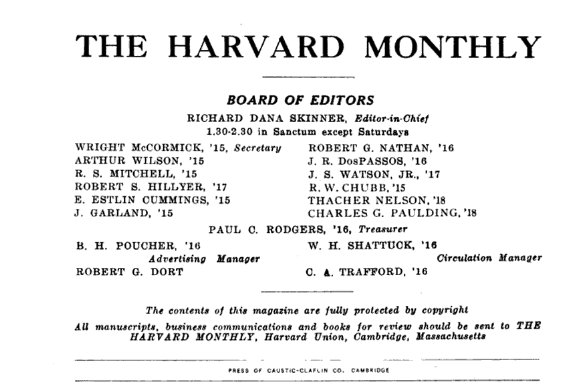
For Wilson, life changed punishingly July 4, 1912 as he accidentally and horrifically killed his fellow undergrad, a friend and co-worker Merle DeWitt Britten on the job, driving the streetcar that crushed him. Wilson left Harvard, then came back. He skipped classes. At times he soared. He was a writer and editor of The Harvard Monthly literary magazine with an impressive group of multi talented peers and friends: ee cummings; John Dos Passos; critic Gilbert Seldes; poet (Pulitzer prize winner) Robert Hillyer; poet (later Director MA Historical Society) R. Stewart Mitchell; Scofield Thayer*; and James Sibley Watson*.
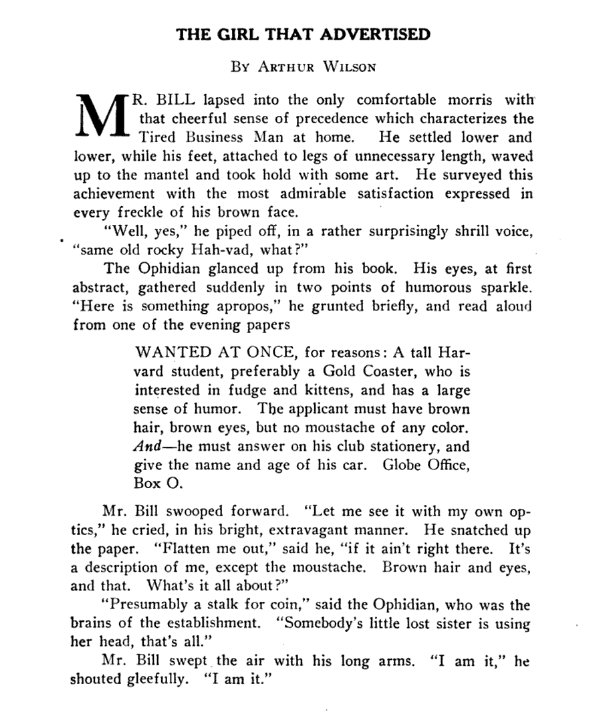
images: Arthur Wilson undergraduate writing published in The Harvard Montly
The Harvard Monthly was founded in 1885 and ceased publication in 1917, its aim “to publish the best (undergraduate) articles, fiction and verse by students in the University.” The words “and verse” were added after E.E. Cummings gave their class commencement speech in 1915 on “The New Art” extolling contemporary expressions in music, the visual arts, and literature. “What really brought down the house was Gertrude Stein’s Tender Buttons,” he’d later say about this bit in the speech:
“unquestionably a proof of great imagination on the part of the authoress, as anyone who tries to imitate her work will discover for himself. Here we see traces of realism, similar to those which made the “Nude Descending a Staircase” so baffling. As far as these “Tender Buttons” are concerned, the sum and substance of criticism is impossible. The unparalleled familiarity of the medium precludes its use for the purpose of aesthetic effect. And here, in their logical conclusion, impressionistic tendencies are reduced to absurdity. The question now arises, how much of all this is really Art? The answer is: we do not know. The great men of the future will most certainly profit by the experimentation of the present period. An insight into the unbroken chain of artistic development during the last half century disproves the theory that modernism is without foundation; rather we are concerned with a natural unfolding of sound tendencies. That the conclusion is, in a particular case, absurdity, does not in any way impair the value of the experiment, so long as we are dealing with sincere effort. The New Art, maligned though it may be by fakirs and fanatics, will appear in its essential spirit to the unprejudiced critic as a courageous and genuine exploration of untrodden ways…how much of all this is really Art? The answer is: we do not know. The great men of the future will most certainly profit by the experimentation of the present period.” – ee cummings 1915
ee cummings portrait of Thayer, printed in the Dial
*The Dial was founded by James Sibley Watson and Scofield Thayer. Emily Sibley Watson, Founder of Memorial Art Gallery in Rochester was friends with Marianne Moore
1917 NYC apartment with Cummings
Wilson and e.e. cummings (1884-1962) were roommates at Harvard, friends who hit the town. (There’s one story with them caught at a prostitute’s apartment.) They remained friends enough to room together more and carouse Greenwich Village. Thanks to $1000 from Thayer, Cummings joined Wilson in New York at 21 East 15th Street in 1917.
There are striking parallels, comparisons, and secrets in the lives they led. Both men were artists and writers that had tragic and shattering life experiences, and estranged and scandalous family stories.
According to Virginia Spencer Carr‘s 1984 biography of John Dos Passos, Dos Passos envied these two: “Wilson was already signing his paintings (when he signed them at all) “Winslow Wilson” and Dos Passos surmised (when?) that he would be recognized eventually for his stunning portraits and seascapes. He was convinced that Cummings was too assured a reputation as a painter and saw Dudley Poore as the best poet of the lot from Harvard who aspired to a career in letters.”
All three enlisted in WW1. Cummings signed up for the volunteer ambulance corp along with Harvard chums Hillyer and Dos Passos. Cummings ended up a POW and wrote a novel about the experience, The Enormous Room. Cummings said he was a self-taught painter, helped along by friends from Harvard. Did he sign up for classes in New York? Where did Wilson study art in New York before WW1?
(Incidentally, Gertrude Stein was also a volunteer camion; it seems like a ‘who wasn’t?’ roster. The majority of the 3500+ drivers came from ivy league schools, especially Harvard. The American Field Service (AFS) ambulance unit grew to be the largest and was founded by Gloucester’s own A. Piatt Andrew in 1915, after helping out the year before.)
1920s
After the War, Wilson was in New York and abroad in Paris, and London (infamously). There was a blink of a marriage and divorce from Elizabeth Brice, and a daughter Caroline, a dancer, that he never saw again. At 34, Wilson and his 19 year old girlfriend Winifred Brown abandoned a baby. It was an international scandal. Wilson’s family stepped up and his brother Ernest raised the boy as his own. It was four decades before the baby learned about his biological parents. I know these wincing details because that boy, H Robert Wilson, is a good writer and did the research.
Arthur Wilson signed his paintings as “Winslow” Wilson, which fits as a wink at Homer. Seascapes as a subject. Private solitary life. It also works as a visual swapping out of “Tex” for East Coast “Winslow”. The initials become double letters (like e.e. cummings), and nearly a double name, minus one letter and there’s an anagram of Wilson. It’s even a way to differentiate his name ‘Arthur Wilson’ from other artists and writers with the same name(s), initials (AW or the comic Aww), and friends. Winslow Wilson is decidedly not Edmund Wilson (though like many writers he credits “nearly everything” about his sources of style as a painter to him), artist Edward Arthur Wilson, artist Arthur Wilson (UK), artist Arthur Wilson (LA), artist Edward Adrian Wilson, to name a few.
Mostly, Wilson using “Winslow” seems a deliberate break from his traumatic past: living with the death of his friend, letting his family down, fighting in WW1, divorce, scandal, family secrets, and that difficult ee cummings portrait poem about him.
ca. 1922 ee cummings poem ‘Arthur Wilson’
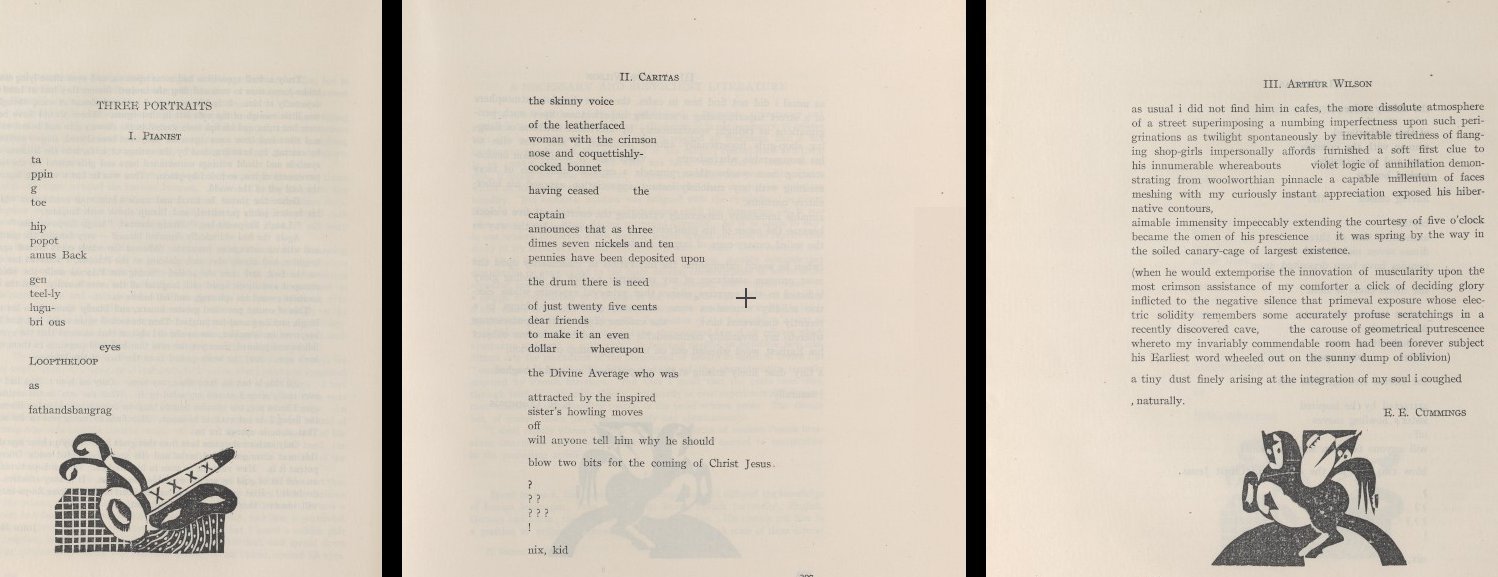
E.E. Cummings poem “Three Portraits” (I. Pianist II. Caritas III. Arthur Wilson) is published in the modernist magazine the Broom: An International Magazine of the Arts, Volume 2, Number 4, July 1922. Founded and backed not nearly enough by Harold Loeb and Alfred Kreymborg, the Broompublication was a short lived (1921-24) modernist monthly featuring “unknown, path-breaking” writers and artists (reproductions, original designs, translations). The cummings poem ‘Arthur Wilson’ was illustrated with woodcuts by Ladislaw Medgyes. The issue’s cover design was by Fernard Leger;
Cover design by Fernard Leger, Broom, Volume 2 No. 4, July 1922
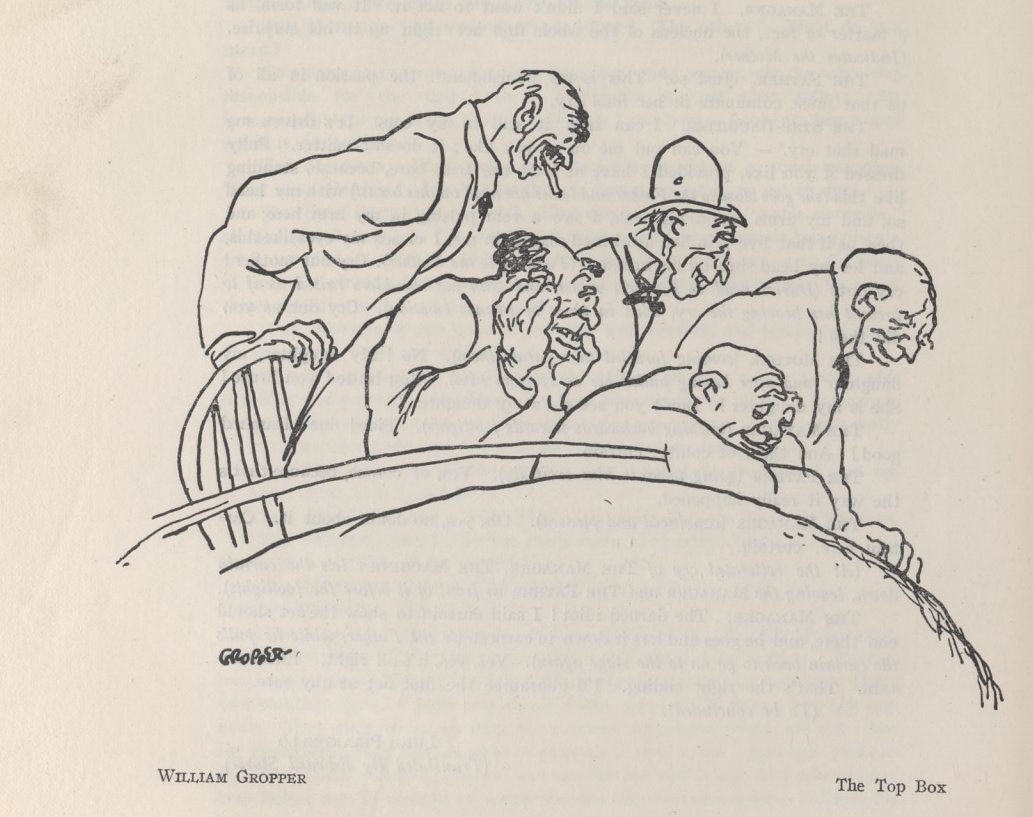
Picasso, Modigliani and William Gropper drawings were reproduced inside.
The text for III. Arthur Wilson follows (refer to the image for the visual spatial break in cummings prose).
III. Arthur Wilson as usual i did not find him in cafes, the more dissolute atmosphere of a street superimposing a numbing imperfectness upon such peri- grinations as twilight spontaneously by inevitable tiredness of flang- ing shop-girls impersonally affords furnished a soft first clue to his innumerable whereabouts violet logic of annihilation demon- strating from woolworthian pinnacle a capable millenium of faces meshing with my curiously instant appreciation exposed his hiber- native contours, aimable immensity impeccably extending the courtesy of five o’clock became the omen of his prescience it was spring by the way in the soiled canary-cage of largest existence.
(when he would extemporise the innovation of muscularity upon the most crimson assistance of my comforter a click of deciding glory inflicted to the negative silence that primeval exposure whose elec- tric solidity remembers some accurately profuse scratchings in a recently discovered cave, the carouse of geometrical putrescence whereto my invariably commendable room had been forever subject his Earliest word wheeled out on the sunny dump of oblivion)
a tiny dust finely arising at the integration of my soul i coughed
, naturally. -E.E. Cummings
Like The Harvard Monthly and The Dial, Broom contributors were or would become recognized luminaries: Sherwood Anderson, Guillaume Apollinaire, Hans Arp, Conrad Aiken, Kenneth Burke, Robert M Coates, Jean Cocteau, Malcolm Cowley, Hart Crane, Adolph Dehn, Andre Derain, Raoul Dufy, Paul Eldridge, T S Eliot, Wanda Gag, Robert Graves, Juan Gris, William Gropper, George Grosz, Rockwell Kent, Paul Klee, Fernand Leger, Lipchitz, El Lissitzky, Amy Lowell, Louis Lozowick, Marianne Moore, Henri Matisse, Amedeo Mondigliani, Laszlo Moholy-Nagy, Pablo Picasso, Man Ray, ‘Charles Sheeler, Gertrude Stein, Joseph Stella, Wallace Stevens, Paul Strand, Max Weber, William Carlos Williams, and Virginia Woolf among other artists and writers.
It was a small world and circle. The Broom contributors likely read that ee cummings poem about Wilson, and several knew both men. Names carried over from the Harvard-Dial network (Amy Lowell, Marianne Moore).
EE Cummings published Part III in later editions by the title “as usual I did not find him in cafes” omitting Arthur Wilson’s name.
1924 e.e. cummings visits Gloucester
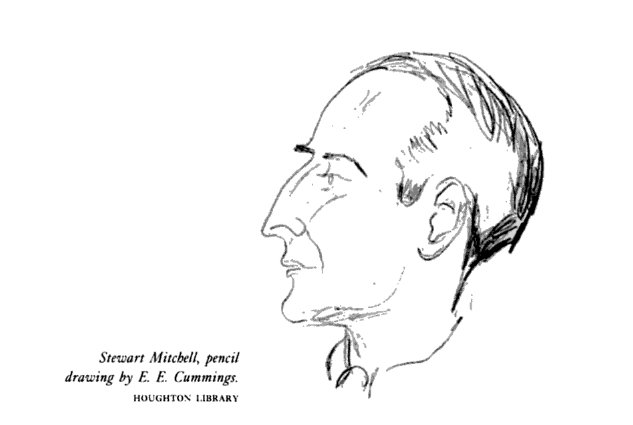
to see writer, friend and editor R. Stewart Mitchell (1892-1957) who had a home here. Stewart Mitchell was another Harvard alumni (1915) and former Harvard Monthly editor. His face inspired the nickname “The Great Auk”. How nice being friends with artist-writers.
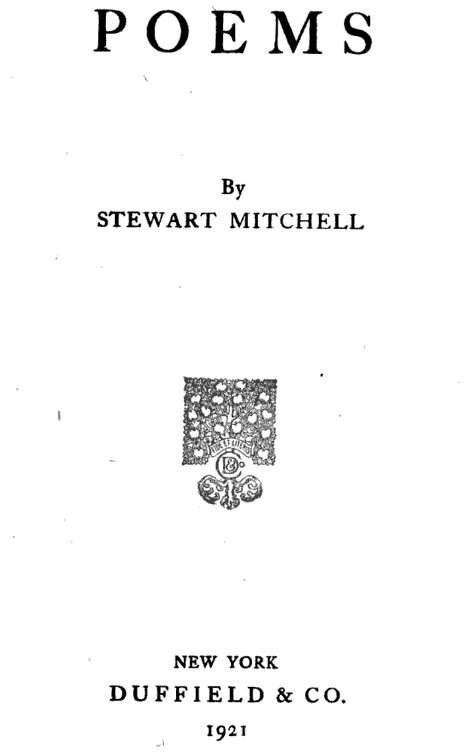
After serving in WW1, Mitchell was a managing editor and regular contributor for The Dial from 1919-21, then published poet. From 1928-1937 he was Managing Editor of the New England Quarterly journal, and from 1929- 57 an editor and Director of the Massachusetts Historical Society. On the Ma Historical Society seal : “It would hardly have done to compare the members of the Society to oxen, sheep, or birds … but bees had always had a good reputation for the sweetness and light of their honey and their wax. “– 1949 Stewart Mitchell
Did Cummings and Arthur W. Wilson come to Gloucester while attending Harvard or at other times in the 1920s to see Stewart? Was Cummings in Gloucester other years, decades? Did Wilson and Mitchell re-connect in Gloucester? John Sloan’s etching Frankie and Johnnie illustrates EE Cummings’ play HIM. Did Wilson interact with Stuart Davis in Gloucester or New York?
(Aside: In 1984 the play ViVa Cummings! opened in Gloucester under the direction of William Finlay and the New Stillington Players. Did they know Cummings had been here…)
1935
Wilson fails to update his Harvard alumni association requests. Here’s the 1935 entry:
1951 ELEANOR ROOSEVELT VISITS EXHIBIT AT AAA, NYC
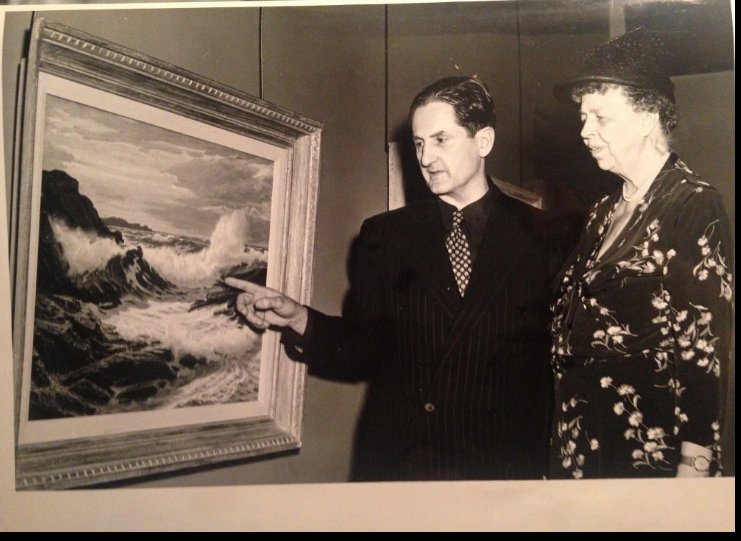
Artist Winslow Wilson guiding Eleanor Roosevelt through his solo exhibition at Associated American Artists, June 4, 1951. Photograph from http://www.winslowwilson.com
Wilson’s painting from the 1951 Contemporary American Artists exhibition at the Associated American Artists won the people’s choice award, and his solo exhibit in June was attended and written about by Eleanor Roosevelt in her nationally syndicated MY DAY column:
HYDE PARK, Sunday—At lunch last Friday I had a visit from Mr. Tatsukichiro Horikawa, who is over here from Japan on a trip studying the World Federation movement in different countries. He has visited Switzerland, Germany, France and England, as well as the United States, and he came to see me before in New York City; but he wishes particularly to come up to Hyde Park and place some flowers on my husband’s grave.
I was especially interested in talking to him because, like so many of the World Federalists, he felt that the United Nations was very inadequate. He felt one must bring about more unity—and particularly, if we were going to have any settlements in the Far East, there must be unity between Great Britain and the United States as well as the other nations in their policy.
I asked him if he did not think it was a good deal to expect to have a unified policy among 60 nations when the organization bringing them together had been in existence only six years. It seems to me it requires longer for people to understand how the other peoples think and feel. World federation might someday be possible, but not until people have had a greater length of time to find out about each other. One of the American World Federalist members had also written me saying that the federation must come first and then be followed by understanding. I think this begs the question of how you obtain the federation and how, having obtained it in name, you do anything practical with it.
In New York City on Thursday afternoon I went to see an exhibition of paintings of the sea done by Winslow Wilson, at the Associated American Artists Galleries on Fifth Avenue. This exhibition was arranged under the auspices of Greenwich House, toward whose support a portion of the proceeds of any sale will go.
Mr. Wilson told me he did not paint actually from a scene he was looking at, but from memory. He said he particularly liked to use the sea because it was to him a symbol of the stress and strife we were all going through at present; and still it had a kind of discipline and control which was what most human beings were striving for today and finding difficult of achievement. I found some of his paintings quite beautiful, and reminiscent of many seacoasts I have known. In certain ones the light made one think of tropical climates; in others the shores of Maine seemed to stand out. More often the sky and the sea were stormy, but the light was nearly always breaking through. Let us hope that out of this turbulent period of history the light will break through for all human beings.
The other day I was sent a little pamphlet written by Eloise R. Griffith on the national anthems and their origin. I think this will be of interest to a great many people who want to know a little more than the mere words of the songs which we hear sung so often.” – Eleanor Roosevelt
I am thunderstruck reading a portion of sales would benefit Greenwich House. Talk about an undercurrent.
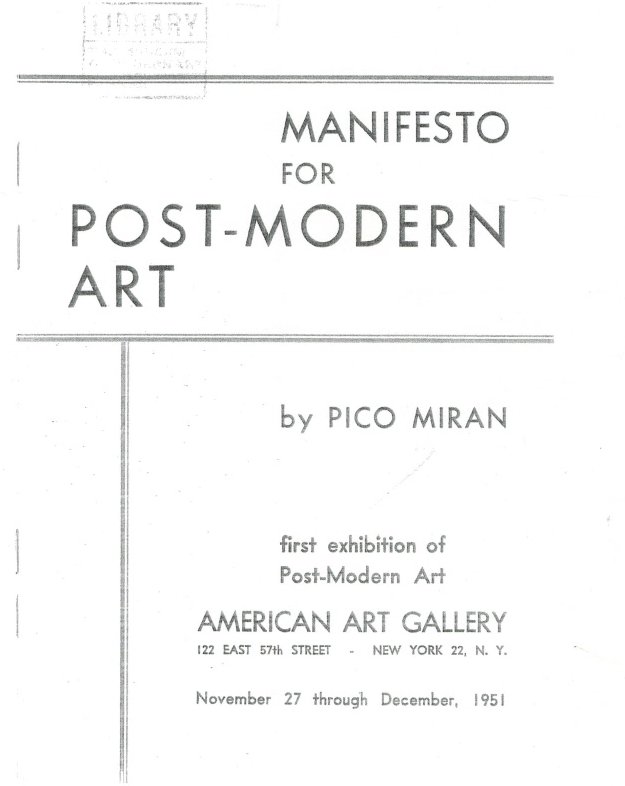
1951 Post-Modern Manifesto in the same year as the AAA seascapes
“A complete study of Cummings should take penetrating account of his painting and drawing. And no estimate of his literary work can begin without noting the important fact that Cummings is a painter.”
That’s the opener for Syrinx., a critique of Cummings by Gorham B. Munson published in Secession July 1923.
“His first stimulus comes from the emotional and perceptive materials of his experience…Cummings has jabbed his pen into life, but he has also twisted it in the wound, and it is this twist of the pen that makes literature.”
Knowing ee cummings facility with visual arts transforms how his poems read. He identifies both pursuits. The press announcement for Cummings appointment at Harvard in 1952 affirmed that he resided in New York City, writing and painting since the year 1920. It wasn’t that he sculpted marks–‘scratchings’- that could be seen as pictures in print,–it’s this charge when visual art and writing advance toward or basically obliterate media boundaries.
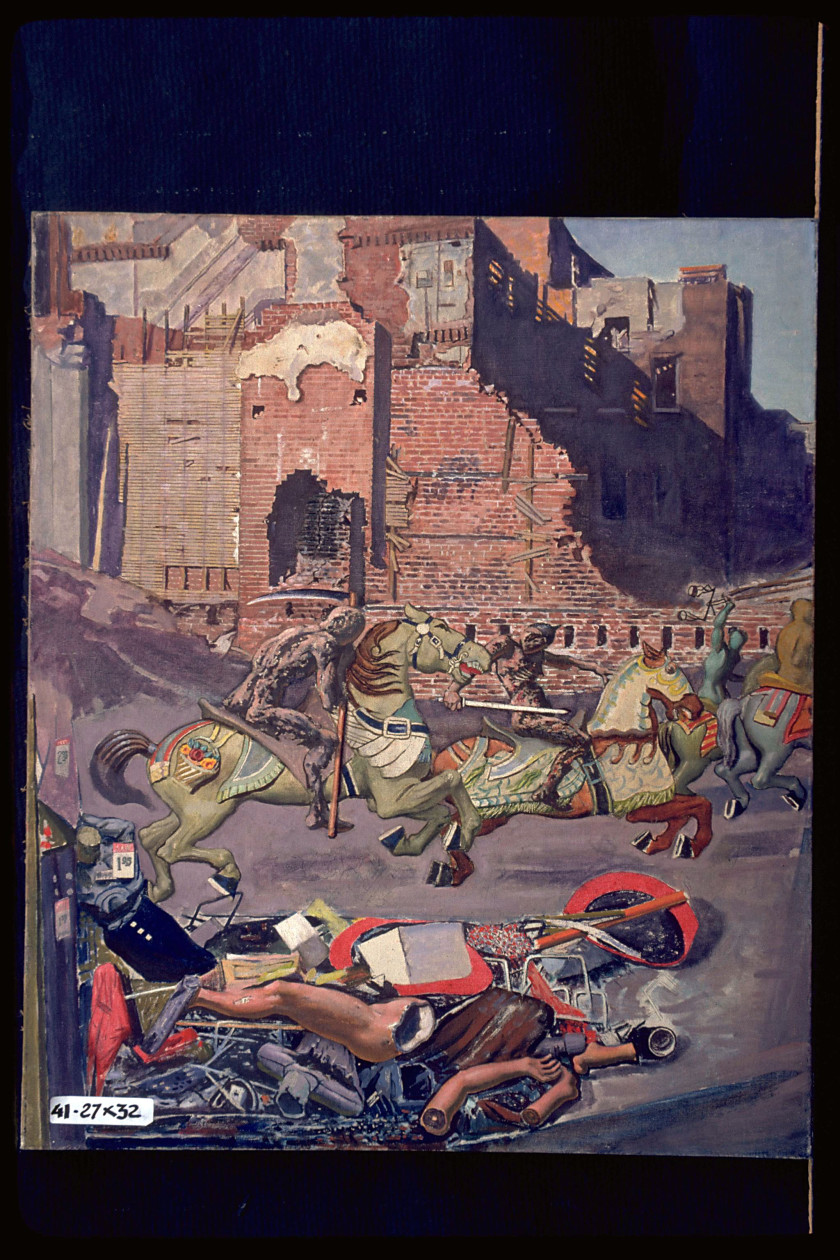
After reading Wilson’s 1951 Manifesto For Post-Modern Art published under his pseudonym Pico Miran, I felt a similar tug. For Wilson, when it comes to ideas and individuality, words and paint –and as many names and identities to match– matter. Some of Wilson’s paintings could be shown alongside pages from ee cummings The Enormous Room.
There are takeaways and points one can make about this manifesto and painting series of Wilson. I can think of art I’d like to show together with this work.
Yikes, the thoughts about women! Here’s Wilson writing as Pico Miran in his Manifesto, emphasis on man apparently:
“But while he proposes to save the personal symbol, he must emphatically reject the conception of its privacy–a conception which he is compelled to regard as an effeminate misery: he cannot help thinking an almost unmanly exaggeration of the one bit of feminine make-up in every artist, here flouncing in absurd esthetic millinery, with coy desire for secretiveness, mysterious subjectivity, and vain feelings of cryptic superiority to the vulgar mass.”
1951 Hidden, not lost
Wilson evidently maintained some contacts; note the supportive reviews by friends (Moore, Burke, Wheelock) later reprinted for his 1957 solo exhibit at Vose Galleries in Boston. Edward Alden Jewel, the New York Times critic, described Wilson as “living a hidden life of pure dedication and drudgery” in his 1951 NYC AAA review.
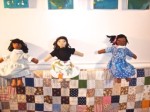
There’s always something happening in the art sessions at Rose Baker Senior Center. With help and direction from the indomitably positive and dedicated artist, Juni VanDyke, participants in the art program share their talents and collaborate. Participants join in an amazing amount of creative work and activity and have the opportunity to exhibit their creations. Often they work together as a group toward a final outcome. Three quilt series became monumental and cherished works of public art. (See Kim Smith’s beautiful coverage on Good Morning Gloucester.) When you visit the art studio at Rose Baker you’ll see floor to ceiling examples of their creations. For the past few years, dolls have been blooming up the studio wall and steadily and similarly building into a kind and social public art project. Now it’s a mission for art and healing that’s reached beyond Gloucester and Cape Ann.
Juni Van Dyke shared the photographs in this post and writes about the iteration of this project:
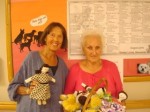
“Two years ago, Lois Stillman, a regular participant in the Art Program at the Senior Center, shared an idea with our Monday art group. The idea became known as “The Endearing Doll Project” — “endearing” because the hand-made doll that Lois introduced to us was just that…endearing. By way of Lois’ initial instruction, the dolls began to multiply with a serious purpose: the dolls would be created for the comfort of children undergoing cancer treatment at Dana Farber. Later, more dolls…(baskets of dolls!) would be delivered to elderly residents at Golden Living and SeaCoast. Still later, more dolls…(armfuls of dolls!) would join volunteers headed to The Dominican Republic where children who have little in the way of playthings would receive them. The “Endearing Dolls” became known as “The Have a Heart Dolls”. To accurately describe the artwork attributed to each individual doll, (over four hundred dolls to date!) one would have to exhaust every synonym in a thesaurus under the heading “beautiful”. Indeed, the dolls are beautiful with exquisite individual attention given to detail: lace trimmings, velvet ribbons, eyelet petticoats, knitted caps, stylized tresses, etc. But the “Have a Heart Dolls” are so much more than beautiful works of art. These dolls, with their purpose of bringing comfort and cheer, are a definitive source of love.” Participants in the “Have a Heart Doll Project” are: Lois Dench, Judy Menicocci, Mary Noons, Maggie Rosa, Carmella Scola, Emily Soule, Ida Spinola, Lois Stillman, Teddy Talbot, Connie Troisi, Juni VanDyke, and Susan Wright
To help with the dolls or other projects and learn more about the art program: Council On Aging (COA) Rose Baker Senior Center Art Program. The mission statement under the direction of Juni VanDyke: To connect Gloucester Senior Citizens to their community through worthwhile art projects while encouraging artistic individuality and collaboration.
Spread The GMG Love By Sharing With These Buttons:
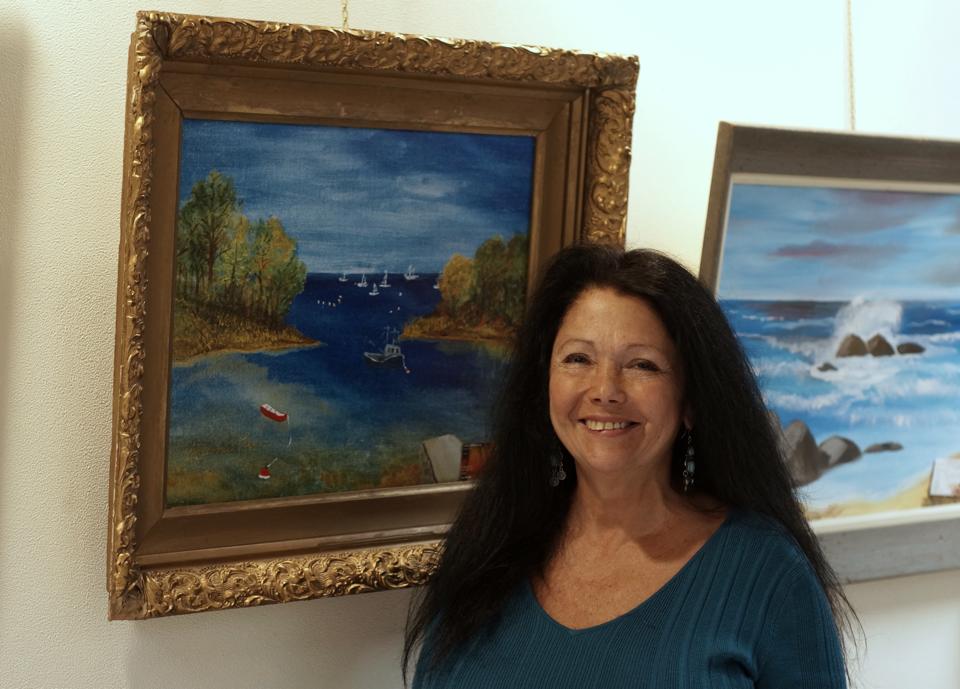
Artist Naomi Lee, of Gloucester Massachusetts, found a new way of
self expression, taking nature’s gifts and turning them into art.
Naomi, usually, tries for perfection by taking many photos of natural subjects she sees, whether landscapes, seascapes, sun and moon rises and sets, over land or sea and, of course, sea gulls. Naomi studies the ever changing light and shadows and when she’s ready, puts the image on canvas.
Naomi’s inspiration of self expression does indeed come from nature’s gifts.
Naomi says, “It is all in the eyes of an artist.”
Driftwood, fishing line, gill net, fishermen’s knotted ropes, shells, sea glass or anything else she finds on a beach or rocky coast is what she turns into art.
Naomi has created art with branches, bark and twigs from her own backyard. Some of these elements are added to existing paintings to further express the feeling of the work.
Contact: text Naomi at 781-710-1080
Come see for yourself Naomi’s concepts of nature’s beauty a through the end of December 2016 at:
Spread The GMG Love By Sharing With These Buttons:
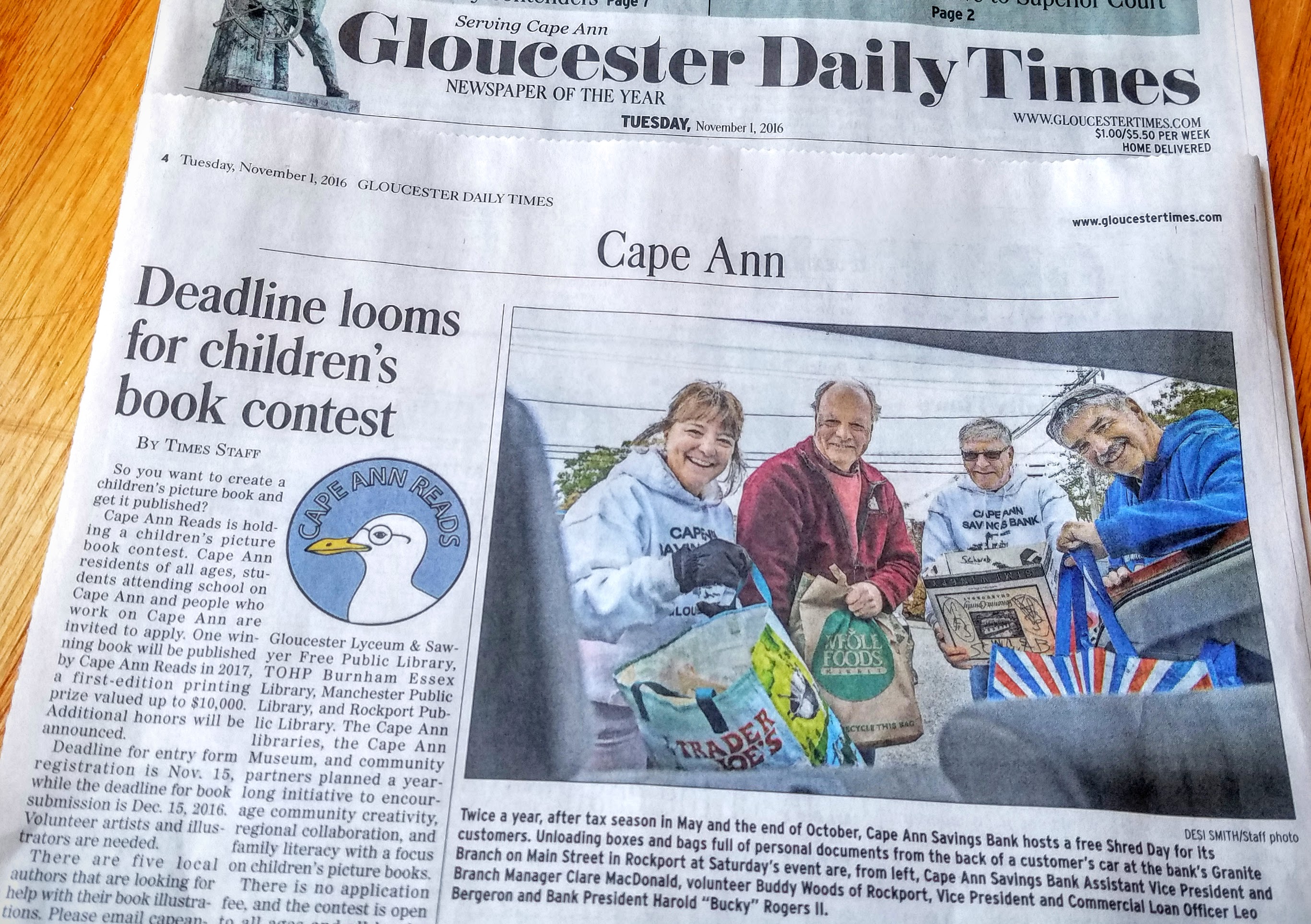
Reminder in the today’s Gloucester Daily Timesthat the Cape Ann Reads deadline to register for the original children’s picture book contest is two weeks around the corner– November 15th. The deadline for the book submissions by registered applicants is December 15.
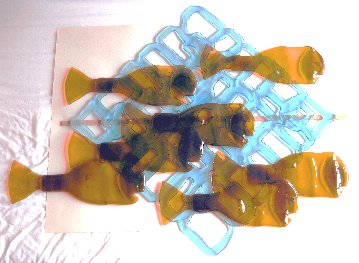
Thank you to Rockport glass sculptor, John Bassett, www.basglas.com
for responding to the GMG post last week calling for Volunteer artists and illustrators to assist local writers with their book submissions! There are three or four writers hoping to find a match. John made the generous offer of use of his images for a book applicant, plus the possibility of creating new work in response to their book. If you or an artist you know would like to volunteer please email capeannreads2016@gmail.com.
The Silent auction runs from September 6, 2016 to October 3, 2016
The Final vocal auction will be held on October 5, 2016 at 7:00pm
Look for more coverage of the auction on GMG.
For the Artists;
Paintings may be dropped off at the Library starting on Tuesday August 30, 2016 Noon to 7pm. Wednesday August 31, 2016 10am to 4pm. and Thursday September 1, 2016 12pm to 4pm.
This will be my 2016 entry. Unless I change my mind.
“Haulin’ Traps” 5″x7″ Acrylic on panel.
Spread The GMG Love By Sharing With These Buttons:
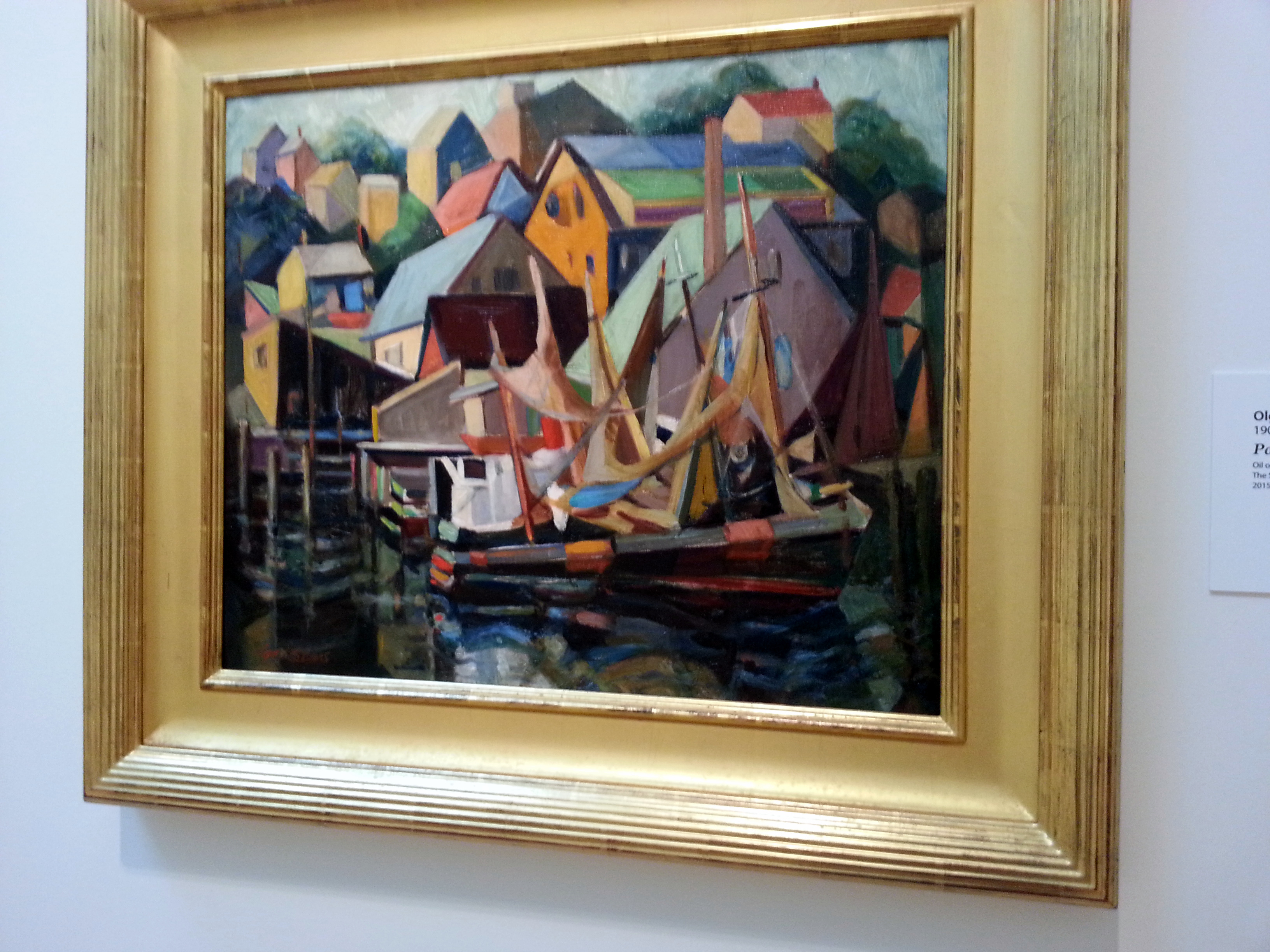
As I frequent museums and collections for work, and Gloucester art abounds, I suffer bouts of ‘Gloucester acquisition affliction’ . Relative newcomers at PEM include a St. Peter Fiesta scene by Gifford Beal and one of Portuguese Hill by Olga Itasca Sears. As much as I am fond of PEM– and I mean no disrespect to this august institution– I sorely wish the Cape Ann Museum had received the art or funds for acquisition. There are few major historic paintings of Gloucester (and the greater region) which remain in private hands. They include works by Winslow Homer and Edward Hopper. I’m trying.
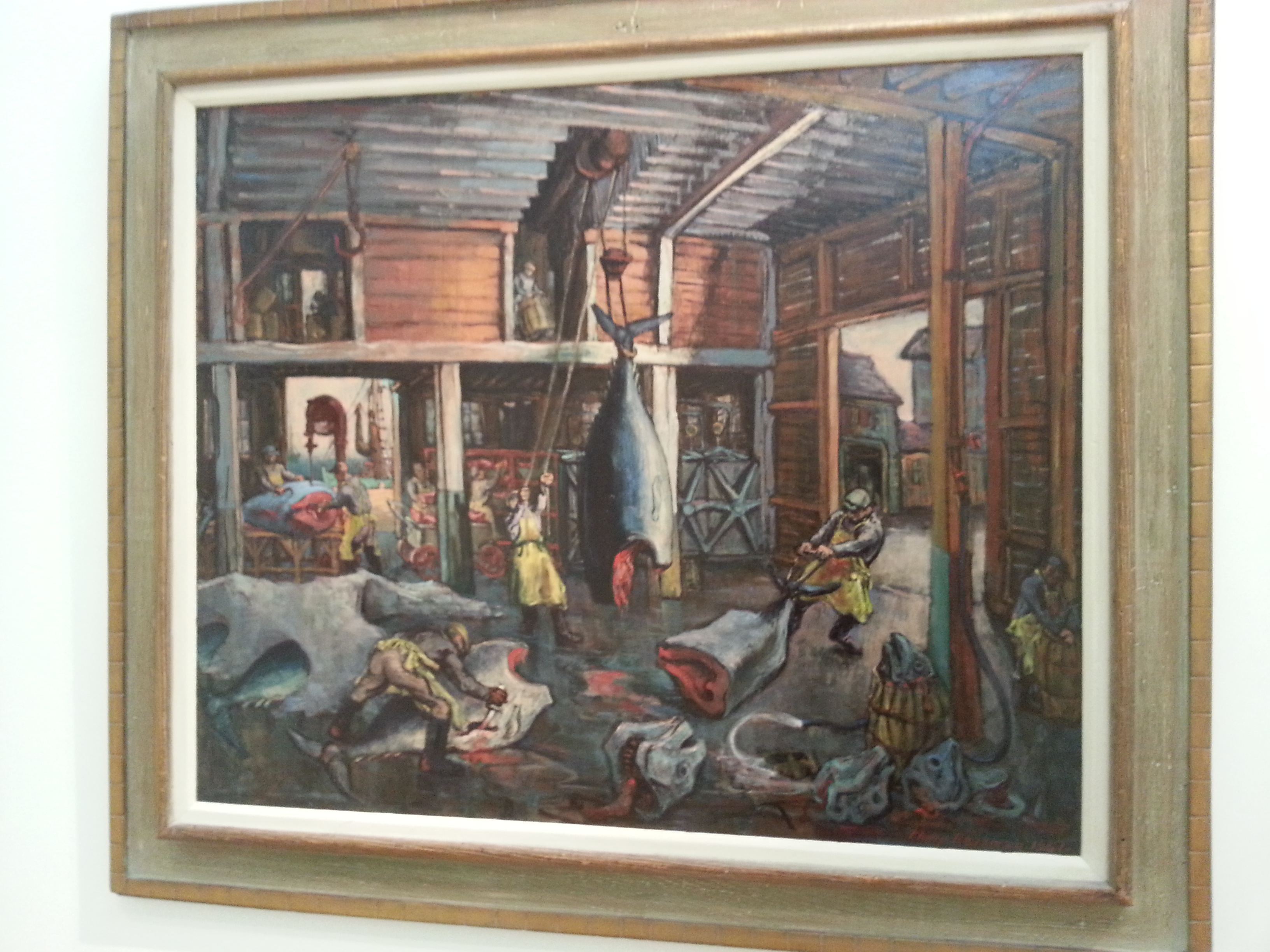
While at PEM for special exhibits, I often check the permanent installation. Are the Frank Benson works and Norman Rockwell on view? Check. I make a point to spend time in front of the Philip Reisman 1951 Tuna Shed, another Gloucester painting and one that Wicked Tuna fans may like to scrutinize. Reisman was a masterful, versatile painter, and a smart gentle man. I was lucky to know and work with him. The Cape Ann Museum has examples of his Gloucester paintings in their collection and a binder of slides, photographs he took, many Fiesta. I remember labeling some.
I paused more than I ever have at the John Trumbull portrait of Alexander Hamilton. (Hmm. Have museums tagged works representing Alexander Hamilton? It would be a mastery of quick edits matched up to the Lin Manuel Miranda song.)
GIFFORD BEAL (1879-1956), Fiesta of Saint Peter, Gloucester, c.1930 Oil on masonite, Gift of the family of Gifford Beal, 2006. Peabody Essex Museum.
OLGA ITASCA SEARS (1906-1990). Portuguese Hill, Gloucester. ca.1950s. Oil on canvas. The Sheila W. And Samuel M. Robbins Collection. Peabody Essex Museum. (2015 acquisition)
PHILIP REISMAN, Tuna Shed, 1951, oil on masonite. Gift of Louise K. Reisman. Peabody Essex Museum.
#Hamilton, @ Lin_Manuel, #PEM John Turnbull, Portrait of Alexander Hamilton, 1792, oil on canvas, gift of George A Ward, 1918, collection Peabody Essex Museum
I am looking forward to the upcoming Childe Hassam show opening July 16th at PEM. I went to see the Rodin exhibit.
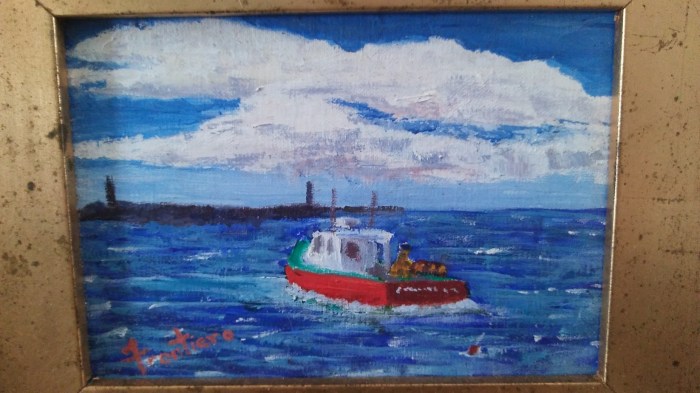
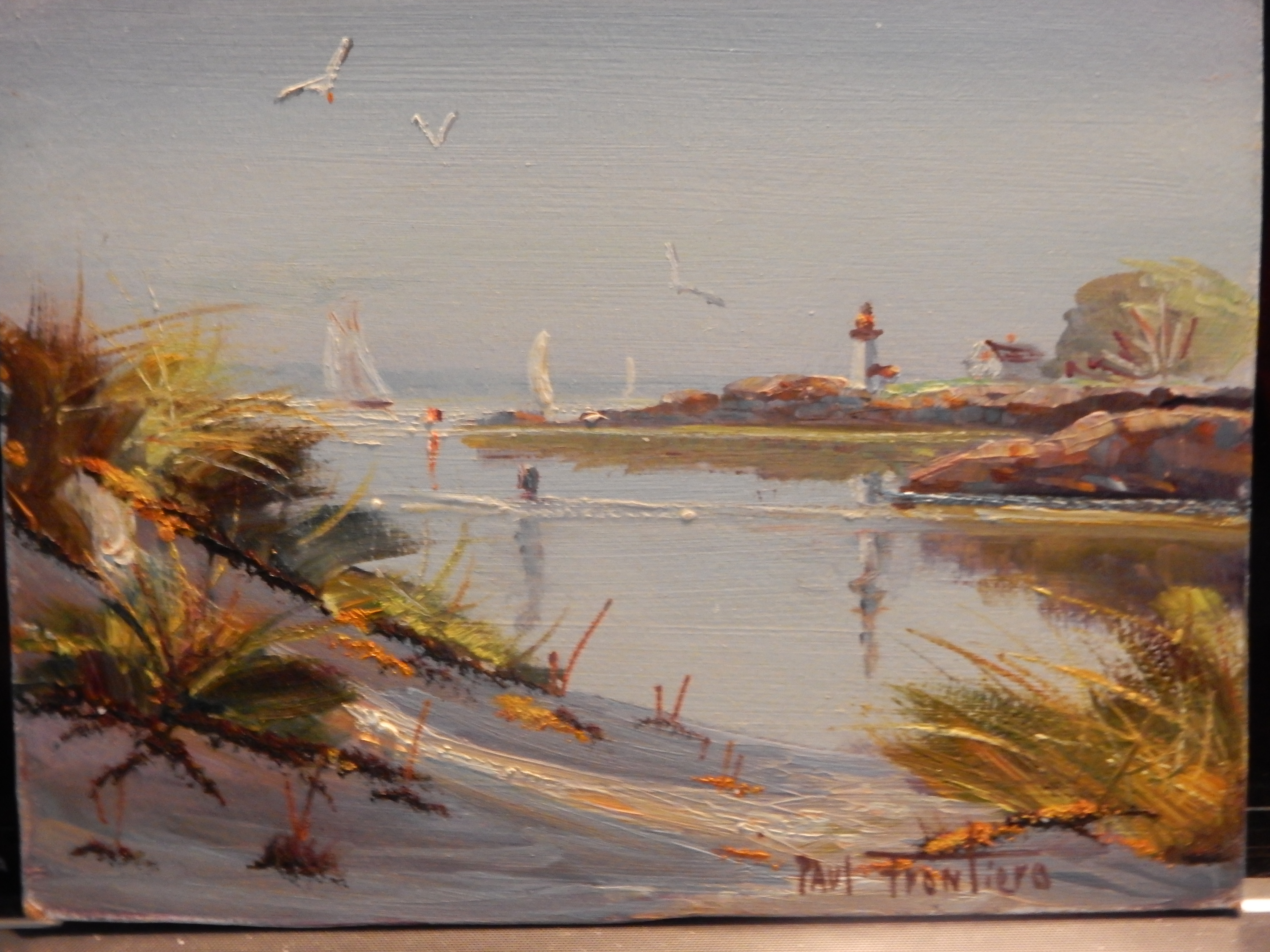
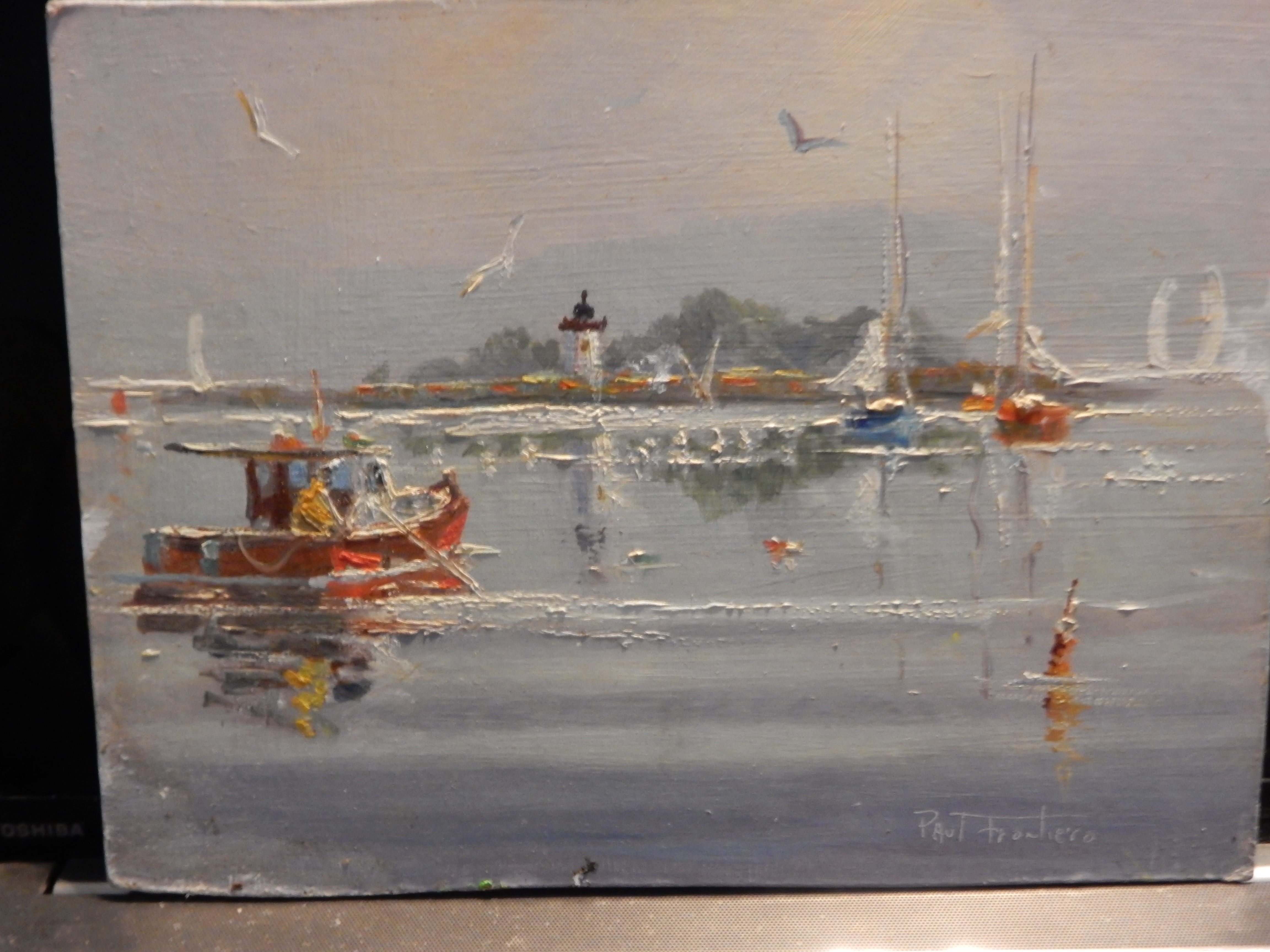
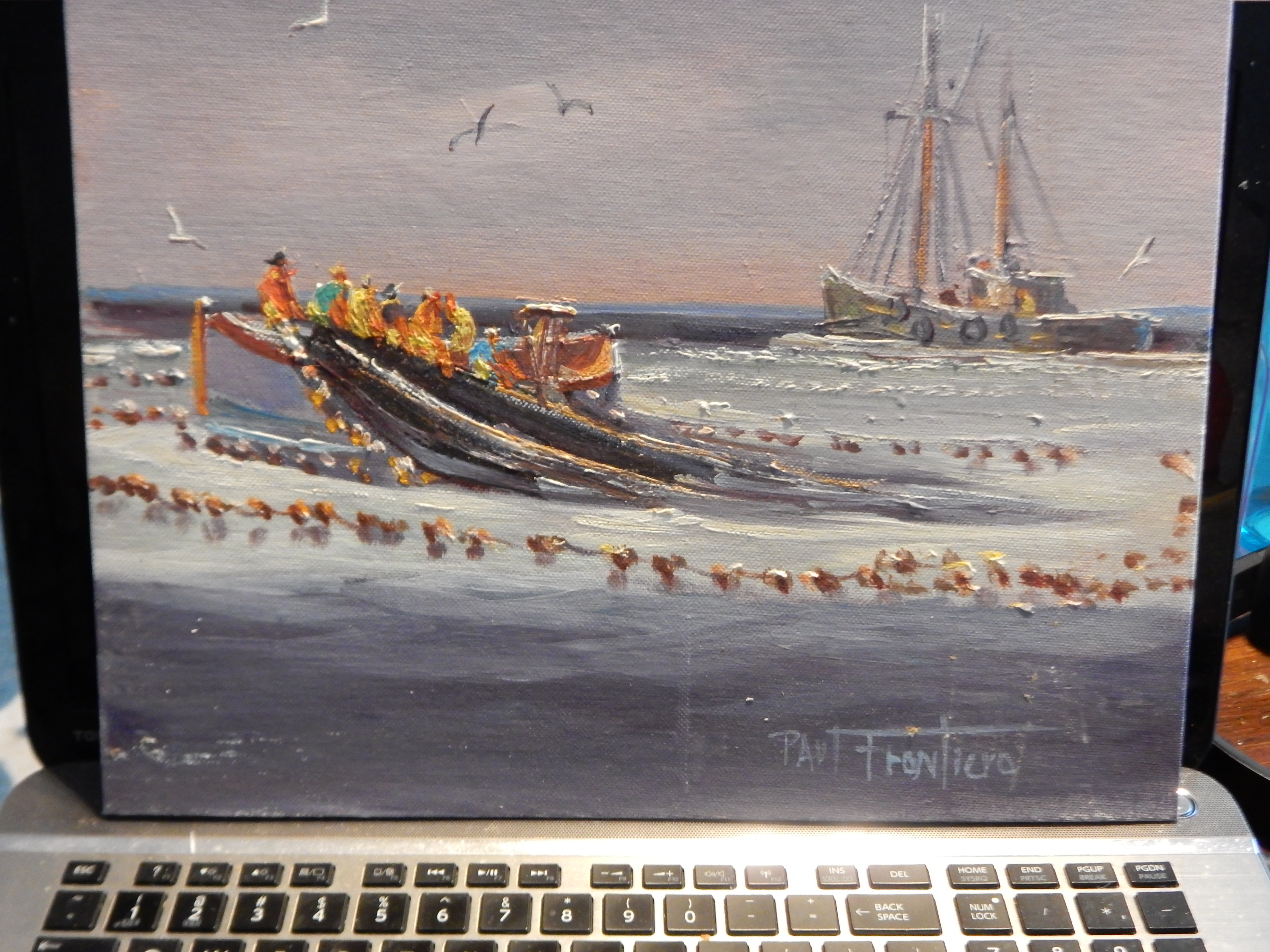
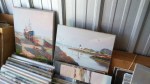
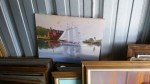
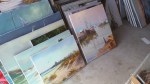
I’ve received emails regarding my Dad’s Paintings and if they are for sale. Now that the weather is better I will be able to show them to anyone interested in purchasing. I have many left that are just sitting in the storage unit not being enjoyed. There are just so many that can hang on my walls. The sizes of the paintings range between 5″x7″ and up. The price range is $75.00 and up.
Here are some photos of some of the paintings that are available.
You can contact me by email at: Frontiero@hotmail.com
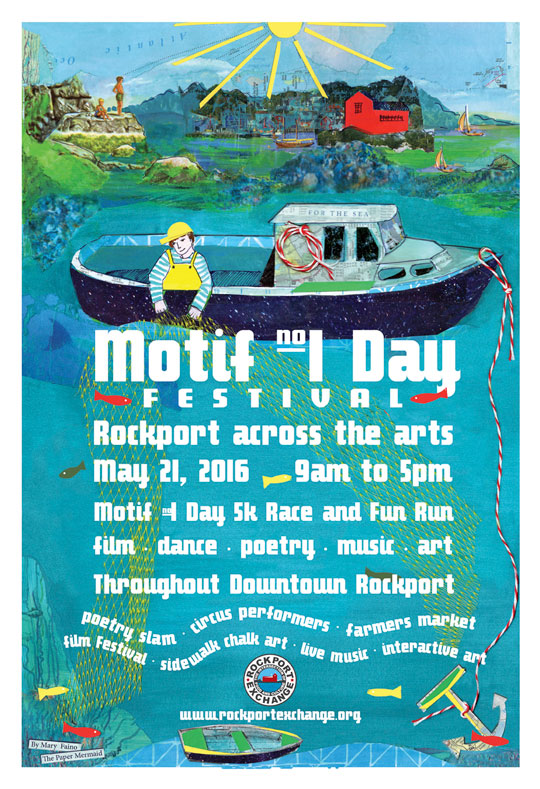
Lots of great stuff is going on this year in Rockport at the annual Motif No.1 Day. We have the Rockport Farmers Market, coffee from Twin Lights Coffee Co., burgers from Seaview Farm, lots of good stuff from the Rockport New Year’s Eve Food Booth and crepes from the soon-to-be-open StudioCrepe restaurant by the train station.
A Seaside Circus, great live music, interactive activities like the Sidewalk Chalk Art Contest, poetry readings, and much more are all part of the event, not to mention the Motif No.1 Day 5K and Fun Run, with proceeds going to benefit health & wellness at Rockport Elementary School!
Go to www.rockportexchange.org for a Schedule of Events, but keep in mind more good things will be added before the festival takes place on May 21st.
Spread The GMG Love By Sharing With These Buttons:
Coming up on Monday, the 16th! Local filmmakers will showcase their work in a micro-film fest, the Red Shed Film Fest (in honor of the Motif in honor of Motif No.1 Day in honor of the arts…).
Starting at 7pm , short films will screen in Rockport Music’s beautiful Shalin Liu Performance Center. A party on the 3rd floor will follow the screening, with a cash bar and light food from the legendary Willow Rest. By “party” I mean: party, Rockport-style, where we stay up past 8pm, so bear this in mind in terms of your expectations. This doesn’t mean it won’t be fun, maybe even raucous! By Rockport standards! Which is still great!
The Red Shed Film Fest is a small but mighty showcase for our burgeoning local film scene. If you like short films and can tolerate other people and want to support art, this event is for YOU!
Come out to the Red Shed Film Fest on May 16th. The RSFF kicks off the week leading up to Motif No.1 Day on Saturday, and is a great way to begin the week. Admission is suggested donation. Your donations support the free programming of the Motif No.1 Day festival, celebrating Rockport across the arts, featuring film, dance, music and poetry. For more info on the fest go to www.rockportexchange.org.
Spread The GMG Love By Sharing With These Buttons:
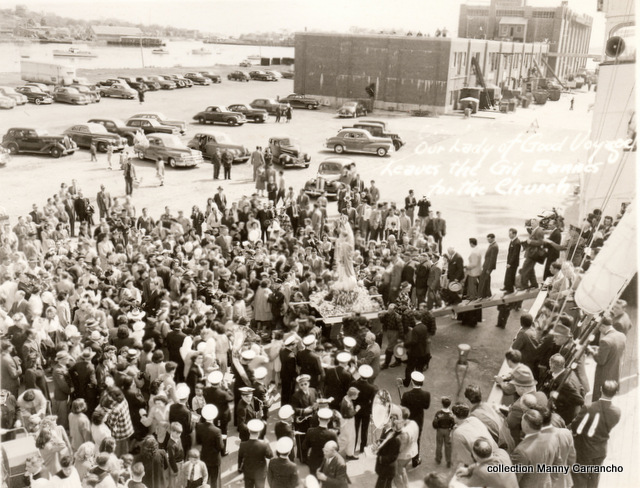
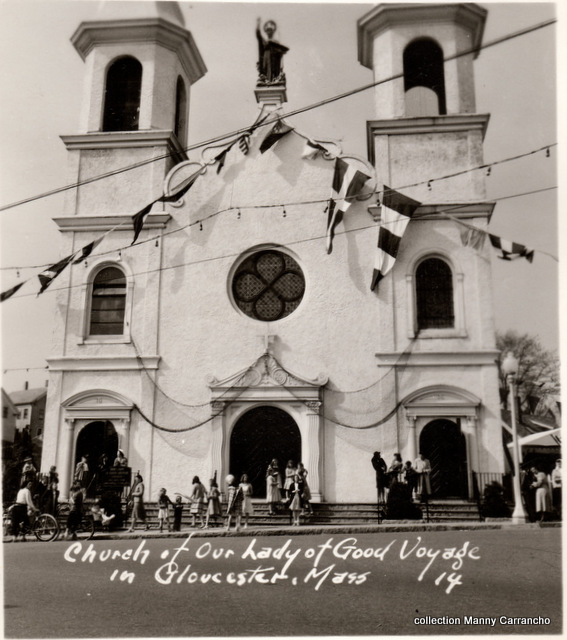
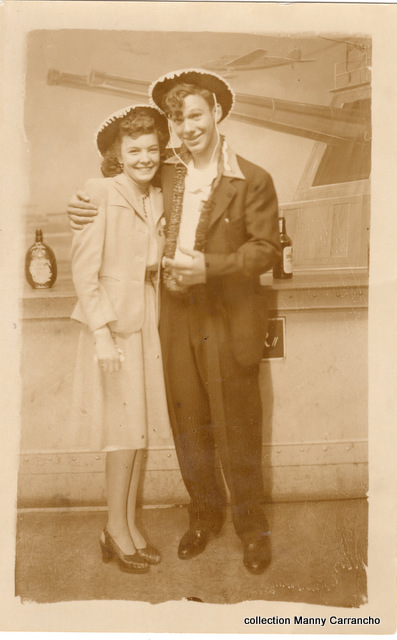
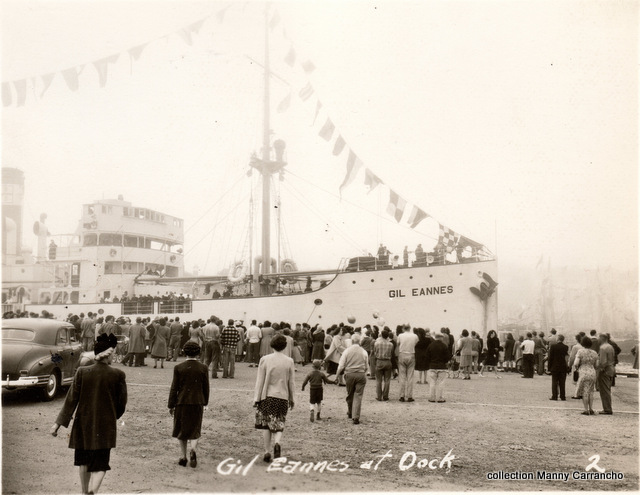
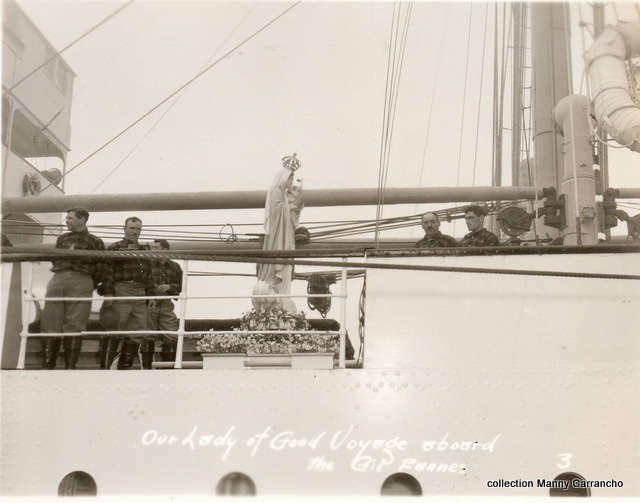
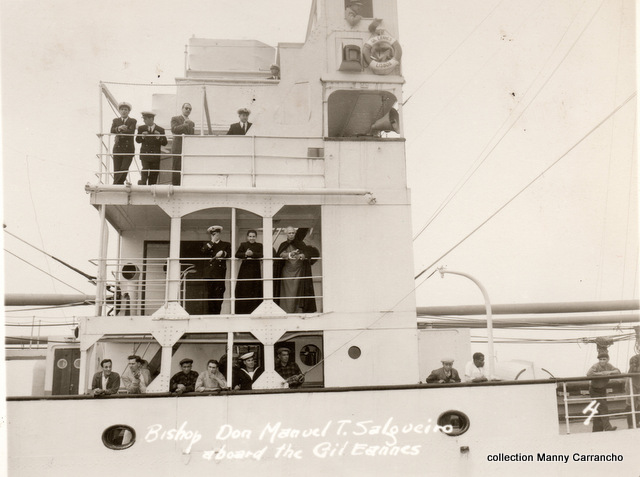
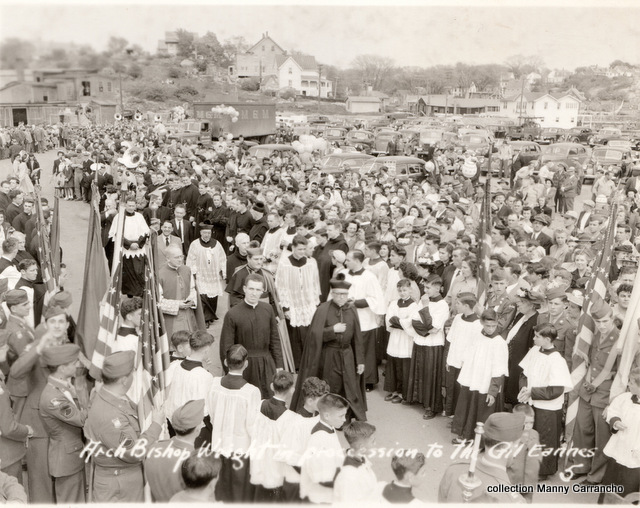
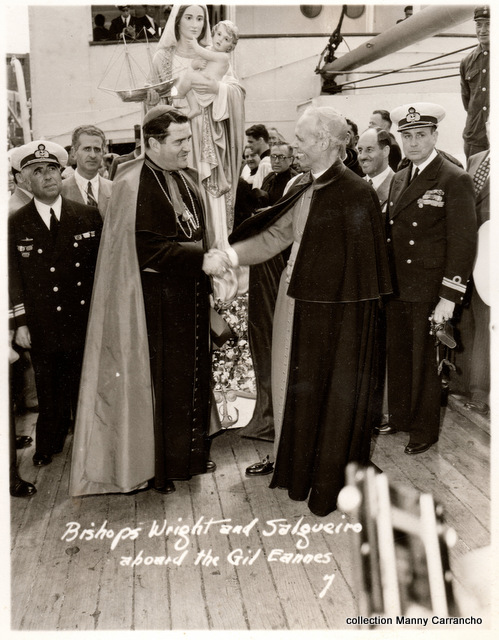
A couple of years ago, because of research I was doing about Gordon Parks in Gloucester and thankfully Joey posted on Good Morning Gloucester, I was able to interview Manny and Joanna Carrancho. Manny and his family spent considerable time giving me a detailed account of earlier events in their lives. They shared treasured historic photos and first hand knowledge and were a delight. Part 2 photographs continue with a town procession from the state pier to the church.
In honor of the annual Crowning Feast of the Holy Spirit which begins tonight, today’s Gloucester Motif Monday is a legacy one.
Good Morning Gloucester is an indisputable platform for outreach and community. A couple of years ago, because of research I was doing about Gordon Parks in Gloucester and thankfully Joey posted on Good Morning Gloucester, I was able to interview Manny Carrancho. Manny and his family spent considerable time giving me a detailed account of earlier events in their lives. They shared treasured historic photos and first hand knowledge and were a delight.
Joanna (Cecilio) and Manuel Carrancho
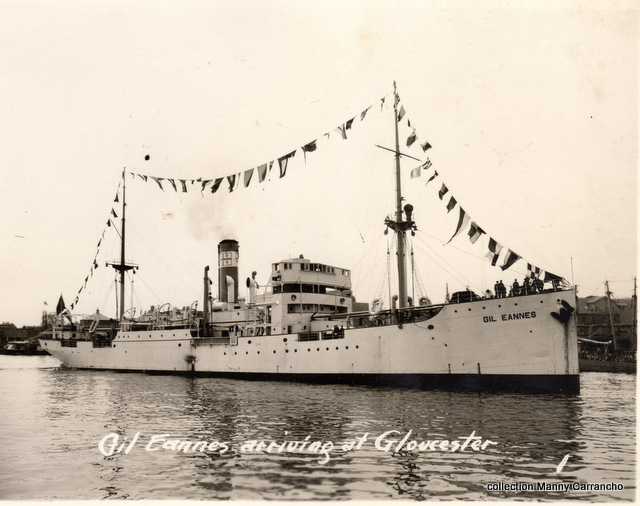
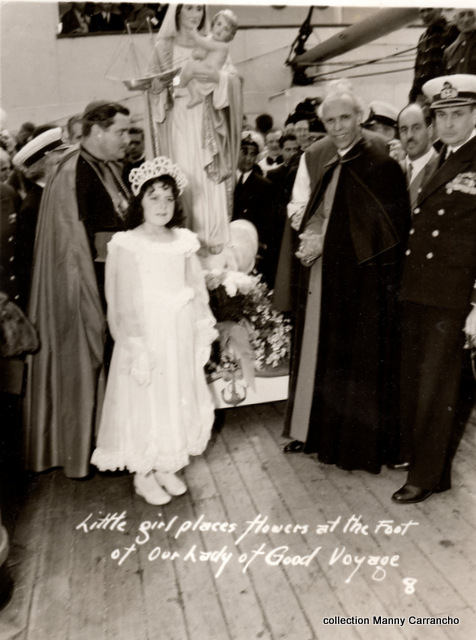
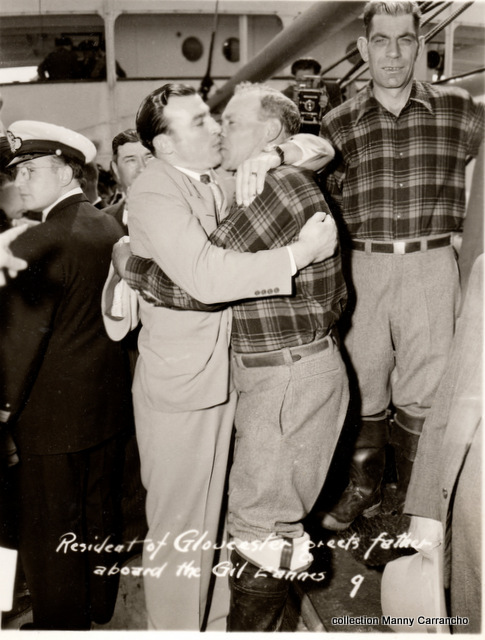
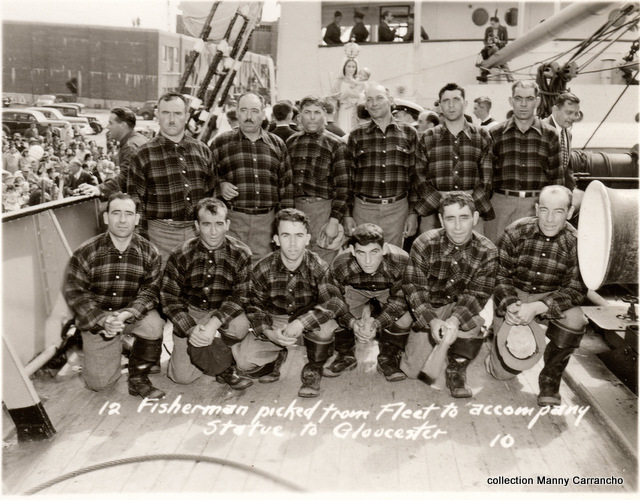
This week I’ll feature photographs from a souvenir picture album in Manny’s collection as they feature Our Lady of Good Voyage and one of the Madonna statues. The photographs are from a booklet: Coronation Our Lady Of Good Voyage, produced with cooperation of the Portuguese Daily News and photography by Hollywood Studio, New Bedford, MA. You will see the Our Lady statue on the vessel Gil Eannes with Bishop Don Manuel Salguiero. Its special arrival is met by a town procession led by Arch Bishop Wright and dignitaries at the State Pier. Twelve fishermen were selected to greet them. Let us know if you recognize family in the photographs. Were you there?
news edit: Brenda Mason Budrow writes that the little girl in one photo is Mary Jean (Ribeiro) Mason, her mom. Thanks, Brenda!
Brenda Mason Budrow writes that the little girl in this photo is Mary Jean (Ribeiro) Mason, her mom
Tonight: the Crowning Feast of the Holy Spirit begins May 9th 2016 in Our Lady’s Church.
More photos to come.
Part 2 photos of the greeting on the vessel and carrying the 600lb statue
We have great teachers in Gloucester! For Ms. Mulkern
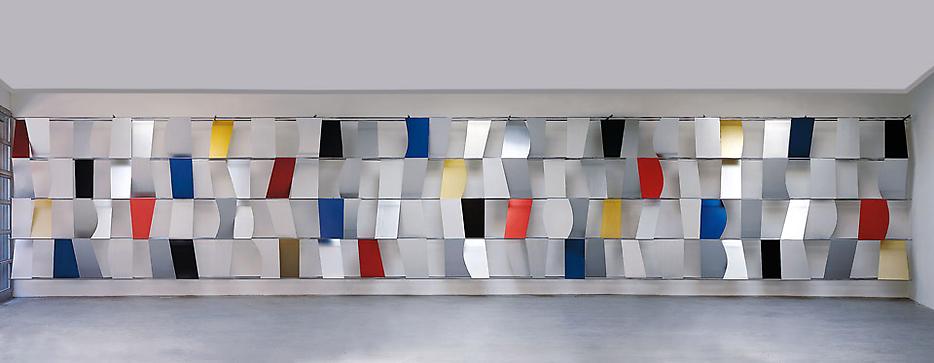
“I put those posters in my classroom windows to minimize the intense sun that streams in at certain times of the day – I was thinking Ellsworth Kelly when I saw them from outside – but Piet Mondrian works great!” – Joanna Mulkern ESL Teacher/O’Maley
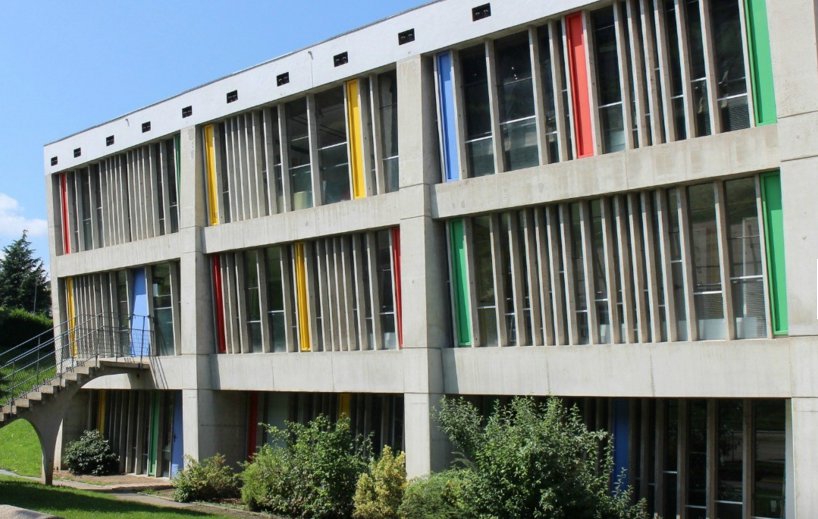
Thanks for adding the motivation behind your window design. Oh, yes! I see Ellsworth Kelly (1923-2015), too. And your comment pushed me to think about other visual artists such as Anni Albers, Edward Landon, Sol Lewitt, Al Held– and Matisse and Calder (who Kelly looked to.) Plus your Kelly comment relates to the architecture at O’Maley and Kelly’s years in Paris at the time of Le Corbusier’s influence. O’Maley is a bit red-brick bauhaus and other architectural styles. Does anyone know the architect?
Ellsworth Kelly’s Sculpture for a Large Wall, 1957, installation shot at Matthew Marks Gallery (now in MoMa)
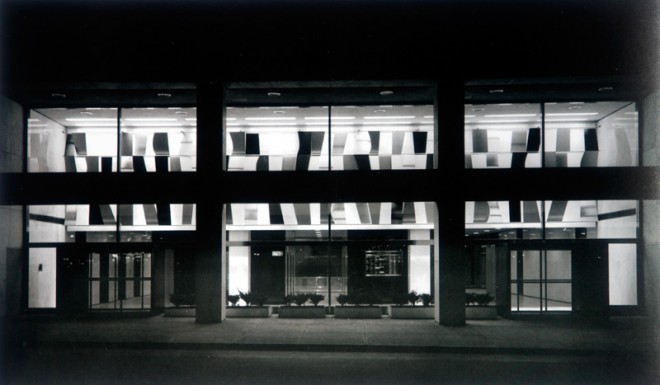
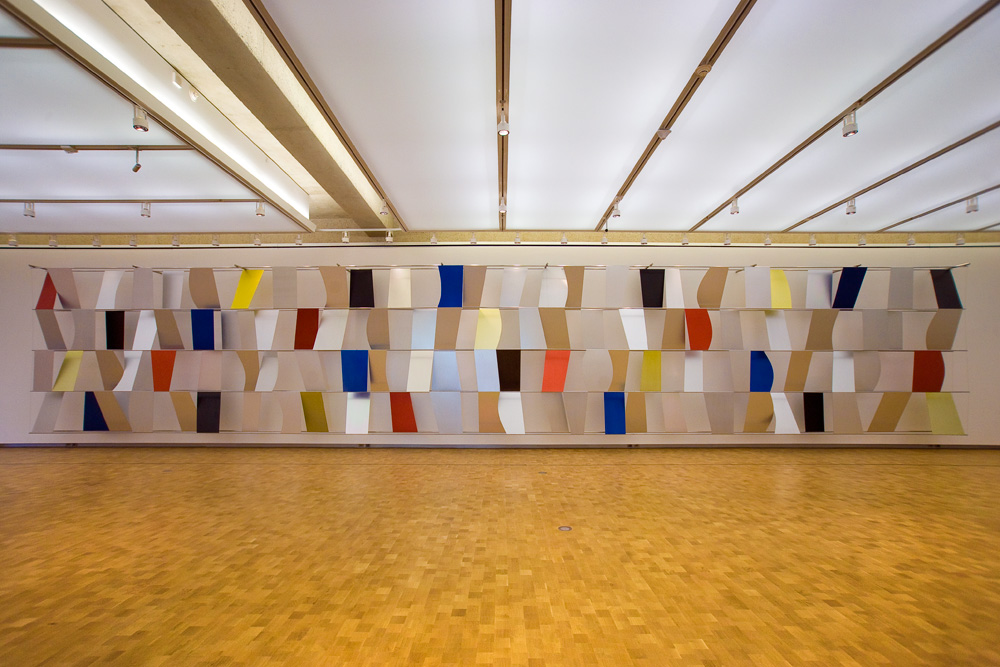
Ellsworth Kelly’s Sculpture for a Large Wall (Transportation Building Lobby Sculpture), 1957 original commission for the lobby of the Pennsylvania Transportation Building, Penn Center, Philadelphia, PA. It was sold to Ronald Lauder in 1998 when the building was redesigned. Jo Carole and Ronald eventually donated it to MoMa.
Installed at Matthew Marks Gallery (top photo) then Barnes Foundation in 2013 (this photo) prior to current installation at MoMa
From where I was standing the same viewpoint on 11/21/16 was all sky and water, morning breaking and taking an easy minute to breathe.
Ever since I was quite young, my eyesight required assistance from optics. On my first day wearing glasses I discerned individual leaves on tall chestnut trees. I was thunderstruck by the revelation that others could observe such a vivid world with bare eyesight. Ever after ‘yet do I marvel’. I’m no artist, obviously. Snapshots are a reference tool or record for research and writing. On this day I was overjoyed observing the fleeting moment, snapping off to my side without looking through the phone. Later a bit of my thoughts were about iconography and series guiding unaided eyes–and no splitting hairs (poetry, photography, impressionism, music.) What series guide you? I’d be happy to share another motif Monday.
Spread The GMG Love By Sharing With These Buttons:
email subject line: artist studio space Fitz Henry Lane
Per Mayor Theken initiative to help with requests from city residents that need studio space– the City of Gloucester will be offering FREE shared space at the Fitz Henry Lane House during the day in month blocks.
email subject line:Public art
Residents- We are keeping a list of residents who have a project idea for the city or have questions such as available sites and locations or funding.
Organizations/Places of Worship/Business- Please let us know if you have available free space such as interior or exterior walls, windows, parking lots. We have requests for: displays, street art, pop up movie nights, artisan markets, performances, studio space, programming. Maybe we can make a match.
Send or text an image! Do you have a favorite corner, steps, view, from your Ward or any spot in Gloucester that you think would be a good one for creative arts project (temporary or permanent)– or maybe it’s one that should be left alone.
email subject line: St. Peter’s Square LOCAL MARKET one day a month
Mayor Theken is talking about putting the town square back into St. Peter’s Square to go with the block parties. The idea is a local market by residents for residents. There’ll be tables and chairs to hang out. Pick up some local fish & lobster, crafts, flowers and vegetables during the day. At night sit and relax, have some coffee, listen to soft music. Email if you want to join the planning or have questions.
Mayor Theken wants to give a couple of shout outs:
Awesome Gloucester for supporting so much art and culture.
Ward councilors are holding meetings next week in YOUR neighborhoods. They work hard. The Mayor is going. Can’t go? No problem. Use that email. The Mayor is committed to assuring that citizen voices are amplified, assessed and acted upon. Every resident matters!
Ward 2 and 3 April 19th, 2016 @ Sawyer Free
Ward 1 April 20, 2016 @ Gloucester Stage
Ward 5 April 21, 2016 @ Magnolia Library
Ward 4 April 25, 2016 @ Lanesville Community Center
Spread The GMG Love By Sharing With These Buttons:
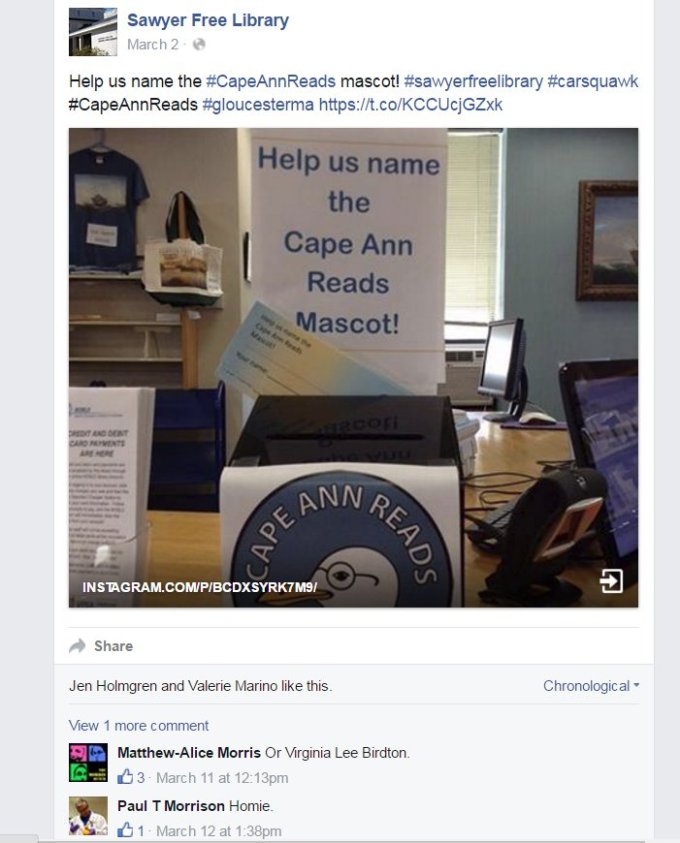
The seagull with spectacles is a logo designed by Ashley Curcuru, member of the Teen Artist Guild (TAG) at The Hive Cape Ann Art Haven in downtown Gloucester. The bird needs a name! Have some fun, jot down a suggestion and give it to your local librarian. And please ask your kids to drop off their ideas, too. I see Paul Morrison has tossed in an entry on the Sawyer Free Facebook page…
Kudos to Valerie Marino for the library’s social media and that cute desk display.
Cape Ann Readsis a dynamite year of FREE programs designed around the world of children’s books. There’s something happening every month,thanks to the four public libraries and community partners. Upcoming for Cape Ann Readsis a major double-header on Saturday, April 16th, with Anita Silvey, a big force in the world of children’s publishing and promotion. Make your reservations soon as the programs are popular!

















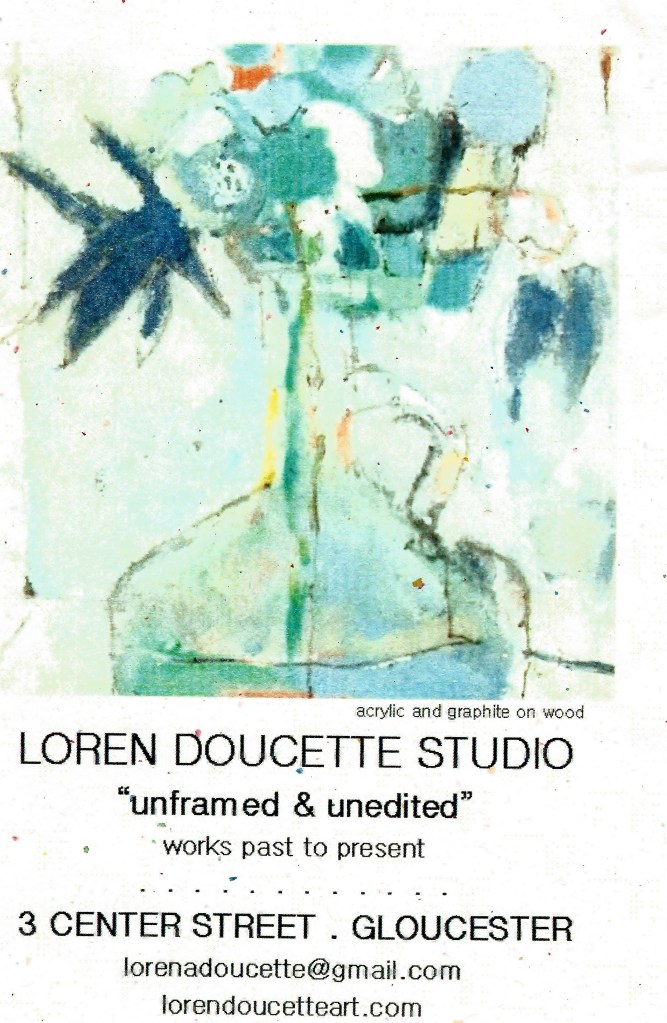 You can contact Loren at her:






























 Good Morning Gloucester