Hi Joey,
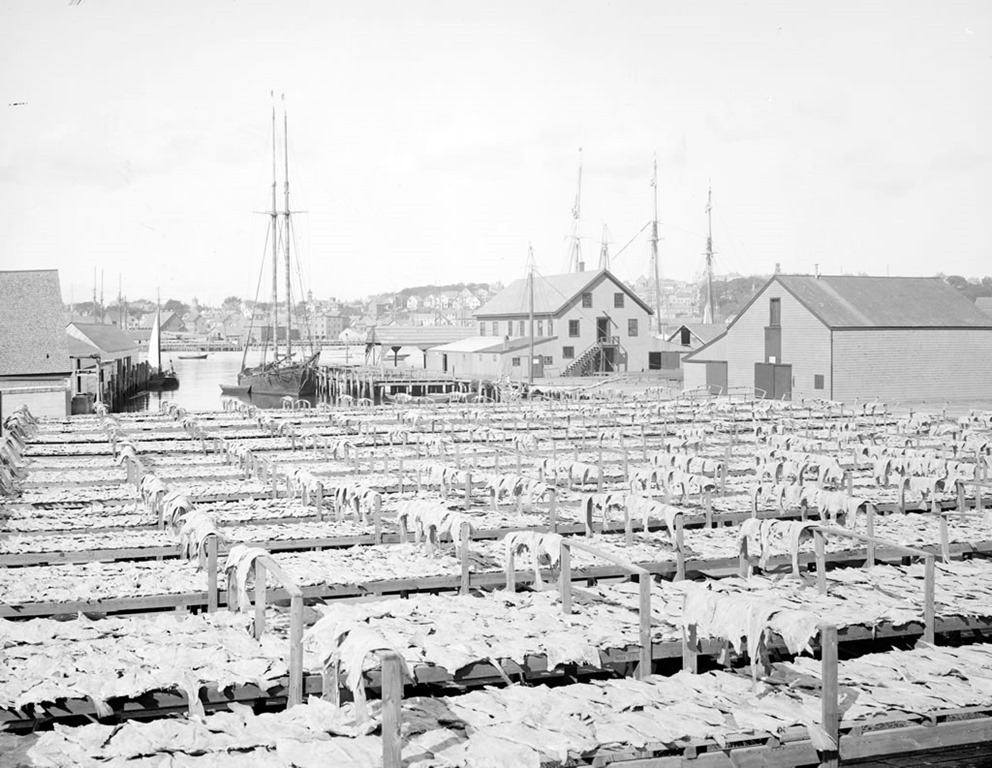
Recently I’ve been spending time researching the history Gloucester, and have come across many photos of the fish drying yards that once covered the Gloucester Waterfront before the days of the modern refrigeration like this one circa 1906. There was always something about these photos that I found disturbing, and never figured out why until recently. Looking at the photos, it occurred to me that there is one ubiquitous element of Gloucester Harbor that is hauntingly absent… The gulls. Where are they? What is keeping them from the feast waiting right there on the wharf? If anybody knows the answer, please share.
Enjoy!
~Bill O’Connor
North Shore Kid


 Good Morning Gloucester
The city maintained gull wardens whose job was to shoot them!
LikeLike
In the case of the picture of that Flake Yard (or salt fish curing yard), I would guess it was the salt on the fish that kept the gulls away from those fish plus our open dumps and the profusion of garbage and other crap floating around the wharves that did attracted them. I have an extensive collection of old Gloucester waterfront pictures. With the exception of similar photos of Flake Yards, there are usually gulls in the pictures
LikeLike
Hi Bill,
I think it is because prior to the early 1900s gulls were mostly winter visitors to Massachusetts. The earliest recorded history of a nesting pair of Ring-billed Gulls (the pretty gray and white ones) was in 1912, on Martha’s Vineyard. The earliest record of a Great Black-backed breeding was in Salem in 1931. Its hard to imagine our shoreline without these beautiful gulls!
LikeLiked by 1 person
Also, really cool picture!
LikeLike
I remember my Mother telling me that her father would tell her not to go do down there. She would anyway. She loved dried fish. Mom was born 1917.
LikeLike
gulls did not show up in abundance until land fills started appearing and the salt kept gulls and rats away
LikeLike
SALT ,KEEP GULLS AWAY , BUT GULLS POOP FLYING MAKES ME WONDER ???
LikeLike
The fish on the flake yards is salt fish, drying in the air. This is not fresh fish and seagulls don’t eat salt. One further comment: in the picture, you will notice a 2 x 4 frame spaced every 6 or 8 feet, along the drying flakes. Also notice a gauze type material bundled up and/or flapping in the breeze. The frames held the gauze in place above the drying fish In the heat of the noonday sun. This flapping gauze also added a scarecrow feature to the drying process. The flakes were monitored every hour by wharf workers, both for sun and/or rain.
LikeLike
Great shots and mom – grandmother remember all this 1931 and on…Taste not so good to gulls – as far gull poop think everyone has got hit during a pass over 🙂 Dave & Kim 🙂
LikeLike