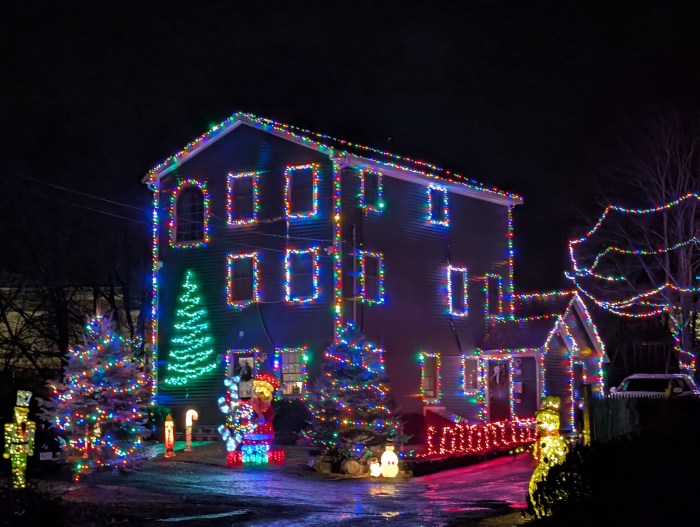
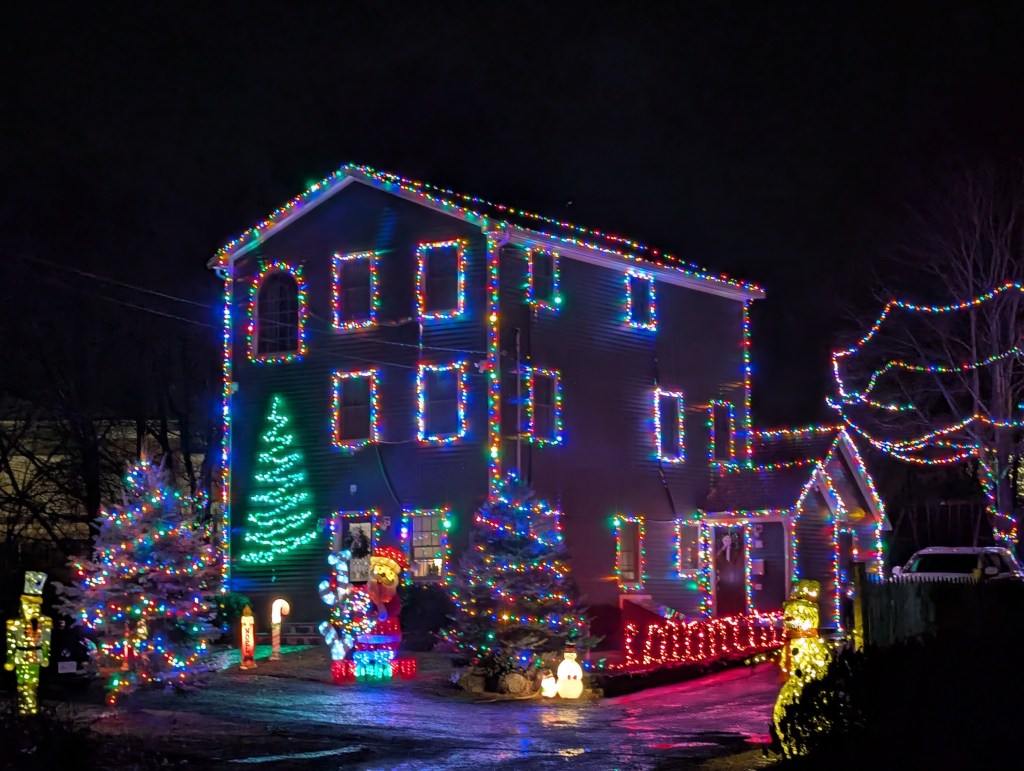
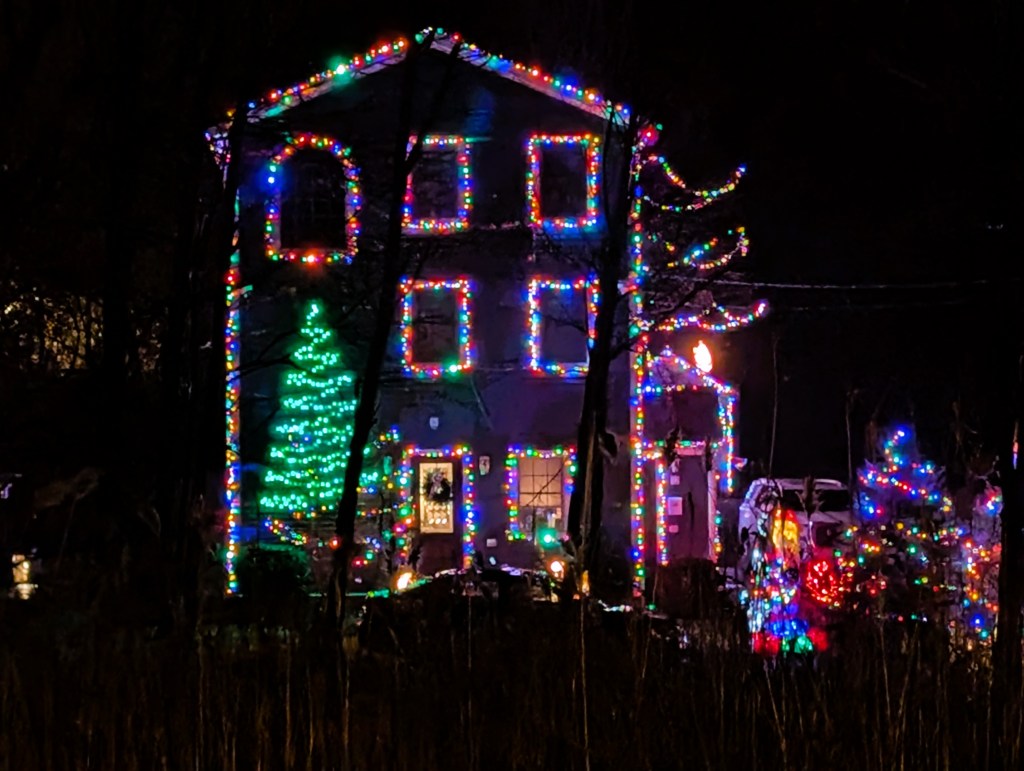
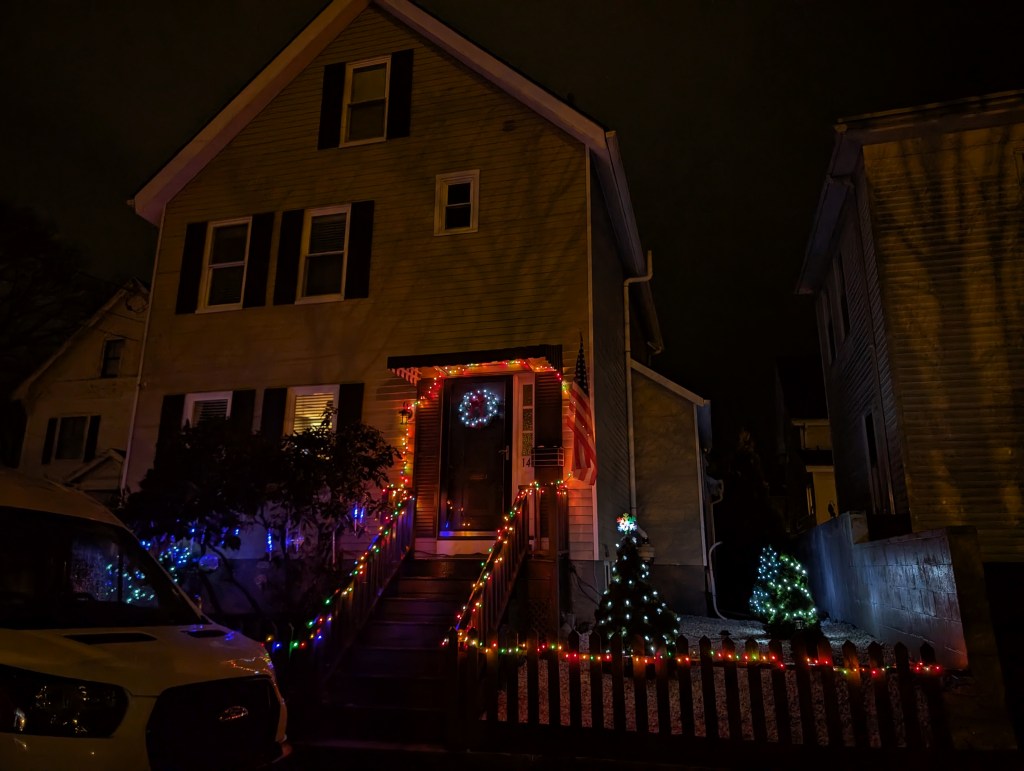
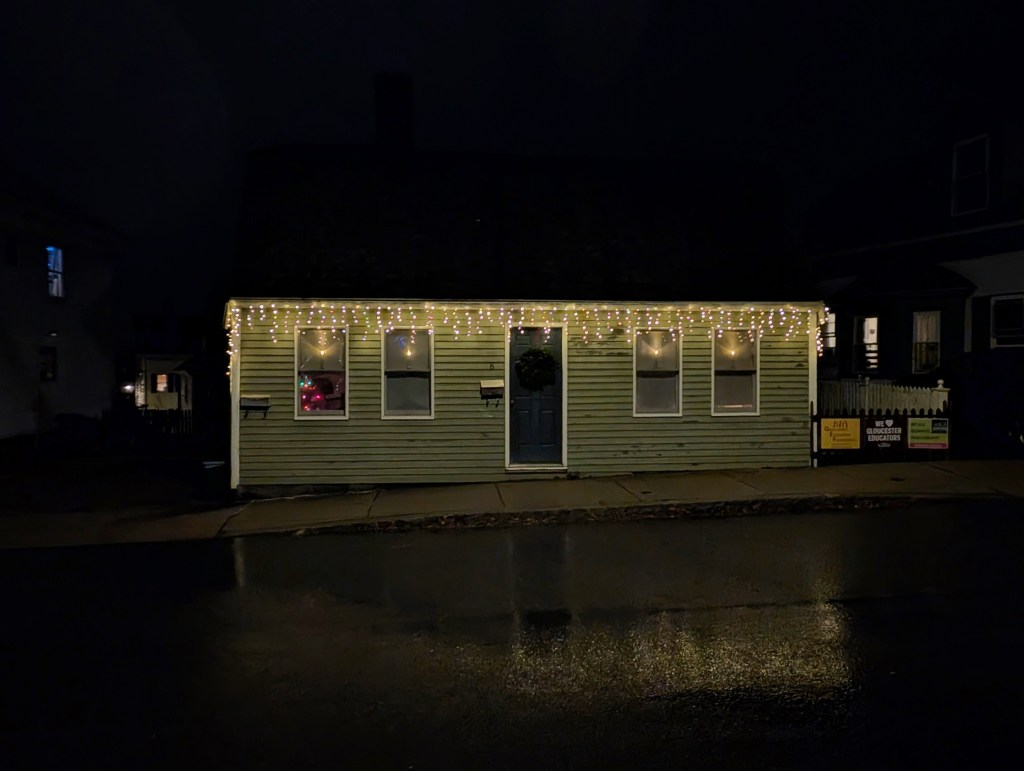
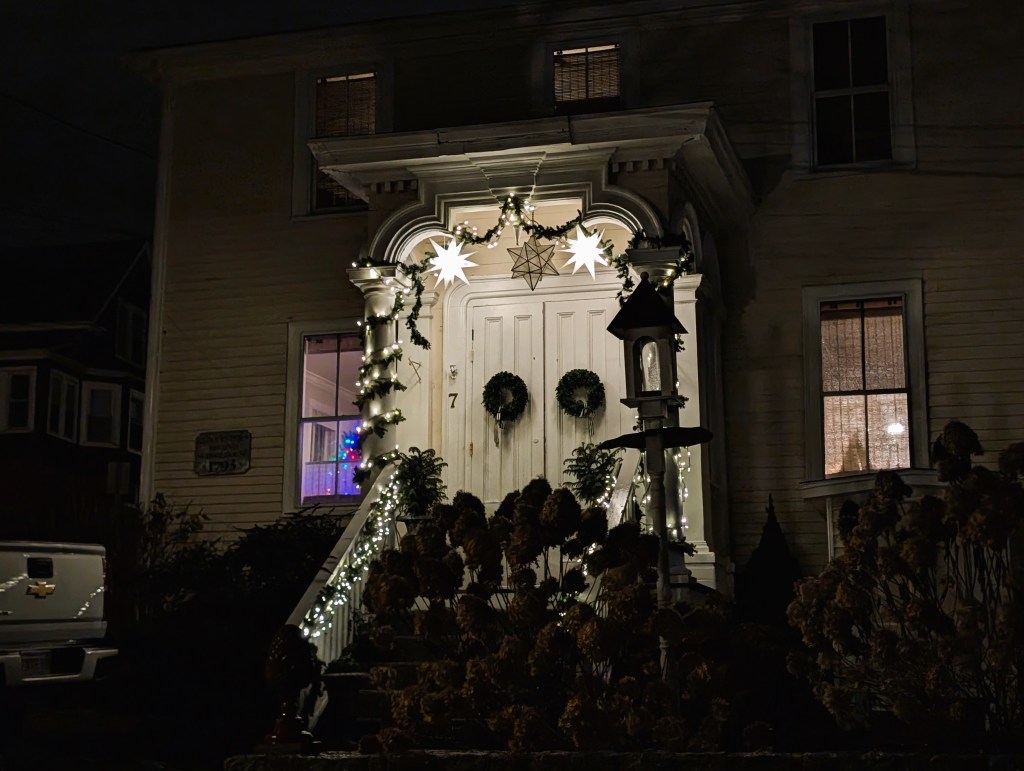
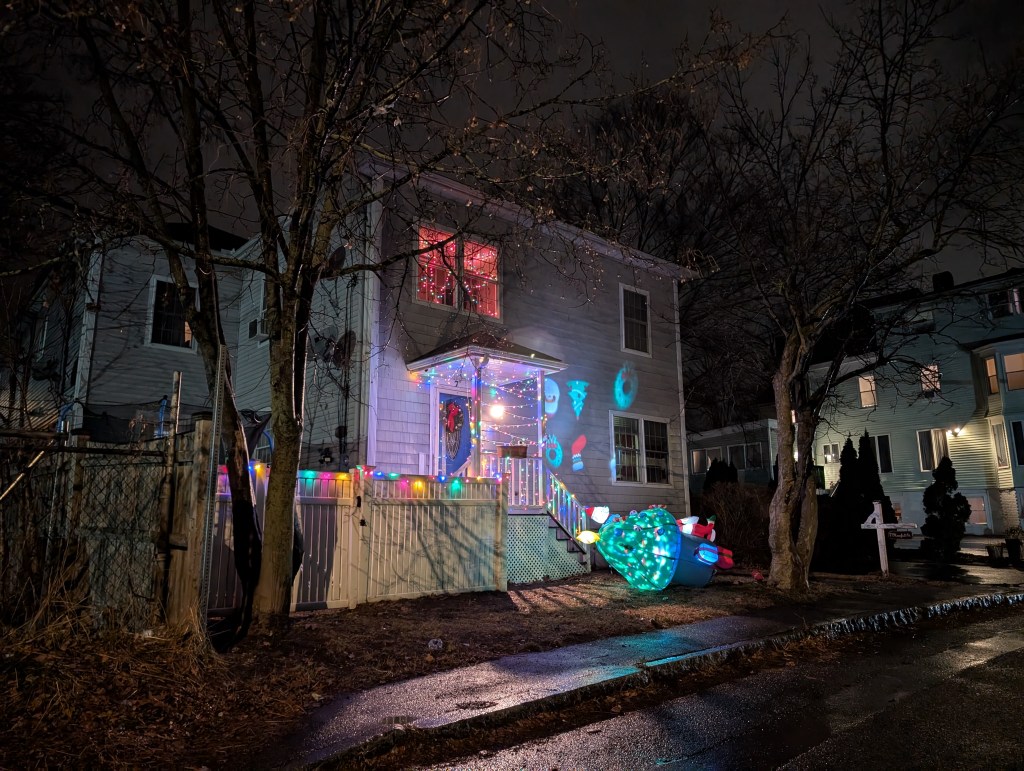
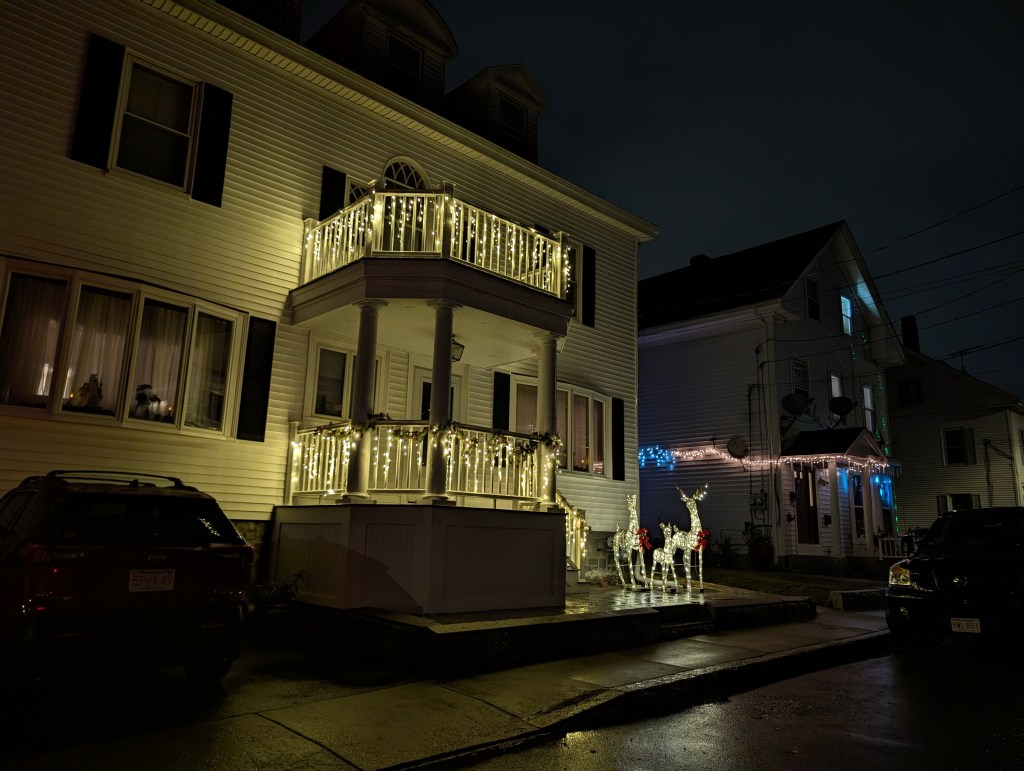
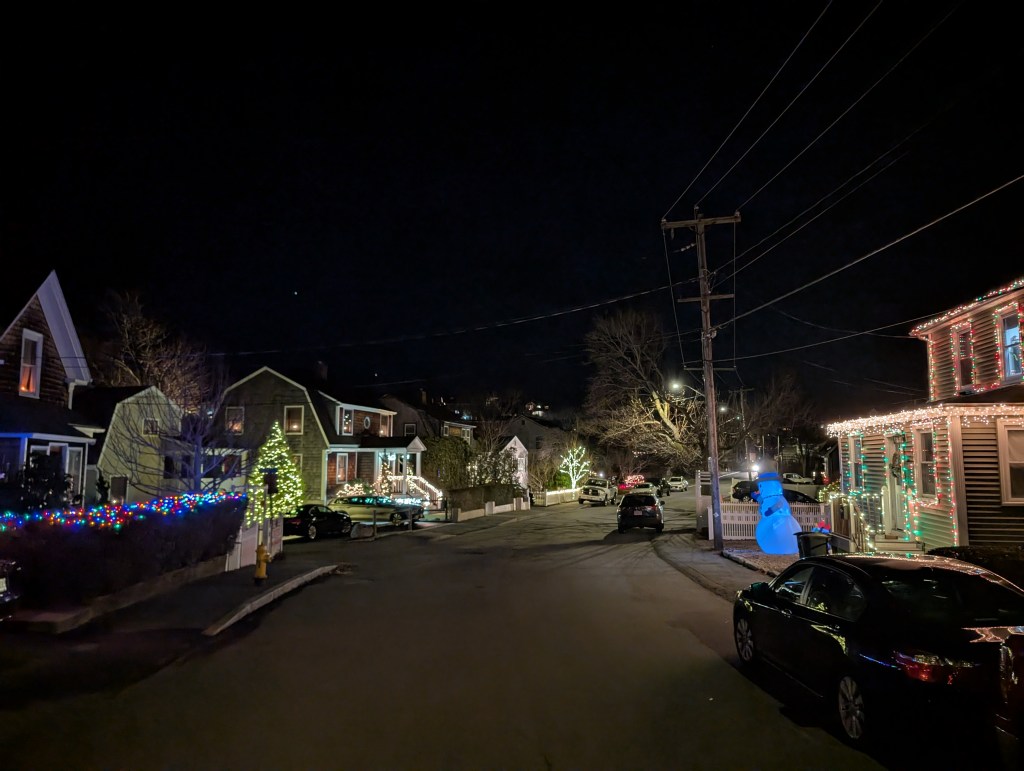
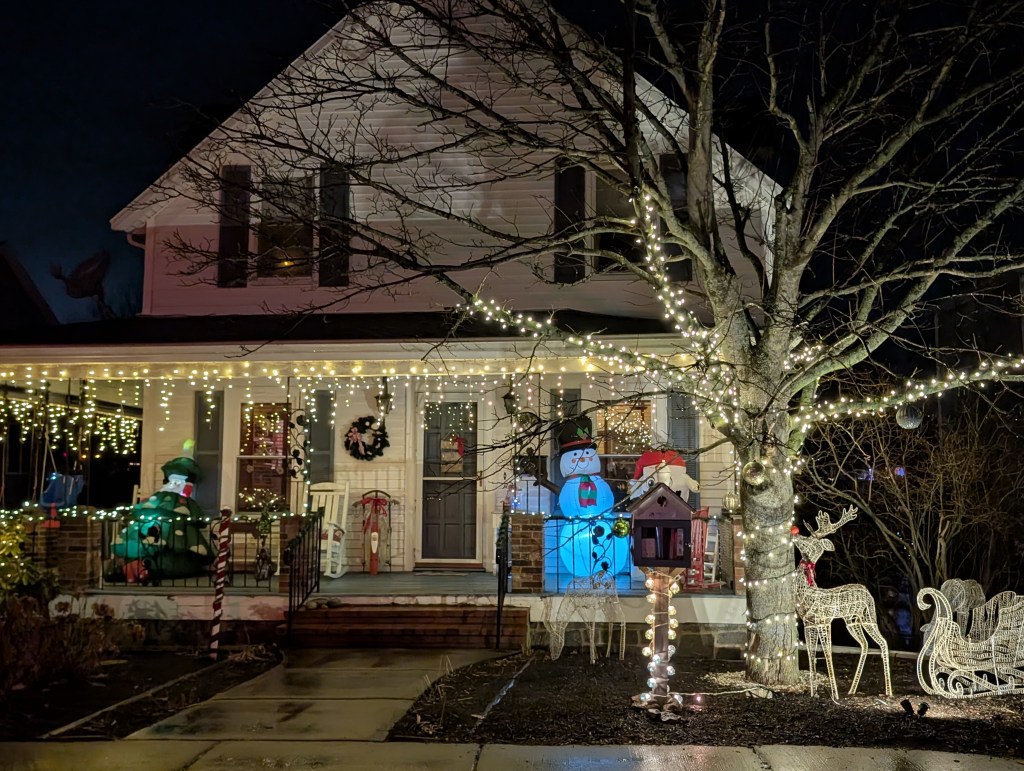
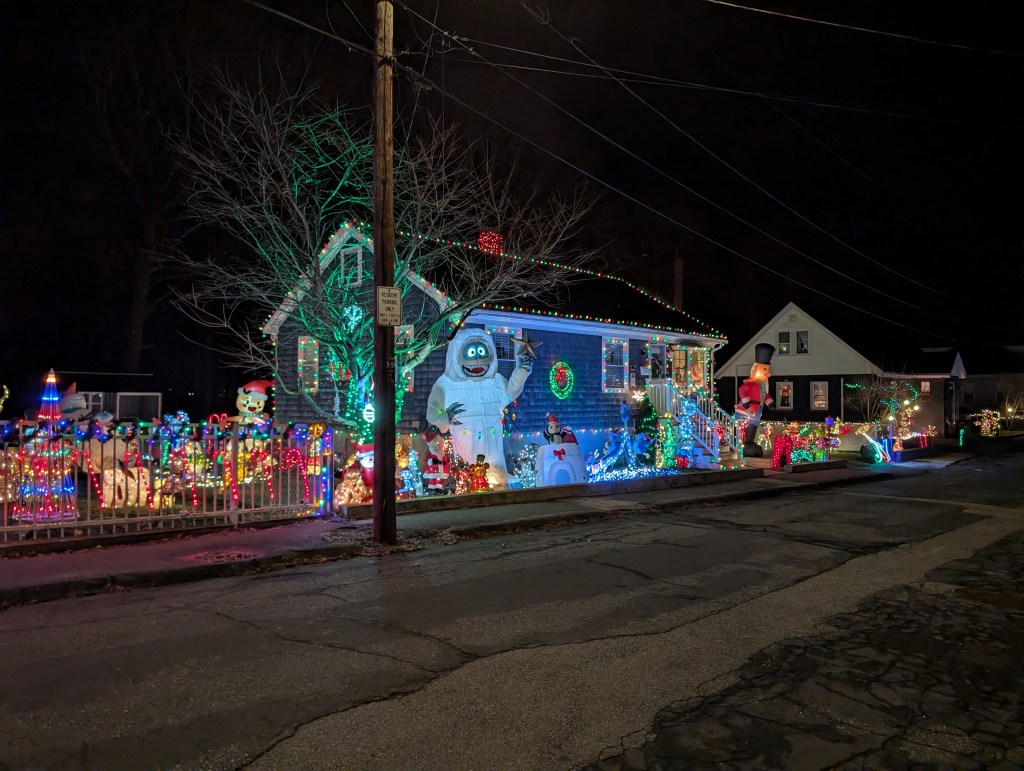
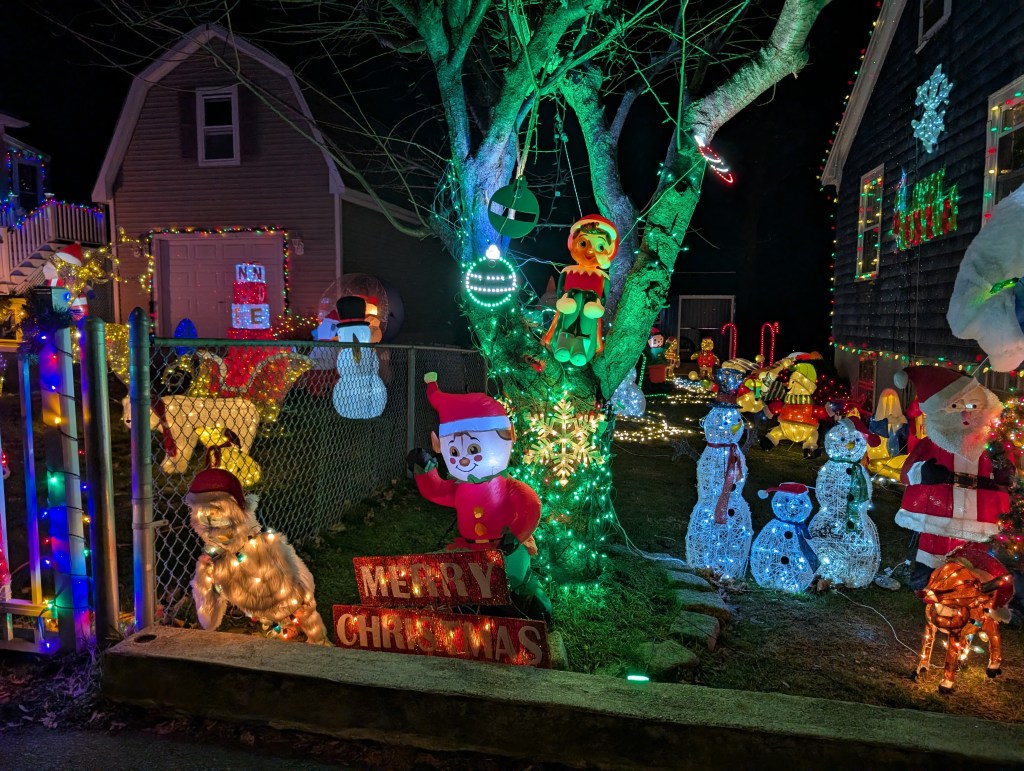
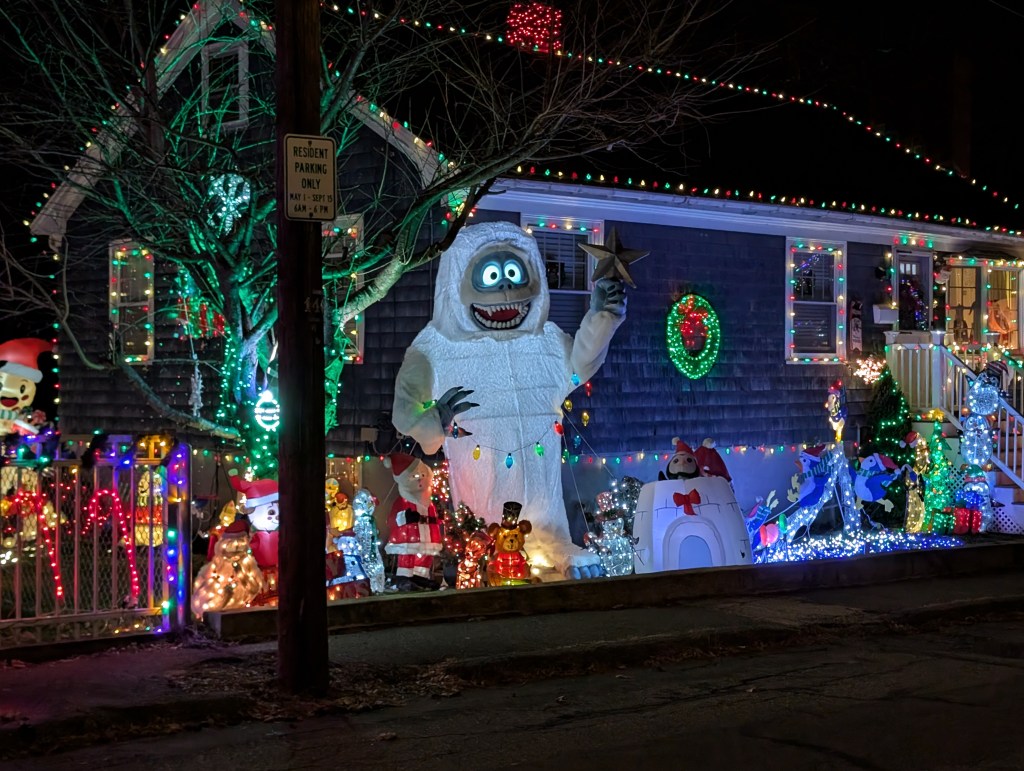
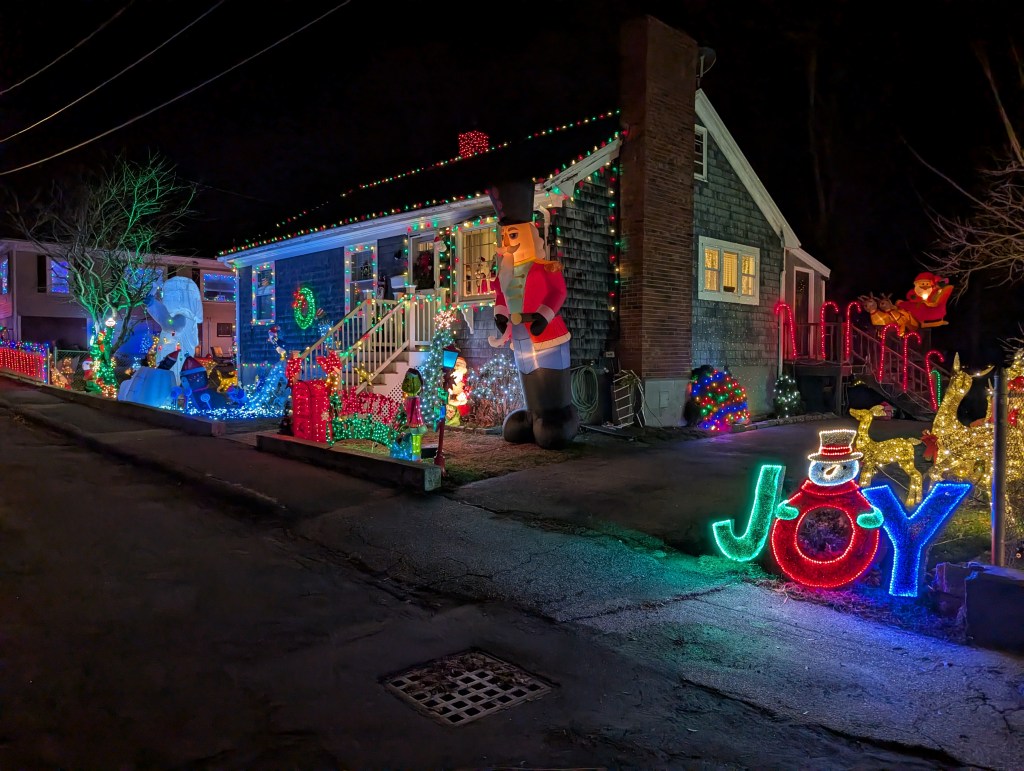
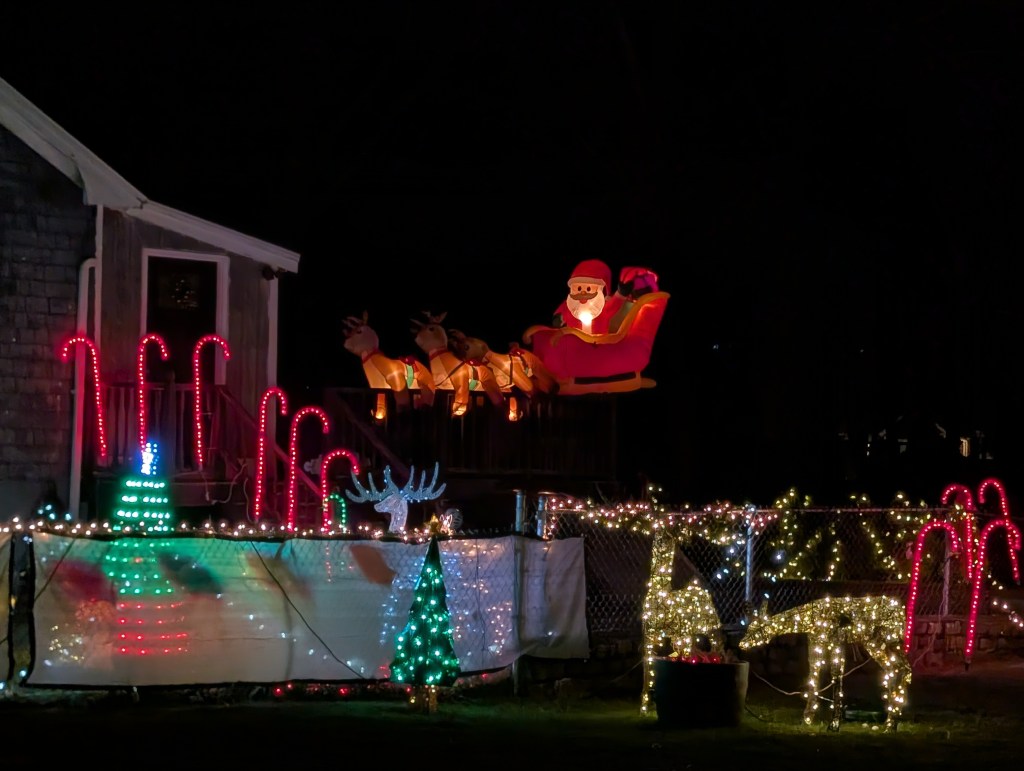
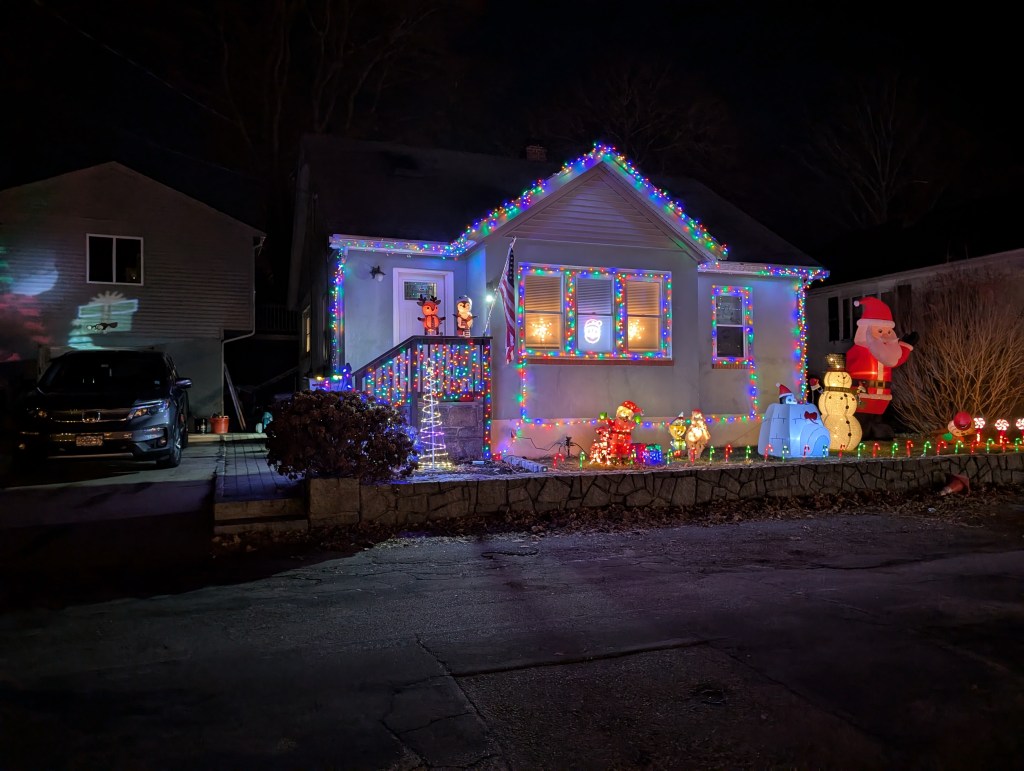
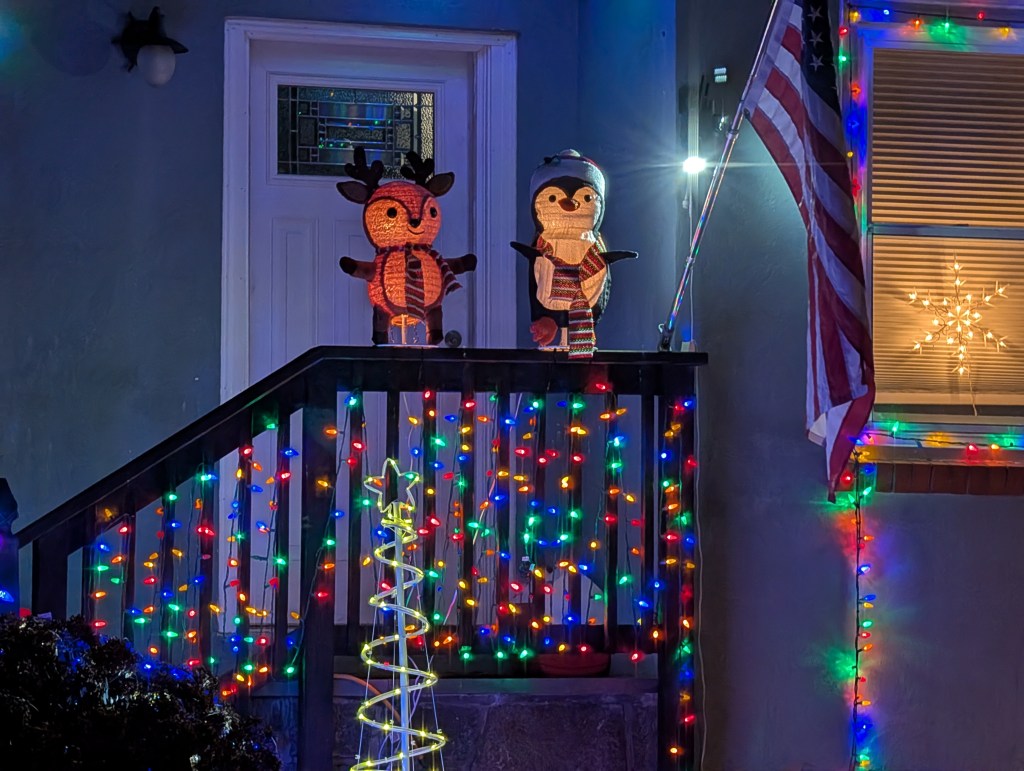
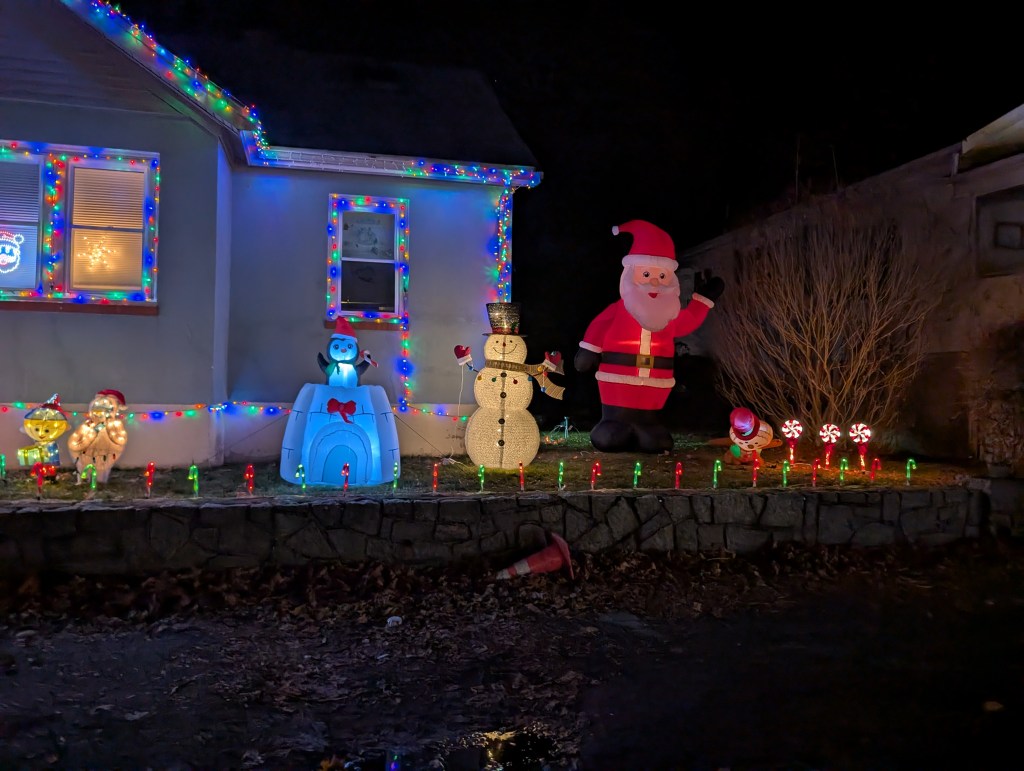
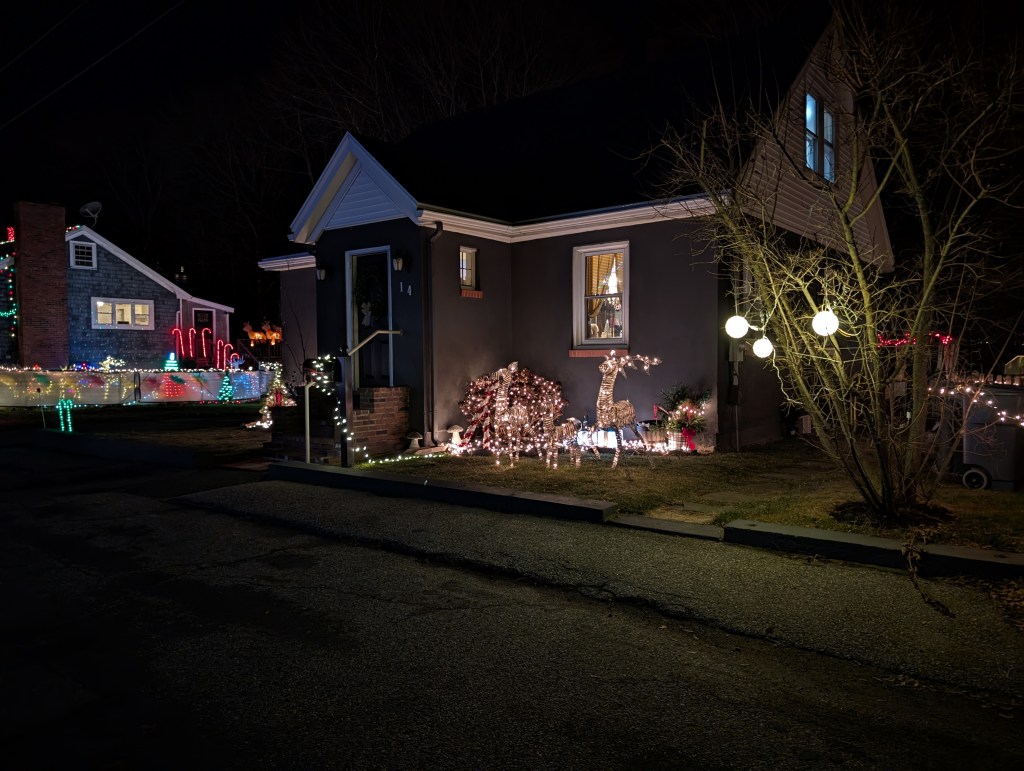
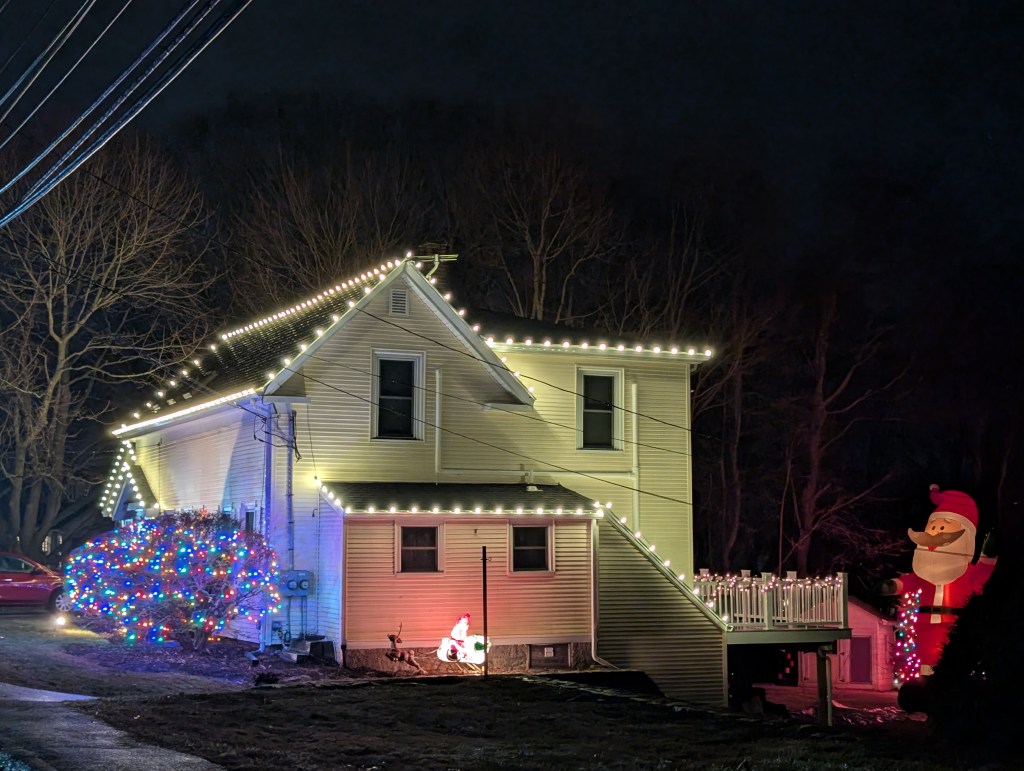
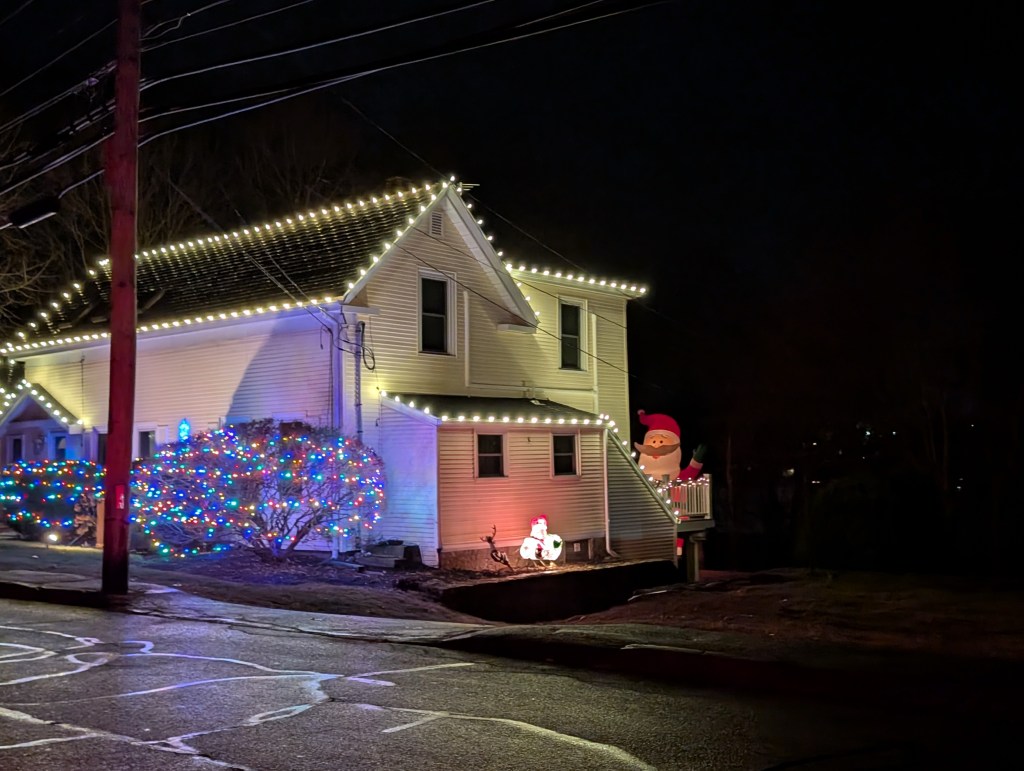
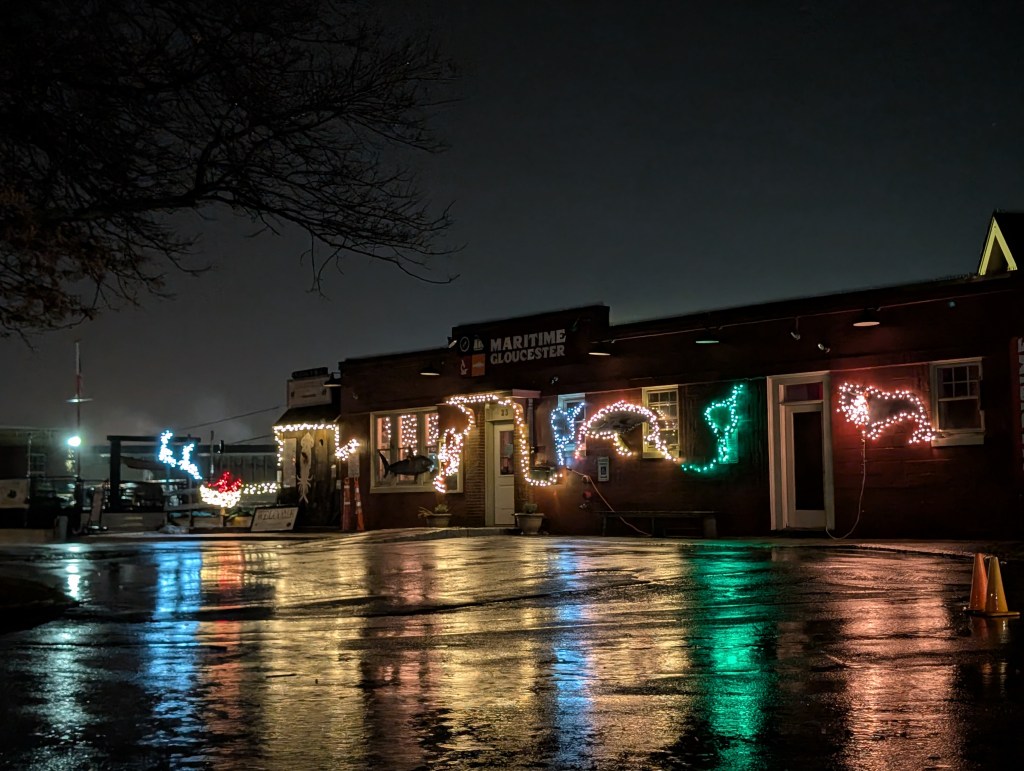
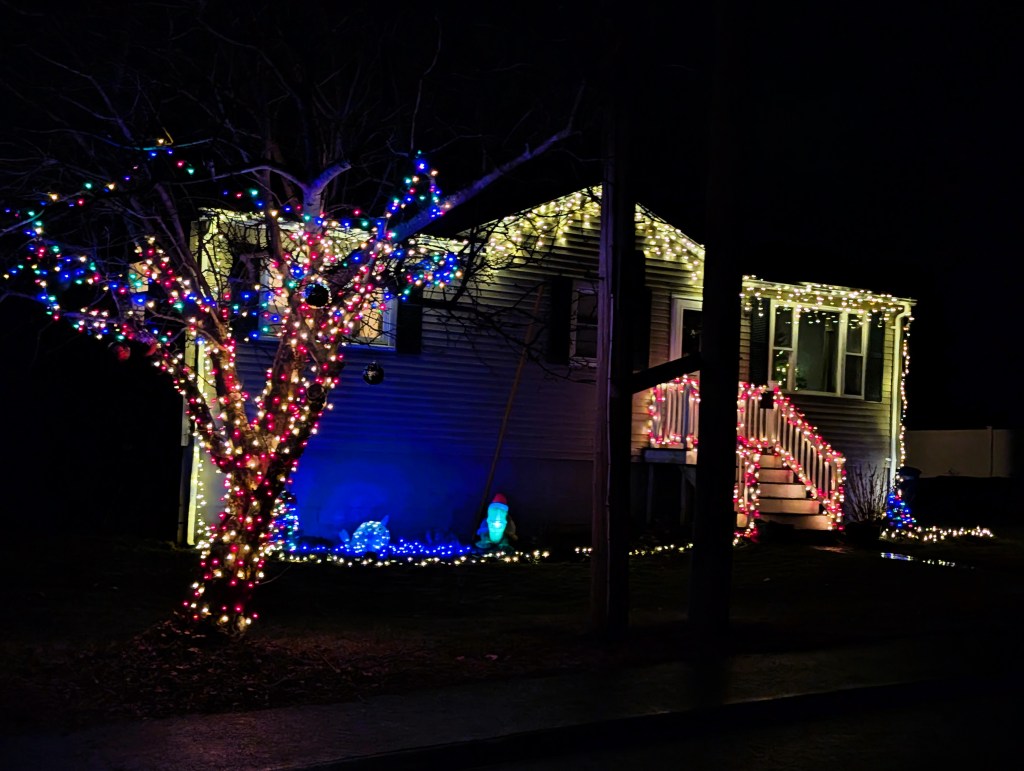
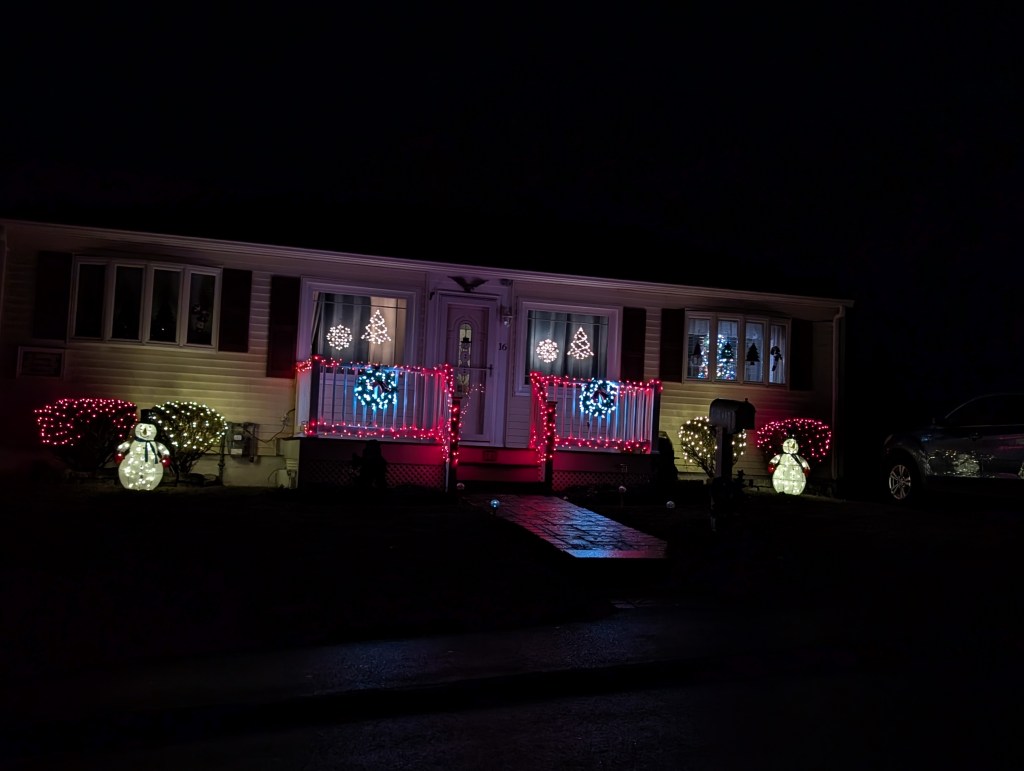
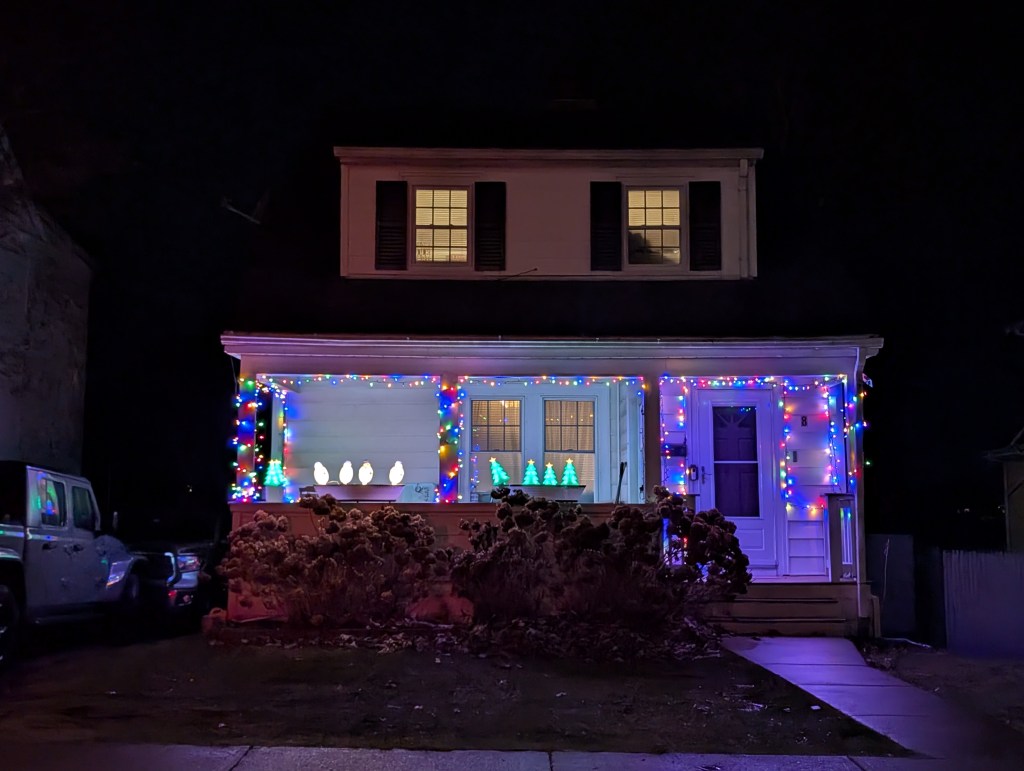
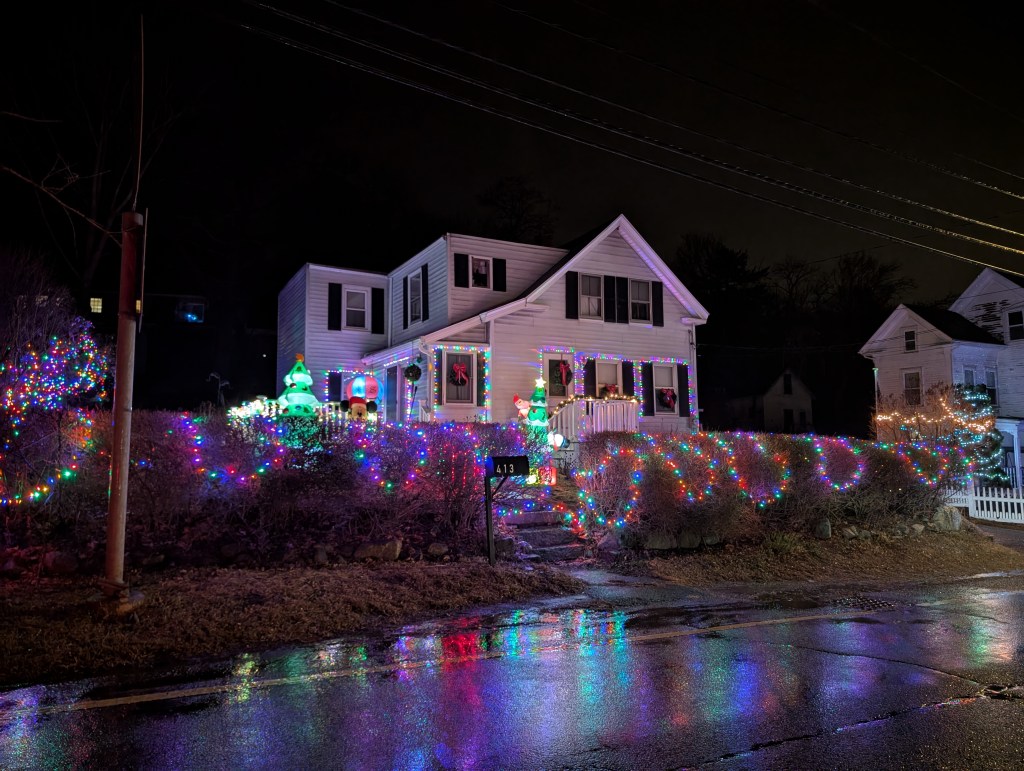
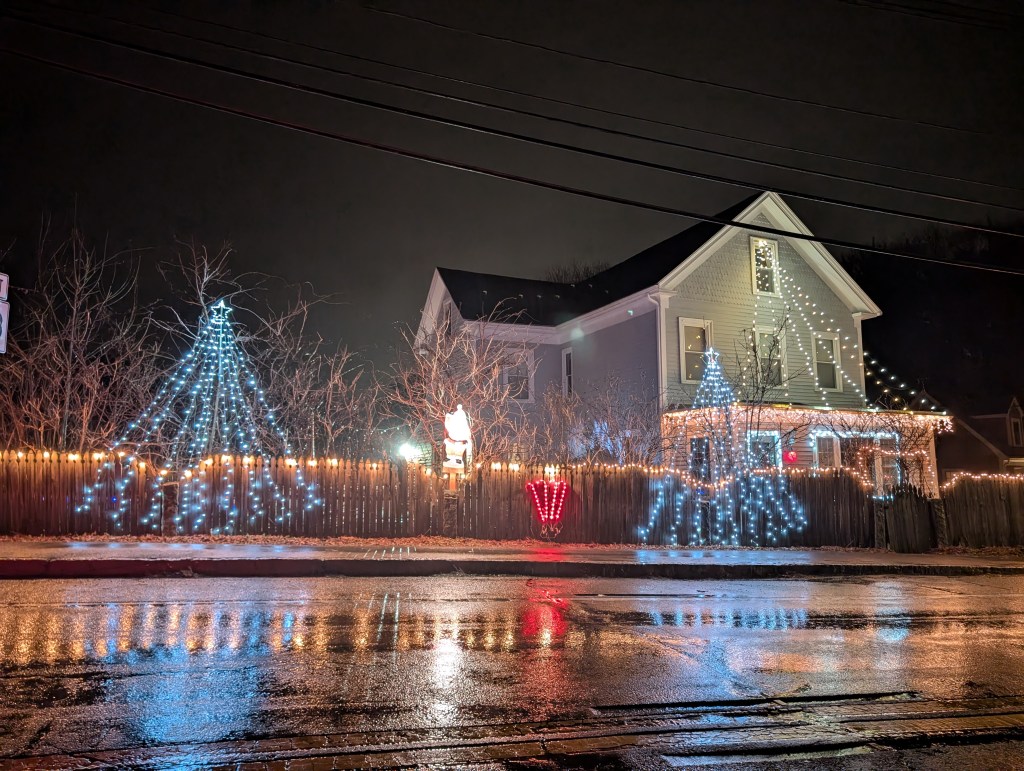
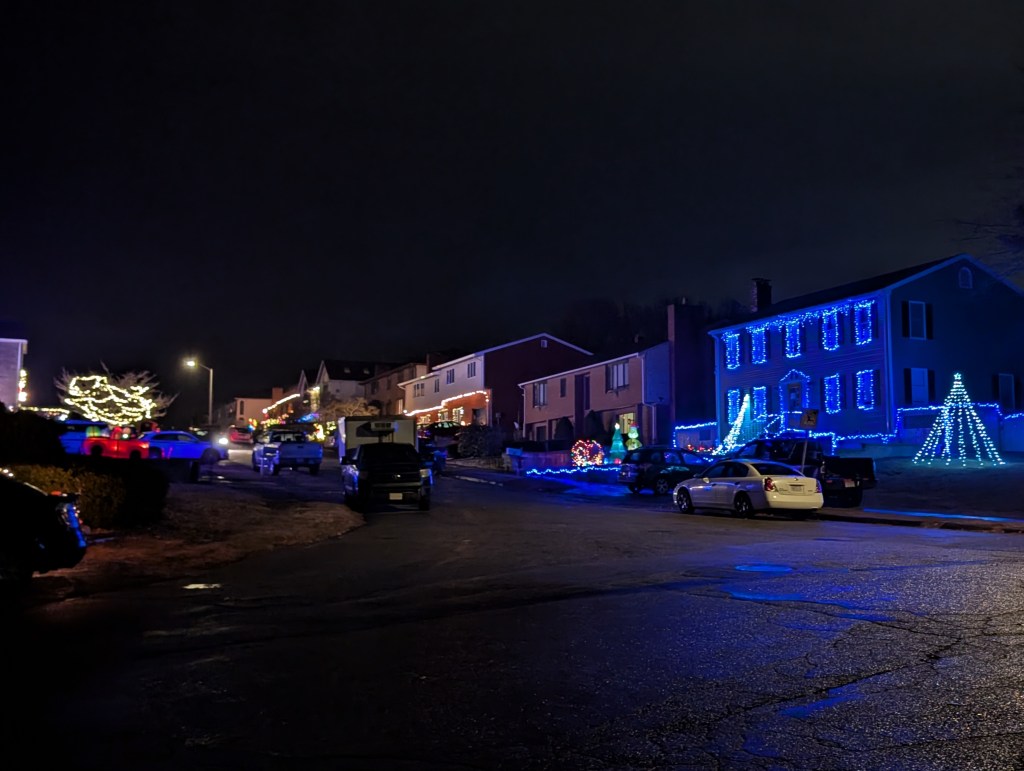
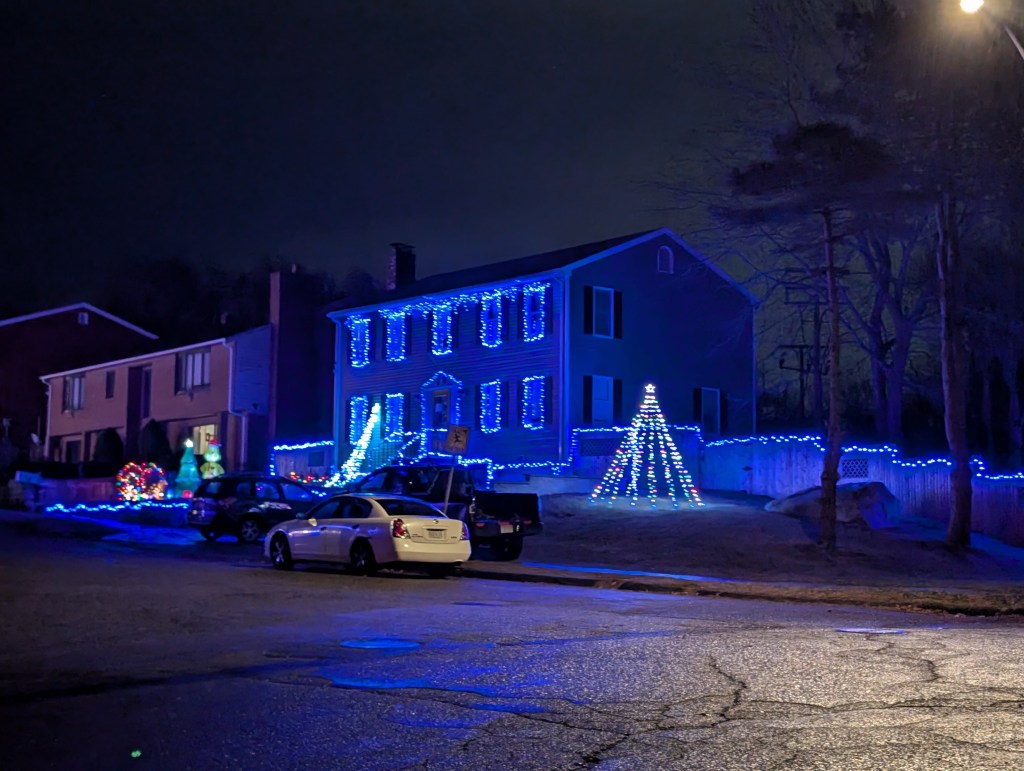
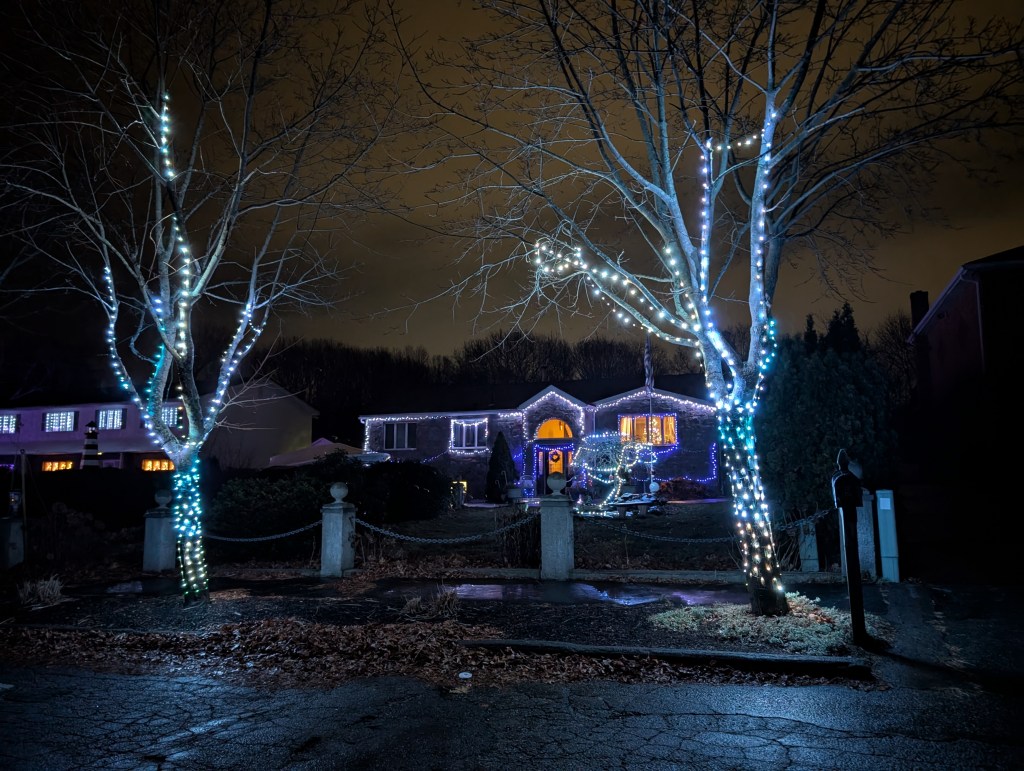
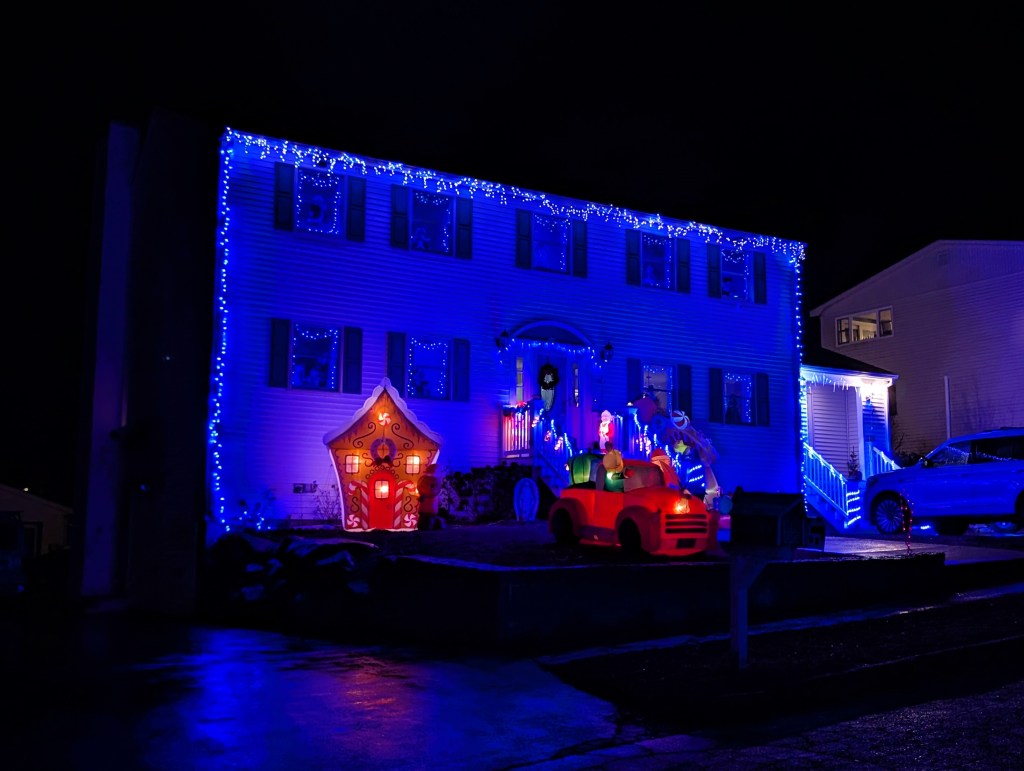
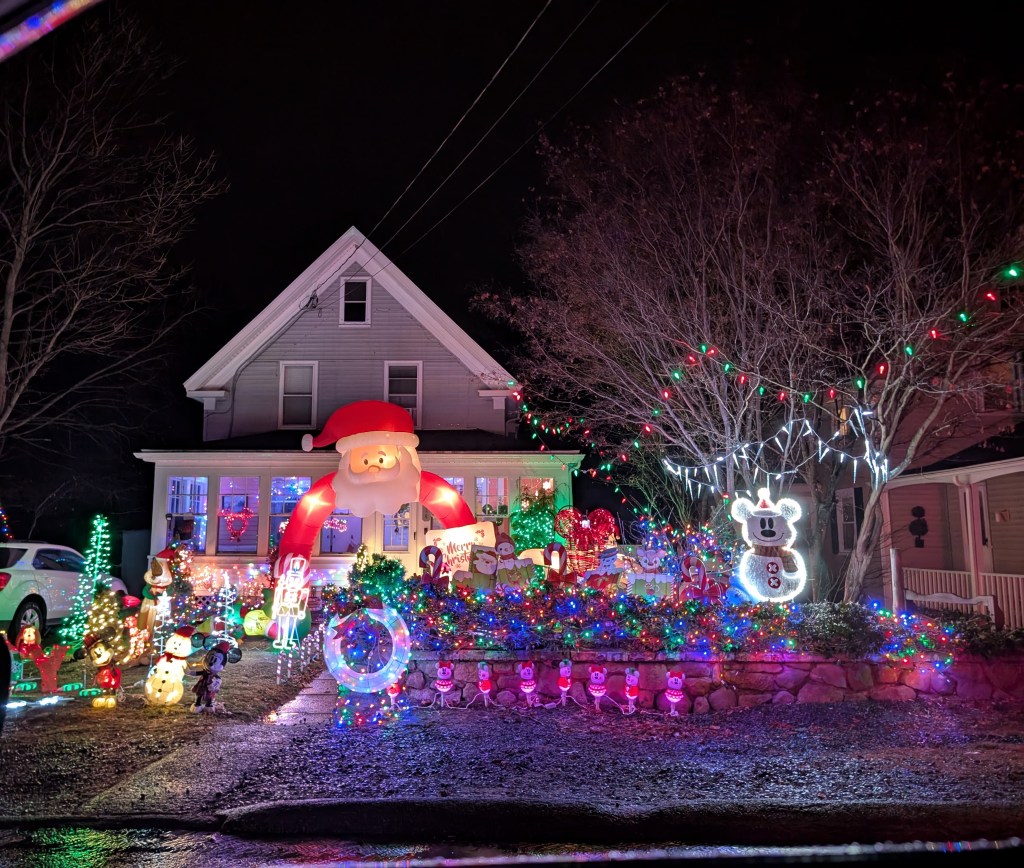
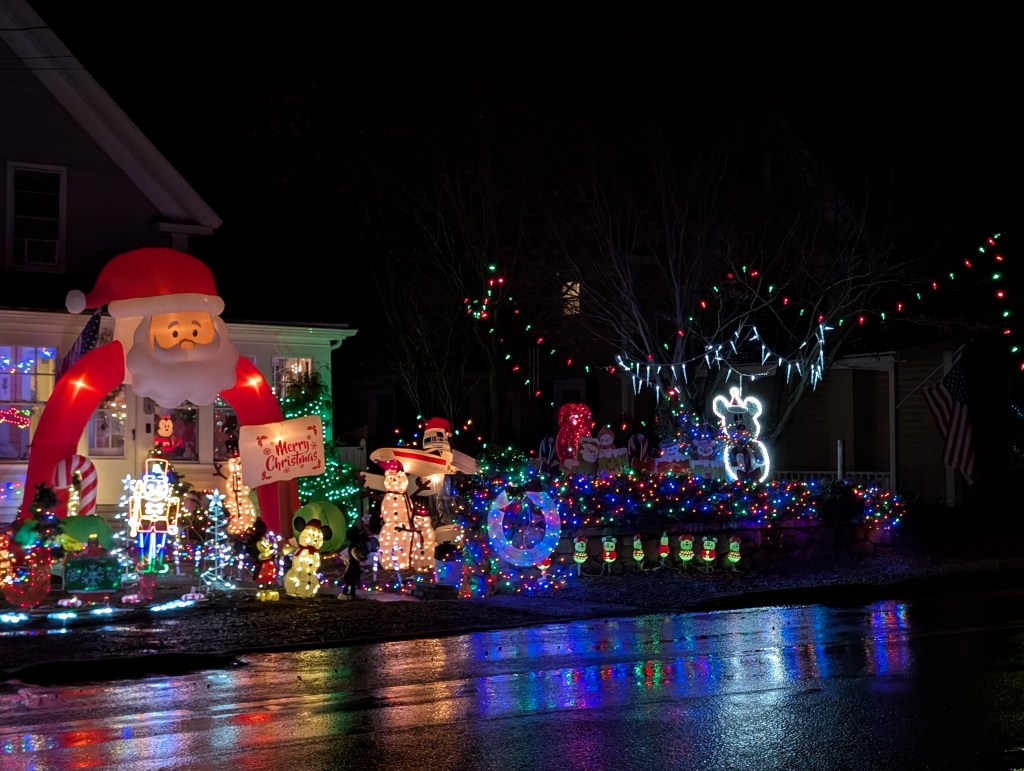
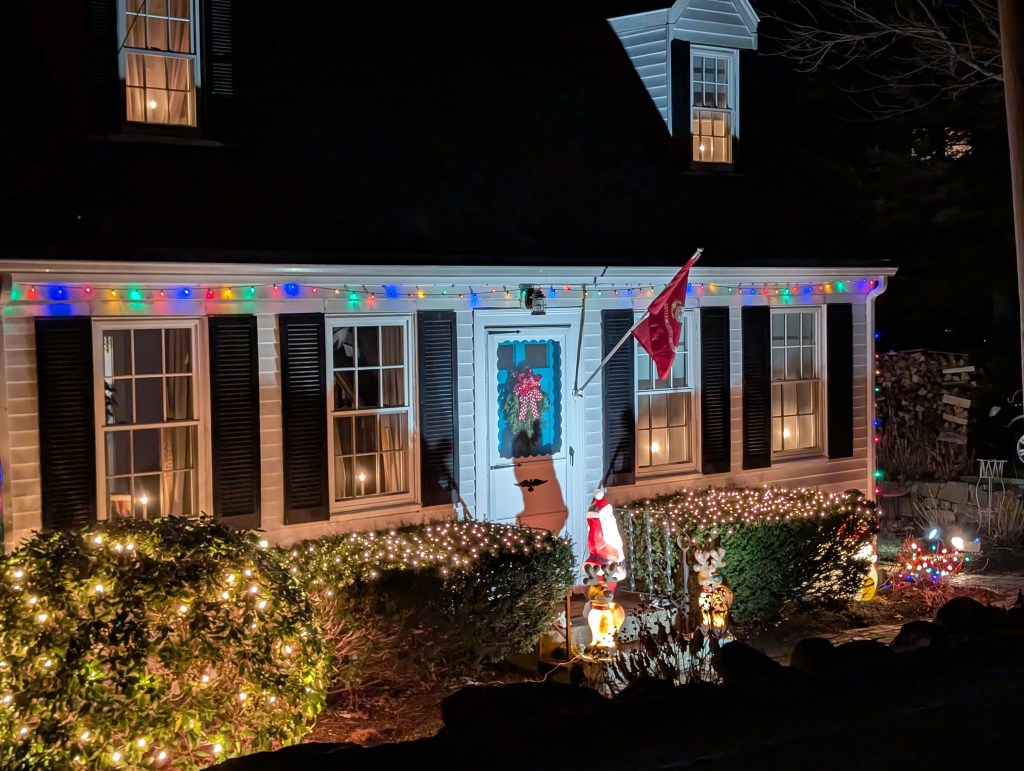
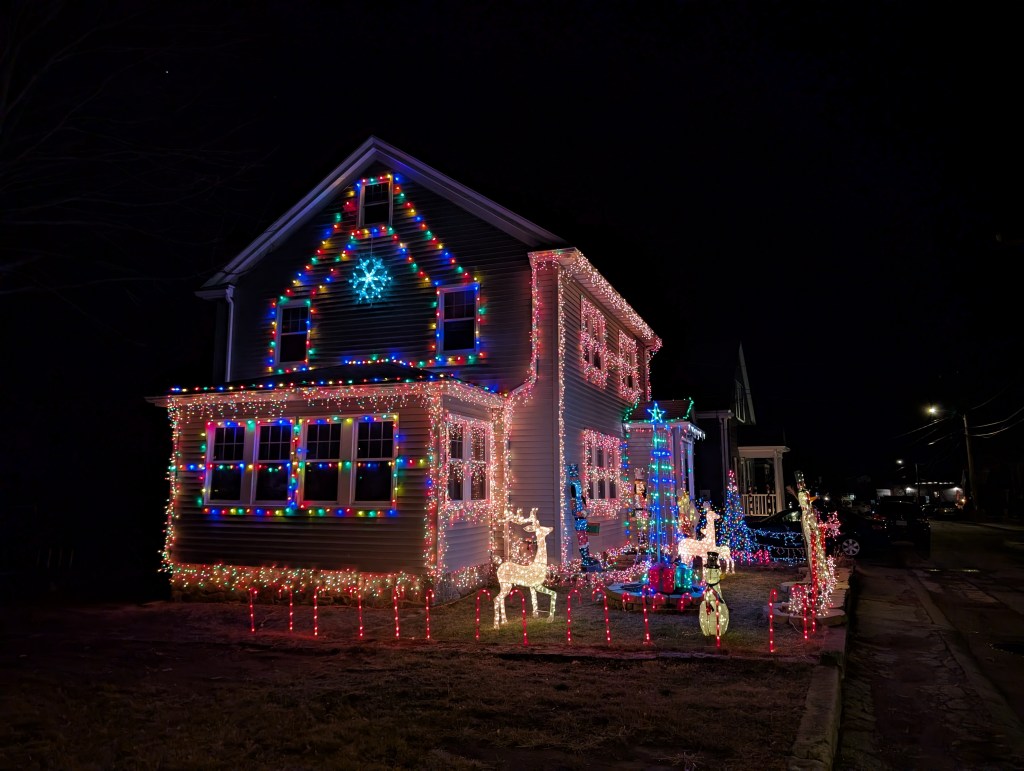
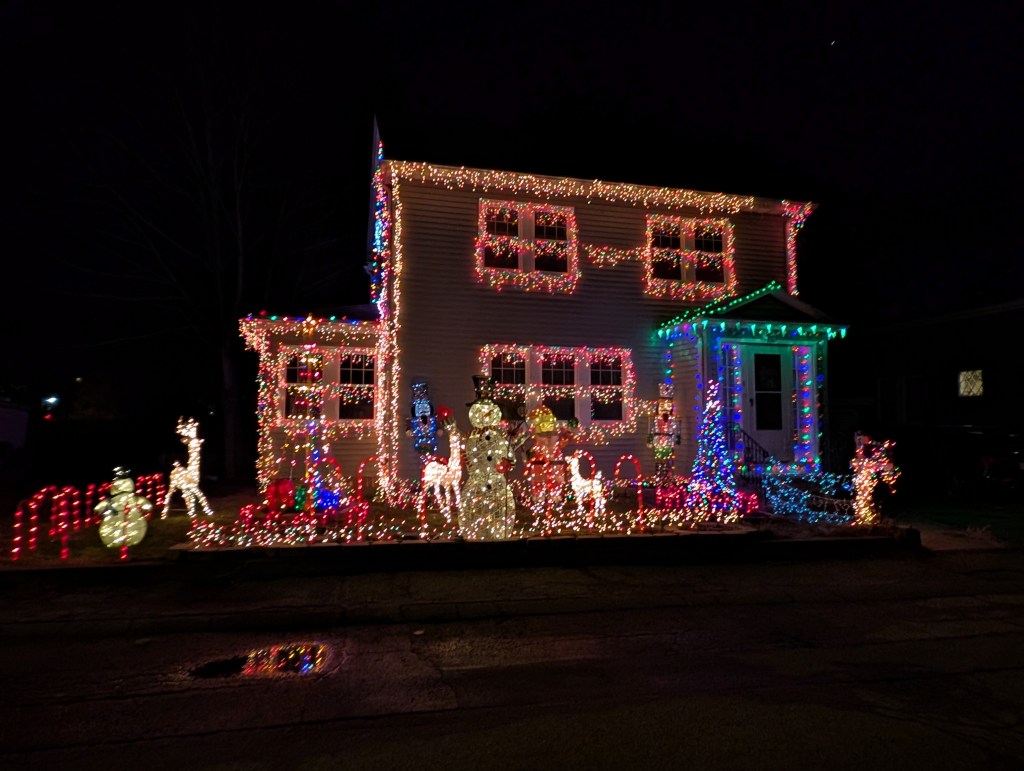
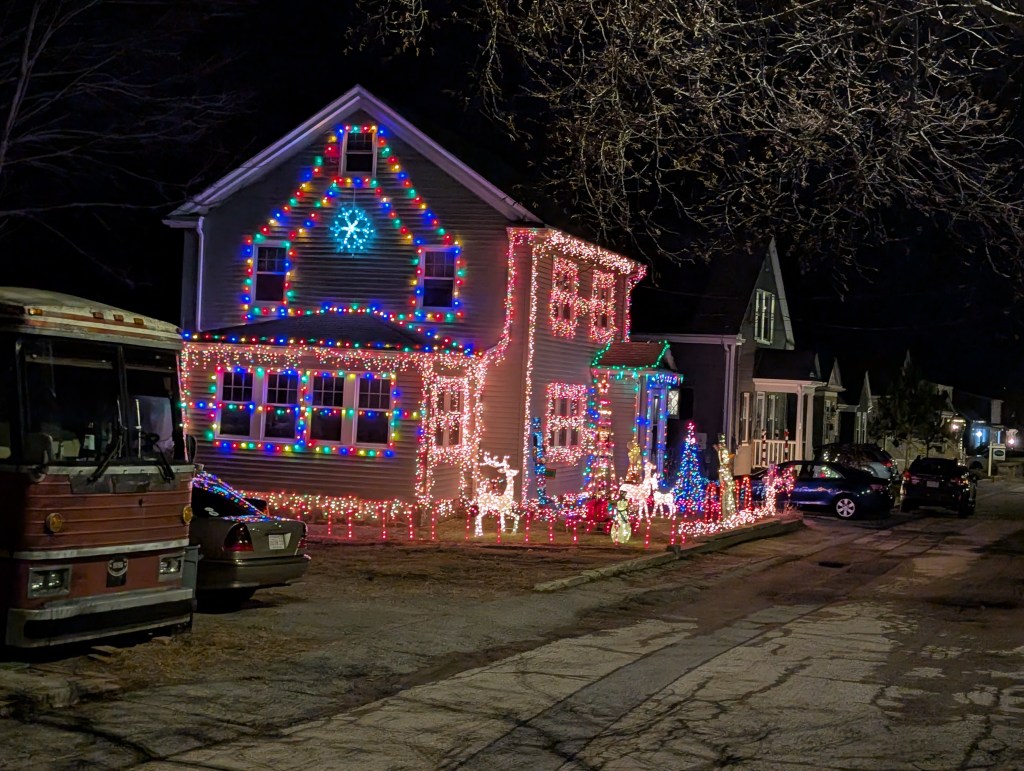
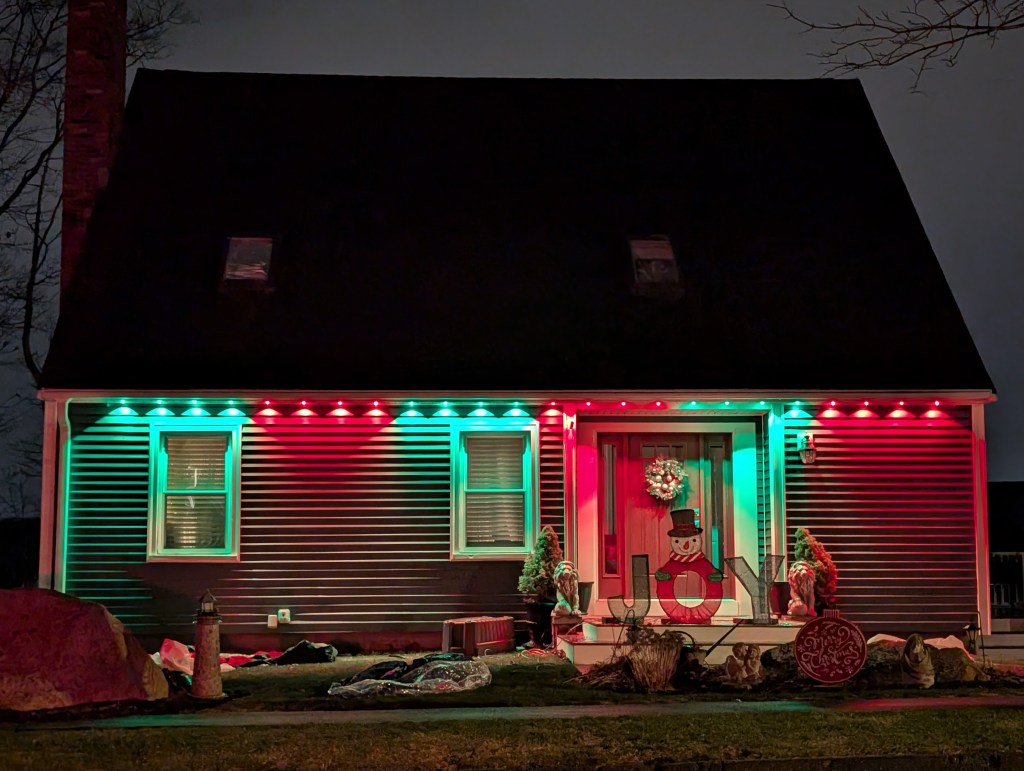
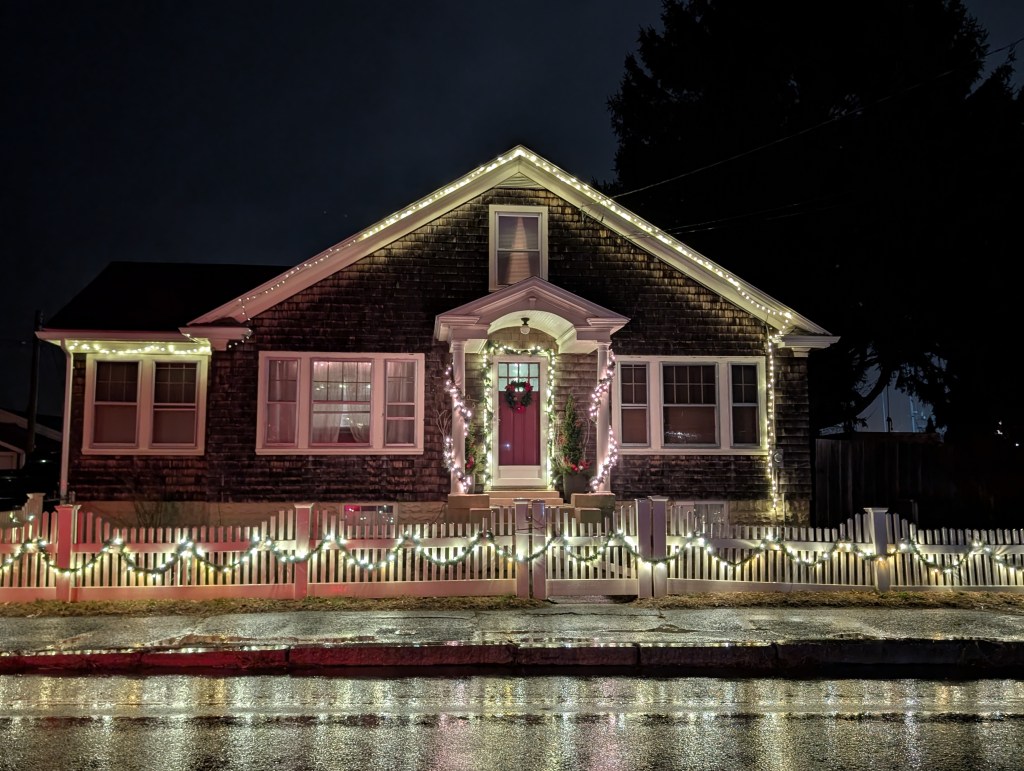
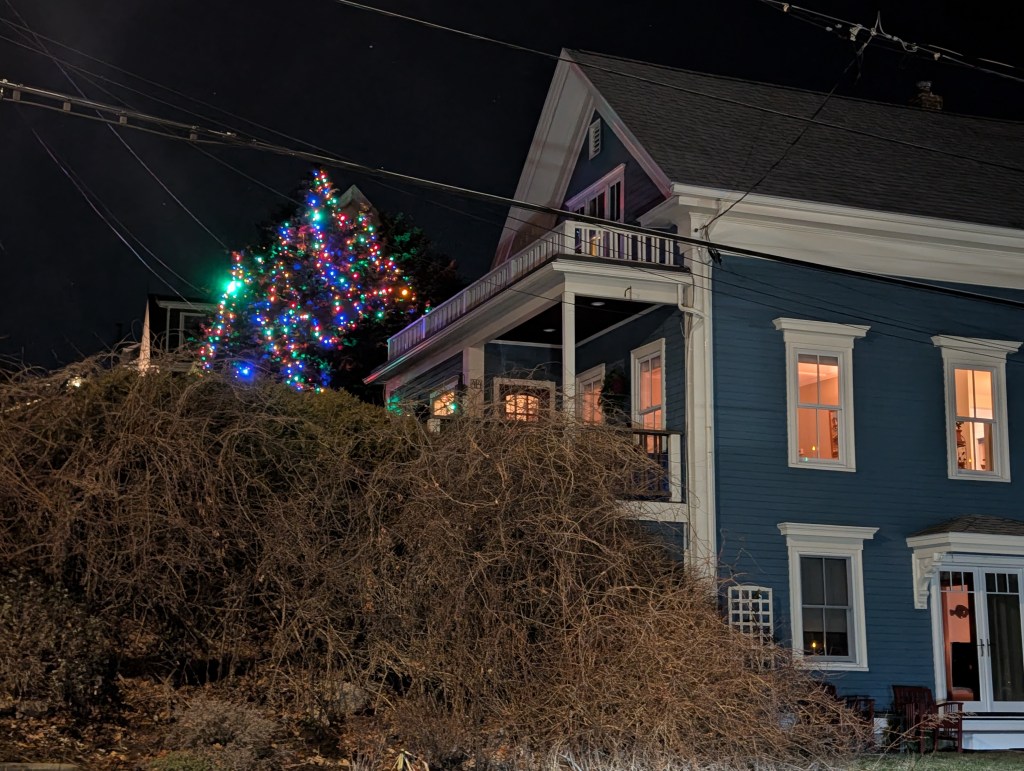
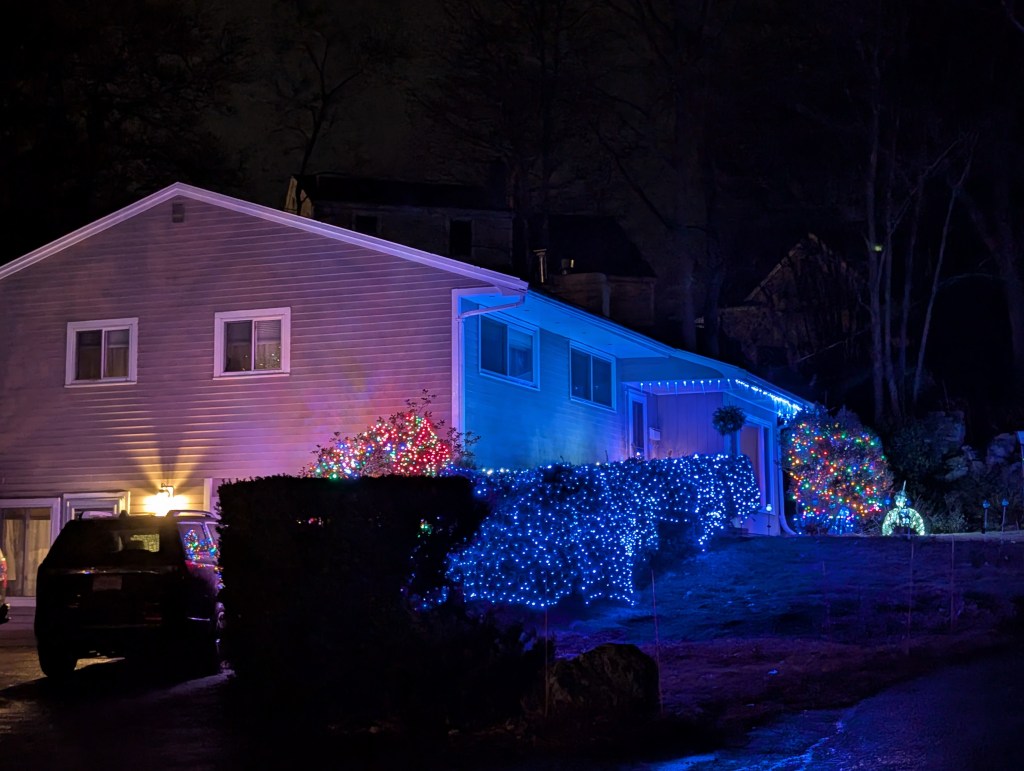
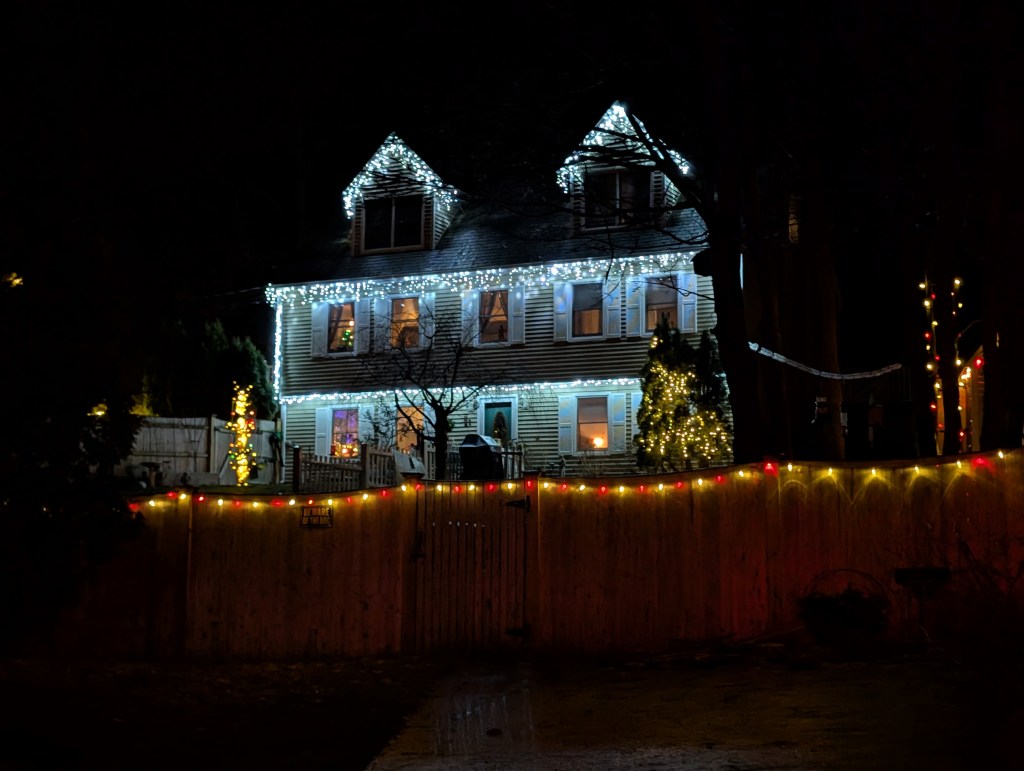
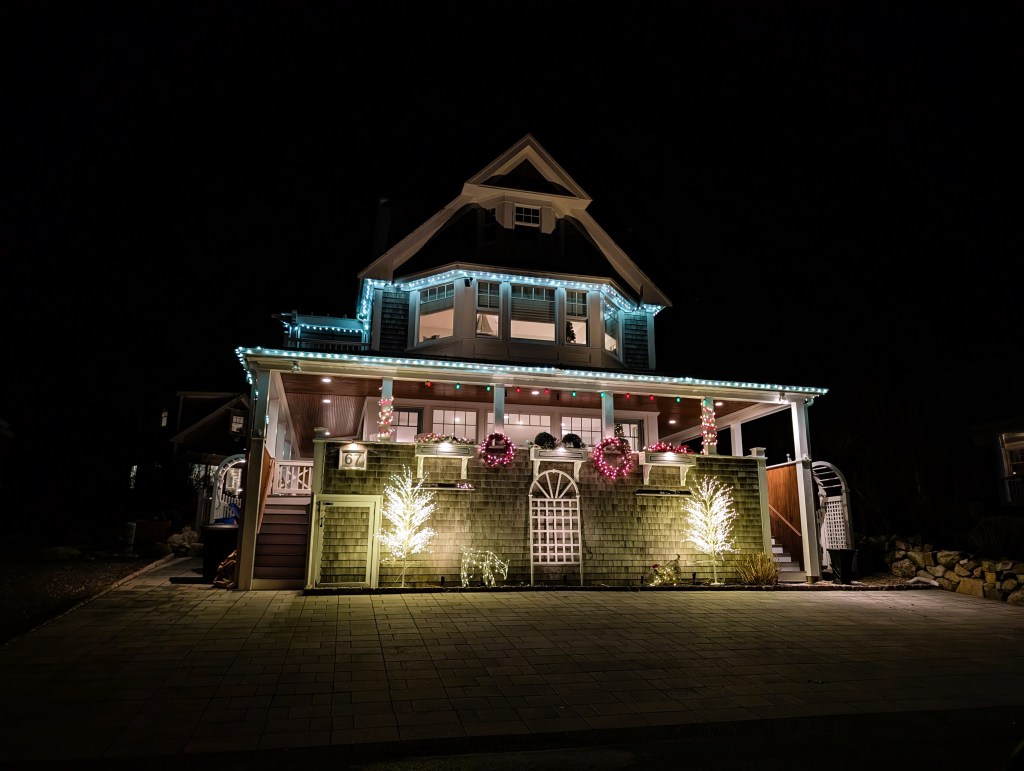
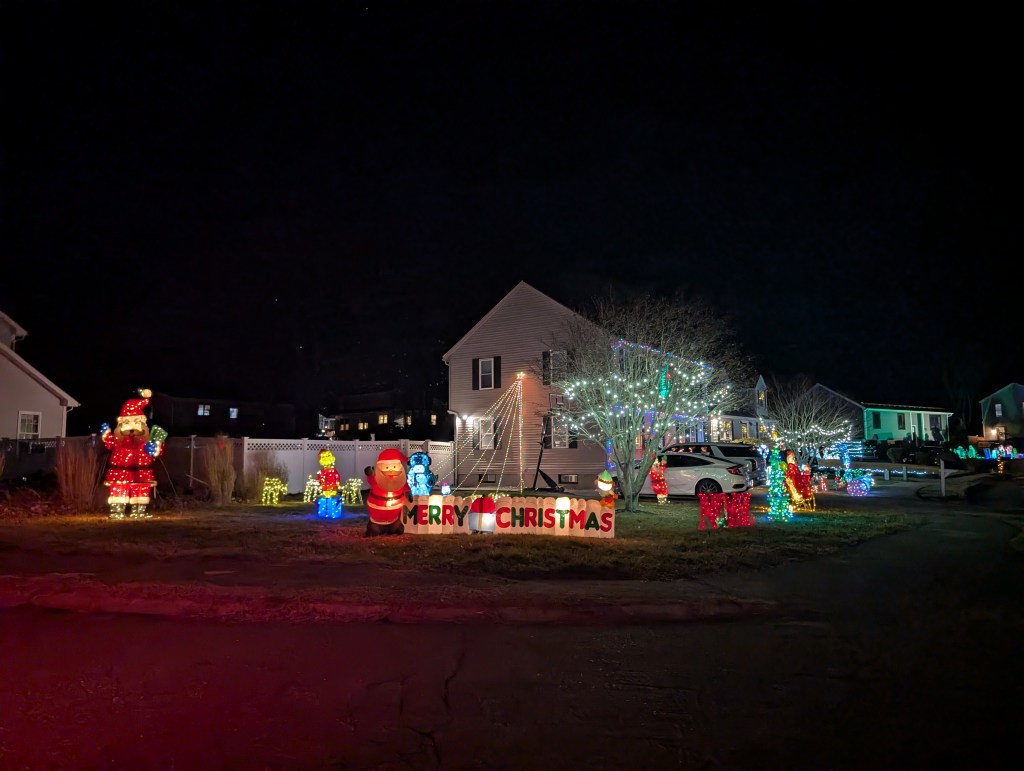
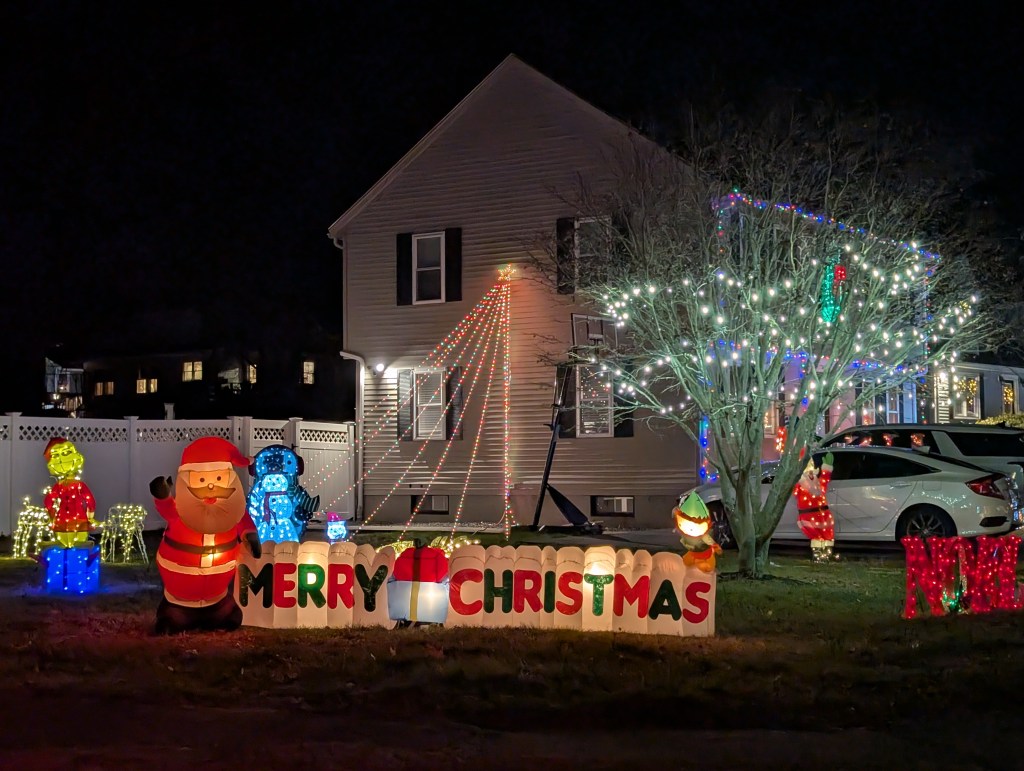
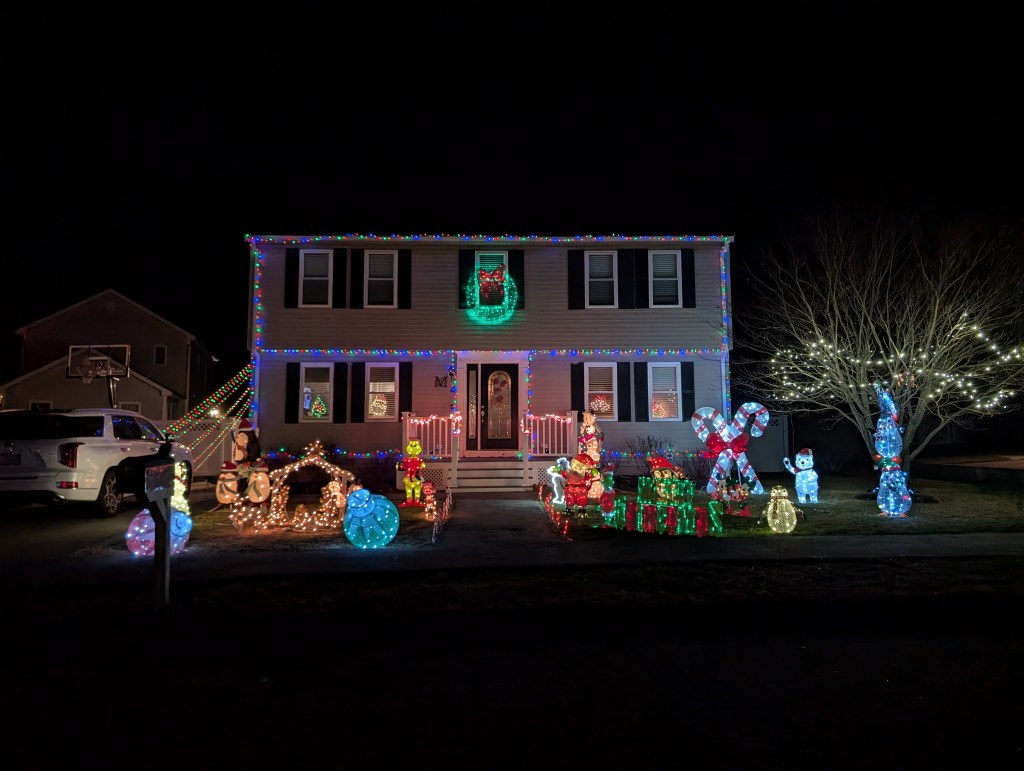
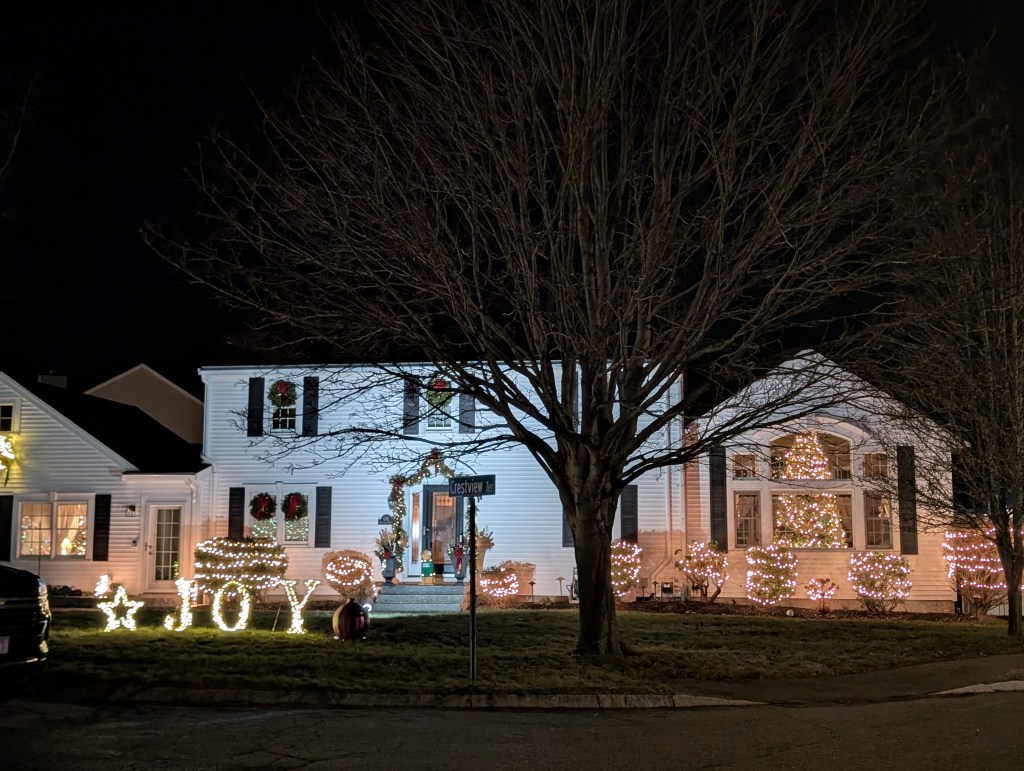
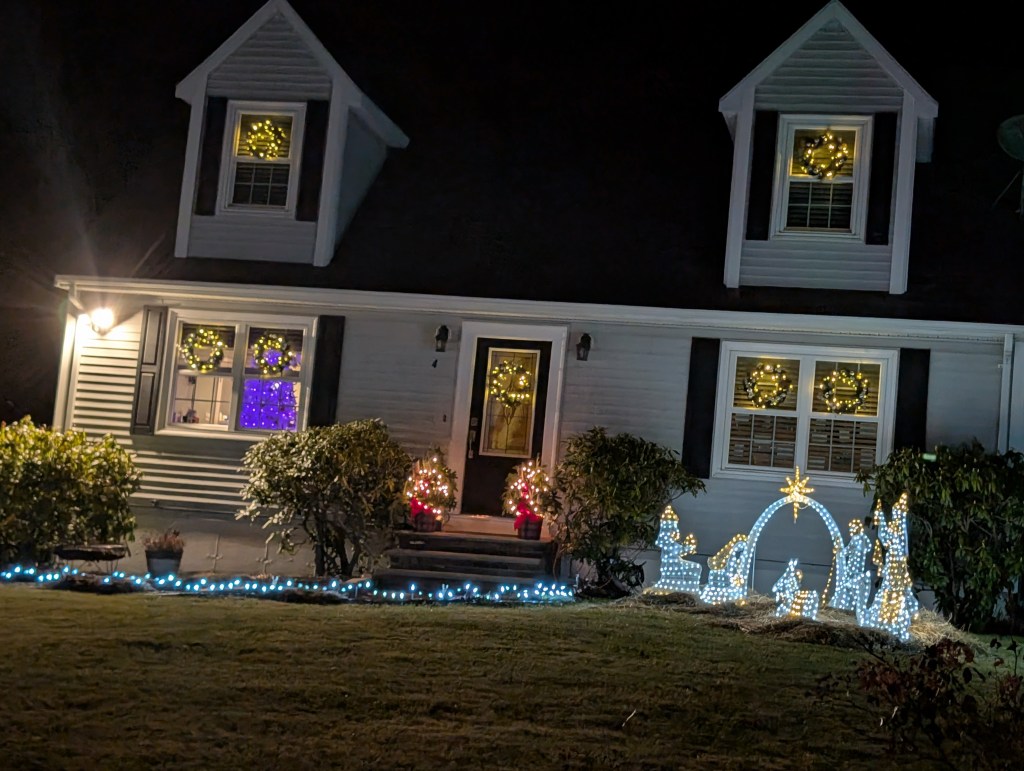
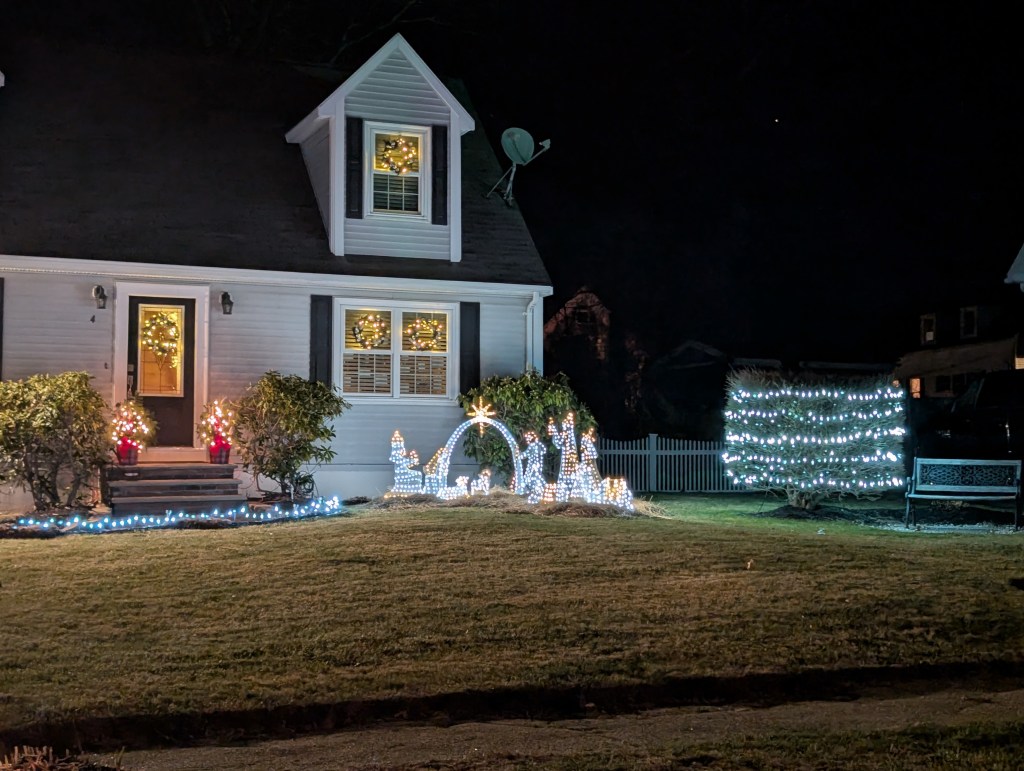
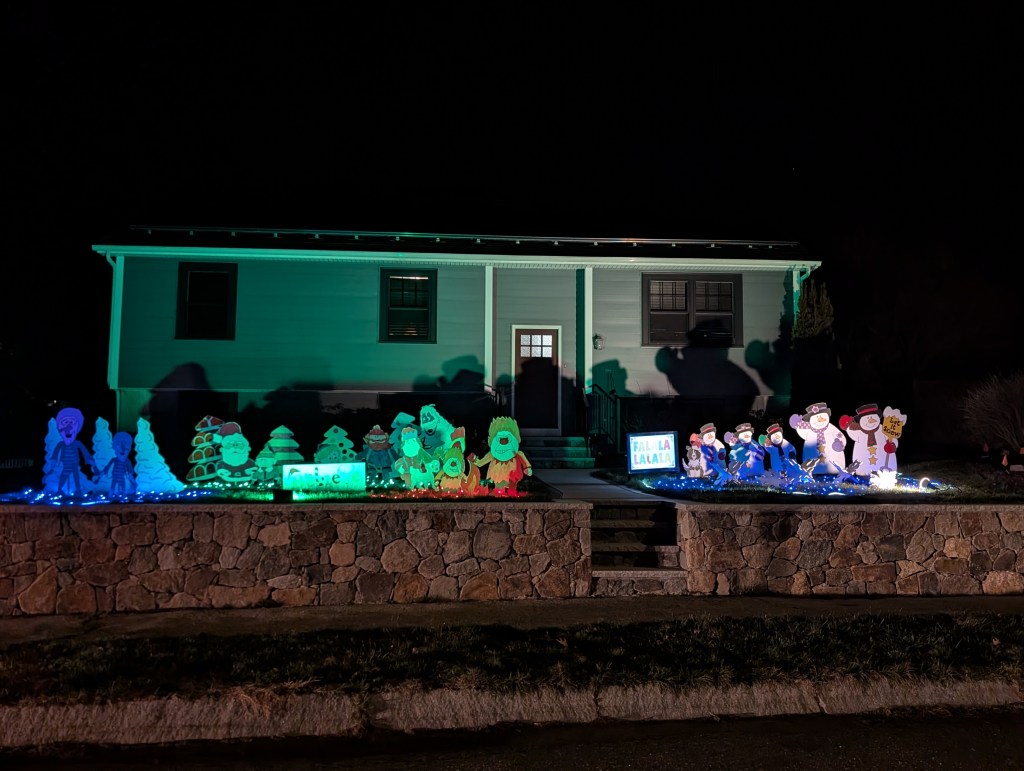
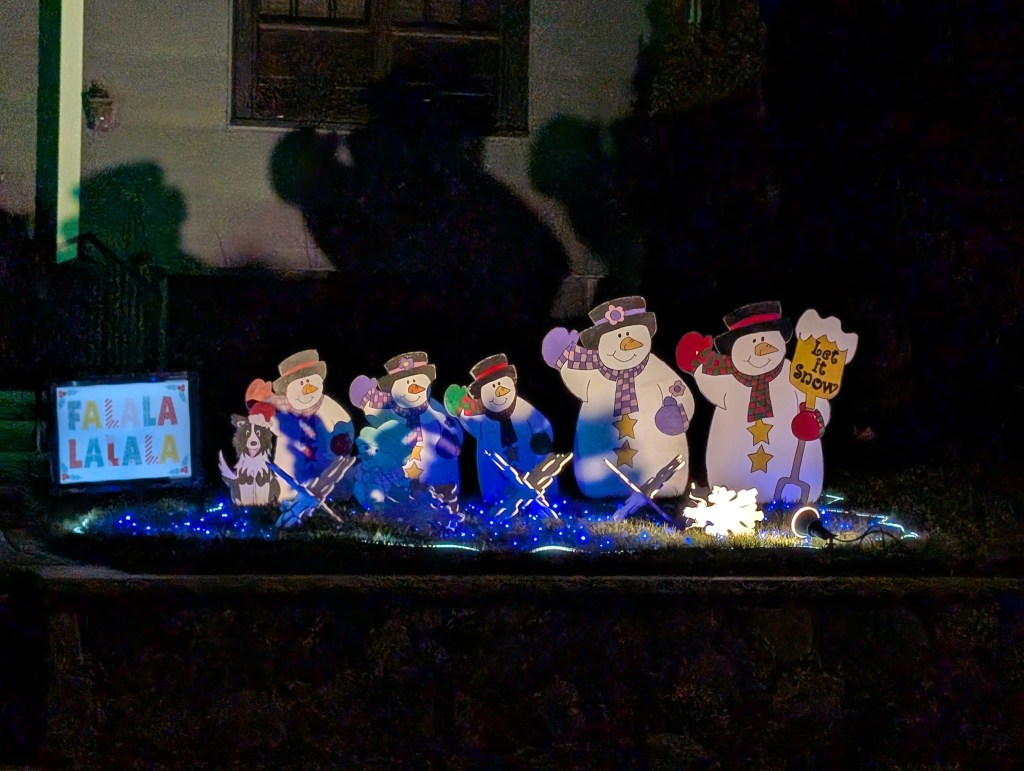
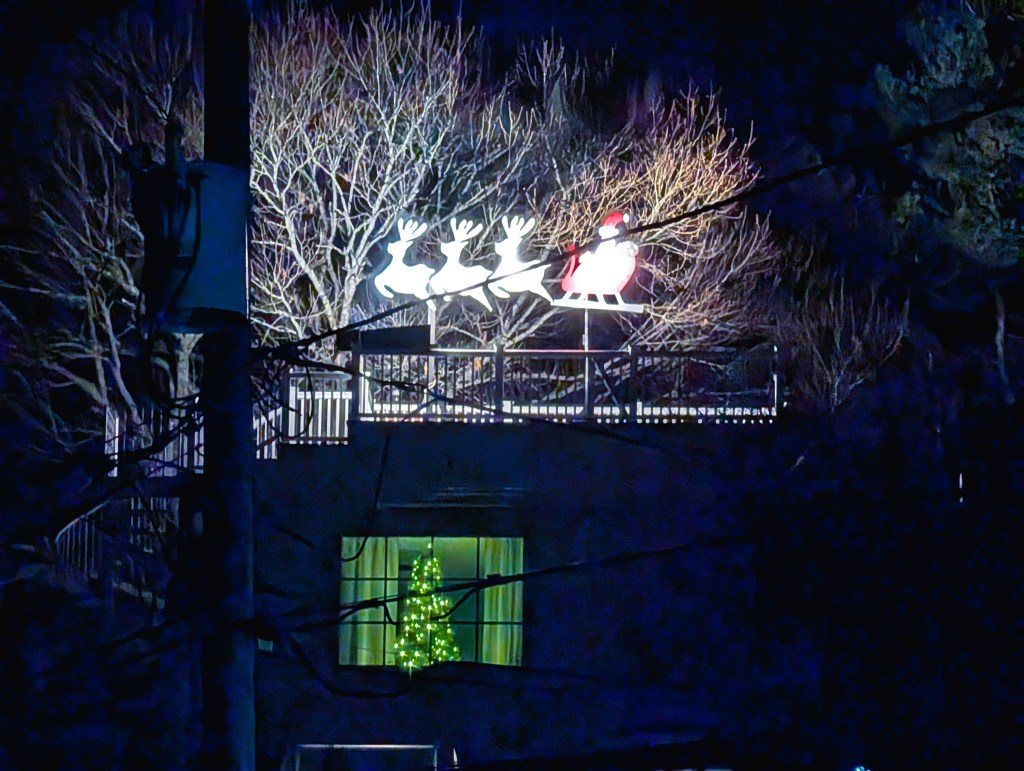
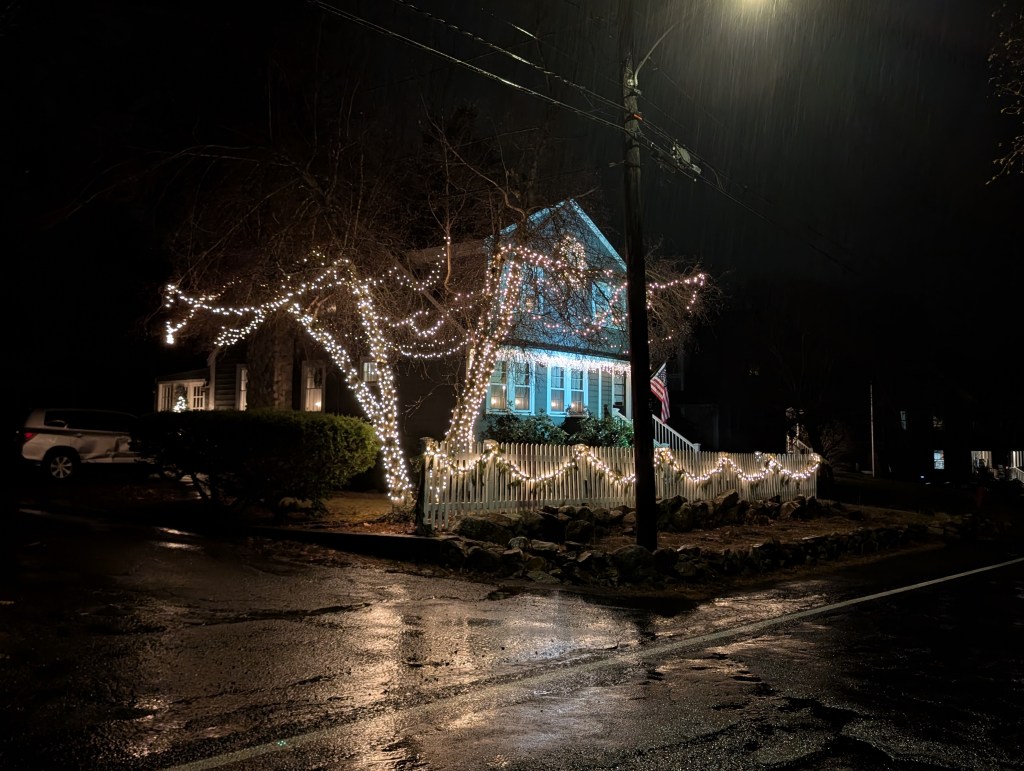
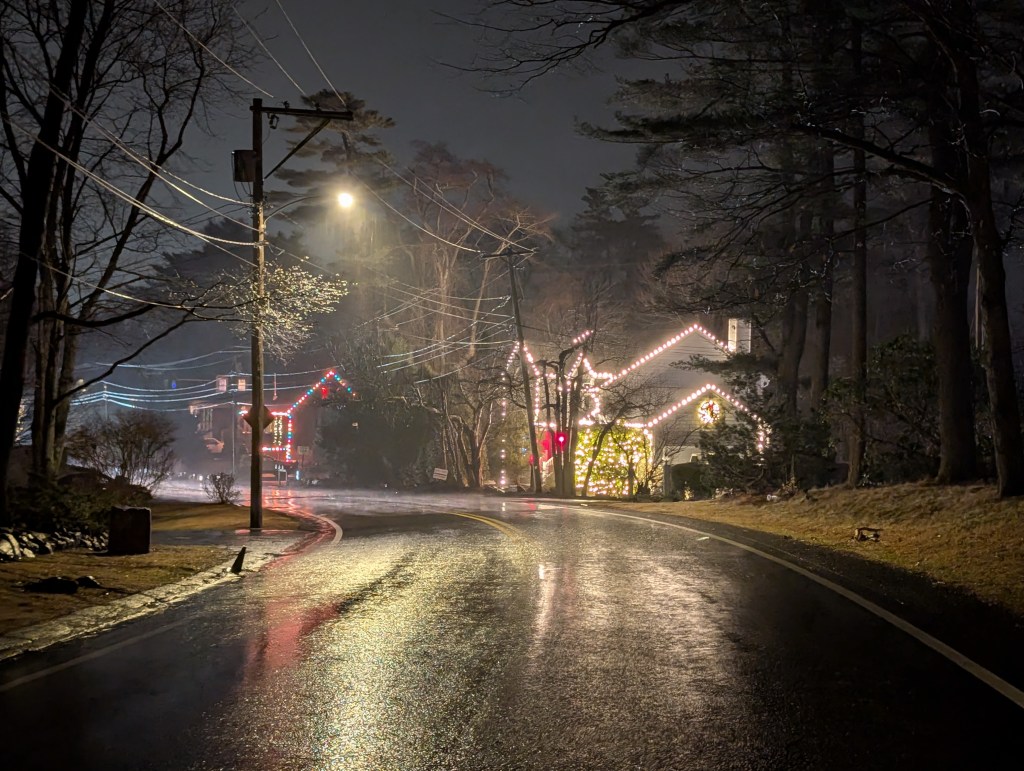
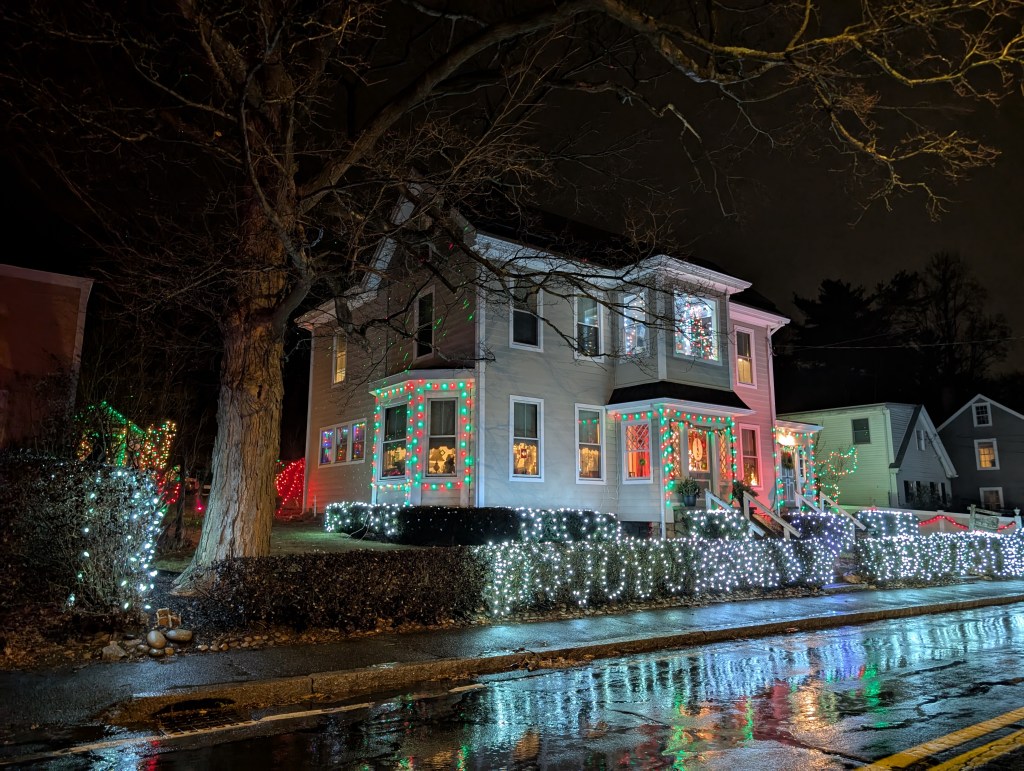
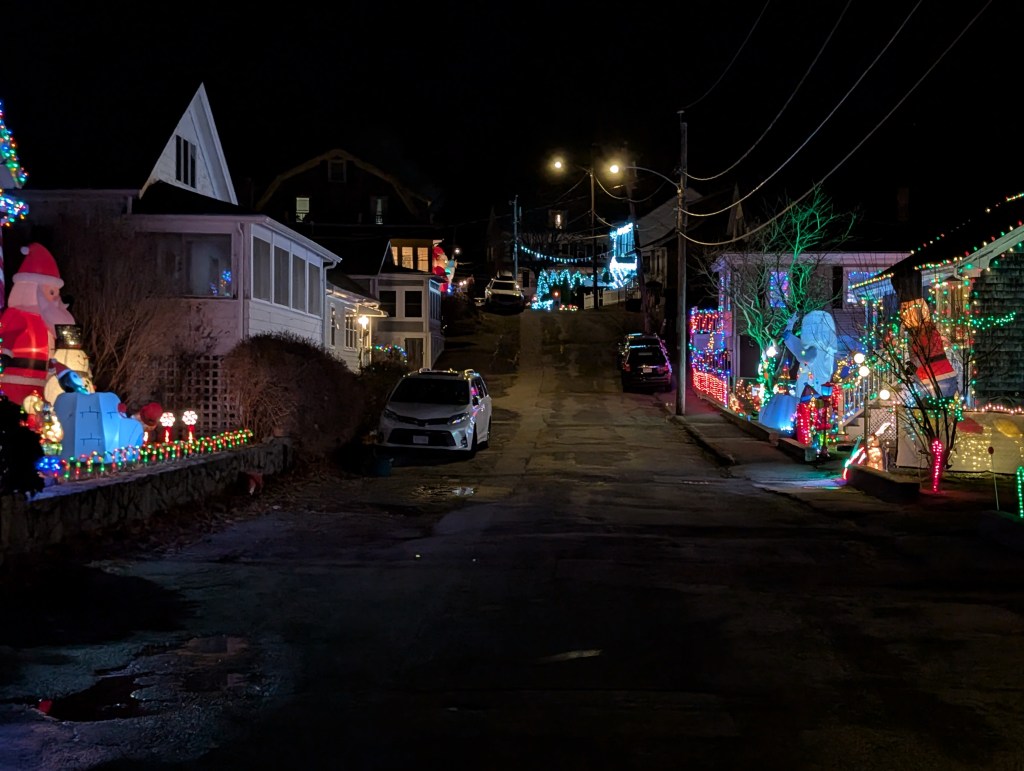
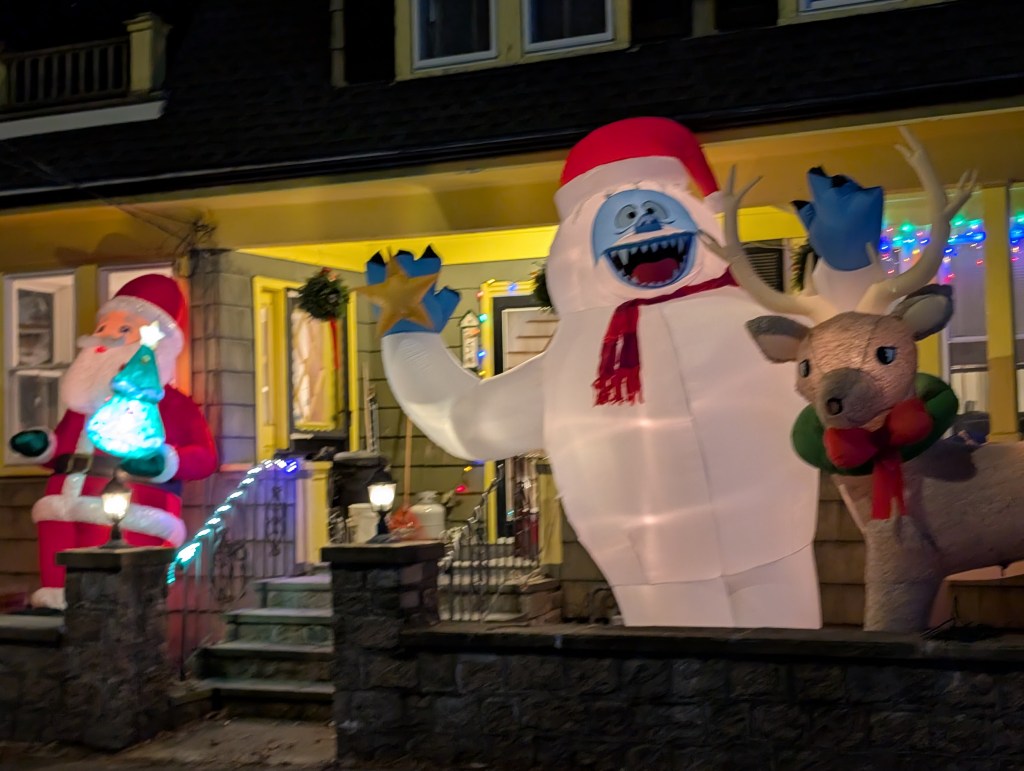
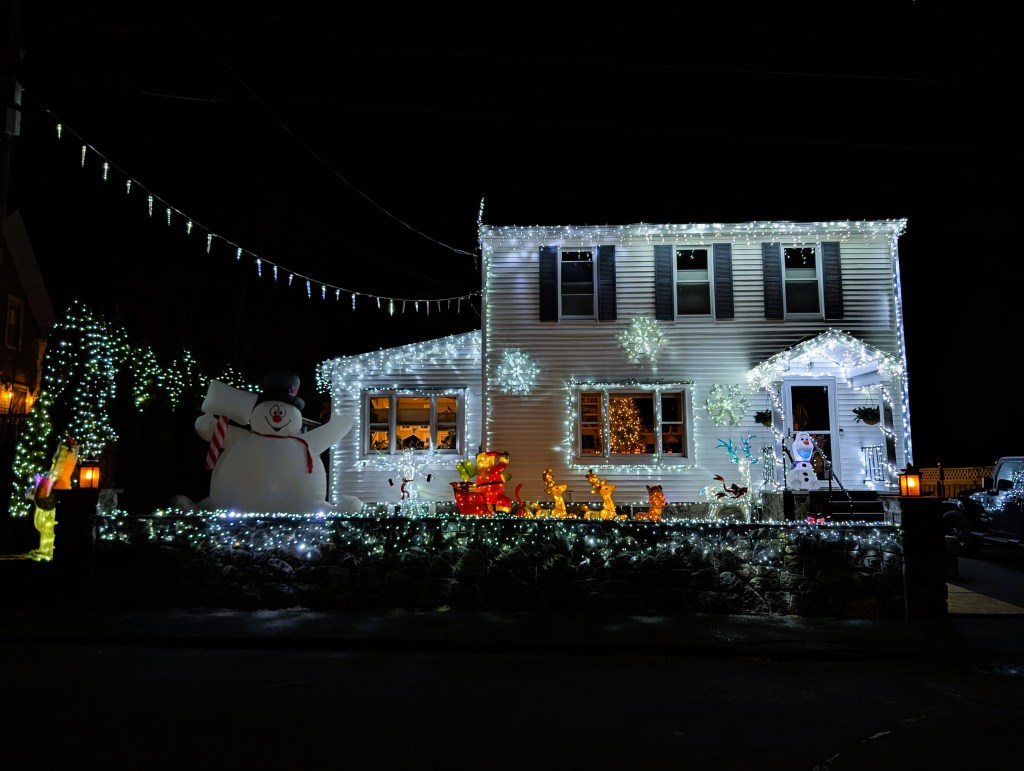
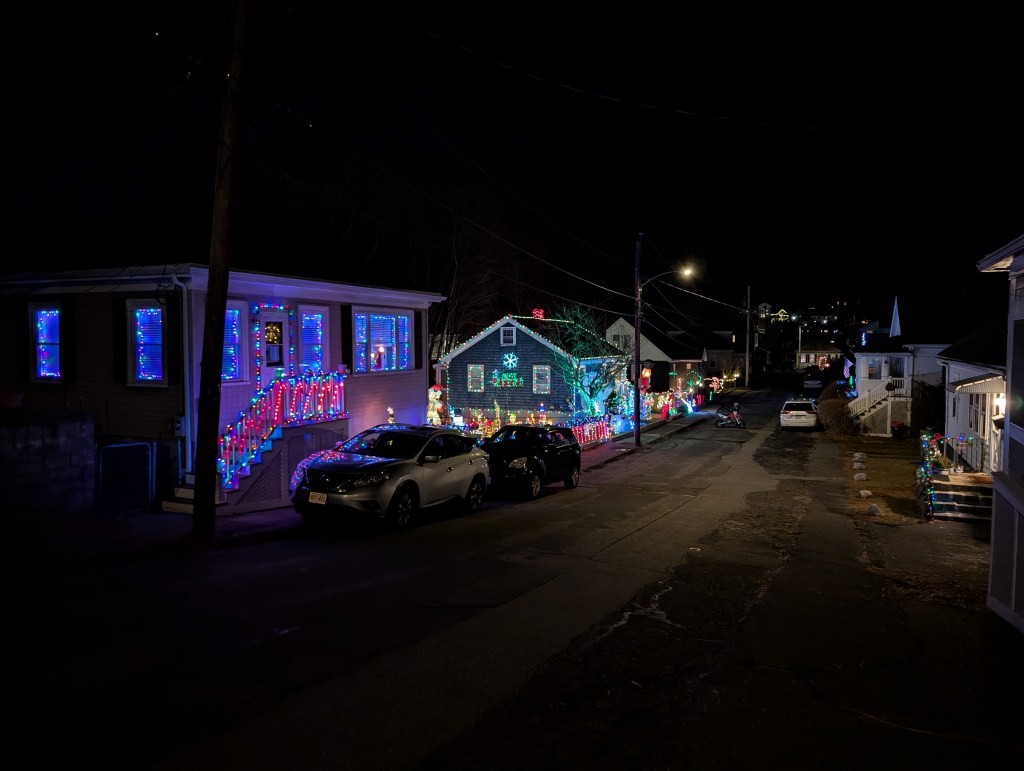
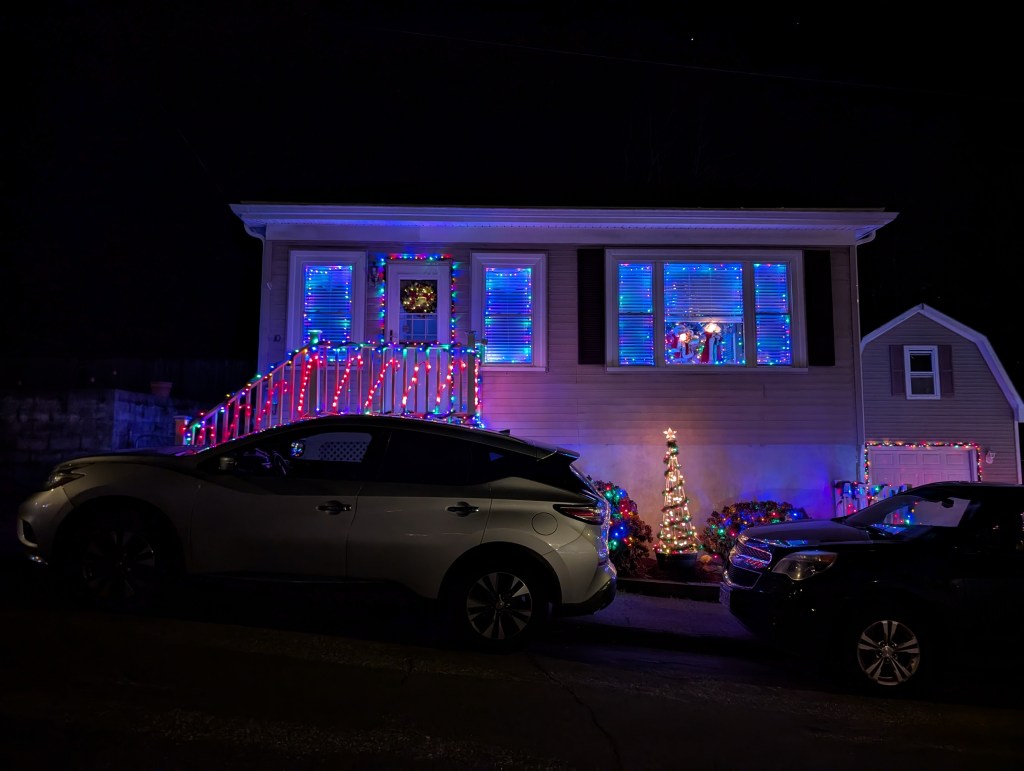
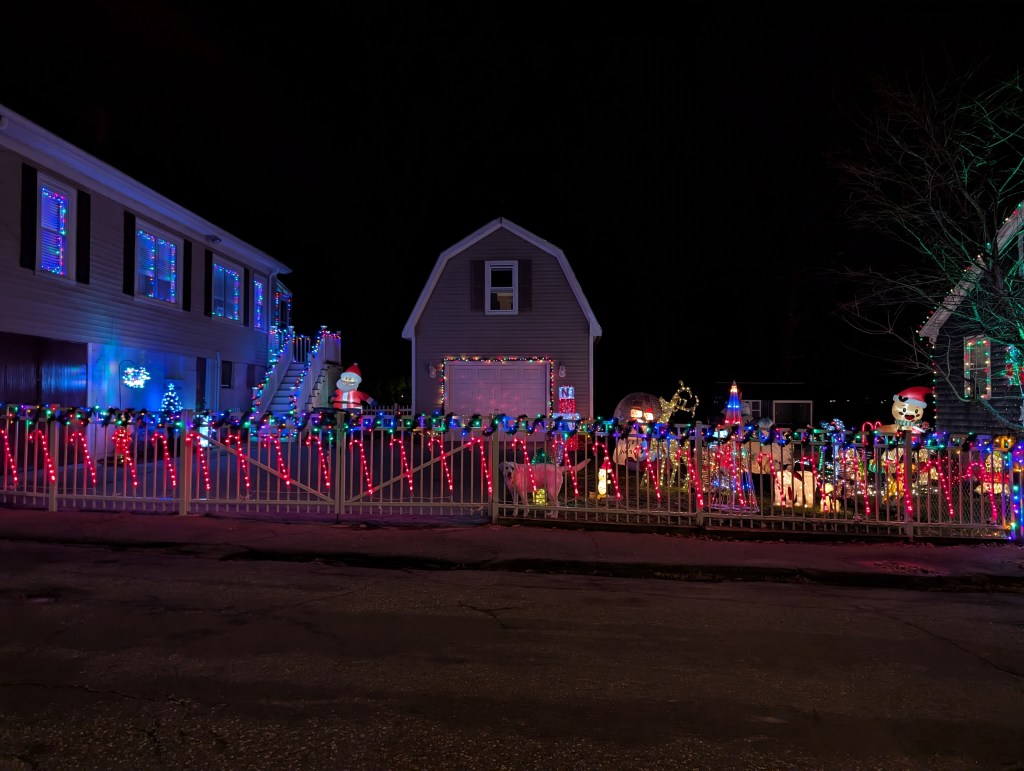
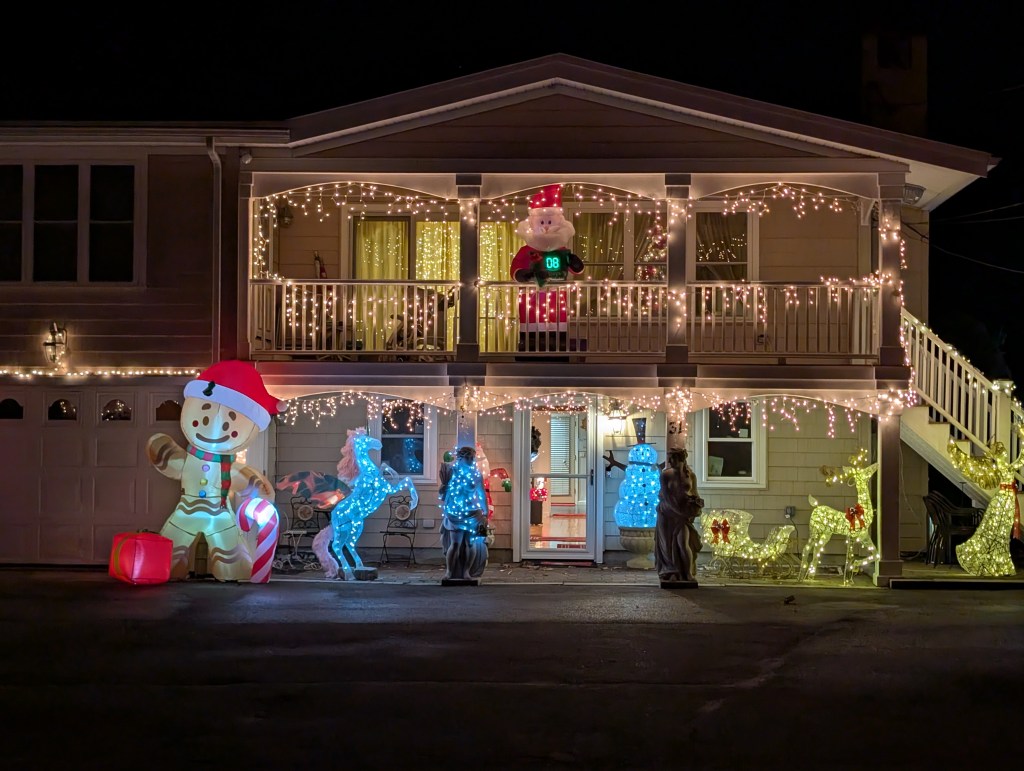
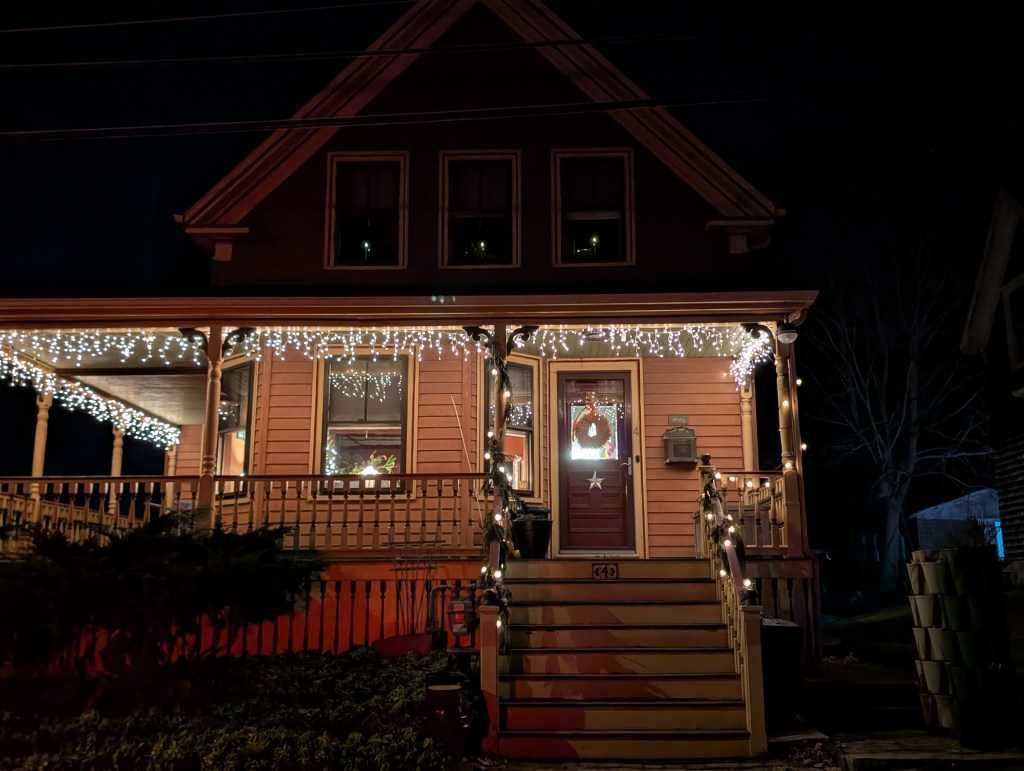
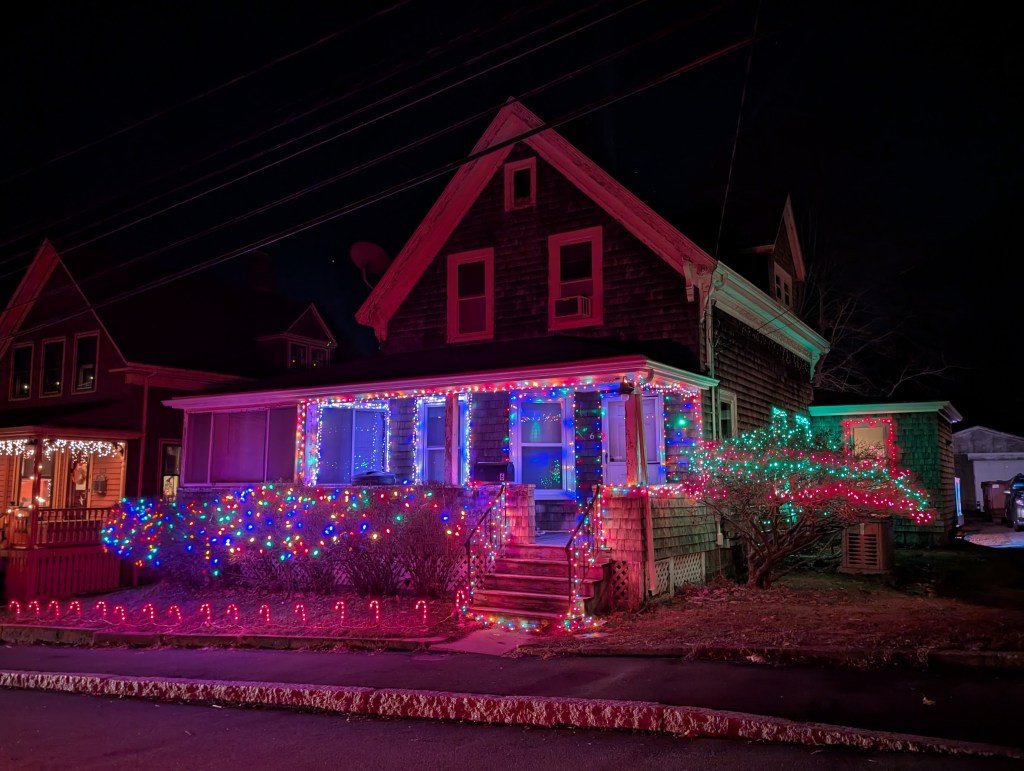
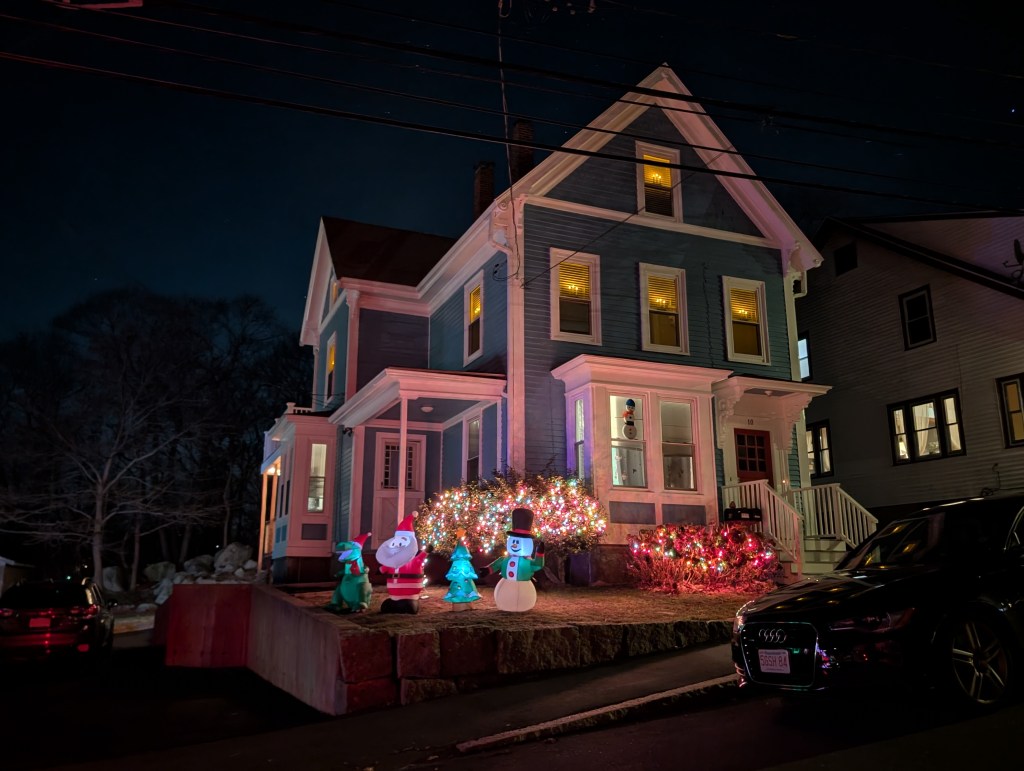
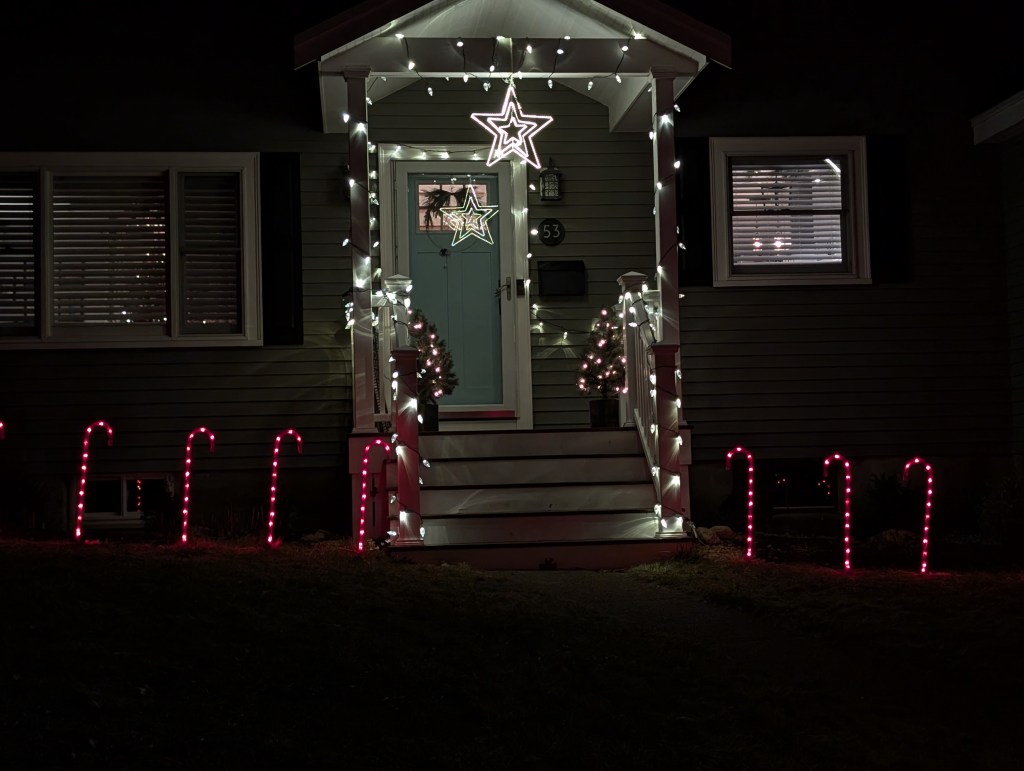
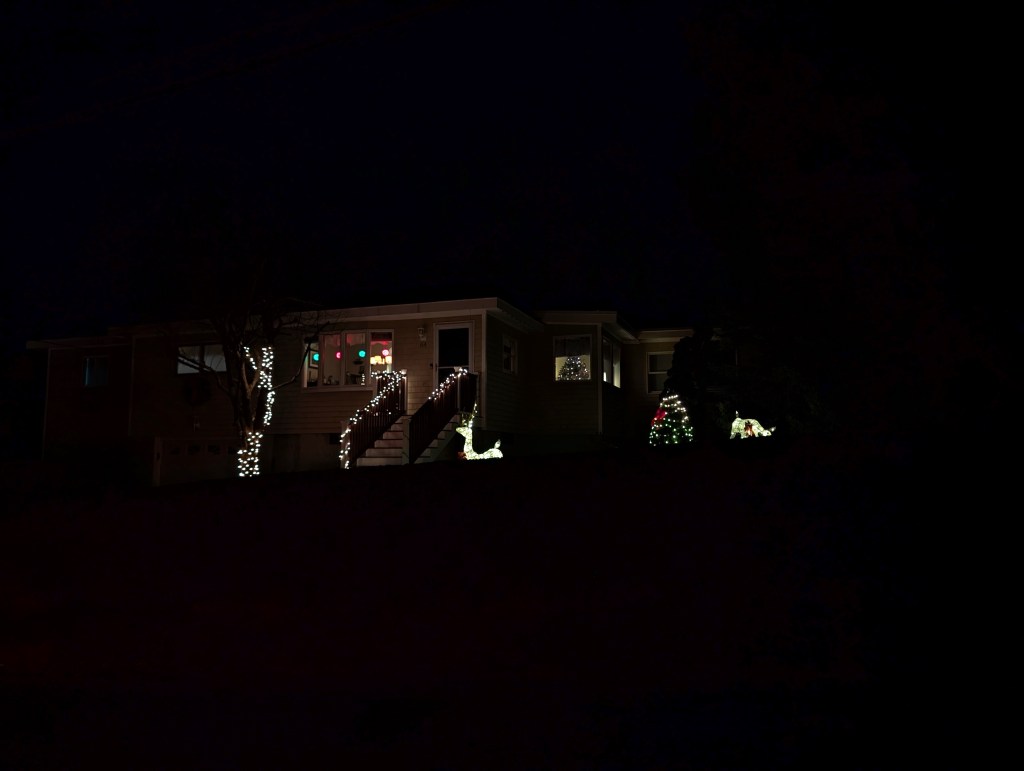
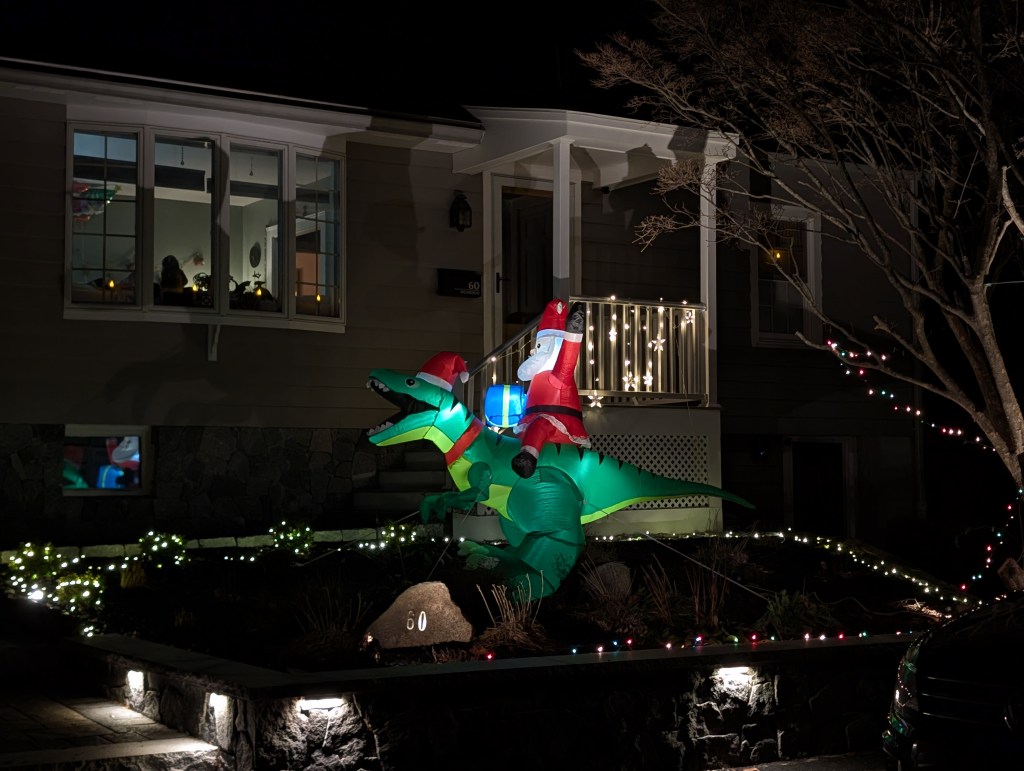
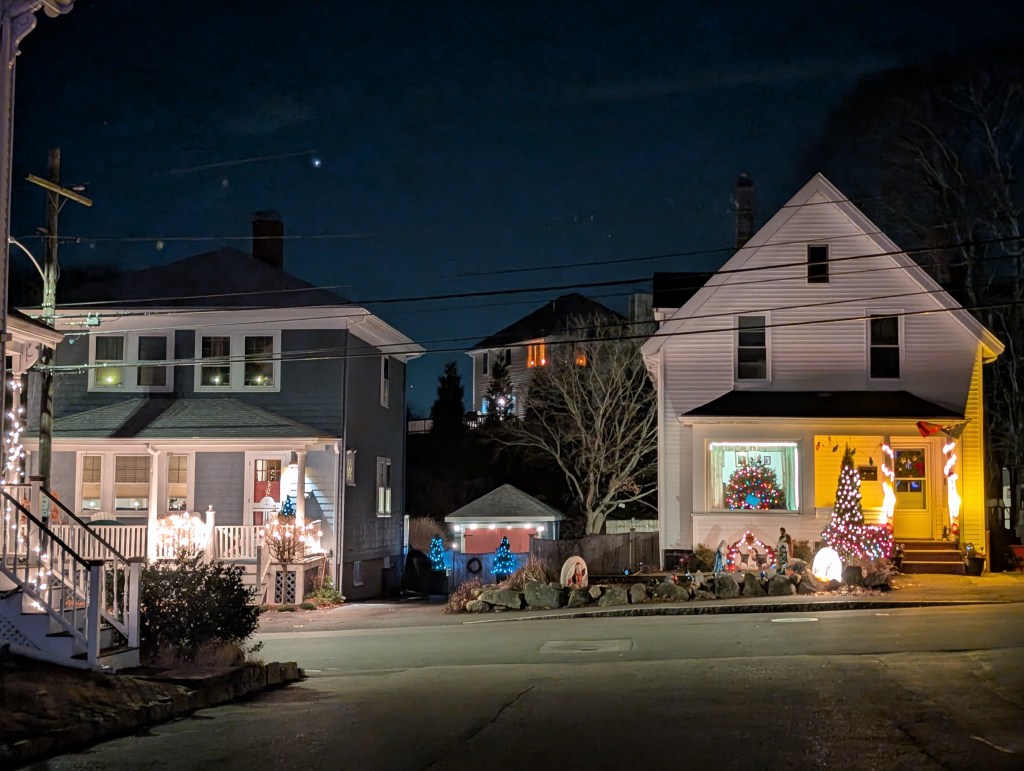
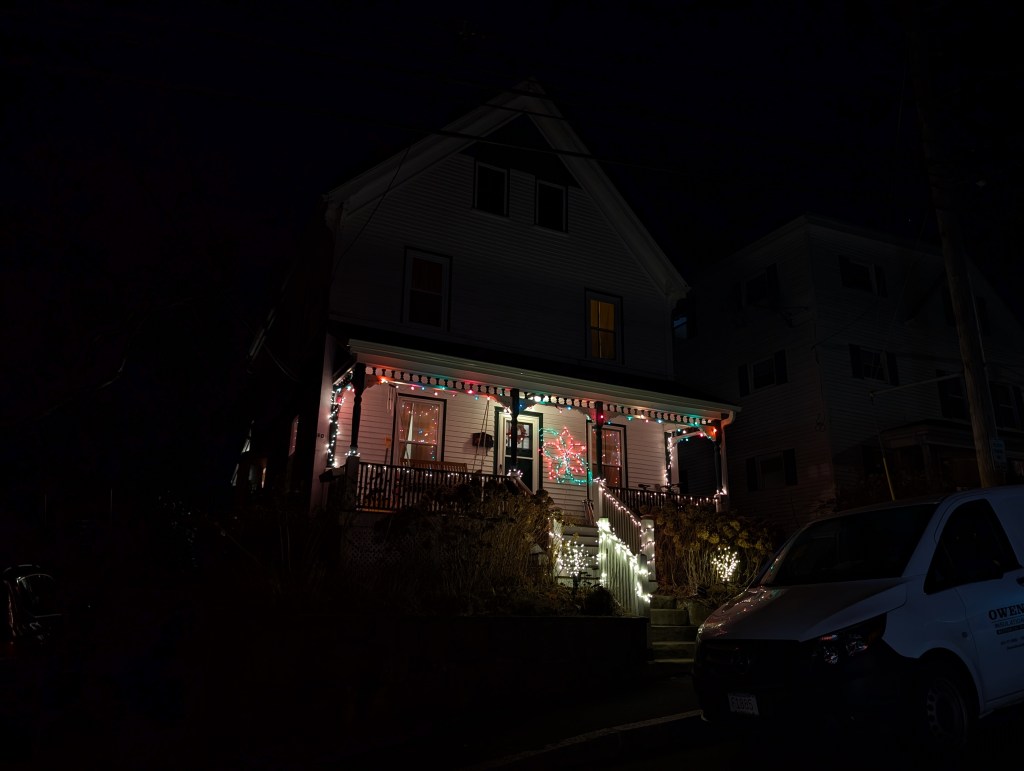
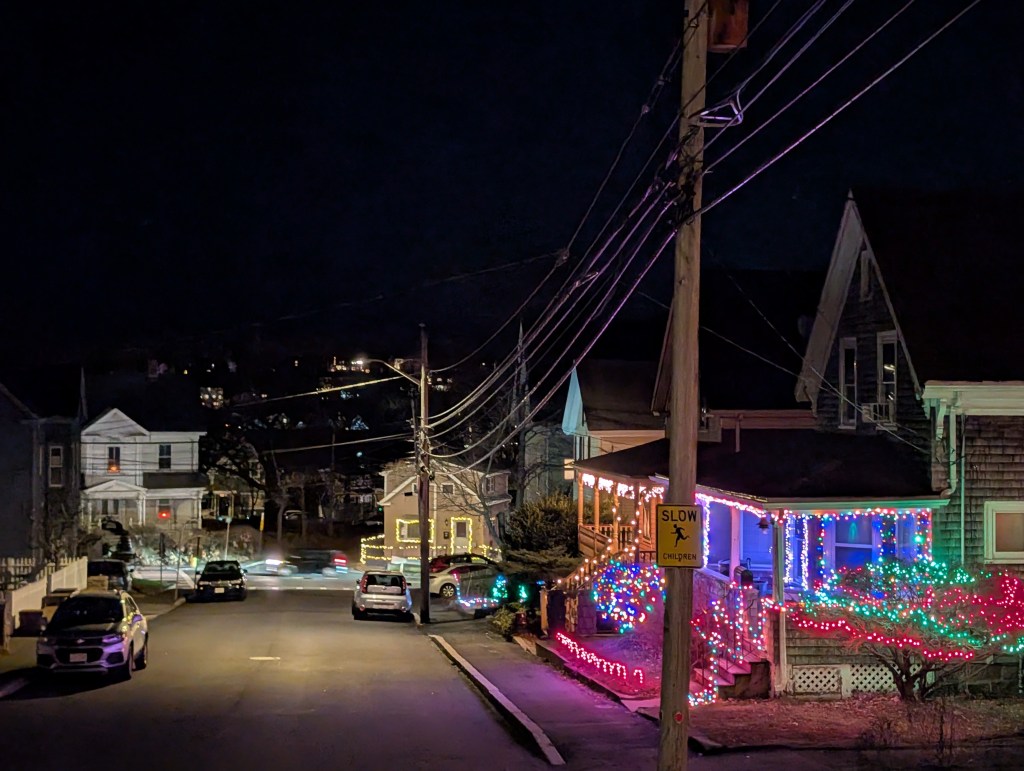
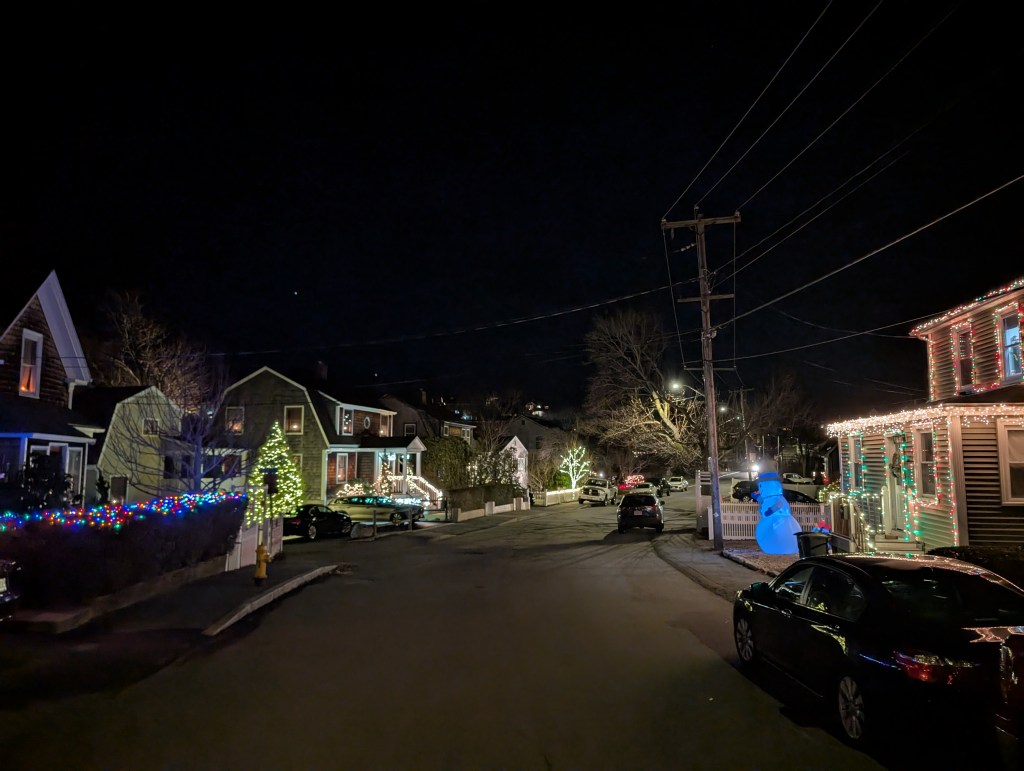
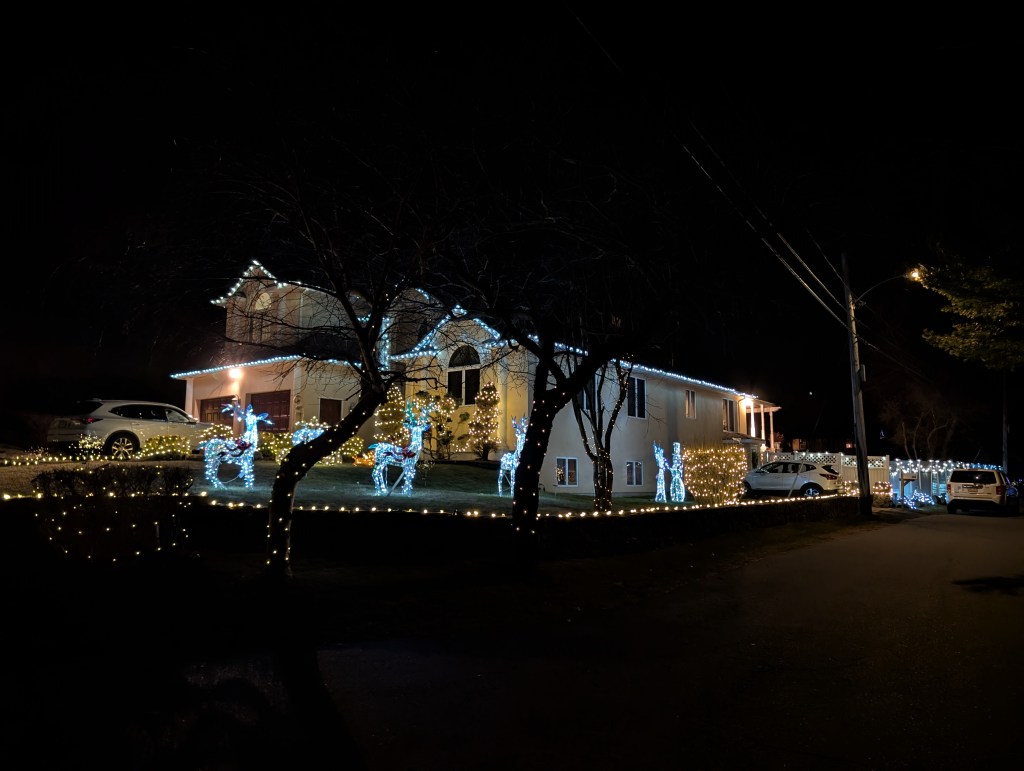
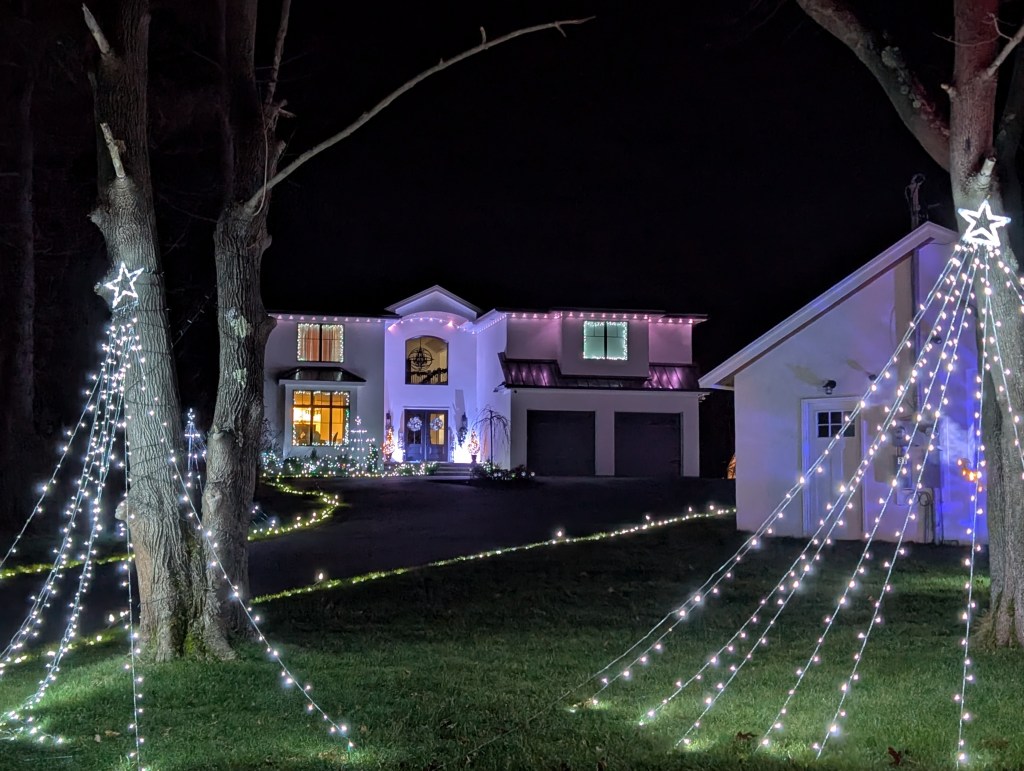
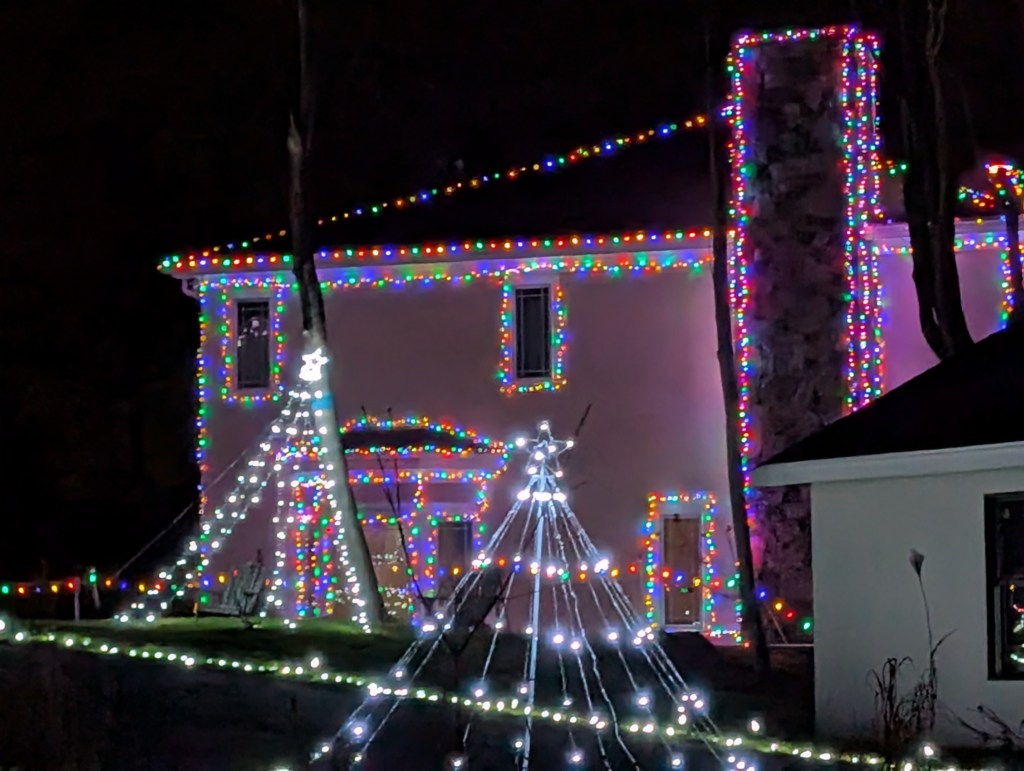
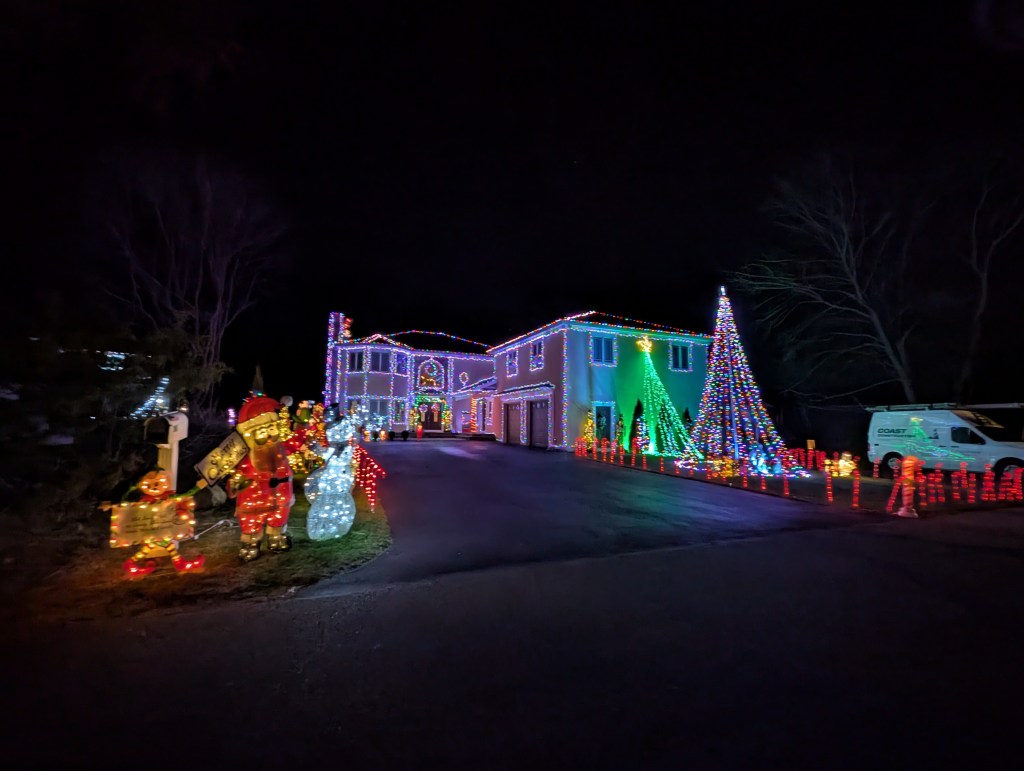
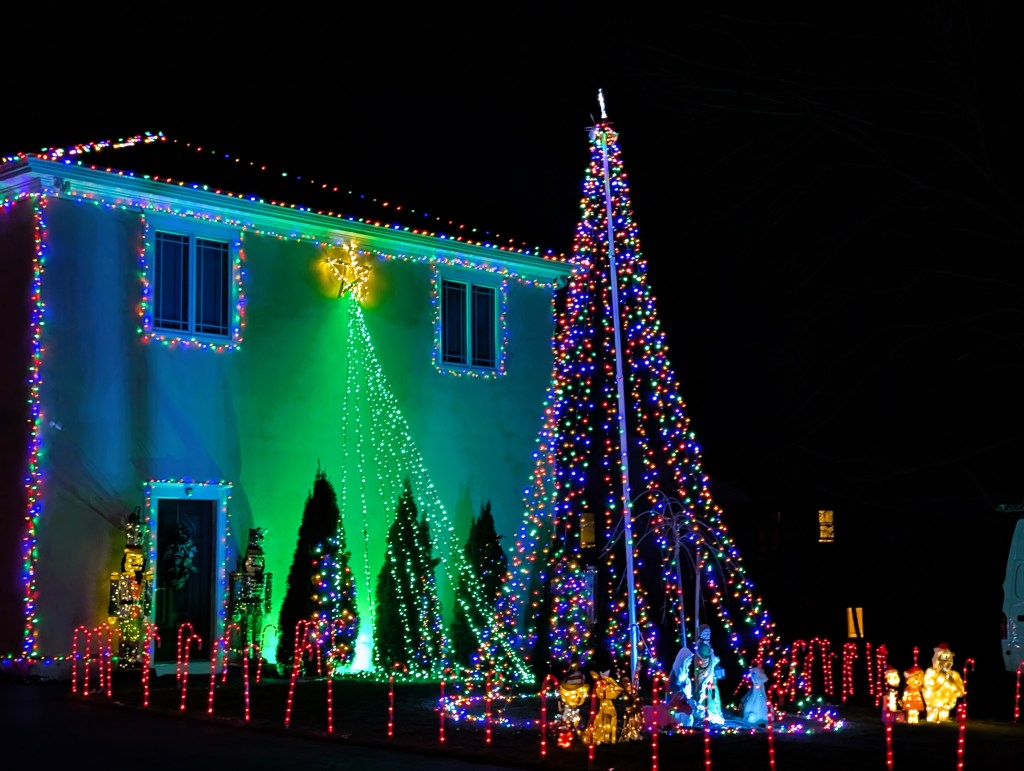
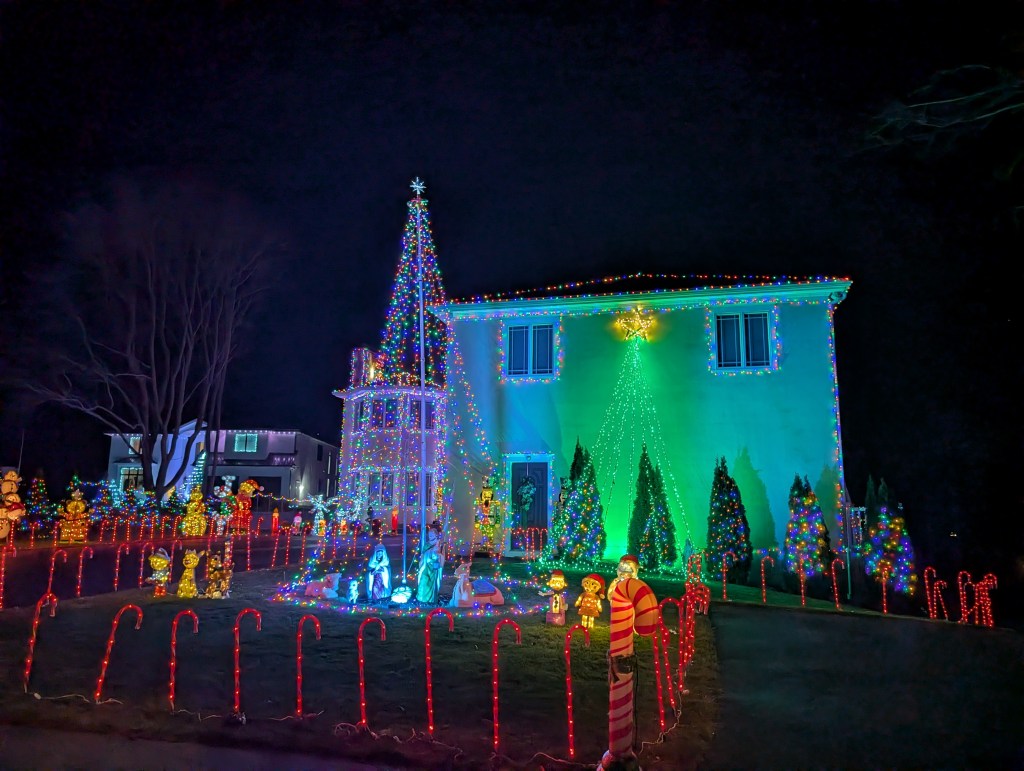
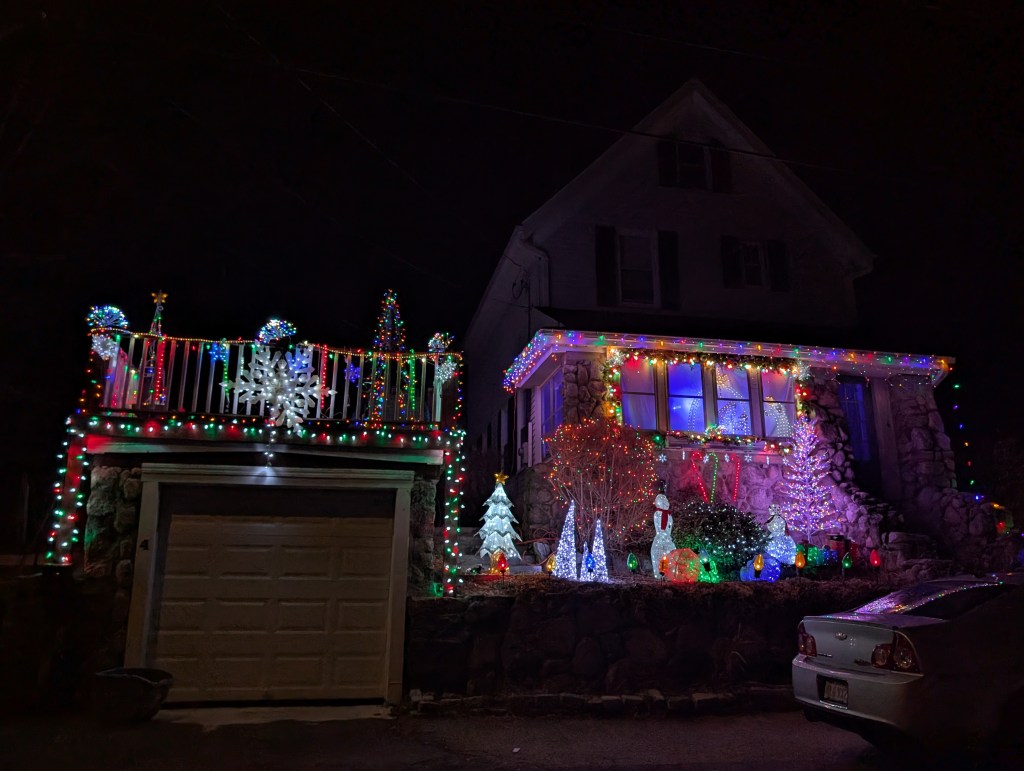
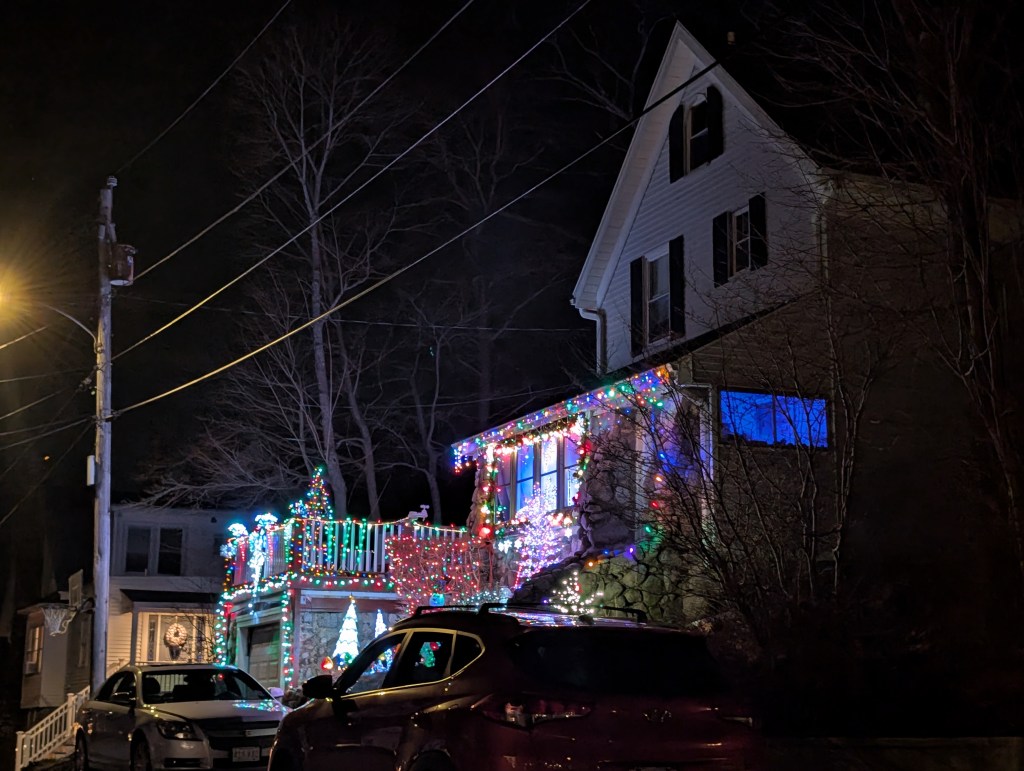
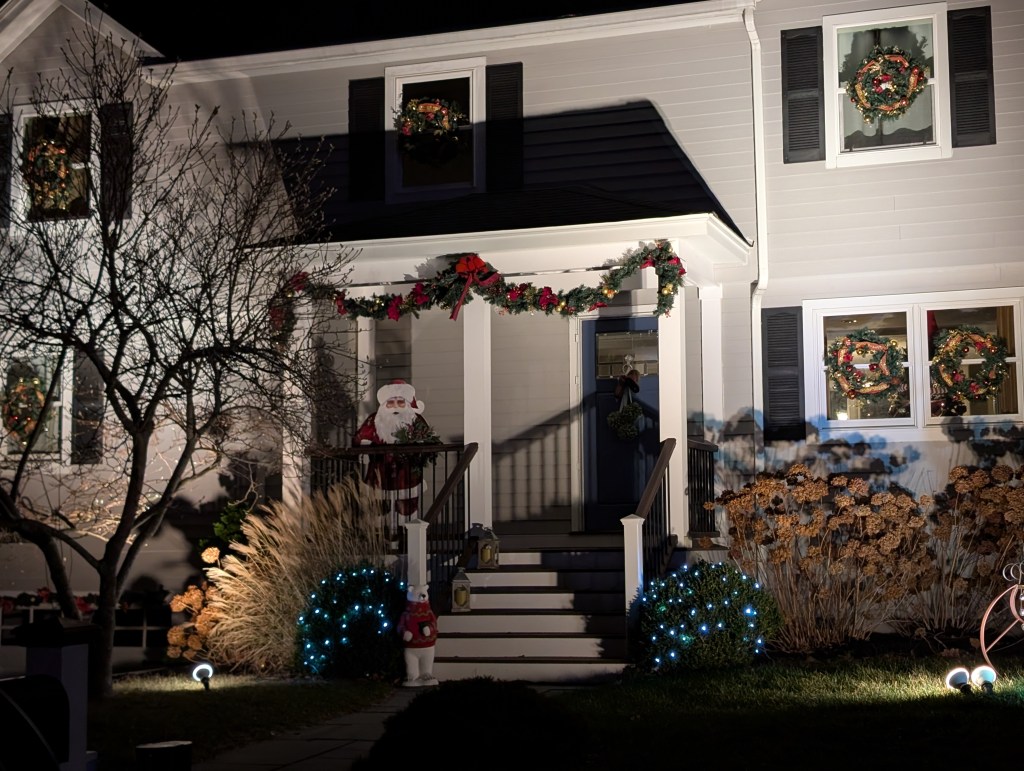
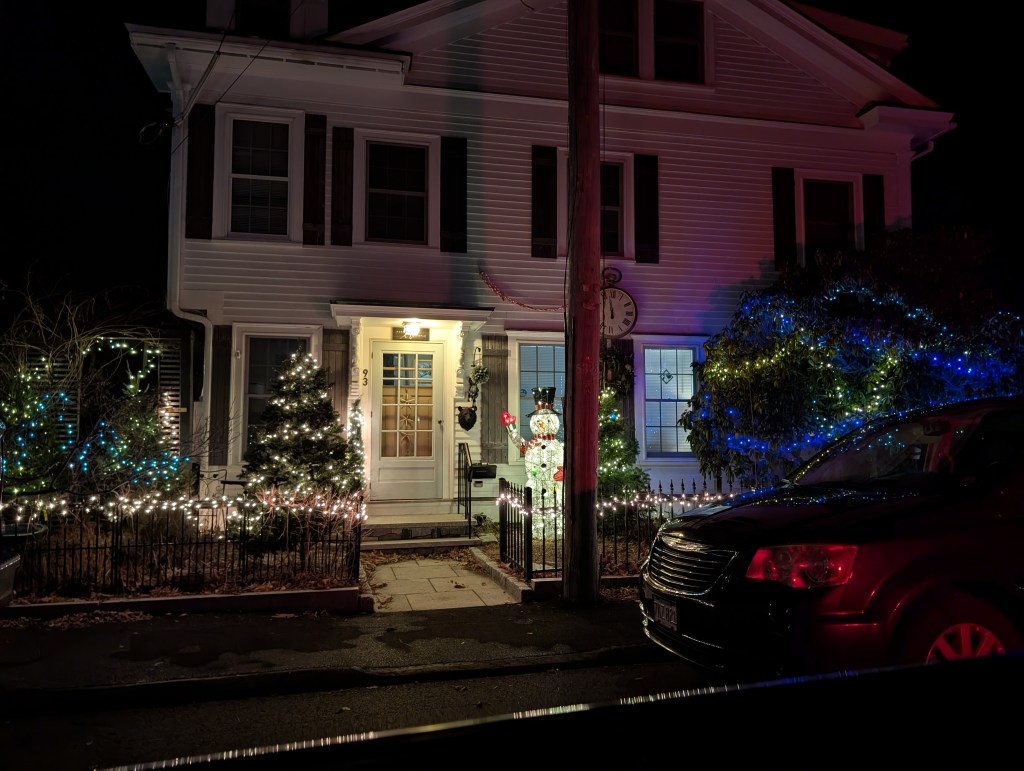
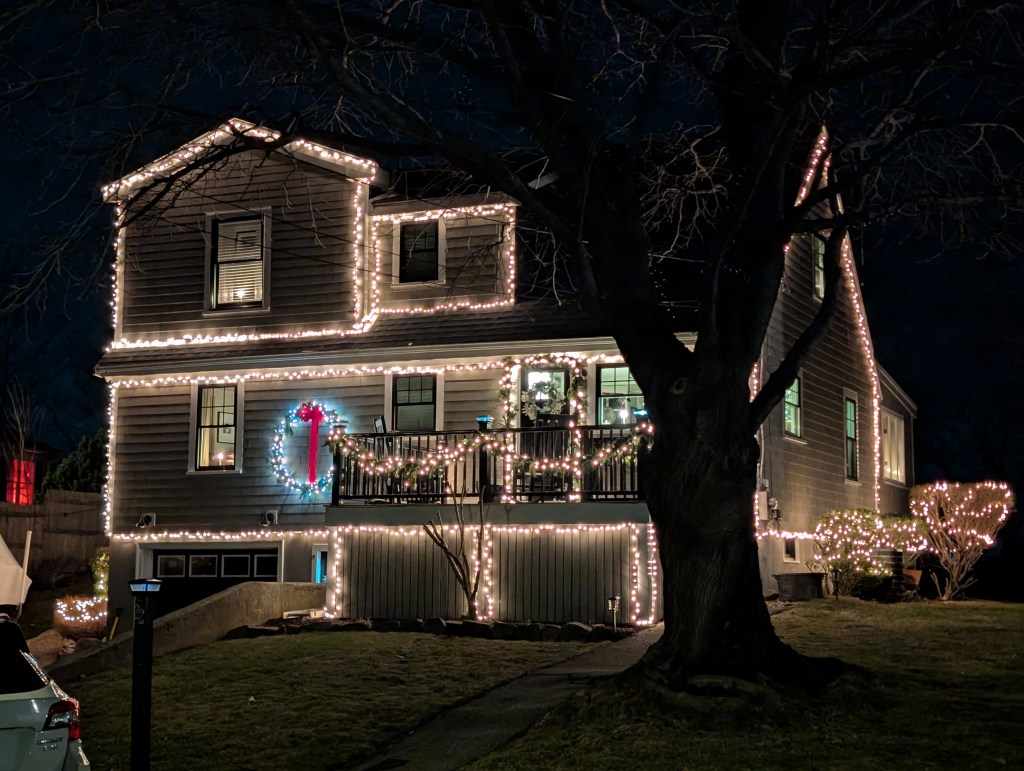
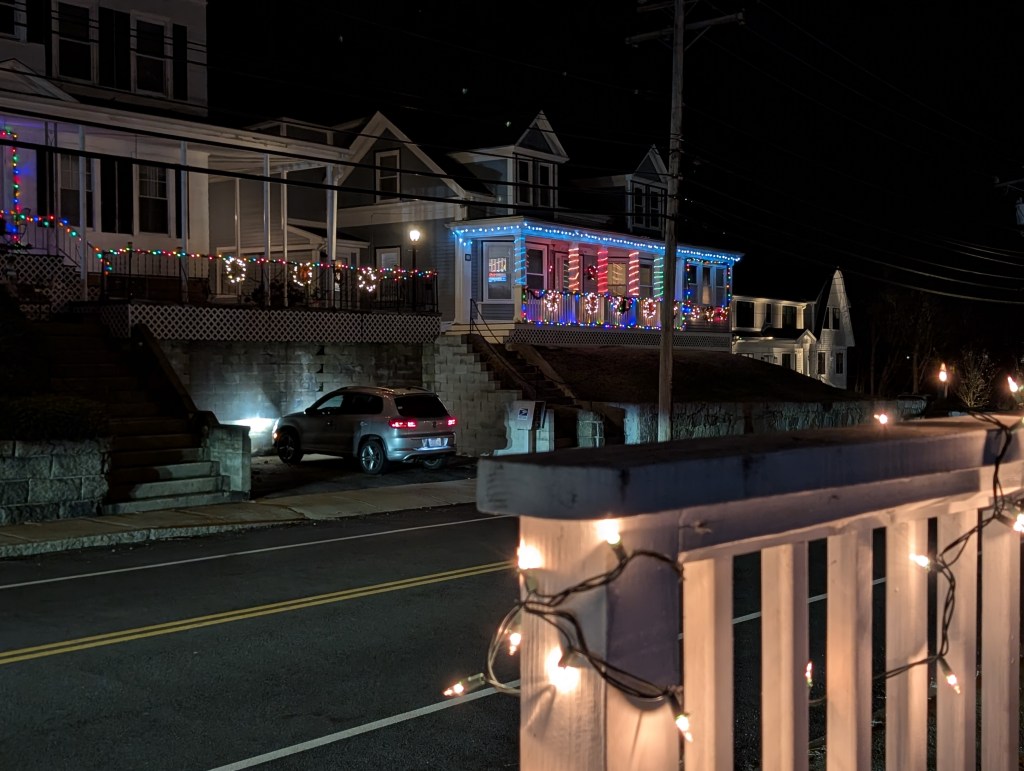
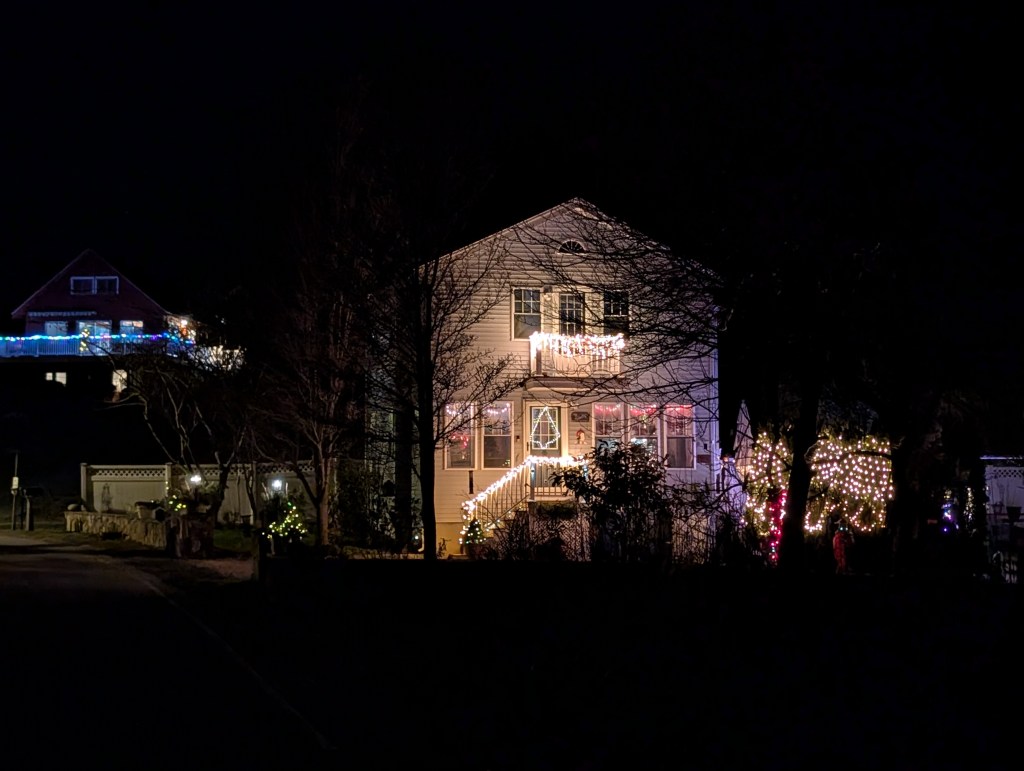
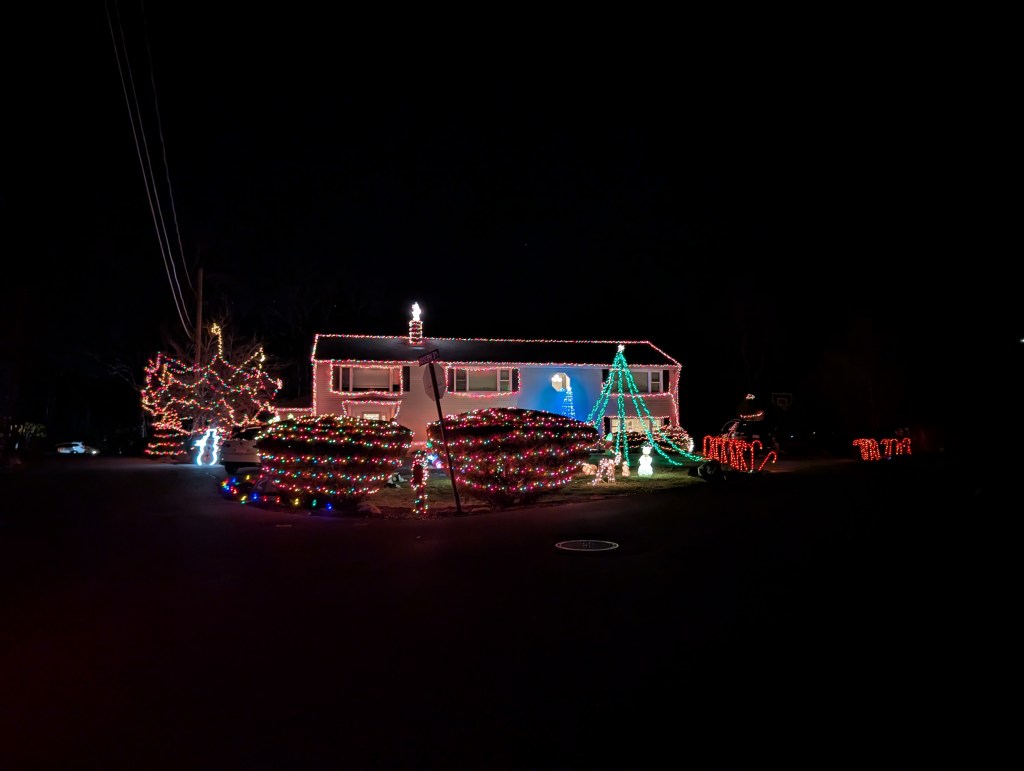
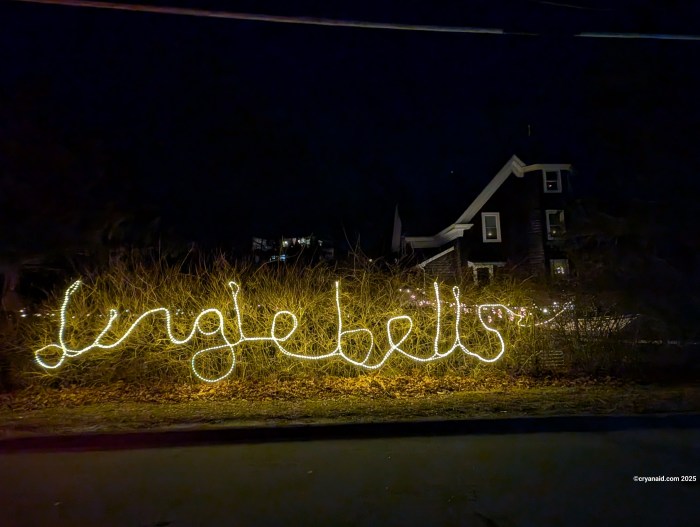
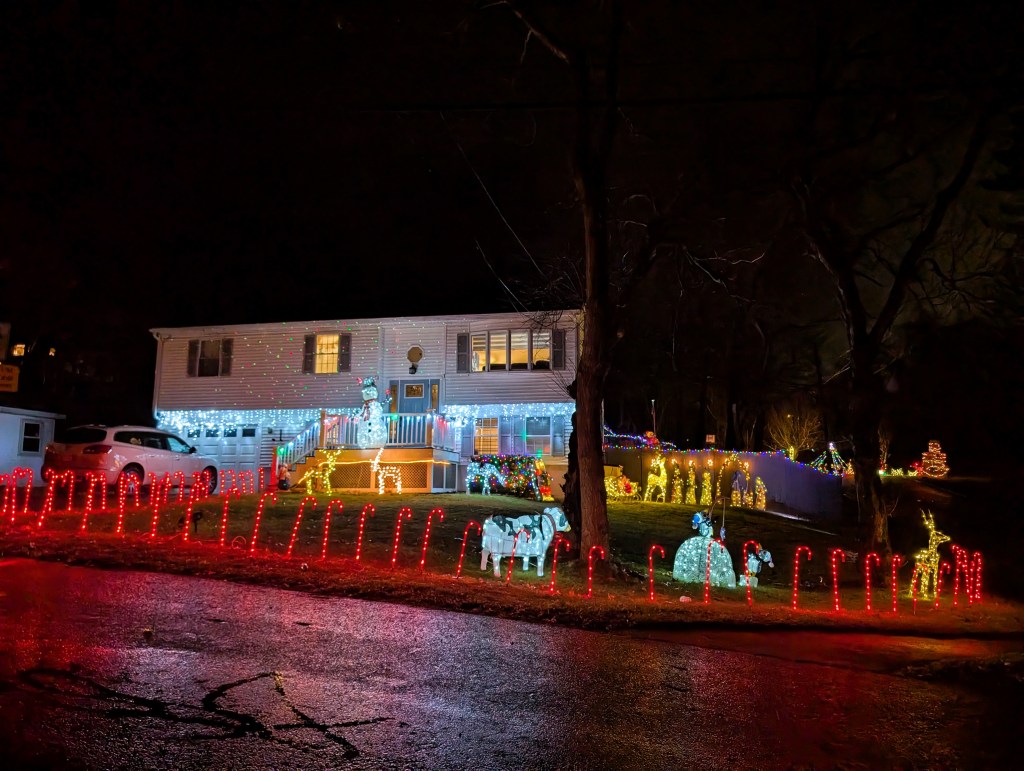
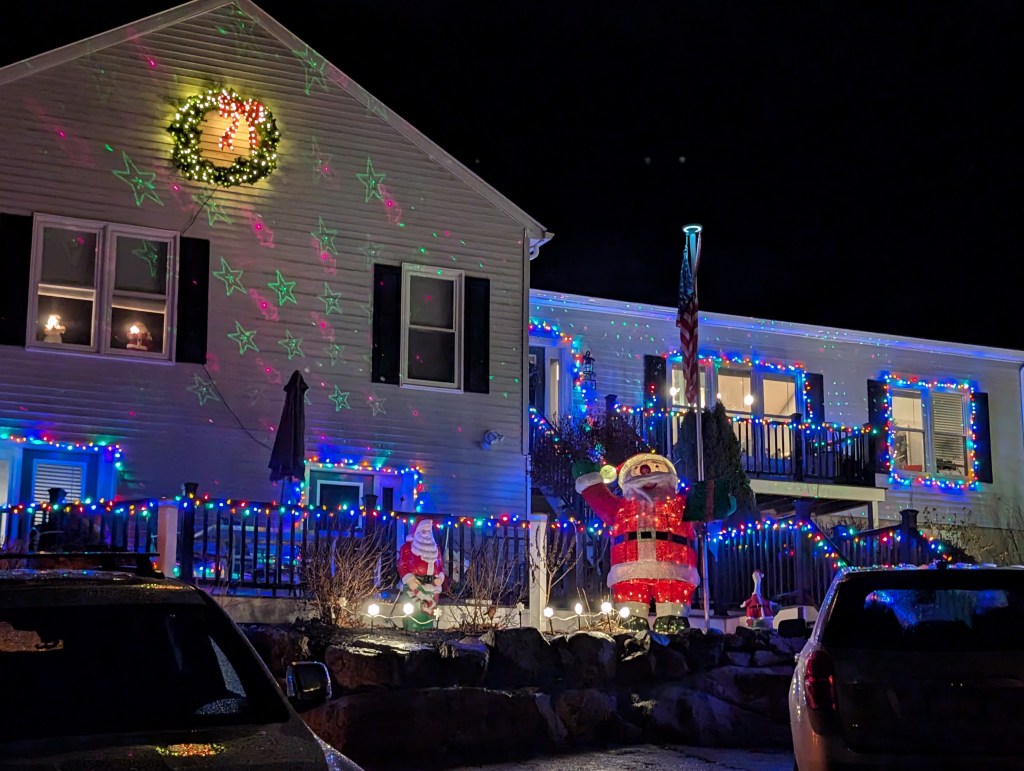
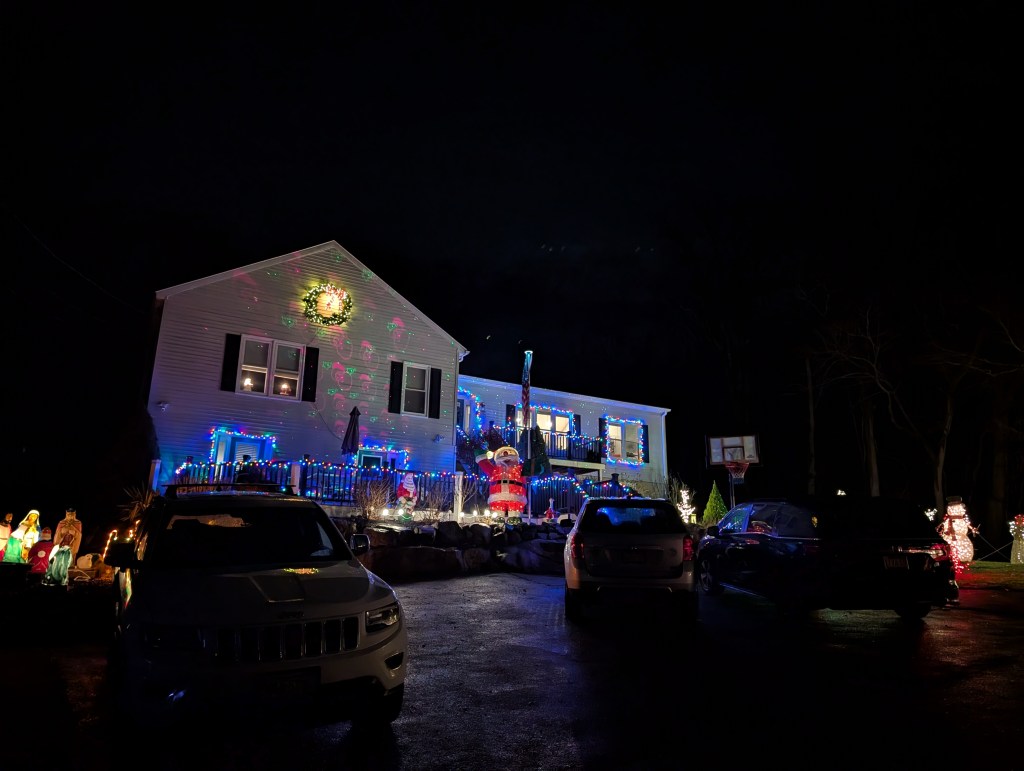
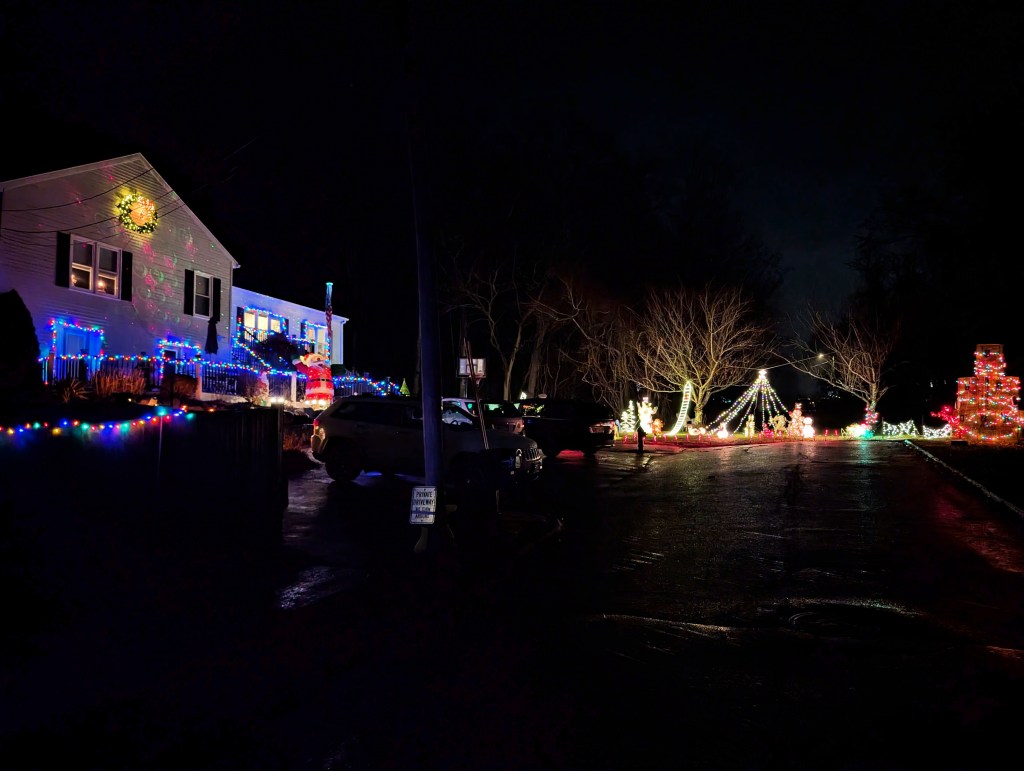
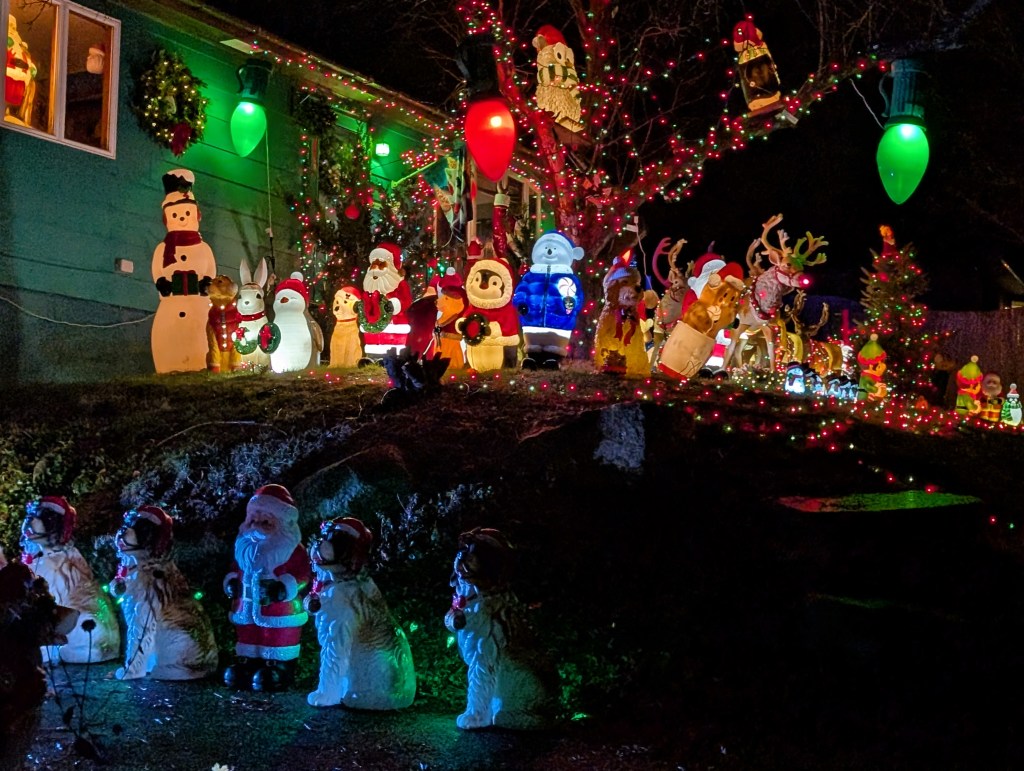
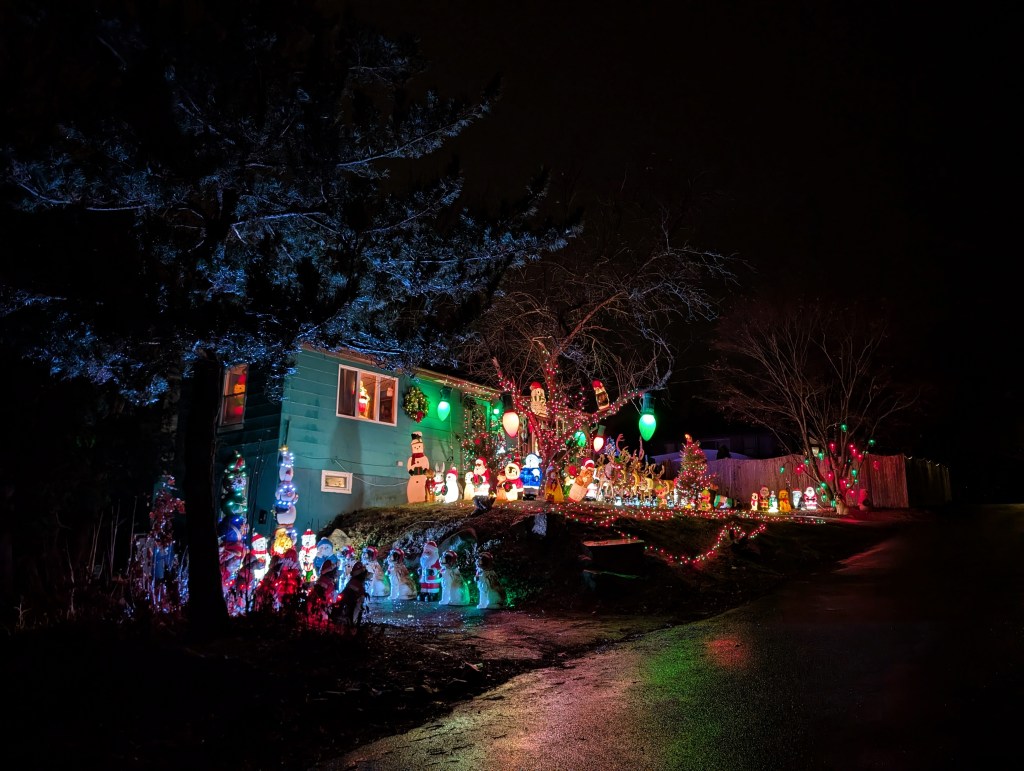
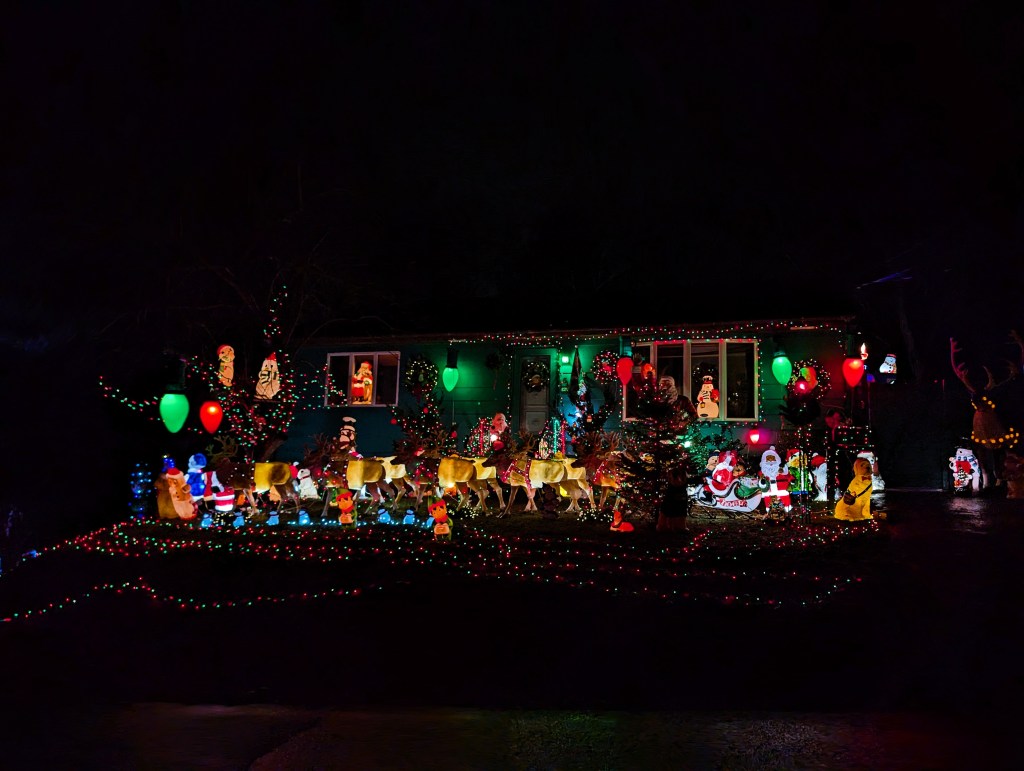
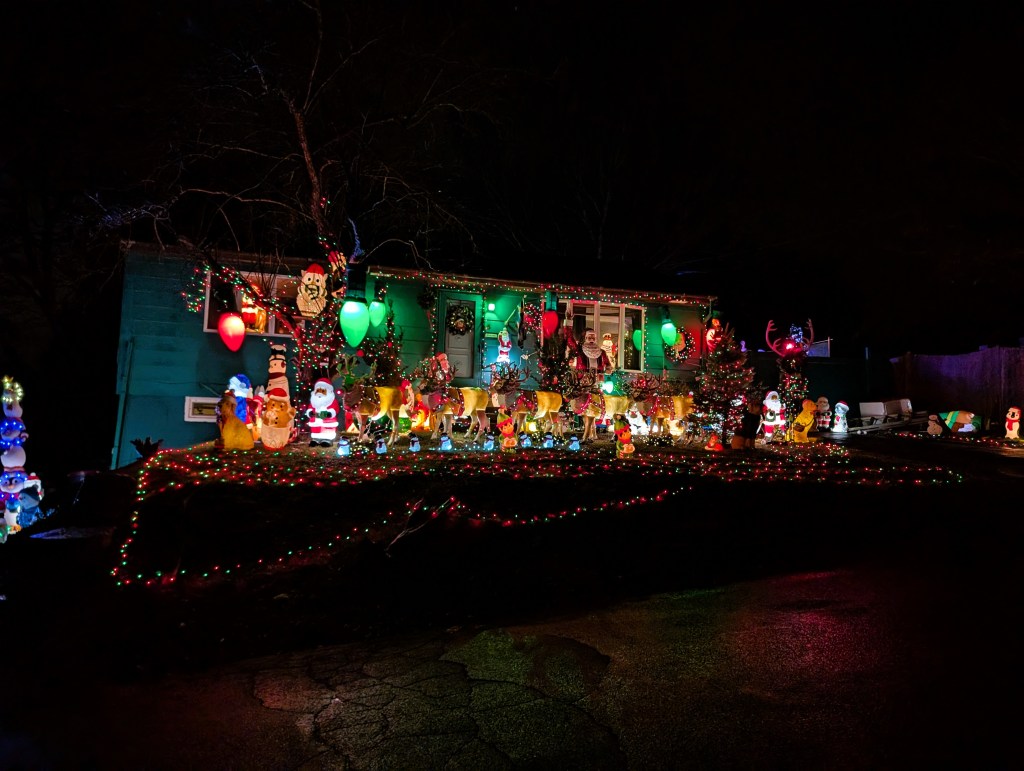
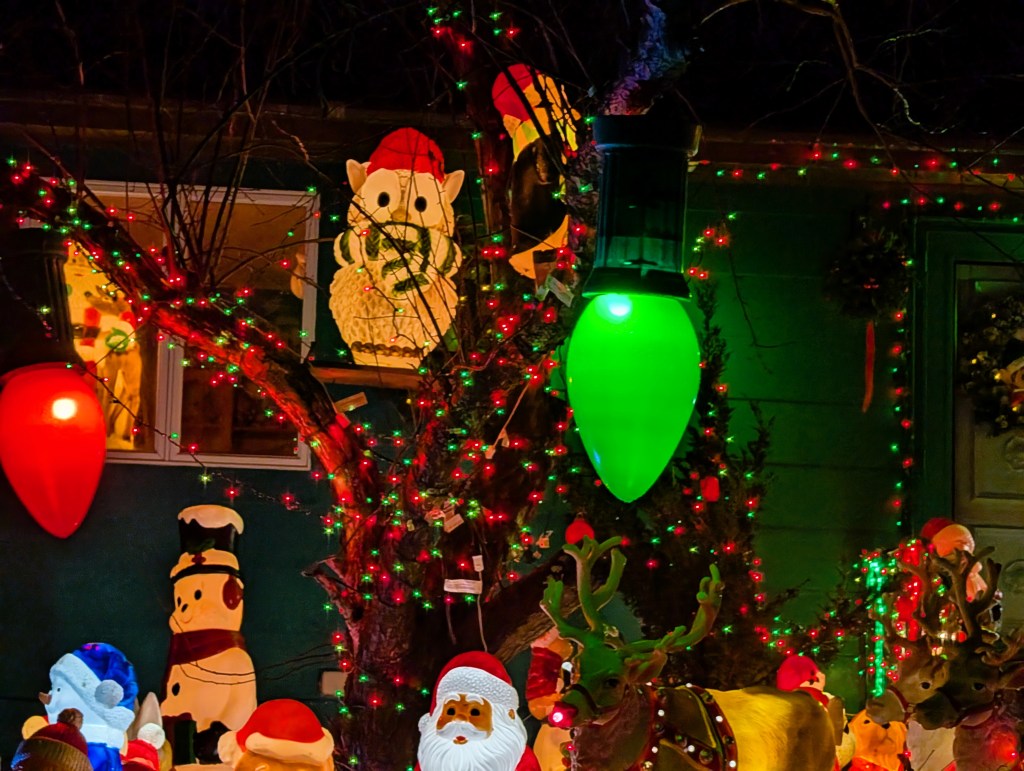
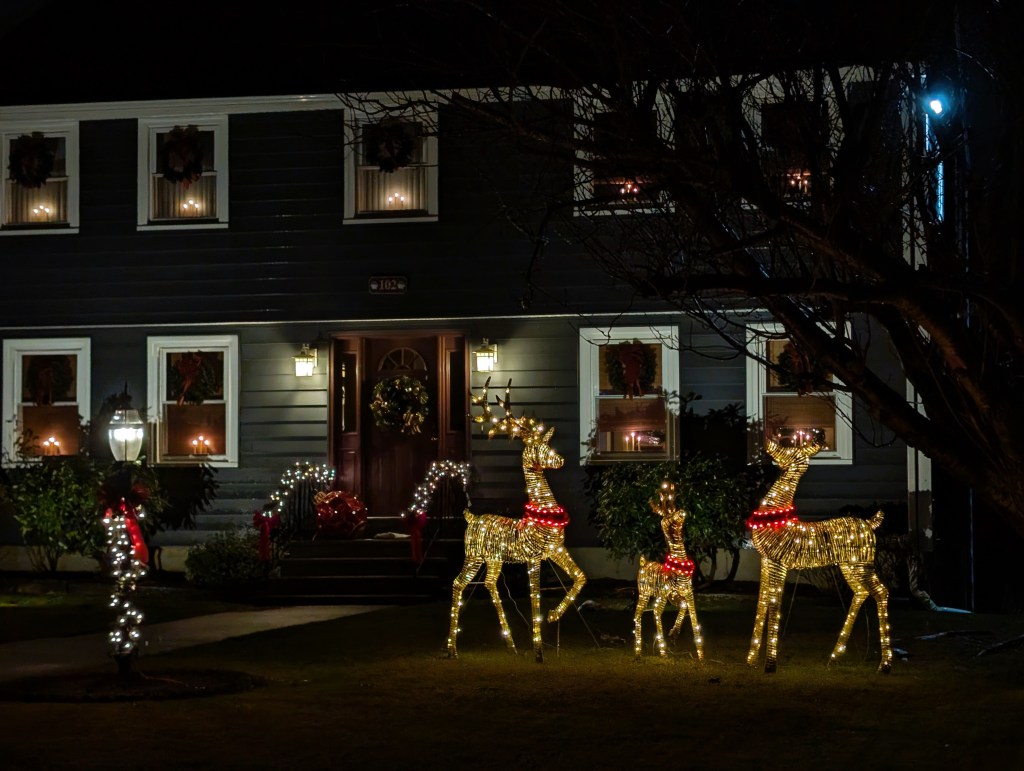
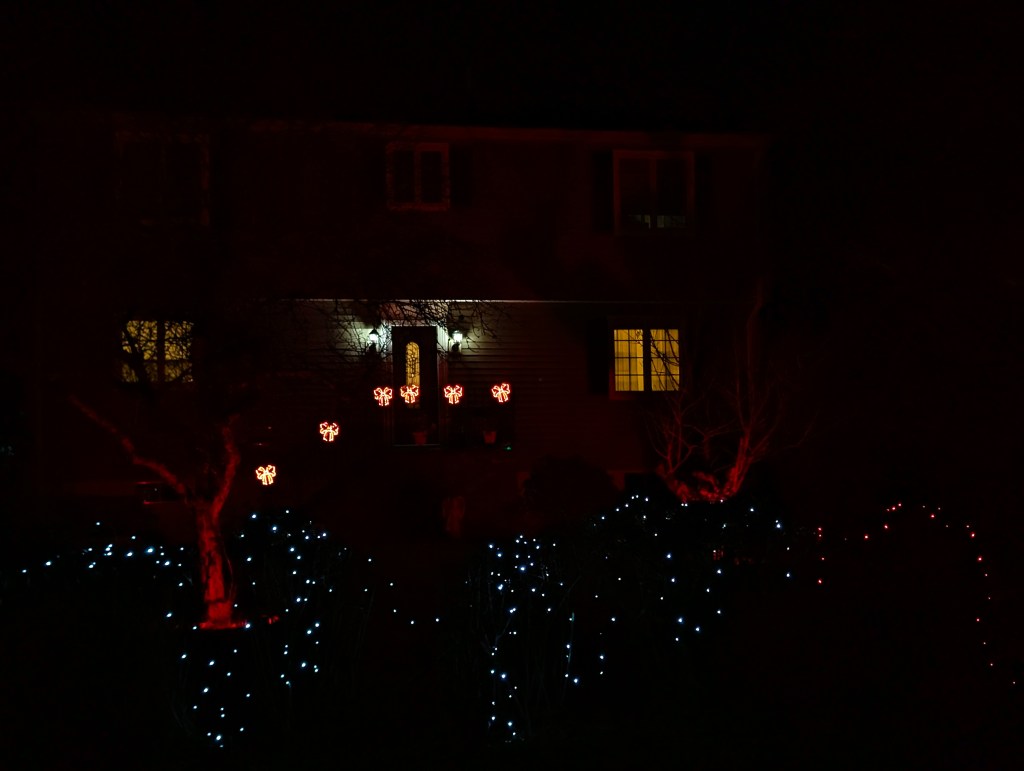
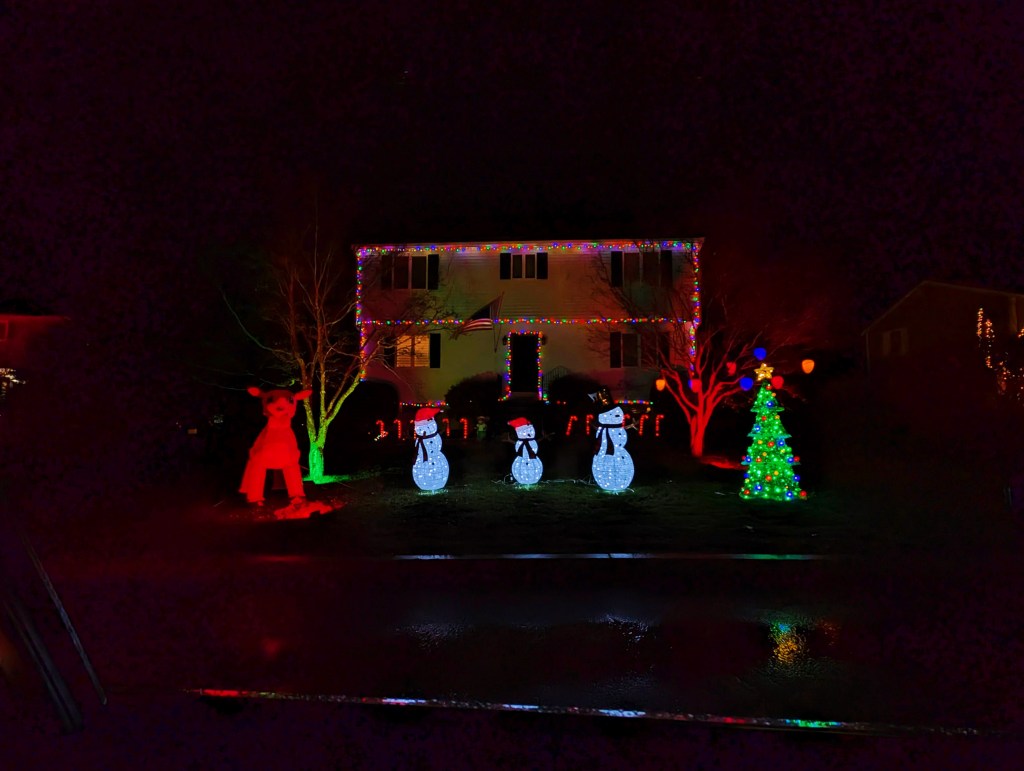
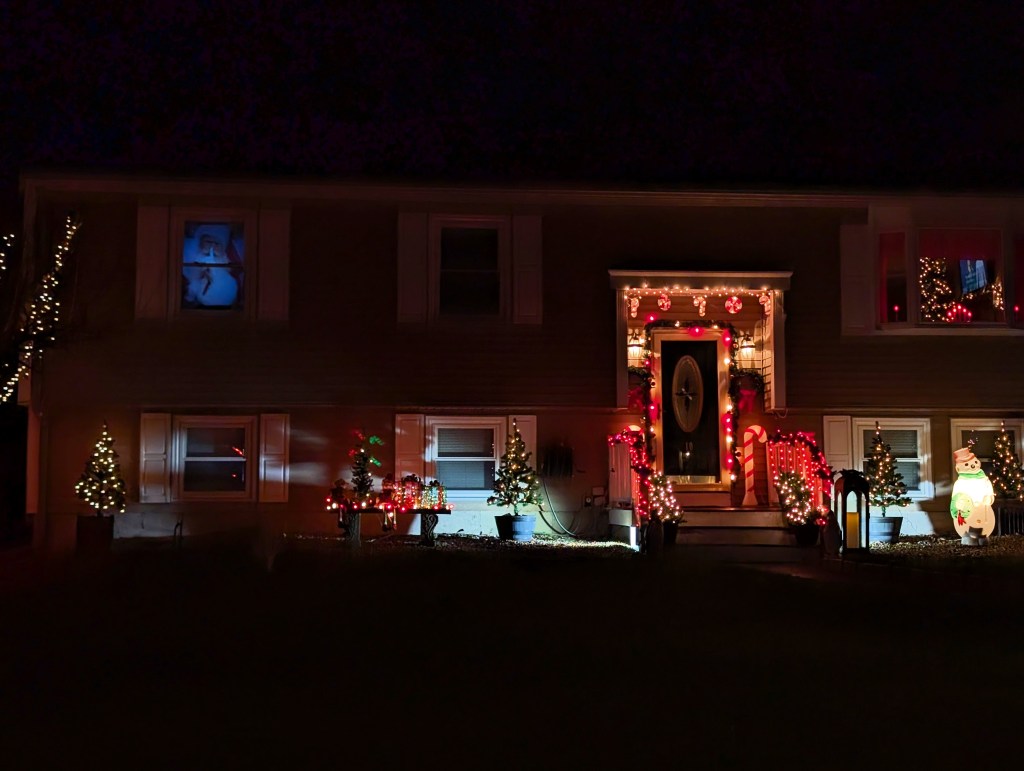
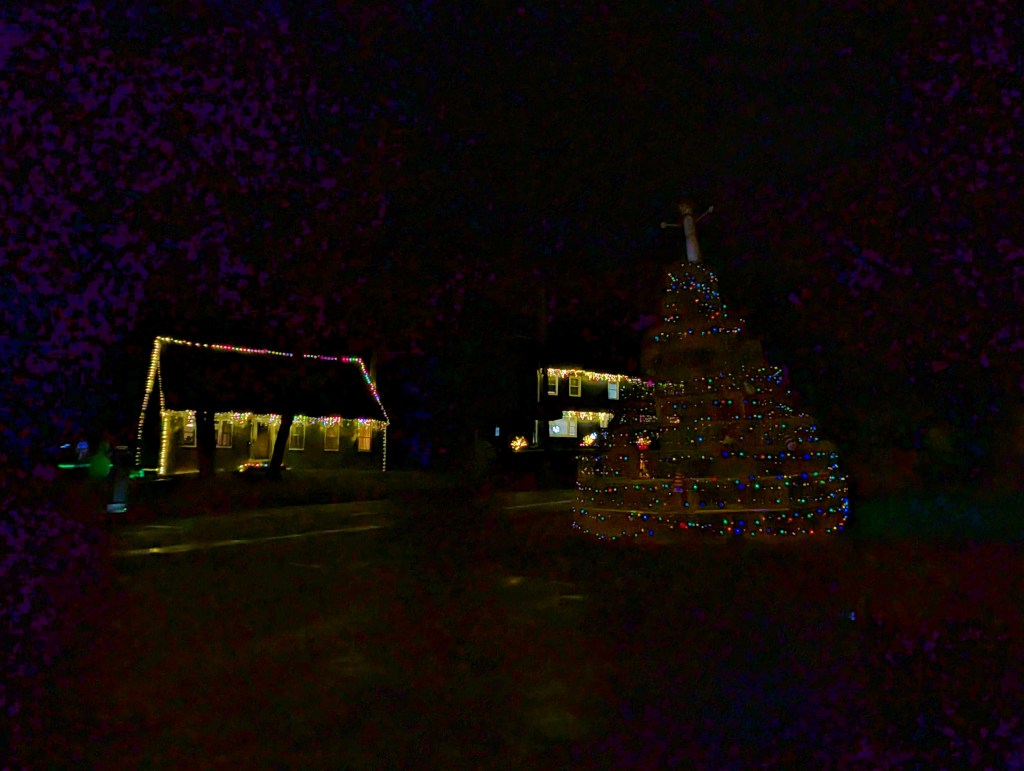
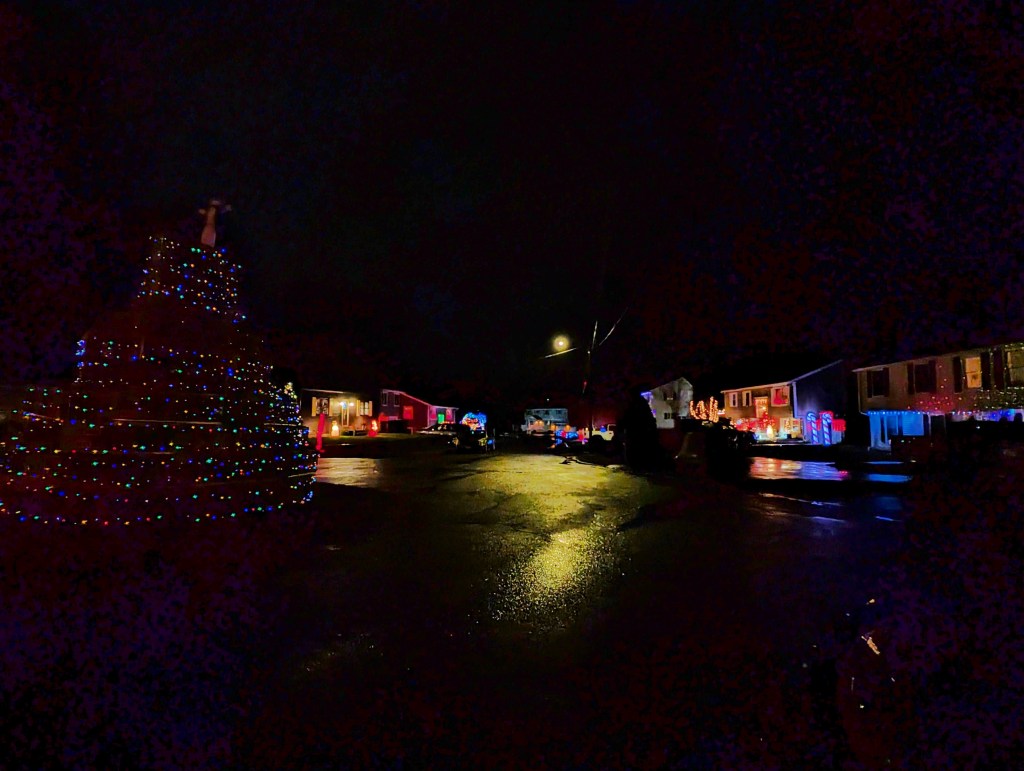
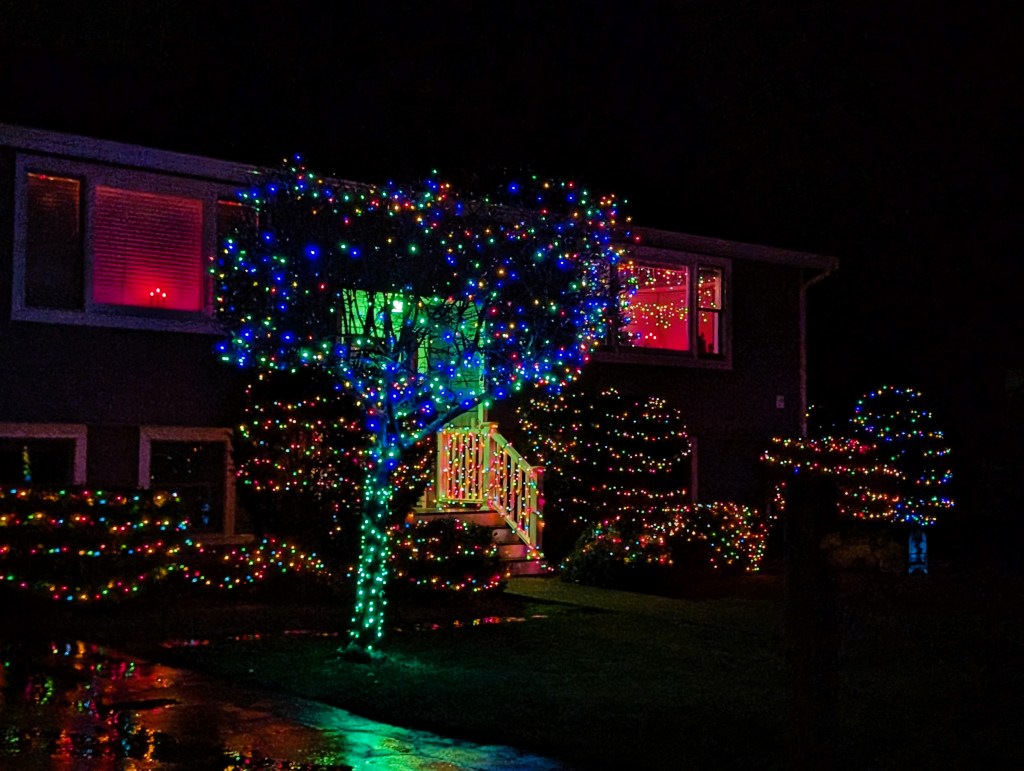
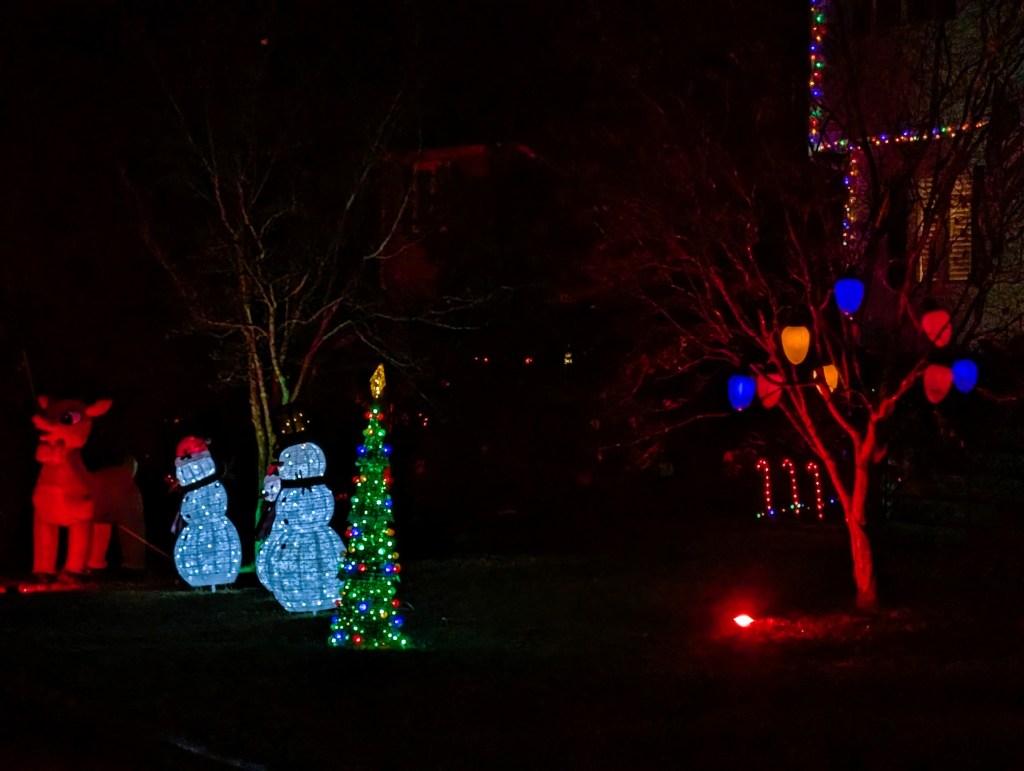
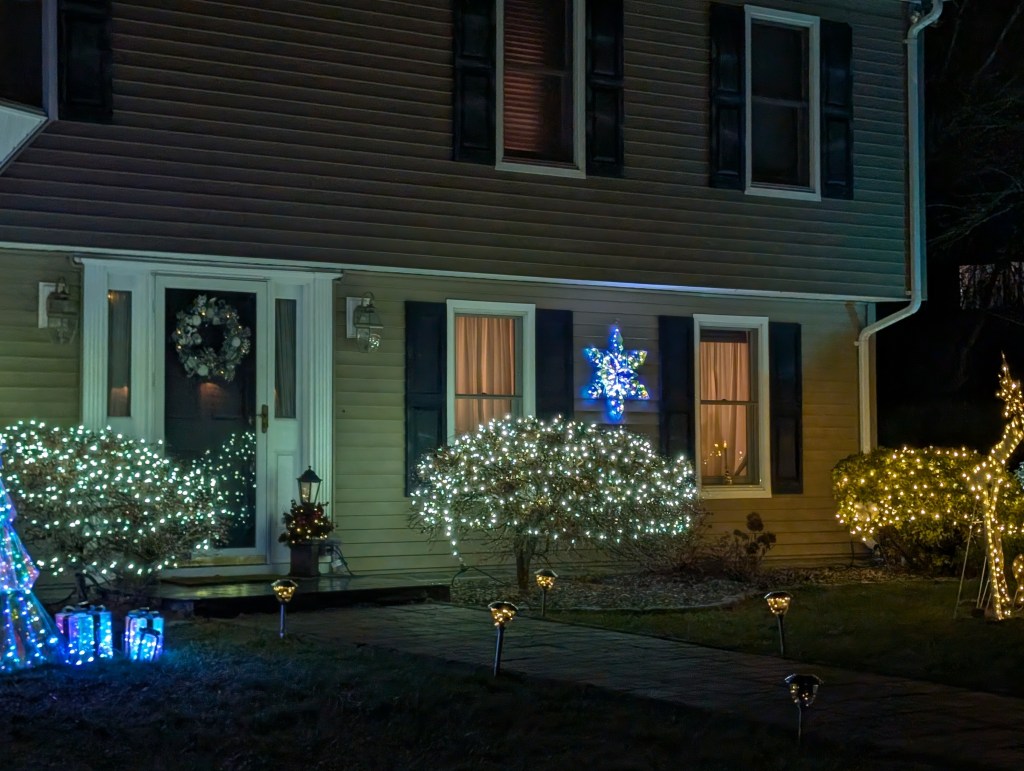
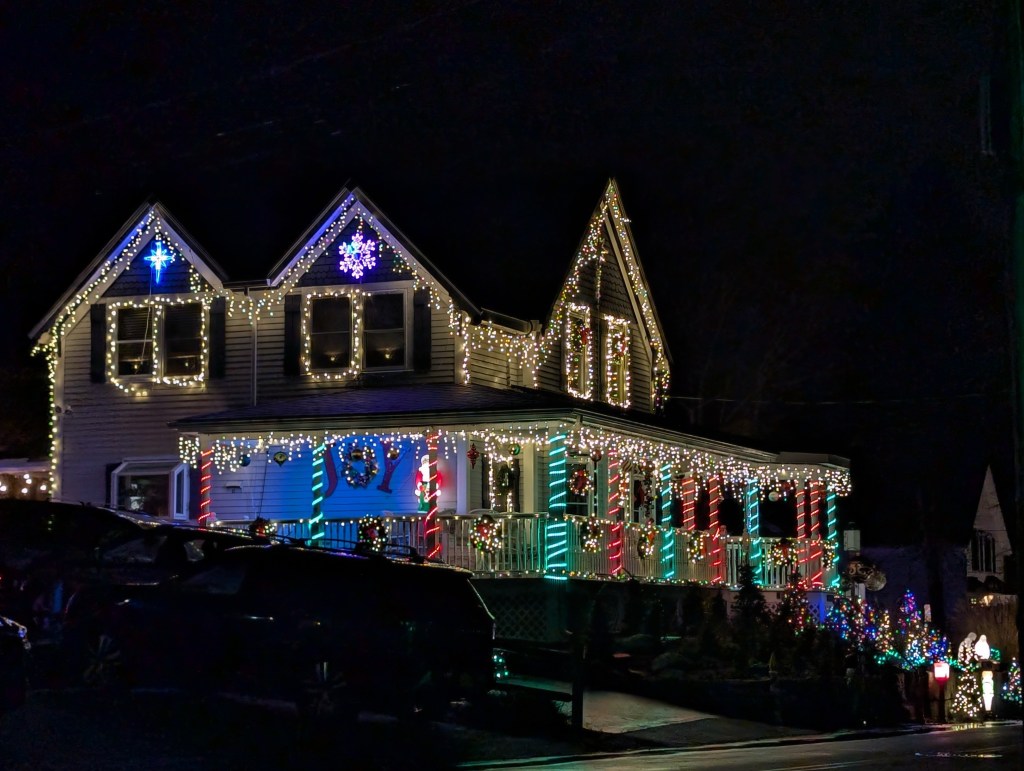
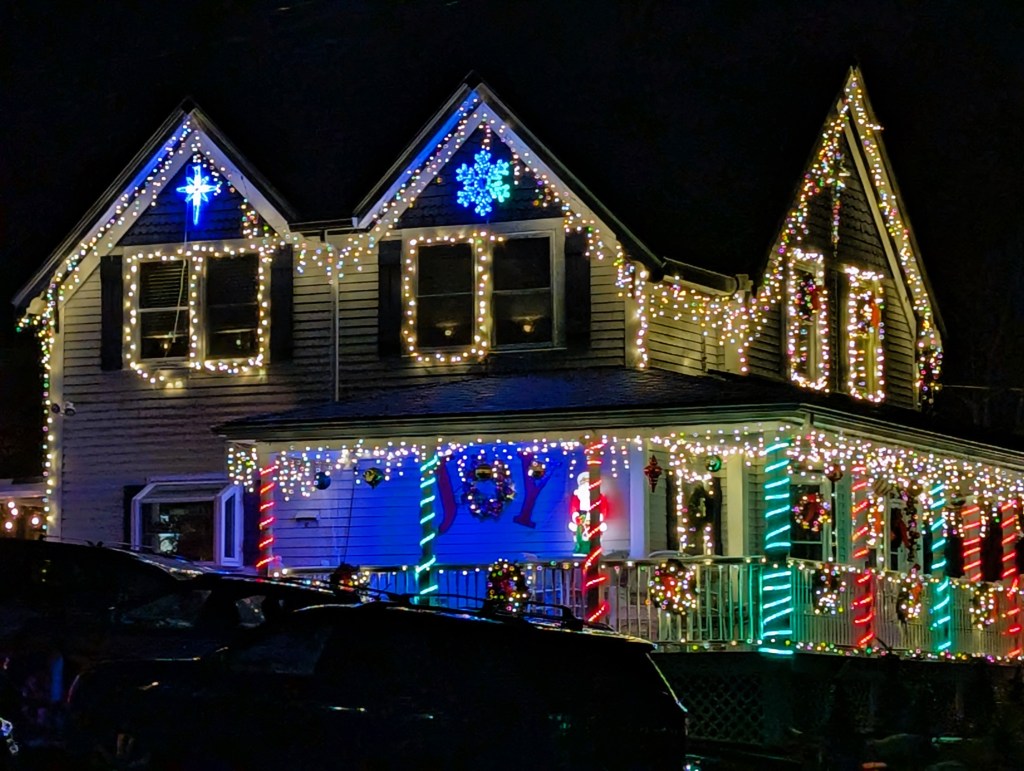
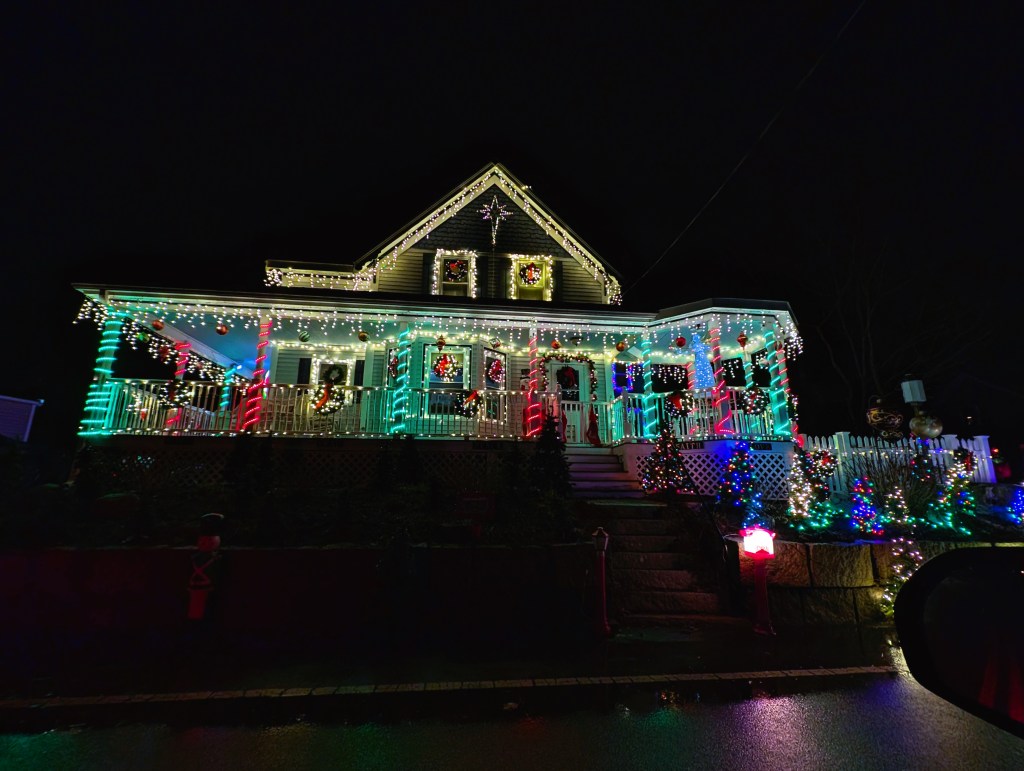
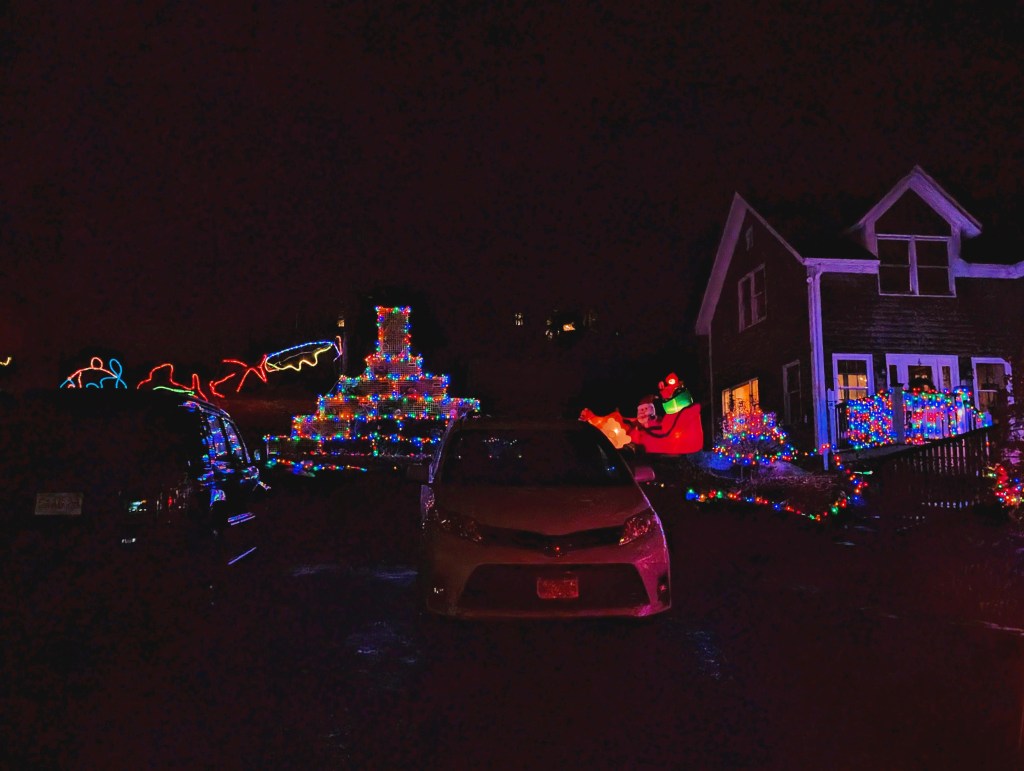
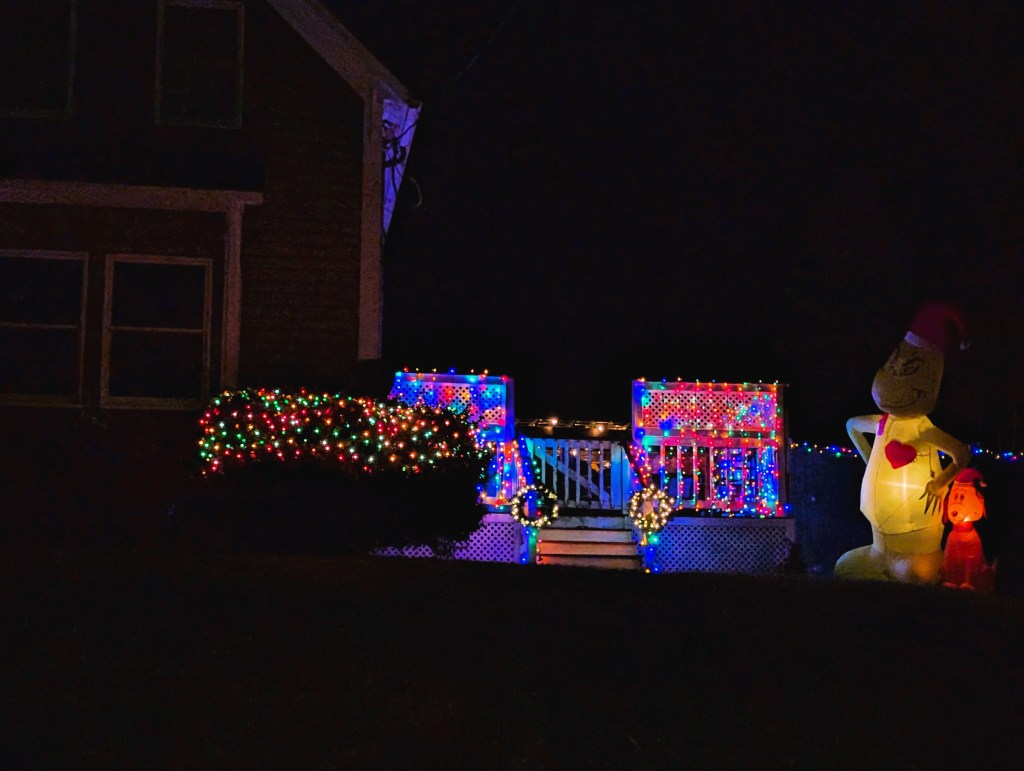
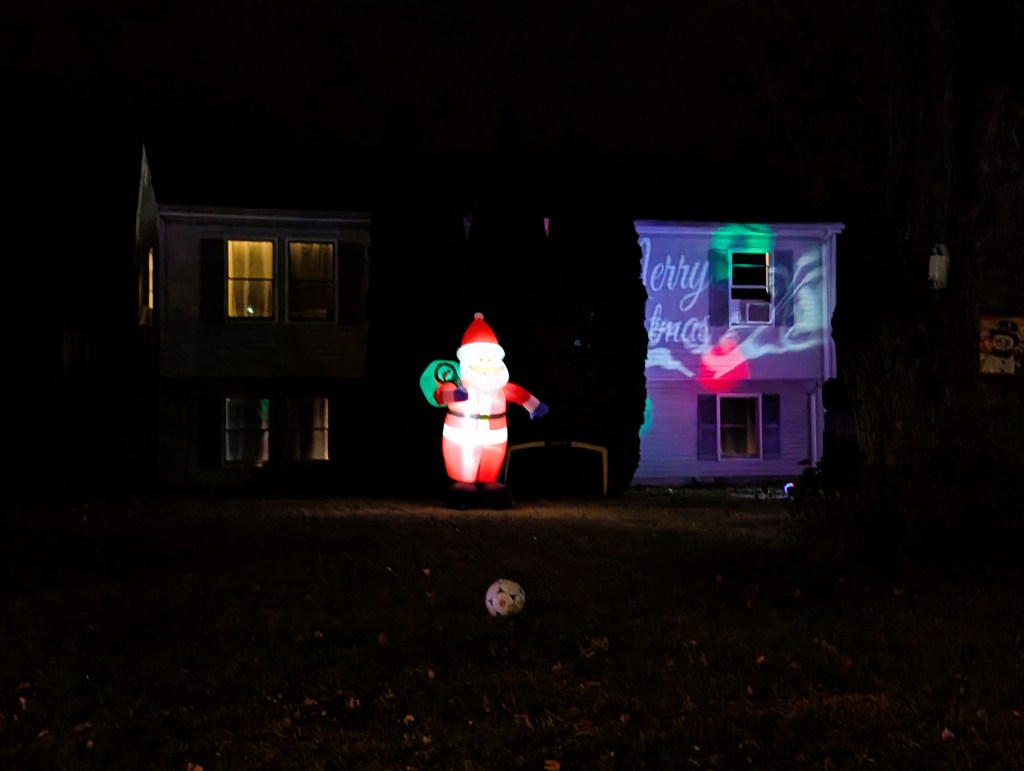
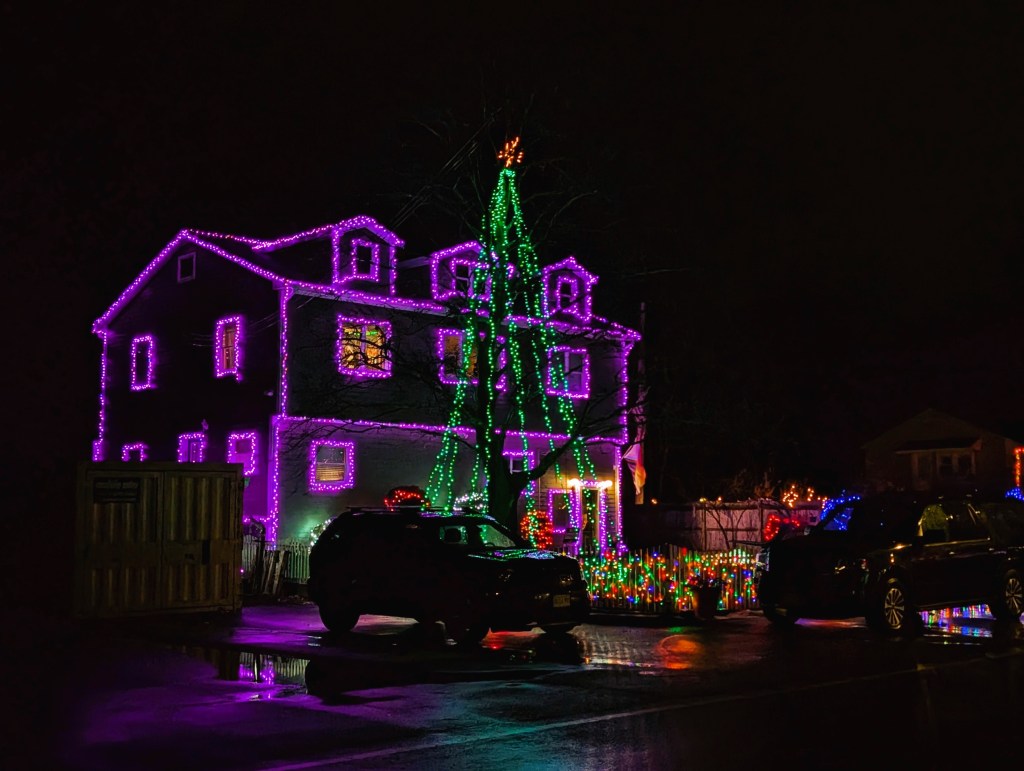
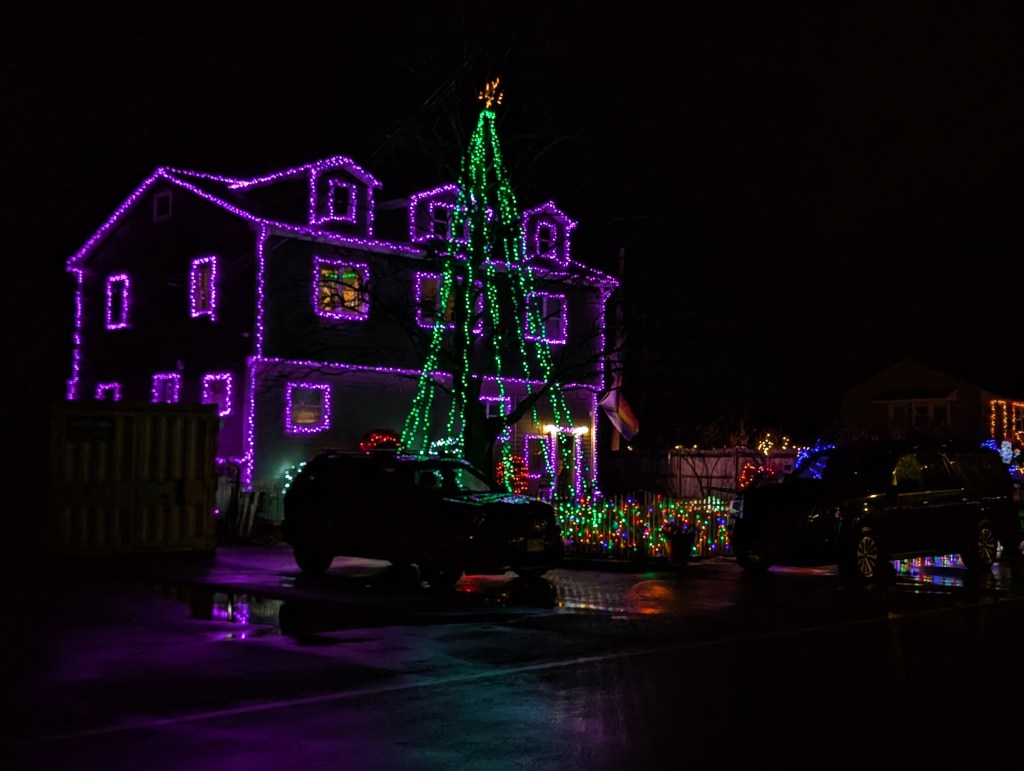
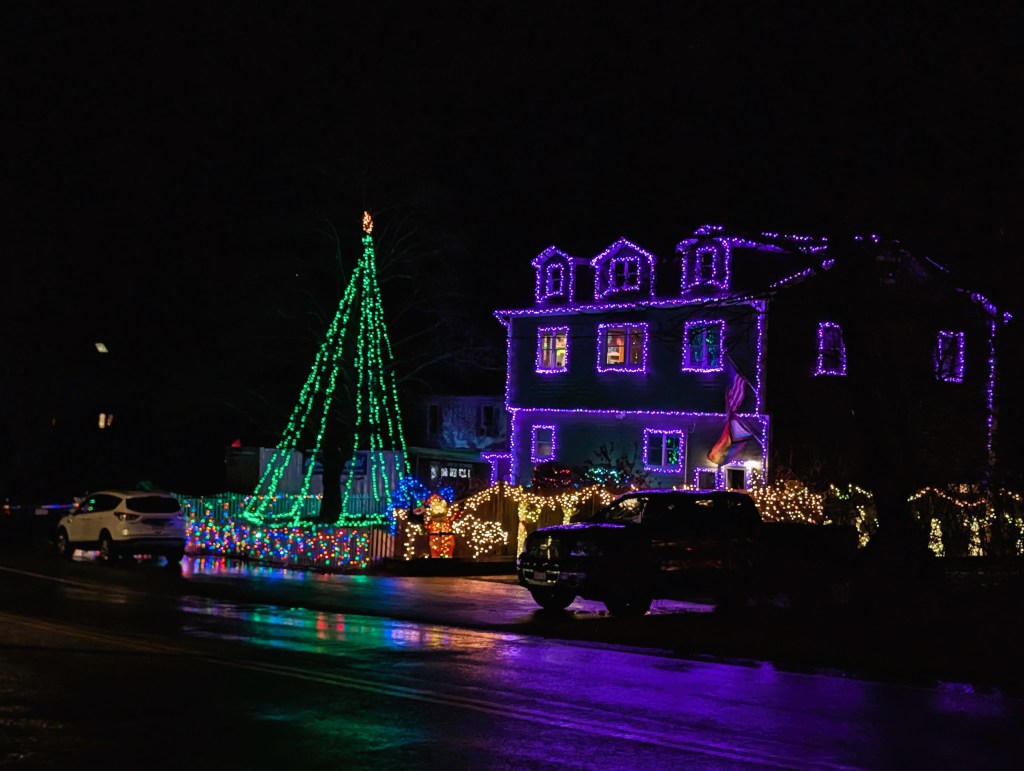
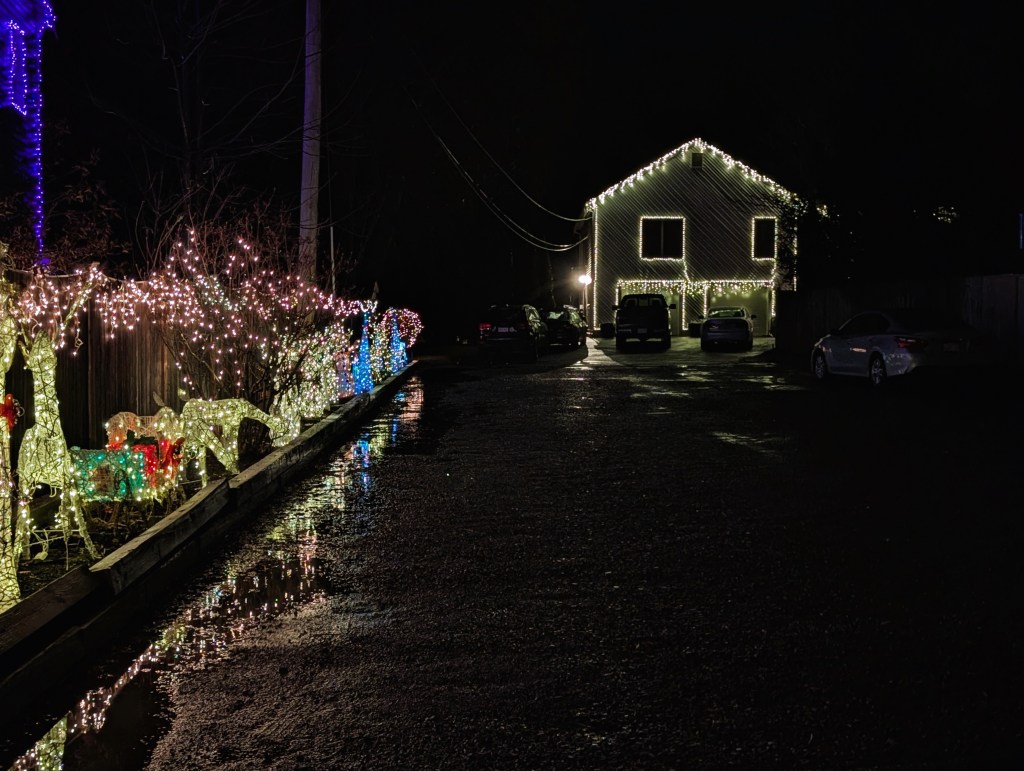
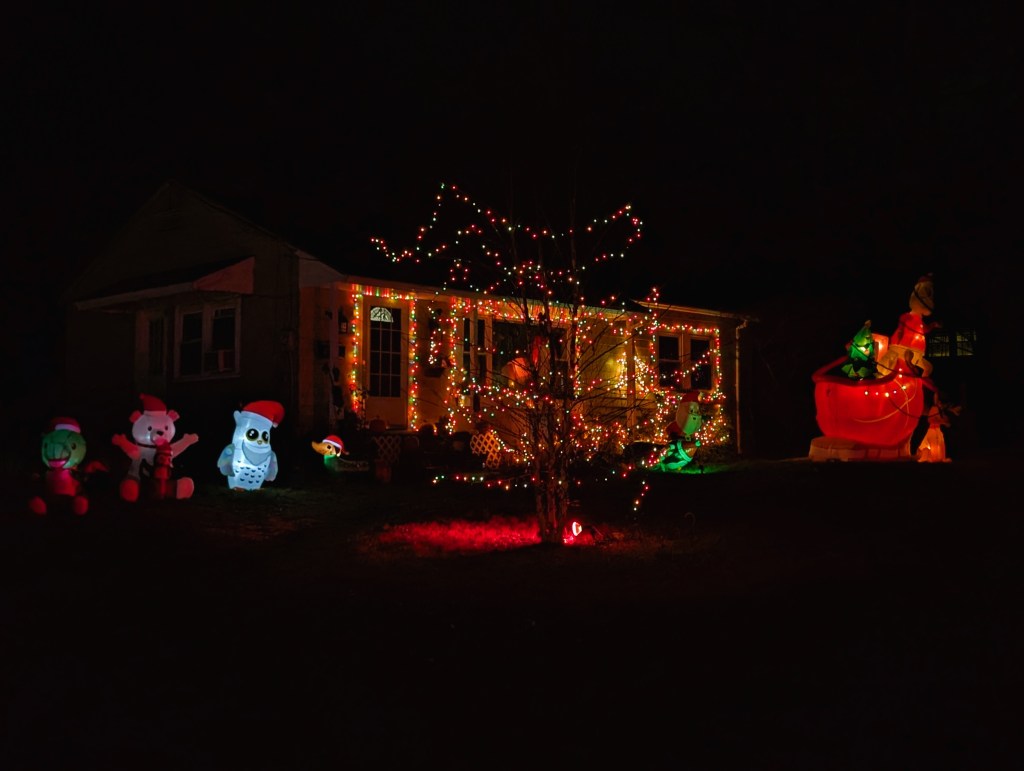
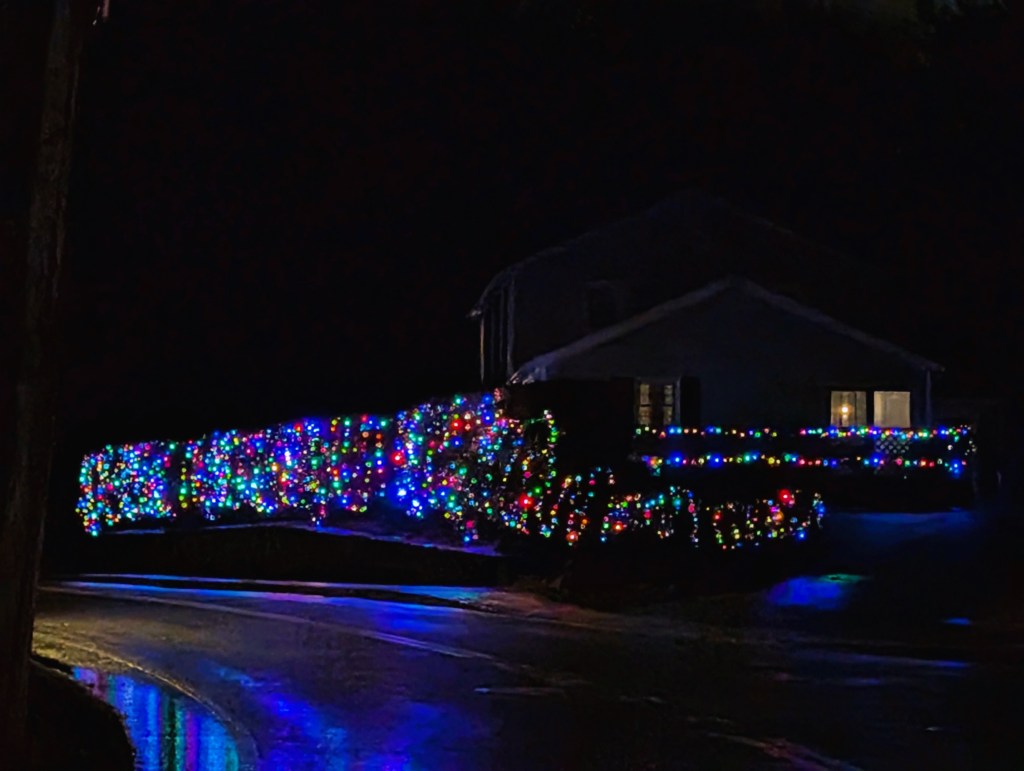
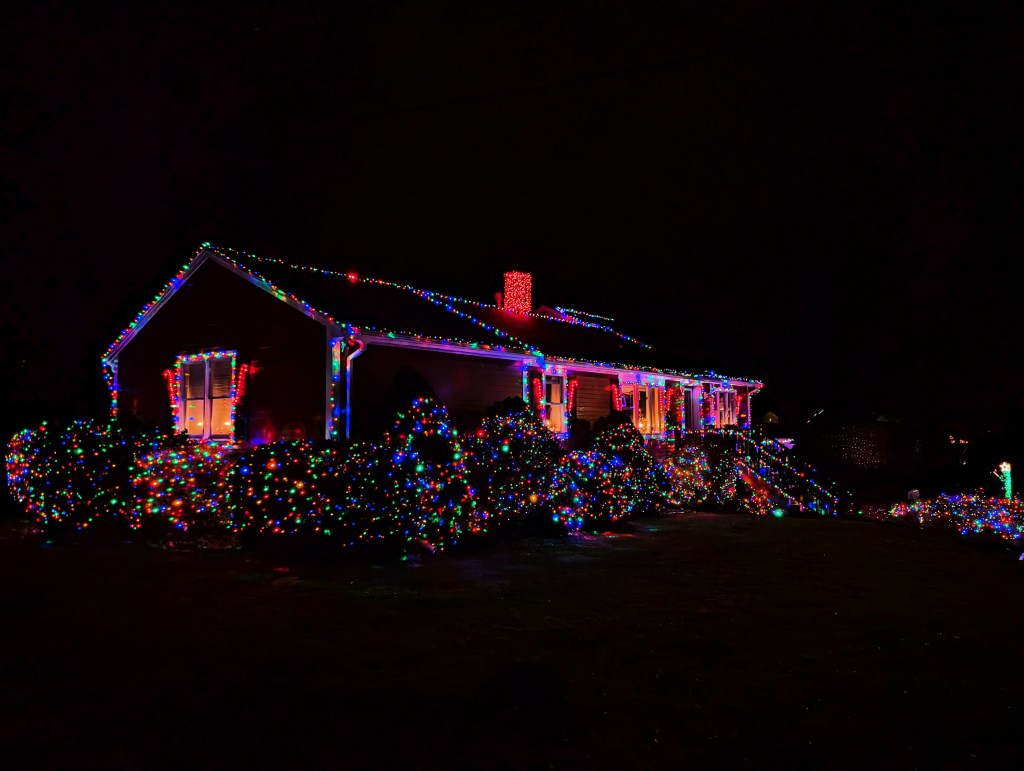
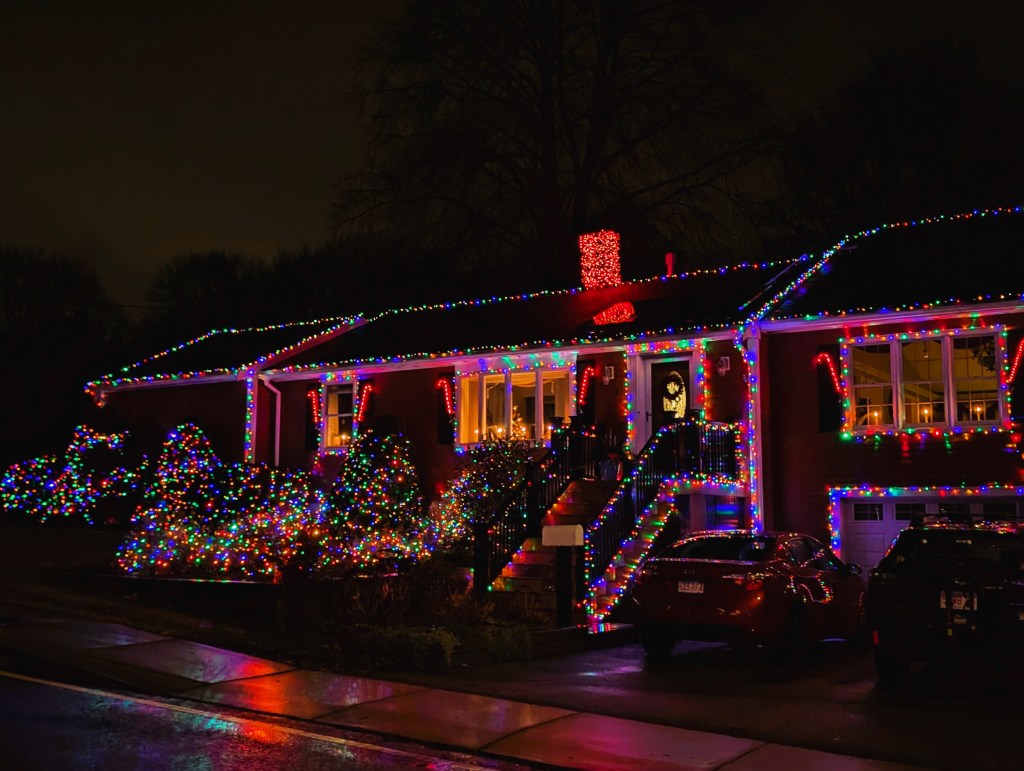
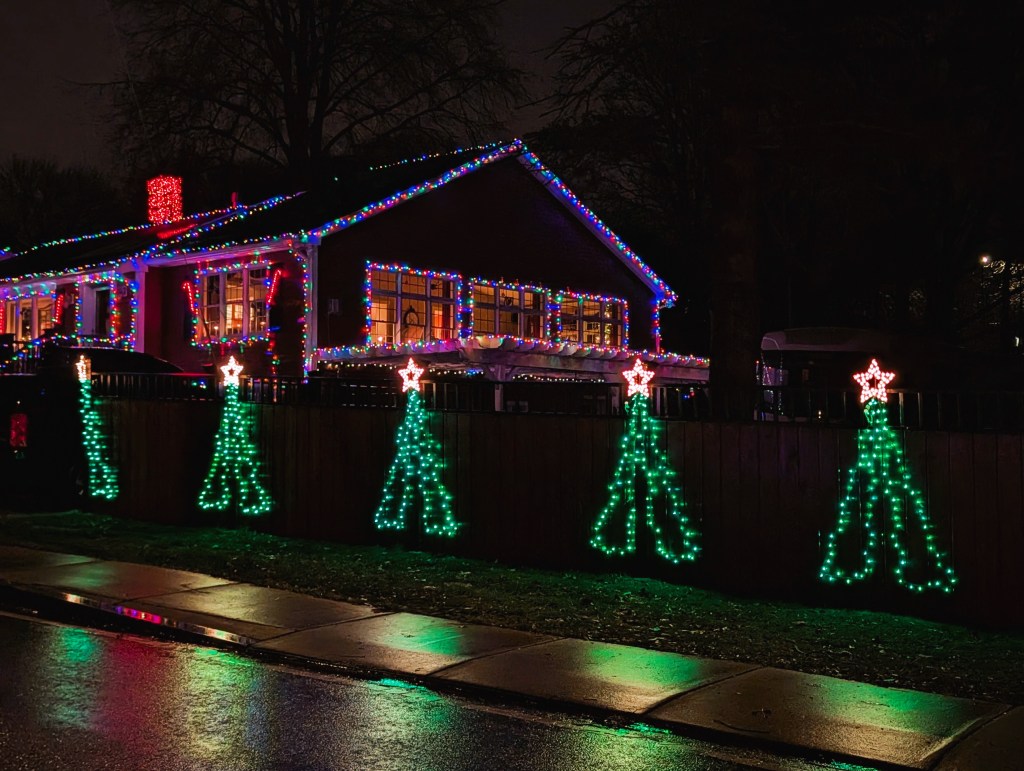
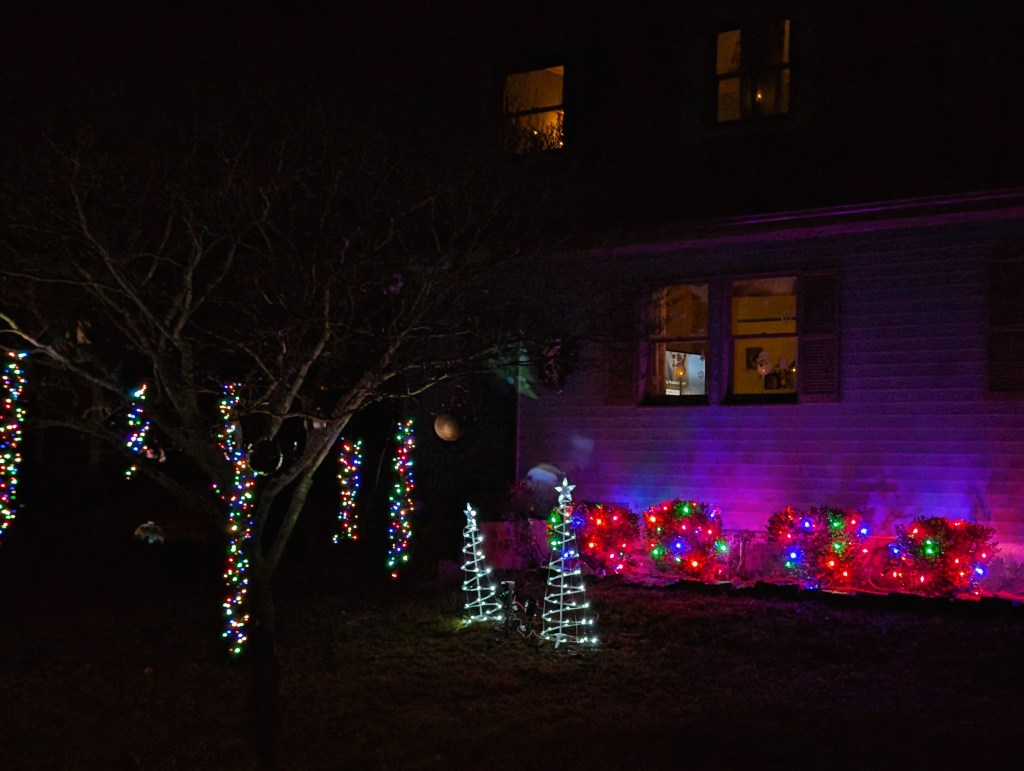
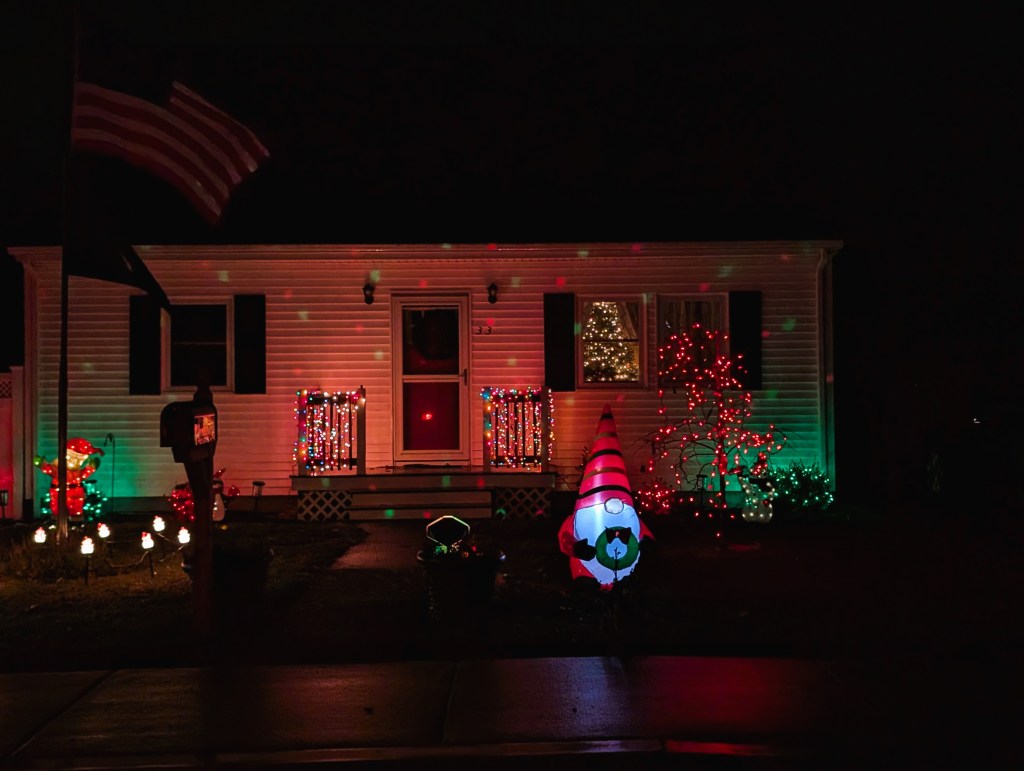
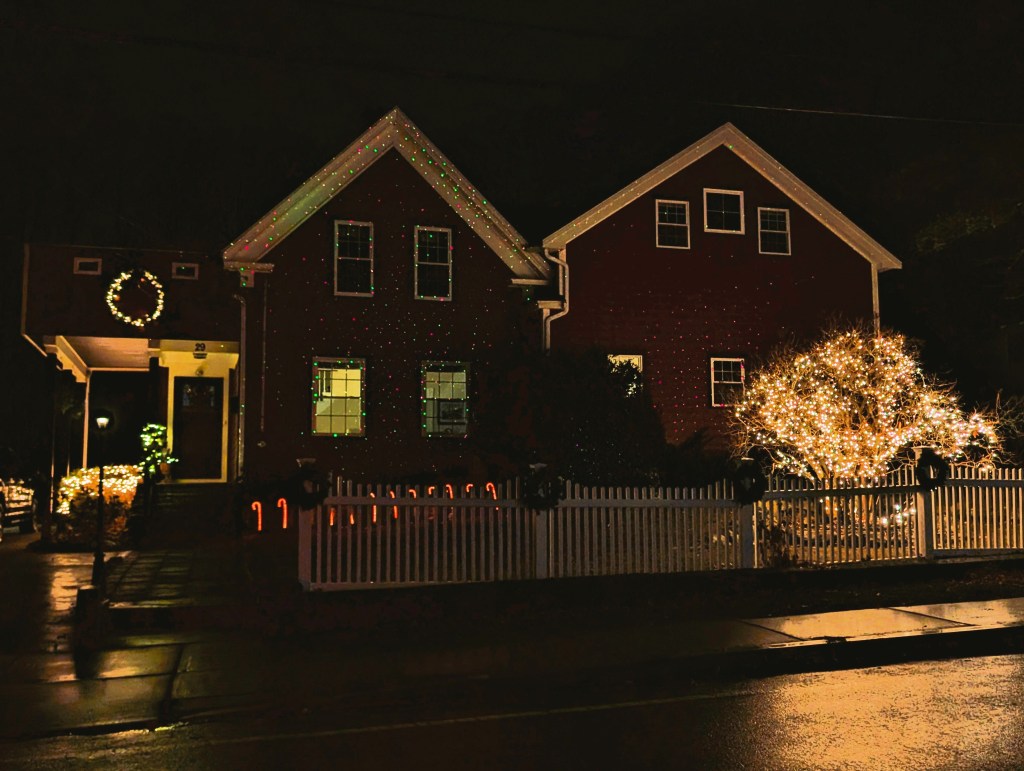
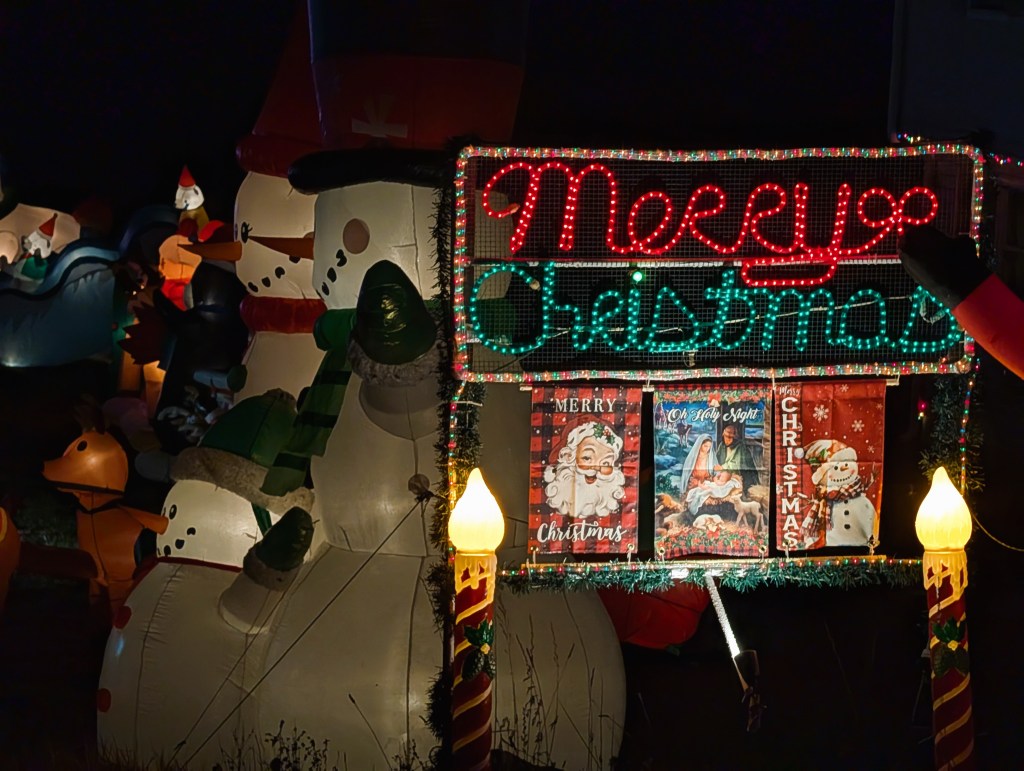
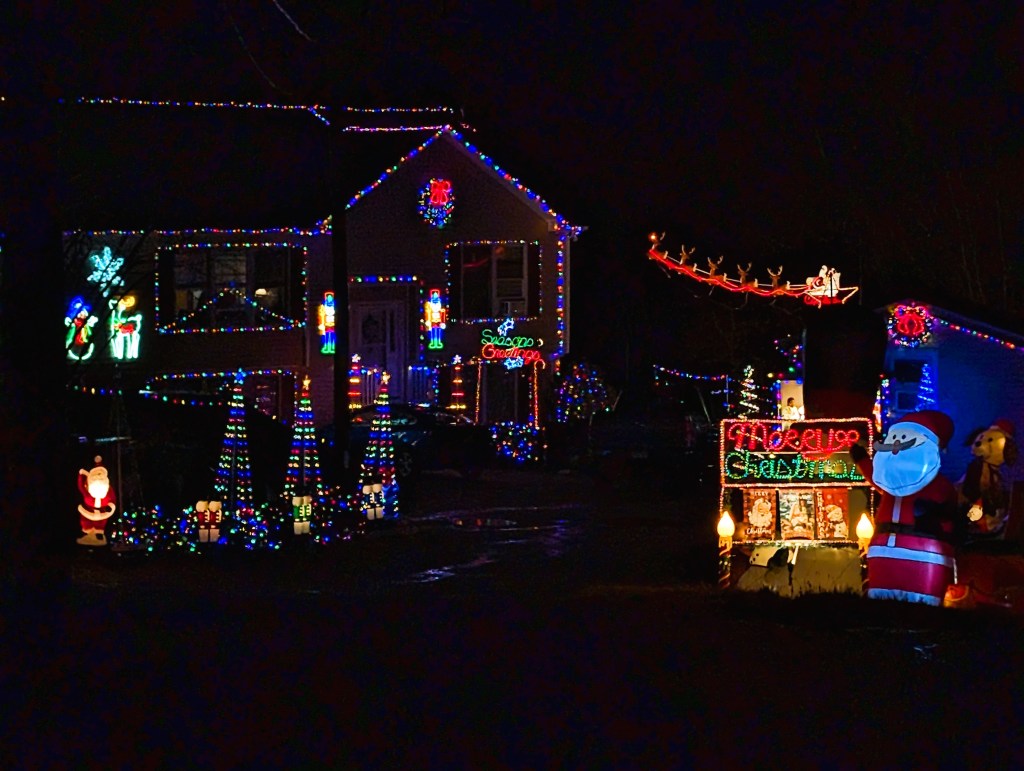
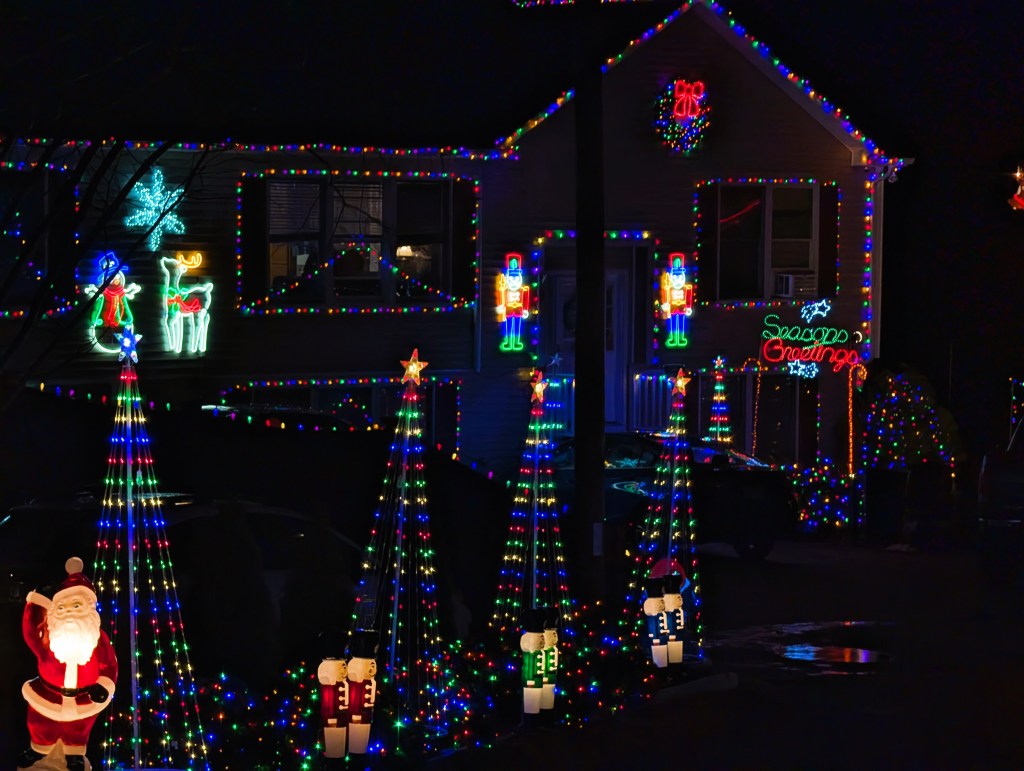
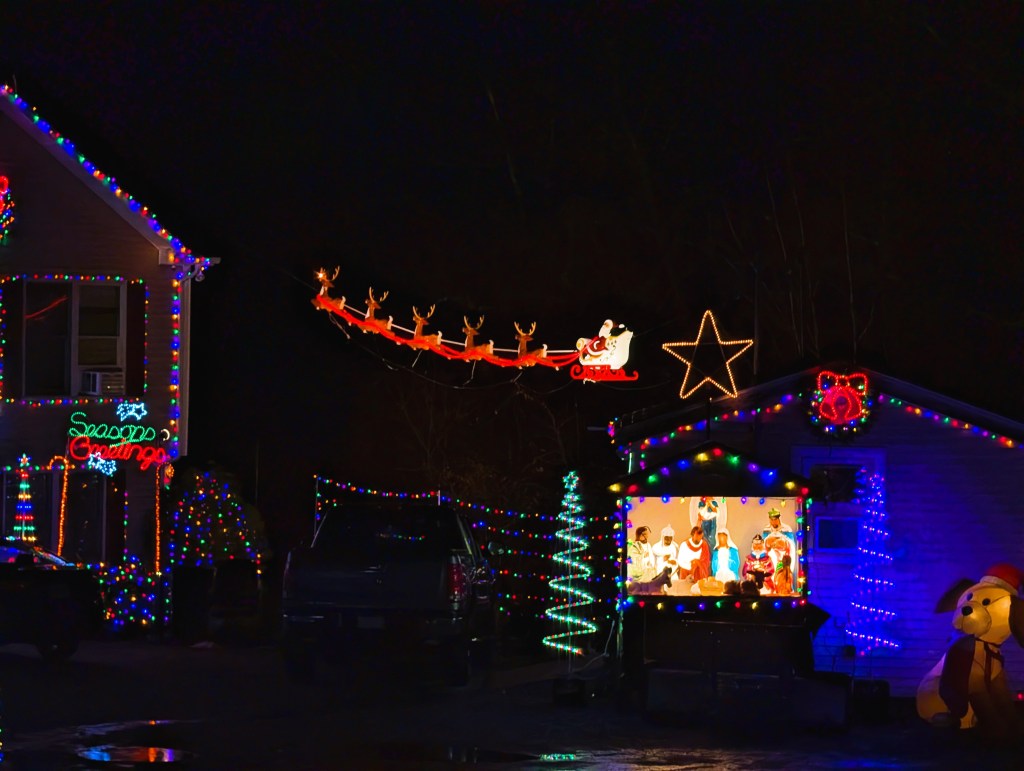
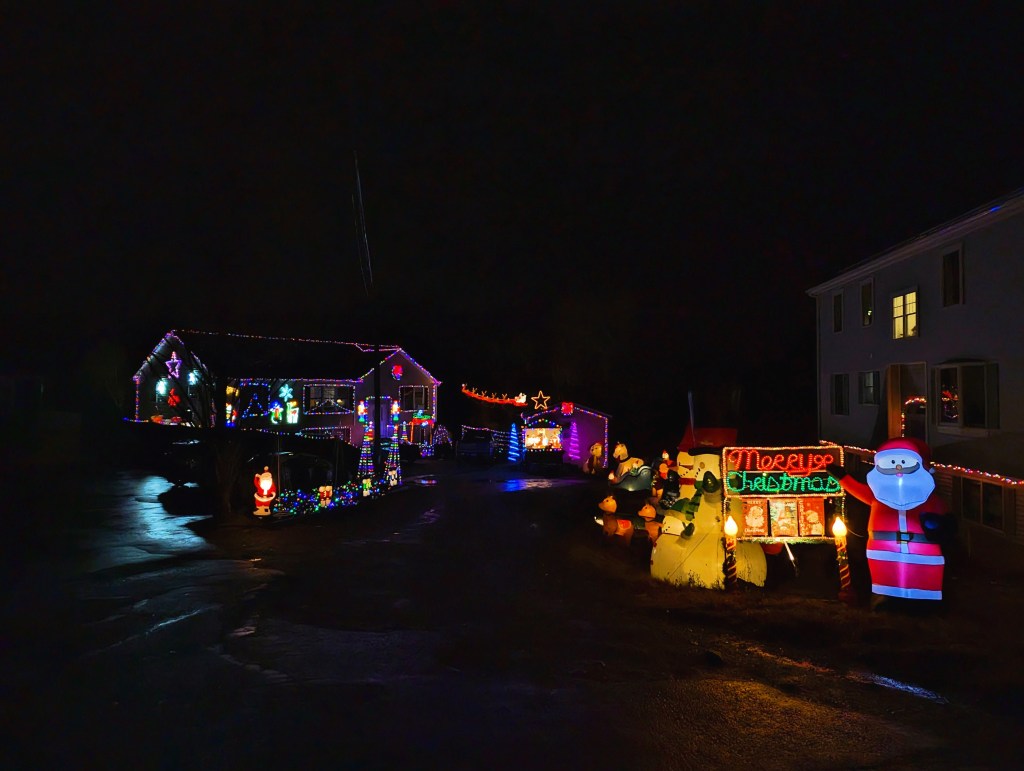
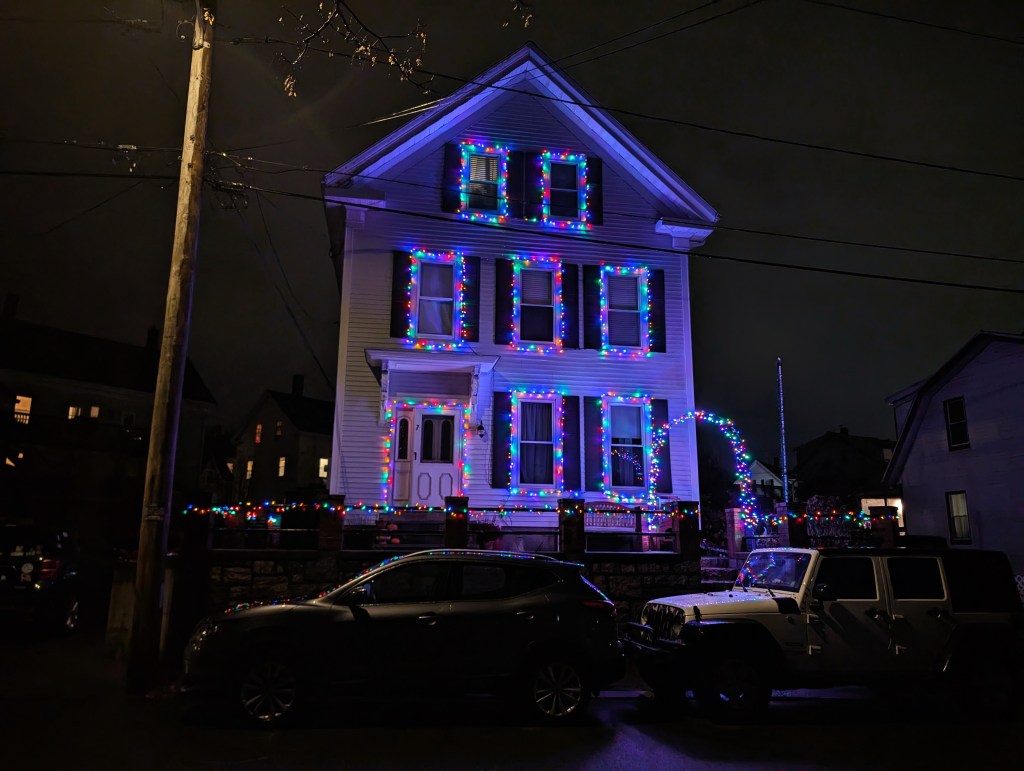
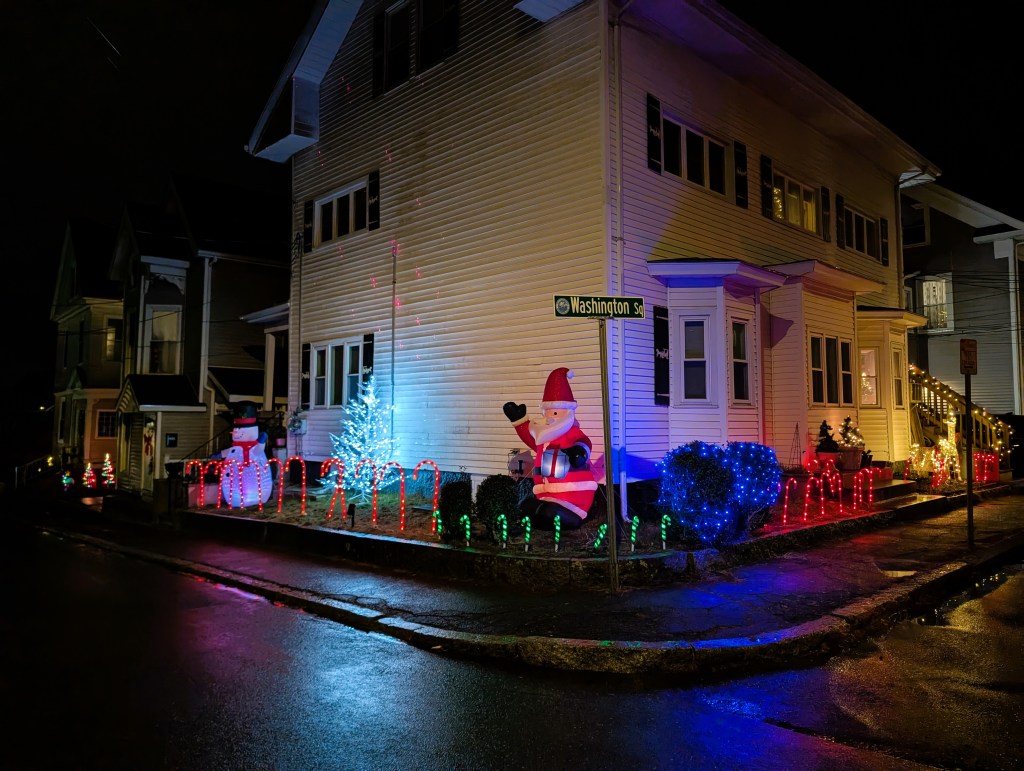
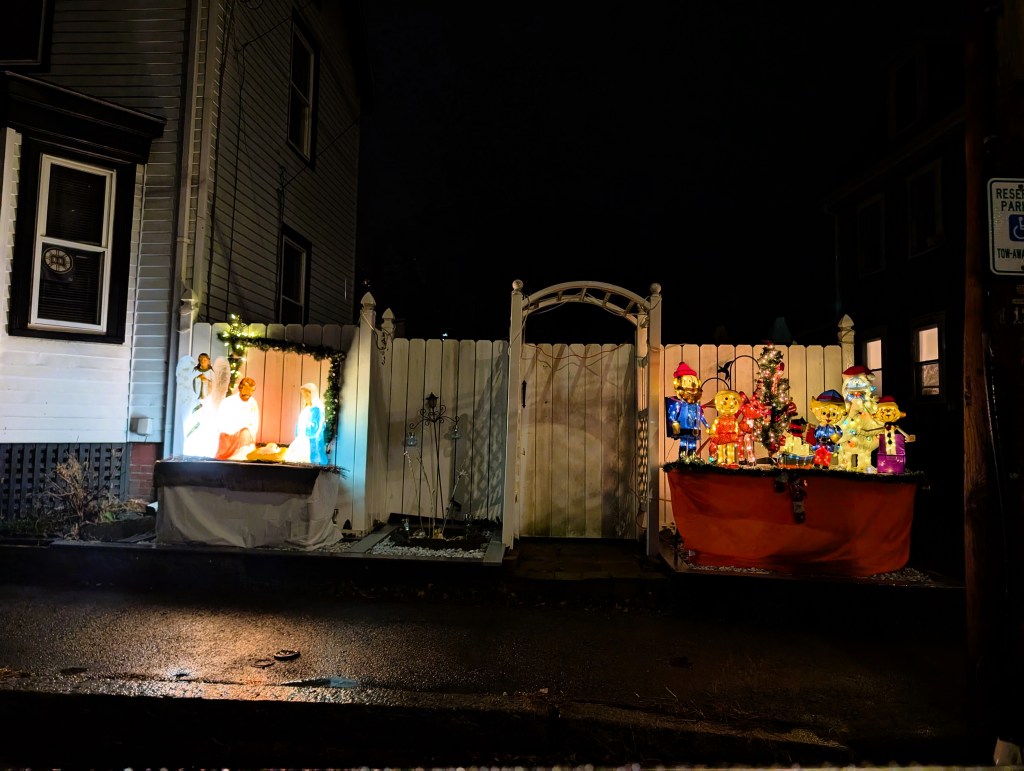
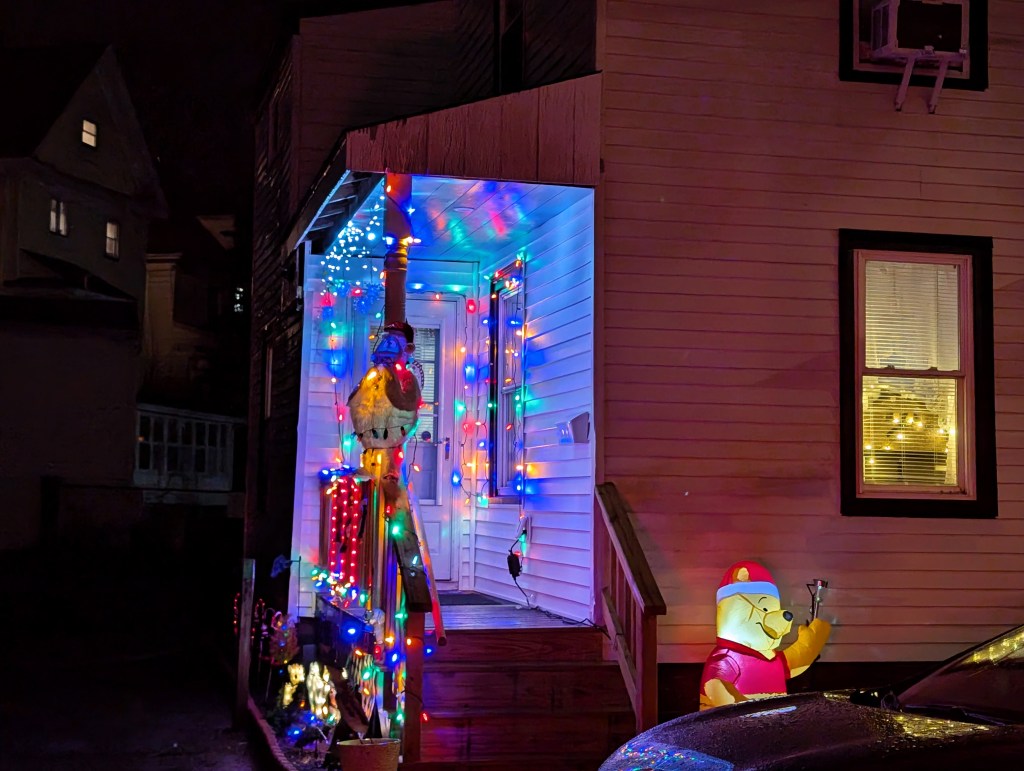
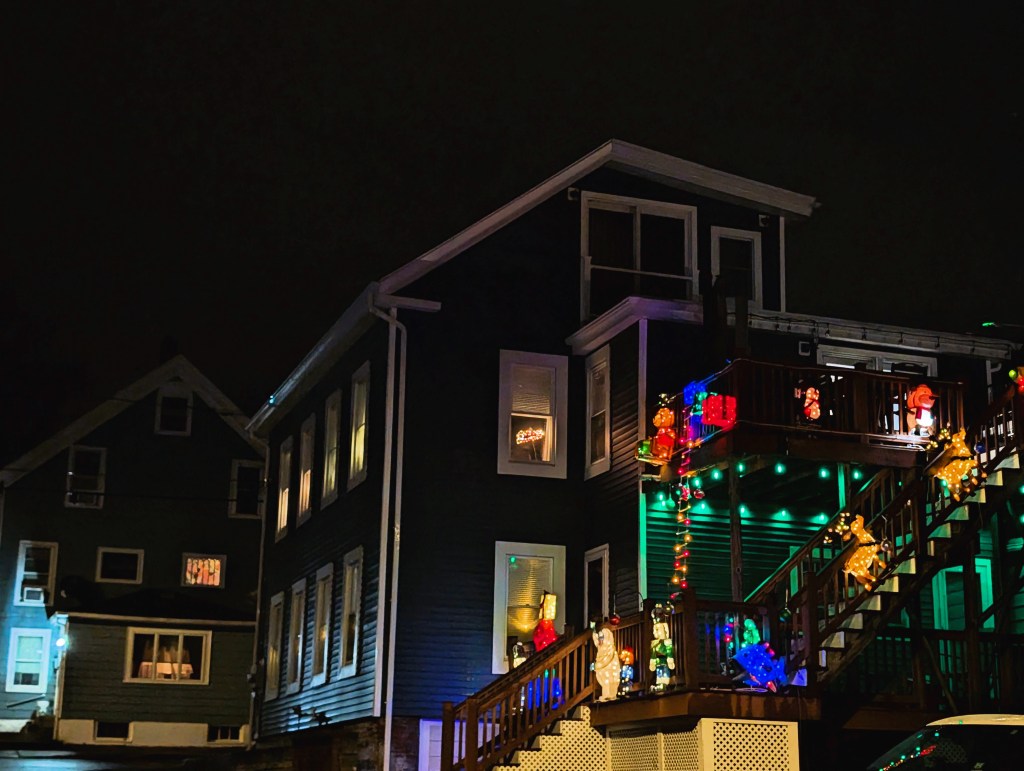
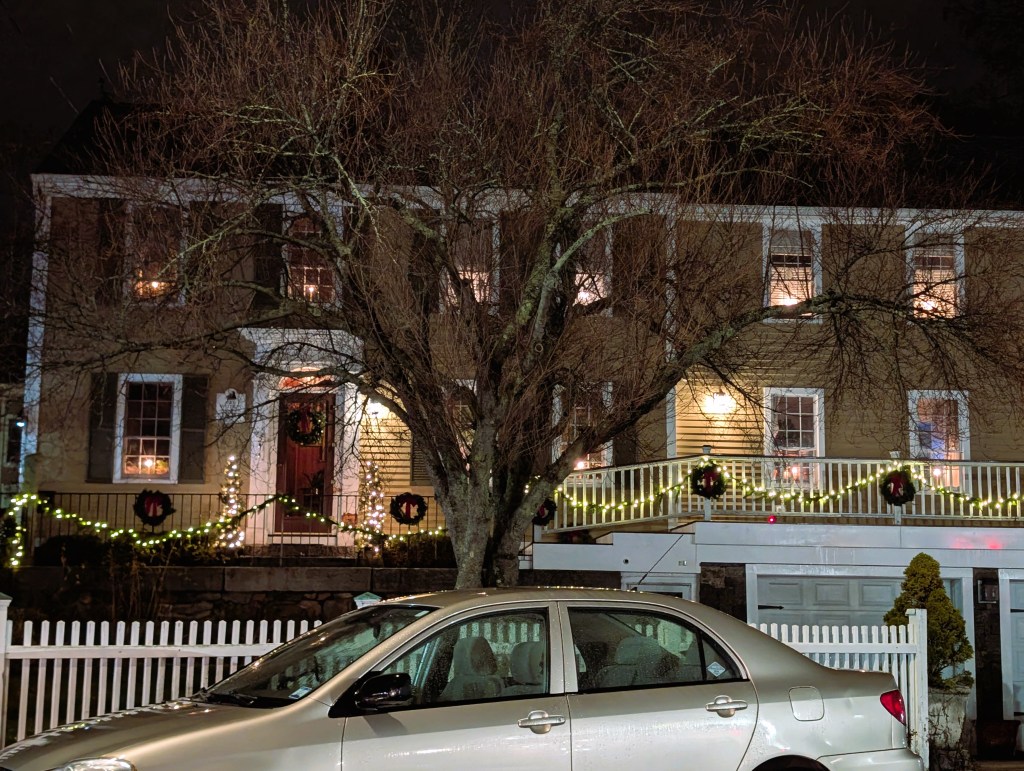
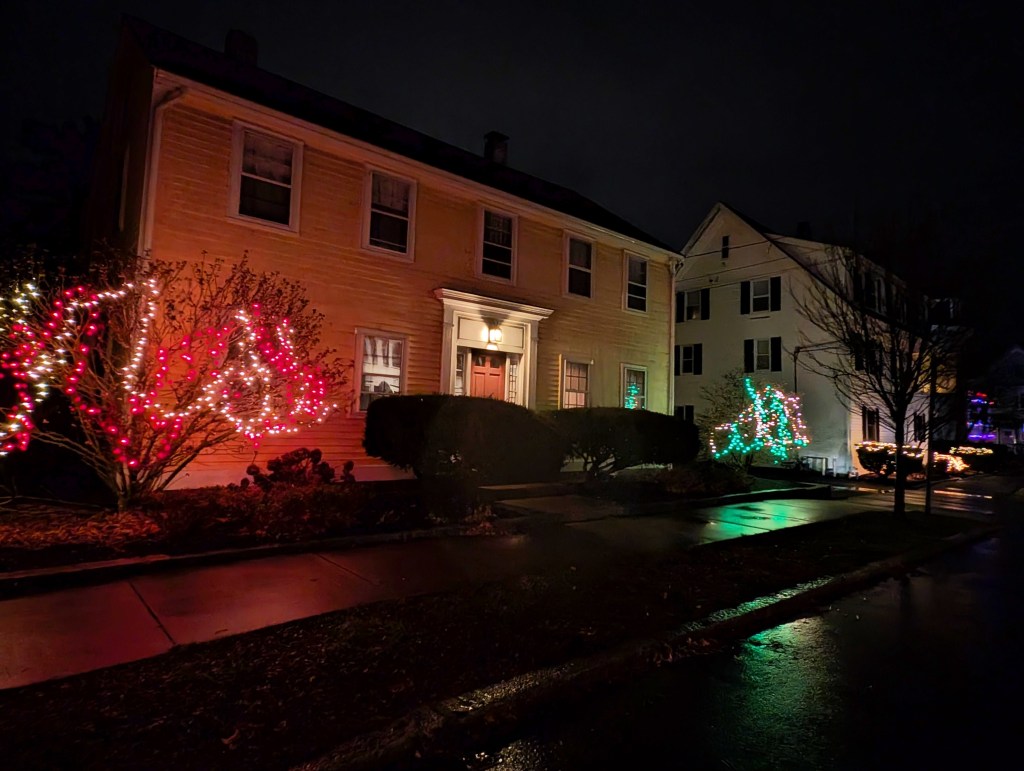
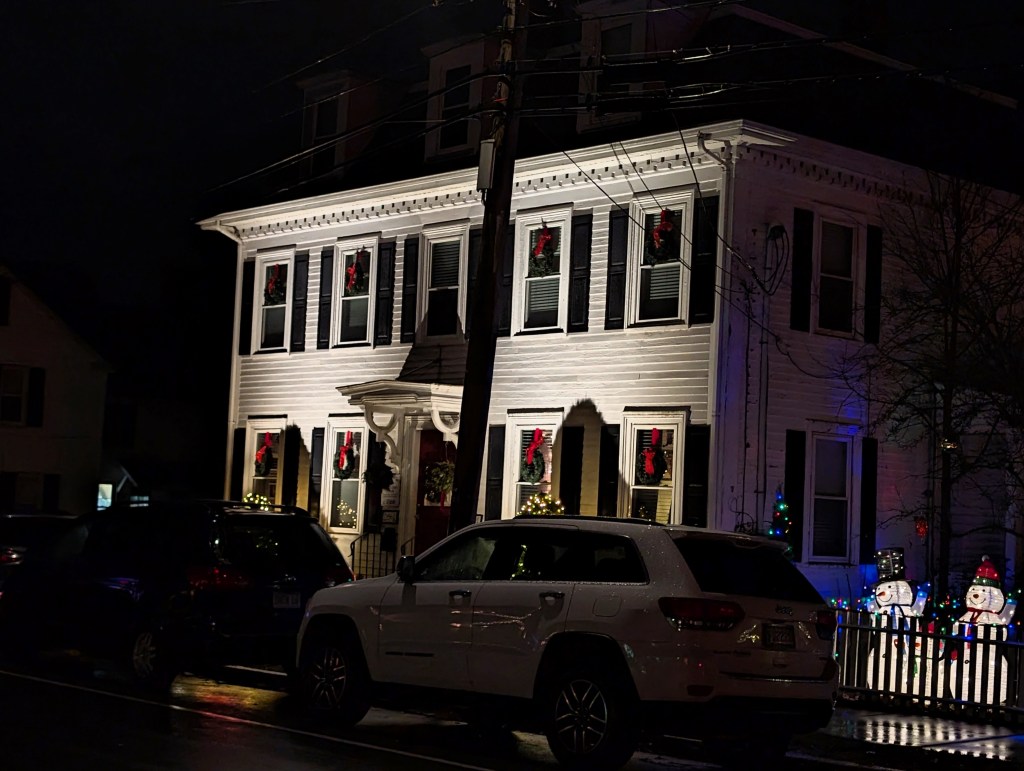
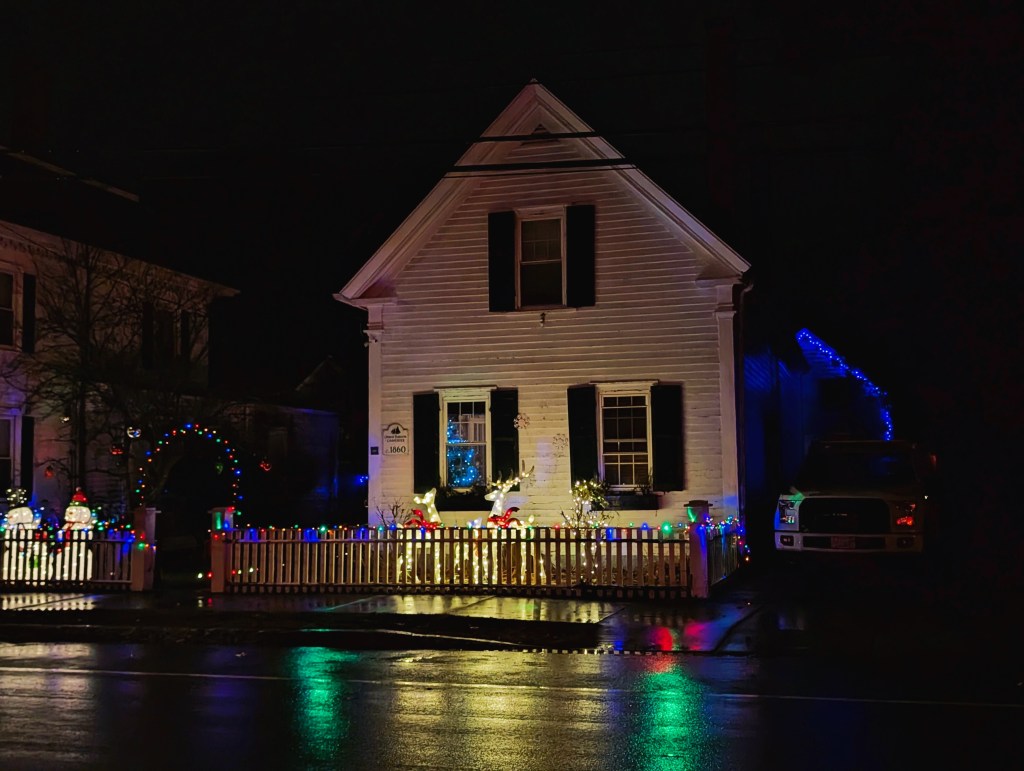
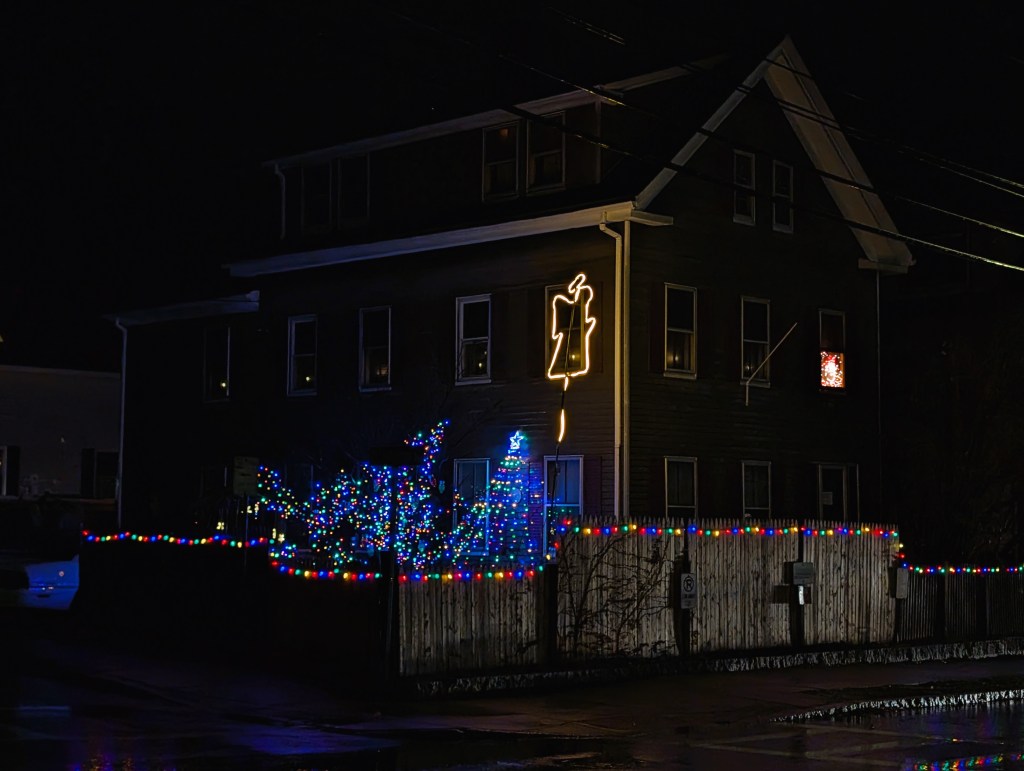
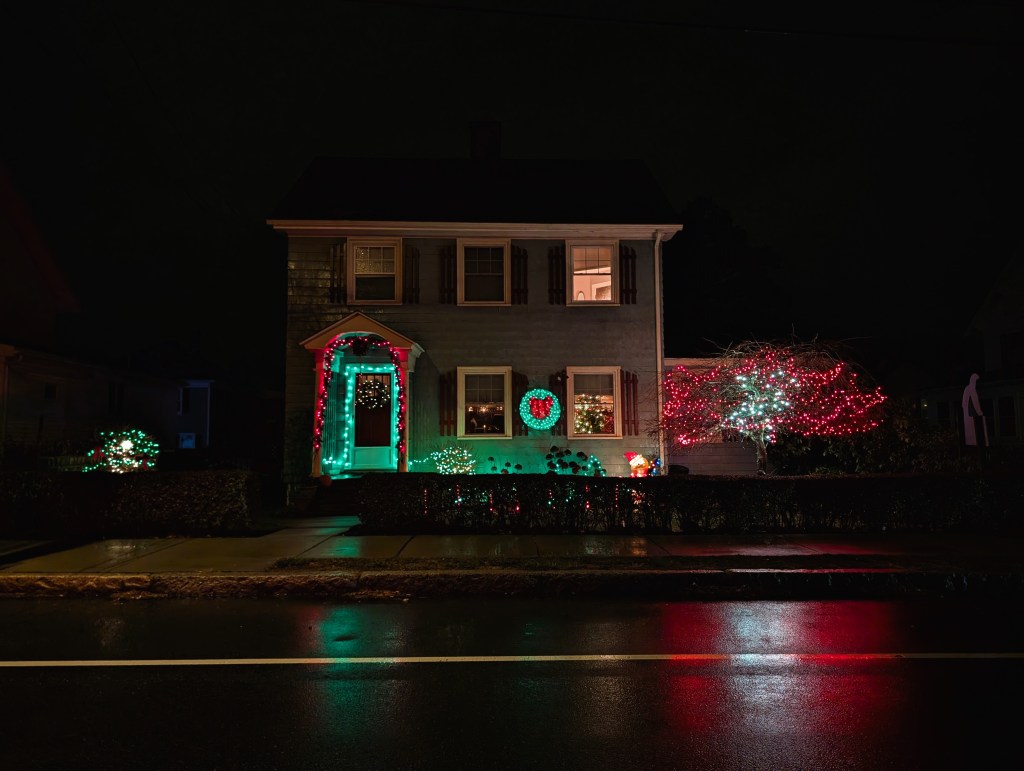
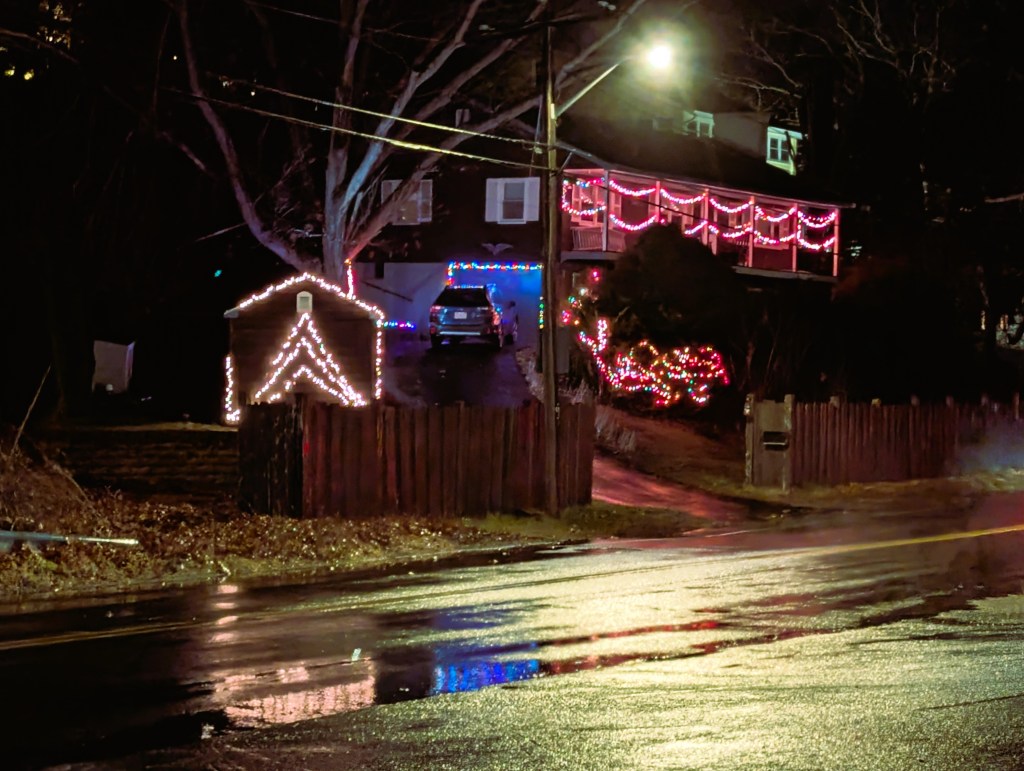
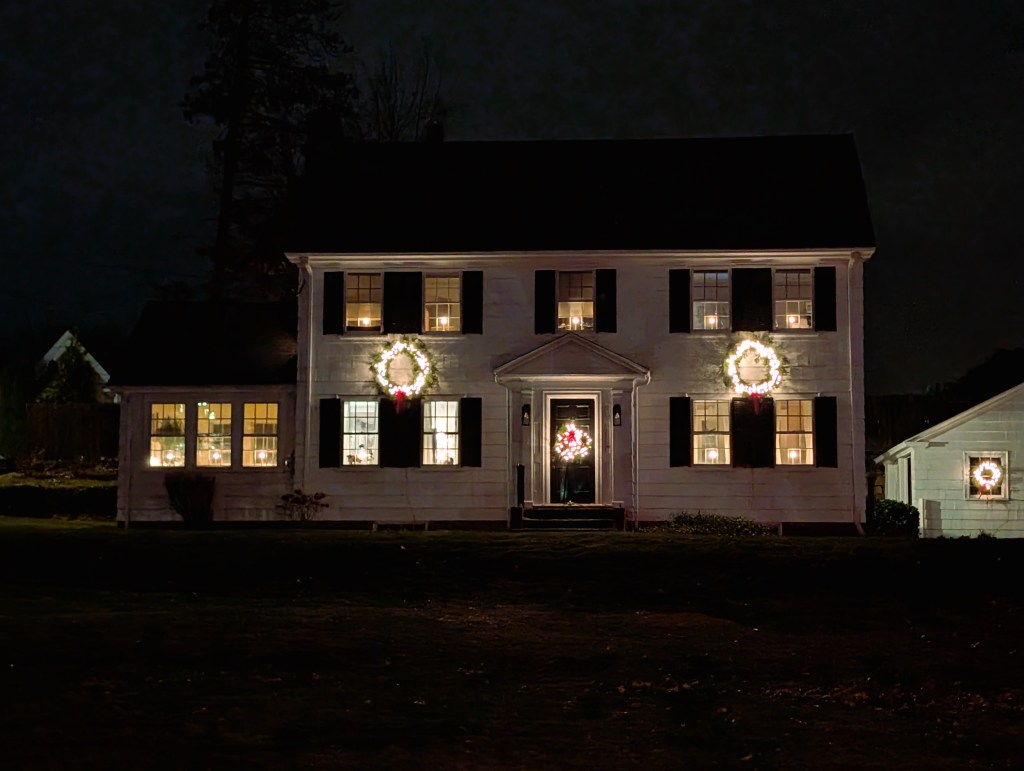
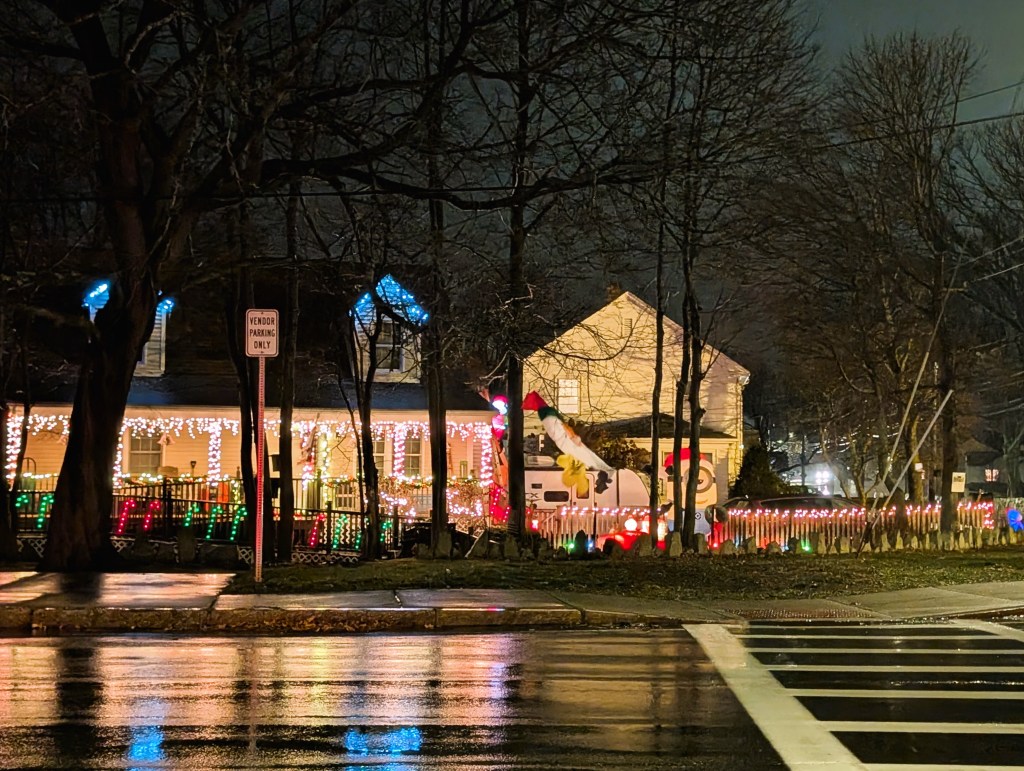
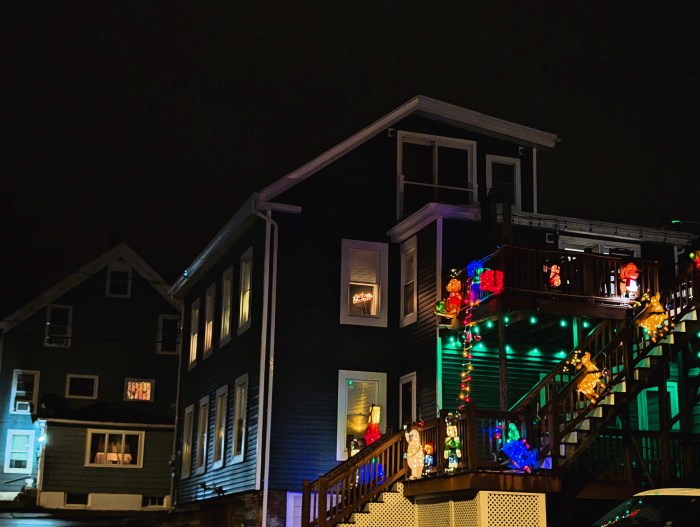
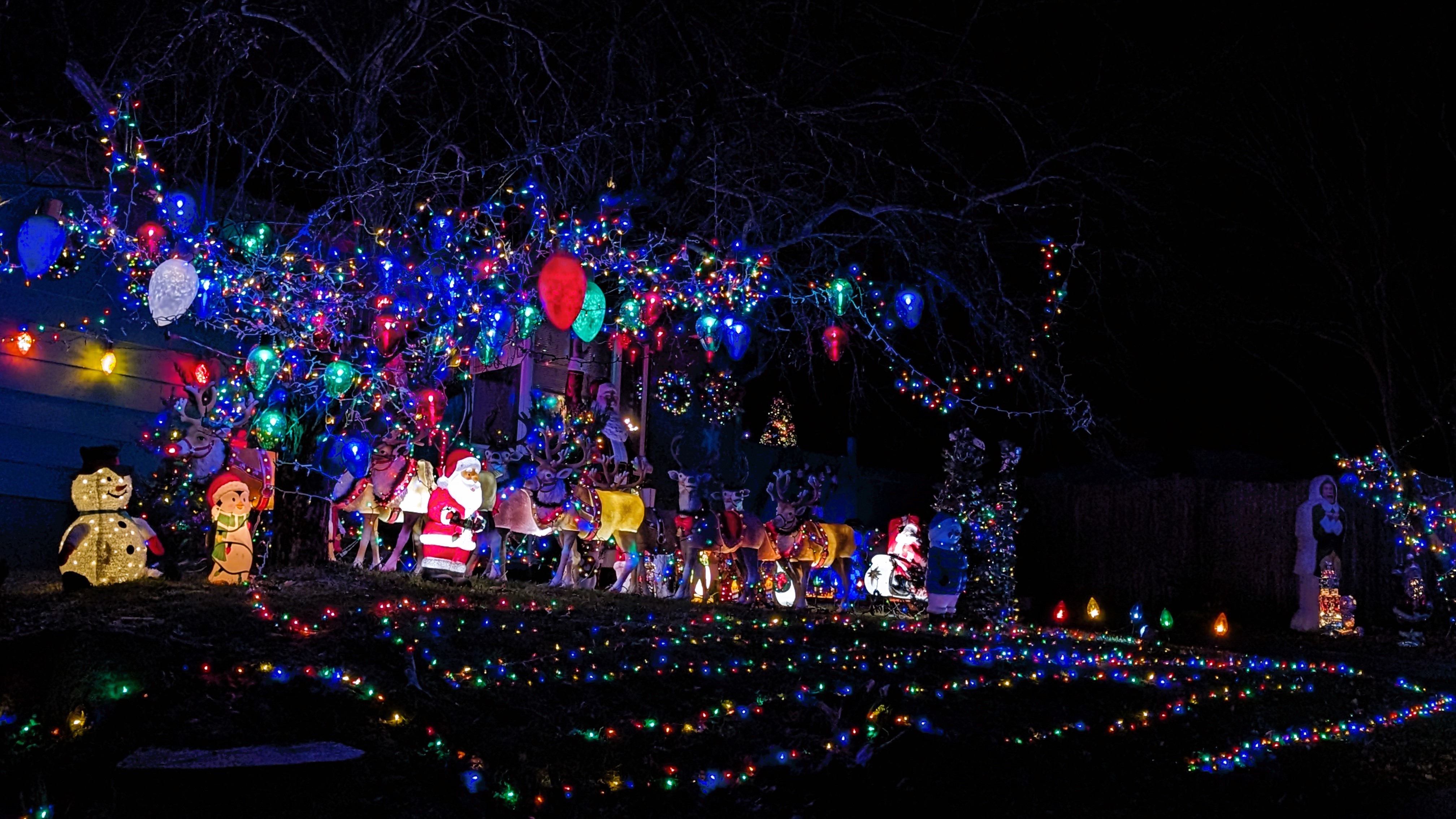
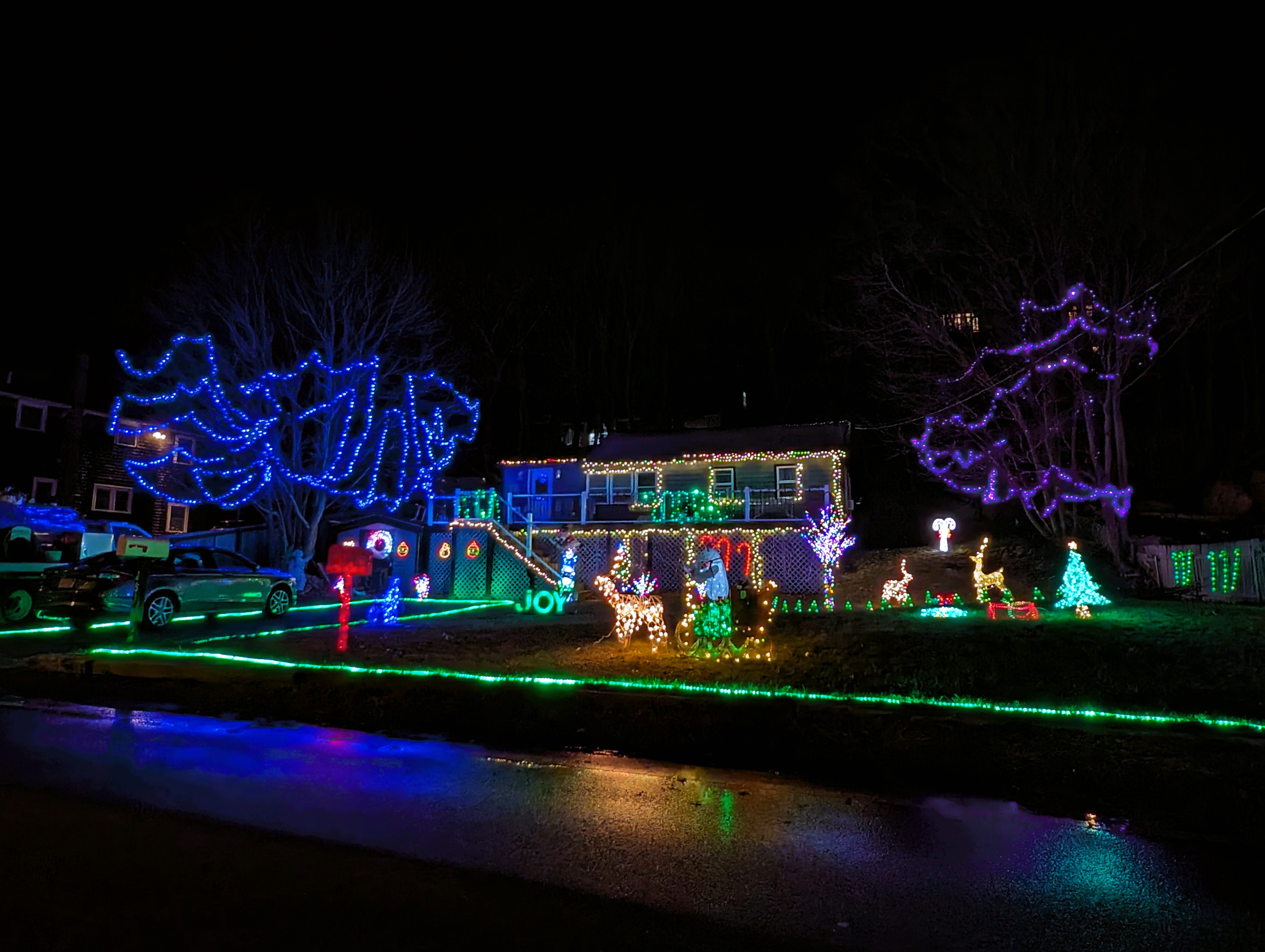
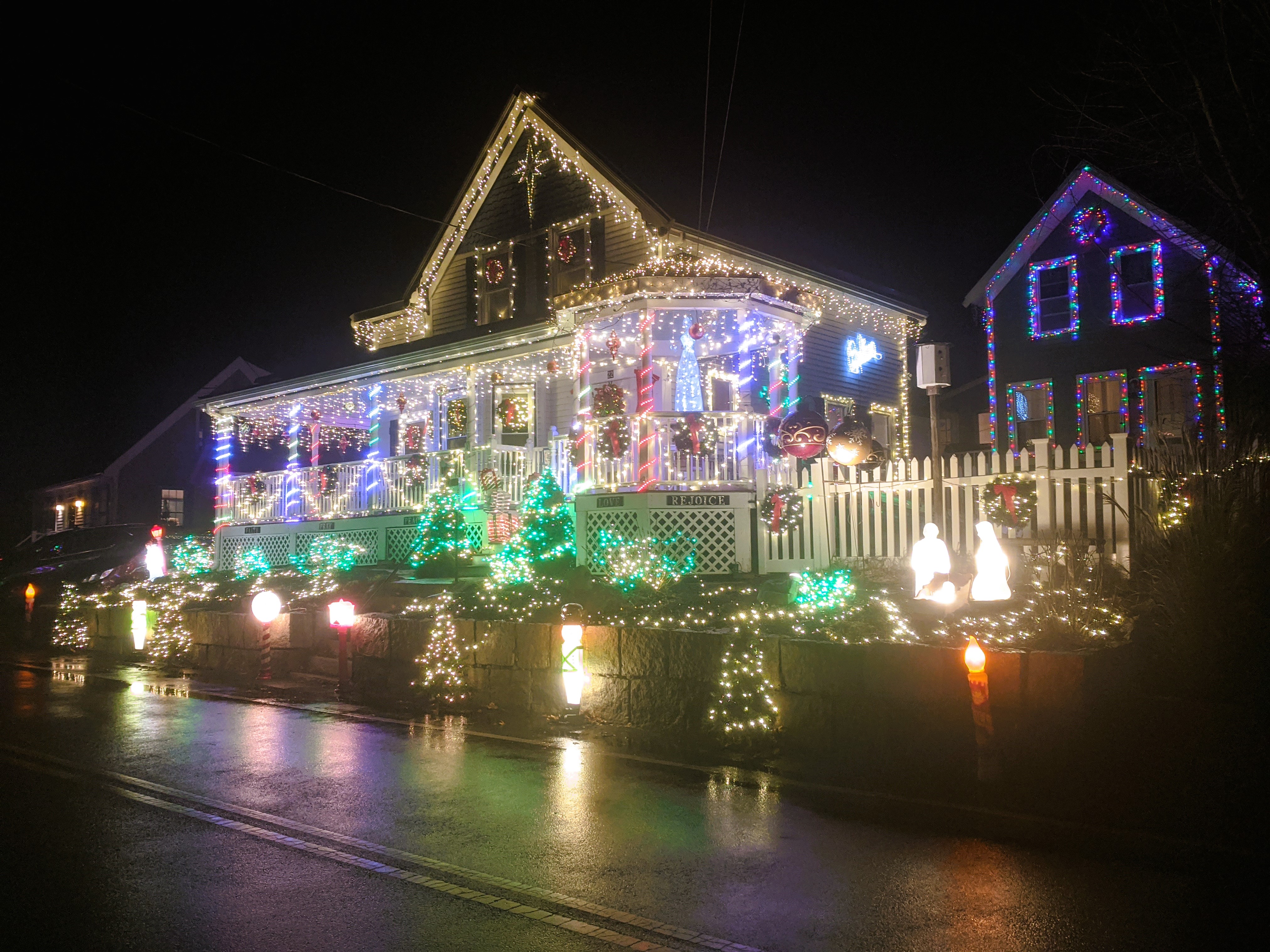
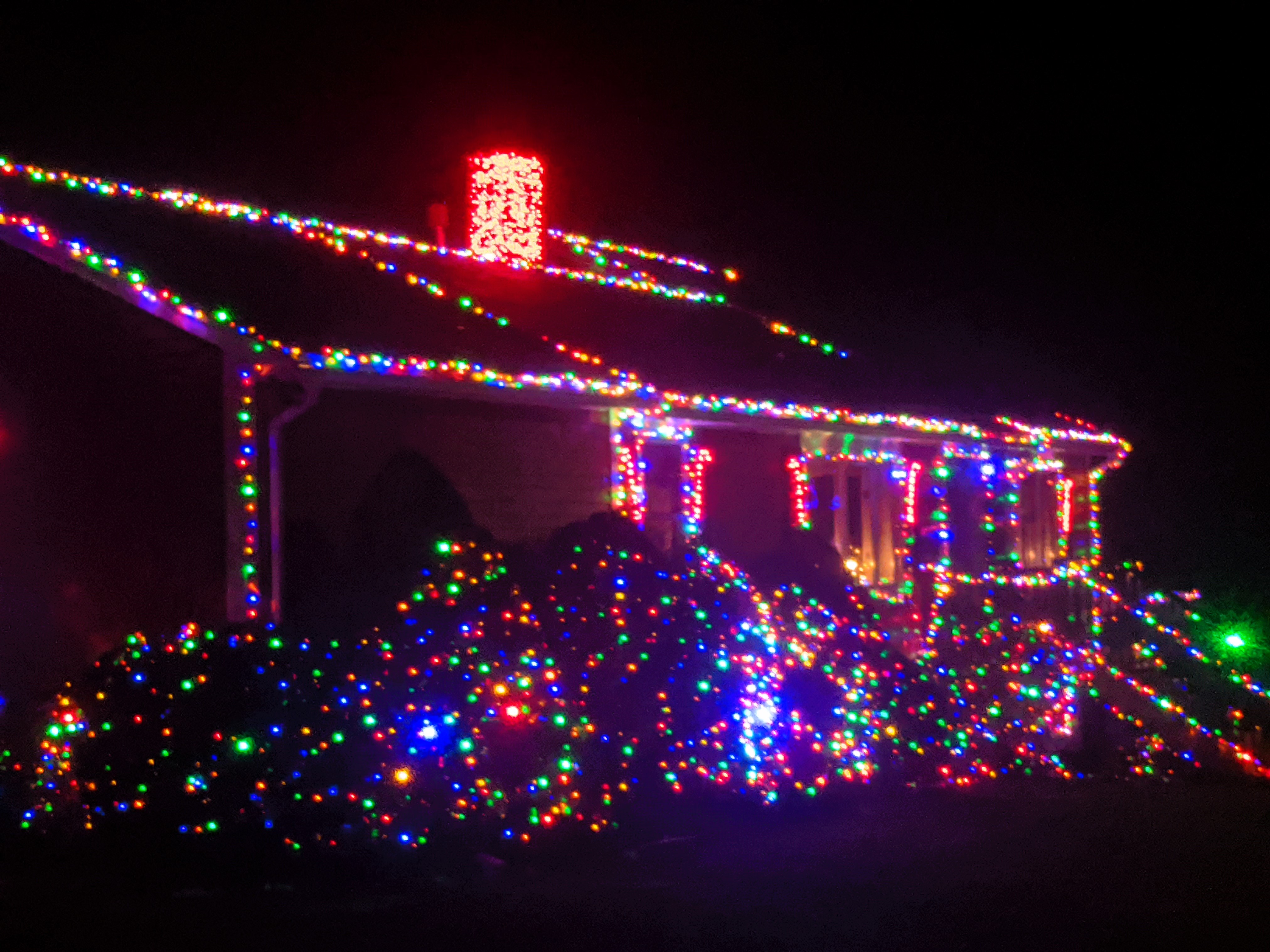
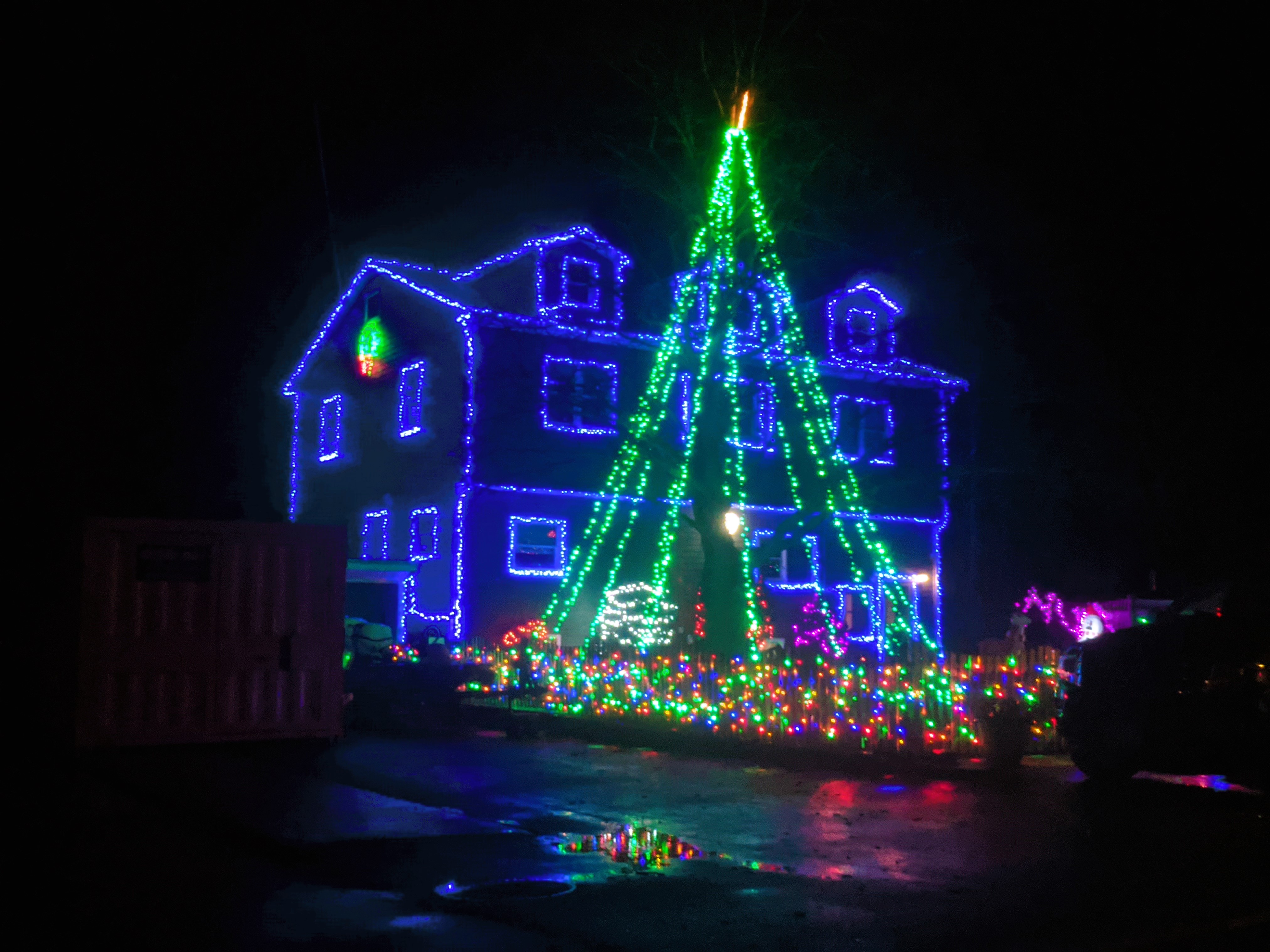
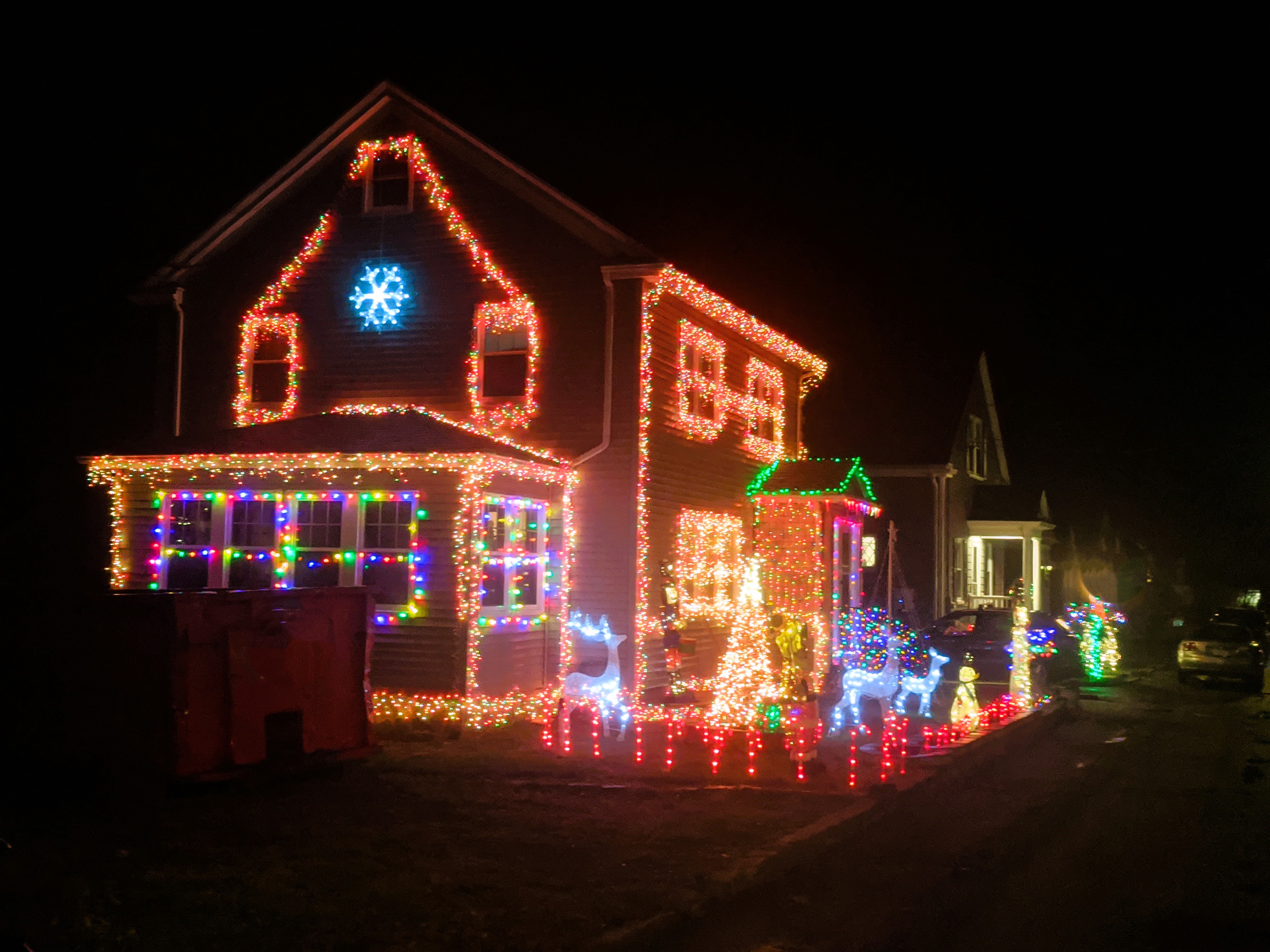
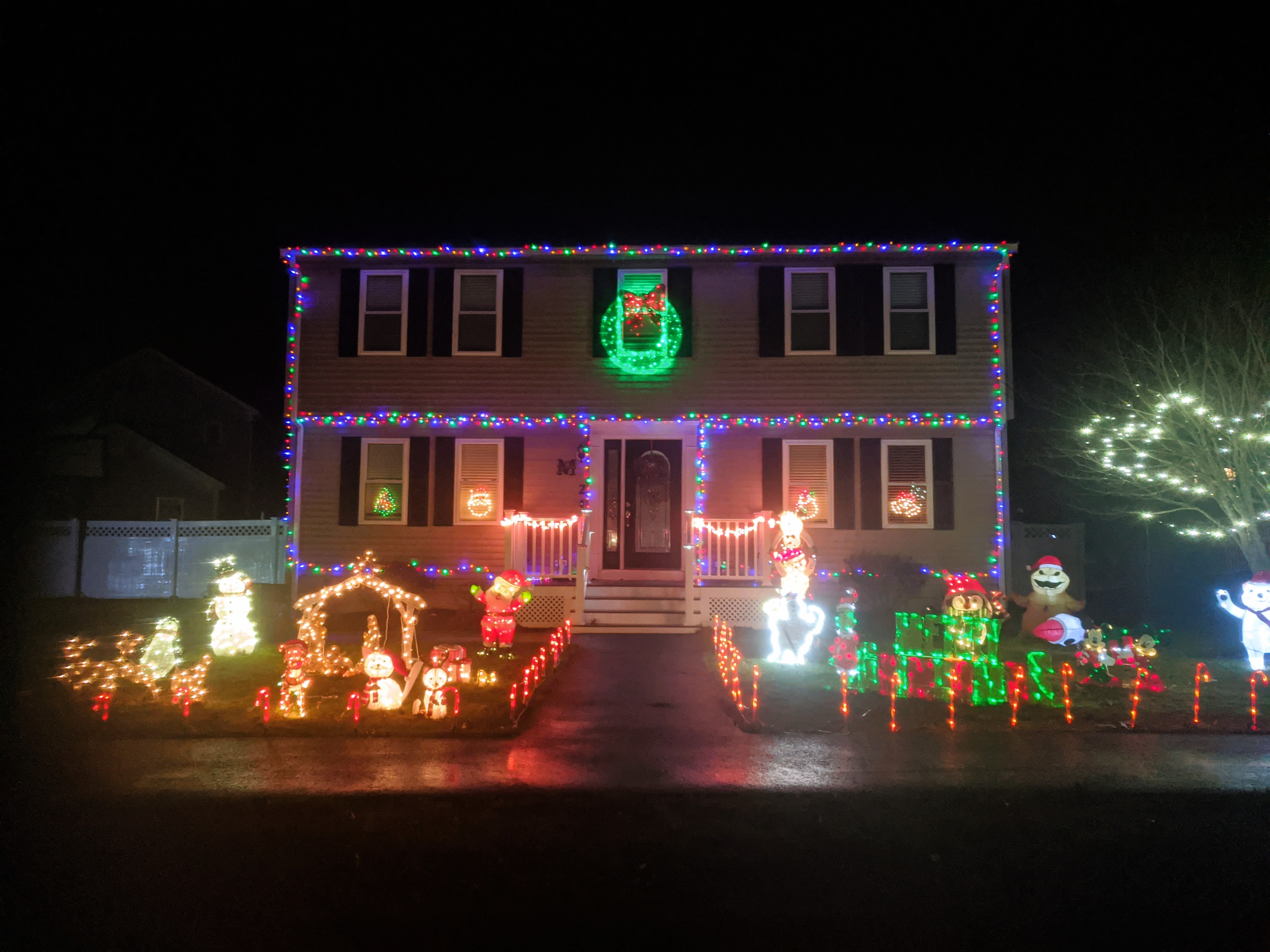
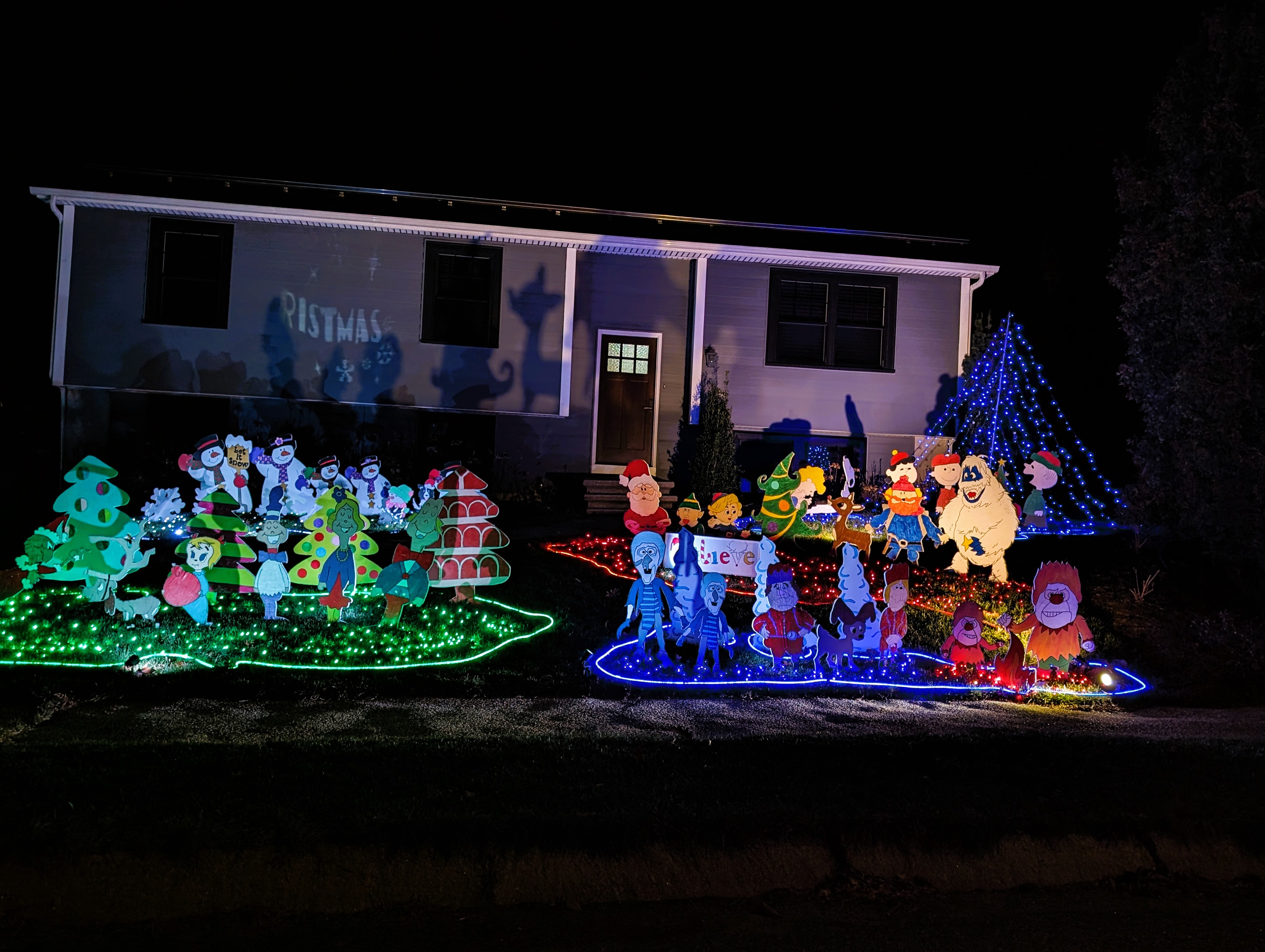
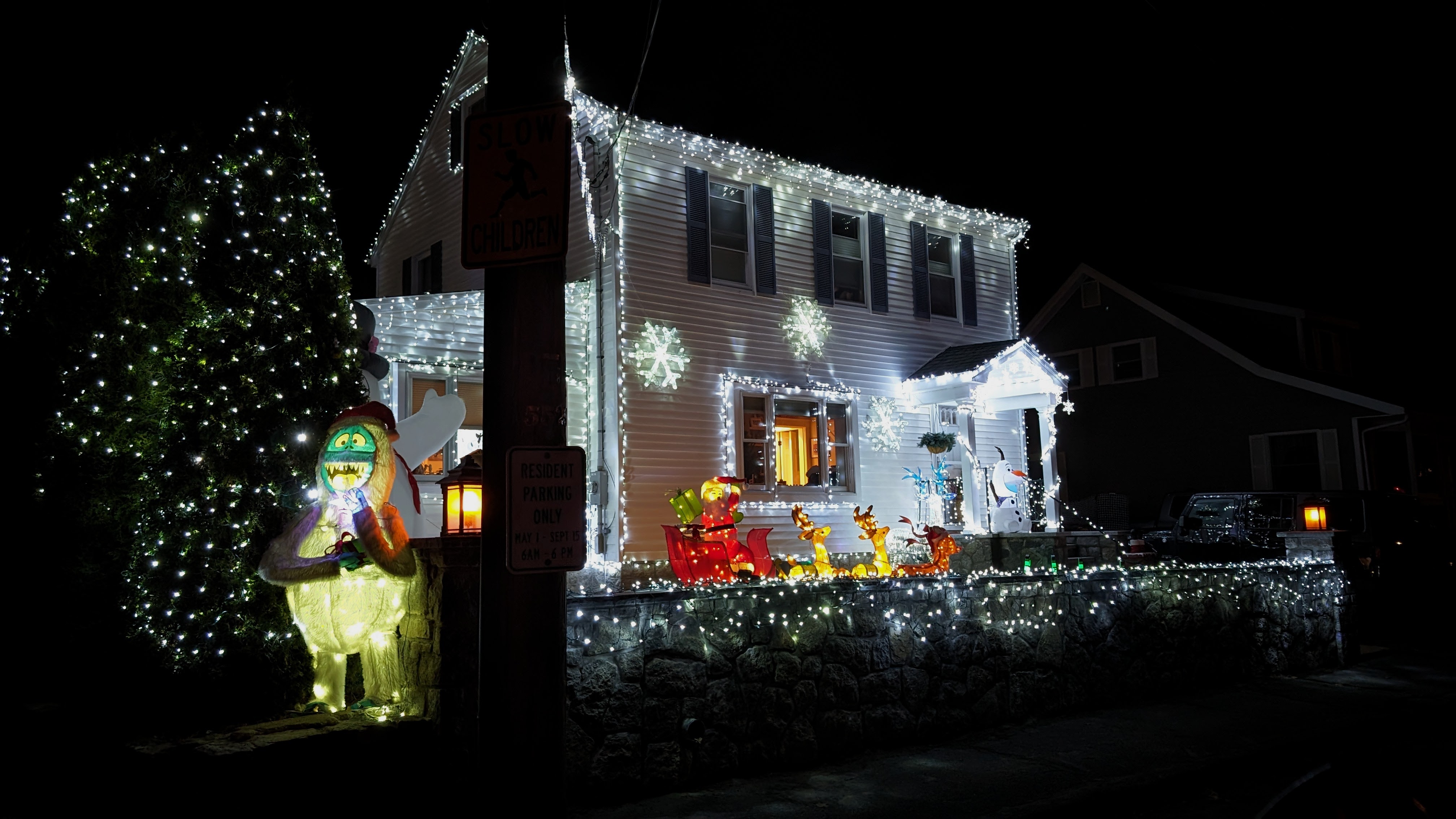
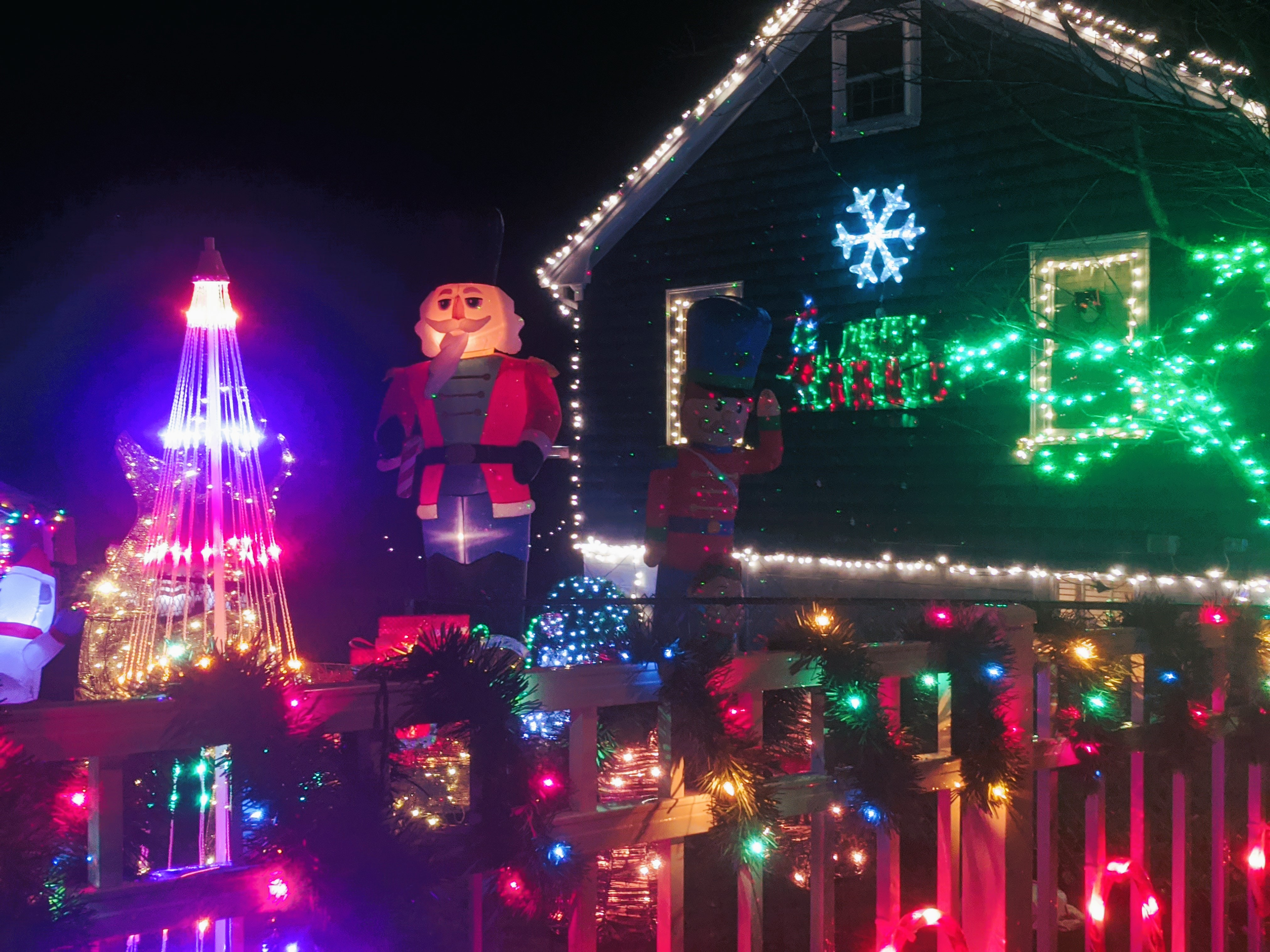
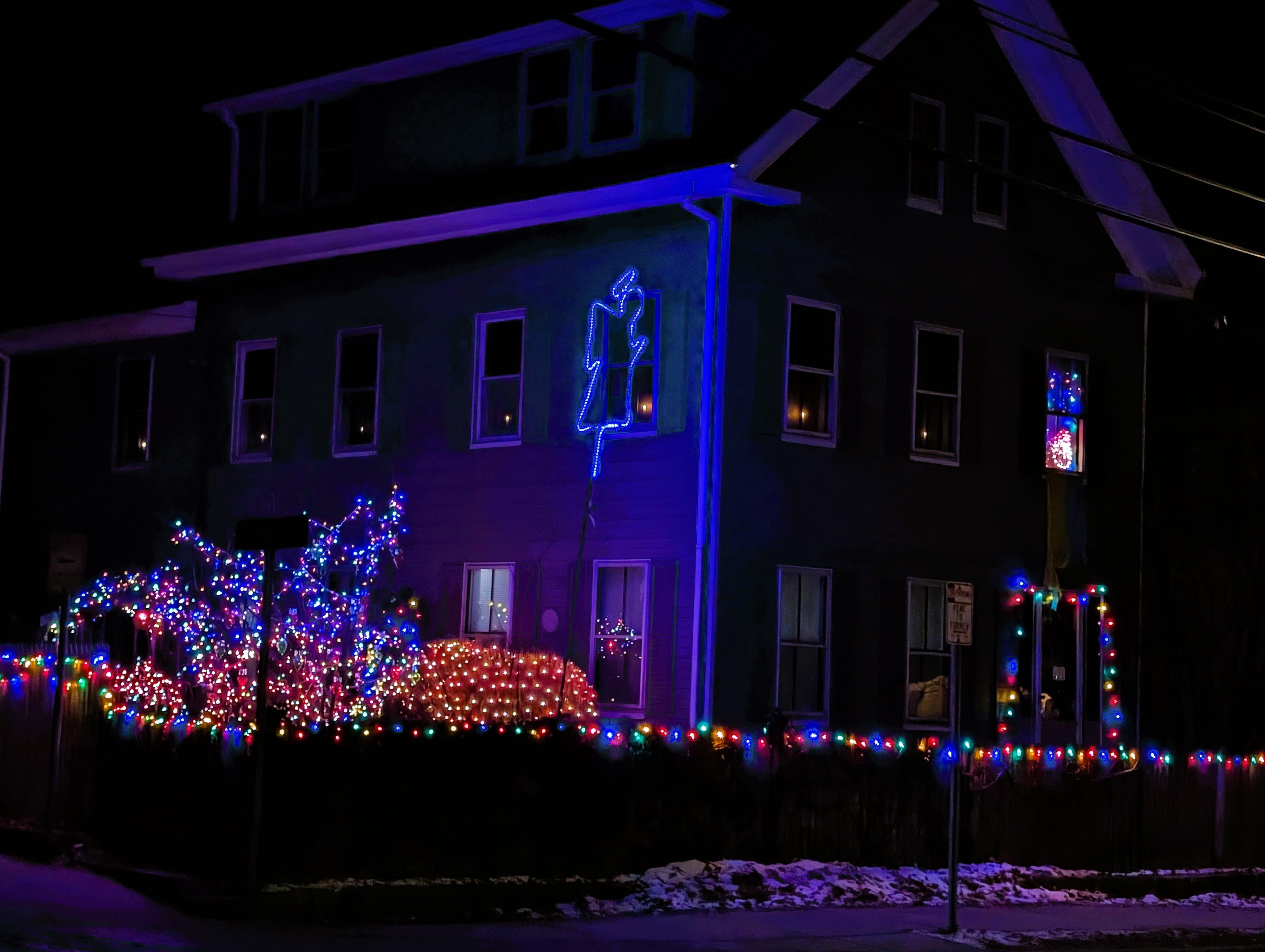
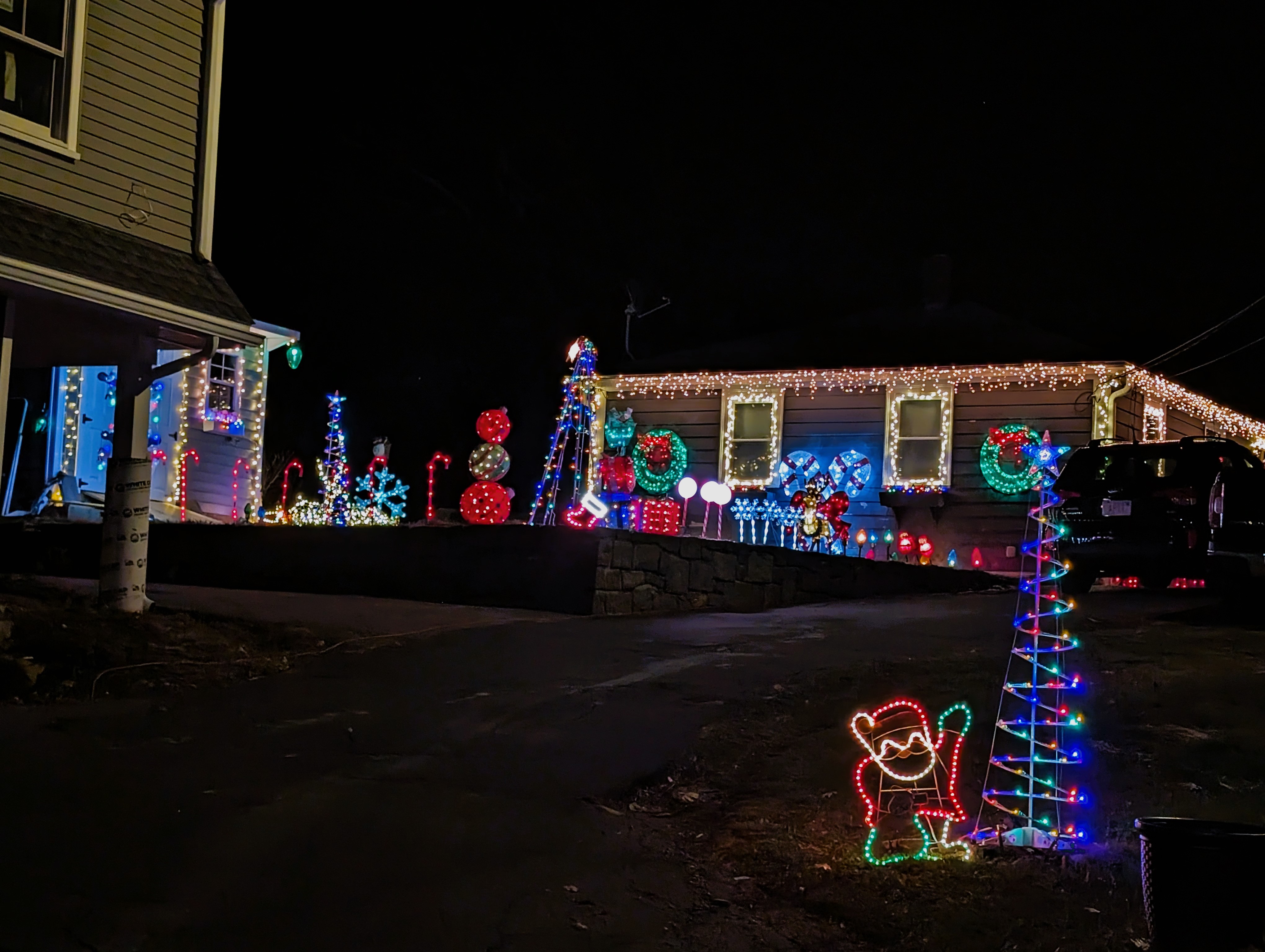
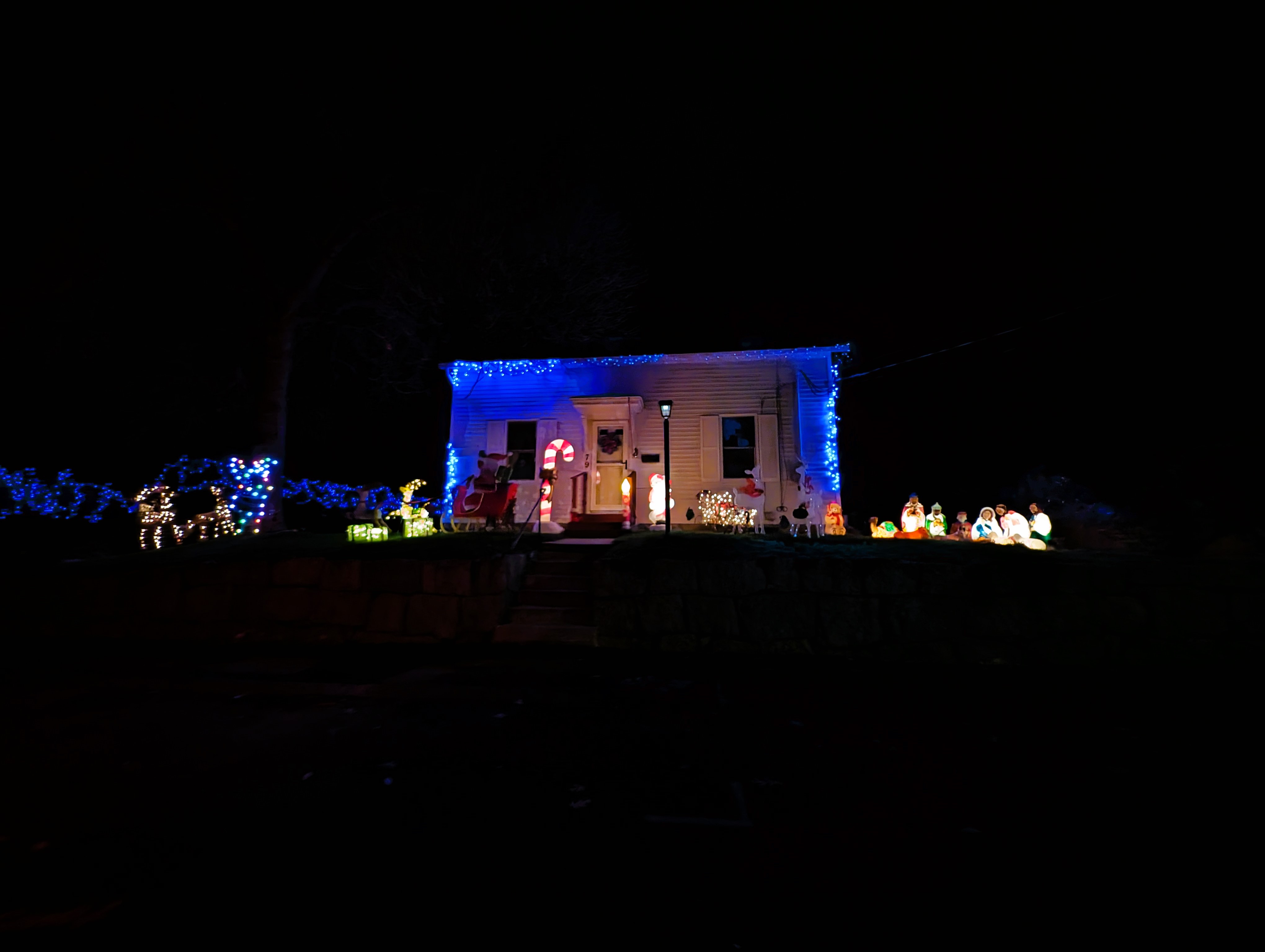
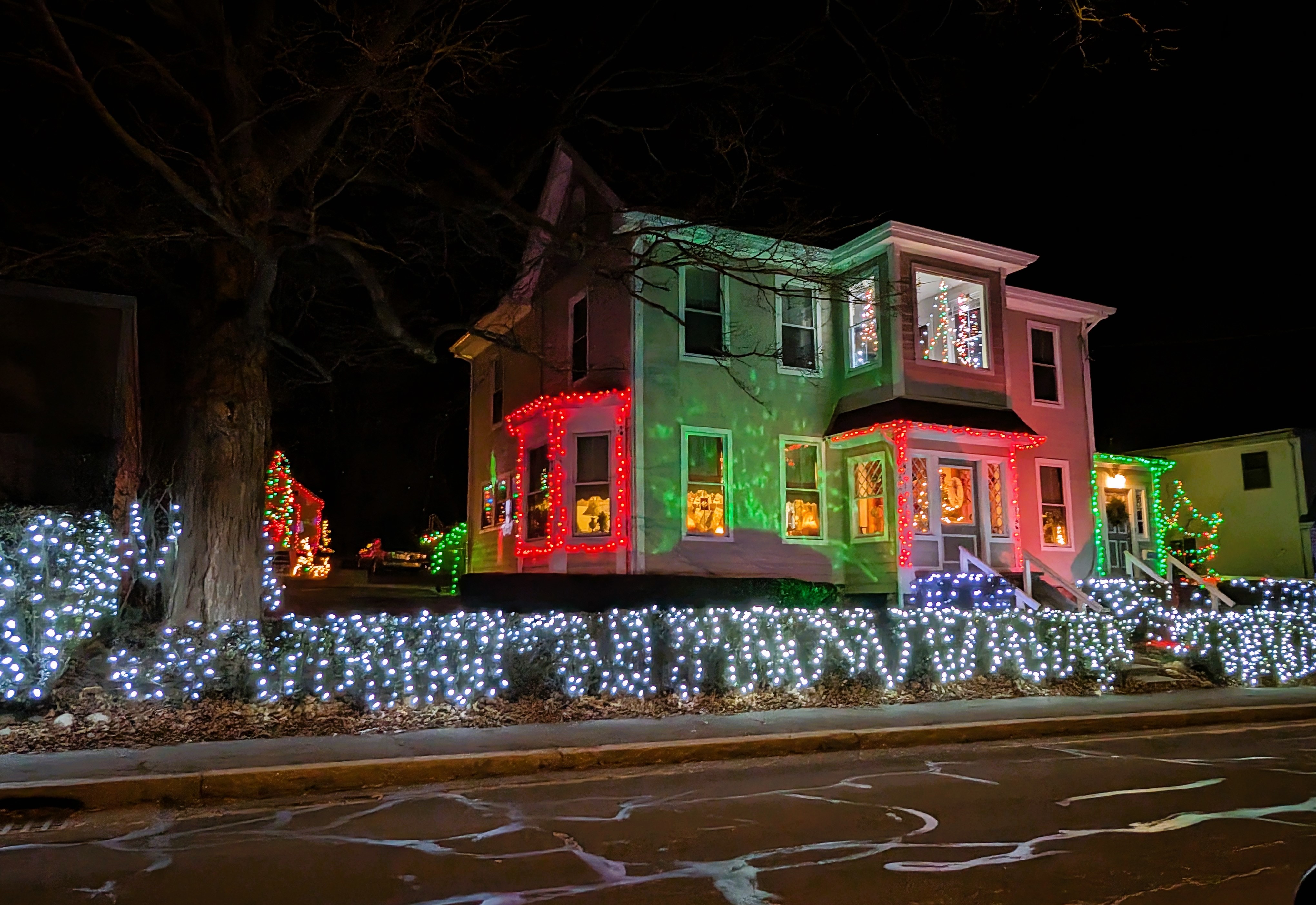
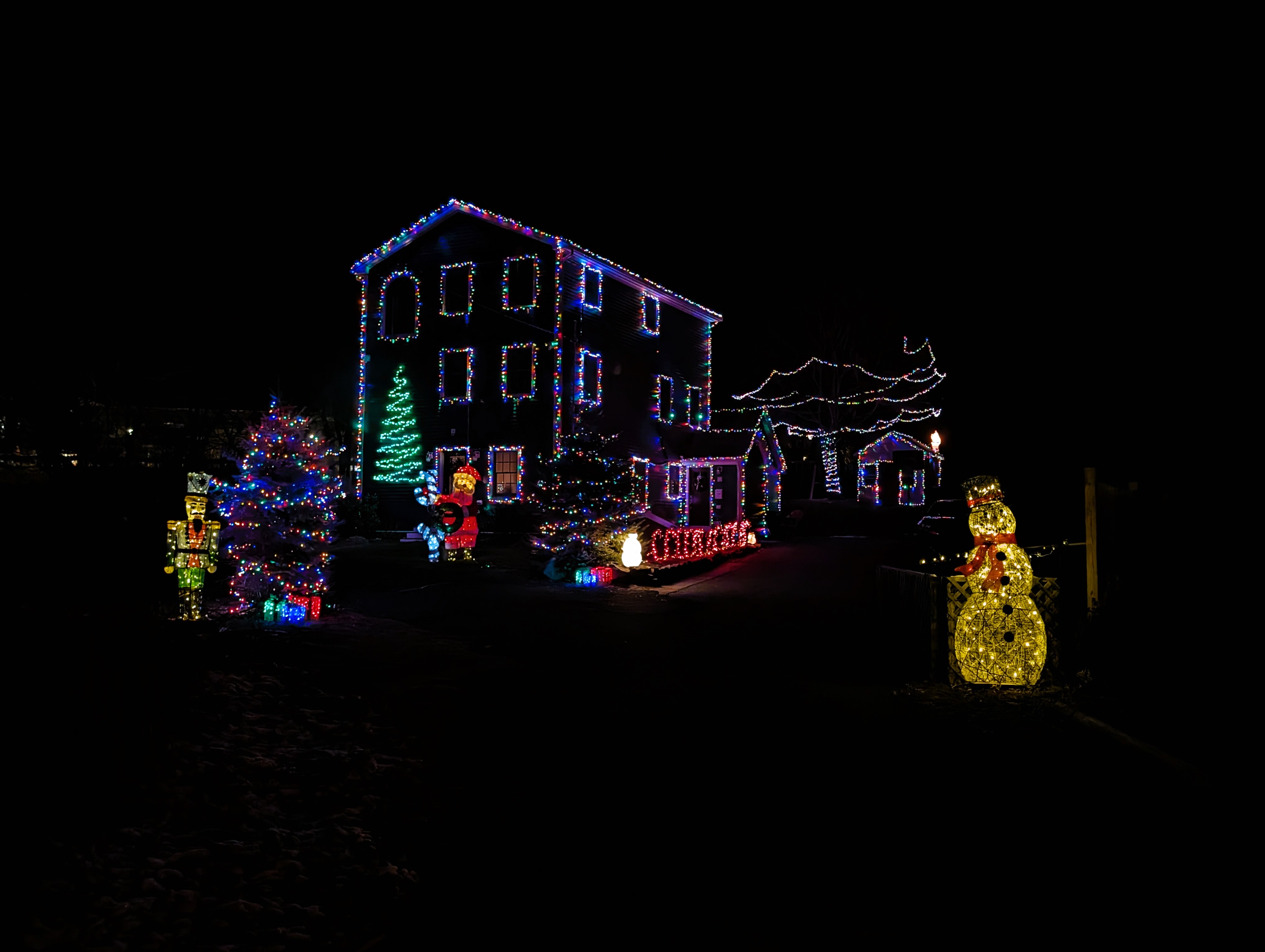
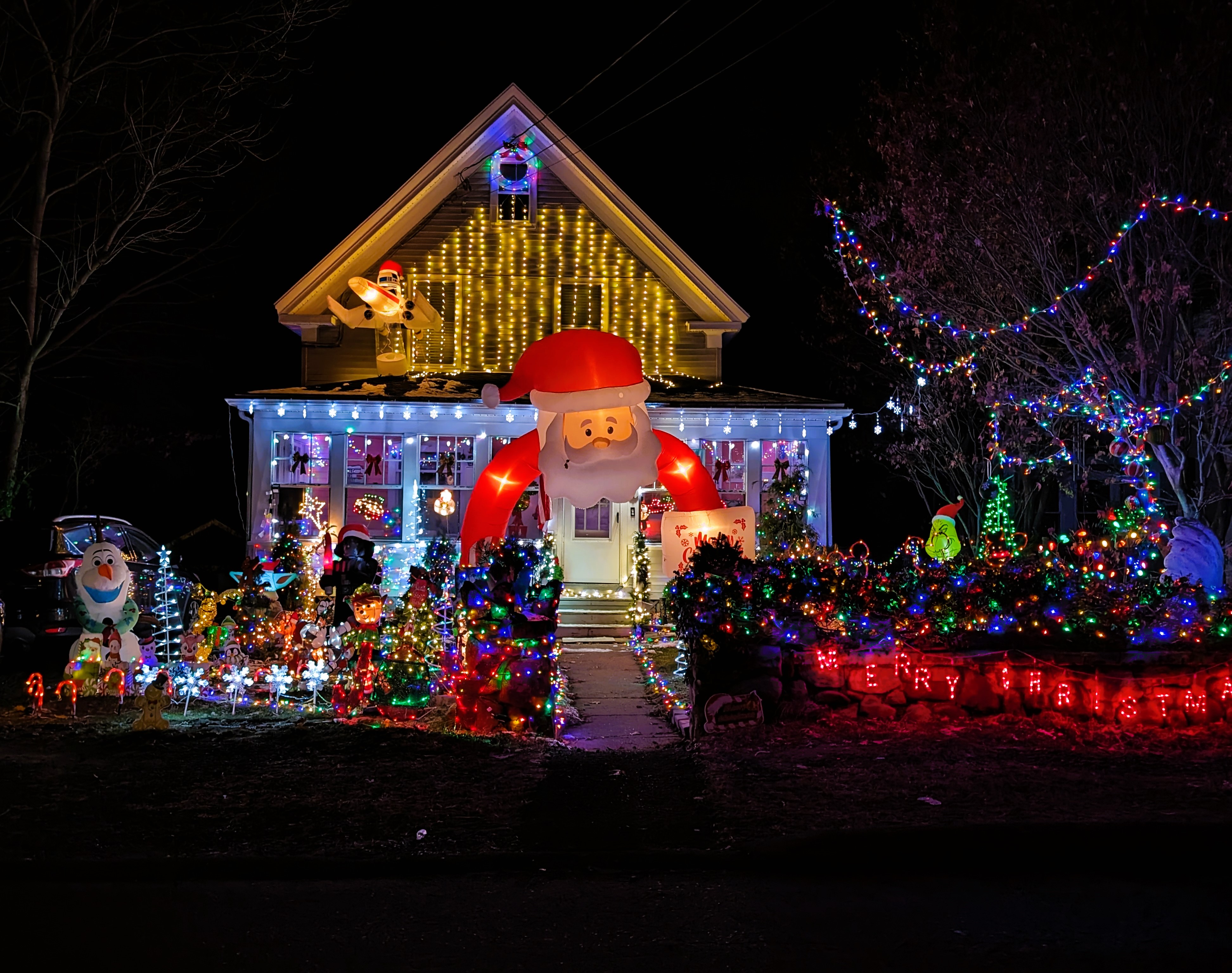
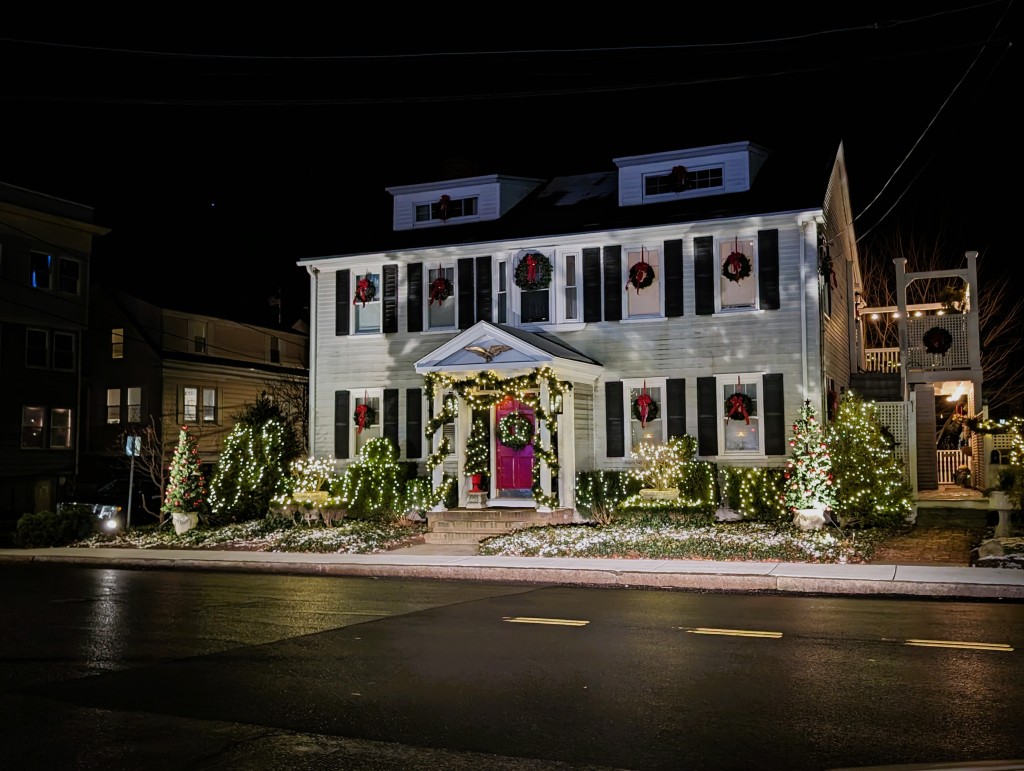
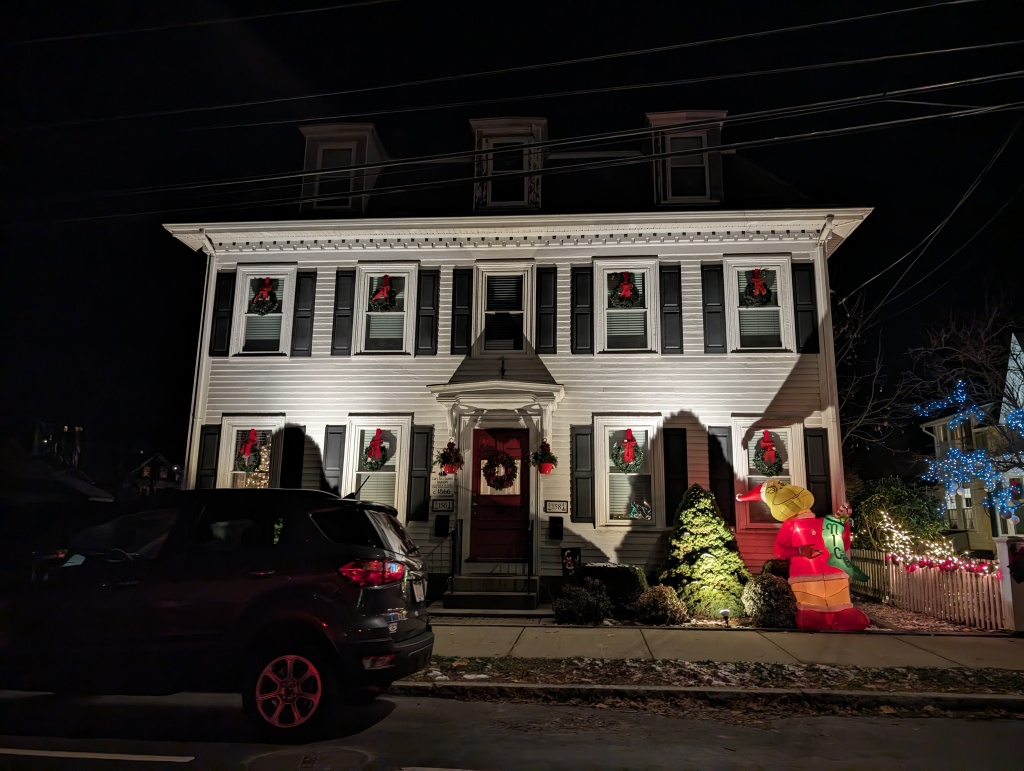
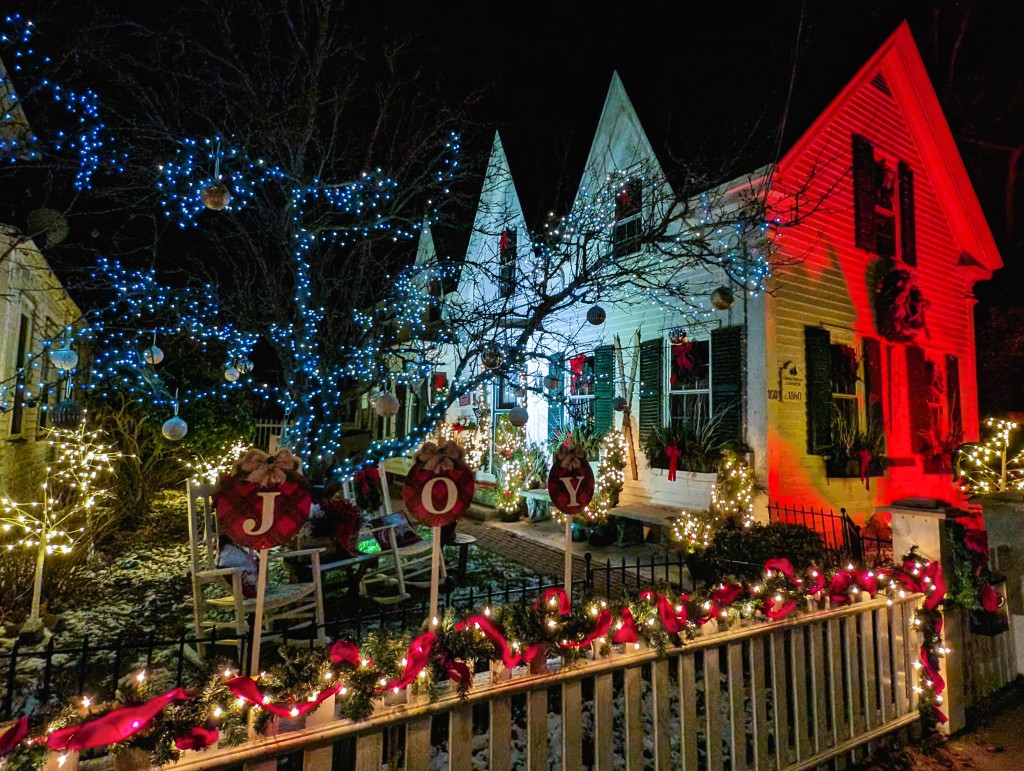
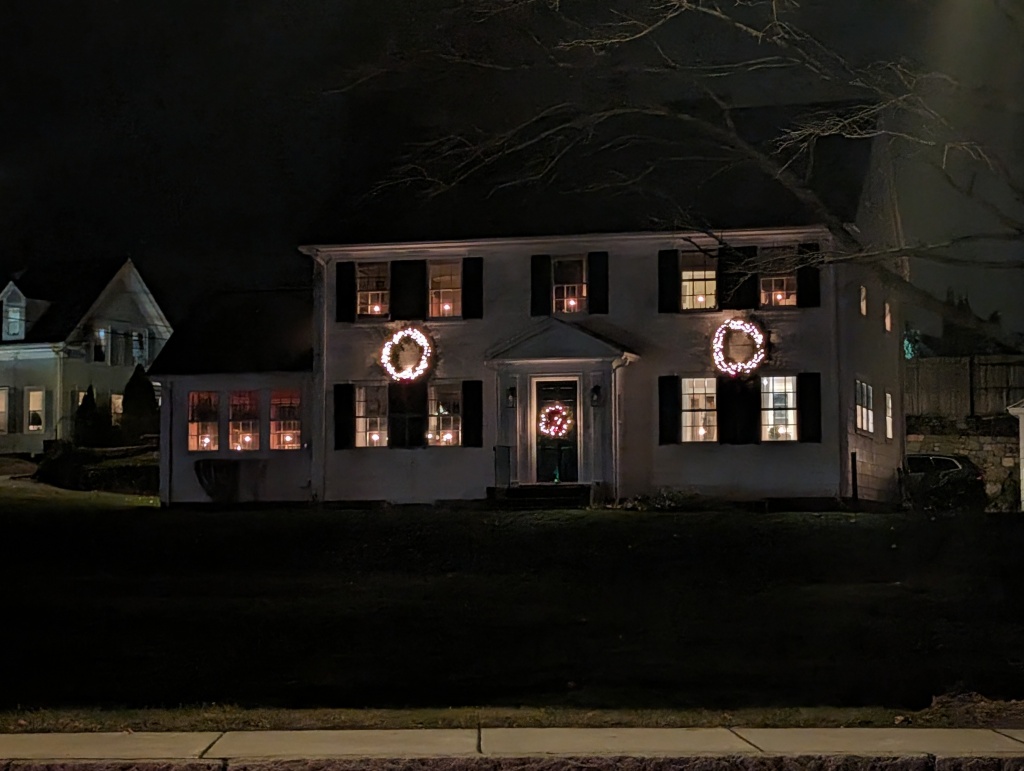
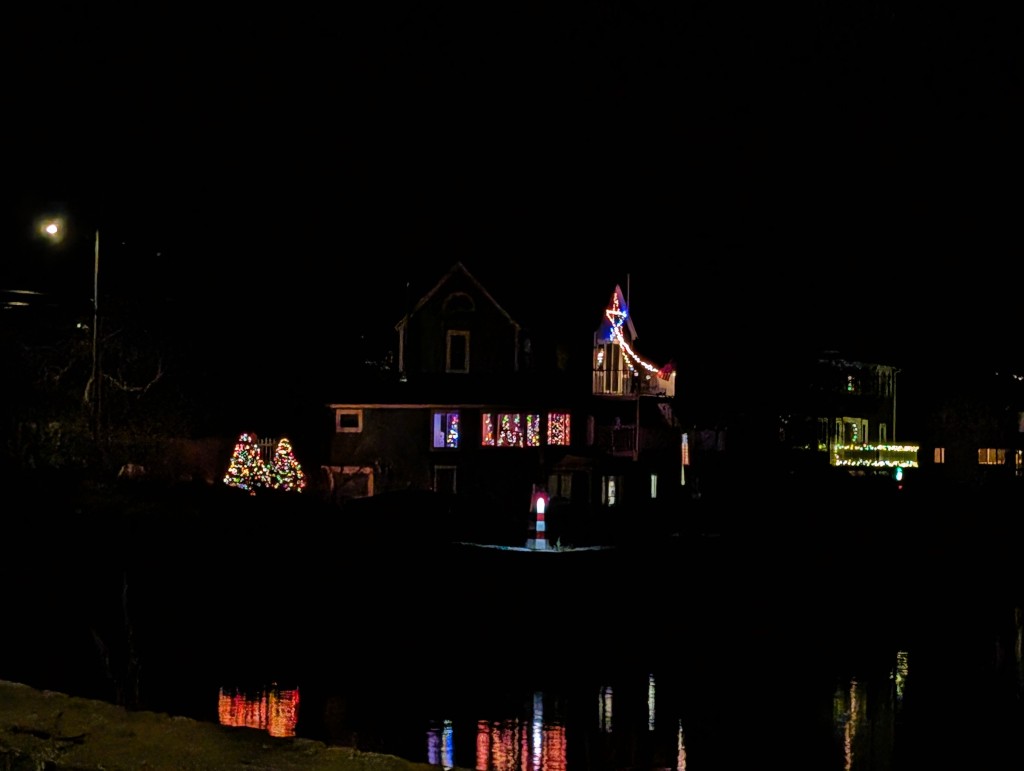
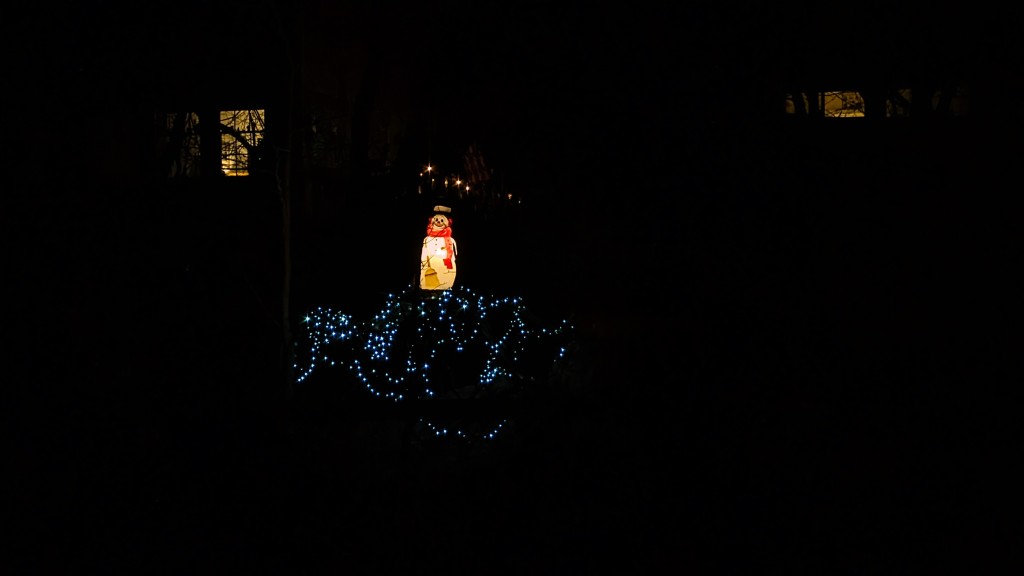
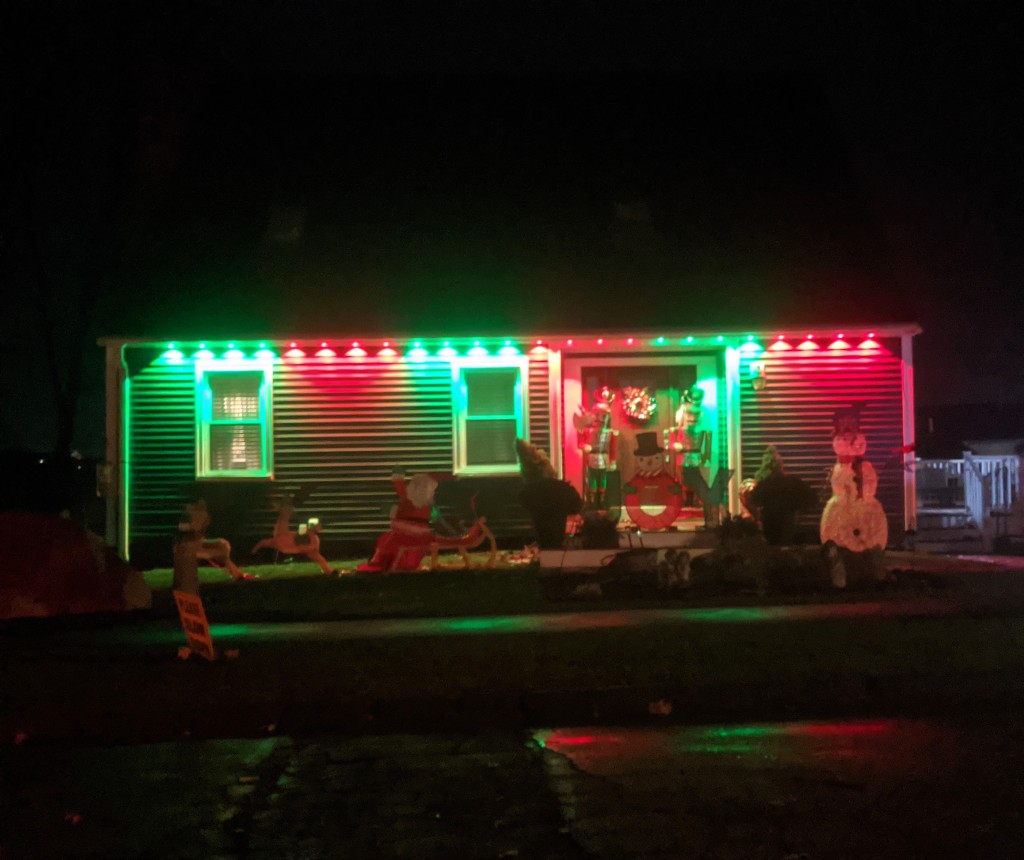
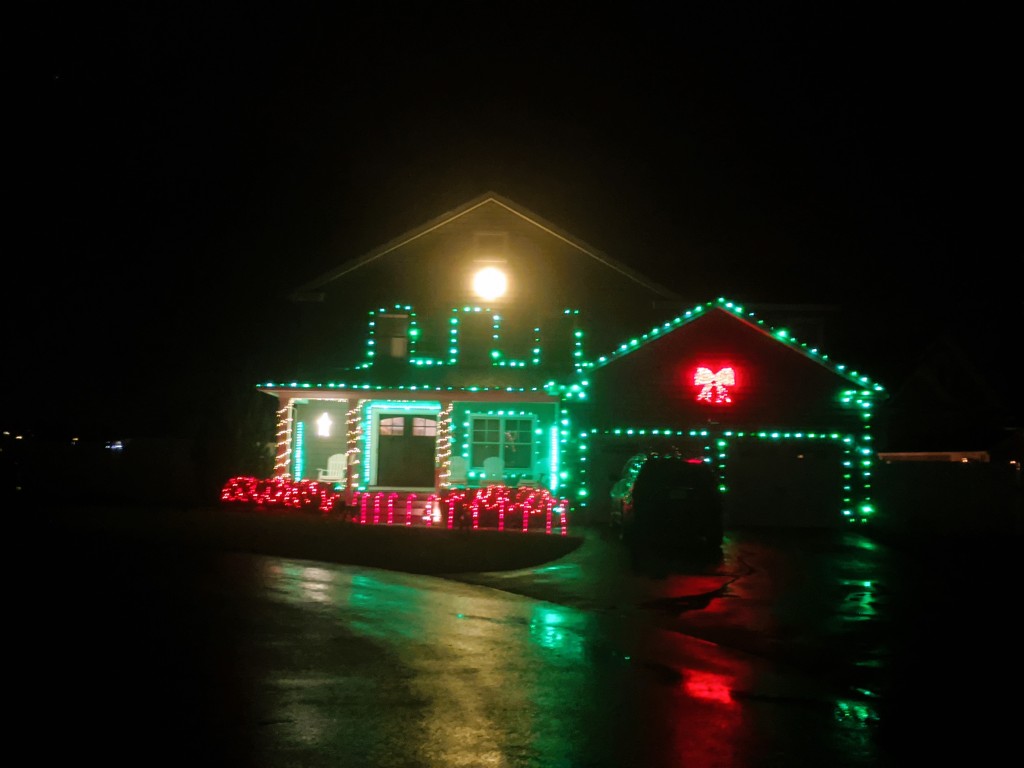
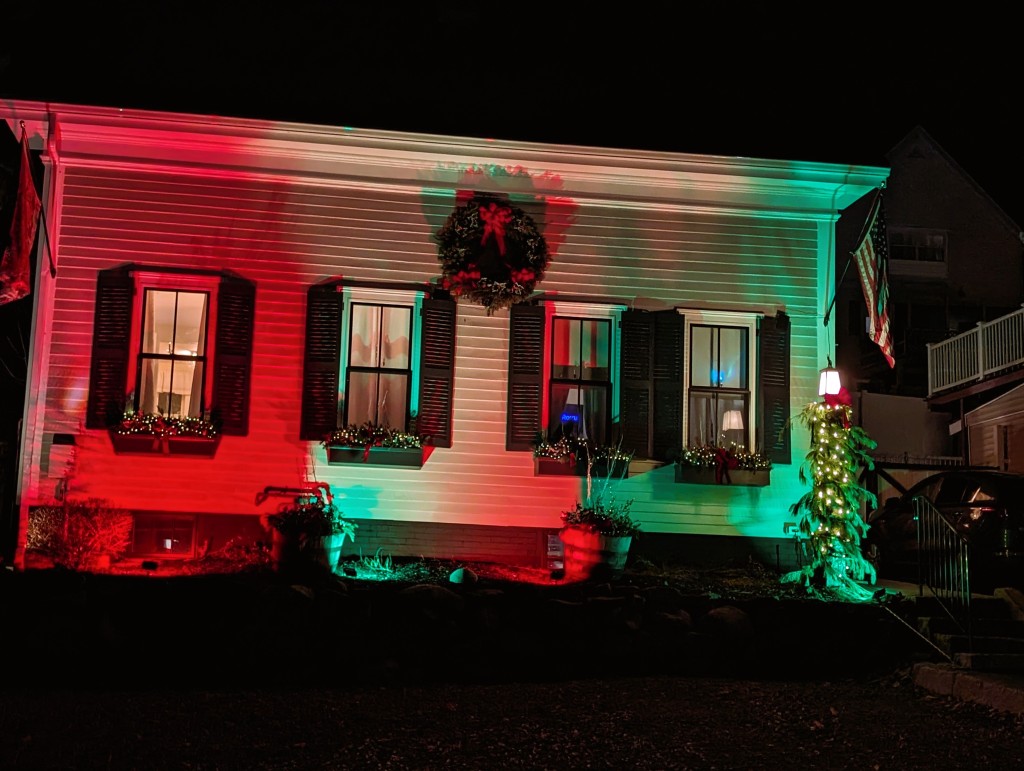
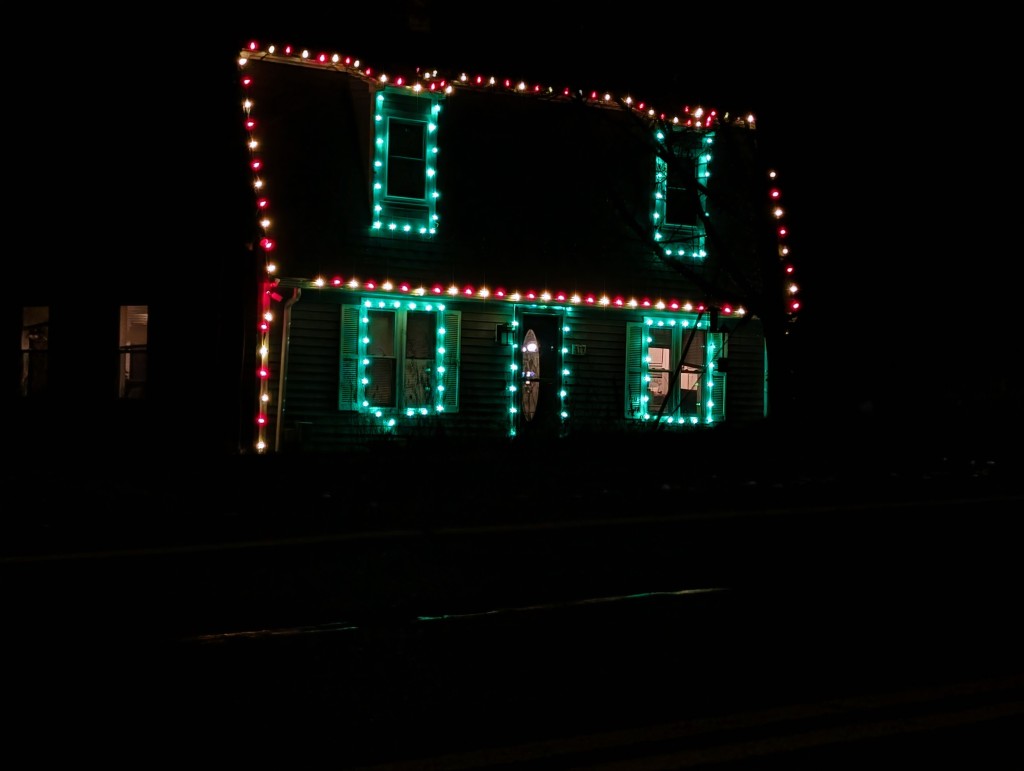
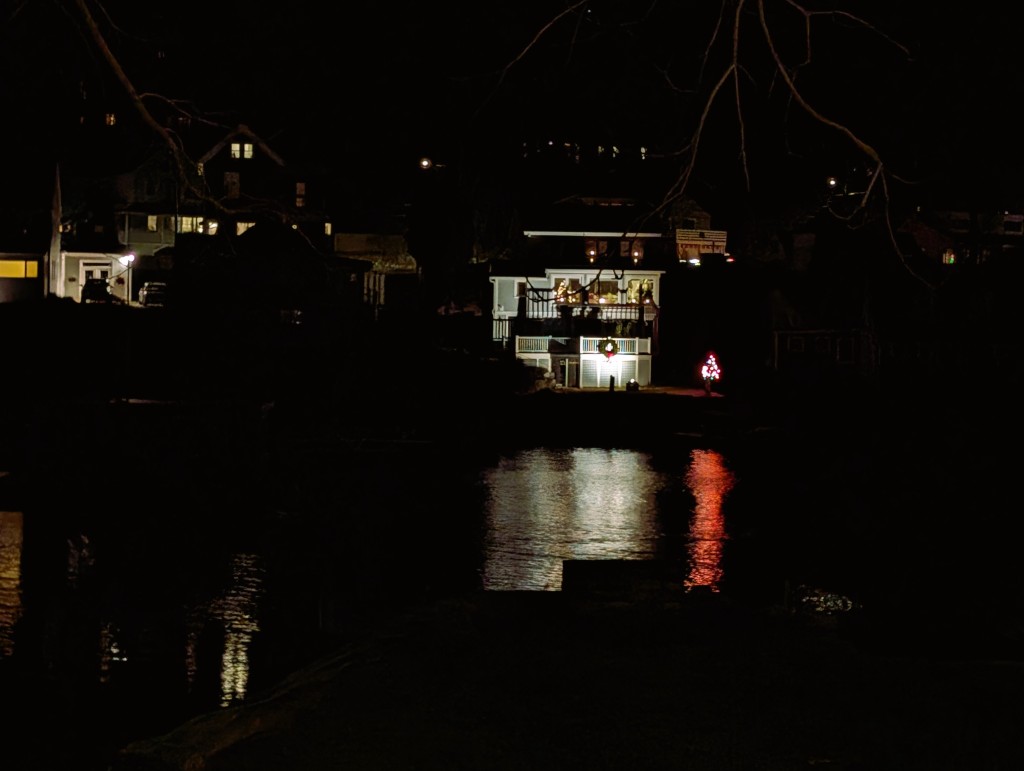
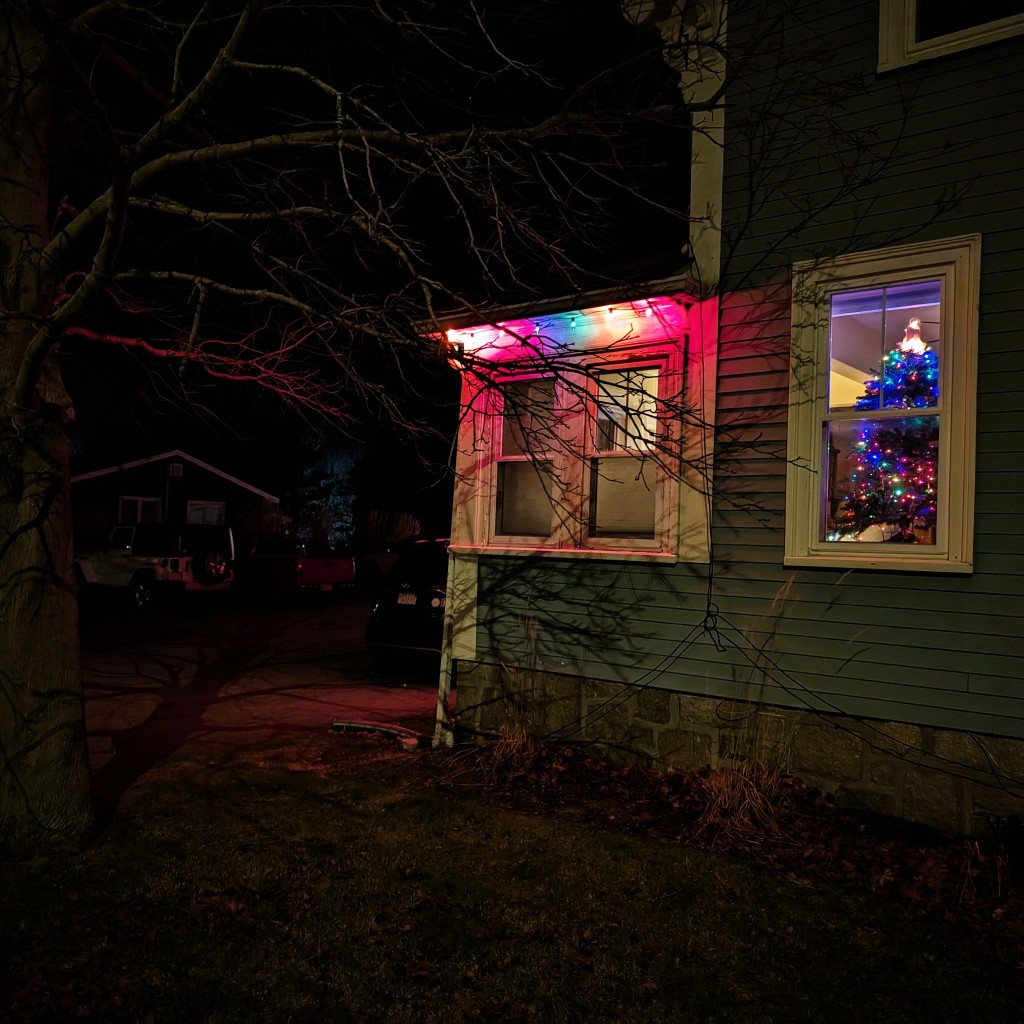
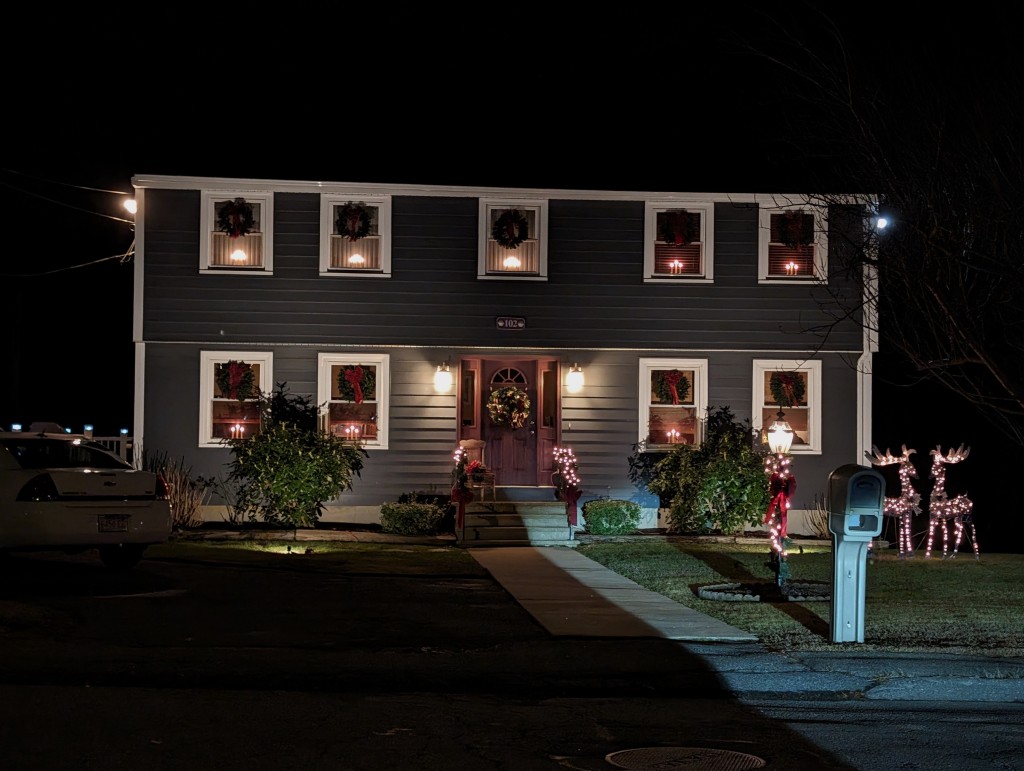
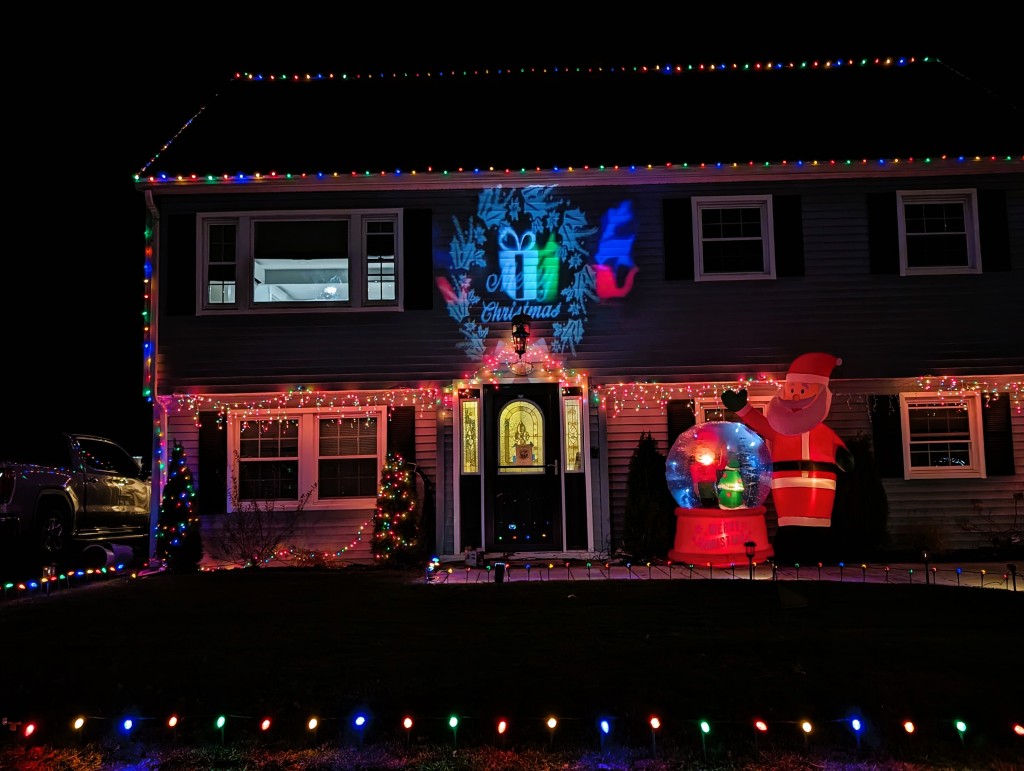
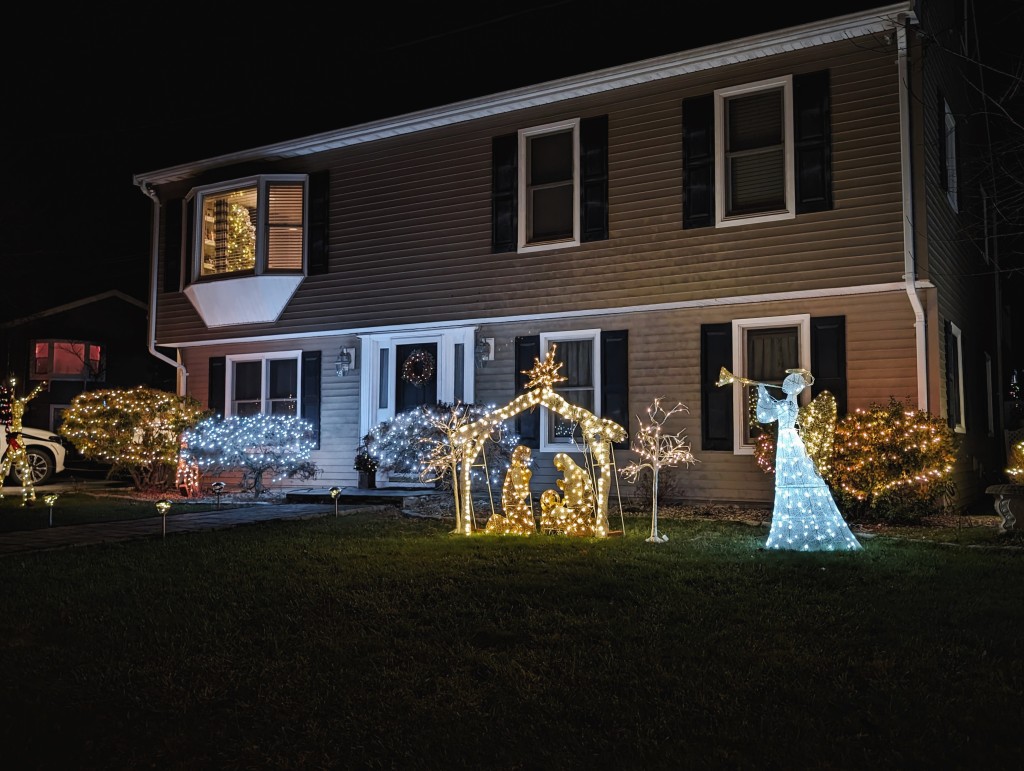
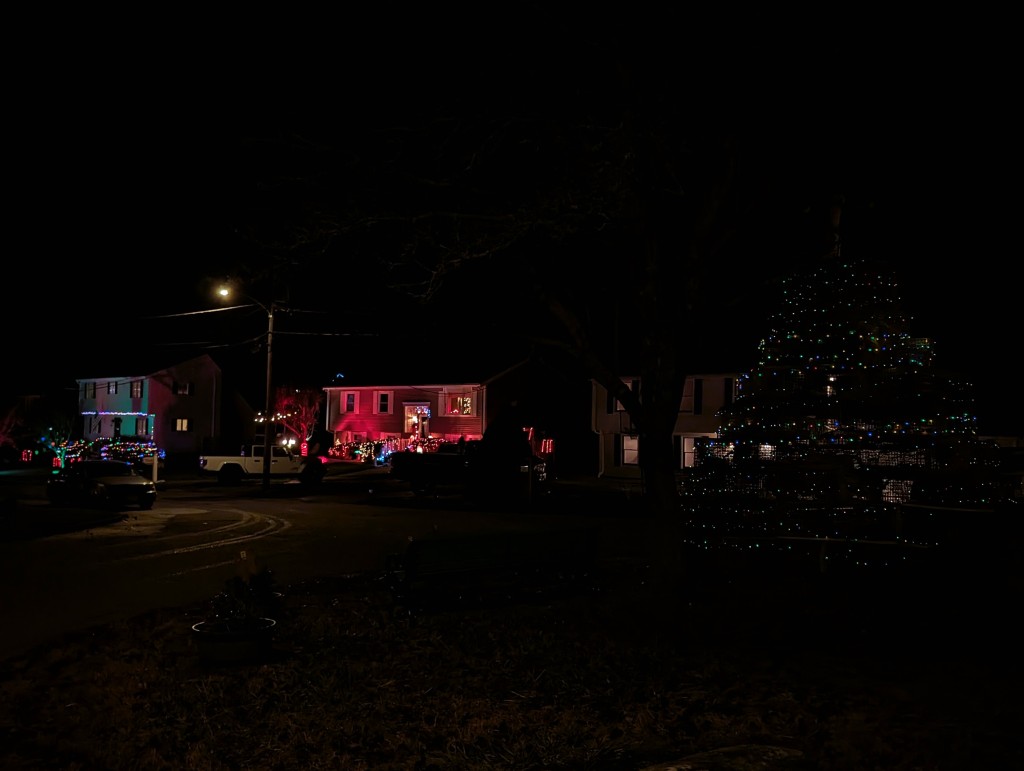
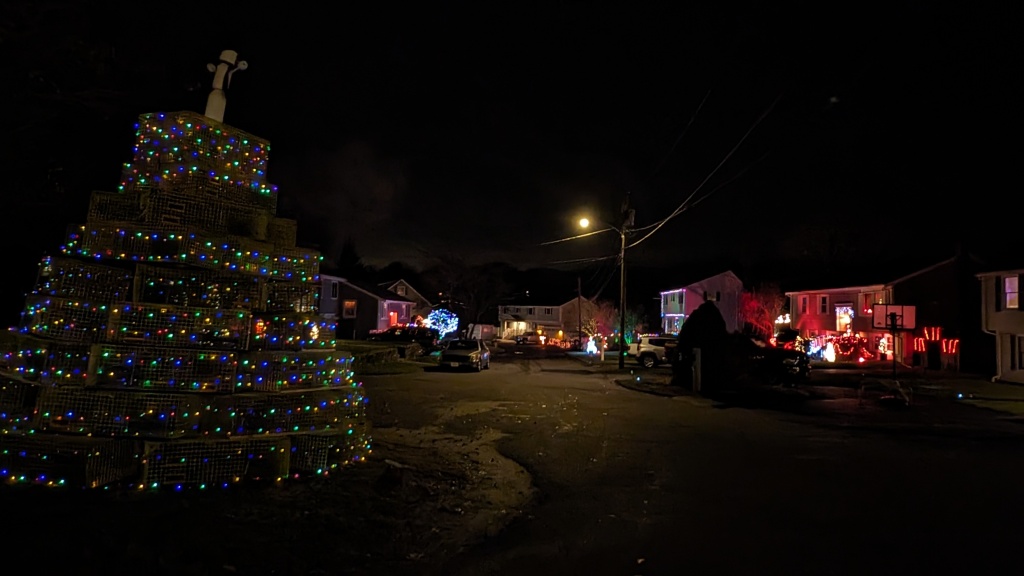
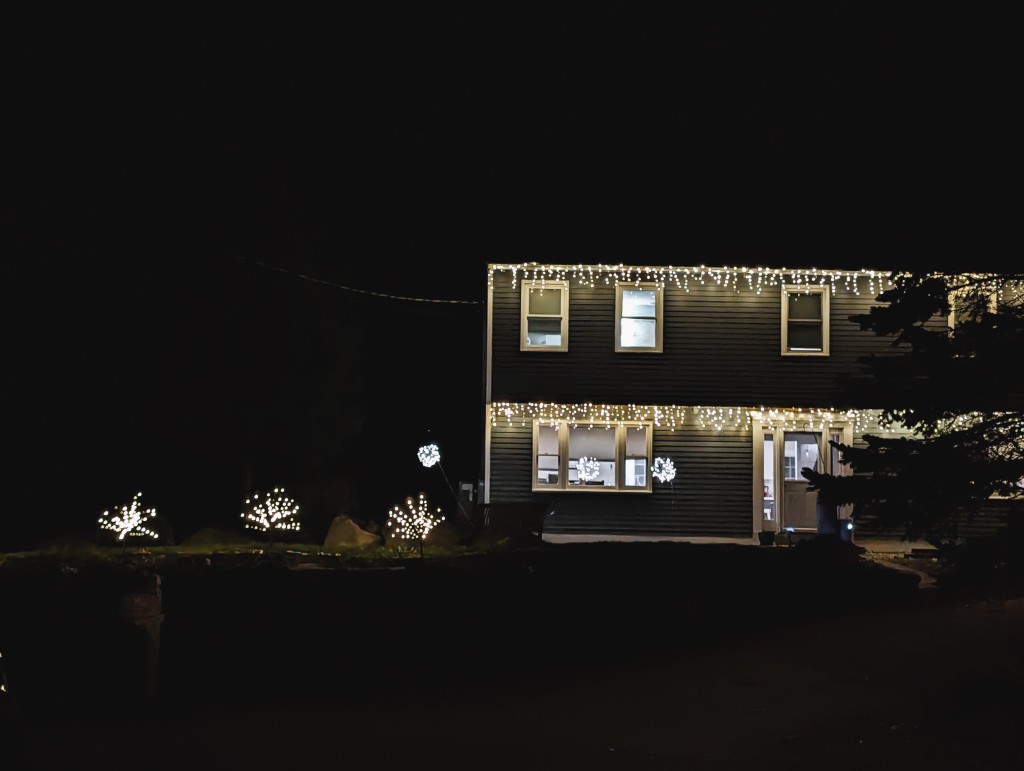
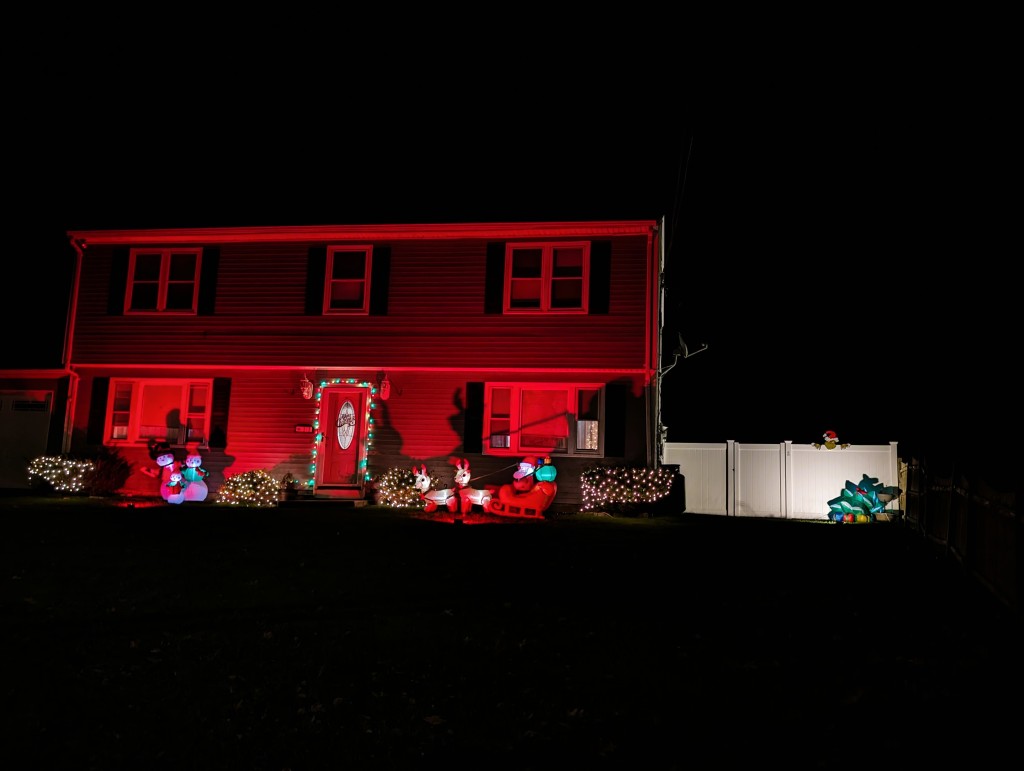
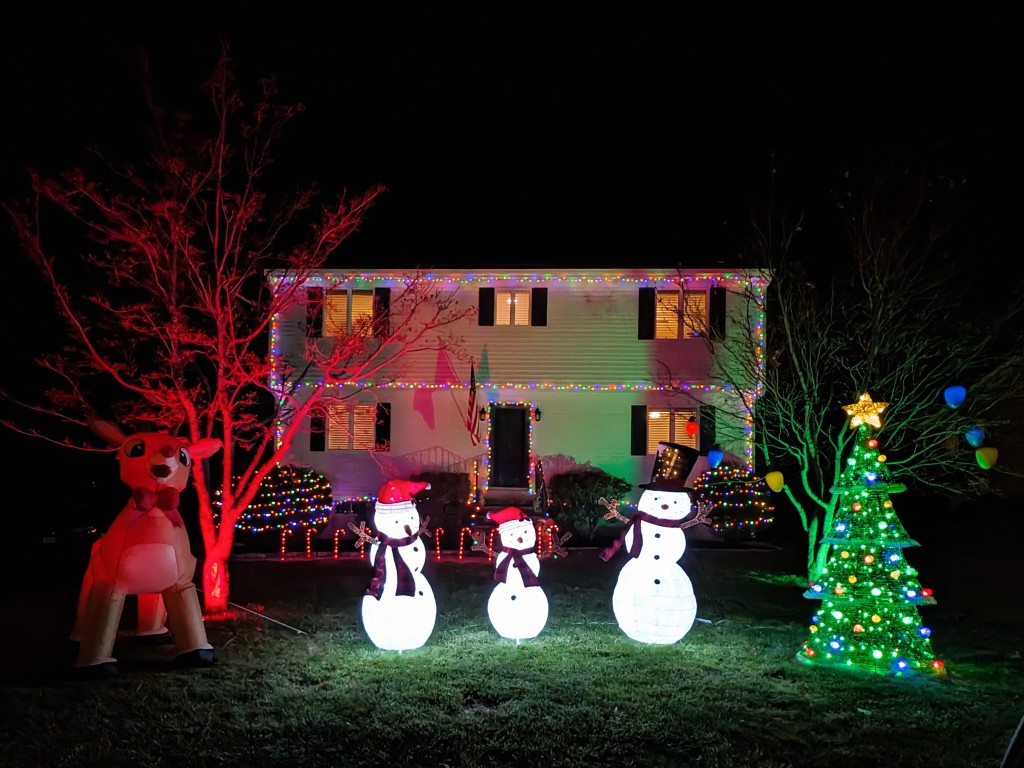
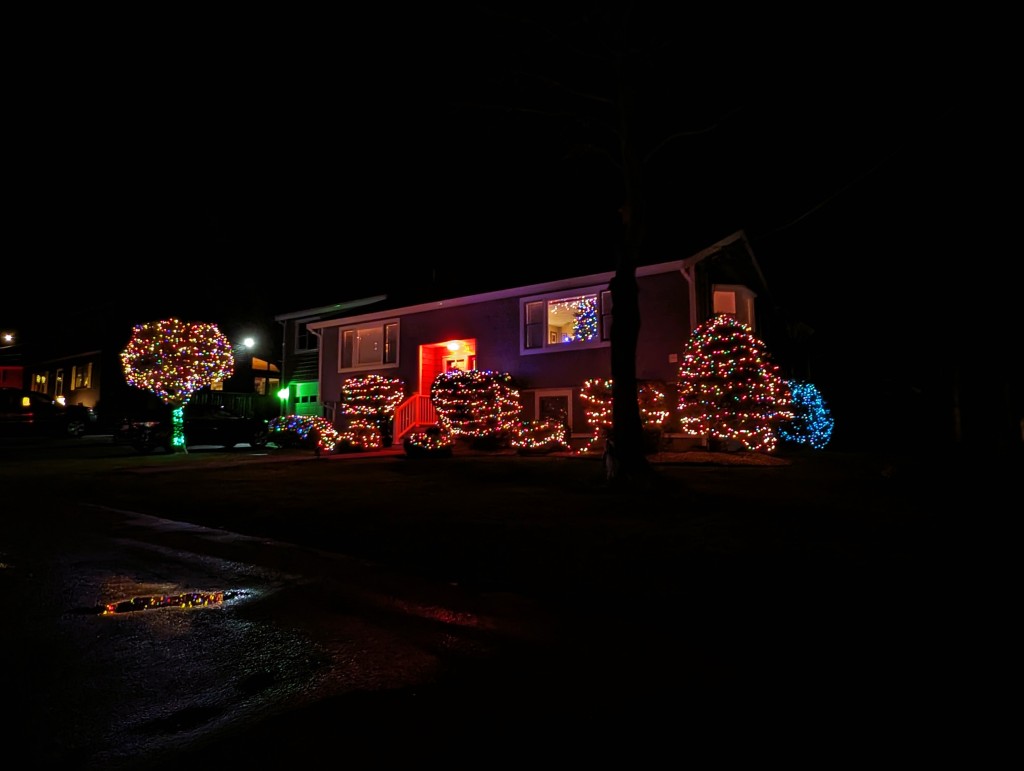
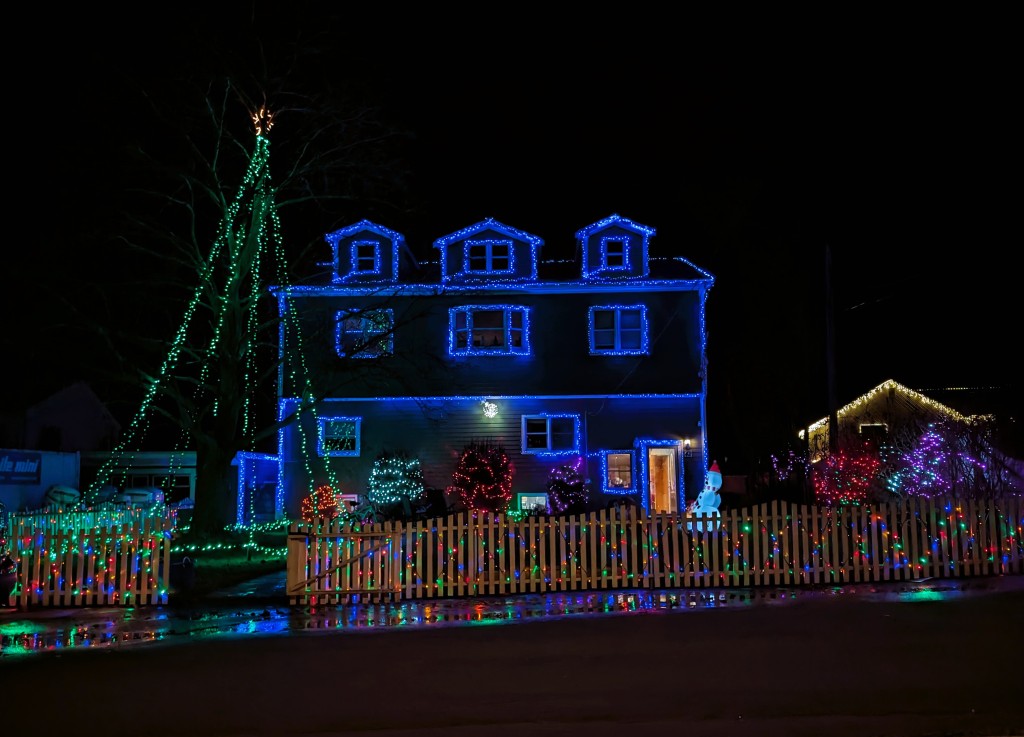
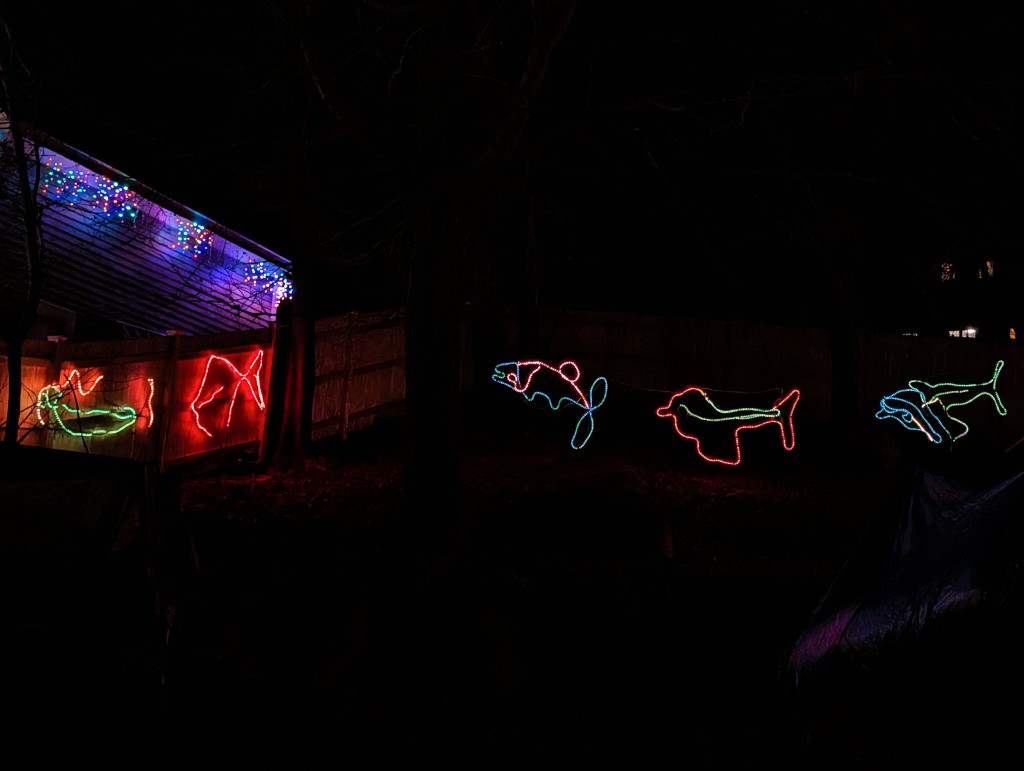
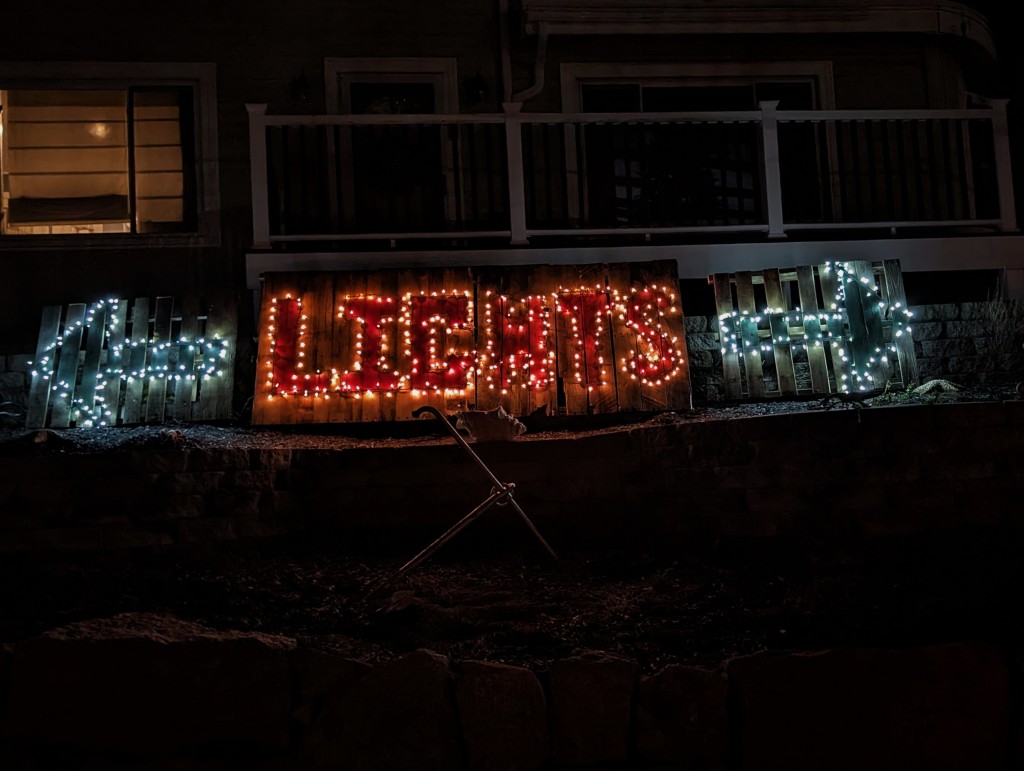
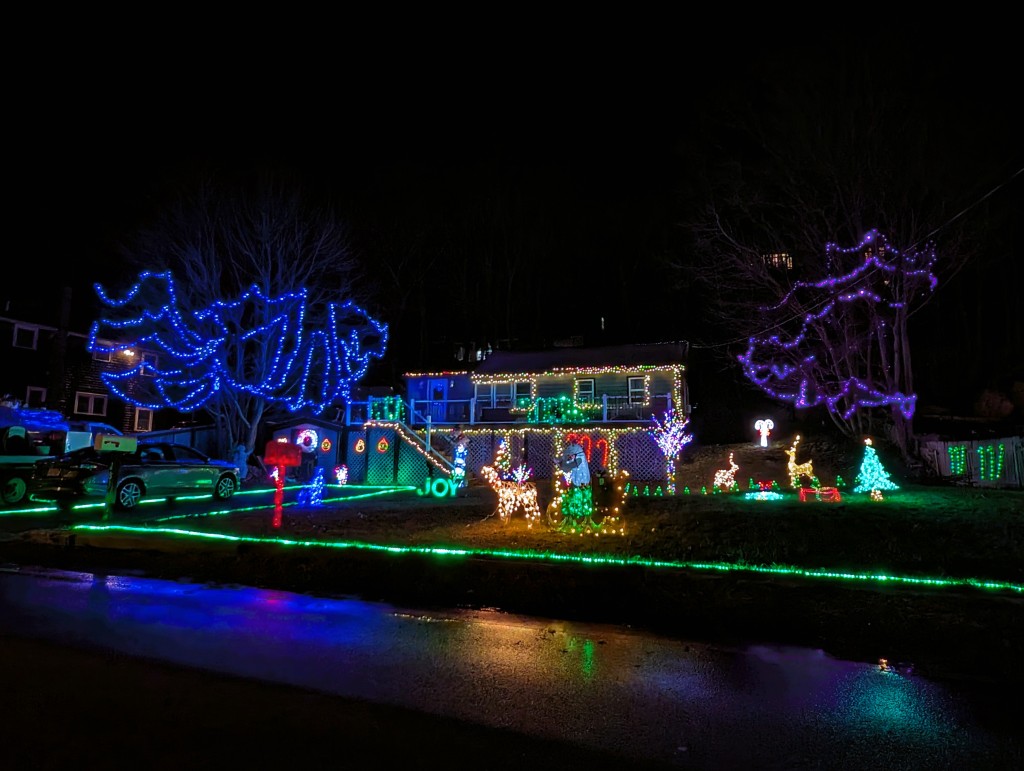
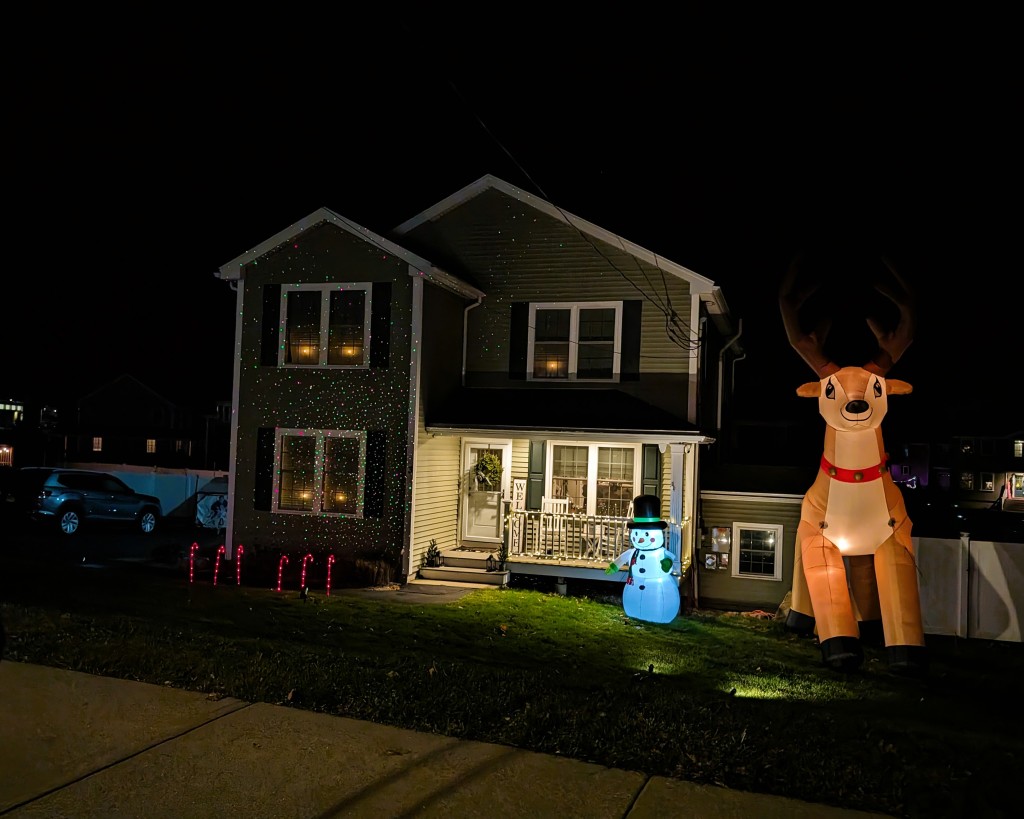
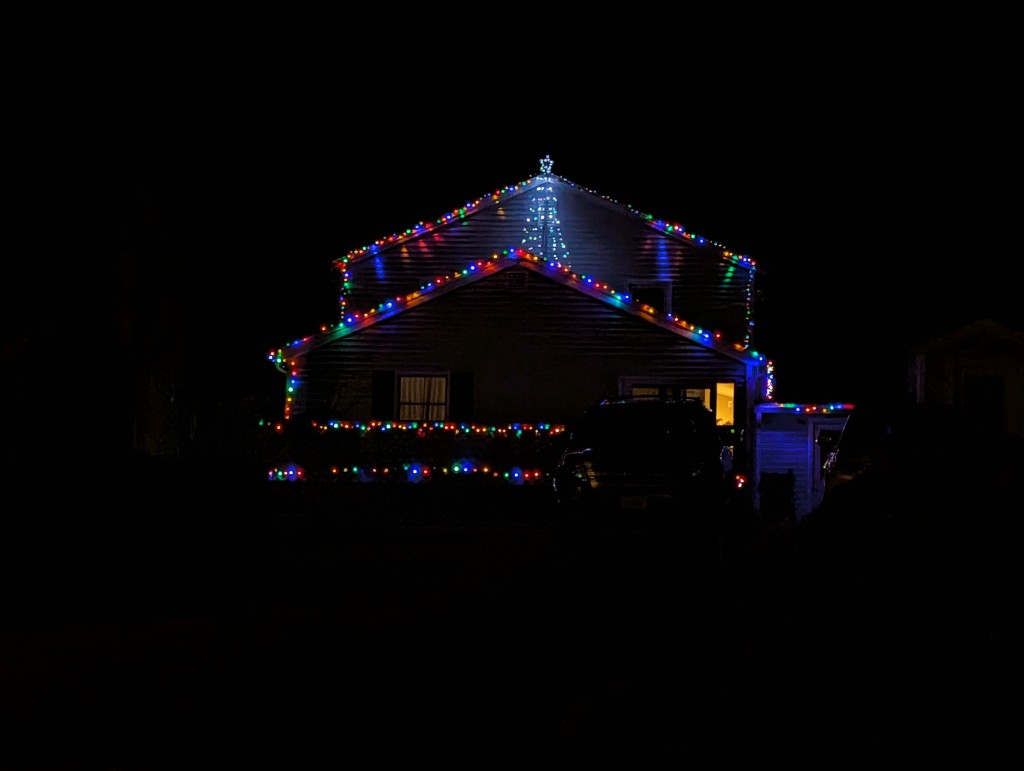
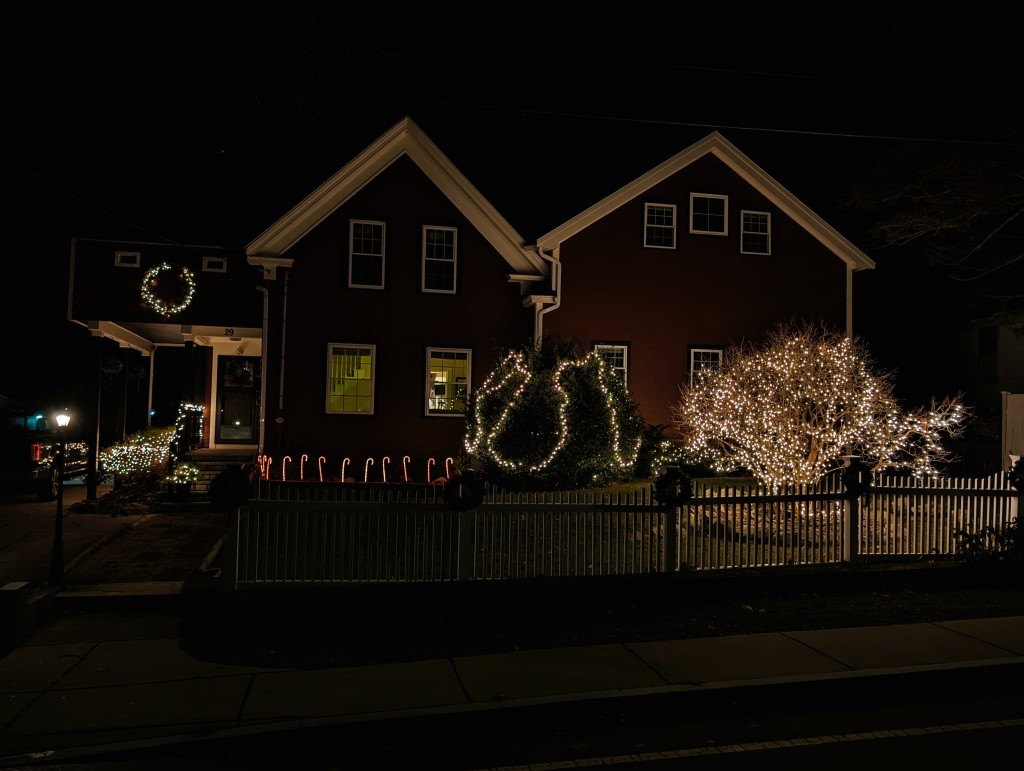
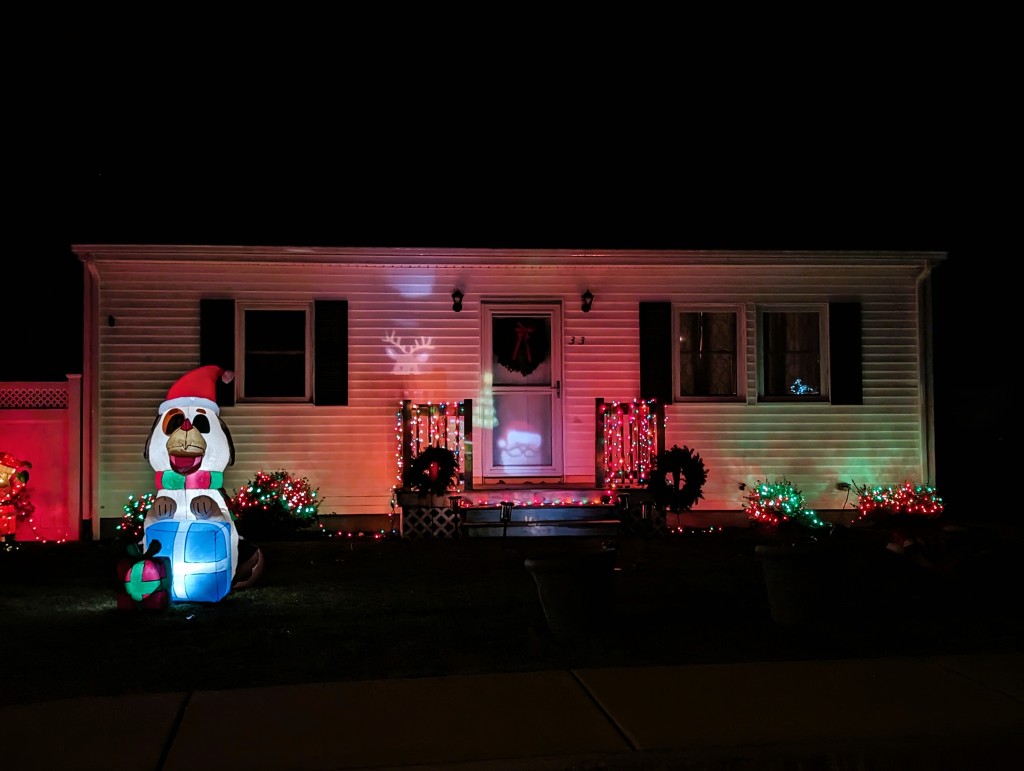
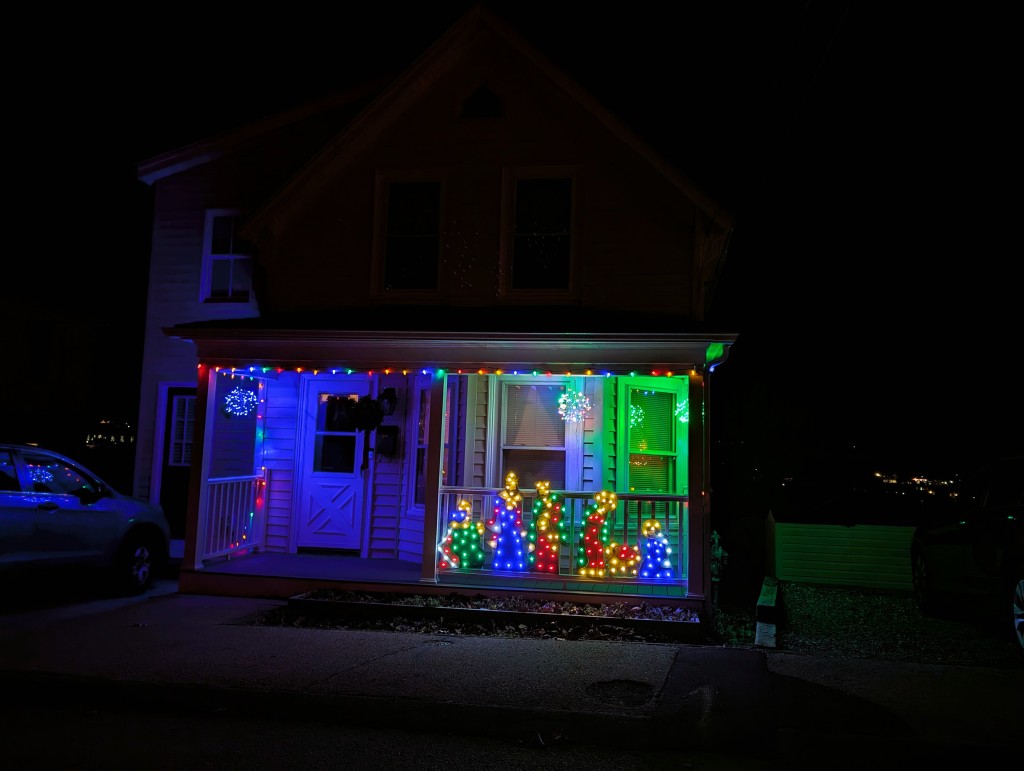
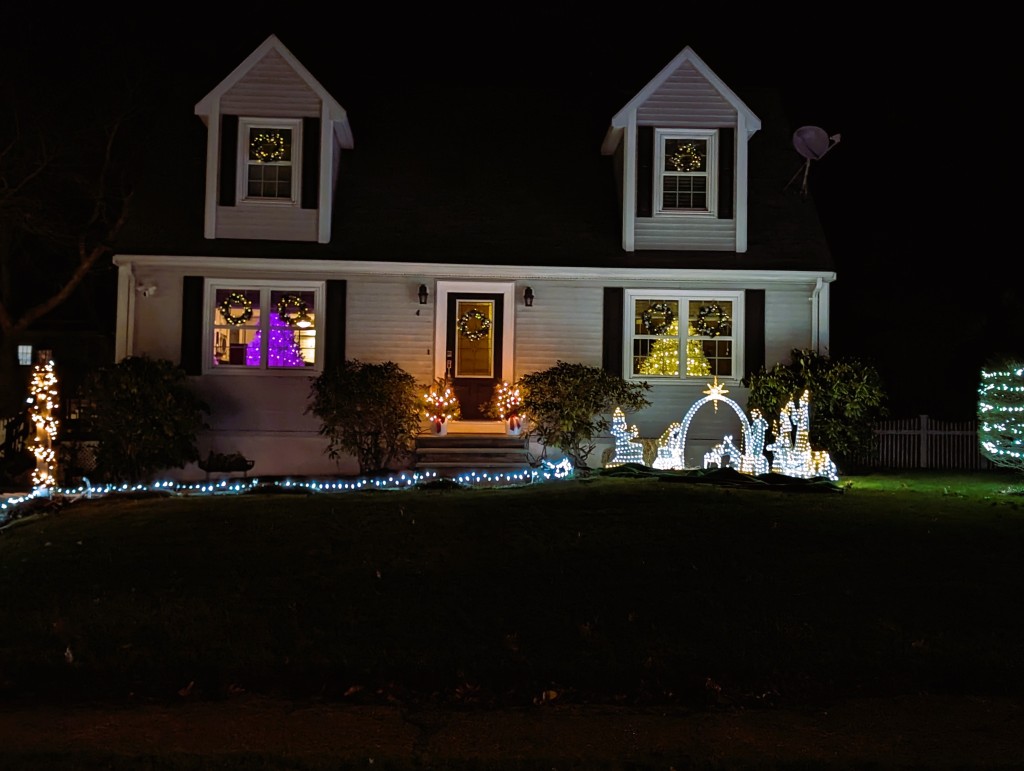
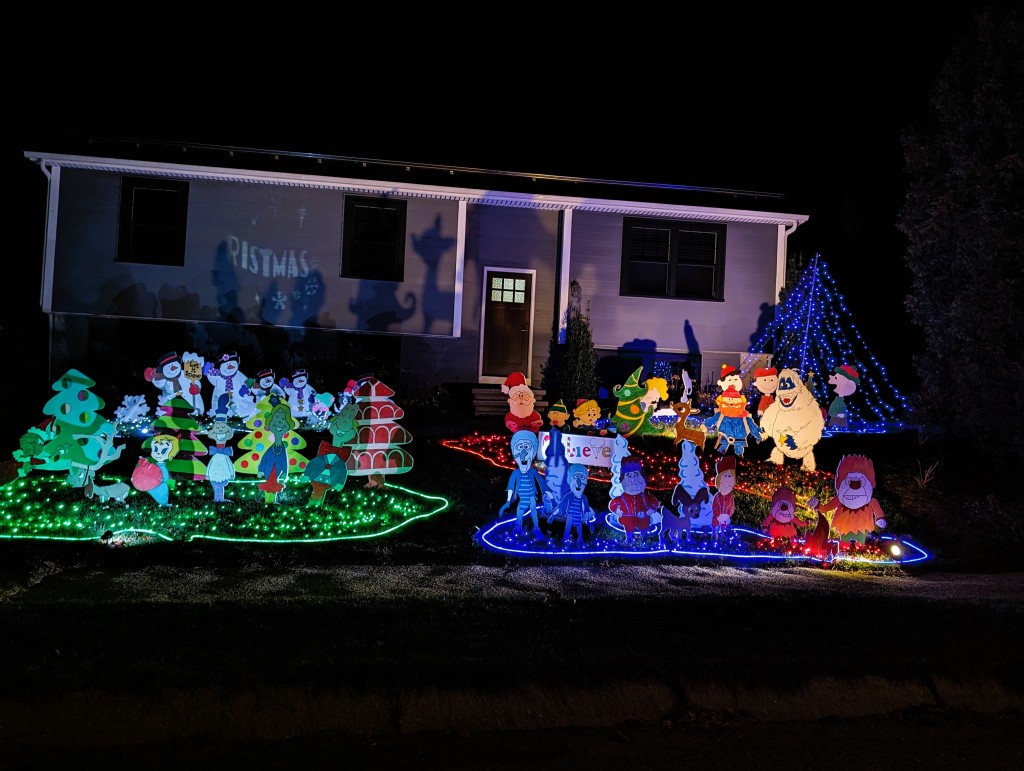
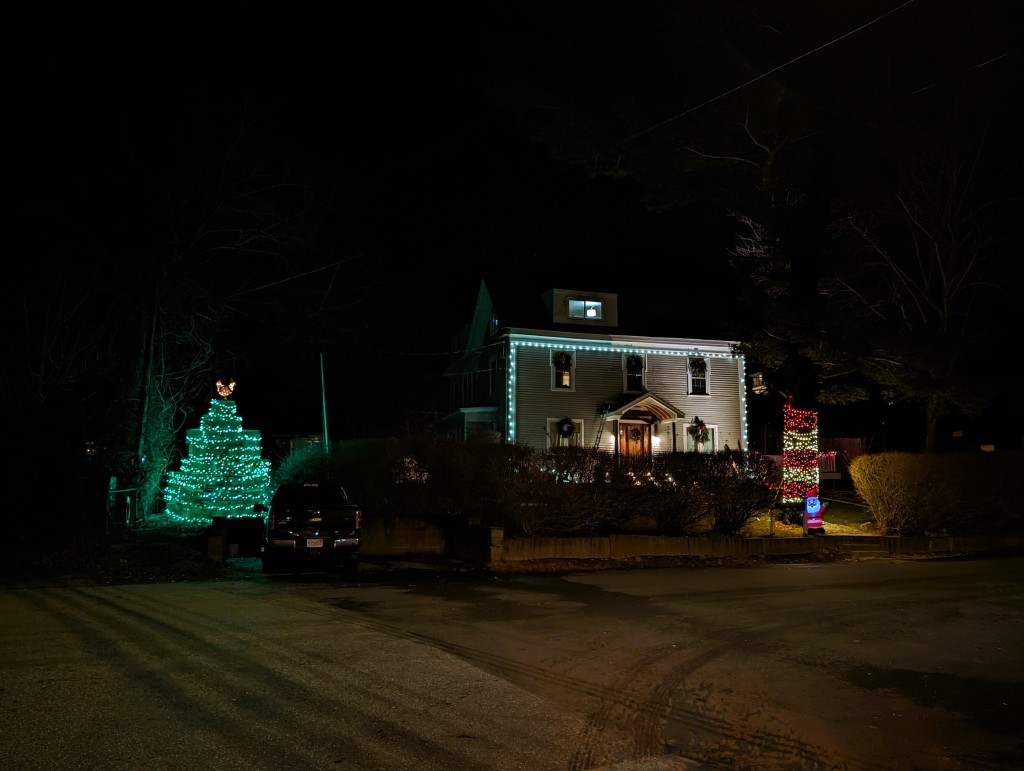
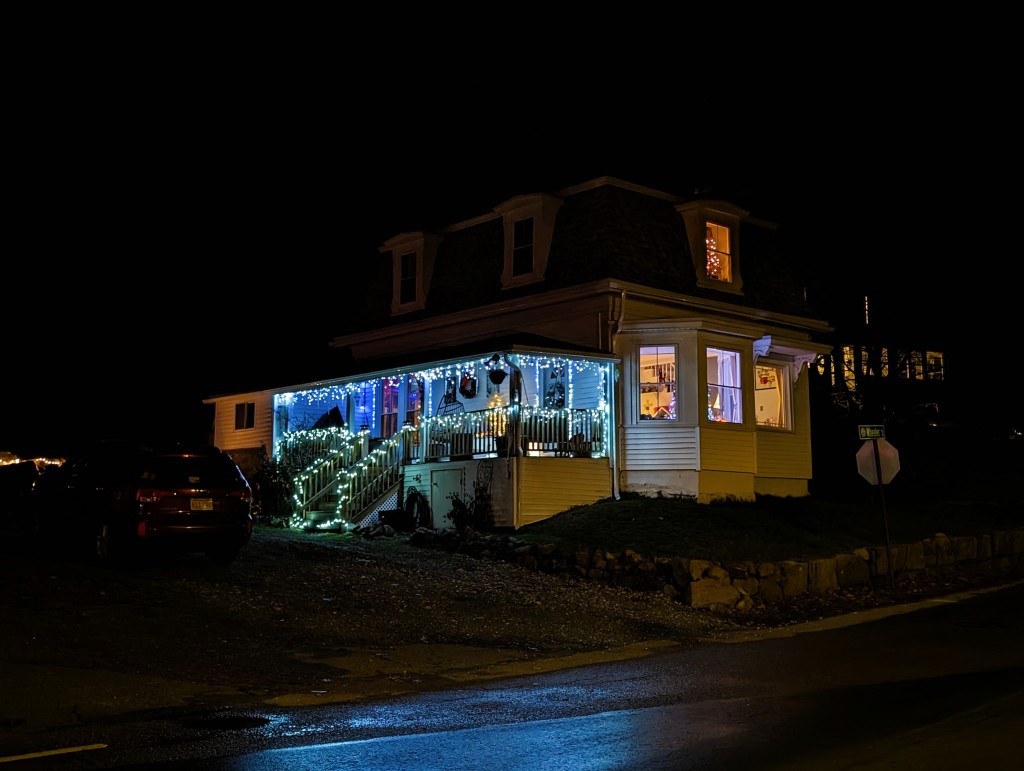
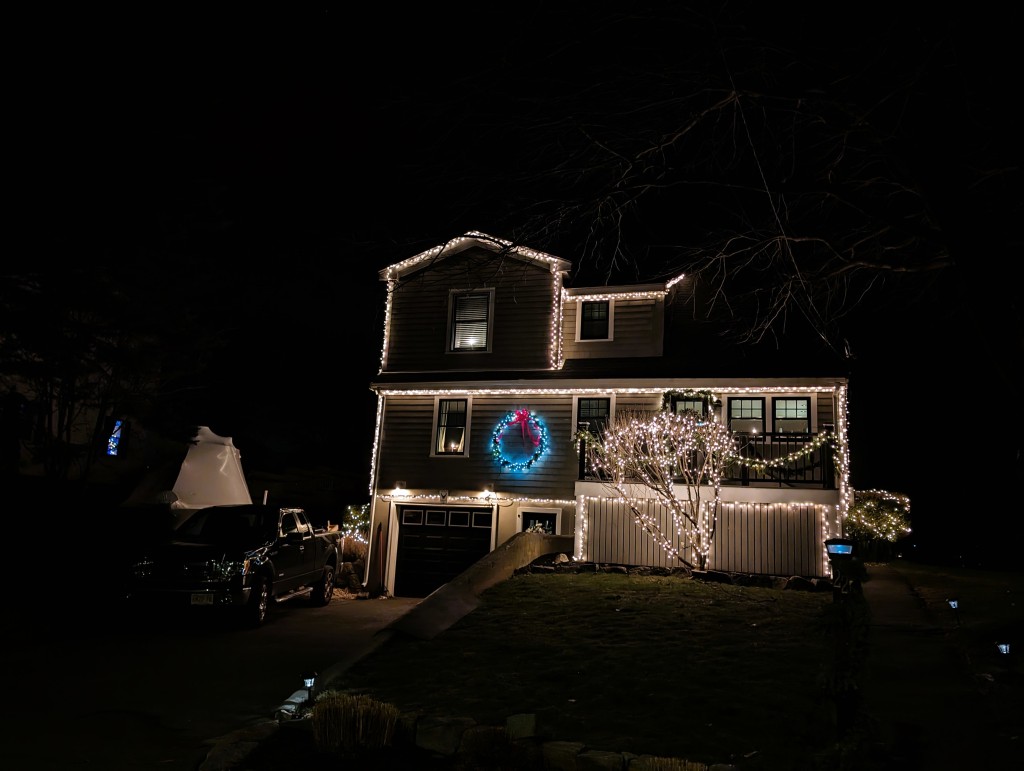
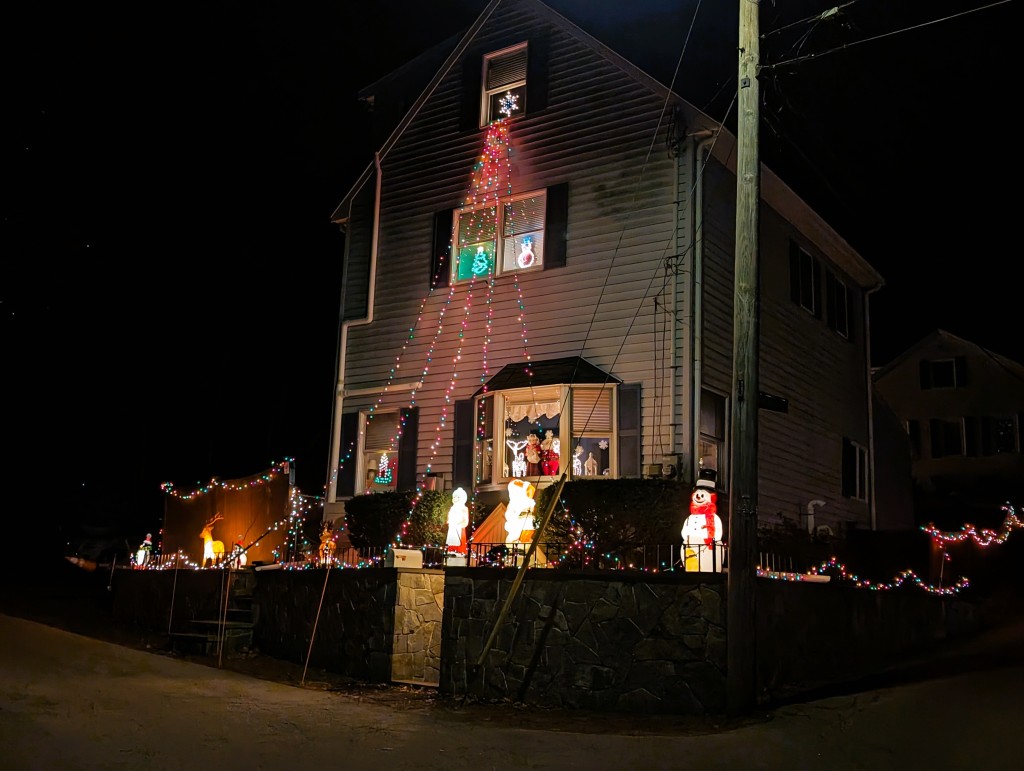
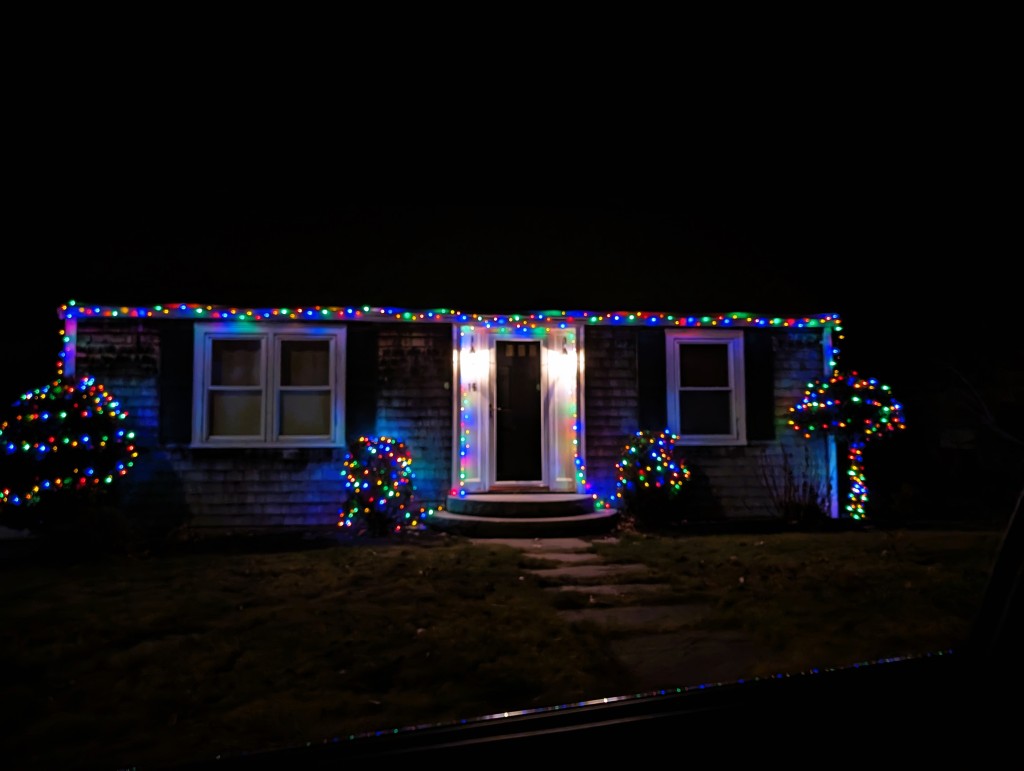
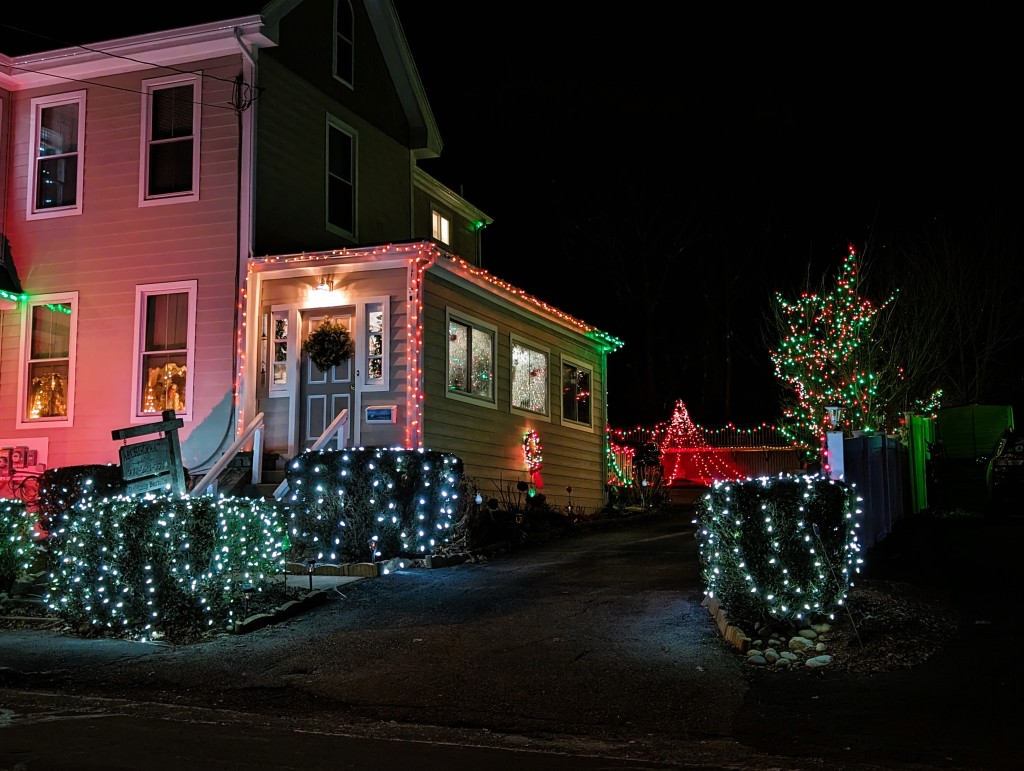
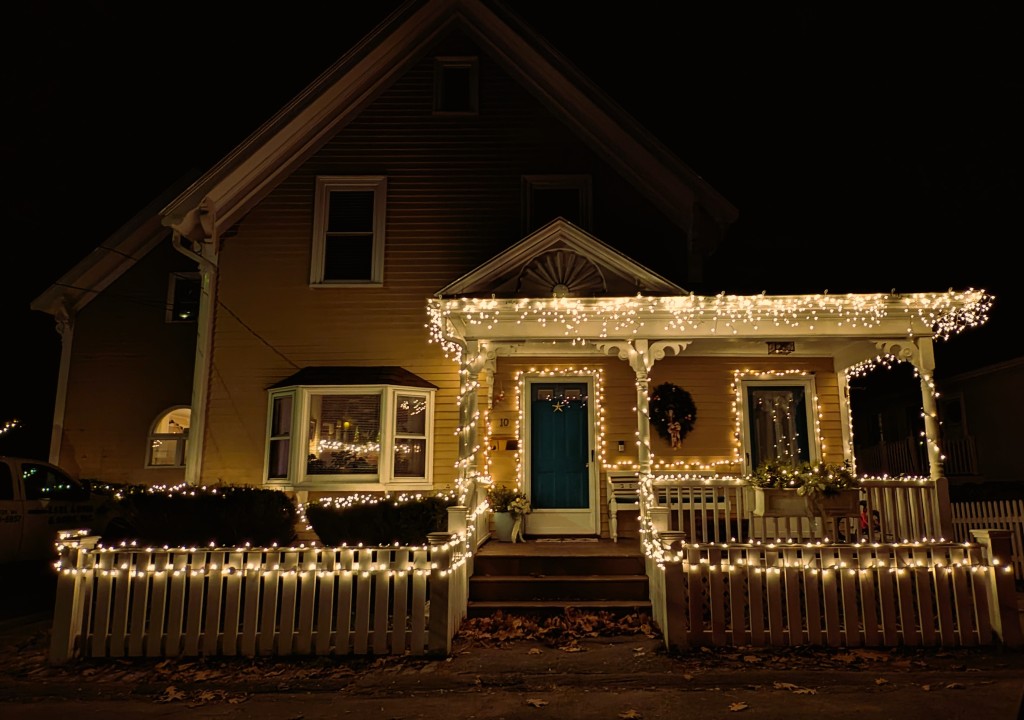
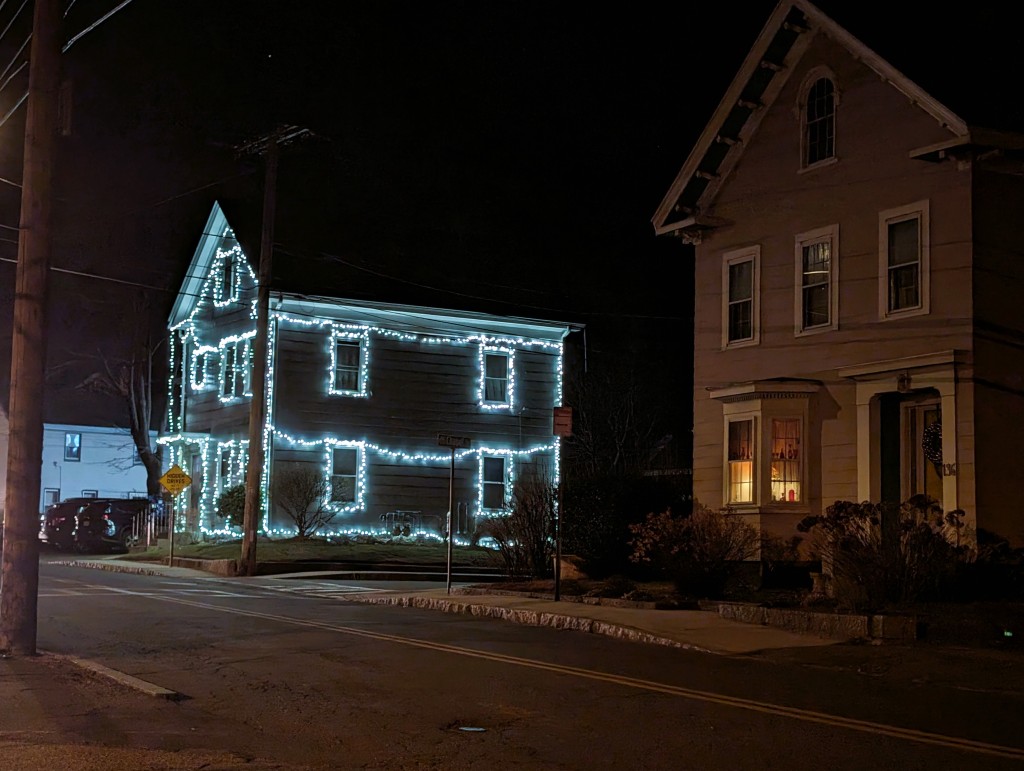
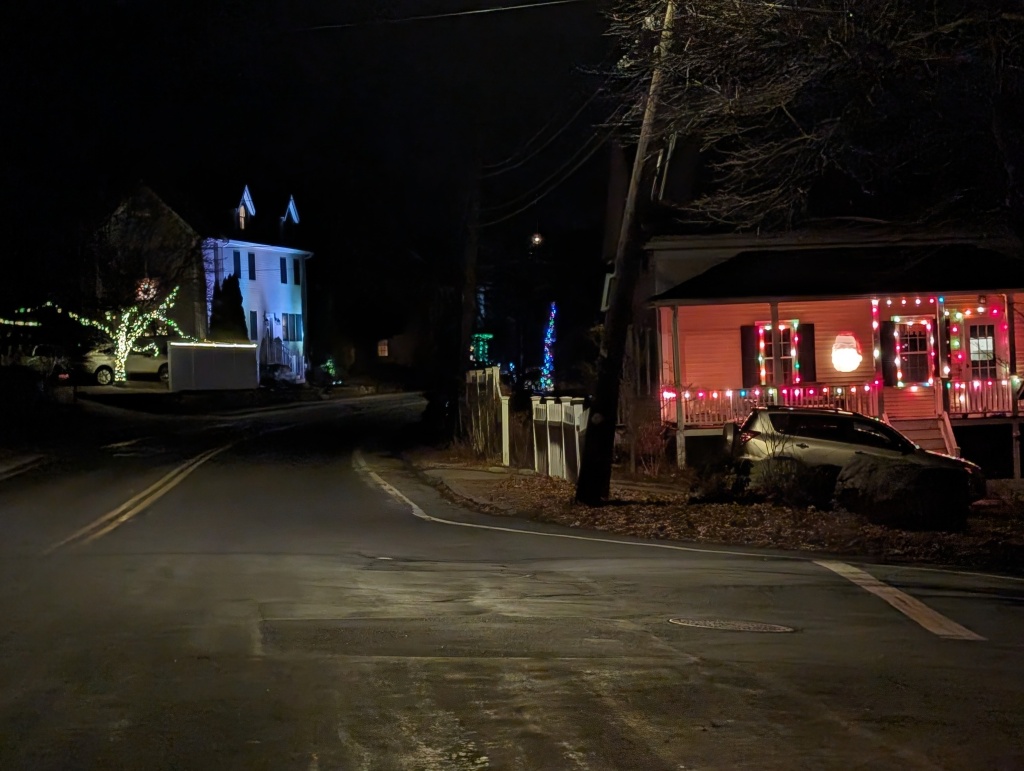
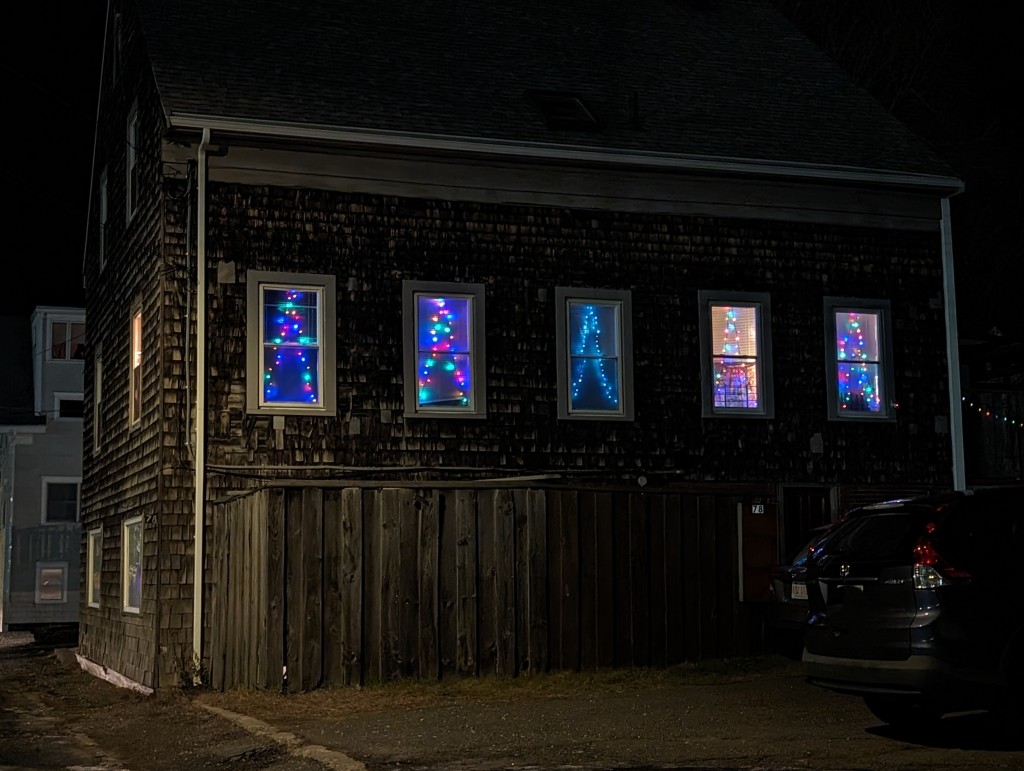
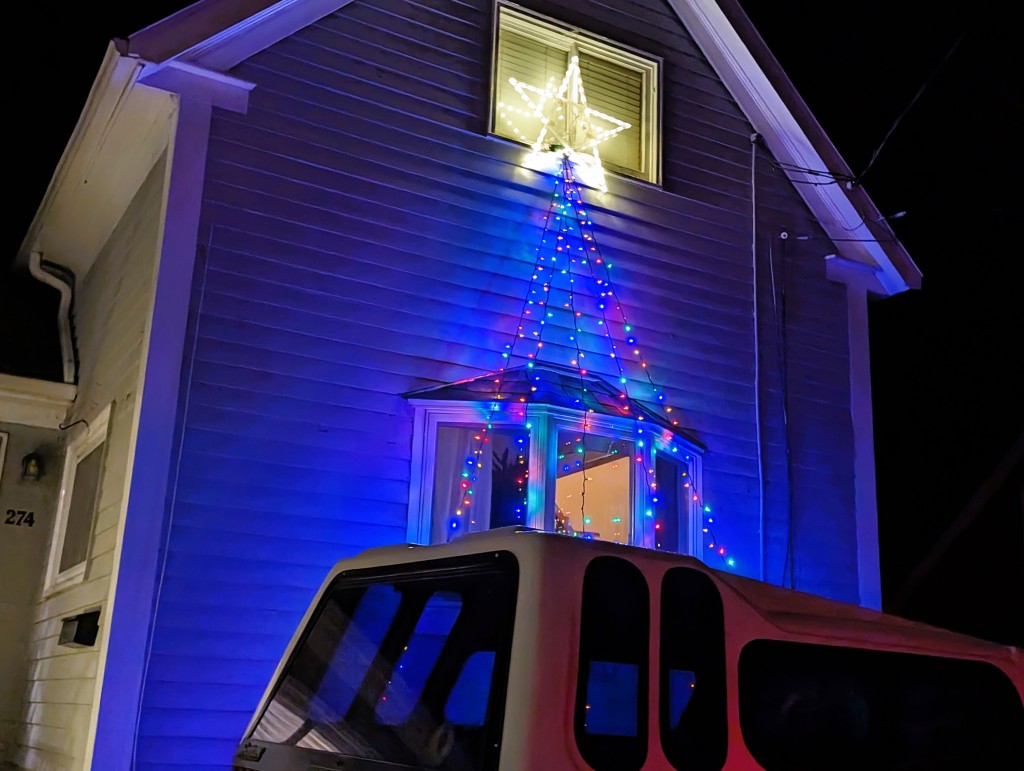
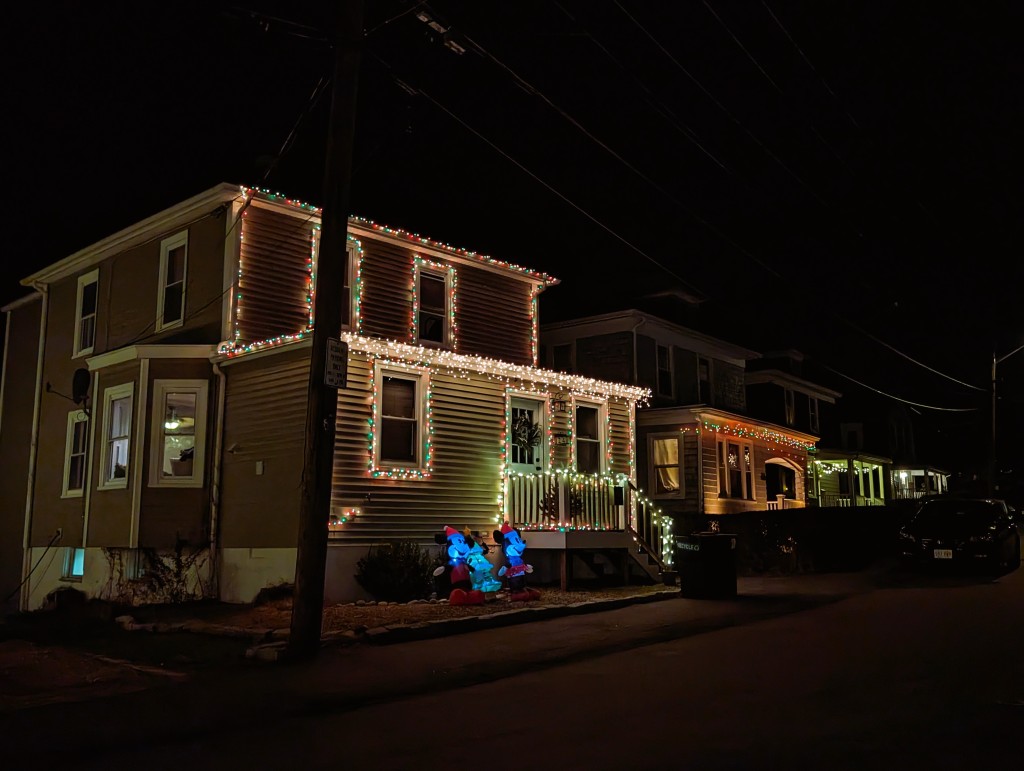
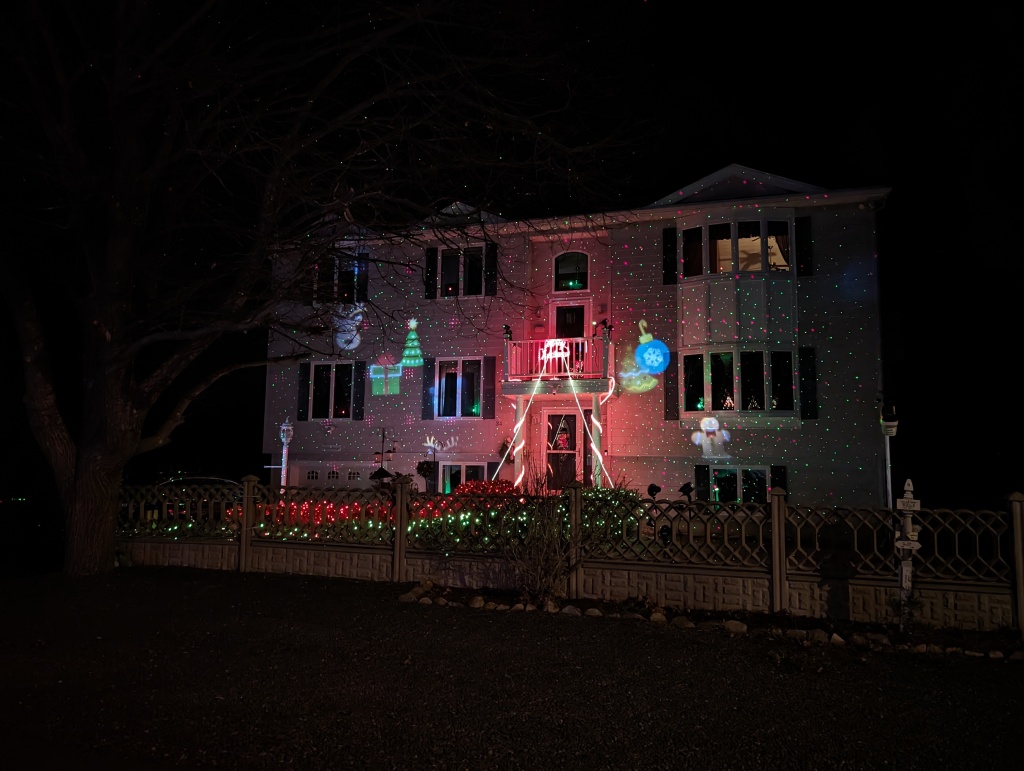
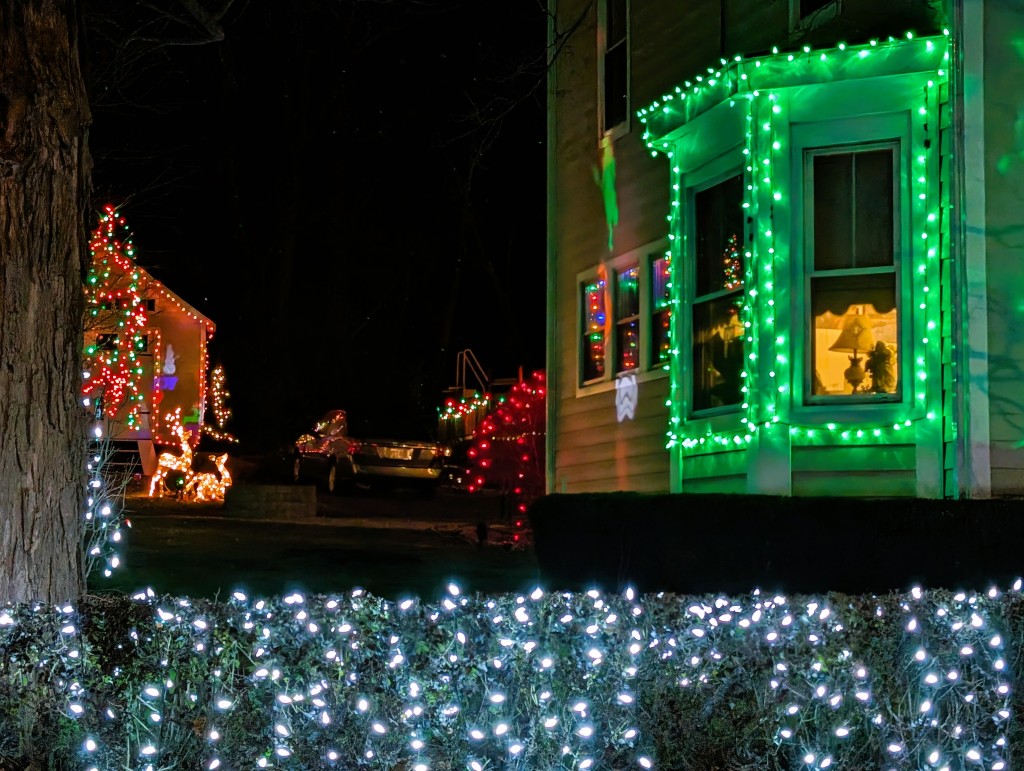
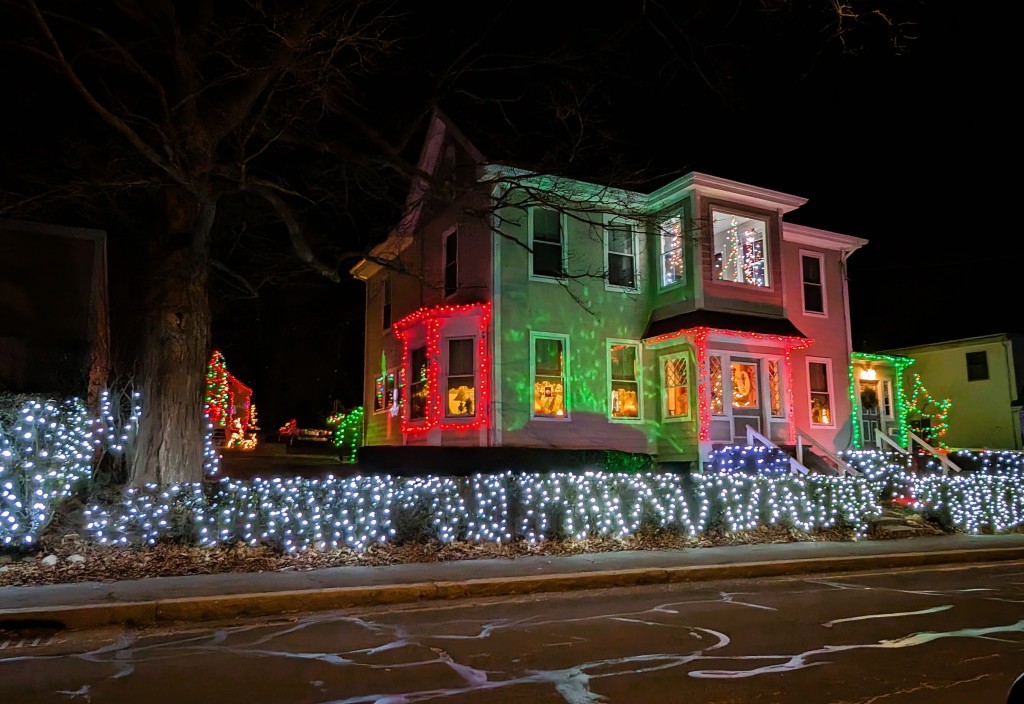
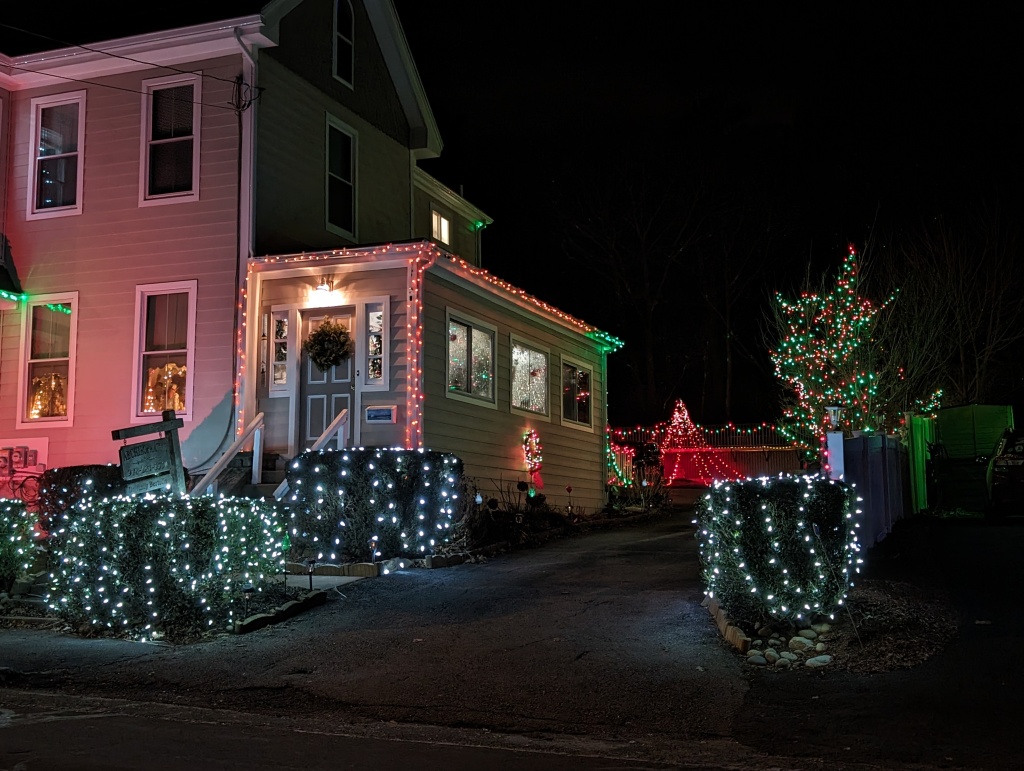
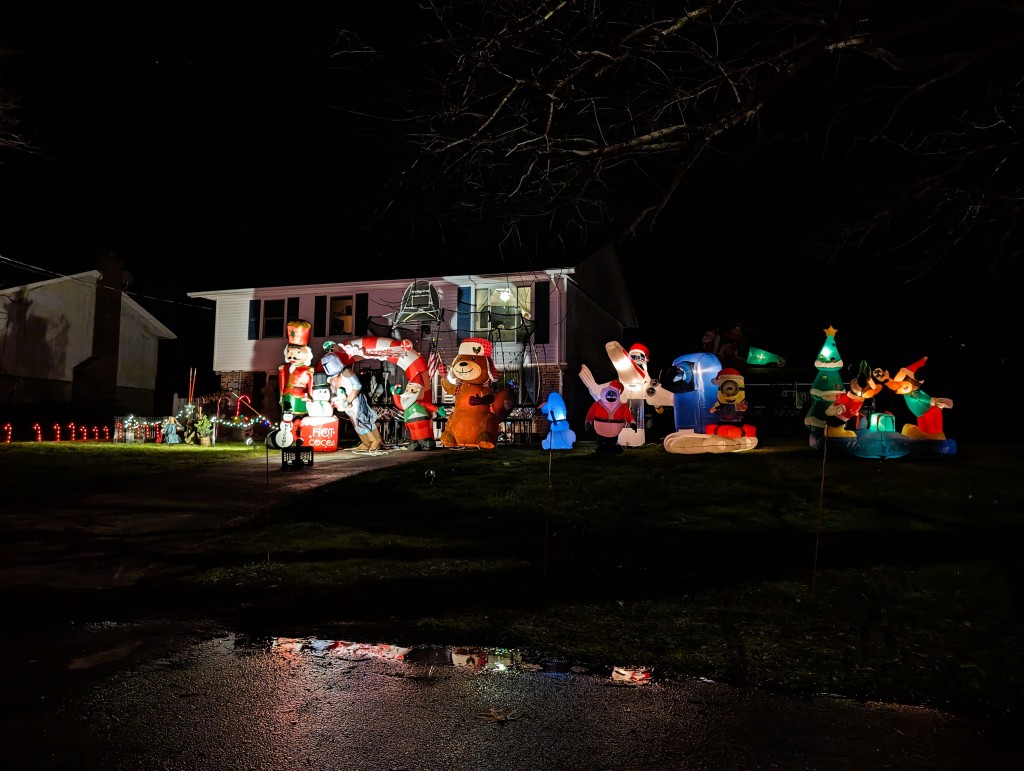
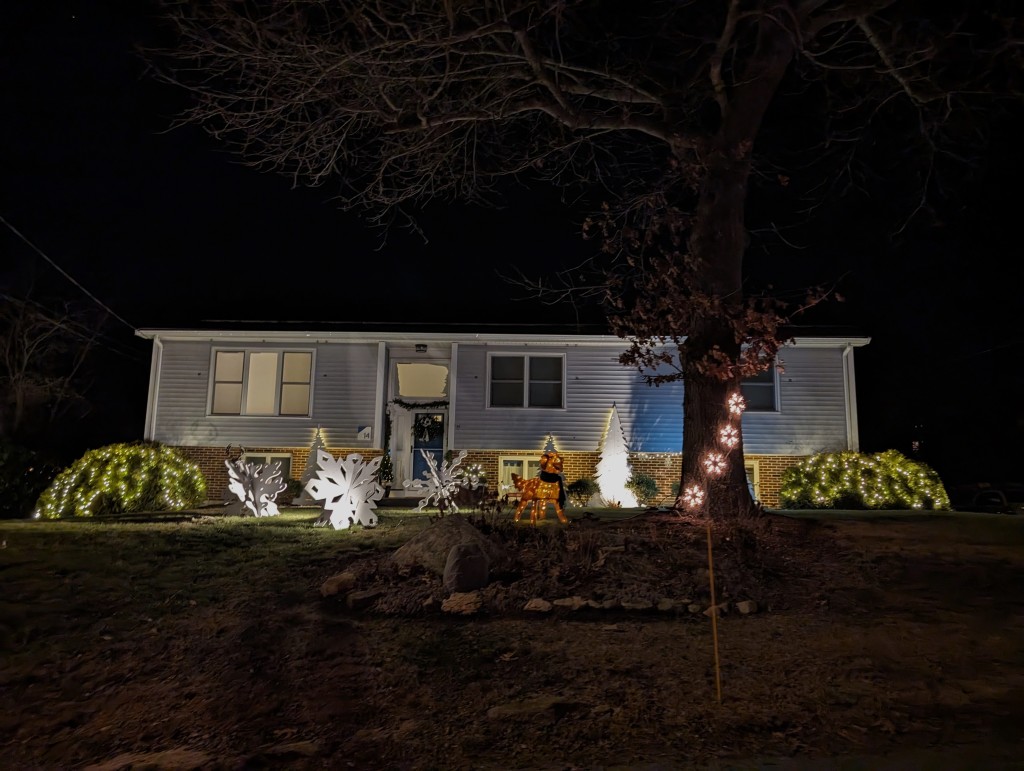
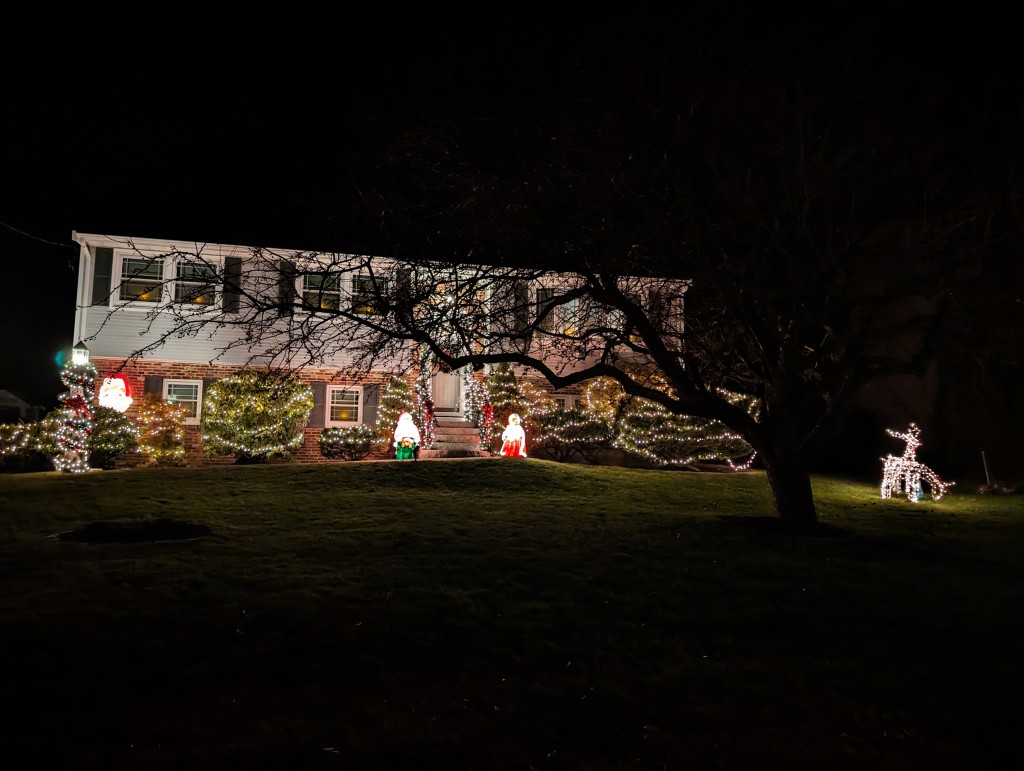
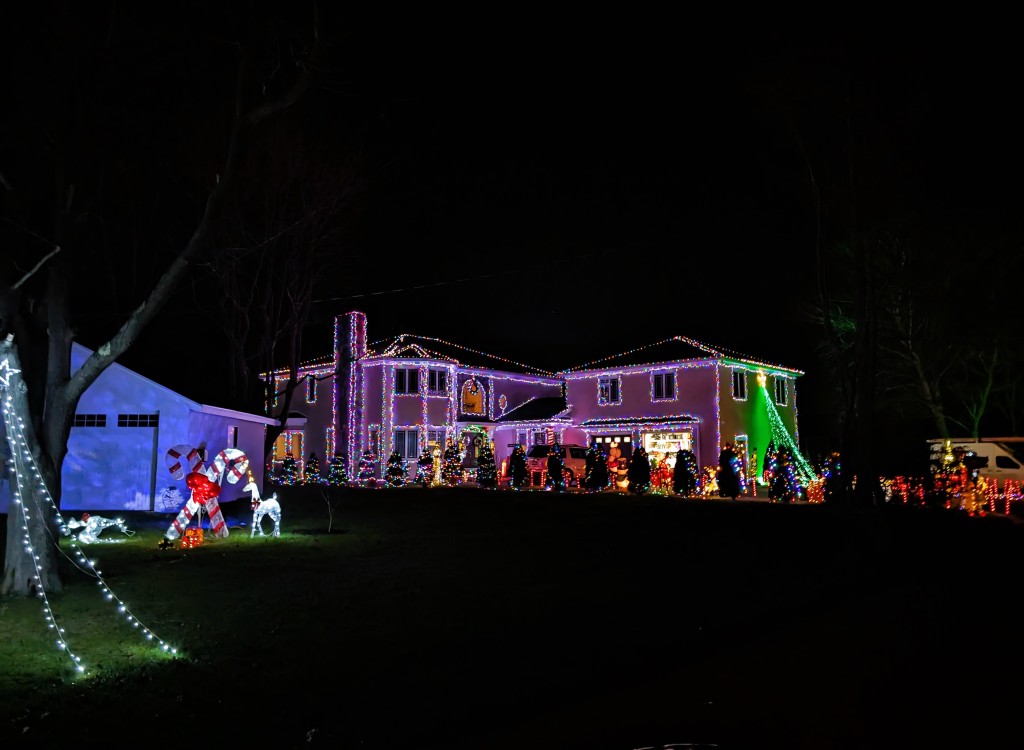
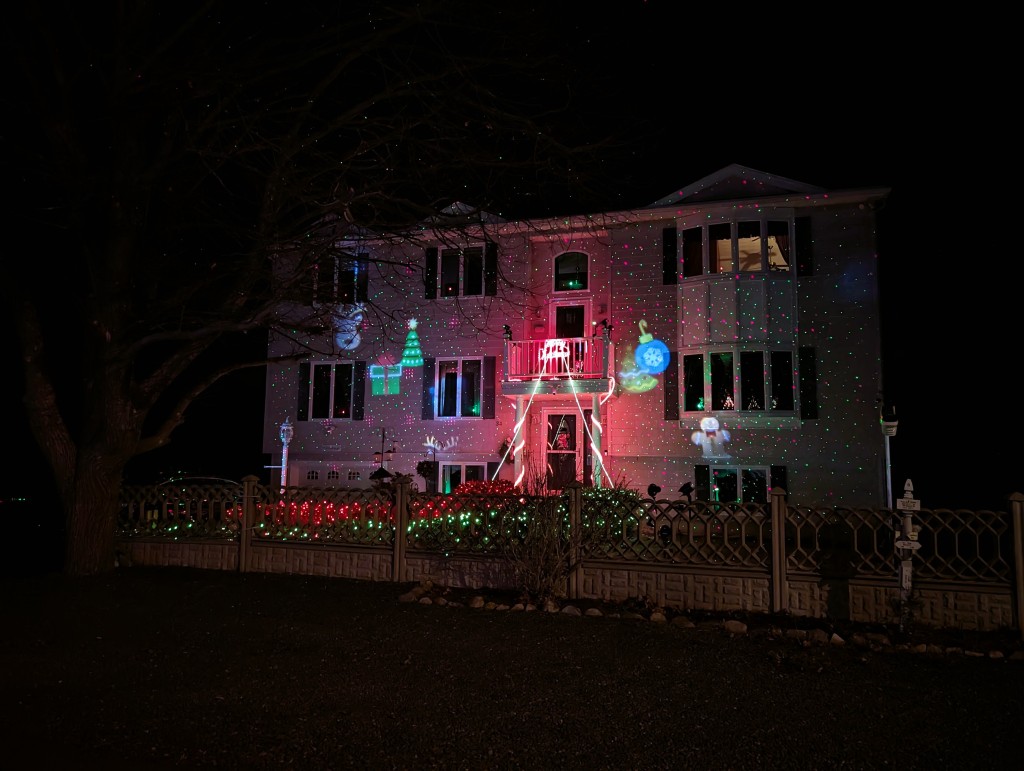
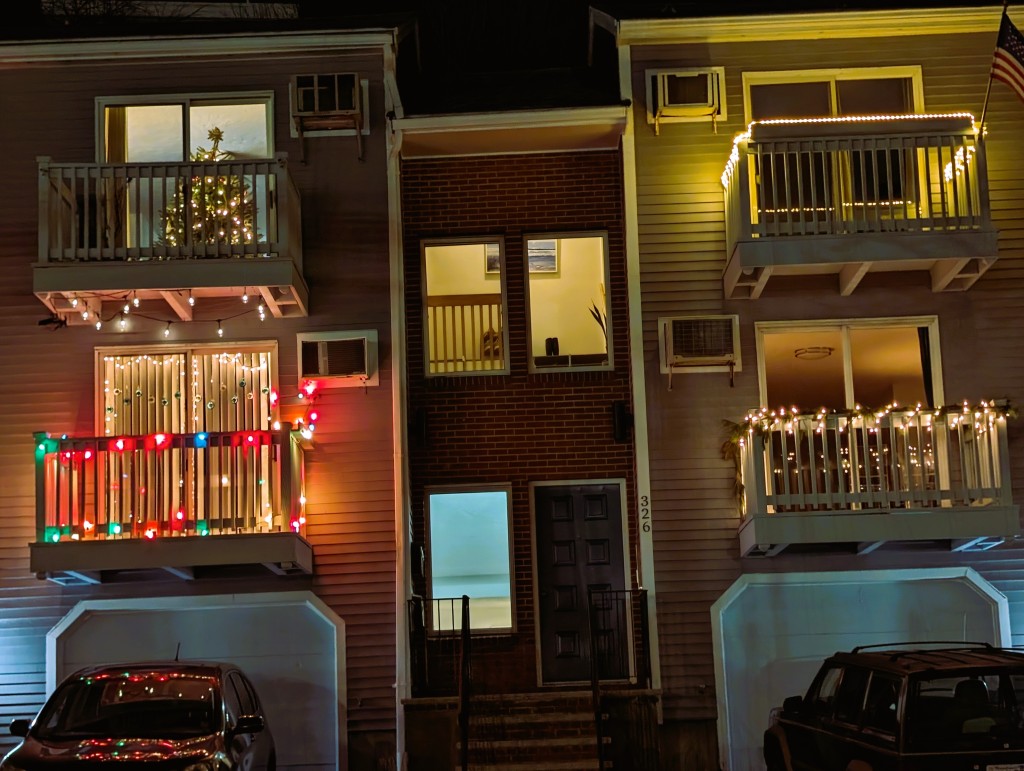
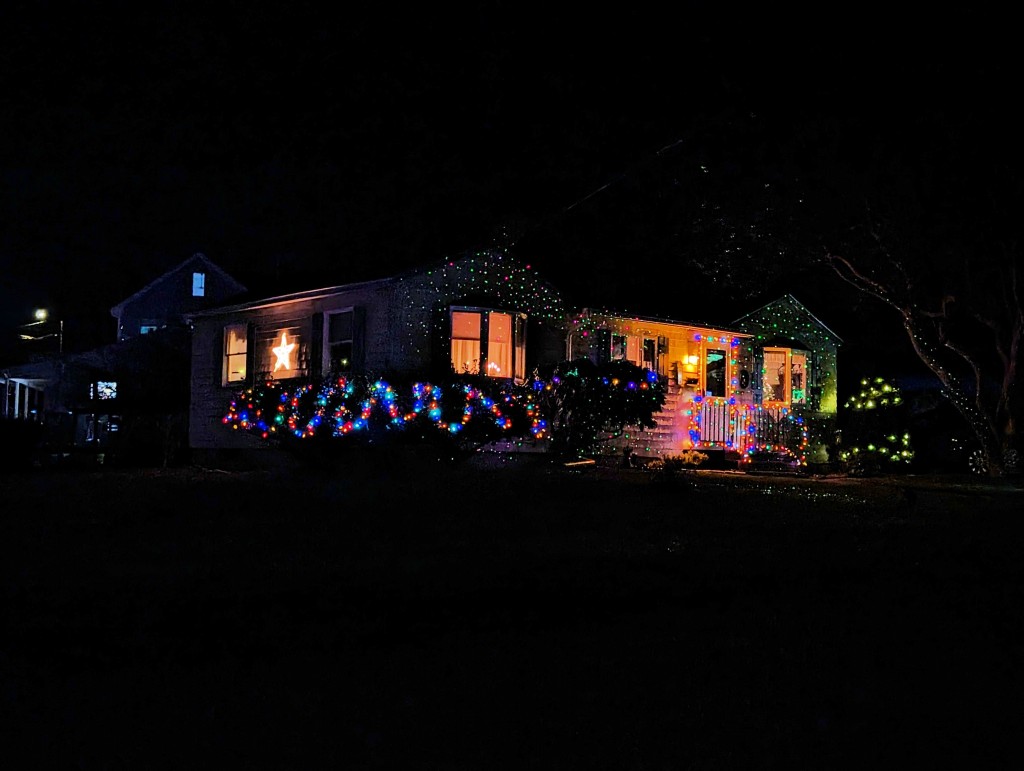
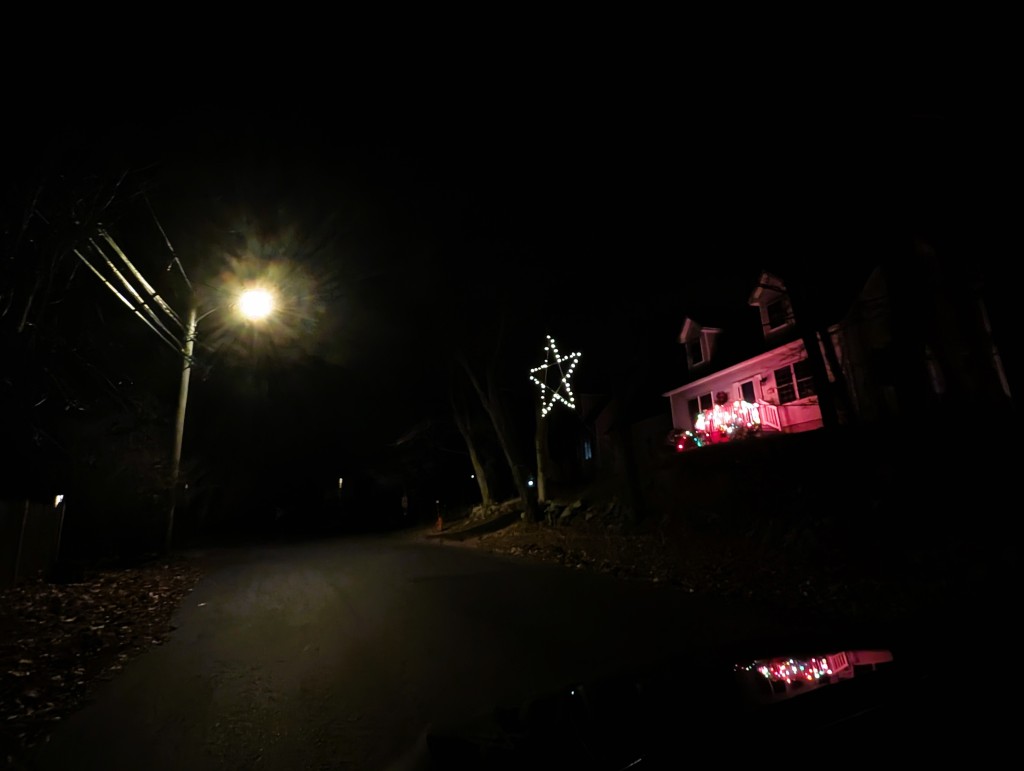
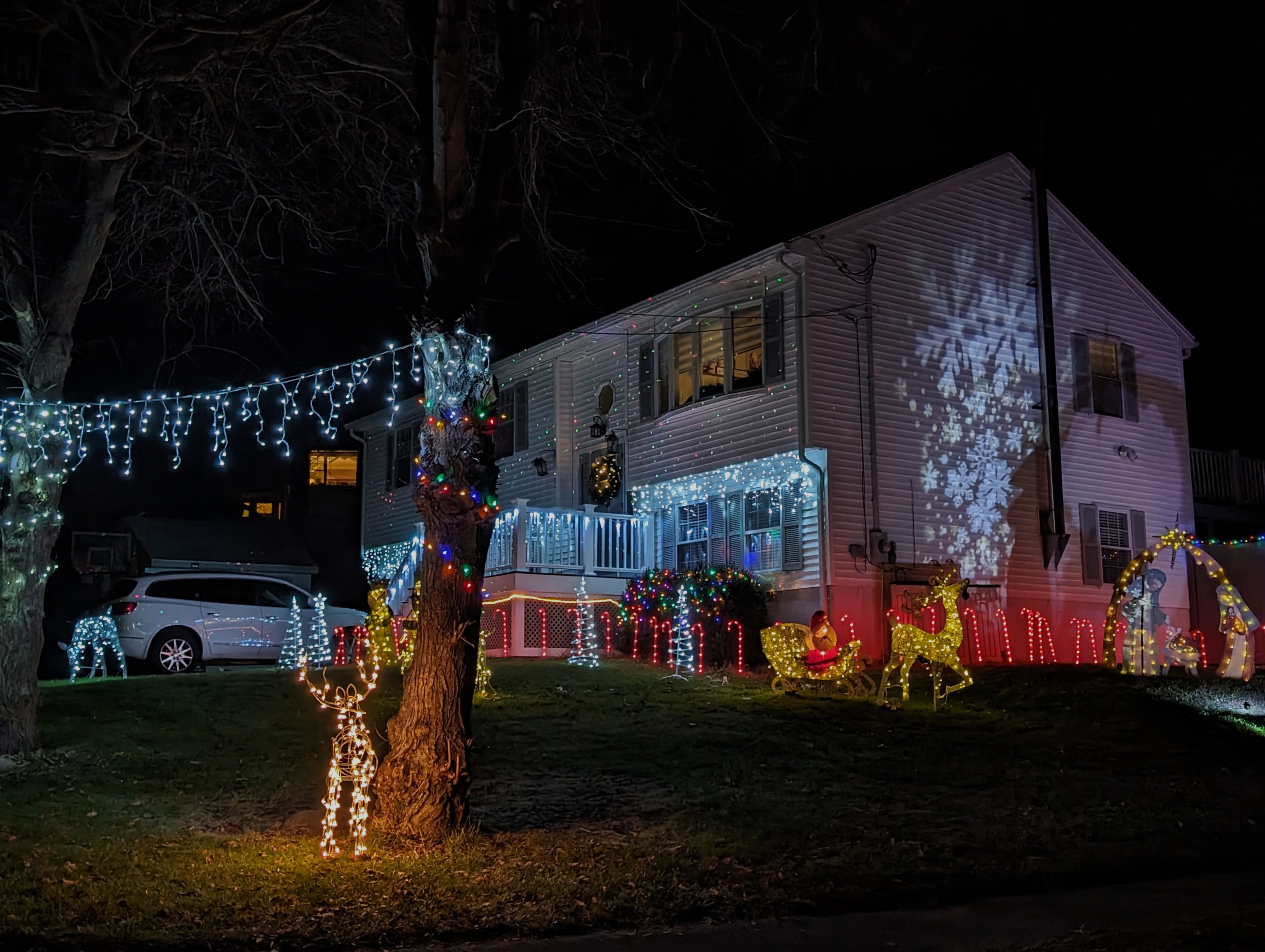
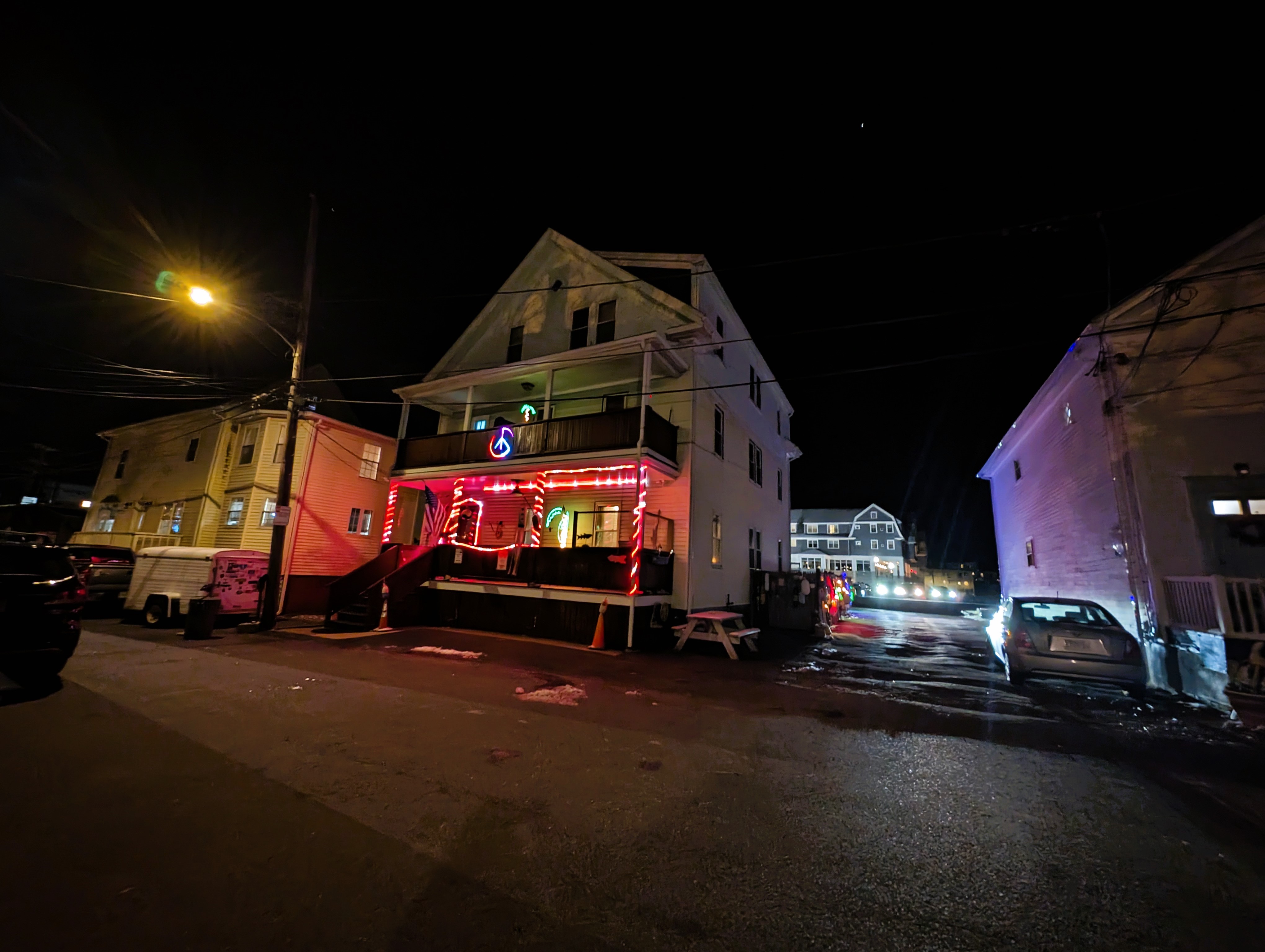
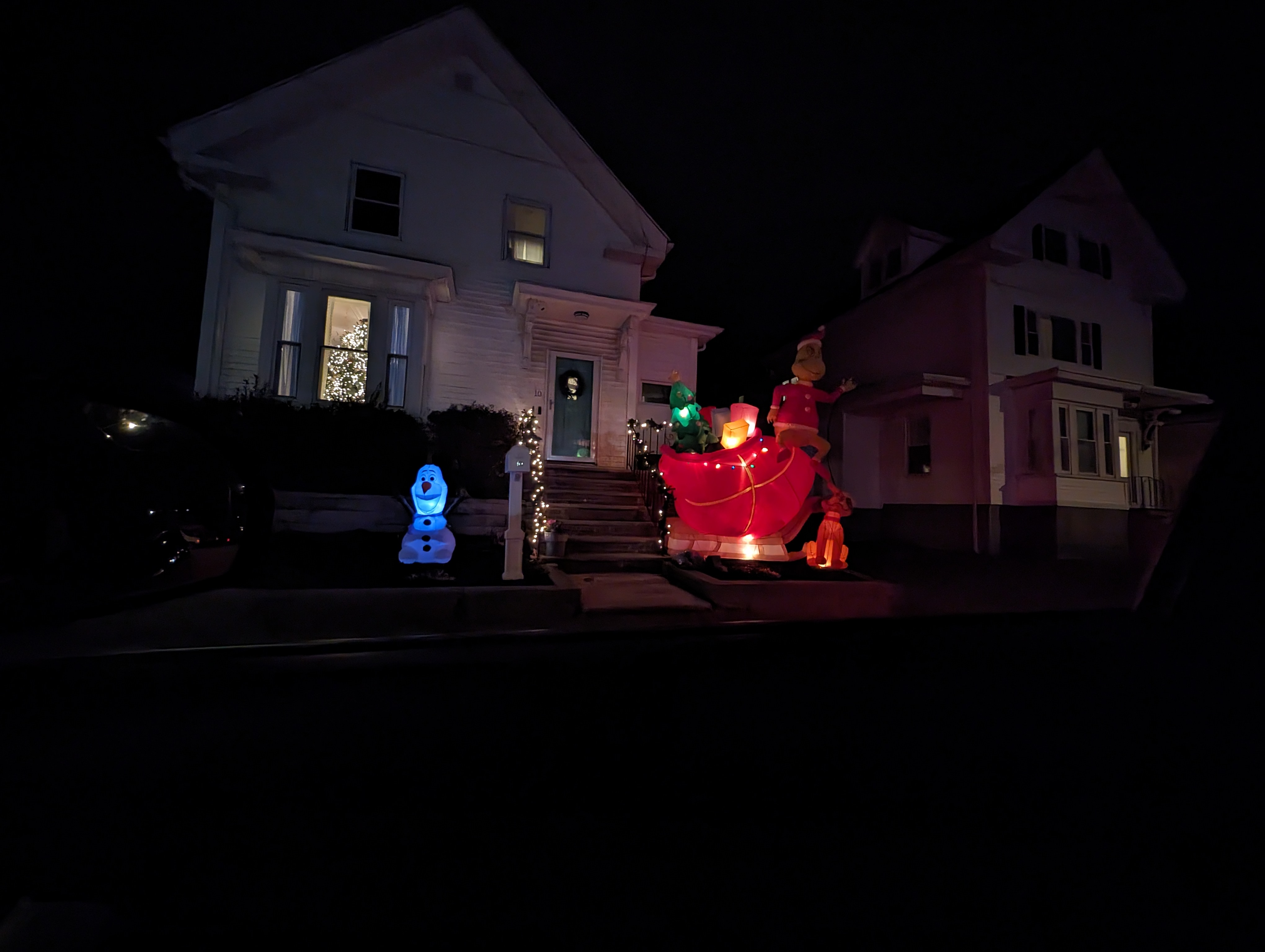
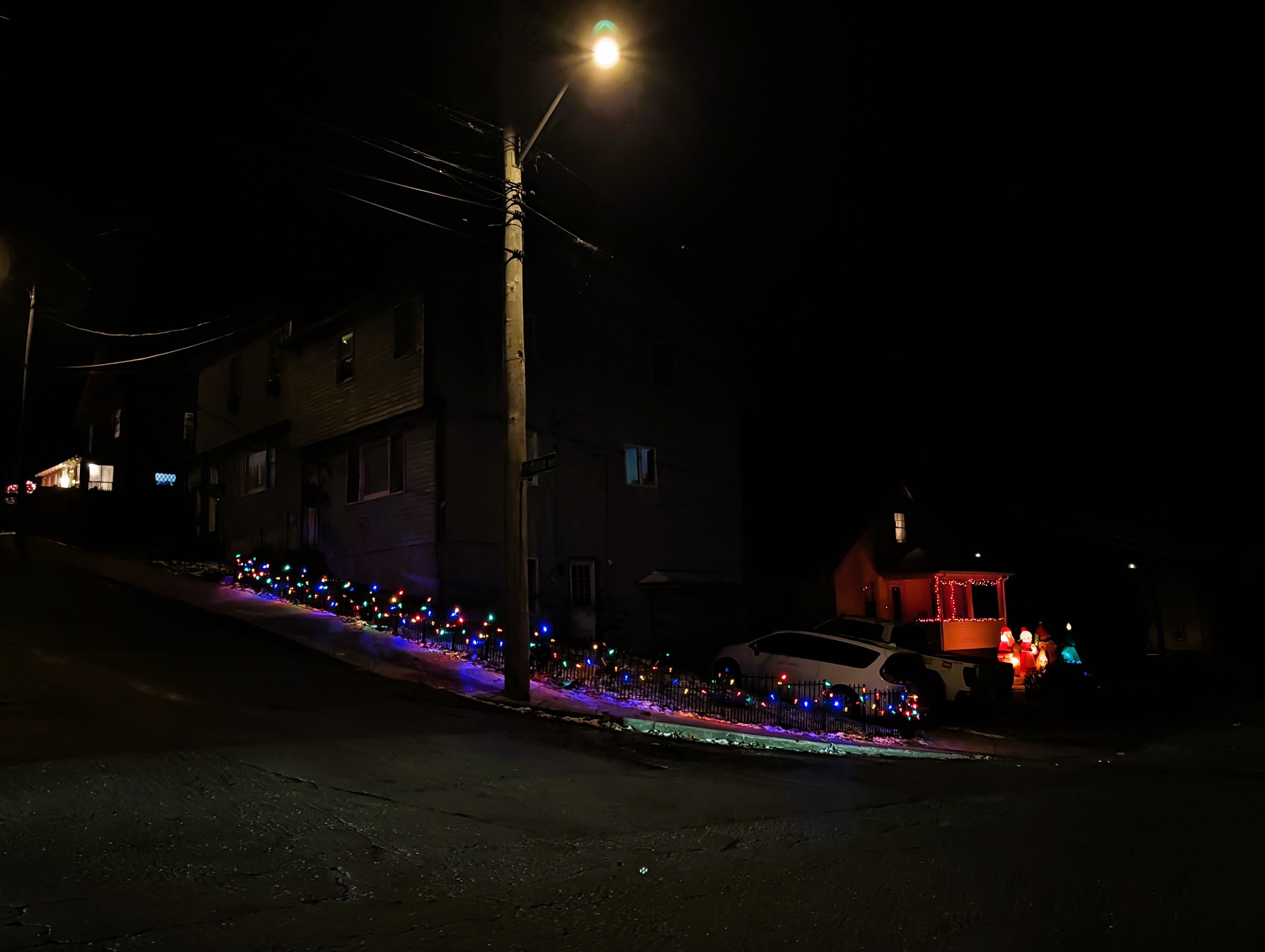
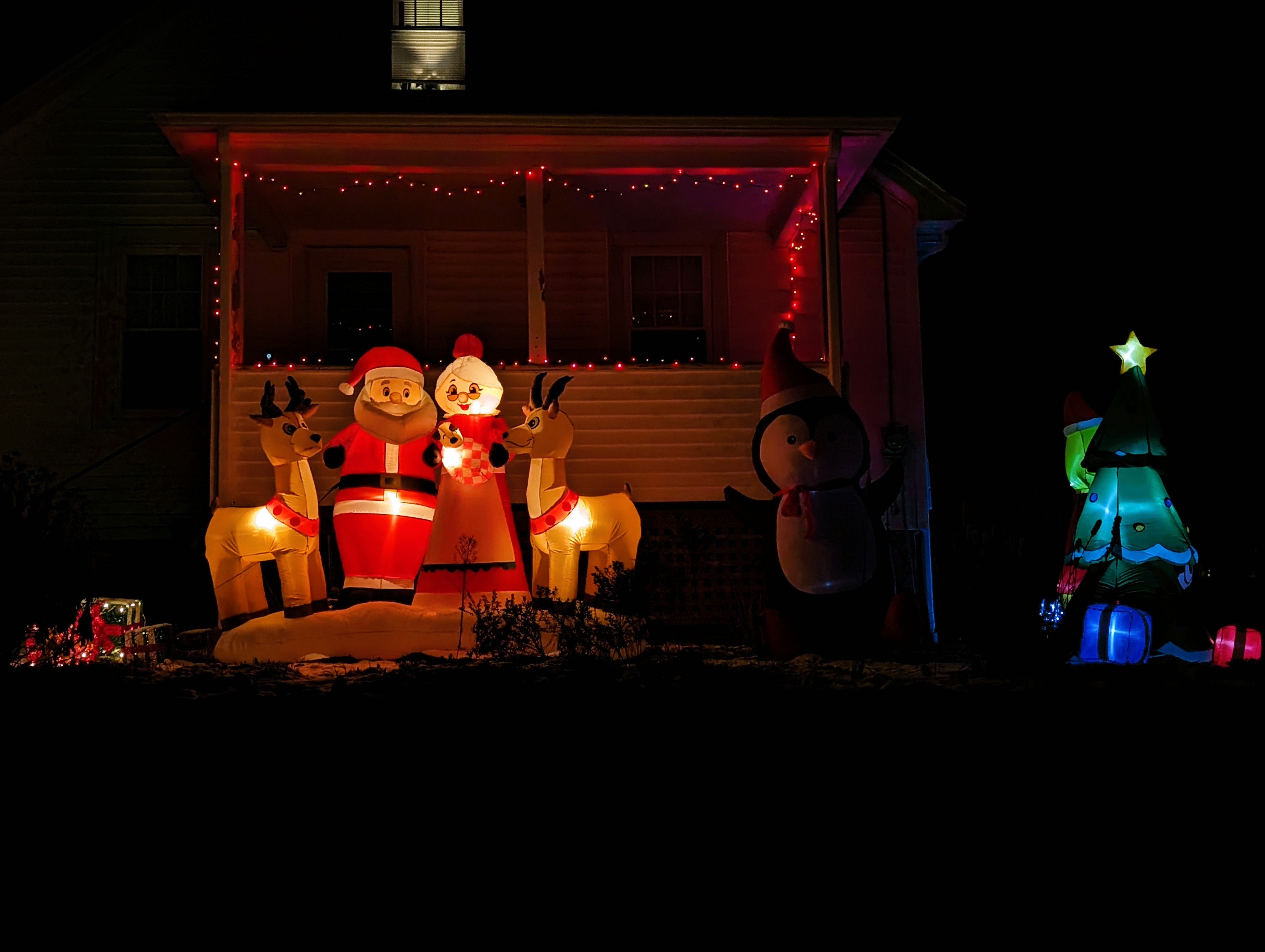
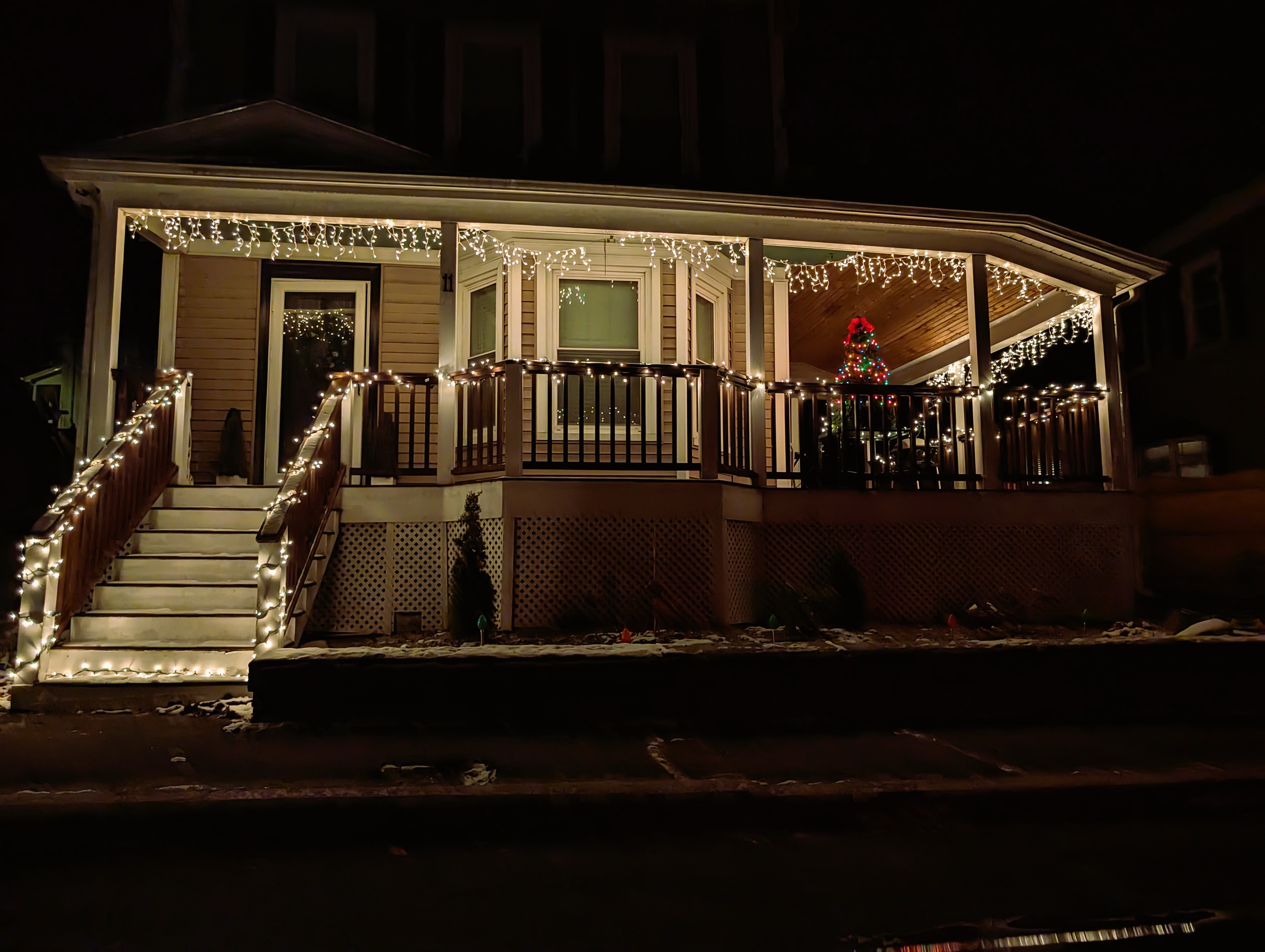
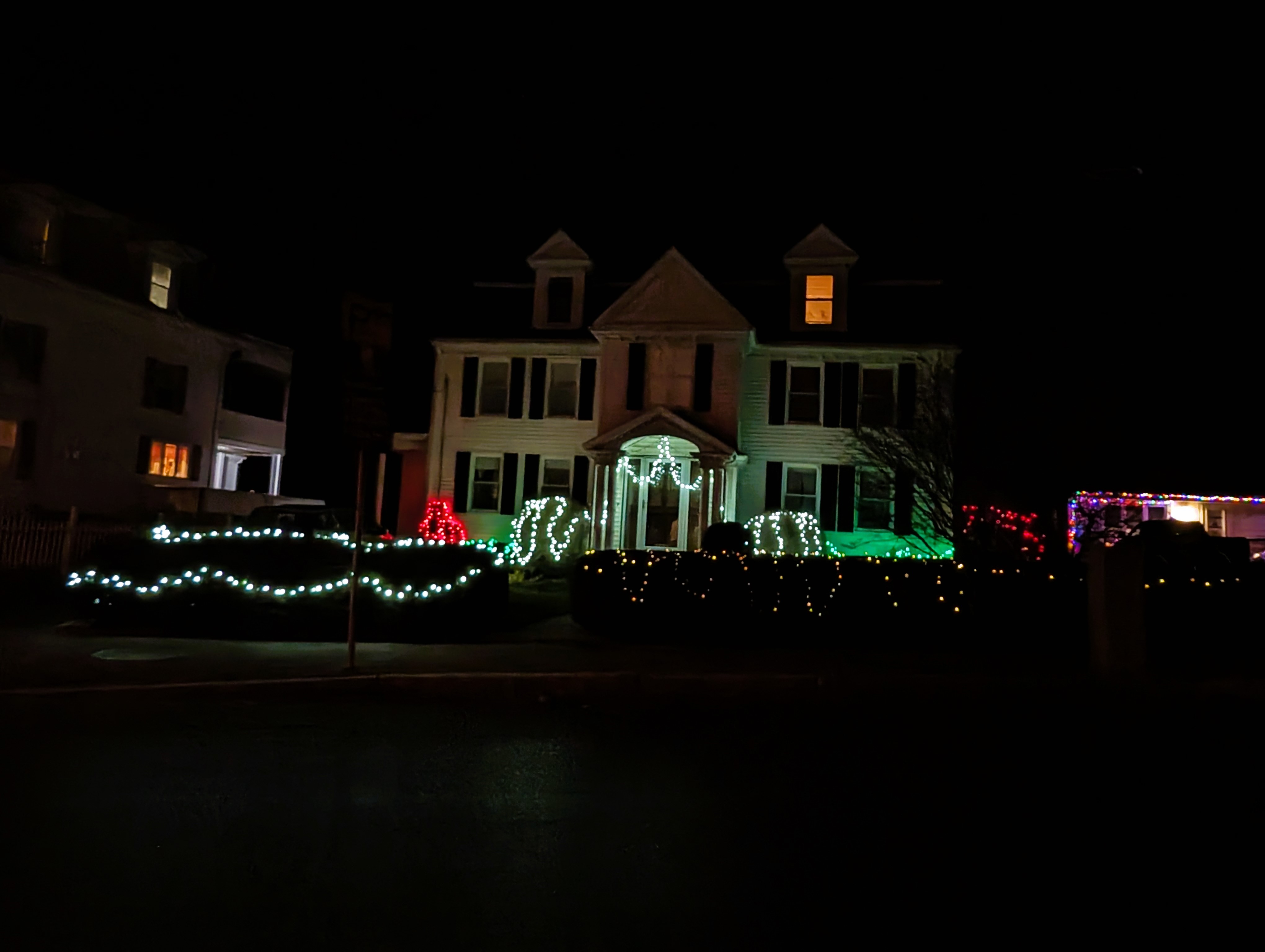
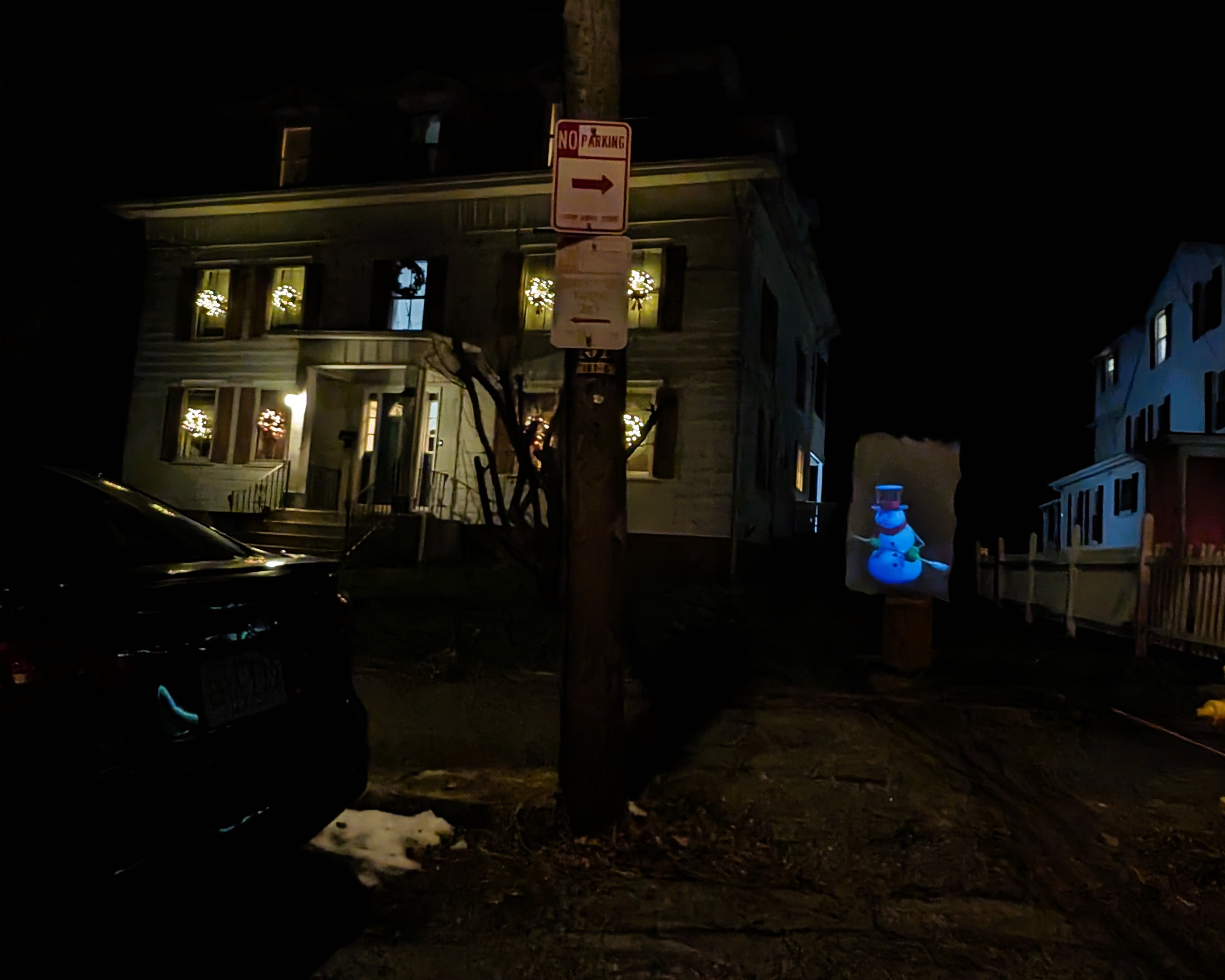
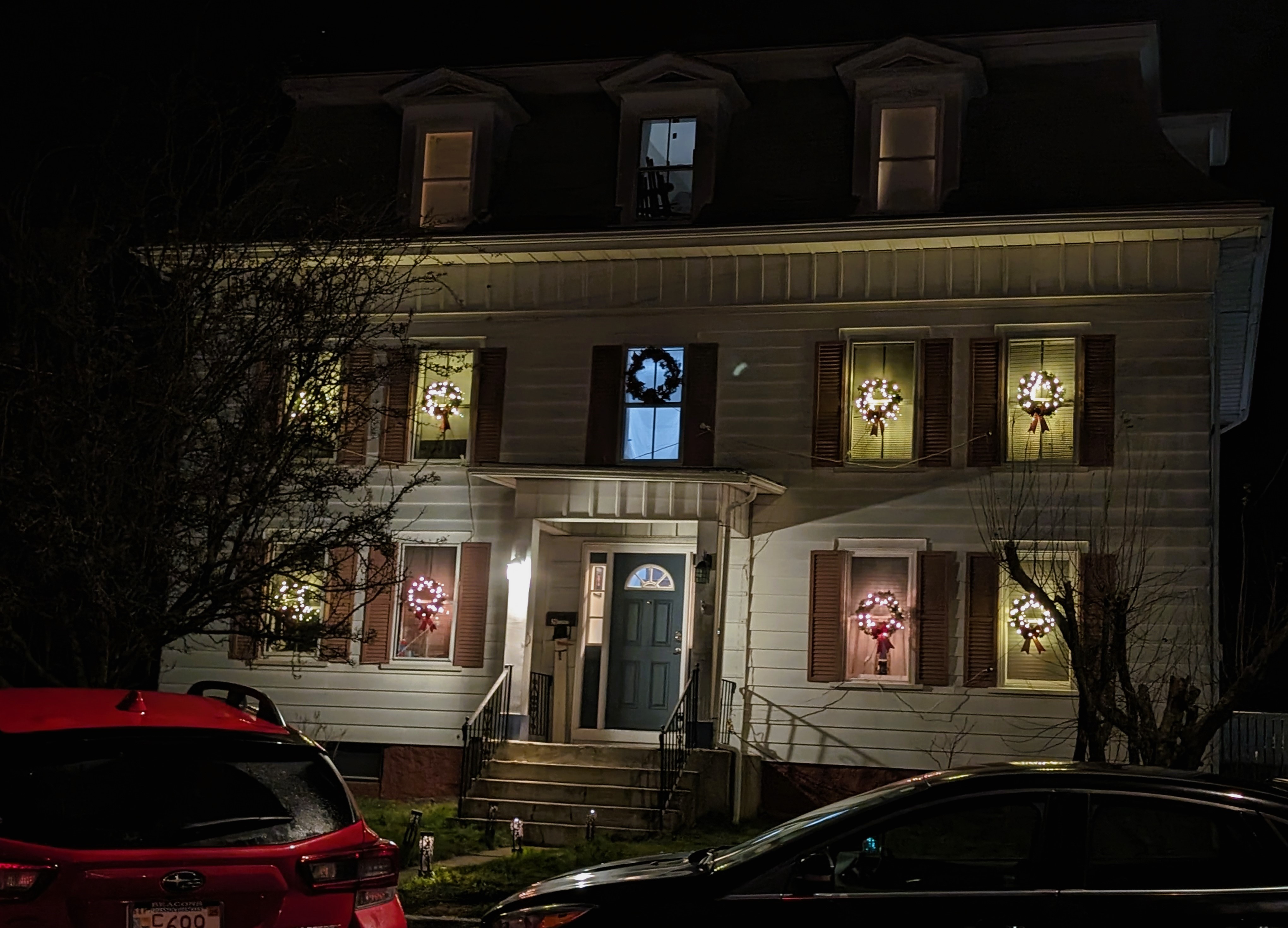
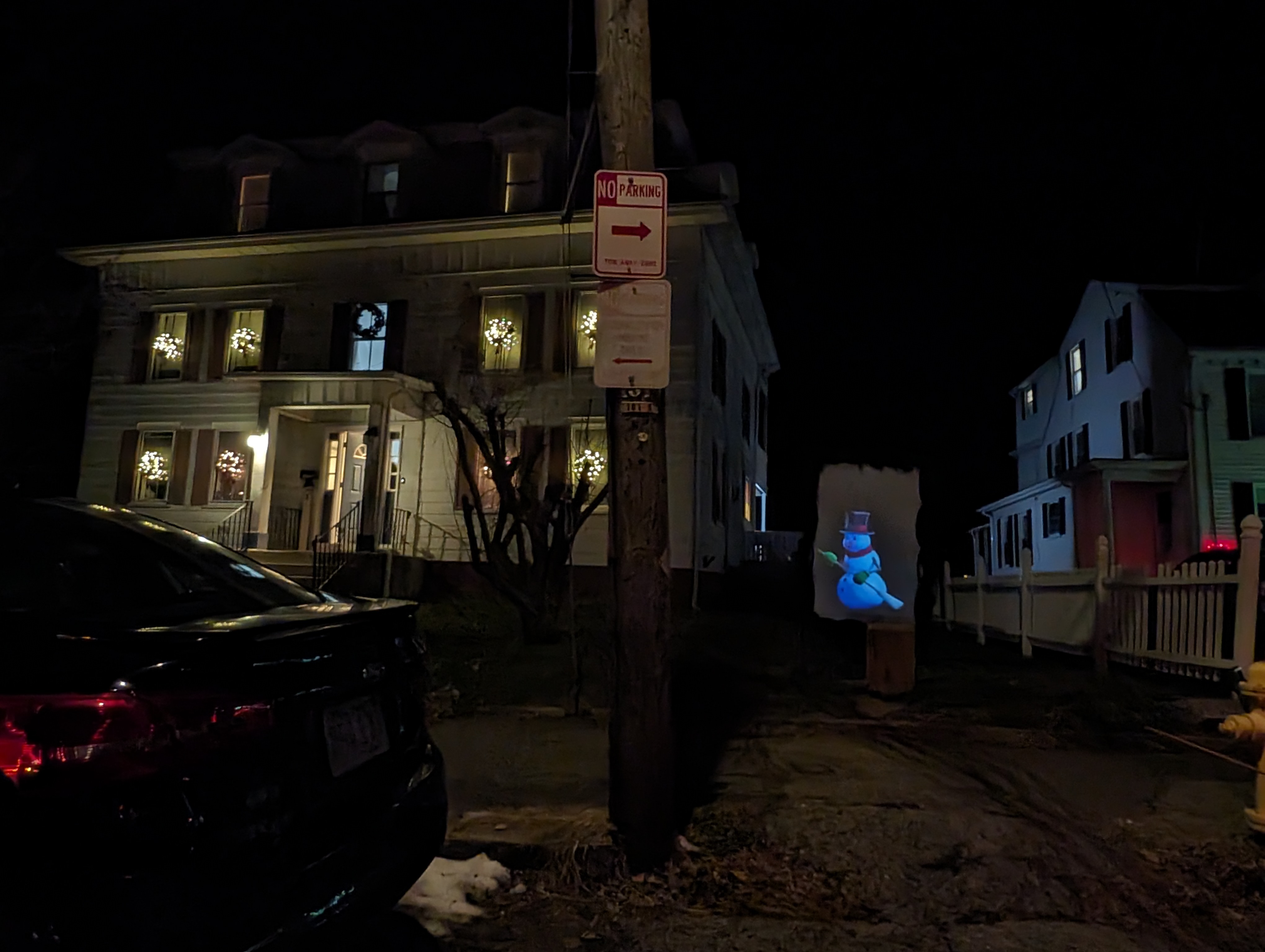
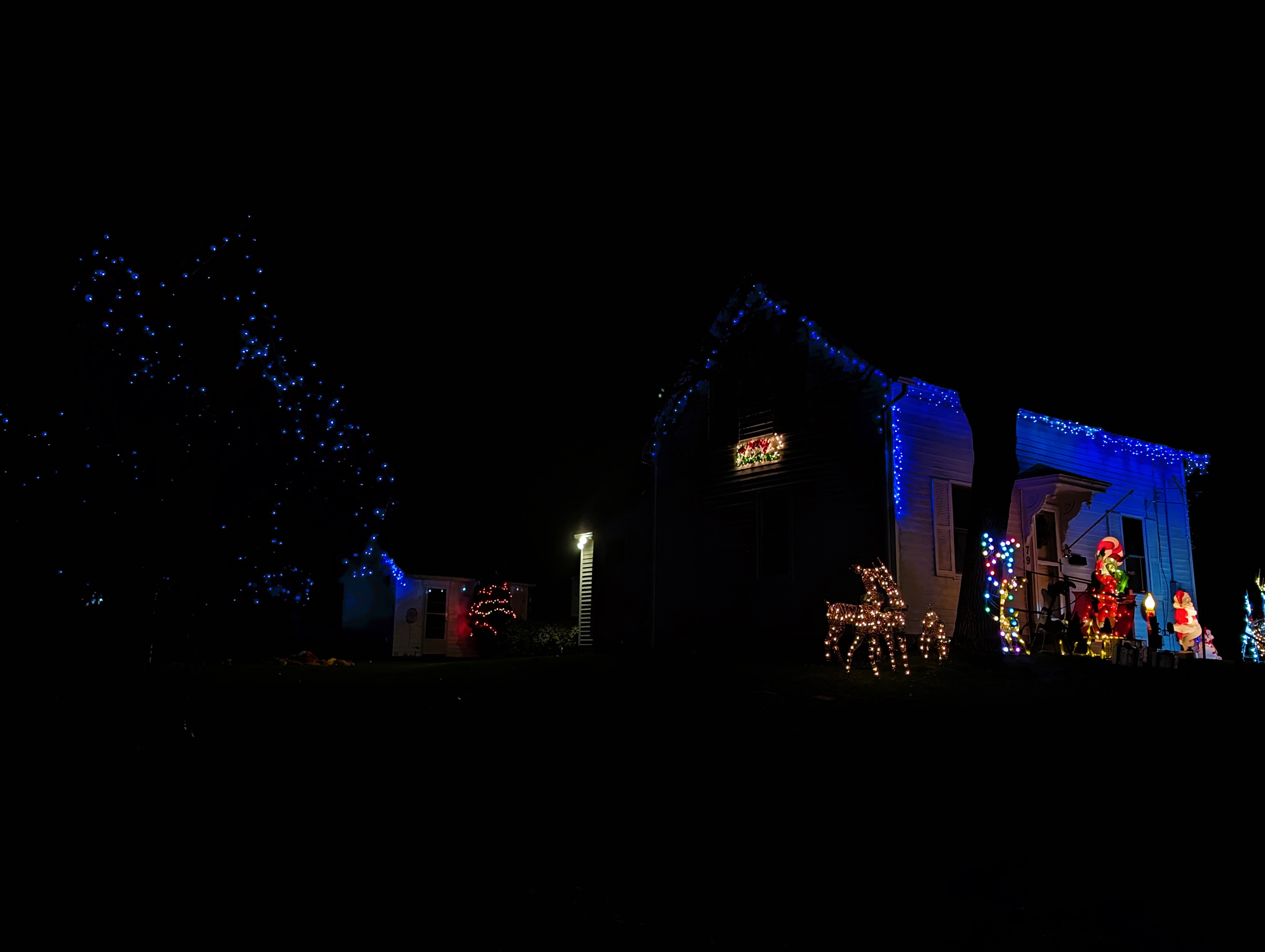
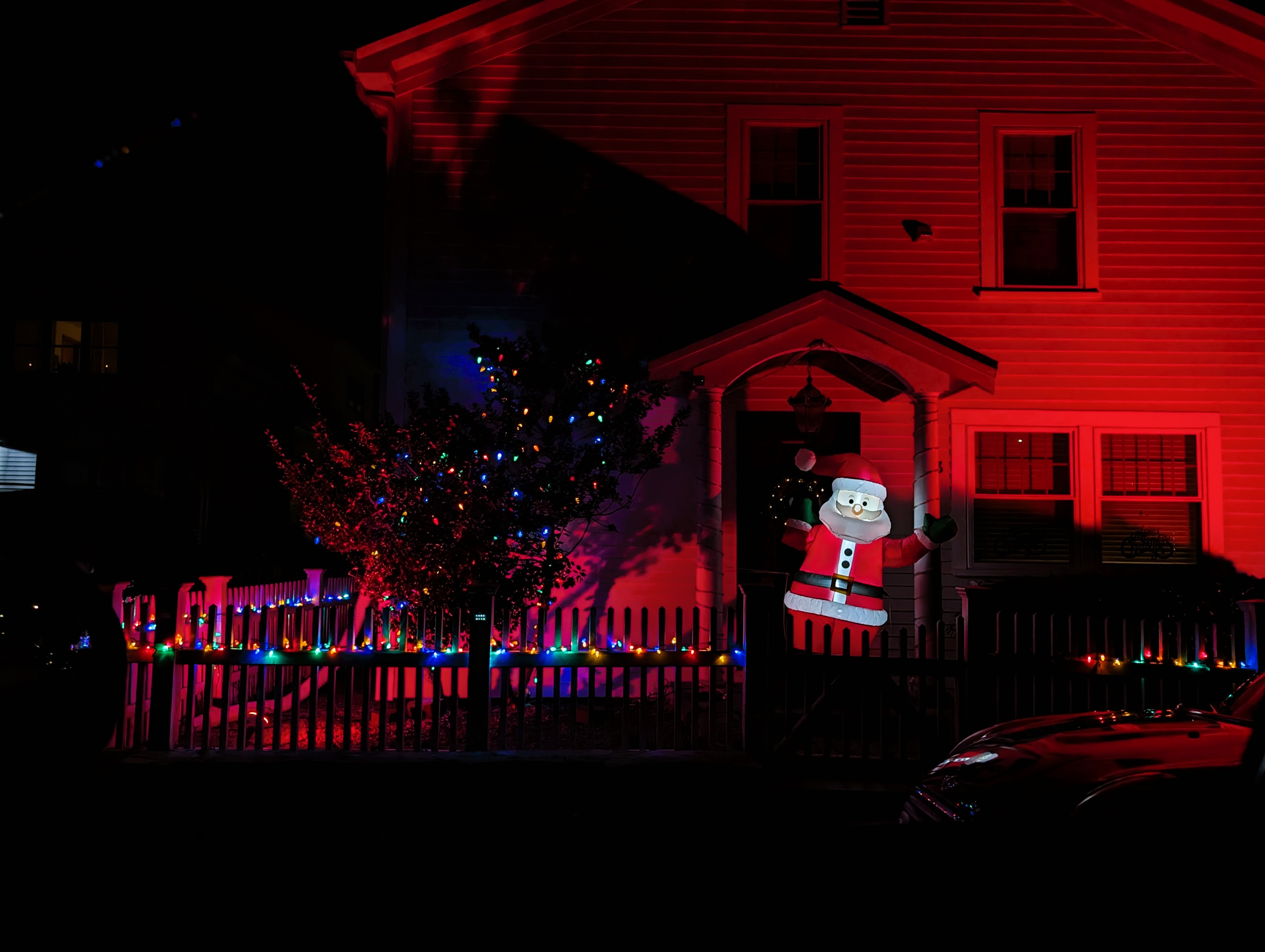
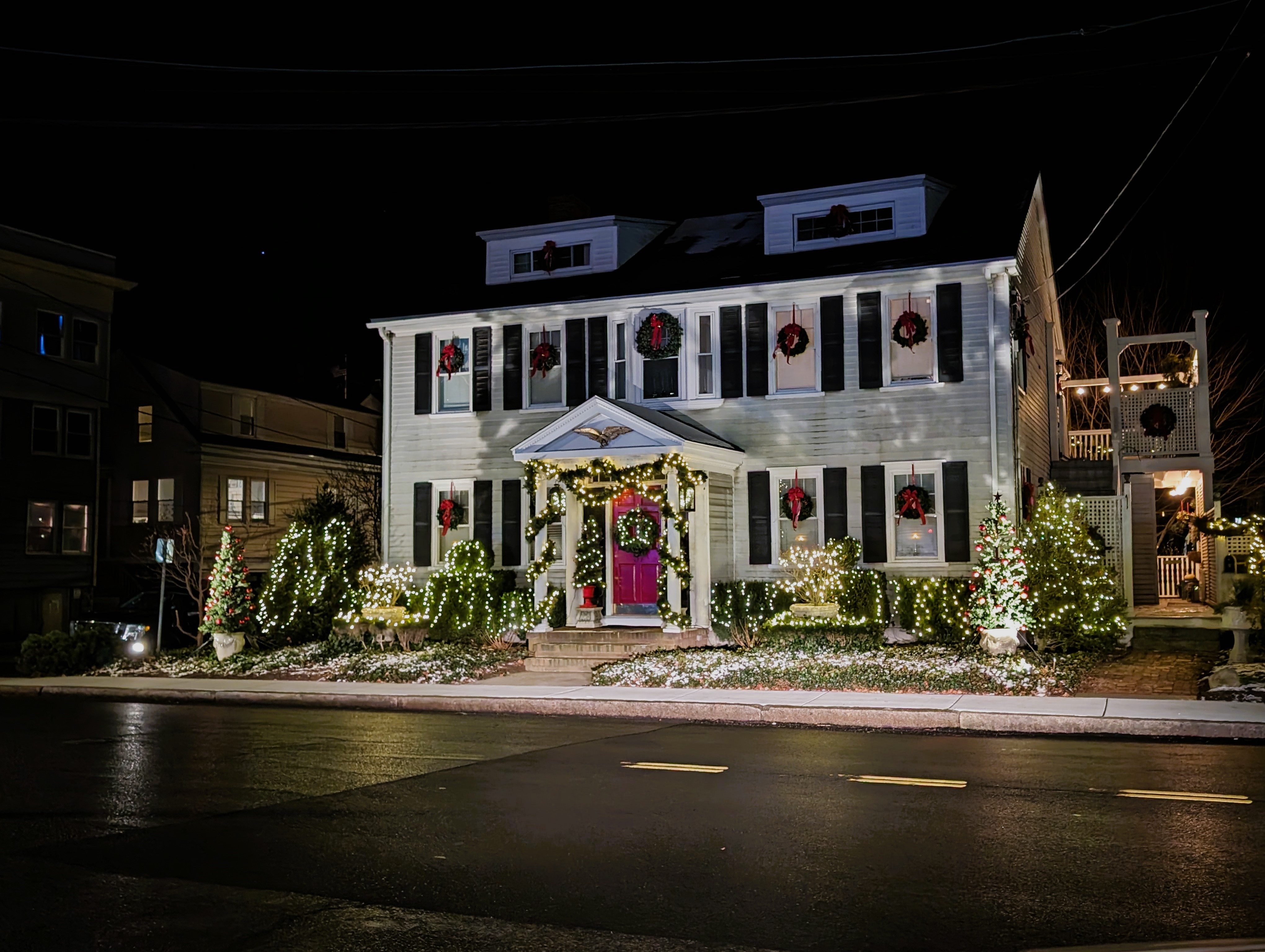
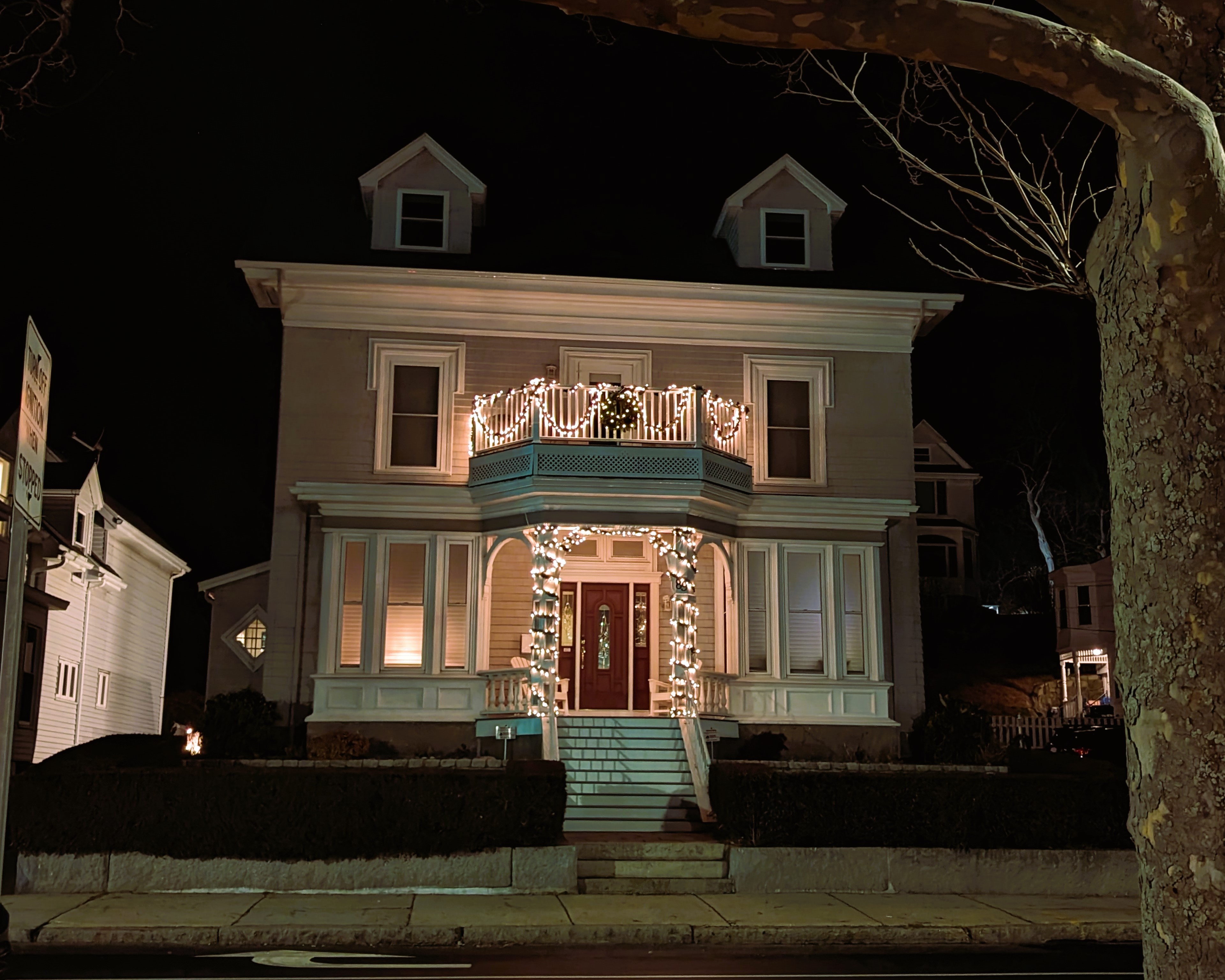
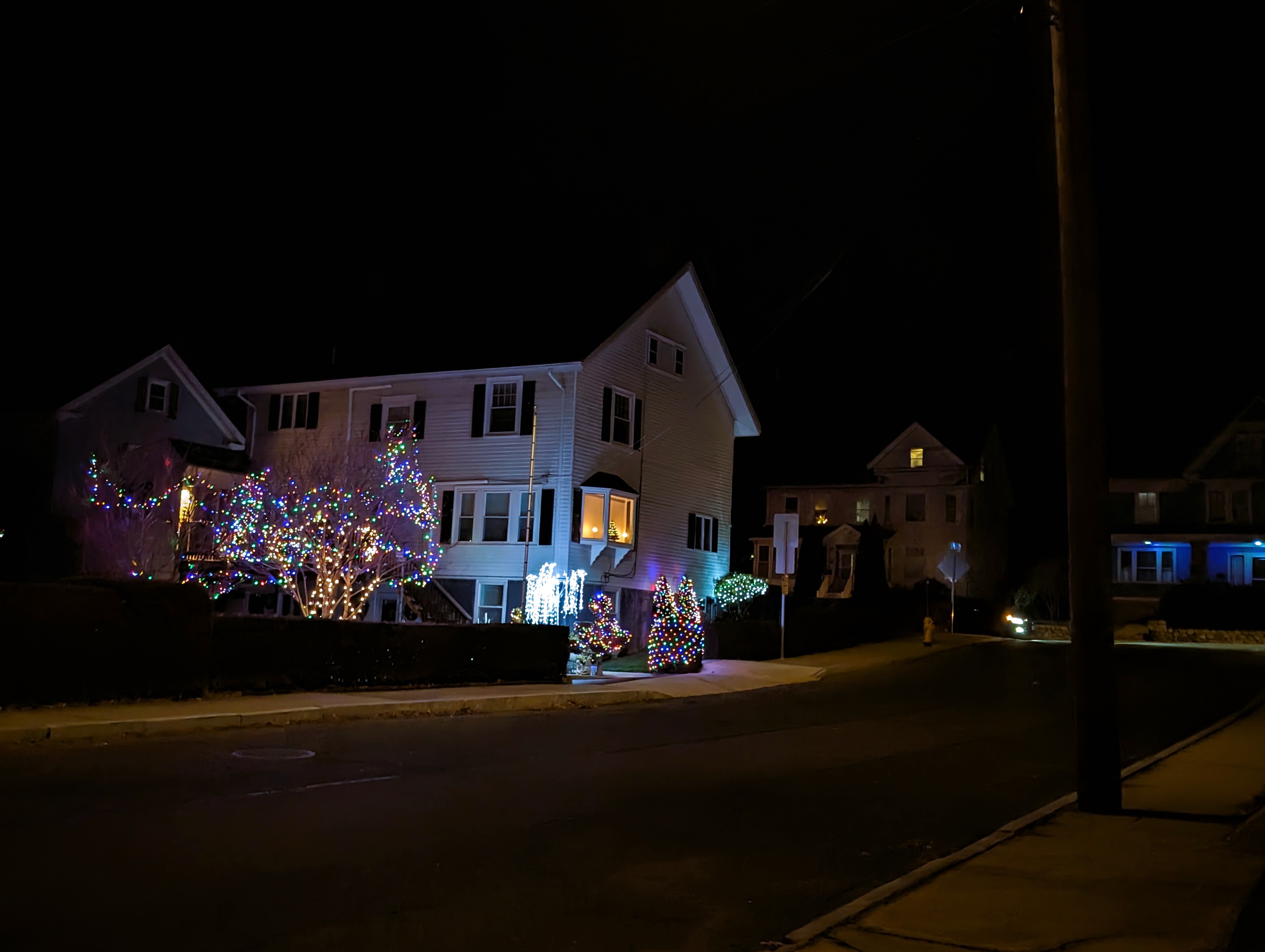
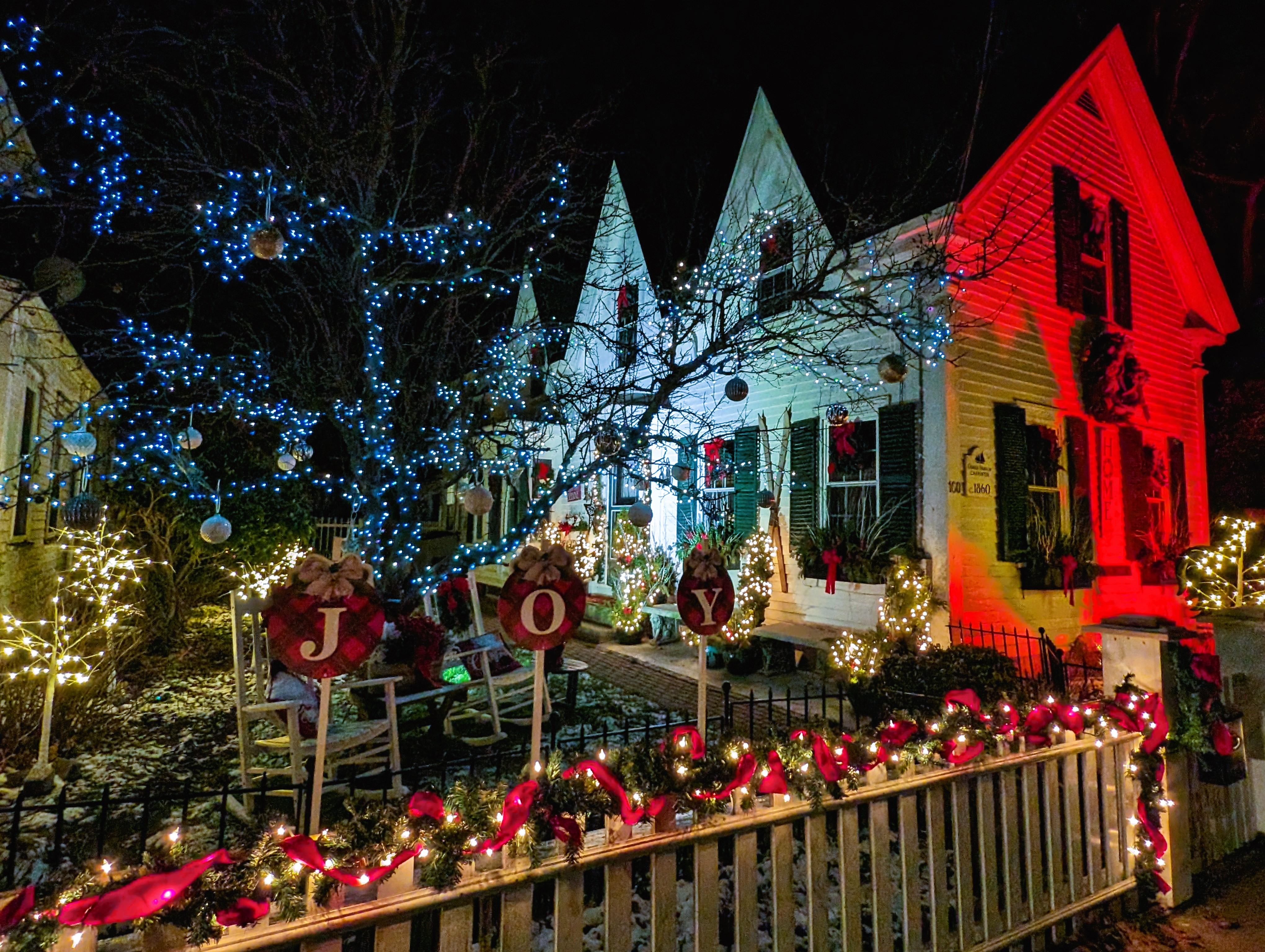
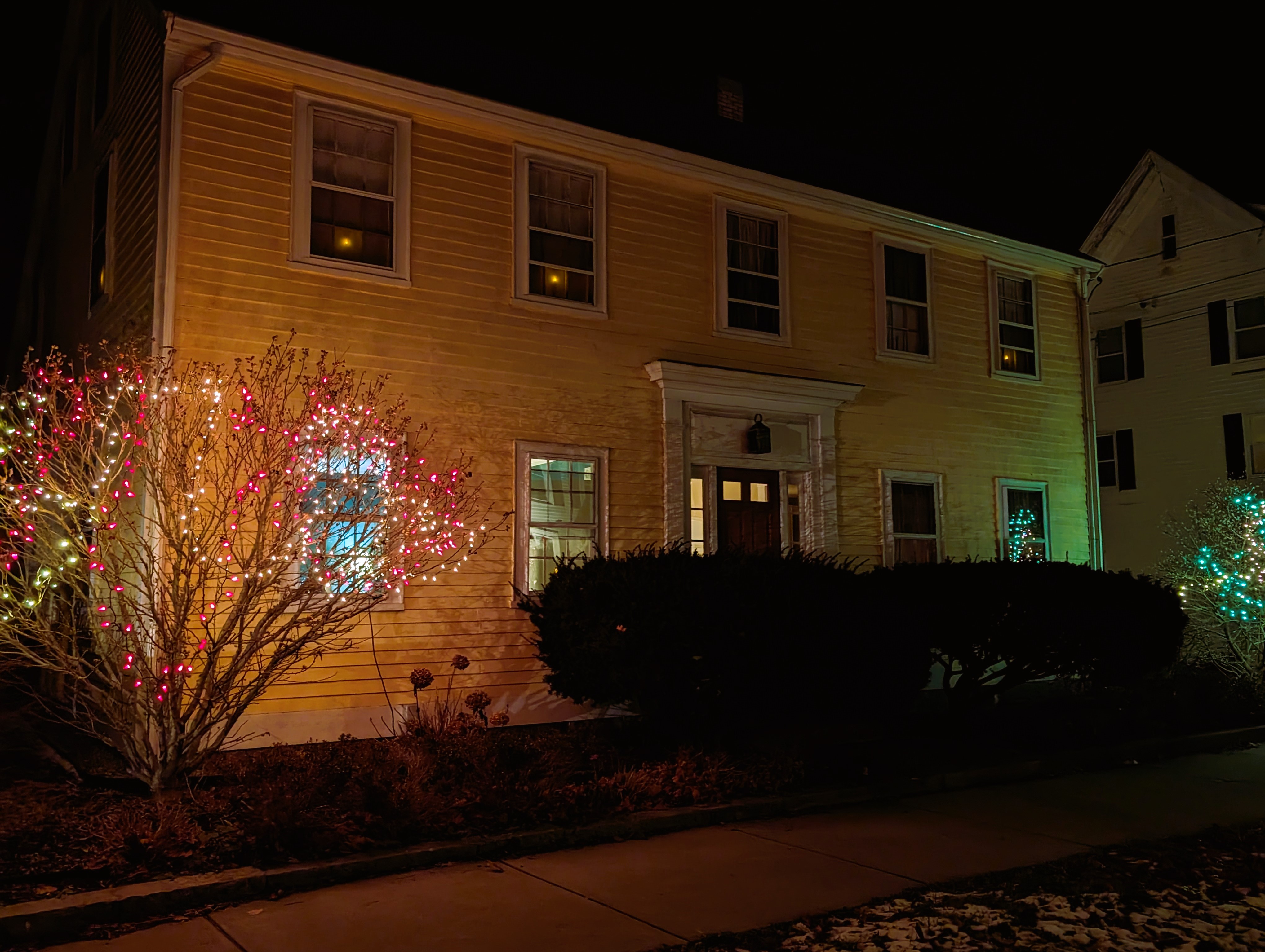
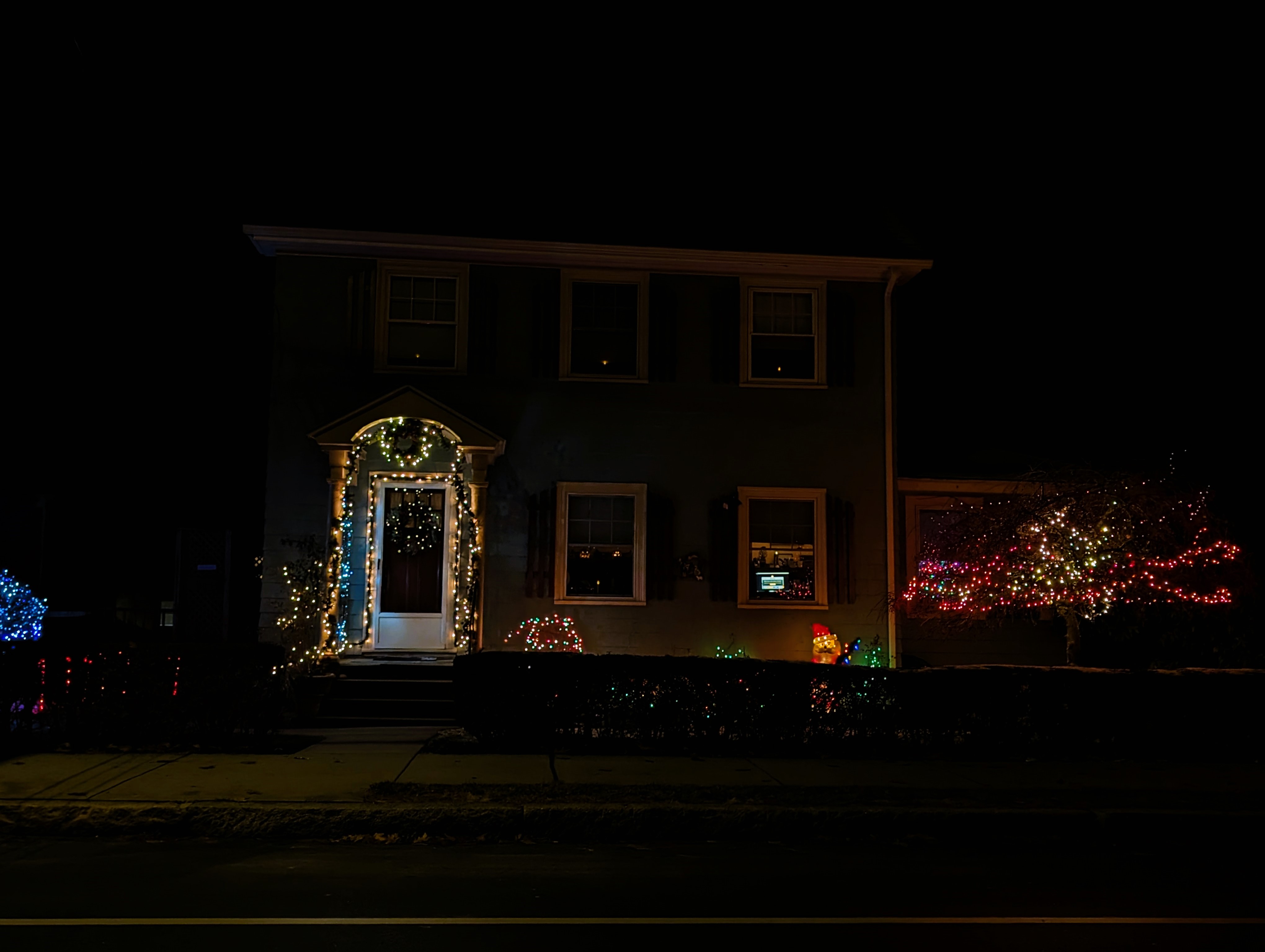
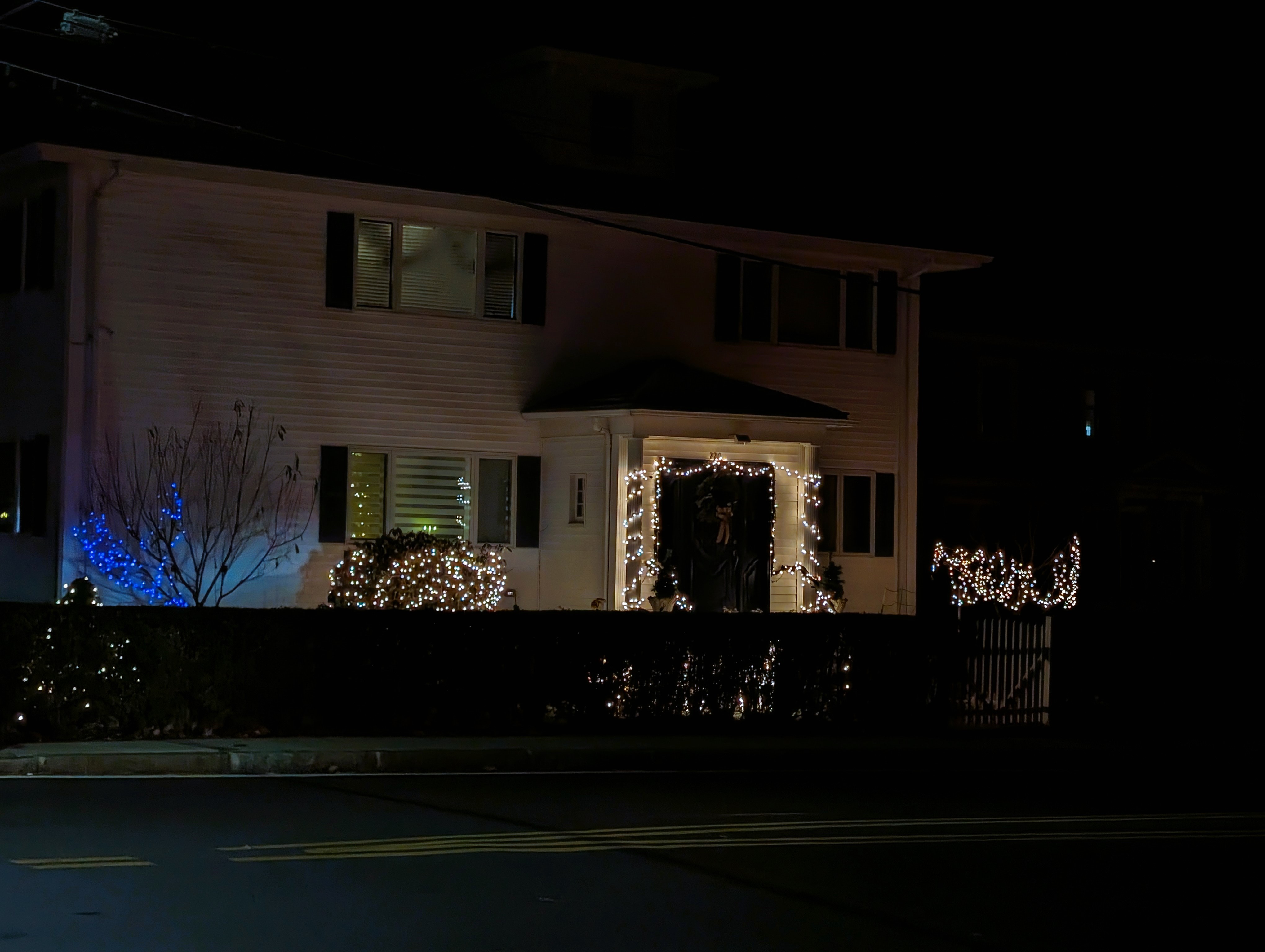
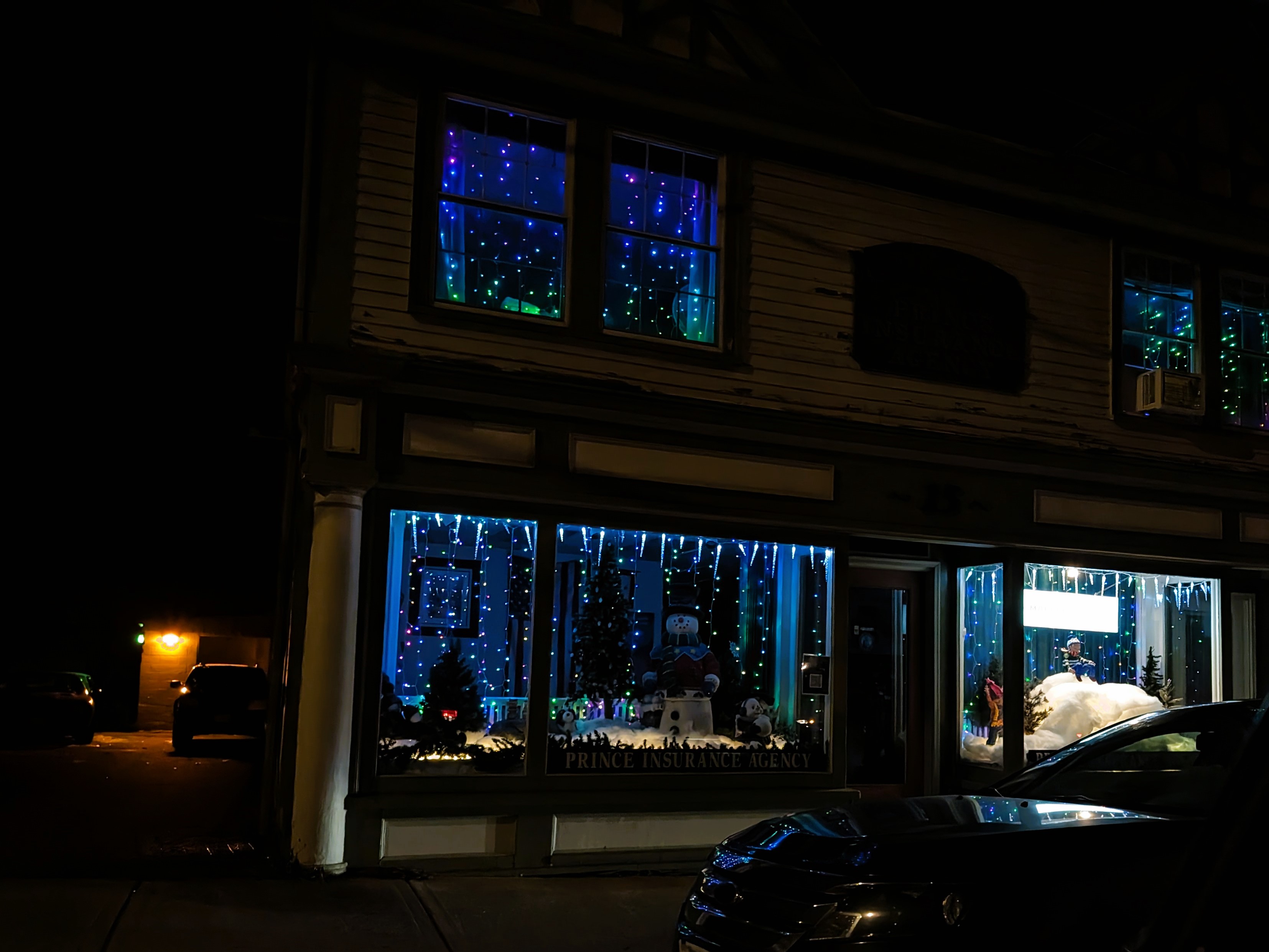
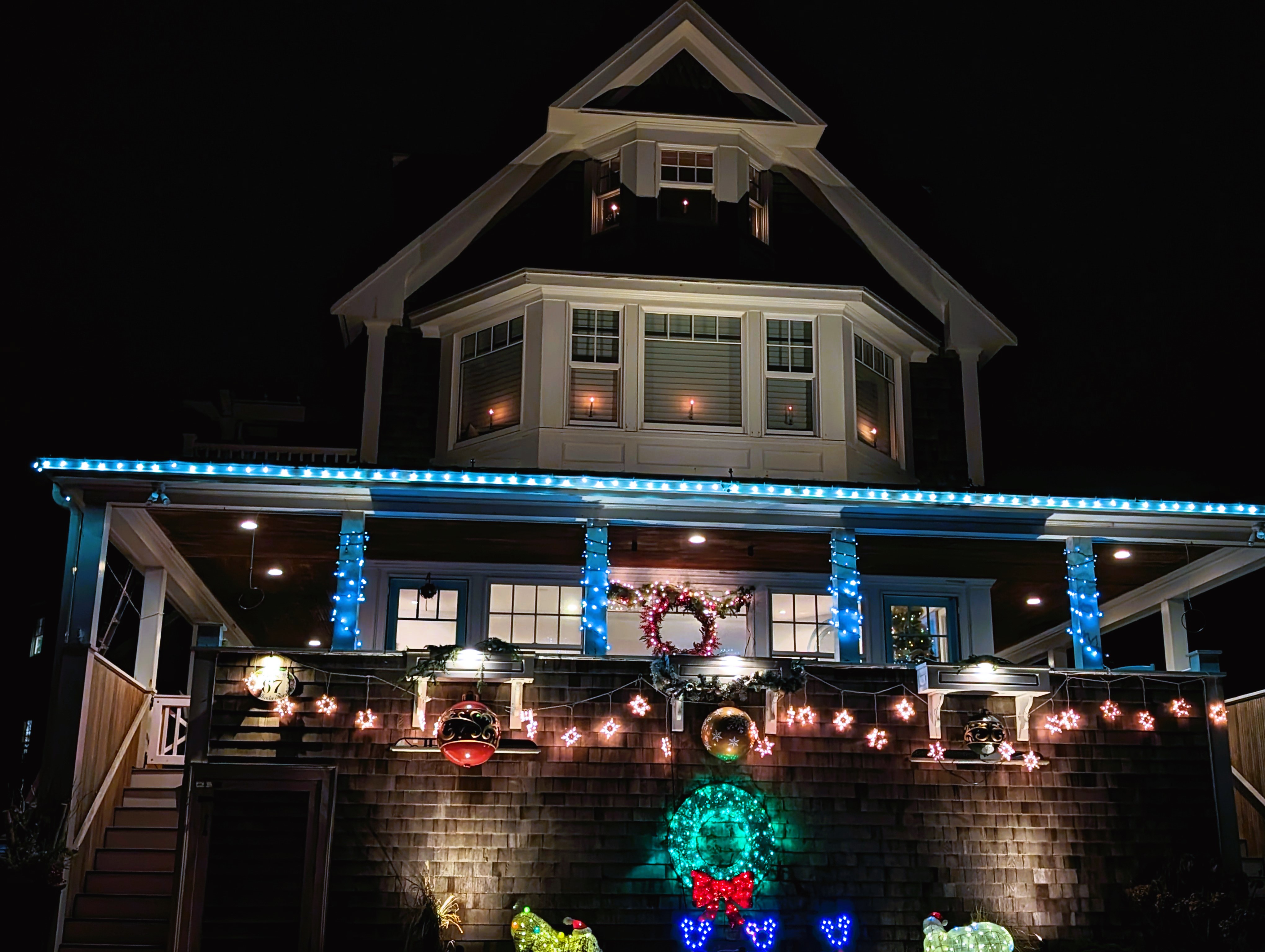
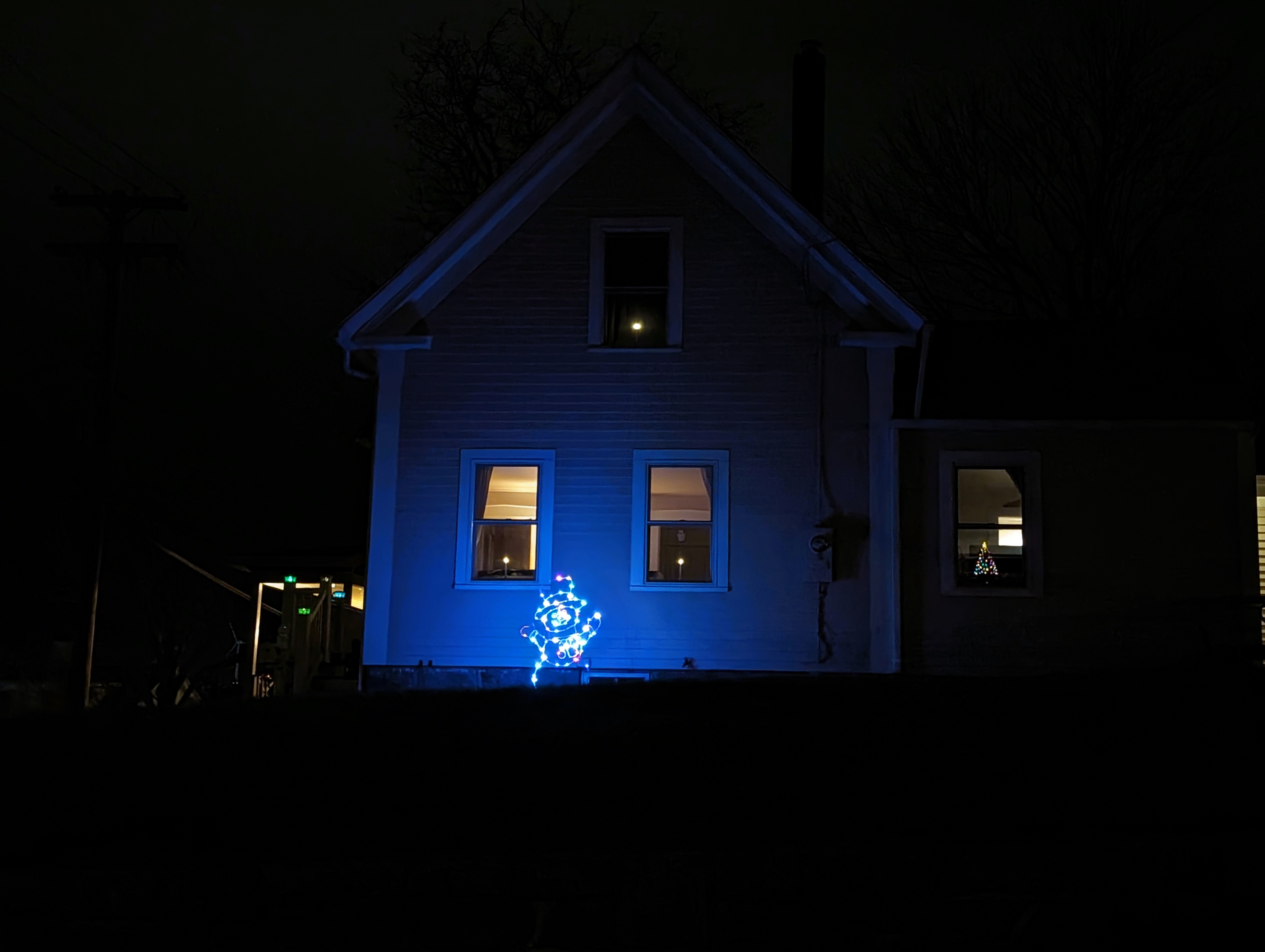
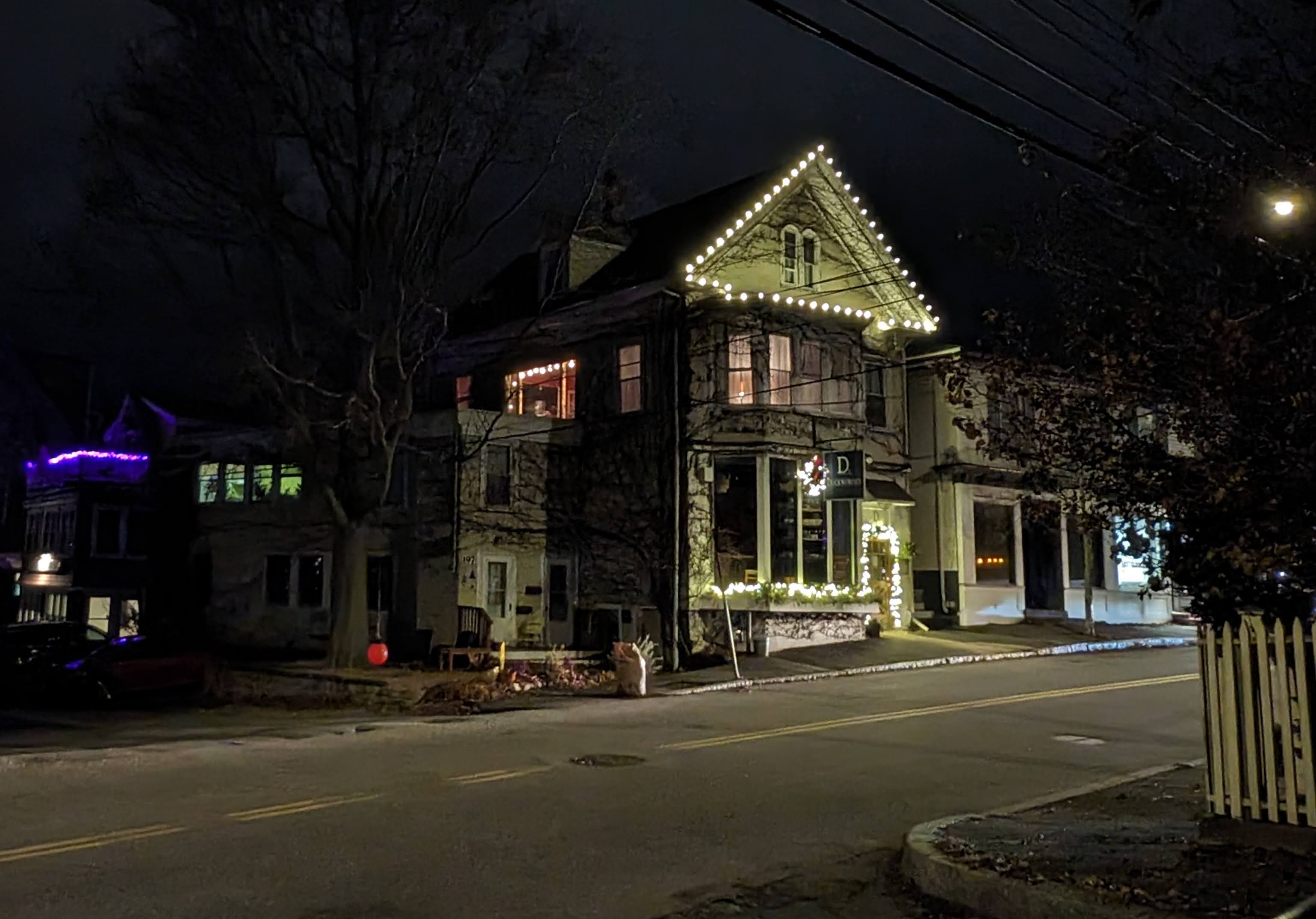
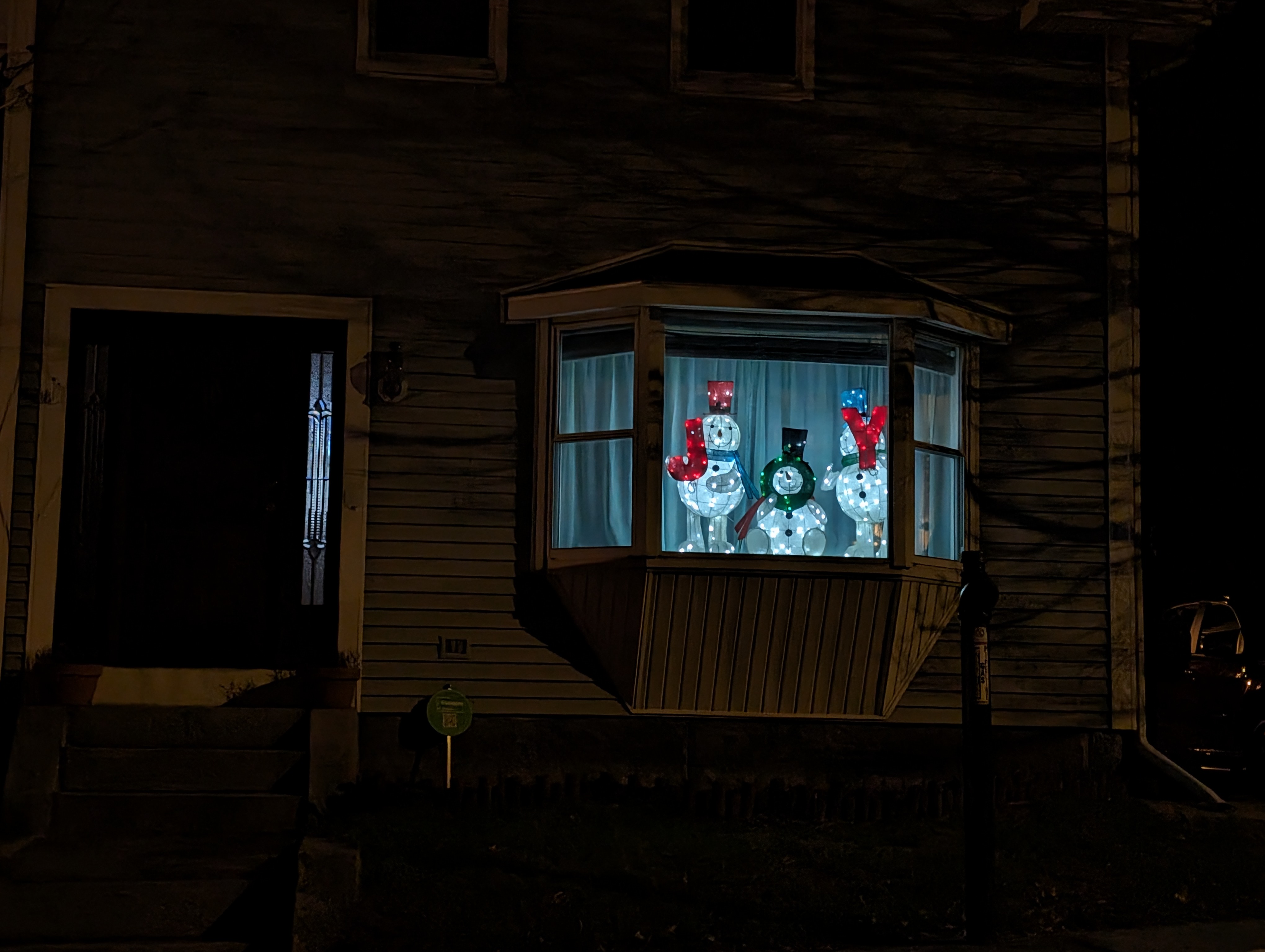
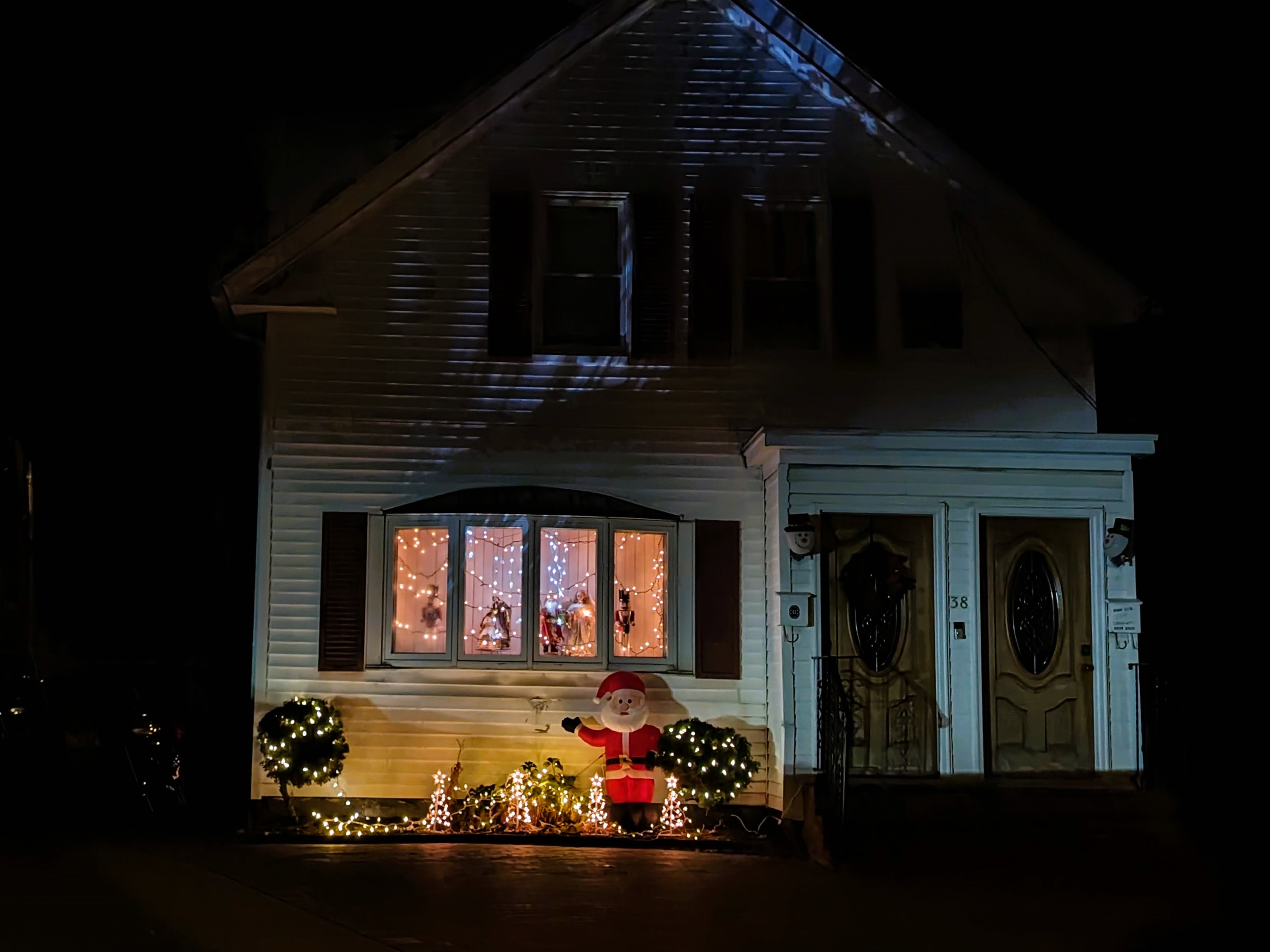
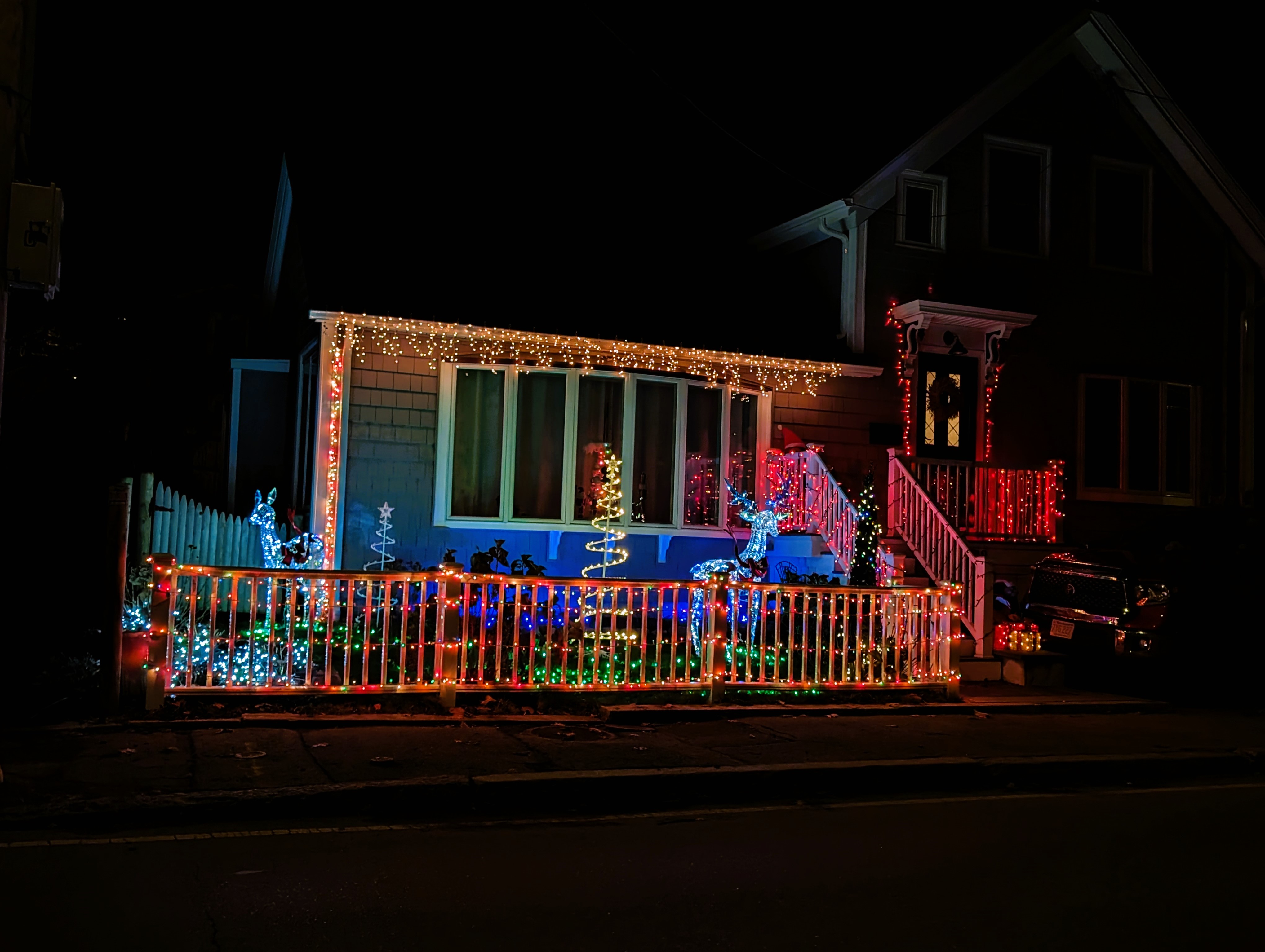
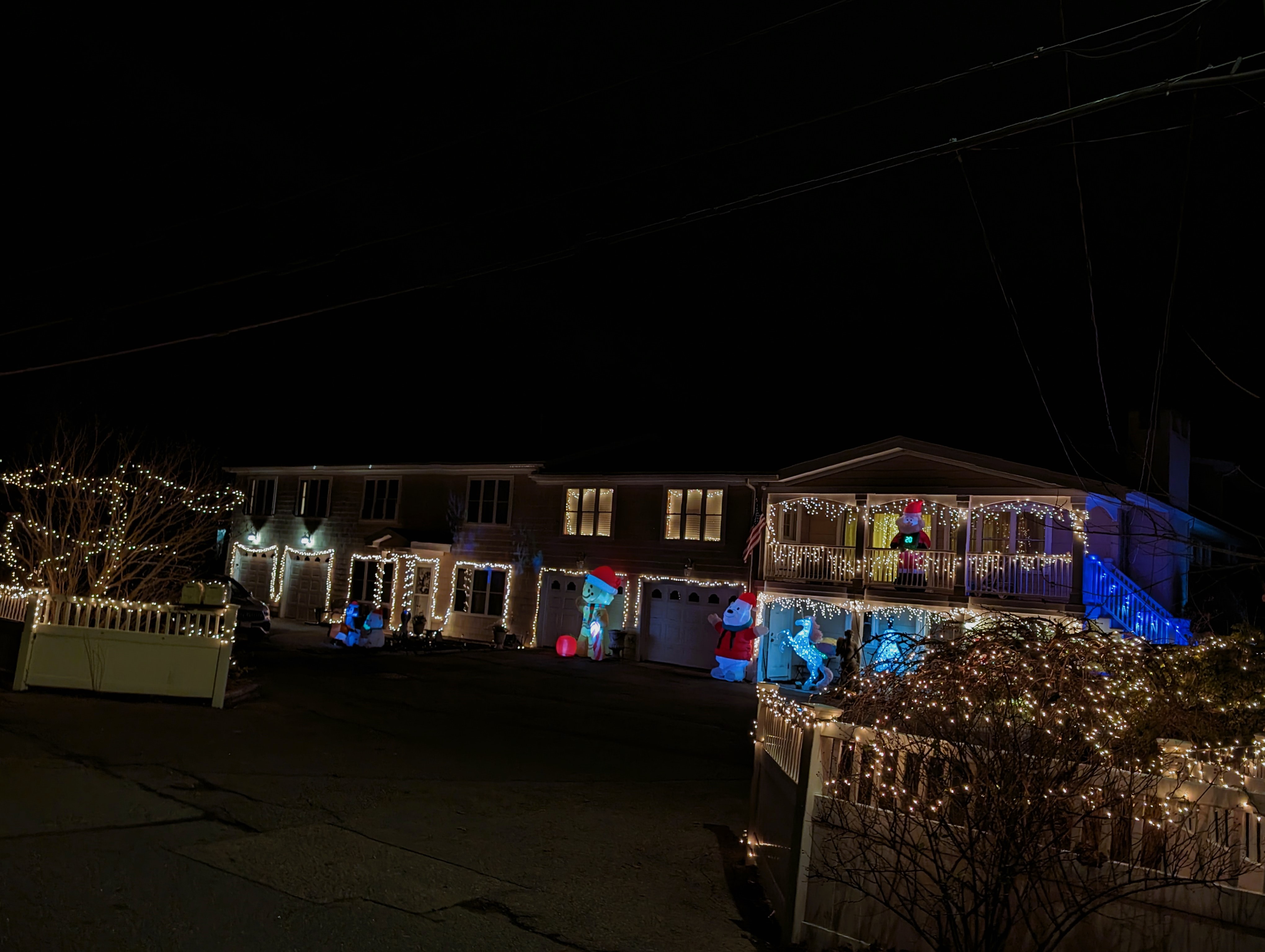
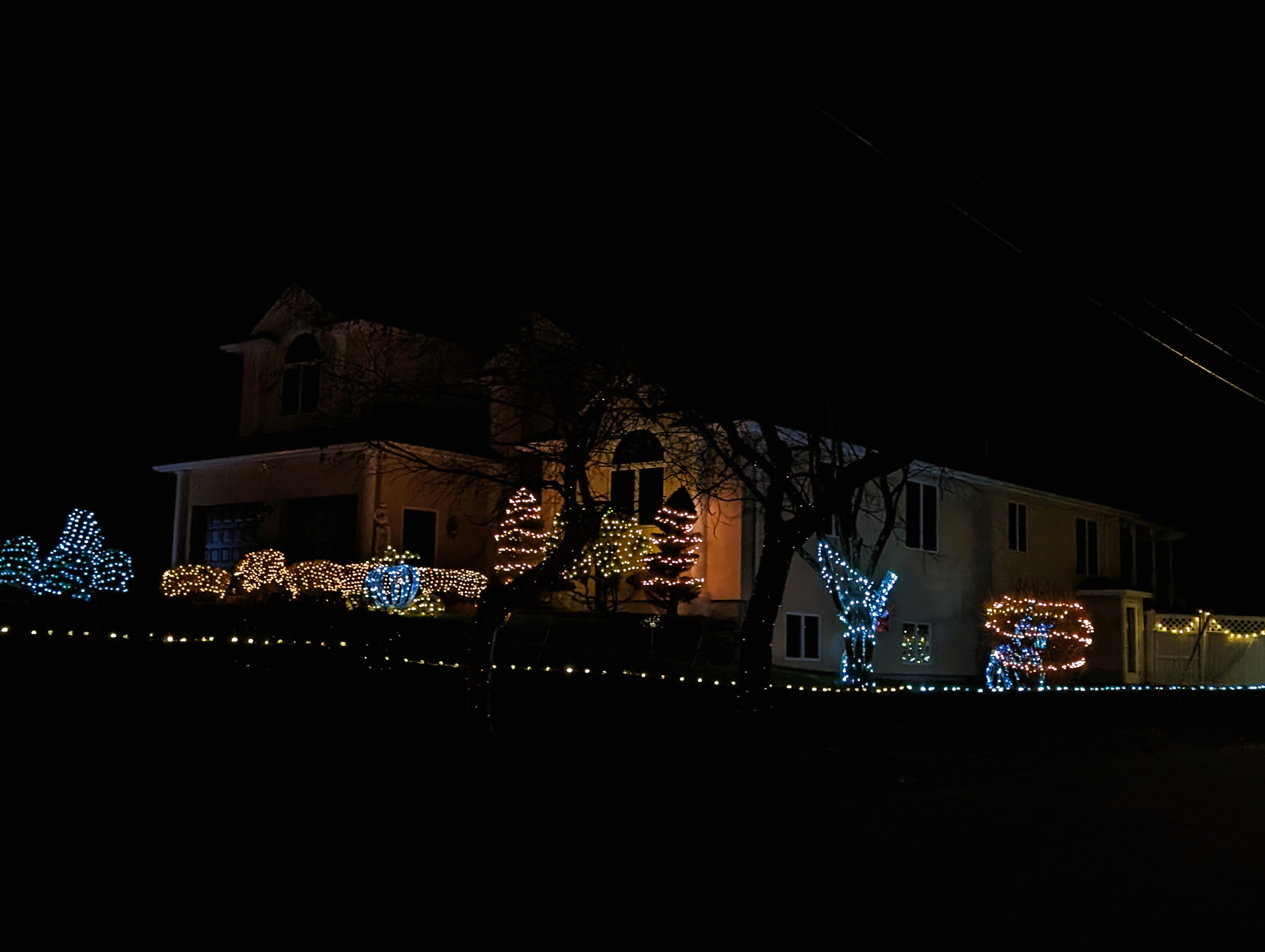
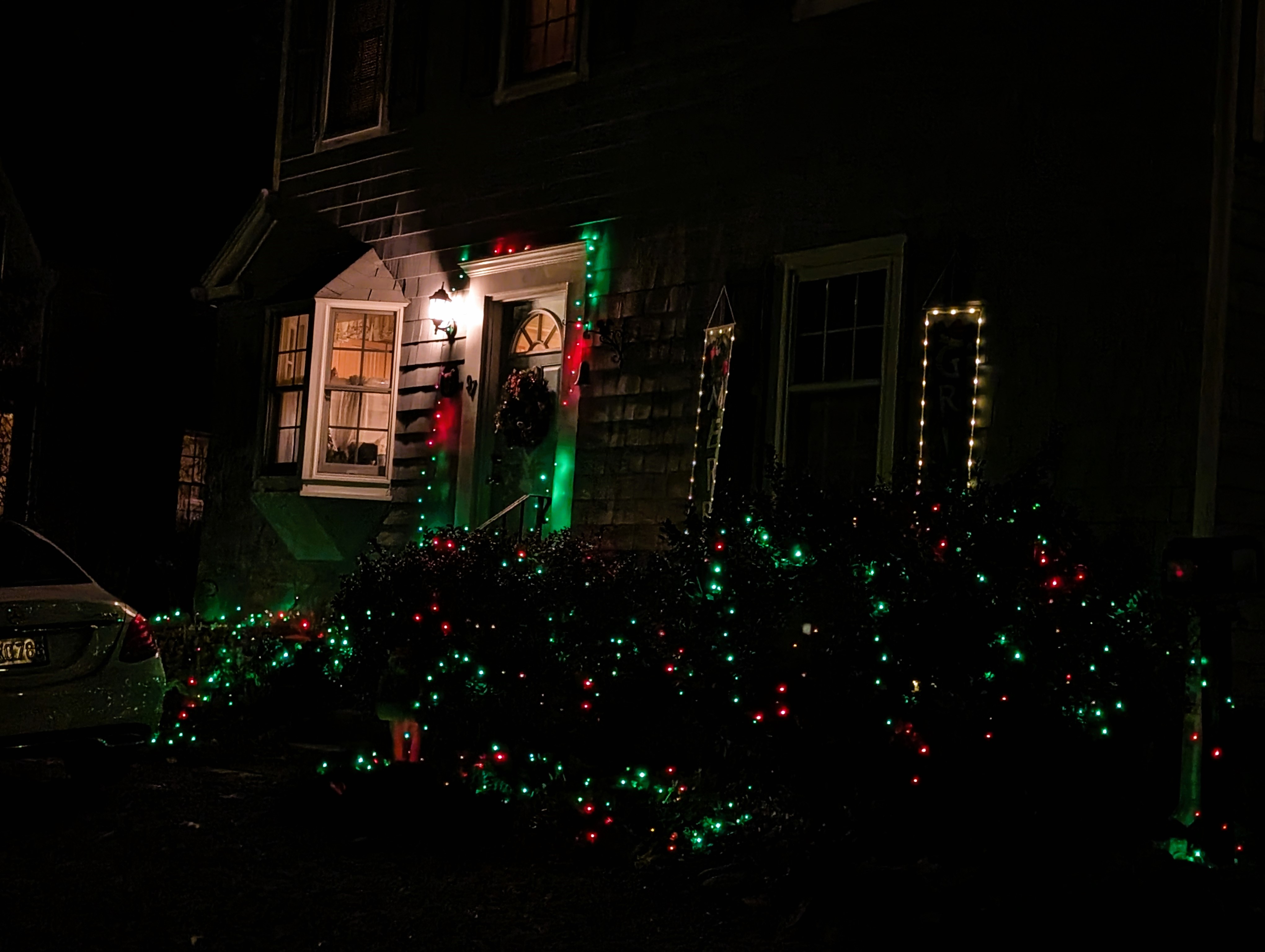
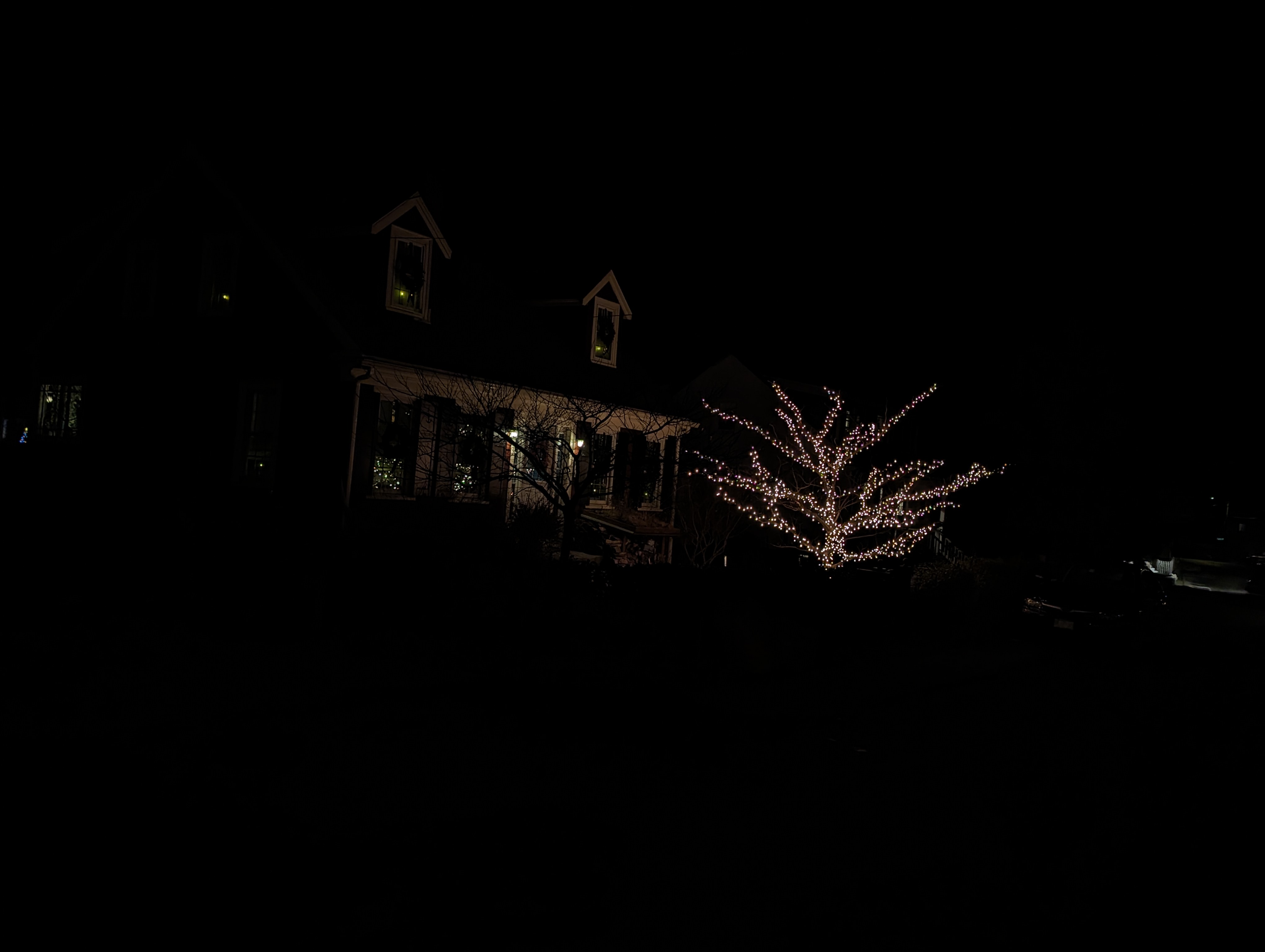
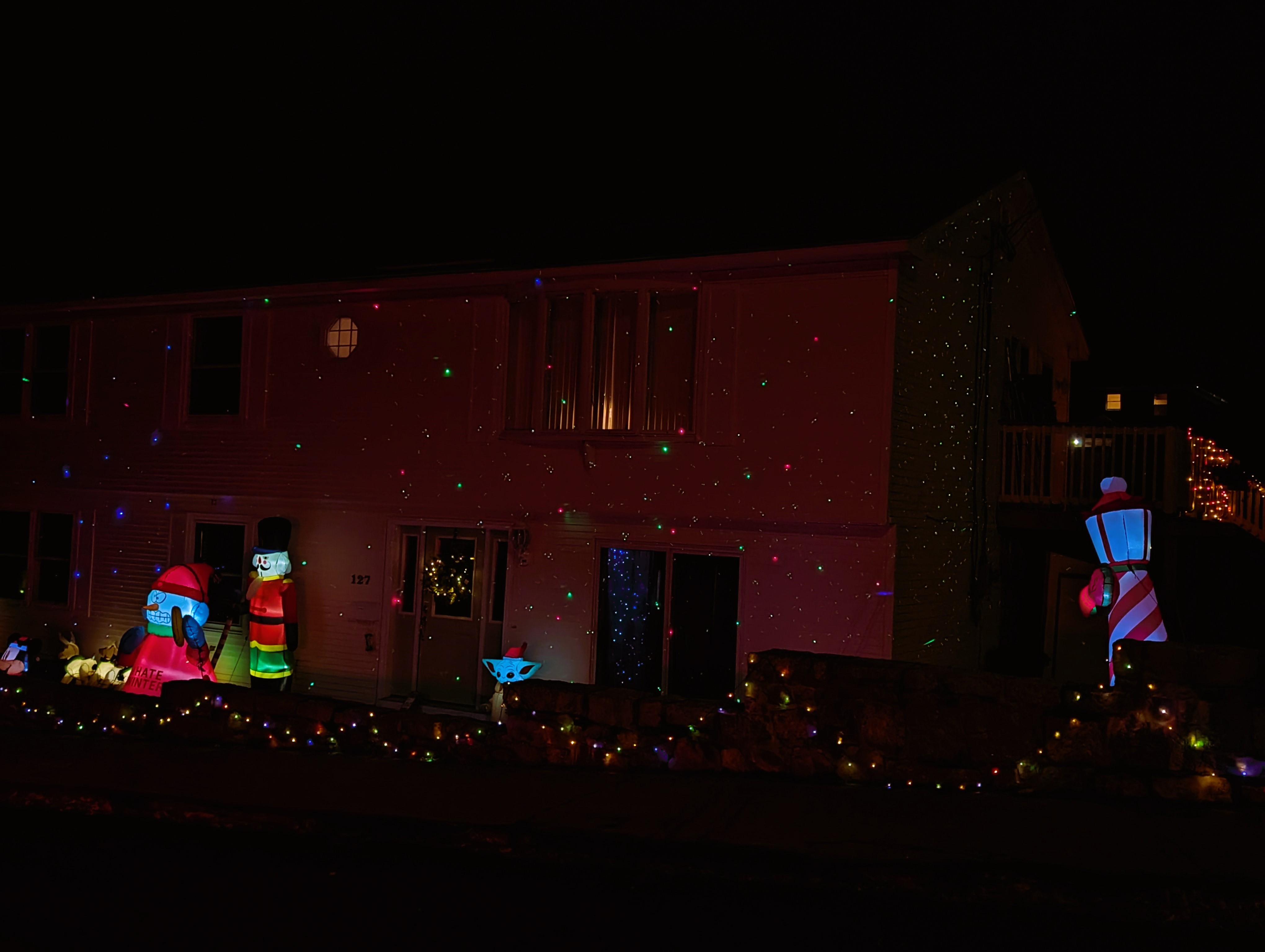
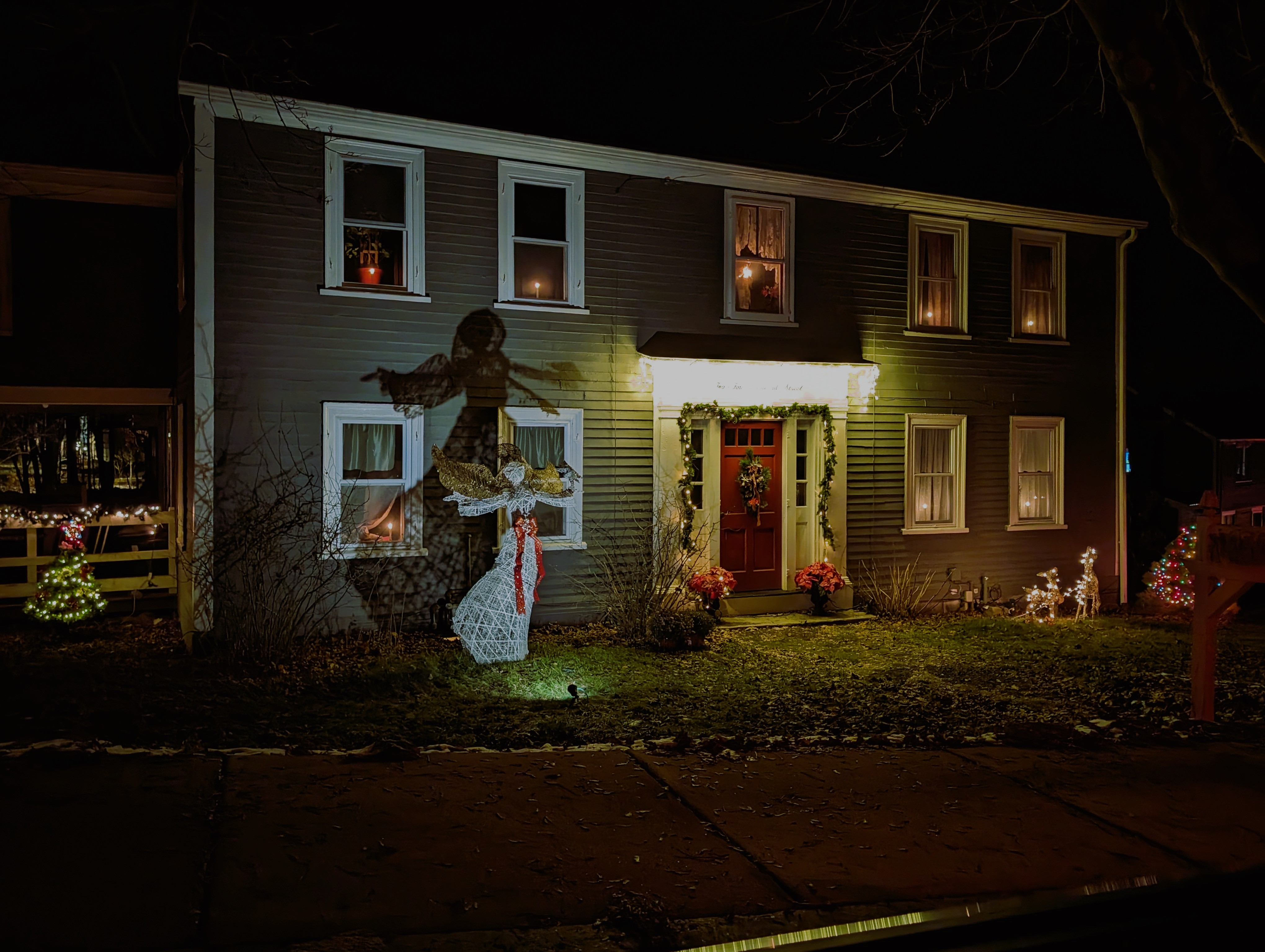
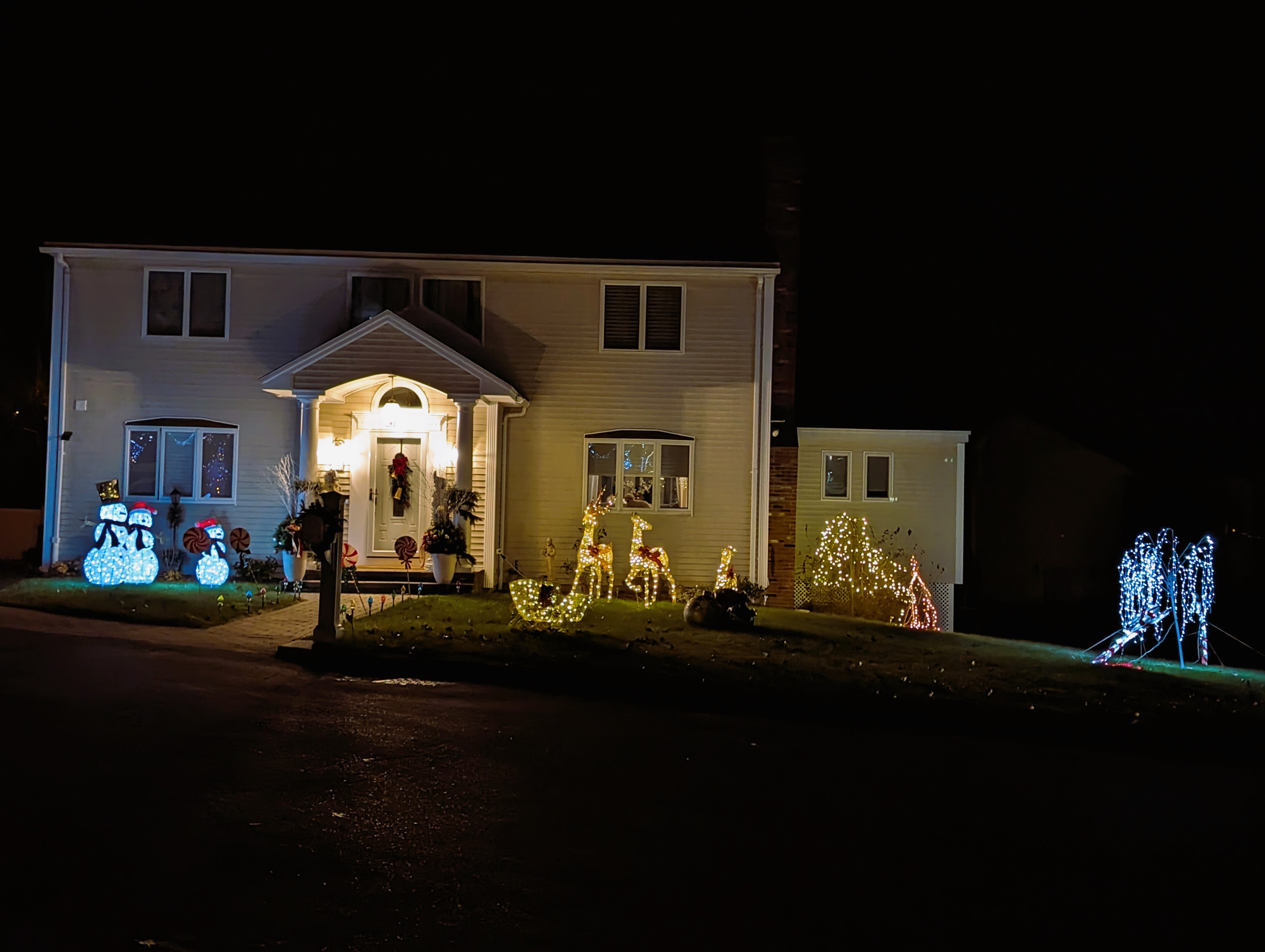
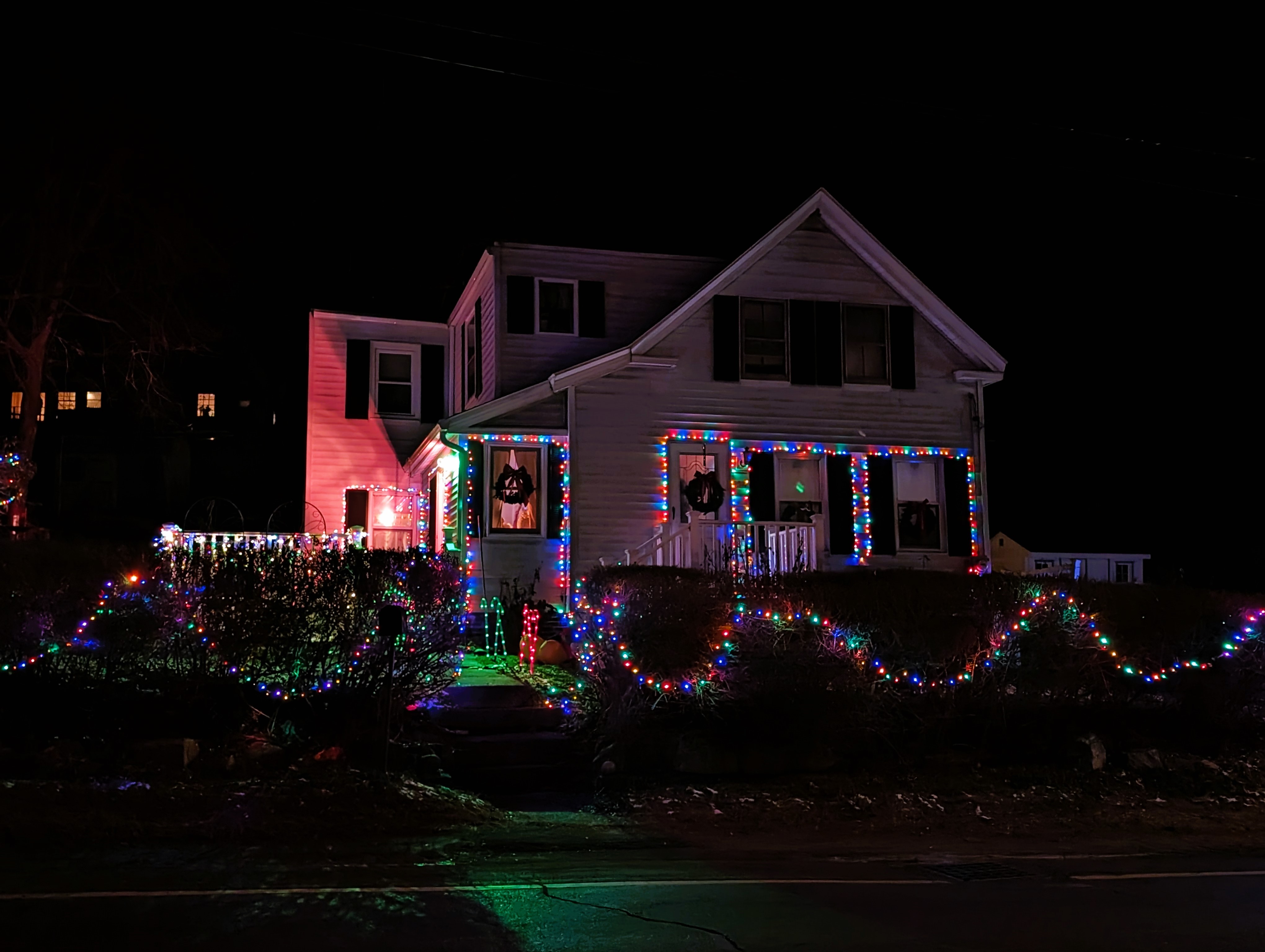
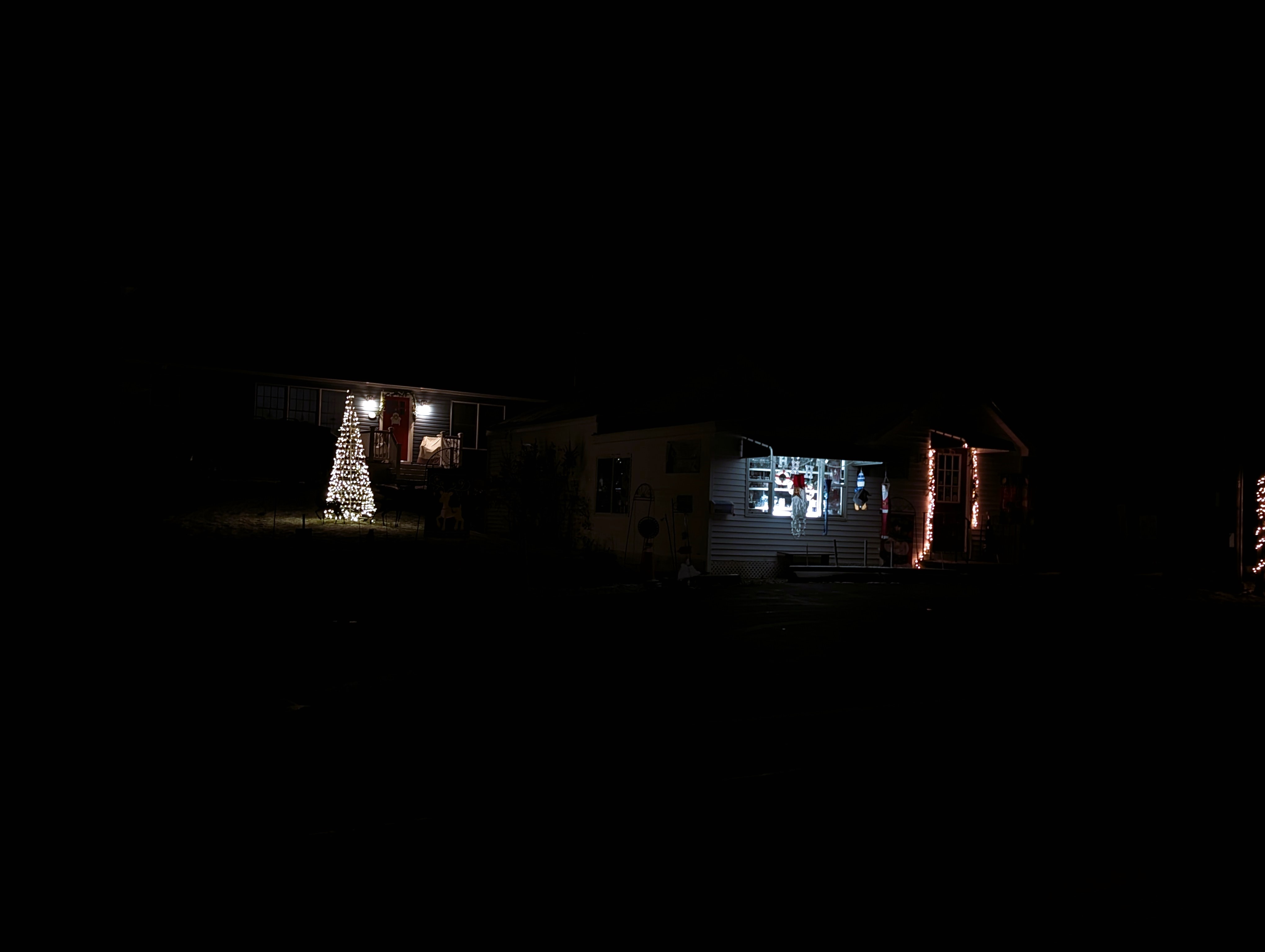
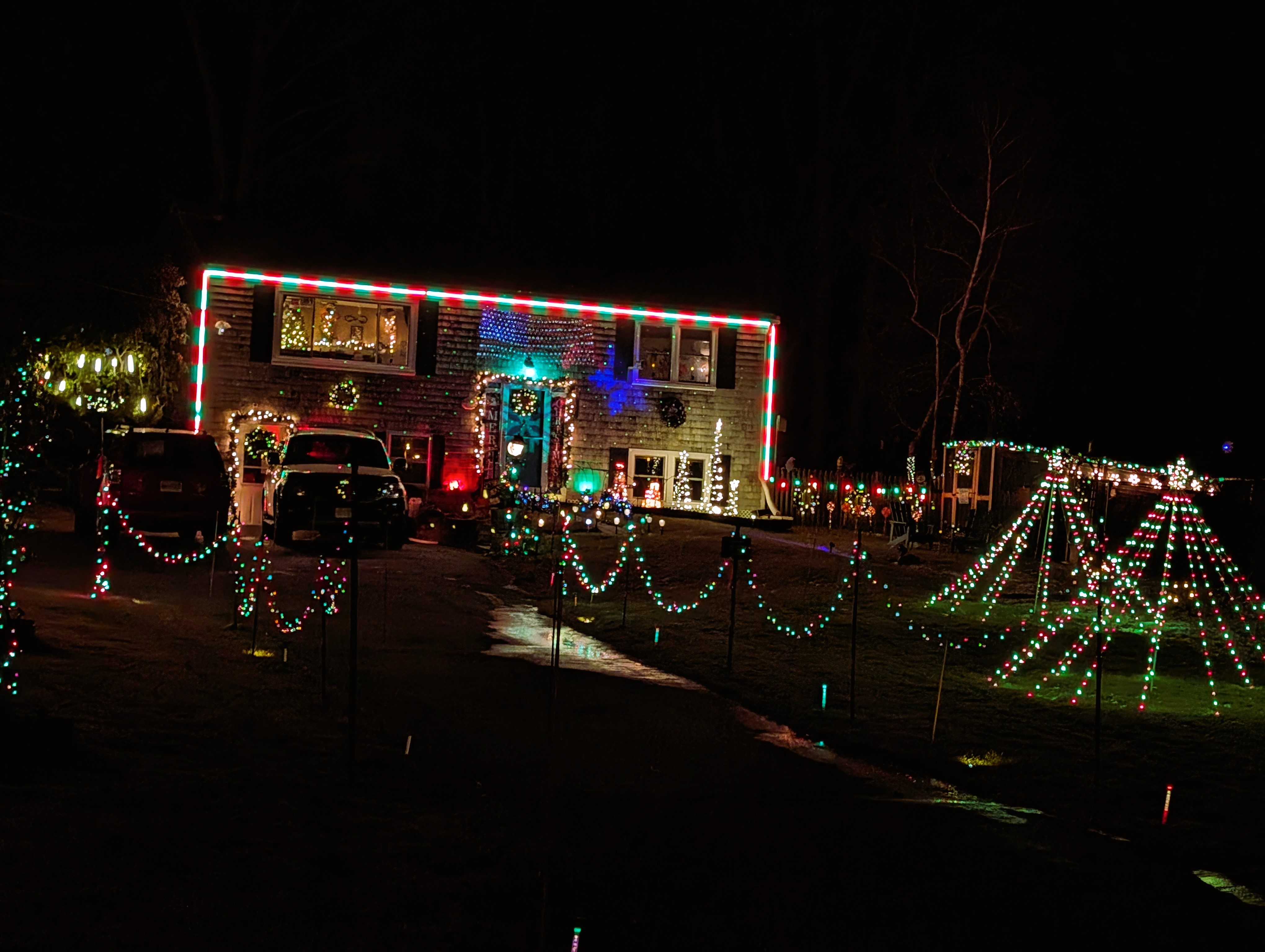
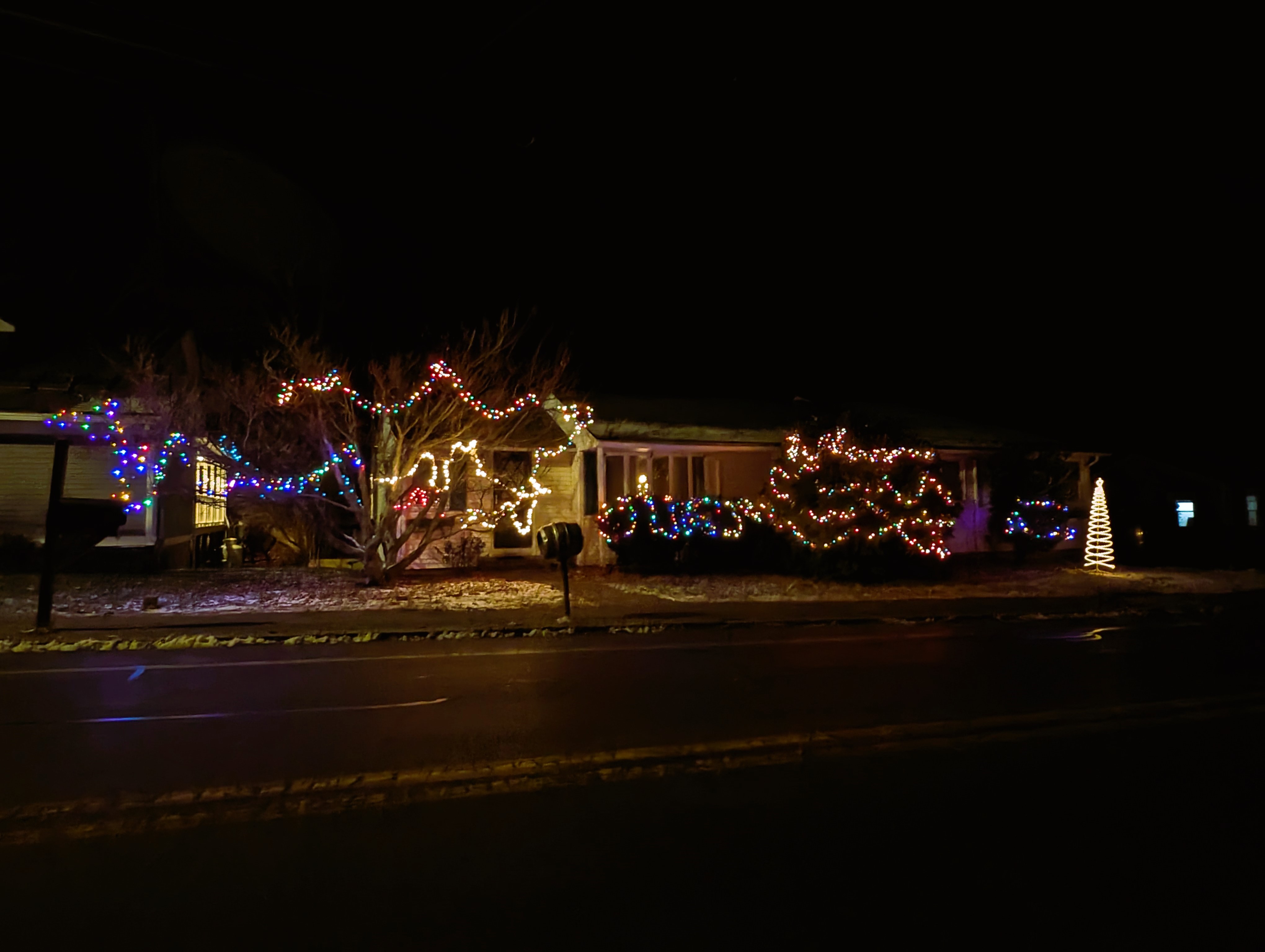
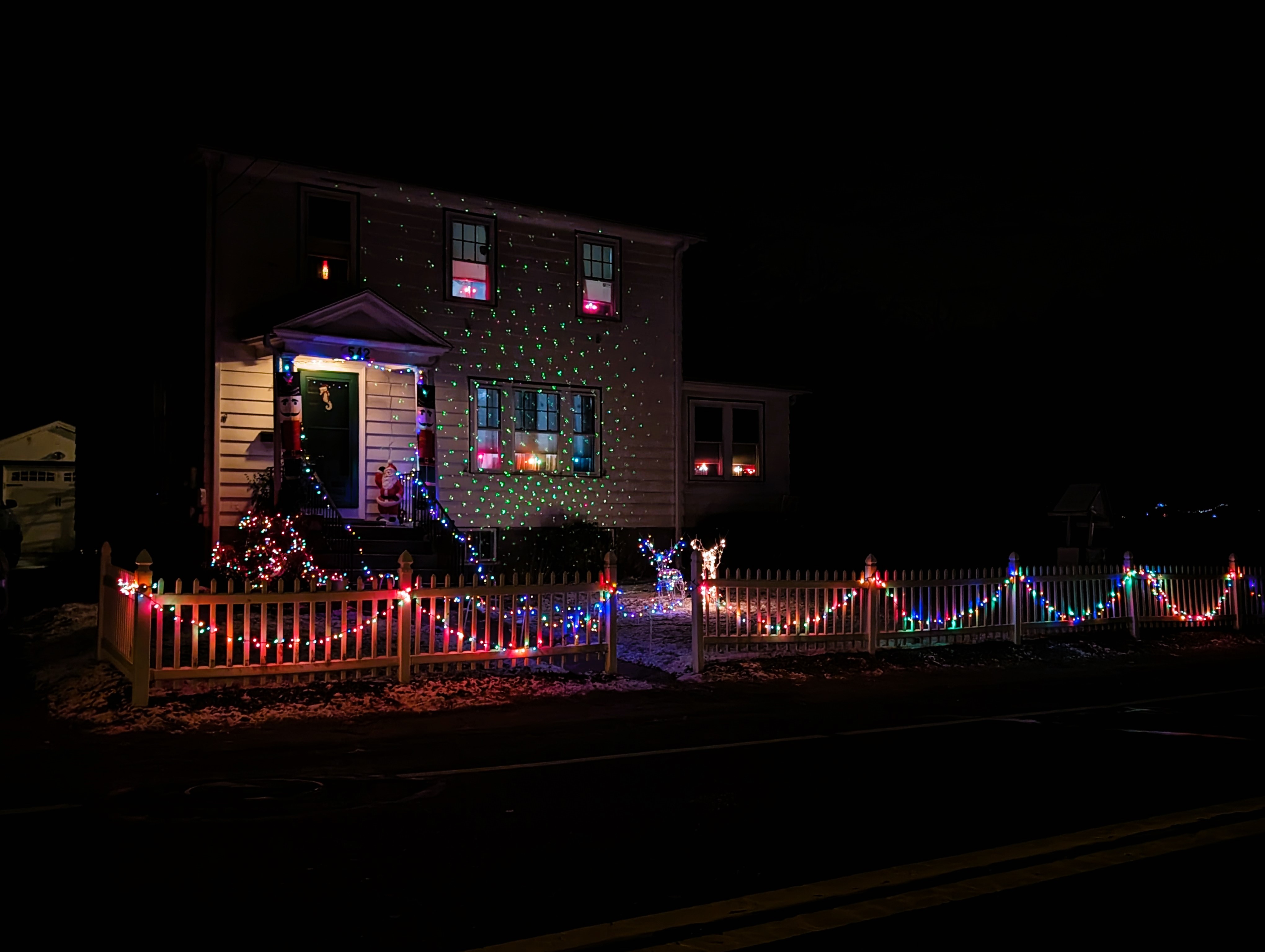
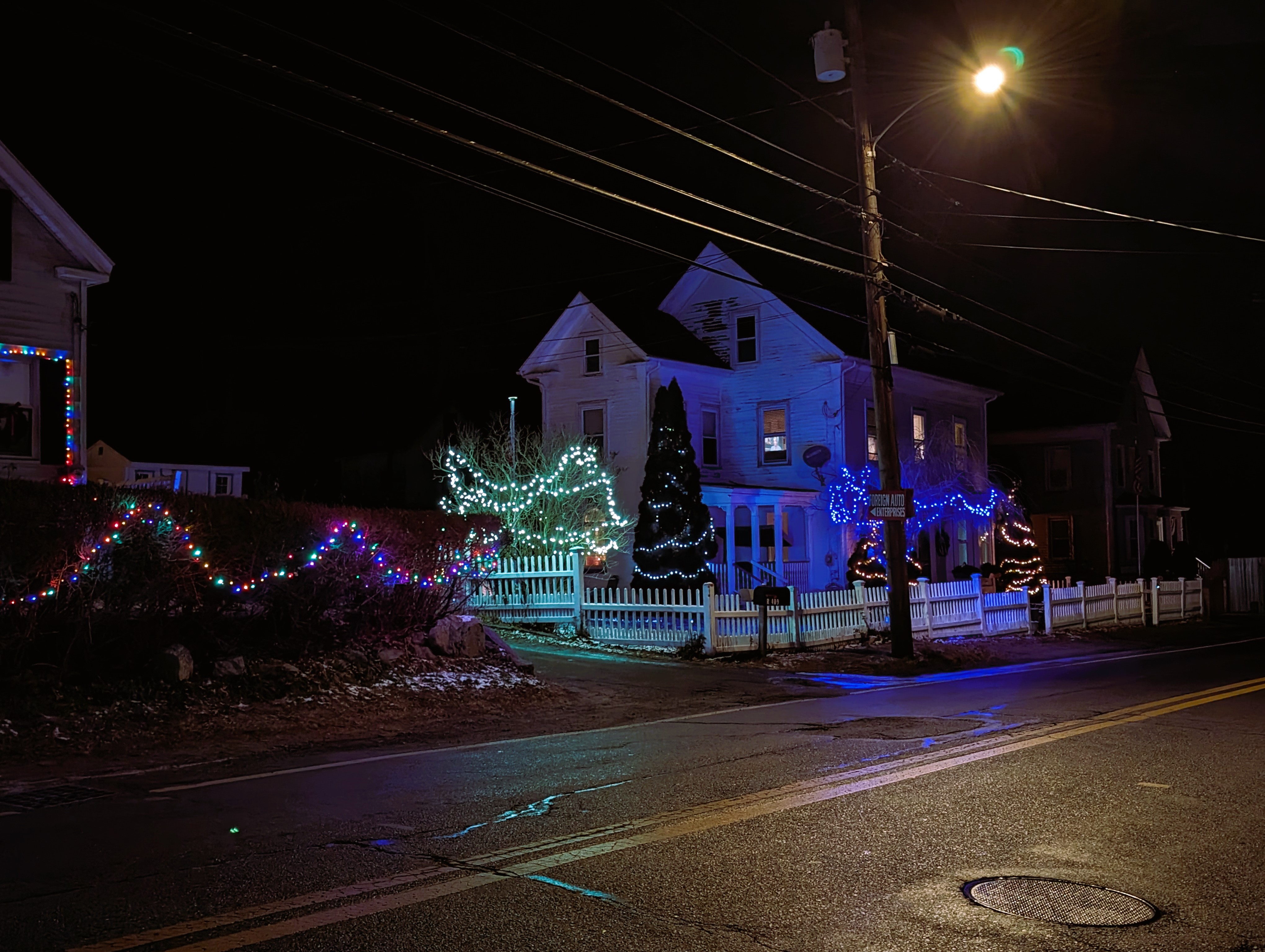
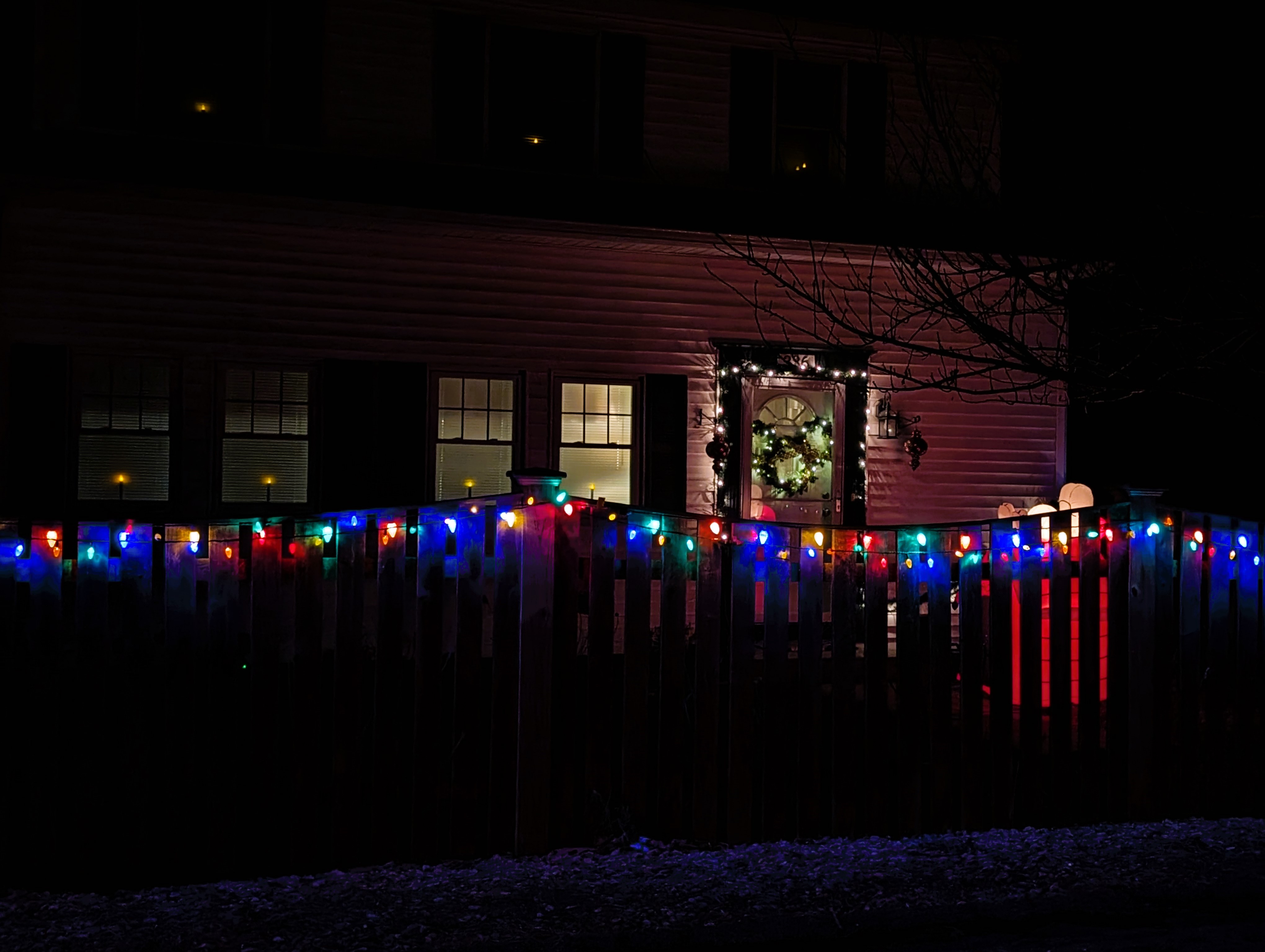
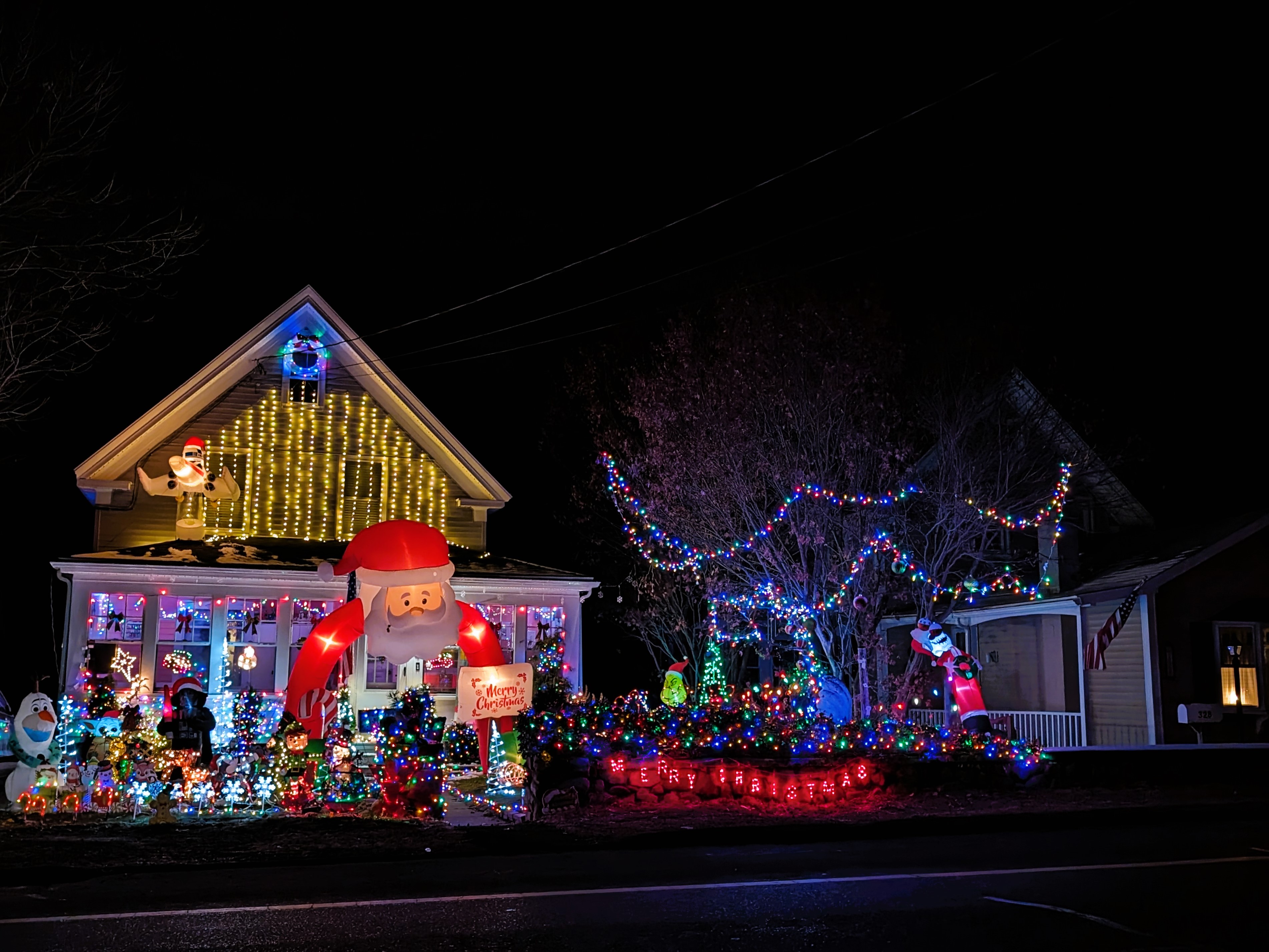
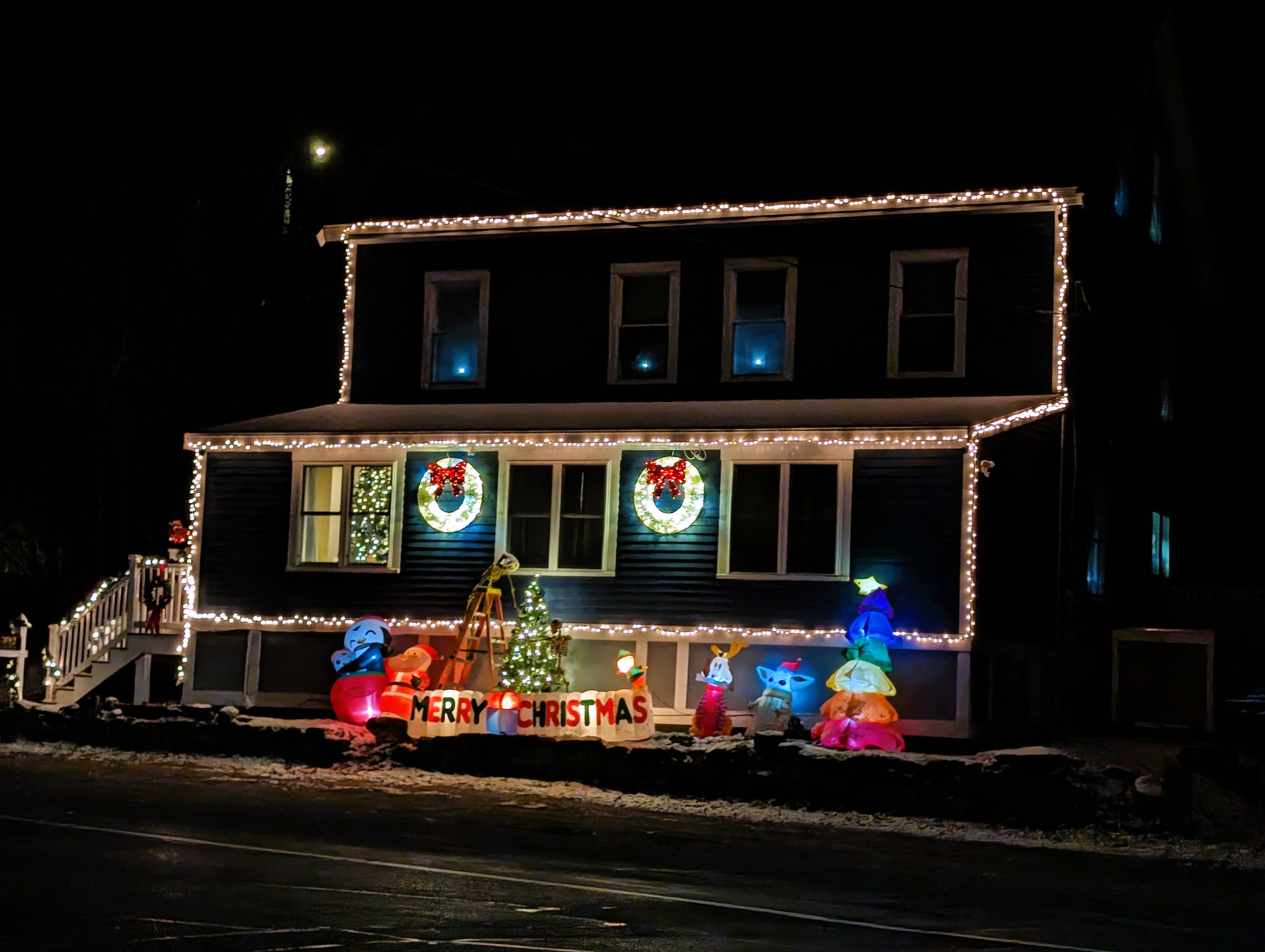
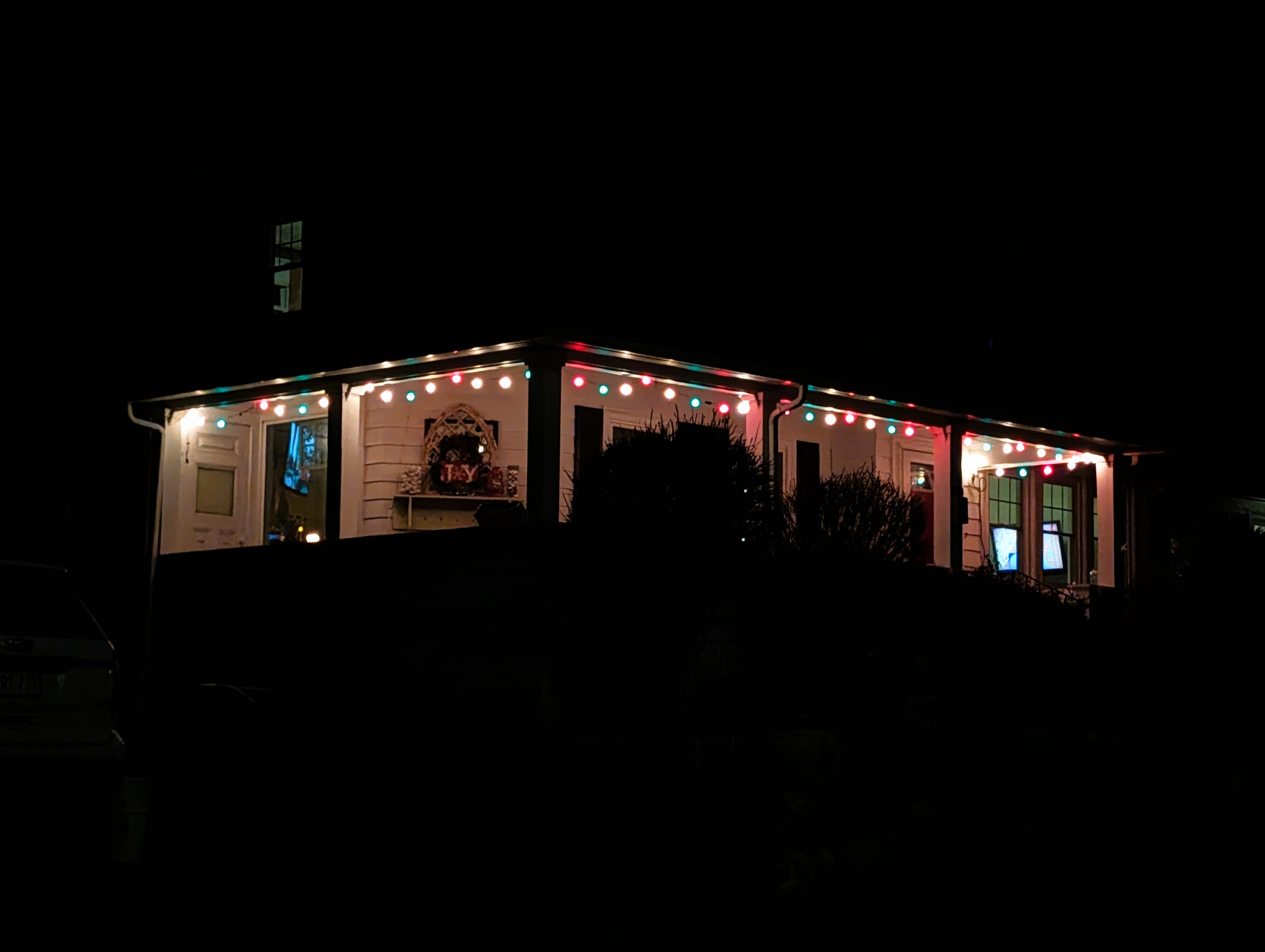
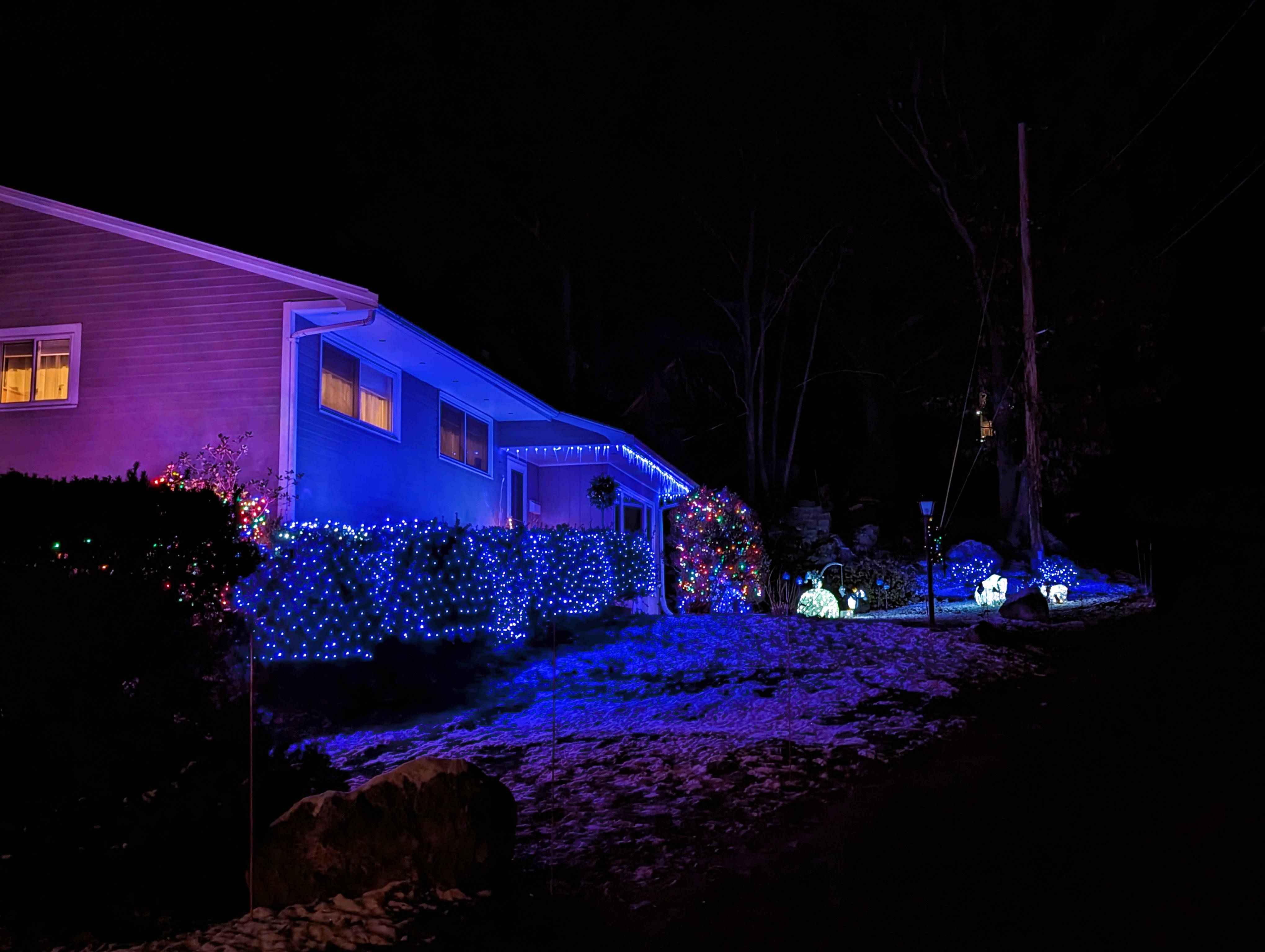
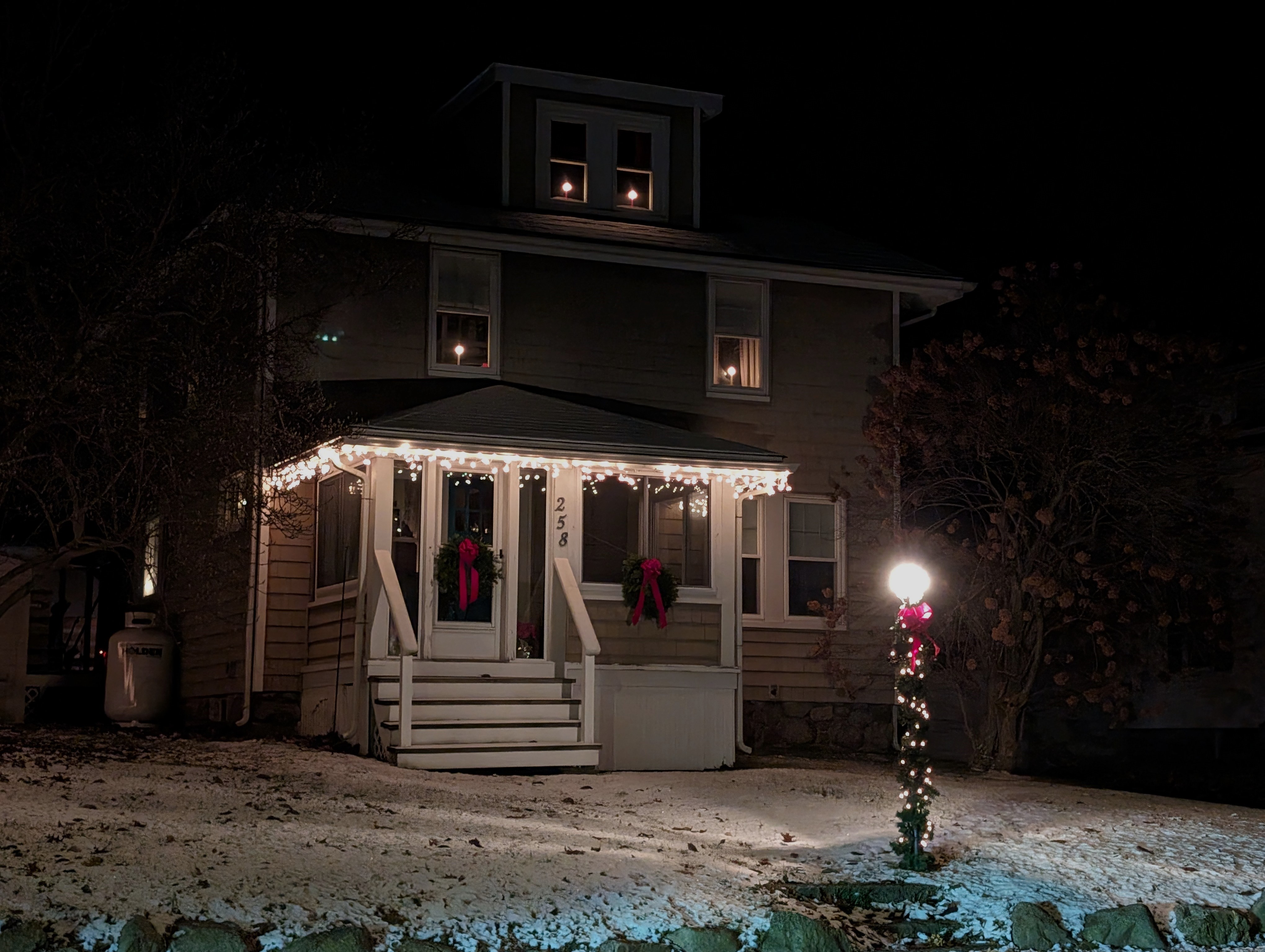
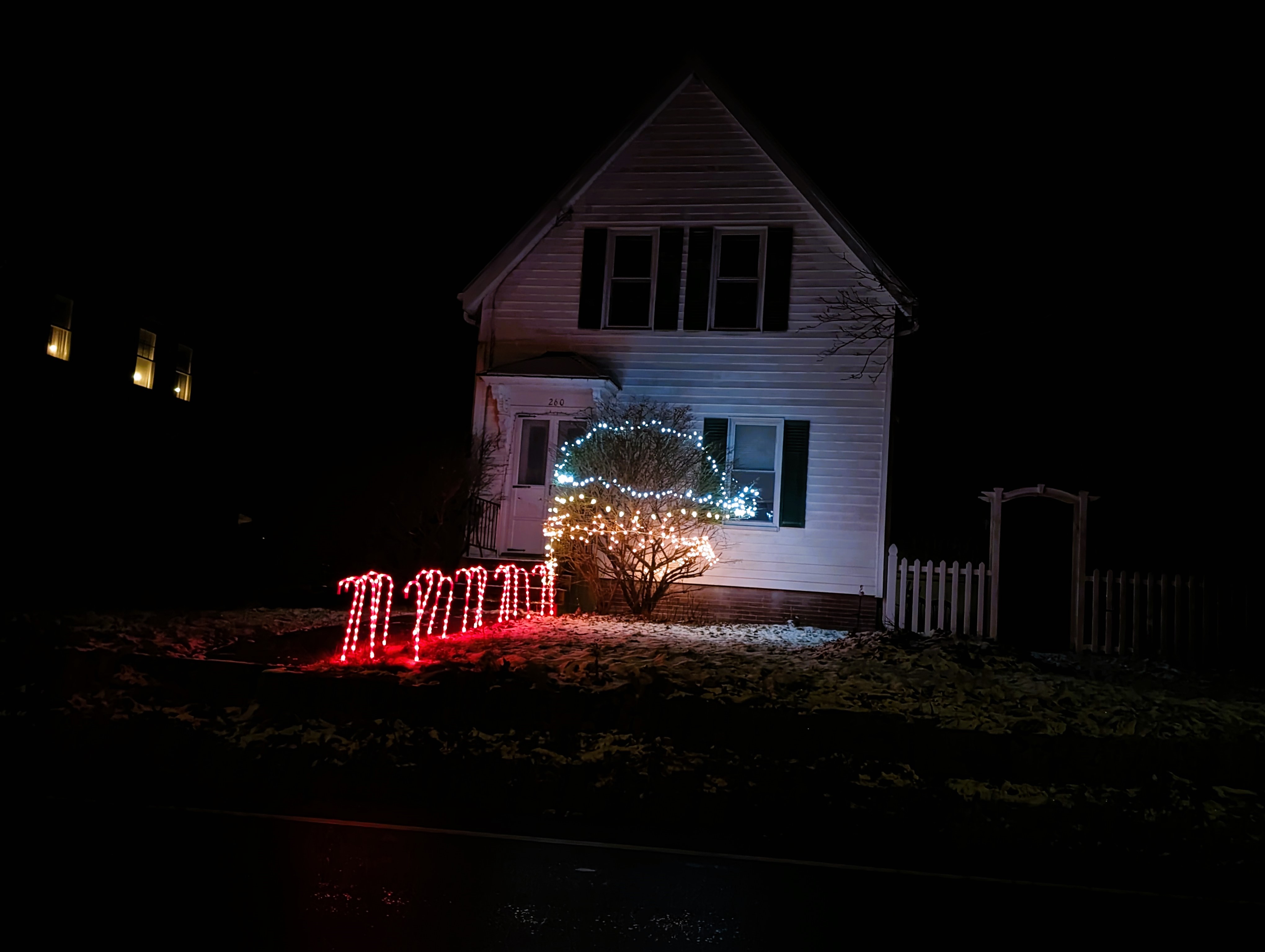
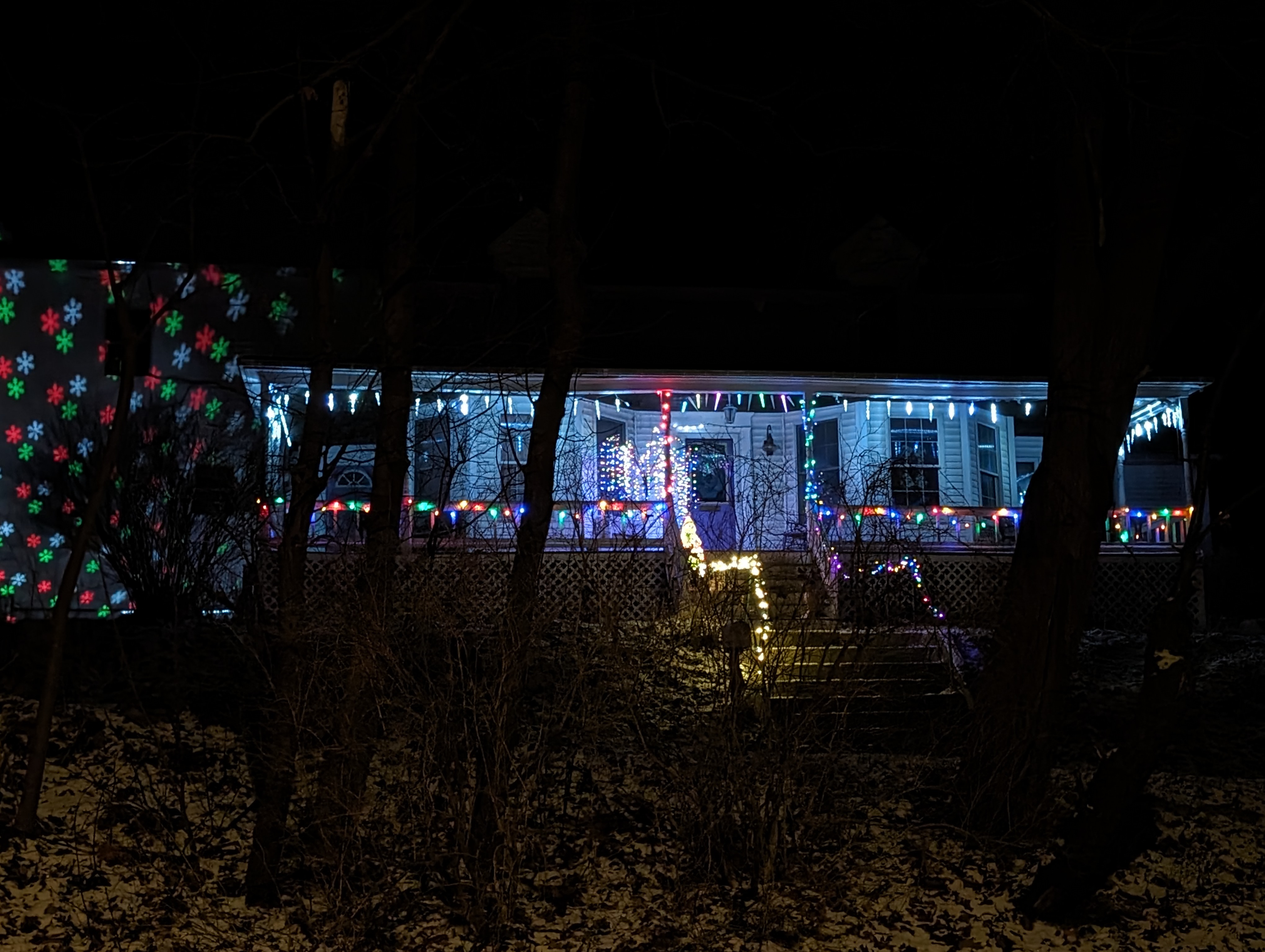
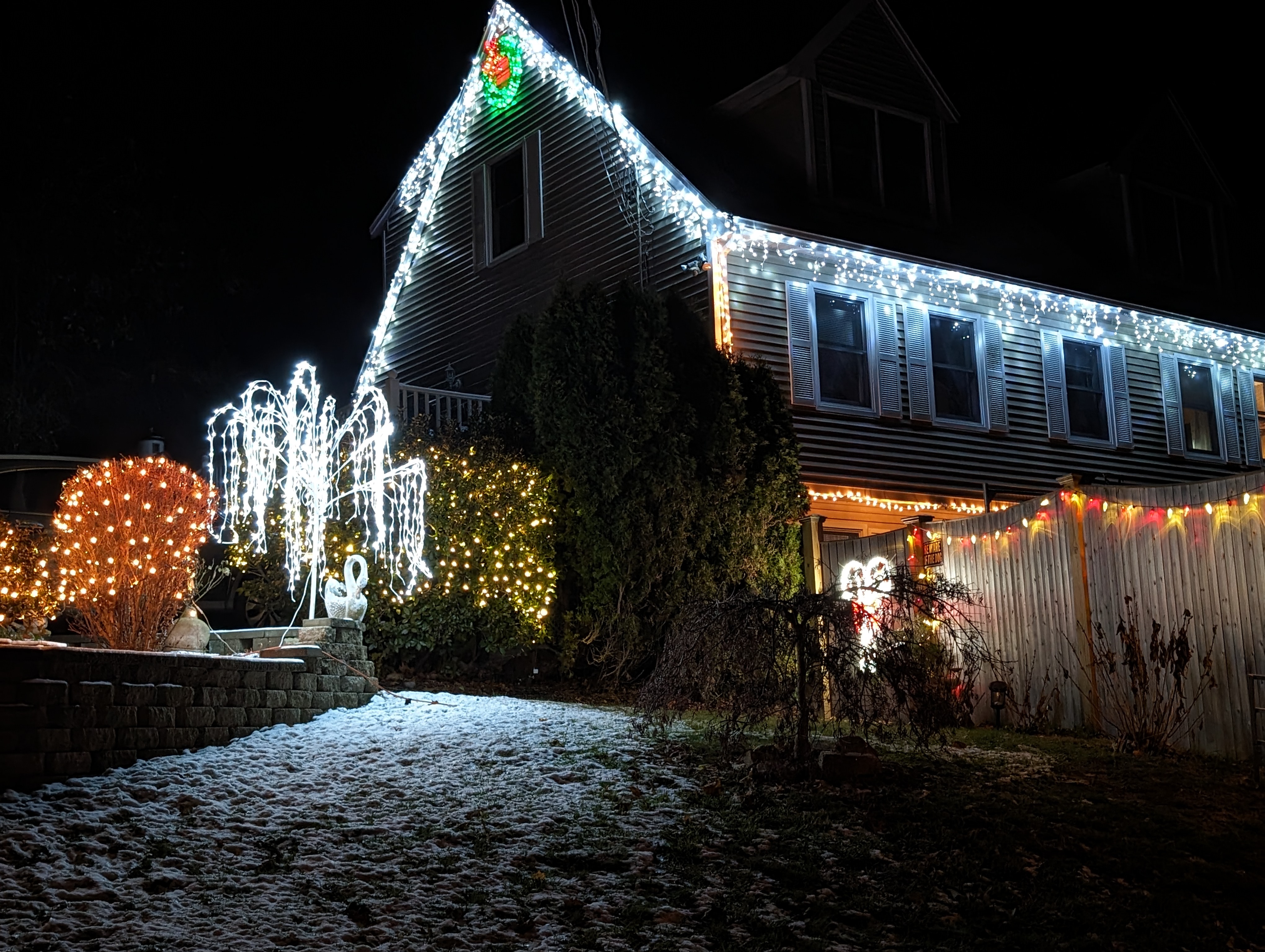
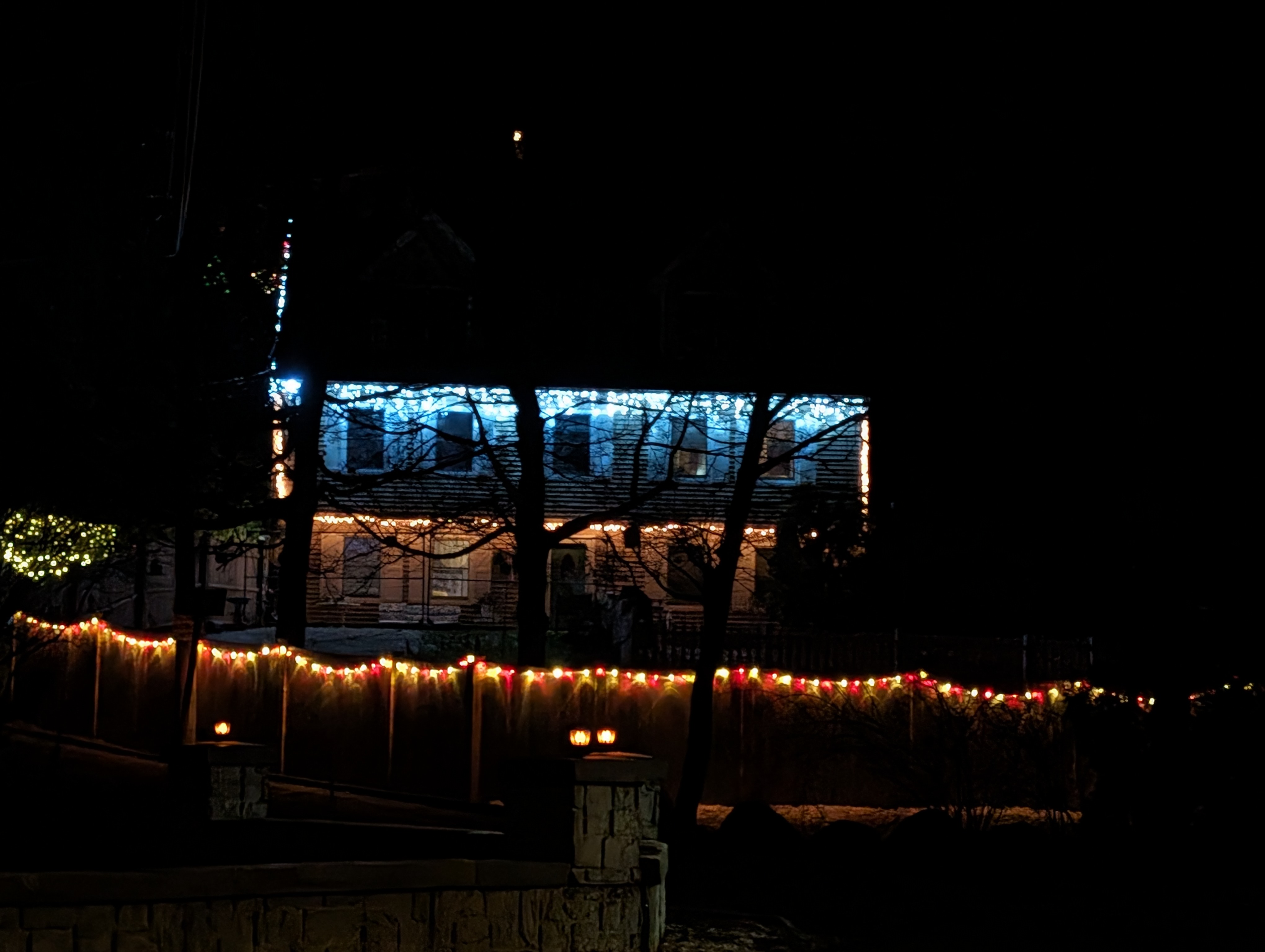
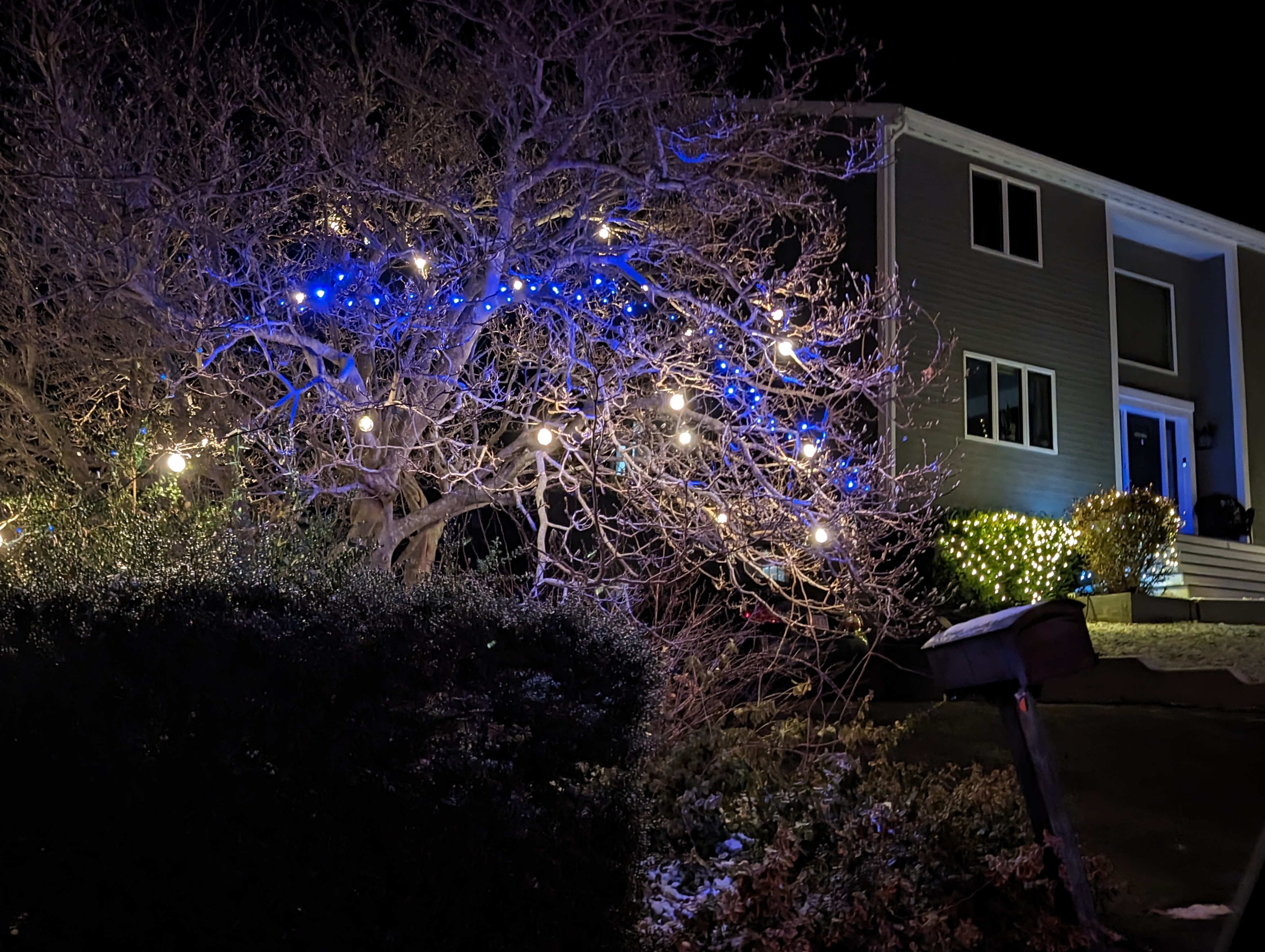
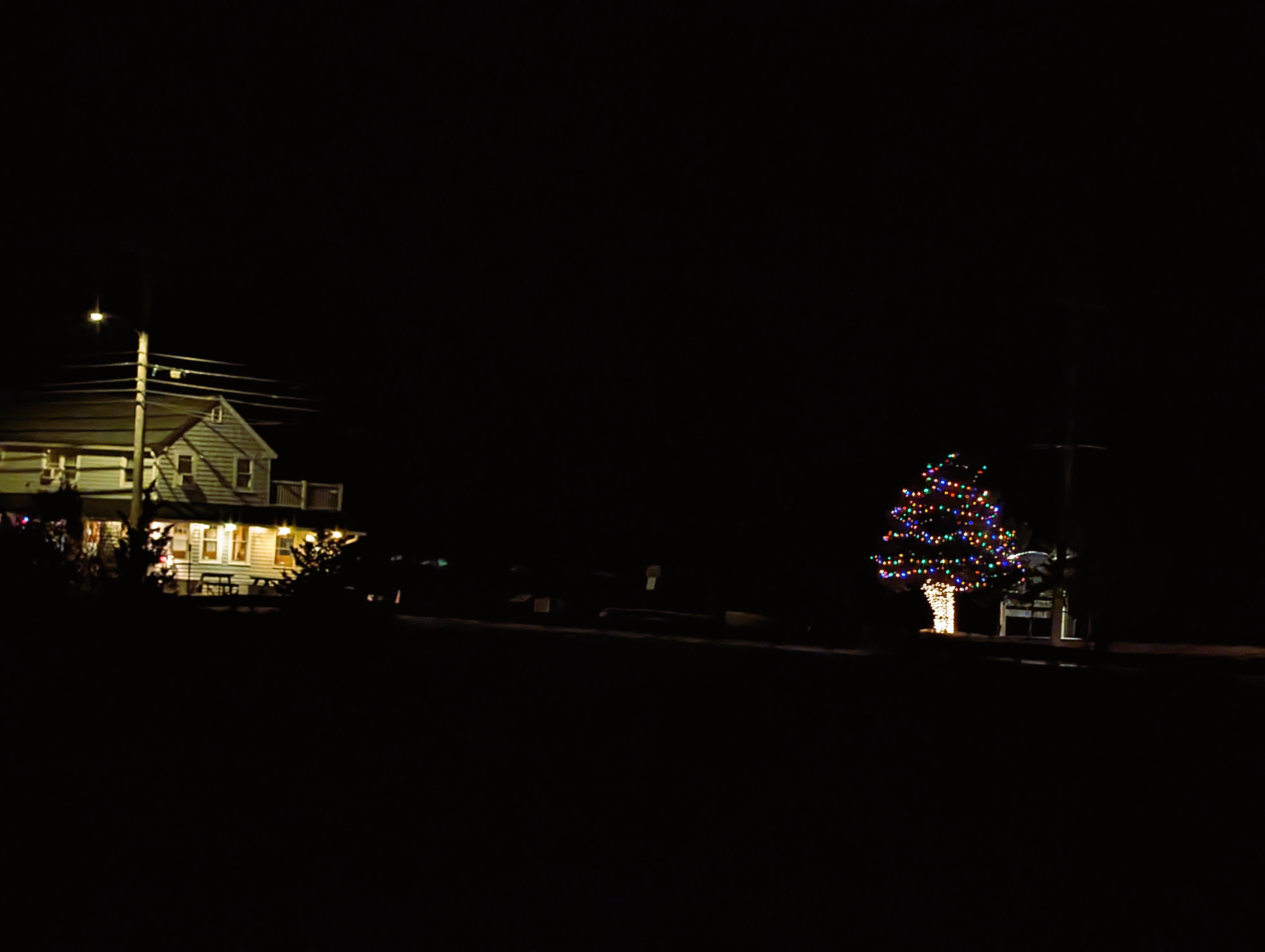
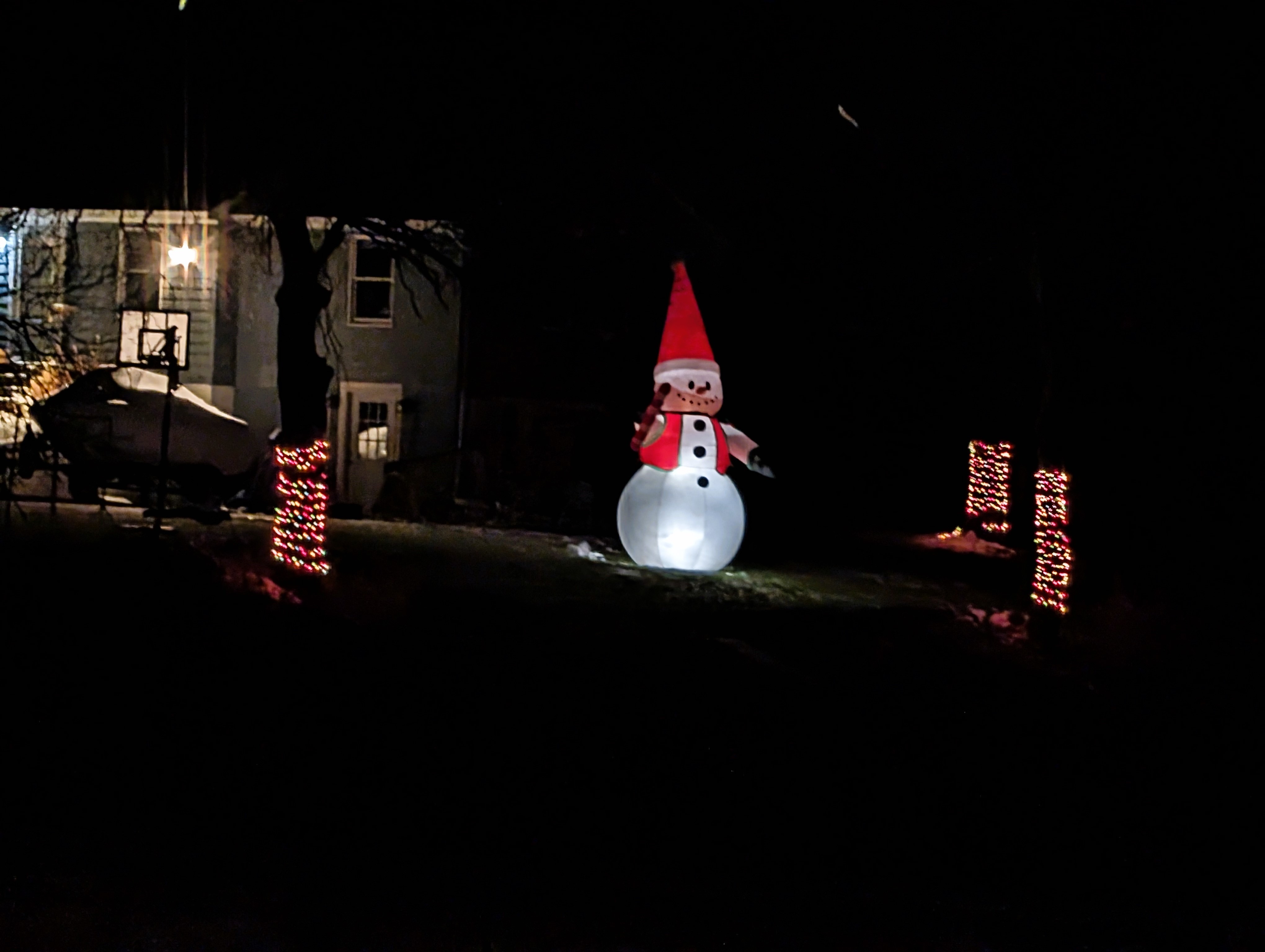
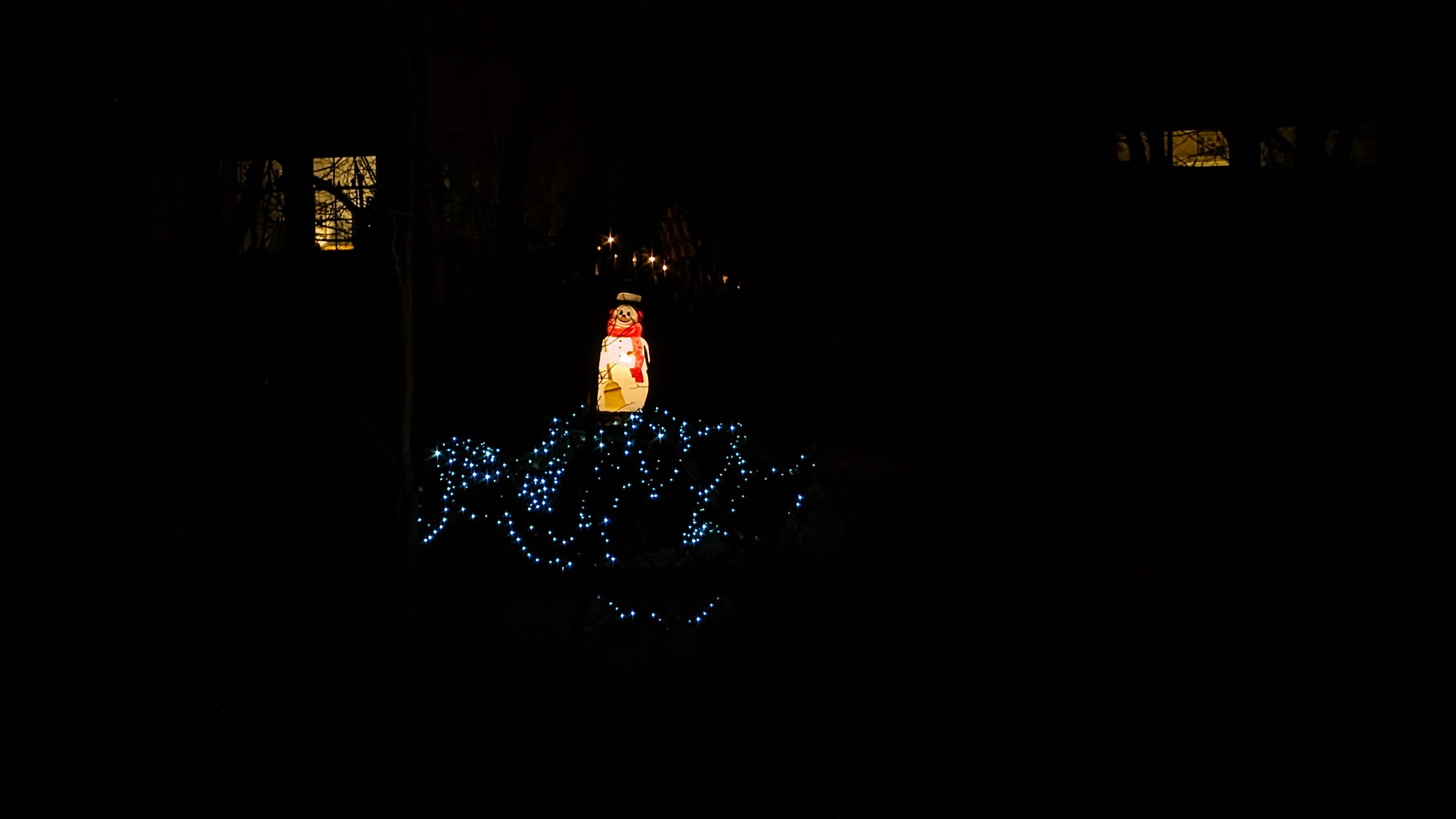
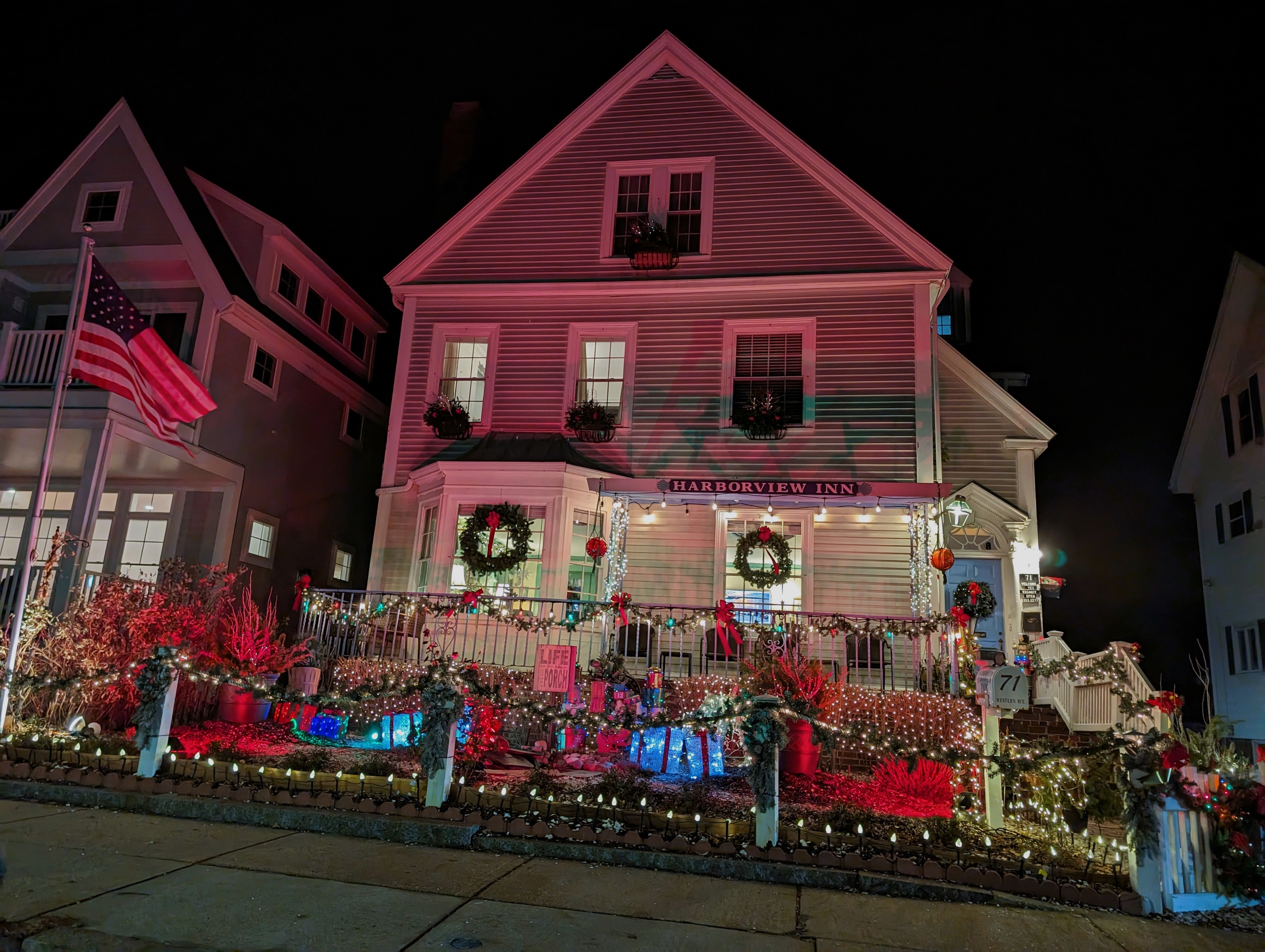
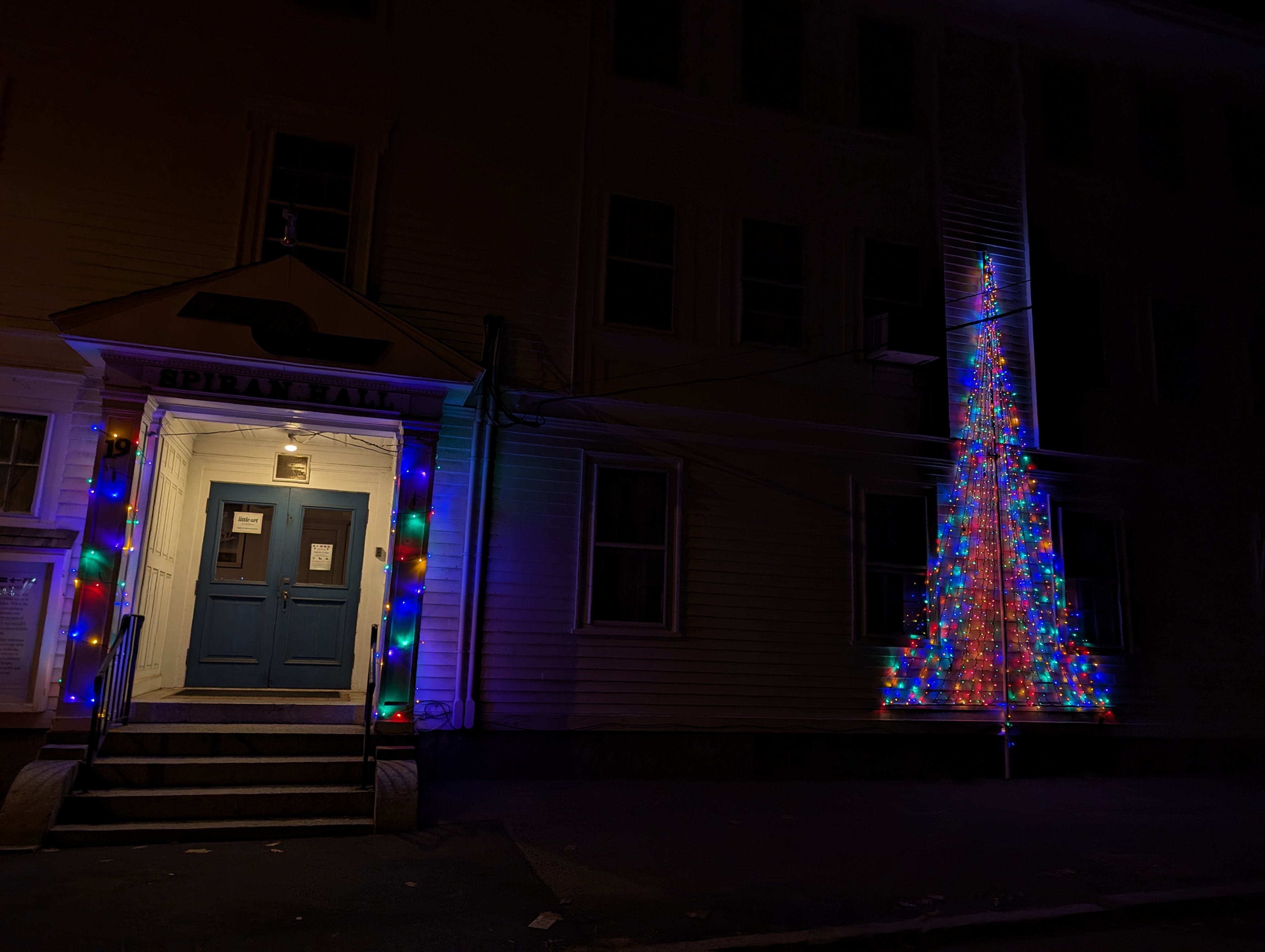
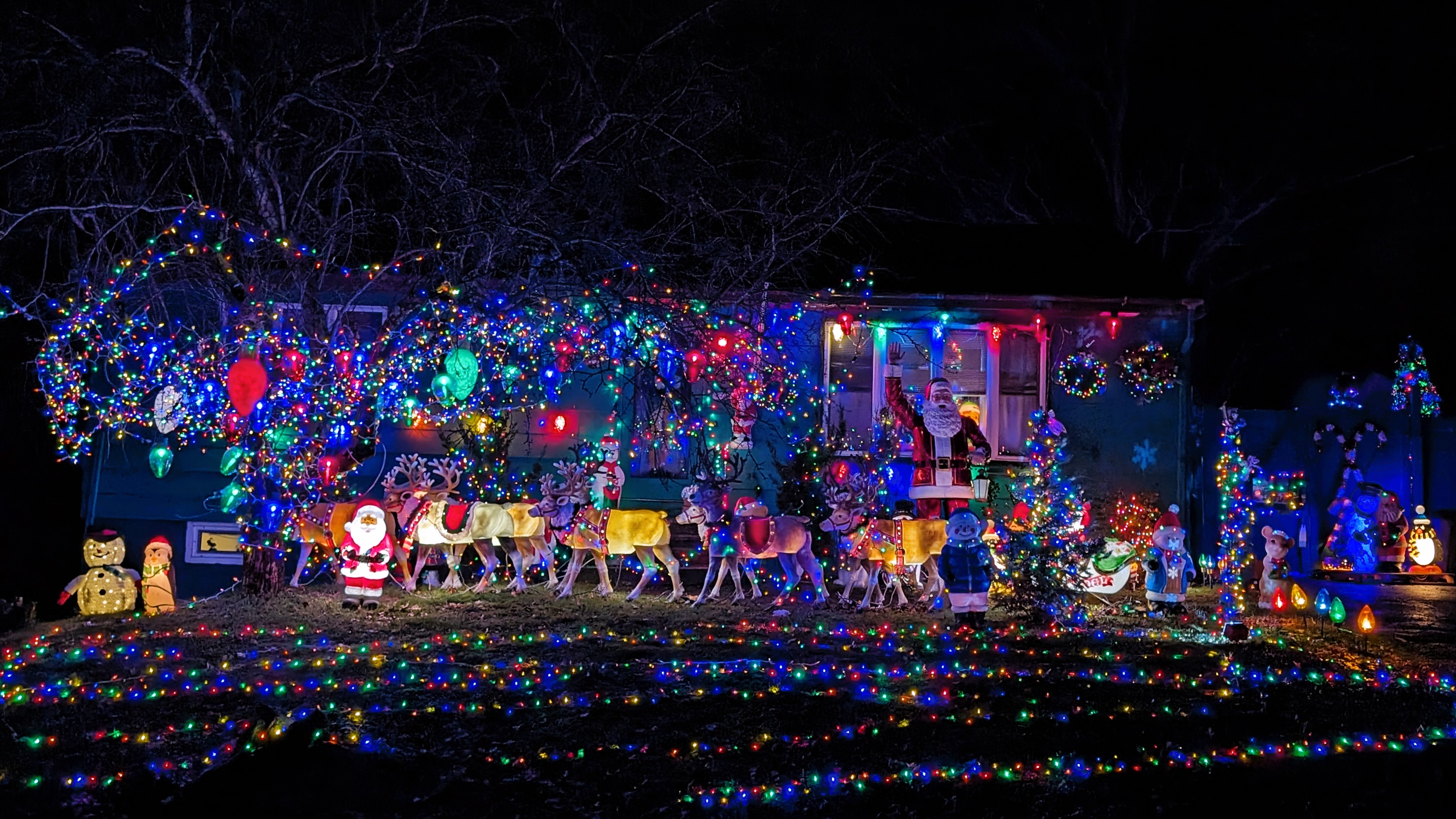
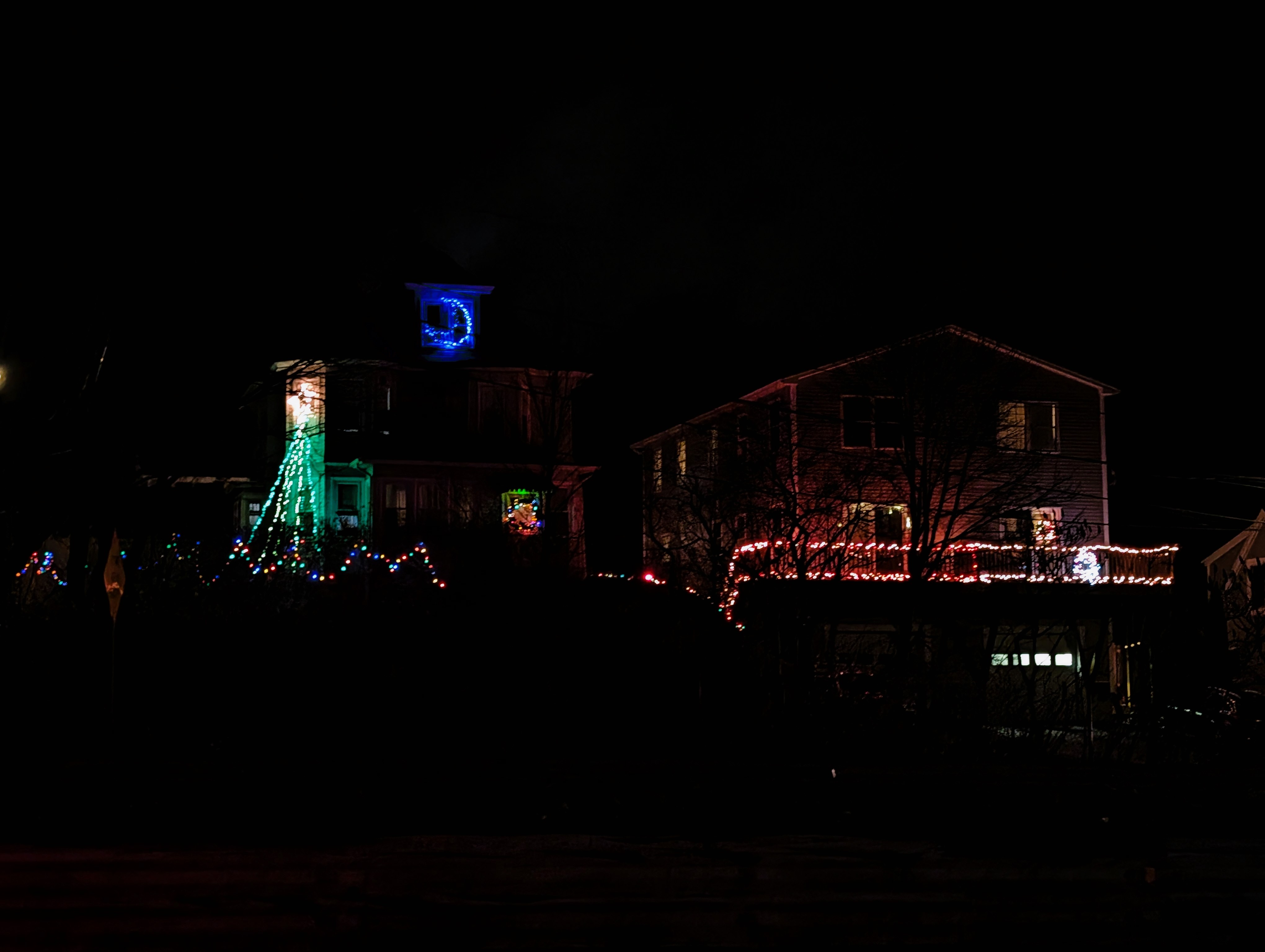
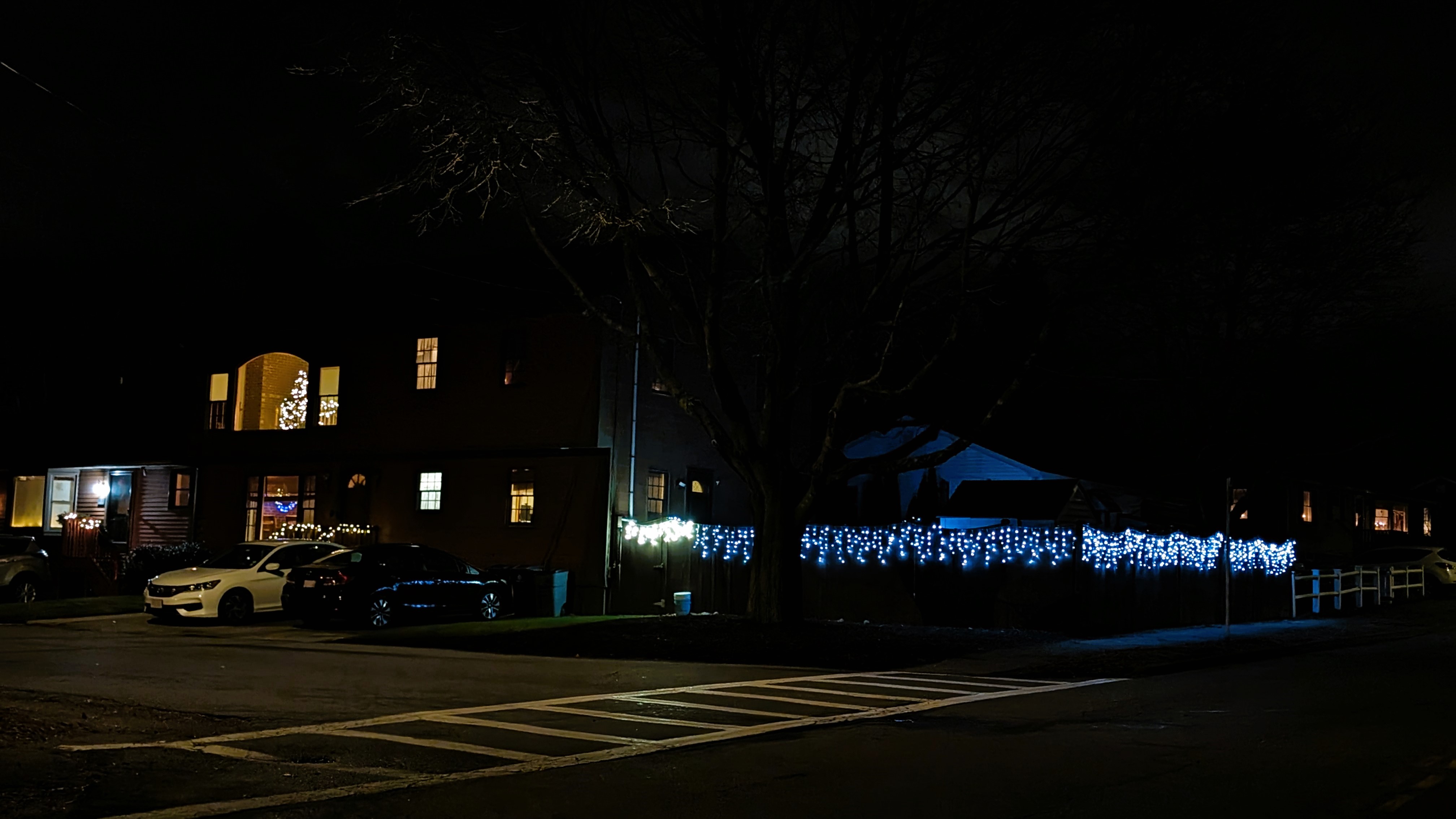
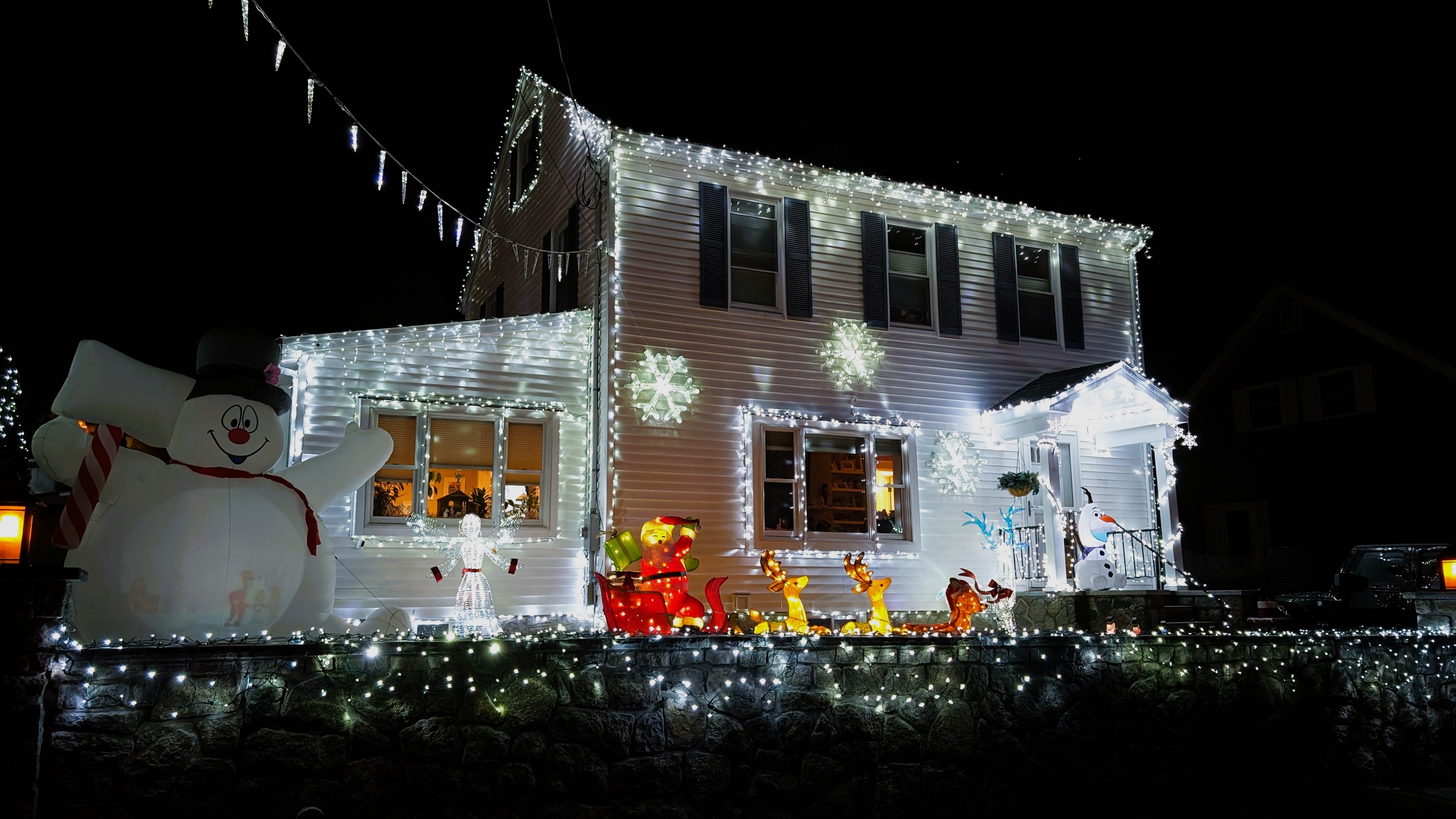
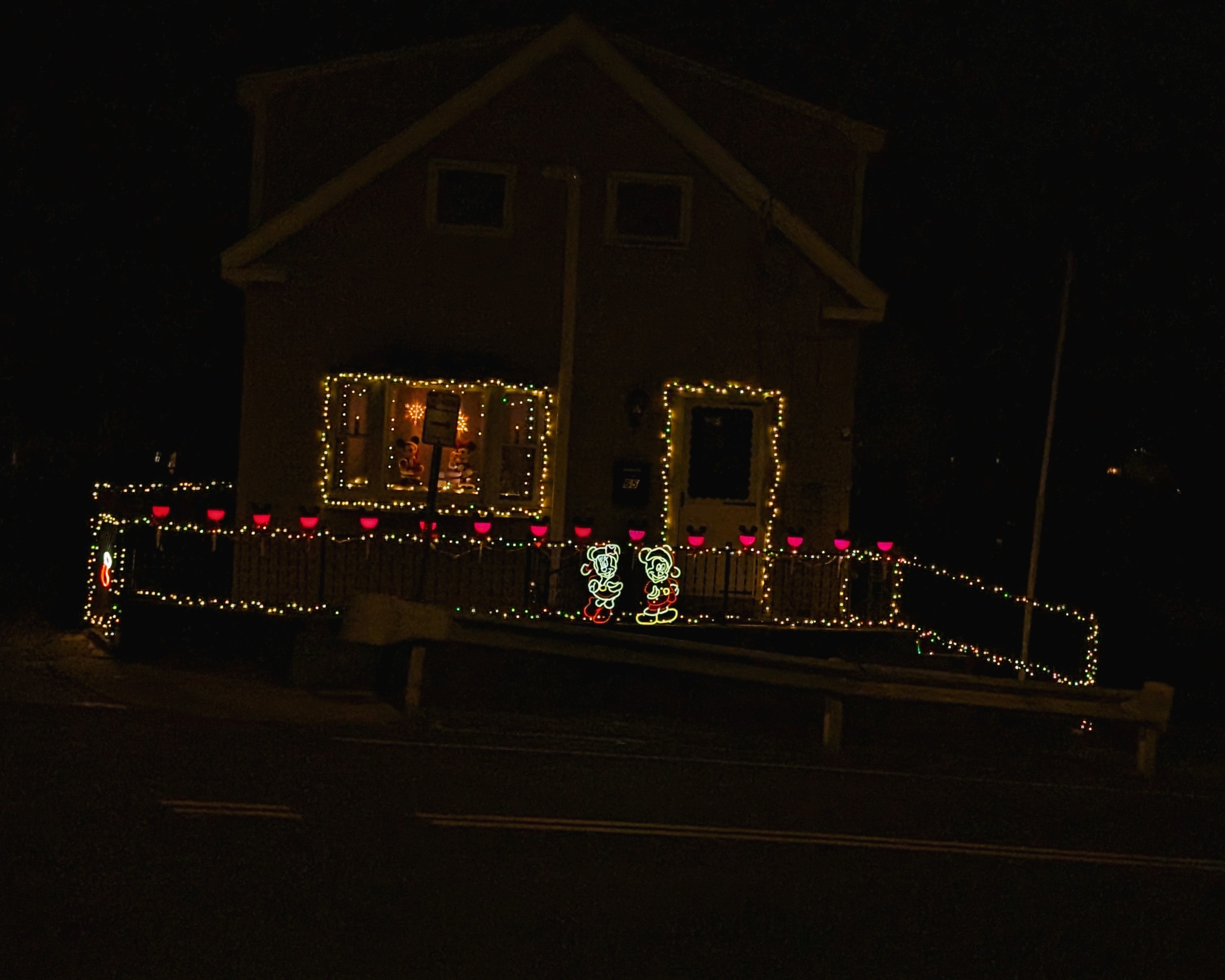
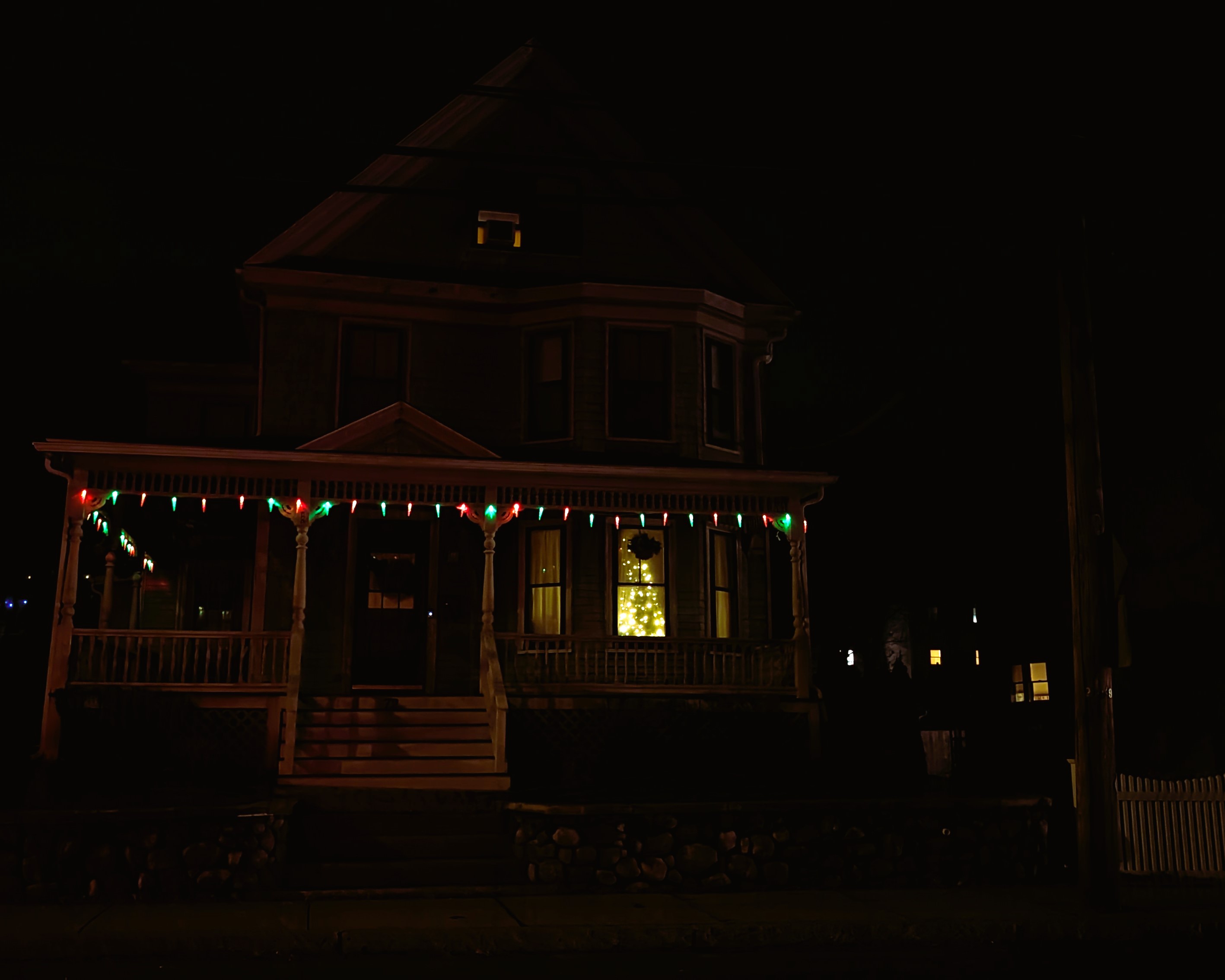
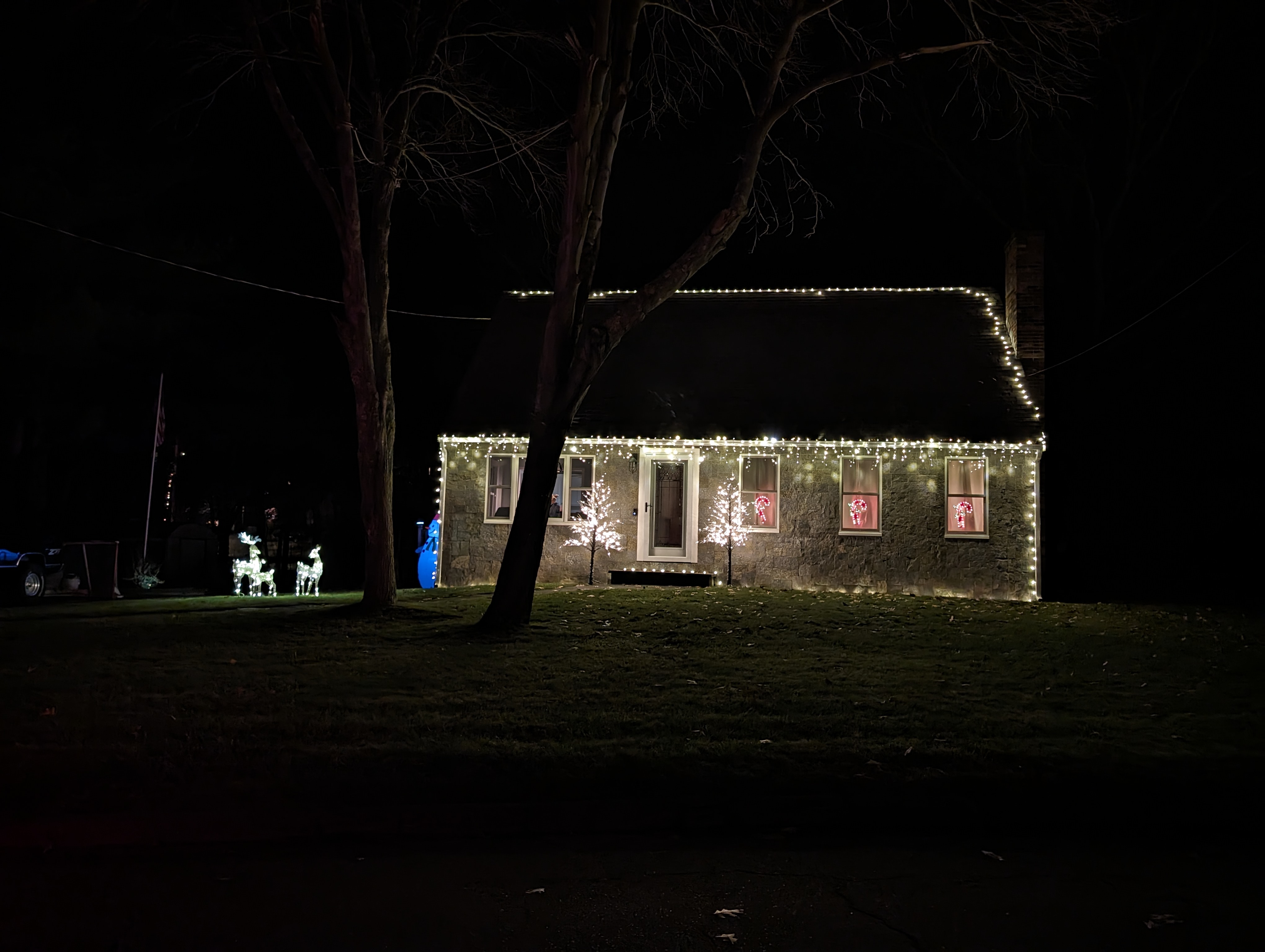
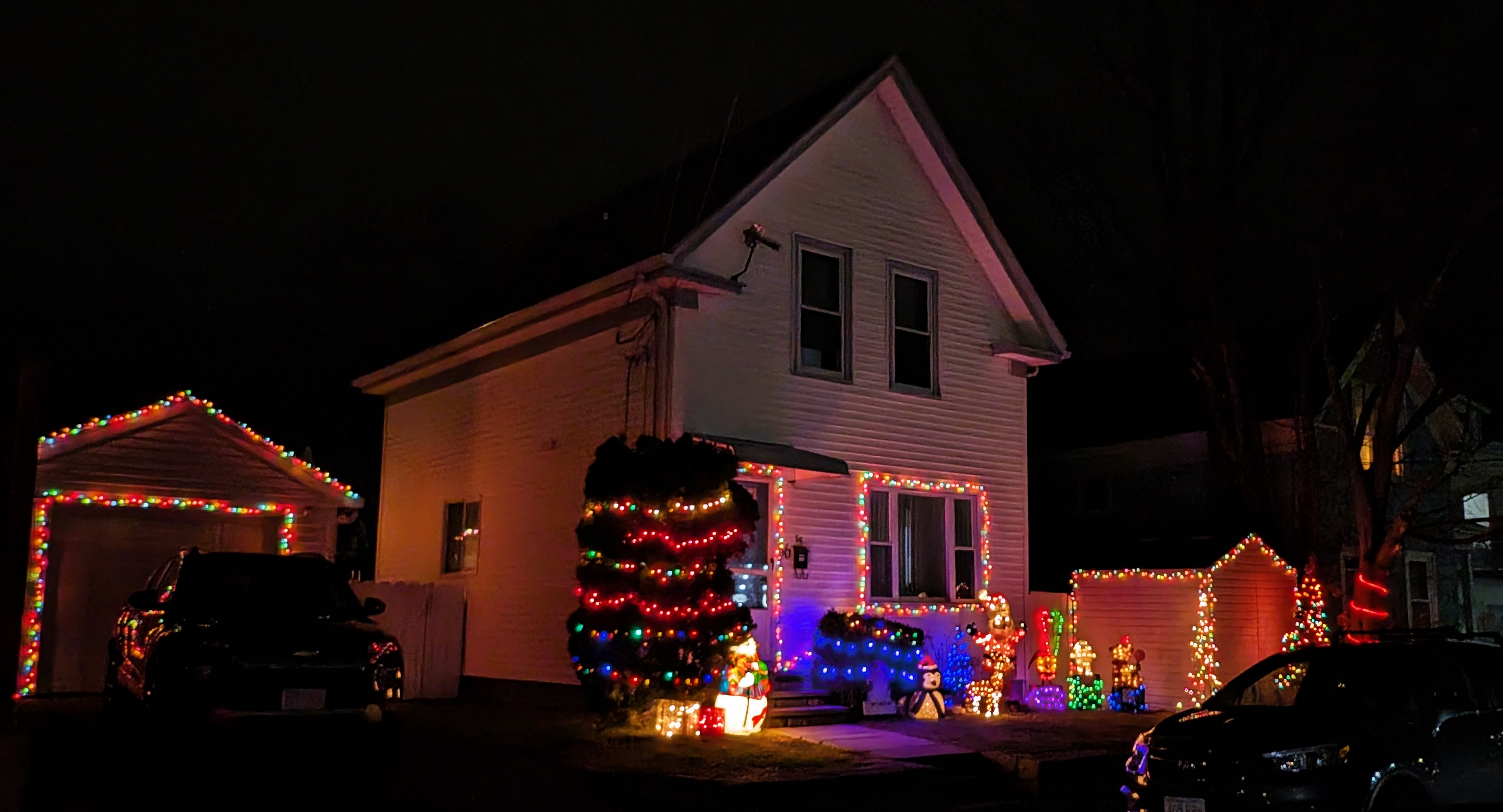
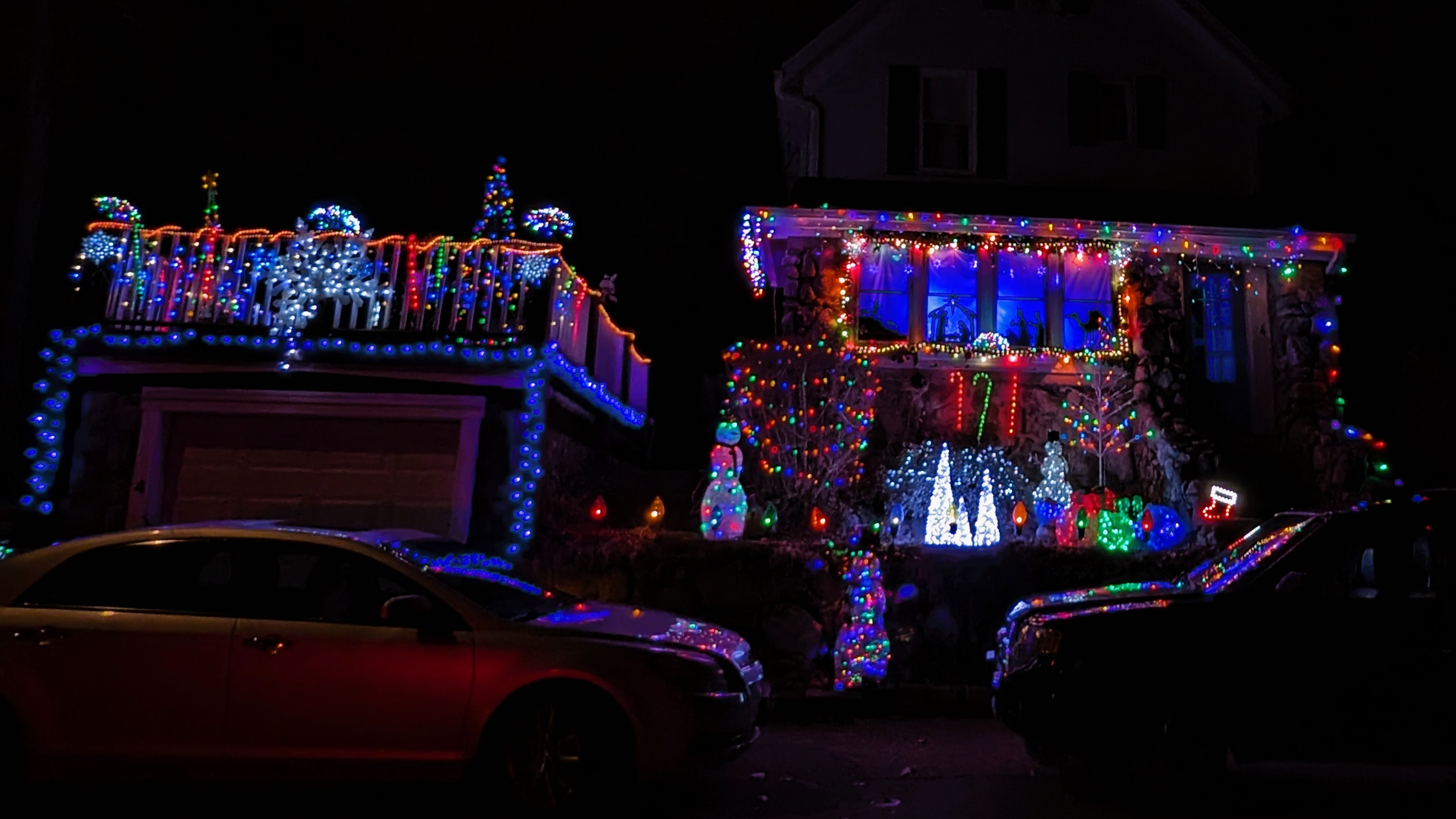
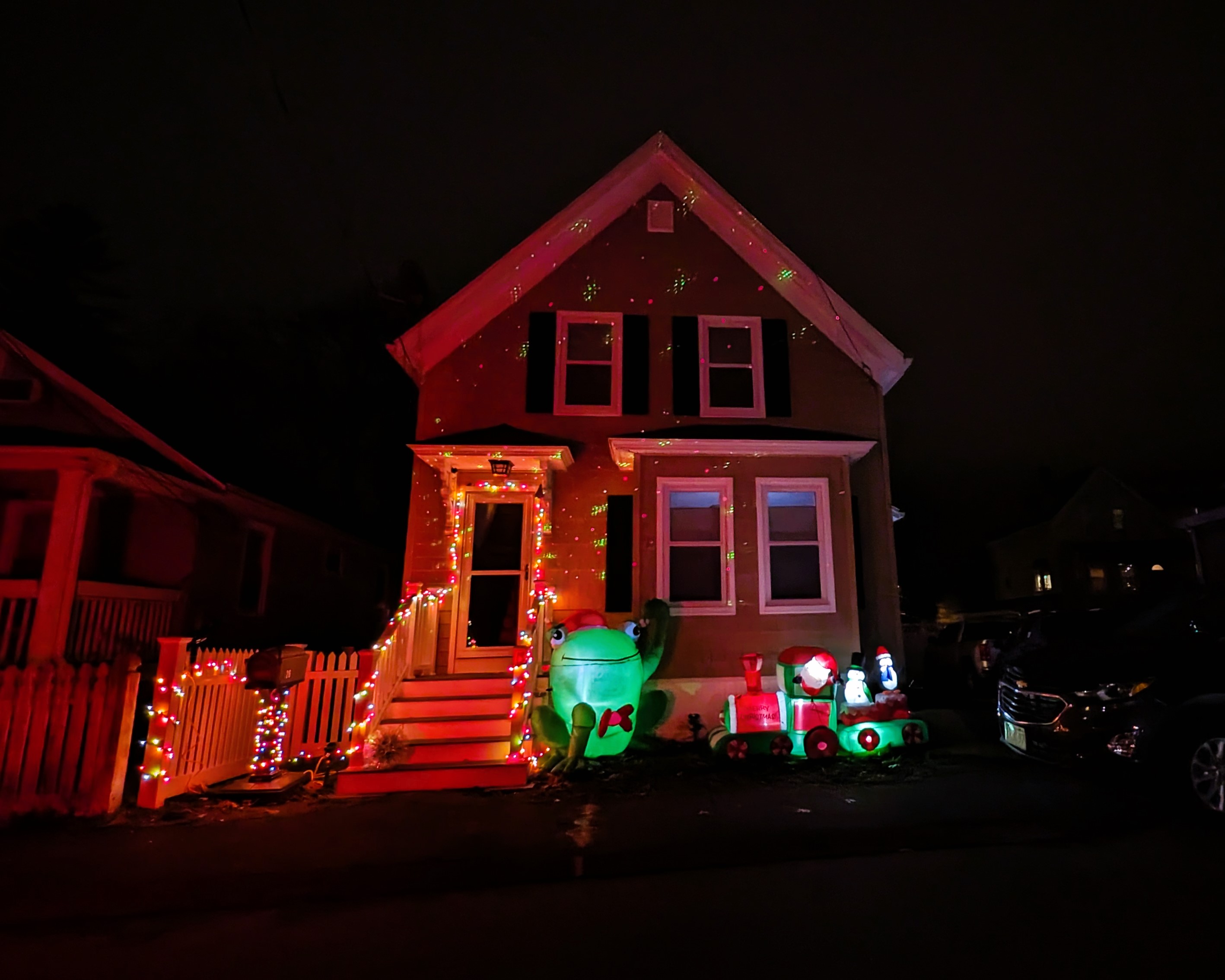
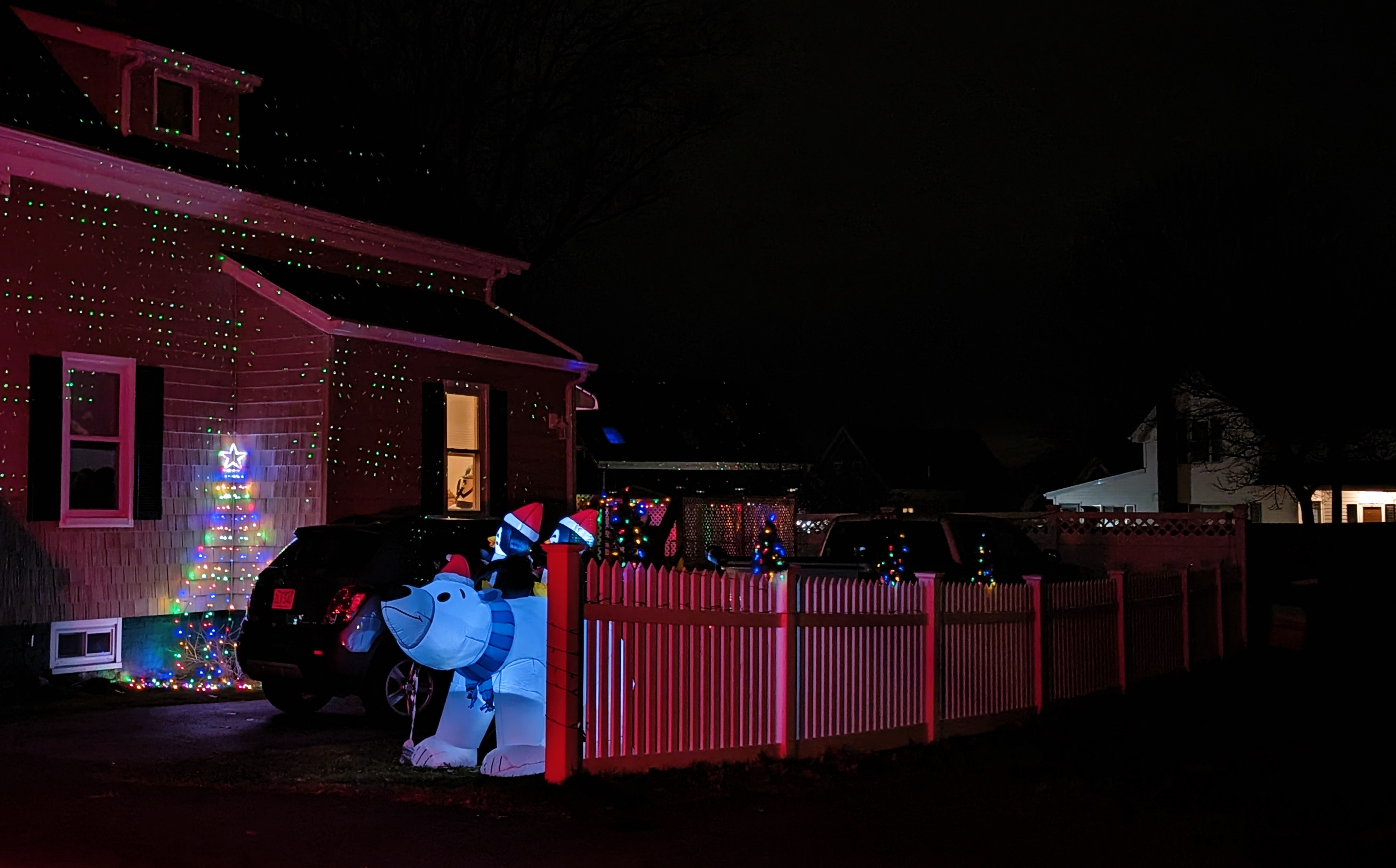
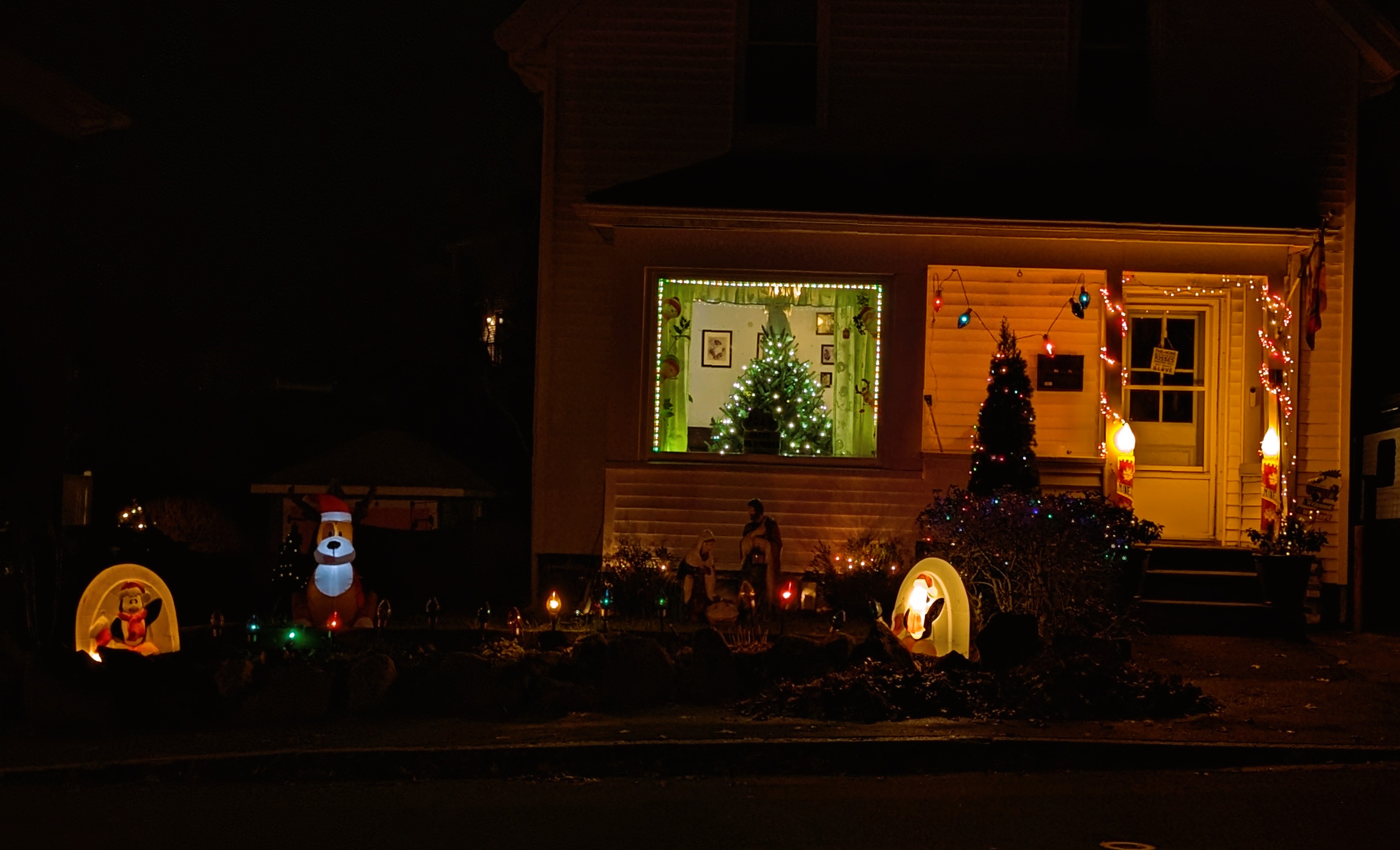
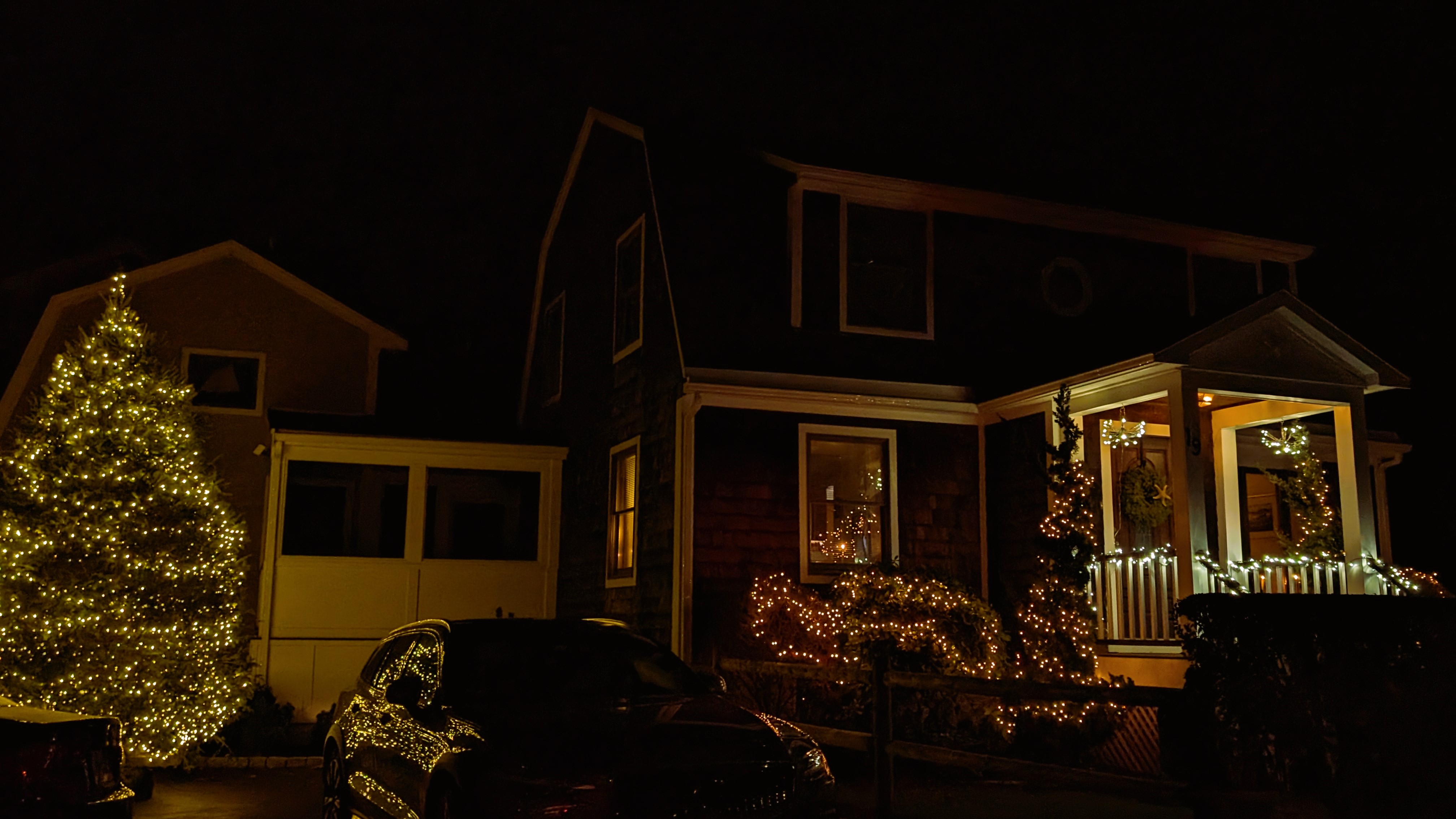
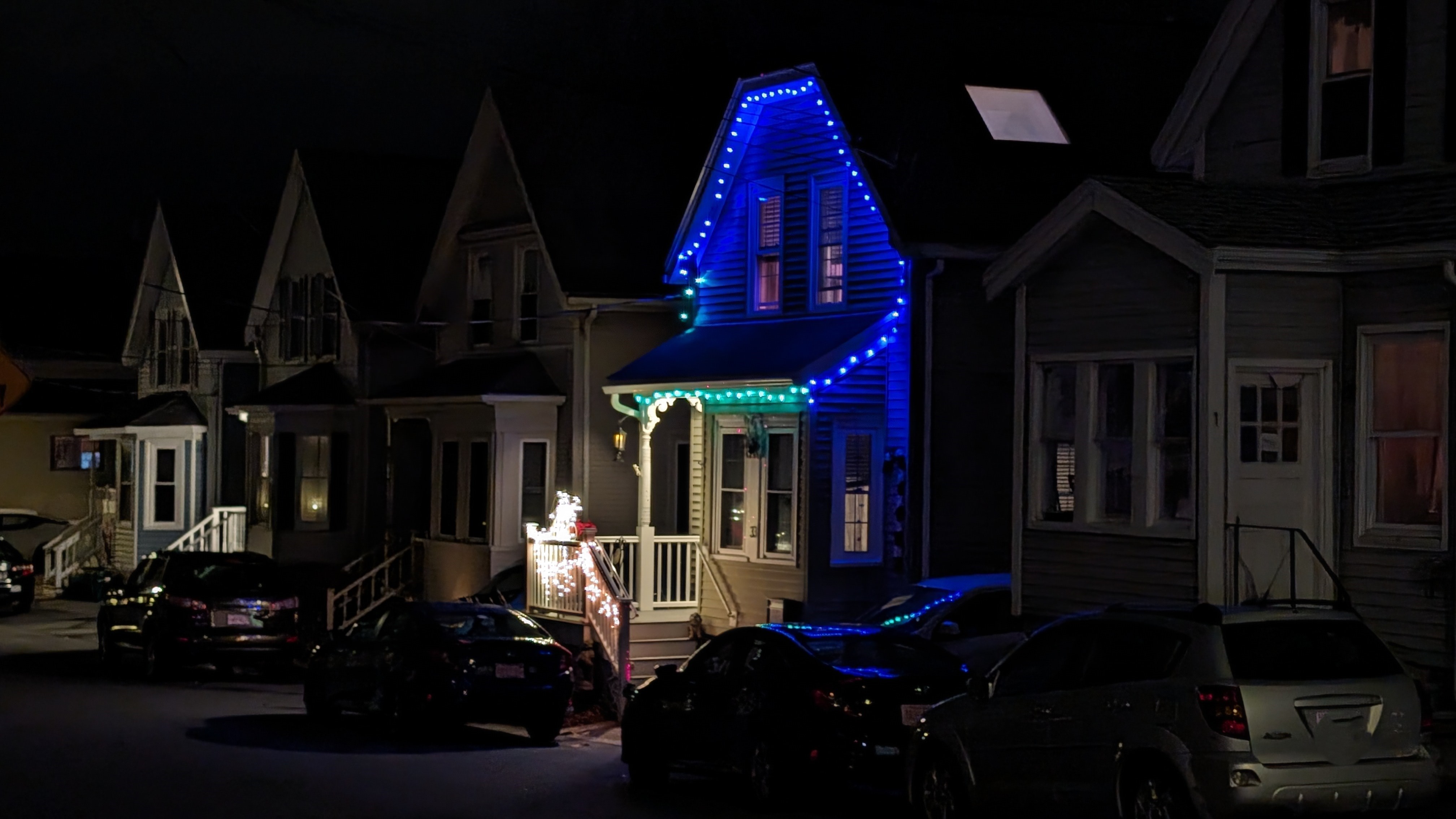
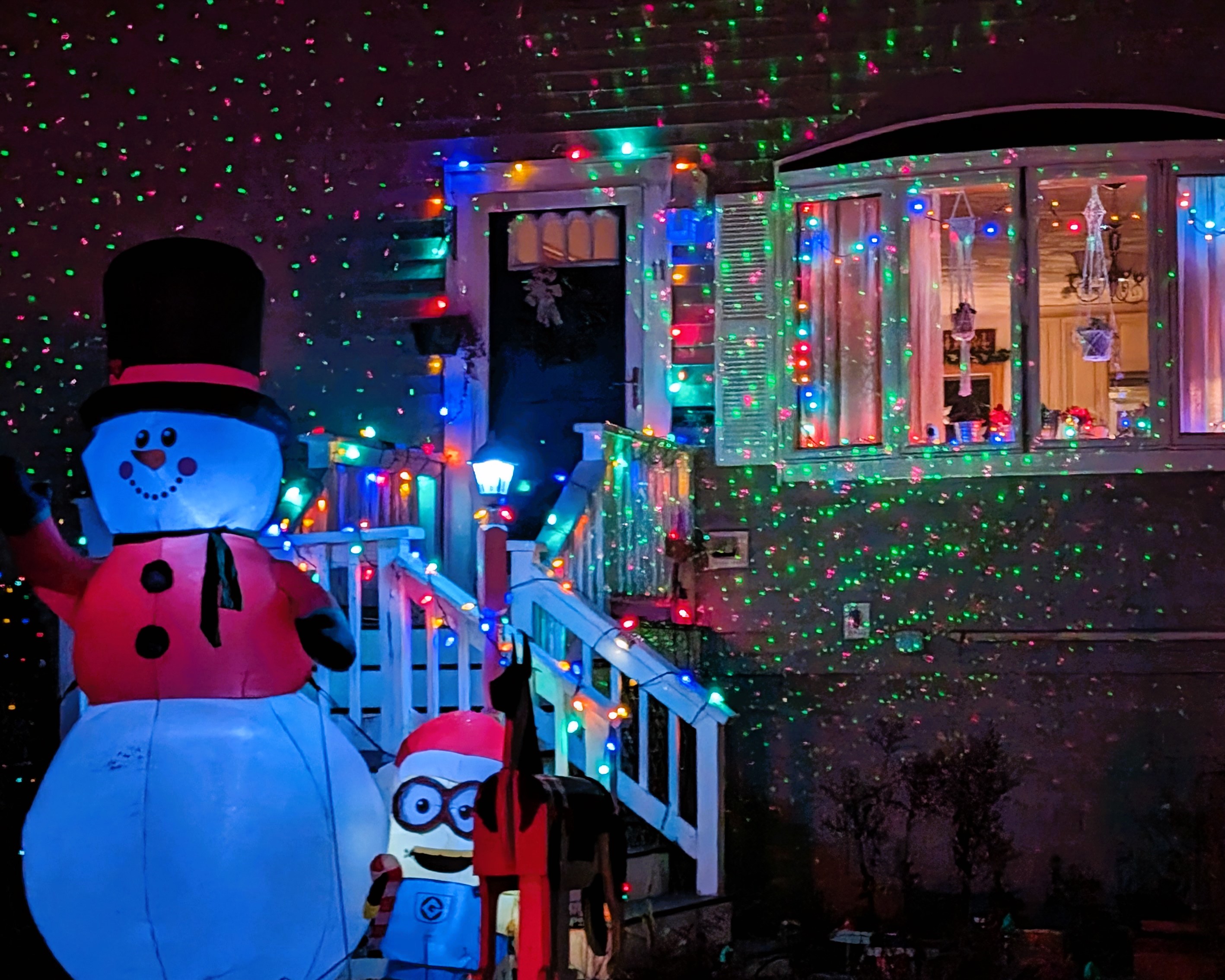
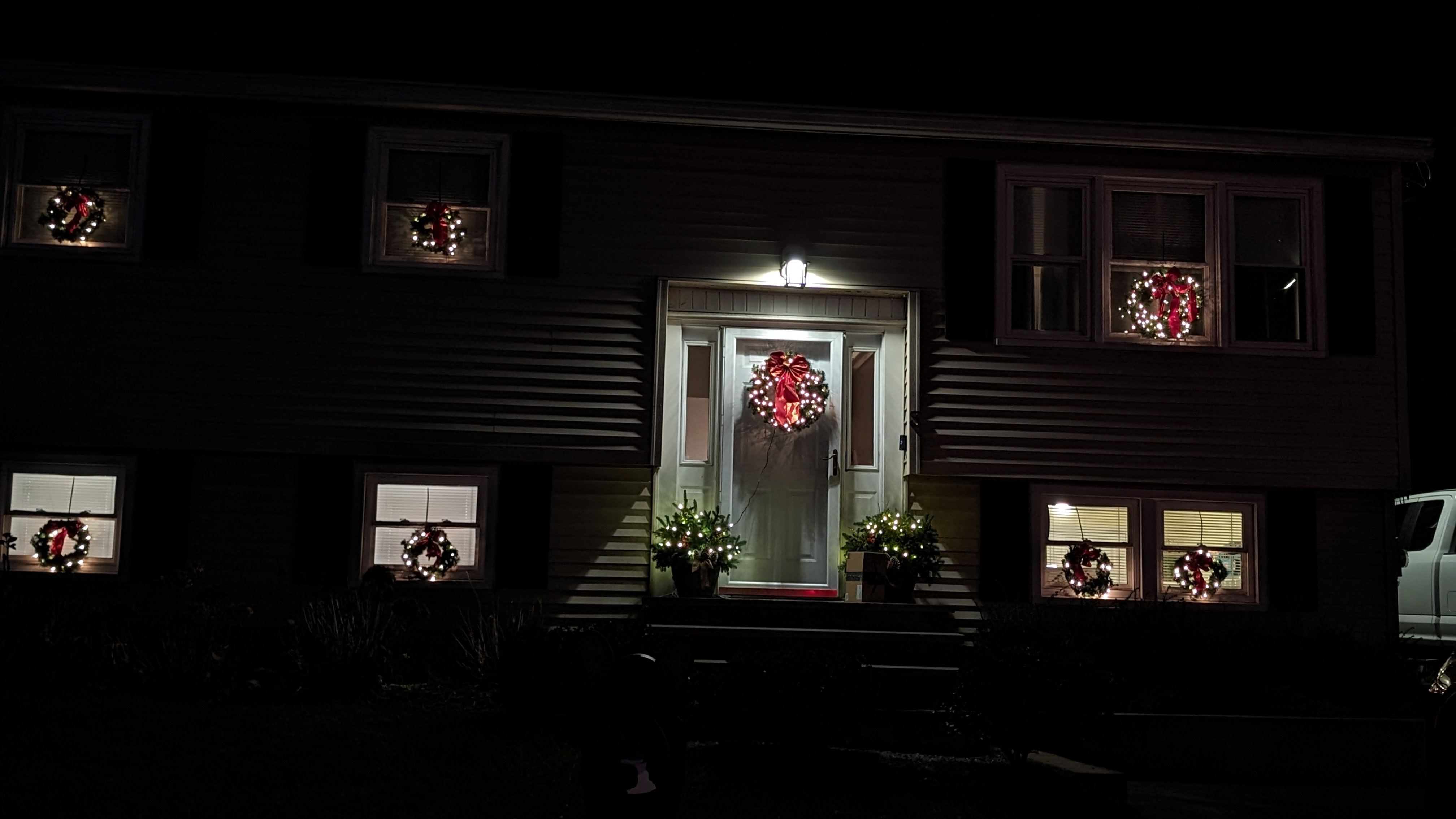
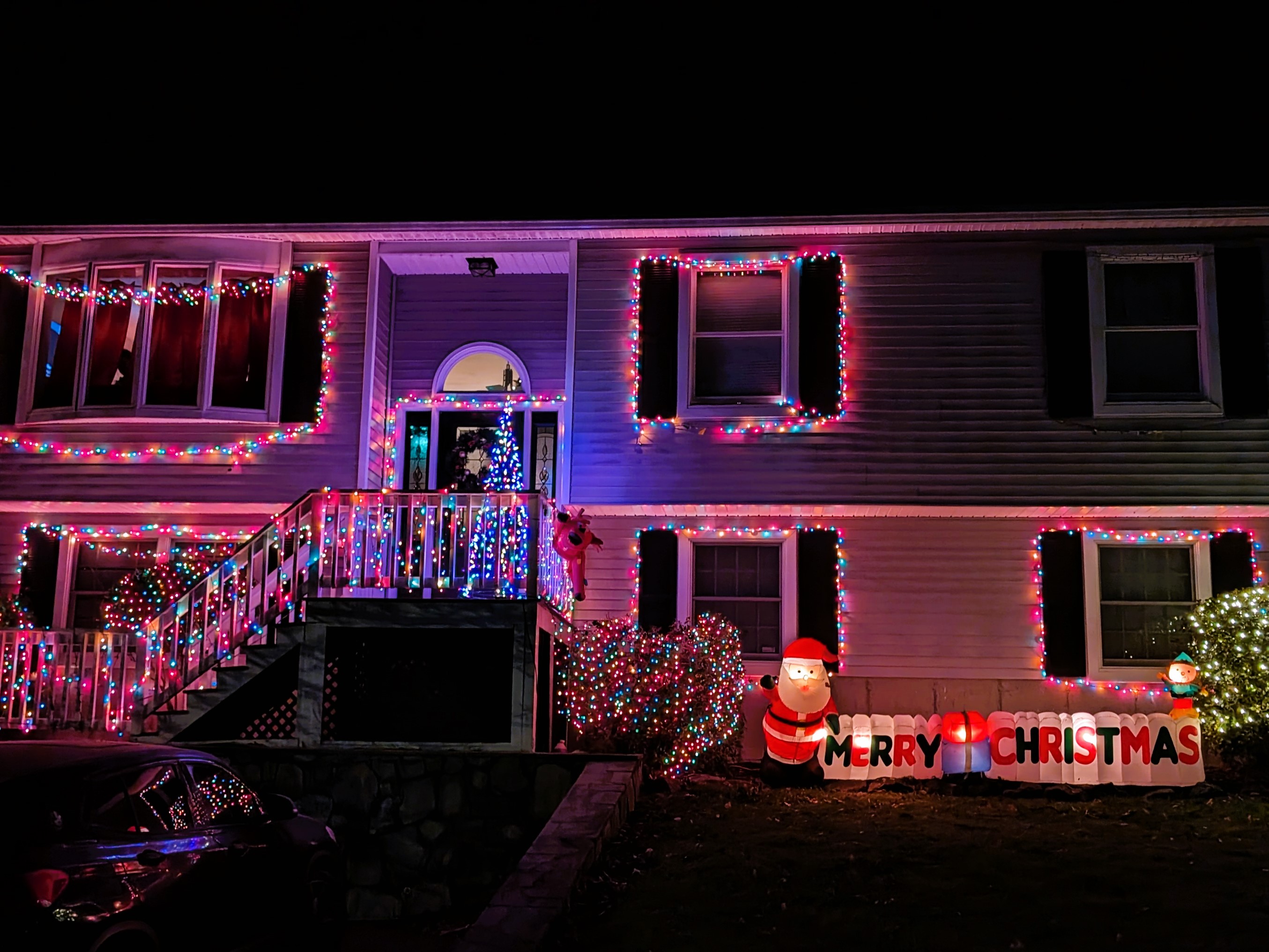
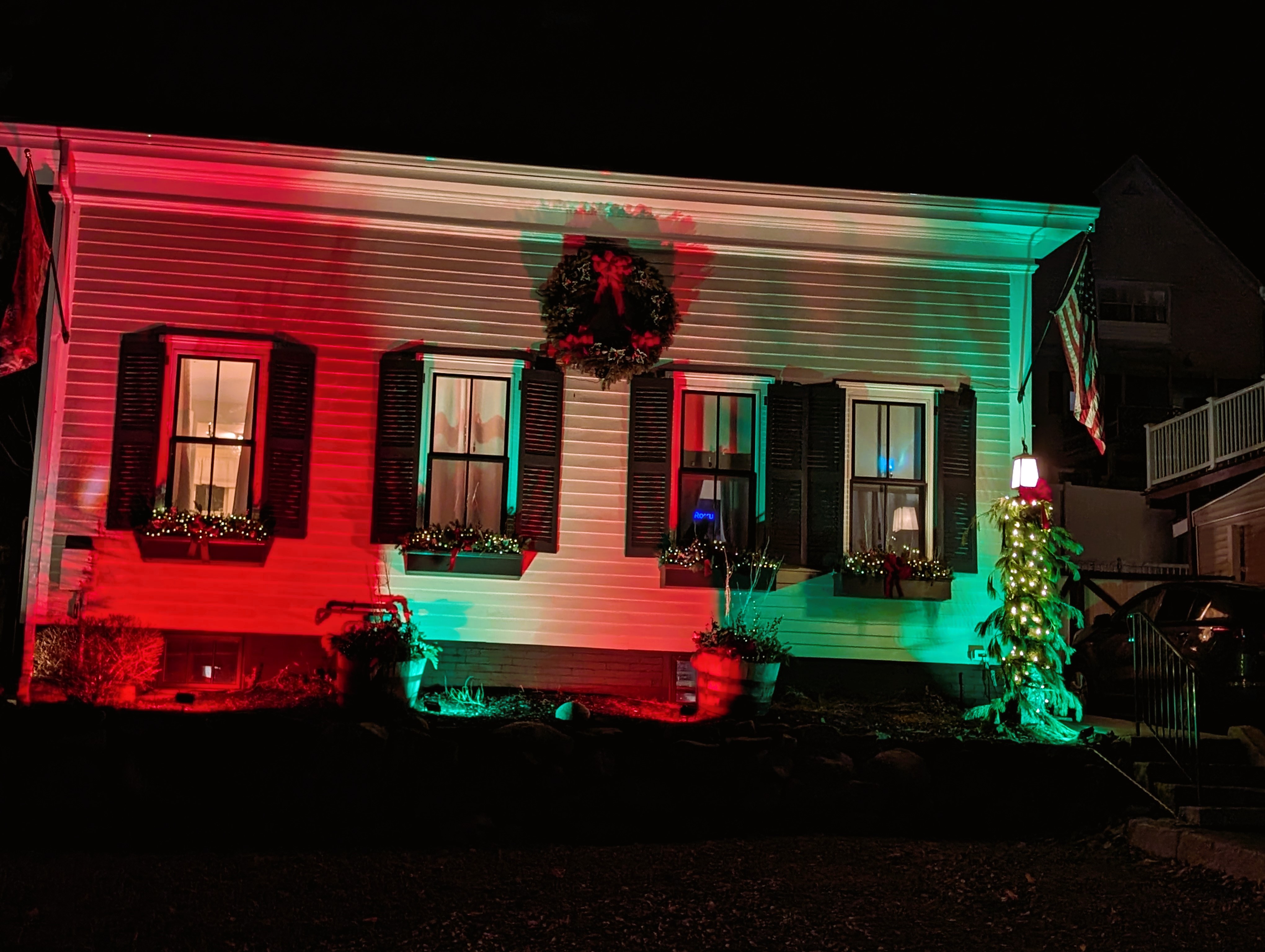
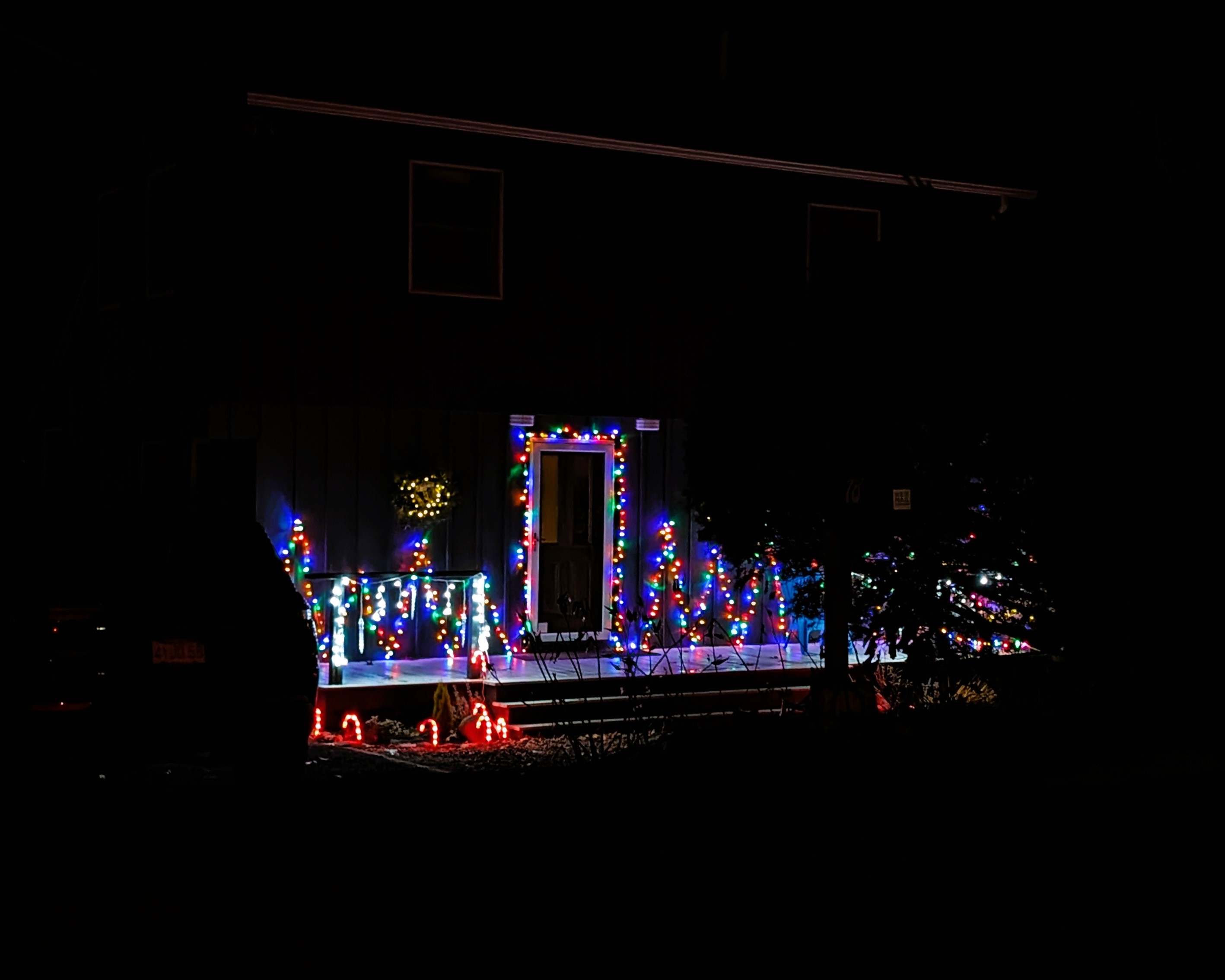
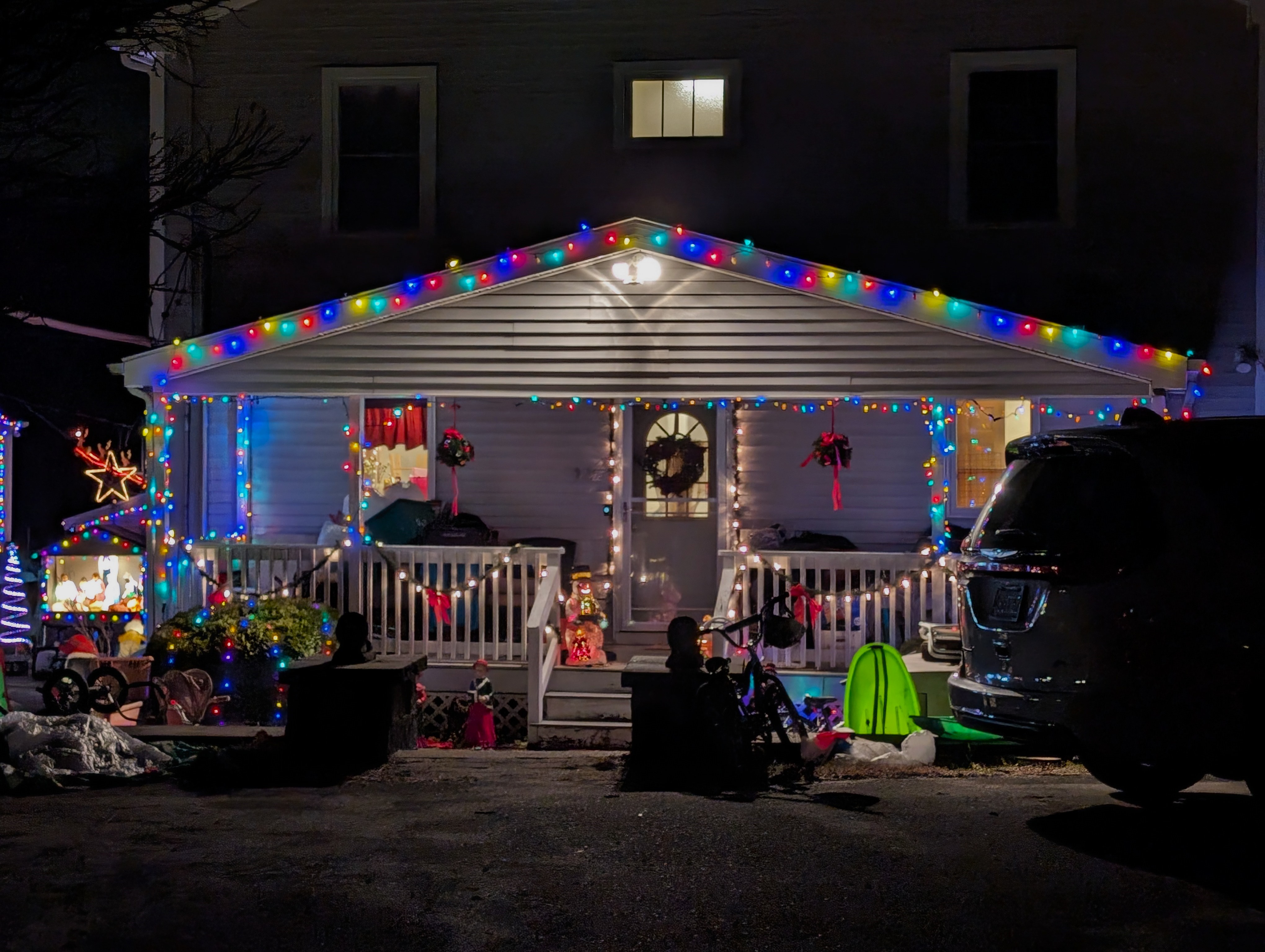
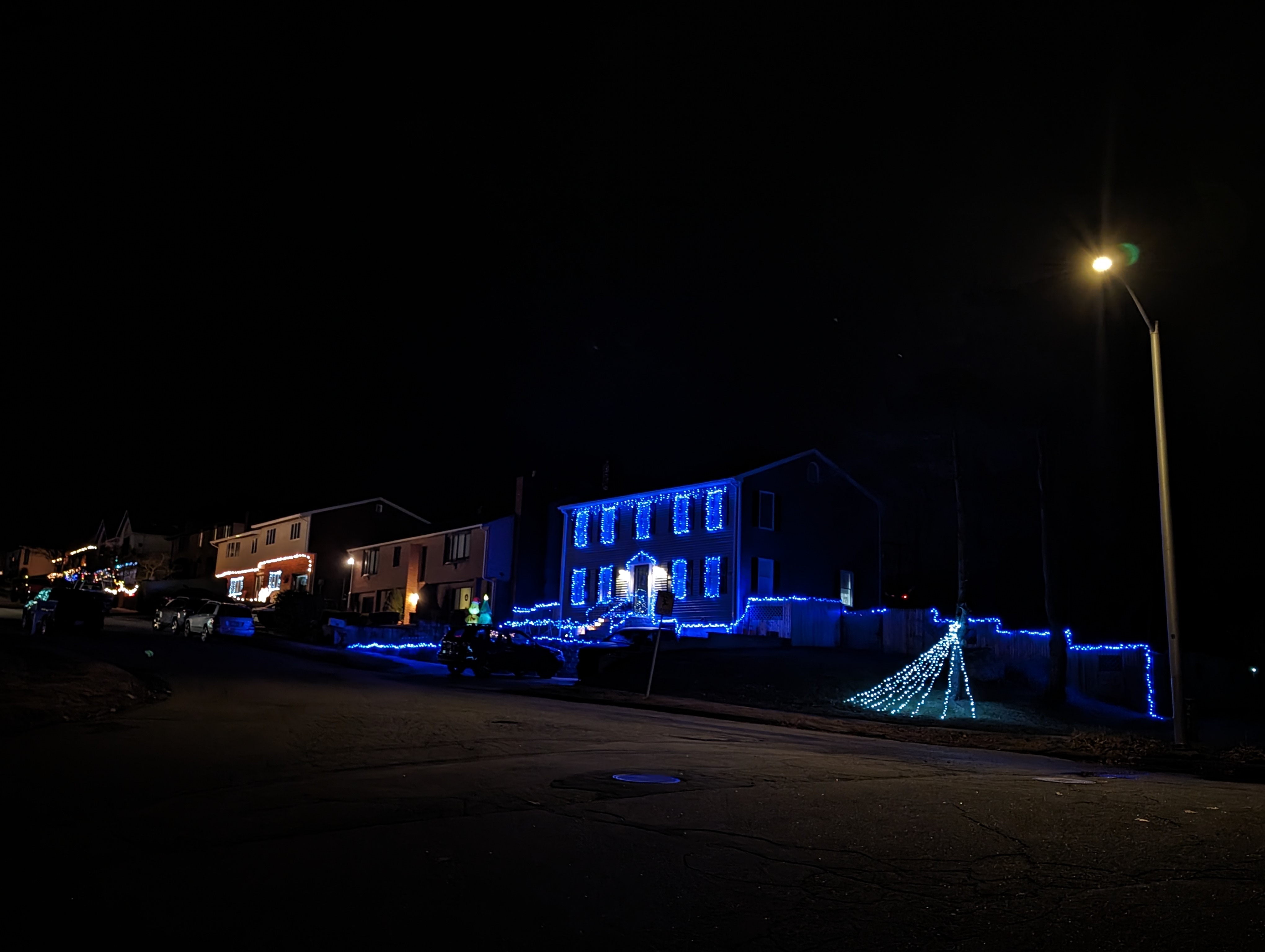
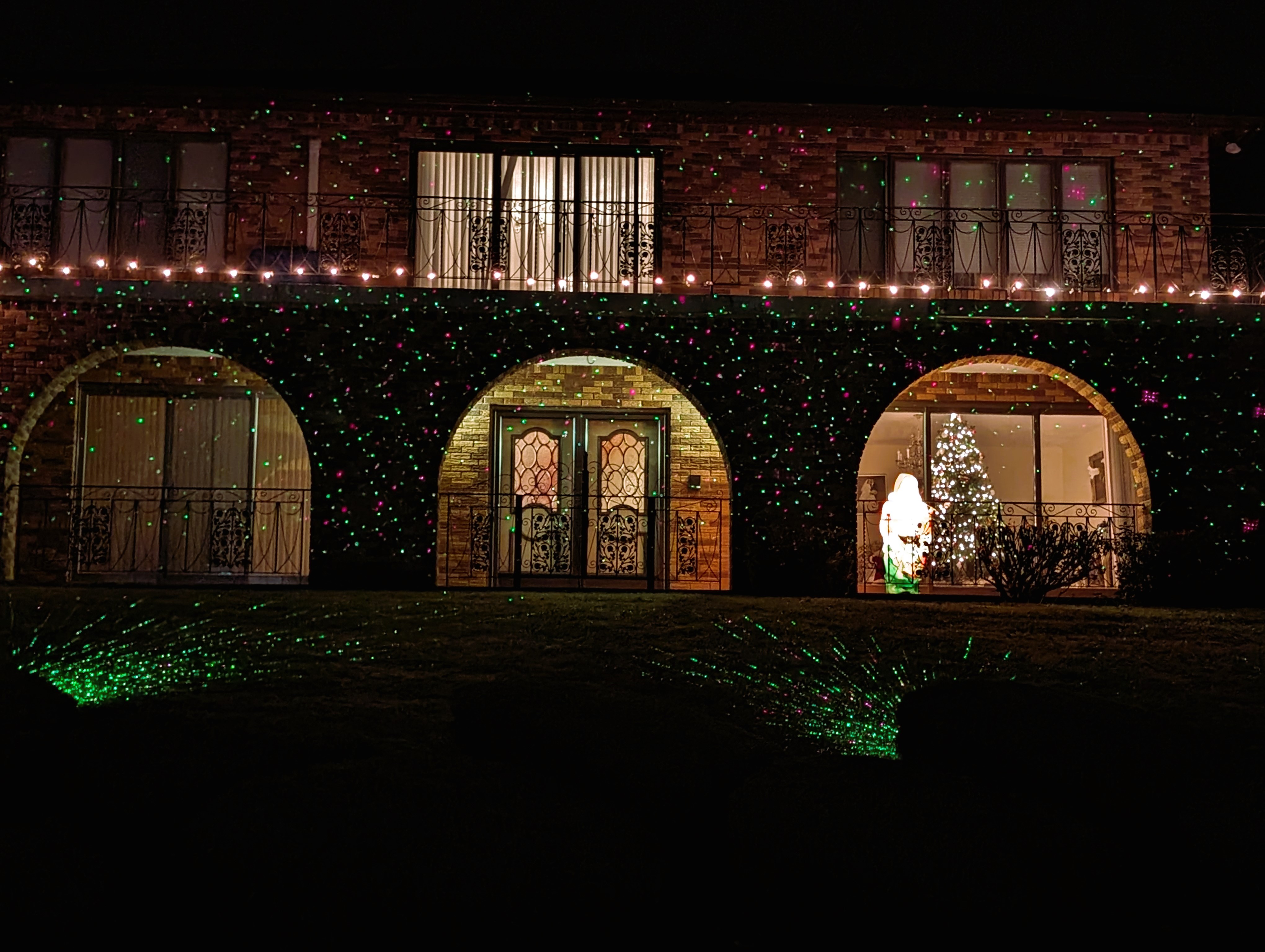
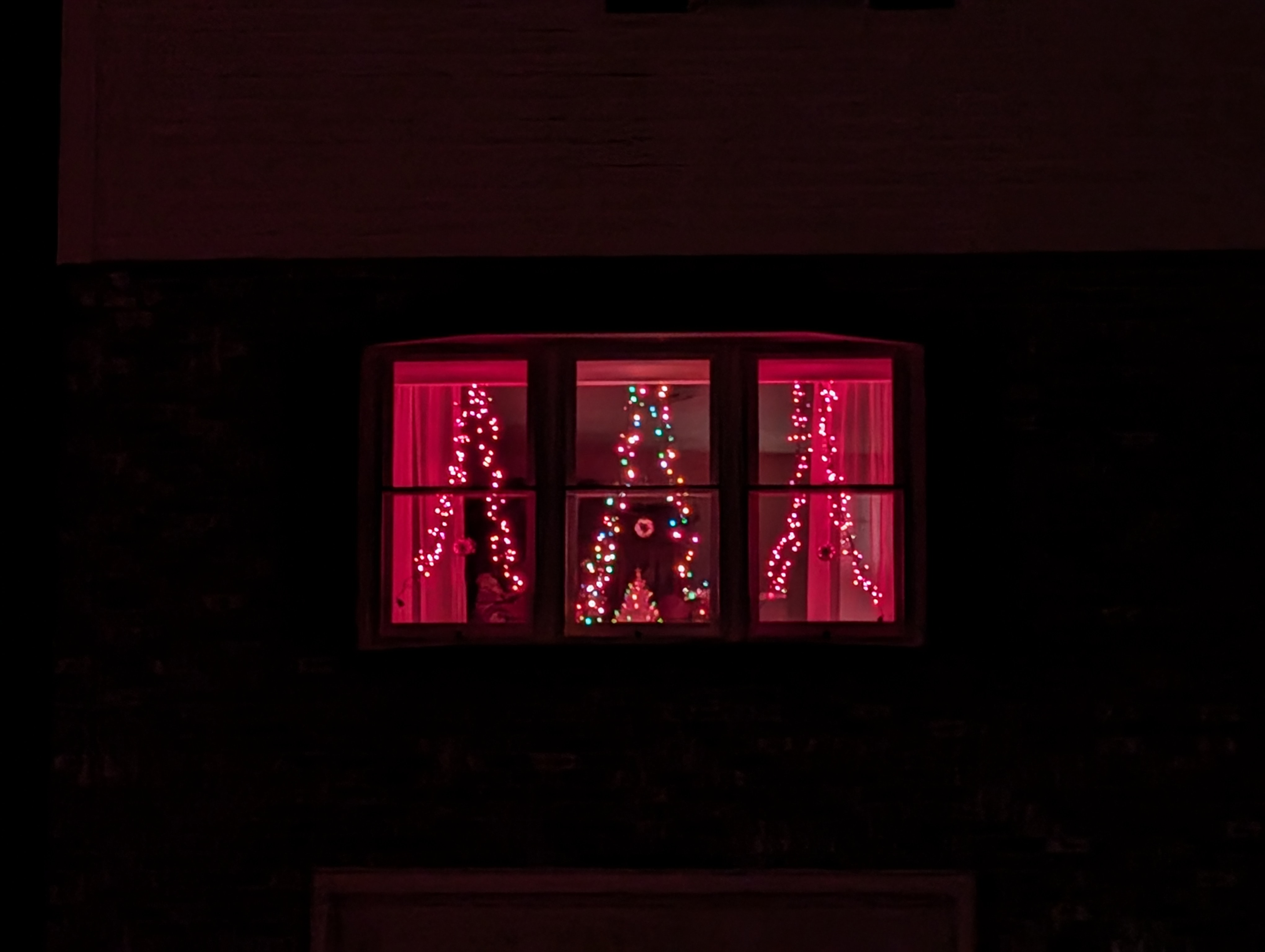
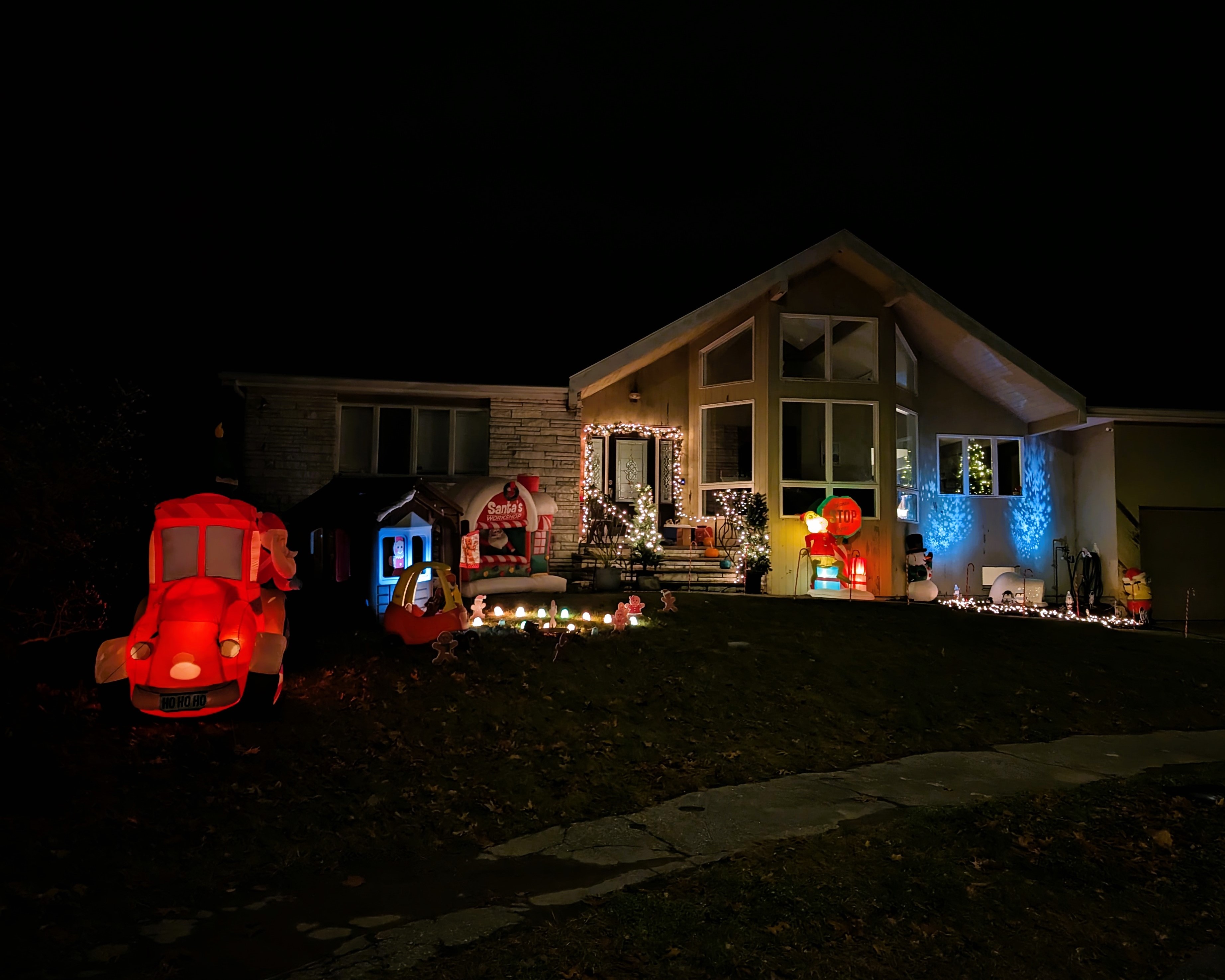
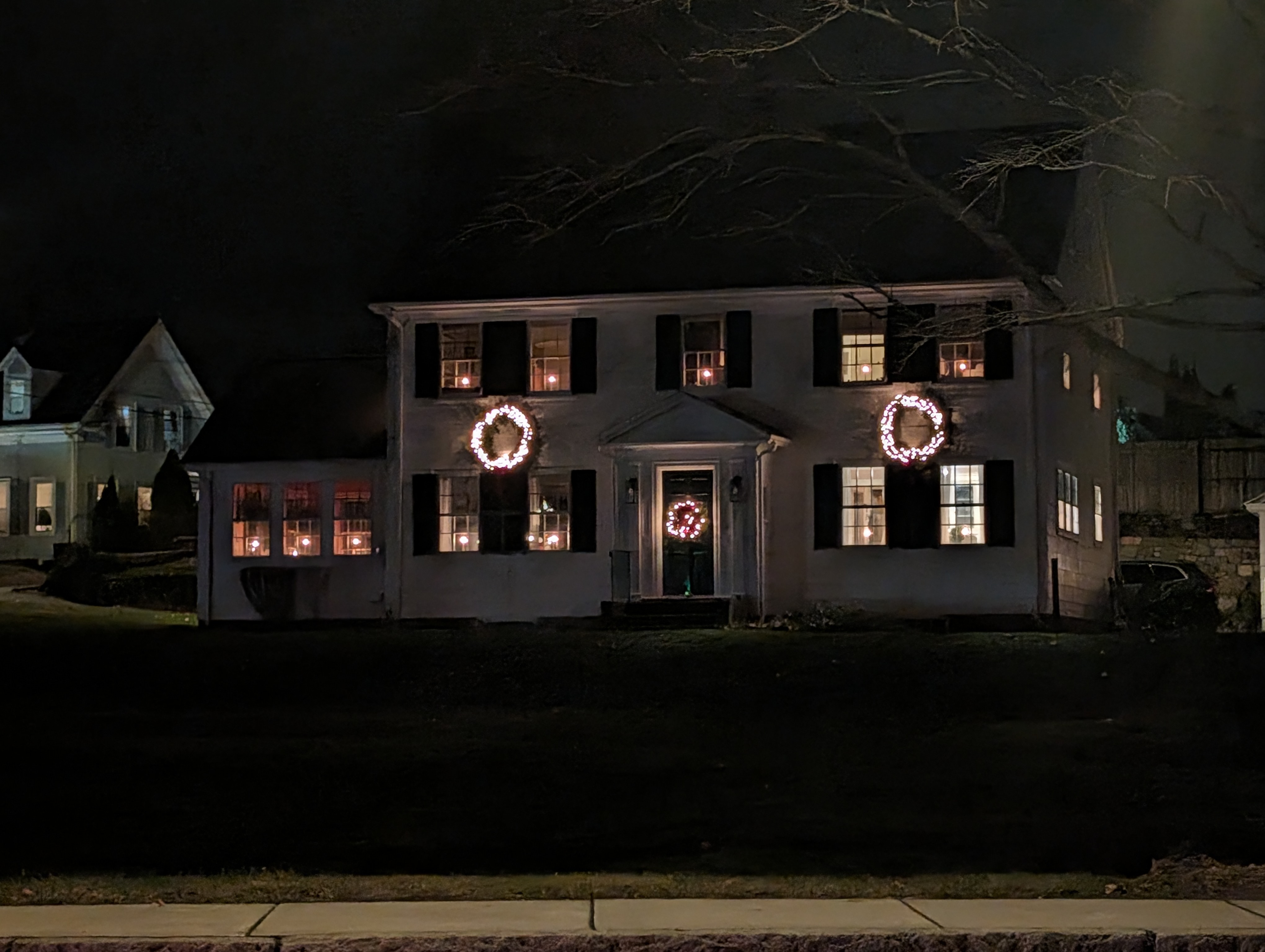
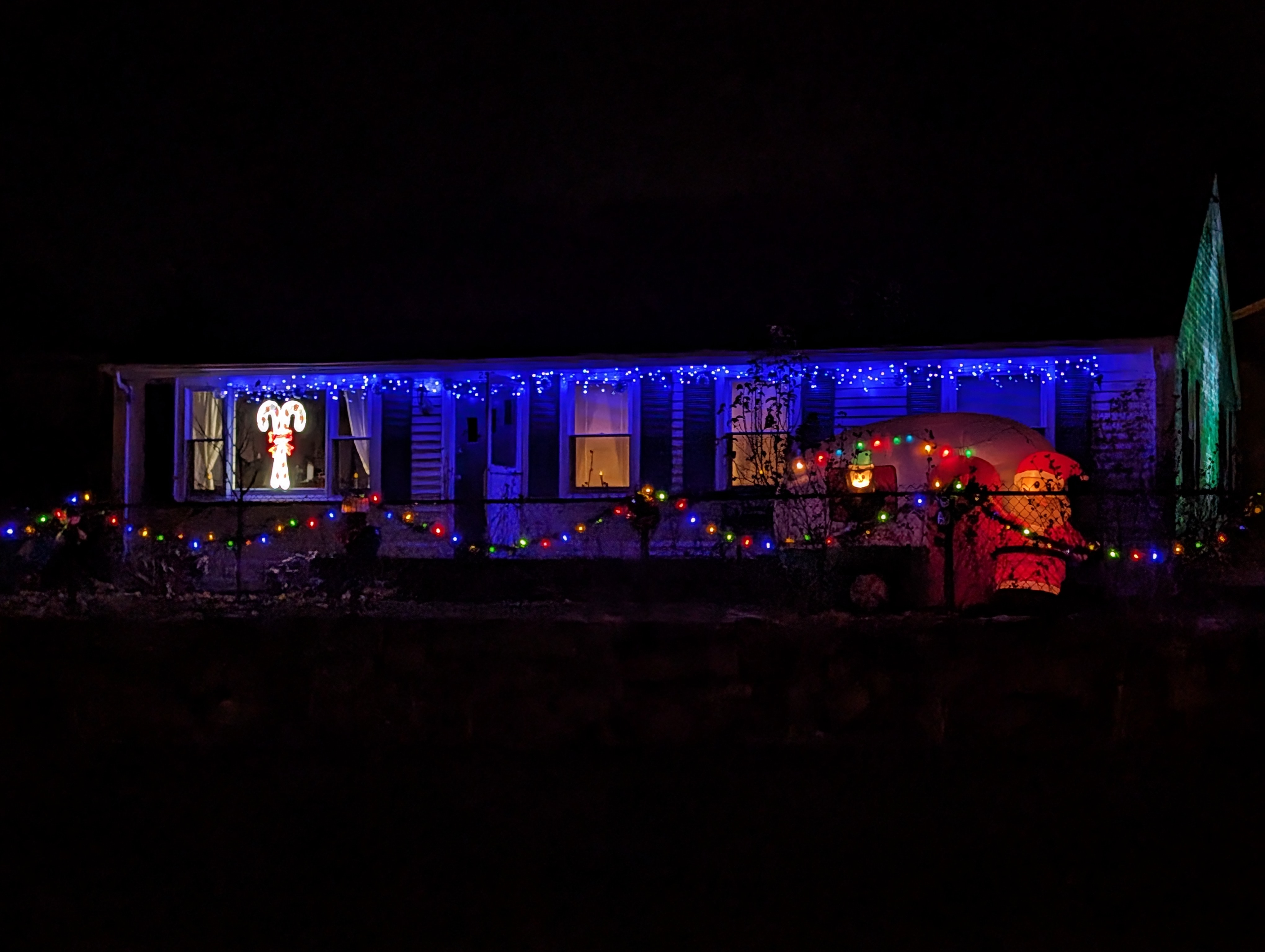
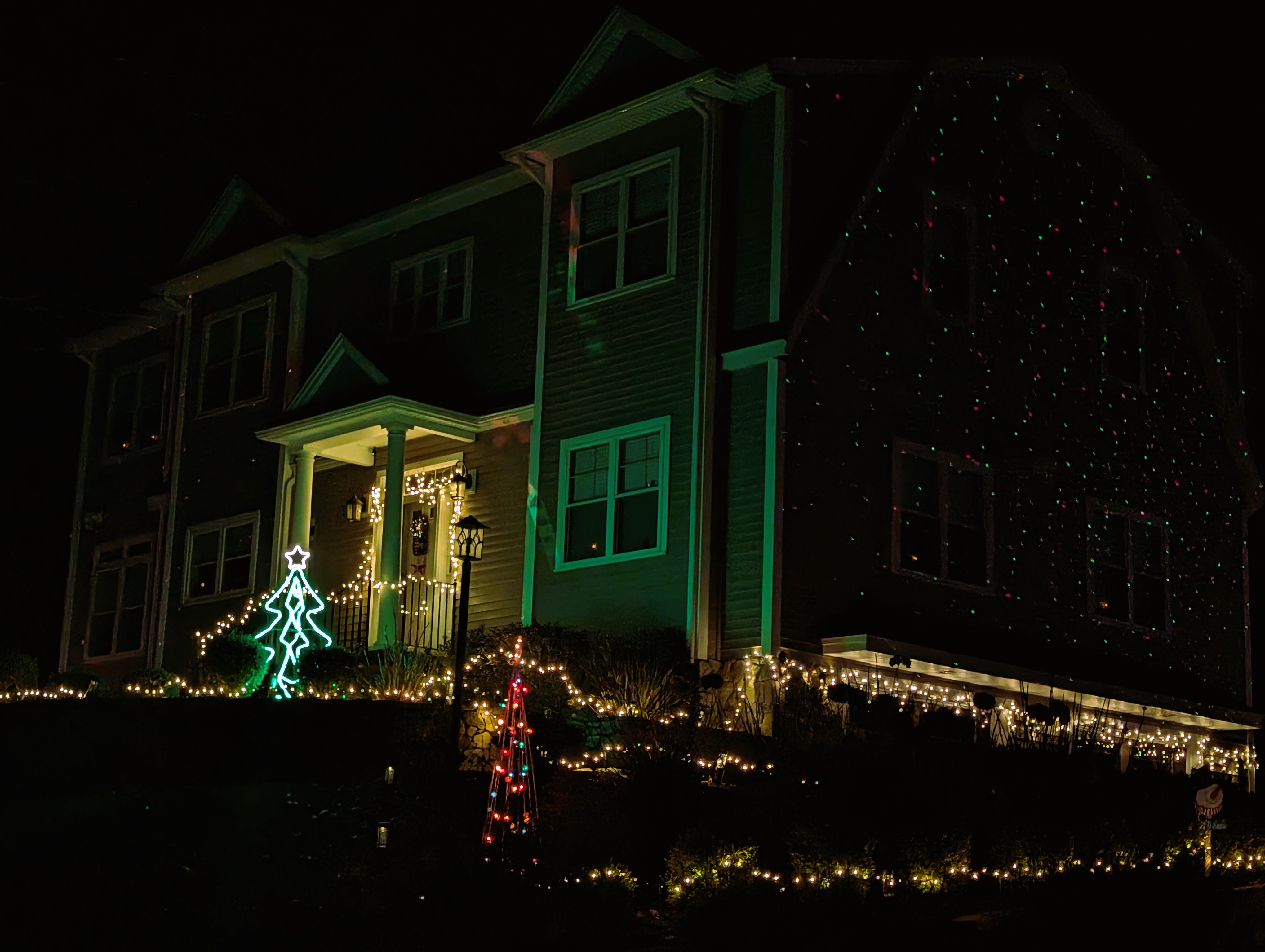
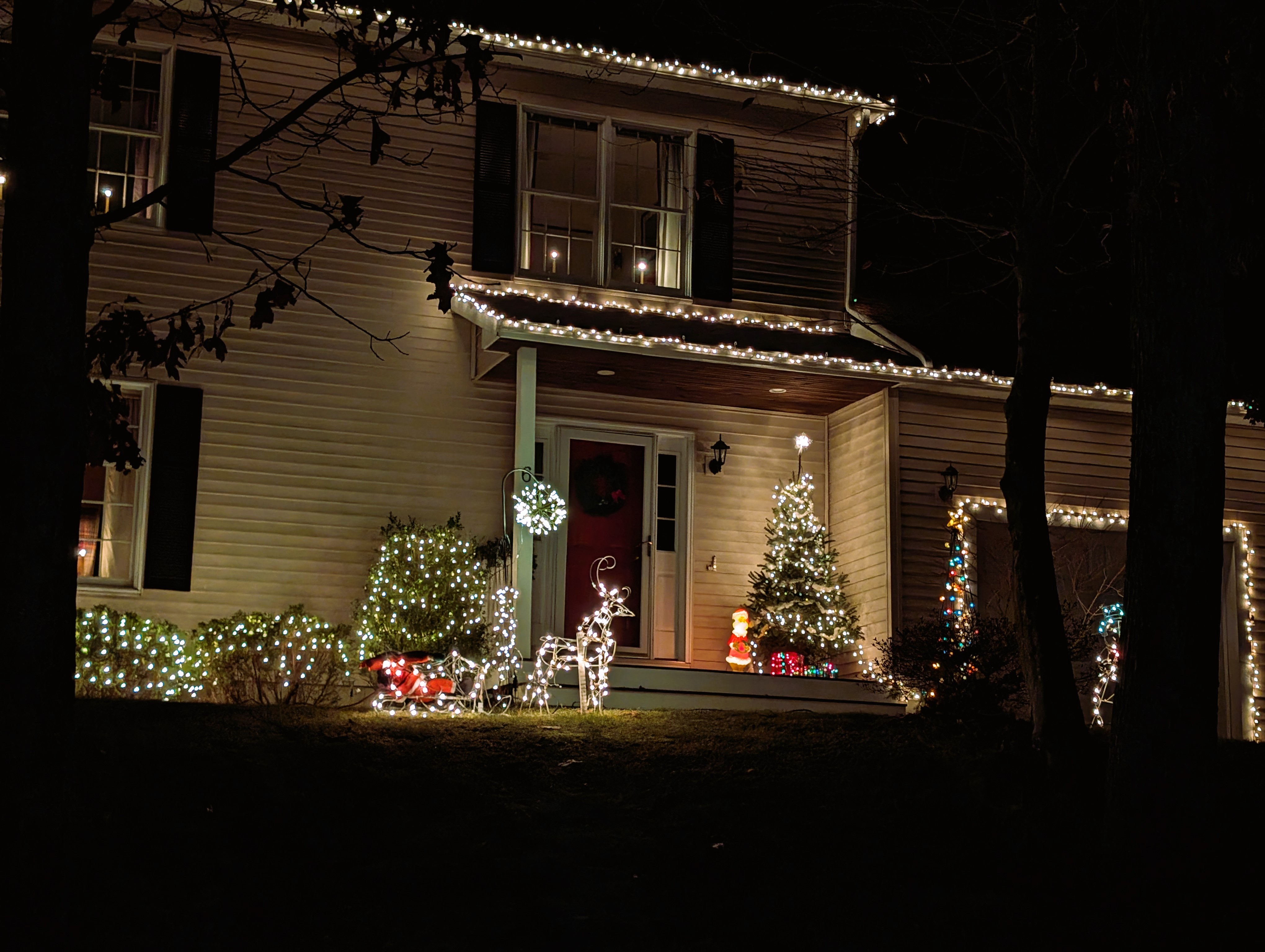
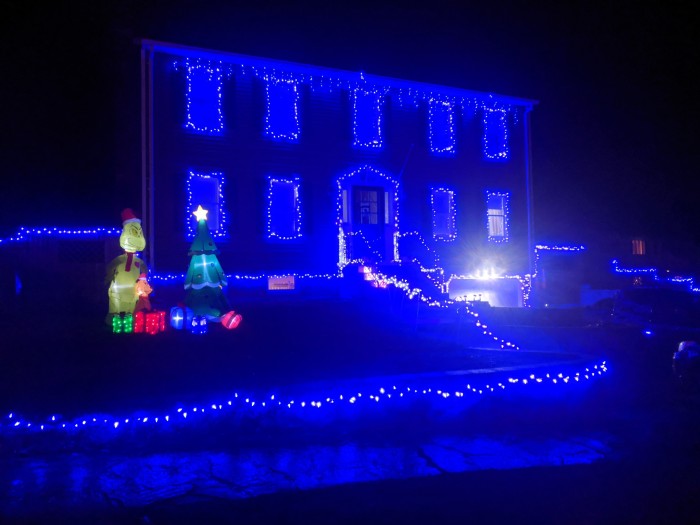
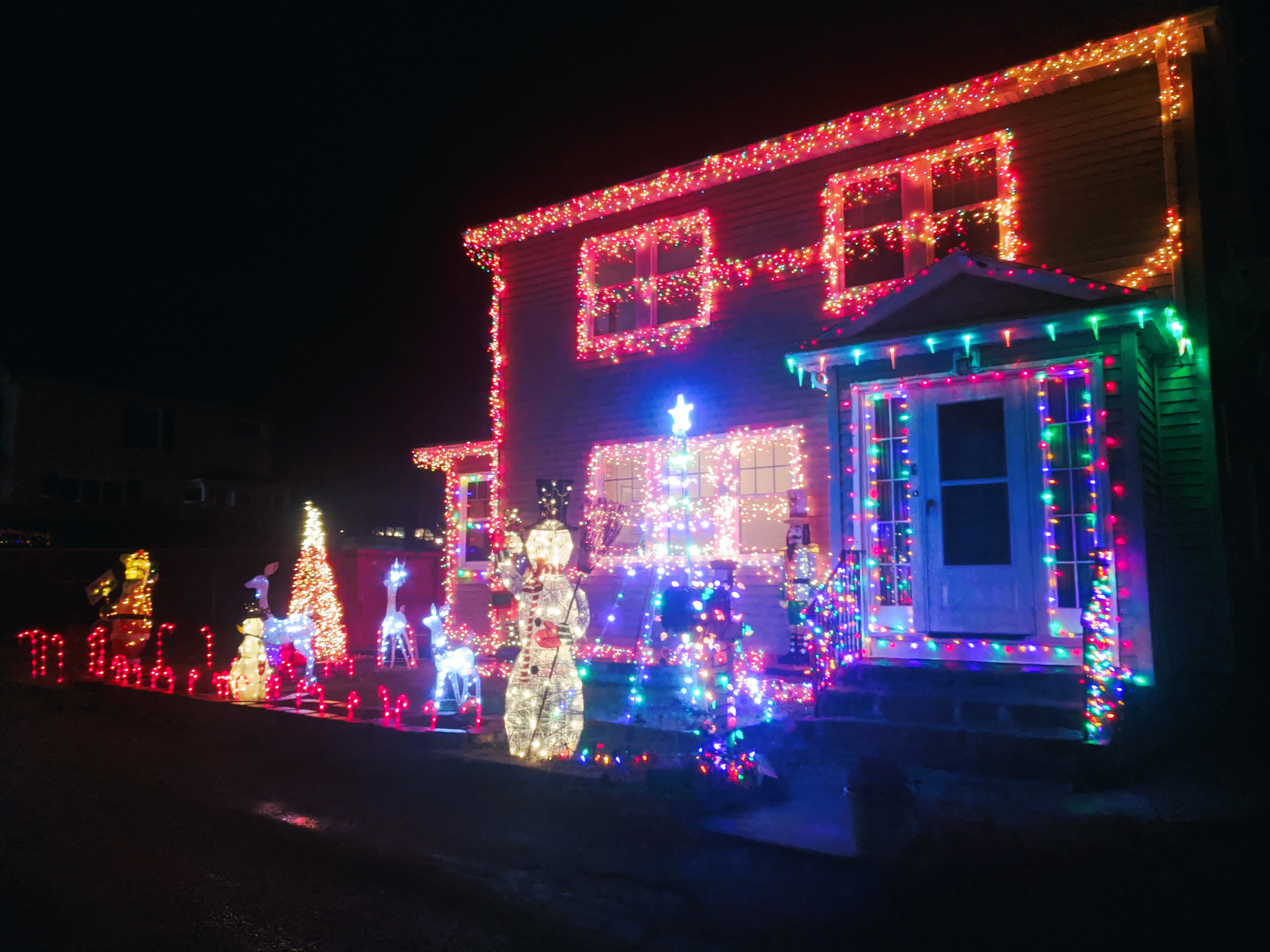
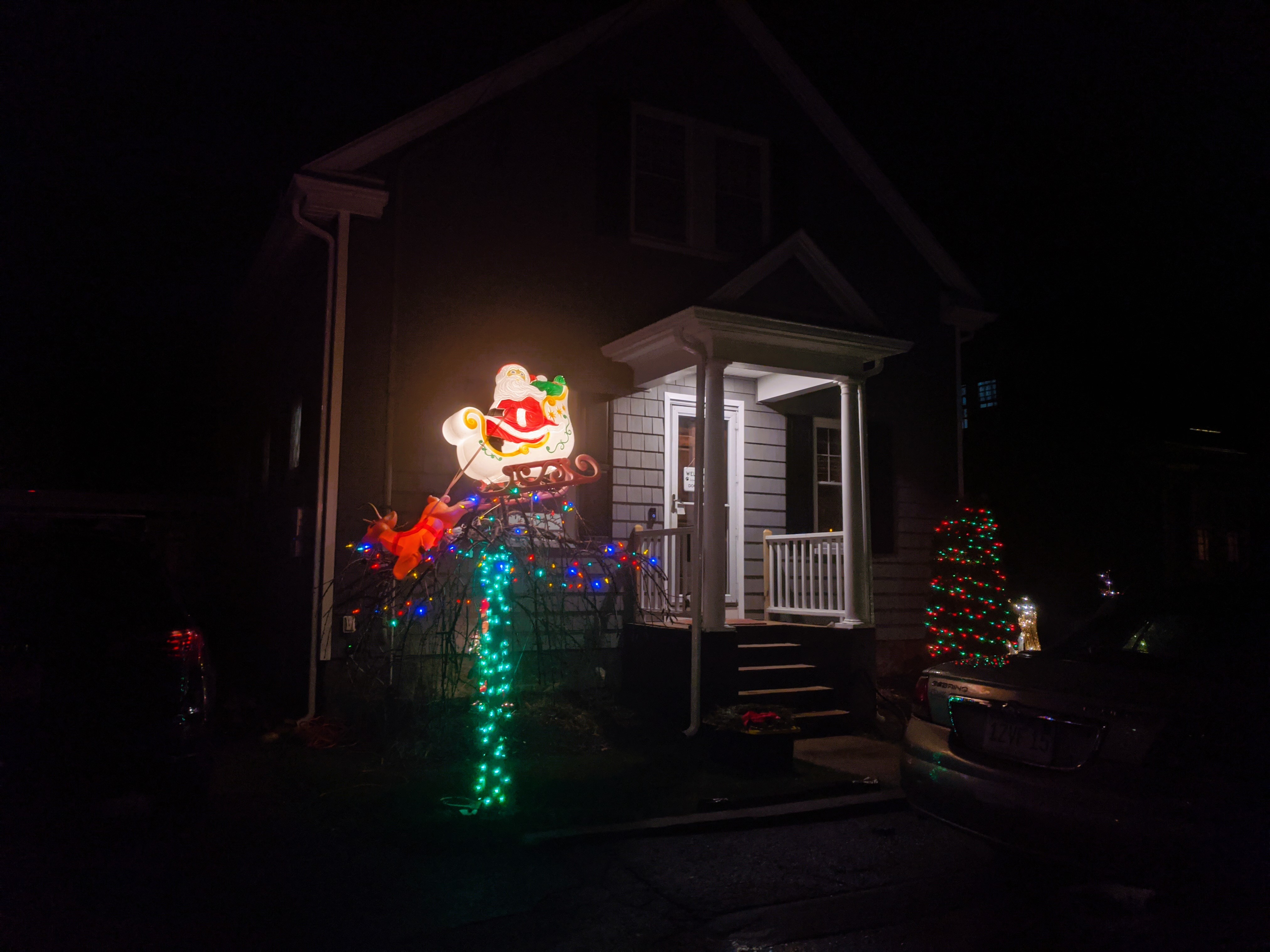
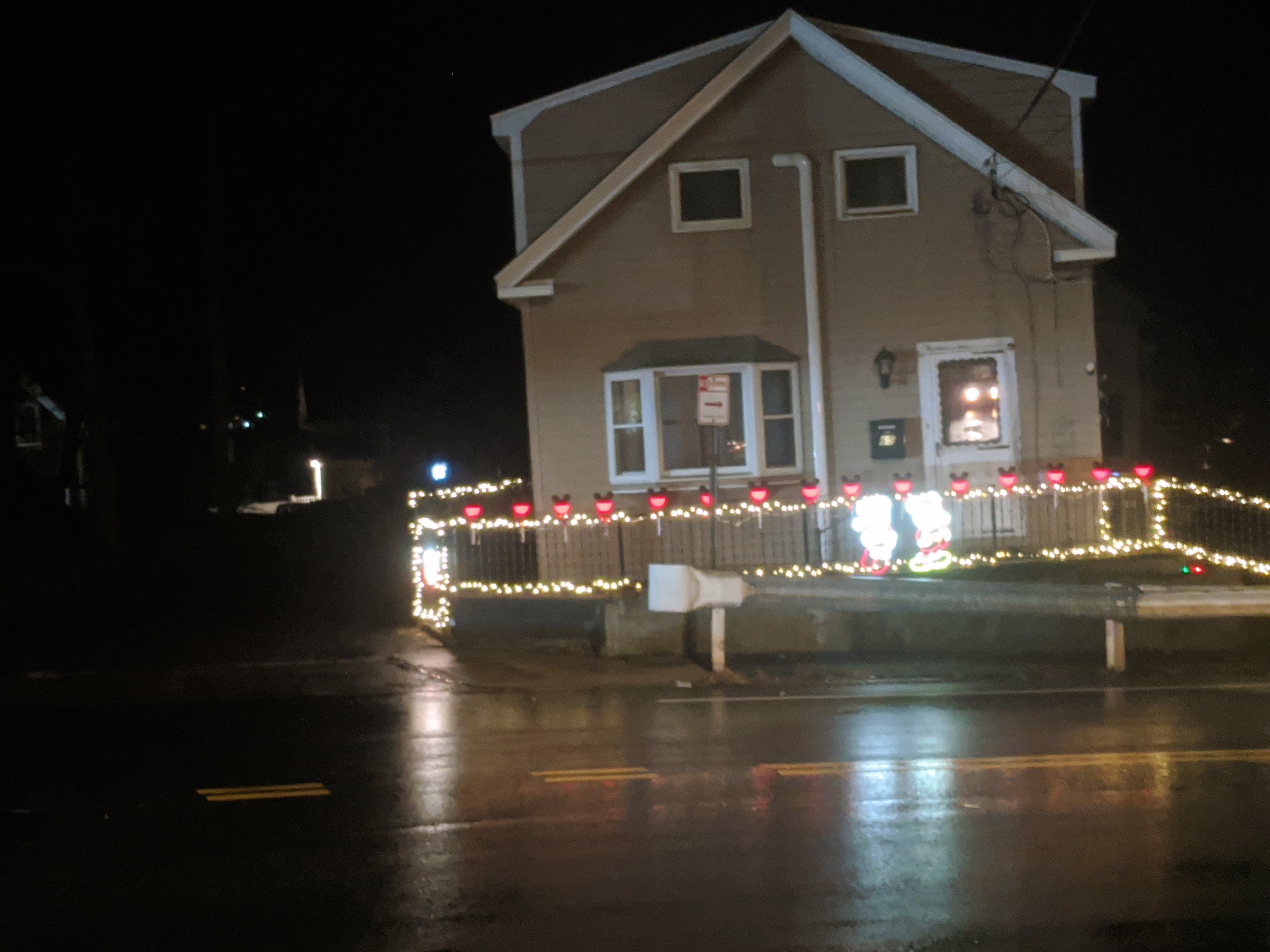
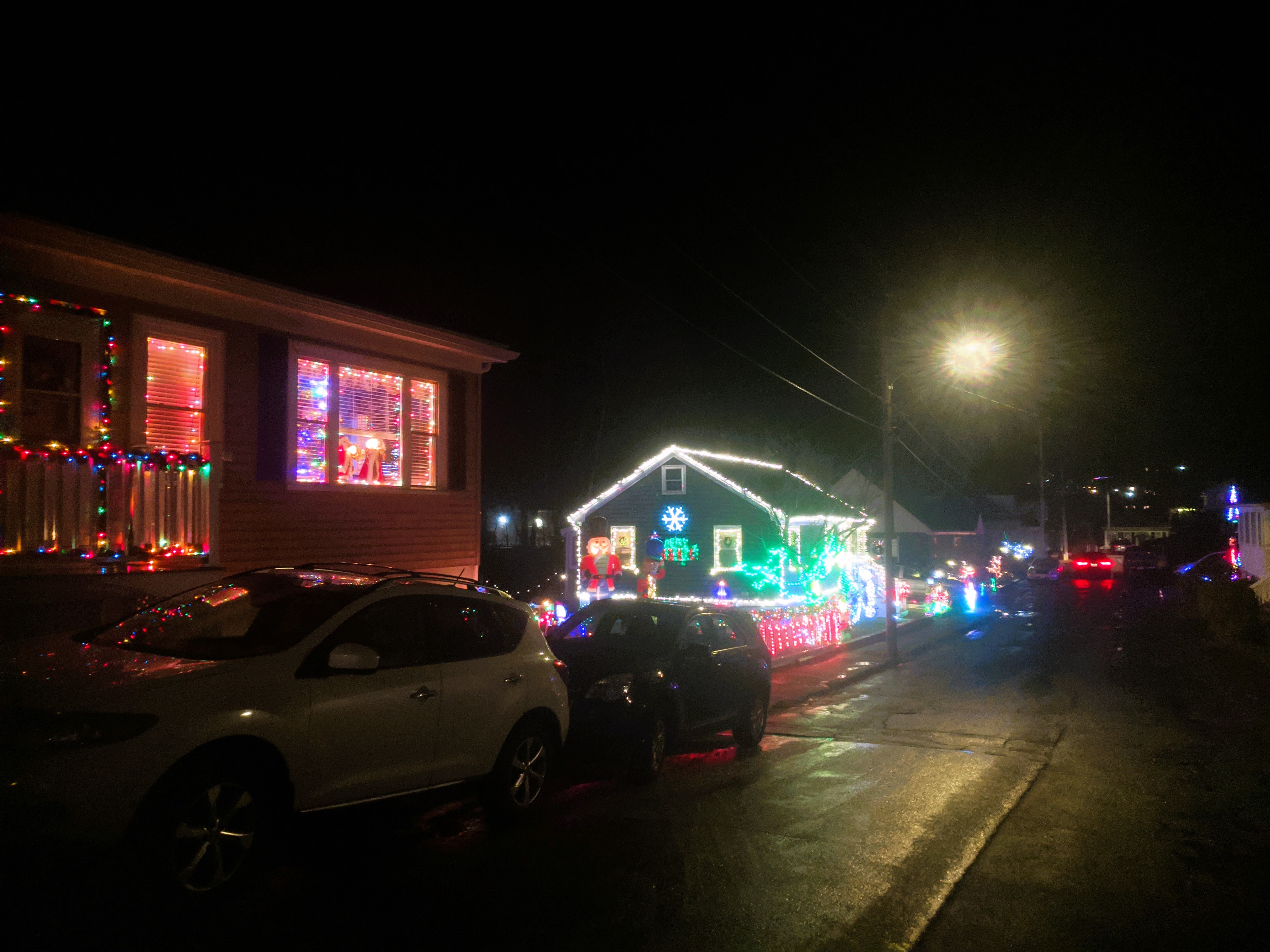
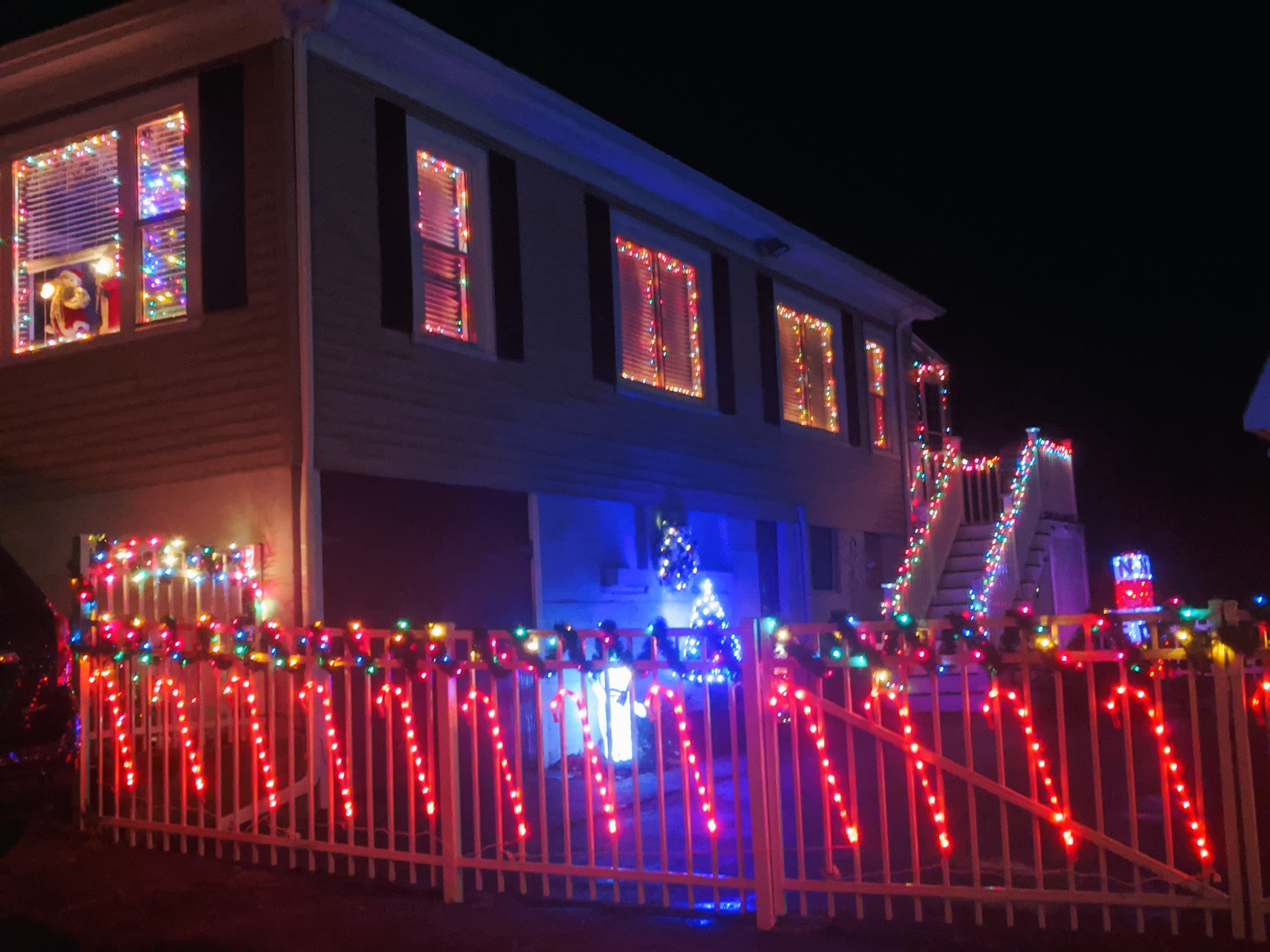
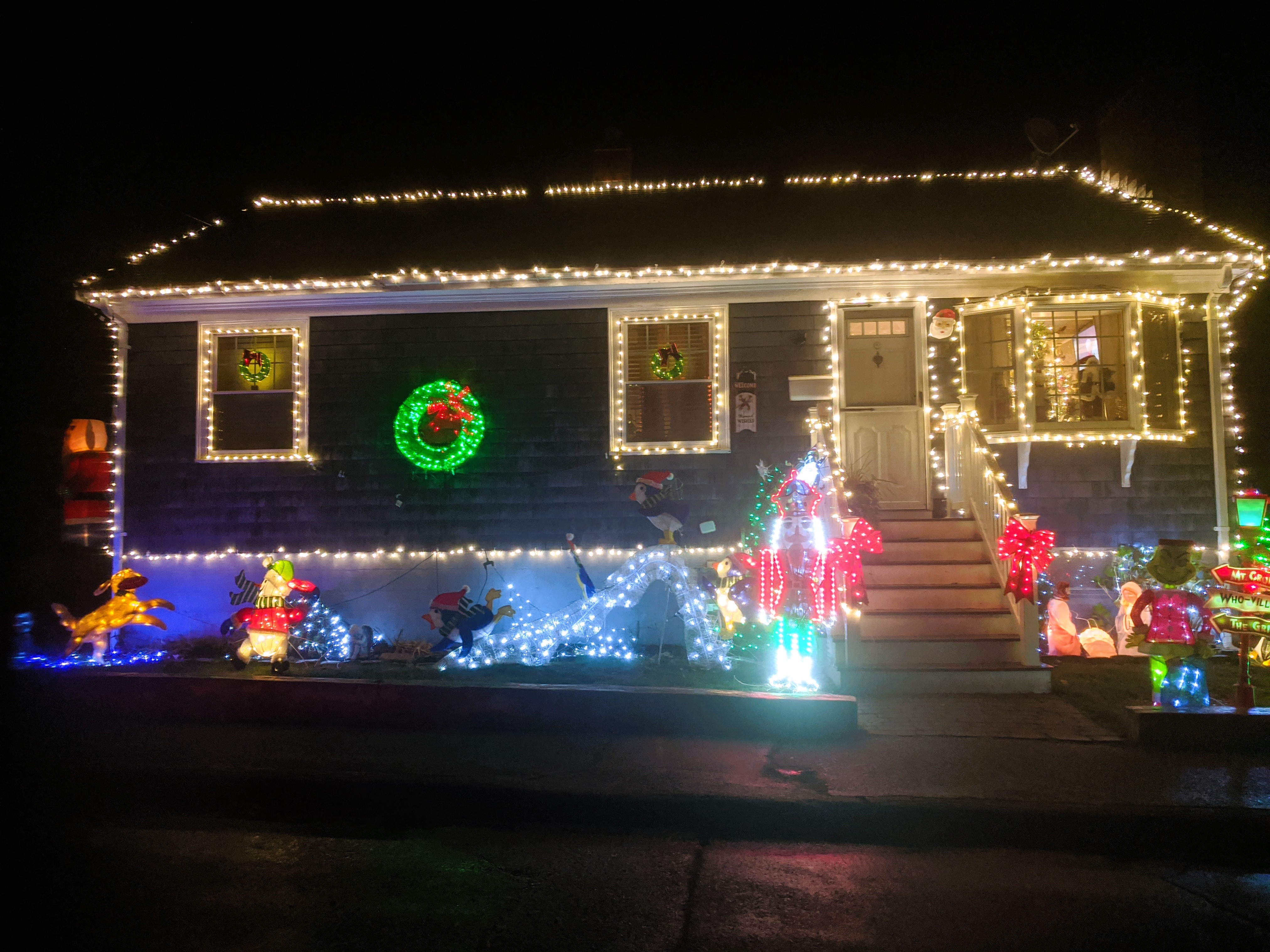
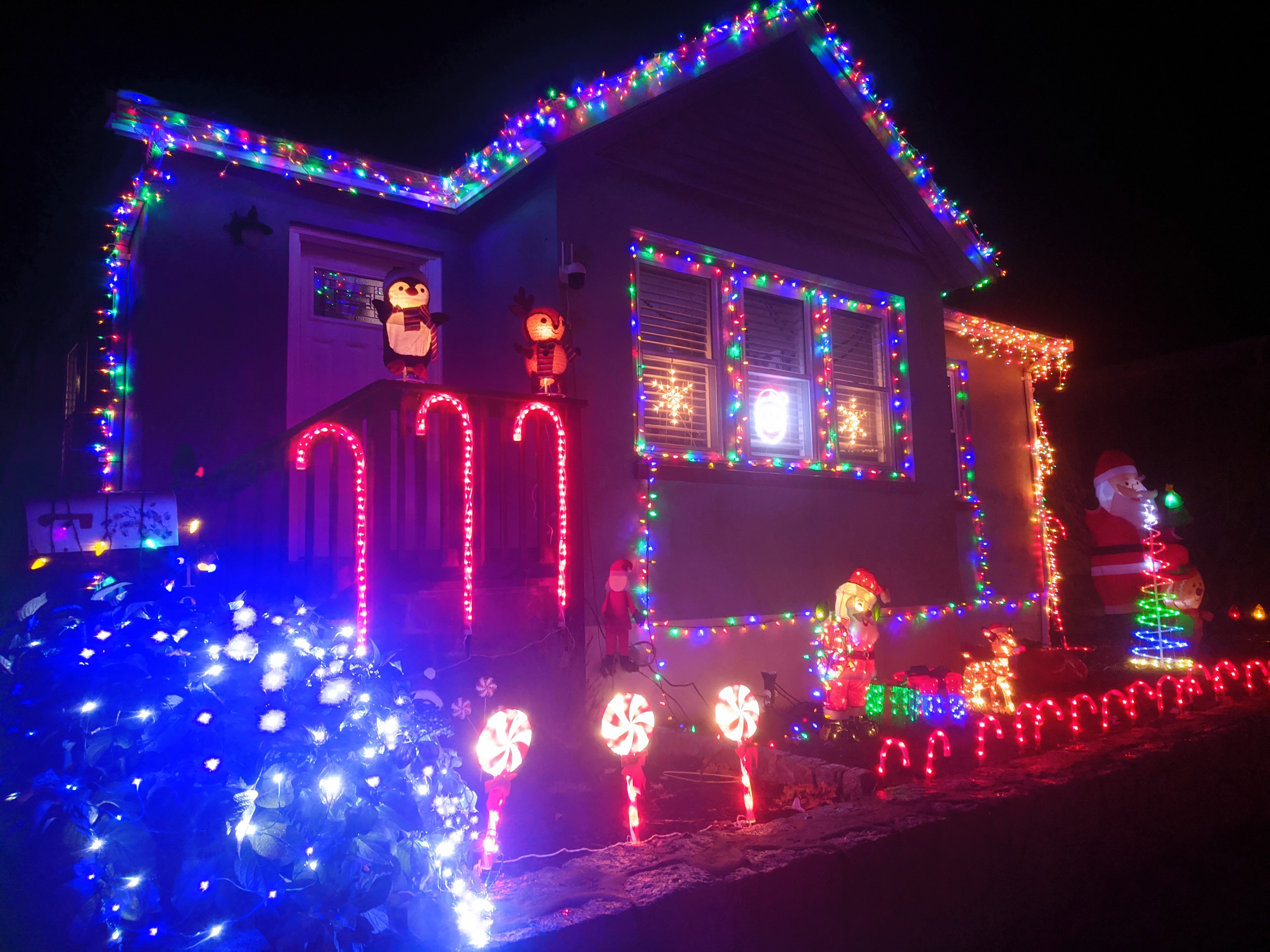
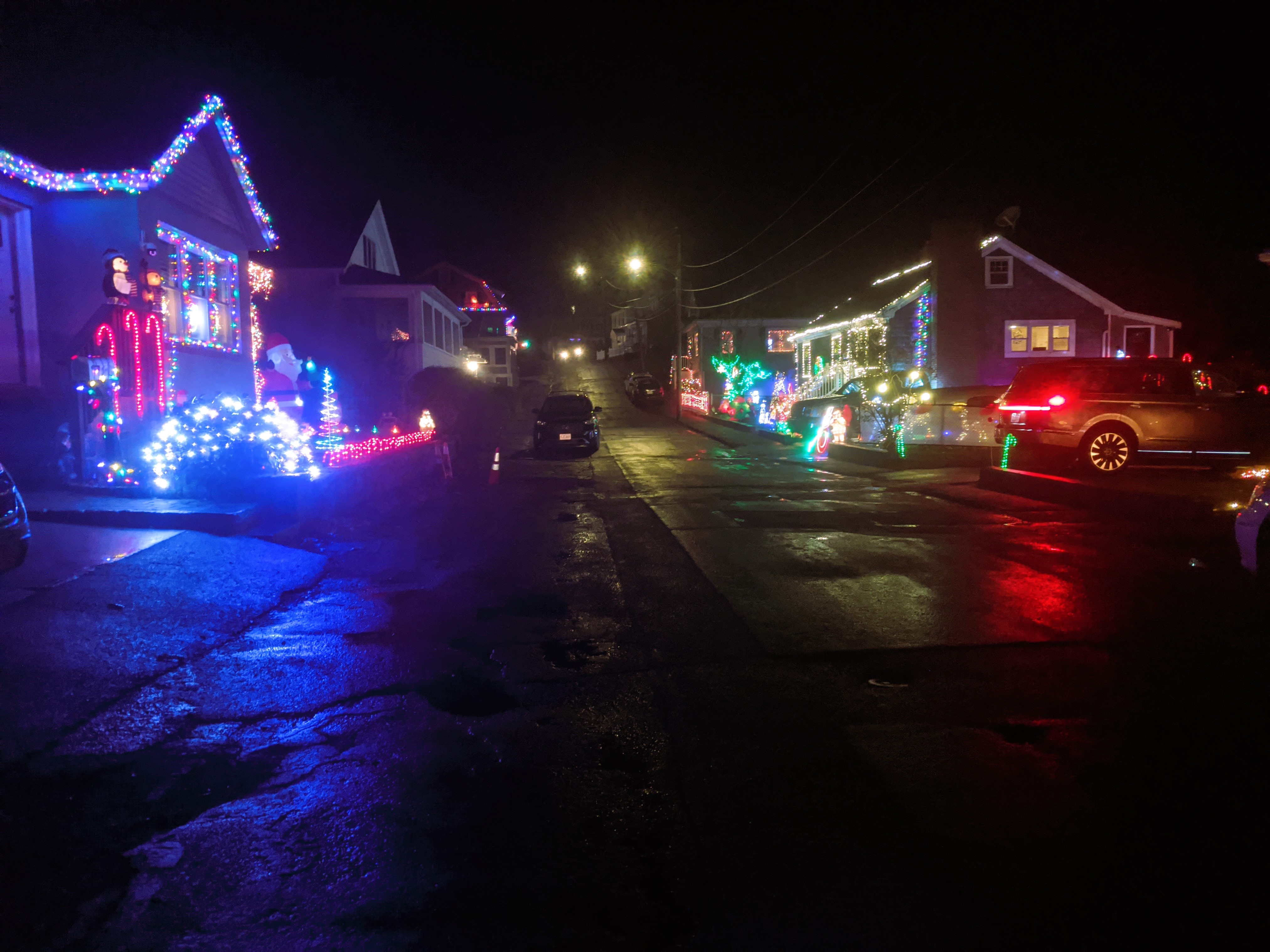
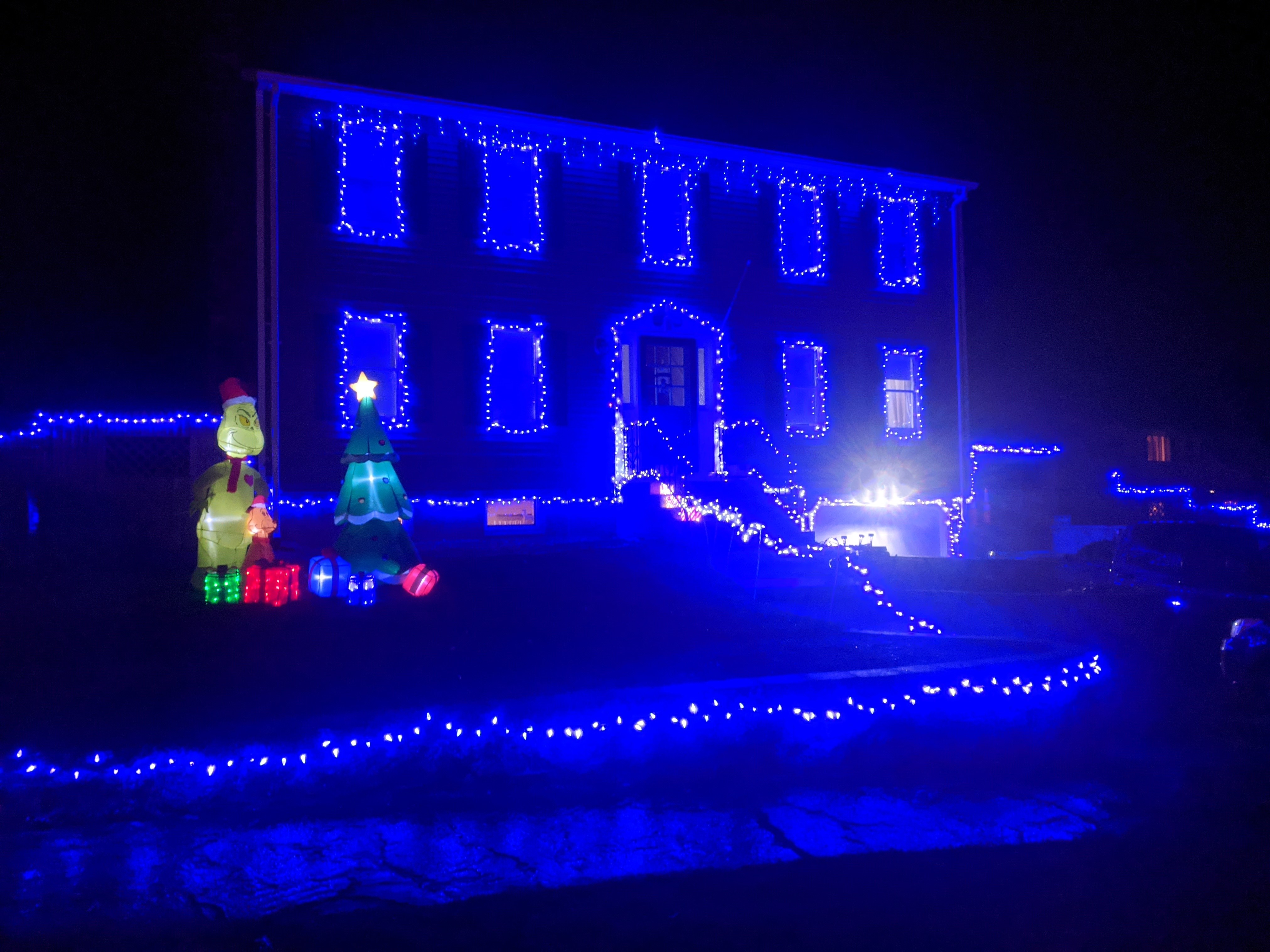
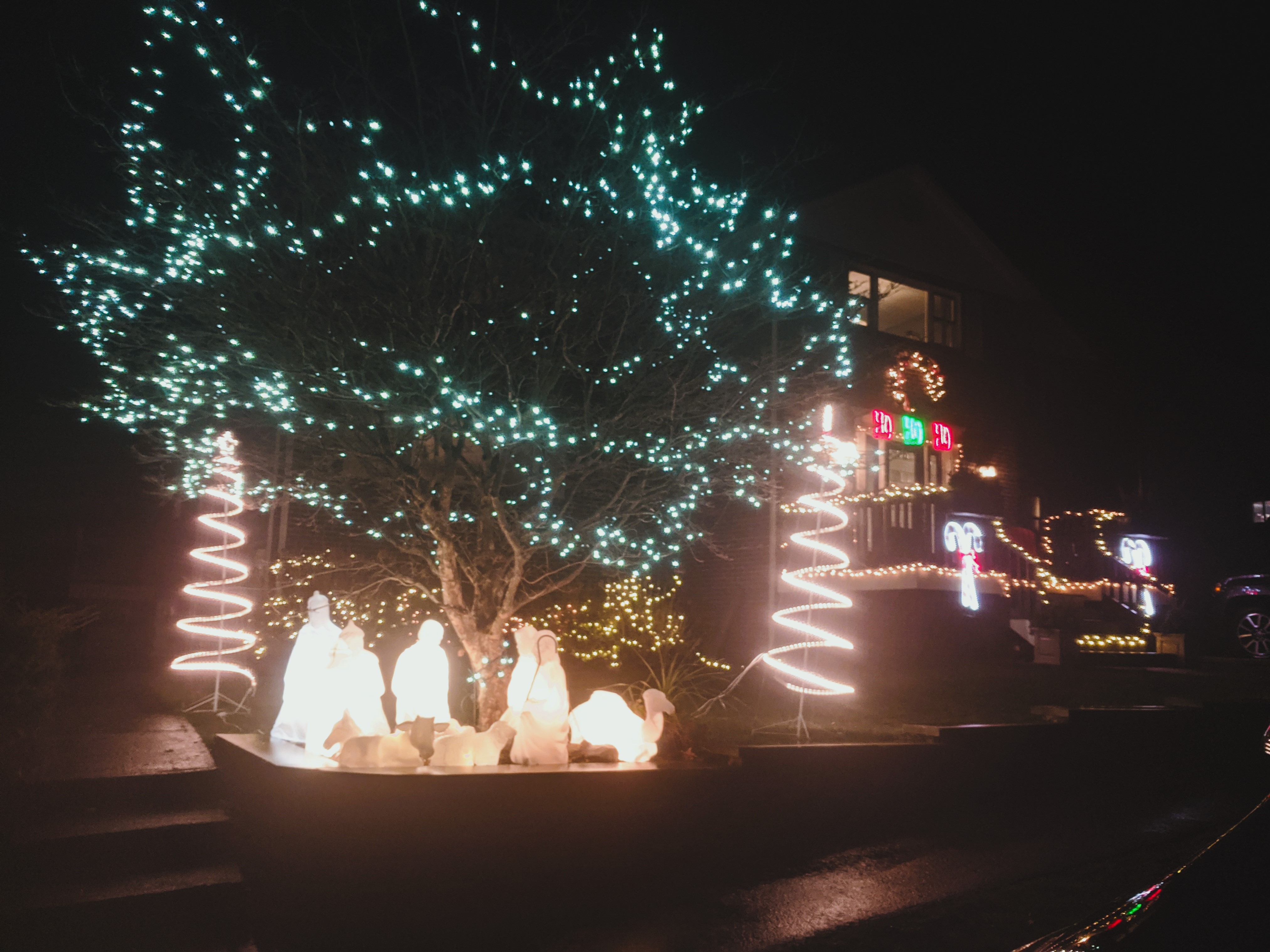
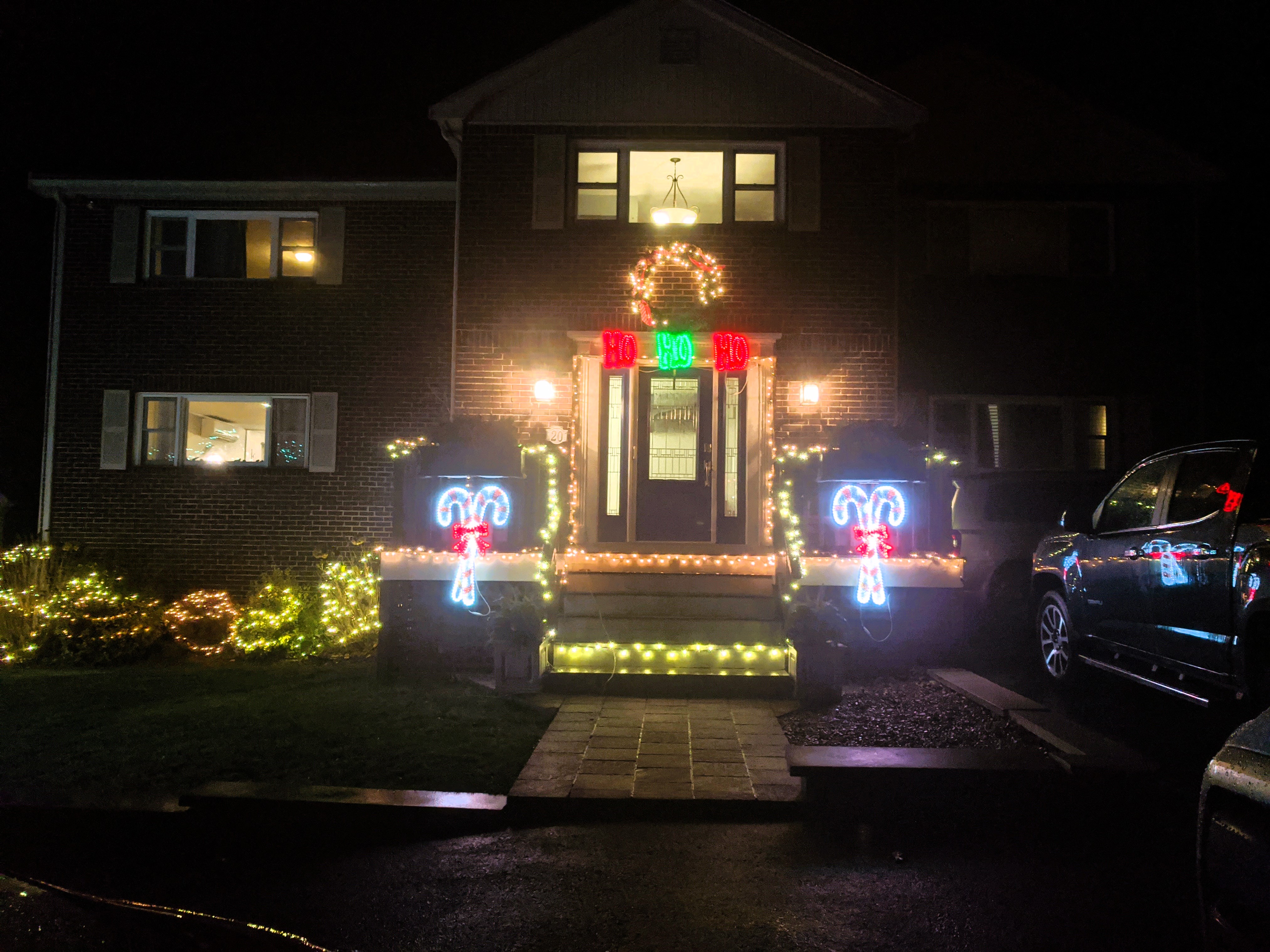
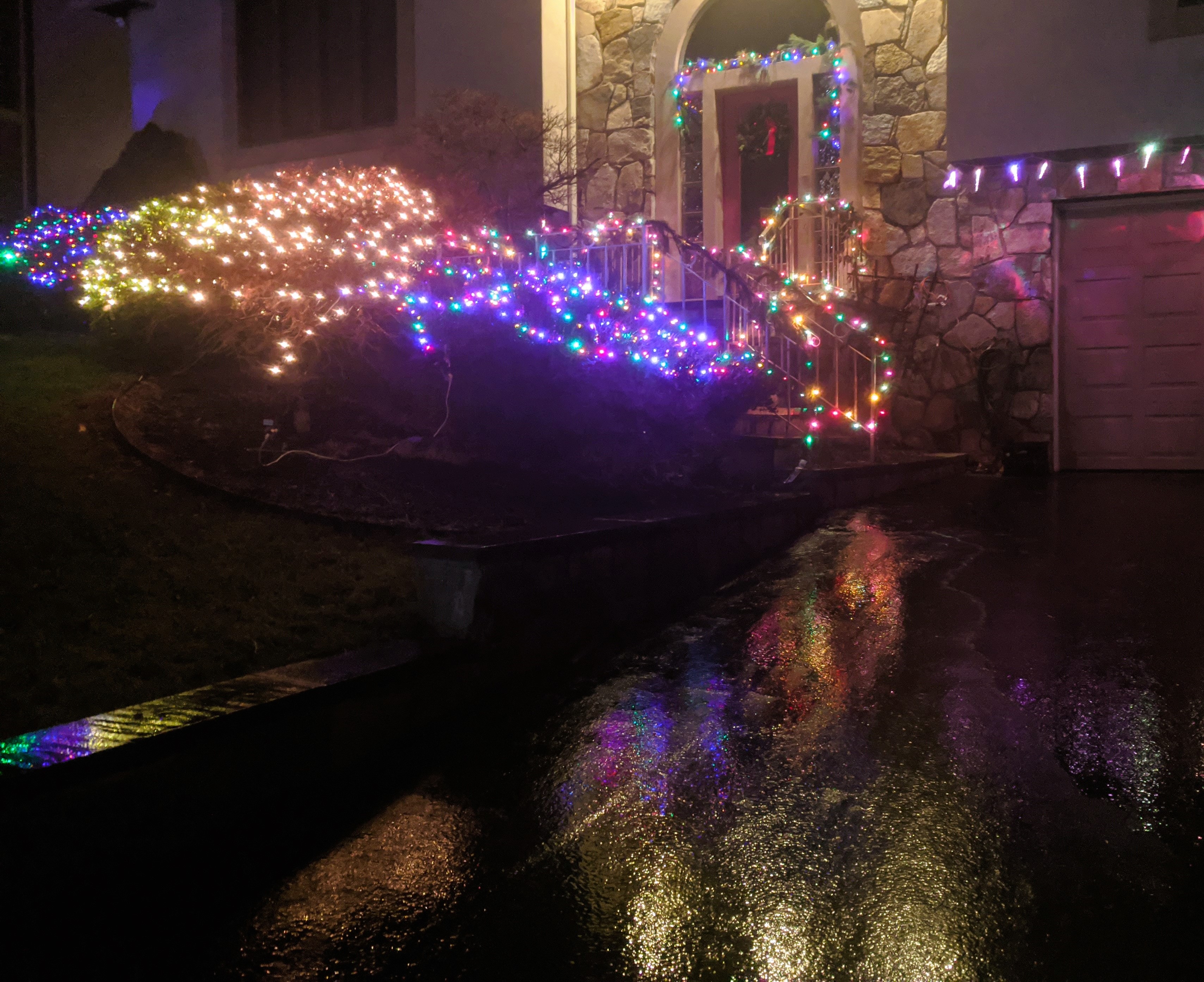
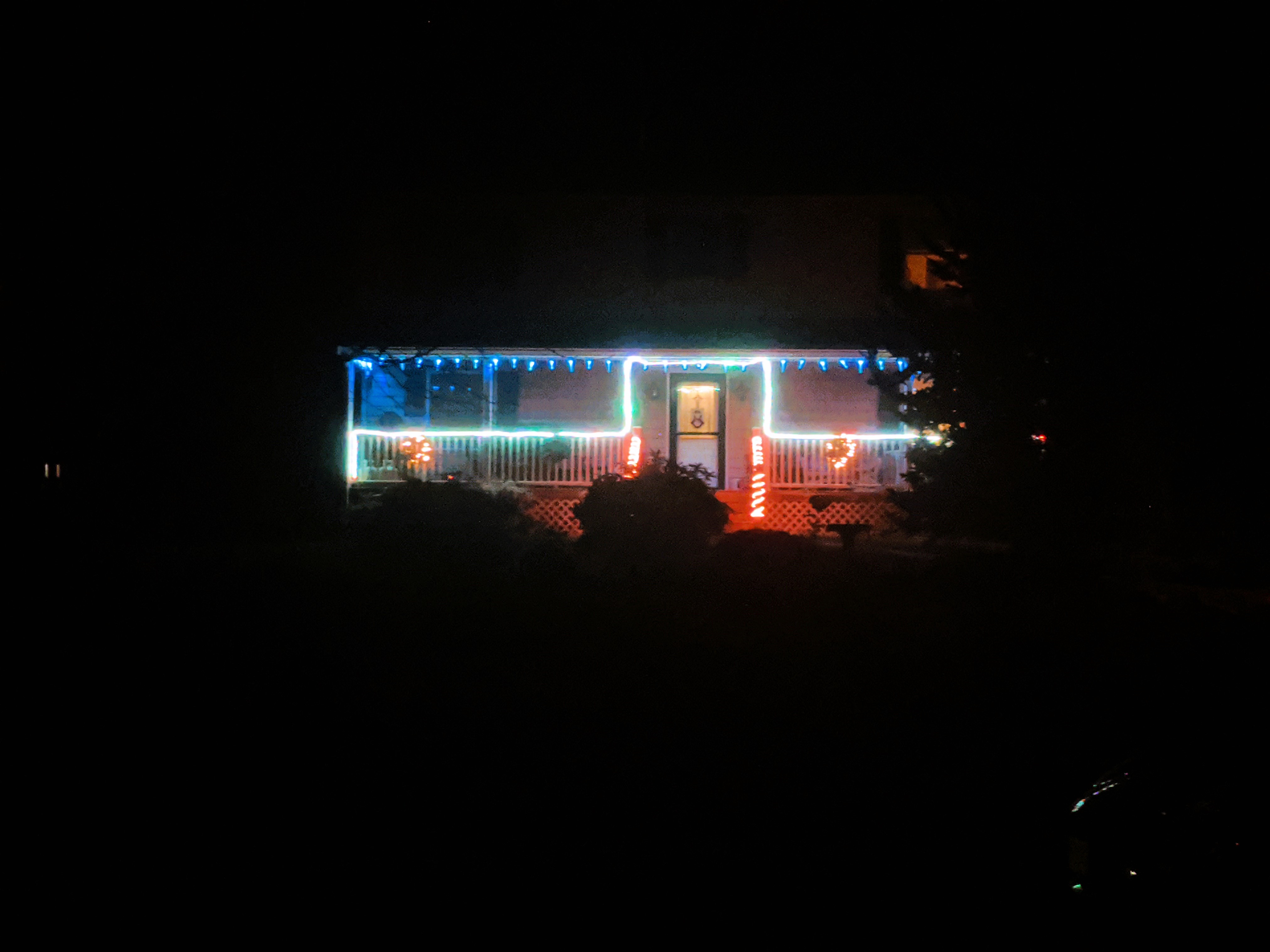
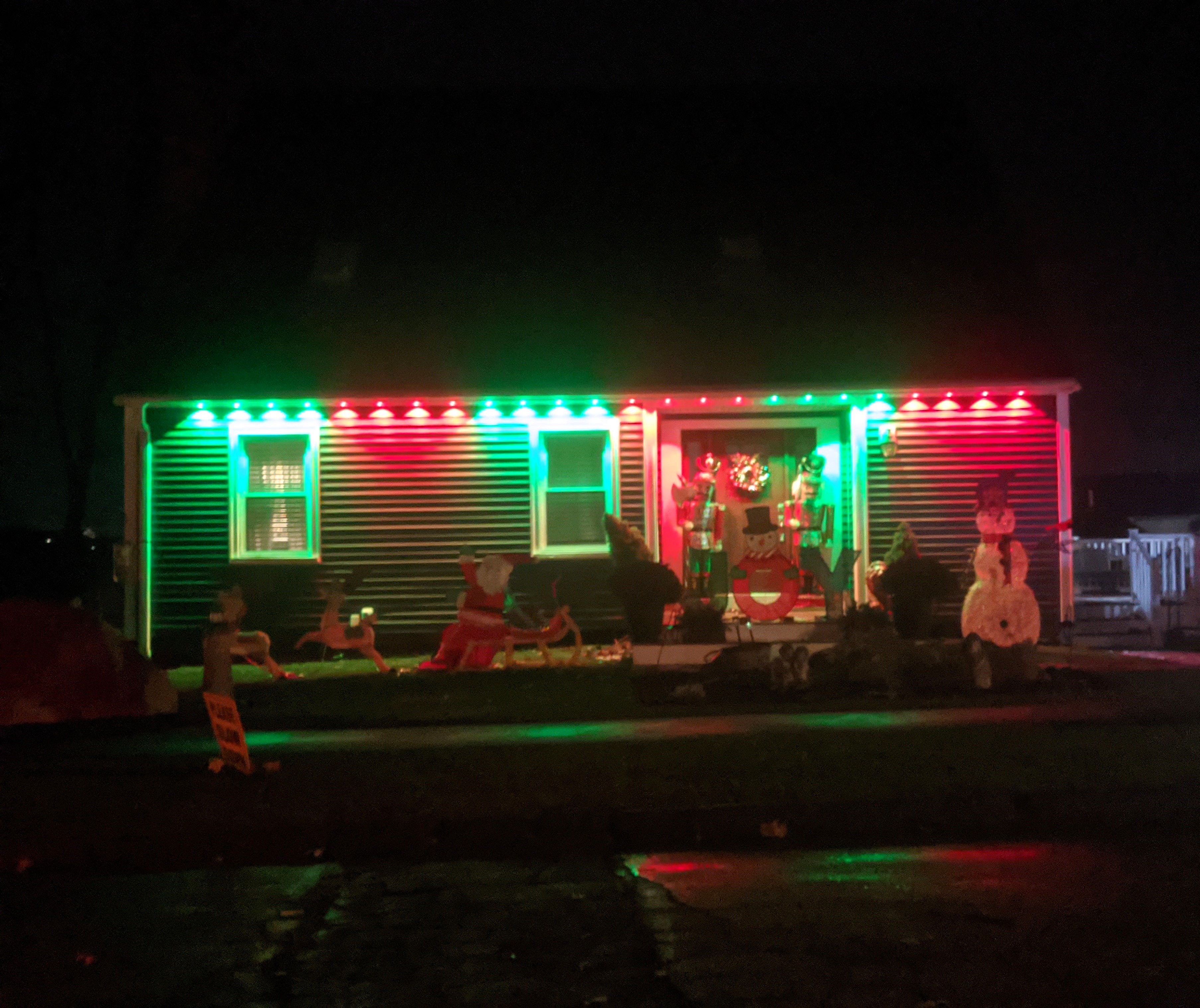
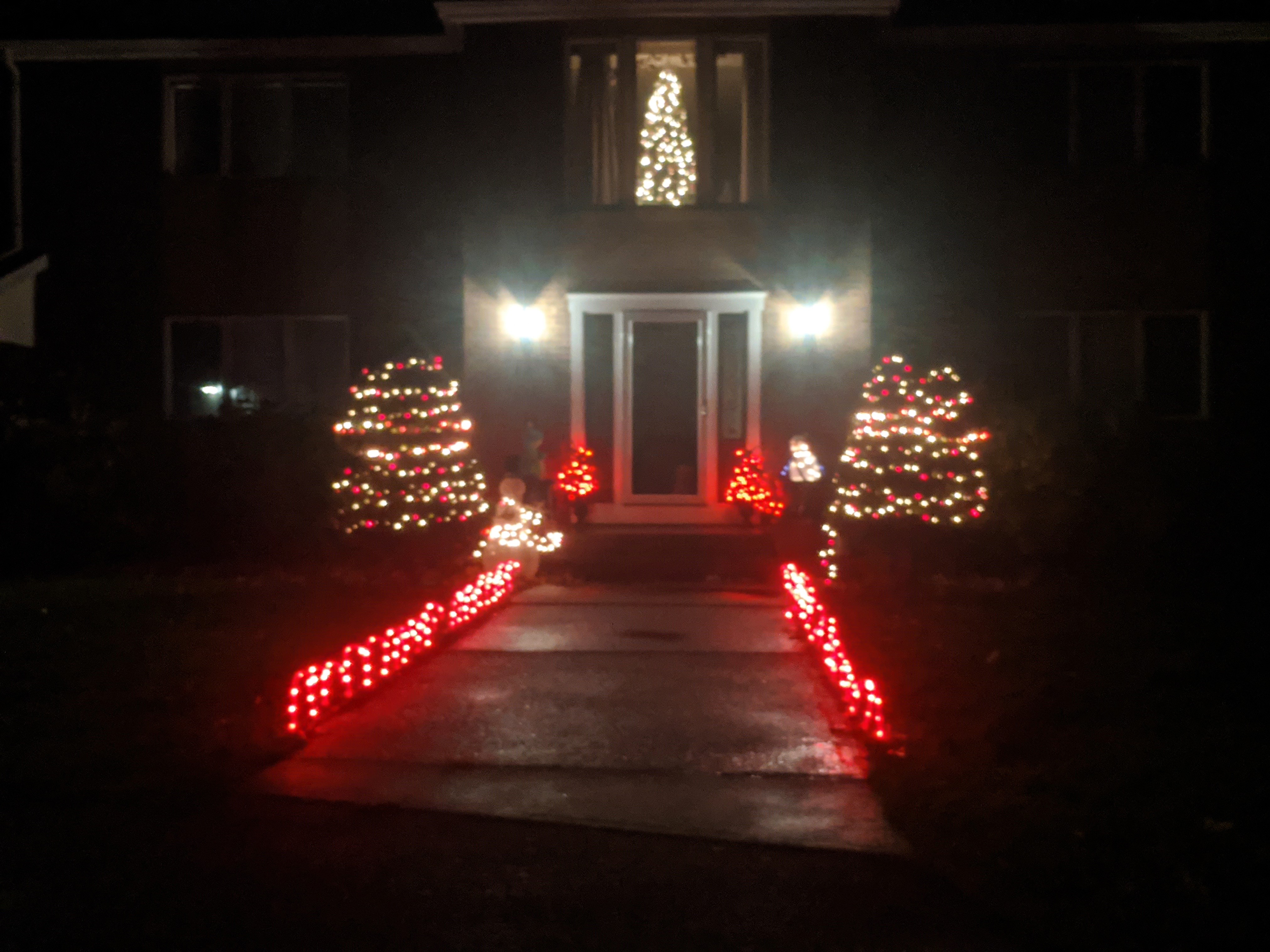
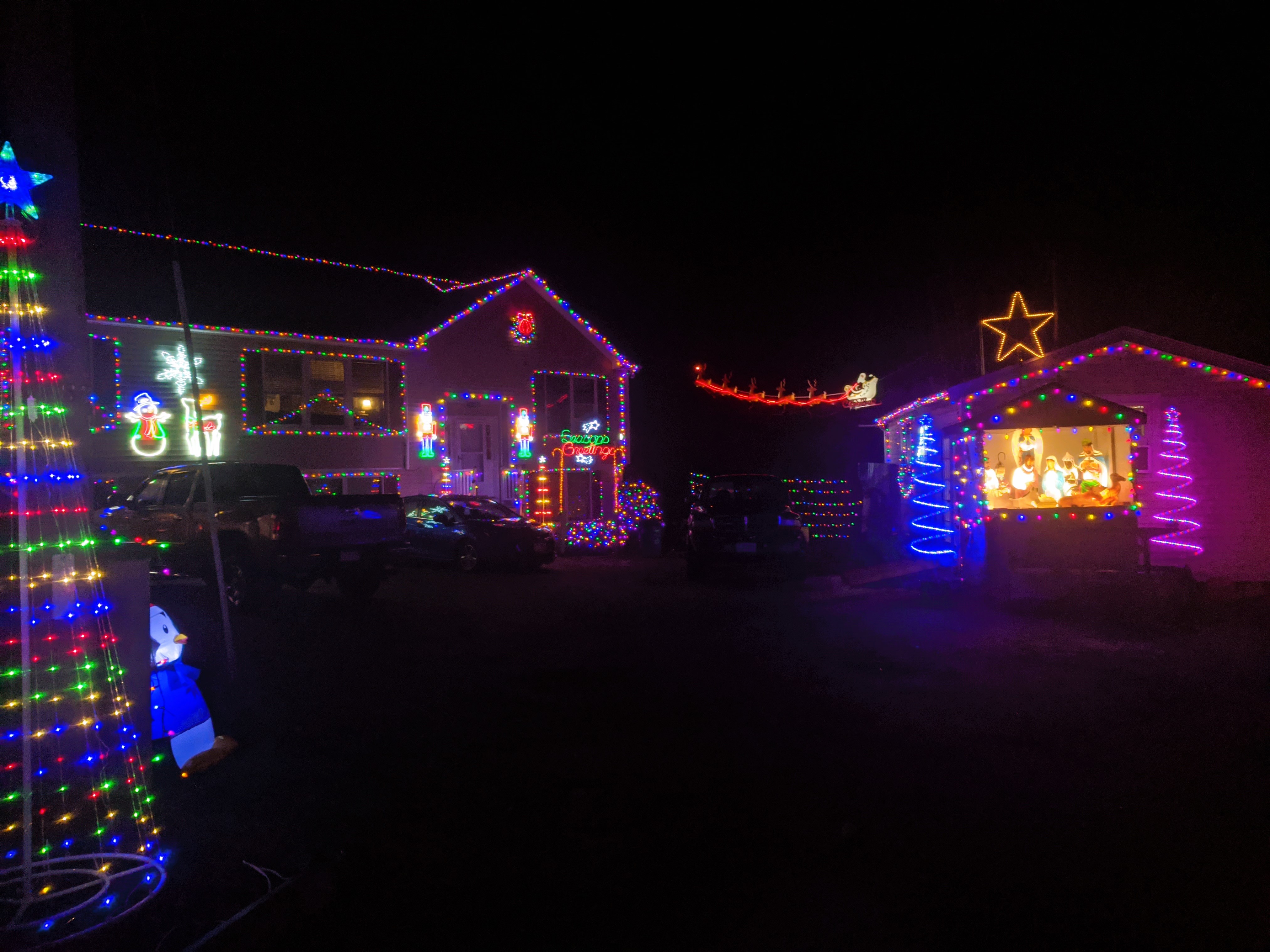
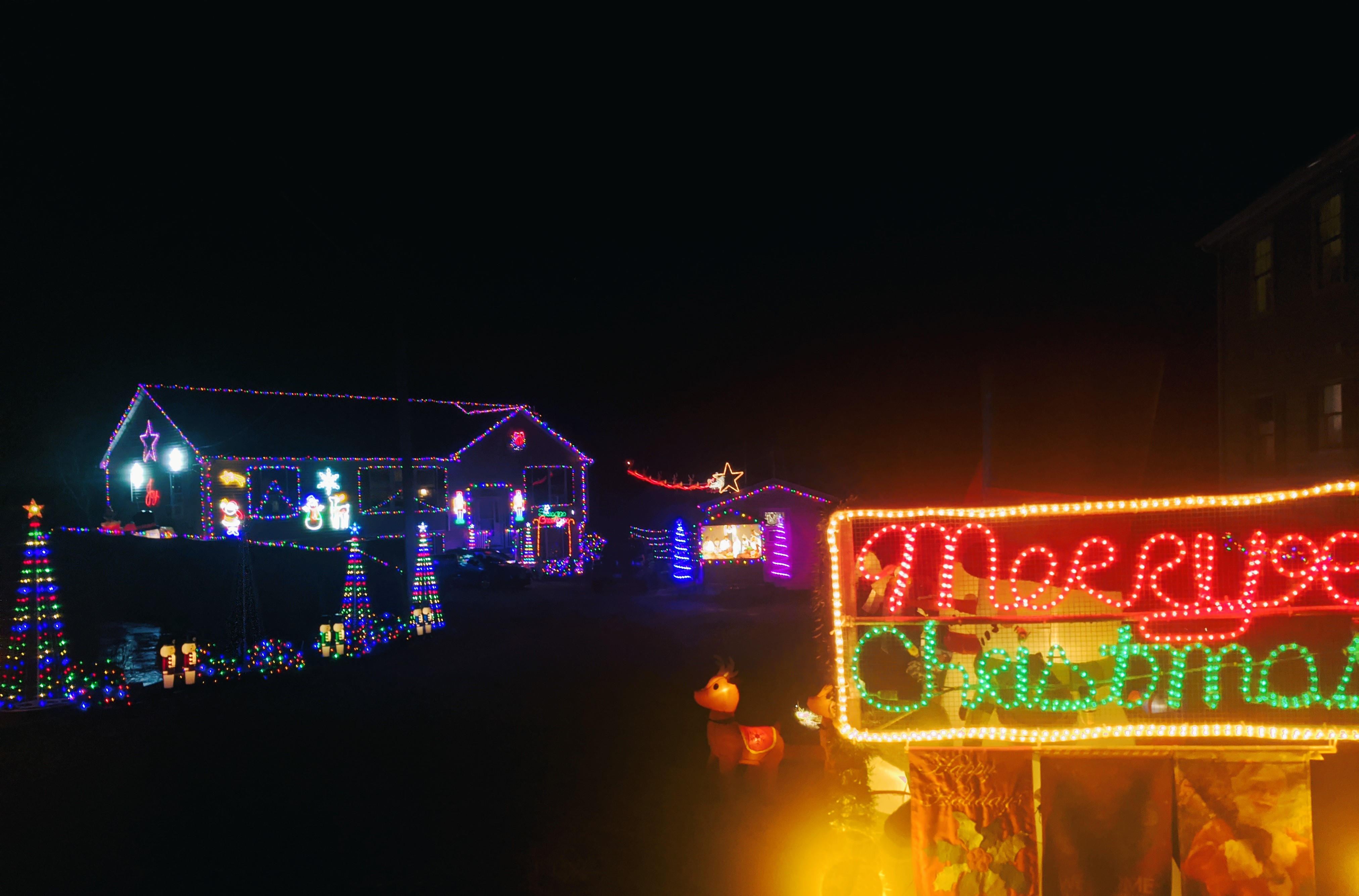
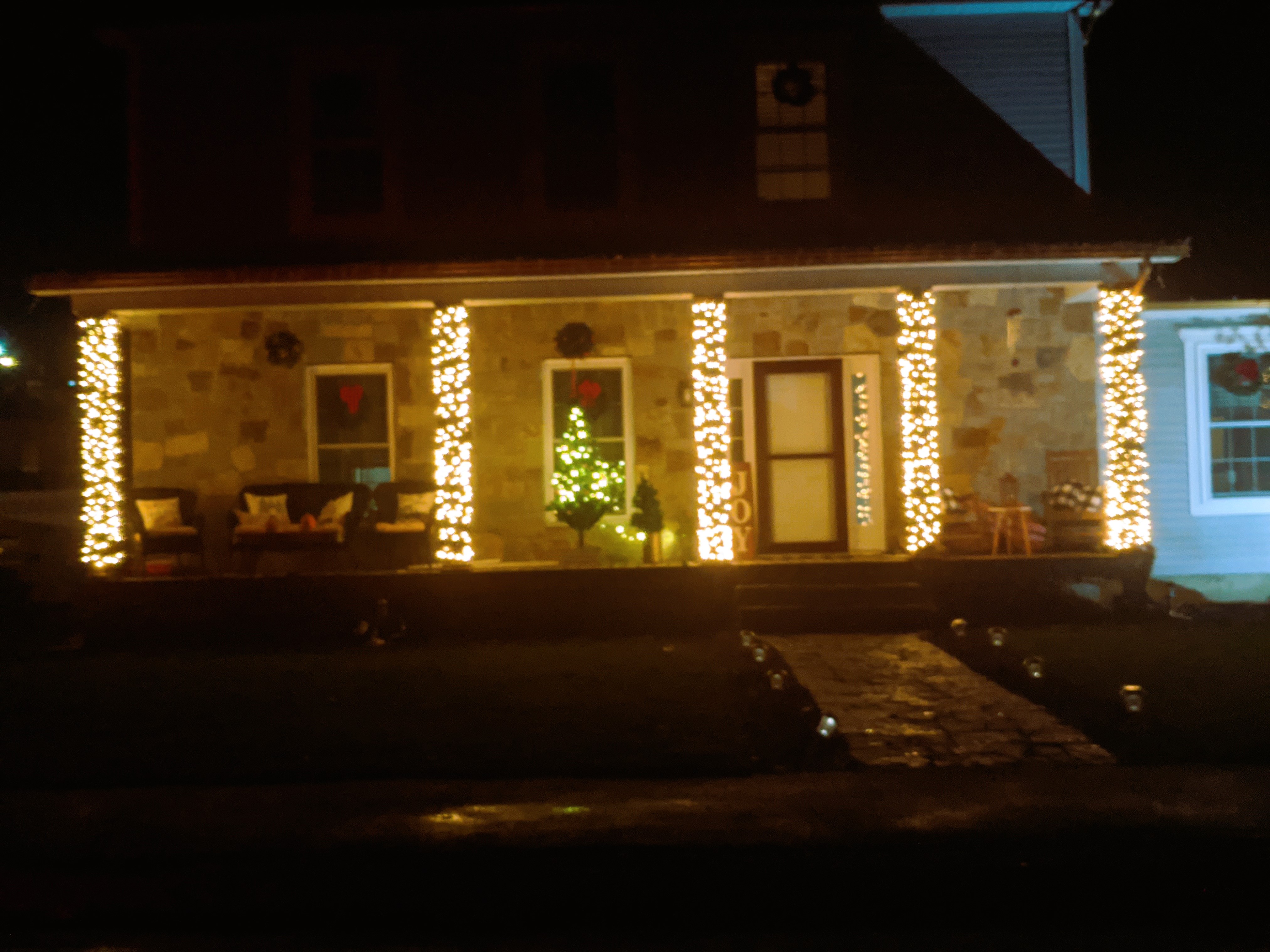
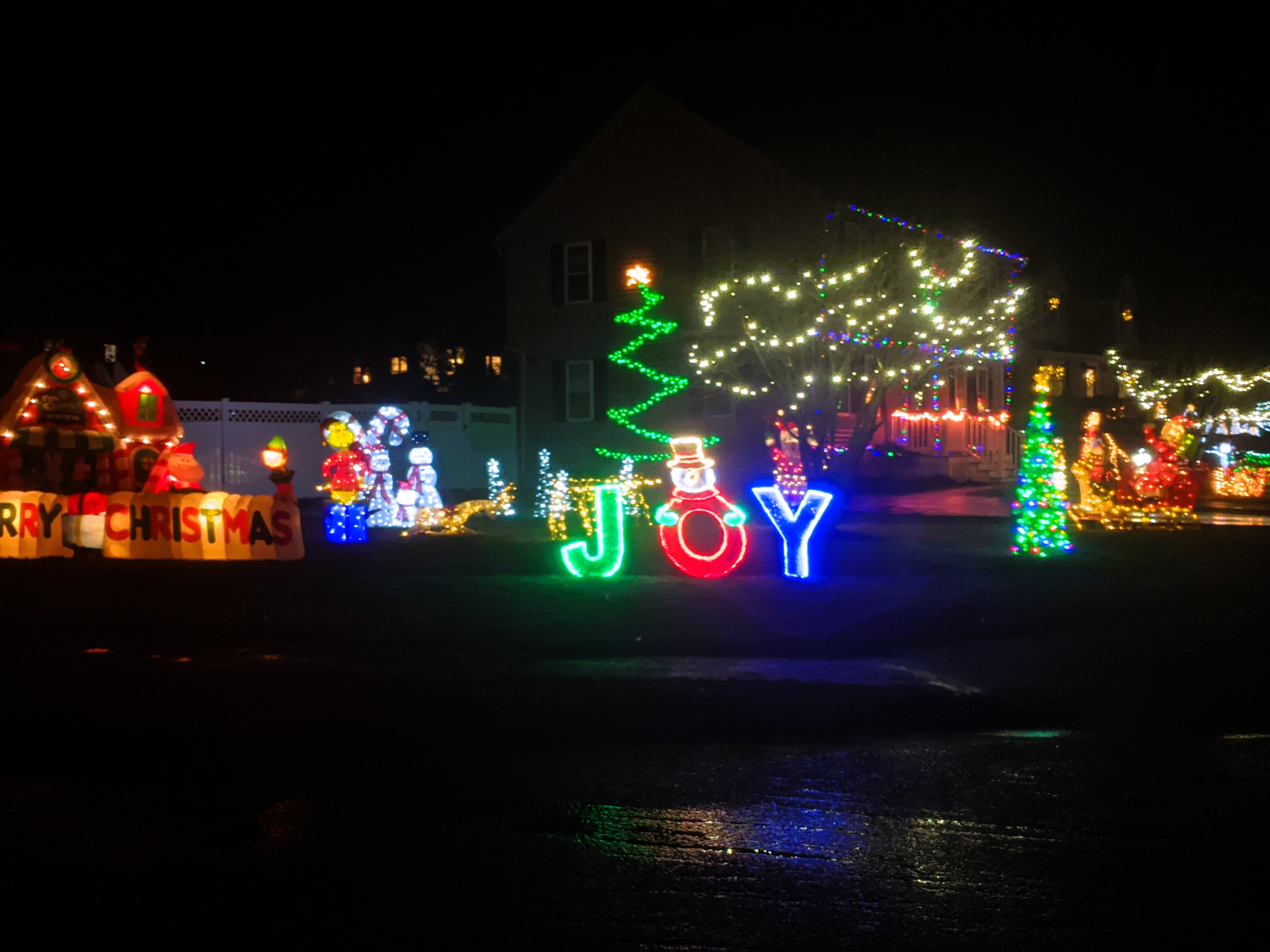
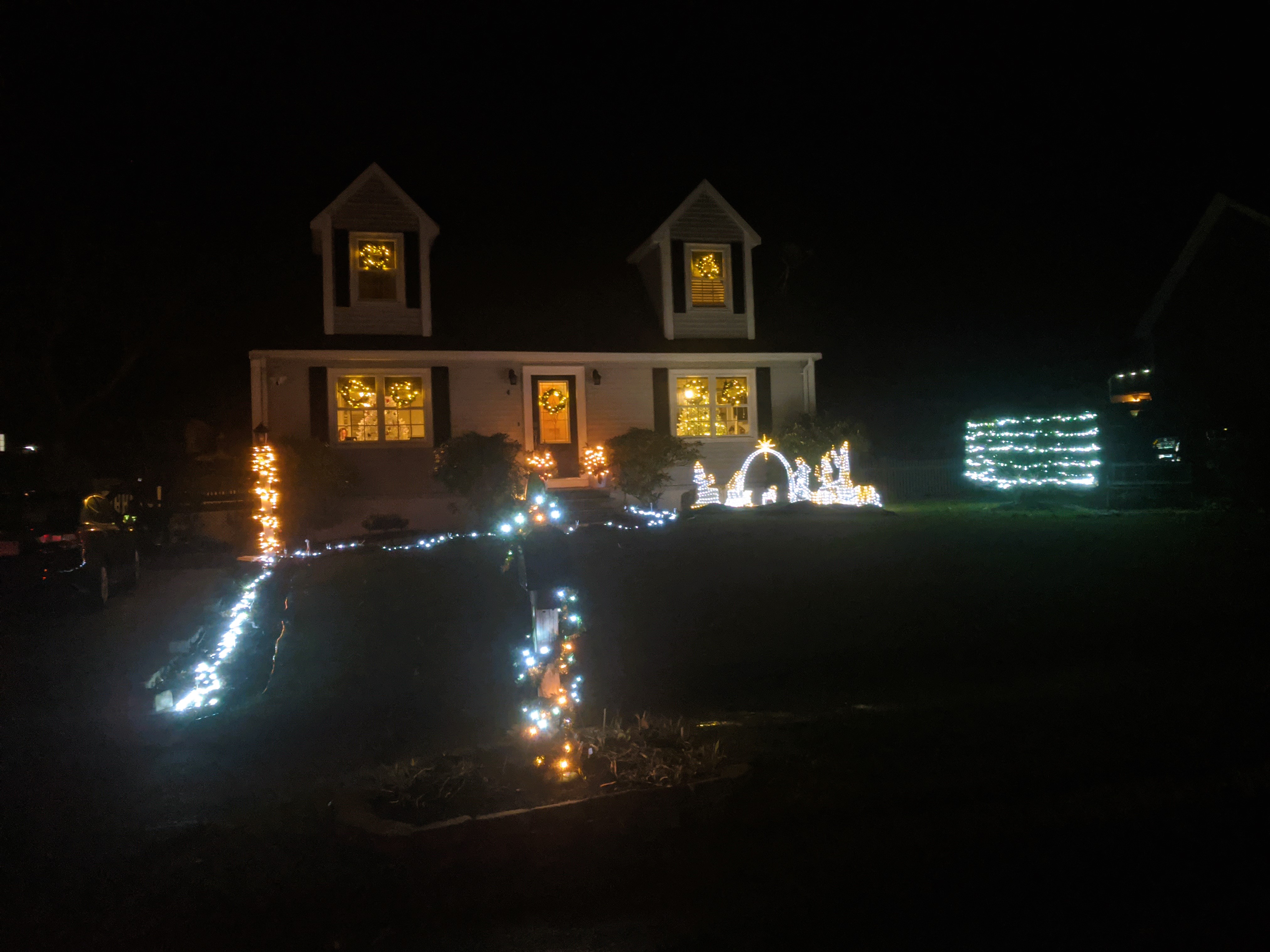
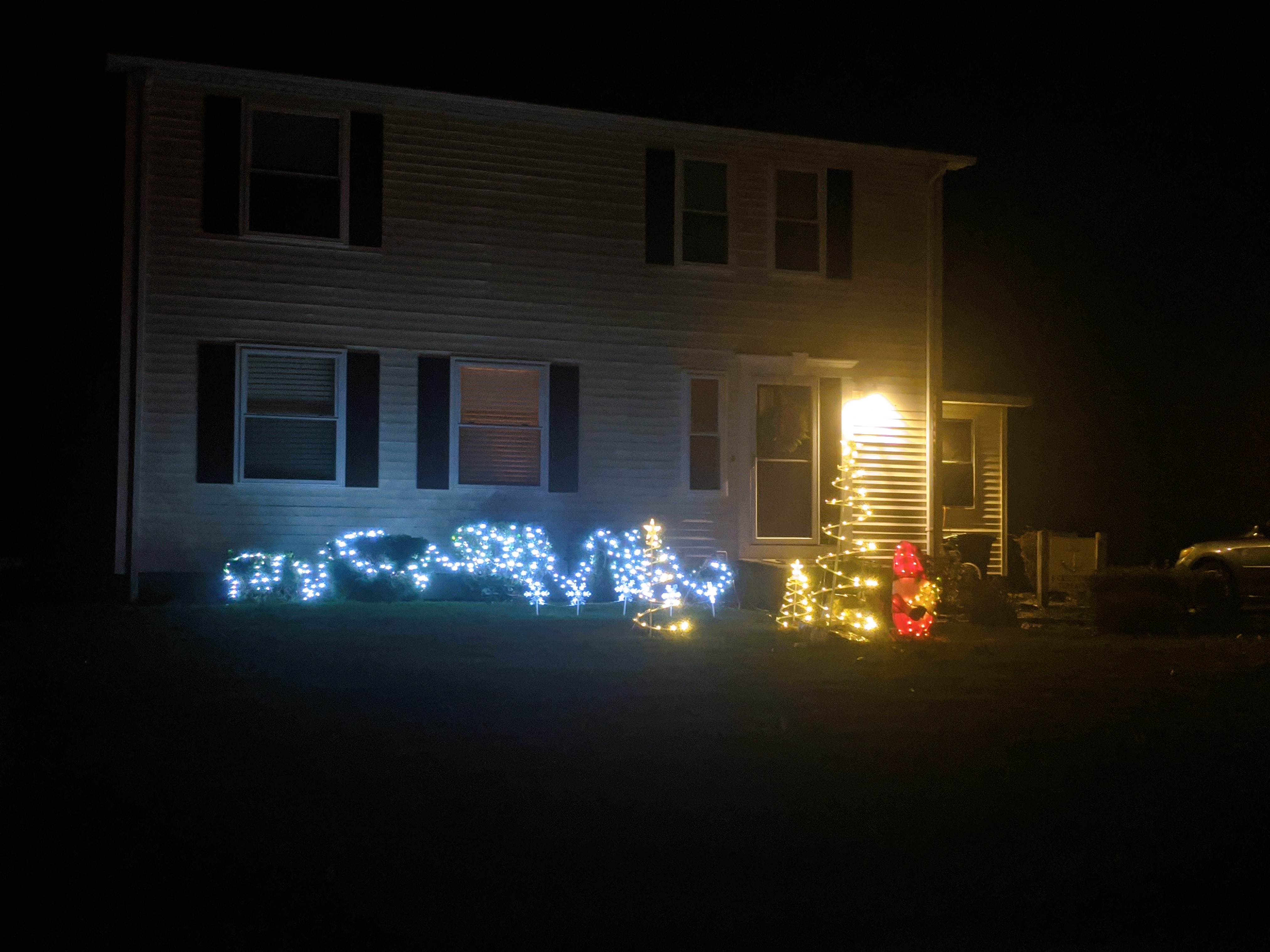
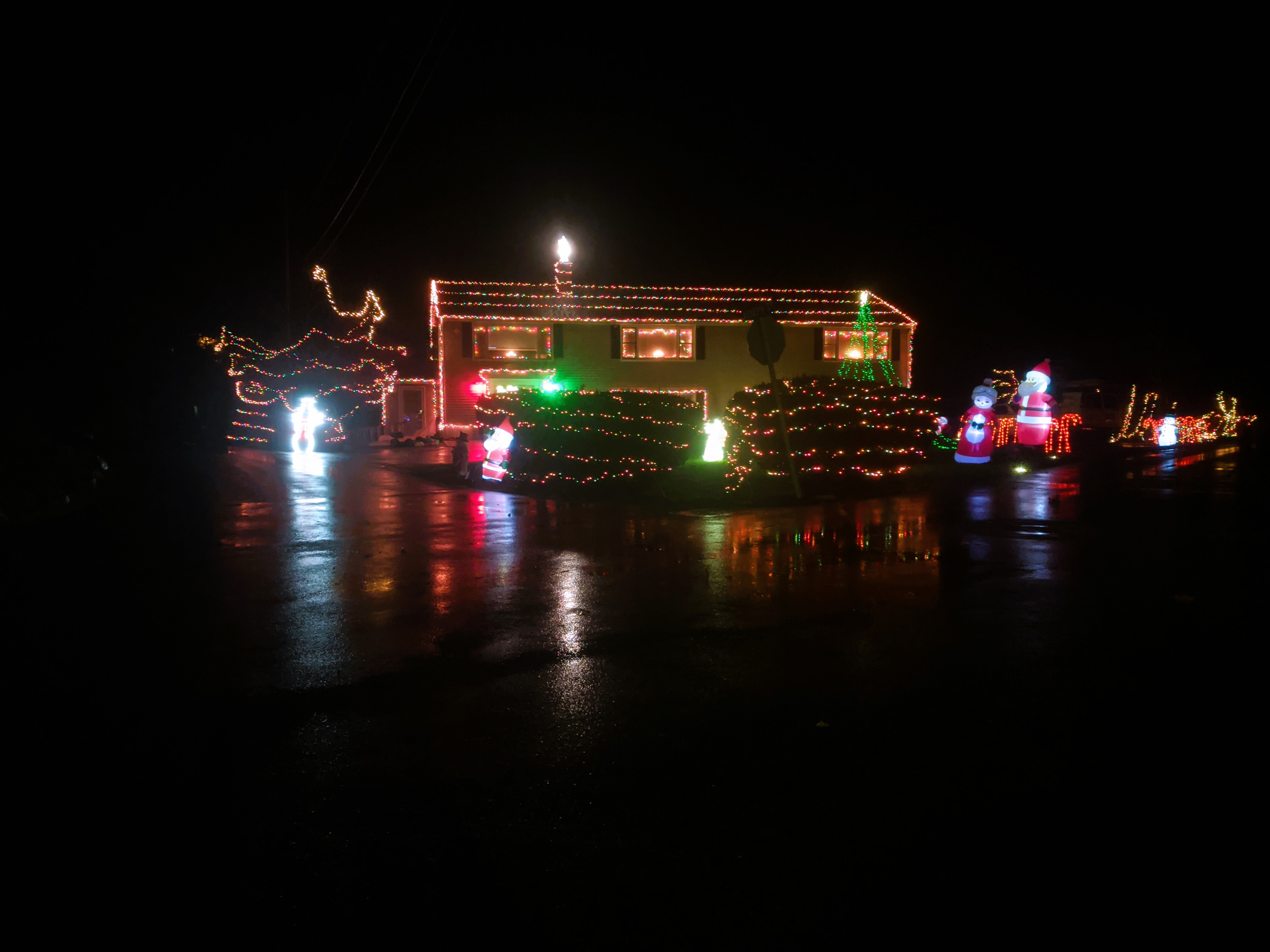
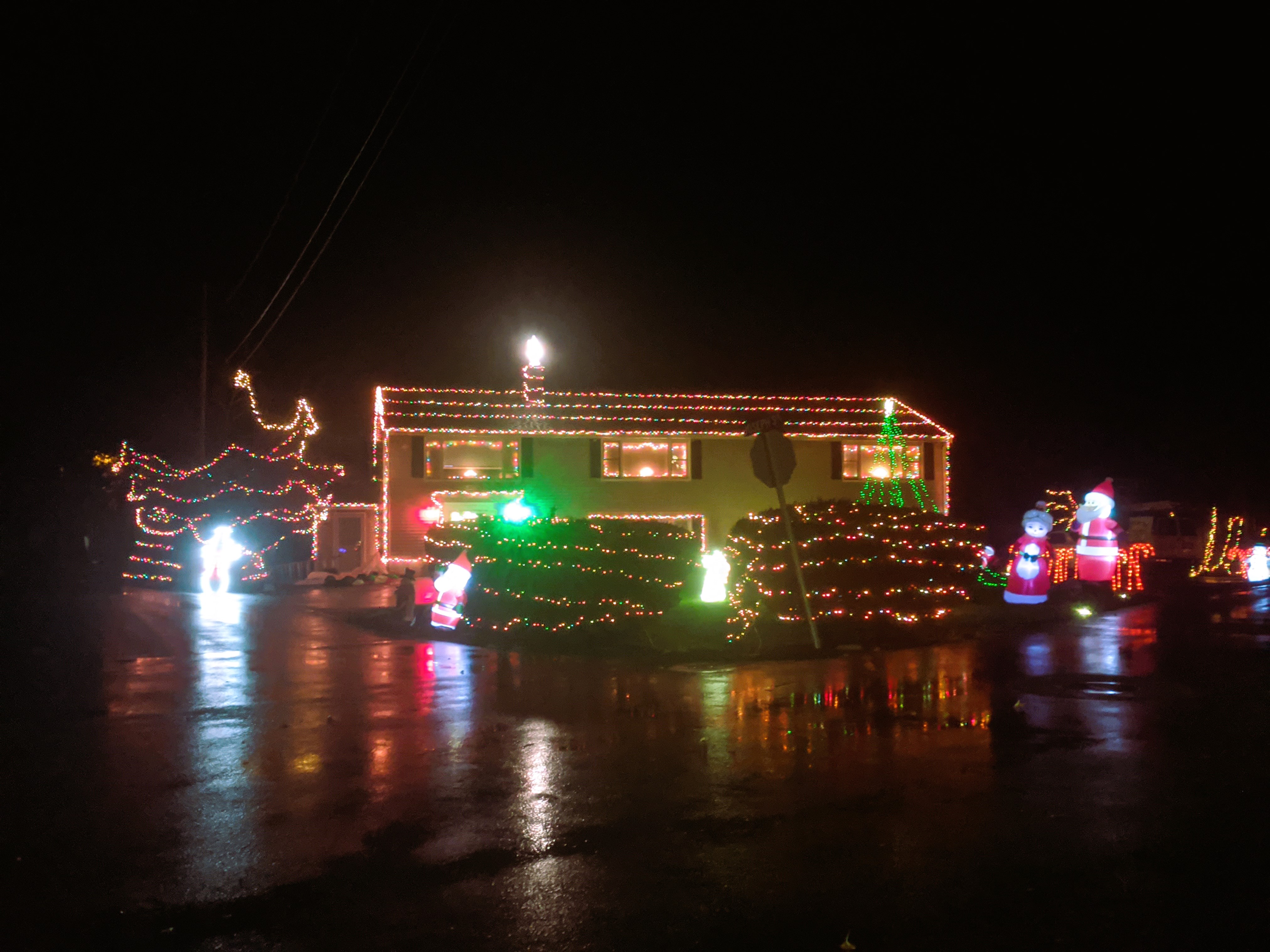
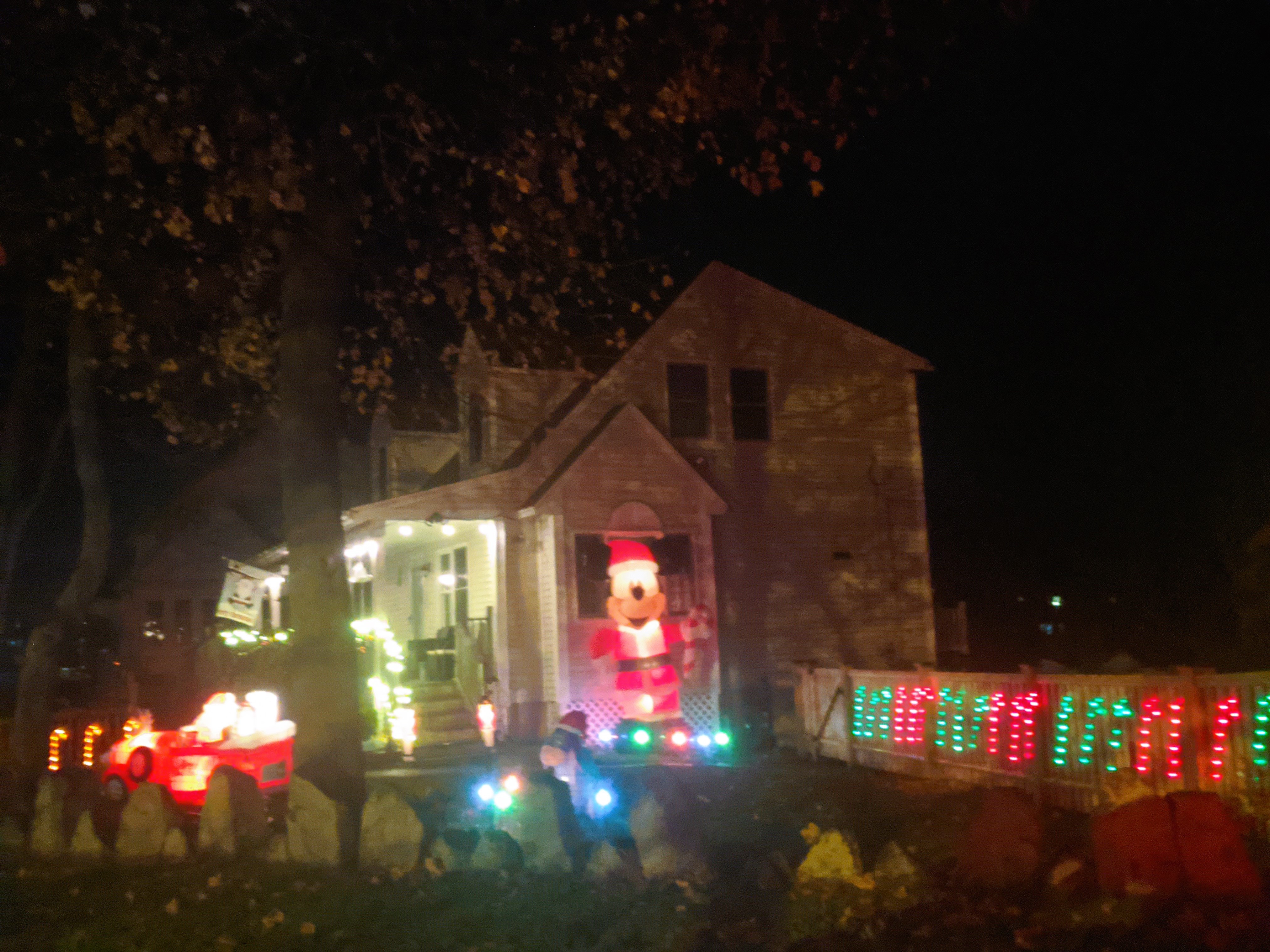
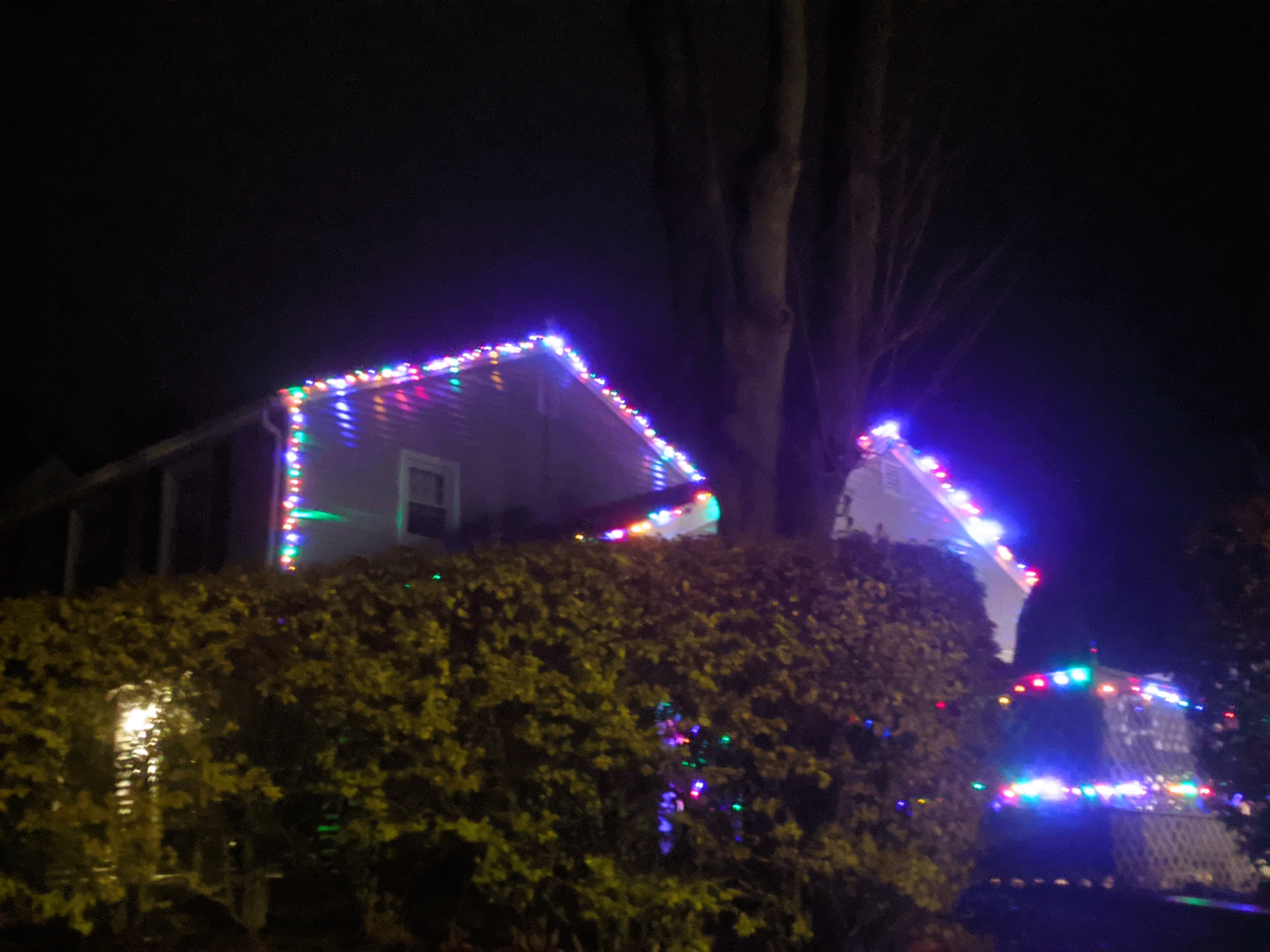
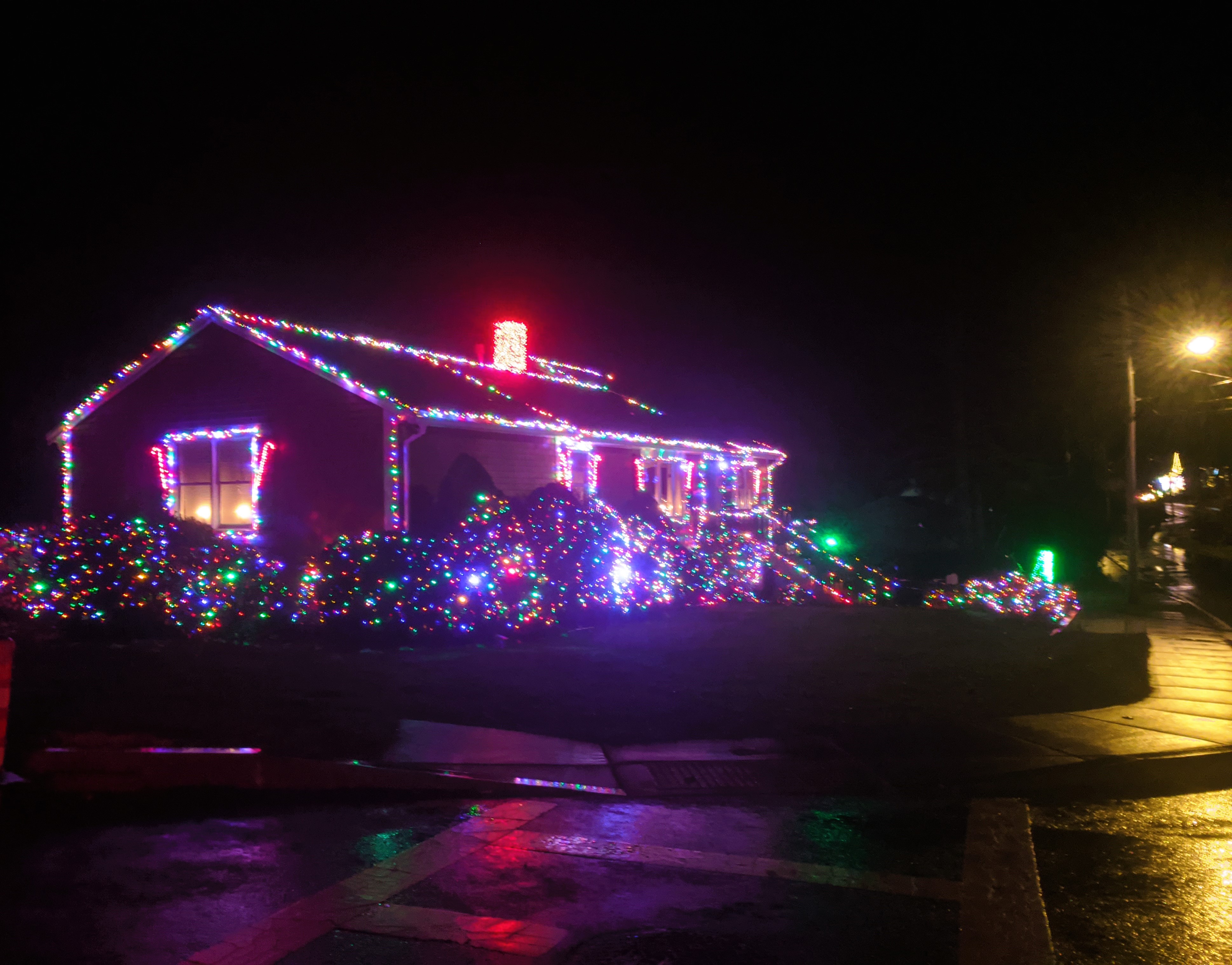
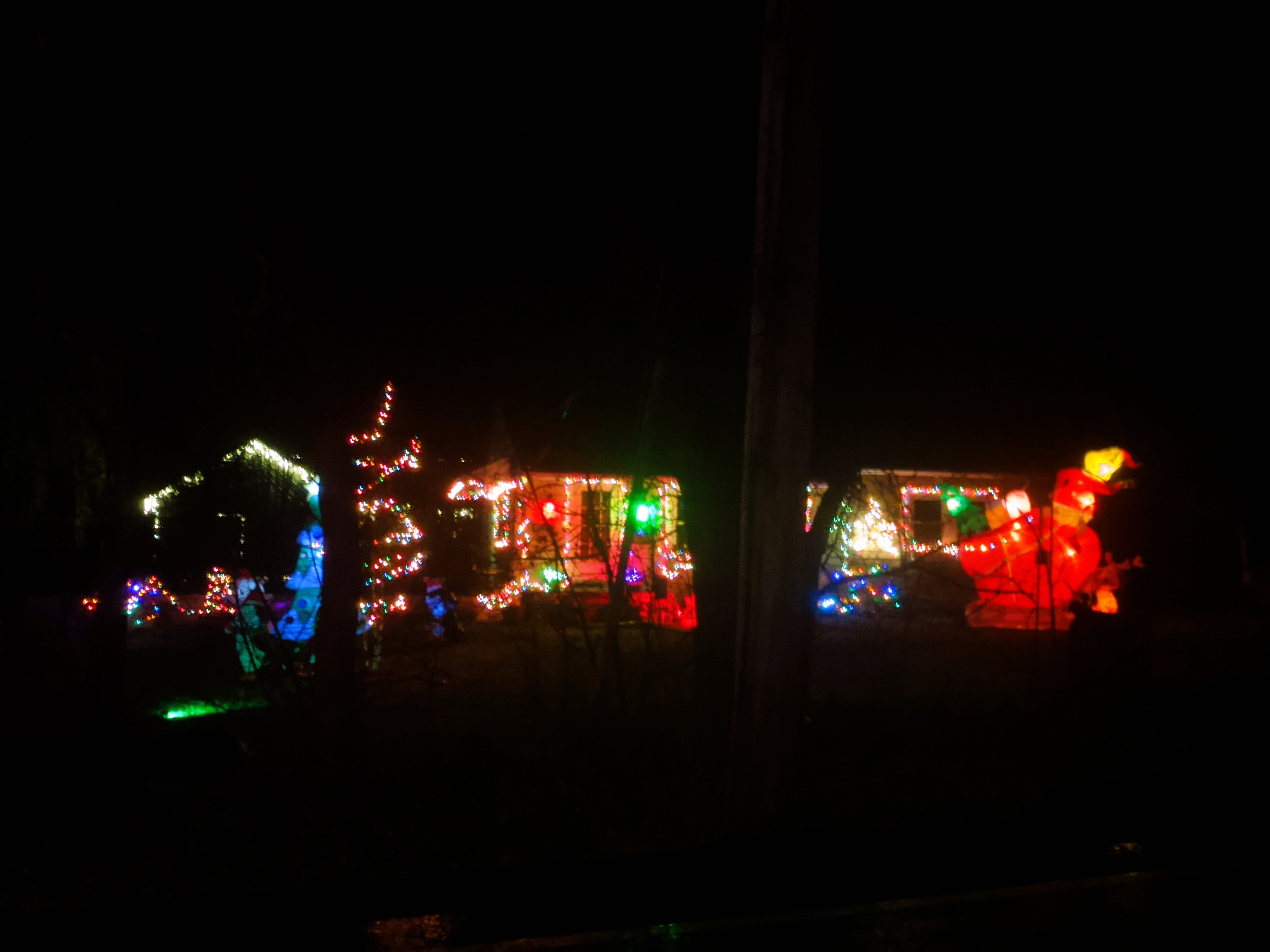
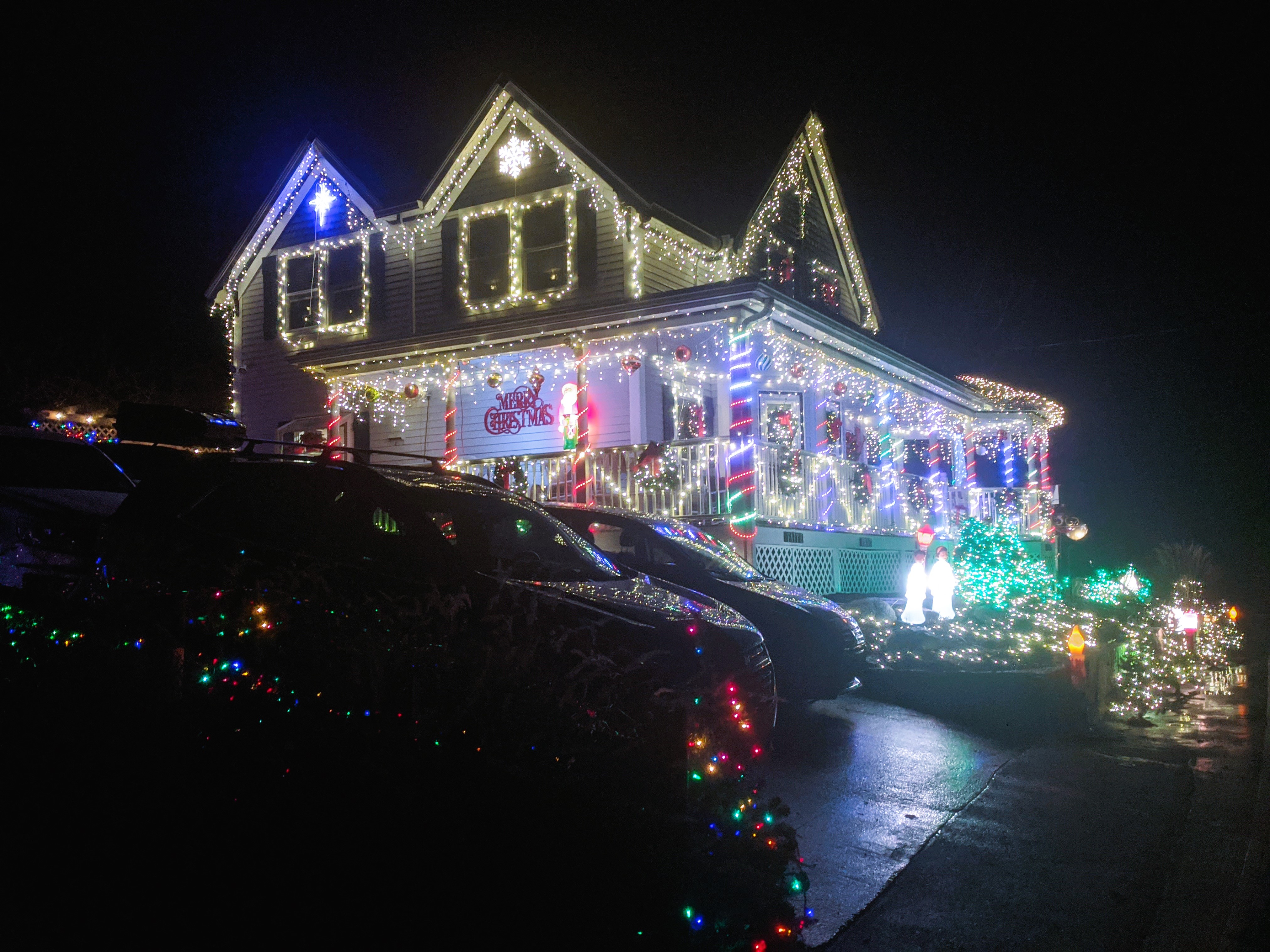
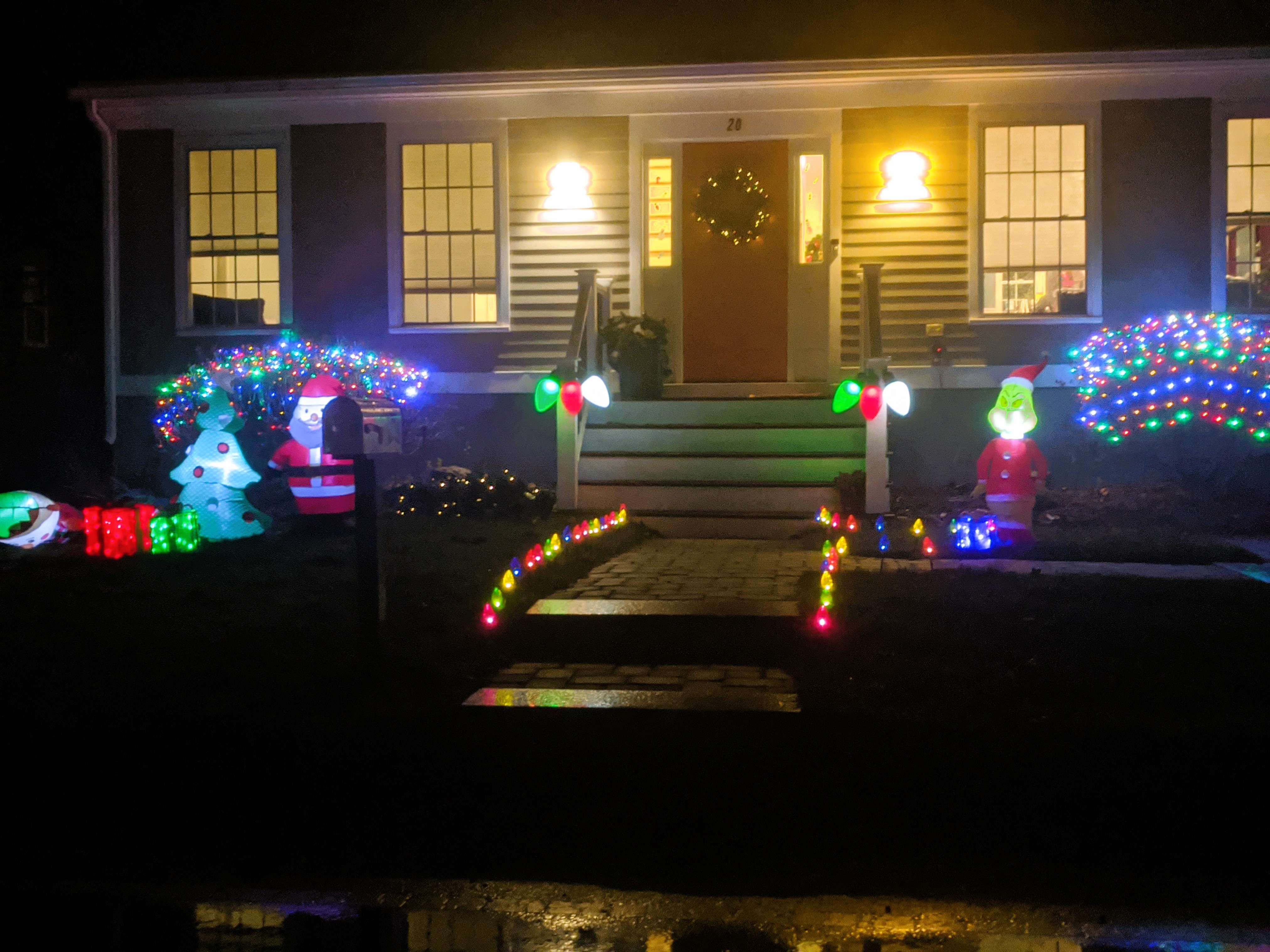
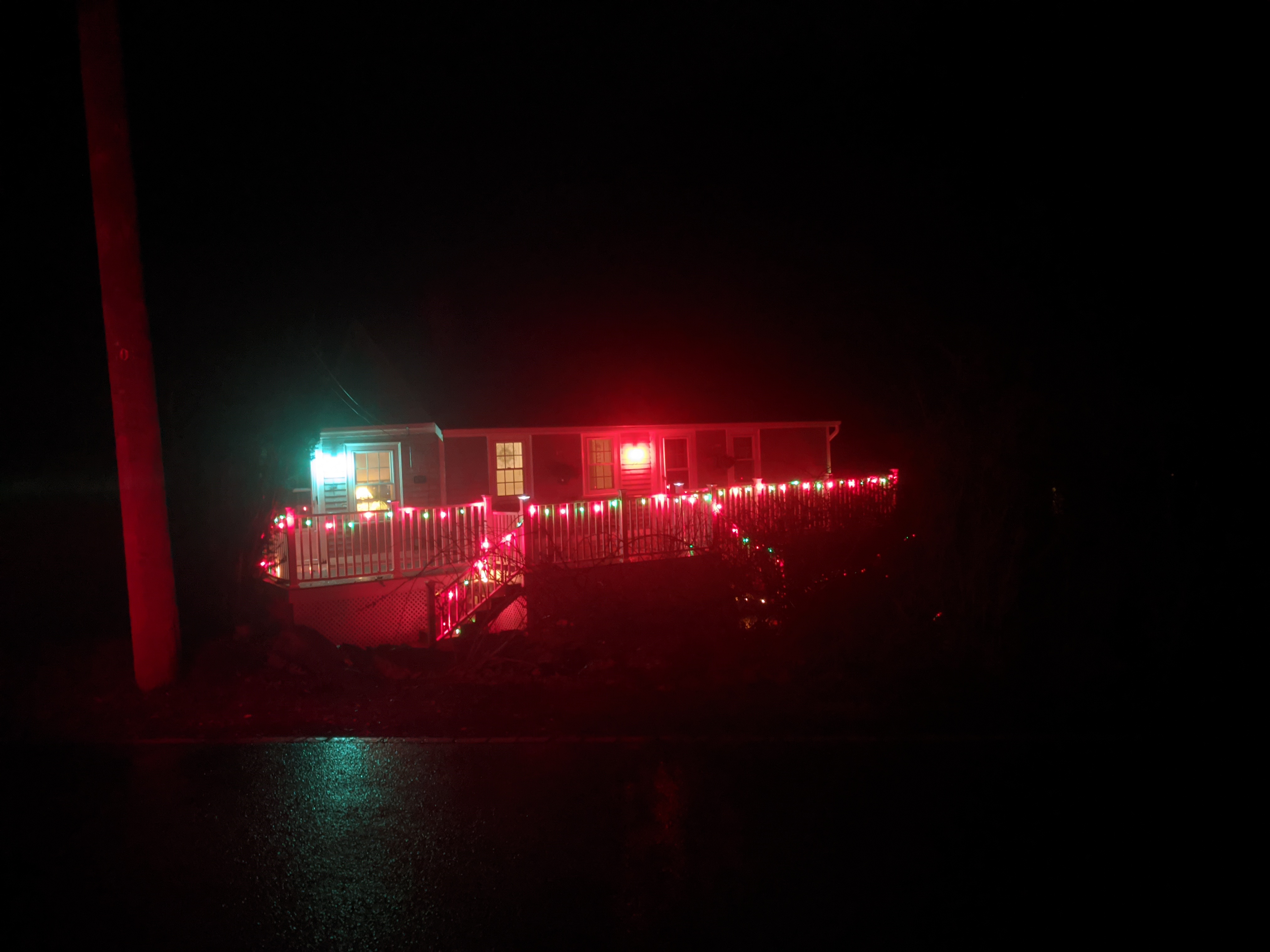
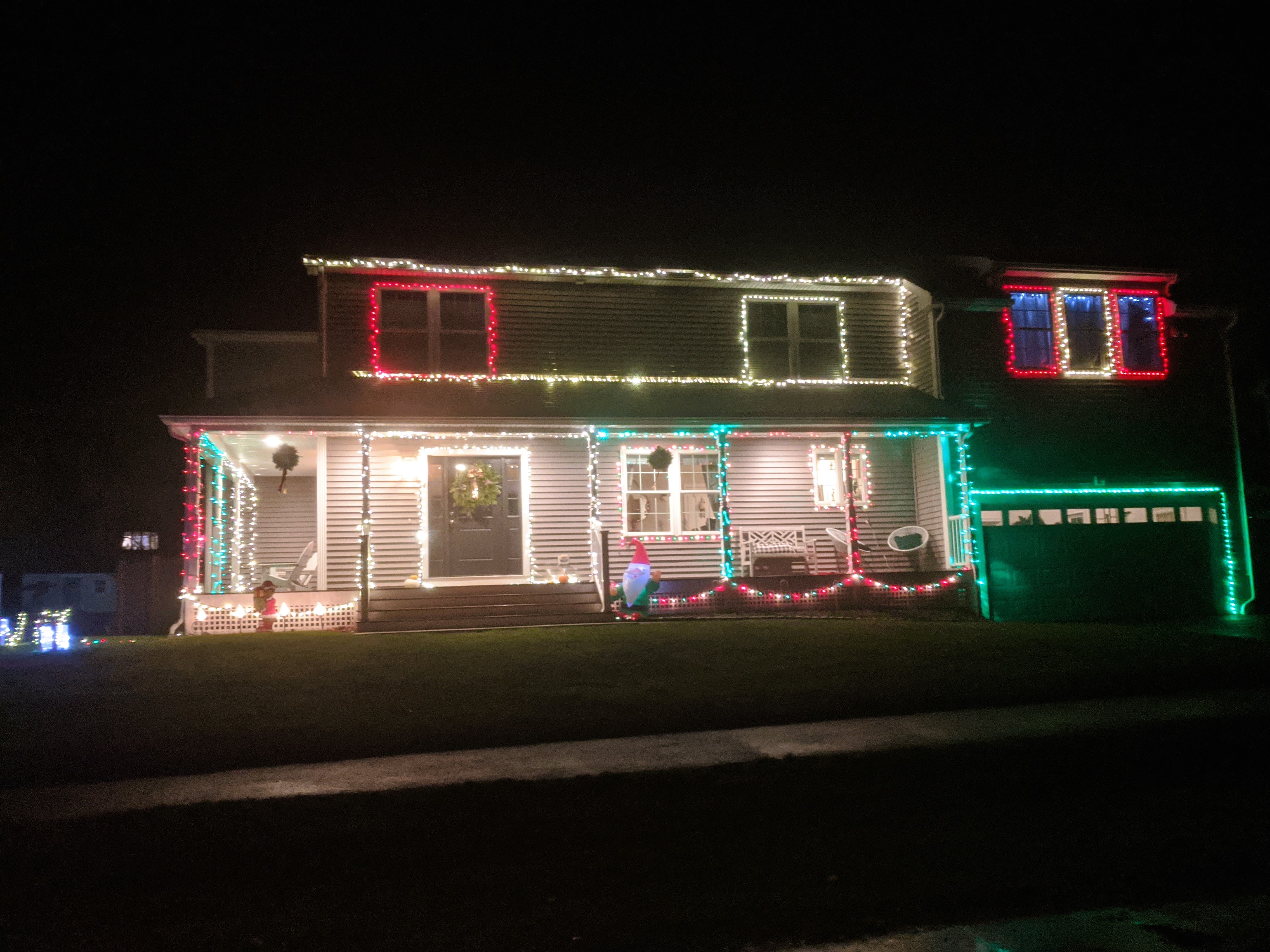
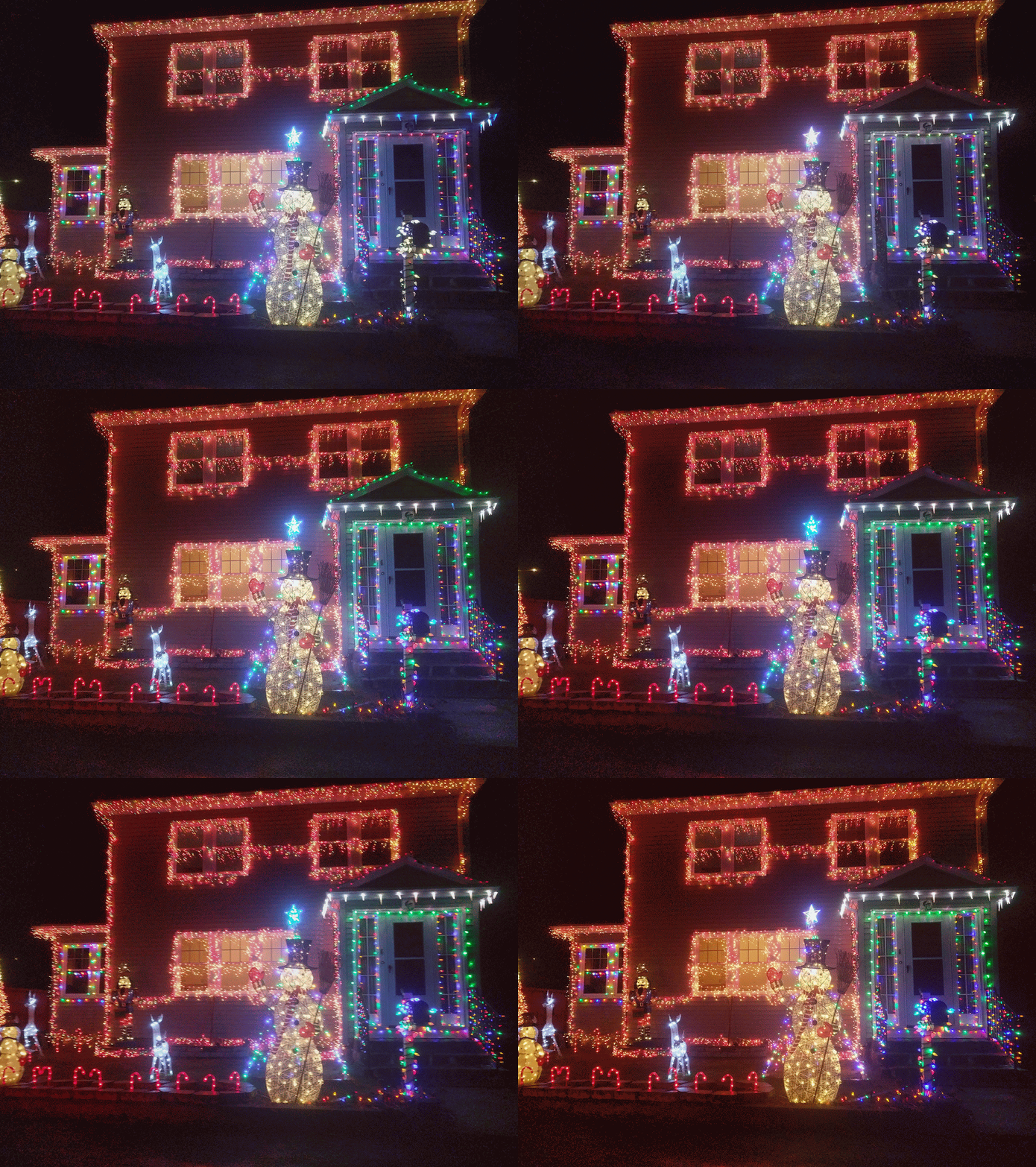
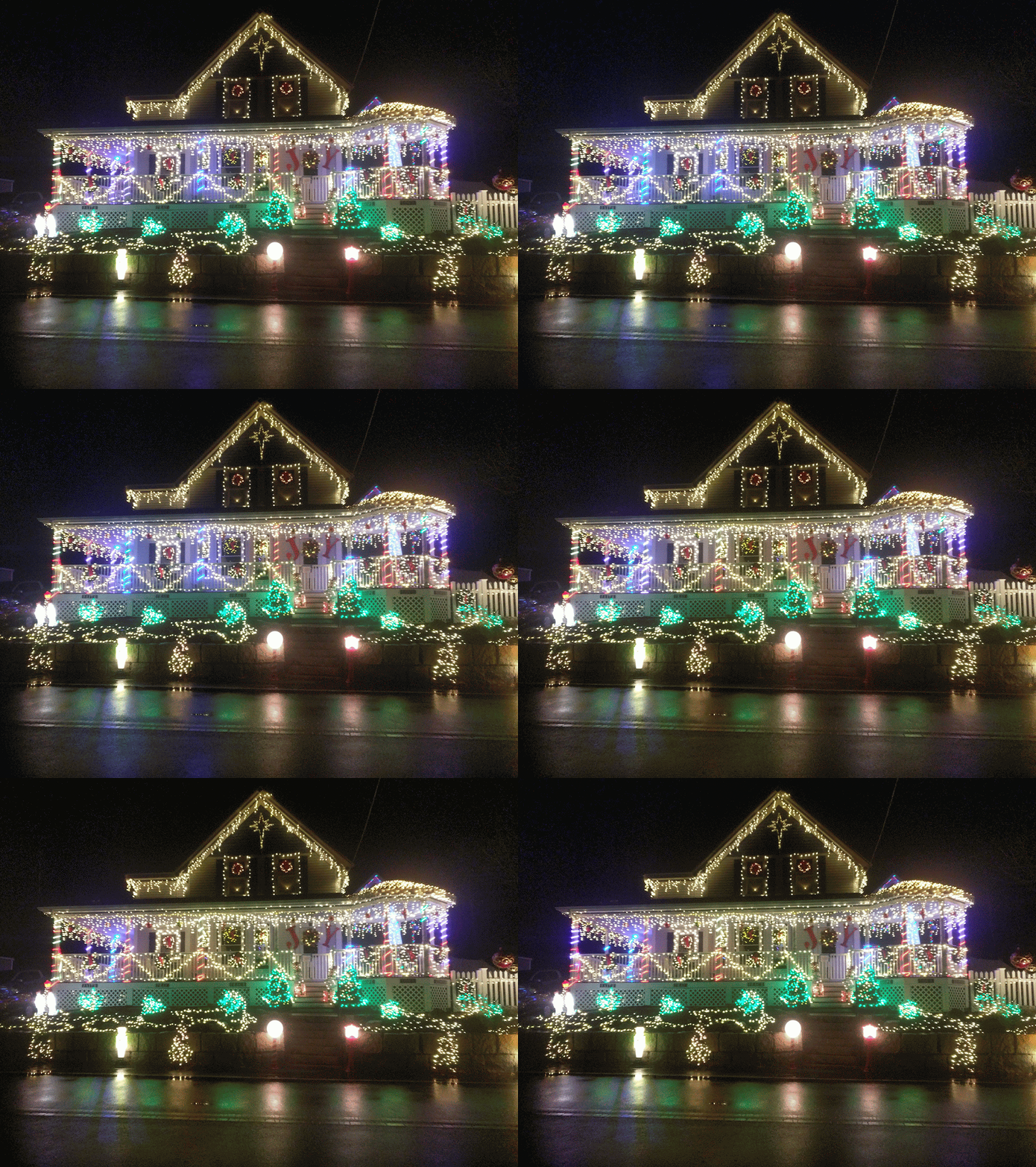
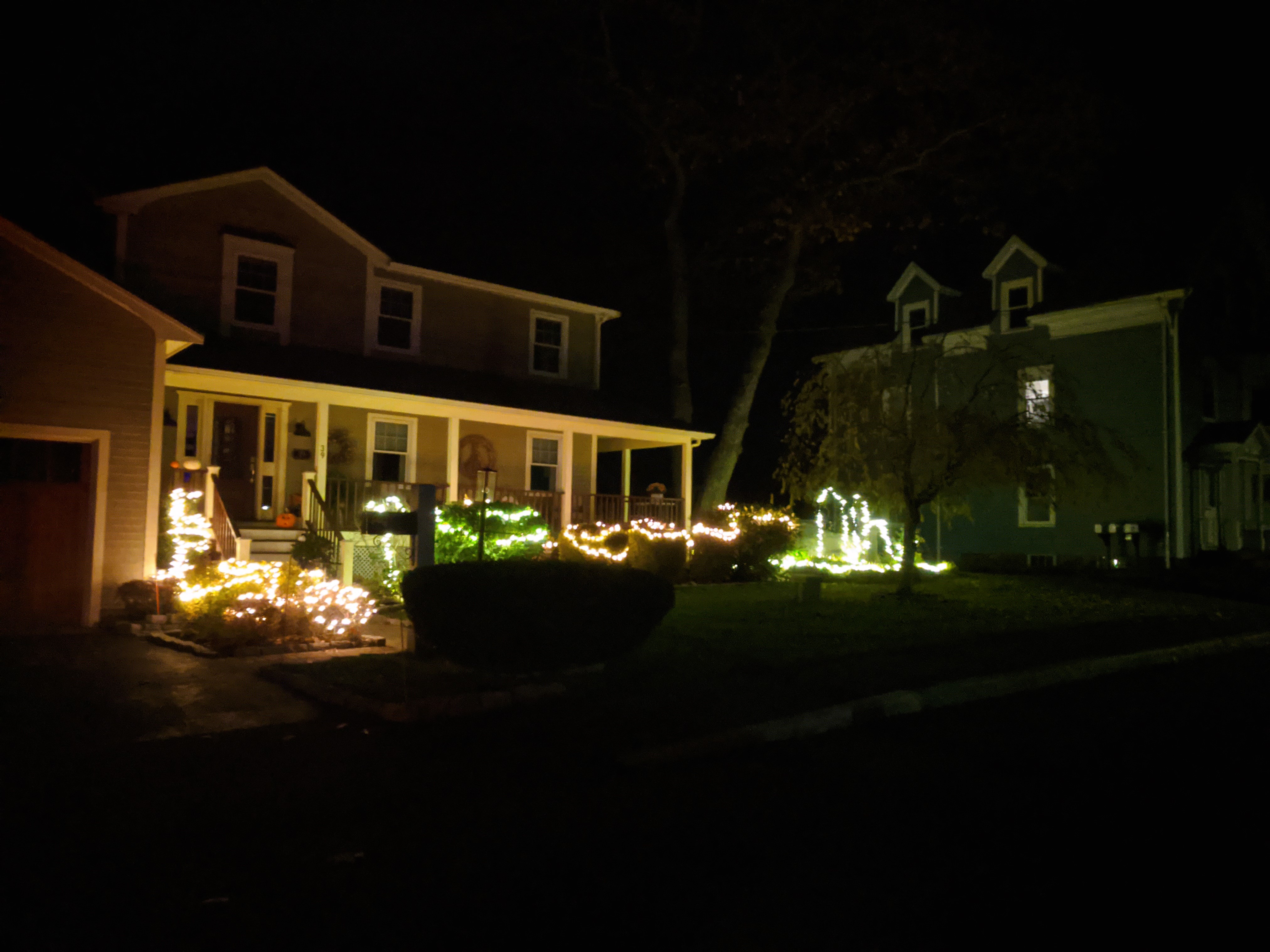
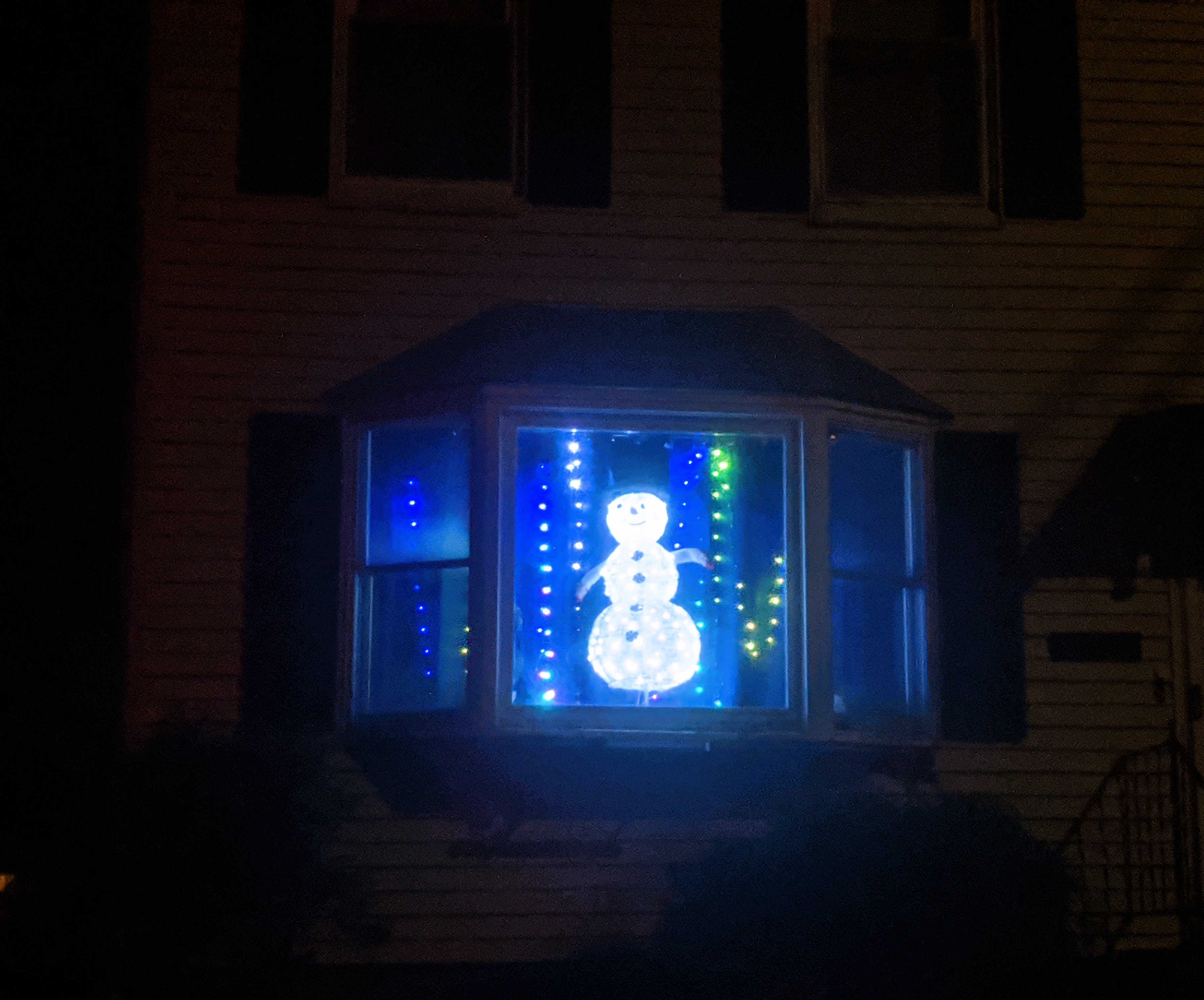
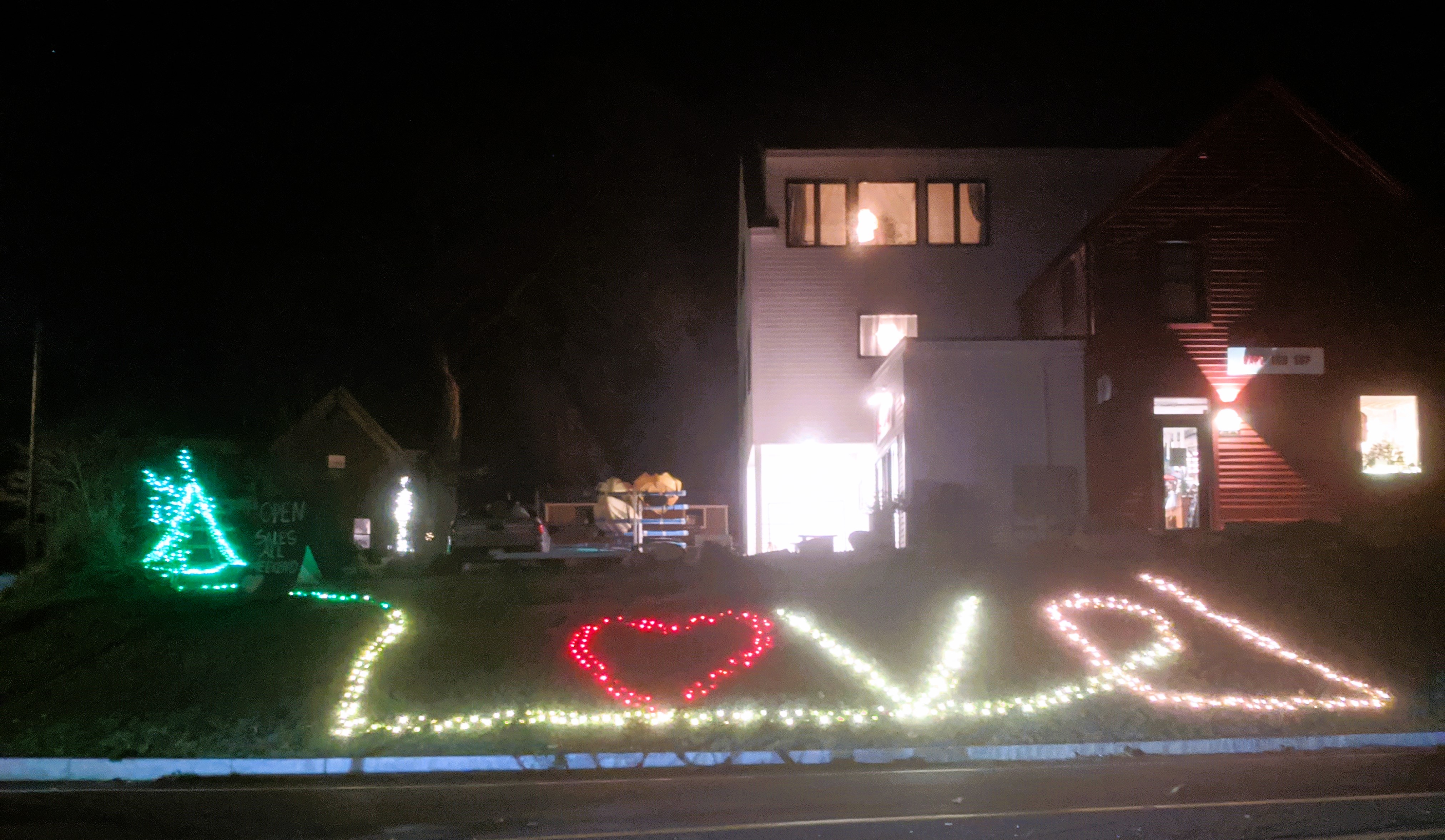
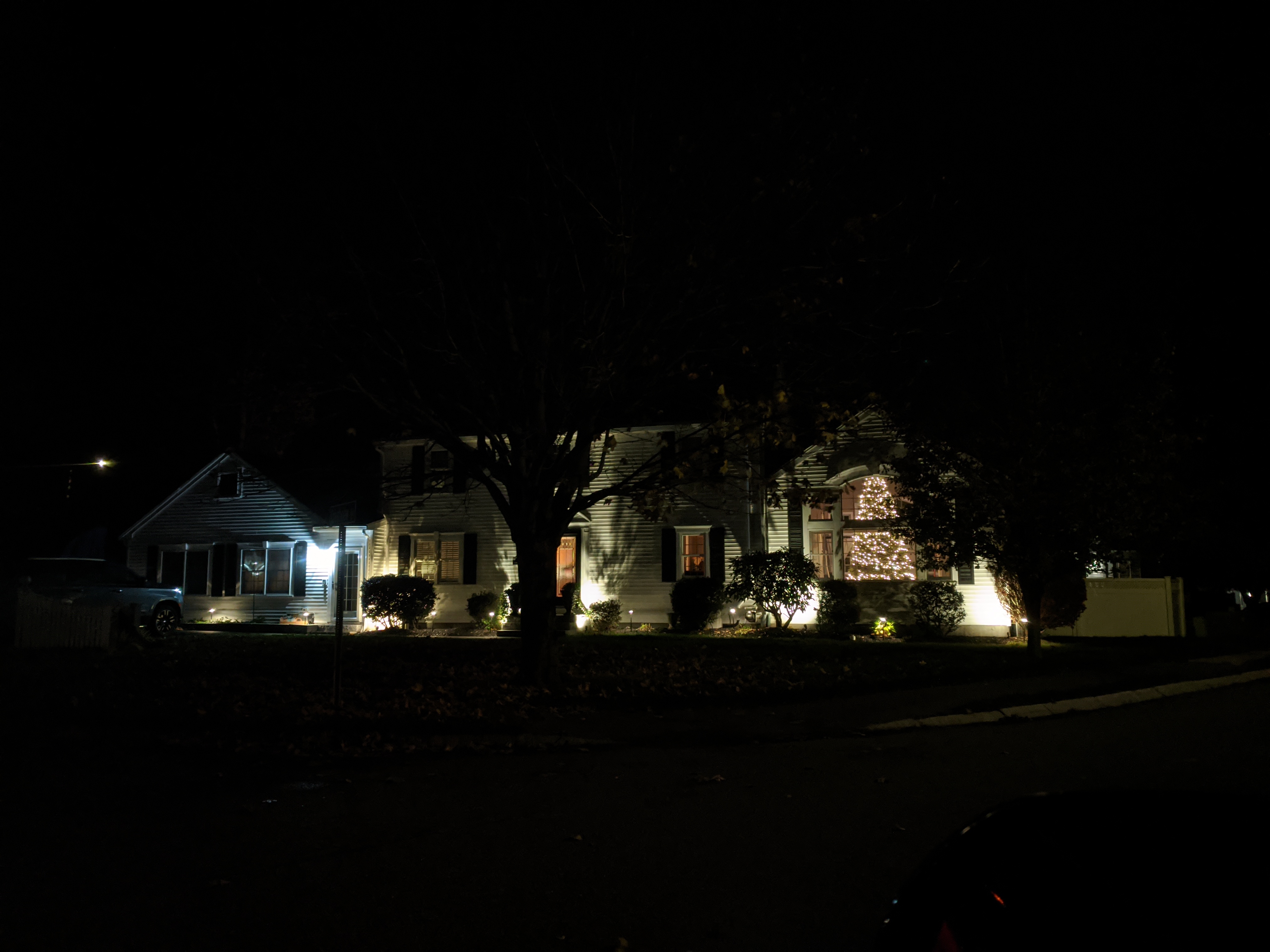
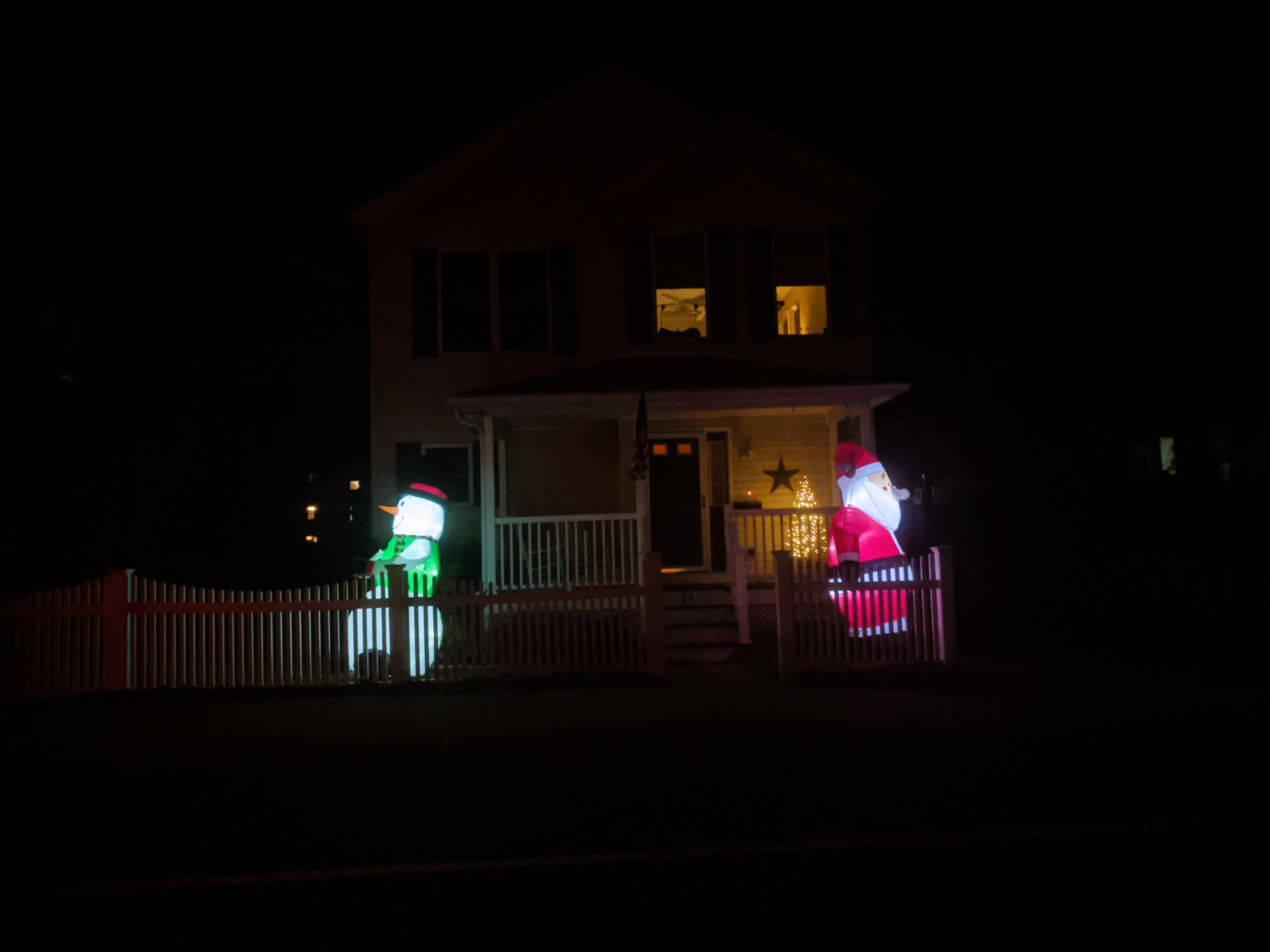
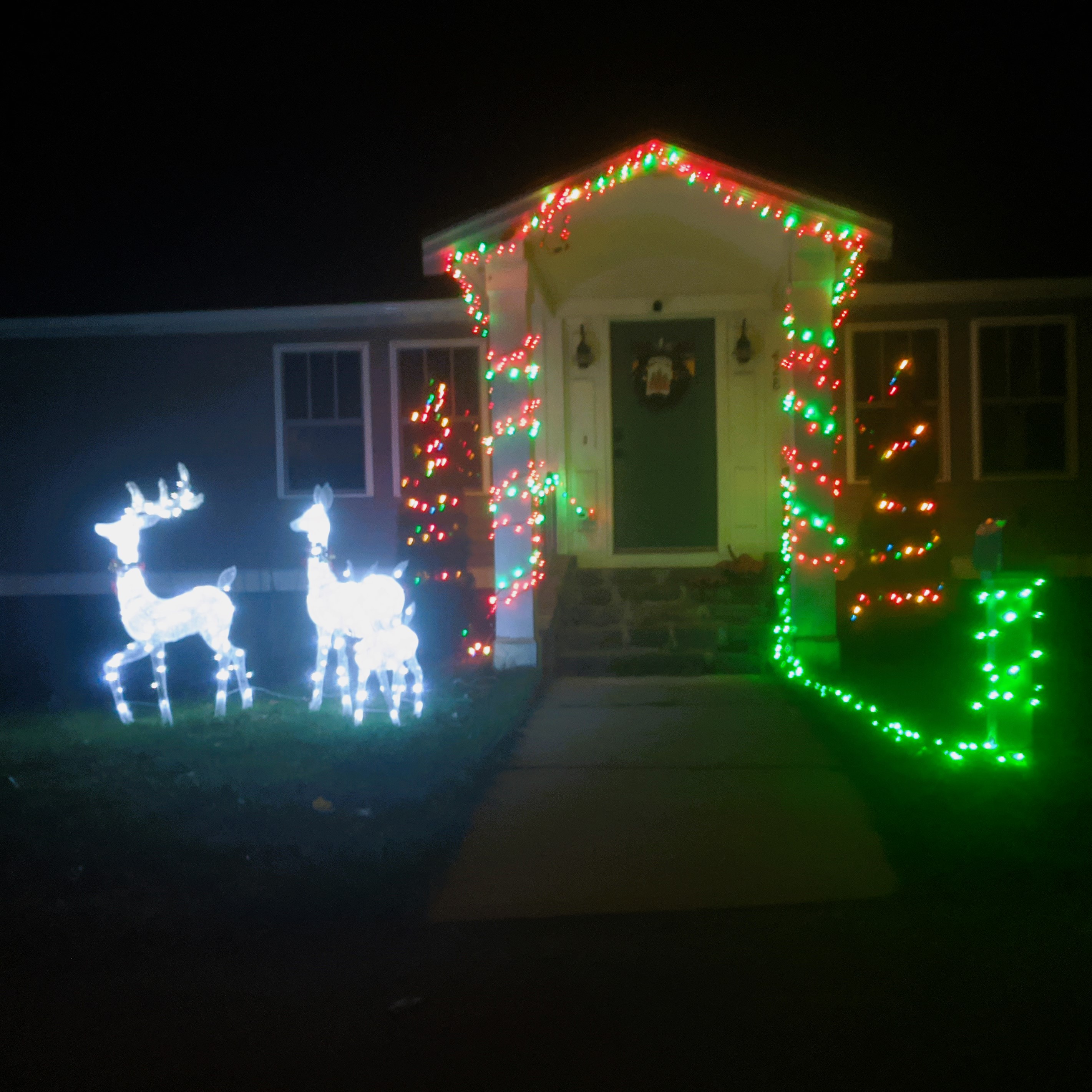
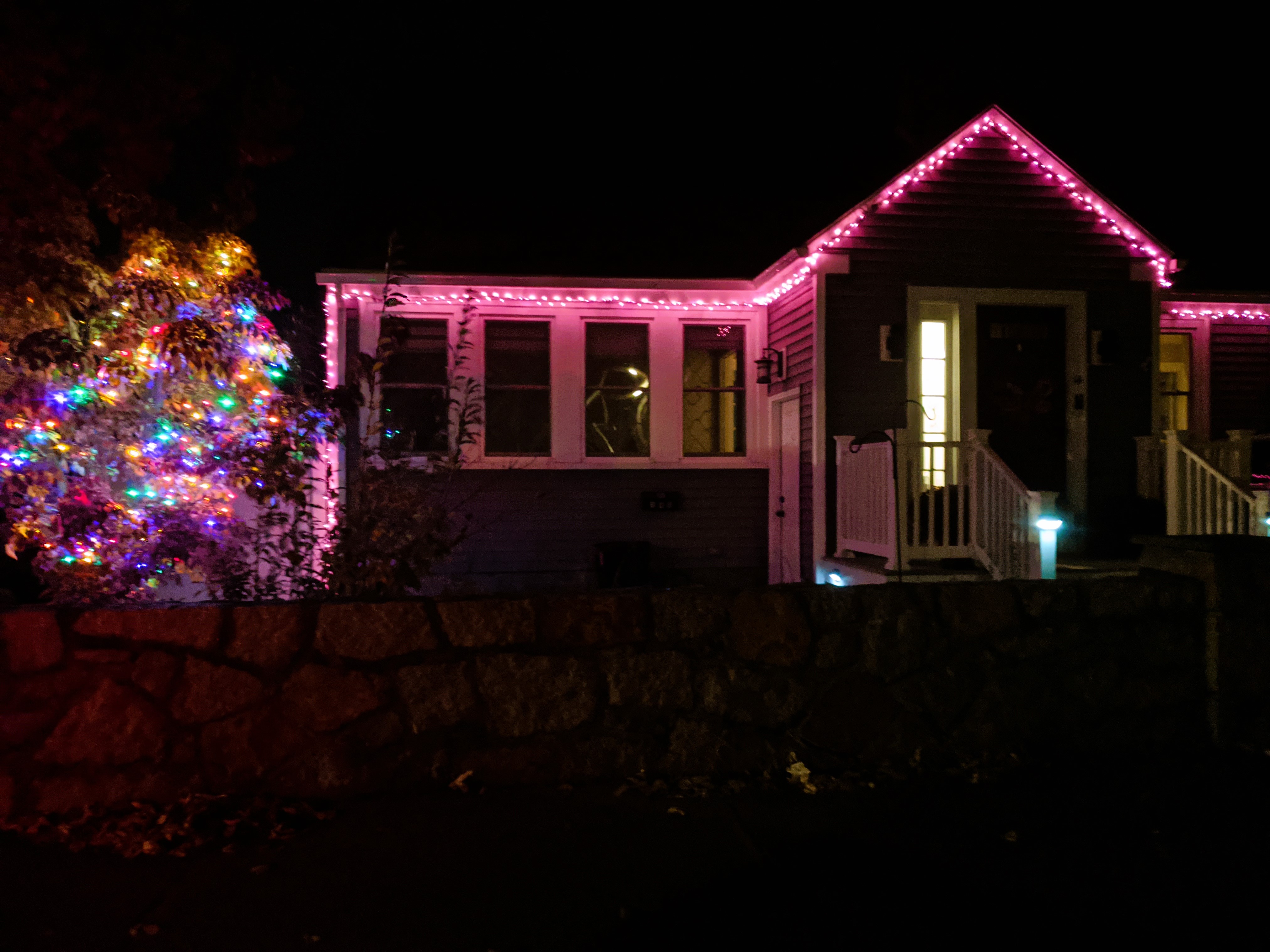
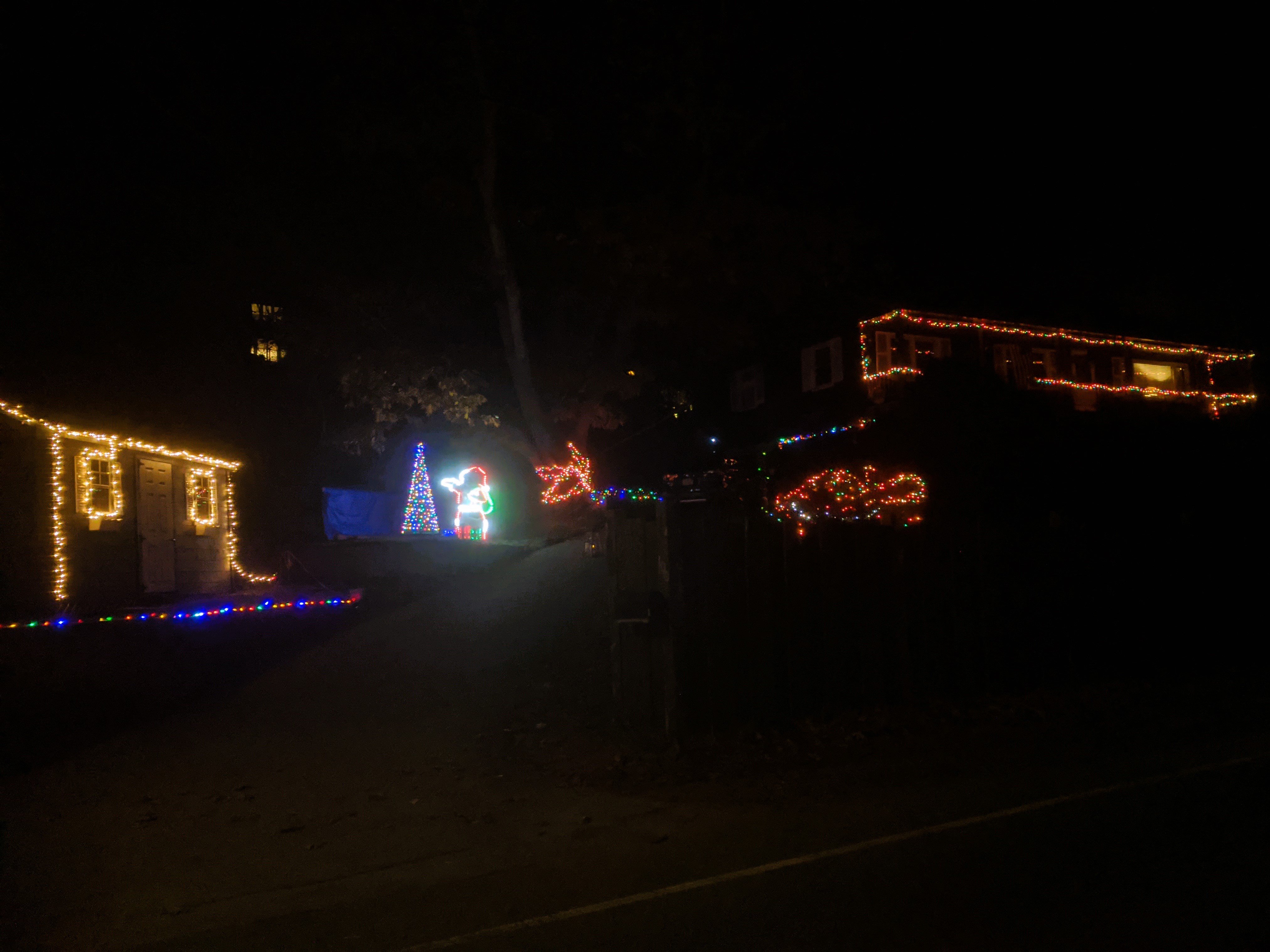
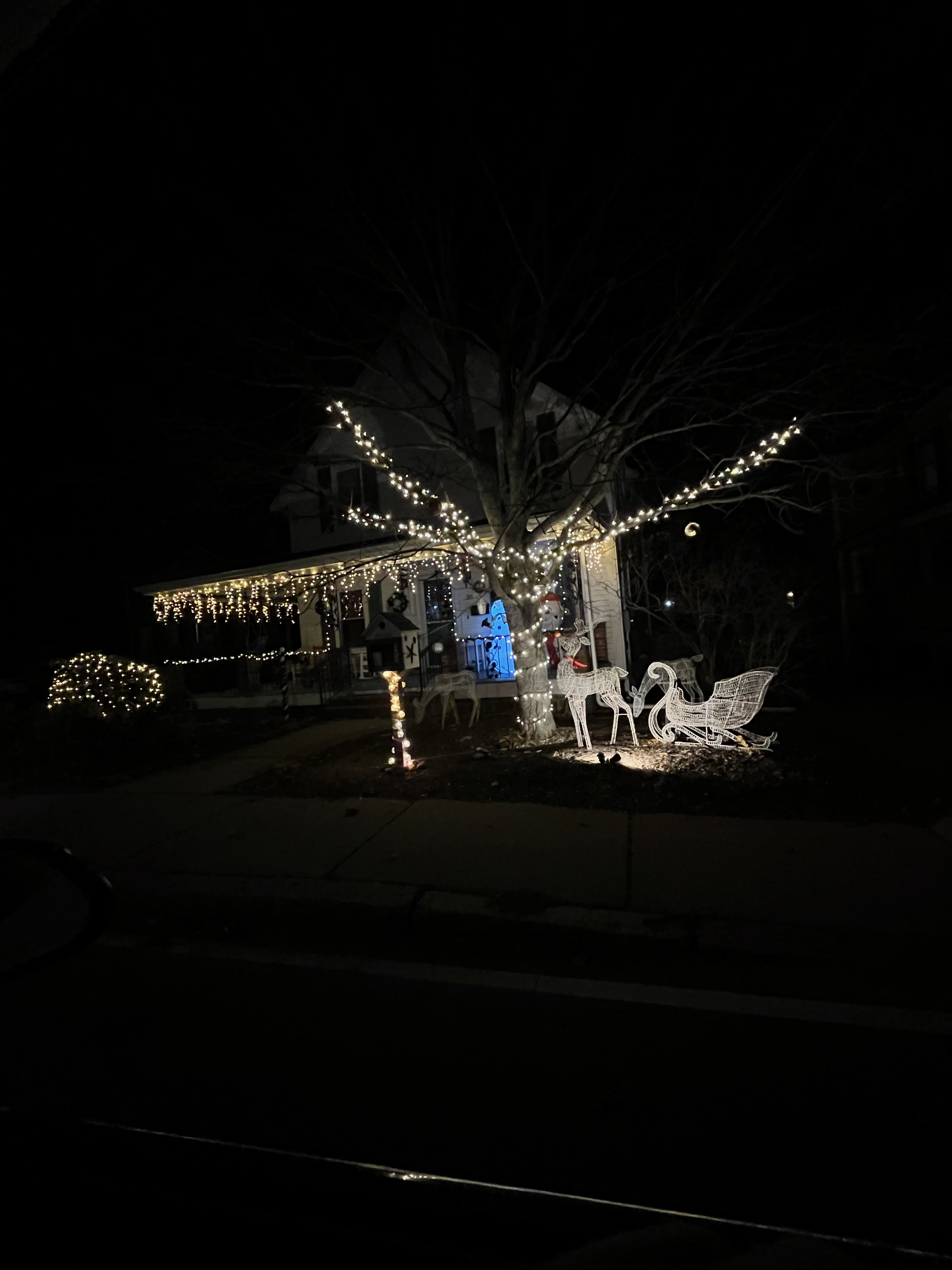
Here are all the images of the Gloucester homes added to the Holiday Lights and Cocoa Drives 2024 edition and the Google online and printable map or scroll below. Enjoy an abundance of creativity from our neighbors’ displays–religious and secular, traditional and one hit wonders, minimal and ornate, and everything in between. This is the 8th year in a row—and the 5th accompanied by a map with photo. Please note: you might want to increase the brightness on your display if you have it set low. Images can be clicked and enlarged. They aren’t set to their highest resolution. **For the 2024 edition there are only two posts**. For past year maps, search Good Morning Gloucester 2023, 2022 and so on; or here
Image Block Batch 2 . Post 2 of 2 for the Holiday Lights and Cocoa Drives 2024 edition.
random order
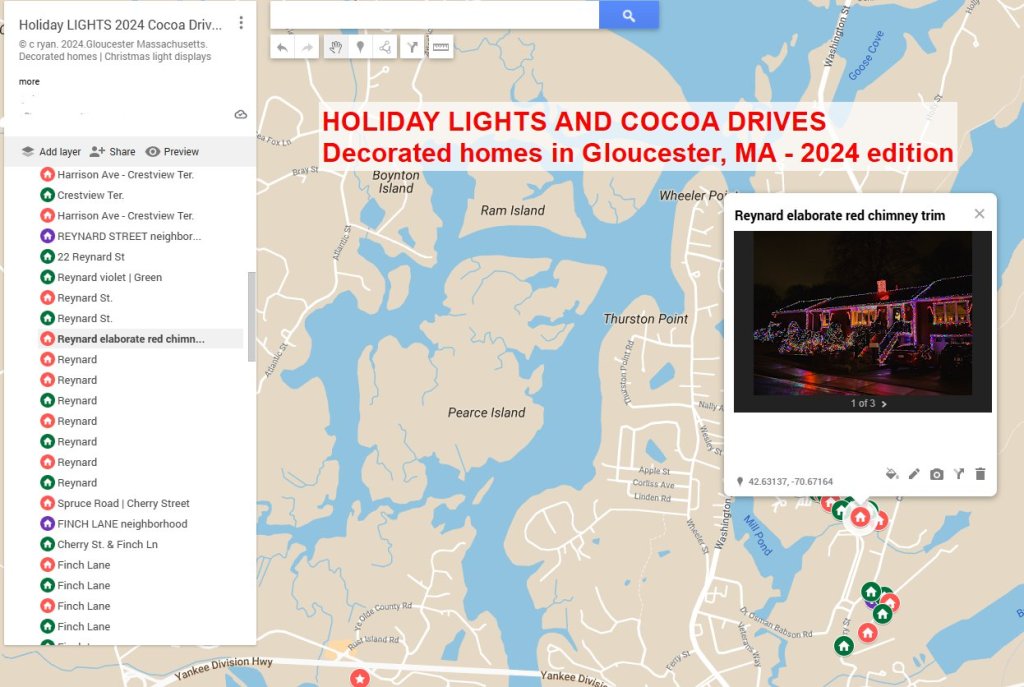
2024 Map Holiday Lights and Cocoa Drives
A selection of Gloucester’s decorated homes in 2024. Photos were posted on Good Morning Gloucester in 2 separate batches. Map is current as of 12/22/2024
Image Block Batch 1 (reposting here):
For the 8th year in a row—and the 5th accompanied by a map with photos—enjoy a selection of Gloucester’s houses decorated for the season. Addresses so far: downtown, Reynard, Finch, Washington, Spruce, Goose Cove Lane. Photos will be posted on Good Morning Gloucester in separate batches.
ROADS WORTH A RIDE AND ICONIC SCENIC STOPS
Concentrated neighborhood blocks include *Elizabeth Road *Finch Lane *Goose Cove Lane *Harrison Ave. and Crestview *Hartz St. *High Popples Road *Reservoir Road *Reynard Street *Essex Ave/Rt. 133 Kent Circle to Essex
Mad Merry Solos: Abbott Road; 7 Cherry Hill Road; Concord Street; Lendall (turn off Harrison Ave.); 8 Spruce; Starknaught Heights; 326 Essex Ave.
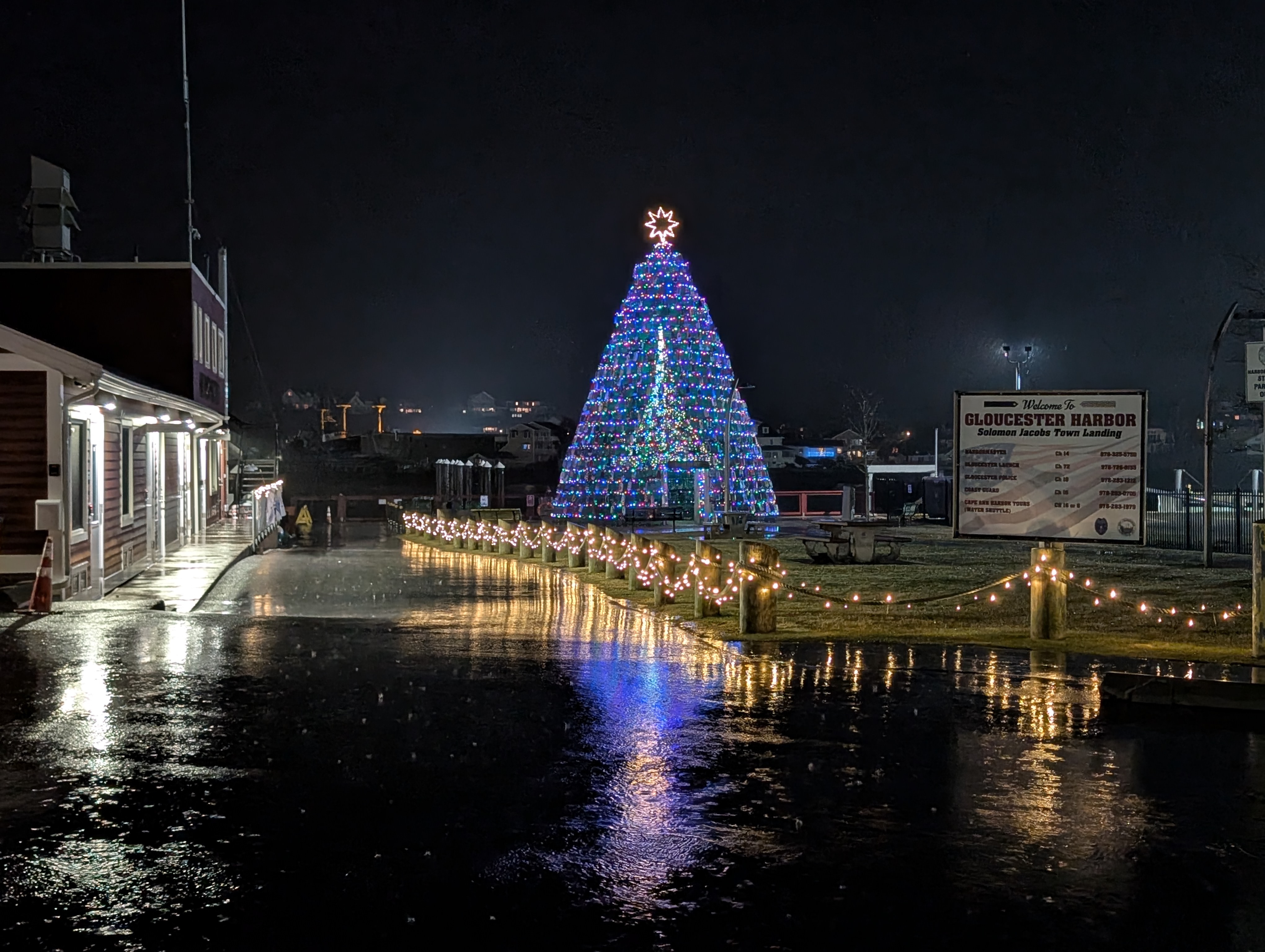
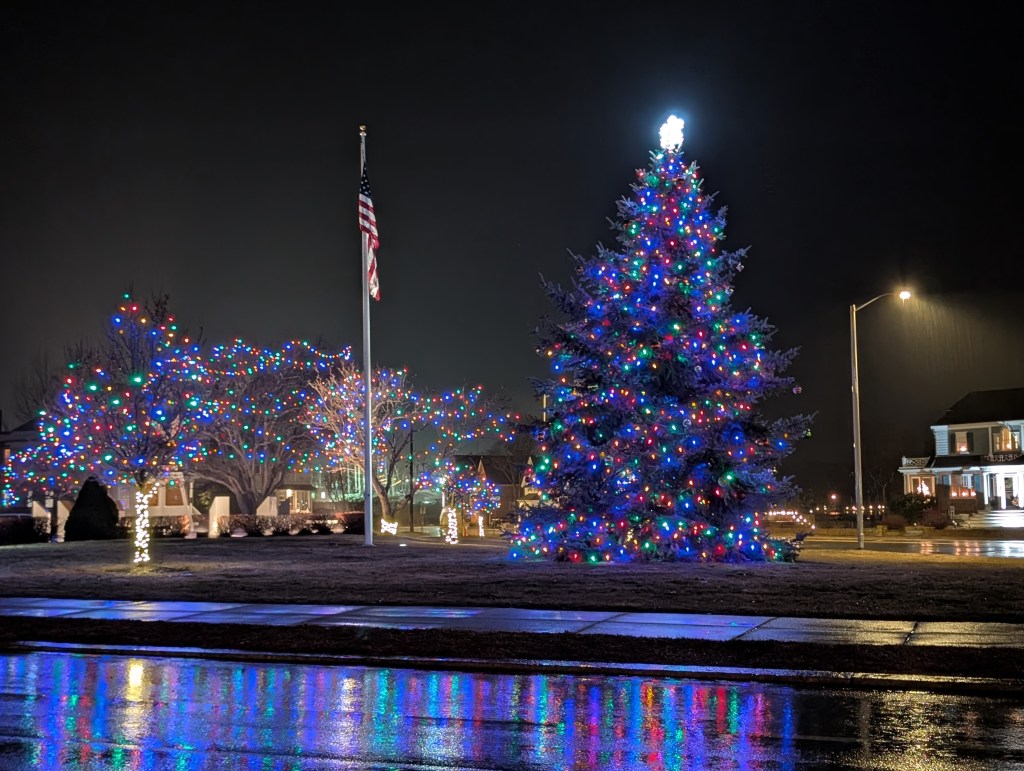
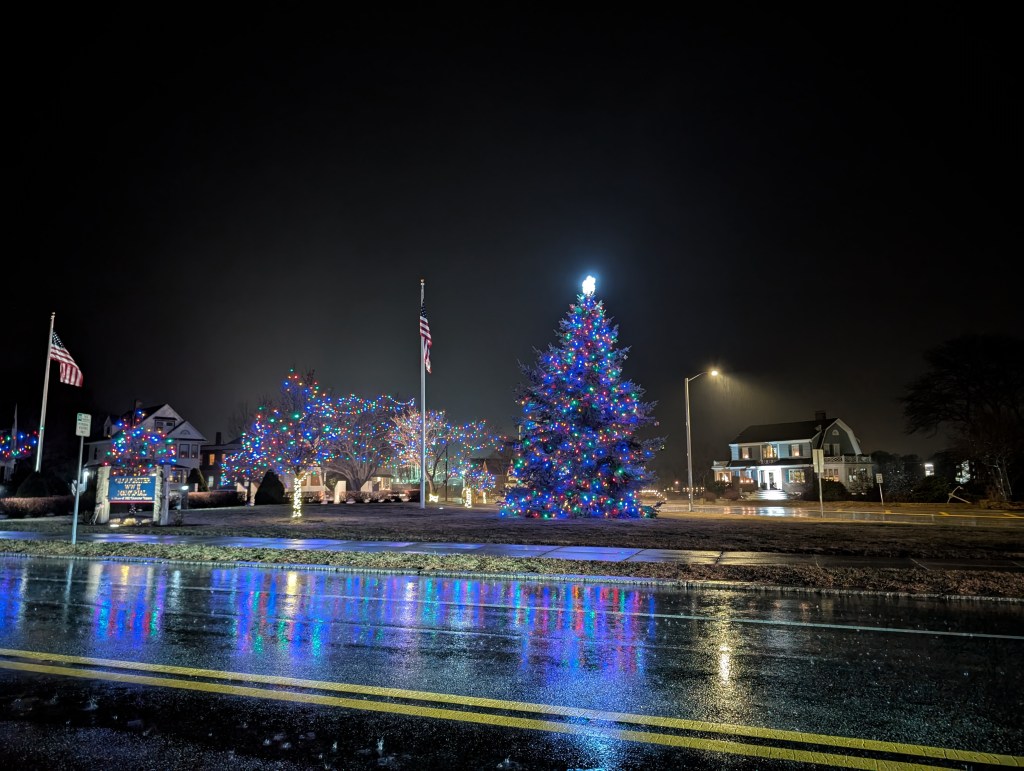
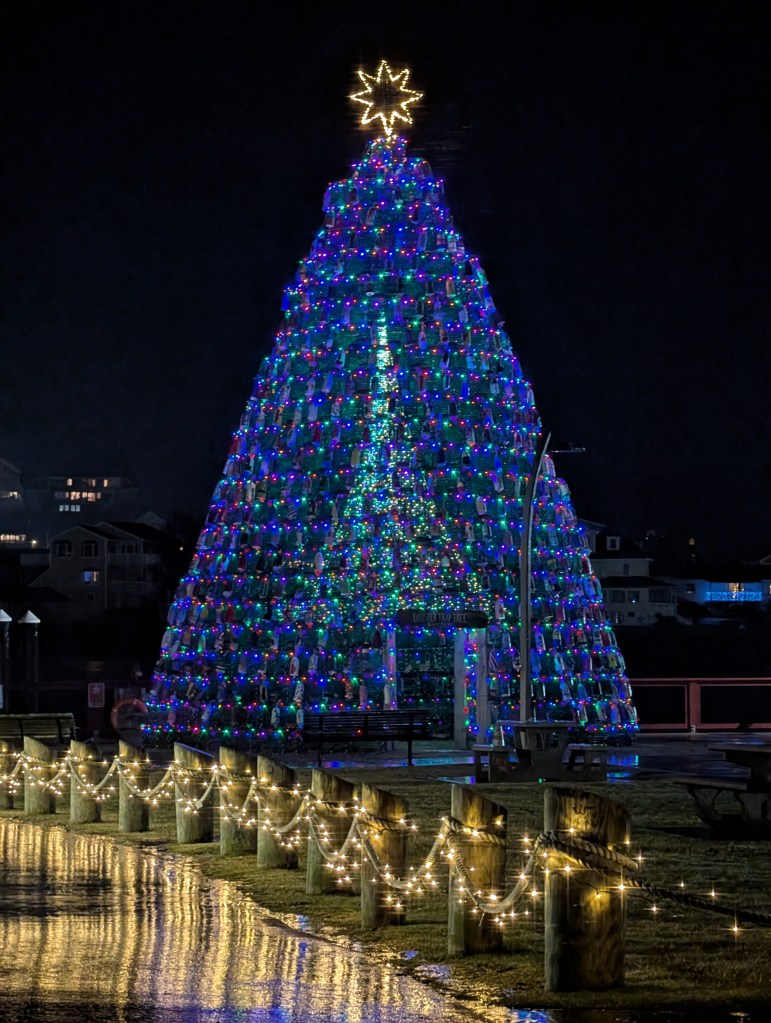
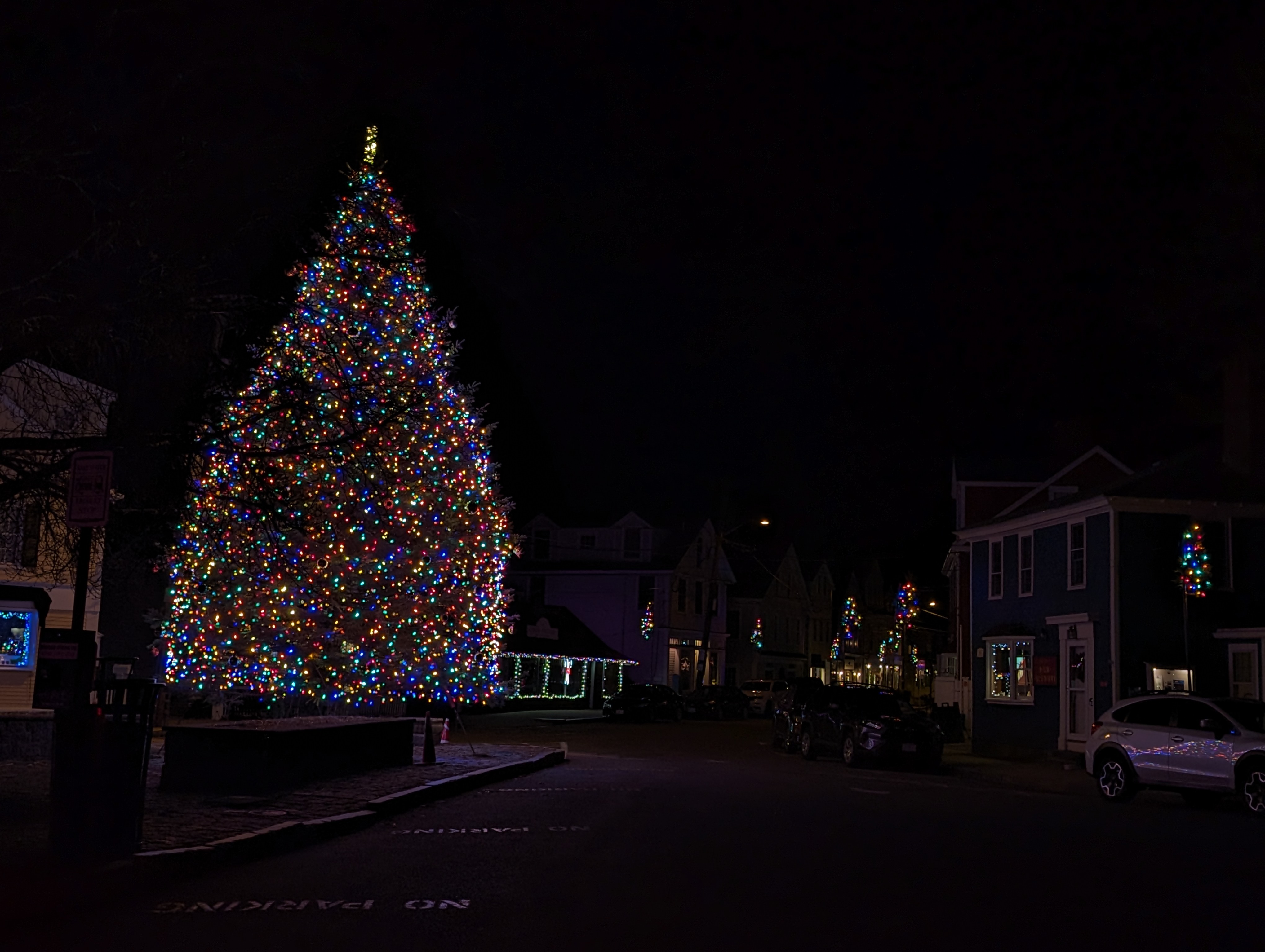
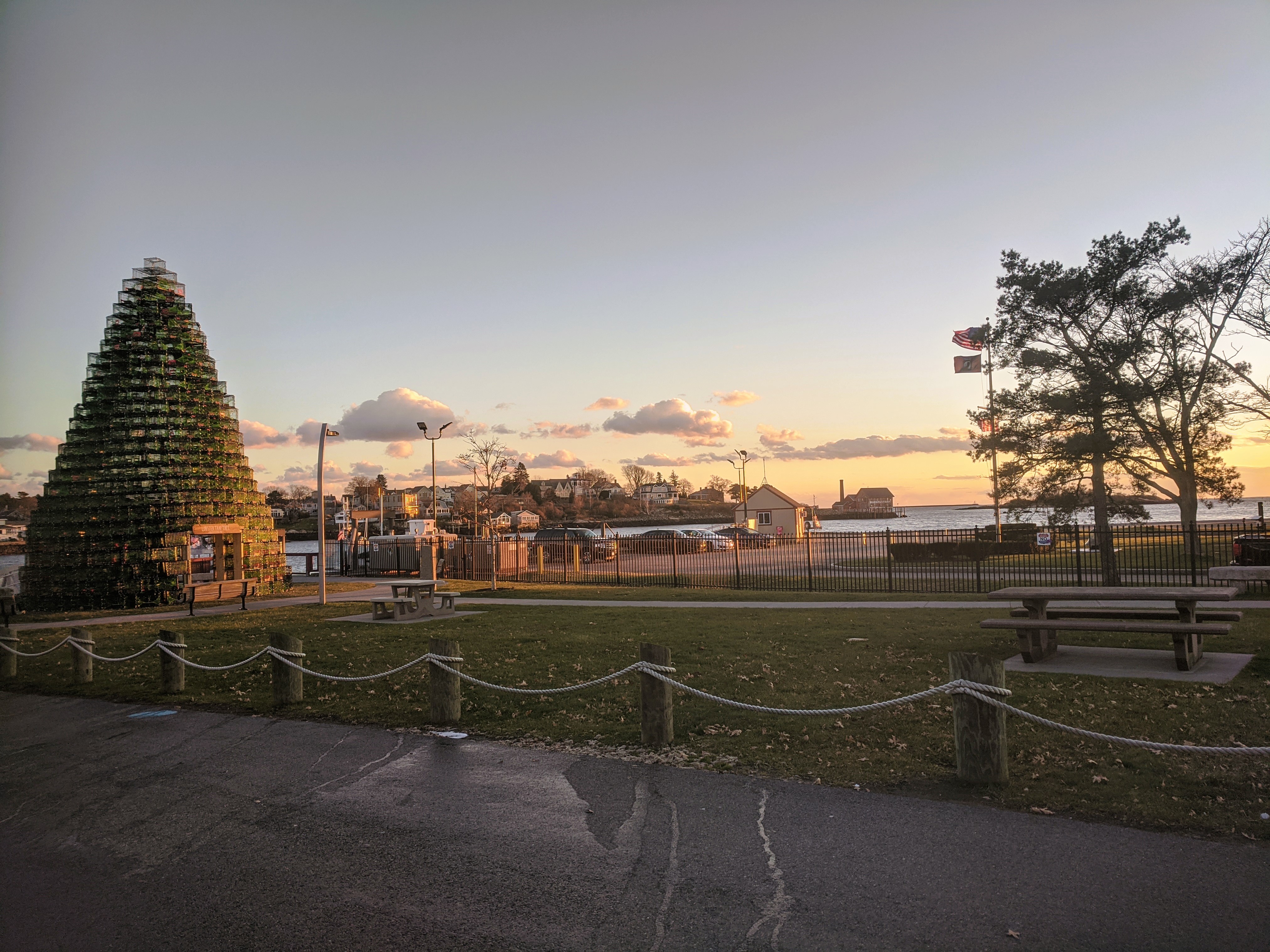
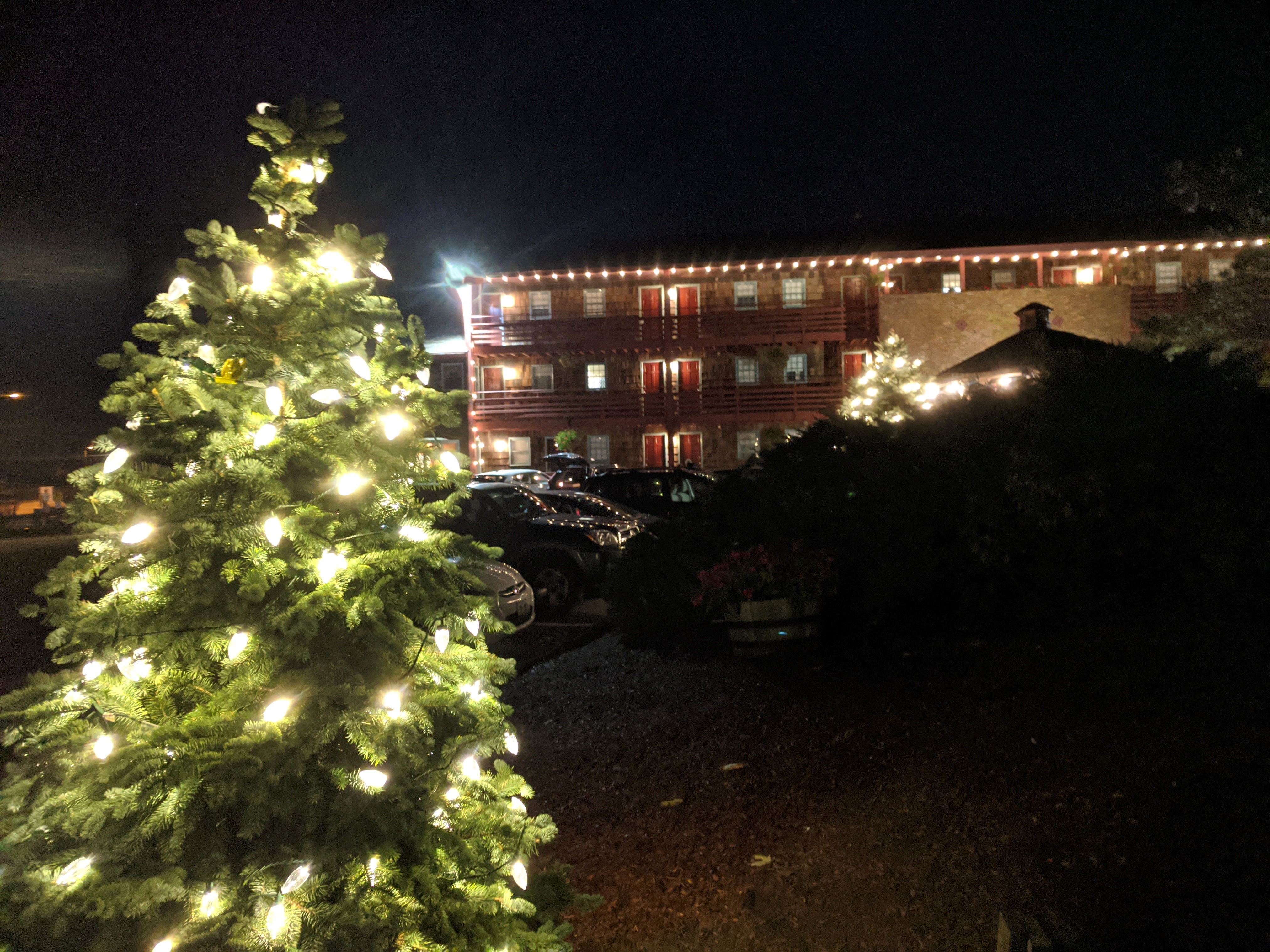
Iconic Scenic Stops: Gloucester’s Christmas trees at Kent Circle and Lobster Trap Tree on Harbor Loop, the Lobster Trap Menorah on Middle Street and Rockport’s Christmas Tree in Dock Square are enchanting each and every year.
Spread The GMG Love By Sharing With These Buttons:
Holiday Lights and Cocoa Drives 2024 edition is off. More merry neighborhoods, pictures and map coming soon.
Image block: For the 8th year in a row—and the 5th accompanied by a map with photos—enjoy a selection of Gloucester’s houses decorated for the season. Addresses so far: downtown, Reynard, Finch, Washington, Spruce, Goose Cove Lane. Photos will be posted on Good Morning Gloucester in separate batches.
Spread The GMG Love By Sharing With These Buttons:
The last batch! Here are images of the final Gloucester homes added to the Holiday Lights and Cocoa Drives 2023 edition, the Google online and printable map, and the 2023 Mad Merry Highlights Tour reveal. Whether they’re religious or secular, traditional or one hit wonders, minimal or ornate, by hand or by hire–; let’s admire the joy and creativity brought to their Gloucester designs and the spark they share from a little light on dark winter nights!
note: you might want to increase the brightness on your display if you have it set low.
The 2023 ‘Mad Merry Highlights’ Tour
IMAGES: As in deck the halls, doors, windows, roofs and yards with boughs of holly-holidays! Here’s the list of 20 (alphabetized by roads in Gloucester neighborhoods)
BAYVIEW
7 Cherry Hill Road Impressionist Jewell
18 Reynard Street Journey of Joy
22 Reynard street White Lights Wonderland
37 Reynard Street Red Lights Shimmer
42 Reynard Street Blue Green Showstopper
8 Spruce Road Ho Ho Holiday Spirit
EAST GLOUCESTER
6 Abbott Road Aglow & Glistening
2 Crestview Terrace (off Harrison Avenue) Christmas Corner
6 Crestview Terrace (off Harrison Avenue) 1970s Animation Islands
4 Elizabeth Street Frosty House
12 Elizabeth Street Joyland House
29 High Popples Road
8 Lendall Street (off Harrison Avenue) Lights on Lendall
12 Starknaught Road (off Witham) Starknaught Santa candy cane cheer
DOWNTOWN
Centennial & Washington St. Blue Angel
6 Friend Court Santa Waving
79 Perkins Street Indigo Traditional
MAGNOLIA
357 Western Avenue Merry and Bright
WEST GLOUCESTER
12 Concord Street Gingerbread Dazzler
326 Essex Avenue Magical Delight
FOUR ‘New England Traditional’ HighLights
Images: DOWNTOWN. 57 Prospect St. at the RR & Maplewood buoy intersection; 158 and 160 Washington Street pair; Corner of Ashland Place & Washington St. (across from Poplar)
Merry Whimsy Highlights
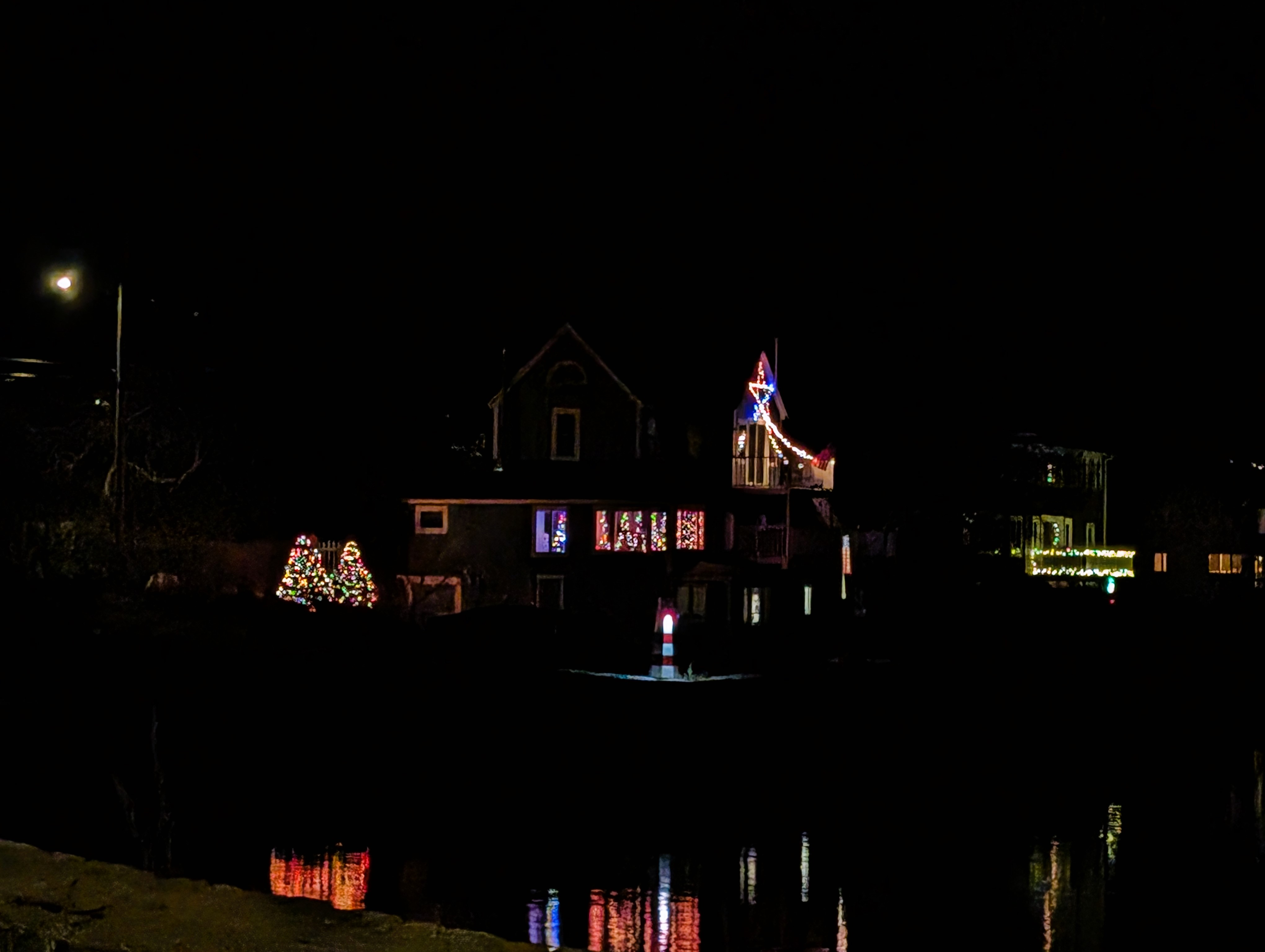
Images: Have you seen…? The blue crescent moon rising over Rt. 128 between the rotaries is the OG hanging lights design–an annual beacon heralding the Seasons that’s inspired others; the magical lights reflecting Goose Cove; ‘Merry’ on Cherry hedge; Days pond’s tiny floating Santa; Santa and his reindeer flying in the sky (seen from Rt. 128)
ROADS WORTH A RIDE AND ICONIC SCENIC STOPS
Roads worth a ride: Essex Ave (Rt. 133) between Essex and Kent Circle in Gloucester; Finch Lane; Elizabeth Street; Harrison Ave (to Crestwood); Reynard Street, Reservoir Road, and High Popples.
Iconic Scenic Stops: Gloucester’s Christmas trees at Kent Circle and Lobster Trap Tree on Harbor Loop, the Lobster Trap Menorah on Middle Street and Rockport’s Christmas Tree in Dock Square are enchanting! (This year there are more homes illuminated on the drive into Rockport via Eastern Ave.)
Trends 2023
Images: the Red and Green color scheme!
Photo Batch #5 (last one for this season!)
Images: photo additions as of Dec. 14th to the Google map include the following streets: Reynard Street, Linden Road, Cherry Street, Finch Lane, Washington Street, Brightside Ave., Crestview Terrace, Decatur Street, East Main Street, Hartz, High Popples Road, Marina Drive, Western Avenue
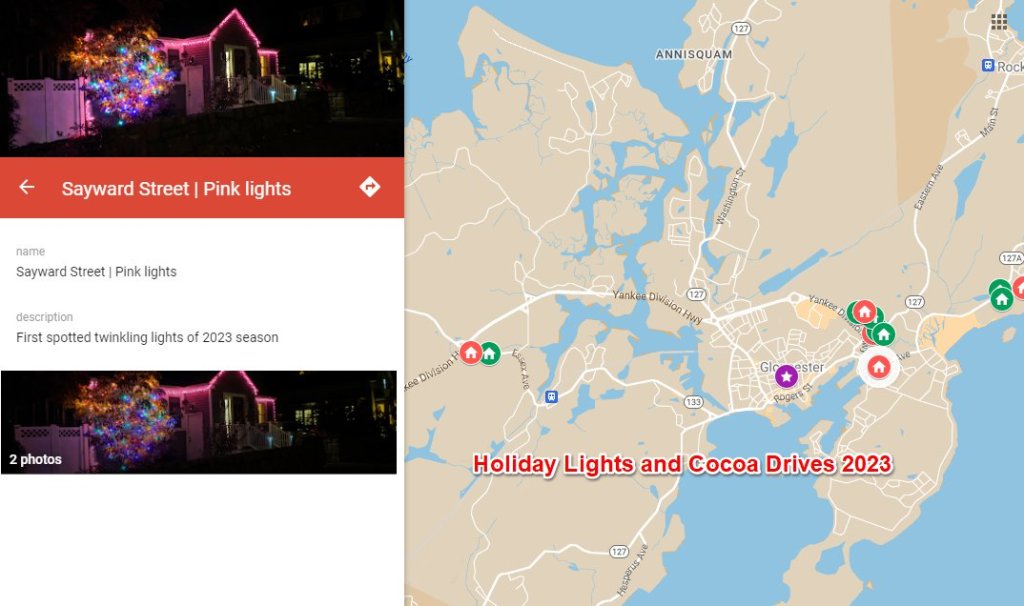
2023 Map Holiday Lights and Cocoa Drives
A selection of Gloucester’s decorated homes (about 250). Photos were posted on Good Morning Gloucester in 5 separate batches.
This is the last batch of photos for 2023. There are photos of about 250 homes. Some are added to the map in bundles on streets. There is at least one image for each map point. If I’ve missed one of the requests or a favorite let me know.
Magical routes are waiting for you! Another 100 or so homes were added to the Holiday Lights and Cocoa Drives map as of December 8, 2023.
photos caption: C. Ryan. Batch 4 selection of enchanting homes downtown, East Gloucester and West Gloucester down these roads in no particular order: Concord Street, Essex Avenue (Rt. 133), Washington Street, Beach Court, Gloucester Avenue, Middle Street, Fleetwood Drive, Prospect, East Main Street, Goose Cove Lane, Friend Court, Burnham Street, Perkins Street, Back Shore, High Popples Road, Highland Court, Mt. Pleasant Avenue. Plus a couple along Eastern Ave in Essex (Rt. 133) and Main Street, Rockport. (Pinch and zoom to enlarge photos and right click for info).
2023 Map Holiday Lights and Cocoa Drives
More homes and neighborhoods will be added, so be sure to check back. Photos will be posted on Good Morning Gloucester in separate batches.
December 5th and already there’s an abundance of merriment and creativity! Enjoy another 50 or so sparkling homes. The 2023 map has reached 100 homes with streets and turns still to explore.
photos caption: C. Ryan. Batch 3 selection of enchanting homes down these roads in no particular order: View from Rt. 128; Centennial; Cherry St. (just a couple); Cherry Hill Road; Eastern Ave; Elizabeth St. Frosty; Finch St. (just one–will circle back); Wolf Hill Road (and Glenmere); Grove Street; Harrison Ave.; Hartz (will circle back); Harvard St. (from Centennial); Lendall St. correction; Macomber inflatable characters way; Maplewood; Marsh St.; Washington St. up to Marsh
These additions (and a couple do-overs from other nights) were added to the Holiday Lights and Cocoa Drives map as of December 5, 2023. (Pinch and zoom to enlarge photos and right click for info).
2023 Map Holiday Lights and Cocoa Drives
More homes and neighborhoods will be added, so be sure to check back. Photos will be posted on Good Morning Gloucester in separate batches.
More to come. Roads not taken, yet :)!: East Gloucester, Washington Street past Marsh St. to Rockport, Annisquam, Lanesville, Magnolia, Rt. 133, W. Gloucester, and return trips for new sparkling additions or repeat visits.
Spread The GMG Love By Sharing With These Buttons:
Gloucester blocks and streets are merry and bright! The magic grows daily with houses decorated simply, elaborately and everything in between. One design trend is a duo light scheme that’s solely red and green. Don’t you think that homes from batch 2 will surely be contenders for the Mad Merry Highlights Tour in 2023?
photo caption: C. Ryan. Batch 2 includes photo series of twinkling homes seen on Abbott Road, Eastern Avenue, Elizabeth Road, Harrison Avenue neighborhood, Harrison Avenue to Crestview Ter., Lupine, Reservoir Road neighborhood, Reynard Street, Spruce Street, and Starknaught Heights; plus 2 Gifs. These additions were added to the Holiday Lights and Cocoa Drives map as of December 1, 2023. (pinch and zoom to enlarge)
Gloucester’s lobster trap tree is built out in its temporary site on Harbor Loop, soon to be enlivened by buoys hand painted by children. The lighting ceremony is on Sat. Dec. 9, 2023.
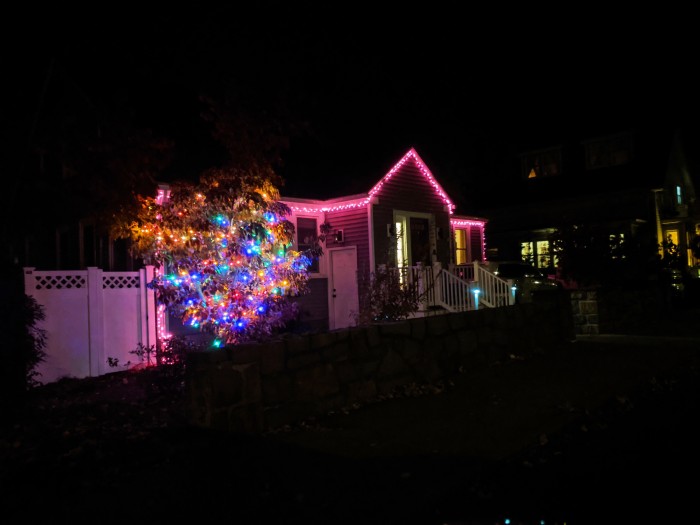
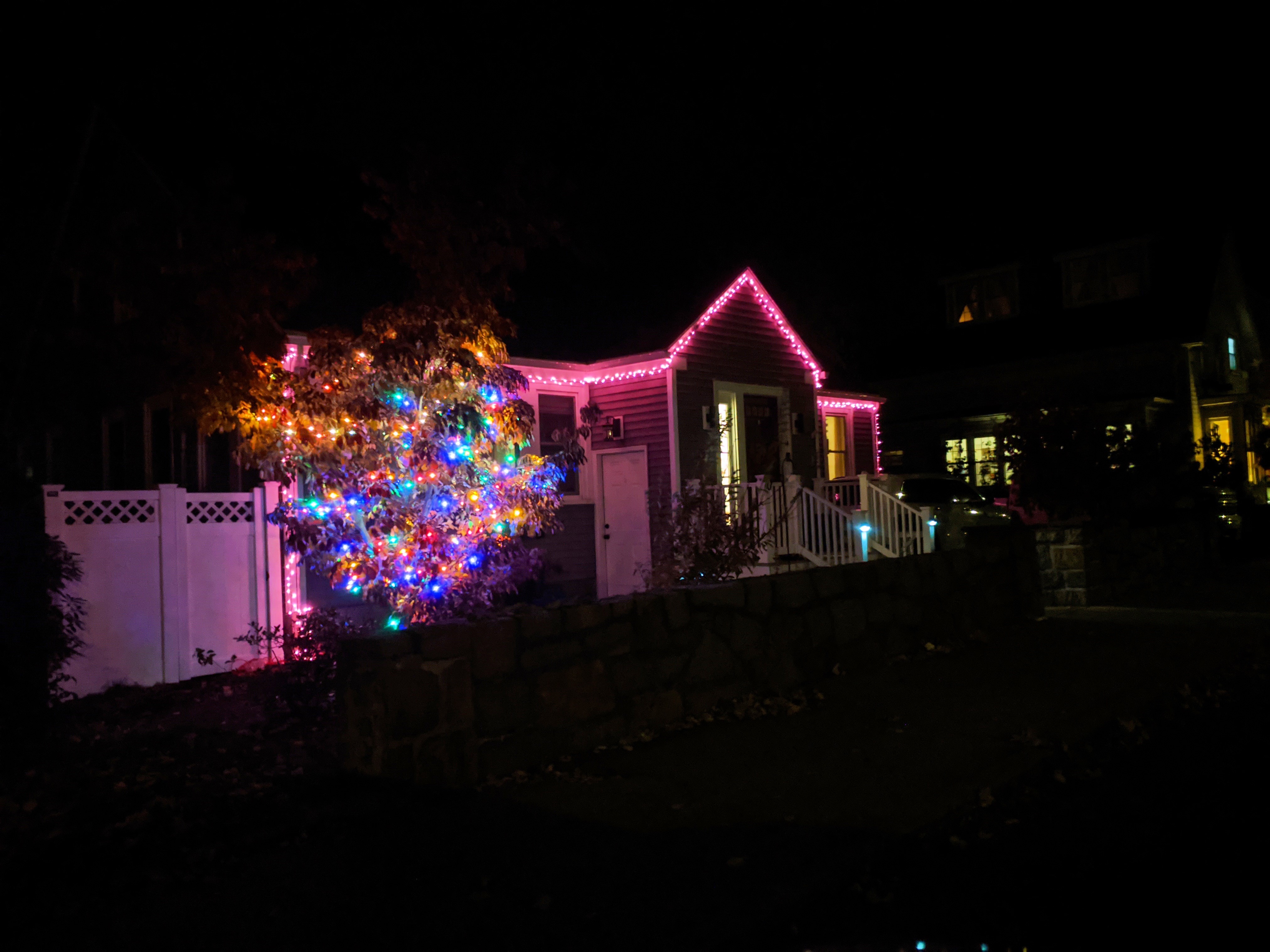
First group of photos 2023 (click here) includes the pink house, the first house spotted sparkling for 2023. Alas, not more pink themes out there yet.
2023 Map Holiday Lights and Cocoa Drives
For the 7th year in a row—and the 4th accompanied by a map with photos—enjoy snapshots of Gloucester’s decorated homes. More homes and neighborhoods will be added, so be sure to check back. Photos will be posted on Good Morning Gloucester in separate batches.
Holiday Lights and Cocoa Drives is just getting going. This gem was spotted November 15th, the first of the season. Will Barbie pink be among the 2023 trends? Maybe. More homes and neighborhoods will be added, so be sure to check back. Photos will be posted on Good Morning Gloucester in separate batches.
photo caption (pinch and zoom to enlarge): For the 7th year in a row—and the 4th accompanied by a map with photos—enjoy snapshots of Gloucester’s decorated homes. Scroll down to see the first batch of twinkling houses that have been added to the Holiday Lights and Cocoa Drives 2023 map edition as of November 25. Also, scroll down to a list of area ‘Mark Your Calendar’, not-to-miss, seasonal events.
In addition to the area’s rewarding drives past cheery homes, beautiful seasonal tree lightings and festive sparkling downtowns are bustling with activities.
2023. Annual events (days and times differ year to year)
Nov. 25-January CAPE ANN: Cape Ann business store fronts are decked out. check out Winter Lights on Cape Ann
Nov. 26 GLOUCESTER: Gloucester tree lighting in Kent Circle and Santa parade
Dec. 1 ESSEX: A Very Essex Christmas Celebration. Santa arrives by boat.
Dec. 1, 2 MANCHESTER: Holiday Stroll; Christmas by the Sea and Santa by boat
Dec 2 ESSEX: Holiday market
Dec. 2 ROCKPORT: Christmas in Rockport. Santa’s arrival by lobster boat and Tree in Dock Square lighting
Dec. 2 & 3 GLOUCESTER: 2nd Annual Parade of Trees (fundraiser for Horribles Parade)
Dec. 9 GLOUCESTER: extravaganza all day: Historic Middle Street Walk incredible program https://middlestreetwalk.org; Deck the Dock at Maritime Gloucester; Stacy Boulevard Chris Williams bronze planters dedication; Lobster Trap Tree lighting (4:30PM); and all in Gloucester’s 400+ anniversary year
Dec. 10 GLOUCESTER: Santa at sea Beauport cruiselines
American sculptor Walker Hancock volunteered in many civic capacities while a Gloucester resident. While serving as the Chair of the city’s Art Committee in the 1950s, Hancock prepared a Master Plan that managed to forecast an array of evergreen topics: land use, zoning, preservation, open space, Main Street & downtown, public monuments, an arts commission, city improvements (like signage), beautification (trees and blooms), health & safety, tributes, and history– and all through a practical cultural and economic vision.
Robert F. Brown, Harold C. Dexter, Myron U. Lamb, Frederick H. Norton served on this committee with Walker Hancock.
As a World War Two Monuments Men leader, Hancock had overseen the prioritization, protection, and eventual inventorying of tens of thousands of cultural works of significance looted by Nazis. A decade later, cataloguing Gloucester’s plentiful assets was a rather small job for this talented committee–especially with Hancock serving as Chairperson! A brief few sentences from this amazing document allude to his expertise:
“During the Second World War the Allied Expeditionary Force acted under a directive signed by General Eisenhower which required them “To take all measures consistent with military necessity to avoid damage to all structures of cultural, artistic, or historical value, and to assist wherever practicable in securing them from deterioration consequent upon the processes of war”.
To implement the directive of the Supreme Commander, lists of “Protected Monuments” were prepared, designating buildings of sufficient importance to justify the efforts to preserve them even during military operations. Many private houses were included in these lists.
We owe it to ourselves and to the Nation to be at least as solicitous in regard to our own heritage of such structures and to secure them wherever possible from deterioration consequent upon lack of appreciation or neglect.
Attached is a list of structures in Gloucester considered of sufficient architectural value to warrant special effort to preserve them. It is not a complete list and does not include many of the charming houses the destruction or mutilation of which would be a loss to the city as a whole…”
Committee’s Master Plan report (Chairman, Walker Hancock, for Gloucester, Mass., 1958)
Flash forward decades, from 2000-2023, multiple arts ordinances, inventories, and drafts of master arts plan were crafted and/or attempted. (Prior to 2000–and prior to Hancock– there were wonderful asset inventories. Gloucester has amazing archives!) I served on multiple arts related groups and commissions (roughly 2010-2018), the downtown Cultural District, Tourism, and various downtown working groups. Numerous ideas and topics now were covered in this 1958 report, and would have been extremely helpful to reference.
With the upcoming 2023 Comprehensive plan underway and the first public meeting coming September 9th, I thought the writing from 1958 would be of great interest. Read through to see what suggestions have been realized or incorporated and which might be worthy of attention again.
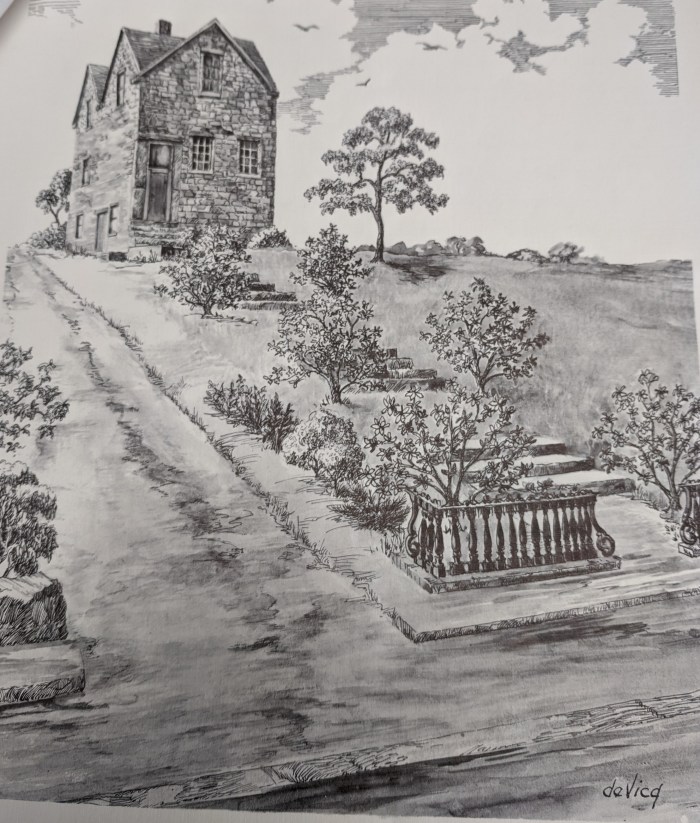
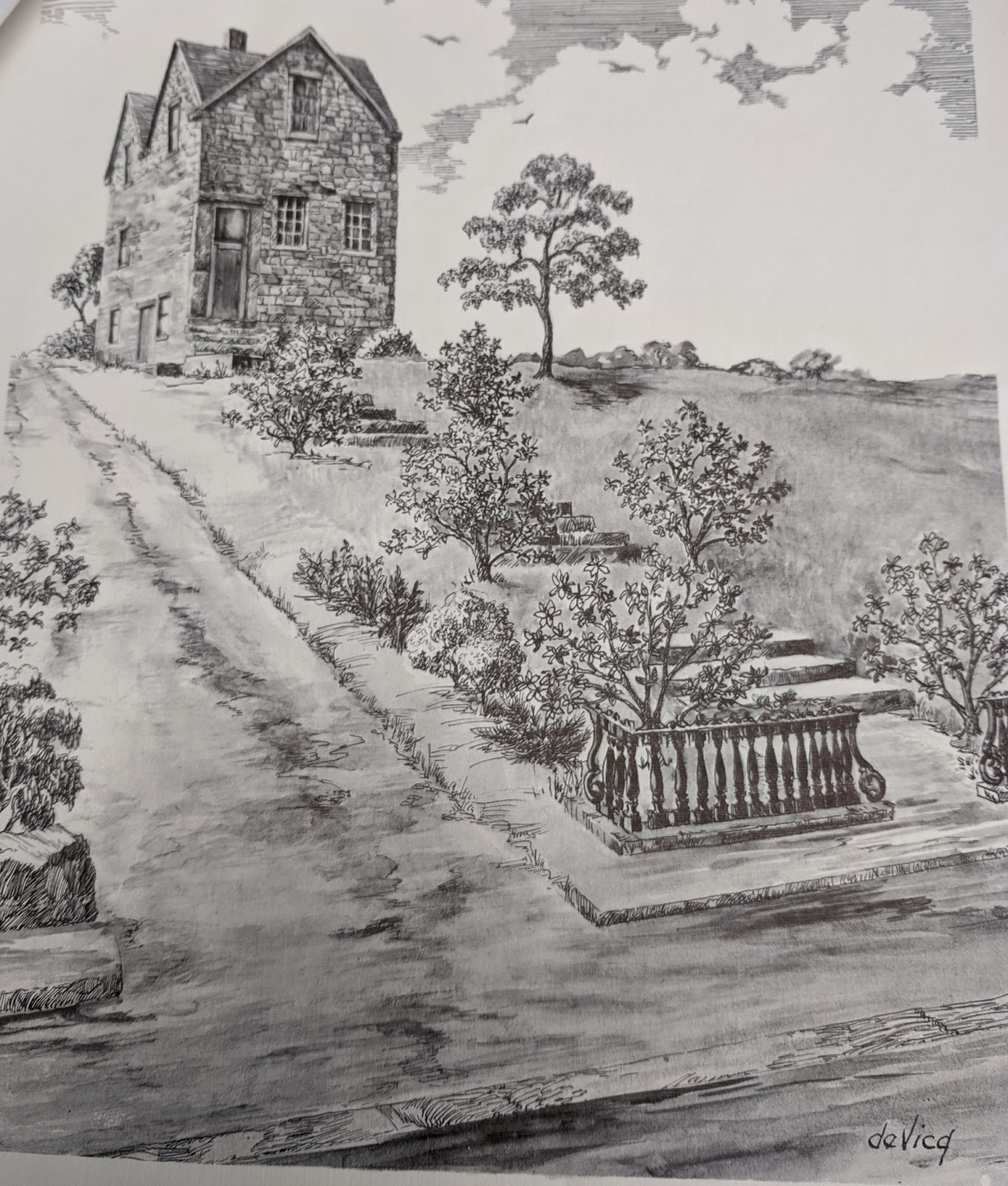
Image: For the 1958 report, artist Betty deVicq provided a rendering for a potential beautication of the Fitz Henry Lane House.
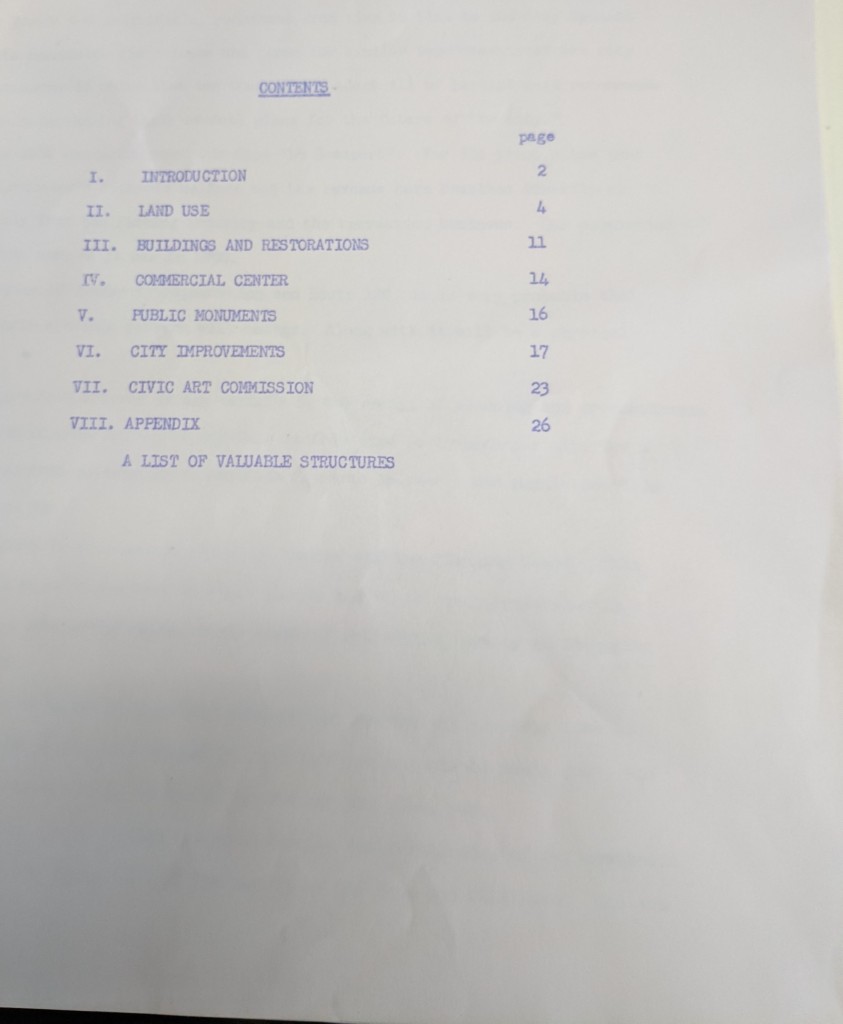
Contents
INTRODUCTION
LAND USE
BUILDINGS AND RESTORATIONS
COMMERCIAL CENTER
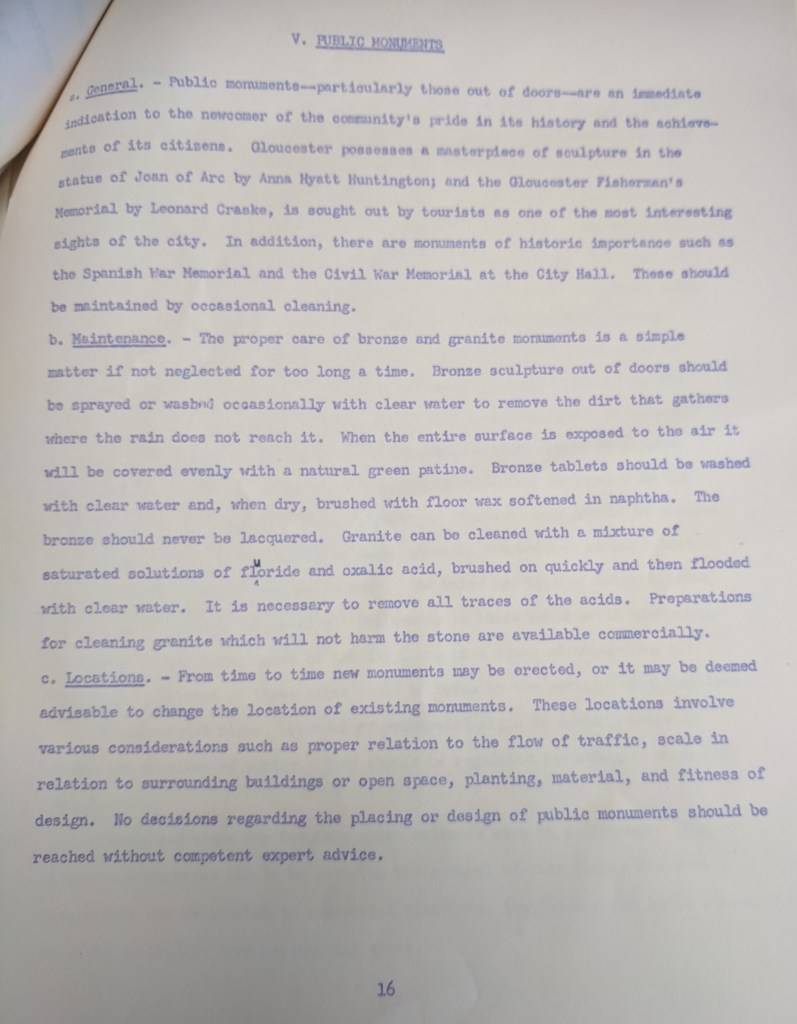
PUBLIC MONUMENTS
CITY IMPROVEMENTS
CIVIC ART COMMISSION
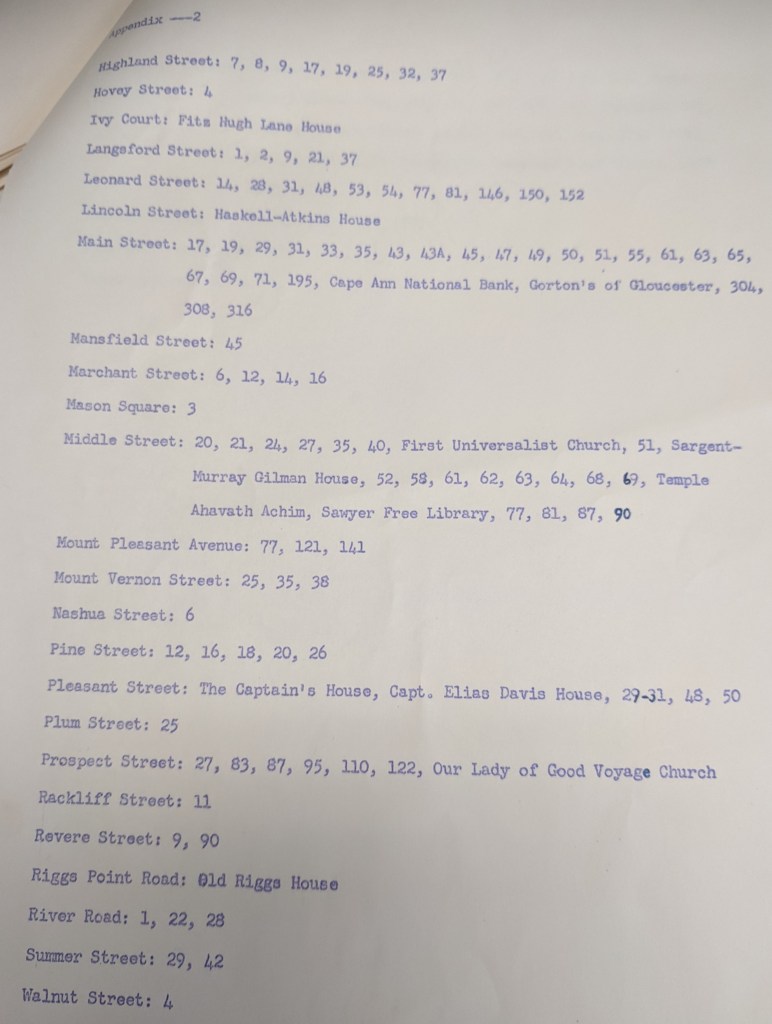
APPENDIX (selection of home street addresses)
LIST OF VALUABLE STRUCTURES
1. Introduction
The following resolution was adopted on unanimous rising vote by the Municipal Council at its meeting in the White-Ellery House on August 1, 1957,
“Be it resolved that the Cape Ann Historical Association, together with other groups and individuals, recommend from time to time to the city Council and its successors their ideas and plans for similar improvements of the city of Gloucester in order that the Council may adopt all or part of said recommendations in furthering their overall plans for the future of the city.”
In 1606 Champlain named our Cape “Le Beauport”. For 334 years since that time Gloucester’s economic welfare and tax revenue have resulted directly or indirectly from the fishing industry and the recreation business. Our population now is the same as it was in 1890.
Because of modern transportation and Route 128, it is very probably that our historic economic pattern will change. Along with it will be a physical change.
The greatest success in any venture is the result of planning and preparedness. The most intelligent action we can take at this time is to plan our city for a changing economic pattern and a possible increase in year round population from 26,000 to 40,000.
Such plans revolve around the City Planner and the Planning Board. This report is to support the work of these people and to go one step further in a ld that is ordinarily beyond their scope of activities, but is an important adjunct to it.
Its purpose is to preserve and enhance the reasons why tourists come to Gloucester, why people will choose to live here and commute to their jobs, and many an industrialist would choose to locate his new plant here.
The subject can be called the preservation and furtherance of our aesthetic advantages, or the protection of the beauty we now have and will have. Its aim
is making the most of our natural beauties in contrast to the stereotyped and ugly procedures in other American communities.
The proposals contained in this report are based on two fundamentals: beauty and cost. Many can be adopted in the normal course of planning with no cost beyond that which would ordinarily be created, such as road signs. Others, such as a Recreation and Art Center, can be provided for as to location and adopted when cost permits. Some proposals can be adopted by the Council, some by private citizens.
2. LAND USE – 2
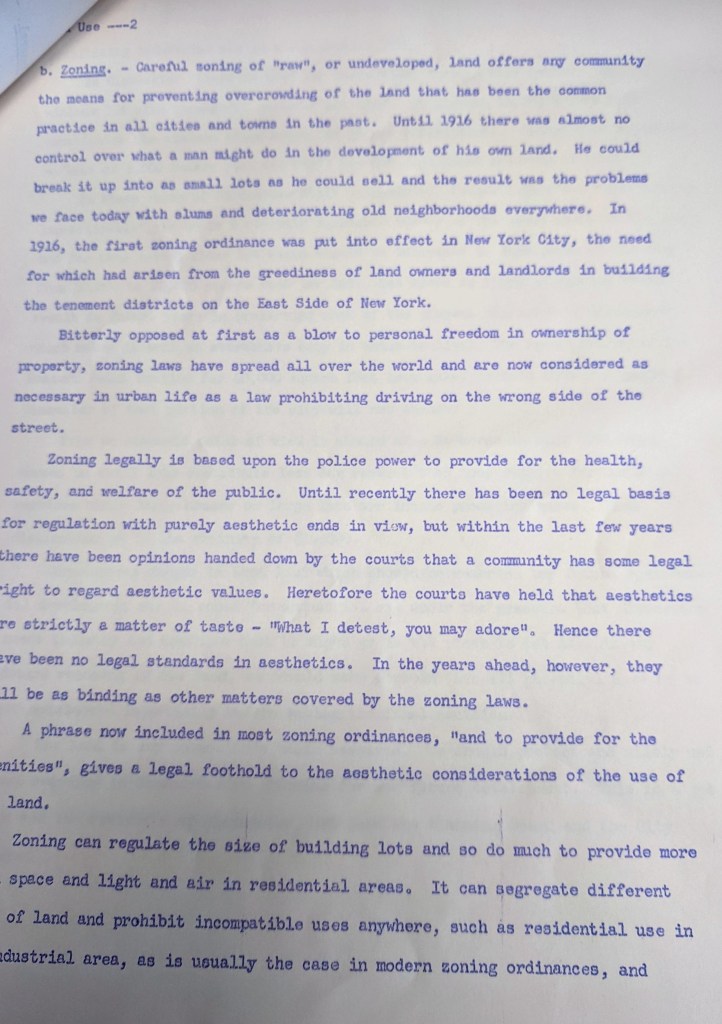
B. Zoning – Careful zoning of “raw”, or undeveloped, land offers any community the means for preventing overcrowding of the land that has been the common practice in all cities and towns in the past. Until 1916 there was almost no control over what a man might do in the development of his own land. He could break it up into as small lots as he could sell and the result was the problems we face today with slums and deteriorating old neighborhoods everywhere. In 1916, the first zoning ordinance was put into effect in New York City, the need for which had arisen from the greediness of land owners and landlords in building the tenement districts on the East Side of New York.
Bitterly opposed at first as a blow to personal freedom in ownership of property, zoning laws have spread all over the world and are now considered as necessary in urban life as a law prohibiting driving on the wrong side of the street.
Zoning legally is based upon the police power to provide for the health, safety, and welfare of the public. Until recently there has been no legal basis for regulation with purely aesthetic ends in view, but within the last few years there have been opinions handed down by the courts that a community has some legal right to regard aesthetic values. Heretofore the courts have held that aesthetics are strictly a matter of taste – “What I detest, you may adore”. Hence there have been no legal standards in aesthetics. In the years ahead, however, they will be as binding as other matters covered by zoning laws.
A phrase now included in most zoning ordinances, “and to provide for the communities”, gives a legal foothold to the aesthetic considerations of the use of land.
Zoning can regulate the size of building lots and so do much to provide more space and light and air in residential areas. It can segregate different use of land and prohibit incompatible uses anywhere, such as residential use in an industrial area, as is usually the case in modern zoning ordinances, and
Land Use – 3
Prohibiting industrial use in a residential area.
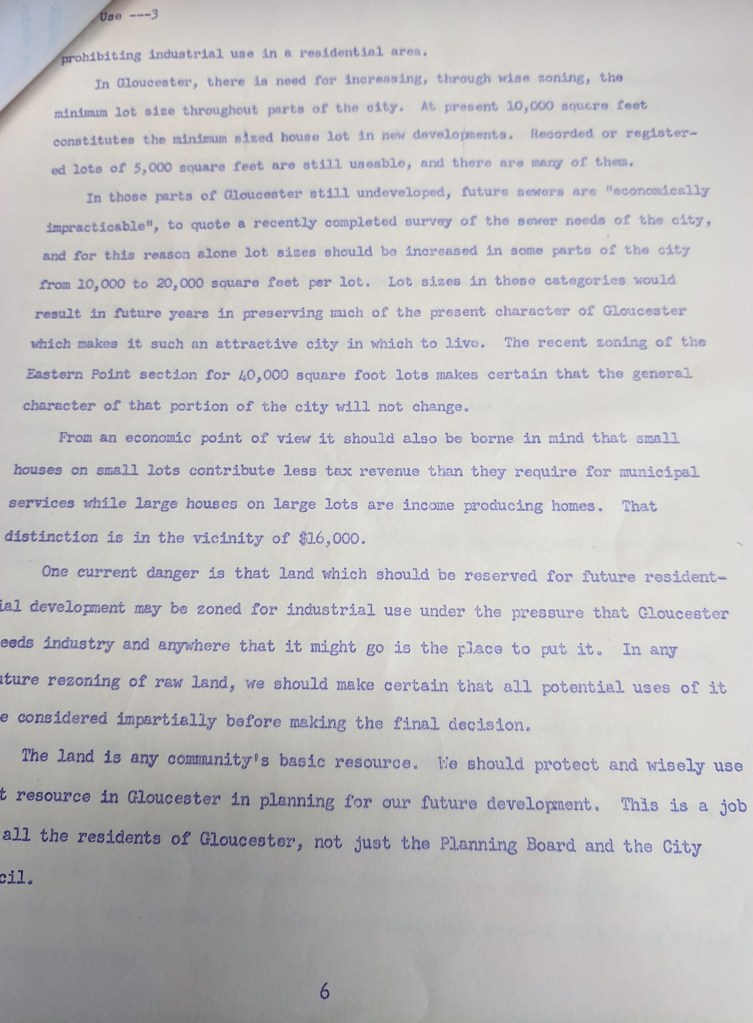
In Gloucester, there is need for increasing, through wise zoning, the minimum lot size throughout parts of the city. At present 10,000 square feet constitute the minimum sized house lot in new developments. Recorded or registered lots of 5,000 square feet are still usable, and there are many of them.
In those parts of Gloucester still undeveloped, future sewers are “economically impracticable”, to quote a recently completed survey of the sewer needs of the city, and for this reason alone lot sizes should be increased in some parts of the city from 10,000 to 20,000 square feet per lot. Lot sizes in these categories would result in future years in preserving much of the present character of Gloucester which make it such an attractive city in which to live. The recent zoning of the Eastern Point section for 40,000 square foot lots makes certain that the general character of that portion of the city will not change.
From an economic point of view it should also be borne in mind that small houses on small lots contribute less tax revenue than they require for municipal services while large houses on large lots are income producing homes. That distinction is in the vicinity of $16,000.
One current danger is that land which should be reserved for future residential development may be zoned for industrial use under the pressure that Gloucester needs industry and anywhere that it might go is the place to put it. In any future rezoning of raw land,
“we should make certain that all potential uses of it are considered impartially before making the final decision. The land is any community’s basic resource. We should protect and wisely use that resource in Gloucester in planning our future development. This is a job for all the residents of Gloucester, not just the planning board and the city council.”
1958 Committee Report for Gloucester, MA, Chairman Walker Hancock
Land Use – 4
A Citizen’s Council for city planning should be organized to work in consultation with the planning board to insure that the city’s comprehensive plan is in keeping with the best interests of the community, and to support the Planning Board in carrying it out. This council should be composed of a cross section of the various interests represented among the tax-payers of Gloucester, such as merchants, industrialists, real estate agents, home owners, educators, etc. Such a group, which should be as small as possible, consistent with balanced representation, would provide a democratic safeguard against infringements upon the best public interest.
C. Reservations.– The attractions that have made Gloucester famous a summer resort are not merely places for swimming and boating and other amusements. The appeal to the summer vacationist, as well as to people seeking an all year-round residence, of large areas of unspoiled woods, moorland, and shore without artificial “tourist conveniences” can hardly be overestimated. The existence on Cape Ann of such features has brought to our city great numbers of people who prefer them to the kind of tourist amusements offered, for example, by Salisbury and Revere beach. Our good fortune in having an established community of this character should be recognized in time to preserve it.
Fortunately, Ravenswood Park, Stage Fort Park, the Magnolia Shore Reservation, and Mount Ann have been saved for the future. Mr. Roger Babson’s recent gift to the Cape Ann Historical Association promises possibilities of making the main entrance to the city impressive, handsome, and of unusual interest to the tourist. Start has been made at Plum Cove by the action of the Municipal Council in setting the area aside for future use as a school site and recreational area. But these reservations would be far from adequate even for a city the present size of Gloucester were it not for the other open areas that will soon be lost to us unless some action is taken.
Land Use – 5
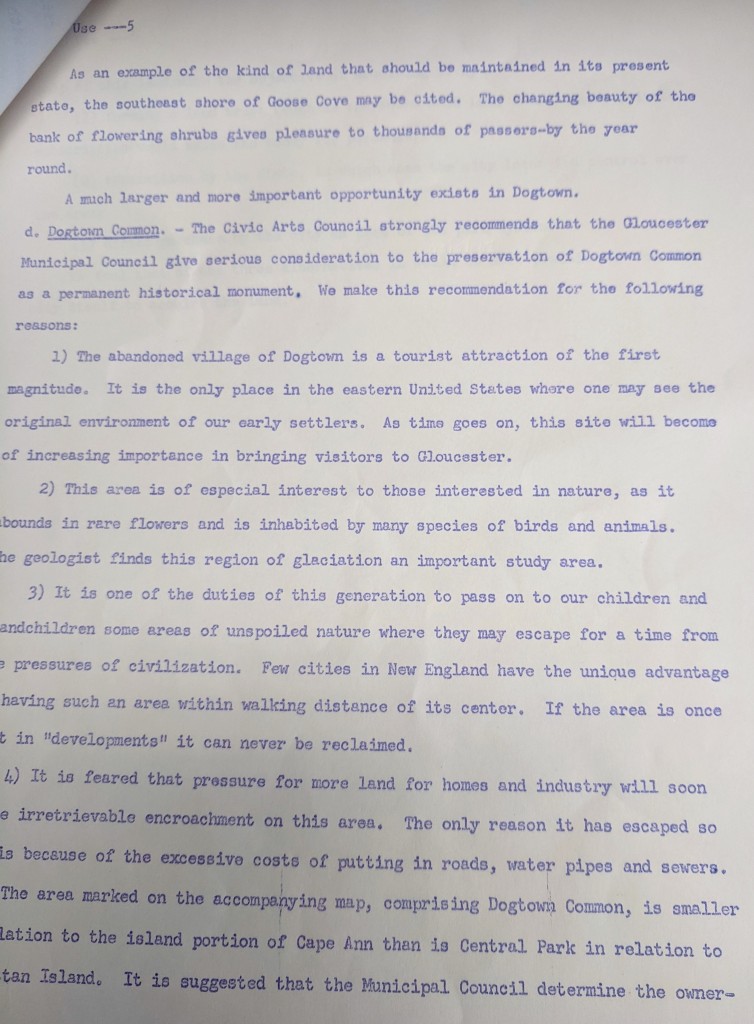
As an example of the kind of land that should be maintained in its present state, the southeast shore of Goose Cove may be cited. The changing beauty of the bank of flowering shrubs gives pleasure to thousands of passers-by the year round.
A much larger and more important opportunity exists in Dogtown.
D. Dogtown Common. – The Civic Arts Council strongly recommends that the Gloucester Municipal Council give serious consideration to the preservation of Dogtown Common as a permanent historical monument. We make this recommendation for the following reasons:
1)The abandoned village of Dogtown is a tourist attraction of the first magnitude. It is the only place in the eastern United States where one may see the original environment of our early settlers. As time goes on, this site will become of increasing importance in bringing visitors to Gloucester.
2)This area is of especial interest to those interested in nature, as it abounds in rare flowers and is inhabited by many species of birds and animals. The geologist finds this region of glaciation an important study area.
3)It is one of the duties of this generation to pass on to our children and grandchildren some areas of unspoiled nature where they may escape for a time from the pressures of civilization. Few cities in New England have the unique advantage of having such an areas within walking distance of its center. If the area is once in “developments” it can never be reclaimed.
4)It is feared that pressure for more land for homes and industry will soon irretrievable encroachment on this area. The only reason it has escaped so far is because of the excessive costs of putting in roads, water pipes and sewers. The area marked on the accompanying map, comprising Dogtown Common, is smaller in relation to the island portion of Cape Ann than is Central Park in relation to Staten Island. It is suggested that Municipal Council determine the owner-
Land Use – 6
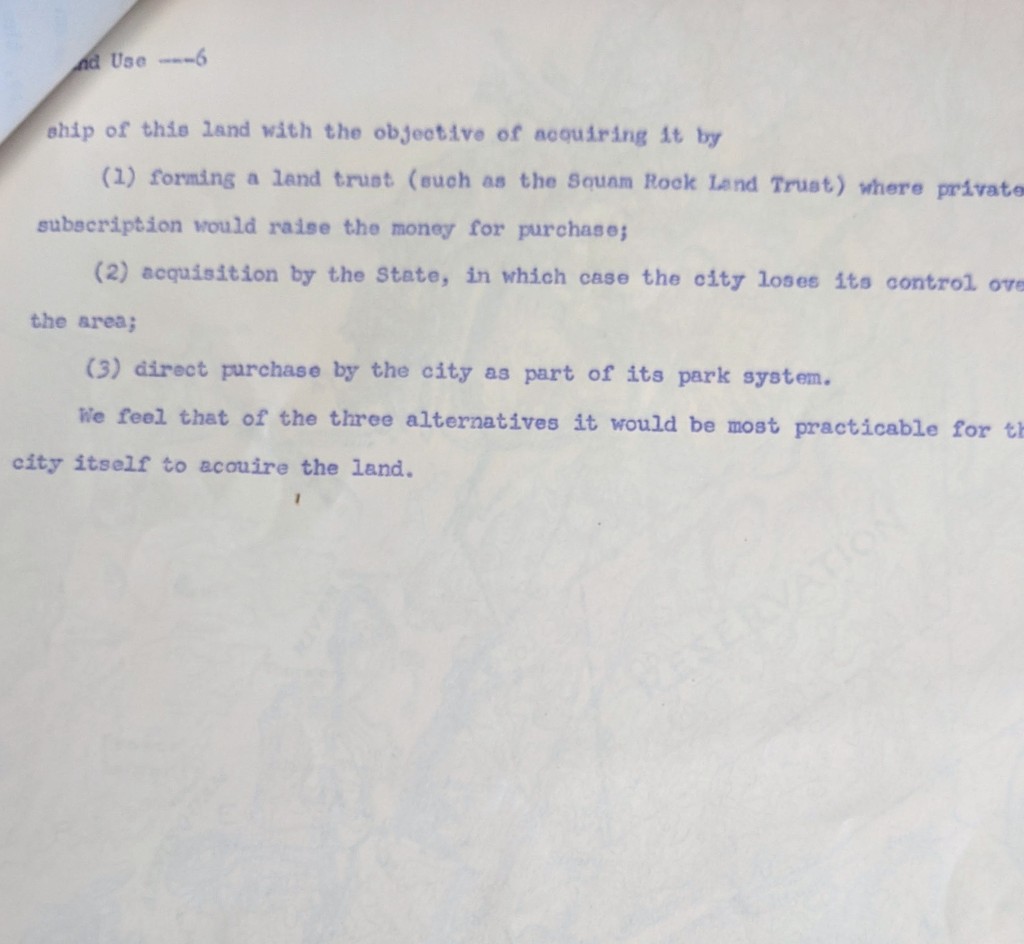
ship of this land with the objective of acquiring it by
(1)forming a land trust (such as the Squam Rock Land Trust) where private subscription would raise the money for purchase;
(2) acquisition by the State, in which case the city loses its control over the area;
(3) direct purchase by the city as part of its park system
We feel that of the three alternatives it would be most practicable for the city itself to acquire the land.
3. BUILDINGS AND RESTORATIONS
During the Second World War the Allied Expeditionary Force acted under a directive signed by General Eisenhower which required them “To take all measures consistent with military necessity to avoid damage to all structures of cultural, artistic, or historical value, and to assist wherever practicable in securing them from deterioration consequent upon the processes of war”.
To implement the directive of the Supreme Commander, lists of “Protected Monuments” were prepared, designating buildings of sufficient importance to justify the efforts to preserve them even during military operations. Many private houses were included in these lists.
We owe it to ourselves and to the Nation to be at least as solicitous in regard to our own heritage of such structures and to secure them wherever possible from deterioration consequent upon lack of appreciation or neglect.
Attached is a list of structures in Gloucester considered of sufficient architectural value to warrant special effort to preserve them. It is not a complete list and does not include many of the charming houses the destruction or mutilation of which would be a loss to the city as a whole.
In the eyes of posterity the Universalist Church, the birthplace of Universalism, will undoubtedly be the most important monumental building that the city possesses. Its exceptionally fine proportions and detail and the great beauty of its tower make it one of the precious examples of American architecture of its period. The City Hall and the Church of Our Lady of the Good Voyage are both Gloucester landmarks of special significance–the former because of the impressiveness of its mass and dominant position which it occupies in the city, the latter because of its carillon, its twin towers, and celebrated statue. The towers of all three of these buildings have been made famous by countless paintings which are shown all over the country.
Gloucester has few residences of the architectural pretentious of many in Salem and Newburyport. Nevertheless, it contains many old houses that have a distinctive quality that contribute more than is generally realized to the
Buildings and restorations – 2
Character of the city . Many such houses have already been superficially spoiled. It would be possible to restore most of the houses that have been unwisely covered with substitute materials by the use of appropriate siding and painting. The Civic Art Committee holds itself ready to advise on the proposed alteration or restoration of any such building. The aid of this Committee is proffered in cases where community effort is needed to restore churches designated in the list by brining to the attention of citizens the importance of the project.
The west end of Main Street offers a remarkable opportunity for restoration that would give real distinction to the neighborhood near the Legion Hall and the Town Landing. The brick houses on the water side from Town Landing to the STrand Theater were built in 1832, the result of a friendly agreement between the families concerned to create an entire street front that should be harmonious. It would require only a similar public spirited move on the part of the present owners and a surprisingly small investment of money to put back street floor entrances and windows as they were originally and make the west end of Main Street an inviting section of the commercial district. If private initiative and means are lacking, some of the uses suggested for certain of these buildings are: a community art center, another club or meeting place, a fisheries museum – or the whole area might be revitalized as a shopping section. This is an opportunity that should not be wasted.
Enclosed is a sketch of the Fitz Hugh (sic) Lane House dominating a parking lot in the Locust Street area to show how the restoration of a historic site can be effectively combined with modern commerce.
Among the new buildings needed in Gloucester, a Recreation Center and an art Center are of prime importance. It is hoped that the sites, at least, for these projects can be determined in the near future with a view to arousing the necessary public interest to insure their eventual realization. Again, this committee stands ready to advise on the location or design of such buildings.
Illustration: Betty deVicq drawing circa 1958 [rendering of potential restoration of “Stone jug” on Ivy Court, overlooking Duncan street, the former home and studio of Fitz Henry Lane.]
IV. – The Commercial Center
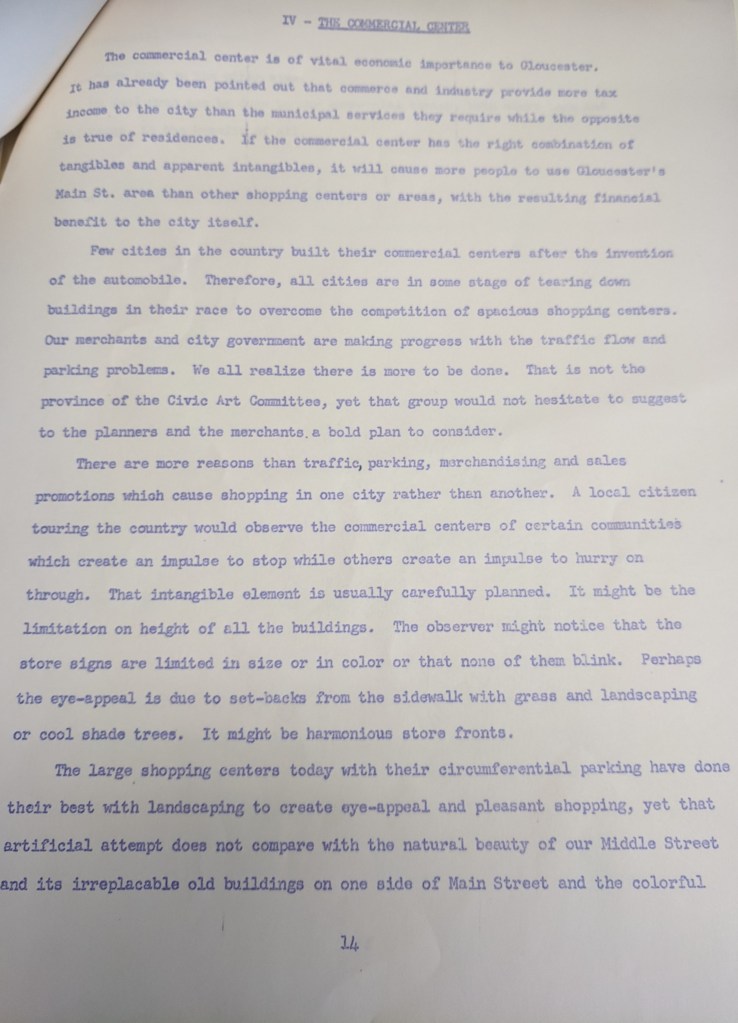
The commercial center is of vital economic importance to Gloucester. It has already been pointed out that commerce and industry provide more tax income to the city than the municipal services they require while the opposite is true of residences. If the commercial center has the right combination of tangibles and apparent intangibles, it will cause more people to use Gloucester’s Main St. area than other shopping centers or areas, with the resulting financial benefit to the city itself.
Few cities in the country built their commercial centers after the invention of the automobile. Therefore, all cities are in some stage of tearing down buildings in their race to overcome the competition of spacious shopping centers. Our merchants and city government are making progress with the traffic flow and parking problems. We all realize there is more to be done. That is not the province of the Civic Art Committee, yet that group would not hesitate to suggest to the planners and the merchants a bold plan to consider.
There are more reasons than traffic, parking, merchandising and sales promotions which cause shopping in one city rather than another. A local citizen touring the country would observe the commercial centers of certain communities which create an impulse to stop while others created an impulse to hurry on through. That intangible element is usually carefully planned. It might be the limitation on height of all the buildings. The observer might notice that the store signs are limited in size or in color or that none of them blink. Perhaps the eye-appeal is due to set-backs from the sidewalk with grass and landscaping or cool shade trees. It might be harmonious store fronts.
The large shopping centers today with their circumferential parking have done their best with landscaping to create eye-appeal and pleasant shopping, yet that artificial attempt does not compare with natural beauty of our Middle Street, and its irreplaceable old buildings on one side of Main Street and the colorful
V. PUBLIC MONUMENTS
General. – Public monuments–particularly those out of doors–are an immediate indication to the newcomer of the community’s pride in its history and the achievements of its citizens. Gloucester possesses a masterpiece of sculpture in the statue of Joan of Art by Anna Hyatt Huntington; and the Gloucester Fisherman’s Memorial by Leonard Craske, is sought out by tourists as one of the most interesting sights of the city. In addition, there are monuments of historic importance such as the Spanish War Memorial and the Civil War Memorial at the City Hall. These should be maintained by occasional cleaning.
Maintenance. – The proper care of bronze and granite monuments is a simple matter if not neglected for too long a time. Bronze sculpture out of doors should be sprayed or washed occasionally with clear water to remove the dirt that gathers where the rain does not reach it. When the entire surface is exposed to the air it will be covered evenly with a natural green patina. Bronze tablets should be washed with clear water and, when dry, brushed with floor wax softened in naphtha. The bronze should never be lacquered. Granite can be cleaned with a mixture of saturated solutions of fluoride and oxalic acid, brushed on quickly and then flooded with clear water. It is necessary to remove all traces of the acids. Preparations for cleaning granite which will not harm the stone are available commercially.
Locations. – From time to time new monuments may be erected, or it may be deemed advisable to change the location of existing monuments. These locations involve various considerations such as proper relation to the flow of traffic, scale in relation to surrounding buildings or open space, planting, material, and fitness of design. No decisions regarding the placing or design of public monuments should be reached without competent expert advice.
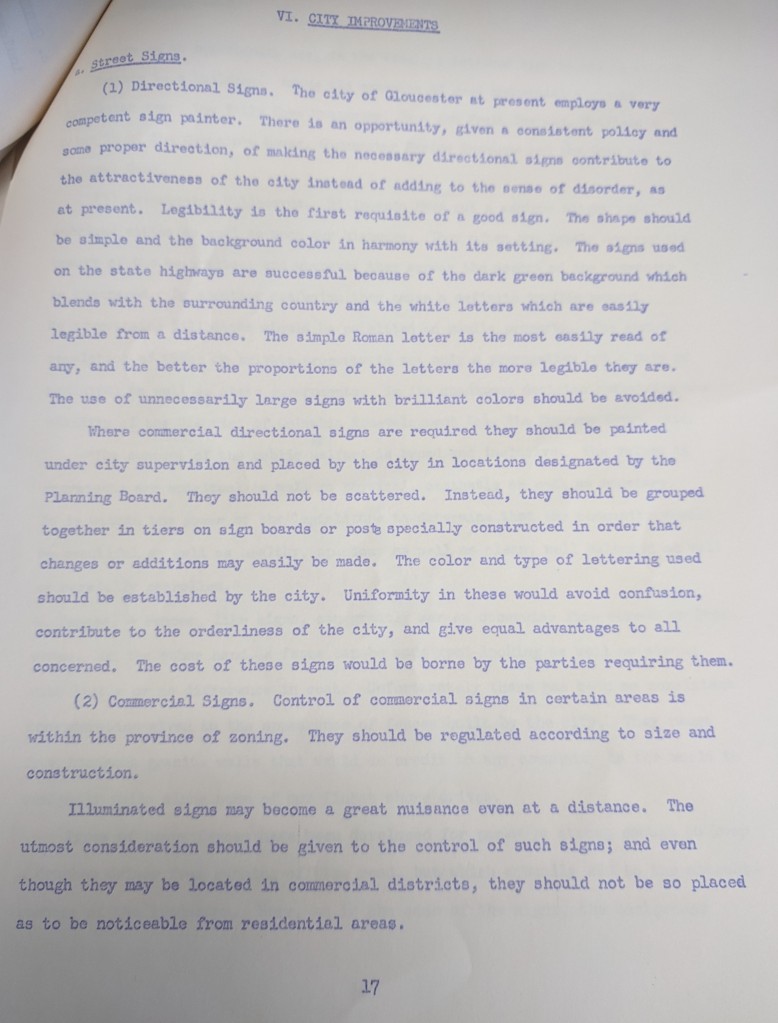
VI. CITY IMPROVEMENTS
a. Street Signs
Directional Signs. The city of Gloucester at present employs a very competent sign painter. There is an opportunity, given a consistent policy and some proper direction, of making the necessary directional signs contribute to the attractiveness of the city instead of adding to the sense of disorder, as at present. Legibility is the first requisite of a good sign. The shape should be simple and the background color in harmony with its setting. The signs used on the state highways are successful because of the dark green background which blends with the surrounding country and the white letters which are easily legible from a distance. The simple Roman letter is the most easily read of any, and the better the proportions of the letters the more legible they are. The use of unnecessarily large signs with brilliant colors should be avoided.
Where commercial directional signs are required they should be painted under city supervision and placed by the city in locations designated by the Planning Board. They should not be scattered. Instead, they should be grouped together in tiers on sign boards or post specially constructed in order that changes or additions may easily be made. The color and type of lettering used should be established by the city. Uniformity in these would avoid confusion, contribute to the orderliness of the city, and give equal advantages to all concerned. The cost of these signs would be borne by the parties requiring them.
Commercial Signs. Control of commercial signs in certain areas is within the province of zoning. They should be regulated according to size and construction.
Illuminated signs may become a great nuisance even at a distance. The utmost consideration should be given to the control of such signs; and even though they be located in commercial districts, they should not be placed as to be noticeable from residential areas.
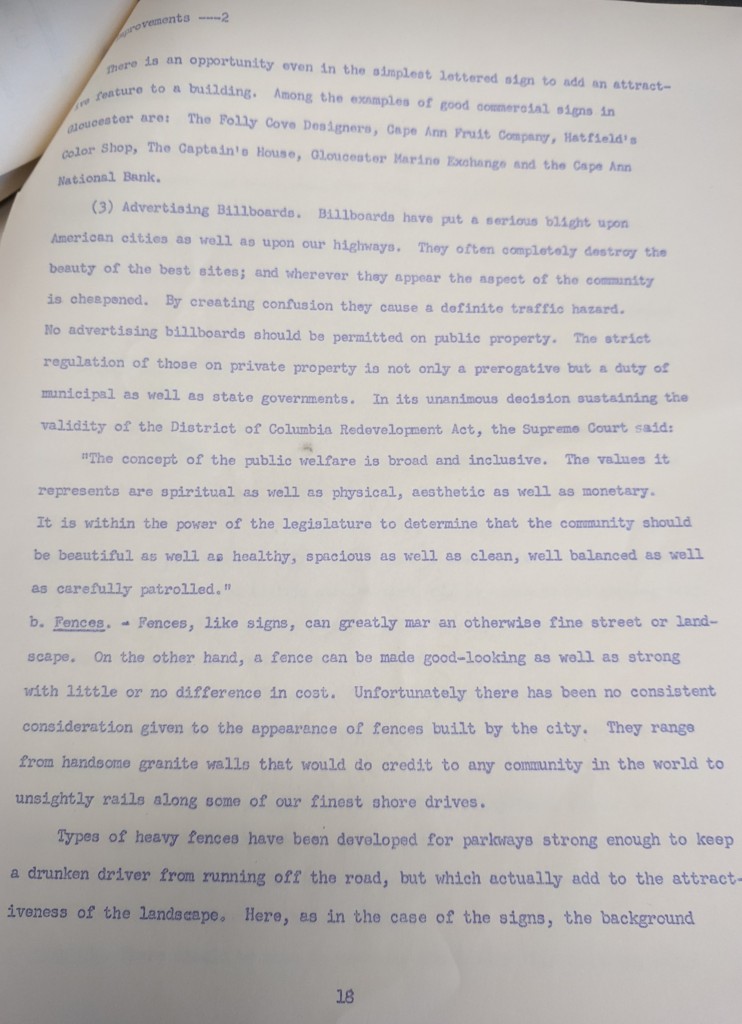
Improvements–2
There is an opportunity even in the simplest lettered sign to add an attractive feature to a building. Among the examples of good commercial signs in Gloucester are: The Folly Cove Designers, Cape Ann Fruit Company, Hatfields Color Shop, the Captain’s House, Gloucester Marine Exchange, and the Cape Ann National Bank.
Advertising Billboards. Billboards have put a serious blight upon American cities as well as upon our highways. They often completely destroy the beauty of the best cities; and wherever they appear the aspect of the community is cheapened. By creating confusion they cause a definite traffic hazard. No advertising billboards should be permitted on public property. The strict regulation of those on private property is not only a prerogative but a duty of municipal as well as state governments. In its unanimous decision sustaining the validity of the District of Columbia Redevelopment Act, the Supreme Court said:
“The concept of the public welfare is broad and inclusive. The values it
represents are spiritual as well as physical, aesthetic as well as monetary.
It is within the power of the legislature to determine that the community
should be beautiful as well as healthy, spacious as well as clean, well
balanced as well as carefully patrolled.”
b. Fences. – Fences, like signs, can greatly mar an otherwise fine street or landscape. On the other hand, a fence can be made good-looking as well as strong with little or no difference in cost. Unfortunately there has been no consistent consideration given to the appearance of fence built by the city. They range from handsome granite walls that would do credit to any community in the world to unsightly rails along some of our finest shore drives.
Types of heavy fences have been developed for parkways strong enough to keep a drunken driver from running off the road, but which actually add to the attractiveness of the landscape. Here, as in the case of signs, the background
Improvements –3
should be taken into consideration in selecting the appropriate type of construction.
c. Trash containers. It is hoped that an awakened city pride will result in some degree of care about the disposal of rubbish. Trash containers, strategically placed, will help as reminders as well as to provide the means of easy rubbish disposal. However, the trash containers themselves should not be unsightly. Sufficient attention can be directed to them without the use of garish colors. White lettering on dark backgrounds will generally be found preferable.
d. Cleaning and Policing of Roads. – Miles of gloucester’s scenic shore roads are constantly littered with rubbish. Strict enforcement of existing ordinances with some exemplary prosecutions, should go far toward correcting this situation.
e. Place Names and Markers. – It is an important duty of the community to keep alive in the minds of its younger people the achievements of citizens who have brought honor to it in the past. Place names and monuments are a perpetual reminder of the example of courage and moral strength set by our forbears. As the names of Washington and Lincoln give inspiration to the nation, so should the names of Gloucester’s courageous sea faring men inspire this and future generations of our citizens. These men should be memorialized in the names of new streets, squares, and traffic circles that will be added to the growing city. In addition to the name, markers should recount briefly the heroic act for which each man is remembered. Among those who should be honored in this manner are Howard Blackburn, Marty Welch, Alfred Johnson, Clayton Morissey, Sol Jacobs, and Alden Geale; and there are other men still living who should be given the same recognition.
“The sites of the old shipyards, about a dozen altogether, should be appropriately marked, to include the names of the more famous schooners built at that location. Site marking should be carried to other locations of interest, such as the Steamboat Wharf at Duncan’s Point.”
This would have been great incorporated into the HarborWalk markers–and a wonderful Schooner Festival trail brochure.
f. Planting. There should be more to the city physically than building walls
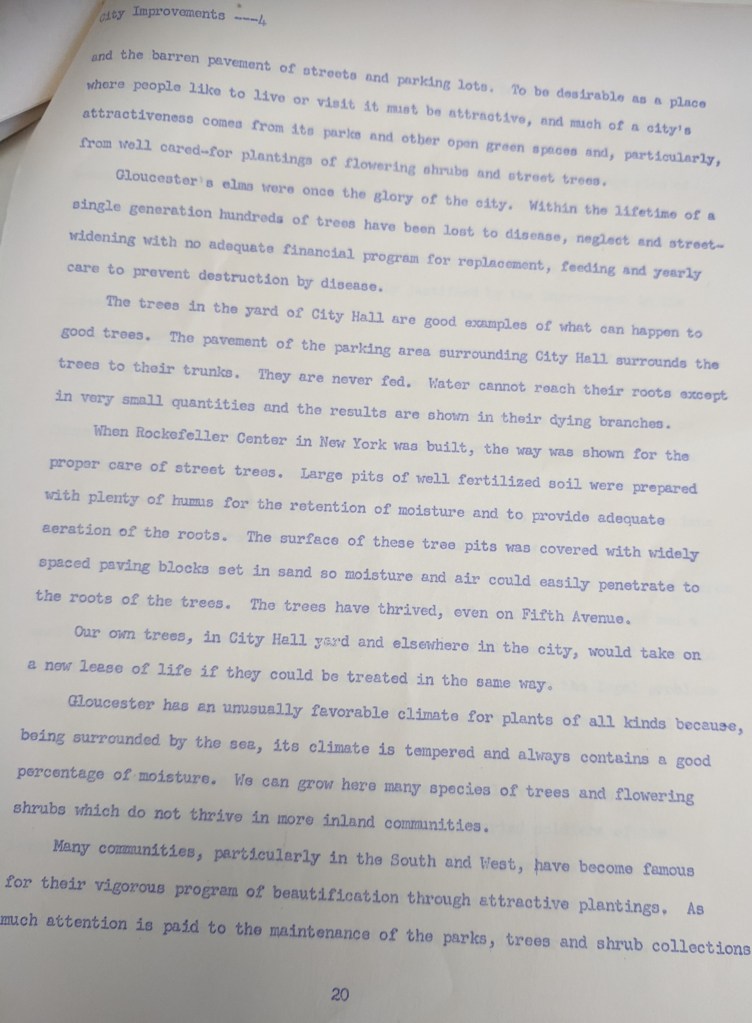
City Improvements —4
and the barren pavement of streets and parking lots. To be desirable as a place where people like to live or visit it must be attractive, and much of a city’s attractiveness comes from its parks and other open green spaces and, particularly, from well-cared for plantings of flowering shrubs and street trees.
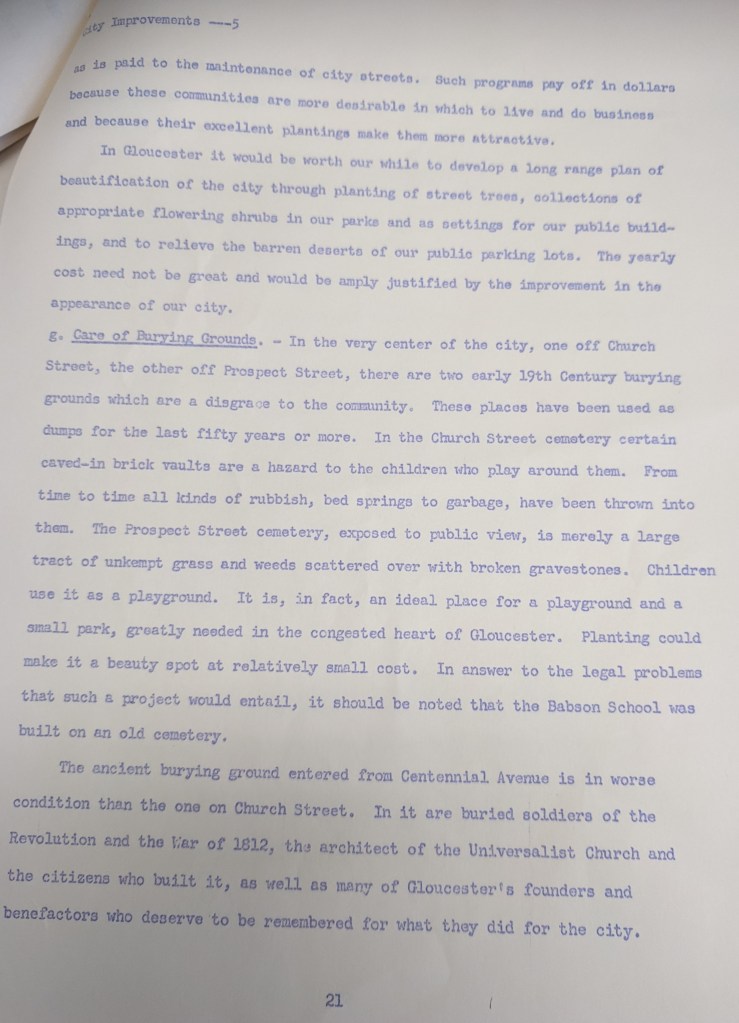
Gloucester’s elms were once the glory of the city. Within the lifetime of single generation of hundreds of trees have been lost to disease, neglect and street-widening with no adequate financial program for replacement, feeding and yearly care to prevent destruction by disease.
The trees in the yard of City Hall are good examples of what can happen to good trees. The pavement of the parking area surrounding City Hall surrounds the trees to their trunks. They are never fed. Water cannot reach their roots except in very small quantities and the results are shown in their drying branches.
When Rockefeller Center in New York was built, the way was shown for the proper care of street trees. Large pits of well fertilized soil were prepared with plenty of humus for the retention of moisture and to provide adequate aeration of the roots. The surface of these tree pits was covered with widely spaced paving blocks set in sand so moisture and air could easily penetrate to the roots of the trees. The trees have thrived, even on Fifth Avenue.
Our own trees, in City Hall yard and elsewhere in the city, would take on a new lease of life if they could be treated in the same way.
Gloucester has an unusually favorable climate for plants of all kinds because, being surrounded by the sea, its climate is tempered and always contains a good percentage of moisture. We can grow here many species of trees and flowering shrubs which do not thrive in more inland communities.
Many communities, particularly in the South and West , have become famous for their vigorous program of beautification through attractive plantings. As much attention is paid to the maintenance of the parks, trees and shrub collections
City Improvements —5
as is paid to the maintenance of city streets. Such programs pay off in dollars because these communities are more desirable in which to live and do business and because their excellent plantings make them more attractive.
In Gloucester it would be worth our while to develop a long range plan of beautification of the city through planting of street trees, collections of appropriate flowering shrubs in our parks and as settings for our public buildings, and to relieve the barren deserts of our public parking lots. The yearly cost need not be great and would be amply justified by the improvement in the appearance of our city.
e. Care of Burying Grounds – In the very center of the city, one off Church Street, the other off Prospect Street, there are two early 19th century burying grounds which are a disgrace to the community. These places have been used as dumps for the last fifty years or more. In the Church Street cemetery certain caved-in brick vaults are a hazard to the children who play around them. From time to time all kinds of rubbish, bed springs to garbage, have been thrown into them. The Prospect Street cemetery, exposed to public view, is merely a large tract of unkempt grass and weeds scattered over with broken gravestones. Children use it as a playground. It is, in fact, an ideal place for a playground and a small park, greatly needed in the congested heart of Gloucester. Planting could make it a beauty spot at relatively small cost. In answer to the legal problems that such a project would entail, it should be noted that the Babson School was built on an old cemetery.
The ancient burying ground entered from Centennial Avenue is in worse condition then the one on Church Street. In it are buried soldiers of the Revolution and the War of 1812, the architect of the Universalist Church, and the citizens who built it, as well as many of Gloucester’s founders and benefactors who deserve to be remembered for what they did for the city.
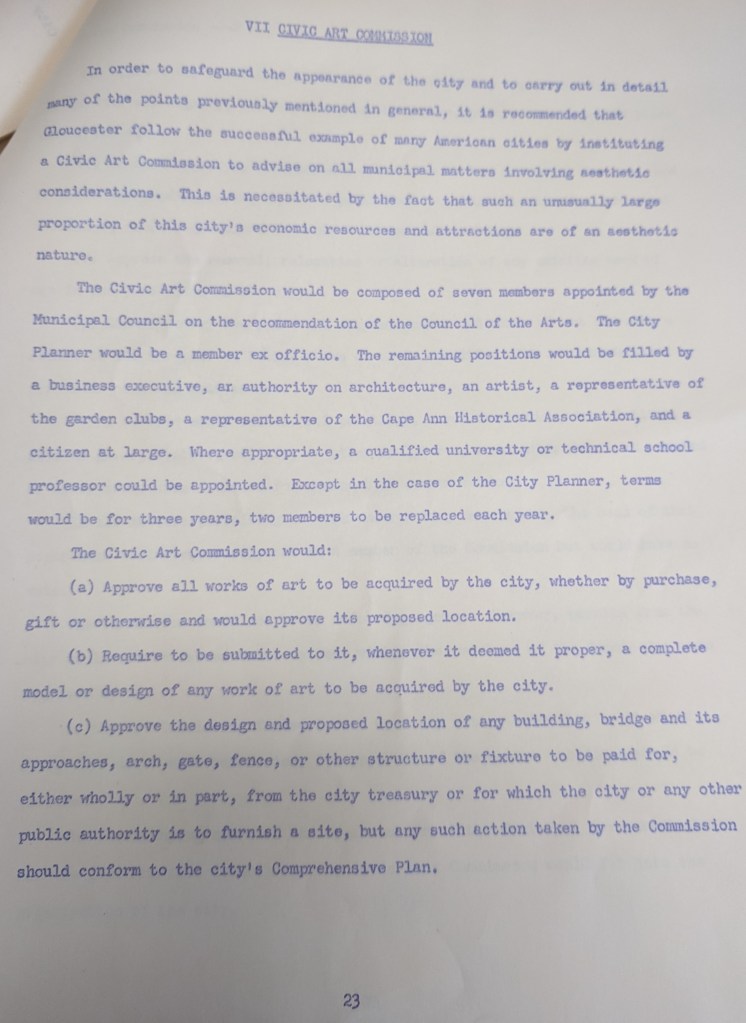
VII. CIVIC ART COMMISSIONS
In order to safeguard the appearance of the city and to carry out in detail many of the points previously mentioned in general, it is recommended that Gloucester follow the successful example of many American cities by instituting a Civic Art Commission to advise on all municipal matters involving aesthetic considerations. This is necessitated by the fact that such an unusually large proportion of this city’s economic resources and attractions are of an aesthetic nature.
The Civic Art Commission would be composed of seven members appointed by the Municipal Council on the recommendation of the Council of the Arts. The City Planner would be a member ex officio. The remaining positions would be filled by a business executive, an authority on architecture, an artist, a representative of the garden clubs, a representative of the Cape Ann Historical Association, and a citizen at large. Where appropriate, a qualified university or technical school professor could be appointed. Except in the case of the City Planner, terms would be for three years, two members to be replaced each year.
The Civic Commission would:
Approve all works of art to be acquired by the city, whether by purchase, gift or otherwise and would approve its proposed location
Require to be submitted to it, whenever it deemed it proper, a complete model or design of any work of art to be acquired by the city.
Approve the design and proposed location of any building, bridge and its approaches, arch, gate, fence or other structure or fixture to be paid for, either wholly or in part, from the city treasury or for which the city or any other public authority is to furnish a site, but any such action taken by the Commission should conform to the city’s Comprehensive Plan.
Public Art Commission —2
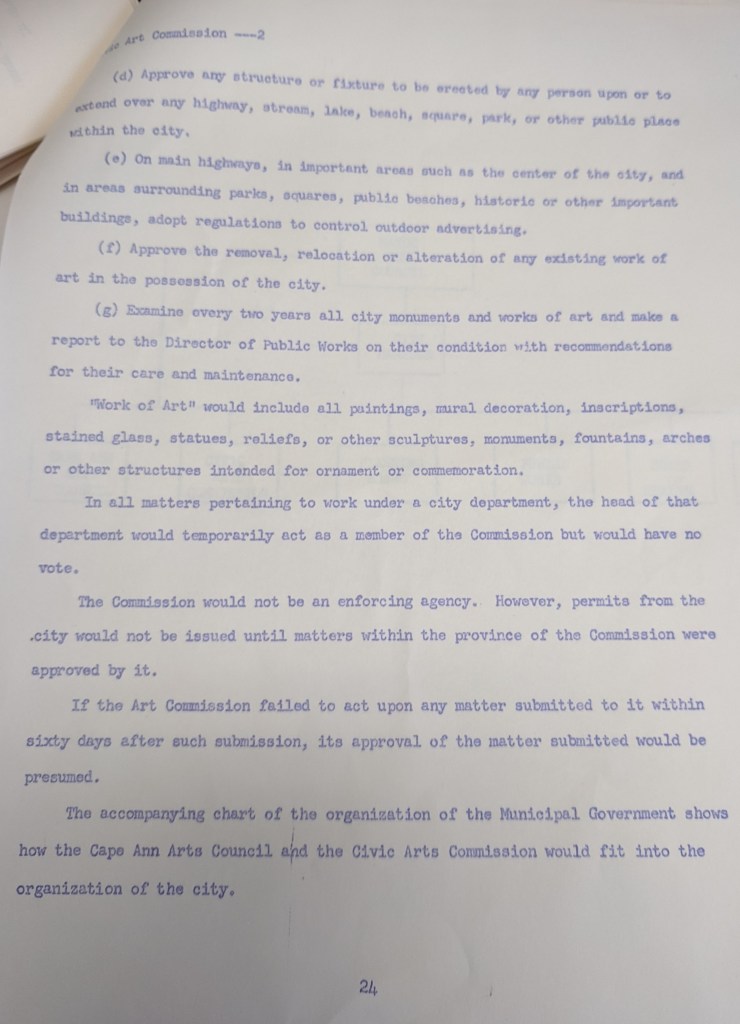
Approve any structure or fixture to be erected by any person up0on or to extend over any highway, stream, lake, beach, square, park or other public place within the city
On main highways, in important areas such as the center of the city, and in areas surrounding parks, squares, public beaches, historic or other important buildings, adopt regulations to c control outdoor advertising
Approve the removal, relocation or alteration of any existing work of art in the possession of the city
Examine every two years all city monuments and works of art and make a report to the Director of Public Works on their condition with recommendations for their care and maintenance
“Work of Art” would include all paintings, mural decoration, inscriptions, stained glass, statues, reliefs, or other sculptures, monuments, fountains, arches or other structures intended for ornament or commemoration.
In all matters pertaining to work under a city department, the head of that department would temporarily act as a member of the commission but would have not vote.
The Commission would not be an enforcing agency. However, permits from the city would not be issued until matters within the province of the Commission were approved by all.
“If the Art Commission failed to act upon any matter submitted to it within sixty days after such submission, its approval of the matter submitted would be presumed.“
Walker Hancock & Committee, 1958 (simple and easy sentence!)
The accompanying chart of the organization of the Municipal Government shows how the Cape Ann Arts Council and the Civic Arts Commission would fit into the organization of the city.
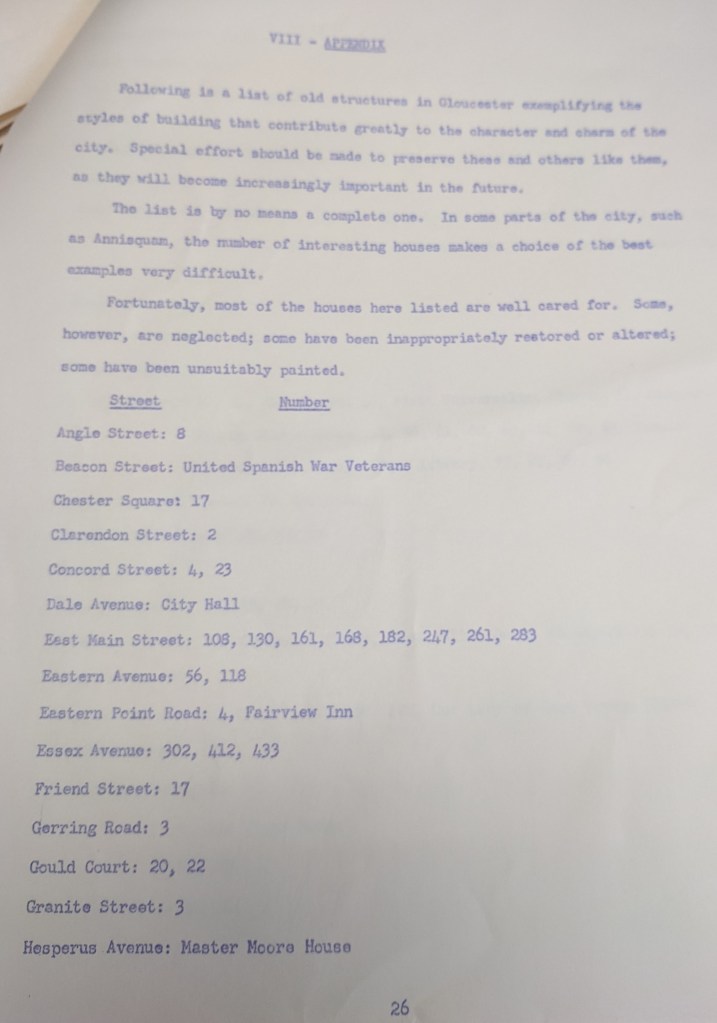
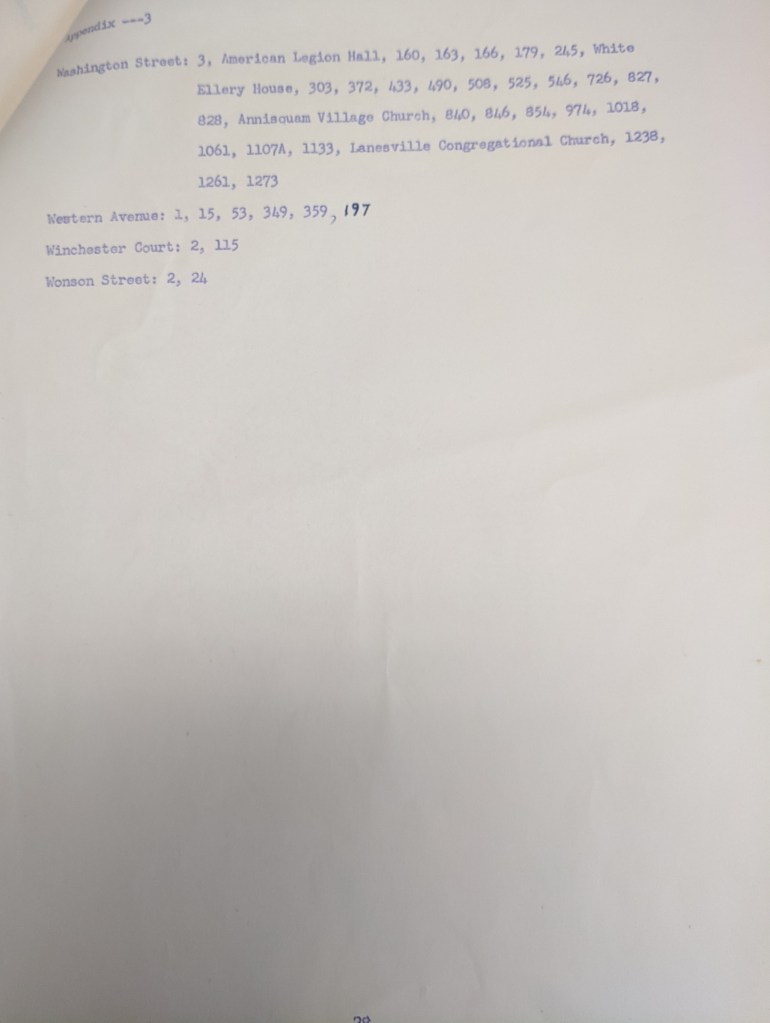
VIII Appendix
Following is a list of old structures in Gloucester exemplifying the styles of building that contribute greatly to the character and charm of the city. Special effort should be made to preserve these and others like them, as they will become increasingly important in the future.
The list is by no means a complete one. In some parts of the city, such as Annisquam, the number of interesting houses makes a choice of the best examples very difficult.
Fortunately, most of the houses here listed are well cared for. Some, however, are neglected; some have been inappropriately restored or altered; some have been unsuitably painted.
Street | Number
Angle Street: 8
Beacon Street: Unites Spanish War Veterans
Chester Sq: 2
Concord St.: 4, 23
Dale Ave.: City Hall
East Main St.: 108, 130, 161, 168, 182, 247, 261, 283
Eastern Ave.: 56, 118
Eastern Point Rd.: 4, Fairview Inn
Essex Ave.: 302, 412, 433
Friend St.: 17
Gerring Rd: 3
Gould Court: 20, 22
Granite St.: 3
Hesperus Ave.: Master Moore House
Appendix – 2
Highland St.: 7,8,9,17, 19, 25, 32, 37
Hovey St.: 4
Ivy Court: Fitz hugh Lane House
Langsford St.: 1,2,9,21,37
Leonard St.: 14,28,31,48,53,54,77,81,146,150,152
Lincoln St.: Haskell-Atkins House
Main St.: 17,19,29,31,33,35,43,43A,45,47,49,50,51,55,61,63,65,67,69,71,196, Cape Ann National Bank, Gorton’s of Gloucester, 304, 308, 316
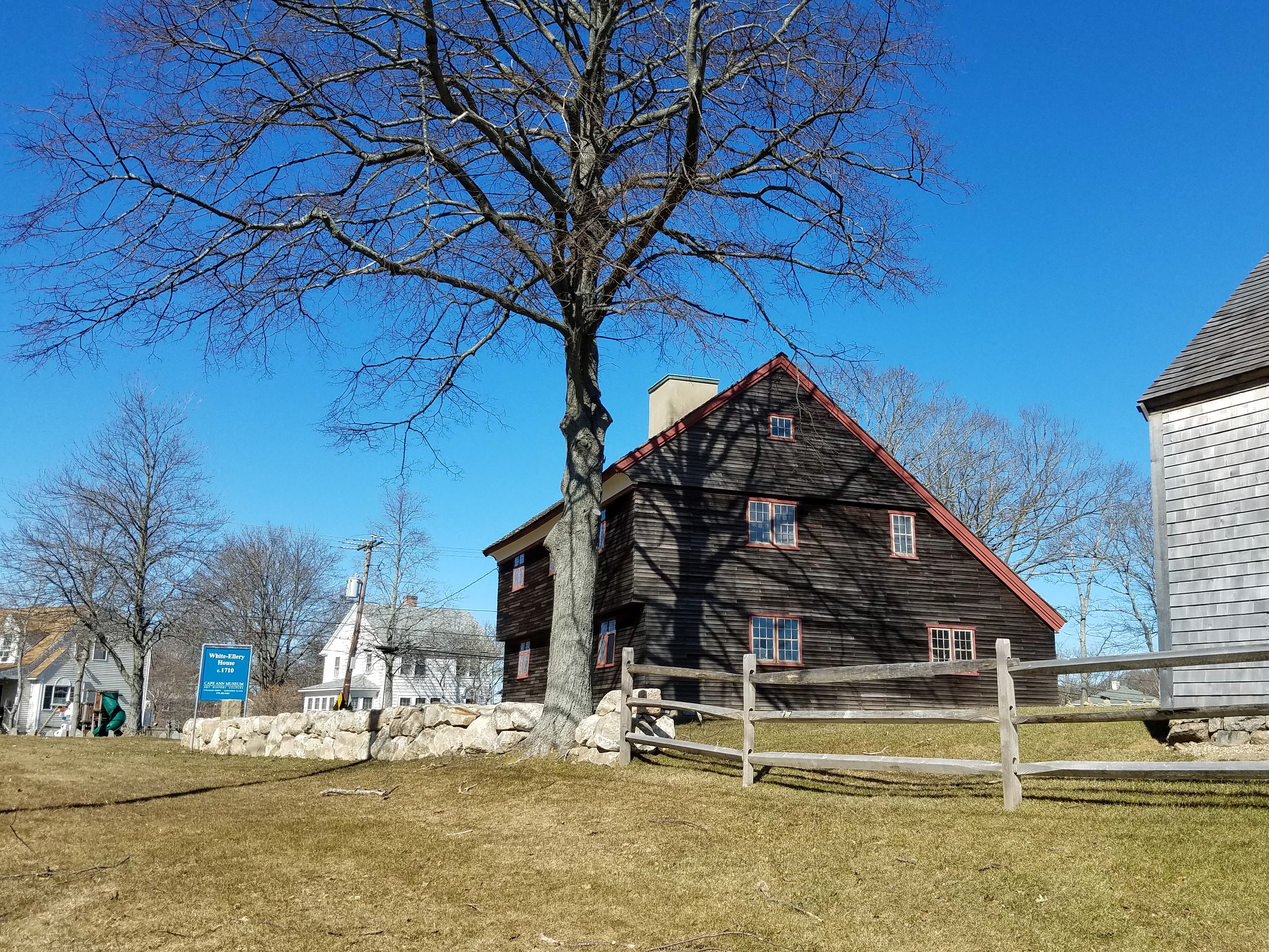
woodcut illustration for 1890 Boston Globe article | photos: c. ryan, mostly 2021
The first Massachusetts home featured in this Boston Globe historic house article was Gloucester’s “Ellery house”, as a classic First Period saltbox:
“OLD HOMES, OLD FAMILIES. Houses in New England, Each of Which Has for Three or More Generations Sheltered the Same Race. Romances Drawn from Wood and Brick
The Sunday Globe begins today to publish stories and pictures of old New England homesteads which have sheltered at least three generations of the families now living in them.
This is not so endless a task as some may suppose it to be. New England, no doubt, contains a greater number of old houses than any other division of the country, but it is rare indeed to find one among those that has been long in the possession of the same family. Such a shifting of ownerships may reflect the growing prosperity of the original occupants who perchance have built greater homes than those of their fathers, but often the disappearance of the inheritors of these ancestral houses signifies either the utter extinction or the scattering and breaking up of the family.
The sketches in this series opening today appeal, therefore, in a peculiar way to the public curiosity, and the Sunday Globe would thank any of its readers if they would call attention to any houses within their own knowledge which may be occupied by a family who have possessed the property through three or more generations continuously or otherwise.
There are various periods in the history of Gloucester house building, each marked quite as distinctly to the architectural student as the different strata of the earth’s crust indicate to the geologist the various periods of formation. In the case of the old houses of note it may be said that they all belonged to the upper crust.
The houses of the first settlers of Gloucester, with rare exceptions, have long since been replaced by others of more elaborate design, and the few remaining in the suburbs are small one-story edifices of no particular architectural pretensions.
In common with Boston, Salem, Newburyport and other colonial seaports, Gloucester once owned a large fleet of ships, brigs and barks, that sailed to foreign ports, exchanging the products of the town and of the county for Spanish gold and Surinam molasses, which was converted into New England rum.
These merchants built commodious residences and dispensed a hospitality commensurate with their position as leaders of the social and intellectual life of the town.
The most historic edifice in town is the Ellery house, which stands just below the old meeting house green on Washington street in Riverdale, a suburb of the town.
It was built by Rev. John White shortly after he came here in 1702 to minister to the spiritual wants of the First Parish, receiving a grant of land from the town on which to build his home. At that time the main settlement was in that portion of the community, but the necessities of commerce and fishing made it convenient for the inhabitants to remove nearer the seashore, deserting their first habitations on what is now known as “Dogtown Common,” where the remains of their cellars can still be traced today.
The type of architecture is well portrayed by the accompanying cut. On the projection which overhangs the lower story in front there were four balls pendant, a style of decoration of the times, which have long been removed.
Inside, the old-fashioned low studded style of room is at once apparent, and the antique furnishings and general air of the place make one realize more vividly the age of the house and fixtures, which are of a nature to bring joy to the heart of an antiquarian.
Some of the furniture in the parlor is about 200 years old. The house was bought in 1710 by Capt. William Ellery, and it still remains in the hands of his direct descendants, the occupants being John Ellery and his wife. Thus it will be seen that it has been in this family 150 years.
The purchaser of the house was a son of the original settler, William Ellery. The Ellery family were prominent in the social and intellectual life of the place from the first, being leading merchants. Hon. Benjamin Ellery, called in the family “Admiral,” was the eldest brother of William. He went from Gloucester and settled in Rhode Island and was the father of Deputy Gov. William Ellery and grandfather of William Ellery who signed the Declaration of Independence, the signer being a grandnephew of the first owner of the house.”
The White Ellery House is part of the Cape Ann Museum collection. There are inaccuracies in the 1890 nutshell above. James Stevens and the tavern he operated is absent. The rum trade is acknowledged; any NE slave trade economic connections are not. [Massachusetts was the first colony to legalize slavery. Vermont was the first to abolish (VT 1777 vs. MA 1783).] The article predates the build out of Rt. 128 which rallied a preservation relocation.
Maybe CAM might commission a set of woodcuts of the historic properties as they are now by various local artists.
Beautiful improvements on the grounds of Cape Ann Museum
note: pinch and zoom or double click to enlarge photos.
Spread The GMG Love By Sharing With These Buttons:
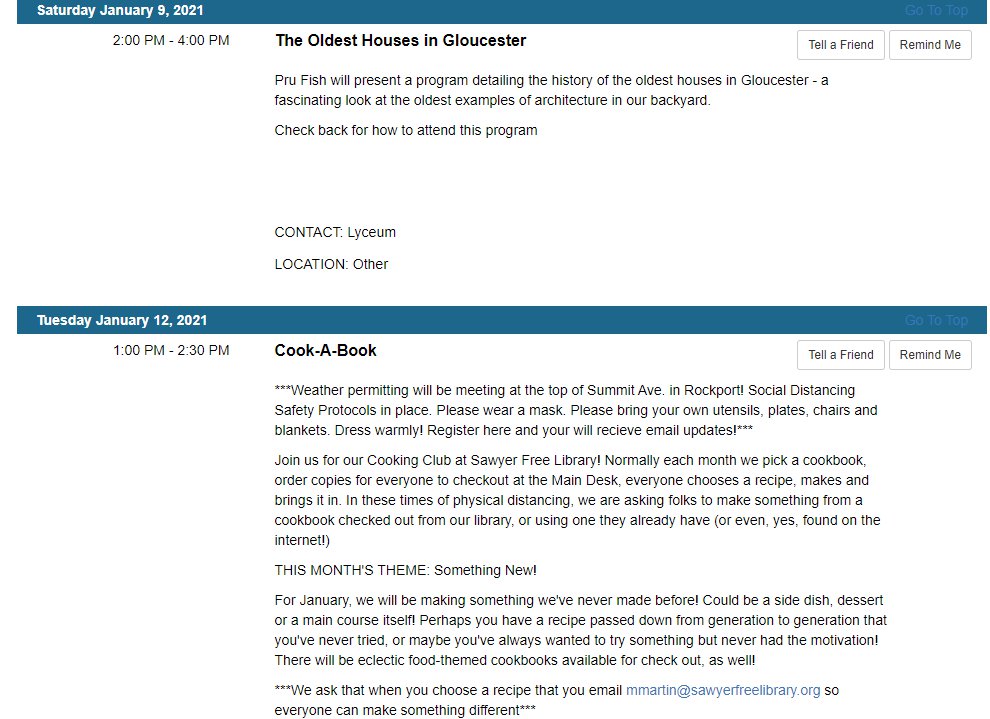
Sawyer Free upcoming January 2021 events are highlighted in a wonderful newsletter:
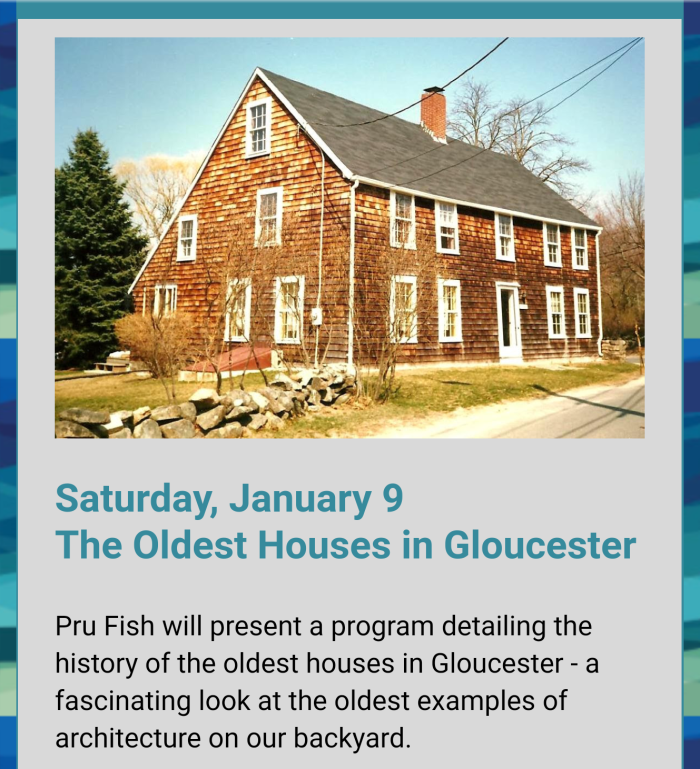
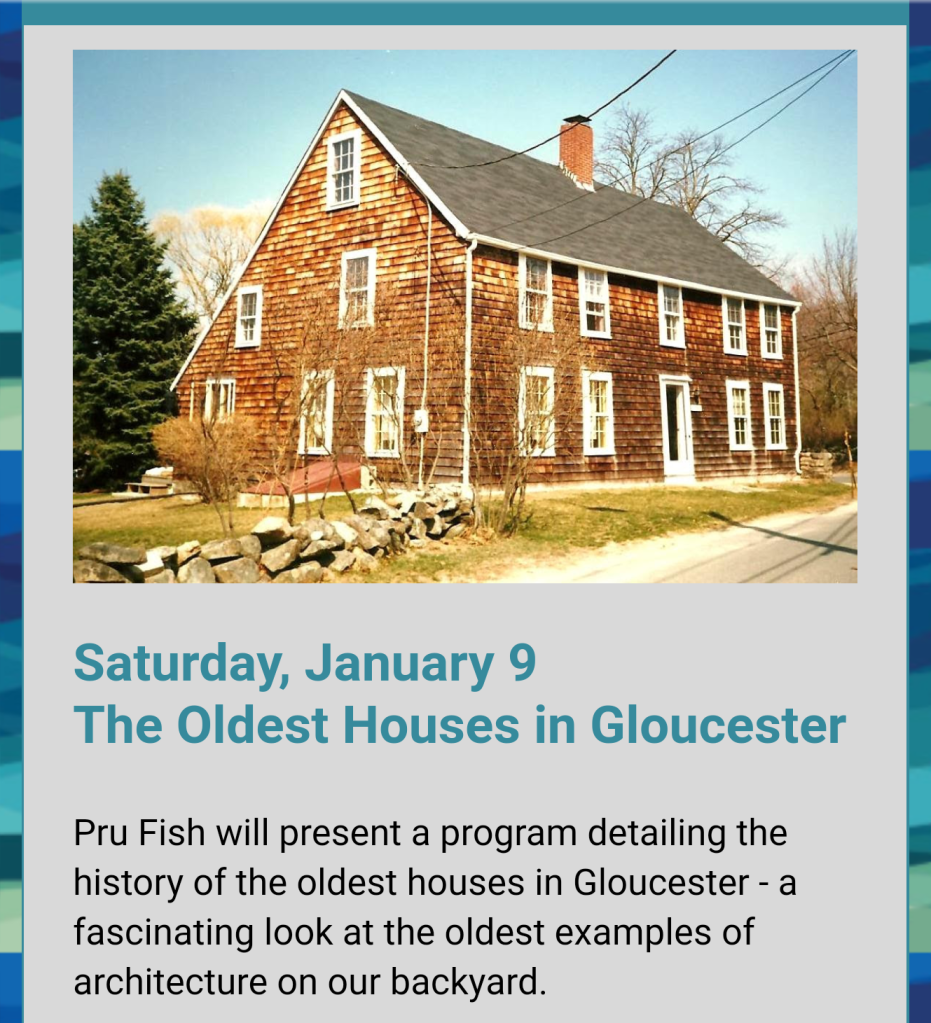
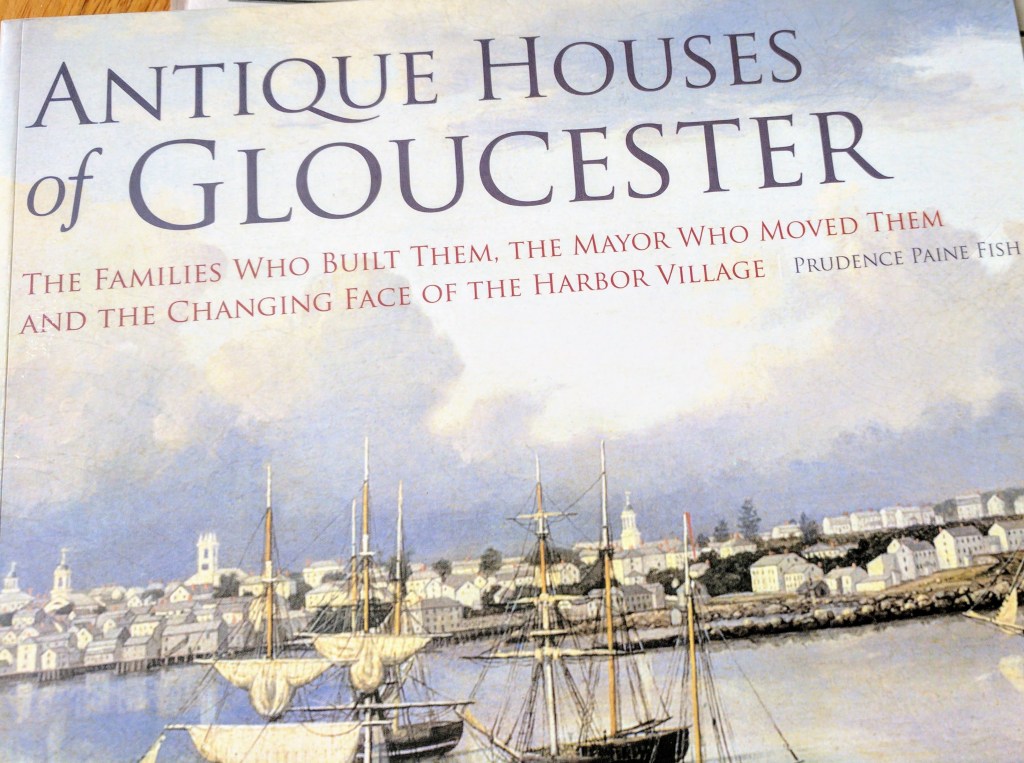
Prudence Fish lecture on January 9th
Learn more about Gloucester homes from your home!
Author and authority on antique houses, Prudence Fish, is a 2021 invited speaker at Sawyer Free Library. Her lecture about the oldest houses in Gloucester, showing Saturday, January 9th, from 2-4pm, is sure to be informative and entertaining. Because of Covid-19, the library has specially pre-recorded the event in order to bring a fresh, new talk directly to you. More about Pru Fish here
Cook a Book – January 12, 1pm
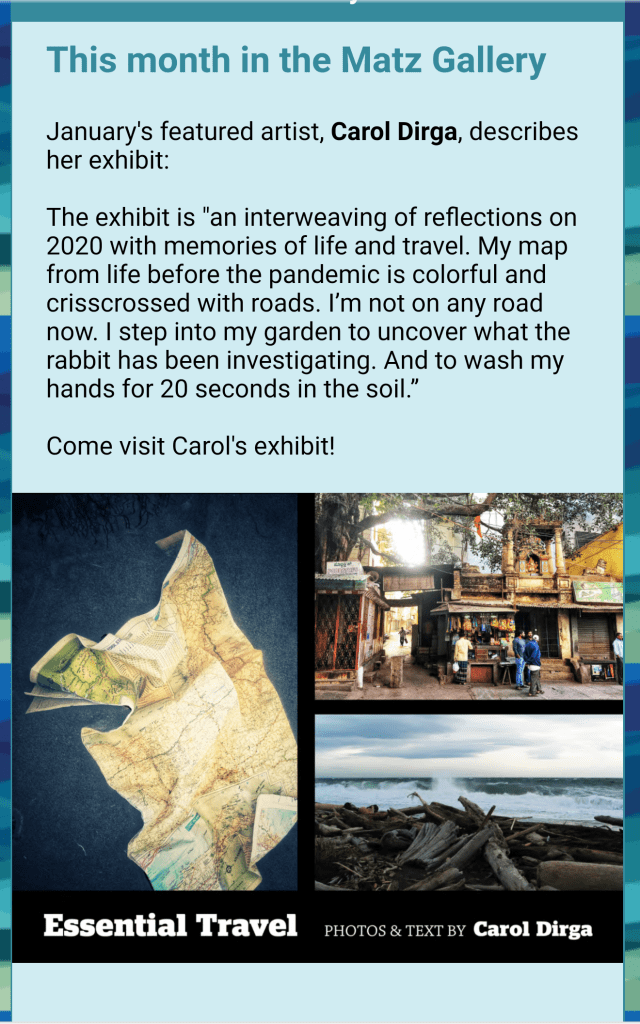
Matz Gallery Exhibitions- January 2021 Carol Dirga
Spread The GMG Love By Sharing With These Buttons:
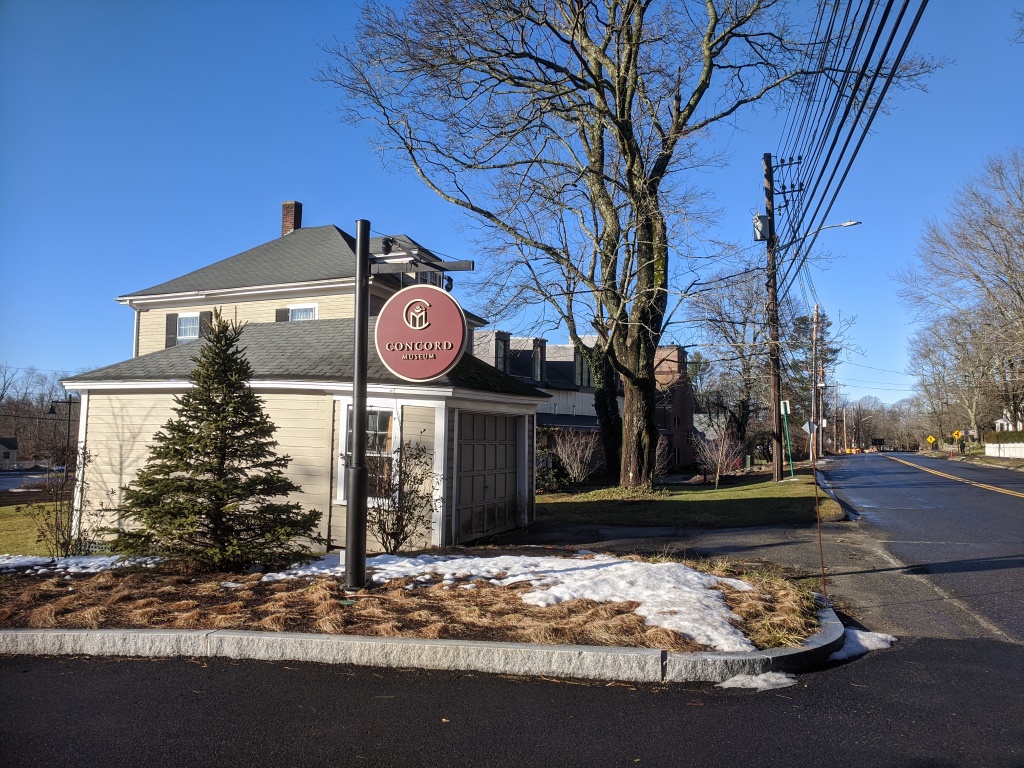
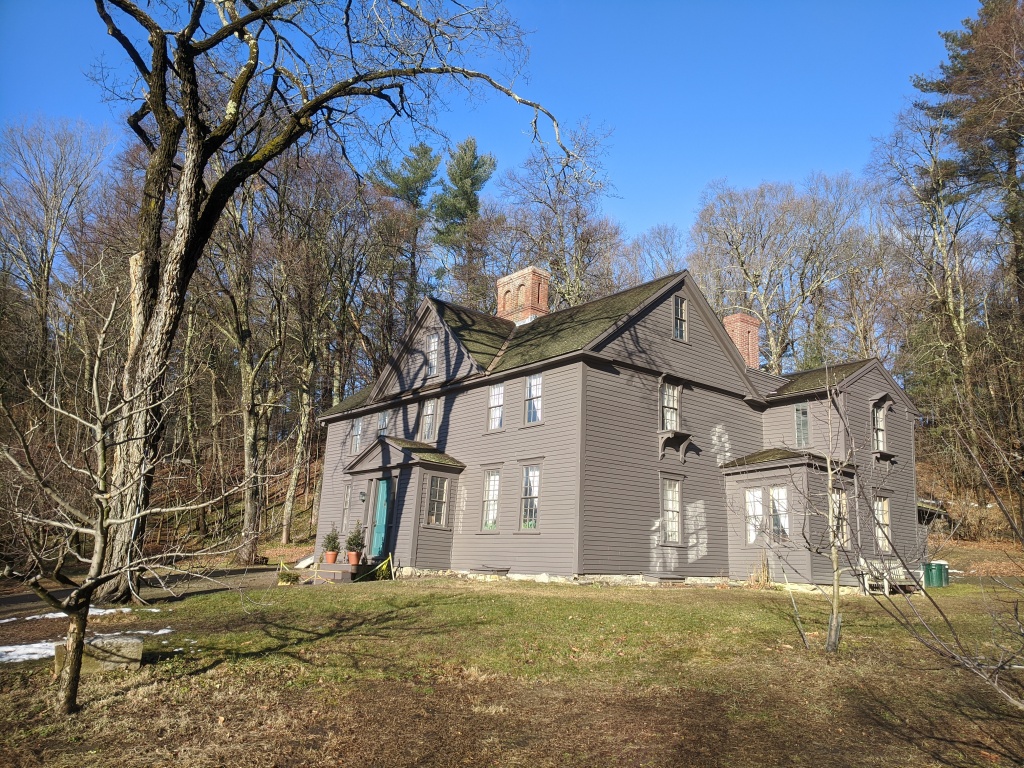
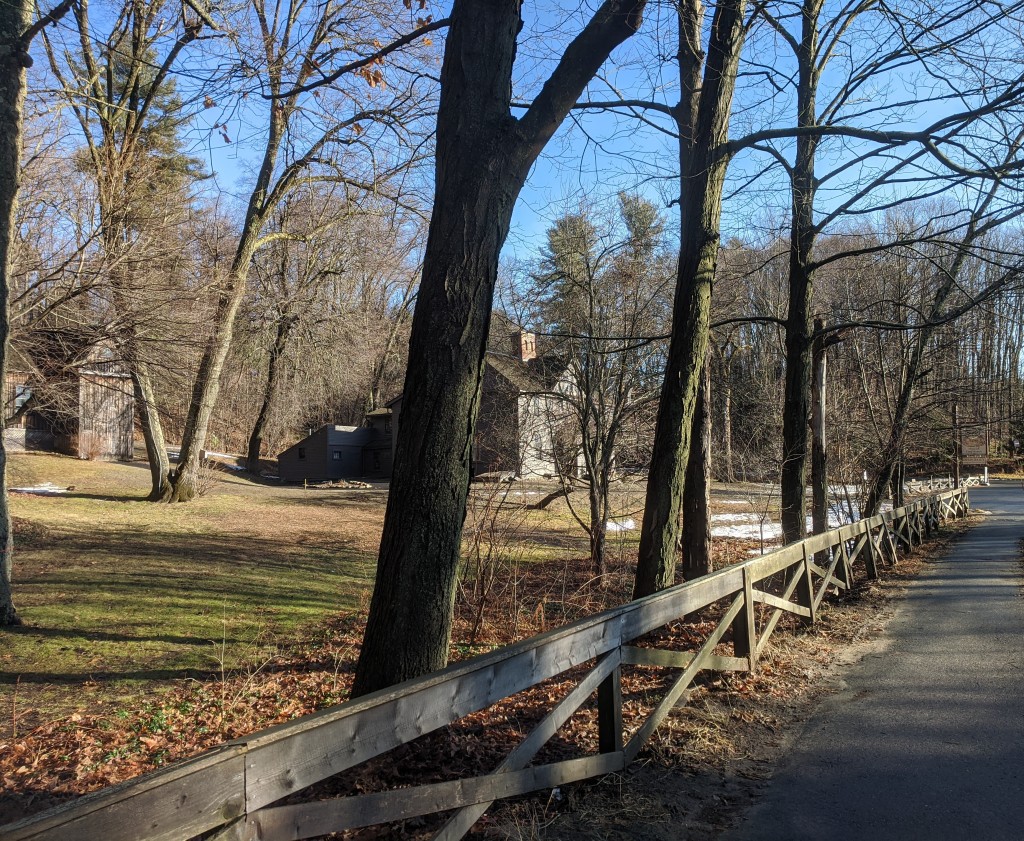
Heading from Gloucester & Cape Ann to Concord makes for easy nature hikes and must see visits year round. Winter walks on mild days offer unobstructed views. It’s remarkable how many points of interest and preservation are within walking distance — or brief drives– from each other in Concord and that share connections with Gloucester.
Concord Art Museum expansion 2020
The Concord Museum’s expansion, the impact of Little Women film release, and Carol Thistle are featured in the Massachusetts Office of Travel & Tourism Industry Update from January 2020 (MOTT). Read the full January 2020 news and stats here for inspiration. Nice to see North Shore highlighted.
Plan ahead because there’s so much in close proximity you’d be sorry to miss any. It’s easy to park at these Concord sites and walk to the others. A few require a drive.
Home of Ralph Waldo Emerson
Concord, Mass. Emerson’s home of 50 years is situated across from the Concord Museum and a two minute walk from Alcott’s family home. The house belonged to his wife, Ellen Tucker who died of TB at twenty in 1831, just two years into their young marriage. Emerson supported Thoreau, Alcott’s father (Bronson Alcott) and Hawthorne because of spousal inheritance. He married Lydian in 1835 in Plymouth, Mass. They raised a family in the Concord home.
“Emerson itemized “Gloucester” in his pocket journal entries because he came here for work and pleasure: as a Gloucester Lyceum invited speaker; with friends, most notably a famous walk here with Thoreau; visited Rockport in August 1855 and Pigeon Cove with family in 1856 (where he is remembered as the Inn in Rockport Mass most famous guest). Art fans aside: his ancestor, Thomas Emerson, built Arthur Wesley Dow’s house in Ipswich.”
Catherine Ryan
Lousia May Alcott home of Little Women Orchard House
Founded in 1912 (!), the museum is the long time family home where Alcott wrote and set Little Women website Ralph Waldo Emerson backed her father’s work. Thoreau was her schoolteacher.
“When she was about seven her father enrolled her in a school taught by Thoreau, then 23. Thoreau often took his students out of the classroom into the woods. He taught them about birds and flowers, gathering lichens, showing them a fox den and deer tracks, feeding a chipmunk from his hand.
Sometimes he took the children on his boat, the Musketaquid, and gave them lessons as they floated down the Sudbury and Assabet rivers. As they passed the battlefield where the American Revolution started, he explained how the farmers had defended themselves against the redcoats. Louisa recorded her vivid memories of those field trips in Moods.”
excerpt New England Historical Society
Gloucester – Concord connections:Alcott stayed in a few neighborhoods when she visited Gloucester whether traveling alone, with family, or friends including Rocky Neck, Magnolia and West Gloucester. Extended stays at Braewood, 531 Essex Avenue, the home of Maria H. Bray in West Gloucester, were effectively a writer’s retreat and inspired Jack and Jill (published in 1880) set in “Harmony Village” which looks like Gloucester in the book’s illustrations. Louisa May Alcott was one of the notable repeat summer guests at Braewood (and perhaps at the ones Bray managed before in Magnolia including Willow Cottage).
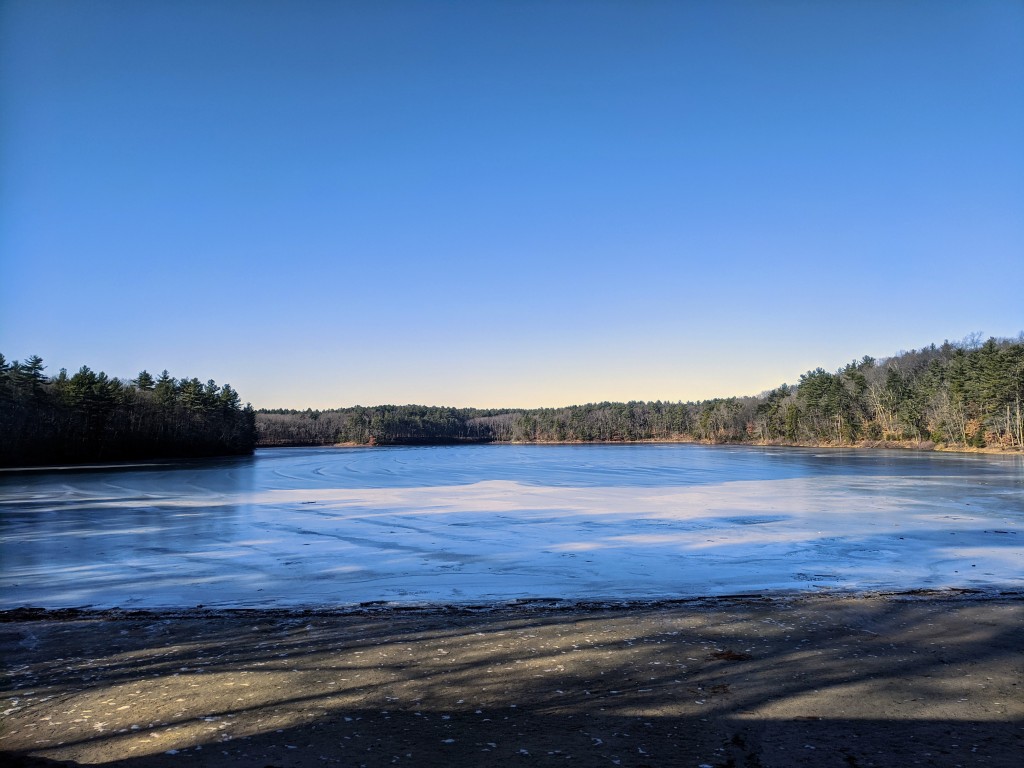
Walden Pond
Concord, Mass. Don’t forget that Walden Pond is right here, too! Hike to the site of the Henry David Thoreau cabin which he built on Emerson’s land and stayed 2-2-2 (as in two years, two months, two days) over 1845-47.
“When I wrote the following pages, or rather the bulk of them, I lived alone, in the woods, a mile from any neighbor, in a house which I had built myself, on the shore of Walden Pond, in Concord, Massachusetts, and earned my living by the labor of my hands only.” Henry David Thoreau, Walden Pond, published 1854.
Combining this stop with downtown Concord underscores the scalability of his solitude and deep nature study, and how it was made possible with support from cherished family and friends. (Since it’s pretty much his back yard, no wonder he could walk home!)
Thoreau lived at 255 Main Street in downtown Concord from 1850 until his death in 1862. His former student, Louisa May Alcott, bought the historic house for her sister. She and her father lived there, too.
Gloucester – Concord connections: Walden Pond NPS Visitor Center designed by architect MaryAnn Thompson, same firm that built Temple Ahavat Achim in Gloucester, Mass. Thoreau came to Gloucester at least twice that we know of- in 1848 as an invited speaker by Gloucester Lyceum hosted in the town hall; and in 1854 as the penultimate stop of his north shore trek. Dogtown.
Temple Ahavat Achim Gloucester Ma designed by MaryAnn Thompson 2012 (photo July 2017)
Gropius House
Lincoln, Mass. (Walden Pond/Concord line). A Historic New England property, Gropius House is a landmark Bauhaus residence now museum built in 1938, the same year as MoMa’s legendary Bauhaus exhibition. Marcel Breuer’s house 1 is down the hill.
Gloucester – Concord connections: Mass Modern trail and great buildings. Don Monell and other modern inspiration can be found on Cape Ann. The Graduate school at Harvard designed by Gropius was a TAC (The Architects Collaborative) build in 1950. TAC was founded in 1945 with the clout addition of Gropius who continued with the firm until his death in 1969. Original 7 founders were Norman Fletcher, Louis McMillen, Robert McMillan, Benjamin C. Thompson*, Jean Fletcher, Sarah Harkness and John Harkness. Twenty years later, Monell’s Plum Cove elementary school design in 1967 in Glocuester Mass was leveraged by partnering with The Architects Collaborative. Gloucester’s Plum Cove school is a TAC build. (Wikipedia lists several commissions. The school could be added.) This early 20th century history in Concord and Gloucester could inspire other movies.
*Jane (Fiske McCullough) Thompson and Deb Allen were co-founding editors of Industrial Design; Thomson had worked at MoMa for Philip Johnson. She married Ben Thompson in 1969. To my knowledge, there is no relation to architect MaryAnn Thompson who designed the Walden Pond visitor center.
The Marcel Breuer House 1 (1939) at 5 Woods End Road is essentially nestled into the Gropius hill property. Floor plans and interior photo published here are from the Marcel Breuer papers in the Archives of American Art, Smithsonian Institution collection. It was added to the National Historic Register in 1988. Minutes away conservation land was set aside thanks to 20th Century modernist architect, Quincy Adams. He served on the town’s conservation committee and donated hundreds of acres of his family’s land for green space.
Lexington, Mass. One could drive to Six Moon Hill after stops mentioned above, on the way back to Gloucester. It’s about 15 minutes from the Gropius House. Six Moon Hill is the nick name for an enclave of neighborhood homes in Lexington, Massachusetts, designed by the modernist architects of The Architects’ Collaborative (TAC) between 1948 and 1950.
The Gropius home was already optimally sited within the Walden Pond/Thoreau orbit. I’d wager intentionally so, a poetic and multidimensional nod to the natural and built environment and how to live. This dialogue among masters across centuries is another reason I believe Maryann Thompson’s visitor center is ideal.
Art historian Simon Schama resided on Moon Hill between 1981 and 1993.
“Six Moon Hill is a community of twenty-nine Mid-Century Modern houses designed by members of The Architects Collaborative (TAC), beginning in 1948… The property was purchased by the TAC architects in 1947 so they could build inexpensive homes for themselves, their growing families and their friends, and express Modernist socially progressive ideals. A corporation was formed, creating by-laws affecting future development, maintenance and communal responsibilities. The parcel was originally part of a farm, and while the land was initially used for grazing, the steeper areas had reverted to forest at the time of the purchase. Most of Moon Hill is on a ridge with rocky outcrops, wooded with oak and conifers. The impact of construction has been minimized, leaving the site as natural and undisturbed as possible” read more from the historical surveyhere
Don’t miss what’s nearby!
Mass Audubon’s Drumlin Farm is a five minute or so drive from the Gropius house. Moon Hill Road is more like 15-20 minutes. Minute Man National Park and Decordova are here, too. There are ample and varied scenic treks to mix it up for repeat visits
“On behalf of the Massachusetts Office of Travel & Tourism, Happy New Year to our tourism colleagues around the world, as we embark on an exciting new year and a new decade here in Massachusetts. We are looking forward to a busy and productive year. In-state initiatives on our horizon include Plymouth 400, the Restaurant Promotion Commission, a new Historic Women Trailblazers of Massachusetts initiative in honor of the 100th anniversary of the right to vote for women, and a major exhibit on King Tut coming to Boston in June. On MOTT’s international front, we have trade opportunities in Germany, Japan and South Korea in the coming months, as well as two of our most important tourism conferences, DNE and IPW. In this month’s MA Spotlight, we profile Concord Museum’s Marketing & PR Director Carol Thistle, who shares details about exciting new exhibits coming up in 2020 here.”
“…we are so excited about the Little Women film and we have already seen an increase in visitation to Concord because of it. Louisa May Alcott’s copper tea kettle that she used as a nurse during the Civil War is showcased in the Museum. Louisa almost died during the endeavor and was inspired to write her first published work, Hospital Sketches, which helped launch her remarkable and prolific career as one of America’s favorite writers.” – excerpt from Carol Thistle interview for MOTT spotlight Jan 2020
“The $13 million capital campaign supported construction of the new Anna and Neil Rasmussen Education Center, which opened in fall 2018. What are some of the educationalfeatures? With this state-of-the-art Center, we host Forums on women’s suffrage, the abolition movement, revolutionary history, decorative arts and other topics connected to our collection. Since the opening of the Rasmussen Education Center, the Museum has served 14,000+ students through a variety of curriculum-based educational programs. Kids can explore the world of Henry David Thoreau, cook over an open hearth, and learn about Native culture through archaeology and so much more. In 2019, the Paul Revere’s Fund provided free bus transportation to the Museum and underwrote all program fees for nearly 4,000 students from Lowell, Lawrence, and Everett.”
“One of the greatest joys in my marketing and public relations career has been promoting so many incredible destinations in our state. Massachusetts has so much to offer local, national and international visitors with its natural beauty, seacoast and of course its history. In the past 25 years, through branding campaigns and strategic marketing, I have promoted some of Boston’s key icons, including Faneuil Hall Marketplace, the Boston Harbor Islands and the Museum of Science – as well as the cities of Gloucester and Salem. For the past 3 ½ years, I have been the Marketing Director for the Concord Museum as it has undergone an exciting $13 million dollar capital campaign, expansion and renovation. I’m also currently serving on the Board of the Concord’s Chamber of Commerce as well as the Advisory Board for both Discover Concord and the Town of Concord’s new Tourism initiative.”
Gloucester, Mass. Great teacher at Gloucester High School, Shaun Goulart, creates a local history scavenger hunt trivia game for his 9th grade students that takes place weekly for 6 weeks. We’re taking the challenge paced one week after the students.
ANSWERS TO SHAUN GOULART’S LOCAL HISTORY TRIVIA WEEK FOUR
How did you do? Week two delved into Gloucester’s famous inventors. Stop here if you prefer to go back to see Week 4 questions only
Mr. Goulart’s Local History Trivia Scavenger Hunt Week 4 Inventors
1.John Hays Hammond Jr. “Jack”
Go to the location of his home and take a picture with a member in it.
What did he invent?
Answer: “Over the course of his professional career, he was awarded over 800 foreign and domestic patents resulting from over 400 of his inventions. Many of these began in radio control before extending to electronics, naval weapons, national defense, as well as various consumer products.” – Hammond Castle
“In connection with his radio researches Jack obtained most important patents for receiving and broadcasting and these he sold to RCA…” John Hays Hammond, Sr
Hammond Castle – I hope that one day the Trustees and Historic New England add this as a shared property among their preservation jewels, along with the Natalie Hammond property and much of the parents’ estate, Lookout Hill, with some portion of admission for the City. At one point Hammond Castle was one of the top attractions in Massachusetts.
2.Clarence Birdseye
Go to the location where his company was and take a picture with a member in it.
Go to the location of his grave and take a picture with a member in it.
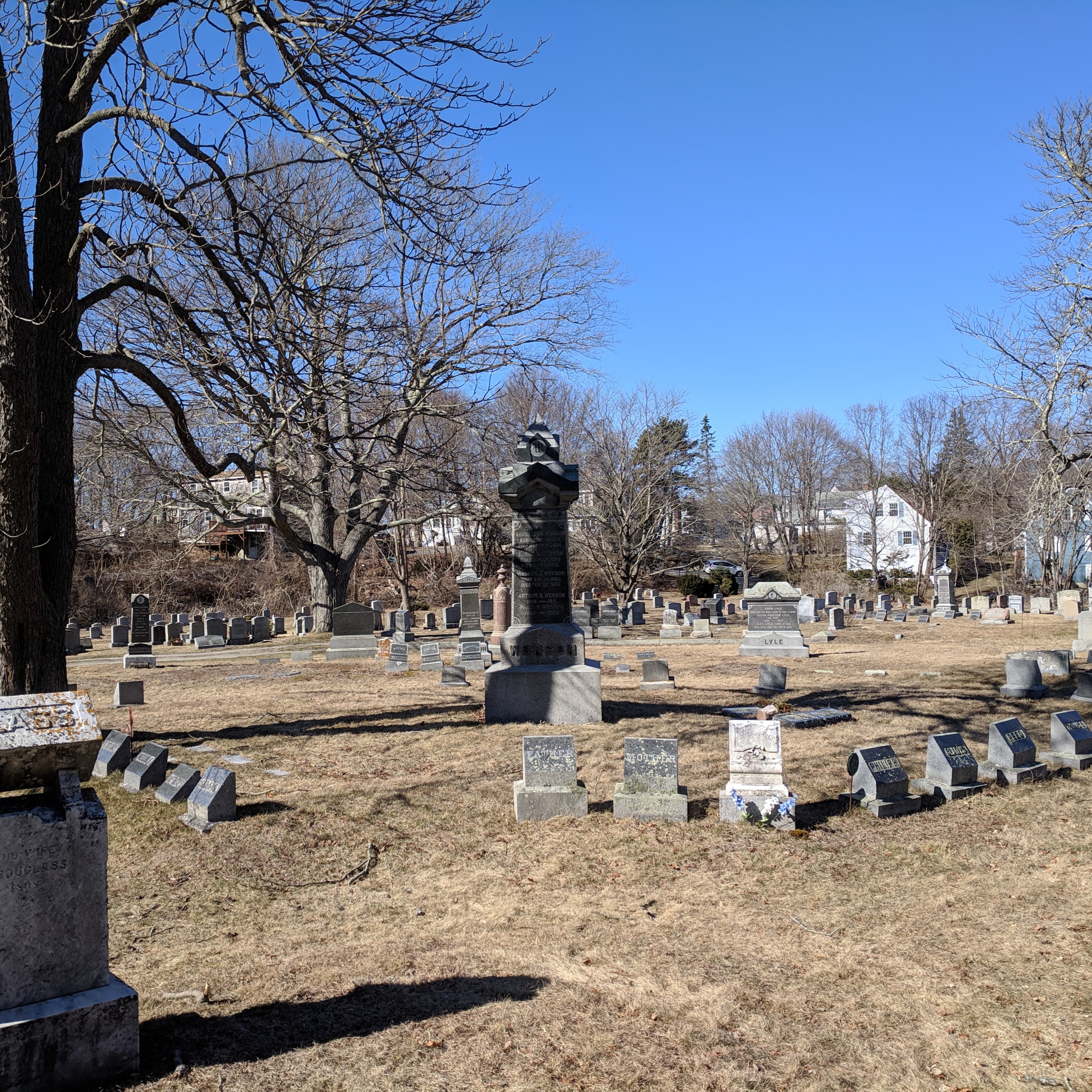
Answer: Mt. Pleasant cemetery
What did he invent?
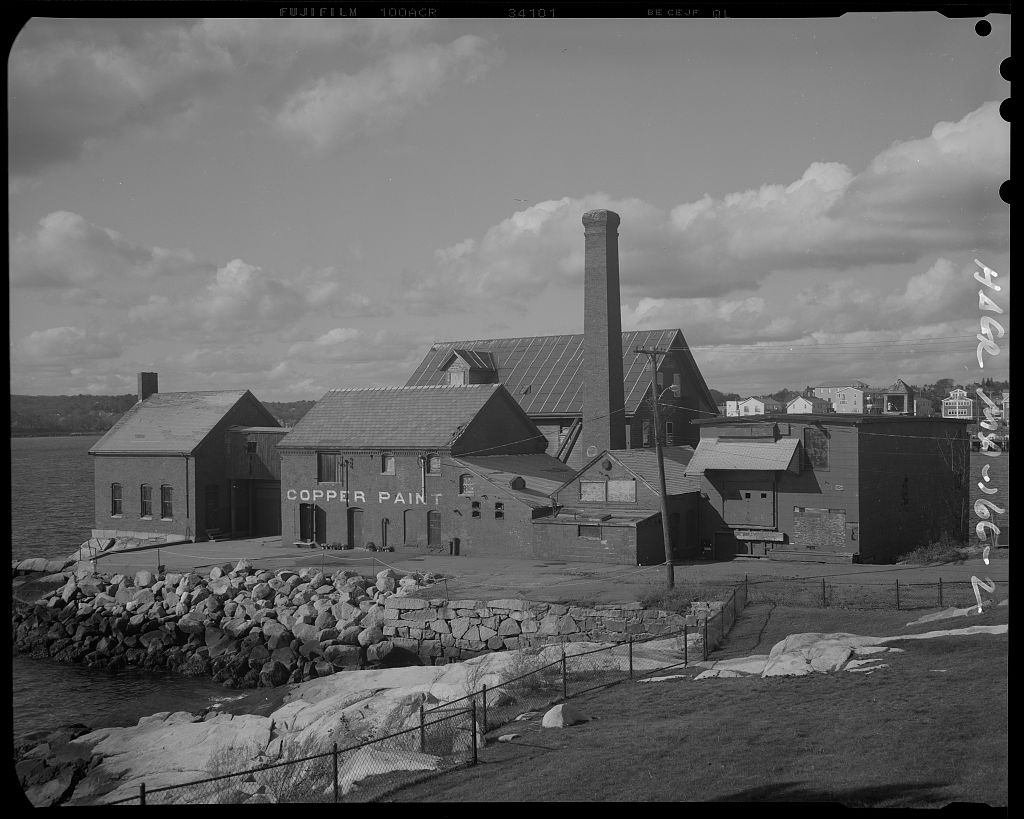
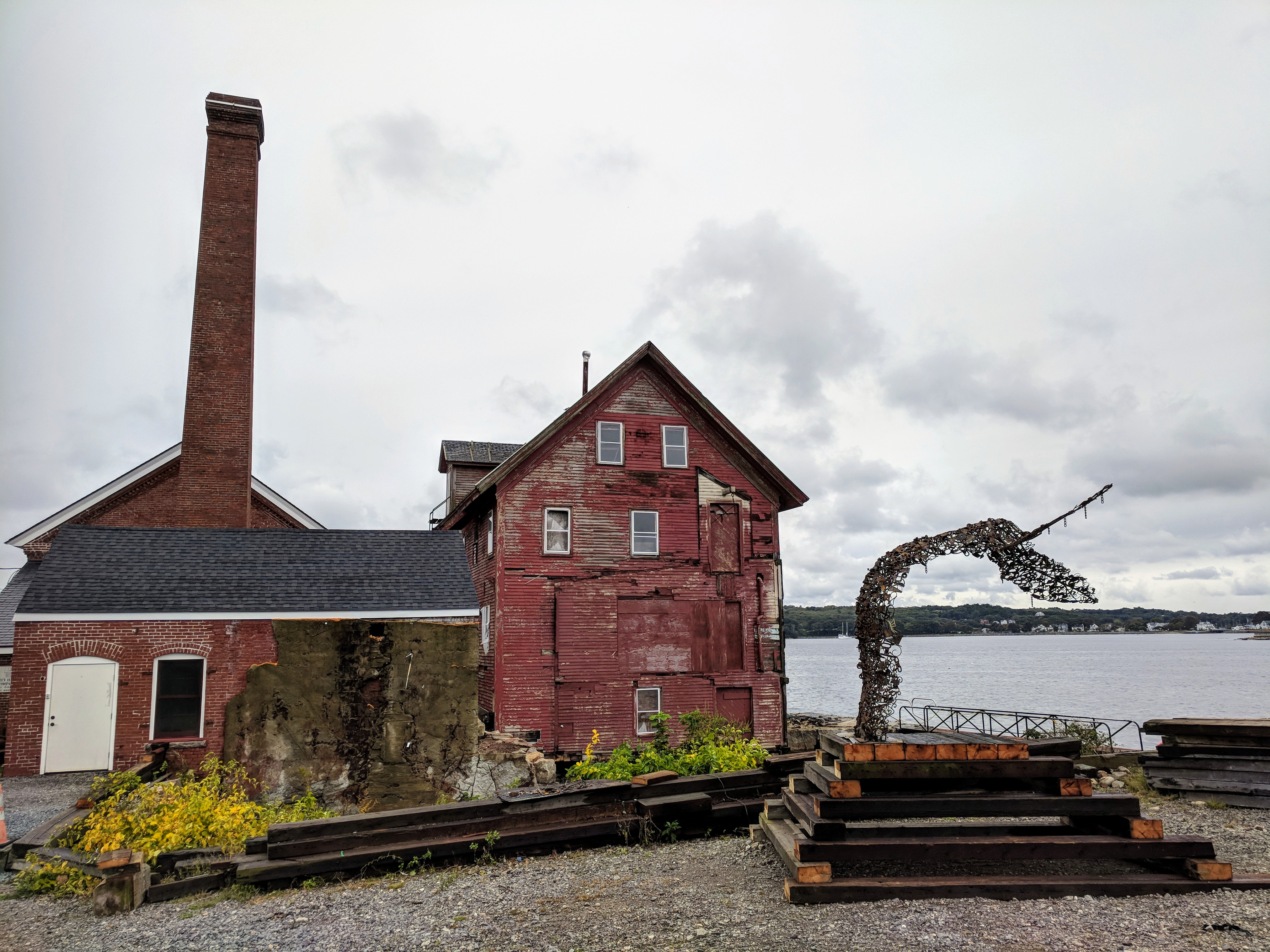
Answer: Augustus S Wonson invented antifouling copper paint to protect boats. Tarr & Wonson’s was established in 1863. The former factory and harbor icon is now Ocean Alliance.
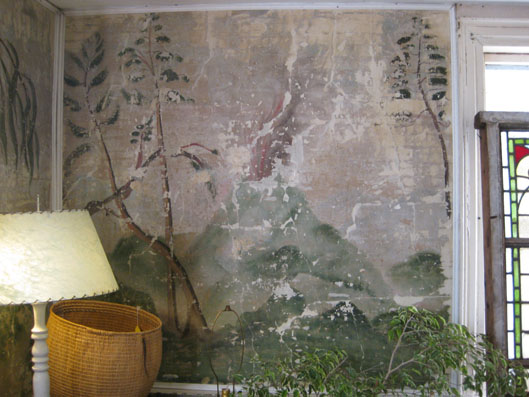
Wall painting in the Twitchell house, which features an erupting volcano, ca. 1830. Photograph by Ruthie Dibble
The Metropolitan Museum of Art website features a story today by Ruthie Dibble, the 2010-2011 Douglass Foundation Fellow in The American Wing (the pinnacle of success for a history major). She’s on the hunt for early American murals in historic New England houses, and might have some luck finding a few on Cape Ann. For more information, check out this link, which highlights the results of some of her research and gives a fascinating glimpse into the artistic tastes of wealthy Americans in the early part of the 19th century.
Spread The GMG Love By Sharing With These Buttons:





















































































































 Good Morning Gloucester