






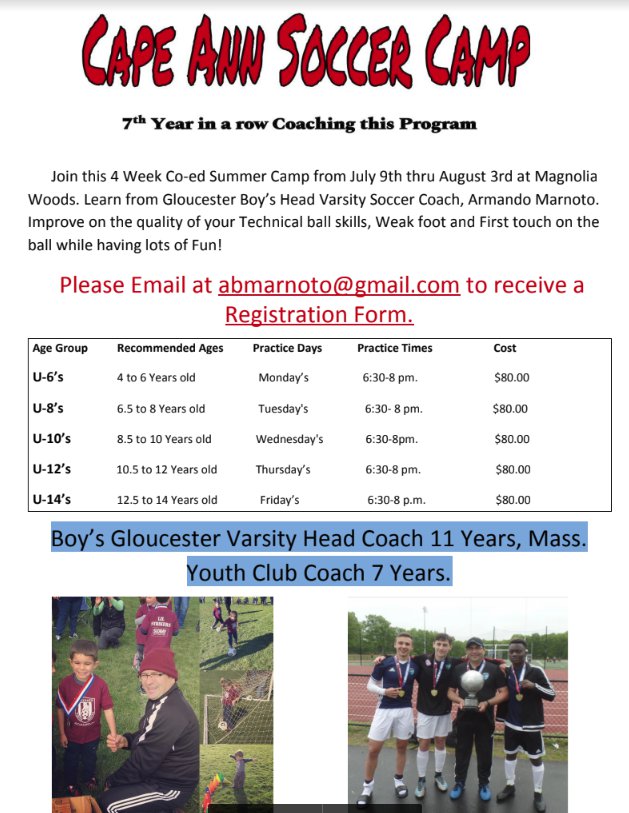
For the 7th year in a row, Gloucester Boy’s Head Varsity Soccer Coach, Armando Marnoto, offers a summer soccer camp in Gloucester.
Email abmarnoto@gmail.com to receive a registration form

My View of Life on the Dock
For the 7th year in a row, Gloucester Boy’s Head Varsity Soccer Coach, Armando Marnoto, offers a summer soccer camp in Gloucester.
Email abmarnoto@gmail.com to receive a registration form


Gloucester’s enchanting open spaces – Sawyer Free library’s John and Dorothy Rando Memorial Garden at the front and side entrances


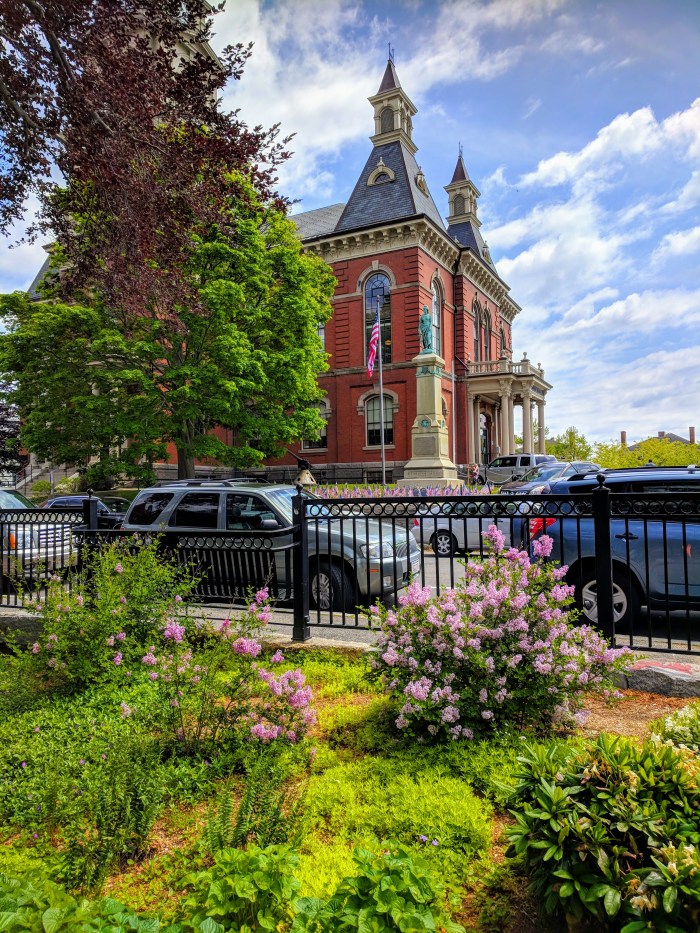
Fitz Henry Lane and other art removed from the library building (January 2018):
Proposed building plans 2017 includes 1972 quest for what became lovely Monnell building:
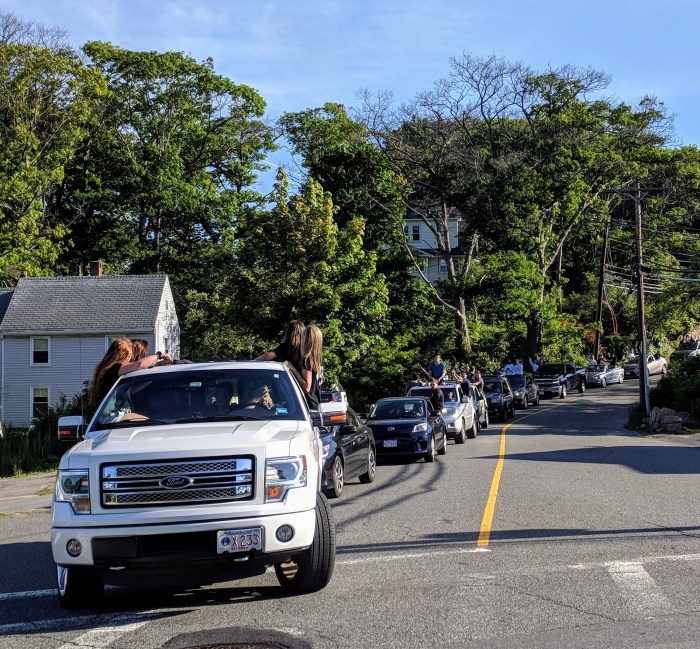
With some hesitation at the turn, the caravan of some 30 odd cars jam packed with joy headed right to the rotary. Bright day for a bright future — congratulations to the students, teachers, and families
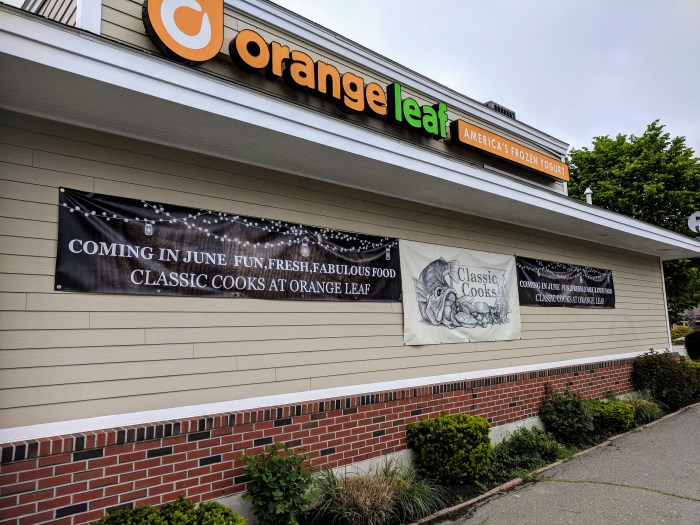
Downtown Gloucester – Classic Cooks and Orange Leaf 102 Rogers Street, Gloucester, MA
Classic Cooks HQ 27 Eastern Avenue (800) 872-4044, and regular booth at Cape Ann Farmers Market

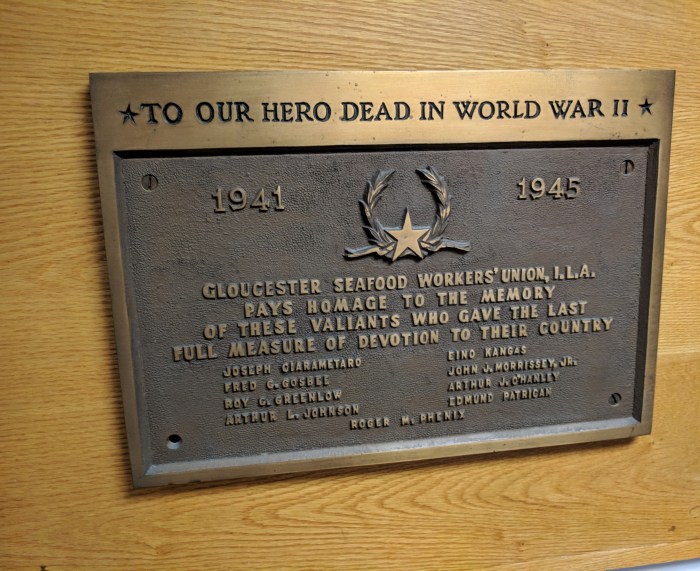
1941-1945 To Our Hero Dead in World War II: Gloucester Seafood Workers’ Union, I.L.A. pays homage to the memory of these valiants who gave the last full measure of devotion to their country. Joseph Ciarametaro, Fred G. Gosbee, Roy G. Greenlow, Arthur L. Johnson, Eino Kangas, John J. Morrissey, Jr., Arthur J. Hanley, Edmund Patrican, Roger M. Phenix
Three memorial monuments along a small corner of the Boston Commons by the State House remind us of those who gave their lives for freedom.
“The Freedom Tree: With the vision of universal freedom for mankind this tree is dedicated to Joseph Dunn and all prisoners of war and missing in action. 1976.”
Read more about Maureen Dunn’s advocacy on behalf of her husband, Lt. Joseph Dunn, Vietnam War. Find the book, The Search for Canasta.
“In the Granary Burial Ground, in Boston, rest the remains of Crispus Attucks, Samuel Gray, Jonas Caldwell, and Samuel Maverick, who, together with Patrick Carr, led by Crispus Attucks, were the first Martyrs in the cause of Amerian Liberty, having been shot by the British soldiers on the night of the fifth of March, AD 1770, known as the Boston Massacre.”
Crispus Attucks was a longshoreman and whaler regarded as the first casualty in the Boston Massacre (‘the first to defy, the first to die’). In 1888, the state appropriated $10,000 for the commission. Robert Kraus was the sculptor and he worked with the foundry, Henry Bonnard Company of New York. The base and obelisk are Concord granite.
“The monument is of Concord granite, twenty five feet six inches high, and measures ten feet six inches at the base. The pedestal, which is round, except where a rectangular projection is made tosupport the statue and receive the relief is eight feet two inches high. The bas-releif on the face of the pedestal represents the Boston Massacre in King street. In the foreground lies Crispus Attucks, the first victim of British bullets; the centre of the scene is the old State House, behind which may be seen the steeple of the old brick or First church, which stood on Cornhill, now Washington Street. In the Upper left-hand corner is the following inscription: “From the moment we may date the Severance of the British Empire. Daniel Webster;” and in the upper right hand corner, “On that Night the Foundation of American Independenc was laid. John Adams.” Under the relief on the base appears the date “March 5, 1770.” Above the bas releif stands “Free America.” With her left hand she clasps a flag about to be unfurled, while she holds aloft in her ‘right hand the broken chain of oppression, which, twisted and torn, is falling off the plinth. At her left side, clinging to the edge of the plinth, is an eagle. Its wings are raised, its beak is open, and it has apparently just lit. Its pose is in unison with the fiery spirit of its mistrees, shown in the serious, determined, and heroic gaze of her upturned face.”
( And crushing the crown under her ‘Spirit of America’ foot.)
Read the archived 1889 dedication program which includes a letter from Frederick Douglass

Joshua Benton Smith pushed for a memorial beginning in 1865. It took another 20 years for a sculptor to be commissioned. A dedicated committee selected sculptor, Augustus Saint-Gaudens. The tribute was unveiled and dedicated on Memorial Day May 31, 1897 (called Decoration Day at the time). Frederick Douglass was in attendance; two of his sons were in the 54th regiment. The memorial was cast by the Gorham Company foundry in Providence, R. I., at a cost of $7,000. The Gorham Company was contracted for Gloucester’s Fisherman at the Wheel memorial by Leonard Craske, and the Joan of Arc WW1 memorial by Anna Hyatt Huntington.
from the National Parks:
“Saint-Gaudens always strove for perfection regarding realism. In this relief he wanted to show a range in facial features and age, as found among the men of the regiment. This was the first time a monument depicted blacks realistically, and not as stereotypes. He hired African American men to pose, and modeled about 40 different heads to use as studies. His concern for accuracy also extended to the clothing and accoutrements.
“Saint-Gaudens, however, worked slowly. A committee member complained in 1894, “. . . that bronze is wanted pretty damned quick! People are grumbling for it, the city howling for it, and most of the committee have become toothless waiting for it!” It would still be three more years until the unveiling. In answer to criticism, Saint-Gaudens wrote:
“My own delay I excuse on the ground that a sculptor’s work endures for so long that it is next to a crime for him to neglect to do everything that lies in his power to execute a result that will not be a disgrace. There is something extraordinarily irritating, when it is not ludicrous, in a bad statue. It is plastered up before the world to stick and stick for centuries, while man and nations pass away. A poor picture goes into the garret, books are forgotten, but the bronze remains to accuse or shame the populace and perpetuate one of our various idiocies.”– Augustus Saint-Gaudens
“Many of them were bent and crippled, many with white heads, some with bouquets… The impression of those old soldiers, passing the very spot where they left for the war so many years before, thrills me even as I write these words. They faced and saluted the relief, with the music playing ‘John Brown’s Body’…. They seemed as if returning from the war, the troops of bronze marching in the opposite direction, the direction in which they had left for the front, and the young men there represented now showing these veterans the vigor and hope of youth. It was a consecration.” – Augustus Saint Gaudens
Full house and major tribute. If you missed the ceremony, Cape Ann TV – 1623 studios- was filming.


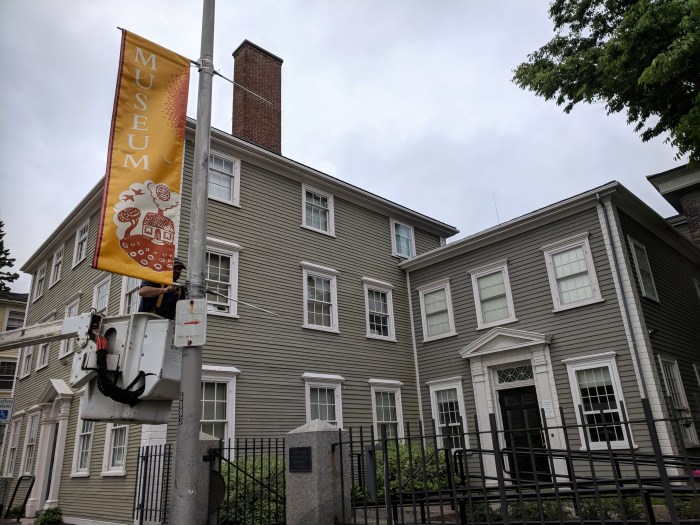
“The Cape Ann Museum is pleased to present an appraisal day with Blackwood March Auctioneers & Andrew Jacobson Marine Antiques at the White-Ellery House (245 Washington Street, Gloucester) on Saturday, June 2 from 11:00 a.m. 3:00 p.m. Appraisals are $5 per item, limit 3 items. The historic house will be open for viewing without charge. Appraisal tickets can be purchased in advance by visiting camuseum.eventbrite.com or call (978)283-0455 x10.
Historic houses like the Cape Ann Museum’s White-Ellery House remind us that old things are worth hanging on to and when they are properly cared for they shine. In conjunction with the special exhibition Unfolding Histories: Cape Ann before 1900, the Museum presents an appraisal day, encouraging local residents to bring out their treasures, heirlooms and antiques, which illustrate the history of this area. Join appraisers Michael March from Blackwood March Auctioneers and Andrew Jacobson from Andrew Jacobson Marine Antiques
For two generations Blackwood March auctioneers and appraisers, based in Essex, have appraised and sold at auction fine art and antiques for trusts, estates, attorneys and individuals. In the art market they have established auction records for such artists as: Aldro Thompson Hibbard, Emile A. Gruppe and Frederick Mulhaupt, while selling antiques and accessories for strong prices for various clients. In addition to fine art, participants are encouraged to bring: silver, nautical antiques, Chinese items, Art pottery, Oriental carpets, quilts, Textiles, glass, china, and diverse accessories.
For over twenty years, Jacobson Marine Antiques, based in Ipswich, has dealt in ship models, half hulls and pond models; nautical paintings and prints; rope work and curios; artifacts, medals and commemorative items; vintage photography; navigational instruments’ scrimshaw and whaling implements; ocean liner, steamship, lighthouse and life-saving memorabilia; and out of print books.
The White-Ellery House, located at 245 Washington Street in Gloucester at the Route 128 Grant Circle Rotary, was built in 1710 and is one of just a handful of First Period houses in Eastern Massachusetts that survives to this day. (First Period means c. 1620–1725.) It is a 2 ½ story “saltbox” structure with a massive central chimney that once serviced six fireplaces. Unlike other structures as old as this, the White-Ellery House has had very few interior alterations over the years. Stepping inside today, visitors enter much the same house they would have 300 years ago.
The White-Ellery House is on the National Register of Historic Sites because of its unique construction and important interior features. The house was built for the Reverend John White (1677–1760), brother-in-law of Cotton Mather, former Chaplain at Fort Saco, author of New England’s Lamentations (1734) and Gloucester’s first settled minister. In keeping with White’s esteemed position in the community, the House exhibits a certain elegance and refinement, perhaps best reflected in the surviving interior details.
At the time the House was constructed, the surrounding area was Gloucester’s Town Green—the center of the community. The Reverend Mr. White’s church, also called a meeting house, was located on the Green and most of the townspeople lived in the immediate area. The Annisquam River was readily accessible and was an important means of transportation for early residents, most of whom were farmers or simple tradesmen, and their families.
The second owner of the White-Ellery House was James Stevens who kept it as a tavern between 1735 and 1740. The House was owned next by the Ellery family who retained ownership of it until 1947. Although the center of Gloucester long ago moved from the Town Green to the Harbor Village, the site remains the entrance to Gloucester and an important historical site.
In 1947, plans were unveiled showing the soon-to-be-constructed Route 128 coming into Gloucester directly through the Town Green and literally on the doorstep of the White-Ellery House. Realizing the House’s importance, the City of Gloucester took it by eminent domain and sold the building to the Cape Ann Historical Museum with the proviso that it be moved immediately. Under the leadership of Museum president Alfred Mansfield Brooks, the House was picked up and moved approximately 100 yards to its present location. For the next decade, Brooks oversaw restoration of the structure, a process which successfully preserved much of the original fabric of the House and which has allowed visitors today to see this gem of First Period architecture, still standing on the edge of Gloucester’s former Town Green. The barn alongside the White-Ellery House is also a First Period structure, built in the mid-1730s, exhibiting the same early construction techniques as the House.
Today, the White-Ellery House serves as a study property, inviting visitors to explore not only the history of early American architecture but also the story of an ordinary New England family who worked hard to provide for themselves and to raise their children, who took part in events of local and national importance, and who sought to preserve their legacy in the face of an ever changing world. The House also serves as a unique venue for art installations and related programming which are held at the site during the summer months.”
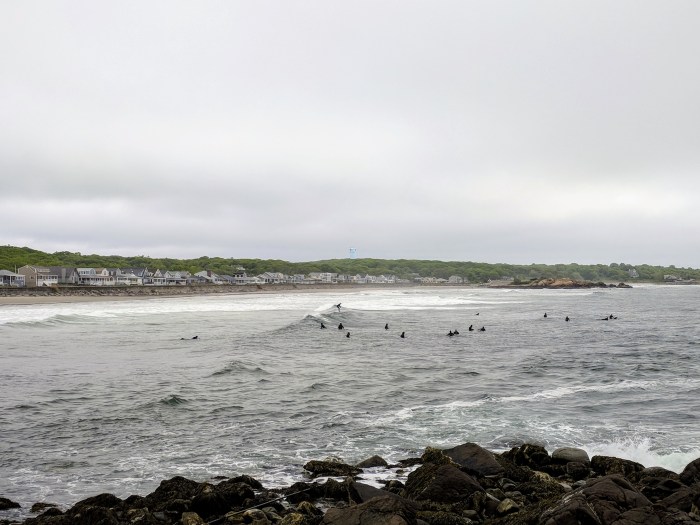
Photo journal documenting rapid damage and repairs post trio of winter storms as of May 2018.

is creeping back, truly. (view looking across to Gloucester side)

(sand migrating back- view looking to Rockport– see 2017 post about Long Beach annual shifting sands )

beach erosion was significant
Spring tides slam the Long Beach seawall.
photo: A tree tossed up like a toothpick atop the rip rap helps to illustrate the ocean’s twice daily whollops.

vulnerable spots clearly visible to the naked eye (I marked up two with red lines)

When the seawall opened up and heavy concrete sections balanced like hanging chads or individual playing cards, I was not surprised. The massive promenade had shown signs of strain. Small fissures and tiny holes were noticeable before the winter storms accelerated its decline. Water finds a way in at high tides. The manmade wall is noticeably shifting and rumbling at a greater pace. Holes, cracks and breaks along the seawall expand, and new ones erupt. I can’t help conjuring up comparisons to Yellowstone’s boiling and unpredictable surface. I imagine stakeholders are mapping details of their immediate landscape. Though beaten down, the promenade is walkable and sturdy. Tiny holes do expand rather alarmingly.
example –
and another (filled)- the cone eventually dropped beneath the path
Fissures
more photos (before-afters, repairs, boulder pyres, stairs or lack thereof, and nuisance popples) and videos of seawall ramparts giant boulder shuffle
Cape Ann Department of Public Works (DPW) have been at it clearing and repairing our coastal communities non-stop since three back to back winter storms. Both Gloucester and Rockport beaches are open for Memorial Day. According to the story, Cape Cod not so much.
Here’s the link to read the WGBH article and to listen to the story in case you missed it on the radio this morning Memorial Day is Here. Are Massachusetts Beaches Ready? WGBH story (article and radio) by reporter Maggie Penman (apt name for journalist :))


Does anybody know the age of the mangrove-like roots that began to surface back in 2012 aside Eagle Rock and the creek? The 2018 winter storm erosion exposed more of a grove line parallel to the seawall. I am curious about the seemingly fossilized piercings and how the landscape may have looked before the beach we walk today.
more photos in my GMG post from 2016: Shore nature challenge: what are these? Long Beach Easter Island


Gloucester public schools have stellar community partners and locales
Mass Audubon Eastern Point Wildlife Sanctuary
Two+ centuries of naturalists in Gloucester is quite a legacy. Here’s a partial list from Robbins to Cramer and Smith to Smith–there have been notable champions most every decade.
organizations such as Gloucester Civic and Garden Club, Essex County Greenbelt, Mass Audubon, Ocean Alliance, Martime Gloucester, UMASS Marine Station…

The Cape Ann Reads inaugural reception celebrating original children’s picture books by local artists and writers was held at City Hall in Gloucester, Massachusetts, January 27, 2018. Linda Bosselman of Sawyer Free Library was the official photographer for the packed event and she captured all its positive energy and people. An upcoming group exhibition featuring these participants will travel to the four Cape Ann communities. As you can see from the celebration pictures, the touring exhibition and its related receptions and readings will be worth a visit! Cape Ann Reads is an initiative by the four public libraries of Cape Ann.

The Cape Ann Reads reception and awards ceremony opened in style – thanks to the red-ribbon cutting courtesy of the Cape Ann Chamber of Commerce and Ken Riehl.


City Hall is a gorgeous venue for an art fair. Linda photographed all the local artists and writers at their individual picture book display booths. Effort was high. Kind friends manned booths for participants who were unable to attend: Ashley was there for Steven Kennedy and Victoria Petway, and Sinikka Nogelo represented Gail and James Seavey.


Awards ceremony program began with a warm welcome of support for the arts from Mayor Romeo Theken and opening remarks by the Library Directors and special dignitaries


Deliberations were held at Cape Ann Museum and Beauport Hotel.
Cape Ann Reads convened a nine member selection panel that included representatives from each of the public libraries: Justine Vitale Gloucester Lyceum & Sawyer Free Public Library; Carol Bender, former Children’s and Teen Librarian, Rockport Public Library (now at Manchester); Kate Strong Stadt, former Head of Youth Services, Manchester-By-The-Sea Public Library; Ann Cowman, Young Adult Librarian, Manchester-By-The-Sea Public Library; and April Wanner, Assistant Librarian at the TOHP Burnham Library, Essex. Joining these talented library staff members were three artists and award winning children’s book author-illustrators: Pat Lowery Collins; Giles Laroche; and Anna Vojtech. Bob Ritchie proprietor of Dogtown Book Shop provided another crucial area of book world expertise. Cape Ann Reads is grateful for their time and considerable talents to help the participants and the process.
Each library and the Cape Ann Museum designated one child representative for the second jury — a thoughtful panel of children: Eli Porter, Alycia Hogan Lopez, John Recroft, Lucas Rodi, and Josie West. They put in tremendous effort to read every entry, prepare notes, and come together for discussion. They were tasked with close reading and instructions to let us know any books that were favorites or that they wanted to compliment. Several came to assist the event as junior staff.


CLOSELYRELATED group show curated by Juni VanDyke for Flatrocks Gallery opens May 25, 2018. The opening Reception is Saturday May 26. Participating artists: Kathleen Gerdon ARcher, Shelly Champion, Loren Doucette, Paige Farrell, Jay McLachlan, Barbara Moody, Hans Pundt, Lynne Sausele, Patti Sullivan, Juni VanDyke
from the press release: CLOSELY RELATED…an exhibit that attempts to identify and examine artistic elements that appear congruently in works by artists related by friendship or marriage, or by filial kinship, or by the duality of artist and place or…other. (many possibilities)
Is our art influenced by our environment; our politics; the company we keep, and/or by our generic connections? And is what we create truly unique? Or was Picasso right when he said: “Every painting already has a mother and a father.”?
From the MCC:
“We wanted to remind you that the Essex County Power of Culture Regional Meeting will take place next Wednesday, May 23rd, 6-8pm in Ipswich. Please join us for a conversation on arts and culture initiatives in the County, and take part in developing your Power of Culture message for your communities and region.”
Where?
Collins Meeting Room
Ipswich Public Library
25 North Main Street
Ipswich, MA 01938-2287
ERIN LUMAN shelter | the cottages of Long Beach
June 2018 Jane Deering Gallery, 19 Pleasant Street, Gloucester
reception June 2, 4-6pm

The O’Maley Innovation Middle School campus setting is rather bucolic. There’s a line of apple trees that still bear fruit and suggest the original farm, playing fields are stepped down surrounded by marsh and pond, Dogtown stretches along one edge, and Pole Hill rises up across the way. Community volunteers and students have created lovely decorative gardens. Yes, the track needs work and the playing field could be upgraded to turf like Gloucester High School’s New Balance field at Newell Stadium. But it’s a beautiful spot to walk or catch a game. Ed Tedesco designed O’Maley in 1971. Although I believe the architect was quite sensitive to the setting, I understand how people criticize the exterior as harsh, or worse. “It feels like a prison!” exclaim some (and others joke. It is a middle school afterall.) You know what I see on the exterior when I come to O’Maley? Beautiful walls. Interesting shapes. Expansive public space ready for art and ideas.
O’Maley walls, photos from 2015

You can’t judge a book by its cover. OR can you? O’Maley has the potential for its shell to match the creative arts and legacy at its core. There are stunning historic murals from the 1930s and 40s in the Commons. The arts curriculum is valued and celebrated. The arts teachers are amazing. If there is any school in Massachusetts that sings out arts and legacy, let it be here. Monumental public art and street art abound in Gloucester.
Parsons Street before, after, and after

public art in Gloucester, MA and context collages

And not just for flat surfaces. Artists have suggested creative responses to Americord’s striated surface like a piano keys mural along the wall (a motif you may have seen elsewhere); others proposed a changing light installation when the cultural district designation was underway.
Stephanie Benenson’s temporary installation Harbor Voices at City Hall

Street art has become big business. Cities and towns around the world vie for renowned muralists in a competitive commercialized market with varying degrees of success.

O’Maley Innovation Middle School has the perfect walls for showcasing creative voices of former alumni who are art school grads (or currently enrolled)– professionally trained and inspired to leave a mark. Ever since the dynamite 18UP and Under 30 exhibition, supporters hoped to catalyze possibilities for these emerging artists. Murals taken to this scale warrant investments of $15,000 per artist per wall.

just a few of the grads…Chris Budrow | Kate Bresnahan | Jason Burroughs | Lexi Chipperini |Jon Cooney | Jeff Cluett | James Curcuru | Nicole Dahlmer | Leon Doucette | Alessia LoGrasso | Avery McNiff | Micah O’Conner| Mary Sullivan
Before I saw walls of possibility. I still see that, but now I imagine specific artists and I hope you do, too. There are plenty of walls to go around at O’Maley.
a few more international street art mural examples

Biomedical Breakthrough is win-win for shorebirds and horseshoe crabs: Deborah Cramer of The Narrow Edge spreads the word
“Jay Bolden, a senior biologist with pharma giant Eli Lilly, has spent the last five years proving a synthetic molecule works as well as horseshoe crab blood in a life-saving medical test…It took a dedicated birder to convince pharma giant Eli Lilly to use a synthetic compound instead of horseshoe crab blood in a mandatory medical test. Now, he hopes the rest of industry will follow…” – from National Audubon article published this March 11 2018 Inside the Biomedical Revolution to Save Horseshoe Crabs and the Shorebirds That Need Them, by Deborah Cramer with photographs by Timothy Fadek
Cramer explained that Ryan Phelan, Executive Director and Co-Founder of Revive and Restore contacted her “to see how this organization might help accelerate institutional and government exploration, acceptance of the synthetic endotoxin test to replace the use of horseshoe crabs…In the book, I’d portrayed how essential the energy rich horseshoe crab eggs are to shorebird migration, and how their numbers decline when they leave for the Arctic, hungry. I’d described how every human family, and their pets, depend on the horseshoe crab blood test to detect potentially life-threatening endotoxin in vaccines, joint replacements, PET scans, heart stents, IV lines, etc. And went on to tell the story of the development of the genetically engineered substitute, and the– at the time decade long–that had elapsed without it being accepted or adopted by regulators or the pharmaceutical industry.”
Revive and Restore’s announcement in the NJ Audubon news this week has more information about these dedicated scientists and exciting news. Deborah Cramer is too modest to spell it out, so I will. Revive and Restore was inspired in part by Cramer’s book, The Narrow Edge, an award-winning read that’s smart and lyrical, and an environmental game changer. Have you read it yet?

The Narrow Edge reveals more unexpected alliances and consequences. Readers learn that hunters have done much to protect wildlife at the edge of the sea through the tax on guns and ammunition. The Federal Duck Stamp that’s required on hunting licenses provides millions of dollars to support national wildlife refuges (and supports contemporary fine art). Memberships to organizations like National Audubon and donations from wildlife fans, photographers, and birders make a difference.
Cramer had to be trained how to handle a gun for necessary wild and remote travel research. Gloucester, Cape Ann and North Shore readers: she took the course for her license to carry at Cape Ann Sportsman Club found along Dogtown’s edge where it’s been for over a century. (I’m not certain how Cramer rated there, but a president’s daughter was a good shot. In 1912, Helen Taft, qualified as an “Expert with a Rifle” when she visited the range with her Gloucester friend, Elizbeth Hammond.)

prior gmg post, June 2016– Piping Plover Fans: Local author Deborah Cramer on sandpipers is a must read. Oh, and dogs vs.
To learn more about Deborah Cramer, go to www.deborahcramer.com