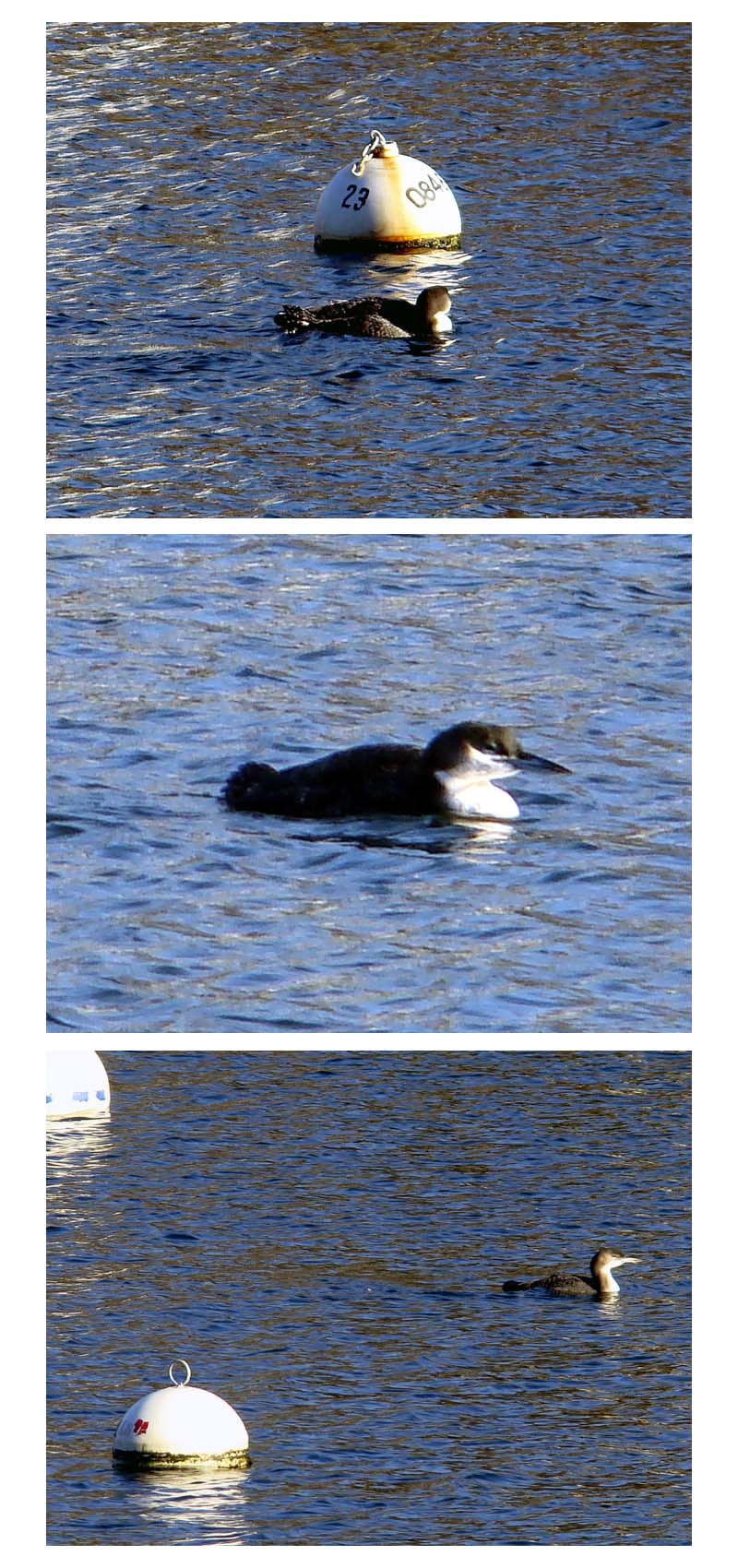
The Great Northern Loon, Great Northern Diver, or Common Loon (Gavia immer), is a large member of the loon, or diver, family of birds. The species is known as the Common Loon in North America and the Great Northern Diver in Eurasia; its current name is a compromise proposed by the International Ornithological Committee.
Loon Fun Facts (thanks Kathy):
- The bones of most birds are hollow and light, but loons have solid bones.
- The extra weight helps them dive as deep as 250 feet to search for food. They can stay underwater for up to five minutes.
- Because their bodies are heavy relative to their wing size, loons need a 100- to 600-foot “runway” in order to take off from a lake.
- Loons can fly more than 75 miles per hour.
- The red in the loon’s eye helps it to see under water.
- Scientists think loons can live for 30 years or more
E.J. Lefavour


 Good Morning Gloucester
Hey, that’s the Minnesota state bird!!!!
http://www.dnr.state.mn.us/birds/commonloon.html
LikeLike
Not to speak of being Canada’s basic currency.
LikeLike
One more fun fact from when I was looking at these loons off the Elks Lodge on the back shore.
Me: I thought loons lived in lakes in Maine.
Birder: those lakes are frozen right now. They come to Gloucester for winter vacation.
LikeLike
I thought the same thing Paul. The only place I’ve seen loons is on lakes in Maine or NH. I knew they were loons, but had to look them up to be sure because they were in salt water, which I don’t think of them being, plus they don’t look the same in their winter plumage.
LikeLike
Seen them at sea for many years , great divers. When there are hundreds around us they dive bomb to catch the scrapes throw overboard ,wonderful show. One day back in 84′ one started it’s dive but was a little off, missing water and landing on deck with a racket. As I grabed him or her to put overboard, I was being bitten by a frighten animal and cursing at him or her asking it if it was stupid. Come to think of it was he or she stupid or me for waiting for an answer ?
LikeLike
Their cry is similar to a lunatic. LOL
LikeLike
I learned that Gloucester is a great loon winter resort while visiting a loon center in Moultonborough, NH. Alas, their plaintive cry is a mating call, and they don’t do much of that here. Also, for the most part they lose their loony plumage while wintering over, so we don’t always spot them right away. From a distance I occasionally mistake ducks in Freshwater Cove for being loons –until they start quacking. Loons don’t quack.
LikeLike