Depression Era Quilts
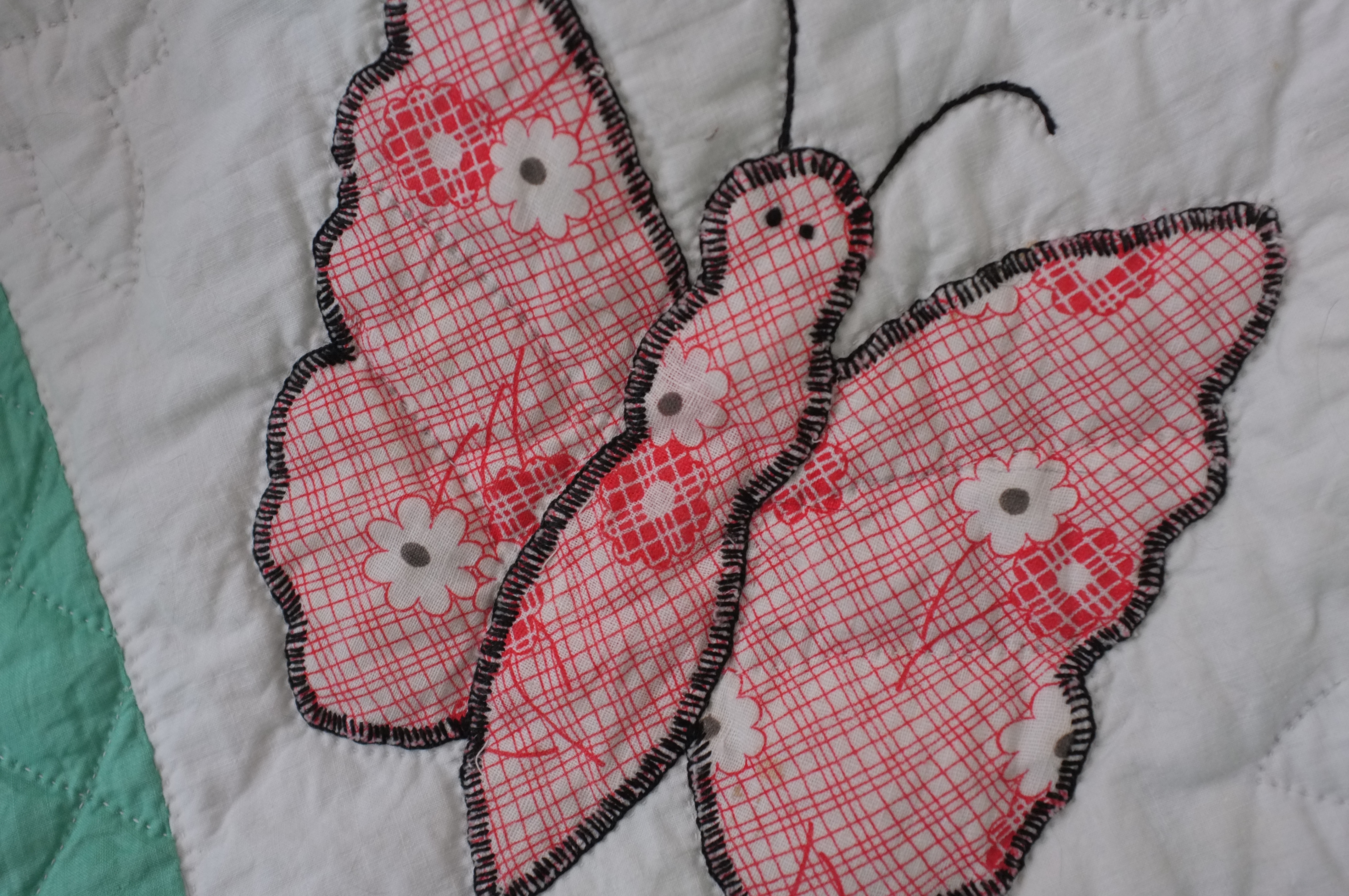
For the first installment of Antennae for Design I wanted to share with you a very special gift that my mother- and father-in-law gave me this Christmas past. My husband’s family lives in Cincinnati, Ohio, a beautiful city sited along the Ohio River. The landscape so reminded early German settlers of the Rhine River and valley, that to this day there is an area of the city still referred to as ‘Over the Rhine.’ The above butterfly buttonhole appliqué quilt was made in Fostoria, Ohio. Ohio’s long quilt-making heritage is similar to that of many states throughout America.
Quilts and quilt-making techniques are a reflection of the life and times of the women who made the quilts. The technique of quilting (encasing an insulating fabric between two layers of an outer fabric and stitching firmly in place) has existed throughout history. Quilted garments have been discovered in ancient Egyptian tombs and quilted garments and bedding began to appear in Europe after the return of the Crusaders from the Middle East. The medieval quilted gambeson and aketon were garments worn under, or instead of, armor of maille or plate armor. The oldest American quilts in the Smithsonian date from approximately 1780.
Thinking about the fascinating history of quilts and quilt making in this country, one of my very favorite periods of quilt making was after WWI and through the early 1940’s. Quilts made during this period are commonly referred to as Depression Era quilts; although to look at their cheery colors and patterns, you would never know the women who created them were living in the midst of a depression. Magazines needed to be resourceful during this period of extreme economic hardship, and they were, by selling fashion and optimism. Another way to survive was by including quilt patterns and tips in their publications. Quilting was an activity that women could do to fulfill their creativity while still making something practical for their families. The quilts were typically made from sewing scraps, out-grown clothing, and feed sacks. Part of the war reparations with Germany after the First World War included their formulas for aniline dyes, which allowed for an explosion in color depth and hues, as well as stability in dyes; purple finally became reliable, as did black. Charming and sweet prints along with lovely pastels served in stark contrast to the depressive economy. A particular shade of green, now referred to as “thirties green,” was so popular amongst quilters, that the strips that were used to bind the quilt edges came packaged in a can!
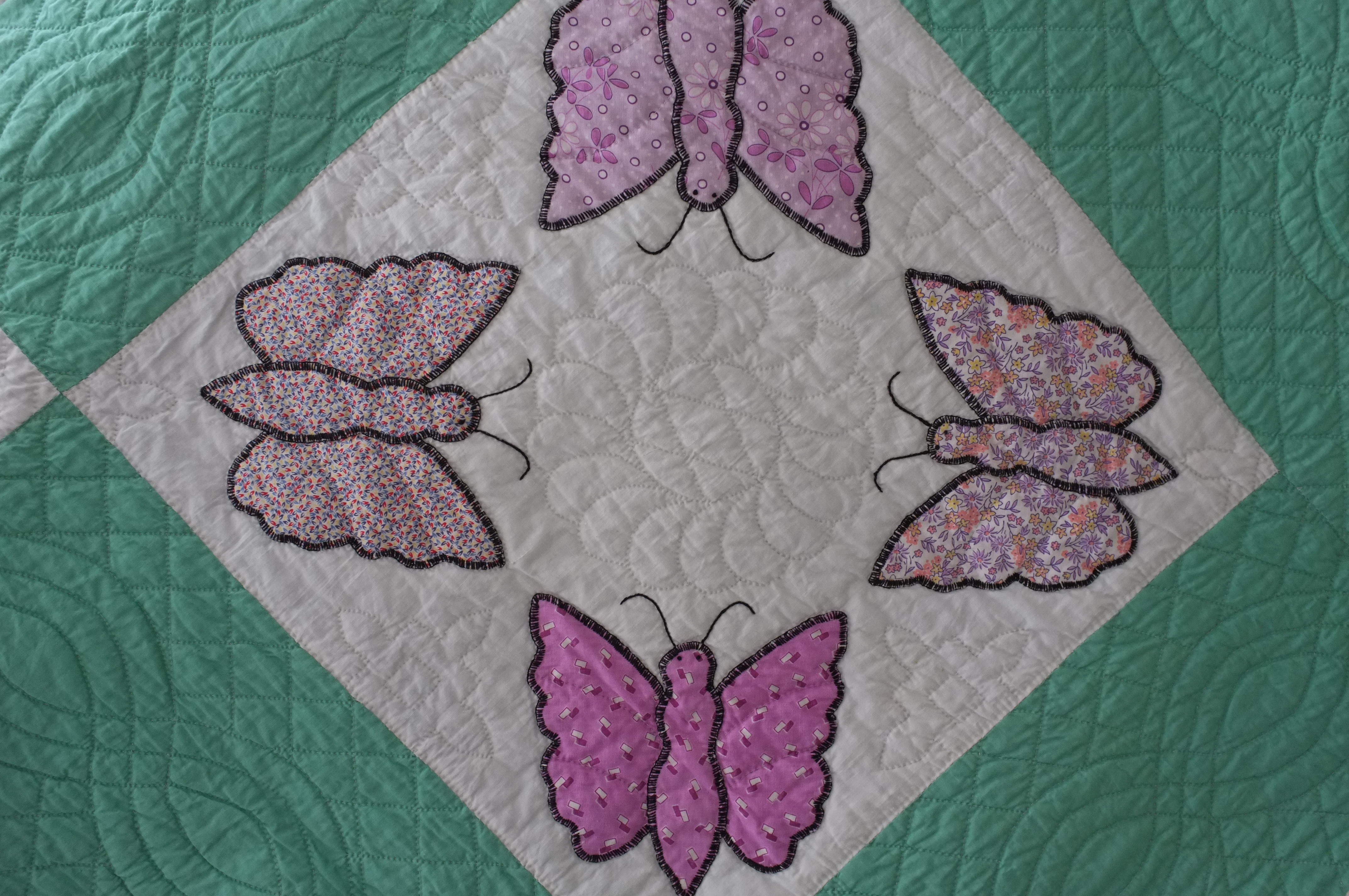 Depression Era Butterfly Quilt
Dating quilts is fascinating. If you have a question about a quilt or would like to share information about a family heirloom, please write.
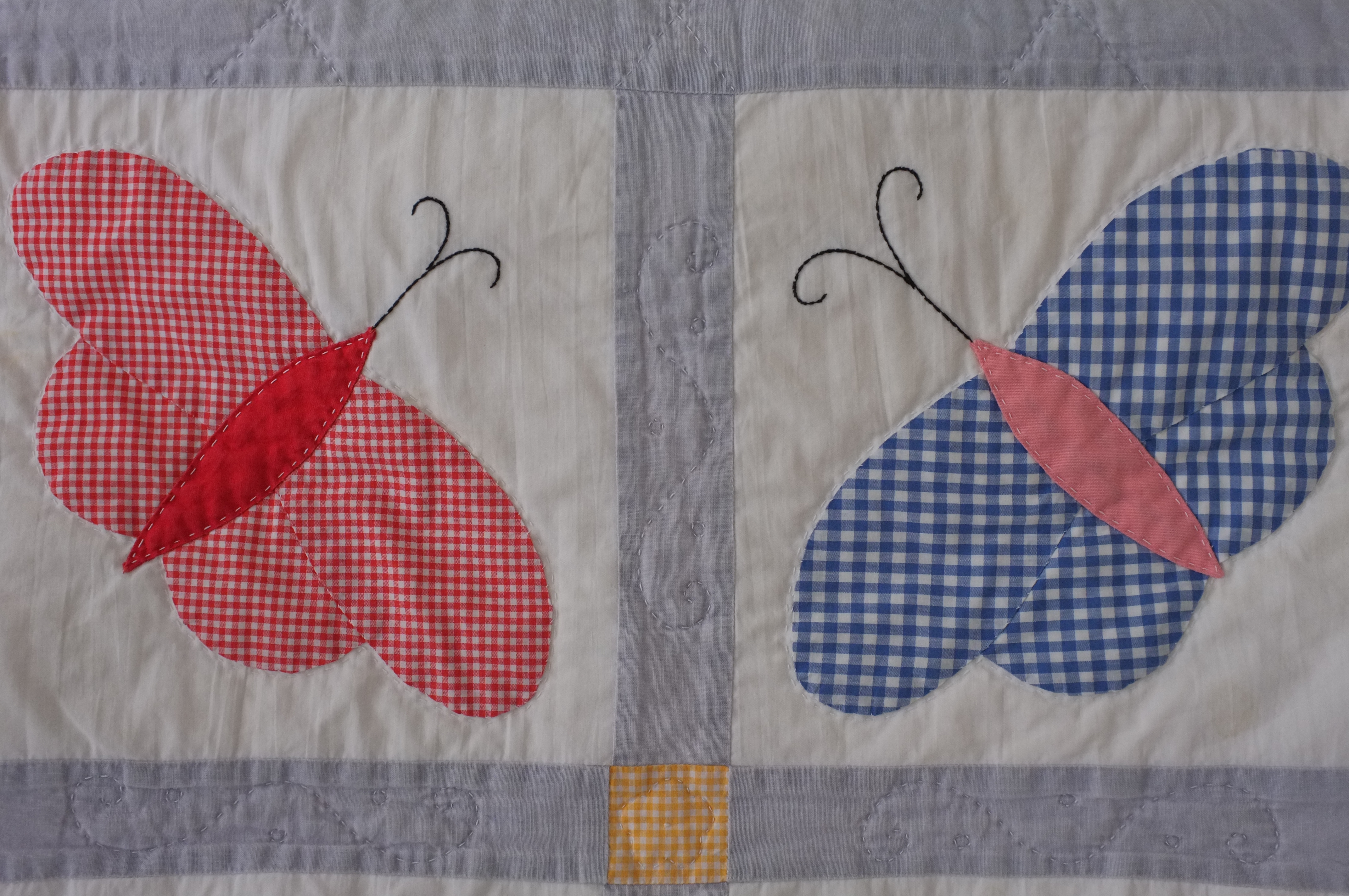
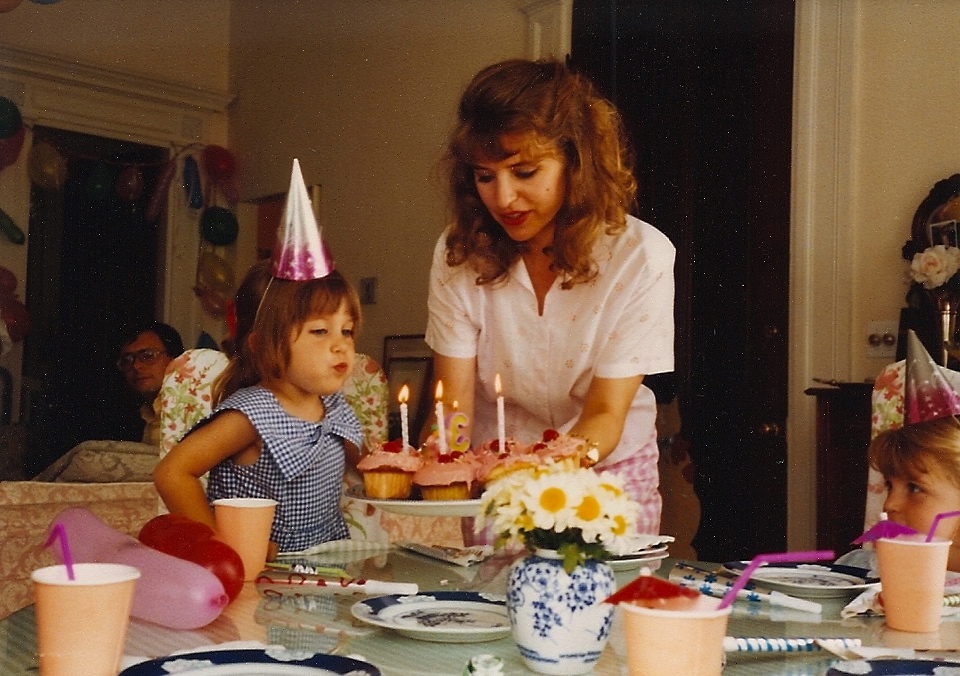
The above quilt was my interpretation of a 1930’s butterfly quilt, which I made for our daughter when she was five. Following in the depression era method of using what was on hand, you can see the dress scraps from which the quilt was made in her blue gingham dress in the old photo below.
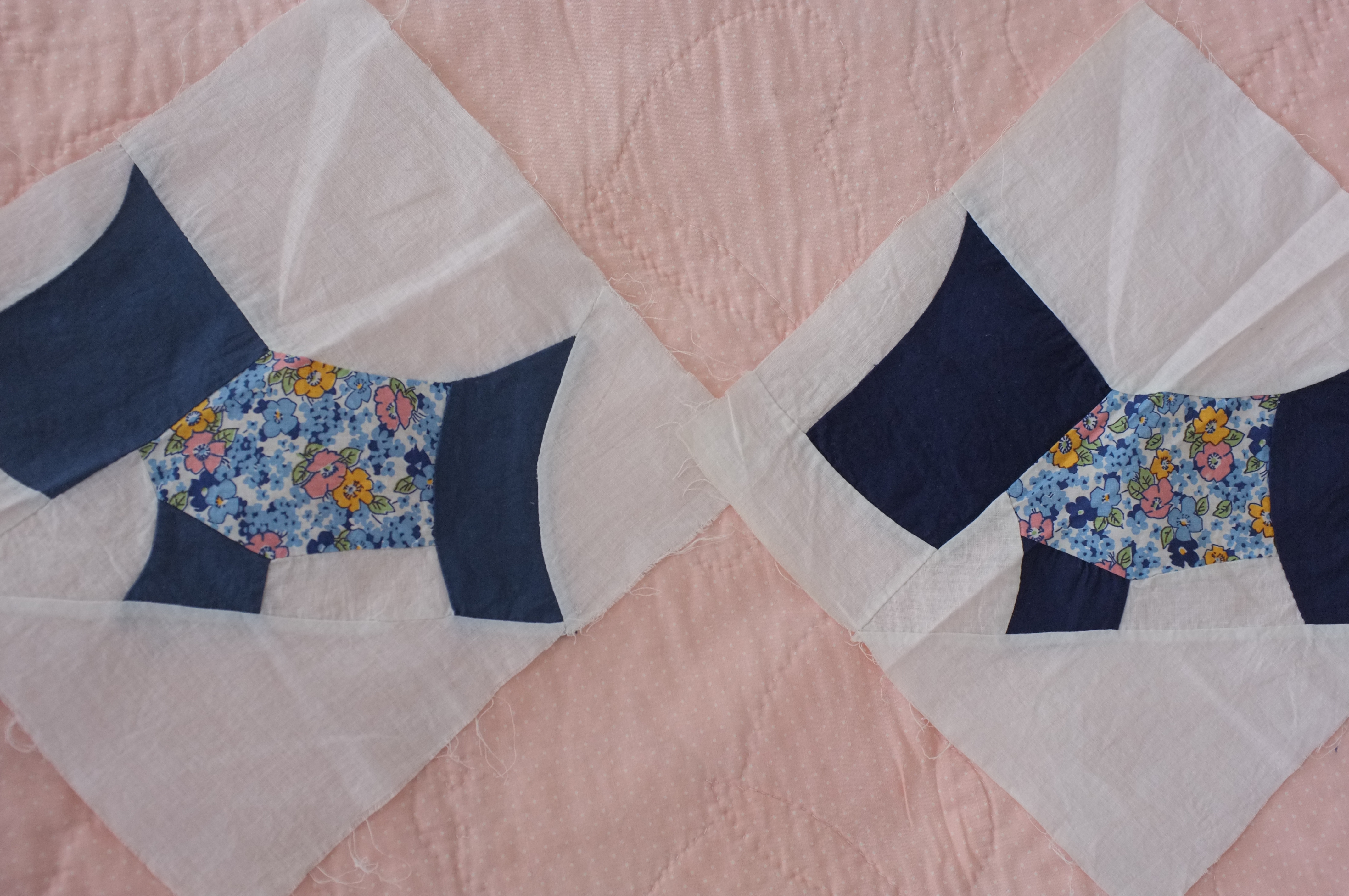 I found a basket full of Scotty dog squares at a yard sale last summer. Scotty dogs were a popular design motif during the first half of the 20th century and this particular Scotty pattern was created in 1940. When I have some spare moments, I’ll look for fabric to back the quilt. Purchasing quilt squares or an unfinished quilt top is a great way to acquire a depression era quilt because, if the squares or top have been properly stored, the fabrics will come back to life with cleaning and pressing, and will not have been used.


 Good Morning Gloucester
You know what I notice in that picture of you with the birthday cake and knowing your past as a groupie to your wild husband’s band back in the day?
Disclaimer:
I’m not saying you were at all like the women I’m about to mention and am sure you were pure as the driven snow and never acted at all like the women I’m about to mention, but for some reason this picture looks like the type of picture that a star would plant in US weekly the week after she had a baby after leading a crazy life for all of her youth.
Remember how Madonna used to dress all trashy with the latex and all the suggestive clothing and then she had the baby and like for the first couple years after she had the baby she dressed like someone out of the 1950s and she would go on the Today show with her children’s book all covered up and talk about volunteering at the kids school and all.
It’s like a pattern. Nicole Richey, Angelina Jolie. They knock themselves out to look as sexy as possible and then the second they have their baby they show up on the cover of US weekly covered up like a mormon.
Hilarious.
LikeLike
Joey you are very a very funny man—the truth is out—that was my mom look. I wasn’t going to wear my eveningwear designs marching around Boston’s south end with babies. Go to this link: http://kimsmithdesigns.com/story.php. Click on the beach photo. I am wearing the tiger swimsuit that I designed for Henri Bendels, NY. I’ll take you out to breakfast if you can guess who is modeling my leopard velvet suit design in the photo above the swimsuit photo.
LikeLike
I am waiting–did you enlist Ed?? Do you need a hint?
LikeLike
Classic. Oldest trick in the book.
LikeLike
I give you a hint and you don’t guess, you’ll have to take me out to breakfast. Deal?
LikeLike
OK, one hint but I have a sneaking suspicion I know who it is.
LikeLike
She’s left Boston for D.C, in a pick-up truck.
LikeLike
http://www.huffingtonpost.com/2010/01/21/scott-browns-wife-music-v_n_431632.html
Google, it’s amazing isn’t it?
Gail Huff
LikeLike
Loved your post about Depression Era quilts–my first love, too. I had never heard that binding was available in cans! But, I have been told that butterflies were a symbol of hope during the Depression.
LikeLike
Thank you Anna. Butterflies are a symbol of hope and transformation the world over and I can imagine they must have brought hope during the depression.
LikeLike