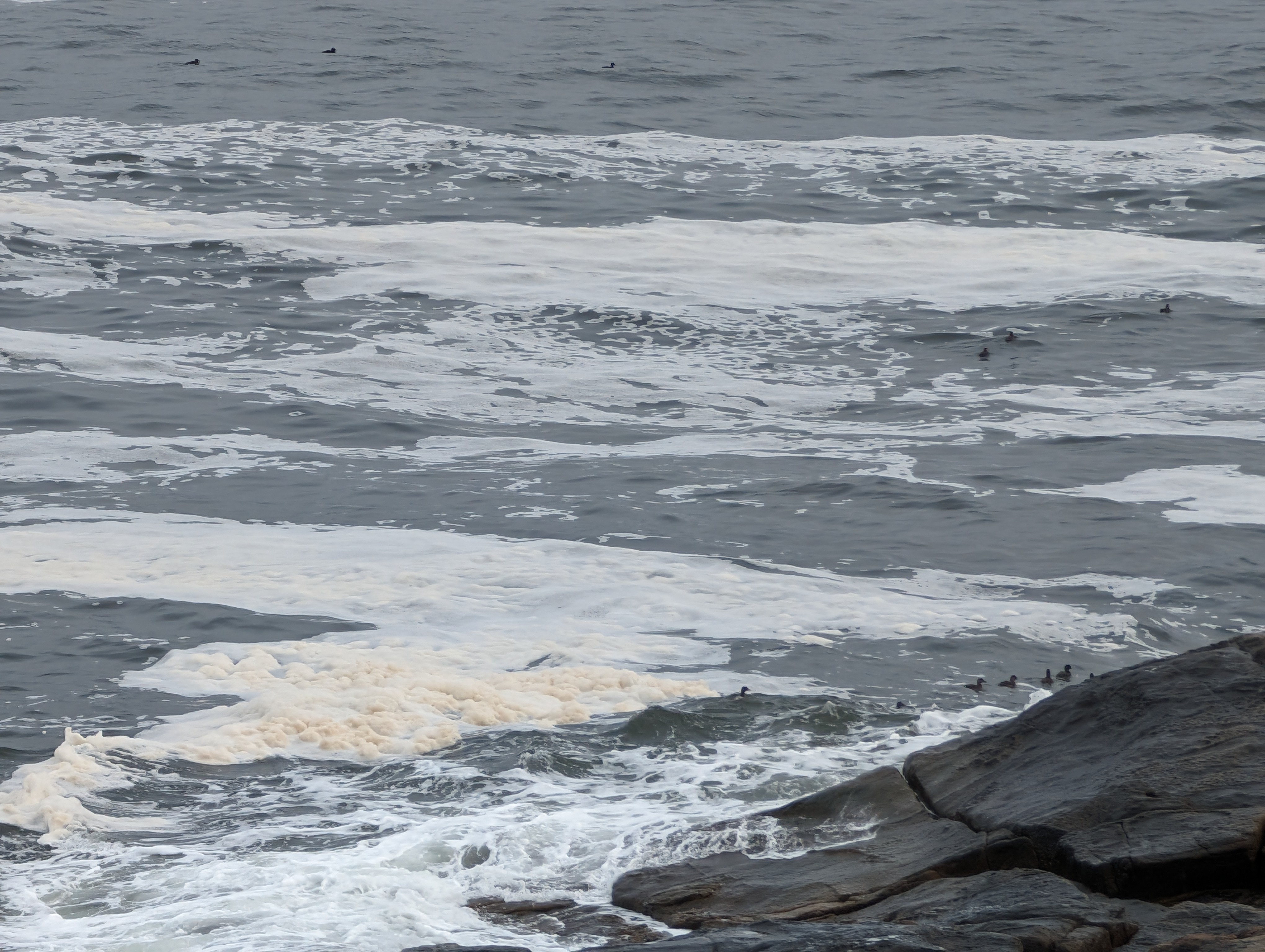
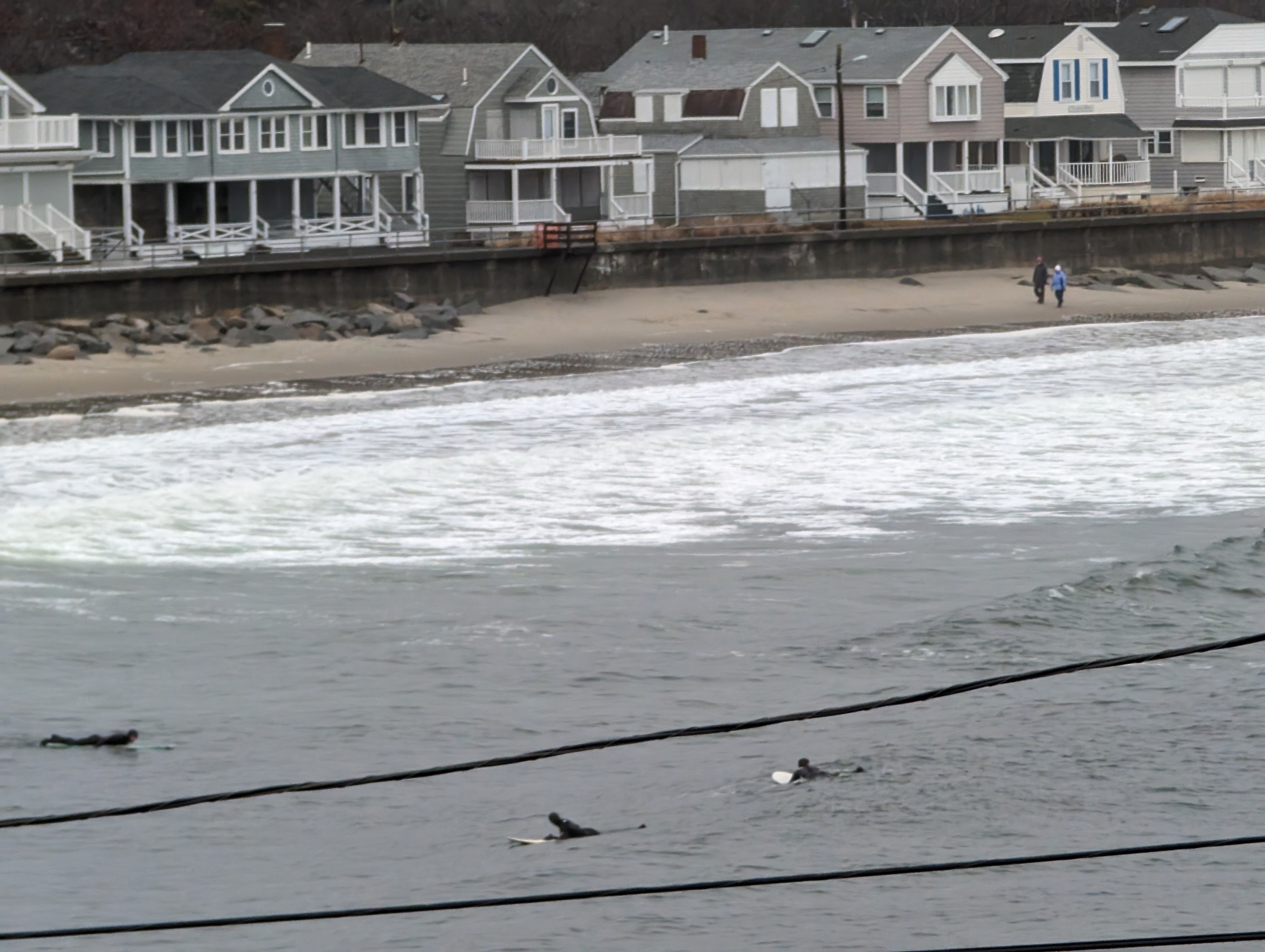
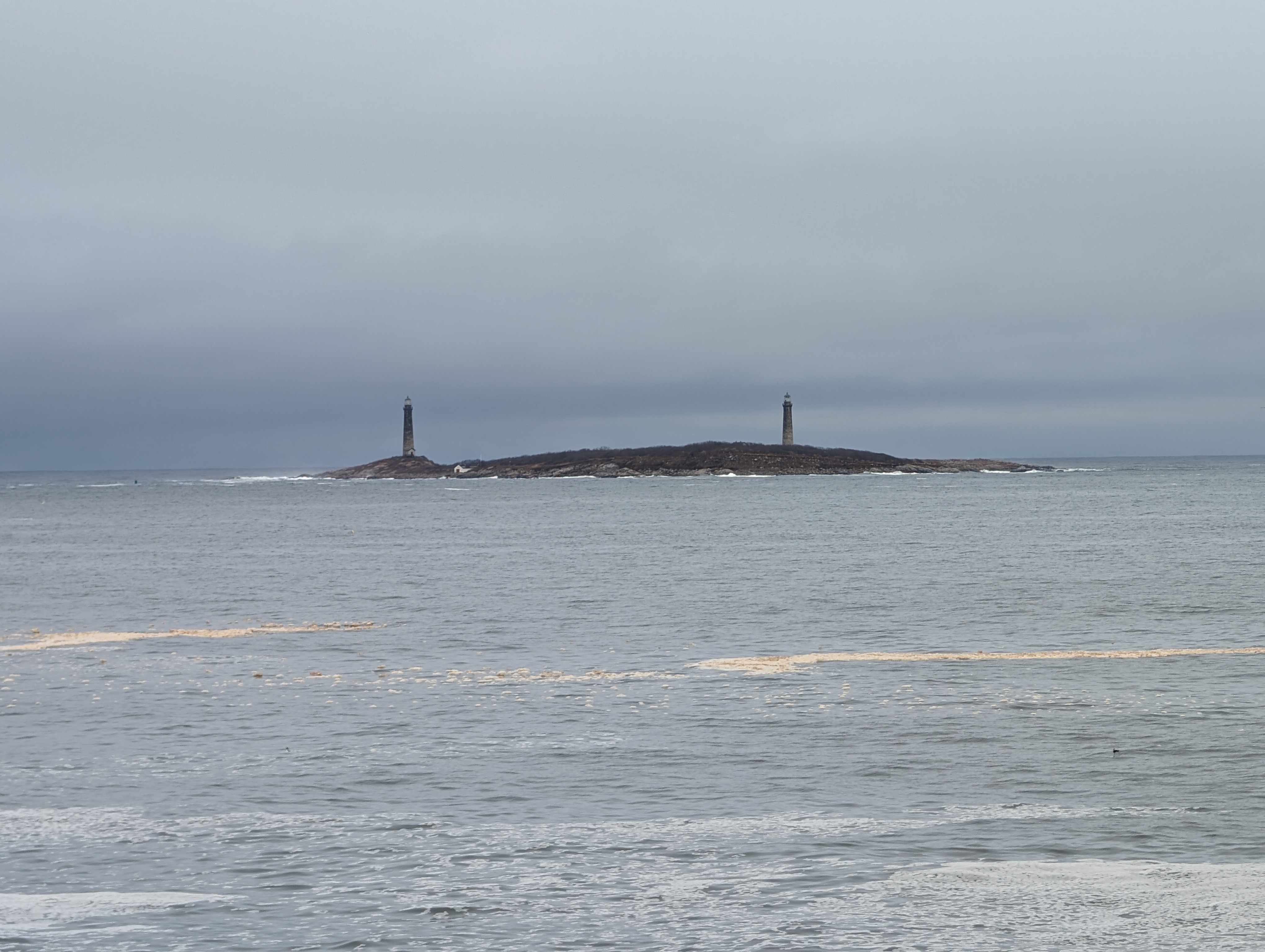
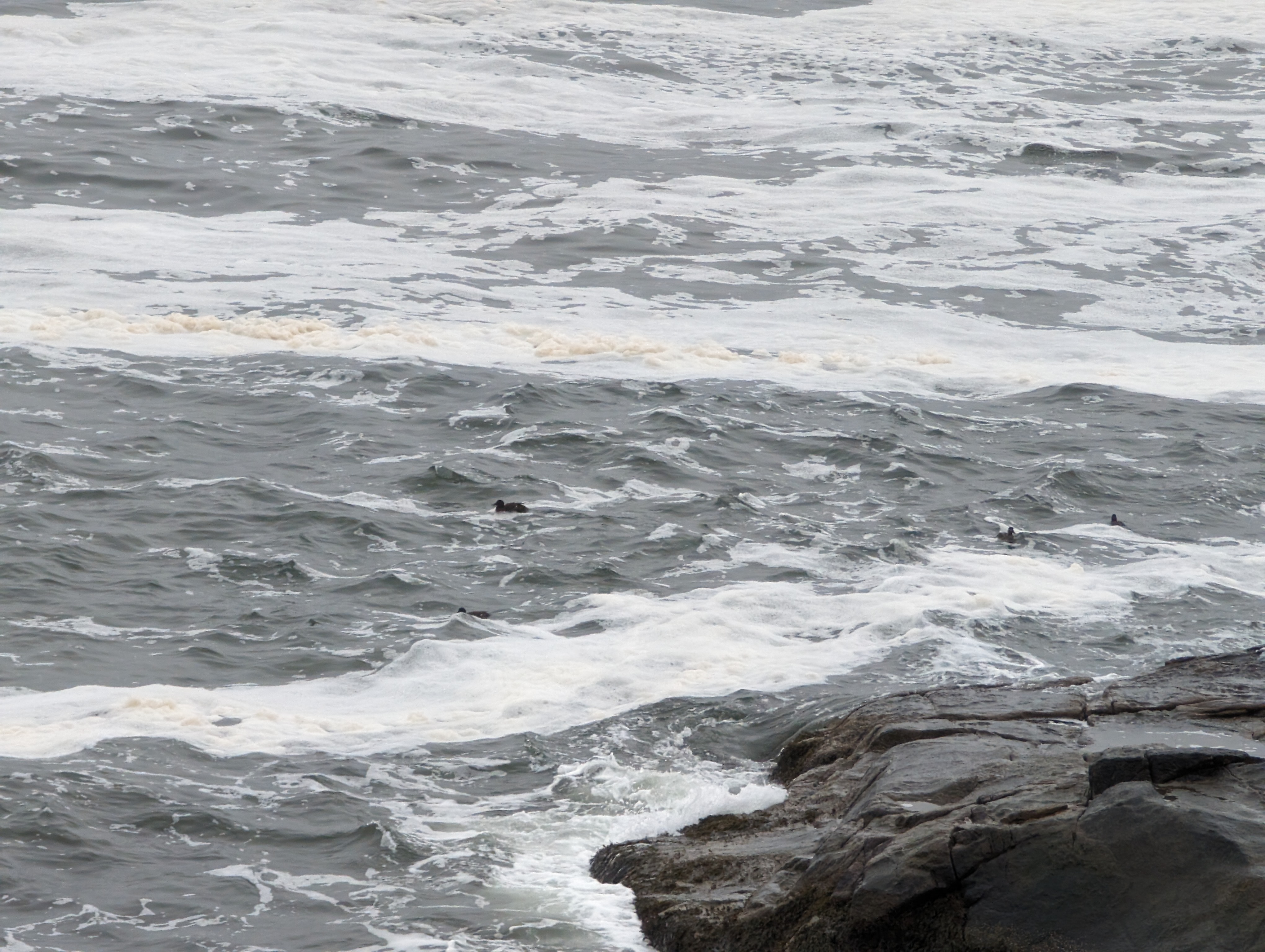
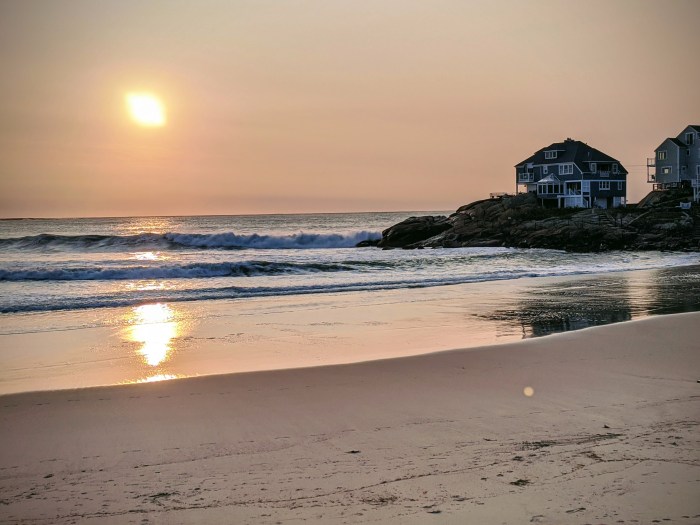
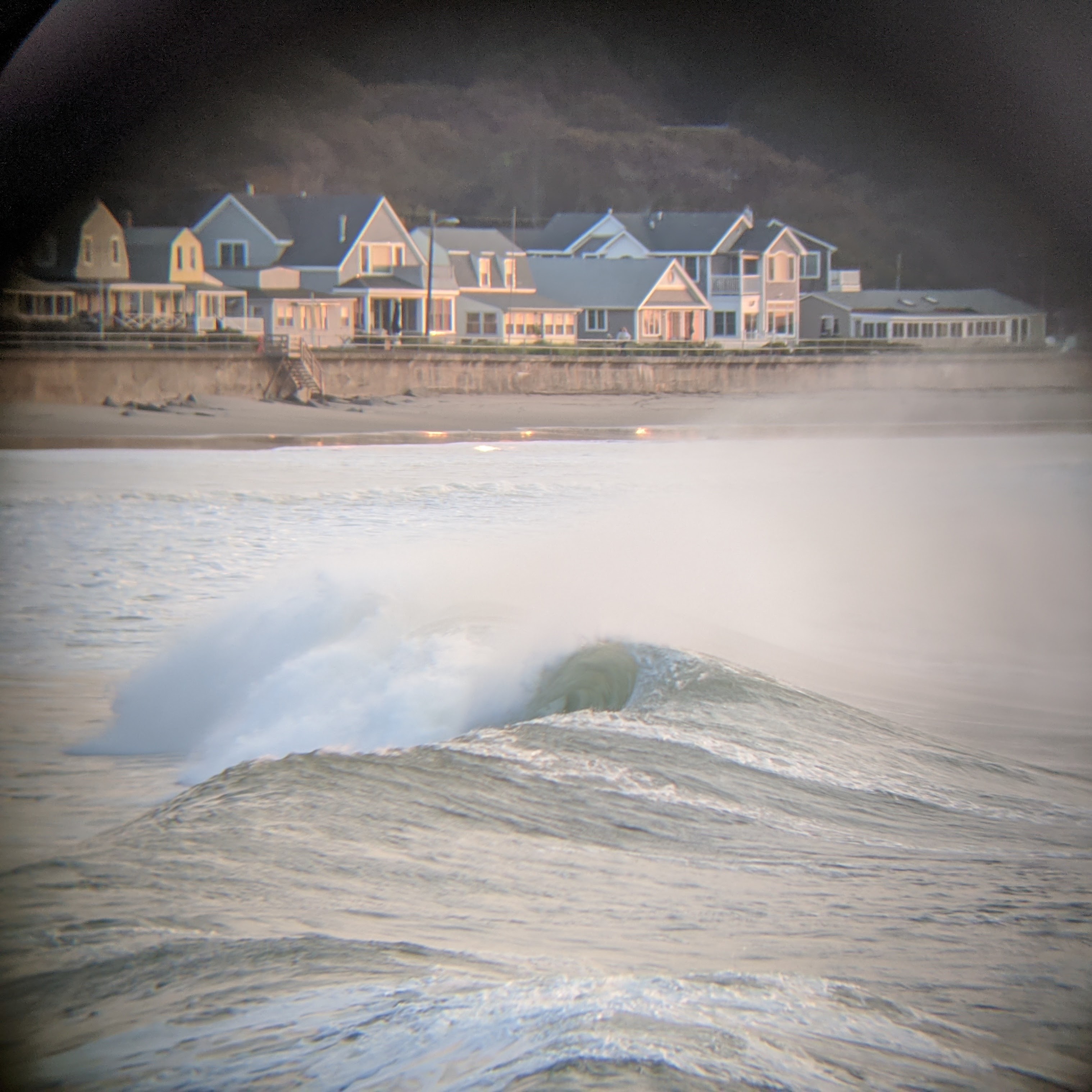
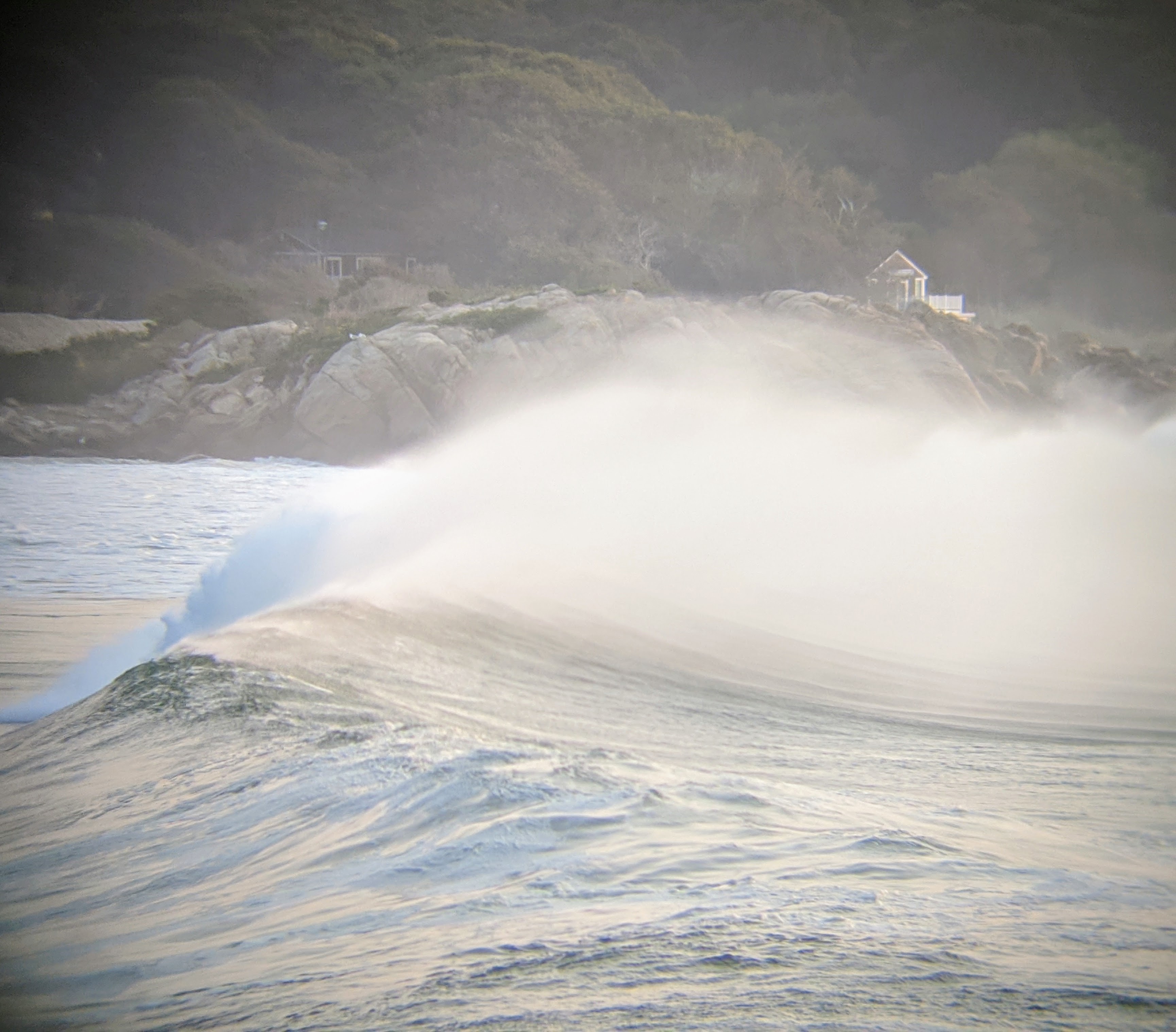
photos: Mood between Christmas and New Year’s. 12/29/2023 after the rain, sea foam ribbons streak the ocean between GHB and Twin Lights. (No foam by the surfers.) Views from Long Beach.
My View of Life on the Dock
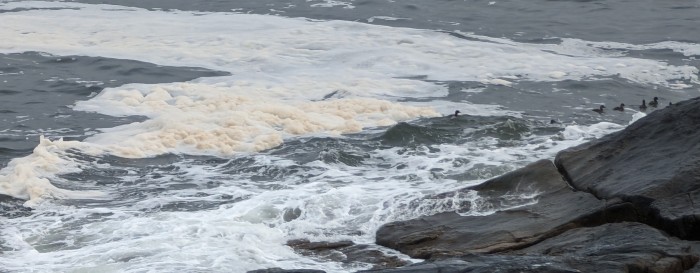
photos: Mood between Christmas and New Year’s. 12/29/2023 after the rain, sea foam ribbons streak the ocean between GHB and Twin Lights. (No foam by the surfers.) Views from Long Beach.


“AFTER THE 2014 DISCOVERY, Ms. Sanders returned to the bank again and again over the next few years. She determined that when twilight and spring’s highest tides coincided, whimbrels began arriving on the island en masse. In May 2019, she assembled a team to count the birds. They began late one afternoon as the sun was setting. Long lines of whimbrels streamed onto Deveaux, the flocks extending as far up the river and south over the ocean as they could see. When darkness halted their work, they still heard the murmuring calls and rustling wings of incoming birds. On a night when a clear sky and a nearly full moon bathed the island in light, they counted 20,000 birds — half of the entire Atlantic population.
To understand why so many whimbrels gather on Deveaux and what makes the island vital to their migration, the scientists needed to know where the birds went during the day and how they used the island at night.’
Deborah Cramer, New York Times
Fantastic interactive journalism featuring shorebird discovery in South Carolina

Resides and works in Gloucester, Ma.
Visiting Scholar, Environmental Solutions Initiative – MIT
Great Waters: An Atlantic Passage (W.W. Norton)
Smithsonian Ocean: Our Water Our World (Harper Collins/Smithsonian Books)
The Narrow Edge: A Tiny Bird, an Ancient Crab, and an Epic Journey (Yale University Press)

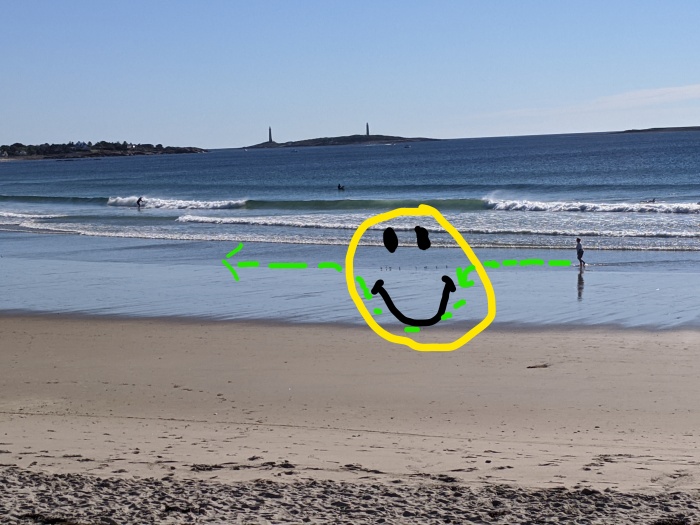
Walk around or pause if you can. We’re lucky to have tiny shorebirds visit beaches during fall migration.

Deborah Cramer describes impact of shorebird disturbances (specifically to red knots)
Deborah Cramer The Narrow Edge
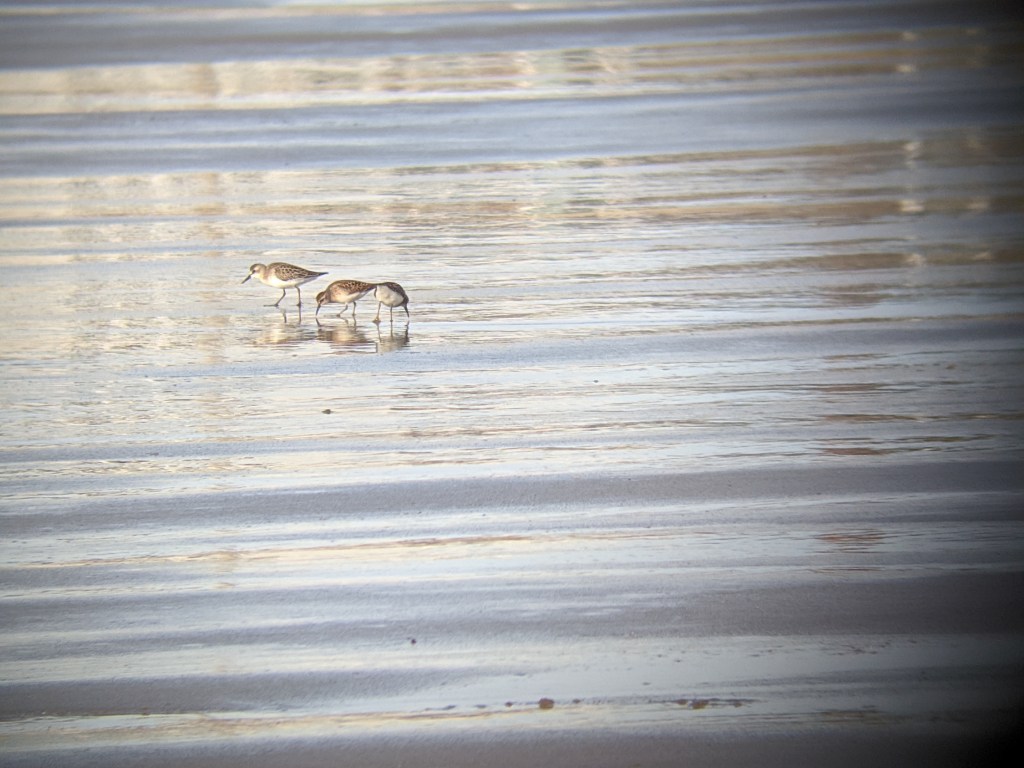
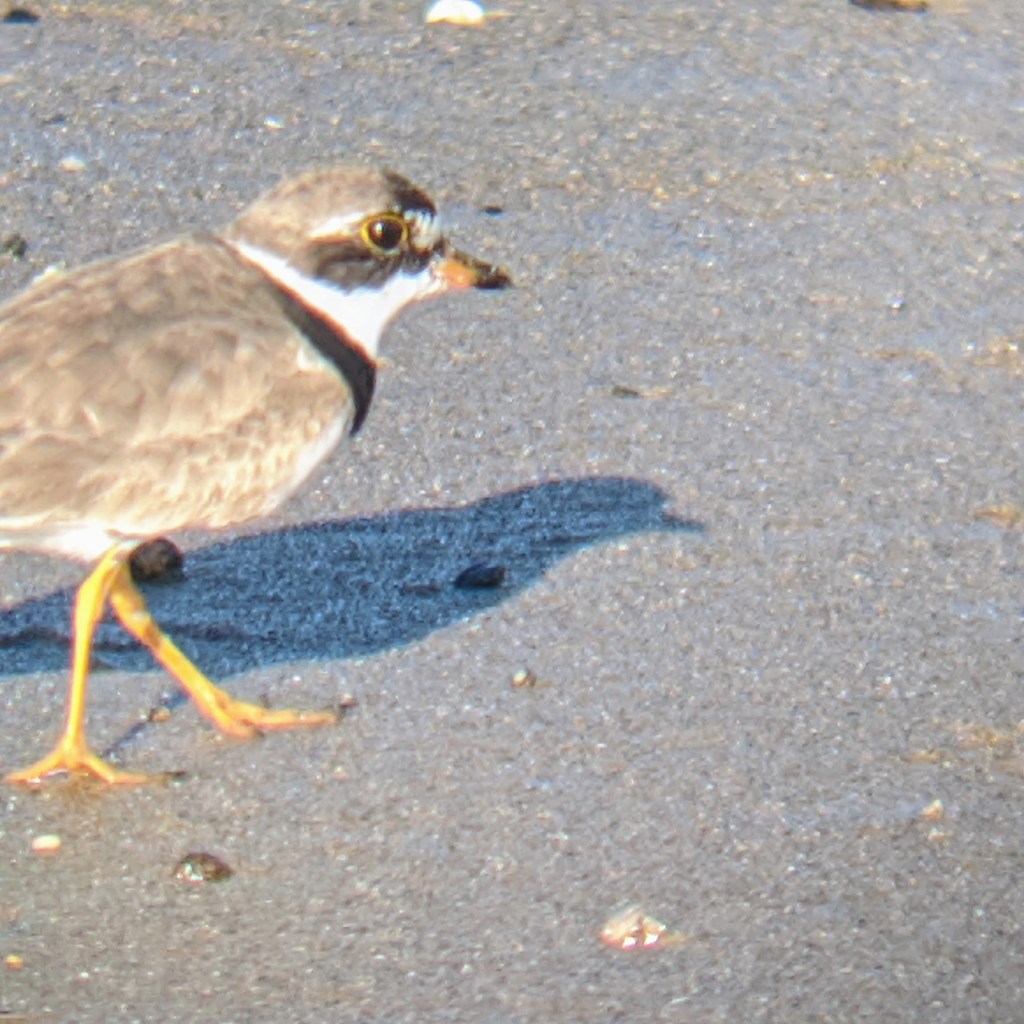
photo below: Sanderlings, semipalmated plovers and semipalmated sandpipers dashing along Long Beach 9/22/2020. Dogs rushing at the birds flush them 100%. Wider smile path with your pet can really help. Ditto looking ahead before tossing a ball inadvertently in the direction of a flock. They’re hard to see. If you spot them and have time, pause to enjoy the tiny touch down marvels. The increase August-October is migration.


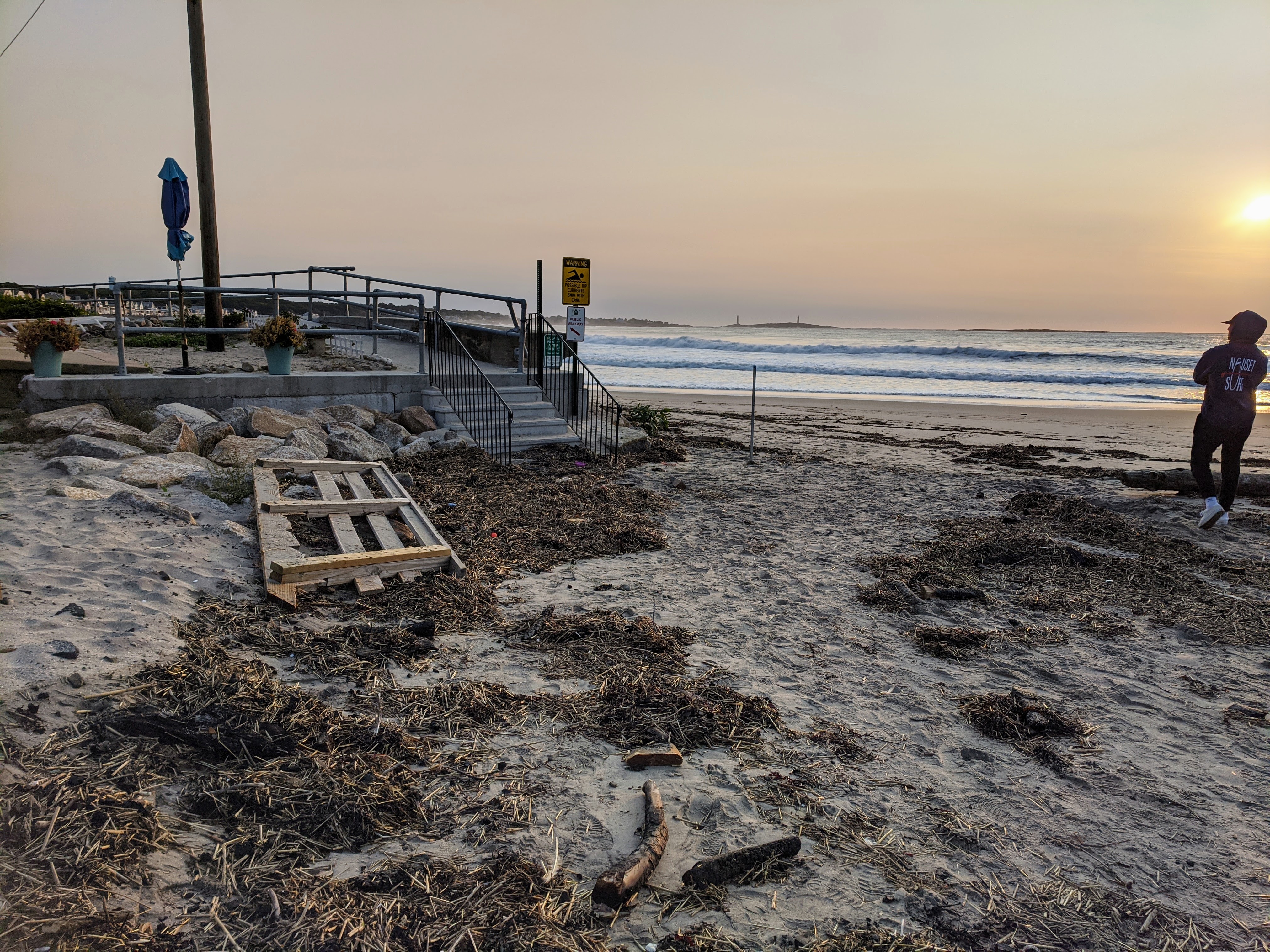
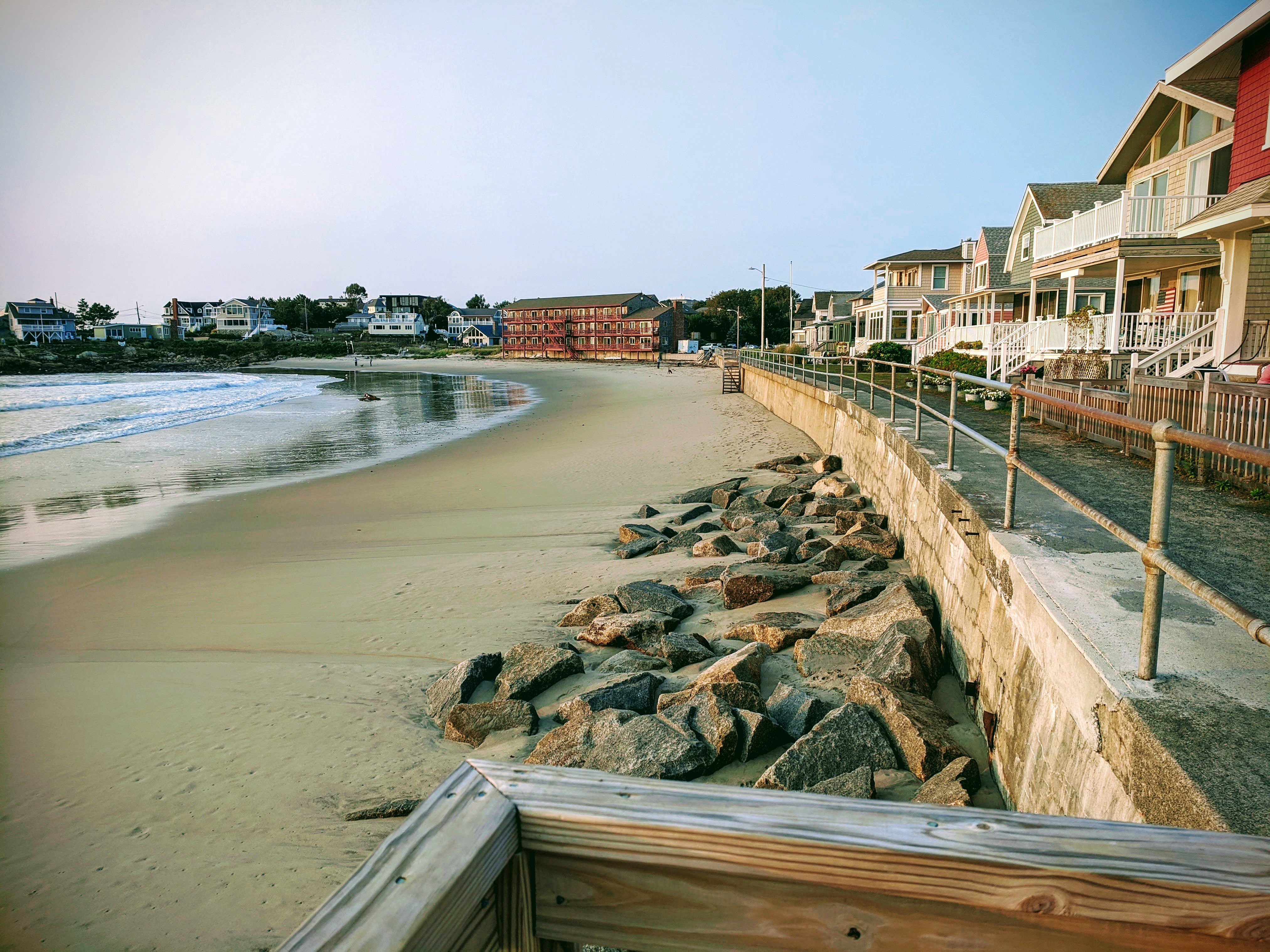
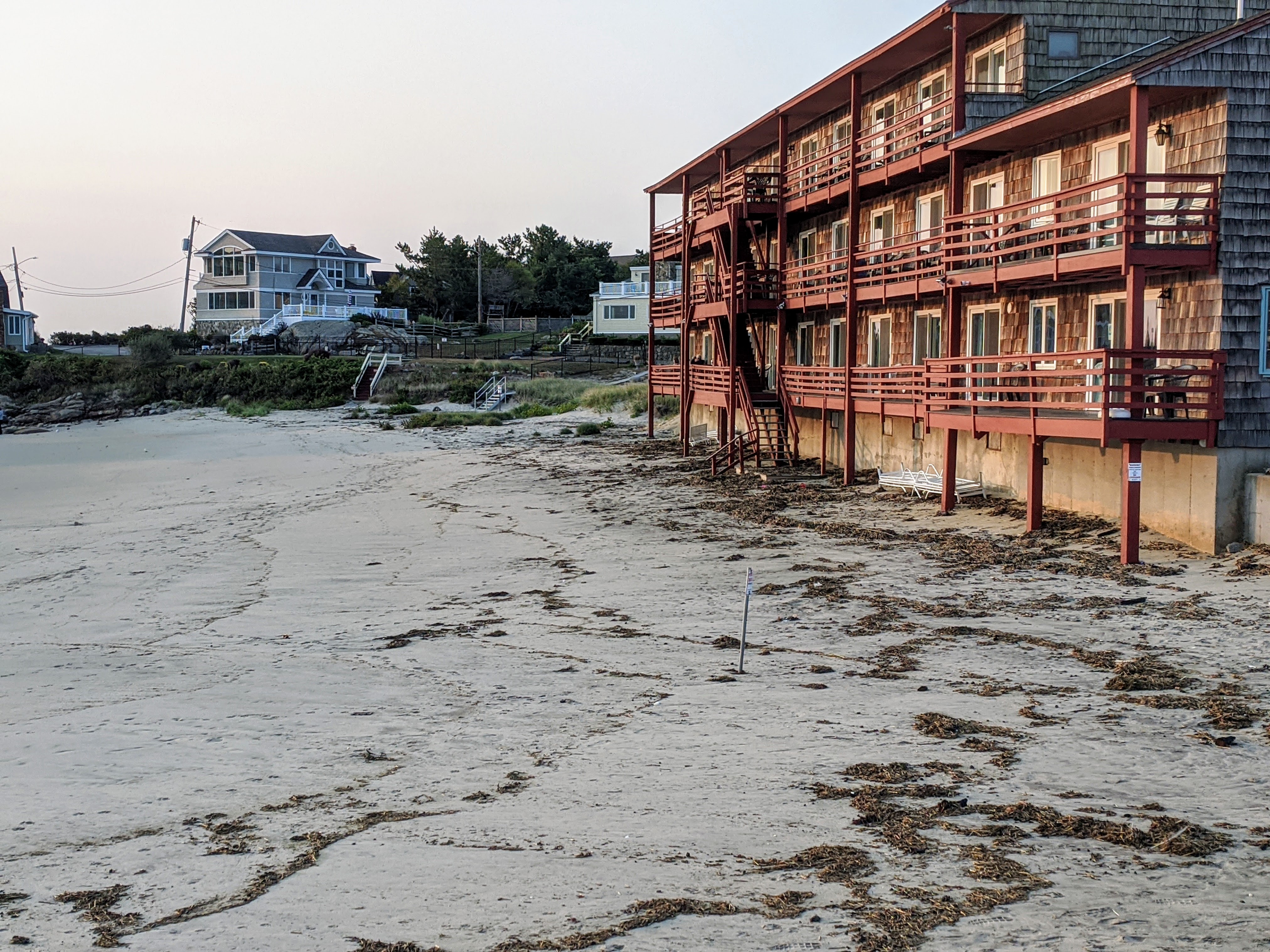
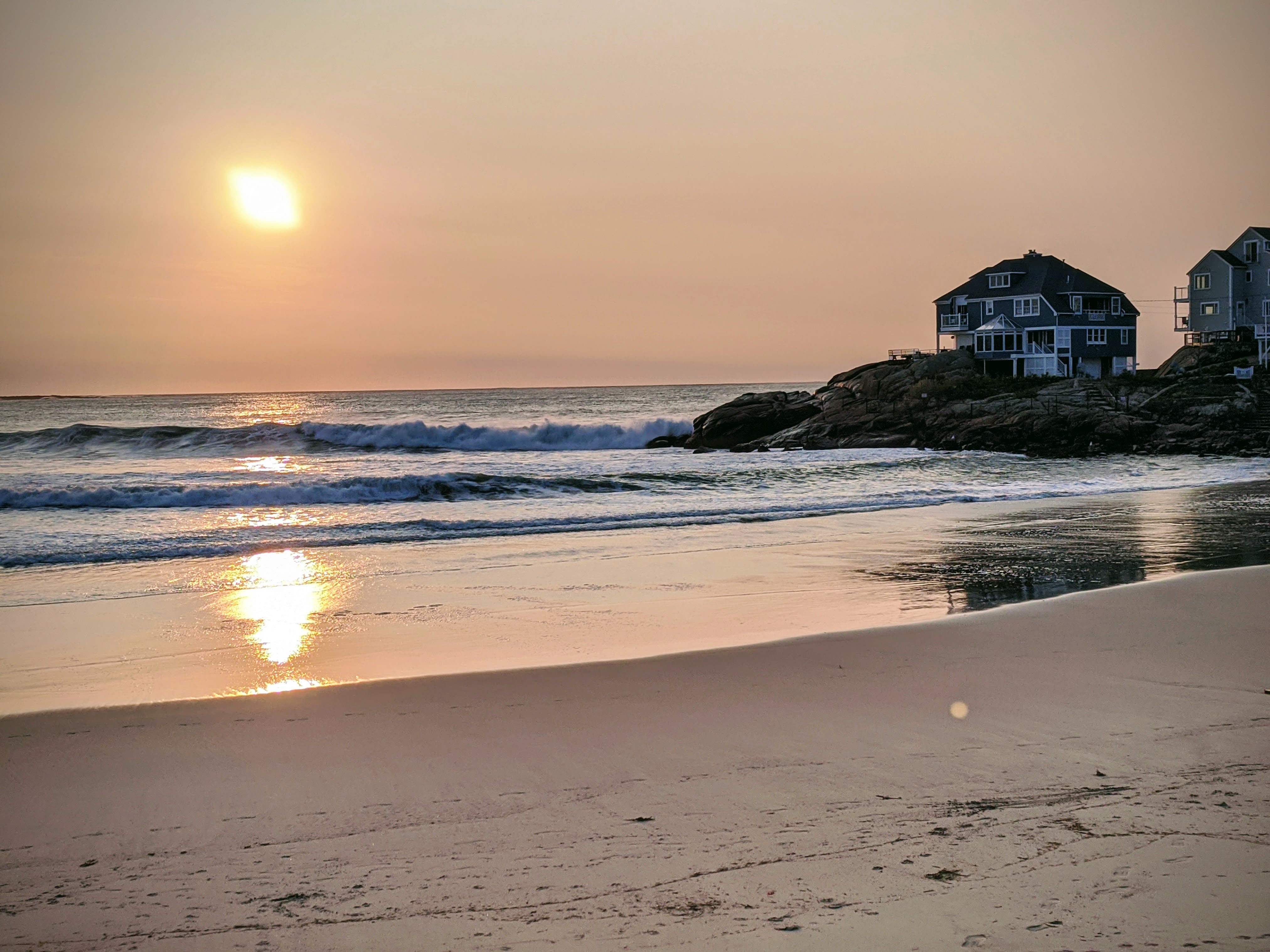
The Long Beach walkway was dry this morning: Storm Teddy did not surge up and over the seawall. Light debris was deposited on nearly spotless Long Beach. Beautiful rollers were distant as the tide was heading out.
photos 9/23/2020- click to enlarge to full size

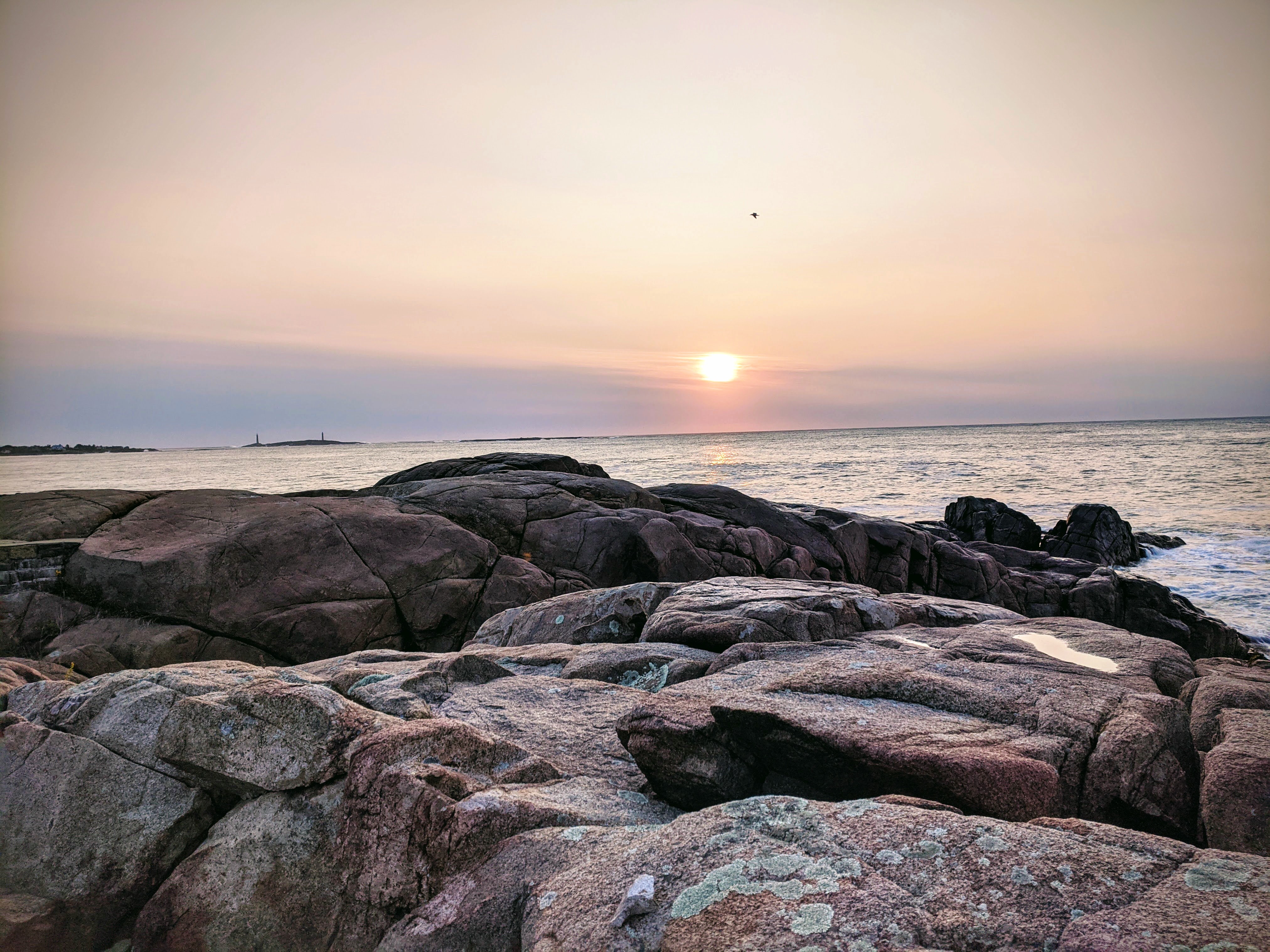
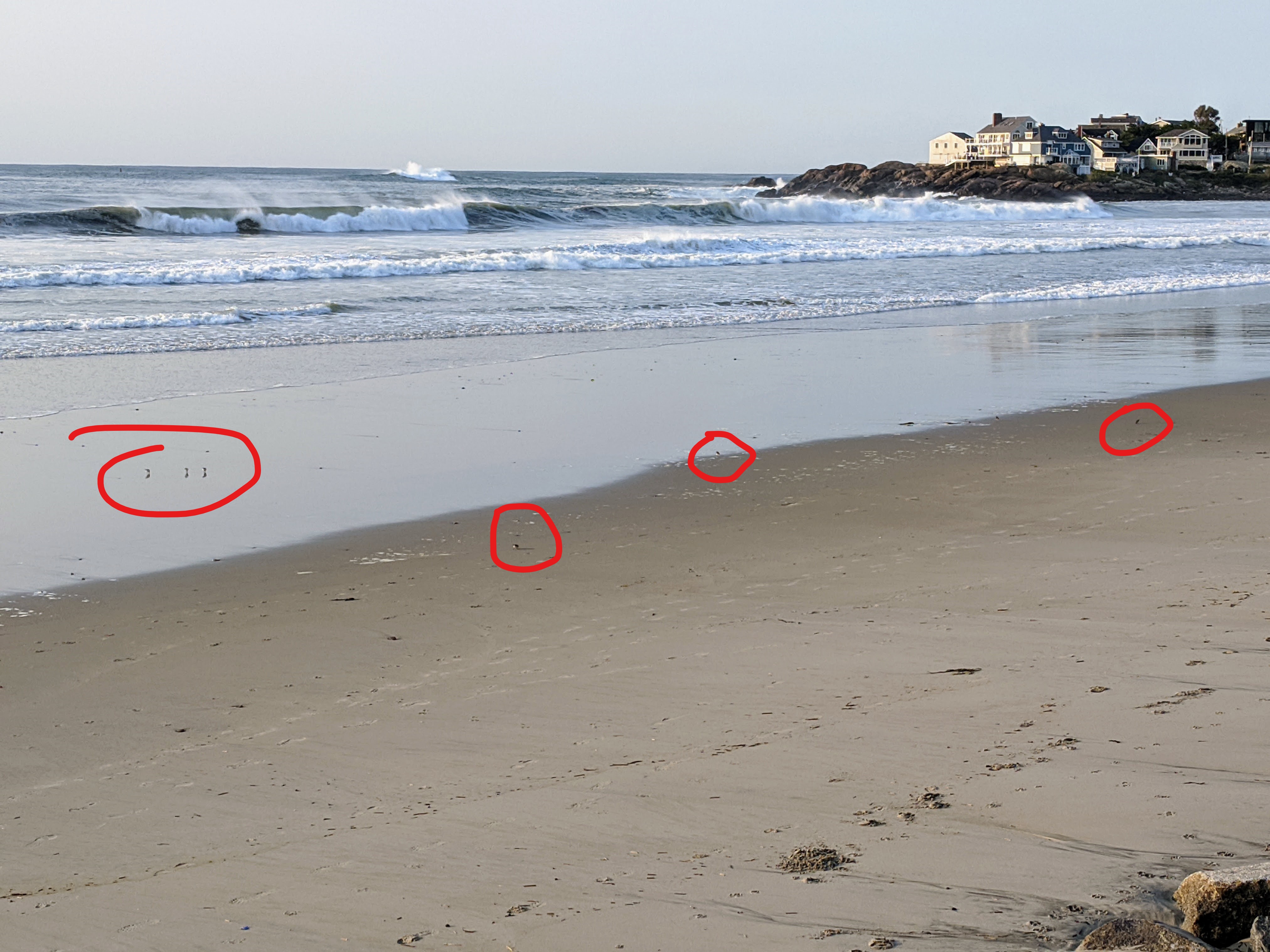
Spotted less than ten shorebirds, three species. These tiny birds are migrating from the arctic and landing to rest and refuel. Give them space if you see them! The few I spotted were flushed off.
A smile path helps wildlife. Walk around (or pause if you have the time)
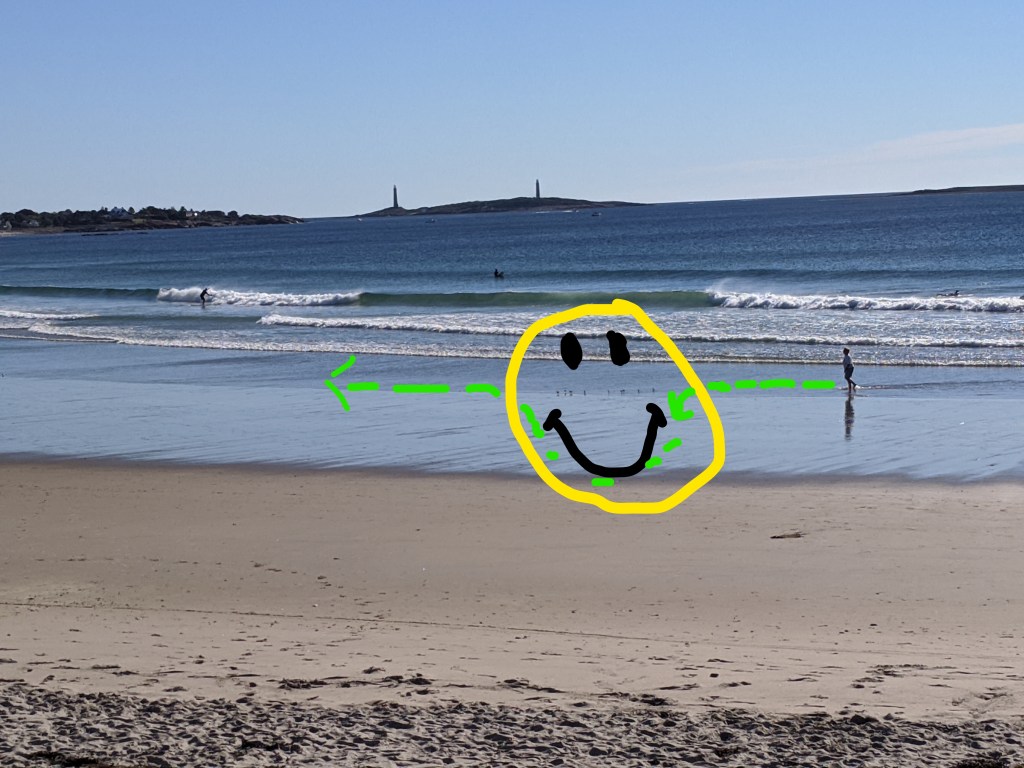
Shorebird visitors hanging out together today (sanderlings, semipalmated sandpipers and semipalmated plovs). Easy to add a smile path when you spot them.
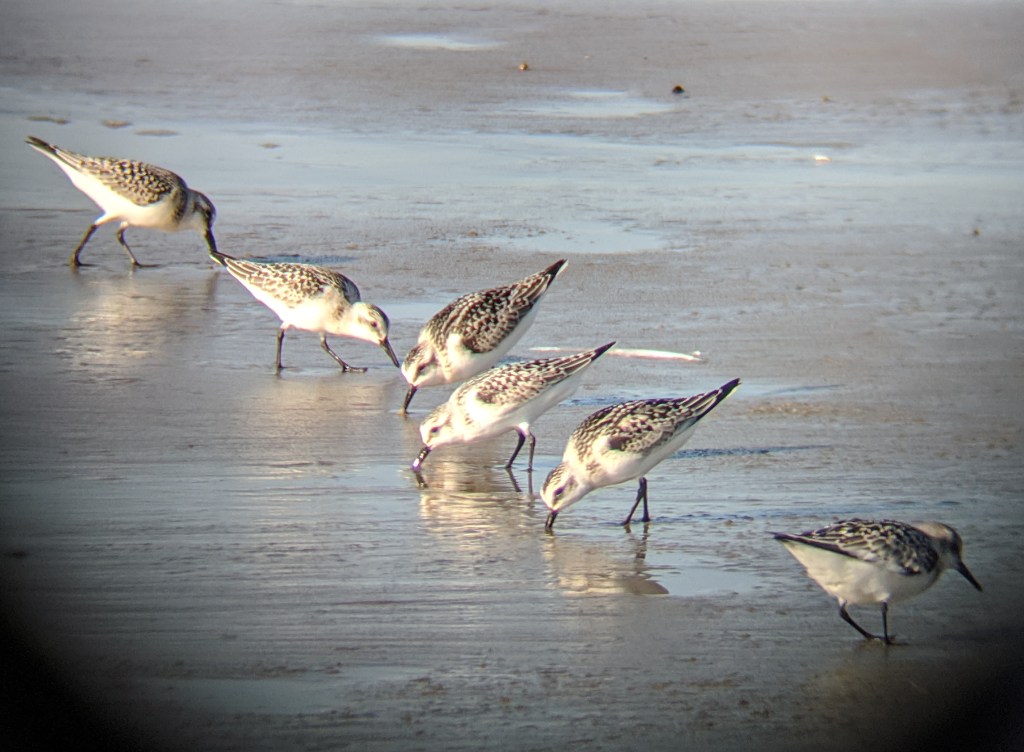
Below L-R: Sanderlings, semipalmated sandpipers, and semipalmated plover visiting 2020
Scenes of waves from Storm Teddy yesterday 9/22/2020 here

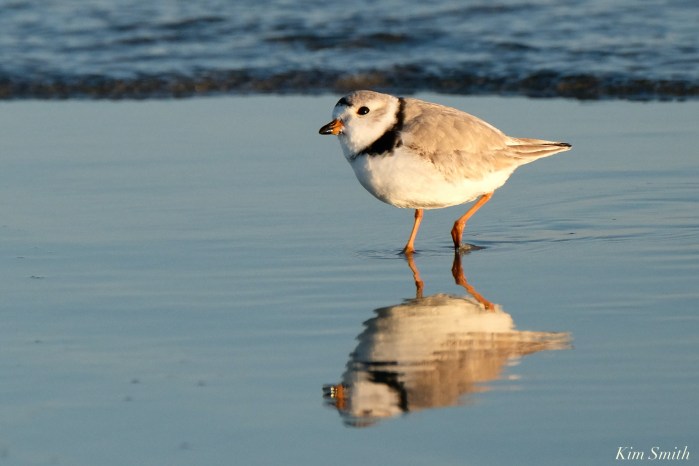
Daily I have been checking and this afternoon we were overjoyed to see two foraging at low tide at Good Harbor Beach. They were super hungry, looking for food non-stop at the sand bar and in the water.
The PiPls are three days ahead of last year. Each spring they have been arriving earlier and earlier.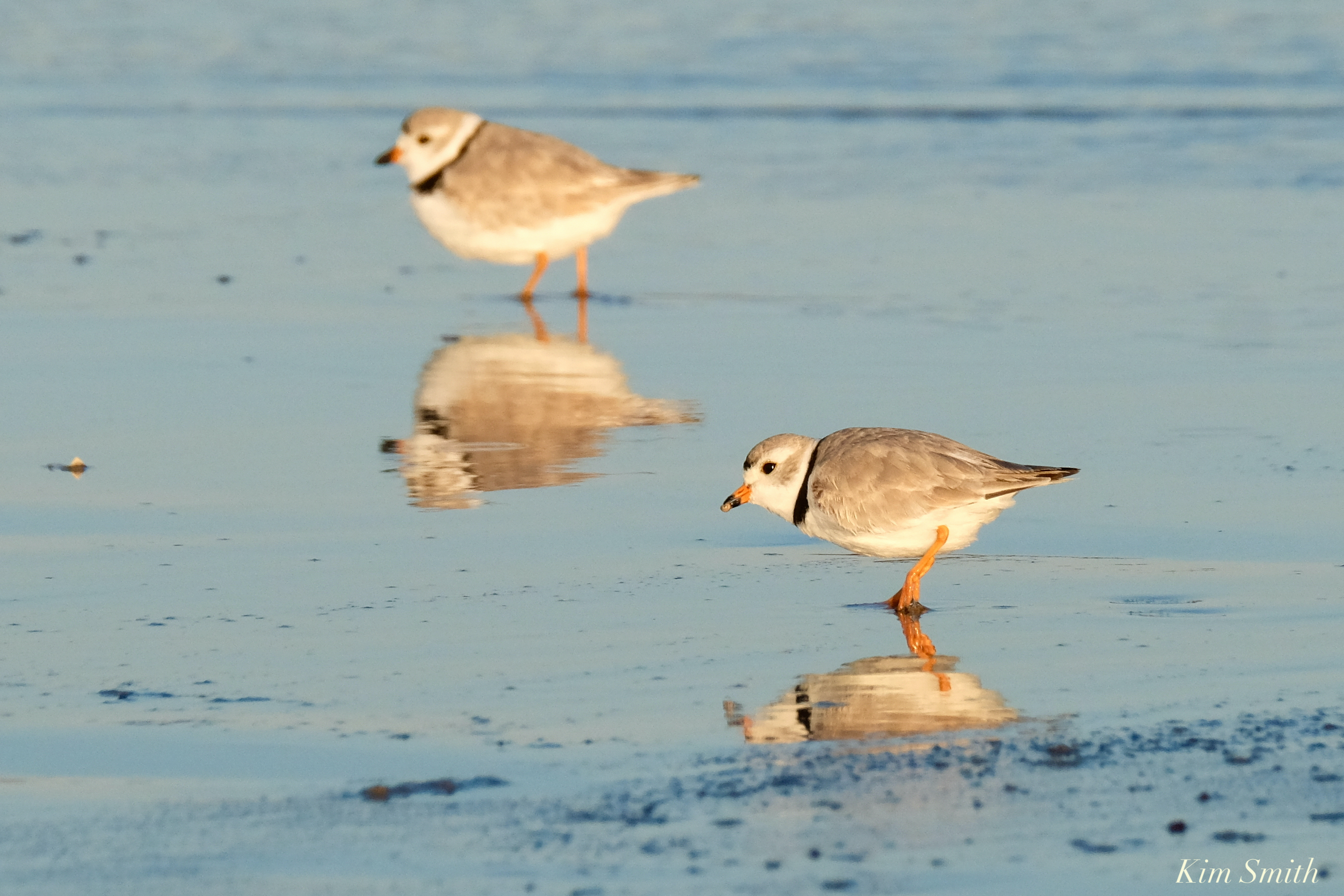
The Piping Plovers annual return is an event that I and many others have come to look forward to. Especially this year, not only because they are a sign of hope and renewal during the extremely challenging times we are experiencing but because of the hurricane that destroyed much of their Bahamian habitat last autumn.
Thanks to our amazing crew of volunteers, Essex Greenbelt’s Dave Rimmer, Gloucester’s DPW, Gloucester City Council, and to all our Piping Plover friends, three chicks successfully fledged at Good Harbor Beach last summer. Let’s stay positive for another fantastic year with our PiPl family!


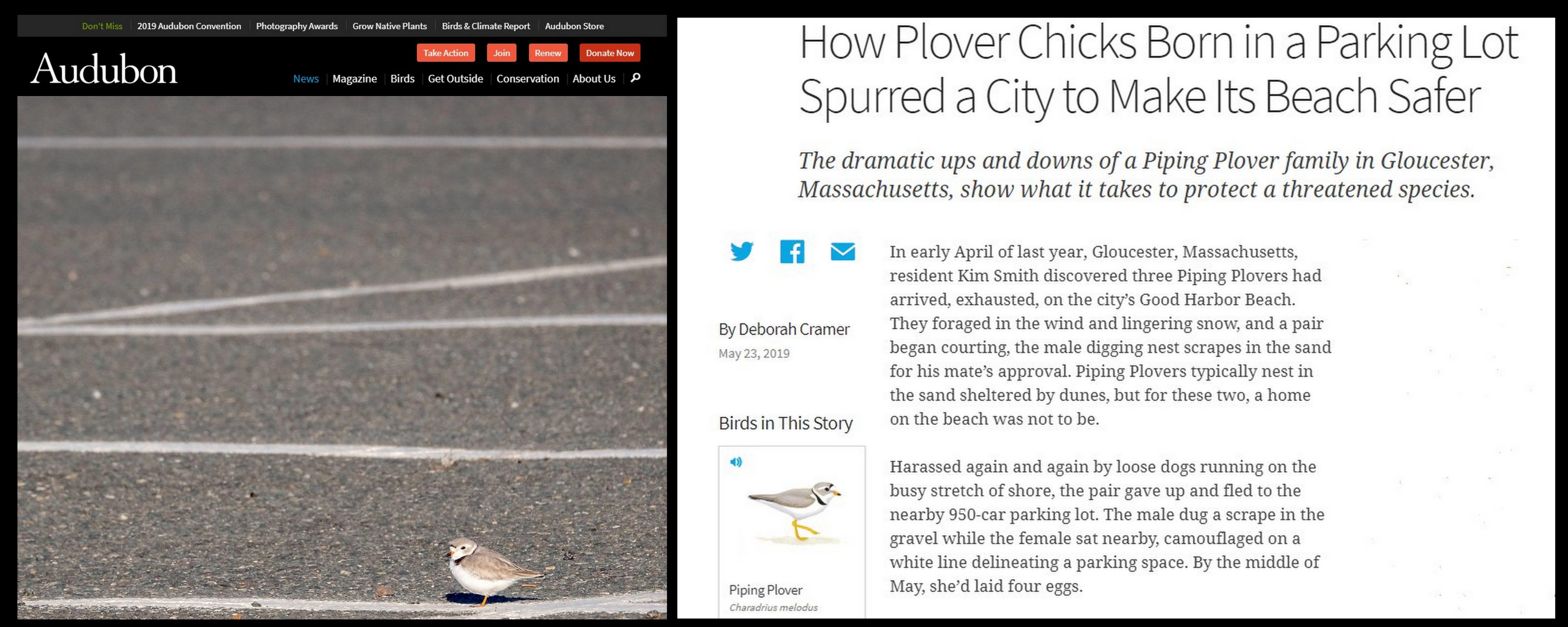
Deborah Cramer wrote an outstanding feature for Audubon published May 2019. This feel good – feel proud story is a great read inspiring efforts near and far. It takes a city.
“…(Kim) Smith, a photographer and filmmaker, had inspired much of the effort. While not everyone can be on the beach every day, her images, videos, and blog offered the entire city an up-close portrait of the birds’ daily lives.”– Deborah Cramer
Read the article here
“How Plover Chicks Born in a Parking Lot Spurred a City to Make its Beach Safer: The dramatic ups and downs of a piping plover family in Gloucester, Massachusetts, show what it takes to protect a threatened species” By Deborah Cramer published by Audubon May 23, 2019.

 ANIMAL ADVISORY COMMITTEE
1. Approval of meeting minutes from 9/12/2018
2. Education/Outreach Plans
3. Piping plover awareness and education
4. Off leash beach days
5. Rodenticides
6. Dogs in Cemetery
7. Materials
8. Shirts/Sweatshirts/Hats
9. Brochures
10. Public comment
11. New Business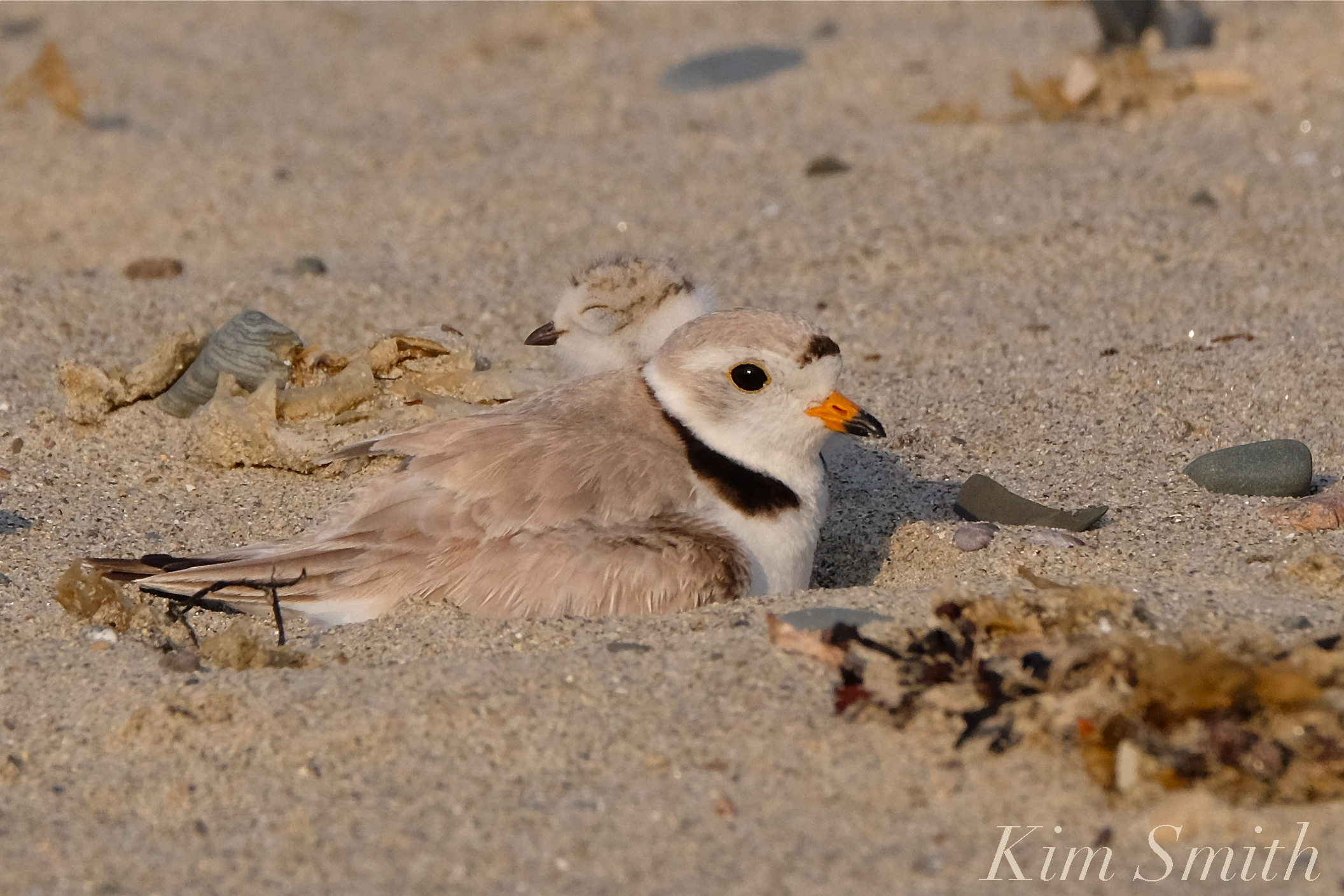

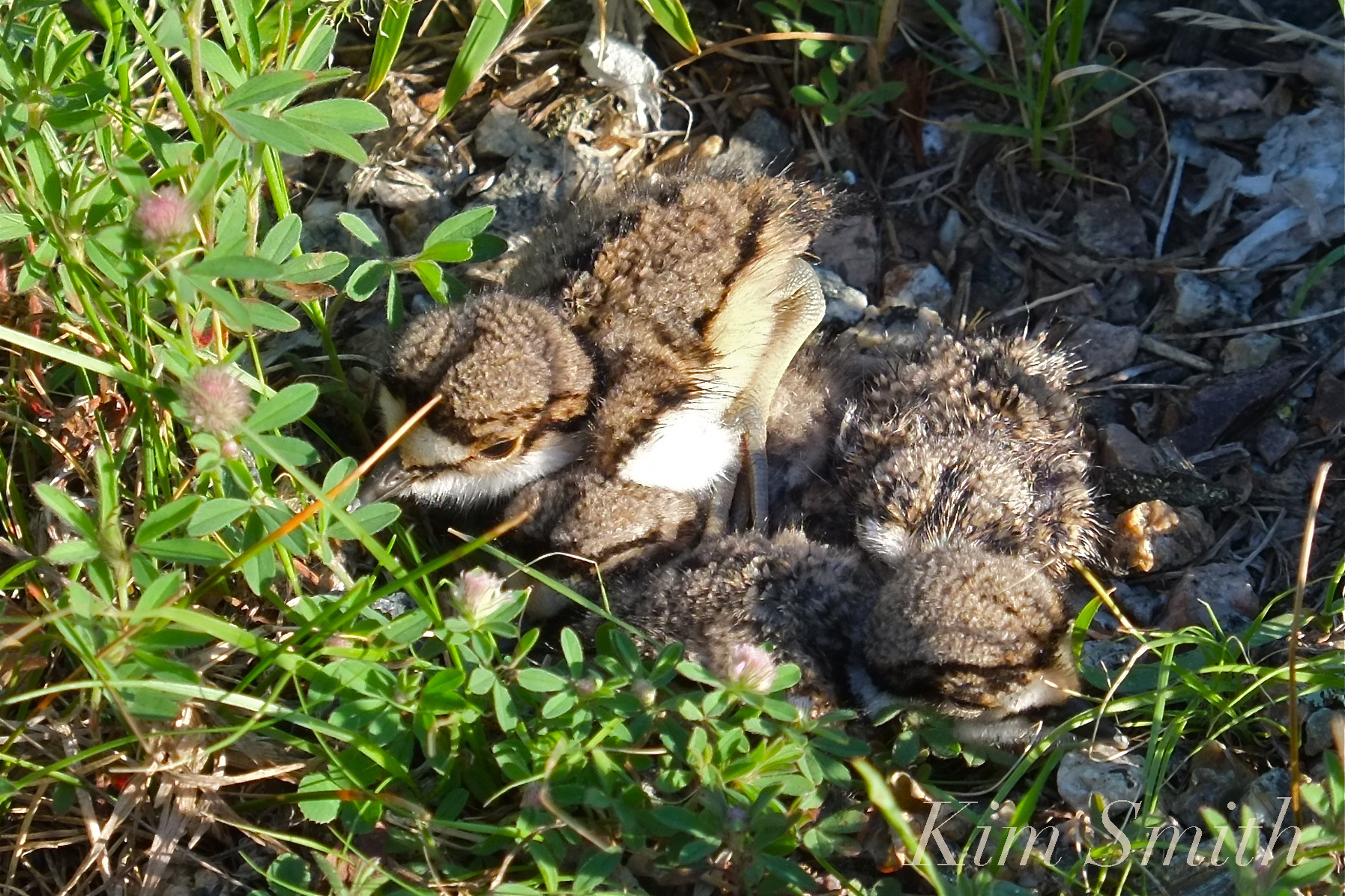 The Good Harbor Beach Killdeer Family has hatched a second clutch of four chicks!
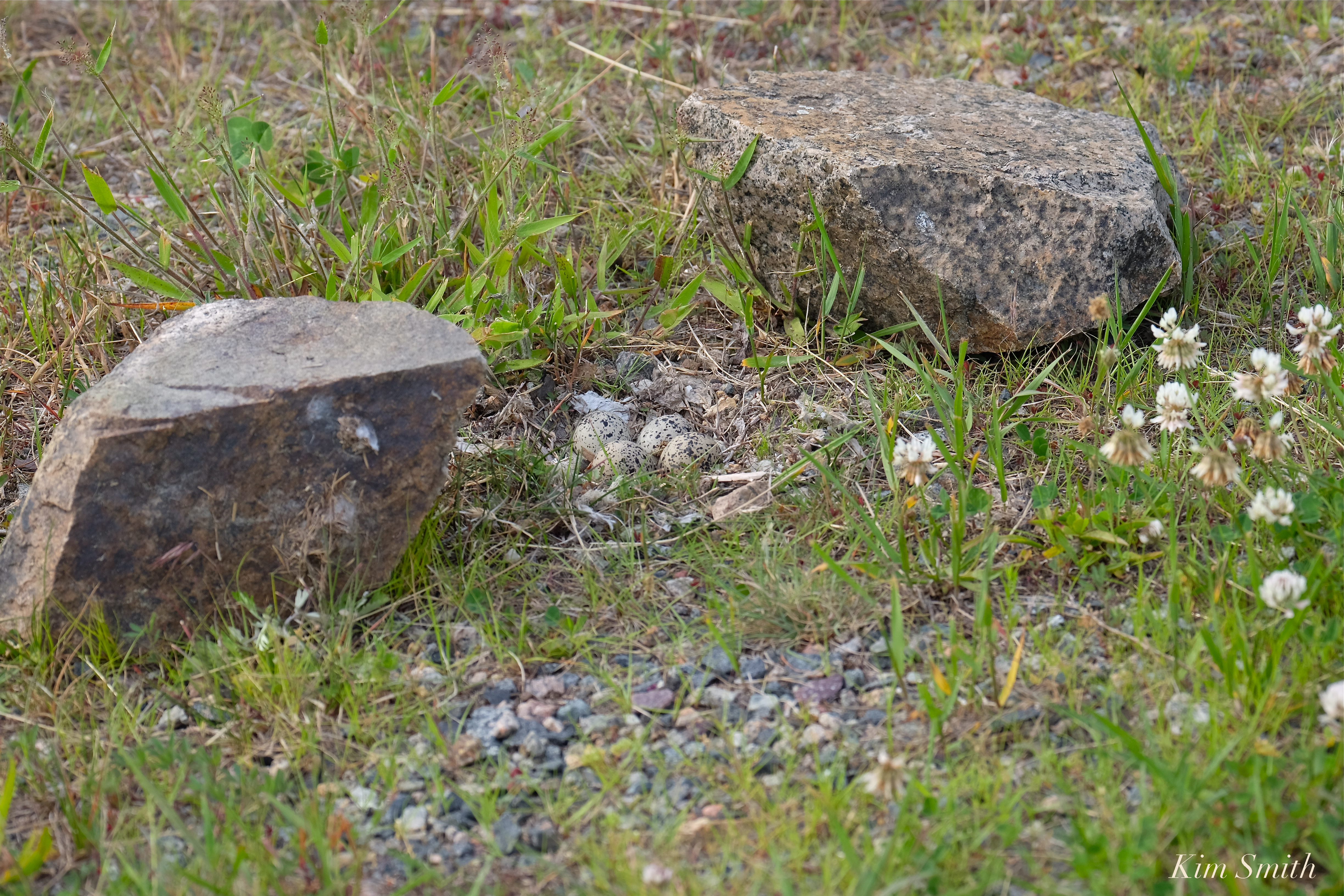 The first nest was located in the dunes, the second on the edge of the parking lot. The staff at the GHB parking lot placed two large stones on either side of the nest. A week or so later, an orange cone.
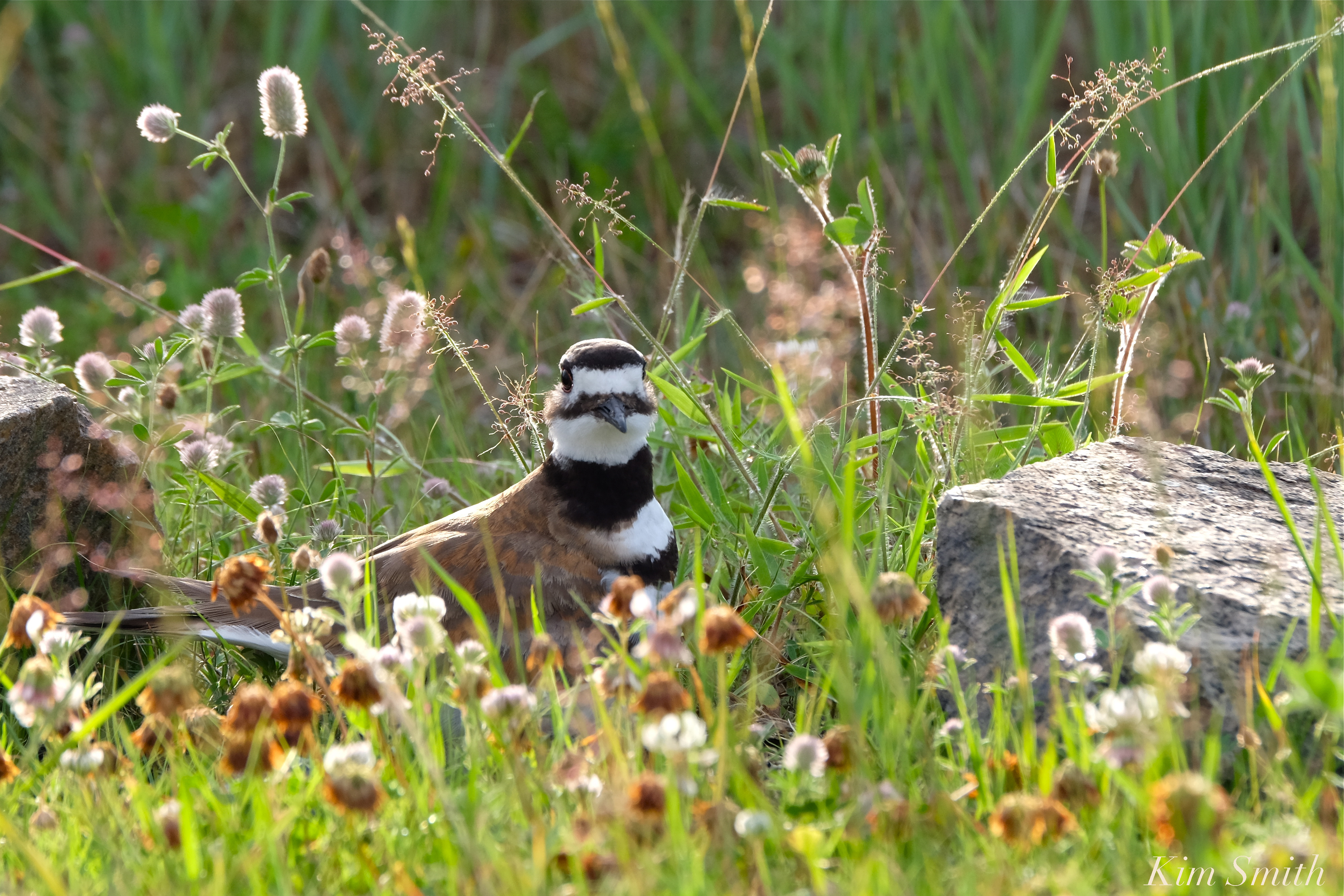 Nesting patiently and well hidden in the scrubby parking lot growth.
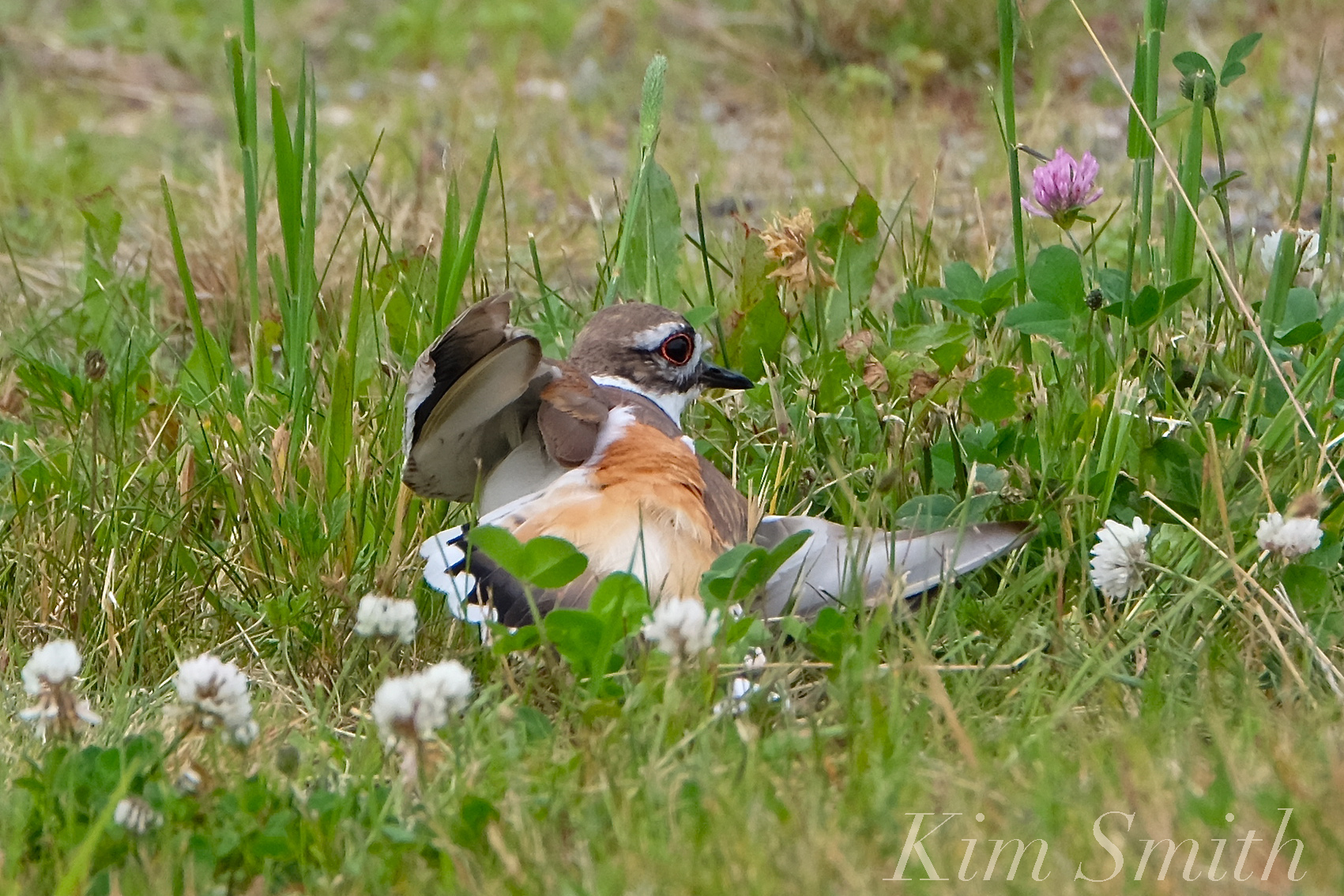 Mama and Papa Killdeer successfully distracted many a beach goer from getting too close to to the nest with their broken-wing distraction display.
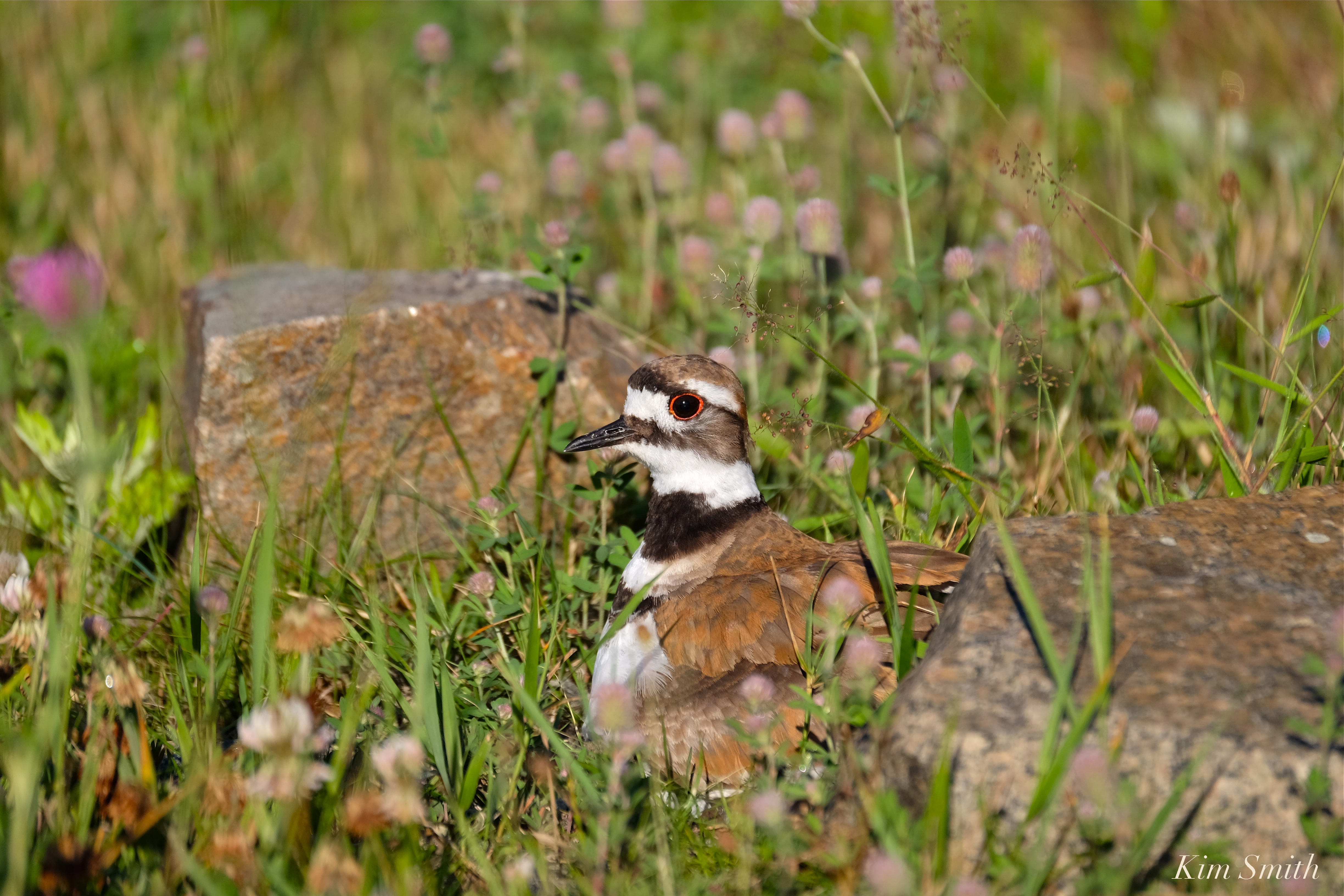 Killdeers are a species of plovers, as are Piping Plovers, Semi-palmated Plovers, Black-bellied Plovers, and Wilson’s Plovers. It takes about the same amount of time for the eggs to incubate, approximately 24-28 days.
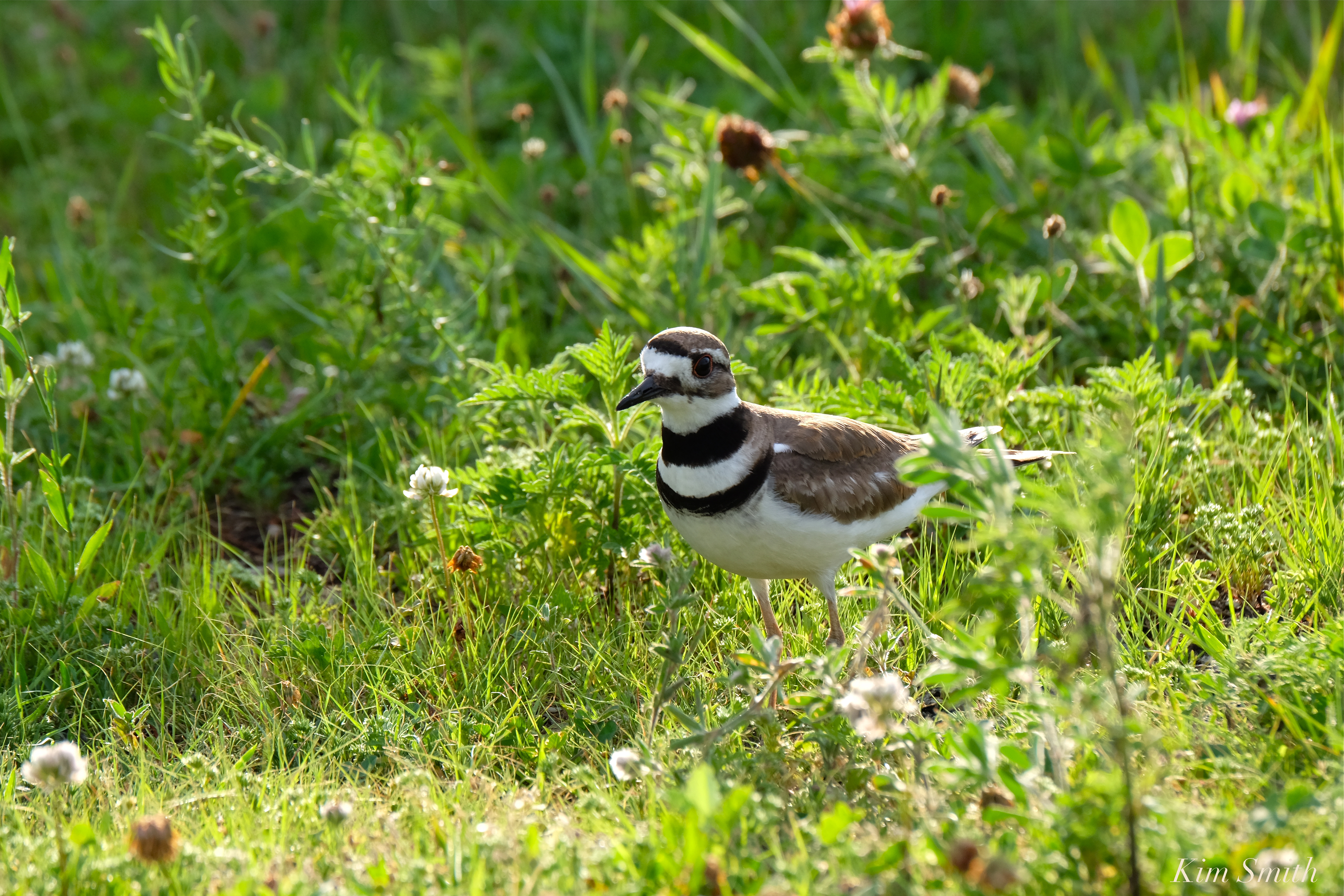 Both male and female Killdeers brood the eggs. It is not easy to tell the difference between the male and female unless side-by-side. The male is typically a bit larger than the female.
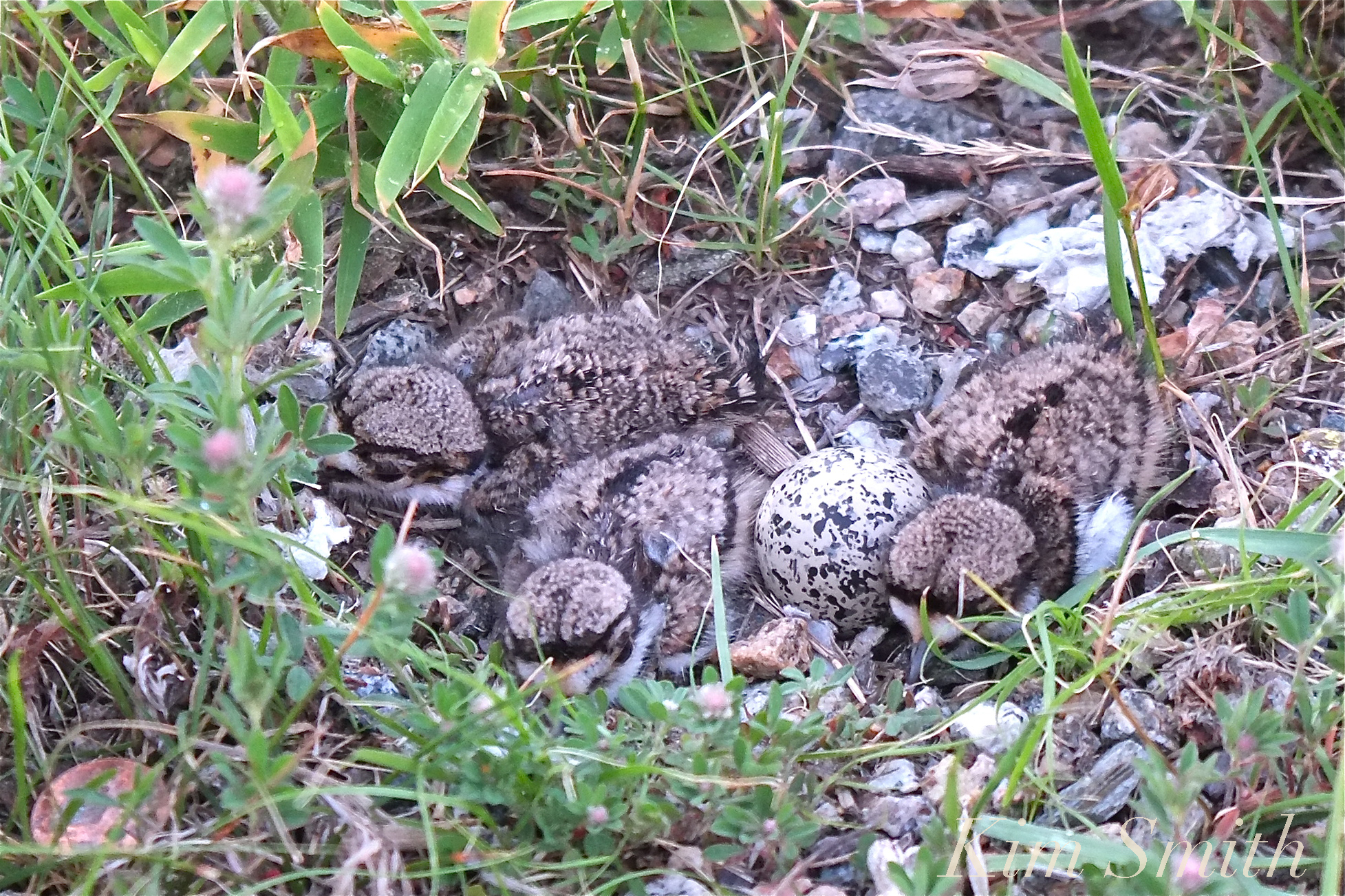 Three of the eggs had hatched by nightfall, the fourth hatched early the next day. This new little Killdeer Family safely made it out of the parking lot the day after hatching, heading into the marsh, just as did the brood that hatched earlier in the summer.

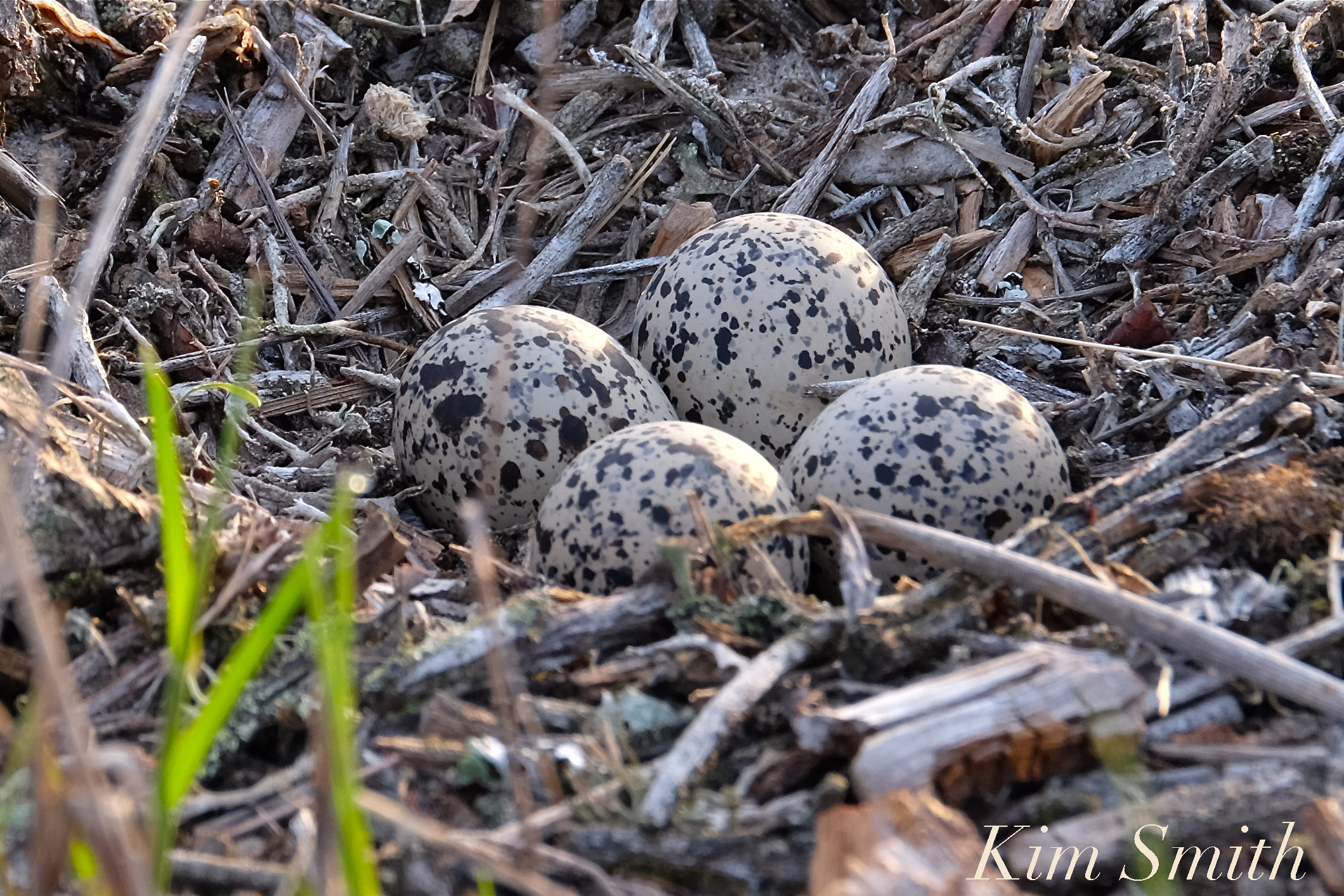 You may recall that several weeks back we posted a photo of a Killdeer nest with four eggs. I only discovered the nest because each and every time anyone walked past, a Killdeer would call shrilly and drag its wings through the dunes in a dramatic display of “broken wing” trickery. I would often play along and see how far away the Killdeer would take me until one morning I decided to see what it was they were hiding.
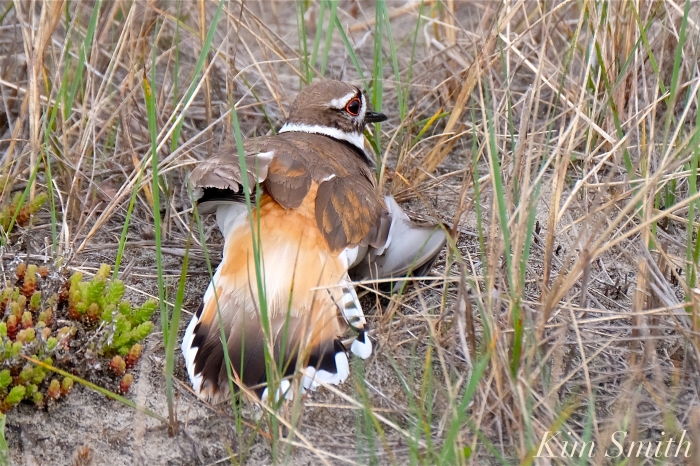

Killdeer Broken Wing Distraction Display
Off to the side of the path that leads to the beach, not more than six feet away, was a loose scrape of dirt and sticks, with four perfect Killdeer eggs!
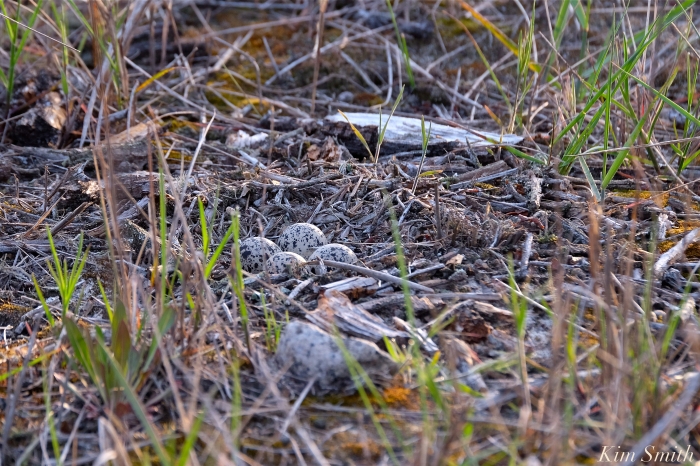
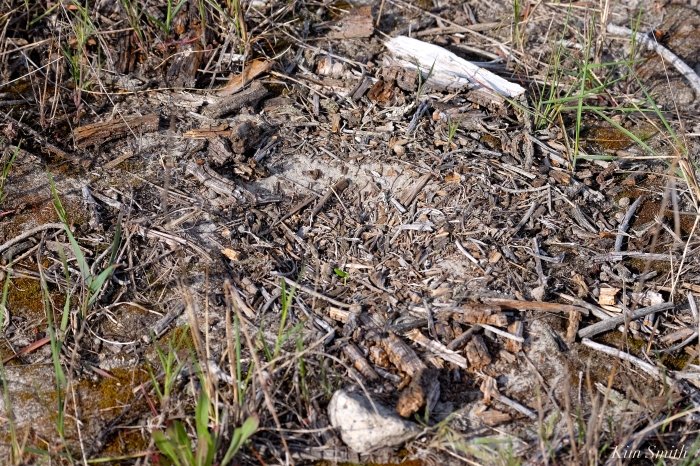
I had no idea when they had been laid, so there was no way of knowing when the chicks would hatch. Each morning on my way to check on the Piping Plovers I’d take a peak, until one day there weren’t any. How sad I thought, and wondered if a predator had eaten the eggs. But the nest had not been disturbed and there were no broken egg shells. A mystery.
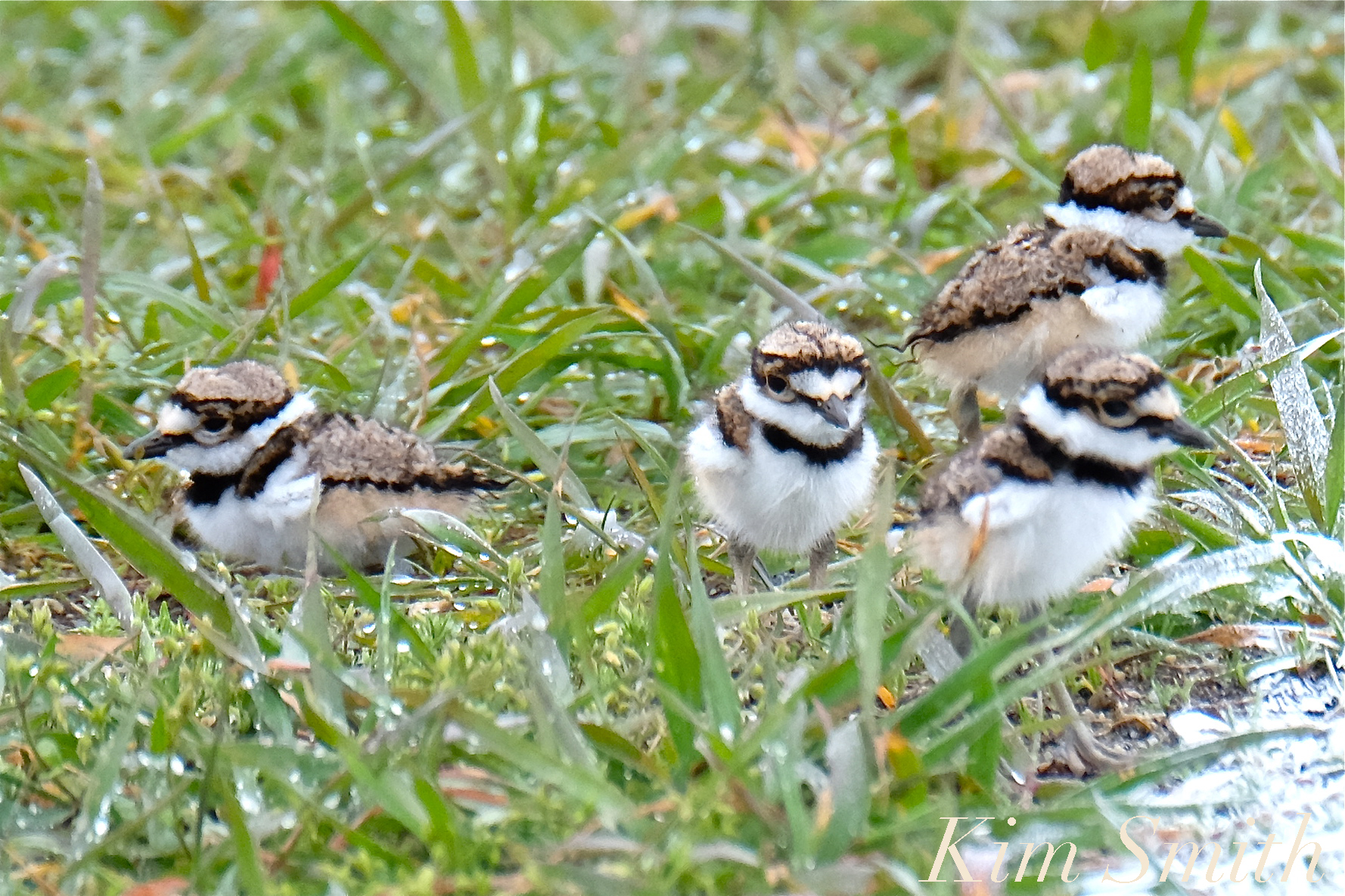 The following morning I checked on the Piping Plover nest in the parking lot. It was drizzly but there were two Killdeers near to where the PiPl exclosure is located. I sat in my car watching the adult Killdeers when to my delight and amazement, out tumbled four teeny chicks from under Mama Killdeer. A car makes the perfect blind and for quite some time I photographed and filmed the Killdeer family.
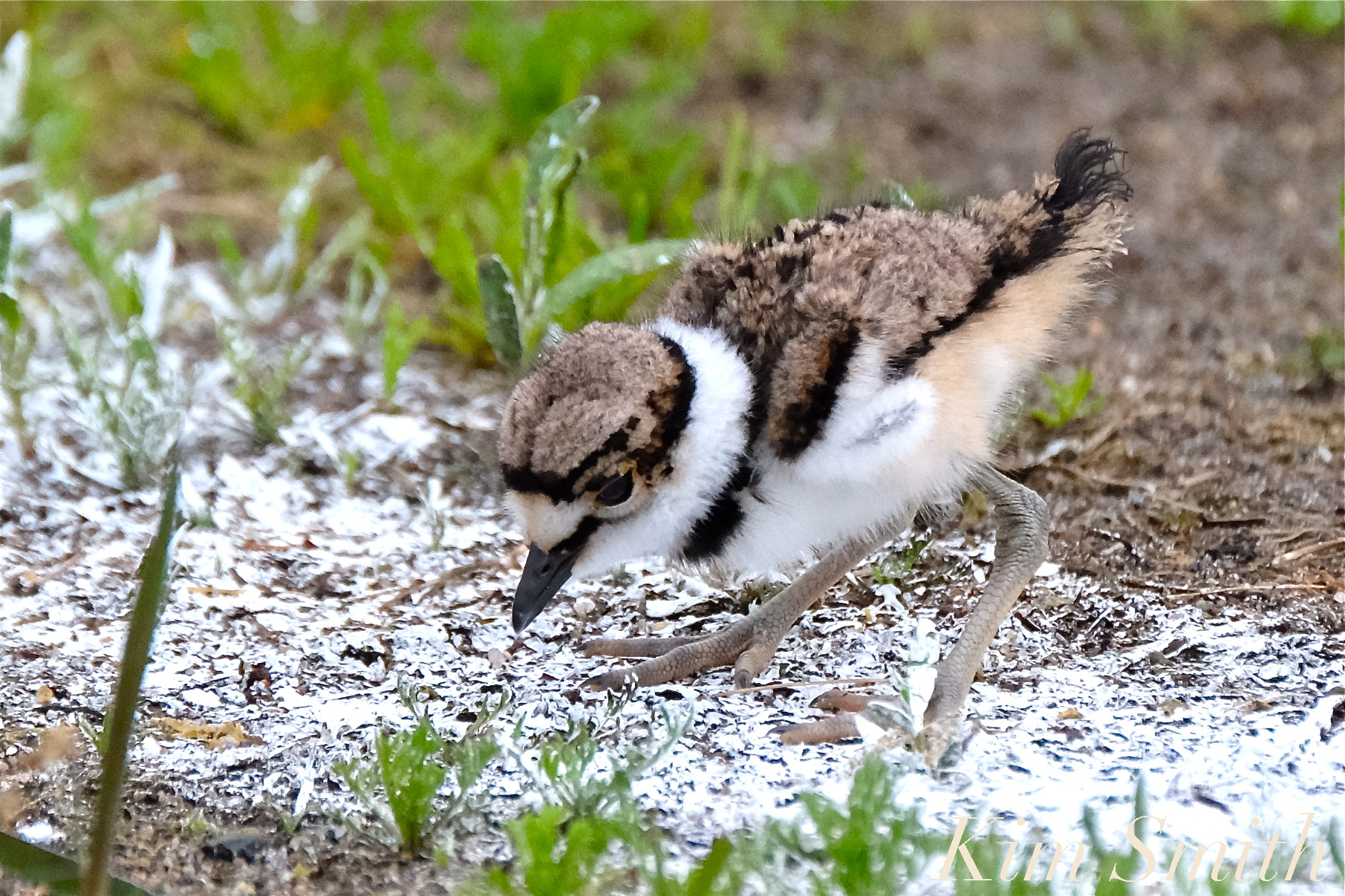 Off and on during that rainy day I stopped by to check on the Killdeers. Because of the weather, the parking lot was virtually empty. Tiny tufted black, brown, and white feather balls atop overly long spindly legs, the baby birds spent all their time zooming here and there, foraging on itsy bitty insects in the grass and gravel.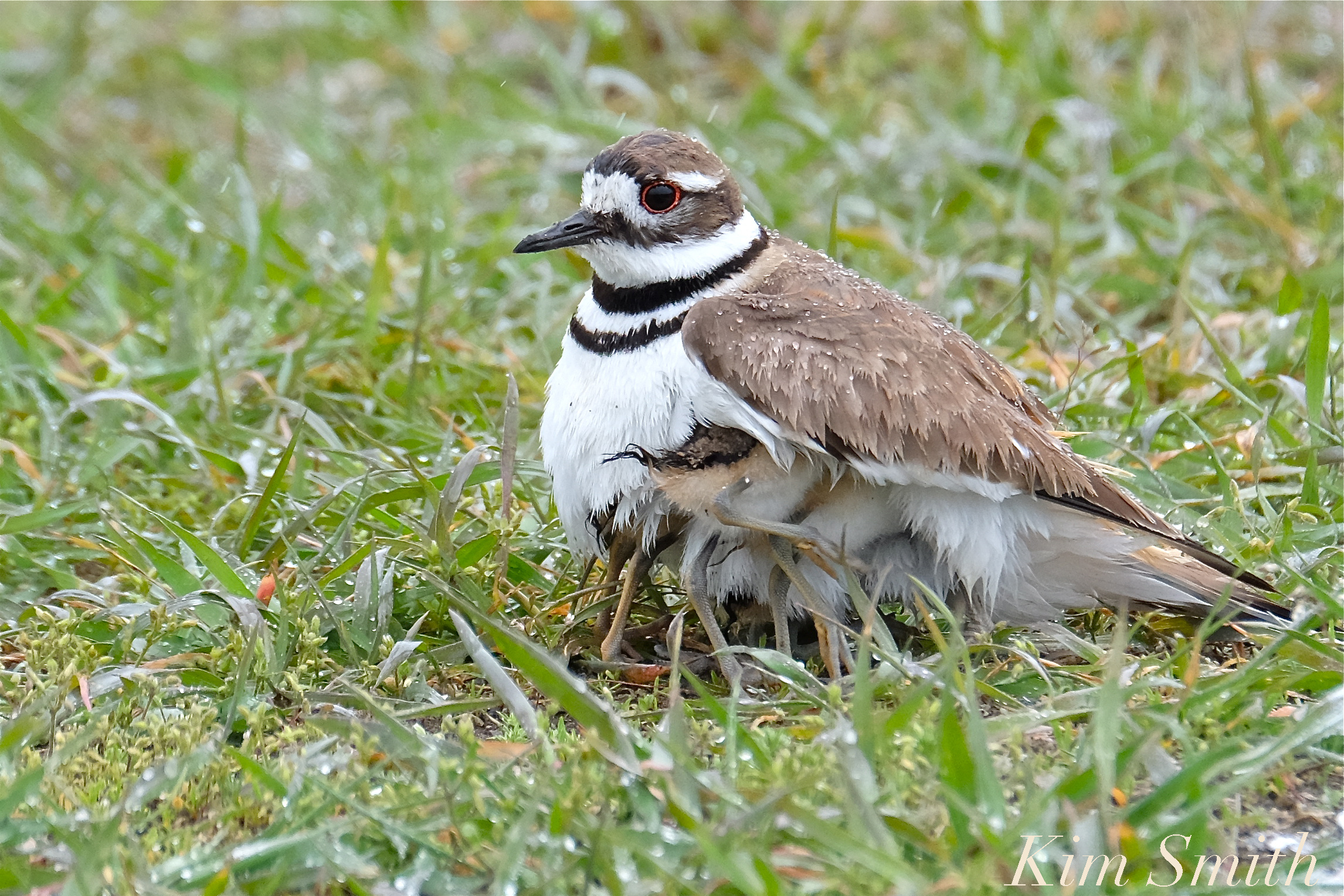
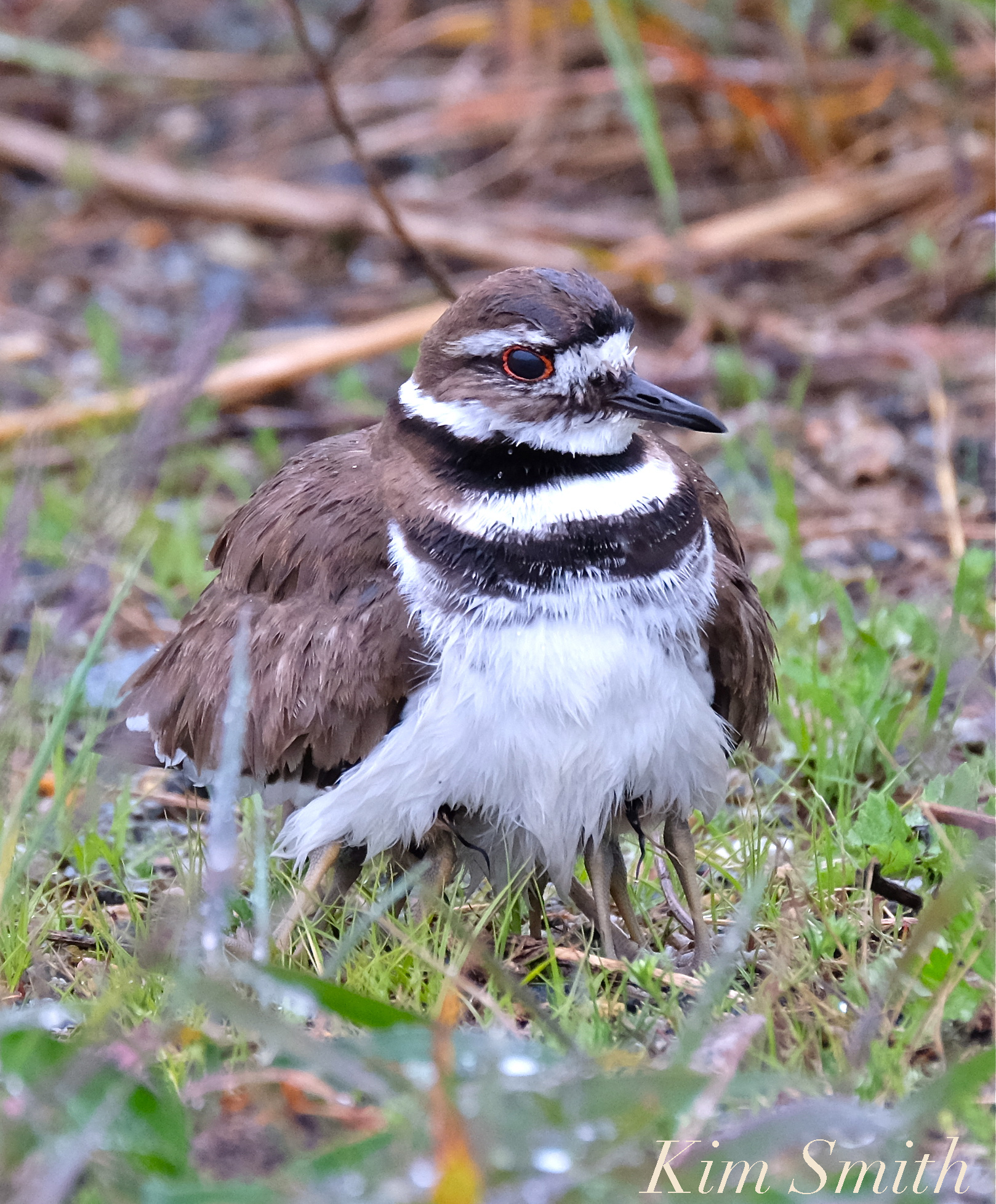 When not foraging, they would run under Mom or Dad to warm up on that damp drizzly day. Just like Piping Plover chicks, Killdeer chicks are precocial birds and can feed themselves within hours after hatching however, because they are so tiny, they lose body heat relatively quickly. The chicks need the warmth provided by snuggling under Mom and Dad.
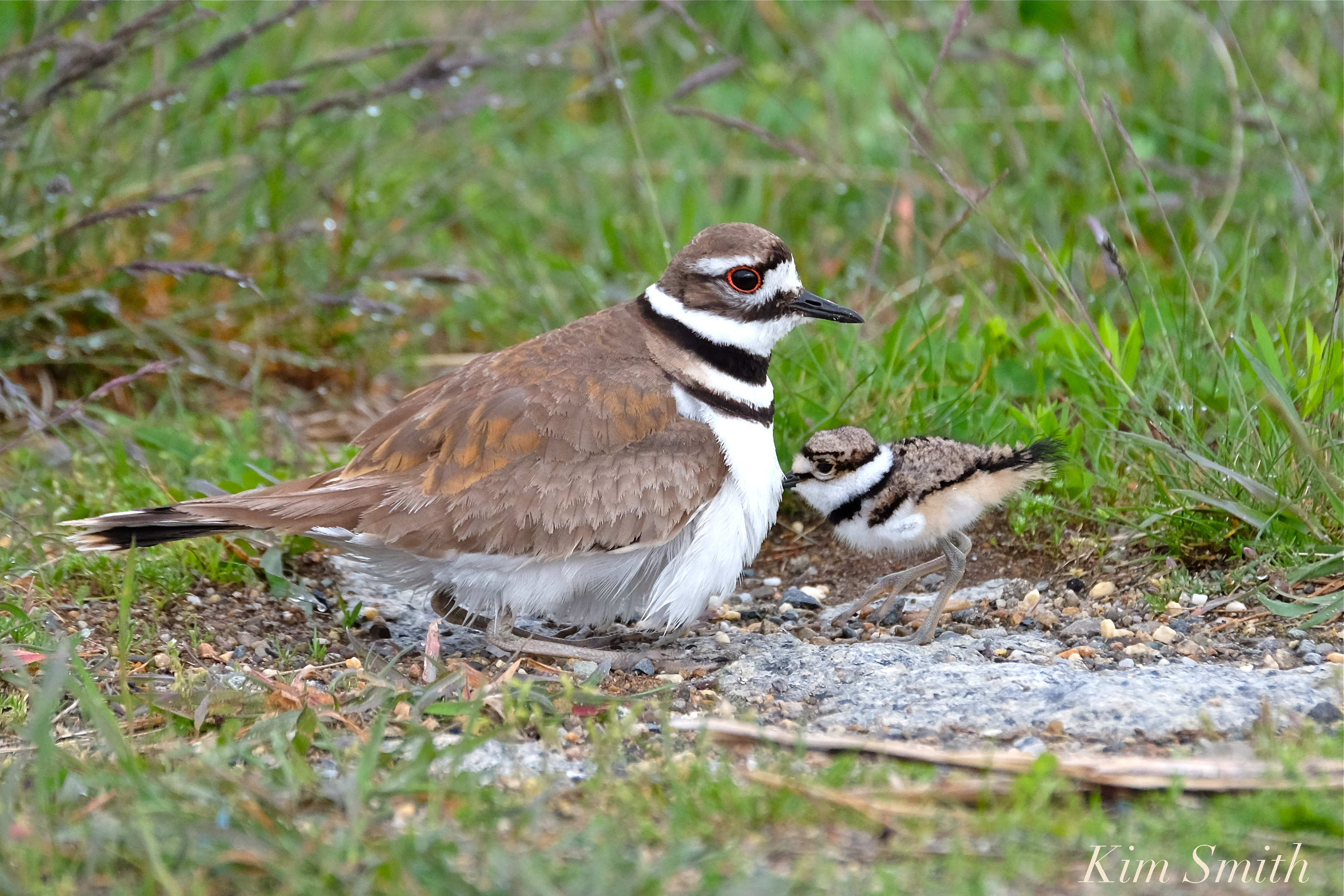 The next morning it was still drizzling, and the Killdeer family was still in the same location! I watched them for a bit, when a man showed up with his dog. The Killdeer parents went into high alert and did their best distraction displays. The dog chased the adult Killdeers around the parking lot while I spoke with the man. It is the same man who brings his dog to Good Harbor Beach via the footbridge end at the close of the day, after the lifeguards and dog officers have left. This was a tremendous problem last year after the Piping Plovers hatched. Last summer I was too busy preventing his dog from squashing a PiPl chick to get his license plate number, but not this time. The man and his dog left the parking lot.
 Moving to the marsh
Shortly after the dog encounter, both Killdeer parents led the chicks into the marsh. To see the chicks navigate over the incline at the edge of the marsh was amazing; it must have seemed like fording a mountain to them. I’ve looked but have not seen the family since. I am hoping that they are thriving and growing in the marshland.
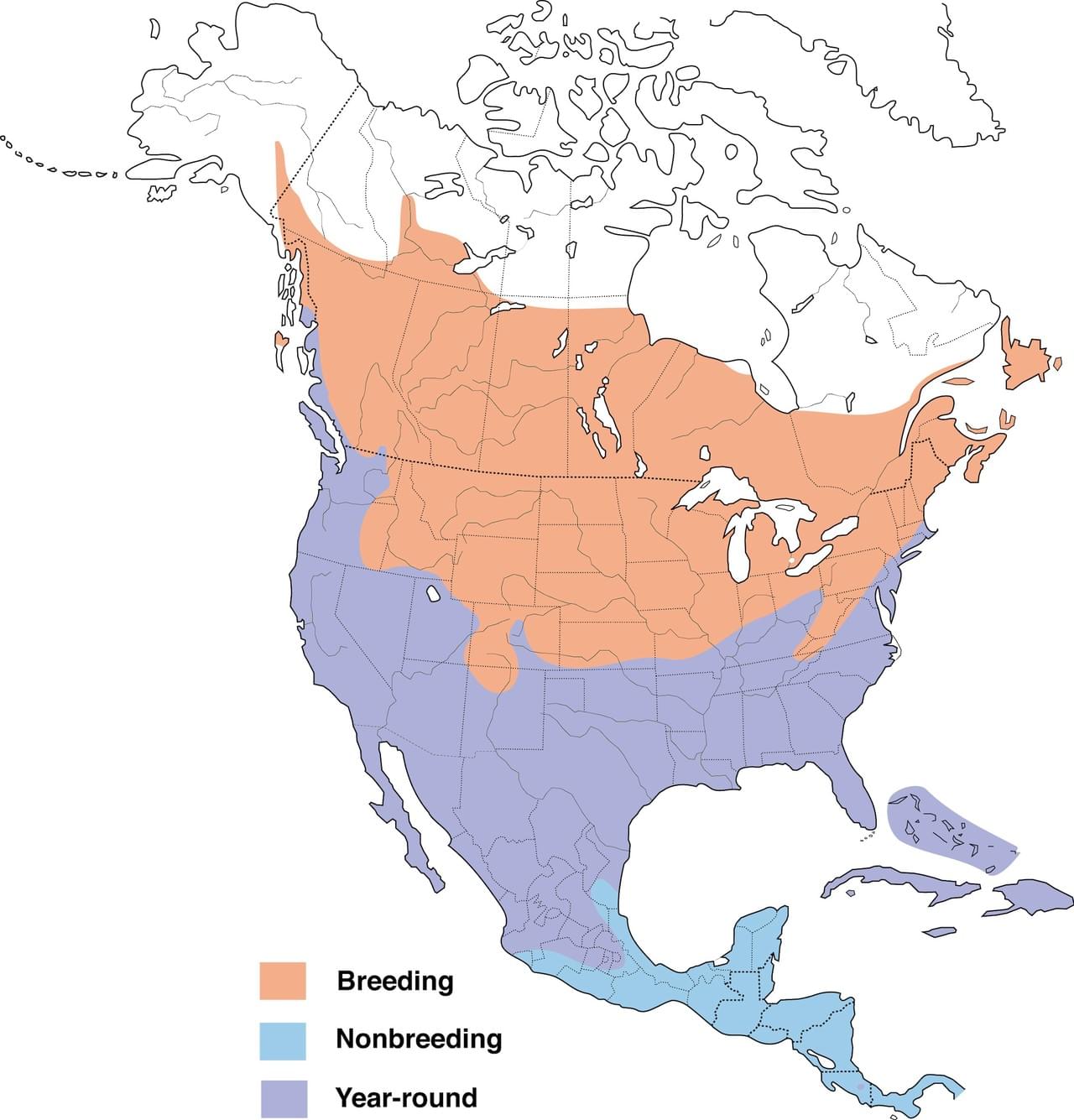
We don’t hear as much about Killdeer Plovers because they are not an endangered species. Killdeers are found in every state of the continental US, Alaska, Canada, Mexico, Central and South America. They are the least shorebird-like of shorebirds because they breed and dwell in many types of habitats including grasslands, fields, urban areas, gravel pits, airports, parking lots, athletic fields, and golf courses. Despite their super ability to adapt to human habitats, it is a species in decline.
Killdeers begin courting in our area in March. Although I imagine they have been nesting at Good Harbor Beach for a longer period of time, I only have a record of Killdeers nesting at GHB going back three years and it is yet another important reason as to why humans and pets should not be traipsing through the dunes.
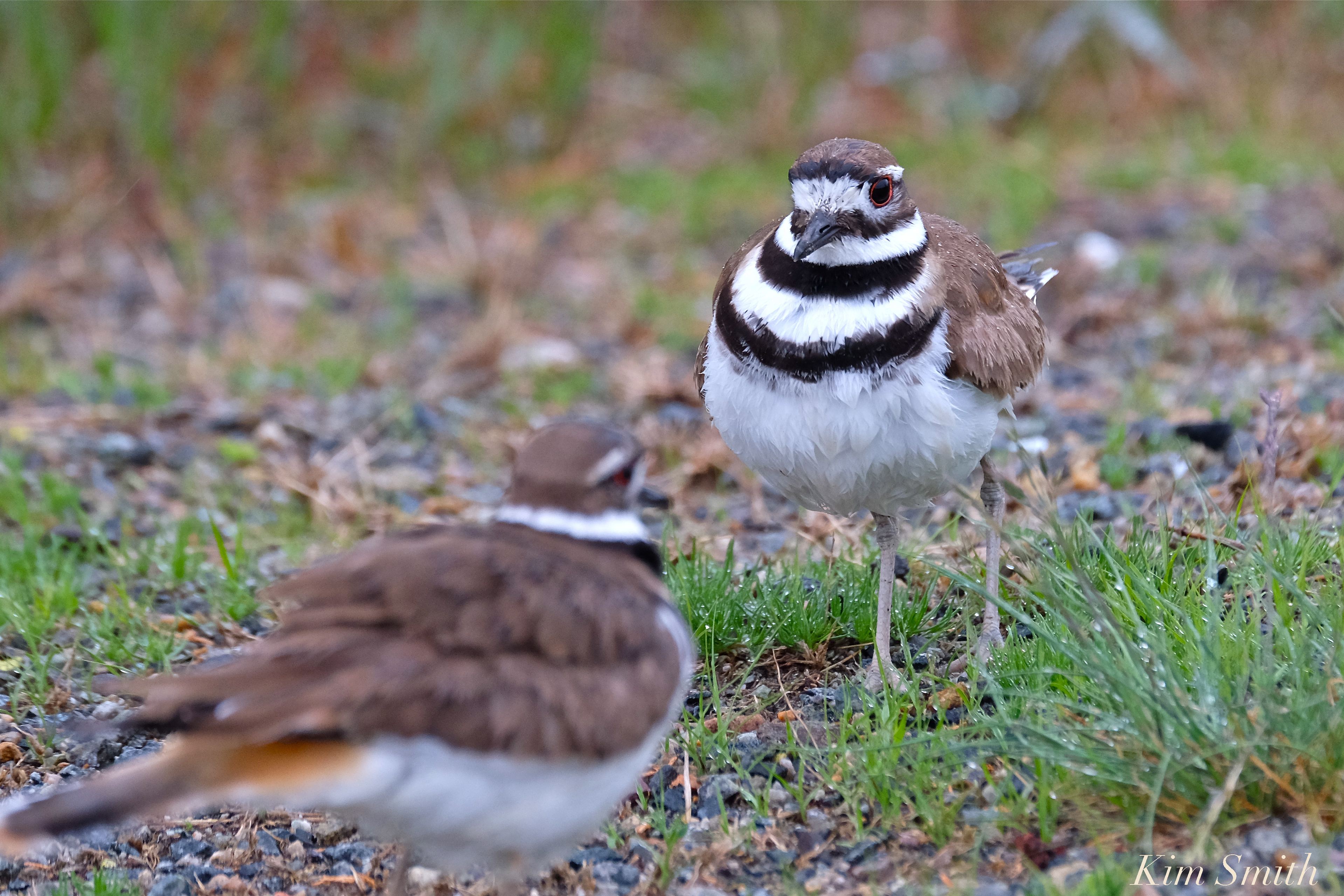 It is difficult to tell the difference between a male and female Killdeer unless they are side-by-side, and even then, still challenging. The male is a bit larger.



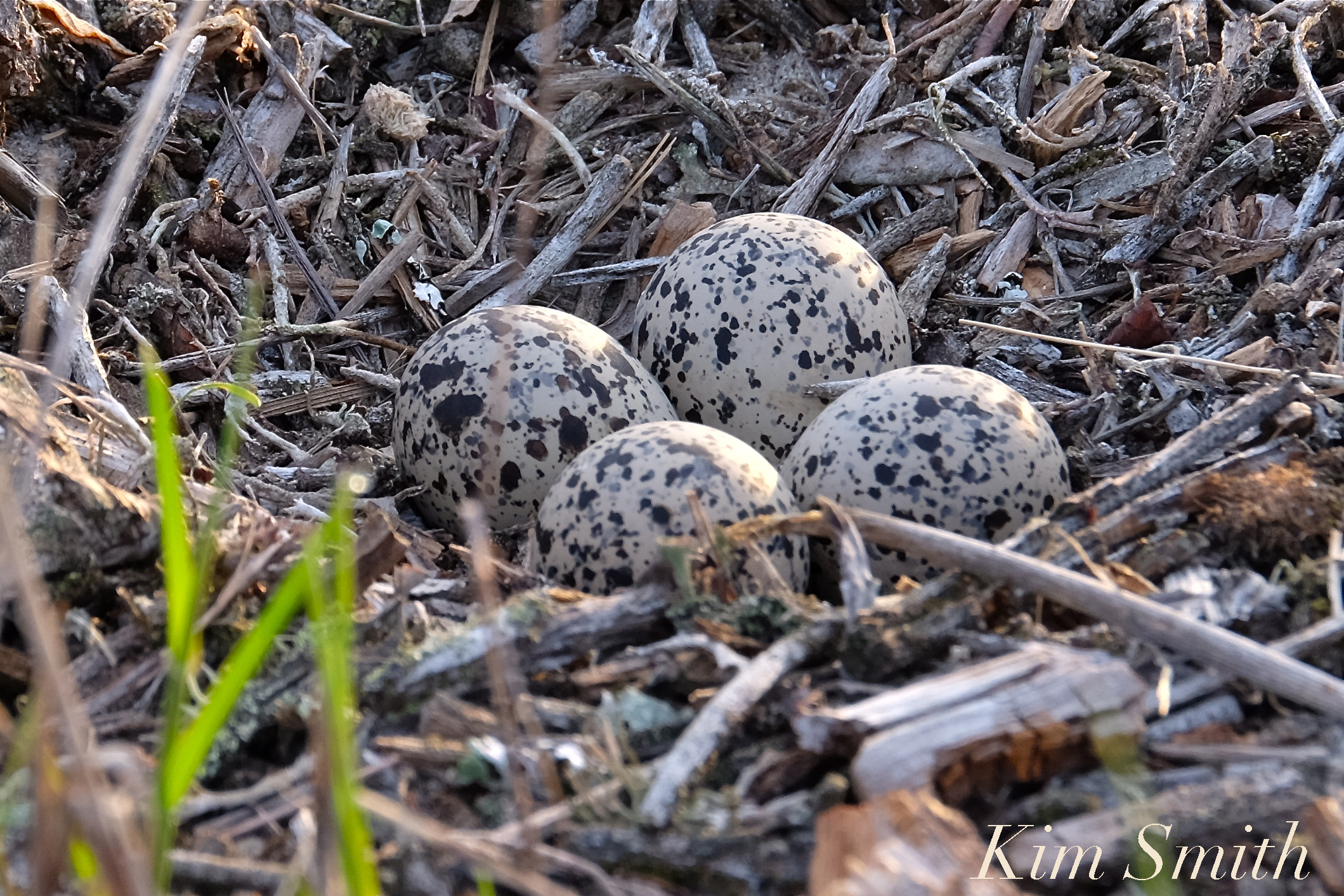 Pictured above are the beautiful mottled eggs of a different species of plover, the Killdeer. Notice how the Killdeer eggs look similar to the PiPl eggs, but are a deeper gray. Killdeers make their nest scrapes on the ground, just as do PiPl, but in gravel and soil, and the darker colored eggs are perfectly camouflaged amidst the sticks and stones. Piping Plover eggs are beautifully camouflaged when laid in sandy nest scrapes.
Stay tuned for wonderful news about our Good Harbor Beach Killdeer Family.
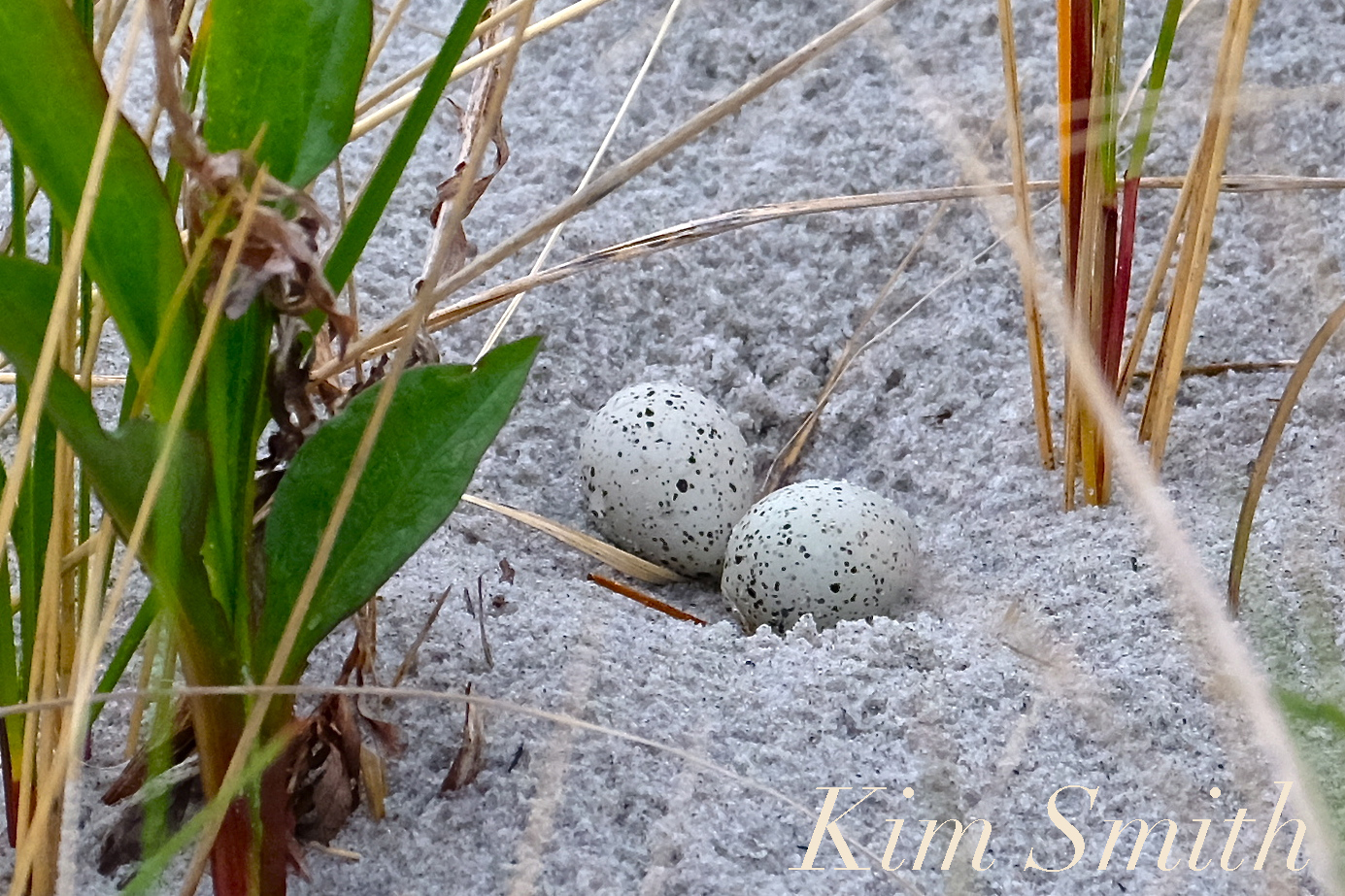 Piping Plover eggs
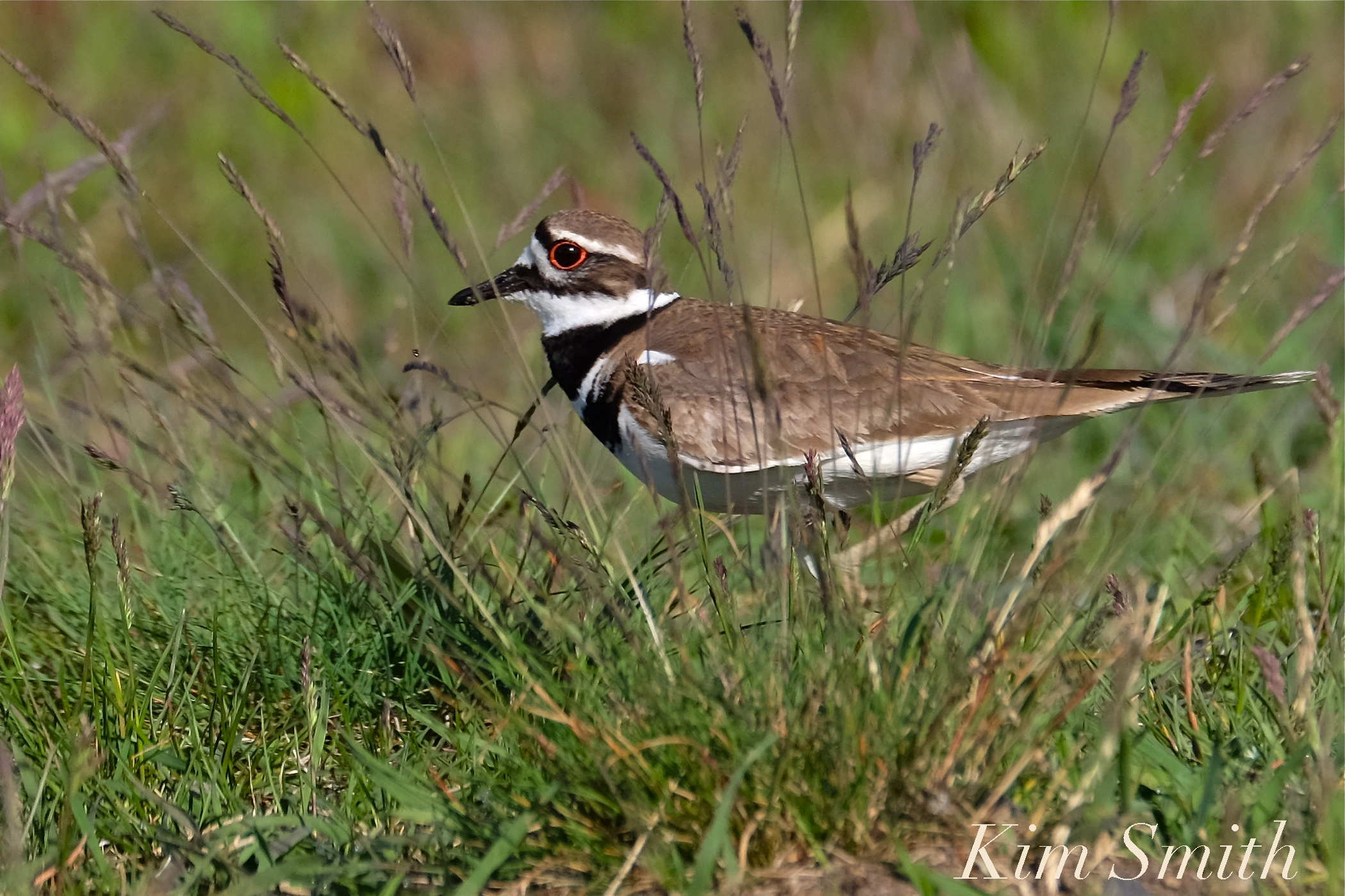 Killdeer, Good Harbor Beach Gloucester


Biomedical Breakthrough is win-win for shorebirds and horseshoe crabs: Deborah Cramer of The Narrow Edge spreads the word
“Jay Bolden, a senior biologist with pharma giant Eli Lilly, has spent the last five years proving a synthetic molecule works as well as horseshoe crab blood in a life-saving medical test…It took a dedicated birder to convince pharma giant Eli Lilly to use a synthetic compound instead of horseshoe crab blood in a mandatory medical test. Now, he hopes the rest of industry will follow…” – from National Audubon article published this March 11 2018 Inside the Biomedical Revolution to Save Horseshoe Crabs and the Shorebirds That Need Them, by Deborah Cramer with photographs by Timothy Fadek
Cramer explained that Ryan Phelan, Executive Director and Co-Founder of Revive and Restore contacted her “to see how this organization might help accelerate institutional and government exploration, acceptance of the synthetic endotoxin test to replace the use of horseshoe crabs…In the book, I’d portrayed how essential the energy rich horseshoe crab eggs are to shorebird migration, and how their numbers decline when they leave for the Arctic, hungry. I’d described how every human family, and their pets, depend on the horseshoe crab blood test to detect potentially life-threatening endotoxin in vaccines, joint replacements, PET scans, heart stents, IV lines, etc. And went on to tell the story of the development of the genetically engineered substitute, and the– at the time decade long–that had elapsed without it being accepted or adopted by regulators or the pharmaceutical industry.”
Revive and Restore’s announcement in the NJ Audubon news this week has more information about these dedicated scientists and exciting news. Deborah Cramer is too modest to spell it out, so I will. Revive and Restore was inspired in part by Cramer’s book, The Narrow Edge, an award-winning read that’s smart and lyrical, and an environmental game changer. Have you read it yet?


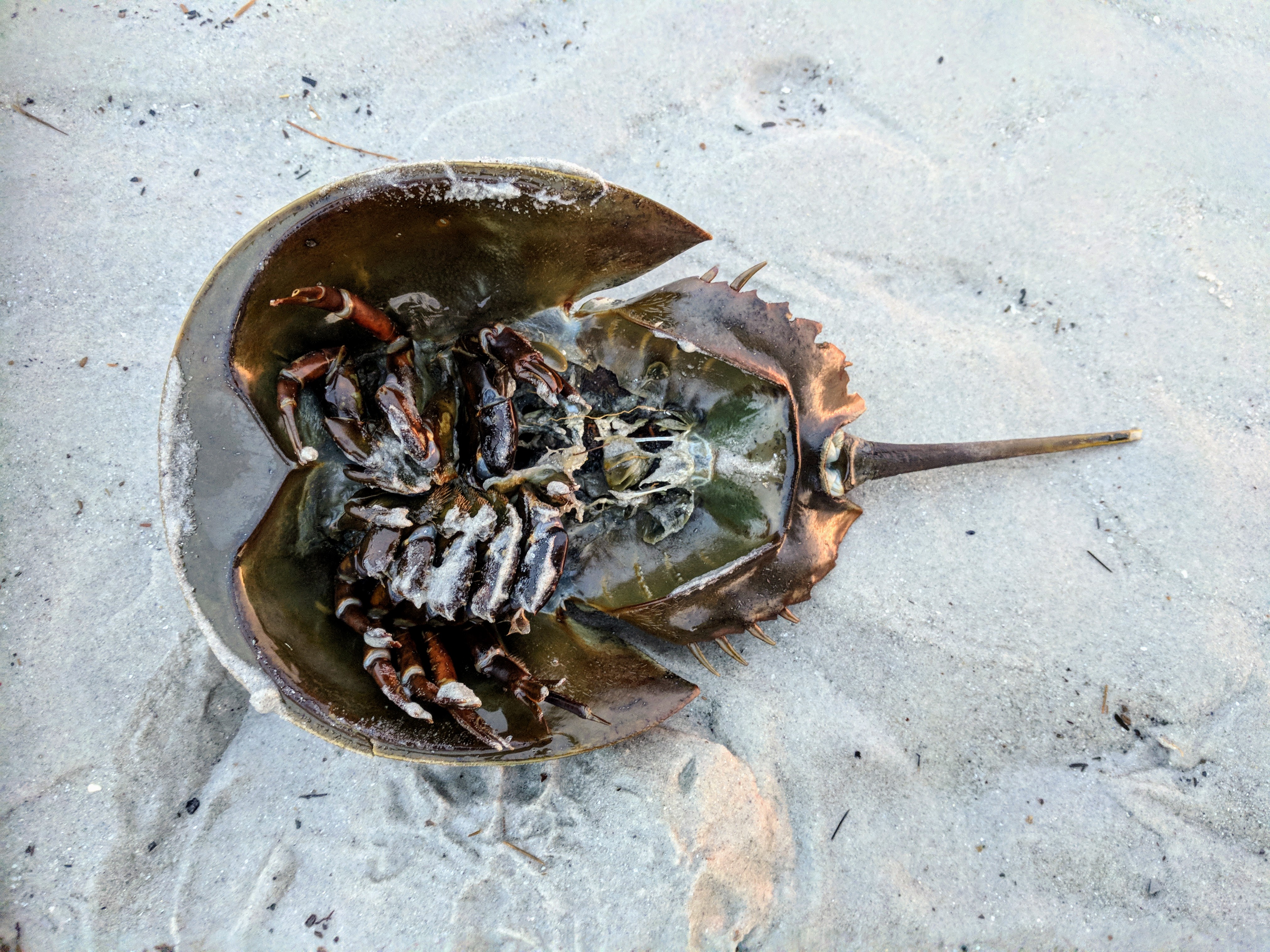


The Narrow Edge reveals more unexpected alliances and consequences. Readers learn that hunters have done much to protect wildlife at the edge of the sea through the tax on guns and ammunition. The Federal Duck Stamp that’s required on hunting licenses provides millions of dollars to support national wildlife refuges (and supports contemporary fine art). Memberships to organizations like National Audubon and donations from wildlife fans, photographers, and birders make a difference.
Cramer had to be trained how to handle a gun for necessary wild and remote travel research. Gloucester, Cape Ann and North Shore readers: she took the course for her license to carry at Cape Ann Sportsman Club found along Dogtown’s edge where it’s been for over a century. (I’m not certain how Cramer rated there, but a president’s daughter was a good shot. In 1912, Helen Taft, qualified as an “Expert with a Rifle” when she visited the range with her Gloucester friend, Elizbeth Hammond.)

prior gmg post, June 2016– Piping Plover Fans: Local author Deborah Cramer on sandpipers is a must read. Oh, and dogs vs.
To learn more about Deborah Cramer, go to www.deborahcramer.com

Three years ago (!) almost to the day, Deborah Cramer’s NY Times op ed , “Silent Seashores” was published and her horseshoe crab and Red Knot poetic missive “The Narrow Edge: A Tiny Bird, an Ancient Crab, and an Epic Journey” advanced a global ecological message to the masses. “I hope I never walk beaches empty of sandpipers and plovers. But it is possible that may happen. In the case of some shorebirds, it is increasingly likely. This is why we must commit the money and muscle needed to give these birds safe harbor. If we do, we just might keep our shores teeming with shorebirds.” Deborah Cramer is a visiting scholar at M.I.T., and resides in Gloucester.
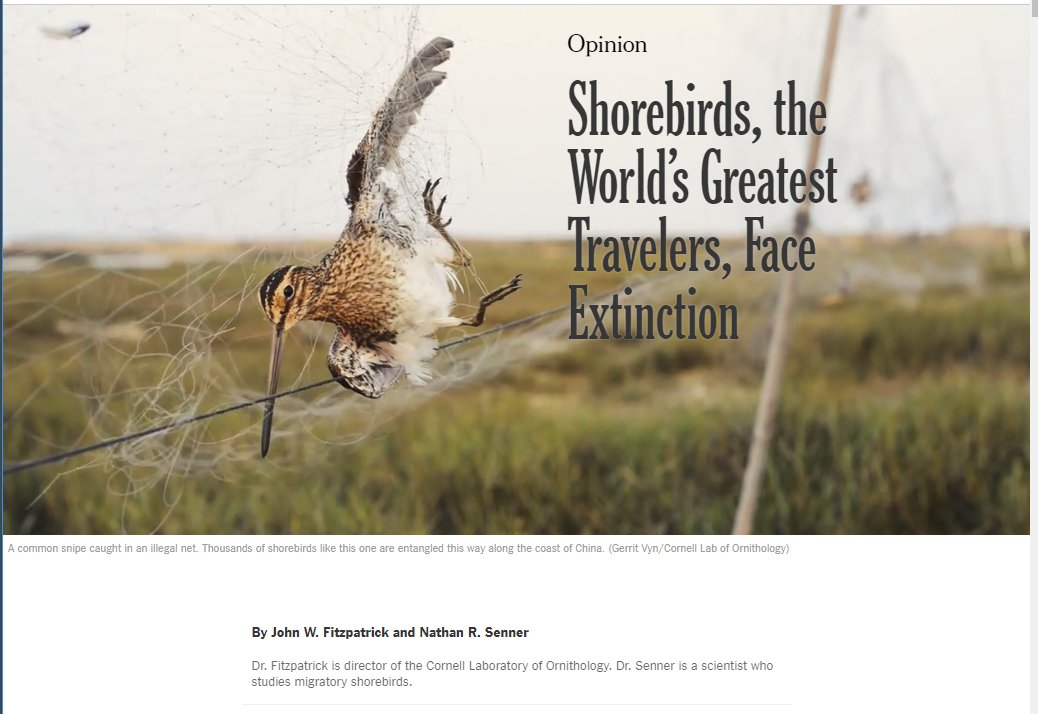
The New York Times, published another mighty call to arms making use of today’s improved visual storytelling tools. “Shorebirds the world’s greatest travelers, face extinction” is breathtaking and devasting digitial photojournalism about shorebird extinction by John W. Fitzpatrick (Director Cornell Laboratory of Ornithology) and Nathan R. Senner (scientist University of Montana). Stuart A Thompson designed the superb interactive graphic element. The indeliable header pulses with a bird on a wire, a “common snipe” it’s captioned, peering, chest beating, and then a sickening struggle. The bird’s caught, and we’re its snipers. Do. Not. Look. Away.
While you’re checking out this NY Times must read on line, think about Gloucester, Deborah Cramer, and Kim Smith. How one person can and continues to make a difference. Among many other projects, Smith is leading the effort to protect piping plovers at Good Harbor Beach. Let’s support the laws in place to safeguard the natural world. No dogs year round may be easier to remember. Honor system, volunteers, and enforcement (without “teeth” and more funding) are not working. If compassion, art, rules, and legacy aren’t persuasive, there’s always the bottom line. Natural culture all about us is a strategic resource.

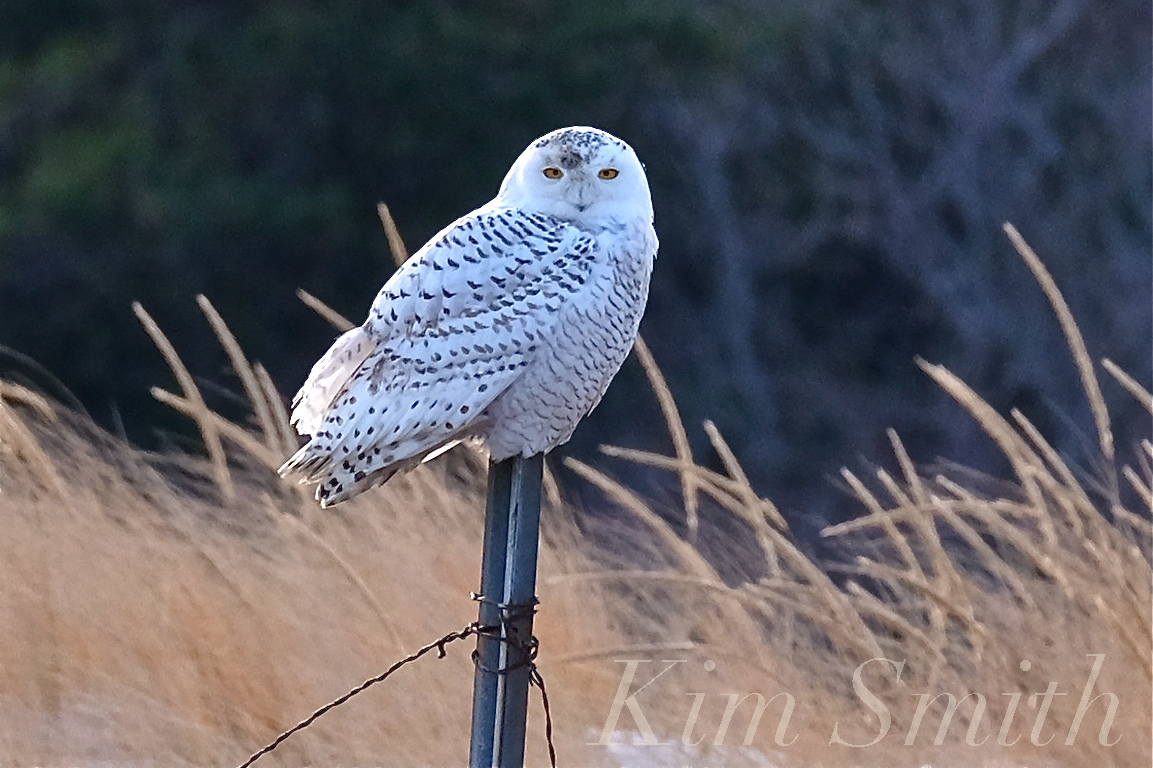 With early predictions of a Snowy Owl irruption heading our way and several sightings in Gloucester, I have been periodically popping over to Cranes Beach in Ipswich. Thanks to Bill Foley, Cranes Chief of Police (and Kate’s awesome Dad!), who showed me around and provided some great tips on locating the Snowies, I was able to find one second time out. The first day was a bust because a dog owner had allowed his dog off leash. I watched the dog chase the Snowy, who then headed far and away over the dunes. This made me so very sad for myriad reasons, but especially so at Cranes Beach because there is a fabulously huge area that dogs are allowed off leash. Anyhow, seeing the Snowy that first day, and knowing he was there, was all I needed to keep trying.
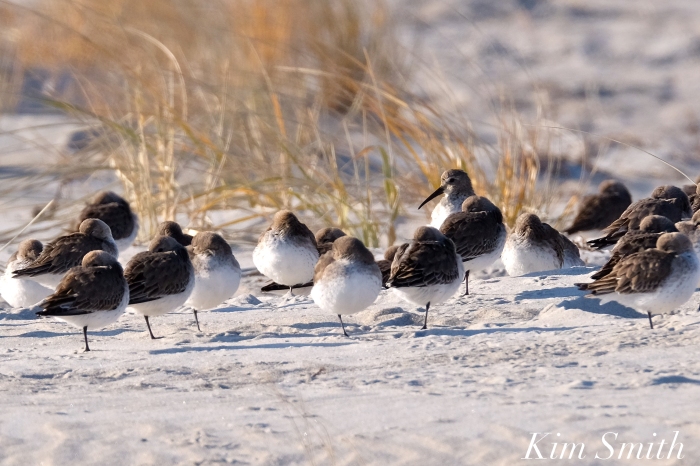
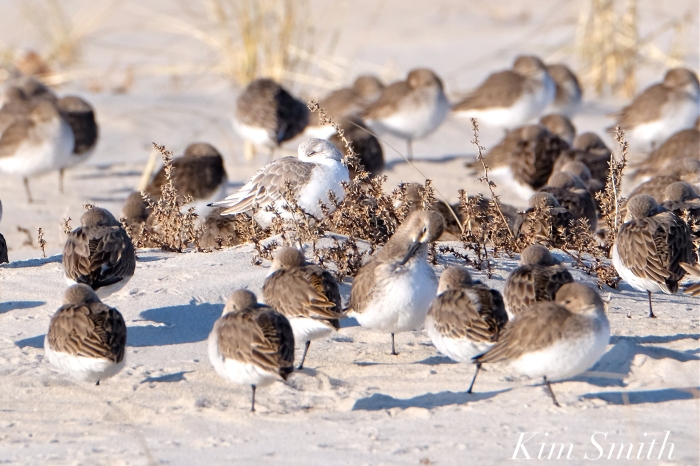
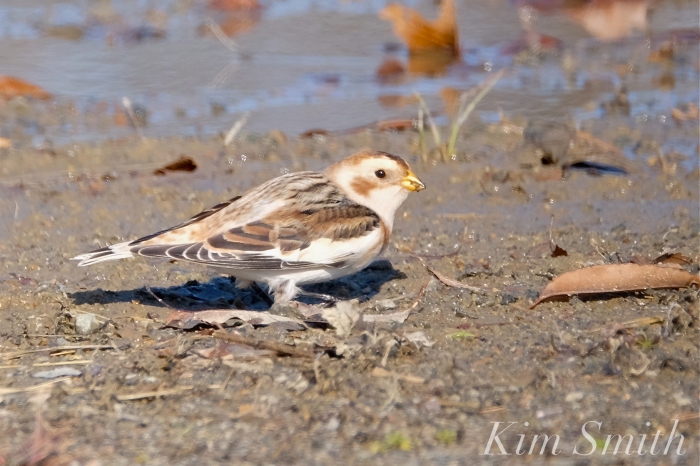
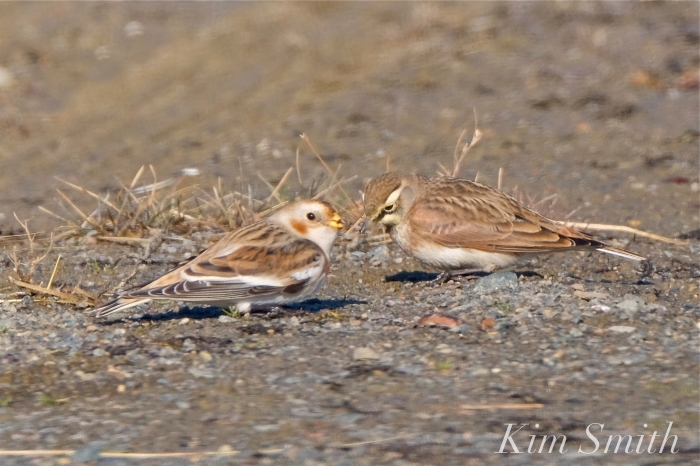
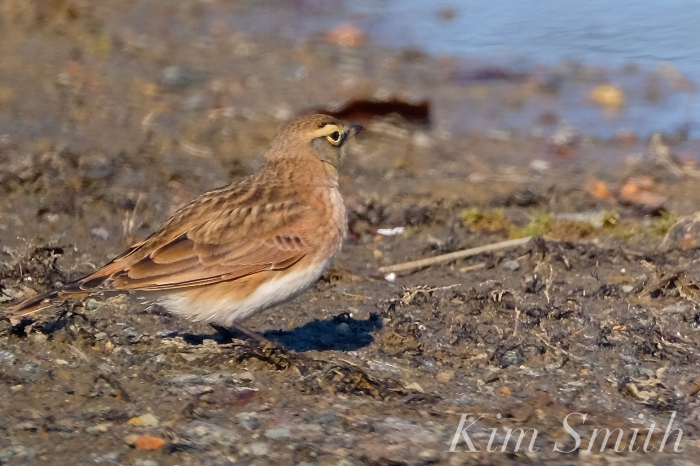
Dunlins, Sanderlings, Snow Buntings, and Horned Lark
That day, a flock of Dunlins was resting in the sand, with one lone Sanderling, and there was a small flock of Snow Buntings in the parking lot. Feeding amongst the flock was, what I believe to be, a female Horned Lark!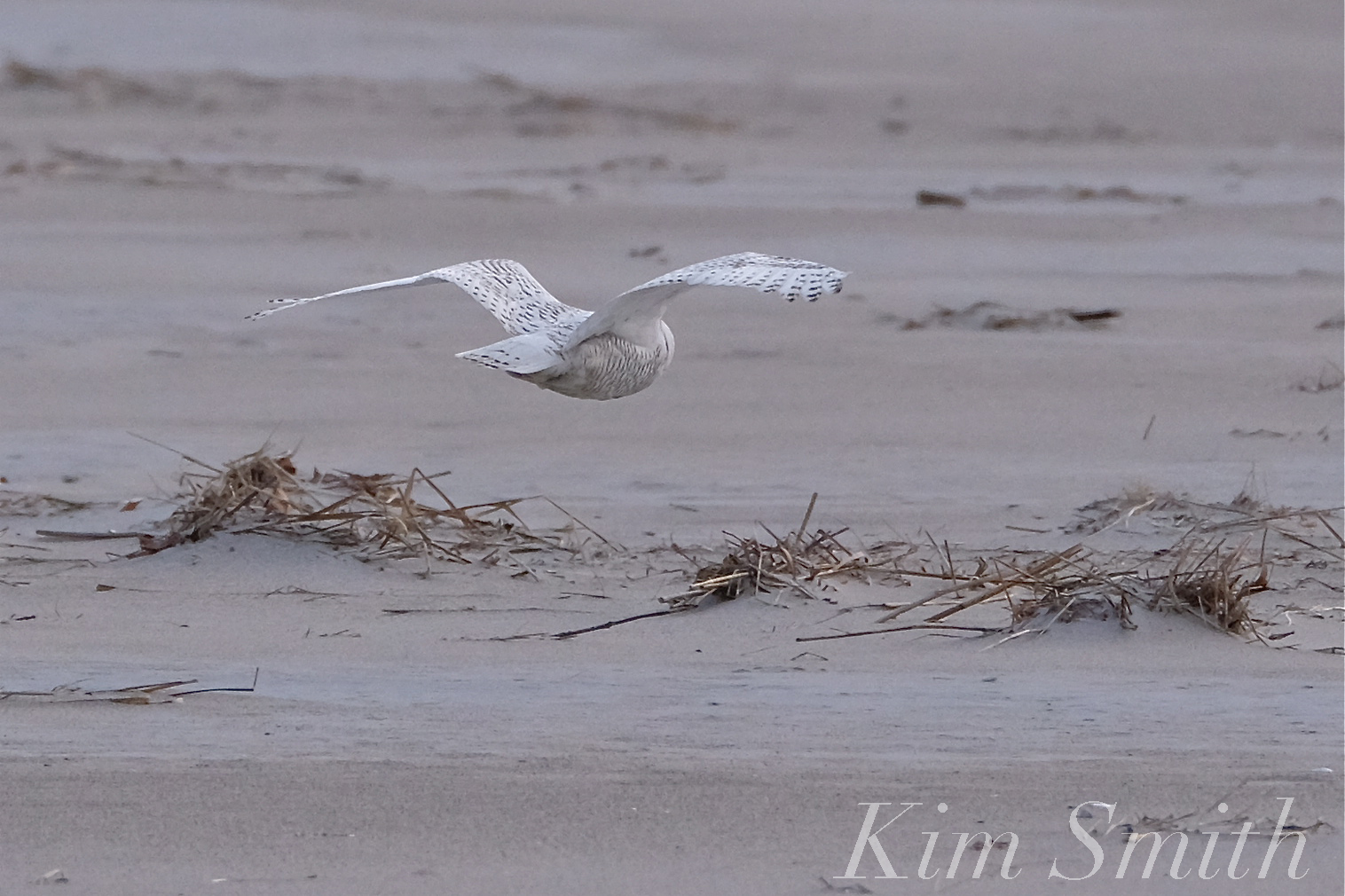 Second day out was wonderfully rewarding. Approaching the stairs to descend to the beach, I inadvertently startled a Snowy and he flew from the area, way, way down the beach, perching on one of the poles that mark the access to the Green Trail. Off I trudged in 15 degree weather, keeping my eyes peeled on where he was resting. He stayed for quite some time while I stood back at a great distance, not wanting to disrupt his hunting. Suddenly, and with what I thought, great bravery, he flew quite close and past me, heading over to the sandy beach. I wasn’t anticipating his flight and didn’t get much of a photo, but it was exquisite to see.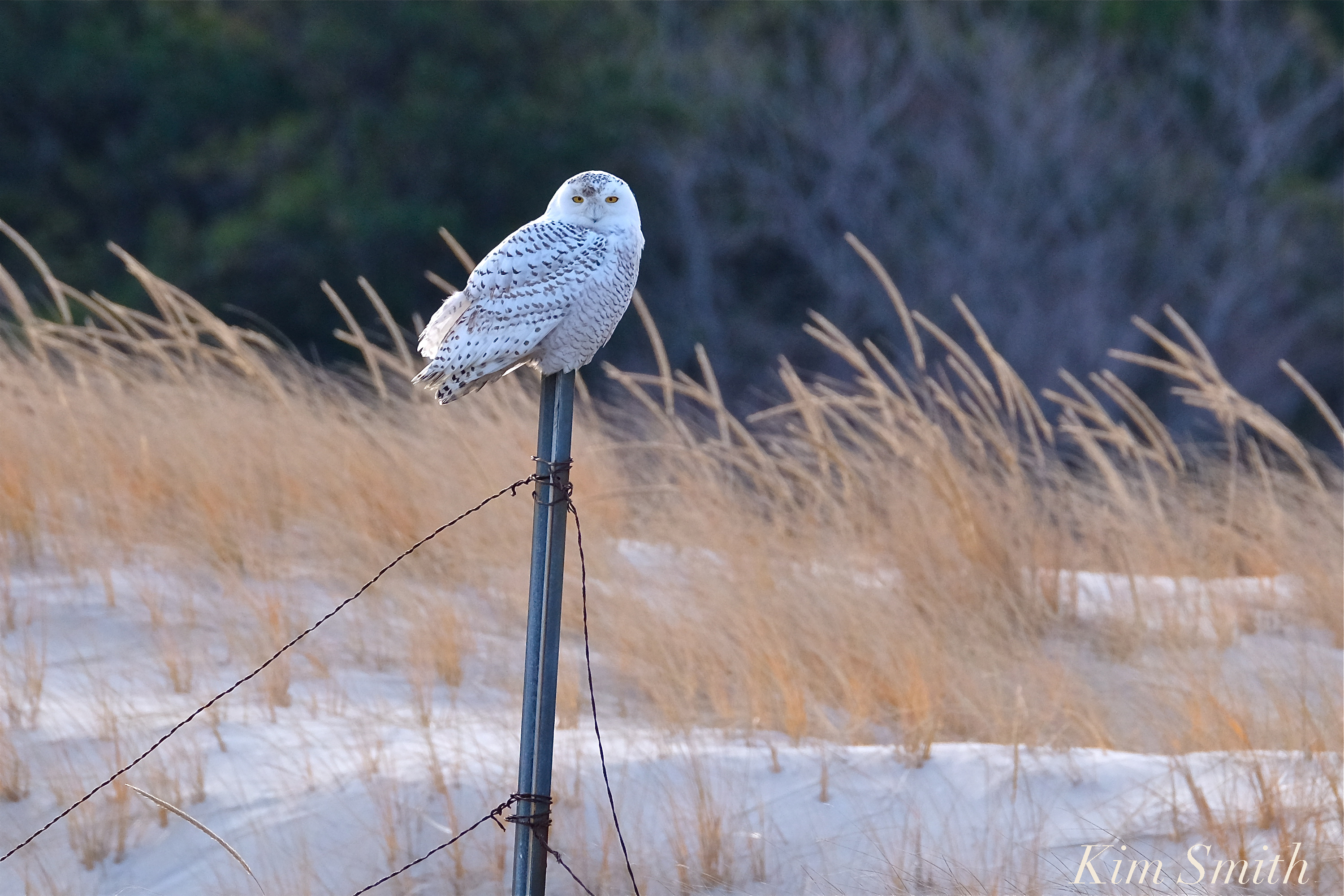
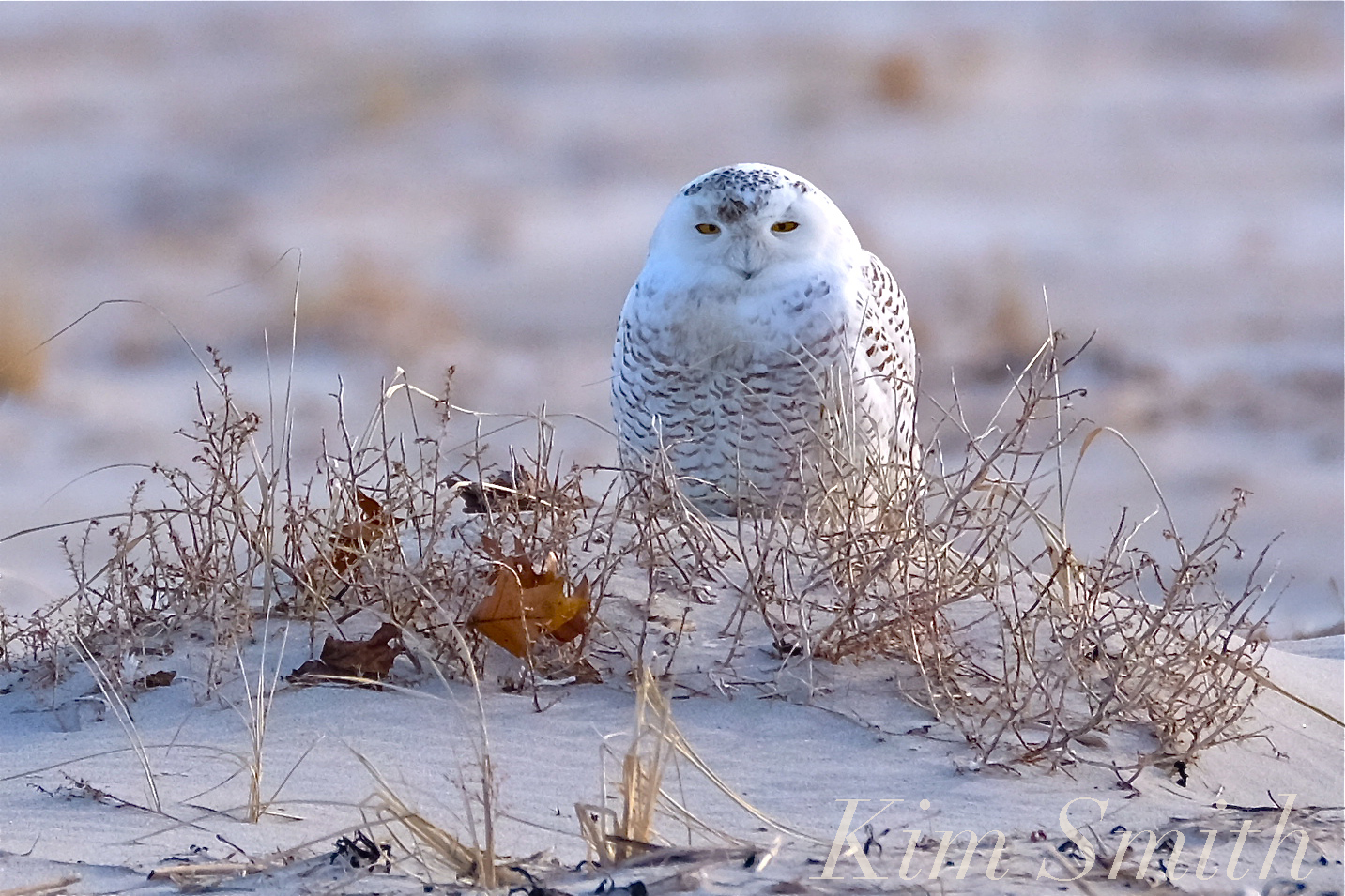
 The temperature had climbed to twenty, but I was getting worried about exposed photo fingers and frostbite. After taking a few more photos and some footage of the Snowy in the sand, I very reluctantly headed home.


Today I didn’t see the Snowy Owl, but did find a scattering of Snowy feathers in the sand, in the same area where one had been hunting the previous week. I showed the ranger at the gate, Emily White, the feathers and she confirmed they were from a Snowy. She said that hawks and falcons will attack Snowies. I didn’t see any bones or body parts, so hopefully it wasn’t a fight to the death. Emily was super helpful and shared lots of useful information. This year’s Audubon Christmas Bird Count at Cranes was relatively uneventful, with fewer numbers counted than usual. Many more beautiful birds will be arriving to our shores in the coming weeks, foraging in the dunes and shrubby habitat, and hopefully, there will be lots more Snowy Owl sightings! Emily White, Cranes Ranger
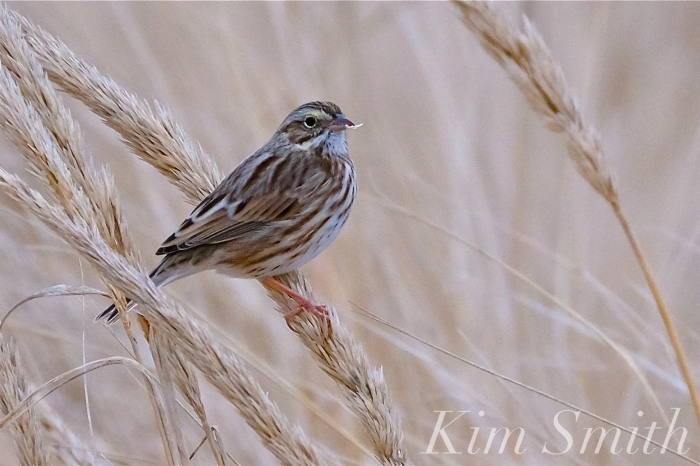
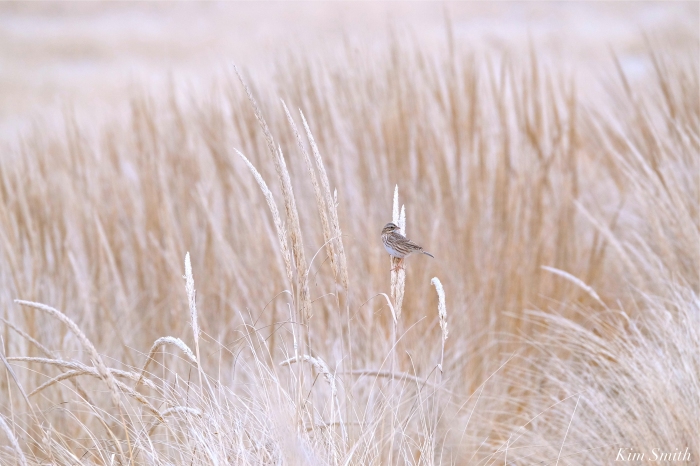
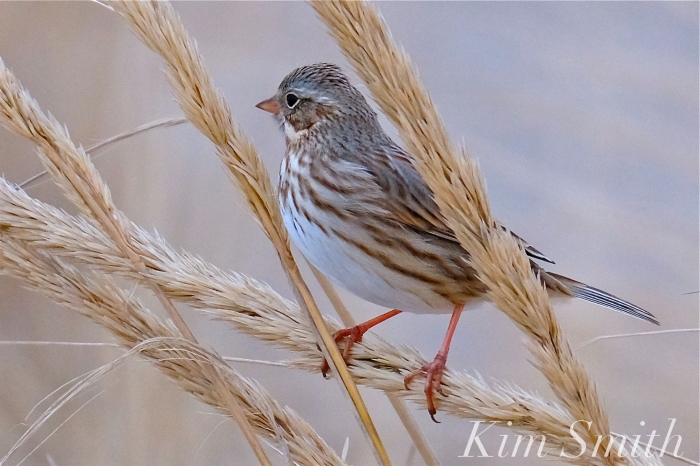
Song Sparrow eating ripe beach grass seed heads.
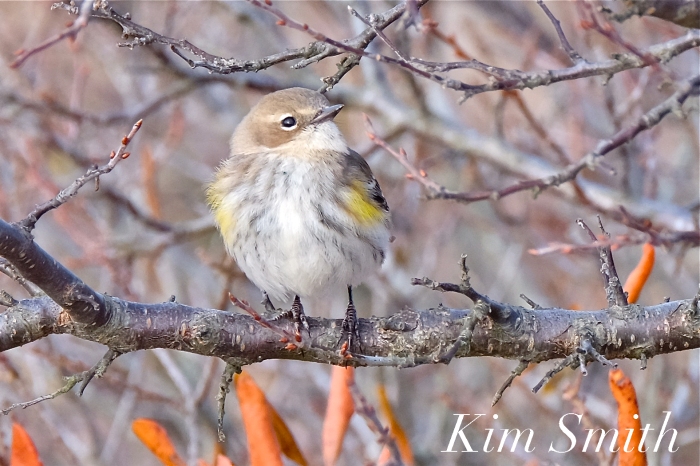
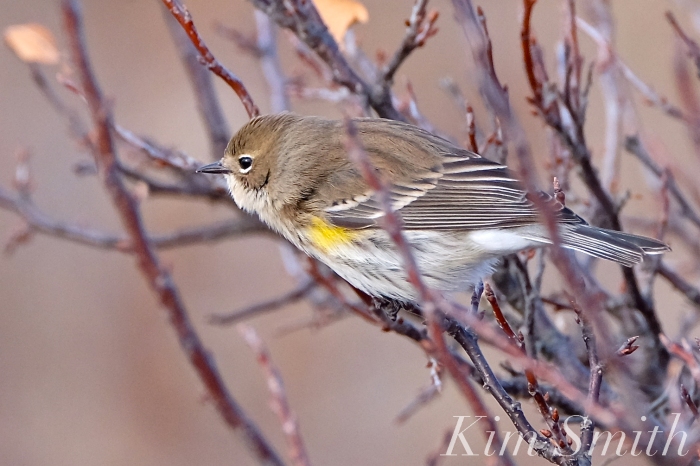
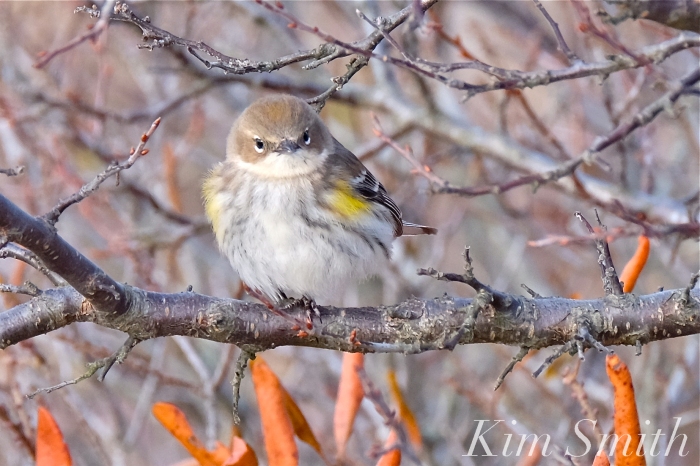

Yellow-rumped Warbler winter plumage.
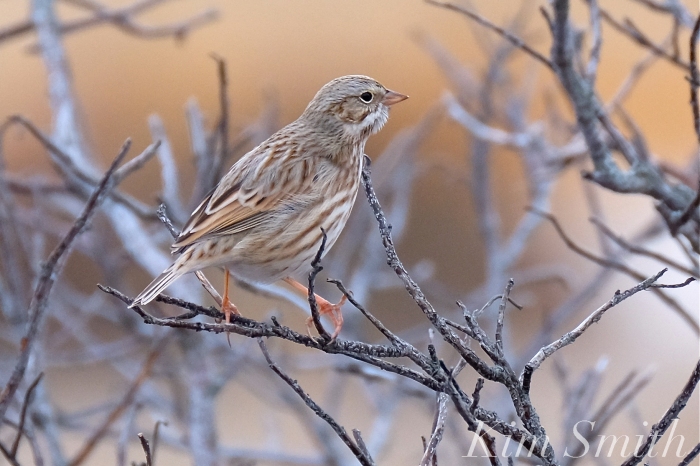
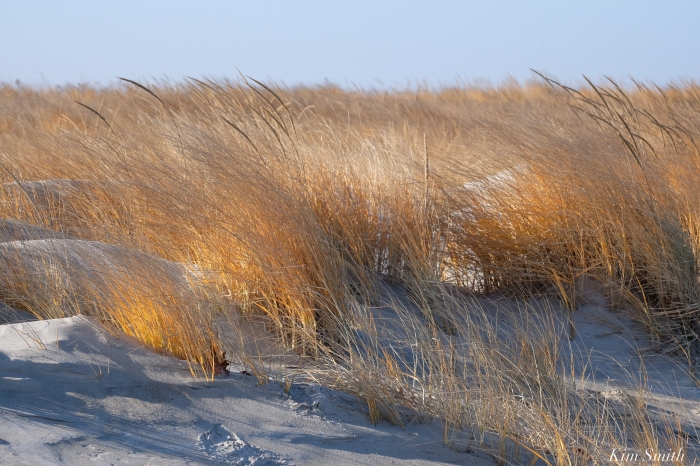
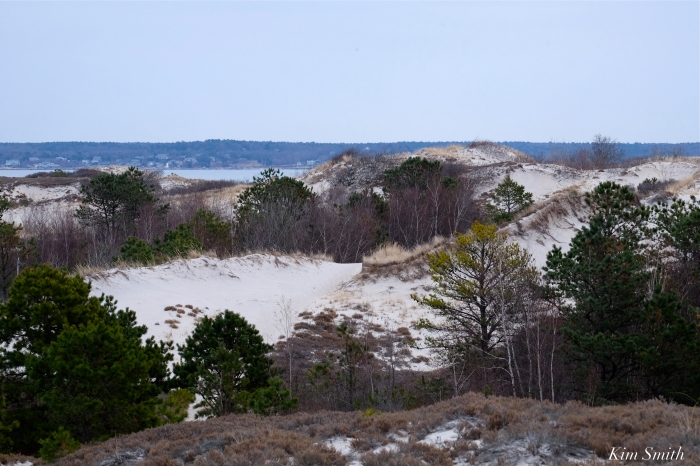
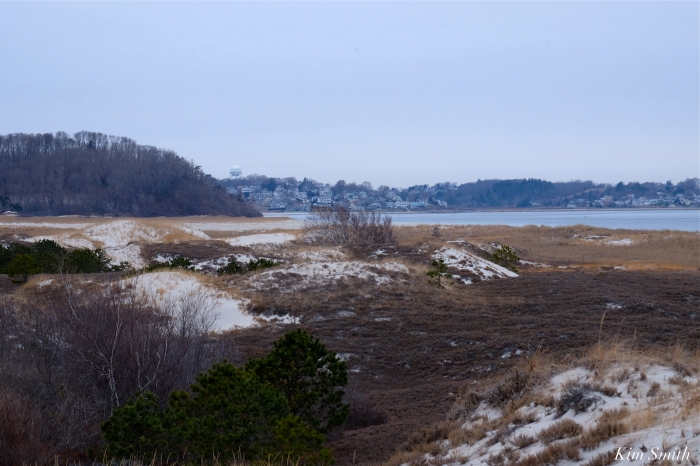


More scenes from the Green Trail
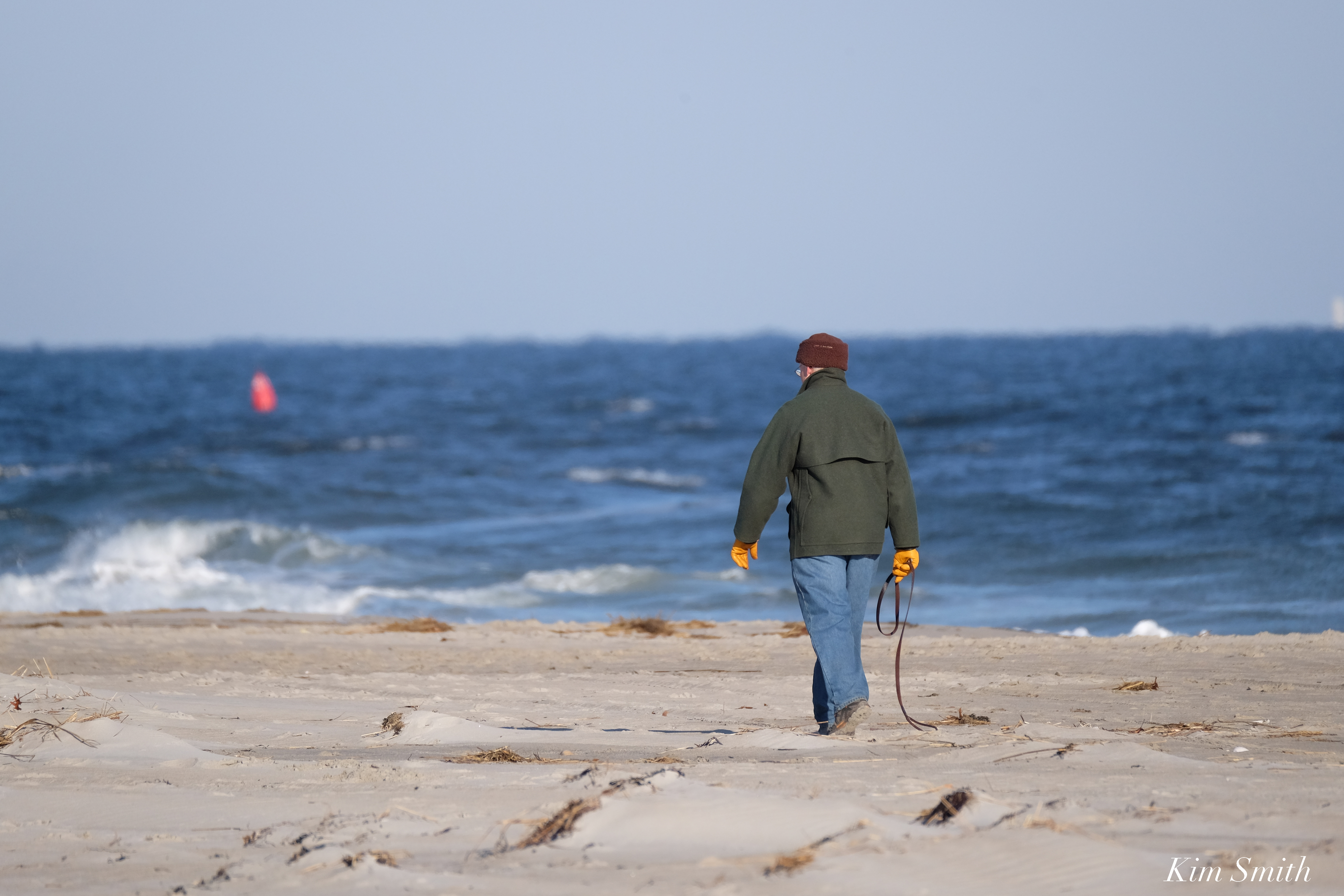 Scofflaw dog owner


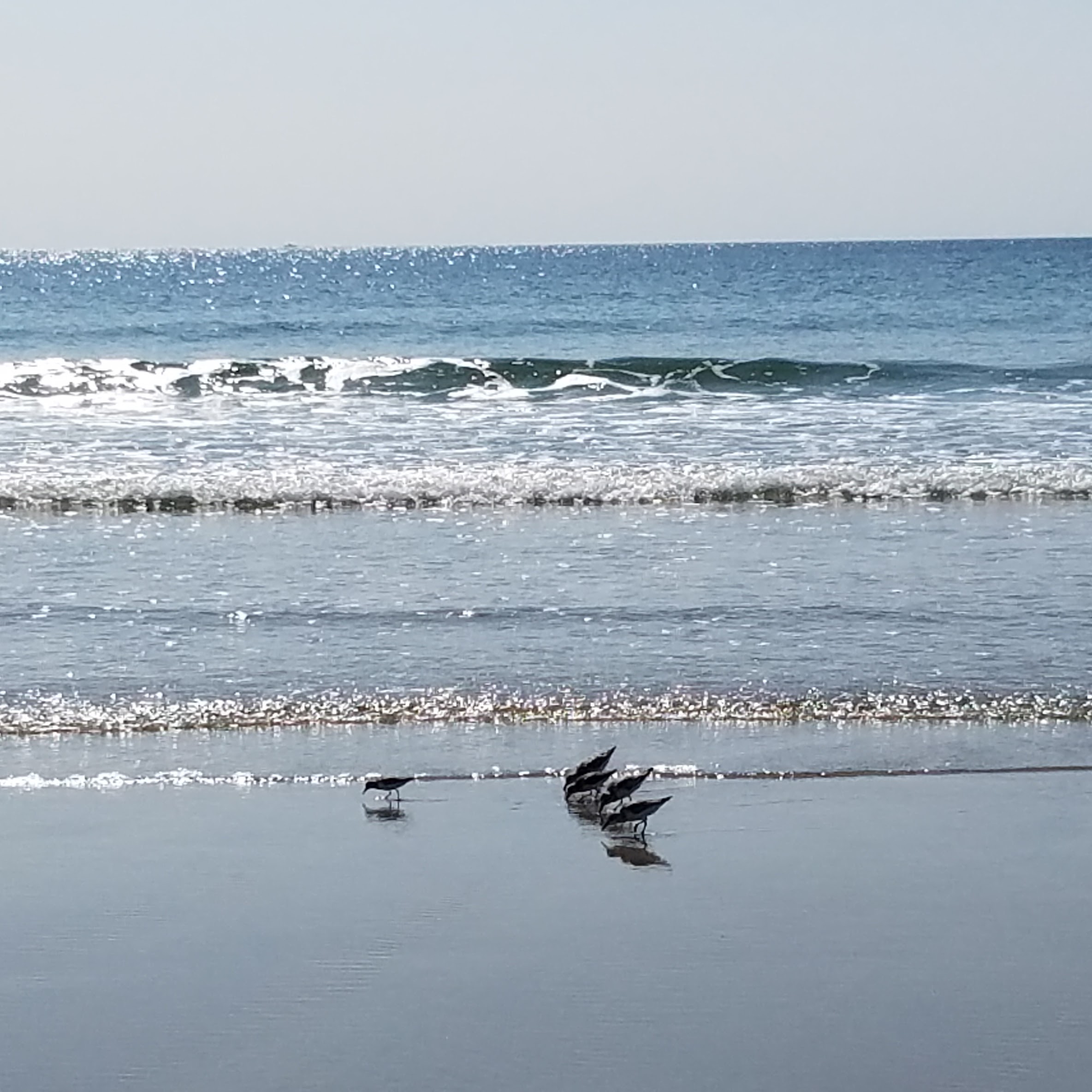
Brief moment looked like 2 instructors for Sunday morning surf class

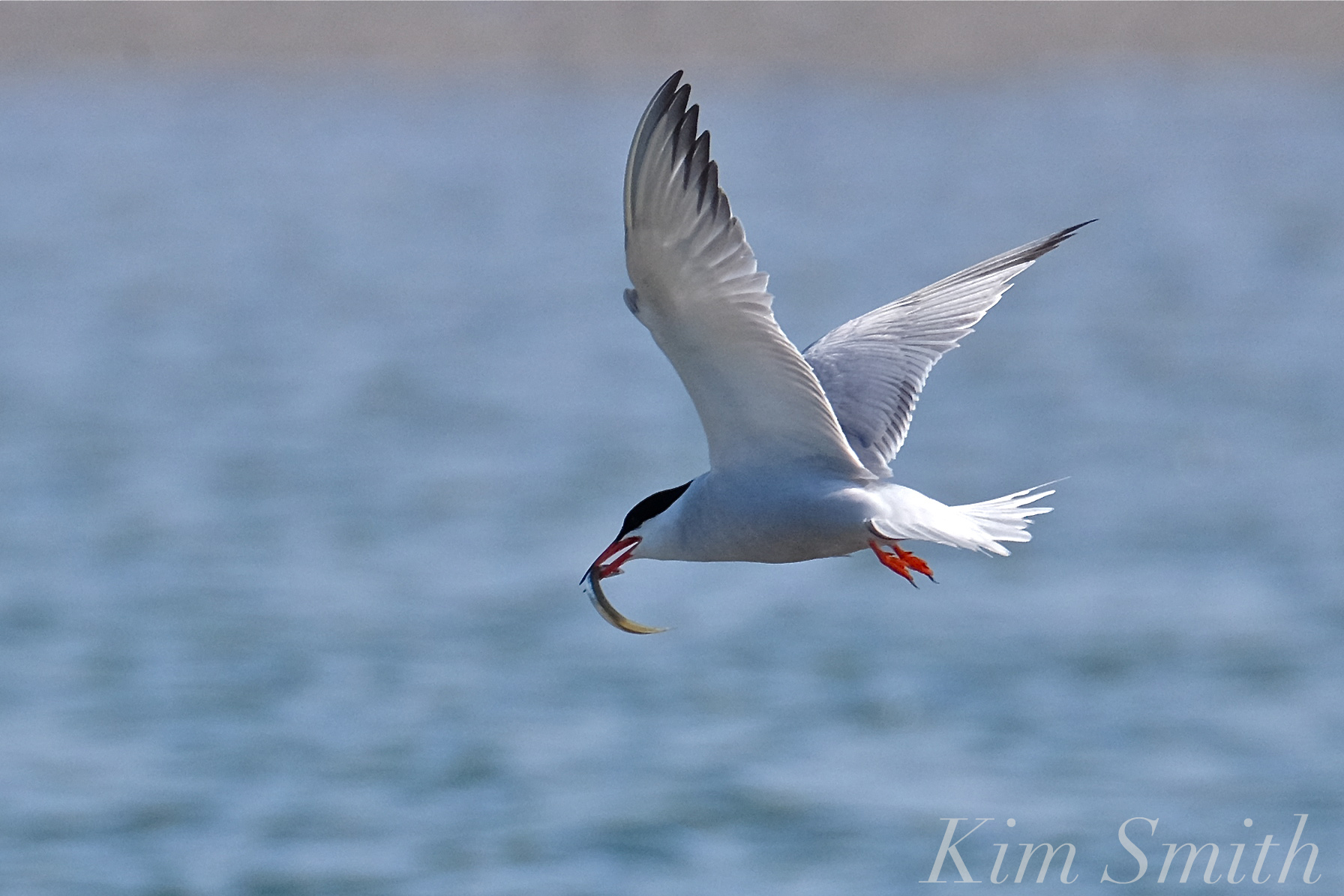 Common Tern delivering breakfast to its fledgling.
Here are a collection of recent photos of different species of shorebirds and songbirds gathering and migrating along Cape Ann beaches that Little Chick may encounter on his journey south.
During the spring breeding season Piping Plover mating adults chase all other birds out of their territory, from the largest Black-backed Gull to the tiniest Song Sparrow. At this time of year, during the summer southward migration, you’ll often see PiPl feeding alongside other PiPl, as well as with Semipalmated Plovers, Black-bellied Plovers, Killdeers, peeps, terns, and gulls.


Ruddy Turnstones
 Ruddy Turnstones Photobombed
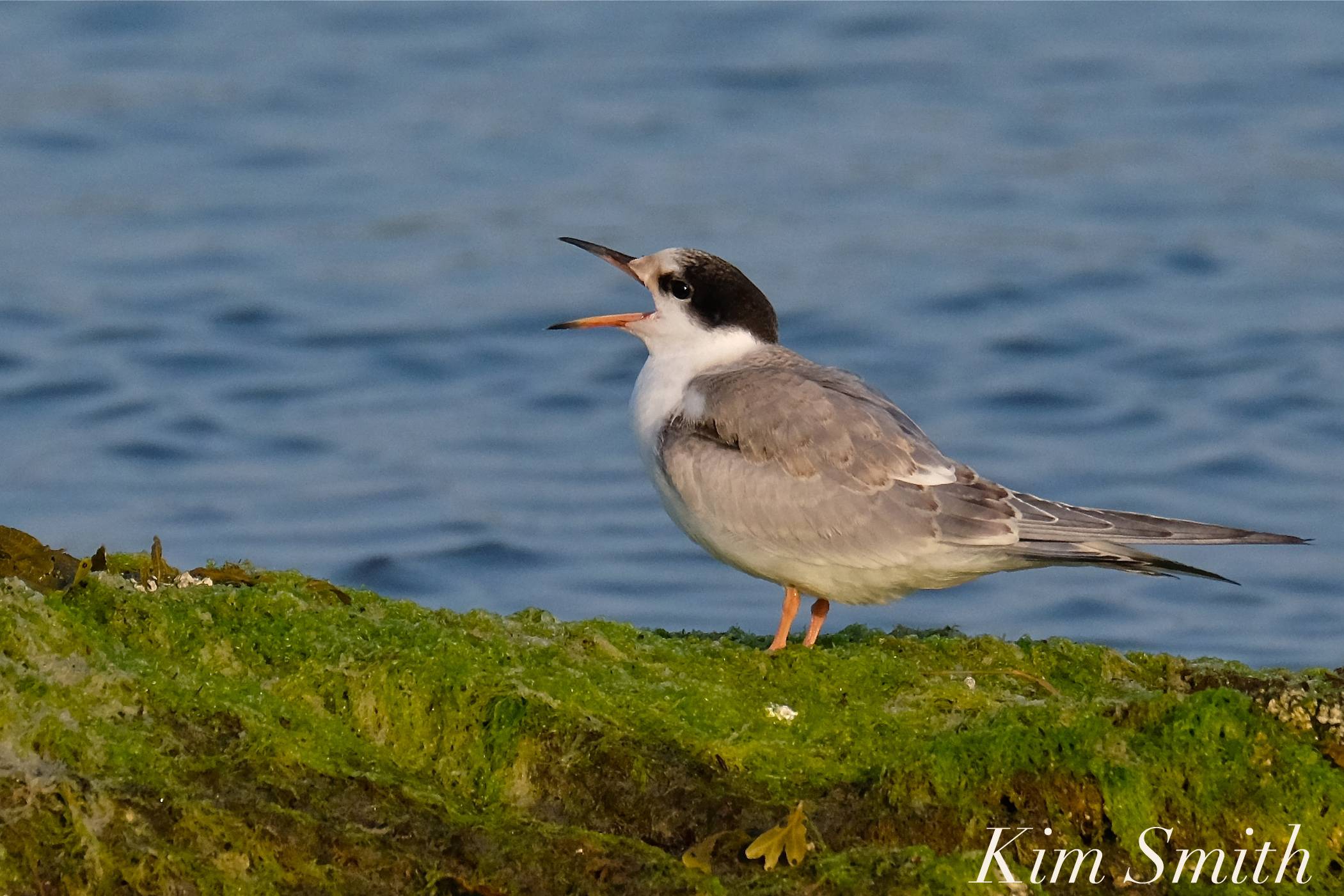 Common Tern fledgling squawking for breakfast.
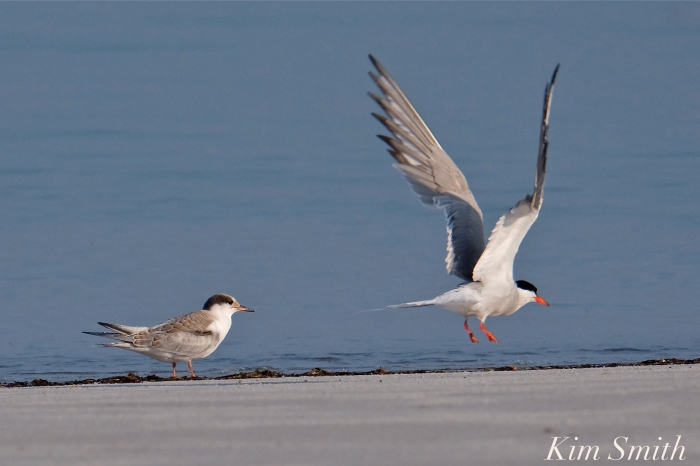

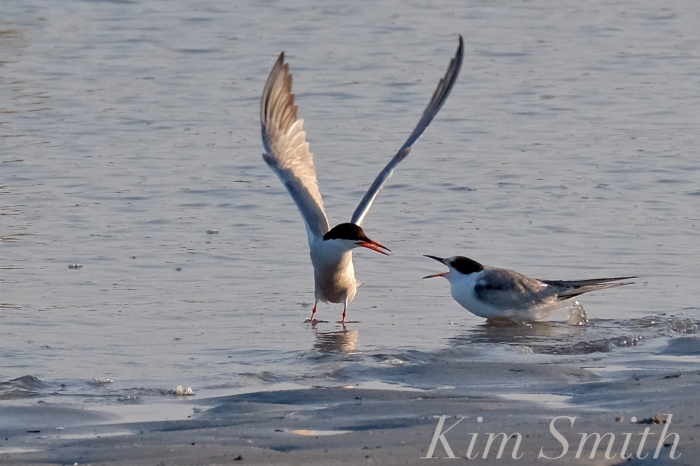
Won’t someone, anyone, please, please feed me! Unlike Piping Plover chicks, Common Tern chicks cannot feed themselves at birth. Common Tern chicks can walk and swim, but it will be many weeks before they learn to fish.


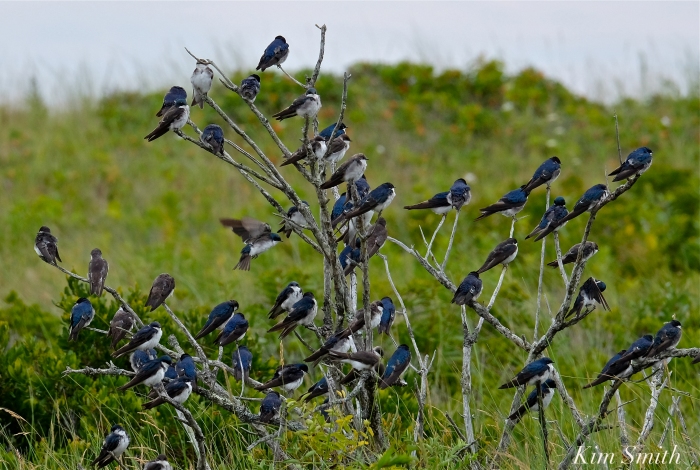

Tree Swallows massing, foraging in dunes rich with insects and berries.

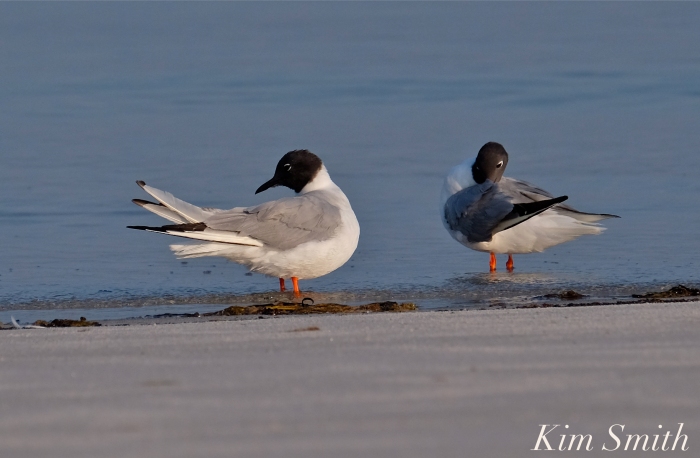
Bonaparte’s Gulls
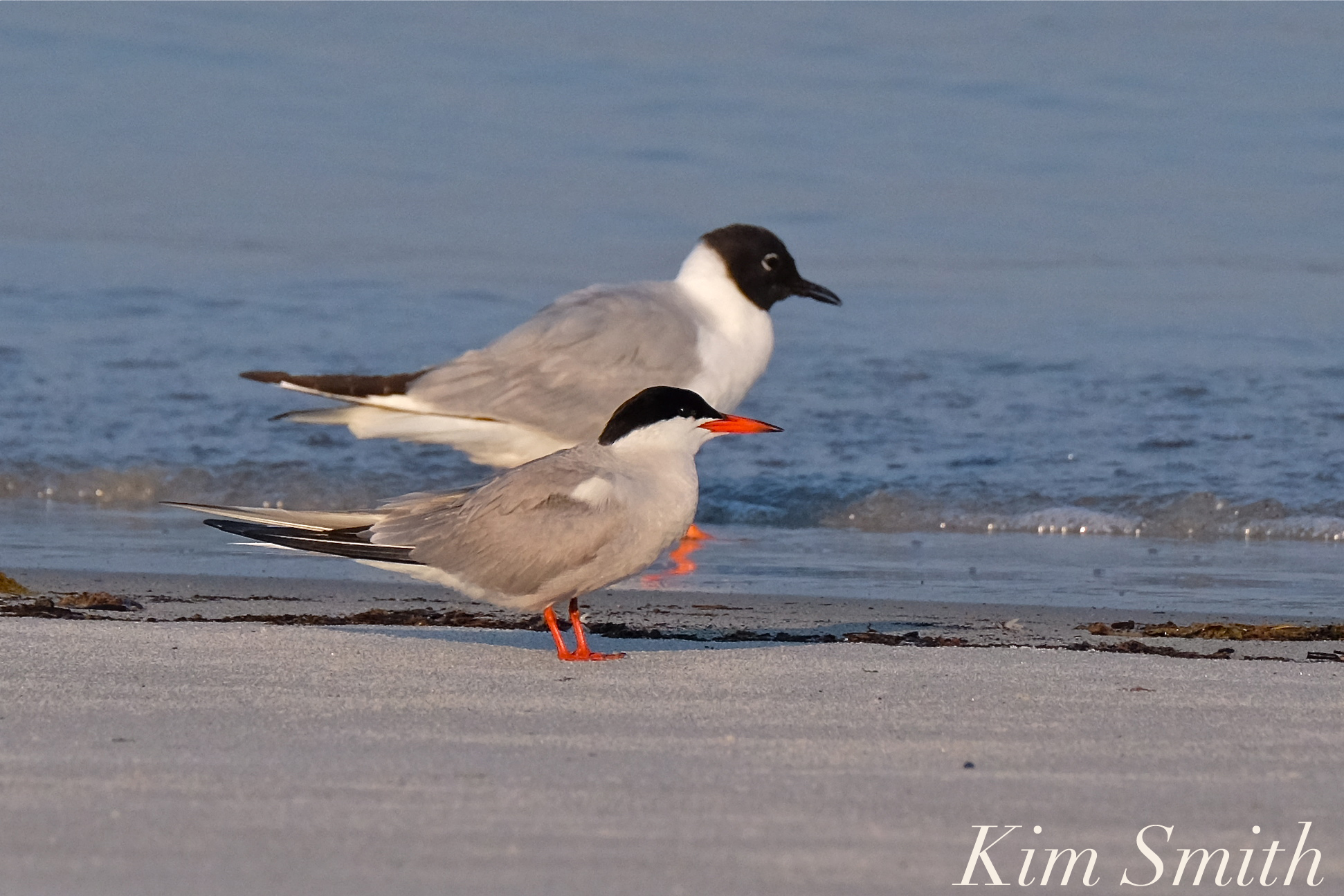 Compare Common Tern in the foreground to Bonaparte’s Gull in the background. Both have red-orange legs and feet and both are black-headed. The easiest way to differentiate when on the beach is the Common Tern’s bill is orange; the Bonaparte’s Gull’s bill is black.

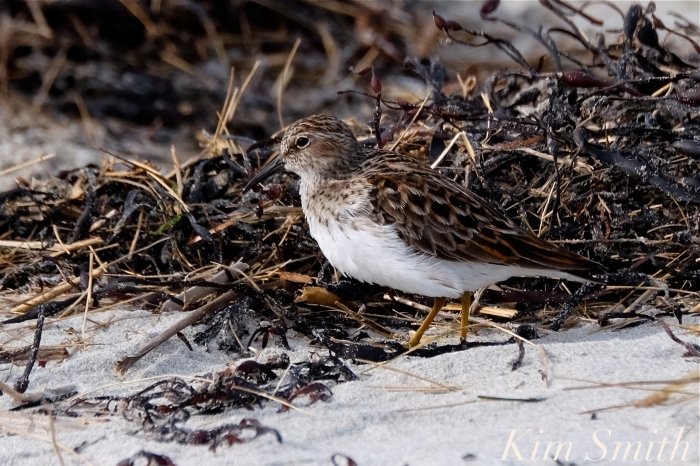
Least Sandpipers are the smallest of peeps. Note how beautifully camouflaged are they in the drying seaweed at the high tide line.
Daybreak and early morning are often the most beautiful time of day to see wildlife.

it’s not the first time! Love these stories. #sharetheshore
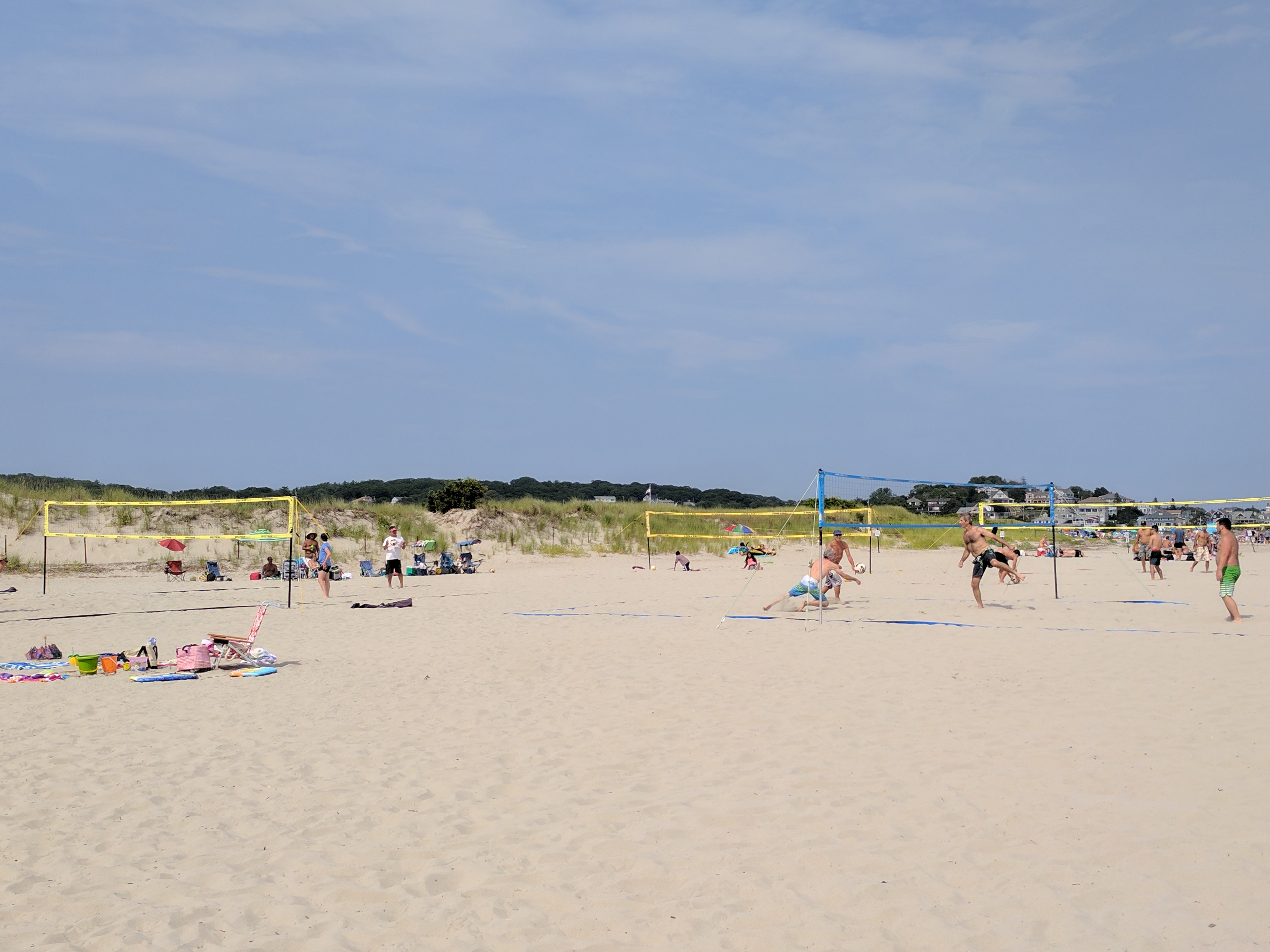
From Hazel, piping plover volunteer: I was round the bend (!) replacing signs a little later – one of the volleyball players said he had escorted both of them to the creek. I have been turning people back from playa del plover & maybe 1/2 hr ago a small boy spotted an adult as he (the boy) was leaving.

Dave (whisperer) and Bill
link to Gloucester Plover on twitter: https://twitter.com/Glostaplover
link to Google docs Volunteer log

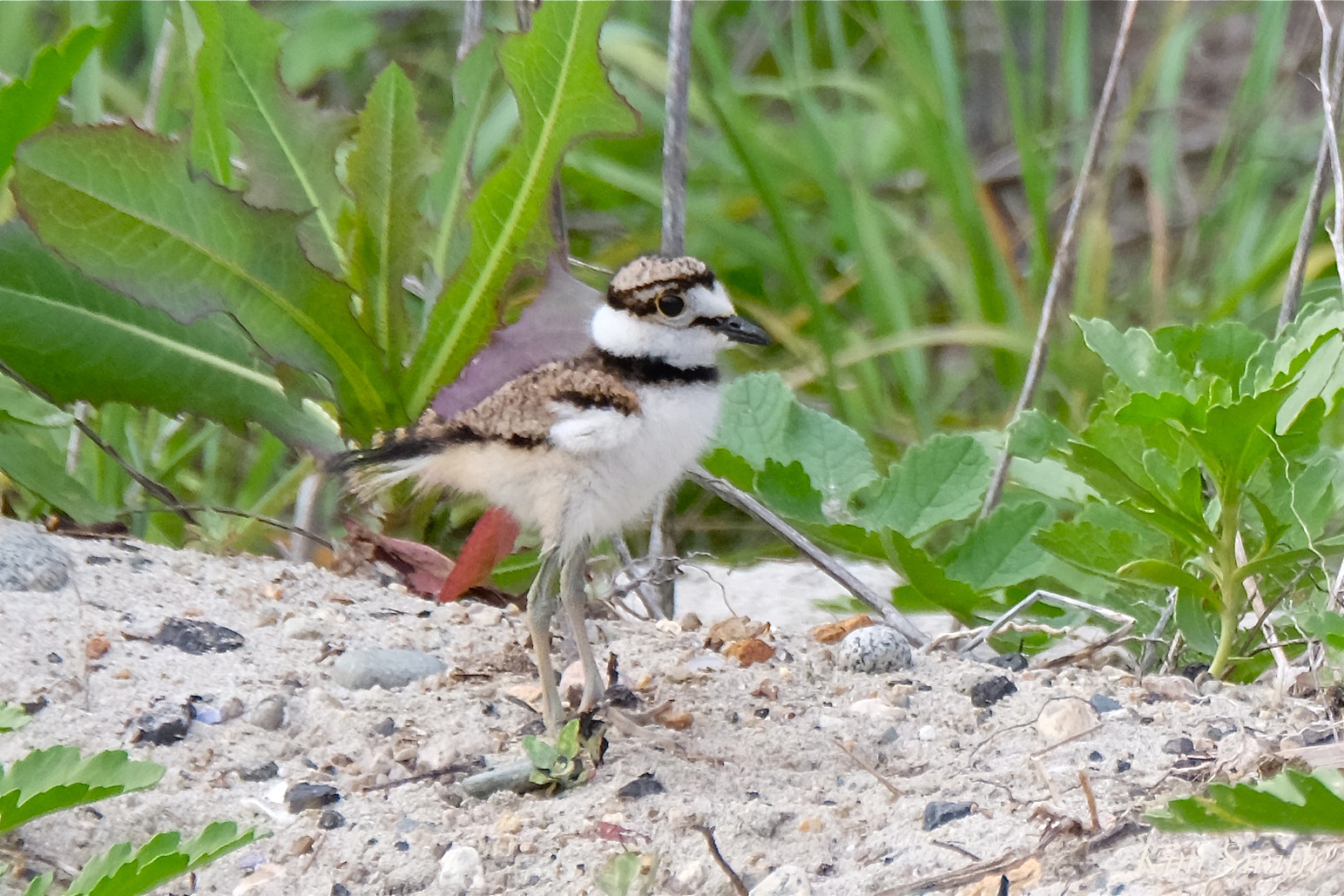 Killdeer Chick
Lost of folks are asking, are the Piping Plovers nesting in the Good Harbor Beach parking lot? The answer is no, the Piping Plovers are nesting on the beach near boardwalk #3. The mama and papa, and now chicks, that are running all around the GHB parking lot are a shorebird named Killdeers. Comparatively quite a bit larger, and more commonly seen, Killdeers are related to Piping Plovers, but are a different species.
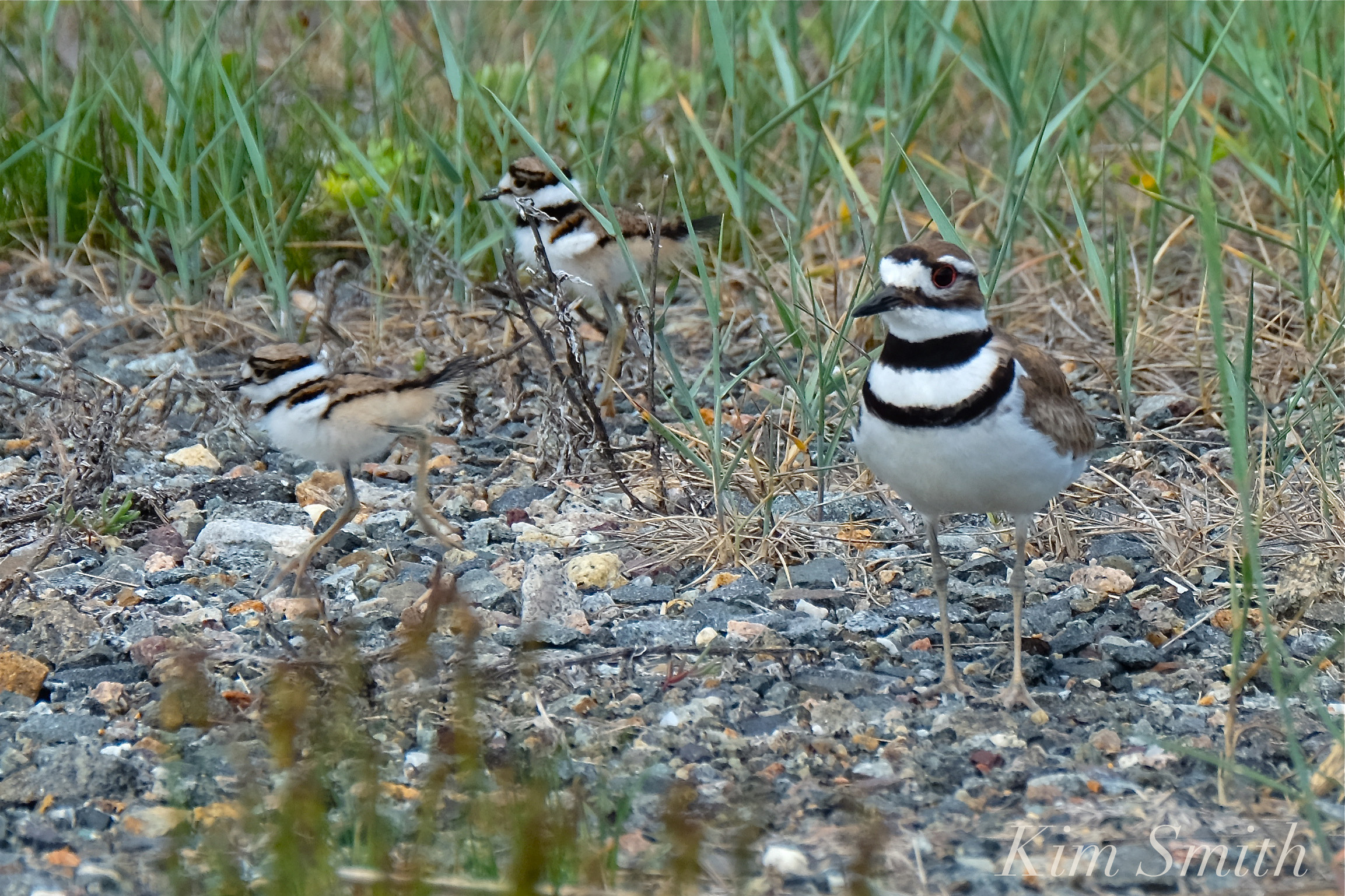 Killdeer Chicks and Parent, Good Harbor Beach 2016
That I am aware of, this is the second year in a row Killdeers have chosen to nest at the Good Harbor Beach parking lot. It is frightening to see the babies zoom in and out between the cars. The mom and dad give vocal cues to the chicks, but still they run willy nilly. Killdeers have a fondness for human modified habitats, such as the GHB parking lot, and a willingness to nest close to people.
Like Piping Plover chicks, Killdeer chicks are precocial. That is a word ornithologists use to describe a baby bird’s stage of development at birth. Precocial means that shortly after hatching, the bird is fully mobile. Plover chicks are not completely mature, they still need parents to help regulate their body temperature, but they have downy feathers and can run and feed themselves within moments after emerging. The opposite of precocial is altricial. Birds that hatch helpless, naked, usually blind, and are incapable of departing the nest are altricial. Robins and Cardinals are examples of altricial birds. 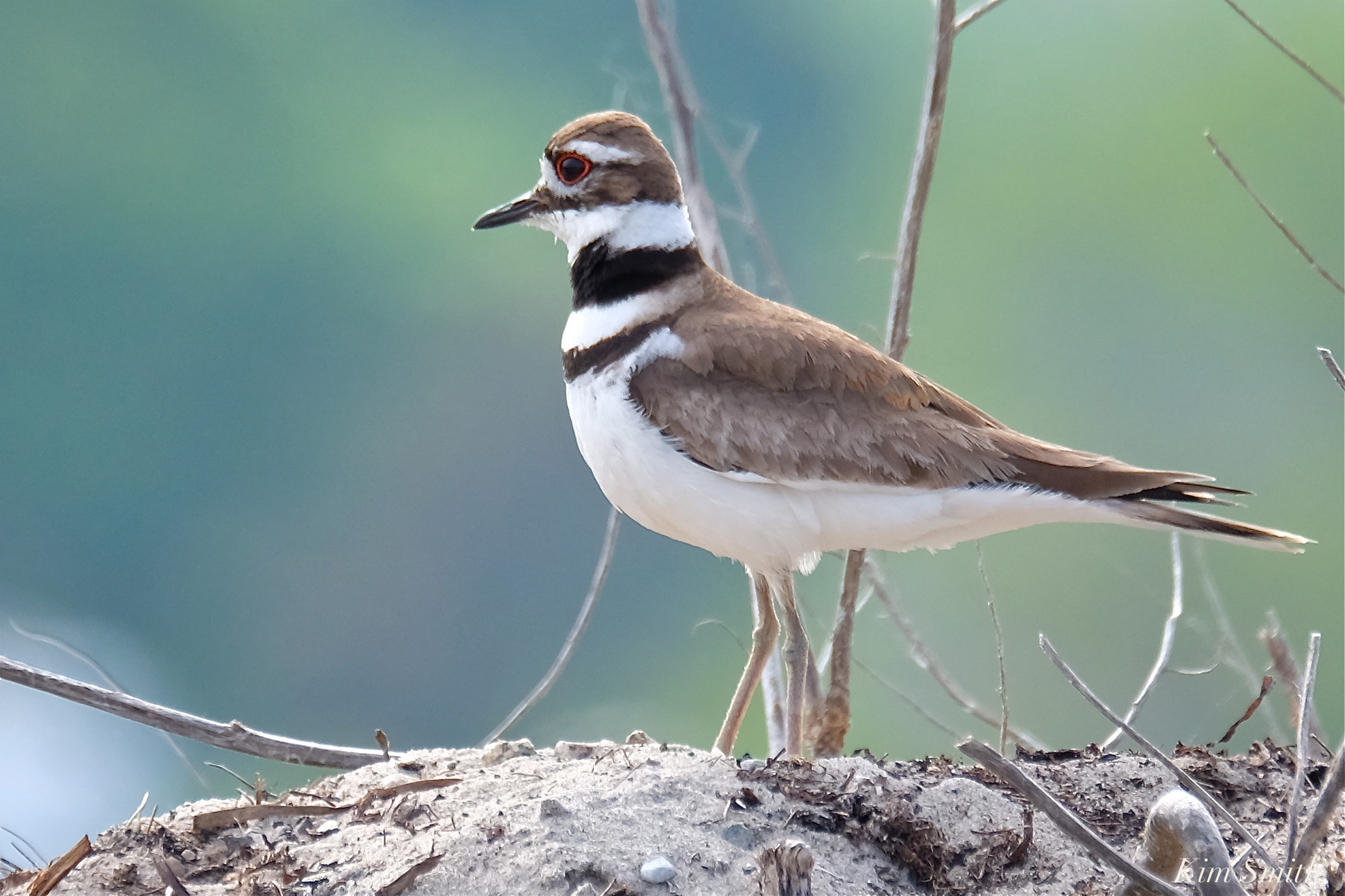
Adult Kildeer
If you encounter the Kildeer family and would like to take a photo, or simply observe these adorable babies on-the-go, my advice is to stand quietly and don’t chase after them. Running after the chicks will put the parents into panic mode and they may lose sight of the other siblings. As the chicks mature, they will spend less time in the parking lot, and more time in the marsh and at the tidal river edge. Kildeer adults, and even the chicks, are actually good swimmers. Last year the Kildeer family crossed the tidal river and spent the second half of the season on the opposite side of the marsh.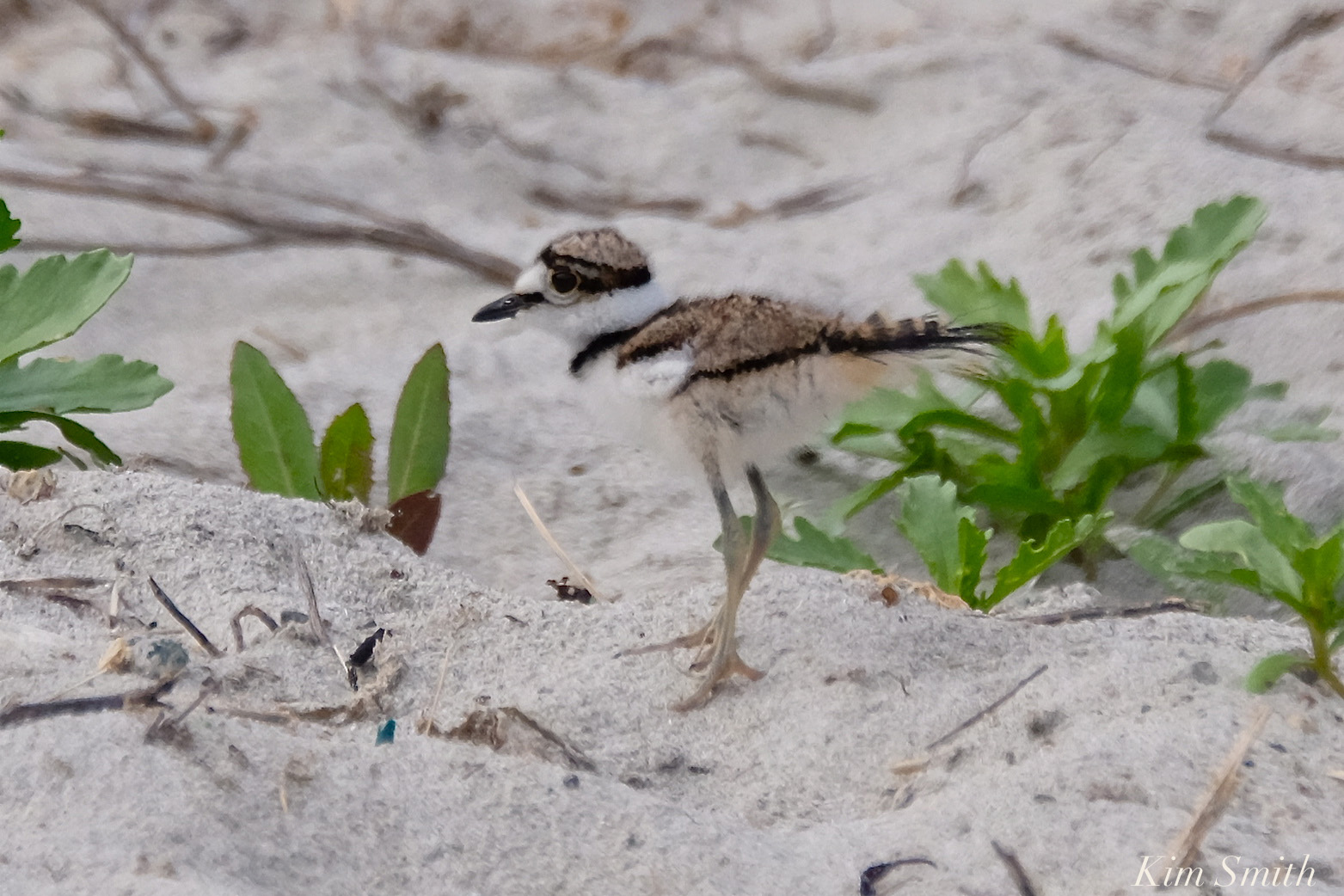 Compare the Killdeer chick above, to the Piping Plover chick below.
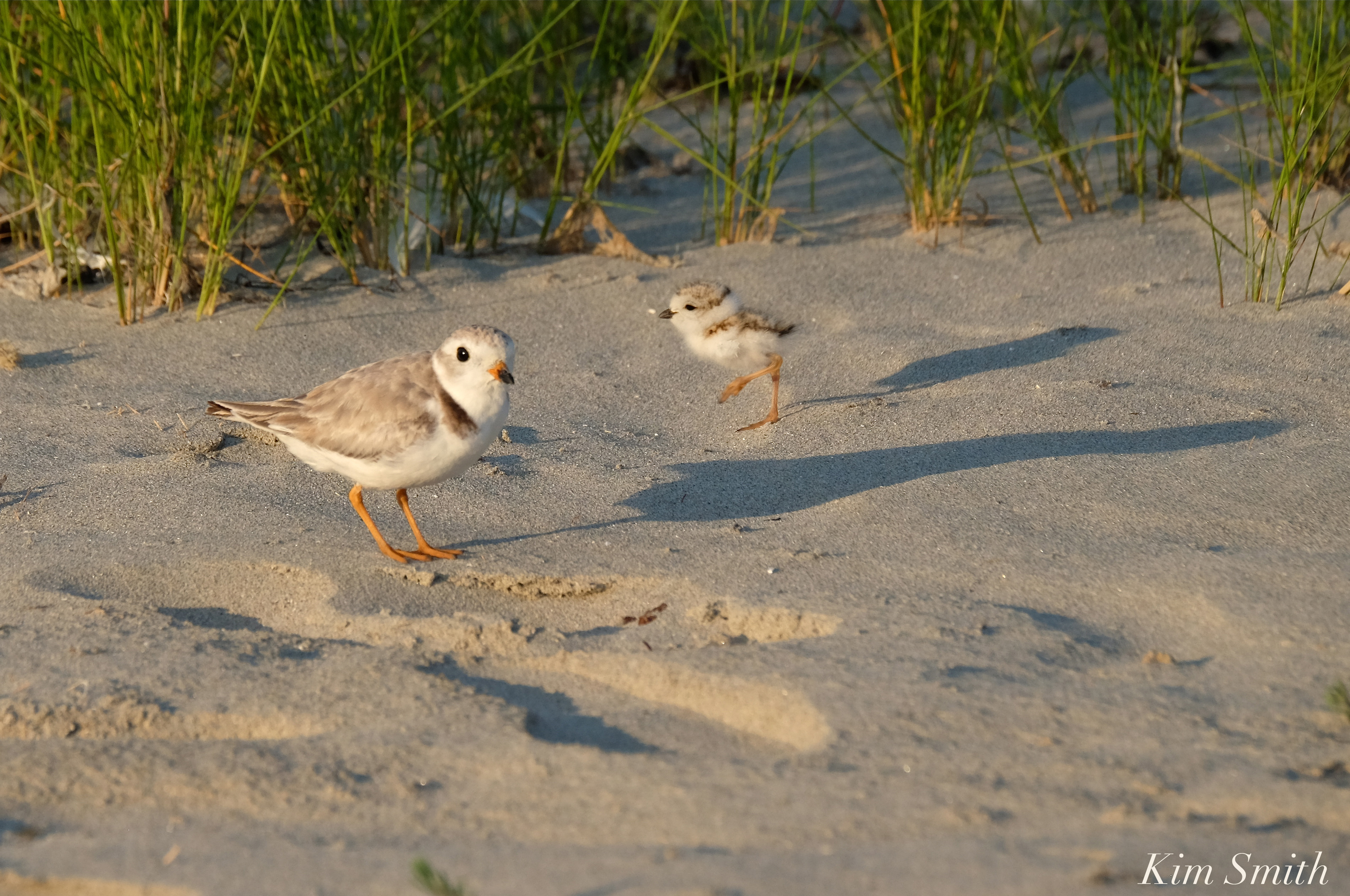 Piping Plover Chick and Mom
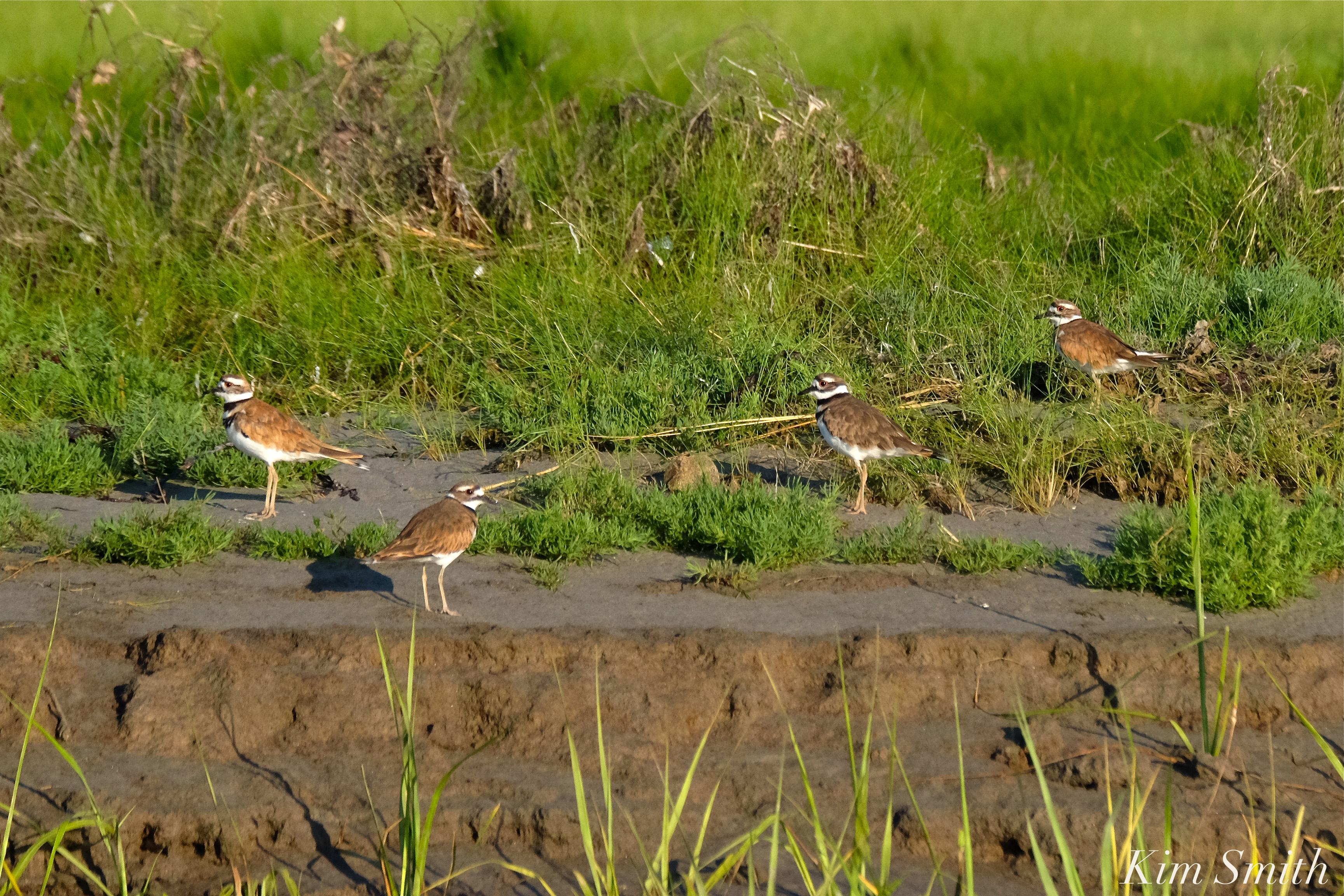 Killdeer Family all grown up, September 2016

Documentary filmmaker Jared Flesher, “The Red Knot has been on my list since the very beginning,” he says. “As a species, it has all the elements of a dramatic story.” The bird is charismatic and attractive, particularly in its red-breasted summer plumage, and it makes one of the longest annual migrations on Earth, flying up to 9,000 miles each way from the southern tip of South America to the northernmost reaches of the Arctic where the species nests. Every May, as Red Knots make their long trek north, they pause at Delaware Bay in southern New Jersey to refuel, gobbling down the fat-rich horseshoe crab eggs that coat the shore.
At least, that’s what’s supposed to happen. Red Knots already have to overcome numerous challenges on such a long migration, but today they also face new threats. Climate change puts the species’ Arctic nesting sites at risk, and there’s trouble with their main food source at Delaware Bay, where in the early 2000s horseshoe crab over harvesting led to a Red Knot population crash. Since then, the subspecies that migrates through Delaware Bay has been listed under the Endangered Species Act, and the crab harvest has been limited. Red Knots seem to be slowly rebounding, but conservationists are worried that the population is still fragile.
As a storyteller, a species disappearing from earth forever—that’s just about the most dramatic hook there is,” Flesher says. And as he explores in Birds of May, which was partly funded by the Washington Crossing Audubon Society, a new threat may be lurking for the far-flying birds at their New Jersey stopover site.”
See the trailer below and watch the film exclusively at Audubon here only through May 7th.

On the sandy beaches of the Delaware Bay, in New Jersey, a visitor arrives each May from the southernmost tip of South America. Name: Calidris canutus rufa. The rufa red knot.
What makes the red knot remarkable is its epic journey: 19,000 miles per year, from Tierra del Fuego to the Arctic Circle and back again, one of the longest migrations in the animal kingdom.
The Delaware Bay serves as the most important stepping stone during the red knot’s long spring migration. Famished knots, having flown without rest for as many as seven days straight, arrive on the bay having lost half their body weight. For two crucial weeks, the birds gorge on the eggs of horseshoe crabs. Red knots that gain enough weight will survive the final leg of their journey to the Arctic. Others perish.
In 2015, the U.S. Fish & Wildlife Service listed the rufa red knot as a federally threatened species—it faces threats throughout the Western Hemisphere, from habitat loss in South America to the impacts of climate change in the Arctic. The calamitous overharvest of horseshoe crabs on the Delaware Bay last decade was another major driver of the red knot’s decline—when the starving birds arrived, there weren’t enough eggs waiting for them.
Most recently, in 2016, state and federal regulators approved a plan to permit a 1,400 percent increase in oyster farming on the Delaware Bay. The oyster farms operate on the same tidal flats used by hungry red knots at low tide.
Birds of May, filmed in May 2016 on the beaches of the Delaware Bay, is filmmaker Jared Flesher’s ode to the natural spectacle of the red knot’s annual visit. It’s also an investigation of potential new threats to red knot survival. Not everyone is sure that expanded oyster farming and red knots can happily coexist. Against the scenic backdrop of the bay, Flesher interviews both oyster farmers and the shorebird biologists who fear that an oyster farming boom here could push the rufa red knot closer to extinction.
Read more about filmmaker Jared Flesher here:
A tiny shorebird inspires N.J. filmmaker and a flock of poets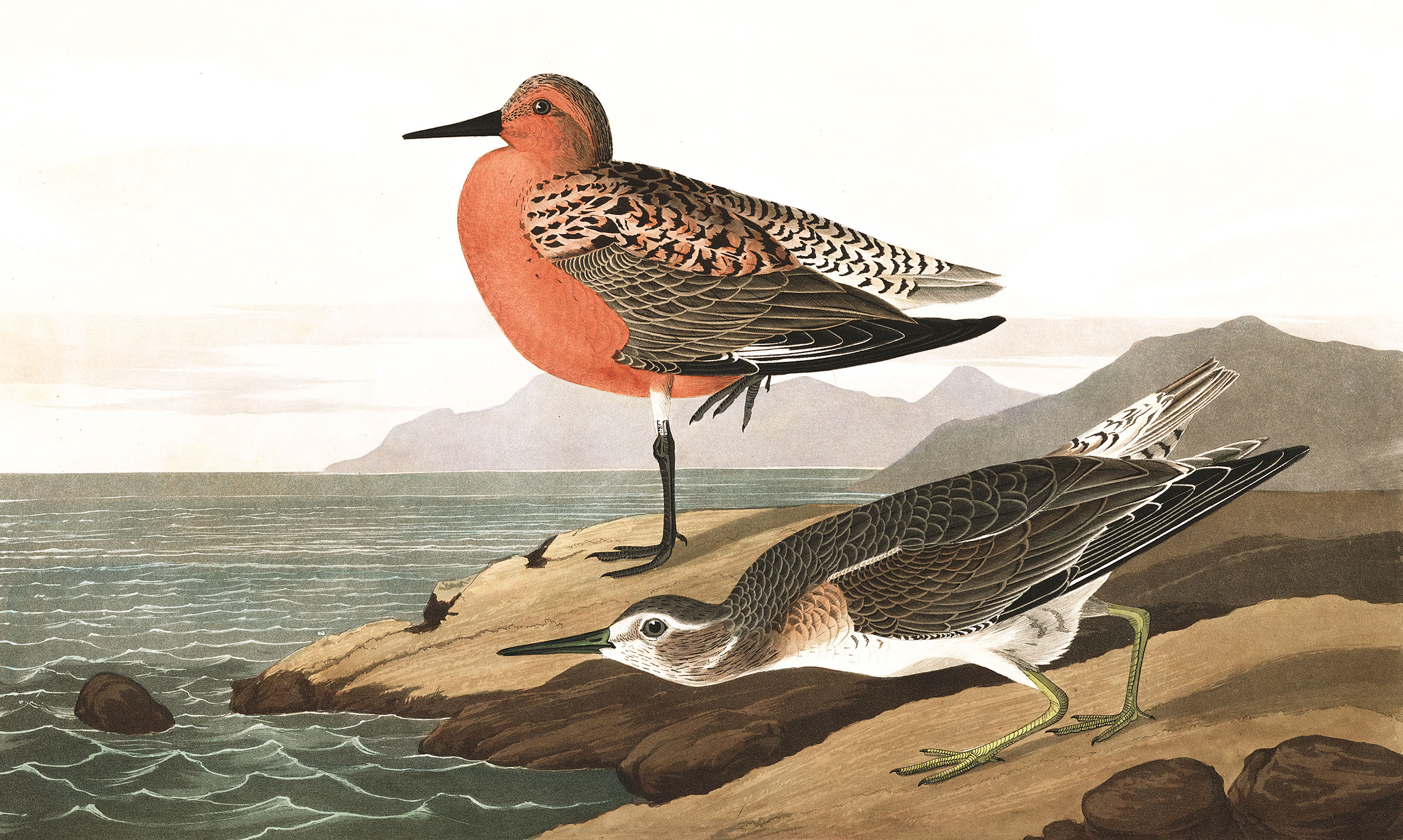

On my calendar and very much looking forward to Deborah Cramer’s talk at the Sawyer Free Library on Thursday, May 4th at 7:00pm

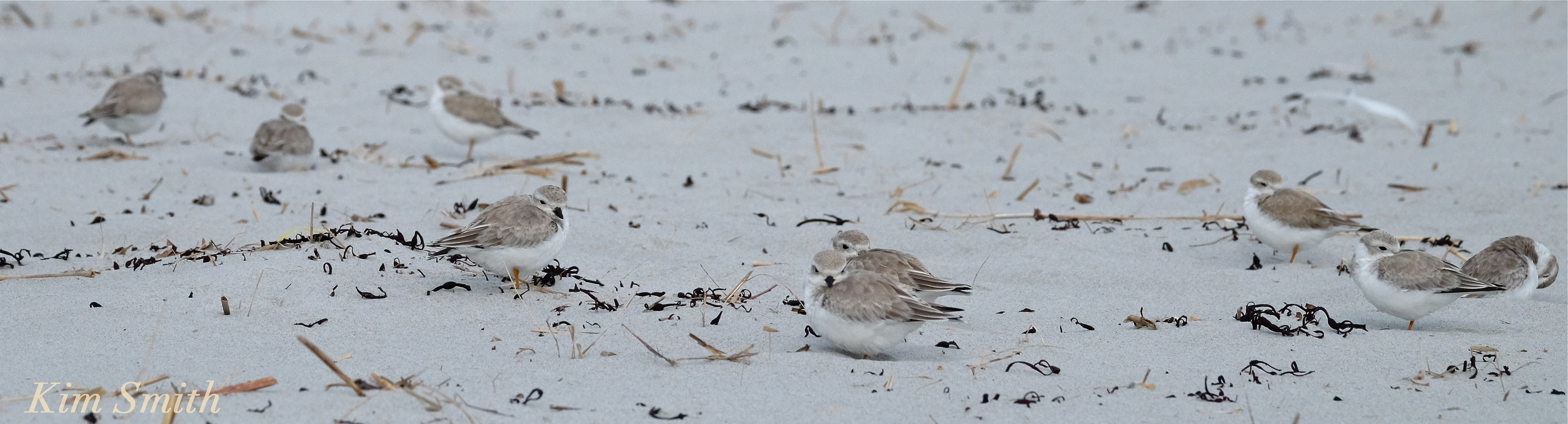 Nine Piping Plovers Napping
WONDERFUL creatures are currently migrating through our shores. How blessed are we who live along the Atlantic Flyway. Whether traveling by shore or by sea, there is this great and continual movement of life happening always in our midst.
Many thanks to my friend Jeff Denoncour, Trustees of Reservations Ecologist for the Northeast Region, for assistance with identifying the birds. I met Jeff earlier this summer when he kindly took me out to the tippy far end of Cranes to film the Piping Plovers nesting there.
Additionally we have seven tiny Monarch caterpillars in terrariums. It’s so late in the season for these teeny ones. Last year at this time we were releasing adult butterflies and I worry that they are not going to pupate in time to successfully migrate to Mexico. The caterpillars are too small to handle, but if any of the kids in our community would like to come see, please comment in the comment section or email me at kimsmithdesigns@hotmail.com. The last of the Cecropia Moth caterpillars has not yet pupated and he is fun to watch as well.
Here are some photos to help you identify our migrating feathered friends.
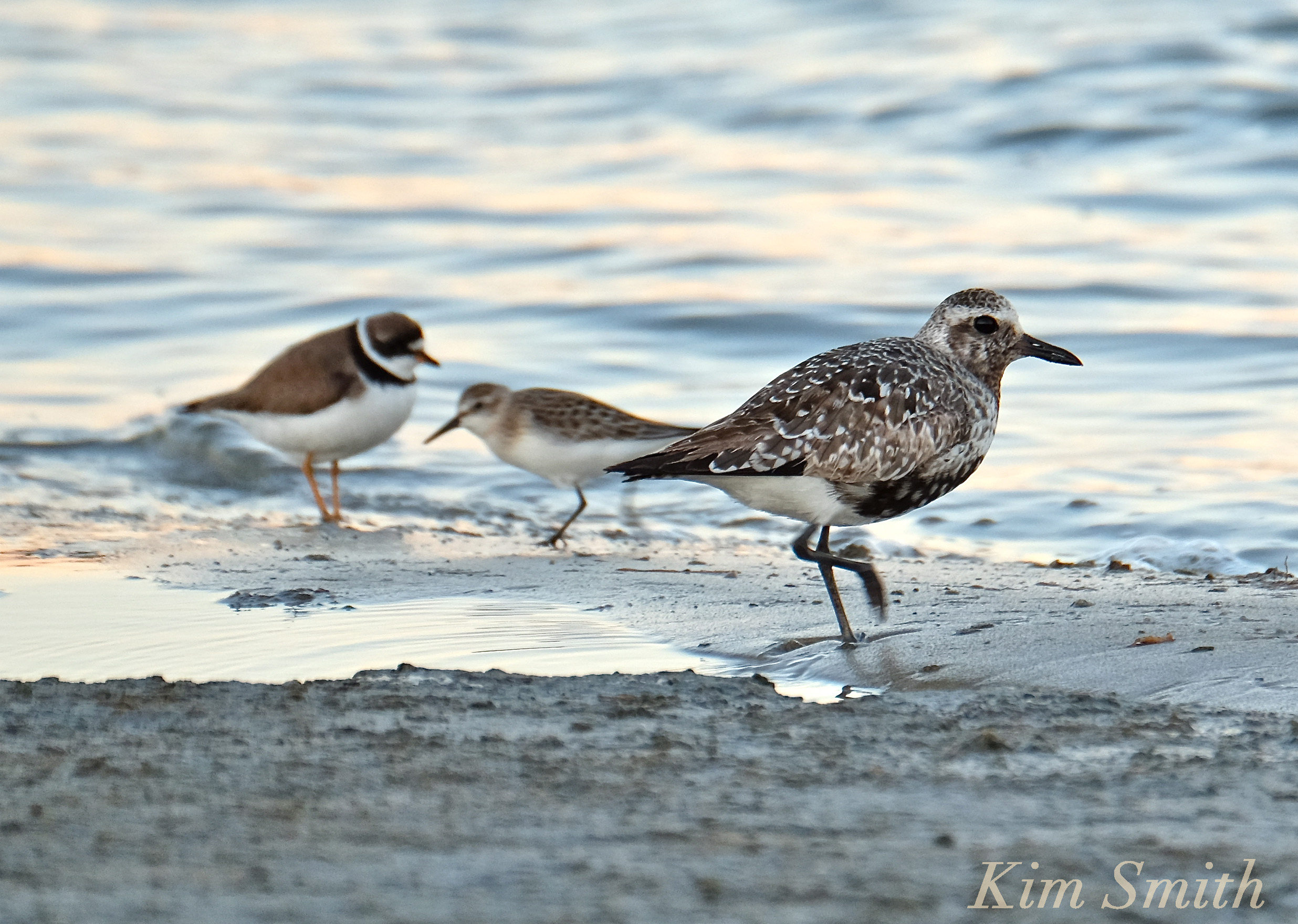
Compare the larger size of the Black-bellied Plover in the foreground with the Semipalmated Plover and Semiplamated Sandpiper in the background
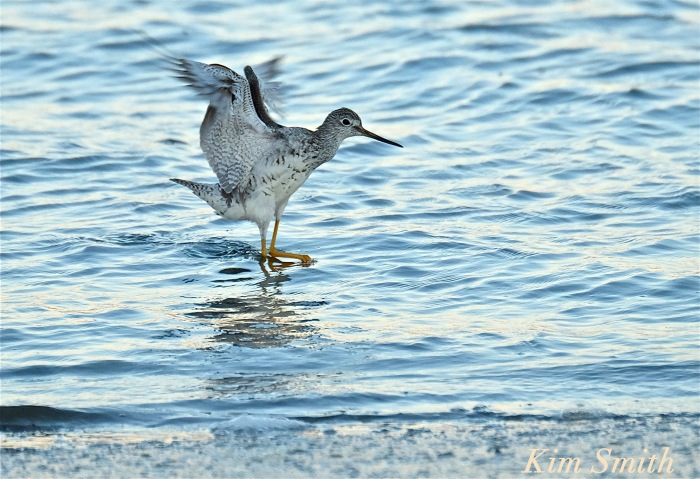
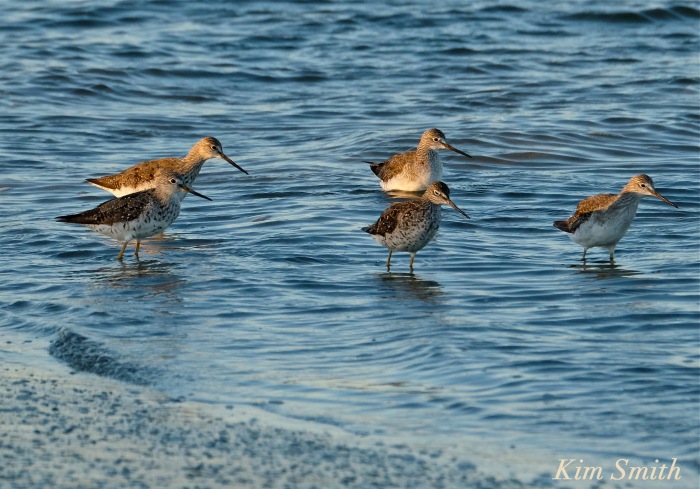
Yellow Legs


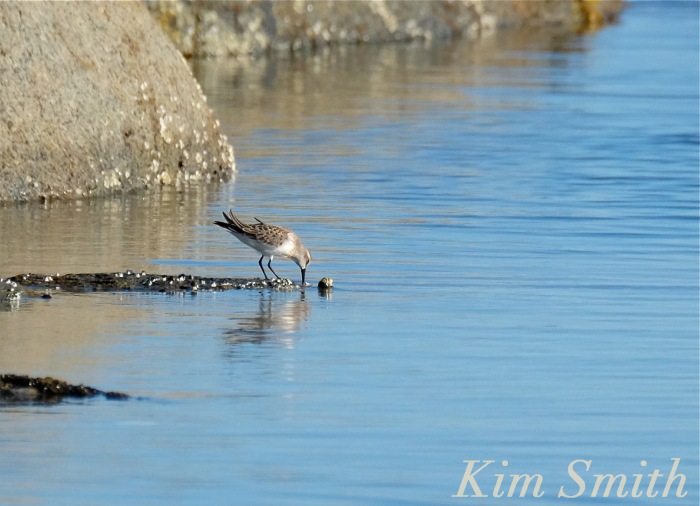
The above group of four photos are of either a pair of Red Knots or White-rumped Sandpipers in non breeding plumage. The White-rumped Sandpiper is thought to migrate an even greater distance than the Red Knot, from Canada’s Arctic Islands to the Southern tip of South America, and some further still to islands near the Antarctic Peninsula. These shy birds did not allow for human interest and the photos were taken at some distance.

Juvenile Laughing Gull
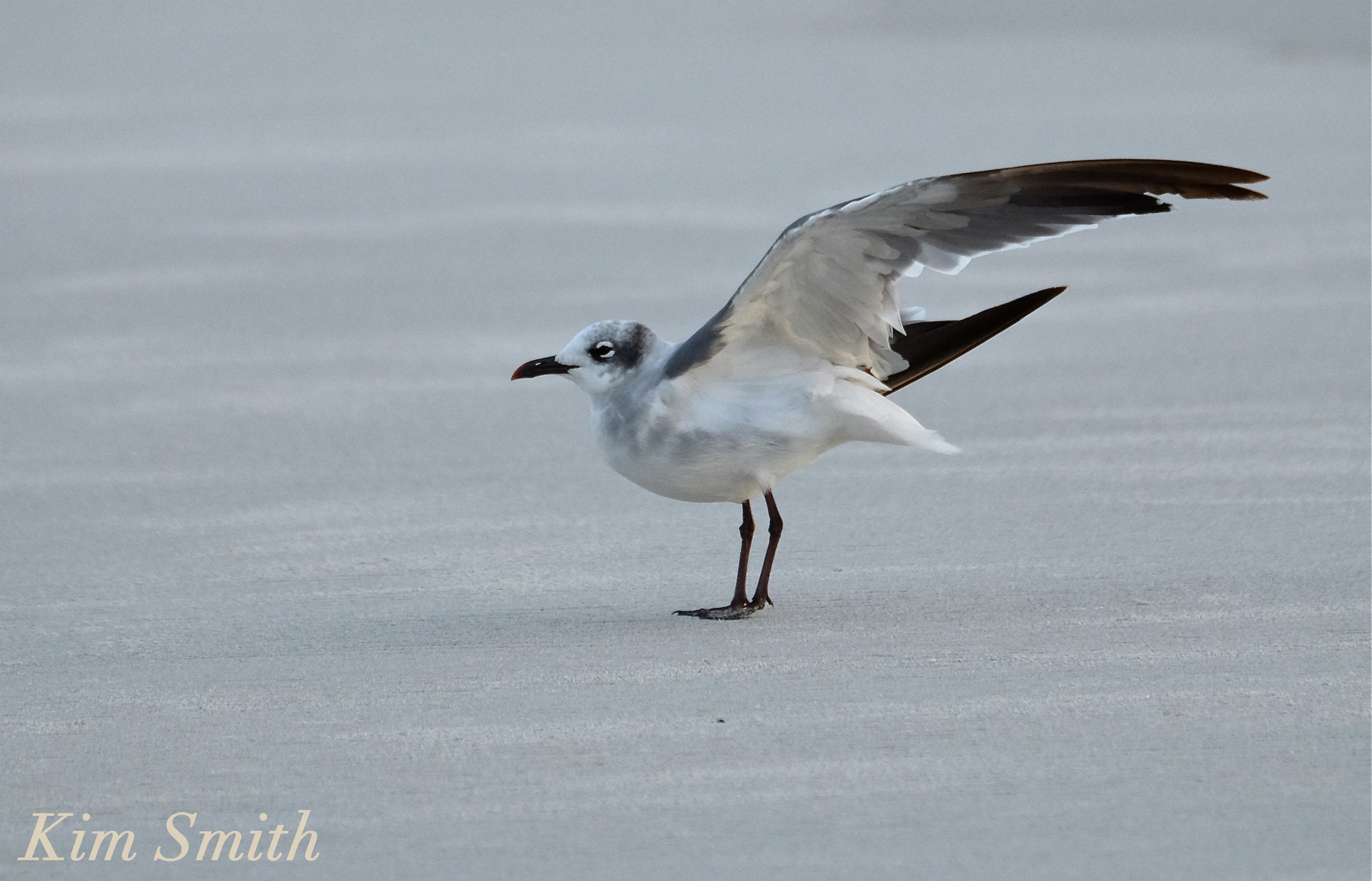 Adult Laughing Gull

 Good Morning Gloucester