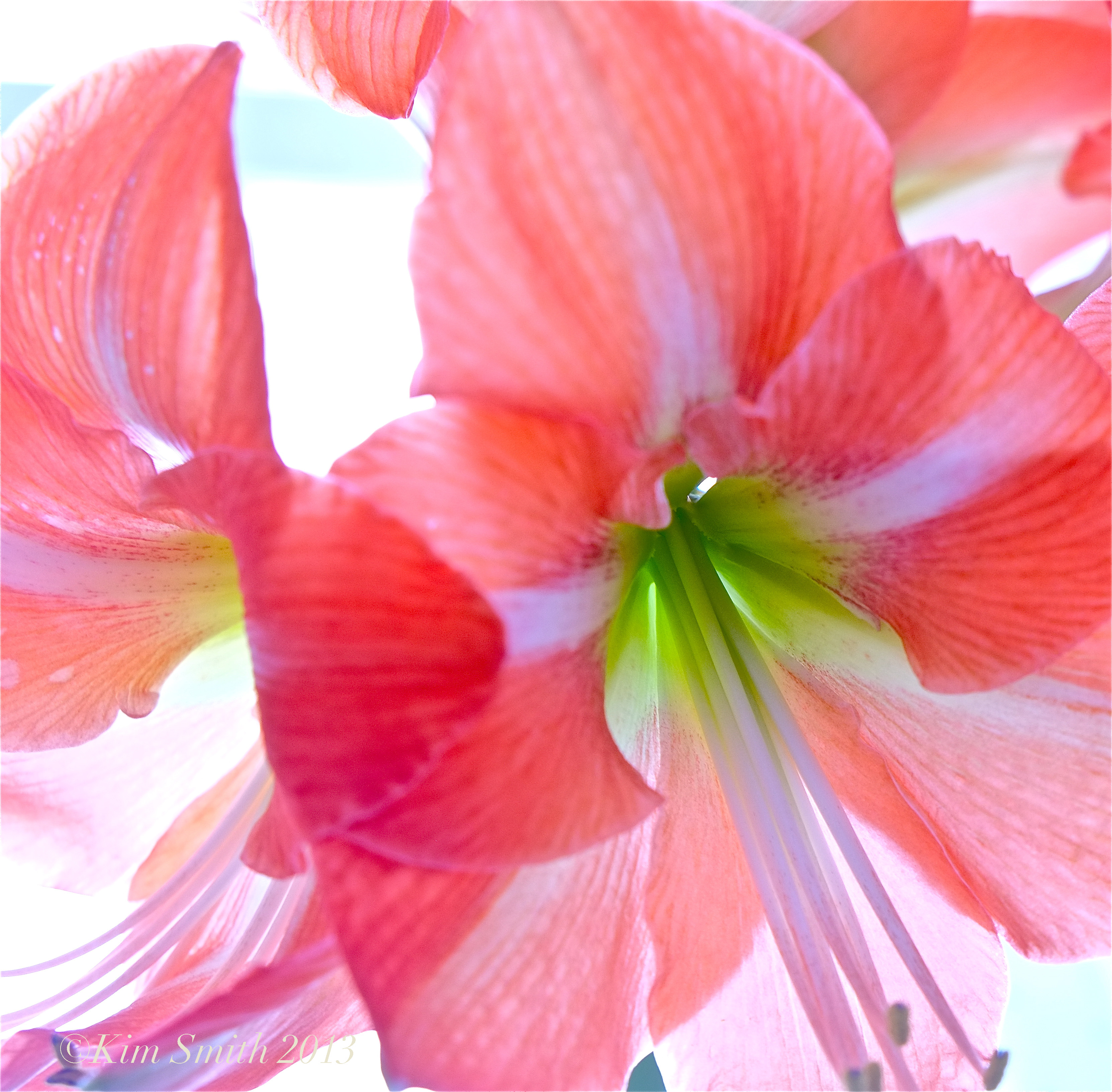
Amaryllis Here, There, and Everywhere

Amaryllis hippeastrum ©Kim Smith 2013Readying Home and Garden for the Holidays ~ Its that time of year and with my daughter coming home this weekend for an early Thanksgiving dinner (she has to work on the real Tday), I am scrambling to get the house in holiday mode between work days and final moments of filming, while the warmer temperatures hold.

Liv  was so upset when she told me had to work on her very favorite holiday and said she simply could not bear to not be at home for Thanksgiving. The reason she gave was because of the scents permeating throughout the house, that of yummy food cooking combined with the sweet fragrance of the flowering bulbs that we grow during the winter months. After she expressed those sentiments, how could I not promise to cook two turkey dinners, the first to come next week while she is home.

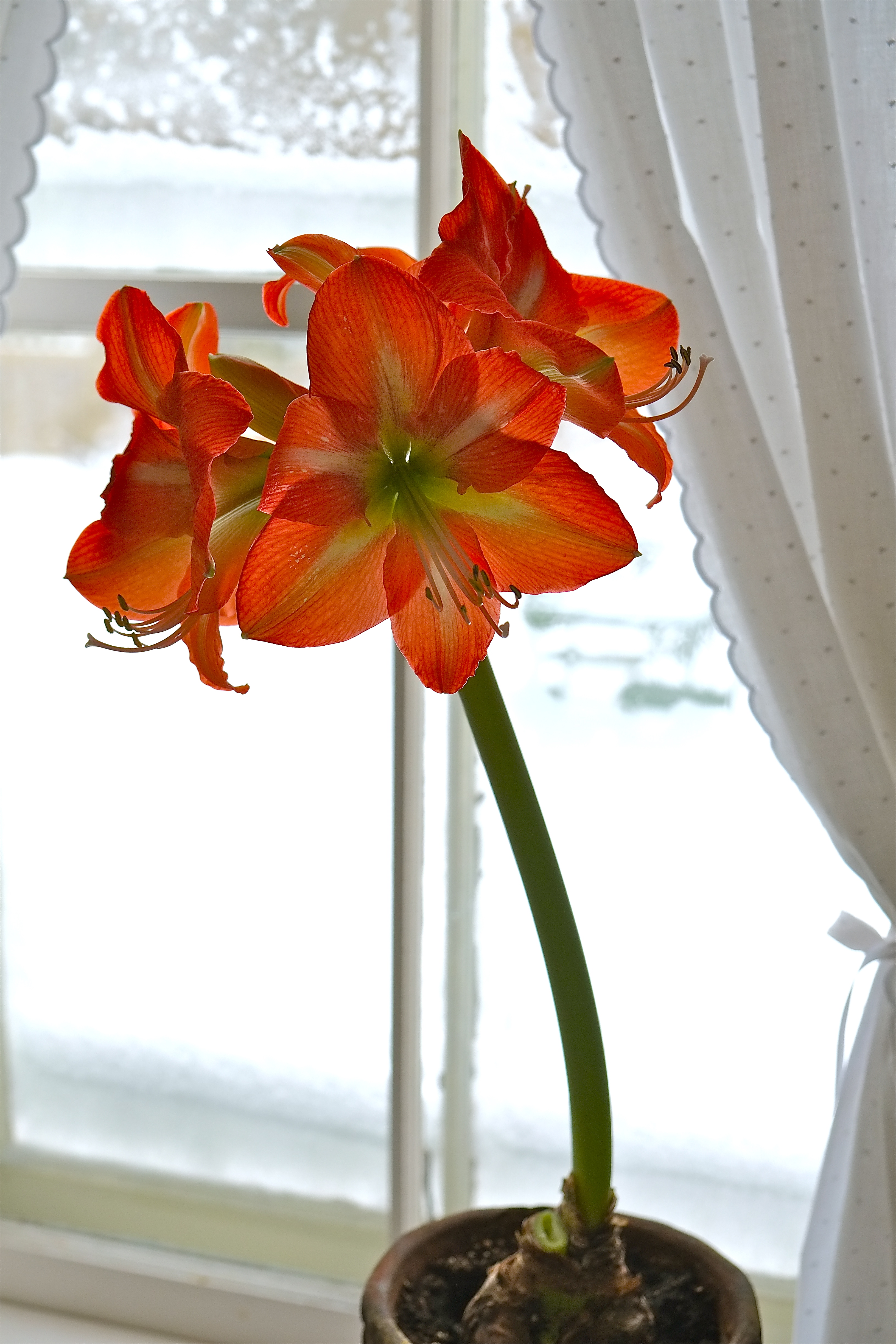
This weekend I’ll be planting the last of the spring ephemeral bulbs outdoors and indoors, potting up the amaryllis bulbs for winter cheer. I love the flowers of amaryllis so much so that they are grown in all the rooms of the house.
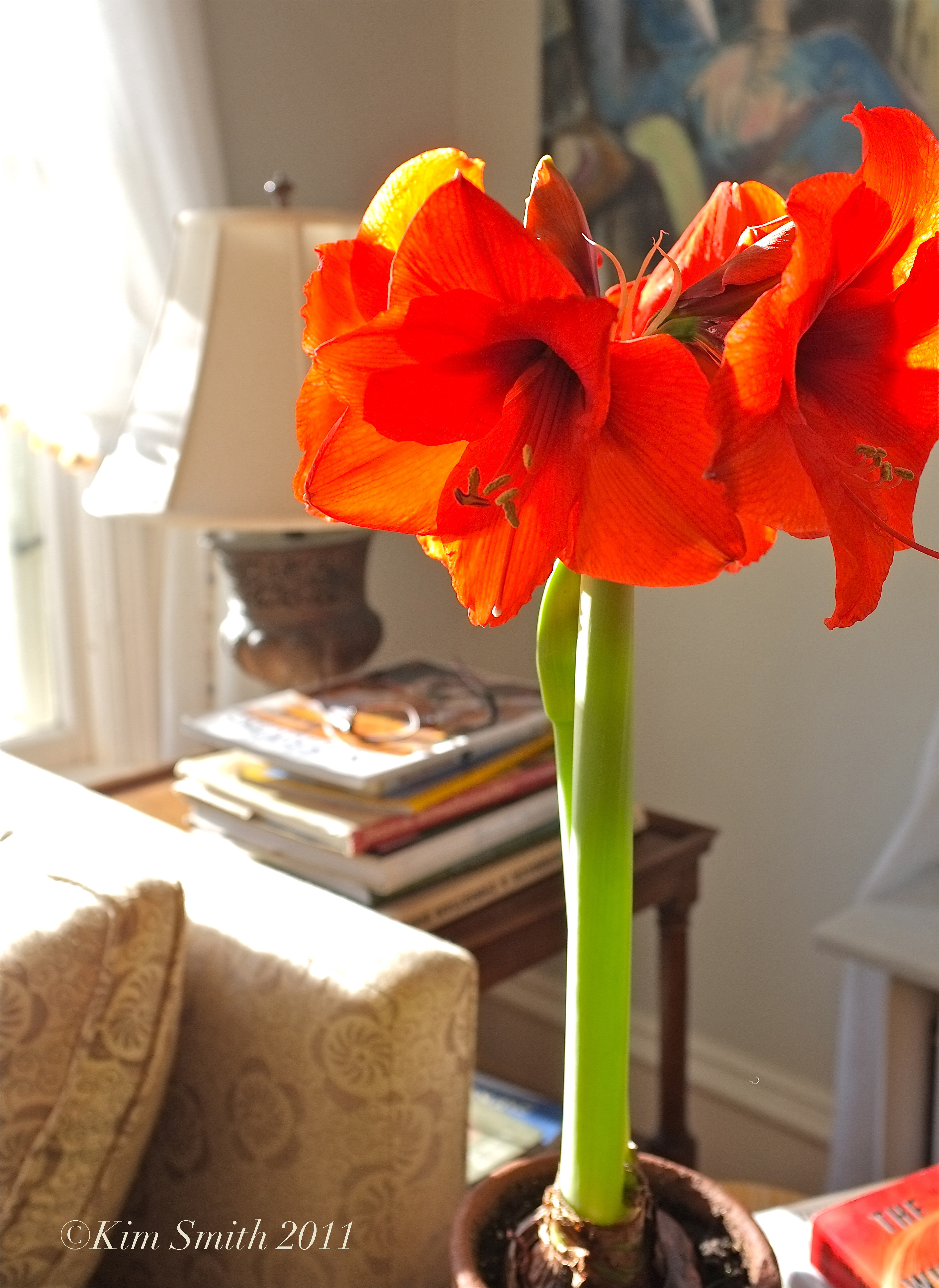
Amaryllis hippeastrum ©Kim Smith 2011 copyAmaryllis in the living room,

Amaryllis hippeastrum Orange sovereign ©Kim Smith 212amaryllis in the kitchen,

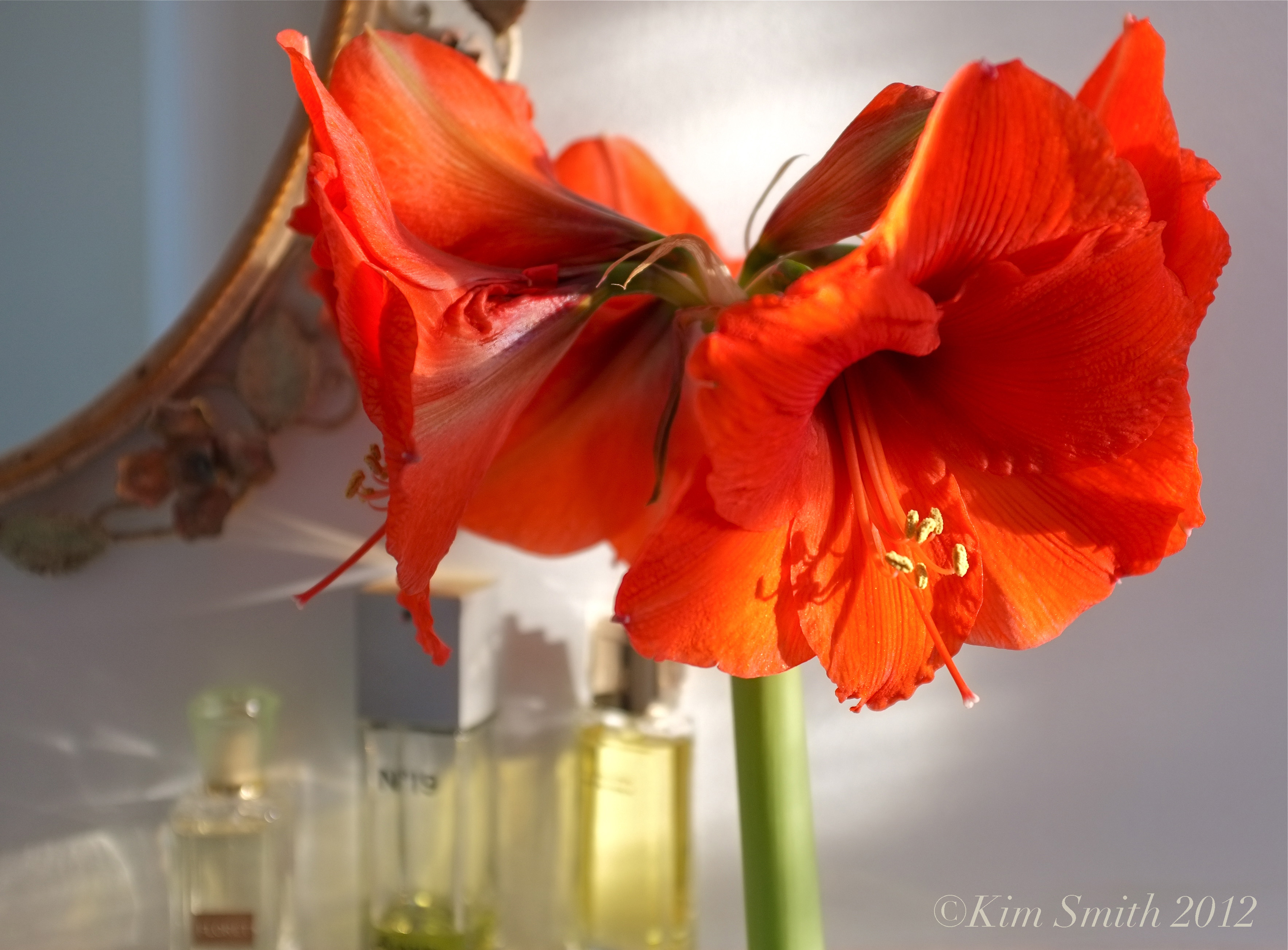
Amaryllis hippeastrum ©Kim Smith 2012and even in the bathroom, we grow amaryllis!

How to Grow Amaryllis ~ Excerpt from Oh Garden of Fresh Possibilities! 

Living in New England the year round, with our tiresomely long winter stretching miles before us, and then a typically late and fugitive, fleeting spring, we can become easily wrapped in those winter-blues. Fortunately for garden-makers, our thoughts give way to winter scapes of bare limbs and berries, Gold Finches and Cardinals, and plant cat- alogues to peruse. If you love to paint and write about flowers as do I, winter is a splendid time of year for both, as there is hardly any time devoted to the garden during colder months. I believe if we cared for a garden very much larger than ours, I would accomplish little of either writing or painting, for maintaining it would require just that much more time and energy.

Coaxing winter blooms is yet another way to circumvent those late winter doldrums. Most of us are familiar with the ease in which amaryllis (Hippeastrum) bulbs will bloom indoors. Placed in a pot with enough soil to come to the halfway point of the bulb, and set on a warm radiator, in several week’s time one will be cheered by the sight of a spring-green, pointed-tipped flower stalk poking through the inner layers of the plump brown bulbs. The emerging scapes provide a welcome promise with their warm-hued blossoms, a striking contrast against the cool light of winter. Perhaps the popularity of the amaryllis is due both to their ease in cultivation and also for their ability to dazzle with colors of sizzling orange, clear reds and apple blossom pink.

Oh Garden of Fresh Possibilities! sells for only $14.00 on Amazon, which is a 21.00 value off the publisher’s price of 35.00.

Click here to purchase a copy of Oh Garden.

Oh Garden of Fresh Possibilities! ~ Notes from a Gloucester Garden

At this time of year, with the holidays knocking at our doors and the scramble for gift ideas beginning, I try to remember to post excerpts and information about my book Oh Garden of Fresh Possibilities! ~ Notes from a Gloucester Garden (which I both wrote and illustrated), and “The Pollinator Garden” lecture that I gave last evening in Pepperel reminded me to do so again this year. My publisher, Mr. Godine, always thanks me for this endeavor!

We sold a good stack of books last night and I was so appreciative for the opportunity to present my program to an interested audience engaged in learning more about the connection between what we plant and the pollinators we invite to our gardens. Oh Garden of Fresh Possibilities! speaks to both the greater and smaller concepts in garden-making and is a how-to design tutorial that covers the gamut from creating the framework to what to plant to attract the tiniest of butterflies. The design concepts are universal, and although set in Gloucester, Oh Garden makes for a thoughtful gift for anyone on your holiday gift-giving list!

Oh Garden of Fresh Possibilities! sells for only $14.00 on Amazon, which is a $21.00 value off the publisher’s list price of $35.00.

Click here to purchase a copy of Oh Garden.
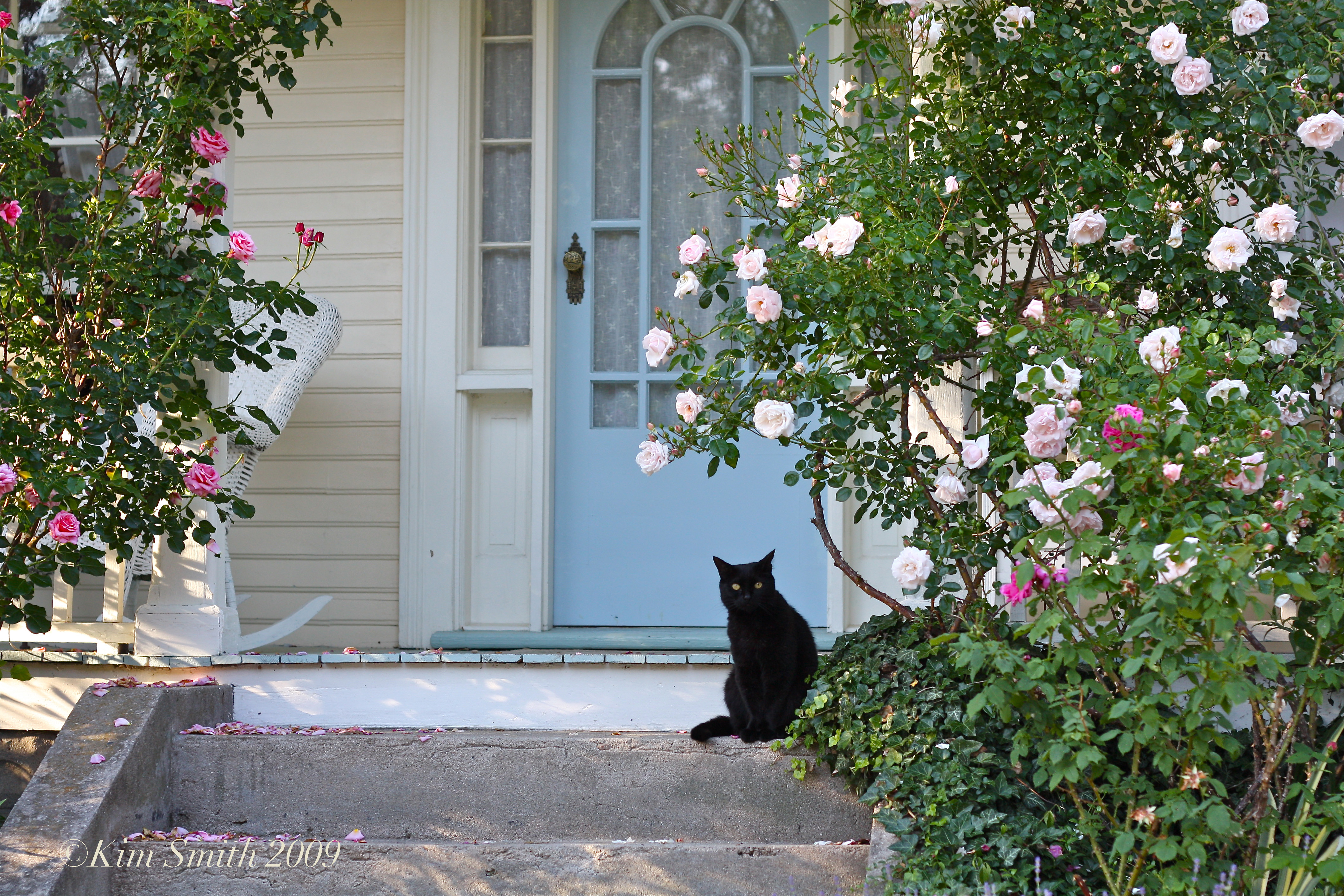
Front Door Cosmos Kitty ©Kim Smith 2009

From my book’s introduction ~

We all carry within us the image of a home to create and a garden to tend. Perhaps you dream, as I do, of a welcoming haven to foster family bonds and friendships and to rejoice in life’s journey. The garden and the home to which it belongs becomes a memory catcher to weave a life’s tapestry.

To imagine a garden paradise, one must live in one’s home and listen to its own particular music. Gradually, by degrees, the idea of the garden will grow. A home and a garden should look as though they had grown up together and will, when one takes the time and necessary thought. A garden cannot be hurriedly created. Delicious, blissful pleasure is derived from the garden’s use as a continuation of the home.

Our gardens provide a safe harbor from hectic lives, a place to celebrate life and an opportunity to express our creativity. The garden is an inviting sanctuary to guide one through the rhythms and harmonies of the natural world. Planted to nurture the imagination and hearten the soul, a “new” cottage garden is a whimsical, exuberant intermingling of scented flowers and foliage, fresh fruit, and savory herbs.

As a designer, I believe I am here to channel ideas for the benefit of many. This book is my communication of a profound desire to share with readers the immeasurable joy gleaned from creating a personal paradise of one’s own making.

The illustrations are of flowers, songbirds, and butterflies I love to draw and to paint, and selected because they only become more beautiful when intimately observed.

A poetic world lies waiting to be discovered. Let us open the garden gate and take a step within.

World’s Easiest Method on How to Grow Milkweed From Seed

Milkweed Eastern PointCommon Milkweed Patch Eastern Point

Now is the perfect time of year to collect and to plant milkweed seeds, either from pods that are just splitting open or from pods that have already split and are showing their silky fluff.

There are several different methods of propagating milkweed and the following is by far the simplest. Gather milkweed seeds and store in a paper bag. At the location in your garden where you are planning a milkweed patch, lightly scratch the soil with a rake. Scatter the seeds over the soil. Sprinkle a thin layer of soil over the seeds, just enough to keep them from blowing away. That’s it! Next spring, by mid-May, you will have a patch of milkweed seedlings. This super simple method works for Common Milkweed (Asclepias syriaca) and Marsh Milkweed (Asclpeias incarnata).

Note ~ when collecting seeds from wildflowers, never remove the plant from its location, and never take all the seeds.

If you’d like to learn more about this beautiful plant species, and how growing milkweed in your own garden directly benefits the Monarch Butterfly, there are over 25 posts covering milkweed on Good Morning Gloucester; too numerous to list here. Type milkweed in the search box in the upper right hand corner of the GMG home page to see all.

Monarch Butterfly Marsh Milkweed ©Kim Smith 2011

Cape Ann Milkweed Project

News Release: MONARCH WATCH ANNOUNCES ‘BRING BACK THE MONARCHS’ CAMPAIGN

How Exactly is Monsanto’s Roundup Ravaging the Monarch Butterfly Population?

Where Are All the Monarchs?

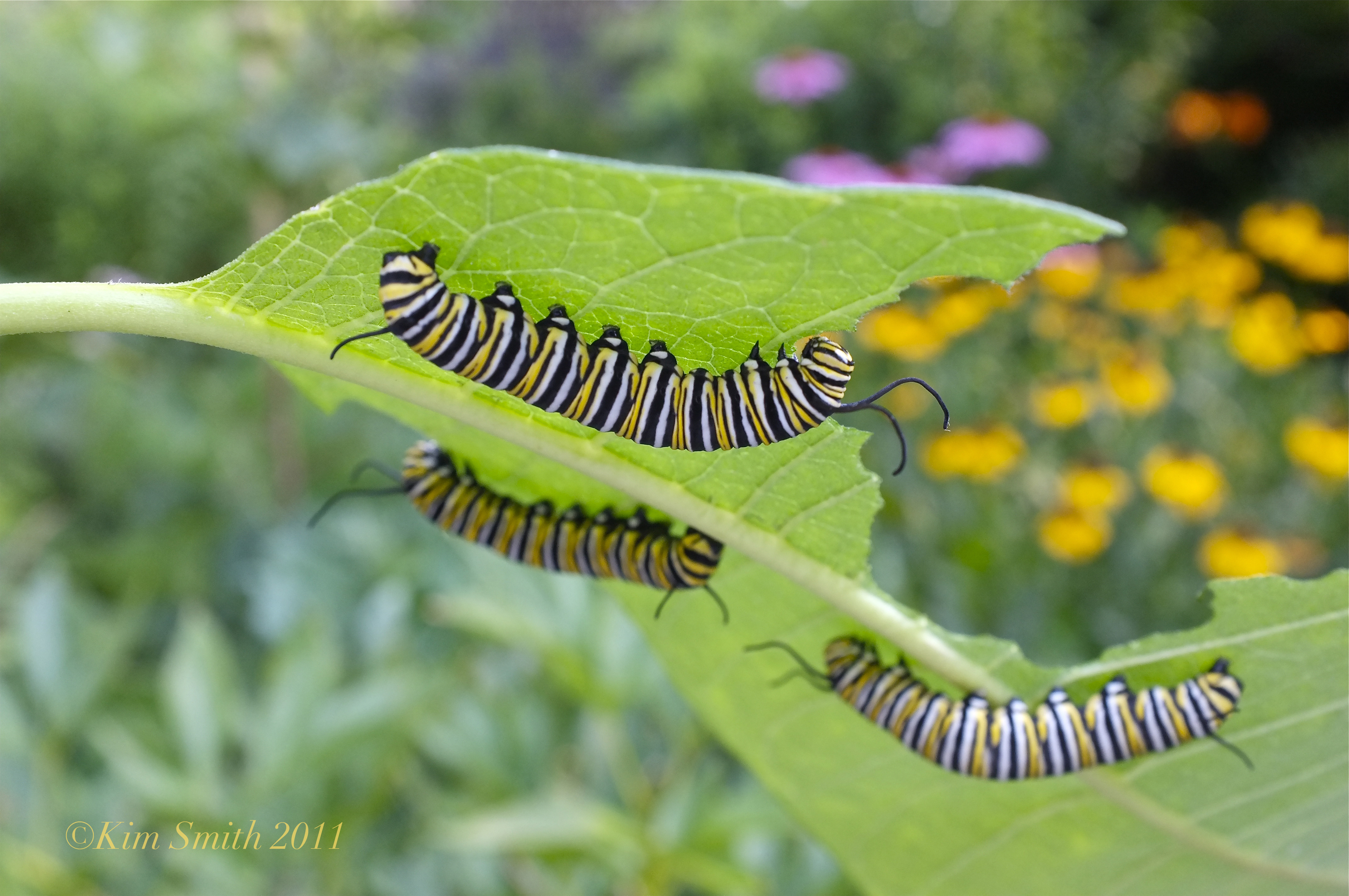
Monarch Caterpillars Feeding on Common Milkweed ©Kim Smith 2011

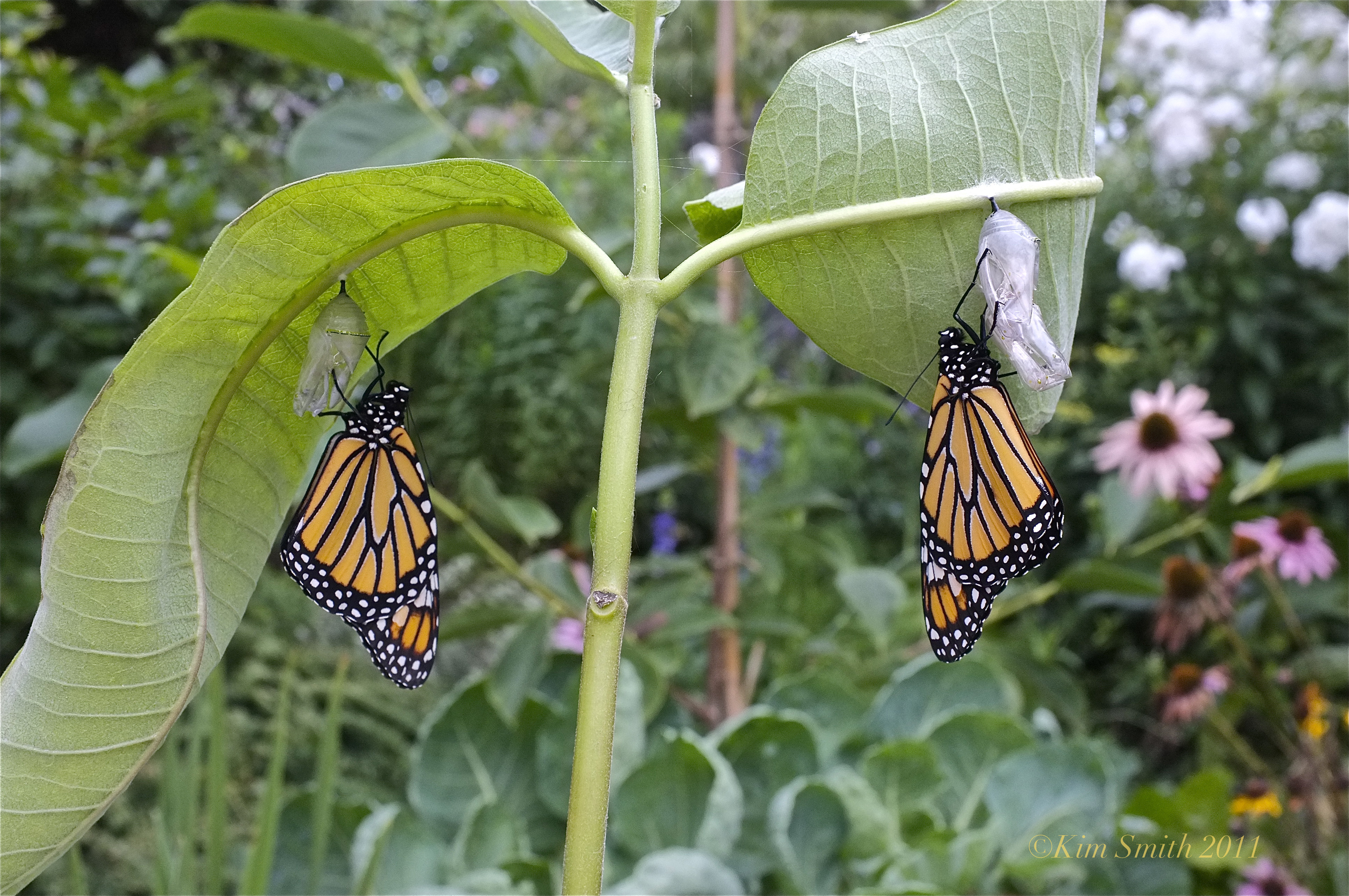
Monarch Butterfly Twins ©Kim smith 2011Two newly emerged Monarchs, with chyrsalides attached to the rib of Common Milkweed leaves

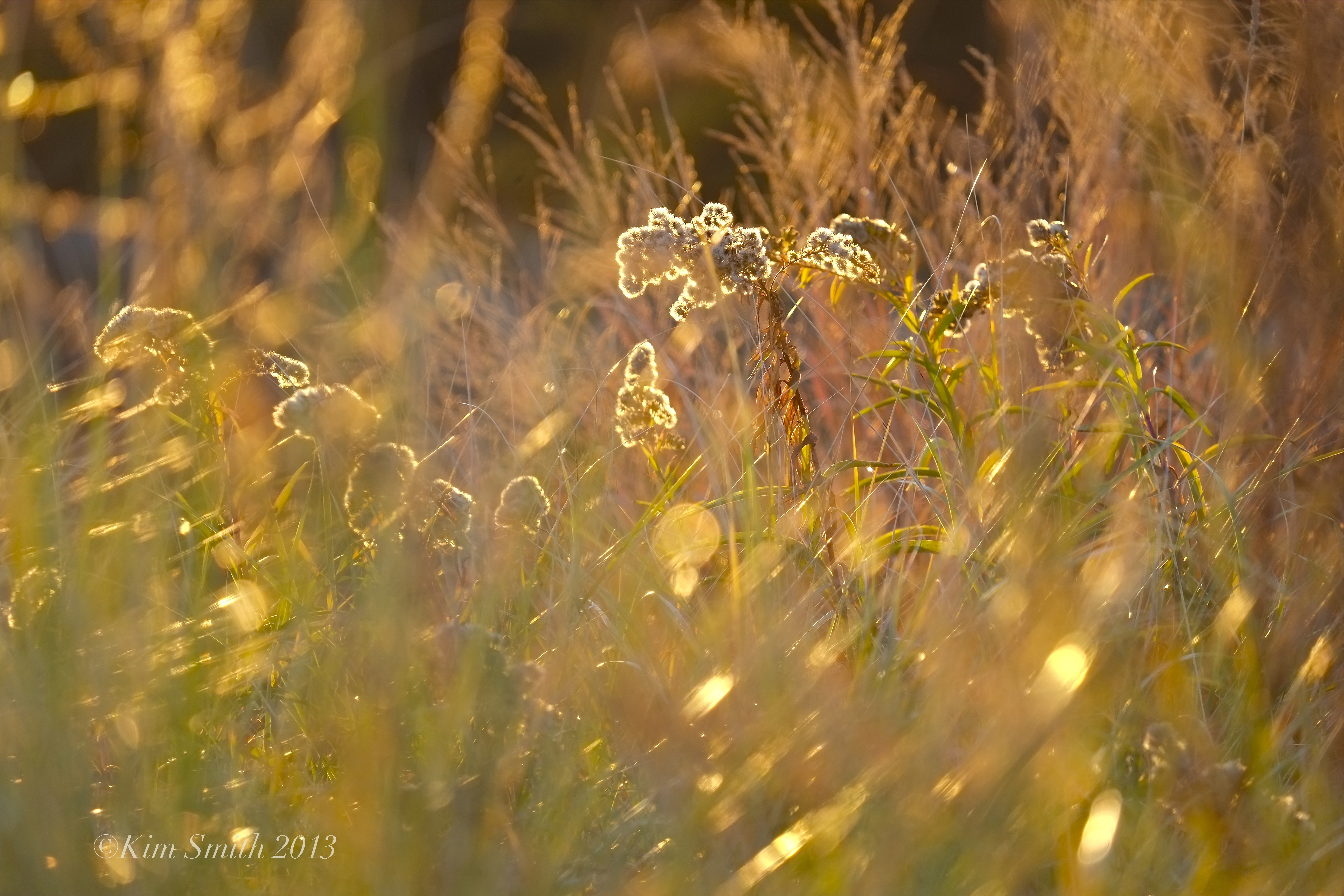
Seaside Goldenrod in Autumn

Seaside Goldenrod in the Wind Good Ha ©Kim Smith 2013rbor Beach GloucesterSeaside Goldenrod in the October Wind and Mist ~ Good Harbor Beach 

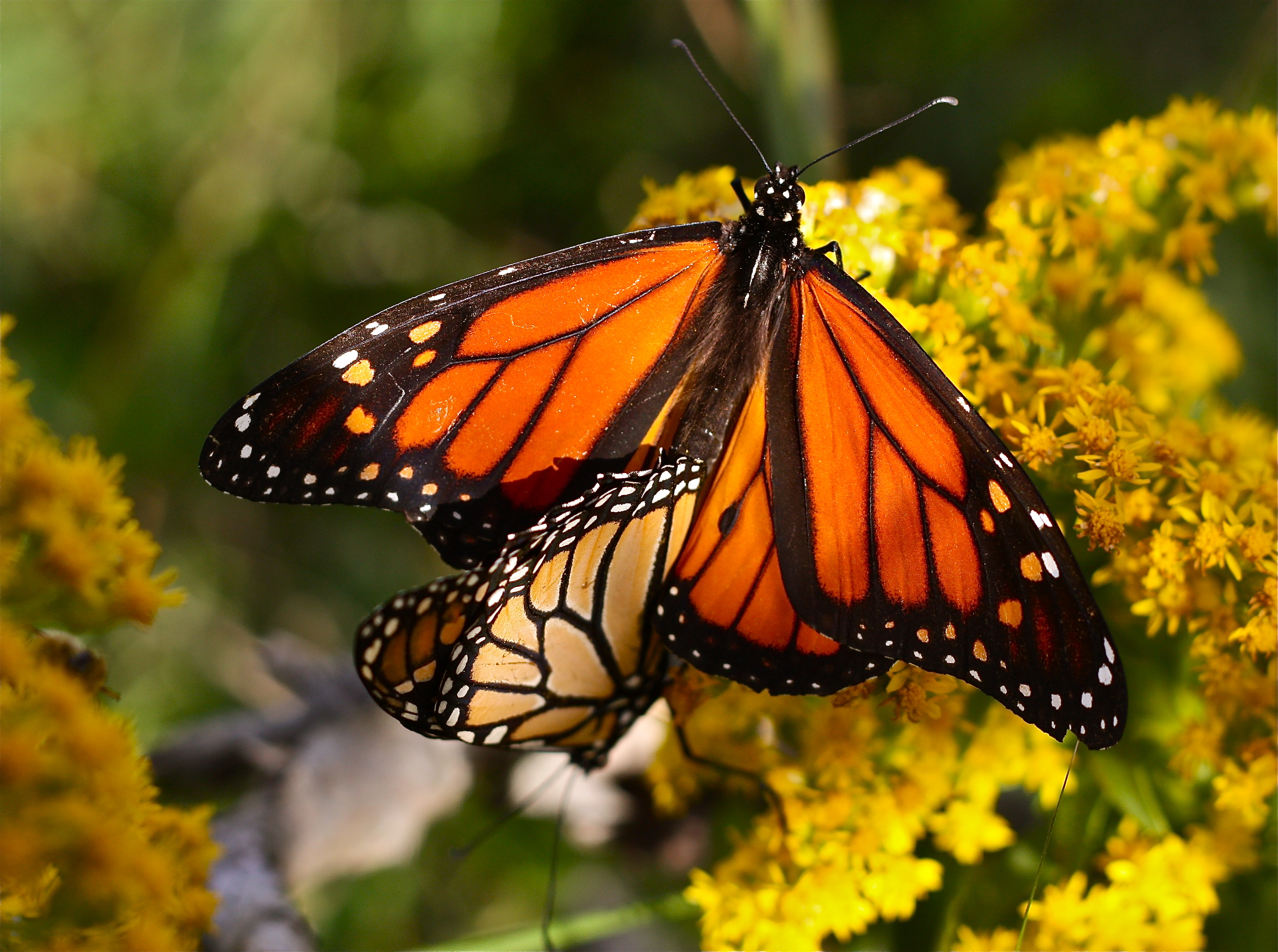
Monarch Butterflies mating seaside goldenrodMonarch Butterflies Mating ~ Seaside Goldenrod in September

See Previous GMG posts featuring Seaside Goldenrod ~

How to Tell the Difference Between a Male and Female Monarch Butterfly

Where Are All the Monarchs?

Bulb Planting and Note to Our Readers

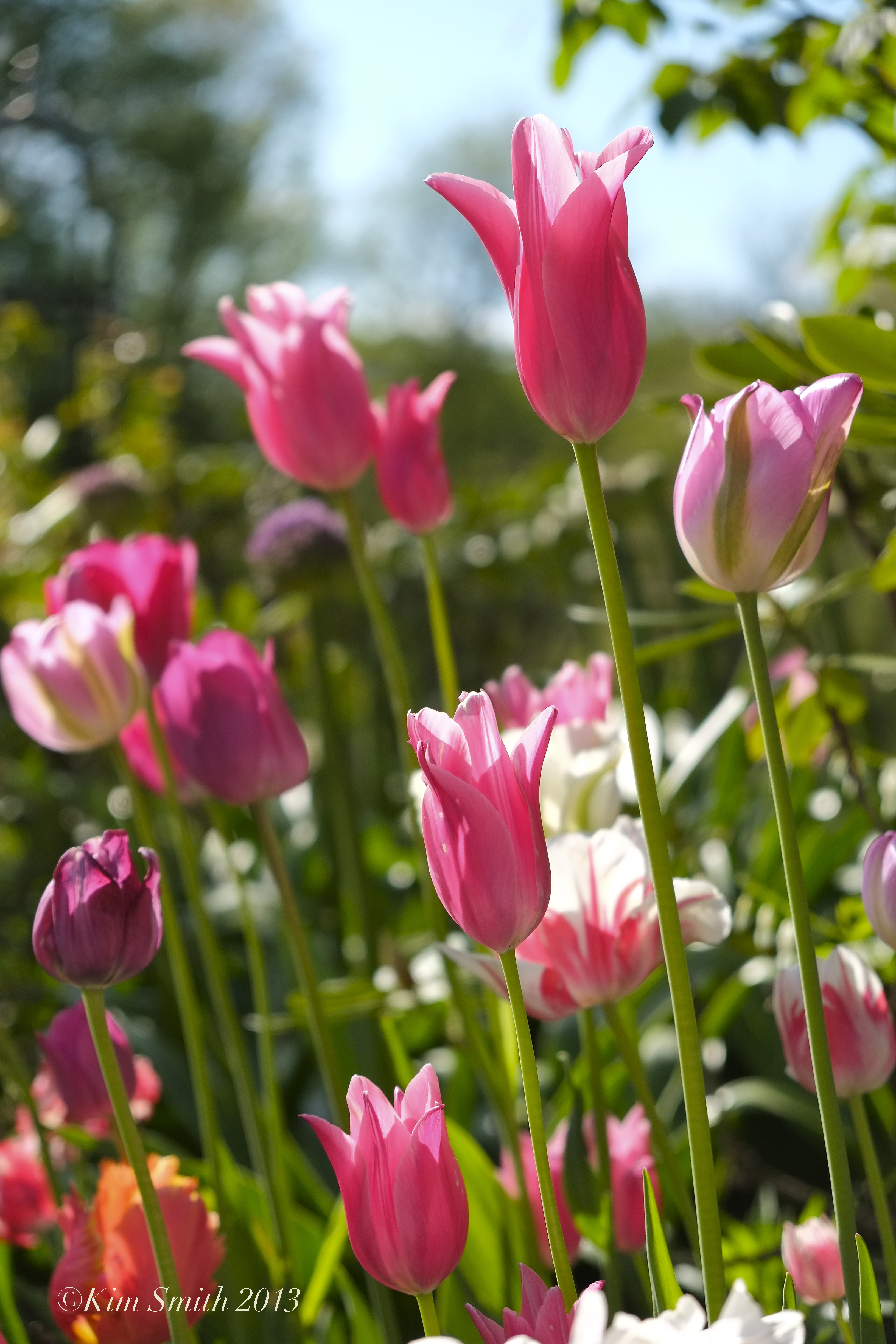
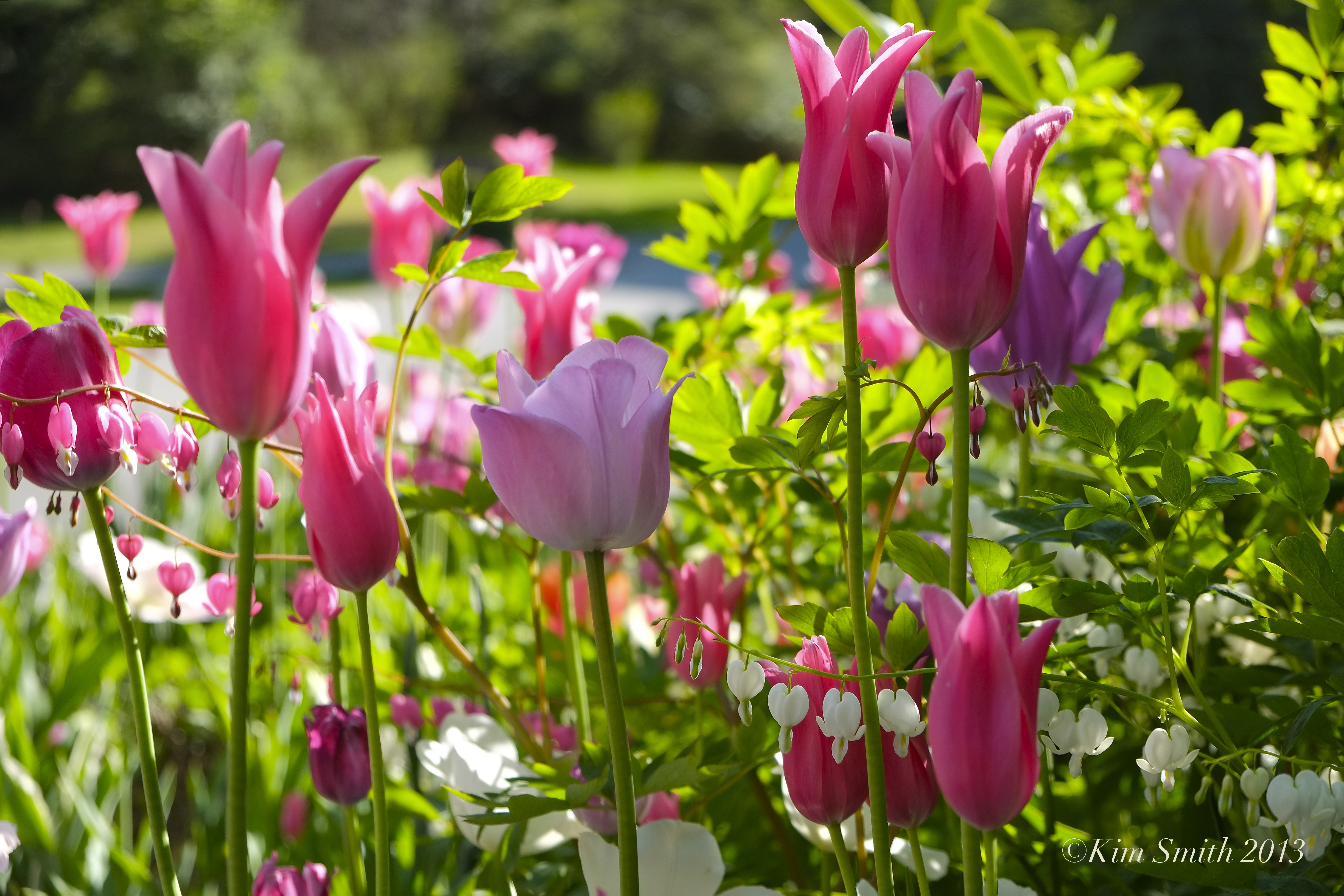
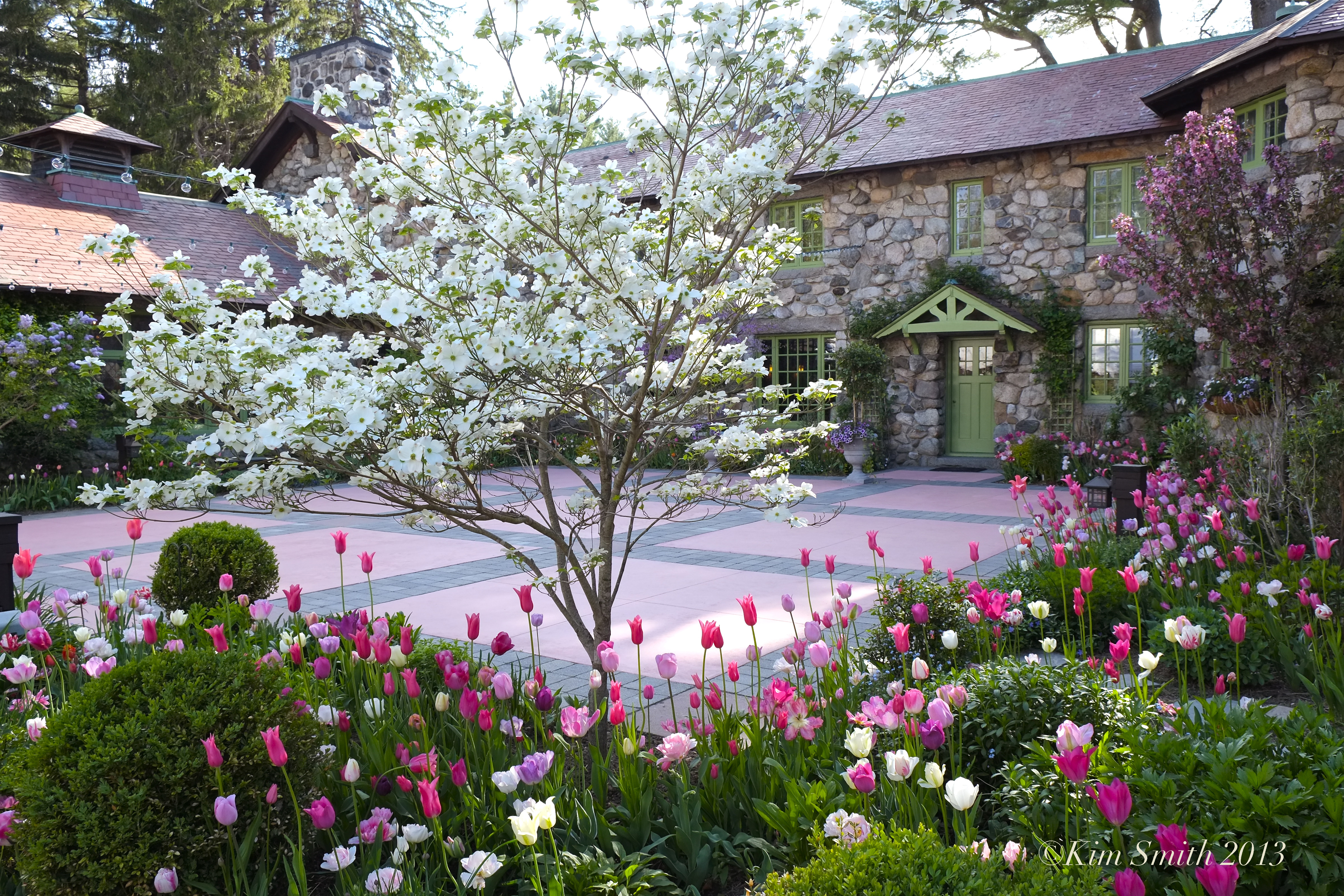
Willowdale estate events venue boston tulips ©Kim Smith 2013 copyReminder: Plant your bulbs before the chilly weather is upon us!

Dear Readers,

These upcoming weeks, until Christmastime, I am nonstop with my business. My interior design client’s homes need readying for the holidays and I am very much straight out with landscape design client’s gardens; planting ephemeral spring magic and putting all to rest for the winter. I am a little bit ahead on posts planned and will do my best to keep up with all, but I may be calling on our Editor-in-Chief to fill in the gaps. I so very much appreciate all of your comments, but if your always kind and much appreciated comments are not answered immediately please do not think that I did not notice. I enjoy reading them and will respond to your comments as soon as possible. Thank you for understanding.

Warmest wishes,

Kim

Trunk loads of this…

#stuffingthePrius ©Kim Smith 2013Equals ~

Willowdale estate Events tulips May wedding ©Kim Smith 2013JPG

Willowdale Estate Topsfield May wedding ©Kim Smith 2013Willowdale Estate Courtyard ~ A Special Events Venue Unlike Any Other

Savour Wine and Cheese “Become a Wine Expert” ~ Class 4

Savour Wine & Cheese ©Kim Smith 2013See GMG post for the first installment of “Become a Wine Expert.”

Last week I unfortunately had to miss the third class in the series “Become a Wine Expert,” taught by Kathleen Morgan, as I had to give a lecture that had long been scheduled. Fortunately, Kathleen has generously invited me to take the red wine class with her next series of classes, which I gladly accept and plan to report about for GMG!

Renee Hansen Savour Wine and Cheese ©Kim Smith 2013

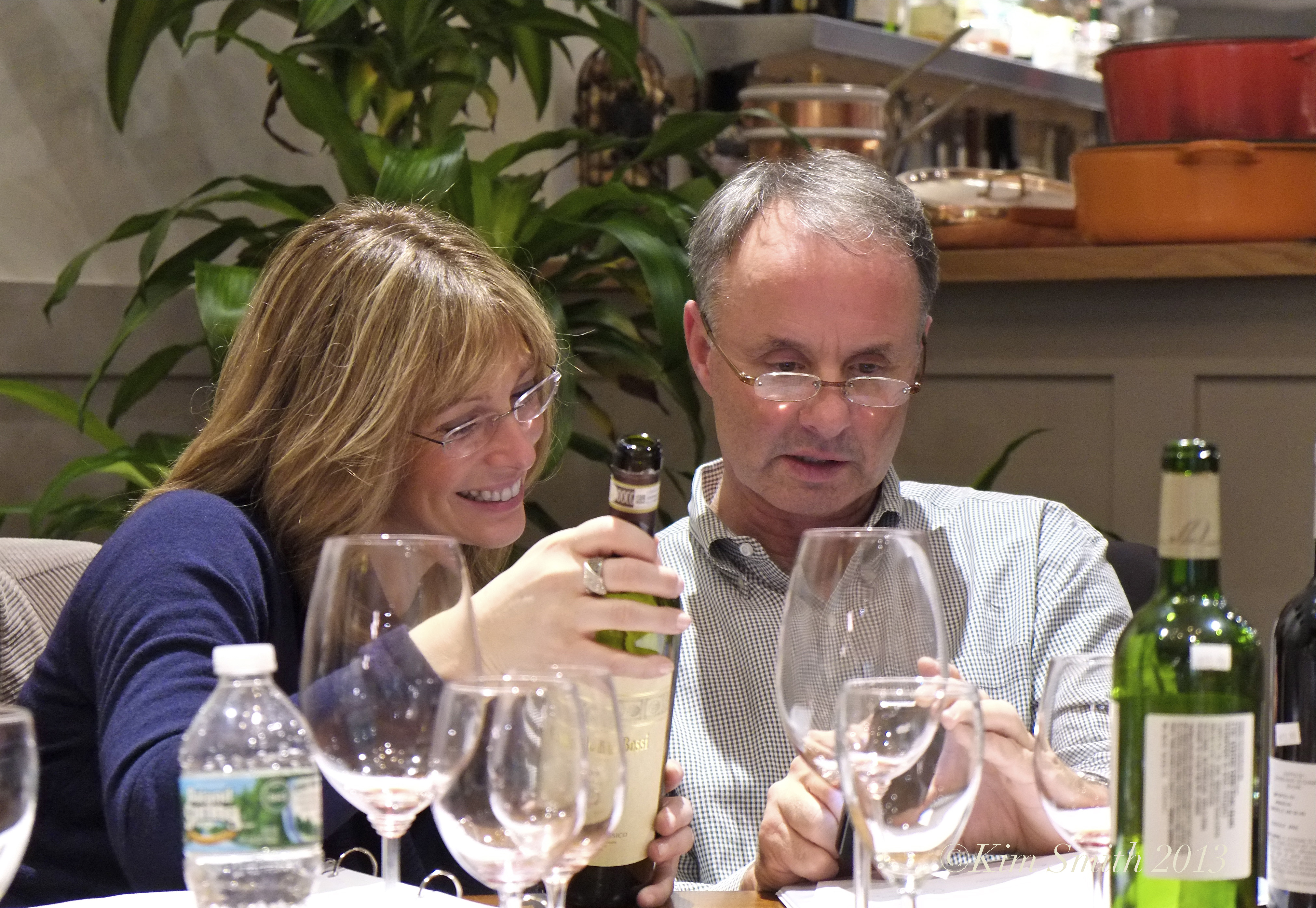
Renee Hansen and Geoff Rendall

This week’s class was very interesting in that we compared the same wine, but with different variables such as tasting wines served in different shaped glasses, wines that had been decanted versus not decanted, and wines that were chilled versus the same wines unchilled. We discussed how the wine’s vintage is critical as different years produce different results—how could it not as grapes are an agricultural product? I often find this frustrating when purchasing wine (not at Savour, of course) because the description placed next to the bottle of the wine on display does not usually match the vintage on the bottle offered for sale.

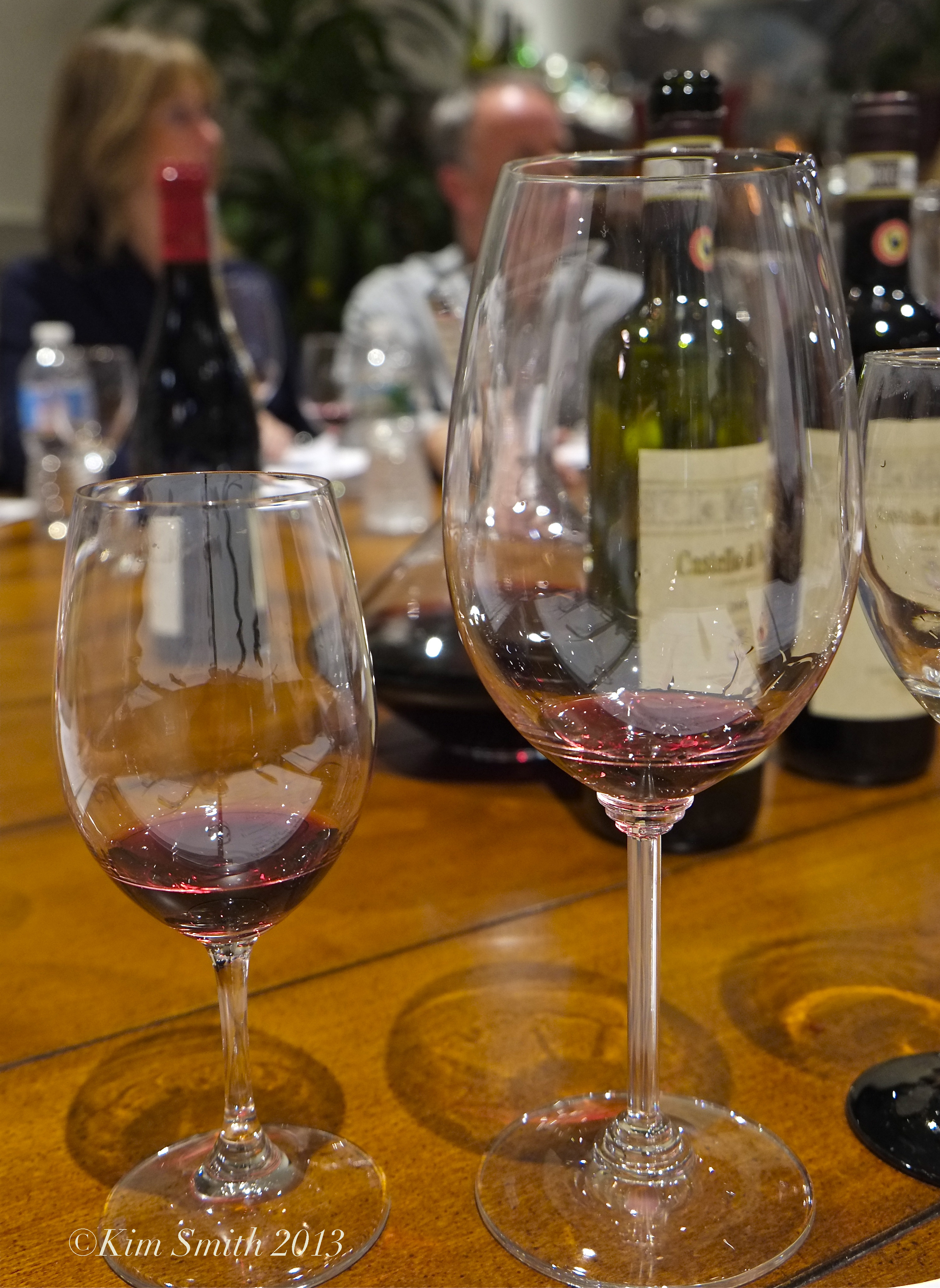
Savour Wine and Cheese chianti Classico ©Kim Smith  copy

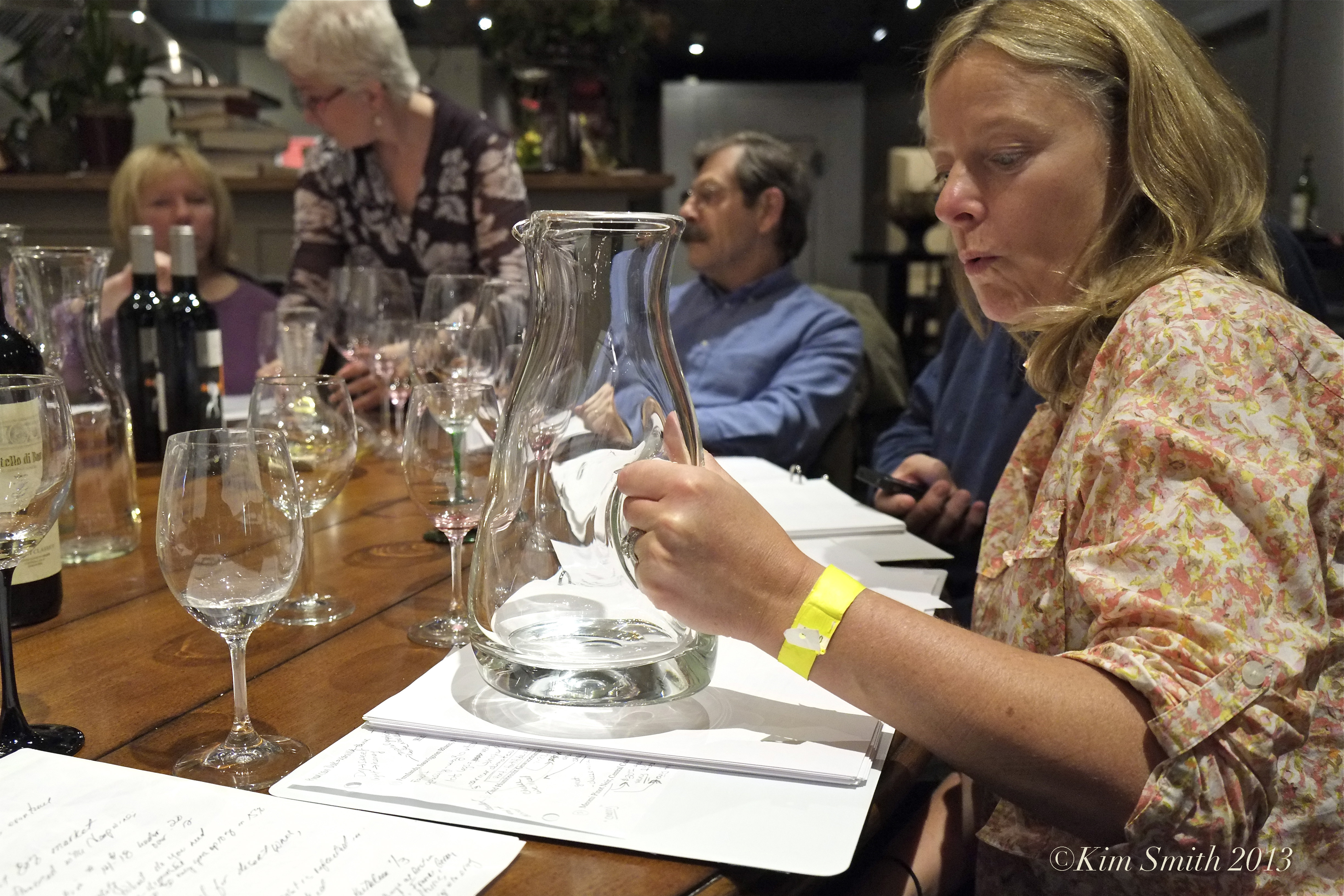
Most red wines benefit from decanting, although with some, like Pinot Noir, it is not recommended because the grape is too variable. Chianti in particular should almost always be decanted because it is very heavy in tannins. Kathleen typically decants Chianti for one full day, although most wines need only several hours. We tried the Castello di Bossi Chianti Classico 2009 ($22.99), both decanted and not, and the difference was more than remarkable (the decanted being the far more enjoyable of the two).

Savour Wine and Cheese syrah glass ©Kim Smith  copy

Syrah wine glass, above, and to the right.

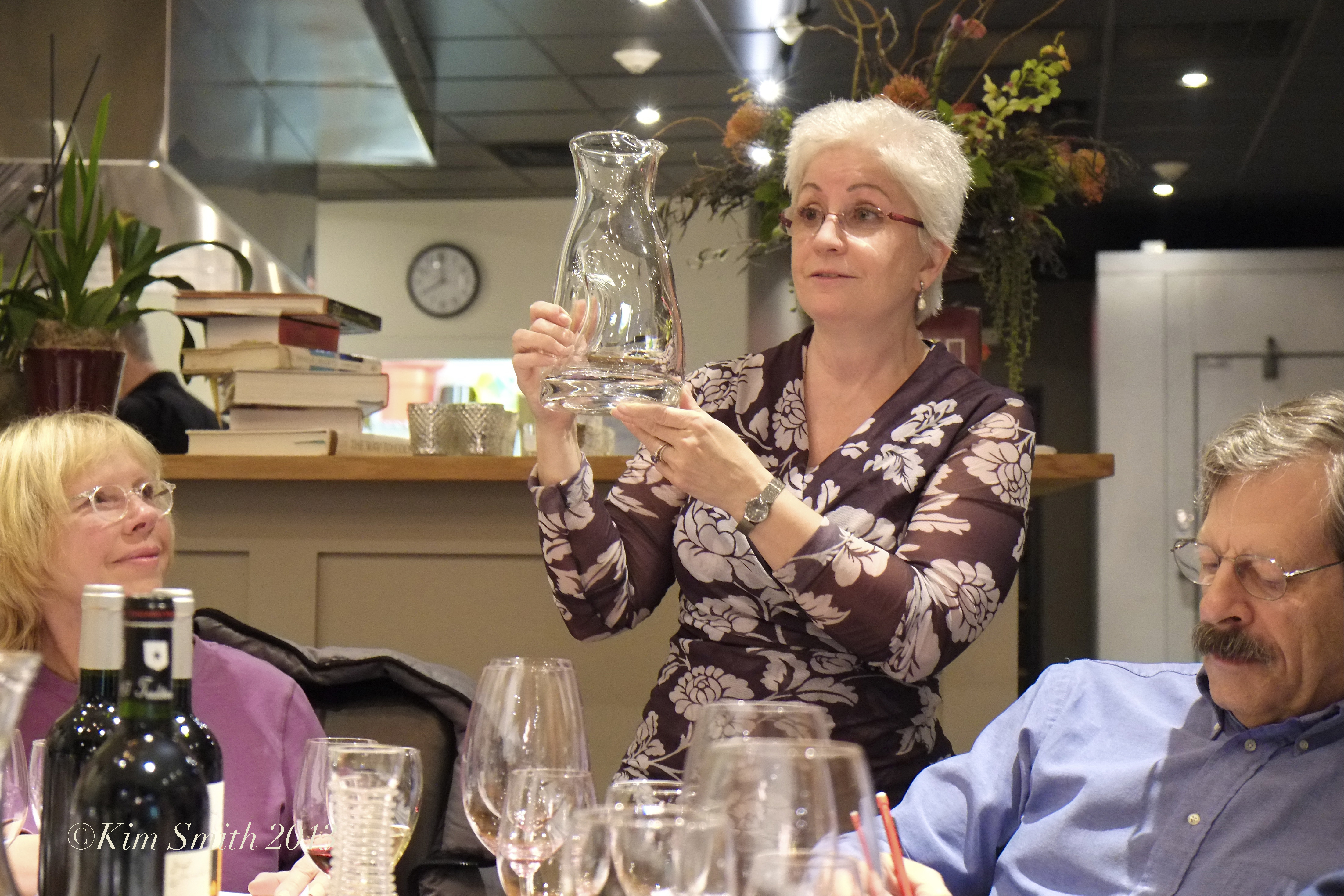
Wine enthusiasts often collect many different shaped glasses for different types of wines. I asked Kathleen if you were planning to only purchase one style what would she recommend. She suggests a tulip-shaped Syrah glass, with a thin crystal edge, and sturdy columnar stem. Thinner crystal for the edge of the glass is always preferable to thick glass as the glass imbues flavor as well.

Savour Wine and Cheese tequilla glass Kathleen Morgan -2 ©Kim SmithBelieve it or not, this is actually a tequila tasting glass however, Kathleen added that most Mexican people would never go near anything that fancy for tequila.

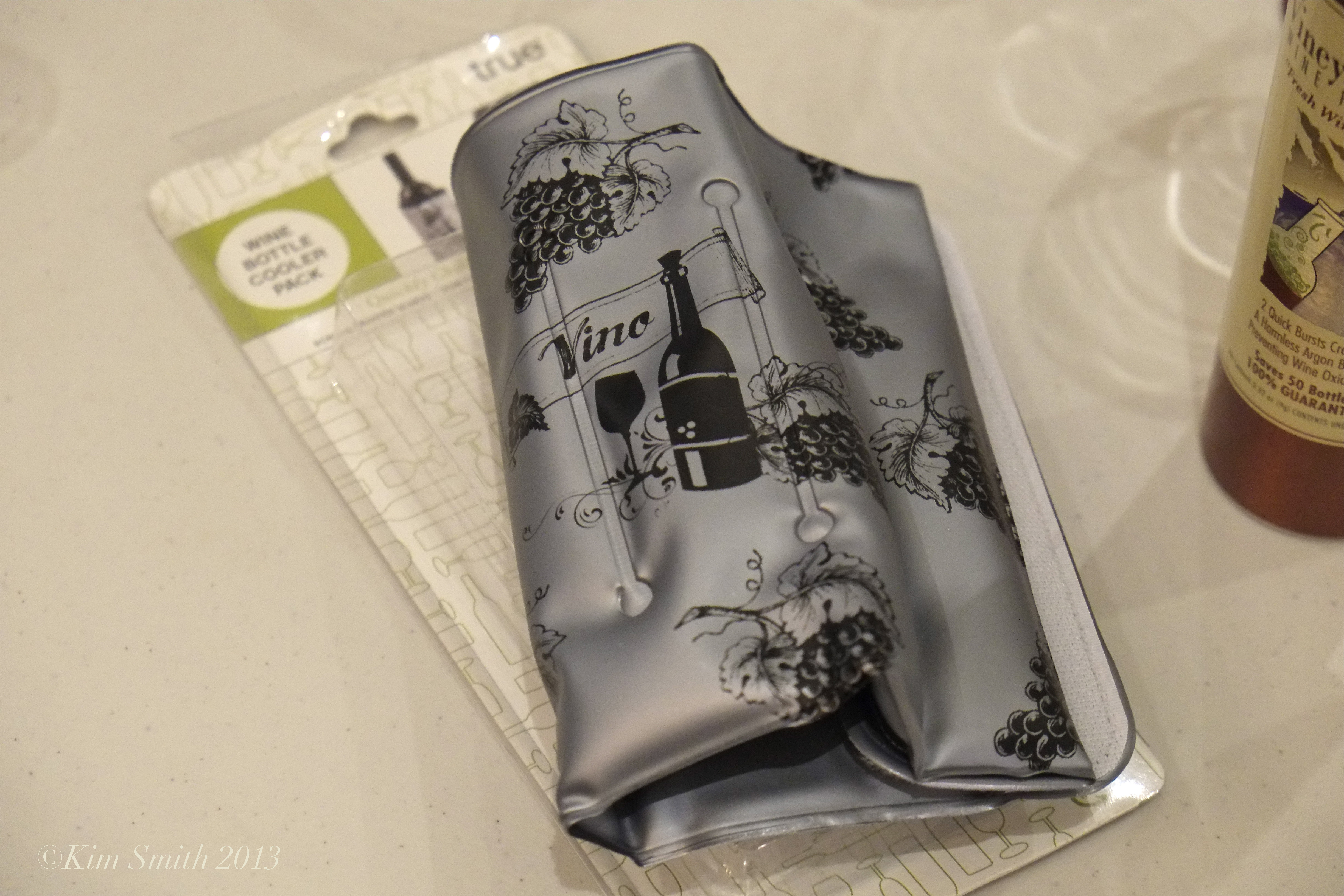
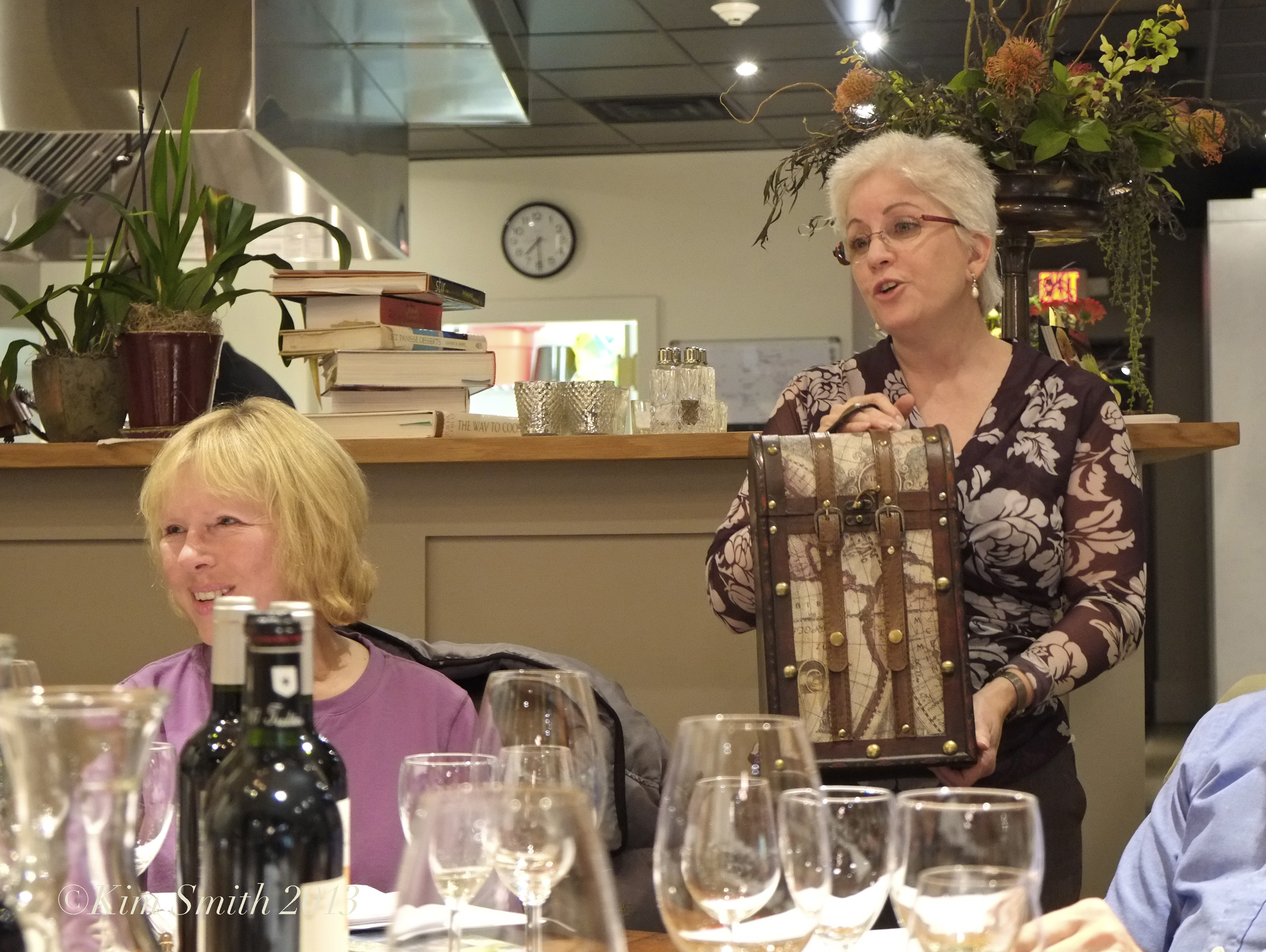
Savour Wine and Cheese wine chiller ©Kim SmithWhen bringing your own wine to a restaurant, Kathleen recommends keeping it properly chilled. This wine bottle cooler pack sold at Savour would make a practical and inexpensive holiday gift. Kathleen uses a charming trunk-inspired carry case (see below).

Savour Wine and Cheese Kathleen Morgan ©Kim Smith 2013

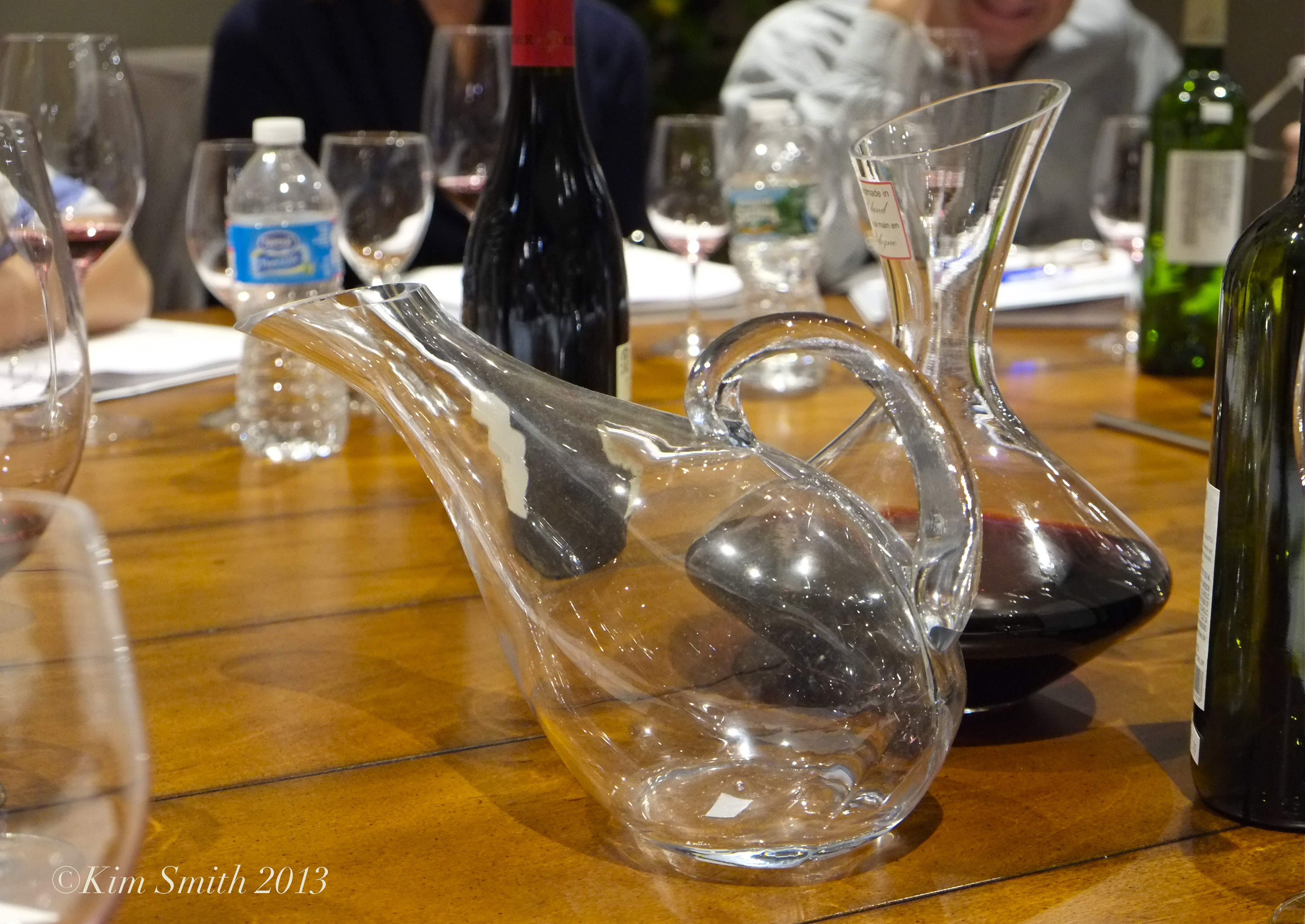
More great gifts available from Savour are their beautiful selection of decanters. I loved the elegant flagon decanters and think that they would make a very thoughtful hostess or Christmas present–decanters such as these would add a touch of grace to any table setting.

Savour Wine and Cheese duck decanter flagoon©Kim Smith

On the left is the duck decanter and to the right is the flagon decanter.

Kathleen’s favorite decanter is the very hefty rooster decanter, for a very touching reason. You may or may not recall that the original Savour Wine and Cheese, located on Washington Street, tragically burned to the ground several years ago. With all the destruction and mayhem associated with the aftermath of a fire, one of the very few things to survive was her rooster decanter–filled with blackened water–but nonetheless unscathed.

Savour Wine and Cheese Kathleen Morgan rooster decanter ©Kim Smith

Savour Wine and Cheese rooster decanter ©Kim Smith

Michelle demonstrates how weighty the rooster decanter feels.

The “Become a Wine Expert” series of classes are held on five consecutive evenings, from 7:00 to 9:00, at Savour Wine and Cheese, located at 76 Prospect Street. She is planning to do another series possibly this winter or spring. Kathleen provides each student with a terrific notebook with maps from every wine producing country and region, articles, recommended books and links, descriptions of wine varietals, an interesting wine aroma wheel for describing wines, and more.

To learn more about Kathleen’s interest in wine (she also has a PHD in history) see Joe’s Good Morning Gloucester interview with Kathleen here.

“Become a Wine Expert” Series Taught by Kathleen Morgan

Become a Wine Expert: White Wine

FOB Ann Kennedy Shares About Meatloaf and Turkeys

Good morning, Kim.  I so enjoy your GMG posts and have been meaning to send a quick email.  Your great meatloaf post really gave me a chuckle–in the fondest way!  Recently I read one of my mother’s letters in which she had made a 6 lb. meatloaf for a PTA supper long ago, of course.  My brother and I didn’t like meatloaf and never really learned to either.   One night, she was constructing a very, very large stuffed meatloaf that was to be formed into a long log of sorts.  It didn’t fit in the pan and so she curved it until it fit.  My brother and I wandered into the kitchen to discover this awful looking thing and decided to help it out.  We sliced a pimento stuffed green olive to make 2 eyes, and added toothpicks for antennae, making it look like a giant, mythical caterpillar.  Quite an ugly thing!  Anyway, when Mom discovered it we all had a good chuckle and we were ordered out of the kitchen–the first time in our lives that ever happened:-)

I loved your recent turkey photo.  When I travel across the state via Amtrak (the slow route), the autumn fields are full of flocks of wild turkeys, seeking corn leftover from the harvest.  The train eventually travels along the Missouri River, and sometimes I’ll see a turkey at the river’s edge.

I hope you enjoy this marvelous season, and I look forward to your new and interesting posts.  By the way, I might enjoy your meatloaf since it includes bacon:-)

Kindest regards,

Ann

Anne Kennedy Haddock and DillAnn and Her Brother in a Japanese Tub

Visit Ann’s stellar blog, Haddock and Dill, which was inspired by a 40 year written correspondence between her mother and grandmother. It is a blog of letters that chronicle the life of one American family. The collection of nearly 2000 letters, notes and cards contain photos, clippings, and comments on everyday life, beginning in 1941.

Two Sisters

Two turkey hens ©Kim Smith 2013

Eastern Wild Turkey (Meleagris gallopavo silvestris)

Benjamin Franklin writes a letter to his daughter Sarah Beche  in 1784, criticizing the appearance and choice of the Bald Eagle as the national bird of the United States, presumably preferring the Wild Turkey, “…I am on this account not displeased that the Figure is not known as a Bald Eagle, but looks more like a Turkey. For in truth the Turkey is in comparison a much more respectable Bird, and withal a true original Native of America… He is besides, though a little vain & silly, a Bird of Courage, and would not hesitate to attack a grenadier of the British Guards who should presume to invade his Farm Yard with a Red Coat on.”

Eastern Wild Turkey (Meleagris gallopavo silvestris)

Killing Machine: Are Praying Mantis Beneficial to Your Garden?

Video Update #2 from Dave Moore: Mantis hatching from an ootheca. Thank you Dave!

Update: Kathy Chapman shares this great video ~  Thanks Kathy!

Chinese Mantis Tenodera aridfolia sinensis ©Kim Smith 2013 copy

Chinese Mantis ~ Mantises have two spiked forelegs called “raptorial legs” that are used for grasping and securing captured prey.

The Truth About Praying Mantises ~

Are praying mantis beneficial to your garden? Yes and no, depending on which species of mantis you are referring. There are over 20 species native to the United States however, the mantises seen most frequently in our region are the European Mantis (Mantis religiosa) and the Chinese Mantis (Tenodera aridfolia sinensis), which were introduced to the United States in 1895  as biocontrols against other insects. They are generalist feeders and are not very effective at pest control. Mantids eat the hummingbird and bee as well as the pest. They also eat each other! The Chinese and European Mantises are fascinating creatures, but I would not purchase and release them into my garden. Chinese Mantis egg cases are easy to find in the fall. Look for the cases (called ootheca) in fields of goldenrod and Rosa rugosa.
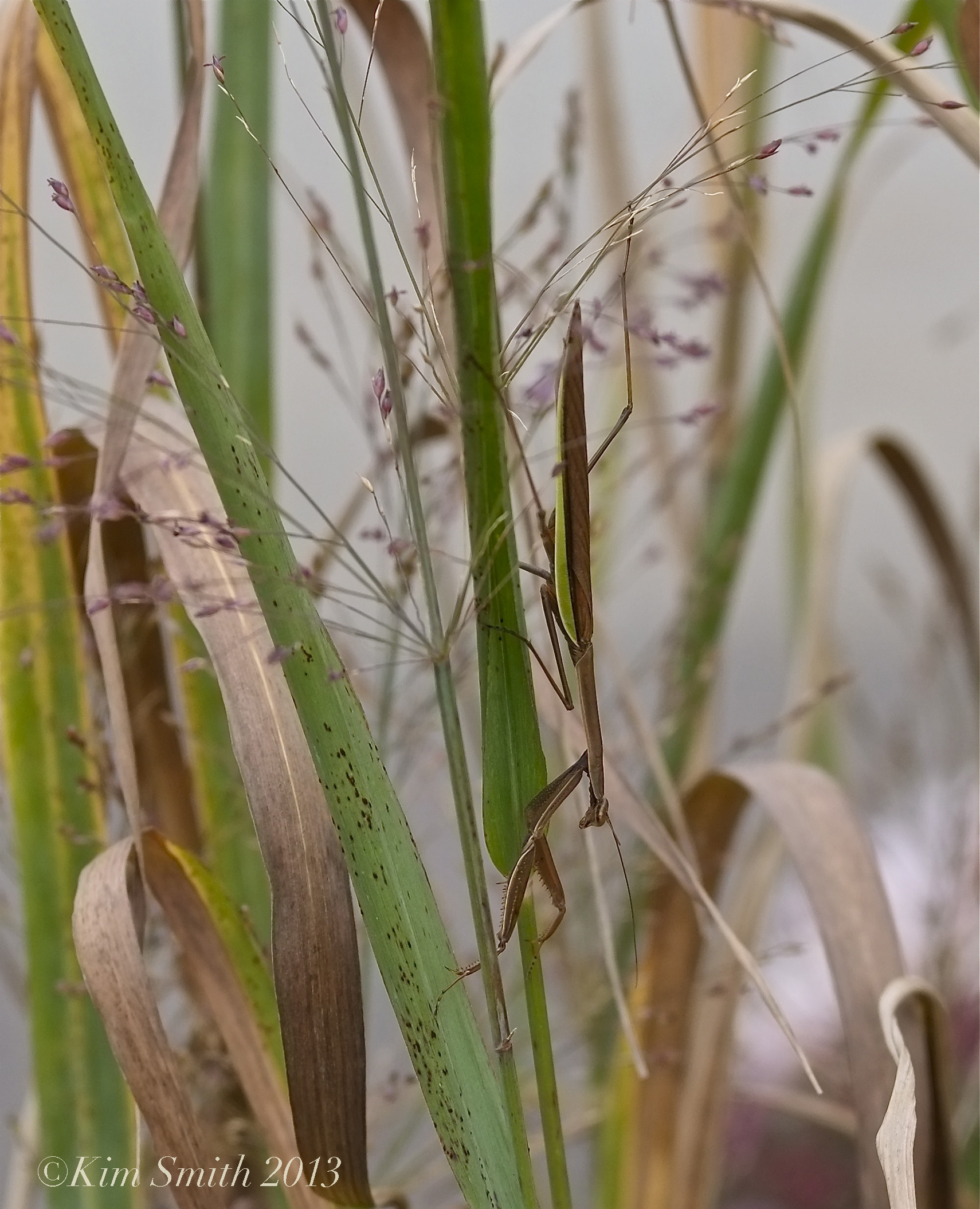
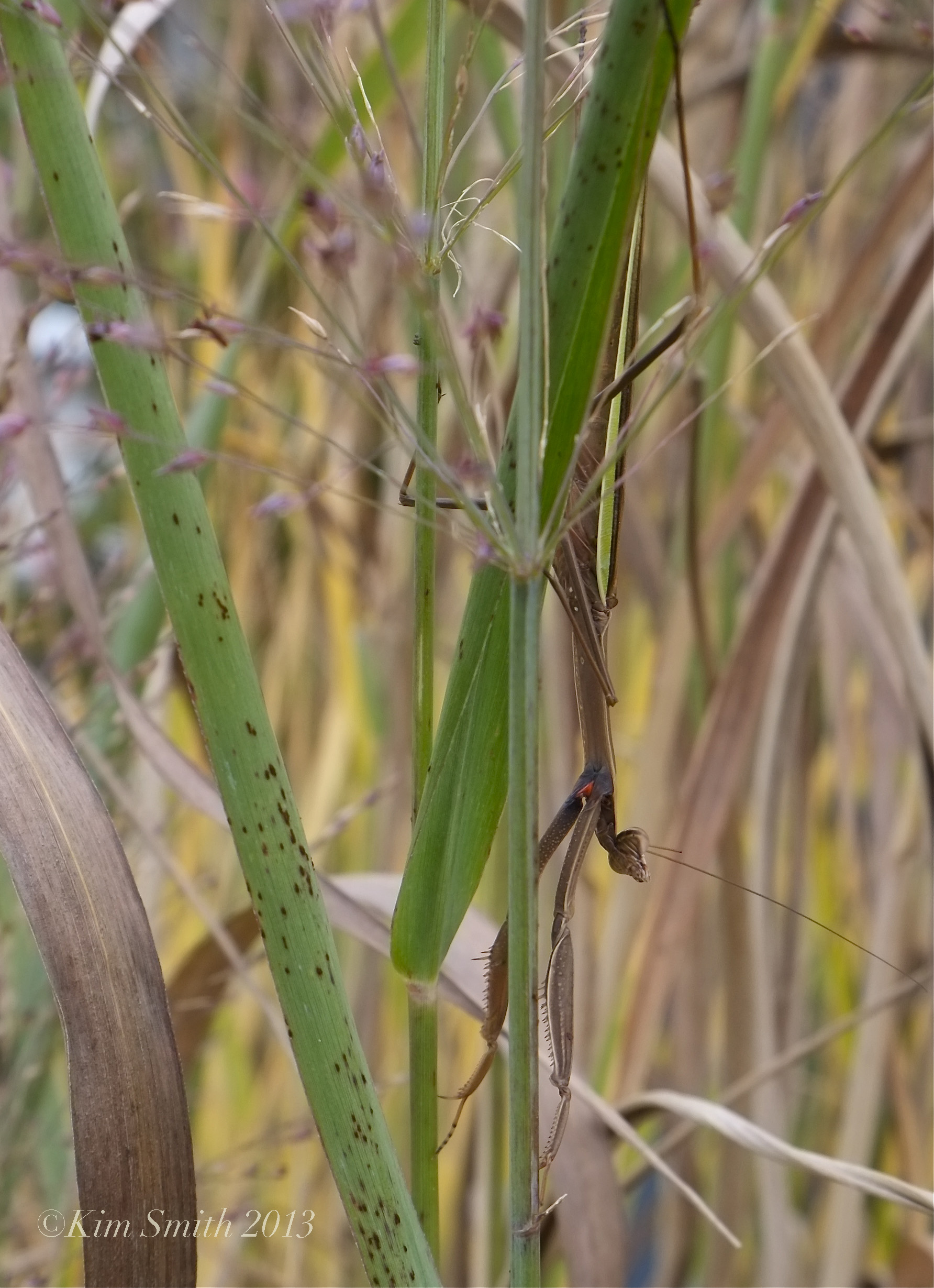
Chinese Mantids have trianular-shaped heads with large compound eyes and three simple eyes between the antennae. Much research has been conducted on mantis eyesight. As do most mammalian predators, the mantis is capable of full stereoscopic vision and they are the only insects able to rotate their head a full 180 degrees.

Chinese Mantis Tenodera aridfolia sinensis -2 ©Kim Smith 2013. copy

In the second photo you can see the Chinese Mantis’s head is pivoting backward at a very narrow angle!

Click once to enlarge the image, and then click again to magnify.

Interesting note ~ A type of kung fu called Praying Mantis Kung Fu was developed in the Shandong province in the mid-16oos, and is said to be inspired by the quick movements and hunting techniques of the Chinese Mantis.

“The Pollinator Garden” at the Beverly Public Library

On Tuesday evening, October 15th, at 7 pm, I will be giving my program, “The Pollinator Garden,” at the Beverly Public Library. Following the rhythm of the seasons, I present a slide show (with over 100 photos!) and lecture demonstrating how to create a welcoming haven for bees, birds, butterflies, and other wildlife. Native plants and examples of organic and architectural features will be discussed based on their value to particular vertebrates and invertebrates. I hope you’ll come join me!

Sunflower and bee ©Kim Smith 2013Helianthus annuus

Seaside Garden Club October Program from Kate Willwerth

Ford floweral arrangement

The Seaside Garden Club Presents Fall Into the Holidays: A Home Décor Demonstration and Raffle by Bert Ford of Ford’s Flowers.  The program will take place onTuesday, October 8th at the Manchester Community Center.  Social time begins at 7:00, Program begins promptly at 7:30.  Light refreshments will be served. Open to all, guests $5. You will have a chance to win beautiful one-of-a-kind arrangements created by Bert as well as the opportunity to learn how to create your own!

Don’t miss a chance to see this high energy program with focus on home decor.  Fresh flowers, grasses, live plants, fruit and vegetables and permanent botanicals will be featured.  Bert will demonstrate tablescapes, wall and door decor and ideas for decorating your home for this festive time of the year (Fall, Halloween, Thanksgiving and Christmas).Ford floweral arrangement3

Bert Ford, AIFD, PFCI is one of New England’s leading floral design professionals. He is the owner/operator of Ford Flower Company in Salem,  Bert delights in creating different and unique designs, incorporating nature, art and today’s trends into his designs.  He has extensive and broad-based experience in the floral industry, blending strengths in design, buying and selling techniques and floral shop operation and management to present the full spectrum of floral design.  Bert has served as president of Teleflora’s New Hampshire-Vermont unit.  As a member of Teleflora’s prestigious team of Education Specialists, he has presented and commentated floral design programs and has participated on design panels through the United States, Mexico and Canada.  His work has be published in numerous floral selection guides and publications including feature articles and covers in “Flowers &” magazine.  Bert has taught many classes at Teleflora’s Education Center in Oklahoma City, featuring trend setting designs for weddings, sympathy and everyday.  He also presented the opening program at the American Institute of Floral Designers international symposium in July 2010.

The Seaside Garden Club is a group of fun, active, civic-minded and hands-on gardeners.  We welcome all types of gardeners from beginners to experienced… there is always something to learn and share.  We invite you to become a member of our club (only $25 for the year!) and enjoy our monthly programs which feature interesting guest speakers and creative workshops.

The Seaside Garden Club meets the second Tuesday of every month (September through June) at 7:00 pm at the Community Center, Manchester-by-the-Sea.

SGC_logo_2013

Visit the Seaside Garden Club blog: http://seasidegardenclub.wordpress.com/

ZINNIAS!

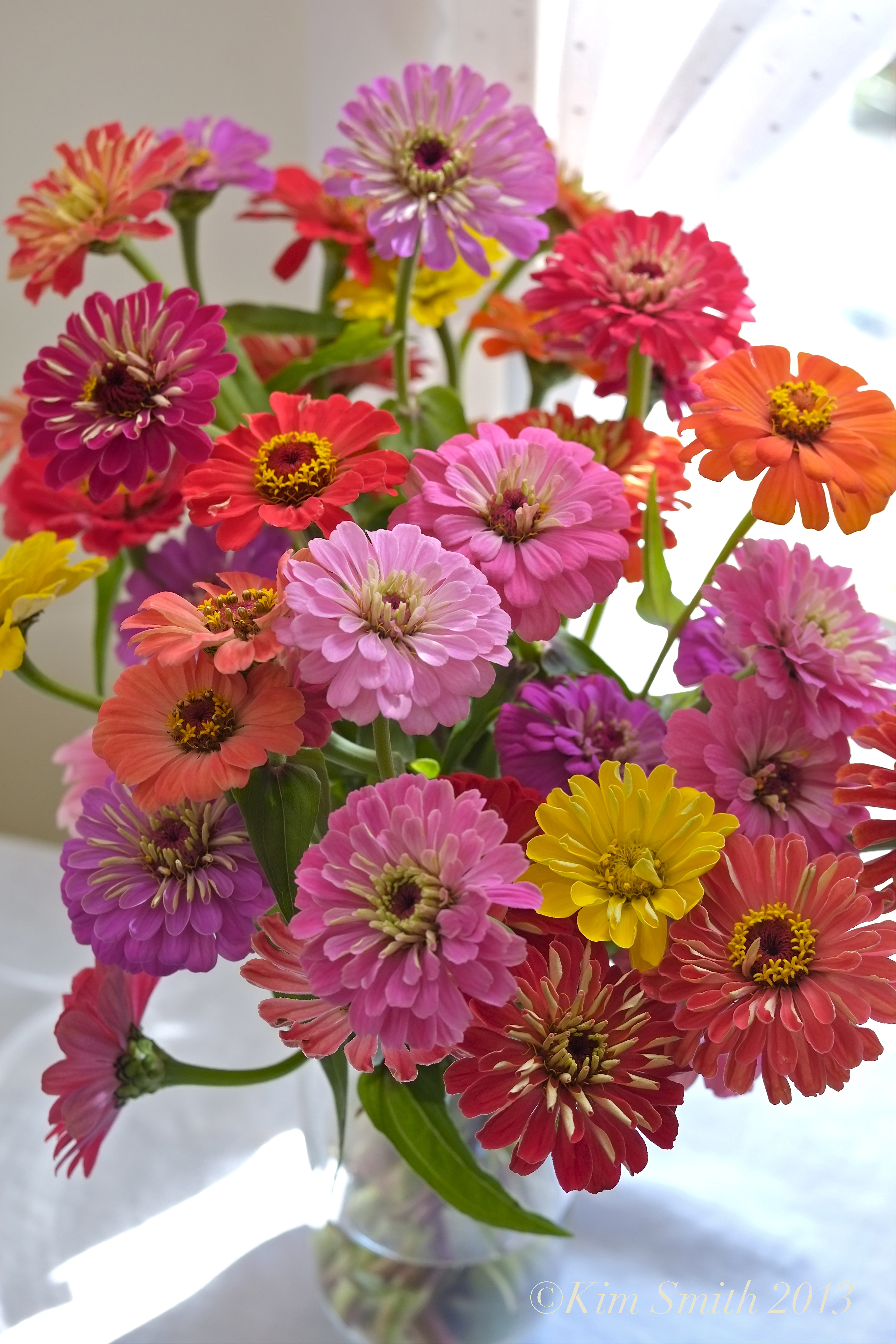
Zinnia elegans ©Kim Smith 2013 copyZinnia elegans

We L-O-V-E zinnias, not only because they flower non-stop from late June through the first frost, but because they also attract myriad species of bees and butterflies to their tiny yellow center florets (disk flowers). The singles are best for attracting pollinators as it is easier for the butterflies and bees to find their way to the sweet nectar.

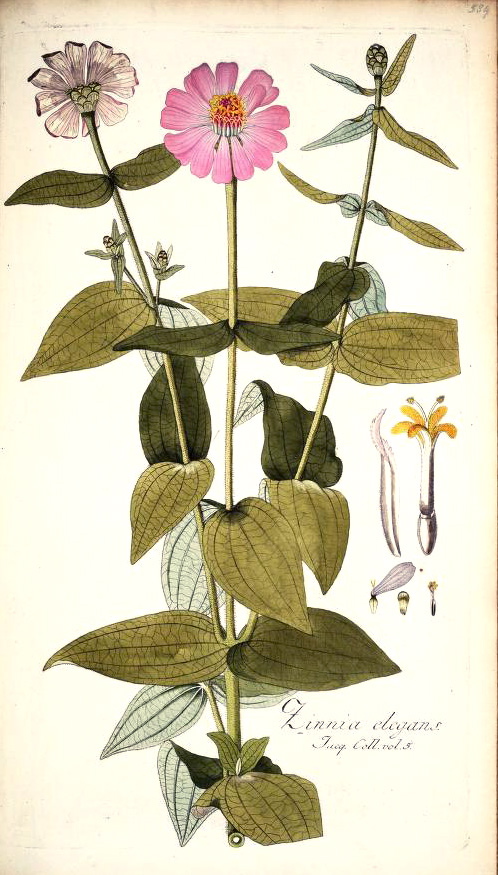
Like all members of the Asteraceae (Aster Family), zinnias are comprised of two types of flowers; the center florets are called disk flowers and the outer petals are called ray flowers.

The wildflower zinnia that grows in the deserts of Mexico and southwestern United States, from which most hybrids developed, is a simple daisy-like flowerhead with pinkish purple ray flowers and yellow disk flowers.

Zinnia elegans

An old fashioned common name for zinnias is Youth-on-Age because they continue to produce new flowers as the older blossoms are expiring.

Thee Autumn Blooming Beauties

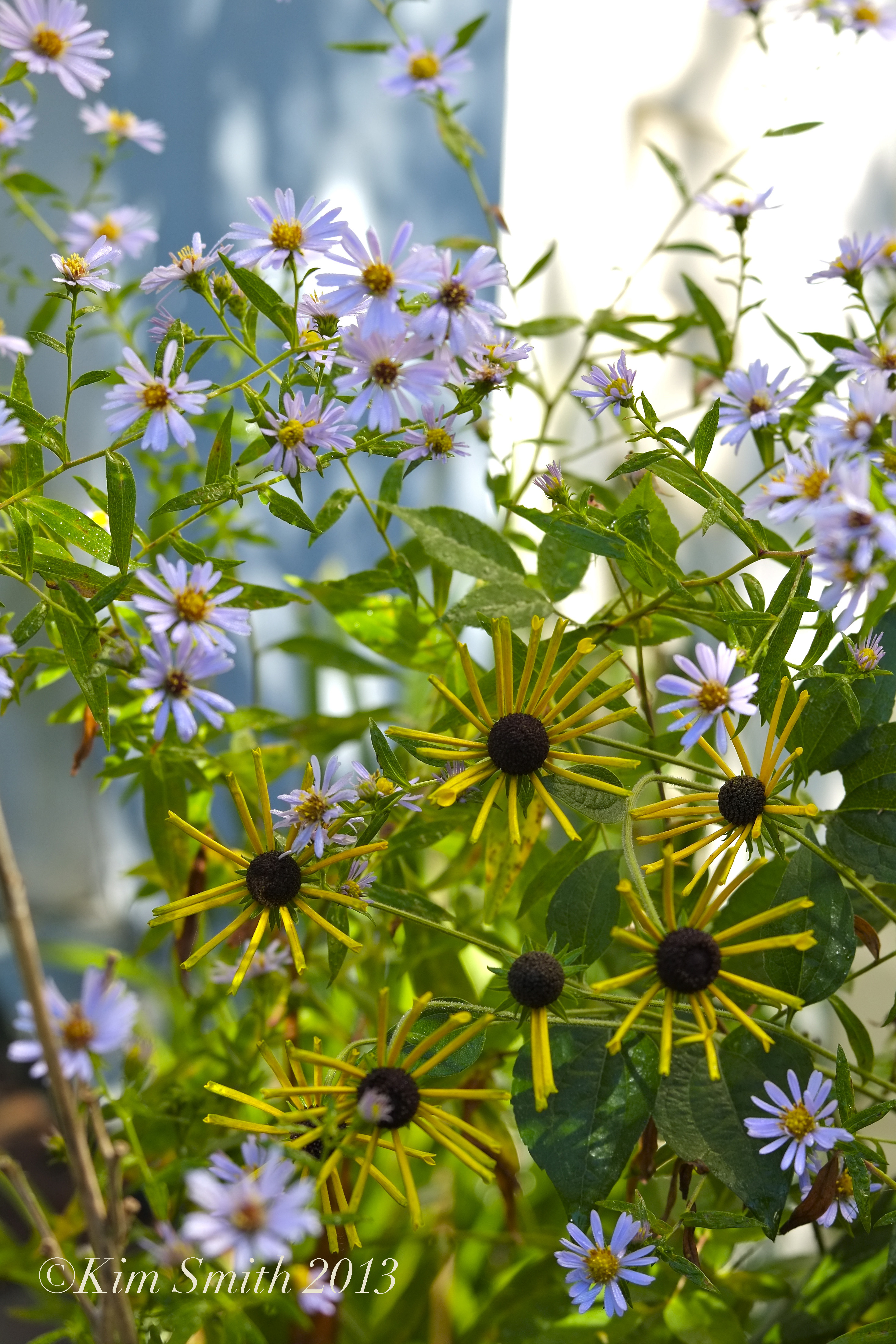
Henry Eiler's Sweet Coneflower ©Kim Smith 2013 copyHenry Eiler’s Sweet Coneflower and Smooth Asters

Henry Eiler’s Sweet Coneflower is a North American native that bears the name of the southern Illinois horticulturist who found it growing at a railroad prairie remnant. When lightly rubbed, the leaves of Rudbeckia subtomentosa reveal their sweet vanilla scent.

For more about Quilled Sweet Coneflower see GMG post from last summer.

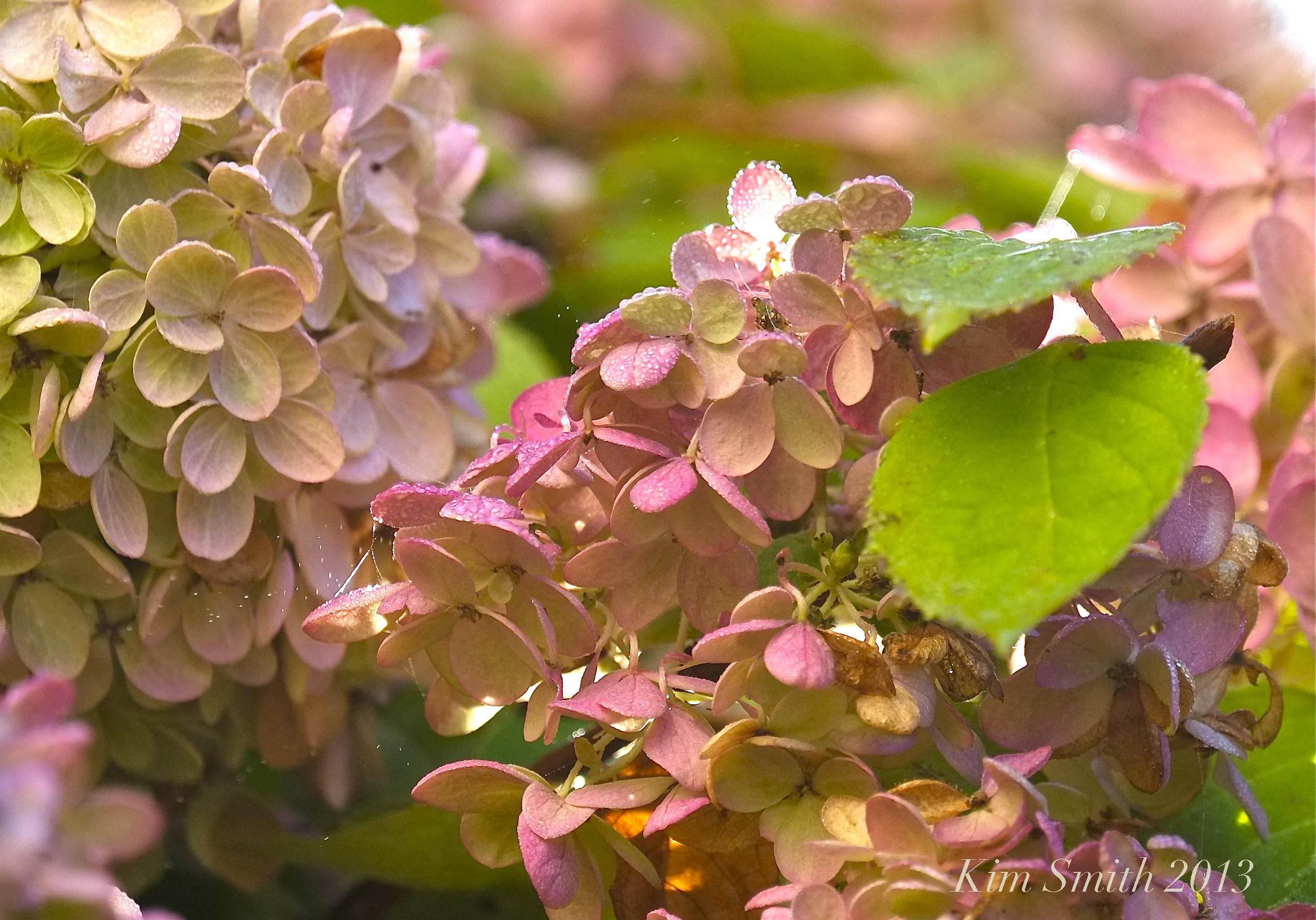
Hydrange paniculata grandiflora Pee gee Hydrangea ©KIM SMITH 2013Hydrangea paniculata grandiflora ~ PeeGee Hydrangea

If you double click the above photo, you’ll see little sprays of what looks like fairy dust but it is actually mist in the atmosphere!

Beautiful Saturday September Morning

Twin Light Sunrise good harbor Beach ©Kim Smith 2013I awoke this morning before dawn to film sunrise and found a sweet gift of Virgilios sauce and amazingly fat rigatonis in the basket on my front porch. I am recovering from a leg operation and my friend Catherine Ryan called at the very moment that I was trying my personal recovery technique–on the floor doing a shoulder stand, with phone in hand–and she really got an earful. Thank you Catherine for listening to me complain about itchy leg braces and hospitals. I gave her the wrong impression though because I can walk and work–I just cannot sit or stand in one place for very long.

Good Harbor beach ©Kim Smith 2013

After putting the sauce and pasta in the cupboard I left to go film, and once again, the exquisite Great Blue Heron was there at Good Harbor Beach fishing amongst the reeds. For the third morning in a row I have observed a flock of cormorants leaving Salt Island en masse to fish with the gulls in the outgoing surf along the shoreline. I wonder, do they sleep there every night?

Sailor Stans ©Kim Smith 2013Next stop was to a friend’s home on Rocky Neck to drop off peaches from my garden. The light was hitting the Sailor’s Stan’s sunflowers perfectly and I just had to stop and take several snapshots.
Sailor Stans Sunflower ©Kim Smith 2013

By now it’s after 8:00 and I almost always go to yoga on Saturday mornings but because of the stitches, thought better of it and instead went to measure a new border at the Gloucester HarborWalk.

Gloucester harbor walk Gardens ©Kim Smith 2013 copyBlooming today at the HarborWalk are asters, goldenrod, annual rudbeckia, and salvia.

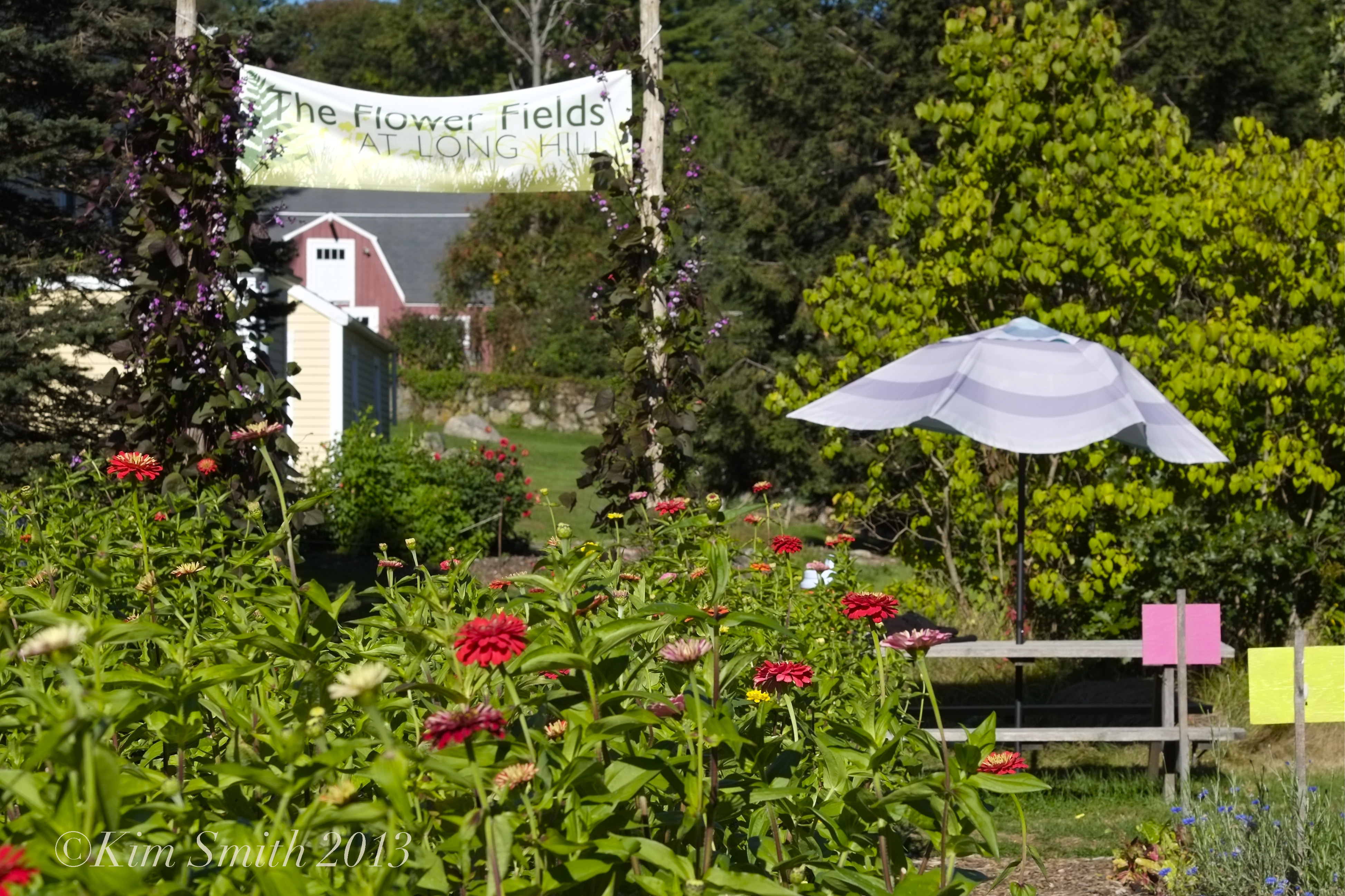
Long Hill Beverly ©Kim Smith 2013Next stop was the farm stand and then on to Pick Your Own at Long Hill in Beverly. In case any pollinators stop by, I prefer to leave my own zinnias growing in the garden and just love the array of colors in the Long Hill garden mix.

All this gorgeousness before 10:00 and I still have a work day if front of me, but it’s been a September Saturday morning I won’t soon forget! For all these gifts, of friendship and of the beauty that surrounds, I am counting my blessings.

Visiting Liv in Brooklyn: Gardens at the HighLine, Battery Park, and The Bosque

Liv Hauck ©Kim Smith 2013Snapshots from a recent trip to Brooklyn and NYC to visit my darling daughter Liv.

We had a wonderful time walking everywhere and dining out. Liv always takes me to the most fun restaurants with fabulously yummy food, and they are never too pricey; the prices are comparable to our favorite Gloucester restaurants.

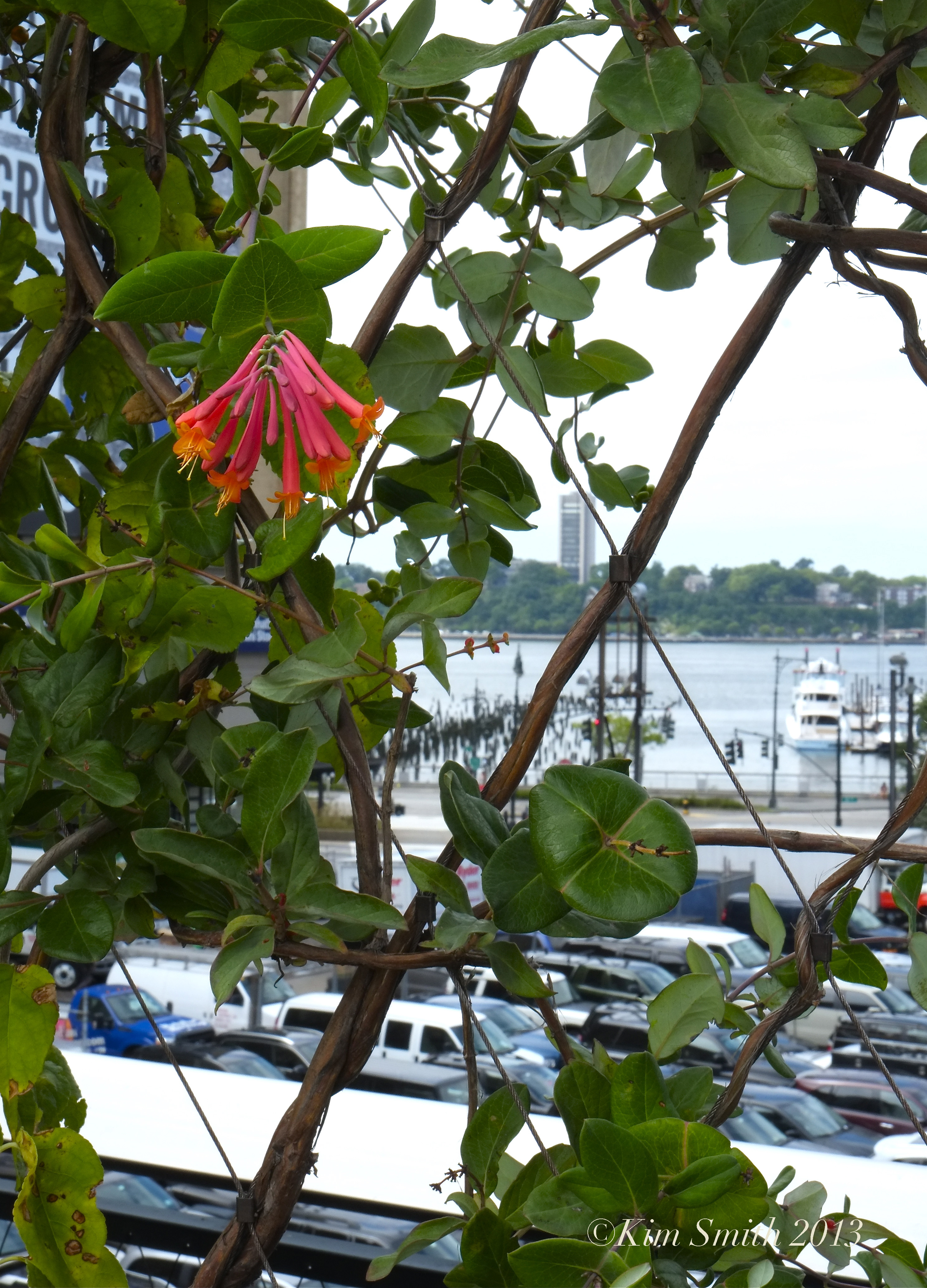
Native Honeysuckle Lonicera sempervirens High Line NYC ©Kim Smith 2013 copyNative Honeysuckle for the Hummingbirds at the HighLine

For our HarborWalk Gardens, I had wanted to to see what’s in bloom at the HighLine gardens during the late summer and early fall, as well as what was blooming at Piet Oudolf’s designs for the Battery Gardens of Remembrance and The Bosque.

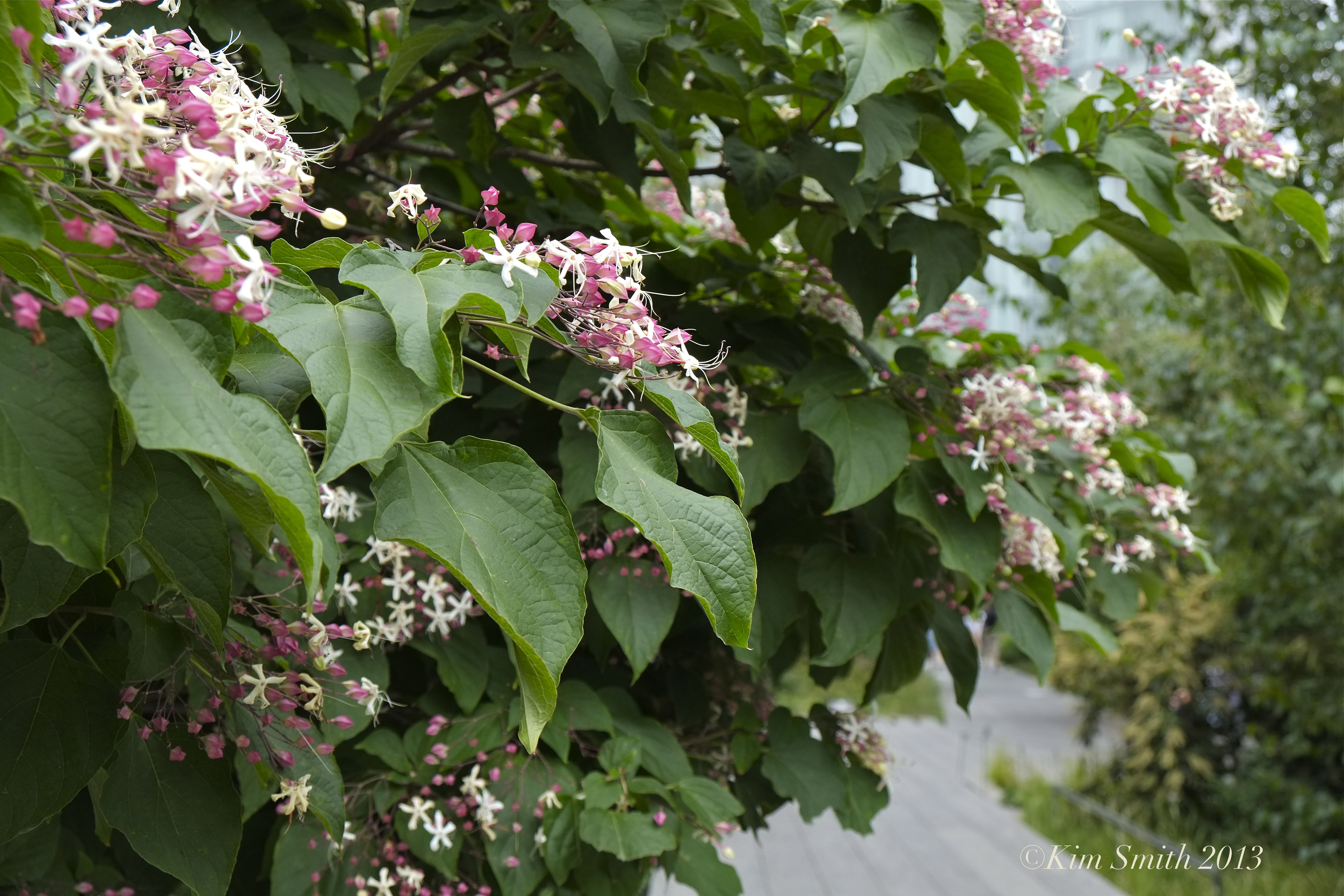
Harlequin Glorybower Clerodendrum trichotomum  ©Kim Smith 2013At the HighLine, we paused for some length at the stunning grove of Japanese Clerodendrum (Clerodendrum trichotomum); whose one of several common names befits it’s great beauty–Harlequin Glorybower Tree. The stop-dead-in-your-tracks-deliciously-fragrant blossoms float atop a canopy of  fluttering leaves. The blooms are similar looking to jasmine flowers, but are even more sweetly scented. A magnet for butterflies and hummingbirds, the tree blooms at a time of year when much of the rest of the garden is winding down. The glorious glorybower is on my wish list for next year and, as it is just barely hardy through zone 6, I’ll find a sheltered and protected spot in which to experiment.

The Bosque Spiral Fountain ©KIm Smith 2013The Spiral Fountain at The Bosque (Spanish for a “grove of trees”), with the Statue of Liberty in the background, Battery Park Park, New York City.

Liv Hauck -1©Kim Smith 2013jpg copy

A grove of Magnolia viginiana at the HighLine

Sunpower!

Or as Mary McLoud Tucker adds with her comment, “Sunsational”

Sunflowers ©Kim Smith 2013 copySunflowers Eastern Point (Helianthus annuus)

Welcome First Day of Autumn!

And welcome, too, gardens of dissipating beauty.

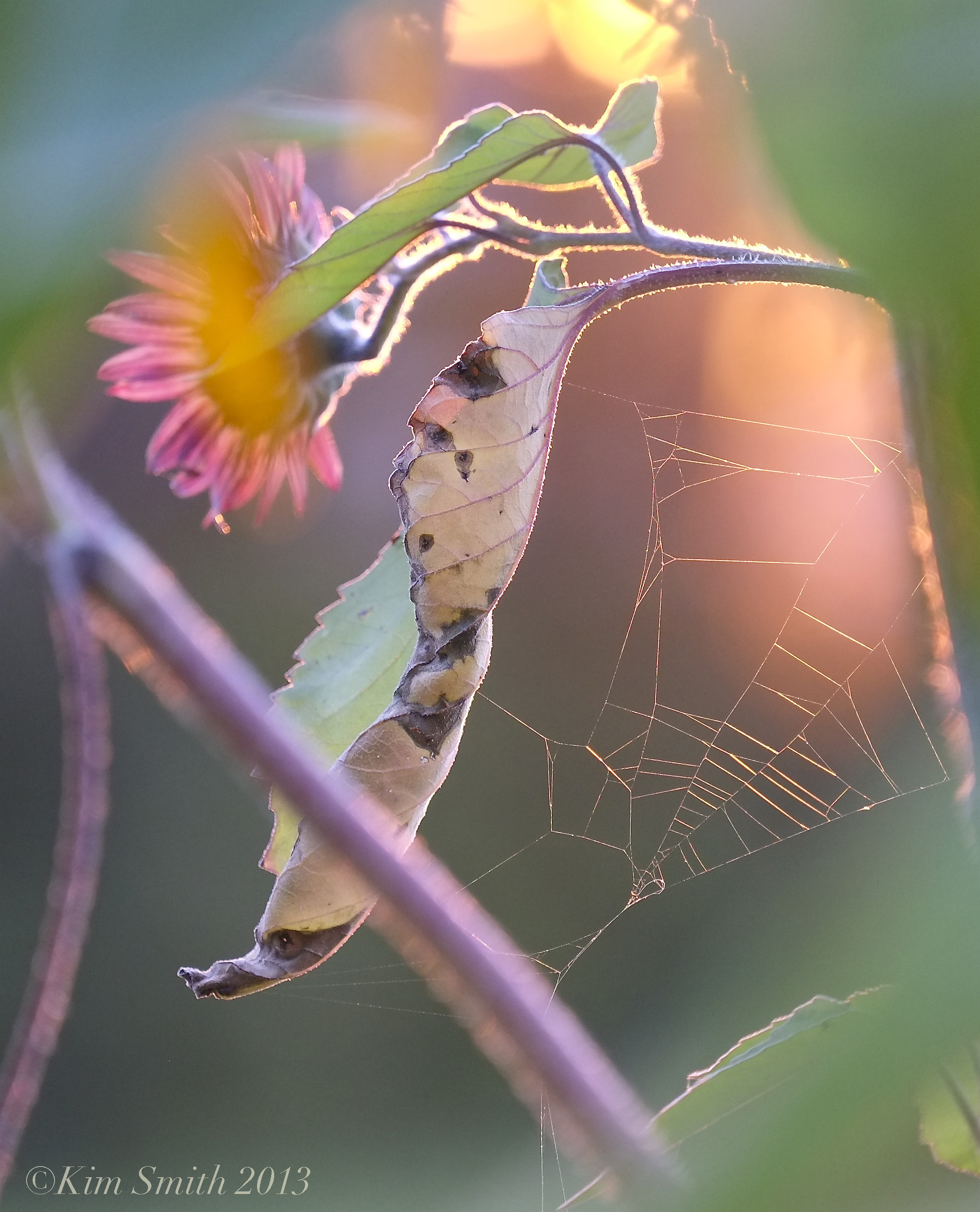
Sunflower and Web © Kim Smith 2013Sunflower and Spider’s Web