Decadent Desserts!

I am planning to sign up for Chef Matt’s “Decadent Desserts” cooking class. I’ve never taken a cooking class before, but based on how much I learned and truly enjoyed Savour’s “Become a Wine Expert” series, I know it will be tons of fun. Besides, I tried making Apple Tarte Tartin from the original 1800s recipe (not successful) and would love to have Chef Matt’s recipe!!

P.S. It’s not that I am obsessed with Apple Tarte Tartin, the thing is, that at the end of the summer when our peaches and pears ripen, I would love to make Peach and Pear Tarte Tartins!

Greetings!

Our Winter Classes and Chef’s Table dinners have been scheduled and are beginning to fill up. Call to reserve your space today!


Winter Cooking Classes
   
Soups (SOLD OUT)

January 23, 2014

Decadent Desserts (limited availability)

February 6, 2014

Brunch Fare

February 20, 2014

Make Ahead Hors d’oeuvres

March 13, 2014

Make Ahead Dinners

March 27, 2014

Menu

Decadent Desserts

  • Flourless Chocolate Cake
  • Tiramisu
  • Lemon Curd
  • Apple Tart Tatin

Brunch

  • Quiche
  • Herb Roasted Potato
  • Granola
  • Scones
  • Poached Salmon
  • Cocktails

All classes are offered at $55 per person. Work side by side with

beach gourmet Chef’s Matthew Beach and Meghan Pozzi to learn techniques for the beginner or the seasoned in-home chef.

Watch and Learn or participate in the cooking demonstration.

All classes will be held at the beach gourmet “Exhibition Kitchen” located in Savour Wine and Cheese.

Classes also available in home.

About the Chef’s Table

Upcoming dates:

February 8th (Italian Wine Dinner)

February 16th (Four Course Dinner)

Menus to be published soon.

The Chef’s Table is a great way to extend our hospitality to clients or private tastings and classes. Our antique, hand-crafted table seats up to twelve people comfortably and is uniquely located inside Savour Wine and Cheese, adjacent to the beach gourmet exhibition kitchen. Guests at the table experience an exclusive private dining experience with a menu that is designed specifically to compliment the wine pairing by our wine expert, Kathleen Erickson.

These events are typically booked for private parties and are not open to the public, however we periodically open the table to reservations on a first-come, first-served basis. Sample Chef’s Table menus can be viewed on our beach gourmet web page. Do not delay in making your reservations. Open Chef’s Table events tend to sell-out very quickly.


Quick Links… 
 
John Lamirande   
beach gourmet
76 Prospect Street
Gloucester, MA 01930

Bear Pooh!

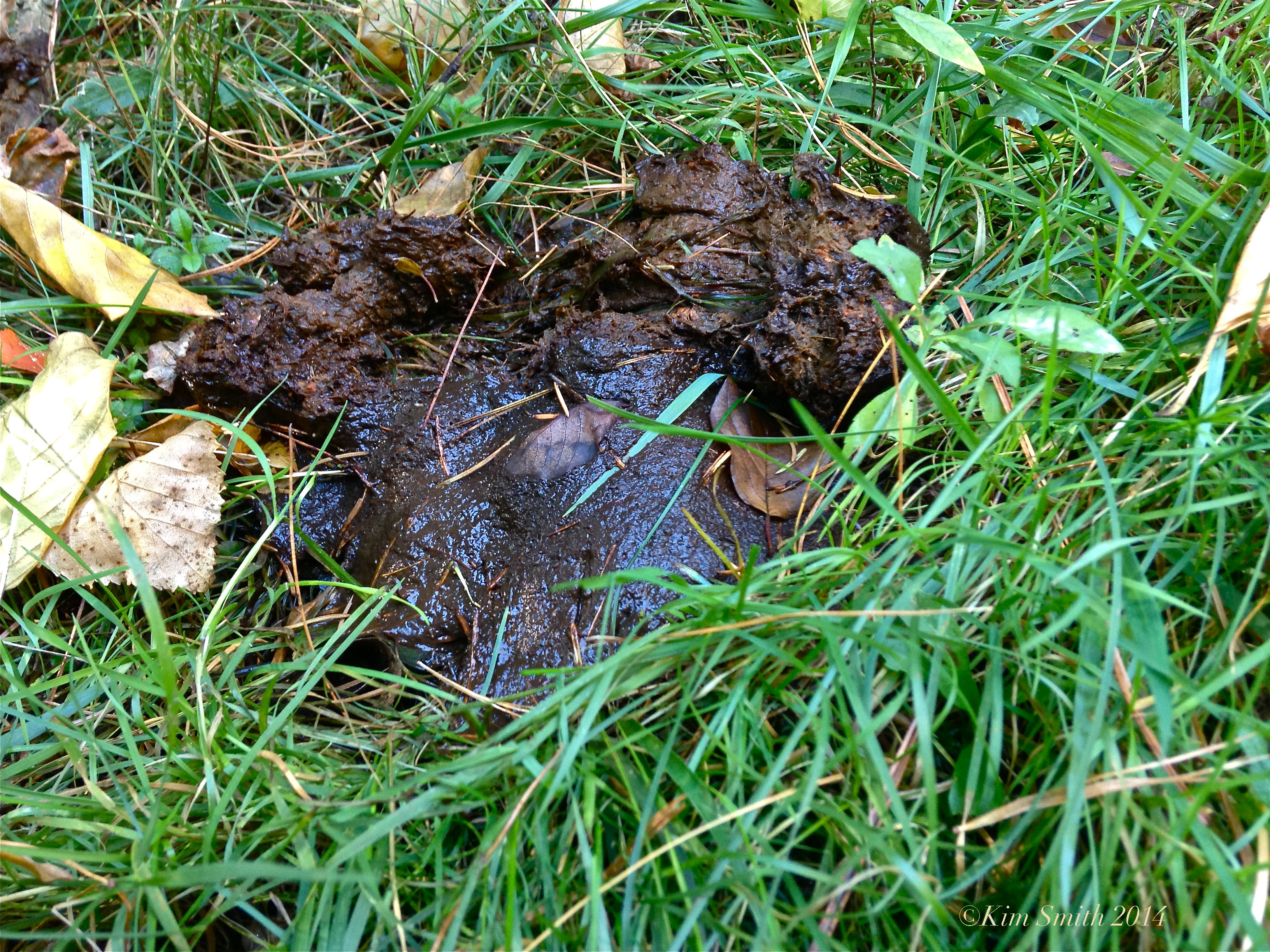
American Black Bear Pooh ©Kim Smith 2014 copyI love it when friends and readers ask what bird or butterfly (and moth and caterpillar), and am only too happy to help them learn more about the creature they have found. Very funny though is the wide range of nature-related questions that I am asked. At a job site recently, the crew could not wait to show me the above humungous pile of pooh. Should I be flattered or dismayed?

Three times as large as the largest Great Dane pooh that you could possibly imagine, and not the right consistency for dog poop, it didn’t take much searching to determine that it was Black Bear pooh. We double checked with our friend Richard from the Department of Conservation and Recreation and sure enough, it was confirmed to be bear pooh.

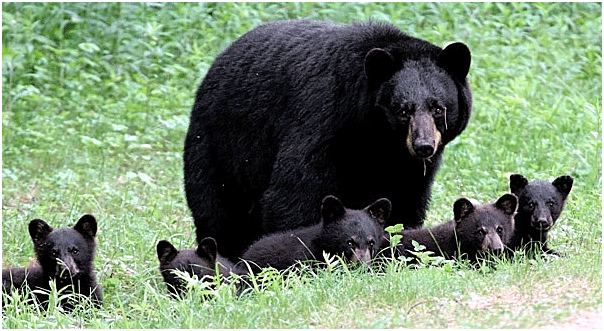
black_bear_w_5_cubs_nh_june_2007

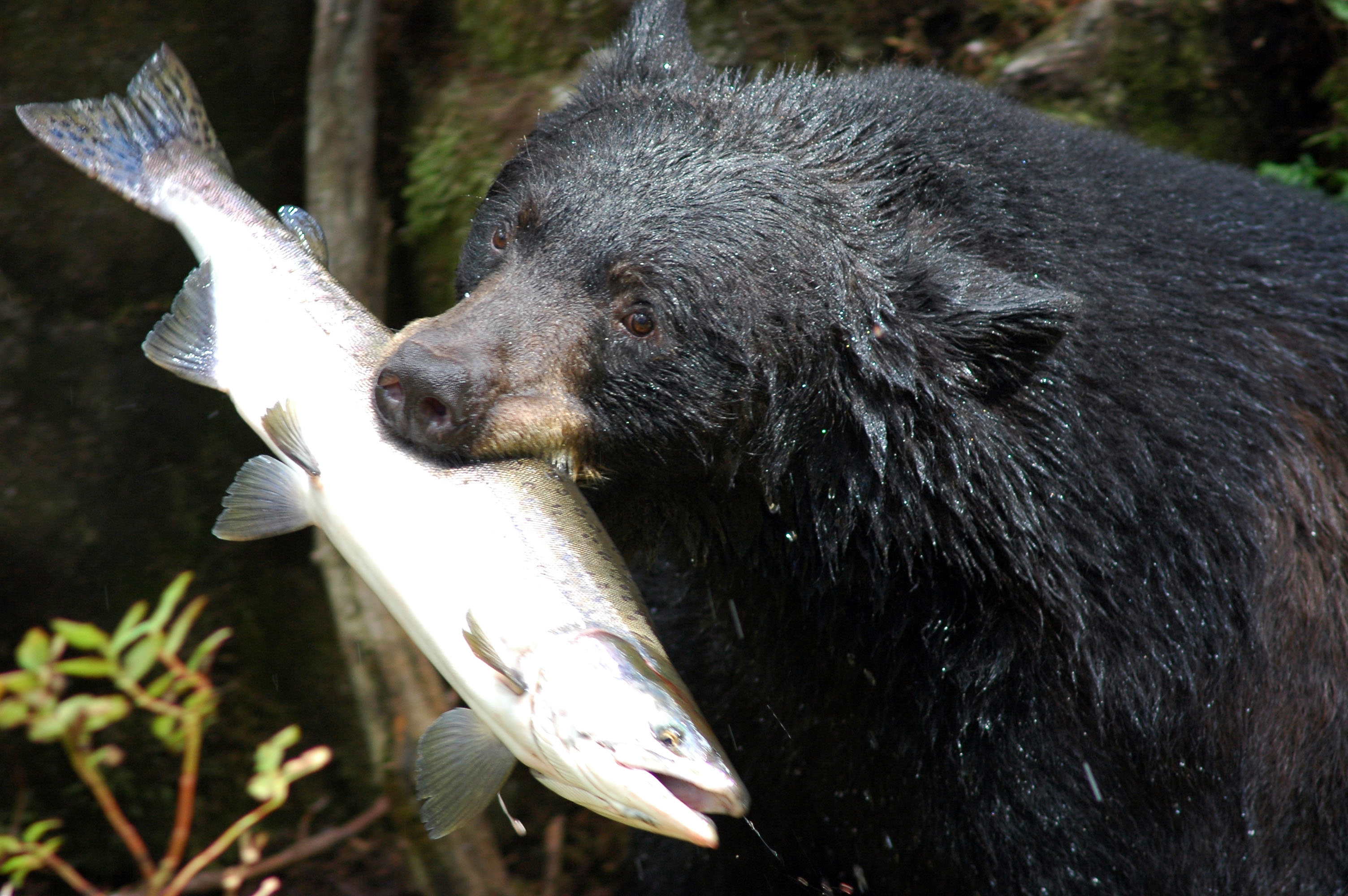
Black_bear_with_salmon

As an alternative to what was suggested by the MSPCA in their “co-existing with coyotes literature,” which is that kids be kept indoors and that we keep donkeys and llamas as coyote deterrents, we instead perhaps should repopulate Cape Ann with bears. After all, bears were here before the earliest European settlers (think Bearskin Neck).

JUST KIDDING!

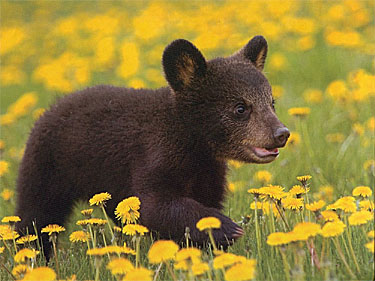
black_cub

Willowdale is located within the Bradley Palmer State Park, which borders the towns of Ipswich, Topsfield, and Hamilton, which border the towns of Essex and Manchester. Has anyone in recent history spotted a Black Bear on Cape Ann?

11142685-large-1 Cape Cod’s Resident Black Bears Gets Evicted

Excellent link provided by GMG reader artbev on Animal Scat Notes. Thank you artbev!

American Black Bear Images courtesy google image search.

Sign Up for My Column on Habitat Gardening

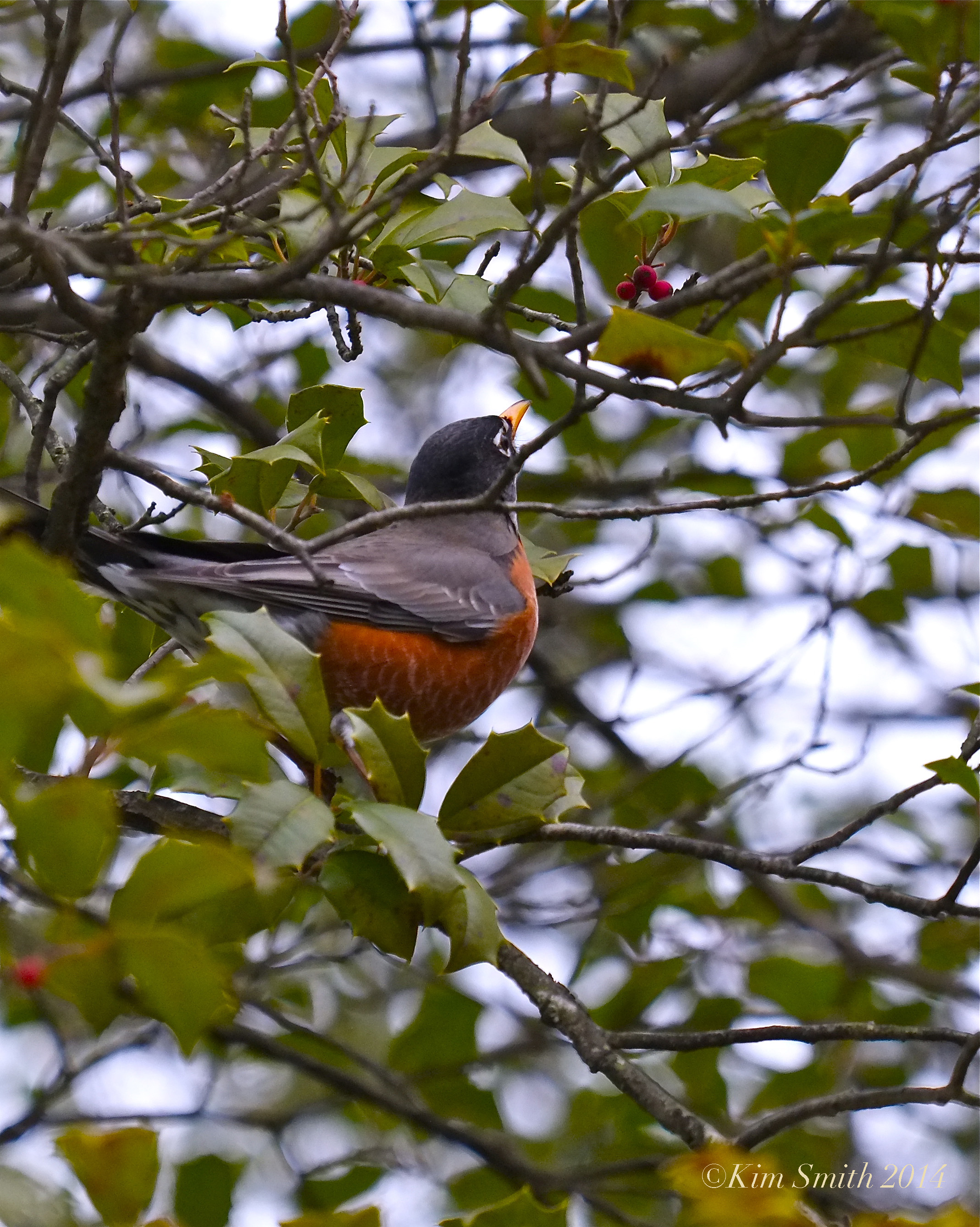
American Robin American Holly Ilex opaca © Kim Smith 2014JPGBird Food!  ~ American Robin and American Holly (Ilex opaca)

My regular readers are aware, as are my fellow GMG contributors, that I write a monthly column/newsletter on gardening, with a focus on designing welcoming habitats for birds and butterflies. My readership has grown steadily, I think largely based on the fifteen or so habitat garden design lectures that I give each year (See the Lecture Program Page on my blog) and the newsletter is now read mostly in New England, but also throughout the US, England, Canada, and Mexico.  As does my book, the columns contain a wealth of information on creating habitat gardens, how to attract birds and butterflies to our gardens, and stories about local wildflowers and wildlife. Oftentimes readers write and I find it wonderfully gratifying when they share their success stories with what they are feeding and planting to attract birds and butterflies to their gardens.

The newsletter began awhile back while I was writing a bi-monthly column for the regional newspaper the North Shore Planet. Reader’s who lived beyond the area of distribution of the newspaper became interested in the columns and it was easy to send the columns via email. The columns are in the process of being archived and they will eventually be featured on a page of their own on my blog. If in the meantime you would like to receive via email my monthly column, please email me at kimsmithdesigns@hotmail.com.

Winterberry Ilex verticillata © Kim Smith 2014Winterberry (Ilex verticilatta)

Oh Garden of Fresh Possibilities! Notes from a Gloucester Garden is available through my publisher’s website at David R. Godine, Publisher.

Birds of Cape Ann: The Majestic Mute Swan

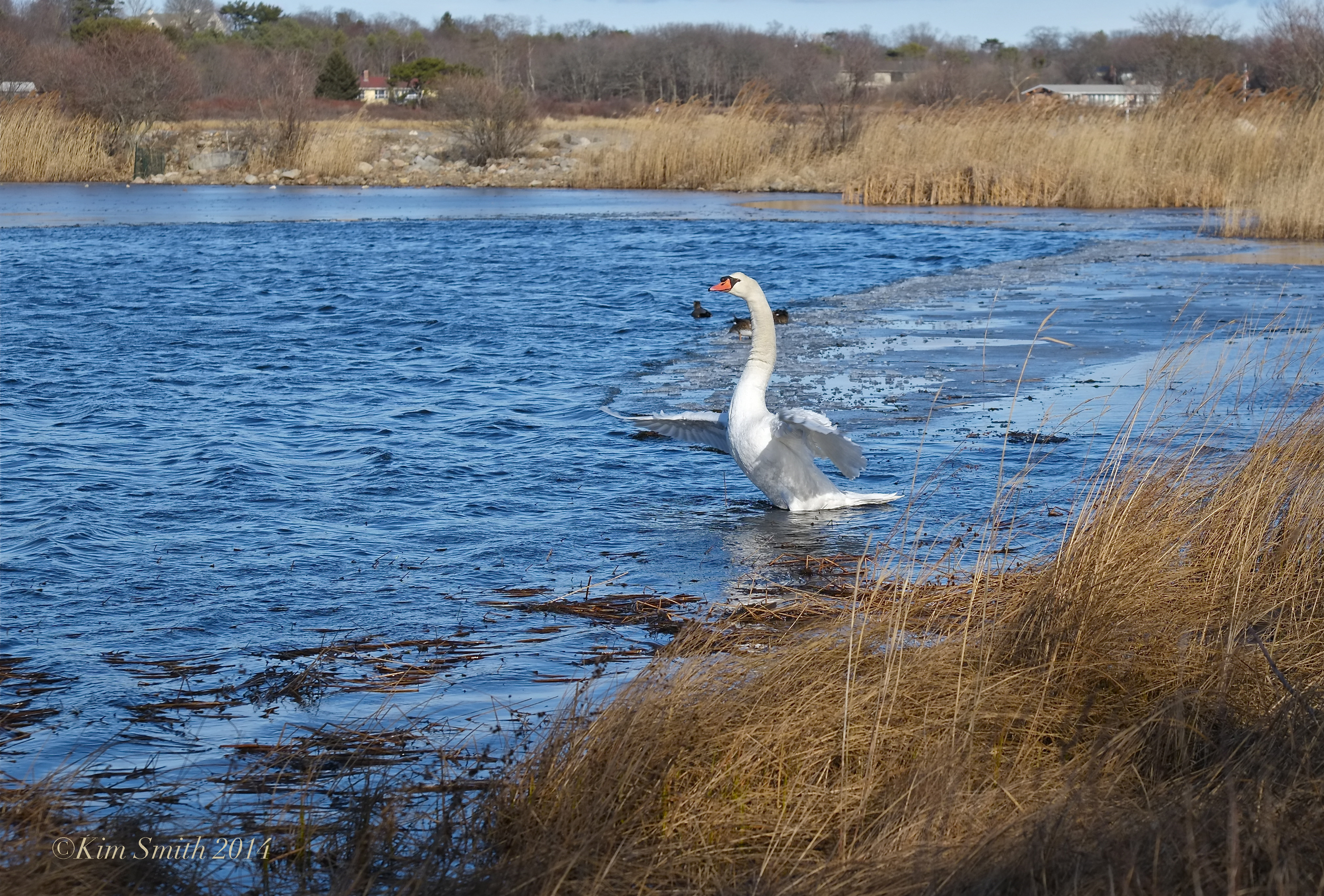
Mute Swan taking flight -2 ©Kim Smith 2014The extraordinarily powerful wings and torso of the Mute Swan ~ click to view larger

The above photo is a lucky capture as I was actually filming the Gadwalls behind the swan. When the swan began to lift out of the water I quickly turned my attention toward it. The first two photos are the same; the first is cropped, the second uncropped so that you can see the tremendous scale of the swan’s body and wings in relation to its environment. The Mute Swan is the second heaviest waterfowl, second only to the Trumpeter Swan. In observing swans, I marvel in nature that a creature this heavy can soar majestically through the clouds and swim so gracefully through water.

Mute Swan taking flight ©Kim Smith 2014

Mute swans feed primarily on submerged and emergent aquatic vegetation and a small percentage of their diet also includes frogs, small fish, and insects. Because swans feed in deep water they do not compete with smaller waterfowl such as ducks. It is thought that food is made more readily available to ducks because the swans do not eat all the food they pull up. This seems logical and factual from my own observations at our local ponds and marshes. I very often see a wide range of waterfowl congenially feeding with the Mute Swans.

Swan food winter ©Kim Smith 2014Mute Swan feeding on submerged vegetation at Niles Pond

Note ~ Mute swans, which are a nonnative species, do compete directly for food with North American native Trumpeter Swans, in regions where Trumpeter Swans are indigenous (Trumpeter Swans are not native to Cape Ann).

For more photos, information, and video see previous GMG posts about the Mute Swan:

Where Do Swans Go in Winter?

Vibrant Throbbing Wingbeats

Niles Pond or Brace Cove

*   *   *

Birds of Cape Ann: Divers or Dabblers and the Green-winged Teal

Birds of Cape Ann: Buffleheads

Rockport Reader Submits Coyote Photo

Thank you so much Sandra for sending your photo.

Note to readers interested in submitting a locally spotted coyote: Please don’t be concerned about the quality of the image. I think it is very helpful to collect documentation while we are learning as a community how to address the growing coyote problem. Please provide location and time of day.

Send photos to: kimsmithdesigns@hotmail.com. Thank you!

photo0440_001 2

Hi Kim,

Saw your coyote post on Good Morning Gloucester, with note to send photos.

We woke one morning early in December to see this coyote not 50 feet away,under our neighbors’ apple tree, having breakfast!  South St., Rockport.  We are newcomers to the area, had heard about and heard coyotes at night, but this was something we did not expect to see during the day. Not the greatest picture, but at least documented!  
Thanks.
 

Birds of Cape Ann: Divers or Dabblers and the Green-winged Teal

Female Green-winged Teal -- ©Kim Smith 2013.Female Green-winged Teal (Anas crecca) 

While filming at Henry’s Pond in Rockport I at first thought I was seeing a pair of pint-sized, or immature female Mallards amongst a mixed flock of full grown Mallards and American Black Ducks. But no, upon closer examination, their behavior was different from that of the much larger Mallards. They stayed together, the two females, foraging for food along the pond’s edge. When one flashed her brilliant emerald green wing, I realized it was no Mallard but the beautiful Green-winged Teal.

Female Green-winged Teal ©Kim Smith 2013Like the chubby little Bufflehead, the Green-winged Teal is similar in size, about 13-15 inches in length.

I find it interesting that, based on their style of foraging, ecologists assemble waterfowl into several groups.“Dabbler” ducks skim food from the surface, or feed in shallow water by tipping forward to submerge their heads (which is exactly what I had observed while filming the petite Green-winged Teal). “Diving” ducks propel themselves underwater with large feet. A few dabblers may dive, but for the most part, dabblers skim.

Dabblers that we see in our region include Green-winged Teal, Mallard, Mottled Duck, Blue-winged Teal, Gadwall, and Northern Shoveler. Diving ducks are the Canvasback, Redhead, Ring-necked Duck, Greater Scaup, Ruddy Duck, Masked Duck, and American Wigeon.

A third category, which includes Buffleheads are called “seaducks.” American Black Duck, Eiders, Scooters, Harlequin Duck, Oldsquaw, Goldeneyes, and Mergansers are encompassed in the seaduck group. Read more about Dabblers vs. Divers here.

Male Mallard, Female Mallard Green -Green-winged Teal ©Kim Smith 2013.

In the above photo of a male and female Mallard in the foreground, and Green-winged teal in the background, you can see how close in color are the feathers of the females of the two species. The wing pattern is subtly different and you can also see the difference in size between the two species.

*   *   *

I have been organizing research and lots of photos for our Birds of Cape Ann series. Upcoming stories will feature songbirds, including Mourning Doves, American Robins, and Northern Cardinals, shorebirds of every size and shape including dabblers, divers, and seaducks, and I’ve planned a post just on bird food to grow in your gardens to attract our fine-feathered friends. As I often remind my readers, “When you plant, they will come!”

Green-Winged Teal, Birding Center, Port Aransas, TexasMale Green-winged Teal image courtesy Wikimedia Commons

Birds of Cape Ann: Buffleheads

Coyote Capture

Today was the third day in a row that I have spotted a coyote at high noon. Three different North Shore towns, three sightings. This time I had my camera with me and it was easily accessible. In the new literature on living with coyotes that I have been reading, there is a great deal of misinformation. The first myth that should be dispelled is that they are nocturnal!

If you spot a coyote and manage to capture a photo of it, send in the snapshot and we will post it here. Email to kimsmithdesigns@hotmail.com

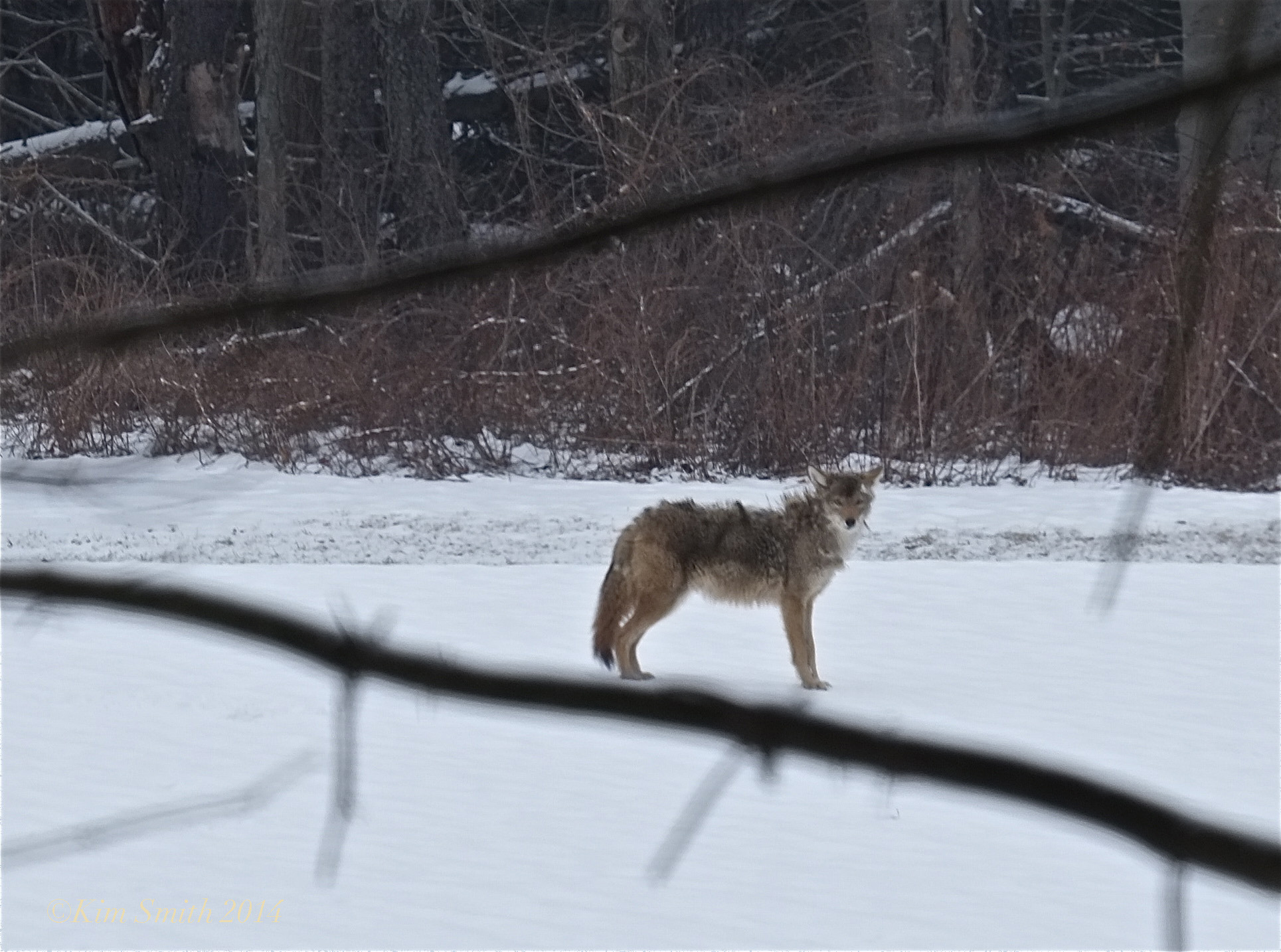
Coyote Massachusetts,canis latrans ©Kim Smith 2014Coyote (Canis latrans)

The three locations are: Tregony Bow, Rockport; Grapevine Road, Hamilton; and  Mt. Pleasant Street, Gloucester.

The Scarf, With Pockets!

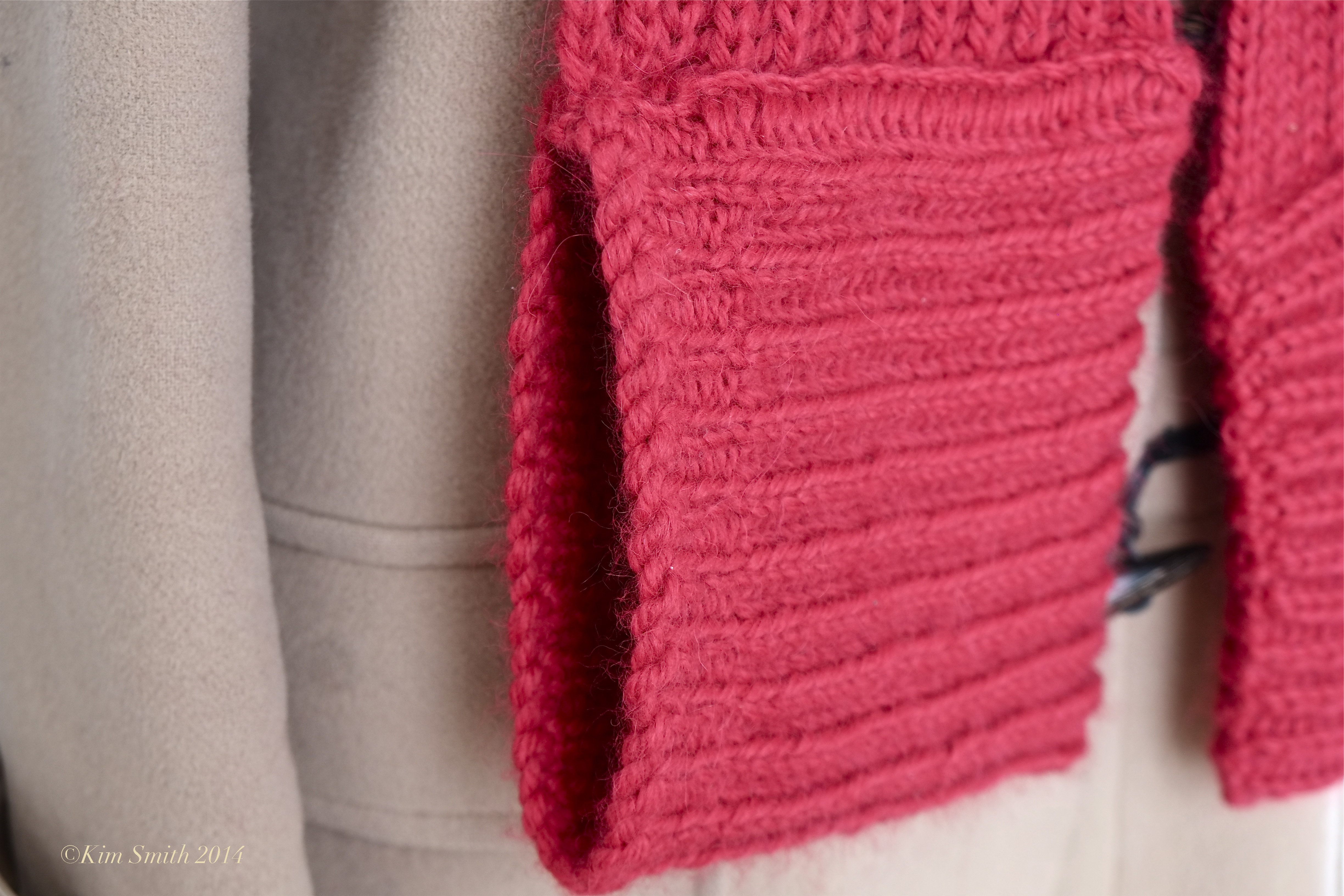
Scarf with Pockets ©Kim Smith 2014. JPG -3 copy The ideal scarf for photographers ~ a scarf-with-pockets!

If you are anything like me, when out photographing or filming, your coat pockets are so over-stuffed that there is no room for frozen fingers. Typically, my pockets contain second and third alternate lenses, car keys, lens cap, lens wiping cloth, and gloves. The gloves are off so that I can work the cameras, which invariably leads to numb hands and fingers. Meet the scarf-with-pockets. In between shots, you can tuck your hands into the convenient scarf pockets. For added warmth, I worked this in the brioche stitch, which creates a luxuriously textured and lofty pattern.

My favorite yarn currently is Frog Trees’s gorgeous Chunky Alpaca. Alpaca is warm and cozy, with a similarly soft feel to that of cashmere, and is NOT ITCHY!

You can purchase Frog Tree’s Chunky Alpaca from Robert at Coveted Yarn. Frog Tree yarns are fair trade; profits from the sale of yarns goes to the artisan.

Frog Tree chunky Alpaca ©Kim Smith 2014 copyChunky Alpaca comes in a beautiful array of colors. If Robert doesn’t have the color you are looking for in stock, ask, and he will custom order it for you.

4 Skeins Frog Tree Chunky Alpaca

#6 needles (or size to suit your knitting style; I knit very loosely)

Cast on, very loosely 24 sitiches. Work basic brioche stitch for approximately 52 inches. Bind off loosely. Scarf measurement before pockets: 52″ in length, 6″ wide.

For each pocket ( work both simultaneously on the same needles so they come out the same length), loosely cast on 48 stitches. Work knit one pearl one ribbing for one inch. Switch to brioche stitch and work until total length of pockets equals the same width of scarf (in this case, 6 inches). Bind off very loosely. Slightly stretch and block ribbing to equal width of the pocket. Stitch pockets to scarf.

Scarf with Pockets ©Kim Smith 2014. JPGPocket Detail

End Notes ~ The brioche stitch is a little tricky. Heidi, who works at Coveted Yarn, recommended online youtube tutorials, which I did, and found it was a terrific way to learn a new pattern. This is the perfect winter for an extra thick and lofty scarf and I’ll be busy on a second scarf-with-pockets because daughter Liv has claimed the red one in the photo.

I have recently noticed scarves with pockets in shops and the pocket openings were acclimated horizontally rather than vertically, as are the pockets in this pattern. That’s a great idea, because the pockets can then be used to also hold items however, the openings would be less conveniently placed for warming hands.

Frog Tree chunky Alpaca Coveted yarn ©Kim Smith 2014

Keeping Warm and Cozy!

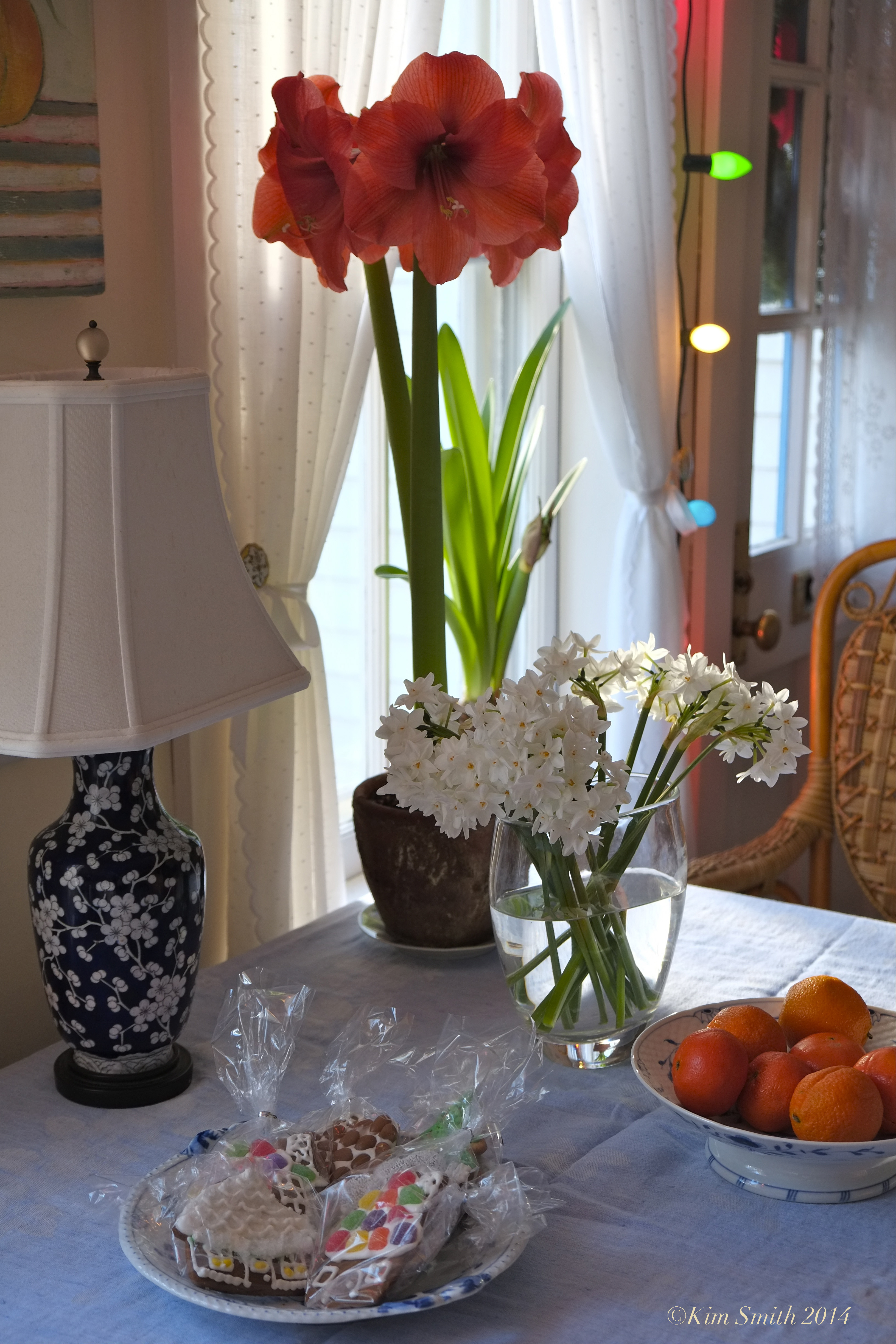
Too much design work to photograph this afternoon, but I hope to tomorrow morning, early, before round two of the double whammy of storms hits Cape Ann. Love snow days and I hope everyone is keeping warm and cozy in their homes!

©Kim Smith 2014 copy

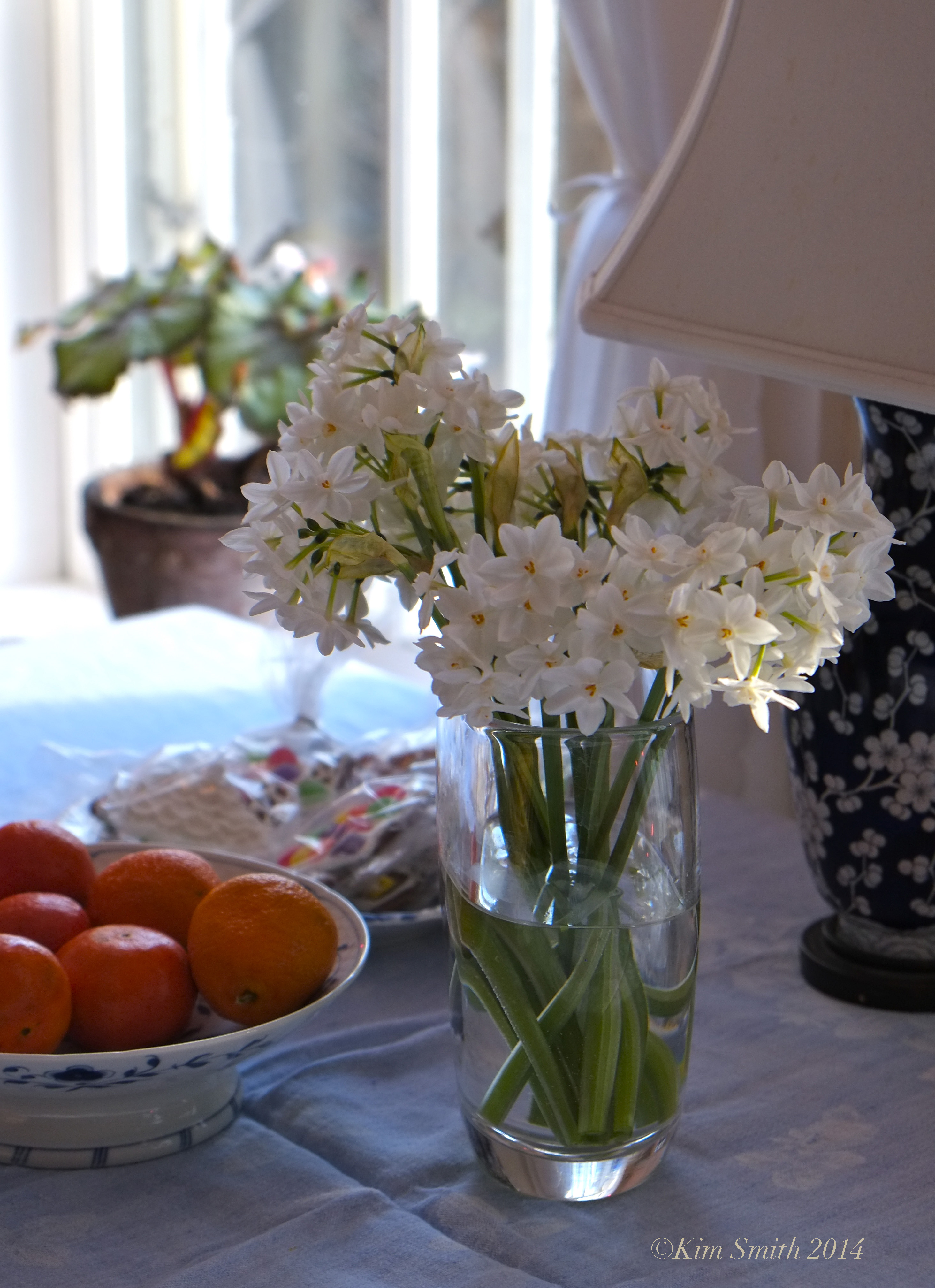
paperwhites ©Kim Smith 2014Note ~ If while forcing paperwhites they become messy and keel over, as they are want to do, cut the stems and place in a vase of fresh water.

Setting the Table for a Regal Butterfly Comeback, With Milkweed

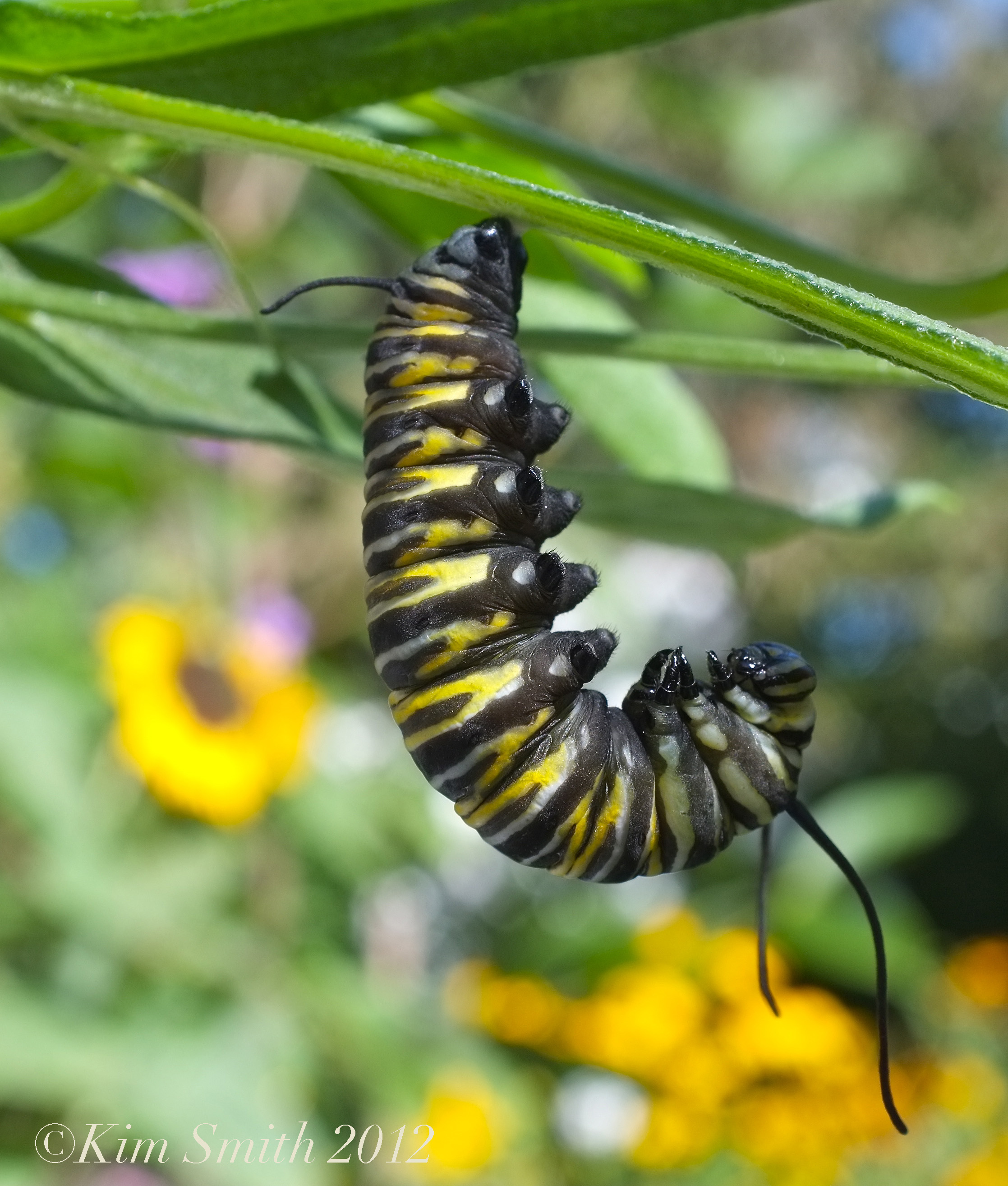
Monarch Caterpillar Milkweed ©Kim Smith 2013Monarch Caterpillar Eating Common Milkweed (Asclepias syriaca) Foliage

Thank you GMG readers and Monarch Butterfly friends for forwarding the following article from the NY Times!

By Michael Wines

Published December 20th, 2013

CEDAR FALLS, Iowa — Bounding out of a silver Ford pickup into the single-digit wind-flogged flatness that is Iowa in December, Laura Jackson strode to a thicket of desiccated sticks and plucked a paisley-shaped prize.

It was a pod that, after a gentle squeeze, burst with chocolate brown buttons: seeds of milkweed, the favored — indeed, the only — food of the monarch butterfly caterpillar.

Once wild and common, milkweed has diminished as cropland expansion has drastically cut grasslands and conservation lands. Diminished too is the iconic monarch.

Dr. Jackson, a University of Northern Iowa biologist and director of its Tallgrass Prairie Center, is part of a growing effort to rescue the monarch. Her prairie center not only grows milkweed seeds for the state’s natural resources department, which spreads them in parks and other government lands, but has helped seed thousands of acres statewide with milkweed and other native plants in a broader effort to revive the flora and fauna that once blanketed more than four-fifths of the state.

Monarch Caterpillar milkweed -2 © Kim Smith 2012Monarch caterpillar hanging from a Marsh Milkweed (Asclepias incarnata) leaf rib, in the characteristic J-shape, readying to pupate.

Nationwide, organizations are working to increase the monarchs’ flagging numbers. At the University of Minnesota, a coalition of nonprofits and government agencies called Monarch Joint Venture is funding research and conservation efforts. At the University of Kansas, Monarch Watch has enlisted supporters to create nearly 7,450 so-called way stations, milkweed-rich backyards and other feeding and breeding spots along migration routes on the East and West Coasts and the Midwest.

But it remains an uphill struggle. The number of monarchs that completed the largest and most arduous migration this fall, from the northern United States and Canada to a mountainside forest in Mexico, dropped precipitously, apparently to the lowest level yet recorded. In 2010 at the University of Northern Iowa, a summertime count in some 100 acres of prairie grasses and flowers turned up 176 monarchs; this year, there were 11.

Read the story here

Beautiful Morning After Snowfall in East Gloucester Square

Beacon marine Basin © Kim Smith 2013Beacon Marine Basin ~ Click photos to view full size

Wednesday morning East Gloucester was especially beautiful although, is anywhere not magically beautiful after a new fallen snow? While photographing around the neighborhood, I nearly ran into Frieda on her way into her shop, Again and Again (with lots of terrific gift items for last minute shoppers). After photographing down by the North Shore Art Association I stopped in to say hello to Frieda and Beth at Again and Again (see yesterday’s post).

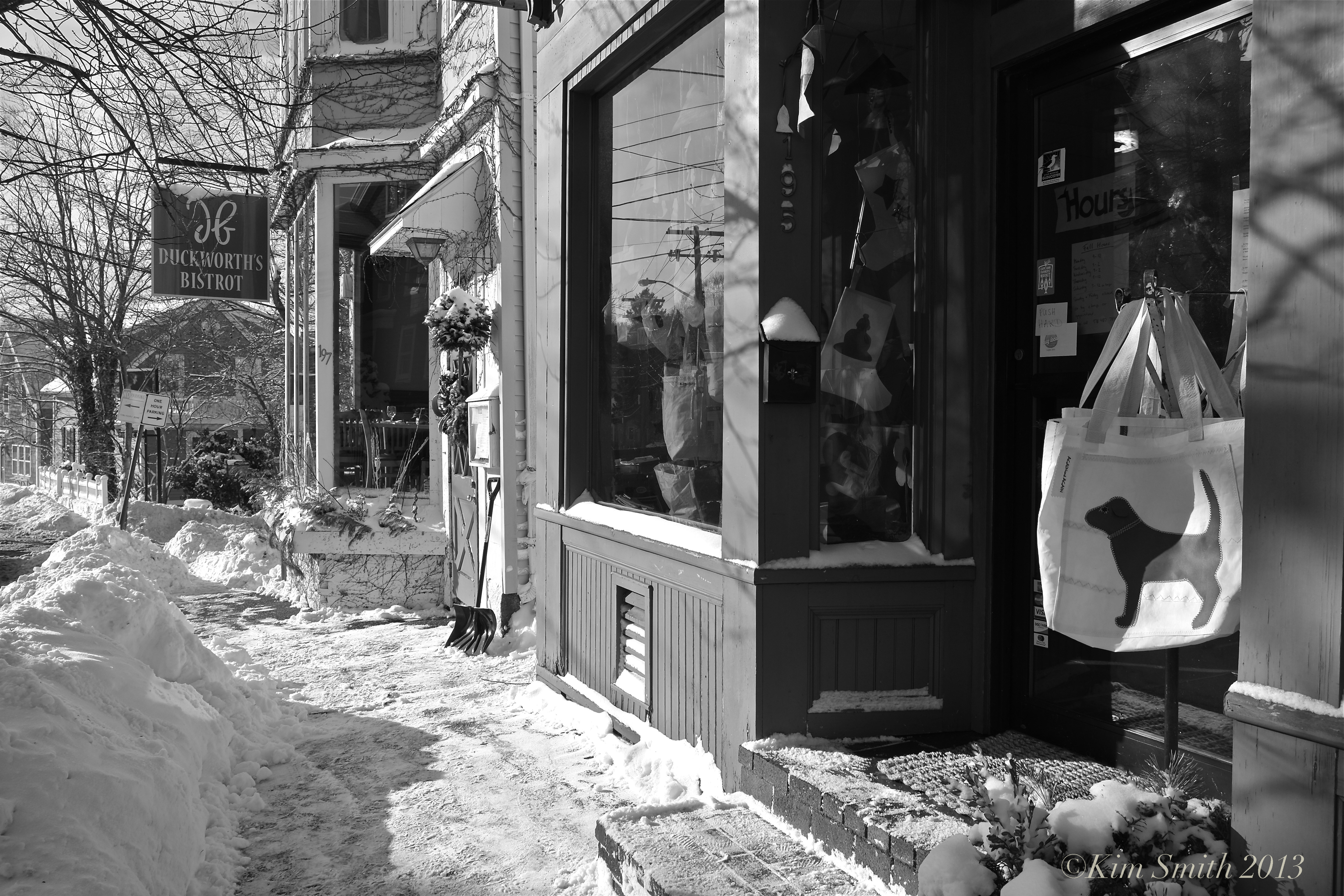
Leaving the shop, and while admiring Duckworth’s wreath and lovely holiday decor, I met Ken Duckworth outside his bistro. We had a friendly chat and I was reminded of what a fabulous neighborhood is ours. At that moment I was thinking not of the beauty that surrounds, but of our wonderful neighbors.

Maritime Heritage center ©Kim Smith 2013Maritime Center from Smith’s Cove

Duckworth's ©Kim Smith 2013Duckworth’s in the Snow

Dinner at Duckworth’s Bistrot anytime of the year, but most especially during the holidays, is always a very special treat. Plan to go soon for your Duckworth’s fix because I believe they close for several weeks during. January.

East main Street snow © Kim Smith 2013Snowy Morning East Main Street

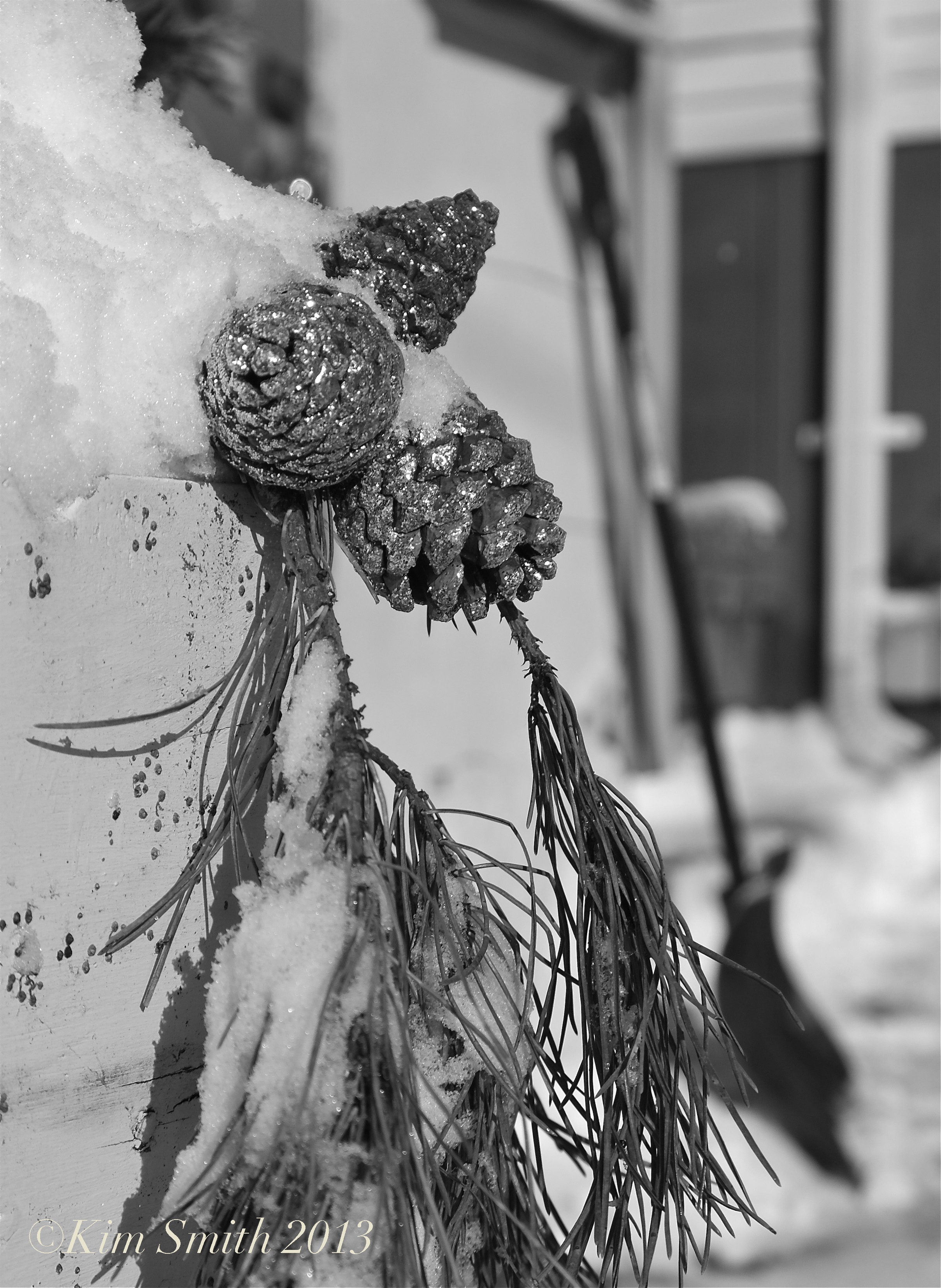
Pine cones snow ©Kim Smith 2013 copyGlitter Pine Cones

Duckworth's wreath ©Kim Smith 2013Duckworth’s Wreath

This is the first little batch of photos after Tuesday’s snowfall. I don’t like to post too many full-size photos in the same post because it bumps my fellow contributors too far down the page. I’ll post more from Wednesday morning’s after snowfall tomorrow.

My New Website

milkweed website copy final ©Kim Smith 2013

When you have a spare moment, I hope you’ll have a look at my new website at Kim Smith Designs. I think the wordpress theme Twenty Twelve is especially terrific for sharing photographs, films, and design projects. The Home page is my blog and above in the heading area are drop down menus highlighting current public design projects, new films, and more about my book Oh Garden of Fresh Possibilities!

On the HarborWalk page there are photos and information about some of the wildflowers planted there, with photos of the butterflies that these native beauties were planted to attract. You will also find a link to join the Friends of the HarborWalk. We are looking for volunteer members. I am going to be giving lots of talks about wildflowers and butterflies for members at the gardens this upcoming season and while volunteering, it will be a great opportunity for you to become better acquainted with the flora and fauna indigenous to the Northeast

I hope you find all easy to navigate. Thank you so much for visiting my website!

Chocolate Amaretto Truffle Recipe

A fun to make and relatively easy recipe, Chocolate Amaretto Truffles make a wonderful host/hostess gift and also easily freeze for make-ahead gifts. I am bringing a batch to the GMG Holiday Party tonight at Fred Bodin’s gallery and hope to see you there!

Choclolate Amaretto Truffles ©Kim Smith 2011

Ingredients

Mini baking cups

2 ounces Baker’s sweet German chocolate, broken into small bits

6 ounces Ghiradelli semi-sweet chocolate chips

¼ C. Disaronno Amaretto liqueur

2 Tbs. strong coffee

Few drops almond extract

2 ounces (1/2 stick) unsalted butter, softened

1 Tbs. vanilla extract

½ C. pulverized Jules Destrooper almond thins (or Anna’s, or any super fine, thin cookie)

Confectioner’s sugar to taste (approx. ¼ cup)

½ C. Ghiradelli unsweetened cocoa powder for final powdering

*   *   *

Melt sweet chocolate bits and semi-sweet chocolate chips over a gently simmering double boiler.

Whisk in liqueur, coffee, almond extract, and vanilla. Whisk vigorously, over gentle heat, a few minutes more until mixture is shiny and smooth. Gradually add the butter by tablespoons. With a wooden spoon, beat in the pulverized cookies. Beat in sifted confectioner’s sugar, to taste. Remove the pan from the double boiler and place in a bowl of ice with water. Stir until well chilled and firm enough to form into balls.

By teaspoonful, gather up a gob and form into a rough, truffle-like shape. Roll in cocoa powder and drop into frilled paper cup.

Makes about 22, depending on size. Refrigerate in an airtight container. They will keep for several weeks or they may be frozen. Very loosely adapted from Julia Child’s Chocolate Amaretti Truffles The Way to Cook Page 485.

I think you will find this recipe relatively easy. Let us know if you give it a try.

Reposted from December 2011.

My Grandmother’s Garden

Excerpt from Oh Garden of Fresh Possibilities! ~ Notes from a Gloucester Garden, Chapter 22 ~ “My Grandmother’s Garden.”

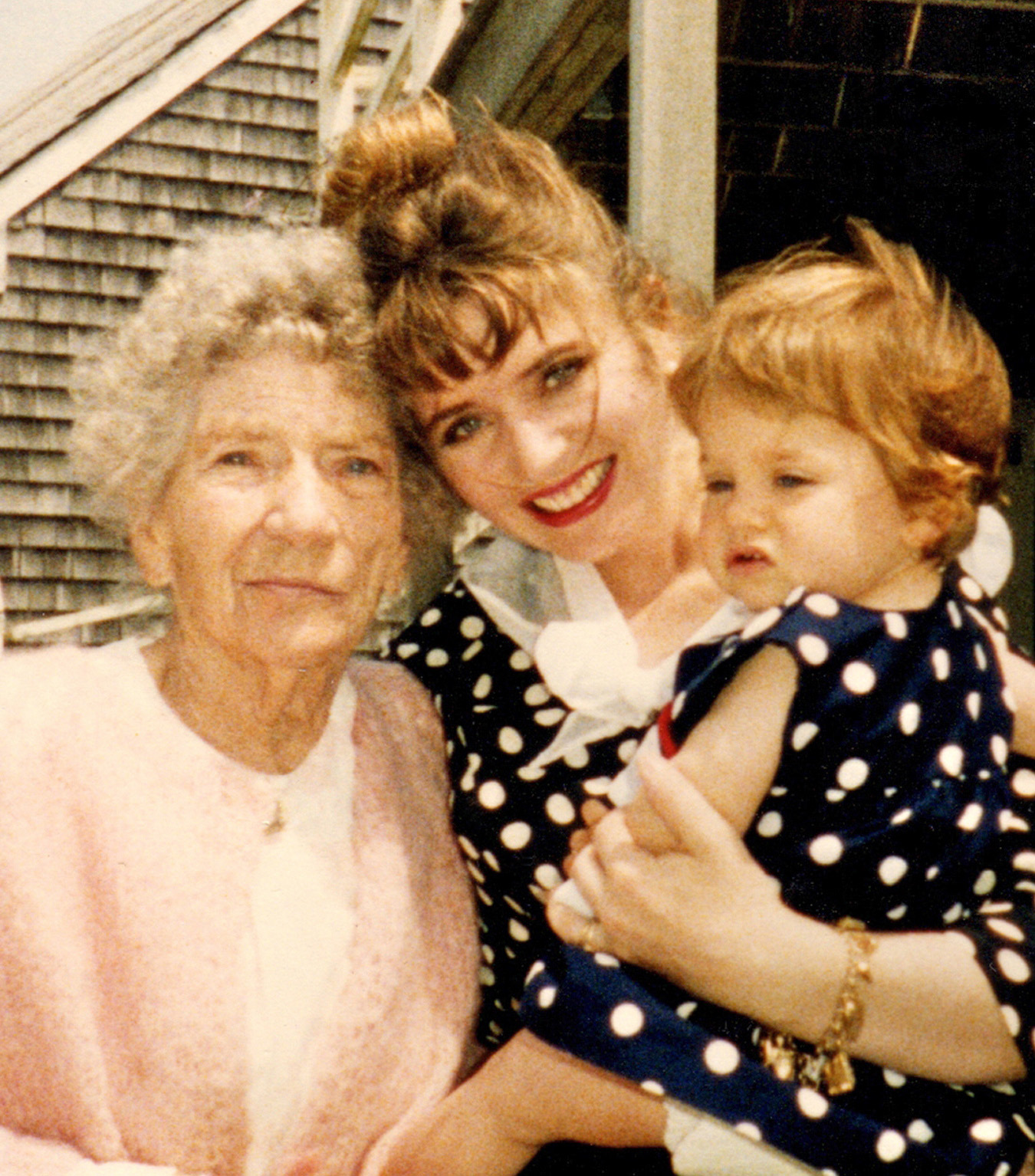
Mimi, Kim, LivMy grandmother Mimi, just before she passed away, me, and daughter Liv

In the early 1960s my grandparents purchased (for the amazing sum of seven hundred dollars!) a picturesque half-acre lot with private beach rights on Cape Cod. Their dream was to build a cottage on the tall bluff overlooking the bay. Coincidentally, my grandmother continued to build their home in successive seven hundred dollar increments. Seven hundred dollars paid for digging the cellar, the next for pouring the cement for the foundation, and seven hundred dollars paid to frame the house. My grandfather finished the remaining work, and they were still building the cottage when we began to spend our summers there. He always had a hammer in one hand and a fistful of nails in the other, and I was thrilled to follow him about holding the nails.

My grandparents worked hard and created wonderful homes they generously shared. While still a young mother and throughout her life, my grandmother taught ceramics at the pottery studio our grandfather built for her. Working together, whatever they touched became transformed into something beautiful. Their homes had an enchanting and joyful atmosphere, or perhaps it just seems that way, recalled from a childhood of fond memories. When I was making plans to attend art school in Boston, my grandmother shared with me her portfolio from Parsons School of Design. I had come to spend the weekend to help her close down the house for the winter. There, in her garage, tucked in an old cupboard, she carefully pulled out a well-worn, though neatly arranged, portfolio filled with her watercolors and sketches. Imagine, keeping her portfolio safe all those years, possibly with the hope of communicating some part of her earlier self to one of her grandchildren.

Eventually, their gray-shingled summer dream cottage was made inviting by a screened porch, blue painted shutters, and a white picket fence. A dooryard flower garden was planted in front, and around back a vegetable and flower garden were sited atop the cliff overlooking the bay. A narrow, sandy path bordered with deliciously fragrant wild beach roses led from the garden to the steep stairs descending to the beach. A weathered picket fence and rickety salvaged gate connected to a wooden archway enclosed the flower garden. By mid-summer the entryway to the garden was embowered with a cloud of sky blue morning glories. Situated in a haphazard manner outside the gated garden were wind- and weatherworn 1920s bamboo armchairs and matching comfy chaise lounge. On some days we would play imaginary children’s games there in her garden overlooking the sea, and on other days we would draw and paint, make clay things from clay foraged from the bluff, and catch fat, helpless toads. I helped my grandmother plant hollyhocks and marguerites and marigolds. The colors, so vividly clear and fresh; flowers growing by the sea appear even more beautiful, perhaps from the ambient light reflected off the water.

Weather permitting, we usually served dinner on the porch. All the porch furniture was painted my grandmother’s signature blue. We ate at a long table with a pretty white-on-white embroidered cloth and round crystal rose bowl full of whatever flowers we had collected that day. We would have family feasts in the fading rosy light, memorable dinners of freshly boiled lobsters and mountains of steamed clams, buttery and sweet corn-on-the-cob, freshly picked vegetables and fruit, and ice cream.

Blissfully lying in bed early in the morning, I recall hearing the soft cries of the Mourning Doves and the cheery calls of the Bobwhites, mingled with the inviting sound of the surf. From my bedroom window I could look out across the garden to the bay and see the ships and sailboats coming and going in the sharply sparkling sea. The transcendent harmonies of the surrounding undulating sea-rhythms and shifting light, the blend of flower fragrances, and birdsongs created the desire to in turn provide similar experiences for our children.

Some years later and newly married, my husband and I were visiting my grandmother at her Cape house. We sat with her in the living room listening to her usual captivating tales, and told her our plans for our new life together. My husband later remarked to me how beautiful she looked. Mimi was wearing a summer shift in a lovely shade of French blue, seated in a chair slipcovered in a blue floral print, with the shimmering azure sea framed by the window behind her, her china blue eyes gazing serenely back at us.

My Garden—like the Beach—

Denotes there be—a Sea—

That’s Summer—

Such as These—the Pearls

She fetches—such as Me

—Emily Dickinson

Oh Garden of Fresh Possibilities! sells for only $15.00 on my publisher’s website, which is a $2o.00 value off the list price of $35.00.

How to Grow Citrus Indoors: Bearss Limes

Bearss Lime ©Kim Smith 2013Bearss Lime

No, that is not a typo! Bearss Lime is a cultivar of the Tahiti Lime (Citrus latifolia) and was first discovered by T. J. Bearss in 1895 in his California grove. 

Bearss Limes ©Kim Smith 2013

Have you ever thought about growing dwarf citrus trees? We have grown Meyer Lemons successfully but this year was the first with our little Bearss Lime tree. We were blessed with a bumper crop!

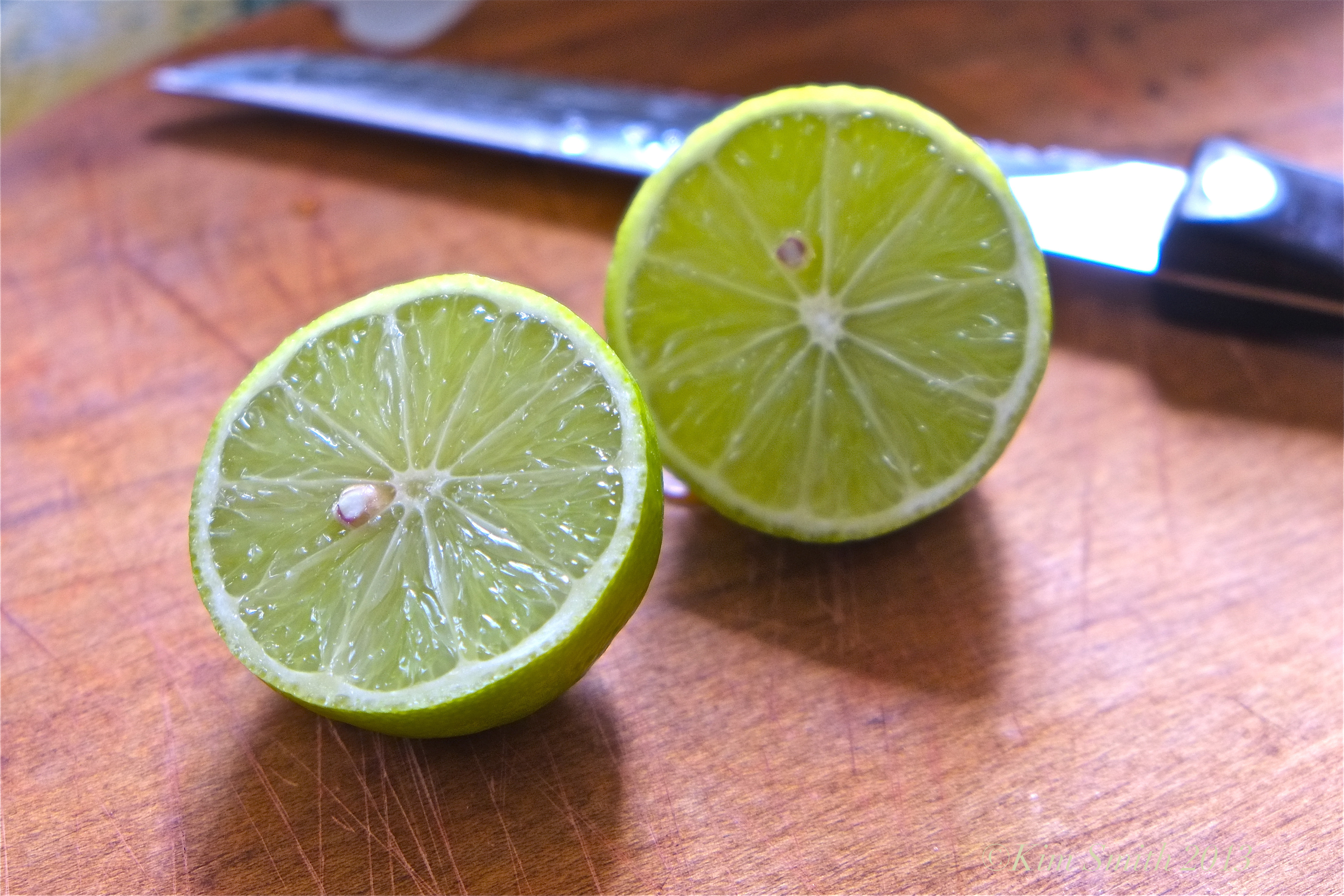
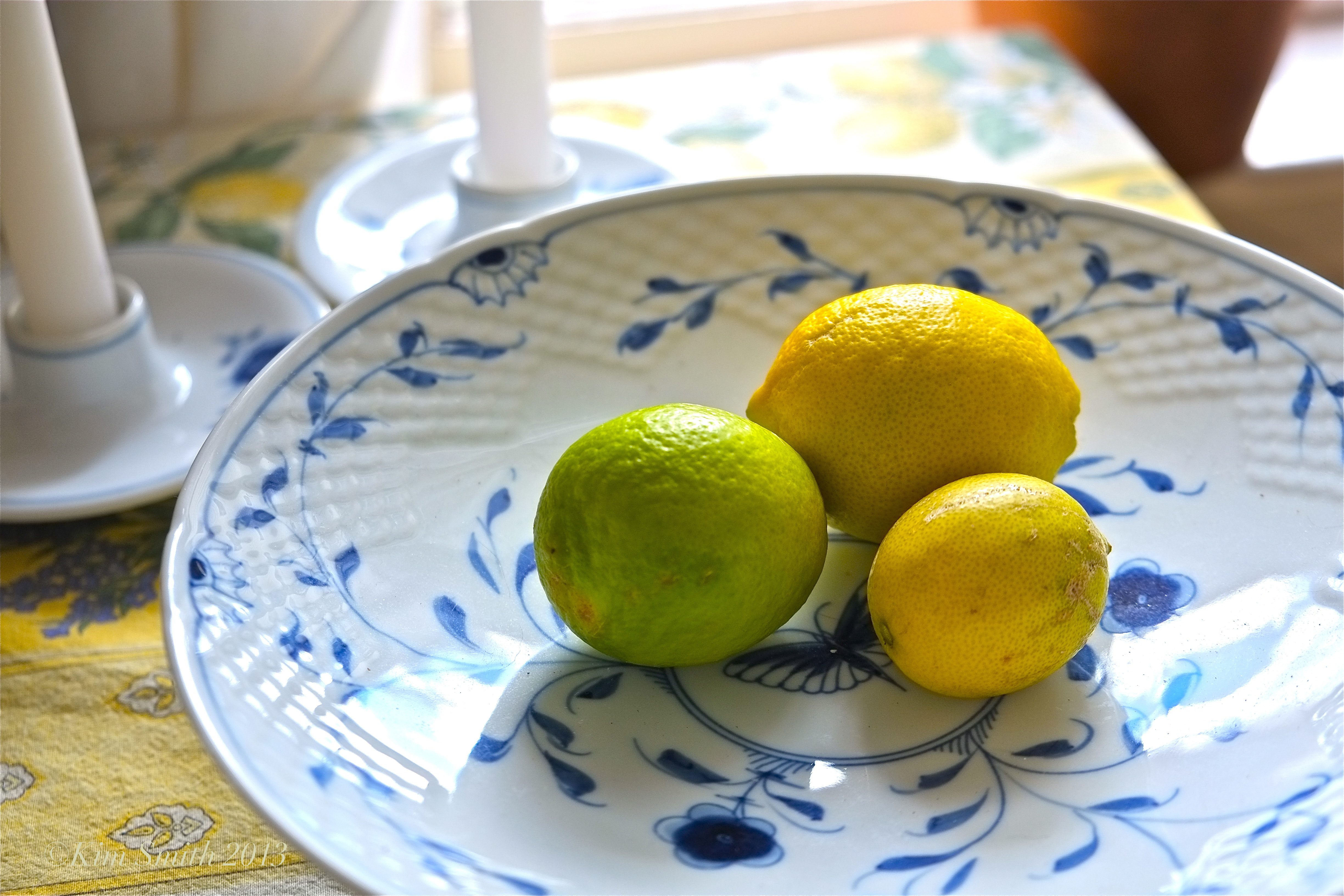
I had read conflicting information on when to harvest limes–some sources said when green, others when greenish yellow, and still others claimed limes are sweetest when fully yellow. The longer the lime grows on the tree, the more yellow it becomes until, and as you can see in the above photo, it develops the appearance of a lemon. I wanted to do a side-by-side comparison and see for myself which ripeness was best for the limes from our tree and yesterday picked one yellow, one green, and in the process, a smallish one fell off. (when picking citrus, grasp the fruit gently and twist upward with a firm, but again gentle, hand).

I grow citrus firstly for its fabulously scented flowers and secondly for its fruit. Oil of citral is harvested from lime blossoms and is the base of many perfumes. One of the strongest threads running through my book, Oh Garden of Fresh Possibilities!, is the wealth of information on the most highly scented cultivars covering a wide range of plant families including roses, narcissus, lilacs, jasmines, gardenias, and even fragrant daylilies! The fragrance of citrus blossoms, especially that of the orange, lemon, and lime, is up there at the top of my list, alongside gardenias and roses, for most beautiful scents found the world over.

Citrus plants are fairly indestructible, although they will quickly let you know when they’re unhappy. A few leaves will yellow and fall off, and if the problem is not resolved immediately, the entire plant will defoliate. This is typically due to overwatering and/or a soil mixture that does not allow for excellent drainage. Do not be discouraged, even if the entire plant becomes leafless. Water less frequently and try repotting the plant in a more suitable growing medium. Usually, they can be revived and the survivor will be healthier.

Lime Pellegrino water ©Kim Smith 2013 copy

Back to our experiment ~ Without doubt the yellow lime was the sweetest. The green lime made my mouth fully pucker, the yellow not at all. Both had a wonderfully zesty-fresh-limey fragrance and taste, but the yellow was less tart and I think would be delicious in pies and and lime-aid. With the remaining limes on our tree I will definitely wait until they develop more yellow than green before harvesting.
*   *   *
To learn more about growing citrus indoors see the chapter on fragrant plants for patios and terraces, Chapter 17, in my book Oh Garden of Fresh Possibilities! Notes from a Gloucester Garden.

Oh Garden of Fresh Possibilities! sells for only $15.00 on my publisher’s website, which is a $2o.00 value off the list price of $35.00.

Click here to purchase a copy of Oh Garden.

*   *   *

A citrus plant would make a very special holiday gift. Logees Greenhouse mail order is a great source for a wide range of dwarf citrus plants, the common and the not so common, including Buddha’s Hand, Blood Oranges, Key Lime, kumquat, Mandarin orange, and many more.

Beautiful Video Filmed at Willowdale Estate and Produced by Long Haul Films

Mary Foss Murphy writes ~

I am a faithful GMG reader and enjoy your posts and pictures.  Thank you for sharing your talents with us. Knowing of your work at Willowdale and your work as a video producer, I thought you would enjoy this wedding trailer from Long Haul Films of a recent wedding there. The intro to the trailer mentions the beautiful setting; I wish a few more scenes of Willowdale had made it into the trailer.  I love the cranes as the backdrop for their vows. I have been following the Long Haul blog for a few years. I’m always cheered by watching two people in love get married!

Enjoy!
Sincerely,
Mary Foss Murphy

P.S. My mom bought me your book Oh Garden of Fresh Possibilities! for Christmas a few years ago.  I garden, though have not had time to do your book justice.  I love having it anyway.

My response ~ Thank you so much for sharing Mary and thank you for your good words regarding my book. I loved seeing this film and am so glad to become acquainted with Long Haul Films!  The video must have been created very recently as I planted the sunflower window boxes just a month or so ago!

https://vimeo.com/79721751

*   *   *

Oh Garden of Fresh Possibilities! is currently selling for only $15.00 on my publisher’s website which is a $20.00 value off the list price of $35.00.

Click here to purchase a copy of Oh Garden.

The Year the Monarch Didn’t Appear

Many, many readers have forwarded the following article from the New York Times, “The Year the Monarch Didn’t Appear.” 
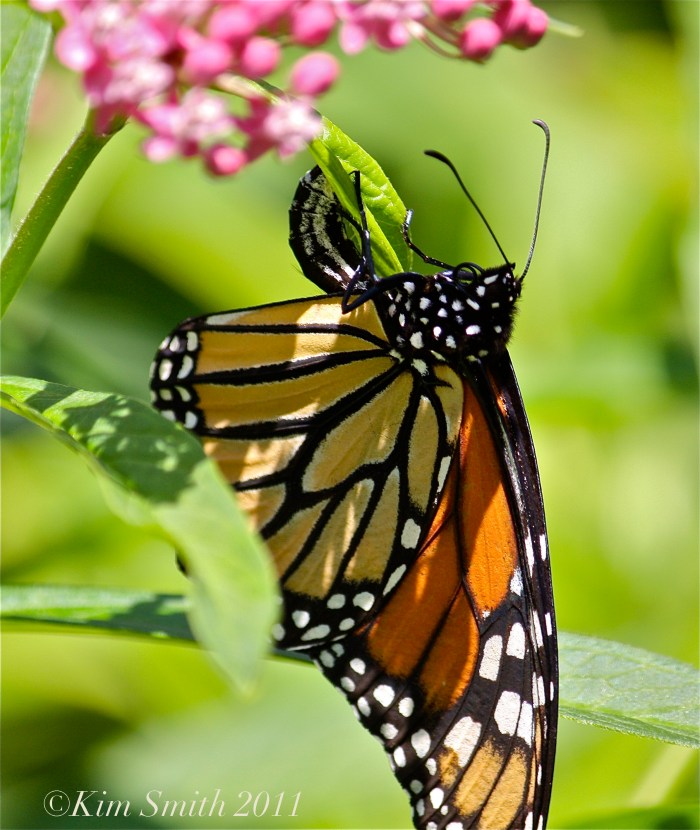
Female Monarch Egg Marsh Milkweed ©Kim Smith 2013JPGFemale Monarch Depositing an Egg

In the above photo, the female Monarch Butterfly is curling her abdomen around to the underside of the Marsh Milkweed plant. She chooses the most tender foliage toward the top of the plant on which to deposit her eggs.

Begin New York Times article, published November 22, 2013 ~

ON the first of November, when Mexicans celebrate a holiday called the Day of the Dead, some also celebrate the millions of monarch butterflies that, without fail, fly to the mountainous fir forests of central Mexico on that day. They are believed to be souls of the dead, returned.

This year, for or the first time in memory, the monarch butterflies didn’t come, at least not on the Day of the Dead. They began to straggle in a week later than usual, in record-low numbers. Last year’s low of 60 million now seems great compared with the fewer than three million that have shown up so far this year. Some experts fear that the spectacular migration could be near collapse.

“It does not look good,” said Lincoln P. Brower, a monarch expert at Sweet Briar College.

It is only the latest bad news about the dramatic decline of insect populations.

Another insect in serious trouble is the wild bee, which has thousands of species. Nicotine-based pesticides called neonicotinoids are implicated in their decline, but even if they were no longer used, experts say, bees, monarchs and many other species of insect would still be in serious trouble.

That’s because of another major factor that has not been widely recognized: the precipitous loss of native vegetation across the United States.

“There’s no question that the loss of habitat is huge,” said Douglas Tallamy, a professor of entomology at the University of Delaware, who has long warned of the perils of disappearing insects. “We notice the monarch and bees because they are iconic insects,” he said. “But what do you think is happening to everything else?”

A big part of it is the way the United States farms. As the price of corn has soared in recent years, driven by federal subsidies for biofuels, farmers have expanded their fields. That has meant plowing every scrap of earth that can grow a corn plant, including millions of acres of land once reserved in a federal program for conservation purposes.

Another major cause is farming with Roundup, a herbicide that kills virtually all plants except crops that are genetically modified to survive it.

As a result, millions of acres of native plants, especially milkweed, an important source of nectar for many species, and vital for monarch butterfly larvae, have been wiped out. One study showed that Iowa has lost almost 60 percent of its milkweed, and another found 90 percent was gone. “The agricultural landscape has been sterilized,” said Dr. Brower.

The loss of bugs is no small matter. Insects help stitch together the web of life with essential services, breaking plants down into organic matter, for example, and dispersing seeds. They are a prime source of food for birds. Critically, some 80 percent of our food crops are pollinated by insects, primarily the 4,000 or so species of the flying dust mops called bees. “All of them are in trouble,” said Marla Spivak, a professor of apiculture at the University of Minnesota.

Farm fields are not the only problem. Around the world people have replaced diverse natural habitat with the biological deserts that are roads, parking lots and bluegrass lawns. Meanwhile, the plants people choose for their yards are appealing for showy colors or shapes, not for their ecological role. Studies show that native oak trees in the mid-Atlantic states host as many as 537 species of caterpillars, which are important food for birds and other insects. Willows come in second with 456 species. Ginkgo, on the other hand, which is not native, supports three species, and zelkova, an exotic plant used to replace elm trees that died from disease, supports none. So the shelves are nearly bare for bugs and birds.

Native trees are not only grocery stores, but insect pharmacies as well. Trees and other plants have beneficial chemicals essential to the health of bugs. Some monarchs, when afflicted with parasites, seek out more toxic types of milkweed because they kill the parasites. Bees use medicinal resins from aspen and willow trees that are antifungal, antimicrobial and antiviral, to line their nests and to fight infection and diseases. “Bees scrape off the resins from the leaves, which is kind of awesome, stick them on their back legs and take them home,” said Dr. Spivak.

Besides pesticides and lack of habitat, the other big problem bees face is disease. But these problems are not separate. “Say you have a bee with viruses,” and they are run-down, Dr. Spivak said. “And they are in a food desert and have to fly a long distance, and when you find food it has complicated neurotoxins and the immune system just goes ‘uh-uh.’ Or they become disoriented and can’t find their way home. It’s too many stressors all at once.”

There are numerous organizations and individuals dedicated to rebuilding native plant communities one sterile lawn and farm field at a time. Dr. Tallamy, a longtime evangelizer for native plants, and the author of one of the movement’s manuals, “Bringing Nature Home,” says it’s a cause everyone with a garden or yard can serve. And he says it needs to happen quickly to slow down the worsening crisis in biodiversity.

When the Florida Department of Transportation last year mowed down roadside wildflowers where monarch butterflies fed on their epic migratory journey, “there was a huge outcry,” said Eleanor Dietrich, a wildflower activist in Florida. So much so, transportation officials created a new policy that left critical insect habitat un-mowed.

That means reversing the hegemony of chemically green lawns. “If you’ve got just lawn grass, you’ve got nothing,” said Mace Vaughan of the Xerces Society, a leading organization in insect conservation. “But as soon as you create a front yard wildflower meadow you go from an occasional honeybee to a lawn that might be full of 20 or 30 species of bees and butterflies and monarchs.”

First and foremost, said Dr. Tallamy, a home for bugs is a matter of food security. “If the bees were to truly disappear, we would lose 80 percent of the plants,” he said. “That is not an option. That’s a huge problem for mankind.”

Jim Robbins is a frequent contributor to The New York Times and the author of “The Man Who Planted Trees.”
 *  *  *

My note about milkweeds ~

Common Milkweed (Asclepias syriaca) is the milkweed we see most typically growing in our dunes, meadows, roadsides, and fields. It grows quickly and spreads vigorously by underground runners. This is a great plant if you have an area of your garden that you want to devote entirely to milkweed. It prefers full sun, will tolerate some shade, and will grow in nearly any type of soil. The flowers are dusty mauve pink and have a wonderful honey-hay sweet scent.

Marsh Milkweed (Aclepias incarnata) is more commonly found in marshy areas, but it grows beautifully in gardens. It does not care for dry conditions. These plants are very well-behaved and are more clump forming, rather than spreading by underground roots. The flowers are typically a brighter pink than Common Milkweed.

How to Grow Paperwhites

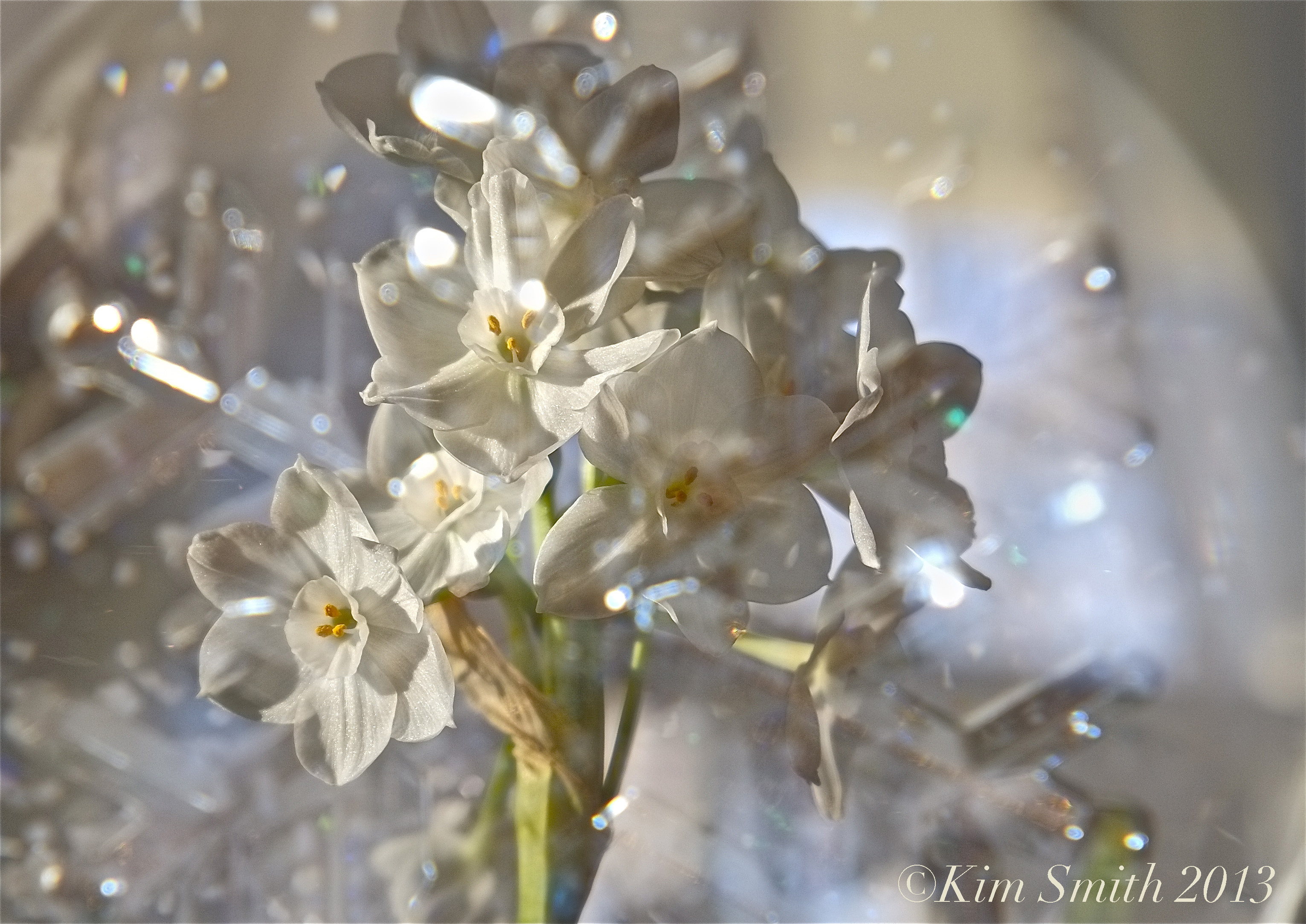
Paperwhites ©Kim Smith 2012 copyDouble Exposure Paperwhites and Snow Globe

Paperwhites (Narcissus tazetta) are another simple to coax into bloom bulb. I find ‘Ziva’ to be the most fragrant and ‘Galilee’ a close second. The ‘Chinese Sacred Lily’ (Narcissus tazetta var. orientalis) is almost as easy to force and has a sweeter, though no less potent fragrance. The scent is a dreamy blend of orange and honeysuckle. They are also a member of the tazetta group bearing multiple blossoms atop slender stalks, with white petals and cheery yellow cups. The ‘Chinese Sacred Lily,’ brought to this country by Chinese immigrants in the late 1800s, is traditionally forced to bloom for New Year’s celebrations.

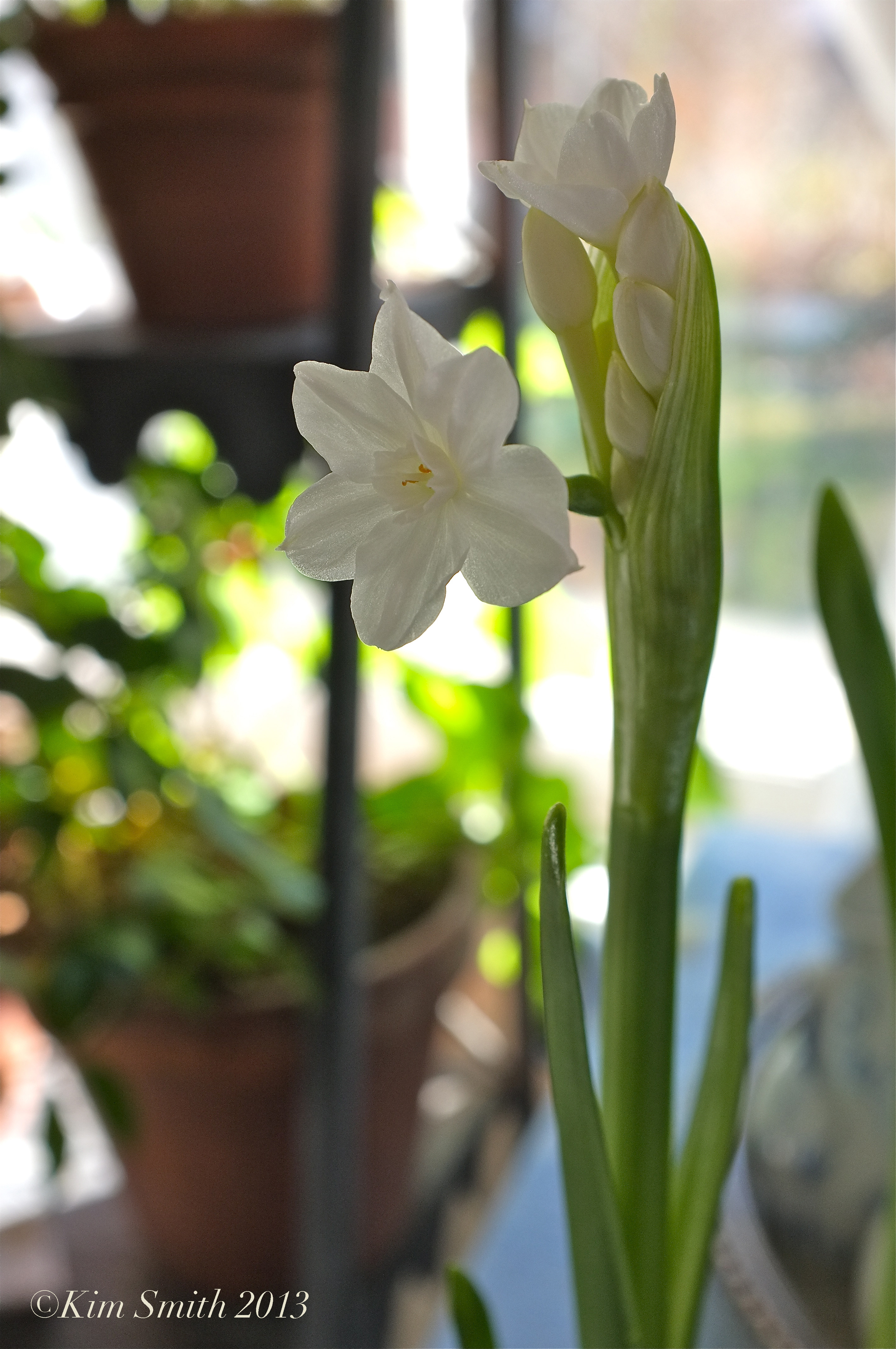
Paperwhites ©Kim Smith 2013 copyPaperwhites (Narcissus tazetta)

With both paperwhites and ‘Chinese Sacred Lilies,’ place the bulbs in bowl or pot and cover with stones. The emerging green tips should be poking though the stones. Water up to the halfway point of the bulb and place in a cool dark room; an unheated basement is ideal. Water periodically and within a few weeks, new growth will be visible. Place the bulbs in the room away from strong light, continue to water as needed, and once in bloom, they will flower and scent your home for a week or more. Beginning in November, we maintain a continuous flow of blooming narcissus by planting a new batch every two weeks or so.

The above excerpted from Oh Garden of Fresh Possibilities! ~ Notes from a Gloucester Garden!

Oh Garden of Fresh Possibilities! sells for only $14.00 on Amazon, which is a $21.00 value off the publisher’s list price of $35.00.

Click here to purchase a copy of Oh Garden.