Tag: Stacy Boulevard

Stacy Boulevard Public Works stunner | Gloucester is an early client for the Harvard and Olmsted trained landscape designer Thomas Warren Sears. His 1908 photos are a must see! Part 2
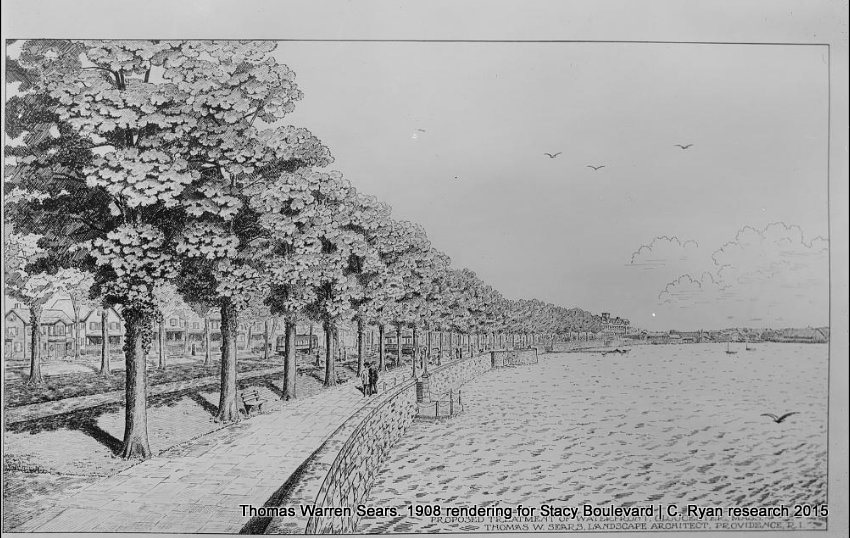

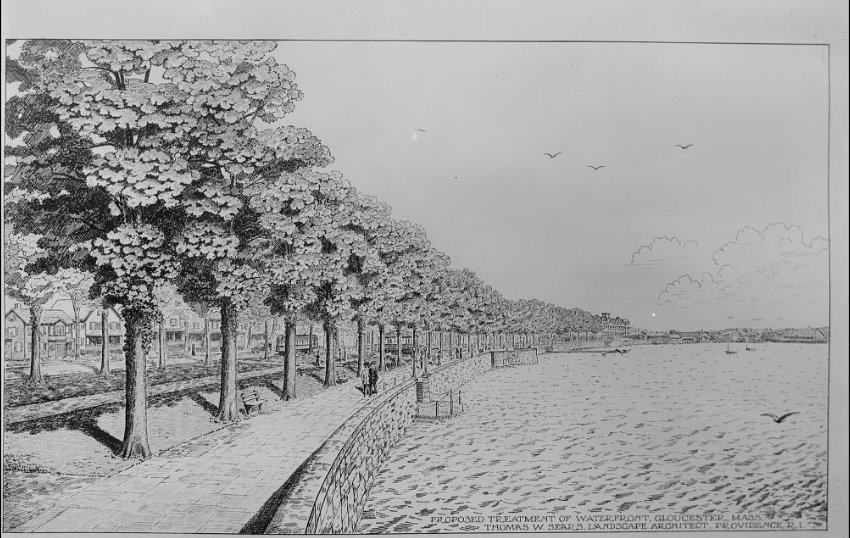
The Gloucester Daily Times published this image in 1923 with the photo caption: “Now Under Construction on the Southern Side of Western Avenue, this Project When Completed Will Give Gloucester one of the Finest Approaches of Any City on the Atlantic Seaboard.” The meticulously hand drawn credit within the drawing itself caught my eye as much as the drawing: “Proposed Treatment of Waterfront, Gloucester, Mass. Thomas W. Sears Landscape Architect, Providence RI”. Thomas W. Sears was a remarkable 20th Century landscape designer. The modern Boulevard work completed in 2014-17 gracefully carries out and returns to the original dreams for the Western Avenue highway and park that are more than a century in the making.
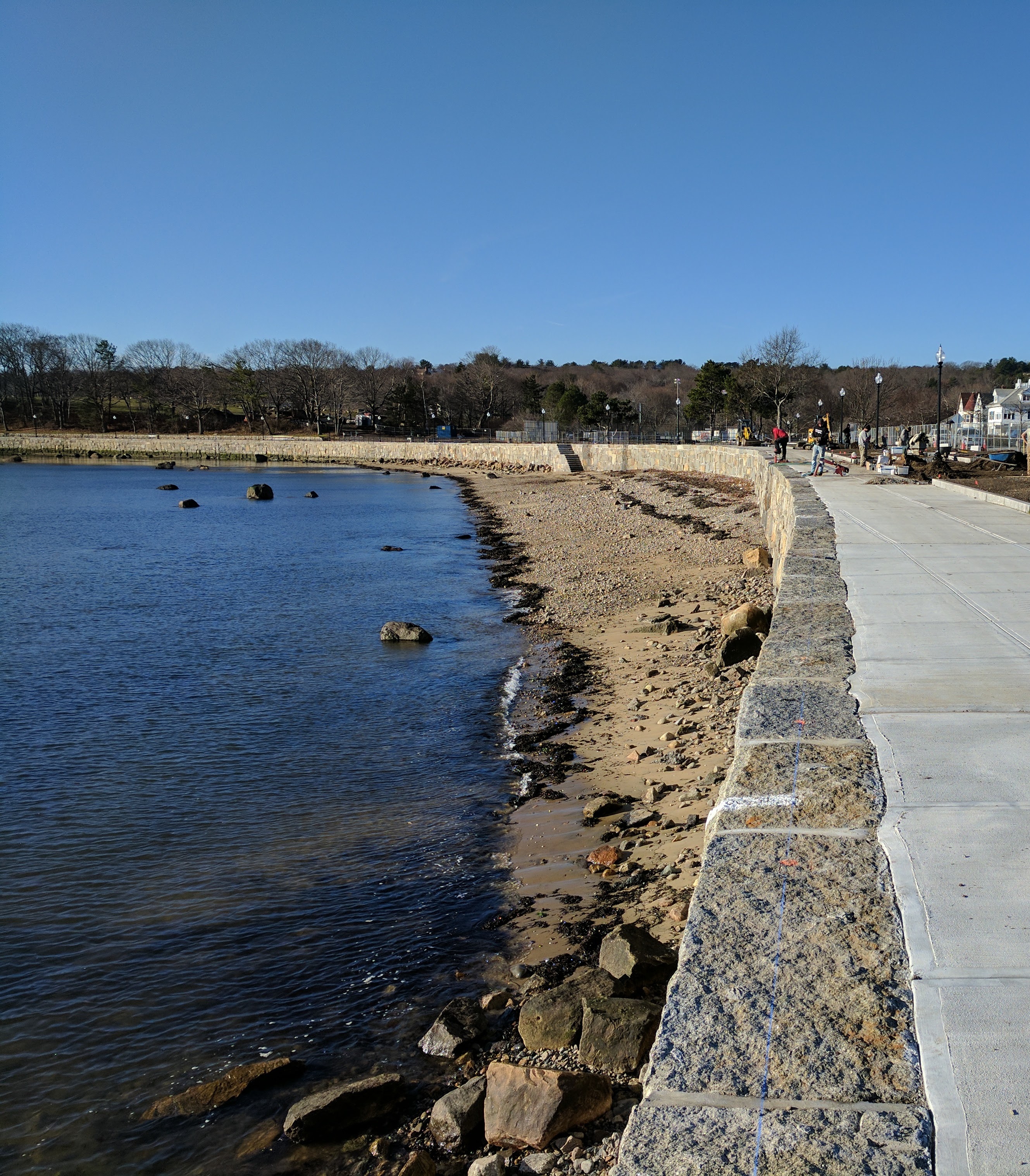
photo caption: Boulevard construction progress © Catherine Ryan, December 2016
Thomas Warren Sears (1880-1966) preliminary designs for Gloucester’s future Boulevard
Thomas Warren Sears was born in 1880 in Brookline, Massachusetts, and grew up in this elegant abode at the corner of Beacon and Charles Street. This black and white house portrait was shot in 1897.
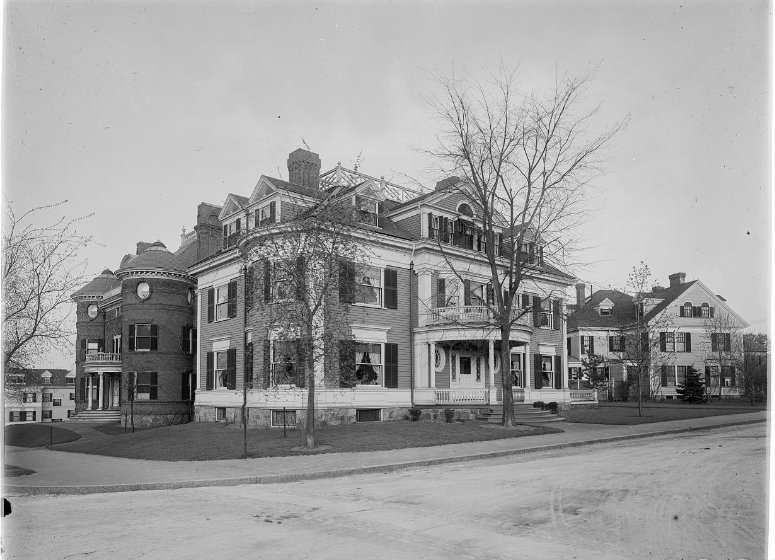
Here’s a Google street view photo for comparison today.

After being ousted from the New York City parks department, the ‘father of American landscape design’, Frederick Law Olmsted (1822-1903), launched his business a ten minute walk from the Sears family home. The headquarters at 99 Warren Street was named “Fairsted” and was in operation until 1979 when it was declared a National Historic Site and transferred to the National Parks.

photo caption: Frederick Law Olmsted Fairsted © Jack Boucher, Library of Congress collection
If there was no neighbor connection early on, a professional one came soon: Sears worked for the Olmsted Brothers immediately after receiving two degrees from Harvard– his BA in 1903 and his BS in 1906. (There may have been an earlier Brookline connection.) Rather quickly Sears left to set up his own firm: first in Providence, RI, when he did work for Gloucester’s Boulevard, and not long after in Philadelphia. In 1911 he gave a talk for the Proceedings of the Engineers’ Club of Philadelphia 28 (April 1911):147-158., “The Functions of the Landscape Architect in Connection with the Improvement of a City” available online as part of an urban planning anthology compiled by John W. Reps, Professor Emeritus, Cornell University. I wonder if he shared his Gloucester photographs as part of his talk?
“There are two main approaches to cities: (1) On water by boat, and (2) on land by railroad. Along both of these lines of approach land should be taken for public use, and for very different reasons. Take first the use of water fronts: Unless some provision is made for the public, the whole water front, whether it be river or harbor, may be usurped by commercial enterprise and the public deprived of ever seeing the water except when aboard a boat. In certain cases, as in New York, where the water front must of necessity be utilised for dockage, a combination of commercial and public use may be successfully employed. There the docks are owned by the city and leased by the steamship companies; in this way their appearance can be controlled. At present it is planned to build on the tops of these docks huge recreation parks which may be used by the public.”- 1911 Thomas W. Sears
Mike Hale’s contemporary perspective shares a similar philosophy with Sears:
“An effort has been made in this paper to show clearly that landscape architecture is utilitarian quite as much as esthetic; that whatever one is designing, whether it be a city plan or any of the elements in a city, the design should be governed by use as much as beauty.” – 1911 Thomas W. Sears
By 1917 Sears was commissioned regularly and had a long, full career including notable designs for the Reynolda estate now part of Wake Forest University, Winston-Salem, North Carolina, and the wildly influential outdoor amphitheater for Swarthmore College, the Scott Outdoor Auditorium. His work in Gloucester is rarely mentioned.
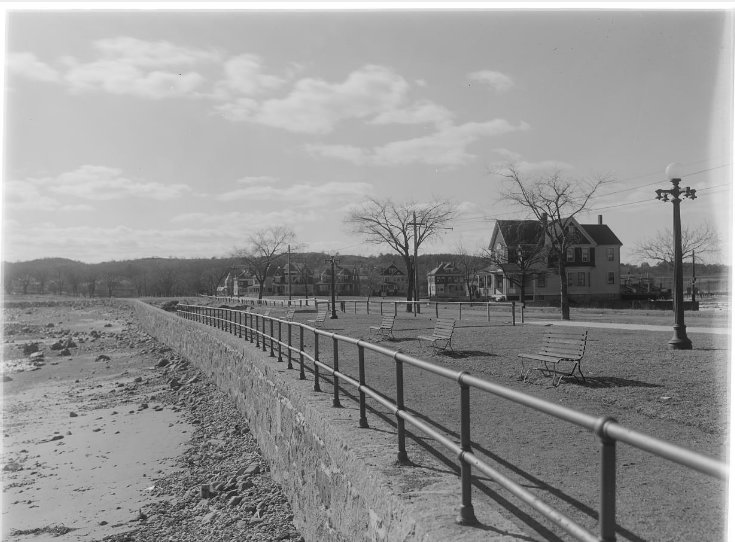
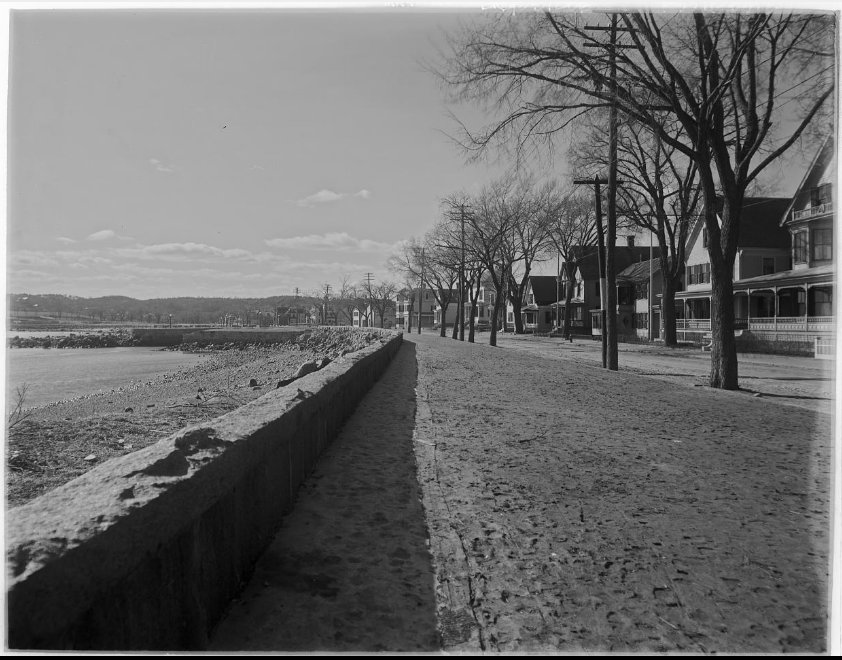
Since the Gloucester drawing was marked ‘Providence’, I knew the drawing was done long before the 1923 construction. I tentatively dated the schematic ca.1910. Thankfully Thomas Warren Sears was a photographer, too. Turns out that this image is a Sears’ photograph of a lovely Sears’ design. The glass negative is dated 1908 which squares with his professional career timeline.
ALL NEW LED LIGHTS
One of the modern design elements is the welcome ornamentation of lights. They feel like they were always here because line is such an essential part of design and they add the vertical visual interest. When I saw the new light bases I thought of the line of trees in the Sears drawing. I love the mix of natural and formal design in his rendering, but am equally gobsmacked by the sweeping open vista. Both are sensitive approaches and part of the context of the Boulevard’s build.
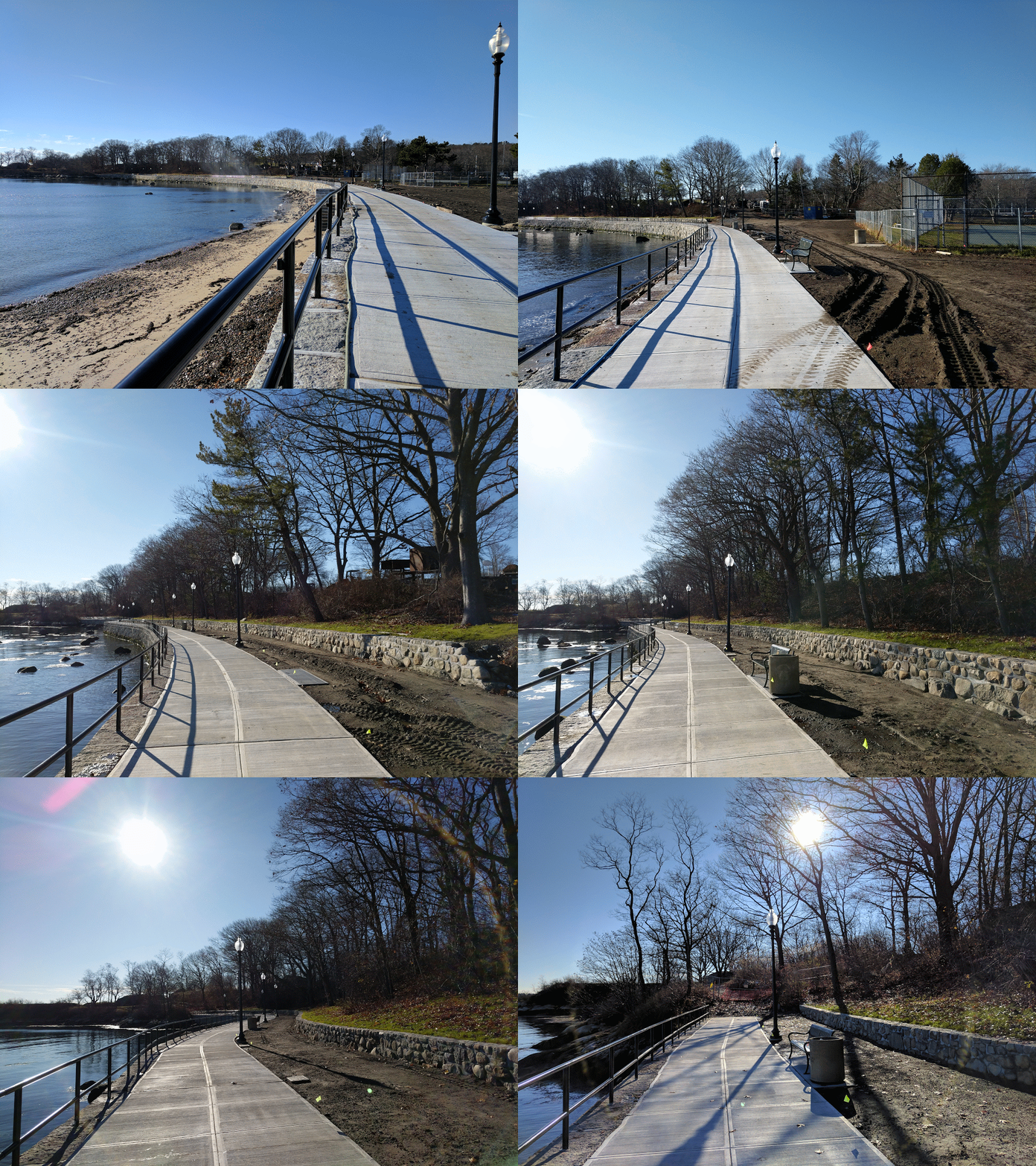
photo caption: animation emphasizing new lights, late November 2016, ©c. ryan
BEFORE THE BOULEVARD- Sears photos
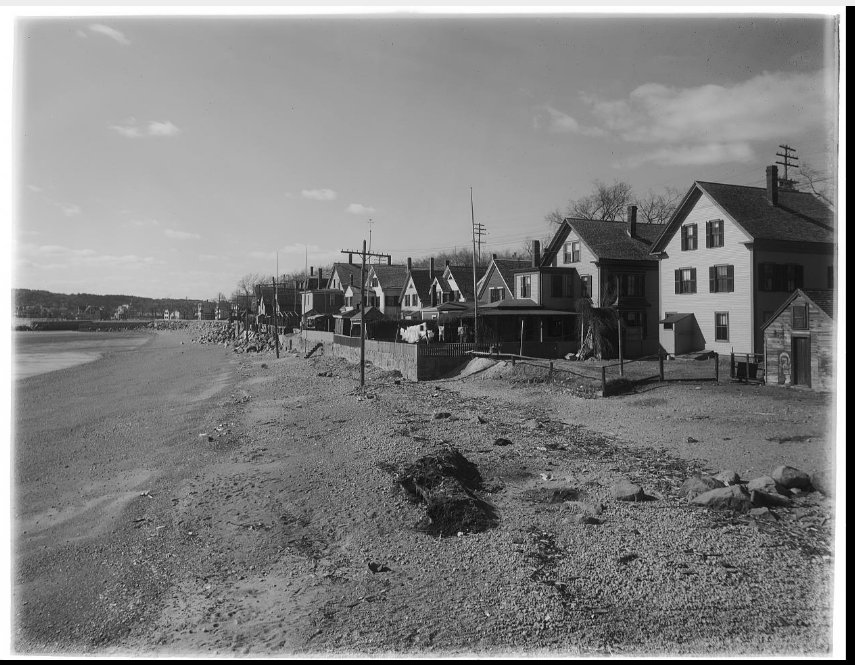
Thomas Warren Sears photographed Western Avenue for his preparatory work. See the homes along the beach that were later removed for the construction of the Boulevard; distant vistas to the Surfside Hotel (built after Pavilion burned) and Stage Fort park; and Western Avenue street scenes looking east and west before the road was widened.
More photos and Gloucester designs:
Continue reading “Stacy Boulevard Public Works stunner | Gloucester is an early client for the Harvard and Olmsted trained landscape designer Thomas Warren Sears. His 1908 photos are a must see! Part 2”Spread The GMG Love By Sharing With These Buttons:

Walk this way: Gloucester’s stately Stacy Boulevard public works project is breathtaking and one for the ages! Part 1


The marvelous engineering and construction for the boulevard is a HUGE story. In all the collective excitement to walk this way, let’s remember to take a moment to acknowledge this feat.
Mike Hale, Gloucester’s Director of Public Services, was hired in July of 1999, the very same year that this ambitious boulevard infrastructure planning and funding search began for this project. It was funded in 2014. That means the current project timeline spanned 4 Mayors, administration, staff and city councils. The construction has been exceptionally well managed and I predict it will be or should be nationally recognized with awards. I have been documenting the progress and in the coming days will post several tributes, contemporary views, historic photos and background to rev up anticipation and respect.
Coincidentally, April 16, 2017 will mark the 94th anniversary of an important piece of the boulevard’s construction.
On that day in history, Gloucester’s city council approved the purchase of two lots, the Grant and Low properties:
“Whereas it is the desire of the board of park commissioners of the city of Gloucester to take in fee by purchase or otherwise certain land in said Gloucester lying between Western Avenue and the sea,
“And whereas, the said board has estimated the expenses of acquiring the same to be $8000,
“It is hereby ordered that the sum of $8000 be and hereby is appropriated from the $90,000 Western Avenue act of 1922 to the board of park commissioners as provided by law for the purpose of acquiring and laying out as a public park such land as the said board of park commissioners consider desirable therefore, being the land as shown on a plan entitled ‘Proposed taking for highway and park purposes, Gloucester, Mass, dated April 16, 1923, John H. Griffin, City Engineer,’ having reference to that portion as shown on said plan as is proposed to be taken for park purposes.” I’ve added the bold emphasis to note the big vision of Western Avenue as a public park and extension of Stage Fort in 1923.
The significant original investment was tangible and long lasting, hallmarks of any successful public works project. Did the Boulevard improve the quality of life in Gloucester? It wasn’t easy. Houses and roads were moved.

Photo caption: “A VIEW NOW OF THE PAST. Most of us are familiar with the Above View. it Shows the Dwellings which Once Lined the Western Avenue Waterfront Before Work was Started Constructing the New Boulevard.”
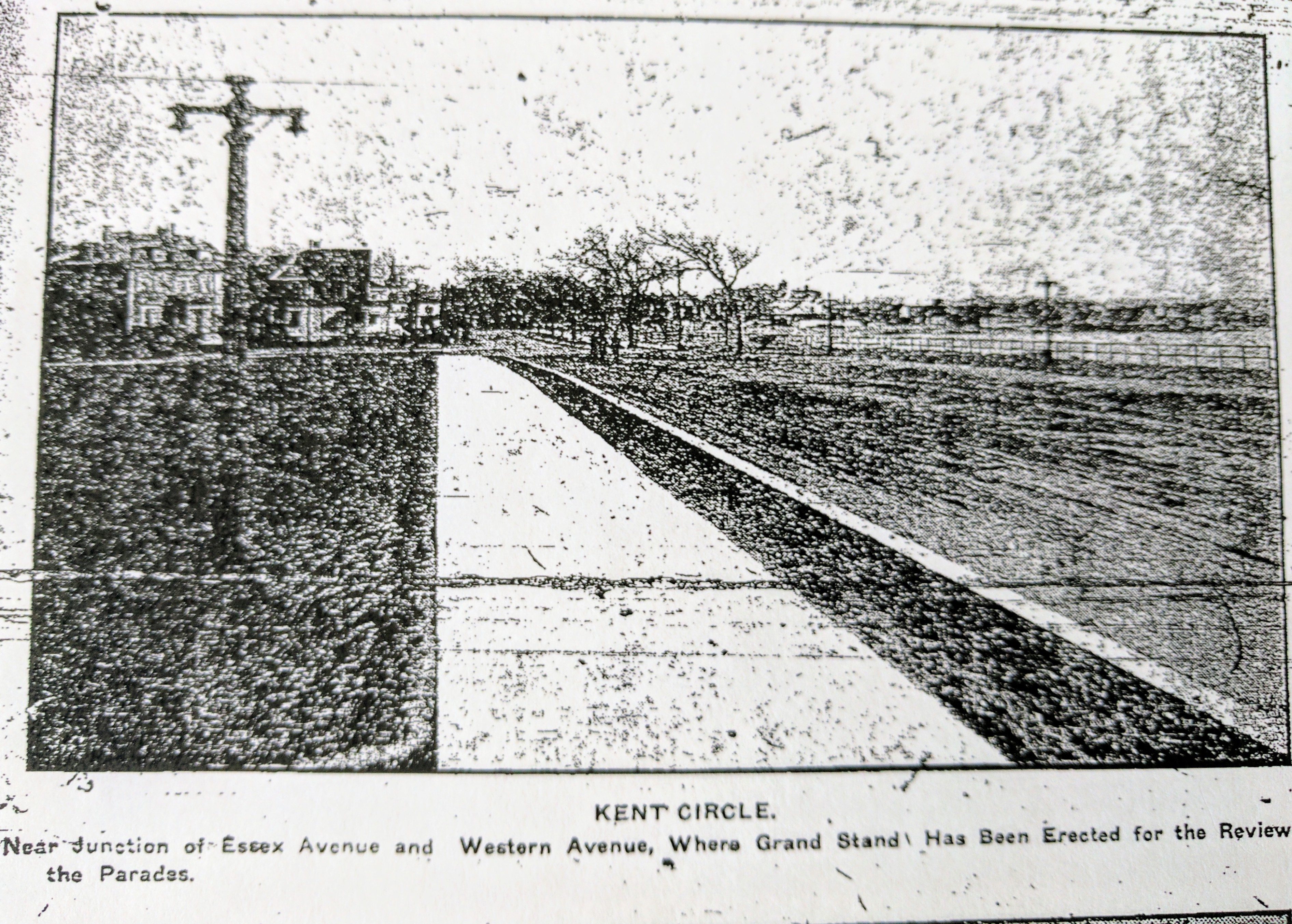
These photographs were published in August 1923 and retrieved from the Gloucester Daily Times microfiche reel at Gloucester Lyceum & Sawyer Free Library.
The caption below describes Kent Circle “where grand stand has been erected for the review of the parades” for Gloucester’s tercentenary celebration.
Awaiting full access in 2017 is a mere blip of an inconvenience when considering how fundamental the Boulevard is for Gloucester. Its benefits are priceless.
Tomorrow’s post BRINGING PLANS TO LIFE
Prior posts
- this one April 3, 2017
- September 12 2016 Stacy Boulevard Construction update including scope plans
- Stacy Boulevard Construction update: what’s been done as of August 10, 2016 about 80% to the finish line seawall restored, sidewalks constructed, etc Blyman side coming
Spread The GMG Love By Sharing With These Buttons:

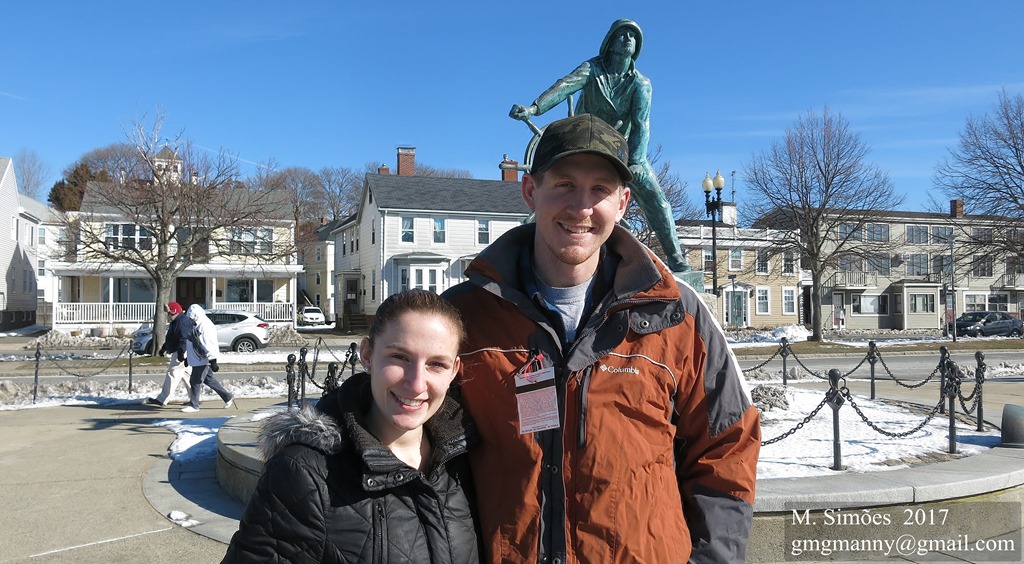
Visitors from Saugus
Spread The GMG Love By Sharing With These Buttons:

Gloucester Smiles-570
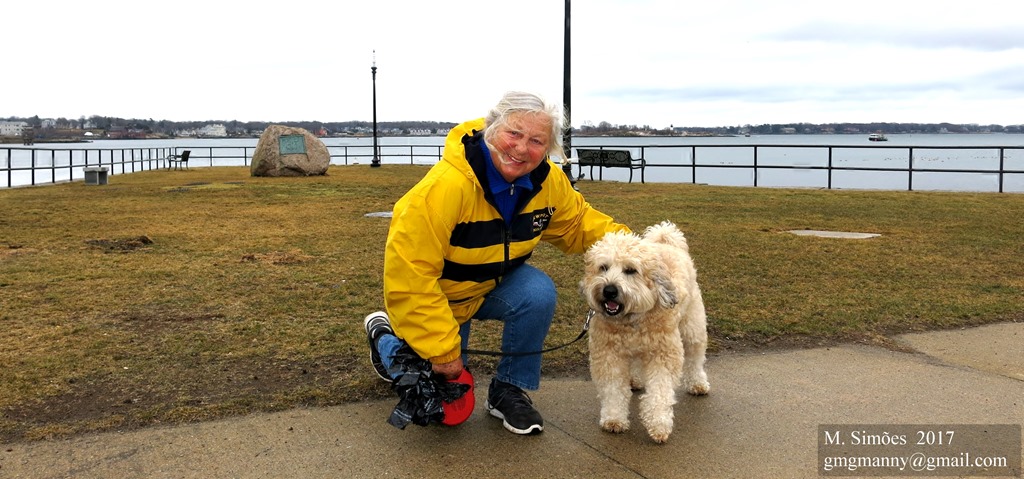
Prince Henry “Hank” the Dog, celebrates his birthday today March 30th
Spread The GMG Love By Sharing With These Buttons:

Gloucester Smiles-553
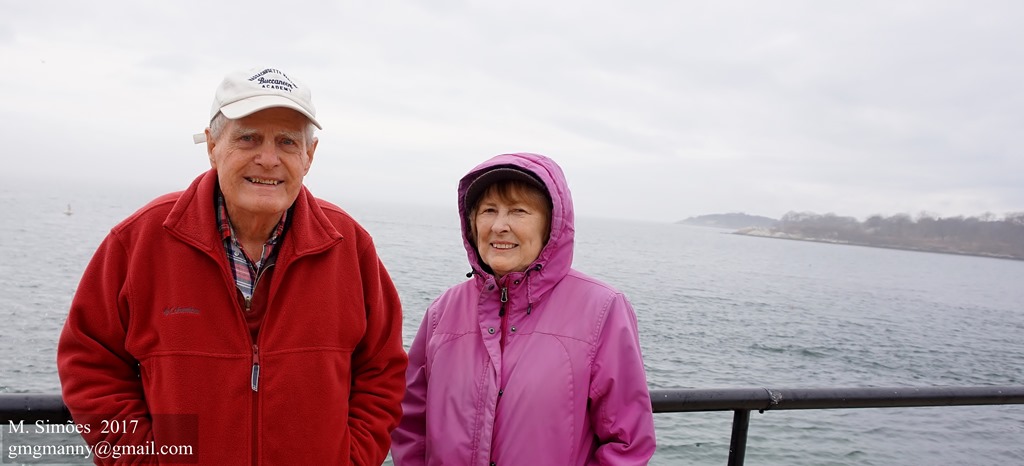
Walk on Stacy Boulevard on a Foggy Misty Day
Spread The GMG Love By Sharing With These Buttons:

Gloucester Smiles-550
Spread The GMG Love By Sharing With These Buttons:

Gloucester Smiles-549
Spread The GMG Love By Sharing With These Buttons:

Gloucester Smiles-548
Spread The GMG Love By Sharing With These Buttons:

Gloucester Smiles-546
Spread The GMG Love By Sharing With These Buttons:

Gloucester Smiles-524
Spread The GMG Love By Sharing With These Buttons:

Gloucester Smiles-538
Spread The GMG Love By Sharing With These Buttons:

Gloucester Smiles-537
Spread The GMG Love By Sharing With These Buttons:

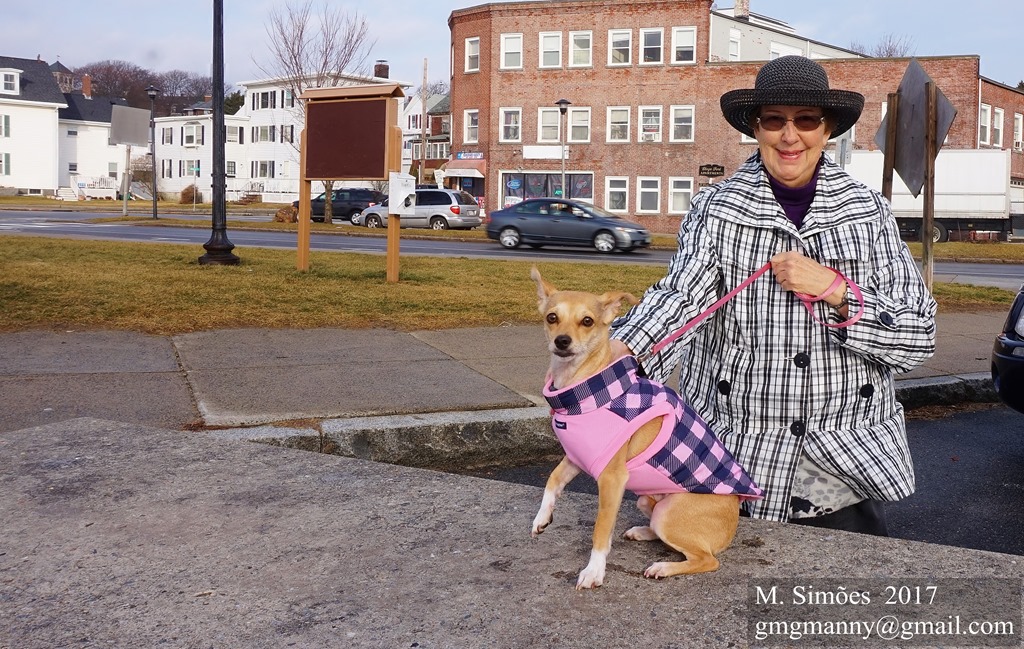
Gloucester Smiles-512
Spread The GMG Love By Sharing With These Buttons:

Custom Hood Ornament by “SaL”
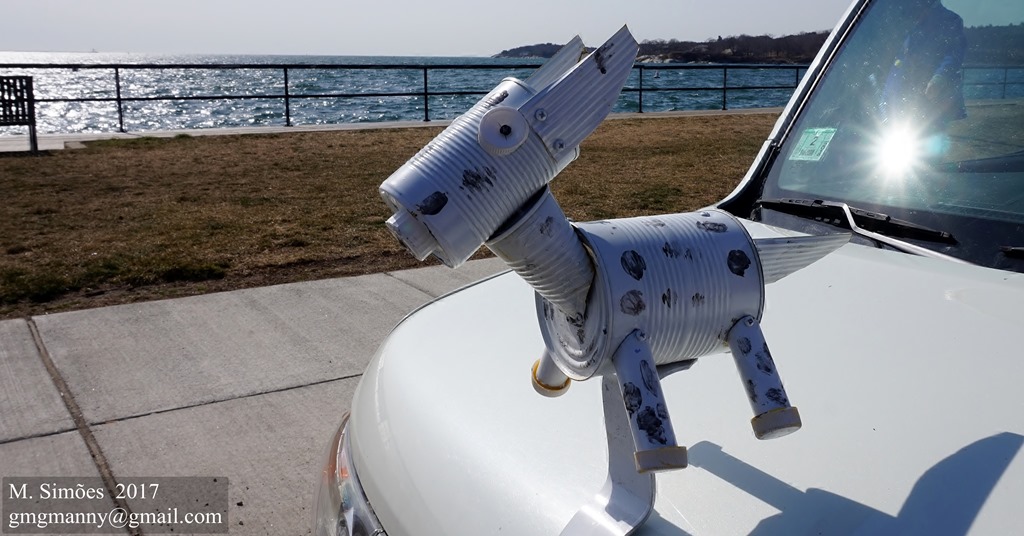
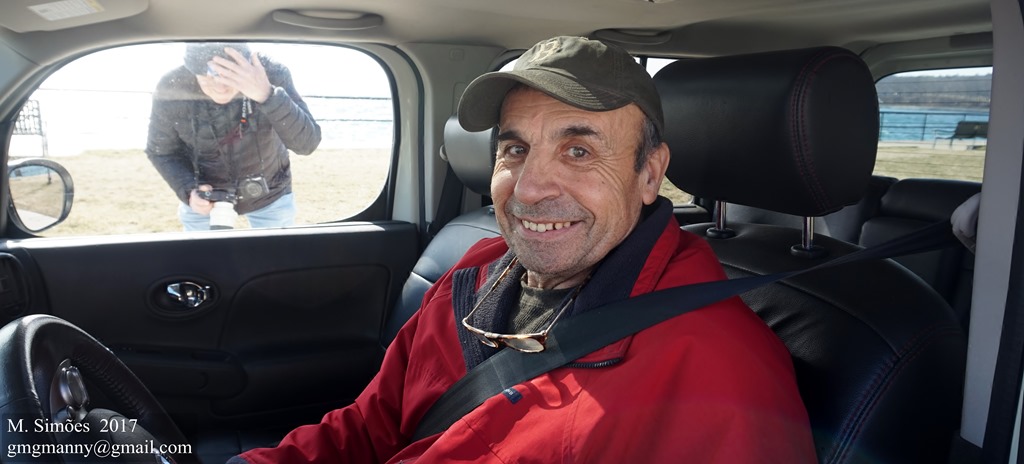
Artist / Designer Sal Ciaramitaro
Spread The GMG Love By Sharing With These Buttons:

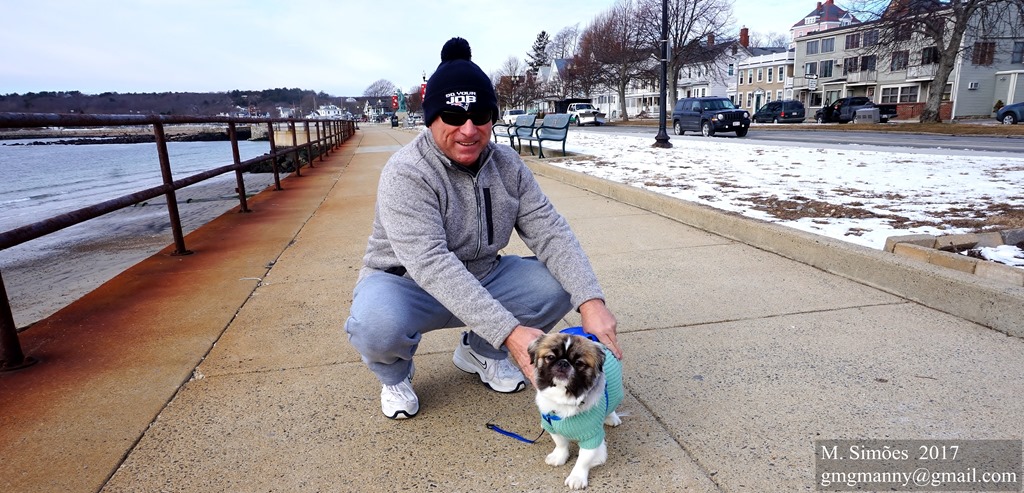
Gloucester Smiles-527
Spread The GMG Love By Sharing With These Buttons:

Gloucester Smiles-507
Spread The GMG Love By Sharing With These Buttons:

Gloucester Smiles-506

Spread The GMG Love By Sharing With These Buttons:

Visitors from Somerville Ma
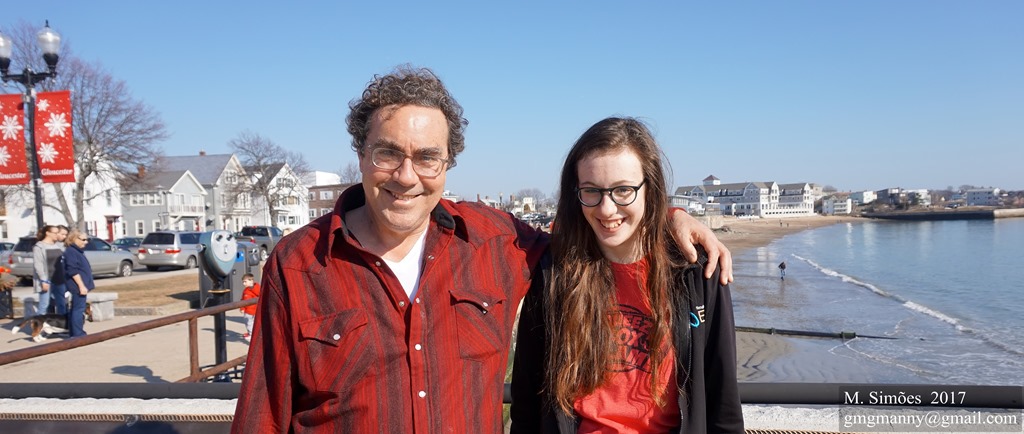
Father and Daughter enjoying a day together in Gloucester.
Spread The GMG Love By Sharing With These Buttons:

Gloucester Smiles-524

 Good Morning Gloucester