Silver-spotted Skipper

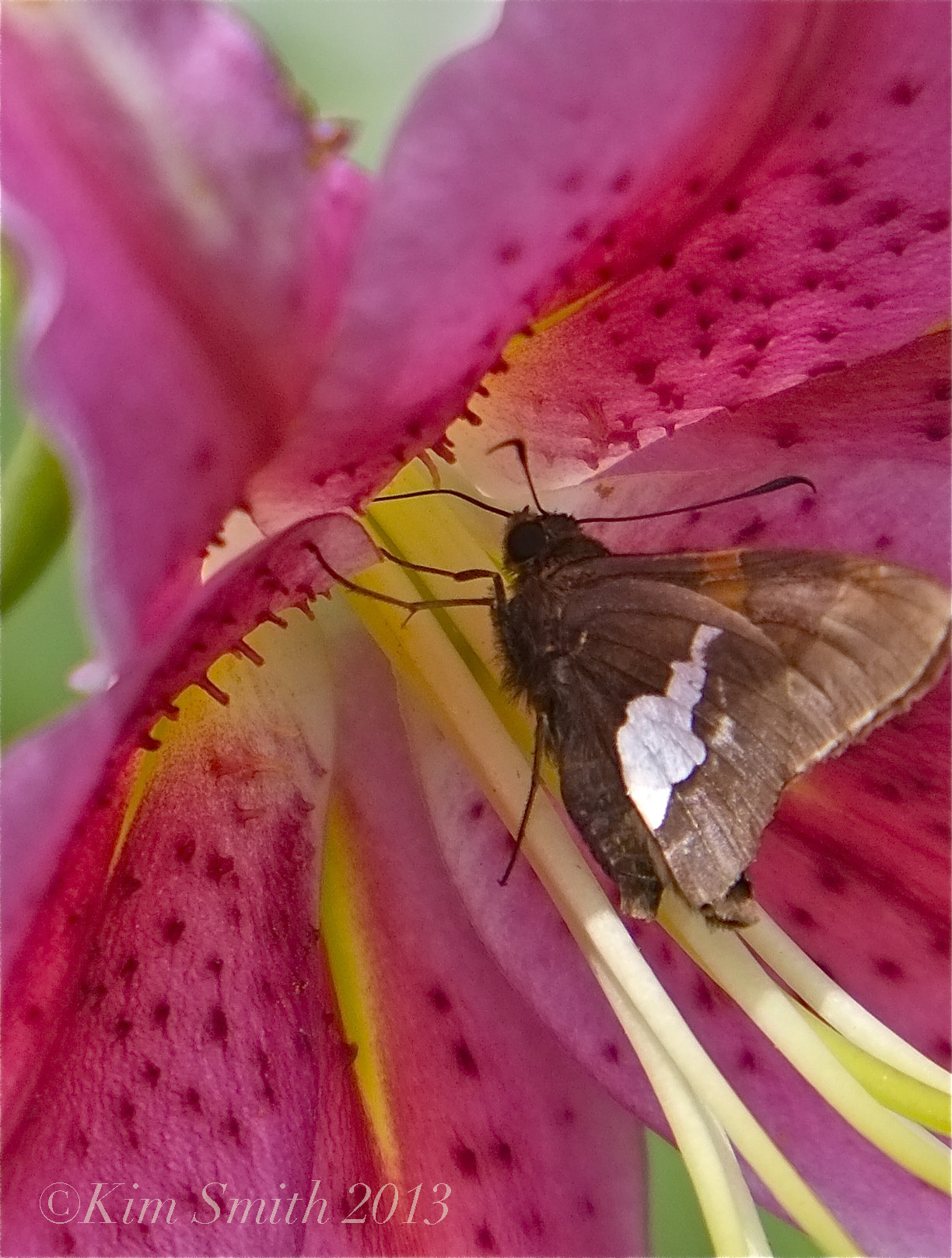
Although there appear to be far fewer Lepidoptera on the wing this year, as compared to last year’s extraordinary numbers, one frequent visitor to gardens this summer is the Silver-spotted Skipper (Epargyreus clarus). Like butterflies and moths, skippers are members of the Order Lepidoptera and, like all Lepidoptera, they are distinguished from other insects by their scaled wings.

Skippers are characterized by, and named by, a darting (skipping) flight pattern. Skippers are also easy to identify from butterflies and moths by their antennae clubs that hook backward, like to a crochet hook.

The Silver-spotted Skipper caterpillars feed on members of the legume family, including Black Locust, Honey Locust, Hog Peanut, ticktrefoils (Desmodium) and False Indigo (Amorpha fruticosa)

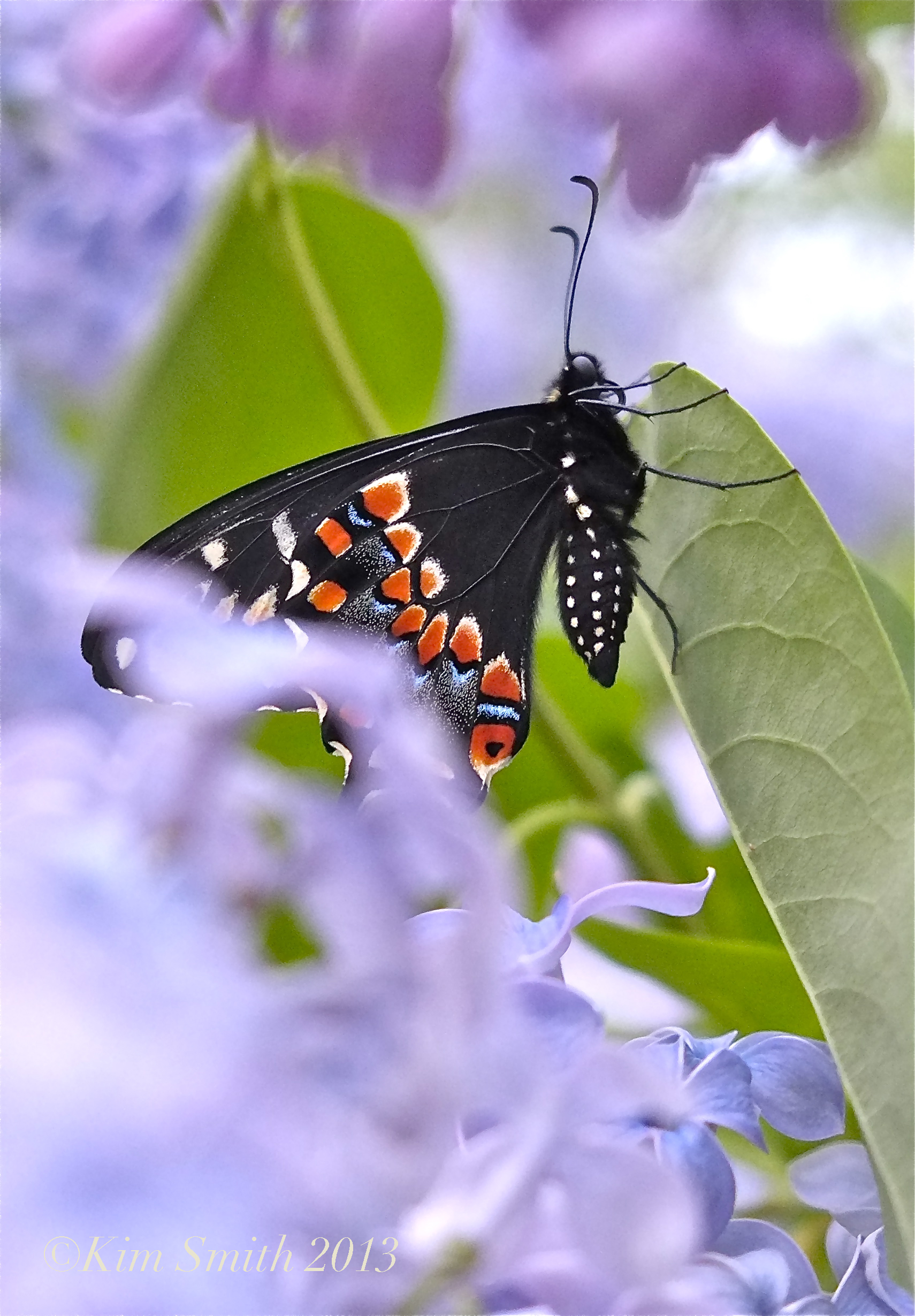
Notice the white sploges on the skipper’s under wing. The sploges resemble bird poop and are thought to be an evolutionary defense against predatory birds.

Silver-spotted Skipper -2 ©Kim SmithSilver-spotted Skipper Nectaring at Oriental Lily

Getting Ready for the Gloucester Garden Tour

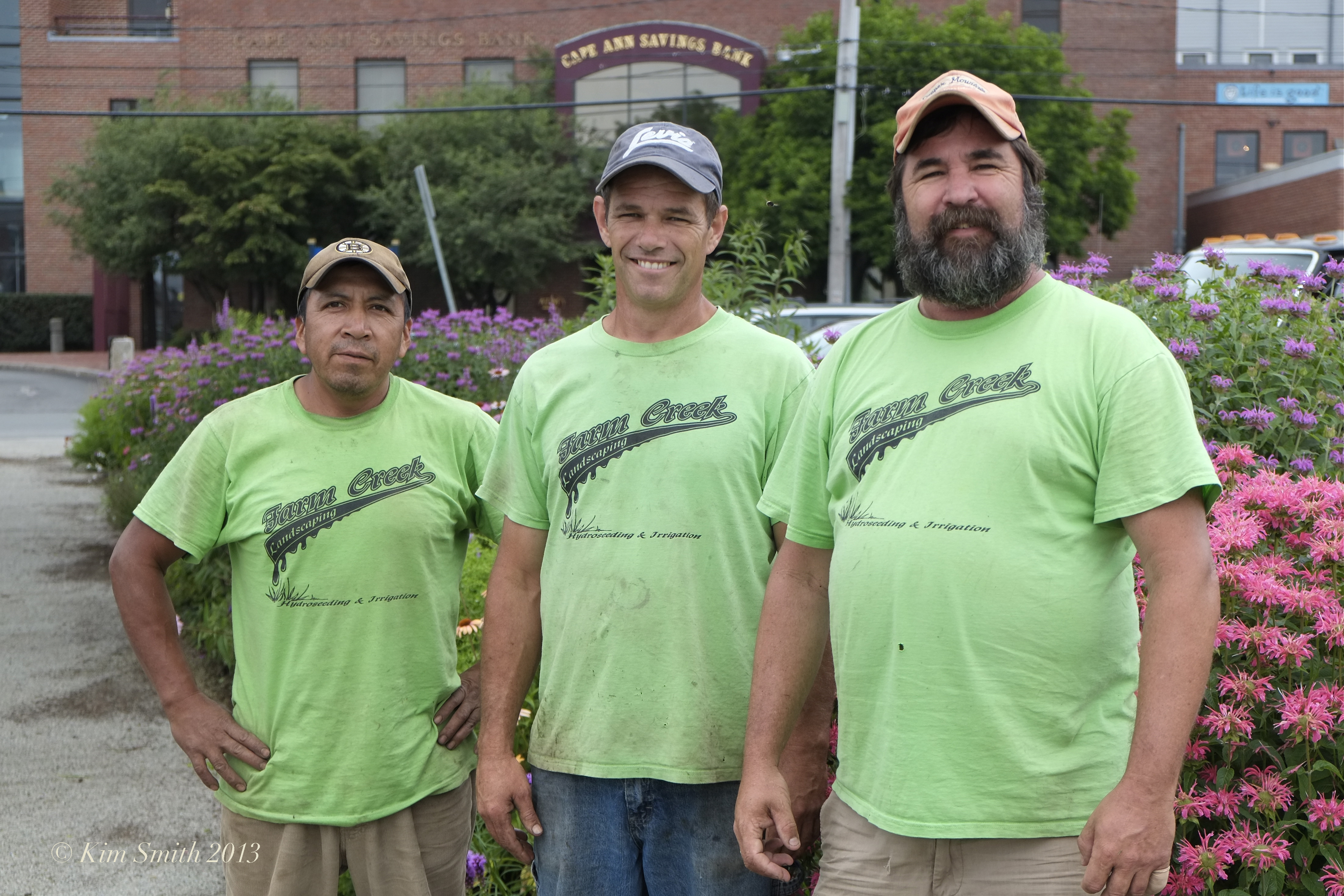
Jay Ramsey Farm Creek © Kim Smith 2013

Jay Ramsey (right) and crew Mauricio (left) and Mike (center)

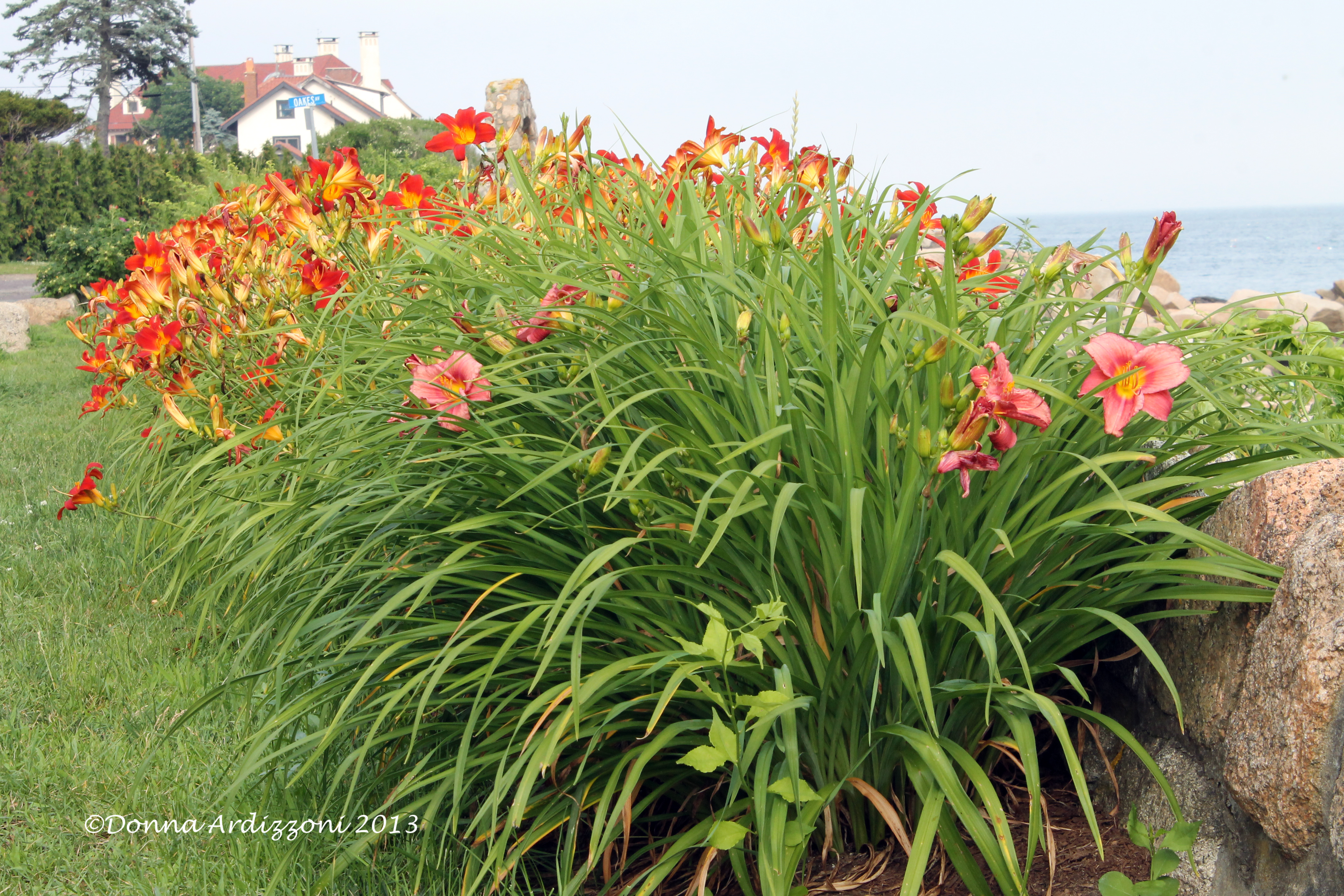
On Tuesday, Jay Ramsey and his hard-working and dedicated crew from Farm Creek Landscaping, Mike and Mauricio, spent the morning whipping the HarborWalk Gardens into shape for Saturday’s Gloucester Garden Tour. I will be giving guided tours of the butterfly gardens at the HarborWalk on Saturday at 1:00 and at 2:00. The tours will begin under the Tulip Trees in St. Peter’s Square.

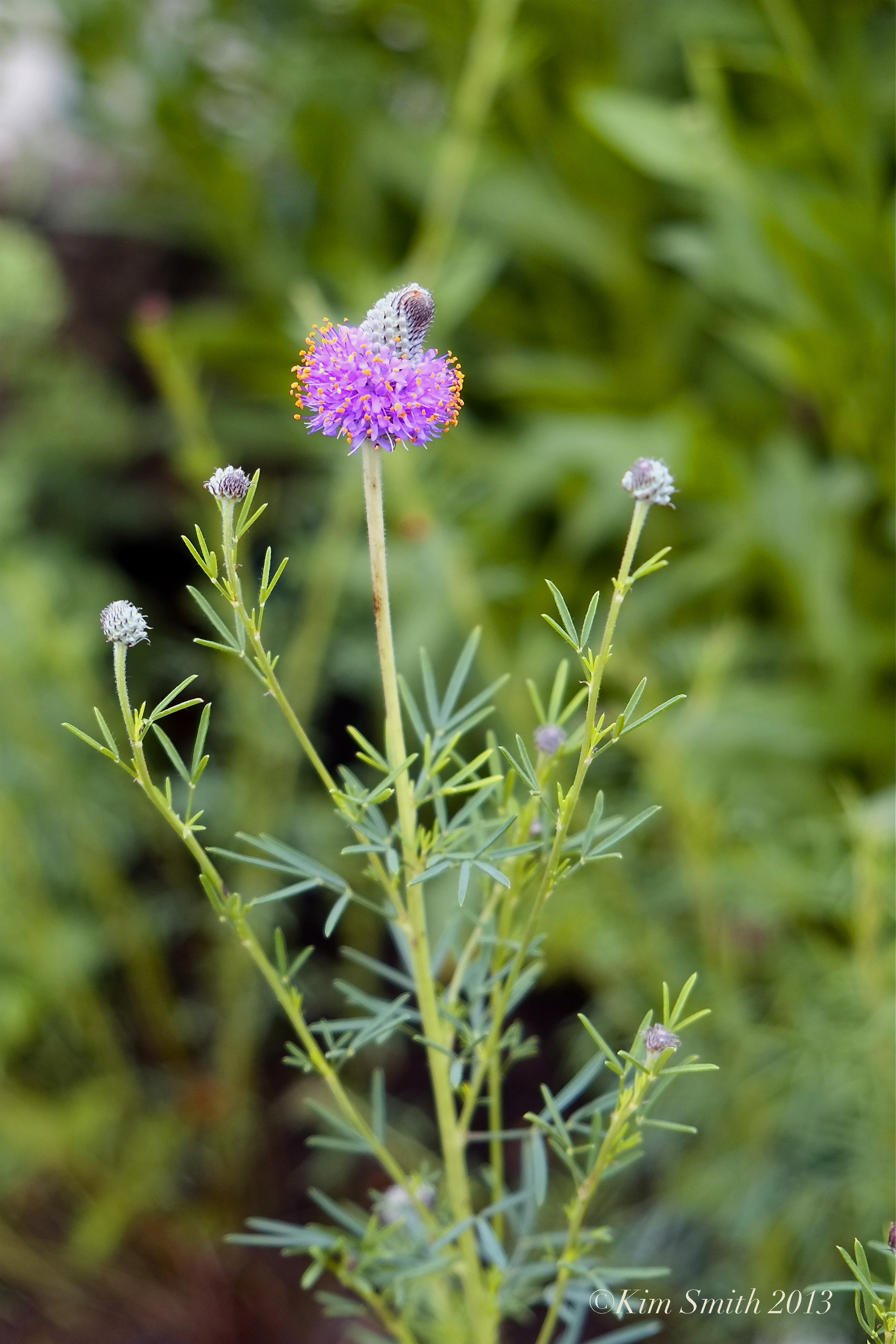
Purple Prairie Clover Dalea purpurea © Kim Smith 2013 copy

Purple Prairie Clover (Dalea purpurea)

One of  the more fanciful North American wildflowers that you’ll see on the tour is the Purple Prairie Clover (Dalea purpurea), which is just beginning its florescence; typically July through August. With elegant, thread-like ferny foliage and charming one-inch flowerheads, this member of the Legume Family (Fabaceae) also adds nitrogen to the soil. The seeds of Dalea purpurea are enjoyed by many songbirds and the nectar-rich rose-purple and gold flowers are attractive to myriad species of butterflies and bees. Purple Prairie Clover grows well in average garden loom, as well as sandy soil, and it is often used for erosion control. Dalea purpurea grows a deep taproot and, once established, it is nearly impervious to drought.

Visit the Gloucester Garden Tour website for information on ticket sales.

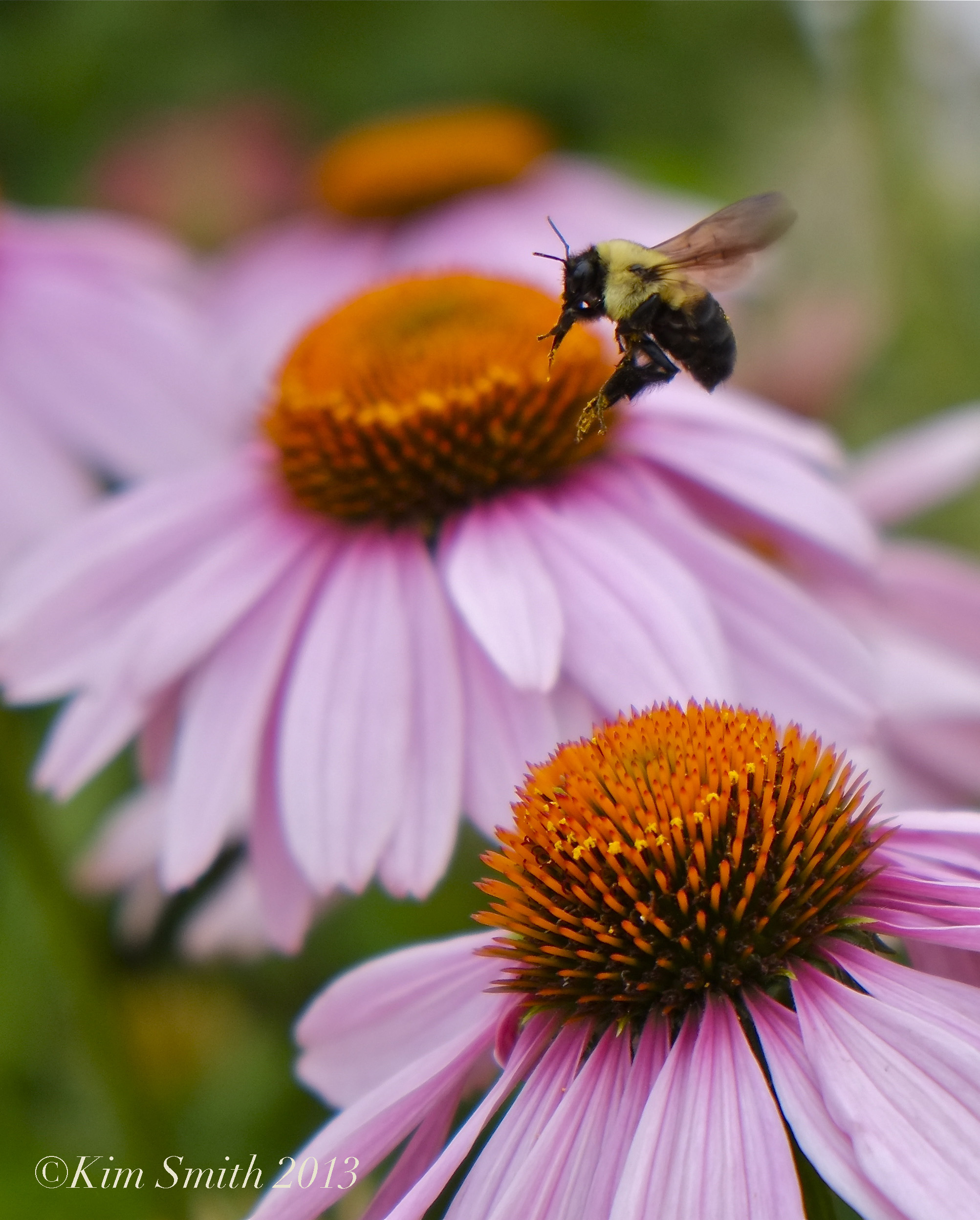
Coneflower and Bee -2 © Kim Smith 2013Echinacea and Bee at the HarborWalk

Come Join Me for a Guided Tour of the Butterfly Gardens at the HarborWalk

Please come join me on Saturday, July 13th, at 1:00 and at 2:00, for guided tours of the butterfly gardens at the Gloucester HarborWalk. The guided tour is included in the cost of the ticket for the Gloucester Garden Tour. Please feel free to email me with any questions about the butterfly garden tour at the HarborWalk at kimsmithdesigns@hotmail.com.

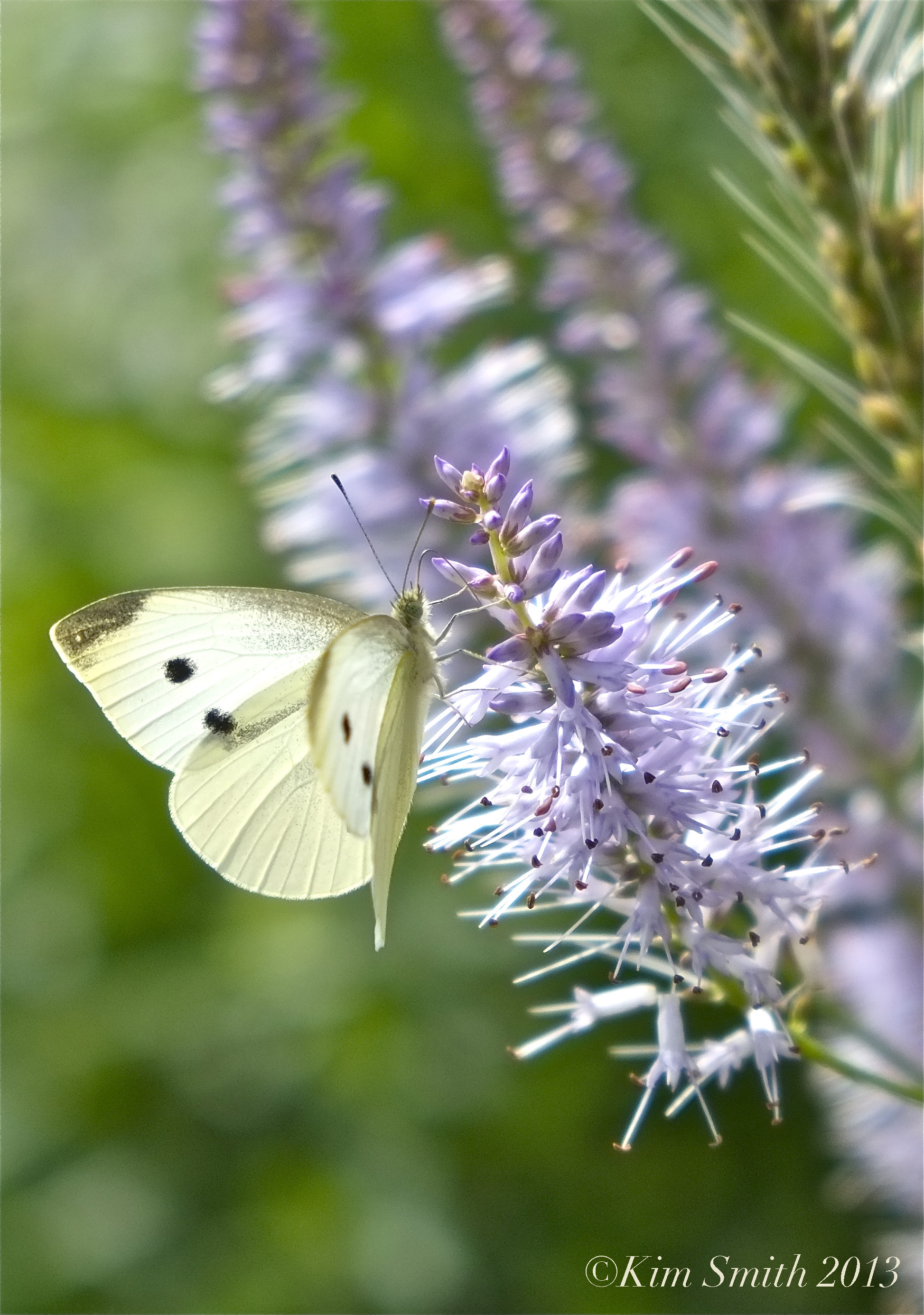
One of my favorites, and in bloom now at the HarborWalk Gardens, is the stunning North American native wildflower Culver’s Root or Veronicastrum virginicum. The plant typically grows to five feet and, when in flower, creates a lovely, airy candelabrum effect. Culver’s Root prefers full sun and moist well-drained soil. When I was there checking on the gardens several days ago all manner of bees and butterflies were nectaring from the diminutive florets of the spikey racemes of the Veronicastrum.

Veronicastrum virginicum Culver's Root ©Kim Smith 2013Veronicastrum virginicum and Cabbage White Butterfly, Gloucester HarborWalk Butterfly Garden

Monarch Butterfly Migration Through Gloucester Reader Question

GMG Reader Becky Edleman writes:

“Hello! I was emailing you to inquire about the monarch butterfly migration that comes through Gloucester. I recently moved to MA and was told that the butterflies migrate through that area, but have found little evidence as to when this usually occurs. After doing some googling I came across your website discussing the migrating monarchs many times. If you have any information for me as to when I should plan to come up and where to go I would really appreciate it! I love reading your articles and am eager to find out more about the migration pattern! Thank you!”

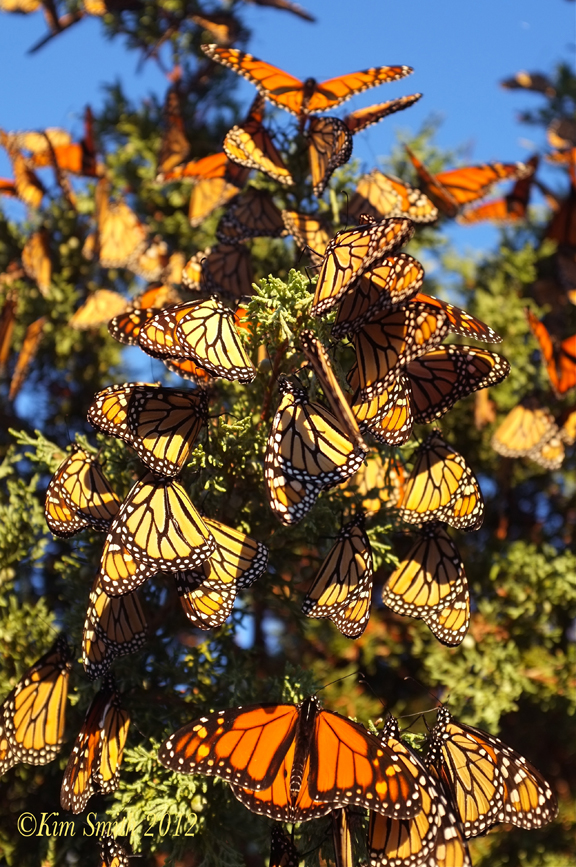
Monarch Awakening ç Kim Smith 2012

Hi Becky ~ Thanks for writing and wonderful to know you found us through a Google search! The Monarch Butterfly migration through our region is not an exact science. The “when” of the migration depends on may variables including the success of their breeding during July and August, air temperature, and wind flow. When I look back through my records, I would say, generally speaking, we have the greatest number of Monarchs migrating though Gloucester beginning around the second week of September through October 1st. The butterflies are are found in  gardens and wildflower fields and meadows throughout our region. You can often see clusters near the Eastern Point Lighthouse.

Do you have space for a garden? If so, and you would like to attract the migating Monarchs to your garden, plant nectar-rich flowers that are in bloom during their migration. Seaside Goldenrod, New England Aster, and Smooth  Aster are just three gorgeous Massachusetts native wildflowers that will attract the Monarchs to your garden.

I hope you’ll stop by the dock and get a GMG sticker when you are visiting!

Mama Turtle

The female Eastern Painted Turtle (Chrysemys picta) deposits her eggs in a hole, or nest, which she has excavated with her hind legs. She lays between three and 14 eggs. Depending on soil and air temperatures, the eggs incubate unattended in the soil for six to twelve weeks.  Sex of the hatchlings is determined by the temperatures the eggs were exposed to in the nest. Warmer temperatures produce females. Cooler temperatures produce males. Some eggs are deposited close to the surface and others are laid first and are deeper in the soil. The slight differences in position in the nest produce enough variances in temperature to ensure that both males and females are produced from the same nest.

Filmed in Gloucester, Massachusetts, June 2013 with Fujifilm XE-1.

The Gentle Rain ~ Song by Astrud Gilberto

Thanks So Much to Kate and Our Friends at Wolf Hill!!!

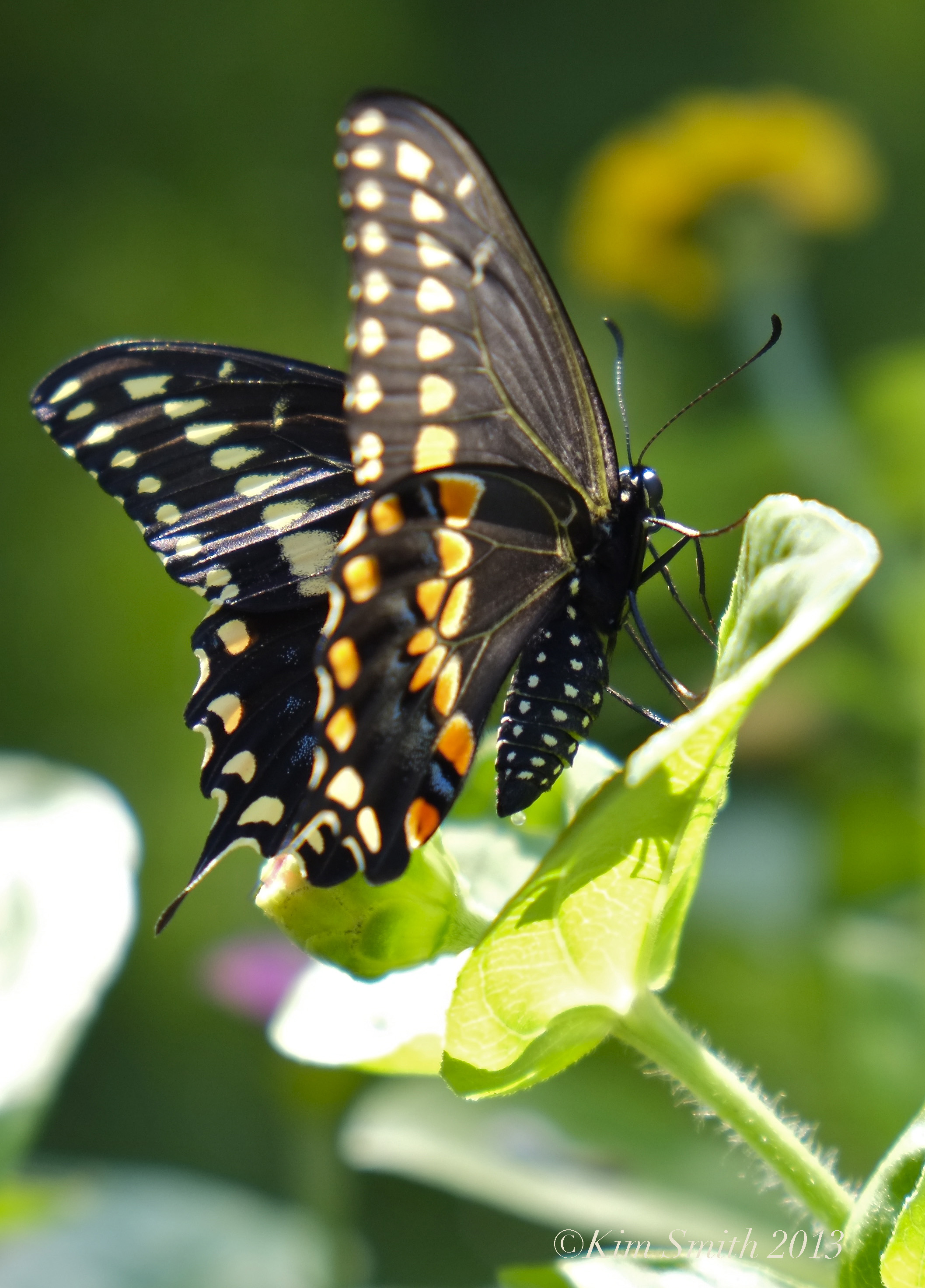
Black Swallowtail Butterfly Male ©Kim Smith 2013

Newly Emerged Male Black Swallowtail Butterfly

Thanks to Kate and the team at Wolf Hill for giving me a second Black Swallowtail caterpillar of the season. And, as I was getting ready to discard the parsley plant from the first caterpillar they had found at the garden center earlier in May, I discovered yet a third caterpillar.

Chrysalis #2 eclosed yesterday in the early morning hours. The butterfly in the photo above is newly emerged, so much so that you can see its abdomen is still swollen with fluids as it is expelling a drop. After first drying his wings on the zinnias, he flew off in search of nectar and a mate. I just can’t thank you enough Kate, and everyone at Wolf Hill who is taking an interest in the caterpillars!

Black Swallowtail Butterfly Zinnia Male ©Kim Smith 2013.Male Black Swallowtail Butterfly and Zinnia

Purchase Your Tickets Today for the Upcoming Gloucester Garden Tour!

We hope you can join us and please help spread the word. The funds raised will go directly towards maintaining the Fishermen’s Wives Memorial and Gardens and the butterfly gardens at the HarborWalk. The tour is hosted by GenerousGardeners and the Harvard Club of the North Shore. I am going to be at the HarborWalk Gardens throughout the day to answer all your habitat gardening questions. And I will be giving two guided tours, the first at 1:00 and again at 2:00.

To purchase tickets.

Today is the last day you can purchase tickets at the 20.00 price. Tomorrow they go up to 25.00. For the first 50 ticket holders, free parking at Stage Fort Park is included.

hummingbird

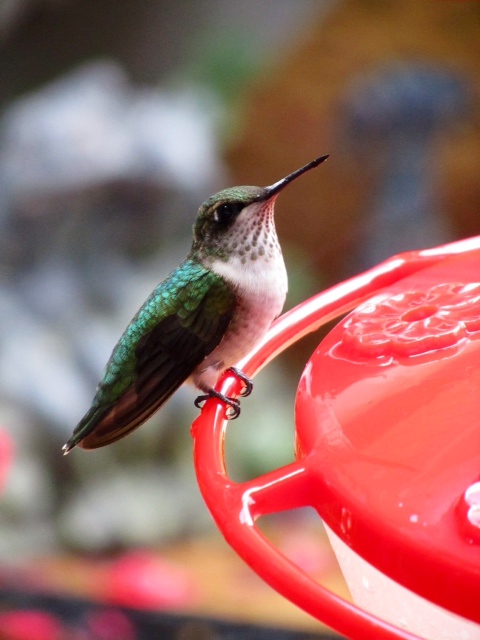
Female Ruby-throated Hummingbird ~ Susan Kelly Photo

Susan shares this photo of a female Ruby-throated Hummingbird that frequents her garden. If you want female hummingbirds to choose your garden to build their nests nearby, I recommend putting your hummingbird feeders out early, in March and April. Northward migrating hummingbirds are in need of nourishment by they time they reach our shores. Their diet consist primarily of small insects; there are few insects on the wing and even fewer nectar plants blooming. I place my hummingbird feeders above early blooming Red Riding Hood Tulips. Although the tulips do not provide nectar, the red flowers lure them to the hummingbird feeders.

A note about hummingbird feeders. Never add red food coloring or use honey to sweeten the water. To make your own sugar solution, combine 1 part pure granulated sugar to 4 parts water. Clean you hummingbird feeders weekly with a 50/50 combination of vinegar and water; more frequently in warm weather.

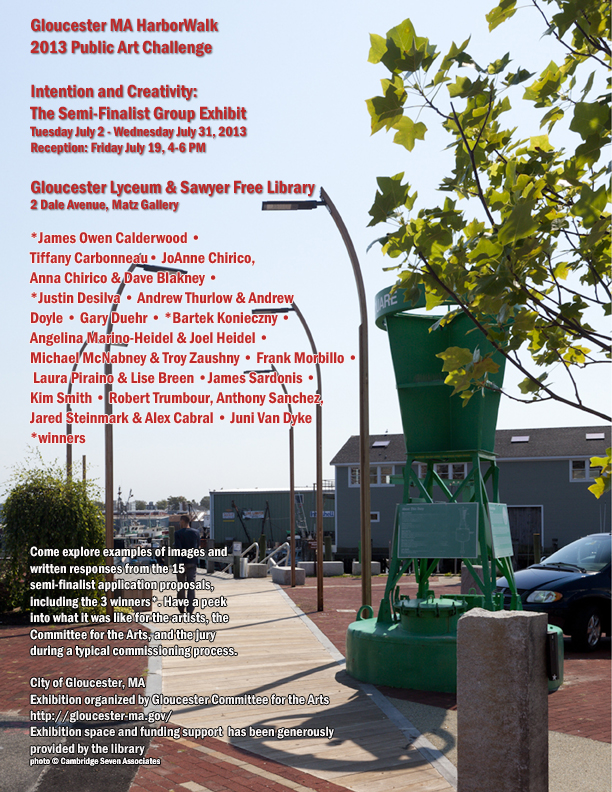
new Garden Tour Flyer

Editing the Nick Avelis Sunday Greasy Pole Video!

The Sunday Greasy Pole competition with winner Nick Alvelis was a fantastically exciting event and I captured lots of good footage and have lots of great music in mind–hopefully the editing will be done by the end of today.

Al Bezanson photo milkweed

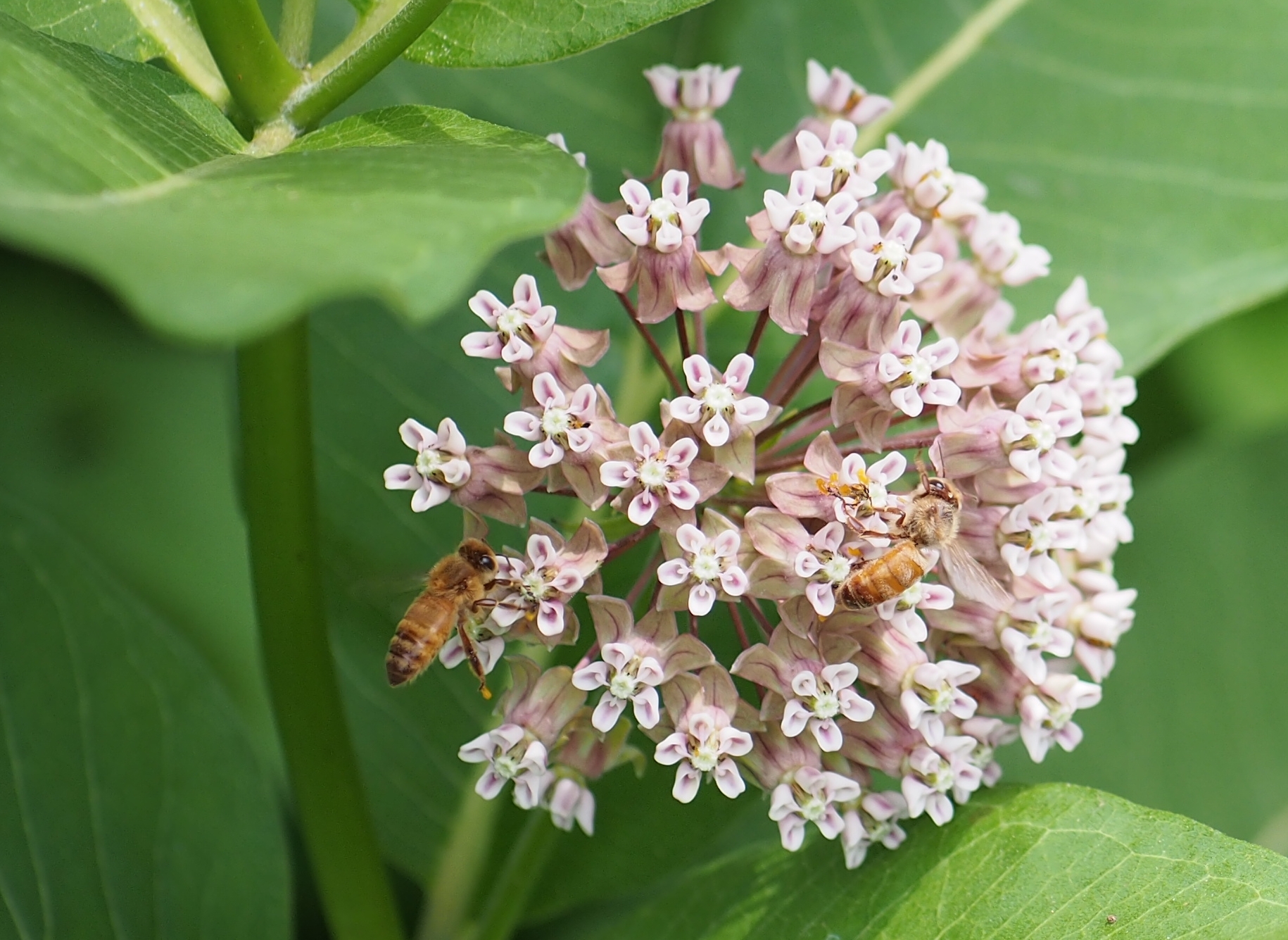
Common Milkweed (Asclepias syriaca)

Thanks to Al Bezanson for sharing this photo of Phyllis’ milkweed in bloom, with honey bees. I am not going to make my 2:00 posting deadline and Al’s photo came in the nick of time! My milkweed is still aways from blooming I think because the temperatures are warmer further inland. Thanks for sharing Al!

Wolf Hill Black Swallowtail Chrysalis from Kate

FOB Ann Kennedy Writes with Wren Update

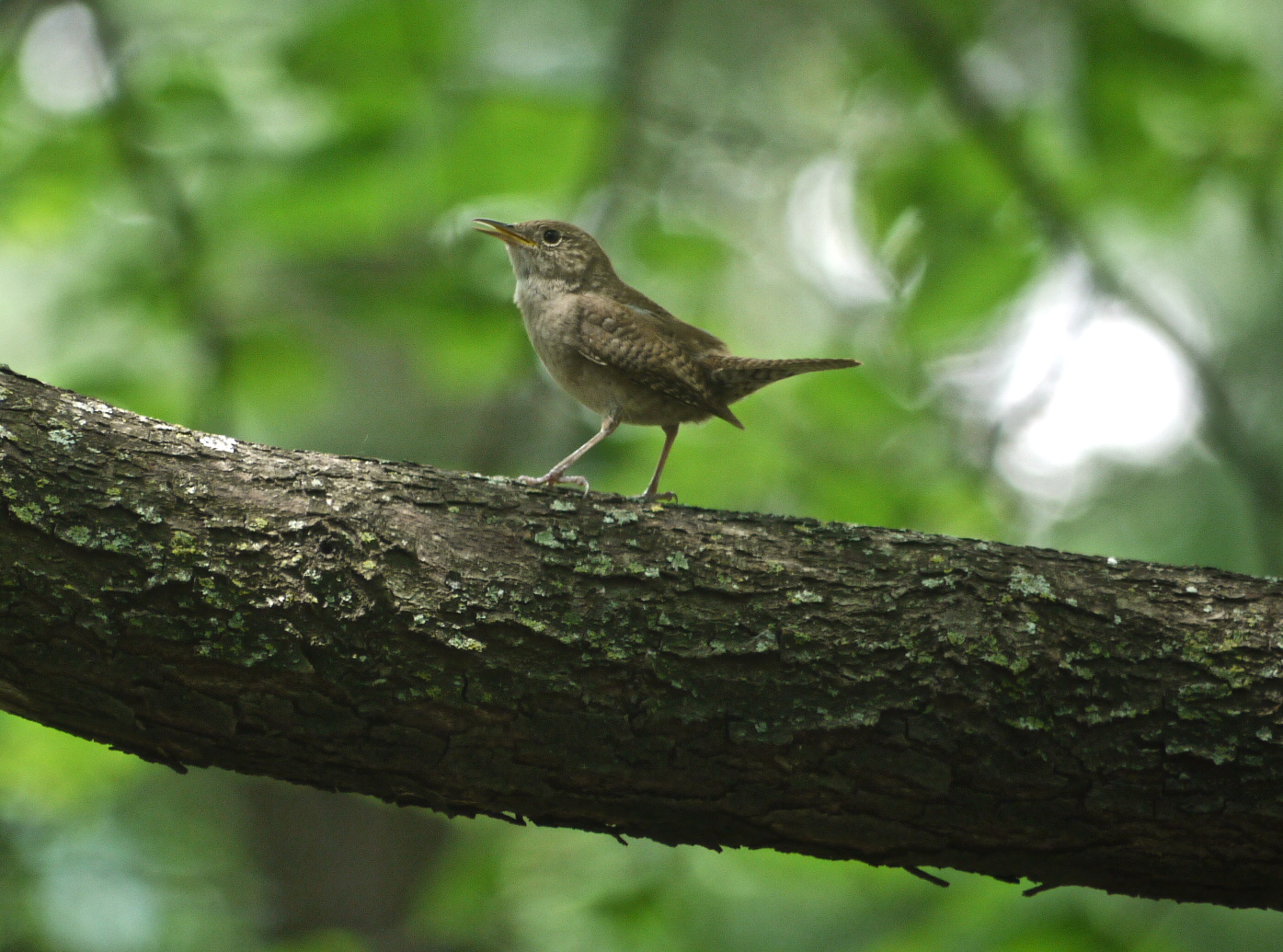
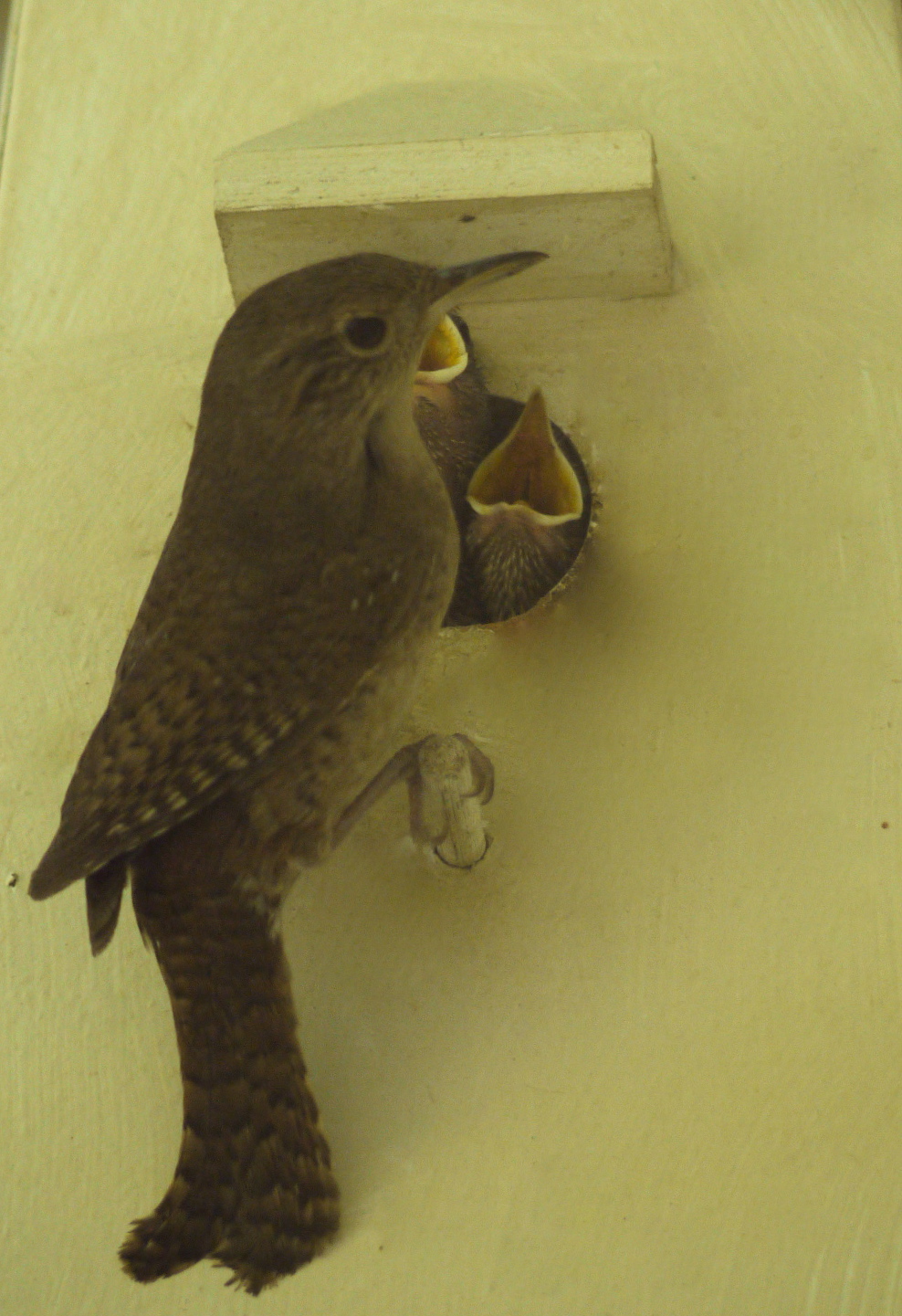
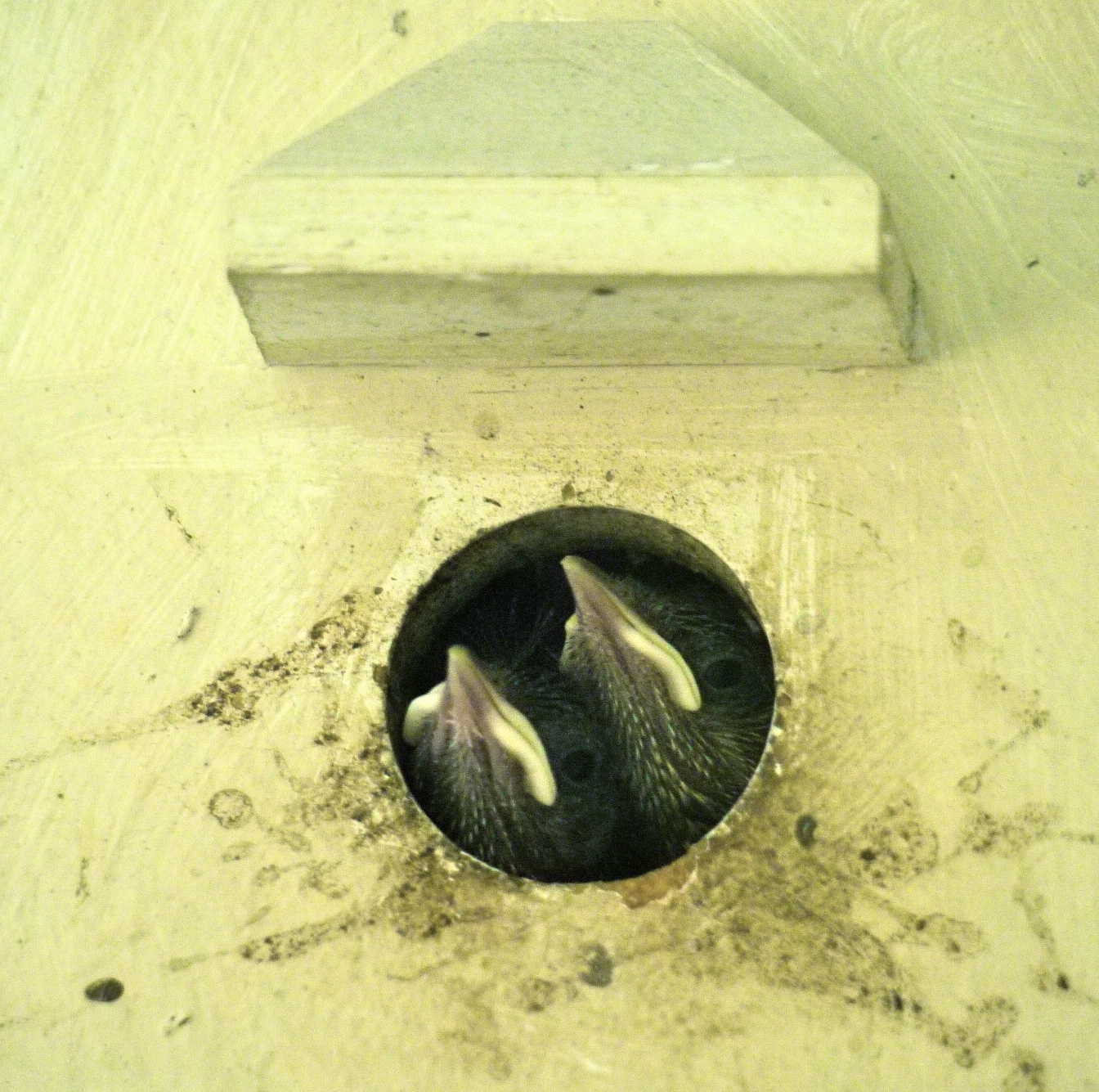
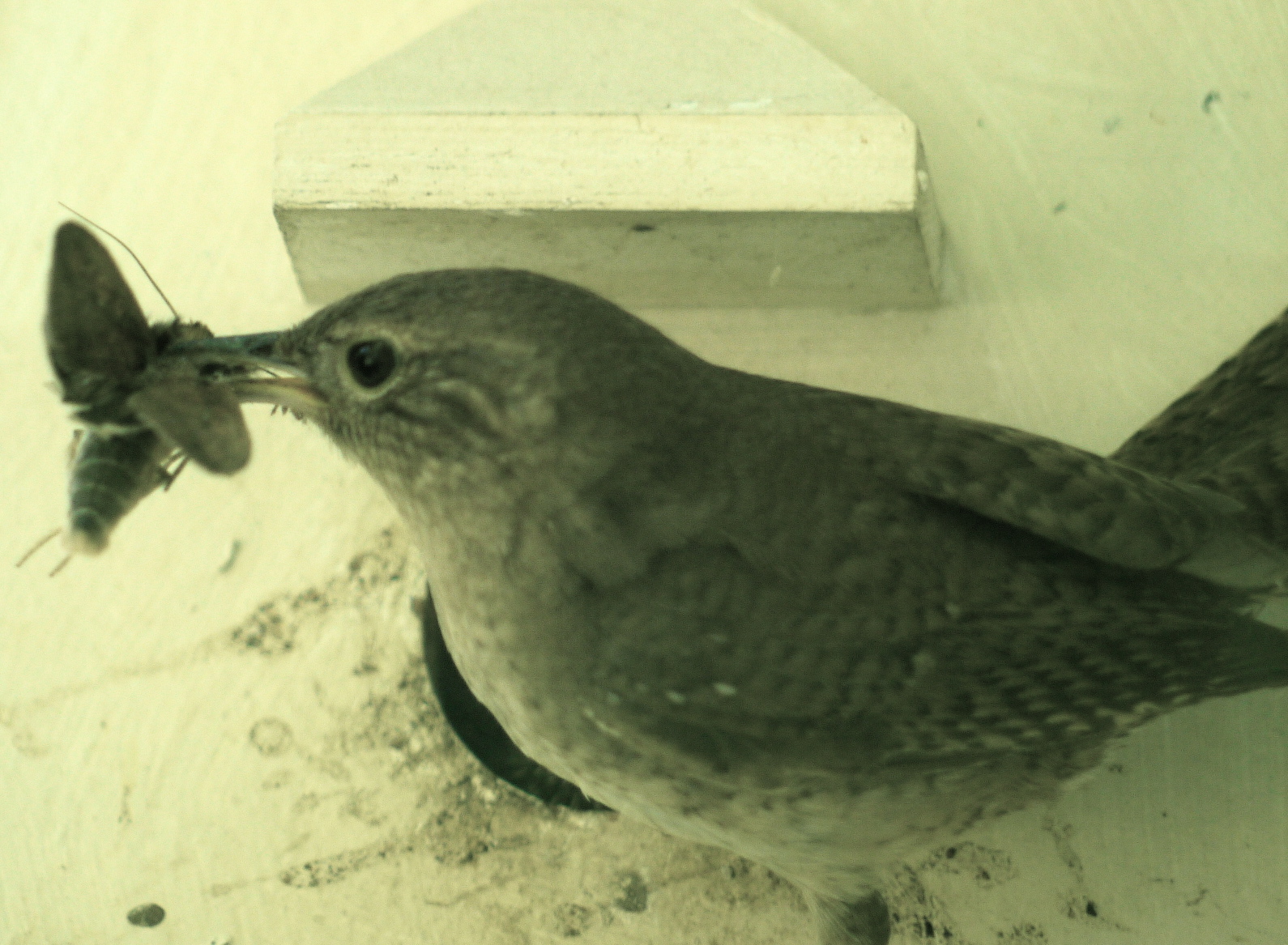
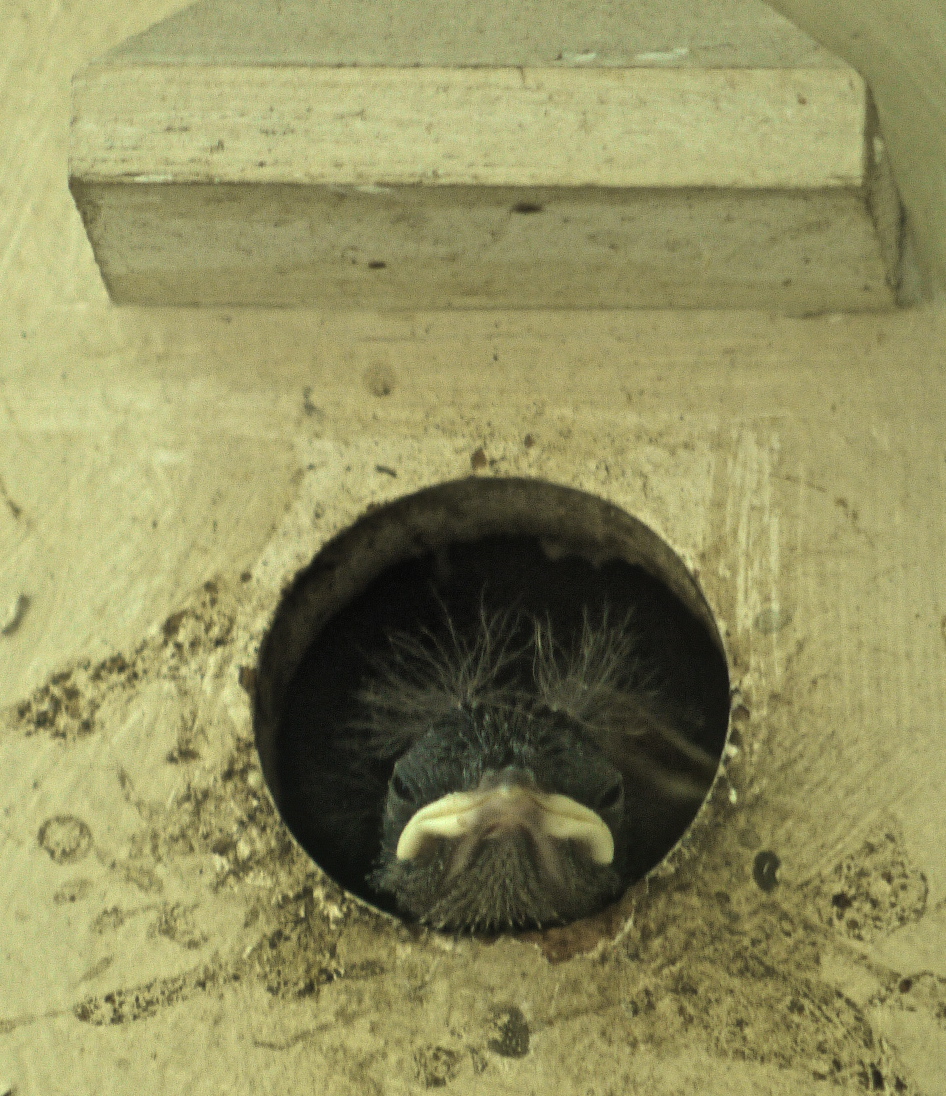
Hi Kim.  Here’s the update on the baby wrens.  Today at noon, 2 of them fluttered about 3 feet from their house to our deck rail.  Within a few minutes they made it up into the redbud tree where they stayed for quite awhile.  For the entire time they were out, the mama flew in and out of the house, removing small twigs, downy grey feathers, and other bits of stuff from the nest.   At this point, they are flying easily from the tree to the deck and back into their house.  In a day or two, they’ll be gone.  Our neighbors call them the “lighthouse wrens” as their house is a small wooden lighthouse.

Best wishes,

Ann
Ann Kennedy wren photo

Thank You!

Thank you with all my heart to everyone who attended my film premiere last night. I feel so very blessed to have had my beautiful community of friends and family there, and by attending, you all made the event a great success and sellout!!! What a whirlwind, and it went by all much, much too fast. I hope I didn’t miss saying thank you to anyone last night.

With love and gratitude to my wonderful team. I could not have done it without you!

Tom Hauck ~ Although I began shooting my film “script-less,” I did, through the course of filming, write the story. I know I can always go to Tom for editing assistance, commentary, and proofreading and find his advice and knowledge of the written word invaluable. Life Story of the Black Swallowtail stems from a profound desire to communicate about the natural world found in our own backyards and that can only be achieved when rooted in a beautiful story.

Liv and Kathleen ~ From the moment I asked Kathleen and Liv to help with the music for my film they were there, giving 100 percent of themselves. Thank you Liv for sharing your beautiful voice and Kathleen for your beautiful organ playing. Thank you both especially for the improvisations, which so gorgeously melded with scenes of the butterfly during metamorphosis. And thank you Liv for simply being the best and most supportive and loving daughter a mom a could ever dream of and hope for.

Craig Kimberley ~ To my friend Craig for his editing assistance, and especially for his stunning key frames (the swan in flight!), help with title design, and overall advice on the film as a whole. And special thanks to Hannah for sharing Craig on his days off!

Joey ~ My friend Joey for his tireless support of everything great and good about Gloucester, for the weeklong “sticky,” and for writing, “Butterflies FTW!” I love being part of his GMG team, for more reasons than I can count.

Andrew Love ~ Thanks and appreciation to Andrew, who really saved the day in the eleventh hour, despite the fact that he was in the midst of leaving Cape Ann TV and beginning his new job at Newburyport’s cable channel PortMedia!

Lisa Smith, Cape Ann TV Producer ~ To Lisa for her continued advice, support, and friendship, and assistance, too, in the eleventh hour (and for the wonderful bottle of champagne last night!).

Rob Newton ~ Thank you Rob for inviting me to have my premiere at your very special venue—and didn’t that gentleman fall off his seat at just the right moment! Link to CACC Indie Gogo fundraiser so Rob can continue to support up and coming filmmakers like myself.

Fred Bodin ~ For hosting, once again, a wonderful party at Bodin Historic Photo Gallery. Fred just has the magic touch—his gallery is always warm and welcoming and everyone always feels entirely at ease and has a fabulous time at his parties. Special thanks to John McElhenny for staying late and helping clean up.

Felicia, Pat, and Barry ~ Despite the fact that Felicia is in the final stages of writing her cookbook and preparing for her Kickstarter launch she, Barry, and Pat provided the wonderful array of food served at Fred’s last night.

JoeAnn Hart and Gordon for sharing their breathtakingly beautiful great drift of asters (mecca to the pollinators), of which we will see much more of in my Monarch film!

Donna and Rick and Ann and Bob Kennedy ~ Thank you for the beautiful flowers. I am very touched by your thoughtfulness. Ann, the flowers were you in absentia!

And special thanks to Kate at Wolf Hill for providing our “special guest star” Black Swallowtail caterpillar for the premiere. This is the second time a caterpillar has been found on a parsley plant at Wolf Hill and that Kate has offered it to me to raise.

Update on the caterpillar: Last night Kate’s caterpillar spun its silk girdle and it is going to pupate at any moment!

Again, my thanks and love to you all! And the butterflies thank you, too!!!
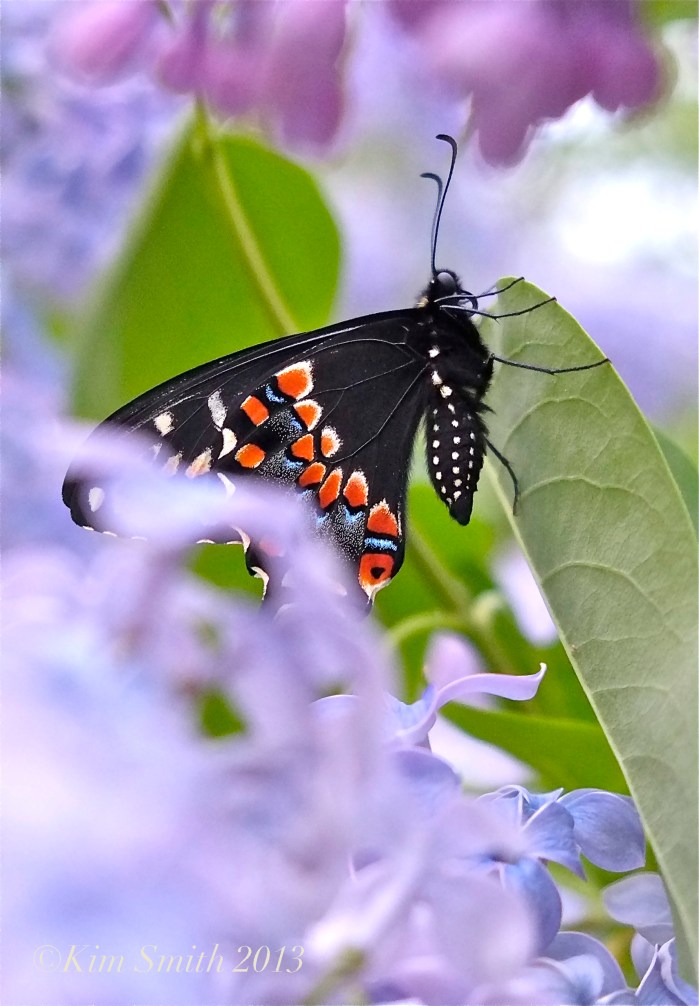
Male Black Swallowtail Butterfly Wedgewood Blue Lilac ©Kim Smith 2013Photo of  Newly Emerged Wolf Hill Butterfly from this Past Spring

World Premiere Tonight!!!

It’s here! I can’t tell you how overjoyed I am to have the world premiere of my film in my beautiful hometown community with my friends, family, and well-wishers in attendance. It’s going to be wonderful night and I just want to say thank you, from the bottom of my heart, to everyone who is attending. I am looking forward to seeing you tomorrow night at my premiere and at Fred Bodin’s gallery for a fun rockin’ party afterwards!

Note ~ Felicia and Pat are providing a fabulous array of refreshments–even more of a reason to come to join us at Fred’s!

Fred Bodin Historic Photo

Cape Ann Community Cinema Advance Tickets

final-blog-seaside-graphics-life-story-of-the-black-swallowtail-movie-poster-cacc-11

New Butterfly Garden for the Children’s Campus at Philips Andover

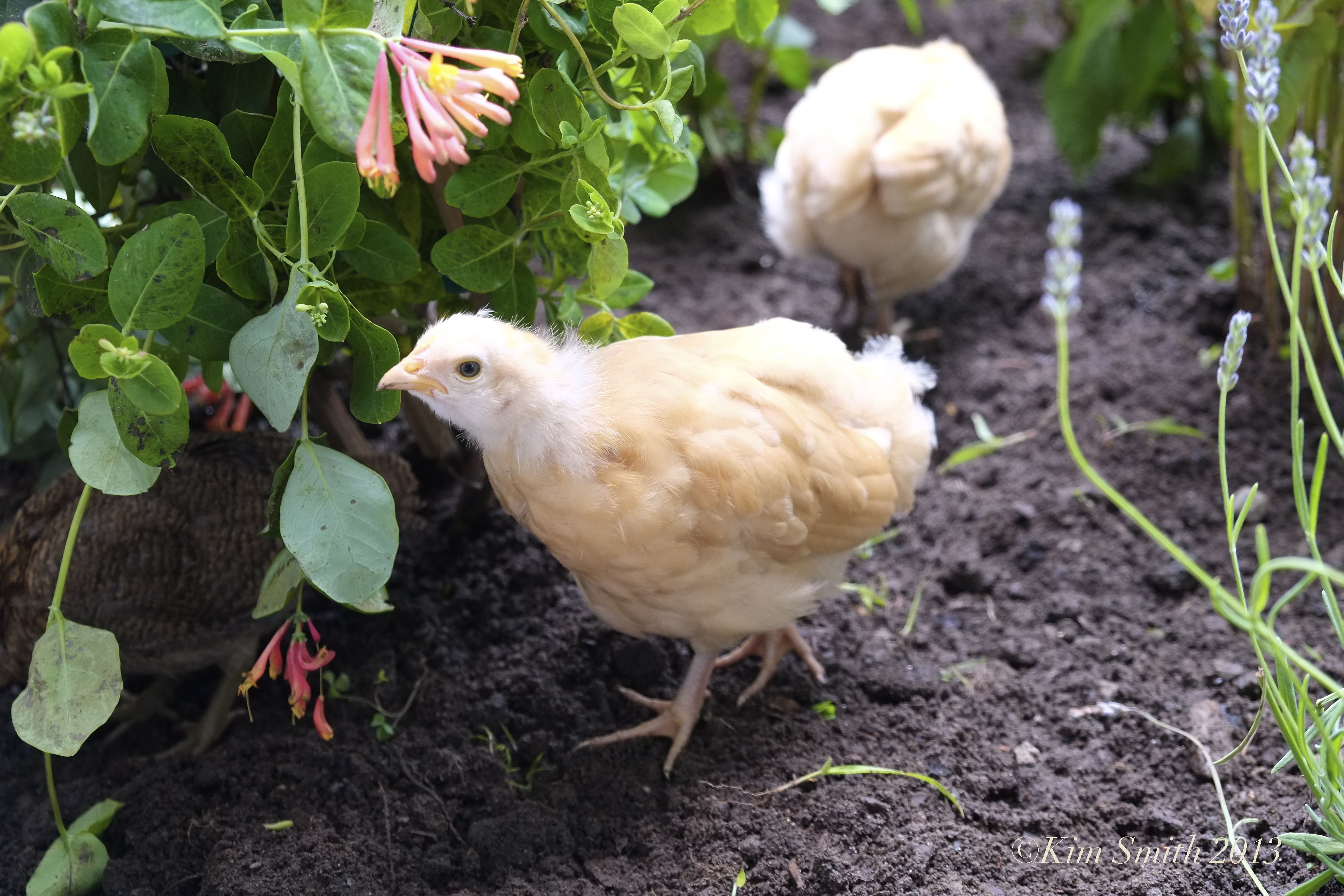
SHED Children's Campus chicks © Kim Smith 2013Native Honeysuckle (Lonicera sempervirens) for the Hummingbirds

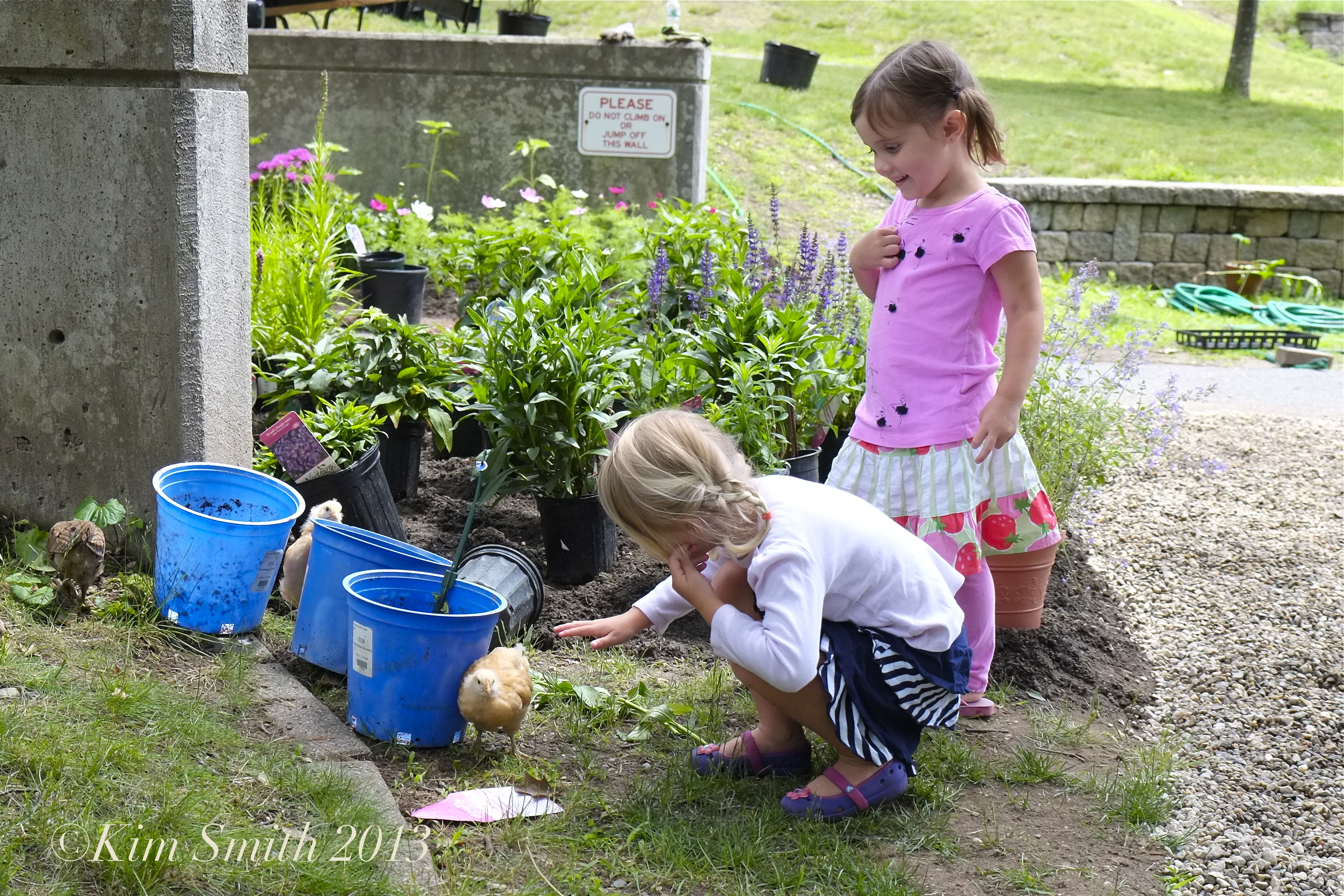
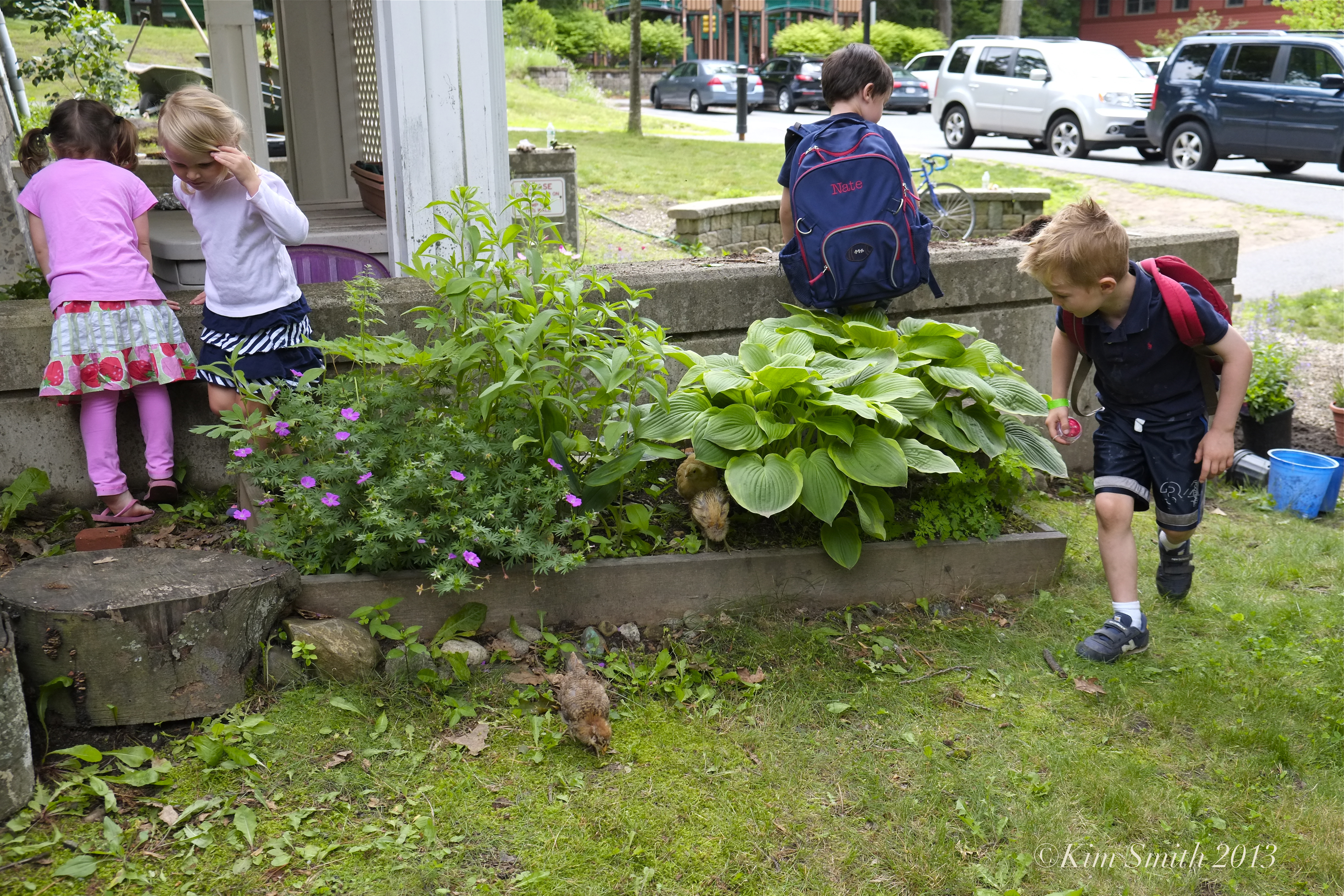
This week I, along with a wonderful group of volunteers, am installing the new butterfly and hummingbird garden that I designed for the Children’s Campus at Philips Academy Andover. We also got lots of help with planting from children and chickens. Chickens in the garden are lots of fun for the kids and I especially love them for the always excellent chicken poop fertilizer provided. The chicks were running freely around the new garden however, we were all watching out for them because the hungry mama hawk hovering in a neighboring tree was also very interested in the chickens.

SHED Children's Campus chickens and kids ©Kim Smith 2013

Linda Shottes-Bouchard, the director of the children’s program, and I met this past spring at one of the lectures I gave in Andover. Linda is a true dynamo and wonderfully hands-on director–she practically hired me on the spot, and then organized the planting to coincide with this particular week, when 100 volunteers from Liberty Mutual are arriving throughout the week to lend a hand with campus improvements. More from the new gardens, including a Fairy Garden, coming soon!

SHED Children's Campus kids & chickens ©Kim Smith 2013

FOB Al Bezanson Photos from the Norfolk Botanical Garden

Al Bezanson Photo

Hi Kim,

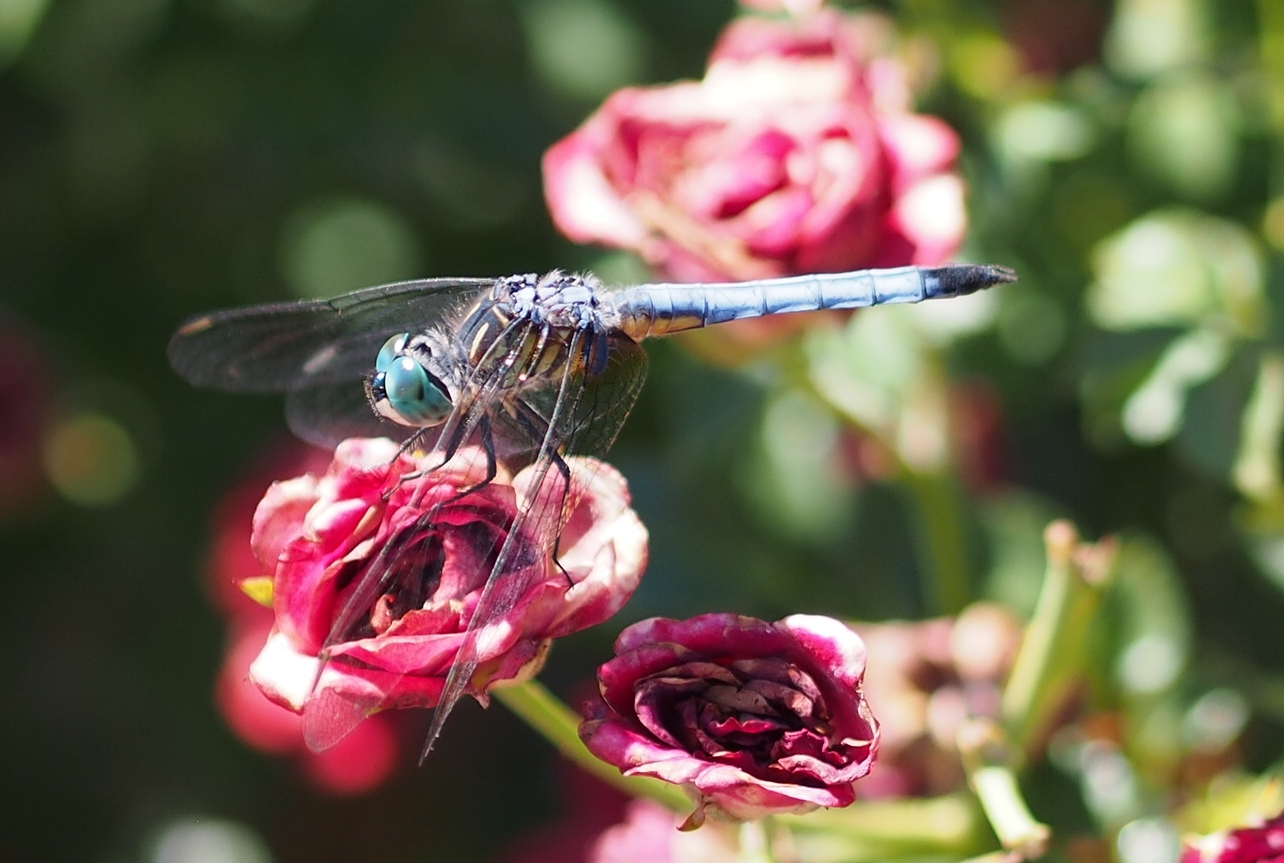
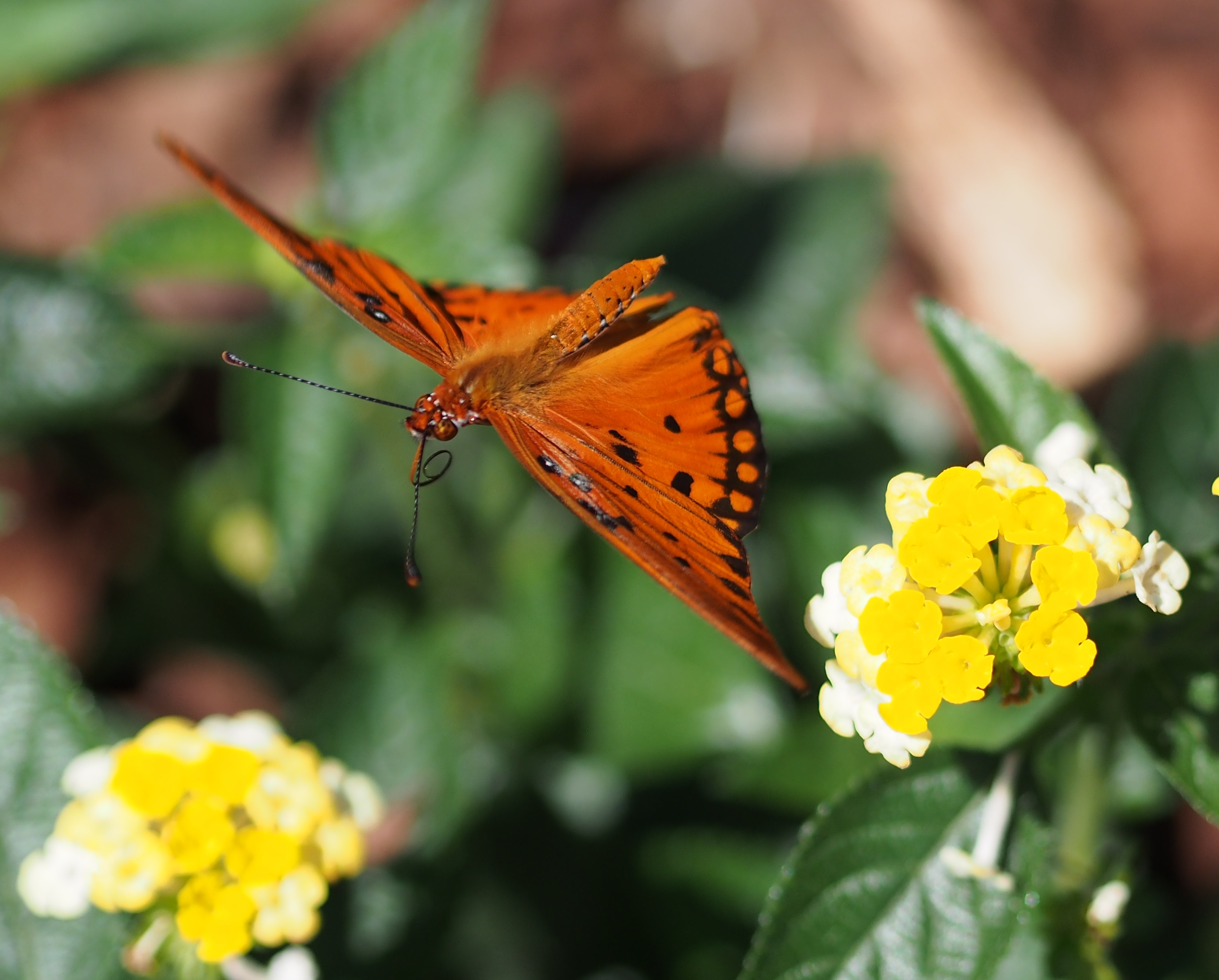
Went to Norfolk on the weekend and I was forbidden by family to hang out on the waterfront.  So…. I got these shots at the Norfolk Botanical Garden.   The dragonfly was in the wild but the butterfly was a captive in the Butterfly House.  It was like shooting fish in a barrel.
Al Bezanson

Thanks for sharing Al!!

OLYMPUS DIGITAL CAMERA

FOB Ann Kennedy Shares Her Wren Photos and Story

Ann Kennedy wren photo

Hi Kim,

I’m excited about your film showing very soon and I hope your opening is wonderful in every way.  I just know it will be and I look forward to hearing all about it on GMG!  You bring such gifts through your photos and informative posts!

I’ve been watching the wrens outside my kitchen window, and while the pictures aren’t that great, what these precious birds do is just amazing as you well know.  The babies squawk until the mama returns with a winged treat.  As they get bigger, she will drop the bug on the ground and encourage them to come for it on their own for at least one of their feedings.  It is so fun to watch and thought you might enjoy these.  While I can’t clean up their messy birdhouse, I did clean up the last photo:-)

Best wishes always,

Ann


Ann Kennedy wren photo-1

Ann Kennedy wren photo-2Ann Kennedy wren photo-3Thanks for sharing Ann!!