Category: Home and Garden

Sunset View of Gloucester City Hall
When I walk out our front door at sunset this is what I see ~

Gloucester City Hall Sunset from Plum Street
Spread The GMG Love By Sharing With These Buttons:

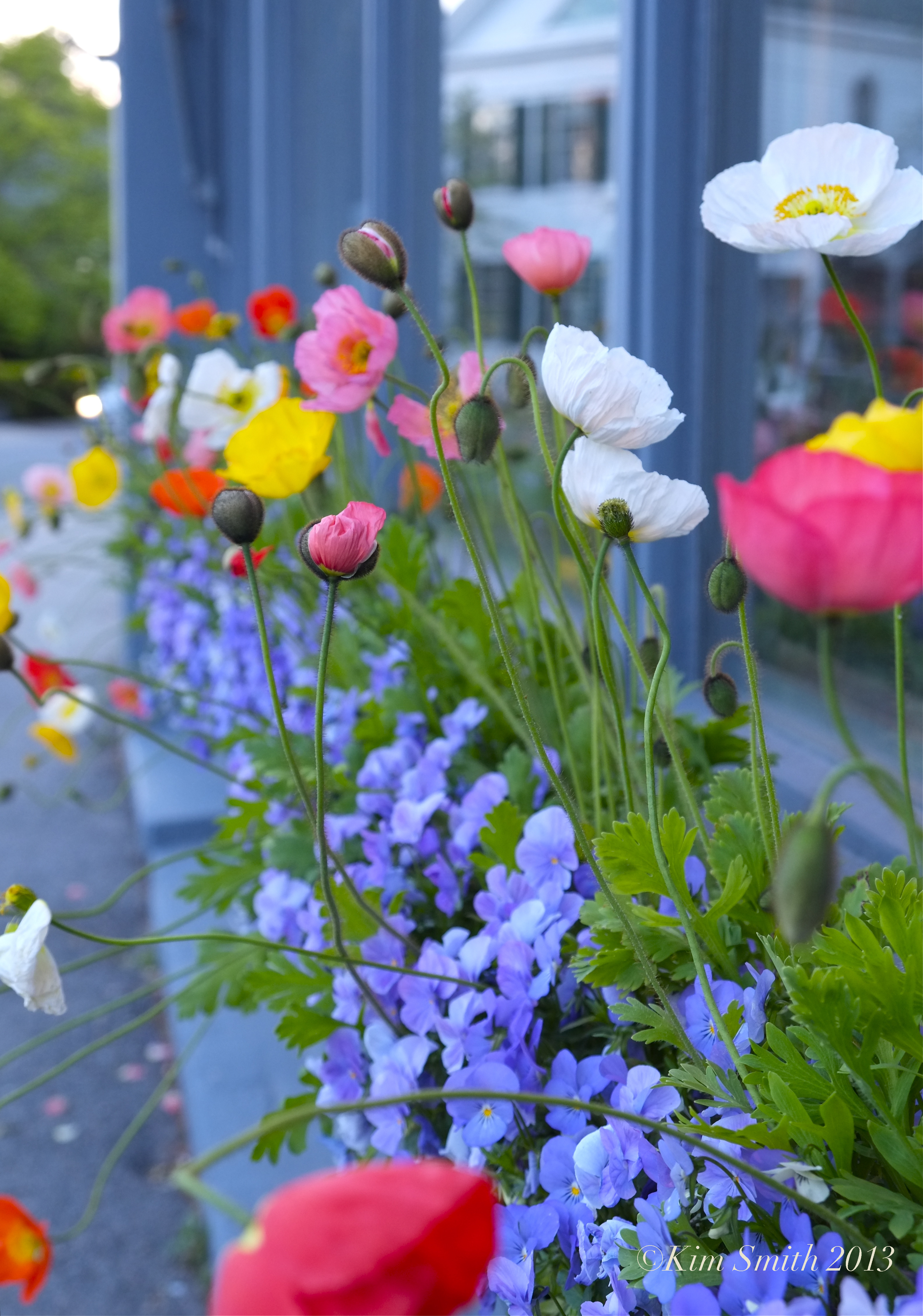
Design Inspiration ~ Iceland Poppies
 Iceland Poppies
Driving home at dusk and coming from a client’s in Beverly Farms, I passed this gorgeous poppy-filled window box at Gladstone’s jewelry shop on Union Street in Manchester, and just had to stop and take a snapshot. I thought the poppies would be beautiful in full sun, too, and made sure to drive the same route the next sunny day.
 Iceland Poppies (Papaver nudicaule) and Viloas
Spread The GMG Love By Sharing With These Buttons:

You Are All Invited to My Film Premiere and After Party at Fred Bodin’s
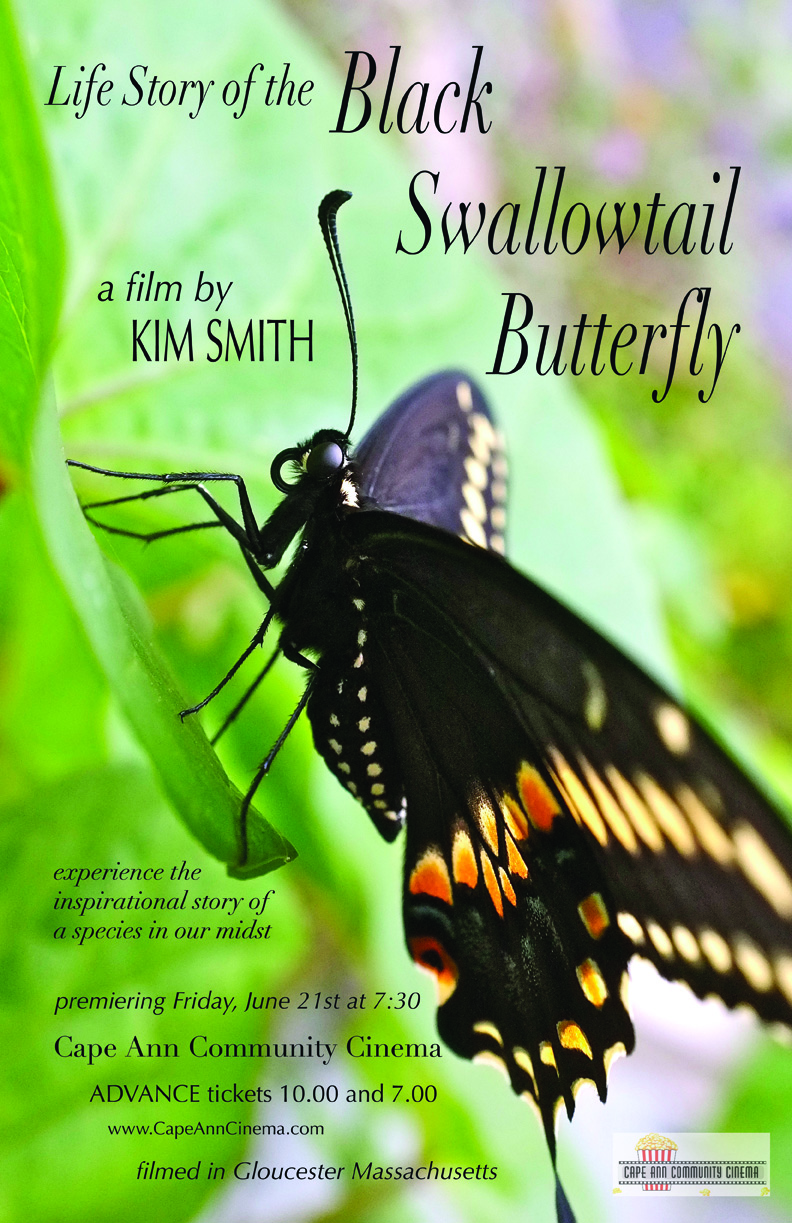
Come join us at my film’s premiere, Life Story of the Black Swallowtail Butterfly, Friday, June 21st at 7:30 pm, at the Cape Ann Community Cinema. After the event, Fred has very graciously offered to host a rockin’ party at Bodin Historic Photo Gallery, 82 Main Street, and Felicia and Pat are preparing a wonderful array of tasty treats, as only they can do! It’s going to be fabulous night and I hope to see you there!
Advance Tickets for Life Story of the Black Swallowtail Butterfly
Spread The GMG Love By Sharing With These Buttons:

Gorgeous Cecropia Moth
Christine Morey from Annabelle’s Pet Care sent this photo of a newly emerged Cecropia Moth. This is the second year in a row that she has found a Cecropia Moth cocoon on her hydrangea bush. The hydrangea is sited below her birch tree, which is one of the caterpillar’s food plant. The Cecropia Moth is the largest North American native moth, with a wing span of six inches! Gorgeous Christine–thank you so much for sharing!!!
 Male Cecropia Moth (Hyalophora cecropia)
What to look for in your garden ~
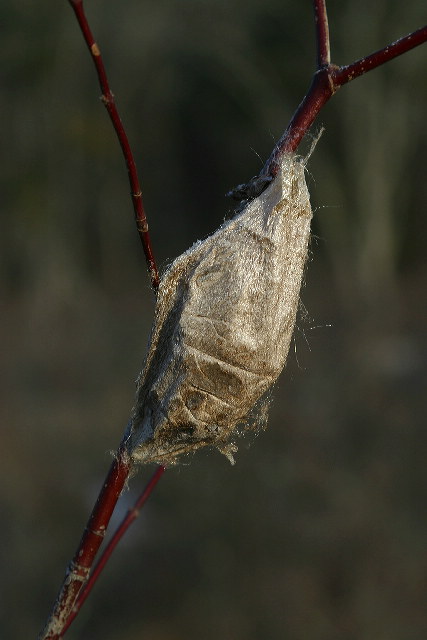 Cecropia Moth Cocoon ~ Image courtesy google image search
Spread The GMG Love By Sharing With These Buttons:

Baby Chipping Sparrow

Notice the two gardenia trees in the large planters in the background. Weren’t we startled several weeks ago to find a nest tucked in the crook of the gardenia branches, with an egg!! The planters are moved often enough to accommodate wedding ceremonies, but that didn’t deter in the least the highly adaptable Chipping Sparrow from building its nest.
 Baby Chipping Sparrow
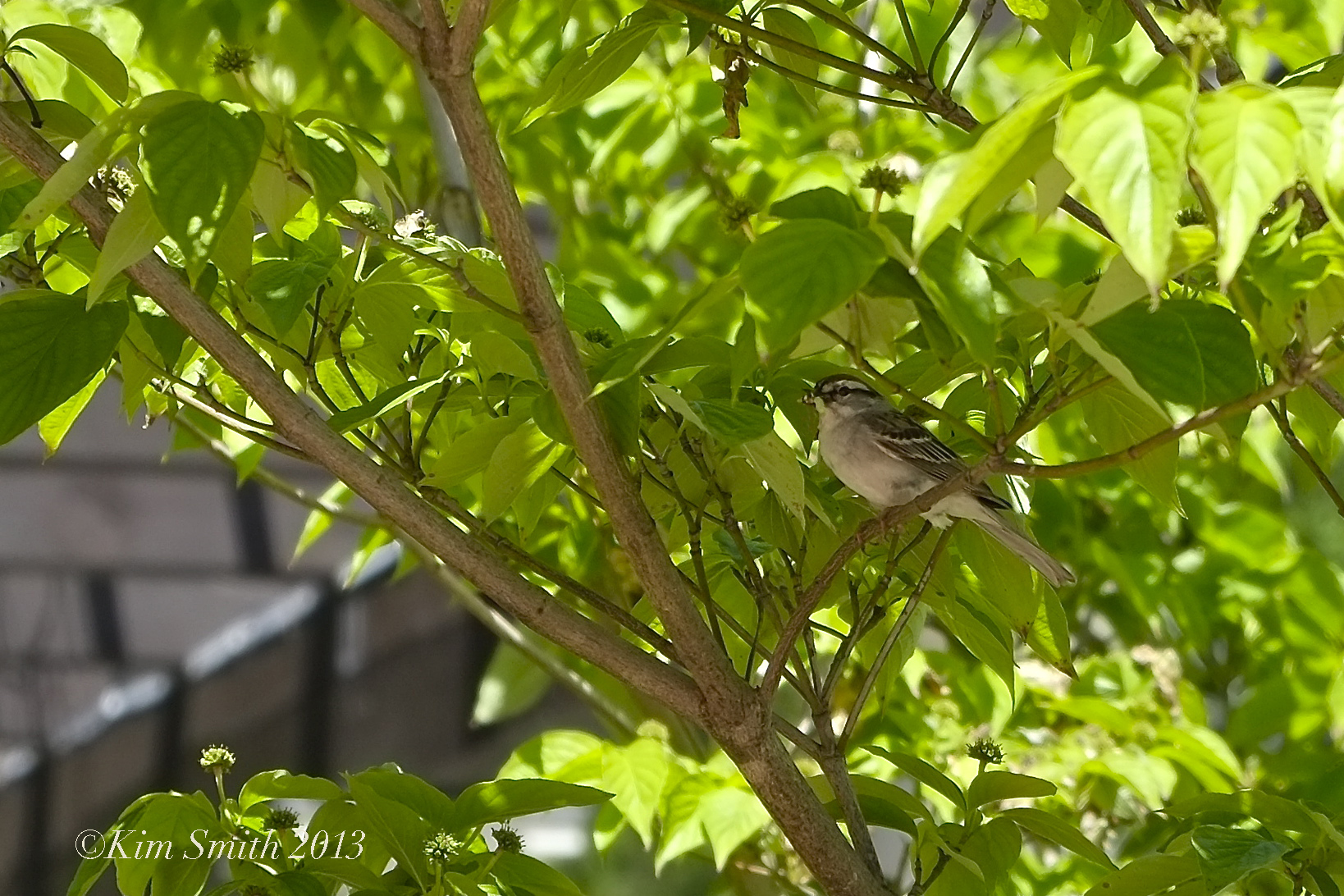 Parent Chipping Sparrow. The mom/pop waited anxiously, with a fat green caterpillar dangling from its mouth, for me to stop photographing. As soon as I moved away, it flew to the nest to deposit the worm into the hungry baby’s wide-open mouth. The entire time I was there delivering plants Sunday afternoon, the baby never closed its mouth!
The song of the Chipping Sparrow is a lovely trill and you can hear it well on this video. They also make a piercing flight call, a characteristic sound of the evening sky during their annual spring and fall migration.
Spread The GMG Love By Sharing With These Buttons:

Beauty in Our Midst
Habitat Gardening
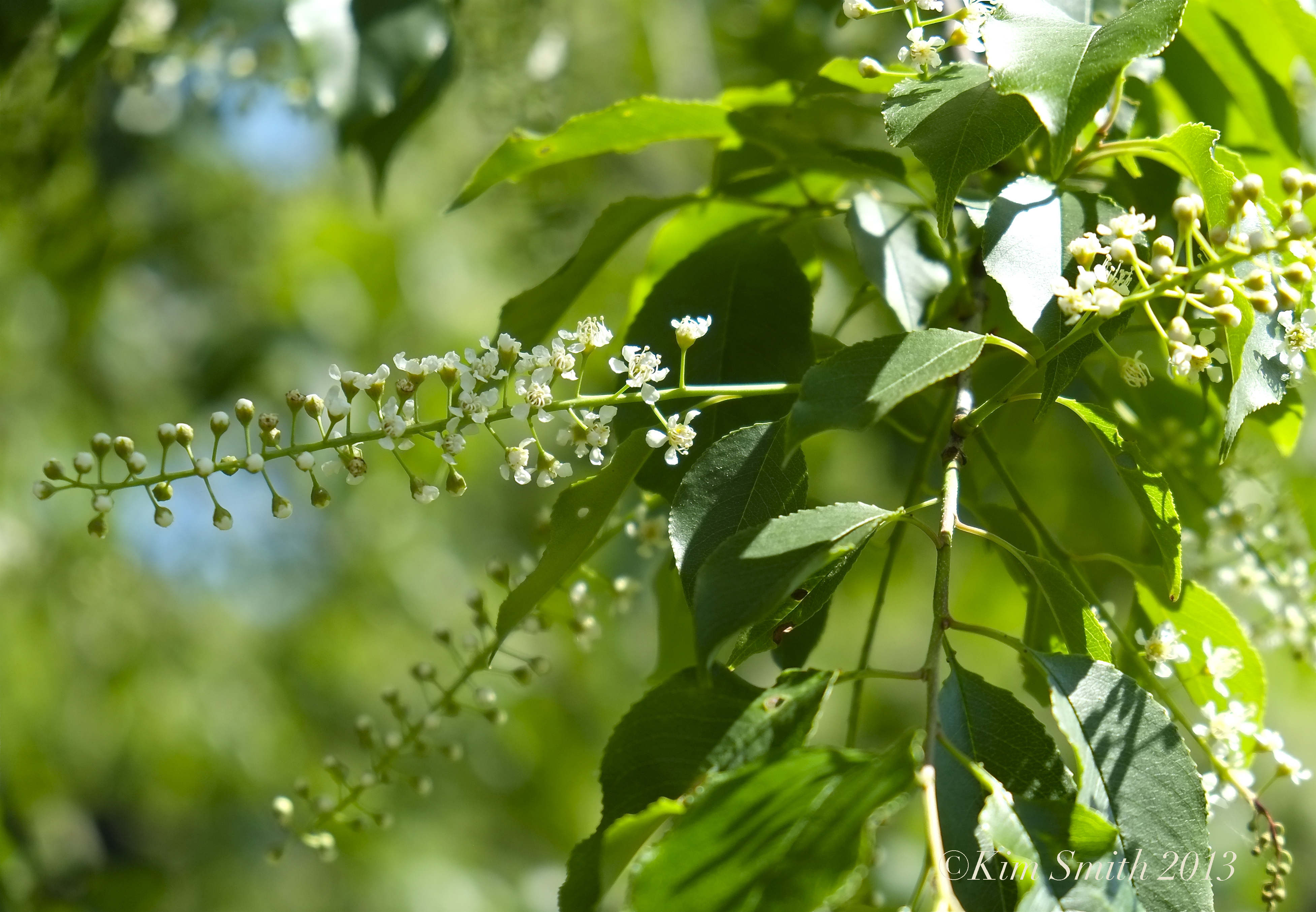
Sunday morning I was planting my friend Janet’s butterfly garden over at Beach Road. She has the most beautiful native cherry tree (Prunus) growing alongside her home. The tree was planted by her parents and has been beautifully maintained over the years. Black Cherry and Chokecherry are often thought of as weed trees however, when they are well-cared for, they will reward you with lovely boughs covered in racemes of tiny white five-petaled flowers. Cherries are a caterpillar food plant for the Eastern Tiger Swallowtail and while at Janet’s, we saw several Eastern Tiger Swallowtails investigating the foliage and racemes. The fruits, too, of the cherry are much loved by the songbirds.
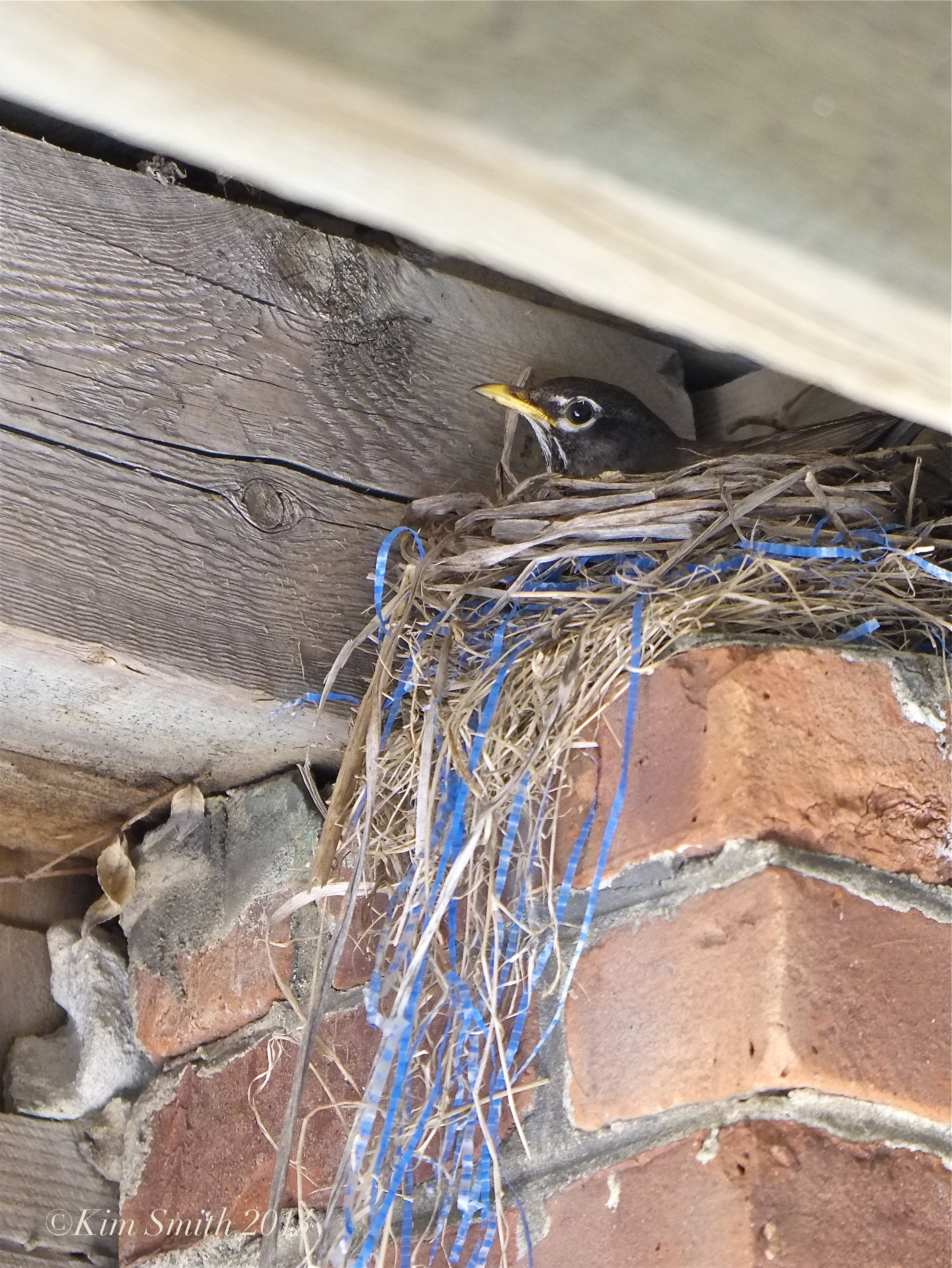
Yesterday was a great day for butterfly sightings and Robins! Under the eaves of Janet’s porch is an American Robin nest. Pa and Ma Robin flew to and from the nest, scolding loudly each time I walked past as they were none to happy to see me.
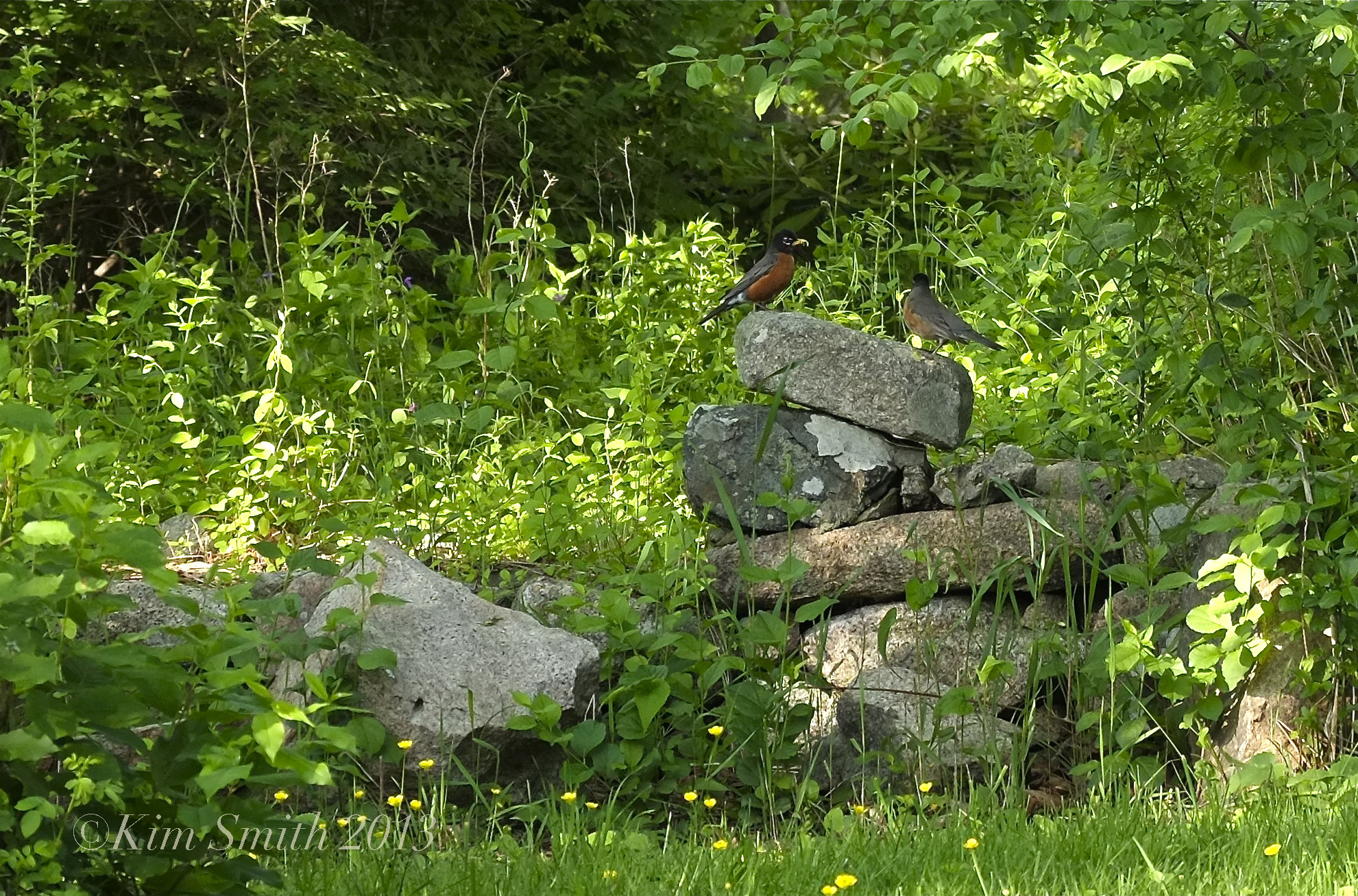
Ma and Pa Robin conferring over my extremely annoying presence
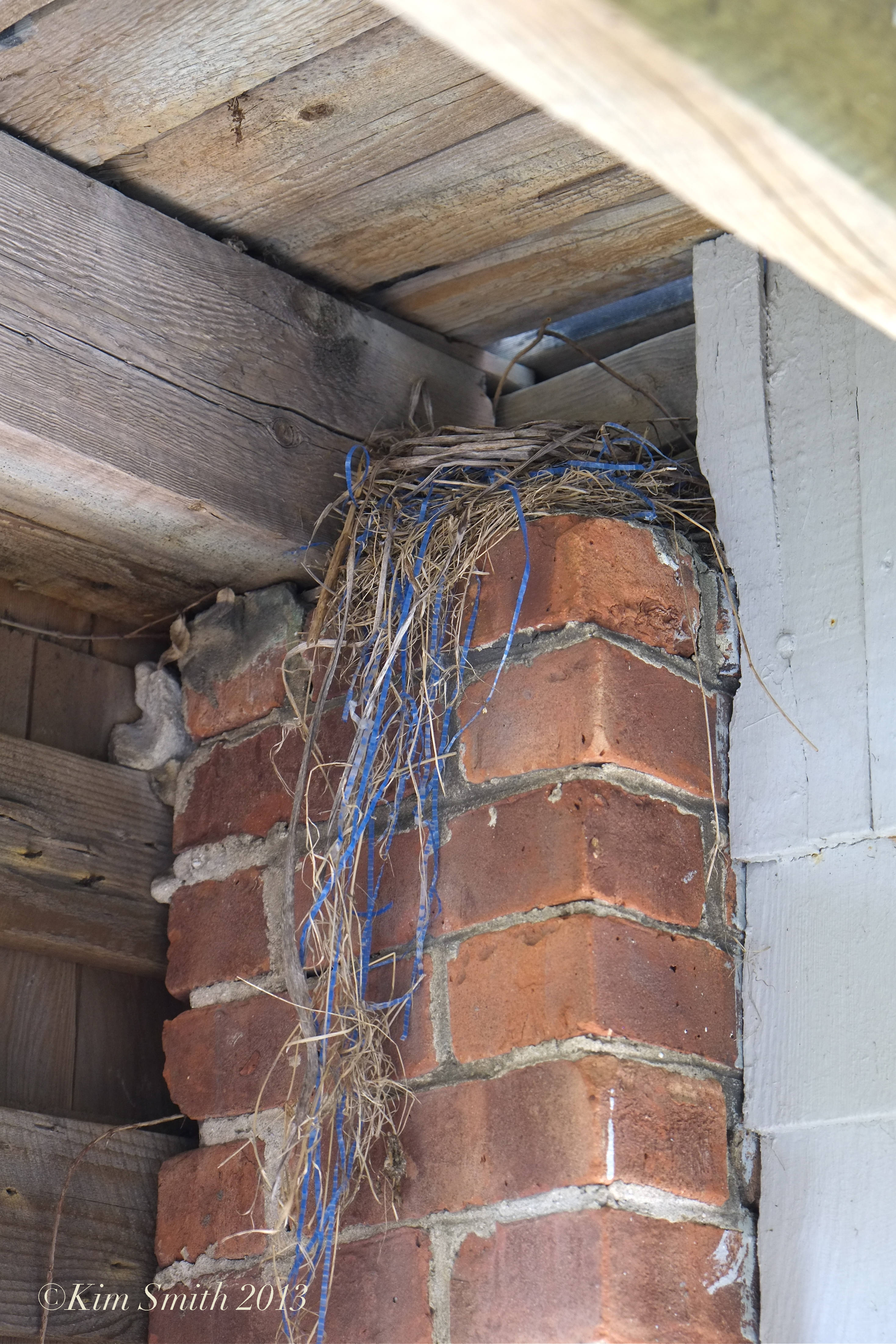
What a sloppy nest by Robin standards! ~ I actually think it is interesting with the blue streamers
More about the American Robin on GMG
Spread The GMG Love By Sharing With These Buttons:

Incredible Wedding at Willowdale Estate
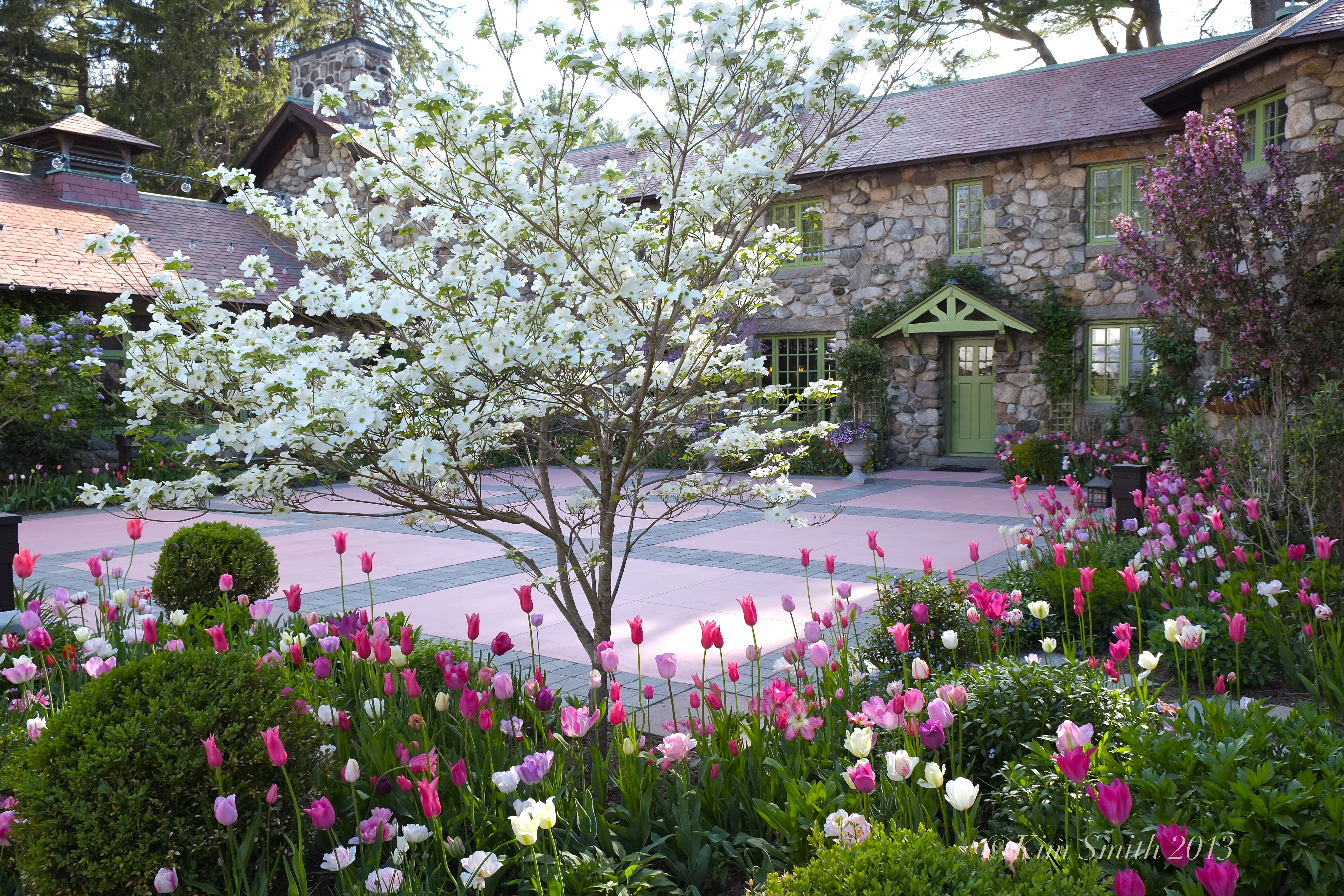
I have shared many photos and stories about the garden and events that take place at Willowdale Estate. Not only because I love working with everyone there, but also because several people who live in Gloucester work at Willowdale (Michele and Audi) and because everyone in the Willowdale offices reads GMG on a daily basis. The following glowing review was recently published in The Knot and I thought perhaps prospective brides looking for a venue would like to read about one bride’s beautiful experience at Willowdale.
Incredible Wedding!

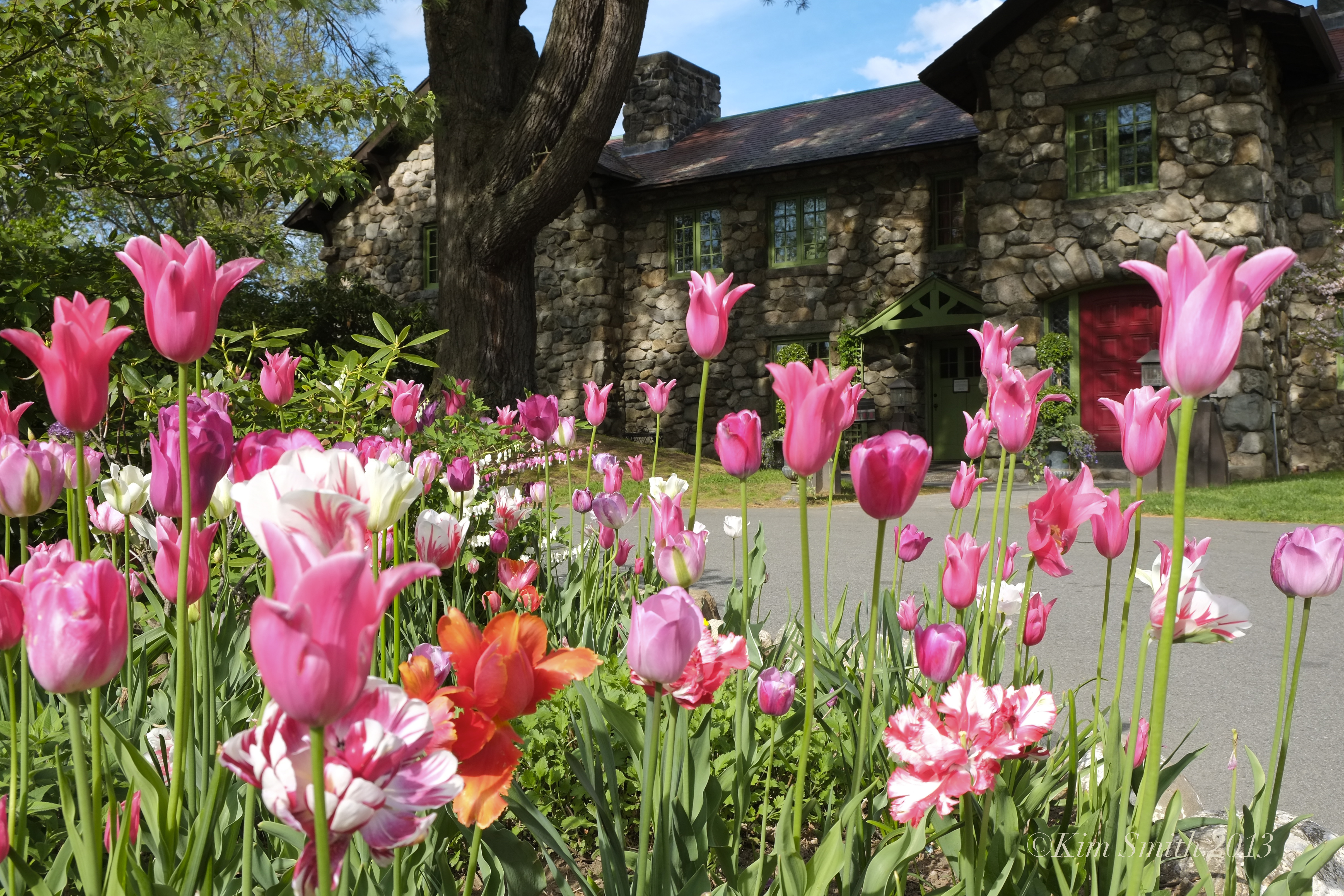 Spring Tulips at Willowdale Estate
Spread The GMG Love By Sharing With These Buttons:

Five Little Foxes
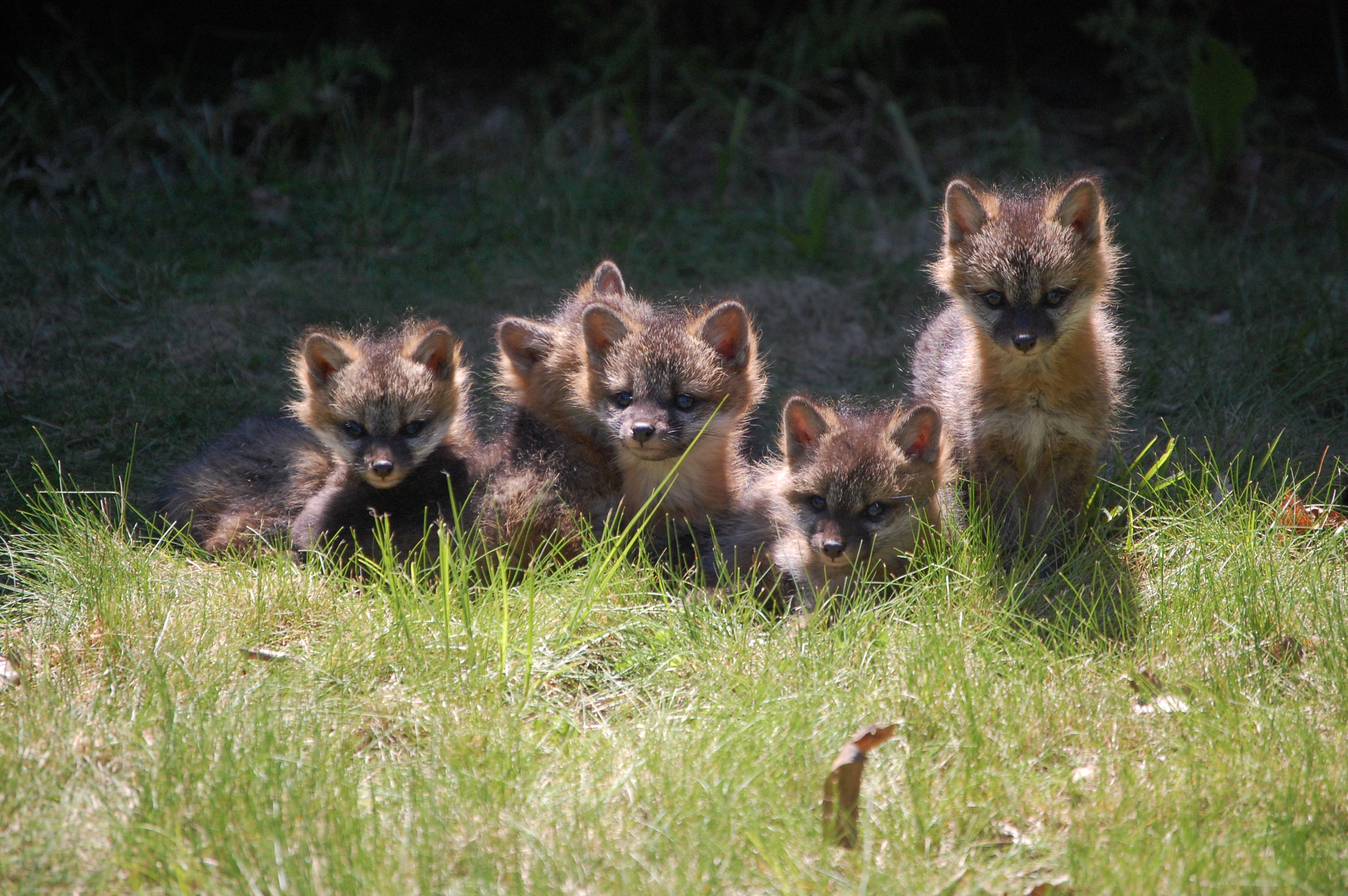
One of my gardening friends in Hiram, Maine, sent along this adorable photo. Sally writes that she and her husband, “thought he saw a kitten, then saw three – neither cats nor dogs – then they realized they were fox kits and not just 3 but 5. The kits sun themselves and roam around our barn and they are so cute. Now they are skittish as their eyesight develops but a couple of days ago we could approach and stand close without moving and watch them play. Fun.” Best of all, Sally says, is that because of the resident fox family, they have had no woodchucks in the barn!
Five Little Foxes photo by Sally Williams
Spread The GMG Love By Sharing With These Buttons:

Swally Note from Morgan Faulds Pike

Gloucester Sculptor and Gardening Friend Morgan Faulds Pike writes ~
Hi Kim,
Just read your post at GMG and thought I’d send this along since it happened today.
I went into the barn to put the broom back after sweeping the porch and I did the daily check of Swally! OMG!
Had to rush the photos because I didn’t know how much time I had. I transferred him via his stick to the monarda. Then he flew away into the juniper hedge, perhaps to be shaded while firming up…
He was a tiny caterpillar last fall. We fed him parsley and you advised us to let him winter in the barn.
Success!
Thanks and Cheers,
Morgan
Morgan Faulds Pike is well-known throughout Gloucester. She is the world famous sculptor who created Gloucester’s beloved Fishermen’s Wives Memorial.
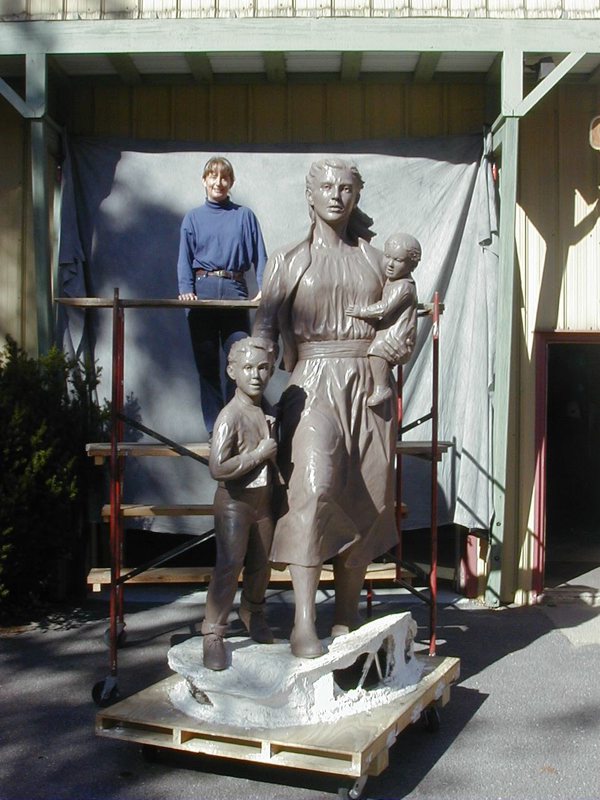 Morgan at Work on the Full-Size Clay for the Gloucester Fishermen’s Wives Memorial
 Leaf-person and Owls by Morgan Faulds Pike
Spread The GMG Love By Sharing With These Buttons:

Newly Emerged Black Swallowtail Butterfly
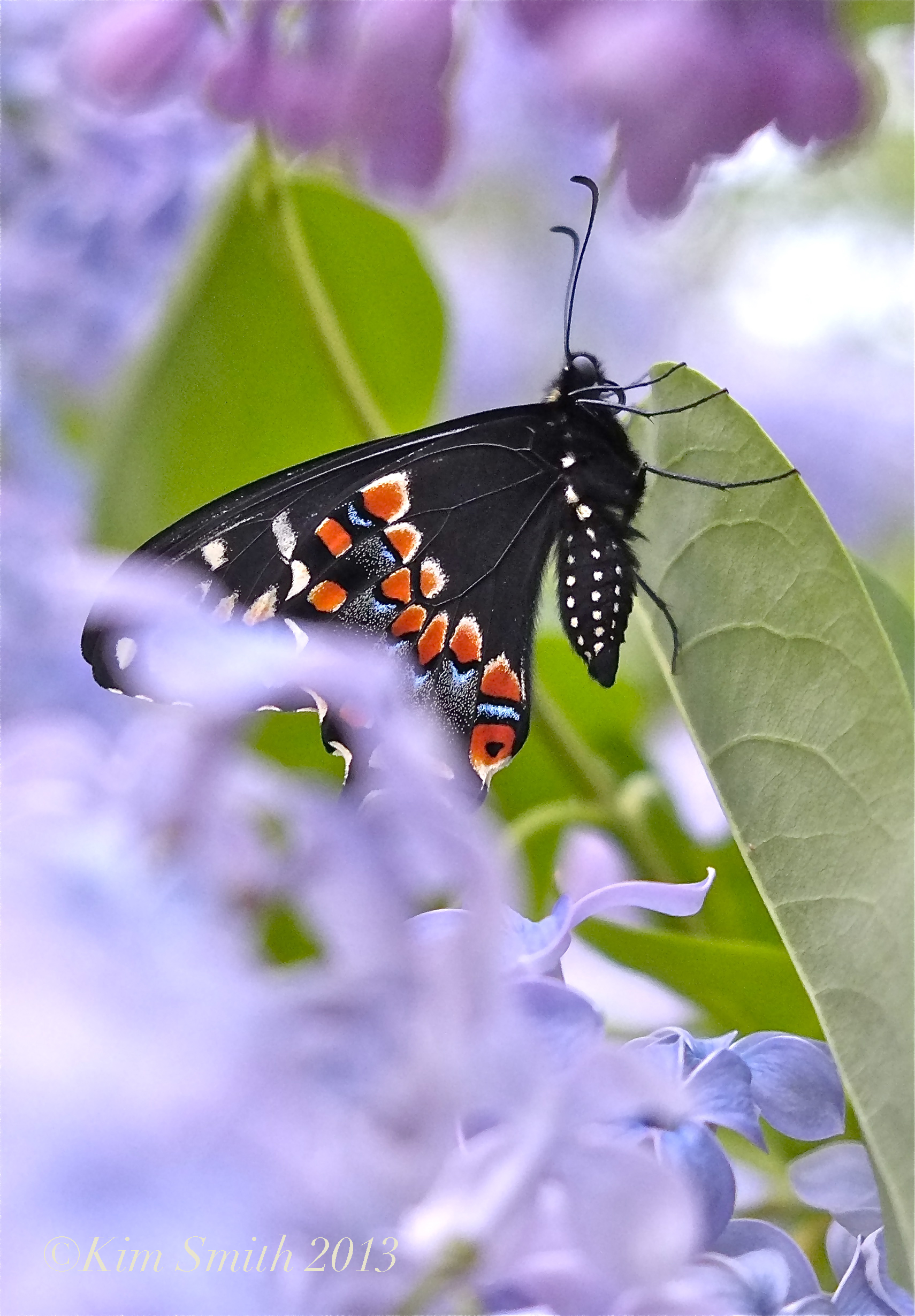 Male Black Swallowtail and Lilac ‘Wedgwood Blue’
This past autumn I wrote about a Black Swallowtail caterpillar that was discovered munching on the parley plants at Wolf Hill Garden Center in Gloucester. The caterpillar had left the parsley plant and wandered around the office at Wolf Hill, where it had pupated, or in other words, turned into a chrysalis, on the razor-thin edge of an envelope. By chance, I met Kate, who works at Wolf Hill, one afternoon at Eastern Point while I was filming Monarchs, where she and her friend were looking at the butterflies through binoculars. She asked if I would be interested in taking care of the chrysalis over the winter. I of course said I would be delighted to do so!
The butterfly chrysalis lived in a terrarium all winter. The terrarium was placed in an unheated entryway. I thought it best for the chrysalis to experience normal winter temperatures rather than live in a heated home where it might be fooled into thinking it was spring. In the early spring we brought the terrarium onto our unheated front porch where it would be exposed to daylight .
A stunning male Black Swallowtail emerged last week. Earlier that very day I had seen a female Black Swallowtail nectaring at azaleas at a farm in a neighboring town. See the original post on Good Morning Gloucester about Kate and the Wolf Hill caterpillar.
Thank you Kate for the Black Swallowtail Chrysalis!
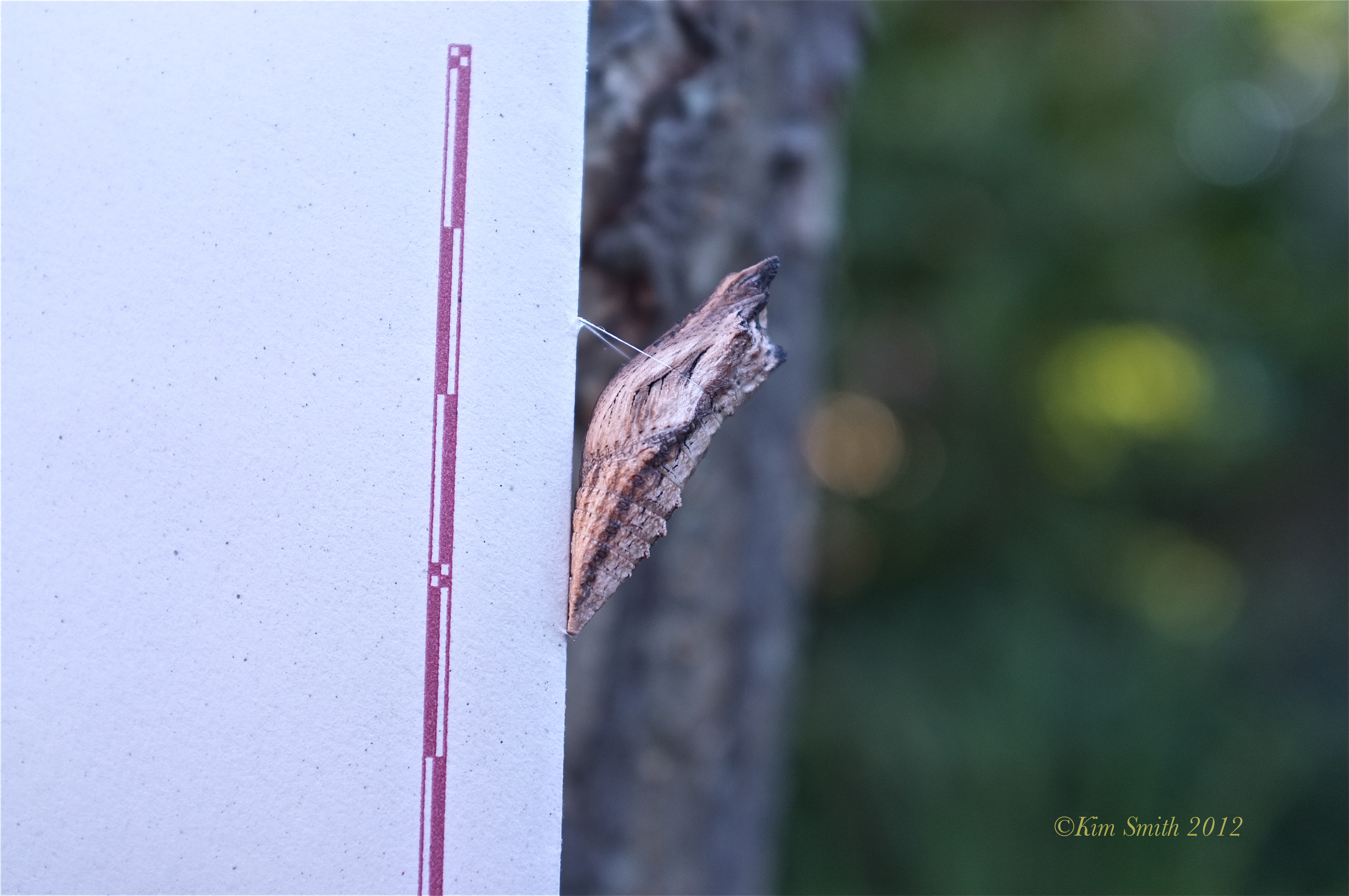 Black Swallowtail Chrysalis ~ Brown Form
Spread The GMG Love By Sharing With These Buttons:

Come Visit My Film’s New Website!
When you have a spare minute, I hope you”ll take a moment to look at the new website for my forthcoming film Life Story of the Black Swallowtail Butterfly. I had lots of fun creating the website and it was great to be able to assemble and house all the information in one place, including photos, upcoming events, the trailer, and a share page. Please let me what you think. THANK YOU!
Life Story of the Black Swallowtail Butterfly
*
To all who have expressed interest in attending the premier of Life Story of the Black Swallowtail Butterfly, the advance tickets are selling rapidly and the event is nearly sold out. Please purchase tickets while still available. Link to Advance Ticket sales at Cape Ann Community Cinema.
Spread The GMG Love By Sharing With These Buttons:

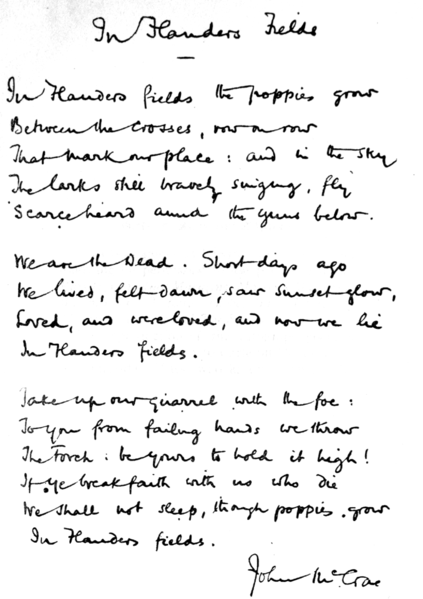
In Flanders Field
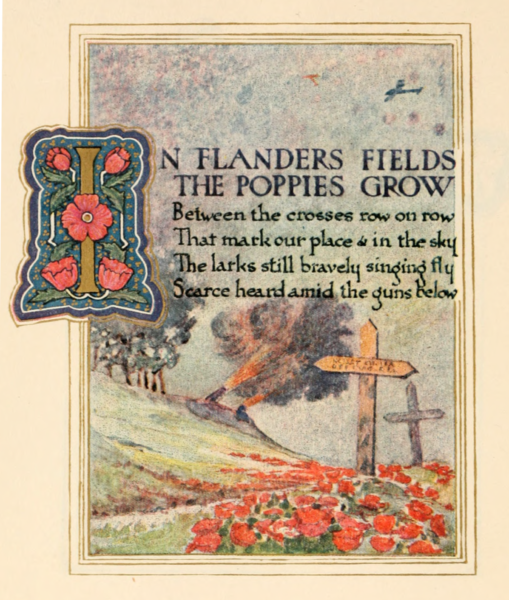
In Flanders fields the poppies grow
Between the crosses, row on row,
That mark our place; and in the sky
The larks, still bravely singing, fly
Scarce heard amid the guns below.
We are the Dead. Short days ago
We lived, felt dawn, saw sunset glow,
Loved and were loved, and now we lie
In Flanders fields.
Take up our quarrel with the foe:
To you from failing hands we throw
The torch; be yours to hold it high.
If ye break faith with us who die
We shall not sleep, though poppies grow
In Flanders fields.
~ Lieutenant Colonel John McCrae, MD (1872-1918), Canadian Army
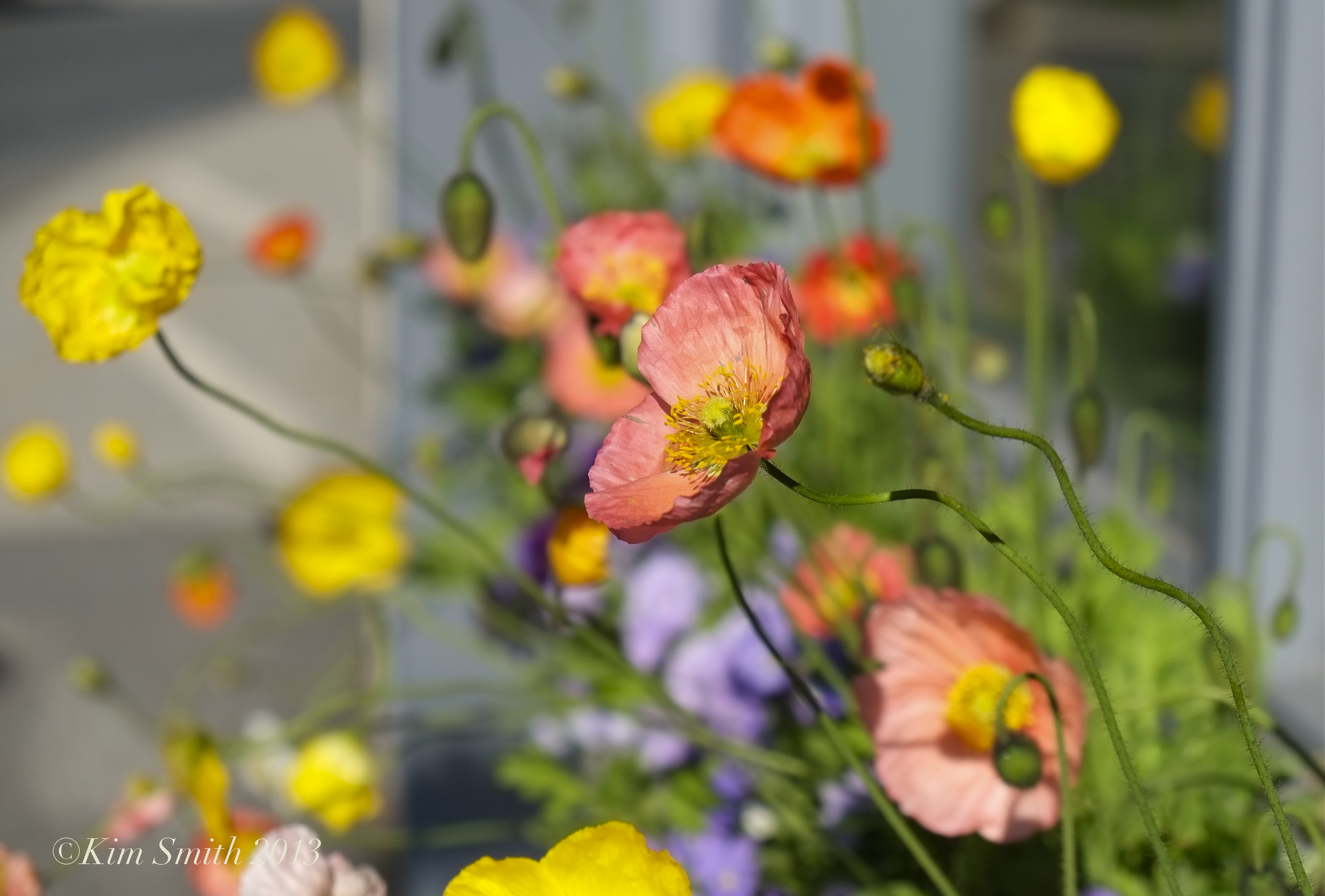 Icelandic Poppies
In Flanders Field is one of the most beautiful war poems ever written. To read about the making of the poem see the following from the Arlington National Cemetery website.
Spread The GMG Love By Sharing With These Buttons:

The Mary Prentiss Inn

Last fall I began a new project, The Mary Prentiss Inn, located on Prentiss Street off of Harvard Square. The old garden had grown up and out and the plants had become too over-sized for the little borders out front of the Inn.
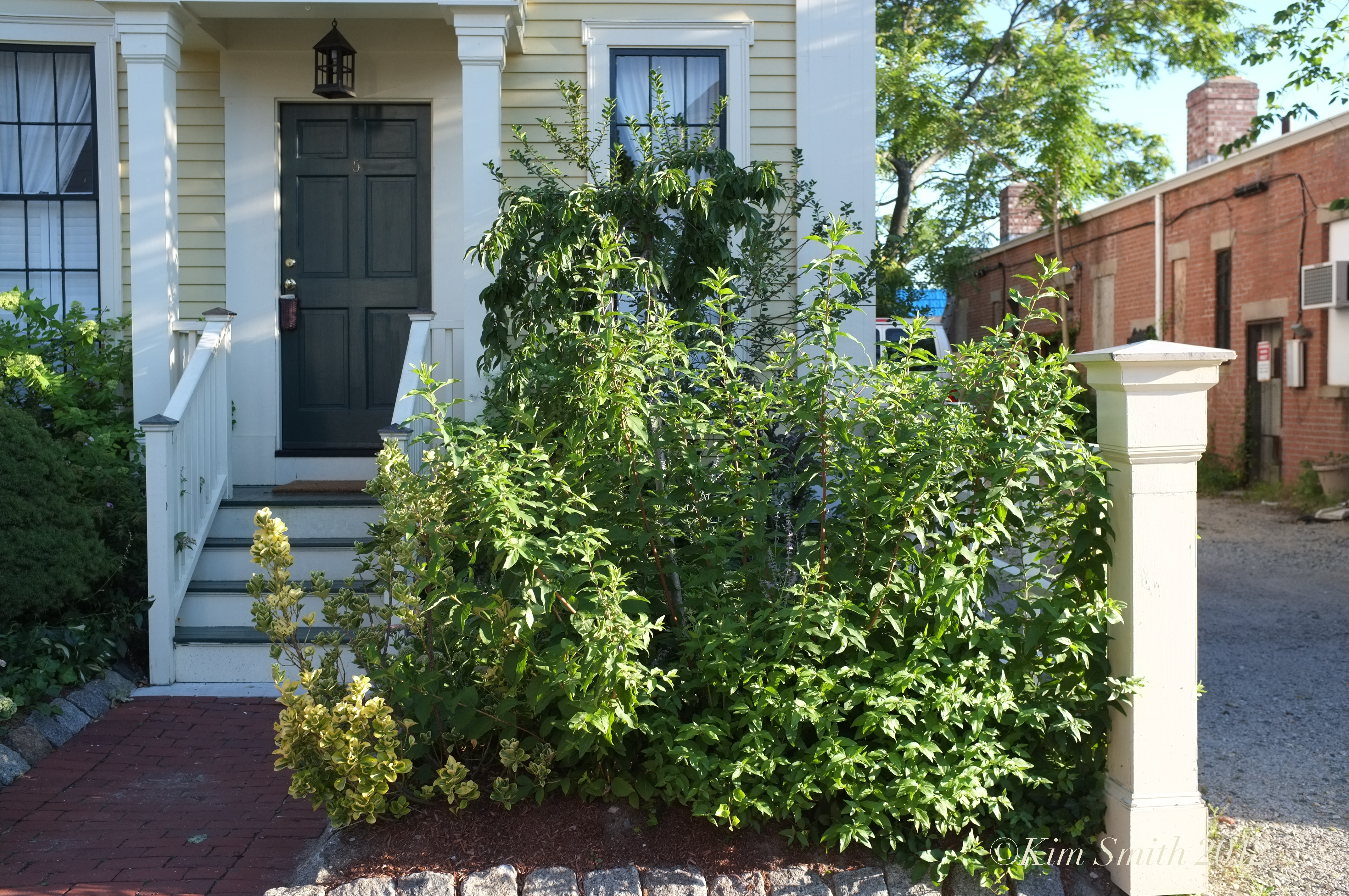 Mary Prentiss Inn ~ Before
Jennifer Fandetti, who runs her family’s Inn, had wanted more color throughout the growing season, as well as flowers to bring indoors to decorate the rooms.
 Jennifer and bulb-planting helper
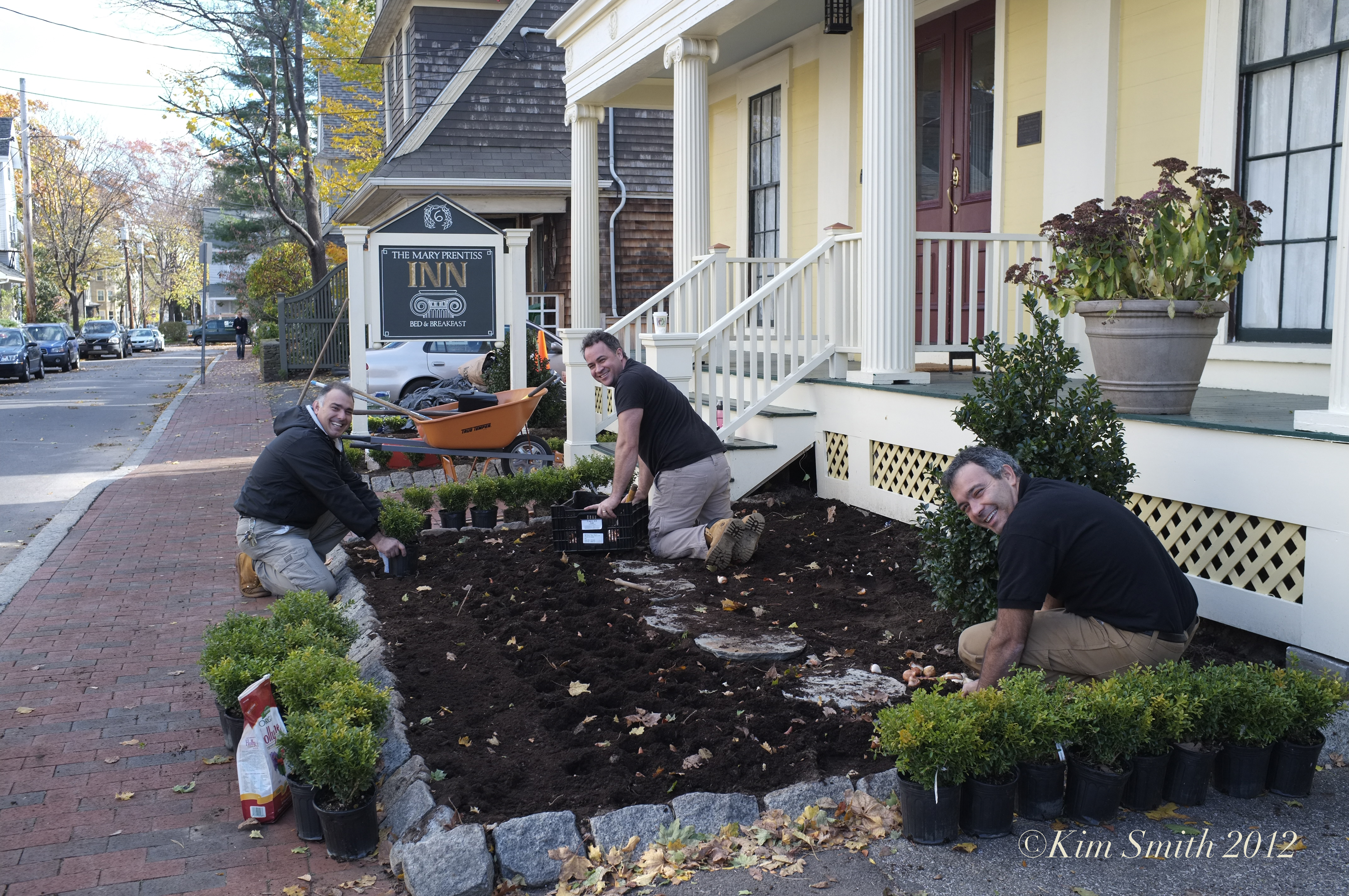 Our awesome fall crew planting the borders
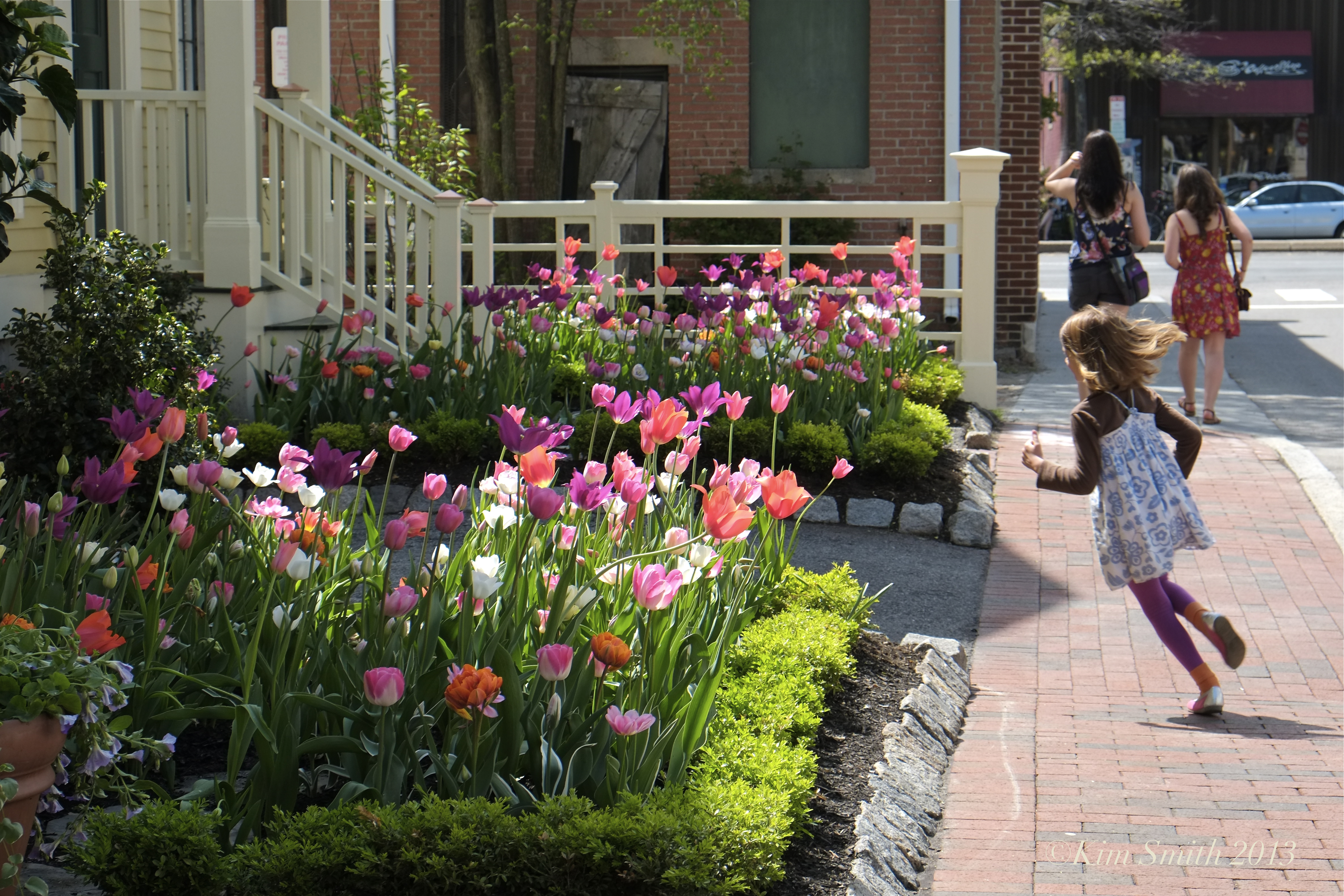
We are all so weary of winter’s drab hues that when spring at long last arrives the tulips and jonquils are a wonderfully welcome sight. I make a special mix of color and variety for each client and later this season we’ll add perennials and annuals. The boxwoods give the borders a neat appearance and the hollies and magnolia provide structure and beauty throughout the year. Coming soon is a little cutting garden along the side of the building. For now, everyone, including guests and neighbors, are enjoying the new look at the Inn!

Harvard and MIT are just around the corner from the Mary Prentiss, and with all the graduations and events, if you need a wonderful place to stay, or recommend to a friend, The Mary Prentiss Inn is an absolutely perfect and delightful inn in the heart of Cambridge. The staff is gracious and helpful, the building has been beautifully renovated and restored (and is meticulously maintained) and all the rooms are charming and beautifully appointed, with decor by Charlotte’s Forsythe. Amenities include high speed internet service (wired and WiFi), cooked to order breakfasts, and 100 percent cotton bed linens. Every afternoon tea is served with super delicious homemade cookies and other sweet treats. Around back is a stunning secret garden and sunny courtyard used for breakfast, afternoon tea, and relaxing.
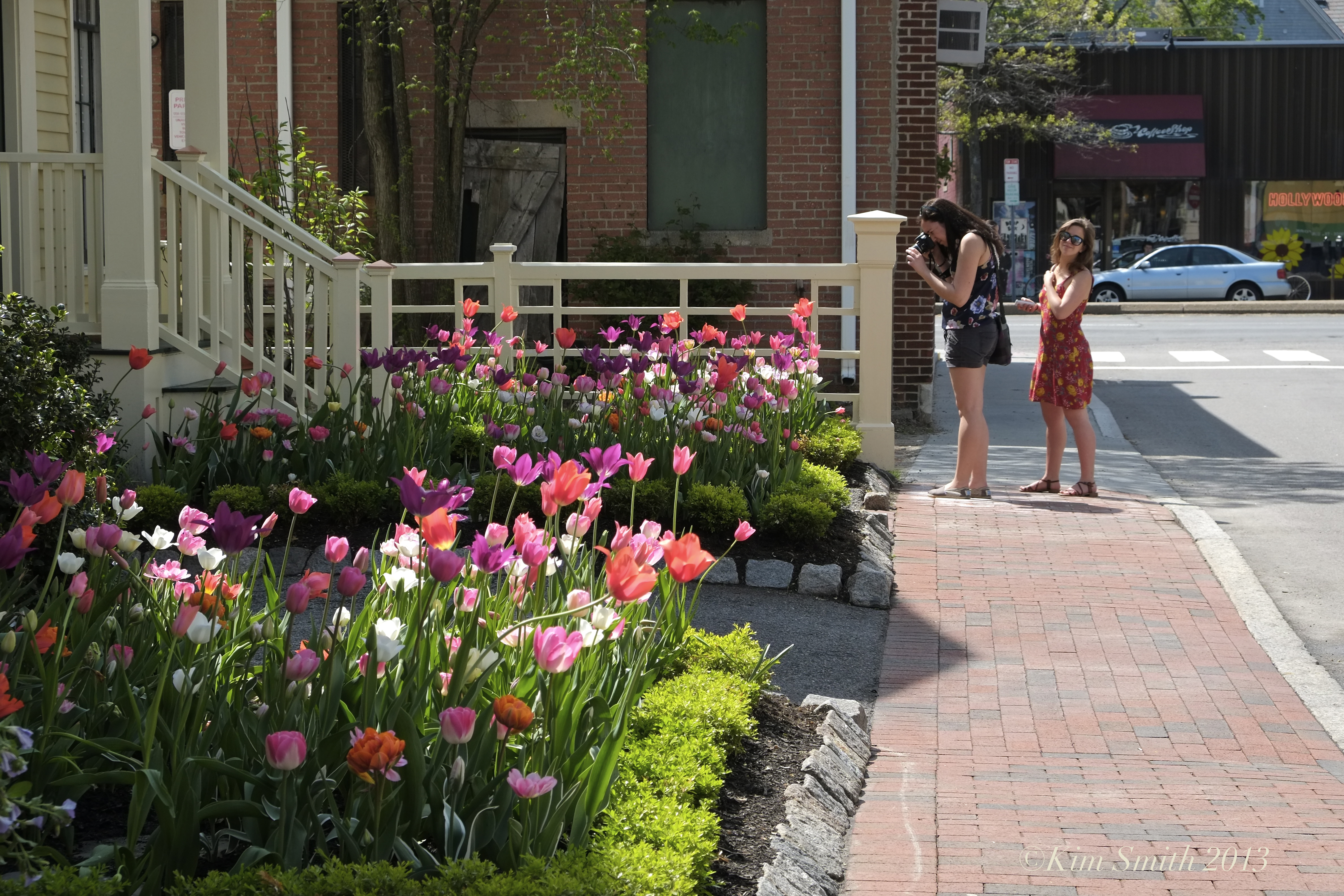
I watched as these two women were were walking down Mass Ave. They looked down Prentiss Street, and continued to walk by, but on second thought turned around and came back to photograph the flowers!
Spread The GMG Love By Sharing With These Buttons:

Many Thanks to the Positively Most Awesome Community Ever!
The Cape Ann Monarch Milkweed Project was positively a resounding success. Thank you to everyone who ordered and picked up your milkweed plants. Thank you to Joey who turned my small seed of an idea into a fabulous community-wide project and who also very kindly offered Captain Joe and Sons for mug up and pick up. Thank you to Felicia for taking valuable time from writing the world’s-greatest-cookbook-ever and spending the entire morning making and serving coffee and Sicilian gigilani cookies (I know that is totally misspelled) and for helping with the plants and for just being a great friend. Thank you to all my GMG fellow contributors and all the FOBs for coming, and for everyone’s enthusiasm in the project.
And, most importantly, the Monarchs thank you!!!
We have exactly fourteen plants remaining and all fourteen are spoken for. After all the plants are picked up and the money totaled, we will have enough to make a donation to the Rocky Neck Cultural Center. So thank you again. I am very inspired by the success of the program and plan to later in the summer have a Cape Ann Monarch Aster and Goldenrod Program.
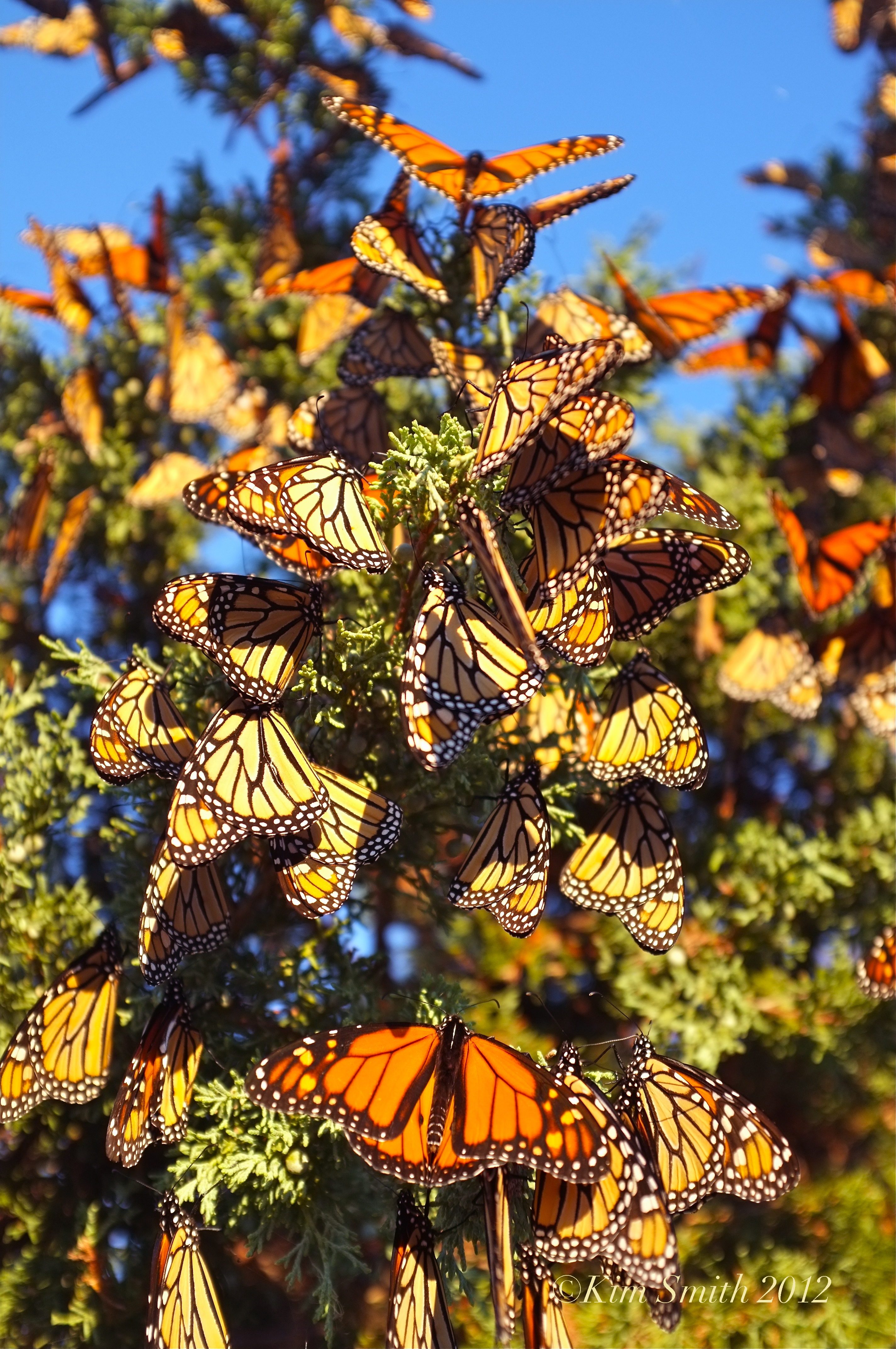
Monarch Butterflies at Eastern Point
How to Plant and Care for Your Milkweed Plants
Common Milkweed (Asclepias syriaca) has a taproot. Plants with taproots do not like to be disturbed once established so it is best to plant your Common Milkweed seedlings as soon as possible. Common Milkweed is not too fussy about soil and is the milkweed we see growing in fields, roadsides, dunes, and meadows. It can reach up to six-feet in height, but more commonly grows two- to four-feet. Common Milkweed spreads by underground shoots and by seed dispersal.
The Marsh Milkweed (Asclepias incarnata) are well-rooted year-old plants and can be planted in the garden now, or within the next month or so. Marsh Milkweed grows best in good garden soil and/or moist areas. Marsh Milkweed is clump forming and does not spread by underground shoots.
Both milkweed species prefer full sun, but will take some slight shade. Plant with the soil line equal to the soil line in the pot. Place a stake nearby so that you do not step on your little milkweed seedling. Water gently. Check frequently on your milkweed plant until it is fully established. Water when dry, but do not over water. Monitor for milkweed aphids. Milkweed aphids are tiny soft-bodied orange insects. If you do see any aphids, gently wash them away with water; no soap or strong pesticides needed!

Spread The GMG Love By Sharing With These Buttons:

GMG Monarch-Milkweed Mug Up This Saturday!
Update: Milkweed Plants Arrived Thursday and are ready to go! See you Saturday morning!!!
Hooray–our milkweed plants shipped from Missouri Monday and should arrive to Gloucester by Thursday!!!
Plants will be available for pick up at Captain Joe and Sons, 95 East Main Street, Saturday morning at 9:00am and we will be there all morning until noon. Felicia is helping and we will have coffee for everyone. Written instructions will be provided on how to take care of your plants. Looking forward to seeing you all at the first ever Monarch~Milkweed Mug Up!
I did not collect the funds ahead of time. Please everybody, if you ordered plants, be sure to pick-up Saturday morning. I am counting on you!! If the project is successful, we will do this again later in the season, with Seaside Goldenrod and New England Asters, but we can only have another plant sale if everyone honors their commitment. Thank you!!
For more detailed information, see previous posts:
GloucesterCast Podcast 4/25/13 With Guest Kim Smith
Cape Ann Milkweed Project
Cape Ann Milkweed Project ~ Last day to order plants
WOW and WONDEFUL—150 milkweed plants ordered!!! (Actually, 190 plants were ordered!!)
How Exactly is Monsanto’s Roundup Ravaging the Monarch Butterfly Population?
News Release: MONARCH WATCH ANNOUNCES ‘BRING BACK THE MONARCHS’ CAMPAIGN

Monarch Butterfly and Marsh Milkweed
Spread The GMG Love By Sharing With These Buttons:

Preview of Tonight’s Garden Tour
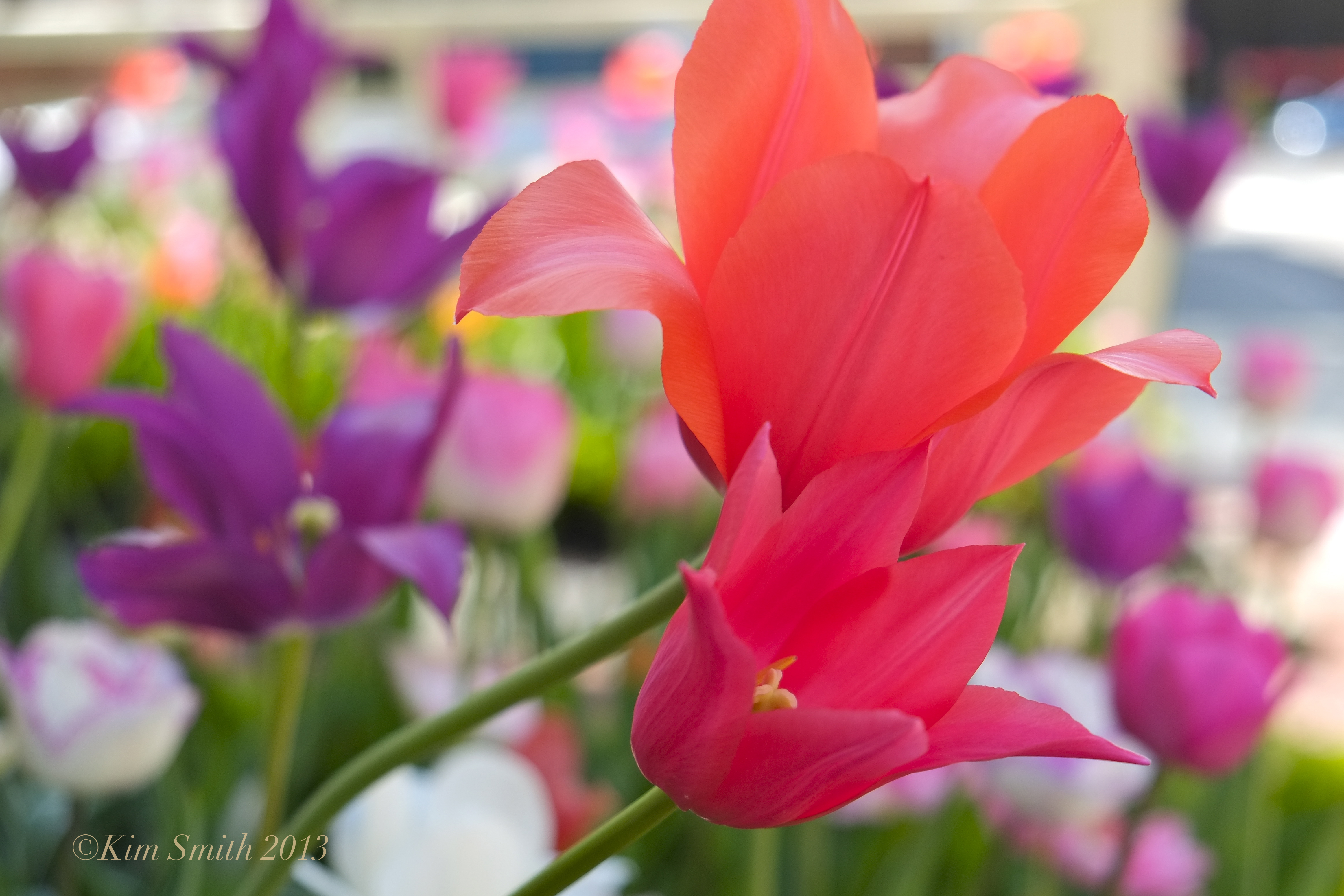
The sultry colors of these tulips would make the most gorgeous cocktail dress, don’t you think?
Spread The GMG Love By Sharing With These Buttons:

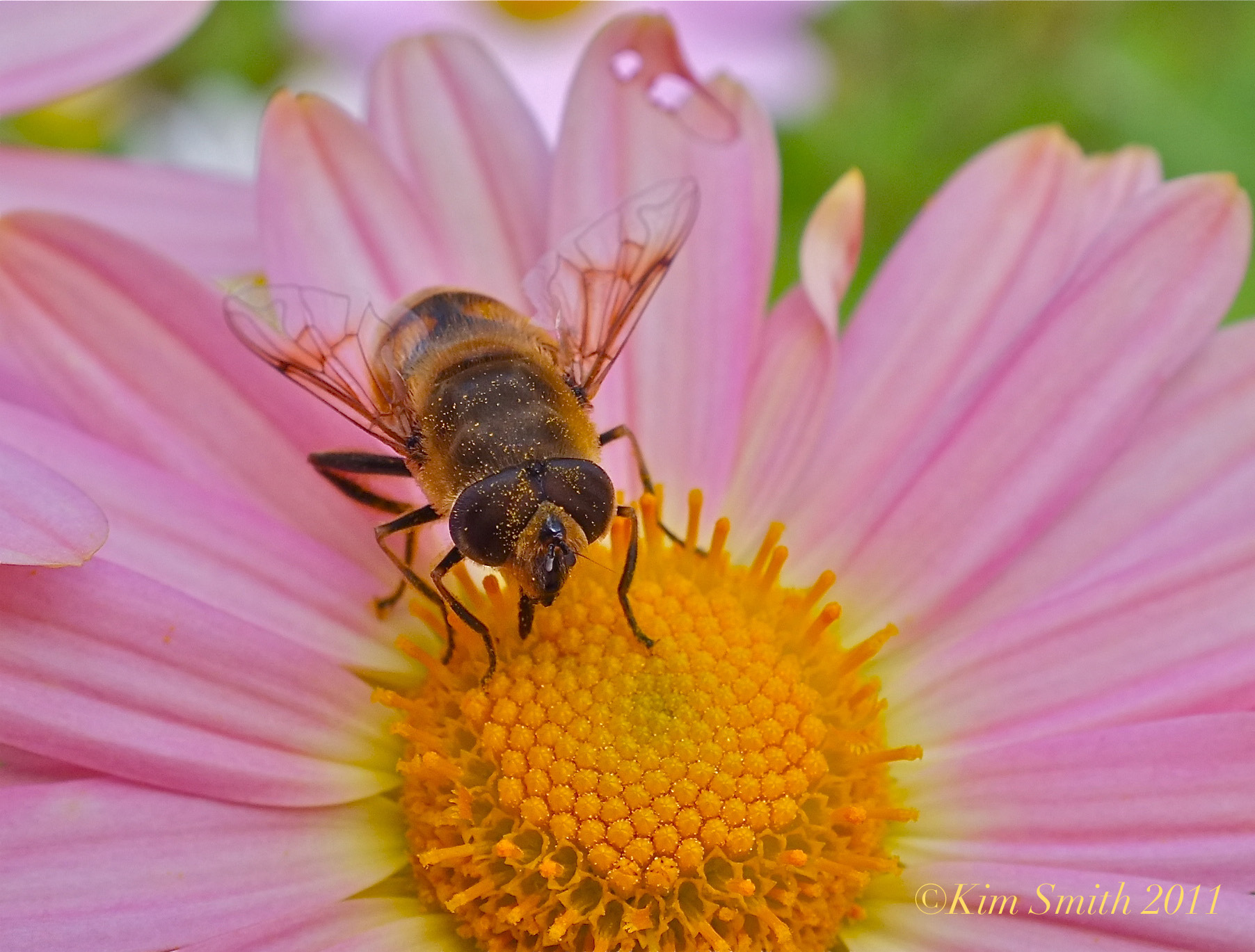
Europe Bans Bee-Harming Pesticides
Europe took a significant step as a majority of EU member states voted for a partial ban of three bee-killer pesticides. This, despite fierce behind-the-scenes lobbying from insecticide firms Syngenta and Bayer. “A series of high-profile scientific studies has linked neonicotinoids to huge losses in the number of queens produced and big increases in “disappeared” bees – those that fail to return from foraging trips. Pesticide manufacturers and UK ministers have argued that the science is inconclusive and that a ban would harm food production, but conservationists say harm stemming from dying pollinators is even greater.” (The Guardian, UK).
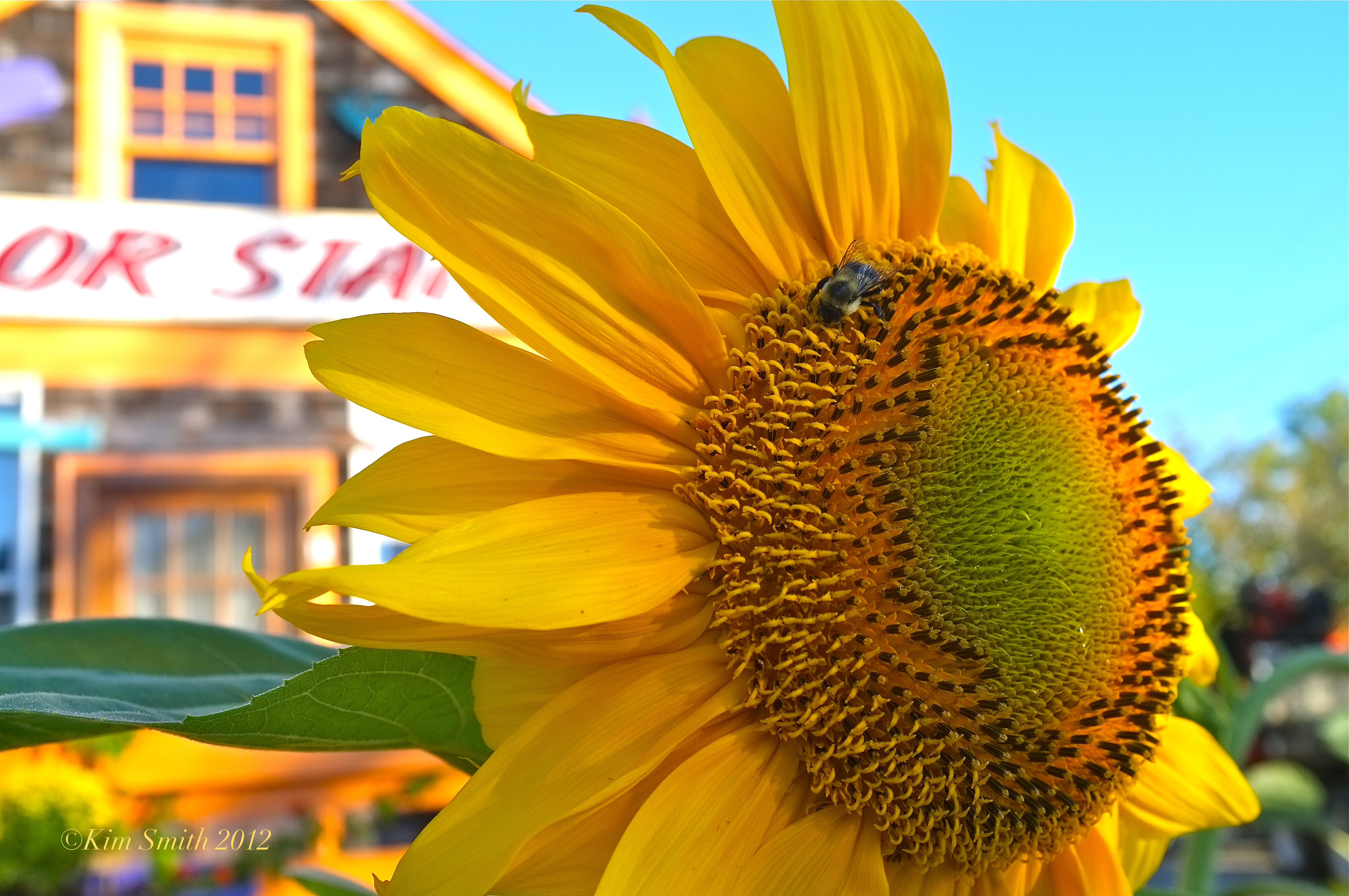
It is a landmark vote and was supported by petitions signed by millions of people. Although it is only a two year ban, the hope is the ban will give the beleaguered bee a break, and allow time for reexamination of data. Under the EU measures, restricions on the following apply: for treating seeds, soil and leaves on flowering crops attractive to bees such as corn, sunflowers and rapeseed (the source of canola oil). The products may still be used on crops like winter wheat for which the danger to bees is deemed to be small. Use by home gardeners will be prohibited.
The three banned insecticides are imidacloprid, thiametoxam, and clothianidin. The neonicotinoid I see commonly listed on pesticides that are readily available to the home gardener is imidacloprid. I urge every home gardener not to use pesticides. I don’t use them, ever, in my own garden, and never in both the private and public gardens that I design and maintain. Several years ago, I reported that Alain Baraton, the head gardener at the Palace of Versailles stopped using pesticides at the palace gardens. Within the year, a natural balance began to take hold in the gardens, including the return of songbirds to the gardens which in turn eat the insects. If the no-pesticide policy is successful at Versailles, which receives millions upon millions of annual visitors, a pestide ban can certainly be implemented for our private homes and public spaces.
A dear friend of mine, Heidi Kost-Gross, is Vice Chair of the Natural Resources Commission for the Town of Wellesley (garden club readers–she is also President of the Federated Garden Club of Massachusetts). Heidi has been instrumental in pesticide reduction throughout Massachusetts. The Wellesley Natural Resources Commission has created an outstanding Pesticide Reduction Resource Guide for Citizens and Municipalities of Massachusetts, which is available for free to distribute anything found in the guide.
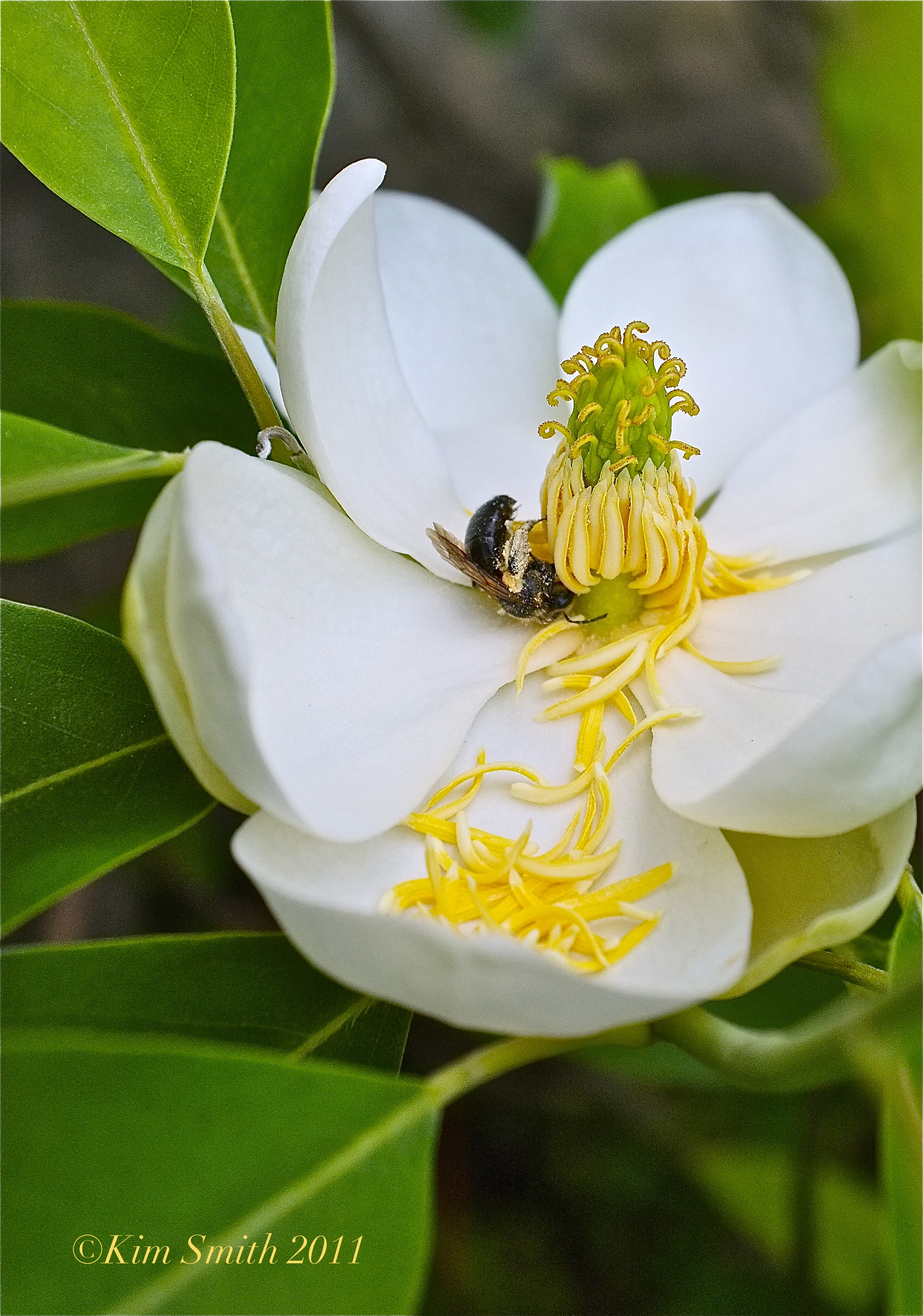
Magnolia viginiana and Eastern Carpenter Bee
Spread The GMG Love By Sharing With These Buttons:

WOW and WONDEFUL—150 milkweed plants ordered!!!
Thank you to everyone participating in our Cape Ann Milkweed Project!
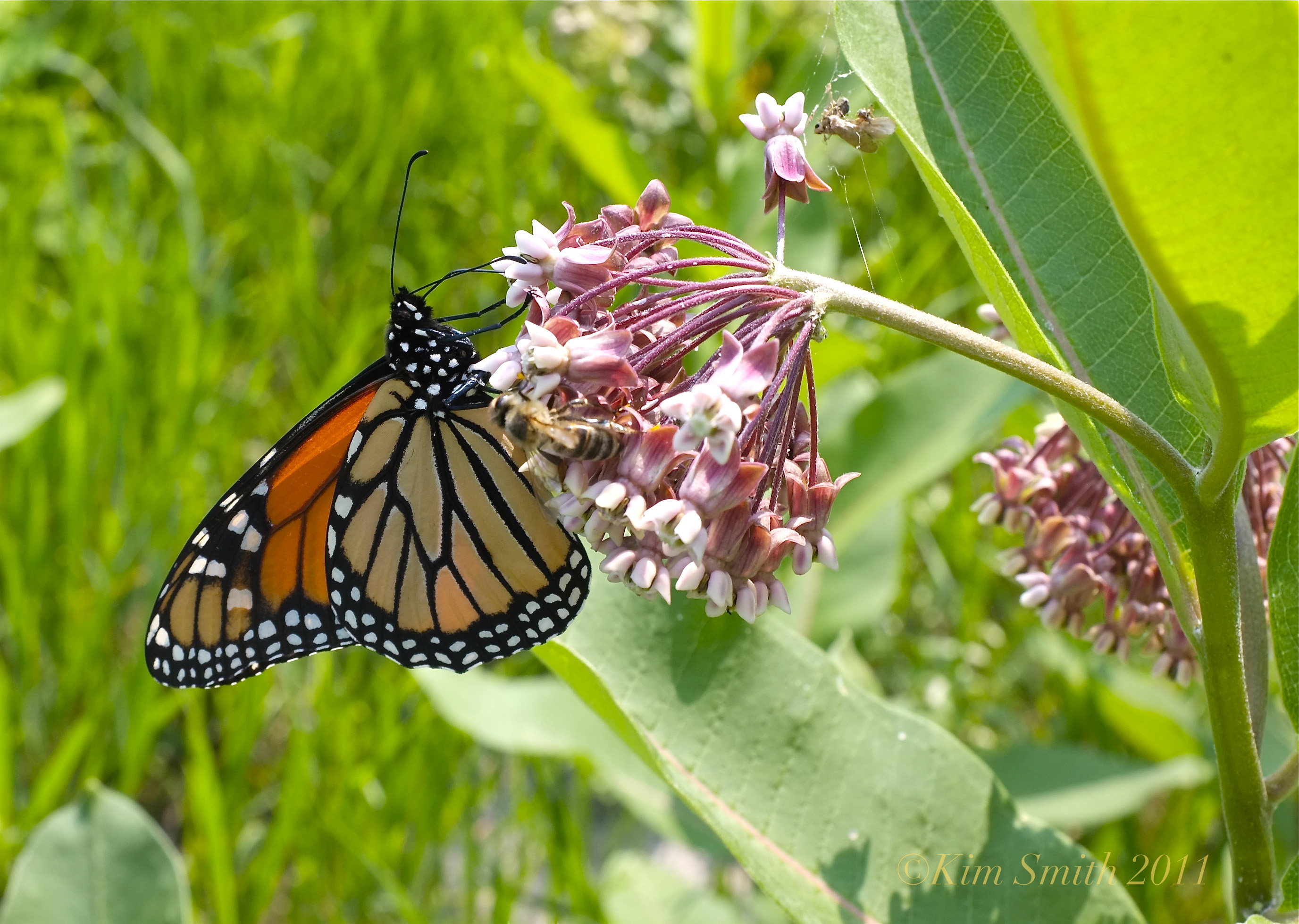
Monarch Butterfly Nectaring at Common Milkweed ~ Good Harbor Beach
Milkweed may not be for everyone’s garden; even if you did not order plants, you are welcome to come on down to the dock Saturday morning, the 18th of May, and learn more about the Monarch-milkweed connection. The plants are being shipped on Monday the 13th and I will keep you updated on their progress.
Spread The GMG Love By Sharing With These Buttons:

Cape Ann Milkweed Project ~ Last day to order plants
Monarch Butterfly on Marsh Milkweed
Order Your Milkweed Plants Today!
In case you missed the details see Sunday’s Post: Cape Ann Milkweed Project
Tonight I am placing the order for the milkweed plants. Please get your orders in.
Thank you to Everyone participating in the Cape Ann Milkweed Project!!!
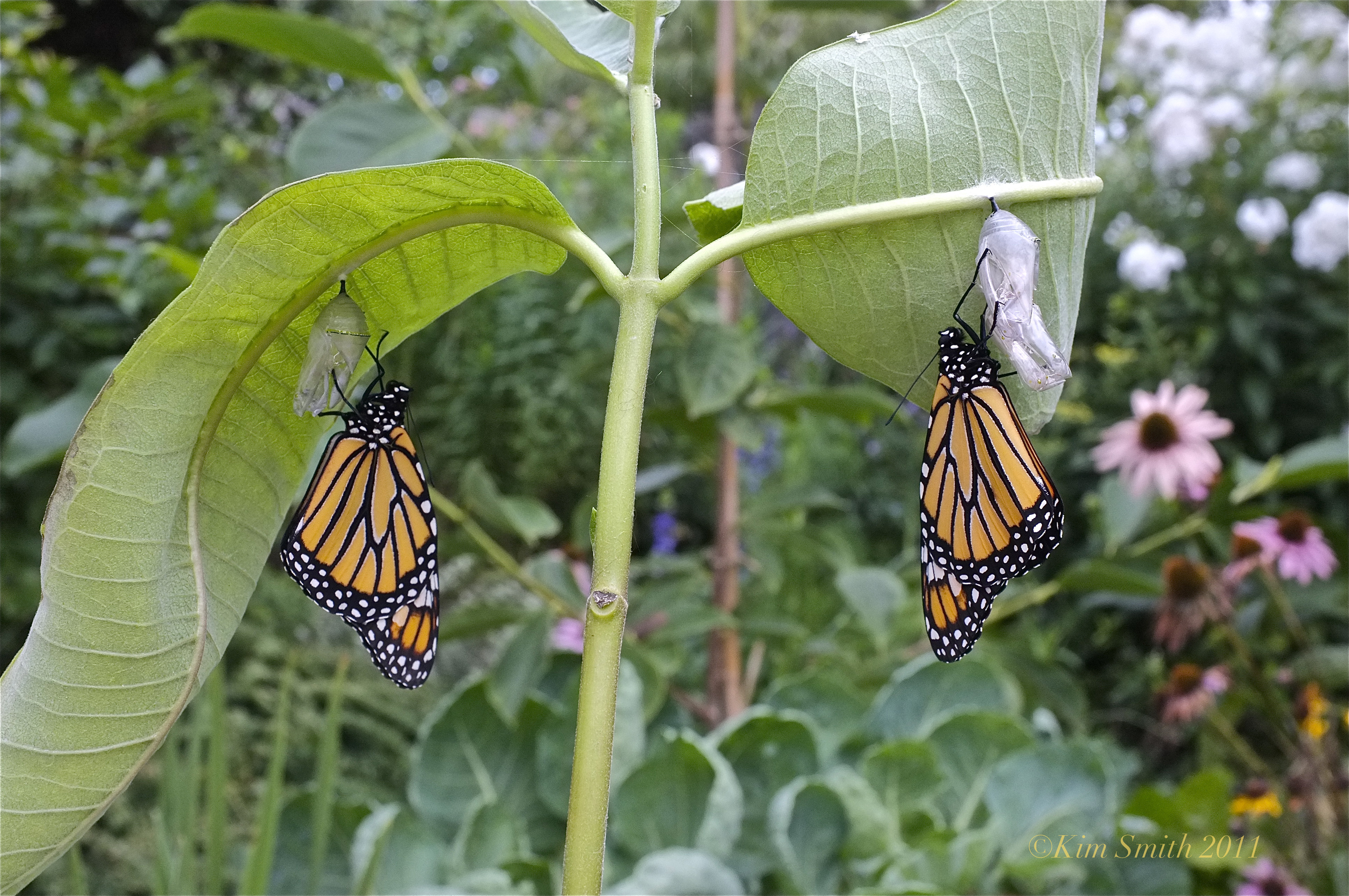
Newly Emerged Monarch Butterflies. I called these two butterflies the” Twins,” because they completed every stage of their life cycle within moments of each other, including pupating and emerging from their chrysalides.

 Good Morning Gloucester