Who Was the Solomon Jacobs of Solomon Jacobs Park? 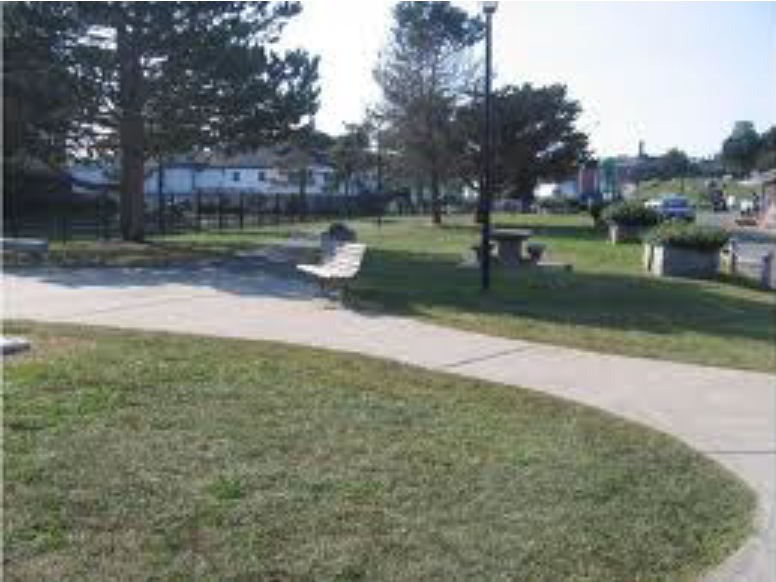
Today he is almost forgotten. Yet the Boston Globe said that Capt. Solomon Jacobs was “known among the English speaking people of two continents as the most daring and intrepid master mariner that sails a fishing craft.” The Gloucester Daily Times said that he was “in Gloucester’s long list of fishing skippers, the most famous … around whom could be woven sea tales so full of dash and dare, of luck, pluck and chance, as to almost pass belief.”
Sol Jacobs, from an old Newfoundland fishing family, came down to Gloucester as a young man. Within three years he was a highline captain and, for the next forty years during the great schooner age, set records for fast trips and big catches, and was known in every port as “king of the mackerel killers.”
He was often controversial – like the time he waved a pistol to protect his seine, and his treaty rights. The dispute escalated into an international incident, but the British foreign secretary finally agreed that Sol was in the right, and overnight the skipper who had been called a disgrace to the Gloucester fleet became its hero.
Capt. Sol commissioned, owned and was master of three of the most remarkable vessels in the Gloucester fleet. He sent schooners around Cape Horn, and joined them to pioneer the halibut fishery of the Northwest Coast. Indirectly he launched Ireland’s mackerel export fishery.
He was first in the Gloucester fleet to adopt wireless telegraphy, first to commission a schooner with an auxiliary engine, first to build a seining steamer. 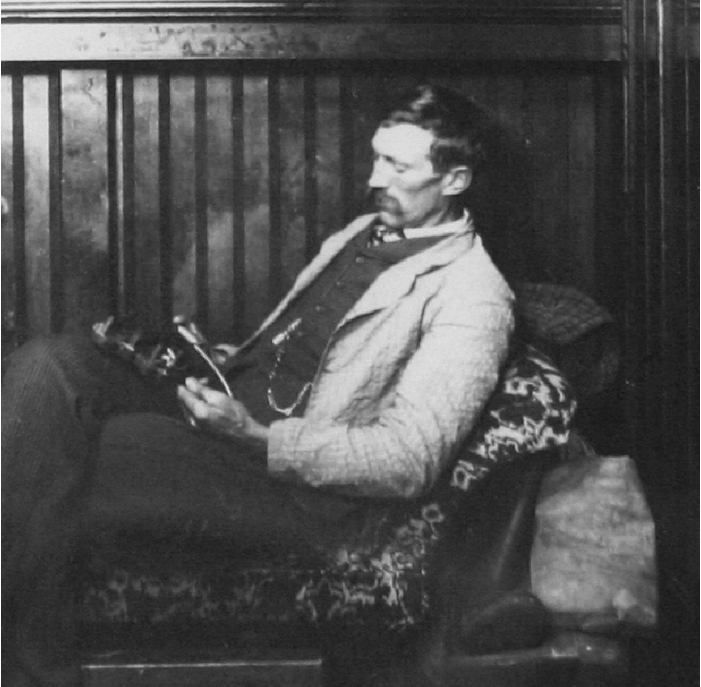
Sol was game for any adventure at sea. In his “clipper schooner, Ethel B. Jacobs,” he commanded a bird-watching expedition to the subarctic where, it was reported, he was “on friendly terms with many of the Indian and Eskimo chiefs.” He took passengers on mackerel trips. A Col. Russell from Minneapolis so enjoyed his cruise on the Ethel B., and the hospitality of the vessel’s master, that he was “eager to repeat” the experience. He brought his wife and son aboard for a trip the following year.
Ashore, Sol was devoted to family, church and community. He was elected a director of the Gloucester National Bank, and as an alternate delegate to a national presidential convention.
In World War I, when schooners manned by his old shipmates were being blown up by German submarines, Capt. Sol volunteered and – at age 70 – was sworn in as an Ensign in the U.S. Navy Coast Patrol. Right to the end he personified the undaunted Gloucester captain.
Thanks to a lady named Mary Favazza, we have the Solomon Jacobs Park on the inner harbor between the Coast Guard station and Maritime Gloucester. Mary had complained to her husband Sal that, while Howard Blackburn had a traffic circle named after him, and Fitz Henry Lane’s house had been preserved, there was no memorial to “the most famous” Gloucester schooner captain. Mary died, but when Sal became Executive Secretary of the Gloucester Fisheries Commission, he campaigned relentlessly until the park in Sol’s name became a reality in 1975.
\
Today we have the park, but Sol Jacobs remains a name known to few. In my new book, “On Opposite Tacks” (Whale’s Jaw Publishing, http://www.whalesjaw.com), I recount the captain’s astonishing career – with the hope that we can turn the corner in giving Capt. Sol the recognition he deserves. So that fewer people will be asking, “Hey, who is this park named after?”
Chet Brigham
chetbrig@yahoo.com
Category: Fishermen Profiles

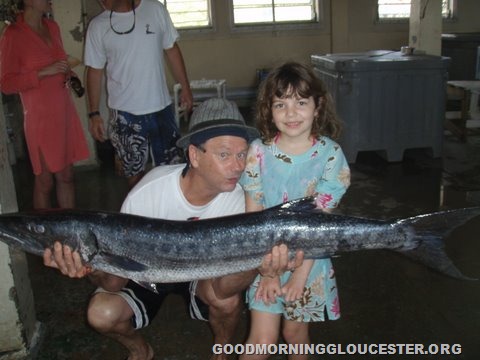
Gut Fish? Tuffy’s Buddy Mya
Tuffy writes-
Pictured here is my buddy Maya . She managed to land this barracuda off the north coast of honduras . Her father and myself helped her land it outside of the reefs of the island of roatan. Maya is Smart, Sweet and afraid of NOTHING !!!
Spread The GMG Love By Sharing With These Buttons:

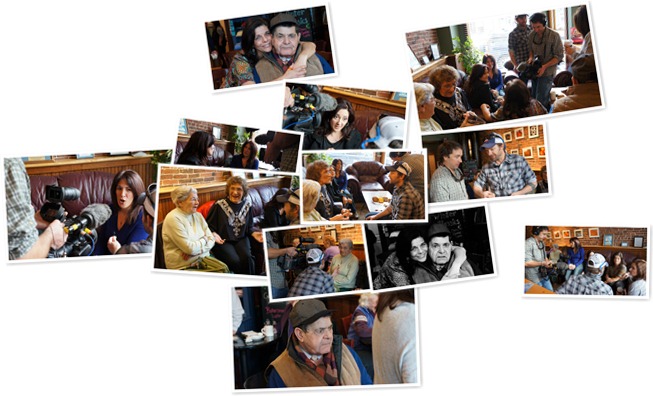
The History Channel Tapes Segment With Wives and Daughters of Gloucester Fishermen At The Lone Gull
On February 1st 2012 the History Channel was at the Lone Gull to tape segments talking about the fishing industry and how the wives and daughters of Gloucester fishermen remember the industry.
Here are some photos I took at the taping-
|
Spread The GMG Love By Sharing With These Buttons:

Video- The Final Trap Hits The Dock From the 2011 Lobstering Season Aboard The Degelyse
Spread The GMG Love By Sharing With These Buttons:

The Final Load
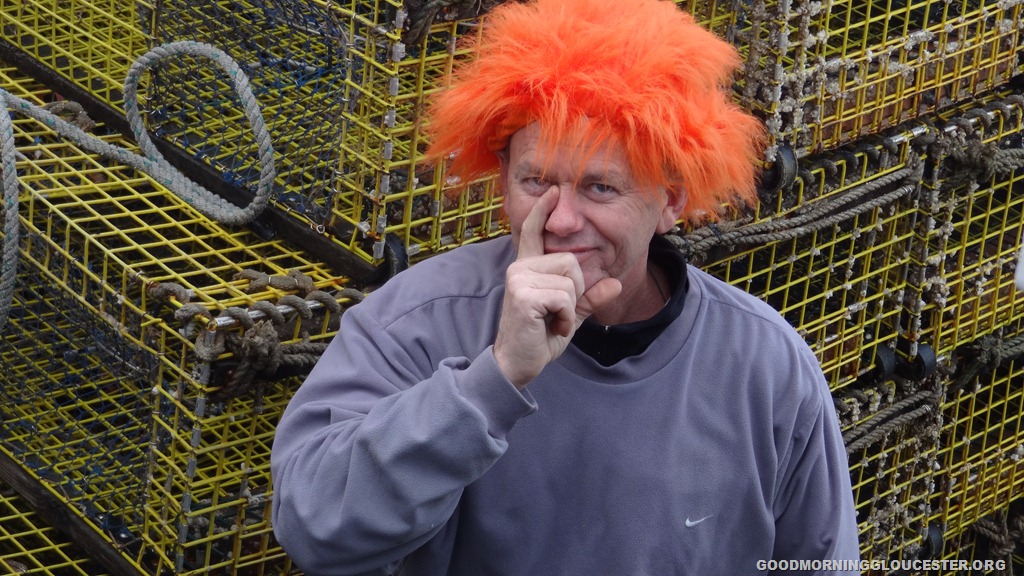
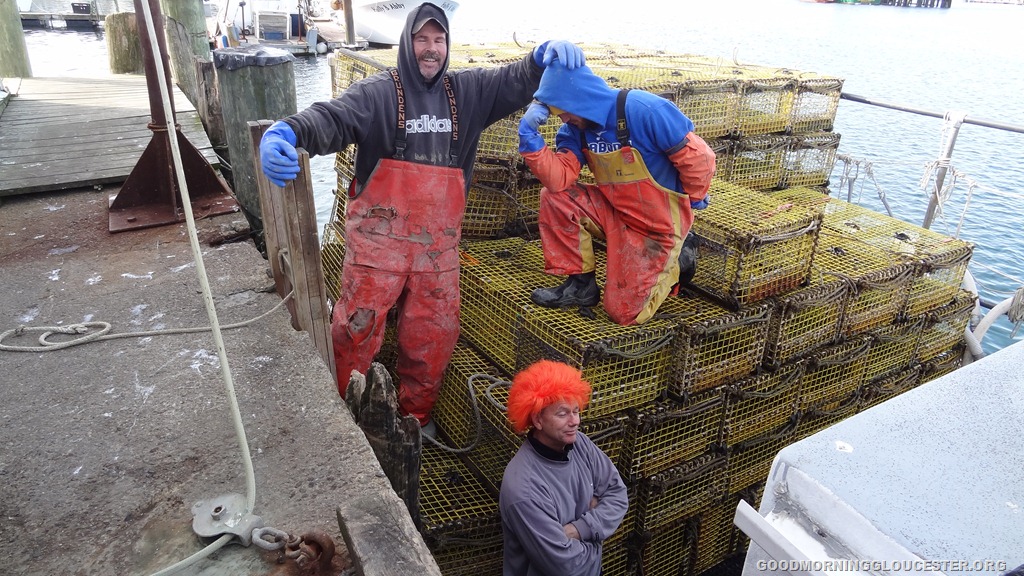
There’s nothing quite like that feeling when the last load of lobster gear comes out of the water for the season.
A long grinding year of hard core lobstering comes to an end and the boys enjoy the fruits of their labor.
It was that day today for the crew of the Degelyse.
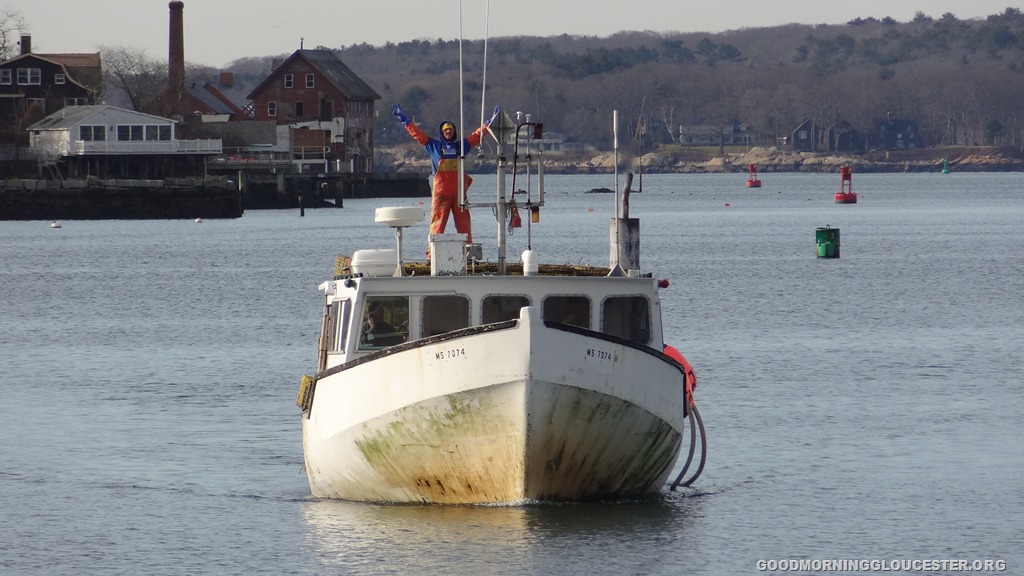
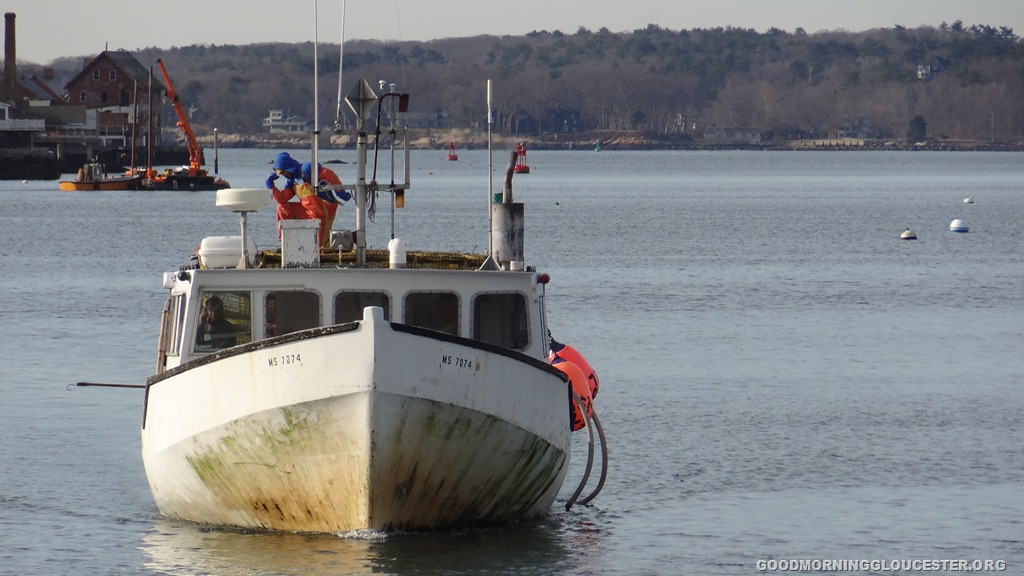
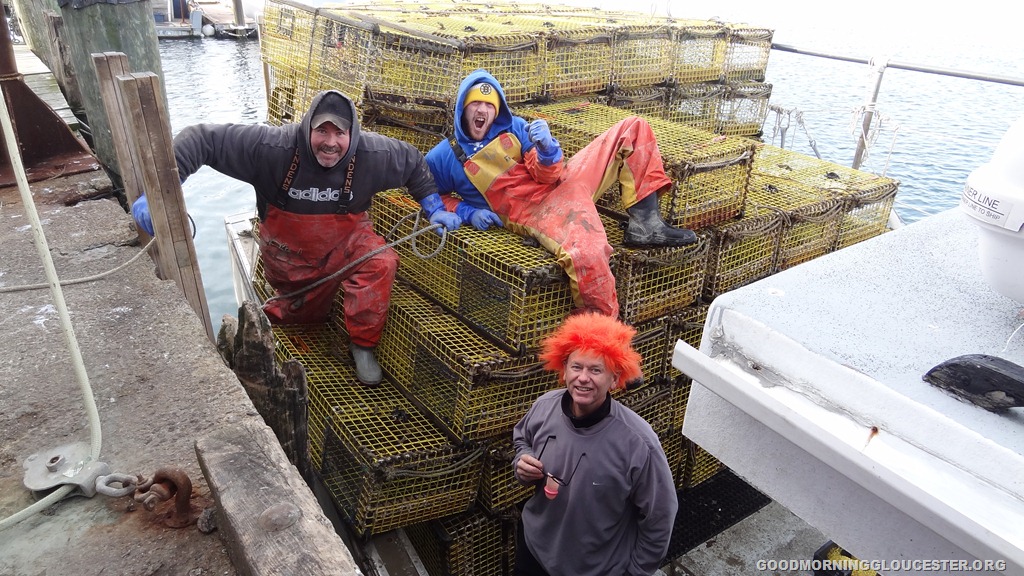
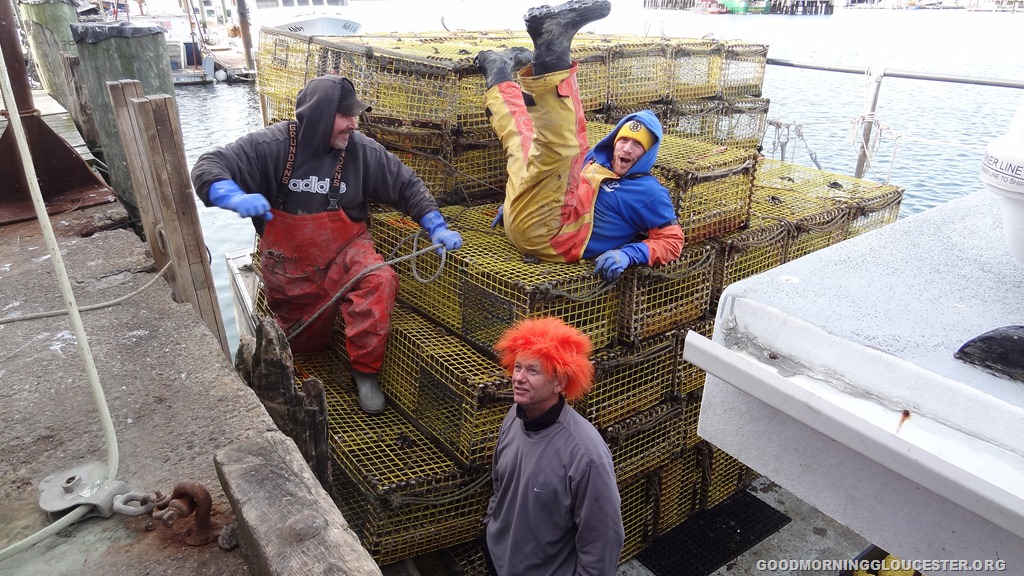
Spread The GMG Love By Sharing With These Buttons:

The Sinking Of The Ben and Josephine Account From The Gloucester Daily Times
The Infamous Fred Buck At The Cape Ann Museum found the article from the Times with the account of how our Grandfather’s boat was sunk by the German Sub on June 11, 1942
Gloucester Daily Times, June 11, 1942
ENEMY SUB SENDS TWO LOCAL …
14 Fishermen Reach Shore Safely After Craft Are Shelled
Two Gloucester fishing draggers were shelled and sunk within a half hour of each other off the New England coast Wednesday afternoon, June 3, while the crews of both vessels were endangered by machine gun bullets, shrapnel from hurtling shells and even from direct shelling by an enemy submarine, a long dull grey craft without identification marks.
All 14 men in the crews managed to reach shore after 36 hours of rowing through fog and drenching rain, with neither crew able to salvage an ounce of food. Capt. John O. Johnson, owner-skipper of the second craft shelled, told a graphic story of the event, while Capt. Joseph Ciametaro [sic], 27 years, Washington Square, skipper of the other boat, described the machine gunning. The only casualty was Capt. Johnson’s dog "Snooksie."
First Local Casualties
These are the first Gloucester fishermen to be sunk by subs since late summer of 1918, when the German submarines took a toll of Gloucester swordfishermen and market fishermen on Georges Bank. News of the sinkings were learned here within two days of the tragedy.
In Capt. Ciametaro’s crew were Sam Frontiero, 45 years, 19 Mansfield Street, engineer; Tony Frontiero, 35 years, 17 Elm Street, cook; Sam Orlando, 23 years, 7 Washington Square; Dominic Montagnino, 27 years, 21 Riggs Street; William Mahoney, 49 years, 12 Locust Street; Peter Frontiero, 27 years, 42 Fort Square; James A. Sheaves, 42 years, 12 Marchant Street.
Their craft, costing some $80,000 a couple years ago when she was built, was on the fishing grounds in the late afternoon, and had already made one set, getting 1500 pounds redfish, when in steaming toward what they thought would be a better spot, Orlando on watch forward, saw the conning tower of a submarine off a distance from them. At first, they thought she might be an American submarine on patrol, but when the raider came within 300 feet of their craft, they saw men on deck armed with machine guns, letting loose a barrage of tracer shots at their craft.
Machine Gun House
"Orlando called me on deck and when I realized they were firing at us, I knew very well she was an enemy," said Capt. Ciaramitaro. "I ran into the pilot house to get the compass, and as I did, some of the machine gun bullets smashed away at the house. Mahoney who was up nearby came within inches of getting killed. They must have thought the firing would be a warning.
"Anyway, we made for the two dories aboard, and lost no time in launching them into the water. We didn’t even bother to get our clothing or anything else and even left the compass behind. I had planned to break the seal on the radio telephone in the engine house and notify the Coast Guard that a sub was attacking us, but the firing was too hot for us, and it would take too many precious minutes to get this done.
"Sheaves, Orlando, Montagnino and Tony Frontiero were in the first dory, while Sam Frontiero and myself made for the other.
"Within five minutes of the machine gunning, the sub crew started firing from a gun mounted on deck. I don’t know what type it was or how big. I know that those shells came thick and fast, and there must have been anywhere from 40 to 50 shells sent at our boat. One of the shells must have banged into the foc’s’tle, because we saw the stove come hurtling out through a shellhole in the port side of the boat.
"The shell that did the trick was the last one, smashing into the engine room, causing an explosion, which set the boat afire. However, it was a half hour later before she finally sunk. We couldn’t see how good their aim was, because we were on the opposite side from where they were shelling.
"There was a lot of shrapnel from the shells flying around us, but none of us was hit. None of the crew bothered to speak to us and we said nothing to them. We don’t know whether they were Germans or Italians. They certainly weren’t friends. They were tall and slim. There were several men on the deck of the sub.
Many Misses
Orlando and others of the crew declared there were more misses than hits as the shells screamed overhead and around them. It looked like the battle of the Marne might have looked, they thought. The weather was clear with visibility of at least six or seven miles, said the skipper. The sea was fairly smooth.
As the two dories were rowing away from the craft in which they had made big money in the past couple years, they saw a short while later smoke rising in the distance and knew that the neighboring dragger had been sunk.
Fog set in on the long pull to shore. Guided only by the direction of the wind which the skipper had sensed as he left the dragger, the reckoning proved correct and brought them to land 36 hours later. They rowed in reliefs of two, and both dories kept together. They had no food, but did have a small amount of water. It was a long hard pull and when they finally made it, every man was exhausted. They were given strong steaming coffee, bacon and eggs, and it all tasted mighty good. Later the navy took charge of the men and took their accounts of what had happened. They arrived about 4:30 o’clock in the morning.
Asked as to whether or not they were frightened when machine gunned, the skipper exclaimed, "Of course we were scared. With those bullets flying all around us, there was no wonder we were scared."
"Every time they would fire a shell it would knock the boat around," the skipper added. "The next shell would swing around the other way." Said Peter Frontiero, "To tell you the truth, we were stunned. The sub skipper gave us plenty of time to get off, but he did have a lot of shots fired in the pilot house. When he let the shells go, we knew he meant business and we got going. We are glad they never hit our dories."
Spread The GMG Love By Sharing With These Buttons:
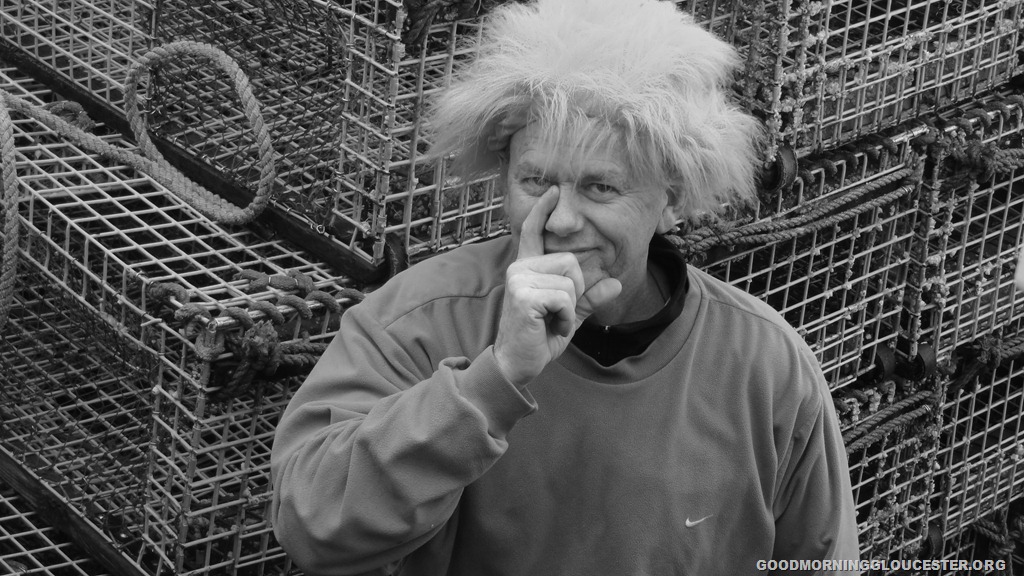
Pensive Tuffy
Spread The GMG Love By Sharing With These Buttons:

Is there apathy in regards to Gloucester’s Fishing Industry News or have people given up trying to understand it.
Cod cut loss to city: $70M
By Richard Gaines
PROVIDENCE, R.I. — A statutory need to address a reported widespread decline in the status of the Gulf of Maine cod was translated Wednesday into terms of a potential economic catastrophe for the New England groundfishing industry — with projections of dealing a $70 million hit to Gloucester’s economy alone.
Click here for the rest of the story
Richard Gaines reports some really heavy stuff today in the Gloucester Daily Times but other than people directly involved in the fishing industry locally and a few other folks that seem to weigh in on it outside of the industry I wonder if the general public has tuned it all out because it is so difficult to understand and or they gave up trying because it’s impossible to keep up with all the changes.
In either case there are some MAJOR MAJOR changes to the life and independent spirit of what so many people have clung to here for so long but it seems like people are resigned to feel like it’s all a done deal.
Like the people that think that the Government is ever going to allow the amount of fish that was once landed in this city to ever be harvested again, that’s just crazy. They would be nuts to because it would get us right back to the state of overfishing that got us into this mess in the first place. But now with Catch shares and the privatization of the industry and without provisions to make sure that fishing permits stay in the hands of independent fishermen I never thought I’d see the day but within our lifetime there likely will be very few independently owned fishing boats.
When you listen to the bananaheads at the meetings continue to cling on to the hope that this town is going to somehow revert back into the golden days of schooners or when our Grandfathers and Father’s age when millions and millions of pounds of fish were being landed here on a daily basis tell them to wake up.
It’s not “Times, They are A Changin’”
They’ve Changed.
Spread The GMG Love By Sharing With These Buttons:
Whiting Fishing Aboard The Midnight Sun Summer 2011 Filmed and Edited By Joe Testaverde

Spread The GMG Love By Sharing With These Buttons:

Bruce Herman buoy honoring Joe Garland


Today’s buoy is a very special one painted by Gloucester painter Bruce Herman in honor of Joe Garland. Not much else to say about it other than thank you to Bruce for this beautiful piece of artwork!
This is the fifth in a series of buoys that are being auctioned off to benefit Art Haven. All the buoys from this year’s lobster trap tree will be auctioned off next Friday, the 27th at Cruiseport Gloucester, including the ones featured here. But you can put your bids in now to get your name in the hat. Again, the details:
-If you like a buoy you see, bidding starts at $20, and you can just bid in the comments section below the post, HOWEVER
-Your bid doesn’t become official until you send Art Haven an email (arthaveninfo@gmail.com) saying you’re serious and letting us know how to get in contact with you.
-Finally, if you’re the highest bidder on the blog, that makes your bid the starting bid at the auction. We’ll be in touch about your max bid if you can’t make it to the auction.
If you’ve got any questions, leave ’em in the comments section. Also, check out the artist buoys on Art Haven’s Facebook page and tell us if there are particular buoys you’d like to see go up here. And remember, your money is helping more kids on Cape Ann have access to crazy fun art activities 🙂 Happy bidding!
Spread The GMG Love By Sharing With These Buttons:

Beautiful Industry Buoys- Black and White
as always click for the full sized version

The Degelyse is taking the gear out of the water. Three more loads and it is finito for the season.
Spread The GMG Love By Sharing With These Buttons:

That German U-Boat That Torpedoed Our Grandfathers Fishing Boat The Ben and Josephine? Here’s The Account of It’s Day Of Reckoning
Here’s the account of the sinking of our Grandfather Captain Joe Ciaramitaro’s Ben and Josephine-
http://www.wholesalelobster.com/
David Teele forwards the link to the account of the last days of the German U-boat the 432 on the 11th of March 1943-
REPORT ON INTERROGATION OF SURVIVORS FROM "U 432," A 500-TON
U-BOAT SUNK AT ABOUT 1200 G.M.T. ON 11th MARCH, 1943
"U 432" (Kapitänleutnant Hermann Eckhardt) was sunk in approximate position 51° 35′ N., 28° 30′ W. at about 1300 G.M.T. on 11th March, 1943, by F.F.S. "Aconit" escorting Convoy H.X.228. "Aconit" had 12 hours previously assisted in the sinking of "U 444" (see C.B. 04051 (63) ), from which boat she had also taken prisoners.
At about 1100 the same day, "U 432" had torpedoed and sank H.M.S. "Harvester," who had on board one prisoner from "U 444." Survivors from H.M.S. "Harvester," "U 444" and "U 432" were then transported to Greenock by "Aconit," together with survivors from two ships of H.X.228, torpedoed in the night of 10/11th March, 1943.
III. EIGTH AND LAST PATROL OF "U 432"
(All times are German Summer Time.)
(i) Departure from La Pallice
At 1730 on 14th February, 1943, "U 432" cast off from her berth on the north side of the basin at La Pallice.
At 1750 she left the lock at the entrance to the basin. There were scenes of great enthusiasm as all present waved "goodbye." She rammed a harbour launch just after negotiating the lock. On passing the boom "U 432" was escorted by a "Sperrbrecher" and two patrol vessels. Also sailing with her was another U-Boat with a crocodile badge on her conning-tower. Survivors could not remember her captain’s name. At 2320 the escort parted company and "U 432" proceeded on her patrol alone and on the surface. Her course was 270°.
(ii) Passage southwards
"U 432" remained on the surface until shortly before 0700 on 15th February, 1943, when she dived for the first time on this patrol. She did not surface again until 1930 when it was found to be much rougher. Many of her ship’s company were sick. At 0800 on 16th February, she submerged again, surfacing once more just before dusk. At 0900 on 17th February, she dived, re-surfacing the same night. The whole of 18th February was also spent submerged. Survivors thought that by then they were out of the Bay of Biscay.
(iii) Receipt of Orders
About 0100 on 19th February, Eckhardt received a signal ordering him to proceed to join a patrol line named "Wildfang" in a position which he decyphered as a point in the neighbourhood of the Canary Islands. From this point onwards, "U 432" did not submerge again for some time.
At 1545 on 20th February hands went to action stations for exercise and that evening there was a party to celebrate the end of the first week at sea. There had been no events worthy of note since she left port.
(iv) "U 432" Alters Course
By the evening of 21st February, the First Lieutenant began to wonder why they had proceeded so far southwards. It was then that Eckhardt, seated in his cabin looking through his signal books realised that he had failed to insert a correction, issued prior to his sailing. Consequently, the signal received on 19th February giving him his orders, had been wrongly decyphered and he had steered south instead of west since that date. In its correct form the signal ordered him to a position off Newfoundland. He immediately gave orders to alter course to 300°and made for the patrol line indicated in the original signal.
For the rest of the account which is very interesting click here to read it in entirety on http://www.uboatarchive.net-
http://www.uboatarchive.net/U-432INT.htm
Spread The GMG Love By Sharing With These Buttons:
The Launching Of Our Grandfather “Captain Joe Ciaramitaro” First Dragger The Ben and Josephine
The Infamous One Found this courtesy the Archives At The Cape Ann Museum. It was listed in The Atlantic Fisherman, April,1941
As I’ve said at least a hundred times now, if you haven’t gone to the Cape Ann Museum whether you’re a resident or Gloucester lover who visits you are missing out on a literal TREASURE TROVE OF GLOUCESTER LOVER ARTIFACTS. You probably drive past the Cape Ann Museum a dozen times a week.
Trust me head downstairs once you get there and ask for The Infamous Fred Buck. Ask him about a piece of old Gloucester you are interested in. I bet you dollars to donuts he digs something up for you!


Ben Curcuru was our Great Grandfather and the man my father Benjamin Liborio (Libby) Ciaramitaro was named after. Pictured are Benny Curcuru(great Grandfather to a ton of cousins in Gloucester and our Great Grandmother Josephine.
Spread The GMG Love By Sharing With These Buttons:

Thanks To The Infamous Fred Buck We Have Two Accounts From the Sinking Of Our Grandfather’s Boat The Ben and Josephine By German Sub in 1942

Article by Charles Dana Gibson, undated-
On June 2,1942, the Ben and Josephine, an otter trawl dragger, left Gloucester, Massachusetts, at 7 p.m., in company with another dragger, the Aeolus. Both were bound for the Seal Island fishing grounds off Nova Scotia. By 3 p.m. the next day, the two draggers were about 170 miles east of Cape Ann when the man at the wheel of the Ben and Josephine spotted a submarine on the surface proceeding on what appeared to be a parallel course.
Although concerned, the wheelsman later stated that the opinion among his fellow crew members at the time was that the submarine was probably friendly. Whoever was up and about on the Aeolus, then four or five miles astern, seems to have had the same thoughts, since it also made no attempt to alter course. But friendly the submarine definitely was not: it was the U432, the same sub which had sunk Foam some days earlier.
When later describing to naval authorities what had transpired, the crew members of both the Ben and Josephine and the Aeolus stated that for an hour a number had periodically studied the submarine through binoculars.
During that time, nothing was seen to indicate that it spelled trouble; yet, the fact that its course and speed were continually altered to match the draggers produced a menacing atmosphere. Around 4 p.m., the submarine suddenly changed its course as if to cross the bow of the Ben and Josephine, increasing its speed as it drew nearer. When approximately five hundred feet away, it swung parallel and a machine gun opened fire, bullets striking the water close to its prey. Guiseppe Ciarmitaro (Captain Joe our Grandfather), the Ben and Josephine’s skipper, had been taking a nap. Suddenly shocked awake, he ran for the pilot house to radio for help.
The Germans, spotting Ciarmitaro moving across the deck and apparently guessing what he was about, sprayed machine gun fire in his path. Escaping narrowly, Ciarmitaro decided against any further heroics and shouted the order to cut away both dories. At this point, U-432’s commander began showing solicitude for the fishermen’s safety, ordering further fire withheld until the dories were clear. When that was accomplished, the shooting recommenced in earnest. The crew of the Ben and Josephine would later estimate that between thirty-eight and forty-eight rounds were fired from the sub’s main deck gun. But the marksmanship was poor, and despite the short range few made contact. Enough did hit, though, to start the craft going down at the bow.
At this point the fishermen saw what the Foam’s survivors had also witnessed – someone aboard the submarine was taking their photographs for posterity. Thirty-six hours later, the dories landed at the light station on Mount Desert Rock, an island off Maine’s Acadia National Park. Aside from being hungry and suffering from mild exposure, all hands were well.
The Aeolus had been on a parallel course about five miles astern of the Ben and Josephine when the latter was attacked. Upon hearing the fire directed against the other trawler, the master, John Johnson, altered his course to put as much distance as possible between himself and the submarine. However, as soon as the sub had finished with the Ben and Josephine, it rapidly overhauled Aeolus. Upon closing, the Germans fired a warning shot, quickly followed by shouted orders to stop engines and put over dories. By way of emphasis, the U-boat’s deck gunners fired off two rounds, one of which struck Aeolus squarely forward on her whale back. Since all the fishermen were aft at the time engaged in lowering the dories, this was probably meant only as a threat to dampen any idea of sending off a radio warning.
It was when the fishermen had pulled clear that the Germans reopened fire, with most rounds missing as they had earlier with the Ben and Josephine. When enough hits were made to start Aeolus sinking, the U-432 headed away. Taking stock of the situation, the survivors decided on a course for Seal Island, the closest land. But before long a brisk breeze came up, raising enough of a head sea to force a change of plan. They then reversed direction, heading this time for the coast of Maine. They arrived a day and a half later, also landing on Mount Desert Rock close on the heels of the crew from the Ben and Josephine.
Guiseppe Ciarmitaro later recalled the effect that the sinkings of the Ben and Josephine and the Aeolus had on the morale of Gloucester’s fishing community. When the full news became known, enthusiasm for the offshore fisheries declined sharply. It would be some weeks before the men of Gloucester again extended their voyages east of Cape Porpoise, Maine.

from the "Sou’west Harbor" Maine newsletter, Feb. 2010
This is a letter we received from Doug Norwood, who grew up in Southwest Harbor and is now a resident of Birch Bay in Bar Harbor. We felt you would all enjoy reading it as much as we did. Thanks Doug
Sixty-seven years ago I was a freshman in Pemetic High School in Southwest Harbor. It was June 4th, 1942. We were in World War II. German U-Boats were all over the Atlantic Ocean. Some historians have called that time “The Deadly Summer of 1942’. German submarines were sinking many allied ships on their way to Europe carrying food, supplies, oil. They were sinking any boat that was on the waters of the Atlantic.
On June 4th, 1942, my father came home early from work. He came into the house and told me not to go out anywhere as he wanted me to help him. He went to the phone and he called several people. I heard some of his conversation which wasn’t making much sense to me. He was talking about feeding fourteen fishermen, and getting some cots for men to sleep on, and dry clothes. When he finished his conversations, he told me to grab my jacket and follow him.
We got into his pickup truck and on the way to the high school he told me we were going to set up cots in the high school gym for fourteen fisherman who had had their boats shelled by a German submarine and watched them sink. He told me that the men were at the coast guard station in the Village. As the chairman of the American red Cross the Coast Guard had called my father to put into action a rescue operation.
When we got to the high school there was lots of activity by men and women of the community. Men were taking cots into the school gym, women were carrying baskets of food into the home economics class room. Women
were at work making fish chowder and biscuits, hot coffee and dessert. Some women were making up the cots for these fishermen to sleep on.
The fishermen arrived at the school. They were taken to the showers in the school, given fresh towels and then some men and women gave them clean clothing to put on. They were on their way to a fisherman’s
supper.
The fishermen were from two different trawlers which had been fishing in Nova Scotia waters. The first trawler was the Ben & Josephine. She had a crew of eight men. The boat’s home port was Gloucester in Massachusetts. The boat had been built in Thomaston in 1941. The German Submarine U-432 surfaced close to the fishing boat. The spokesman for the sub told the crew to get into a dory and row away. Then the sub shelled the boat until it sank. Those eight crewmen watched their boat until it sank. Those eight crewmen saw their boat sink out of sight.
Four miles away on the same day the same German submarine U-432 surfaced beside the trawler Aeolus. The spokesman for the submarine told the six man crew trawler to get into a dory and row away. The sub shelled the trawler seventeen times until it sank. The sub took moving pictures of the shelling and sinking of the Aeolus which sank in about twenty minutes. The Aeolus was 41 tons and had been built in Friendship, Maine in 1922. Its home port was Gloucester, Massachusetts.
The fishermen rowed their dories for 36 hours and twelve hours were rowed in a rain storm, arriving at Mt. Desert Rock Lighthouse. From the Rock the men were taken to the Southwest Harbor Coast Guard Station. My father arranged transportation for the fishermen to Gloucester. After one night at the high school the fishermen boarded a bus the next day for home.
As a young fourteen year old I was very impressed by the men and women who worked so cooperatively in taking care of those fishermen who had escaped with their lives. I had a great sense of being proud of my community as I watched them taking care of those who needed clothing, food, and encouragement.
I don’t know if any of the adults who worked on this project of giving are still alive today. Perhaps there are one or two. I do not know.
A letter received from the engineer of the Aeolus sent to my father is attached to this writing.
I think that the members and friends of the Southwest Harbor Historical Society will be interested in reading about the sinking of the Ben and Josephine and the Aeolus. More important, I think, is the response of men and women from Southwest Harbor who gave of themselves for their neighbors.
Sincerely, Douglas M. Norwood
The original letter is on the following page.
Page Nine
The Sou’West Voyage
February 2010
The letter:
Dear Sir,
June 3, 1942 a German Submarine sunk a boat names Aeolus and also a boat named Ben and Josephine, they were sunk about 30 miles from Seal Island, N.S. I was engineer on the Aeolus. This boat was sent to the bottom in broad daylight by 17 shells from a deck gun and two Germans on the sub, had a moving picture machine. One fellow pointed it and the other cranked it. That boat was sunk just to get the pictures. The crews of both boats rowed for 36 hours to the Mt Desert Rock, we was taken from there to the Coast Guard Station in South West Harbor. The Coast Guard and the Red Cross sure took good care of us down there, we slept in the High School one night and we got our eats and the crew of both boats got a full outfit of clothes and on top of that the Red Cross hired a bus to take us to Gloucester and we sure appreciated it.
I was talking to a soildier that was over in Germany a short while ago and he said he would not be surprised if those moving pictures could be found somewhere in Germany, they may be hidaway and some Red Cross department over there may locate them. They would sure be valuable to you
Chapter if you could capture them. That boat Aeolus was built in Maine and I think if your Chapter could get hold of these pictures they would belong to your Chapter.
The sinking of an American boat by a foreighn Battleship just to get moving pictures was sure a Historical event. I got crippled up on this memorial day. I hurt my hip when I fell into the dory from the rail of the boat and I had to do my turn at the oars for 36 hours and the last 12 hours we was in a pouring rain.
I got a 90% disability out of that racket and the Government has not done anything yet towards financial aid, but I think they are going to soon as they have confiscated German and Japanese assets in the U S and are going to pay some claims to persons that was not in the U S Service.
A letter from your Chapter to the Red Cross in Germany may capture those moving picture reels.
What do you think If they are located and the Government grabs them we can put up a battle for them I remember that fish chowder I got down there from the Red Cross ladies. It sure was good. We never even got a cup of hot coffee from the Red Cross when we arrived in Gloucester from that memorial trip. Yours Truly, Everett Gallagher
There were two men from the Intelligence department from Washington that laughed when we told them the Germans took moving pictures of the sinking of the boat, a stenographer took down all the stories from the crews of those two boats and they must have it in Washington. I had a card from those two
fellows that they give me down there but I have lost it.
Editor‟s note: I feel we still have the same community caring that we had back then. When there is a time of need, the people of our town are there to help as they can. Whether it be to provide clothing, food, Christmas gifts, a temporary home and or other things that are needed. We take great pride in
our community and the people who reside in it. If anyone knows of this event and the names of people who helped in the effort, please let us know so we can preserve their names, along with the stories.
Thank you very much Doug for sharing this with us.
Spread The GMG Love By Sharing With These Buttons:

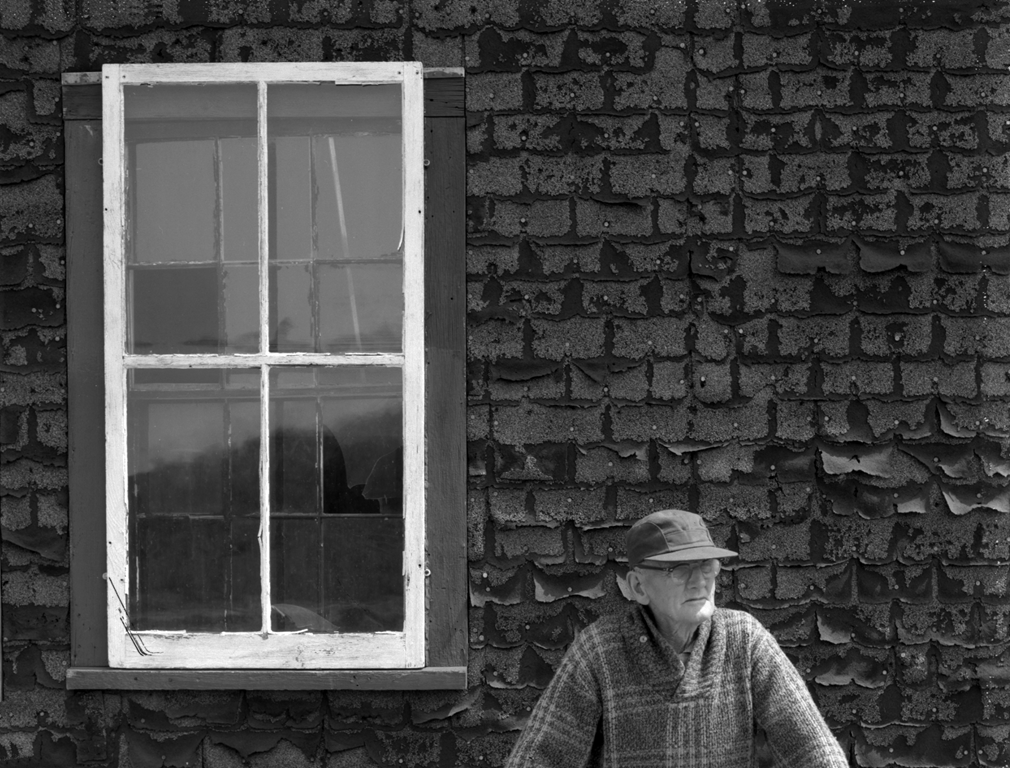
1971 George Morey Portrait From Nubar Alexanian
Nubar writes-
Hey Joey: just came across this portrait I did of George Morey in Lanesville in front of his shack down in the cove. It was taken in 1971 with a view camera
Spread The GMG Love By Sharing With These Buttons:

Haddock a Good Year ! From Joe Testaverde

Spread The GMG Love By Sharing With These Buttons:

The Loss of the F/V Patriot 01/03/2009
On January 3, 2009 the F\V Patriot was lost at Sea with both crewmen. Here is the story from the Gloucester Daily Times and a few photos I took of the Patriot in 2008. Also, Joey has some great pictures and video of inside the Patriots wheelhouse and engine room.
From the Gloucester Daily Times;
Mourning the Patriot
Trawler tragedy claims lives of two fishermen
“By Richard Gaines The Gloucester Daily Times Sun Jan 04, 2009, 10:52 PM EST
As president of the Gloucester Fishermen’s Wives Association, Angela Sanfilippo has dealt many times with tragedy at sea. It never gets easier.
“This is a shocker,” she said Saturday, referring to the loss of the Patriot and the lives of two local fishermen. “This was the perfect boat. Gloucester has one more time been stricken.”
The two members of a Gloucester fishing family — the husband and father of Josephine Russo — were lost at sea early Saturday when the family-owned Patriot, a modern, 54-foot, steel-hulled trawler fishing alone on Middle Bank, about 15 miles from port, sank after an apparent catastrophic failure.
CLICK THE LINK FOR THE REST OF THE STORY; http://www.gloucestertimes.com/Patriot/x645317002/Mourning-the-Patriot
Here are Links to the USCG Final Action Report and the USCG Timeline chart on the F/V Patriot sinking.
Coast Guard Final Action Memo FV PATRIOT.pdf
Enclosure 3 – FV PATRIOT Timeline Graphic.pdf
Here are the links to Joey’s Videos;
https://goodmorninggloucester.wordpress.com/2009/04/10/lost-screencast-from-patriot-engineroom/
https://goodmorninggloucester.wordpress.com/2009/01/03/matteo-russos-patriot-wheelhouse-video-2/
The Danielle Marie before the Name Change to the Patriot
The Patriot docked at the State Fish Pier
Matteo Russo Gets ready to Board his Boat The F\V Patriot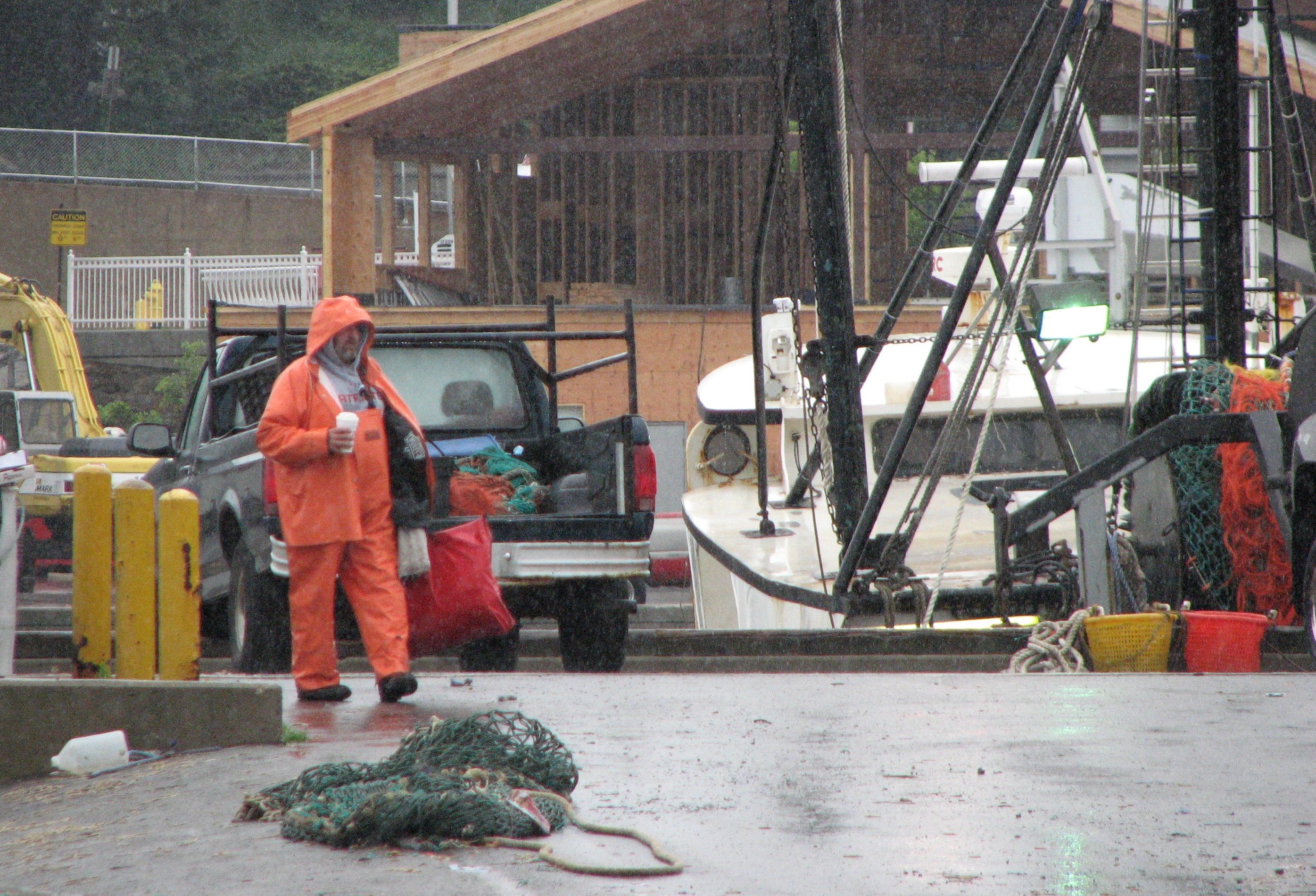
F\V Patriot viewed from Gorton’s Wharf 2008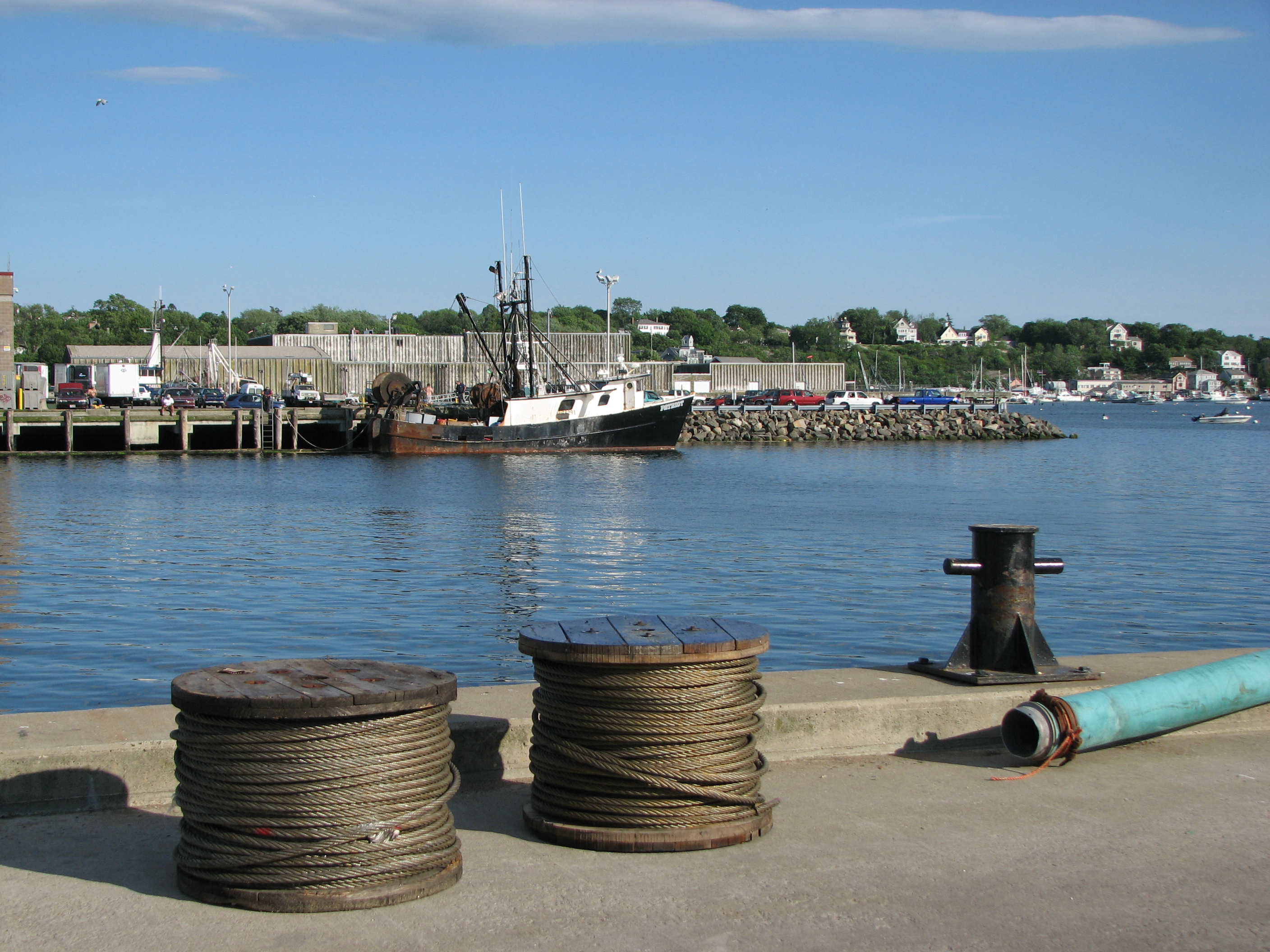
The Patriot gets ready to Dock 2008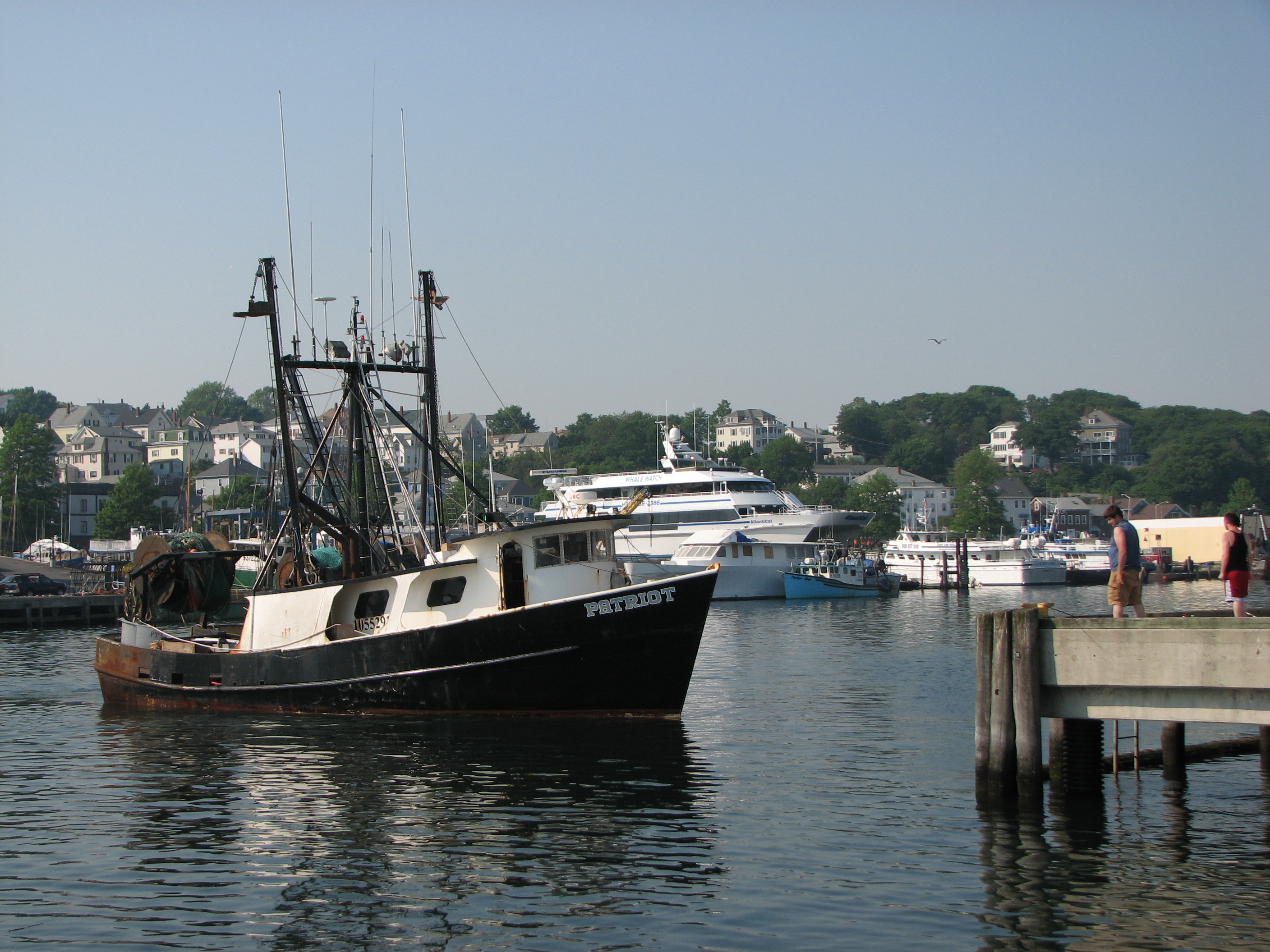
Spread The GMG Love By Sharing With These Buttons:

Molly Ferrill Shares Her Timelapse Video Settings and Another Video Lobstering Aboard The Arethusa
Molly writes-
Hey!
It’s manual focus, shutter speed 1/13, aperture 4.5, manual iso (400) and there are 335 frames included! I think I had the interval between shots at 5 seconds. Each image is a full-size jpeg, (which I don’t think was actually necessary, especially not for the web!) and I used final cut express software to edit the time lapse. (each frame is .03 seconds long I think). It was one of the first time lapses I have made with the intervalometer but I think it worked out pretty well… next time I will set the interval for a little shorter and take more frames so the final time lapse is a little longer! Oh and by the way, at the end I made the last few shots with longer and longer shutter speeds so that it would gradually fade to white. It wouldn’t have been that drastic at the very end if I hadn’t done that.
LOVE the one you did with the clouds! Gorgeous. It looks just like a time lapse but less jerky which is good for clouds. Very nice!
Here’s a link to a short little video I just made compiling some of the photos and short video clips from going out on the boat.
Lobster Fishing with Tom and Cody!
Spread The GMG Love By Sharing With These Buttons:
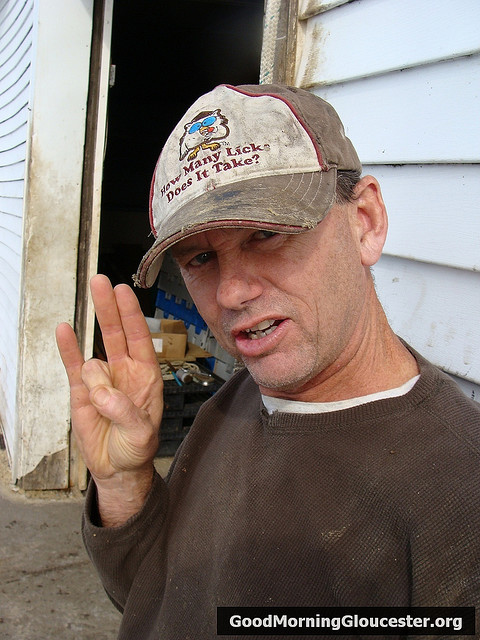
Tuffy Then and Now
At age 15 Tuffy was on his own, supporting himself fishing-
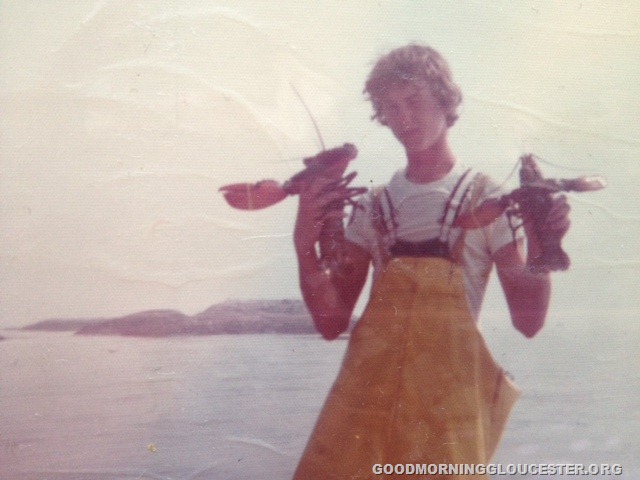
Tuffy Now
Spread The GMG Love By Sharing With These Buttons:

The Infamous Fred Buck Needs Help Identifying These Fishermen
just found these 2 negatives – says on the envelope "whiting trip at fish pier. 1947." anybody recognize these guys? hazard a guess at the boat? much obliged. merry christmas from the infamous..
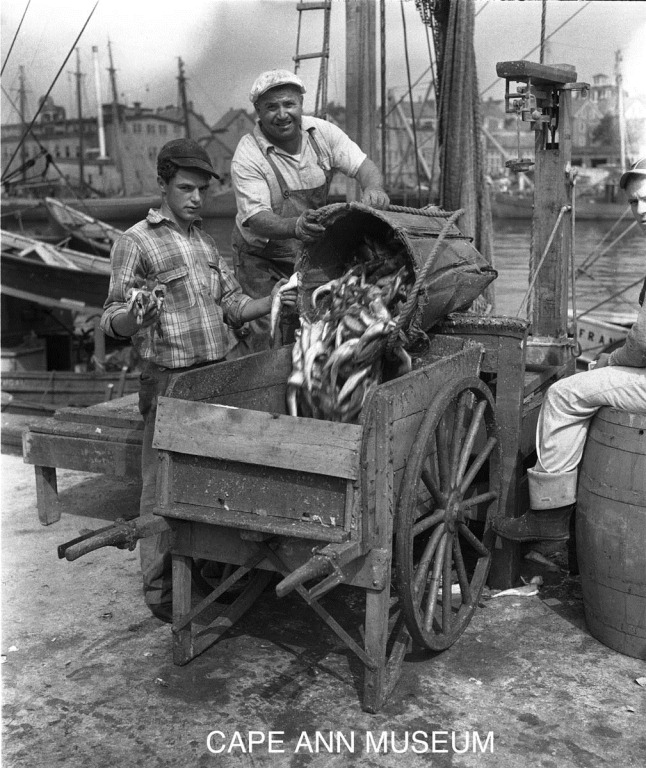

Do you have any idea how many times I dumped those very same wire baskets full of fish on our culling table when we were handling fish? They had a long run in the industry, I wonder who invented them.

 Good Morning Gloucester