Crimson-eyed Rose Mallow Growing at Niles Pond

Rose Mallow Marsh Mallow ©Kim Smith 2013

Please Don’t Pick the Wildflowers ~ Thank you!

Hibiscus moscheutos, known by many common names including Swamp Rose Mallow, Swamp Mallow, Eastern Rose Mallow, and my favorite, Crimson-eyed Rose Mallow, is a wonderful perennial garden plant and when found in nature, is a wetland plant that can grow in great drifts. Hummingbirds and bees drink nectar from mallows. The flowers of Hibiscus moscheutos range is shades from pure white to deepest rose, and some have a brilliant magenta eye.

Rose Mallow was planted widely at the beginning of the previous centurey, when an awaresness developed about conserving our North American native wildflowers. You would be hard pressed perusing a home and garden publication from that era and not find a lovely illustration of Crimson-eyed Rose Mallow.

Canon C100 ~ New Awesome Camera for Cape Ann TV?

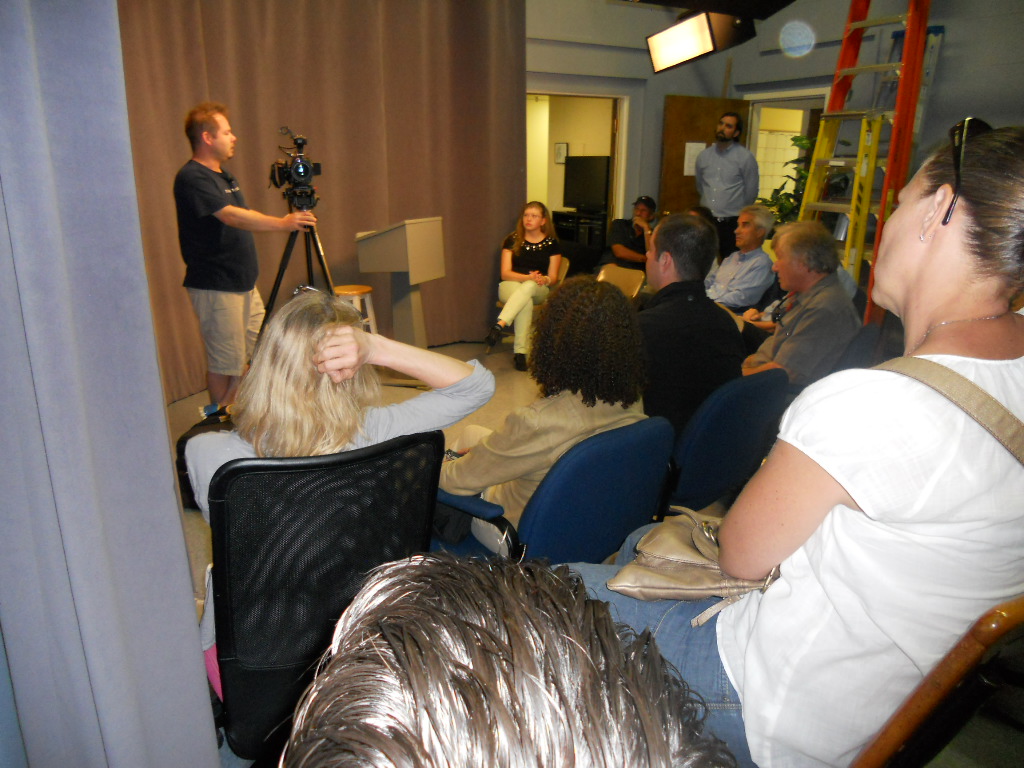
Because of a scheduling conflict I was unable to attend the Canon C100 camera demonstration held at Cape Ann TV on Monday afternoon. I will however, get a chance to try it out on Wednesday night and cannot wait!

Lisa Smith kindly forwarded these snapshots from the event. Thank you Lisa!

C100 back C1o0 Back

C100 frontC100 Front

Henry Ferini C100Henry Ferini

Eliot FranciseEliot Francise


Roger Ward C100Roger Ward

Mike and crowdMike and crowd

All photos courtesy of Lisa Smith

Rare Footage of a Luna Moth Taking Flight

 Beauty on the Wing ~ A Luna Moth takes Flight

My friend James, the facilities director at Willowdale Estate, sent a photo of a newly emerged moth on Sunday afternoon. He initially thought it was a paper napkin stuck to one of the lampposts, but upon inspection, discovered that it was a Luna Moth (Actias luna). With high hopes the moth would still be there, I dropped everything and raced over to Willowdale to photograph and film the moth. It is not that the moths are particularly rare, but that they are most often seen in flight at night.  Lucky me, to have had such a wonderful encounter with one of the most beautiful moths in all the world!

The Willowdale Luna Moth is a male of the species; you can tell by his bushy and feathery plumosa (or antennae). The female’s antennae are more thread-like. Notice too, just before he takes flight, how his body vibrates, which helps warm and energize the wings in preparation for flying.

Luna moths are members of the Saturniidae, subfamily Saturniinae. With a wingspan of typically up to four and a half inches, atypically up to seven inches, they are one of North America’s largest moths. Luna Moths are most often seen in the earlier part of summer in our region; this Luna Moth encounter took place on August 11, 2013. Luna Moths, like all members of the Saturn family of moths, eclose without mouthparts. They emerge solely to mate and deposit eggs of the next generation and live for only about one week.

Luna Moth larvae (caterpillars) feed on wide variety of broadleaf plants and different geological populations of Luna Moths are adapted to different hostplants. Northernmost populations most often feed on white birch (Betula papyrifera). More southerly populations feed on persimmon (Diospyros virginiana), sweet gum (Liquidambar styraciflua), hickories (Carya), walnuts (Juglans), and sumacs (Rhus).

The damage done by Luna Moth caterpillars on host trees is never significant enough to harm the host trees. Please don’t spray your trees with pesticides or herbicides!

Male Luna Moth Actias Luna ©Kim Smith 2013

A note about the music playing in the background ~

Ave Maria, Ellens Gesang III, D. 839, No 6, 1852, was composed by Franz Schubert in 1852 and is a setting of seven songs from Walter Scotts epic poem The Lady of the Lake. Performed by Barbara Bonney.

Read More: Continue reading “Rare Footage of a Luna Moth Taking Flight”

Artists Spotlight Event Tuesday Night at Willowdale Estate

ArtistEventHeaderImage

Join us as we feature two accomplished artists that are very close to the Willowdale Estate family. Showing for one night only!

JayForsytheArtJay Forsythe graduated from the Rhode Island School of Design. With a background in graffiti, his current work is about engaging with the idea that traditional methods of art making can lead to a deeper understanding of formulating new processes. Once traditional methods are understood these methods act as a guide to explore and discover uncharted areas.


003[1]Audi Souza is an artist working primarily in acyrlics. Her focus is the beauty of the landscape and figures in that landscape. She has her BFA from Montserrat College of Art and studied abroad with the college in Viterbo, Italy in 2000. She then retuned to Italy in 2003, this time in Trieste, where she studied and painted for nine months. Since then she has been painting here in New England and lives in Gloucester, Ma.


The Rare Karner Blue Butterfly is Making a Comeback!

male_karner_blue_lg

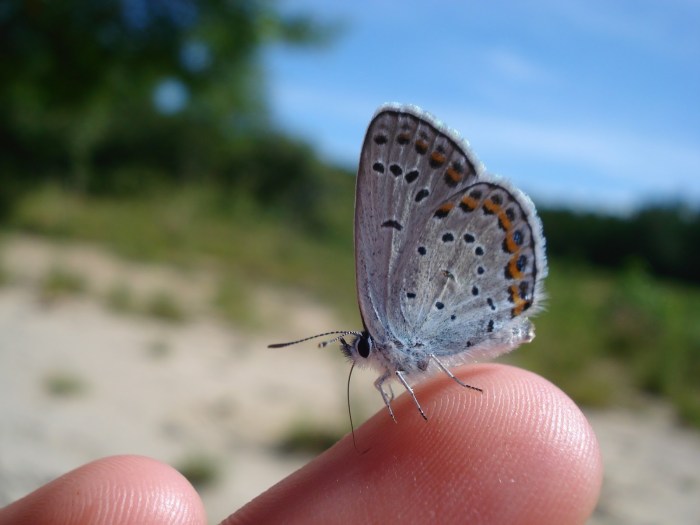
The rare Karner Blue Butterfly has been in the news lately, with a featured article in The Wall Street Journal, no less (thanks to Joey for alerting me, via twitter!). Although this diminutive beauty has become extirpated from Massachusetts, it has been successfully reintroduced to New Hampshire!
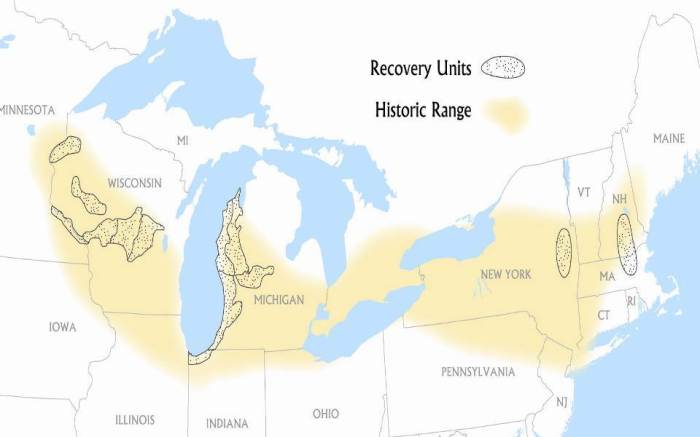
RecoveryMap1Historic Range of the Karner Blue

The New Hampshire Fish and Game Department says “good weather, coupled with help extending the butterfly’s unique habitat in Concord, have made a difference. A company called Praxair Surface Technology/TAFA created a 10-to-15 acre habitat to attract the brilliant blue butterflies, planting over 600 blue lupine and nectar plants in a matter of hours, the insect’s main source of food. The butterfly has been on the federal Endangered Species list since 1992. That year it also was named New Hampshire’s state butterfly, which has been working to restore their unique, savannah-like habitat, as legislators realized the numbers were dwindling.” (WSJ)
APBPC-Karner-blue-butterfly

The following is an excerpt from an article that I wrote nearly ten years ago, about New England native lupines, and briefly describing the plight of the Karner Blue. At the end of the excerpt you can read the entire article after Read More

Blued with Butterflies and Lupines ~ The Rare Karner Blue  and Sundial Lupines

By Kim Smith

Excerpt:

Lupinus perennis is the only larval food of the nearly extinct Karner Blue butterfly (Lycaeides melissa samuelis). The upper surface of the wings of the male of the diminutive Karner Blue, with a wingspan of just an inch, is a brilliant lapis lazuli blue with a thin margin of black, bordered by an outline of white. The female is a nearly similar celestial blue, but with a slightly more brownish, or grayish hue, with dark dots rimmed by orange crescent-shaped spots along the margins of the hindwings. The Karner Blue was identified little more than a hundred years ago in Karner, New York. It is just one of many butterflies that Vladimir Nabokov studied and it is also referred to as Nabokov Blue. Throughout much of its former range, including Massachusetts, the Karner Blue is now extirpated. The near-extinction of the Karner Blue has been widely studied and there are currently several programs underway to encourage its survival in its existing colonies (New York) and reestablish new colonies in its former range (Ohio, for example). To my knowledge, no such program, as of yet, exists in Massachusetts. The reasons for the near extinction of the Karner Blue are many-fold, chiefly: fragmentation and loss of habitat of Lupinus perennis through fire suppression and over-development (the very sites that are ideal growing conditions for L. perennis are also choice locations desirable for housing and industrial developments); the use of pesticides (namely BTK), which kills all instars of the Karner Blue; and the ability of L. perennis to freely cross-pollinate with the west coast Lupinus polyphyllus and its Russell cultivar, which makes the next generation unsuitable host plants for the Karner Blue.  Lupinus polyphyllus and its offspring, now seen growing freely along the coast of Maine, is an unfortunate example of how an ill-conceived introduction of another species, and its cultivars, whether it is from another region of our own country or beyond our borders, has widespread and negative repercussions.

Perhaps in our community we can once again be blued with lupines and Karner Blues. The symbiotic relationship of both blue beauties inspired me to order seeds in bulk to share with friends. I am hoping, with the ability of the Karner blue to travel as far as1600 miles, maybe we can connect to the remnant populations in New York or New Hampshire. Possibly you, too, have a sunny location in your garden, or even more grandly, an entire meadow that could be devoted to Lupinus perennis and compatible native New England wildflowers. If, in time, I cannot report back to you that there have been any sightings of the Karner Blues visiting our garden, Lupinus perennis is also a nectar source for a wide variety of beneficial insects and is a larval host plant for the dwindling Frosted Elfin (Callophyrs irus). The eggs of the Frosted Elfin are laid singly on the lupine buds. Larva bore into developing seedpods and the chrysalids hibernate in the leaf litter beneath the plant. For these reasons, thoughtful maintenance is required when cultivating Lupinus perennis.

All images courtesy Google image search.

Read the full article: Continue reading “The Rare Karner Blue Butterfly is Making a Comeback!”

Roomba Shark Cat, Hammerhead Sharky Ferocious Pit Bull, and Baby Duck

Although Shark Week is officially over, I can’t resist one more video featuring Shark Cat, Sharky the Ferocious Pit Bull, and a baby duck who appears to want to go for ride with Shark Cat on the roomba.

Blue Moon

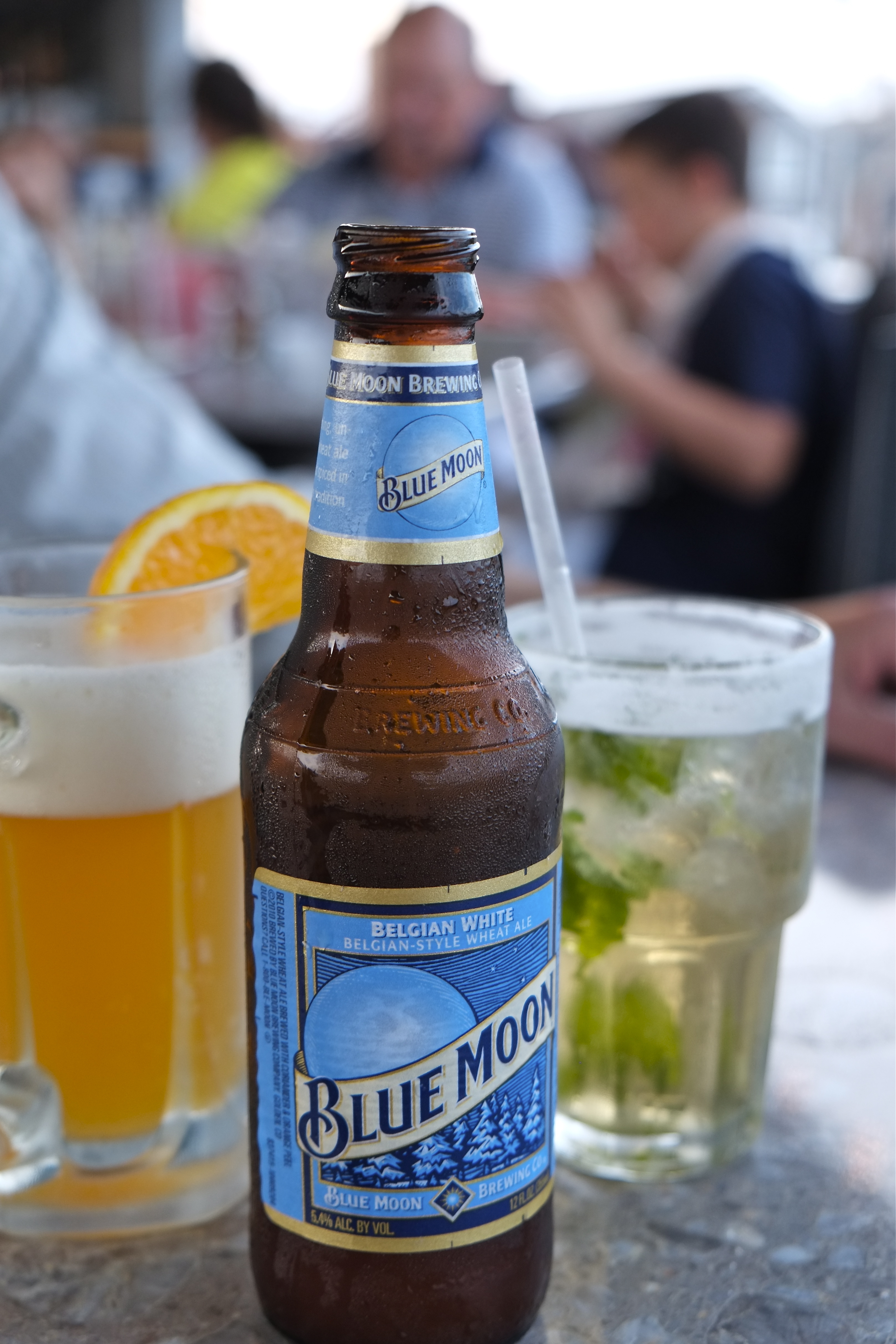
Blue Moon ©Kim Smith 2013For several reasons, Blue Moon is my favorite beer to order out on a hot summer night (warning to readers, I know even less about specialty and craft beers than I do about wines). The first reason being is that it always makes me think of the sweet song “Blue Moon,” written by Richard Rogers and Lorenz Hart, and covered by many artists; the second reason is the attractive label, and lastly, because it tastes pretty good!

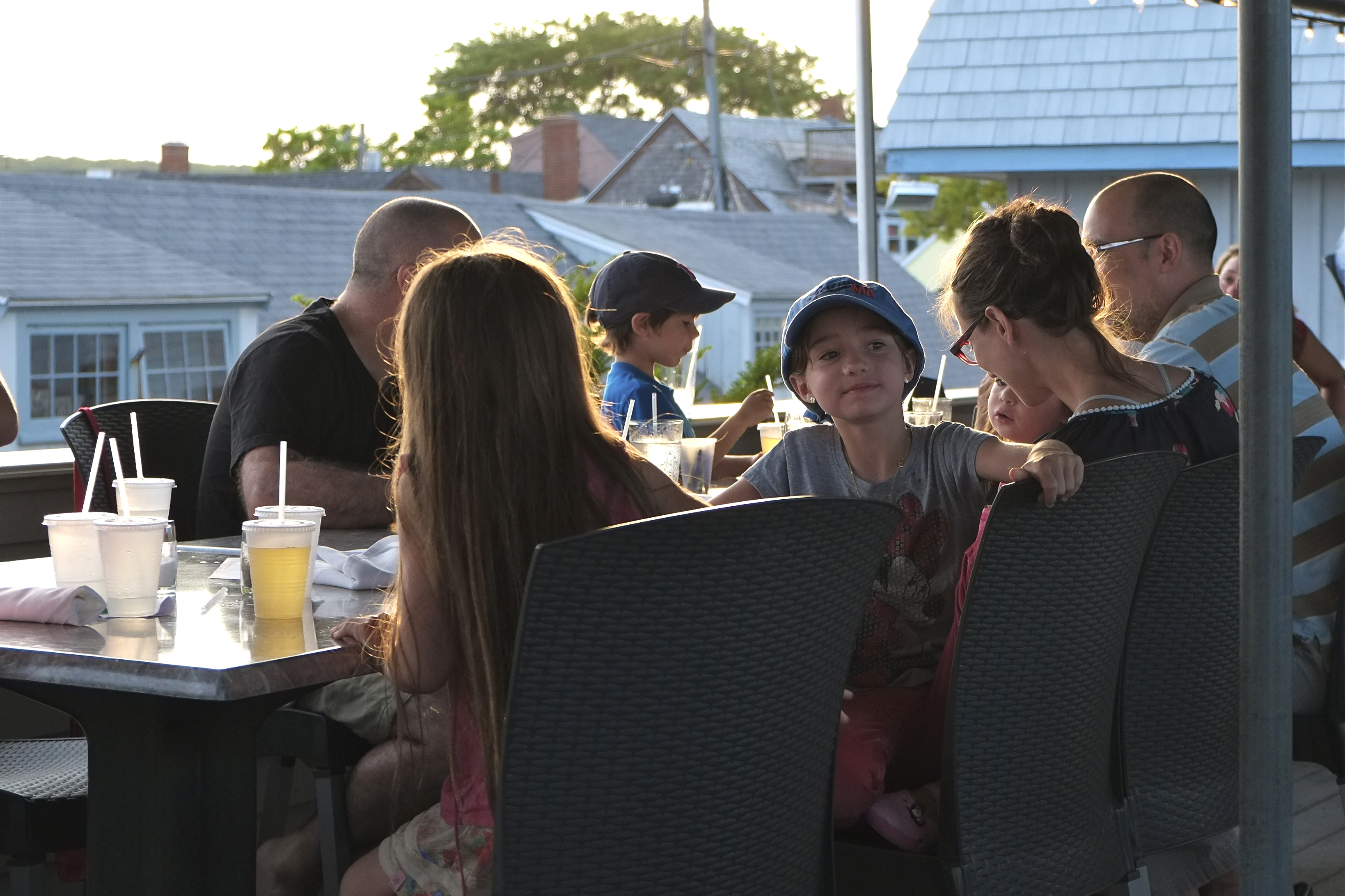
7th Wave ©Kim Smith 2013.Family friendly tree-top dining on the 7th Wave’s upper deck

This was intended to be a post about the 7th Wave Restaurant in Rockport. We sat down and ordered drinks, which I managed to photograph. I was just so hungry and dove right in as soon as our dinners were served. We were halfway through dinner, enjoying some very fabulous fried clams, before remembering that I had wanted to take photos–anyway, next time! I will say, they were the best friend clams of the entire summer. Craig Kimberley, are you reading this recommendation?

7th Wave ©Kim Smith 2013-2.View from the deck

My favorite rendition of “Blue Moon” is Ella Fitgerald’s, but Billie Holiday’s is nearly just as wonderful and the following video has some lovely stills of Lady Day and of fashions from the 50s and 60s.

Toby Pett adds Elvis Presley’s tenderest of renditions. This video too has many beautiful photos, of The King.

Vining Around the Garden

For readers not yet aware, Vine is a free downloadable app for your cell phone. Vine allows you to make six-second continuously looping videos, which you can share instantly to Twitter, FB, and Vine. I like Vine because it is so immediate, uncomplicated, and fun to use. Some people I follow on Vine are John McElhenny; his Vines are always interesting scenes taken in and around Gloucester, and also Amanda Mohan and Macklemore because their Vines are often super funny.

To read the caption, wave your cursor over the lower left-hand corner of each video.

Video: The Good Harbor Seal ~ What to do if you find a seal on the beach

The beautiful juvenile Harbor Seal was found on a foggy morning in midsummer. The seal was beached at the high tide line and its breathing was heavy and labored. It had no interest in returning to the water and needed only to remain at rest.

For the next six hours the seal struggled to survive the world of curious humans.

Learn what to do if you find a seal on the beach.

Written, produced, edited, cinematography, and narration by Kim Smith.

The Good Harbor Beach Seal PSA was created because of the lack of understanding on the part of my fellow beachgoers on how to mangae a seal encounter. Please help get the word out and please forward the link to friends and neighbors in other communities, whether or not the community is located by the sea. It was the folks from out of town that did not understand that the seal needed simply to be left alone. Thank you!

Although the Good Harbor Seal was not injured, help was needed with the gathering crowd. I called our local police, who in turn sent Lieutenant Roger Thurlow from the Environmental Police. Has anyone had experience with a marine stranding, and if so, is the following the best number to call: Northeast Region Marine Mammal and Sea Turtle Stranding and Entanglement Hotline ~ 866-755-6622? I will post your hotline recommendations here.

Technical note–The video was filmed without a tripod because I was afraid the tripod would look like a gun and didn’t want to further stress the seal. After reading more about Harbor Seals, I learned that their big brown eyes are particularly adapted to sight in murky water (i.e. harbor waters), but that their eyesight is not that good on land. In retrospect, I don’t think that the seal would have associated the tripod with a weapon. Also, I filmed at a distance much further away than my camera’s capabilities, which caused much vignetting around the edges of many of the clips. I didn’t want to stand close to the seal and be the filmmaker-who-becomes-part-of-the-problem, and not the solution.

Breaking News: Good Harbor Beach Seal Survives


Hour-Long Macklemore Concert Streamed Live

I was uploading a video this morning and found this link to an awesome Ben Haggerty concert, streamed live from New York City, with DJ Ryan Lewis.

Same Love starts around 12:30.

Interspecies Love with Shark Cat

Shark Cat, Sharky the Ferocious Pit Bull, Guinea Pig, and Bunny

Sometimes You Just Have to Right Your Rudder, Literally and Figuratively!

Mark Ring, Captain Stanley ThomasLobsterman and Captain Mark Ring of the Beautiful Stanley Thomas Lobster Boat

Mark Ring and Frankie CiaramitaroMark and Frankie Ciaramitaro Getting the Job Done!

What is Eating My Tomato Plant?

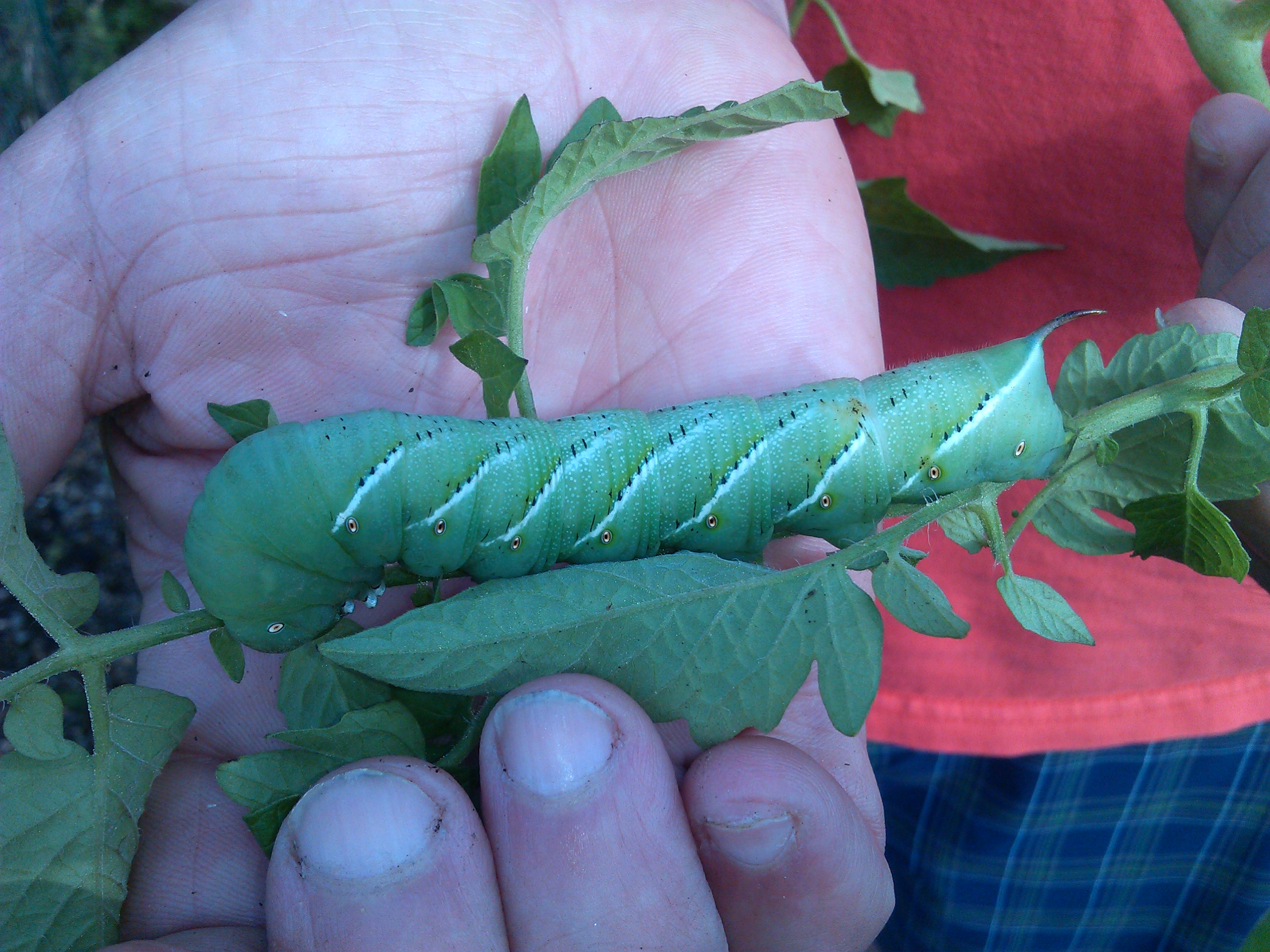
FOBs Melissa and Bill Cox write in, “What is This?”

Tomaot Horn Worm

Hi Melissa and Bill,

You have a Tomato Hornworm, which is a a hawk moth member of the family Sphingidae. They have a voracious appetite and will completely defoliate your plant, including stems and immature fruit. Tomato Hornworms are fond of many members of the family Solanaceae, which includes moonflower, morning glory, pepper, eggplant, tobacco, and potato.

The caterpillar is probably ruining your plant but if you wanted to see it go through its life cycle, you could place the caterpillar in a terrarium and feed it the foliage of the plant that you found it munching on. Alternatively, the easiest way to kill the caterpillar is to drop it in a dish of soapy water.

tomato hornworm white worm parasitesTomato Hornworm covered with Beneficial Cocoons of the Braconid Wasps

Thanks Jennifer for the comment (see below).

Thank you!

Phillips Andover SHED ©Kim Smith 2013

Thank you notes from a butterfly program I gave recently. What fun it was, and what a wonderful surprise to find in my mail box.  The mind of a child is the most extraordinarily beautiful sponge!

Shark Cat

From Good Morning America ~

This is Max, a 12-year-old cat dressed in a shark suit, riding on top of a Roomba vacuum.

“He loves to the ride the Roomba,” Max’s owner, Helen Arnold of Houston told Good Morning America. “He does it pretty much every day. Sometimes I put it away, and if the Roomba is hidden somewhere in the corner, he just sits there and looks at me.”

Max’s shark impersonation is more precious than ferocious as he dons his adorable shark costume, which was actually originally intended for Arnold’s pet dog.

“I do costumes for Halloween and my dog’s name is Shark, so we’ve been looking for a shark costume for him,” Arnold, 33, explained. “But I haven’t found a good shark costume for a dog, so I bought this one and it didn’t fit him so we tried it on the cat.”

Arnold and her husband rescued Max from behind an abandoned house as a kitten. They first discovered his love for riding the Roomba five years ago when they purchased the vacuum.

“One day he was riding it when I got home,” said Arnold. “It was scary. He knows how to press the button.”

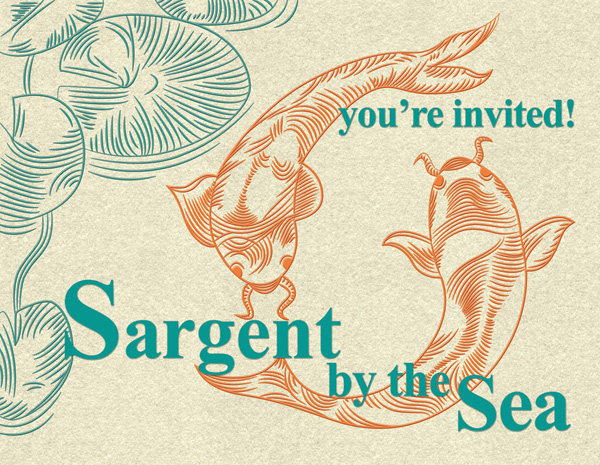
Reminder from Lise Breen About the Upcoming Sargent House Event


SargentByTheSeaInviteMC
Hello Friends,

I am sending a reminder that The Sargent by the Sea event is this Friday at TS Eliot’s boyhood summer home. Don’t miss the chance to take in Tom’s view with cocktail in hand. Our community has rallied to offer great art and wonderful events in order to support Judith Sargent Murray’s mission. We are so thrilled!

Please enjoy a spectacular summer evening with us and click the Sargent House website to purchase tickets.

I very much hope to see you there. Let’s spy porpoises snoring on the phosphorescent swell; the predictions are for Kingfisher weather!

Lise

Kingfisher weather, with a light fair breeze,
Full canvas, and the eight sails drawing well
We beat around the cape and laid our course
From the Dry Salvages to the eastern banks.
A porpoise snored upon the phosphorescent swell,
A triton rang the final warning bell
Astern, and the sea rolled, asleep.

T.S. Eliot draft written in reference to Cape Ann.