NFL fans- check out new local football channel The Postseason

**New**

If you’re interested in the NFL, check out this video about how injuries have impacted the 2020 NFL season. Analysis based on research so people don’t have to do it themselves.

RIP remarkable Nan Webber

Sad news. Gloucester Daily Times obituary by Michael Cronin- Nan Webber, community theater matriarch, dead at 89. Wonderful quotes from Martin Ray.

1894 and 1902 poem and photo series on the business of fishing and the beauty & charm of Gloucester | Clarence Manning Falt #GloucesterMA essentials

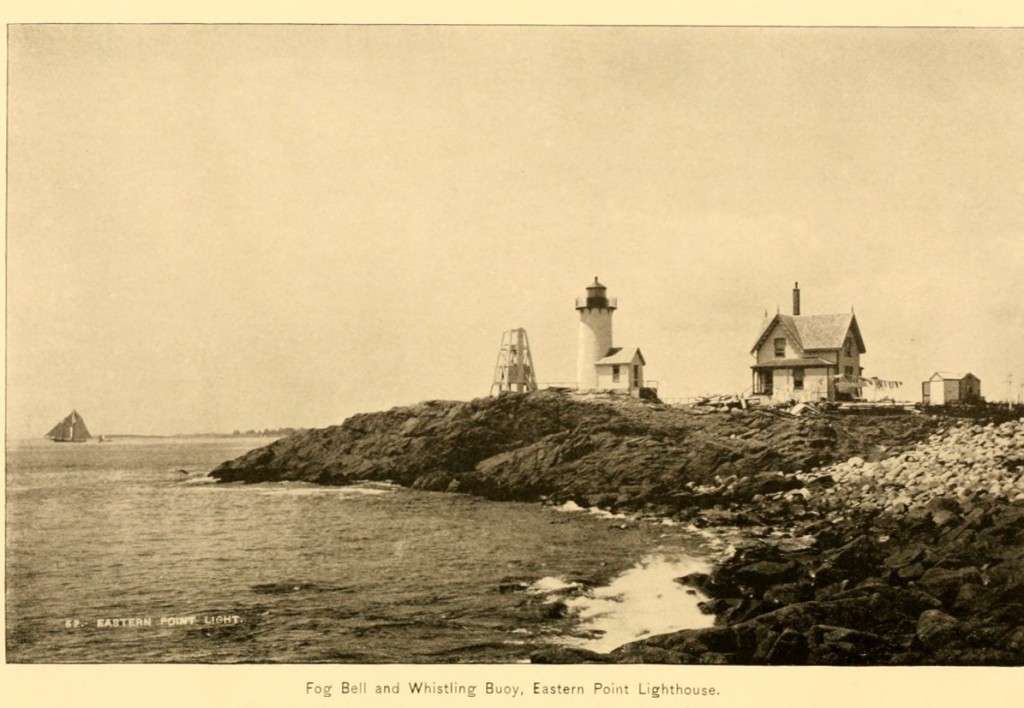
photo: Clarence Manning Falt and poem, Fog Bell and Whistling Buoy, Eastern Point Lighthouse

Clarence Manning Falt (1861-1912) by Catherine Ryan

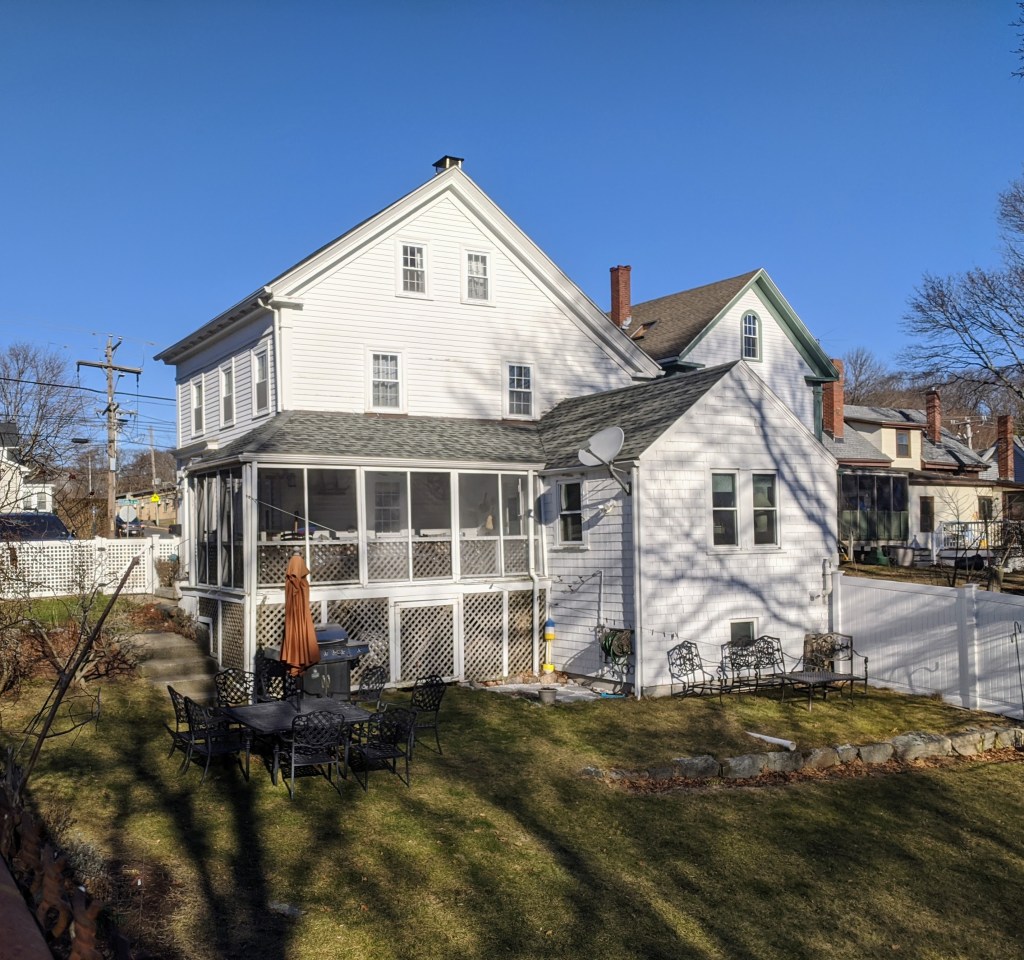
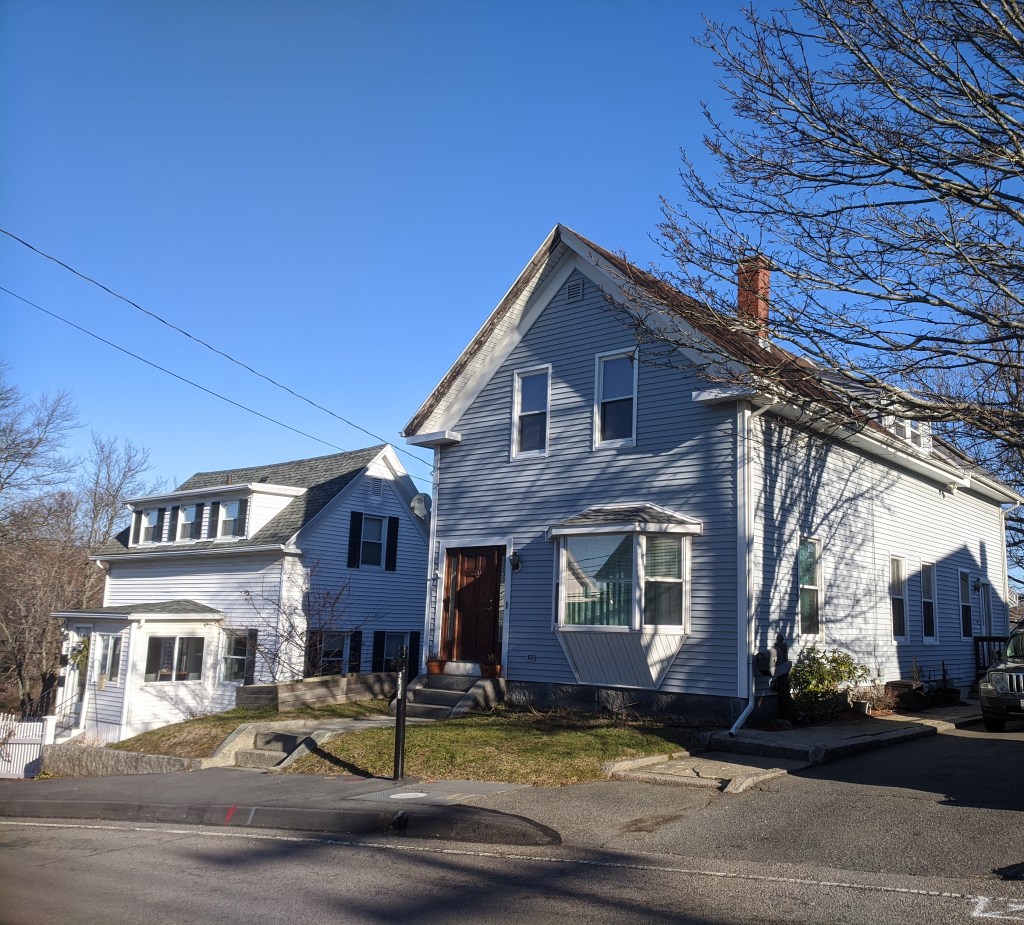
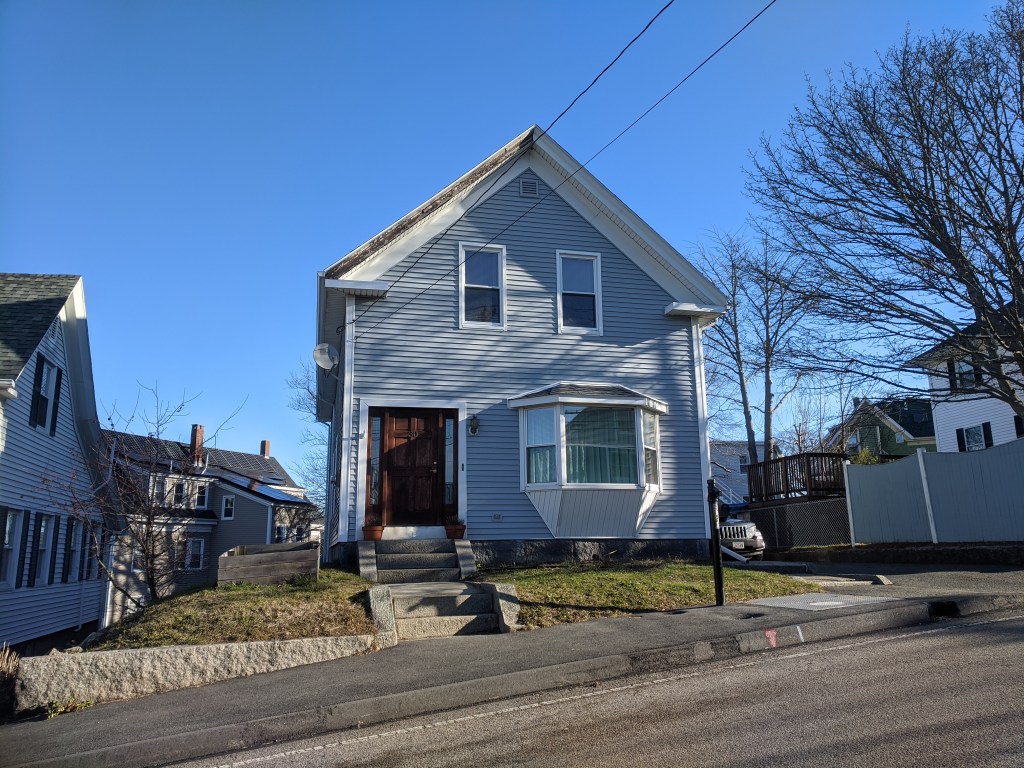
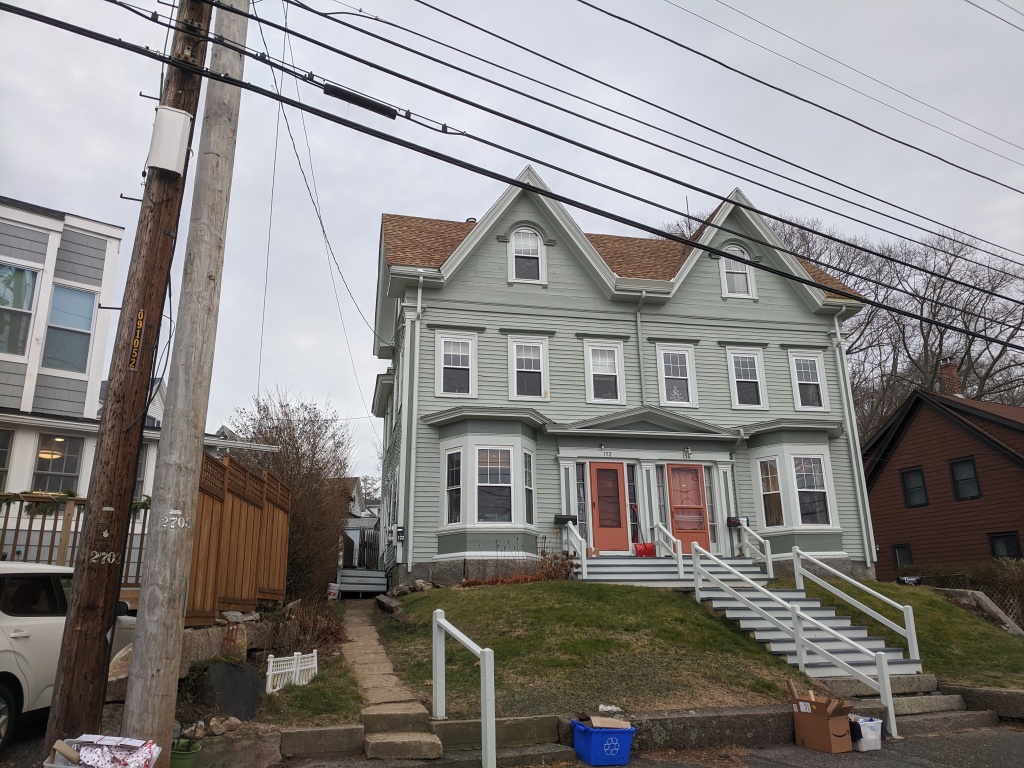
Clarence Manning Falt was a Gloucester poet and photographer, a son of a Canadian immigrant & fisherman and a Gloucester mother & homemaker (born and raised in a fisherman generations family herself). They had seven children. The Falt family eventually purchased 172 East Main Street; Clarence and his surviving siblings continued to live there as adults. It’s a huge home.

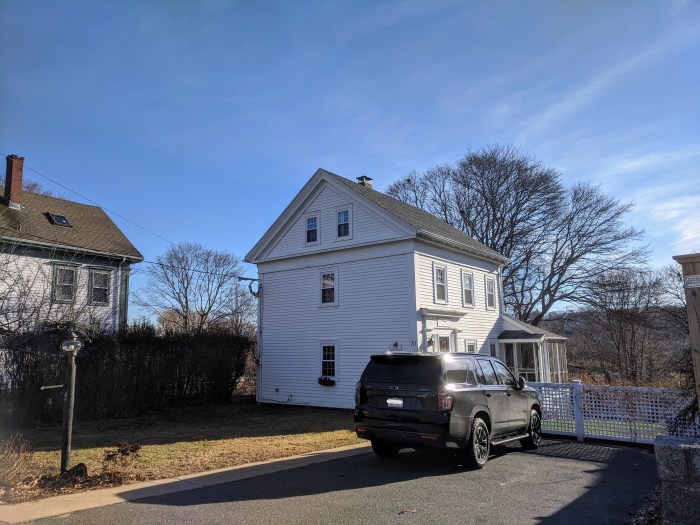
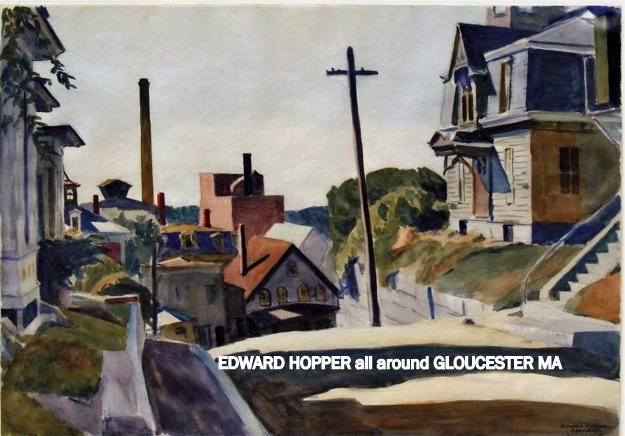
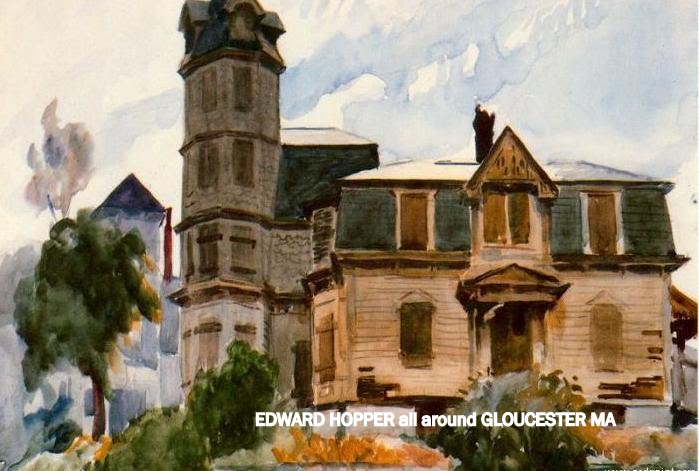
photo caption: 172 East Main Street, Gloucester, Mass. An Edward Hopper drawing of this Gloucester house, which I identified, was gifted to the Minneapolis Art Institute and included in a travel exhibition highlighting major drawings from this famous repository.

Clarence Manning Falt clerked for various businesses on Main Street to support his art practice.

By the 1900 census, clerk was dropped from the “occupation” category, “Author” stood alone.

Falt photographed and wrote about Gloucester, where he was born and raised during the late 1800s. His work reflects his own personal experiences including the fishing industry of his parents’ world. The best ones connect readers to this world because of his talents and an insider’s careful observations. Some of the writing relies too much on tropes and can be a chore, though never as difficult as the jobs he portrays, and may stick with you just the same because he is successful in providing such accurate and detailed examples of the business of fishing and the beauty of Gloucester. Some poems rise to evoke a full and cinematic day at the docks and ideas to mull over.


POINTS OF INTEREST: GLOUCESTER IN SONG

Falt’s book of poems and photographs, Points of Interest Gloucester in Song, was published in 1894, the year after his mother died. He dedicated the volume to her. Examples of his original and stunning photographs are from the copy held in the collection of the Library of Congress which was digitized. The pairings aren’t always successful and one might long for more photos, as I have. A few appear to be source photos for vintage postcards.

“To those who have grown up from childhood amid the grandeur and solemnity of these scenes, to the stranger who has become familiar with them, may their hearts be quickened with a keener appreciation for, and a deeper sympathy with, all that has made Gloucester and its suburbs charming and historic.”

Clarence Manning Falt

and: The Old Fort, Eastern Point and: The Bell, The Whistle, and the Buoy

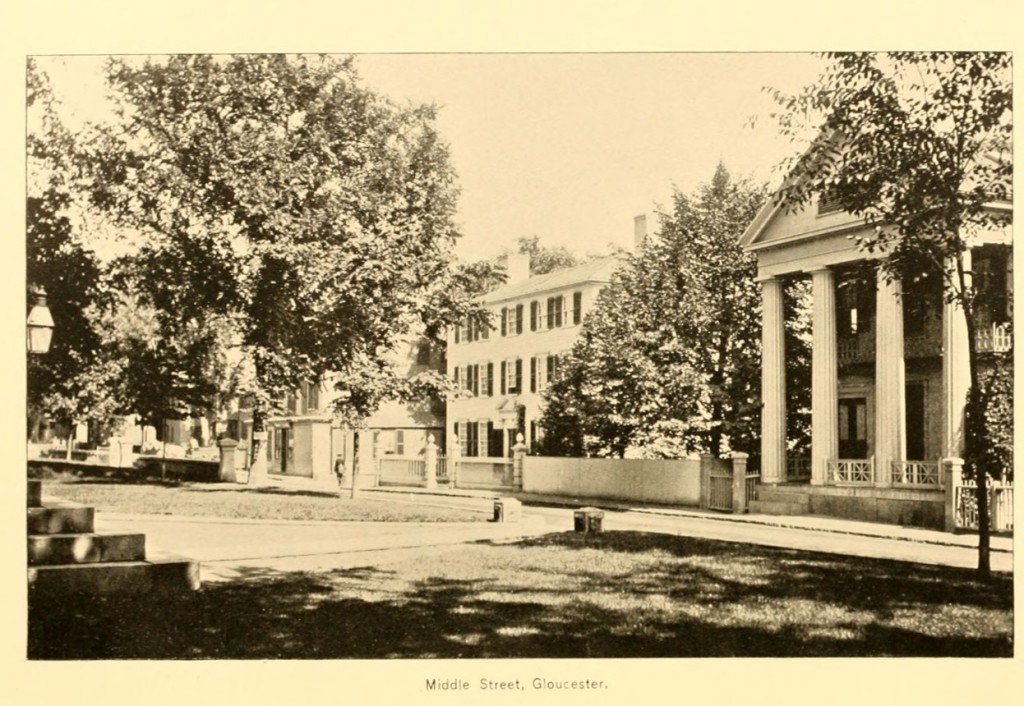
example of photo surpassing (dated/trope) poem example | photo caption: A Legend of the Whipping Post, Middle Street

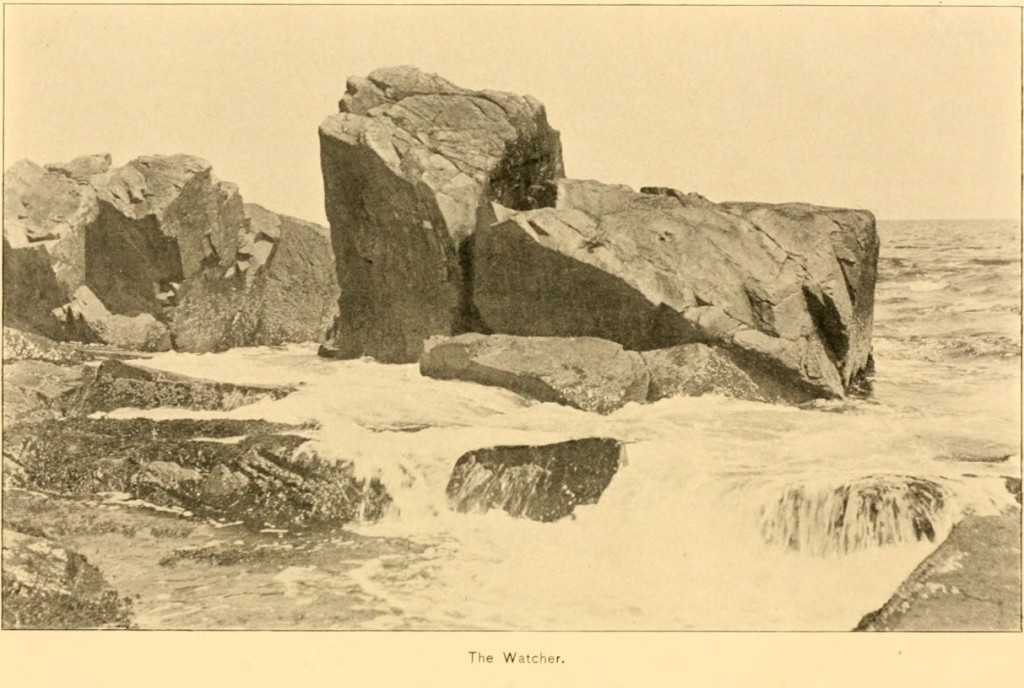
Have you seen this rock face profile?

photo caption: The Watcher

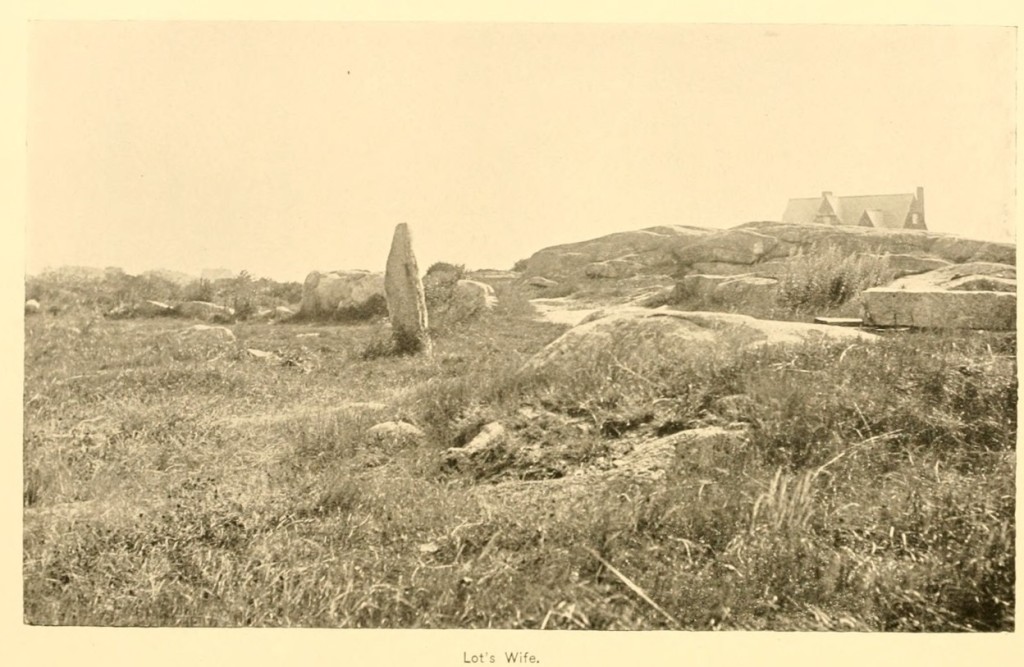
Have you walked past this balancing skinny topper?

photo caption: Lot’s Wife

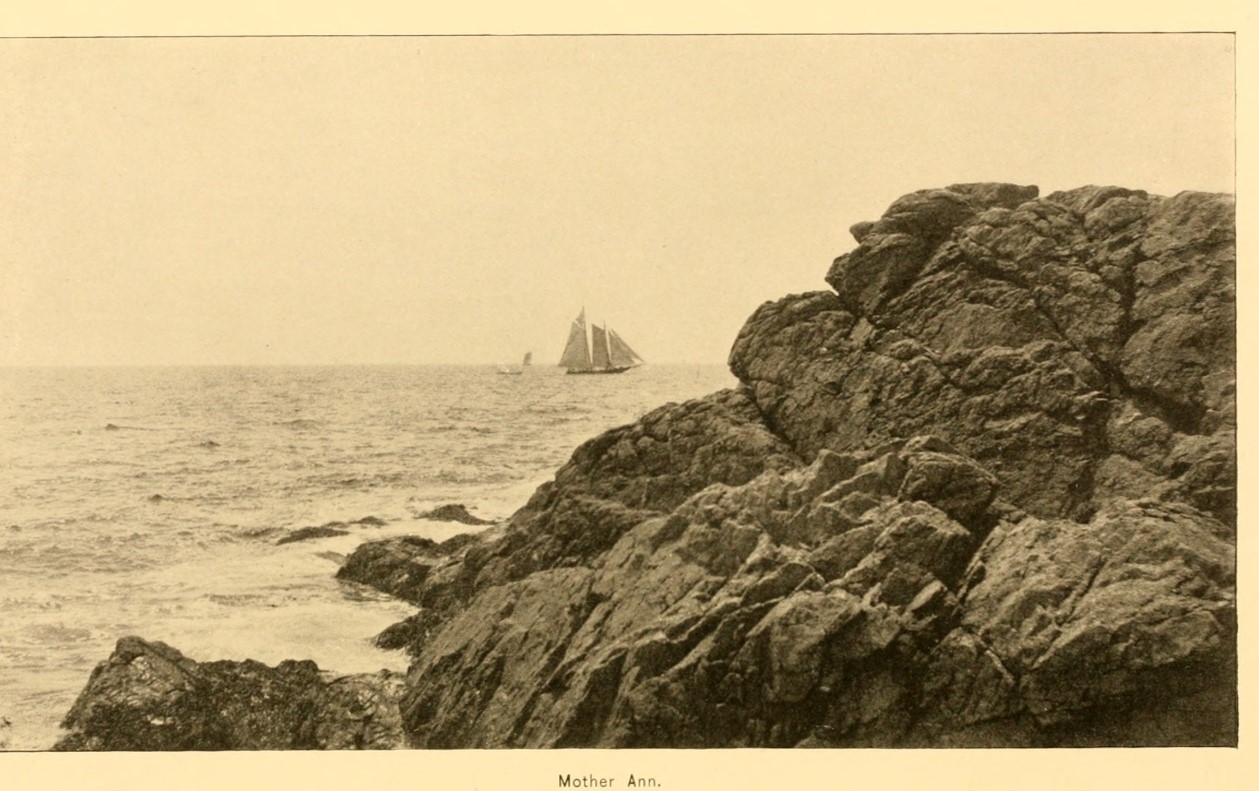
Poem titles and links for the photo grid below:

(take time to enlarge the photos!)

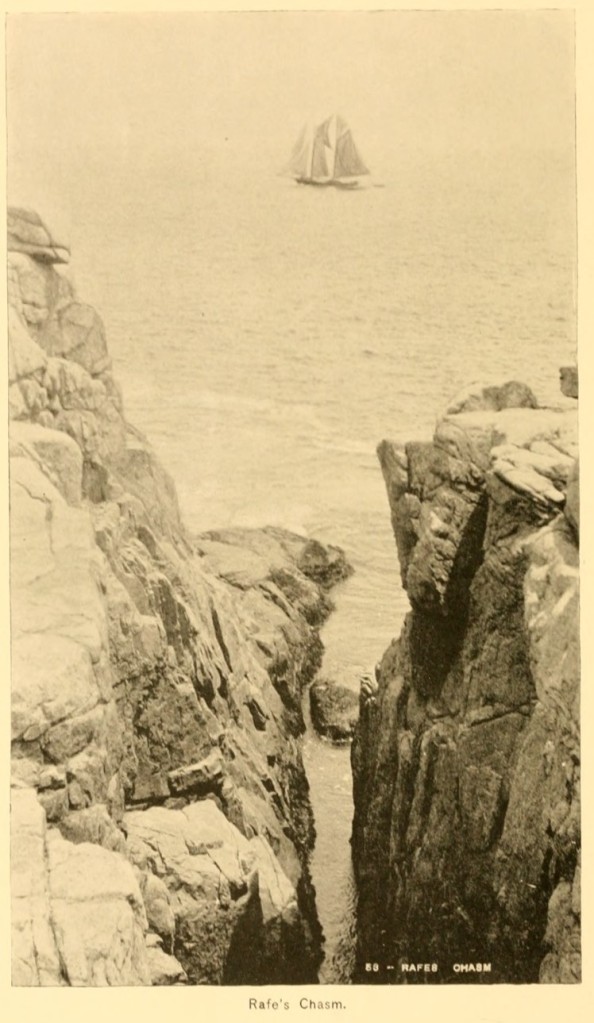
photo caption : A Winter’s Day at Rafe’s Chasm

Falt poems from nature (without photographs) from this volume and worth a read

THE BLUETS
  
 IN mosses green
 A charming scene,
 To me a sweet surprise,
 In bright array
 This fair spring day
 The bluets greet my eyes.
  
 Each dainty cup,
 Is lifted up
 With tints of heaven’s hue; 
 Each budding gem
 A diadem
 Bespangled with the dew.
  
 Like tiny shields
 Amid the fields,
 On bodies, slim and frail,,
 They wave and bend
 And sweetly send
 The Welcome Spring’s All hail!
  
 Where bright sunshine
 By one divine
 Can reach each fragile heart,
 They lovely gleam
 Like some sweet dream
 And Joy’s sweet pulses start.
  
 My better self
 (The heart’s stored wealth)
 Enraptured at the sight
 On each sweet face
 See’s Heaven’s grace
 And life, immortal, bright.
  
 On, tiny blooms,
 When waking tombs
 Lie buried ‘neath the snow,
 And Death doth keep
 Guard o’er thy sleep
 And blust’ring winds they blow,
  
 Backward apace
 My heart will trace,
 And bring, begemmed with dew,
 ‘Mid mosses green 
 The charming scene
 Of you, sweet buds of blue.
  
 -Clarence Manning Falt, 1894, 
in Gloucester, Ma. 

Bluets, photo courtesy Justine Vitale

WHARF AND FLEET

Falt’s volume of poems and photographs, Wharf and Fleet: Ballads of the fishermen of Gloucester, was published in 1902. A copy of the book held at the University of California was digitized and uploaded in 2006.

This one was dedicated to Winthrop L. Marvin* (1863-1926), author of The American merchant marine; its history and romance from 1620 to 1902, also published in 1902.

“…Ever since 1713 Gloucester has been the peculiar home of the schooner, and this is now and long has been the unvarying rig of her unrivalled fleet of deep-sea fishermen. The first entry of a schooner in Boston’s commerce occurs in 1716, — “Mayflower,” Captain James Manson, from North Carolina. As Captain Andrew Robinson was a direct descendant of John Robinson who preached to the Pilgrims at Leyden, it is conjectured that this “Mayflower” was the fist schooner, the original Gloucester craft. Be this as it may, her useful successors are numbered by the thousands,…”

and re: the 100 days War with Spain:

“At the Gloucester recruiting station, in the early summer of 1898 , 76.5% of the men examined were accepted. At Boston the percent accepted was 14.5; at New York only 6. This means that in physique and intelligence the fishermen of New England are very much superior to the merchant sailors of the great seaports. So valuable a national resource as the deep-sea fisheries cannot be suffered to decline.”

*Winthrop Lippitt Marvin – U.S. journalist, and author; Civil Service Commissioner of Massachusetts; secretary of the Merchant Marine Commission

Back to Falt

Clarence Manning Falt was clearly proud of his parents and hometown and had a linguist’s ear and aptitude for the music of words. He studied public speaking and drama in Boston and New York. This book incorporates strongly stylized dialect deliberately, heavily.

“There is no distinct vernacular used, for the nationalities represented in this fishing port are so complex as to render that impossible, but there are many phrases in general use which I have endeavored to bring forth in these ballads. Born in this seaport city, with blood of seafaring people in my veins, the grandeur and pathos of this variable life have ever enthralled me.”

Clarence Manning Falt

More From his intro

Gloucester’s “population at the writing of this work is about 29,000. As a fishing-port, it is the largest in the world. Here can marine life be studied in all its phases. Here, lying at their moorings, will be found the up-to-date Gloucester fishing vessels, for the modern type of fishing vessel is t he pride and delight of a Gloucester skipper’s heart. He considers his stanch craft his ocean home. Indeed, these handsome vessels are as fine as the stately yachts that daily grace the harbor, for one would immediately note their fine sheer, perfectly fitting sails, clean decks, trim rig, and crews of able-bodied seamen, marking a wonderful and almost magical development from the primitive types of the quaint shallops, pinnaces, and pinkies of the olden days.

Gloucester harbor, like some might arena of old, is terraced with impregnable bastions of rugged hills and seared and time-furrowed cliffs…At night its beauty is unrivalled. Seaward its light-towers flash and gleam…the fleets glowing to port and windward, vying landward with the city’s brilliant reflections, sparkling with the shimmering glows of the wharf lights, the anchored fleets, and the inverted spangles of the stars of heaven… The wharf life has also developed marvelously. Every up-to-date method of prosecuting this industry is employed. This development has brought many new occupations and newer characteristics of the life. ”

Clarence Manning Falt, 1902 excerpt from his introduction Wharves and Fleet

A Matter of the Ear

“Packin’ Mack’r’l” — that does sound musical, and easily missed! How it makes me smile imagining Falt enlivened by the sights and sounds all about, fishing for just the right words and photographs; all the while diligently preserving a specificity of Gloucester’s fishermen’s dialect; a language all its own, encompassing many nationalities; one in which he was fluent and could translate and that he felt through his art. I wish that there was an audio recording of his reading aloud (or under his direction).

reminder comparable- post Civil War there was an uptick of slang dialects expressed in American writing, notably Tom Sawyer published 1876 and Huck Finn 1885(US)

Falt poem & photos- Gloucester sound and “see”scapes

SELECTION OF FALT’S POEMS

Many of the poems from Wharves and Fleet include vivid definitions tagged beneath which are delightful, personal and informative.

photo caption: “Th’ Spider an th’ Fly” Driving’ th’ spiles; buildin’ th’ w’arves

In building a wharf, the piles are first inserted into holes made in the dock, then after being carefully inserted and put in shape, they are driven down to a certain point by a heavy iron weight suspended from the top of the scow.

“Fly an’ spider”: figuratively used when the heavy iron weight (“th’ spider”) strikes the top of the pile (“th’ fly”). An old saying, long handed down by the fisher-folk**.

Notes from – Clarence Manning Falt

**have you heard this expression?

Ride stilts- “reflections of the piles at low tide. As the hawser lifts and drips and the crew hauls upon it, the phosper at night gleams most beautifully.

Notes from – Clarence Manning Falt

Dryin’ time after a heavy rain or spell of easterly weather, one of the most picturesque scenes of the harbor is the hanging of hoisted and half-hoisted sails from all sorts of crafts to dry in the coming forth of the sun.

Note about “Drying Time” – Clarence Manning Falt

Some of the poems I like most helped me learn about ancillary jobs and a bigger , tender portrait of this port.

GITTIN’ UNDERWAY

           GITTIN’ UNDERWAY 
 In th’ early dawn ere th’ doors unlock,
 Then it’s crick, crick, crick, an’ it’s 
      crock, crock, crock
 An’ it’s ho an’ hi fer th’ blocks ter talk
 In th’ early dawn e’er th’ doors unlock.
  
 Then it’s ho na’ hi fer th’ dreams ter die,
 Fer th’ crews an’ th’ bunks ter say good-by,
 Fer th’ yawn an gape, fer th’ stretch an’ sigh,
 In th’ early dawn ere th’ cocks crow high
  
 Then it’s ho fer doublin’ th’ Woolsey smocks,
 An’ twicein’ th’ toes in th’ home-knit socks,
 An cuddlin’ th’ ears up under th’ locks,
 An’ haulin’ down tighter th’ souwes’ chocks.
  
 Then it’s ho fer housin’ th’ rubber boots,
 An’ firmin’ th’ heart in th’ stiff oil suits,
 W’ile the cuddies blaxe, an’ th’ coffee goots,
 An’ th’ windlass creaks, an’ th’ horn it hoots.
  
 Then it’s ho fer grubbin’ an’ hi fer drink,
 Then shadder th’ gangway an’ meet th’ brink
 Ter shape out th’ course an ter careful think
 In th’ early dawn w’ile th’ stars still blink.

“Block ter talk”: the hoisting of the sails.
“Woolsey smocks”: flannel shirts.
“Souwes’ chocks”: the flannel-line lappets 
that are attached to the sou’westers.
“Housin’ th’ rubber boots”: pulling them on.
“Cuddies”: forecastle.
“Windlass”: it is located forward the foremast,
and is used in weighing up the anchor.
“Horn”: the hand foghorn.
“Shape out th’ course”: making the grounds
by chart and compass.
“Sou’wester”: a broad-brimmed oil-cloth hat 
with ear-lappets lined with flannel.
   -------
 Clarence Manning Falt, Wharf and Fleet, 1902, Gittin’ Underway, p. 37-38 

TH’ NIPPERWOMAN

          TH’ NIPPERWOMAN 

  I SEE her black shawl mid th’ butts
      Clutched tight erpon her breast,
  I see her black cloud full uv ruts
      Er shamin’ off its best,
  I see her pinched an’ wrinkled face
      Er quizzing uv th’ crew,
  An’ this ter-nigh is ole Mart Place,
      That once wuz Marthay True.
    
   I see her lookin’ down th’ deck
      Ter git some welcome nod,
   Or still perchance th’ courage beck
      Ter put her feet erboard.
   I know her arms are tired out
      Er holdin’ uv th’ string,
   Fer ev’ry one is knitted stought
      Ter pace th’ haddickin’.
    
   Oh, Marthay True uv long ergo,
      Could you have looked ter see
   Yer rosy cheeks an’ eyes erglow
      Come cryin’ back ter thee,
   Could you have looked ter see each braid
      Thin twisted stran’s uv snow,
   I know yer would ter God have prayed
      Fer ankrige long ergo.
    
   Oh, Marthay True that bird-like sang,
      An’ twined th’ red rose high,
   An bade my boyhood’s heart ter hang
      Er love-light in thine eye,
   Could you have known th’ years would
               fling
   Yer, stranded wreck uv Time,
     Ter sell with ev’ry knitted ring
   Er dead heart’s silent chime,     
    
   Er Nipper woman in th’ cold,
      Unnoticed an’ forlorn,
   Mid fisher faces sad an’ bold,
      With hearts bruised like yer own,
   I know yer would ter God have prayed
      Fer ankrige long ere this,
   Than rather been by Fate errayed
      Er thing fer chance ter kiss.
    
   O, Marthay True, we laugh an’ woo,
      An’ twine th’ red rose high,
   An prate, an’ tell what we will do,
      With laughter in our eye;
   But way down in our hearts we know
      Time’s but er fickle thing,
   An’ ere life’s winds begin ter blow
      Come grief an’ sufferein’.
    
   Oh, Marthay True, we laugh an’ woo,
     An’ twine th’ red rose high,
   An prate, an’ tell what we will do,
     With laughter in our eye;
   But soon, too soon, our castles fall,
     Our gay ships drink th’ sea,
   An’ what should been joy’s merry call
    Jest tears fer memory.
    
   Oh, Marthay True, God wot that thou
     Meet luck with all th’ fleet,
   An if er kind word will endow
     I’ll speak it quick an’ neat.
   I know er fisher’s tender spot
     Is ankered in his heart,
   Fer once with Christ they threw th’ lot,
     An’ hauled er goodly part.  
             
   Oh, Marthay True, yer tale is told.
     Th’ hearts are tried an’ staunch,
   An, they have trawled er sum uv gold
     Ter speed yer in joy’s launch.
   God wot that thou mayst happy be.
     Jest keep yer sad heart bright,
   An’ He will steer yer down Life’s sea
     Ter find Hope’s port erlight.   

Nipper woman: one of a class of women who knit 
and sell to the crews of the fleet the woolen 
nippers worn to prevent chafing of the fishing lines.
It is an industry pursued in the winter 
and sold to the firms and the crews in the 
early spring, at the fitting out or in the fall 
at the “shifting of voyages.”

Nippers: when the trawl gets caught, 
--“hung up,” in fishing vernacular,
--mittens are removed and the trawls 
are hauled in with a pair of nippers, 
bracelets of knitted wool or 
cloth held in the palm of the hand, 
creased to allow of a better hold of the line.
  
 ------
Clarence Manning Falt, Wharf and Fleet, 1902 
Th’ Nipper woman,  p. 37-38        

Woolen nippers from Gloucester on view at the Smithsonian were exhibited in the 1883 International Fisheries Exhibition in London. I think of Falt’s poem, Th’ Nipper Woman, above, when I see this display, and find it all the more poignant now picturing the women & men working the dock and sea and seasons at port. Intimate and full. Gentle and rough.
photo caption: Nippers. ca. 1880s. US Fish Commission. National Museum of American History, Smithsonian, Washington, DC

GAFFIN’ FISH

          GAFFIN' FISH
 W’EN th’ tide is out er flirtin’,
   An’ fergits ter shut its door,
 An’ th’ happy clams are squirtin,
   Playin’ injine with the shore,    
    
 An th’ kids are ripe fer junkin’,
   An’ fer skippin’ rocks an’ shells,
 An fer woodin’ an’ fer punkin’
   Bobbin’ bottles in th’ swells,  
    
 An’ yer hear th’ rats er squalin’
   Frum th’ black cracks in th’ walls,
 An’ yer quiz th’ tomcats stealin’ Nearer,   
   nearer ter th’ calls,    
 
 An’ yer mark some ole trap histid,
   Like er giddy thing on cogs,
 With its body kind uv listid
   T’ward th’ black spiles an th’ logs,
    
 All togged up in robes uv coal tar,
   Yaller oaker, sash’s an’ bo’s,
 P’r’aps er crimson-pintid five-star
   Sunburs’in’ its puggy nose,  
             
 Like some poor, ole primay donnay
    Thet has wobbled all her say,
 Now shoved further ter th’ corner
    W’ile th’ daybute works her lay,
    
  P’r’aps er ole T.D. er puffin’ 
    Frum er drollin’ mouth er stern,
  Use ter bluffin’, use ter cussin’, 
    Use ter words I know yer’v hern,
    
 Then yer know time’s ripe fer gaffin’
   An’ fer puntin’ roun’ th’ docks,
 Fer it’s then th’ crews git chaffin’
   An’ er rattlin’ th’ pitchforks,
    
 Fer it’s then th’ strays go slippin’
   Frum th’ ole caps with er thud,
 An’ th’ guick gaffs raise ‘em drippin’
   Ter th’ sly punts frum th’ mud.
    
 Oh, it’s art ter watch th’ sneakin’
   Uv th’ puntin’ through th’ spiles,
 Oh, it’s art ter watch th’ peekin’
   Uv th’ gaffers an’ th’ wiles,
    
 Fer it’s thievin’ pure an simple
   An’ it’s skittish work at bes’,
 Though th’ cheek may wear th’ dimple,
   An th’ eye stan’ heaven’s tes’.     
          
 Oh, it’s risky work er gaffin’,
   Full uv duckin’s, fights, an’ jaws,
 Full uv skuddin’, full uv chaffin’,
   Full uv haul-ups, full uv laws.
    
 Fer if caught, as sure as Moses,
   Yer’ll be chucked deep in th’ dump,
 W’ile th’ smells uv sweet June roses 
   Won’t c’logne up th’ homeward slump.
    
When the trips are being taken out, 
often many fish slip from the pitchforks 
and sink to the docks. A class of young 
men and boys then row around in little boats, 
called punts, and gaff up the fish beneath 
the wharves and sell them. It is an illegal 
business, and if caught, they are subjected 
to a fine and imprisonment. 
It is operated at low tide.

“Ole trap histid”: the old-fashioned shore 
boats that haul up on the dock flats for repairs.

"Pintid five-star”: an old-fashioned emblem
For decorating ends of bowsprits.
------
Clarence Manning Falt, Wharf and Fleet: 
ballads of the Gloucester Fishermen, 1902 
Gaffin’ Fish, p.39-41        

For me, this one is a compelling balance: he carries water for the skippers and (less) for the gray market hustlers. It’s messy. His dad’s guiding hand on this one. Scroll back up and look at the “Th’ spider an’ th’ fly” photograph, the pilings and surface of the water. The images and words flow and force, back and forth. The pairings aren’t so cut and dry.
Clarence Manning Falt fast facts:

Born August 1861, Gloucester, Mass.
FatherCpt. Walter M. Falt
(b. Canada April 18, 1823- d. Glouc. 1904)
emigrated in 1845; fish dealer aka fish merchant 1870 census; skipper; master fisherman 1880 census; day laborer 1900 census
misspelled as “Fault”, Cpt and Master Sea Foam 1878
MotherMary Carlisle Robinson
(b. Glouc. 1826 – d. Glouc. 1893)
parents married Nov. 30, 1847
“keeping house”
Resided family home172 East Main Street,
he and his siblings with their parents
Edward Hopper drawing of this house in the collection of the Minneapolis Art Inst.
Day job clerk for downtown businesses (drugstores on Main)
Universitystudied oration and acting
Occupation“clerk” and “apothecary clerk” on earlier census
“author” on 1900 census
6 siblingsdates on family headstone
Marion, (1849 -1931) 1848?
Walter P. (1851-1877) laborer 1870 census
Julia Procter (1852-1924)
Clarence M. (1861-1912) author 1900 census
Austin C. (1866-1915) stevedore 1900 census
Roland H. (1868-1870)
Mary Taylor (1876-1917) 1874?
Published works1894- Points of Interest: Gloucester in Song
1902- Wharf and Fleet: ballads of the Fishermen of Gloucester
Died 1912
Gravefamily plot, Mt. Pleasant Cemetery

Under a Banner of Many Nations

Note from the author: Over the past week, I’ve shared Boston Globe Gloucester stories about immigrants: Swedish, Canadian, Italian, Sicilian, Portuguese , Irish, Scotch and so on. I thought of Falt’s books with each post.

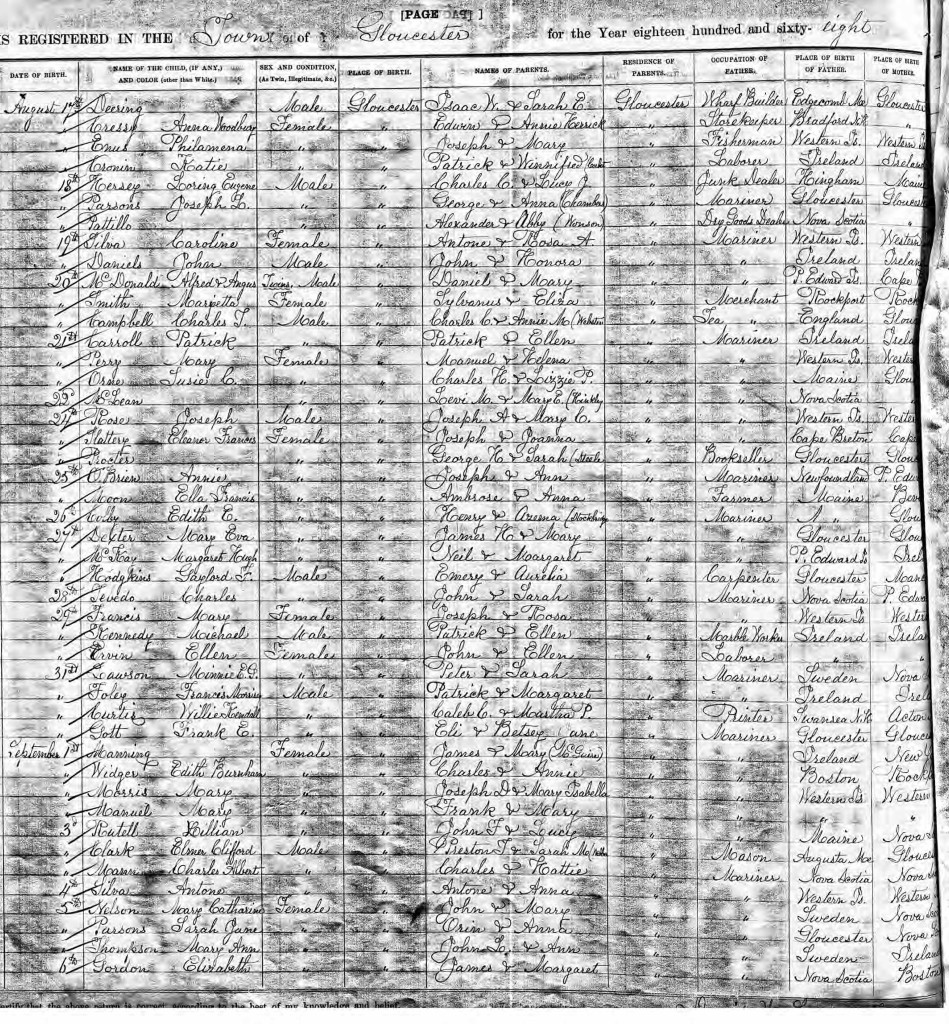
Nations jump from the page when scanning vital stats documents, too- like this one from Gloucester birth registry 1868 – scroll over to the right through Occupation / place of Birth of Father/ place of Birth of Mother.

(To get the full experience, go big! The wordpress format reduces the size, however all photos in this post can be clicked, double clicked through, or pinch & zoomed to enlarge)

1897 Boston Globe century list of top captains

  • Captain Thomas Bohlin #3 “king pin among the halibut fishermen” (born in Sweden)
  • Captain Charles Harty tie for #2 mackerel “as a seiner his reputation has been made.”
  • Captain Solomon Jacobs #1 OG “widest known fisherman this country has ever produced…having started out as record beater, has had to live up to his reputation and has succeeded…” codfishery then mackerel seining – global expansion, lost everything & came back again “at the foot of the ladder. His old time luck had not forsaken him…” (born in England, brought to Newfoundland when a baby)
  • Captain Alex McEachern #7 high lines, particularly Grand bank codfisheries beat all records in 1897 (born Cape Breton)
  • Captain John W. McFarland tied for #2 “the only one to make two newfoundland herring trips, and marketed them in New York, on one season” (born in Maine)
  • Captain Andrew McKenzie #8 Iceland halibut and Newfoundland herring (born in PEI)
  • Captain Lemuel F. Spinney #5 “high line halibut catcher who is in the first flight of the “killers.” (born in Yarmouth, N.S.)
  • Captain Charles Young #6 halibut fleet -1895 record for most trips in one year (born in Copenhagen)
  • Captain Richard Wadding #4 halibut (born in England)

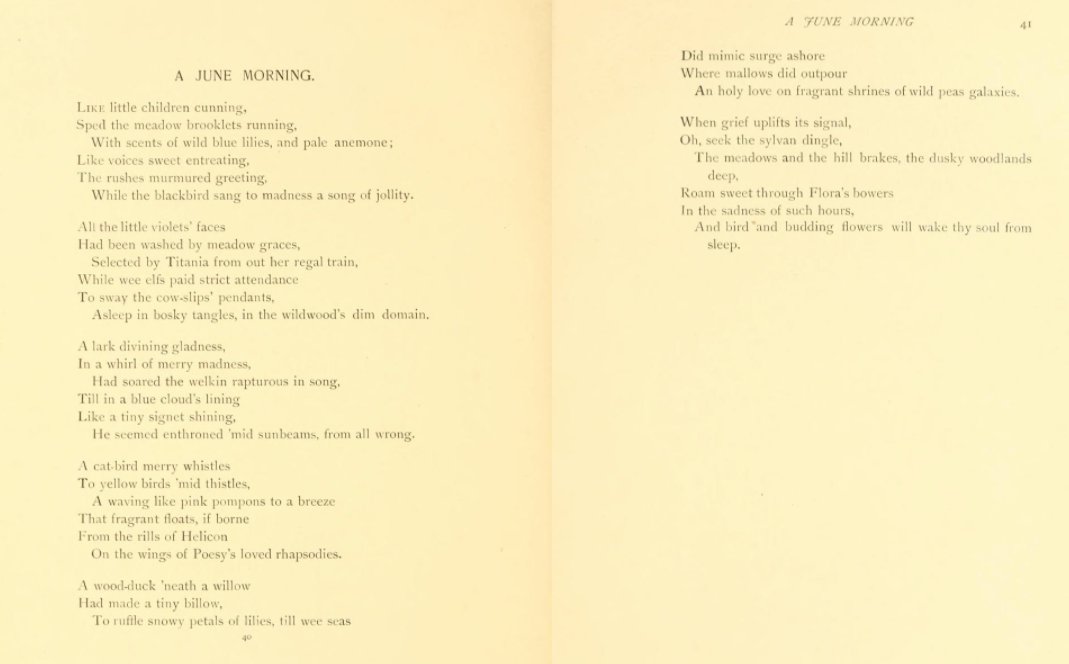
A June Morning – arch yes to my ear, and interesting catalogue of flora and fauna then

http://www.cryanaid.com

1885 “Timely rescue by hardy men of Gloucester” Boston Globe interviews Captains from schooners Clytie and Alaska about the terrible hurricane at Christmas time

On this day, a rescue at sea, December 29, 1885. Boston Globe story presented accounts from both crews and was published January 2, 1886, (author possibly Tom Herbert)

DRIVEN TO THE SEA: In the terrible gale at Christmas Time. Facing Starvation and Cold on the Schooner Alaska. Timely Rescue by Hardy Men of Gloucester.

Still another is added to the long list of stories of terrible sufferings at sea and gallant rescues that will long make memorable the month of December, 1885. The schooner Clytie of Gloucester arrived in port Thursday night, with the schooner Alaska in tow, the latter vessel showing evidence of the trying ordeal through which she had passed. The story of the recue as told by Captain Courant of the Clytie, is one of thrilling interest.

“Tuesday morning,” said he, in his bluff, hearty manner, “just at daybreak, we sighted a vessel way off on the horizon. We could not make out shwa she was, or what she was doing. We couldn’t really make out whether there was anything the matter with her or not, she was so far away. I went up on the house with the glass. It looked then as if she was an anchor, but we knew that could not be so, as there was no bank there. By and by, as it grew lighter, and we worked up nearer, we saw the signals of distress flying. We were then under two reefed foresail, with bonnet off the jib. When we saw she was in distress we put two reefs in the mainsail and stood up for her. Remember all this time it was a howling hurricane. It was a different thing out there 150 miles at sea, with the great waves threatening to send us to Davy Jones’ locker every minute than what it is to tell of it here in comfortable quarters. When we got near the vessel we saw at once that it would be impossible to board her. So we laid by the rest of the day and all night, and the next morning, though it was still dangerous work,

We Got Out One of the Dories

and got aboard. I tell you it was a hard sight, and the story of terrible suffering from hunger and exposure was a pitiful one. The schooner was the Alaska from , N.B. She sailed Friday, with a crew of six besides the captain, but was met by a fearful gale when outside, and forced to drop anchor. The gale, however increased to such an extent that both cables parted, and the schooner drifted helplessly out to sea. From that time until Tuesday morning, when we discovered her in latitude 42 50 north, longitude 67 21’ west, she was driven about at the mercy of the wind and waves. Their provisions gave out, and death by starvation stared them in the face. They grew weaker and weaker, but still were obliged to do what they could to keep the vessel afloat. Their sails were gone, their decks swept with the waves, and they were drenched to the skin. The cold increased, and with it, their sufferings. Death must soon have ended all if we had not sighted them just as we did. But even under those circumstances the captain didn’t want to desert his schooner; he said she was all he owned in the world, and he had almost rather go down with her than lose her. There was, however, no water, no kerosene and nothing to eat on board, and the vessel was in a dangerous position. She had been loaded with hay and wood, but her deep load of wood had long ago been washed overboard. As I stepped on board the craft, which seemed just

Ready to Take Its Final Plunge,

the Captain stepped forward and said:

“Can you give me some men to help me work my vessel?”

“No, sir,” said I, as I glanced about the wreck; “in the first place, there isn’t a man aboard my vessel would take the risk of going with you.”

“And you won’t let me have even one man” said he in despair, as he began to see his last chance of saving his vessel disappearing.

“No,” said I, “I wouldn’t leave one of my men aboard this craft to take his chances with you if she was loaded with gold.”

He then offered me $100 for a man, but of course, I refused.

“I will,” said I, “do one of two things: I will take your crew aboard my boat, or I will put a crew aboard your vessel and try to work her in.” This last offer I made on condition that I should receive $1000 if I got the vessel in port safely. I was off on a fishing trip, and of course I couldn’t lose my voyage for nothing. It might pay me $1000, and it might not, but that was about fair for the loss of my voyage. He offered me $500 and then $700, but I told him I wouldn’t take $999; that $1000 was only the fair thing. He finally consented and signed the following agreement:

December 29, 1885

I hereby agree to pay the schooner Clytie the sum of one thousand dollars ($1000) to help save my vessel and crew. JOSEPH BISHOP.

Of course in doing even this I had to take my chances of losing my voyage, for we were in a dangerous position, and the chances of saving the vessel were poor. I told him I would take him into the first port I could. The wind was fair for the Nova Scotia coast, but it is a bad place there, and I told him I would try to get him into either Boston or Gloucester. I put six men aboard. The wind favored us, and here we are safe and sound.

“The names of my crew who ran down in the Alaska? Oh, they were Pat Foley, Dick Welch, King Silva, Frank Tijer, John Shea and John McNulty—a good set of boys they are, too.”

“How are the crew of the Alaska getting along?”

“Well, they suffered terribly, but will be all right in a few days. The mate is the worst off, his feet and fingers being frozen. It was a close call for them all, but you know we seafaring men have to take our chances.”

Captain Courant, sch. Clytie

A “Sully Miracle on the” Sea story! Now from the sch. Alaska point of view:

LASHED TO THE WHEEL: Experience of the Crew of the Alaska Given by Captain Bishop—Their Miraculous Escape

Captain Bishop of the schooner Alaska was found aboard his vessel, which is lying on the north side of Union wharf. When asked about his trip, he said it was the roughest weather he had seen for over thirty years.

“We started,” said he, “from Harvey, N.S., Christmas afternoon, with a deckload of cordwood and hay in the hold for James Stevenson of this port. It was blowing pretty hard at the time, but we supposed it would soon moderate. After running about two miles, and when off Grindstone Island, we decided to anchor, as the wind appeared to be increasing. We placed two anchors ahead and let out 210 fathoms of chain. At 2 o’clock the next afternoon the chains parted, and the vessel drifted into the Bay of Fundy. It was then snowing hard, the sea was tremendously high, and it was blowing a terrific gale from the northeast by east. It was impossible to carry any canvas, so we rode along under bare poles. At midnight the storm was fearful. The high seas washed continually over the decks, and the two men at the wheel had to be lashed, otherwise it would have been impossible for them to remain on deck. At 3 o’clock Monday morning we hove the vessel too by a peak in the mainsail. At 7 o’clock we were to north-northwest, with part of the three-reefed foresail and peak of the mainsail, the rest of the mainsail and two jibs having been blown away. At 3 o’clock that afternoon we found ourselves near the breakers, on the southern point of Grand Manan. In the meantime it changed from snow to hail and were then able to see ahead for the first time since Saturday. The first thing we saw was that we were going ashore inside of Gannet rock.

Our stern was close into the breakers when the keeper of the light motioned to us to steer to the south, which we did, and the vessel passed out safely. All this time the sea was mountains high and washing clear over the lighthouse.

Cpt. Bishop, sch. Alaska
Gannet Rock lighthouse – photograph Canadian Coast Guard collection shared on Lighhousefriends.com

The mate and two seamen had their hands and feet badly frostbitten, while my limbs were partially paralyzed Monday evening the wind veered around to north-northwest. At 10 o’clock Tuesday morning, when 130 miles east by south of Cape Ann, we met the fishing schooner Clytie, which towed us to this port. The Alaska had her boat and deckload carried away.

Boston Globe report published Jan 2, 1886

The vessels:

Itemized on List of vessels district of Gloucester August 1878, Gloucester archives 

 Gloucester Harbor. Alaska. 63.87 tonnage.
 Master’s name M.M. Murray Number 455 
 Built in Gloucester in 1867 by George Norwood & Sons
  
 Gloucester Harbor. Clytie. 72.17 tonnage.
 Master’s name A.C. Browell #125,125
 Built in Gloucester 1873 Rowe & Jordan 

2019 article about the history of the (now deteriorating) Gannet lighthouse (yes, for the birds that were there) with interview of former lighthouse keeper: “The Gannet Rock lighthouse soars above a rocky islet off Grand Manan, an old beacon of light for fisherman. But the tower, built in 1831, is battered from years of neglect. It was abandoned in the early 2000s and stopped being maintained by the Department of Fisheries and Oceans in 2010. “


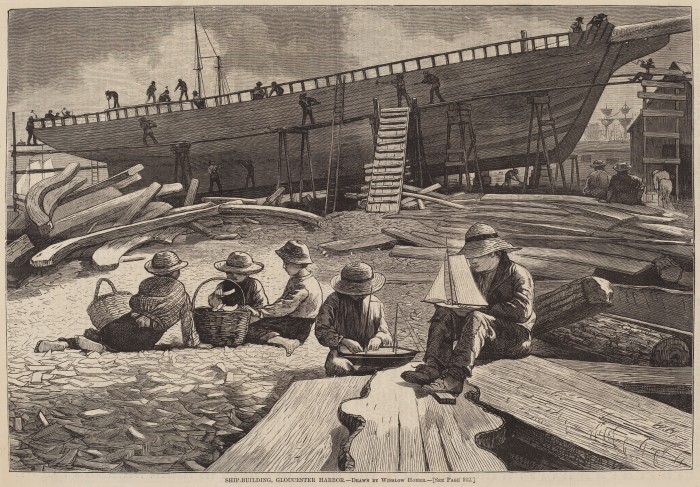
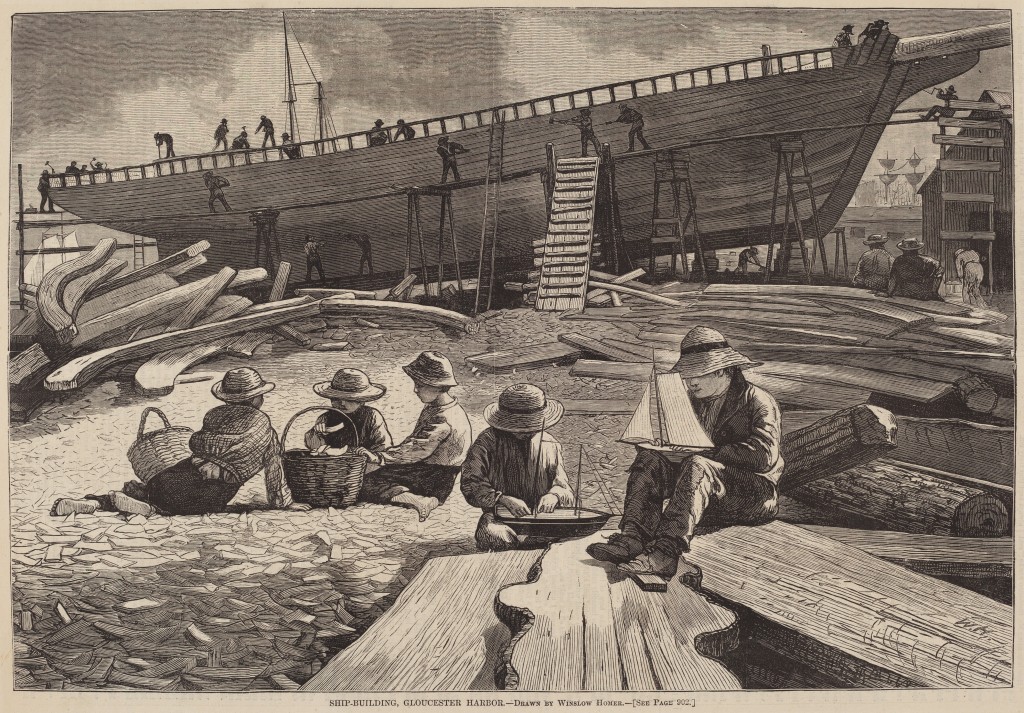
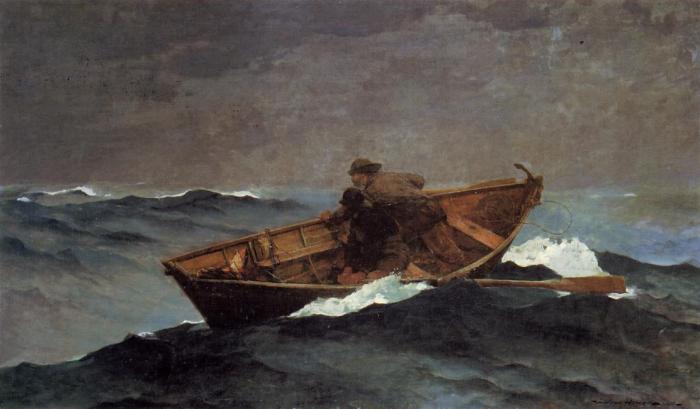
Winslow Homer, Ship building Gloucester Harbor, 1873

Same year as Clytie was built


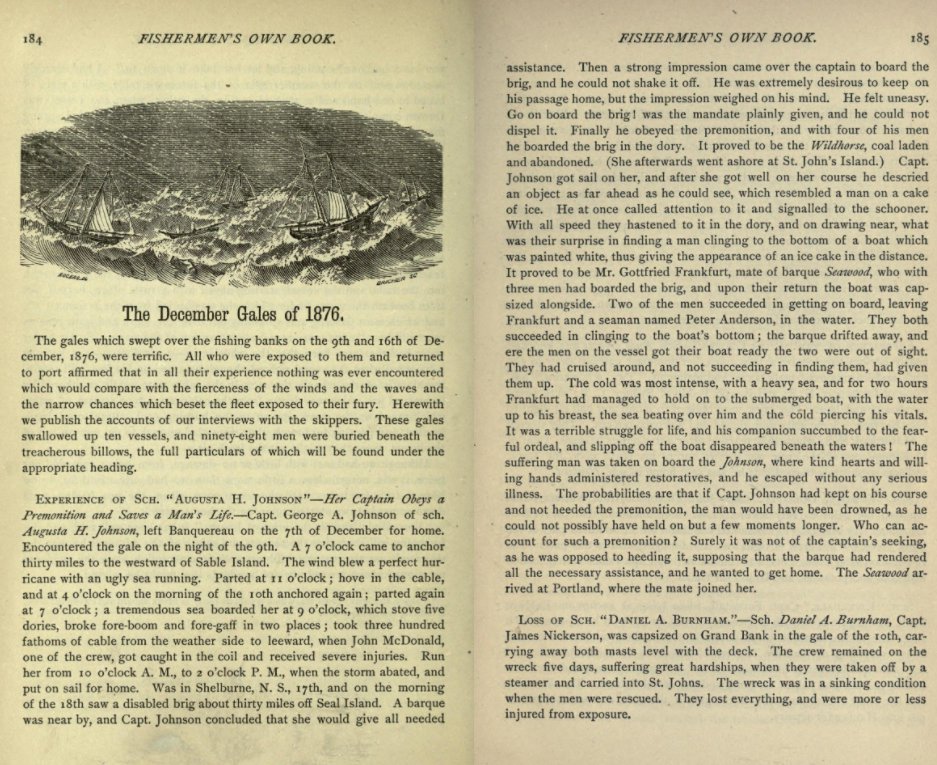
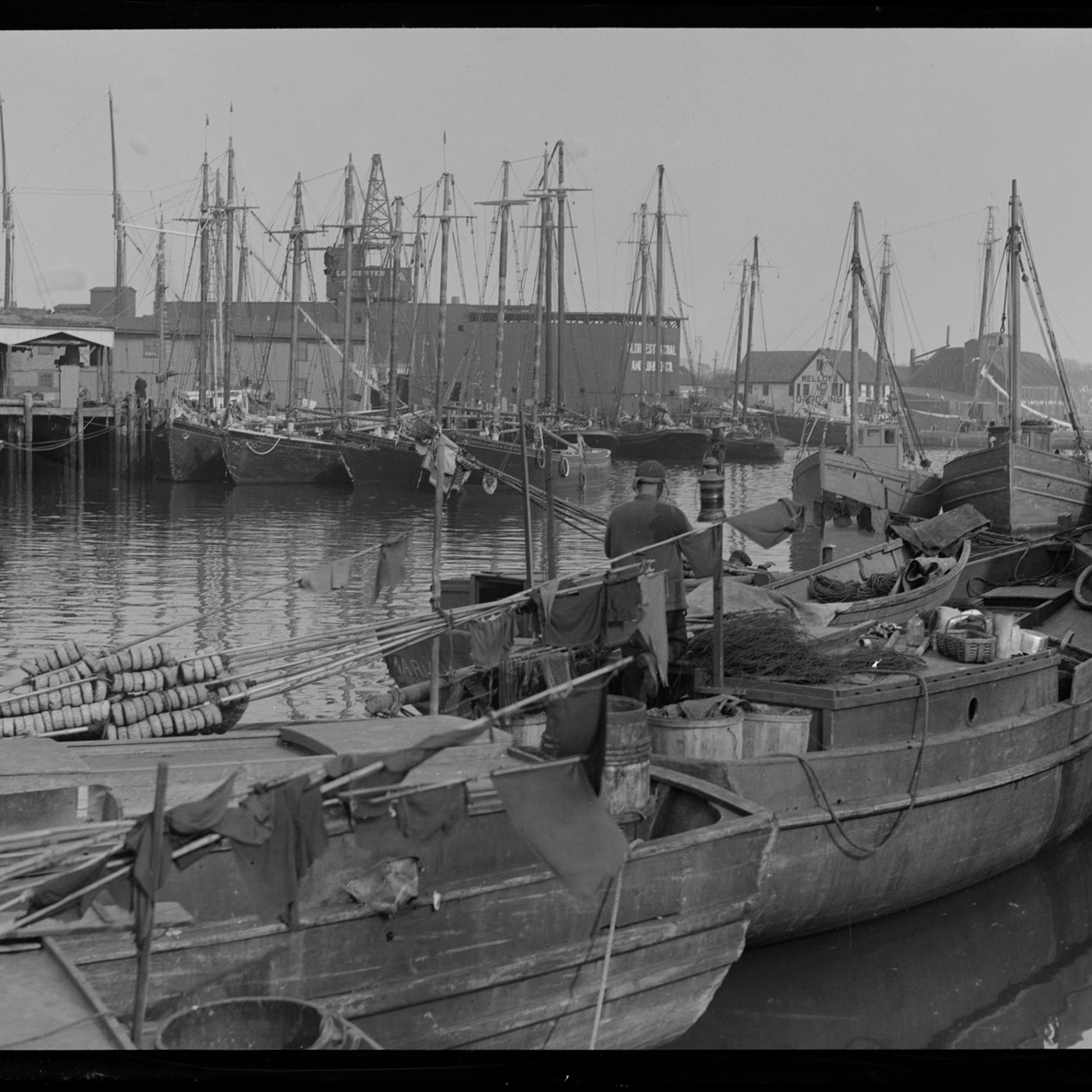
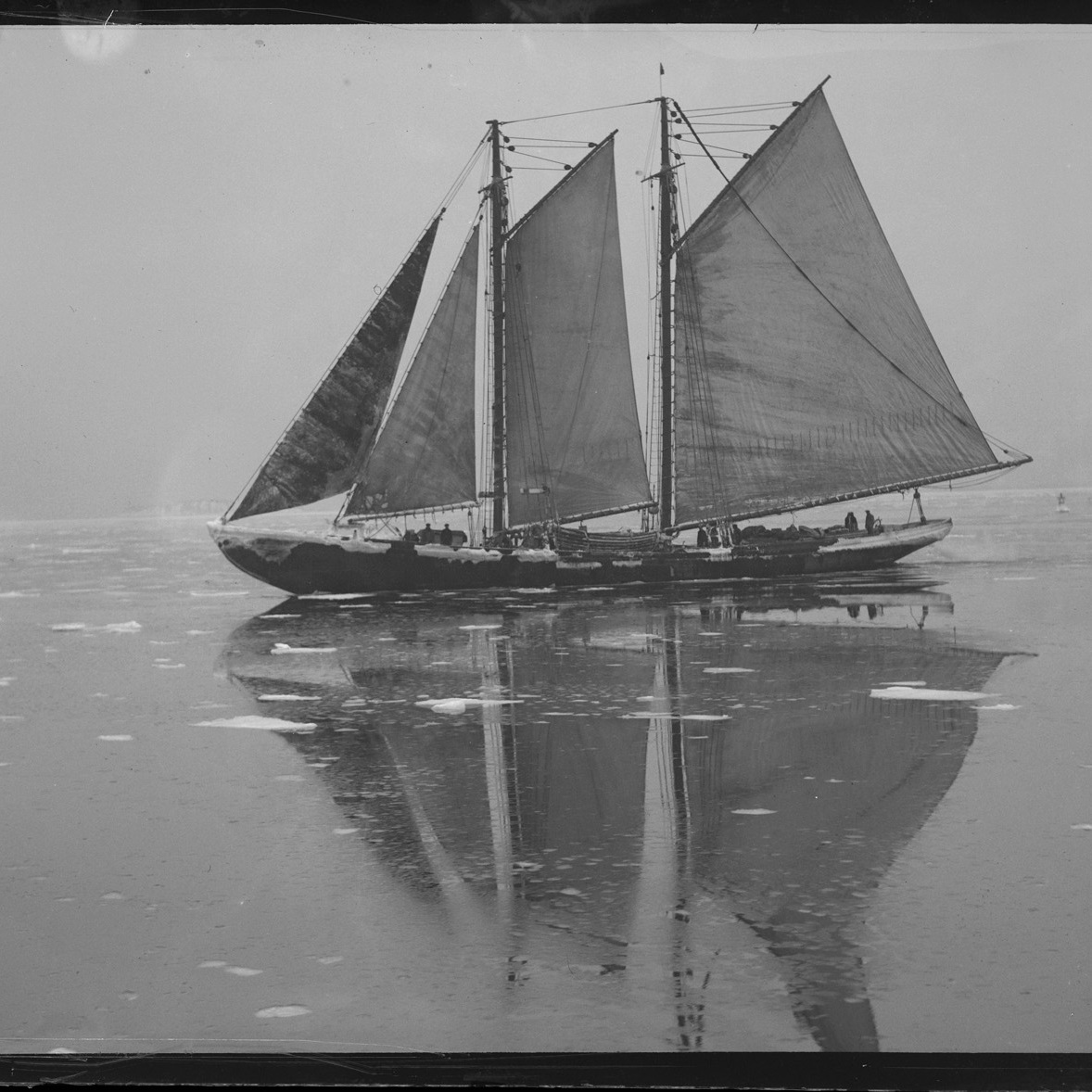
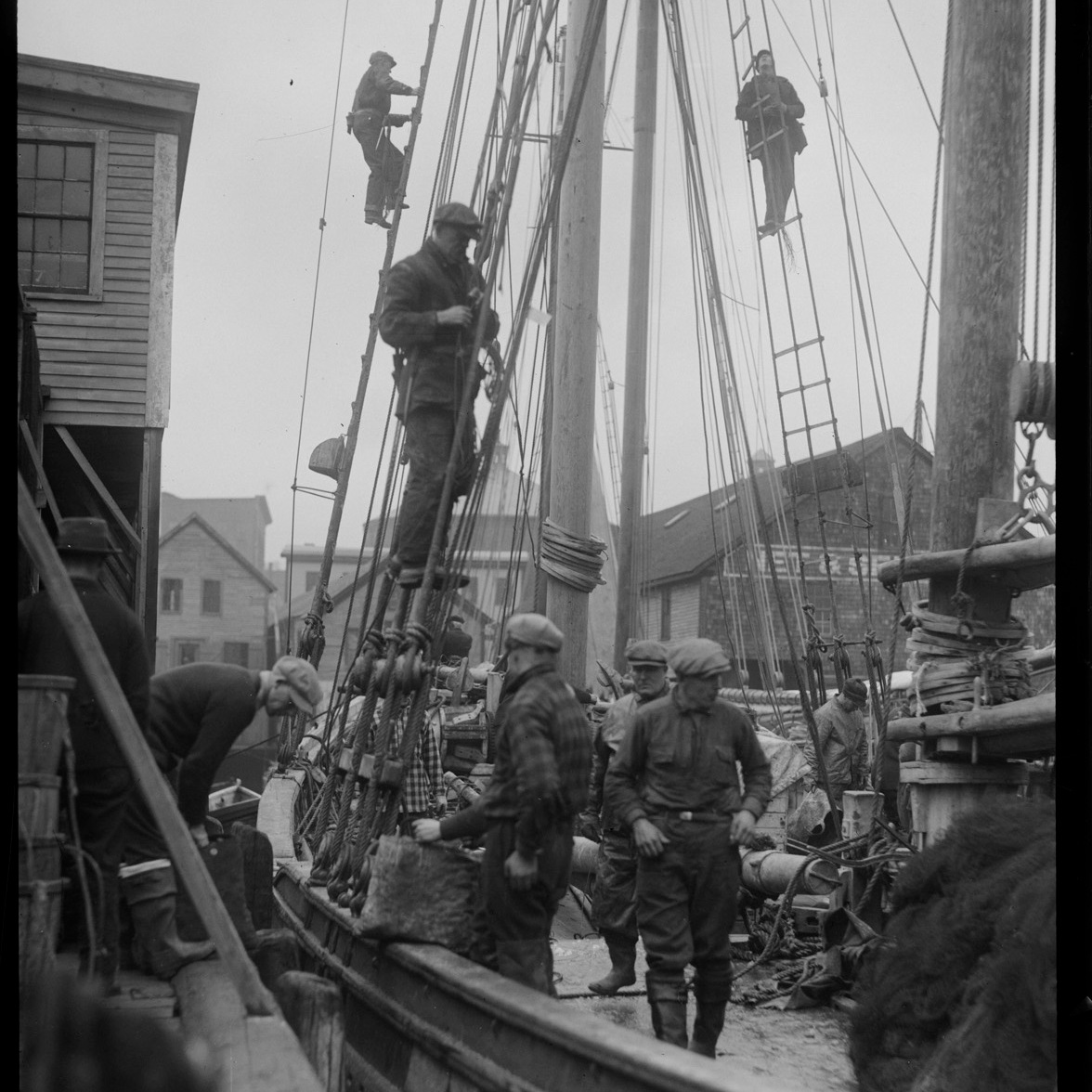
Scenes of vessels/fishing industry in Gloucester harbor and accounts of winter storms

1876

Ten years earlier, “The December Gales of 1876” chapter from The Fishermen’s Own Book comprising The List of Men and Vessels Lost from Gloucester, Mass., from 1874 – April 1, 1882 AND a Table of Losses From 1830, together with Valuable Statistics of the Fisheries, ALSO Notable Fares, Narrow Escapes, Startling Adventures, Fishermen’s Off-Hand Sketches, Ballads, Descriptions of Fishing Trips, AND Other Interesting Facts and Incidents Connected with This Branch of Maritime Industry, Entered according to Act of Congress, 1882, Procter Bros., Lib of Congress

1902

Clarence Manning Falt

1920s & 1930s

Leslie Jones, others

131 years ago today, speedy fishing schooner Sarah H. Prior was in the news Dec. 26, 1889

Portrait of a Boston schooner with Gloucester owners, legal travails, competition, and excerpts from an eventful timeline replete with adrift dories, rescues and collisions.

“Yes,” said Capt. Tom McLaughlin of the fishing schooner Sara H. Prior. “We are home for Christmas, but it was a case of swimming at first and crawling at the tail end of the passage.”

“Your vessel seems to be pretty well torn up, captain?”

“Oh, nothing unusual for her: why, she has a record second to none: in fact, if other craft passed through one-quarter of her trials their names would be ribs by this time. You see it is just like this. The Prior, or the Horse, as the crew call her, was launched on a breezy day about seven years ago, and I am sure she has escaped all the calms that have come since then and experienced all the bad weather.”

On our first trip we came very near shortening her spars, for it blew a stiff breeze from the northwest. When we sailed on our first fishing trip we went to Brown’s Bank, near Nova Scotia. There we got caught in a gale and had to run for Shelburne. It turned out a bad night. Snow and sleet prevented us from seeing the land, and after getting in on shore soundings we were forced to haul off and face the gale. That night our headsails, which were brand new blew out of the ropes, so we set a double reefed main and foresail with strong hopes that she would work off a lee shore.

“Talk about a vessel going windward; why,

She Almost Talked,

and it was then and there that she got the name that she still bears, and it means much to a great vessel under any canvas.

“Well, we got out of that scrape all right, went into Shelburn, repaired sails and came home with a good trip. Georges time came about as usual, and about Feb. 20 fish struck solid. ‘Twas then we showed the Cape Anners what the Prior was built for, and we thought nothing of beating them 20 hours on the homeward passage. During the first six months the repairs on the vessel cost $2500, yet we paid 33 per cent on first cost, clear of bills. Oh, those were good times.”

“Is your vessel a good sailor?”

“Well, she has never been beaten yet when there was any wind. Of course, I don’t expect to sail as fast as moderate weather as some of the new flyers, but give me wind and new duck and old Sarah will hold her own.

“Well, we have outsailed so many that I almost forget the names and times. Yet there are one or two instances which I will relate. You see the Gloucester owners and skippers used to blow about beating the Boston schooners, and for years we had no peace when we happened to meet ashore. Well, I concluded to go salt fishing one spring, and after a quick and good catch on the Western Banks we took the first of a northeaster for the homeward run. The next morning two sails were reported dead ahead, and at that time we had all lower sails set, forcing the old girl along at her best.

“Two hours later we were close enough to make them out as fresh halibut catchers from the Grand banks; their names I believed were M.A. Boston and G. Whitten. When we got close to them they were shortening sail, and one of them let go an anchor, preferring to ride the gale out than scud before it. Shortly afterwards the other vessel hove to under a single reefed foresail.

We went Along at a Lively Clip

under our lower sails, well knowing that the chances were good to slat them to pieces should we stop to reef, for they were played out at the time. However, we ran the gale out and made the quickest passage ever sailed from the Western banks to Boston light.

“That sent the Prior stock away up in Gloucester, for when they arrived, three days later, both crews seemed satisfied that our vessel was a pocket edition of the notorious Flying Dutchman.”

“What speed has your vessel attained?”

“Fourteen knots an hour for six hours; after that the rough sea brought us down to 12.”

“Ever been dismasted?”

“Yes,” said the skipper with a laugh, “too often to suit the owners. There was one time we were coming up around Cape Cod with a smoky southwester and by the breaking of a small shackle iron under the nose of the flying jibboom the whole business came down quicker than you could fire a gun. First went the jibboom, followed by enough of the fore and maintopmasts, followed by enough of the foremast to build a respectable sized raft; in fact she was as much of a wreck as though Wiggins had given special orders for a cyclone to hit us.”

“And how about this trip?”

“It was a nasty one, friend; winter weather outside while ashore you have had it very good.”

Plenty of Snow, Sleet and Rain

with us all the time. We tried Georges banks this time and found fish pretty scarce, not over 20,000 for two days’ fishing.”

“We left there Sunday with a strong southerly wind, which carried us 60 miles. Then it came northwest, and blew very hard. Our barometer indicated bad weather, and the sudden changes it made in a short space of time showed me that we were in the vicinity of heavy gales. I suppose those steamers that arrived in port lately must have caught it pretty rough for they were further eastward.

“Canvas could not stand the heavy northwester that struck us, and after wagging duck for a couple of hours the old Sarah looked like a second-class junk shop, so we took in the rags and weathered the gale the best we could.

“Next morning we repaired sails and stood to the westward and with the assistance of favorable winds we got here, but I don’t know where the other vessels went.

“They couldn’t suffer any canvas, and of course went adrift somewhere; probably we will meet them coming home when we are outward bound.

“But I forgot to tell you how this old girl showed her heels to a Canadian cruiser. We were seining a year ago last summer, and as mackerel were scarce on this course I thought we ought to try the Nova Scotia shore. One day the lookout sighted a school of fish between our vessel and the shore, and we squared away in hot haste, lest the prize escape. When we were close by I knew they were large fish, and the way the boys hopped into our boat and set that seine, did me good: they were around the fish in a jiffy and began to purse up. I kept a sharp look out for cutters and lucky I did for away in the close to the land what should I see but one of them sailing out toward us. I called to the boys to whoop her up, and they did, I sailed the vessel up to them and we took from the seine 40 barrels of beauties.

“There was a good breeze blowing at the time and the cutter was only a mile away coming along

With a Bone in Her teeth,

crowded with sail. As he might say we were inside the three-mile limit, I concluded to give him a run before a capture, so we let go the seine and squared away, setting our kites at the same time.

‘Twas then the Prior showed the speed that she was designed to have, and the stern chase was witnessed by many a captain and crew who knew us. For the first hour there was no gain by either vessel. After that we altered our trim with barrels of water, then we gradually drew away, not very fast, but just fast enough to keep out of gunshot. By nightfall he was well astern, yet in the chase. After dark we tacked and stood in shore with the hopes of finding our seine. But it was not our luck, for a coaster had run afoul of it and taken it to Halifax. The case is in court now, and we hope to recover damages.”

The Horse’s Heels. She Delights to Show Them to Other Vessels—Stormy Record of Fishing Schooner Sarah H. Prior, Boston Globe, Dec. 26, 1889. (author could be Tom Herbert)

1886

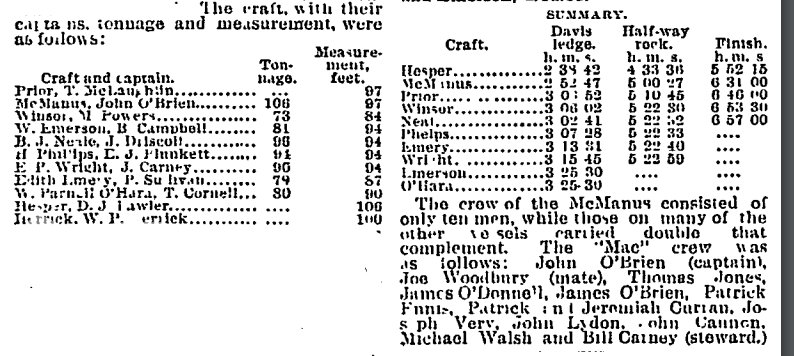
The sch. Sarah H. Prior had placed 3rd in the 1886 Fishermen’s Race in Gloucester.

1886 December

Affidavit of the captain and crew of the schooner Sarah H. Prior.

On this 28th day of December, A. D. 1886, personally appeared before me Captain Thomas McLaughlin, master, and George F. Little and Charles Finnegan, two of the crow of the schooner Sarah H. Prior, of Boston, and being duly sworn, signed and made oath to the following statement of facts:

On September 10, 1886, the schooner Sarah H. Prior, while running for Malpeque, Prince Edward Island, and about seven miles from that port, lost her large seine. [Page 502]Four days afterwardsthe schooner John Ingalls, of Halifax, N. S., Captain Wolfe, came into Malpeque and had the seine on board, which she had picked np at sea, Captain Wolfe offered to deliver the seine to Captain McLaughlin in consideration of twenty-five dollars, which offer the latter accepted and paid him the money. The Canadian revenue cutter Critic, Captain McLearn, was lying at Malpeque at the time, and Captain McLaughlin went to see him, to ascertain if there would be any trouble in delivering the seine. Captain McLearn would not allow the captain of the John Ingalls to give up the seine, so the latter returned the twenty-five dollars to Captain McLaughlin.

The schooner Sarah H. Prior had two seines, one large and one small size. It was the large one which she lost and the schooner John Ingalls picked up. She had to leave Malpeque without it, and consequently came home with a broken voyage and in debt.

Thos. McLaughlin.

George F. Little.

Charles Finnegan.

Suffolkss: Boston

December 28, 1886.

1886

Mr. Prior to Mr. Bayard.

BostonDecember 28, 1886.

Dear Sir: I wrote to Senator W. P. Frye, setting forth in my letter the facts contained in the affidavit inclosed. He wrote me to have it sworn to and to send it to you, which I have done. Will you please let me know what course is best to pursue in regard to it, whether to enter a claim or not? I think it is a clear, strong case, and the claim would be a just one, and will be pleased to receive your advice in the matter.

Yours, very truly,

P. H. Prior.

1888 June

The 1889 account in the Globe records a continued legal state of limbo. Tangle over seine was brought forward as a federal case vs. Great Britain (Canada) three years prior. The lawsuit is featured here digitized through the US Gov. Office of the historian

Department of State

PAPERS RELATING TO THE FOREIGN RELATIONS OF THE UNITED STATES, FOR THE YEAR 1887, TRANSMITTED TO CONGRESS, WITH A MESSAGE OF THE PRESIDENT, JUNE 26, 1888

No. 330.
Mr. Bayard to Sir L. S. Sackville West.

Department of State,
WashingtonJanuary 27, 1887.

Sir: I have the honor to inclose a copy of an affidavit of the captain and two members of the crew of the schooner Sarah H. Prior, of Boston, stating the refusal of the captain of the Canadian revenue cutter Critic to permit the restoration to the former vessel, in the port of Malpeque, Prince Edward Island, of her large seine, which she had lost at sea, and-which had been found by the captain of a Canadian vessel, who offered to return the seine to the Prior, but was prevented from doing so by the captain of the Critic.

This act of prevention, the reason for which is not disclosed, practically disabled the Prior, and she was compelled to return home without having completed her voyage, and in debt.

I have the honor to ask that Her Majesty’s Government cause investigation of this case to be made.

I have, etc.,

T. F. Bayard.

1888 July

The Fisheries Treaty: Speech of George F. Hoar of Massachusetts, in the United States Senate, Tuesday, July 10, 1888 (sch. Prior seeking reimbursement of seine boat)

1890

Sarah H. Prior, reported lost, returned yesterday to port.

Local Lines. Boston Daily Globe (1872-1922); Boston, Mass. [Boston, Mass]14 Jan 1890: 2.

Winslow Homer dating 1885 and 1886 collections Art Inst. Chicago, MFA and private collection (Gates)

1895 two fishermen LOST

The fishing schooner Sarah H. Prior of Boston, Capt. Frank Raymond, arrived at T Wharf yesterday afternoon from Western banks with a fare of 30,000 pounds of mixed fish. Her colors were flying at half mast for the straying away from the vessel of a dory containing Manueal Zumeira and Manuel Palheiro. They were lost last Monday on the fishing grounds during a dense fog. The eight other dories which had started out managed to reach the vessel. The lost fishermen have probably been picked up by another vessel, and Capt. Raymond thinks they will be heard from shortly.

Lost Two of her Crew: Schooner Sarah H. Prior in Port with colors at half-mast, Boston Globe May 20, 1895

1895 found

They make it! Follow up story published ten days later:

Provincetown, May 28—The missing men of the schooner Sarah H. Prior’s crew are safe, having arrived here last night on a fishing craft from Boston. These men, Manuel Souza Palha and Manuel Souza Shuma, went adrift in the fog Monday, May 13, while fishing on the Western banks during a heavy fog. Neither of the men can converse freely in the English tongue.

Their sufferings were great and they met with at least on inhuman skipper, while lost in the dory. Shuma, the spokesman, related the following:

“On Monday we went from the Prior to draw our trawls, and rowed a course that should have taken us to our outer buoy or end farthest from the vessel. A thick fog shut down soon after we left the craft’s side, and this caused us to miss the buoy.

“After awhile, finding that we had missed our way, we turned and rowed back on what we thought to be our track, and after a long pull came across one of our dories, the men in which were pulling trawl. This dory, by the way, was the other dory lost from the Prior that day, which was picked up one or two days later.

“We hailed the men, asking the direction of the Prior, and they pointed to leeward. As they had left the craft after us, we supposed they were right and pulled that way. They had given us a course directly opposite to the right one. After a long pull we found that we were lost.

“We were without anchor, sail, compass, food or water, the fog was very thick, the sea was rough, and we did not know in what direction to row, but trusting to luck, pulled here and there, hoping to strike some vessel. After a pull of four hours, we desisted and tried to devise some plan that would help to bring us out safely.

“Night shut down and we drifted about in a heavy sea without sighting anything, and so on through the days and nights that followed. We became hungry and thirsty, but there was nothing with which we could allay our pangs.

“Finally, we managed to gather a quantity of floating seaweed and devoured it, but it increased the thirst that now drove us wild.

“The fog still held thick, but we had rowed on steadily while we could, hoping to make land ere we perished, but as we could not determine accurately the course to steer we made sad mistakes.

Finally, having been two days and nights adrift, we espied a fishing craft coming our way, but a little distance off. As she swept past we shouted for help. I hailed the man whom I took to be the captain and asked him to save my partner who was in a bad way. The man replied, “Go to h—l,” and away went the craft into the fog and out of sight.

“A little later the fog lifted a trifle, giving us a glimpse of a craft getting under way not far off. Toward this craft, we pulled as hard as we could, but, although we knew her men saw us, the vessel kept off, ran away and left us.

“Then we felt as if God and man had deserted us, but, weakened as we were, we pulled on, hoping to have better luck. Then followed a third night of suffering, with fog as dense as ever and heavy winds and sea. ON the following day we fell in with the British coaster Sophia, bound from cape Niger to St. John, NB, and got on board. Her crew treated us kindly and the craft landed us at St. John nine days later, on May 23.

“We had been adrift three days and nights, and had pulled and drifted from the Western banks to the western edge of the Lahave bank. At St. John the American consul cared for us and sent us on to Boston by train.

“We could not read, so could not tell the name of the vessel that refused to save us. I have seen the man who replied to my request several times in Boston and Provincetown. When in the latter place he was on a vessel in after bait. The vessel, however, did not look like an American craft. We judged her to be a Nova Scotian fisherman, but we don’t know.”

These men had been given up as lost by people here, and their arrival was a surprise to all.

Bitter Experiences of Two Men Lost in Fog. Drifted About for Three Days Without Food or Water. Long Ago Given Up for Lost by Their Friends in Provincetown. Boston Globe, May 29, 1895

1899

Provincetown, June 14- Schooner Nellie G. Adams and Sarah H. Prior were in collision off Long Point early this morning during a dense fog and heavy southerly wind. As a result the Prior is minus all headgear, and the Adams will require a new cathead and anchor stock. The Adams’ loss will not exceed $50, but the sum required to repair the Prior’s damages will amount to considerable.

These vessels were from Boston, bound into Provincetown harbor.

The violence of the collision is demonstrated by the anchor stock broken on the bow of the Adams which was of iron, and which received the full force of the blow. Had the blow fallen a foot or two farther aft the Prior would likely have crashed into the Adams’ forecastle killing the sleeping men and sinking the schooner offhand.

COLLISION OFF LONG POINT: Schooners Nellie G. Adams and Sarah H. Prior Came Together, Boston Globe June 15 1899

1900

Another day – Another crash

A collision occurred in the harbor early yesterday morning between the fishing schooners Joseph Warren and the Sarah H. Prior, resulting in considerable damage to the latter vessel.

Both were returning from the fishing grounds, and their skippers were anxious to reach T Wharf quickly. The Warren attempted to cross the Prior’s bow, but the distance was misjudged, and the vessels came together.

The Prior’s bowspirit and most of her forerigging were carried away, and she sustained other slight damage, while the Warren escaped injury. The Warren left the pier in the afternoon after disposing of her fare. The damaged vessel will have to undergo repairs before she can make another trip.

WATER FRONT ITEMS: Schooners Warren and Prior Come in Collision –Latter Considerably Damaged by the Accident in the Harbor, Boston Globe, April 27, 1900

1901

New York, Feb. 16 – The Allan line steamer Sardinian, which arrived today from Glasgow, reports that Feb 14 at 2pm in lat 40, long 68, a fishing schooner, the Sarah H. Prior of Boston, was sighted flying distress signals.

The Prior had been blown off shore in a northwest hurricane and had been since beating against the constant northwest gales. Some fish had been caught, but they rotted in the hold. The crew had suffered considerable privation from hunger and cold, having run short of provisions and coal. The Sardinian supplied their wants and proceeded. The schooner’s captain reported all well on board and that he would bear up for his home port.

SHORT OF PROVISIONS: Boston Fishing Schooner Sarah H. Prior Spoken at Sea by the Allan Liner Sardinian Boston Globe February 17, 1901

Christmas day Boston Globe 1890- A True Story of Gloucester Fisher Folk

This story was the first time I was acquainted with anything written by one, “Tom Herbert”, a reporter the Boston Globe featured regularly pre 1900.

This heartwarming read published on Christmas day in 1890 has enough convincing details to engage readers of all ages with a Christmas wish come true story. Is it fairytale or truth enchanted? The mention of a charming cottage in East Gloucester piqued my interest enough to research surnames, just in case, and the off chance I might locate a house story to boot while re-discovering work by this writer. One article was another in this vein I categorized ‘fairytale reporting’ which I shared yesterday ; and a third from a tuna fishing trip he covered for the Boston Globe (embellished with a fantastic headline).

Local details mentioned: Norman’s Woe, Proctor’s Store, ferryboat Little Giant, James (Jim) Lawson, Jeannette Olsen (children Andrew and Alfred), Eastern point, fisherman, Swedish immigrants, East Gloucester, Swedish consul, Court Square Boston, Grand banks, Nova Scotia, Newfoundland, shipwreck, Cunningham & Thompson’s wharf, Boston’s salt fish dealers

Her Christmas Present, A True Story of Gloucester Fisher Folk

By Tom Herbert

“Shaw! Jeannette, don’t talk of Christmas presents: you should have dropped those childish notions when we were married. Here am I, a poor fisherman, with a few hundred dollars, and you know I want to build or buy a house in East Gloucester, so that we can have a home of our own next year, and now, the middle of October, I am almost forced to make a fresh halibut trip, or stay home and eat up my hard earned money; and we must be saving, for the owners have promised me a vessel next spring.”

The next day he was to sail, and with tears in her eyes, Jeannette hurriedly got together socks, mittens and the rest of his sea clothes, all of which were neatly patched and darned ready to be placed in the calico pillowslip and taken on board the vessel.

“You’ll buy me a present this year, won’t you, Jim?” said she the next morning.

“Well, I don’t know. It’s according to whether we make a good trip or not, and even so, you must not expect anything that will cost much.

So they parted with a kiss, at the door of the little house on a side street in Gloucester, and were it not for the cry, “Pa-pa-pa” of little Andrew in the crib up stairs, she might have lingered at the door and watched the passage of the vessel as her prow was turned towards Norman’s Woe.

“Jim will be home before Christmas,” mused she, “and if ‘twas only a cheap pocket-book he’d buy for me, I would cherish it so much.”

That night, after “baby” was sound asleep, she visited a friend, and as she passed Proctor’s Store and the post office on her way home she heard a fisherman say: “The ‘glass’ is down 2-10 below 29.”

This was news for her, as almost every Gloucester woman understands the working of a barometer, and surely a heavy westerly was coming that night.

It was 12 o’clock that night when the expected nor’wester burst, and she was awakened by the noise of a swinging blind.

‘Tis a fair wind for Jim, thought she, as she secured the shutter, and if it lasts a day or two he will make a quick run to the Grand banks. Little she knew at that time what misery the same gale brought to her husband.

The next day everything went wrong about the house, the fire went out, although there was a splendid draft to the chimney, things seemed to be strewn around the kitchen in all directions, the baby yelled like mad, and tried to get out of his crib alone for the first time, and in the afternoon she scalded her foot with hot water while making a pot of tea.

Jeannette was not superstitious, yet she could not help paying some attention to what seemed to be presentments of trouble, and were it not for a letter from a lawyer that she received asking her to come to Boston to transact important business she might have and had a good cry.

“I wonder what it can be,” said she, as she put on her best wraps,” surely it cannot be any news from home so soon, and now, come to think of it, I’m sorry I didn’t tell Jim that the property in Sweden was being settled up.”

The train seemed to move slower than usual that day, yet it arrived in Boston on scheduled time and soon she was seated in a law office in Court Square.

“I called,” said she, addressing a smooth faced man, “in response to your letter.”

“Oh, yes! You are Mrs. Lawson, are you not?” said he, showing the way to his private office, “And your maiden name was?”

“Jeannette Olsen, sir. I was born in Stockholm 23 years ago.”

“Yes, the very same,” said the lawyer; “and now, Mrs. Lawson, I have some good news for you. The Swedish consul has a check for you at his office, payable in gold, to the amount of $3800; small, but not so bad. I believe your husband is –“

“A fisherman, sir,” said she, helping him answer his query.

“Now all that remains,” continued the man of law, “is for you to be identified and the check is yours; are you acquainted in Boston?”

Yes; she had relatives there, and half an hour later the office boy brought in two persons that knew her when at home and also her family.

Without much delay the check was received by her from the consul and cashed at a neighboring bank, and with that—never had so much money before feeling—she wended her way towards the depot.

Once on the cars her thoughts went out to sea and she wondered how Jim’s vessel had weathered the gale, and what he would think if he only knew their good fortune, and how sorry she felt for having kept secret her letters from home, but the next moment her thoughts were in another channel. She had resolved to buy Jim a Christmas present that would cost “something.”

The day following was one of excitement to her. She visited the bank, crossed the ferry a number of times in company with real estate men, all of which set the neighbors a wondering, and for two weeks she was busy every day.

When she had time to read, she studied the Boston papers, and from the reports of incoming vessels she knew that it had been rough weather at sea.

Soon the name of the vessel that her husband sailed on was becoming talked of in the town, no news had been heard of her, and she became sad-eye, and the bloom of youth left her cheeks.

The neighbors called and sympathized, and one old lady, who had a son on the same vessel, said, “that if the schooner was not in by tomorrow the owners were going to give her up as lost with all on board.”

Tomorrow!

Why, tomorrow was Christmas day!

Vessel and all hands lost at sea!

What a cup of bitterness there was in store for her when she had planned for a day of happiness!

“But it must not be,” she cried; “surely God will not send us such terrible news on the birthday of His son!”

That night she knelt by the baby’s crib and prayed that the father of the little one might be returned to him and her.

Morning dawned and she arose after having passed a sleepless night; baby’s breakfast must be gotten ready, and as she rolled the crackers, the crumbs were moistened with her tears.

Noon came and the dreaded news had not arrived, and seating the chubby little chap in the high chair near the window, they ate their Christmas dinner.

An hour later she was ready to swoon, so weak was she from loss of rest and nourishment, and with arms on the table and head bowed down she cried herself to sleep.

How long she remained in that doze she could never tell, but she awoke with a start; little Alfred was tapping on the window pane with his spoon, and calling “pap-pa! pap-pa,” at the top of his voice.

“Be quiet, child,” said she, hysterically; “you have no pa—“ She never finished that sentence, for there, outside the window, was Jim, with a full beard, and looking very pale.

Was she dreaming?

No! for he has moved towards the door, and is now rapping; she notices as he passes his arm into a sling; he has been hurt.

The bolt shot back, the door swung on its hinges and she would have fallen to the floor, but he caught her with his uninjured arm and in a cheery voice said:

“Jeannette, cheer up; is this the way to welcome your Jim? Why, I’ve brought you a Christmas present: ‘tis myself.”

The joy of the wife at the deliverance of her husband no pen can describe, and when she could speak she told him of the long and weary hours she had waited, and listened intently to his tale of suffering while she put new bandages over the splints of his shattered arm.

He told her that after they sailed out by the light on Eastern point everything went wrong on board the vessel, as though a warning to them, and that night, as they scudded before the gale, one of the crew was knocked overboard by the main boom while returning the mainsail, and was rescued with much difficulty.

The next day the gale increased and the weather was intensely cold.

That afternoon they carried away the foremast head while jibing the foresail, and before it could be prevented the mainmast went by the board and injured five men.

They were then 200 miles at sea and almost a total wreck.

Under short sail they headed for Nova Scotia, and then within 20 miles of the shore a heavy snowstorm set in and they were driven off the coast.

The ice that formed on the vessel in large quantities made her unmanageable, and for four weeks they drifted about the ocean without seeing any craft.

Another heavily westerly gale sprung up, which drove them farther out to sea, the schooner had sprung a leak, the pumps were frozen solid, and the decks were washed continually by the heavy seas.

That night the wind shifted, and the captain, judging himself in the vicinity of Newfoundland, heaved the vessel towards the shore, and under a close-reefed foresail they made fair progress, and got ready the only two dories that had not been smashed.

Towards morning they made the land dead ahead, and all the men that were able stood ready, and the injured and frozen men were placed in the dories which were ready to launch.

The suspense was fearful, but for a moment only, for she struck a reef of rocks with a crash, and when the next sea carried her over the ledge she sank in 15 fathoms of water.

That was all he remembered for one week and when he came to his senses his head was bandaged and his arm was in a splint.

Kindly the wife of a fisherman cared for him, and eased his mind when he asked for “Jeannette,” saying, “She’ll soon be here.”

When able to be about he was sent to Fortune bay and took passage on a herring vessel bound for Gloucester.

The rest of the crew had been badly frostbitten, and when all well would follow by steamer.

He was set ashore at Cunningham & Thompson’s wharf, and arriving at the house saw his baby Alfred at the window, and was answered by the little one.

After Jim Lawson had told his story, Jeannette threw her arms around his neck and said, “James, you know you promised me a Christmas present, but I don’t expect one now, and Jim, dear, don’t feel sad. I know you doted on a little home, so I bought a nice little cottage over on Eastern point.”

Should his dory have capsized in a calm, Jim could not have been more surprised than when his wife spoke of buying a house, and an hour later the ferryboat Little Giant brought the happy couple to their new home.

Jim Lawson quit going fishing, by request of his wife, and today is a salesman for one of Boston’s salt fish dealers.

This year it is said that a new piano will be moved in to the snug little cottage, just for a Christmas present.

“Her Christmas Present A True Story of Gloucester Fisher Folk”, Boston Globe, Dec. 25, 1890 by “Tom Herbert”

Who cares that the baby is alternately named Alfred and Andrew (perhaps there is more than one child?)! Husband and wife are both heroes! And there are helpful lawyer and realtors, unrelated to the shipwreck! (Wait. Was $4000 a small amount in 1890?)

Art, poetry, novels and news- fishing tales were popular no matter the media. Timeline comps: Longfellow’s Wreck of Hesperus was published in 1842; Winslow Homer first documented extended stay in Gloucester, 1873; Elizabeth Phelps residing here by 1890; Joshua Slocum’s Voyage of the Liberdade 1890; and Kipling’s Captain Courageous in 1897. For Christmas eve decades prior, The Night Before Christmas, attributed to Clement Moore, was penned in 1822.

“Lawson” in the 1882 Gloucester directory

Perhaps some families have heard versions of this same yarn. For fun, some cursory digging: there is no James “Jim” Lawson-Jeannette Olsen (olson)-Alfred trio; though the surnames are common. Some Lawsons resided downtown and East Gloucester: Charles Lawson, fisherman, house 10 Traverse St; Charles J. captain 21 Addison; William J Lawson 23 School Street, then 13 Summit St. In 1870 John Lawson arrived from Canada fisherman, bds Middle, corner Wash. (same as Edward Hopper). Child named Alfred or Andrew with a mother born in Stockholm, Sweden? Sure. What Eastern point cottage would fit the bill in your mind’s eye?

Harpooning Swords. Work that is all excitement and no fun–

Globe reporter on a Fishing Expedition to Cape Porpoise, by Tom Herbert, Boston Globe, August 25, 1890

“…and “Turned In.” In 15 minutes not a word could be heard, and the only noise–which was not music to my ears–was the creaking of blocks and booms and the rush of water along the sides of the schooner as she ploughed her way. I had a faint remembrance of the “watch” being changed and the hearing of the order to “haul down the staysail!” After that I fell asleep and dreamt that the managing editor had elongated my vacation from two to four weeks.”

From 1931 Boston Globe report “Tableau of the Nativity is set up in home of an Italian” at 15 Middle St. #GloucesterMA

Did your family share stories about visiting this elaborate (all?) indoors Christmas display? I’d love to see a photograph(s).

Gloucester, December 23, 1931- The religious fervor combined with the artistry of the Italian race is exemplified in the tableau of the nativity set up in the home of Capt. Joseph Curcurru, 15 Middle St, a leading figure in the Italian group of this city.

It is exciting much admiration not only among the Italian residents but among others of the city hundreds of whom have already viewed it.

Two walls of the reception room have been converted into the tableau background which represents a cyclorama of the country about Bethlehem. In a corner are the central figures, statues representing Mary, Joseph, the manger and the Infant Jesus.

Coming from the East are the three wise men and each day they are moved a day’s journey forward toward their objective until eventually on Jan. 6, which the Italians term the “Little Christmas,” they will arrive in the stable of the inn.

All around the panorama may be seen shepherds tending their sheep, peasants tilling the fields, trees and a running brook produced by an electric engine from a tank of water, in addition to other accessories which go to complete the composition.

The Italian quarter at the Fort is already taking on the signs of festivity incident to the season. They stress the religious note. The majority of their fishing craft are named after saints, whereas the native American fisherman named his clipper schooner for wife or daughter in the majority of instances.

Whittier somewhere in his verses noted this nomenclature custom of Saxon and Latin fisherman.

“TABLEAU OF THE NATIVITY IS SET UP IN HOME OF AN ITALIAN AT GLOUCESTER: Religious Fervor, Combined With Fine Artistry, Is Exemplified in This Unusual Cyclorama of Country Around Bethlehem” Boston Globe, p.2, Dec. 24, 1931

Wonder which Whittier poem?

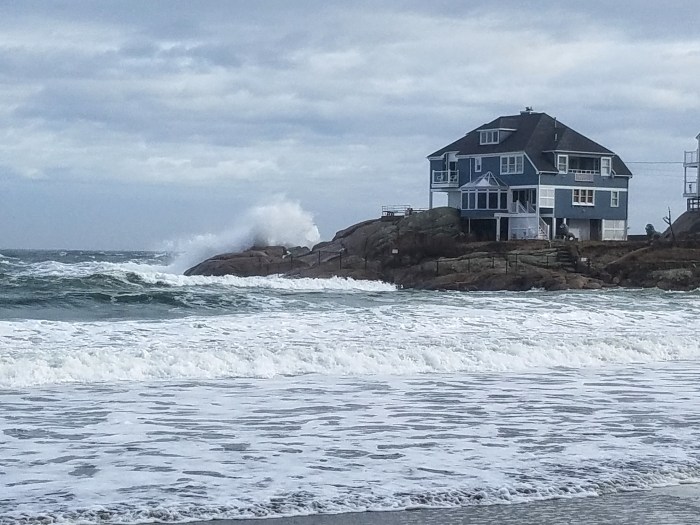
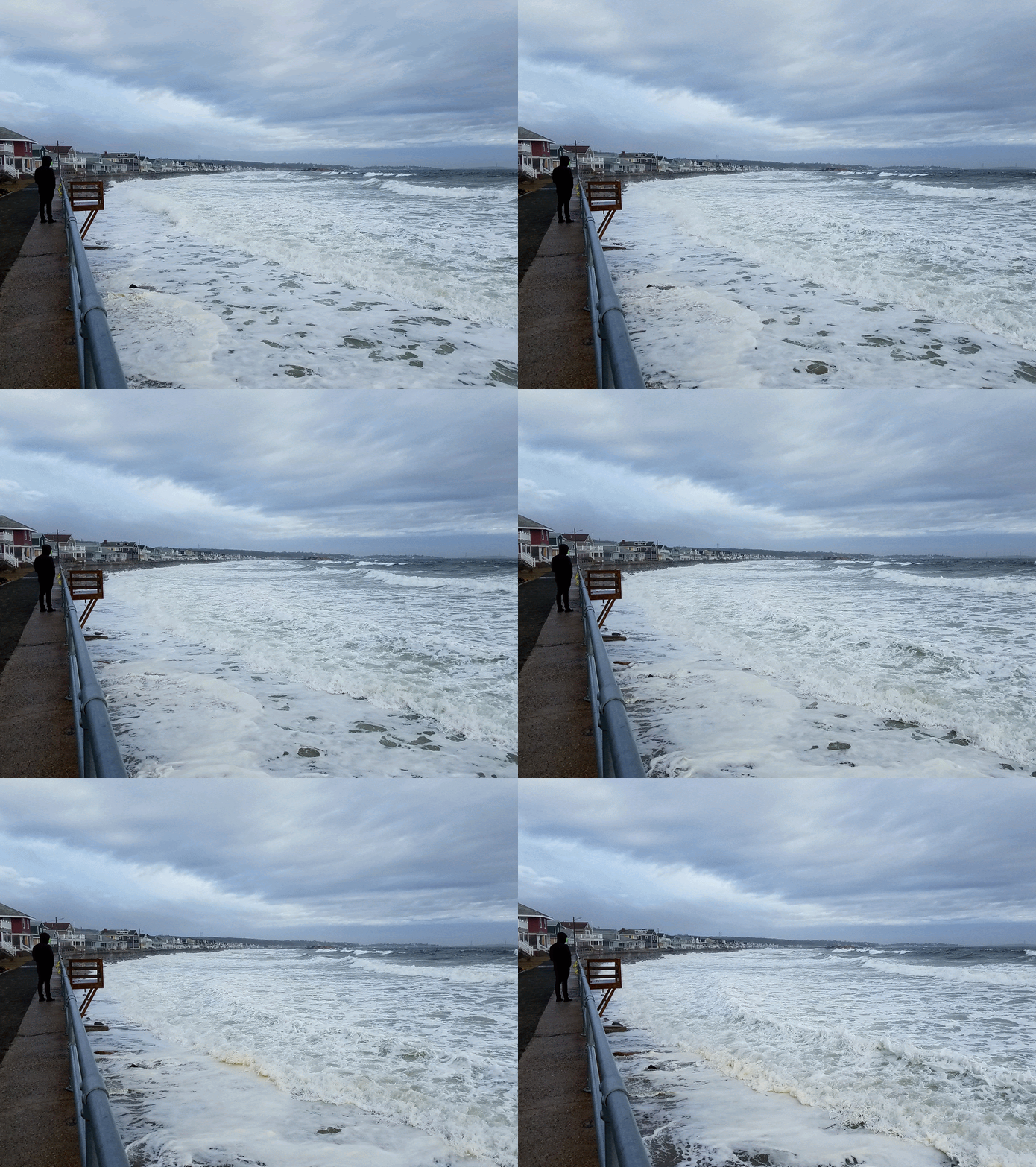
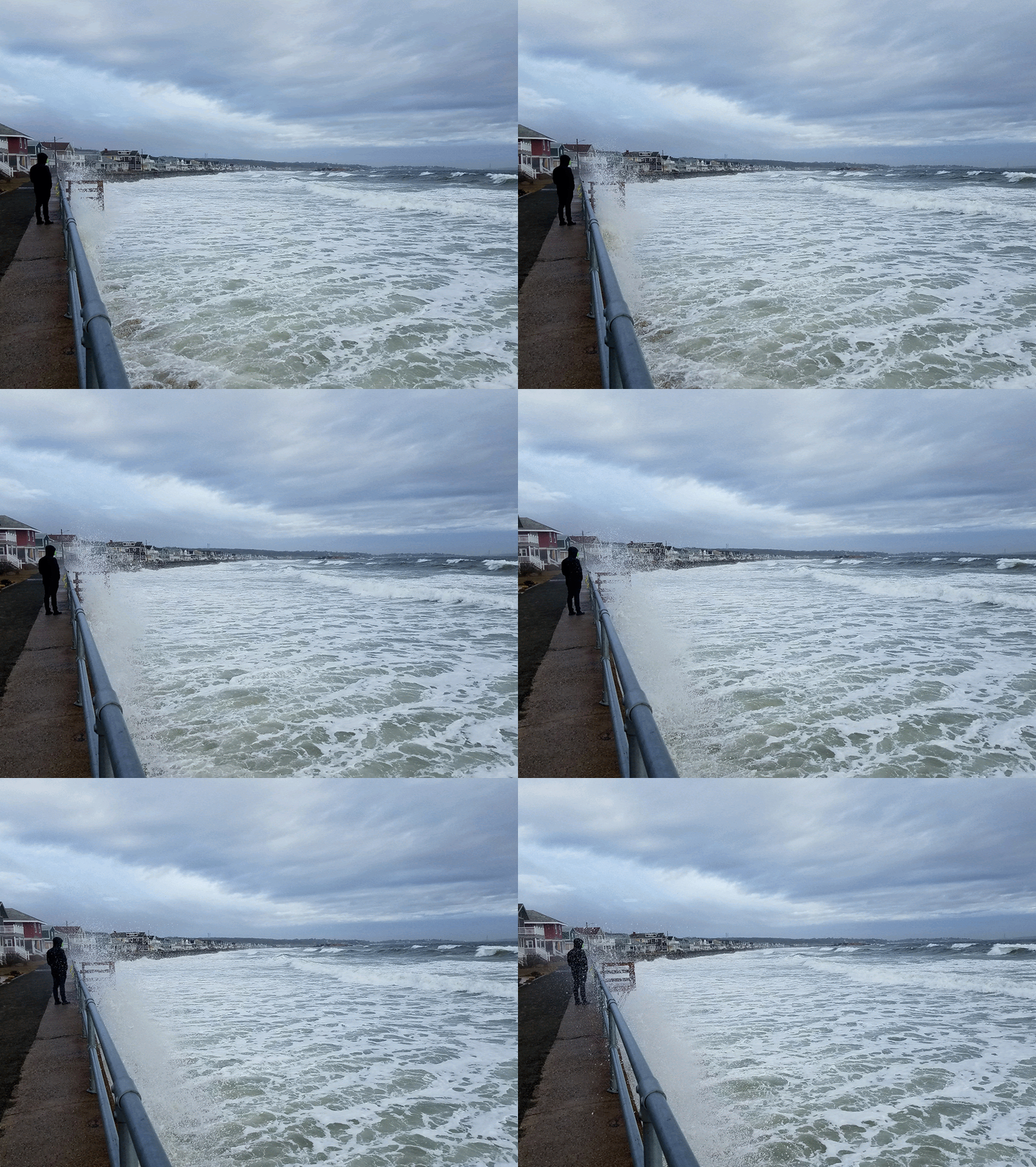
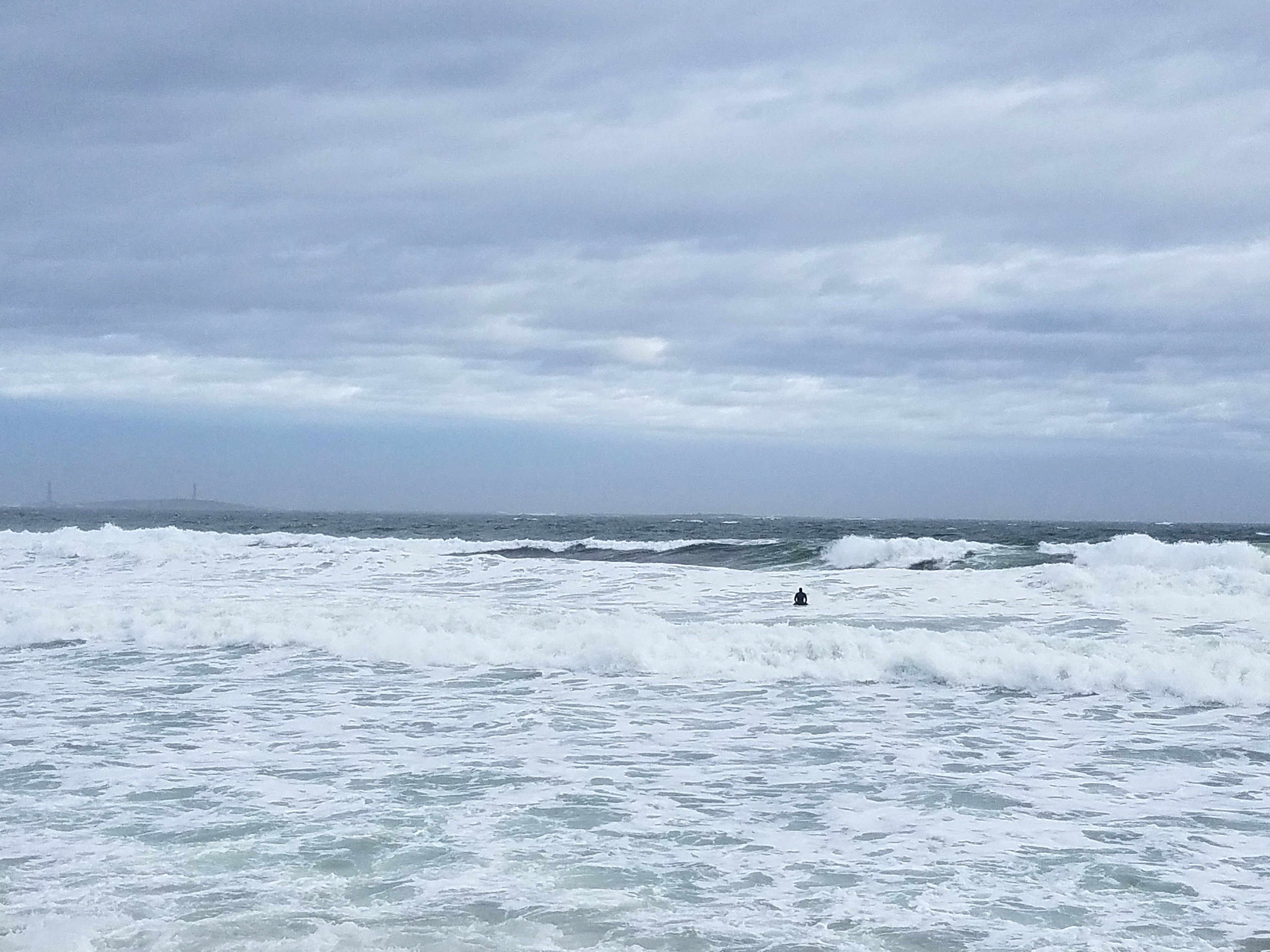
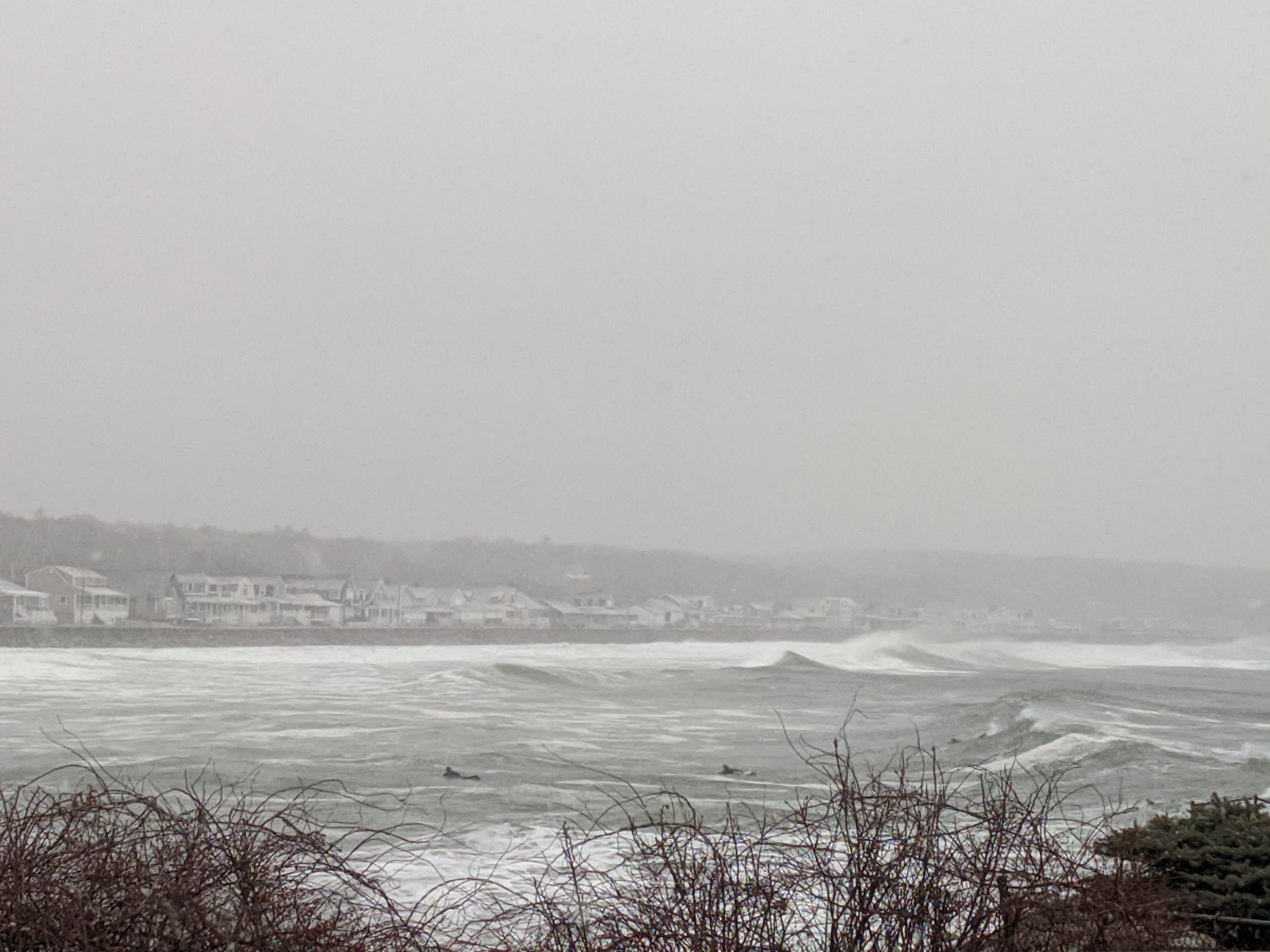
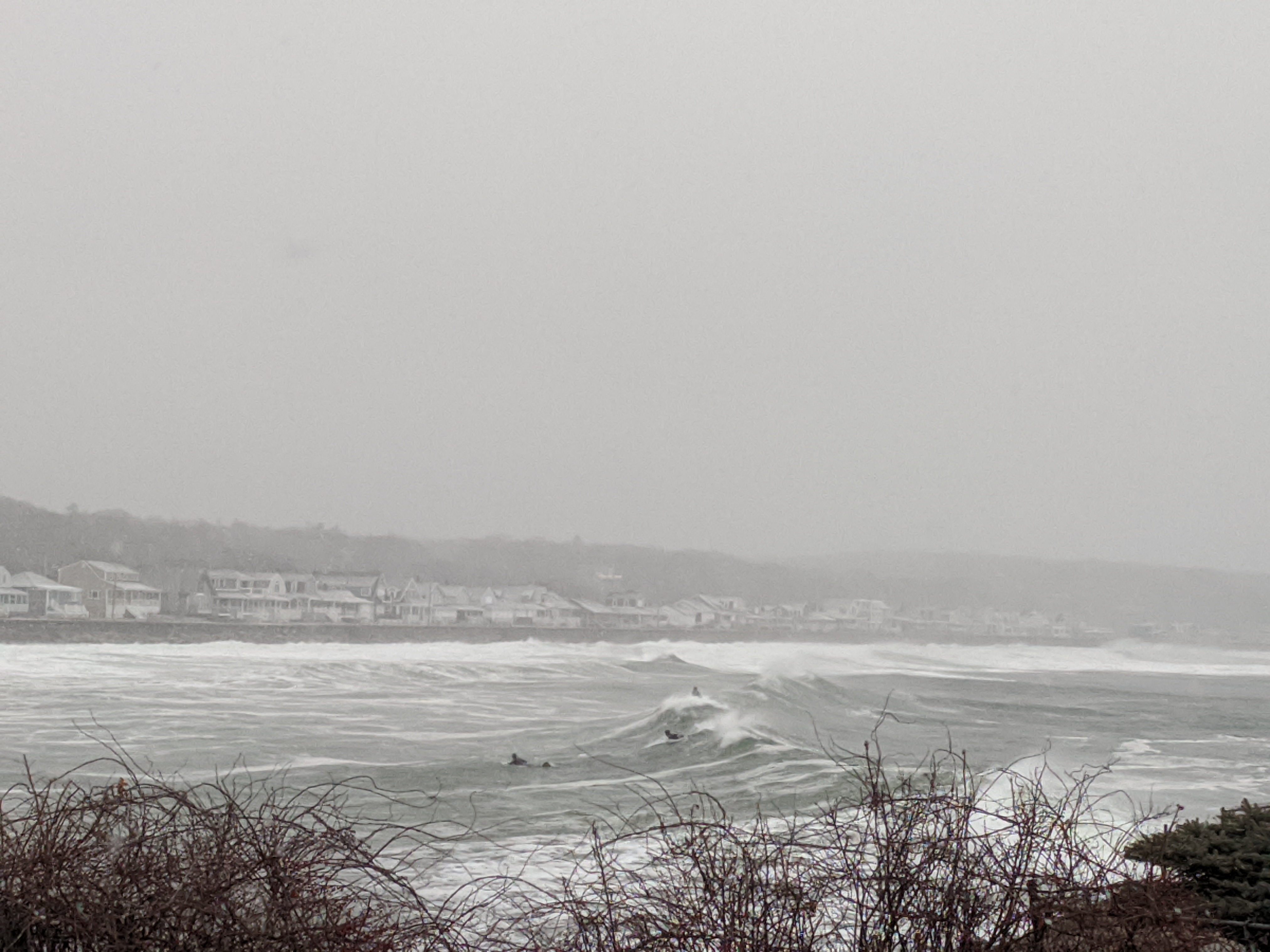
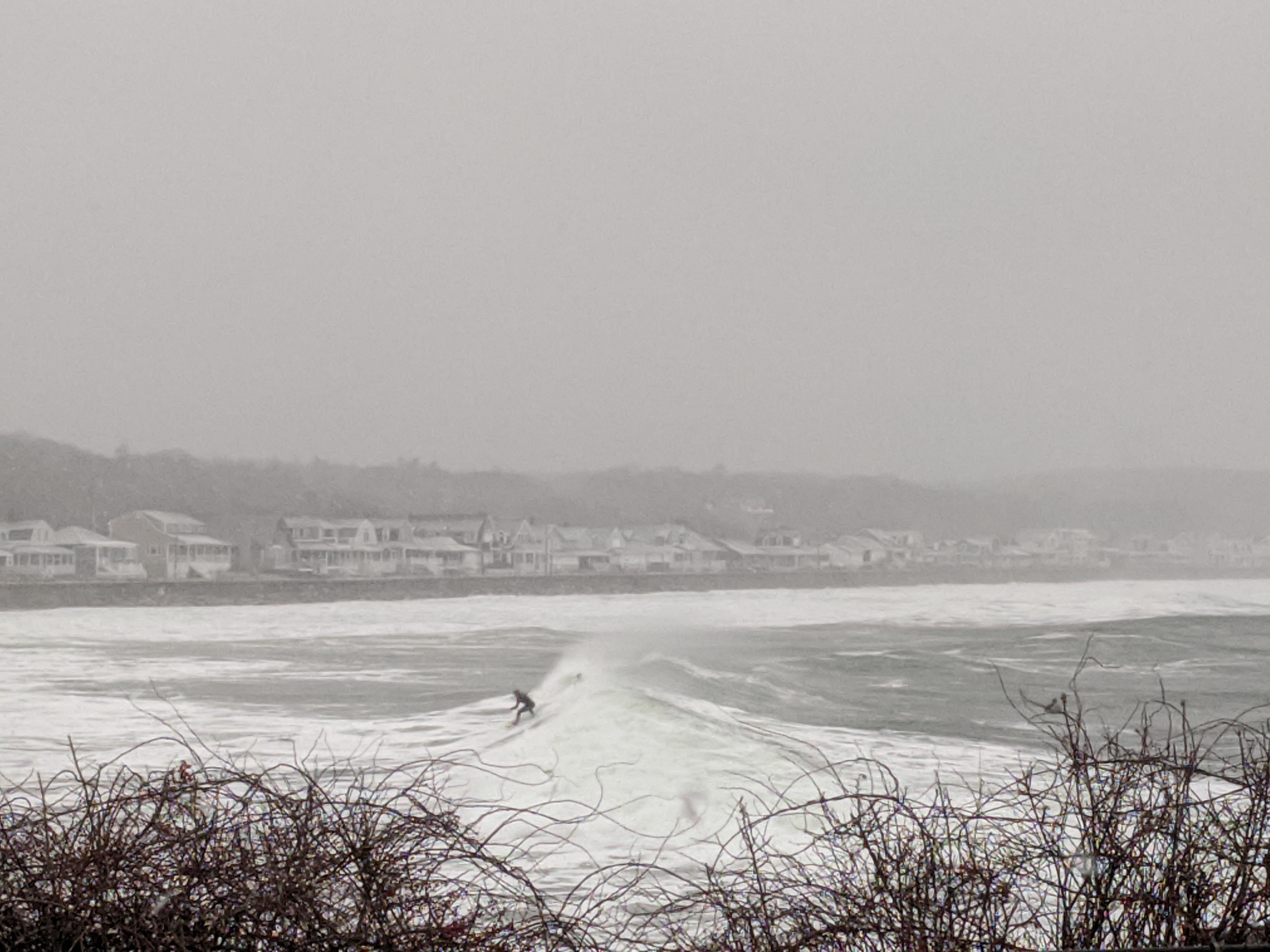
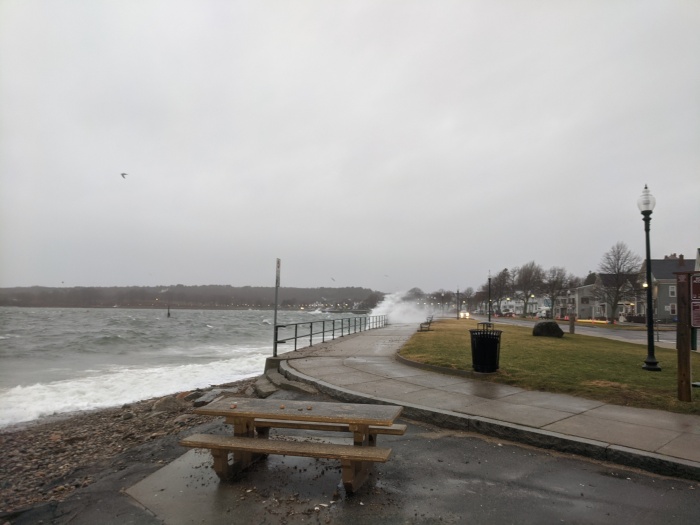
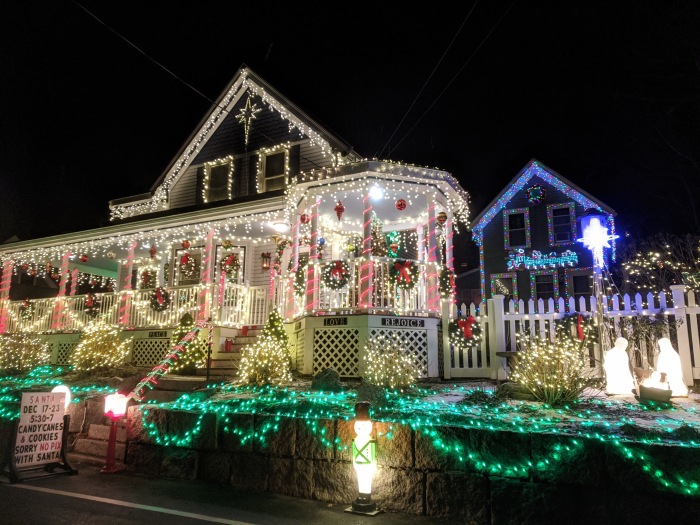
Merry Christmas & Happy Holidays to you and those you hold dear! Whitecaps and wind Dec. 25, 2020

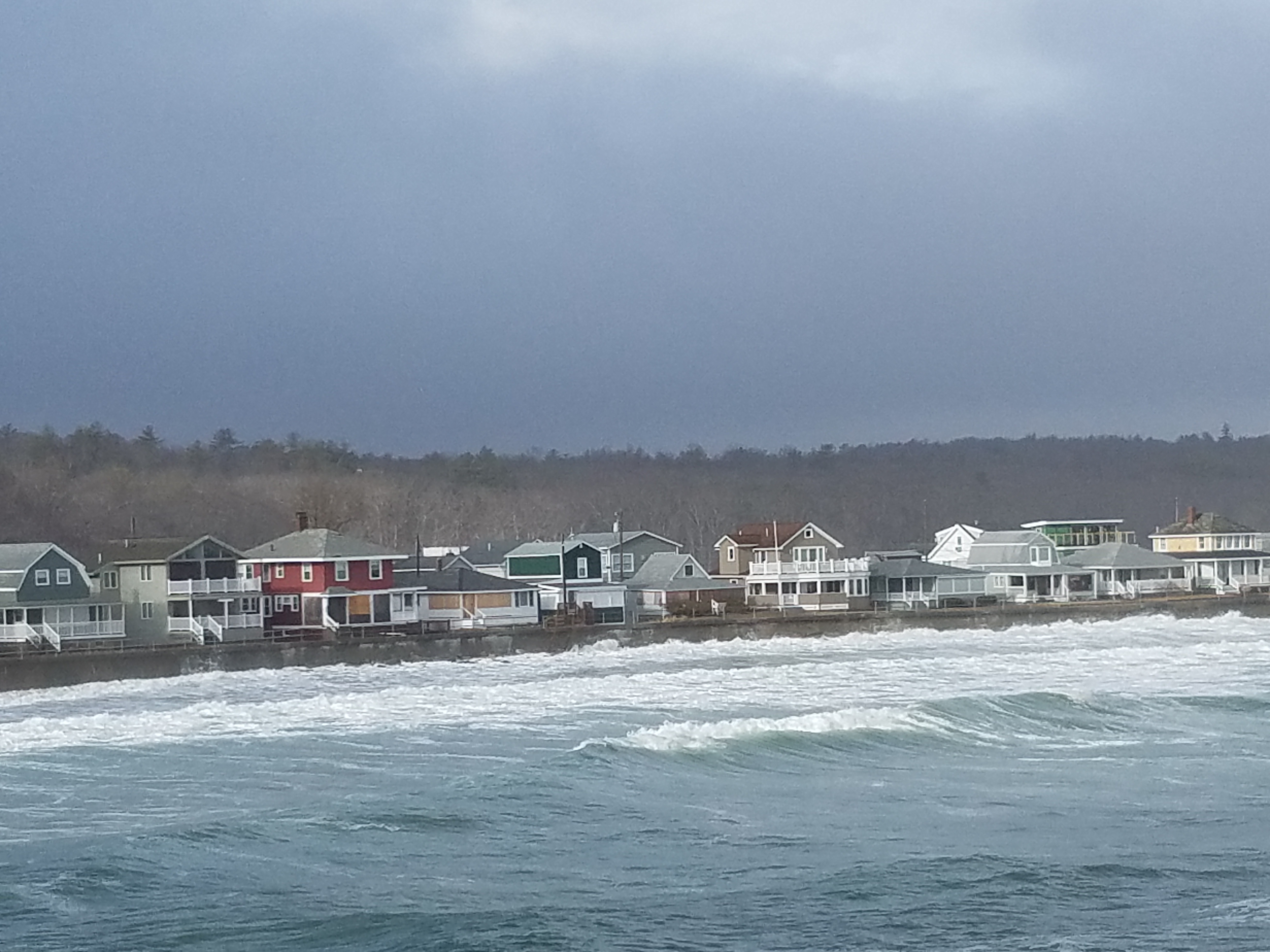
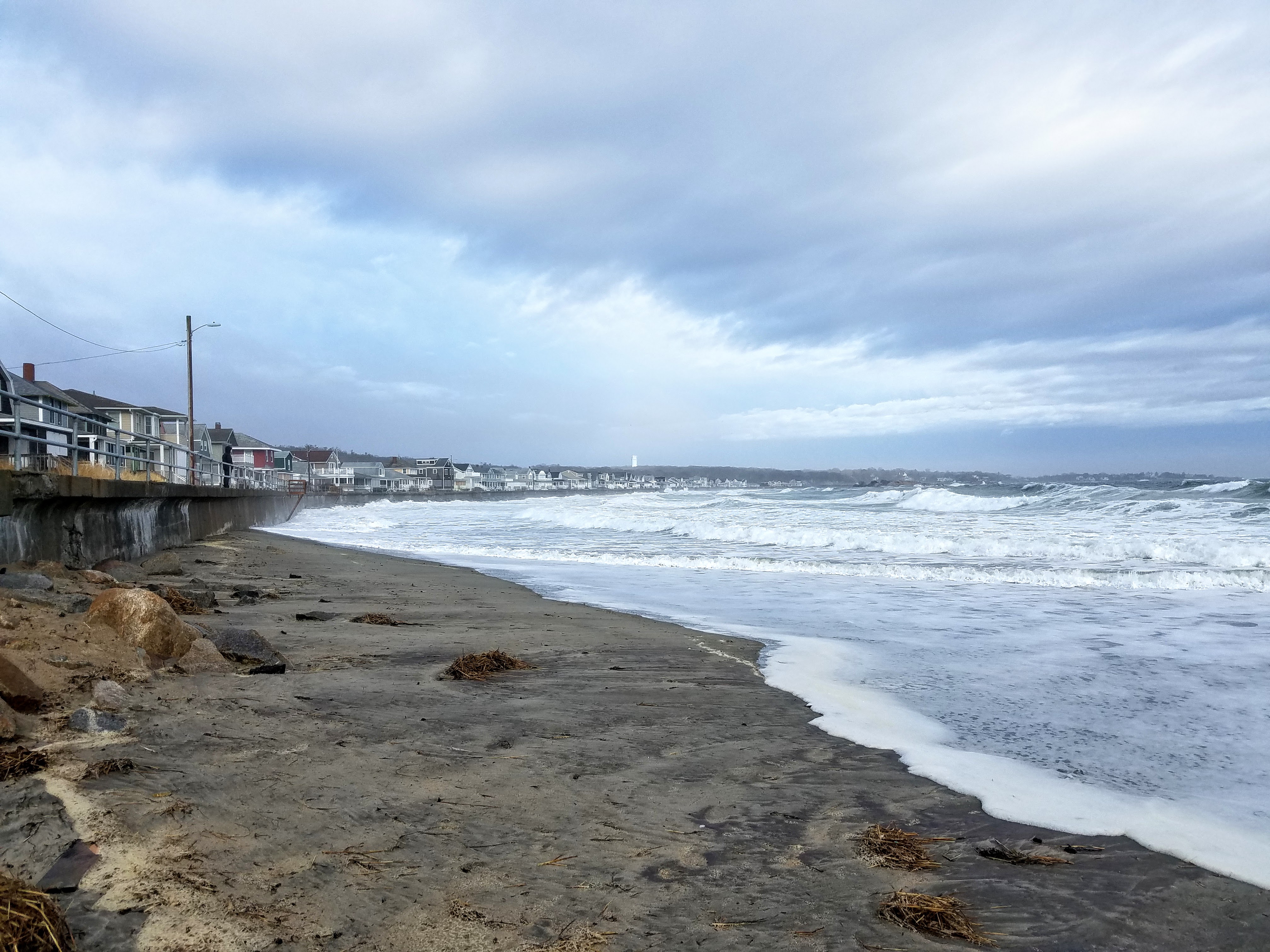
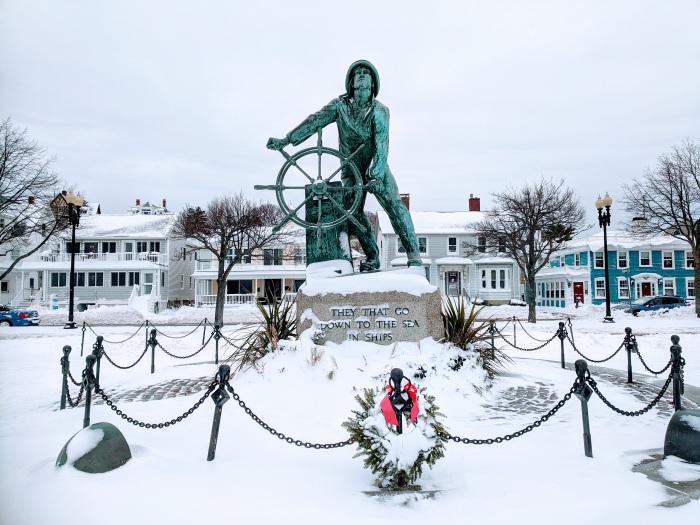
Stacy Boulevard after the winter storm with views this morning.

photo caption (above) Fisherman at the Wheel memorial statue by Leonard Craske, Gloucester, Ma. after the snowstorm earlier this month

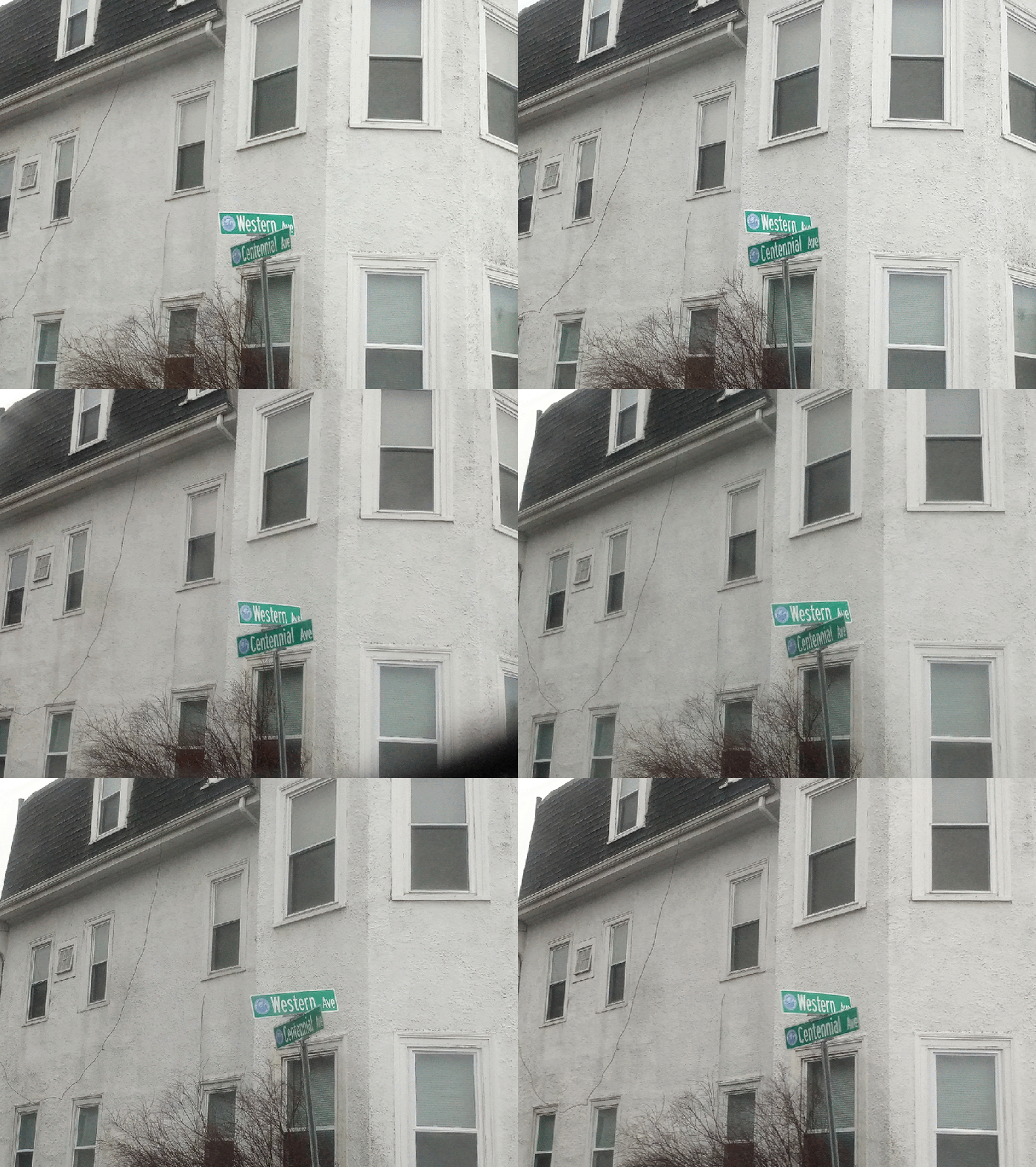
photo caption (below): Snow’s pretty much gone, December 25, 2020 (Man at wheel; Fishermen’s Wives tribute by Morgan Faulds Pike; splash overs on Stacy; street signs flapping)

Christmas Eve. Boston Globe 1893 – HE KEPT HIS PROMISE. Loss of Ring Nearly Cost McAchen his Life. Adrift of the Banks, He Found It in the Belly of a Codfish. Arrived in Gloucester to Marry his Mollie

With a headline sounding like a poem or song, this memorable Gloucester Christmas eve tale by Tom Herbert was published in the Boston Globe in 1893. Local mentions: Main Street, Duncan Street, Western Banks, sch. Star of the East, Eastern Point lighthouse, Thacher’s Island, Ten Pound Island, and codfish.

A fun read aloud for Christmas eve.

“Such a dread as I have of your going away so late in the fall,” said pretty Mollie MacDonald to her lover. “And remember we are to be married Christmas eve.”

“Why it’s only a three weeks’ trip, Mollie, to the Western banks,” said mcAchen, “and you would not like to have me loafing around Gloucester and have my ‘chummies’ laughing at me. Then you know, too, I am shipped in the famous Star of the East and we will sail at daybreak.”

“But what about the engagement ring, Angus? All our friends know we are to marry and when you are 300 miles from Gloucester a little token, which I would war on my finger, would often remind me of you and remind me to pray for your safe return, for you know December is a treacherous month for fishermen.”

“I forgot that, Mollie, and now every store on Main Street is closed, but here is a silver band my mother wore,” said he, as he placed the ring on her finger.

“And here’s my mother’s engagement ring,” said Mollie: “a hoop of gold with two hearts. Don’t lose it, for I hold it as sacred as I do your love.”

“I’ll bring it back to you if I live to make the trip. But I must hurry, as most of the crew are on board and a dory will be sent ashore at 1 o’clock for the lads that stop to kiss the girls they love goodby, and I will do the same.”

So they parted, he going down Duncan Street, and on arriving

At the Steamboat Wharf

met a half dozen of his shipmates. Then all went on board and turned in.

That night it breezed up from the northwest. It grew colder, and as the barometer gave evidences of a coming storm, Capt. “Bill.” who skipped the craft, roused the “boys” out before daybreak to sight the anchor. Half an hour later the schooner passed Eastern point lighthouse.

Away scudded the schooner before the fast freshening gale under a single reefed foresail, the swash of the seas as they spurted in through the lee scuppers fast forming ice on the deck.

Once clear of Thacher’s island, all hands turned to fit new fishing gear, and the conversation started, turned to the prospects of the trip.

“Some of the ‘killers’ found fish plenty on the eastern edge,” said one, but Capt. Billy had planned his trip to fish in 90 fathoms of water, near the spot where he had “rafted” in a big trip the year before.

Angus was one of the “afterguards,” as the fishermen term those who bunk in the cabin, and while “fitting” his trawls he was very quiet and especially thoughtful when he revolved the gold band on his finger.

His usual buoyant manner had departed. He was ill at ease and very slow at tying on the hooks.

Once he dropped the lines to the floor and lifting his mattress took out a book as if to read, but he was gazing

On the Photograph

of pretty Mollie Macdonald.

The run to the banks was a quick one, and when the proper surroundings were found the anchor was let go and plenty of “scope” payed out.

That night all hands baited up their trawls which were set at daybreak, and the first haul resulted in a catch of 8000 pounds of cod, every dory coming alongside the schooner loaded to the gunwale.

Angus brightened up at the prospect of a quick trip and a big check.

During the second night on the fishing grounds something happened which later came near costing Angus his life.

All hands were in the gurry kids dressing the fish, and as it was a breezy time all hands worked with a will to get the fish below and batten down the hatches.

After supper extra strads were wound around the cable, the anchor light set on the forepeak halyards, the decks cleared and extra lashings placed on the dories.

When everything was made snug the watch took the deck to keep a bright lookout for vessels that might strike adrift and foul the schooner.

In the cabin sat Angus, who remarked that “it was going to be a nasty night,” and stepping to the after part of the cabin raised his hand to adjust the guide hand of the barometer when he noticed that the ring was gone.

Lantern in hand he rushed to the deck and searched, but no sign of the ring, and when he came down below great tears of sorrow coursed down his bronzed cheeks.

His shipmates looked but did not ask the cause of his sorrow, for Angus was a strong man and might take offense.

Kneeling beside the transom near his berth he

Reached for the Book,

and after gazing on the picture of Mollie for a moment turned and said:

“Boys, I’ve lost her ring, it was gold with two hearts; it was our engagement ring; she gave it to me the night we sailed from Gloucester and I promised her that if I lived I would bring back the ring, but now it is gone.”

That night the wind blew a gale; Angus turned in, but not to sleep.

Towards midnight he was seen going about the deck with the lantern looking for the ring, but he did not find it and had to be coaxed to go below by his shipmates. When he was called to his watch on deck he only raved about the lost ring.

At daybreak all hands were on deck awaiting the word of the skipper to go and haul their trawls, which were set a short distance from the vessel.

Two dories had been launched, and then the captain said, “Hoist those dories in, it is not a fit day to put a dog in a dory, let alone a man.”

While the starboard gang were busy getting their dory aboard, Angus asked his dorymate if he would go and haul trawls, and receiving a positive no, cast off the painter, jumped into his dory, and rowed for his flag buoy half a mile distant.

The seas ran high, and like a cockleshell the dory drifted to leeward on the crest of every wave.

The crew saw that he did not reach the windward end of the trawls, but later could discern him hauling from the lee ends.

Was he mad was the question with the crew, and would he live to haul the trawls and return to the schooner?

Being anchored, there was no possibility of the vessel rendering assistance unless to

Cut the Cable

and try and pick the frantic man up, but that would not do, especially when he took his life in his own hands without the consent of the skipper.

For an hour they watched him from the deck. Then came a snow squall which shut out their view and when it cleared the dory was not in sight.

Ten days later the Star of the East sailed into Gloucester with her flag at half-mast, and on the end of the Fort wharf stood Mollie. She looked paler and thinner than when Angus and she parted not quite three weeks before, and with lips parted she gazed at the incoming craft.

The ever anxious crowd had congregated, and as the schooner tacked in towards Ten Pound Island, an old wharf hand said: “Why, that’s the Star of the East! I wonder who she’s lost.”

That was sufficient for the poor girl to hear. She knew by the slow beating of her heart that Angus was not on board, so she sorrowfully wended her way homeward to find consolation in prayer.

When the sad news reached her she quietly said: “Angus must have lost my ring or he would be here and well.”

‘Twas the old story that the skipper told, “lost while attending the trawls.”

When the snow shut out the vessel from Angus’ view he began to realize his danger and hauled away like mad; then came a fastening on the bottom which would not give way to his strong arms and the trawl parted.

Oars were of no use except to keep the head of the dory up to the sea, and when the snow cleared off he was miles from the vessel.

He was hungry and thirsty, but he thought not of death; his one thought was of Mollie and the lost ring.

All that day he drifted before the gale that moderated at sundown, but no vessel could he see, look where he would.

That night he rowed to keep his blood in circulation, and at sunrise saw a sail five miles away.

Towards evening he was almost insane from thirst, but thinking a moment, he remembered having heard of men who found fresh water in the belly of a cod.

To rip open a codfish was but the work of a minute, then holding it so that not a drop of the precious fluid would escape, he drank.

It tasted brackish, but was better than none. Then he cut out the “poke” that he thought would be more palatable than the flesh.

What possessed him to cut it he never could tell, but when it was laid open with the knife there was

The Hoop of Gold

with two hearts, the ring he lost while dressing fish in the gurry kid on the vessel.

Clutching the ring he forgot his hunger and thirst, his only thoughts were of her who was his promised bride.

After kissing the cherished treasure again and again, he unbuttoned his oil jacket and in the top vest pocket over his heart he placed the ring.

“Now I will live, and, with the help of God, keep my promise,” he said.

The sea had gone down, and as no vessel was in sight, he lashed the flag of his buoy to an oar, and having lashed it in an upright position, he coiled himself up in the bow and was soon fast asleep.

How long he slept he knows not, but it must have been six hours, for he was suddenly awakened by the dory tossing about in a peculiar way.

Raising himself he saw a large steamer close by. The crew seemed to be making ready to lower boats, then he waved his sou’wester and got an answer in return.

Directly he was alongside of the ship and soon on board, where he was well cared for by the captain of the English freighter that had experienced heavy gales, was short of coal and was bound to Halifax to get a new supply.

In two days from that time, Angus was bound to Boston by rail, and after arriving took the evening train for Gloucester and sent a messenger to Mollie to say that he would fulfill his promise, marry her that same night, Christmas eve.

(The end.)

“Loss of a Ring Nearly Cost McAchen His Life. Adrift Off the Banks, He Found It In the Belly of a Codfish. Arrived in Gloucester in Season to Marry His Mollie Christmas Eve” by Tom Herbert, Boston Globe; Dec 25, 1893. On page 6, with obits and other news. Herbert published a similar read in 1890 which I’ll post Christmas day.

Sacred cod indeed!

The schooner Star of the East that fished out of Gloucester for years was built in 1867 in Boothbay Maine by Joseph Bearse. In 1882 the average number of vessels and tonnage enrolled: 483 vessels (423 to Gloucester- 353 schooners, 4 sloops, 1 yacht, 6 teamers and 59 boats) 17, 809.75 tonnage.

A few years later, a true Christmas eve event in Gloucester was reported in the Boston Globe 1898 Dec. 24

Fishermen’s Christmas: Good Cheer Provided in Gloucester for men Away From Home

Christmas was celebrated this evening at the Fishermen’s Institute on Duncan Street in a unique manner. Chaplain E. C. Charlton of the Institute invited the fishermen of the city away from home to become his guests, and to the number of several hundred they responded.

Men of all the northern nationalities were comprised in the audience, some wearing boiled shirts, others with their sea clothes on, but all were welcomed alike. There were two Christmas trees. A Short entertainment was given while Mrs. Charlton, wife of the chaplain, was busy at a table cutting cake which had been donated. This with hot coffee was passed around.

Comfort bags were donated by the King’s Daughters from all over the union were given every fishermen present and went into hands where they will be appreciated. They contain articles which will prove very useful to a sailor. Bags of confectionery, apples, etc were passed around, and altogether the fishermen’s Christmas was highly appreciated.

Deadline for the 2021 Bruce J Anderson Foundation funding opportunities

Don’t miss the Bruce J Anderson Foundation funding opportunity in the New Year! The foundation has helped many local organizations and initiatives annually. Good luck.

Bruce J Anderson Foundation 2020 grants were a who’s who of our community organizations and efforts in targeted areas of specialization: Arts (Cape Ann YMCA; Cape Ann Art Haven; GEF; Gloucester Stage Company); Environmental protection (Backyard Growers; Friends of Halibut State Park; Ocean Alliance); and Mental Health (Gloucester Writers Center; Pathways; Open Door). The family honors their brother and summer visits in Gloucester. The family foundation awarded grants to other communities and efforts, too.

Here’s the announcement from the TPI/Boston Foundation outreach for the Bruce J. Anderson Foundation:

Dear Friends and Colleagues:

We are pleased to announce the 2021 Request for Proposals for the Bruce J. Anderson Foundation, a supporting organization of the Boston Foundation. The Bruce J. Anderson Foundation has been making grants on Cape Ann and in the Nashoba Valley for over 30 years. Please review the guidelines carefully and note that the application deadline is Monday, February 15, 2021. Grant announcements will be made in mid-June.

Applications must be submitted online. Please find the application and a list of prior grants made from the Bruce J. Anderson Foundation here.

We hope you will consider taking advantage of this Bruce J. Anderson Foundation funding opportunity. Questions regarding program eligibility can be directed to the attention of Paola Villatoro at pvillatoro@tpi.org or 617-338-5898. The Philanthropic Initiative (TPI) | tpi.org

TPI merged with Boston Foundation in 2012

Heidi Dallin director youth acting

photo: on grounds at Ocean Alliance HQ, one repurposed shipping container now office/teaching module/lab – (and new on its exterior- Rocky Neck Art Colony Goetemann Artist Residency- Sophy Tuttle mural) Ocean Alliance received support from Bruce J Anderson in 2020

Santa visiting Reynard St., MAD MERRY highlights tour, and 35,000+ views to Holiday Lights and Cocoa Drives 2020 map 🚗☕🎄✨⛄ #GloucesterMA!

photo caption: Santa visiting sign at white lights home on Reynard St. Dec 17-23. 5:30-7pm (no pix with Santa)

Holiday Lights and Cocoa Drives Map 2020 edition features 250+ decorated residential homes with Christmas light displays in Gloucester. Massachusetts. The map was viewed more than 30,000 times within 7 days of going live this year.

MAP

Gloucester is tough to match for winter lights charm and show stopping homes. From Beach Court to Stage Fort; West Gloucester to East; Magnolia to Annisquam; and Portuguese Hill to Plum Cove- Gloucester is illuminated. Many neighborhoods join in together glittering, and have for years. With each passing new day more join in.

Concentrated streets include:

  • Essex Avenue is beautiful and long– and it’s good driving from both directions. I split it up into Essex Ave stretch between Causeway Restaurant and Richdale and
  • Essex Avenue stretch (between Richdale and Rt.128 and then to Farnham’s)
  • Elizabeth Road neighborhood block
  • Reynard Street neighborhood block and Spruce Street expansive, elaborate displays
  • Hartz street charming sweet little block
  • Finch Lane delightful little block
  • Annisquam for an old timey route, mostly white & gold lights with multi colored trees at turns on the road.

Mad Merry Highlights Tour

as in deck the halls, doors, windows, roofs and yards with boughs of holly-holidays! These 20 or so Gloucester homes are LIT! Bedecked, top twinkling in 2020 (alphabetized by road):

  • 6 Abbott Road
  • Centennial Road – Hope 2x
  • 12 Concord St (next to West Parish-near Essex Ave.)
  • 4 Elizabeth Road (entire block, multiple homes)
  • 326 Essex Ave (all of Essex Ave is great/multiple homes)
  • 2 *Goose Cove Lane (end of block) & Holly Street
  • Grove (and Maplewood)
  • 6 Harbor Road at Bass Ave
  • Hesperus Ave (all trees- next to Hammond Castle)
  • 29 High Popples
  • 9 Lowe Drive
  • 22 Magnolia Ave and 124 Magnolia Ave
  • Luzitania Ave (off Friend St.)
  • 79 *Perkins Street
  • Reynard St. whole block (#22 white lights; #42 blue house)
  • 8 Spruce Road
  • 15R Stanwood Ave
  • 160 Washington Street

*animation Santas

Along with the map, winter lights house photographs were featured by neighborhood on GMG as follows:

This year’s trends include peace signs, illuminated words, melting multis, and a particular blue-green light (outlining windows in photo below).

Clear, mild nights make it easier to park, walk and linger. Snow and rain make for lovely routes, too.

photos below: Lanesville added, and homes missing from prior neighborhood batches

and pretty by day

Also **NEW** for 2020 — Gloucester with Manchester, Essex and Rockport (the Four Communities of Cape Ann) have collaborated to share beautiful Winter Lights on Cape Ann – 150+ businesses and organizations are merry and bright into January

after winter storm- white snow bright homes #GloucesterMA

Thank you to all the road crews and good eggs shoveling public ways!

Digging out photos: A few after the winter storm scenes of downtown Gloucester by 9:30AM 12/18/2020. Any surface brick or stone is slick as can be. Evergreen pine trees & wreaths were randomly frosted like the Kancamagus Highway. Yet snow was already gone from the marsh.

winter storm – 3:30pm was a lot like 7:30am- wind and snow didn’t quit #GloucesterMA

Let’s see what tomorrow brings. Wind and snow toppled a small pine in our yard.

photos and video snippets (8 secs): Serious surf with wind pushing spray back. Seabirds ride it out.

video- 4pm looked like… 7am. Wind was fairly constant the whole day. Horizontal!

Nor’easter winter storm: snow and rain blowing, sideways, ski goggles worthy #GloucesterMA

LIVE – few winter storm scenes (photos and video clips) 12/17/2020 7am Gloucester, Mass

Winter white out storm: snow, rain and wind– gusting big & horizontal which means snow accumulation tallies will drift here. Plows have been out for various first passes.

Storm Freezing up camera

not molasses crinkles, yet:

What’s in a name? This Dec. 17, 2020 winter storm is called Bailey (which is nice timing wise with George Bailey It’s A Wonderful Life), and winter storm Gail.

Stay safe. We’ll see what happens after 1pm.

Signs of the times: JUST WEAR IT – face mask reminders on CATA buses, storefront doors #GloucesterMA

Have you seen the great Gloucester Youth Leadership Council JUST WEAR IT mask up design on CATA buses and business and organizations around town?

Look back at public appeals 1918

adapted from 1918 PANDEMIC: RECONSTRUCTING HOW THE FLU RAGED THEN FLATTENED IN GLOUCESTER MASSACHUSETTS WHEN 183 DIED IN 6 WEEKS

Mask were encouraged in public appeals in the Gloucester Daily Times 9/30/1918

Directions for making Gauze Face Masks
Use as fine gauze or cheesecloth as possible. Fold material to make five thickness and cut an oblong 3-1/2 x 7-1/2 inches. Make three half-inch plaits at each end, turn in edges and stitch. Cut four feet of tape into four lengths and sew one to each corner. Make box plait 1-1/2 inches in width in one of the long edges of the mask, stitch down one inch. To adjust, place mask over face: tie tapes from upper corner around back of head and tape from lower corners around back of neck. Place box plait over nose. Masks should be worn by attendants whenever caring for those sick with influenza or pneumonia.
They should be changed at two-hour intervals and oftener if wet, and immediately boiled for five minutes, (illegible), or wrapped securely in paper bag or newspaper until they can be boiled.

Gloucester Daily Times 9/30/1918

COURAGE, GLOUCESTER!

Now if ever the citizens of Gloucester must meet manfully the terrible calamity that like a thief in the night has come upon the City. Now if ever they must stand should to shoulder, looking out confidently into the future. It is not the time for the brave men and women to turn backward, “Courage, now if ever.” must be written in large letters upon the faces and in the hearts and homes of every citizen. Gloucester men and women have never failed to meet the direst calamity no matter how severe it has been. Many times in her history has the hour seemed the darkest and the cloud has seemed to have no silver lining. War has frequently called (illegible) Gloucester men to battle and many have fallen. Storm and (illegible) has wrecked many a vessel and thousands of her bravest fishermen have (illegible). Fire has twice devastated her principal street. Business (illegible) cast a hoary gloom over the city when hundreds of men have been out of employment and the city has been most insistent in meeting the poverty of the people. Never in all the three hundred years since the landing at Stage Head have the people lost heart nor given up the fight. Standing closer to each other when the day was the darkest, the men and women have looked into each other’s faces and gathering courage have gone about their tasks determined that come what will they would not give up. And today her people, under the lead of men and women whom the emergency has raised up to lead them, will face the future and will do everything that men and women can do to strengthen and sustain those who are sick, those into whose home death has come, those whose hearts may be faltering. Let no one feel that there is nothing for them to do. If they cannot nurse the sick, if they cannot carry sympathy into the homes where death has entered, if they cannot give of the dollar so sadly needed, surely they can do many other things (illegible) and not down out and not in, they can lend (illegible). The request has been made for the co-operation of all persons that they shall give over their own selfish pleasures and that they shall deny themselves in every possible way. Let the request be heeded. Cut out in every way all those things which one can do without. And to those into whose sickness has come there is still a duty and a responsibility. They too must co-operate. They too must have courage. They too must do their part. No person in whose home, there is sickness, no person who is sick or has been sick should mingle with the people until all danger from the sickness has passed. When the danger has passed and not till then must they resume their ordinary routine of living. Courage men and women of Gloucester! Stand shoulder to shoulder as never before. Look manfully into the present and into the future. The Almighty God is still the good Father and He will not forsake His people nor allow Evil to triumph. Courage, the courage of brave hearts and the confidence that is born in faith—these will win the fight. Courage, even if the hour seems the darkest. Be patient, be kind to one another; be calm. All will yet be well.

Gloucester Daily Times Op Ed 9/30/1918

1918 Flu pandemicU.S. population 103.2 million (1917)675,000-800,000 estimated deaths (1918-1920)
Massachusetts population
3.7 million
3,693,310 (1915) 3,852,356 (1920)
45,000
(1918-1920)
2020 covid-19 pandemicU.S. population 331 million300,000+ deaths reached this week
Mass. population 6.7 million11,388 deaths reached this week

Motif Monday: Steeplechasing #GloucesterMA

When the light falls just so on St. Ann’s steeple and Our Lady of Good Voyage domes– thin glints, shimmering, or all out beacon beaming– I try to pull over.

From St. Ann’s to Our Lady even on a hazy day

Frosty dawn – sunrise on marsh at back of Good Harbor Beach

And ducks. Two photos Dec. 11, 2020

Gold lobster wreath and new @1623studios sign #GloucesterMA

1623 Storefront: Dec. 5 | Dec 12

1623 Studios 11 Pleasant St., Gloucester, Mass. (historic Brown’s building)

Friends of Sawyer Free open mini Book Nook at library

Are you looking for some books to get you through the winter season, a holiday cookbook or maybe a gift?  The Friends of the Sawyer Free Library are here for you! While our Book Shop is temporarily closed, we have our new mini “Book Nook” with a smaller selection of gently used fiction and audio books as well as DVDs. The “Book Nook” is located to the left of the main desk. Come in and browse our selections at your convenience. All proceeds are used to benefit the Sawyer Free Library. Thank you for your continued support and have a joyous and safe holiday season.

Colleen Hogan Lopez shares an update from Friends of Sawyer Free Library

Winter Light @ Jane Deering Gallery through December 27th