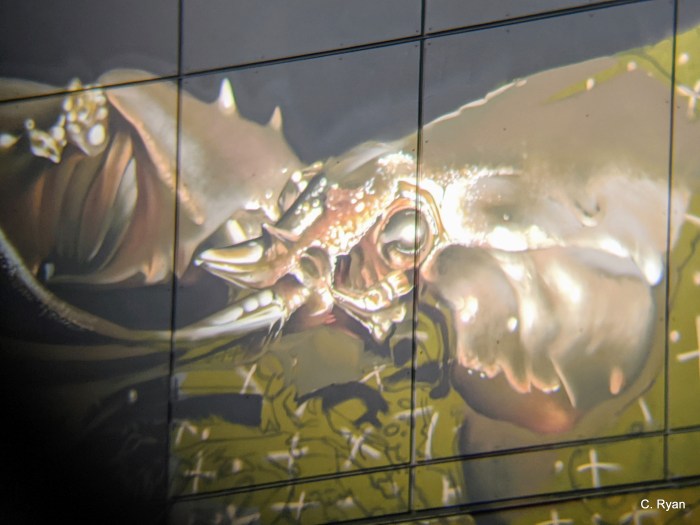
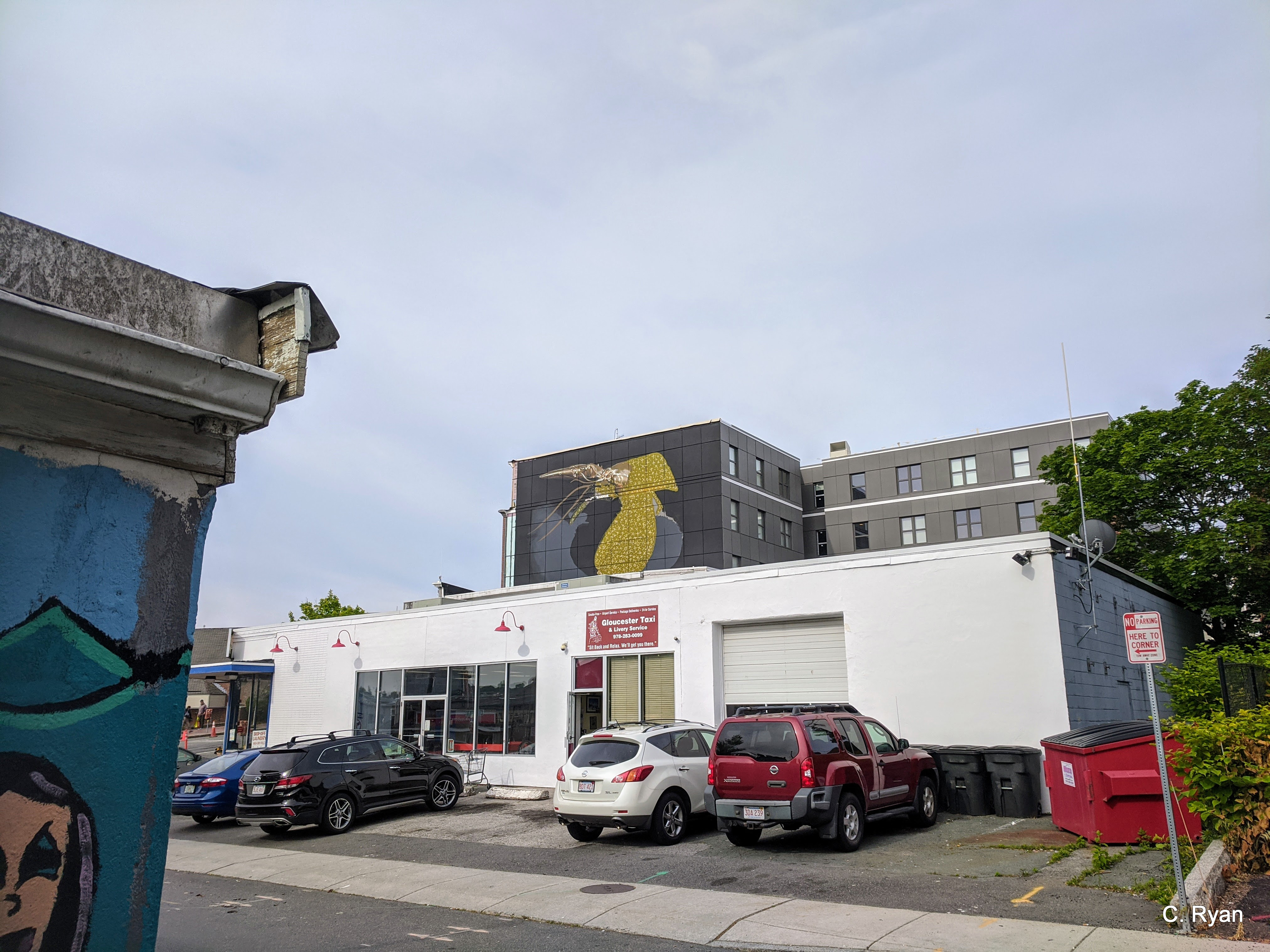
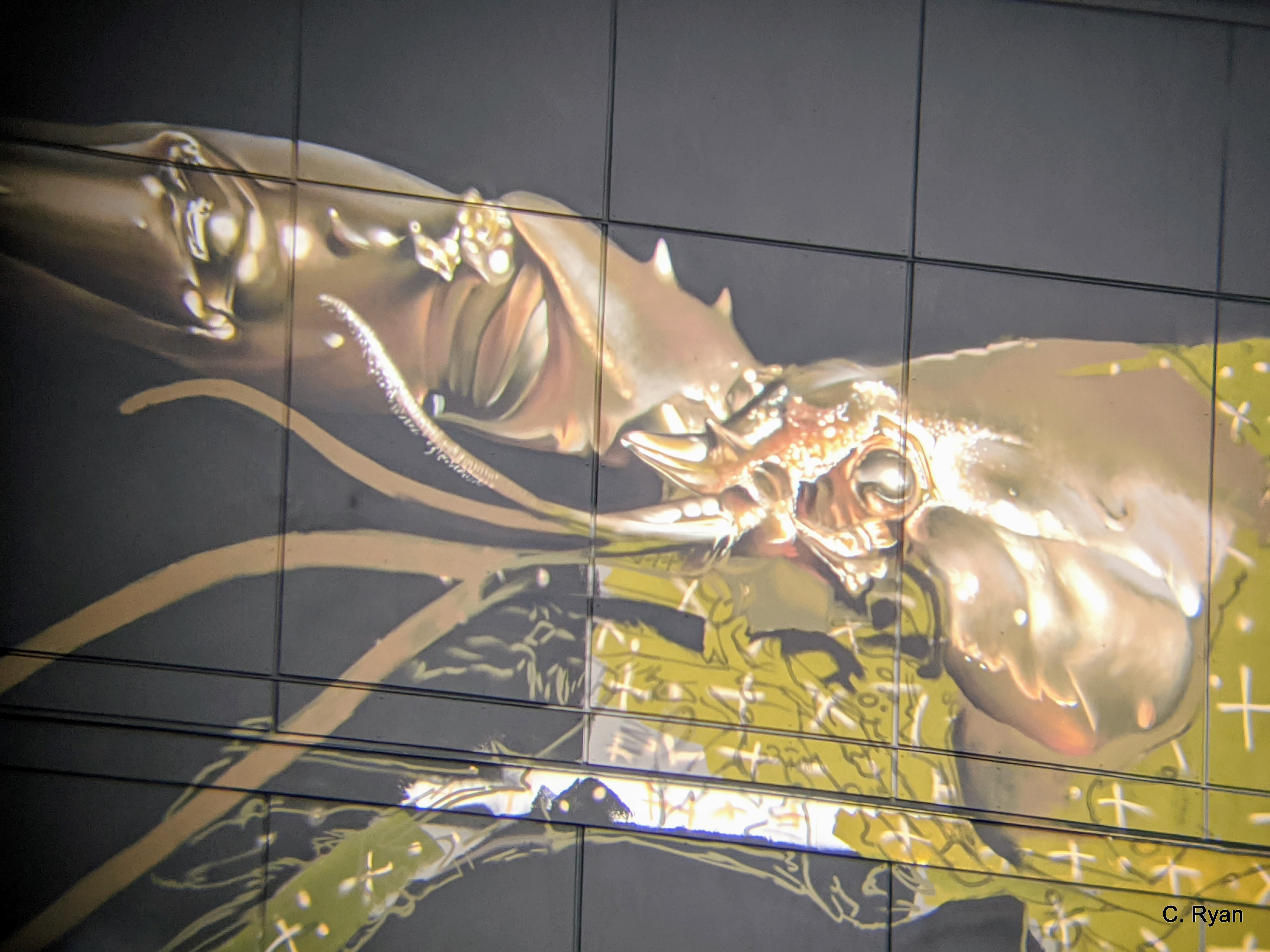
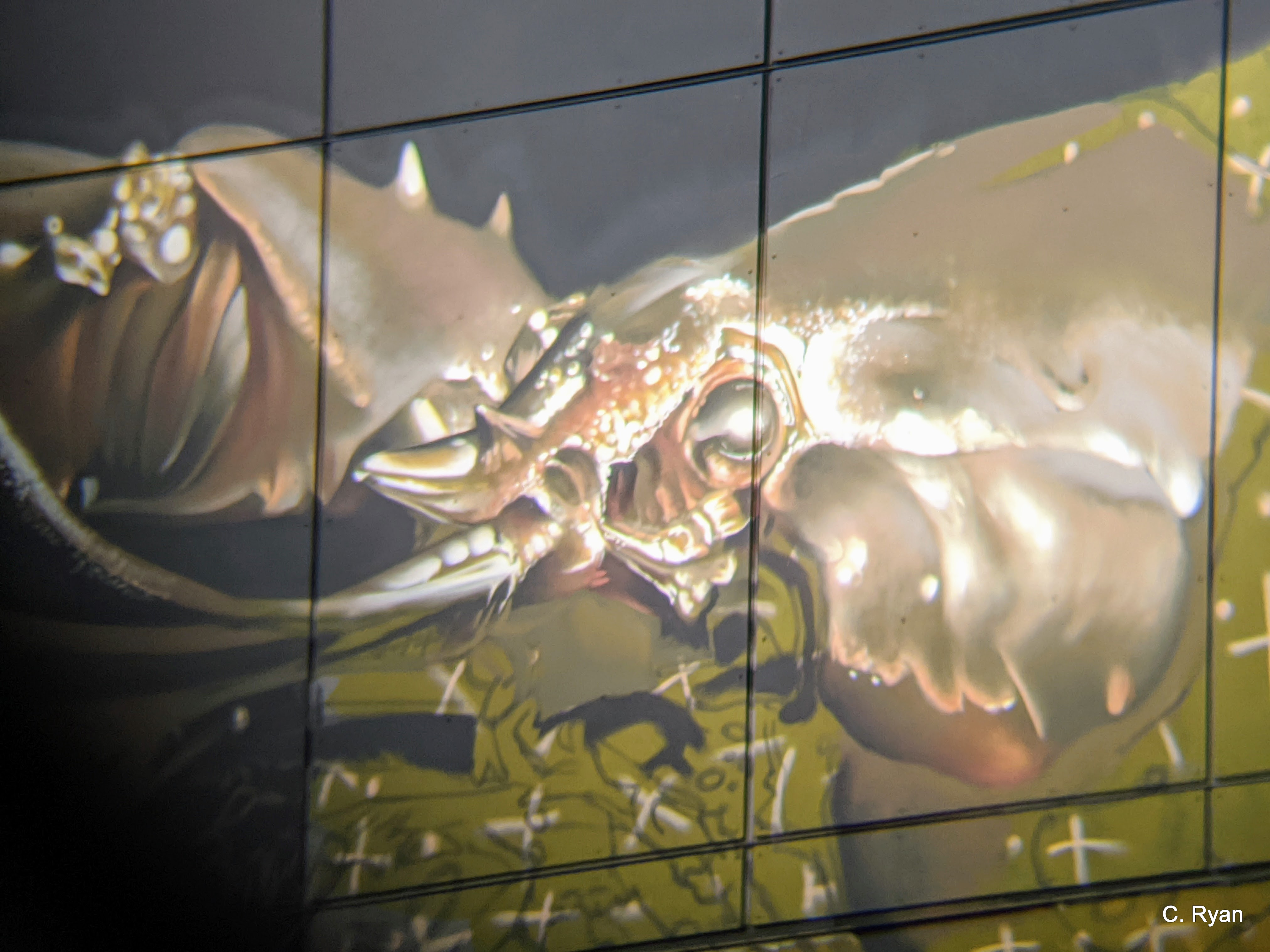
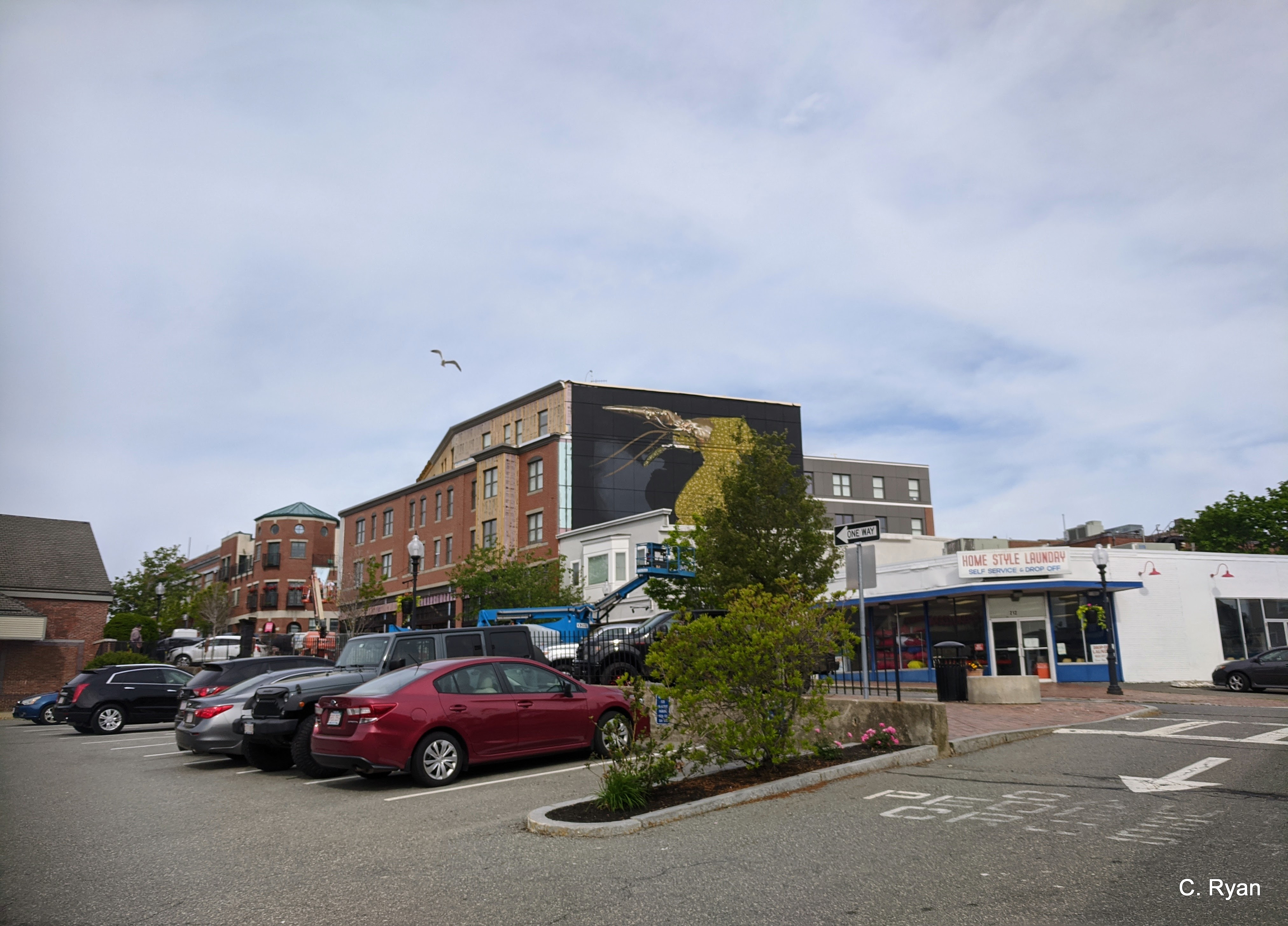
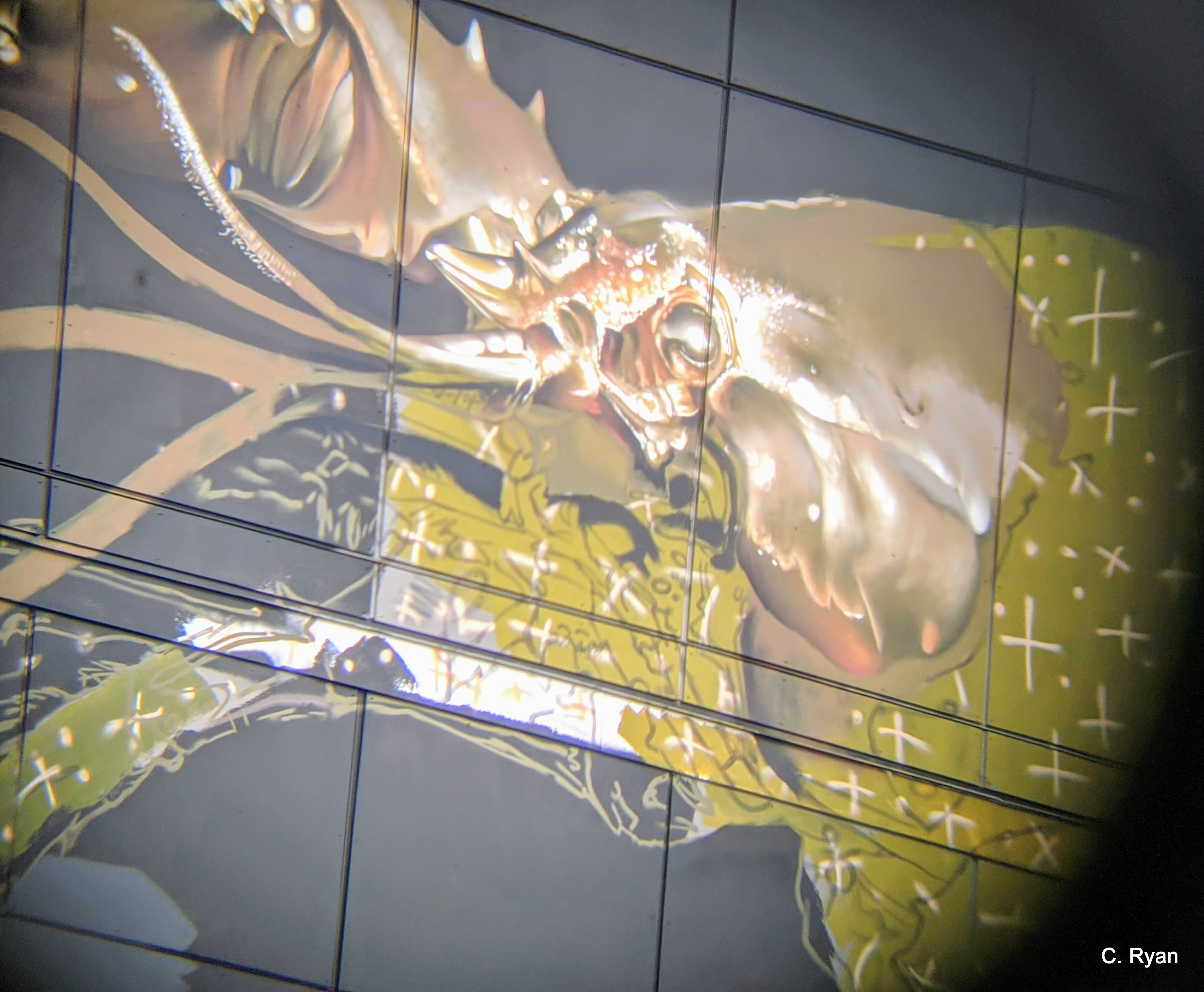
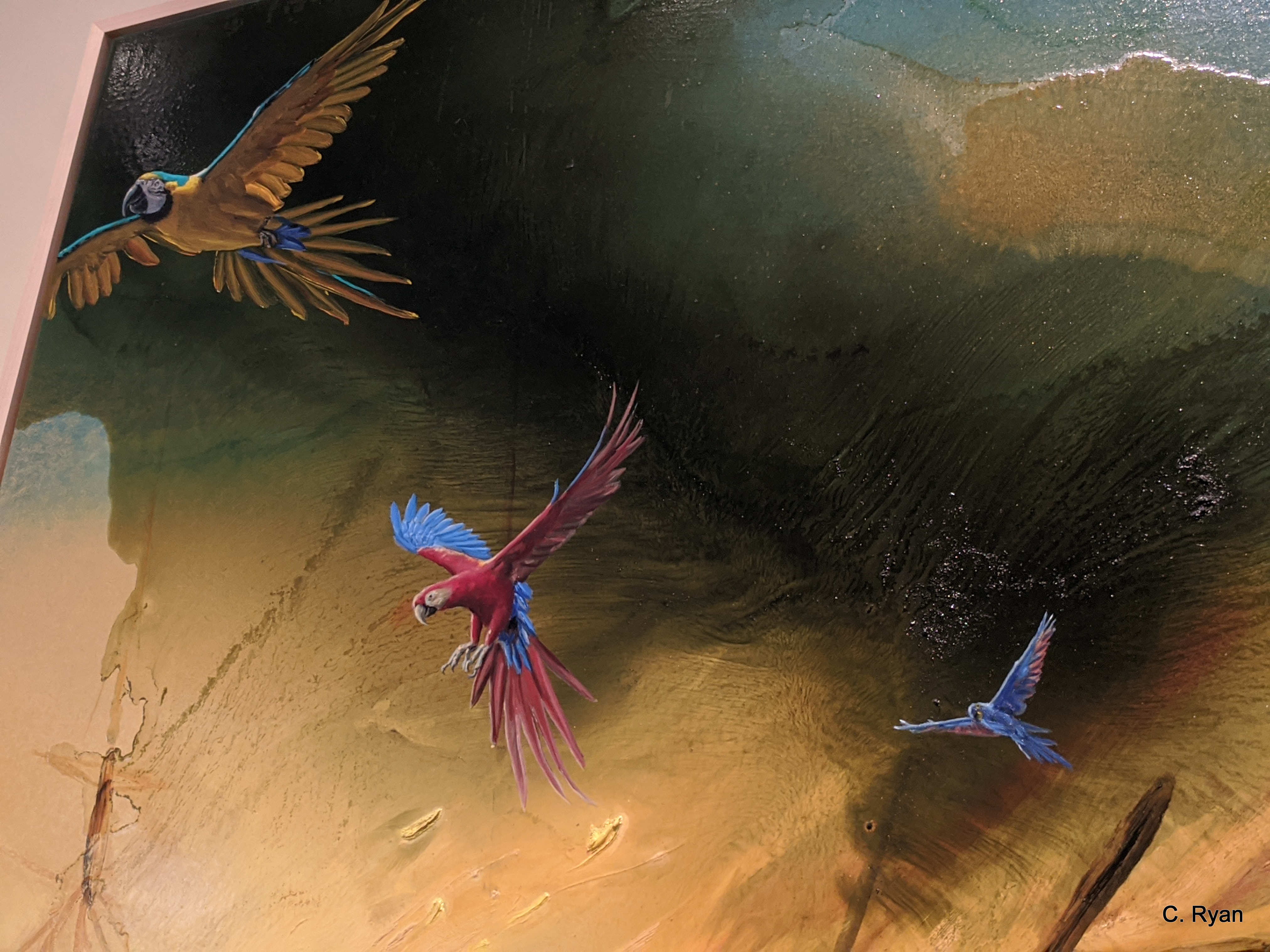
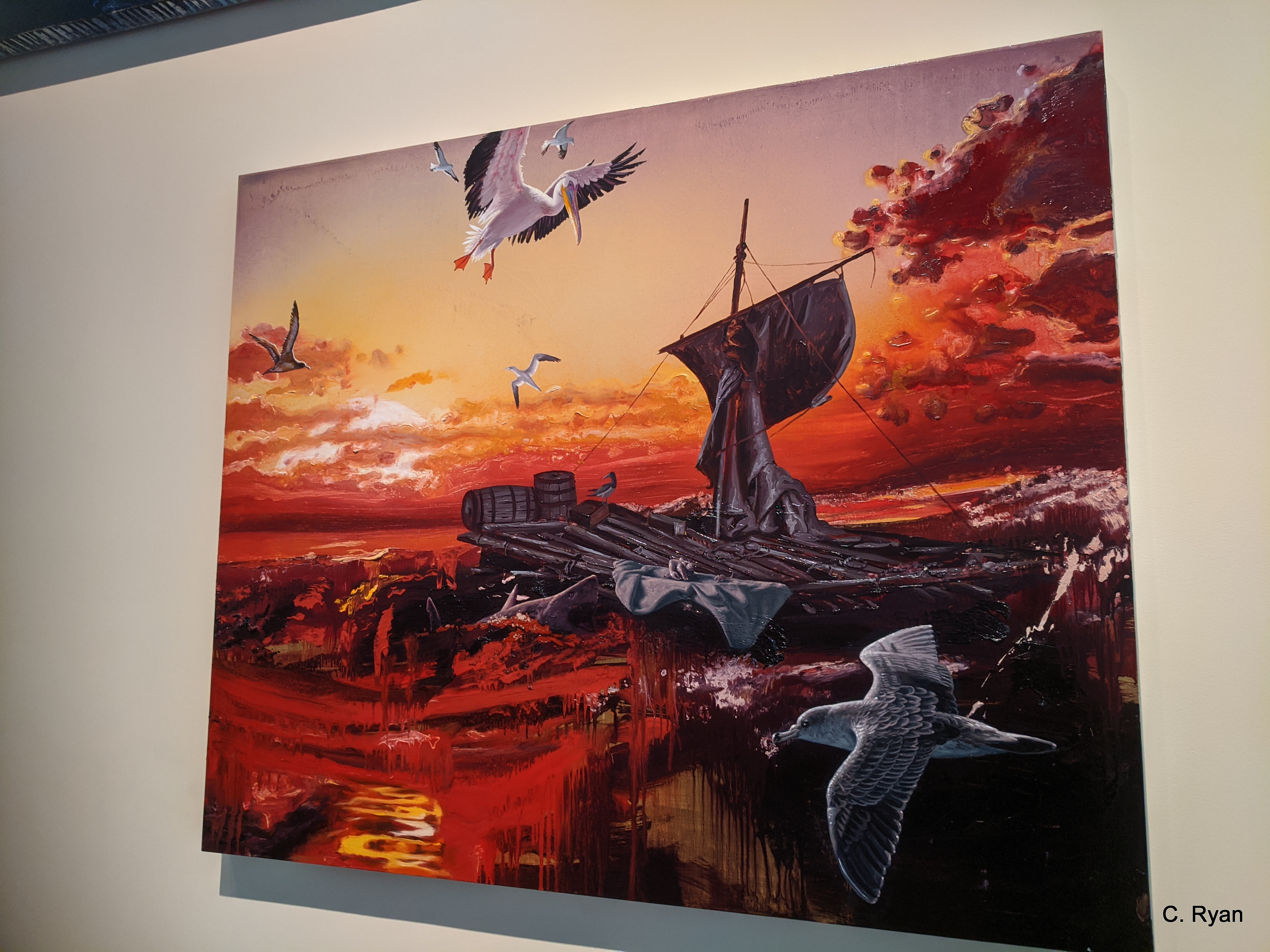
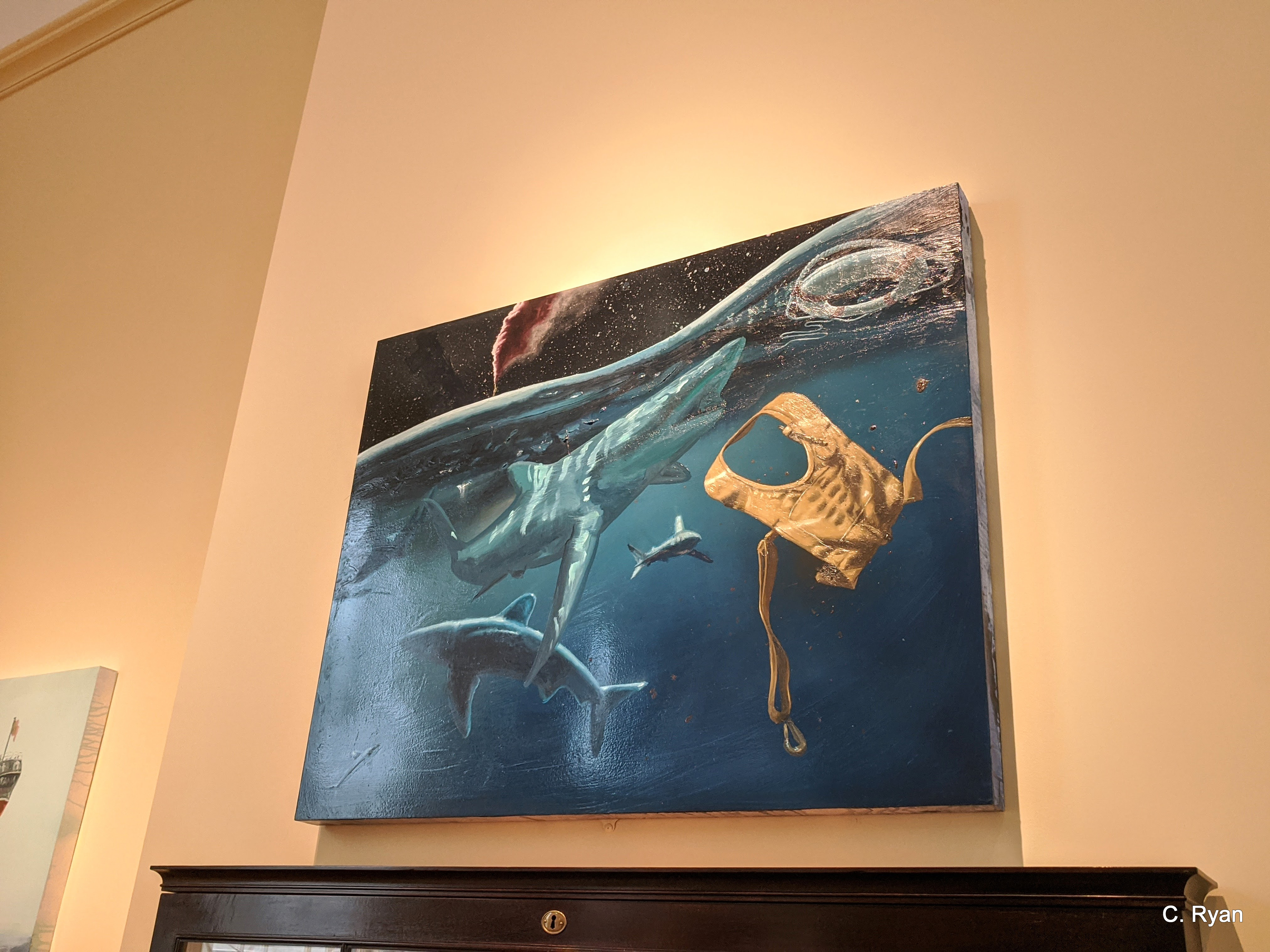
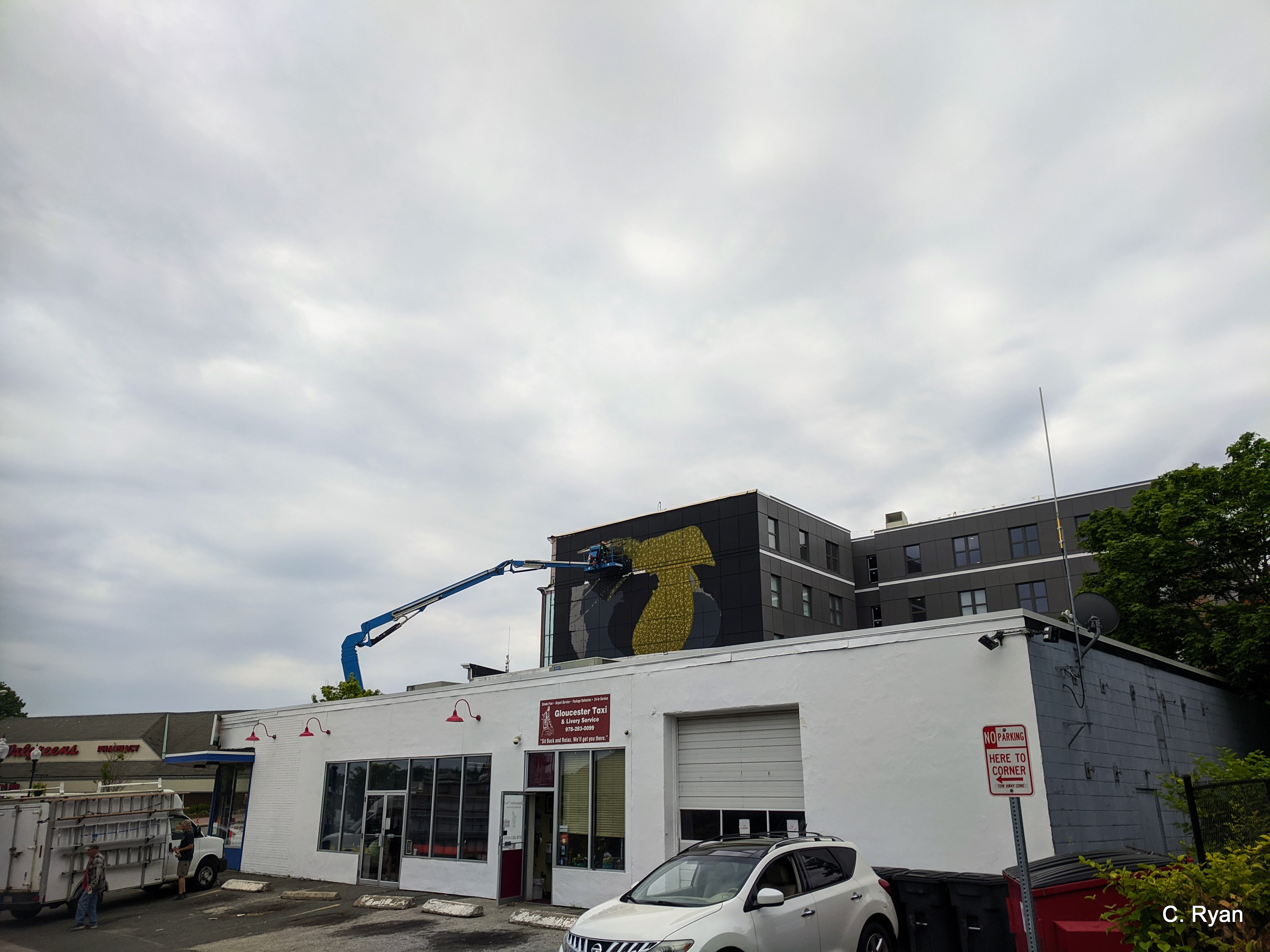
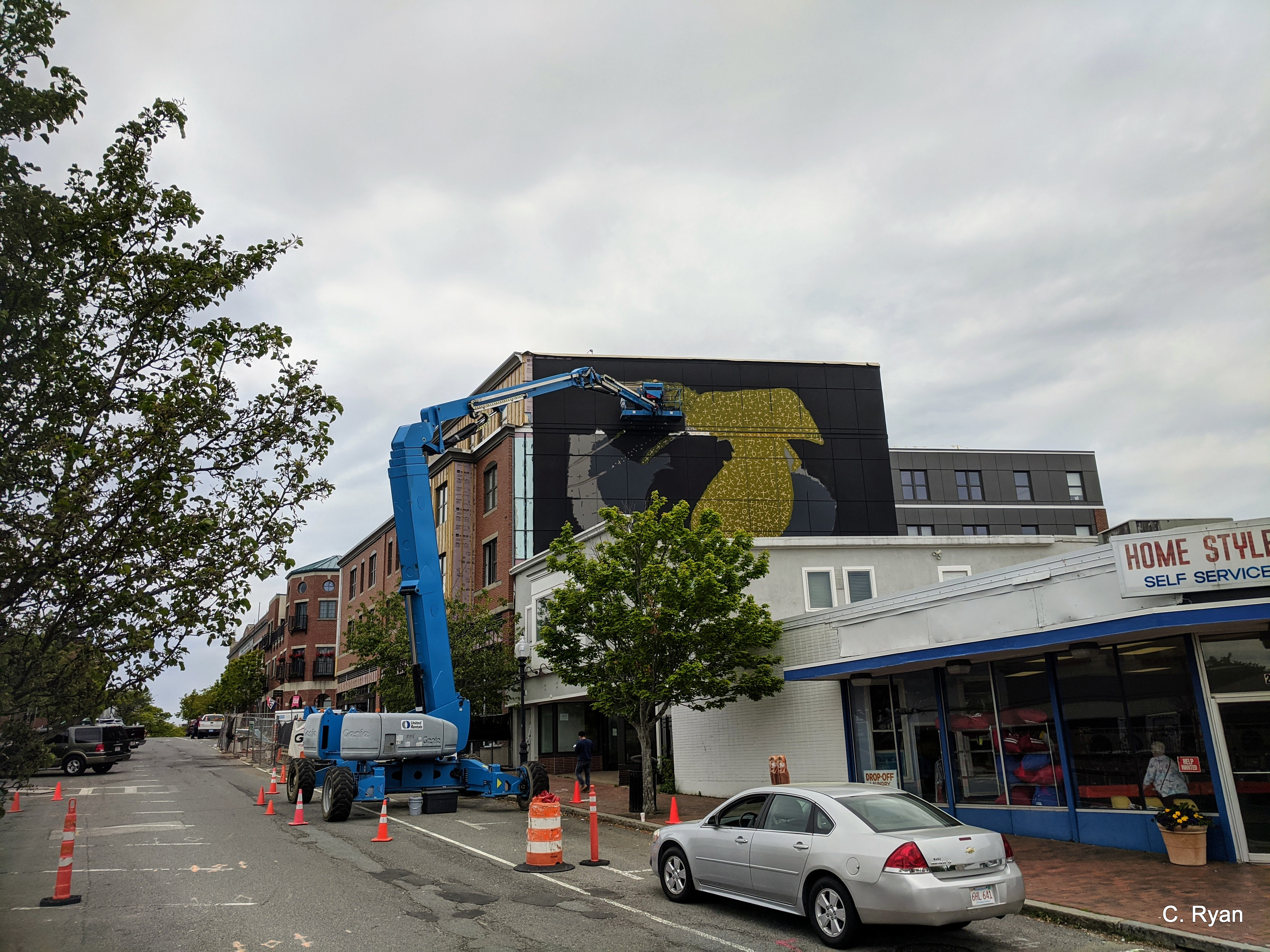
This morning feeling an intricate hyperrealist & abstract nocturne, sort of mutant sci-fi, toxic-regal, lobster-crustacean-hybrid clone, with a hint of greed. A bit Alexis Rockman vibe. You?
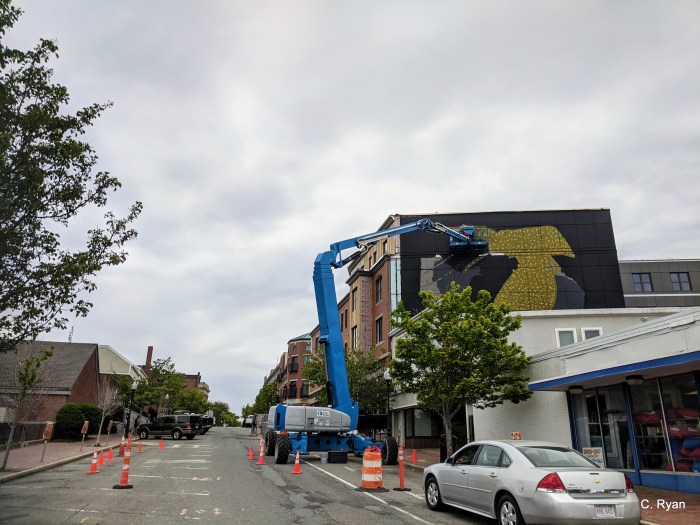
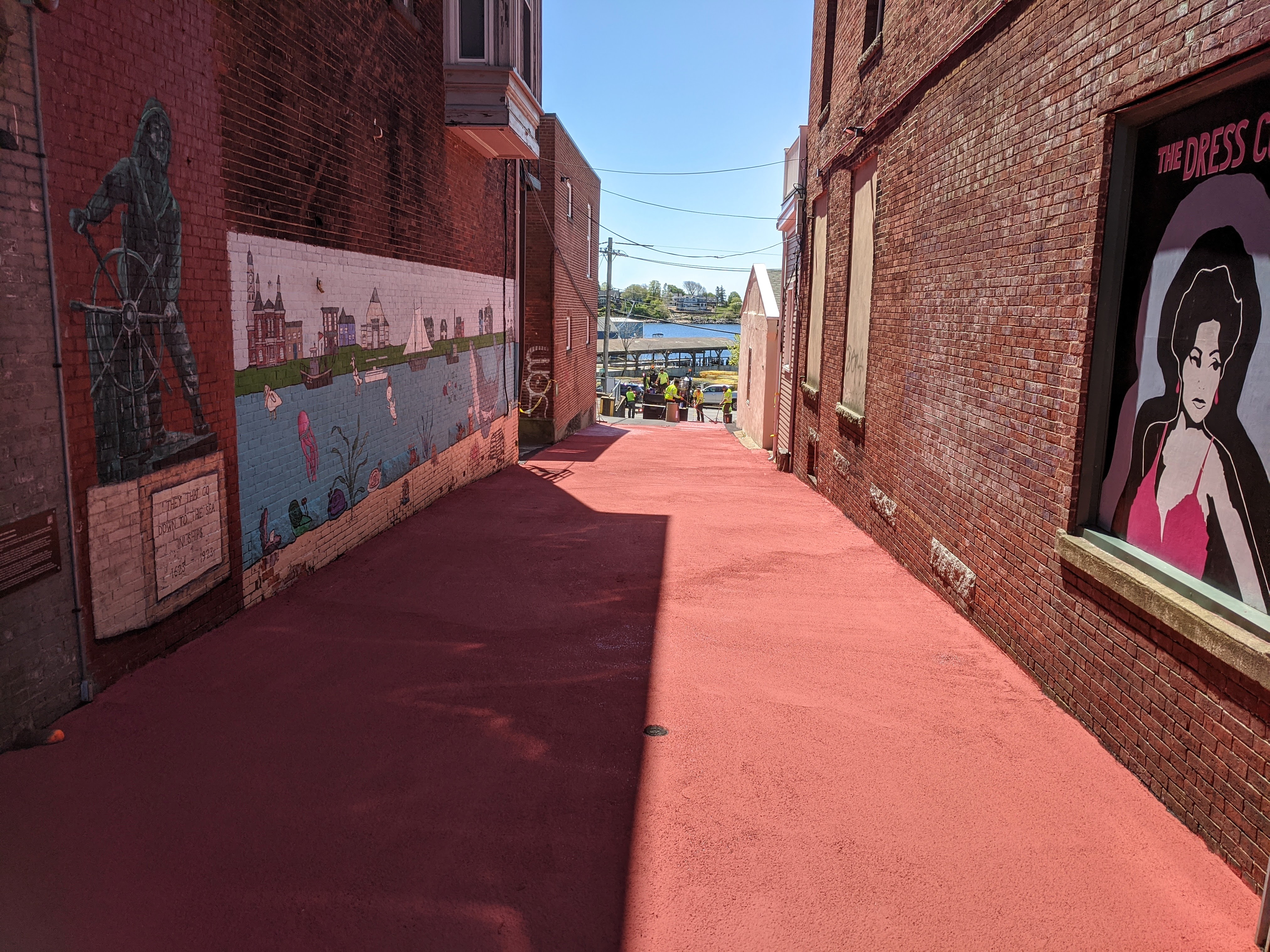
Look up when you’re downtown!
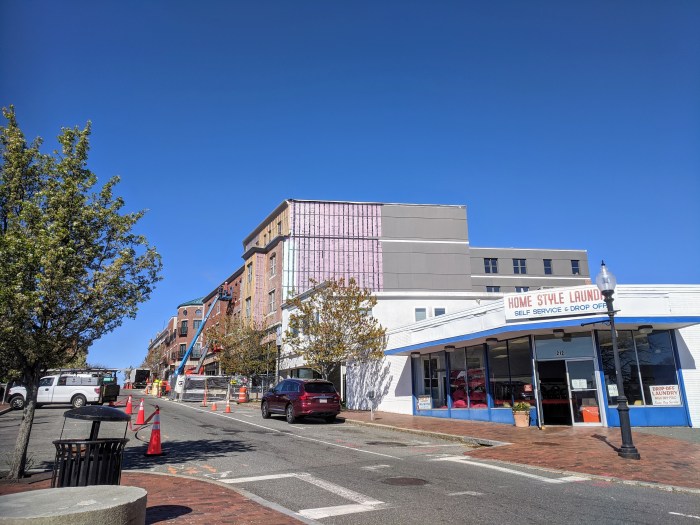
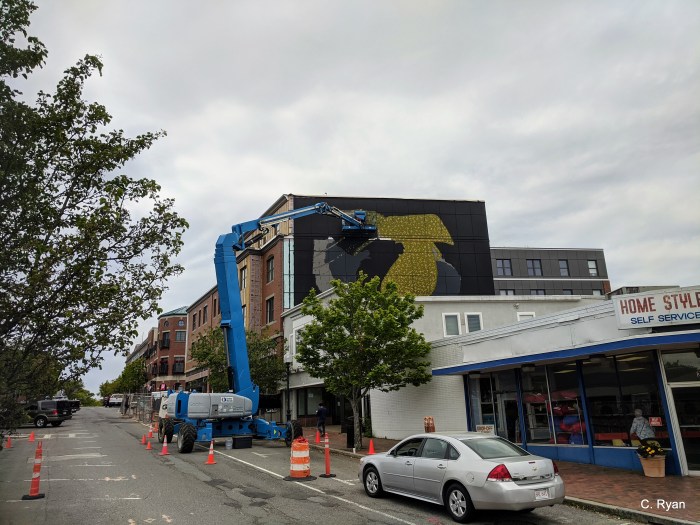
photos of new JEKS mural in progress- views from Rogers St, up from Main and Chestnut: C. Ryan
Gloucester murals | public art
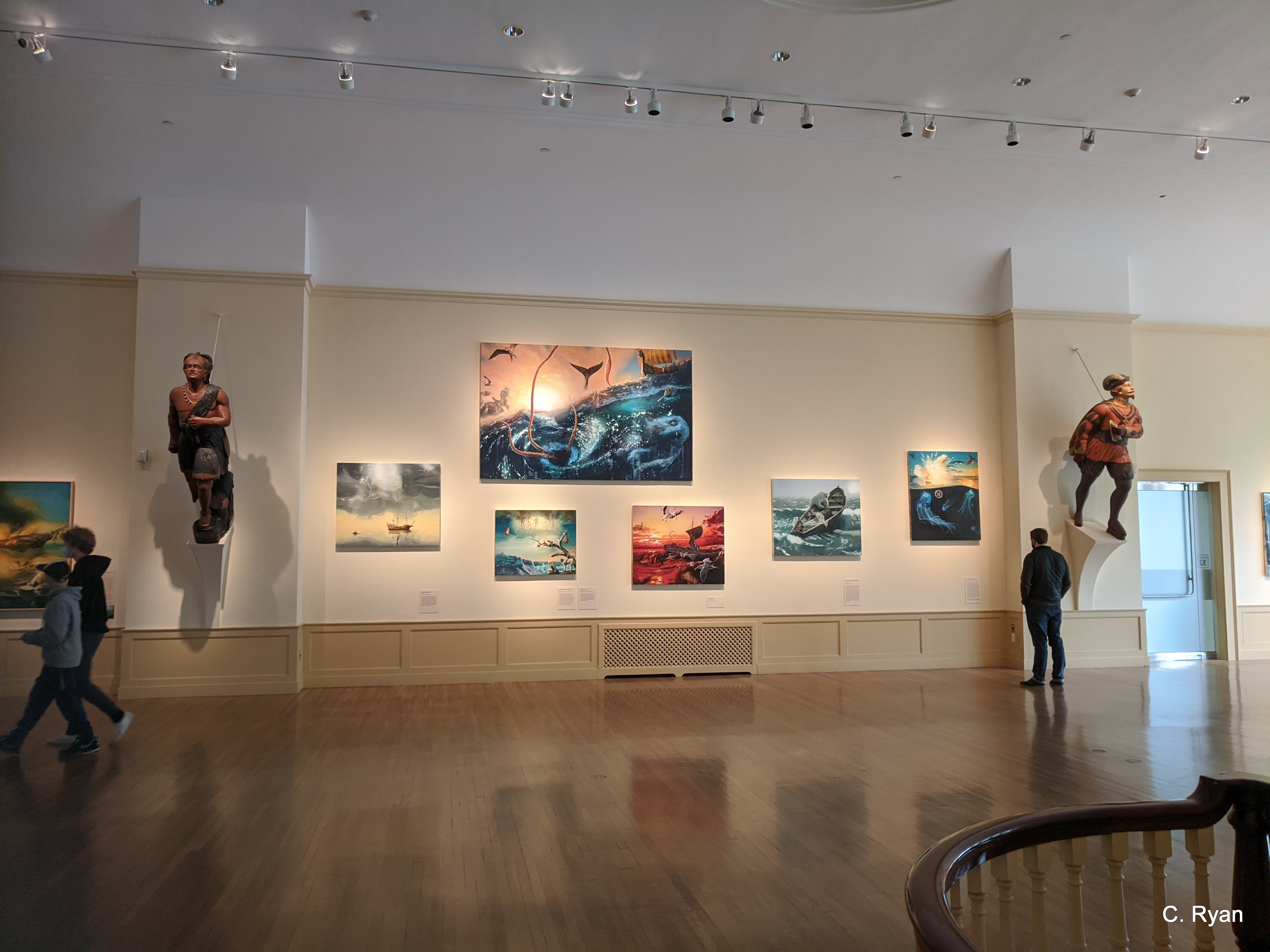
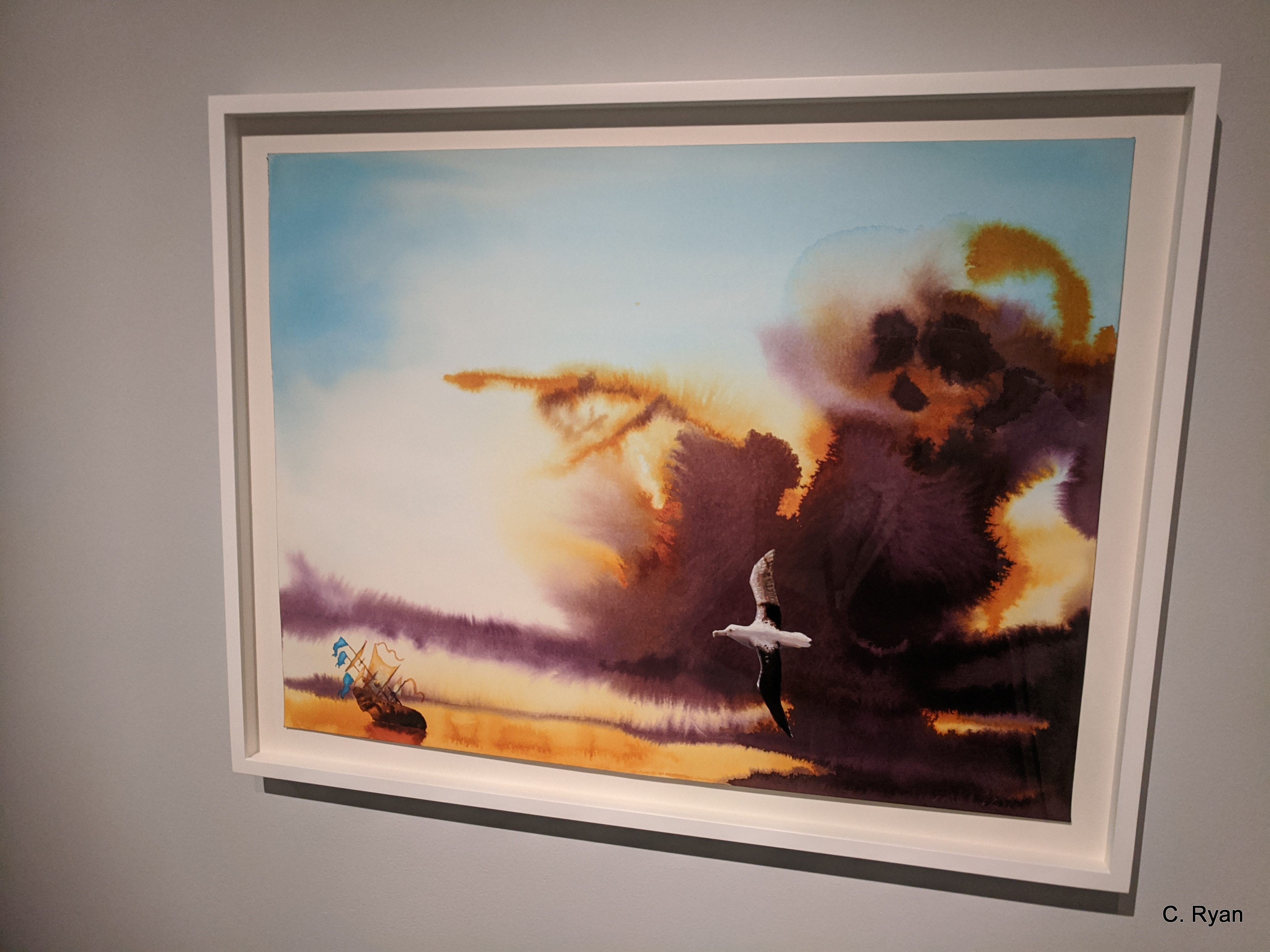
Alexis Rockman at PEM
If you missed the Alexis Rockman: Shipwrecks exhibition at PEM (on view just a month), there’s another chance at Guild Hall June 12 – July 26
installation views/details Alexis Rockman Shipwrecks at PEM May 2021: C. Ryan
Spread The GMG Love By Sharing With These Buttons:
Voting is on for the mural space on Elm Street. See Joey’s post here to VOTE for the 2nd exterior mural (Elm Street)
photographs: Catherine Ryan (View from Elm St. 6/3/2021)
Gloucester Mural map
Here is a selection of some of the exterior public art murals in Gloucester. Depending upon your device, double click or pinch and zoom to enlarge and/or right click to see the credit details. On mine there is an option to select “view full size”. Indoor murals include masterworks from Gloucester’s public art collection (for example see its major WPA-era New Deal murals).
Spread The GMG Love By Sharing With These Buttons:
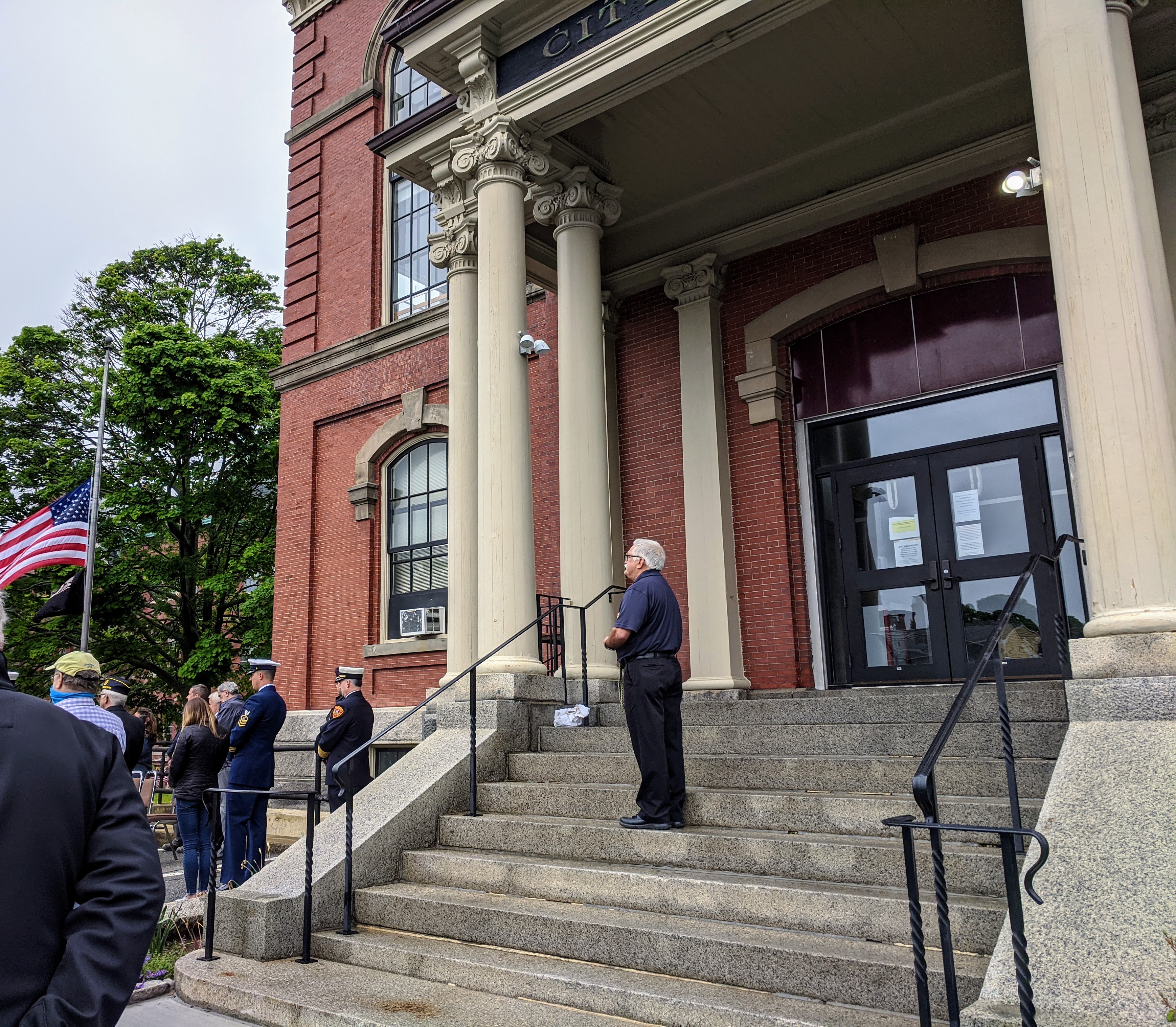
Adam Curcuru, Dir. Cape Ann Veterans Services (white suit), Vi Chipperini to his left (see the livestream)
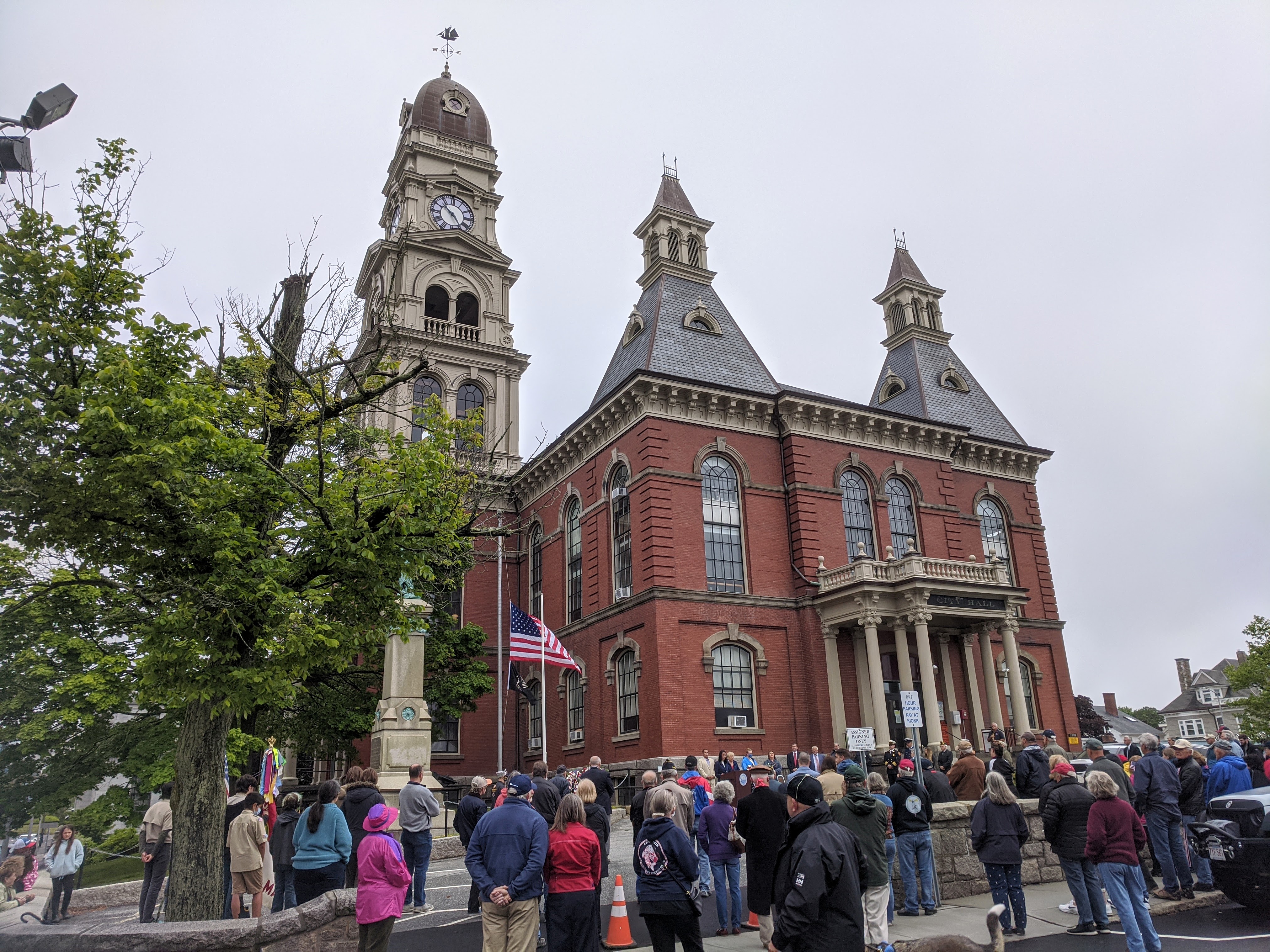
Pat Dalpiaz and Joey LIVE streamed the ceremony at City Hall
Jim Dalpiaz played taps.
photo: Pat Dalpiazphoto: Jim Dalpiaz
In Flanders Fields.
was penned by Lieut. Col. John M. McCrae, Canadian physician and soldier, during the First World War, following the first German chemical attack, early spring 1916, Second Battle of Ypres. Bonescattered torn and trampled fields germinated scarlet poppies and so many, many simple white crosses. The fallen went from war to peace.
In Flanders Fields was first published in London Punch December 1915. By March 1916, American newspapers carried the poem ( including Norwich Bulletin, and KY Citizen, June, 1916) McCrae died in France in 1918, and there rests in peace and vitality.
The common poppies sway by design, are tall and reaching; their architecture flings the seeds further and their flowers appear to open and close, intermittent as firecracker displays. (Individual flowers bloom for (mostly) a day, but the one plant will produce hundreds of flowers over the season.) The large translucent blooms indeed blow, glow and grow. Those adjectives in the first line opener of McCrae’s poem have swapped around in different versions. “Blow” it is.
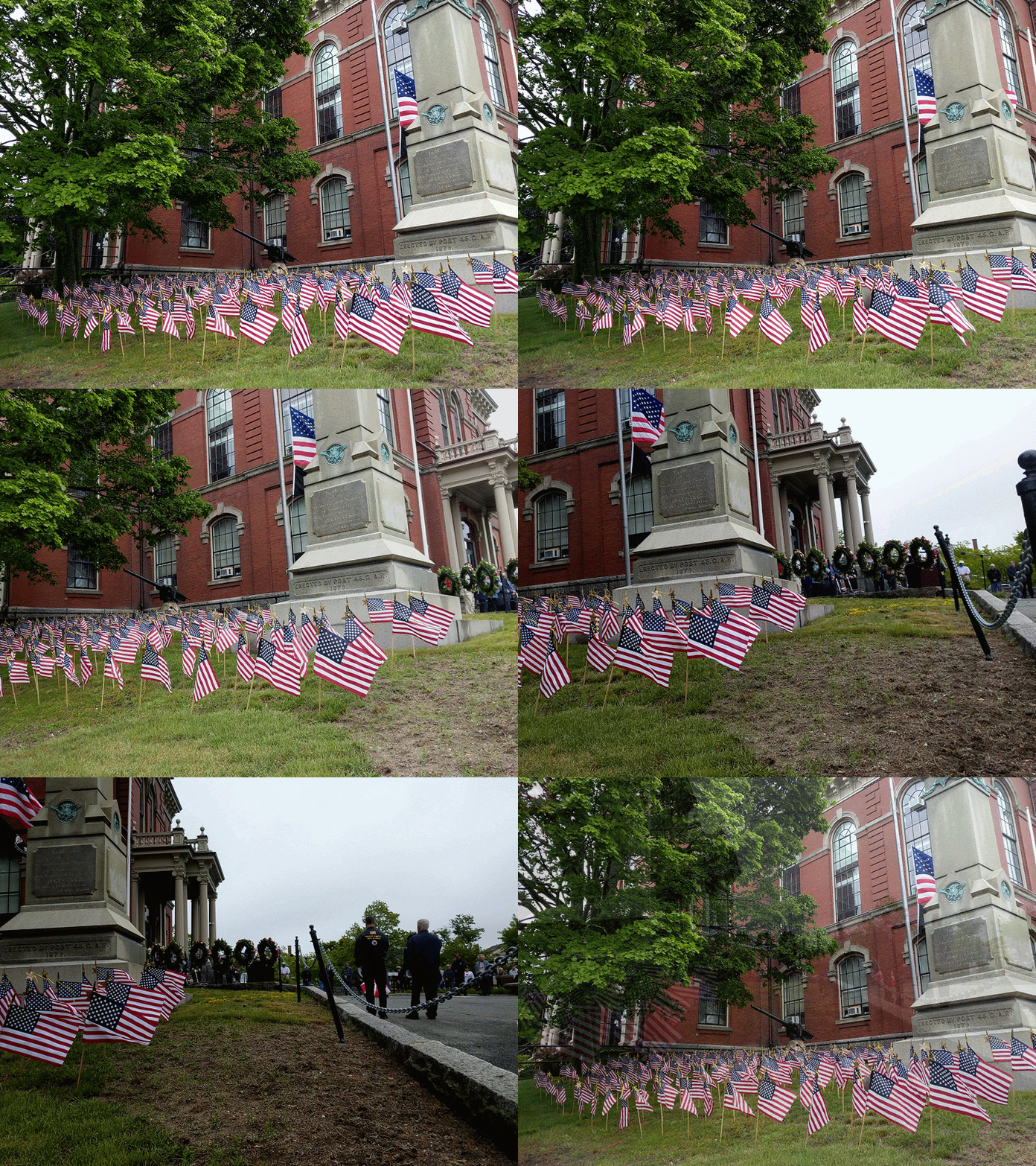
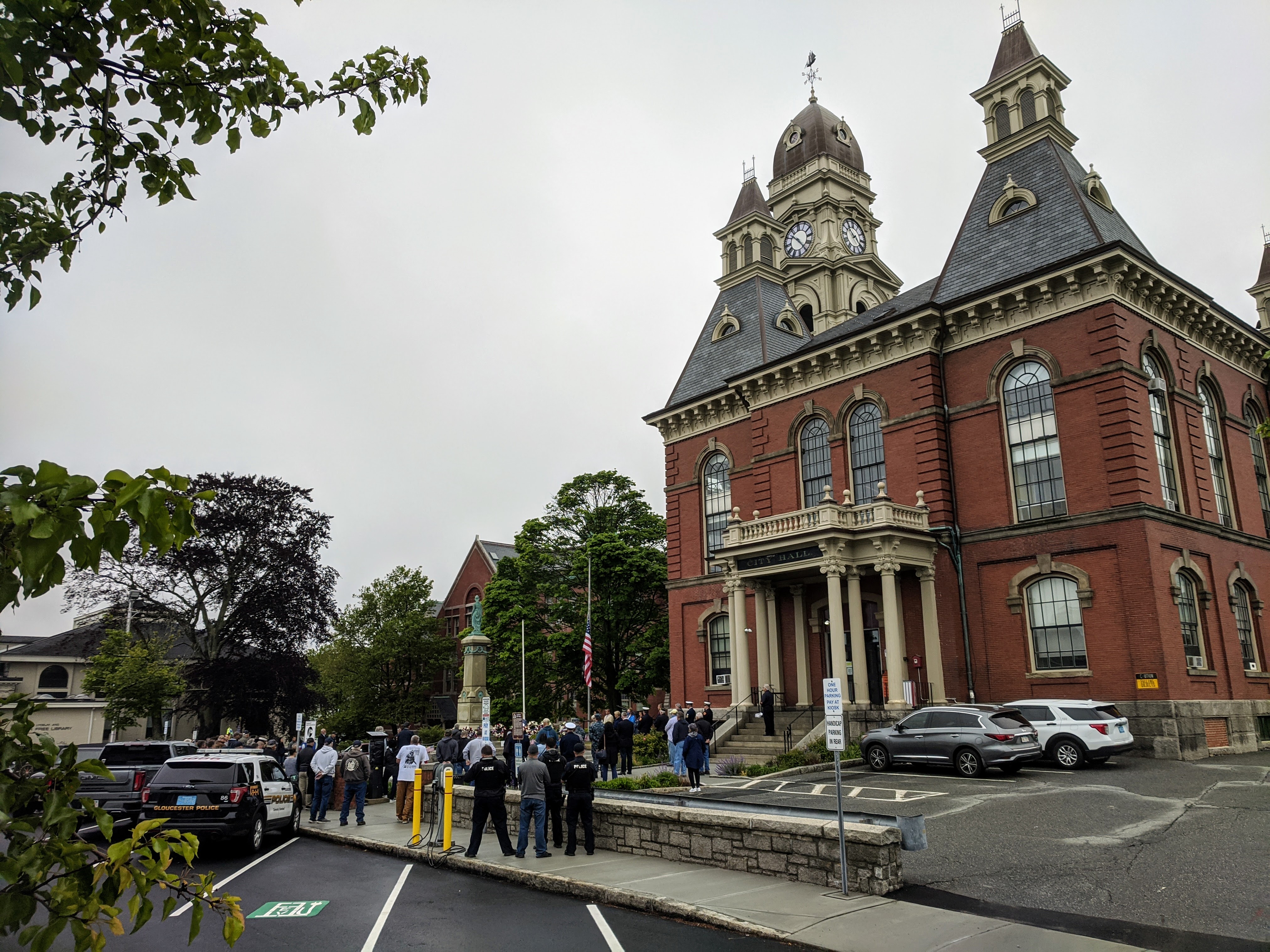
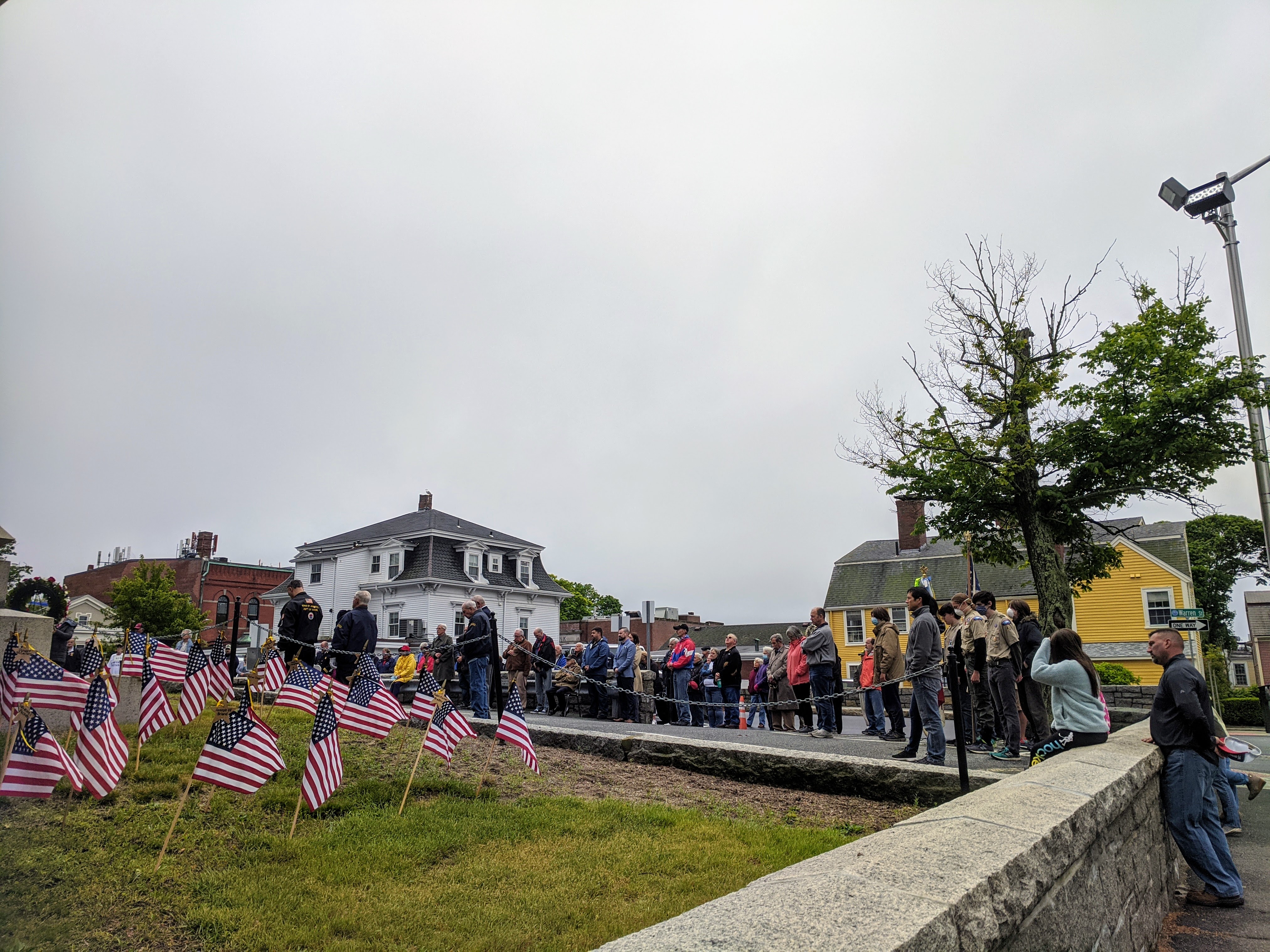
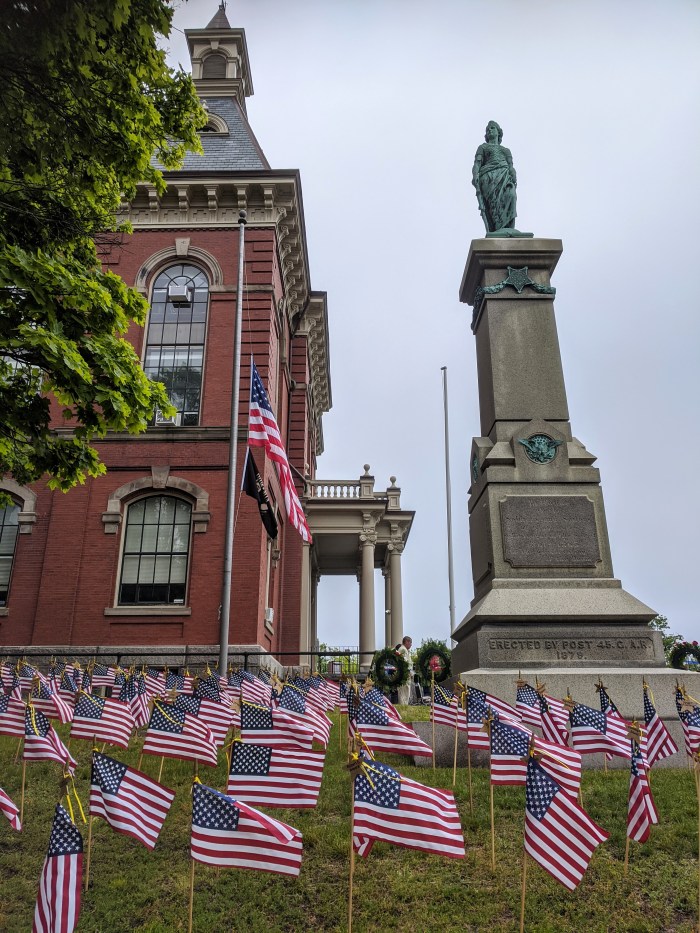
MEMORIAL DAY GLOUCESTER The Cape Ann Office of Veterans Services, the City of Gloucester, and the United Veterans Council invite you to join us outside MONDAY MAY 31, 2021 at 10AM Gloucester City Hall
Spread The GMG Love By Sharing With These Buttons:
“The next time things are going badly — and I am convinced that too many of our young people are headed straight to hell — then I am going to recall Joe Favazza.
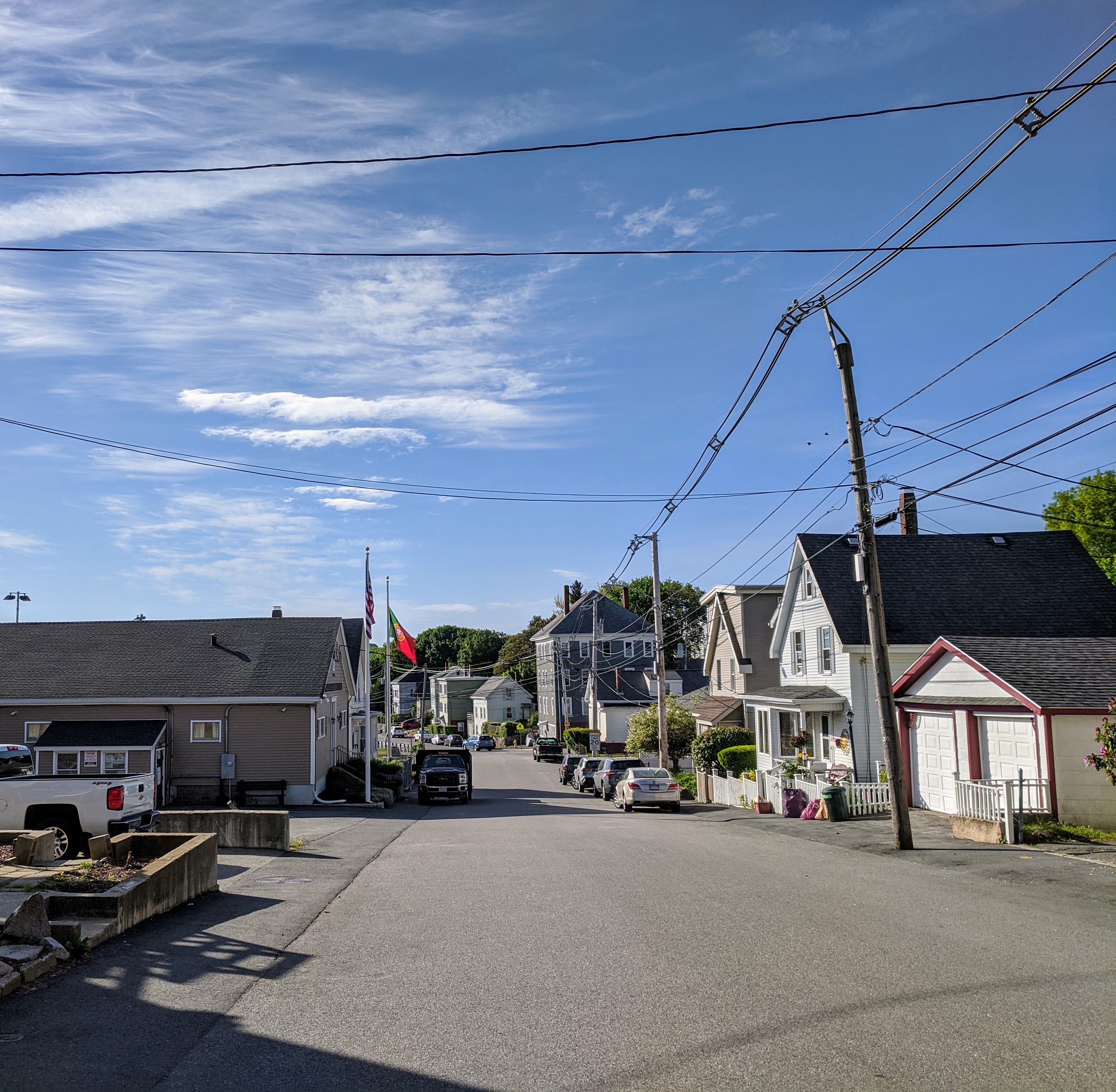
Then I will relive that scene on Portagee Hill (that’s what it’s called) the other morning when the brave van pulled up at the GFC building. Lawrence (not his real name) was sitting in the van, and Favazza was standing there waiting in the early morning summer sunshine, and then I will get the feeling again that everything is going to turn out all right after all.
“…The GFC was sponsoring a part for 20 handicapped children, including Lawrence. Favazza is an aide at the not so great salary of $85 a week in the summer recreation and educational program…”
“…Now let me tell you about Joe Favazza. He is 28 and 6 feet 2, wears shorts and tee shirt and a baseball hat. He is low-key and gentle. He served in the Army, works as a part-time Gloucester Times sportswriter and next month will be a Boston State junior and hopes to teach special needs children. He comes from a large Italian family, and that means closeness and the traditional Sunday noon dinners at his parents’ home on Middle street. His father is a Fuller school janitor who always was particularly helpful and gentle with the special-needs children there. Perhaps that virtue runs in the family…”
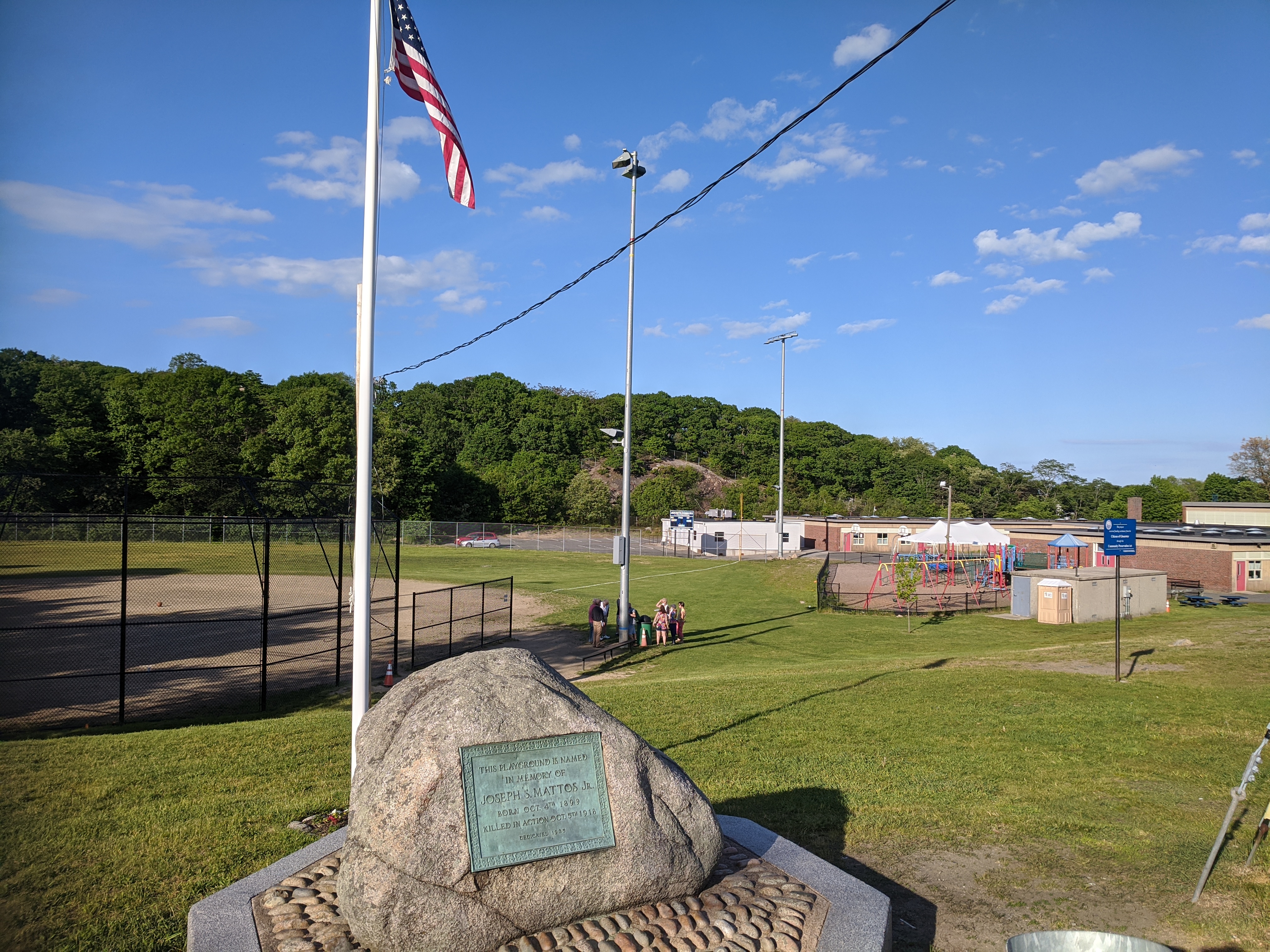
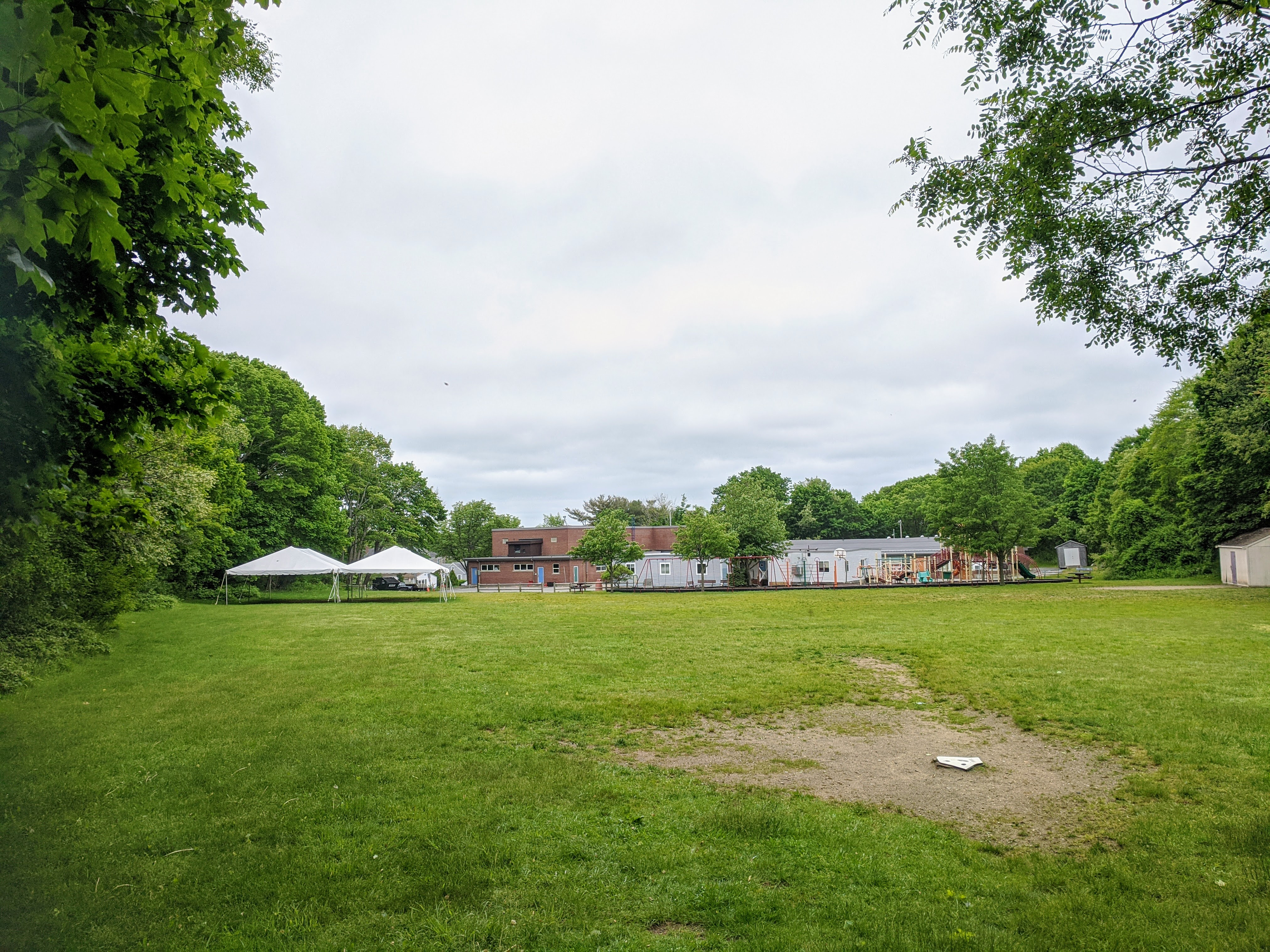
“Later there was a big luncheon for the kids and then they went to the adjacent Mattos playground…”
“Joanne kelly directs the summer program…led a group of parents and teachers to the school committee and outlined the case.”
“…Gloucester, rowdy and unfashionable and wonderful old Gloucester, became the only North Shore city with a summer program for special needs kids…”
THIS PLAYGROUND IS NAMED IN MEMORY OF JOSEPH S. MATTOS, JR.
BORN OCT. 4TH, 1899
KILLED IN ACTION OCT. 5TH 1918
DEDICATED 1935 IN HONOR OF: Joseph S. Mattos, Jr.,
Born in Gloucester on October 4, 1899, son of Mr. & Mrs. Joseph S. Mattos. Entered military service at the age of 16, with his mother’s blessing. Sent to France on August 13, 1917 as a member of Battery A, 5th United States Field Artillery, regular army. Private Mattos was killed in action on October 5, 1918, the day after his 19th birthday.
Spread The GMG Love By Sharing With These Buttons:
The Boston Globe included Gloucester among its beautiful Memorial Day roundup in 1927. Inspired by Gloucester’s annual Fishermen’s Memorial service, a new addition was incorporated into Gloucester’s Memorial Day observances that year. Perhaps this gesture could return for future programs.
“This maritime place which some time ago adopted the custom of strewing the waves at an annual (Gloucester Fishermen’s) memorial service inaugurated another feature today.
“During the exercises at the Cut Bridge, in honor of the Naval dead, two seaplanes from Coast Guard Base 7 commanded by Commander Carl C. Von Paulson and Ensign Leonard A. Melka, circled over the outer harbor strewing flowers.
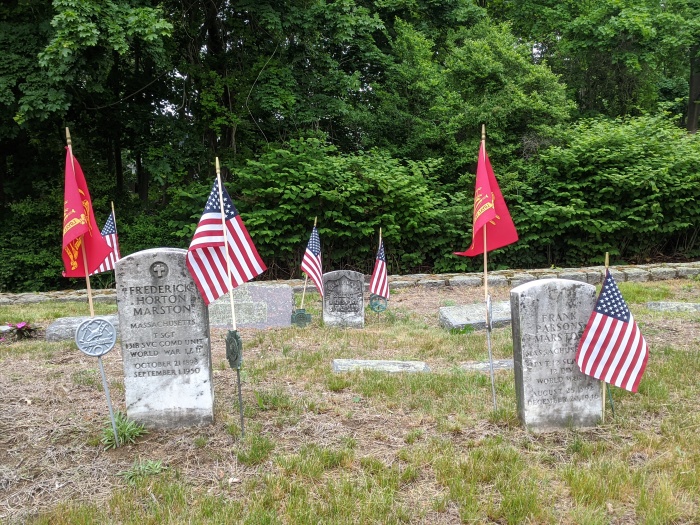
“Gloucester lost two airman during the WWI, Ensign Eric Adrian Lingard and 2d Liet. Maxwell Parsons. “Members of the G.A.R. Spanish War Veterans, Legion, and auxiliaries proceeded to Oak Grove Cemetery this morning where exercises were held after which the veterans moved to the Cut Bridge. Details from the servicemen’s posts had previously decorated the graves with flowers and foliage. The main exercises were held this afternoon in City hall auditorium, which was filled to its capacity…”
In 1937, the Gloucester Playground Commission dedicated the Maxwell Parsons Playground in East Gloucester, the neighborhood of his youth:
Named in Honor of
Lieut. Arthur Maxwell Parsons
U.S. Flying Corp
Born Dec. 11, 1895
Died July 3, 1918
Inscription on the tribute plaque
Eric Adrian Lingard
Have you watched Atlantic Crossing on PBS Masterpiece?
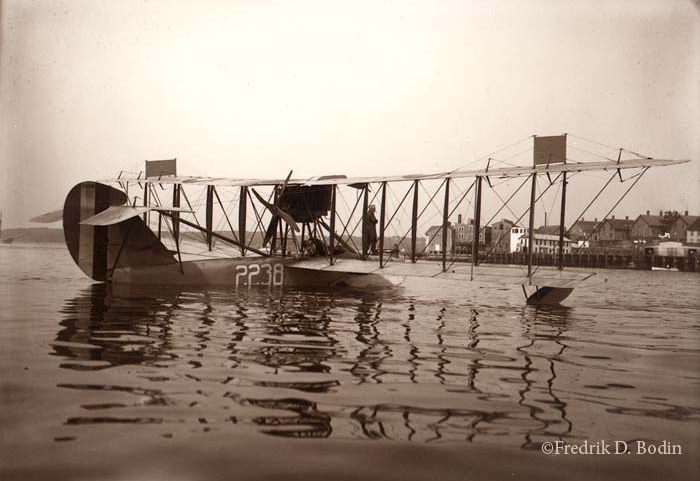
Local airman, Eric Adrian Lingard, was part of a daring and brave crew that drove a German U-Boat from the shores of his home state during the July 21, 1918 attack on Orleans, off Nauset Beach.
In 2012, Fred Bodin shared this dynamite photo with Good Morning Gloucester
Lingard Seaplane 1919 Gloucester Harbor – one he had flown
“On October 18th, 1918, Lingard’s plane went down in heavy seas due to engine failure, and he died of pneumonia 11 days later. The Lingard home is diagonally across Washington Street from the Annisquam Church, and was later the home of the renowned Crouse family (Sound of Music lyrics and actress Lindsey Crouse).”
After suffering more than a day in rough seas off Cape Cod, all the while assisting another brother in arms, Lingard and others were rescued from the frigid deep. Later, he succumbed from pneumonia exposure [and/or 1918 flu epidemic, still present that late. For example, the “two brothers who co-founded the Dodge Bros. automobile manufacturing company contracted the flu in New York in 1919: John died at the Ritz hotel in January 1920, and Horace in December 1920 after a wicked year battling its complications.” Search “Notables- Flu Cases and the Arts” Influenza Epidemic 1918 of Gloucester]
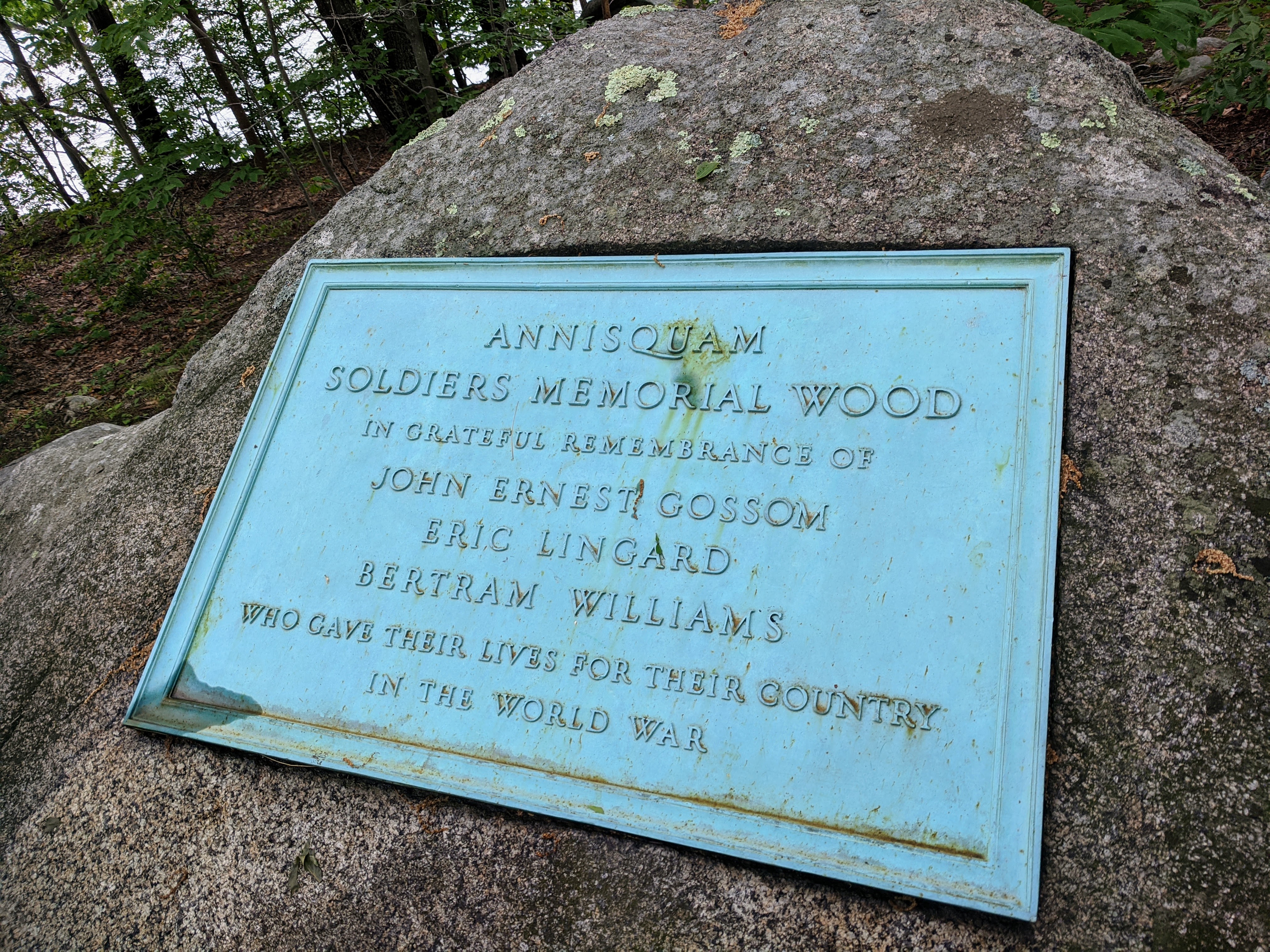
NAME: Annisquam Soldiers Memorial Wood LOCATION: Washington Street, along Lobster Cove CAMPAIGN: World War I TYPE: Bronze tablet in granite stone DATE DEDICATED: July 7, 1929 INSCRIPTION: Annisquam Soldiers Memorial Wood In grateful remembrance of John Ernest Gossom Eric C. Lingard Bertram Williams who gave their lives for their country in the World War
-from Gloucester, Ma. Archives Committee
Lingard’s name can be found WWI | Harvard Memorial Church
Where is the hull of Seaplane HS 1695, decommissioned by then Sect. State FDR to Gloucester’s park commission? GMG reader Bill Hubbard commented on Bodin’s photo, surmising:
“Nice old photo, Fred. For years before and during WW-II, the hull of a similar plane was in the lower level of the Twin Light Garage on East Main Street. The garage was owned by the late Ray Bradly who lived on Rocky Neck. As kids, we often played around it and I remember Ray telling us that it had been a WW-I airplane – I believe it was an old Coast Guard bi-winged seaplane. There were no wings or rudder, just the hull which was shaped very much like the one in the picture. Not long after the end of the war, they dragged it out to the flats on Smith Cove and burned it.”
Bill Hubbard, GMG reader comment reply to Fred Bodin, 2012
Fred Buck selected Joan of Arc photographs from the Cape Ann Museum for the HarborWalk Joan of Arc marker. We liked this one. The parade retinue includes a truck carrying wreckage from Lingard’s plane.
Joan of Arc in Legion Square. photog. unknown. date unknown. Lingard’s plane.
Spread The GMG Love By Sharing With These Buttons:
Friends have been comparing notes on ticks. Have you been finding many this spring?
[Dog tick pics: in the car, in the grass, on the sheets hanging on the clothesline, on the rocks at the beach. They move surprisingly fast. Deer tick pics next.]
Spread The GMG Love By Sharing With These Buttons:
Thoreau observed bluets “about” May 20th. More than a week already this 2021 spring.
Mouse-Ear
“About the twentieth of May I see the first mouse-ear going to seed and beginning to be blown about the pastures and whiten the grass, together with bluets, and float on the surface of water. They have now lifted themselves much higher above the earth than when we sought for their first flowers. As Gerarde says of the allied English species, “These plants do grow upon sandy banks and untoiled places that lie open to the sun.”
Thoreau Wild Fruits
-Clarence Manning Falt, 1894, Gloucester, Ma.
THE BLUETS
In mosses green
A charming scene,
To me a sweet surprise,
In bright array
This fair spring day
The bluets greet my eyes.
Each dainty cup,
Is lifted up
With tints of heaven’s hue;
Each budding gem
A diadem
Bespangled with the dew.
Like tiny shields
Amid the fields,
On bodies, slim and frail,
They wave and bend
And sweetly send
The Welcome Spring’s All hail!
Where bright sunshine
By one divine
Can reach each fragile heart,
They lovely gleam
Like some sweet dream
And Joy’s sweet pulses start.
My better self
(The heart’s stored wealth)
Enraptured at the sight
On each sweet face
See’s Heaven’s grace
And life, immortal, bright.
On, tiny blooms,
When waking tombs
Lie buried ‘neath the snow,
And Death doth keep
Guard o’er thy sleep
And blust’ring winds they blow,
Backward apace
My heart will trace,
And bring, begemmed with dew,
‘Mid mosses green
The charming scene
Of you, sweet buds of blue.
One smell-
Amy Lowell
(do you have favorite lines?)
Lilacs, False blue, White, Purple, Color of lilac, Your great puffs of flowers Are everywhere in this my New England. Among your heart-shaped leaves Orange orioles hop like music-box birds and sing Their little weak soft songs; In the crooks of your branches The bright eyes of song sparrows sitting on spotted eggs Peer restlessly through the light and shadow Of all Springs. Lilacs in dooryards Holding quiet conversations with an early moon; Lilacs watching a deserted house Settling sideways into the grass of an old road; Lilacs, wind-beaten, staggering under a lopsided shock of bloom Above a cellar dug into a hill. You are everywhere. You were everywhere. You tapped the window when the preacher preached his sermon, And ran along the road beside the boy going to school. You stood by the pasture-bars to give the cows good milking, You persuaded the housewife that her dishpan was of silver. And her husband an image of pure gold. You flaunted the fragrance of your blossoms Through the wide doors of Custom Houses— You, and sandal-wood, and tea, Charging the noses of quill-driving clerks When a ship was in from China. You called to them: “Goose-quill men, goose-quill men, May is a month for flitting.” Until they writhed on their high stools And wrote poetry on their letter-sheets behind the propped-up ledgers. Paradoxical New England clerks, Writing inventories in ledgers, reading the “Song of Solomon” at night, So many verses before bed-time, Because it was the Bible. The dead fed you Amid the slant stones of graveyards. Pale ghosts who planted you Came in the nighttime And let their thin hair blow through your clustered stems. You are of the green sea, And of the stone hills which reach a long distance. You are of elm-shaded streets with little shops where they sell kites and marbles, You are of great parks where every one walks and nobody is at home. You cover the blind sides of greenhouses And lean over the top to say a hurry-word through the glass To your friends, the grapes, inside.
Now you are a very decent flower, A reticent flower, A curiously clear-cut, candid flower, Standing beside clean doorways, Friendly to a house-cat and a pair of spectacles, Making poetry out of a bit of moonlight And a hundred or two sharp blossoms. Maine knows you, Has for years and years; New Hampshire knows you, And Massachusetts And Vermont. Cape Cod starts you along the beaches to Rhode Island; Connecticut takes you from a river to the sea. You are brighter than apples, Sweeter than tulips, You are the great flood of our souls Bursting above the leaf-shapes of our hearts, You are the smell of all Summers, The love of wives and children, The recollection of gardens of little children, You are State Houses and Charters And the familiar treading of the foot to and fro on a road it knows. May is lilac here in New England, May is a thrush singing “Sun up!” on a tip-top ash tree, May is white clouds behind pine-trees Puffed out and marching upon a blue sky. May is a green as no other, May is much sun through small leaves, May is soft earth, And apple-blossoms, And windows open to a South Wind. May is full light wind of lilac From Canada to Narragansett Bay.
Lilacs, False blue, White, Purple, Color of lilac. Heart-leaves of lilac all over New England, Roots of lilac under all the soil of New England, Lilac in me because I am New England, Because my roots are in it, Because my leaves are of it, Because my flowers are for it, Because it is my country And I speak to it of itself And sing of it with my own voice Since certainly it is mine.
Amy Lowell (1874-1925) first published September 18, 1920 NY Evening Post; modernist compilation 1922 and numerous volumes thereafter
T. S. Eliot
call and response-
April is the cruellest month, breeding Lilacs out of the dead land, mixing Memory and desire, stirring Dull roots with spring rain.
T.S. Eliot New England opener The Waste Land, 1922
Awesome news from Heidi Dallin – Happy musical for Happy spring!
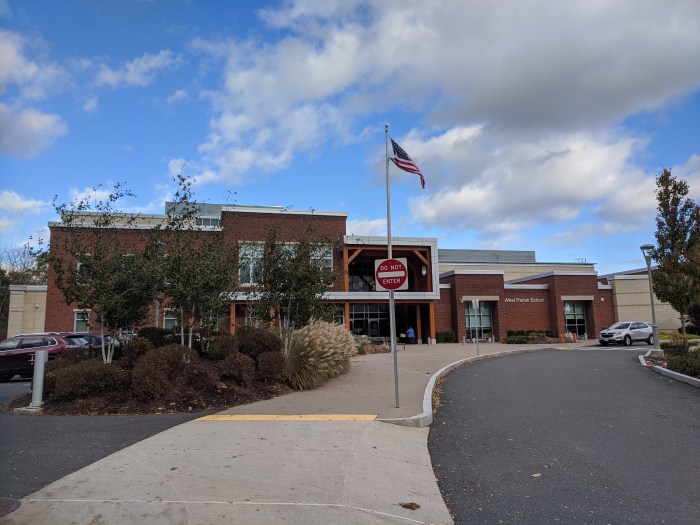
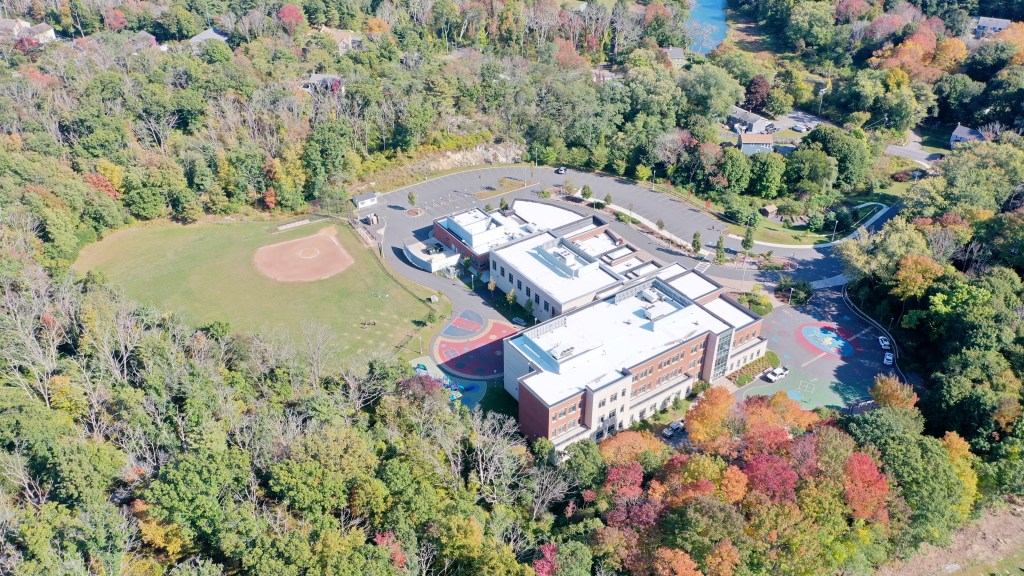
Here is the link for the West Parish show. The show is free and you can watch anytime on Friday and Saturday (this week) but you must sign up for the event to get the link. The Bye Bye Birdie young performers’ edition is about an hour long. Please share!
-Heidi Dallin
Support the students’ efforts and arts in Gloucester Public Schools. There’s a decades long tradition of 5th grade plays.
Take a minute to appreciate the thoughtful architectural design details on the exterior work in progress for Harbor Village on Main Street in Gloucester, Massachusetts.
































































 Good Morning Gloucester