Author: Catherine
posted content / cell phone photos mine, unless otherwise credited
(thumbnail portrait of Catherine at MFA, Boston © David Cox photo)
https://www.cryanaid.com/

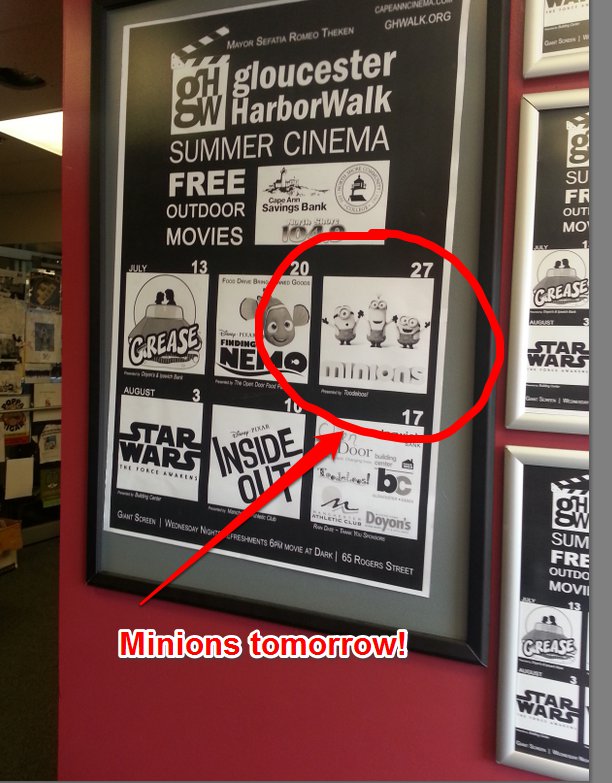
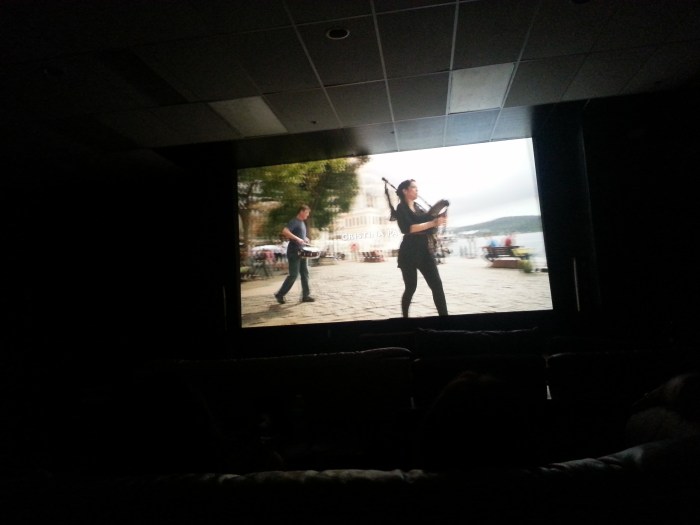
3 Family Movies this week from Cape Ann Community Cinema: Minions gHW Summer Cinema, Hunt for the Wilderpeople, and Music of Strangers- Yo Yo Ma and the Silk Road Ensemble
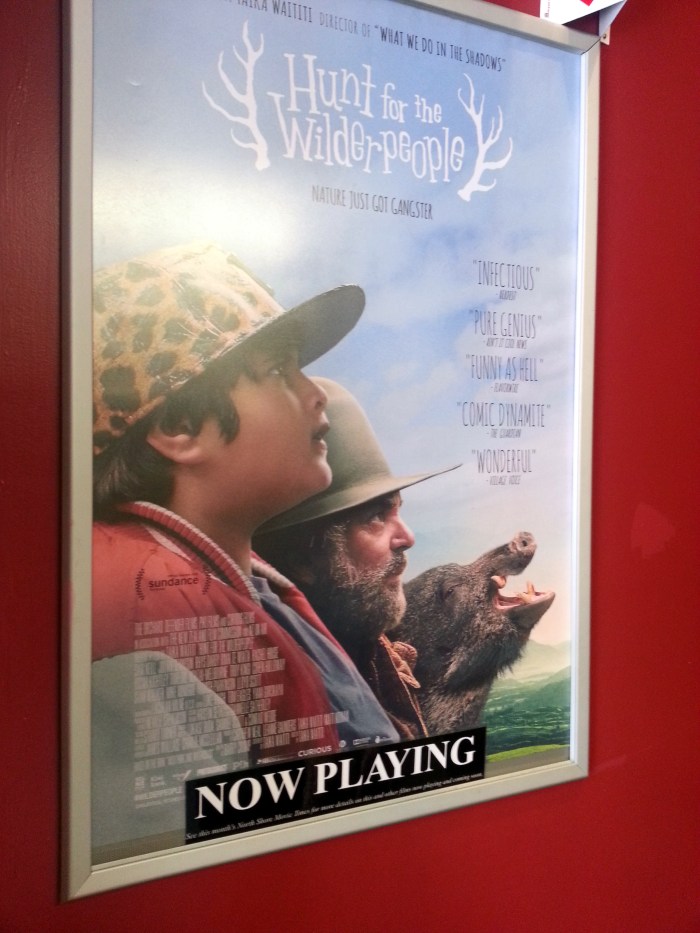
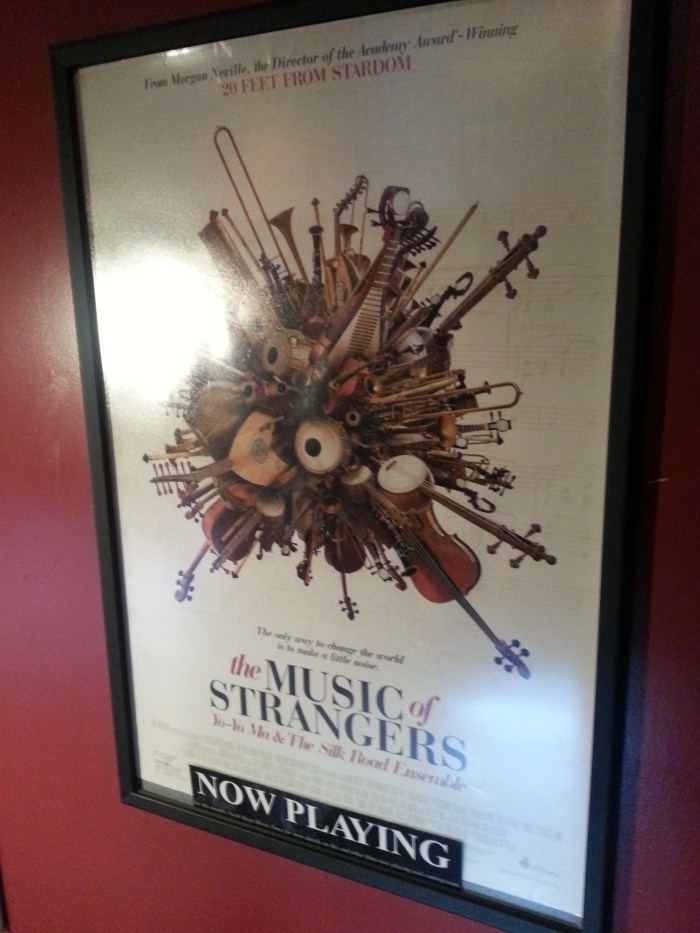
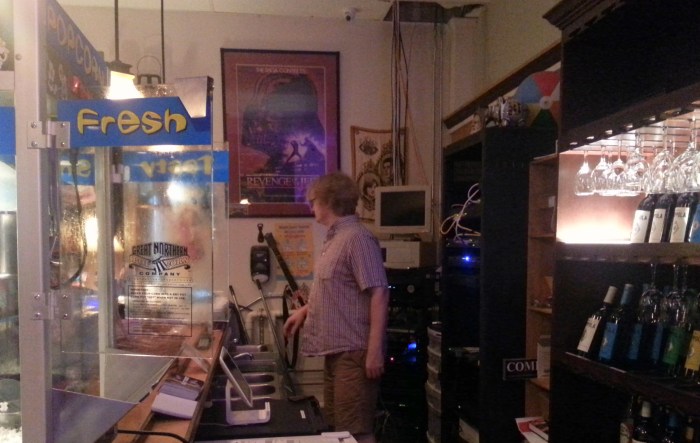
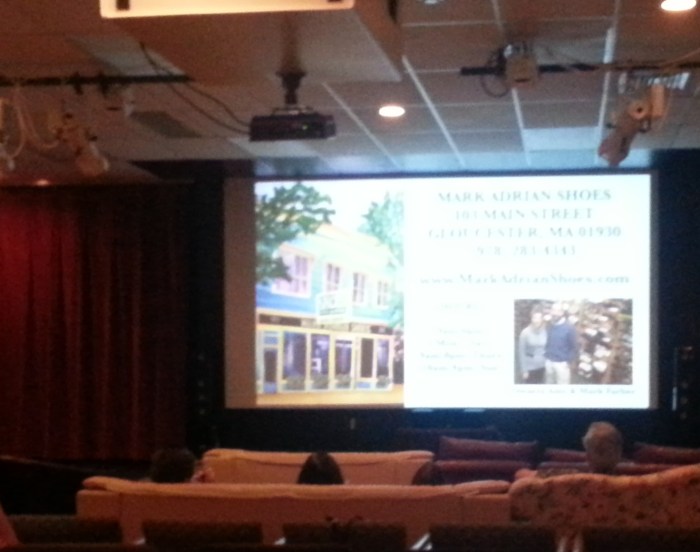
If you are in need of an indoor a/c break, stay cool with an afternoon or evening showtime. While you’re getting snacks and seats, the movie screen glows with vintage black and white slides remonstrating movie parlor etiquette. They’re peppered with sponsor ads from local business, organizations, and other creative artists. There’s a great one from POP Gallery! Fun to see before the movie previews.
Spread The GMG Love By Sharing With These Buttons:

Gloucester Motif Monday: alight approach
From where I was standing.
6:15:02
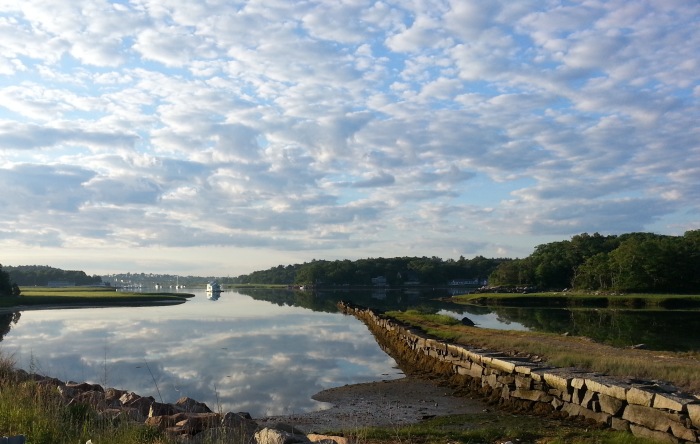
6:15:45

Spread The GMG Love By Sharing With These Buttons:


goodlinens on Main Street any day now!
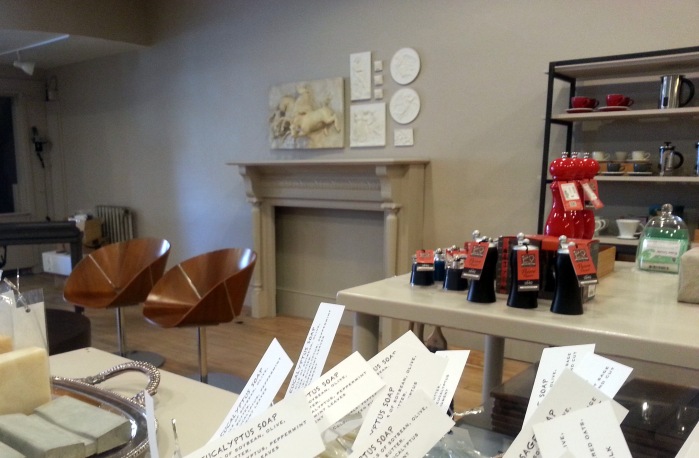
goodlinens is ready enough for its soft launch opening! More finishing and architectural details will continue through the summer and into the fall. Featured artisan panels and more inventory and stock will be added. Yet you just might have the chance to step inside if not today then any day soon! Jo Anne is a blur of activity.

Spread The GMG Love By Sharing With These Buttons:

Call ahead for the best subs of summer. Gloucester beaches sandwich directory.
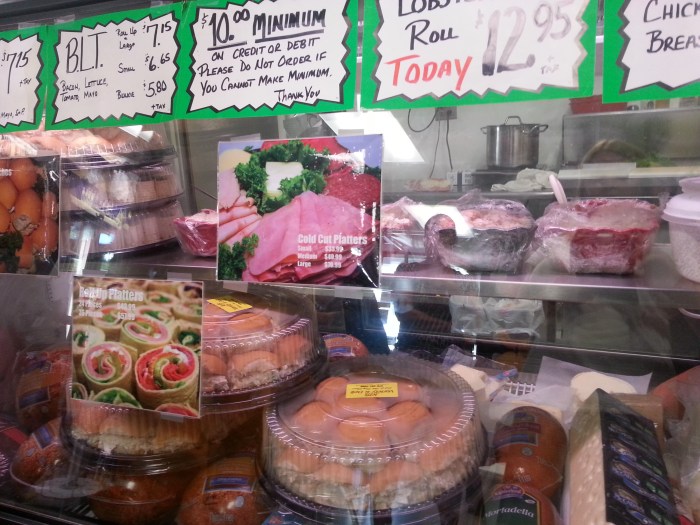
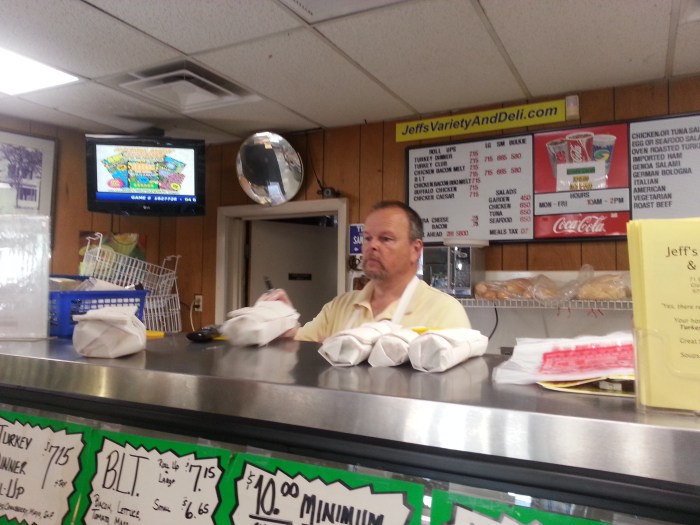
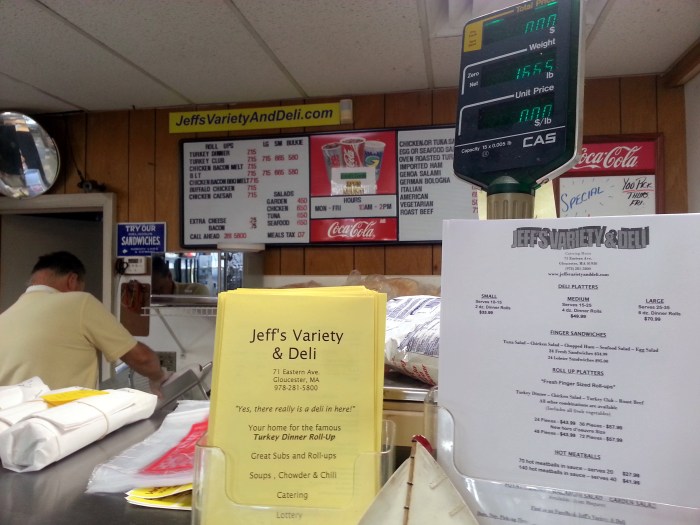
Hungry? Pack light. You’ll pass great sandwich shops, locally owned and operated, en route to Gloucester’s magnificent beaches. Jeff’s Variety can set you up for a good lunch to go wherever you’re headed including Good Harbor Beach, Long Beach, or the back shore. Jeff says that there are many repeat customers that come back each and every season–for years–on their way to Good Harbor Beach. IF you have a big group, you can order trays with finger sandwiches. Sandwich platters featuring Virgilio’s rolls need at least two days notice to prepare. They’re open Sundays. What else? “Yes!” the answer to my question if they have plenty of call ahead requests from cars caught in traffic. Passengers calling only, please!
Scroll down the post for a one-stop, sub-shopping Gloucester directory with phone numbers and links. I could add in our favorite choices from each place.
GLOUCESTER BEACHES SANDWICH DIRECTORY
*the great 2013 Good Morning Gloucester Italian sub winners
on the way to Gloucester’s GOOD HARBOR BEACH
- main concession stand at Gloucester’s Good Harbor Beach (978) 281-9785
- Snack bar window at Good Harbor Beach Inn (978) 283-1489
- *Jeff’s Variety (978)281-5800
- Surfside Subs surfside slices/ Long Beach Dairy Maid (978)281-1700
- Cape Ann Coffees (978)282-1717
- Charlie’s Place subs to go (978) 281-5002
- the elusive Happy Taco truck
on the way to Gloucester/ Rockport LONG BEACH
- *Jeff’s Variety (978) 281-5800
- Surfside Subs (aka also Surfside Slices) and Long Beach Dairy Maid
- Cape Ann Coffees (978)282-1717
- Charlie’s Place subs to go (978) 281-5002
- the elusive Happy Taco truck
on the way downtown headed in any direction to Gloucester beaches: Pavilion, Cressy, Half Moon, Niles, Good Harbor
- Cafe Sicilia (978) 283-7345 sandwiches and pizza slices
- Cave (978) 283-0896 for baguette/cheese French picnic style fare
- Cupboard (978) 281-1908
- *Destino’s Subs
- Cape Ann Farmer’s Market (Thursdays) fresh produce & baguette/cheese French picnic style fare
- *Jeff’s Variety (978) 281-5800
- Leonardo’s (978) 281-7882
- Last Stop (978) 281-2616
- Mike’s (978) 282-0777
- Morning Glory (978) 281-1851
- Poseidons (978) 290-4313
- *Sclafanis (978) 283-6622
- *Virgilios (978) 283-5295
- Yellow Sub Shop (978) 281-2217
on the way to Gloucester’s NILES BEACH
- Last Stop (978) 281-2616
- Sailor Stan’s to go (978) 281-4470
on the way to Gloucester’s PLUM COVE BEACH / ANNISQUAM/ LANESVILLE
- Captain Hooks (978) 282-4665
- Plum Cove Grind (978) 281-3377
- Willow Rest sub and/or the farmer’s market fresh produce, cheese, specialty prepared meals picnic option (978)283-2417
on the way to Gloucester’s WINGAERSHEEK BEACH
- main concession stand at Gloucester’s Wingaersheek beach (978) 281-9785
- Annie’s Variety (978) 283-2887
- Marshall’s Farm Stand (picnic route rather than sandwich counter) (978) 283-2168 (pints of fruit, munchies, loaf artisan bread, mozzarella specialty cheeses)
I haven’t forgotten Magnolia–just missing Magnolia’s House of Pizza. ON Mondays there’s Cape Ann Farmer’s market for Magnolia. “M” for Mondays, “M” for Magnolia.
Spread The GMG Love By Sharing With These Buttons:

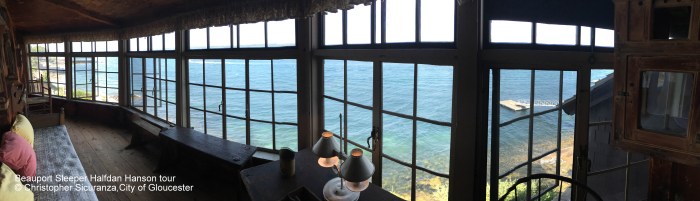
Live blogging from Cape Ann Museum and Our Lady: eloquent and moving portrait from Linda Brayton and Jen Holmgren on their grandfather and great-grandfather, notable architect Halfdan Hanson
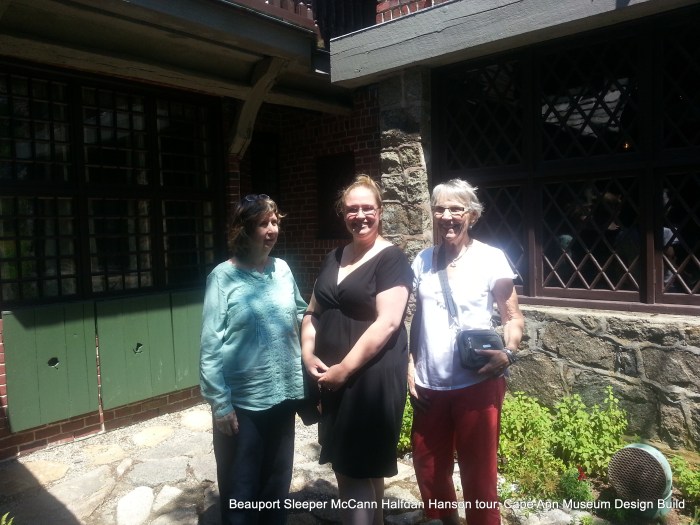
Photographs in this post are from yesterday’s special Beauport Sleeper McCann program, stemming from the Cape Ann Museum Design/Build exhibition. Lorna Condon, senior curator of Historic New England’s Library and Archives, led this tremendous tour.
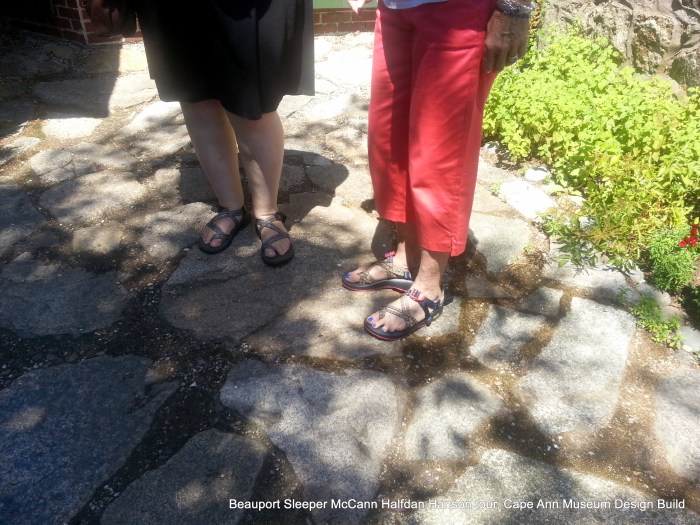
Neither Sleeper not Hanson family members knew they’d be there together at this tour. Yet members of both families wore the same shoes!
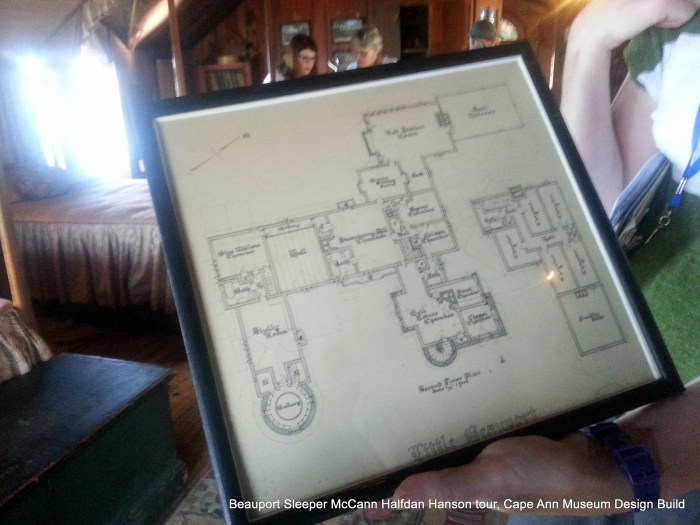
Other special guests included Chris Sicuranza from the Mayor’s Office and the Rev. Rona Tyndall, Outreach and Volunteer Coordinator for the Grace Center of Gloucester. Mayor Romeo Theken also wanted to go.
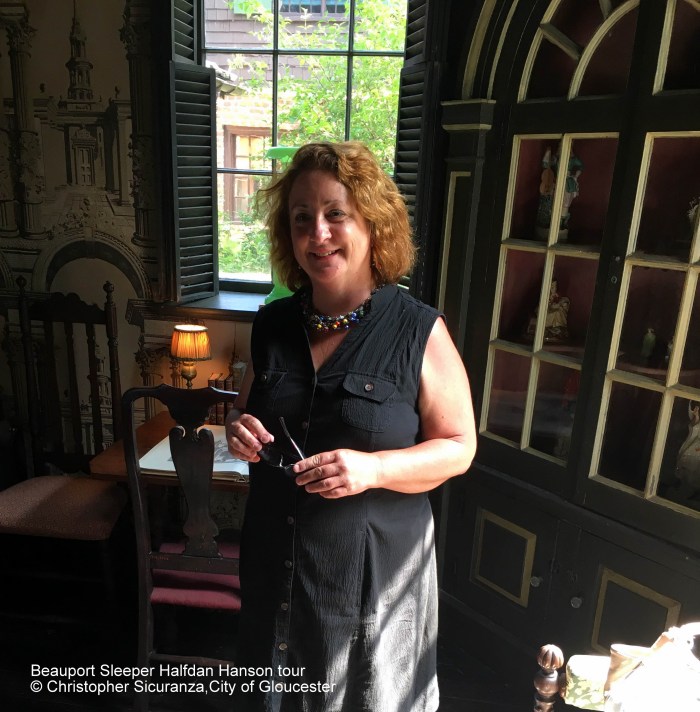
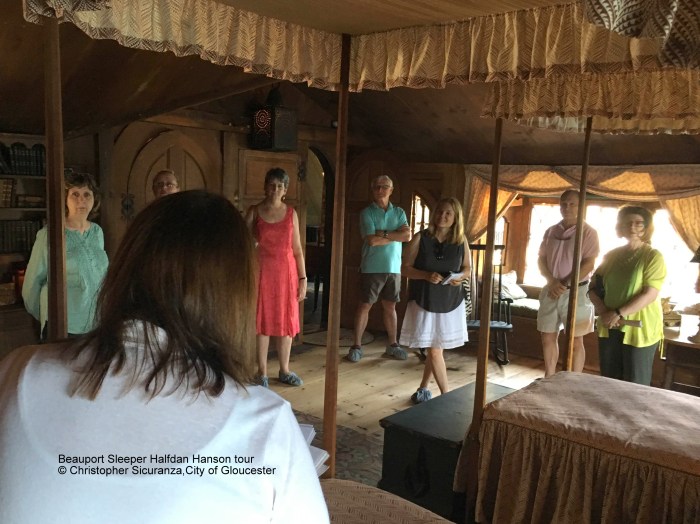
More pictures coming of these back to back events!
Spread The GMG Love By Sharing With These Buttons:

Finding Nemo fun at HarborWalk Summer Cinema
What a treat! I wish everyone could have heard the hundreds of happy cries of “Mine. Mine. Mine.” with each unforgettable Finding Nemo seagull scene. This was real life surround sound right at Gloucester’s harbor, seagulls aloft and searching in the enveloping night.
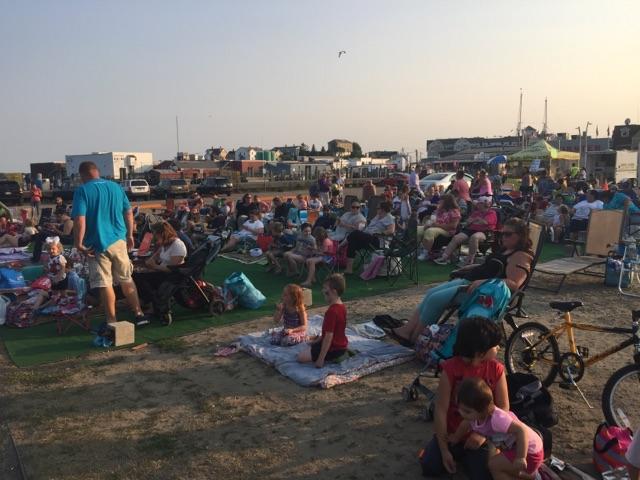
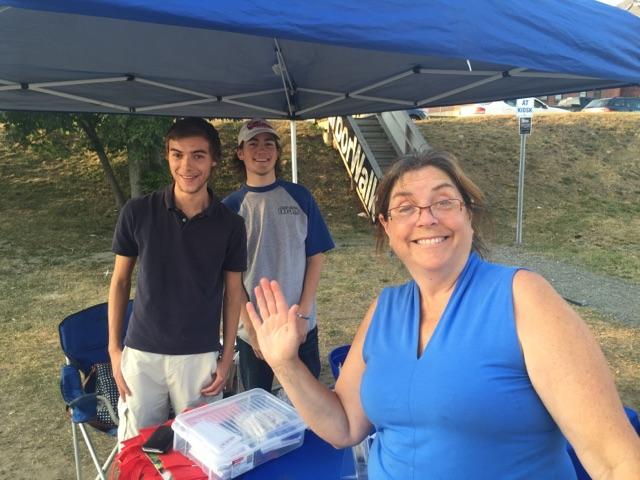
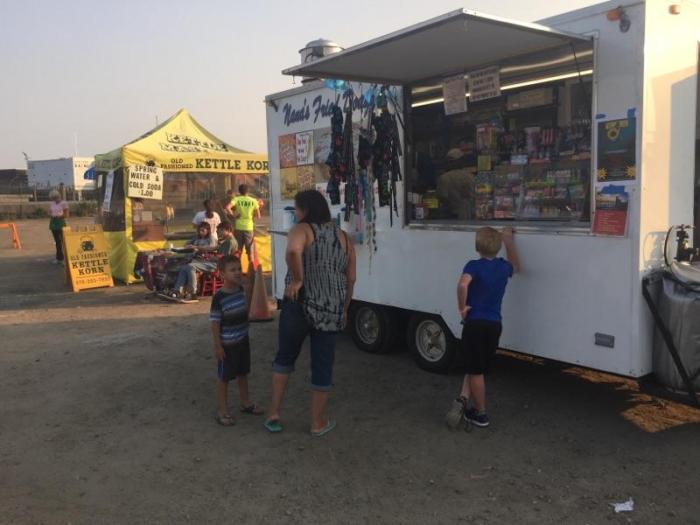

Thanks Rob, Cape Ann Community Cinema & Stage, for the community movie nights and for taking these photos. I didn’t bring my camera and was too busy eating even if I had! What did we carry in and carry home? On the way to the movies, we walked over to purchase delicious take-out subs from Leonardos for a picnic, and bug spray (not needed it turned out) and sundries from Walgreens. From the vendors at the outdoor movies we picked out candy, Kettlecorn and slush. We didn’t have the fried dough but there’s always next week!
Finding Nemo was the second movie of five FREE outdoor movies hosted by the City of Gloucester HarborWalk through the Cape Ann Community Cinema. Aurelia from North Shore 104.9 and Open Door hosted the festive pre-screening gathering.
The three premier sponsors for the HarborWalk Summer Cinema are North Shore 104.9, Cape Ann Savings Bank, and North Shore Community College. Finding Nemo was presented by Open Door. Next week’s Minions will be shown thanks to Toodeloos!
Continue reading “Finding Nemo fun at HarborWalk Summer Cinema”
Spread The GMG Love By Sharing With These Buttons:

Live blogging: In Their Own Words- Henry Sleeper and Halfdan Hanson Build Beauport, the Sleeper-McCann House. Cape Ann Museum and Historic New England special tour!
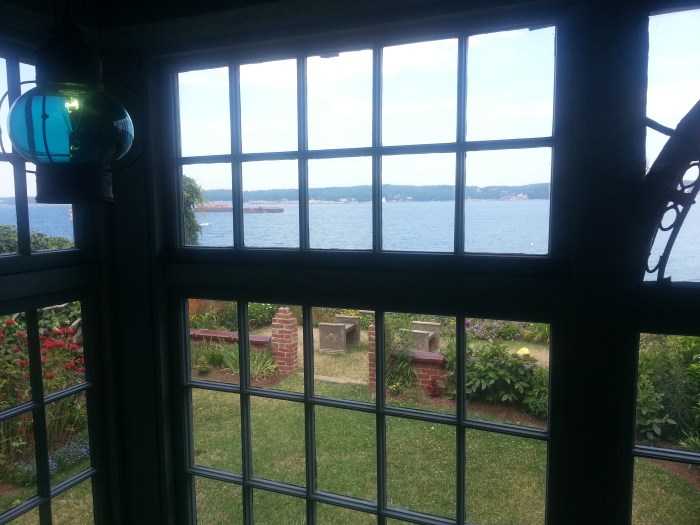
We are on this incredible tour at Beauport, the Sleeper-McCann House. Descendants of both Sleeper and Hanson are here! This special programming duet was brought together by two Gloucester institutions, the Cape Ann Museum in collaboration with Historic New England’s Beauport property, inspired by the Cape Ann Museum’s Design/Build exhibition.
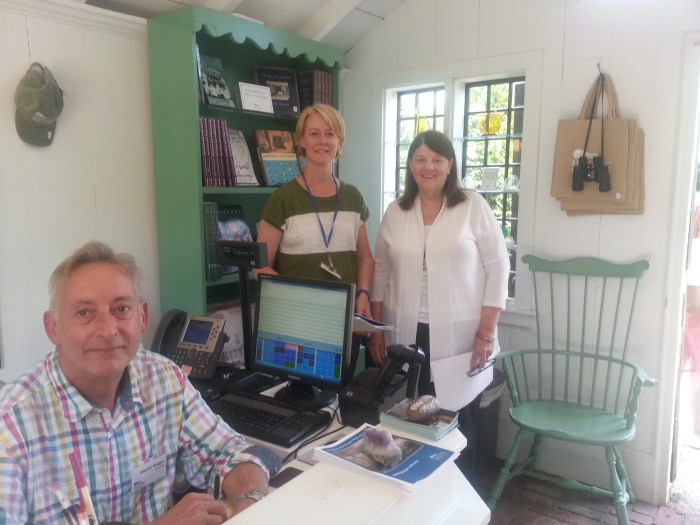
Lorna Condon, senior curator of Historic New England’s Library and Archives, is leading the tour. Martha Van Koevering is the Site Manager for the Beauport Sleeper-McCann House.
Spread The GMG Love By Sharing With These Buttons:

Cape Ann Farmers Market at Stage Fort tonight
Another gorgeous day for the stellar Cape Ann Farmers Market, 3-6:30 pm.
Cape Ann Reads will be there with a pop up library from Sawyer Free Children’s Services and an art activity from Cape Ann Art Haven. Hope to see you!
Free Thursdays: Shop Cape Ann Farmer’s Market to pick out a great picnic supper to bring to tonight’s free Harbor Loop concert at 6pm. The weekly concerts run through August 25, 2016.
City of Gloucester FREE summertime events–there are options most every night of the week!
(weekly) Mondays Cape Ann Farmer’s Market at Magnolia
(weekly) Wednesdays Gloucester HarborWalk summer cinema (three more to go- Minions next week!)
(weekly) Thursdays Cape Ann Farmers Market and Harbor Loop Concerts
(weekly) Fridays Music on Meetinghouse green
(monthly) Saturday block parties
(weekly) Sunday Stage Fort Antonio Gentile Bandstand concerts
Spread The GMG Love By Sharing With These Buttons:

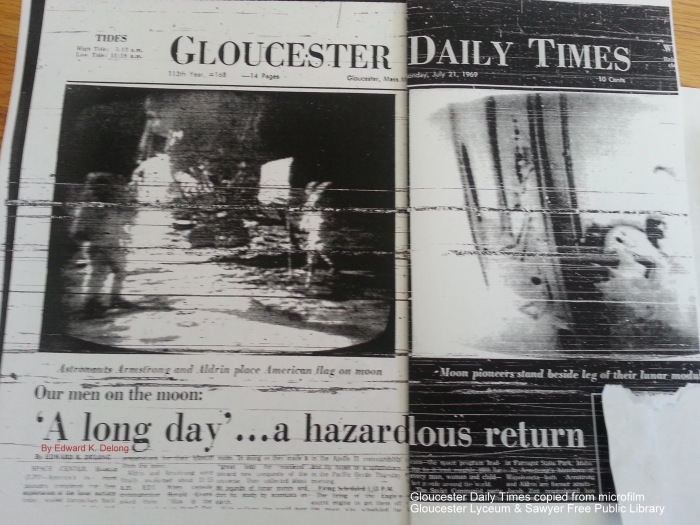
47 years ago today…the art of the first moon landing and Gloucester’s front page
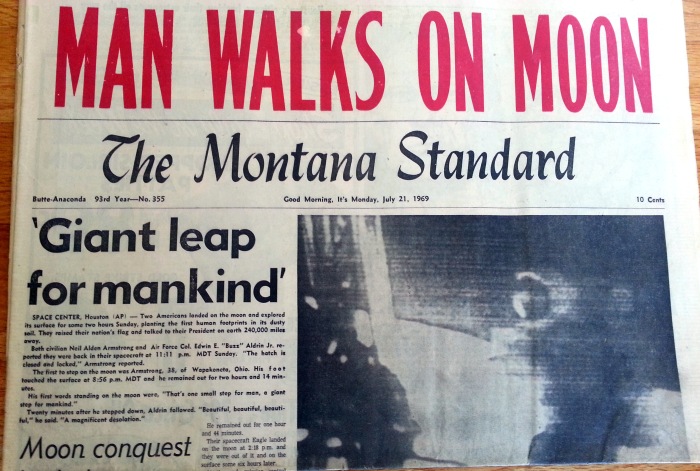
Today is the anniversary of the first moon landing on July 20, 1969. When I think about this momentous day, I mostly remember the artist Robert Rauschenberg, one of the established artists paid a tiny honorarium to travel to see space launches first hand. NASA gave artists total freedom to create any visual response if so awed. They were. Decades later, Rauschenberg agreed to loan rare works of art inspired by the space program for a solo exhibit that I co-curated. It was a big surprise when he scheduled a visit. He spent a morning at the show with me, closely observing each and every piece, some he hadn’t seen since he made them. Many were created long after his residency. He was flooded; it’s very emotional.
Artist studio spaces and artist residencies are in my thoughts. As a reminder: there are two possible small and FREE temporary spaces within the inspiring Fitz Henry* Lane house that Mayor Romeo Theken has requested for Gloucester artists. Schooner Adventure and Sail GHS are generously sharing space within their headquarters in this historic City building if there’s a match. There are specific limitations and constraints. If interested in signing up for a month block of time, or to learn more please email sefatia4arts@gloucester-ma.gov and leave complete contact information. *Fitz Henry Lane was formerly known as Fitz Hugh Lane. Henry is a longer name than Hugh which may help with remembering which name to use. (It took a long time to determine that Henry is the name.) Sail GHS has extended an offer to artists to come sail and sketch with them, plein air plein sail.
While I’m in a wishing and reflective mode, may I add that I look forward to the day when all Massachusetts newspapers are scanned and searchable. In the meantime, the Gloucester Daily Times coverage of that inspiring moon walk is on microfilm at the Gloucester Lyceum & Sawyer Free Library. Enjoy the headlines and some local quotes from 1969.
“Older folks take moon in stride–They’ve seen a lot, but this one…” by Henry Meyer, Gloucester Daily Times
article excerpts including quotes from Arthur Jones, Mrs. Bertha Silva, and John Bordreau (91)

This moon shot business: Can you dig it? Arthur W. Jones, 67, who lives at the Huntress Public Medical Institution can. Jones and some of his fellow residents on Emerson Avenue have seen the entire panorama of the development of aircraft… “This is one of the greatest things that has happened to our country.” The moon shot had helped to “unite people together,” he said…“When this country gets together, they do things right. No matter what they start, they finish it.”
Mrs. Bertha Silva said that Lindbergh’s flight was exciting back then. However she agreed with Jones that the landing of the first man on the moon really outdid all other flying feats…
John Bordreau, 91, also a resident of the institution was delighted by the whole affair. Boudreau predicted that astronauts soon will be flying all over the solar system…”We’ll just have to wait and see where they’re headed.” Both Jones and Boudreau said they had heard there was oil and gas on the moon. Boudreau remarked, “That’s kind of a long drive for just a couple of gallons of gas. Jones predicted that within 10 years men will be living on the moon. Some scientists said over the radio that there were eaves on the moon where people might live. He said there was oil up there and that they might be able to extract water from rocks.”…One person said that at her age she tended to be leery of these things…Others expressed confusion at the speed at which this generation seems to be moving…
excerpts from Our men on the moon: ‘A long day’…a hazardous return, by Edward K. Delong, Space Center, Houston, UPI article ran in the Gloucester Daily Times.
Mrs. Stephen Armstrong, Neil’s mother who watched her son on television from her home in Wapakoneta, Ohio, noticed this: “I could tell he was pleased and tickled and thrilled,” she said.
“Magnificent desolation,” commented Aldrin. “It has a stark beauty all of its own. It’s much like the desert of the United States.”
“It’s different, but it’s very pretty out here,” said Armstrong, who lived in California’s Mojave Desert when he was flying the X15 rocket plane. Armstrong and Aldrin, both about 5’11” cast 35 foot shadows…Zint said he was surprised by the emotion in Armstrong’s voice when he stepped onto the moon. “That was more emotion than I’ve ever heard him express before. Even when he talked about things he was excited about like space travel he always had a calm voice.”
Spread The GMG Love By Sharing With These Buttons:

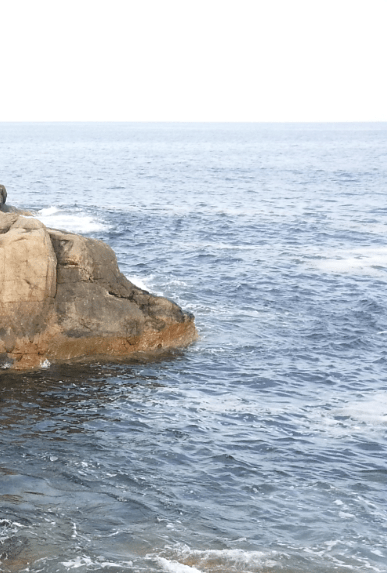
Ocean warm water alert. 69 degrees!
Spread The GMG Love By Sharing With These Buttons:

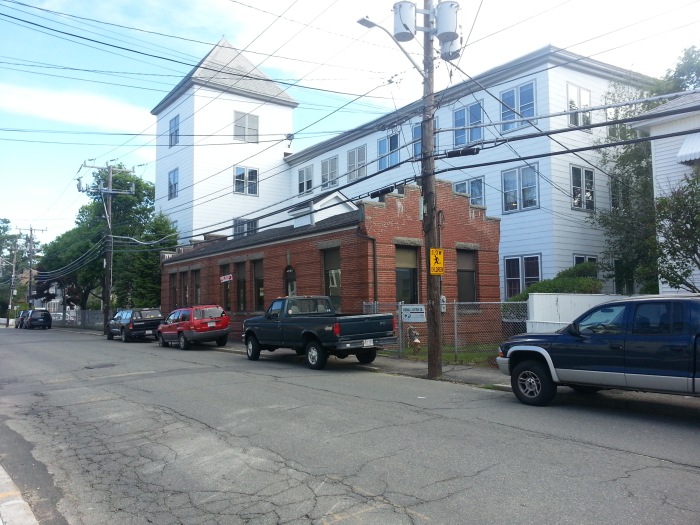
Be a part of history! Office space with retail possibility on the street level available now in historic Gloucester Net & Twine (on National Park Service Maritime trail)
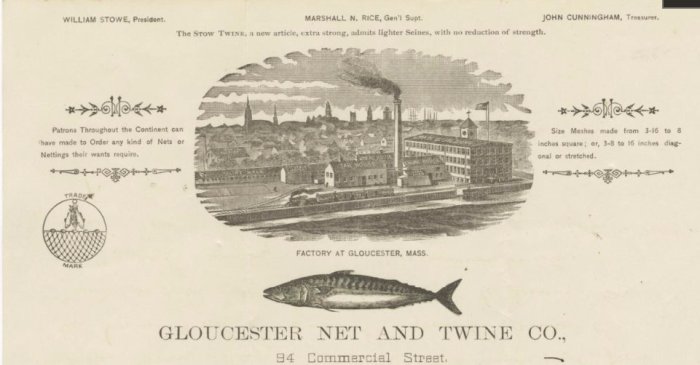
This image is from the “Biggert Collection of Architectural Vignettes on Commercial Stationery”, Avery Architectural & Fine Arts Library, Columbia University
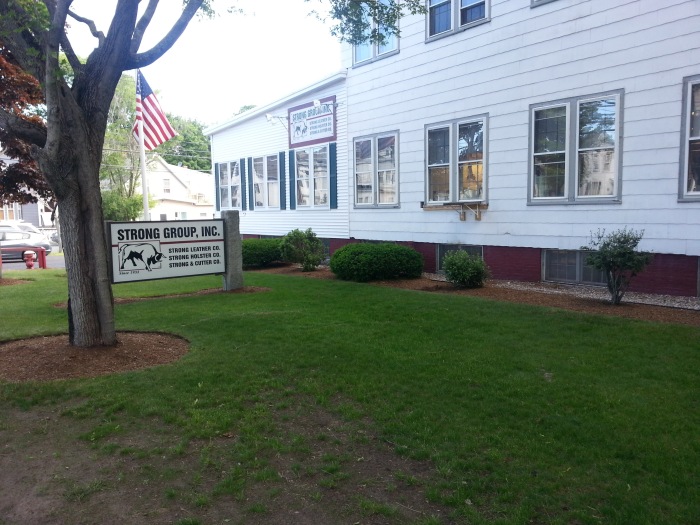
There are 1100ft’ of commercial space available within the historic brick building — one small structure in the industrial complex that is still going strong, as in the Cutter family’s
Strong Leather Company.
In business since 1932, Strong Leather is a major player in producing essential gear for law enforcement such as leather belts, holsters, wallets and accessories. They wholesale to police and military suppliers. They have made local products for Gloucester and Rockport police and fire departments and sometimes Essex and Ipswich. Besides the leather factory, offshoot businesses on site for three generations of the Cutter family include advertising and product and promotional projects. Prior to the leather business, the historic factory was built and incorporated in 1884. Gloucester Net & Twine quickly ramped up as a major ancillary supplier for the fishing industry. It’s one of the largest oldest factories still standing and was placed on the National Historic Registry in 1996. Eight volumes of historic plan books for Gloucester Net & Twine Company are in the collection of Phillips Library, Peabody Essex Museum.
Gloucester Net & Twine Company is included in the National Park Service maritime history trail in MA. Gloucester is one of the cities with the most sites–only Boston has more. Besides this historic factory building, other Gloucester sites on the maritime trail include: Our Lady of Good Voyage, East Gloucester Square Historic District, Man at the Wheel, Schooner Adventure, Ten Pound Light, Eastern Point Light Station, and Annisquam Harbor Light Station.
People interested in the rental space:
- This is office space and hours. Not residential. There is no living space.
- Two offices and open bull pens, storage closet, and bathroom
- No artist studio space (I write that because I have been asked to look for an industrial space that could work for a glass artist–blow torch, glass kiln, etc.There has to be a space in Gloucester somewhere for that sort of artist request!) I wish Maplewood school was artist studios.
- $1800 monthly
- ask for Brian (978)281-3300

Spread The GMG Love By Sharing With These Buttons:

Boston Globe weekly update includes Summer Drift exhibition at Flatrocks Gallery in Gloucester with works of art by Susan Egan, Frances Hamilton and Kyle Brown. And Rockport Bearskin Neck in travel section.
Summer Drift at Flatrocks Gallery continues through August 14th.
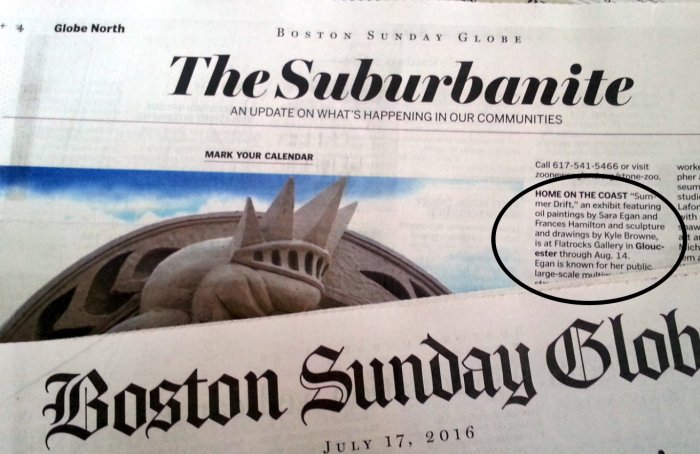
(The cropped Statue of liberty is a file photo from the 2015 Revere Beach sand sculpting festival which returns next weekend.)
Spread The GMG Love By Sharing With These Buttons:

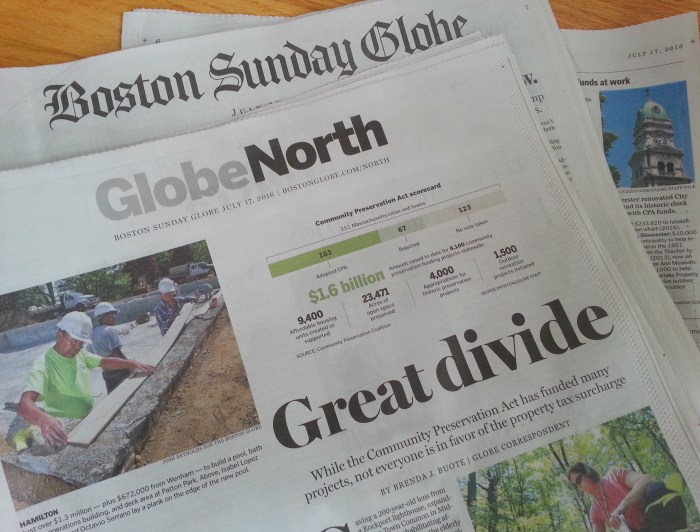
Boston Globe on CPA funding across the state including Gloucester art, City Hall, Central Grammar, Cape Ann Museum. Brenda Buote splays the numbers and approaches.
Gloucester continues to be a positive example in today’s paper. Great article.
Spread The GMG Love By Sharing With These Buttons:

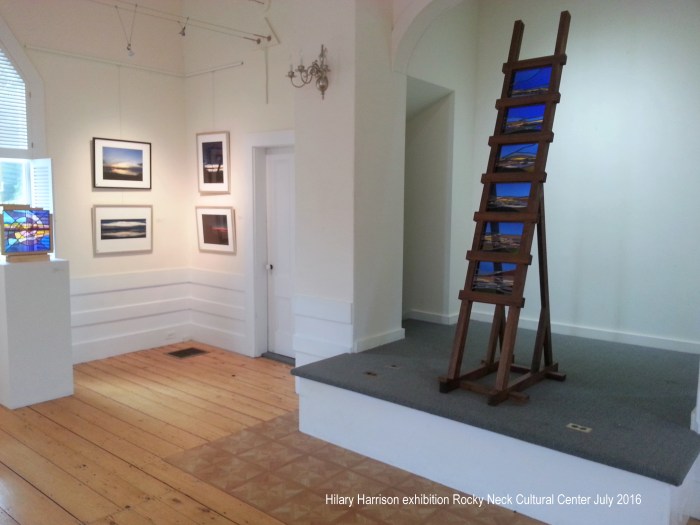
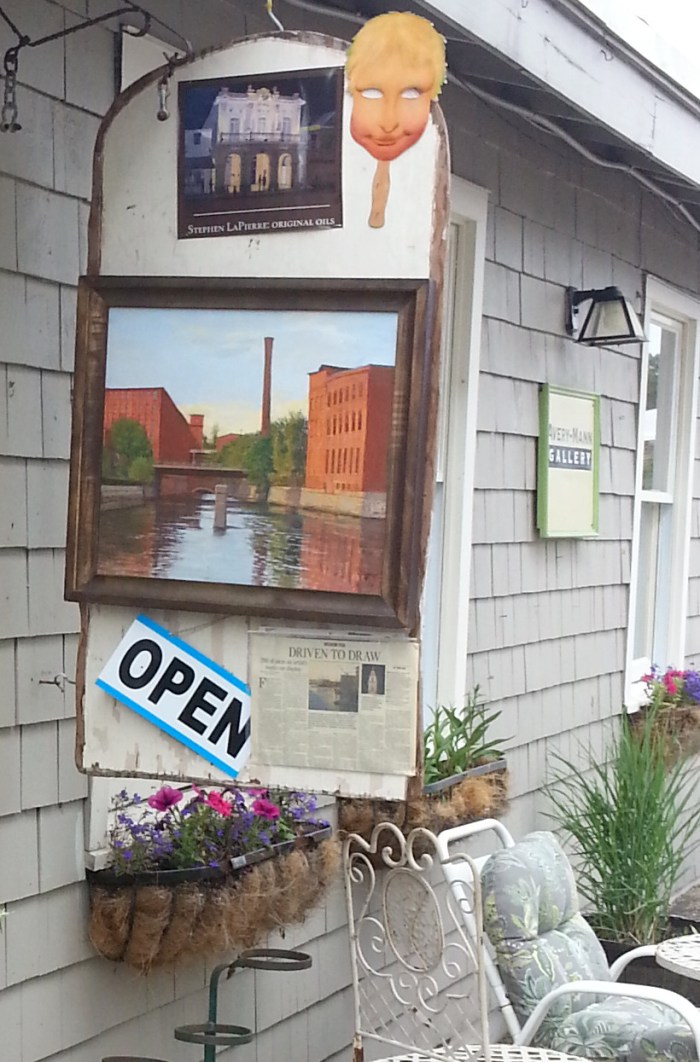
East Gloucester July art exhibits: Coco Berkman, Mary Rhinelander and more at Gallery 53; NSAA second summer exhibit and special slate silent auction; Hilary Harrison at Rocky Neck Cultural Center; Stephen LaPierre
Visiting East Gloucester galleries in the summer is like attending an art fair outdoors. Walk gorgeous surroundings and enjoy the great thrill and fun of seeing and purchasing works by established and emerging artists. Here’s a mini gallery guide for July, and a reminder that it doesn’t list every exhibit. Just a sampling. Also note special events happening today and tomorrow: TODAY at Gallery 53, 1-3pm: Working with precious metal clay Trish Conant artist demonstration. TONIGHT Grand Fatilla concert at the Cultural Center. TOMORROW evening, Sunday, artist talk by Hilary Harrison about her exhibition on view at the Cultural Center.
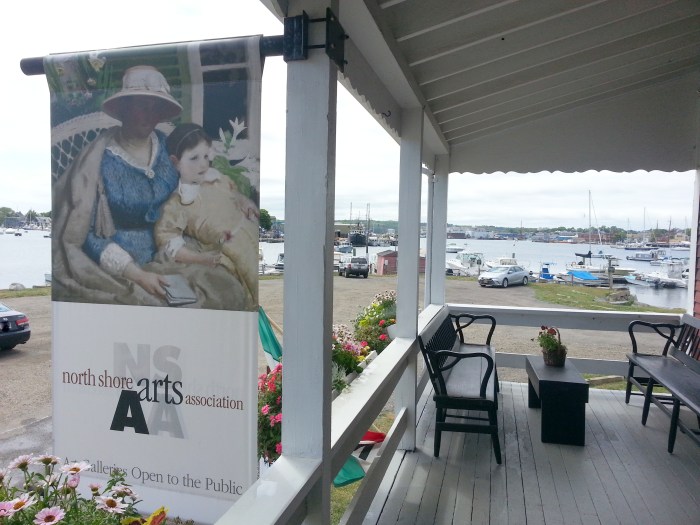
North Shore Arts Association
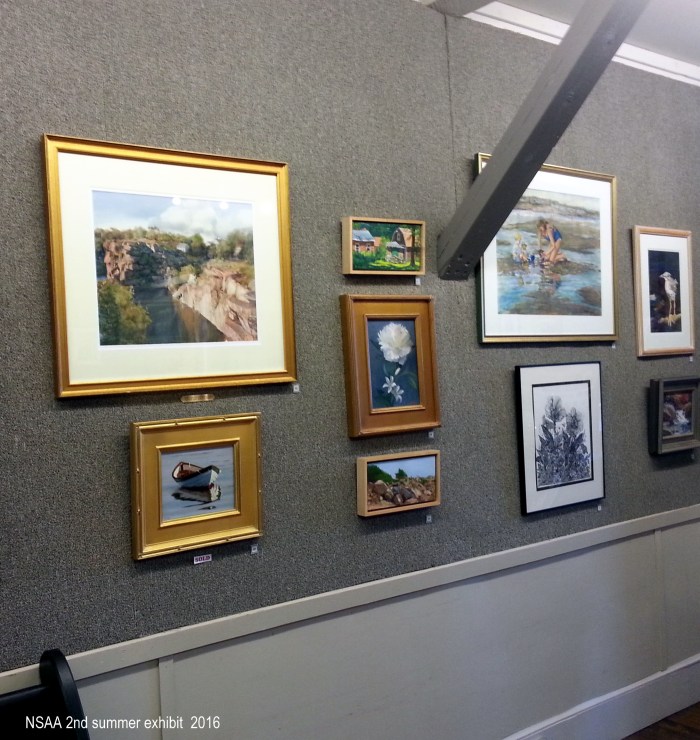
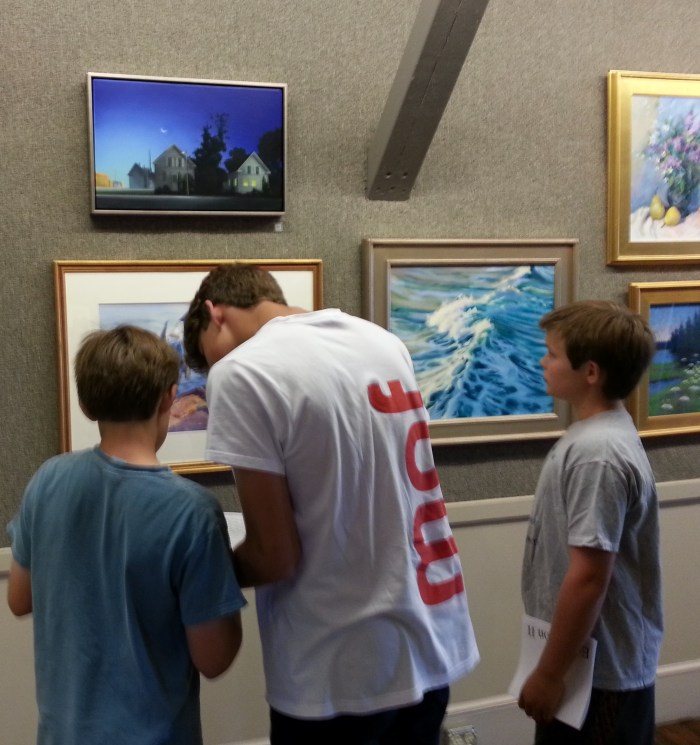
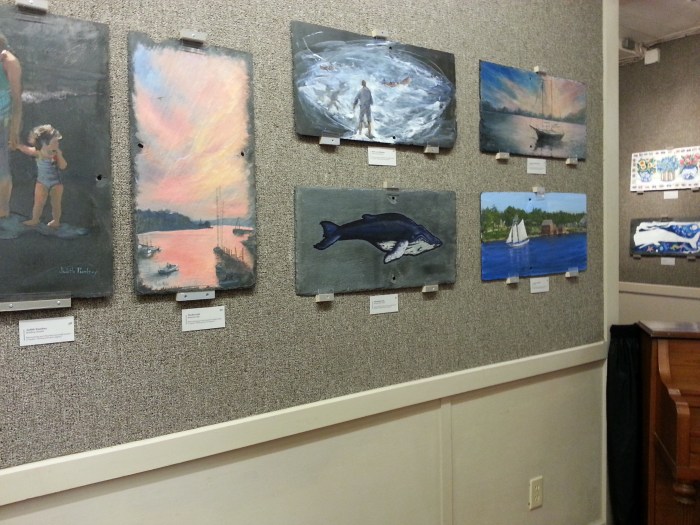
150 works from Artists Members through July 30th, the second exhibition in 2016, fill the first and second floors. Two more exhibits are on view. On the first floor, past the reception desk, many many generous artists donated their art–each painting on the same size slate matrix, recovered from the Paint Factory. They comprise a special silent auction closing July 30, 2016. “100% of the proceeds from the Paint Factory Painted Slate Fundraising Silent Auction will benefit the restoration efforts of both North Shore Arts Association and Ocean Alliance of Gloucester.” Visit the NSAA gallery to enjoy them and to place your bid. You can also contact NSAA directly at 978.283.1857.
ALL of them can be viewed on line.
Art by new NSAA members, like a Lanes Cove print by James Oliver, are in the farthest room and not to be missed.
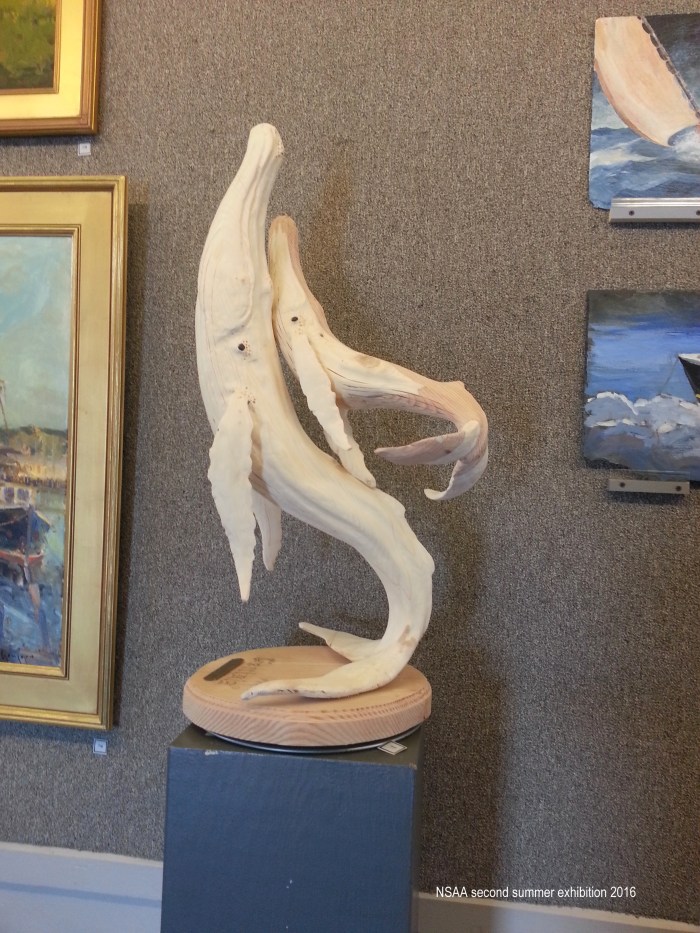
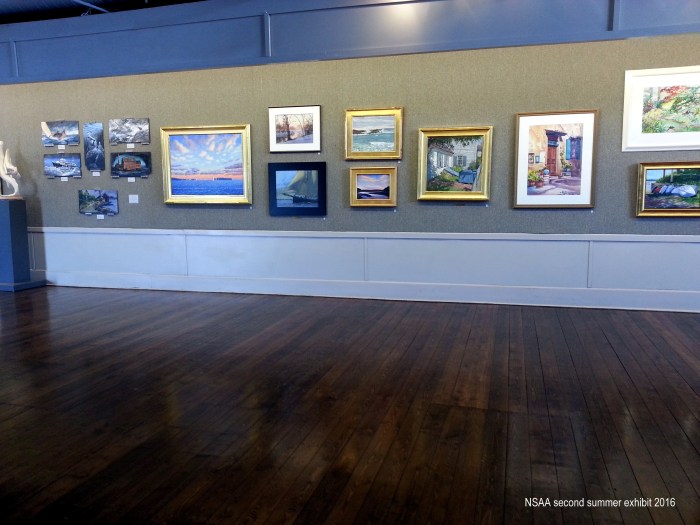
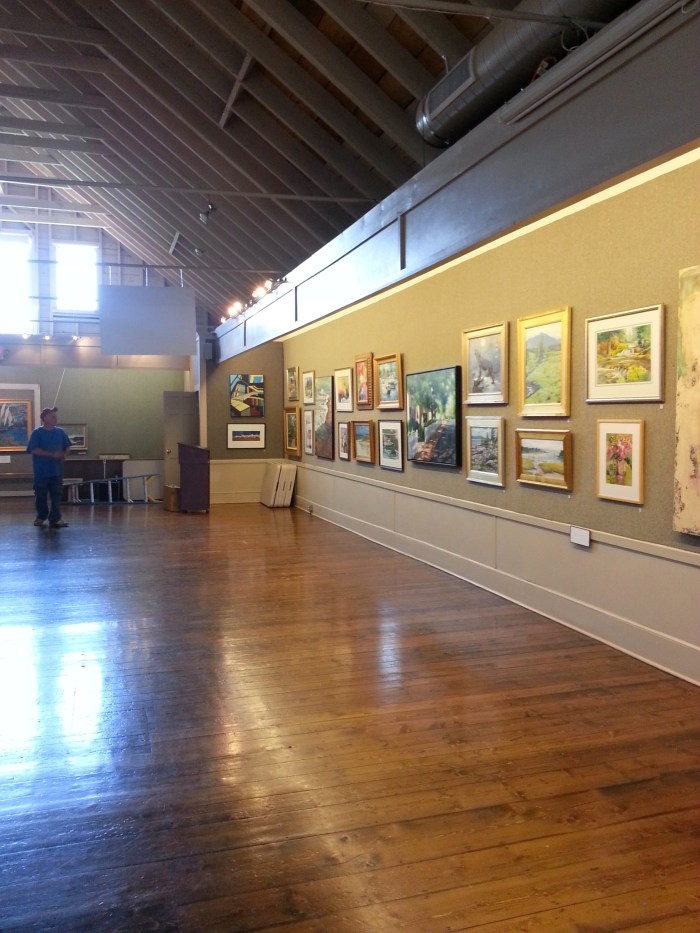
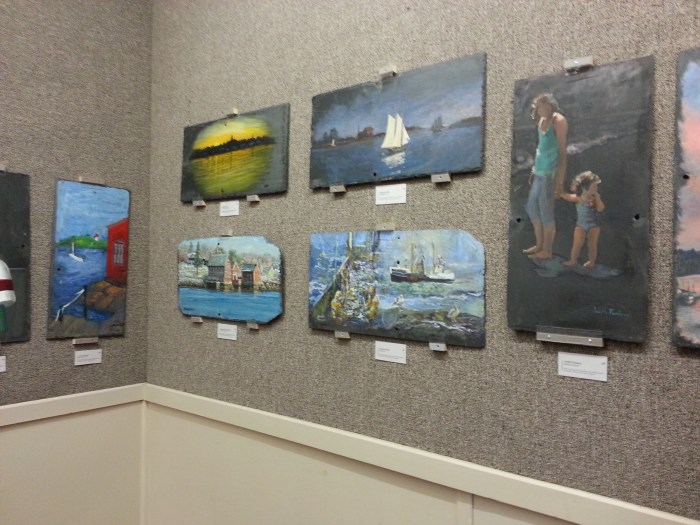
GALLERY 53
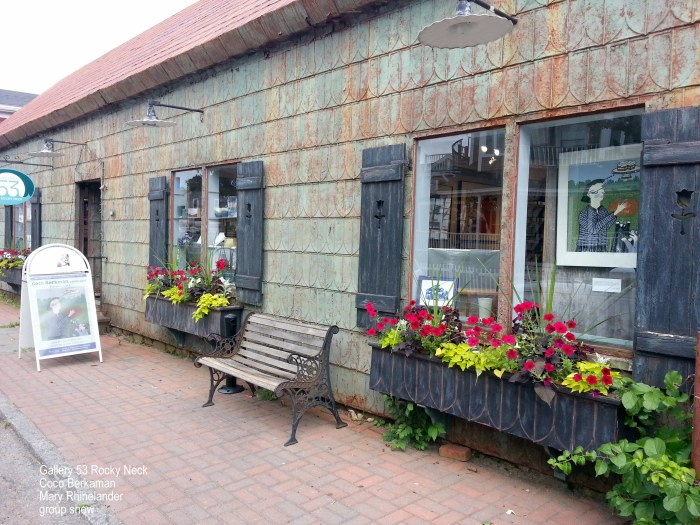
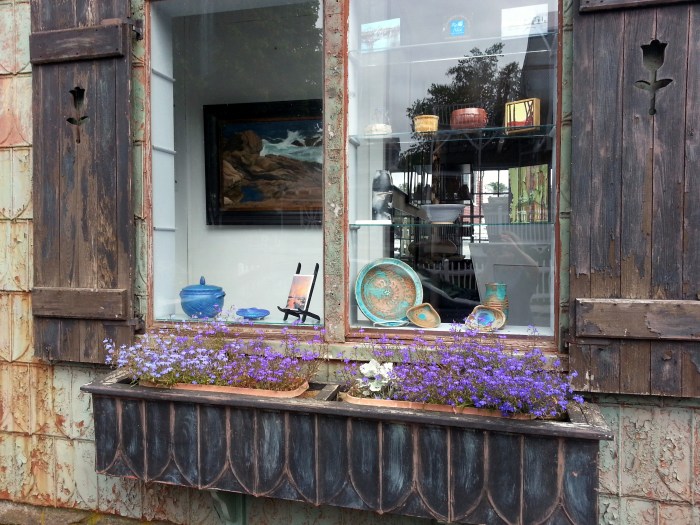
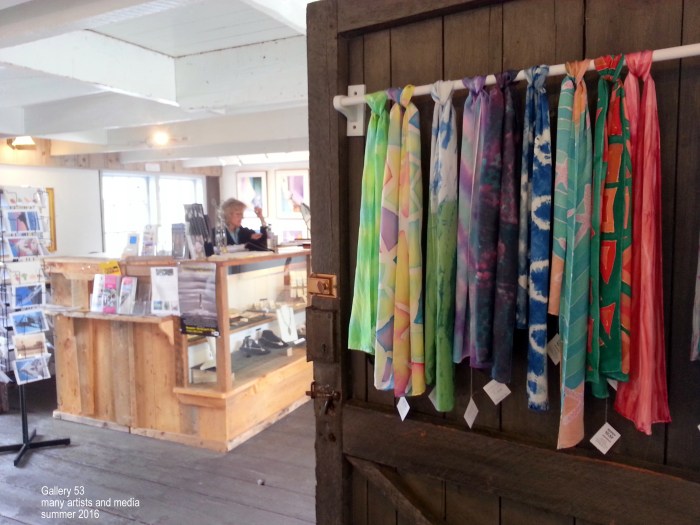
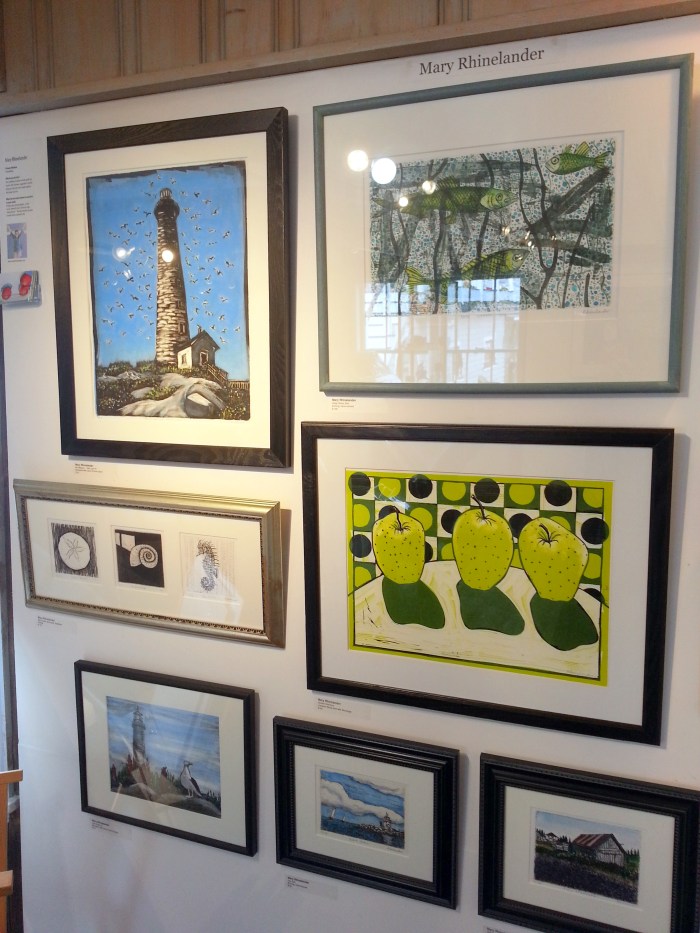
The current exhibit at Gallery 53 features prints by Coco Berkman. Some of Mary Rhinelander’s prints are on view, various media. (I bought an impression of Mary’s blueberries for a gift, but I kept it!) It’s a great chance to see different mediums in action. I worked with a couple of artists that created reduction linocuts, Coco’s method. They called it ‘suicide block’ due to its risk. She makes it look easy. (You can see a reduction linocut by Don Gorvett in the collection at Cape Ann Museum.)

ROCKY NECK CULTURAL CENTER
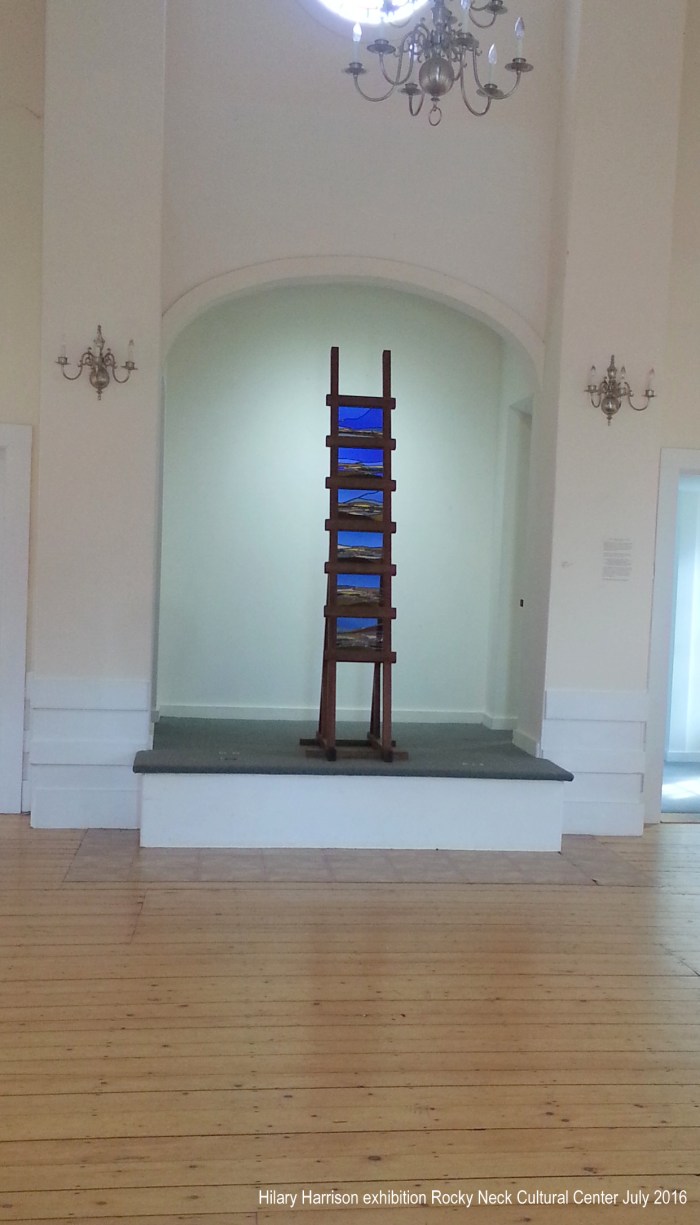
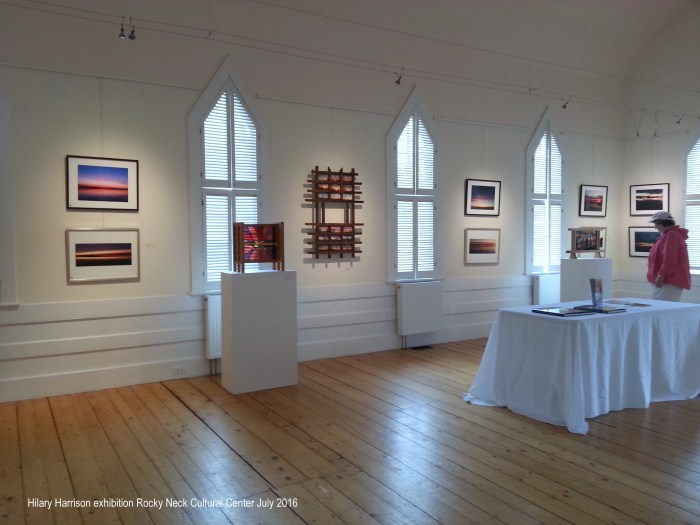
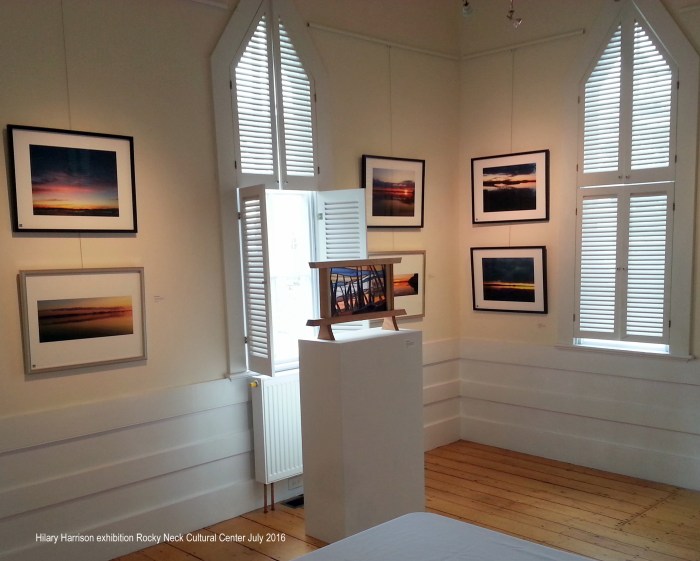
Hilary Harrison: Sacred Nature. Reflection and reverie in her installation of sculpture and ink jet photography (printed by the artist on nice matte Hahnemule paper.) I’d recommend ending with this exhibit if you are seeing several in one day.
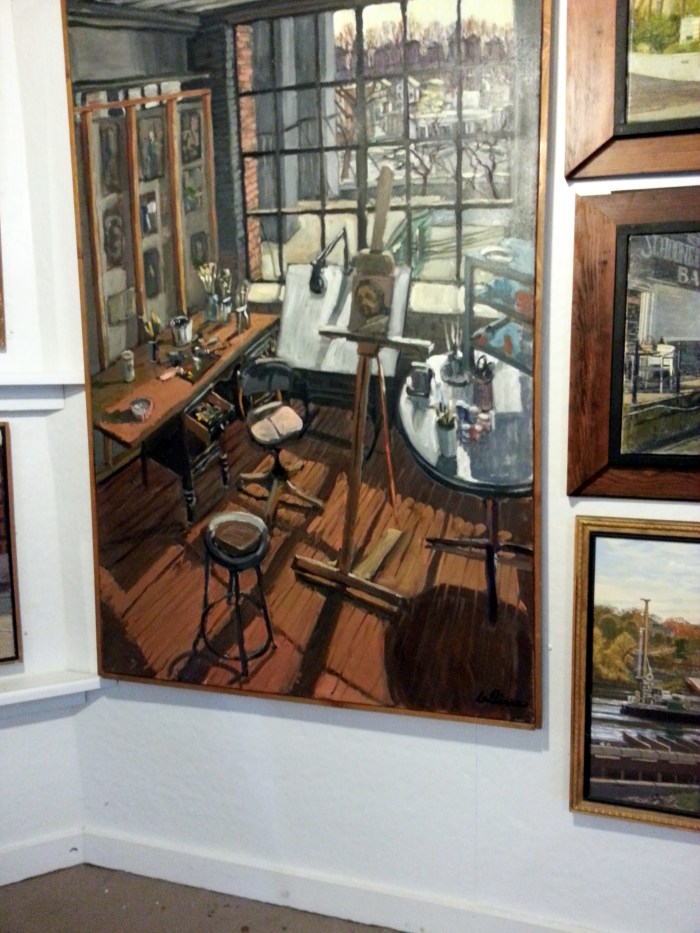
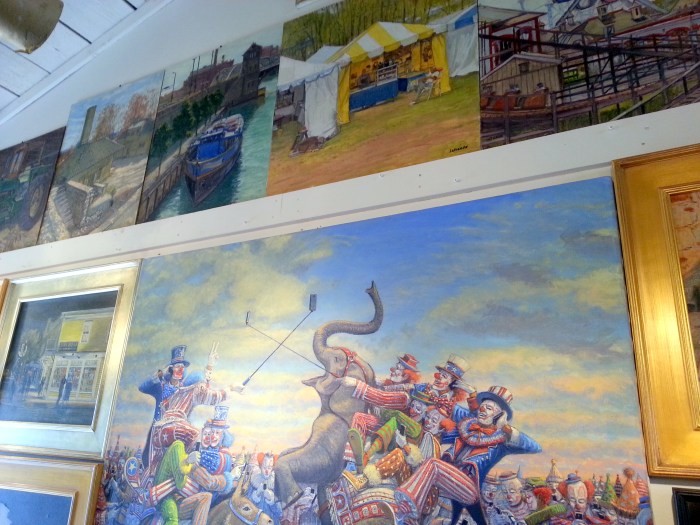
STEPHEN LAPIERRE
Survey from several decades and bodies of work –a retrospective expression of the life around him, wherever he’s lived. There are 200+ paintings on view (as much as the entire NSAA two floor building!) Versatile and original painter. Read Gail McCarthy’s story in the Gloucester Daily Times
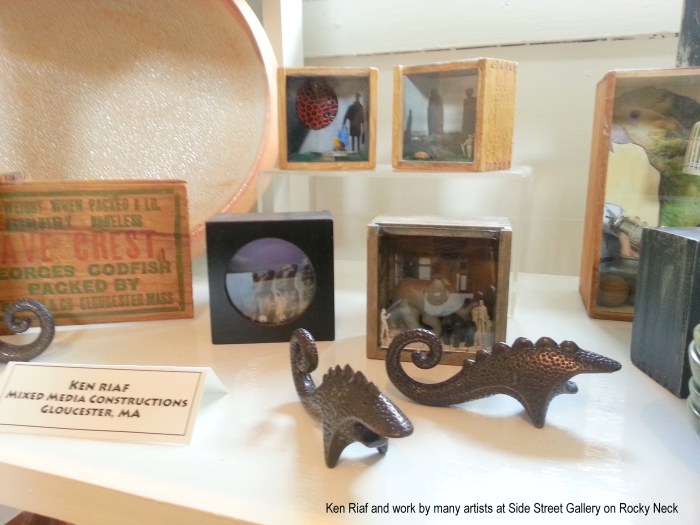
SIDE STREET GALLERY
Spread The GMG Love By Sharing With These Buttons:

4 Pairs of piping plovers and 9 chicks on Coffin’s Beach reports Greenbelt. And osprey project
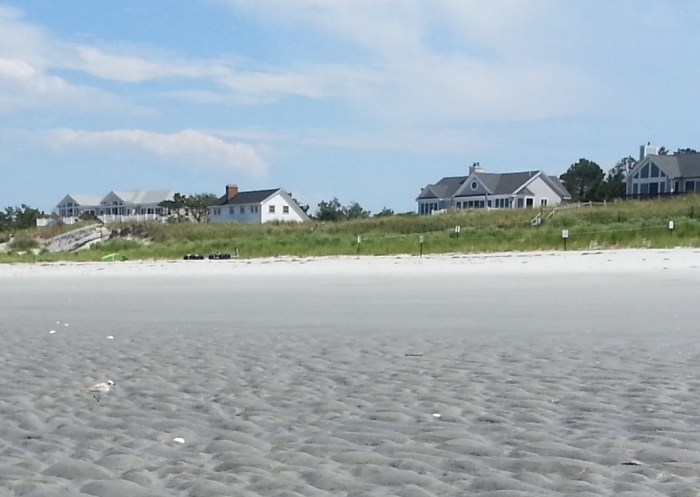
David Rimmer wrote a big thank you for all the GMG attention. He explained that Mass Wildlife and the Greenbelt Association are working with the City of Gloucester and sends this update:
- “There are 4 pairs of piping plovers at Coffins Beach – 2 pairs on the front beach and 2 pairs on the inside beach.
- 3 pairs are on private land and 1 pair is on Greenbelt land. Mass Wildlife and Greenbelt have been monitoring and managing this area, too, (as with Good Harbor)
-
at Coffins Beach, one pair has 4 chicks; one pair has 3 chicks; one pair has 2 chicks; and one pair has no chicks.
Greenbelt also has an Osprey Program, which focuses on managing and monitoring nesting Osprey from East Boston to Salisbury.” Greenbelt has set up webcams and platforms. Learn more http://www.ecga.org/what_we_do/osprey_program. Chris Leahy and Marion Larson from Ma Wildlife also mentioned Greenbelt’s fantastic Osprey program.
Coffins/Coffin’s Beach has a community Facebook page, Wingaersheek and Coffin’s Beach Past and Present. There are historic and contemporary photographs. Check out the incredible photo series of deer frolicking by Timmothy Burke Manlee.
Spread The GMG Love By Sharing With These Buttons:

piping plovers on Coffins Beach: intertidal mile and they’re holdin’ on in Massachusetts
July 2016
Piping plovers have quite a story. In Massachusetts, the vast majority are south, Cape Cod and the islands. By the close of the 19th century, these birds were near extinction. They rebounded successfully by the 1950’s.
I spoke with Dave Rimmer of Essex County Greenbelt, Marion Larson with Ma Wildlife, Deborah Cramer and Chris Leahy. All of them have updates for GMG which I’ll add next. First,
Chris Leahy, MA Audubon, explained that a second age of precipitous piping plover decline occurred in the 1960s and 70s. What do you think it was?
Read on to find out.
Mass Audubon grabbed on and worked closely with many to solve the problem early. It turns out the population plummet correlated highly to a steep increase in vehicles driving on beaches. The baby fledglings could not climb out of wheel ruts and perished, or were squished by the next roaring set of wheels.
Not the only vehicles, but I do recall dune buggys everywhere,especially down the Cape. They were cool and celebrated in TV and film: Steve McQueen driving on Crane’s Beach (just past Coffins) in the Thomas Crown Affair, Elvis through waves, Adam 12, Monkees, Bionic Woman, Speed Buggy /Scooby Doo, the list goes on and on.
“That was big!” said Leahy. “Once that connection was figured out, the goal was how to restrict vehicles.” Massachusetts is far and away a leader in piping plover conservation and decades later a nesting pair on Good Harbor Beach is a major insight into just how well Massachusetts has done. Piping plovers have nested on Coffins Beach before; Good Harbor, Lynn and Revere are relatively new.

Photos Gloucester, Mass.:
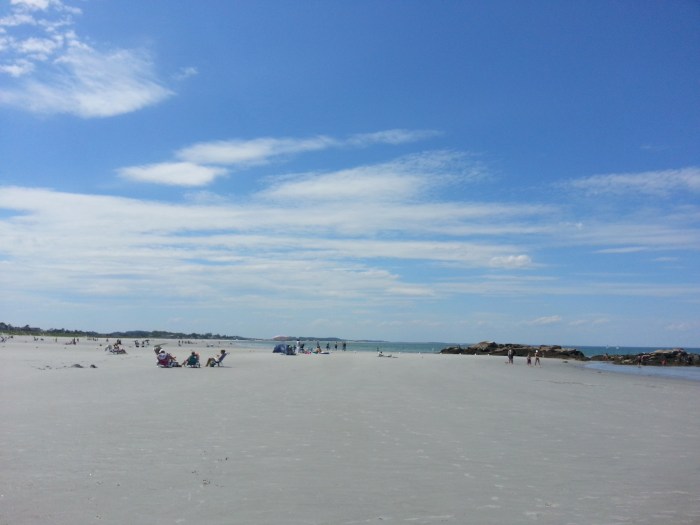
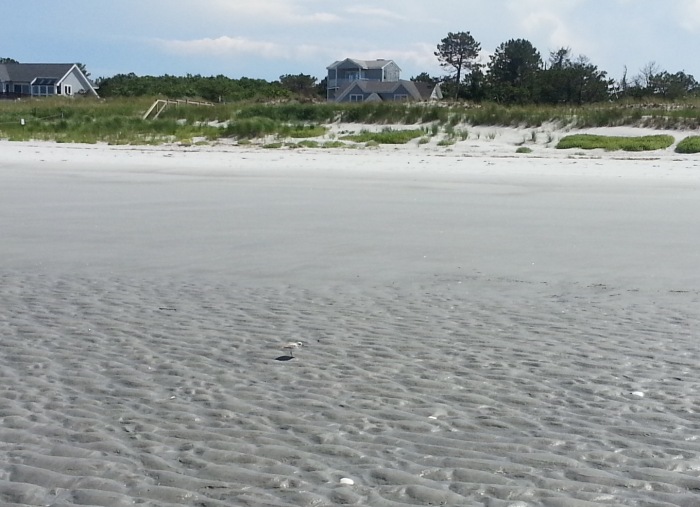
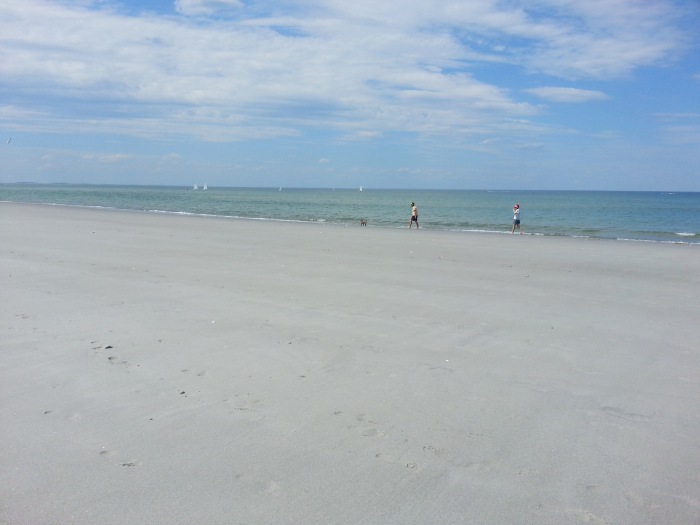
Coffins Beach is a long, long stretch of wide open sandy seashore framed by dunes, sea and sky. Growing up, we called it the private side of Wingaersheek. I could hear piping plovers and saw two ‘in the zone’– the intertidal bit that is still wet at low tide and well under water at high tide. I didn’t see birds in the safe retreats by the upper part of the beach, but heard the melodious chirps that inspired their nickname.
Listen to the piping plover


news from Greenbelt: 2016: 9 piping plover chicks on coffins beach
Spread The GMG Love By Sharing With These Buttons:

Gloucester portraits: Good Harbor Beach piping plover and David Rimmer Essex County Greenbelt with an Edward Hopper house. And Leon Kroll double bridge.
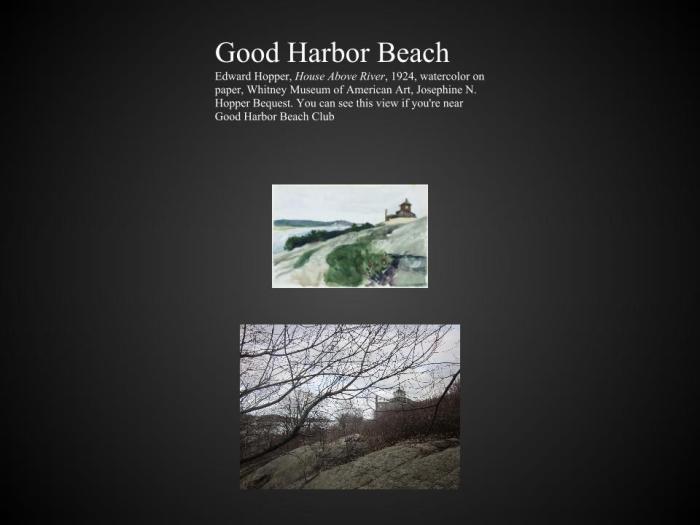
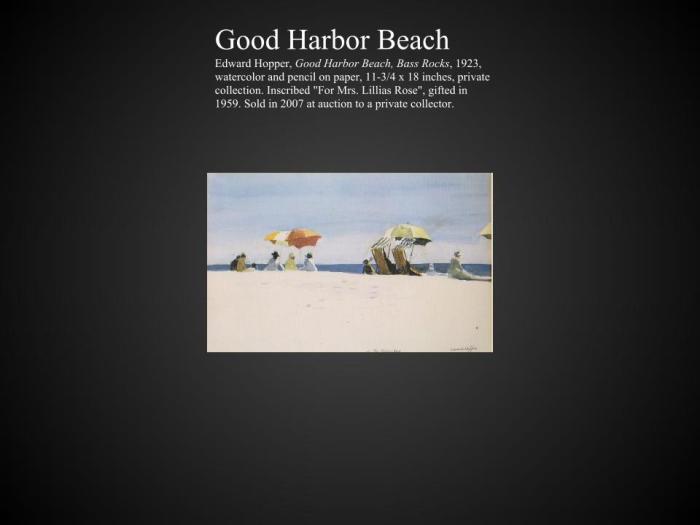
There are more than 110 portraits of the City of Gloucester by the American artist Edward Hopper. There are a few 1923 Good Harbor Beach scenes including one with Jo Nivison seated sketching, and in the distance Bass Rocks and a ‘Hopper’ house. That vista was already a Gloucester motif.

piping plover with Hopper house

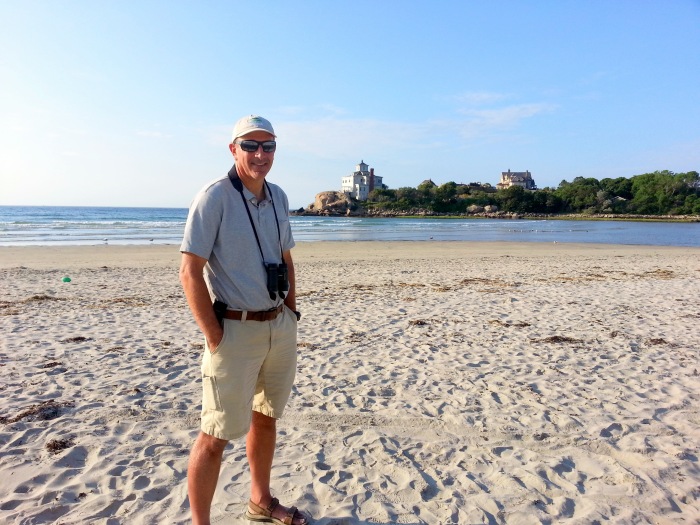
Dave with Hopper house
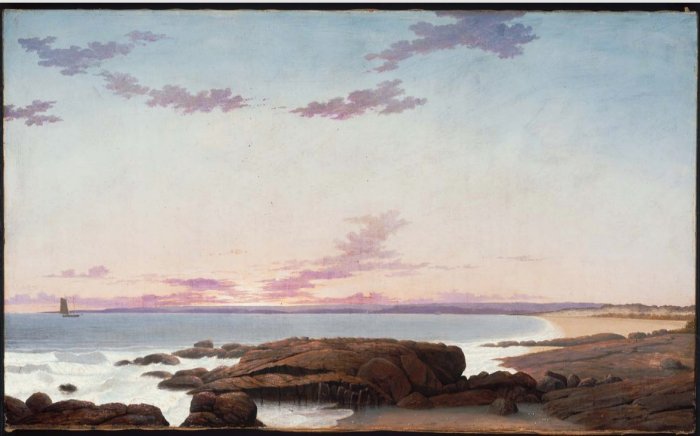
Eleven years before the image of Jo sketching, Hopper painted the other side of Good Harbor (Brier Neck) when he first came to New England. Leon Kroll painted two pedestrian bridges on the Bass Rocks side of the beach that same year.
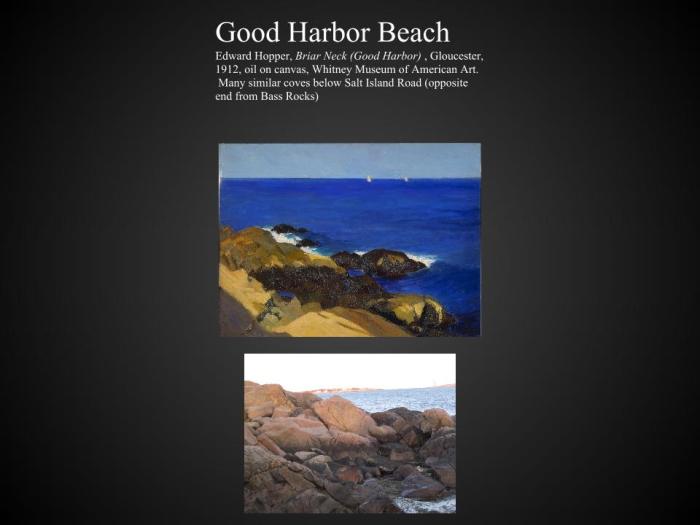
Note the double bridges on Good Harbor.

Leon Kroll, 1912, oil on canvas, (Good Harbor Beach, Gloucester) 26 x 32
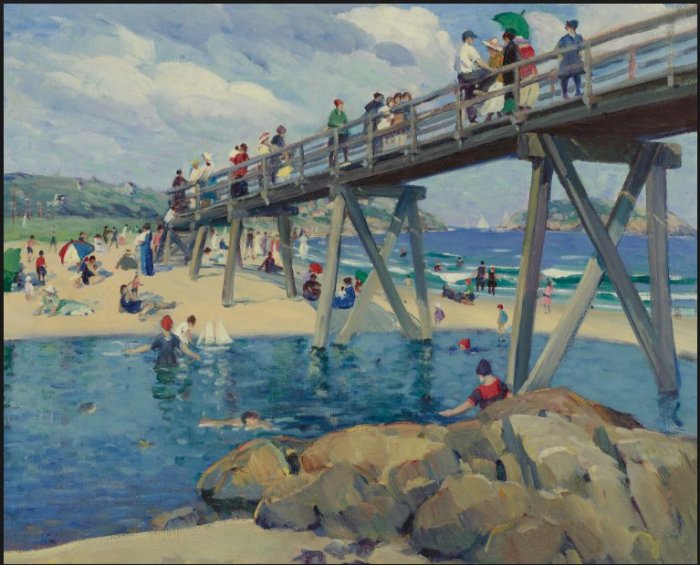
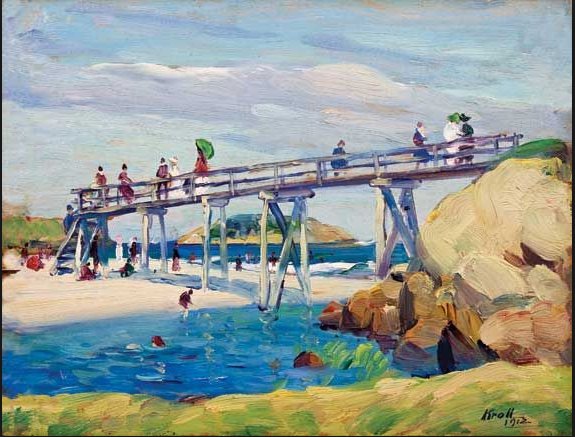
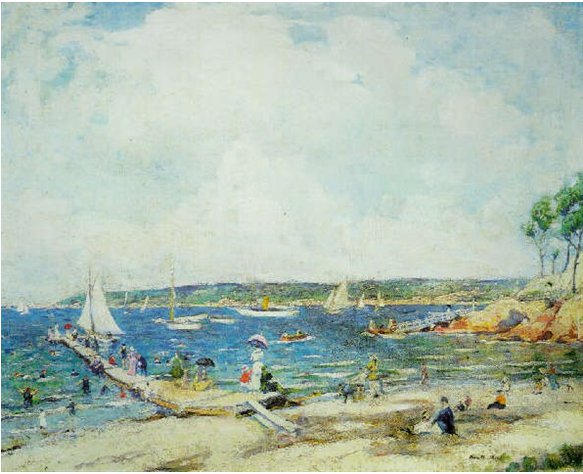
Knoll also painted Niles and Pavilion. He kept returning to Gloucester; eventually his family purchased a home in Folly Cove in 1932. Learn more at Cape Ann Museum and see Kroll works of art on display.
Spread The GMG Love By Sharing With These Buttons:

Gloucester and Fiesta at Peabody Essex Museum
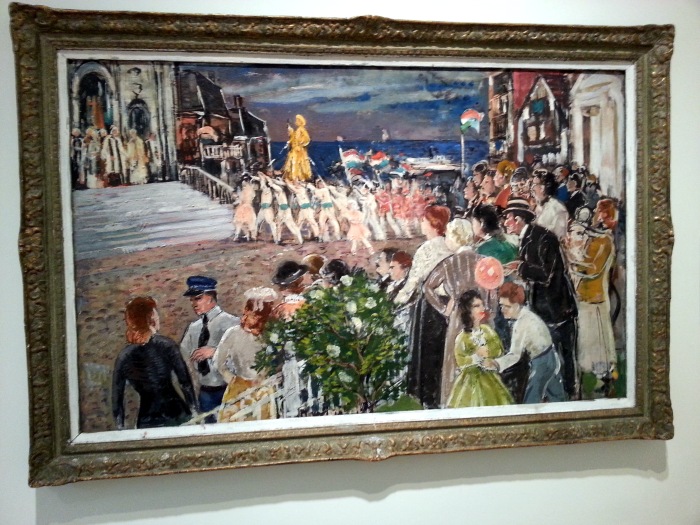
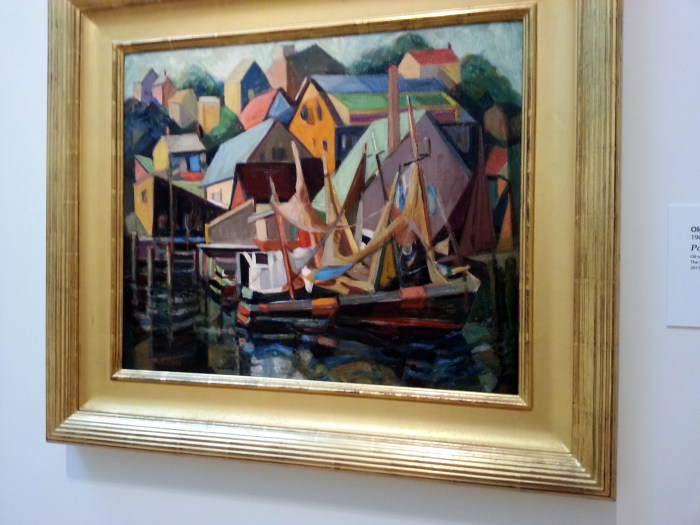
As I frequent museums and collections for work, and Gloucester art abounds, I suffer bouts of ‘Gloucester acquisition affliction’ . Relative newcomers at PEM include a St. Peter Fiesta scene by Gifford Beal and one of Portuguese Hill by Olga Itasca Sears. As much as I am fond of PEM– and I mean no disrespect to this august institution– I sorely wish the Cape Ann Museum had received the art or funds for acquisition. There are few major historic paintings of Gloucester (and the greater region) which remain in private hands. They include works by Winslow Homer and Edward Hopper. I’m trying.
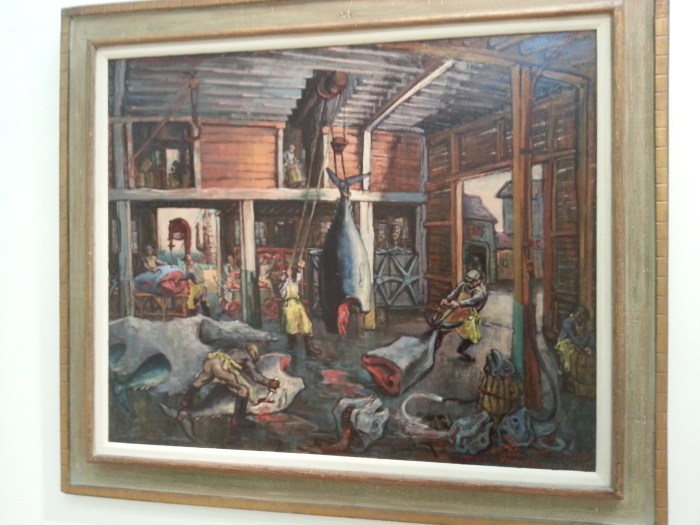
While at PEM for special exhibits, I often check the permanent installation. Are the Frank Benson works and Norman Rockwell on view? Check. I make a point to spend time in front of the Philip Reisman 1951 Tuna Shed, another Gloucester painting and one that Wicked Tuna fans may like to scrutinize. Reisman was a masterful, versatile painter, and a smart gentle man. I was lucky to know and work with him. The Cape Ann Museum has examples of his Gloucester paintings in their collection and a binder of slides, photographs he took, many Fiesta. I remember labeling some.
I paused more than I ever have at the John Trumbull portrait of Alexander Hamilton. (Hmm. Have museums tagged works representing Alexander Hamilton? It would be a mastery of quick edits matched up to the Lin Manuel Miranda song.)
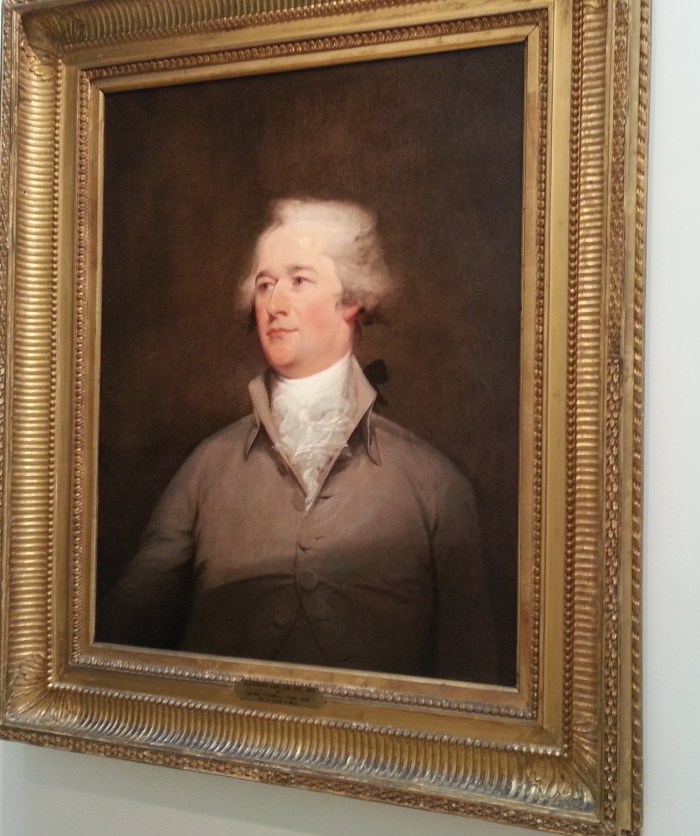
#Hamilton, @ Lin_Manuel, #PEM John Turnbull, Portrait of Alexander Hamilton, 1792, oil on canvas, gift of George A Ward, 1918, collection Peabody Essex Museum
I am looking forward to the upcoming Childe Hassam show opening July 16th at PEM. I went to see the Rodin exhibit.
Continue reading “Gloucester and Fiesta at Peabody Essex Museum”
Spread The GMG Love By Sharing With These Buttons:

July 23 make way for makers
Clever poster. Saturday July 23 Boston Mini Maker Faire at the Boston Children’s Museum by the Hood milk bottle. From the release:
Meet the teams and machines from ABC’s Battlebots. Say hello to R2D2 and BB8. Explore Japanese weaving and woodworking. See 3D printers in action. And most of all, come make something amazing yourself! With 80 Makers and performers at the Boston Mini Maker Faire, you are sure to find a world of inspiration and wonder.Boston’s first official Maker Faire will take place on Fort Point Channel, in front of Boston Children’s Museum, on July 23, 2016.


