NOTES FROM THE FIREHOUSE: THE ANNISQUAM HISTORICAL SOCIETY
I hope that you enjoy the second post in this series from the Annisqum Historical Society’s Notes and Findings.
See Post #1, The Lobsterman Cometh and the Bugs Goeth, here
This is such a wonderful glimpse into the Annisquam Historical Society’s extensive collection of photographs dating back to the days of glass plate negatives.
Take some time and view their impressive collection here: annisquamhistoricalsociety.org
I am very grateful to David W. Teele & Betsey B. Horovitz for sharing this information with us. I am hopeful that they may continue to share some of their findings and extensive research. What a joy it is to see these images and take this trip back in time.
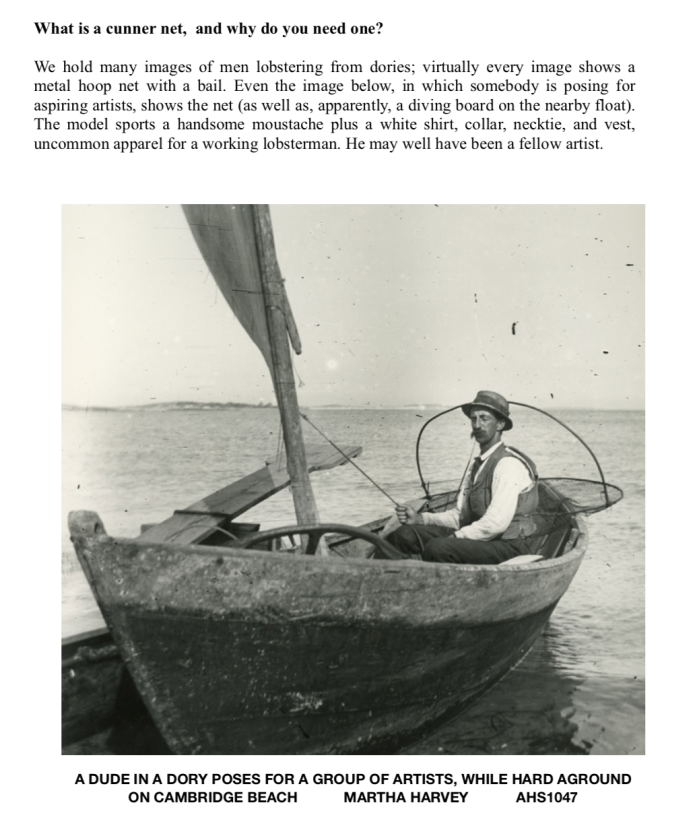
What is a cunner net, and why do you need one?
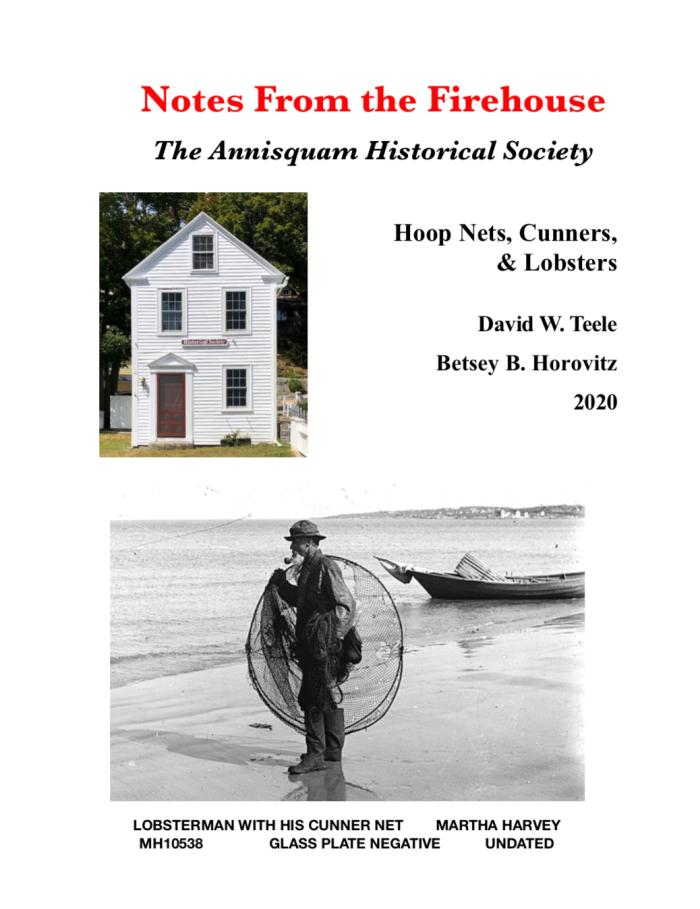
We hold many images of men lobstering from dories; virtually every image shows a metal hoop net with a bail. Even the image below, in which somebody is posing for aspiring artists, shows the net (as well as, apparently, a diving board on the nearby float). The model sports a handsome moustache plus a white shirt, collar, necktie, and vest, uncommon apparel for a working lobsterman. He may well have been a fellow artist…. Read more in the PDF screen grabs below





 Good Morning Gloucester
Back in the late fifties while in high school, I lobstered with Milt Wonson from East Gloucester. We were, I think, the only ones who still used cunner traps to get lobster bait. We also used gurry from the fish plants like everyone else did. The cunner traps were similar to the lobster traps. They would be hauled each day and the amount of cunners we caught was substantial. The cunners would be threaded on the straight wire bait hooks until it was full of cunners. At least 90% of the cunners would stay alive for two to three days. Their movement would attract the lobsters and they outfished any other kind of bait.
LikeLike