
Gloucester Shellfish Warden Tammy Cominelli and NOAA Fish Biologist Tara Trinko Lake lead a walking tour
Little River Fishway Tour
Saturday, March 31st, 2018
Tour from 9:30 am – 10:30 am
LOCATION: Little River next to the West Gloucester Water Filtration Plant, 732 Magnolia Ave, Gloucester, MA.
The City of Gloucester leads an annual effort to monitor the migration of returning adult alewives as they migrate from the ocean to Lily Pond and the Little River to spawn. Volunteers that count fish help us understand when and how many fish travel upstream every year. River herring provide important forage for cod, bluefish, tuna and striped bass, which are…
View original post 75 more words


 Good Morning Gloucester
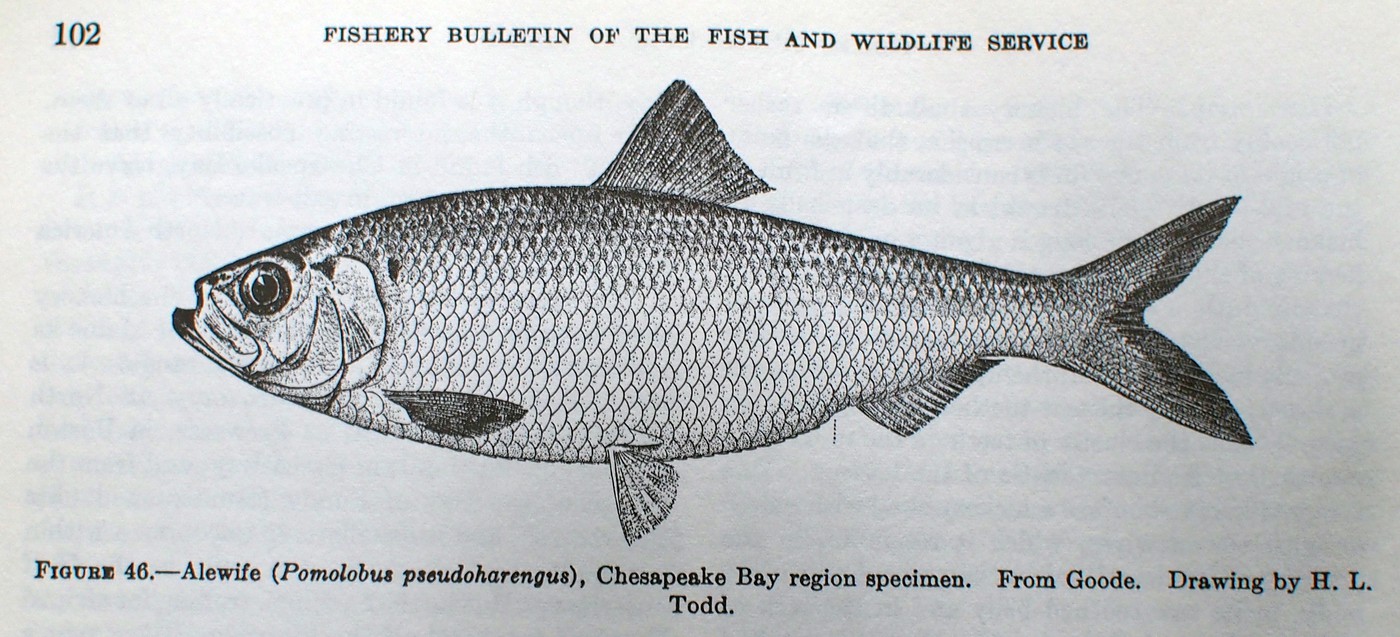
Here’s an alewife drawn in the 1880’s by H. L. Todd. From “Fishes of the Gulf of Maine” by Bigelow and Schroeder (1953) online courtesy of MBL/WHOI. The alewife is distinguishable at a glance from the sea herring by the greater depth of its body, which is three and one-third times as long as deep (an alewife of 13½ inches is about 4 inches deep; a herring that long has a depth of only 3 inches) also by the position of its dorsal fin, the point of origin of which is considerably nearer to the tip of the snout than to the point of origin of the central rays of the tail fin. Furthermore, the alewife is much more heavily built forward than the herring
LikeLike