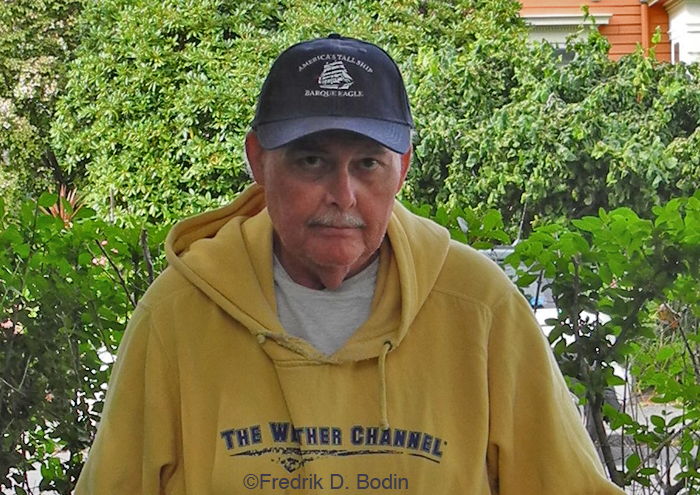
 All VNA services have discharged me because of my improvement and insurance requirements. This means no more weekly visiting Registered Nurses (Diane), no more Kathleen (my physical therapist), and Shelly (my occupational therapist). They all helped me so much that it brings tears to my eyes to see them go. Now, I must look to outpatient physical rehab facilities. There are three on Cape Ann (I cannot walk or drive). Two are in Blackburn Park, and one is at Addison Gilbert Hospital, the place that initially saved my life. Transportation-wise, AGH is the most convenient. I’m determined to be walking by Thanksgiving, come hell or high water. Any suggestions for the rehab facility? (Note: I’m also going to follow an exercise program at home. Kathleen: “Walking is the best exercise you can have, because it uses all of your muscles.”) In retrospect, I should not only thank the medical professionals who saved my life three times this year, but also the dedicated professional therapists from Den-mar and Seacoast, who all helped restore my physical abilities and continue to stay healthy.
Next Step for Fred


 Good Morning Gloucester
Good for you Fred, you’re chuggin’ right along. I can only tell you about AGH, I went to rehab there after a knee replacement and right now for a healing ruptured Achilles. They are terrific as far as I am concerned.
Best wishes in your next step.
LikeLiked by 1 person
Fred-
Pam Macintosh at AGH is an excellent PT and will help you with your mobility.
LikeLiked by 1 person
Gob Bless You Fred. You know who to call.
LikeLiked by 1 person
Thanks James. Nice to see you and Anna.
LikeLike
Good News, Fred ! Been missing hearing from on GMG. Don’t forget you have bee thrown our of better places, old friend ! 🙂
Sea Ya
Skipper
LikeLiked by 1 person
You have had much good support on this journey but they could not do it alone. Your determination is at the center and I know you will be sporting about by Thanksgiving. We are all cheering you on! Hugs!
LikeLiked by 1 person
Agreed saint707 ~ cheers and hugs to you Fred ~
LikeLiked by 1 person
Fred,
The only one I have used is the Spaulding OutpatientCenter up in the old NOAA building at Blackburn. They were excellent and I used to often get the chance to talk to friends there, including Al Swekla, who were there at the same time I was. It is possible but unfortunately not easy to get there by bus from Rocky Neck or Lanesville but it is easy with the business express from downtown.
Good luck !
Damon
LikeLiked by 1 person
Highly recommend AGH. They do very thorough assessments, and create a rehab program with increased challenges as you improve. They are very results oriented and continually assess your progress. Although it may take a week or two get on their roster, it is smooth sailing after that. They are prompt and allow sufficient time during appointments for you to feel you are getting the best attention. Kristen Page is outstanding, very knowlegeable and adaptable.
LikeLiked by 1 person
I have had luck at Spaulding. They are a great facility.
LikeLiked by 1 person
Fred…Ron and I have moved to NH and this is the first we have heard of your treatments. We are sending you
prayers and strength to get you through your therapies..after my back surgery,I went to Spaulding Rehab at Cape Ann Med Ctr. .My therapist there was Julie and she was wonderful ! Good Luck and best wishes !
LikeLiked by 1 person
Great to hear from you Gale. My best to your family!
LikeLike
Hello Fred, I’m so glad to see you. I have had good fortune at AGH. I would be able to provide transportation to wherever and whenever you need to go for the nest two months for sure.
LikeLike
Fred,
Glad to see you back here – I been out of pocket local but some friends had sent me this for friends who faced the Big C including my family… web links I hope you may find helpful…Wishing you the best and your postive attitude is your greatest trait for spirit from within!
http://www.cancer.org/treatment/survivorshipduringandaftertreatment/stayingactive/physical-activity-and-the-cancer-patient
http://gwtoday.gwu.edu/art-healing
Dr. Warson’s American Indian heritage has always been an important part of her life as well. Growing up in Tennessee and Colorado, she was active in the Native American community in both regions; however, her research often centers on tribes in the Southeast, because these communities are some of the most underserved areas in terms of cancer research. Prior to joining GW in 2009, Dr. Warson was a clinician in northern Colorado where she worked with Native American families in urban and rural settings. She received a bachelor of fine arts from the Cleveland Institute of Art in 1989, a master’s of art in art therapy from Vermont College of Norwich University in 1993, and a doctorate in interdisciplinary studies from Colorado State University in 2008.
and
http://www.cancer.org/treatment/survivorshipduringandaftertreatment/stayingactive/physical-activity-and-the-cancer-patient
Excerpt from first link a little long but could read it as time permits…
September 20, 2010
Professor Elizabeth Warson helps Native people deal with cancer survivorship through art.
In 1992, Assistant Professor of Art Therapy Elizabeth Warson learned she had cervical cancer. At the time, she was pursuing a master’s of arts in Vermont. Ill-informed about her diagnosis, Dr. Warson says after two surgeries she declined chemotherapy “out of fear.” But now, Dr. Warson’s life work helps fellow Native cancer survivors manage those same feelings. “[When I was diagnosed,] my experience was not so positive,” says Dr. Warson. “Because of this, I structured my research to offer social support in a group setting. Stress reduction has also been a focus of mine in both my clinical practice and research.”
A licensed professional counselor and board certified, registered art therapist, Dr. Warson works with American Indian and Alaskan Native cancer survivors and their families to provide them with stress reduction techniques as well as a “a nonverbal outlet for expression of feeling.” “Many American Indians and Alaska Natives are reluctant to discuss their cancer diagnosis and treatment with those outside their family system,” she says. “We are looking at different culturally relevant approaches to enhancing quality of life factors for these cancer survivors.” Her current research project—funded by an American Cancer Society grant, sponsored by the GW Cancer Institute— focuses on art-based stress reduction interventions, such as guided drawing exercises combined with mindful breathing exercises, “response” painting to induce a state of “flow,” visual journaling to promote self-care and clay work to reduce stress.
Dr. Warson says art therapy connects with the Native American concept of “wellness,” comprising, mind, body and spirit. “Based on our preliminary data, the visual journaling and clay work seem to be their favorite interventions; that is, these are the art processes that they are continuing on their own,” she says. “They take it all to heart and are highly invested.” It was Dr. Warson’s paternal grandmother who first inspired her to pursue art therapy. An American Indian, Francis Warson was also a licensed clinical social worker, painter, and published author. “My grandmother has been my mentor throughout my academic training and career pursuits,” says Dr. Warson. “Ironically, my first position out of college was at an agency where my grandmother interned as a social worker during her graduate studies at Western Reserve.”
Dr. Warson’s American Indian heritage has always been an important part of her life as well. Growing up in Tennessee and Colorado, she was active in the Native American community in both regions; however, her research often centers on tribes in the Southeast, because these communities are some of the most underserved areas in terms of cancer research. Prior to joining GW in 2009, Dr. Warson was a clinician in northern Colorado where she worked with Native American families in urban and rural settings. She received a bachelor of fine arts from the Cleveland Institute of Art in 1989, a master’s of art in art therapy from Vermont College of Norwich University in 1993, and a doctorate in interdisciplinary studies from Colorado State University in 2008.
She joined GW’s graduate art therapy program because of its “long and rich history of infusing the arts in healthcare.” “I was personally interested in GW’s program because of the diverse faculty, our emphasis on cultural competency, the new state-of-the-art facility and a commitment to initiating student-generated and faculty research,” she says. Earlier this year, Dr. Warson received a National Endowment for the Arts grant in folk and traditional art for her community-driven Coharie Heritage Empowerment Project, which provides traditional art form instruction, including storytelling, quilting, basketry and carving, to the youth of the Coharie Tribe of Clinton, N.C. She is also working on a project, “Healing Pathways: American Indian Medicine and Art Therapy,” sponsored by a GW’s Faculty Funds award. A sculptor, Dr. Warson has exhibited her work nationally and internationally and is a recipient of an Ohio Arts Council fellowship award. She is currently working on a mixed media series called “Native Epistemology,” or a Native way of knowing, in response to her research. Dr. Warson says practicing art therapy with Native people and hearing their stories—including elders who are continuing their daily practice of visual journaling, cancer survivors who are integrating art making into their support groups, and children who are asking for art programs for their community— has “deeply inspired” her. “I am continually reminded of how art therapy is life enhancing on many levels,” she says. “Speaking from a Native perspective, art is so much a part of life. Engaging in the expressive arts can be healing in every respect of the word.”
Best wishes forward on the path and you have the right community to help you here!
God Bless Keep on moving forward walk with the wind!!
🙂 Dave & Kim:-)
LikeLike
HI Fred,
long time admirer/lurker here. There’s a wonderful local organization, Cape Ann Time Bank, that offers services in trade. Many members offer rides to appointments and other kinds of help: http://www.capeanntimebanks.org/Home.html. Send them an email if you’re interested..
Also, doesn’t the CATA offer rides to appointments?
LikeLike
Fred, I’m also available for transportation.
LikeLike