The Edward Hopper etching The Lonely House was the star lot going into the sale and in the live auction last night. The print sold for $310,000 vaulting past its pre auction estimate of $150,000-$200,000.
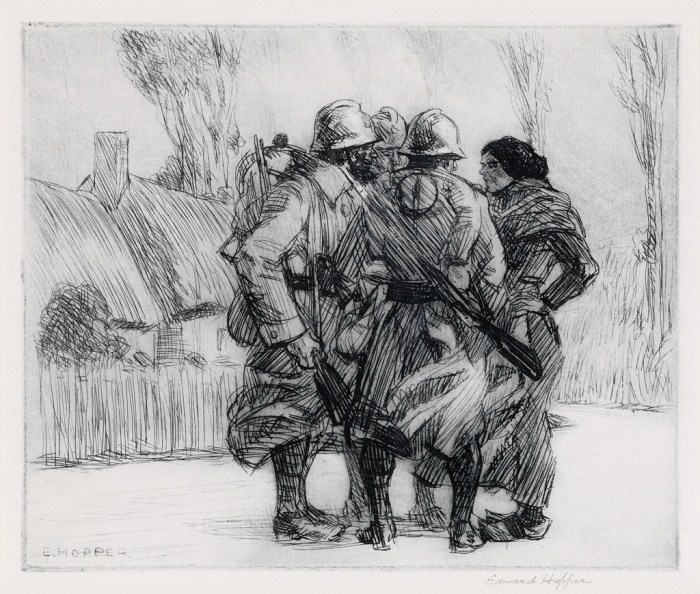
Hopper’s Les Poilus circa 1915 surpassed its $15000-$20,000 pre-sale estimate as well, selling for $42,500. I’ve sold an impression of the Lonely House before but I’ve only scene Les Poilus in the Whitney collection.
The sale featured Old Master through Modern prints by American and European artists.
On view October 27 through November 26 at the Cape Ann Museum
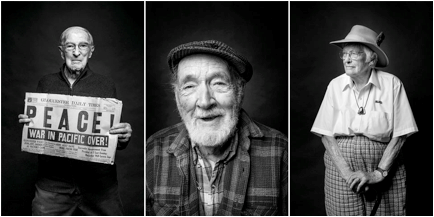
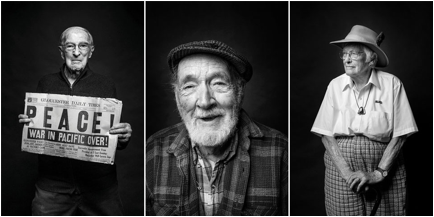
Portraits by Jason Grow from a 2015 series of WWII veterans. Left to right: Joseph Mesquita III, Arnold Knauth, Adele Ervin
Don’t miss the show, one month only
Reminder from the museum:
“The Cape Ann Museum is pleased to announce WWII Veterans: Portrait Photographs by Jason Grow, a special exhibition on view from October 27 – November 26, 2017. First shown at Gloucester City Hall in 2015, Grow’s portrait photographs of Cape Ann’s World War II veterans were enthusiastically received by audiences of all ages and walks of life. The exhibit makes an encore appearance at the Museum this autumn, offering visitors another opportunity to view these remarkable images as a group.
Admission is free throughout the exhibition run for veterans and all active-duty military personnel and their families, including National Guard and Reserve.
On Saturday, November 11, in honor of Veterans Day, the Museum will be free and open to the public and Jason Grow will present a talk about the exhibit at 2:00 p.m. in the Museum’s auditorium.
The Cape Ann Museum is proud to participate in the national Blue Star Museum program. Blue Star Museums is a collaboration among the National Endowment for the Arts, Blue Star Families, the Department of Defense, and museums across America. Each summer since 2010, Blue Star Museums have offered free admission to the nation’s active-duty military personnel and their families, including National Guard and Reserve, from Memorial Day through Labor Day. For more information please visit the Blue Star Museums’ website: arts.gov/bluestarmuseums.
Jason Grow is a Boston-based photographer and Gloucester resident. He specializes in photographing exceptionally accomplished, busy people with real time constraints in real environments. With a background based in photojournalism his experience has ranged from refugee camps to conference rooms.”
Spread The GMG Love By Sharing With These Buttons:
Sharing press release from Mary Ellen Lepionka and Bill Remsen followed by a selection of visual arts, maps, and writing spotlighting Dogtown (1633-1961) by Catherine Ryan.
Nov 29th, 7PM, Public Meeting
Come to a special public presentation November 29th in Kyrouz Auditorium in Gloucester City Hall, 9 Dale Avenue, at 7pm.
Week of Nov 13
“During the week of November 13 a team of archaeologists from the Public Archaeology Laboratory (PAL) in Providence will be conducting fieldwork in Dogtown. They will begin mapping and describing an area to be nominated to the National Register of Historic Places, a National Park Service program to honor historically significant buildings and landscapes.
What do you think?
“Presenters at City Hall on Nov 29th will include Betsy Friedberg from the Massachusetts Historical Commission, who will explain how the National Register program works and what it does and does not do, and Kristen Heitert from the PAL, who will present an initial plan for defining the boundaries of Dogtown as a National Register District. People attending the meeting will be asked to respond to that plan and to express their views about what makes Dogtown special. What should be the boundaries of the proposed National Register District, and what cultural features should be included in it? What would be the benefits of National Register status, and are there any drawbacks?
Who all is involved?
“The Dogtown archaeological survey is funded through a matching grant from the Massachusetts Historical Commission and the Dusky Foundation and is financed by the City of Gloucester. The Gloucester Historical Commission applied for the grant and is coordinating the project in collaboration with the Rockport Historical Commission. The PAL team will also have the assistance of members of the Dogtown Advisory Committee, the Rockport Rights of Way Committee, the Cape Ann Trail Stewards, and the Friends of Dogtown.”
– Dogtown is eligible for the National Register. Will Gloucester earn another major district designation? Above excerpts from the press release for the Nov 29th event shared by Bill Remsen, local project coordinator, and Mary Ellen Lepionka, co-chair Gloucester Historical Commission, and some Dogtown maps and memorabilia 1633-1961
Dogtown Maps and memorabilia 1633-1961 selected by Catherine Ryan
Prior 2017 Dogtown public forums, lectures and meetings mentioned consideration of controlled burns to clear brush and return some land to a former moors state, with various potential benefits.
“Nature takes a lot of courses.” Chris Leahy said. He focused on Dogtown, “a very special place”, and possible merits of land stewardship geared at fostering greater biodiversity. Perhaps some of the core acres could be coaxed to grasslands as when parts of Gloucester were described as moors? Characteristic wildlife, butterflies, and birds no longer present may swing back.” March 4 2017 Dogtown Forum at Cape Ann Museumin collaboration with Essex County Greenbelt, Mass Audubon, and Friends of Dogtown group
February 23, 2017 Chris Leahy also gave a talk at Sawyer Free Library Dogtown- the Biography of a Landscape:750 Million Years Ago to the Present A photographic history through slides presented by the Gloucester Lyceum and the Friends of the Library
“Today the Hudson River Valley in upstate New York is gorgeous. The hills are covered with oak forests, and the valleys are patchworks of hayfields and farms. But Ostfeld says the area didn’t always look like this. When the Europeans came here hundreds of years ago, they clear-cut nearly all of the forests to plant crops and raise livestock. “They also cut down trees for commercial use,” Ostfeld says, “to make masts for ships, and for firewood.” Since then a lot of the forest has come back — but it’s not the same forest as before, he says. Today it’s all broken up into little pieces, with roads, farms and housing developments. For mice, this has been great news. “They tend to thrive in these degraded, fragmented landscapes,” Ostfeld says, because their predators need big forests to survive. Without as many foxes, hawks and owls to eat them, mice crank out babies. And we end up with forests packed with mice — mice that are chronically infected with Lyme and covered with ticks.”
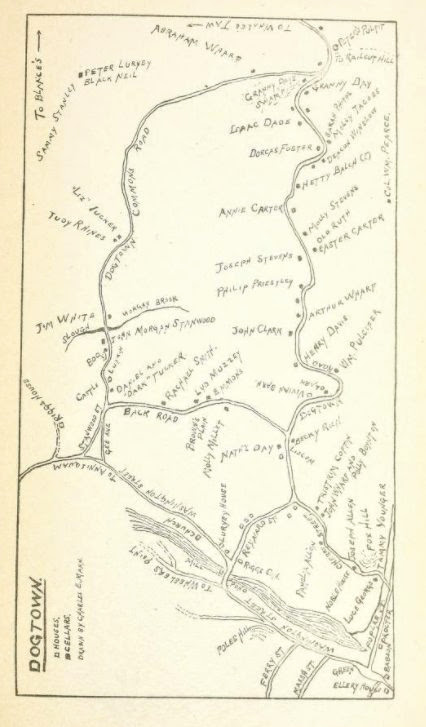
Selection of maps
from books, and memorabilia I’ve pulled on Dogtown (1634-1961):
1961
From Gloucester 1961 Cape Ann Festival of the Arts booklet
1954
From Gloucester 1954 Festival of the Arts booklet, prepared for the second of the Russel Crouse Prize Play, the Witch of Dogtown, by S. Foster Damon. “Each year it is hoped new plays dealing with the Gloucester or Cape Ann theme will be produced.”
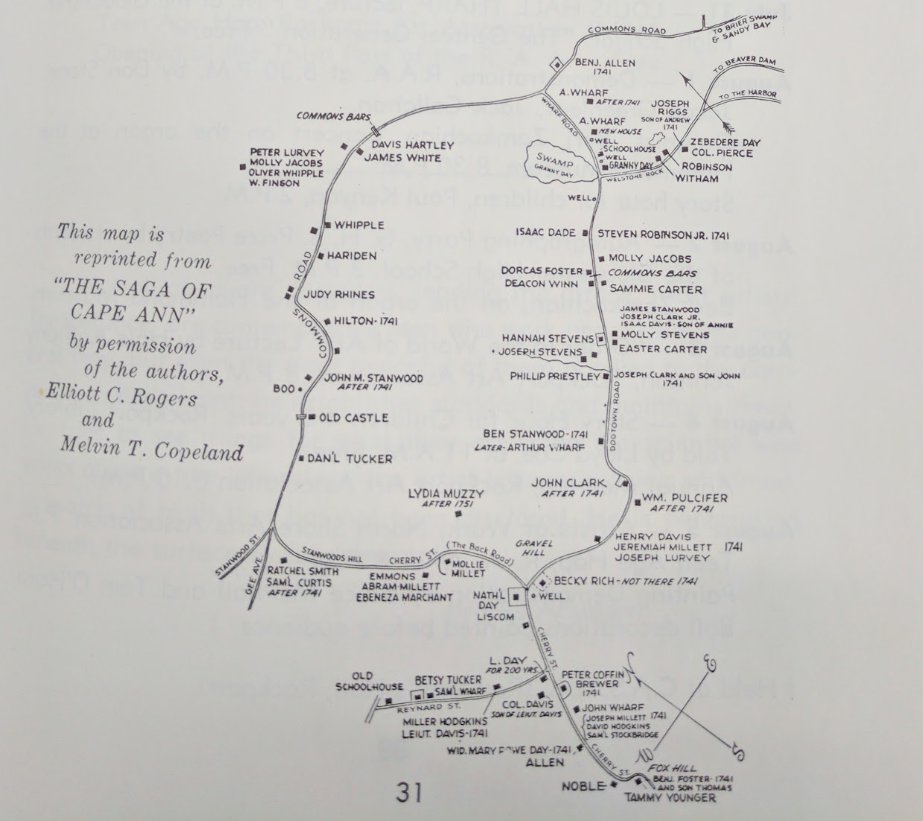
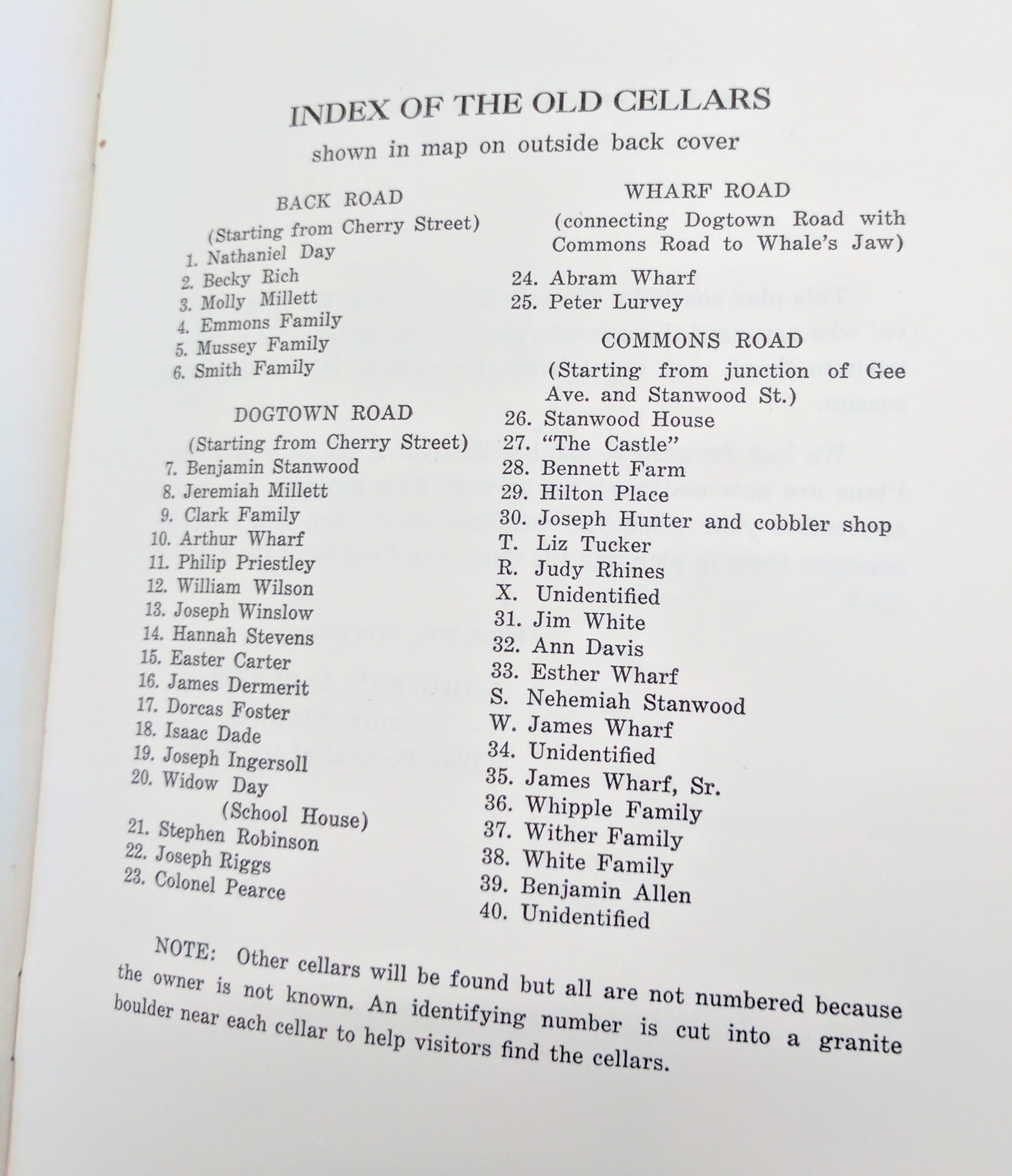
Joshua Batchelder 1741 survey map of “a good part of Dogtown common” printed and annotated for Gloucester’s 3rd Annual Cape Ann Festival of the Arts in 19541954 Index to annotated map
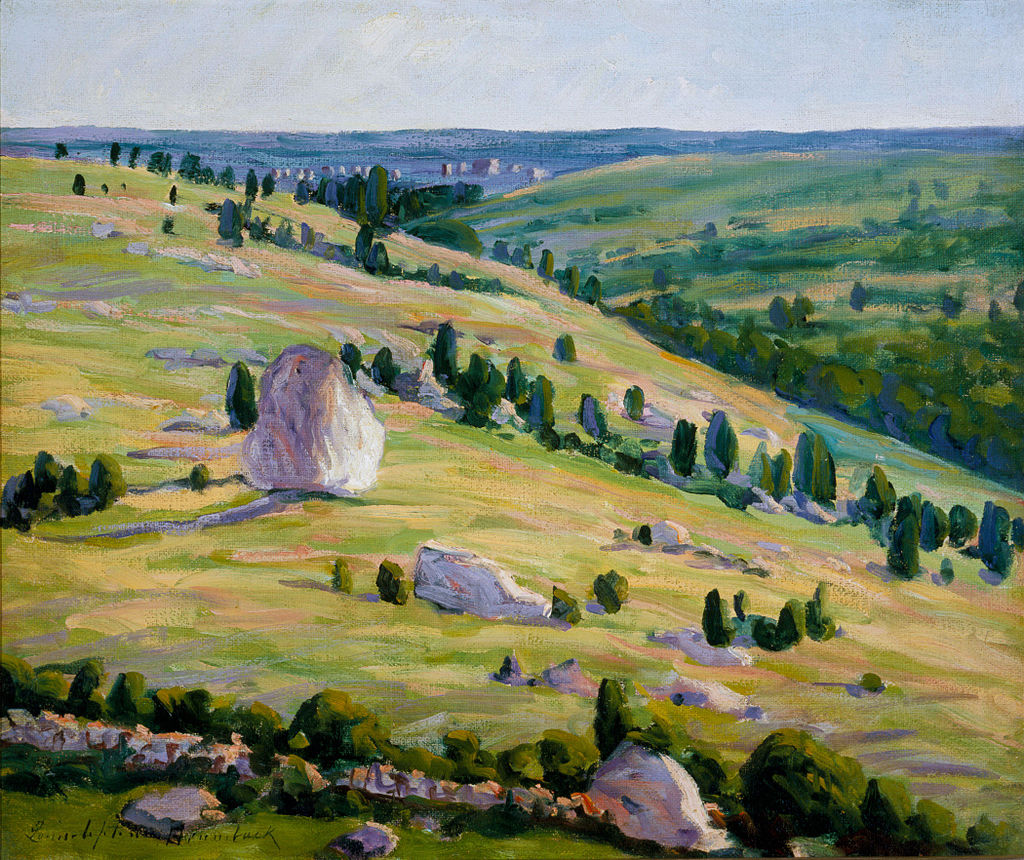
1923 Christian Science Monitor art review for Gloucester Society of Artists
“Dogtown Common, the now deserted hill home of the first settlers who 300 years ago braved the dangers of a hostile and Indian Annisquam, offers both romance and reality. It has remained for Louise Upton Brumback to interpret its clear contrasts, its far spaces, blue skies, white clouds and stiff green pointed cedars. Although the draftsmanship is crude in the extreme, the effect is rare and genuine. The old resident who passes through the gallery will shake his head dubiously at the false color creations of harbor and rock, but accepts this striking and bold visualization of Dogtown Common as the true spirit of Cape Ann…”
Inland among the lonely cedar dells Of Old Cape Ann, near Gloucester by the Sea, Still live the Dead–in homes that used to be. All day in dreamy spells They tattle low with sounds of tinkling cattle bells Or spirit tappings of some hollow tree And there, all night–out of the dark– They bark–and bark…
“Note: From a little volume, by Charles E. Mann, entitled “In the Heart of Cape Ann” Gloucester, Mass., The Proctor Bros. Co), the curious reader may learn more strange, half forgotten facts concerning the old Puritan life of that region. Among its singular New England characters, certain authentic and legendary figures have entered the theme of this poem. P.M-K. Miami University, Oxford, Ohio. March, 1921
Percy MacKaye (1875–1956) was an American dramatist and poet.
Harvard MacKaye papers: “History note: Percy Wallace MacKaye, author and dramatist, graduated from Harvard in 1897, wrote poetic dramas, operatic libretti, modern masques and spectacles, and was active in promoting community theatre. The collection includes his papers and those of his wife, Marion Homer Morse MacKaye, as well as material relating to the career of his father Steele MacKaye (1842-1894), an American theatrical designer, actor, dramatist, and inventor. The bulk of the collection consists of material pertaining to community drama; correspondence with literary and theatrical figures including Edgar Lee Masters, Edwin Arlington Robinson, George Pierce Baker, Theodore Dreiser, Amy Lowell, Upton Sinclair, Edward Gordon Craig, Louis Untermeyer and Thornton Wilder.”
Dartmouth: The MacKaye Family Papers “contain materials documenting the life and career of four generations of the family. They include a large amount of personal and professional correspondence as well as original manuscripts and typescripts of plays, prose, masques, pageants, poetry, essays and articles. Of note are manuscript materials for Benton MacKaye’s works on geotechnics entitled “Geotechnics of North America,” and “From Geography to Geotechnics,” as well as Percy MacKaye’s biography and works on his father Steele MacKaye and the MacKaye family, entitled respectively, “Epoch,” and “Annals of an Era.”
(Gloucester, Dogtown Common, is not on the MacKaye Wikipedia page)
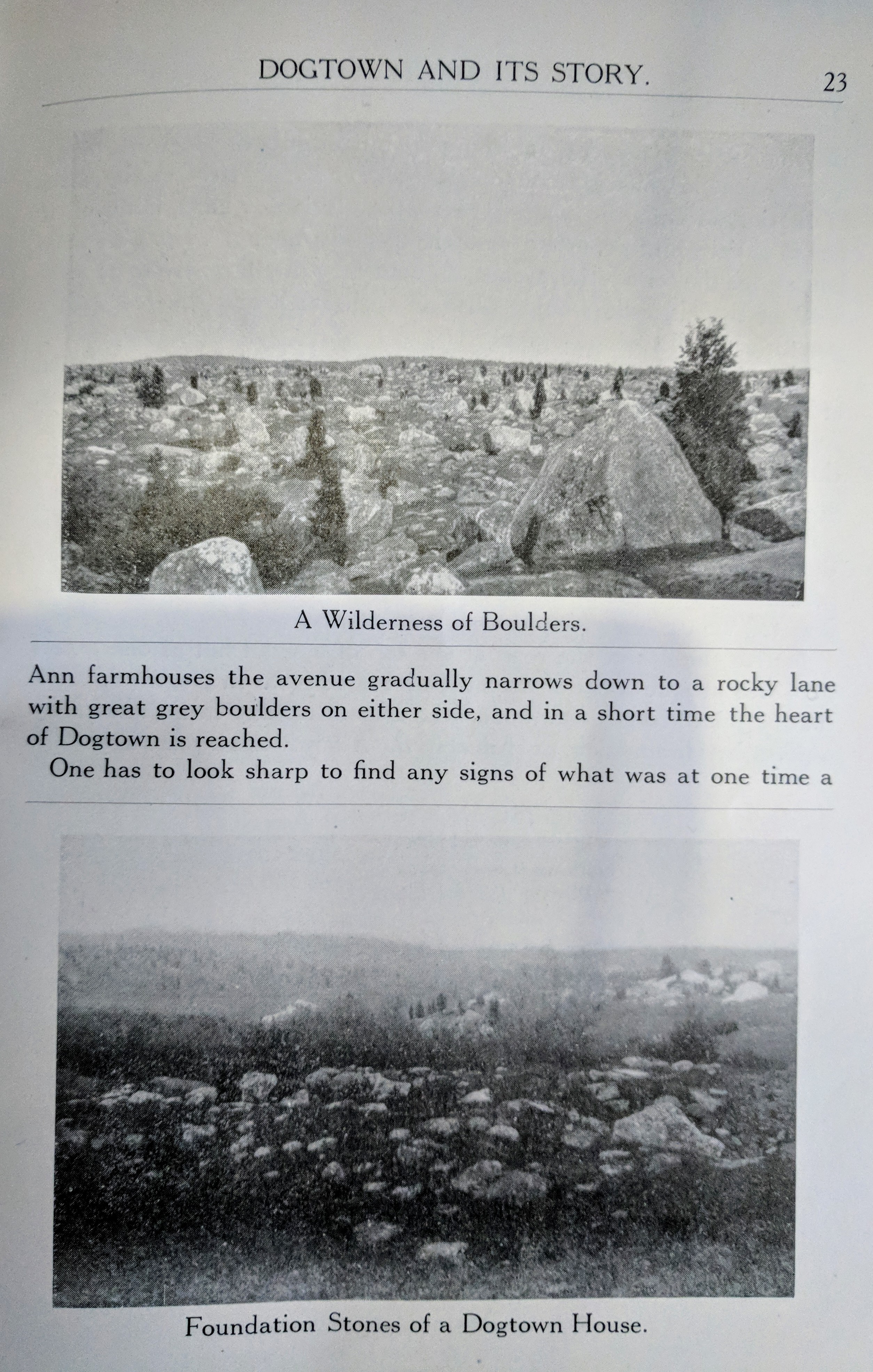
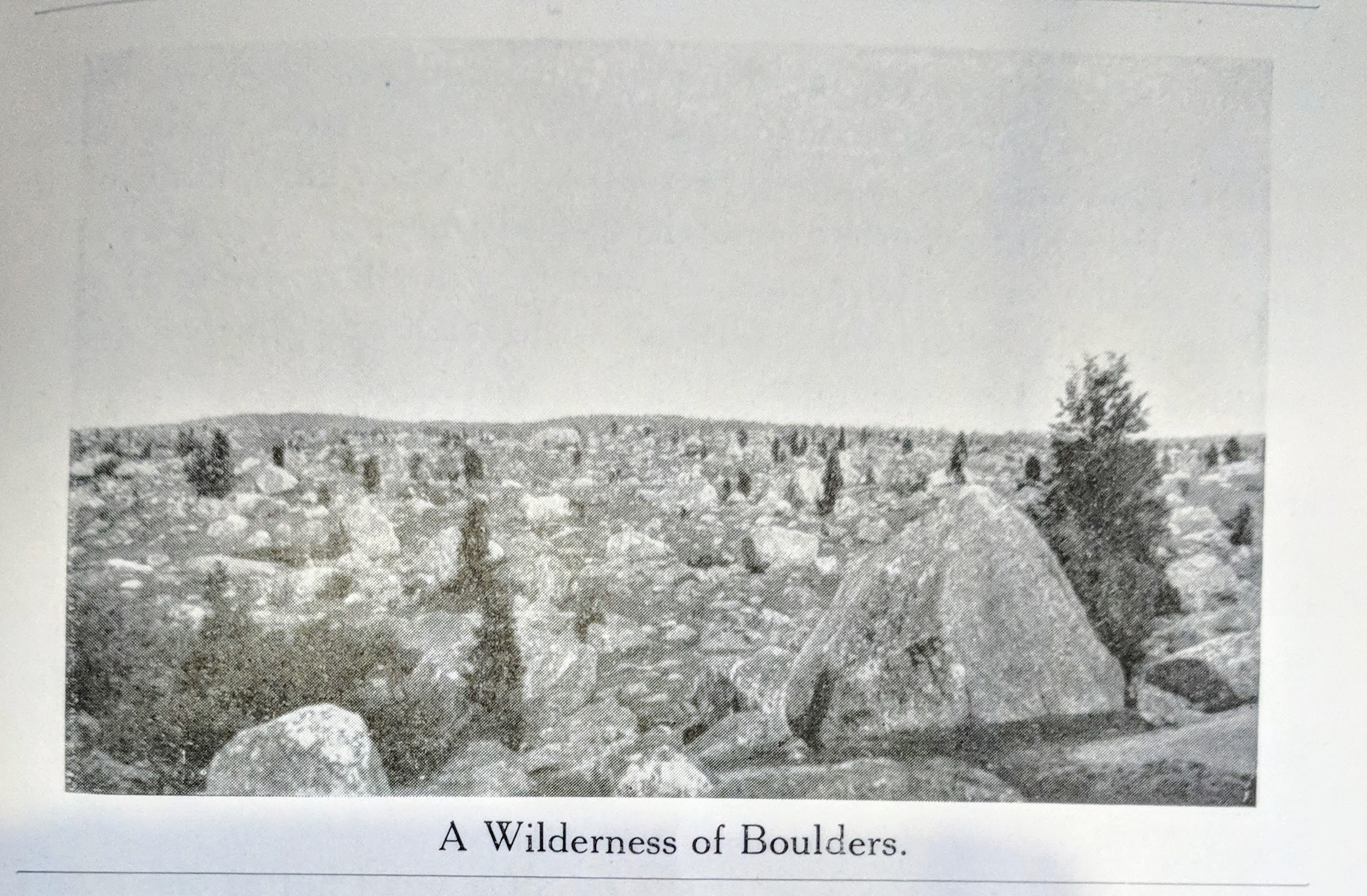
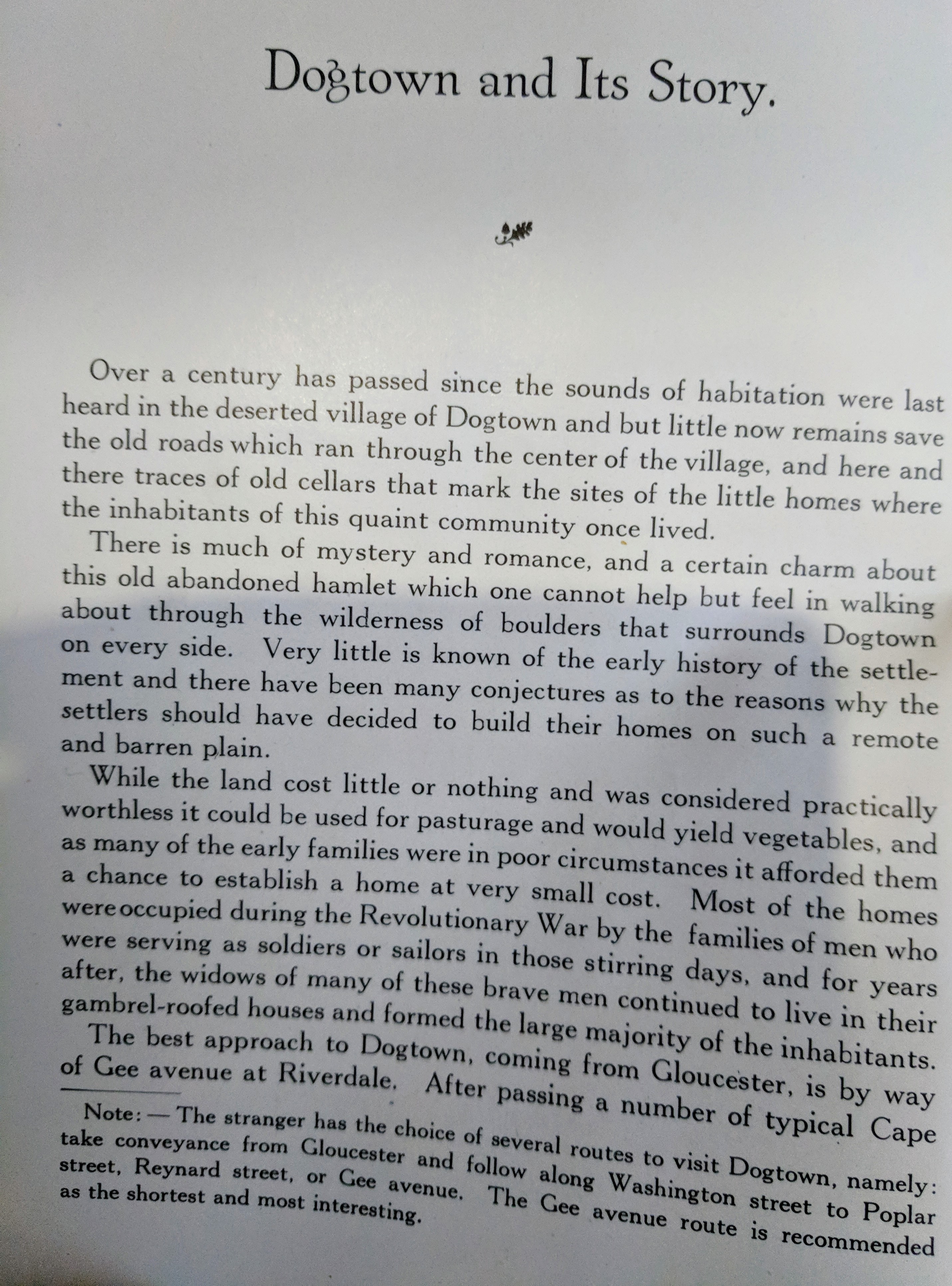
Great read p.22 from the Dogtown and Its Story chapter, in The Gloucester Book, by Frank L. Cox, 1921
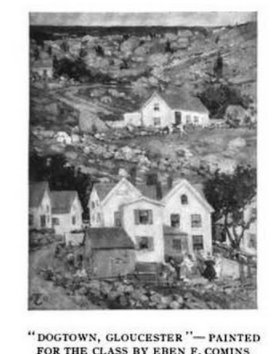
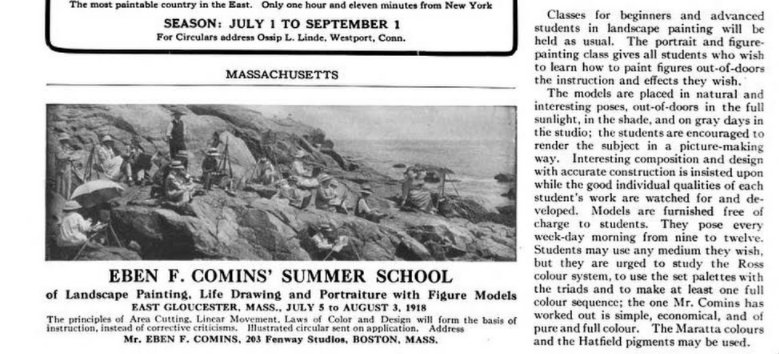
1918 Eben Comins painting
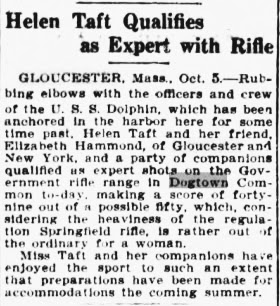
1912 government rifle range Dogtown
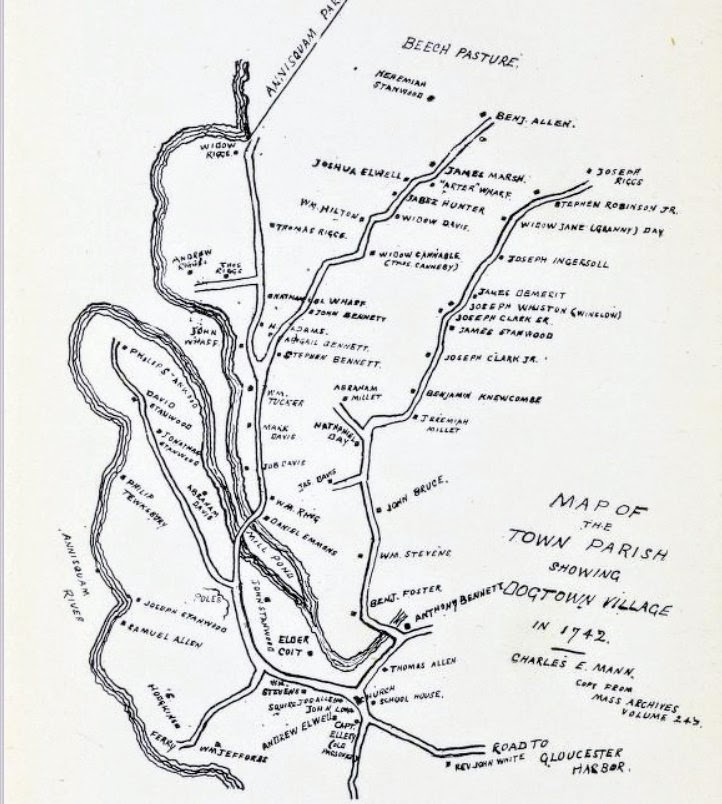
1904 (1742)
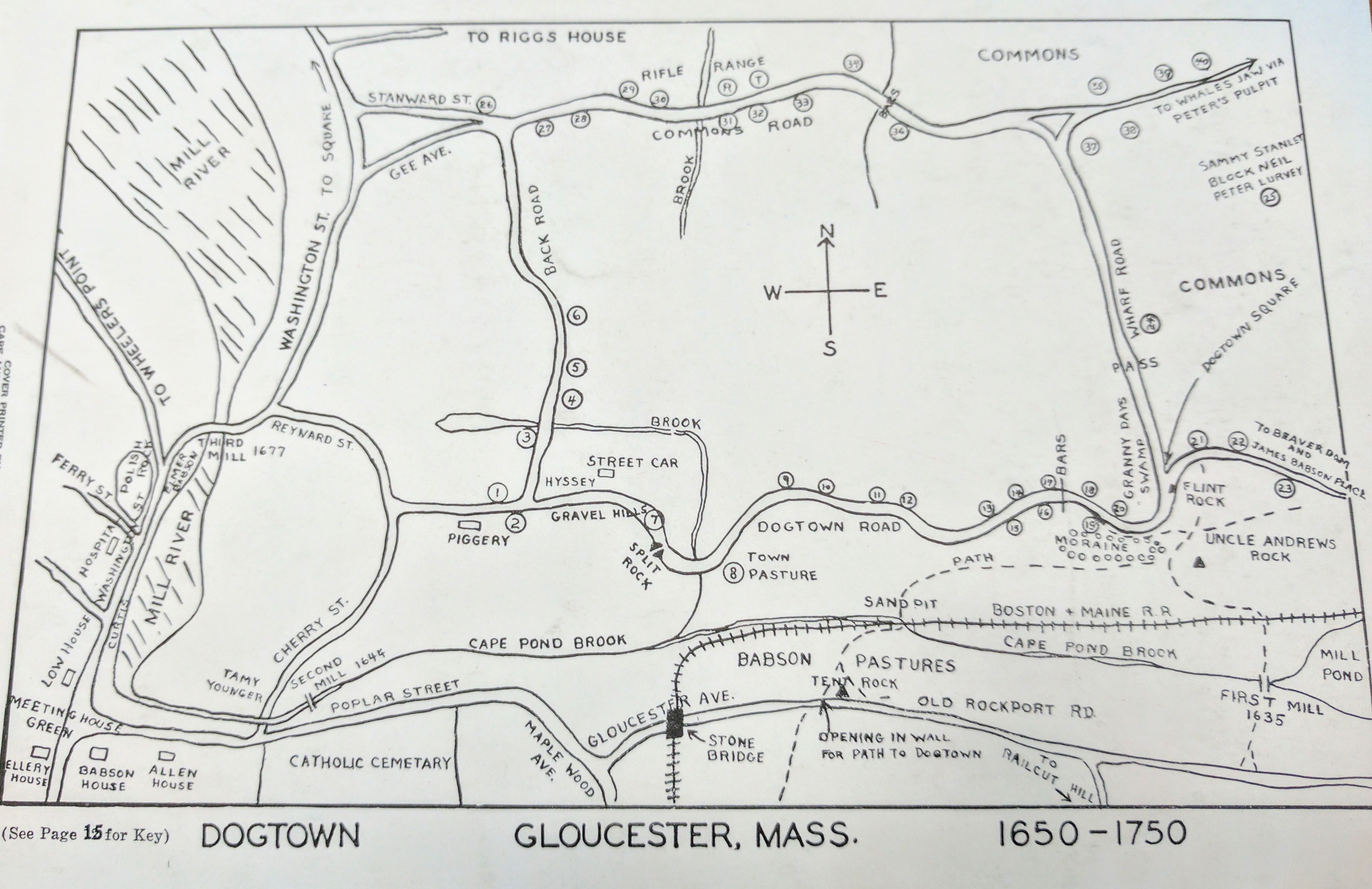
ca.1904 Charles E. Mann map copied from 1742 map in MA archives collectionMann
1877 Higginson
“Three miles inland, as I remember, we found the hearthstones of a vanished settlement; then we passed a swamp with cardinal flowers; then a cathedral of noble pines, topped with crow’s-nests. If we had not gone astray by this time, we presently emerged on Dogtown Common, an elevated table-land, over spread with great boulders as with houses, and encircled with a girdle of green woods and an outer girdle of blue sea. I know of nothing more wild than that gray waste of boulders..”
In 1855, Henry David Thoreau wrote in his journal: “I am [reading] William Wood’s “New England’s Prospect”… William Wood New Englands Prospect was originally published in 1634 in London. Here is a Wood excerpt concerning burning brush to clear land, a historical antecedent (and apt surname) to keep in mind when considering stewardship 2017 and beyond.
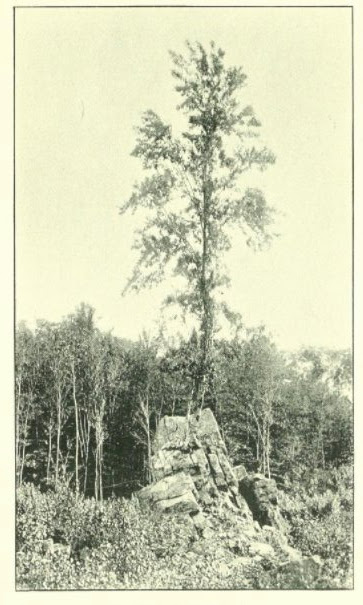
…The next commodity the land affords is good store of woods, and that not only such as may be needful for fuel but likewise for the building of ships and houses and mills and all manner of water-work about which wood is needful. The timber of the country grows straight and tall, some trees being twenty, some thirty foot high, before they spread forth their branches; generally the trees be not very thick, though there may be many that will serve for mill posts, some being three foot and a half over. And whereas it is generally conceived that the woods grow so thick that there is no more clear ground than is hewed out by labor of man, it is nothing so, in many places diverse acres being clear so that one may ride a hunting in most places of the land if he will venture himself for being lost. There is no underwood saving in swamps and low grounds that are wet, in which the English get Osiers and Hasles and such small wood as is for their use. Of these swamps, some be ten, some twenty, some thirty miles long, being preserved by the wetness of the soil wherein they grow; for it being the custom of the Indians to burn the wood in November when the grass is withered and leaves dried, it consumes all the underwood and rubbish which otherwise would overgrow the country, making it unpassable, and spoil their much affected hunting; so that by this means in those places where the Indians inhabit there is scarce a bush or bramble or any cumbersome underwood to be seen in the more champion ground. Small wood, growing in these places where the fire could not come, is preserved. In some places, where the Indians died of the plague some fourteen years ago, is much underwood, as in the midway betwixt Wessaguscus and Plimouth, because it hath not been burned. Certain rivers stopping the fire from coming to clear that place of the country hath made it unuseful and troublesome to travel thorow, in so much that it is called ragged plaine, because it teares and rents the cloathes of them that pass. Now because it may be necessary for mechanical Artificers to know what timber and wood of use is in the Country, I will recite the most useful as followeth*…” *see photos for Wood’s trees list
Thoreau was thinking along these lines, finding god in berries.
“From William Wood’s New England’s Prospect, printed about 1633, it would appear that strawberries were much more abundant and large here before they were impoverished or cornered up by cultivation. “Some,” as he says, “being two inches about, one may gather half a bushel in a forenoon.” They are the first blush of a country, its morning red, a sort of ambrosial food which grows only on Olympian soil.” -Thoreau’s Wild Fruit
“If you look closely you will find blueberry and huckleberry bushes under your feet, though they may be feeble and barren, throughout all our woods, the most persevering Native Americans, ready to shoot up into place and power at the next election among the plants, ready to reclothe the hills when man has laid them bare and feed all kinds of pensioners.”
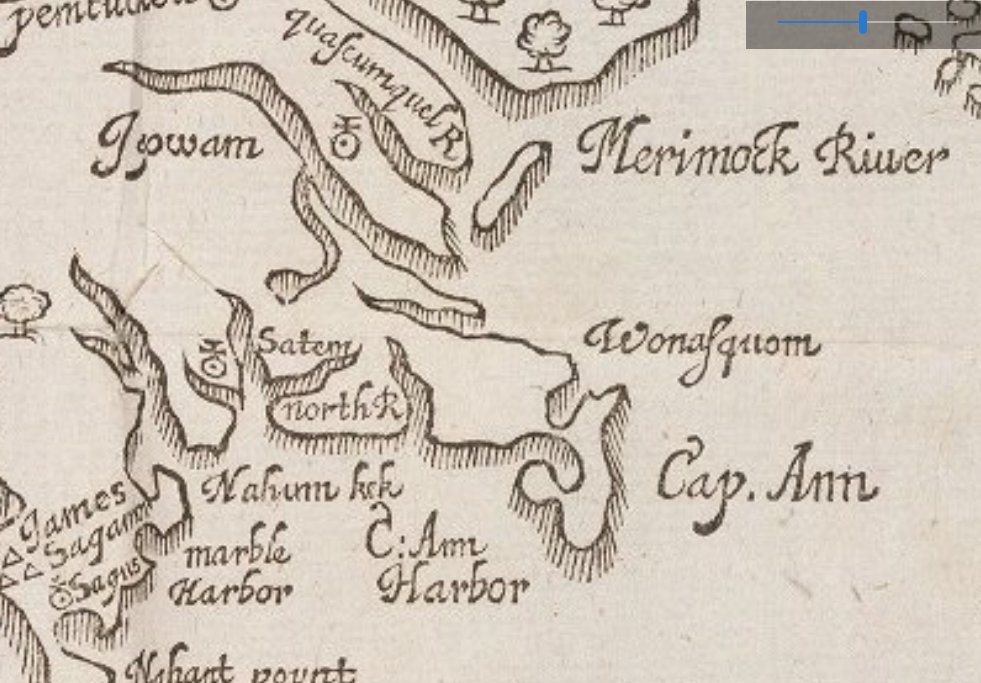
photos: William Wood’s New Englands Prospect scanned from book in the University of CA collection. “Wonasquam” on map at Cape Ann
“Of their Custom in burning the Country, and the reason thereof” The Salvages are accustomed to set fire of the Country in all places where they come, and to burne it twice a year: at the Spring, and the fall of the leaf. The reason that moves them to do so, is because it would other wise be so overgrown with underweeds that it would be all a coppice wood, and the people would not be able in any wise to pass through the Country out of a beaten path… And this custom of firing the Country is the meanes to make it passable; and by that meanes the trees growe here and there as in our parks: and makes the Country very beautiful and commodious.”
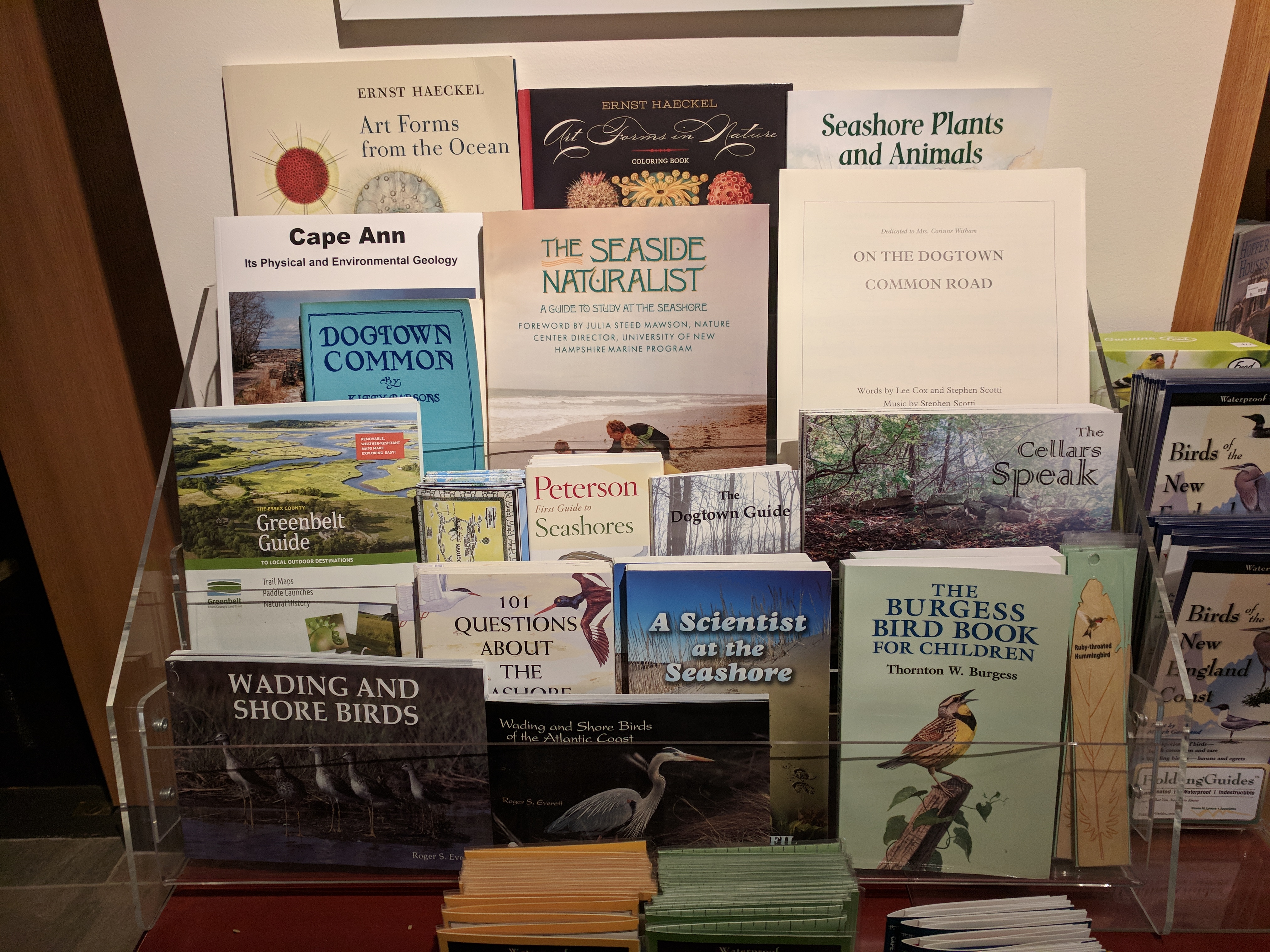
Cape Ann Museum book shop display October 2017
Spread The GMG Love By Sharing With These Buttons:
Reminder just a few days left to see amazing Rockbound exhibition! Upcoming collaboration among the museum, GPS, and teachers at the Cape Ann Museum:
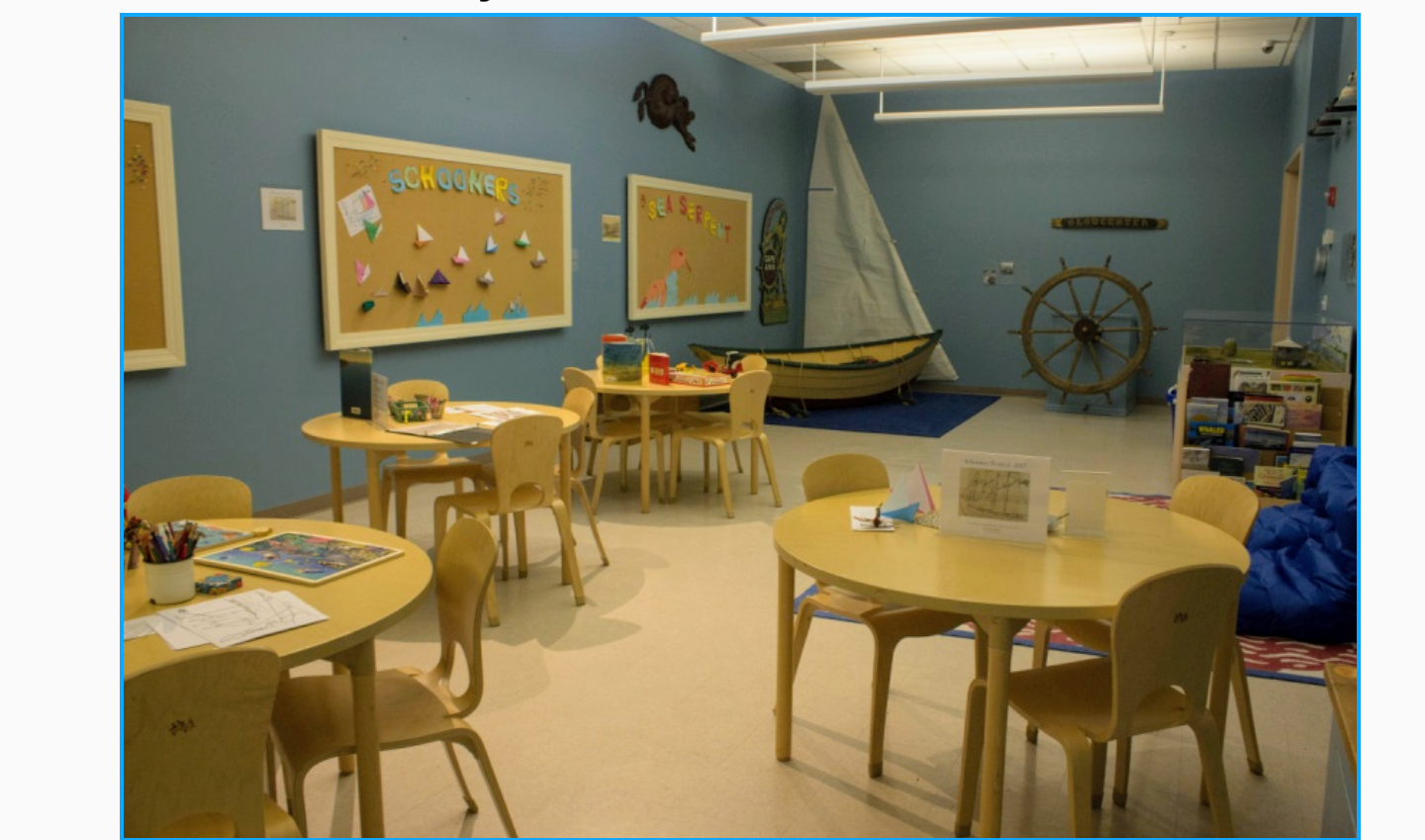
“The Cape Ann Museum is pleased to present the November 2017 Student Art Gallery exhibit. Projects by Beeman Memorial Elementary School (Gloucester) students will be on view in the CAM Activity Center throughout the month. The show is curated by Art Specialist Anne Pieterse BFA/MAT and student teacher Lindsay Smith who is earning her BFA in Art Education at Montserrat.
PROJECTS
Grade 5: Drawings inspired by their sail on the Schooner Thomas E. Lannon
Grades 3-5: Pastel pumpkins
Grades 3-4: Positive and negative designs
Grade 3: Paper tree sculptures
Grade 2: Totem poles
Grade 1: Walk with a Line painting
Kindergarten: Line Explosions sculptures
The second Saturday of every month is free for families with school-age children and special youth programs take place from 10:00AM to 12:00PM. Join us Saturday November 11th to view a new exhibit of WWII Veterans portraits by photographer Jason Grow. In the CAM Activity Center create a self-portrait and make a kind craft for a veteran. Drop into the Activity Center anytime for hands on play and art activities, updated monthly.
The Museum is located at 27 Pleasant Street in Gloucester.”
Spread The GMG Love By Sharing With These Buttons:
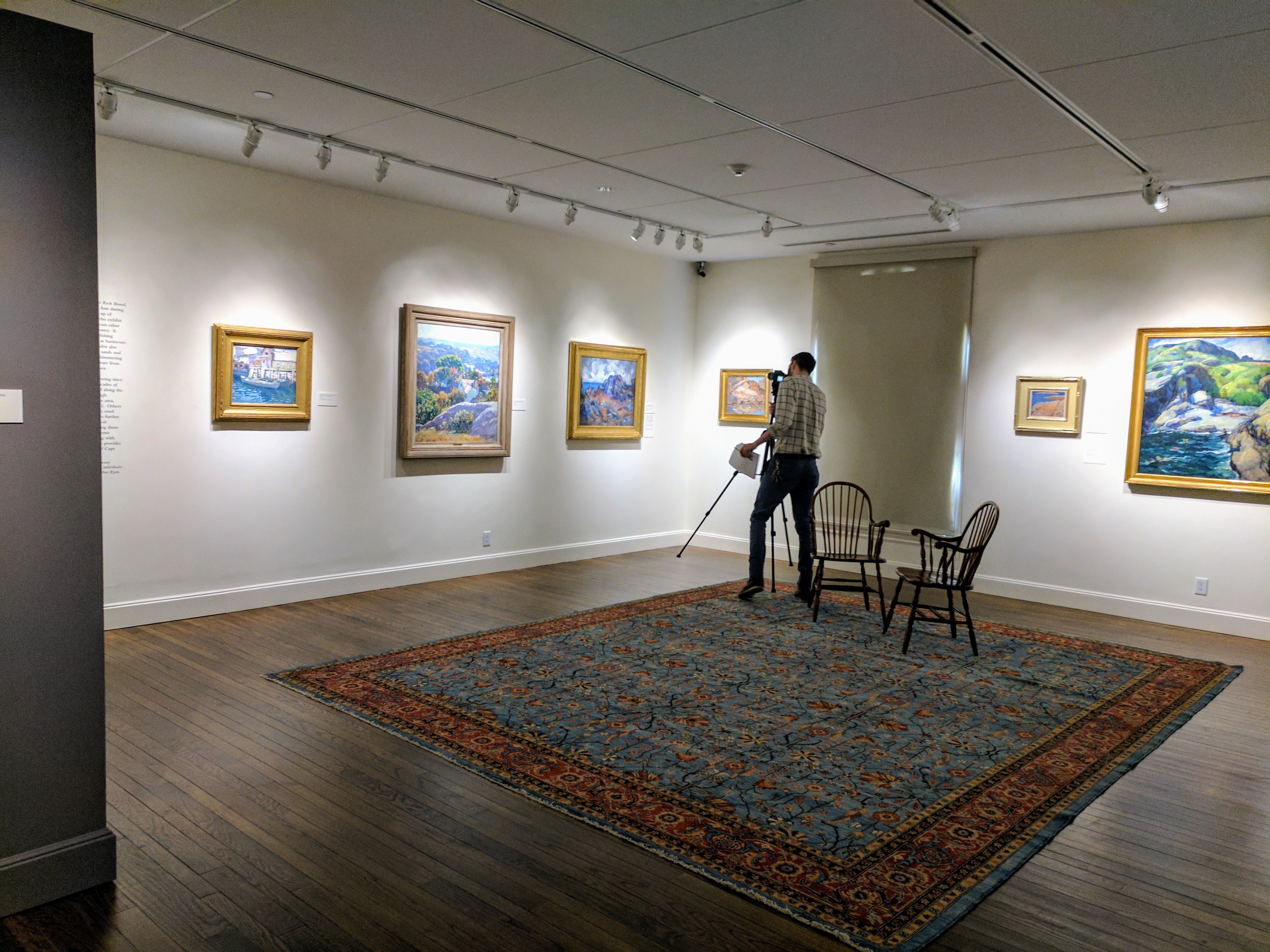
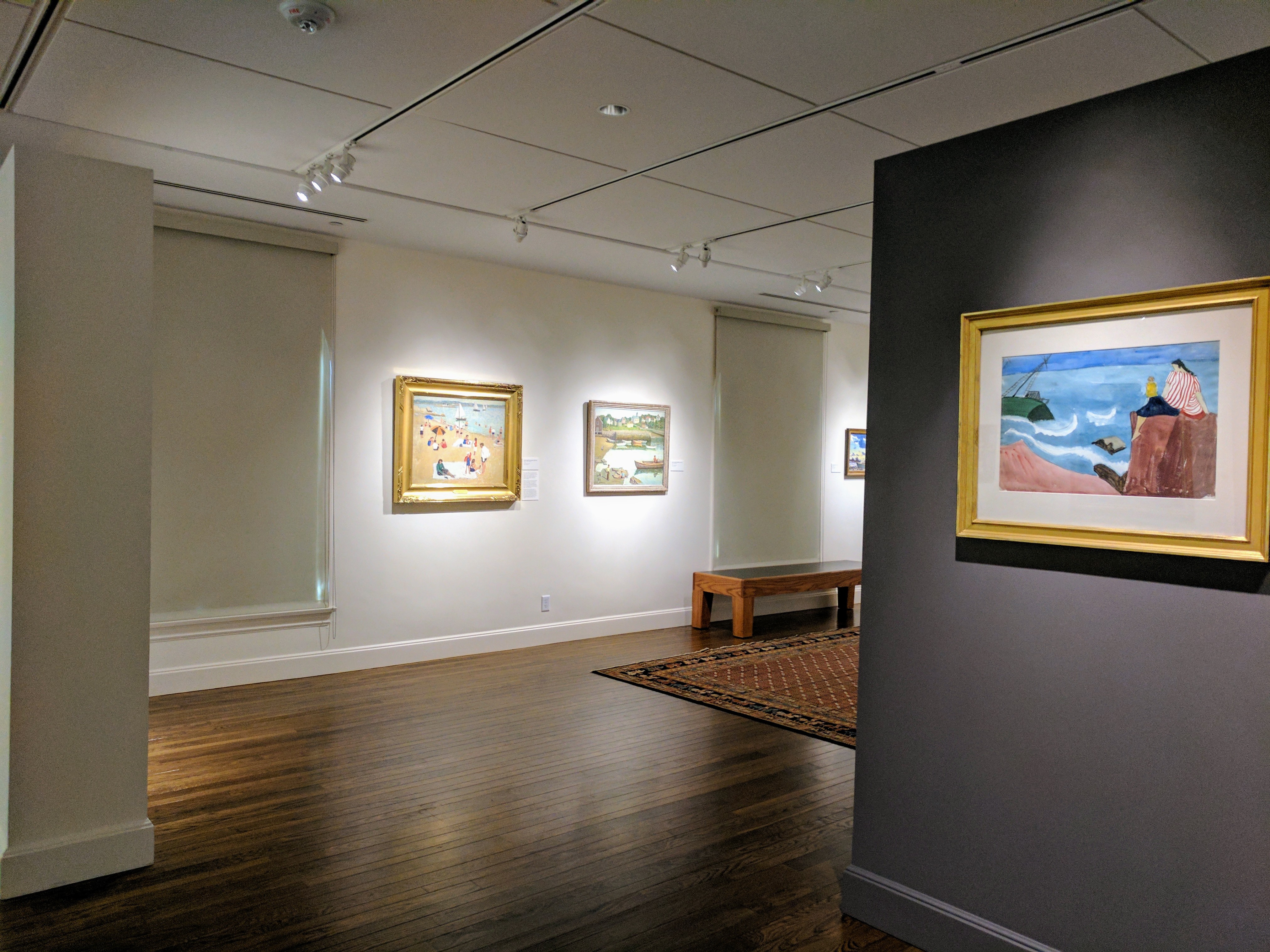
The blanketing New England autumn is stronger on the walls at Cape Ann Museum than the fall landscape all around us just now. (When I saw this ravishing exhibit at the beginning of June, I had that same feeling about ‘summer’.) Though the seasons of color may disappoint us one year to the next, the impact of these paintings only intensifies with close observation. This is a show for anyone with an interest in painting. Rockbound at Cape Ann Museum features a terrific variety of iconic Cape Ann seacoast scenes and artists. There’s an added urgency to see the show in person: most are on loan from private collections, shown together for the first time. Come fill your eyes and heart before this exclusive opportunity passes by.
Rockbound: Painting the American Scene on Cape Ann and Along the Shore closes October 29th.The Cape Ann Museum “gratefully acknowledges the many collectors* who lent to this exhibition and the following individuals: Mary Craven, Margaret Pearson, John Rando and Arthur Ryan.” *anonymous private lenders, Endicott College, Roswitha and William Trayes, JJ and Jackie Bell, and others
(The wonderful Fitz Henry Lane exhibition that just opened will be on view through March 4, 2018.)
3 works by W Lester Stevens
EXHIBIT MYSTERY
I think that the “Unattributed decorative mirror for over mantel” may be the hand of artist Frederick Stoddard. Perhaps it’s from a series or the “Morning Mantle Decoration by Fred L. Stoddard” that’s listed in the 1923 Gloucester Society of Artists inaugural exhibition.
INSTALLATION highlights
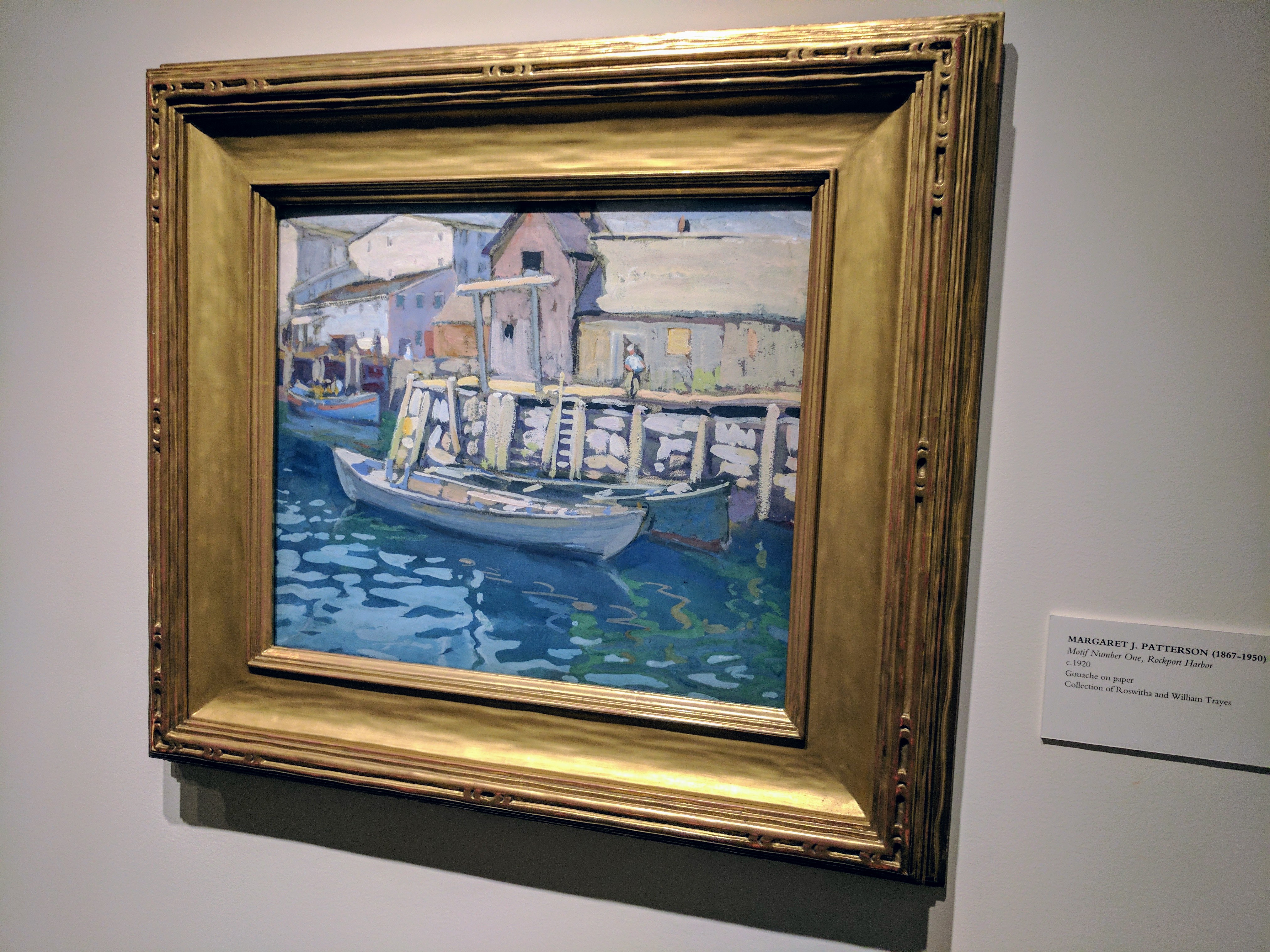
Margaret Patterson, Motif Number One Rockport Harbor, ca.1920, goauche, collection Roswitha & William Trayes, installed at Cape Ann Museum 2017 Rockbound exhibition
Artists include Yarnall Abbott, Gifford Beal, George Bellows, Theresa Berenstein, Hugh Breckenridge, Stuart Davis, Marsden Hartley, Aldro Hibbard, Max Kuehne, Emma Fordyce Macrae, Margaret Patterson, Lester Stevens, Anthony Thieme, and more (hover over image to see artist information)
photos pairings below: Finding Cape Ann Museum Rockbound color/mood inspiration just outside in Gloucester October vistas (not literal place/time pairings but that could be done as well!)
Spread The GMG Love By Sharing With These Buttons:
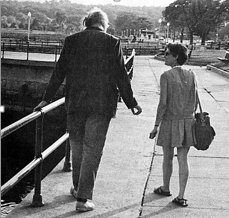
Image: Charles Olson and Ann Charters walking on the Boulevard in Gloucester, Mass., 1967. Photo credit: Sam Charters. Author information from Small Press Distribution (SPD), spdbooks.org.
8th Annual Charles Olson Lecture: Ann Charters- Evidence of What Is Said
The Cape Ann Museum and Gloucester Writers Center are pleased to present the 8th Annual Charles Olson Lecture featuring Ann Charters on Saturday, October 21 at 1:00 p.m. at the Cape Ann Museum(27 Pleasant Street, Gloucester). This program is free and open to the public. A suggested donation of $10 is appreciated.
Ann Charters, noted Beat Generation scholar, photographer, and Professor Emerita at University of Connecticut, Storrs, visits Gloucester to discuss her correspondence with poet Charles Olson. Beginning in 1968 with Charters’ request for Olson to reflect on his “earliest enthusiasm for Melville,” and continuing until late 1969, these letters traverse the final two years of Olson’s life. Centered on Charters’ book Olson/Melville: A Study of Affinity, the correspondence ultimately maps two writers’ existence in an America that is simultaneously experiencing the wonder of the moon landing and the chaotic escalation of the Vietnam War. All the while, their exchanges navigate the convolutions of Olson’s ideas about history, space, and time in relation to his pivotal book Call Me Ishmael and his Black Mountain College lectures.
Charles Olson was born in 1910 in Worcester, Massachusetts. His first book, Call Me Ishmael, published in 1947, is a case study of Herman Melville’s Moby-Dick. Olson was an essayist, poet, scholar, and avid letter writer. He was a professor who also taught at universities ranging from Clark to Harvard to Black Mountain College. His influence in the 1950s and 1960s was expansive in many fields of thought. He died in New York in 1970 while completing his masterpiece, The Maximus Poems.
Ann Charters is the author of the first biography of Jack Kerouac, published in 1973, as well as a number of major studies of Beat literature and its personalities. She began taking photographs in 1958 on Andros Island in the Bahamas to document Samuel Charters’ field recordings for Folkways Records. These photographs of musicians are featured in Blues Faces: A Portrait of the Blues (David Godine Books, 2000). Her photographs of Kerouac, Ginsberg, Kesey, and others are included in Beats & Company: Portrait of a Literary Generation (Doubleday, 1986). Her photo essay on Charles Olson in Gloucester was published in Olson/Melville: A Study in Affinity (Oyez, 1968). Her photos also illustrated Samuel Charters’ The Poetry of the Blues (Oak Publications, 1963) and Songs of Sorrow: Lucy McKim Garrison and Slave Songs of the United States (University Press of Mississippi, 2015). Ann Charters’ photo essay featuring the Nobel Prize-winning poet Tomas Tranströmer is included in Samuel Charters’ translation of Tranströmer’s BALTICS, published by Tavern Books in 2012.
Spread The GMG Love By Sharing With These Buttons:
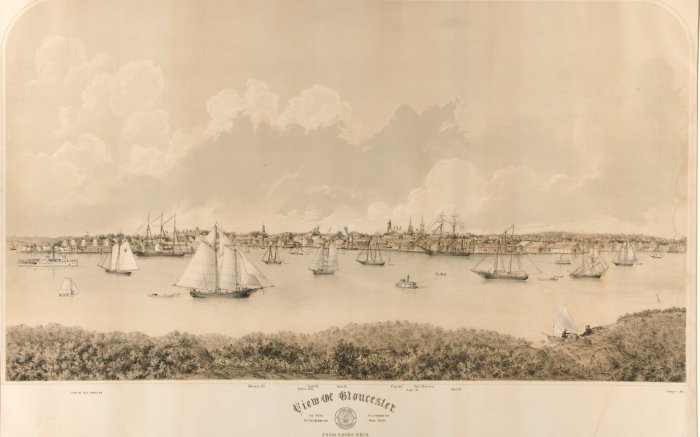
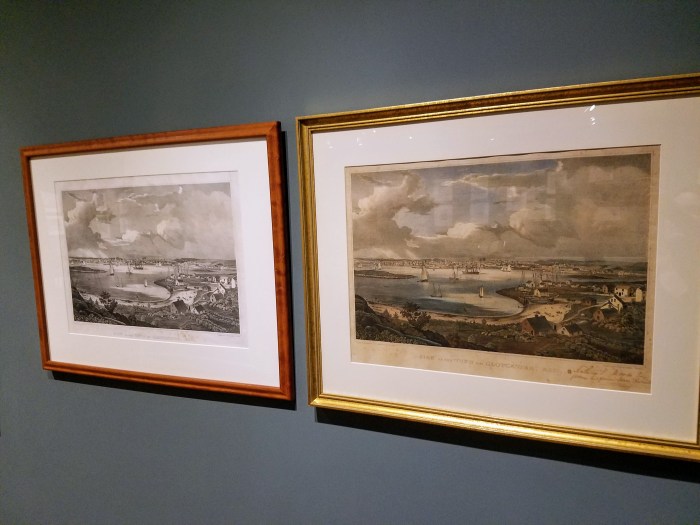
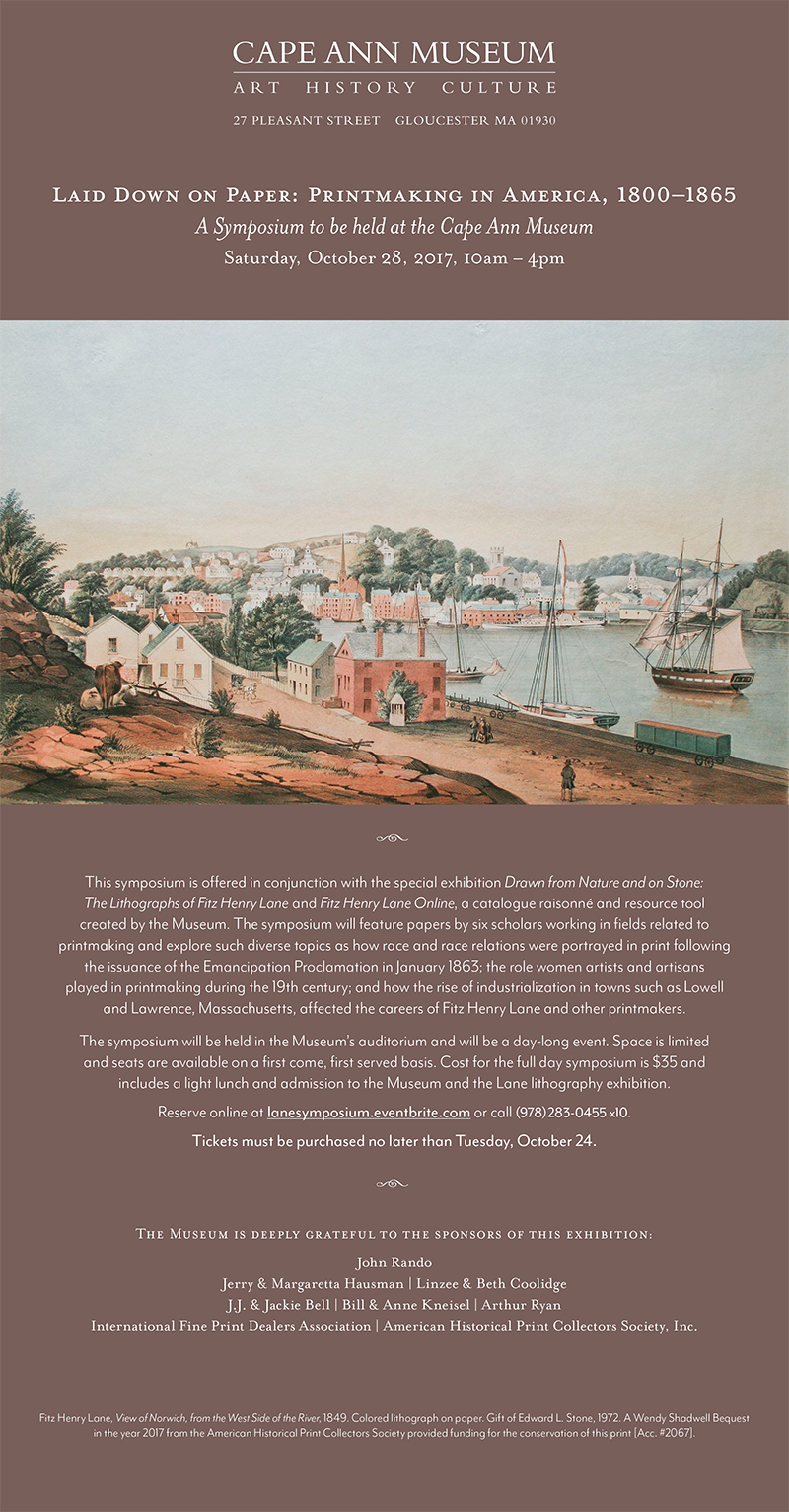
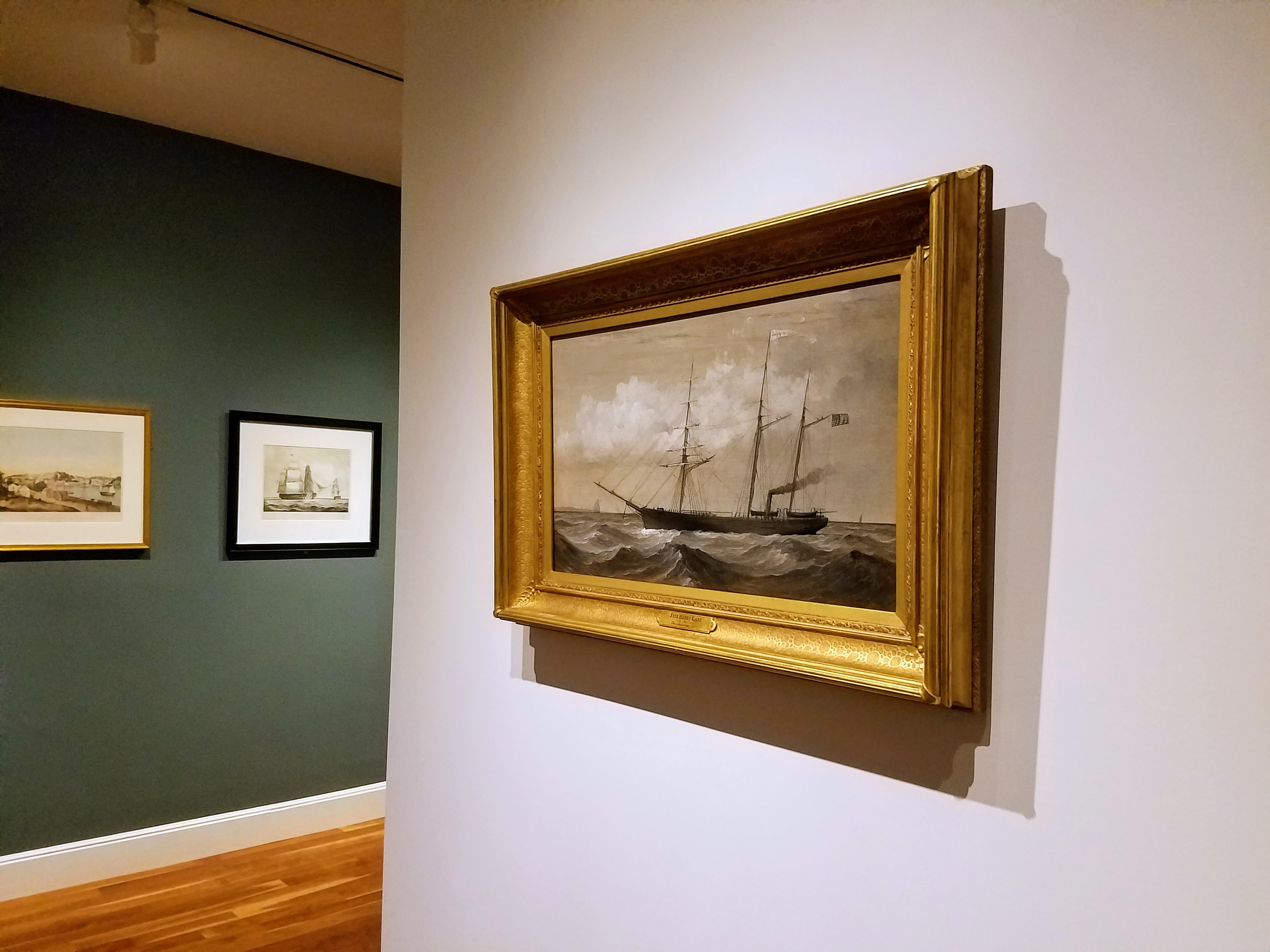
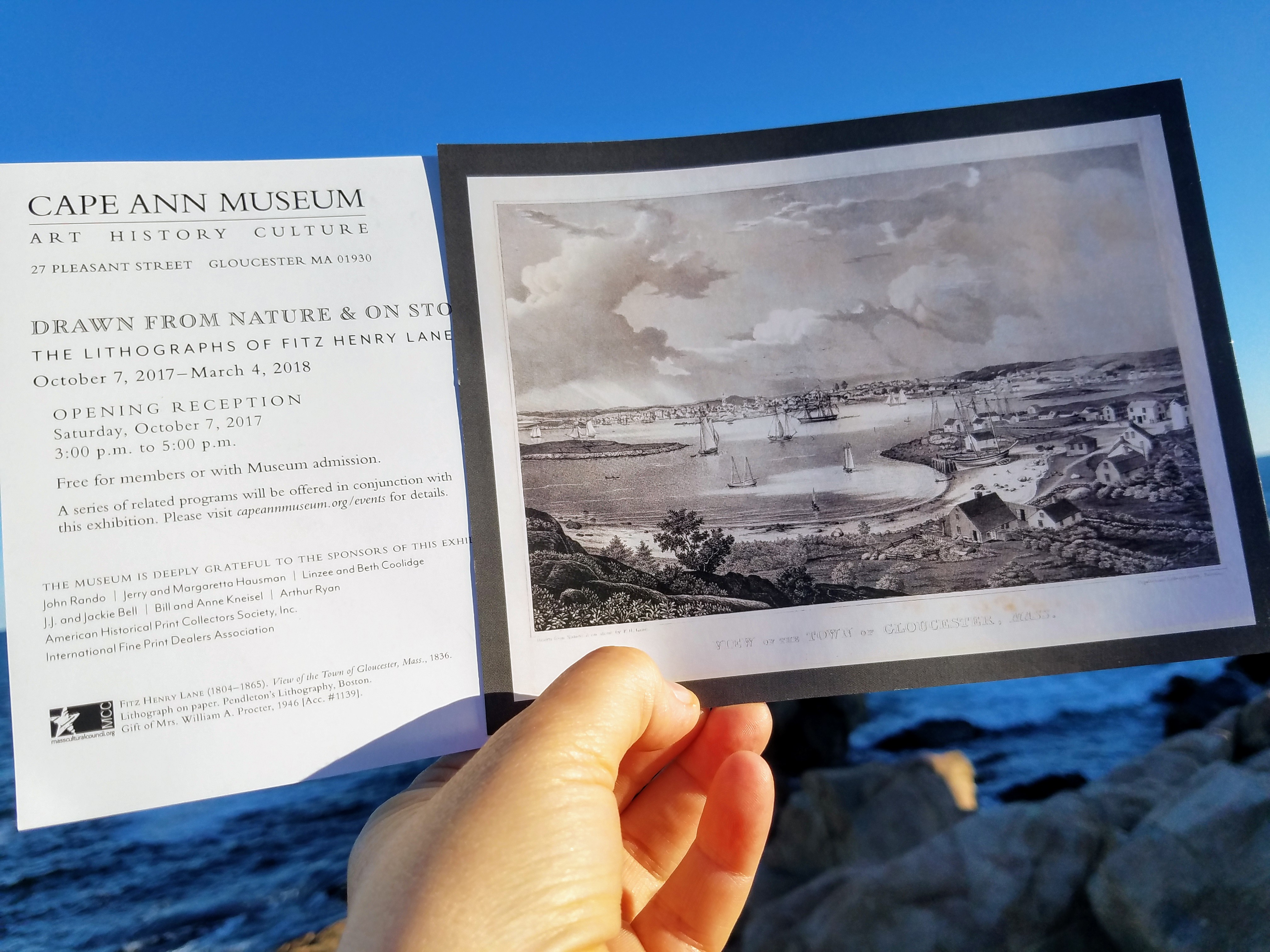
Cape Ann Museum is readying a major print retrospective of Fitz Henry Lane which opens October 7th. The staff is fine tuning the installation, adjusting lighting levels, and so on. I couldn’t resist sharing a few close ups and details to build some excitement. Lane was born in 1804 in Gloucester. He was one of the rare artists that gained worldwide recognition in his own lifetime. Today he is regarded as one of the great marine and luminous painters of the 19th century. His printmaking is stellar and continued throughout his career. Mark your calendars! Cape Ann Museum developed super special events related to the exhibition including walking tours and a full day print symposium (read more below). Sponsors of the Lane exhibition include: John Rando, Jerry and Margaretta Hausman, Linzee and Beth Coolidge, Jay Last, J.J. and Jackie Bell, Bill and Anne Kneisel, Arthur Ryan, International Fine Print Dealers Association (IFPDA), American Historical Print Collectors Society, Inc., and Beauport Hospitality Group. Drawn From Nature & On Stone: The Lithographs of Fitz Henry Lane opens October 7th at Cape Ann Museum, Pleasant Street, Gloucester, MA.
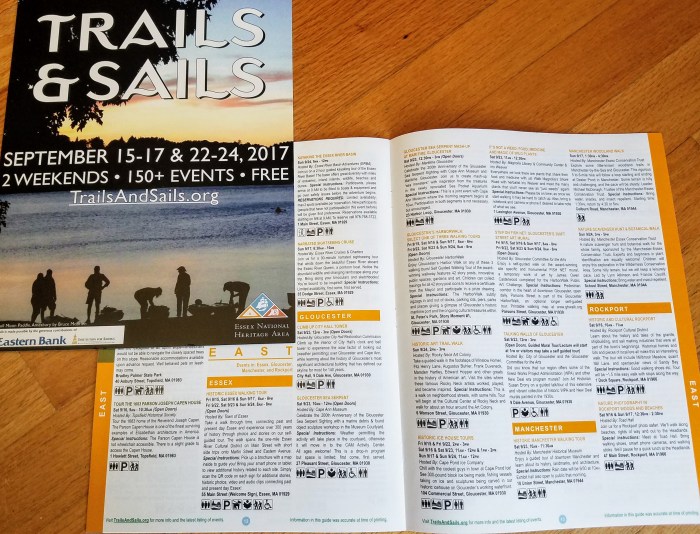
Here’s the list of Gloucester events at City Hall, Cape Ann Museum, Maritime Gloucester, Gloucester HarborWalk, Rocky Neck, Magnolia Library, Cape Pond Ice, and Pauline’s Gifts:
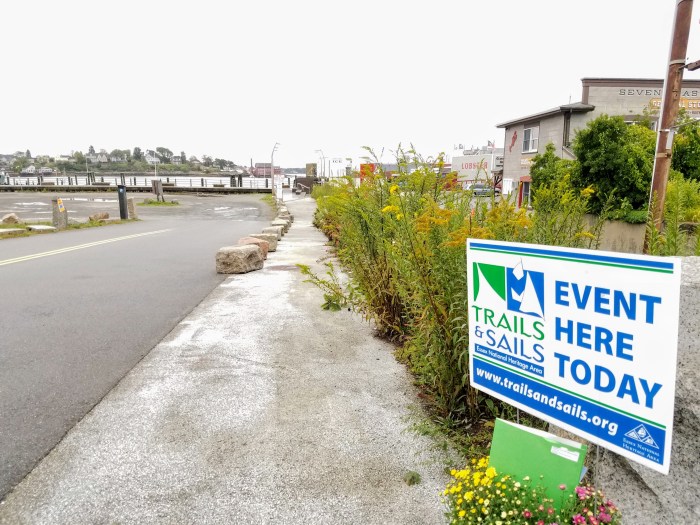
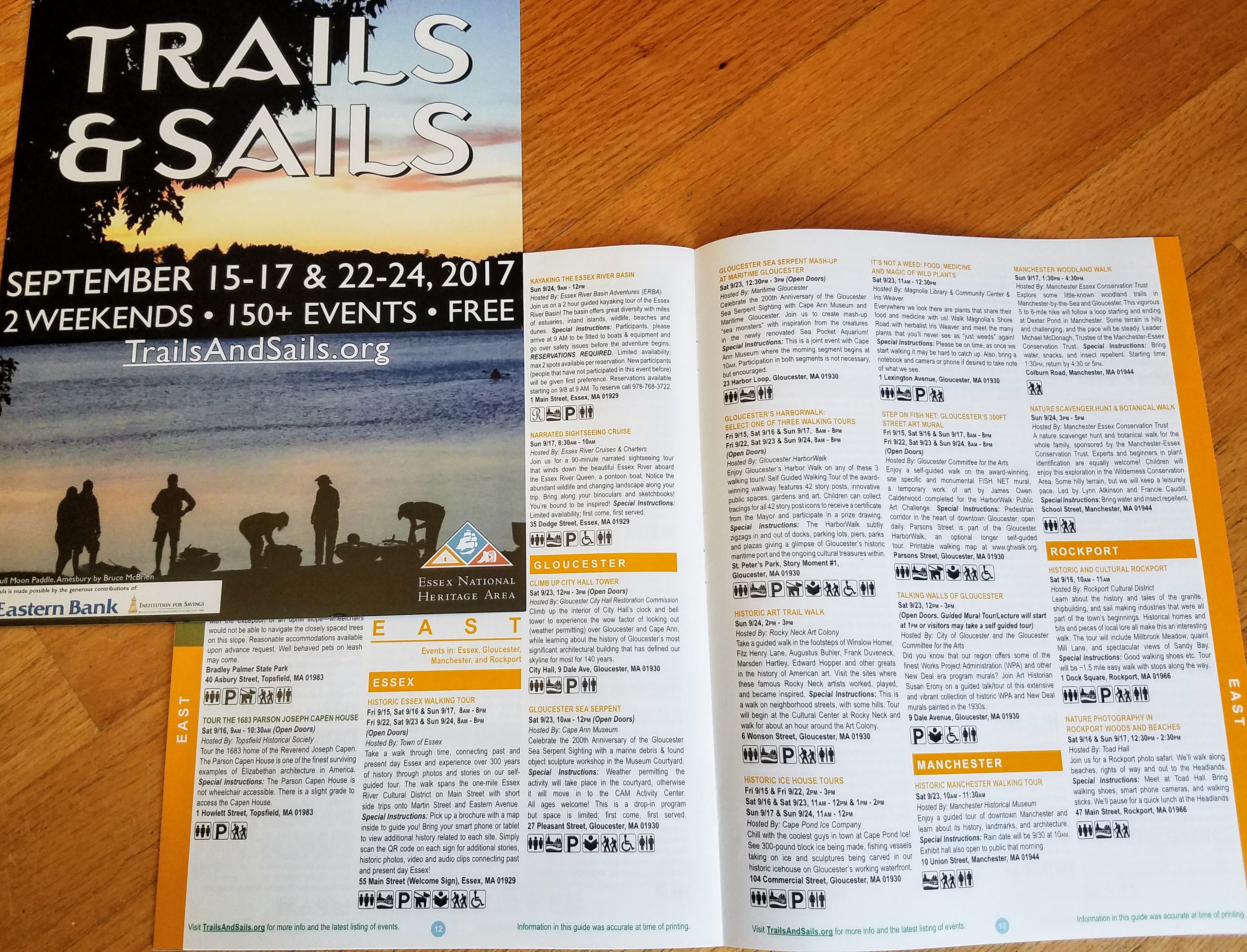
is Essex National Heritage’s Essex County pep rally- annual back to back weekends packed with 150+ FREE, fun, and family friendly events. Here’s the working list of the 2017 Trails & Sails events in Gloucester September 22-24th. Don’t forget to sign in! The count helps your favorite organization and locale, and you might win a prize like $150 from Dick’s Sporting Goods.
2nd of two annual weekends is big in Gloucester this year
On view October 27 through November 26 at the Cape Ann Museum
The Cape Ann Museum is pleased to announceWWII Veterans: Portrait Photographs by Jason Grow, a special exhibition on view from October 27 – November 26, 2017. First shown at Gloucester City Hall in 2015, Grow’s portrait photographs of Cape Ann’s World War II veterans were enthusiastically received by audiences of all ages and walks of life. The exhibit makes an encore appearance at the Museum this autumn, offering visitors another opportunity to view these remarkable images as a group. Admission is free throughout the exhibition run for veterans and all active-duty military personnel and their families, including National Guard and Reserve.
On Saturday, November 11, in honor of Veterans Day, the Museum will be free and open to the public and Jason Grow will present a talk about the exhibit at 2:00 p.m. in the Museum’s auditorium.
The Cape Ann Museum is proud to participate in the national Blue Star Museum program.Blue Star Museums is a collaboration among the National Endowment for the Arts, Blue Star Families, the Department of Defense, and museums across America. Each summer since 2010, Blue Star Museums have offered free admission to the nation’s active-duty military personnel and their families, including National Guard and Reserve, from Memorial Day through Labor Day. For more information please visit the Blue Star Museums’ website:arts.gov/bluestarmuseums.
Jason Grow is a Boston-based photographer and Gloucester resident. He specializes in photographing exceptionally accomplished, busy people with real time constraints in real environments. With a background based in photojournalism his experience has ranged from refugee camps to conference rooms.
Spread The GMG Love By Sharing With These Buttons:
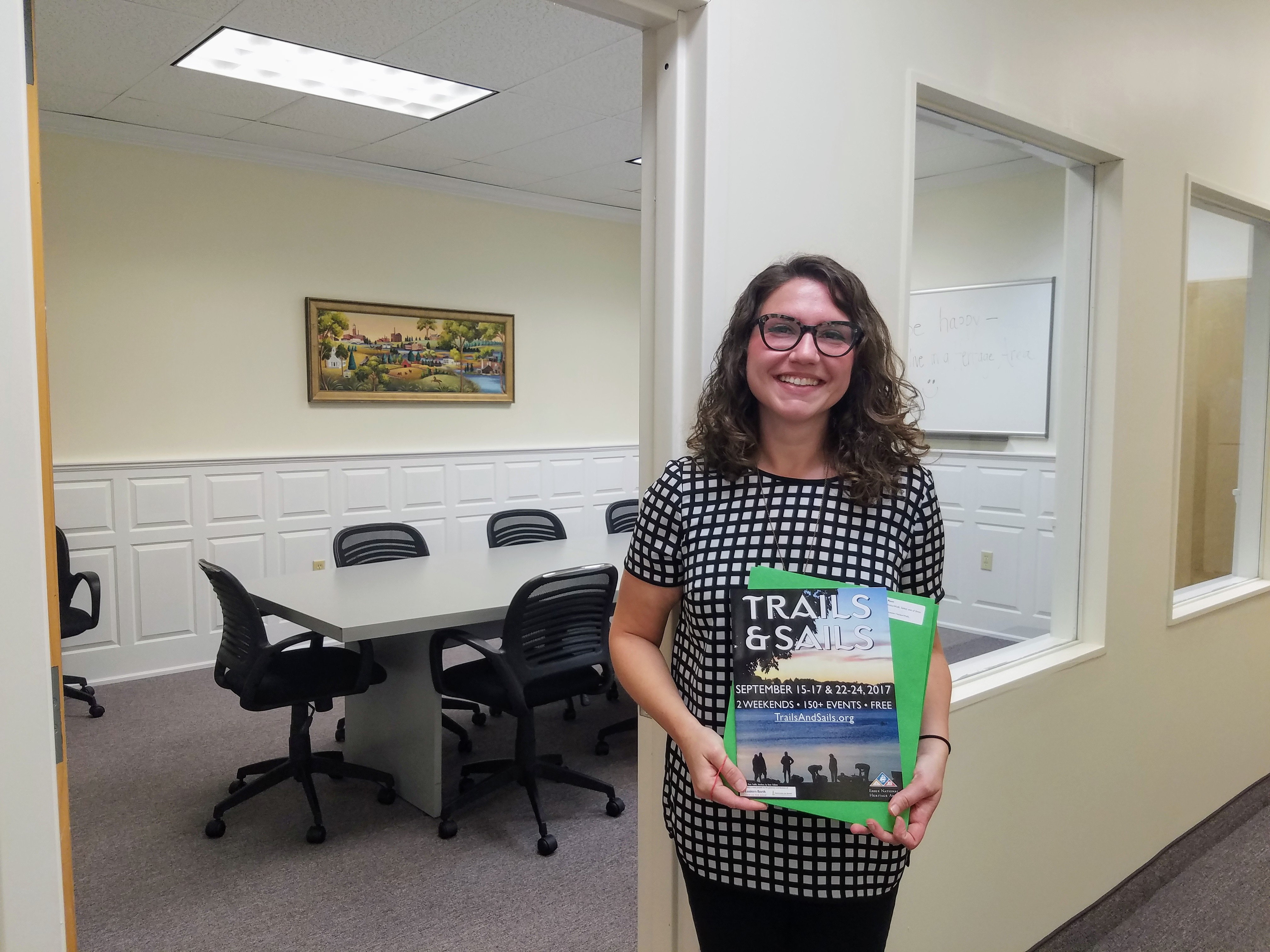
Emily Levin at Essex National Heritage in Salem, MA, where she has directed marketing and events like Trails & Sails for nine years. The original painting commissioned for Essex National Heritage 10th anniversary (2006) was created by local Ipswich folk artist, Julia Purinton. It’s one of three landscapes: Seacoast ; Conservation Lands and Merrimack Valley (Industry)
Emily Levin of Essex National Heritage has directed Trails & Sails for 9 years and seen its growth. Levin told me that 2017 is “one of the largest line ups of different events coming together to showcase the region’s best places in the area. The historic road is already right there. Plus you can stop in all the wonderful restaurants and shops.” The Essex National Heritage headquarters moved to 10 Federal in downtown Salem, next to most anyplace on your visit. I’ll miss steady and affable Bill Steelman who has moved on from Essex National Heritage. Congratulations to Kate Day, Danvers former Town Manager, who has joined to lead the Scenic Byway efforts.
is Essex National Heritage’s Essex County pep rally- annual back to back weekends packed with 150+ FREE, fun, and family friendly events. Here’s the working list of the 2017 Trails & Sails events in GloucesterSeptember 15-17th and September 22-24th. Don’t forget to sign in! The count helps your favorite organization and locale, and you might win a prize like $150 from Dick’s Sporting Goods.
Talking Walls of Gloucester Gloucester’s renowned Works Projects Administration (WPA era) murals. Hosted at City Hall byThe City of Gloucester and Gloucester Committee for the Arts
September 23 12:00 PM to 3:00 PM open for self guided tour September 23 1:00 PM guided talk and tour
co founder of the new Woman Owned Businesses Along the Essex Coastal Scenic Byway trail map celebrating street level, local women retailers from Gloucester, Essex, Ipswich and Rowley who share a regional ‘Main Street’ – Route 133/1A, part of the gorgeous 90 mile Essex Coastal Scenic Byway. Several planned events for Trails and Sails.
September 16 2:00 PM to 4:00 PM
September 23 2:00 PM to 4:00 PM
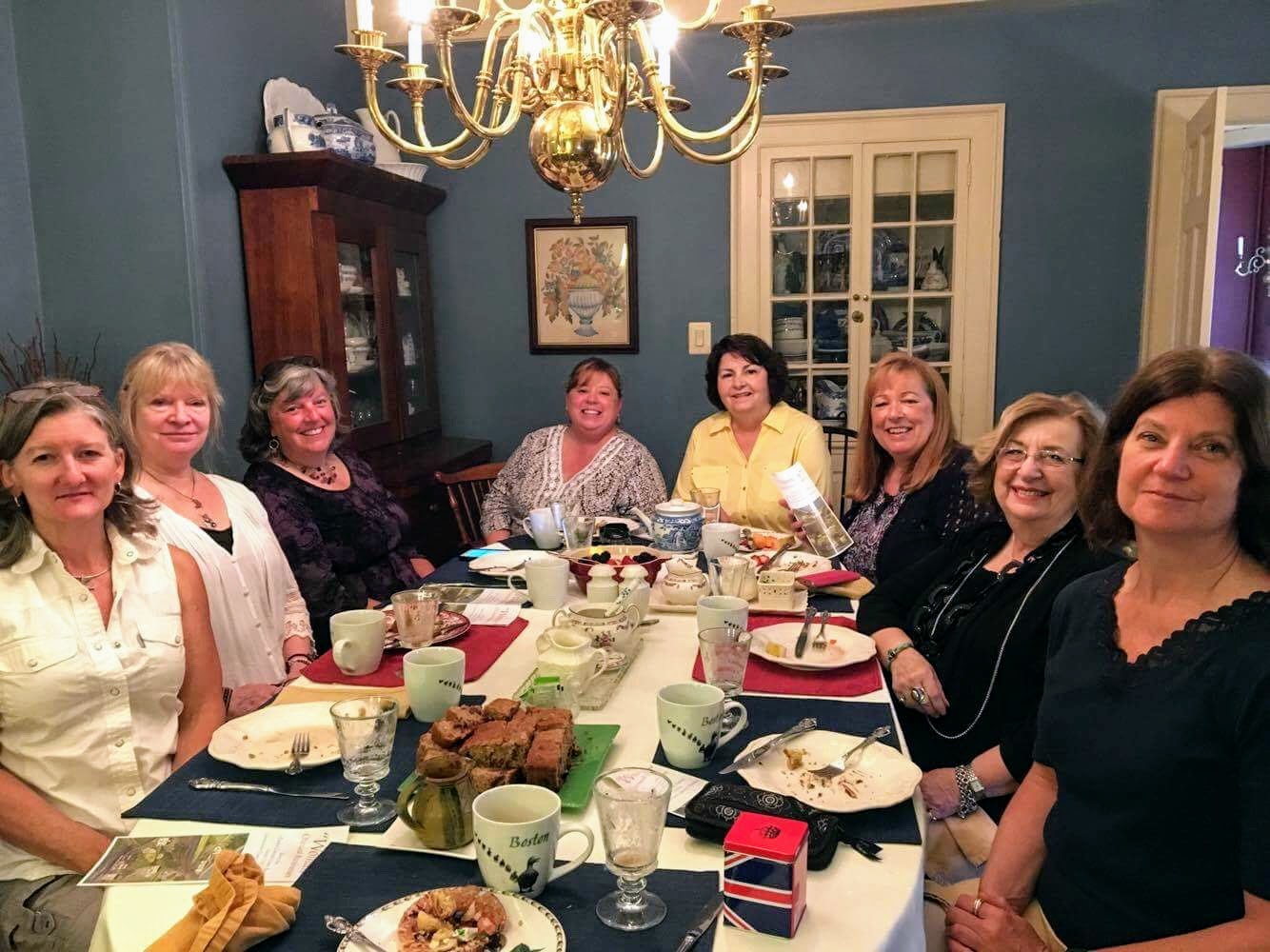
L-R and # on the Woman Owned Businesses Along the Essex Coastal Scenic Byway map: #2 Shelly Nicastro, #8 Anne Thomas and next to her one of the dealers in her shop, Connie, #4 Katrina Haskell, #5 Johanne Cassia, #1 Pauline Bresnahan, #6 Ann Orcutt, #3 Georgeanne Richards, Missing from photo #7 Lorin Hesse and #9 Cathy Reardon
Paul Cary Goldberg will be giving a short talk at 1pm on Saturday September 16th at Jane Deering Gallery, 19 Pleasant Street, about his photograph series, Here Still, fitting visit during Thoreau and #TrailsAndSails celebrations
Legions of fans visit local, national and international museums to see icons of American 20th century art by Edward Hopper and Winslow Homer. Some of this art was inspired by Gloucester, MA. One more Hopper or Homer Gloucester scene in any collection would be welcome, but in Gloucester it would be transformative.
The City of Gloucester boasts a world class museum that would be the ideal repository for a major Hopper and Homer of Gloucester. It hasn’t happened, yet. It should! I feel not enough of a case has been made for having originals right here in the city that inspired some of their most famous works and changed their art for the better.
Edward Hopper Captain’s House (Parkhurst House), one of the few original Hopper works remaining in private hands, is slated as a promised gift to Arkansas’s Crystal Bridges Museum of American Art. Crystal Bridges opened in 2011 and will have acquired 4 examples of Hopper’s art — 2 paintings, 1 drawing and 1 print–with this gift.
I think Arkansas would have been ok with three.
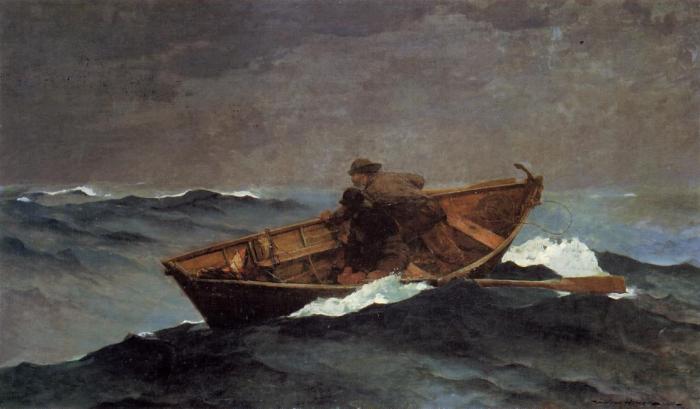
The only known Winslow Homer seascape painting still in private hands is a great one inspired by Gloucester. Bill and Melinda Gates own Lost on the Grand Banks, 1885. I saw it at the auction house back in 1998 just before the sale. What a fit for Gloucester and Homer if it found its way back here!
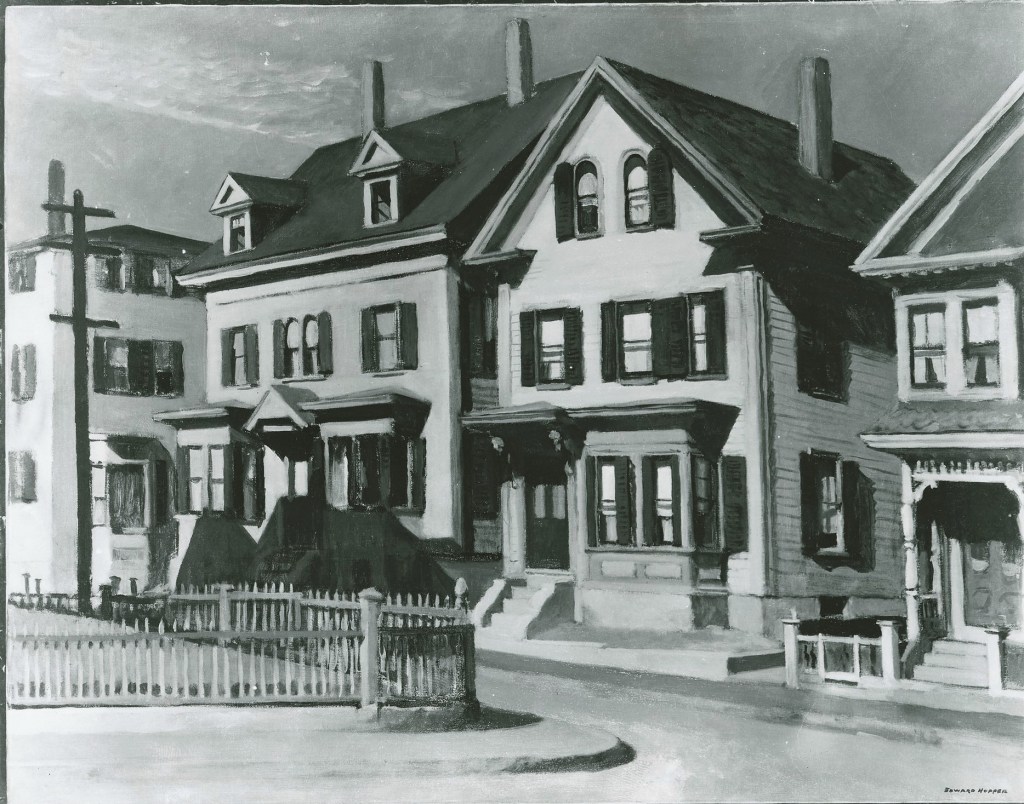
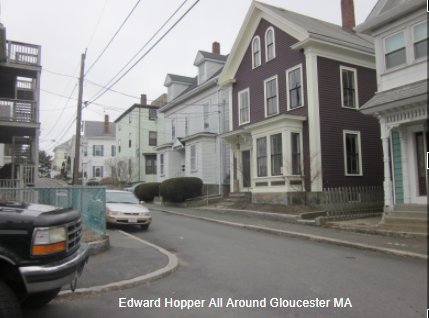
Edward Hopper’s Gloucester Street also went to the west coast, purchased by Robert Daly. I’d love to see this one in person! The corner hasn’t changed much since 1928 when Hopper painted the street scene.
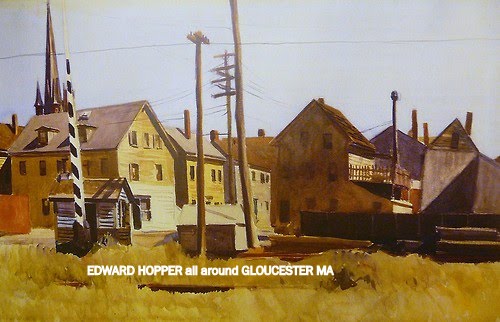
Hopper’s downtown Gloucester scene, Railroad Gates, is not on public display.
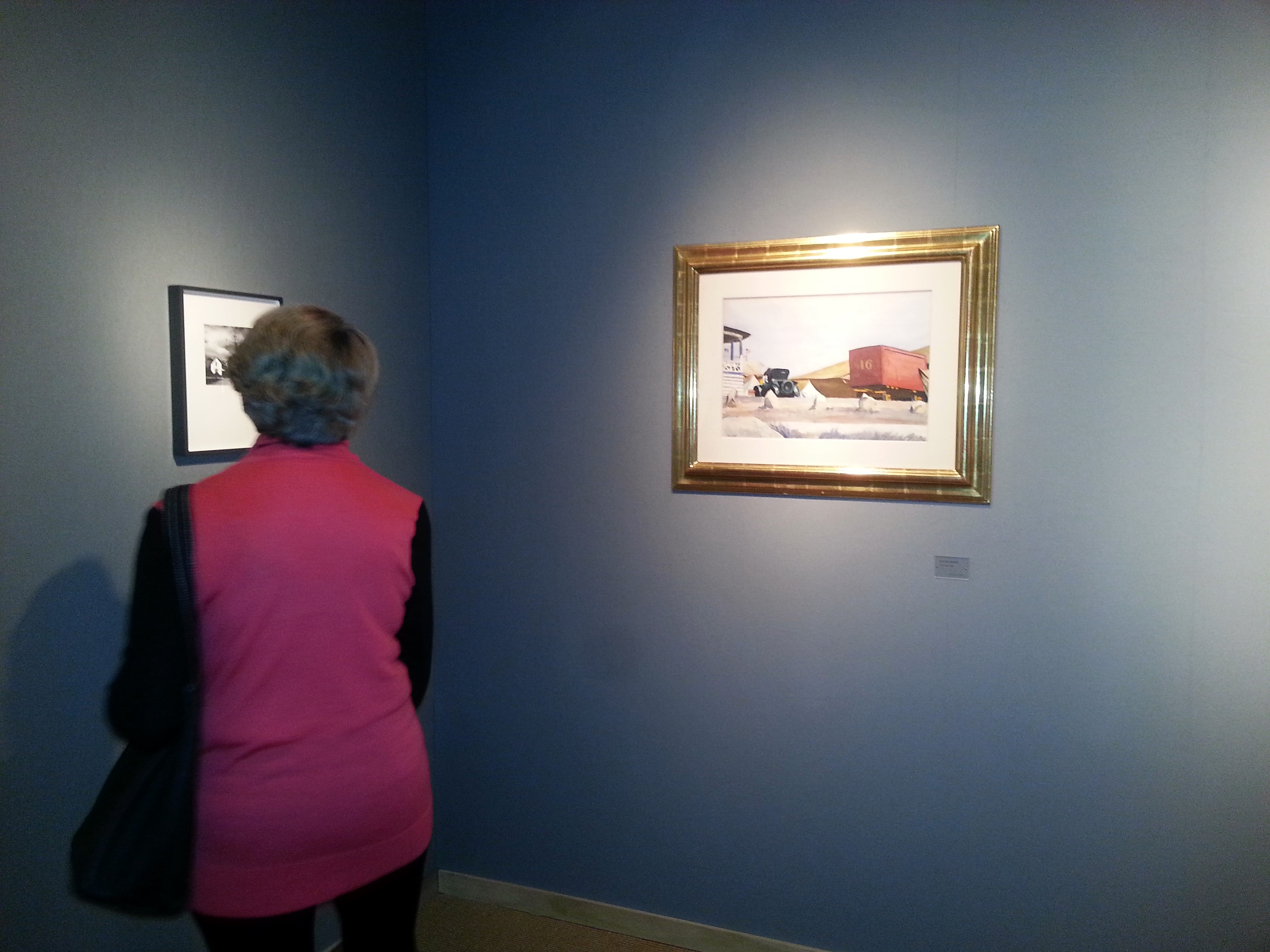
I’m surprised and hopeful that there are paintings of Gloucester by Hopper that could be secured. There are tens of drawings including major works on paper. I saw this Gloucester drawing, Circus Wagon, by Edward Hopper at the ADAA art Fair back in March 2016.
Davis House (25 Middle Street) was sold at auction in 1996.
I’m keeping tabs on most of them. The only way they’re going into any museum is through largesse. Why not Gloucester?
Homer and Hopper watercolors in private collections can’t be on permanent view due to the medium’s fragility. (Exciting developments in glazing and displays are being developed that go beyond the protective lift.) The Cape Ann Museum in Gloucester, MA, cares for works of art as well as any institution.
Spread The GMG Love By Sharing With These Buttons:
I recently had the opportunity to visit the Cape Ann Museum with a great group of students and the phenomenal West Parrish art teacher, Mrs. Paula Morgan. I was reminded, yet again, how lucky we are to have such an amazing museum on “the island.” If you haven’t been recently, you really need to go. Honestly, to raise your children here on Cape Ann and not share the museum’s beautiful history and art is a shame. I already can’t wait to go back.
Spread The GMG Love By Sharing With These Buttons:
Congratulations to Gloucester Public Schools dynamite O’Maley Innovation Middle School 6th Grade teachers: Pat Hand, Mary Beth Quinn, and Jessica Haskell!
“O’Maley 6th grade students collaborated with the Cape Ann Museum and a local cartographer to create maps of their diverse Gloucester neighborhoods. Part of an effort to get the entire 6th grade community to come together as they experience their first year of Middle School, the project aligned with the curricular focus on geography. A collection of the students’ maps, called “Gloucester Through My Eyes,” is on display at the Cape Ann Museum.”
Congratulations to Veterans Memorial Elementary School teachers Laura Smith and Mary Housman! Their “students worked with Backyard Growers and Black Earth Composting to understand the benefits of composting, created posters and presentations to share their knowledge, implemented and monitored lunch-time cafeteria composting, and used the compost they created to enrich the soil in their school garden.” We were lucky to hear about this project during a pitch night at Awesome Gloucester.
Spread The GMG Love By Sharing With These Buttons:
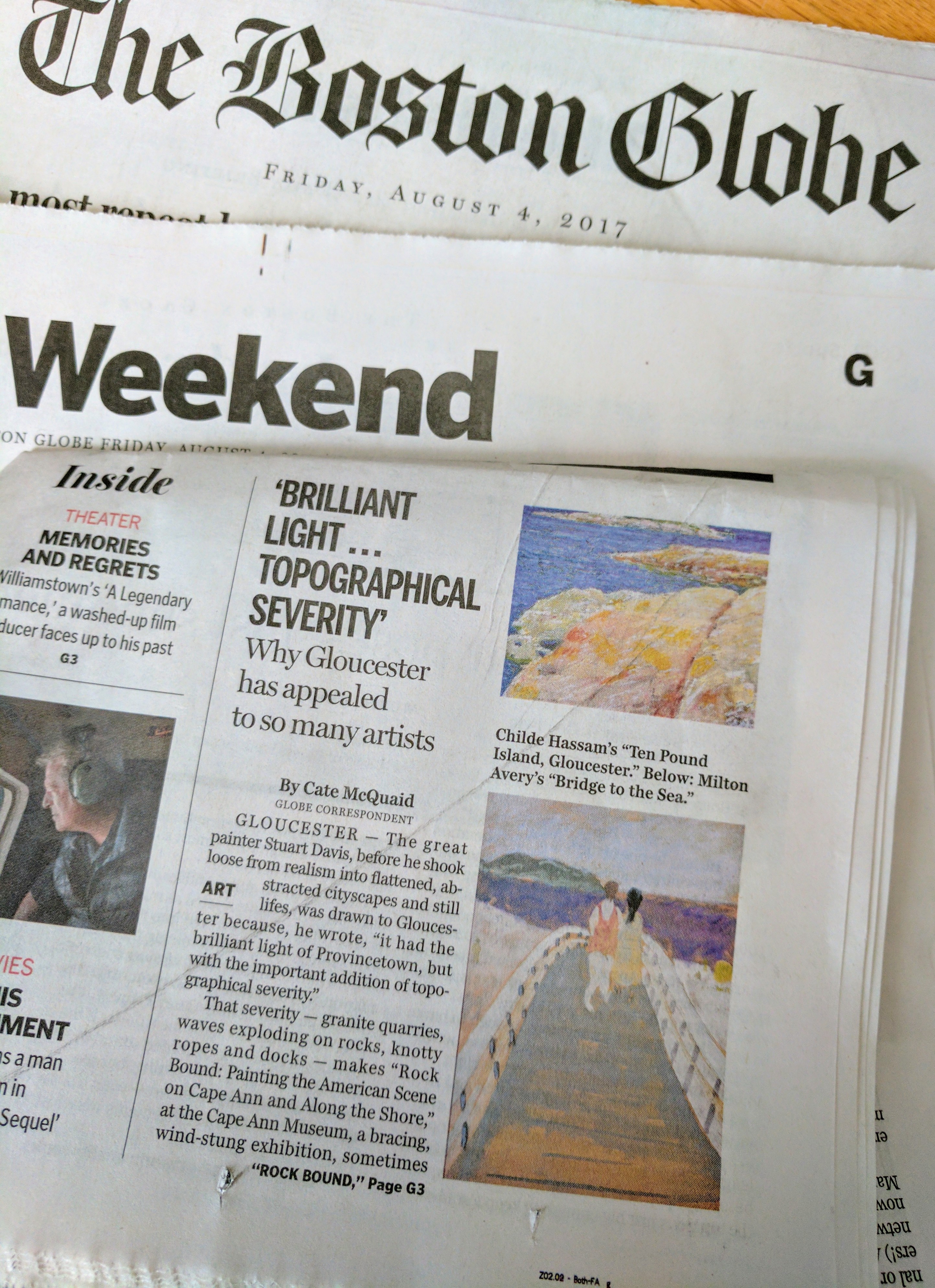
Here’s the link (plus some installation photos) to the Boston Globe Cate McQuaid review of Cape Ann Museum’s wonderful exhibition “Rockbound: Painting the American Scene on Cape Ann and Along the Shore” (on view through October 29) and “The Importance of Place: A Sketchbook of Drawings by Stuart Davis”.
I’ve included some installation shots of the show that I took in June, and will write more about this must see exhibition. The paintings are superbly displayed and most were generously lent from private collections else we wouldn’t have a chance to see them!
Spread The GMG Love By Sharing With These Buttons:
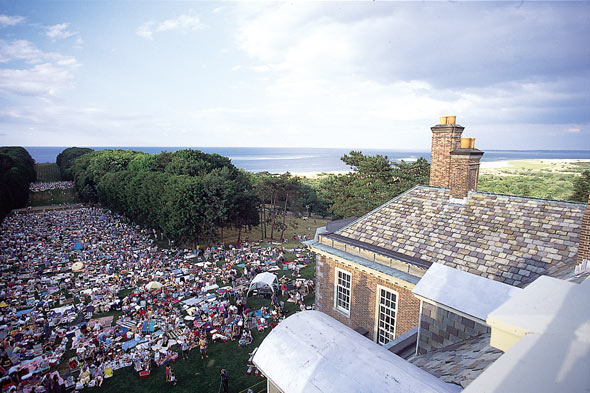
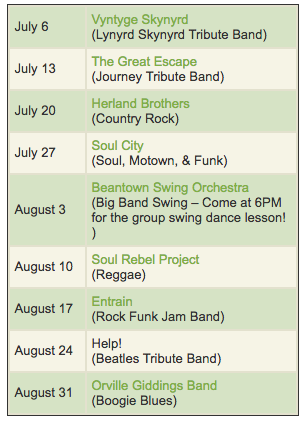
We’re celebrating 21 years of Picnic Concerts and we want you to be a part of the fun! Bring a picnic supper, explore the grounds, dance on the lawn, and experience some of the region’s best bands.
Tickets available at the gate only. Gates open at 5PM for picnicking. Concerts start at 7PM and end at 9PM. A weather decision, if necessary, will be announced on this page, by 3PM on the day of the concert.
Concerts start at 7PM and end at 9PM. Gates open at 5PM for picnicking. Members: $20/car.
Nonmembers: $30/car.
Walk-in, bicycle, & motorcycle: $10.
Tickets available at the gate only.
The second Saturday of every month is free from 10:00 a.m. to 12:00 p.m. for families with school-aged children. Families are invited to the Activity Center to participate in hands-on activities that delve into the art, history and culture of the region. Each Second Saturday focuses on a specific theme based on the Museum’s collection and/or special exhibitions.
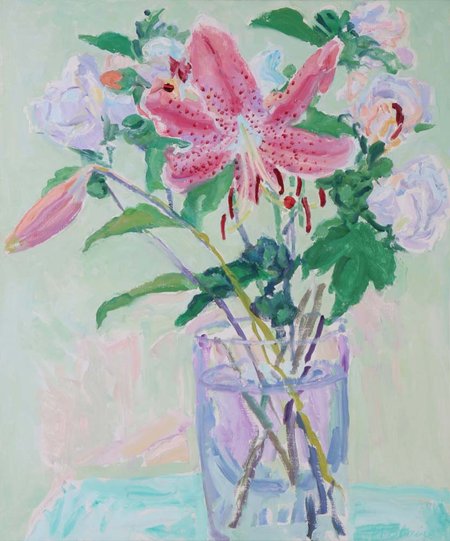
This Saturday is CAM Kids Favorite Flowers, Saturday 10:00-12:00. Register ahead of time.
Paint along with watercolor artist Marion Hall in the Museum Courtyard (weather permitting; in case of rain the program will be moved inside to the Museum’s Activity Center) to learn the basics of watercolor painting. Using good quality artist materials, participants will create a small painting of a fresh flower or plant of their choice. Hall will give painting demonstrations and will teach participants ways to experiment with color combinations and painting techniques. This is a drop-in program and parents are invited to participate as well! This free family program is generously sponsored by David and Lisa Rich. To make a reservation please call (978)283-0455 x10 or email courtneyrichardson@capeannmuseum.org.
Marion Hall is an award-winning watercolorist whose paintings feature seascapes, landscapes, and wildlife from Cape Ann, Florida, England and France. She has exhibited in galleries and museums throughout the north shore of Massachusetts and beyond. Marion is a Cape Ann Museum docent and an Artist Member of the Rockport Art Association and the North Shore Arts Association.
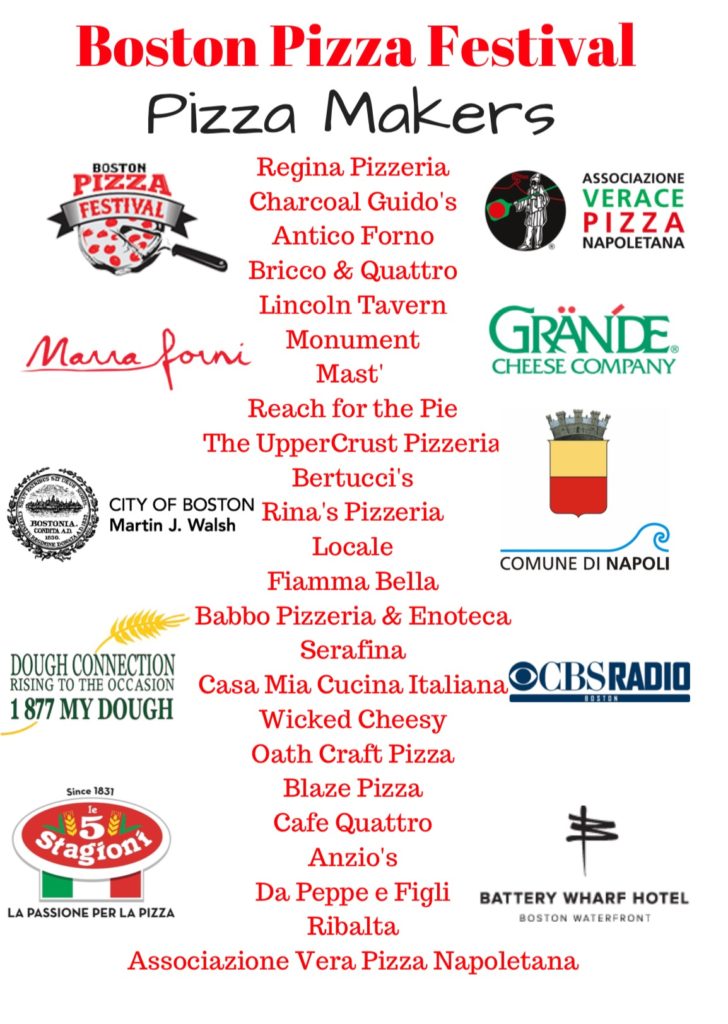
Pick #3: Boston’s PIZZA Festival
Jul 8, 2017 at 11:00 am to Jul 9, 2017 at 10:00 pm
City Hall Plaza, Boston, MA
Boston Pizza Festival is a 2-day outdoor festival featuring live music, food and giveaways. Local and international vendors in the food industry will be there. Each pizza vendor will be selling their own product. Giving attendee’s the unique opportunity to try pizza from all over. Vendors will have a chance to enter and win “Boston Pizza Festival Pizza Champion” contest.
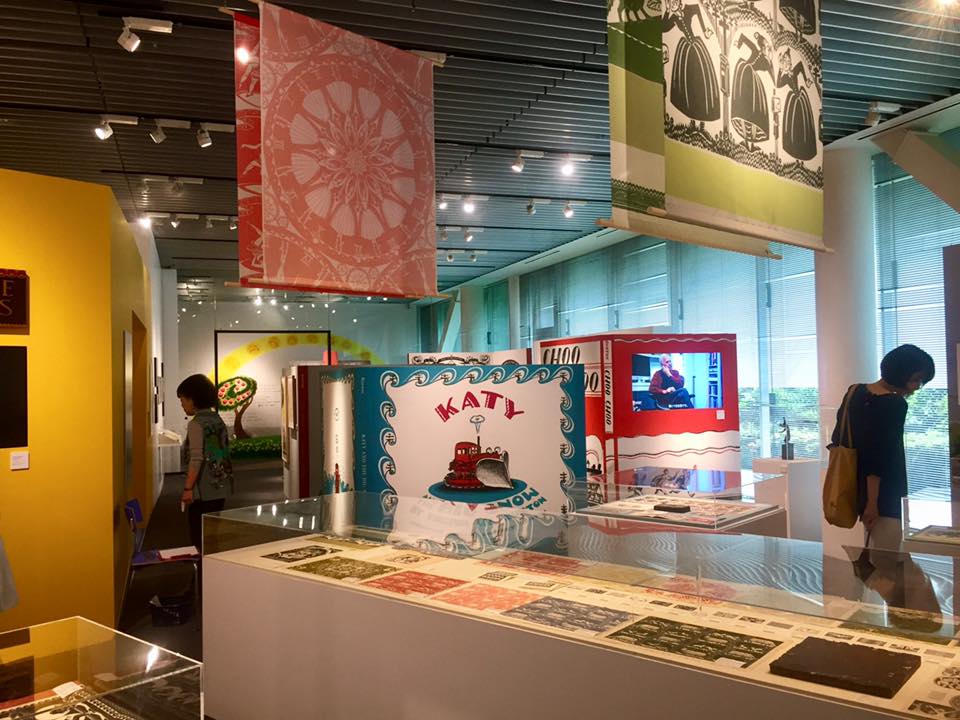
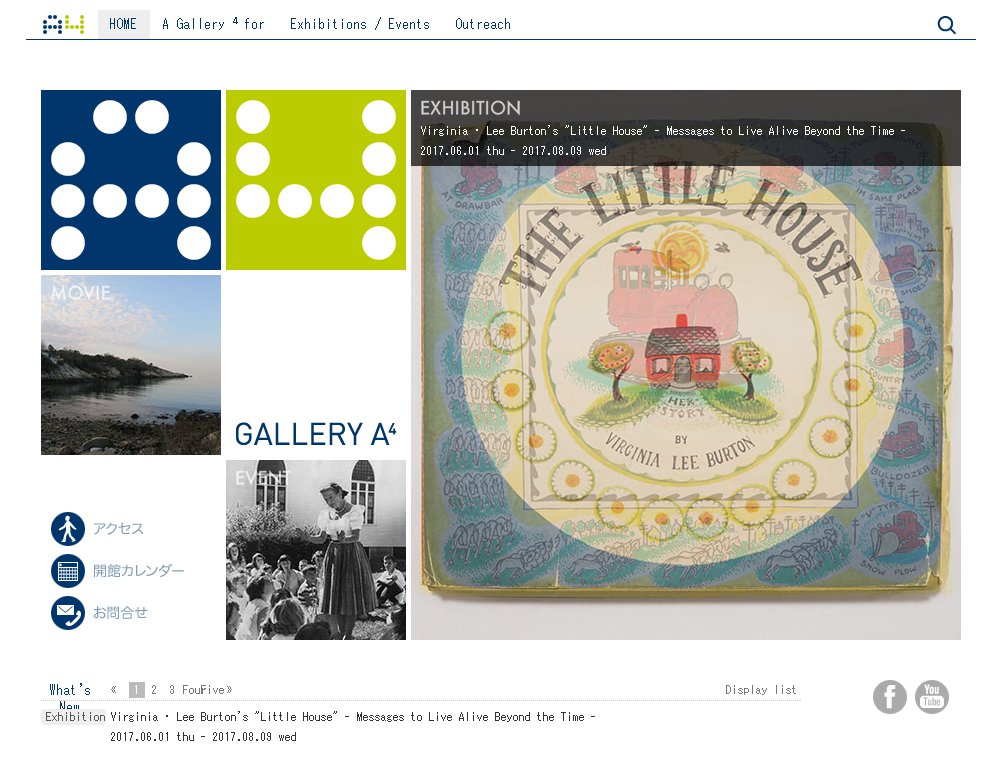
Watch this beautiful video tour to see a world class exhibition design in Tokyo for Virginia Lee Burton worthy of her legacy. The creative and smart installation looks stunning! The temporary summer show will be up through August. Gallery A4 is a public foundation established by Takenaka Corporation. Photos from Gallery A4 web site.
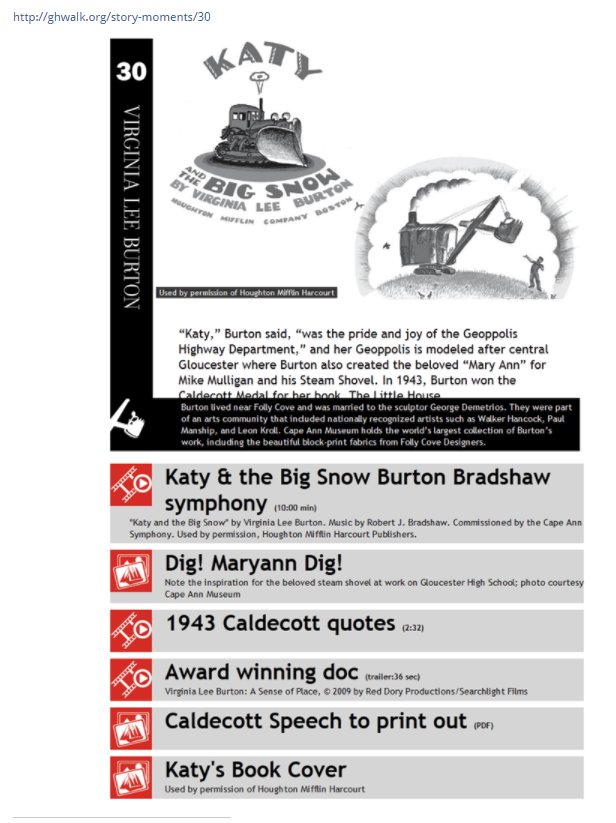
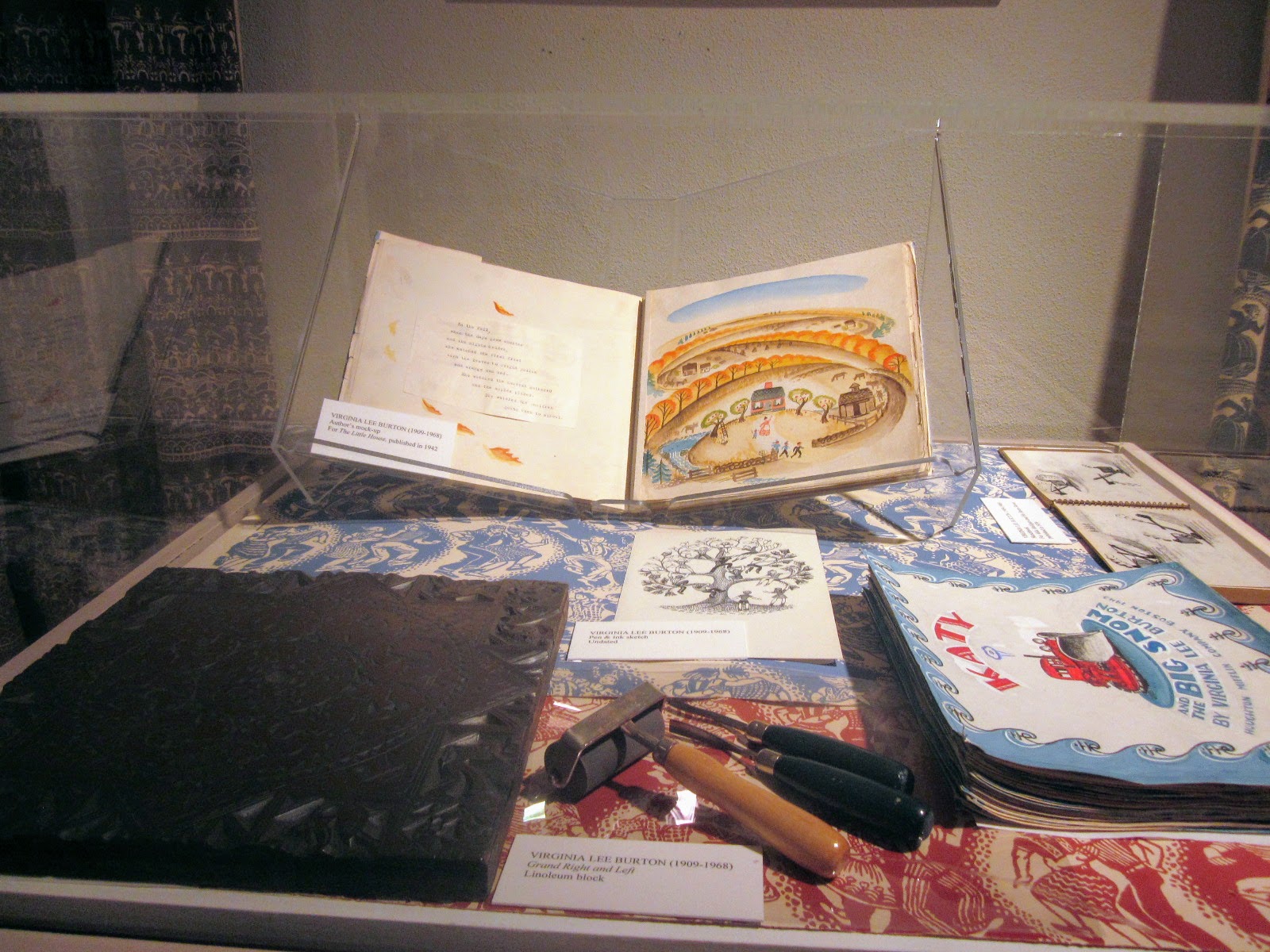
video caption: Virginia Lee Burton, children’s book author/illustrator, Folly Cove textile designer and founder, resided and worked in Gloucester, MA, where she created some of America’s most popular children’s books. She received the Caldecott medal in 1943 for The Little House. Other books include Katy and the Big Snow and Mike Mulligan and His Steam Shovel. Excerpts from her Caldecott speech. Music: The Little House, 1926, by Carrie Jacobs-Bond.
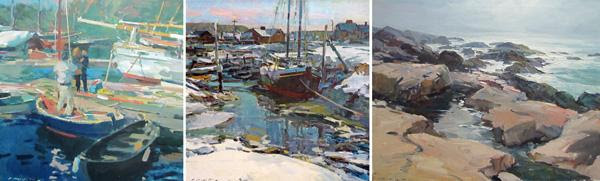
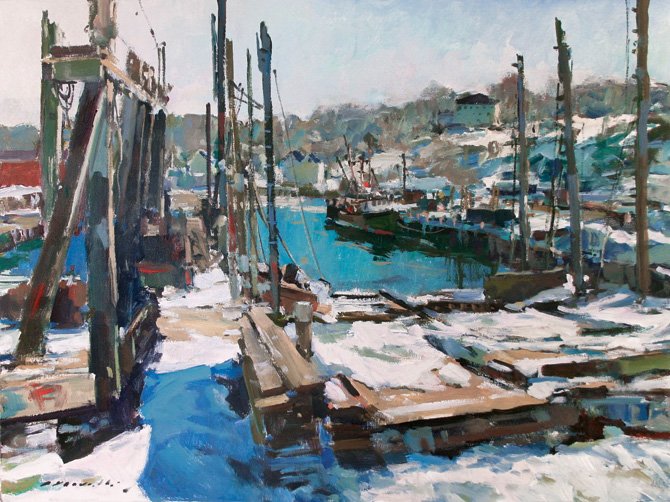
The Charles Movalli exhibit at the Cape Ann Museum closes Sunday, May 21st. Don’t miss! The Cape Ann Museum is open on Sundays from 1:00pm to 4:00pm.
For over forty years, Charles Movalli (1945–2016) was a pillar of Cape Ann’s year-round art community, a distinguished landscape and marine painter, a prolific writer and advocate for the arts, and a widely respected teacher.
His paintings have been showcased in solo and group exhibitions throughout the region and showered with awards; his writings on art and artists have been published widely, and his editorial skills earned him a 25-year stint as contributing editor of American Artist magazine. Often referring to himself as “the luckiest man in the world,” Movalli created a body of work which continues to inspire and delight viewers.
This exhibition is drawn from private collections throughout the region and is complemented by gallery talks and discussions exploring Movalli’s career and influence. A full list of program-related exhibits can be found here.
Spread The GMG Love By Sharing With These Buttons:
 Curator’s talk at the Cape Ann Museum SATURDAY NOVEMBER 18, 2pm

















































 Good Morning Gloucester