Calling all middle and high school students– train with the SailGHS sports team this summer! Email: info@sailghs.org (978) 290-2467
My View of Life on the Dock
Calling all middle and high school students– train with the SailGHS sports team this summer! Email: info@sailghs.org (978) 290-2467


*With the purchase of an adult entree. Dine in only, during the hours of 5 to 6 PM.

 PIPING PLOVER UPDATE FROM THE MAYOR’S OFFICE
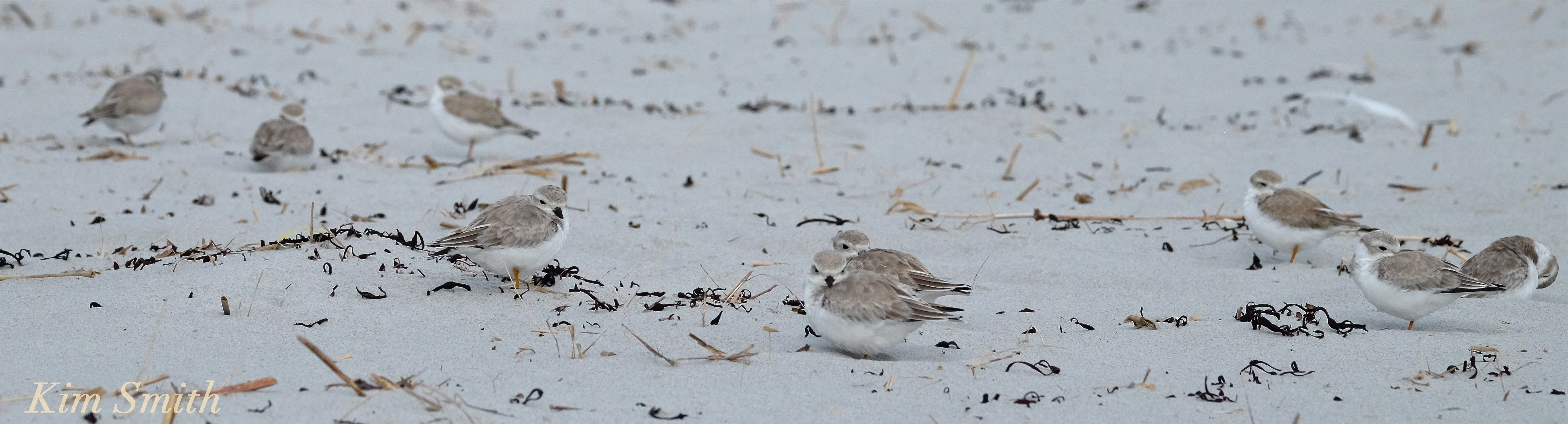
PIPING PLOVERS NESTING AT GOOD HARBOR BEACH
The City of Gloucester and Mayor Sefatia Romeo Theken will be working closely during the 2017 beach season at Good Harbor Beach with the Essex County Greenbelt Association and the MA Division of Fisheries and Wildlife to manage Piping Plovers if they return again to nest on the beach.
“For generations, Gloucester’s citizens have existed in a delicate balance with our coastal ecosystem, from the open ocean, to the rocky shorelines and of course to our beaches,” Mayor Romeo Theken said. “We are committed to making every effort possible to protect nesting Piping Plovers at our beaches but we will do so while maintaining public access to these amazing areas. Please help me and the City by cooperating with any short-term restrictions imposed at our beaches in 2017.”
In 2016, Piping Plovers, a small shorebird, were observed nesting for the first time at GHB, and the City acted quickly and responsibly along with Greenbelt and MADFW to protect the birds and their nesting areas. The City is preparing more proactively now for the 2017 beach season.
BACKGROUND:
Piping Plovers are a small shorebird that was placed on the US Endangered Species List in 1986 as a threatened species. Piping Plovers nest directly on the sand at beaches throughout MA, typically on the upper beach just below the outer dune edge. Statewide the Piping Plover population has been increasing over the past 20 years and the population reached about 650 pairs in MA in 2016.
In Gloucester in 2016, 4 pairs of Piping Plovers nested at Coffins Beach and fledged 10 young. A single pair of Piping Plovers nested at GHB, hatching 3 chicks but none survived to fledge. The Piping Plovers at GHB nested later than normal in the season which may have contributed to the lack of chick survival. Better early season protections could help eliminate this problem in 2017.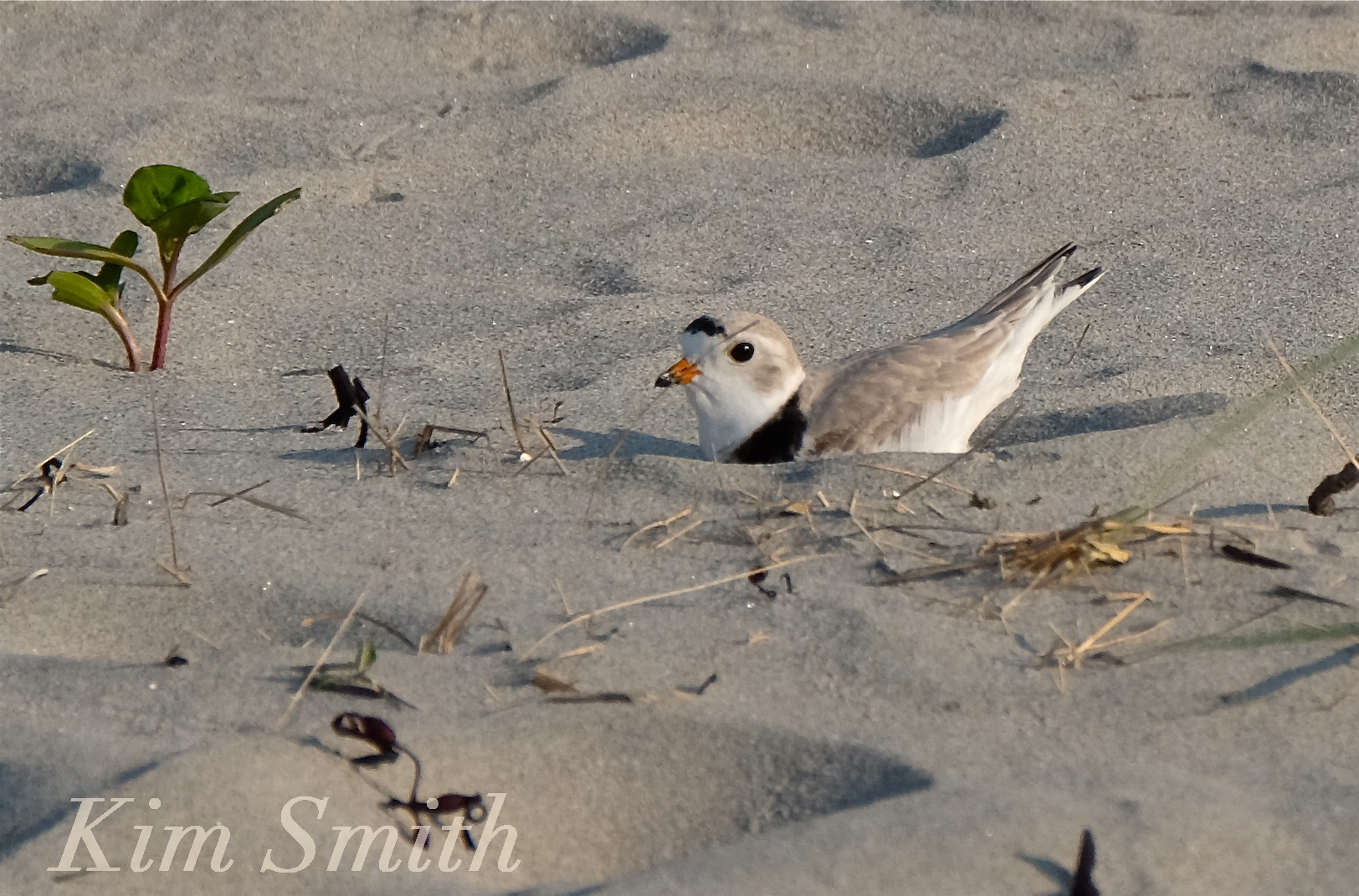
Good Harbor Beach Piping Plover making a nest scrape for his lady love to inspect
The US Endangered Species Act requires public and private landowners to take necessary measures to protect listed species like Piping Plovers. MA also has guidelines and laws for beach nesting bird management. The city is making every effort to be compliant with all regulatory guidelines.
Piping Plovers typically arrive from their southern wintering areas to our local beaches in late March or early April. Males and females quickly form breeding pairs that begin the process of courtship and nest site select throughout April and May. During April and May, it is important to limit disturbance to the birds and their habitats. Chicks can hatch from nests in late May and are immediately mobile and move out of the nest in search of food. As chicks grow older and larger, they will roam from the dunes to the water’s edge in search of food. Chicks are very vulnerable to human disturbance and are susceptible to predators like gulls and foxes.
One day old Piping Plover chick
PLAN OF ACTION FOR 2017:
Gloucester officials have directed City staff to collaborate with Greenbelt and MADFW to development management strategies to protect Piping Plovers found nesting on any Gloucester beaches.
Beach Scraping – Limiting beach cleaning activities like beach scraping with a tractor and mechanical rake is very important once Piping Plovers arrive at GHB. This could start in April and last though June in certain areas at GHB.
Fencing – It is also important to strategically select areas for temporary closure with single strand fencing and signs. These fenced areas allow a refuge for Piping Plovers to begin their nesting season normally in May, before the busy beach season. fences could be installed in April and be in place through June in certain areas at GHB.
Monitoring – Regular monitors from Greenbelt, MADFW and theCity will visit GHB in March/April to determine if PipingPlovers are present and to ensure that any nesting Piping Plovers are well protected. Monitoring will continue as long as Piping Plovers are present at the site.
Public Access – GHB will remain open to the public during the beach season. Only selected small areas may be closed to the public to protect Piping Plovers. Mayor Theken encourages all beachgoers to respect the closed areas and to consider Piping Plovers as an important part of Gloucester’s rich and healthy coastal ecosystem.
Dogs – Unleashed dogs can pose a very real threat to Piping Plover adults and chicks. Dogs owners are responsible for controlling their dogs and may be legally responsible for any adverse impacts to Piping Plovers and their habitats.
For more information, please contact Greenbelt Essex County Trust at dwr@ecga.org or (978) 768-7241 x14

 Preparations for St. Joseph celebrations are well underway throughout the City and our local bakers are baking up a storm.
  Saint Joseph rolls are available from Virgilios at 978-283-5395.


Maria and her Mom and Dad, Nina and Domenic, at Caffe Sicilia are now taking orders for the special Saint Joseph altar bread, zeppole, sfinci, ravioli, and cassata cake, and they can be ordered by calling 978-283-7345. Can’t wait for Caffe Sicilia’s ricotta-filled St. Joseph Day doughnuts, or sfinci in Sicilian ❤


#legend #rabbitonvacation #rabbitdoesplaya


As a new restaurant making it’s mark on the north shore, we would greatly appreciate your time to help spread the word about FEATHER & WEDGE!
To place your vote, go to voting.nshoremag.com/l/BONS-2017/ballot/dine
In the “Dine” category, scroll down the alphabetically listed sections to “New Restaurant”.
Click “Vote” next to your selection, then enter your email address to create an account if you don’t already have one. You must verify your account via email before your vote will be accepted.
THANK YOU FOR YOUR VOTE!

Thursday at the Rummie, let’s welcome back the amazing Ms. Toni Lynn Washington. The most amazing, long time, world travelling singer and an absolute joy to work with, having 65% more chutzpah than the leading brand.

Not only that, but she’s dragging in Mr. Mike DiBari, fabulous gootarist who just won the 2017 Swiss Kriss® Award for excellence in downloading. Also, drummer to the gods, Mr. Steve Bankuti. Let’s get funky! See you there!

40 Railroad Avenue
Gloucester, MA 01930
(978) 283-9732

Anna Vojtech’s weekly course begins March 28 (not March 14th). Please adjust your calendars.



Boston Globe critics –Kate Tuttle (books); Zoe Madonna (classical music); Karen Campbell (dance); Loren King (film); Michael Andor Brodeur (pop music); Don Aucoin (theater); Malcom Gay (visual arts)– published an arts preview: “Globe Critics survey of 42 Essential art events in New England that you won’t want to miss this spring and summer.”
Congratulations to Rockport Chamber Music Festival and Clara Wainwright for making the list! Rockport Chamber Music Festival is June 2-July 9 at the Shalin Liu Performance Center. Clara Wainwright, artist and First Night Founder, is one of 8 artists selected for the 21st round of Art on the Marquee, the “massive three sided, seven screened, 80 foot tall marquee at the Boston Convention and Exhibition Center” public art project. Look for that exhibit March 16-April 17.
Here’s the geographic tally:
Boston area, MA arts events: 19
Western, MA: 8
North Shore, MA: 2 –Rockport/Chamber Music Festival and Lincoln/Thoreau. (Clara’s work will be shown in Boston)
Cape and islands, MA: 4
ME: 4
RI: 3
VT: 1
CT: 1 (could be New Bedford…)
Most of the MOTT seasonal round ups and e-blasts are light on North Shore listings.



I love the “on this day” part of Facebook because you get to walk down memory lane a bit each day. Today’s “on this day” was my first post as a GMG contributor and although I’m not sure I’ve had a whole lot to contribute over the last year, I know that GMG has contributed a great deal to my life. It’s pushed me out of my comfort zone and allowed me to meet so many awesome new people! The one thing I will take away from this last year is the love of my home town and how every day I learn to love this beautiful city even more!! So Thank YOU GMG readers and fellow contributors for indulging me and always being so kind and supportive!


One of the surest signs of Spring! DownRiver Ice Cream in Essex opens at noon on Saturday! Meet you there!


Saturday, March 11th 10:00-12:00
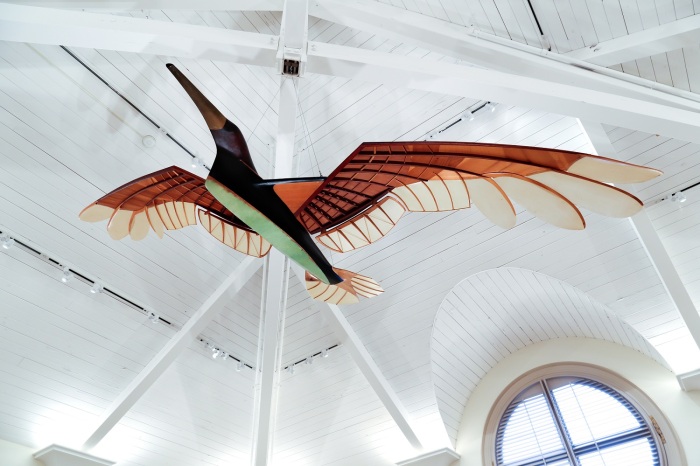
Enjoy a family-friendly tour of the galleries on this bird-focused STEAM – Science, Technology, Engineering, Art and Math – Day at the Museum and create a bird-inspired artwork to take home.
This event is free for families. Space is limited; reservations required. Reservations can be made by calling 978-283-0455 x16 or emailing lizabrowning@capeannmuseum.org
Saturday, March 11th 10:30
Tickets: $8.50, $13.50
Ben Rudnick and Friends have been bringing families, music and fun together in their own unique style from their first release, Emily Songs, in 2000 to their January 2016 release, A Frog Named Sam, A Musical for Children.

For a more comprehensive list of family activities, please visit our friends at North Shore Kid


In other positive news, I’m happy to report that the Rabbit did not pass out on the airplane toilet seat while pinching a loaf. So we got that going for us.
2011-

#batwing #rabbittales #rabbitonvacation

Jessica Danskin, a Montserrat College of Art (2016) and GHS (2012) graduate and Gloucester resident, writes GMG that in addition to painting and illustrating, she recently started painting pet portraits. Contact jdanskinart@gmail.com if you’d like to order a portrait of your pet! She attached a couple of examples of her work. You can follow her art on





 The following is Mayor Sefatia’s message from this morning and tonight, the light at City Hall tower is shining red in honor of International Women’s Day.
“Today, March 8th, is International Women’s Day, a global day celebrating the social, economic, cultural and political achievements of women. The day also marks a call to action for women to take action helping to show unity and strength, with many also participating in “A Day Without Woman” which asks women take the day off from their job.
Here in Gloucester, we ask people to wear red to show support and for those of us who cannot afford to take the day off, we will be sounding the bells at Gloucester City Hall at 12 Noon and lighting the tower red. At that time, we will be taking a moment of silence to honor all women. If you are with another woman at 12 Noon, please show appreciation directly. Though many are asked not to shop today, if you are, please shop locally today and support businesses owned by women. By recognizing the enormous value that women of all backgrounds add to our socio-economic system and taking actions in solidarity with other community, we are proud of all women and we remind all in our community to cherish one another today. Thank you!”

Where are you, where are you?
The world is missing what I am willing to give
My sweetness
My love
And my hunger for peace
I rise and shine
and I’m ready to go on my quest
Today I rise without doubt or hesitation
Excerpted from Sanctuary Magazine, by John H. Mitchell
In honor of Women’s History Month, these excerpts were first posted on the Mass Audubon blog. It is the story of the two women who founded Mass Audubon.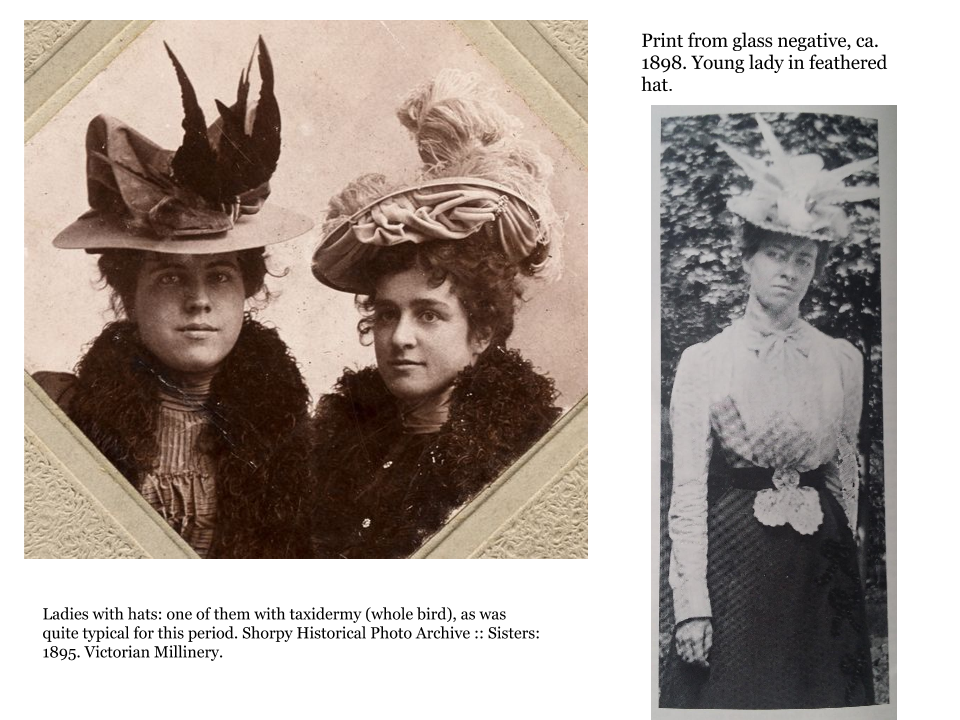
The Mothers of Conservation
One of the seminal events in the history of environmental activism in this country took place in a parlor in Boston’s Back Bay in 1896. On a January afternoon that year, one of the scions of Boston society, Mrs. Harriet Lawrence Hemenway, happened to read an article that described in graphic detail the aftereffects of a plume hunter’s rampage—dead, skinned birds everywhere on the ground, clouds of flies, stench, starving young still alive in their nests—that sort of thing. The slaughter was in the service of high fashion, which dictated in those times that ladies’ hats be ornamented with feathers and plumes, the more the better.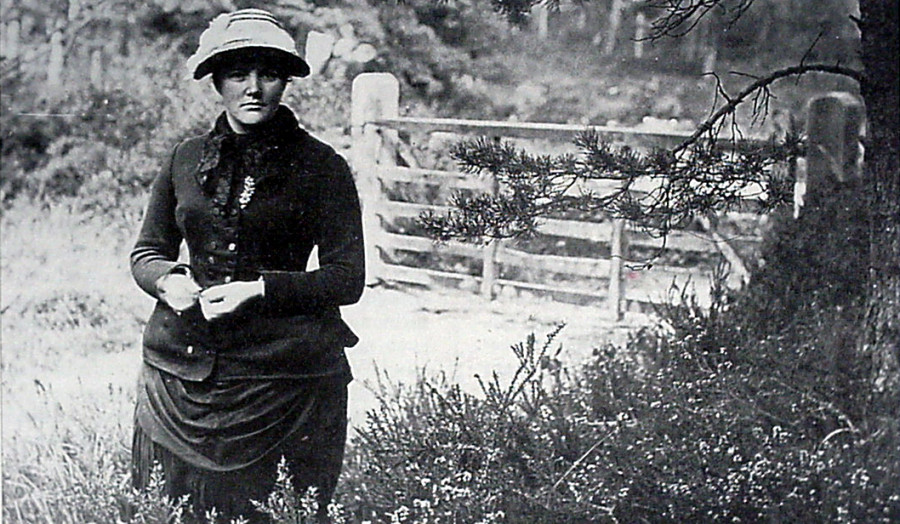
Harriet Hemenway
Harriet Hemenway was properly disturbed by the account, and inasmuch as she was a Boston Brahmin and not just any lady of social rank, she determined to do something about it. She carried the article across Clarendon Street to the house of another social luminary, her cousin Minna B. Hall. There, over tea, they began to plot a strategy to put a halt to the cruel slaughter of birds for their feathers. Never mind that the plume trade was a multinational affair involving millions of dollars and some of the captains of nineteenth-century finance; the two women meant to put an end to the nasty business.
…[Harriet] and Minna Hall took down from a shelf The Boston Blue Book, wherein lay inscribed the names and addresses of the members of Boston society. Hemenway and Hall went through the list and ticked of the names of those ladies who were likely to wear feathers on their hats. Having done that, they planned a series of tea parties. Women in feathered hats were invited, and, when they came, over petits fours and lapsang souchong, they were encouraged, petitioned, and otherwise induced to forswear forever the wearing of plumes.
After innumerable teas and bouts of friendly persuasion, Harriet and Minna established a group of some 900 women who vowed “to work to discourage the buying or wearing of feathers and to otherwise further the protection of native birds.” Hunters, milliners, and certain members of Congress may have found the little bird club preposterous.
But the opponents of any regulation on the trade underestimated their opposition. The Boston club was made up of women from the families of the Adamses and the Abbots, the Saltonstalls and the Cabots, the Lowells, the Lawrences, the Hemenways, and the Wigglesworths. These were the same families that brought down the British empire in America. This was the same group that forced Lincoln to issue the Emancipation Proclamation, and it was these families that were about to create the American tradition of environmental activism. Within a matter of decades, the little bird club had spawned what would be the most influentional conservation movement in America up to that time.
Notorious, independent Boston women notwithstanding, these were not the freest of times for society women, and Hemenway and Hall were wise enough to know that if their group were to have any credibility it would need the support of men, and most importantly, would need a man as its president, even if he would be a mere figurehead. The women organized a meeting with the Boston scientific establishment, outlined their program, and got men to agree to join the group, which would be called, they decided, the Massachusetts Audubon Society, in honor of the great bird painter John James Audubon.
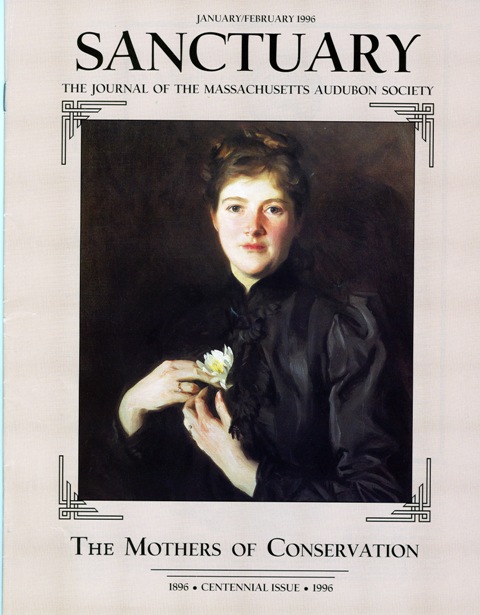 Download a pdf of the entire story, which was published in the January/February 1996 issue of Sanctuary magazine.
She’s Wearing a Dead Bird on Her Head, a children’s book written by Kathryn Lasky, tells the story of the founding of Mass Audubon.






 Good Morning Gloucester