Are Coyotes the Cause of an Increase in Lyme Disease?
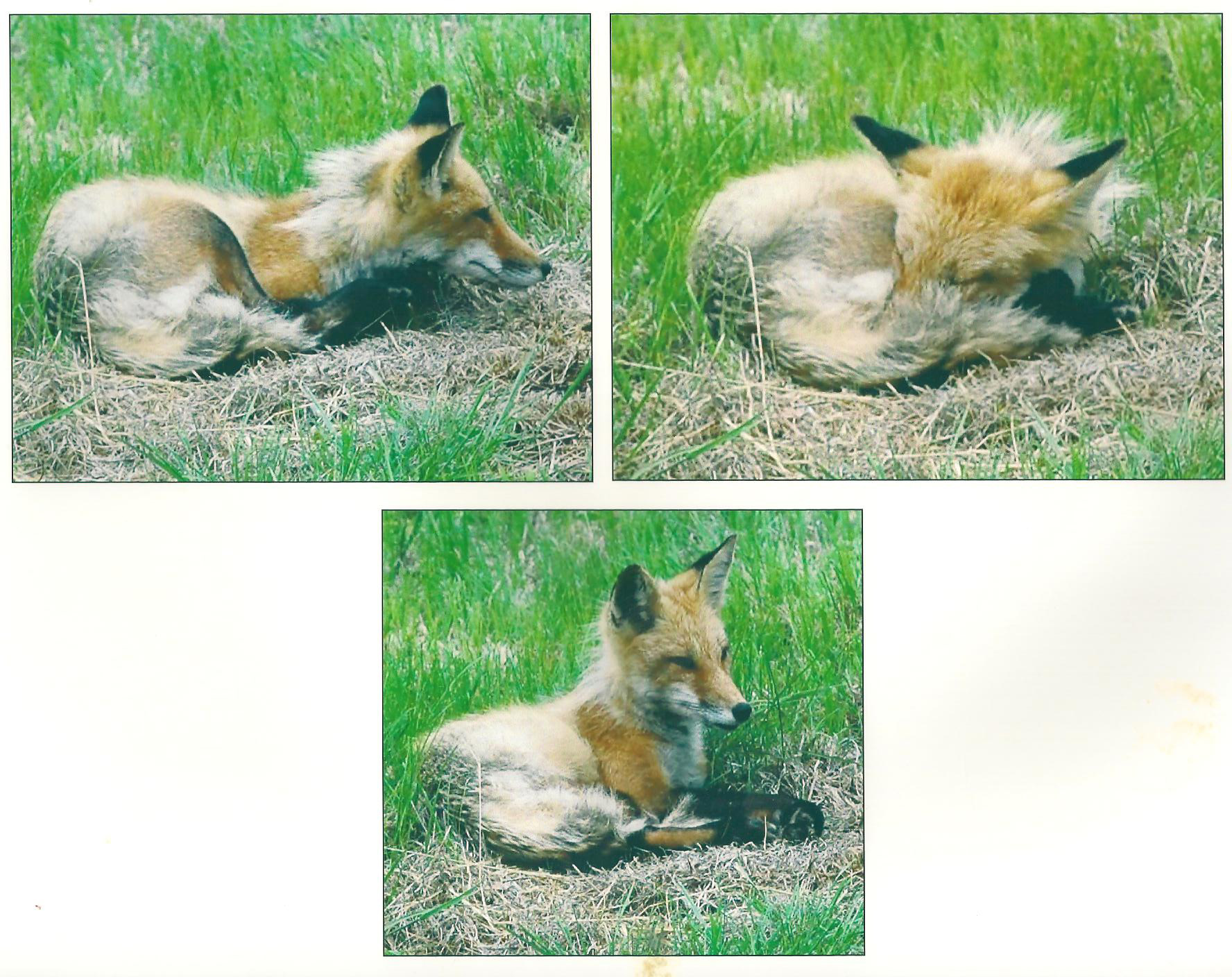
Struck by the recent interest in coyotes after the fascinating video Two Coyotes Versus One Deer by Shawn Henry was posted on GMG, I became interested in reading various studies and reports about coyotes, wolves, and foxes in Massachusetts and the Northeast. My primary interest at the onset was of concern for the Red Fox (Vulpes vulpes), which has seen a tremendous decline in numbers. I wondered if the presence of coyotes (Canis latrans) was negatively impacting the Red Fox. In the past, I often saw a Red Fox in the early morning hours trotting along the shoreline at Brace Cove. I wish so much that I had filmed the last one that I saw because it was a gorgeous scene; a strikingly beautiful creature so completely unaware of my presence and so at home in its realm, investigating rock and seaweed, pausing to sniff the air, and then resuming its journey. The last time I saw a Red Fox in our neighborhood was over three years ago. As I was reading about coyotes I learned the findings of some of the most recent studies indicate that because Eastern Coyotes out-compete the Red Fox, the coyotes are the cause of an increase in Lyme disease. More on that in a moment.

The coyotes that now inhabit every region in Massachusetts are an invasive species. They are a hybrid cross species of the Western Coyote (found west of the Mississippi) and Red Wolf (Canis lupus rufus). “Researchers now believe that the Eastern Coyote is a hybridization between the Western Coyote and Red Wolf many generations ago in the upper Great Lakes region of the United States. It is theorized that as populations of the Western Coyote increased, they were forced to move east and north in search of food. As they moved into Minnesota they crossbred with Gray/Red Wolves and produced a genetically hardy animal able to sustain itself through New England winters.” (Mass Audubon)
Coyotes are not “re-populating” this region because this new species was never in our region.
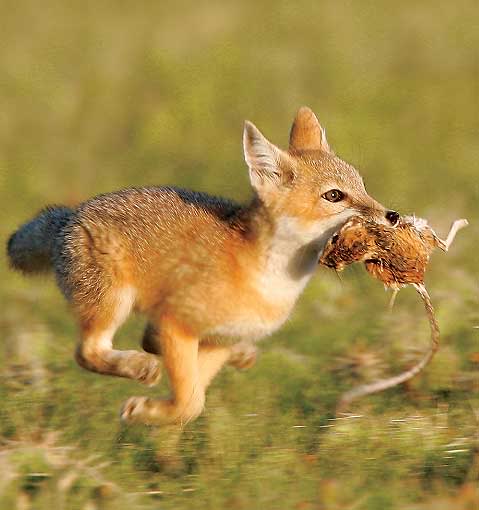
Eastern Coyotes have extremely broad food habits and many factors affect the coyotes’ diet, including competition with other mammals, abundance of prey, season, and weather. In the Northeast, their diet consists of shrews, rabbits, voles, woodchucks, mice, deer, beaver, muskrat, weasels, squirrels, and carrion. And according to Mass Audubon, “They eat ground-nesting birds and their eggs, as well as reptiles and amphibians. When other prey is scarce they will eat a variety of insects including grasshoppers, beetles and cicadas. When animal matter is scarce, they will eat available fruits including apples, cherries, grapes, and strawberries.”
The rapid invasion of the alien Eastern Coyote has negatively impacted many sympatric native species, as the coyote has assumed the role of top-order predator. The coyote has fundamentally altered the existing ecosystem and various species have experienced population declines as a direct result of their role as coyote prey or from direct competition for food. “Culturally and ecologically significant species including Red Fox decline dramatically in response to increasing coyote populations. Eastern Coyote and Red Fox share many common habitat requirements and occupy overlapping niches. Through time, the larger and more resilient coyote is able to out-compete and displace resident fox populations.” (Department of Natural Resources, Maryland.)
Studies have shown repeatedly that Eastern Coyote predation on deer is minimal. Most herds can handle the coyotes. Typically coyotes have success with fawns that are 4-5 weeks old (after they have become more active and are not by the mother’s side), weakened and sickly adults, and deer separated from the herd. These targets represent approximately one or two percent of the total deer population. While coyote diet studies show consistently the use of deer for food, it does not appear that coyote limit deer population on a regional scale.
Although the population of White-tailed Deer has stabilized, Lyme disease continues to increase. In June of 2012 researchers at the University of California Santa Cruz published their findings from the study “Deer, Predators, and the Emergence of Lyme Disease.” (Taal Levi, lead author.)
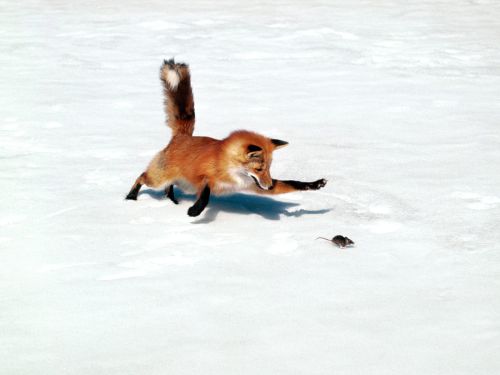
The study found that once where there was an abundance of Red Foxes, there is now an abundance of Eastern Coyotes. Even more significantly, fewer coyotes will inhabit an area once populated by more foxes. The greater number of foxes would have consumed a larger number of small tick-bearing animals, primarily White-footed Mice, Short-tailed Shrews, and Eastern Chipmunks, all of which transmit Lyme disease bacteria to ticks. It appears as though it is the Red Fox that once kept the population of these smaller rodents under control.

Even when there is a threefold rise in deer population, study after study now shows that the strongest predictors of a current year’s risk of Lyme disease are an abundance of acorns two years previously. How does that work?
Many acorns = many healthy mice and chipmunks.
Many healthy mice and chipmunks = many tick nymphs.
The following year when it may not be a bumper acorn crop = fewer mice.
Fewer mice and chipmunk = dogs and humans become vectors for the ticks.
While acorns don’t serve as a universal predictor because Lyme disease can be traced to forests where there are no oak trees, the data suggest that food sources and predators of small forest mammals are likely to be valuable in predicting Lyme disease risk for humans.

To summarize, multiple studies suggest that the invasive Eastern Coyote out-competes and kills the native Red Fox population, which leads to a rise in the number of small animals particularly the White-footed Mouse and Eastern Chipmunk, which in turn leads to an increase in ticks that carry Lyme disease. The impact of the Eastern Coyote on native deer population is negligible. And, as many family’s can attest, the impact of the Eastern Coyote on populations of domestic cats and small dogs has been devastating.
Typically the excuse given for unwanted encounters with wildlife is that people are encroaching on the animal’s habitat. That simply is not the case with the Eastern Coyote. The Eastern Coyote is advancing on humans–and they like what they see; no large predators, a reluctance on the part of people to hunt and trap, and an abundance of food. The environmentally and culturally destructive chain reaction caused by the Eastern Coyote invasion is taking on added urgency as the coyote strikes closer and closer to home.
It is legal in the state of Massachusetts to shoot and kill a coyote from your home. If confronted by a coyote, make as much noise as possible, if attacked, fight back aggressively.
Images courtesy Google image search.
Spread The GMG Love By Sharing With These Buttons:






















 In 1974 I was a newlywed 23 year old….I went to Sun TV in Columbus, Ohio to buy a new stereo system…. I REALLY wanted these Pioneer components, but they were priced FAR beyond my modest savings. Last year it dawned on me that (thanks to ebay and craigslist) I was now able to afford a state-of-the-art 1974 Pioneer stereo system…. and here is part of it (I also bought a Pioneer reel to reel recorder and cassette deck!!)…. I tell my wife that she is lucky that my mid life crisis involved stereo equipment rather than Corvettes (or younger women!!)
 I love my vintage photo album that belongs to my 88 year old mother. It has photos of her grandparents’ 50th wedding anniversary – in 1934. Also, the Chicago World’s Fair which took place in 1933 and 1934 – A Century of Progress. The album contains tickets and season passes to the Chicago World’s Fair.
 I love my vintage Scandinavian cast iron cookware
 I love my 1986 Toyota Camper, (which is) not being built anymore. Custom, 20 feet long, 8 feet wide. Traveled all over and met fantastic people. Bought in Maine, original owner used for hunting and fishing…once a year. 16,000 original miles on it. Interior: mint, wood closets, gas heat and stove, microwave, small bathroom in the back corner, overhead — above driver’s cab — held antiques. I minimized possessions…dishes, food, clothing, blankets and towels, reading matter, CDs (CD player plugged into inverter), great speakers and wonderful curtains and matching striped upholstery. ‘Gaucho’ couch convertible to bed, swivel seats & console table for entertaining guests. Great gas — 16 miles to the gallon…went south, campgrounds, street parking, rest areas, woods and on the ocean: Atlantic and Pacific…Florida, cross-country to California…through mad snowstorm in 2006, Oklahoma, Texas, etc. Wish you were here! Elizabeth Enfield
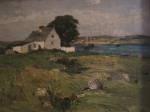 When I reached my teens, I could barely stand being in the same room as my father. I thought I knew it all and he didn’t. In my later years before he died, I never apologized for being a nasty little so-and-so, but I tried to hang out with him in the kitchen and learn from him, hoping my current actions might speak louder than previous actions. One day in 1993 I told him how much I liked the painting hanging in the entryway of my parents’ home and he took it off the wall and gave it to me, nasty little so-and-so notwithstanding. That example has taught me much about being a parent. So while I love this painting for its NE coastal subject (the artist hails from Lynn – 1864-1940 – and painted the coast up to Ogunquit), I love it more for the lessons it teaches and memories it conjures.
 The Old Lamp: This lamp is a repurposed oil lamp designed to stay in use! I have had it since I started keeping my own house…a garage sale find. I can’t help but picture folks lighting it in the 1900’s with oil and flame whenever I turn the now electrified wick-feeder.
 This hand knit wool sweater was my mom’s back in the 60’s! It’s the best- so cozy, warm, and cheerful! Mom had good taste in elementary school.
 I love my vintage house on Main Street in Mechanicsburg, Ohio. When my husband and I bought this home back in 1998, we thought we’d be here for 5 years. Now 14 years later, the house is finally on the market as we anticipate moving to the family homestead in the country. Through the years, we’ve taken off layers upon layers of wallpaper (yes, the bottom layers were quite vintage!) and transformed every square inch of this grand 1900’s bungalow to make it a wonderful home. In spite of the “old house” problems which still exist – crooked floors, cracked plaster and ancient wiring – this is our home and we love it.
 This christening gown was made by my maternal grandmother back in 1953. My brother was the first one to wear it followed by my 3 other siblings and myself. Each of our children (10 grandchildren in all) have also worn it and my son was the last to wear it back in 2010. My hope is that my children’s children and their children will continue the tradition.
 It was tough to decide, but this little fellow always warms my heart. I discovered him on a dusty, high shelf in an Oregon antique shop, and I visited him many times before finally bringing him home. I love his beautiful, full gallop, and I’m sure his old steel & rubber wheels took some lucky children on some amazing adventures. I heart him.
 It was a wedding gift to my parents in 1954 from my father’s stepfather. His own father had died of tuberculosis a few months before he was born, and being extremely poor with 6 children to support, my grandmother didn’t take long to remarry. I don’t have a lot of memories of my step-grandfather since he died when I was about 4 years old. However, the one memory that stands out was from a short time before he passed away. He was very ill and lay on the sofa in the main room of the very small house. My parents had left us there for the day and my sisters and I were playing outside in front of the house. My grandmother had a hog she’d raised that was getting close to ready for butchering. The hog occasionally broke out of the small space where it was kept penned and was not in a friendly mood when it did so! When the hog got loose that day, my older sisters ran into the house. I stood paralyzed as I watched a large angry swine charge towards me. Then my very ill grandfather got up off the sofa, stepped out the door and pulled inside the house before the hog reached me. As for the cookie jar itself, I remember it in the kitchen in the home I grew up in. Even when cookies (usually store bought — Oreos! — occasionally homemade) weren’t in it, the smell still lingered. My parents eventually divorced in 1980 and my father remained in the house, with the cookie jar still in the kitchen. When he was cleaning things out a few years later, he asked if I wanted it and I gladly jumped at the chance to take it. It has followed me to different homes, different states, through a marriage and divorce and other relationships, and now, in my Gloucester home, it is still with me, sitting on my kitchen counter.
 My favorite vintage item is this old leather suitcase. It has obviously seen better days, having long lost its handle, covered in nicks and dents, and plastered with an old bumper sticker. However, it is what this suitcase represents, what it holds within, that I cherish. It spent many years, even decades, in my parent’s bedroom, tucked hidden away under my father’s side of the bed. It was a sad turn of events that finally brought this suitcase to my attention. I think that even my mother had forgotten about its existence. But my father never did, adding little things faithfully to it over the years. My father never spoke much. He was a quiet man, not apt for conversation unless it was about cars or motorcycles. But this suitcase speaks the volumes he never could, hiding away words and memories, holding the treasures of his heart. On a brisk November night in New York City, over three years ago, my father left us for heaven. It was 10 days before his 59th birthday. It was on the day that my son turned one year old. It was a day I will never forget. And now the suitcase holds even more significance for us all. Honestly, I have never seen what is inside. It was probably sometime last year when my mom called me, and I heard a small catch in her voice, a quiver. She had opened the suitcase and was pouring over its contents. Through tears and smiles she had re-read the love letters of long ago. He had saved every one. Letters from an era that no longer exists, that seems so far away now, but it was only the late 1960’s. There was no such thing as texting, and mom was only allowed to call him once a week. No computers, no cell phones, no email. And I am so glad, for all of this would have been lost. They met when they were teenagers. One of their favorite places was Word of Life in upstate New York (hence the bumper sticker), and that was where my mom met the Lord. Amazingly, that was where I met my husband many years later, as God brought us together in what many would term a serendipitous meeting, but we know better. This suitcase symbolizes even more than a love story. It symbolizes a promise made that was kept. A vow that was never broken. Till death do us part. I was there with my dad on his last night here with us. I watched as my mom, who had slept in a chair next to his hospital bedside for almost 8 weeks straight, tucked him into bed one last time, prayed with him, and faced her darkest fears as she laid her head next to his and waited. Waited for a miraculous healing that was not to be this side of heaven, waited for my dad to call out her name for help so she could attend to his every need, waited as the leukemia slowly took over the life we all knew. With tenderness and love she waited by his side, a picture of faithfulness until the end.
 My grandmother, Doris Velma Driscoll, ( I just love her name), wore this pin during the summer months on her freshly ironed cotton blouse. She had so many pins! A pin for every occasion! My first memory of her was her bringing me to Salem Willows when I was probably 6 years old. This pin reminds me of her love for the beach—she taught me well!






 Good Morning Gloucester