Seeing Trees

Sally Williams sent this video link from Timber Press, featuring an interesting photo technique.

For many, the tree is a symbol of longevity, integrity, and enduring beauty. But how many of us have truly seen a tree? How well do we know the intimate details and secrets of that old familiar oak in the backyard? In “Seeing Trees”, author Nancy Ross Hugo teaches us a whole new way of watching a tree. And in breathtaking shots of striking detail, photographer Robert Llewellyn shows us why it’s worth it.

One kind word can warm three winter months. ~Japanese Proverb


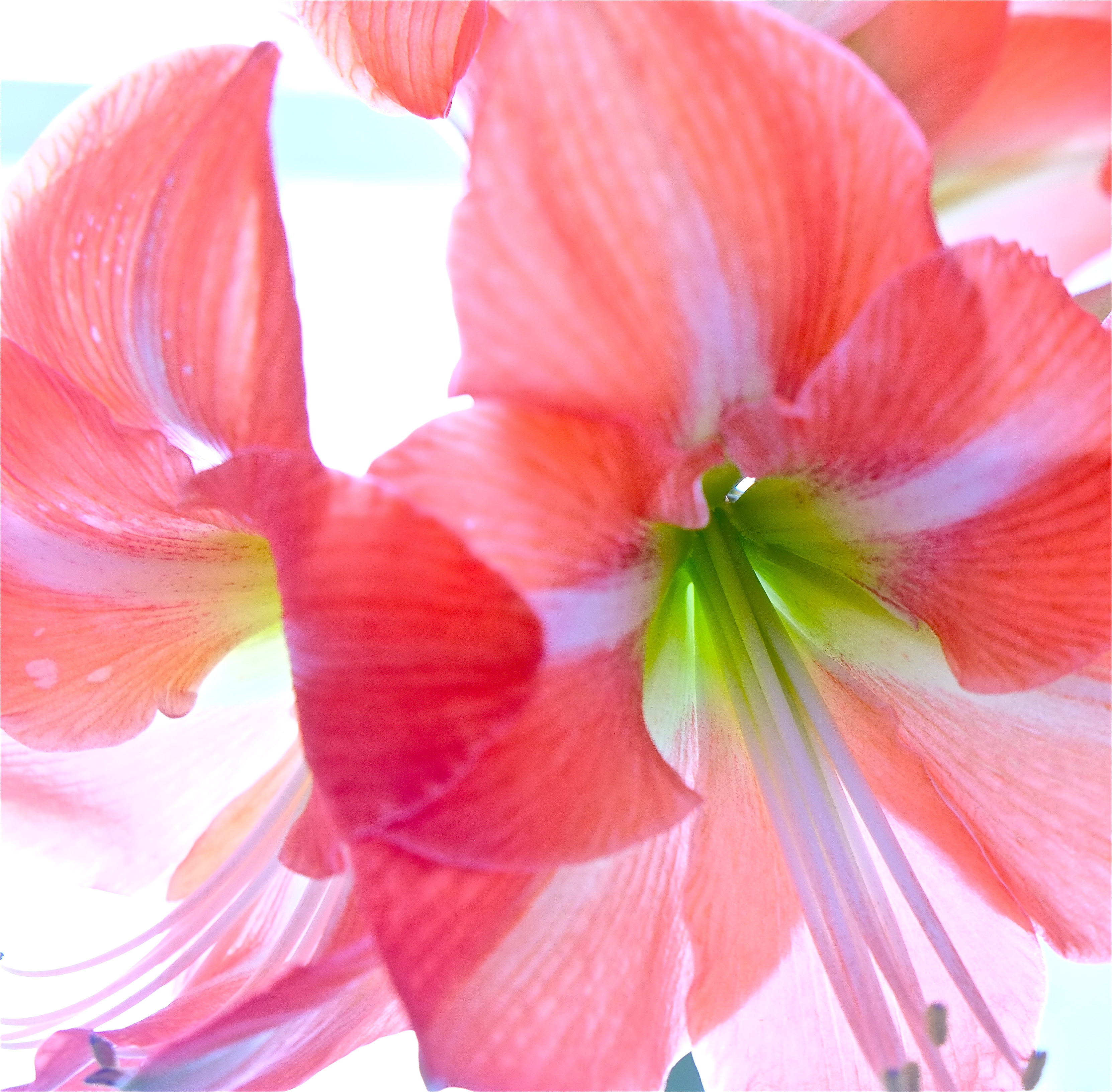
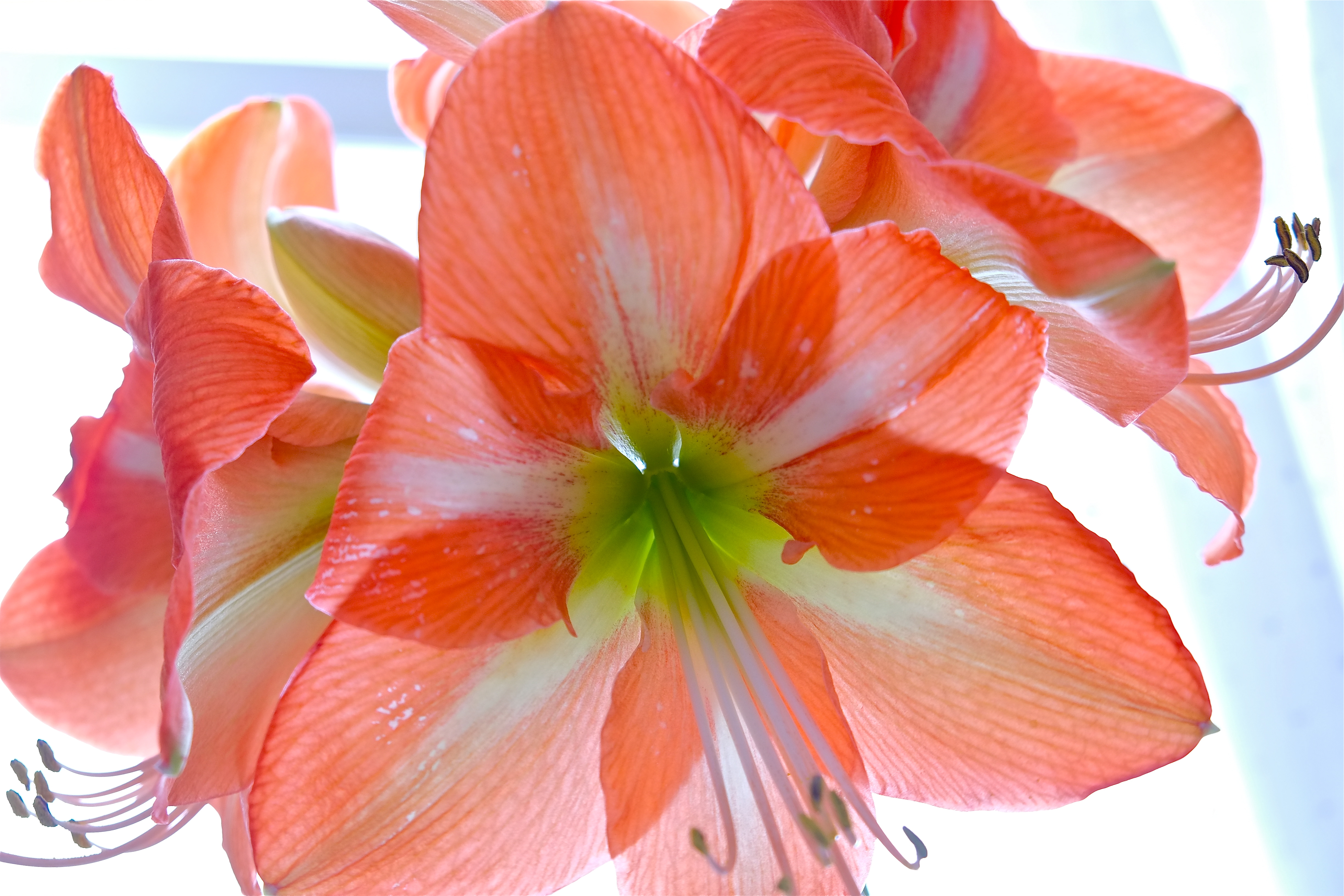
orange, brought to you by amaryllis

a change of pace from snow banks and snow drifts

Orange Amarylis ©Kim Smith 2013

spanish poppies*carmine colored pencil*hot embers*sunrise*sunset* sherbet*apricots*pumpkins*saffron*coral*tangerines*orioles*monarch* butterflies*california poppies*amaryllis*marigolds*butterfly weed* dahlias*mexico*mariachi band*flamenco*flamingoes*koi*tigers*curry* mangoes*melons*passion*love*light*life*autumn leaves*lobster* paella*carrots*salmon*south of france*paul gauguin*van gogh sunflowers*Warhol*

and SUMMER

Orange Amarylis -2 ©Kim Smith 2013

Orange Amarylis -3 ©Kim Smith 2013JPG

 add your orange favorite

Orange Amarylis ©Kim Smith 2013-4

Amaryllis Hippeastrum

Christmas Whimsy

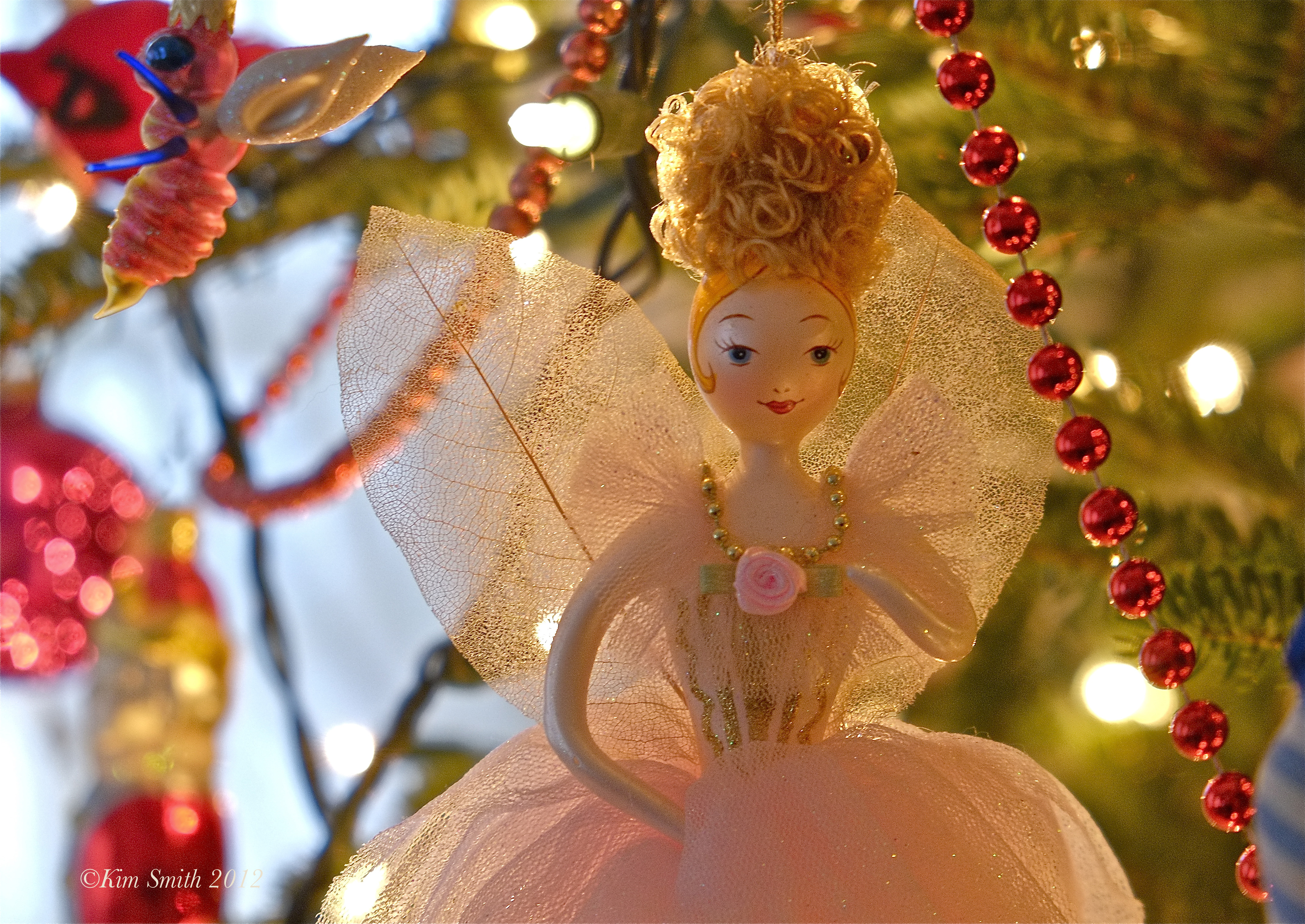
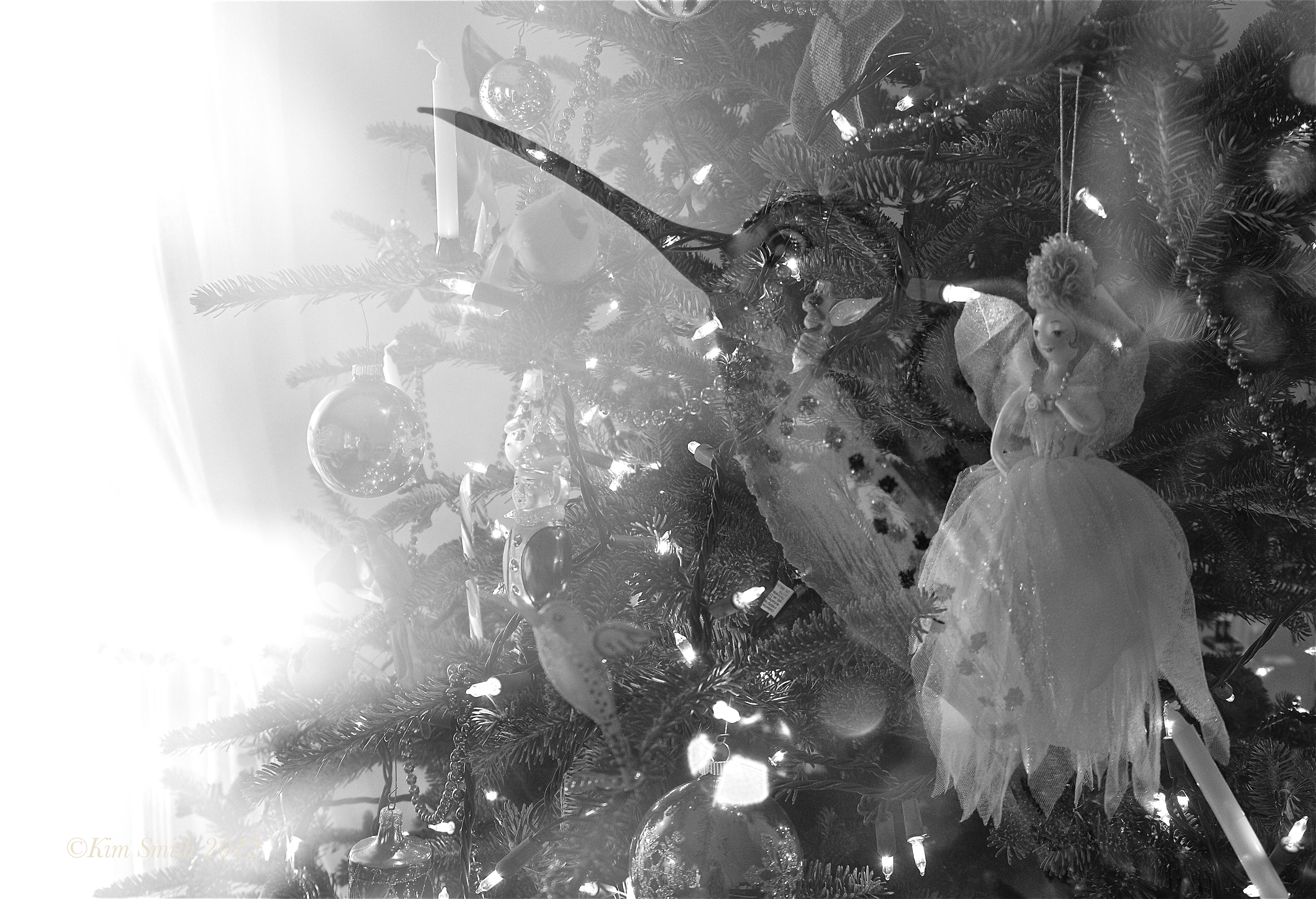
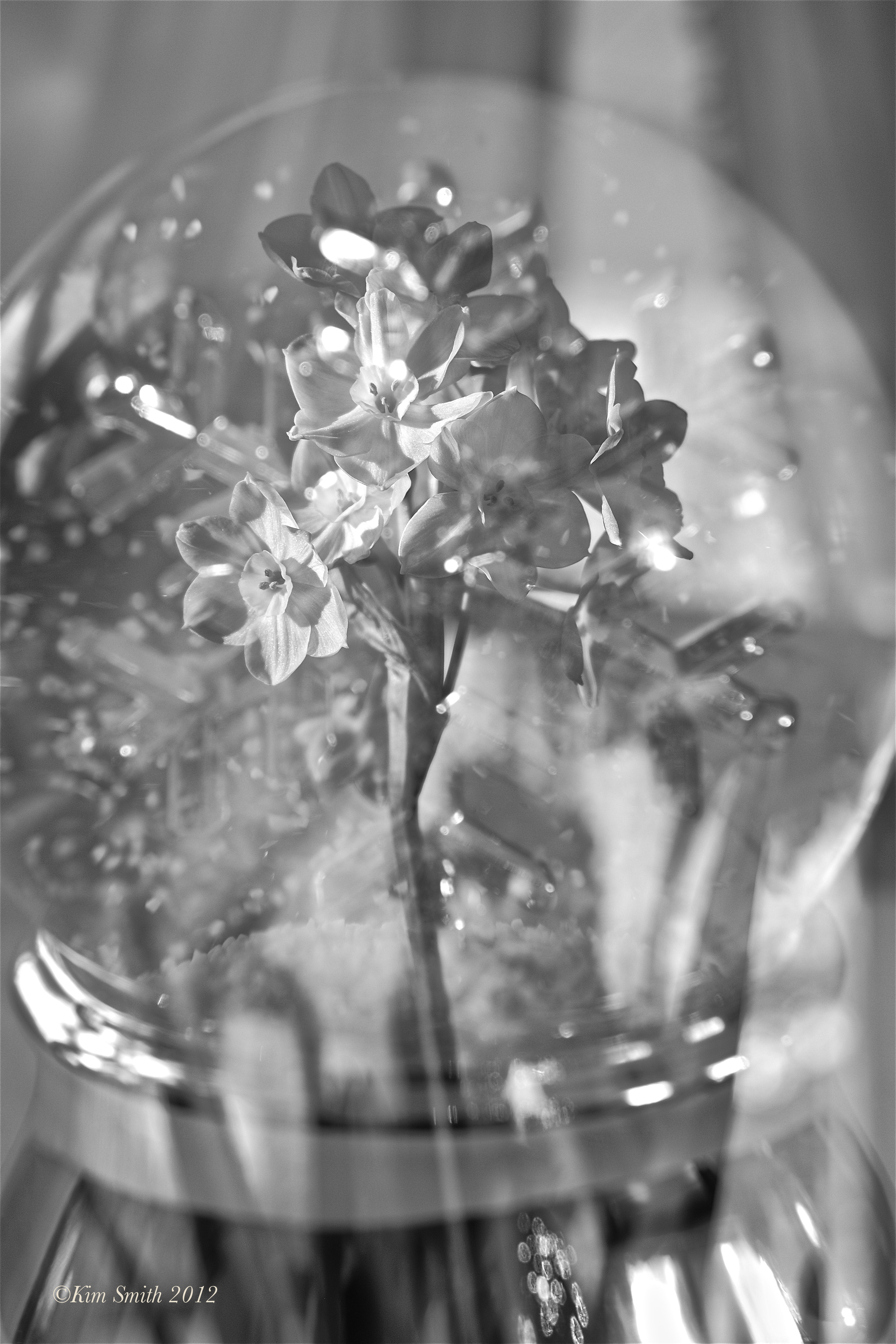
Christmas Fujifilm X-E1 Multiple Exposure -2 ©Kim Smith 2012

Several weeks ago I posted several experiments taken with the new Fujifilm X-E1 multiple exposure setting. I really like this feature although I received some flack from a photographer friend informing me that double exposures can be created in Photoshop. Of course I know that, I just like the immediacy of composing in the camera and in the moment and think the feeling that is achieved is reminiscent of the accidental effects created in film photography. These photos were all shot in very low light indoors and I am looking forward to playing more with this feature outdoors on a warm sunny spring day, with butterflies and other living creatures as muses, rather than imaginative Christmas fairies!

vintage christmas decoration

Christmas Fujifilm X-E1 -1 Multiple Exposure ©Kim Smith 2012

Christmas Fujifilm X-E1 Multiple Exposure -3 ©Kim Smith 2012

Christmas Fujifilm X-E1 Multiple Exposure -5 ©Kim Smith 2012Christmas Fujifilm X-E1 Multiple Exposure -4 ©Kim Smith 2012Christmas Fujifilm X-E1 Multiple Exposure ©Kim Smith 2012 copyFujifilm X-E1 Multiple Exposures 

Click photos to view images full size.

Hood Heavy Cream at Stop and Shop

 Stop and Shop Heavy Cream©Kim Smith

Yesterday while picking up cream for our holiday pies I was reminded of Joey’s post from several weeks ago, “Can this tiny thing of heavy cream really cost $3.69???,” where he pointed out the ridiculous cost of the 16 ounce Hood heavy cream from Shaws, priced at $3.69.  GMG reader Jenna commented that the Market Basket price was $2.99. Yesterday, the 16 ounce container of heavy cream at Stop and Shop was $2.39. I am glad to see these more competitive prices from both Stop and Shop and Market Basket. For the grocery items I purchase for my family, Stop and Shop’s prices are consistently the least expensive of the three chains.

Congratulations Emily Forshay Crowley-Winner of Oh Garden of Fresh Possibilities!

Dear Friends,

I truly wish I could give each and everyone of you who wrote your thoughtful and cherished comments a copy of Oh Garden. Thank you.

Warmest wishes for a joy-filled holiday season and many thanks again for your participation.

Kim

Oh Garden of Fresh Possibilities! .jpg

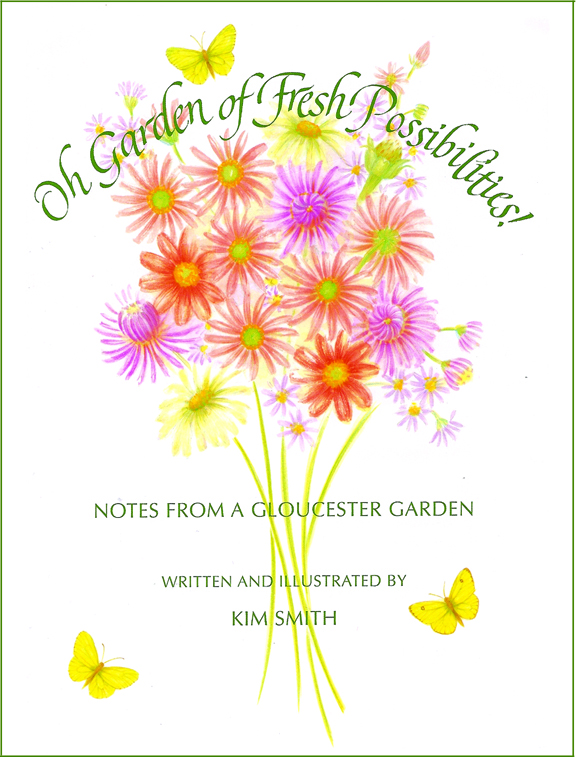
Oh Garden of Fresh Possibilities! On sale for 15.00 at David R. Godine, Publisher

Magnolia virginiana and How to Win a FREE Copy of Oh Garden of Fresh Possibilities!

Eastern Tiger Swallowtail-2 ©Kim Smith 2010

Tuesday through Friday of this week I will be bringing you expert gardening advice excerpted from my book Oh Garden of Fresh Possibilities! Notes from a Gloucester GardenMy book is currently on sale on my publisher’s website (David R. Godine) for the unheard of price of 15.00 (the list price is 35.00.) In response to Godine’s super sale, I am offering a free copy of my book.

Leave a comment or question on any of the posts by Friday at 8PM to be entered into the drawing to win. Multiple entries are allowed. One person will be chosen at random. The book will be shipped on Monday, the 17th, which should allow time for it to arrive by Christmas. Shipping is included to addresses within the United States and Canada.

Praise for Oh Garden: Smith’s writing is lithe and clean and her experiences in conjuring beauty out of her garden in Gloucester make for excellent reading.
Hawk and Whippoorwill

Excerpt from Oh Garden of Fresh Possibilities! Part One: Creating the Framework, Chapte Three ~ Planting in Harmony with Nature

Magnolia virginiana ~ Sweetbay Magnolia

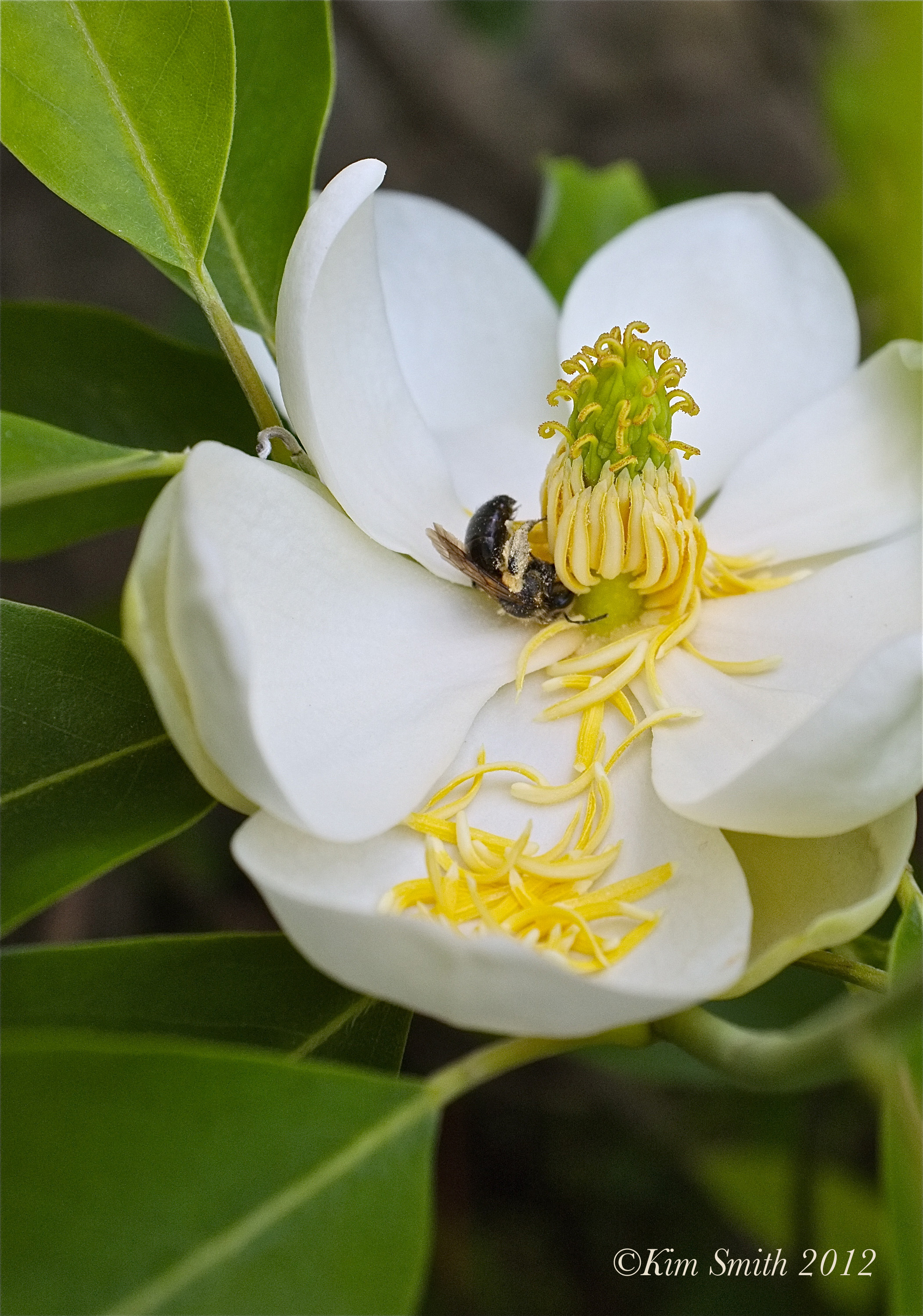
Located in the heart of Ravenswood Park in Gloucester there is a stand of Magnolia virginiana growing in the Great Magnolia Swamp. It is the only population of sweetbay magnolias known to grow this far north. I took one look at the native sweetbay magnolia and breathed in the fresh lemon-honeysuckle bouquet of the blossoms, fell in love, and immediately set out to learn all I could about this graceful and captivating tree.

Magnolia virginiana ©Kim Smith 2012 copy

Returning from a trip to visit my family in northern Florida, I had tucked the bud of a the Southern magnolia (Magnolia grandiflora) into my suitcase to paint upon my return. I was dreaming of someday having a garden large enough to accommodate a Magnolia grandiflora and was elated to discover how similar our sweetbay magnolia is to the Southern magnolia. For those not familiar with the Southern magnolia, it is a grand, imposing specimen in the landscape, growing up to fifty feet in the cooler zones five and six, and one hundred feet plus in the southern states. M. grandiflora is the only native magnolia that is evergreen in its northern range, flowering initially in the late spring and sporadically throughout the summer. The creamy white flowers, enormous and bowl-shaped (ten to twelve inches across), emit a delicious, heady sweet lemon fragrance.

In contrast, the flowers of the sweetbay magnolia are smaller, ivory white, water-lily cup shaped, and sweetly scented of citrus and honeysuckle. The leaves are similar in shape to the Magnolia grandiflora, ovate and glossy viridissimus green on the topside, though they are more delicate, and lack the leathery toughness of the Southern magnolia. The lustrous rich green above and the glaucous silvery green on the underside of the foliage creates a lovely ornamental bi-color effect as the leaves are caught in the seasonal breezes.

Magnolia virginiana is an ideal tree for a small garden in its northern range growing to roughly twenty feet compared to the more commanding height of a mature Southern magnolia. M. virginiana grows from Massachusetts to Florida in coastal freshwater wetland areas as an understory tree. The tree can be single- or multi-stemmed. Sweetbay is a stunning addition to the woodland garden with an open form, allowing a variety of part-shade loving flora to grow beneath the airy canopy. The leaves are a larval food for the Eastern Tiger Swallowtail butterfly. Almost immediately after planting we began to notice the swallowtails gliding from the sunny borders of the front dooryard, where an abundance of nectar-rich flowers are planted specifically to attract butterflies, around to the shady border in the rear yard where our sweetbay is located.

Garden designs are continually evolving. Part of our garden has given way to a limited version of a woodland garden, for the shady canopy created by the ever-growing ceiling of foliage of our neighboring trees has increasingly defined our landscape. We sited our Magnolia virginiana in the center of our diminutive shaded woodland garden where we can observe the tree from the kitchen window while standing at the kitchen sink. Gazing upon the tree bending and swaying gracefully in the wind, displaying its shifting bi-color leaves, provides a pleasant view when tending to daily chores.

See Tuesday’s excerpt about pear trees

Eastern Tiger Swallowtail ©Kim Smith 2010

Win a FREE Copy of Oh Garden of Fresh Possibilities!

Tuesday through Friday of this week I will be bringing you expert gardening advice excerpted from my book Oh Garden of Fresh Possibilities! Notes from a Gloucester Garden. My book is currently on sale on my publisher’s website (David R. Godine) for the unheard of price of 15.00 (the list price is 35.00.) In response to Godine’s super sale, I am offering a free copy of my book.

Leave a comment or question on any of the posts by Friday at 8PM to be entered into the drawing to win. Multiple entries are allowed. One person will be chosen at random. The book will be shipped on Monday, the 17th, which should allow time for it to arrive by Christmas. Shipping is included to addresses within the United States and Canada.

Praise for Oh Garden! from The Boston Globe’s Carol Stocker ~ Oh Garden! is a treasure, and perhaps the best garden gift book of the season. Both dream-like and practical, it captures the gardener’s journey by integrating personal essays, hand’s-on advice, and paintings.
—The Boston Globe

Monarch Butterflies Mating.jpgA Pair of Monarchs Mating in Our Pear Trees 

Excerpt from Part One: Creating the Framework, Chapter One

He who plants pears, Plants for heirs

Pyrus communis, or common European pear, is not seen growing in the wild. The cultivated pears as we know them today are thought to be derived from Pyrus nivalis and P. caucasia. Few pears ripen well on the tree and that may be one reason they have not been grown as extensively in America as apples and peaches, although apple and peach trees are not as long lived as pear trees. A healthy pear tree can live and bear fruit for several centuries.

The trick to harvesting pears is to pick them as they are ripening, while they are still quite firm. If you wait until the flesh yields with pressure on the outside, the fruit will be rotted inside. Each individual variety of pears has an estimated ripening date from when the tree blooms. Note the date when the tree begins to flower and count the days forward to the approximate ripening time. The quality of the soil, where the tree is sited, as well as changes in the weather from year to year will influence the number of days until the pears are ready to be harvested. Bearing in mind that this is only an approximation, begin monitoring the fruit closely as the day approaches. Nearing the correct time of harvest, the color of the fruit will begin to change. For example, the ‘Beurre Bosc’ begins to turn a light golden yellow beneath its russet skin. Carefully hold the stem of the pear in one hand and the fruit-bearing spur in the other hand. Gently twist with an upward turn. Remove the pear and stem, not the bumpy, fruit-bearing spur. It takes several years for a spur to develop, and if damaged or accidentally harvested with the pear, the crop will be significantly decreased the following year.

Stack the fruit in the coldest section of a refrigerator and store for several weeks. After two to three weeks, remove a pear or two and let it ripen at room temperature for several days. At this point the pear will ideally be fully ripe and ready to eat. Depending on the cultivar, pears will keep for weeks to several months when kept well chilled.

See Monday’s post for more about Oh Garden of Fresh Possibilities!

My Book On SALE for ONLY 15.00!!! “Oh Garden of Fresh Possibilities! Notes from a Gloucester Garden”

Just in time for holiday gift-giving, my book, Oh Garden of Fresh Possibilities! Notes from a Gloucester Garden, which I both wrote and illustrated, is on sale for only 15.00 on my publisher’s website. The price is unbeatable as the list cost is 35.00. Oh Garden! makes an ideal gift for the garden-maker and nature lover on your holiday list and at this price, I recommend you buy one for yourself and one for a friend!

Oh Garden of Fresh Possibilities.jpgPraise for Oh Garden ~

Anyone who gardens along the Eastern Seaboard from Maine to South Carolina will appreciate Oh Garden of Fresh Possibilities! (David R. Godine, 2009, $35). This book is filled with design ideas and plants that work well in this coastal region, as author and garden designer Kim Smith relates her experiences with her garden in Gloucester, Massachusetts. The first part of the book, “Creating the Framework,” delves into trees, shrubs, and other elements for creating structure in the garden, while the second section addresses how to fill out the framework to create a harmonious living tapestry in your garden. —Viveka Neveln, The American Gardener

Oh Garden! is a 250 page hardcover book crammed full of the most excellent gardening advice you will find anywhere, guiding you through the four seasons, and woven throughout with over 85 illustrations, and fabulous plant lists. All this coming week I will be posting expert gardening advice on GMG and on my blog, with more praises from The Boston Globe and other literary reviewers.

Zip Line Kid builds it up and knocks it down

Isn’t it fun to watch what kids will do with junk?  Last year John built a Zip Line with stuff from the garage (see those videos here).  Watch his balancing act from today:

Nope, he’s not playing with any of those expensive gifts you get at the malls.  Something to think about this time of year, huh . . .

Mystery of the Disappearing Soap

Halfway through the summer my not-inexpensive shea butter outside shower soap began to disappear once it wore away to about three to four inches long. I was puzzled and found it mildly annoying and couldn’t imagine why the soap continually went missing. Whatever was stealing the soap has developed a real taste for it because the critter can no longer contain its desire, now nightly chowing down even before it is small enough to cart away. I think it is a rat or perhaps a skunk. My husband wants to trap it, but I ask the question–what if it is a skunk and you do manage to capture, how are you going to remove it from the trap??

Who is eating our soap?

I’ve tried discouraging the little borrower by switching from lavender to lilac, verbena, honeysuckle, and gardenia; no matter, it savors them all. It would be fun to film the creature with an infrared camera, similar to the ones used by National Geographic photographers for filming lions and tigers at night. Does anyone have one I can borrow?

Deb Shares Her Red Squirrel Story

Deb von Rosenvinge from House of the Raven writes the following in response to GMG post American Red Squirrel Midden:

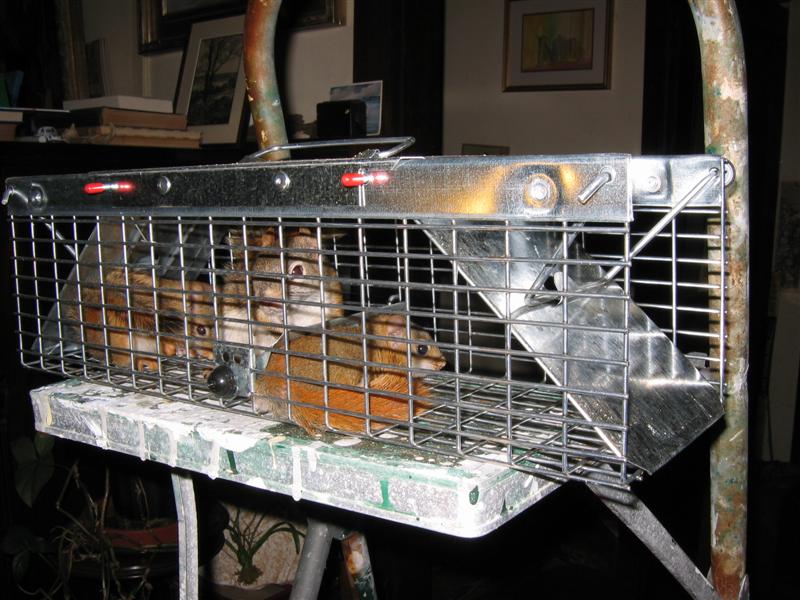
I too enjoy all your posts Kim. Also had a small family of reds move into my house via my crawl space. When I blocked the mother’s main entrance, she found another way in and actually poked her head out of the hole I had to make in my ceiling to get a trap up there, and chided me! I caught the whole family and even caught the mom with two babies at one time! They had foiled me several times of setting the trap– Got the bait, sprung the trap and yet escaped. I finally spread the peanut butter right on the trip mechanism and bingo! I’ll send you a picture of my multiple capture. Thought I should send it on to the Hav-a-Hart company!

All in my ceiling!  They sounded like a soccer team rolling around acorns and having a blast!

Thank you for sharing Deb. I read that American Red Squirrels experience severe early mortality; only about 22 percent survive to one year. So good that you were able to catch the mama and babies all together! Deb von Rosenvinge Photo

American Red Squirrel Midden

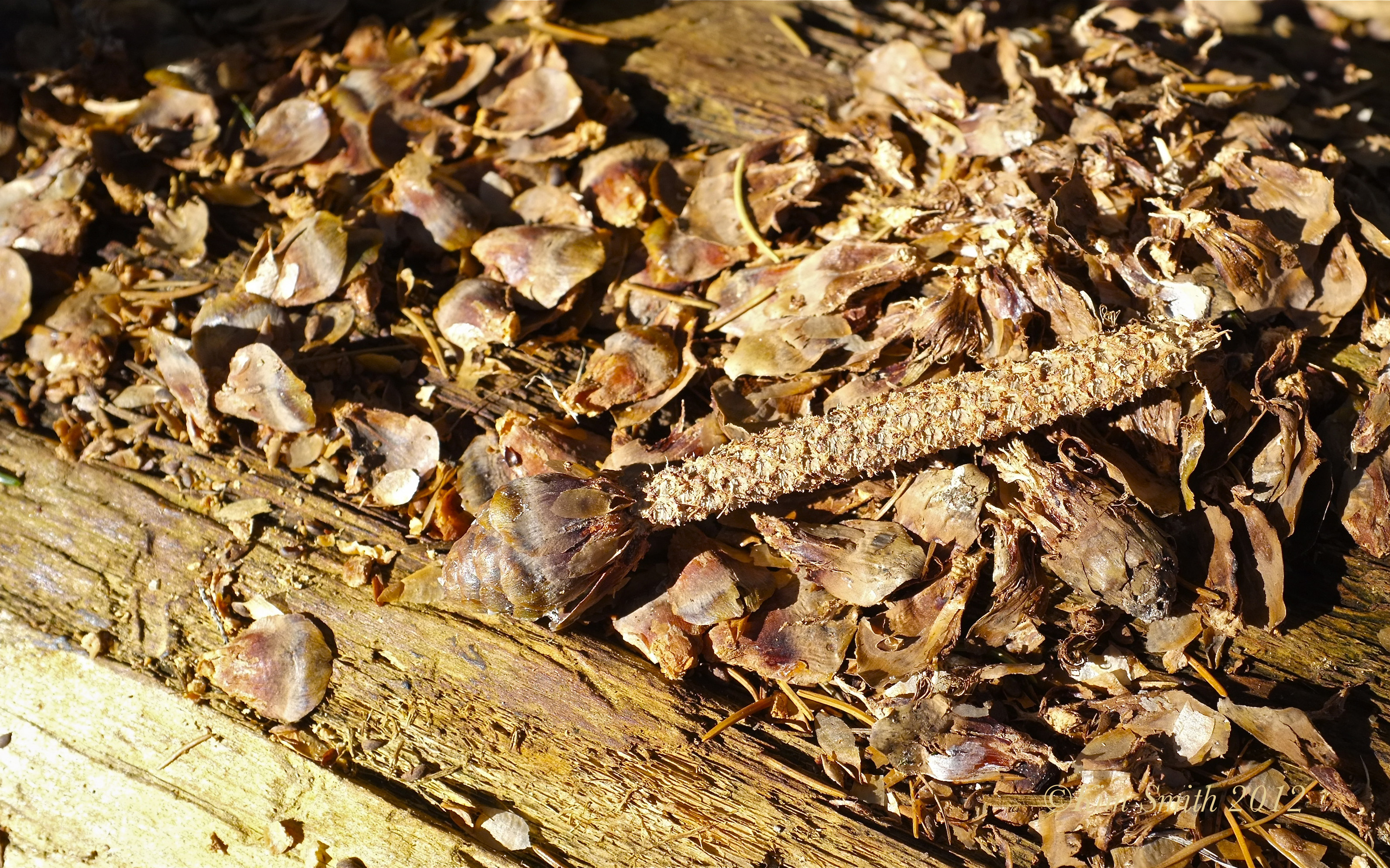
Pine cone eaten clear to the core, photographed at a Pine Squirrel midden. The mid-day light was very harsh and too contrasty-click images to view details.

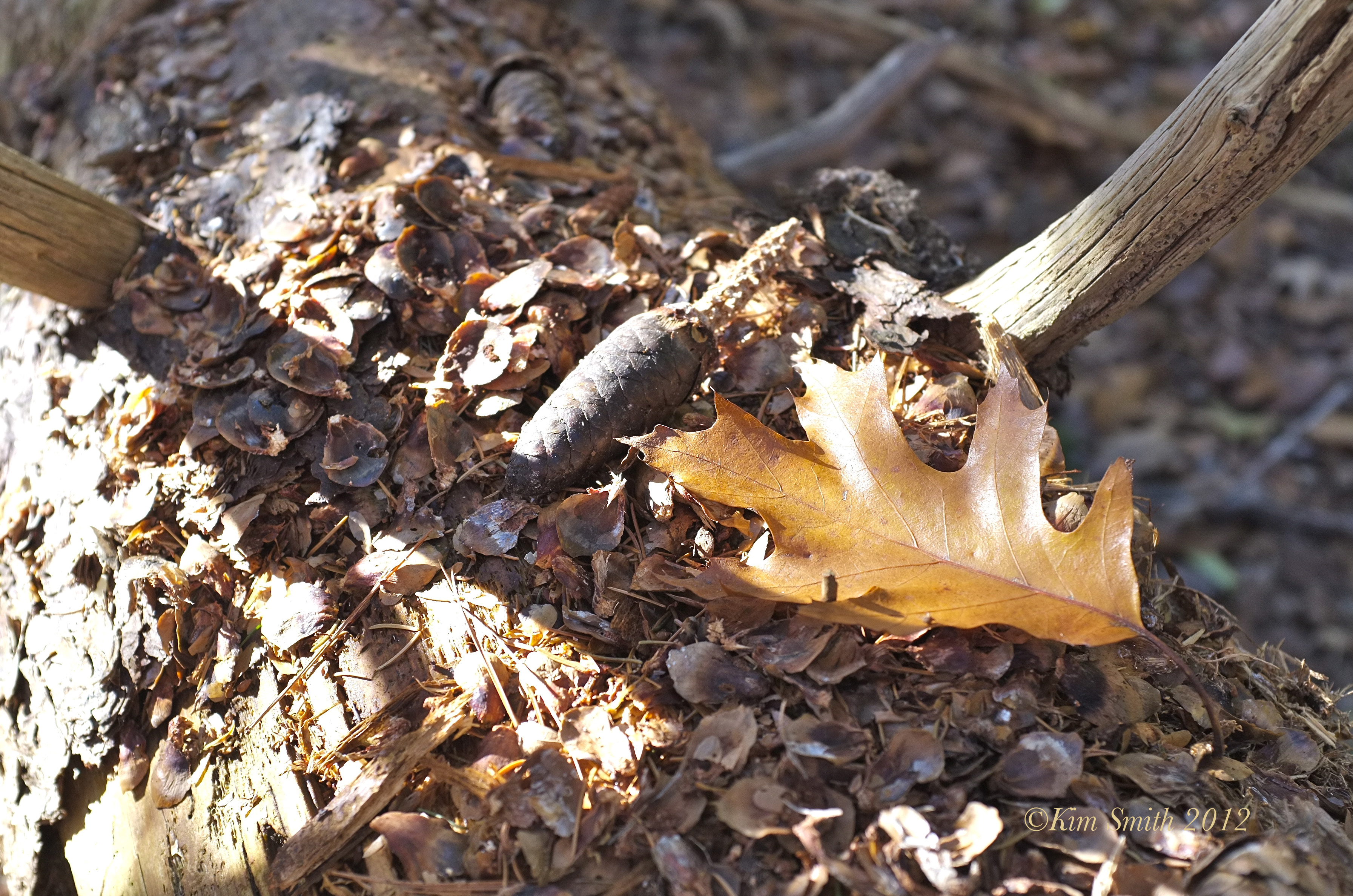
Adjacent to where we noticed the Japanese maple tree, Dale Resca, the Facilities Manager at Willowdale, discovered an American Red Squirrel (Tamiasciurus hudsonicus) midden.

American Red Squirrel Midden

A squirrel midden is essentially a squirrel’s favorite place to eat; the fallen scales from consumed seed cones collect in piles, called middens. Sitting on their claimed stump, fallen log, or branch, the squirrel pulls the scales off the cones to get to the seeds.

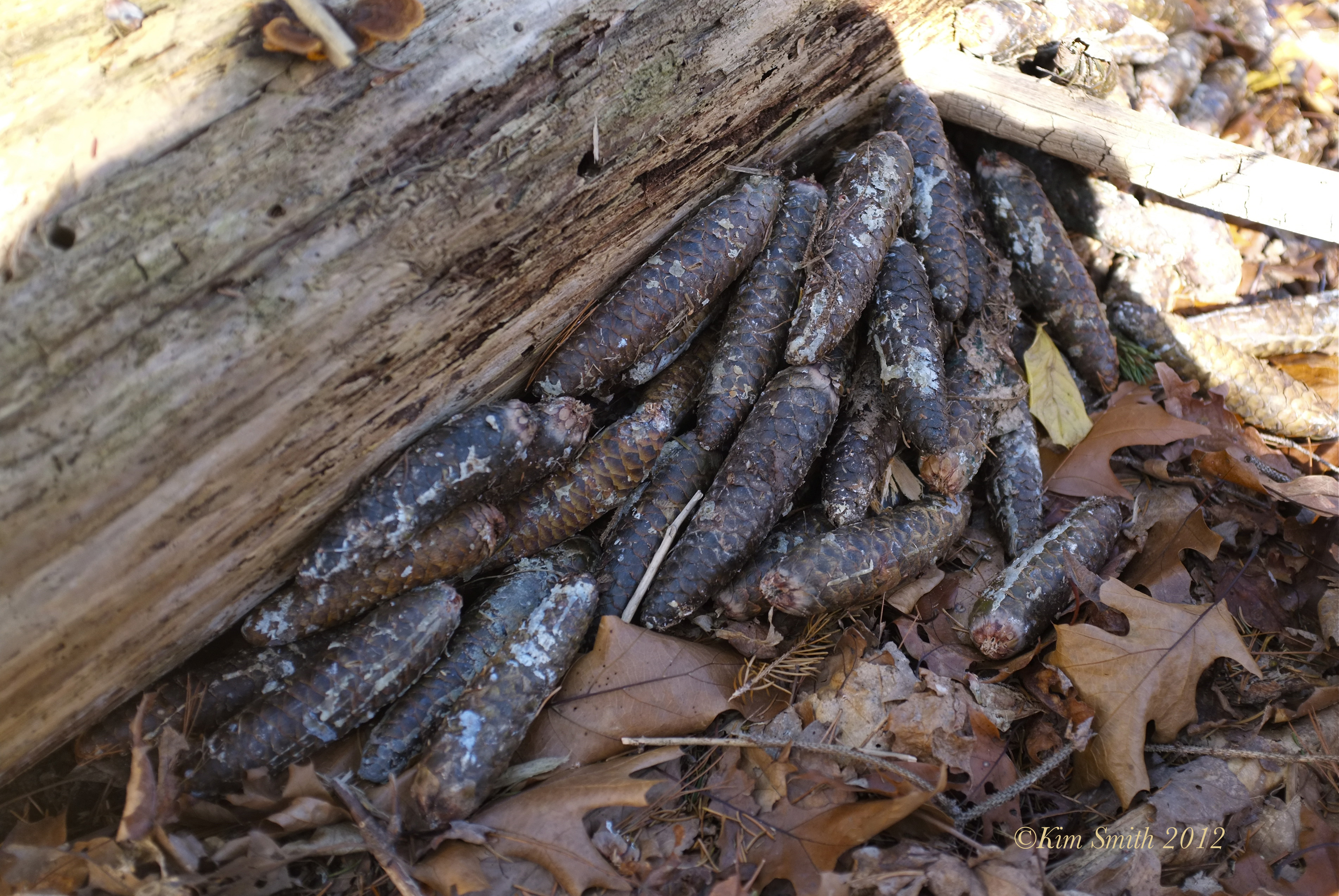
American Red Squirrel Cache of Pine Cones

You can see from the above photo why the American Red Squirrel is often referred to as the Pine Squirrel. Ripening in late summer, the squirrels collect pine cones and store in a central cache. American Red Squirrels do not hibernate during the winter months; the caches of cones supply nourishment when food supplies are running low.

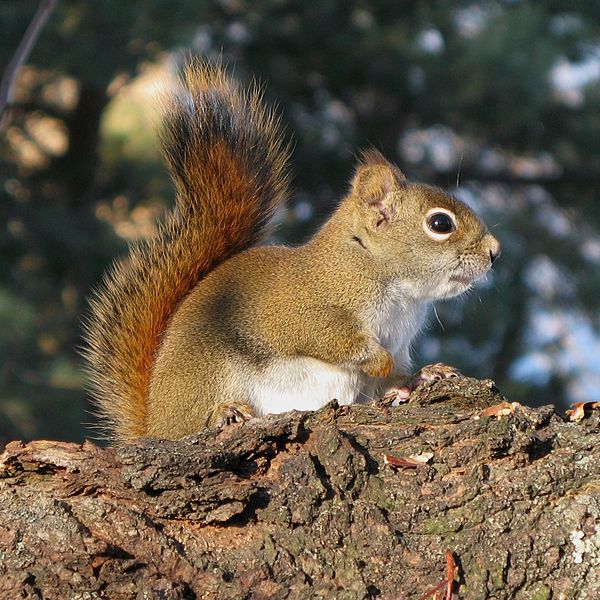
The American Red Squirrel is widely distributed throughout North America. They are smaller than a gray squirrel and somewhat larger than a chipmunk, with reddish fur and white venter, or underbelly.

American Red Squirrel (Tamiasciurus hudsonicus) ~ Image courtesy Google images 

Green Leaves Ignite!

“Green leaves ignite, transformed by a kaleidoscope of incinerating colors—devil-red, burnt tangerine, caramelized amber, searing saffron, and smoldering crimson-purple. The air is impregnated with the aromatic perfume of orchard fruits ripening in the fleeting flush of the sun’s warm light. Hazy, slanting rays gild the late season glory in the garden. Surrounded by flowers of dissipating beauty and juxtaposed against the dazzling brilliance of autumn foliage, we are urged to spend every possible moment savoring our gardens before the onset of winter.”

Excerpt from my book Oh Garden of fresh Possibilities! Notes from a Gloucester Garden. Written and Illustrated by Kim Smith, David R. Godine, Publisher. To read more of this excerpt, click link: Exquisite Flora in Autumn.

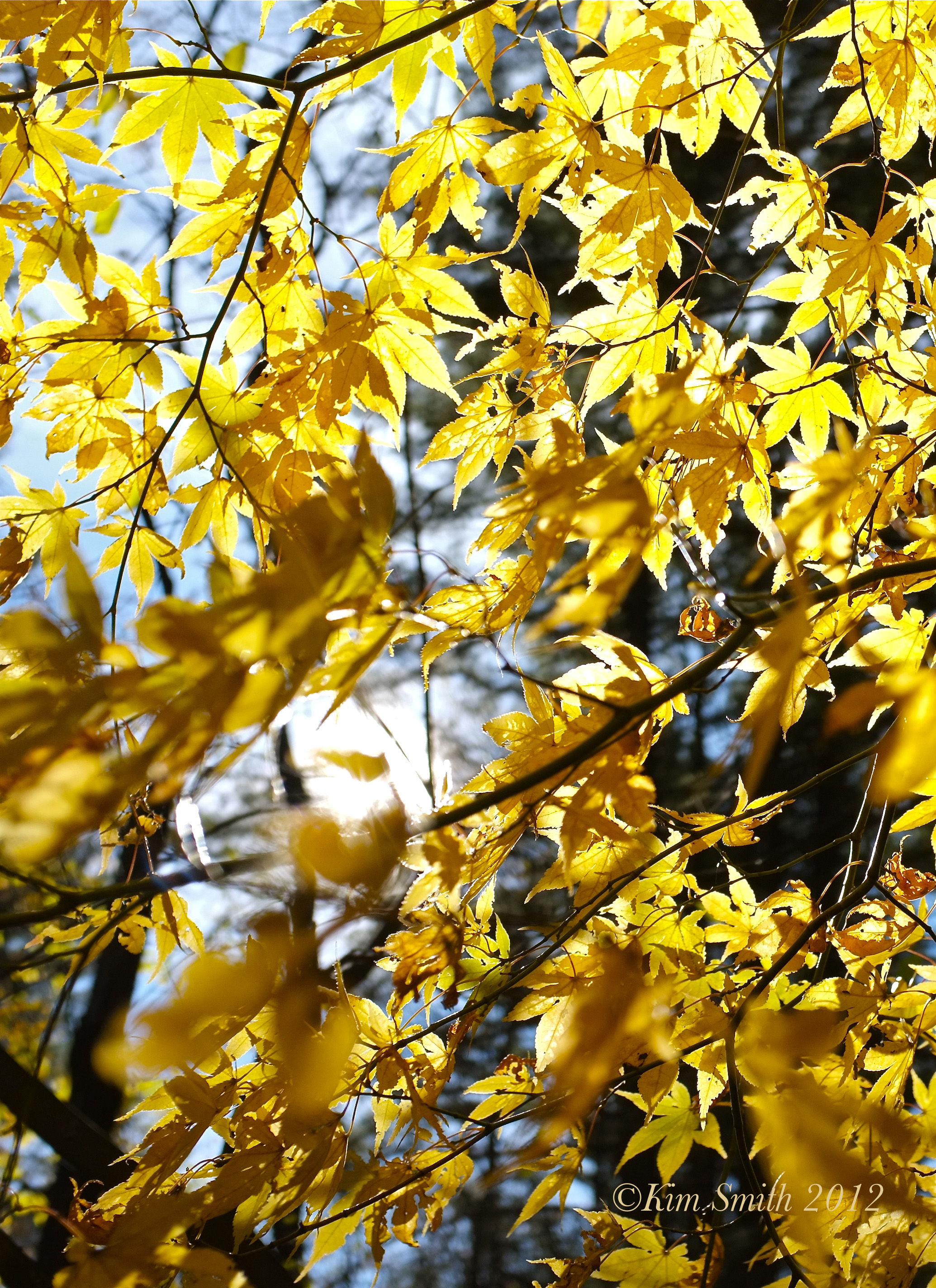
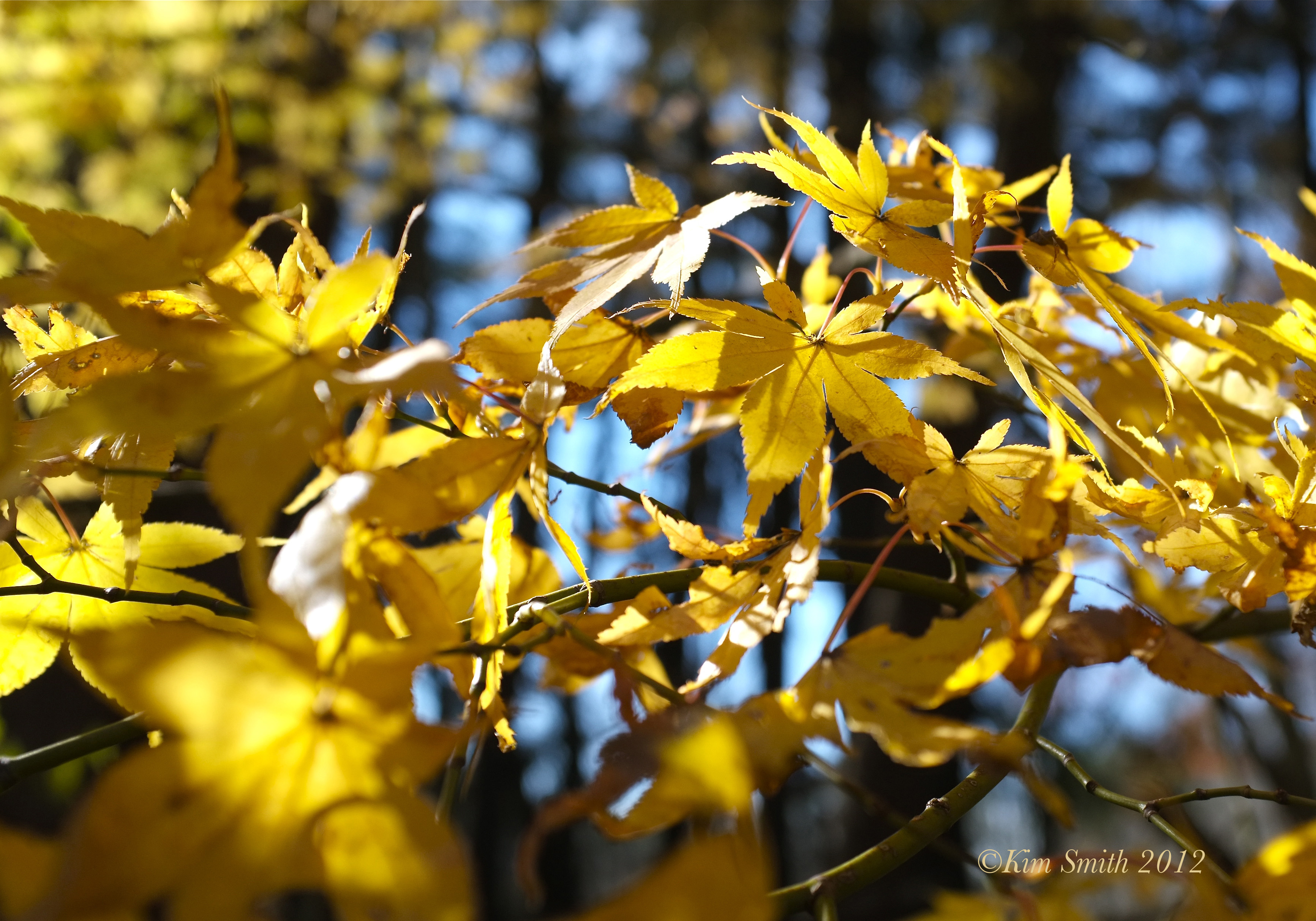
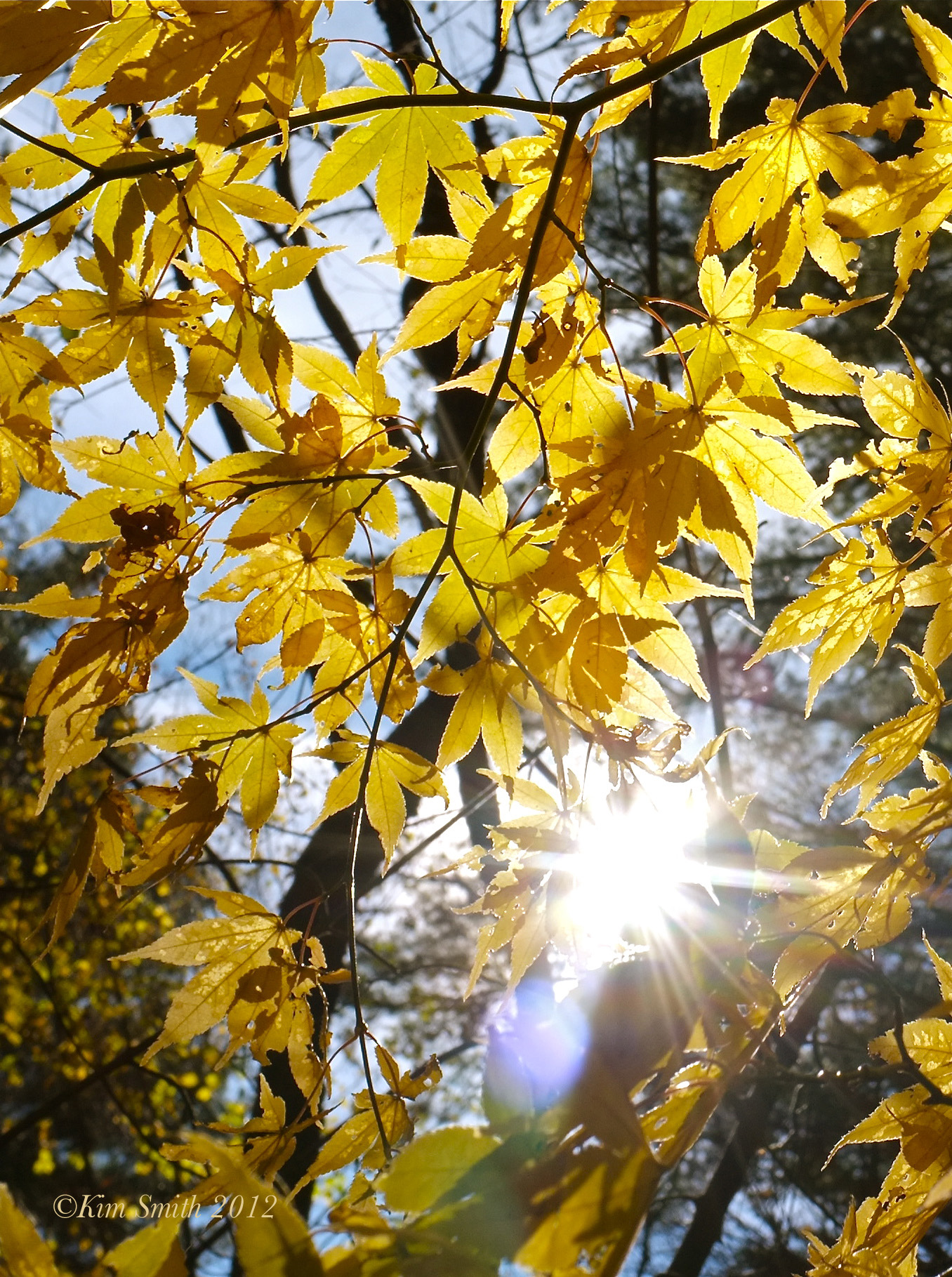
Beautiful saffron yellow maple found, glowing gold in a shady knoll beneath a hardwood tree canopy, at Bradley Palmer State Park.

I believe this little tree is a Japanese maple tree, not typically found in a forest of North American native trees.

Fall Planting at Willowdale Estate

Fall Planting for Spring Tulipomania at Willowdale ~ 1,500 bulbs planted, only 1500 more to go!

The Super Fantastic Willowdale Facilities Team, right to left ~ Dale, James, and Greg

Willowdale Estate ~ A Stunning Special Events Venue

Film: My Daughter Liv and Max Getting Married

This beautiful film was sent to me by one of my dearest friends, Claudia, the filmmaker’s Mom. Her daughter Magdalena is currently studying film and poetry at Hampshire College in Amherst. She is very interested in recycled images and has transferred many of the family’s old super 8’s. Magda would have to speak about her intention but her Mom wonders if it was from her perspective of looking up at the “big kids.” She loved to toddle after Olivia! The music is from her band with her friend Cody; they are called Stolen Jars. Magda wrote many lyrics for the album and sings on many tracks. One piece was used in an iPad commercial this summer. Thank you Claudia and Magda for Sharing!

Beautiful Film Magdalena!

My note: That’s my daughter Liv “getting married.” I think this is film footage from one of our many friend and family wonderful get-togethers on Martha’s Vineyard, at the funnest and most welcoming home of Rosemary, who is the Mom of our other best friend, Donna.

The Twelve Days of Christmas

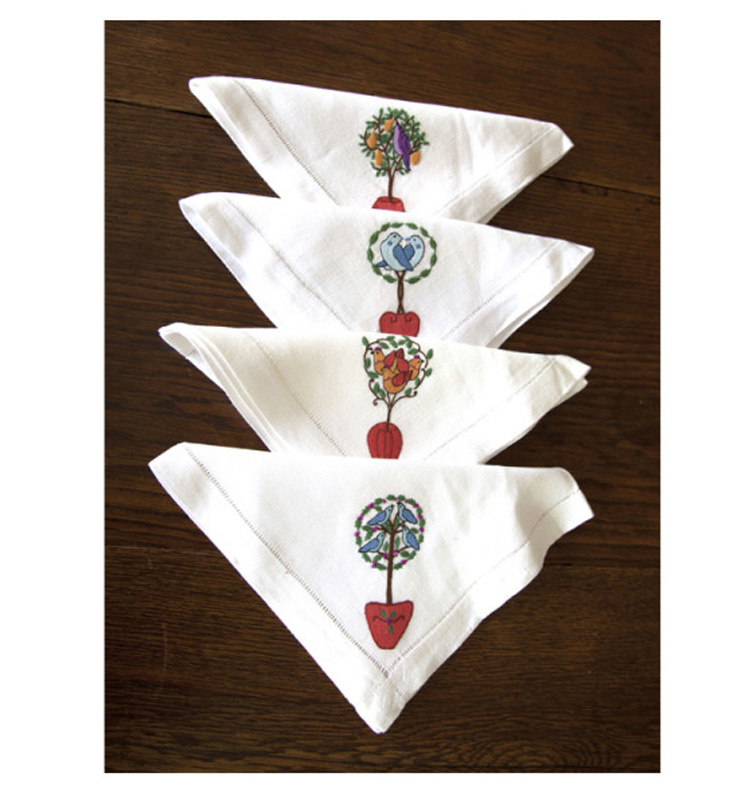
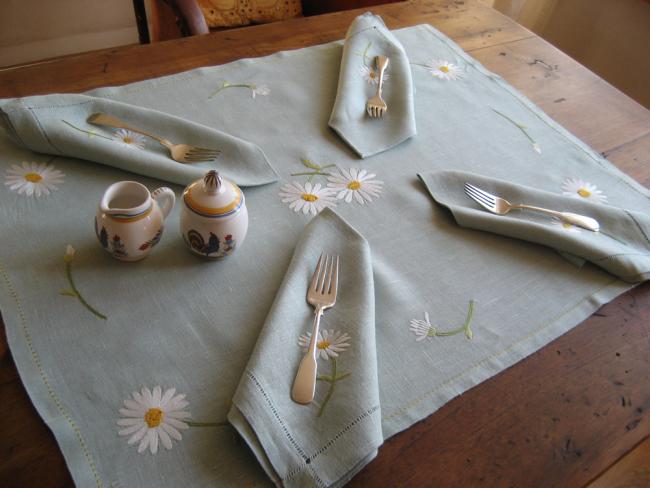
The Twelve Days of Christmas Dinner Napkins

Yesterday E.J. posted her photo of Haiti Projects merchandise for sale. I thought you might be interested to know that the set of four napkins pictured above was designed by me.

My designs were inspired by the first four verses of the English Christmas Carol, The Twelve Days of Christmas–A partridge in a pear tree, two turtle doves, three French hens, and four calling birds. Perhaps knowing what the images symbolize, you may be even more interested in purchasing as a holiday gift!

Daisy Table Mat with Matching Napkins

Over the years I designed many items for Haiti Projects and The Twelve Days of Christmas set of napkins was one of my favorites. All of the Haiti Projects linens are exquisitely hand embroidered, not machine embroidered. Additional photos are of several more of my designs for Haiti Projects, along with links to purchase each: Dove of Peace, Daisy Table Mat with Matching Napkins, Dragonfly Eye Pillow, and Sweet Dreams Eye Pillow. See also Apple Blossom Table Mat. The prices are all very reasonable and make very special gifts–as E.J. said, Give a Gift for Good.” Photos courtesy Haiti Projects website.

Dragonfly Eye Pillow ~ filled with lavender

Dove of Peace  ~ Also available in white ground with red embroidery

Sweet Dreams Eye Pillow

Have Prius–Can Do!

I wrote this post several days ago. Westport was hit very hard by Sandy.

Let’s hope Westport is spared coastal flooding from Hurricane Sandy

This upcoming planting week for my newest project, The Mary Prentiss Inn, a beautiful inn in the heart of Cambridge (more about The Mary Prentiss Inn later) has been disrupted by Sandy. One of the nurseries I work with cancelled delivery and wanted to reschedule, but not until after the 5th of November. By that time I’ll be knee-deep planting Willowdale for the spring of 2013. I didn’t want to disappoint my clients and postpone work until later in November. What to do? Have Prius, will travel.

Much has been written about the super fuel efficiency of the Prius (saving me much, much $$$ over the eight years I have owned a Prius), but rarely do I see mention of it’s fantastic carrying capacity when the back seat is made flat. People look at me in disbelief when I tell them I have transported trees and (smallish) sofas in the back of my Prius so I thought you’d like to see.
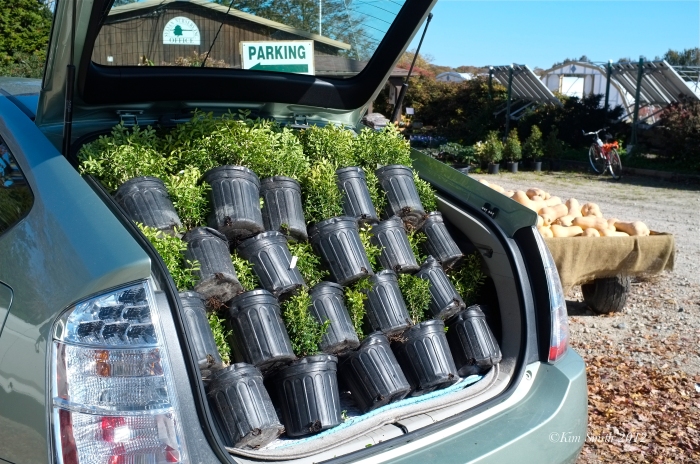
125 Boxwood plants, with room to spare in the front passenger seat

Friends often tell me I need a truck or a van. Perhaps when an auto manufacturer designs a 22k truck or van that gets 45 miles to the gallon (when loaded to the max), I’ll consider. In the meantime-have Prius, can do!

Westport is one of the most exquisite New England towns you will ever see. The topography is such that the farmland runs to the ocean’s edge. Through community and conservation groups, Westport is earnestly endeavoring, and succeeding, in preserving its historic and agricultural heritage–as we know in Gloucester, it is very intelligent when communities work together to help protect and preserve their farmers and fishermen.
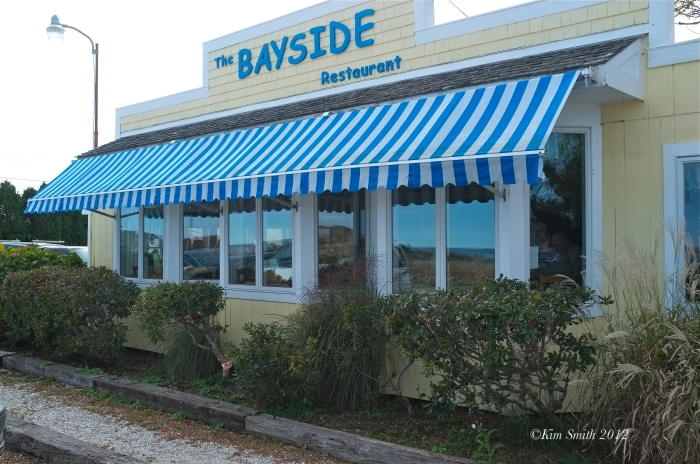
The Bayside Restaurant ~ Charming little spot to eat in Westport, across the road from Allens Pond Wildlife Sanctuary. The Bayside offers a complete menu, including many delicious seafood entrees and Homemade Pies!
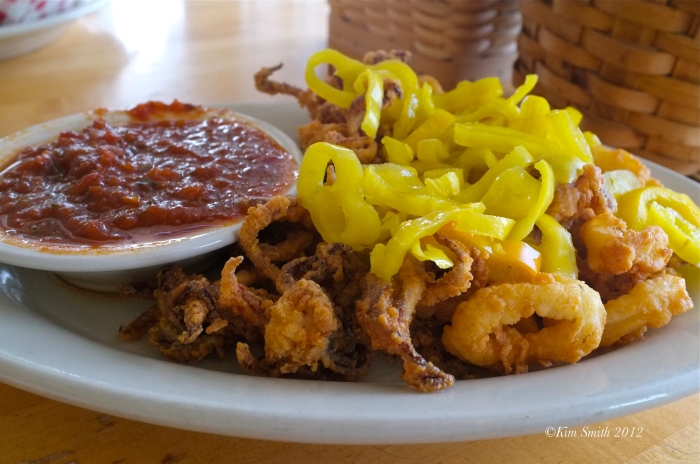
Super Fresh Rhode Island Calamari

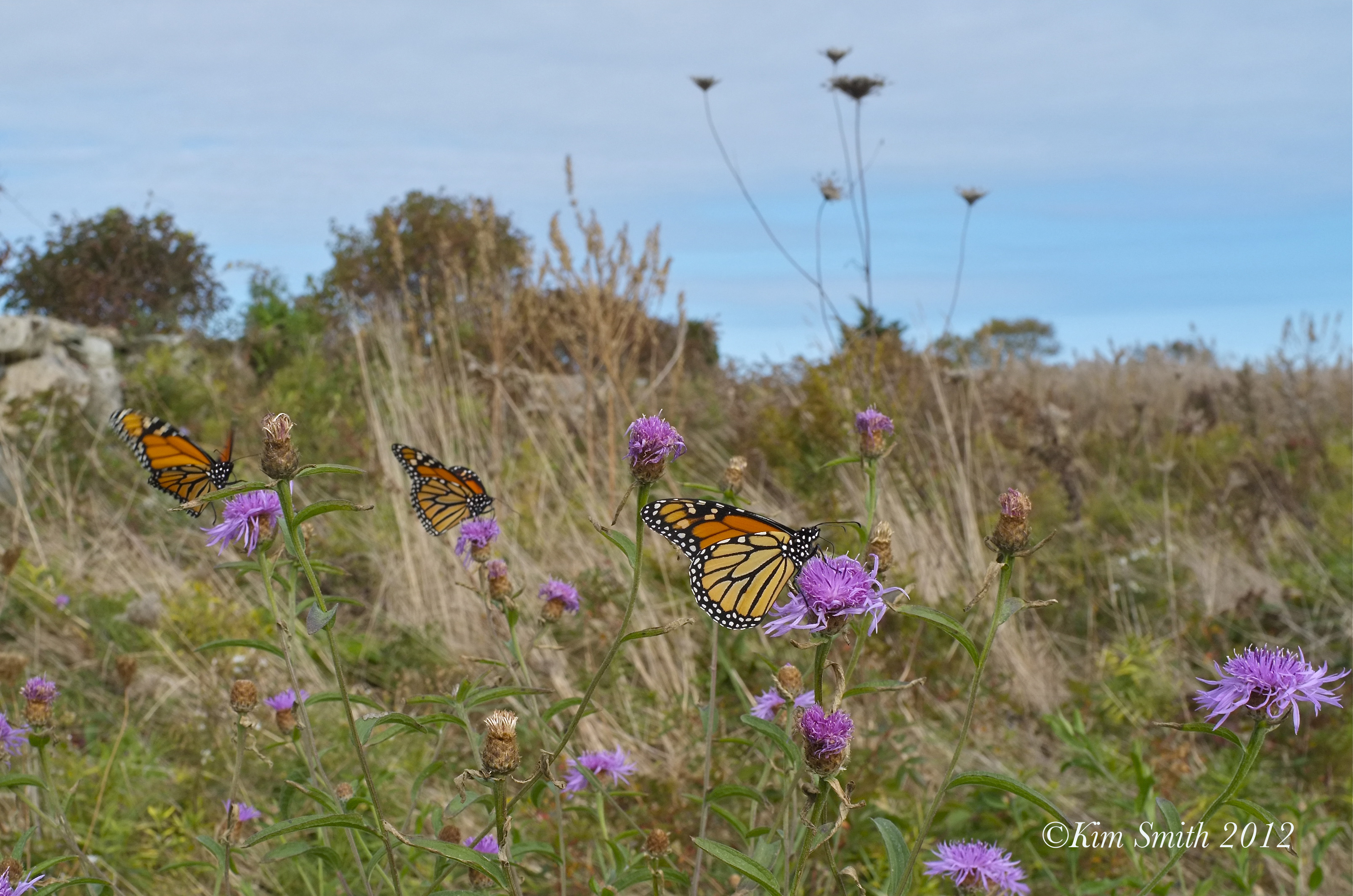
You can see why Sylvan is one of my top five nurseries, not only for their exquisite plant stock, but because they are located about a hundred yards down the road from Allens Pond Wildlife Santuary.  In autumn, after the coastal Monarchs depart Cape Ann, they fly south and next congregate in the Westport area, in and around Allen’s Pond and Horseneck Beach.
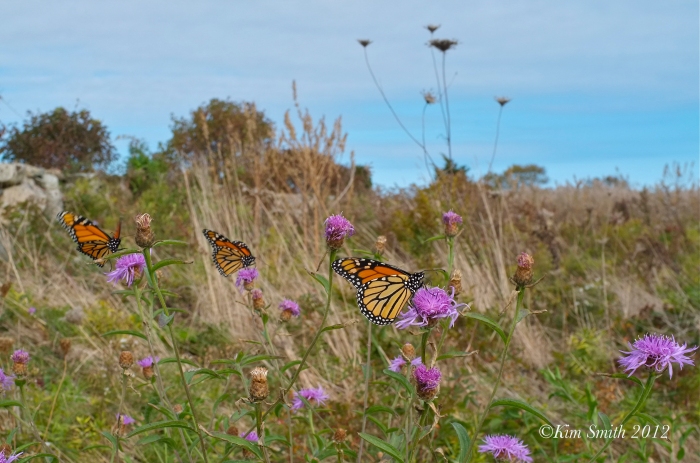
 Allens Pond ~ Hurry Monarchs and Get Going! October 26, 2012

From the Trustees of Reservations website, “In many towns throughout Massachusetts The Trustees of Reservations have worked in partnership with the state’s Department of Agricultural Resources to help preserve family farms. Nowhere has that work been more successful than in Westport, where the partnership includes the Westport Land Conservation Trust and the town. Together, the groups have protected 13 farms in Westport over the past five years, including two dairy farms, two Christmas tree farms, an organic fruit and vegetable farm, a beef cattle operation, and even a piggery. There are now a total of 28 preserved farms in Westport, encompassing over 2,100 acres.”
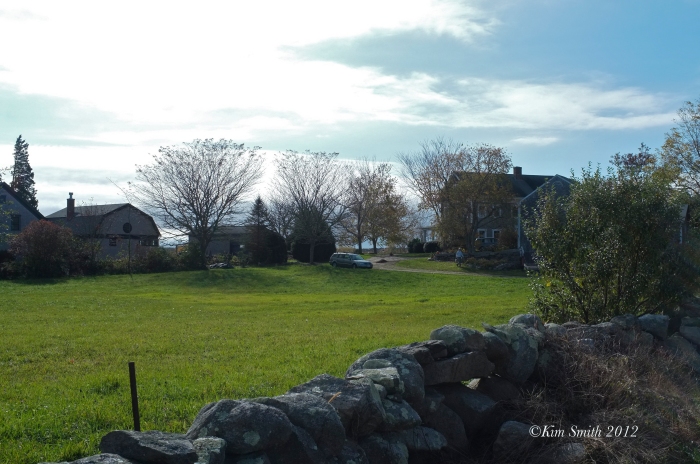
Westport, Massachusetts

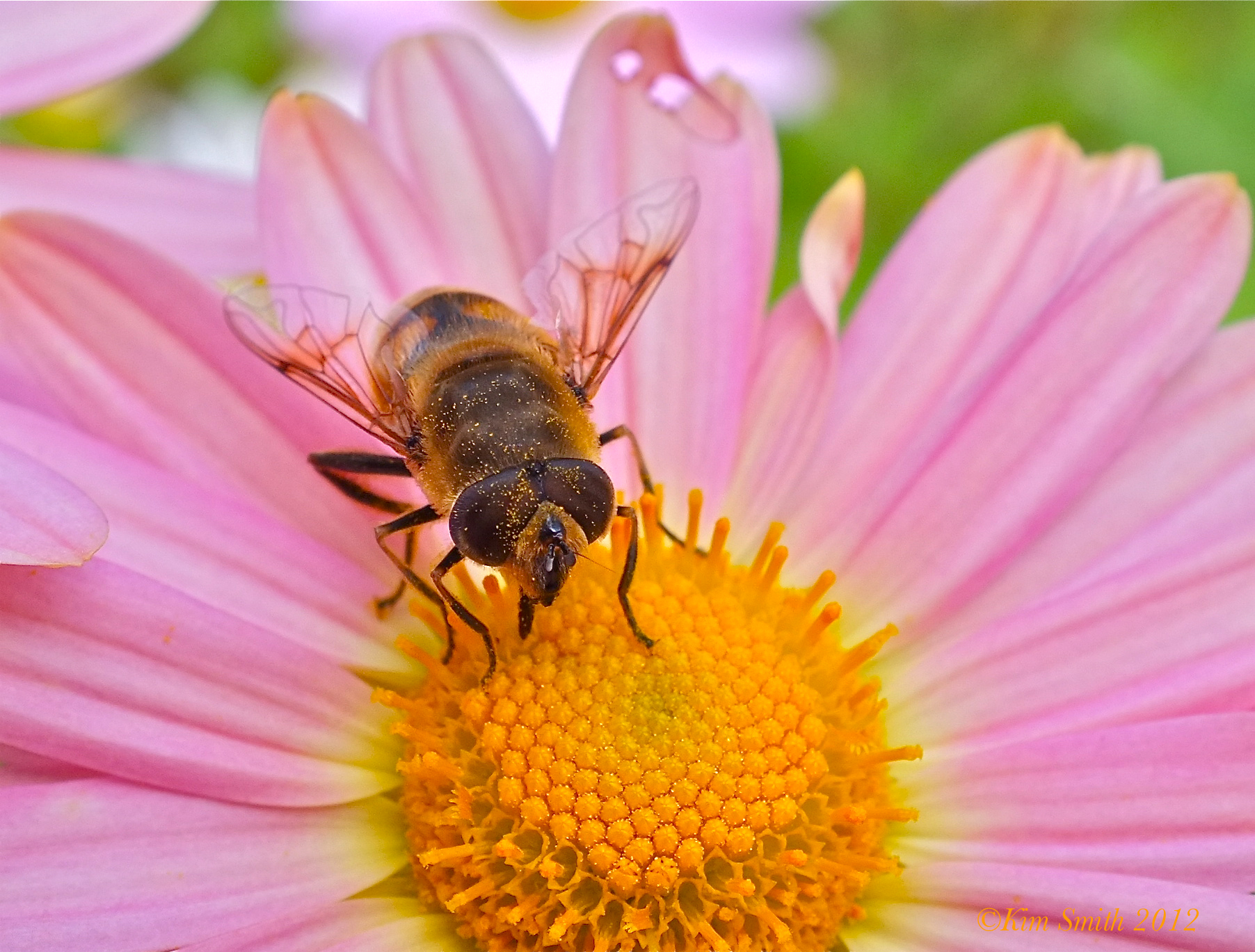
Korean Daisy and Pollen-dusted Bee

Blooming today are the gorgeous Korean daisies. From a tiny little rooted-cutting passed along from a friend, we have masses and masses of these old-fashioned beauties. I share them with all my clients and not only do they love them for late season color and fragrance, but so do the bees and butterflies on the wing in autumn.

Click to view larger to see the pollen clinging to its eyes and body.

Chrysanthemum ' Single Apricot Korean'Korean Daisy (Chrysanthemum ‘Single Apricot Korean’) and Pollen-dusted Bee

Wooly Bear Caterpillar

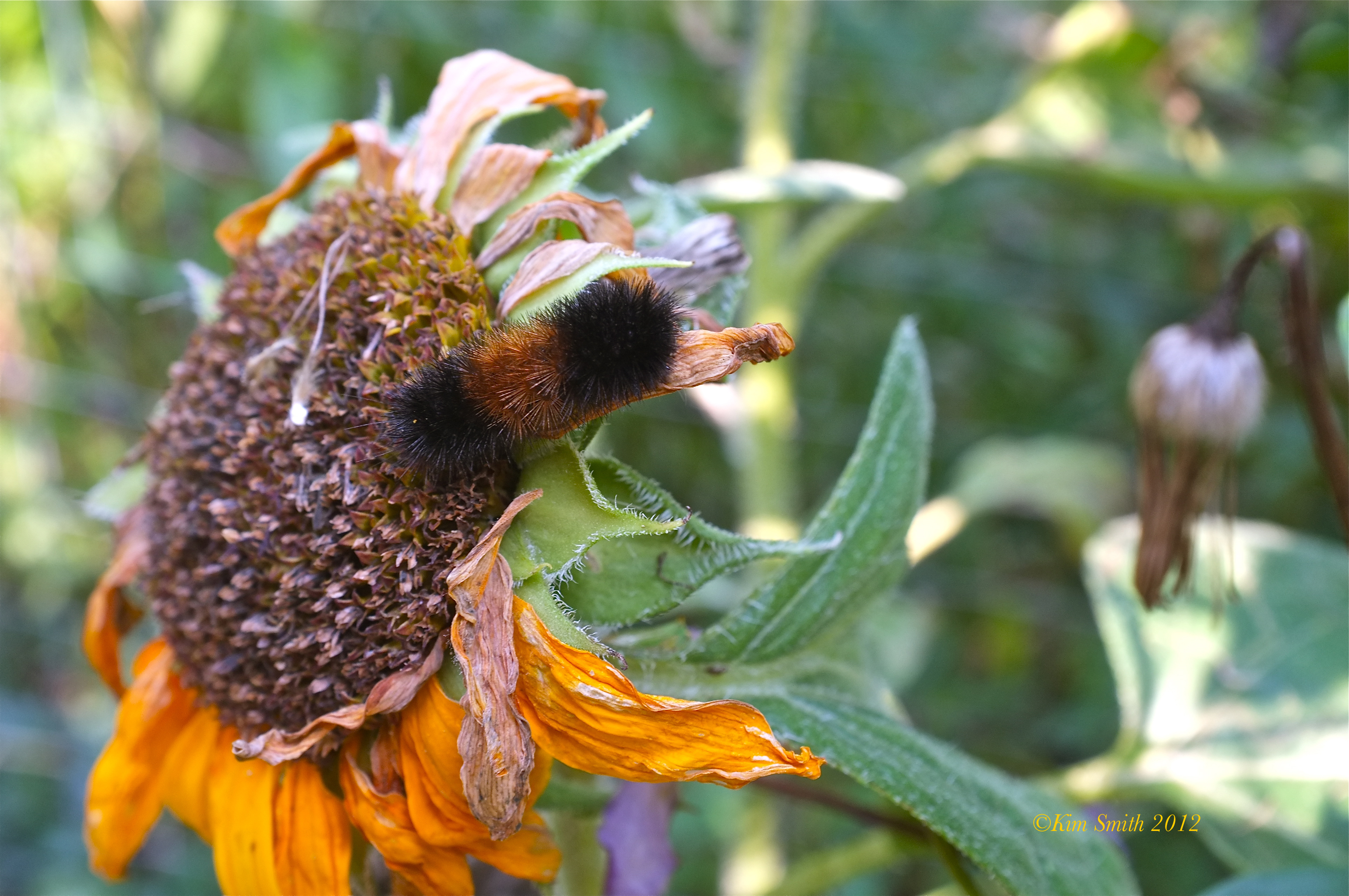
I am often asked about the Banded Wooly Bear caterpillar and questions range from, “Why am I seeing a Monarch caterpillar in the fall” (the Wooly Bear is not a Monarch caterpillar) to “how will the Wooly Bear survive the winter?”

The Wooly Bear caterpillar is the larva stage of the Isabella Tiger Moth. They are typically seen in autumn as they search for a place to curl up for the winter–under a rock, log or leaf debris or in the chinks of bark. The heavy coats of members of the Acrtiid family of moths help them overwinter, along with their ability to produce a natural sort of antifreeze called cryoprotectant.

Banded Wooly Bear Caterpillar (Pyrrharctia isabella)

The following spring, the caterpillars emerge from their winter nap, begin to feed, form a cocoon (pupate) and emerge as the adult form of the Isabella Tiger Moth. Female Isabella Tiger Moths deposit their eggs on a wide variety of plants including birch, elm, maples, asters, sunflowers, spinach, cabbage, grass, and plantain; all caterpillar food plants. In our region there are usually several generations per year and it is the last generation of the growing season that over winters, nestled in, well-hidden and wrapped in their furry coats.

Fun fact from wiki: Caterpillars normally become moths within months of hatching in most temperate climates, but in the Arctic the summer period for vegetative growth and hence feeding is so short that the Woolly Bear feeds for several summers, freezing again each winter before finally pupating. Some are known to live through as many as 14 winters. 

Isabella Tiger Moth (Pyrrharctia isabella)

Isabella Tiger Moth image Courtesy wiki

The Question Mark

Janet writes to GMG the following, “Can anyone identify this moth/butterfy that was hanging in East Gloucester today?”

Question Mark Butterfly Photo from Janet Rice

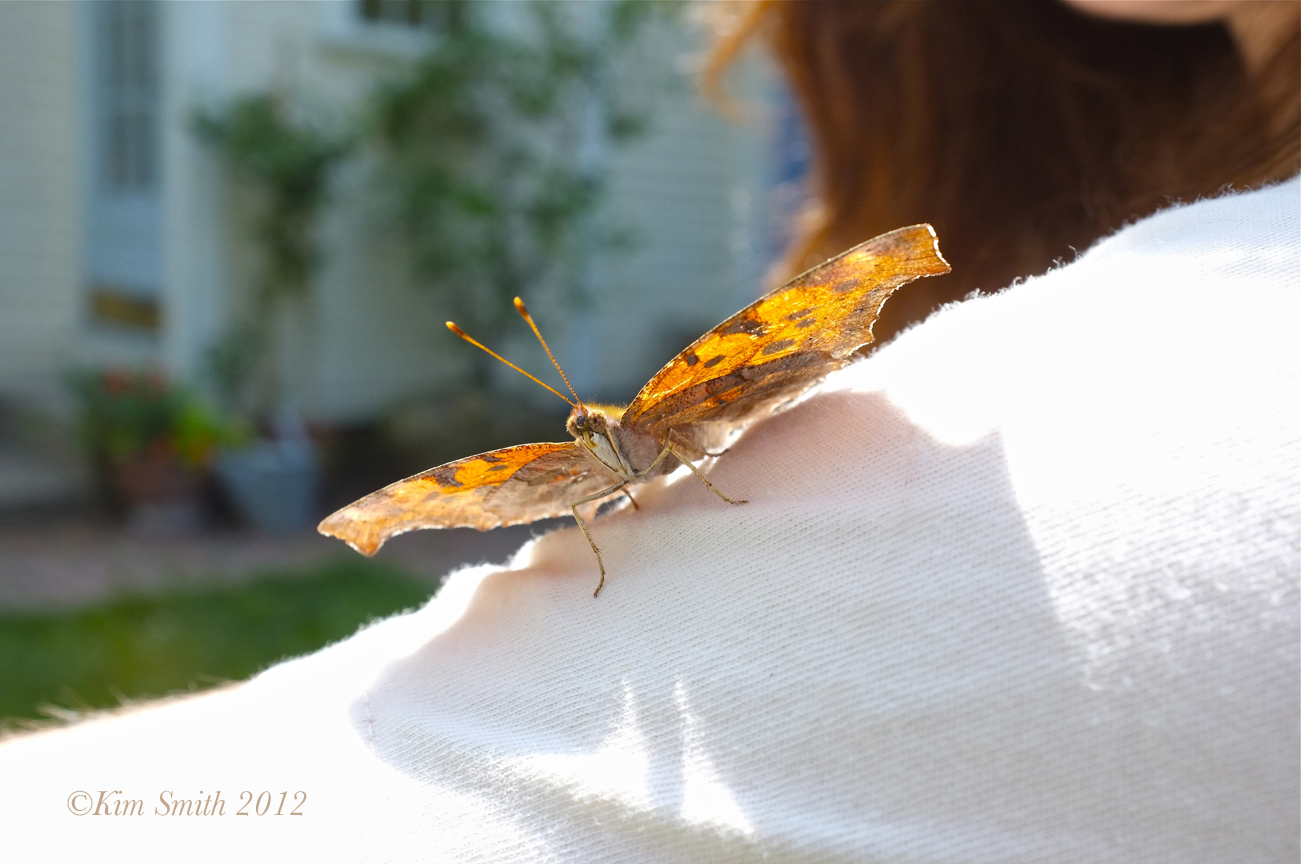
The Question Mark Butterfly (Polygonia interrogationis), so named because when the wings are folded, you can see a little raised backward question mark pattern, in white, on the underside of the hindwing. They feed on floral nectar, but are often seen on trees because they also feed on sap. And they alight on people too, because they are attracted to the salts and minerals in human perspiration. Both last year and this year we have had a tremendous influx of Question Mark Butterflies.
I can’t at the moment locate a clear photo of the underside, but know I have video footage (somewhere) that shows the question mark pattern and will try to find this weekend.
Question Mark Butterfly (Polygonia interrogationis)