GMG FOB Ben’s Newly Emerged Giant Polyphemus Moth!

20140323_193347Joey forwarded an email from reader Benjamin, who asks the following,

“I found a silky green worm last August. I put it on my house plant and the next day it had turned into a caccoon. It has been in my house for almost 8 months. It came out on my birthday March 22. So how do I attract a male for my moth? It is the biggest one I have seen.”

Hi Benjamin,

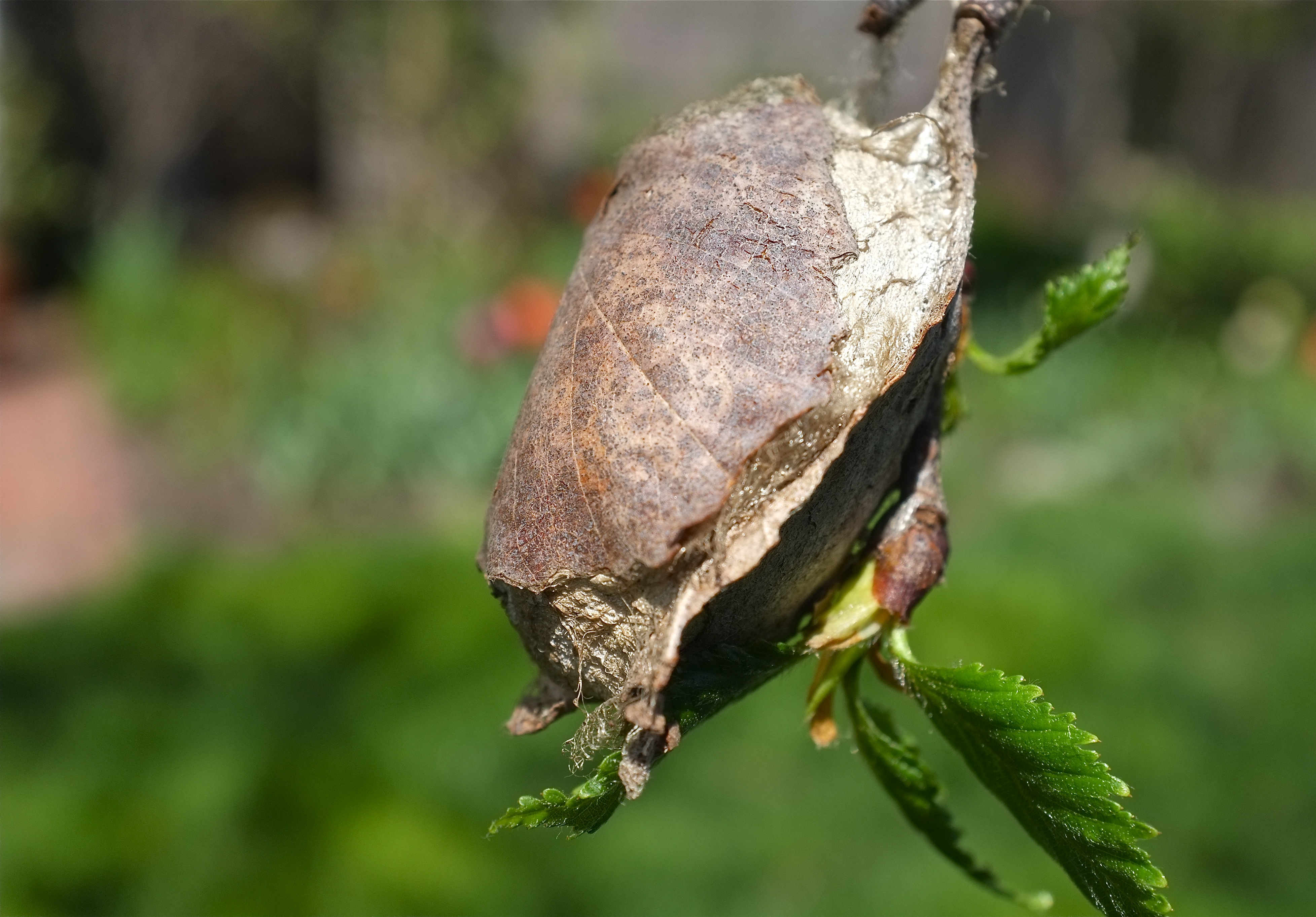
Thanks so much for writing. You have a gorgeous Polyphemus Moth (Antheraea polyphemus), and it does look like a female in the photo provided as they have thinner antennae than the male.

On the evening of the day the female emerges, she releases a pheromone, which attracts the male. Mating occurs that evening to early morning. After mating, she immediately begins to deposit eggs on the leaves of her caterpillar’s host plant.

Polyphemus Moths are members of the Saturn Family of moths and they emerge only to mate and deposit eggs of the next generation. They do not drink nectar because they do not have mouthparts.

You don’t say in what state you are located so I will provide you with two responses.

If you live in our region, it is far too early for the moth to have emerged and therefore, far too cold to place outdoors to attract a male. She will die if placed outdoors at this time of year.

If you live in a warm climate where there may be male Polyphemus moths on the wing, I have had success with placing a female in an enclosed screened porch entryway. When I wake up in the morning, I often find a male waiting outside the porch door. He’s usually easy to capture. Then I place him in the enclosed area with the female. Hopefully–no guarantees–mating will occur.

If in the future you are so lucky as to find a Saturn moth cocoon, or a caterpillar that pupates and turns into a cocoon or chrysalis, I highly recommend leaving it outdoors in a sheltered spot where you can locate it the following spring. Indoor temperatures are usually much too warm and will trick the moth into emerging too soon. I keep all chrysalisides and cocoons in a terrarium on my front porch (not the enclosed area), where they can experience normal winter and spring temperatures and humidity, and will therefore emerge at the appropriate time of year.

Polyphemus moth caterpillars eat a wide variety trees including willow (Salix), maple (Acer), birch (Betula), and oak (Quercus). Saturn Moths are in sharp decline, largely because of all the terrible herbicides and pesticides people spray on trees, which kill not only bad bugs, but all species of adult Lepidoptera, and their cocoons and chrysalides as well.

Polyphemus Moth Antheraea polyphemus cocoon
Polyphemus Moth Cocoon ©Kim Smith 2012

Plant Grant for Grant Circle

Hello Kim and Joey,

I hope you can post this on Good Morning Gloucester.  We all need to think Spring and flowers.  I have attached the brochure and hopefully you can post that with the announcement.

The Gardeners of Cape Ann are halfway to reaching the “Plant Grant” goal of raising $90,000 to refurbish, replant, and beautify Grant Circle this Spring. Whether you live, visit, work, garden, or simply want to assist with this grassroots volunteer initiative to improve the “gateway” to Cape Ann, we welcome your support.

Please “DIG DEEP” NOW to insure the success of this project.  Meeting our fundraising goal will allow planting to begin by late May.  Let us band together to create a meaningful legacy to ensure Grant Circle becomes an enduring source of beauty and pride for our entire community.  Tax-deductible donations can be sent to: Plant Grant, PO Box 712, Rockport, MA 01966. Visit our website: www.plantgrantcircle.org and “LIKE” us on our Facebook page: Plant Grant Circle. Thank you!

Susan Kelly

??????????????????????????????


Lecture: Oh Garden of Fresh Possibilities! Notes from a Gloucester Garden

On Thursday, March 6th, at 7:30pm I will be giving a slide presentation and lecture for the Holden Garden Club. The lecture is based on my book, Oh Garden of Fresh Possibilities!, which I both wrote and illustrated.

Now is the perfect time of year to read Oh Garden, as we dream of spring awakenings and all the garden’s possibilities!

See the Events page of my website for upcoming lectures and film screenings open to the public.

Addendum to the post ~

Brian M. O’Connor, “happy me” asks in the comment section, “what beach or dock is Holden near?”

My response:

Hi Brian,

How you you? How is your beautiful daughter Amelia?

I am so blessed that Oh Garden has sold all around the country, as well as in Canada and England, and continues to do so. It has legs for a reason. The information within its pages continues to have relevance and inform. My book is primarily about garden design, with a tremendous amount of information about habitat gardening; how to create a welcoming haven for people, butterflies, and songbirds; how to create a fragrant garden, and beautiful Gloucester gives it a sense of place. I wrote Oh Garden for my children, and primarily for young families just starting out with a garden, and for people who want a new look to their garden, to try something new and give them a fresh way of thinking about their existing garden.

One reason I chose my publisher, David R. Godine, is because he has a fabulous backlist catalogue; books don’t end up in the remand pile, which is the fate of most non-self published books today if they aren’t number one best sellers.

Thanks so much Brian for the question!

Best wishes to you and your family.

oh-garden-front-cover

Recipe for Homemade Furniture Polish

The following recipe was published in 2010 and is on my website; the post also includes a number of uses for vinegar and water formuals for use in your home and garden (including cleaning bird feeders and deterrent to Winter Moths). Click to read full post.  Here’s a shortcut to the recipe:

After only a very little experimenting the following is a recipe with which I am quite satisfied:

4 parts canola oil (or olive oil)

2 parts fresh lemon juice

2 parts white distilled vinegar

Optional: a few drops of almond and/or lemon extract

Combine all ingredients and pour into a recycled squeeze-bottle container (a plastic mustard squirt bottle, for example). The almond and lemon oil extracts are optional and only added because they smell super delicious. Shake vigorously before each use. Pour a small amount onto a clean, soft cloth (thinly-worn pure cotton t-shirt). Apply in the direction of the grain of the wood. Let the mixture soak in for a few minutes, then wipe and polish with a dry, soft cloth. I have satisfactorily used this recipe on everything from hundred year-old burled walnut veneers to contemporary pieces of fruitwood and cherry wood. Make the polish in small batches and store any remaining for up to two weeks in the refrigerator. With caution, first try this formula in an inconspicuous area.

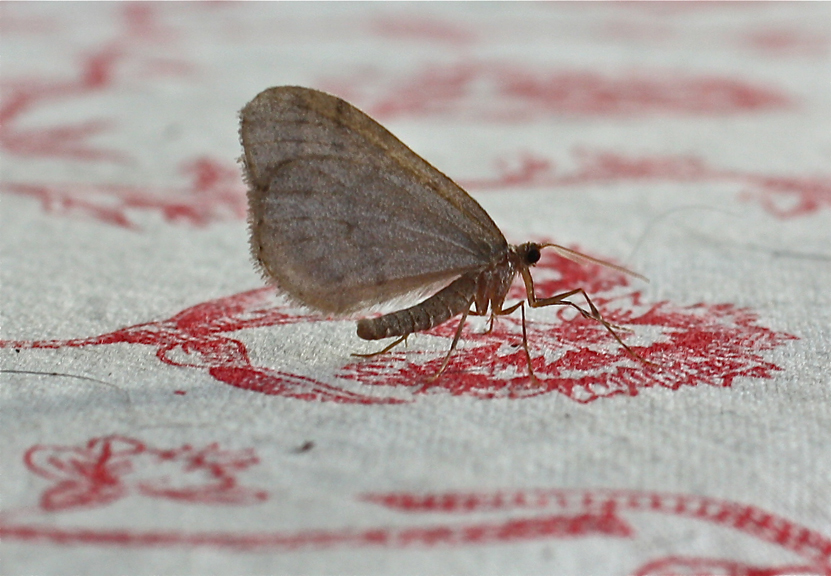
winter-moth-operophtera-brumataWinter Moth (Operophtera brumata)

Have You Ever Experienced an Allergic Reaction to Dawn Dish Detergent?

Today I did. Dramatically and immediately. My neck and chest are still covered in red itchy hives. I had run out of our usual Ecover detergent and grabbed an old bottle of Dawn that was shoved deep in the far recesses of the kitchen cupboard. The reason we purchase the eco friendly soap is because the smell alone of most super market dish soaps gives me a terrible headache. I only needed to wash several dusty vases and hadn’t yet gone to the store this morning. I thought, what the heck, I could stand the sickly sweet odor of Dawn for a few vases. Within three minutes of washing the vases, I felt as though millions of itchy pins and needles were piercing my chest, neck, ears, and face–all areas that had been exposed to the steamy suds.

I jumped in the shower, which only helped a bit and have been putting ice on intermittently. After googling, this is what I have learned about Proctor and Gamble’s Dawn, which is one of the most toxic household products in our homes. Dawn contains Quaternium-15, which is a formaldehyde releaser*, and may cause severe dermatitis. Quaternium-15 can break down in the bottle or on the skin to release formaldehyde and its carcinogenicity is broadly accepted.

Dawn’s antibacterial dish soap label deceptively features baby seals and ducklings and the words, “1 Bottle = $1 Dollar to Save Wildlife.” Dawn donates soap to help clean up animals after oil spills, but the product itself contains the ingredient Triclosan, which is an antibacterial agent known to be harmful to animals. Triclosan has been officially declared to be toxic to aquatic life.

Have you had an allergic reaction to Dawn, or any hand dish washing soap for that matter? Please write and share your experiences with household cleaners. Thank you!

10 Dishwashing Products to Avoid Altogether

Environmental Working Group’s Hall of Shame

*Note: A formaldehyde releaser is a chemical compound that slowly releases formaldehyde.

pg-2969_1z

Monarch Butterfly Explosion!

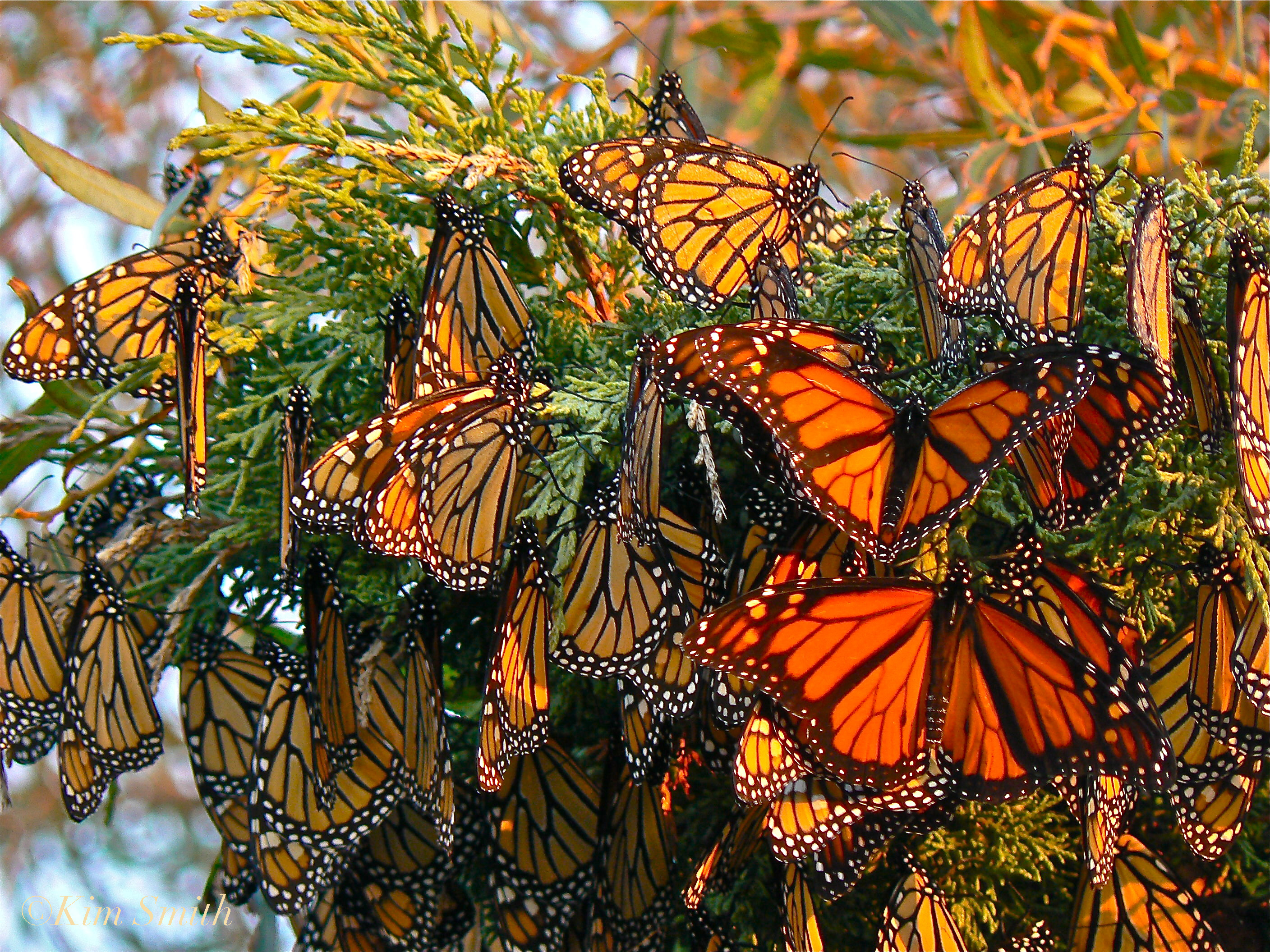
Monarch butterfly explosion ©Kim Smith 2014Monarch Butterfly Explosion!

I am back from Mexico and, although there for less than a week, there was much to take in. My most sincerest thanks to all our readers for your safe-travels well-wishes and kind thoughts!

The butterflies were dazzling and beautiful beyond imagination, but also very sad. This wondrous migration of the Monarchs, which has taken place for over a million years, is in serious peril. If changes are not made very soon, the migration will end. I’ll write more about my trip and the extraordinary scientist that I traveled with, Doctor Tom Emmel, this weekend after I am all caught up with design work and photography projects. Additionally, I interviewed Dr. Emmel at the top of the Sierra Chincua Monarch Colony, located in Michoacán at 10,000 feet above sea level, and will be bringing GMG readers the full interview!

Downton Abbey: That’s All Folks (Until Next Year…)

article-2529317-1A48CF4E00000578-174_634x534
I grimace because I care…

Season 4 of Downton Abbey is over, and as much as I love to complain about its soap opera excesses, I’m gonna miss now it’s gone. I’m already looking forward to next winter, when the millions of us who watch this show can once again spend January and February with the Crawley family and their servants. In Season 5, will viewers get to see Mary’s decision about which one of her suitors to marry? For my money, I think it will be the Pigman. Mary will steal him away from Edith and together, Mary (Lady Pigman to you!) and her man will raise pigs and make so much money for Downton Abbey by selling bacon rashers that the old home place will never be in financial trouble again.

For my full rant, feel free to head over to my blog by clicking the link…

I Love Sumac!

Now that’s not an opinion you don’t hear very often. I try to get my clients to love it too or, if they can’t enjoy Smooth Sumac for its unusual beauty, to at least appreciate the shrub for the myriad species of wildlife that it supports.

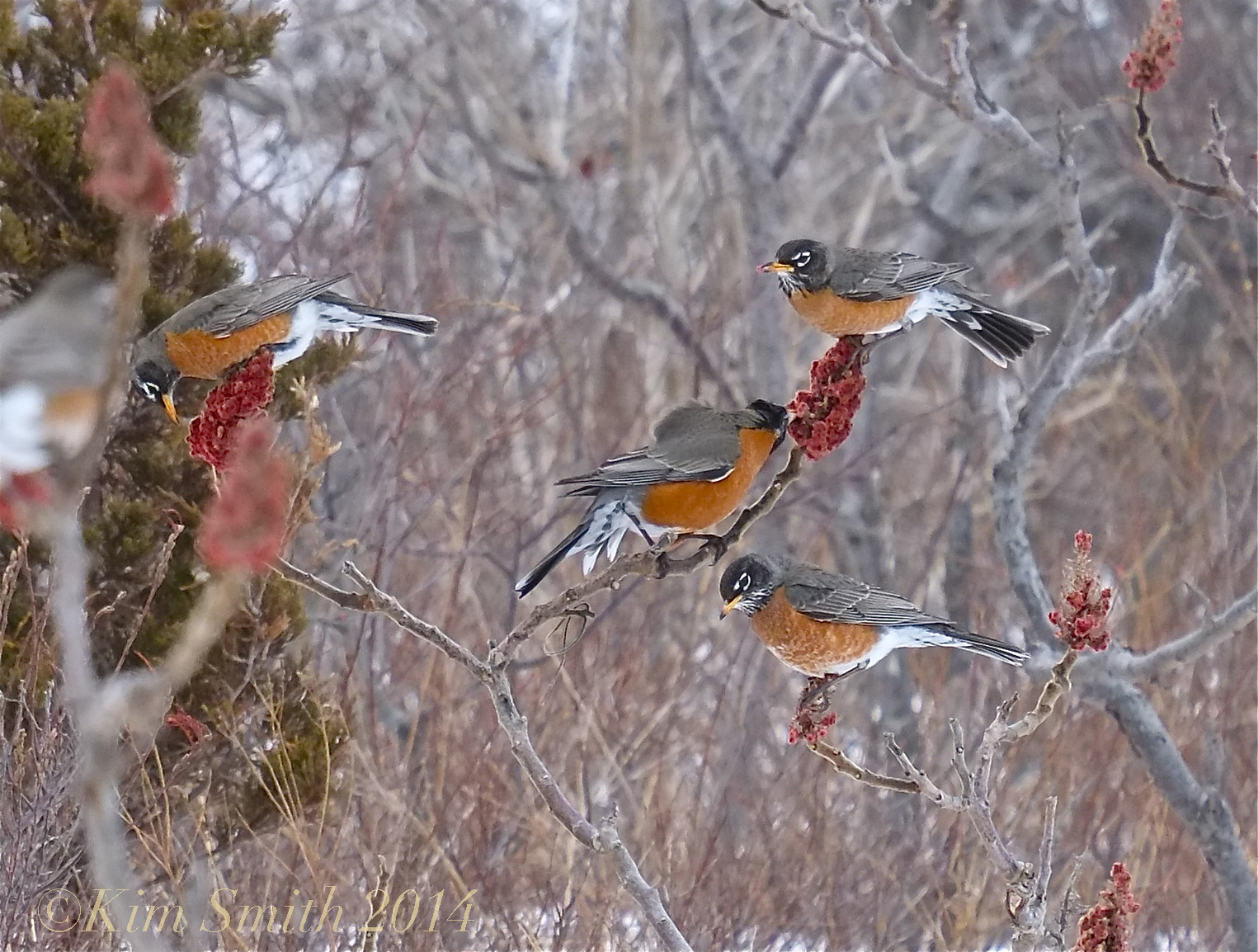
American Robins Eating Sumac ©Kim Smith 2014American Robin Flock Eating Smooth Sumac (Rhus glabra) Berries

Yesterday while walking through Halibut Reservation with daughter Liv, we encountered a very large flock of robins devouring seeds of sumac. The beautiful clump of sumac, with its bare crooked, leaning trunks and raspberry pink furry seedheads made a striking combination of shapes and textures against the windswept ocean vista. We disturbed the robin feast, but then Liv walked further down the path to photograph the Atlantic and I stayed behind, half hidden by an evergreen tree. The robins quickly returned to the ripened seedheads and I got to snap away until the next walker came along.

Smooth Sumac (Rhus glabra) is a shrub that naturally forms colonies; it can also be grown as a beautiful single-trunk tree. The yellowy-green flowers on female plants give way to deep rusty red berries held in erect, pyramidal clusters. What makes sumac so invaluable to wildlife? The fruits persist through the winter, providing nourishment for many, many species of birds and small mammals. Additionally, the foliage is a larval host plant for the Coral Hairstreak Butterfly!

robinarrivalsAmerican Robin and Winterberry photo submitted by Jacqueline Bennett. Thanks Jacqueline for sharing your beautiful photo!

*   *   *

Liv submits apparition from Halibut Point

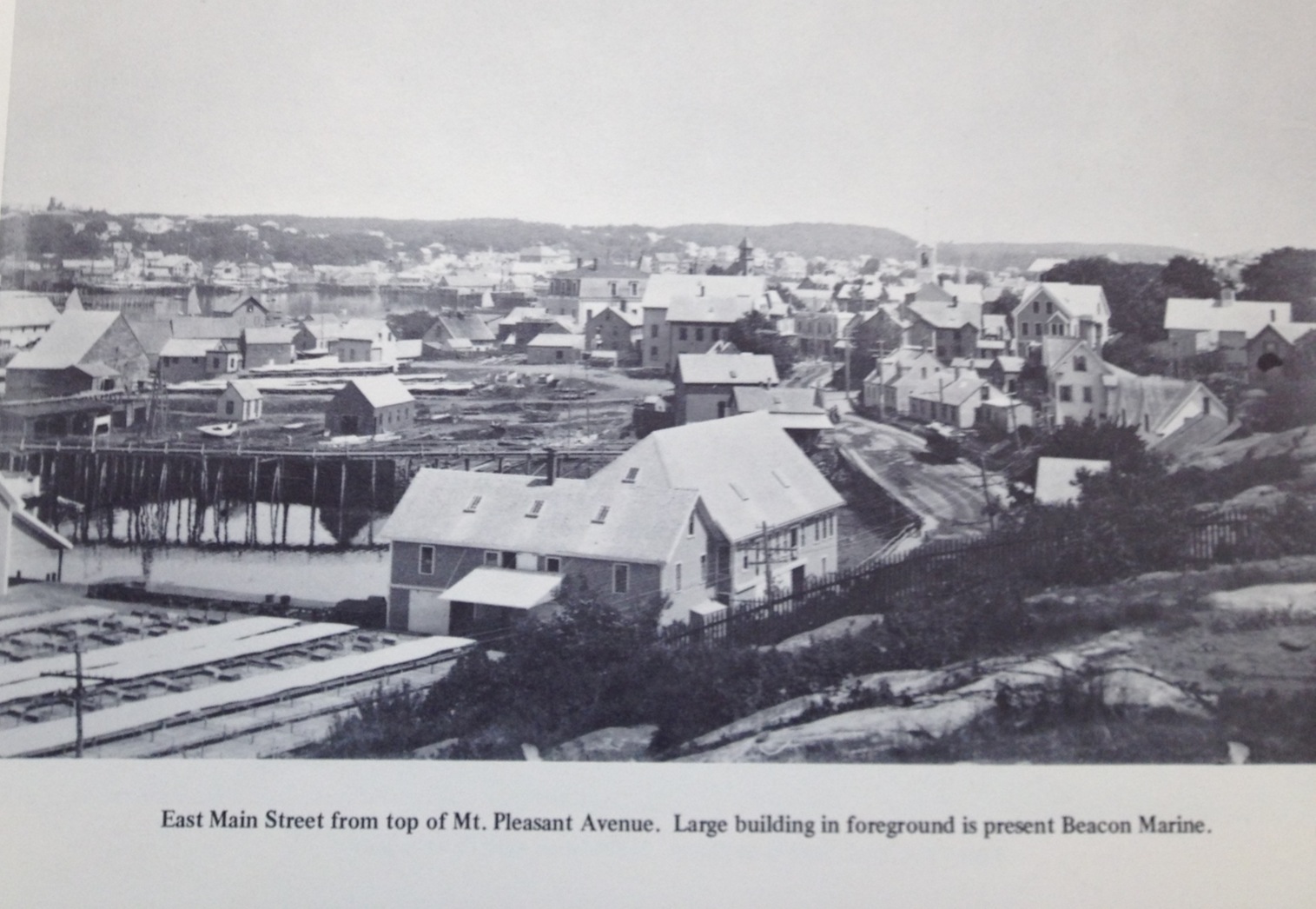
Mary Tucker Submits East Main Street Photos from 1905

photo-1

Good morning Kim ~ these photos came from a publication I have titled “Photographic History of Gloucester” published in 1976 by Cape Ann Bank and Trust.  Notice the street car tracks ~ next photo you will be able to see the street car.  Last night, Joey’s challenge reminded me of these photos which prompted my guess.

That’s my corner, Plum Street! Wonderful fun to see. Thanks for submitting Mary!

photo

Natural Resources Defense Council Licenses Butterfly Kisses for Valentine’s Day

One of my Monarch Butterfly photos of a male and female Monarch was licensed for the NRDC Green Gifts initiative. Here’s a link to the site and description: 

butterflykisses2014CREATE A MONARCH SANCTUARY

Send your Valentine some springtime warmth with a gift that will feed beautiful Monarch butterflies. Each e-card will allow NRDC to plant a half-dozen milkweeds this spring to help these incredible migrators bounce back from decades of habitat loss.

Link for more green gifts

Link to Natural Resources Defense Council

Birds of Cape Ann: Mourning Doves and Why Birds Fluff When Cold

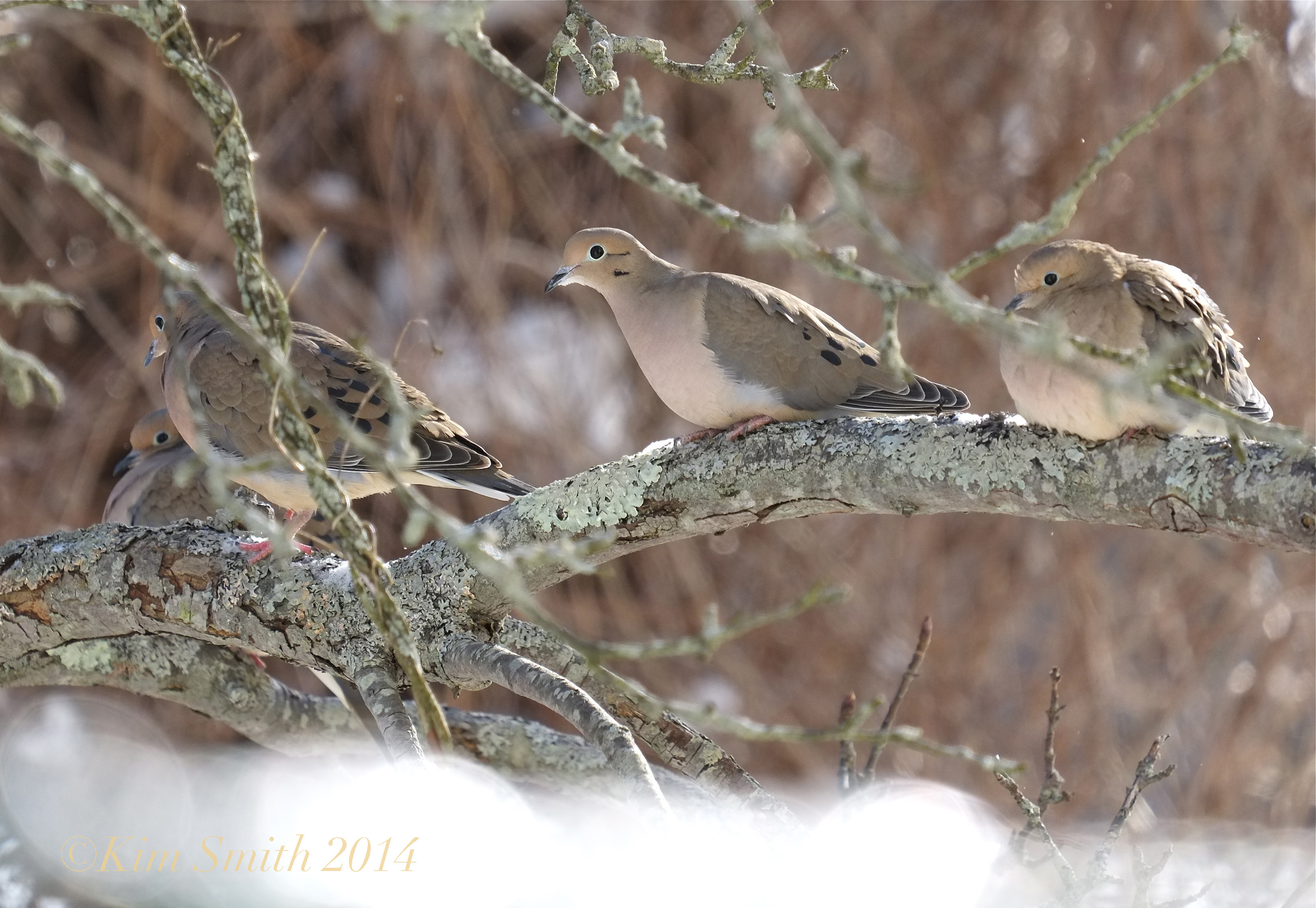
Mourning Dove pair in snowPair of Mourning Doves in Pear Tree

While writing this post and listening to recorded songs of Mourning Doves, I was immediately transported to my grandparent’s summer cottage on Cape Cod. Their home was sited on a bluff overlooking Cape Cod Bay. Adjacent to the house was a tumbled and scrubby overgrown field and, only a sort walk down down the lane, the freshwater Hiram Pond. There was no shortage of bunnies and birds, toads and turtles, along with the occasional frog and fox. From a child’s point view, it was pure paradise. Mixed with the sound of the surf, imprinted forever is the familiar song of Mourning Doves cooing at the first light of dawn. For much of the day the nesting doves remained hidden in the tangled undergrowth. Then in the fading rosy light of day’s end, their gentle song was heard again mixed with the laughter of rambunctious family feasts on the screened porch my grandfather had built.

*   *   *

Mourning Doves during the winter months are not calling to their mates but instead are struggling to survive the cold temperatures and sparse supply of food. Our bird feeders are filled often during the week, primarily with safflower seeds. As I have explained in previous posts, squirrels, which can be a real nuisance at feeders, typically are not interested in safflower seeds. Suet and such invites rats, rabbits, and raccoons, which in turn draws coyotes.

Four Mourning Doves  ©Kim Smith 2014Mourning Doves in Pear Tree ~ fluffed and unfluffed doves

Feathers are insulating and by fluffing, the bird traps pockets of air to hold in body heat and keep out the cold. During warm weather, birds press their feathers close to their bodies to eliminate the insulating air pockets to allow heat to escape.

When the bird is incubating eggs, the insulating properties of feathers can be a drawback because the feathers keep some of the bird’s body heat from reaching the eggs. The bird either sheds some its breast feathers naturally or pulls them out to expose bare skin.  The exposed area is called a brood patch.

Read More Here: Feathers

Addendum today ~ So sadly, my husband found beneath our kitchen window this morning a beautiful Mourning Dove. For the past several months we’ve had half a dozen doves, or what looked like three pairs, nestling in the pear trees and at the feeders. Our dead Mourning Dove seemed perfectly intact, except for a few drops of blood on its head. The single greatest threat to songbirds visiting our backyards are collisions with glass.  I never thought of our wind- and weather-worn original-to-the-house 1850s window glass as potentially hazardous. Time to rethink our little backyard sanctuary.

Dead Mourning Dove  ©Kim Smith 2014From Bird Watcher’s Digest, the top ten suggestions for making your windows less deadly for birds: The Top 10 Things You Can Do to Prevent Window Strikes 

Mourning Dove Coo ~

Essex Bird Shop and Pet Supply is an excellent source for bagged safflower seeds.

Mourning Dove puffed feathers ©Kim Smith 2014 copyMourning Dove (Zenaida macroura)

Winter Foliage

After the storm a little of Winter foliage appeared.. Can’t wait for the green stuff!


Exterminate All Swans by 2025

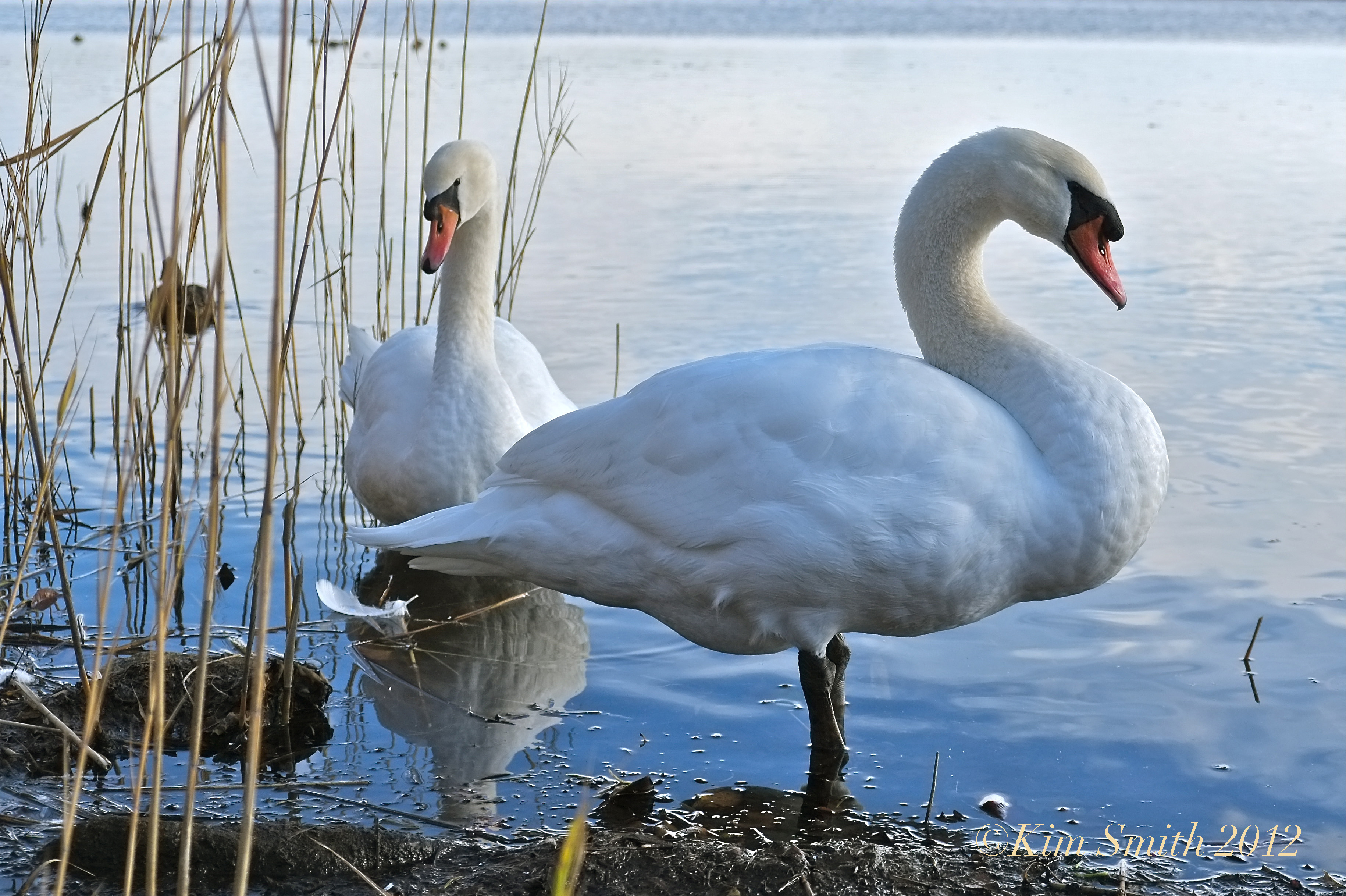
Female Pen (left) Male Cob Mute Swan ©Kim Smith 2012Female (left) and Male Mute Swans at Niles Pond

The New York State Department of Environmental Conservation’s war on swans includes gassing, shooting, and oiling eggs on nests to prevent them from hatching. Their stated goal is to eliminate all 2,200 Mute Swans in the state of New York by the year 2025.

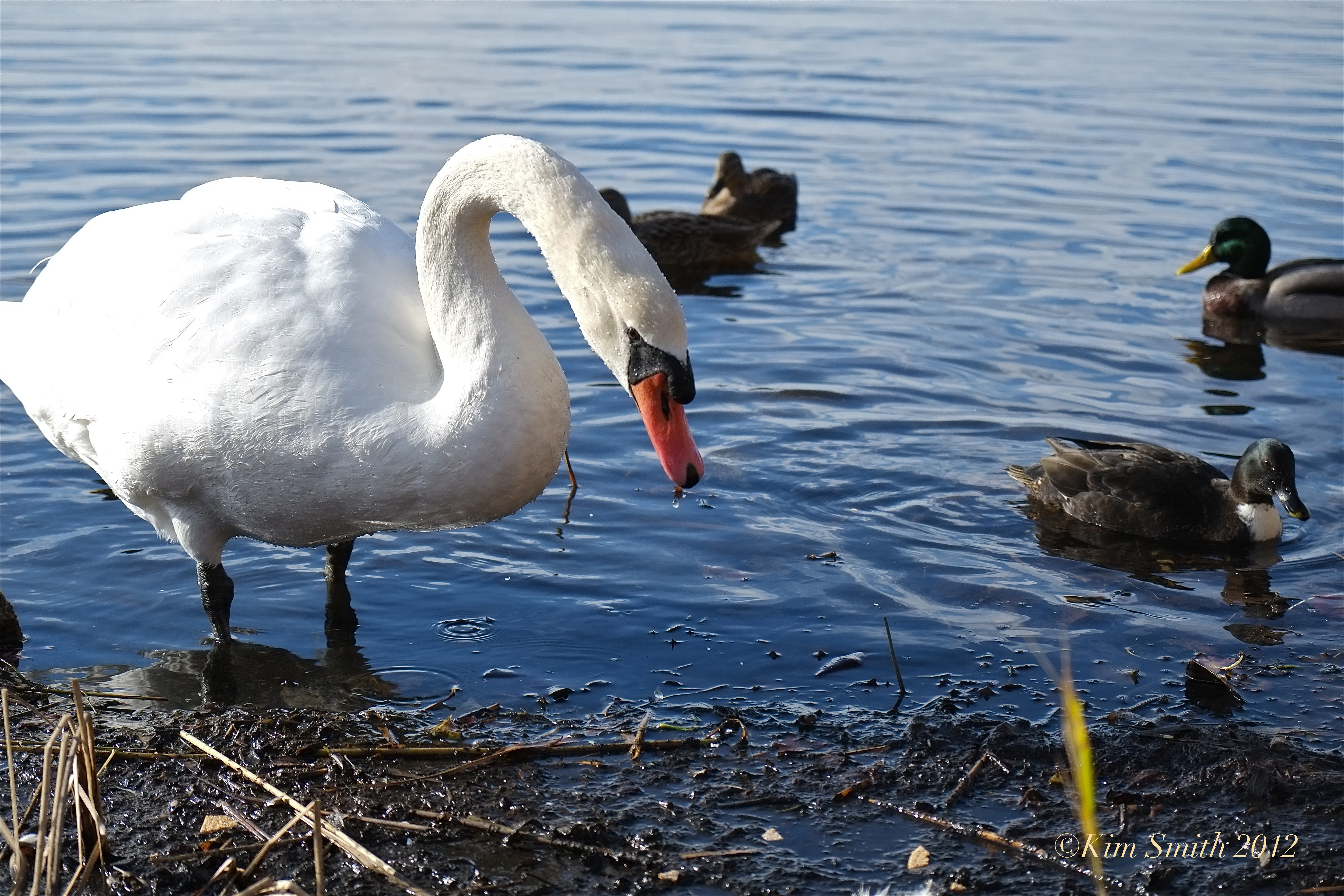
Mute Swan Manky Mallard Nile Pond Gloucester ©Kim Smith 2012Mute Swan and Manky Mallard

Reasons cited are that the swans aggressively defend their young, they attack other waterfowl, and destroy habitat.

Audubon New York and the NYSDEC plan to put forth their agenda to the New York citizenry with their education campaign.

Mute swans were introduced in the previous century to decorate parks and estates. Today, exotic species receive a great deal of attention and generate much concern. Oftentimes information around exotics is too simplistic. Some invasions are life-threatening, but they do not often set off an extinction. They can even spur the evolution of new diversity and strengthen an existing species.

I’ve read contrary opinions, and observed the opposite, to the reasons given for the swan’s extermination. There are a number of issues to consider. Where do our readers stand on this developing story? What have been your observations and experiences when encountering a swan?

Read the complete article here.

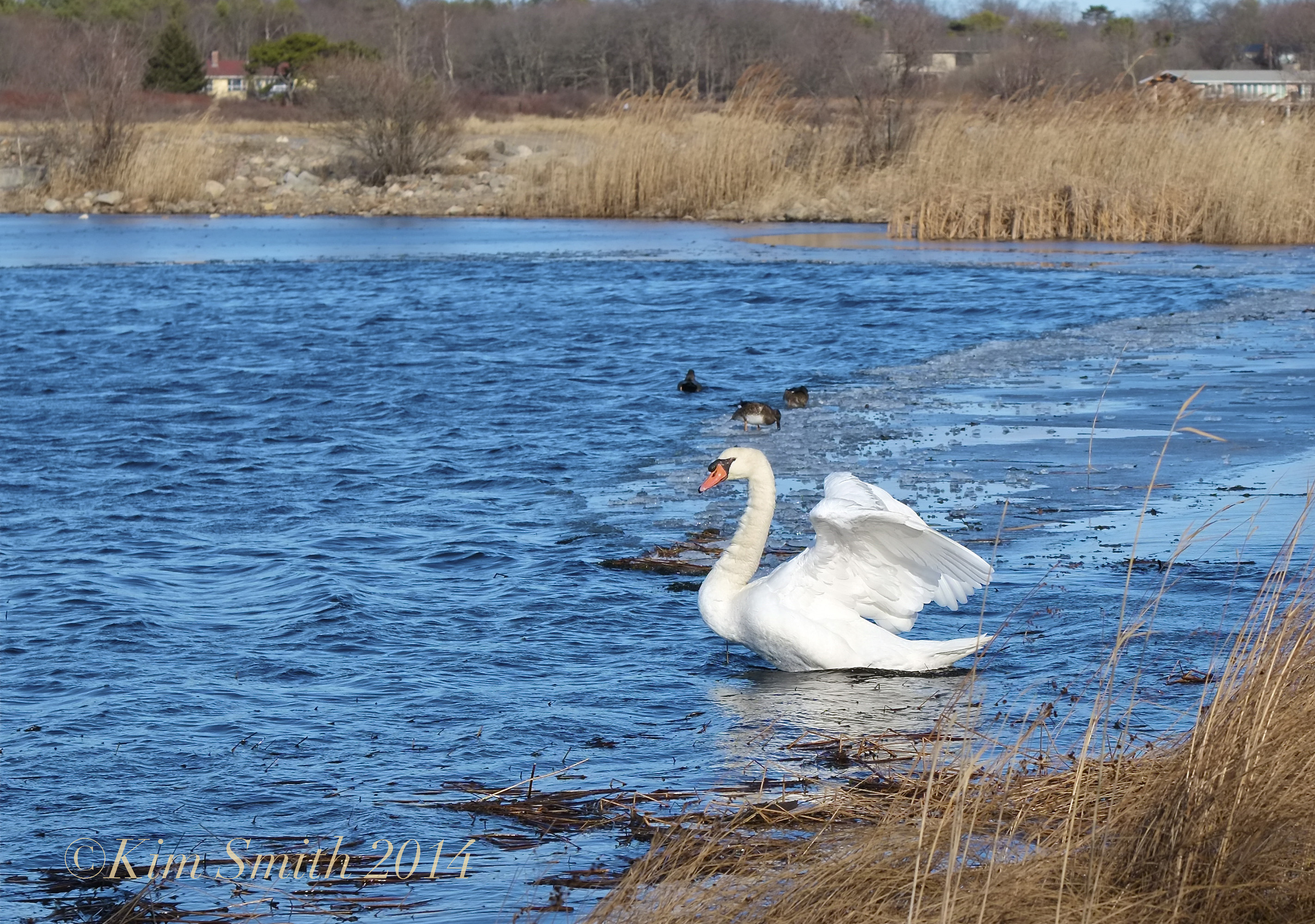
Mute Swan Niles Pond Gloucester ©Kim Smith 2014Mute Swan ~ Cygnus olor

Happy Hot Chocolate Days!

Parisian Hot Chocolate ©Kim Smith 2014

Aren’t snow days simply the best? I think I looked forward to them as much as did my kids. As a working mom a snowy day meant magical extra time off with my children, and was a day made even more festive when accompanied by cups of warm cocoa. Most times we made hot chocolate with mini marshmallows and/or with a few drops of essence of peppermint but if I had chocolate squares and heavy cream on hand to whip, we made it our favorite Parisian-style.

For recipe and story continue reading here.

Parisian Hot Chocolate -  ©Kim Smith 2014.Decadent and delightfully rich hot cocoa

*    *    *

photoMary Tucker photo

Mary Tucker submits her heavenly hot cocoa photo that she made today; made heavenly with the addition of a truffle!

I haven’t quite figured out how to add an image to a comment so here’s your photo Mary!

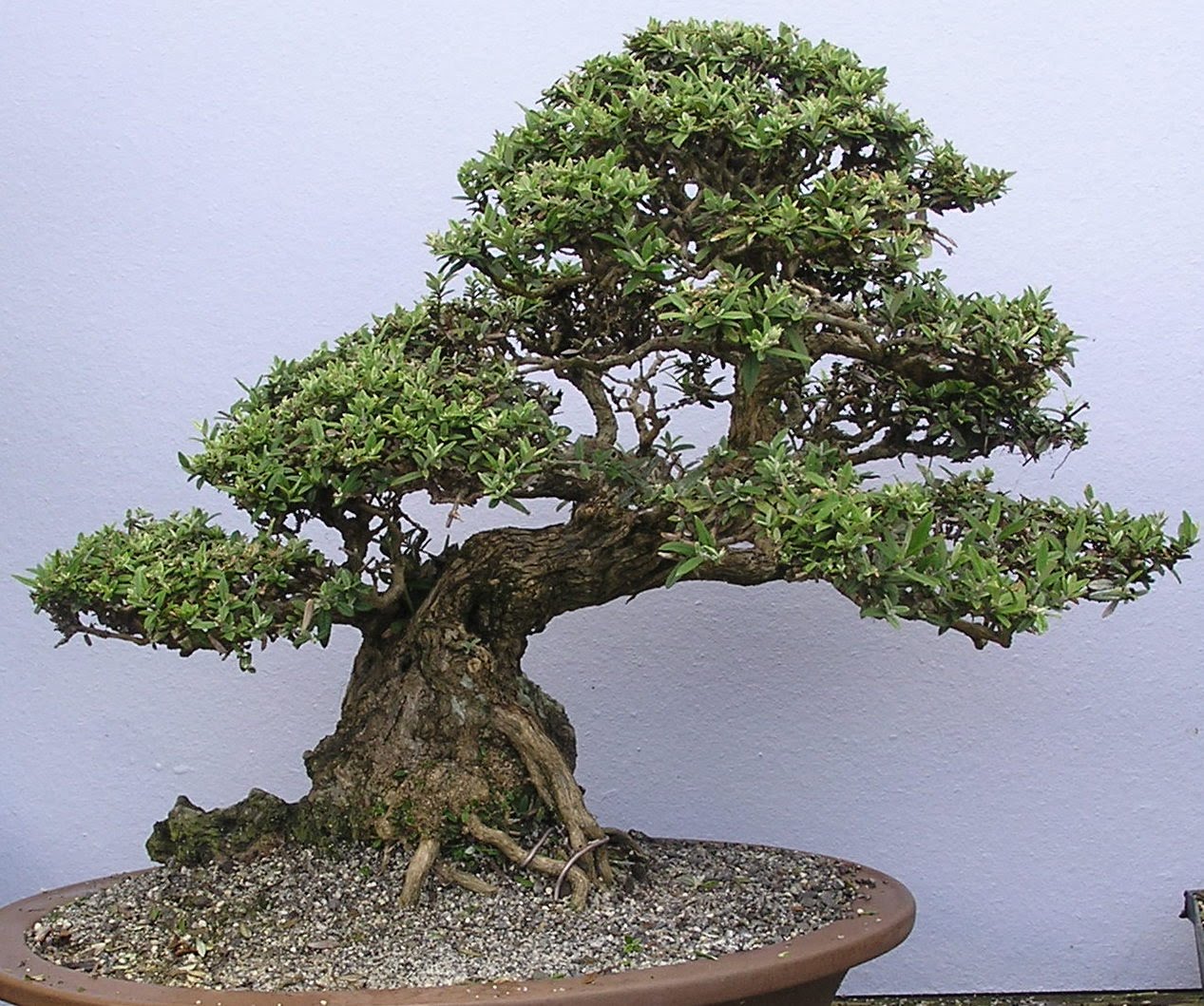
Seaside Garden Club Presents All About Bonsai February 11th

Hi Kim- I hope you can post this in GMG for our club. I am very interested in this topic.  Hope all is well with you – keep up the good work!  Love, love your posts and photos – amazing as always!

Best regards,
Kate Willwerth

The Seaside Garden Club kicks off 2014 with a program all about Bonsai on February 11th at the Manchester Community Center.  Social time begins at 7:00 pm and the program starts promptly at 7:30 pm.  All are welcome, guests $5.  Light refreshments will be served.

Bob Downey will introduce the club and guests to the wonderful world of bonsai.  He will present the history and art of bonsai as well as demonstrate bonsai creation and styling. Bob Downey was the president and now co-president of the Northeast Bonsai Association for over 30 years.  He brings a wealth of knowledge and experience to this art.

Bonsai is the art of dwarfing trees or plants and developing them into an aesthetically appealing shape by growing, pruning and training them in containers according to prescribed techniques. In Japanese, bonsai can be literally translated as ‘tray planting’ but since originating in Asia, so many centuries ago – it has developed into a whole new form.  Overall, bonsai is a great interest, hobby or even profession to undertake. It has to be said that a successful bonsai is most definitely a horticultural masterpiece.

Bonsai1

The Seaside Garden Club is a group of fun, active, civic-minded and hands-on gardeners.  We welcome all types of gardeners from beginners to experienced… there is always something to learn and share.  We invite you to become a member of our club and enjoy our monthly meetings which feature interesting guest speakers and creative workshops.  Visit our blog: http://seasidegardenclub.wordpress.com/

What We Can Do to Help the Monarchs

Everywhere we turn this past month, there is a report in a major newspaper about the declining Monarch butterfly population. This forwarded from one of our GMG readers: “Monarch butterflies keep disappearing. Here’s why,” was published in the Washington Post on January 29th, 2014.

The author, Brad Plumer, interviewed Dr. Lincoln Brower, a professor of biology at Sweet Briar College and one of the nation’s leading authorities on the subject. I will be meeting Dr. Brower and interviewing him for my film while at the biosphere this month.

One of Dr. Brower’s suggestions on how we can help the Monarchs is along the millions of miles of roadsides in the eastern United States, if we cold get highway departments to plant for pollinators rather than cutting everything down and spraying herbicides. This would be of great help to the Monarchs, insects in general, and many species of birds.

I’ve thought a great deal about this and it is my foremost reason for creating butterfly and habitat gardens, such as the butterfly gardens at the Gloucester HarborWalk. I think too, of the many patches of unused city-owned land dotted about our community and how we could turn these little patches into habitats for all our winged friends. For several years I have wanted very much to organize this project however, I have my hands full with launching the film. Once the film is complete, my hope and plan is that it will become an inspirational and positive educational tool to help generate interest in community projects such as these.

In the meantime, as many of you may be aware, since 2007, I have been creating exhibits and giving lectures about the life story of the Monarch, on the state of butterflies migration, and how we can help the Monarchs, both as individuals and collectively. I purposefully do not publish a price on any of my lecture  listings because the cost of my programs are rated based on the size of your group or organization. No group is too small and I don’t want budget constraints to prohibit making the information available to all who are interested.

Here is a link to my Monarch program. If you and your organization would like to learn more about the Monarch Butterfly and how you can help, please contact me at kimsmithdesigns@hotmail.com.

Monarch Butterflies Gloucester Massachusetts ©Kim Smith 2006Spangled Dawn Eastern Point Gloucester Massachusetts

Recent Posts on GMG about the Monarch Butterfly:

September 2013

Where Are All the Monarchs?

November 2013

The Year the Monarch Didn’t Appear

January 2014

Monarch Butterflies in Crisis

Request for Help from GMG Community and Monarch Film Update

March 2013

How Exactly is Monsanto’s Roundup Ravaging the Monarch Butterfly Population?

To read more about the life story of the Monarch Butterfly type in Monarch in the GMG search box.


Monarch Butterflies in Crisis

Monarch Butterfly Overwintering Graph Journey NorthEach winter, since I began photographing the Monarchs in 2006, I compare this graph from Journey North to the number of butterflies observed on Cape Ann. As you can clearly see, this is the worst year on record, which corresponds to the near complete lack of Monarchs in our region this past summer.

Monarchs Gloucester 2012 �Kim Smith
Monarch Butterflies Eastern Point Gloucester

Many thanks to Kathy Chapman and our GMG Readers for forwarding the following New York Times update about the shrinking Monarch Butterfly popluation.

By Michael Wines

January 29, 2014

Faltering under extreme weather and vanishing habitats, the yearly winter migration of monarch butterflies to a handful of forested Mexican mountains dwindled precipitously in December, continuing what scientists said was an increasingly alarming decline.

The migrating population has become so small — perhaps 35 million, experts guess — that the prospects of its rebounding to levels seen even five years ago are diminishing. At worst, scientists said, a migration widely called one of the world’s great natural spectacles is in danger of effectively vanishing.

The Mexican government and the World Wildlife Fund said at a news conference on Wednesday that the span of forest inhabited by the overwintering monarchs shrank last month to a bare 1.65 acres — the equivalent of about one and a quarter football fields. Not only was that a record low, but it was just 56 percent of last year’s total, which was itself a record low.

At their peak in 1996, the monarchs occupied nearly 45 acres of forest.

The acreage covered by monarchs, which has been surveyed annually since 1993, is a rough proxy for the actual number of butterflies that survive the arduous migration to and from the mountains.

Karen S. Oberhauser, a conservation biologist at the University of Minnesota who has studied monarchs for decades, called the latest estimate shocking.

“This is the third straight year of steep declines, which I think is really scary,” she said. “This phenomenon — both the phenomenon of their migration and the phenomenon of so many individuals doing it — that’s at risk.”

Continue Reading Here

Request for Help from GMG Community and Monarch Film Update

Header Good FINAL FINAL

For the past three years I have been filming the life story of the Monarch Butterfly in backyards and along the shores of Cape Ann. My original intent was to tell the story of the butterflies primarily as it relates to their northern breeding grounds and specifically here in our community. Prior to filming, I wrote a children’s story about the Monarchs and during this entire time I have had an ongoing inner debate as to whether or not to travel to Mexico. While editing the film these past few months, I determined that capturing the butterfly’s story in their winter sleeping grounds as they are awakening in Mexico would only add to the film’s depth and beauty. To film in Mexico would be a dream come true.

If you listened to Joey’s GMG podcast yesterday, you heard that in February I am going to be filming the butterflies in Mexico!! This all has come about very quickly! I have to practice walking five miles a day, recall how to ride a horse, and learn enough Spanish so that if I am separated from my group or kidnapped by bandits, I can at least inquire as to where is the bathroom.

Does anyone know of a local outfit that gives lessons in trail riding? And does anyone have experience with a Spanish language lesson CD (basic)? If so, can you please recommend in the comment section. Thank  you!!!!!!!

Stay tuned for adventures from Mexico! Beauty on the Wing ~ Life Story of the Monarch Butterfly will premiere  in the summer of 2014.

Rather than wait until the film was complete, this weekend I made a new website for the film-in-progress. When you have a moment, I hope you’ll visit my website and read more about Beauty on the Wing here.

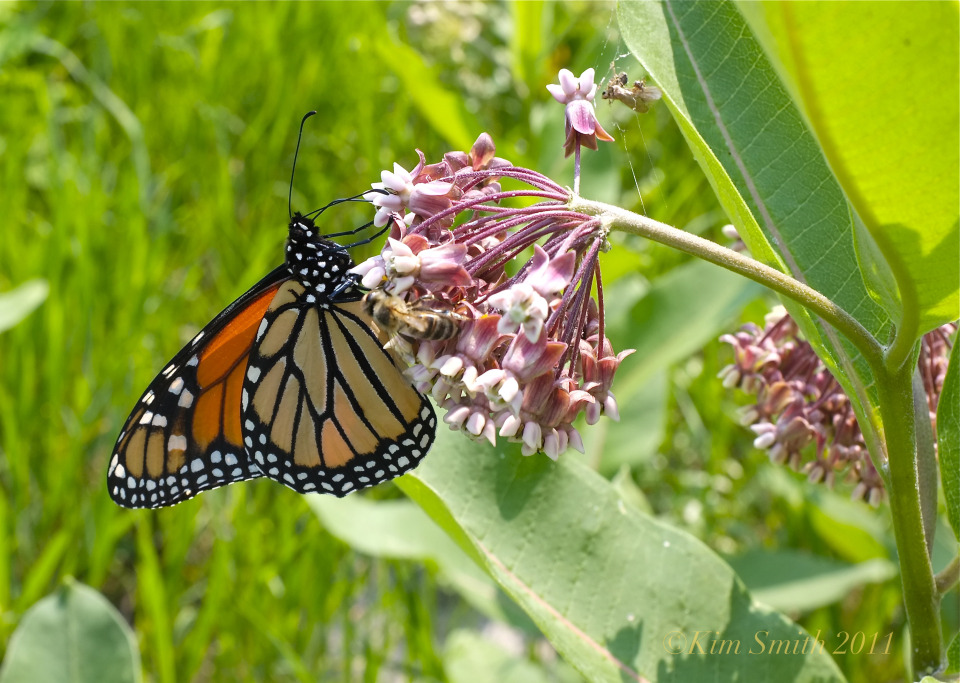
monarch-butterfly-milkweed-good-harbor-beach-c2a9kim-smith-2011Monarch Butterfly Nectaring at Common Milkweed ~ Good Harbor Beach, Gloucester

Beauty on the Wing celebrates the poetry and majesty of the uniquely North American phenomenon of the Monarch butterfly and its migration. There are no other butterflies the world over that travel this distance and it is a fascinating ecological link that connects Mexico with nearly every geographic region within the United States and Canada. How well the forested habitats of Michoacán are taken care of is as of equal importance to the Monarchs as how we in Gloucester conserve our habitats.

Downton Abbey: Post-Episode Breakdown

First, let’s just get this out of the way: this show is awful. Bad writing and a terrible plot have conspired to ruin what, during the first season anyway, was once a beacon of televised goodness across a crowded wasteland. But as every season brings new awfulness and I’ve lowered my expectations, I’ve learned to enjoy the Downton Abbey we have, not the one we want. And watching it is (slightly) less guilt-inducing than watching any of the Real Housewives, though many of the elements are the same: attractive vacant-eyed people throwing their money around in between arguments at dinnertime, unlikely love affairs and random stints in prison. But I do want to say that in spite of the atrociousness of DA: at least the actors are holding up their end of the bargain by trying to take this stuff seriously, so that’s worth something. And in the spirit of full disclosure: I plan on watching this thing until the show breathes its last, miserable gasp. Which might happen at any time, if the story lines are any indication.

The Characters:

Carson: We don’t want to hear about Alice anymore, unless it turns out she’s NOT dead and living in Yorkshire and ready to love again. And this time, she means business. The business of love.

Mrs. Hughes: Apparently the only one left with any semblance of good sense and decency, which is why nearly everyone runs into Mrs. Hughes room to share their problems. She should start charging a shilling for her services. Or a ha’penny. Or a sixpence (whatever — it’s all the same to me). And she should start sharing a few of those secrets too. Why did she have no problem digging Mr. Carson’s personal correspondence out of the trash a few episodes ago “for his own good” but can’t find her way clear to inform Lord G that his guest, the other Lord G, has an animal for a valet? Strange priorities. Someone should be sounding the alarm (discreetly, by tinkling one of those little bells) that a violent rapist has entered the house. When discussing this troubling matter with my sister, she mentioned that what is the point of the class system, really, if two aristocrats can’t rain all kinds of special aristocratic justice down on a valet for raping and beating someone right in one of those giant houses they claim to be in charge of? Do the police even need to be brought into it? At least Mrs. Hughes got rid of Braithwaite, though that’s no doubt not the last we’ll see of her. And why doesn’t Hughes enlighten that dimbulb Lady Grantham about Braithwaite’s character? She wouldn’t have to go into details. Just something like, “Trust me Lady G, Braithwaite is a terrible, terrible person and you’re lucky to be rid of her.”

Lord Grantham: Pathetic, out-of-touch and irrelevant. Why is he still around? I forget. Oh yes, so Mary has someone to undermine and Bates has someone to help get dressed.

Lady Grantham: Slightly less pathetic. Very slightly. And why does she talk as though she is holding a grape between her lips? At least she got rid of that awful Nanny a few episodes ago. You know, the Nanny for the children. But I’m afraid she might have accidentally gotten rid of the children too, since none of us have seen them since Nanny left. Someone might want to track down little Sybil and little George…

Tom: Oh Tom. Tom spent the entire house party, which seemed to go on forever, moping around for no clear reason, his big Eyeore eyes so, so sad. Even though he said, again and again and again, that he just didn’t fit in, it was hard to find a cause for the level of his despair, because not a single soul there drew attention to his newly-acquired status. As far as I could tell all the guests treated him well and he used all the right forks at dinner. It would have made more sense if he expressed unease for political reasons, because he’s clearly left his activism far behind him. How exciting would it have been if an Irish separatist had dashed into the after-dinner-cigar-and-brandy-room, shaking his fist in Tom’s face and accusing him of betraying the cause? But alas, nothing quite so fascinating occurred. Instead, Tom was just so super down in the dumps because, in his now highly developed social sensitivity, he just couldn’t believe that he called so-and-so Your Grace instead of Duchess. It was enough to send him into a tailspin. Enough to make him question everything he had ever thought about himself. About his own abilities. About who he was. Tom sat on the bench in the hallway in a self-appointed time out, thinking about how stupid he was and wishing that he would have just rented the dinner clothes instead of buying them. It was now all so clear: he would never wear them again. What a waste of a pound and sixpence. Or two pounds and a shilling. Or a shilling and a ha’penny. Then Brathewaite comes in swirling whiskey around, as transparent as water and Tom is so distraught at making a fool of himself in front of exactly no one (how could he not KNOW that Your Grace should have been referred to as Duchess? How could he not KNOW that?!). He is putty in Brathewaite’s hands. Or so we are left to surmise. As far as Braithwaite goes, her strategy with Tom left me suspecting that she was a lot less clever than we had been led to believe. What woman would consider it a Master Plan to ply a man with whiskey to the point of incapacitation before demanding, just a few hours into the next morning, that he marry her? He’s not even sure what happened between you. That is not exactly a successful seduction. And the answer is; no woman, that’s who. That is just a dumb plan and it would never, ever work.

Lord Gillingham: Another dimbulb who has an animal for a valet and demands that a widow of six months commit to marry him. Right now. Or it will be too late. Oh, she doesn’t have to marry him right now, he will wait a decade for that, no problem. She just has to swear to marry him at some point. Right now. Swear right now, on the spot, to marry him in the distant future. Sorry Mary, you lost your chance at happiness with that gem. But we viewers are not worried, if the past is any indication, Ms. Finch-Fox-Ardegarde-Castleberry, his intended, will die of the flu, or just from general malaise at not being the love of Lord Gillingham’s life (why on earth is Mary repeatedly the object of such devotion?) approximately 15 minutes to eight hours before their wedding day, and you will have a second chance at love with Lord G, the Younger.

Anna & Bates: Nothing to see here folks, except a train wreck. And for no reason other than the show writer’s malicious desire to undermine the happiness of his characters. Much weeping and gnashing of teeth are coming our way, and someone’s gonna pay.

Edith: Watch out, Edith! Your man is becoming a German citizen (for the sake of your love, cough cough) in the 1920s!  Your fellow may lose the baggage of his first wife in the process, but he will gain a dictator and a fervent belief in National Socialism, so all will not be lost.

Rose: Rose? Who is that? What? Oh that’s right. She’s a character on the show. And she might be breaking all sorts of taboos by falling in love with a fella who sings like a tiny girl. Is he black? I didn’t notice. Too busy wondering why in the world he was singing like a tiny girl.

Alfred-Ivy-Jimmy-Daisy: Hopefully Alfred will learn to cook and so will Ivy and so will Daisy. I can’t wait to find out which one will learn to cook the best! Then they will all have a cooking competition and Jimmy can marry the winner. Mrs. Padmore will be the Judge. If she doesn’t die of the pressure of being a Kitchen Maid Footman Cook-off Judge first.

Thomas: Thomas is looking better and better these days. I hope Lord Grantham secretly adopts him and that he (surprise!) inherits the estate after Lord G. kicks the bucket. He can open up Thomas Barrow’s Retirement Home for Disaffected Former & Preferably Gay Valets. There’s plenty of room at the Abbey!

That’s all folks, until next week: Downton Abbey, Season 4, Episode 5! And I can’t wait.

TRHdownton

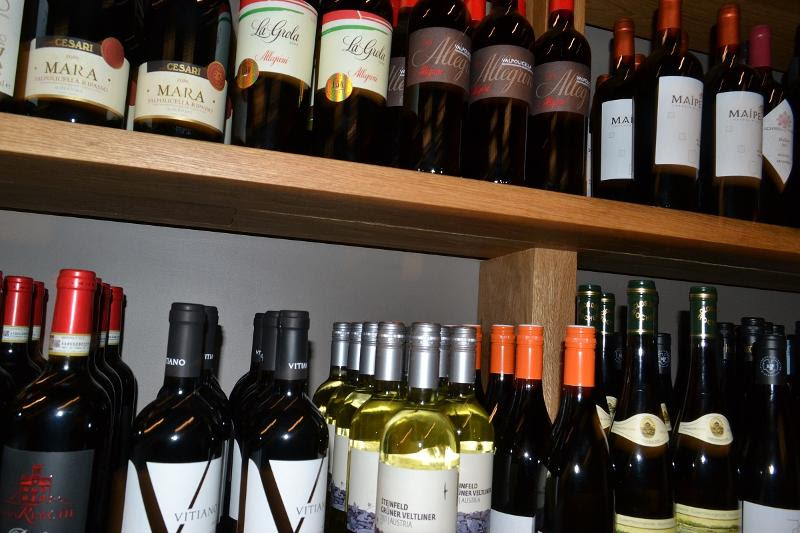
Huge Sale at Savour Wine and Cheese!

EVERYTHING is on sale for 15% off!

Sale Begins Tuesday, the 21st through Sunday, the 26th.

~  EVERYTHING! ~

unnamed