GREAT EPISODE!
Author: Kimsmithdesigns
Documentary filmmaker, photographer, landscape designer, author, and illustrator. "Beauty on the Wing: Life Story of the Monarch Butterfly" currently airing on PBS. Current film projects include Piping Plovers, Gloucester's Feast of St. Joseph, and Saint Peter's Fiesta. Visit my websites for more information about film and design projects at kimsmithdesigns.com, monarchbutterflyfilm.com, and pipingploverproject.org. Author/illustrator "Oh Garden of Fresh Possibilities! Notes from a Gloucester Garden."

BEAUTIFUL BRANTS, SCAUPS, AND RING-NECKED DUCKS MIGRATING RIGHT NOW ON OUR SHORES!
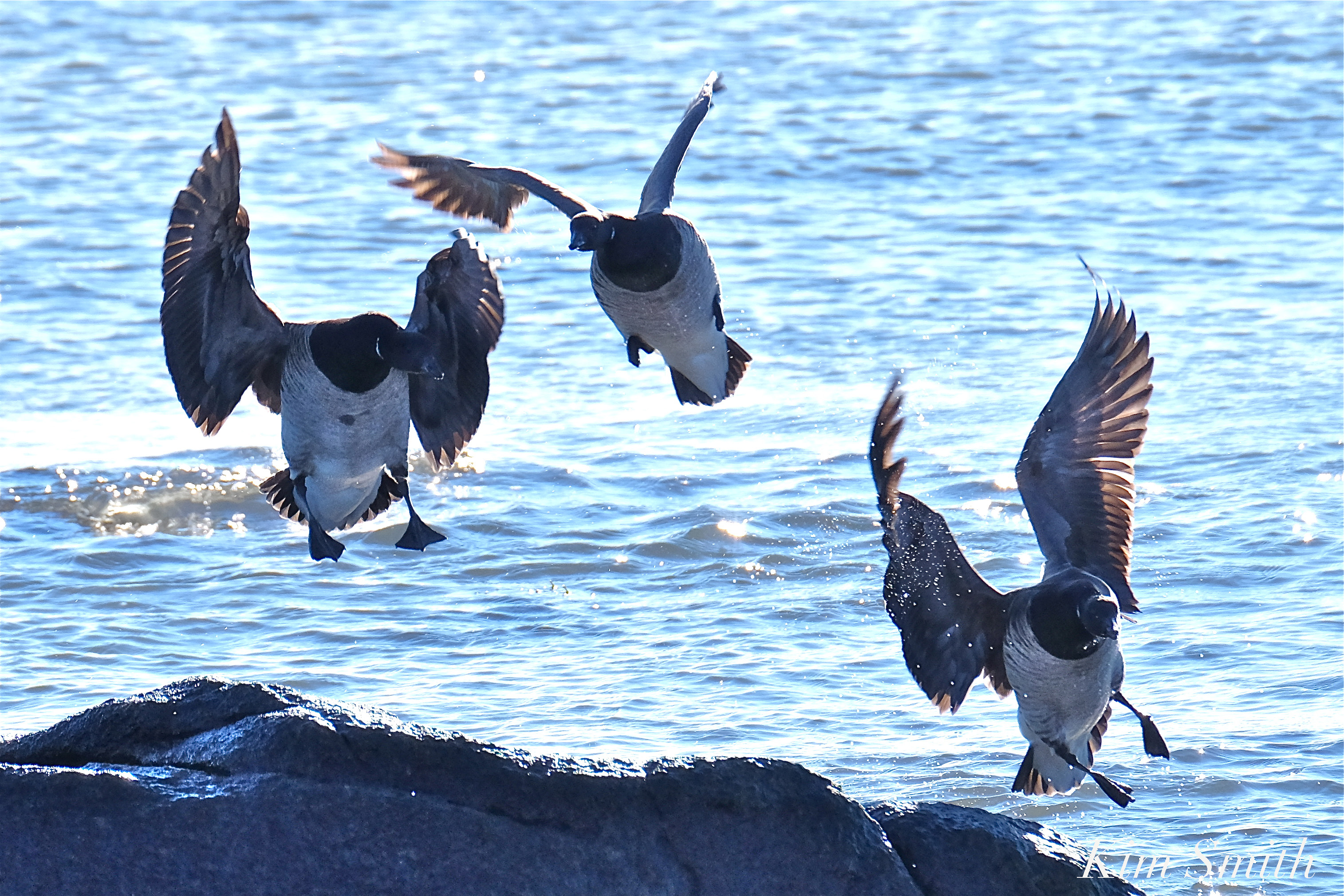 The avian northward migration is heating up! The following are just three of the fascinating species of wild birds readily seen at this time of year, found all around Cape Ann. Look for Brants, Scaups, and Ring-necked Ducks at coves, bays, ponds, quarries, and marshes.
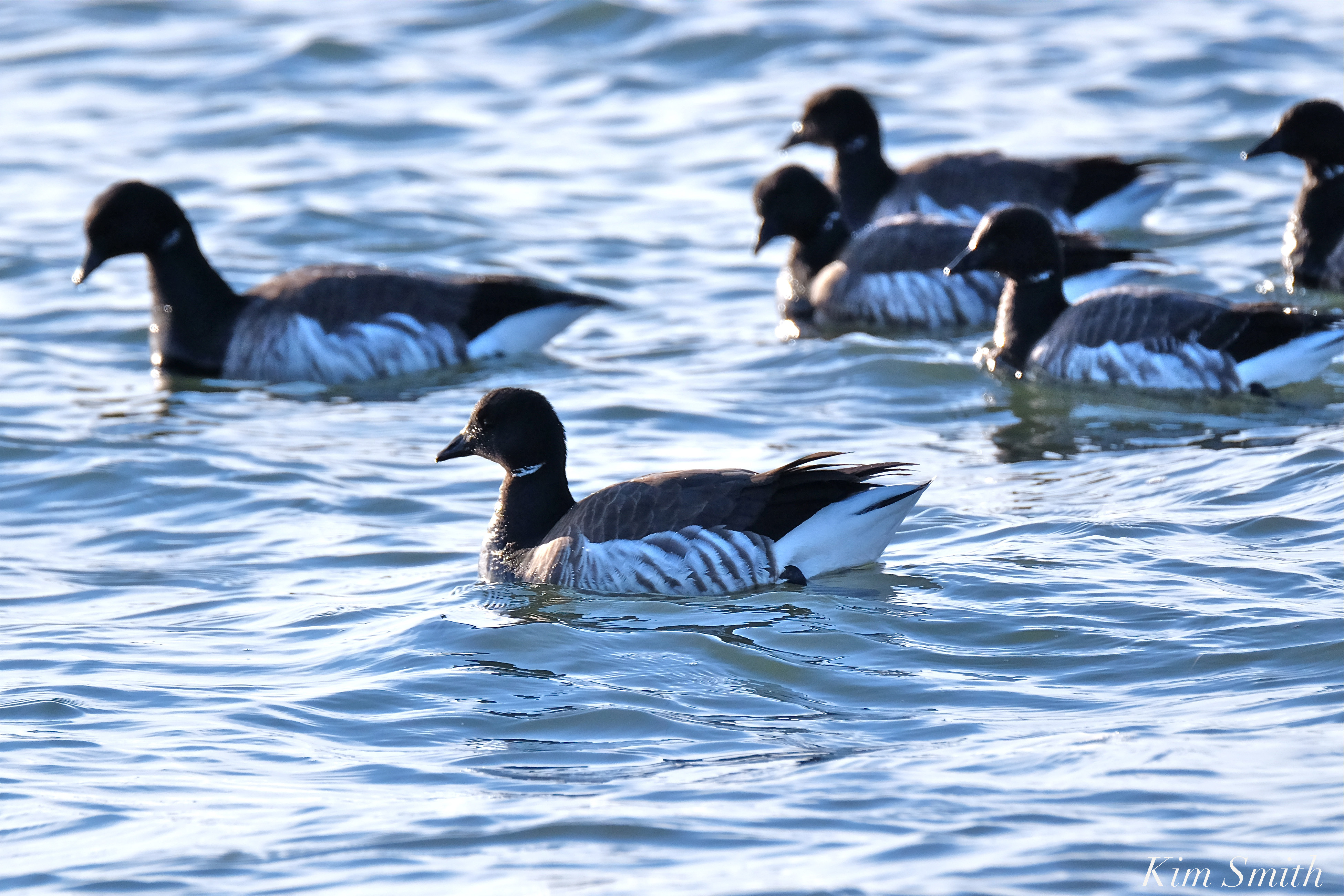
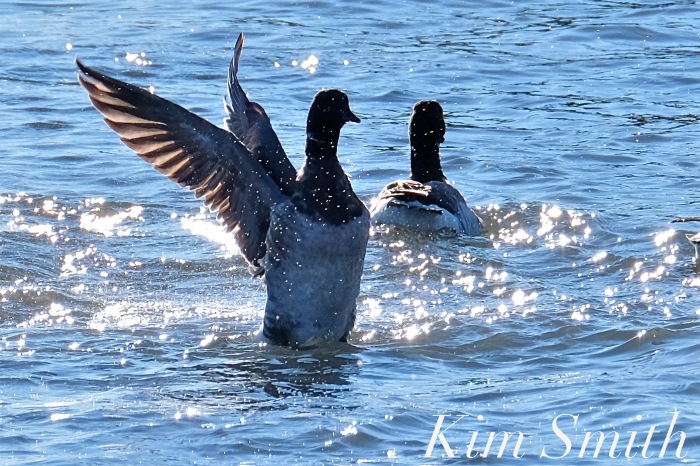
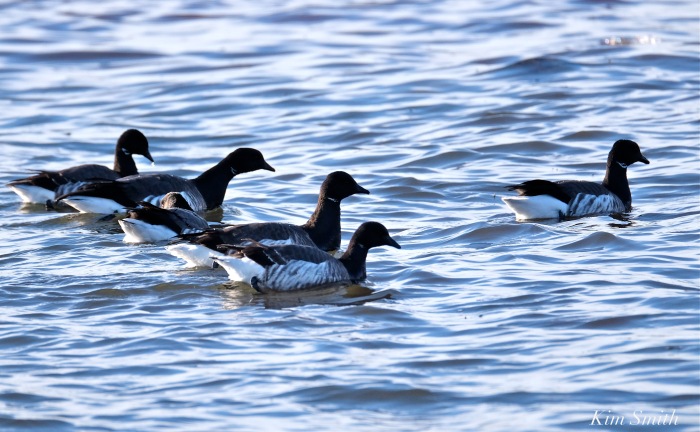
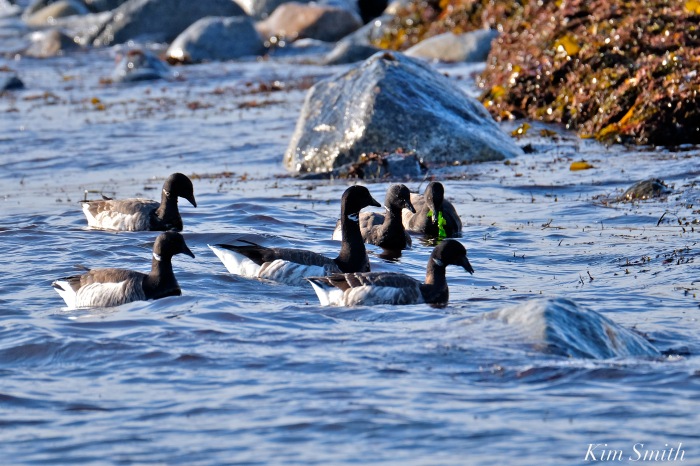
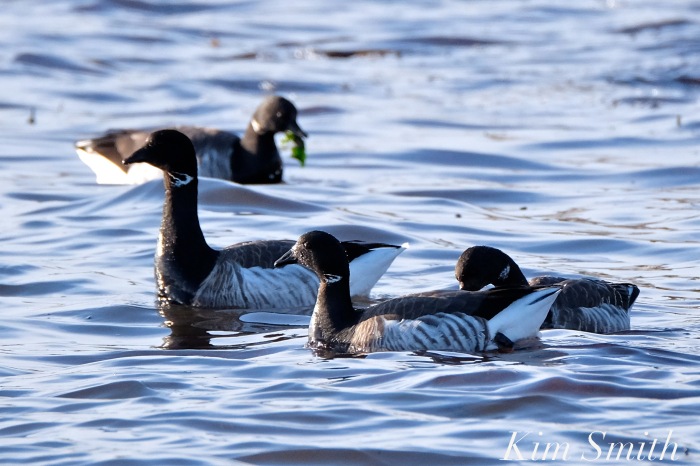
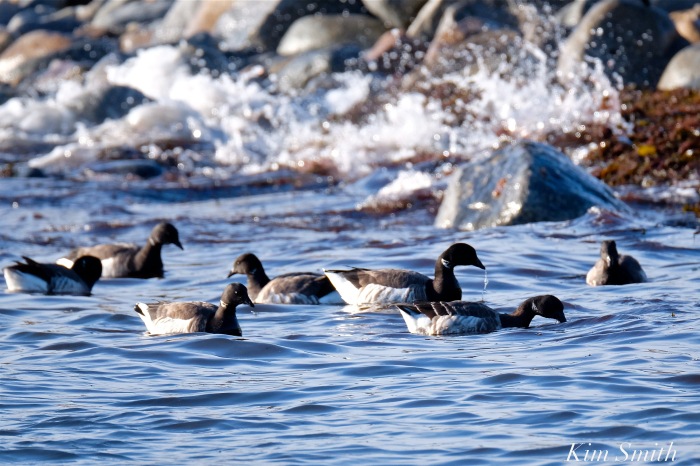
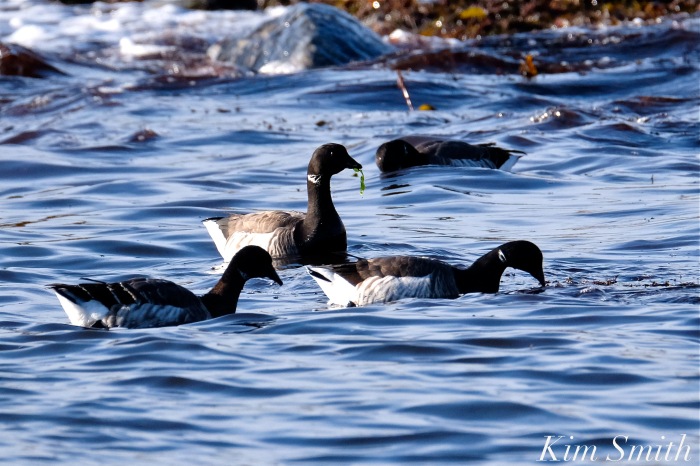
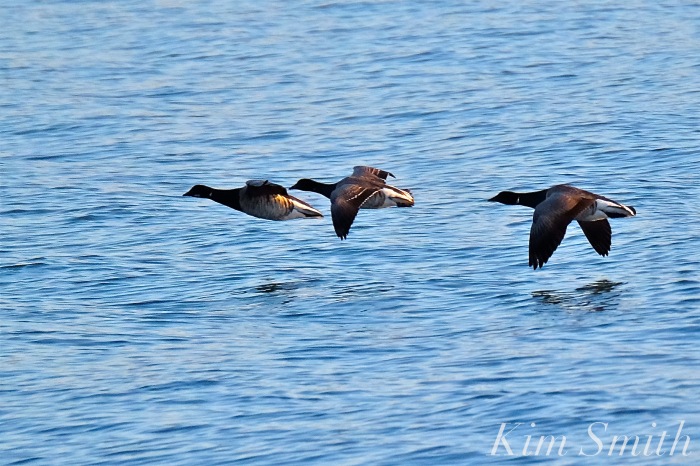
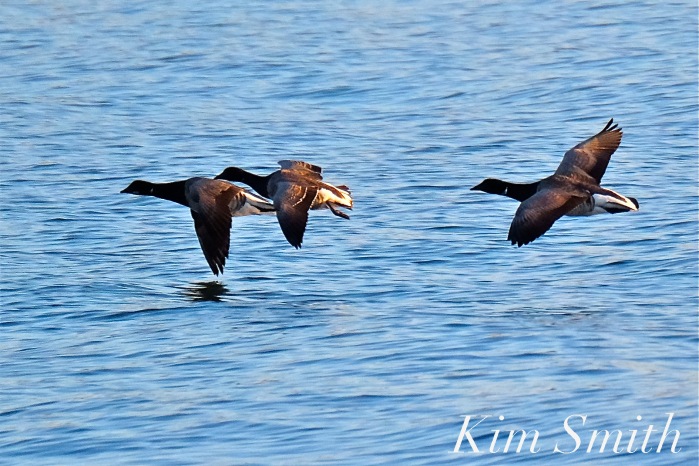
Currently migrating along Cape Ann’s shoreline is a beautiful brigade of Brant Geese. They usually turn up at about this time of year, late winter through early spring, and I have been looking for them in all the usual places. Brants thrive in Cape Ann coves, devouring sea lettuce while riding the incoming and outgoing waves. I see them eating and pecking for food atop barnacle-crusted rocks and am not sure if they are eating seaweed caught on the rocks or tiny crustaceans.
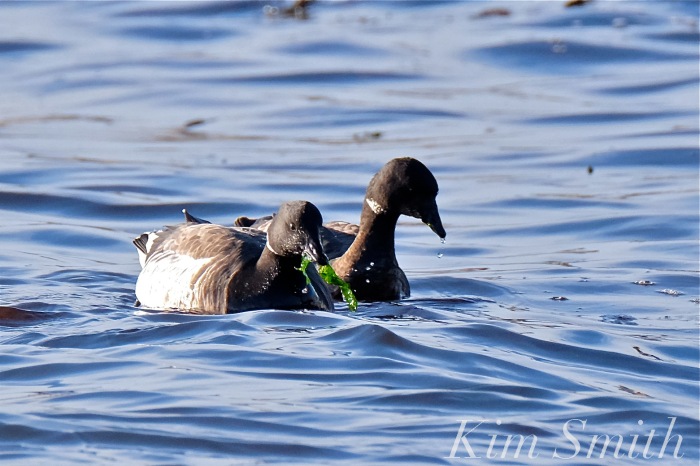
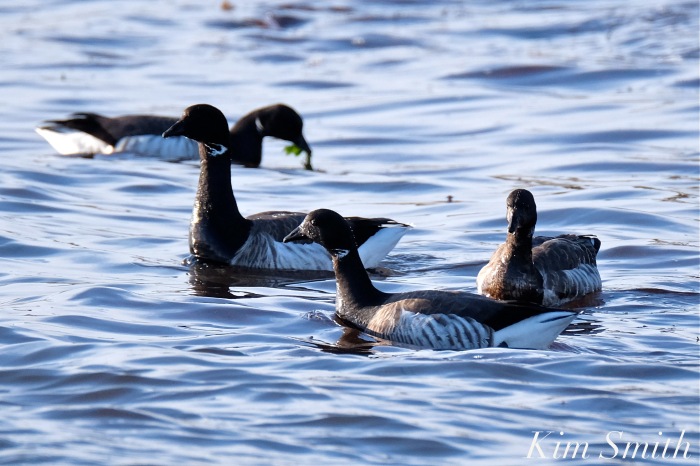
Brants eating bright green sea lettuce.
In the 1930s a terrible disease devastated eel grass and the Brant population plummeted. Surviving Brants adapted to sea lettuce and as the eel grass recovered, so too is the population of Brants recovering.
Brants are wonderfully vocal, making a funny “cronk” sound. I was walking past a flock of geese off in the distance and wasn’t paying much attention. Thinking they were Canada Geese, I ignored them until hearing their vigorous cronking.
They fight with each too, over rocks and food. Tomorrow if I can find the time I will try to post photos that I took of a Brant scuffle.
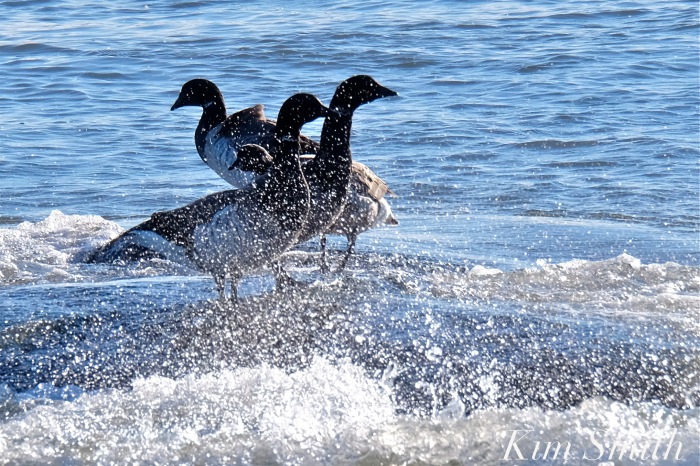
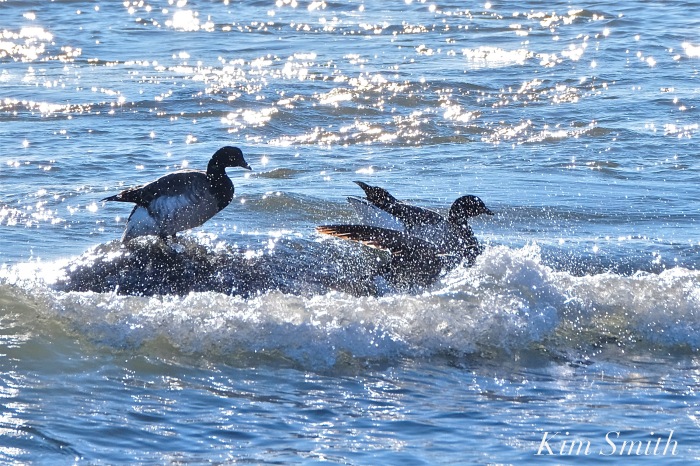
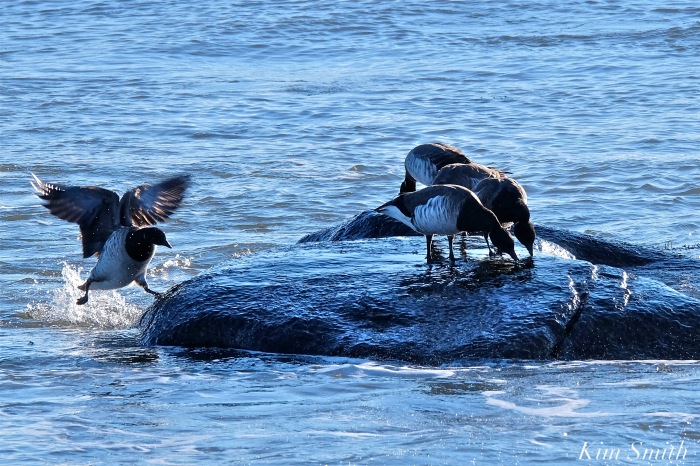
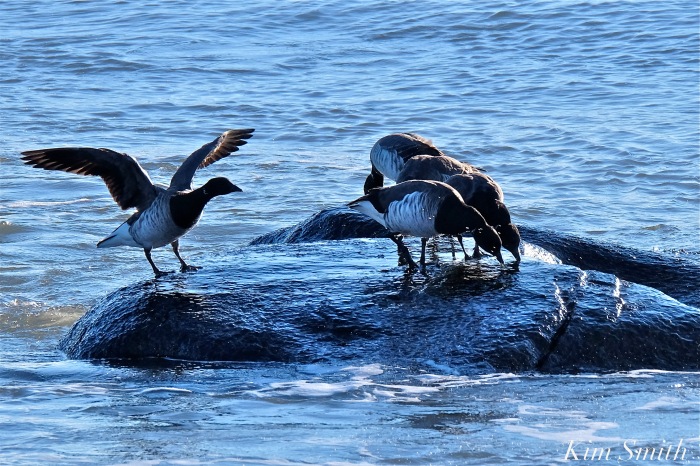
Brants feeding on the rocks are knocked off by the incoming tide, but then quickly get right back up again.
Brants migrate the furthest north of any species of goose, as far north as Hedwig territory.
 Two Males and a Female Scaup
The Greater Scaup breeds as far north as Snowy Owls and Brant Geese, and Ring-necked Ducks are also passing through, not traveling quite as far, but on their way to the Alaskan and Canadian boreal forests. Greater Scaups travel in flocks, sometimes forming rafts of thousands. You can see why in the photos Greater Scaups are colloquially called Bluebills.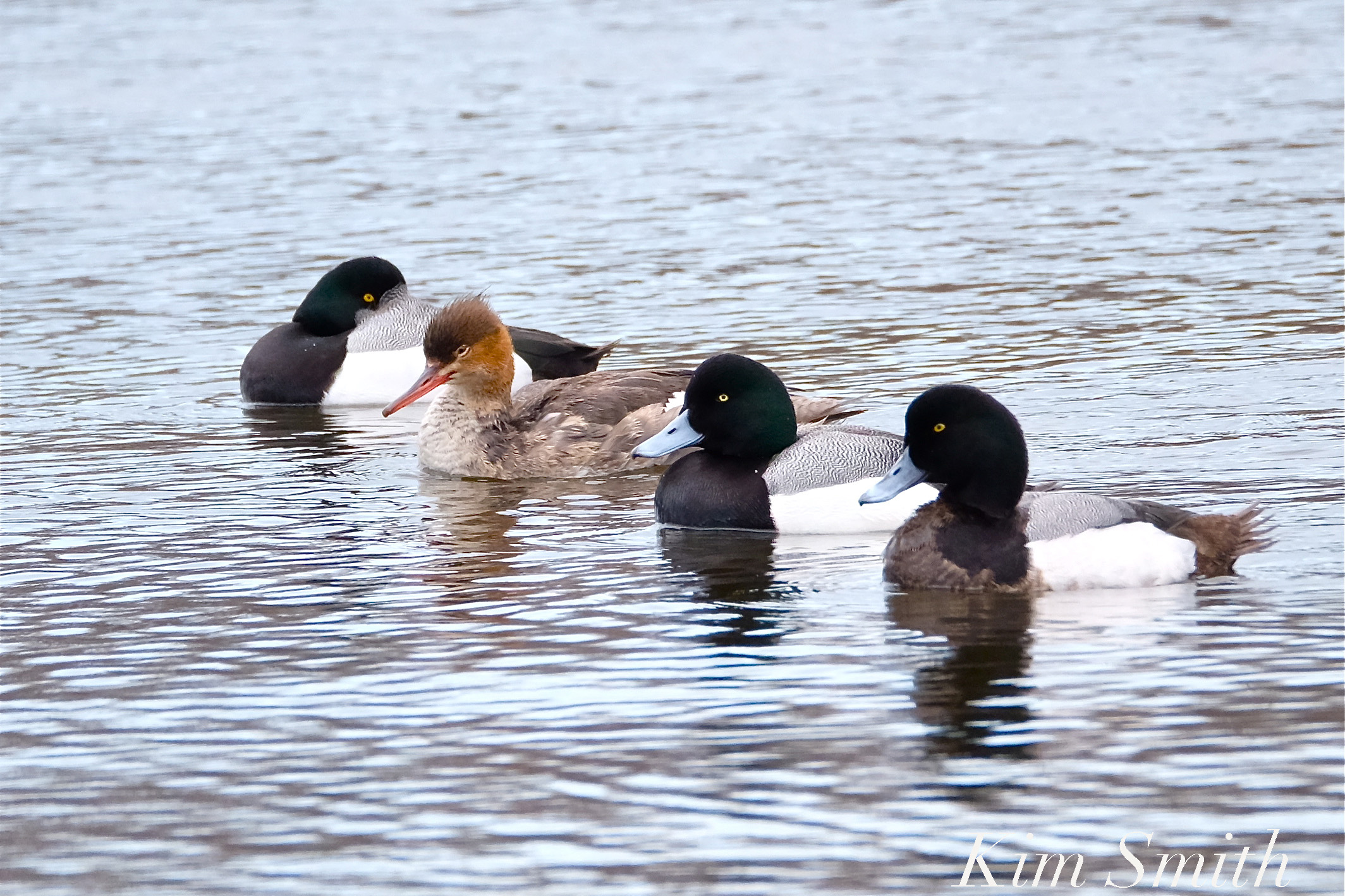
Three male Scaups and a Red-breasted Merganser
The most significant threat to Greater Scaups is habitat loss, oil, and sewage pollution. Nearly eighty percent winter over in the Atlantic Flyway where they are subjected to heavy metals in foods and habitat.
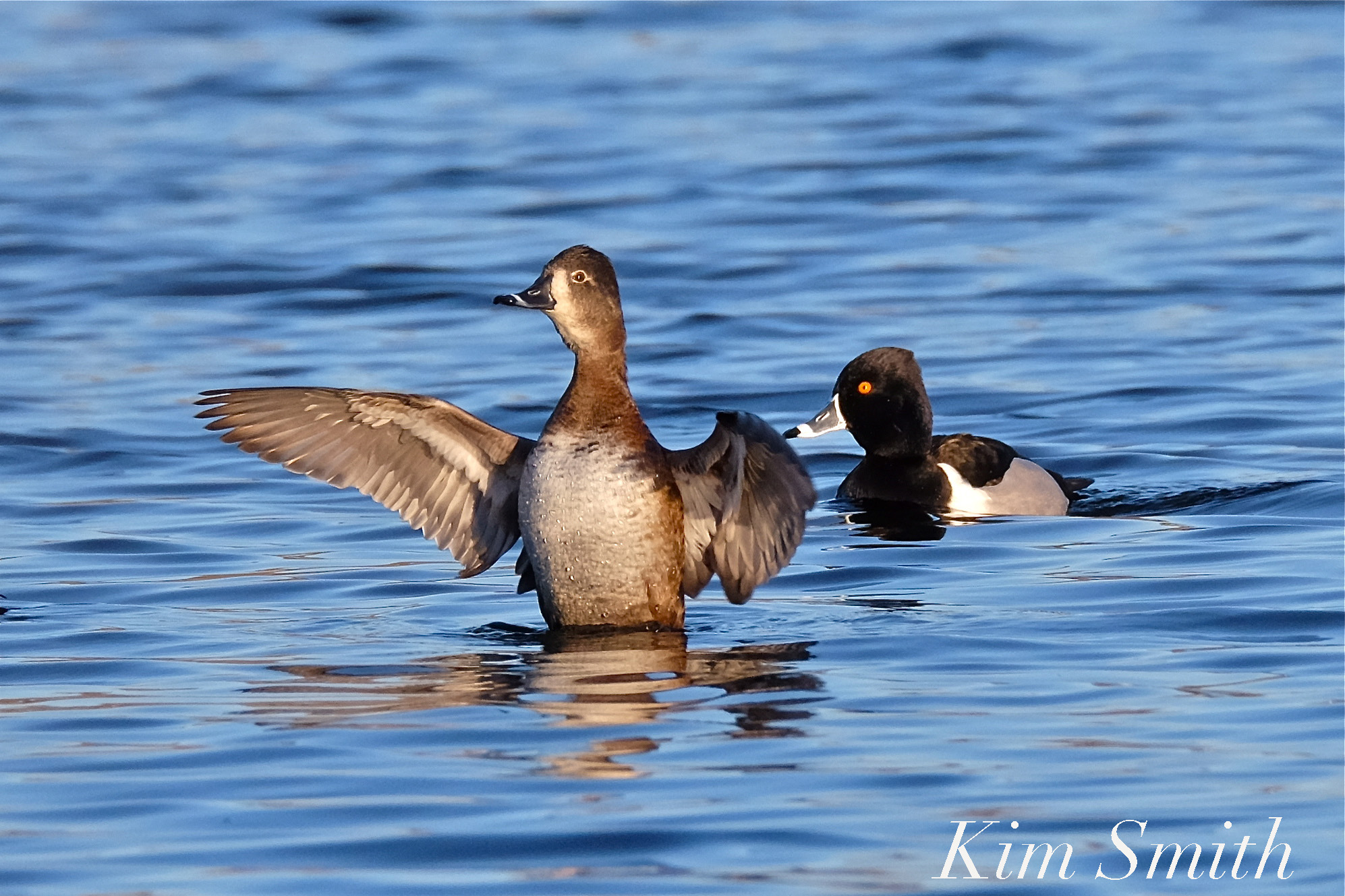
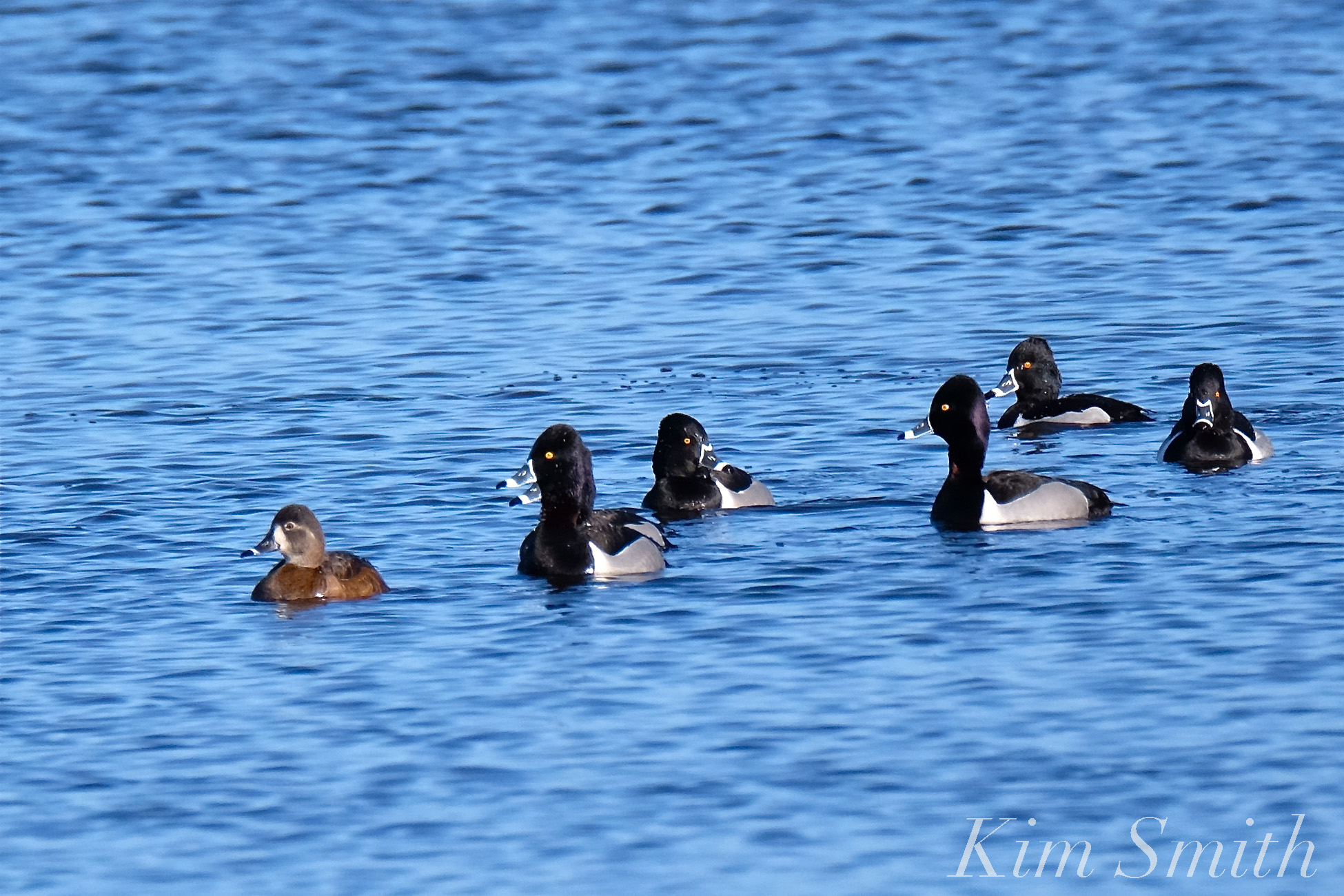 Too many suitors! Lone female Ring-necked Duck with potential mates.
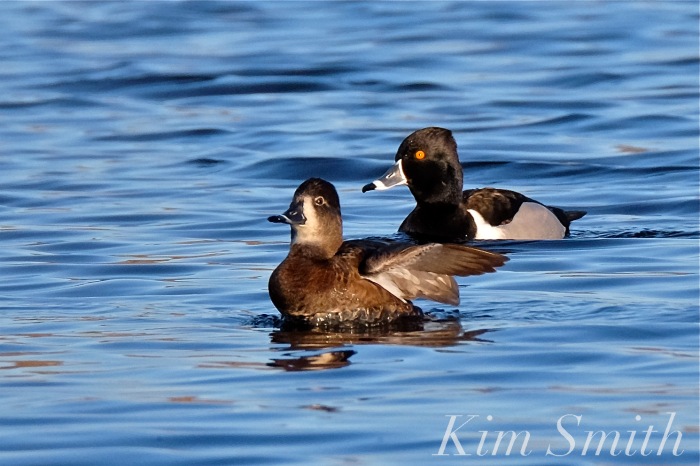
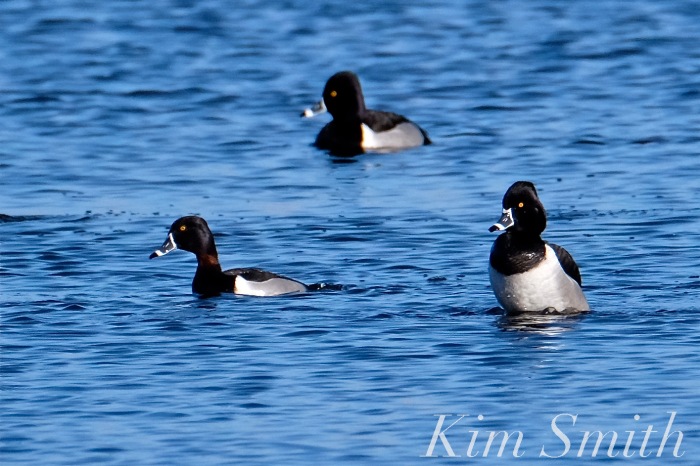
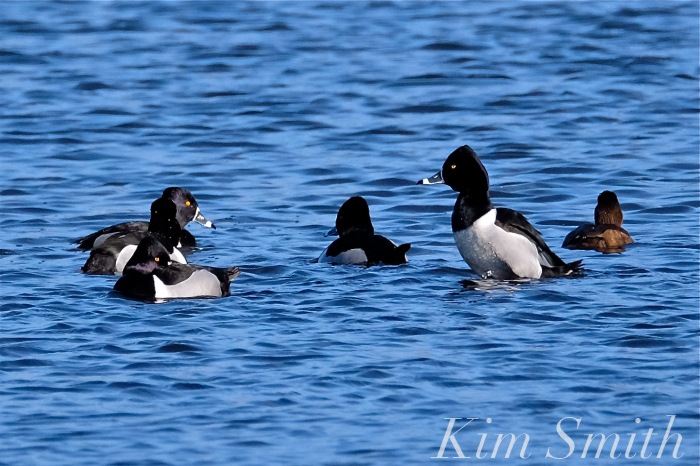
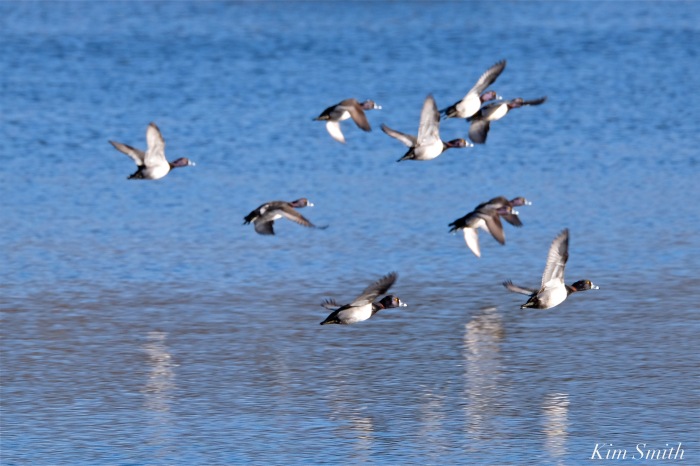
The two species are closely related (Aythya collaris and Atythya marila); both are small diving ducks and both are vulnerable to becoming poisoned by lead from diving for food and incidentally eating the lead shot and lures that continues to cause problems in our wetlands.
READ MORE HERE
Spread The GMG Love By Sharing With These Buttons:

OCEAN ALLIANCE ON VICE NEWS TONIGHT!
Iain Kerr writes,
“Last week Ocean Alliance was in Mexico working with Blue Whales. This work will be featured on Vice News Tonight, Thursday night 15th at 7:30 PM on HBO.
Also, on the 26th Nat Geo is premiering a series called “One Strange Rock,” hosted by Will Smith – Amy and I are at the Premiere in NYC right now. Ocean Alliance will be featured in one of the 10 episodes.”
Congratulations and thank you to Iain for sharing!! Please keep us posted as to when the Ocean Alliance episode will air on “One Strange Rock.”
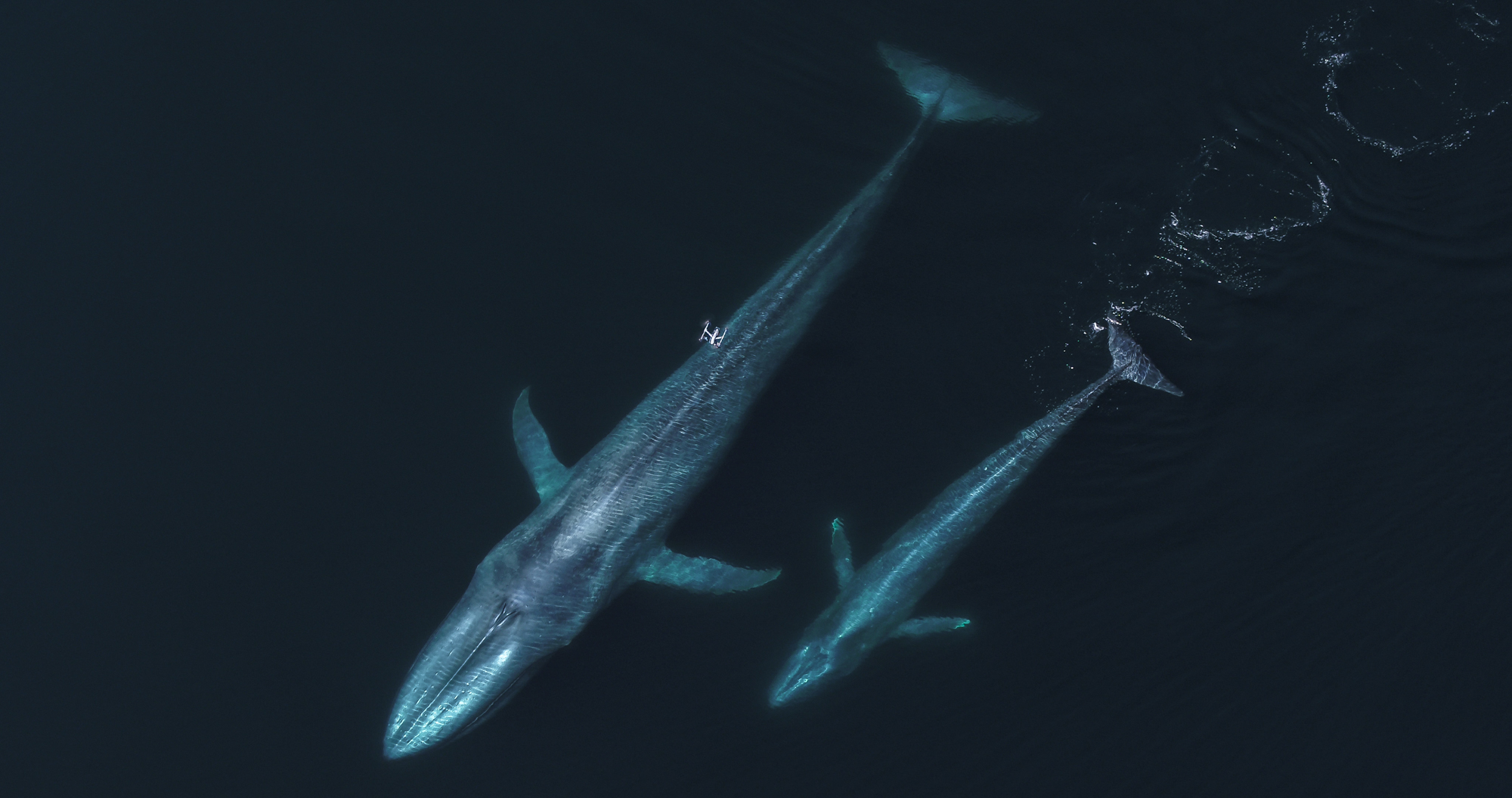
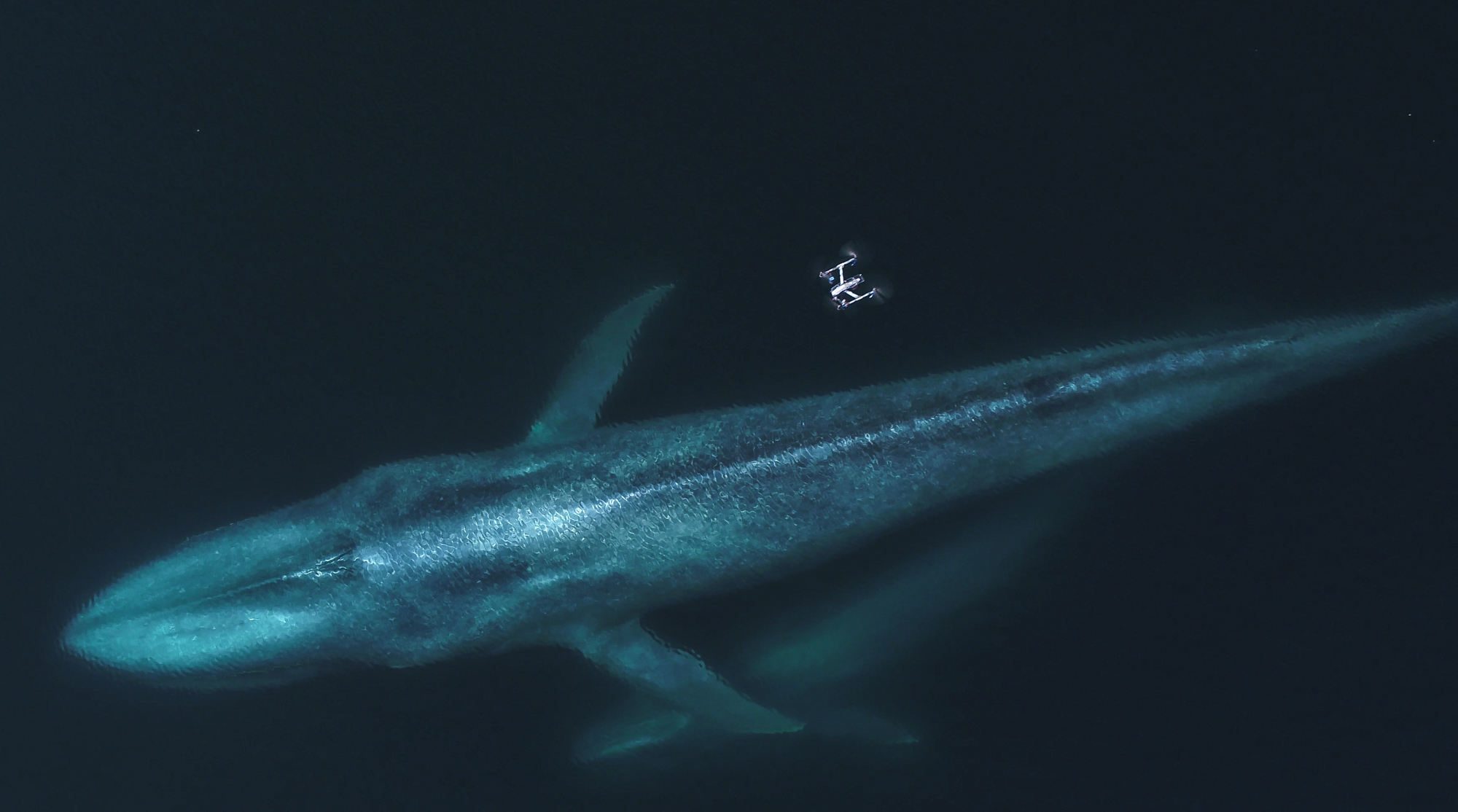
Blue Whales
Spread The GMG Love By Sharing With These Buttons:

Beautiful Fish: Spiny Lumpfish -By Al Bezanson
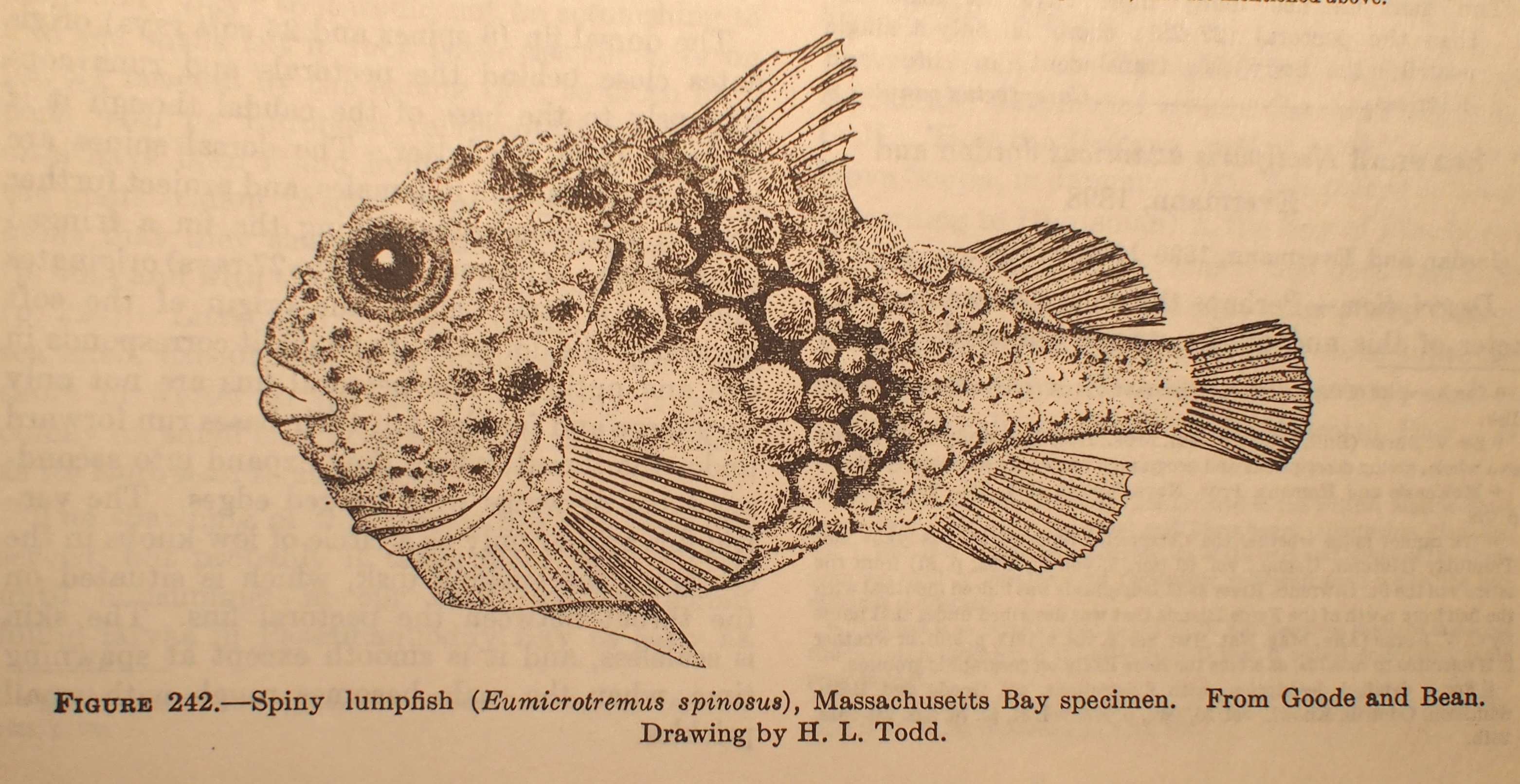
General Range—
Arctic and northern parts of the Atlantic Ocean, south to the Gulf of Maine as a stray.
Occurrence in the Gulf of Maine—
Stray specimens of this northern fish have been reported from Eastport, Maine; from off Cape Ann; and from Salem, in the north side of Massachusetts Bay. We have also seen three small specimens, 1-1¼ inches long that were collected about 15 miles southeast of Cape Ann in 23 and 29 fathoms, by the U. S. Fish Commission in 1878 (now in the U. S, National Museum.)
From Fishes of the Gulf of Maine by Bigelow and Schroeder (1953) online courtesy of MBL/WHOI
Spread The GMG Love By Sharing With These Buttons:

New Film: Joe Virgilio Makes Saint Joseph Rolls –By Kim Smith
REPOSTING FROM 2015 AS THE POST IS GETTING LOTS OF INTEREST THIS WEEK 🙂
Joe Virgilio Makes Saint Joseph Rolls is a wonderful addition to Gloucester’s Feast of Saint Joseph Community Film Project. So many thanks to Joe for taking time from his busy work day to allow filming! Highlights include Joe sharing stories about the early days working alongside his grandfather and cousins, when the thousands of rolls needed for Saint Joseph’s Day were made by hand.
For store hours and menu visit Virgilio’s Facebook page here.
Read more about Virgilio’s Saint Joseph rolls here.
Spread The GMG Love By Sharing With These Buttons:
MARCH NOR’EASTER #GLOUCESTER MA ATLANTIC OCEAN EXPLODING WAVES, SPINDRIFTS, AND THE PRICE TO PAY
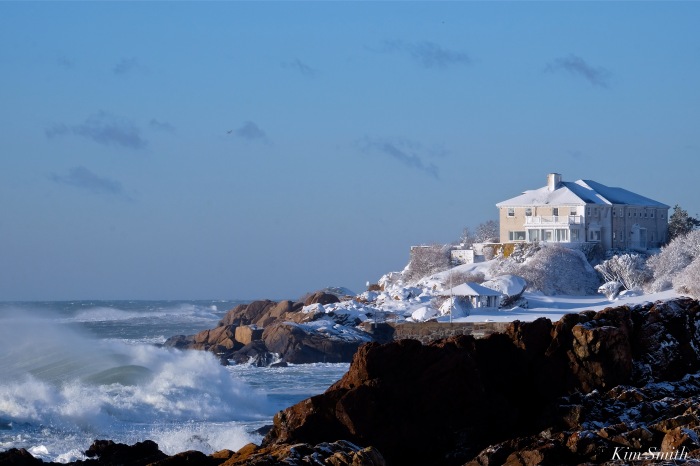
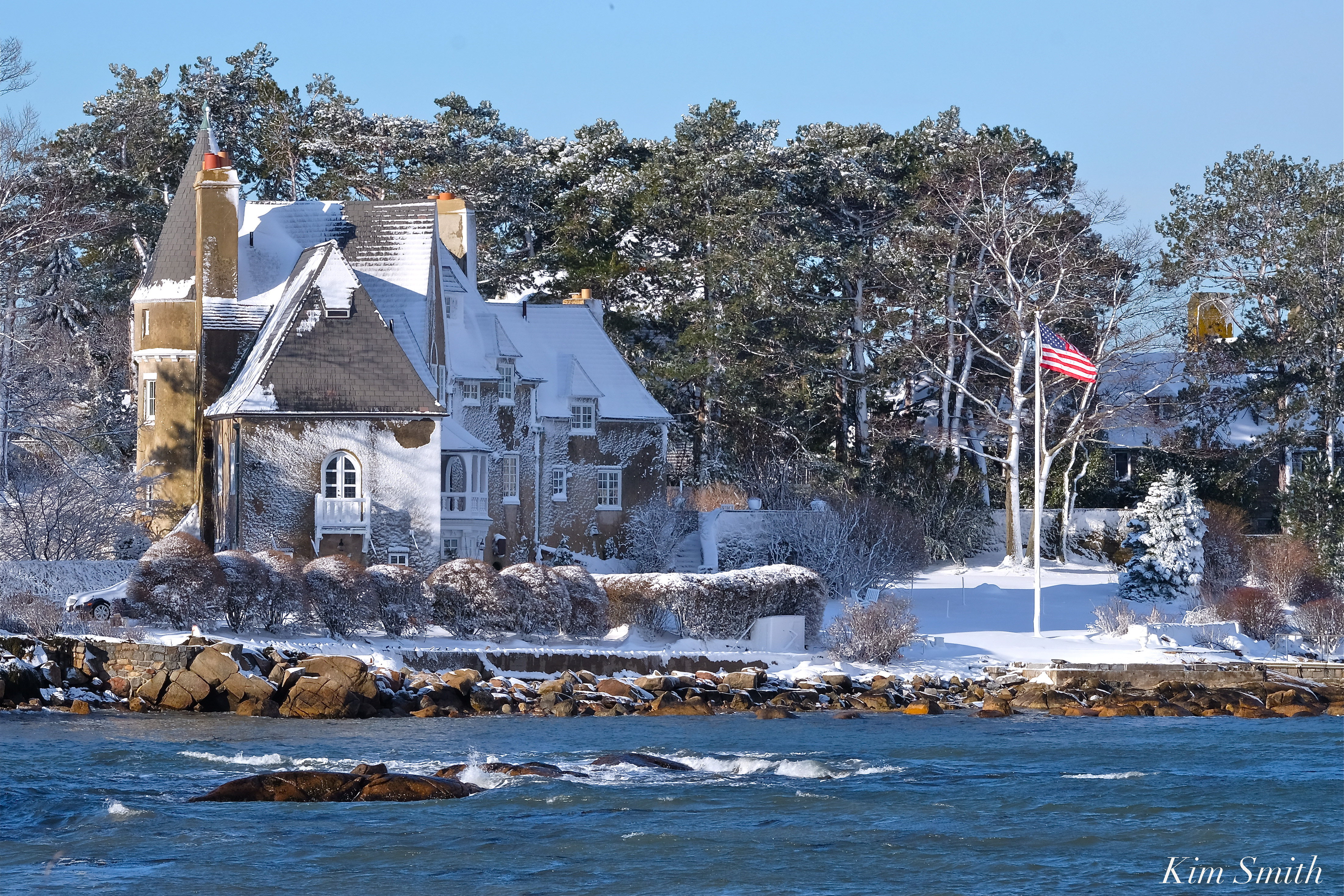
 Eastern Point
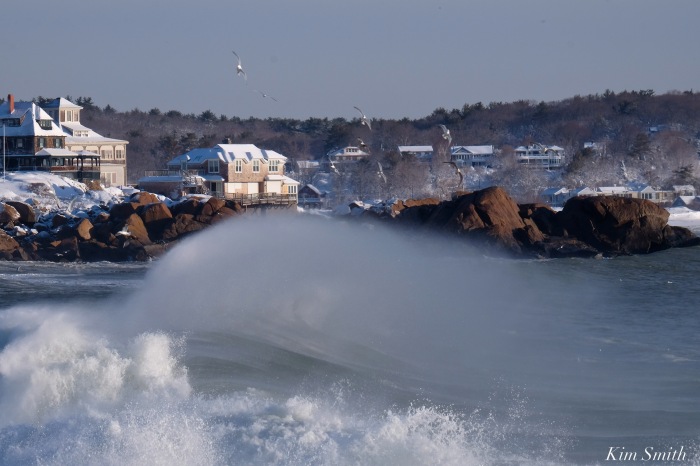
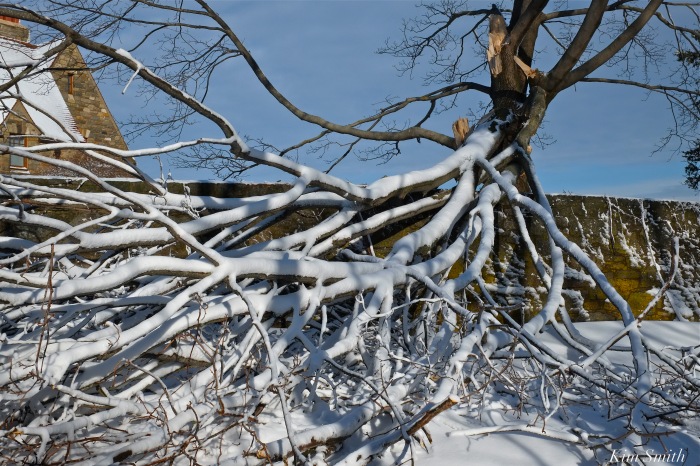
Shoreline, home, and garden have been hard hit by the third nor’easter to take place this March. The waves and spindrifts were magnificent, taking a short drive around the back shore this morning, but it was difficult to observe the further damage to coastline habitats.







Spread The GMG Love By Sharing With These Buttons:

SNOWY OWL TEST
Please bear with me, this post is actually a test to see why the Snowy Owl Hedwig update posted last night is not connecting to the GMG facebook feed.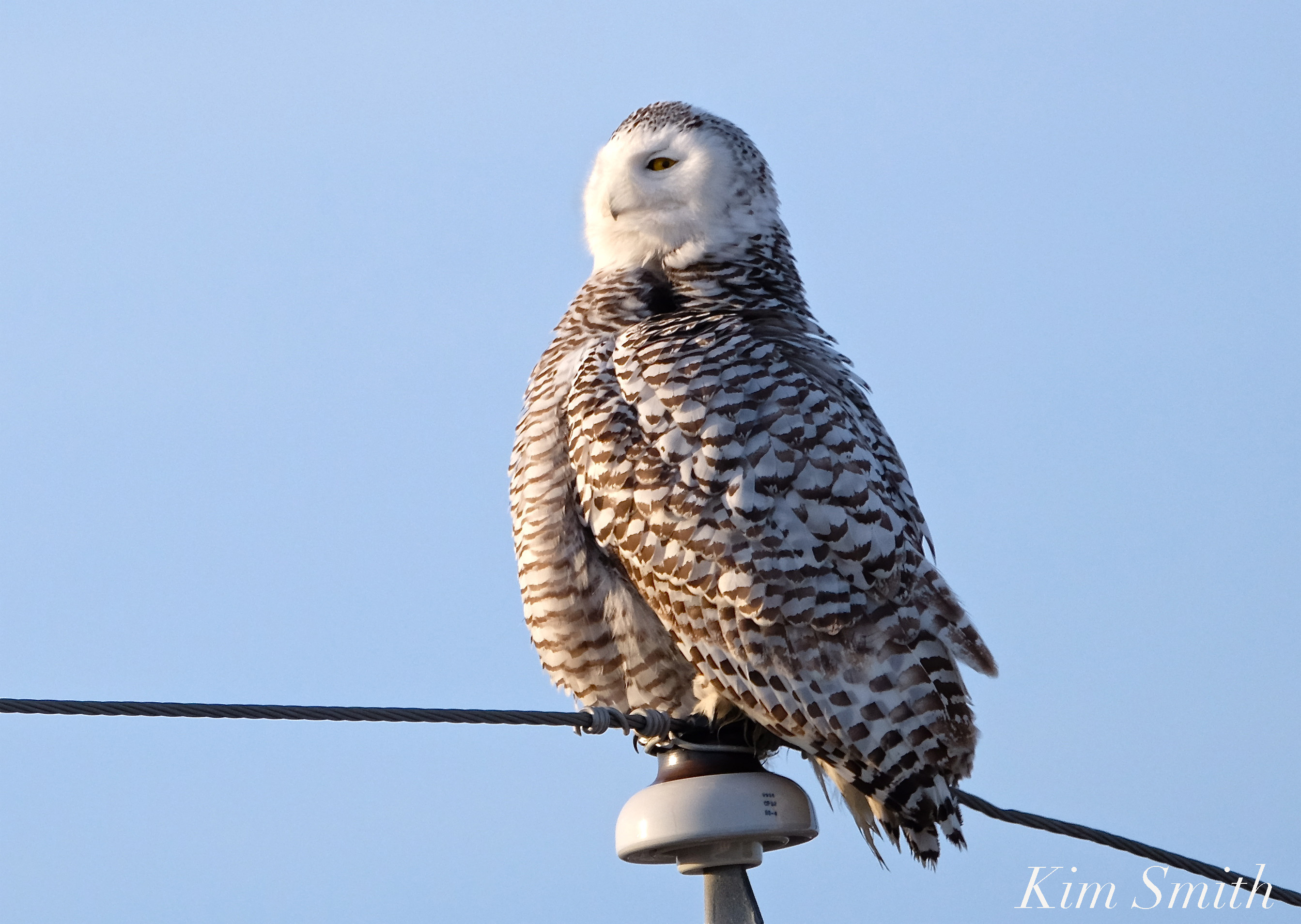
Spread The GMG Love By Sharing With These Buttons:

THE GREAT AUK BY MOONLIGHT
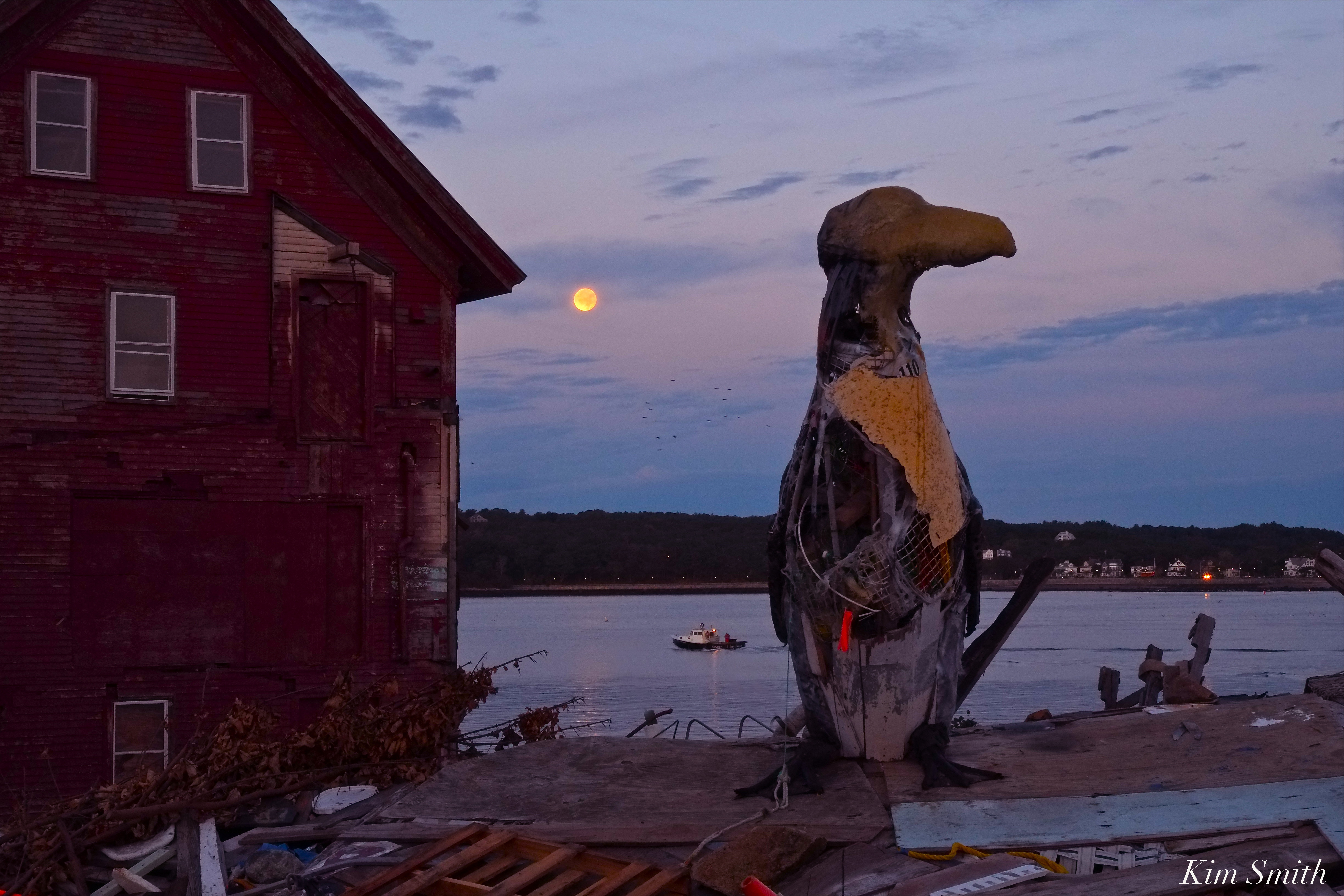
A change of pace from thoughts of blizzards and nor’easters. Today while organizing photos for my upcoming lecture programs, I came across this funny random photo never posted. Read more about Nathan Wilson’s Great Auk sculpture and the extinct bird that inspired the installation at the Paint Factory this past summer here.
Spread The GMG Love By Sharing With These Buttons:

DAGGERS! SNOWY OWL HEDWIG WEEKLY UPDATE
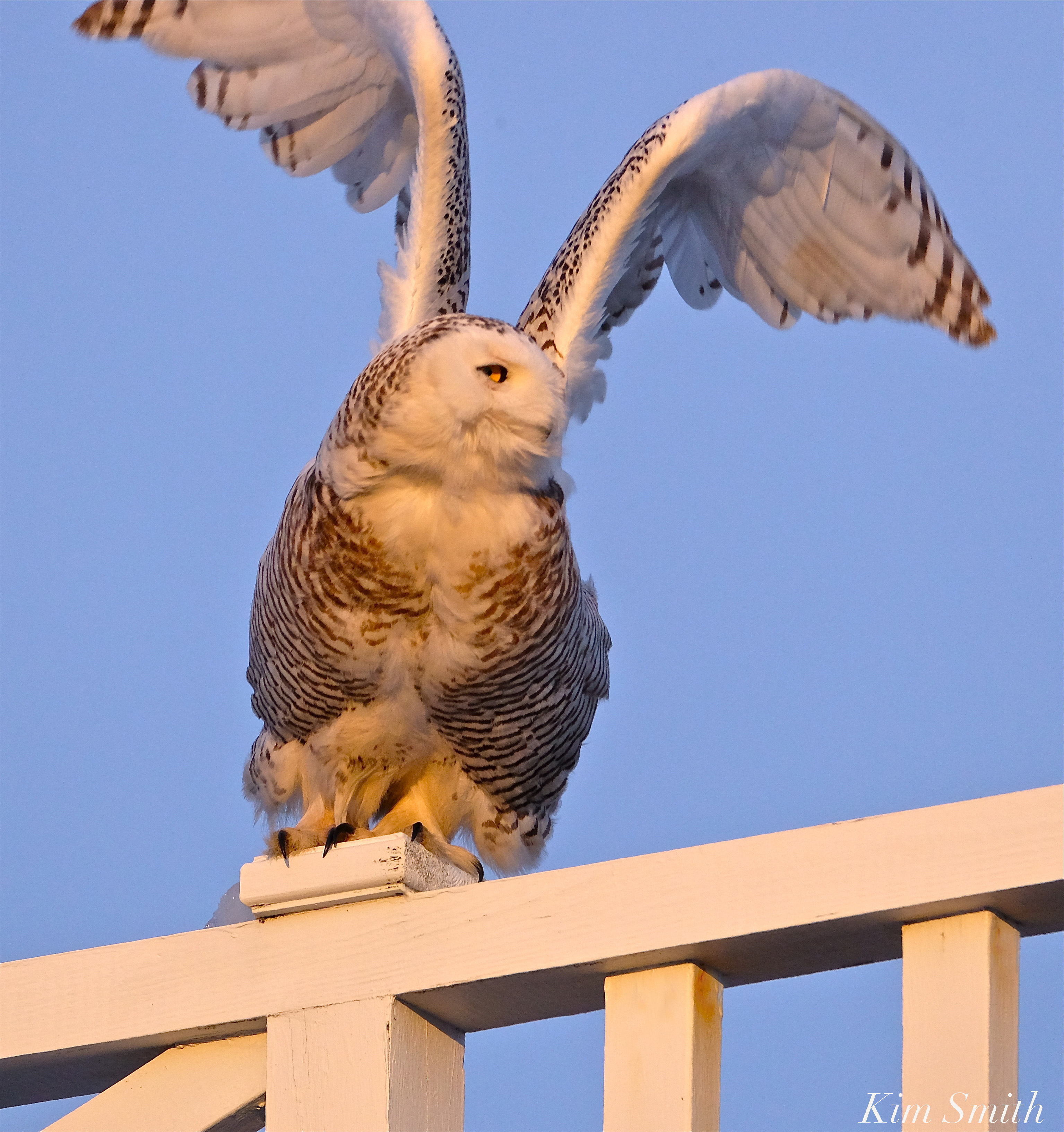 Our beautiful Snowy Hedwig’s routine hasn’t much changed since she discovered the safety zone provided by hotel rooftops (safe from crows, that is). Hunting during the night, returning at dawn to the roof to various well-hidden niches, and then making her “entrance” at around sunset, she has adapted well to New England coastal living. After preening, pooping, and occassionally passing a pellet, she then scans the neighborhood. Hedwig bobs her head in an up and down motion a half dozen times, then flies east over the sea or west over the Arctic tundra-like golf course.


Snowy Owl Hedwig lifts her head in a bobbing motion to track prey.
Owls cannot move their eyes in the eye sockets. Instead, they employ several techniques to increase their range of sight. An owl can swivel its head a full 270 degrees. Additionally, owls bob their head up and down, a movement that aids in triangulating potential prey.
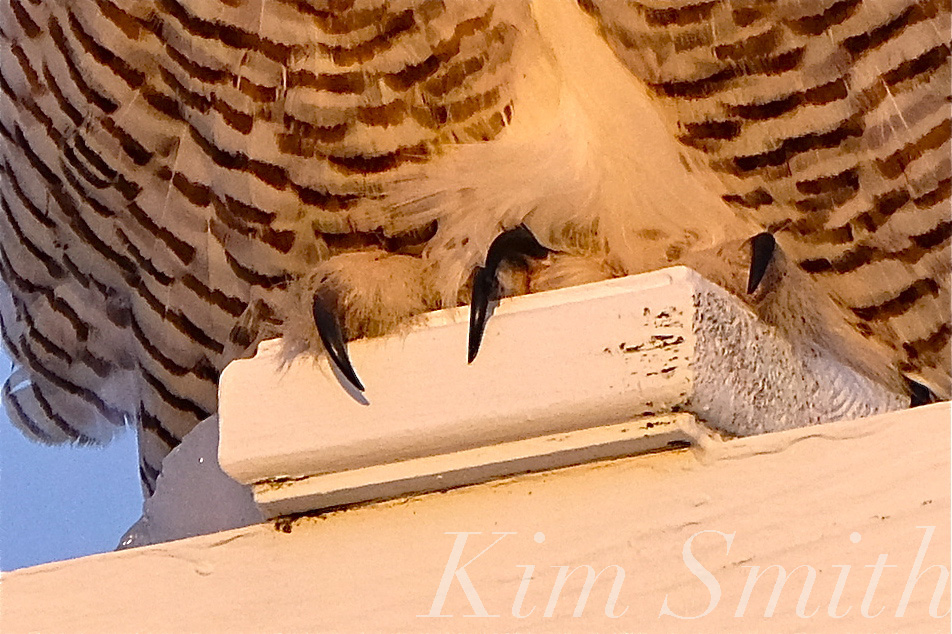 Dagger Sharp Talons.
Because the forceful impact of the Snowy Owl hitting its prey is so powerful, combined with the vise-like grip of its talons, the animal usually dies instantly.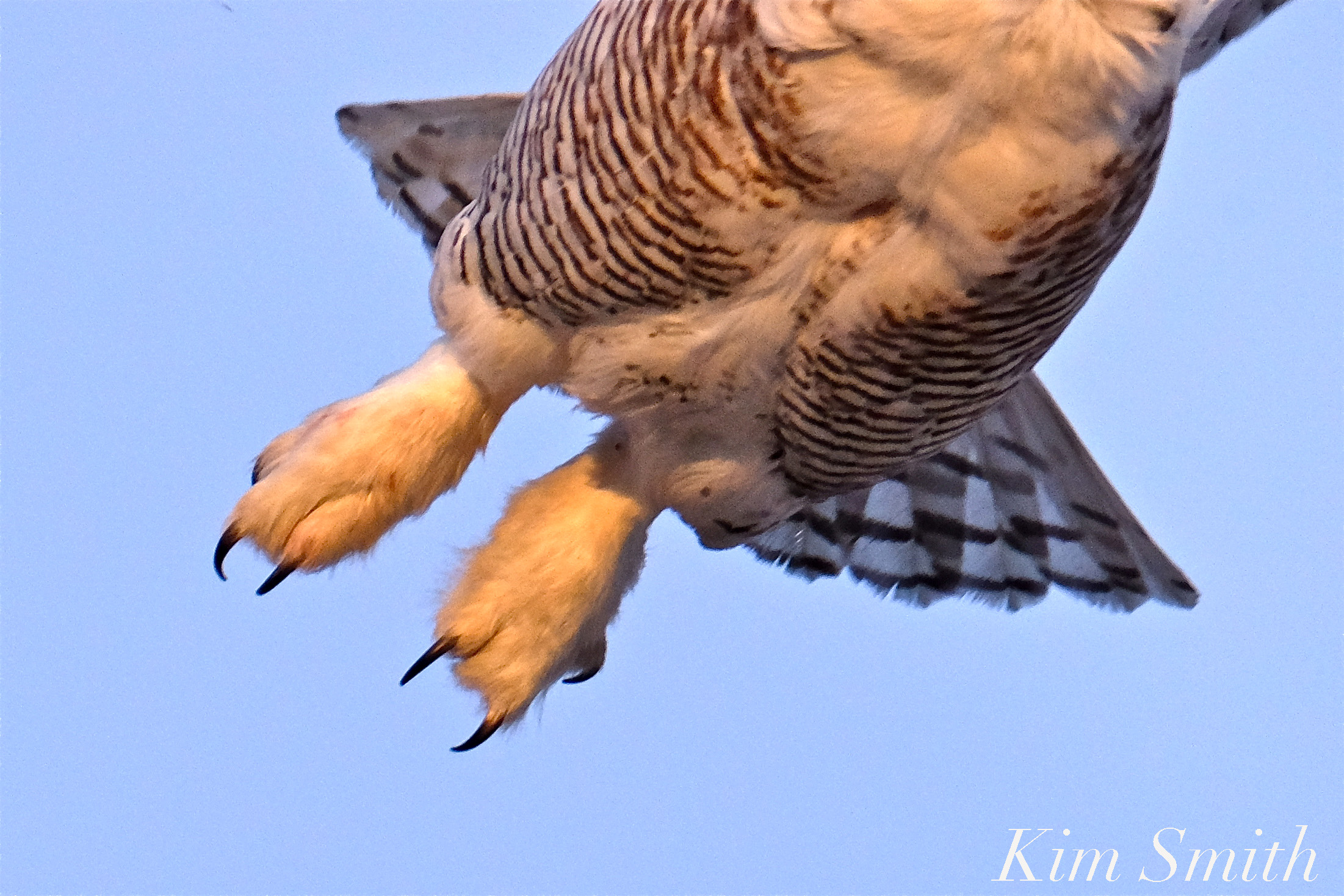
Hedwig has so far survived three tremendously fierce storms during her stay in Gloucester. Last night, on the eve of the blizzard, she tried to take off several times towards the water. The wind current was strong, but she eventually flew successfully, heading in the direction of Thacher Island. Heres hoping she is waiting out the blizzard in one of her hideaways.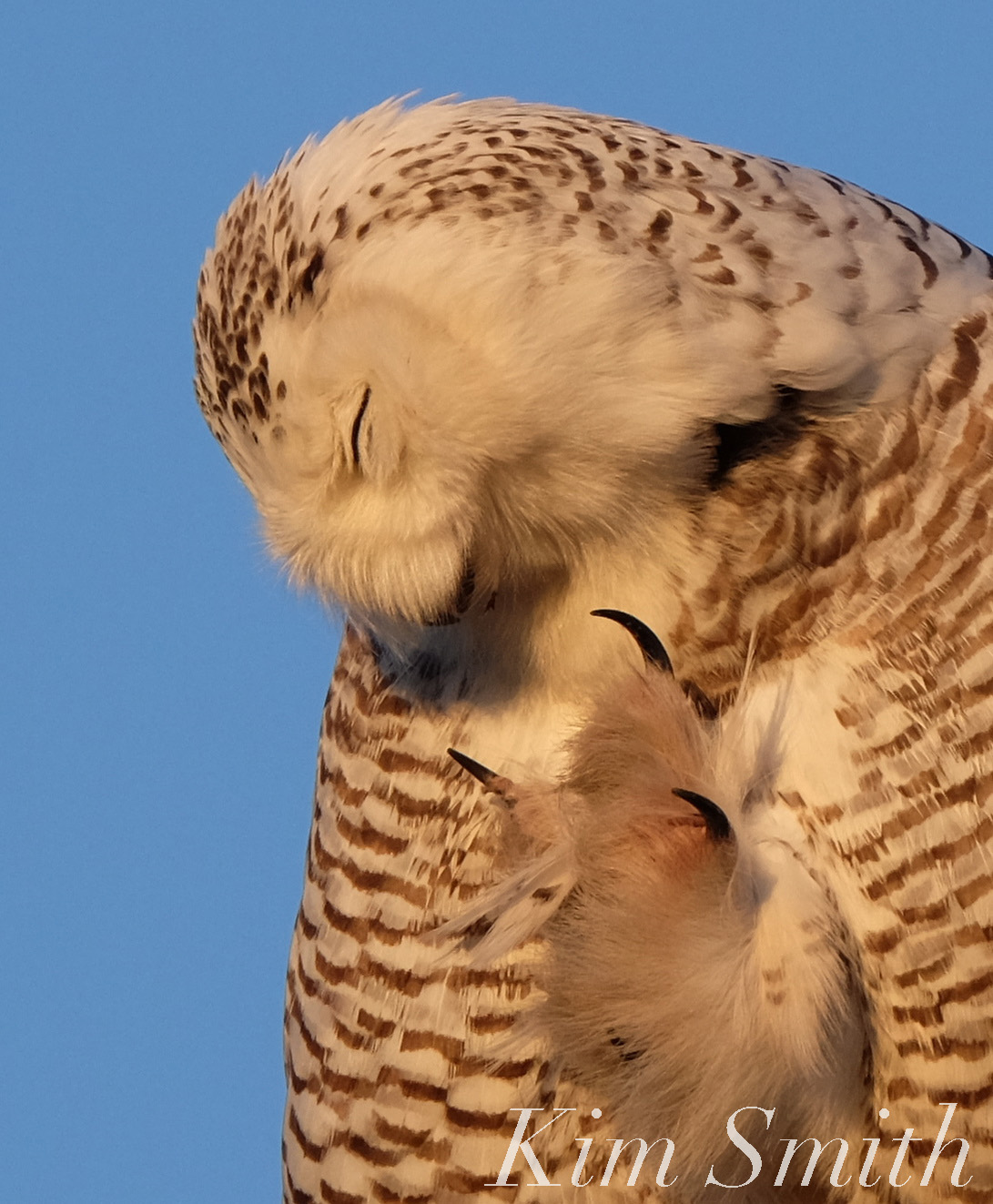
Folks are wondering how long will Hedwig stay. Most Snowies leave Massachusetts by April, although one was recorded at Logan Airport as late as July.
Spread The GMG Love By Sharing With These Buttons:

MORE OF THIS PLEASE
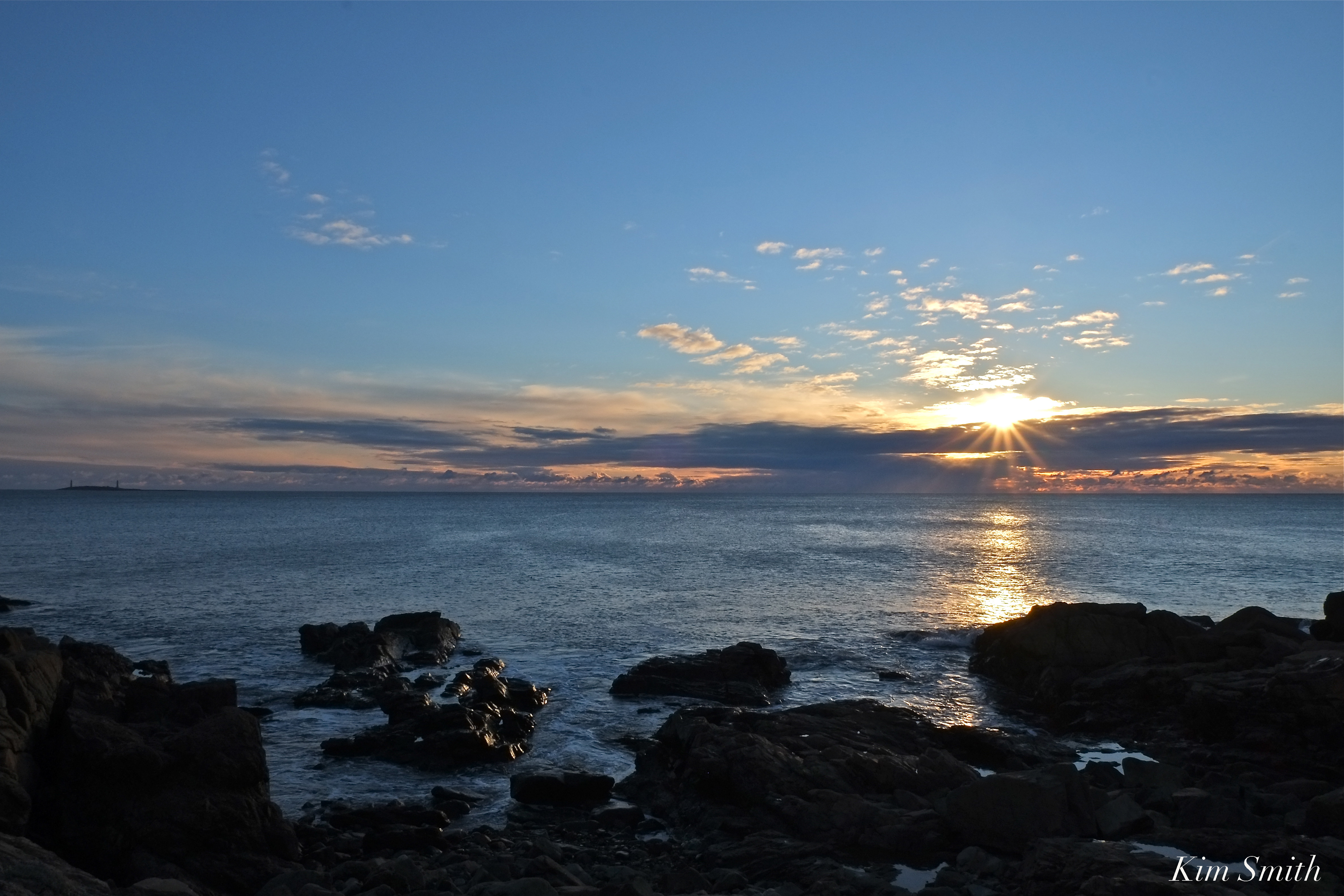 Atlantic Road Sunrise
Spread The GMG Love By Sharing With These Buttons:

Beautiful Fish at the Seafood Expo in Boston and Monkfish Stew Recipe -By Al Bezanson
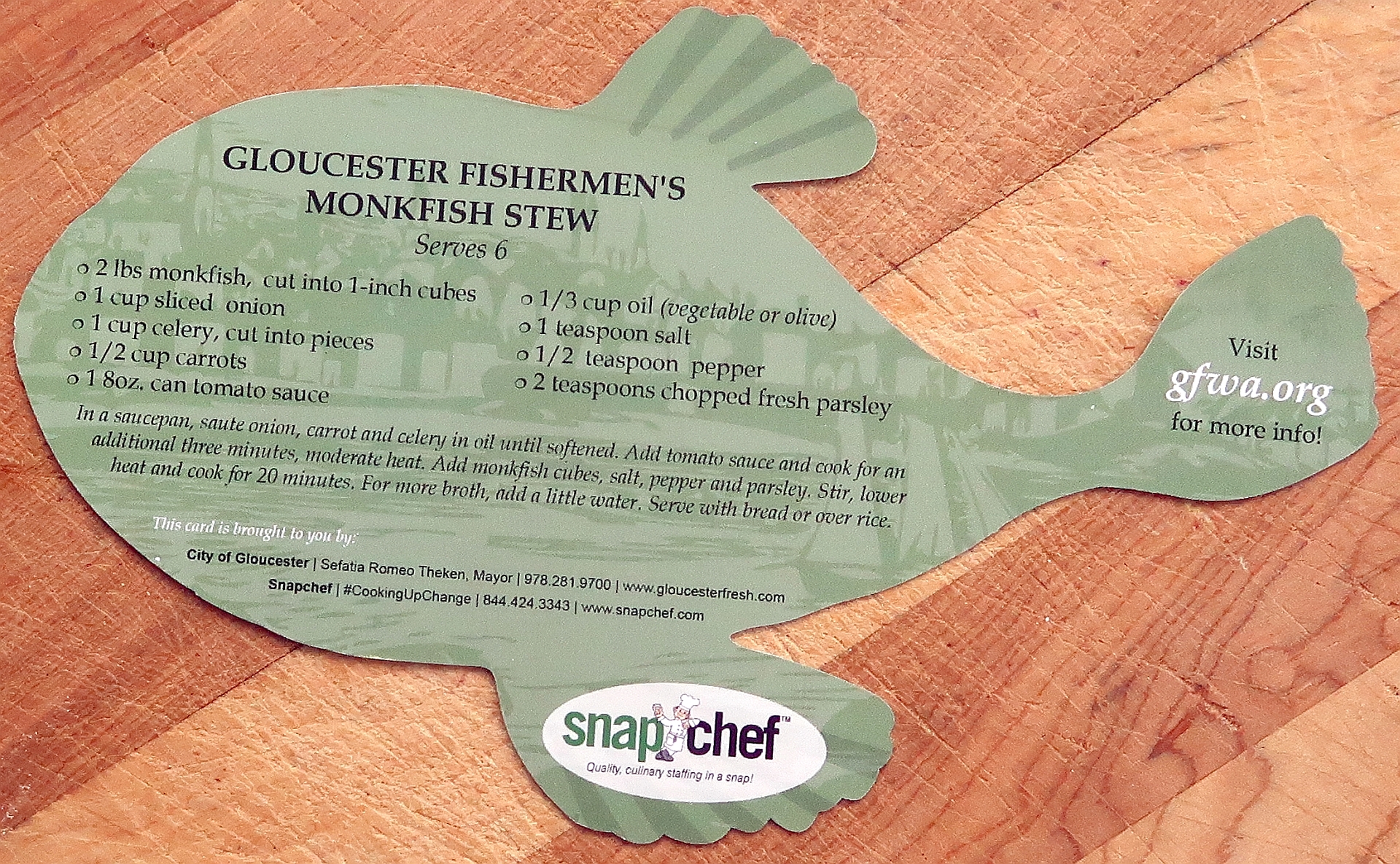 Gloucester Fishermen’s Monkfish Stew

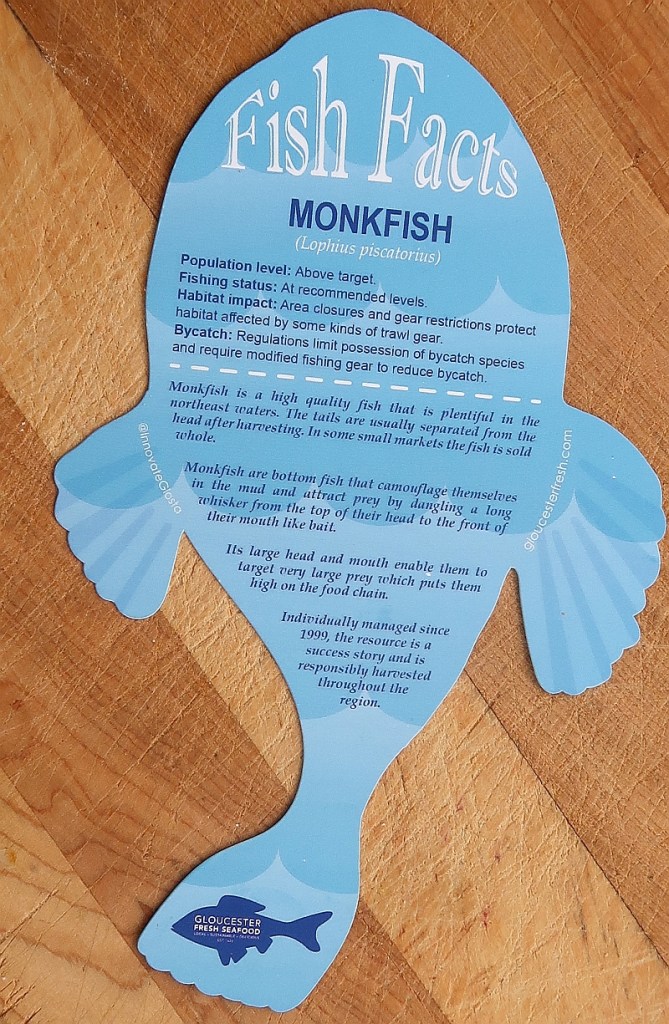


Excellent! Try it at the Gloucester House!
Spread The GMG Love By Sharing With These Buttons:

MAYOR SEFATIA AND THE DPW CREWS GETTING THE JOB DONE! #GLOUCESTERMA NOR’EASTER
https://www.instagram.com/p/BgRAObpn5_X/
Spread The GMG Love By Sharing With These Buttons:
SAINT JOSEPH DAY PASTA MAKING WITH THE GROPPO FAMILY AND FRIENDS <3
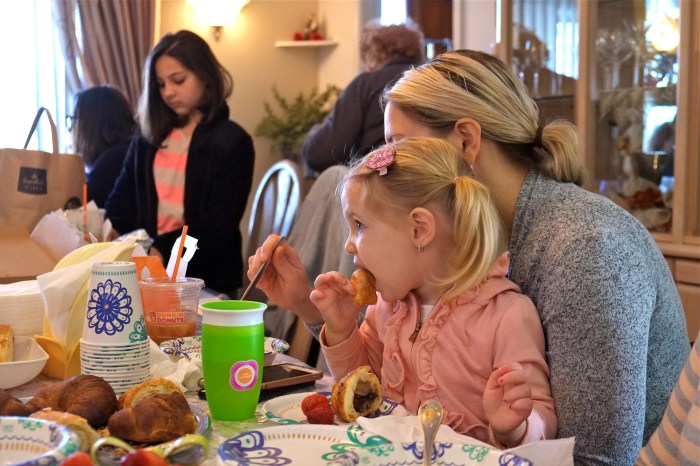
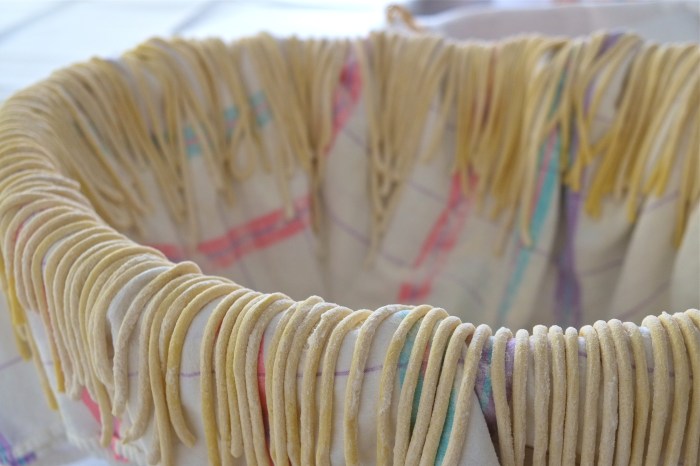
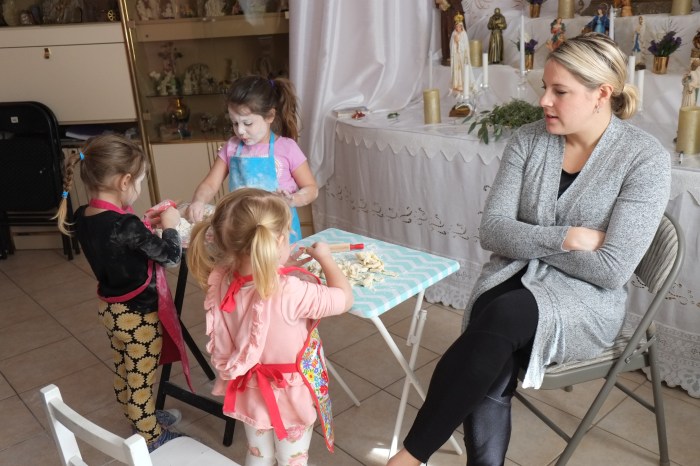
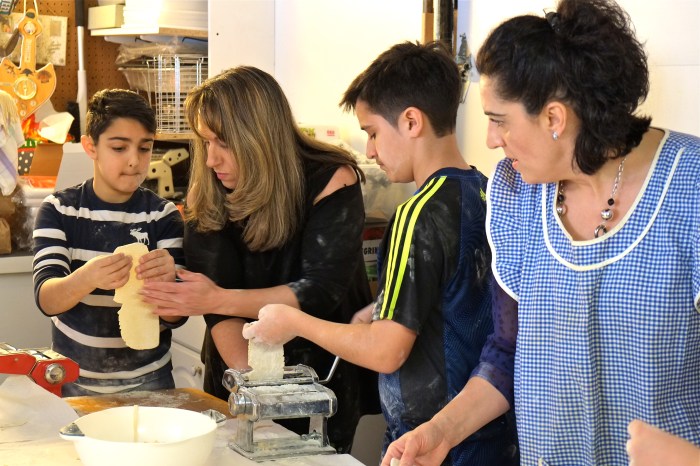
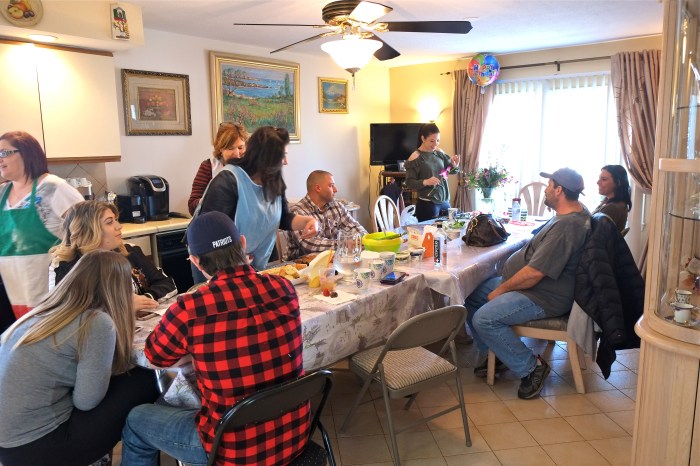
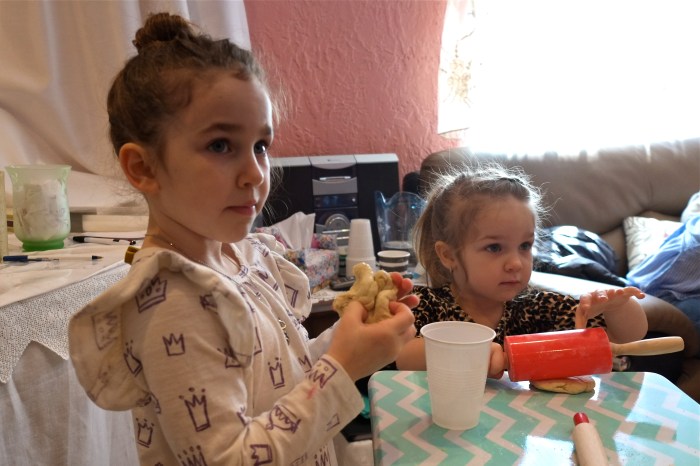
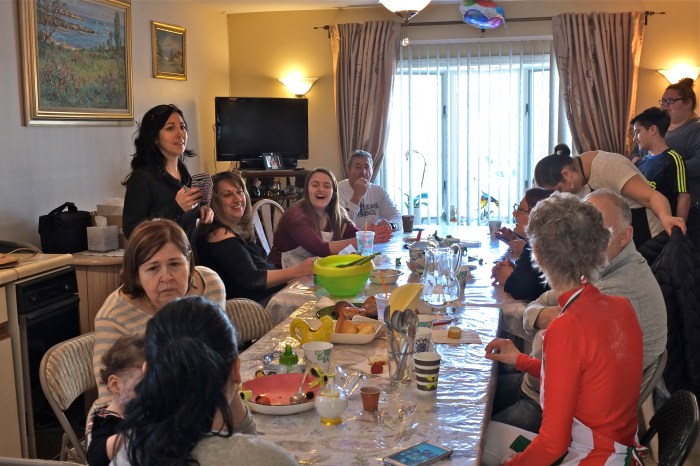
 Early morning and friends and family gather at the Groppo home. Nina has laid out trays of warm bread and pastries, a medley of fresh fruit, and vats of homemade ricotta steaming on the stovetop to greet the pasta-makers. Everyone pitches in, from the very youngest to the very oldest, men and women, boys and girls. The house is overflowing with helpers. The time goes by way too fast and in a few short hours, racks and racks of pasta are drying, in preparation for the March 19th Feast of San Giuseppe.
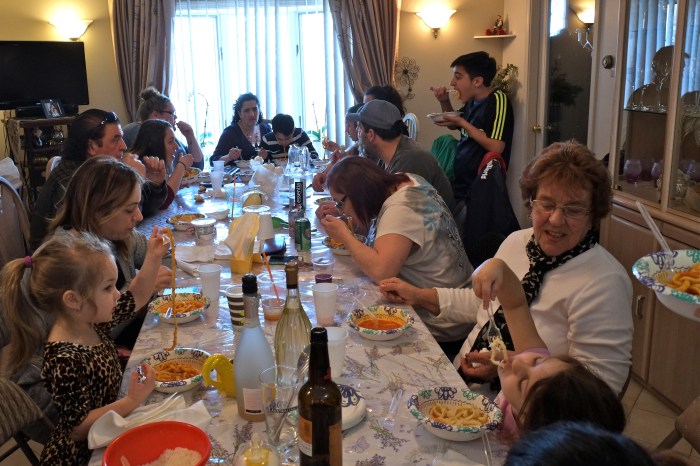
At another pasta-making station, Grace and Frank Sciortino made a special batch of maccarruna pasta, just for the helpers. After all the pasta-making mess was cleaned up, Nina served heaping bowls of maccarruna topped with homemade canned tomato sauce, from tomatoes grown in her garden last summer. A delicious lunch was had by all and as I looked around the room at the many generations gathered around the table, I thought of the memories being created from this very special community tradition of honoring Saint Joseph each year at the welcoming home of the Groppo Family. Happy San Giuseppe Pasta-making Day!
































































https://www.instagram.com/p/BgNI8XkHQYw/
https://www.instagram.com/p/BgNH91EHD1-/
https://www.instagram.com/p/BgNNOk9nc_6/
Spread The GMG Love By Sharing With These Buttons:

SHORING UP THE NILES POND-BRACE COVE CAUSEWAY BEFORE THE NEXT NOR’EASTER (ARRIVING TONIGHT)
 With the third nor’easter to hit our shores during the month of March expected to arrive tonight, track-hoe excavator Larry shares that the work continued today to fortify the causeway, and to possibly get more water to flow through the clogged drain that is preventing excess water from leaving Niles Pond.
For our readers general information, the cost of the repairs, restoration, and continued ongoing maintenance of the causeway, and surrounding area, are paid for entirely by the generous residents of Eastern Point, not tax payer dollars.
https://www.instagram.com/p/BgOc1uoncPA/
Spread The GMG Love By Sharing With These Buttons:

Beautiful Fish: Short Big-eye -By Al Bezanson
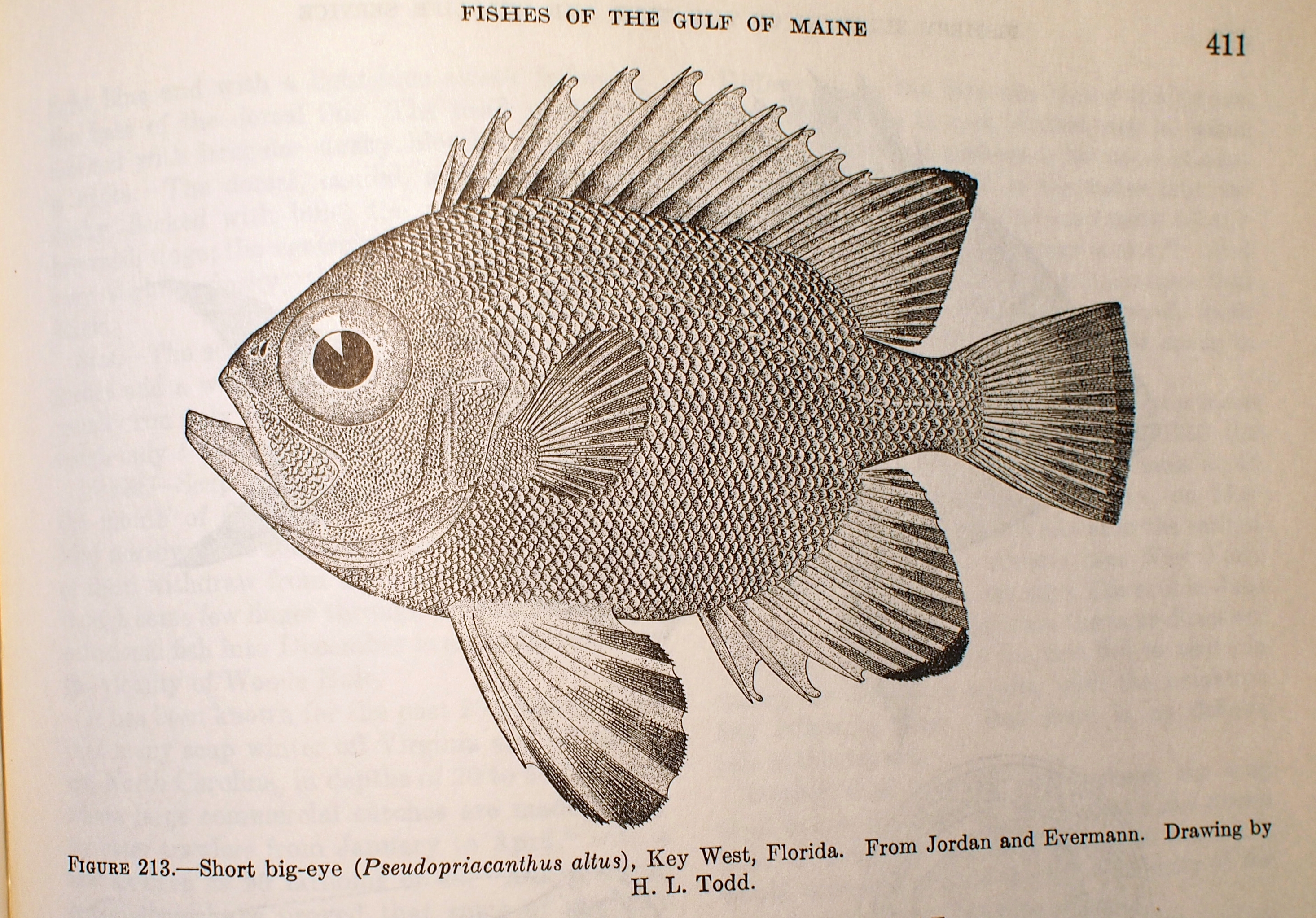
The most striking characters of this fish are its very large eyes and its brilliant red color. Apart from these, it is distinguishable from the sea bass tribe by the fact that its whole head, as well as its body, is clothed with rough scales and that the anal fin is longer than the soft-rayed portion of its dorsal fin. Its sidewise flattened body, unusually stout dorsal fin spines, very large ventral fins, and small pectorals, are ready field marks to separate it from the rosefish, the only common Gulf of Maine species of similar appearance that rivals it in color.
Occurrence in the Gulf of Maine—
A big-eye found alive on Marblehead Beach, September 3, 1859; a second, found at Scituate, Mass., in 1932 or 1933;[43] and a third, about 1½ inches (38 mm.) long, picked up in a tide pool at Cohasset, Mass., by F. G. Bemis in September 1937,[44] are the only definite records for this southern fish within the Gulf. But since it occasionally appears in some numbers at Woods Hole in summer, it may round Cape Cod more often than this paucity of actual records suggests.
From Fishes of the Gulf of Maine by Bigelow and Schroeder (1953) online courtesy of MBL/WHOI http://www.gma.org/fogm/Pseudopriacanthus_altus.htm
Spread The GMG Love By Sharing With These Buttons:

GLOUCESTER STAGE: ANNOUNCING THE 2018 SEASON
 Robert Walsh, Artistic Director Jeff Zinn, Managing Director
From: Heidi J. Dallin, Media Relations Director Phone: 978-281-4099 / 978-283-6688 Email: hjdallin@hotmail.com
Gloucester Stage Company: The 2018 Season
Two World Premieres, Two New England Premieres,
A Modern American Classic & A Tony Award Winner
Set for 39th Gloucester Stage Season
Gloucester Stage Company Artistic Director Robert Walsh and Managing Director Jeff Zinn, recently announced the six-play lineup for Gloucester Stage’s 39th Season of professional theater in Gloucester, Massachusetts. “We are very excited about the line-up of plays for our 39th season!”, says Walsh, “We’re thrilled to include two world premieres, two New England premieres, to honor the late Sam Shepard, and celebrate the indomitable spirit of the Mundy sisters in Dancing at Lughnasa.” According to Managing Director Zinn, “Choosing our 39th season challenged us to uphold and deepen our mission at Gloucester Stage. “Revolutionary Women” emerges as a central motif: Madame Defarge, Dancing at Lughnasa, The Agitators, all feature strong womenchallenging the world around them. That same fighting spirit continues with the irrepressible Cyrano, a battle between brothers in True West, and one man’s last stand against corporate greed in My Station in Life. We’re so proud of the powerful company of artists we’ve assembled to bring these stories to life; welcoming back Lindsay Crouse, and Jacqueline Parker, and bringing Wendy Kesselman, Brenda Withers, and Ellie Heyman into the Gloucester Stage family.”
The Gloucester Stage 2018 season performance days and times for all productions are Wednesday through Saturday at 7:30 pm and Saturday and Sunday at 2:00 pm. Single Ticket prices are $35 to $45 with discounts available for Cape Ann Night, Preview Performances, Senior Citizens, Veterans,and Patrons 18 years old and under. Gloucester Stage Flex Passes for the 2018 Season are also on sale now. For information about Gloucester Stage, or to purchase single tickets or Flex Passes, call the Box Office at 978-281-4433 or visit www.gloucesterstage.com.
GLOUCESTER STAGE 39TH SEASON
May 11 – June 2
A WORLD PREMIERE
Madame Defarge by Wendy Kesselman
Directed by Ellie Heyman
A passionate re-imagining of Charles Dickens’ infamous Madame Defarge illuminates this new musical by Wendy Kesselman (The Diary of Anne Frank, My Sister in This House, The Black Monk). Set against the turmoil of the French Revolution, as Sydney Carton (“It’s a far far better thing…”) sacrifices all for his love Lucie Manette, and Doctor Manette is “recalled to life” after eighteen years in the Bastille, Therese Defarge battles oppression with longings for love, freedom, justice, and revenge. Ellie Heyman makes her Gloucester Stage debut directing this fresh musical adaptation of Charles Dickens’ classic A Tale of Two Cities. The world premiere of Wendy Kesselman’sMadame Defarge runs May 11 through June 2. Performances are Wednesday through Saturday at 7:30 pm andSaturday and Sunday at 2:00 pm at Gloucester Stage Company, 267 East Main Street, Gloucester, MA.

 June 8 – July 7
A TONY AWARD WINNER
Dancing at Lughnasa by Brian Friel
Directed by Benny Sato Ambush
Featuring Lindsay Crouse
Set in County Donegal in 1936 during the Celtic harvest festival, Dancing at Lughnasa, chronicles the five Mundy sisters and their brother Jack, who has returned home from the missions after 25 years away. Brian Friel’s award winning Irish masterpiece reunites veteran director Benny Sato Ambush with Academy Award nominee and Gloucester resident actress Lindsay Crouse. The pair collaborated on Gloucester Stage’s critically acclaimed productions of Driving Miss Daisy in 2014 and Lettice and Lovage in 2016. Dancing at Lughnasa runs from June 8 through July 7. Performances are Wednesday through Saturday at 7:30 pm and Saturday and Sunday at 2:00 pm. at Gloucester Stage Company, 267 East Main Street, Gloucester, MA.
 July 13 – August 11
A NEW ENGLAND PREMIERE
Cyrano
by Jason O’Connell and Brenda Withers
Directed by Robert Walsh
Gloucester Stage Artistic Director Robert Walsh directs Jason O’Connell and Brenda Withers’ fantastic 21st century retelling of Rostand’s 1897 classic. A cast of five plays a multitude of roles in this imaginative retelling of the story of Cyrano and his love for Roxane. Jason O’Connell and Brenda Withers’ Cyrano, runs from July 13 through August 11. Performances are Wednesday through Saturday at 7:30 pm and Saturday and Sunday at 2:00 pm at Gloucester Stage Company, 267 East Main Street, Gloucester, MA.
August 17 – September 8
True West by Sam Shepard
Directed by Joe Short
Sam Shepard’s American classic, True West, explores the explosive conflict between two brothers: Austin, the successful family man; and Lee, the nomadic drifter and petty thief. Directed by Joe Short, Sam Shepard’s True Westruns from August 17 through September 8. Performances are Wednesday through Saturday at 7:30 pm and Saturdayand Sunday at 2:00 pm at Gloucester Stage Company, 267 East Main Street, Gloucester, MA.
September 14 – October 6
A NEW ENGLAND PREMIERE
The Agitators by Mat Smart
Directed by Jacqueline Parker
The Agitators tells of the enduring but tempestuous friendship of Susan B. Anthony and Frederick Douglass. Directed by Boston’s award-winning Jacqueline Parker, this powerful story follows their 45-year friendship from its beginnings in New York, through a Civil War, and to the highest halls of government as they agitated the nation and each other.The New England premiere of The Agitators runs from September 14 through October 6. Performances are Wednesday through Saturday at 7:30 pm and Saturday and Sunday at 2:00 pm at Gloucester Stage Company, 267 East Main Street, Gloucester, MA.
October 12 – October 21
A WORLD PREMIERE
My Station in Life by Ken Riaf
Directed by Robert Walsh
Featuring Ken Baltin as Simon Geller
From the rubble of his studio dungeon, Simon Geller, the last standing single-handed radio operator in the country, broadcasts commercial free classical music from Gloucester – the town that loves and endures his peculiar presence. In Ken Riaf’s world premiere, this local legend comes to life portrayed by Ken Baltin, with direction by Gloucester Stage Artistic Director Robert Walsh. Building on the standing-room-only response to Gloucester Stage’s 2017 NeverDark event, My Station in Life will be presented for a limited run of two weeks. My Station in Life runsOctober 12 through 21 at Gloucester Stage. Performances are Wednesday through Saturday at 7:30 pm and Saturdayand Sunday at 2:00 pm.
GLOUCESTER STAGE 2018 SEASON PERFORMANCE TIMES:
Wednesday – Saturday: 7:30 pm;
Saturday – Sunday: 2:00 pm
PLACE:
Gloucester Stage Company, 267 East Main Street, Gloucester, MA
SINGLE TICKET PRICES: Single Ticket prices are $35 to $45 with discounts available for Preview Performances, Senior Citizens, Veterans, and Patrons 18 years old and under. For detailed ticket information visitwww.gloucesterstage.com
SUBSCRIPTIONS: Flex Pass packages start at $158 for 5 tickets to use for any show and include early access to seating. This year also offers subscribers the ability to reserve their seats for the entire season with a reserved membership. Subscriptions can be purchased or renewed by calling the Box Office at 978.281.4433 or by visitinggloucesterstage.com/subscribe
PAY WHAT YOU WISH: Gloucester Stage is committed to inclusion and diversity, including socio-economic status. Pay What You Wish performances are the first Saturday Matinee (2pm) of each production, allowing access to the arts for all. Tickets are available at the door and donations can be made before or after the show.
CAPE ANN NIGHT: Enriching our local community is key to our mission impact. Residents of Cape Ann can purchase $25 tickets on the first Friday of each production. Limit of 2 (two) per household. Discounted tickets can be purchased by calling the Box Office 978.281.4433, must have a valid address.
For further information, call the Gloucester Stage Box Office at 978-281-4433 or visit www.gloucesterstage.com
Spread The GMG Love By Sharing With These Buttons:

Beautiful Fish: Sunfish -By Al Bezanson
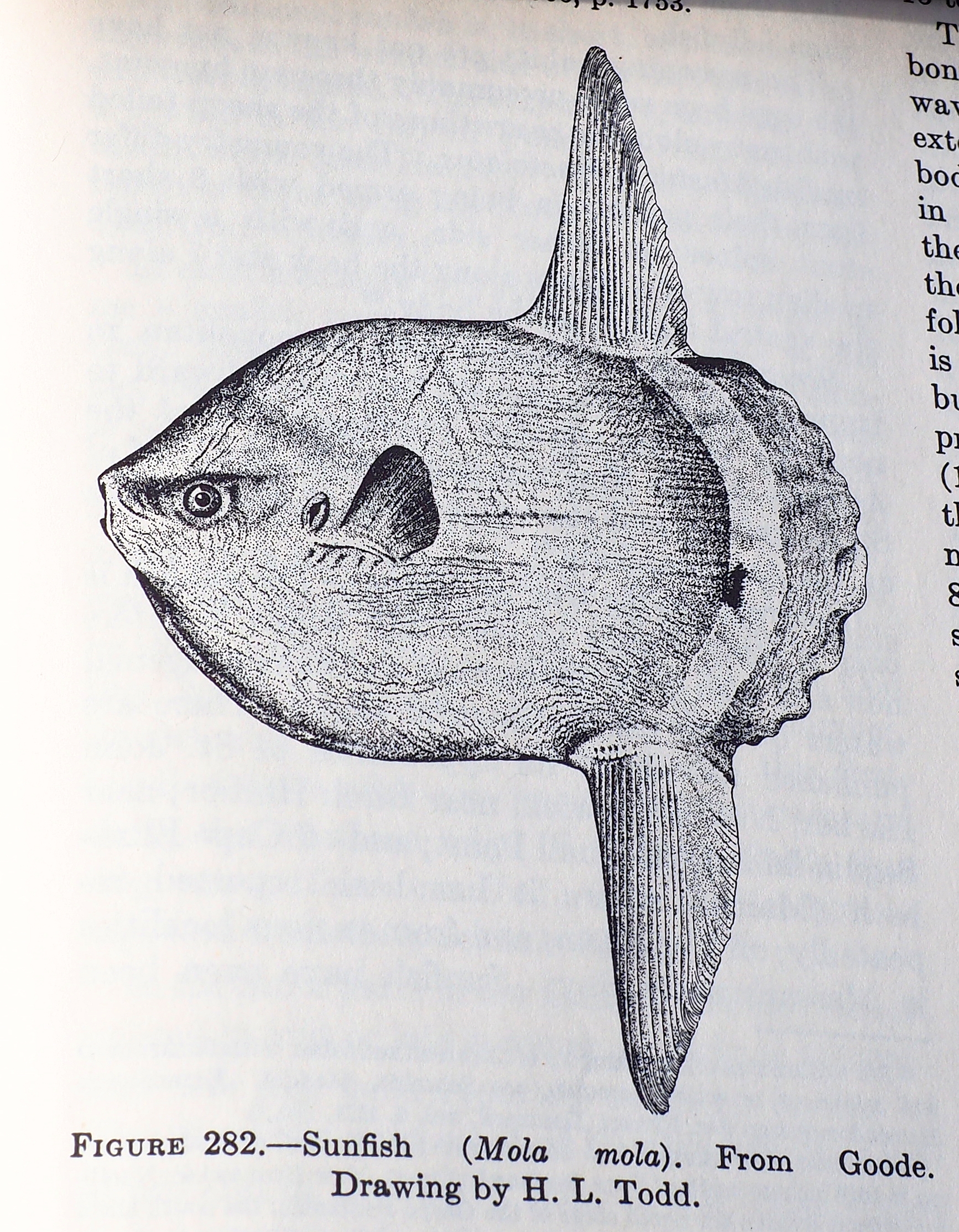
Sunfish; Mola Mola
They appear to consist of nothing but a “huge head to which the fins are attached,” as Jordan and Evermann aptly express it.
When these unlucky vagrants are sighted in our cool northern waters they have usually been chilled into partial insensibility. They float awash on the surface, feebly fanning with one or the other fin, the personification of helplessness. Usually they pay no attention to the approach of a boat, but we have seen one come to life with surprising suddenness and sound swiftly, sculling with strong fin strokes.
The sunfish lives on an unusual diet, for as a rule the contents of the stomach consists either of jellyfish, ctenophores, or salpae
The sunfish grows to a great size. Heilner describes the capture of one 10 feet 11 inches long off Avalon (Calif.), while Jordan and Evermann record another Californian specimen 8 feet 2 inches long, weighing about 1,800 pounds. A fish 4 feet 1 inch long, caught off Boston Harbor, August 14, 1922, weighed 516 pounds.
From Fishes of the Gulf of Maine by Bigelow and Schroeder (1953) online courtesy of MBL/WHOI http://www.gma.org/fogm/Mola_mola.htm
Spread The GMG Love By Sharing With These Buttons:

NILES POND BRACE COVE RESTORATION UNDERWAY 2018 #GLOUCESTERMA NOR’EASTER STORM RILEY
 Large track-hoes (excavators) are needed to repair the damage done by the March nor’easter storm known as Riley.


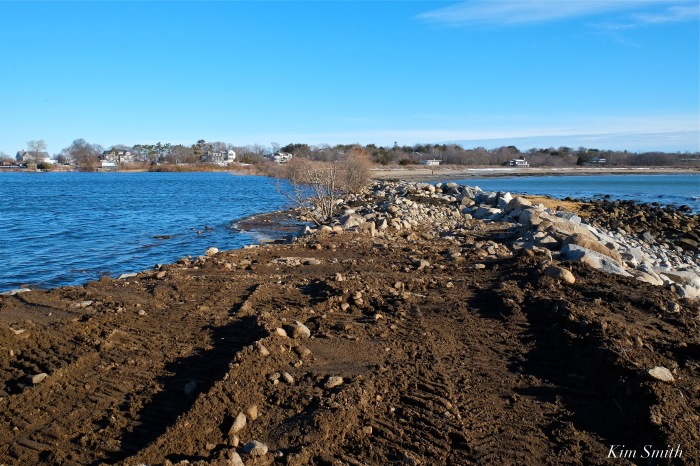

 The narrowest slip of land between a body of fresh water and the sea.
 Native pussy willow trees survive storm after storm after storm after storm. More pussy willows, as well as other deep-rooted natives, need to be planted to help with the unending erosion.
 Niles Pond water overflowing the bank and littered with debris swept in by the sea.
Spread The GMG Love By Sharing With These Buttons:

THANKING THESE BEAUTIFUL VIBRANT WOMEN FOR A SPLENDID FESTA DELLE DONNE – INTERNATIONAL WOMEN’S DAY – CELEBRATION
 Nancy, Enza, Enza, Faye, Jackie, Sefatia, Nina, Kathy, Geri, Fay, and Josie.
International Women’s Day was celebrated Friday evening at the Gloucester House Restaurant. The theme this year was royalty and the hosting committee created a beautiful, festive atmosphere with exquisite floral centerpieces, fun purple-themed decorations, and costumes–tiaras were required 🙂 Mayor Sefatia stole the show, dressed head to toe in royal garb with a flowing purple velvet cape. Lenny Linquata and his outstanding staff at the Gloucester House, as always, made a fabulous dinner spread for the guests including fresh roasted and marinated veggies, heaps of fried calamari, and bacon wrapped Brussel sprouts to name just some of the appetizzers, chicken Florentine or fresh-off-the-boat haddock, and a mountain of exquisite desserts. A heartfelt huge thank you to Nina Groppo, Nancy Millefoglie, Enza DiMercurio, Enza Ferrara Taormiina, Faye Pavia, Jackie Zappa, Kathy Numerosi, Geri Millitello, Fay Puopolo, and Josie Taormina for hosting this much anticipated annual event.
https://www.instagram.com/p/BgJaH4rnwlD/
Spread The GMG Love By Sharing With These Buttons:

Beautiful Fish: Shorthorn Sculpin, Longhorn Sculpin, and Staghorn Sculpin -By Al Bezans
Meet the Horned Sculpins:

Shorthorn Sculpin; Daddy Sculpin; Black Sculpin; Greenland Sculpin
The Shorthorn Sculpin, with its large flat head, vast mouth, weak tapering body, bat-like pectorals, and insatiable appetite, typifies the sculpin race in northern seas.

Longhorn Sculpin; Gray Sculpin; Hacklehead; Toadfish
Everyone who has fished along the shores of our Gulf is more or less familiar with this sculpin, for it is a nuisance to cunner and flounder fishermen. It often is bothersome to the angler to unhook when it spreads its needle-sharp spines and erects its spiny dorsal fin. It grunts when pulled out of the water and bites on any bait.

Staghorn Sculpin
The most southerly record for this Arctic sculpin, and the only one for the Gulf of Maine, is of a specimen caught at Eastport, Maine, in 1872, and now in the United States National Museum. It is only as a very rare stray from colder waters to the north that it ever reaches our Gulf.
From Fishes of the Gulf of Maine by Bigelow and Schoeder (1953) courtesy of MBL/WHOI
http://www.gma.org/fogm/Myoxocephalus_scorpius.htm
http://www.gma.org/fogm/M_octodecimspinosus.htm
http://www.gma.org/fogm/Gymnocanthus_tricuspis.htm

 Good Morning Gloucester