The following video was produced in 2014. The number of Piping Plover chicks that have survived has gone down since that year, but I thought that what coastal biologist Jorge Ayub from DCR at Revere Beach has to say is especially relevant to our Good Harbor Beach. He begins speaking at 2:45.”We have seen this year an improvement, relative to last year, and acceptance. We’ve seen a tremendous amount of success. This year the Plovers fledged earlier in the season and the reason for that is thanks to the visitors and the residents who didn’t disturb them earlier in the season.”
Piping Plover Piping
Rate this:
Spread The GMG Love By Sharing With These Buttons:
Documentary filmmaker, photographer, landscape designer, author, and illustrator. "Beauty on the Wing: Life Story of the Monarch Butterfly" currently airing on PBS. Current film projects include Piping Plovers, Gloucester's Feast of St. Joseph, and Saint Peter's Fiesta. Visit my websites for more information about film and design projects at kimsmithdesigns.com, monarchbutterflyfilm.com, and pipingploverproject.org. Author/illustrator "Oh Garden of Fresh Possibilities! Notes from a Gloucester Garden."
View all posts by Kimsmithdesigns
4 thoughts on “MASSACHUSETTS WORKING WITH PARTNERS TO CONSERVE PIPING PLOVERS”
Mass has been doing a lot of quite some on these issues passing along as FYI Only I always do looks at the issues and try to share where possible technology allows more exchange.
**Tourism is a significant economic driver that generated over $15 billion in direct spending in Massachusetts in 2007 (United States Travel Industry Association, 2008). Massachusetts residents account for one-third of the visits calculated in tourism industry reports, while travelers from out-of-state offer a larger overall contribution to the state‘s economic health, visiting longer and spending more. The state is a destination for domestic and international travelers throughout the year.**
Coastal Zone Management’s Storm-Smart Coasts
Like other New England states with ―home rule government, many land-use decisions in Massachusetts are made at the local level. For coastal communities, this means grappling with the impacts and effects of erosion, storm surge, and flooding problems, which are being exacerbated and accelerated by global climate change.
To help communities address these challenges, the Massachusetts Office of Coastal Zone Management (CZM) launched its Storm-Smart Coasts program in 2008. CZM developed user-friendly tools such as fact sheets, case studies, smart growth planning strategies, legal and regulatory tools, and extensive technical materials. CZM also held a series of regional workshops to connect local officials directly with the program.
Then, in 2009, CZM began five Storm-Smart Coasts pilot projects with seven communities—Boston, Falmouth, Hull, Oak Bluffs, and the three-town team of Duxbury, Kingston, and Plymouth—to test drive local, proactive implementation of Storm-Smart Coasts tools.
The results are successful, transferable coast-wide models and enhanced partnerships with regional, state, and federal agencies; conservation organizations; academia; and the private sector to better serve coastal communities in Massachusetts. For more information, see the Storm-Smart Coasts website (www.mass.gov/czm/stormsmart ).
By an inability of marsh accretion and soil formation to keep pace with rapid sea level rise, further compounded by limitation of opportunities for landward migration;
• Degradation and loss of freshwater drinking water supplies through increased saltwater intrusion into groundwater aquifers;
• increase in adverse human health effects and degraded estuarine water quality due to increases in polluted run-off and combined sewer overflow events; and
• Shell thinning due to increased ocean acidity in organisms with calcium carbonate shells (e.g., snails, clams, mussels, crabs, and lobsters), impacting both the ecosystem and economy.
Potential Strategies
The protection of land from future development through direct acquisition or conservation restrictions is one of the most straightforward and effective tools for climate change resiliency. To maximize the climate resiliency benefits from land conservation efforts by state agencies, evaluation and prioritization criteria for potential acquisition or restriction could include factors that examine the predicted future changes to the project area in terms of landscape, community, and habitat changes.
― Green infrastructure—where habitat enhancements and natural systems are used instead of hard engineering for storm-damage prevention and other purposes—also promotes resiliency.
The green infrastructure concept has strong connections to storm water management and no point pollution source control, where natural systems (such as vegetated swales, bio-retention cells, and green roofs) perform the water management functions of traditional engineered curbs, gutters, and pipes, but with significant natural benefits and less cost.
Habitat enhancement projects that would serve as green infrastructure include: oyster or mussel reefs for storm surge attenuation, constructed wetlands for floodwater control and storm-surge attenuation, planted coir fiber sills for erosion control and storm surge protection, and beach or dune nourishment for erosion control and storm surge protection. Shellfish aquaculture also provides ancillary benefits including nutrient (especially nitrogen) reduction when the cultured product is harvested.
As the marine and estuarine waters of the U.S. East Coast increase in temperature in response to global climate change, cold water species are expected to move farther northward and species whose ranges have historically been farther south of Massachusetts will shift into Massachusetts waters and north of
Massachusetts Climate Change Adaptation Report
116 Habitat Features Characteristics
Non-living Structures (Cobble/rocky/boulder/ledge bottom [not shell] often called ―rock piles) Many species use these bottoms due to their 3-dimensional structures, which provide shelter. Some species’ life histories require this type of habitat (e.g., juvenile cod and lobster)
Living Structures (Submerged Aquatic Vegetation, kelp, and structure-forming invertebrates) Many species use these types of bottom due to their three-dimensional structure, which provide shelter. Some species’ life histories require this type of habitat.
Areas of Up welling Important to driving productivity by bringing in nutrients; may not be a major feature in Massachusetts but could be important on a local scale
Deeper waters (channels, depressions) Protected from the direct effects of storm-induced waves and warming waters
Estuaries, river mouths Turbidity front at freshwater-saltwater interface can influence productivity.
Shell habitat Settling habitat for invertebrates, may provide shelter
Shallow waters (<5 feet/1.5 meters)
Mud flats, Salt marshes Critical nursery areas; mud flats are of high value to marine animals that live and feed in this substrate
Frontal boundaries Represent important ―edge habitat for a wide variety of resident and migratory pelagic species
Tide rips Smaller frontal boundary features; sport fishing species; variety of species utilize these features and are popular fishing spots
Mud bottom Has potential to provide abundant forage; lower resiliency to recurrent impacts in cold/deep mud bottom
Table 8. Marine habitat features and some important characteristics***
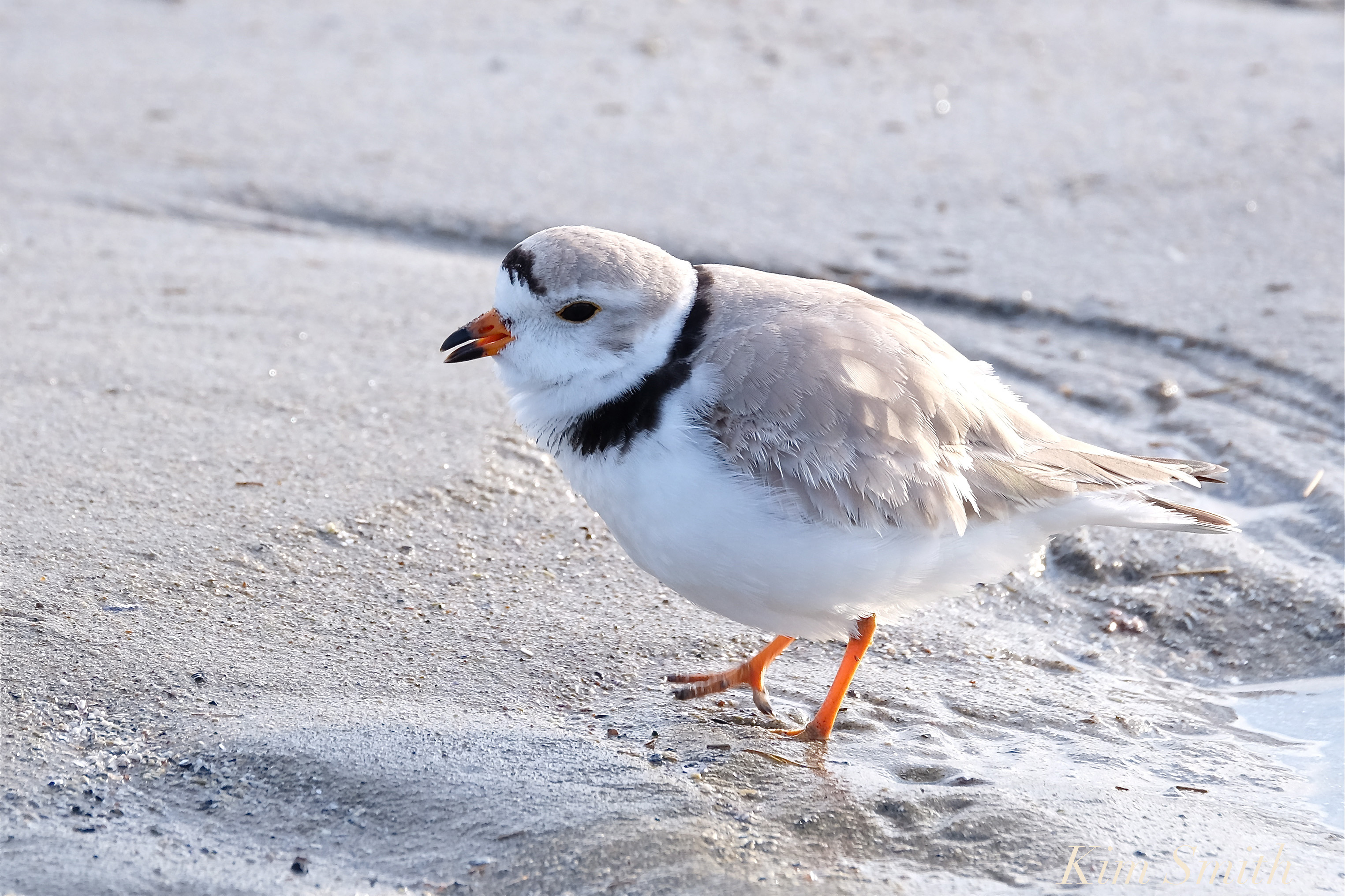 Piping Plover Piping

 Good Morning Gloucester
Mass has been doing a lot of quite some on these issues passing along as FYI Only I always do looks at the issues and try to share where possible technology allows more exchange.
Sourced: http://www.mass.gov/czm/stormsmart
**Tourism is a significant economic driver that generated over $15 billion in direct spending in Massachusetts in 2007 (United States Travel Industry Association, 2008). Massachusetts residents account for one-third of the visits calculated in tourism industry reports, while travelers from out-of-state offer a larger overall contribution to the state‘s economic health, visiting longer and spending more. The state is a destination for domestic and international travelers throughout the year.**
Coastal Zone Management’s Storm-Smart Coasts
Like other New England states with ―home rule government, many land-use decisions in Massachusetts are made at the local level. For coastal communities, this means grappling with the impacts and effects of erosion, storm surge, and flooding problems, which are being exacerbated and accelerated by global climate change.
To help communities address these challenges, the Massachusetts Office of Coastal Zone Management (CZM) launched its Storm-Smart Coasts program in 2008. CZM developed user-friendly tools such as fact sheets, case studies, smart growth planning strategies, legal and regulatory tools, and extensive technical materials. CZM also held a series of regional workshops to connect local officials directly with the program.
Then, in 2009, CZM began five Storm-Smart Coasts pilot projects with seven communities—Boston, Falmouth, Hull, Oak Bluffs, and the three-town team of Duxbury, Kingston, and Plymouth—to test drive local, proactive implementation of Storm-Smart Coasts tools.
The results are successful, transferable coast-wide models and enhanced partnerships with regional, state, and federal agencies; conservation organizations; academia; and the private sector to better serve coastal communities in Massachusetts. For more information, see the Storm-Smart Coasts website (www.mass.gov/czm/stormsmart ).
By an inability of marsh accretion and soil formation to keep pace with rapid sea level rise, further compounded by limitation of opportunities for landward migration;
• Degradation and loss of freshwater drinking water supplies through increased saltwater intrusion into groundwater aquifers;
• increase in adverse human health effects and degraded estuarine water quality due to increases in polluted run-off and combined sewer overflow events; and
• Shell thinning due to increased ocean acidity in organisms with calcium carbonate shells (e.g., snails, clams, mussels, crabs, and lobsters), impacting both the ecosystem and economy.
Potential Strategies
The protection of land from future development through direct acquisition or conservation restrictions is one of the most straightforward and effective tools for climate change resiliency. To maximize the climate resiliency benefits from land conservation efforts by state agencies, evaluation and prioritization criteria for potential acquisition or restriction could include factors that examine the predicted future changes to the project area in terms of landscape, community, and habitat changes.
― Green infrastructure—where habitat enhancements and natural systems are used instead of hard engineering for storm-damage prevention and other purposes—also promotes resiliency.
The green infrastructure concept has strong connections to storm water management and no point pollution source control, where natural systems (such as vegetated swales, bio-retention cells, and green roofs) perform the water management functions of traditional engineered curbs, gutters, and pipes, but with significant natural benefits and less cost.
Habitat enhancement projects that would serve as green infrastructure include: oyster or mussel reefs for storm surge attenuation, constructed wetlands for floodwater control and storm-surge attenuation, planted coir fiber sills for erosion control and storm surge protection, and beach or dune nourishment for erosion control and storm surge protection. Shellfish aquaculture also provides ancillary benefits including nutrient (especially nitrogen) reduction when the cultured product is harvested.
As the marine and estuarine waters of the U.S. East Coast increase in temperature in response to global climate change, cold water species are expected to move farther northward and species whose ranges have historically been farther south of Massachusetts will shift into Massachusetts waters and north of
Massachusetts Climate Change Adaptation Report
116 Habitat Features Characteristics
Non-living Structures (Cobble/rocky/boulder/ledge bottom [not shell] often called ―rock piles) Many species use these bottoms due to their 3-dimensional structures, which provide shelter. Some species’ life histories require this type of habitat (e.g., juvenile cod and lobster)
Living Structures (Submerged Aquatic Vegetation, kelp, and structure-forming invertebrates) Many species use these types of bottom due to their three-dimensional structure, which provide shelter. Some species’ life histories require this type of habitat.
Areas of Up welling Important to driving productivity by bringing in nutrients; may not be a major feature in Massachusetts but could be important on a local scale
Deeper waters (channels, depressions) Protected from the direct effects of storm-induced waves and warming waters
Estuaries, river mouths Turbidity front at freshwater-saltwater interface can influence productivity.
Shell habitat Settling habitat for invertebrates, may provide shelter
Shallow waters (<5 feet/1.5 meters)
Mud flats, Salt marshes Critical nursery areas; mud flats are of high value to marine animals that live and feed in this substrate
Frontal boundaries Represent important ―edge habitat for a wide variety of resident and migratory pelagic species
Tide rips Smaller frontal boundary features; sport fishing species; variety of species utilize these features and are popular fishing spots
Mud bottom Has potential to provide abundant forage; lower resiliency to recurrent impacts in cold/deep mud bottom
Table 8. Marine habitat features and some important characteristics***
Dave
LikeLike
Thanks Dave, good info 🙂
LikeLike
Great video too! Making a difference! 🙂 Dave & Kim 🙂
LikeLiked by 1 person
🙂
LikeLike