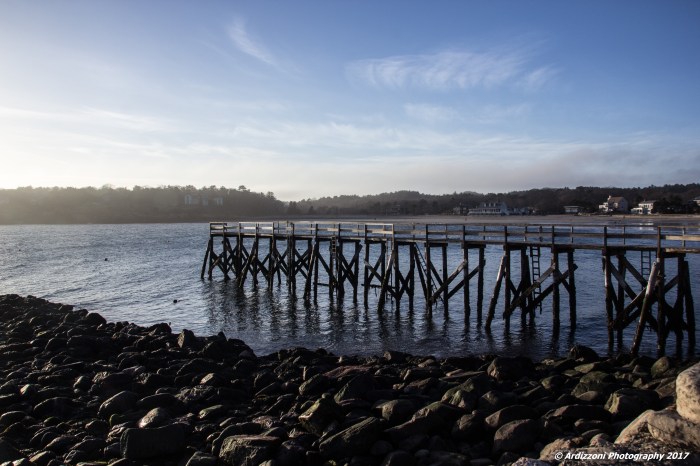
Around 5:00 on Saturday you could see the fog coming in. Love the fog.
Month: February 2017

FROM CALVO STUDIOS: LEARN HOW TO MAKE THESE GORGEOUS BASKETS!
A basket-making workshop taught by Dianne Stanton at David Calvo Studio; especially intriguing is the beautiful basket made from seagrass as we have such an abundance here on Cape Ann.
Spread The GMG Love By Sharing With These Buttons:

Music Around Town ~ February 27- March 5, 2017

Happy Mardi Gras!

click photo for music info
Spread The GMG Love By Sharing With These Buttons:

Call out for vendors
Hi all:
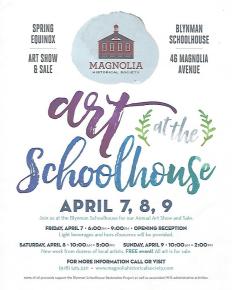
The Magnolia Historical Society is having another Art in the Schoolhouse in April. If you are interested in becoming a vendor please follow the link below
http://www.loveislivinginmagnolia.com/
Click on the More tab and register for the show. Also please fill out the attached Inventory Sheet. mhs_artshow2017inventorysheet
If you need more information please let me know and I can help. This event is always fun and successful.
Thanks kids
Spread The GMG Love By Sharing With These Buttons:

242 Main Street: new women’s wellness space Phia opens March 11
Coming soon to Main Street!
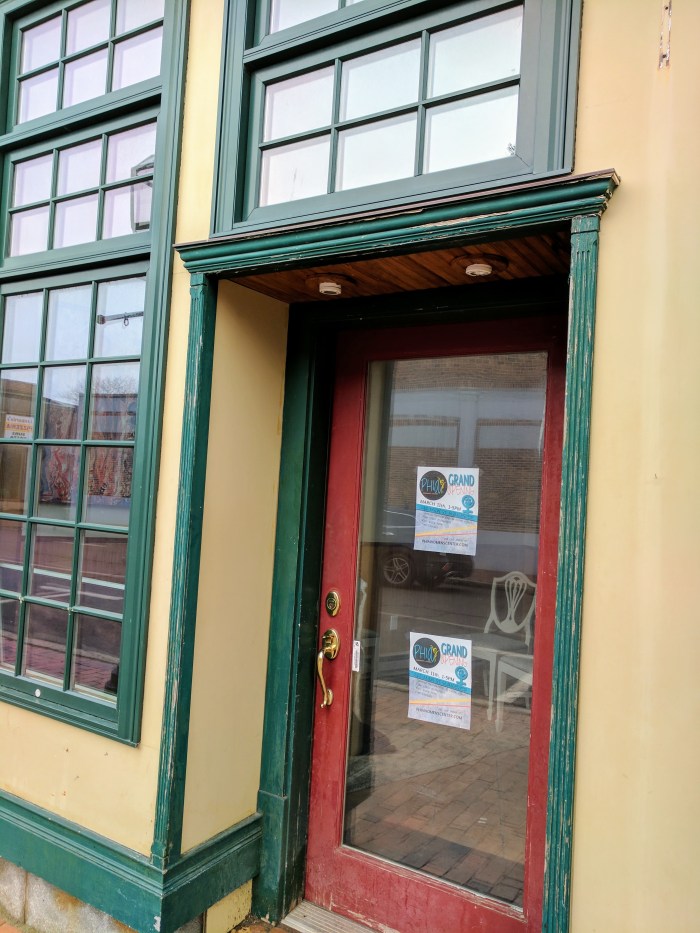
Laura Tanguay is opening Phia Women’s Center at 242 Main Street, Gloucester, MA. Grand opening March 11, 12pm-5pm. She told me that Phia will provide “fun, energizing exercise classes along with meditation classes, massage, polarity, and support groups.” There will be loads of “activities for women such as day hikes, paint nights, craft parties, and ladies nights…Phia is for women from all walks of life, all ages, all body types, all backgrounds to come together, learn from each other, and be well.”
She also told me which translation for Phia has meaning for this new venture. Any guesses? Congratulations Laura and Phia!


Spread The GMG Love By Sharing With These Buttons:

Congrats to Casey Affleck
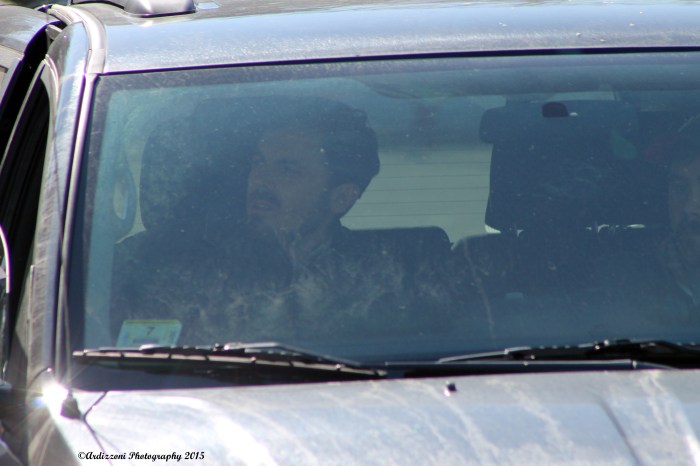
Saw Casey Affleck coming out of the attorney’s office in Manchester and was able to snap a quick photo of him in the car. The movie was amazing.
Spread The GMG Love By Sharing With These Buttons:

Visitors from Somerville Ma
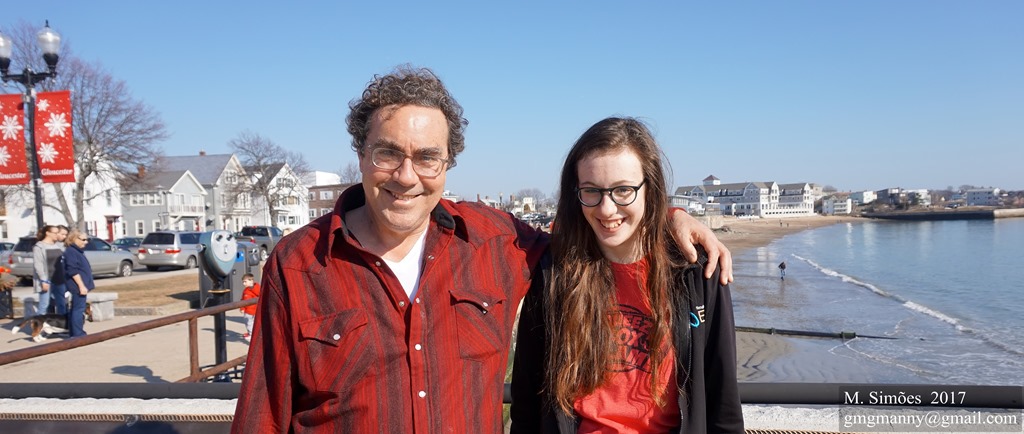
Father and Daughter enjoying a day together in Gloucester.
Spread The GMG Love By Sharing With These Buttons:

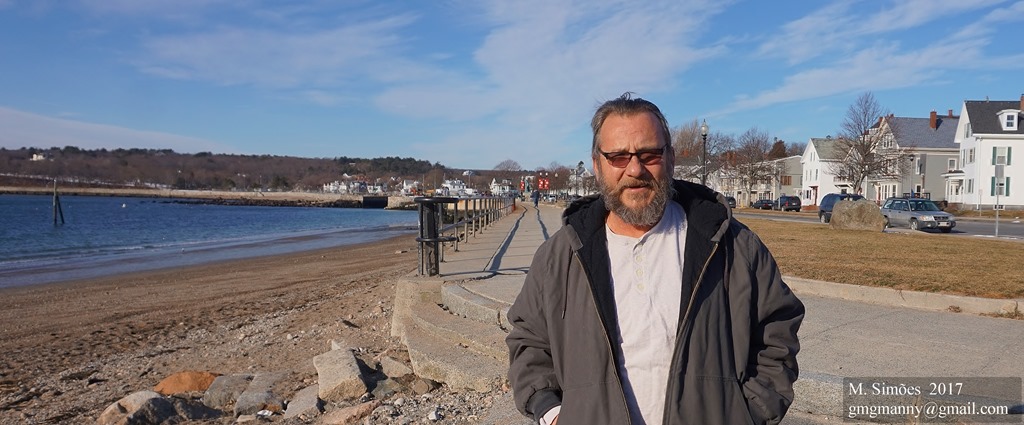
Gloucester Smiles-524
Spread The GMG Love By Sharing With These Buttons:

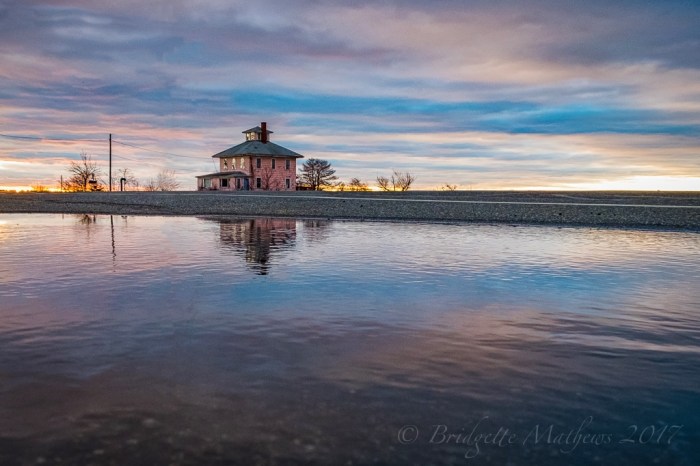
Pink House…a puddle’s view
I’m always looking for different ways to photograph the same old view and sometimes dynamic weather and clouds, or finding something to frame the subject can help with changing the look of a scene. Another way to change the scene is to change your perspective. Getting down low and using the foreground is one of my favorite ways to make a scene interesting. In this case it was a 2-3 foot wide puddle in the middle of a parking lot across from the Pink House. With my camera sitting on the ground at the edge of the puddle, you can see the house and colors of the sunrise reflected. So get out and get down low… because you’ll never look at a little puddle the same way again!
Here are some outtakes below for some perspective of what you don’t see. (Note I took the large telephone pole out…it was annoying me lol!)


Spread The GMG Love By Sharing With These Buttons:

Gloucester in the Boston Globe and at the Oscars: a win for Pratty’s and Casey Affleck for Manchester by the Sea
Meg Montagnino-Jarrett great job working with the filmmakers!
Kevin Cullen Boston Globe article.

Another location from the film and winter, winter, winter

Spread The GMG Love By Sharing With These Buttons:

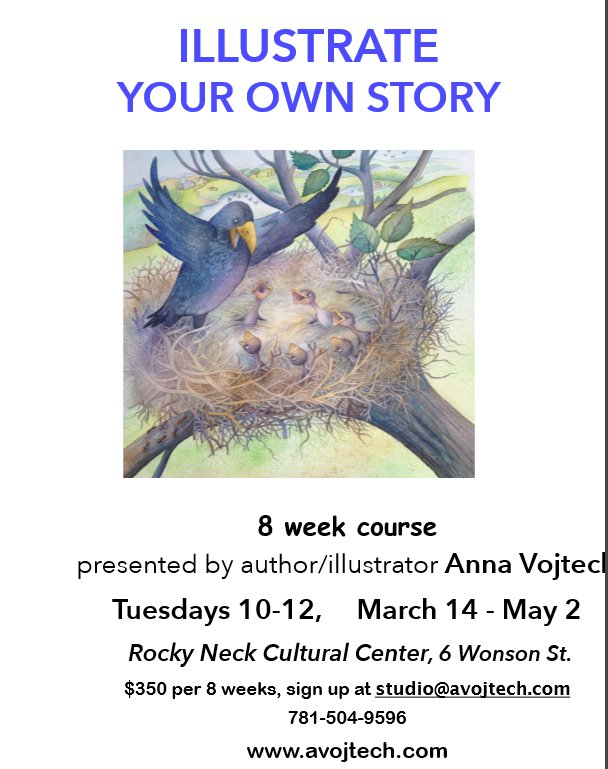
Delightful illustration course at Rocky Neck Cultural Center: award winning children’s book author illustrator, fine artist and Film Animator ANNA VOJTECH
What an opportunity to learn from someone in the top of the field! Tuesdays with Anna Vojtech begin March 28th (new dates announced) March 14th and continues weekly through May 2.
Anna Vojtech is a fine artist and an award winning children’s book illustrator and writer living in Gloucester. She grew up in Prague, Czechoslovakia, what is now the Czech Republic. She studied art and film animation at the Art Academy in Prague, in Antwerp, Belgium, and in Hamburg, Germany.
In 1971 Anna moved with her husband to Canada where she worked at the National Filmboard and for various film companies in Montreal. Her work in film animation led her to children’s book illustration.
Since 1979 Anna has worked with major publishing houses (“The First Strawberries” by Joseph Bruchac, Dial/Penguin, “Tough Beginnings” by Marylin Singer, Henry Holt & Co, “Over in the Meadow” by Olive Wadsworth, North-South Books (now Simon & Schuster), “Ten Flashing Fireflies” by Philemon Sturges, and many others).


She became also known for her stunning botanical paintings, published by Crown Publishers as “Wild Flowers for All Seasons”.
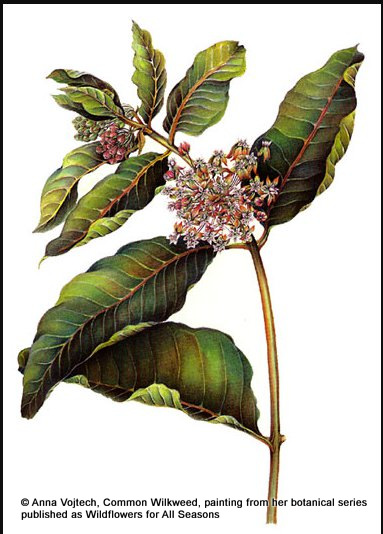
For the last 18 years Anna has been living with her family in Gloucester, painting and illustrating in her Cripple Cove Studio. She is happy to live on Cape Ann and to share her life and art with the community.
Spread The GMG Love By Sharing With These Buttons:

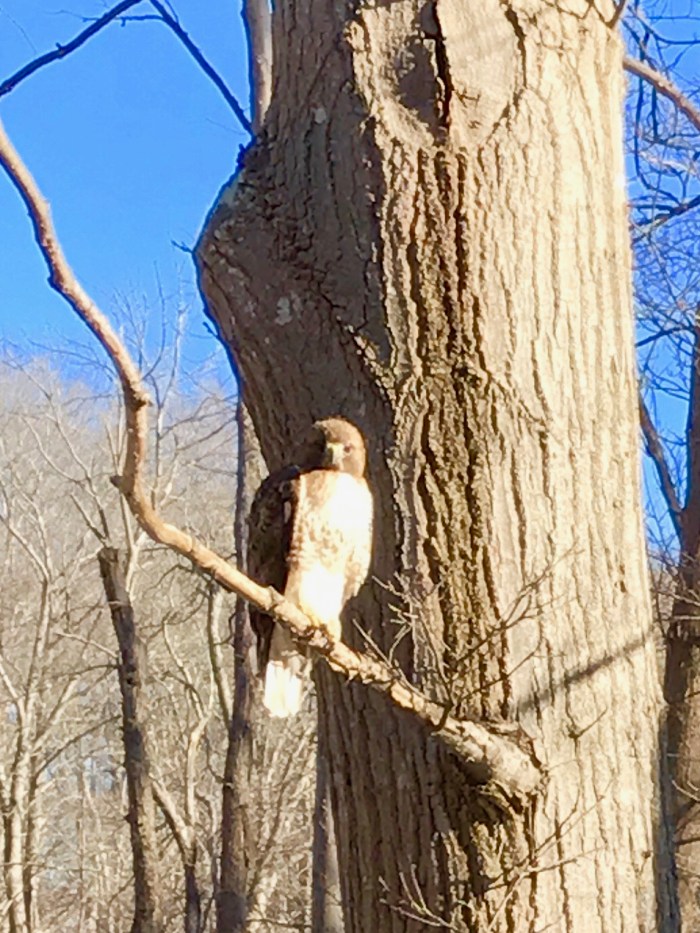
Out on a Limb
Someone has been keeping an eye out on Nugent Stretch entering Rockport.

Spread The GMG Love By Sharing With These Buttons:

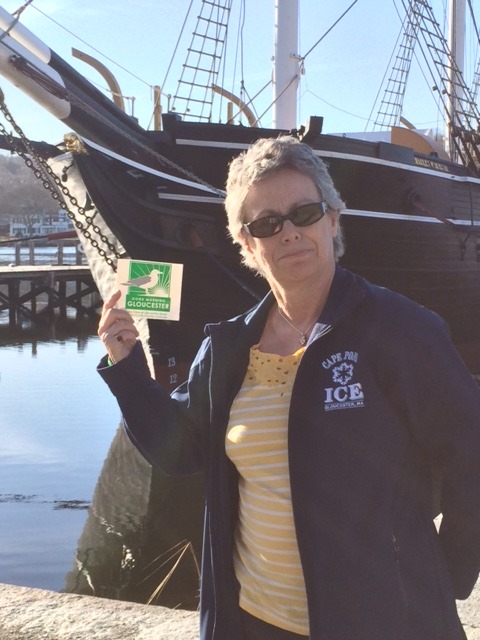
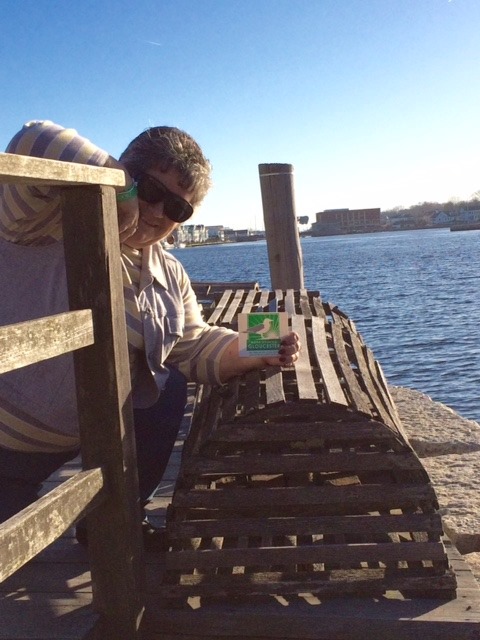
Pat Dalpiaz and Paula Ryan O’Brien Represent In Mystic Seaport!
Spread The GMG Love By Sharing With These Buttons:

Pet of the week- Taylor
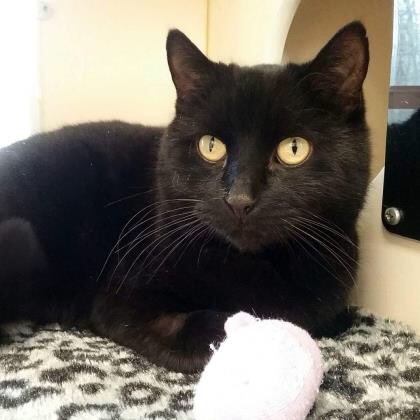
Did you say you were looking for a love muffin? How about a furry handsome hunk of a feline? Well are you in luck! I am a sweet and affectionate boy and ready to find my fur-ever love. I am considered a special needs adoption. When I was found abandoned outdoors alone I was in some serious distress and after a trip to the veterinarian it was discovered I had a urinary blockage. After some emergency medical care including a PU surgery the veterinarians say a diet of special food should prevent me from having blockages in the future. I am happy to say I have recovered and I am doing well. I will always need to be fed a prescription diet to avoid building up crystals in my urine and may need more care than some of my feline counter parts but I can also bring a lot to the table. I am fun to be with, have a natural ability to listen and improve your mood, lower your blood pressure and generally help you feel loved and needed. What more could you be looking for! To see all of the available animals at the Christopher Cutler Rich Animal Shelter please go to our website: capeannanimalaid.org.
Spread The GMG Love By Sharing With These Buttons:

Video- Warren Beatty and Faye Dunaway Announcing Wrong Oscar Winner For Best Picture Is A Must See
Spread The GMG Love By Sharing With These Buttons:

Help Wanted: Gloucester Research Project

Dear Good Morning Gloucester Community,
I am an author in Gloucester and the president of the League of Women Voters of Cape Ann. I have just finished my first book about a suffragist/mountain climber/author named Annie Smith Peck published by St. Martin’s Press (https://www.amazon.com/Womans-Place-Top-Biography-Climbers/dp/1250084008).
Now, I am on to my next project about the League of Women Voters. For this, I need your help. I am starting with a history of the league in Gloucester and am trying to find any connections that you may know of to the following women who were in the league during the 1950s. If you have any information about the following women, I would appreciate it if you could contact me at Hannah.s.kimberley@gmail.com. Any information at all is welcome. I’d love to be able to highlight the history of the women in our community on a national stage. Many thanks in advance.
Elizabeth Day…
View original post 114 more words
Spread The GMG Love By Sharing With These Buttons:
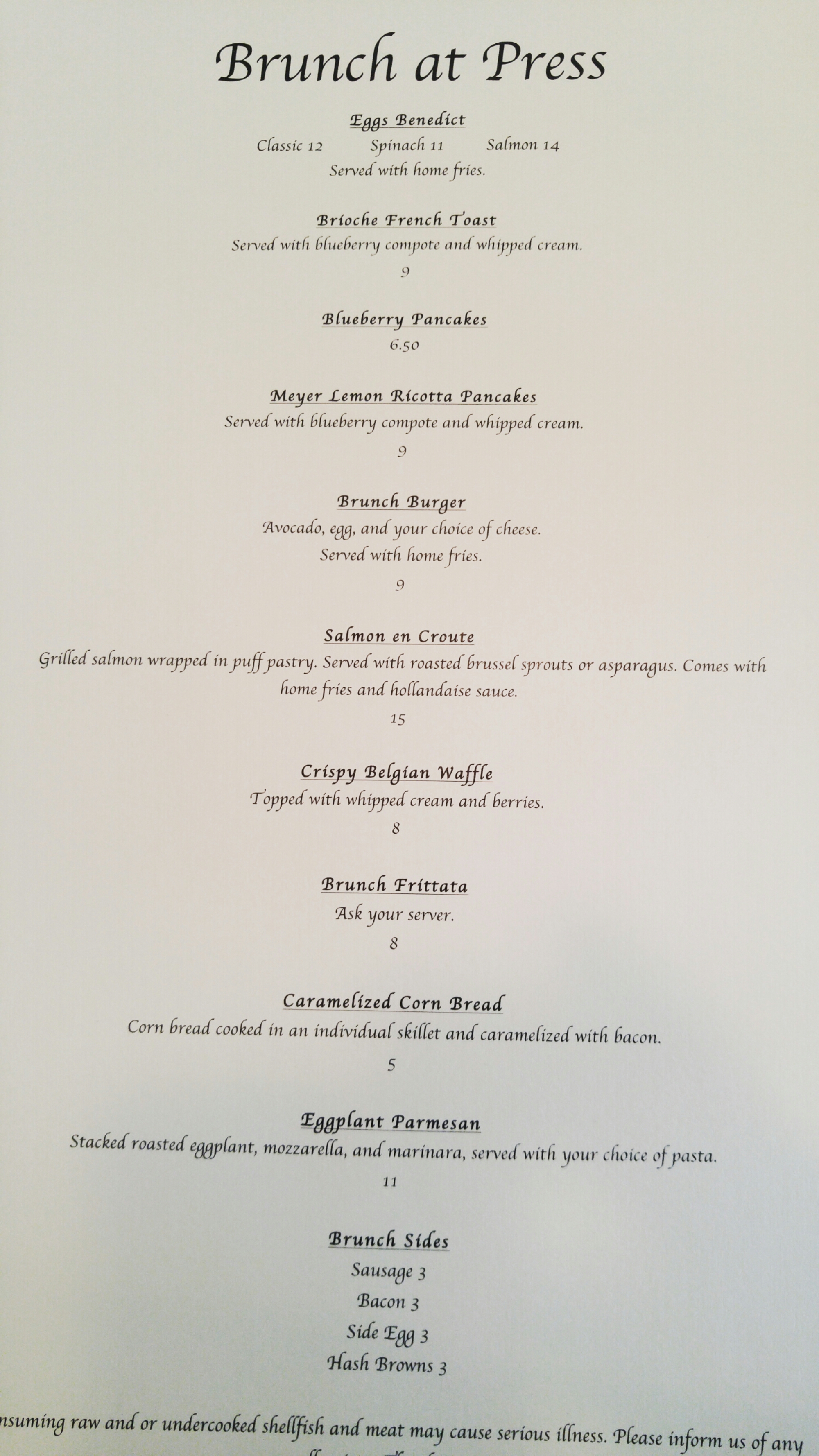
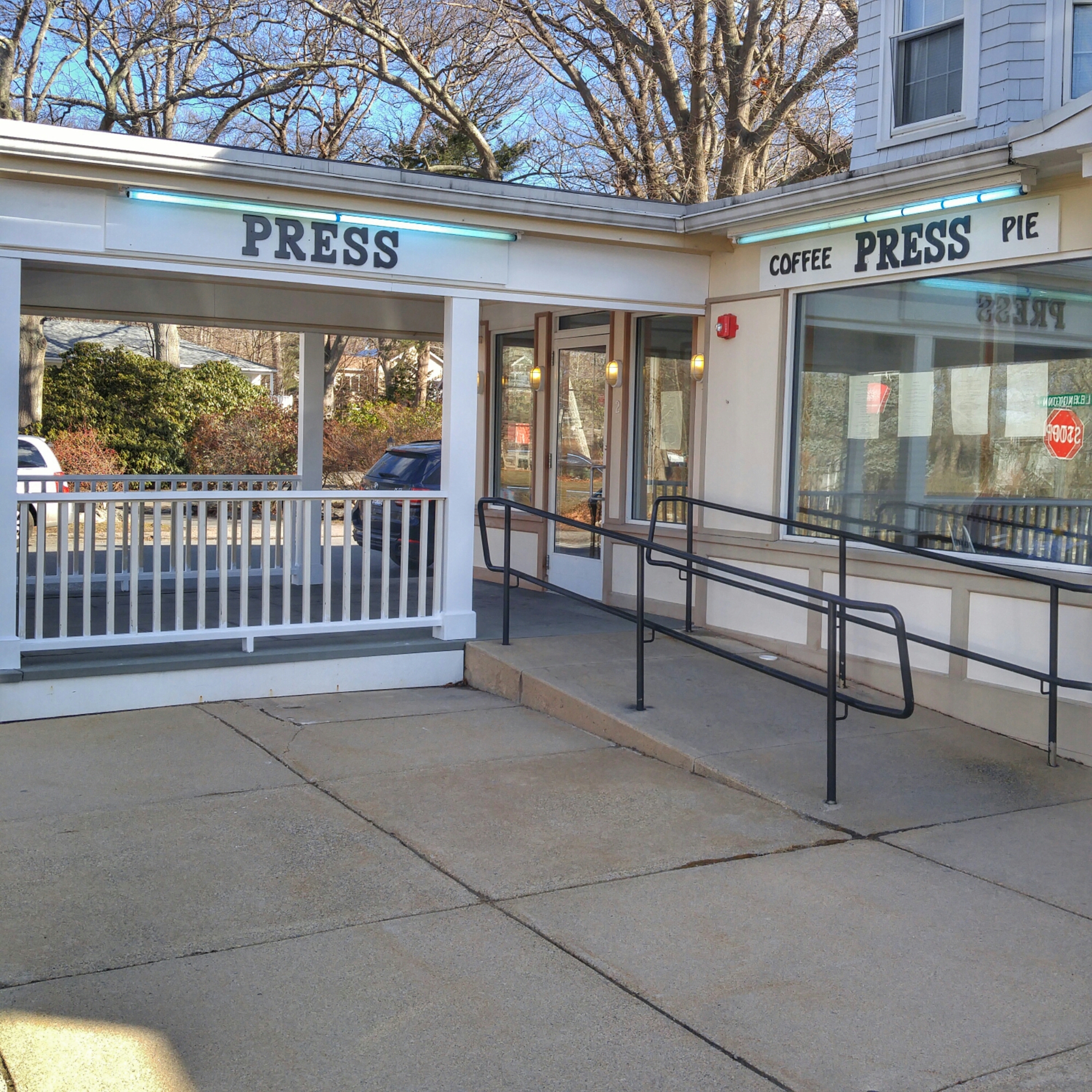
Press On Lexington Ave In Magnolia MA Menu and Pics

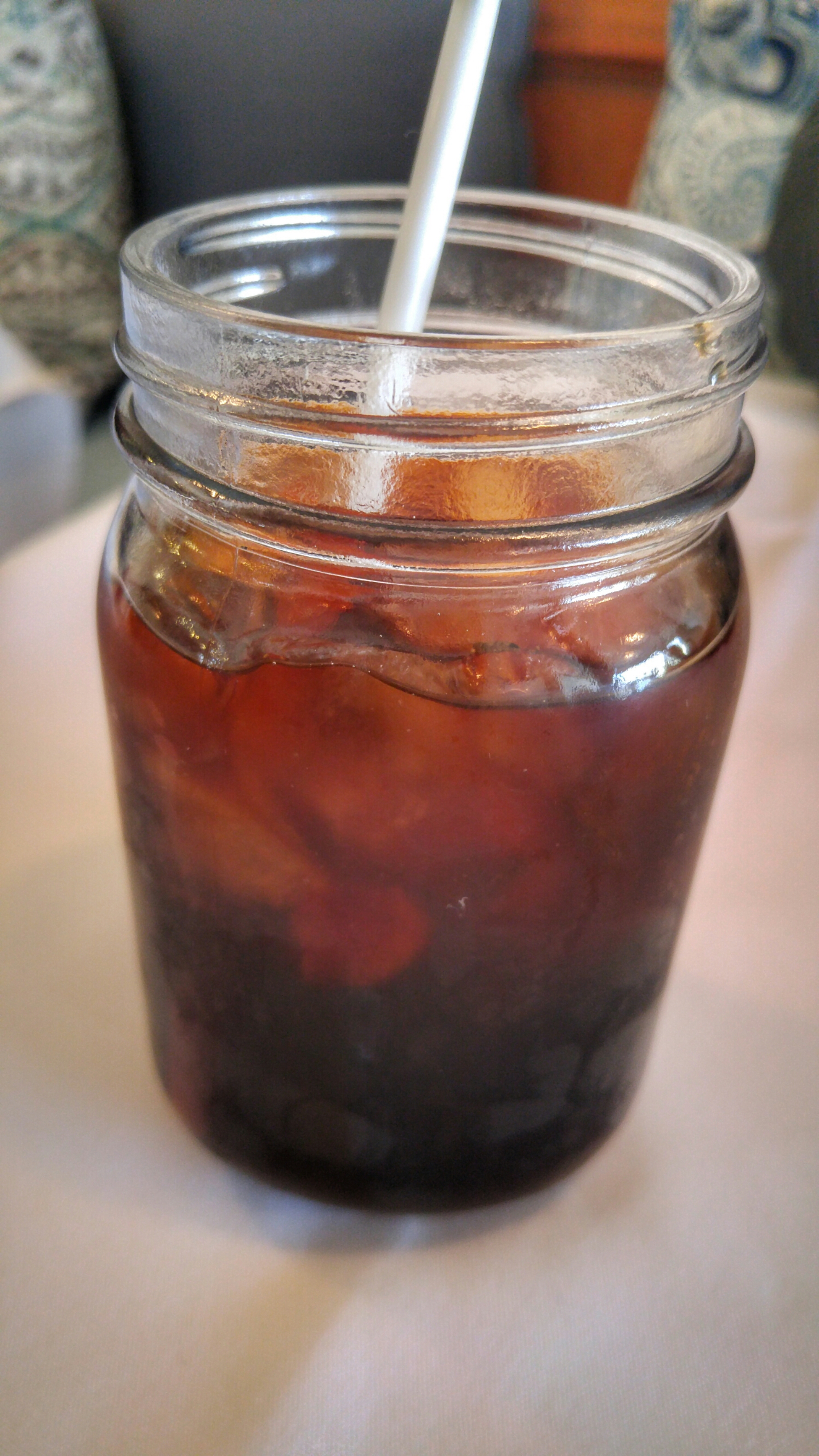
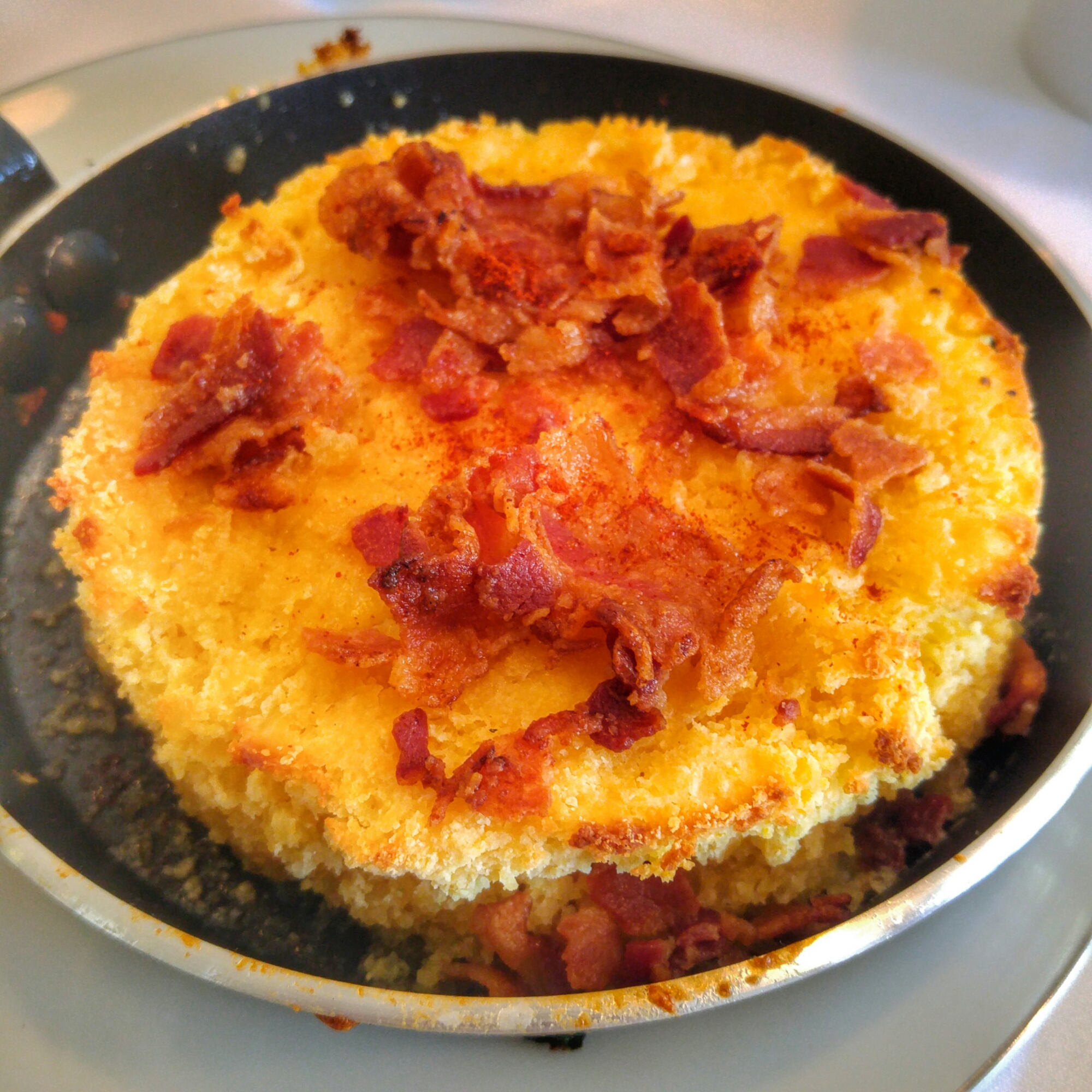
Spread The GMG Love By Sharing With These Buttons:
TALL SHIP LYNX GETS AN ADORABLE FIRST MATE
Now she’s living a life of adventure and love as the cutest little first mate, on the Tall Ship Lynx.
Alex Peacock, who’s been around boats his whole life, became the Lynx’s permanent captain this past winter.
Most days aboard this replica of a privateer used in the War of 1812 are spent voyaging — from its summer base in Nantucket, Massachusetts, to its winter home in St. Petersburg, Florida, to far-flung destinations including Hawaii, Mexico and other beautiful places — with the crew talking to history lovers, or engaged in some other kind of interesting and challenging pursuit.
Shortly after landing the choice gig, Peacock decided to head to a local animal shelter to fulfill what the 28-year-old says is a tall ship tradition.
“It seemed like the right time to get a buddy,” he told TODAY while sitting on the floor and feeding Leeloo some of her favorite treats (Greenies, for those who like such details).
Peacock and a few crew members headed over to Friends of Strays, a nonprofit shelter in St. Petersburg. That’s where they met Leeloo.
Leeloo was at the shelter, waiting to be adopted, because she’d had the good fortune to be found wandering loose in the vicinity of Friends of Strays community relations manager Clair Wray.


Spread The GMG Love By Sharing With These Buttons:

Two Years Ago Today
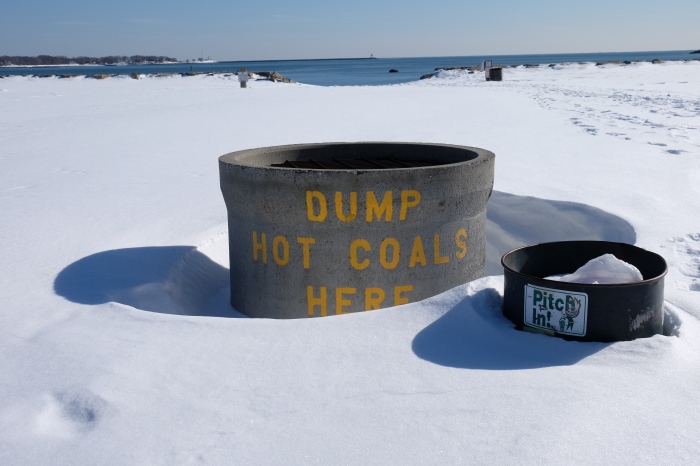
It didn’t work.
Spread The GMG Love By Sharing With These Buttons:


Rediscovered Artist: Arthur William Wilson (1892-1974) also known as ‘TEX’, WINSLOW WILSON, and PICO MIRAN. Active NYC, Rockport, Gloucester. Harvard poet knew e.e. Cummings
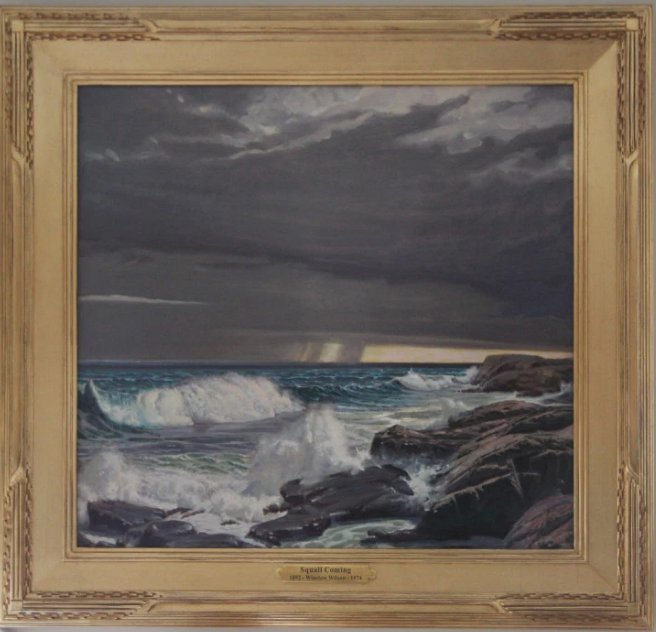
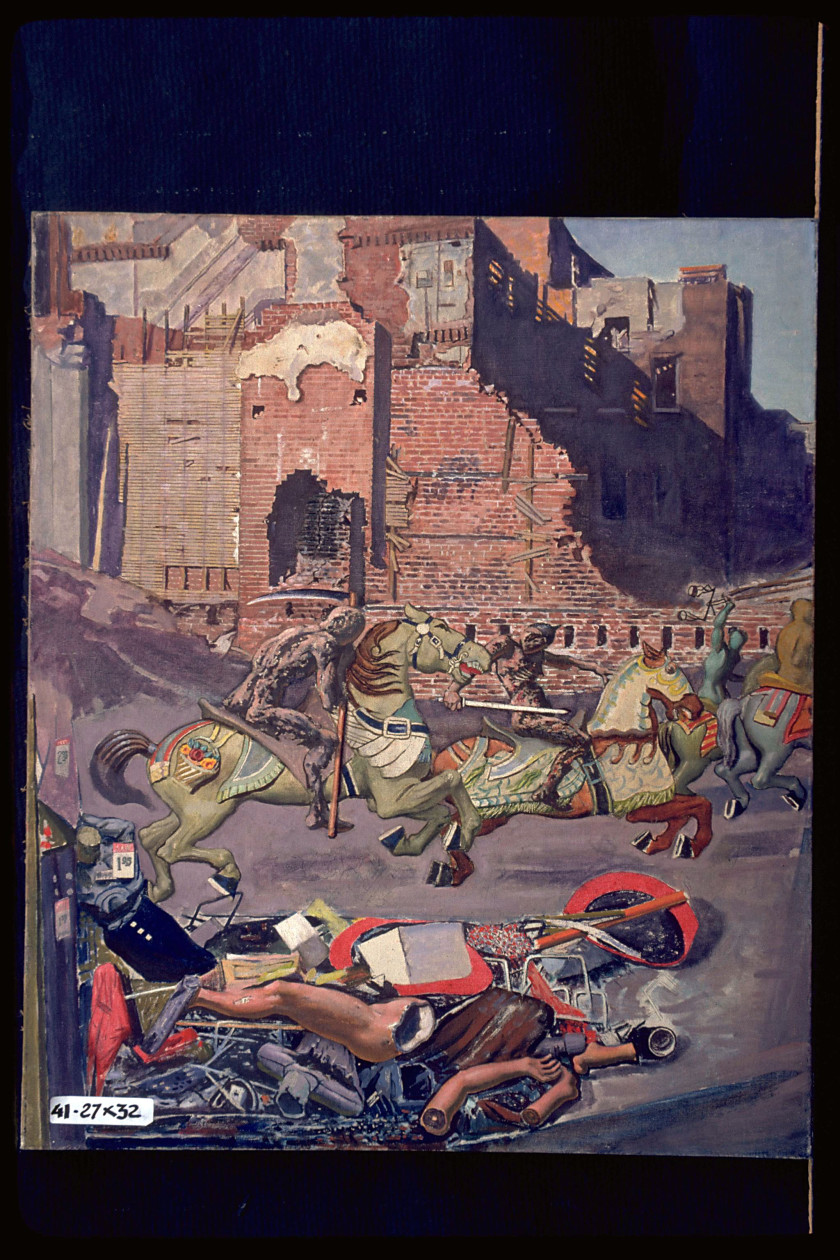
Granddaughter Claudia Wilson-Howard writes Good Morning Gloucester seeking any information, biographical “tidbits”, or recollections about fine artist Winslow Wilson who resided in Gloucester and had studios in Gloucester and Rockport ca. 1946-1972.She is working on an excellent project: a digital resource about her grandfather.
“I am the granddaughter of Winslow Wilson,” she writes, “an artist who spent most of his life on Cape Ann, painting under two names in two studios. One studio, in Gloucester, the second in Rockport, and a member of the Rockport Art Association from 1946-1972, he was an active member of the art community. I have developed a website (www.winslowwilson.com), which is a work in progress. I am attempting to develop as detailed a biography as possible, and was hoping …to reach out to the community to help gather any tidbit of information. Thank you very much!”
Perhaps a reader of this blog can help identify a sitter in one of Wilson’s stellar unidentified local portraits.
Review, © C. Ryan
Arthur William “Winslow” “Tex” Wilson, also known as Pico Miran was an American artist–primarily a painter– born on July 20, 1892 in Brady, Texas. His family moved to Junction, TX, where he graduated from high school, also the address he used while attending Harvard. Wilson was a veteran of the First World War (National Guard, AEF) deployed to France 1918-1919. He died November 18, 1974 in Miami, FLA.
At Harvard
Wilson transferred from Texas A&M University to Harvard. Roy Follett his professor at Texas A&M described Wilson’s impact on him as “atomic”, possessed with a creative intellect that surpassed the teacher’s. And then the unthinkable…
For Wilson, life changed punishingly July 4, 1912 as he accidentally and horrifically killed his fellow undergrad, a friend and co-worker Merle DeWitt Britten on the job, driving the streetcar that crushed him. Wilson left Harvard, then came back. He skipped classes. At times he soared. He was a writer and editor of The Harvard Monthly literary magazine with an impressive group of multi talented peers and friends: ee cummings; John Dos Passos; critic Gilbert Seldes; poet (Pulitzer prize winner) Robert Hillyer; poet (later Director MA Historical Society) R. Stewart Mitchell; Scofield Thayer*; and James Sibley Watson*.
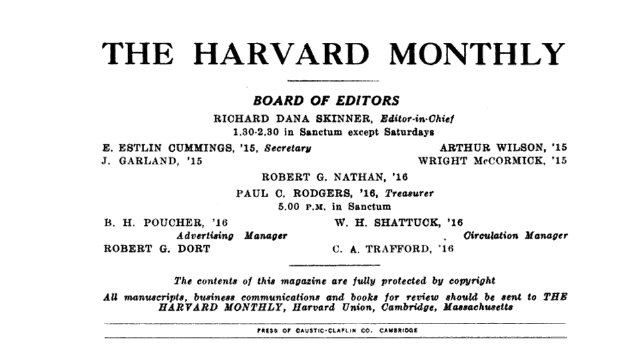
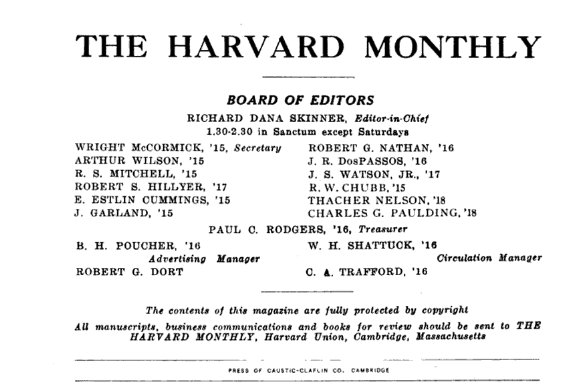
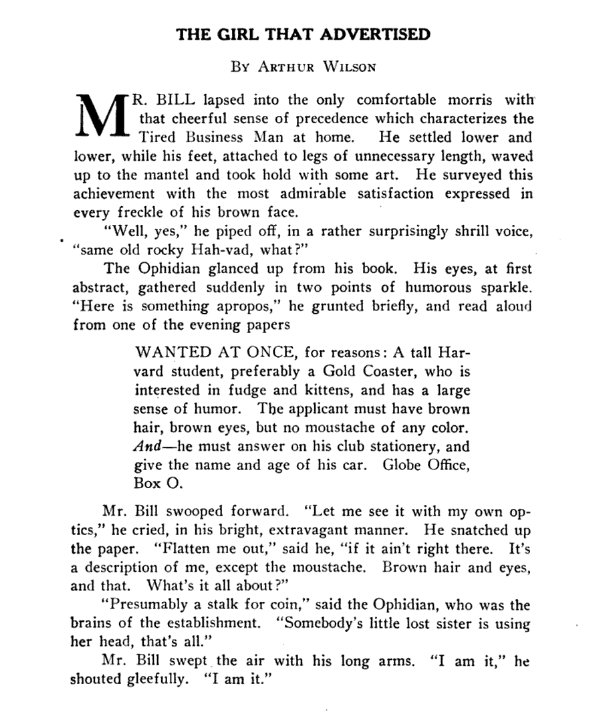
The Harvard Monthly was founded in 1885 and ceased publication in 1917, its aim “to publish the best (undergraduate) articles, fiction and verse by students in the University.” The words “and verse” were added after E.E. Cummings gave their class commencement speech in 1915 on “The New Art” extolling contemporary expressions in music, the visual arts, and literature. “What really brought down the house was Gertrude Stein’s Tender Buttons,” he’d later say about this bit in the speech:
“unquestionably a proof of great imagination on the part of the authoress, as anyone who tries to imitate her work will discover for himself. Here we see traces of realism, similar to those which made the “Nude Descending a Staircase” so baffling. As far as these “Tender Buttons” are concerned, the sum and substance of criticism is impossible. The unparalleled familiarity of the medium precludes its use for the purpose of aesthetic effect. And here, in their logical conclusion, impressionistic tendencies are reduced to absurdity. The question now arises, how much of all this is really Art? The answer is: we do not know. The great men of the future will most certainly profit by the experimentation of the present period. An insight into the unbroken chain of artistic development during the last half century disproves the theory that modernism is without foundation; rather we are concerned with a natural unfolding of sound tendencies. That the conclusion is, in a particular case, absurdity, does not in any way impair the value of the experiment, so long as we are dealing with sincere effort. The New Art, maligned though it may be by fakirs and fanatics, will appear in its essential spirit to the unprejudiced critic as a courageous and genuine exploration of untrodden ways…how much of all this is really Art? The answer is: we do not know. The great men of the future will most certainly profit by the experimentation of the present period.” – ee cummings 1915
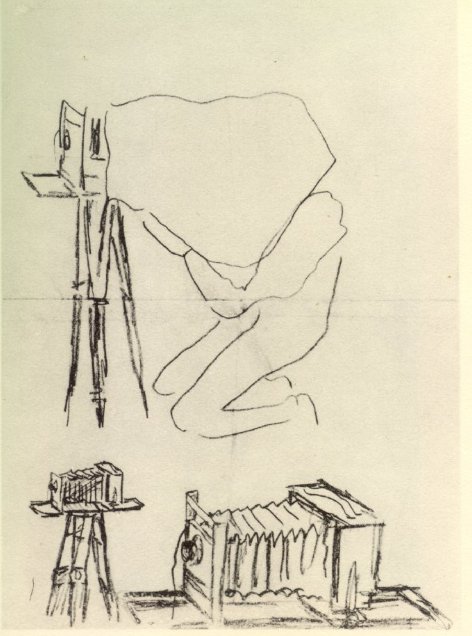
*The Dial was founded by James Sibley Watson and Scofield Thayer. Emily Sibley Watson, Founder of Memorial Art Gallery in Rochester was friends with Marianne Moore
1917 NYC apartment with Cummings
Wilson and e.e. cummings (1884-1962) were roommates at Harvard, friends who hit the town. (There’s one story with them caught at a prostitute’s apartment.) They remained friends enough to room together more and carouse Greenwich Village. Thanks to $1000 from Thayer, Cummings joined Wilson in New York at 21 East 15th Street in 1917.
There are striking parallels, comparisons, and secrets in the lives they led. Both men were artists and writers that had tragic and shattering life experiences, and estranged and scandalous family stories.
According to Virginia Spencer Carr‘s 1984 biography of John Dos Passos, Dos Passos envied these two: “Wilson was already signing his paintings (when he signed them at all) “Winslow Wilson” and Dos Passos surmised (when?) that he would be recognized eventually for his stunning portraits and seascapes. He was convinced that Cummings was too assured a reputation as a painter and saw Dudley Poore as the best poet of the lot from Harvard who aspired to a career in letters.”
All three enlisted in WW1. Cummings signed up for the volunteer ambulance corp along with Harvard chums Hillyer and Dos Passos. Cummings ended up a POW and wrote a novel about the experience, The Enormous Room. Cummings said he was a self-taught painter, helped along by friends from Harvard. Did he sign up for classes in New York? Where did Wilson study art in New York before WW1?
(Incidentally, Gertrude Stein was also a volunteer camion; it seems like a ‘who wasn’t?’ roster. The majority of the 3500+ drivers came from ivy league schools, especially Harvard. The American Field Service (AFS) ambulance unit grew to be the largest and was founded by Gloucester’s own A. Piatt Andrew in 1915, after helping out the year before.)
1920s
After the War, Wilson was in New York and abroad in Paris, and London (infamously). There was a blink of a marriage and divorce from Elizabeth Brice, and a daughter Caroline, a dancer, that he never saw again. At 34, Wilson and his 19 year old girlfriend Winifred Brown abandoned a baby. It was an international scandal. Wilson’s family stepped up and his brother Ernest raised the boy as his own. It was four decades before the baby learned about his biological parents. I know these wincing details because that boy, H Robert Wilson, is a good writer and did the research.
Arthur Wilson signed his paintings as “Winslow” Wilson, which fits as a wink at Homer. Seascapes as a subject. Private solitary life. It also works as a visual swapping out of “Tex” for East Coast “Winslow”. The initials become double letters (like e.e. cummings), and nearly a double name, minus one letter and there’s an anagram of Wilson. It’s even a way to differentiate his name ‘Arthur Wilson’ from other artists and writers with the same name(s), initials (AW or the comic Aww), and friends. Winslow Wilson is decidedly not Edmund Wilson (though like many writers he credits “nearly everything” about his sources of style as a painter to him), artist Edward Arthur Wilson, artist Arthur Wilson (UK), artist Arthur Wilson (LA), artist Edward Adrian Wilson, to name a few.
Mostly, Wilson using “Winslow” seems a deliberate break from his traumatic past: living with the death of his friend, letting his family down, fighting in WW1, divorce, scandal, family secrets, and that difficult ee cummings portrait poem about him.
ca. 1922 ee cummings poem ‘Arthur Wilson’
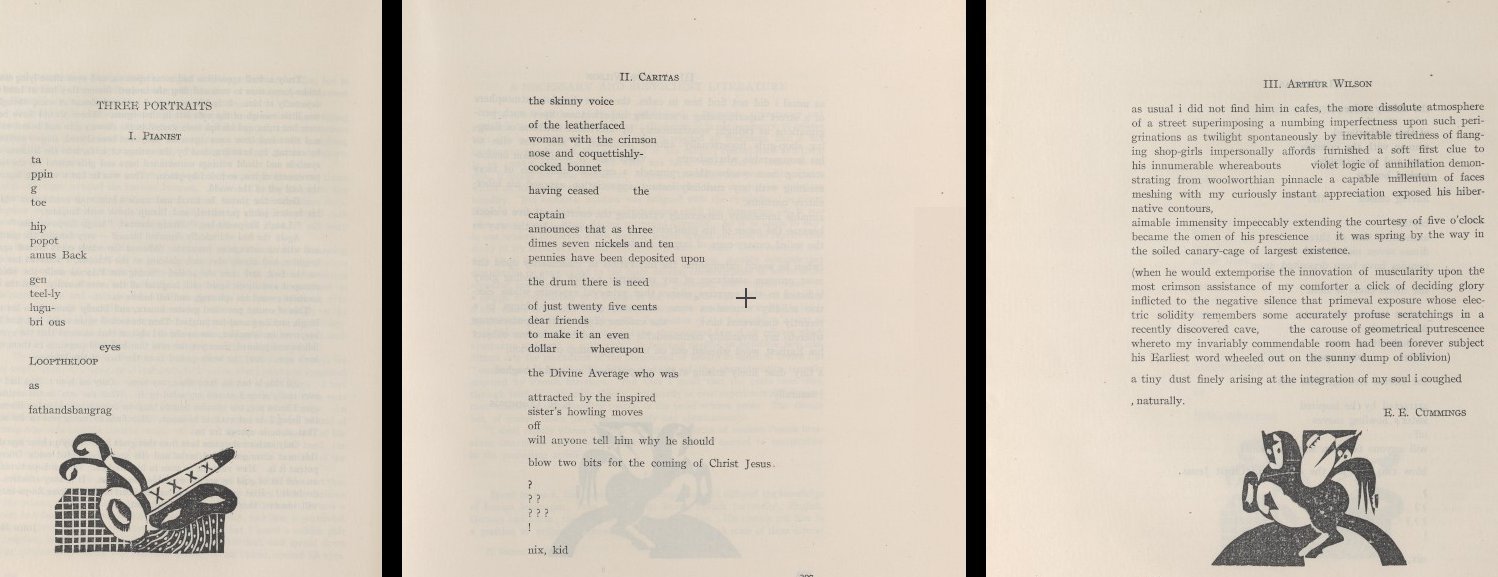
E.E. Cummings poem “Three Portraits” (I. Pianist II. Caritas III. Arthur Wilson) is published in the modernist magazine the Broom: An International Magazine of the Arts, Volume 2, Number 4, July 1922. Founded and backed not nearly enough by Harold Loeb and Alfred Kreymborg, the Broom publication was a short lived (1921-24) modernist monthly featuring “unknown, path-breaking” writers and artists (reproductions, original designs, translations). The cummings poem ‘Arthur Wilson’ was illustrated with woodcuts by Ladislaw Medgyes. The issue’s cover design was by Fernard Leger;

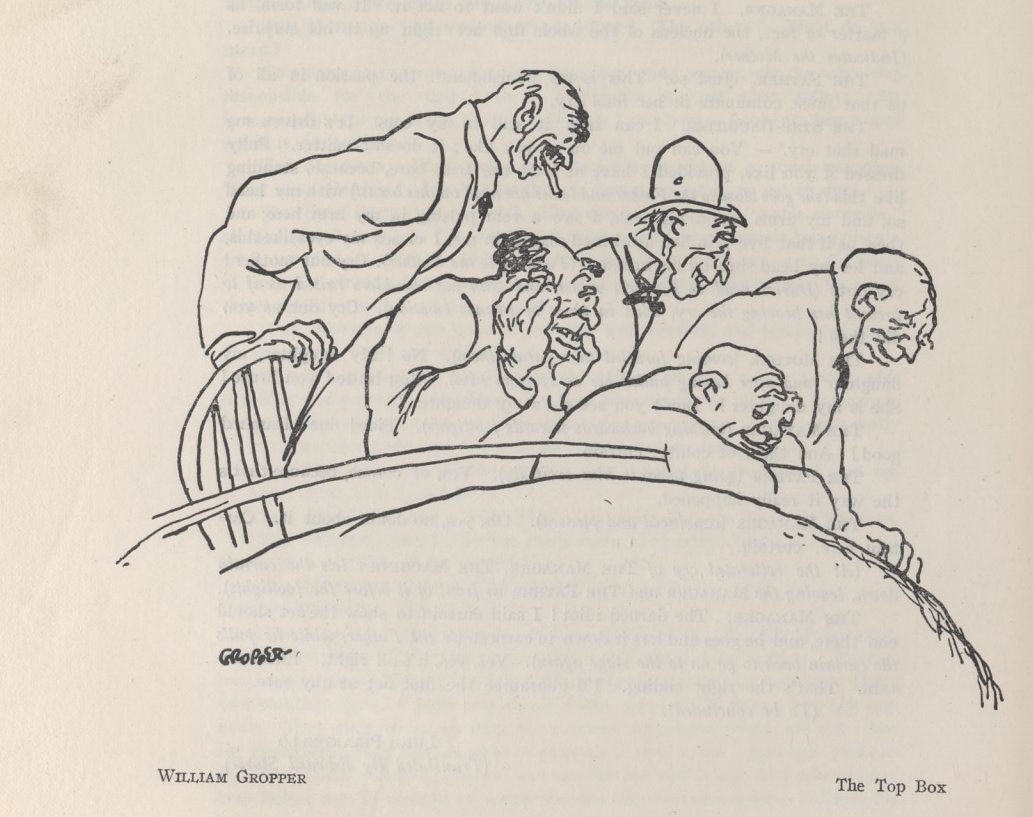
Picasso, Modigliani and William Gropper drawings were reproduced inside.
The text for III. Arthur Wilson follows (refer to the image for the visual spatial break in cummings prose).
III. Arthur Wilson
as usual i did not find him in cafes, the more dissolute atmosphere
of a street superimposing a numbing imperfectness upon such peri-
grinations as twilight spontaneously by inevitable tiredness of flang-
ing shop-girls impersonally affords furnished a soft first clue to
his innumerable whereabouts violet logic of annihilation demon-
strating from woolworthian pinnacle a capable millenium of faces
meshing with my curiously instant appreciation exposed his hiber-
native contours,
aimable immensity impeccably extending the courtesy of five o’clock
became the omen of his prescience it was spring by the way
in the soiled canary-cage of largest existence.
(when he would extemporise the innovation of muscularity upon the
most crimson assistance of my comforter a click of deciding glory
inflicted to the negative silence that primeval exposure whose elec-
tric solidity remembers some accurately profuse scratchings in a
recently discovered cave, the carouse of geometrical putrescence
whereto my invariably commendable room had been forever subject
his Earliest word wheeled out on the sunny dump of oblivion)
a tiny dust finely arising at the integration of my soul i coughed
, naturally.
-E.E. Cummings
Like The Harvard Monthly and The Dial, Broom contributors were or would become recognized luminaries: Sherwood Anderson, Guillaume Apollinaire, Hans Arp, Conrad Aiken, Kenneth Burke, Robert M Coates, Jean Cocteau, Malcolm Cowley, Hart Crane, Adolph Dehn, Andre Derain, Raoul Dufy, Paul Eldridge, T S Eliot, Wanda Gag, Robert Graves, Juan Gris, William Gropper, George Grosz, Rockwell Kent, Paul Klee, Fernand Leger, Lipchitz, El Lissitzky, Amy Lowell, Louis Lozowick, Marianne Moore, Henri Matisse, Amedeo Mondigliani, Laszlo Moholy-Nagy, Pablo Picasso, Man Ray, ‘Charles Sheeler, Gertrude Stein, Joseph Stella, Wallace Stevens, Paul Strand, Max Weber, William Carlos Williams, and Virginia Woolf among other artists and writers.
It was a small world and circle. The Broom contributors likely read that ee cummings poem about Wilson, and several knew both men. Names carried over from the Harvard-Dial network (Amy Lowell, Marianne Moore).
EE Cummings published Part III in later editions by the title “as usual I did not find him in cafes” omitting Arthur Wilson’s name.
1924 e.e. cummings visits Gloucester
to see writer, friend and editor R. Stewart Mitchell (1892-1957) who had a home here. Stewart Mitchell was another Harvard alumni (1915) and former Harvard Monthly editor. His face inspired the nickname “The Great Auk”. How nice being friends with artist-writers.
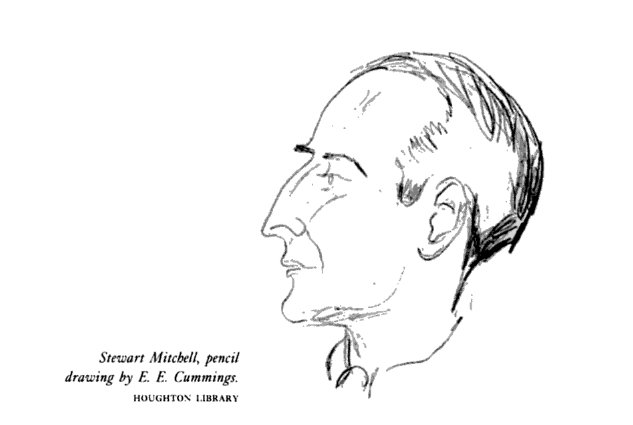
After serving in WW1, Mitchell was a managing editor and regular contributor for The Dial from 1919-21, then published poet. From 1928-1937 he was Managing Editor of the New England Quarterly journal, and from 1929- 57 an editor and Director of the Massachusetts Historical Society. On the Ma Historical Society seal : “It would hardly have done to compare the members of the Society to oxen, sheep, or birds … but bees had always had a good reputation for the sweetness and light of their honey and their wax. “– 1949 Stewart Mitchell
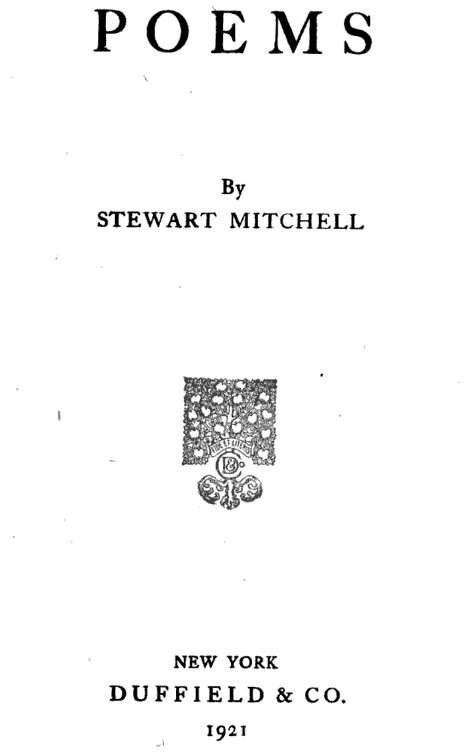
Did Cummings and Arthur W. Wilson come to Gloucester while attending Harvard or at other times in the 1920s to see Stewart? Was Cummings in Gloucester other years, decades? Did Wilson and Mitchell re-connect in Gloucester? John Sloan’s etching Frankie and Johnnie illustrates EE Cummings’ play HIM. Did Wilson interact with Stuart Davis in Gloucester or New York?
(Aside: In 1984 the play ViVa Cummings! opened in Gloucester under the direction of William Finlay and the New Stillington Players. Did they know Cummings had been here…)
1935
Wilson fails to update his Harvard alumni association requests. Here’s the 1935 entry:

1951 ELEANOR ROOSEVELT VISITS EXHIBIT AT AAA, NYC
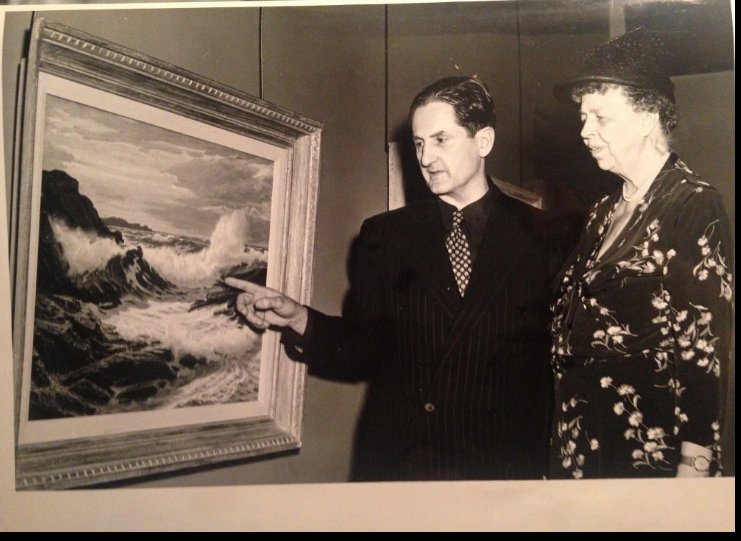
Wilson’s painting from the 1951 Contemporary American Artists exhibition at the Associated American Artists won the people’s choice award, and his solo exhibit in June was attended and written about by Eleanor Roosevelt in her nationally syndicated MY DAY column:
HYDE PARK, Sunday—At lunch last Friday I had a visit from Mr. Tatsukichiro Horikawa, who is over here from Japan on a trip studying the World Federation movement in different countries. He has visited Switzerland, Germany, France and England, as well as the United States, and he came to see me before in New York City; but he wishes particularly to come up to Hyde Park and place some flowers on my husband’s grave.
I was especially interested in talking to him because, like so many of the World Federalists, he felt that the United Nations was very inadequate. He felt one must bring about more unity—and particularly, if we were going to have any settlements in the Far East, there must be unity between Great Britain and the United States as well as the other nations in their policy.
I asked him if he did not think it was a good deal to expect to have a unified policy among 60 nations when the organization bringing them together had been in existence only six years. It seems to me it requires longer for people to understand how the other peoples think and feel. World federation might someday be possible, but not until people have had a greater length of time to find out about each other. One of the American World Federalist members had also written me saying that the federation must come first and then be followed by understanding. I think this begs the question of how you obtain the federation and how, having obtained it in name, you do anything practical with it.
In New York City on Thursday afternoon I went to see an exhibition of paintings of the sea done by Winslow Wilson, at the Associated American Artists Galleries on Fifth Avenue. This exhibition was arranged under the auspices of Greenwich House, toward whose support a portion of the proceeds of any sale will go.
Mr. Wilson told me he did not paint actually from a scene he was looking at, but from memory. He said he particularly liked to use the sea because it was to him a symbol of the stress and strife we were all going through at present; and still it had a kind of discipline and control which was what most human beings were striving for today and finding difficult of achievement. I found some of his paintings quite beautiful, and reminiscent of many seacoasts I have known. In certain ones the light made one think of tropical climates; in others the shores of Maine seemed to stand out. More often the sky and the sea were stormy, but the light was nearly always breaking through. Let us hope that out of this turbulent period of history the light will break through for all human beings.
The other day I was sent a little pamphlet written by Eloise R. Griffith on the national anthems and their origin. I think this will be of interest to a great many people who want to know a little more than the mere words of the songs which we hear sung so often.” – Eleanor Roosevelt
I am thunderstruck reading a portion of sales would benefit Greenwich House. Talk about an undercurrent.
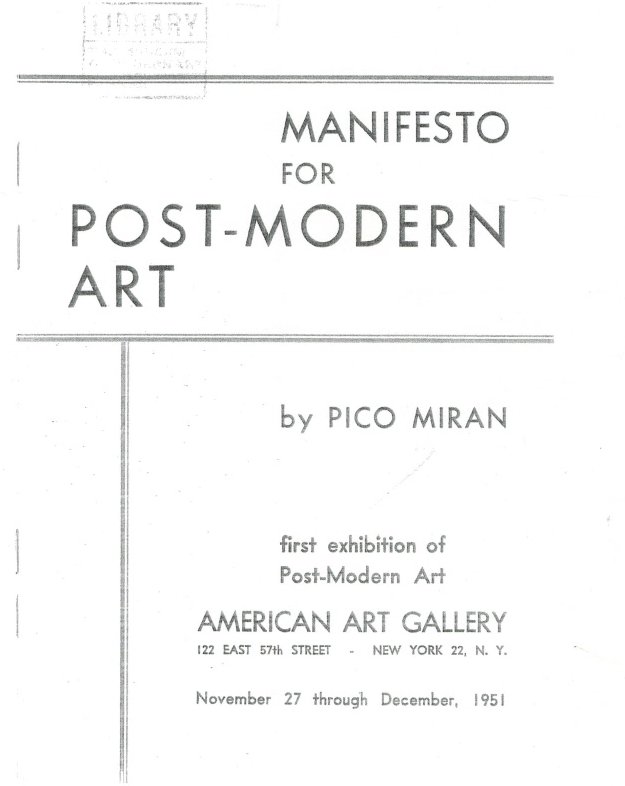
1951 Post-Modern Manifesto in the same year as the AAA seascapes
“A complete study of Cummings should take penetrating account of his painting and drawing. And no estimate of his literary work can begin without noting the important fact that Cummings is a painter.”
That’s the opener for Syrinx., a critique of Cummings by Gorham B. Munson published in Secession July 1923.
“His first stimulus comes from the emotional and perceptive materials of his experience…Cummings has jabbed his pen into life, but he has also twisted it in the wound, and it is this twist of the pen that makes literature.”
Knowing ee cummings facility with visual arts transforms how his poems read. He identifies both pursuits. The press announcement for Cummings appointment at Harvard in 1952 affirmed that he resided in New York City, writing and painting since the year 1920. It wasn’t that he sculpted marks–‘scratchings’- that could be seen as pictures in print,–it’s this charge when visual art and writing advance toward or basically obliterate media boundaries.
After reading Wilson’s 1951 Manifesto For Post-Modern Art published under his pseudonym Pico Miran, I felt a similar tug. For Wilson, when it comes to ideas and individuality, words and paint –and as many names and identities to match– matter. Some of Wilson’s paintings could be shown alongside pages from ee cummings The Enormous Room.
There are takeaways and points one can make about this manifesto and painting series of Wilson. I can think of art I’d like to show together with this work.
Yikes, the thoughts about women! Here’s Wilson writing as Pico Miran in his Manifesto, emphasis on man apparently:
“But while he proposes to save the personal symbol, he must emphatically reject the conception of its privacy–a conception which he is compelled to regard as an effeminate misery: he cannot help thinking an almost unmanly exaggeration of the one bit of feminine make-up in every artist, here flouncing in absurd esthetic millinery, with coy desire for secretiveness, mysterious subjectivity, and vain feelings of cryptic superiority to the vulgar mass.”
1951 Hidden, not lost
Wilson evidently maintained some contacts; note the supportive reviews by friends (Moore, Burke, Wheelock) later reprinted for his 1957 solo exhibit at Vose Galleries in Boston. Edward Alden Jewel, the New York Times critic, described Wilson as “living a hidden life of pure dedication and drudgery” in his 1951 NYC AAA review.
2015 Found. A great teacher
On Cape Ann, Wilson taught figurative painting through the Rockport Art Association, which he joined in 1946. Wilson is recollected as a dazzling teacher who could bring out the best in his students. One student’s 2015 recollection is a must read: “Bing McGilvray of the Cape Ann Museum was fortunate to communicate with a local artist familiar with Wilson, Betty Lou Schlemm.” Wilson sounds like the famous and captivating professors at Harvard.
Another unforgettable piece about Wilson’s biography concerns a local exchange between Pico Miran and Peter Anastas following a 1954 review by the latter.
For local readers, the www.winslowwilson.com website helpfully provides some Gloucester addresses associated with Wilson.
- June 21, 1951: Bradford Building, 209 Main Room 208, Gloucester, MA
- August 1, 1951: Marine Basin, E. Gloucester, MA
- June 18, 1952: Bradford Building, 209 Main Room 208, Gloucester, MA
- July 26, 1955: Bradford Building, 209 Main Room 208, Gloucester, MA
- 1967 maybe 195 Main Street, Gloucester, MA
- 1969 maybe 195 Main Street, Gloucester, MA
- June 2, 1971: PO. Box 414, Gloucester, MA
Also:
21 Est 15th Street, 154 East 39th Street, Carnegie Hall, 3 Washington Square North in Greenwich Village, Woodstock, N.Y., and Lime Rock, CT.

 Good Morning Gloucester