Update #3
GMG FOB Art Bevilacqua Educates Us Further:
Art writes-
In our market (post deregulation in 1998) there is an auction each day where the companies running generators bid to provide their output into the grid. Each generator has different costs, fuel, operating and maintenance, etc., so their prices can be all different from each other.
ISO-NE receives these bids and each afternoon at about 4pm they run a model that uses a load forecast for the following day. Next they go to the “stack” of available generators and turn them on in the model, starting with the least expensive and turning them on until they have met the load forecast for the each hour of the day.
The price of the last generator turned on sets the price for that hour.
There are some other constraints in the background – for example they might have to “turn on” generators whose price is not the next most expensive, such as wind or solar that they are forced to buy even though their costs are extremely high.
After the model has run, they issue the plan for the following day, essentially purchasing all of the day’s power by about 6pm.
Finally, as the actual day progresses, things happen – a generator might become unavailable, or the actual load in an hour might be higher or lower than what was expected. When these things happen ISO has to dip further into the stack of generators, of retreat from the stack, and this causes the real-time price to wiggle from what was expected. These real-time calculations happen every five minutes.
The bottom line is that the actual electricity cost varies every five minutes, and thus each and every average hour.
Go to www.iso-ne.com and click on “more real time data” in the upper box to see this happening.
On a grander scale, if we have a stretch of very cold weather, some fuels might become constrained, or less available (and thus higher cost) than expected. This can lead to periods of time where the cost of energy will run high, and this is what happened last year. If a plant is located in an area with weak gas supply, such as Providence RI, then that plant might be forced to back down and/or will suffer very high fuel costs.
Also, because your meter is only read once a month, your bill has to be based on projections of monthly energy costs, which can change quite a bit. The delivery part of the bill is based on keeping the transmission and distribution equipment running and that is very stable.
NGrid and the other suppliers try to stabilize the energy costs by asking for longer term contracts from generators, and that is what the chart shows – they are projecting out a number of months based on projections of the future as well as past history (last year’s winter). This is all a gamble because the weather people can’t even tell what will happen two days from now, let alone three months from now.
All of the suppliers are faced with this problem – if they are in a low cost time period (the spring for example) they can offer average rates that are lower, but probably only for a short time. They couldn’t lock you in at 9 cents for a year because they know prices they pay will rise the following winter, but they might do that for a few months. The quoted prices and lock lengths will vary based on the suppliers power in the market, their trading skills, their luck, etc.
There is some more explanation of this at: http://isonewswire.com/updates/2014/11/14/how-wholesale-electricity-costs-factor-into-your-retail-bill.html
Also, see this: http://www.iso-ne.com/about/what-we-do/in-depth/wholesale-vs-retail-electricity-costs
Art
Update #2. I just spoke to a rep for one of these companies and asked if we get a bunch of people to sign up together if it is possible to get a better rate than what is advertised and he said yes but they would call back on Monday. Who would like to join in and hear what they have to offer? No obligation, but I floated the idea that 5 or more of us would sign up and he said they definitely could get the rate down more. So email me at goodmorninggloucester@yahoo.com if you want to look into it with me. Whoever that signs up for cheaper electricity would reduce all of our rates including our own by the same amount that we could negotiate by doing it in numbers.
With electricity prices set to jump over 30% does anyone have any advice on which company they are locking in with or if it’s a bad idea to lock in? Seems crazy how much they’re jacking the prices overnight.

UPDATED 11/14/14
In the comment section of this post someone named Jon recommended a website which compares a bunch of different rates-
https://www.chooseenergy.com/compare/01966/electricity-rates/
For Commercial rates this is what they list- 12.99 per kWc for 24 months being the cheapest rate.
Screen shot of Choose Energy’s rates this morning–
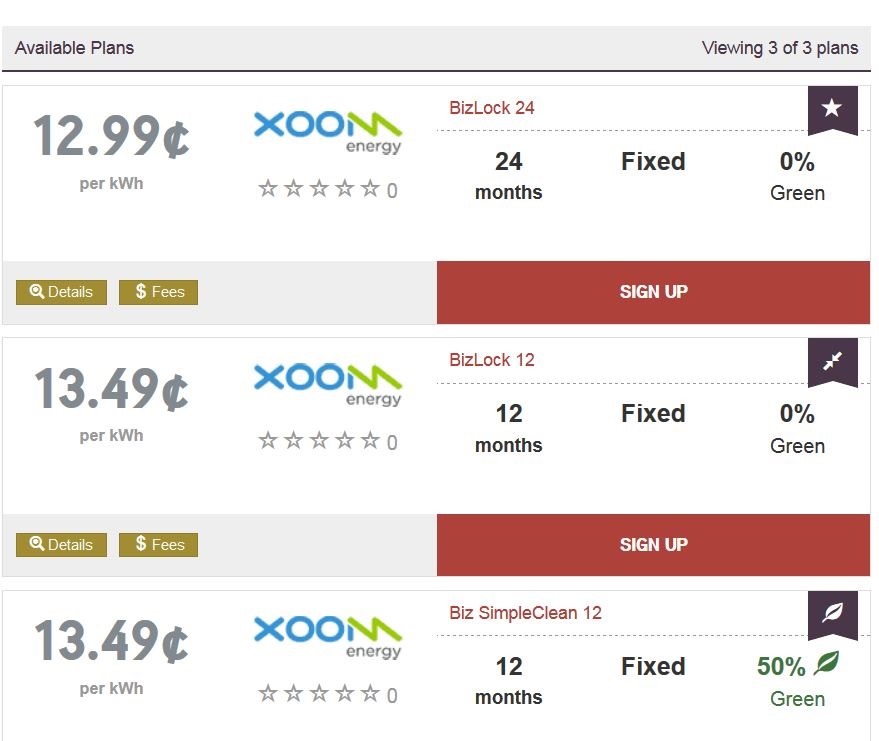
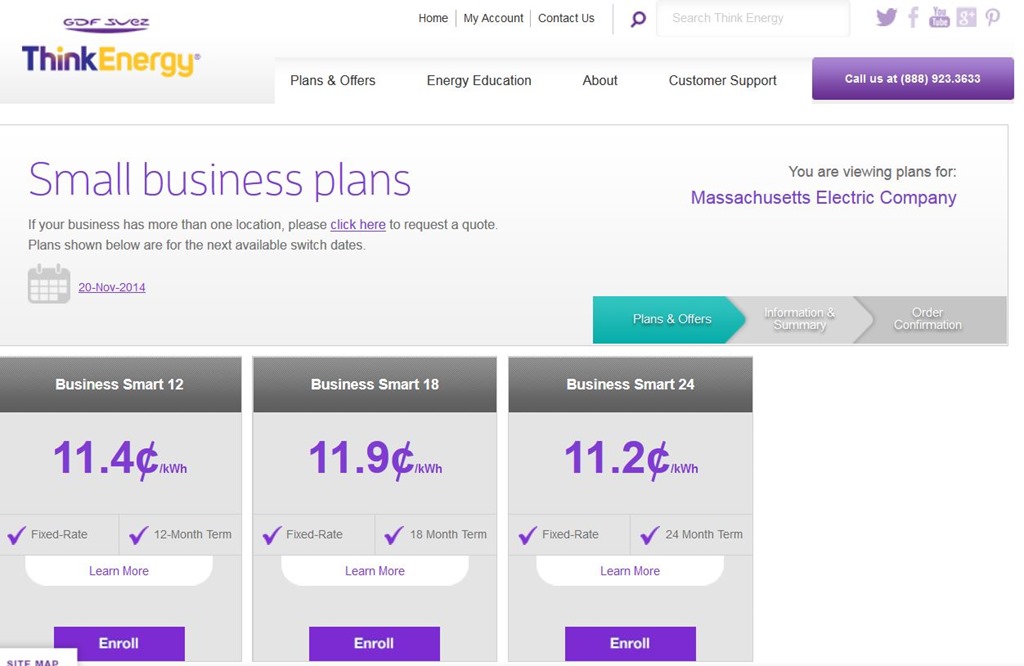
The Supplier that we currently use, Think Energy is quoting less on all counts than anything listed on Choose Energy’s website.
https://www.mythinkenergy.com/signup/index.php?s=viewPlans&startDate=20-Nov-2014
Screen shot of Think Energy’s rates this morning-
11.2cents per kWh is much cheaper for 24 months and even it’s 12 month rate is cheaper than the best rate on Choose Energy for 24 month.
Are any other business owners out there interested in forming a group to negotiate a cheaper rate for all of us if we all agree to sign up together? We can request a group discount and send out rate bids. Let me know by email goodmorninggloucester@yahoo.com


 Good Morning Gloucester
https://www.chooseenergy.com/compare/01966/electricity-rates/
This gives some alternatives….
LikeLike
I clicked on that link and for our business none of the alternatives they listed were as cheap as Think Energy which quoted much lower than anything listed.
Think Energy for 12 months was 11.4 cents per kWh/ and 11.2 cents per kWh for 24 months locked in.
https://www.mythinkenergy.com/signup/index.php?s=viewPlans&startDate=20-Nov-2014
LikeLiked by 1 person
Does anyone know what happened to the promise of much better rates due to the wind turbines?
LikeLiked by 1 person
this is a good survey since i get bombarded with calls all the time offering me their deals. it would be nice if we could establish the rates of different contracting providers so that we can make an intelligent choice with our wallets
LikeLike
Ambit has low rates I know a rep
LikeLike
Ambit is nat gas not electric unless I’m mistaken.
LikeLike
Don’t forget that these offers are for the energy charges only. You will still owe NGrid the delivery charges, which amount to about 5 Cents/kwh depending on what kind of service entry you have.
LikeLike
Another thought and caution – the charts shown here are for a number of suppliers, but nothing for NGrid.
Here is a link to National Grid’s chart: https://www1.nationalgridus.com/CompetitiveSupplyMA
Note that even though things peak up during the winter when natural gas prices spike up, and the pool has to run oil plants in place of retired coal, things settle back down in the spring to the 9-10 cent range again. That winter period is what has everyone in a panic.
The main difference between the traditional supplier and the new alternatives is that the new offerings average the pain over a longer time period and charge you with a “fixed” energy charge during their term, while the traditional varies more frequently.
Since all of the power is coming from the same plants regardless of who is selling it to you, in theory you should wind up paying about the same over the long term, the only difference between suppliers being their trading skill and profit margins.
Also note that I’m not defending NGrid or anyone else, I’m all for saving money wherever possible. One of the meters that I’m watching cost over $140,000 for the June time period on a standard G3 commercial rate, and that was with a 9.5 Cent/kwh energy charge.
LikeLike
Arthur — thanks so much for your comments and to others for information about comparative prices. I’m in the middle of writing a 2015 budget for my condo association and this helps a great deal.
If there is a meeting with any of the company reps, I would be interested in attending. Our rate from National Grid is for a small business “General service – Small C/I G-1”.
LikeLike
We are trying Veridian (not sure of spelling). Already signed up before end of October. We did lock in a lower rate for 3 years. I don’t have the details at my fingertips but I’m sure you can look them up on line. Who knows – we are experimenting.
LikeLike
i LOCKED IN WITH VIRIDIAN FOR $.1199 AND i LOOKED AROUND. I WAS WITH DOMINION (NRG) FOR $.899. NO LONGER AVAILABLE…
LikeLike
This is a grat post on helping with energy needs and cost effectiveness – never know what the usage will be dependant upon weather and condtions that drive solar, wind turbines, etc…:-) Dave
LikeLike