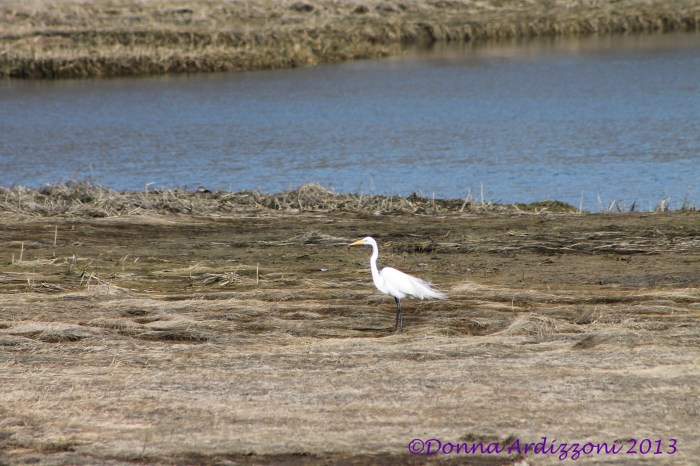
Beautiful Sea Bird in the marsh near Wingaersheek Beach on a sunny day.
Spread The GMG Love By Sharing With These Buttons:
Related
Published by Donna Ardizzoni
Ardizzoni Photography, Business Manager, Grandmother, love living in Gloucester, love to swim, kayak, walk and of course take pictures. Our company does computer networking, Office Management, Medical Billing, transcription, networking software updates and virus protection
View all posts by Donna Ardizzoni


 Good Morning Gloucester
Looks like an immature Great Blue Heron. They don’t turn blue/grey until they are into their 2nd summer.
LikeLike
Baby and juvenile Great Blue Herons are not white. Their feathers are similar in color to adult Great Blue Herons.
LikeLike
Thanks Kim, The kids are having a blast
LikeLike
I am sure the grandkids (all four!!) are having a blast, but how are Nonnie and Papa doing??
LikeLike
Hi Kim: Thanks.. Nonnie and Papa are pretty tired but doing ok.. feel like I should already have my P.J.’s on and in bed before the sun goes down Pictures shall follow
LikeLike
Thanks
LikeLike
I think it’s an egret. They were the bird that started the feathered hat craze for ladies, a long time ago, which then created the Audobon Society.
LikeLike
thanks and take care
LikeLike
Black feet + white beak = great egret, I believe.
LikeLike
Donna, this looks like the Great Egret (Ardea alba), with yellow bill and black feet. It is also called the Great White Heron, Common Egret, and Great White Egret.
The easiest way to distinguish it from other egrets commonly seen on Cape Ann is to look at the feet and bill. The Snowy Egret (Egretta thula) has reverse coloring, with bright yellow feet and a black bill.
It was both the Great Egret and the Snowy Egret who during the late 1900’s and early 20th century were almost hunted to extinction for their beautiful plumes, highly coveted by the millinery trade. Under the Migratory Bird Treaty Act (1916), their populations have rebounded. The Great Egret is the symbol of the National Audubon Society and is a conservation success story.
LikeLike
Thanks
LikeLike
Thanks for post
LikeLike
Nice photo! You got me wondering so: http://www.allaboutbirds.org (Cornell) has some great info on Great Blue Herons, Little Blue Herons, Great Egrets & Tri-Colored Herons. There is a LiveCAM on a pair of nesting GBHs that is interesting to watch. Our friend xegloucesterite at least knew one of the 4 1st years are indeed all white!
LikeLike
That’s a great egret FYI
LikeLike
Thank you
LikeLike