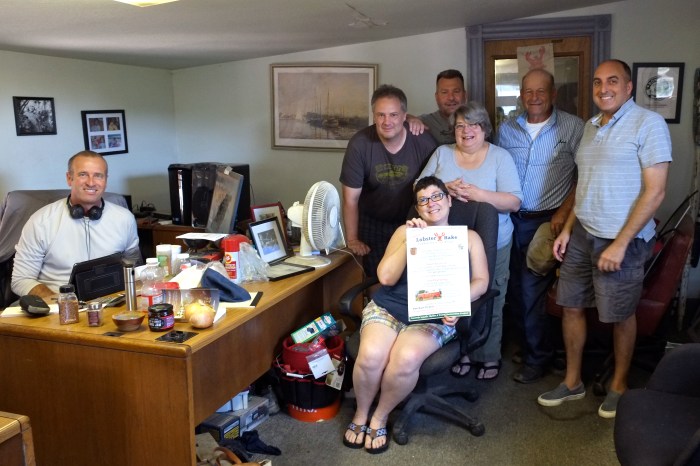
GloucesterCast 233 With Deanna Fay, Wayne Berger, Greg Verga, Doug and Gloria Parsons, Bill Cox, Catherine Ryan, Kim Smith, and Joey Ciaramitaro Taped 7/16/17

gloucestercastsquare11 (1)

GloucesterCast 233 With Deanna Fay, Wayne Berger, Greg Verga, Doug and Gloria Parsons, Bill Cox, Catherine Ryan, Kim Smith, and Joey Ciaramitaro Taped 7/16/17

podcasticon1

subscribebutton

When you subscribe you need to verify your email address so they know we’re not sending you spam and that you want to receive the podcast.  So once you subscribe check your email for that verification.  if you don’t see it, check your spam folder in your email acct.

GMG Podcast.JPG

7TH ANNUAL CIGAR AND RUM SUNSET SAIL ON THE LANNON IS JULY 20TH – Props To Heath Ellis, Doug and Bobby Ryan, Paul Giacalone and the people that call in right away to reserve tickets every year.  Not sure if Felicia is doing the wine one
Trash Barrels on GHB
The Annual “This is the worst traffic I’ve ever seen in Gloucester ” on Fourth of July weekend vs the “This is the worst I’ve ever seen business on Main Street in February” rhetoric
Piping Plover Update 24 days old today
Baby Charlotte Update 6 days old today
Monarch Sightings
Backyard Growers Garden Tour
Oyster Spats At Maritime Gloucester

PIPING PLOVER BIRD BANDING DISORDERS

Although bird banding is tremendously helpful to researchers, after seeing the following video, I understand why conservationists have decided not to band in our area. I am puzzled as to why the Plover in this video has to have sooooo many bands.


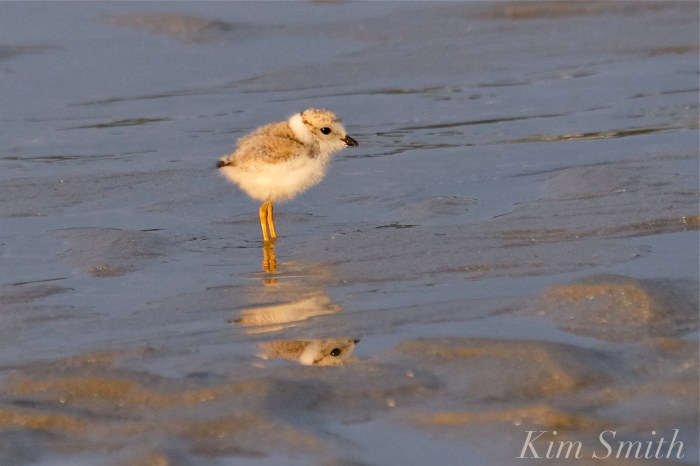
CELEBRATING DAY TWENTY WITH OUR PIPING PLOVER CHICK–ALMOST FLEDGLING

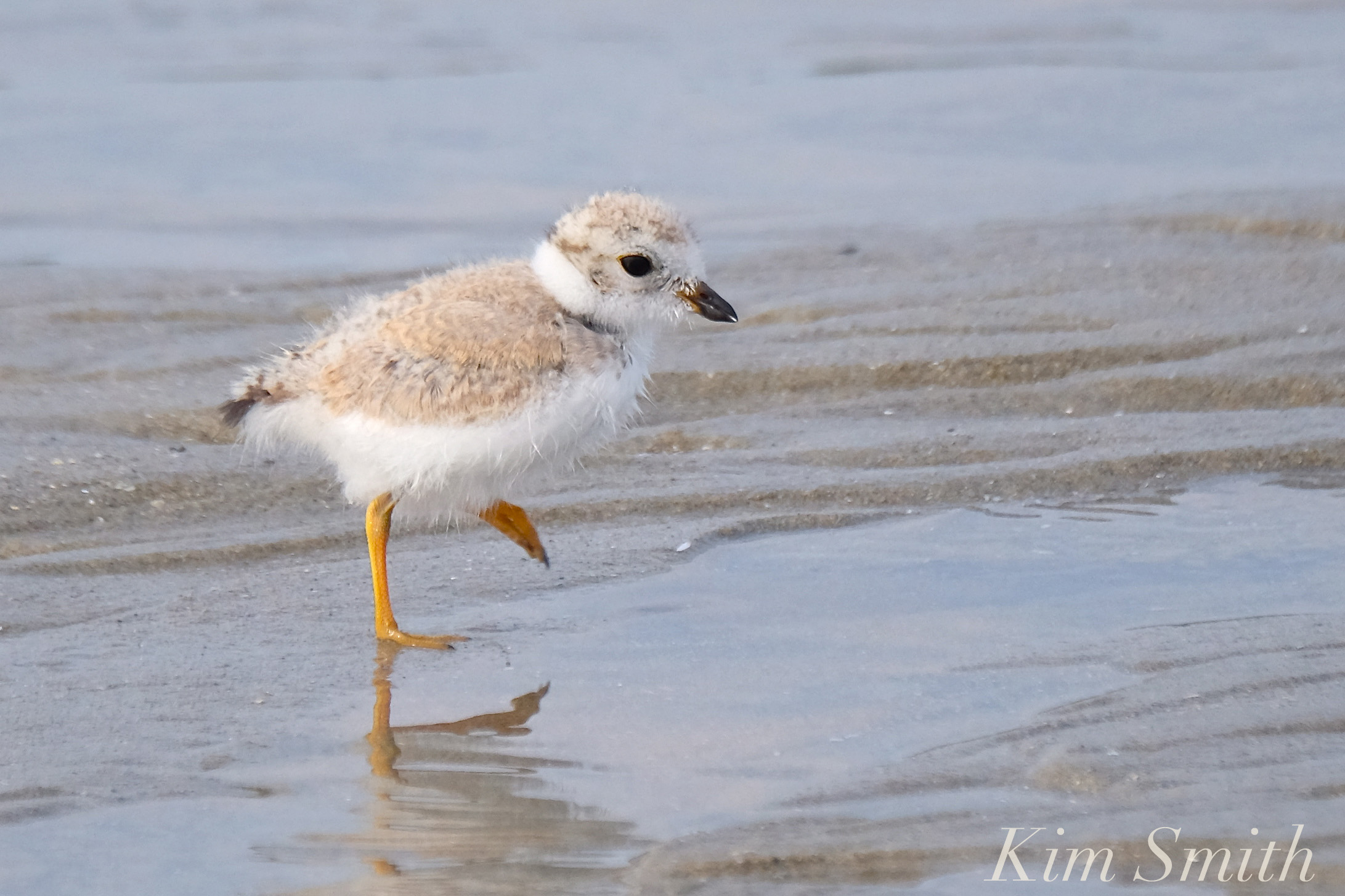
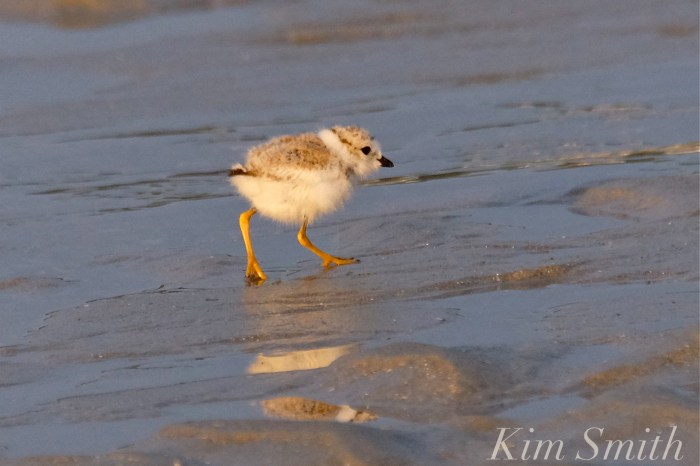
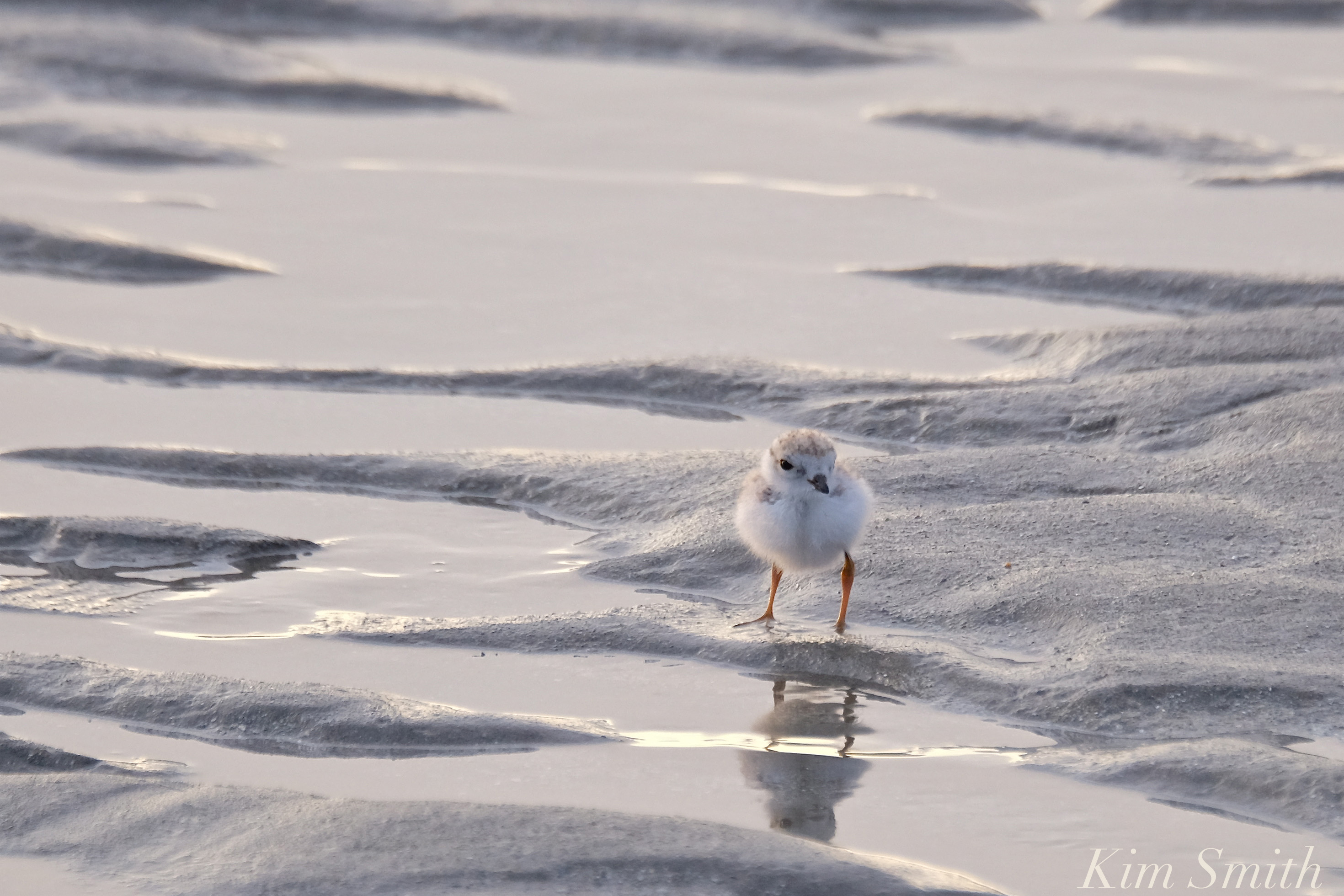
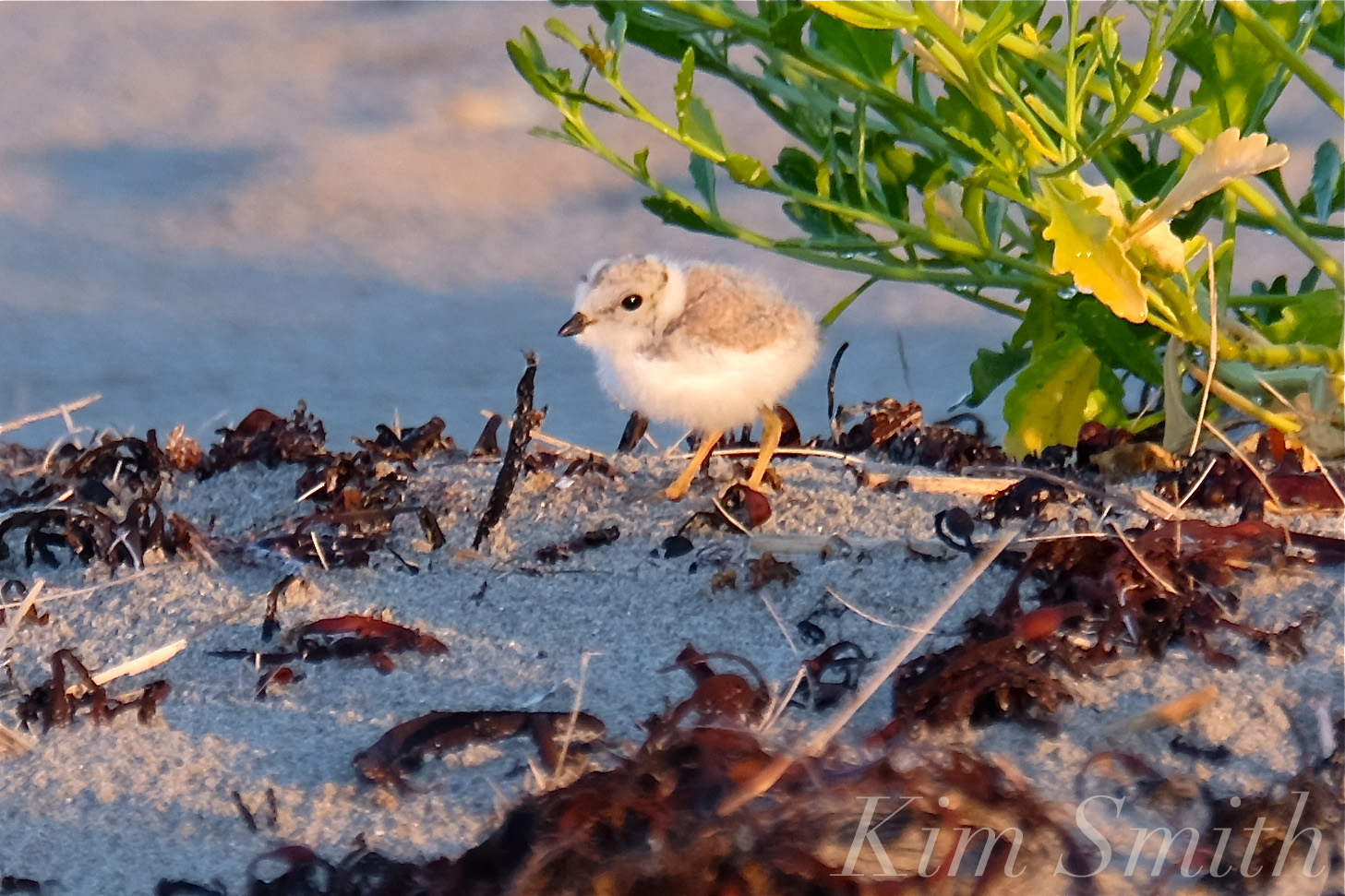
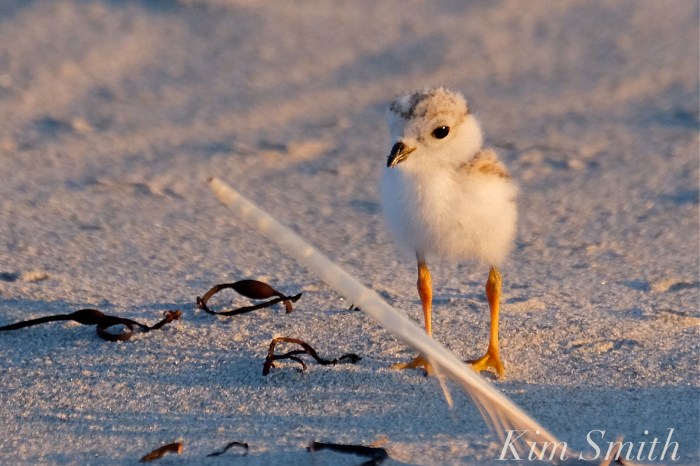
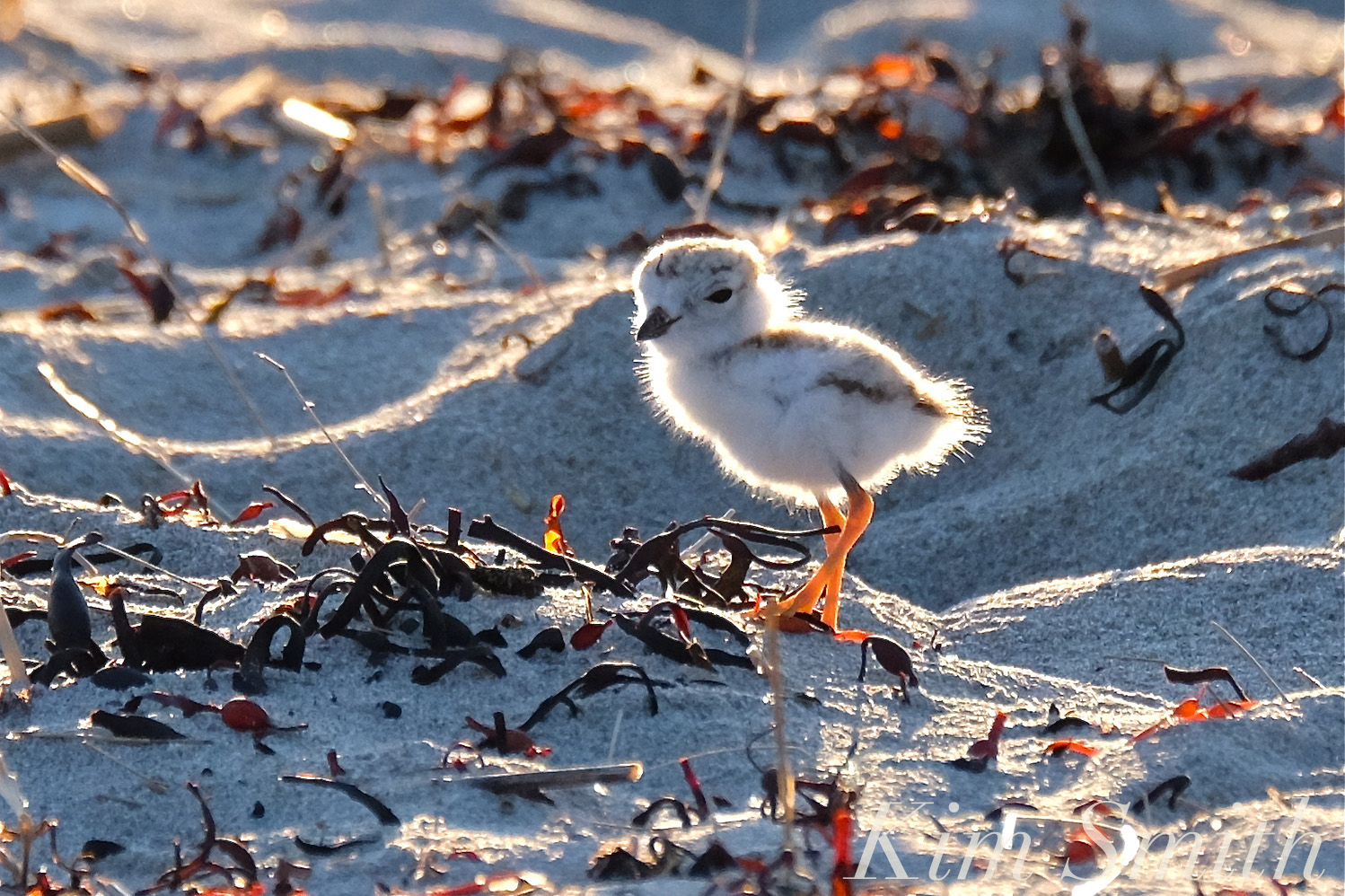
Confident Little Chick

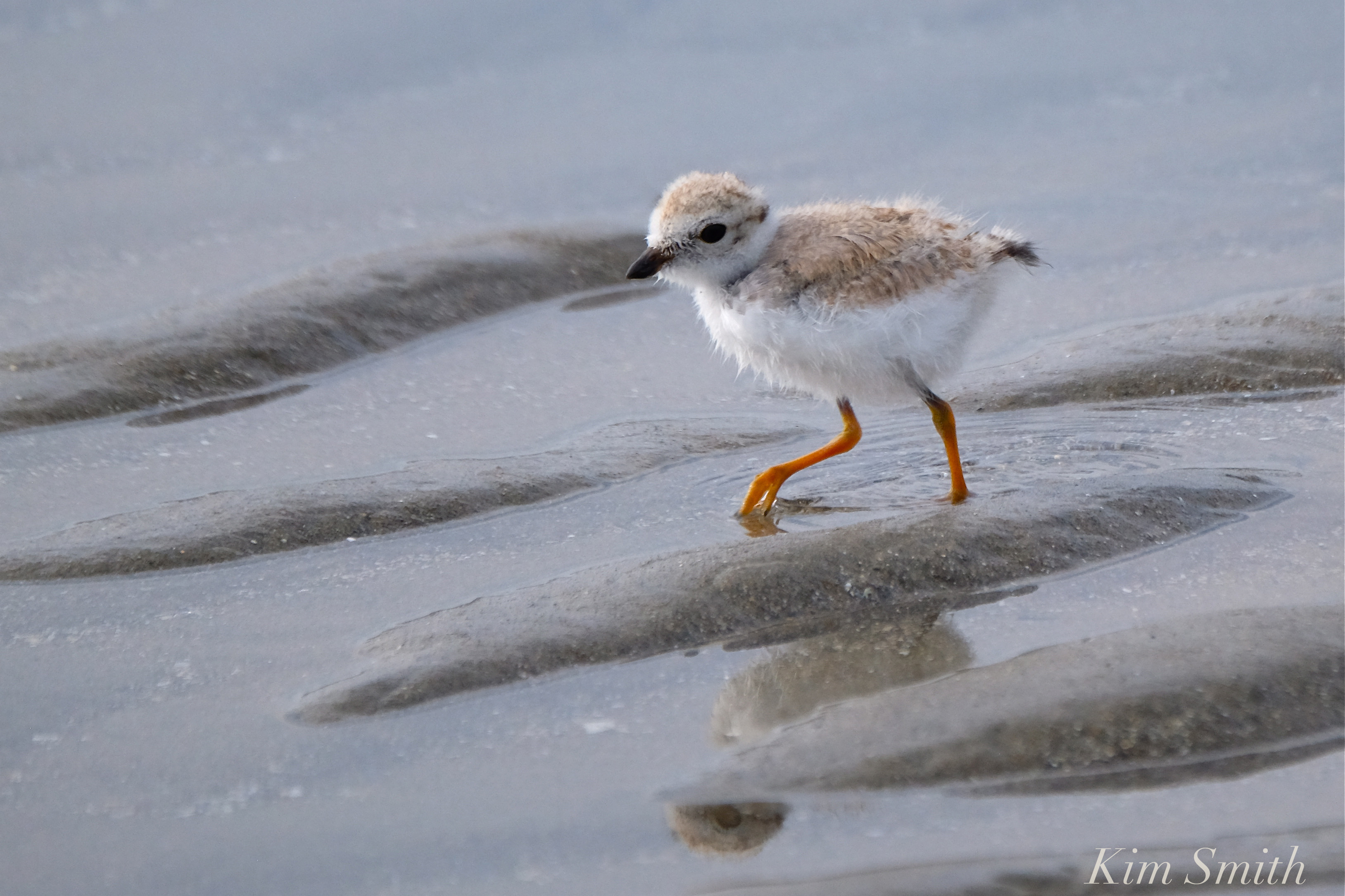
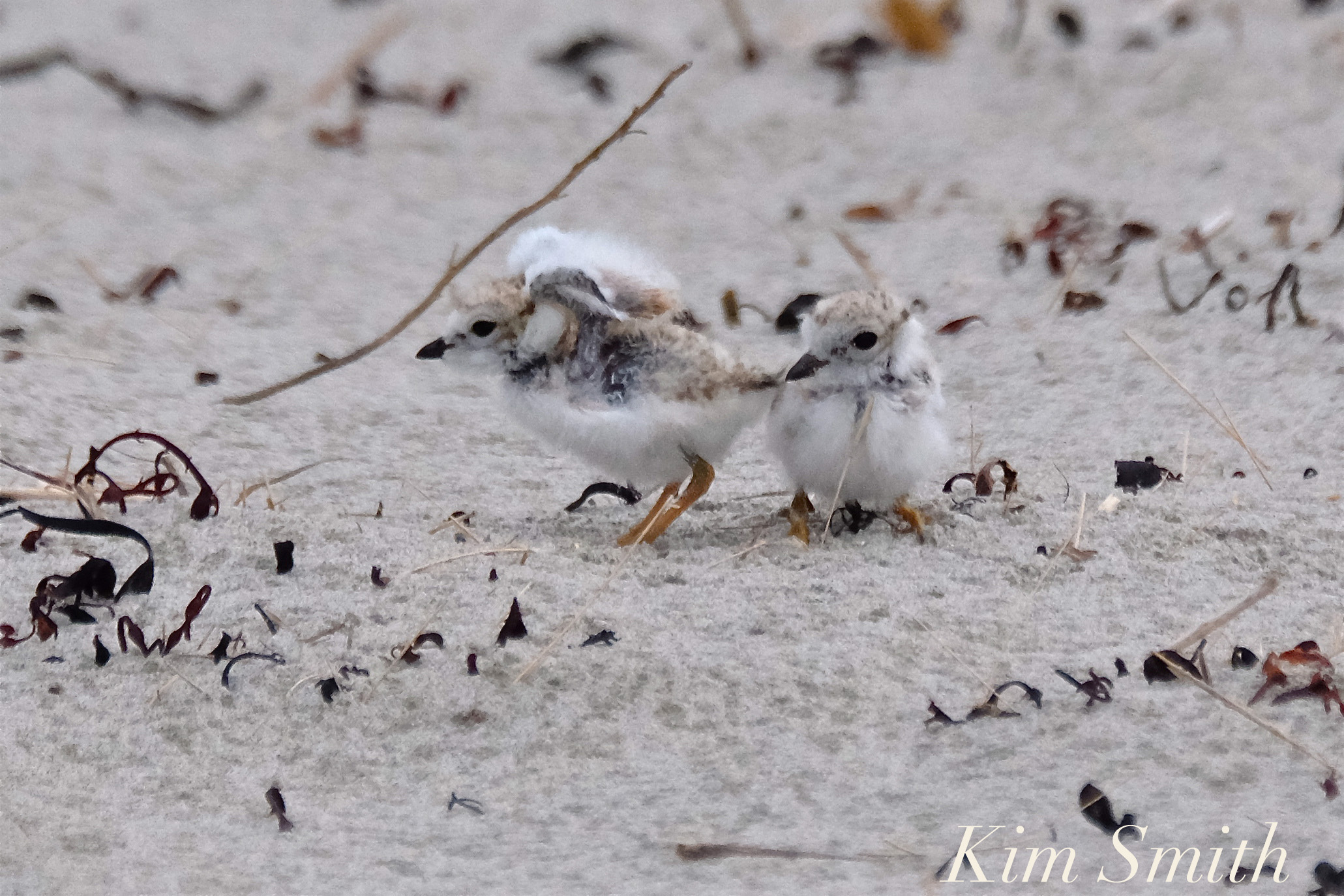
With each passing day, our Little Chick looks less and less like a chick and more and more like a fledgling. As with all Piping Plover new fledglings, the pretty stripe of brown feathers across the back of the head is becoming less pronounced, while flight feathers are rapidly growing and replacing the baby’s downy fluff. It won’t be long before we see sustained flying.

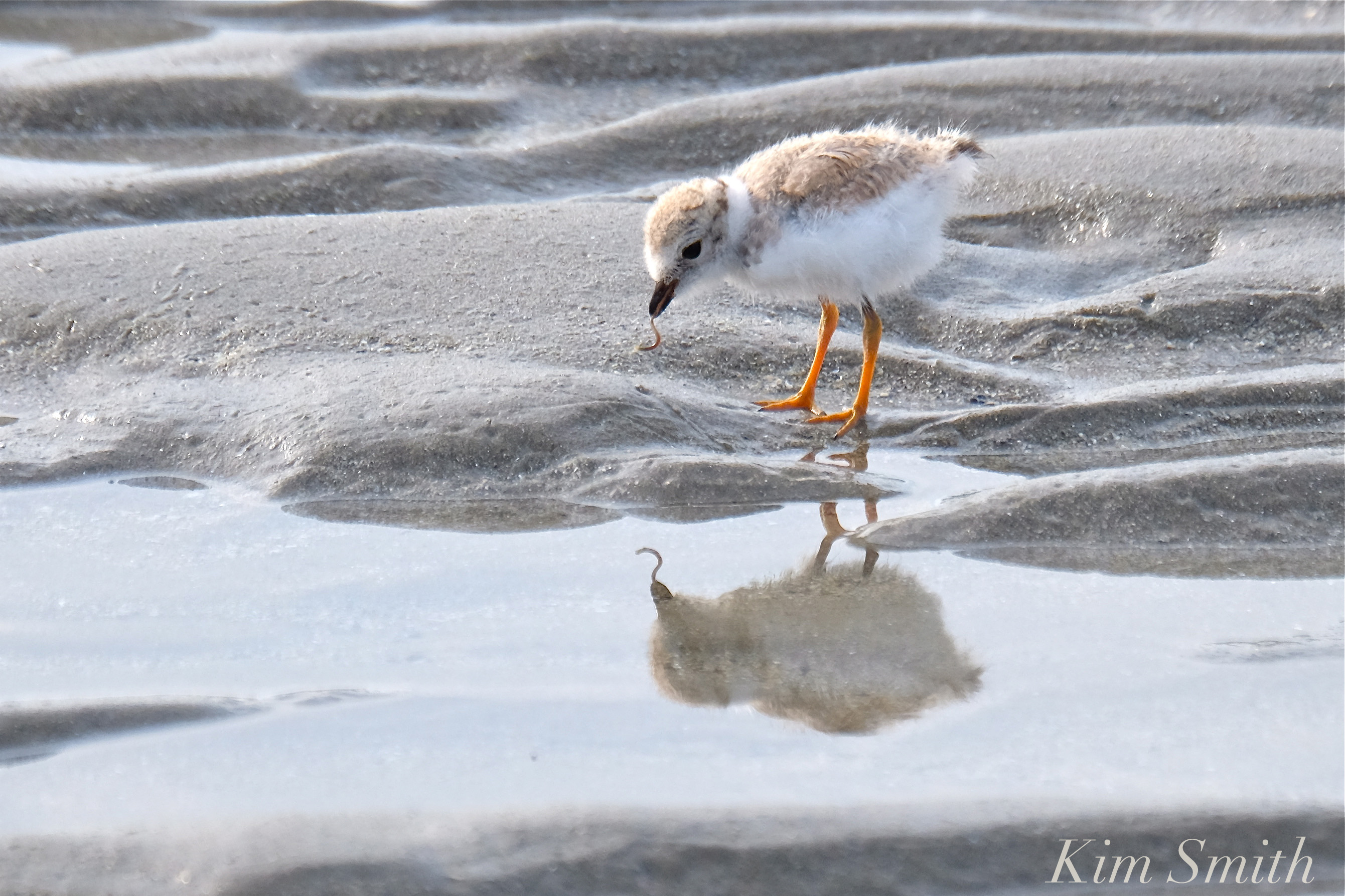
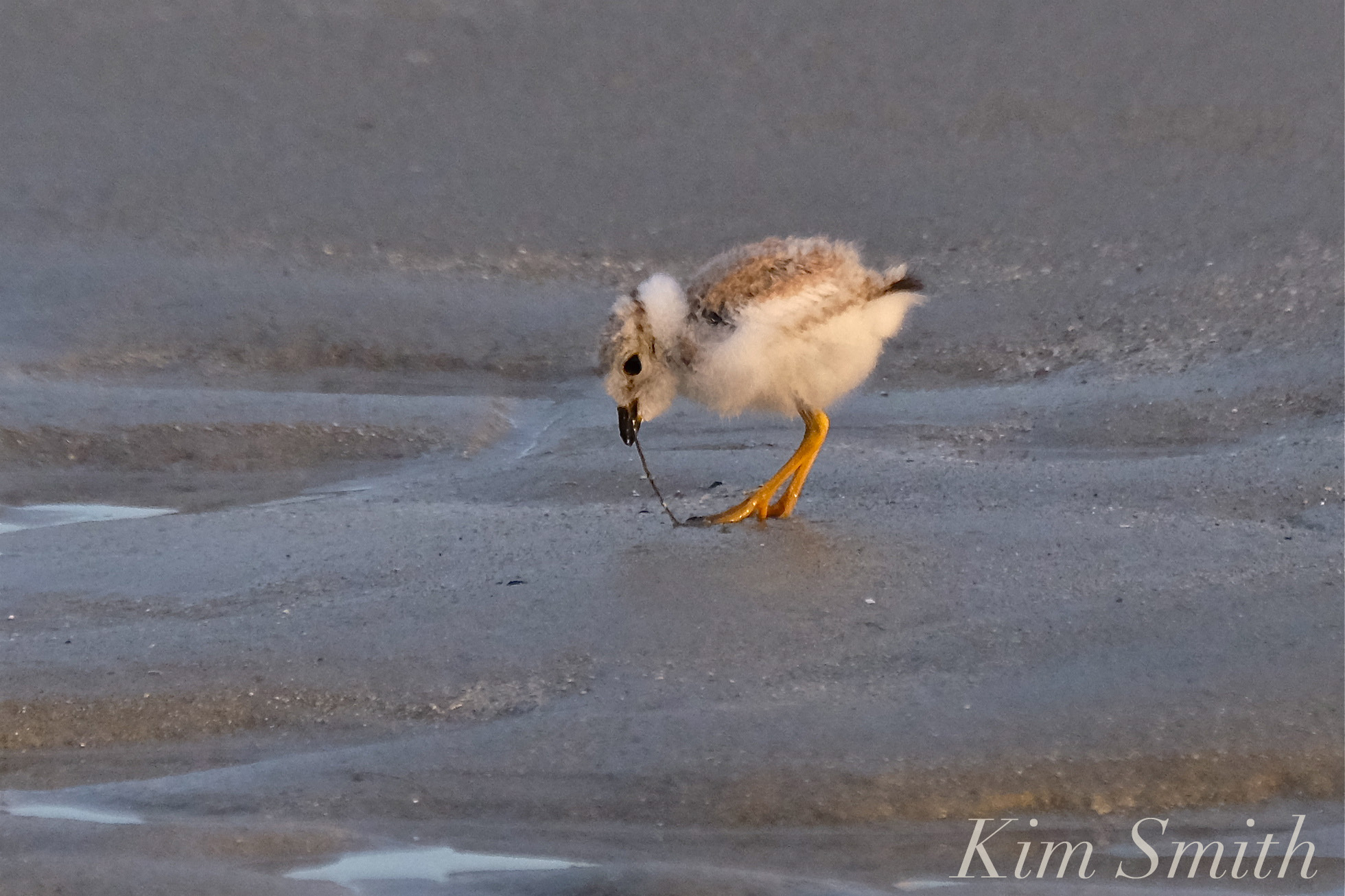
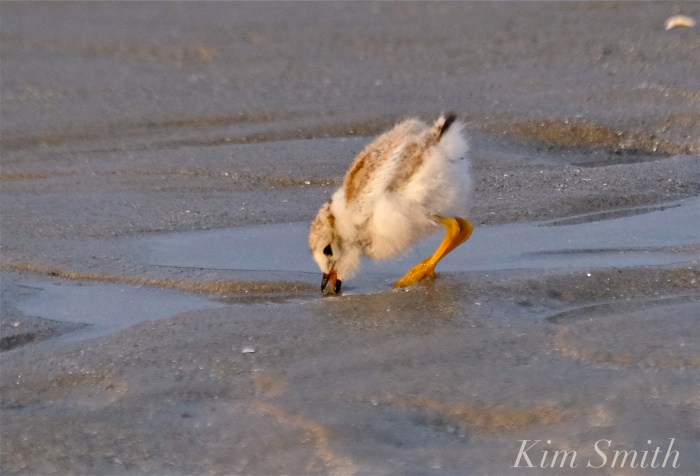
Little Chick spent a good part of the morning at the intertidal zone finding lots of yummy worms and mini crustaceans.

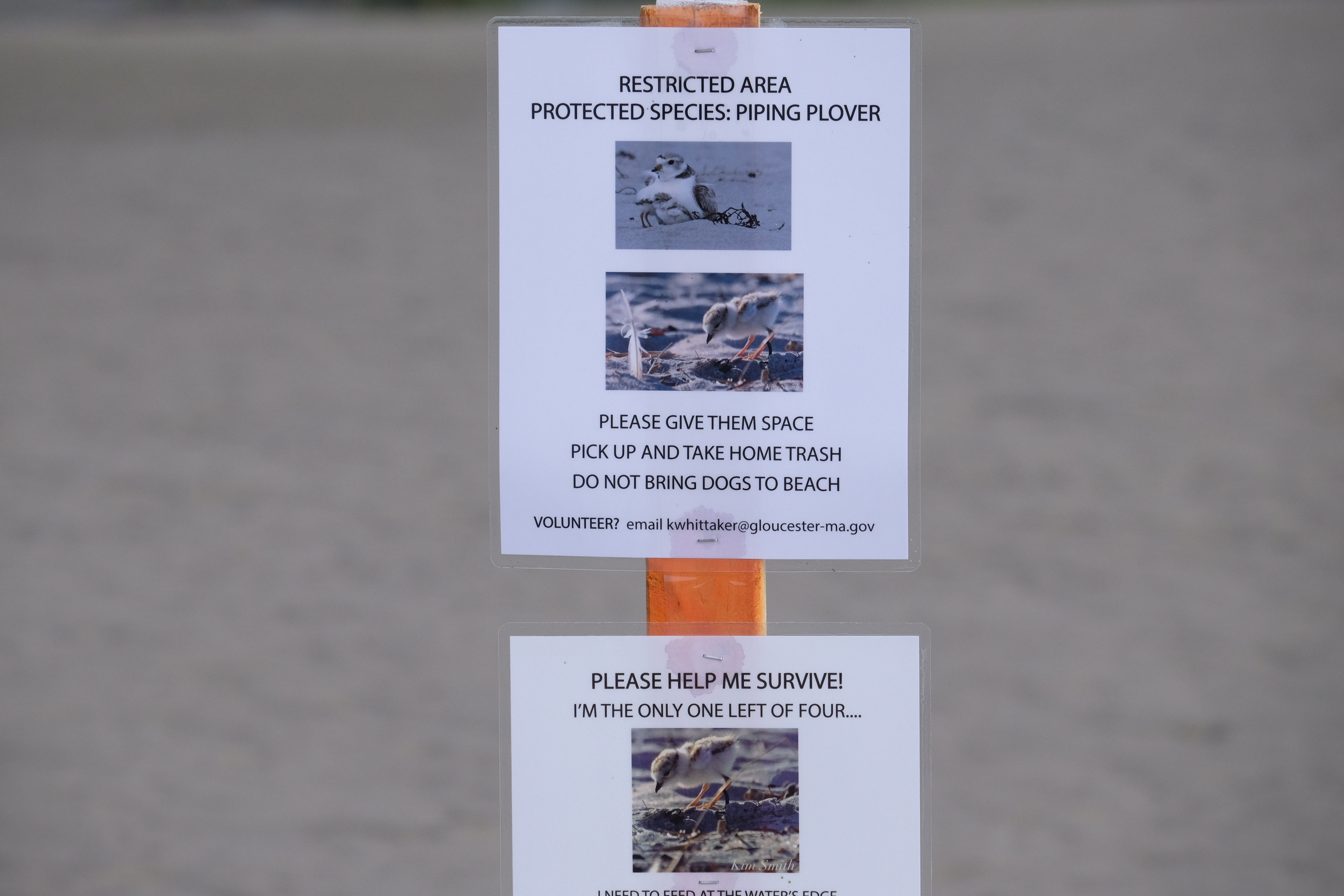
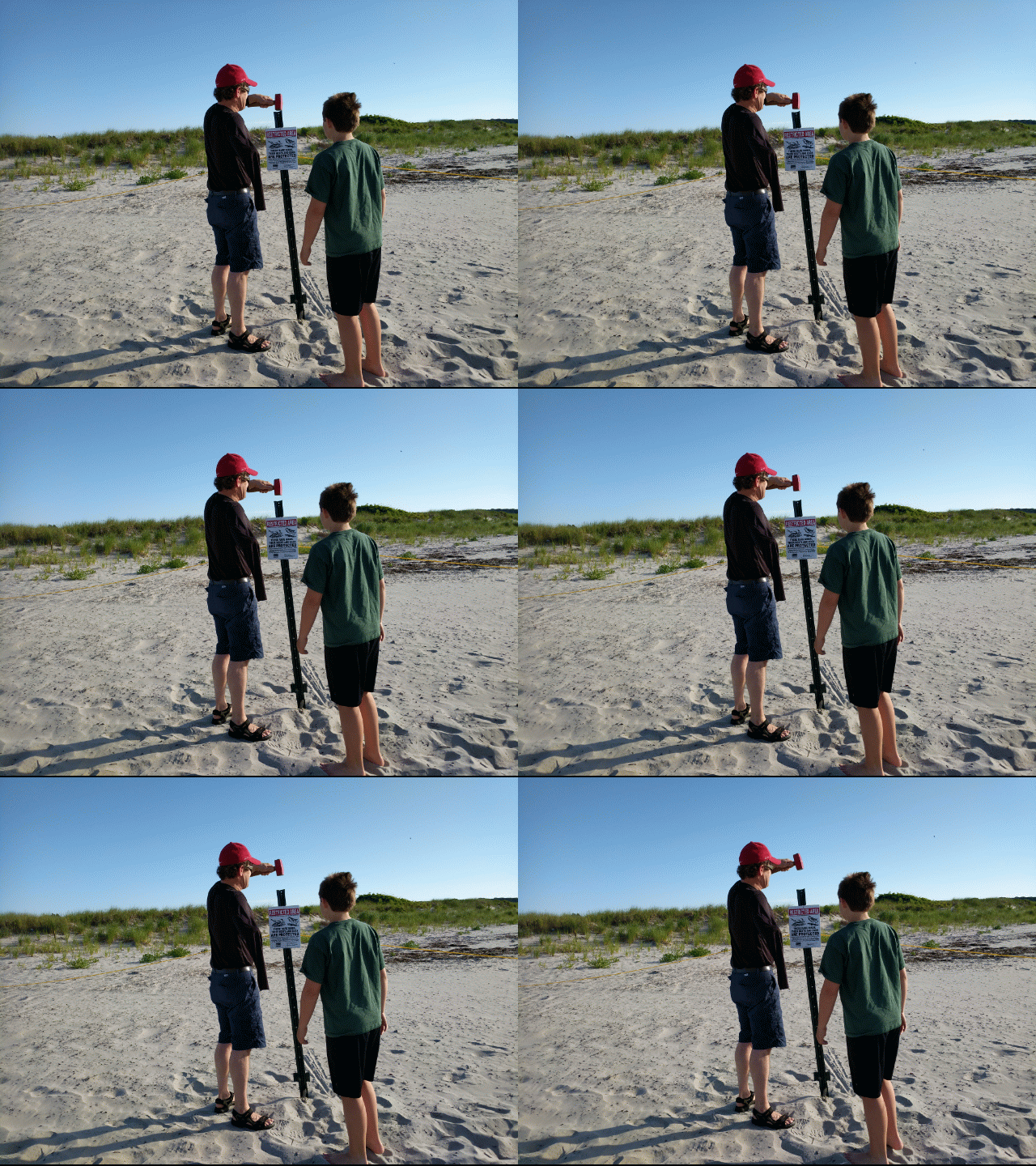
Thanks to all our volunteers for their continued work in monitoring the Good Harbor Beach Piping Plovers. Volunteer Hazel Hewitt has created a series of informative signs, placing them all around the beach and at every entrance. 

Thanks to GLoucester High School Coach Mike Latoff and the players for keeping an eye on the Plovers.

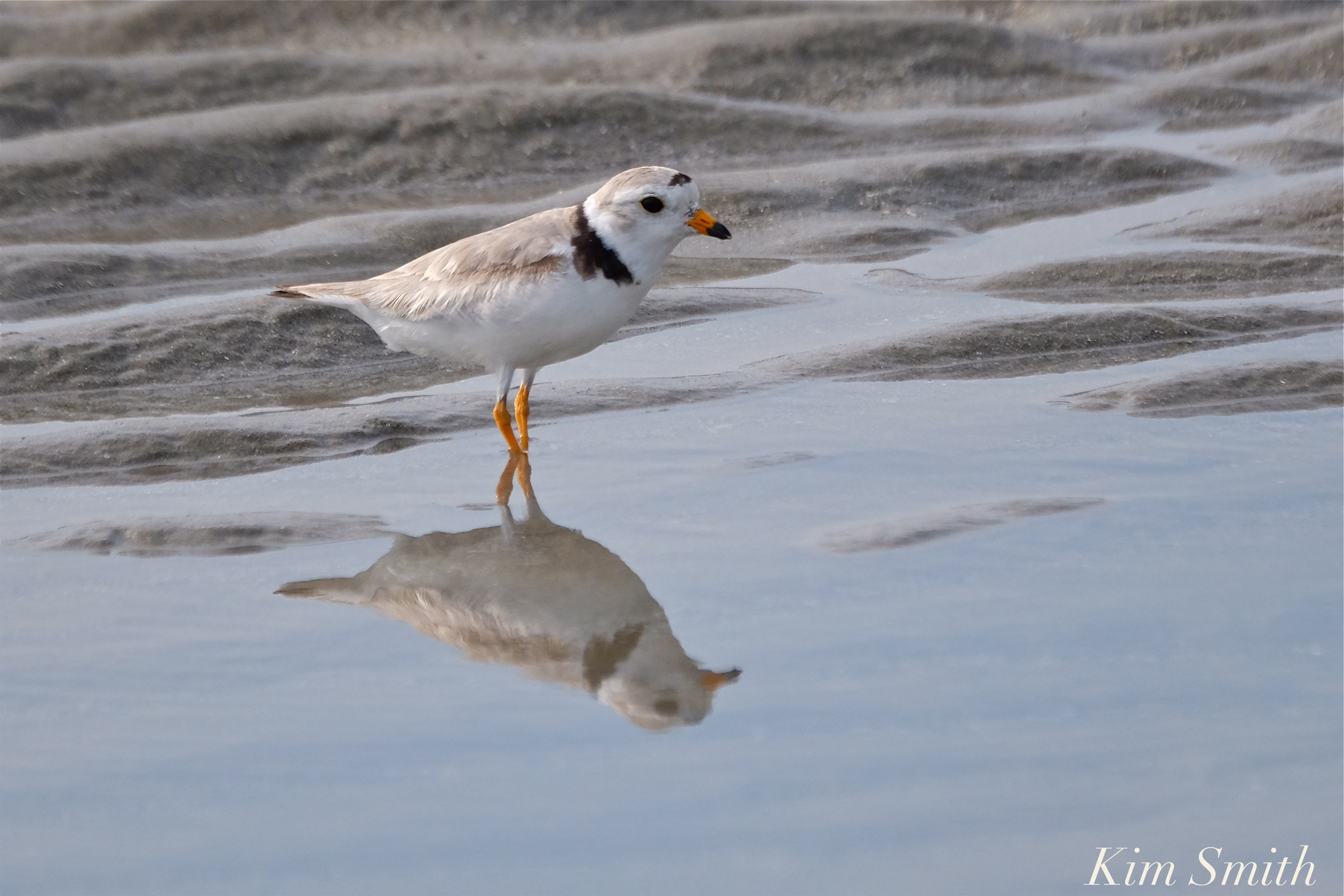
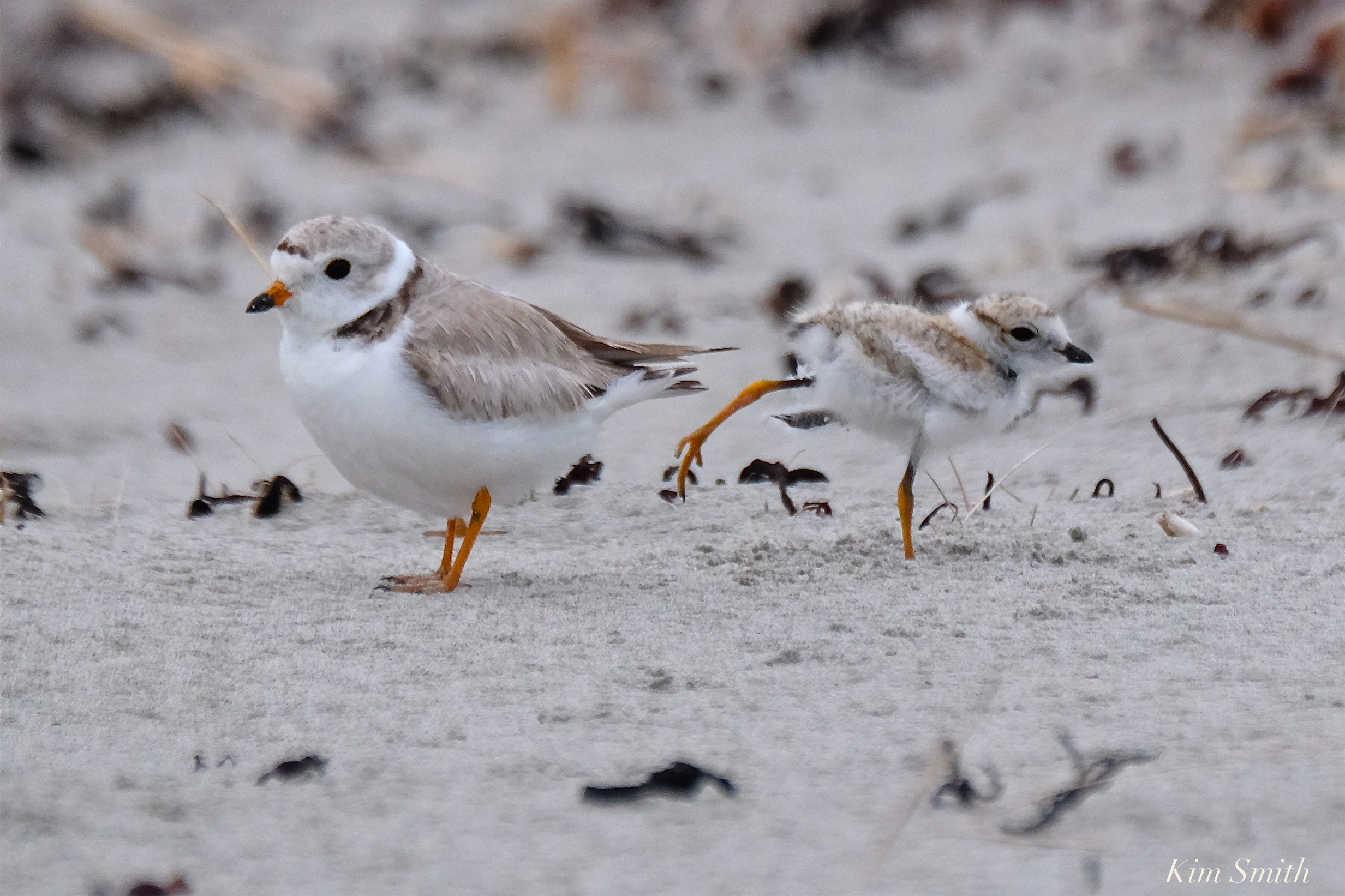
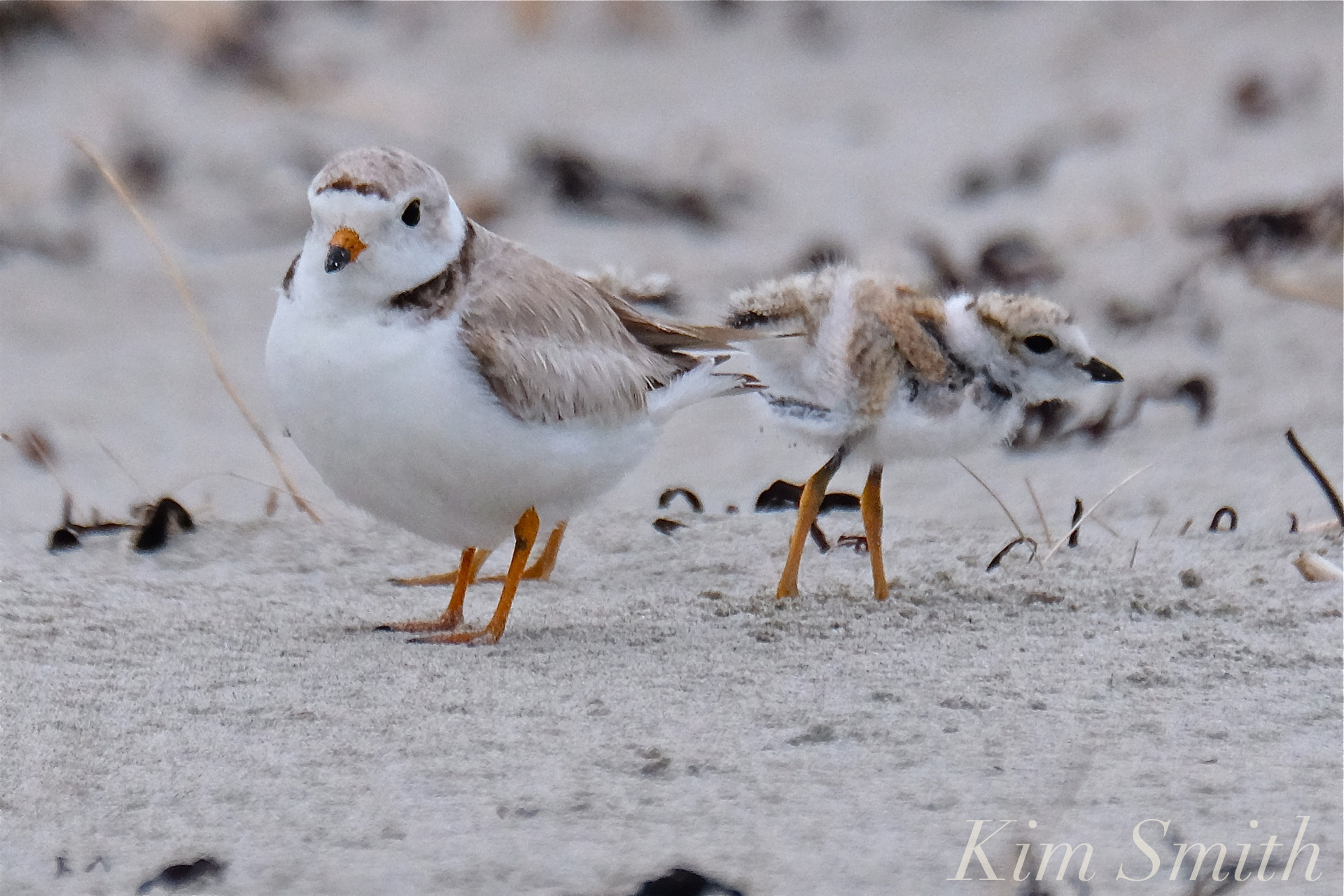
Papa Plover, sometimes feeding in close proximity to Little Chick, but more often, now watching from a distance. Twenty-day-old Piping Plover Chick

Soggy start for baby piping plover on day 19

soggy startThe chick made it through the night. From today’s Gloucester Daily Times

One Surviving Piping Plover Chick Remains

Also Local firefighters Make Way for Ducklings  and six Fire Fighters retire

Updates from the piping plover volunteer watch are shared LIVE (or close to it) throughout the day on twitter https://twitter.com/Glostaplover

Volunteer any time –extra eyes help!– There are some times with no coverage. Email Ken Whittaker kwhittaker@gloucester-ma.gov

IMG_20170711_061355

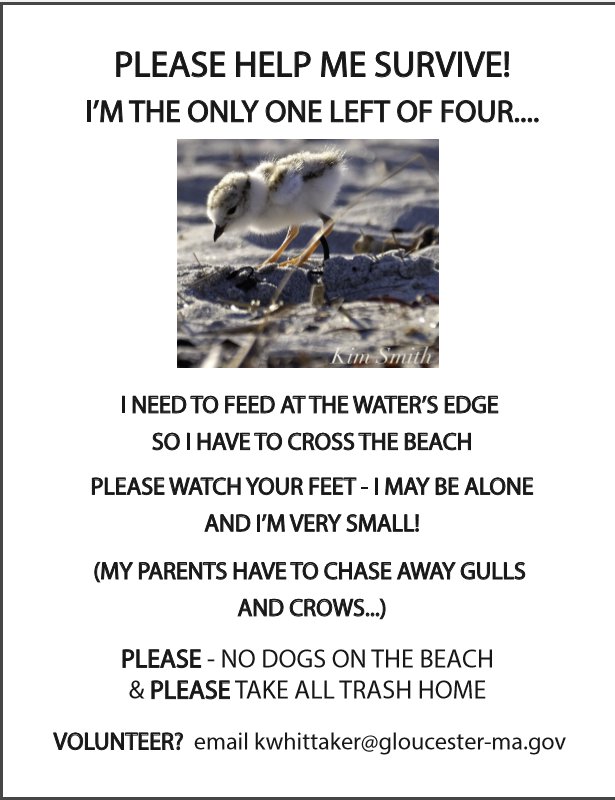
Hazel’s flyer reflects status of the summer 2017 brood as of July 10, 2017

Volunteer Hazel newest flyer

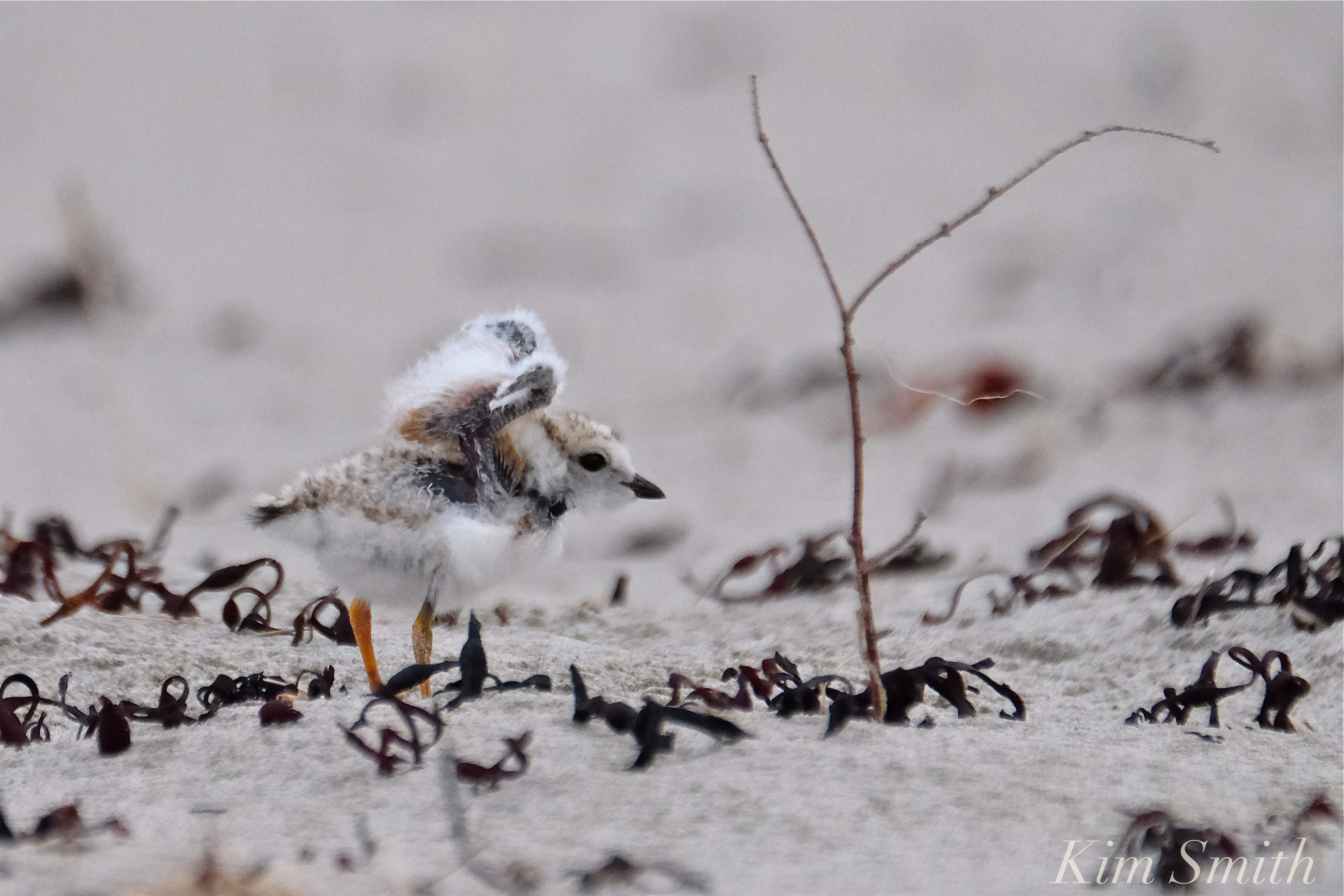
CHICK YOGA

Piping Plover chick yoga that is, mastering Warrior Three.

A funny little morning stretch the PiPl chicks do often.

WHAT DO PIPING PLOVERS EAT?

The question should really be what don’t they eat in the world of insects and diminutive sea creatures. Over the past two summers I have filmed PiPl eating every kind of beach dwelling crawly insect and marine life imaginable.

Piping Plovers eat freshwater, land, and marine invertebrates. Their general fashion of foraging is to run, stop, peck, repeat, all the day long, and during the night as well.

Run, Stop, Peck

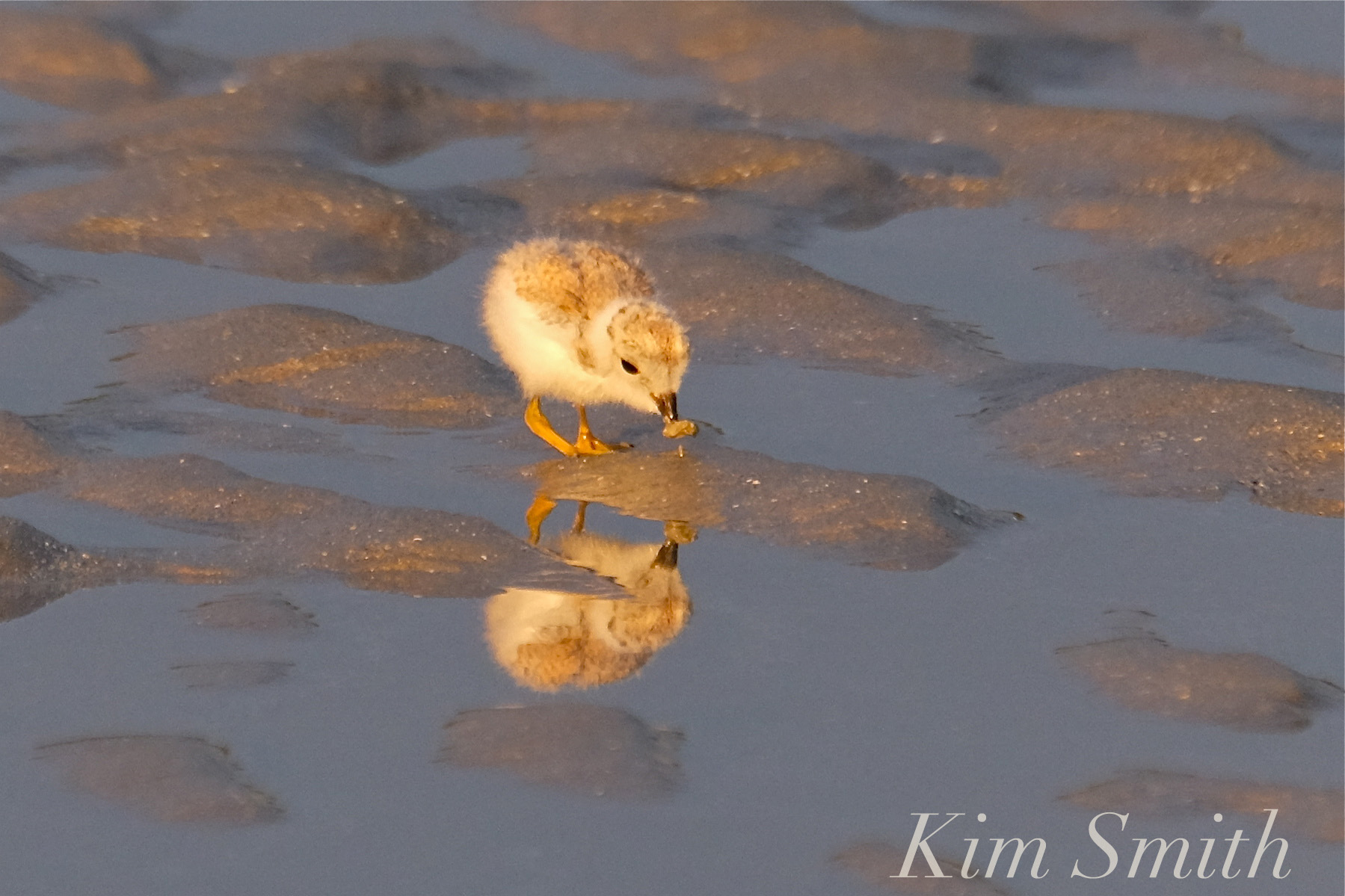
When foraging along the wrack line and up to the dune edge Piping Plovers eat insects, both alive and dead, including ants, spiders, grasshoppers, crickets, and beetles, along with insect larvae such as fly larvae. Foraging at the intertidal zone, Piping Plovers find sea worms, tiny mollusks, and crustaceans, as well as crustacean eggs.

When the chicks get a little older they will learn how to do a sort of foot tamping technique where they rapidly shake their feet in the sand to stir up crustaceans. I have yet to see our chicks do this, but soon enough.

The purpose of discontinuing to rake the beach to help the Piping Plovers is twofold. Not raking in the nesting site creates a habitat rich in dry seaweed and dry grasses, which attracts insects, the PiPl food on dry land. Secondly, raking in the vicinity of the Plovers after they hatch can be deadly dangerous to the chicks. Not only is there danger of being squished, but also, they can easily become stuck in the impression in the sand made by the tires of heavy machinery.

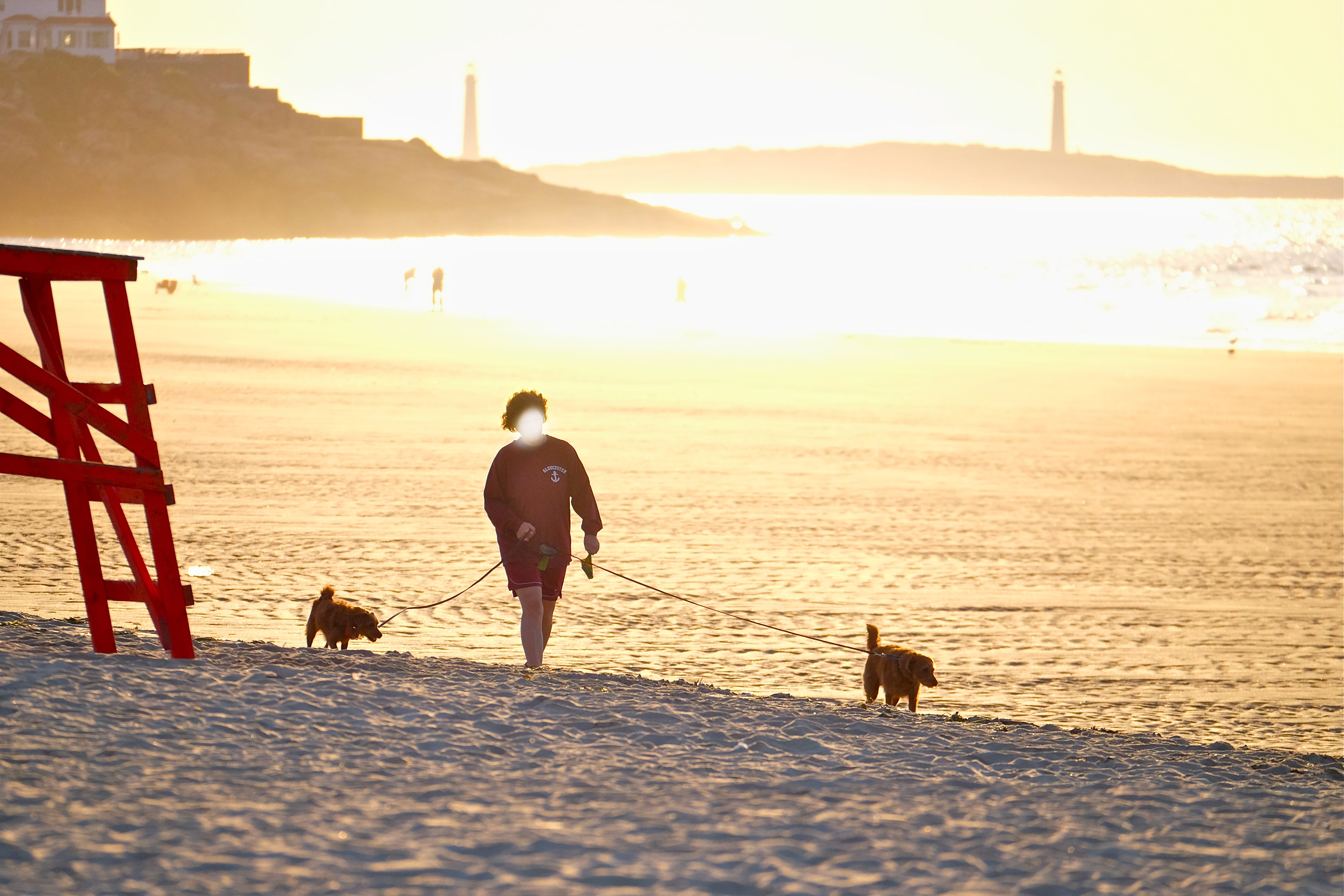
This morning I had a disagreeable conversation with a woman about her unleashed puppy. She feigned lack of knowledge about the dog ordinances, but aside from that, she informed me that her large puppy would be “afraid” of a chick. And there seems to be a frustrating lack of understanding about where the chicks forage. We can only share again that the Piping Plovers, both adults and chicks, feed from the dunes’s edge to the water’s edge, and everywhere in between. Sunrise and sunset are not safe times to walk dogs on the beach because Piping Plovers forage at all times of the day, and into the night. Adult birds can fly away from a person or dog walking and running on the beach, but a shorebird chick cannot.

Big Beach, Tiny Chick ~ Sixteen-day-old Piping Plover Chick Foraging at the Ocean Edge

ONLY ONE CHICK SEEN THIS MORNING (*EDITED RE DOGS ON THE BEACH)

Our one remaining Piping Plover chick spent the early morning in the vegetation at the edge of the dune.

Perhaps we lost the third chick to the tremendous deluge late yesterday that happened not once, but twice. Or perhaps to the crows. When I arrived at the sanctuary this morning there was a tremendous kerfuffle underway between two crows and both adults. As the crows were departing, after being vigorously chased away by the PiPl parents, I couldn’t see clearly whether or not they were carrying off a chick. Or perhaps, none of the above. There was an unleashed puppy on the beach, but after speaking with the woman, she and her dog departed. The PiPl were up by the sanctuary at that time so I am sure it wasn’t because of the puppy. I hope with all my heart we can don’t loose the one remaining chick.

*Comment added from my Facebook friend Susanne: Thank you to all for your kindness re the baby plovers. Yesterday after the downpour, I went to Good Harbor. No life guards and it was relatively quiet. There were three groups of people with dogs and two dogs were unleashed, One unleashed dog was near the piping plovers and too far from me to catch easily. I talked to two of the other dog owners. One said they didn’t know the rules and thanked me. The other said her dog is very old and this may be the last time she ever gets to walk on a beach. I love dogs and hope people have a lovely time on our beautiful beaches. I also wish they cared more about following our beach rules, which are common sense and about caring for others

The adults and chick were acting oddly this morning, not wanting to venture too far from the symbolically roped off area. Papa Plover spent a great deal of time perched on the party rock and surveying the family’s territory (not usual behavior), and got into several times with the Interloper.

Thank you so much to all our volunteers who are trying their best to help keep these beautiful protected birds safe.

Today’s Good Harbor Beach sunrise

OUR LITTLE PIPING PLOVER CHICK PASSED AWAY LAST NIGHT

Avery from the Tufts Wildlife Clinic at the Cummings Veterinary Medical Center phoned this morning to let us know that our Piping Plover chick passed away in the night. Although he was showing some positive signs yesterday, after a traumatic brain injury such as his, bleeding on the brain and other complications can occur. Know that he was well cared for by the incredible team at Tufts and that they did their very utmost best to save him.

I spoke with Avery about what would have happened had he survived. Little chick would have been re-habituated with other Piping Plovers. As Piping Plovers are a protected species, U.S. Fish and Wildlife dictate where his recovery were to take place.

Although it was very unusual for the clinic to have a Piping Plover, they have helped even smaller animals recover from injury. Most recently, a wounded hummingbird in their care was healed and released back in the wild.

Thank you to everyone for your kind concern.

Thank you to Jodi Swenson from Cape Ann Wildlife for meeting us at the beach at nine in the evening and caring for our little injured chick until the following morning when Catherine, George, and Charles delivered him to Tufts veterinary school. We should all thank our volunteers, Catherine, Caroline Haines, Hazel Hewitt, George King, Charles King, Paul Korn, Cliff King, Chris Martin, Diana Peck, Lucy Merrill-Hills, Cristina Hildebrand, Carol Ferrant, Jeanine Harris, Ruth Peron, Karen Shah, Annie Spike, and conservation agent Ken Whittaker for their diligent and continued monitoring of our two remaining chicks.

Please let’s everyone be mindful of the chicks afoot, help keep the beach clean, and please, please dog owners, please leave your sweet pooches off Good Harbor Beach. Thank you.

If you find orphaned or injured wildlife, the clinic has pages to guide you in appropriate procedures for birds, squirrels, mammals, and more, as well as a list of links to wildlife organizations. Go here for more information: Useful Links from the Tufts Wildlife Clinic
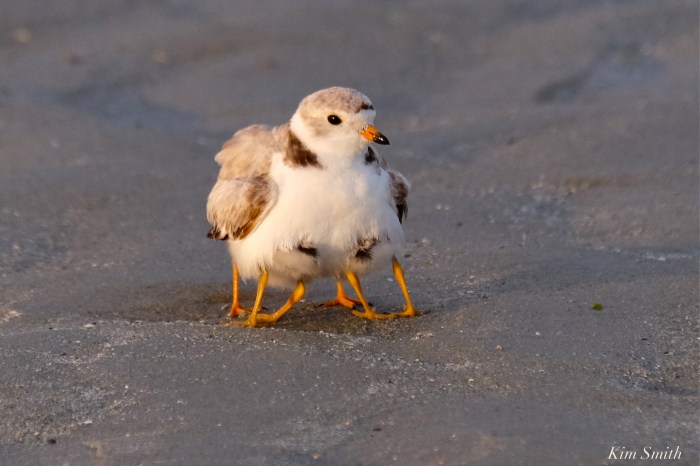
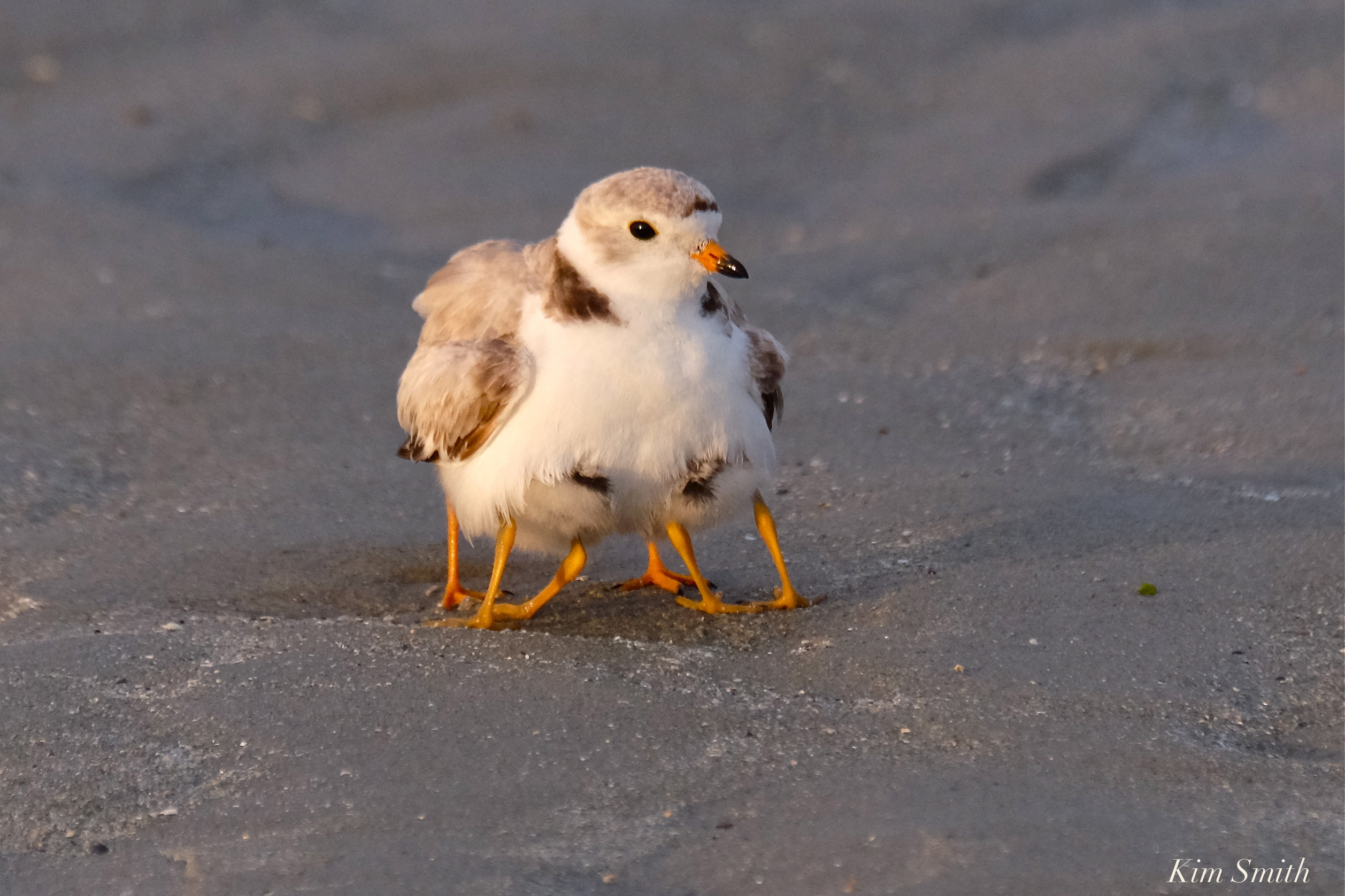
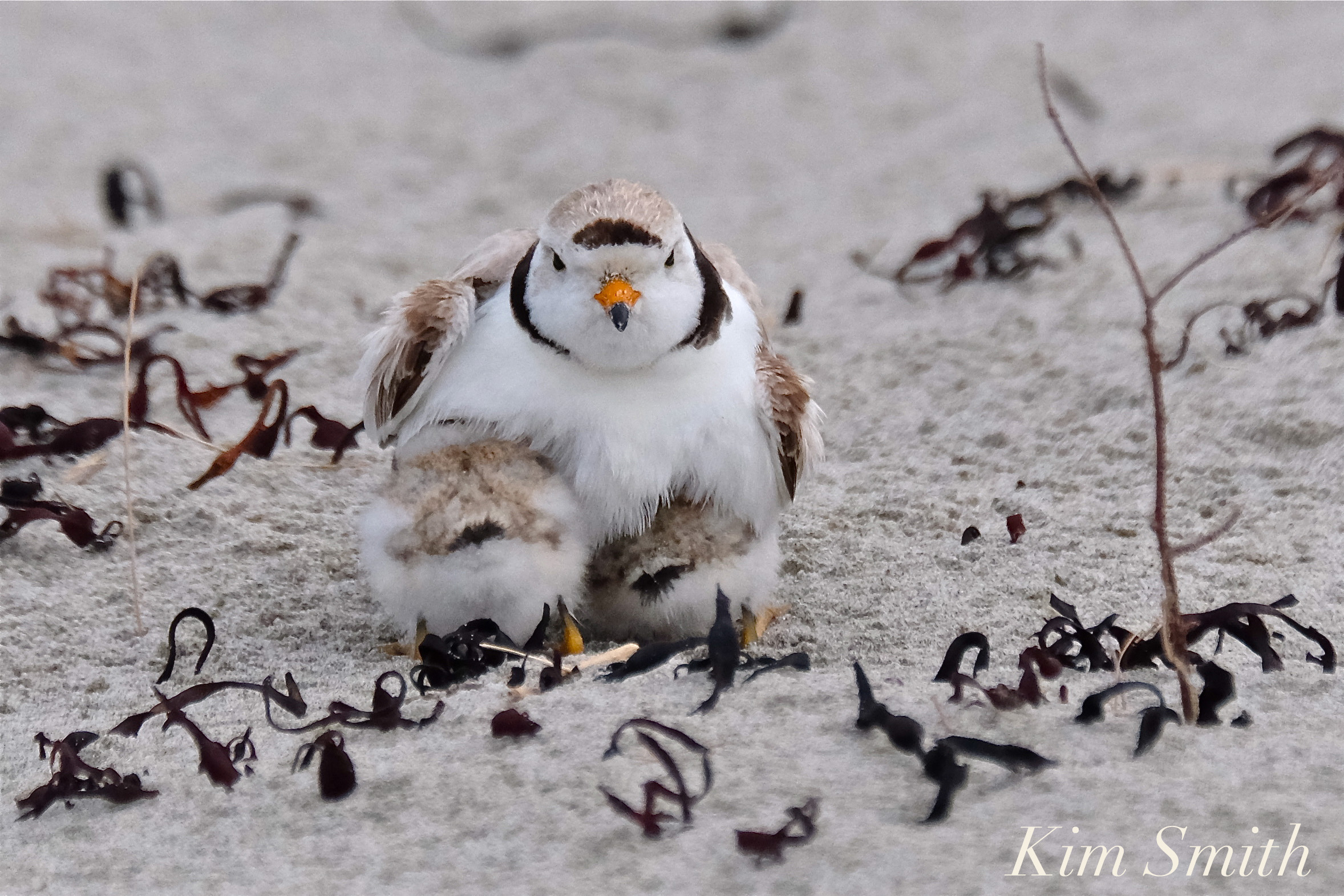
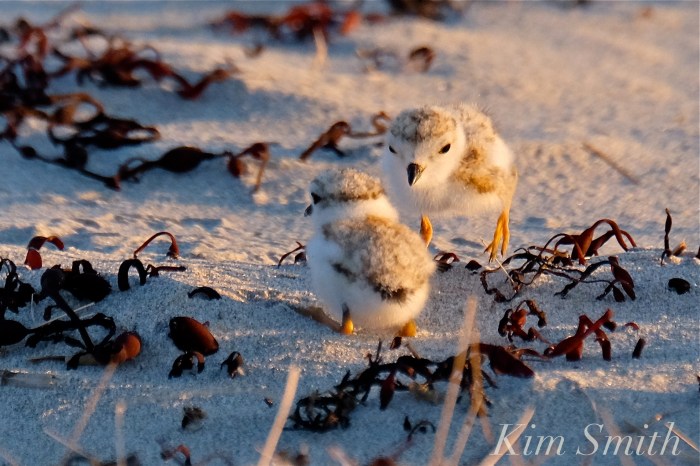
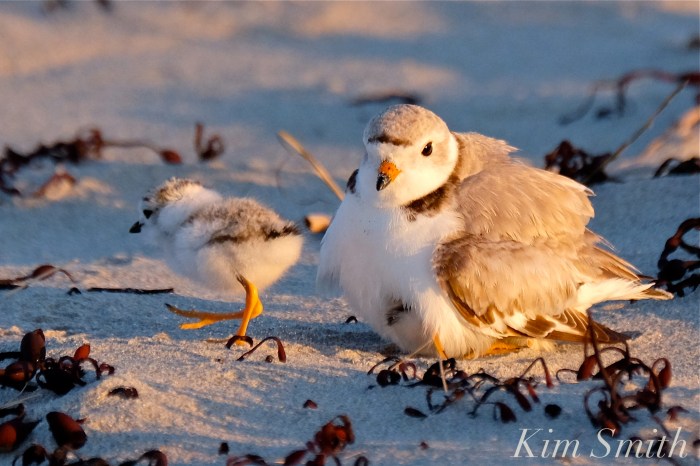
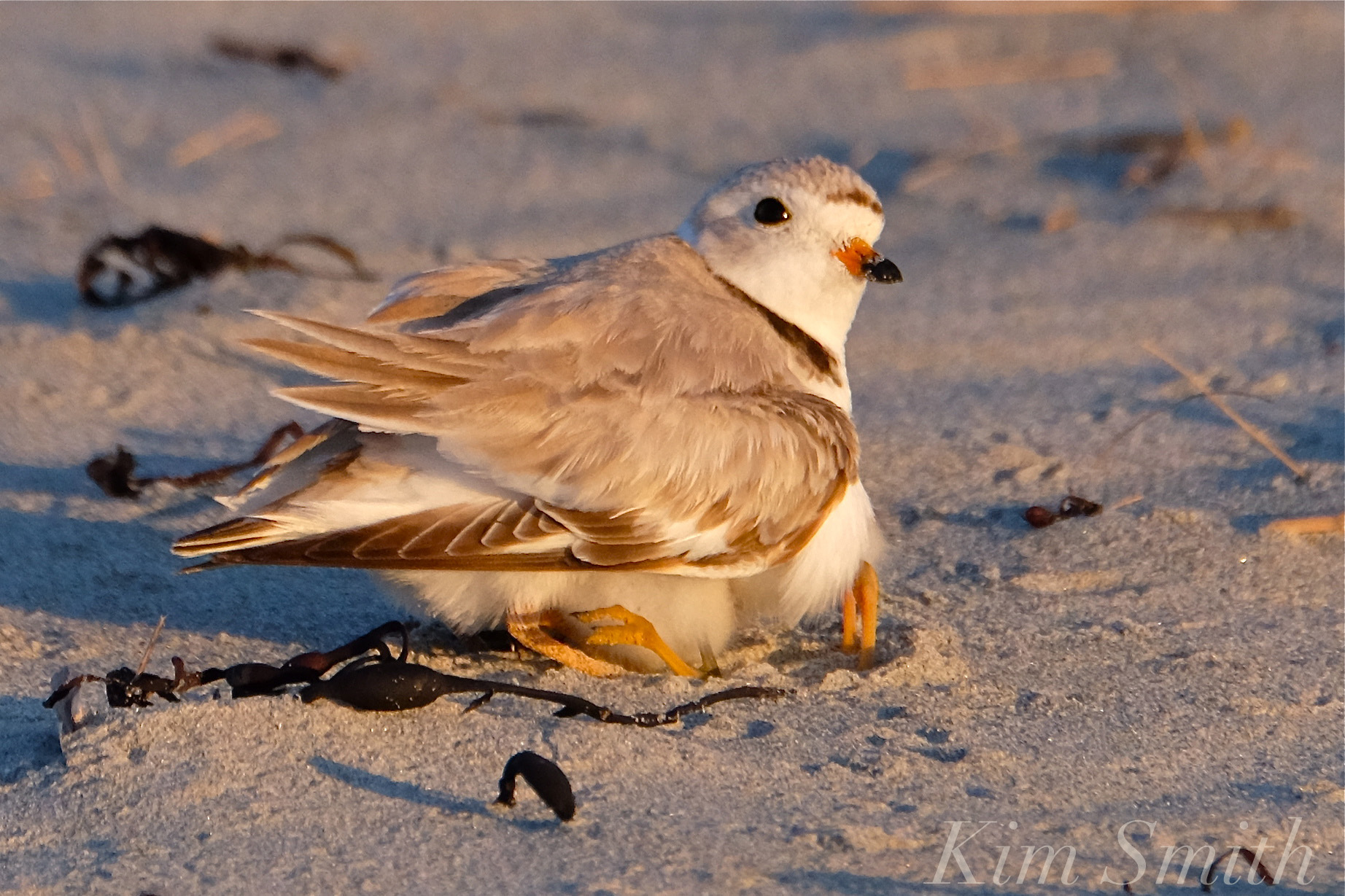
Two sixteen-day-old chicks snuggling under Papa Plover this morning at daybreak.

INJURED (AND NON-INJURED) PIPING PLOVER CHICKS UPDATE

Our little injured chick is hanging on. Crystal from the Cummings School of Veterinary Medicine phoned to report that she fed him through the night. He remains on supportive care and is being given antibiotics and pain medication. Little chick has been moved to a heated incubator. The veterinarians are again stating that prognosis is unpredictable.

What are these things called wings?

Meanwhile, these two chick were having an easier morning than usual. There were no fires, dogs, or beach rake, and with the cooler temperatures and overcast skies, many fewer people. PiPl super volunteer monitor Hazel came by with flyers of the injured chick and she posted them around the beach, hoping to help people understand why we need to be on the look out for chicks afoot.
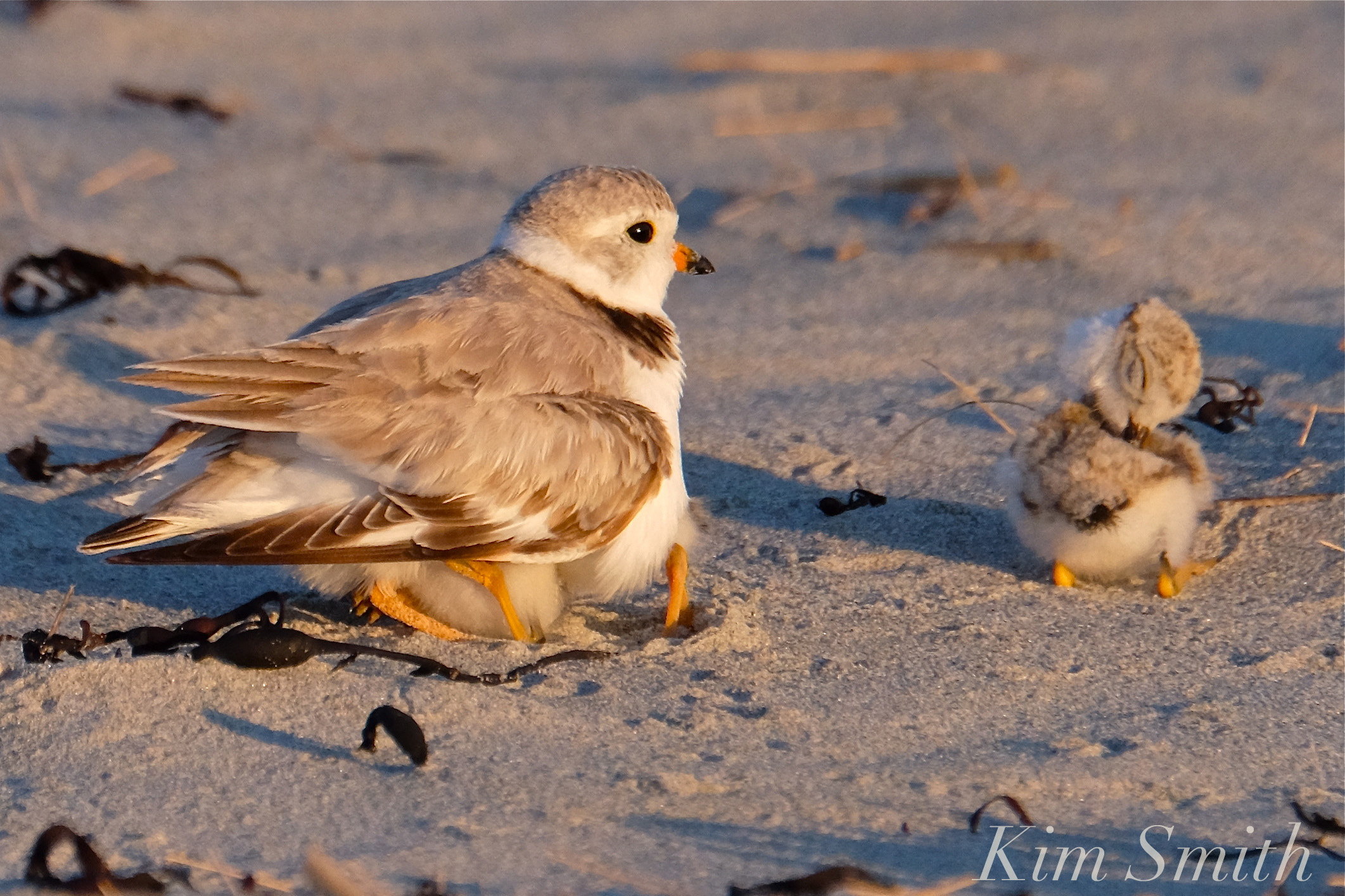
Fifteen-day-old Piping Plover Chick with MamaI wonder what a baby bird think of its funny little appendages that will soon grow into beautiful wings?

Not a great deal of information is known about when exactly PiPl fledge. Some say 25 days and some reports suggest up to 32 days. In my own observations filming a PiPl family last summer on Wingaersheek Beach, the fledglings could not fly very well until mid-August. The PiPl fledglings and parents maintained a family bond through the end of August, even after it was becoming difficult to tell whether they were fledglings or adults. All during that period, the fledglings appeared still dependent upon the adults, who were still parenting, for example, offering distinctive piping instruction especially when perceived danger such as joggers and dogs were in the vicinity.

Two little butts, extra snuggles under Dad’s brood patch on this chilly day fifteen.

INJURED PIPING PLOVER UPDATE #2

4:20pm Update:
Catherine, George, and Charles drove our littlest chick to the Cummings School of Veterinary Medicine at Tufts. Thanks to Jodi, they were prepared and waiting for him. Little chick was assigned a case number and we were told to call after 3pm. As I am writing this report, Avery from the school just returned my phone call. She sounds terrific and was very helpful in explaining little chick’s injury and care. He has a traumatic brain injury, most likely caused by being stepped on. Little chick is being given supportive care, which includes pain medication, an anti-inflammatory, and fluids. He is also in an oxygen cage that allows him to breathe more easily. The vets are guarded in their prognosis as recovery from head trauma is very unpredictable.

Very sadly, I have to report that dogs were running around the beach unleashed at the time of the injury. No one witnessed exactly what happened, but last year I saw a dog running over and instantly killing a chick, despite my very best efforts to get the owner to control his dog. This morning at 6am dogs were on the beach leashed, but the owner was obliviously walking her two dogs through the sanctuary area precisely where the chicks were darting about. Leashed or unleashed, irresponsible dog owners are one of the chick’s greatest threats. Please, please folks tell your friends and neighbors about the Plovers and why it is so important to follow the dog ordinances. It seems as though late in the day, after 5 and before sunset, the chicks are the most vulnerable. Perhaps folks think its okay to bring dogs to the beach after the life guards leave. Early evening is exactly the same time of day that the chick was killed last year.

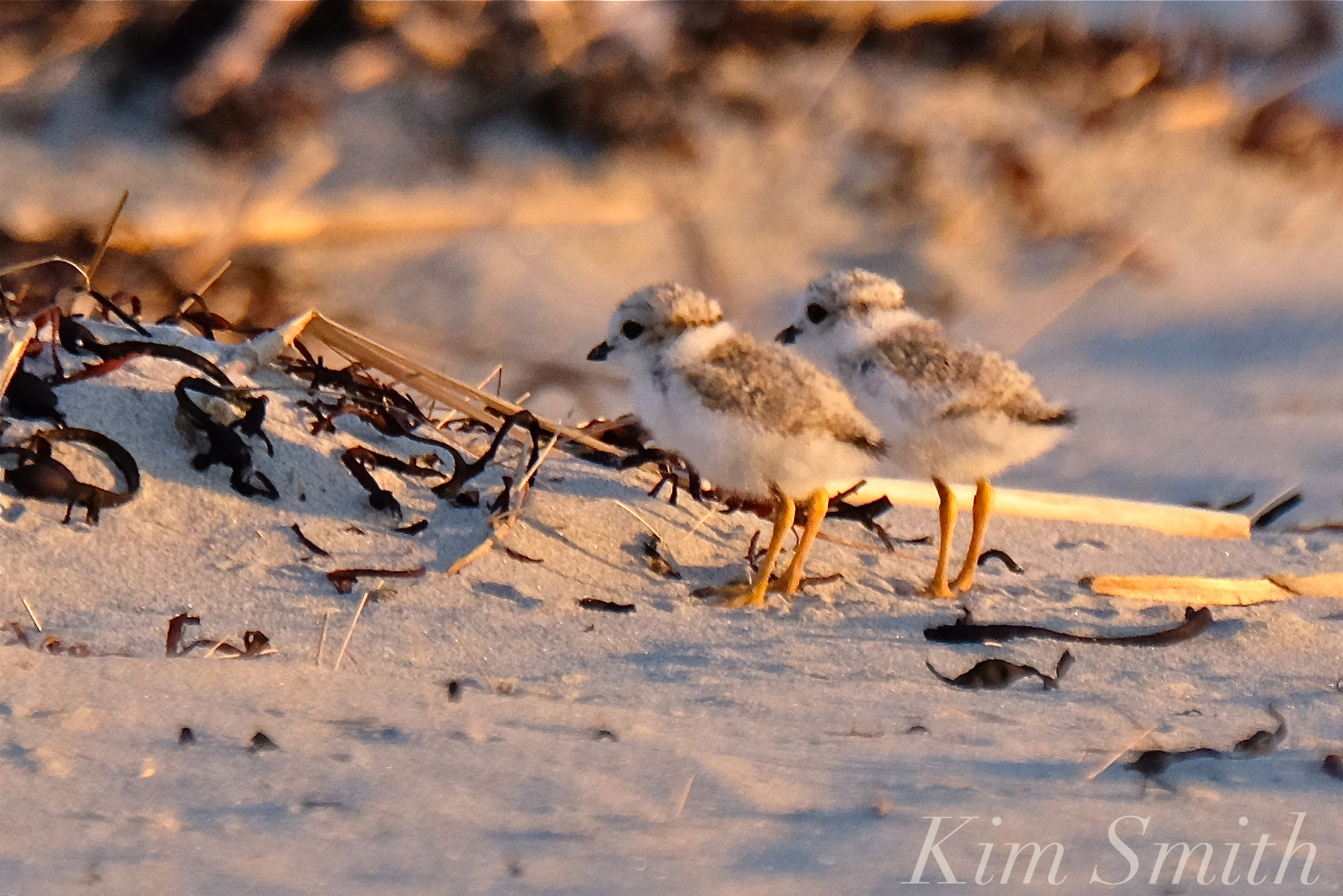
Our two Good Harbor Beach siblings, this morning at fourteen days old.
Earlier this morning updates:
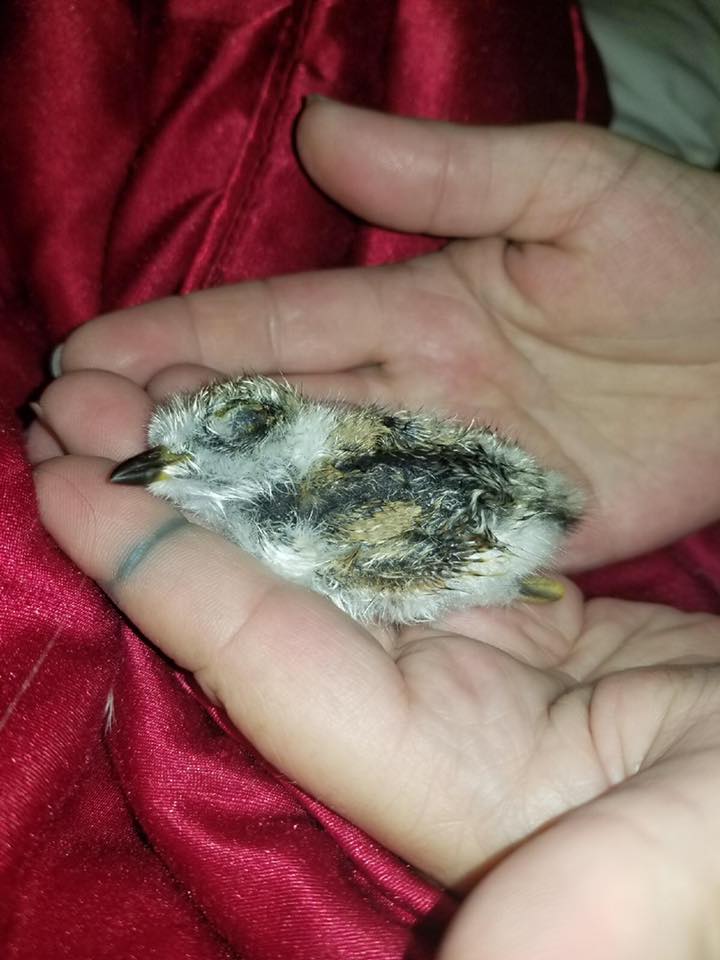
Catherine writes, “I called Kim who met me right away at the beach. Soon After 9pm Jodi was there getting the bird. Jodi implemented  ER incubator and hydration methods. By 11pm chick pooped which may be sign that he was reacting to rehydration. (She explained that body shuts down digestion quickly to protect brain and heart. Pooping could be things working.) One eye swollen may equal head injury or seizure. All was speculation and she hoped chick would make it through night.”
Volunteer Nancy, who found the chick wrote, “My daughter spotted the chick on the soft sand lying just off the wet sand of the creek bed near where we were this morning. My son in law carried the chick from creek bed to large enclosure. I held chick while giving it water and tried to keep it warm, then put it in the covered part of the enclosure on advice of Audubon woman, hoping its mom would be able to give care. We called every emergency number we could find but no one picked up. Thank you so much for responding as you did.”
Today at 6:15am–dog walking through the Plover’s sanctuary–leashed or unleashed, dogs (as well as people) unintentionally step on Plovers. Please be careful.

INJURED PIPING PLOVER UPDATE

Our littlest Piping Plover is on its way to Tufts with Catherine and her sons George and Charles.

Photo: Jodi Swenson, Cape Ann Wildlife. Jodi is Cape Ann’s resident bird rescue expert.

FIVE ENDANGERED BIRD SIGNS BENT, MANGLED, OR COMPLETELY KNOCKED OVER THIS MORNING

The good news is all three chick survived over night. The bad news is five of the endangered bird species signs were destroyed.

https://www.instagram.com/p/BWHp6Z3lYH6/

https://www.instagram.com/p/BWHuckkFNoc/

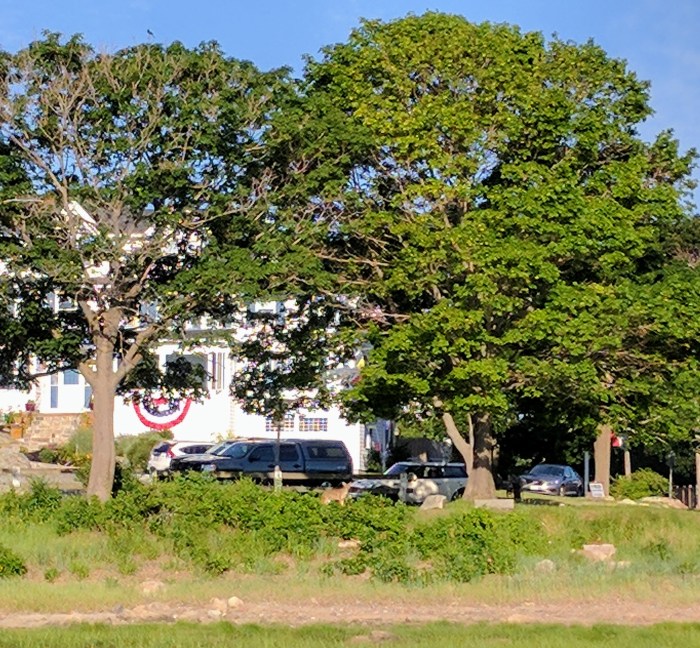
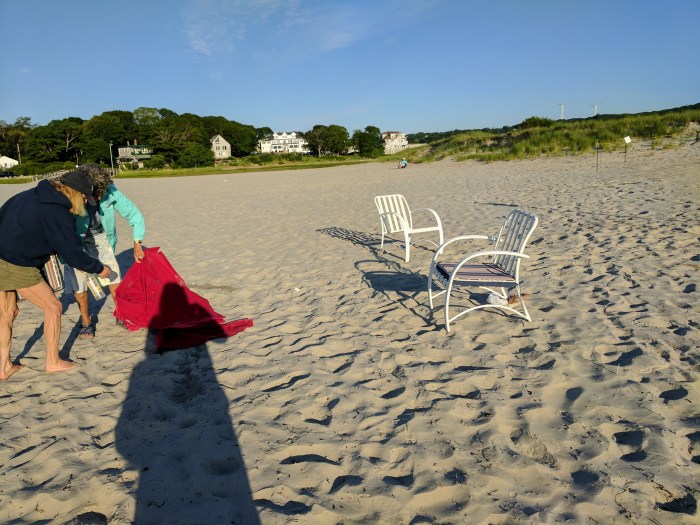
If your deck chairs are missing…and you want to see a coyote

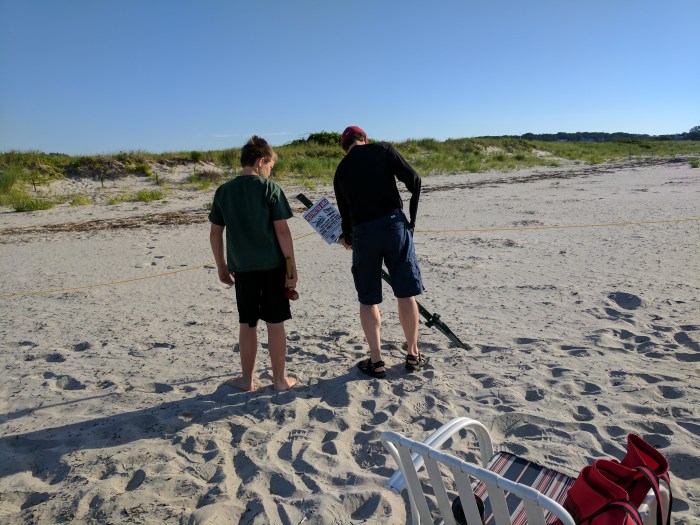
We found them at Good Harbor Beach, July 4 2017. The striped cushions are the right color! The pair were upended and cushions scattered along with various party remnants between the pedestrian bridge and the piping plover enclosure. We righted them and set them up for Piper Plover viewing.  Some folks vandalized the endangered species signs and littered, and others were picking up trash and repairing.  The coyote and birds were on the move.

IMG_20170704_070304

IMG_20170704_065601

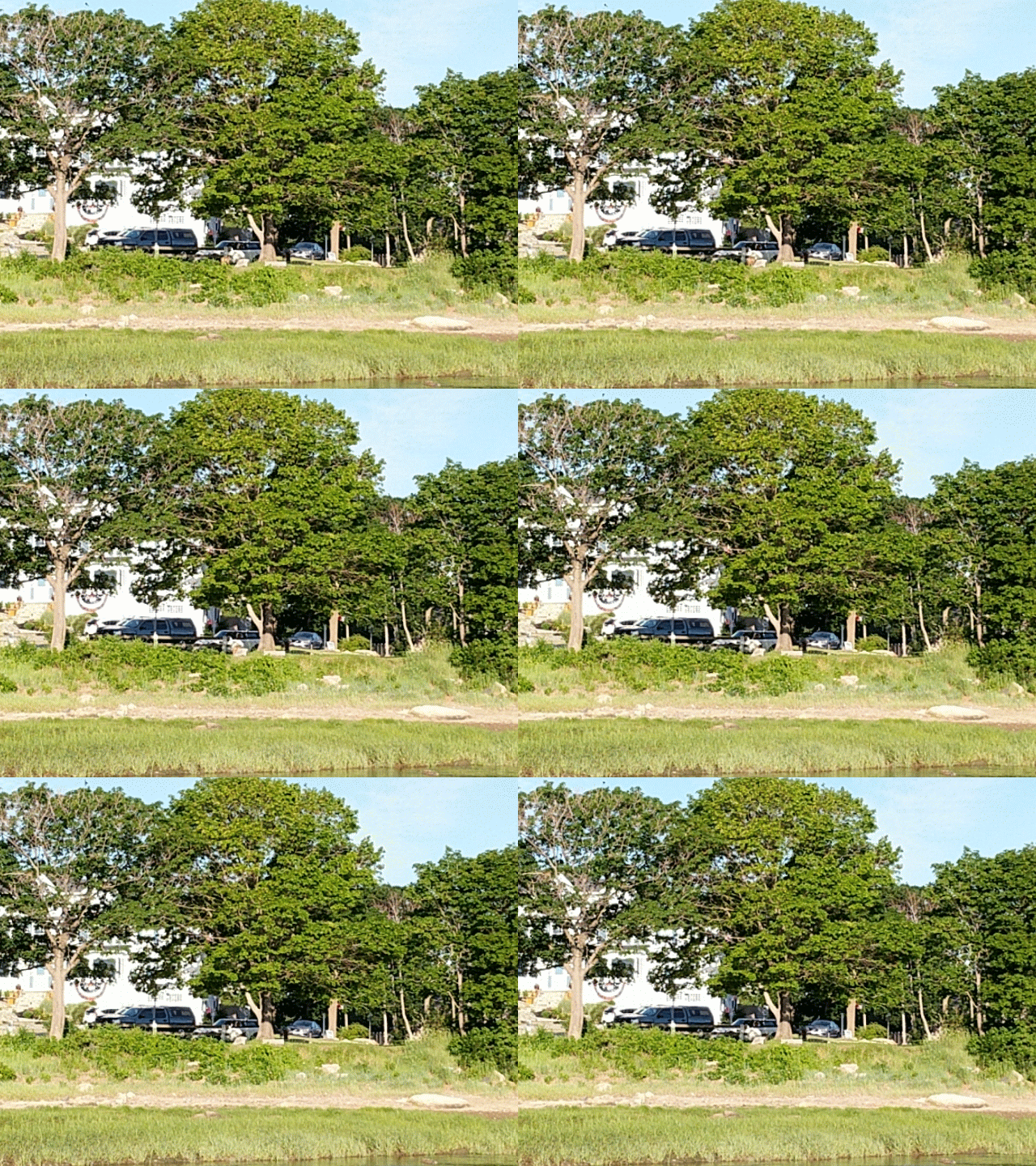
There was a great crow ruckus in the trees across from Blue Shutters Beachside Inn and out popped the coyote. Hung around the creek and then off down the road past http://www.blueshuttersbeachside.com/ 

Burst_Cover_GIF_Action_20170704065604 (1)

Patti Amaral July 4, 2017

IMG_20170704_063248

Peggy and Patty July 4, 2017– Peggy spotted the plover family of 5 this morning, Day 12. All are ok after an eventful Day 11 — see Kim Smith’s glorious photojournalism update 


IMG_20170704_064024

Piping plover 3rd shift brought a hammer

IMG_20170704_071159.jpg

Burst_Cover_GIF_Action_20170704071209 (1)

Burst_Cover_GIF_Action_20170704071339 (1)

PIPING PLOVERS DAY ELEVEN!

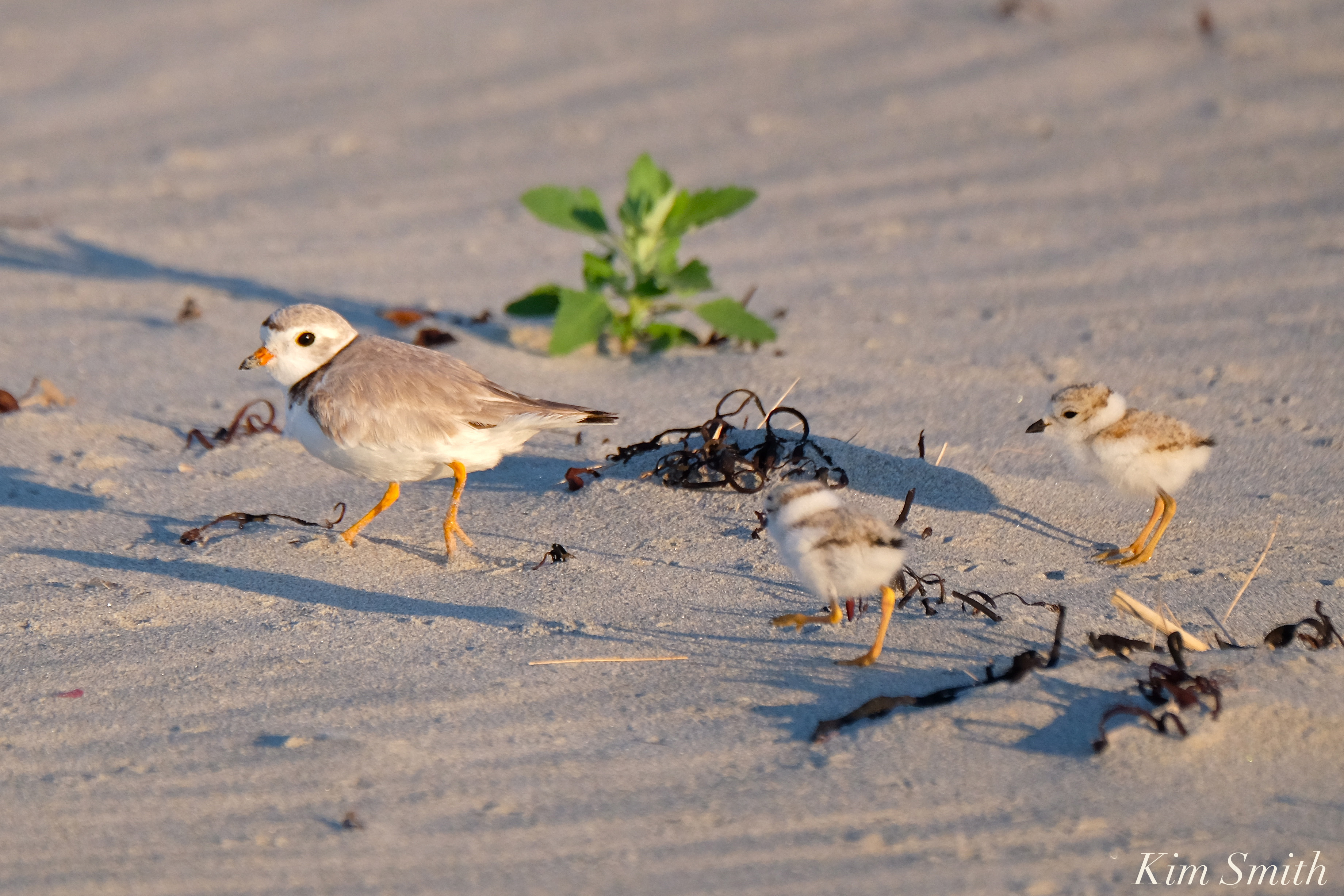
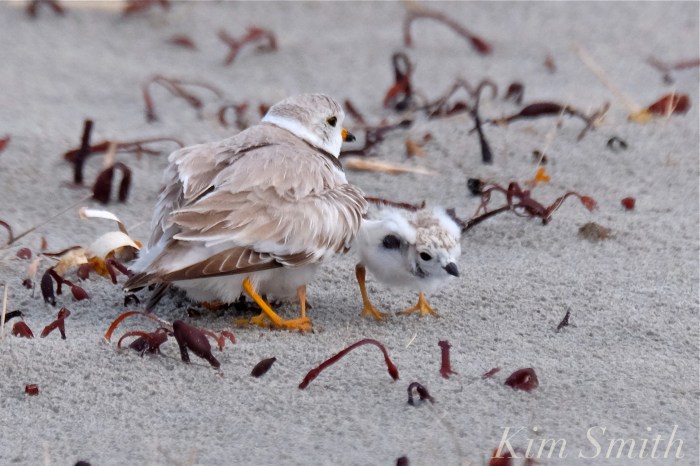
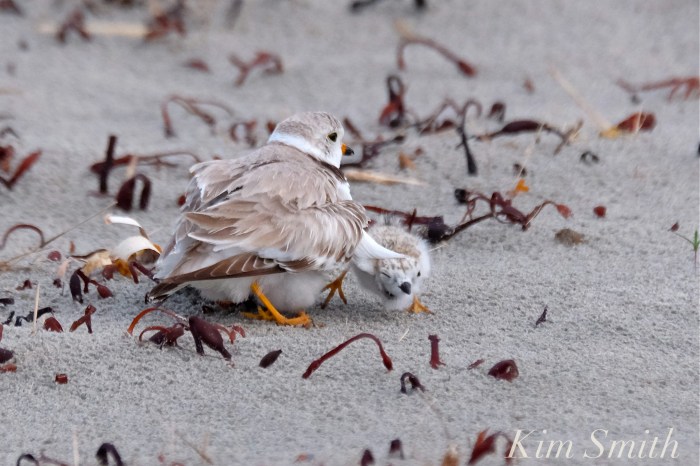
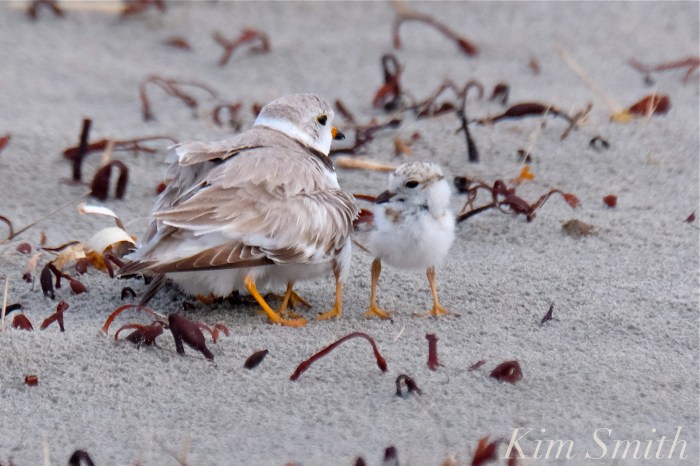
Three eleven-day-old Piping Plover chicks, one preening, and two under Mama’s wing. 

With the beach rake, crows, gulls, fires, dogs, garbage, and humans simply enjoying our beautiful Good Harbor Beach, there is mortal danger at every moment for these tiniest of birds. Thank you to all the awesome volunteers for all that you are doing to keep these little balls of fluff safe. Eleven days surviving, especially during a holiday weekend, is no small feat!

Learning to follow Mom’s voice commands.

Counting little pairs of legs under Mama’s wing.

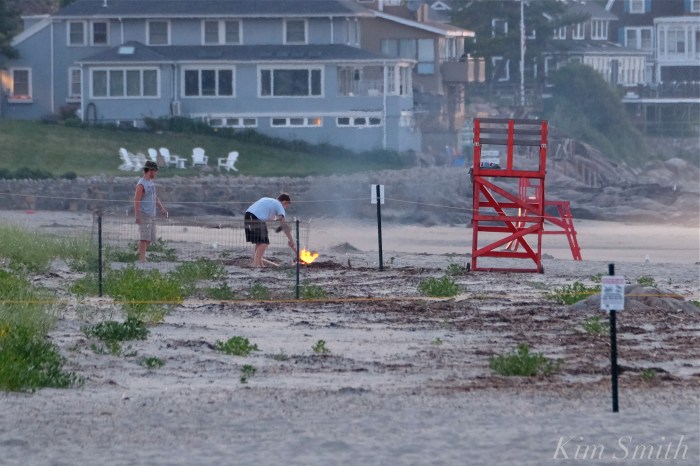
FIRE ON GOOD HARBOR BEACH

This morning I arrived at 5am to check on the plovers and two young guys were building a fire right next to the Piping Plover sanctuary. I watched from a distance for a moment as they built up the fire, and then they crossed the beach to leave. I called the police to come put out the fire and asked the guys, hey what’s up with the bonfire? Their mysterious response was that they were coming back to add more wood. They left via the footbridge and a few seconds later, the police arrived to extinguish the fire.

Building a fire where children will shortly be running around in the sand is a really, really dumb idea. Not only that, but the PiPl family were super stressed, which is not usually the case during daybreak hours. 

At about 5:30, two crows entered the sanctuary, eating garbage that had blown in. The parents were very distracted by the crows. At an opportune moment, when the chicks were on the opposite side of the crows and garbage, I ran into the roped off area and removed the enticing chicken remains, and chased away the crows. Crows and gulls are only on Good Harbor Beach in great numbers because of the garbage left behind. If there were no garbage, there would be no gulls and no crows.Pre dawn, and pre-arrival of the DPW, with lots of plastic littering the beach, which washes into the ocean each and every night.

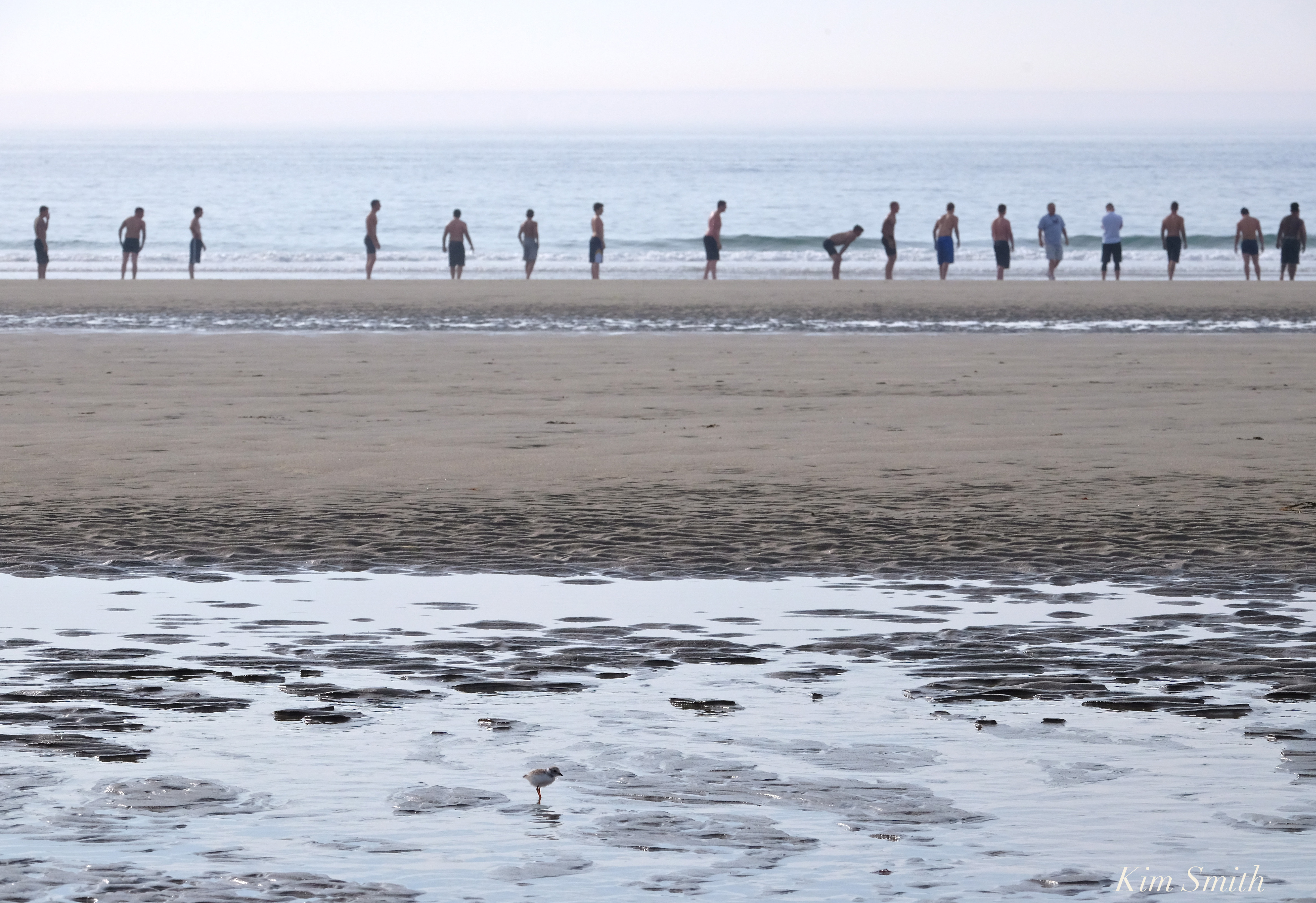
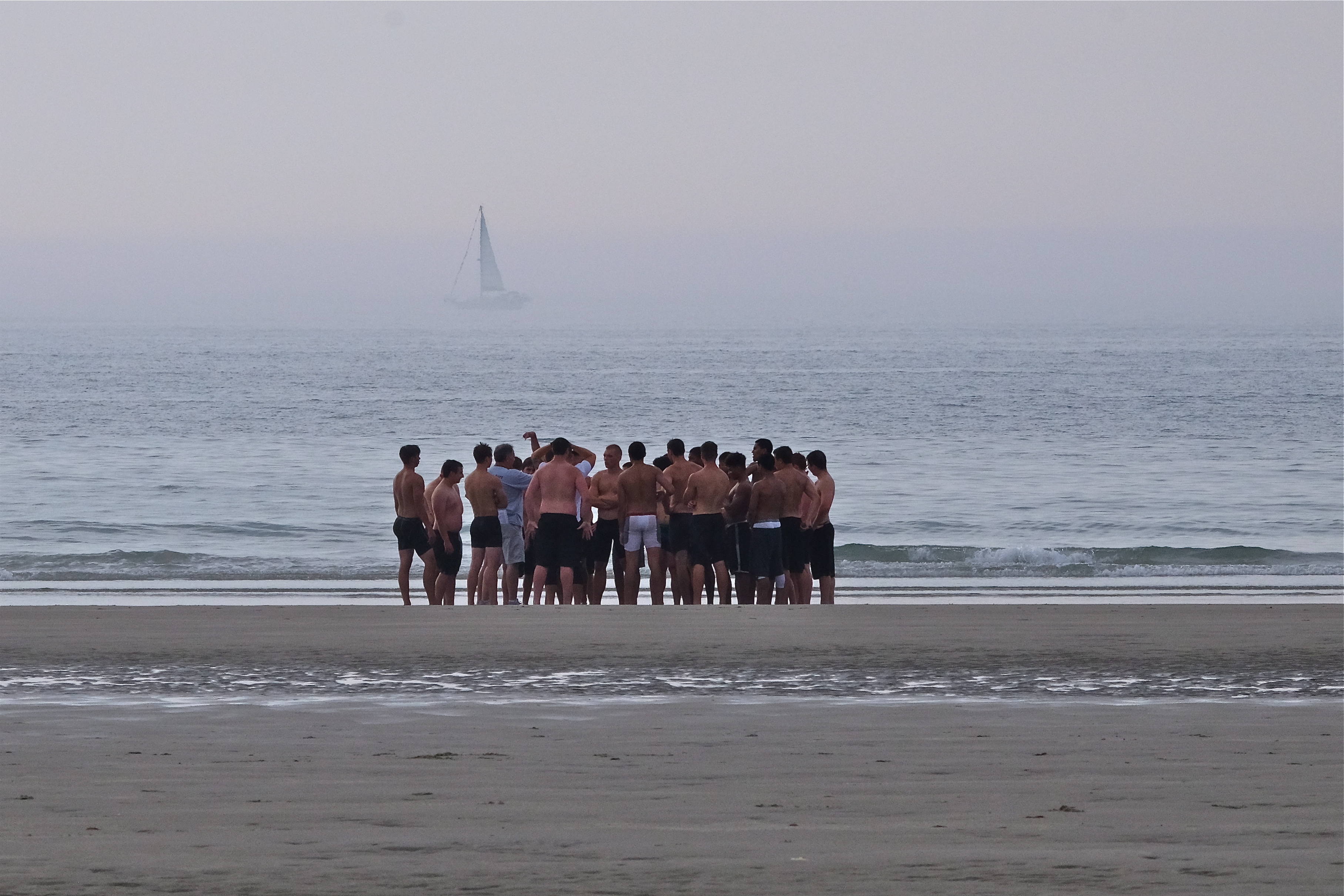
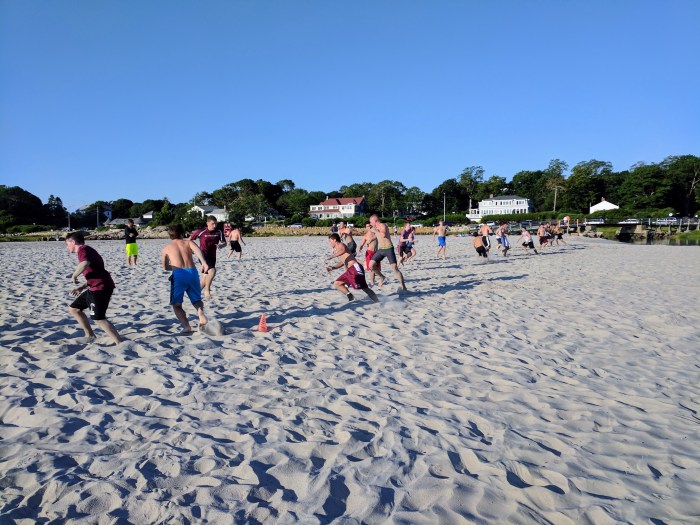
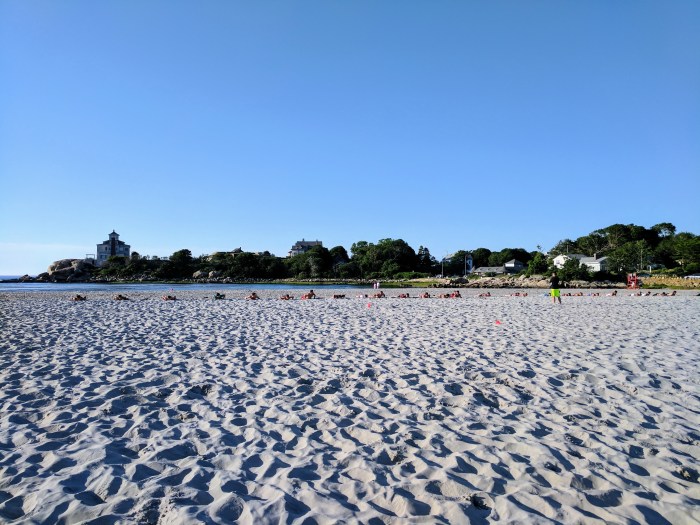
Gloucester high school athletes summer beach training

These coaches and kids show up Monday, Wednesday, and Fridays and really dig in.  The Volunteer coaches today were Zach Smith and Kyle. Michael Lattoff (sp?) is retiring and started this boot camp 30+ years ago.  I marvel at the dedication of volunteer coaches.

My piping plover watch shift overlaps with this session. Good Harbor Beach piping plovers are conditioning alongside these hardworking athletes. The birds have to be well and strong for migration; zipping about the beach is no picnic.

IMG_20170703_065204

Tough drills start low and use the ocean, too

IMG_20170703_064909


When there were 4 baby plovers at Good Harbor Beach

20170630_063902
Seagull and piping plover tracks. And cigarette butts…

Today is day 11 and there are 3 babies. This volunteer video was taken a few days ago when there were 4 babies, tracking 1 baby plover back to its mom with a surprise at the end. From a volunteer shift by Cliff and Charles. For (nearly) LIVE updates to see what the summer brood is doing, updates are posted here  https://twitter.com/Glostaplover

Please join in and share your sightings #Glostaplover

Professional close-ups and best ever viewing follow Kim Smith! Here’s her post from Day 10

PIPING PLOVER UPDATE: CELEBRATING DAY TEN!

My, what big feet you have little chick.

Thank you to all who are watching out for the Good Harbor Beach Piping Plover Family! Reports throughout the day from the Piping Plover monitors tell of folks who are curious and interested in the welfare of the chicks. One of our little babies has gone missing, but the three remaining are doing beautifully. They are growing rapidly and getting better at following the parent’s voice commands. In the early morning and evening, for the most part, the chicks go in and out of the symbolic roped off area. During the heat of the day, the chicks stay closer to the grassy dune edge, seeking shade from the sun.

At sunrise this morning it was foggy and chilly. The chicks needed extra cuddling under Mom (ten-day-old chicks).

Interestingly, there is a male interloper. He was first reported by my husband about a month ago, when Tom called and said you have to get down here because the Piping Plovers are fighting! I hurried over, and sure enough an epic battle was taking place between our nesting pair and the strange male. I filmed the fighting, which went on for about half an hour, when Mama Joy and Papa Joe chased the interloper far out to sea. Unfortunately, the “third wheel” keeps reappearing, almost daily. I write unfortunately because as is the case with so many episodes that play out in the life of our little Plover family, when the adults are distracted by a perceived threat and leave the chicks, it makes it easier for a predator, such as a crow or seagull, to swoop in and carry off a baby. Later in the summer, as the Plovers are preparing to migrate south, the fledglings and adults will gather in larger groups, but at this point in the chicks development, the pesky interloper is clearly not welcome.

Eight-day-old chick. Could you be any better camouflaged little Plover?


Gloucester motif heaven: Piping plover, paddleboarder, Bass Rocks, Hopper house

IMG_20170702_074738


Naked eye test | Share your piping plover sightings #Glostaplover

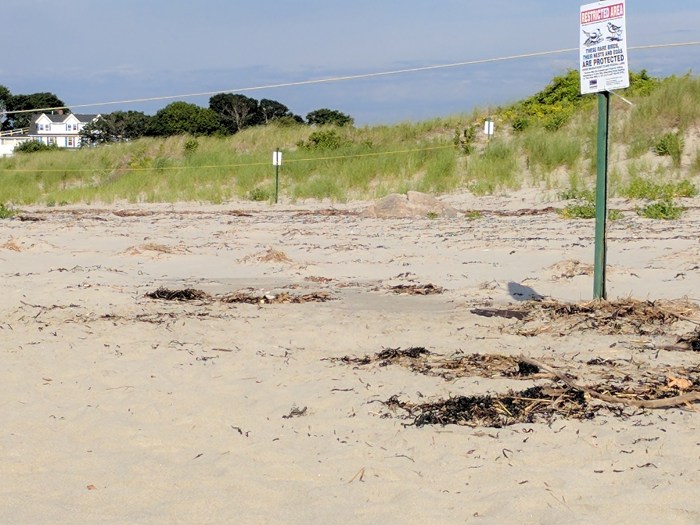
Can you spot a piping plover? Train your eyes to scan for movement–it’s the easiest way to spy the piping plover summer 2017 brood. They scuttle along dry seaweed patches back and forth to the wet sand and within the enclosure. Yesterday the baby chicks were still apt to topple over inside sand scallop depressions.  Their future wings are visibly growing out. Now 1 week old, their sweet piping chirps are clearly audible. The parents are much easier to find. We’re lucky we can see the birds close up in Kim Smith’s gorgeous art.

Phone in hand? Share your Good Harbor Beach piping plover photos and observations! tag #Glostaplover and follow Gloucester Plover at https://twitter.com/Glostaplover

Volunteers are needed for shifts over the upcoming holiday weekend. Contact Ken kwhittaker@gloucester-ma.gov

IMG_20170627_074530