Tag: Good Harbor Beach

RESULTS WEEK 1 | try Mr. Goulart’s local history hunt #GloucesterMA Throwback Thursday
ANSWERS TO SHAUN GOULART’S LOCAL HISTORY TRIVIA WEEK ONE
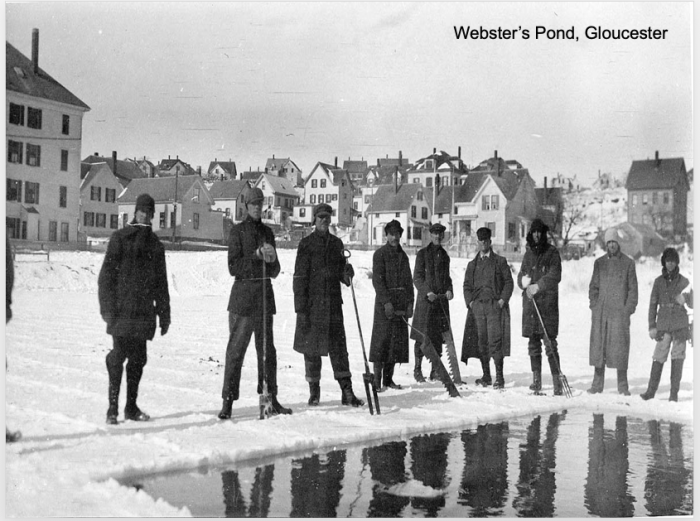
How did you do? Week one delved into the history of Cape Pond Ice. More than one player “had to call a friend”, Scott Memhard, owner of Cape Pond Ice and City Councilor. He kindly shared supplemental archival material included in this post. Stop here if you prefer to go back to see questions only from 3/10/19 Week One trivia questions
Continue to scroll for the answers.
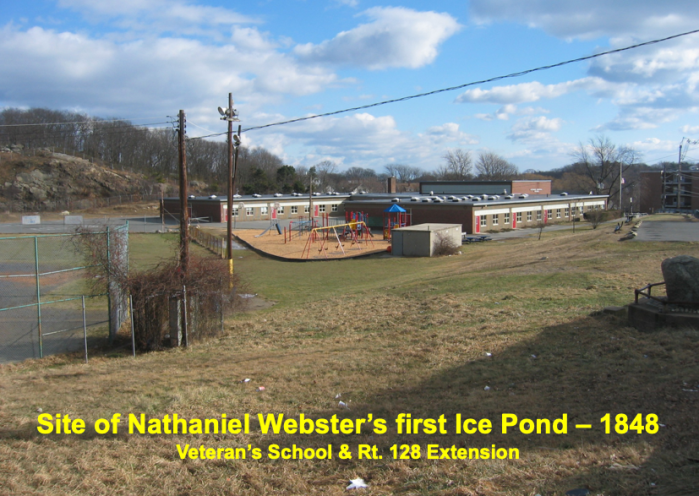
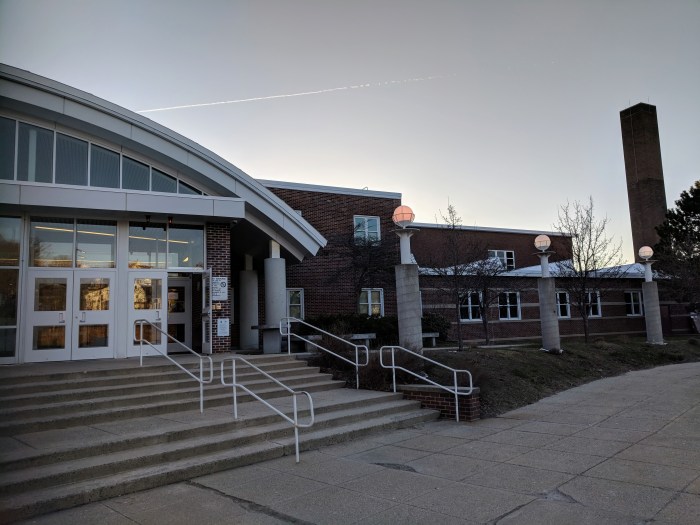
1)In 1848 a blacksmith named Nathaniel R. Webster started a company by damming a local brook. What did the brook become known as? ANSWER. VETERANS ELEMENTARY SCHOOL CAMPUS
2)What did Webster’s company become known as? ANSWER. CAPE POND ICE
3)Take a picture at the present day location of the company

4)Take a picture of the street named after him with a member in it. ANSWER. WEBSTER STREET
5)What is in place of the brook today? MATTOS FIELD- ABOVE = FRAT CLUB AND BELOW EVENTUALLY LEADS INTO LITTLE RIVER AT GOOD HARBOR BEACH
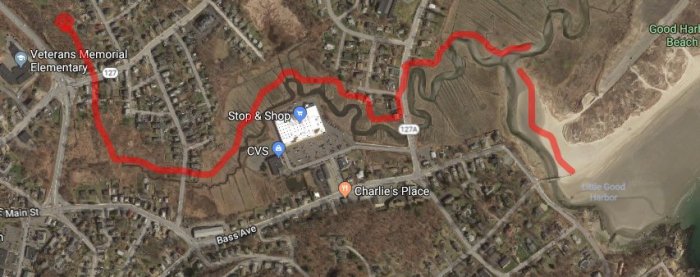
6)Take a picture at the location of the old dam with a member in front. ANSWER. THE SCHOOL


PART II
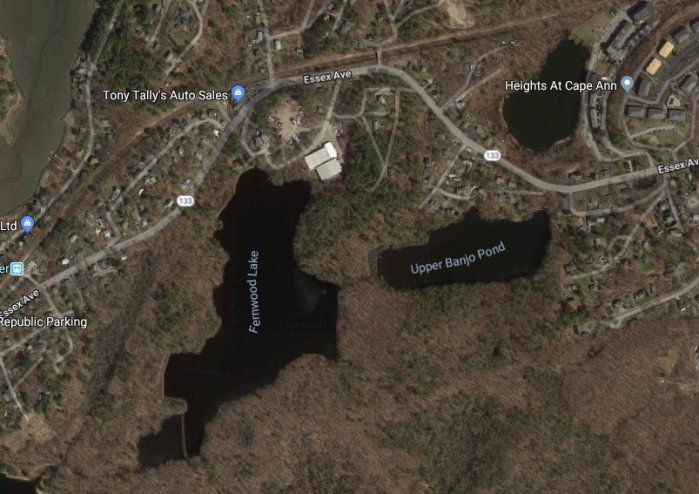
7)A competitor to Webster named Francis W. Homans in 1876 created a 32 acre man-made lake. What is the lake known as? ANSWER. FERNWOOD LAKE


8)Submit a screenshot of a map of the lake (Google Maps or Google Earth)
9)What year did the two companies merge? ANSWER. 1908
Courtesy photos below from Scott Memhard, Cape Pond Ice, Cape Ann Museum


Courtesy photo from David Collins-
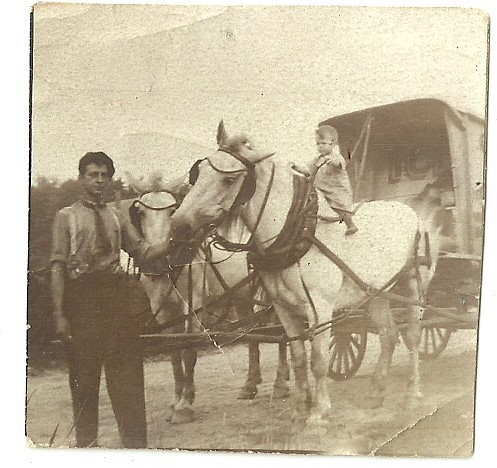
“My grandfather, Millard Collins, Sr., worked for one of the ice houses for a while. He died in 1918 at age 29 in the Spanish Flu pandemic. At that time he was working for LePages’s and had taken a leave of absence to care for his brother, Jacob, who had contracted the flu first. Jacob died October 17, 1918, and my grandfather died October 28, 1918…”
“I’m enclosing a picture of my grandfather and his horse-drawn ice wagon. You can see the word “ICE” faintly written on the inside back of the wagon. The youngster atop the horse is my father, who was born in July,1912, so I date the picture to about 1913 or so.”
Prior Posts
3/10/19 Week One trivia questions
Spread The GMG Love By Sharing With These Buttons:

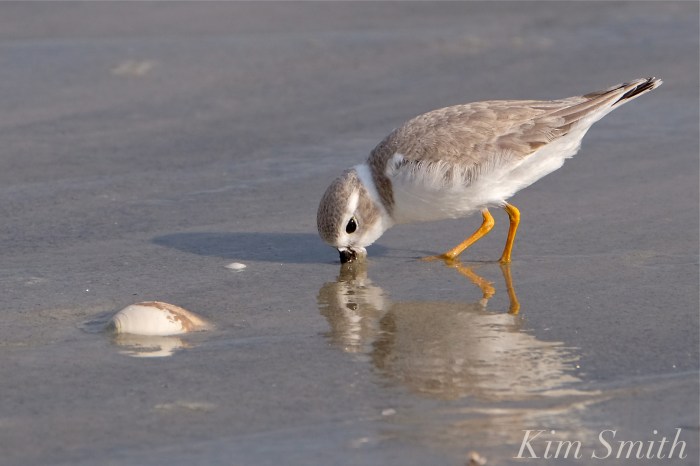
GLOUCESTER’S “PIPING PLOVER PLAN” REVIEWED BY KEN WHITTAKER AND MEET ADRIENNE LENNON, GLOUCESTER’S NEW CONSERVATION AGENT!
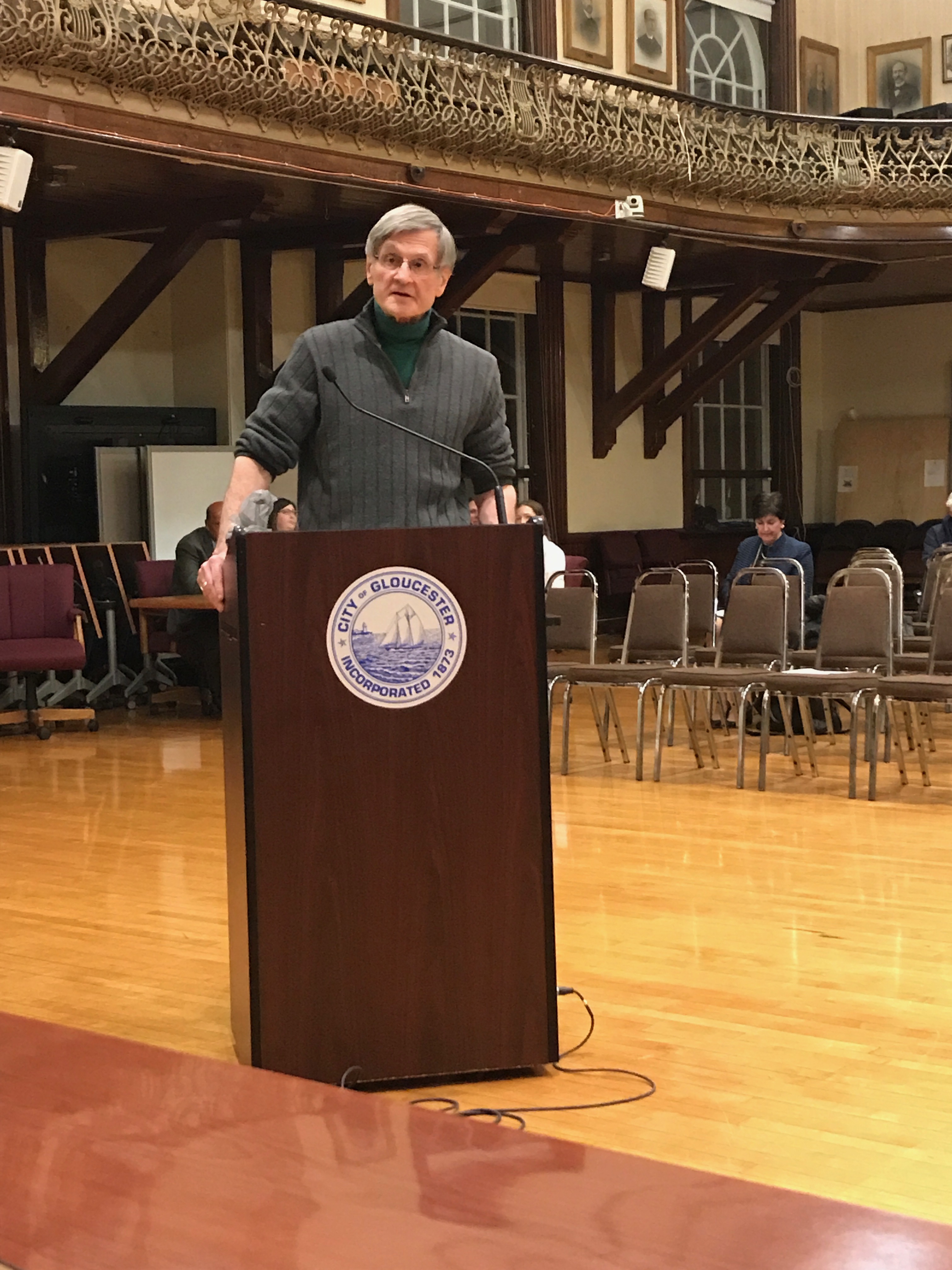 Last evening at the City Council meeting, former Gloucester conservation agent Ken Whittaker reviewed the City’s 3PPlan (Piping Plover Plan) with the Councilors.
We Piping Plover volunteer monitors are grateful for the time and effort Ken has put forth in helping to protect our threatened Piping Plovers. We’re especially appreciative of the time he spent coordinating the volunteer monitors–not an easy task! We wish Ken all the best in his retirement.
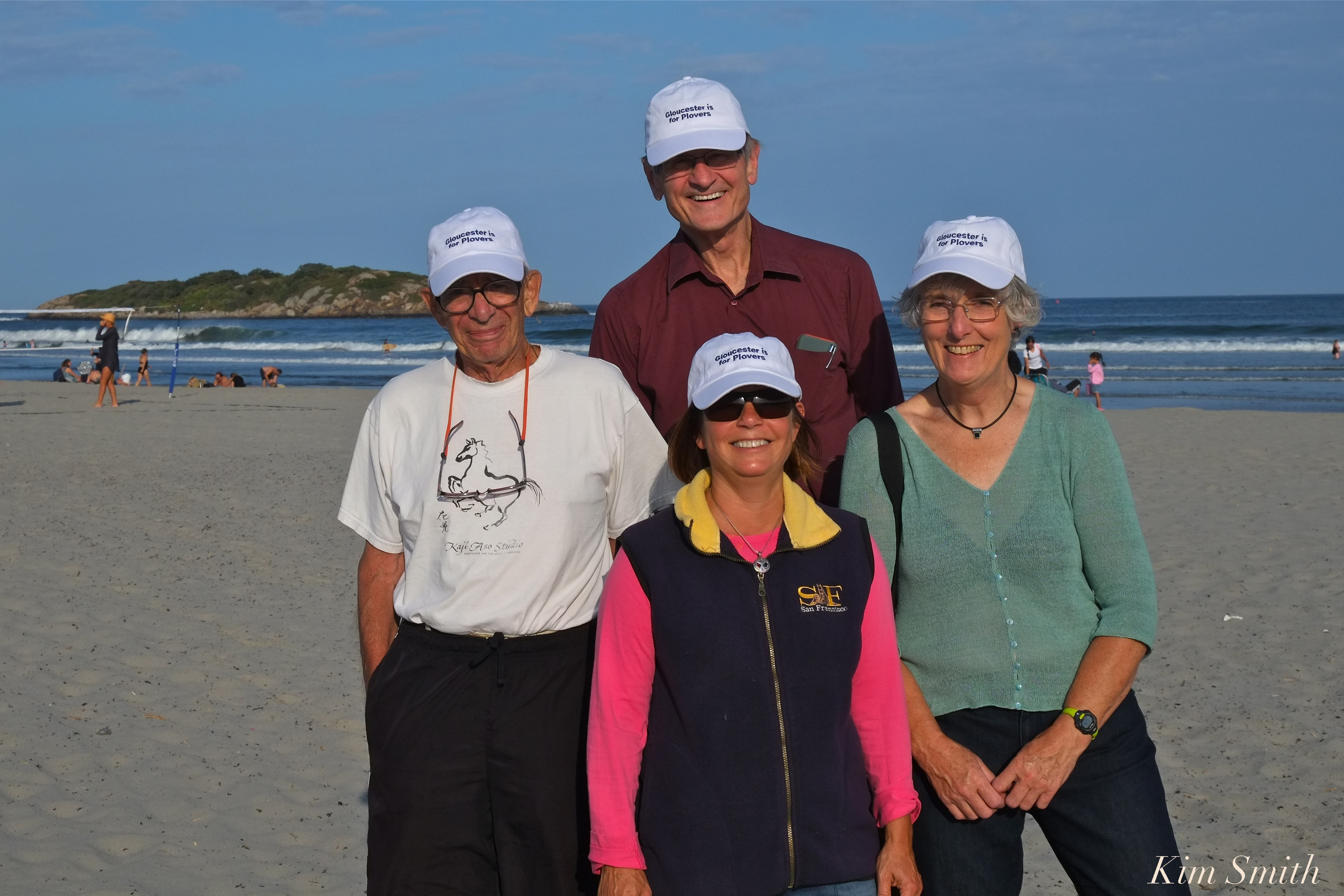 Ken and PiPl Volunteer Monitors, Good Harbor Beach
Ken and Jim Destino introduced Adrienne Lennon, Gloucester’s new conservation agent. We had a few minutes after the introduction to speak with Adrienne. Her experience includes working for seven years at Mass Audubon’s Joppa Flats Education Center, located in Ipswich on the Plum Island causeway, adjacent to the infamous Pink House. While there, Adrienne gained extensive knowledge in Piping Plover conservation. She is especially interested in preserving and protecting our beach dunes. Adrienne can be reached at alennon@gloucester-ma.gov.
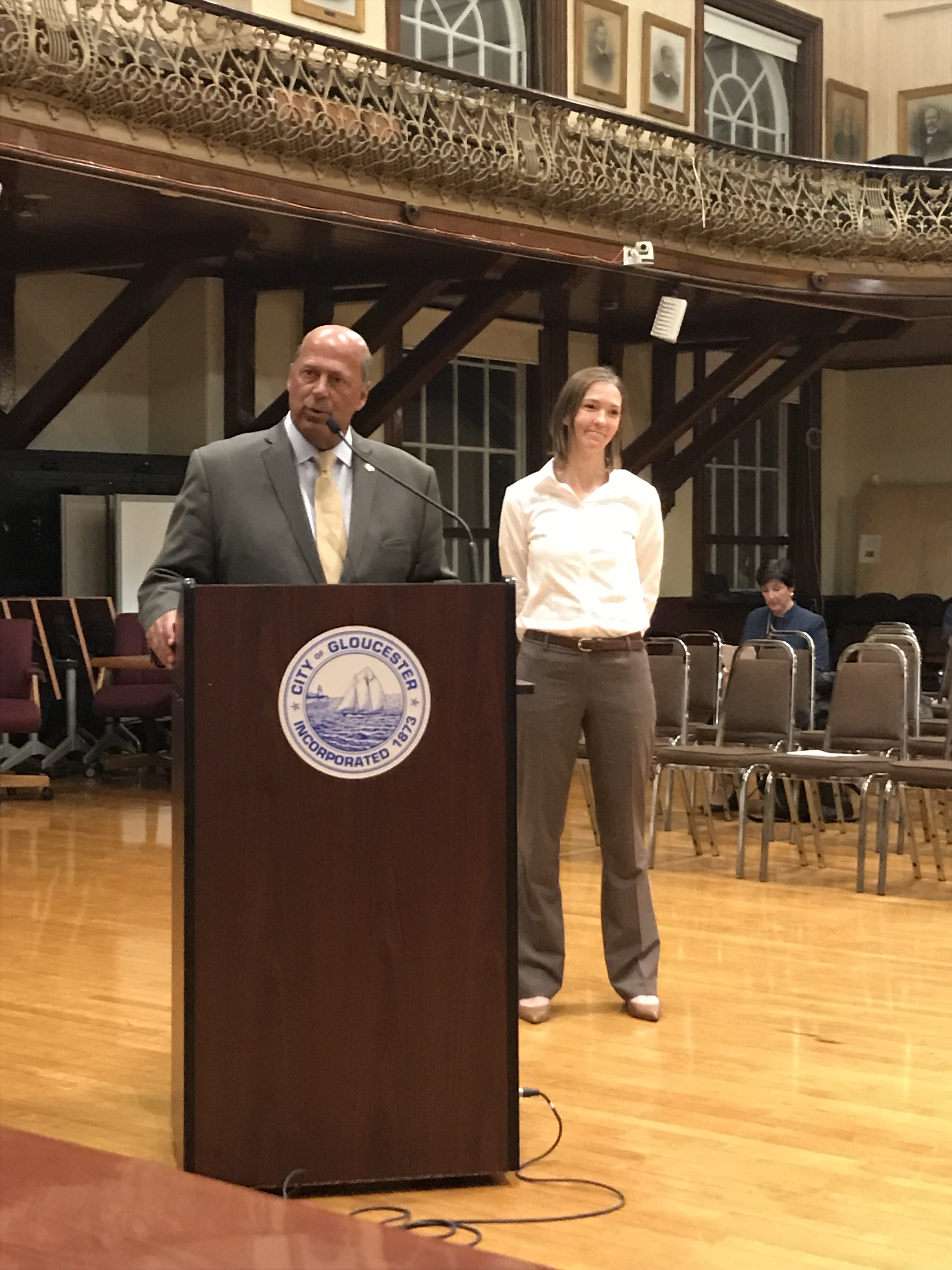
Best of success to Adrienne in her new position as Gloucester’s Conservation Agent!
Photos of Ken and Adrienne at City Hall courtesy of City Council Vice President Steve LeBlanc
During Piping Plover nesting season, I have visited the public beach at the northern end of Plum Island, Newbury Beach. I believe the PiPl nesting areas at Newbury Beach are monitored by Mass Audubon’s Joppa Flats Education Center. Newbury Beach is similar in several ways to Good Harbor Beach in that it is a popular town beach in a residential area with many access points and nearby hotels. Last year the beach and dunes were extremely hard hit by late winter storms, just as was Good Harbor Beach.
About Joppa Flats Education Center: Overlooking the Merrimack River and near the entrance to Parker River National Wildlife Refuge, the Joppa Flats Education Center offers unique educational opportunities for people of all ages. Here, you can explore the region’s wildlife-rich habitats (salt marshes, mudflats, rivers, bays, and coastal waters) through guided tours, marine touch tanks, art exhibits, drop-in programs, and interpretive displays.


Scenes from behind the Joppa Flats Education Center and Plum Island causeway.

Councilors Steve LeBlanc and Melissa Cox wearing Piping Plover monitor hats provided by Ken Whittaker.

Coffins Beach and Wingaersheek Beach are going to be more closely monitored this year for Piping Plovers. The above photo is from 2016 when NINE chicks fledged at Coffins Beach!
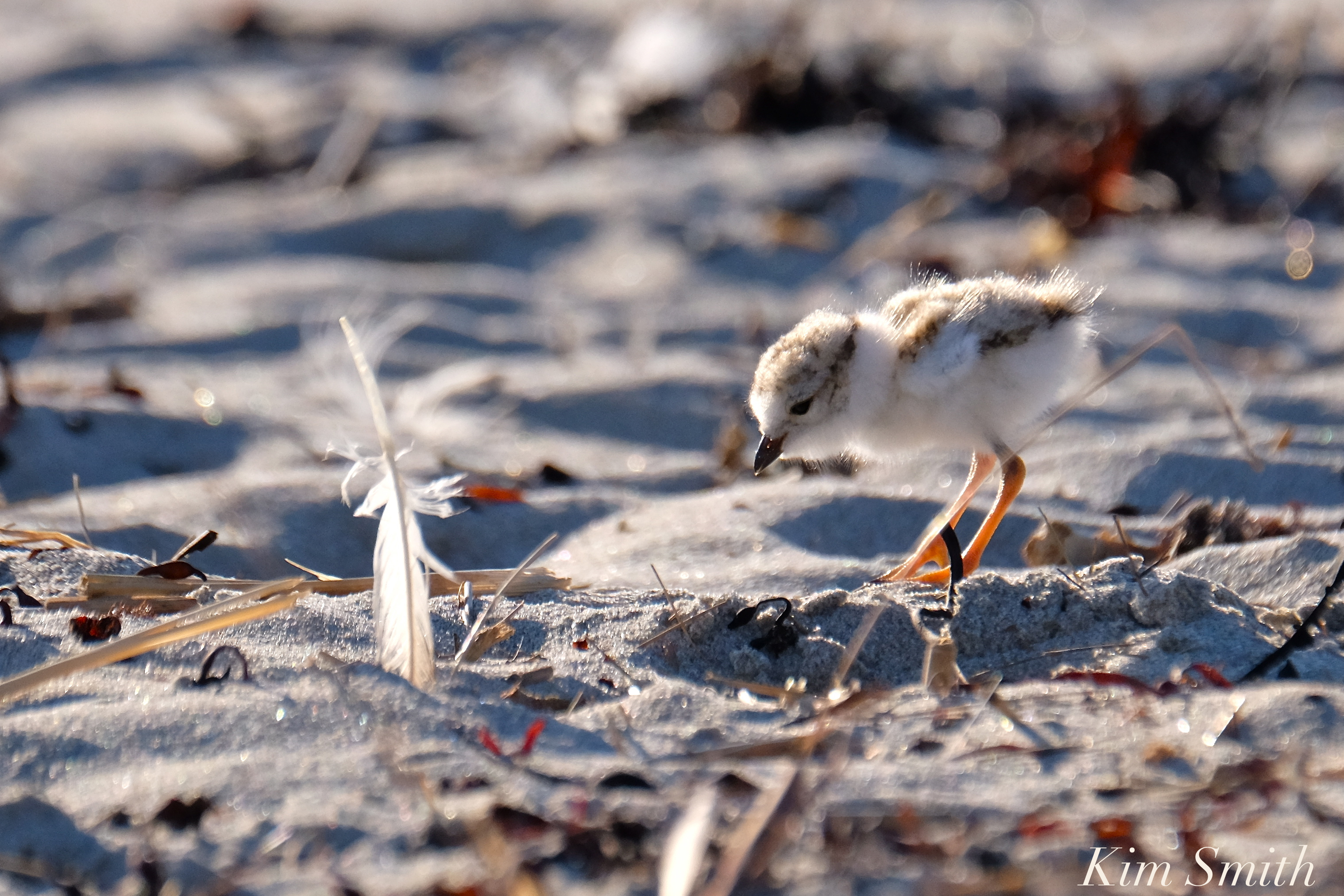
Three-day-old Piping Plover Chick, Good Harbor Beach
Spread The GMG Love By Sharing With These Buttons:


#GloucesterMA a foot of snow at daybreak March 4 2019 winter storm
Snapshots during the snowstorm. Snow fell at a quick clip and was deeper than I expected. I saw two snow plows stuck and digging out. Today will be a heavy shovel that neighbors may need help with.
near Cape Ann Motor Inn Long Beach


Salt Island Road to Good Harbor Beach- snow deeper than my boots on the dry sand


Snow blue ice in the tucks and shadows, and trees coated like Kancamagus Highway


measuring snow fall by mailbox and car coating


Spread The GMG Love By Sharing With These Buttons:


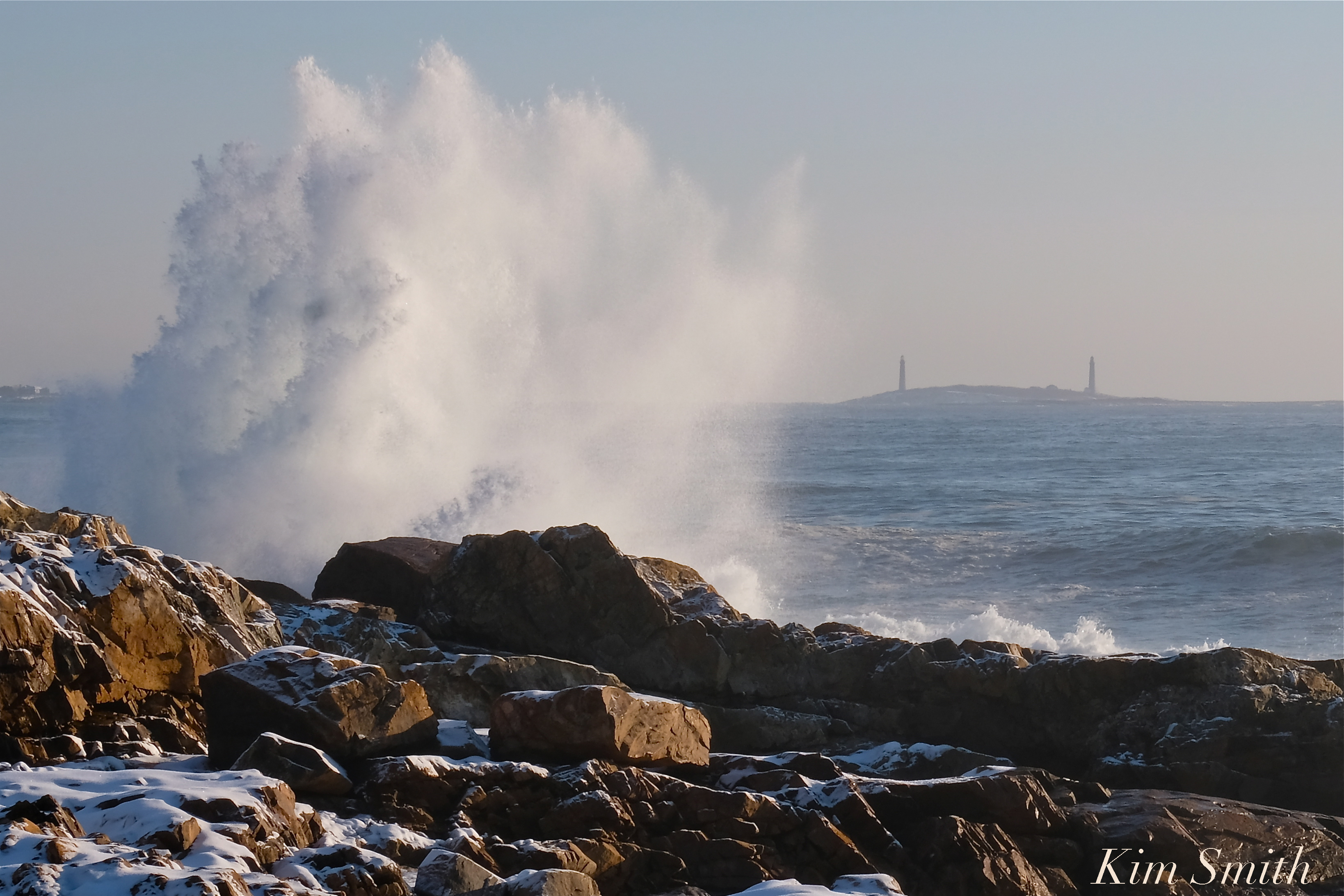
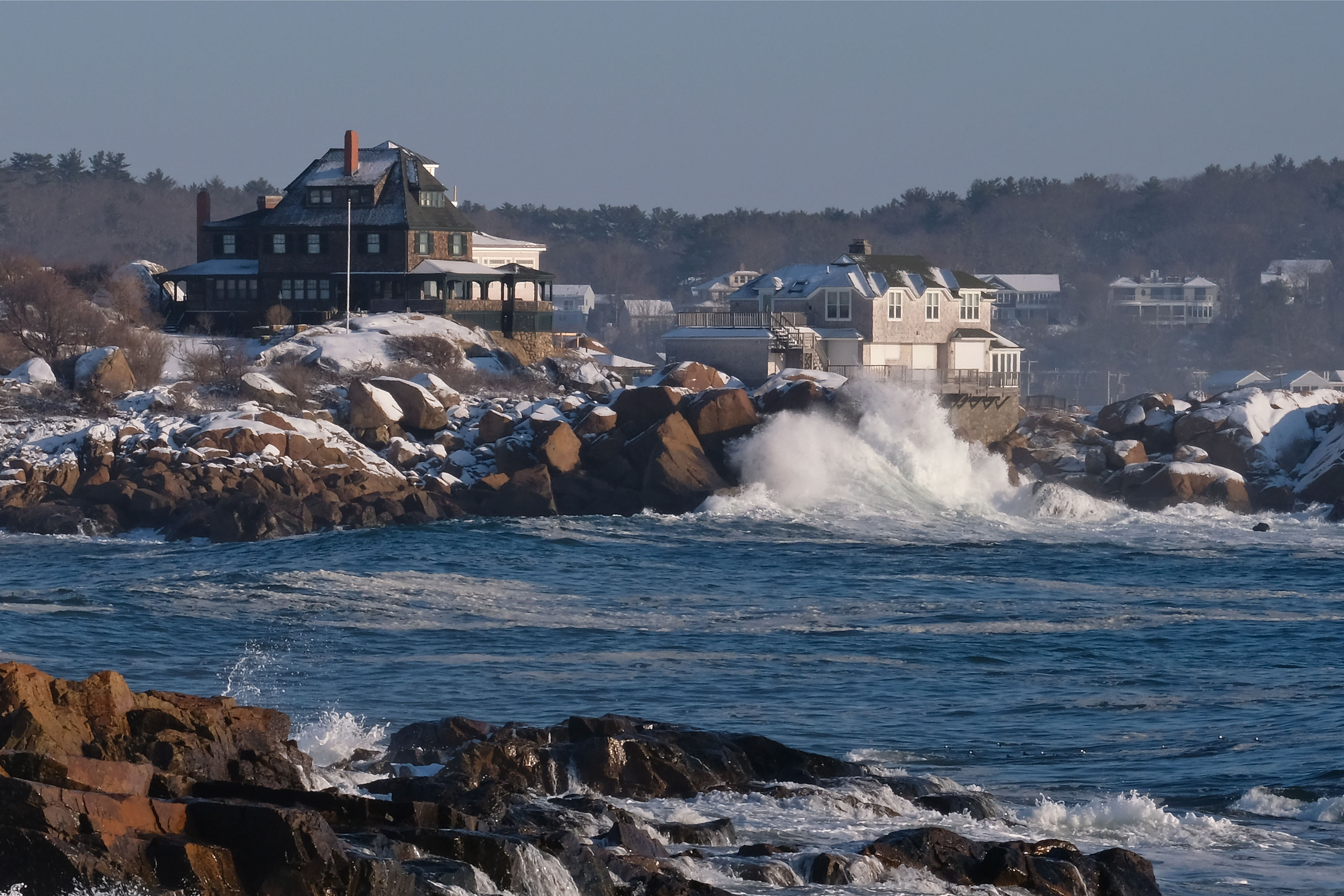
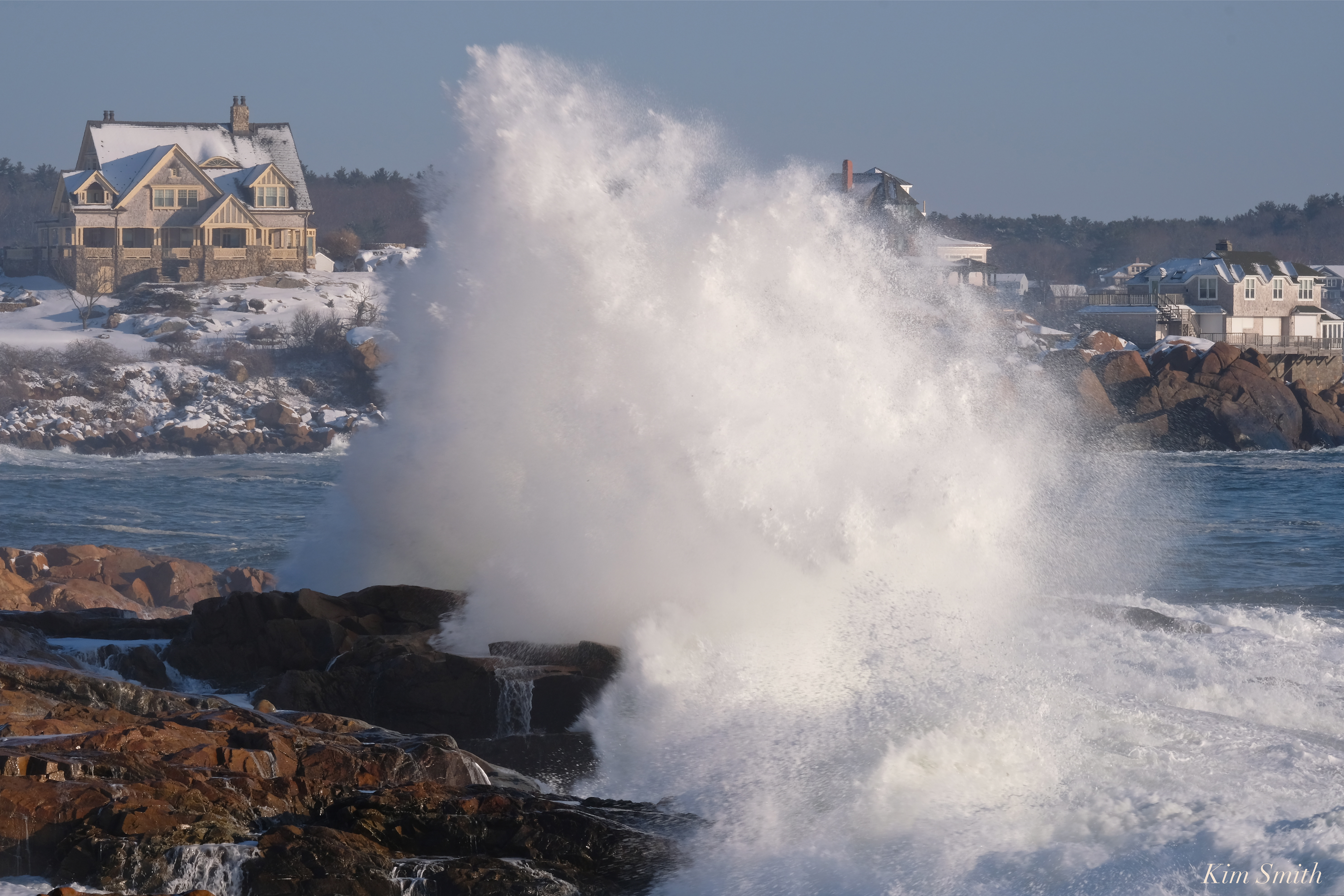
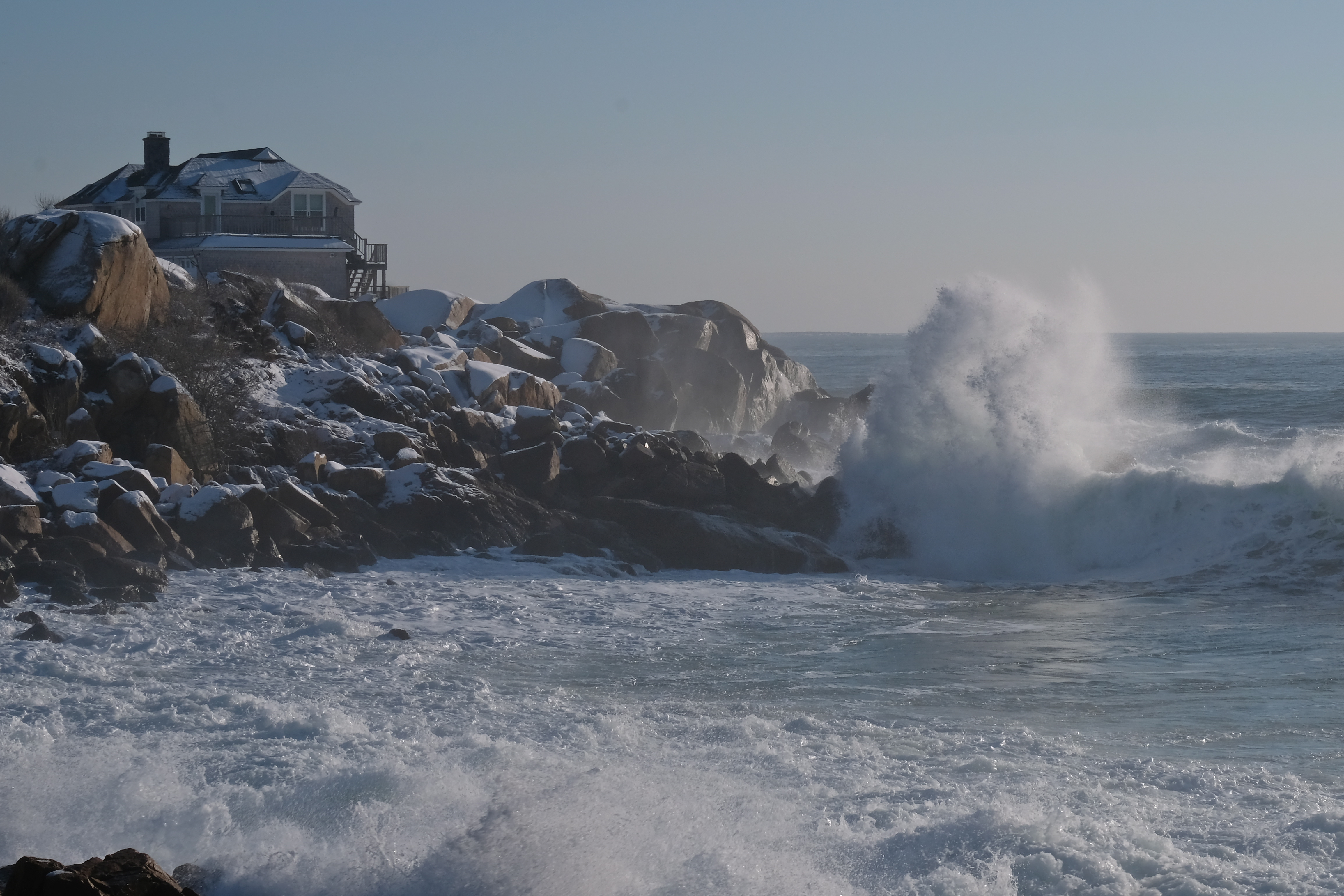
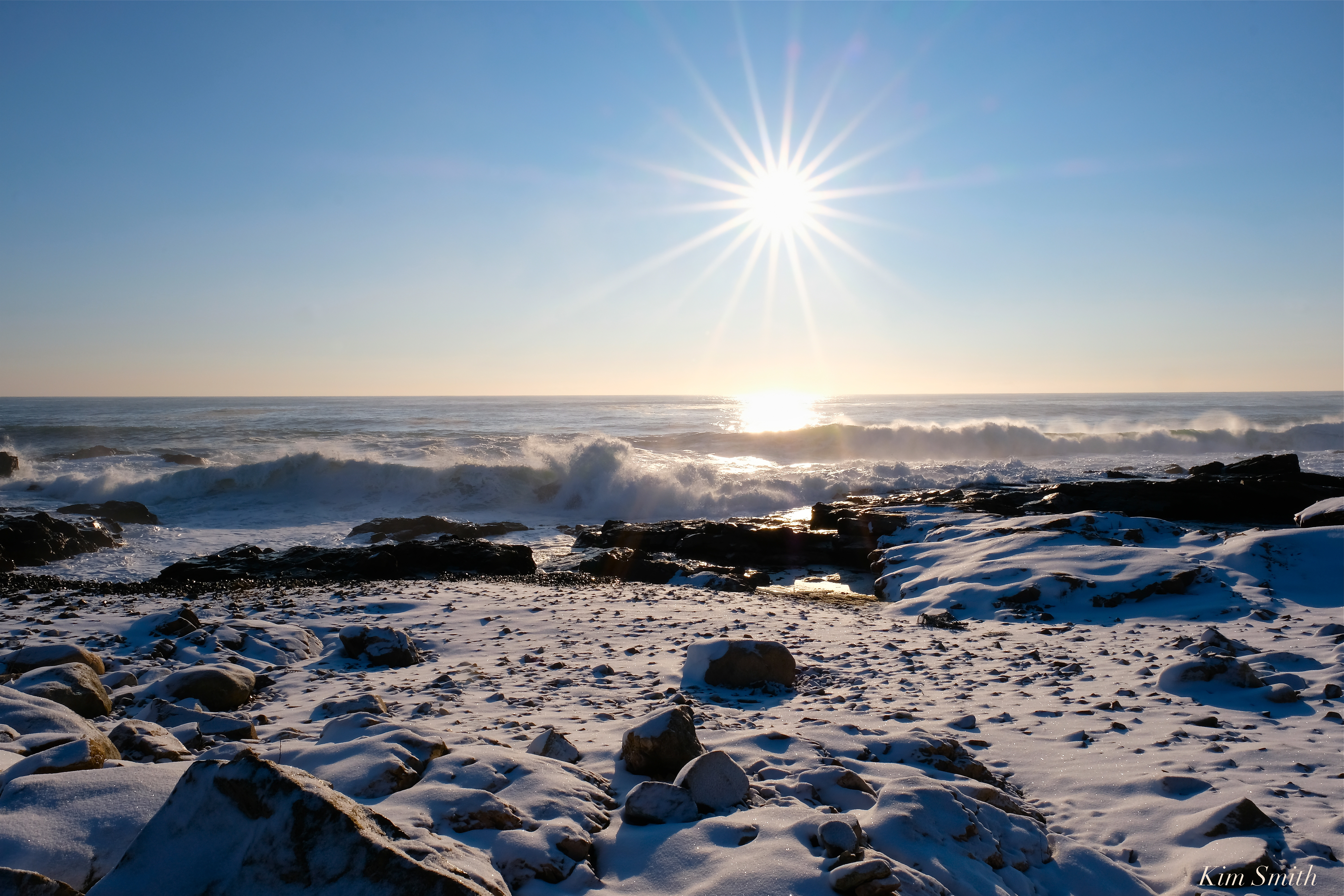
GORGEOUS GLOUCESTER AFTER MARCH SNOW STORM CHURNING SEAS EXPLODING WAVES BACK SHORE, BASS ROCKS, GOOD HARBOR, TWIN LIGHTS
Wild sea and atmospheric light made for some dramatic scenes this morning.



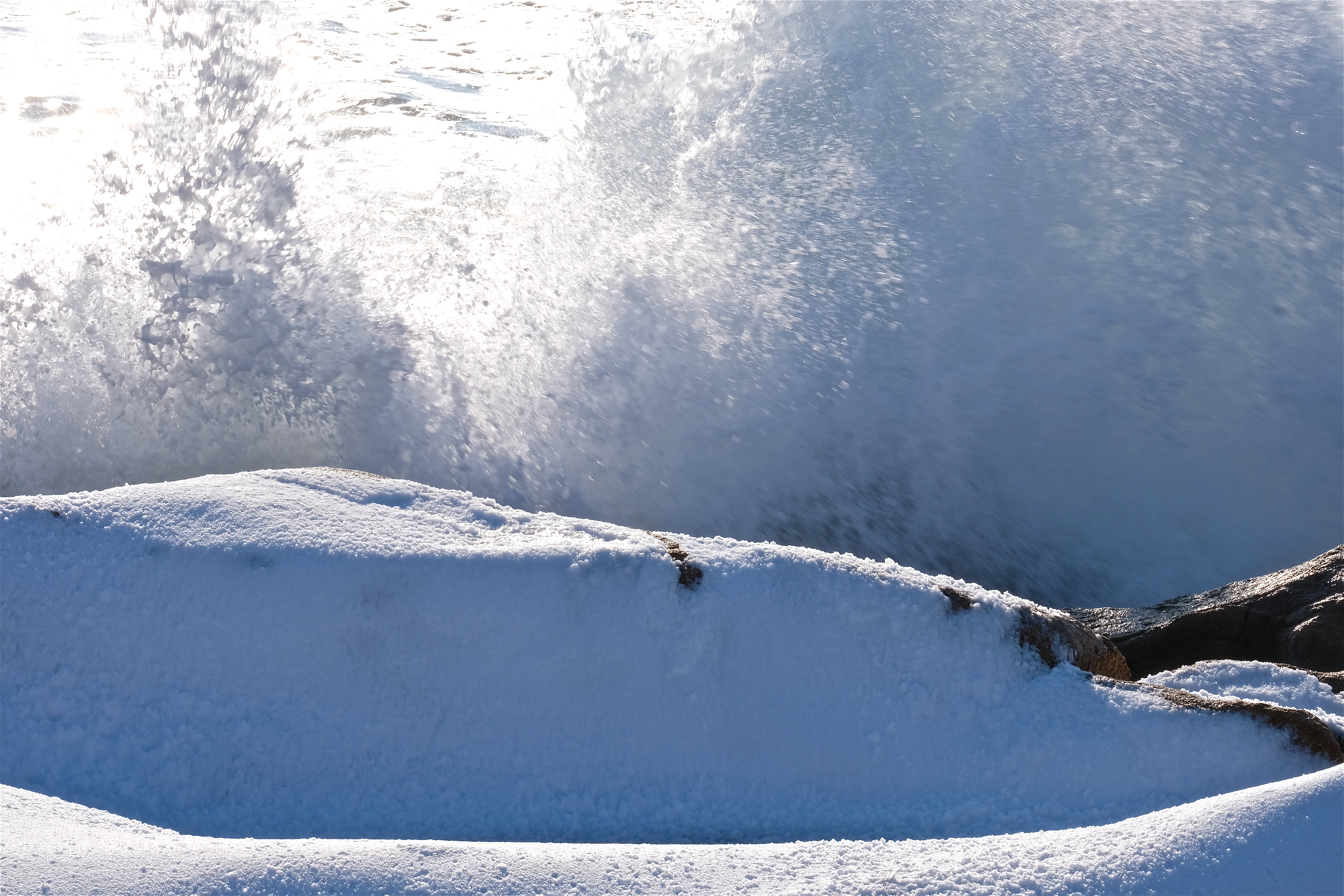
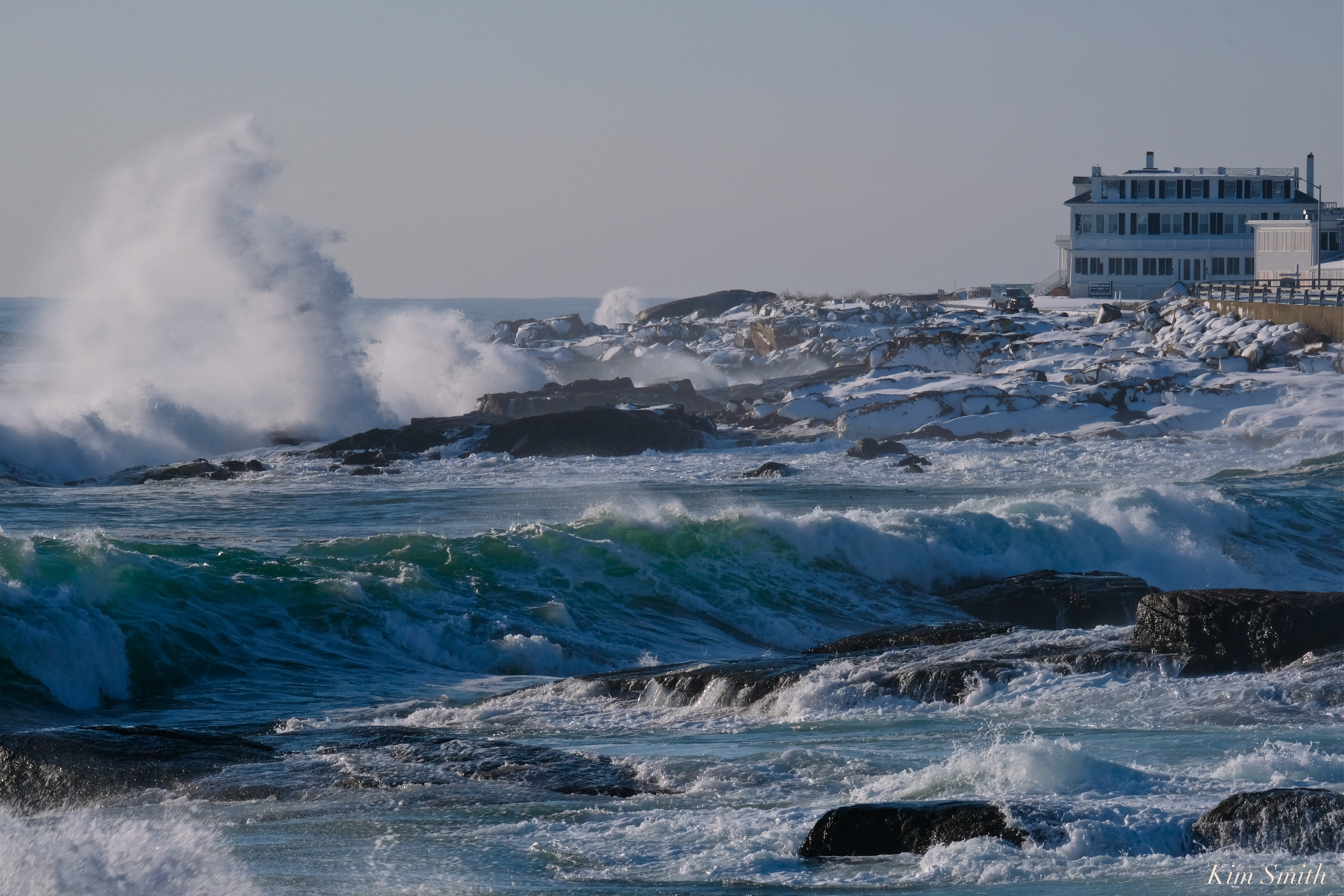
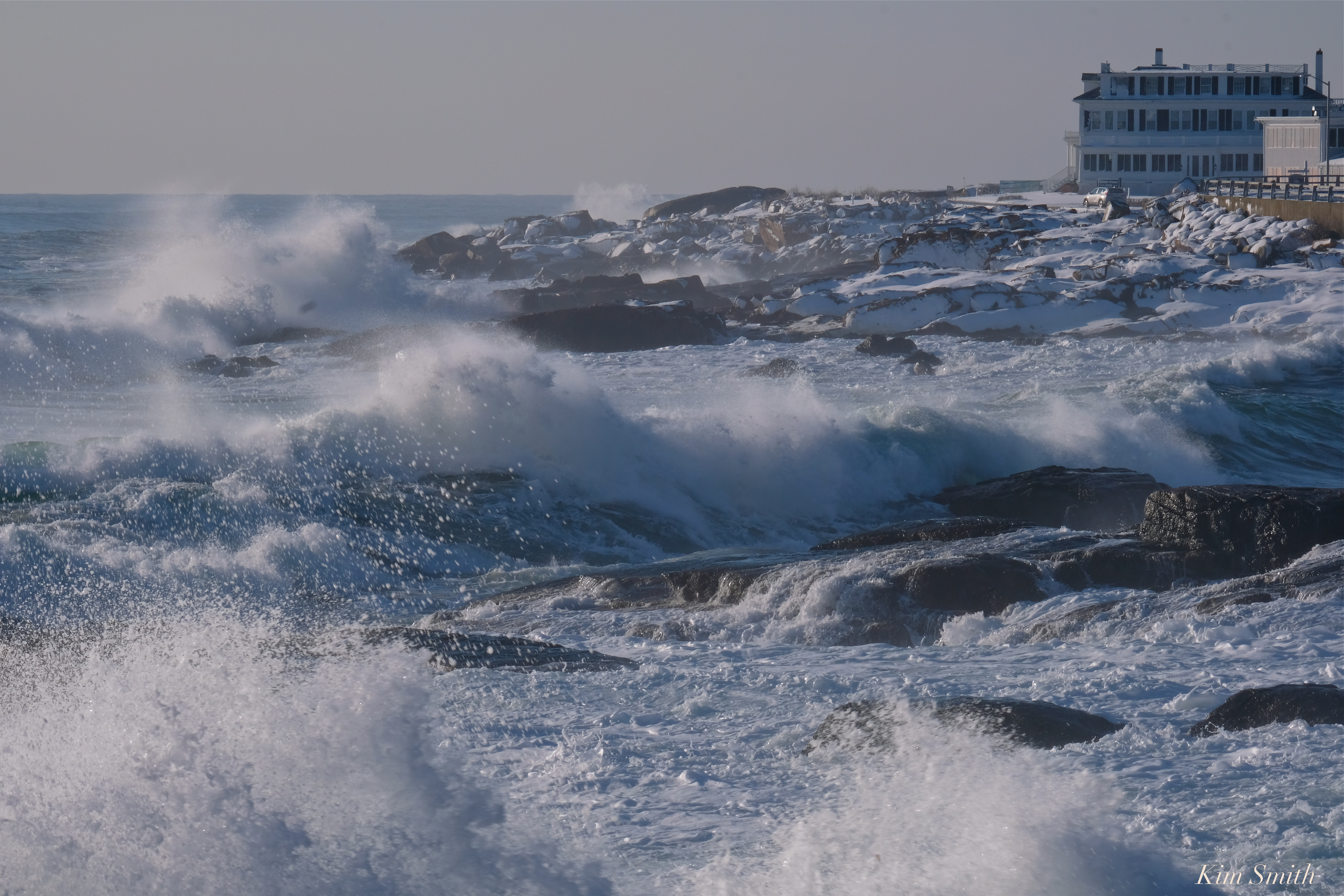
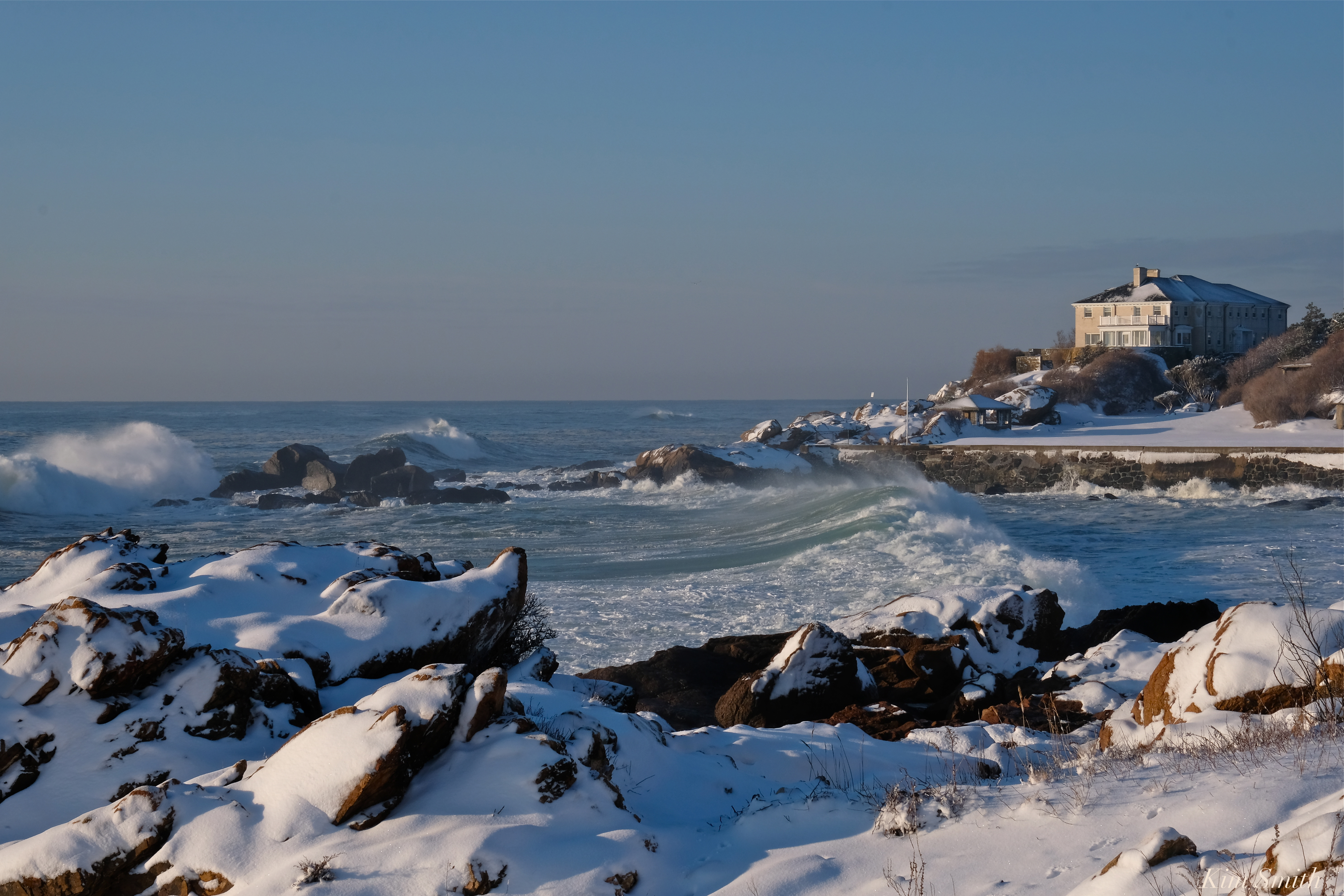
Spread The GMG Love By Sharing With These Buttons:

Gloucester Smiles-1162

Spread The GMG Love By Sharing With These Buttons:

Gloucester Smiles-1163

Spread The GMG Love By Sharing With These Buttons:

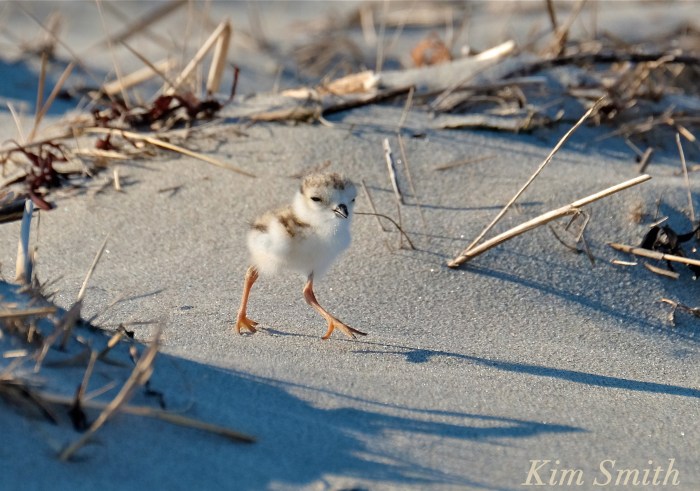
GLOUCESTER CITY COUNCIL VOTES UNANIMOUSLY FOR ORDINANCE CHANGES REGARDING PIPING PLOVERS AND ALL WILDLIFE!
Thank you Community for seeing the wisdom in these changes and for giving voice to these tiny endangered birds.
Last night’s Council vote a was win for our Good Harbor Beach Piping Plovers and a win for all the citizens of Gloucester. There was a tremendous turnout by the Piping Plover volunteers and friends, as well as an impressive number of letters written to the Councilors in favor of the changes to the ordinance. The combination of the two spoke volumes and definitely tipped the scales in favor of the Plovers.
Read more here:
EXCITING AND IMPACTFUL NEWS FOR OUR GOOD HARBOR BEACH PIPING PLOVERS
WHAT EXACTLY ARE THE CHANGES TO THE ANIMAL ORDINANCES CITY COUNCIL VOTED ON LAST NIGHT?
Spread The GMG Love By Sharing With These Buttons:

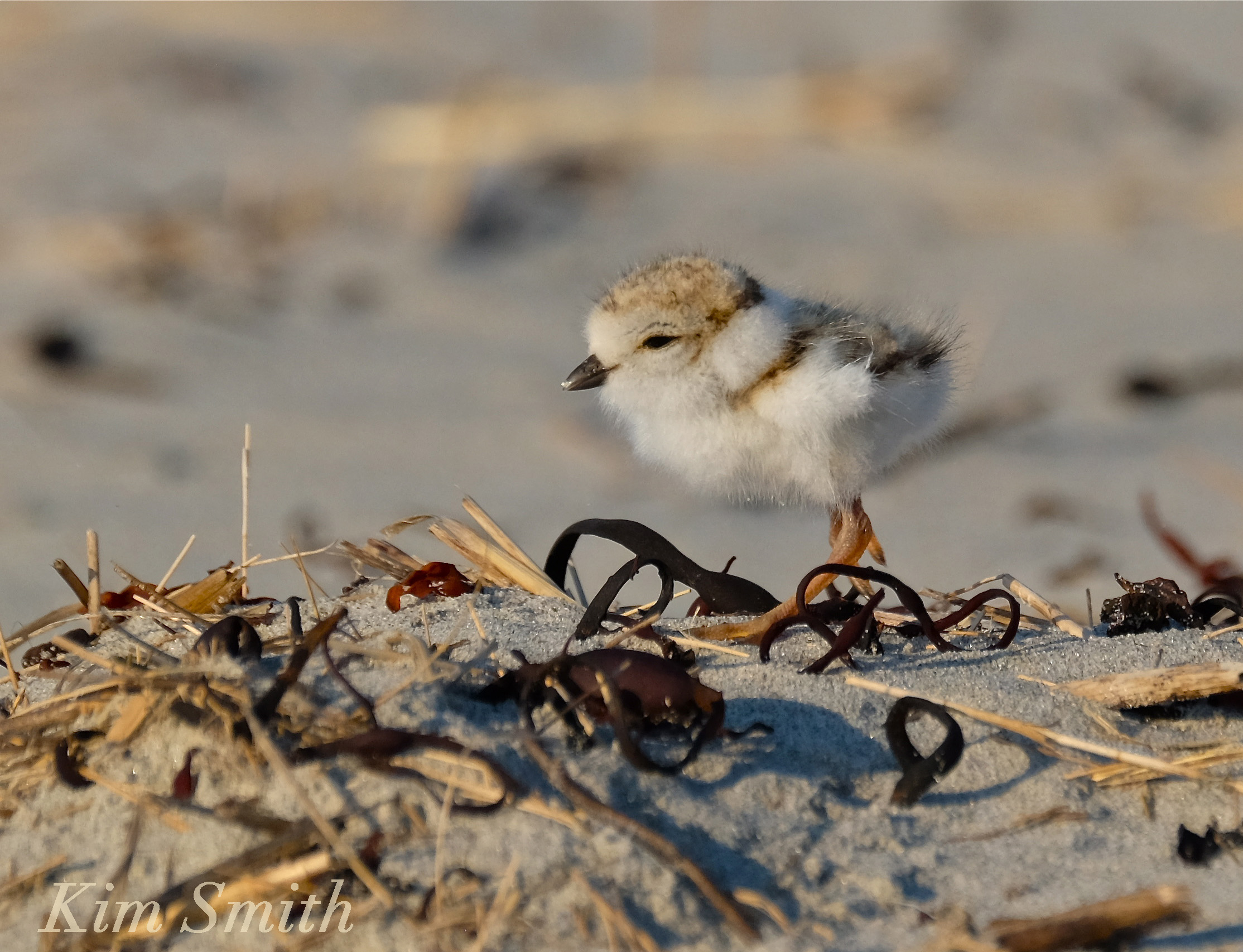
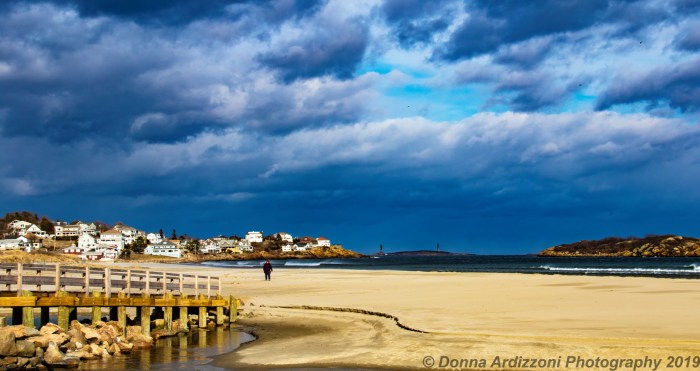
Windy cold day at Good Harbor Beach
Spread The GMG Love By Sharing With These Buttons:

Gloucester Smiles-1160
Spread The GMG Love By Sharing With These Buttons:

WHAT EXACTLY ARE THE CHANGES TO THE ANIMAL ORDINANCE CITY COUNCIL VOTED ON LAST NIGHT?
Thank you to Val Gilman for sharing this on facebook.
Highlights of City Council 2/26/19 votes on Amendments on GCO Chapter 4 “Animals”.
Dogs shall be prohibited from Good Harbor Beach from 4/1 -9/30. Off leash remains on even days of month during season.
Dogs prohibited from Wingarsheek from 5/1 – 9/30 (no amendments to this) Off leash remains on odd days during season.
Sunset clause unless renewed or made permanent by the CC and signed by the Mayor, the provisions of this section shall expire on 12/31/19
Fines of $300 per violation will be double in season for beaches and other off leash areas as determined
Feeding or disturbing wildlife violation shall be subject to a $300 fine per incident/violation
Feeding coyotes directly or indirectly on any public or private property violations shall be subject a $300 fine per incident/violation
Endangered/threatened wildlife buffer zone- buffer zone of 50 feet around an area will be established around an area designated for wildlife. Prohibited activities in the buffer zone include whiffle ball, frisbee, soccer, volleyball, paddle ball, kites, inflatable balls, and any other activities that involve objects that can fly or roll into the restricted area. Violation shall be subject to a $300 fine per incident/violation.
No person shall throw, drop, release or otherwise dispose of directly or indirectly into any Harbor, River, or pond or on any beach or any public property garbage, refuse, rubbish, bottles, cans, containers, paper, cigarette butts, balloons, wrapping material, glass, filth or any noxious or dangerous liquid or solid. Violation shall be subject to a $300 fine per incident/violation.
This ordinance becomes effective 31 days from passage.
Spread The GMG Love By Sharing With These Buttons:

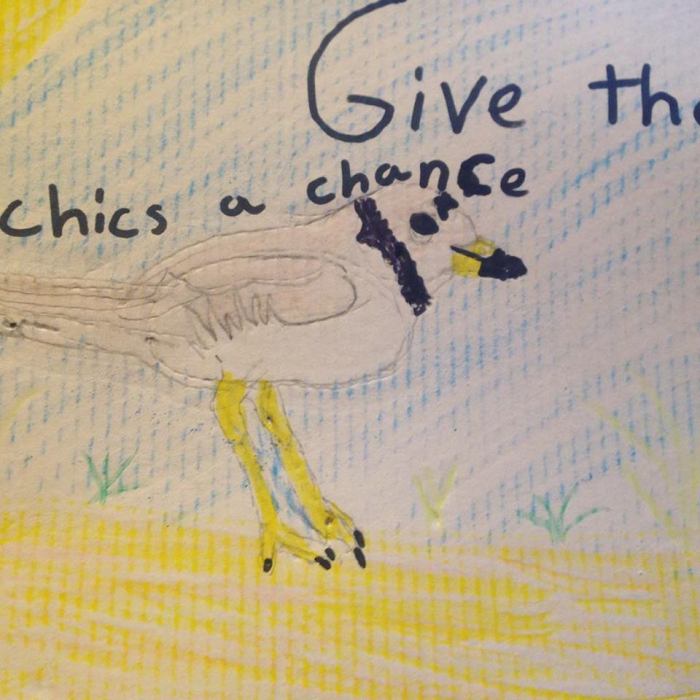
GIVE THE CHICS A CHANCE!
PLEASE COME TONIGHT AND SHOW SUPPORT FOR GLOUCESTER’S PIPING PLOVERS
Where: Gloucester City Hall, Kyrouz Auditorium
When: 7pm tonight
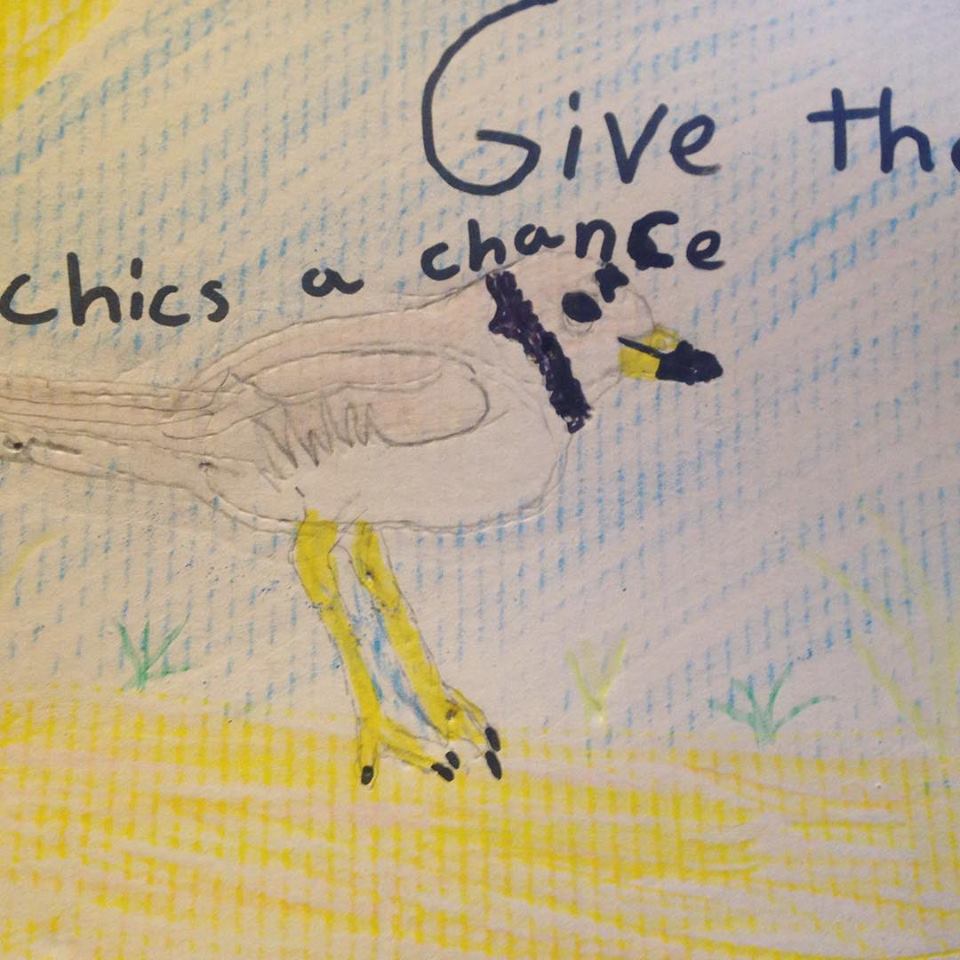 Poster by Meadow Anderson
Spread The GMG Love By Sharing With These Buttons:

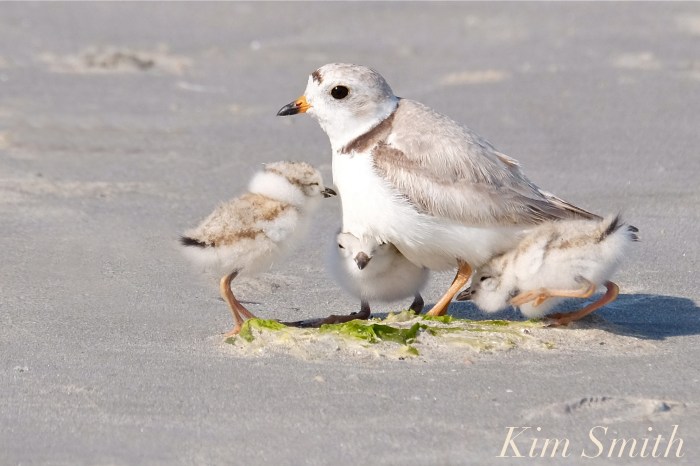
GLOUCESTER’S PIPING PLOVERS NEED YOUR HELP TUESDAY NIGHT
Gloucester’s City Council is voting on an issue that will have tremendous impact on our Piping Plovers.
When: Tuesday, February 26th, at 7:00pm
Where: Kyrouz Auditorium, Gloucester City Hall
For more information, please find below links to posts and articles:
GLOUCESTER’S PIPING PLOVERS NEED YOUR HELP TUESDAY NIGHT
HOW DO GLOUCESTER’S DOGS ON BEACHES ORDINANCES COMPARE TO OTHER NORTH SHORE COMMUNITIES
LIST OF ARTICLES AND LINKS THAT EXPLAIN HOW DOG DISRUPTIONS HARM PIPING PLOVERS


Massachusetts Department of Conservation and Recreation (DCR) prohibits dogs on beaches from April 1st to September 30th
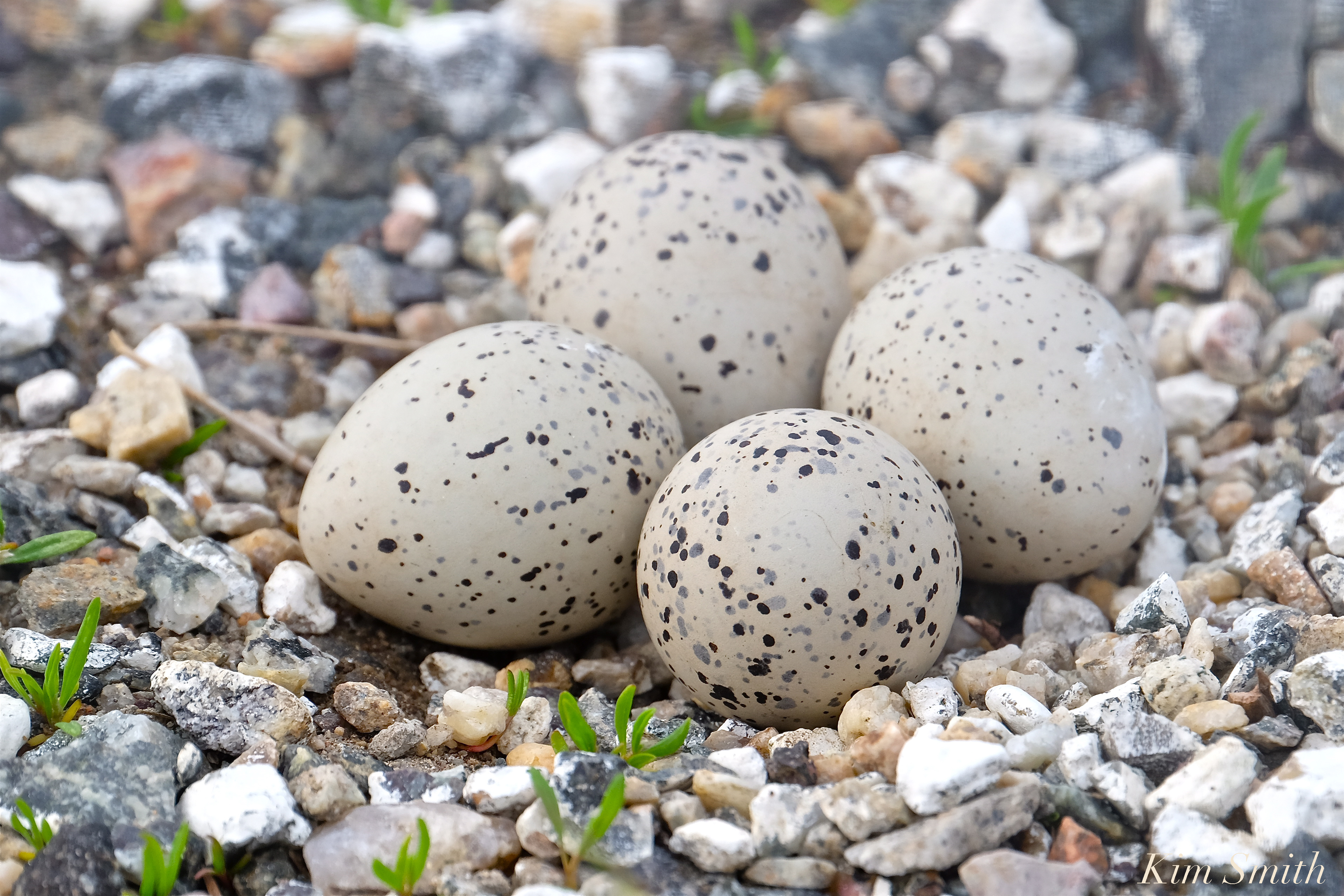 Piping Plover nest in the Good Harbor Beach parking lot.
Spread The GMG Love By Sharing With These Buttons:

Late afternoon at Good Harbor Beach
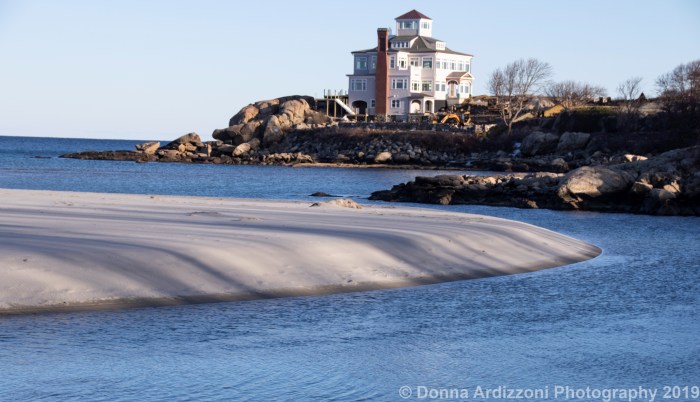
Even on a cold day, the beach at Good Harbor is very relaxing.
Spread The GMG Love By Sharing With These Buttons:


WOW AND QUADRUPLE WOW! GLOUCESTER’S PAT MORSS SHARES PHOTOS OF NEWBORN BABY HARP SEAL!!! FROM THE ARCTIC!
Pat writes:
Joey:
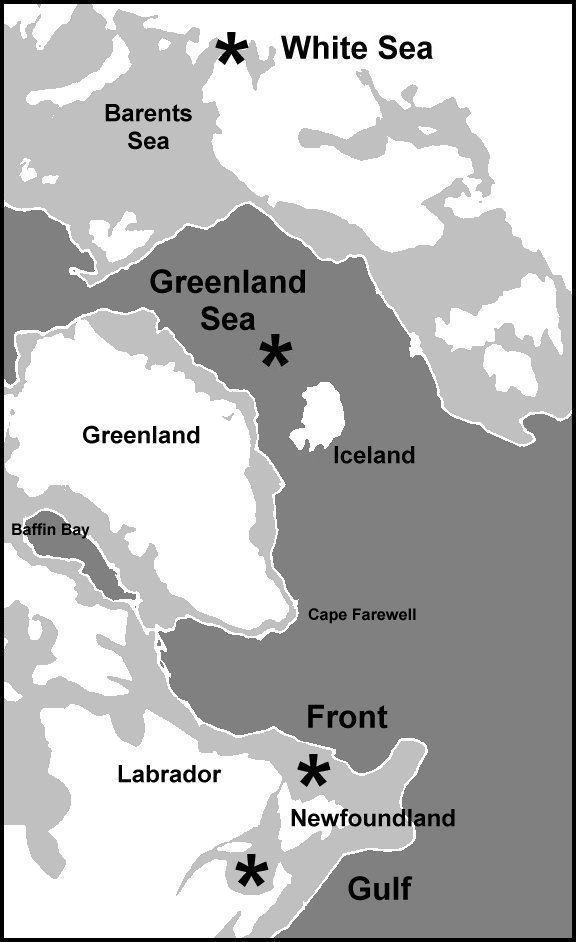
We read with interest Kim Smith’s posting of the visiting Harp Seal on Good Morning Gloucester, Saturday evening. Anne-Lise and I had the good fortune of visiting the southernmost breeding area on her map, the pack ice in the outer Gulf of St. Lawrence. The birthing to weaning period is just 3 weeks annually at the end of February and beginning of March. We flew out by helicopter from Les Iles de la Madeleine, and – yes – we followed the strict instructions of our naturalist. We topped off the experience with some dogsledding to wind down.
Best, Pat Morss
What a magnificent gift to see and to share. Thank you so much Pat!


Spread The GMG Love By Sharing With These Buttons:

UPDATE ON THE YOUNG HARP SEAL
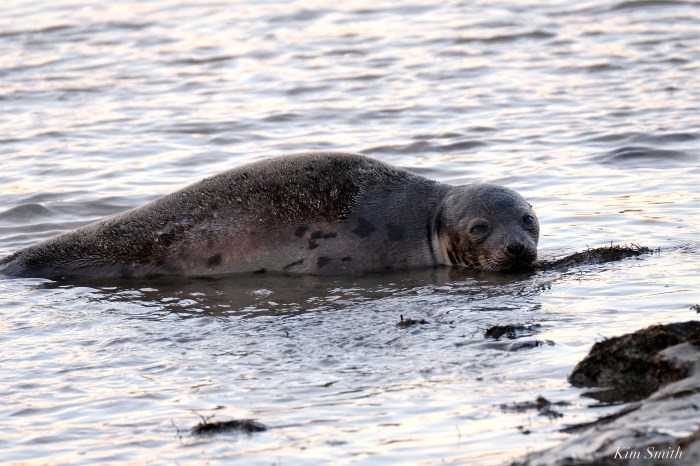
Very late in the afternoon, just as the sun was setting, the juvenile Harp Seal attempted to head back to sea. He began to scooch and wriggle toward the creek, pausing often to scratch and roll around in the sand. At one point he reversed direction and started back toward the dunes.


Just like Harbor Seals, Harp Seals have a tail, too.


After a few more false starts he made his way to the water. Before sliding in, he paused at the water’s edge to drink.
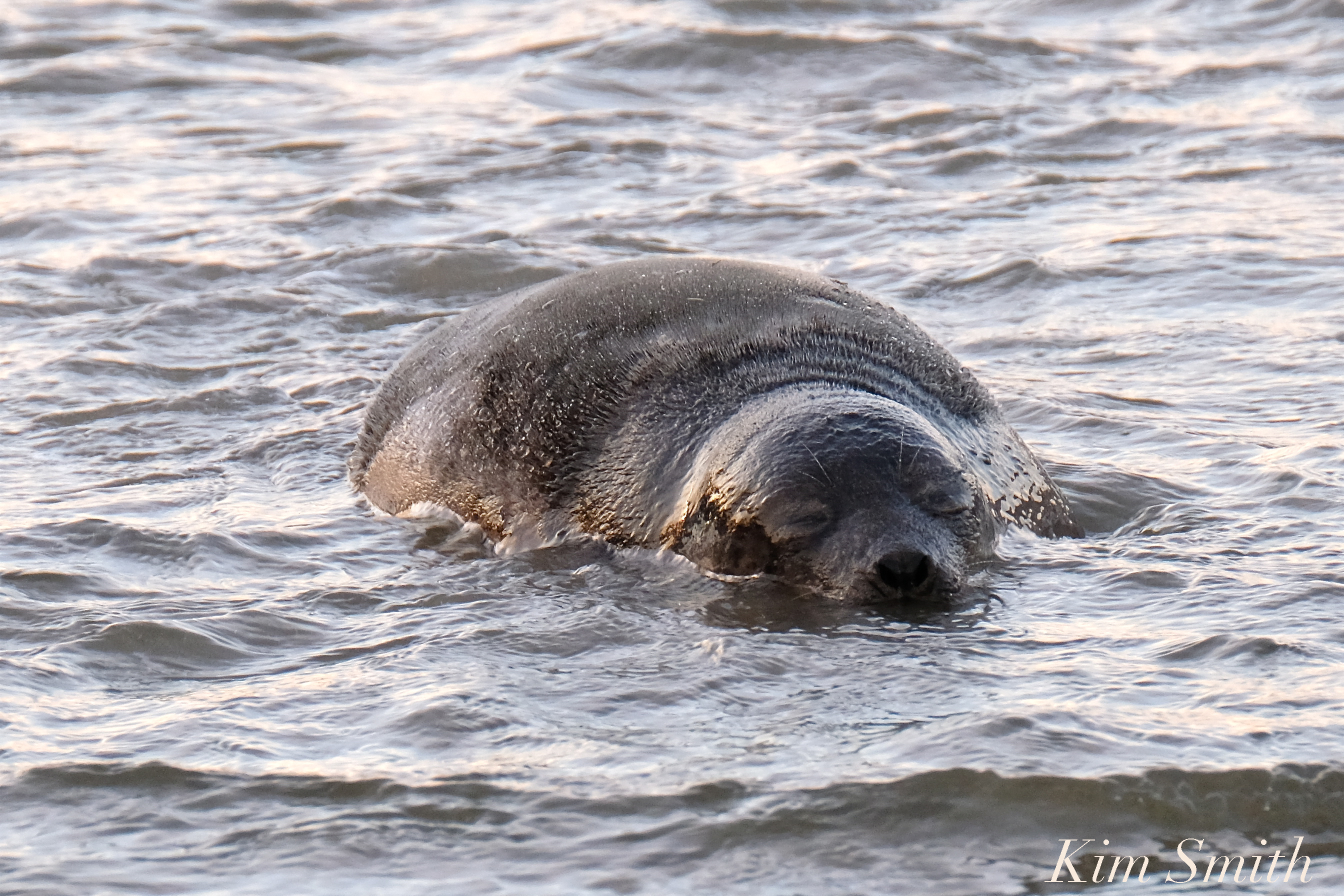
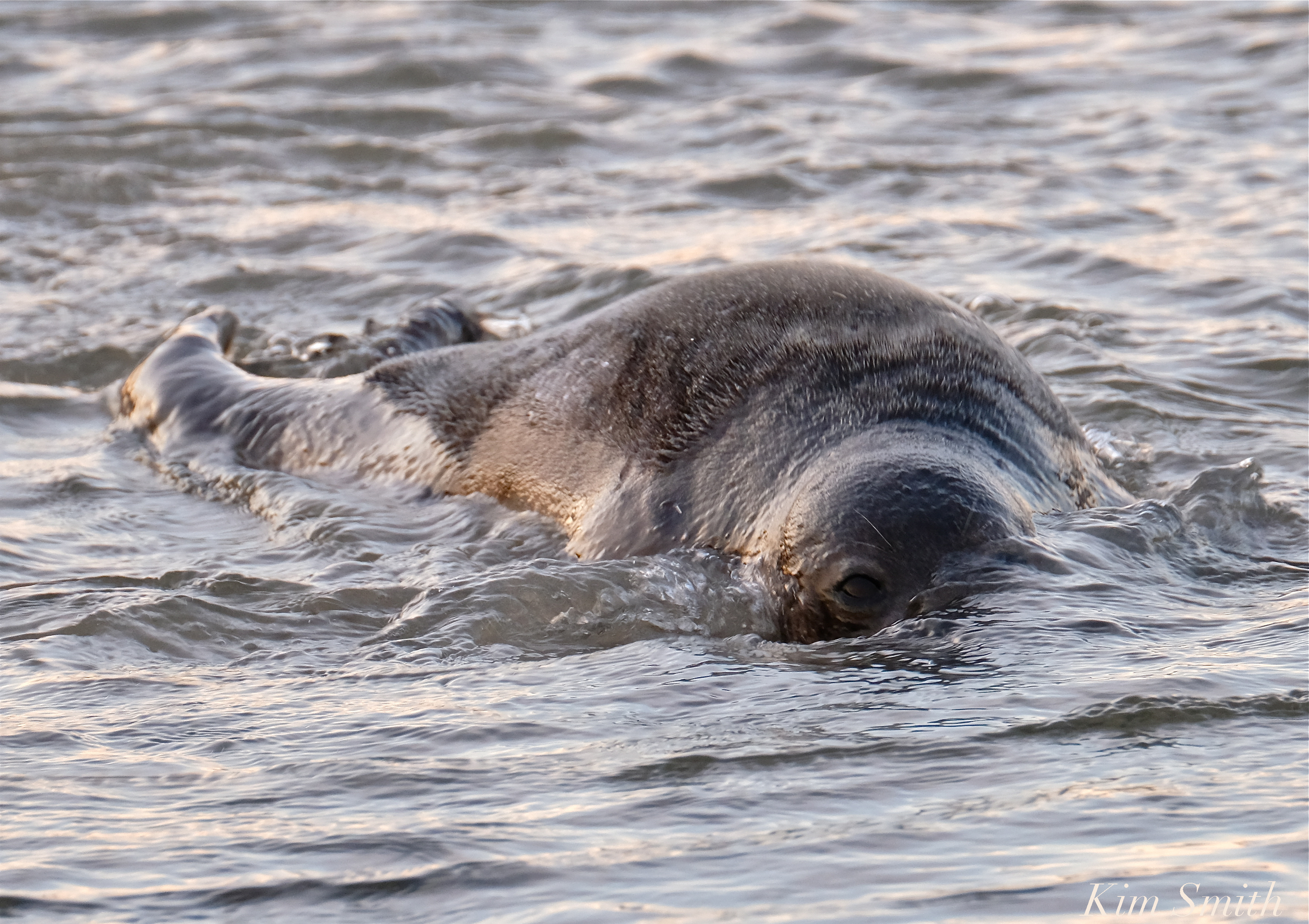

Nearly dead low tide, the water was not deep enough to swim. It was painful to watch him splash and undulate along on his belly in the shallows. He seemed to tire quickly and was very undecided about what to do next. We watched as the young seal made his way slowly around a sharp bend in the creek, then held our breaths as he made it all the way to the foot bridge.


But then he suddenly stopped, turned around, and swam back down the creek, nearly the whole length of the creek from where he had come. The young seal seemed confused and it was heartbreaking to see. When I left at sundown he was on the flats in the creek.
Good Harbor Beach resident and Piping Plover monitor Sue W. reports that he is still there at 7:15. We’re hoping he makes it out at low tide, which is at 10:11 tonight.
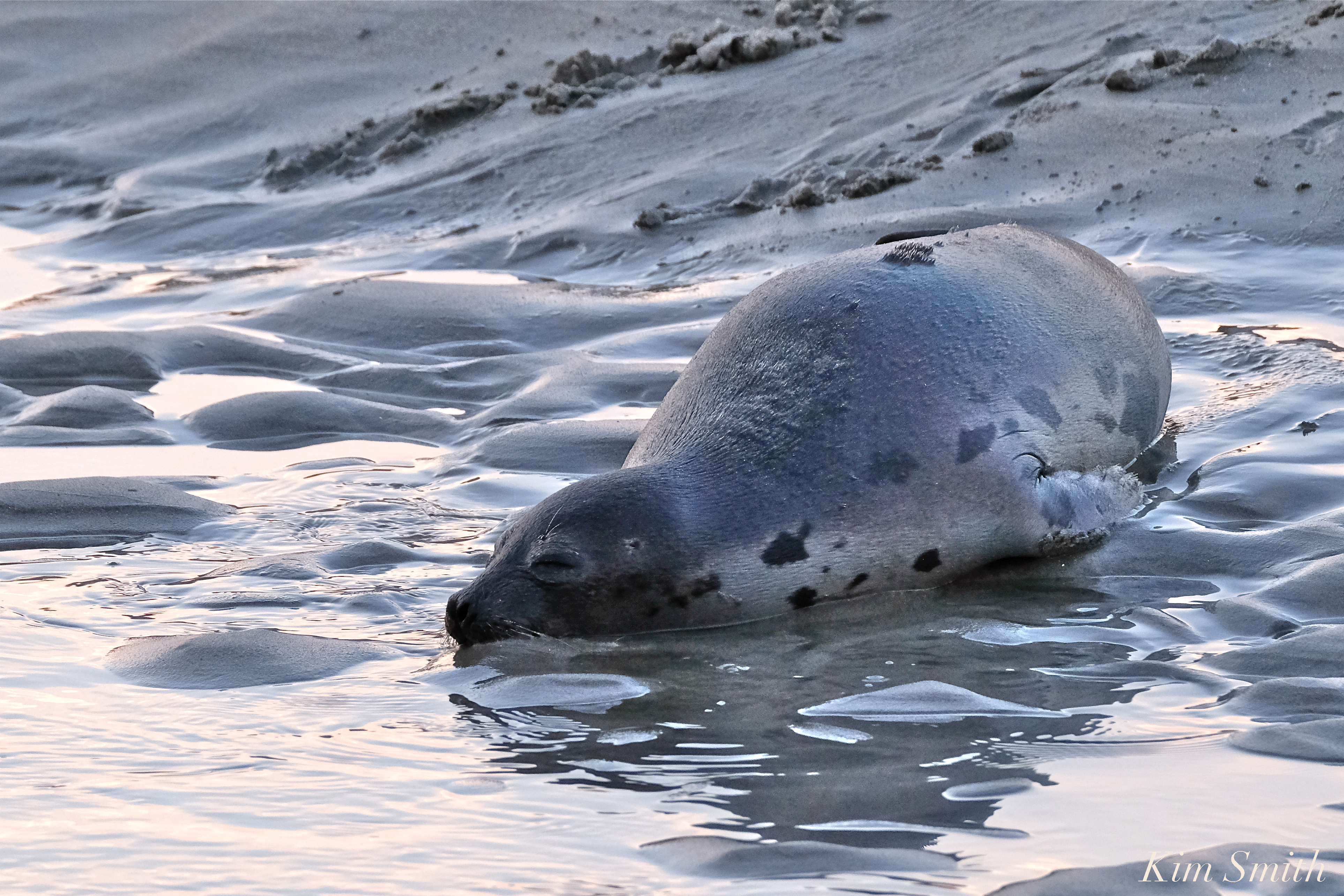 The young Harp Seal appeared very tired when I left the beach at around 5:30.
Many, many thanks to Jane Goodwin, neighbor and Good Morning Gloucester reader, for alerting us to the Harp Seal.
For turtle, seal, and all mammal strandings, please call NOAA at 866.755.6622. Thank you!
Update to the Update
I checked on the little guy at 5:30 this morning on my way out of town to photograph and didn’t see any sign of him, but it was pitch black. I checked again on my way home, around 11am, still no sign, and there did not appear to be any signs of a skirmish with a coyote. The tide was high and the water was up to the top of the creek bed. It would have been much easier for him to slip into the water last night and head back out to sea.
In response to Facebook comments that the location of the seal should not have been posted publicly: The initial post was shared in the evening, after dark, and would not have been posted if people had not been behaving thoughtfully and kindly toward the seal. I believe it is important for adults and children to share the shore with wildlife, to love and respect a wild creature’s boundaries, not hide the whereabouts of the animal. There are exceptions in the case of at risk endangered and threatened species. ❤
Spread The GMG Love By Sharing With These Buttons:

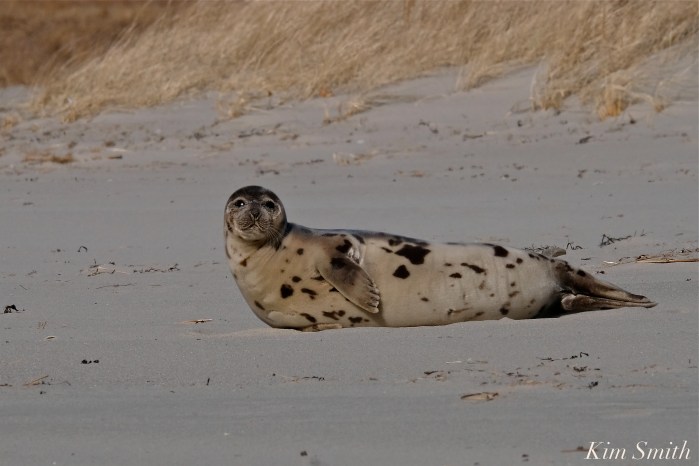
BEAUTIFUL HARP SEAL RESTING TODAY AT GOOD HARBOR BEACH!
A beautiful young Harp Seal spent the better part of the day hauled out between the bank of the Good Harbor Beach creek and the dunes. The seal appeared in good health and was seen resting, stretching, scooching, and sunning. Beach walkers and dog walkers were respectful and kept a safe distance.
Ainsley Smith from NOAA was on the job letting folks know that the seal was okay and that this is perfectly normal seal behavior. Thanks so much to Ainsley and to all the beachgoers today who kept their distance from the Harp Seal. For turtle, seal, and all mammal strandings, please call NOAA at 866.755.6622. Thank you!
I’ve been checking on him periodically throughout the afternoon and will let you know when he makes it back to the water. I hope soon because we know coyotes scavenge the beach at night.


Harp Seals are born during the late winter months in the Arctic. They are born with a lanugo, an extra thick fluffy white coat that keeps them warm on the Arctic ice. During each stage of development, the Harp Seal’s coat has a different appearance. Juveniles have a white coat with widely spaced spots. Every year, the spots move closer together during molting. By the time the Harp Seal reaches adulthood, the coat is silvery gray with a black saddle mark on the back and a black face. See the photo below of a baby and Mom Harp Seal.

Photo Courtesy National Geographic Kids
Harp Seal Breeding Grounds
What to Do if You Find a Seal on the Beach
Spread The GMG Love By Sharing With These Buttons:

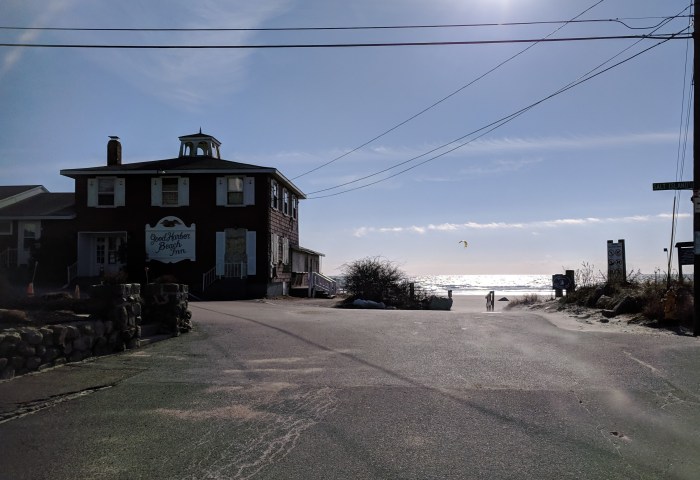
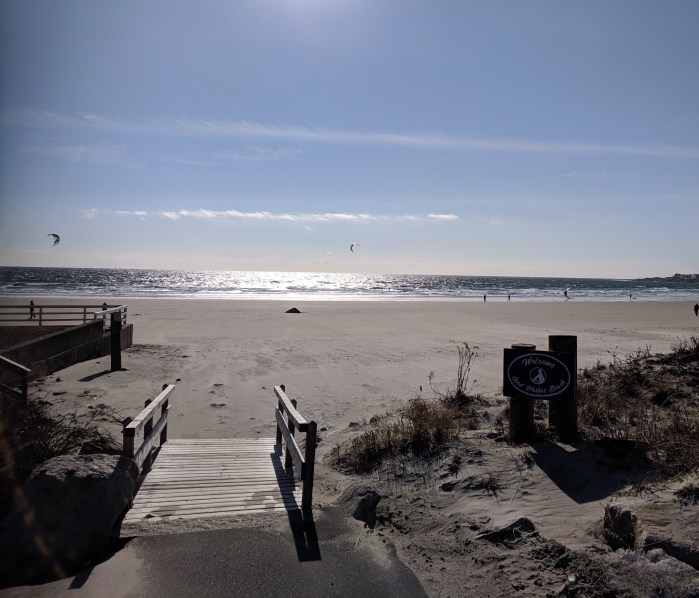
Gorgeous kitesurfing on winter winds at Good Harbor Beach
It’s not something I see often on a cold January walk. Long before you reach the waters edge, from the road, out the window, across the marsh, colorful kiteboarding sails crisscross the horizon. What a visual treat and fun spectator sport. Treat yourself- go see!
Spread The GMG Love By Sharing With These Buttons:

Gorgeous kitesurfing on winter winds at Good Harbor Beach
It’s not something I see often on a cold January walk. Long before you reach the waters edge, from the road, out the window, across the marsh, colorful kiteboarding sails crisscross the horizon. What a visual treat and fun spectator sport. Treat yourself- go see!
Spread The GMG Love By Sharing With These Buttons:

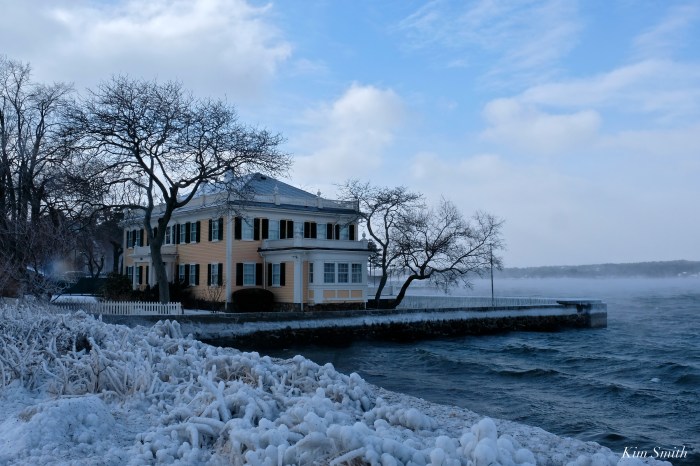
#GLOUCESTERMA FROZEN IN A HAZE OF SEA SMOKE WINTER STORM 2019 – GOOD HARBOR BEACH, LIGHTHOUSES, CITY HALL, NILES BEACH
Snapshots from a brief tour around the back shore while out doing errands this afternoon. With temperatures hovering at 5 degrees, Cape Ann was blanketed with a thick layer of impenetrable ice, snow squalls, and sea smoke.
Happy to see the temperatures are heading towards the forties after Tuesday!


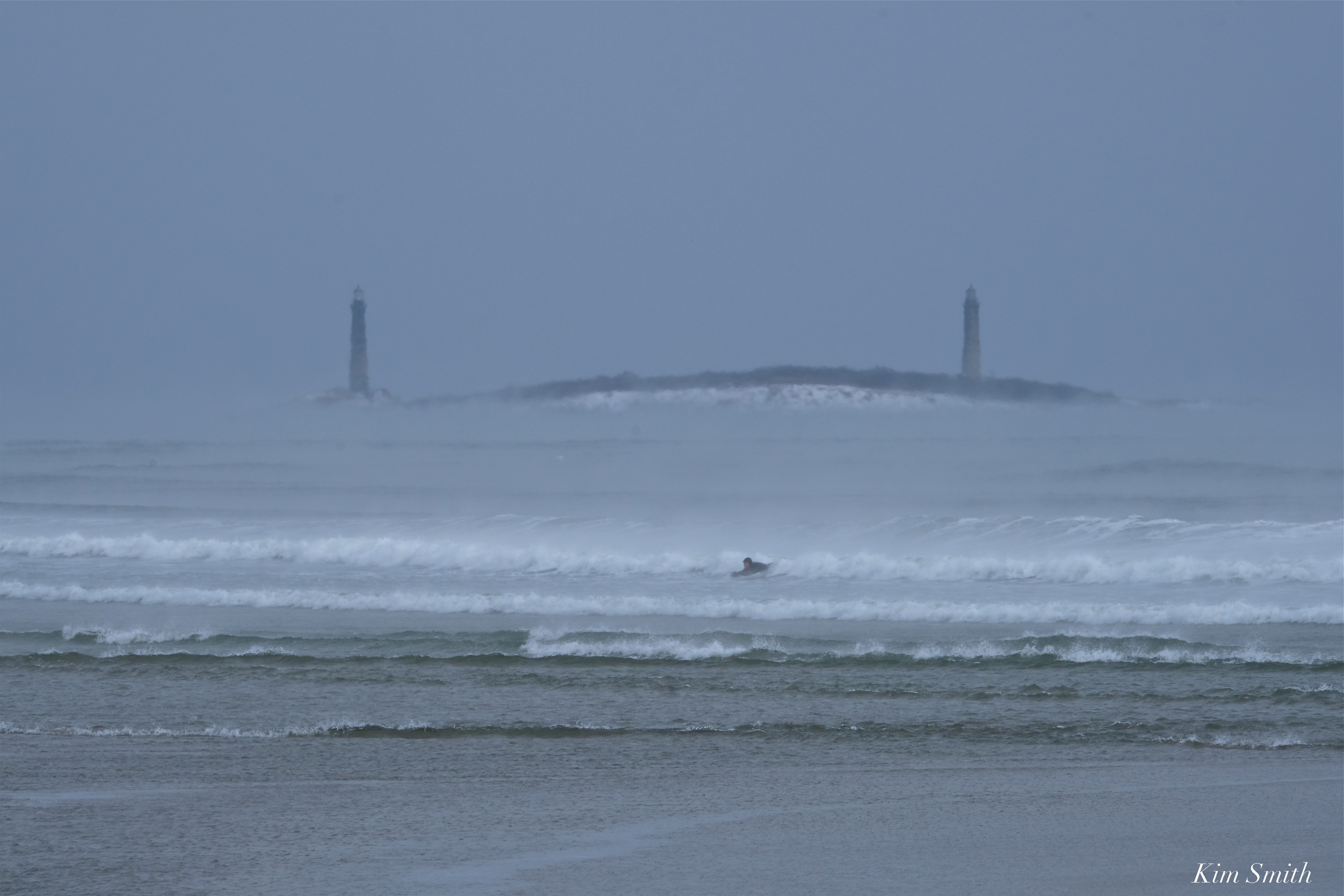 A crazy person surfing at GHB 🙂


