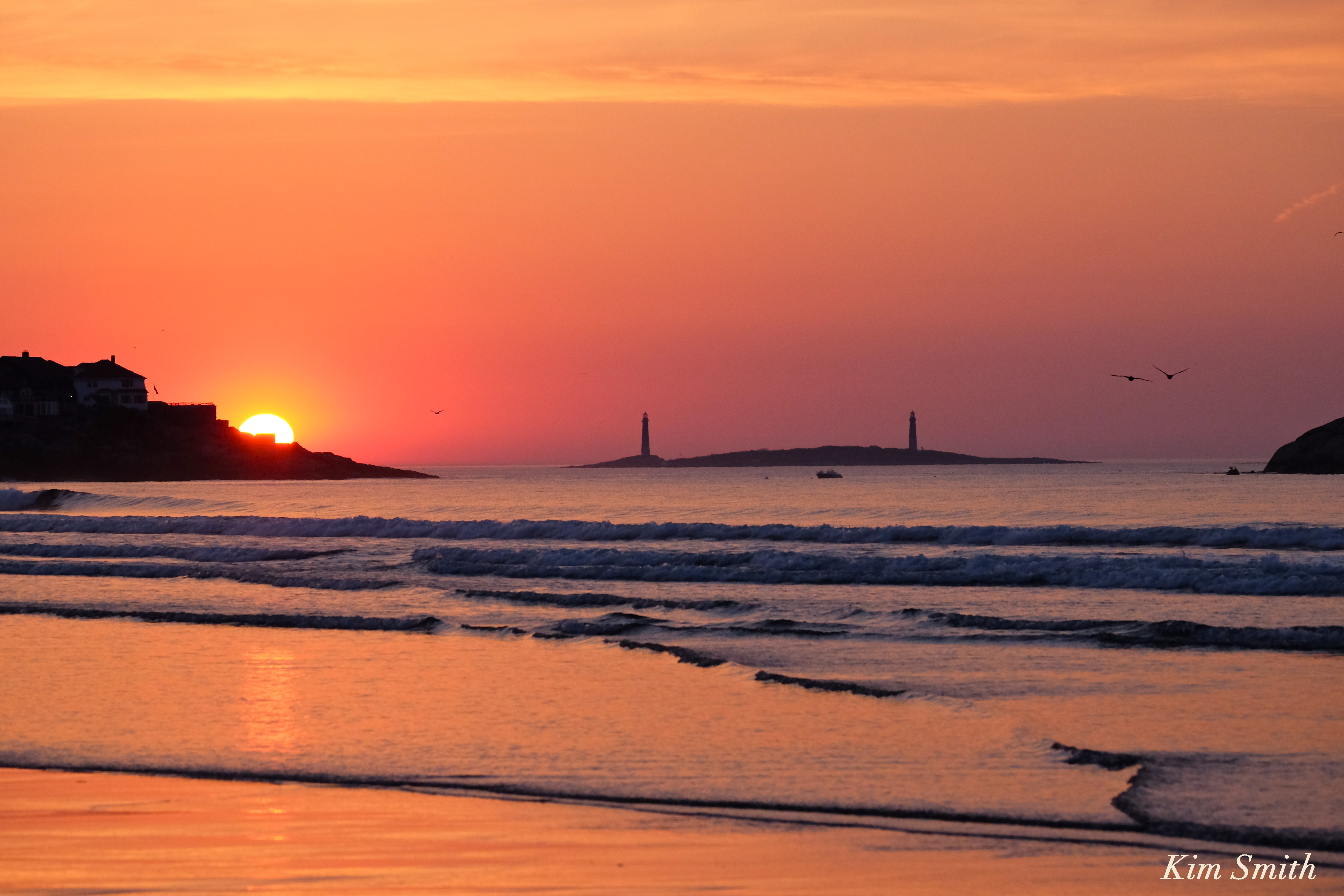
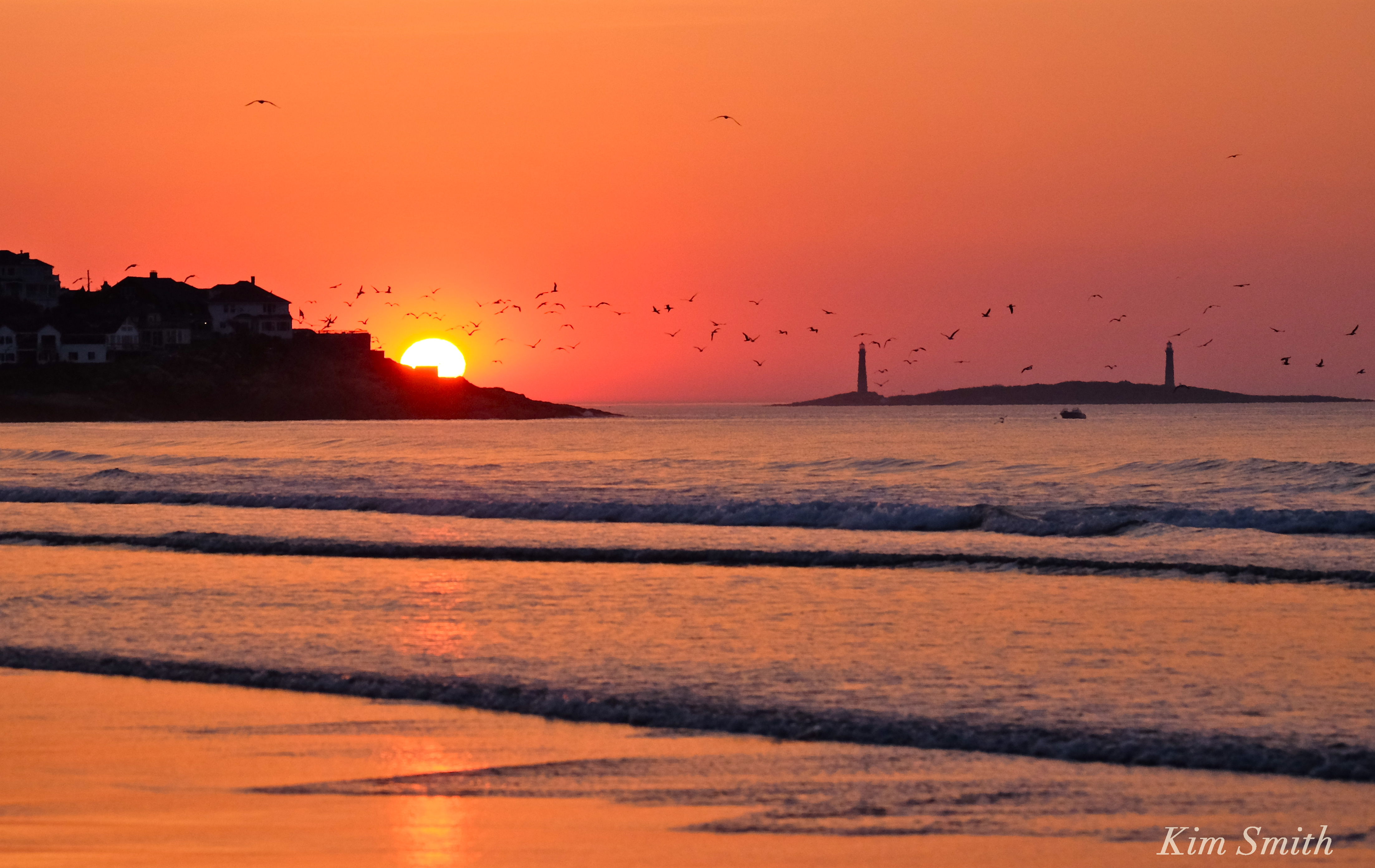
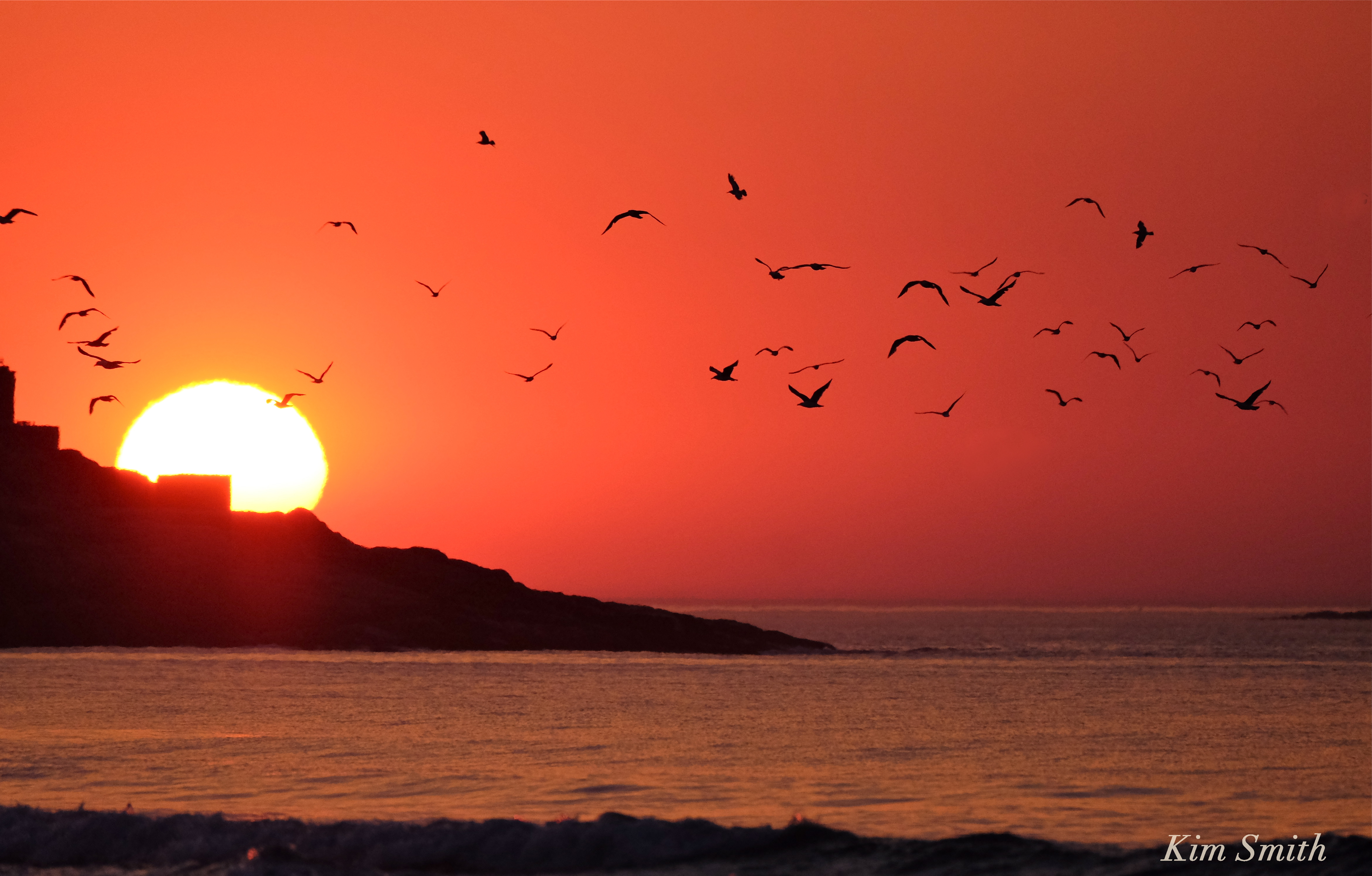
This morning’s luxuriously barefoot warm Good Harbor Beach sunrise!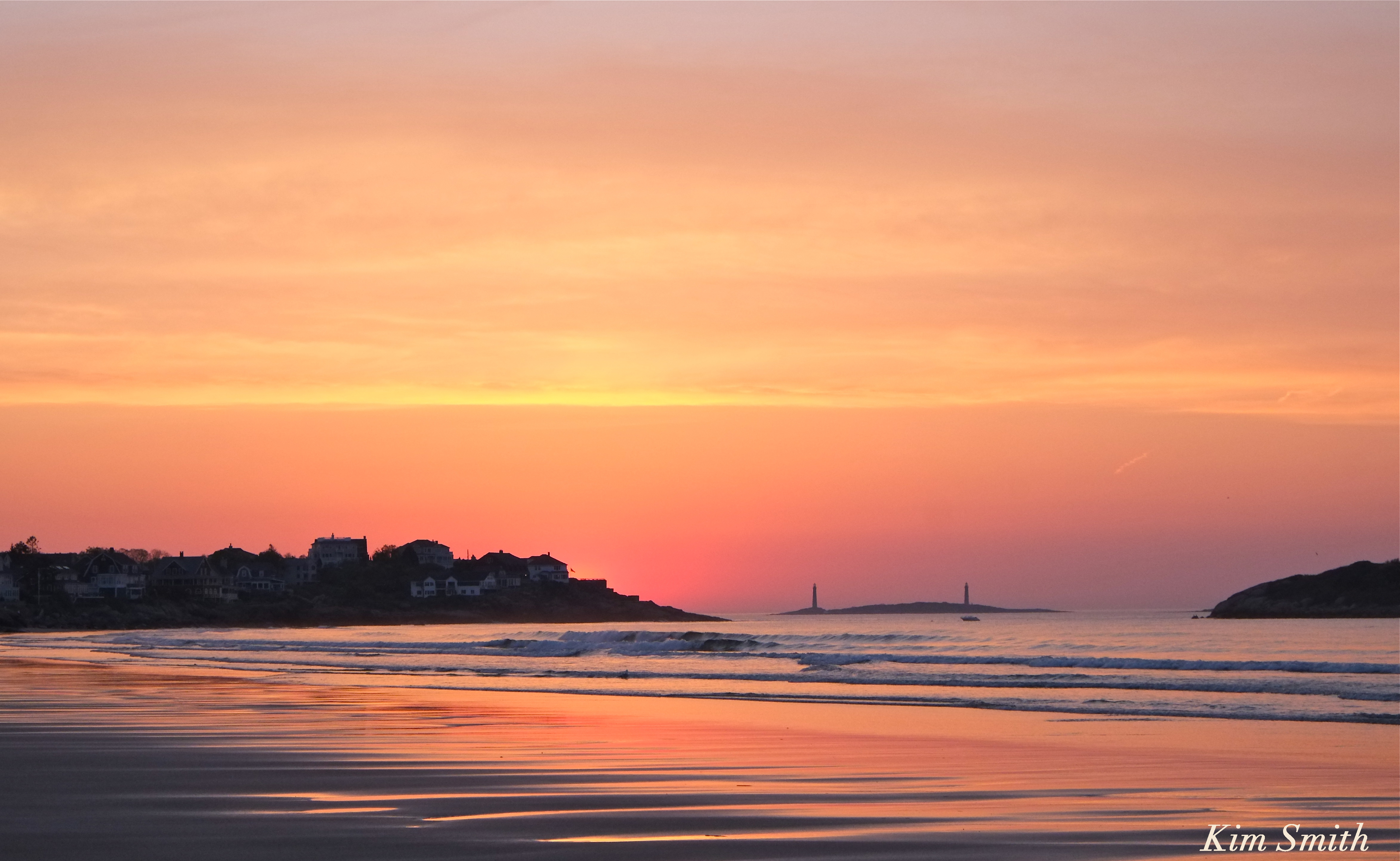

My View of Life on the Dock
This morning’s luxuriously barefoot warm Good Harbor Beach sunrise!

Friday evening at 8:30pm, WGBH’s Open Studio with Jared Bowen will be featuring Gloucester Stage Company’s Lettice and Lovage. The show airs again on Saturday at 5:30am. Open Studio weekly spotlights arts and culture from around the region. For more information, visit the Open Studio web page here.
See too Wednesday’s Boston Globe review here. A grand tour from Lindsay Crouse in ‘Lettice and Lovage’



I’m so excited about all the fun for me this weekend that I’ve practically burst my diaper. Let’s be quick about it:
Thursday night: Rhumb Line: Greg Lutrell is back from China and along with Benny Benson, Fred’s insurance is going to go up.

Saturday night: John Keegan® and Madhouse™ lays waste to the stage at Captain Carlo’s here in beautiful, clogged, Downtown Gloucester. 9 to 12
Sunday night: I join Stovall Brown and Johnny Juxo for some real dice-shaking fun at Terry O’Rielly’s in downtown Newton.5 to 9
Monday night: close out the long weekend by enjoying the groovy sounds of Tony and Samantha Goddess plus friends like John Cameron ,Steevee Chaggaris, and meself at the Mile Magic Marker at the CA Marina. 5 to 8. Whoo, boy, I’m pooped already! Dave…

40 Railroad Avenue
Gloucester, MA 01930
(978) 283-9732

That wonderfully talented painter Debbie Clarke has but out a “call for Glosta paintahs! Preference given to ahteests without a wall to hang on. I will be curating the wall at Zeke’s (restaurant in East Gloucester). My work is there until July 31st. Send me some shots.”
You can contact Debbie at: debbieclarkart@gmail.com or at facebook https://www.facebook.com/debbie.clarke.5011

“Captain Joes Towards the Paint” by Debbie Clarke



Really looking forward to seeing Lettice and Lovage tonight at the Gloucester Stage Company. For more information about showtimes visit their website here: Gloucester Stage Company

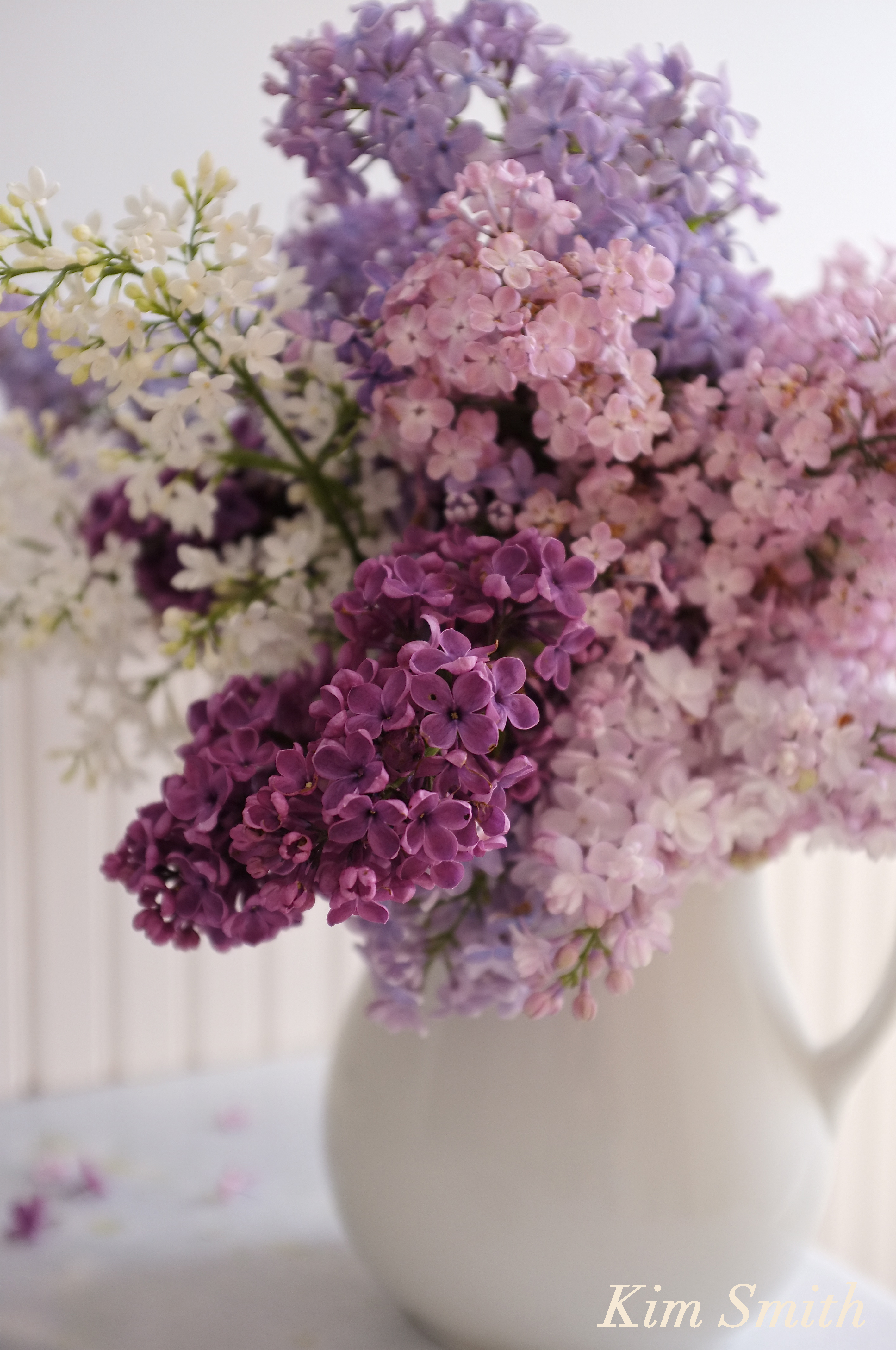
Lilacs from our garden blooming in shades of pink, purple, blue, white and lavender
With our lilacs in full glorious bloom, and nearly knocking me out with their wonderfully delicious fragrance when walking down our garden path, I thought I’d post this excerpt from my book Oh Garden of Fresh Possibilities ~ Notes from a Gloucester Garden. Not all lilacs are fragrant and some not at all. Based on my years of planting lilacs for client’s gardens, and my own garden, with any one of the lilac cultivars listed here, you will not be disappointed. For information on how to grow lilacs, the chapter devoted to lilacs in Oh Garden! goes into greater detail.
Lilacs
False blue
White
Purple
Colour of lilac
Heart-leaves of lilac all over
New England,
Roots of lilac under all the soil
of New England,
Lilacs in me because I am
New England,
Because my roots are in it,
Because my leaves are in it,
Because my flowers are for it,
Because it is my country
And I speak to it of itself
And sing of it with my own voice.
Since certainly it is mine.
—from Lilacs by Amy Lowell (1874–1925)
Surely at the top of the list of shrubs to grow for creating the framework of an intimate garden or garden room are lilacs, in particular Syringa vulgaris and their French hybrids. Syringa vulgaris are grown for their exquisite beauty in both form and color of blossoms, although it is their fragrance flung far and throughout gardens and neighborhoods that make them so unforgettable.
Not all species of Syringa and cultivars of Syringa vulgaris are scented. The early French hybrids and hybrids of Leonid Kolesnikov have retained their fragrance. Syringa oblata has a similar fragrance, though is not nearly as potent. Several of the Chinese species have a spicy cinnamon scent, while many of the Asian species and their hybrids have very little, if any, fragrance. To find your personal preference, I suggest a visit to a local arboretum, or take your nose to the nursery during the extended period of time (six to eight weeks, or so) in which the different cultivars of S. vulgaris are in bloom.
Nearly everywhere lilacs are grown (and here I am only referring to S. vulgaris), they are called by some variety of the word lilac. Perhaps the word lilac stems from the Persian word Lilak or Lilaf meaning bluish. The French say Lilas, the Spanish say Lila, and the Portuguese Lilaz. In old English lilacs were called Laylock, Lilack, and Lilock.
Lilacs are native to and found growing among the limestone rocks on the hillsides and mountainsides throughout southeastern Europe, in the Balkans, Moldavia, Serbia, Macedonia, and Yugoslavia. Cultivated by local mountain herdsmen, they were taken from the peasant villages of central Europe to the garden courts of Istanbul. In 1563, the Flemish scholar and traveler Ogier Ghiselin, Count de Busbecq, Ambassador of Ferdinand I of Austria to the court of Suleiman the Magnificent, brought back to Vienna gifts from the sultan’s garden. Attracting much attention was the lilac. Seven years later, in 1570, Ogier Ghiselin, Count de Busbecq, and then Curator of the Imperial Court Library, accompanied the Archduchess Elizabeth from Vienna to Paris where she was betrothed to King Charles IX of France. Count de Busbecq journeyed to France with a shoot of Syringa vulgaris, where it soon began to fill the gardens of Paris.
Two color variants sprang up in European gardens beside the wild blue- flowered lilac, a nearly white flowered variant with lighter foliage and a taller- growing variant with deeper purple flowers. Hybridizers quickly set about to create different forms and color versions from these two variants.
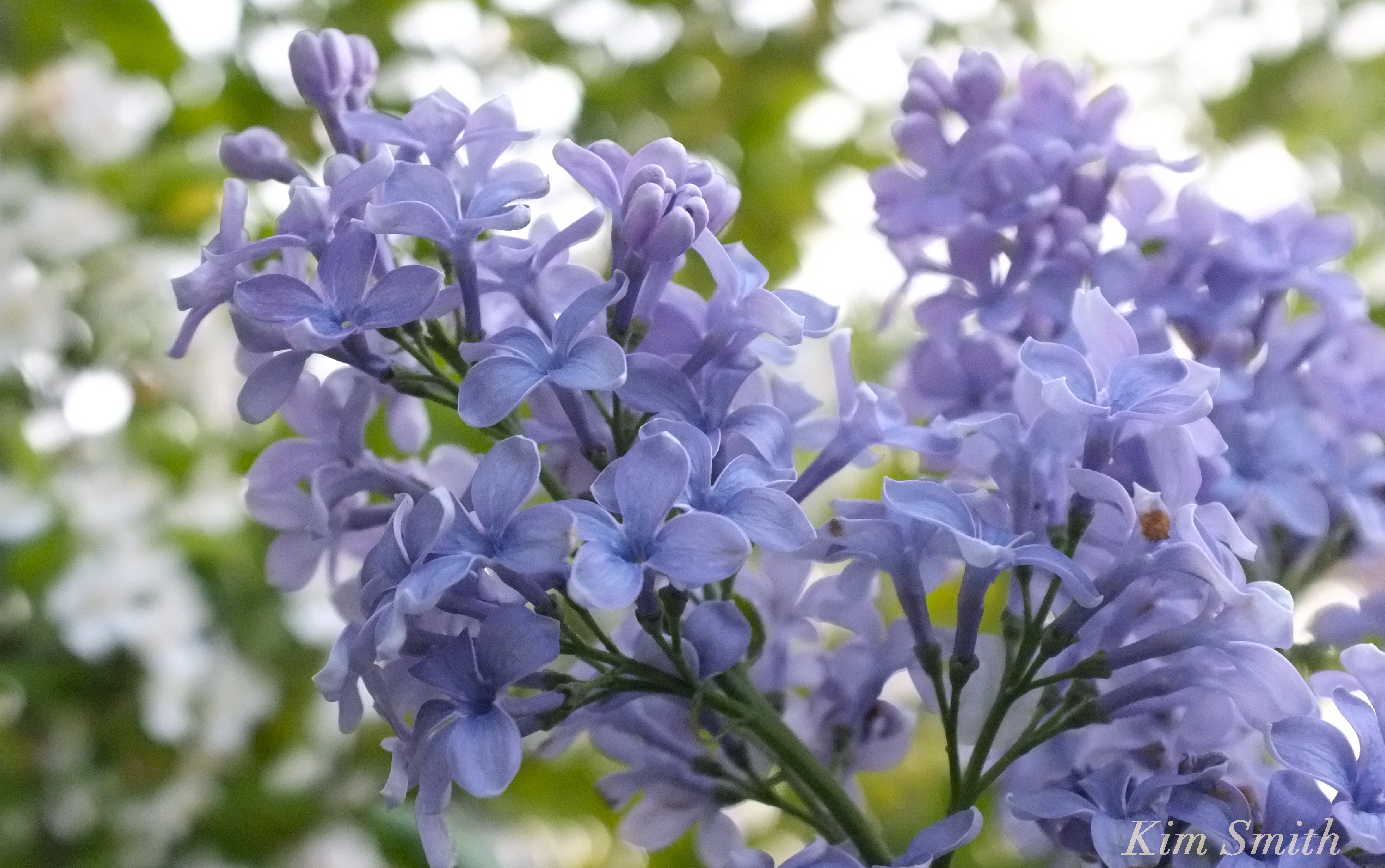
Blue lilac – ‘President Grevy’
Victor Lemoine of the famed nursery Victor Lemoine et Fils at Nancy in Lorraine Province continued the work of hybridizing lilacs. From 1878 to 1950, Victor and his wife, their son Emile, and their grandson, Henri, created 214 lilac cultivars. The cornerstone of the Lemoine’s lilac hybridizing program was a nat- ural sport that bore two corollas, one inside the other, making it the first dou- ble. This double was subsequently named ‘Azurea Plena.’ Because of the Lemoine family’s success in turning ordinary lilacs into fancy double-flowered lilacs in nearly every hue imaginable, they became known as the “French lilacs.” Spreading throughout Europe, the French lilacs were brought to the Russian court by French travelers. Well suited to the soil and climate of Russia, they soon spread far and wide. Several decades later, the Russian hybridist Leonid Kolesnikov continued the successful work of the Lemoines with his own exquisite variants.
The French and Dutch colonists transported lilacs to North America. These cherished cuttings, wrapped in burlap and wet straw tucked into suitcases for the long journey across the Atlantic, traveled well and were soon growing throughout the colonies. By 1753 the Quaker botanist John Bartram of Philadelphia was complaining that lilacs were already too numerous. One of two of the oldest col- lections of lilacs in North America are at the Governor Wentworth home in Portsmouth, New Hampshire, planted by the governor in 1750. The second collection, perhaps one hundred years older, is at Mackinac Island in Michigan, where French Jesuit missionaries living in the area are thought to have planted them as early as 1650.
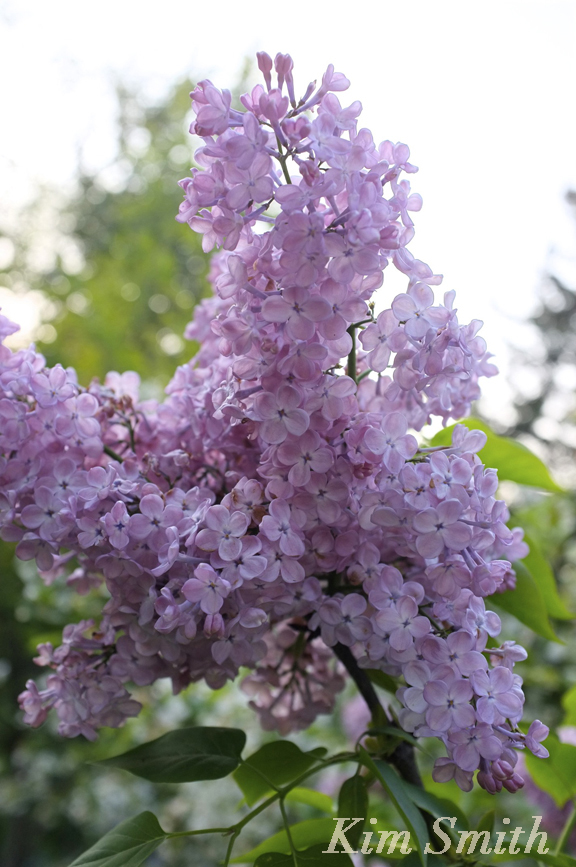
Pink lilac – ‘Maiden’s Blush’
With their traveling fragrance, versatility in the landscape, and their ability to live tens, perhaps even hundreds of years, lilacs are garden heirlooms. When selecting lilacs to grow for creating the framework of the garden, take the time to choose wisely. Some lilacs grow readily into a tree shape (‘Beauty of Moscow’), while others are somewhat relatively lower growing cultivars; ‘Wedgwood Blue’ comes to mind, and still others, the common white lilac (Syringa vulgaris var. alba), sucker more freely. And bear in mind that different lilacs bloom over an extended period of time. If you wish to have a blue lilac blooming simultaneously with a white lilac, then it is worthwhile to determine whether a specific cultivar is an early, mid, or late season bloomer. The following is a selection of lilacs growing in our garden, arranged in their sequential progression of flowering, with considerable overlapping. They are all highly scented or we wouldn’t grow them. The last photo below shows the different colors in lilac blossoms of white, pink, blue, lavender, magenta.
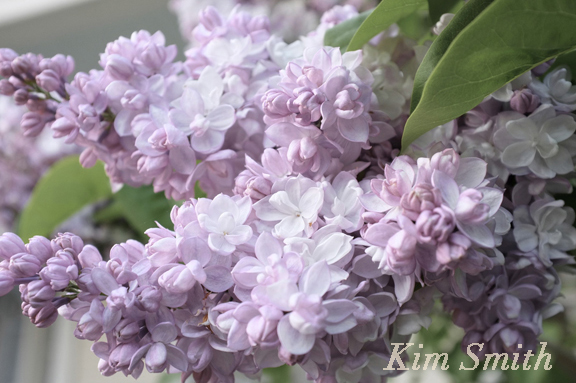 Syringa x hyacinthiflora ‘Maiden’s Blush’
S. x hyacinthiflora ‘Maiden’s Blush’ (1966) Skinner ~ Single, pale rose pink; shows different colors of pink under different soil conditions. In a warmer climate and lighter soils it is a paler shade of pink, in heavier soils ‘Maiden’s Blush’ has more lavender undertones.
‘Krasavitsa Moskvy’ translated to ‘Beauty of Moscow.’ Leonid Alexseevitch Kolesnikov (1974) ~ Double, lavender-rose tinted buds opening to white-tinted pink. Grown throughout Russia. Vigorous upright habit, useful for growing into a tree-shape. Very extended blooming period.
Syringa vulgaris var. purpurea. Common purple lilac ~ Lavender, the wild species seen growing throughout its native land. The common purple is the most widely distributed form of lilac. The lilac of old gardens.
‘Wedgwood Blue’ John Fiala (1981) ~ Hanging panicles of beautiful true blue florets. Lilac-pink hued buds. Somewhat lower growing.
‘Madame Florent Stepman’ (1908) ~ Satiny ivory white florets from rose- washed buds. Pure white when fully opened. Tall and upright growing. One of the most extensively cultivated for the florist trade.
‘President Grevy’ Lemoine (1886) ~ Pure blue, immense panicles of sweet starry florets.
‘Marie Legraye’ (1840) ~ Single, diminutive florets, radiant white, lighter green foliage.
‘Monge’ Lemoine (1913) ~ Vivid, intense plum wine fading to deepest rose.
‘Andenken an Ludwig Spaeth’ Nursery of Ludwig Spaeth (1883) ~ Single, rich purple-violet with a smaller pointed-head panicle.
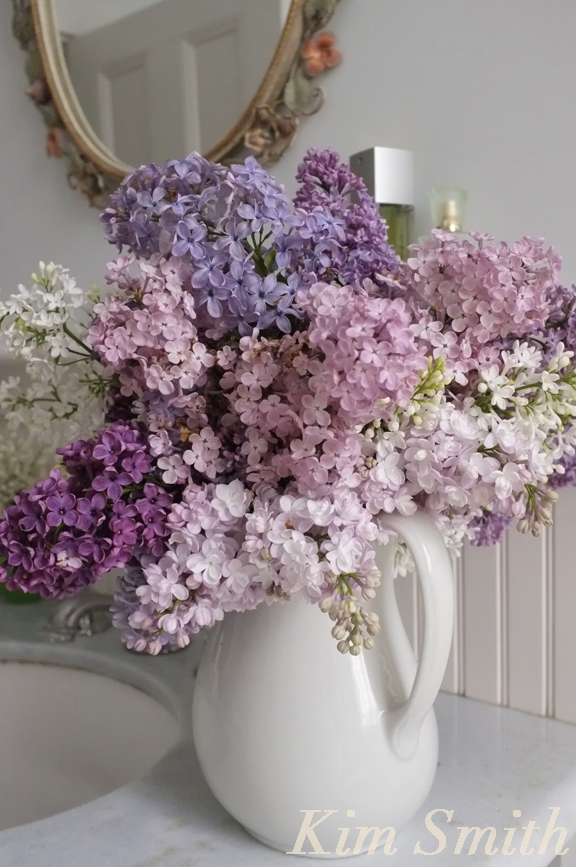 Clockwise from upper right: Pale pink ‘Maiden’s Blush,’ common white, double-flowered ‘Beauty of Moscow,’ ‘Monge,’ common white, ‘President Grevy’ (blue), and common purple.
Above excerpt from Oh Garden of Fresh Possibilities! Notes from a Gloucester Garden (David R. Godine, Publisher), written and illustrated by Kim Smith.
Link to David R. Godine website for more information Oh Garden of Fresh Possibilities ~ Notes from a Gloucester Garden
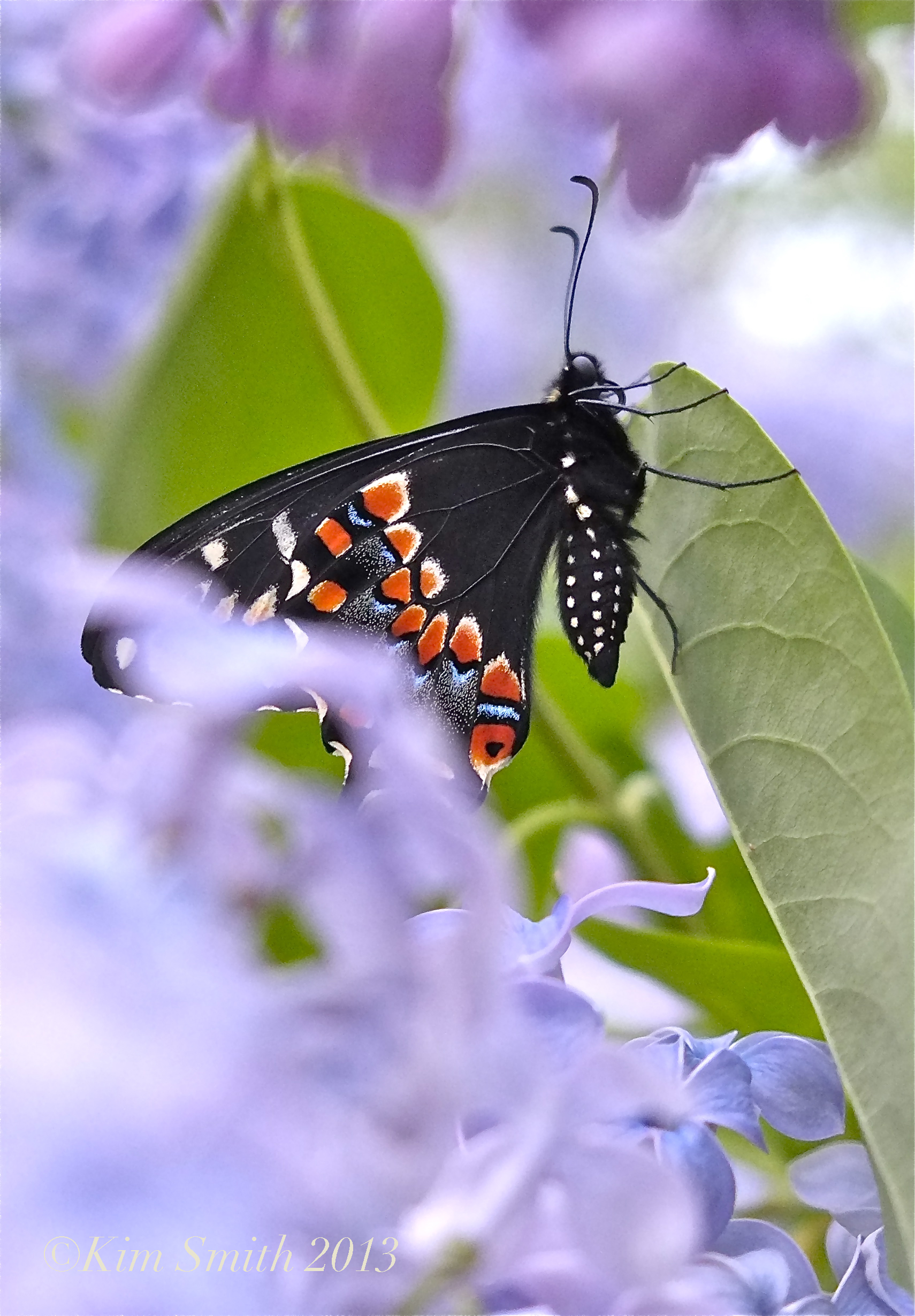 Newly emerged male Black Swallowtail Butterfly and ‘Wedgwood’ blue lilac.


This week, dinner special trifecta!
BBQ Beef Brisket Sandwich w/Fries – $10.95
Southwestern Veggie Wrap – $8.95
Vegetable Terrine – $9.95
Wednesday, May 25th – 7pm
Musical Guest: RON SCHRANK!
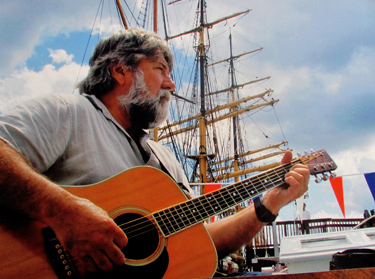
He’s not as grim as he looks here, folks. Ron Schrank is just
about as warm and gentle as a musician can possibly be. We
love him dearly. Don’t miss it! ~ Fly
Dinner with great music!
*Each week features a special, invited musical guest
The Rhumb Line Kitchen…
…now features Janet Brown with some new and healthy ideas!
Plus a fine, affordable wine menu!
The very near future…
J.B. Amero
Liz Frame & The Kickers
Jon Butcher
Visit: http://www.therhumbline.com/
Looking forward……to seeing you there 🙂

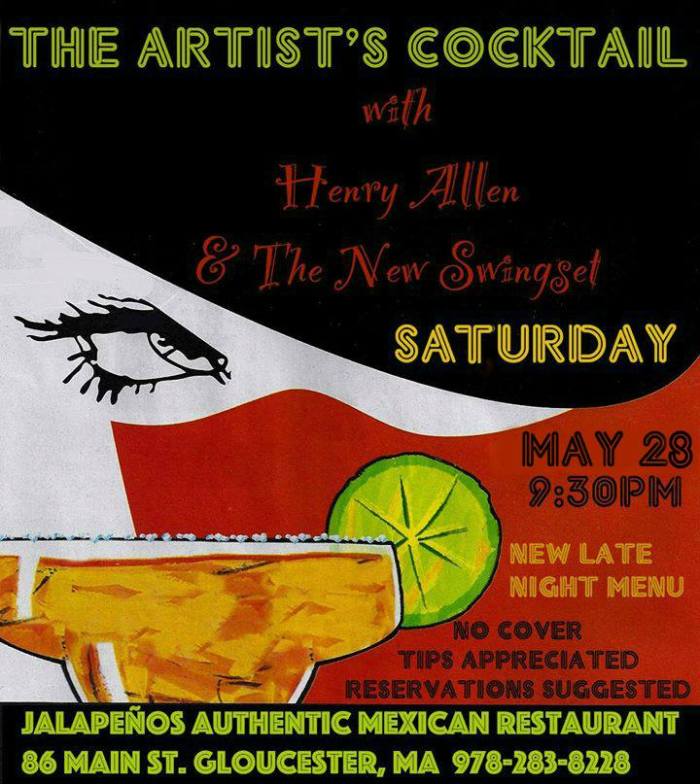
Excited to welcome Noah Harrington, Derek Dupuis, & Shane Dähler to The New Swingset! Join us!
https://www.facebook.com/HenryAllenandtheNewSwingset/timeline

 Thank you Goddess Family for the invitation to come see Tony and Samantha’s super fun Musical Morning at Cape Ann Preschool. Dancing, singing, and with Tony allowing the children to strum his guitar, a wonderful time was had by all!
https://www.instagram.com/p/BFyzZKnDyqh/
 Many in the community are familiar with Cape Ann Preschool (formerly Lanesville Preschool), but if not, they are located just off Washington Street on Gloucester Avenue, soon to be relocating to 488 Essex Avenue beginning in August. Cape Ann Preschool is a play-based preschool program and, according to their website blend academic school readiness, social skills, and developmentally appropriate learning for children ages 2.9 -6. For more information, visit the Cape Ann Preschool website here.
For more about the Goddesses, visit Bang-A-Song studio here.
I leave you with Ants in My Pants –
https://www.instagram.com/p/BFy0luvjyta/

Debuting at this weekend’s Harbortown Arts Festival, we are pleased to announce our new “ART @ the Ice House” gallery at Cape Pond Ice Company, Fort Wharf, 104 Commercial Street, Gloucester.
We will be hosting an Open House / Gallery launch Saturday, Sunday &Monday, May 28 – 30, from 10 am – 3 pm. A special retrospective of the paintings and art of Sue Memhard (1941-2011) will be featured. www.SueMemhard.com for more information about Sue’s life, creative passions, work and art.
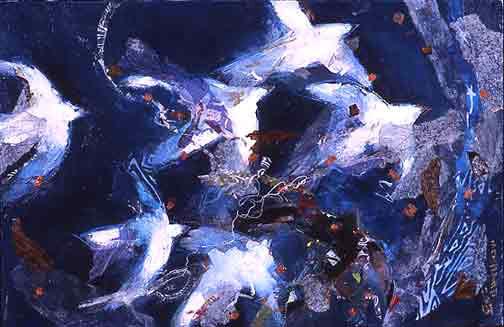 “Night Flight” c. Sue Memhard, acrylic & collage on wood
Gallery space to exhibit is also available – painting, pottery, sculpture & photography – so please contact us if interested in showing with us this summer. Email: office@capepondice.com Fort Wharf Arts Collective, Gallery @ Cape Pond Ice Company.




 When I lived for a while in the mountains near Woodstock, NY, people there used to say, “We have three seasons: July, August and Winter.” This spring might make you wonder if the same is true here in Gloucester. It’s not. Nice weather is around the corner and it starts this weekend when we celebrate Memorial Day and call it the beginning of summer (even though astronomically, summer isn’t for another 4 weeks). So … good riddance oh nasty spring — IT’S TIME TO PARTY!
But here’s the thing: even if our capricious New England weather decides not to cooperate, which we all know is possible, you can still party in supreme comfort aboard The Beauport Prince Cruise Ship on Memorial Day Sunday with 5-time Grammy nominees Roomful of Blues! That’s because the Beauport Princess is a Cruise Ship (not a whale watch boat) sporting 2 climate-controlled indoor decks with dance floors PLUS an open-air top deck — and there’s a full bar on every deck. For this cruise, we have theatre seating on the first deck, tables on the 2nd deck and couches on the top deck — because Mother Nature could be nice to us after all! Tickets are only $35 in advance ($45 at the dock if there are any left — this cruise has sold out the last 2 years). It’s the best Memorial Day bargain you’ll find so get tickets right now RIGHT HERE!


click the photo for music info

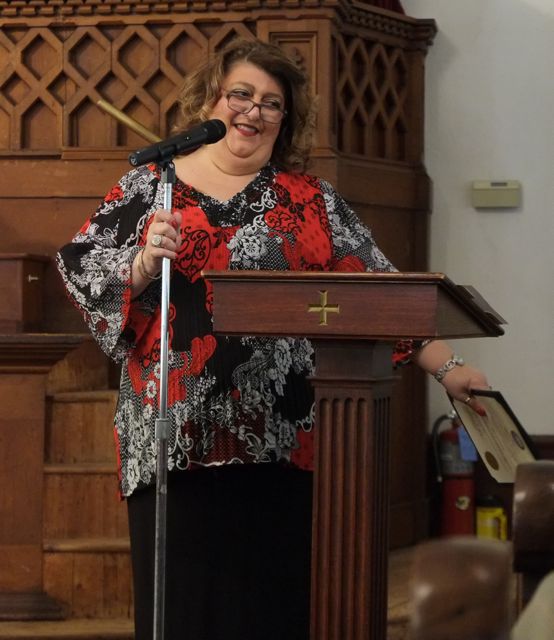
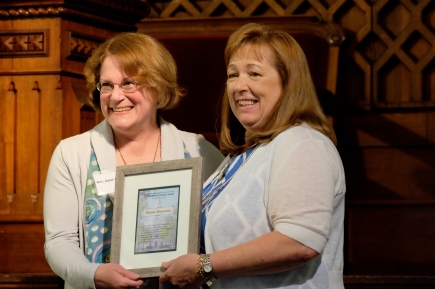
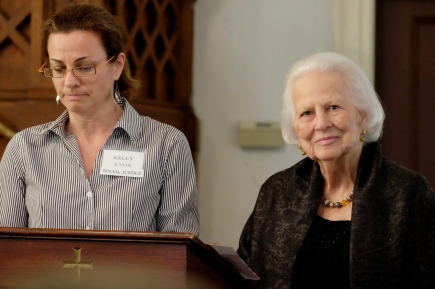
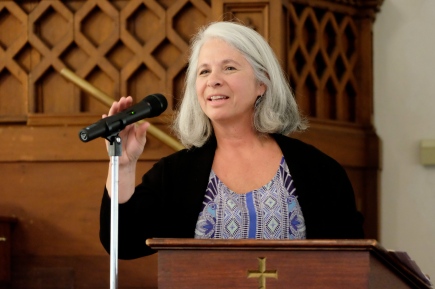
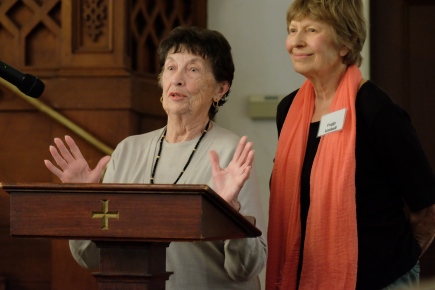
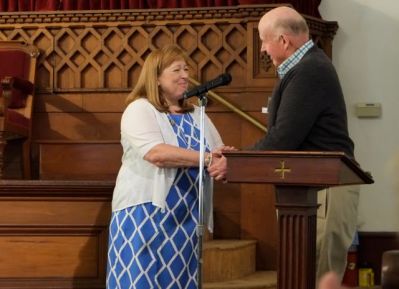
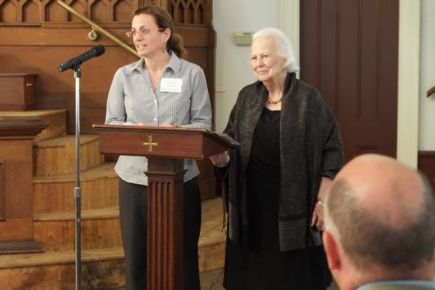
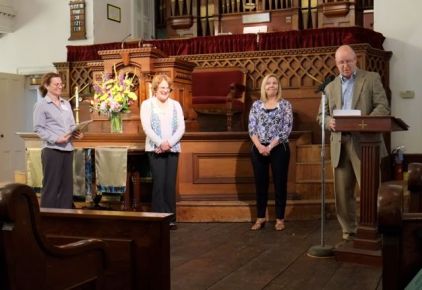
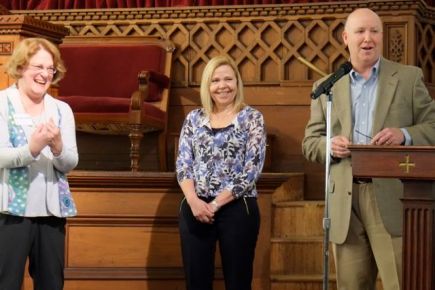
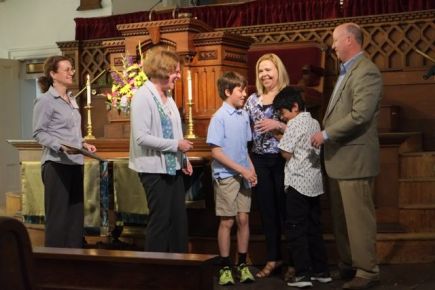
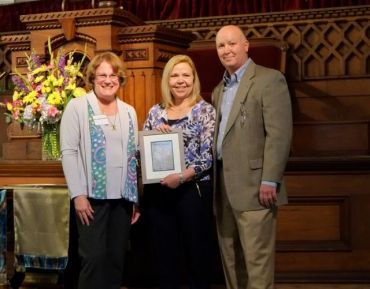
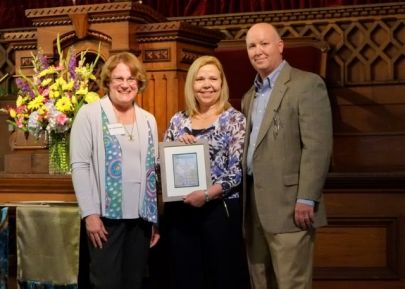
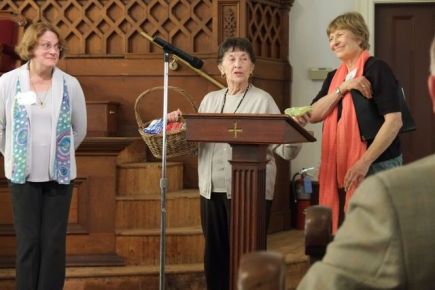
 To receive a Gloucester Citizenship Awards is a very special honor. Each May the Gloucester Unitarian Universalist Church recognizes outstanding Gloucester citizens for their selfless good work. The citizenship award is a “celebration of civic pride and a reminder that each of us can make a difference.”
Congratulations to the 2016 Gloucester Citizen Award winners Pauline Bresnahan, Ellie Cummings, Nome Graham, George Hackford, Charles Nazarian, Patti Page, Save Our Shores Gloucester (Pam and Mark Poulin), Peter Souza, Dolores Talbot, and Alice and Mike Wheeler.


https://www.instagram.com/p/BFujl3Vjyia/





































For Immediate Release from Mayor Sefatia Romeo Theken
Public Works in conjunction with our local Conservation Commission, MA Dept of Wildlife and Fisheries and Mass Audubon have been following the activities of Piping Plovers on Good Harbor Beach for the past 4 weeks. The birds have shown signs of nesting activities in this area.
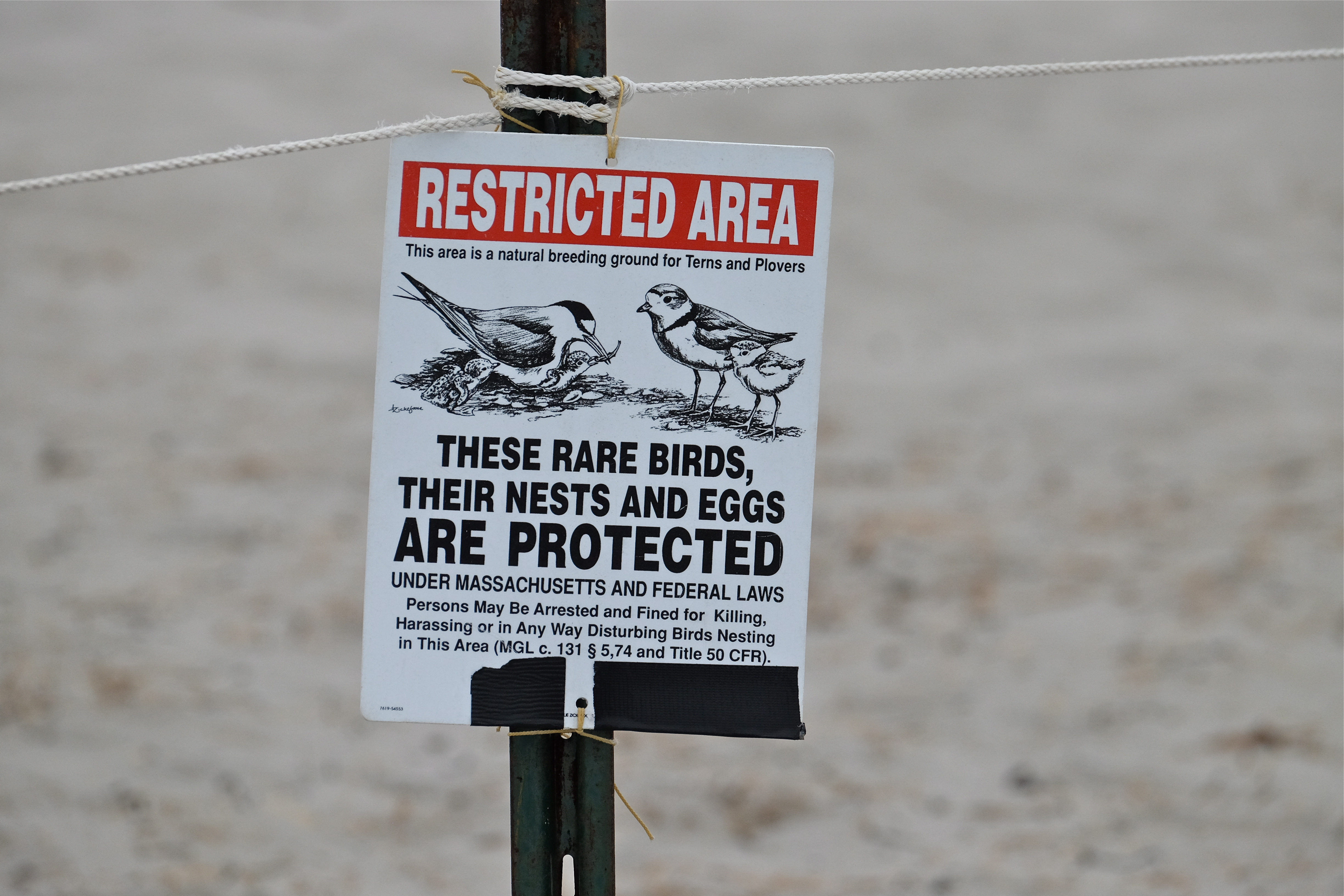
On a recommendation of the state we have fenced off an area approximately 200 feet by 200 feet – southwest of board walk number 3. This area starts at the base of the dunes and extends to the high tide rack or water line. This area is to be off llimits to all humans as well as any domestic pets. These birds are listed under the State and Federal Endangered Species Acts and are granted special protection.
We will continue to work with all agencies to provide the support they need to let nature take its course. We ask for the support of the general public to adhere to the regulations set forth. Any questions should be directed to the Department of Recreation and Conservation (DCR) and/or Mass Audubon.
Thank you in advance for your cooperation.
* * *
A little background information from Dave Rimmer, Director of Land Stewardship Greenbelt
Yet another bird that was nearly hunted to extinction for its beautiful feathers, as of 2012 when the most recent study was concluded, there were only 3,600 breeding Piping Plovers along the Atlantic Coast.
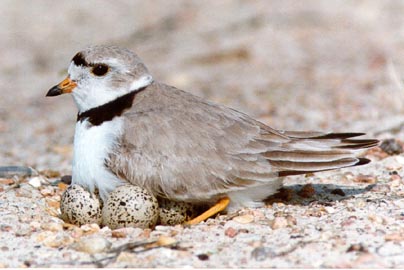 Piping Plover’s are a softy colored, mostly tan and white, pint-sized shorebird and like their nests and eggs, exquisitely camouflage with colors of sand and pebbles. This also makes them highly vulnerable to disturbances by humans; even if when people are trying to avoid their nesting sites, it is very easy to unwittingly crush eggs and chicks.
Piping Plovers have been observed on Good Harbor Beach this spring and could quite possibly nest here. The Gloucester DPW, working in conjunction with the Conservation Commission, MA Department of Wildlife, and Mass Audubon have cordoned off a roughly 200 feet by 200 feet area between the GHB bridge and boardwalk number three (the large rock that was exposed several storms ago lies within the area).
This area of the beach may be closed off for as long as eight weeks, possibly longer. If the nest is disturbed, the Piping Plovers will abandon the first and create a new nest, which will extend the time of beach closure.
It is to everyone’s benefit, plover and people alike, to heed the signs and to please keep dogs on leash at all times.
Are dogs allowed on the beach at this time of year?
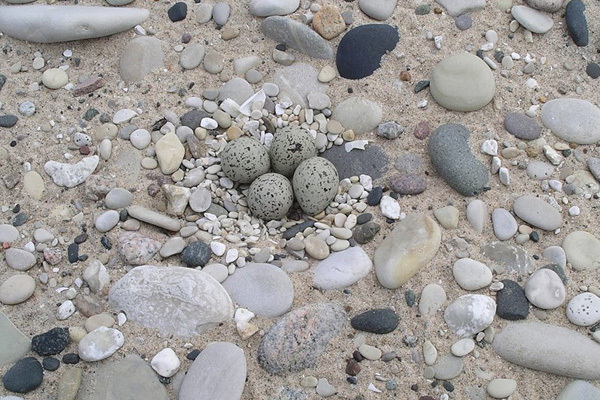
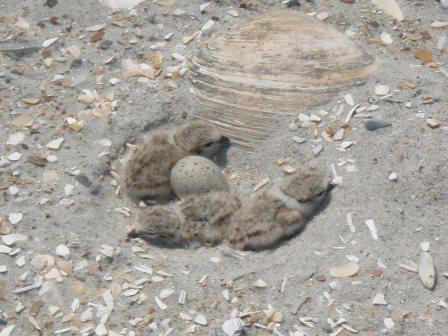
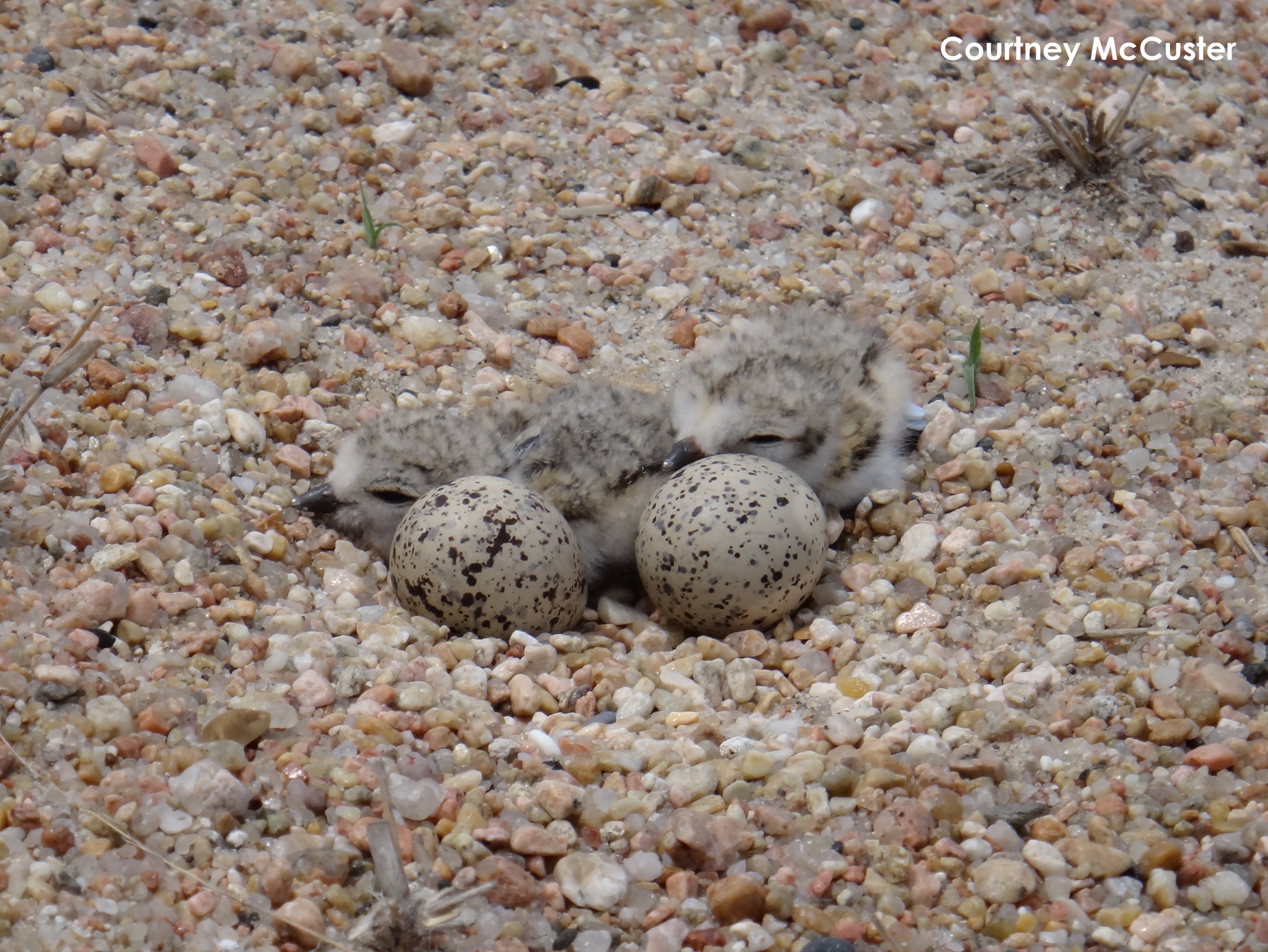
You can see from the photos of different Piping Plover nests from several regions of the country how perfectly the pebble-lined nests and babies meld with their surroundings–a good thing to keep them safe from predators, but not such a good plan for nests in well-trafficked areas.
The male selects the nesting site, defending it from other males. He scrapes a nest in the sand and both the male and female toss stones and bits of shell into the depression. Both the male and female incubate the eggs. It takes about 25 days to incubate the eggs and another three to four weeks for the chicks to fledge.
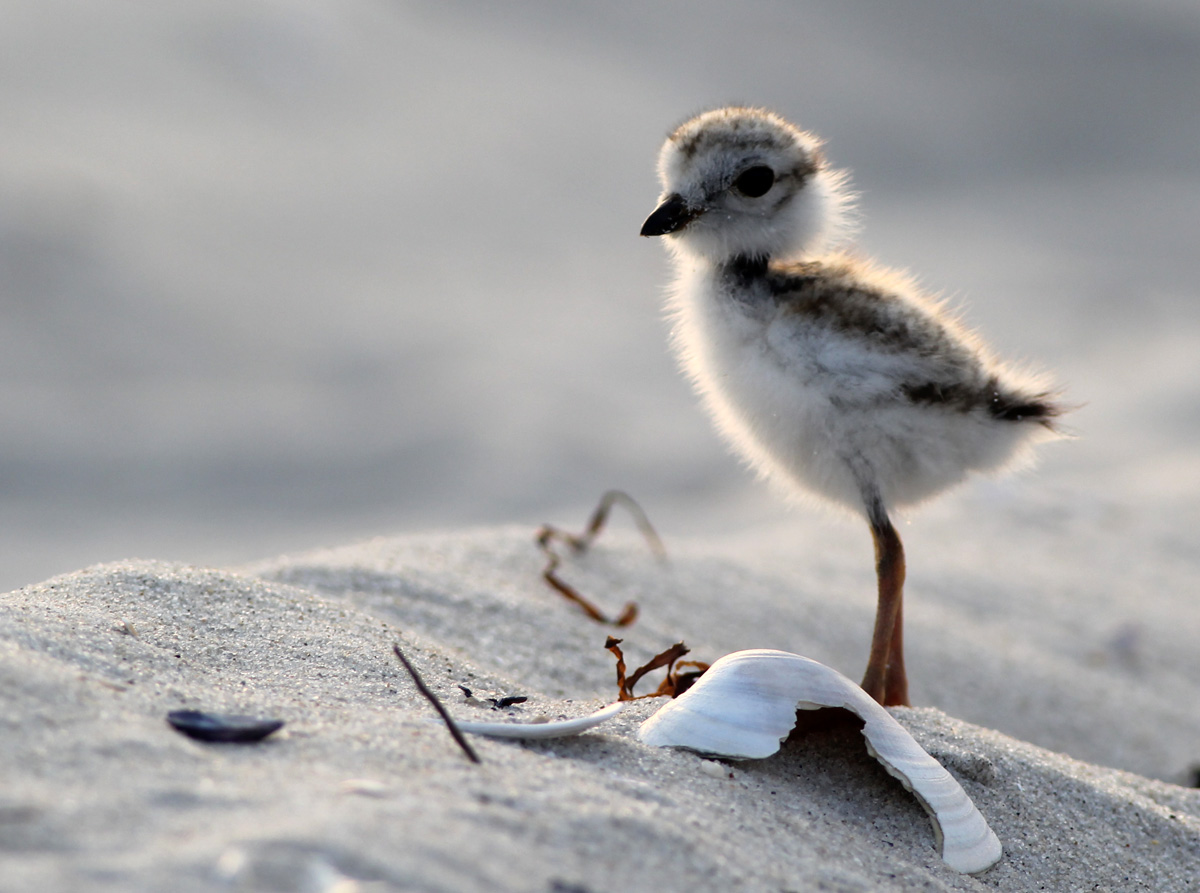
Like the Killdeer, Piping Plovers cleverly display a broken wing, a trick designed to distract predators from their nests and babies. Both Killdeers and Piping Plovers are in the same family, Charadriidae. The Piping Plover’s scientific name, Charadrius melodus, and common name, comes from its lovely melodic piping bird song.

https://www.instagram.com/p/BFrn9KYjyma/
ALL IMAGES EXCEPT THE LAST TWO, COURTESY GOOGLE IMAGE SEARCH

 Sharon Bo Abrams and Martin Del Vecchio
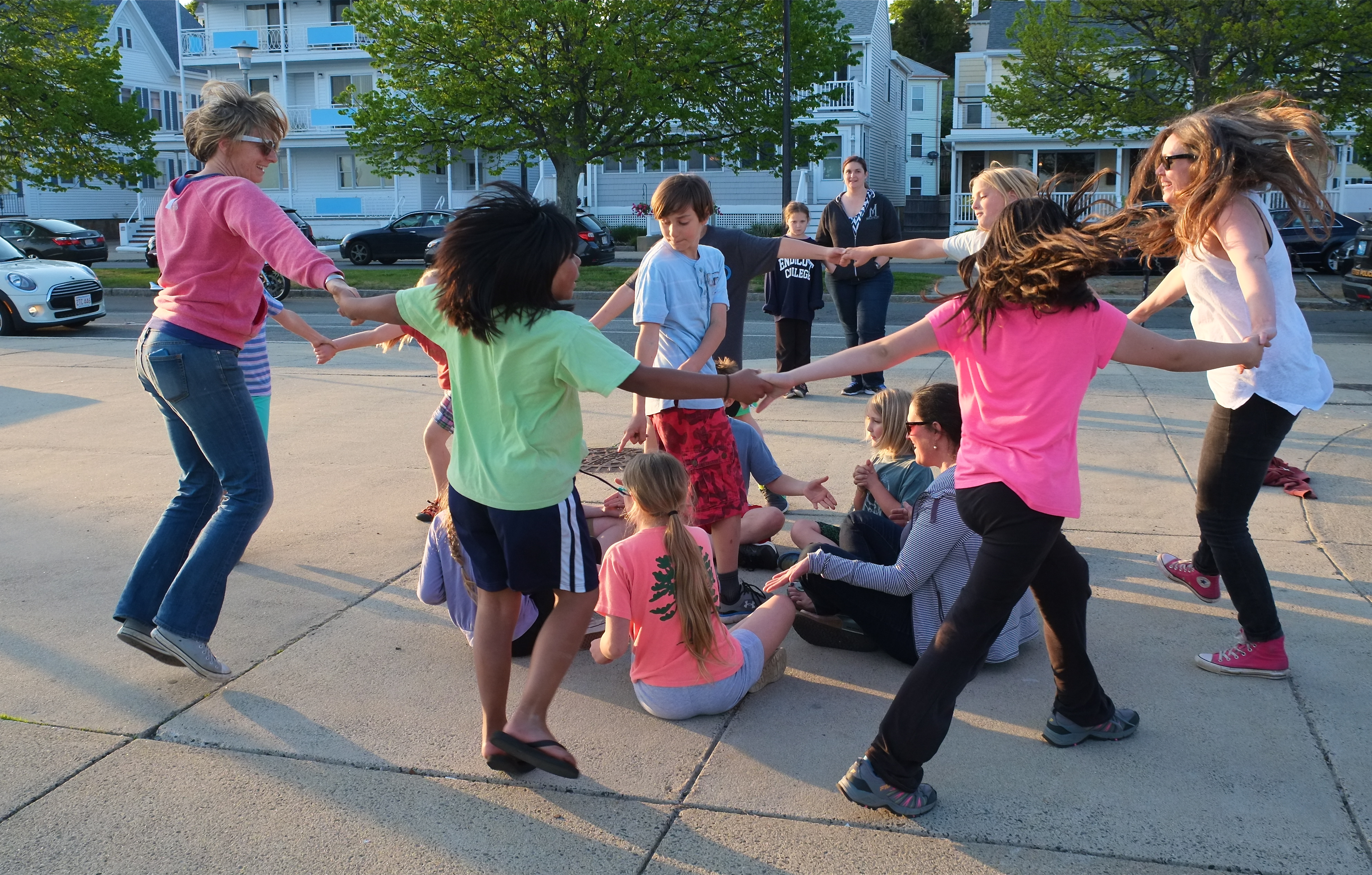
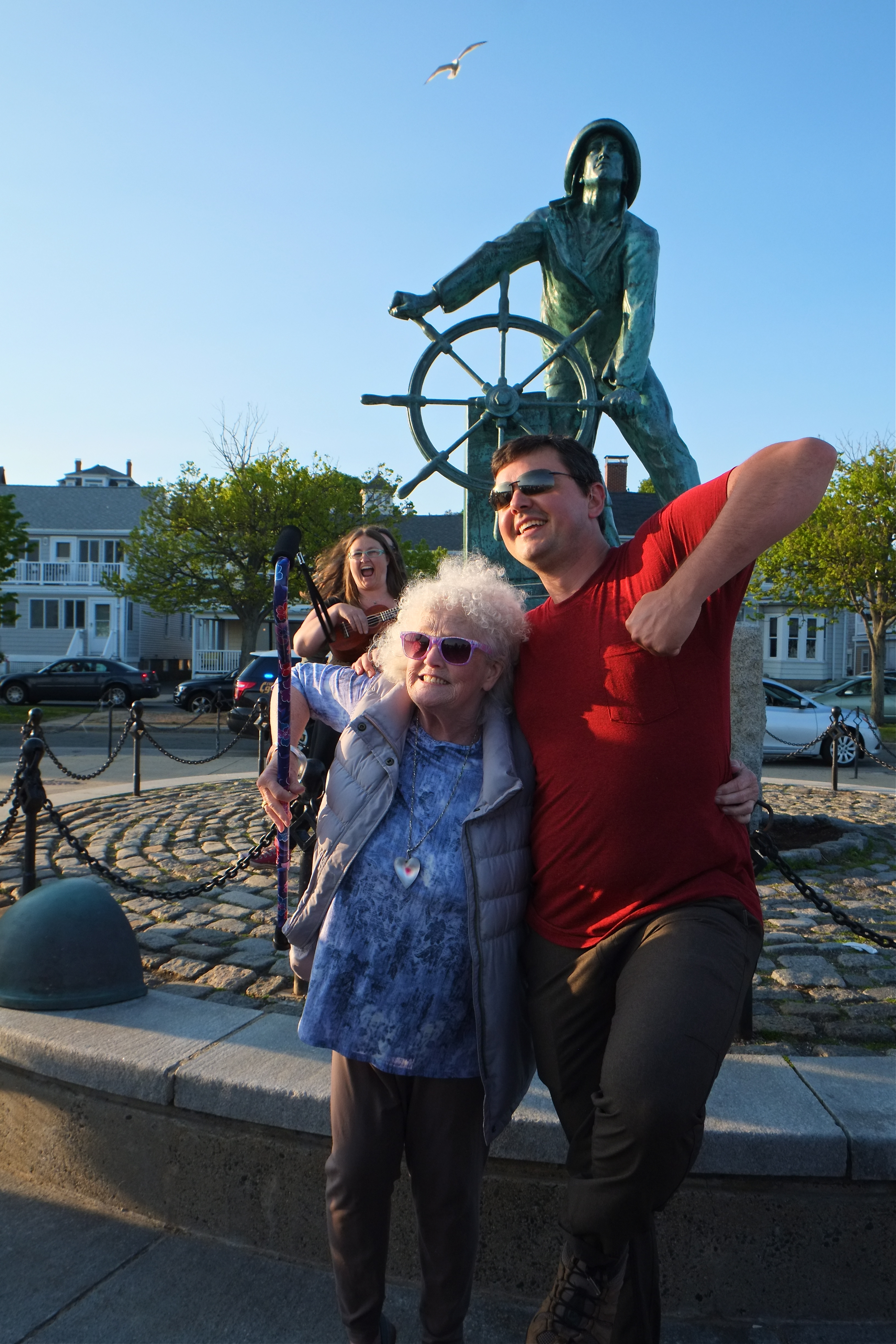
Thanks to Martin Del Vecchio for organizing the wonderfully fun Where the Heck is Matt Harding Gloucester event. Martin remarked that he was worried only a few folks would show up to dance or possibly the reverse and too many, but there was just exactly the right amount!
Work kept me longer than had hoped and I only caught the after party, which was also lots of fun. From fans young and old, Matt was inundated with requests for autographs, and more dancing, and he graciously accommodated all.
Martin will be sharing what promises to be an awesome drone video of the event. Stay tuned!

















After each Passports wine dinner, I think, how can they possibly top this? Last night’s menu surely took the cake!
The charming and knowledgeable Matt Rose presented a fine selection of East Coast wines from Bedell Wines of North Fork, Long Island, and with that theme in mind, Chef Eric Lorden, Jeremy, and company created a menu that was pure American and pure delish.
Where else can you go for a dinner of four sublimely delicious courses, each course paired with a different wine, outstanding and welcoming service, learn about new wines, and all for the amazingly reasonable price of $45.00??
Cell phone photos do not do this food justice, but at least you can get an idea.
Eric Lorden, if you are reading this, please add all these dishes to your daily menu!!
 First Course – Jeremy’s Clams Casino
 Second Course – Pulled pork and fried oyster slider on grilled brioche
 Third Course – Yankee pot roast, mashed root veggies, sauteed ramps
 Fourth Course – Fresh strawberry shortcake
 The rose was paired with the strawberry shortcake.
 Matt Rose from Carolina Wines


 Good Morning Gloucester