Since the parade in Boston is cancelled this year, here are a few Boston Globe St. Patrick’s Day stories from the past that mention Gloucester.
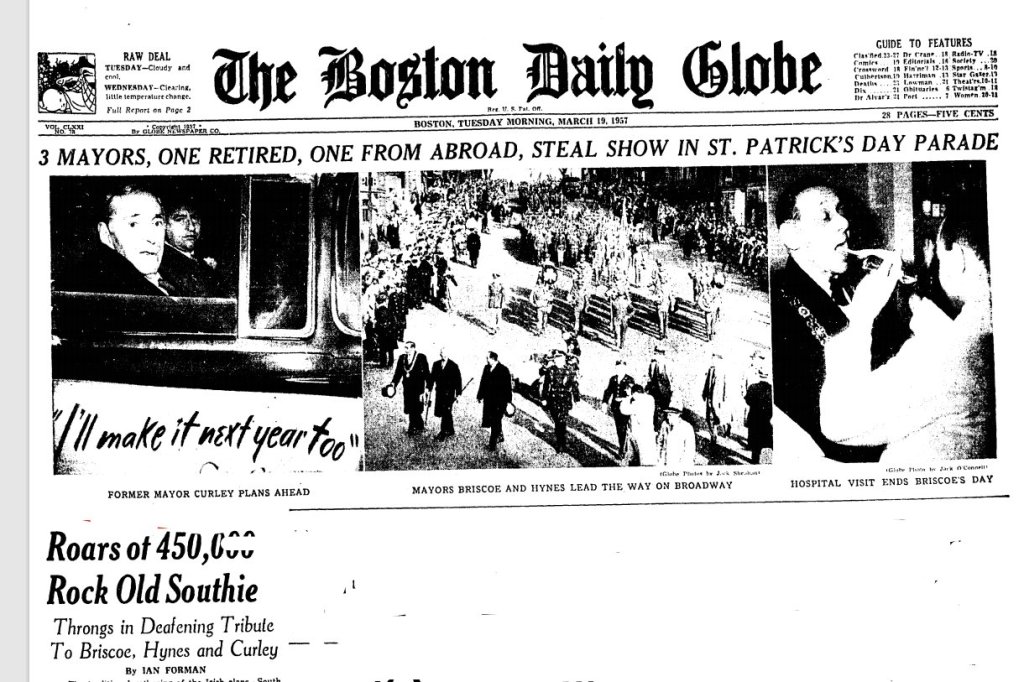
1957 Crowd 450,000 strong line South Boston
St. Patrick’s Day Parade: “Roars of 450,000 Rock Old Southie – Throngs in Deafening Tribute“
Among the marching groups, a message from Gloucester:
“…Typical of the pure fun of this Irish carnival was the green-clad junkie’s horse and wagon, topped with a dozen members of the Hibernian Student Assn. There was also the usual assorted nags, jockeyed by small boys in green derbies, and a number of other informal entries, like the man with the green-lettered sign, “Eat Gloucester Fish.”
South Boston St. Patrick’s Day Parade in 1968 featured Gloucester youth, St. Peter’s Bagpipe Band, as the bring it home musical act, – were you watching or marching?
“The last musical unit to bring up the parade was St. Peter’s Bagpipe Band of Gloucester. As the boy and girl pipers marched through the rain past the final reviewing stand, they lifted their water-soaked bagpipes to their lips and proudly skirled out “The Wearing of the Green.”
Davis, William. “‘Twas a ‘Soft Day’ for Boston’s Irish.” Boston Globe, 1968 March 8, p.19.
1961 Senator Ben Smith is Irish
Local politics
“the political longshot from Gloucester…He credited Al Smith for his courage in the face of bigotry, starting a job that Jack finished last November.”
Nurses from counties Cork, Limerick and Donegal, invited guests, were “beautiful, young and single.” Because 1961.
1892 How Ireland was Observed in Gloucester
A children’s medley performance at St. Ann’s made the St. Patrick’s Day roundup news. Do you recognize family surnames? (The Church is spelled St. Anne’s in this Boston Globe article.)
“The day of Ireland’s patron saint was fittingly observed here today, the Sunday school teachers of St. Anne’s Church giving an excellent entertainment, consisting of the operetta, “A Trip to Europe,” and readings, tableaux. The entertainment was under the management of Rev. C. W. Regan, assistant at St. Anne’s. The hall was packed with enthusiastic friends of the performers, who generously applauded the finished manner in which the various parts were rendered. The tambourine drill in the second part was a picturesque and pleasant feature…The readings by Miss Maggie Keefe and the tableaux also won high favor from the audience…”
Boston Globe 1892
Names mentioned: Jeannie Dooling, Eddie Fanning, Maggie Fanning, Michael Fanning, Etta Gibbs, Maggie Gibbs, Miss Etta Greenleaf, Hannah Harris, Lizzie Healey, Charles Hennessey, Maggie Keefe, Master George Kelley, Denis Moore, Miss Mary Murphy, Miss Sadie McAuley, Hugh McDonald, John O’Brien, Willie O’Brien, Nellie Nugent, Katie A. Roach, Miss M.E.J. Roche, Clara Smith, Katie Smith, Master Walter Smith, Miss Maggie Wells, Dora West, Clara White. Minstrelsy costumes were part of the program, boys were assigned roles dressed up as “four little curly headed (slur). ” 1892
St. Ann’s Annual St. Patrick’s Day revue was held at City Hall in 1924
“The annual St. Patrick’s Day entertainment of St. Ann’s Catholic parish was held last evening in City Hall auditorium. The hall was filled. overture was by Ralph Handran, pianist Helen Handran, violinist, and Helen Mitchell, drummer. Vocal solos by Mrs. George Adams, Mrs. James Cunningham and Joseph Buckley; violin solo Miss Lucille Rowe; reading, with music, Miss Irene H. Veno; address, “Christian, Citizenship,” Charles S. O’Connor of Boston; selection by the orchestra. There was community singing.”
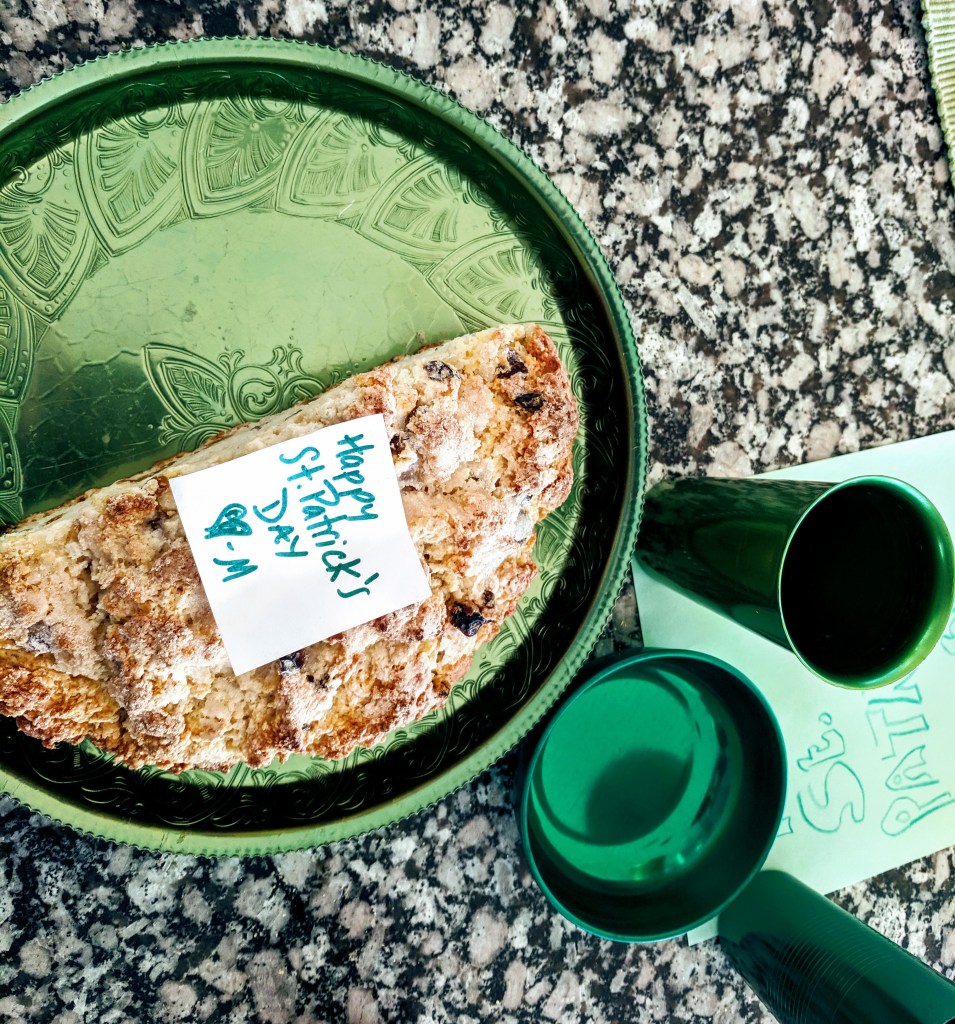
My friend dropped off her scrumptious Irish soda bread so it feels like a pot of gold already.
What’s your pot of gold at the end of the rainbow this year?
Spread The GMG Love By Sharing With These Buttons:
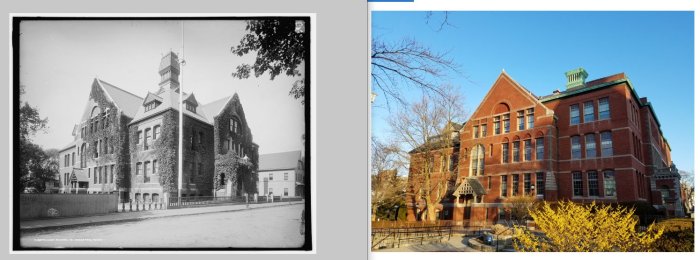
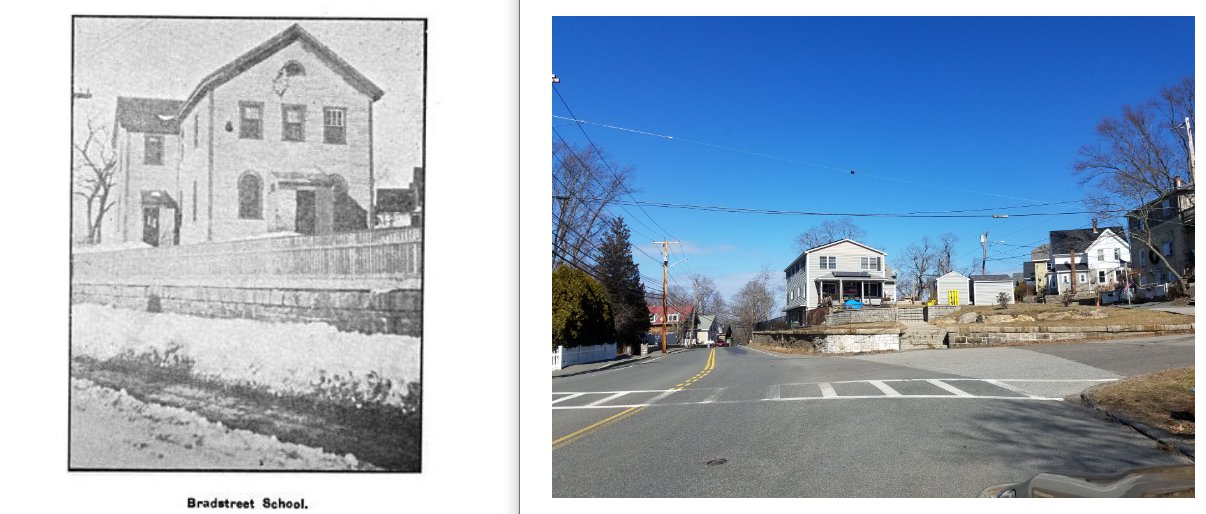
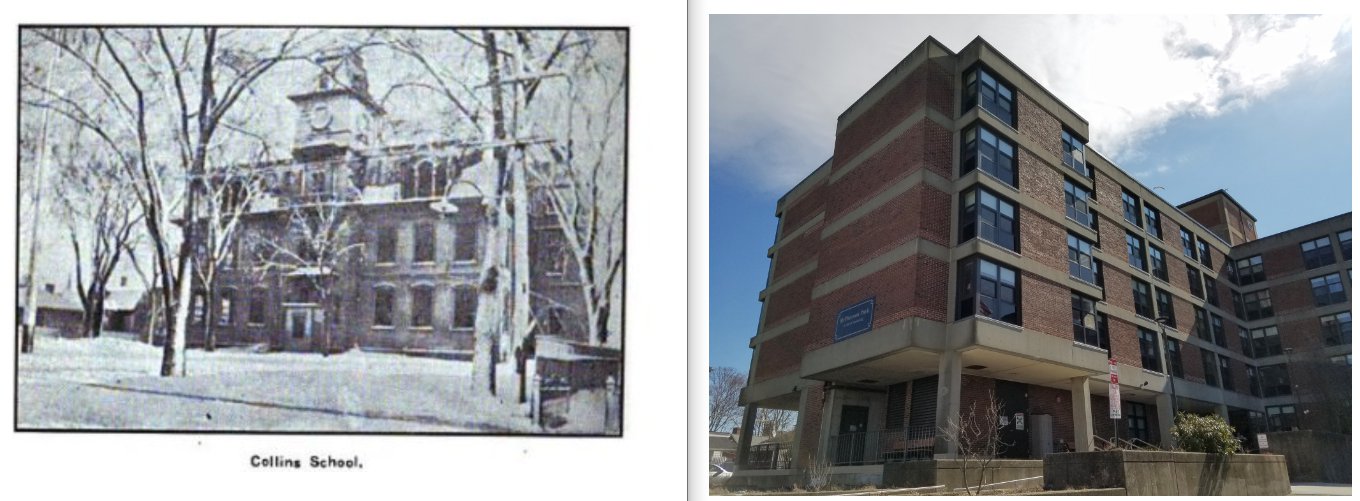
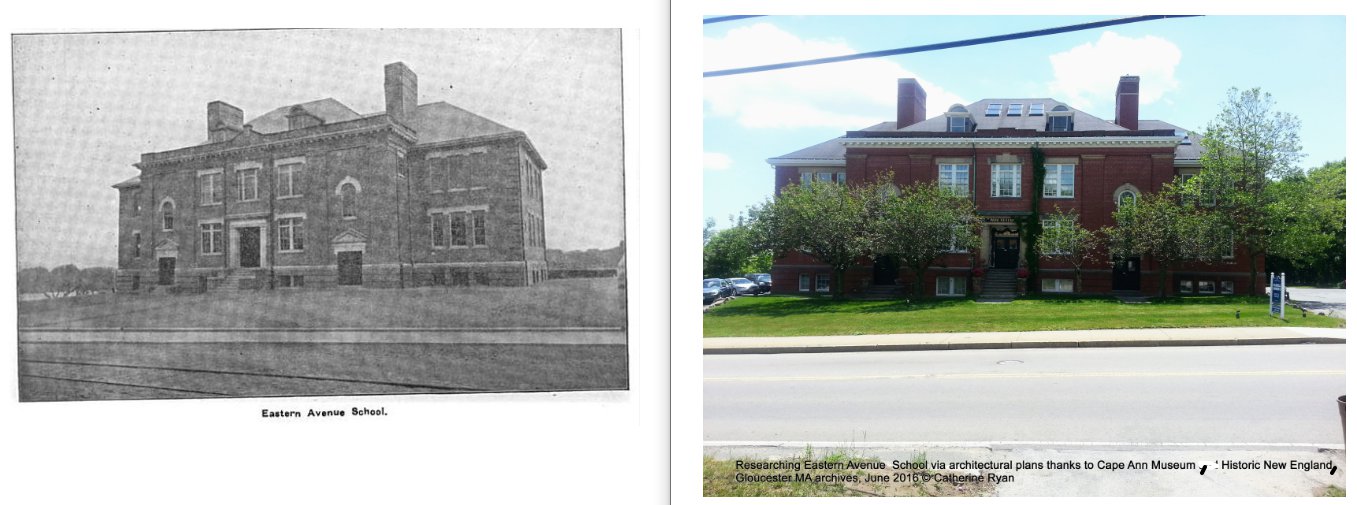
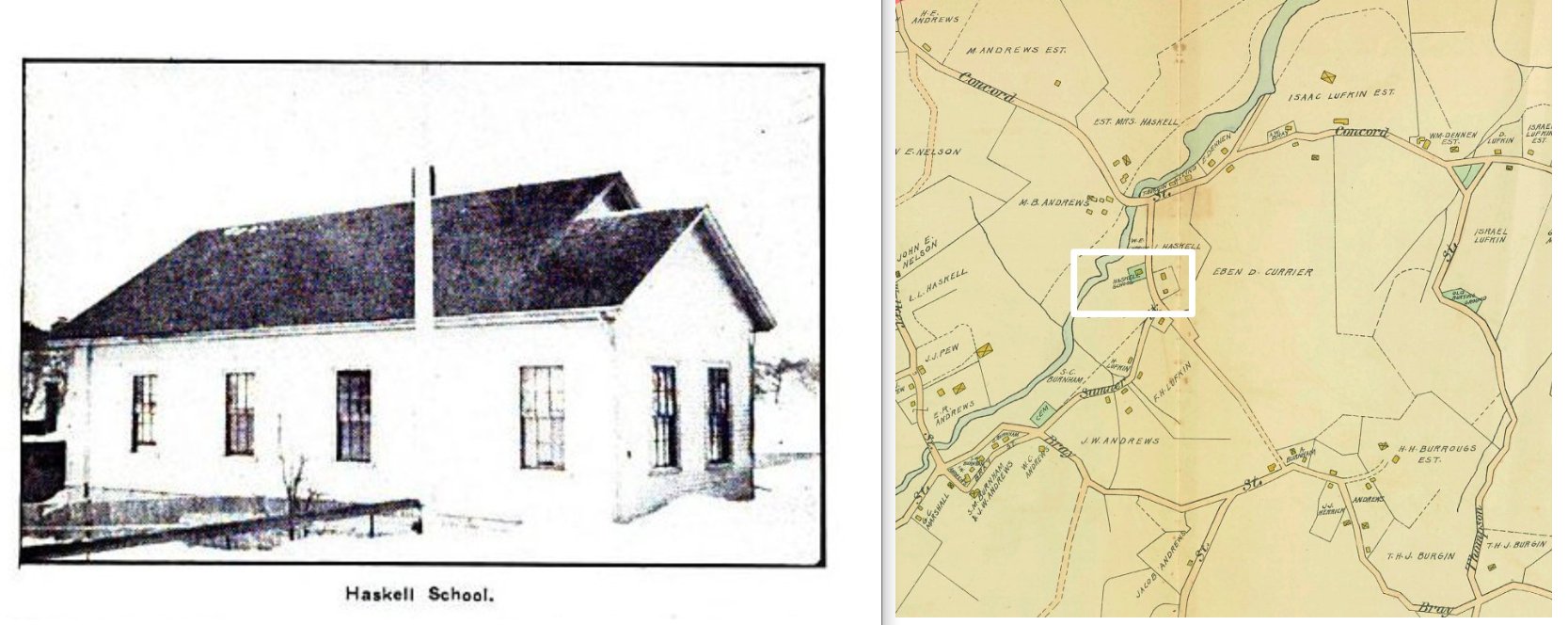
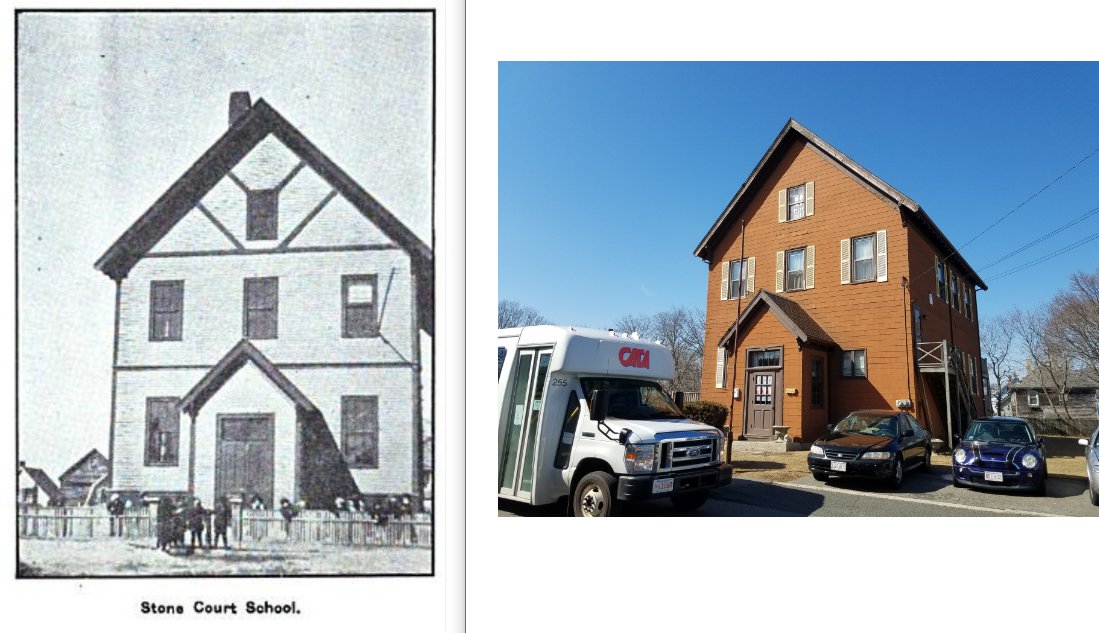
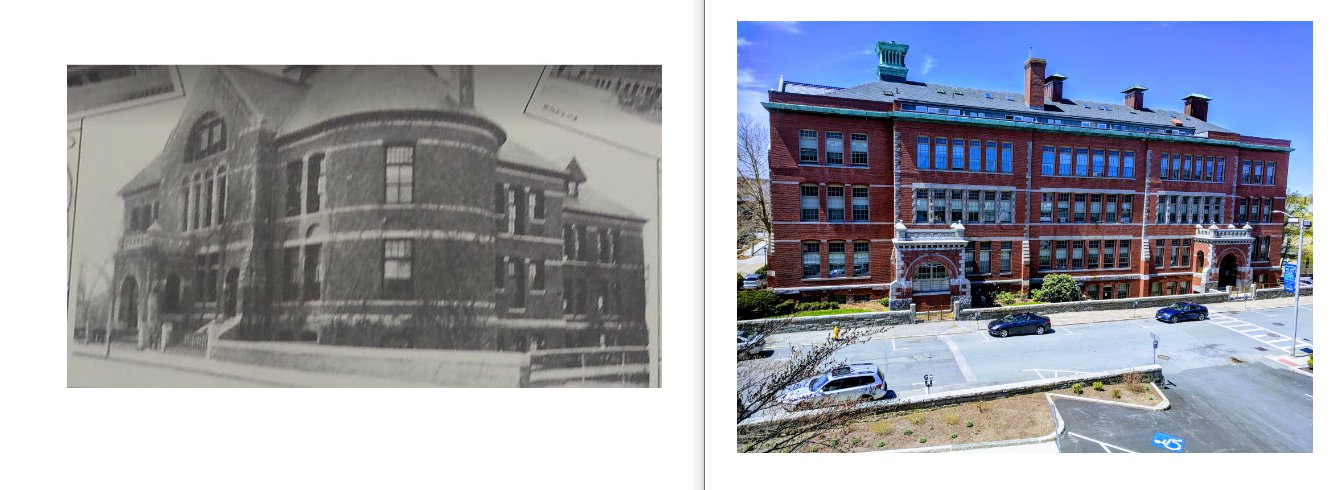
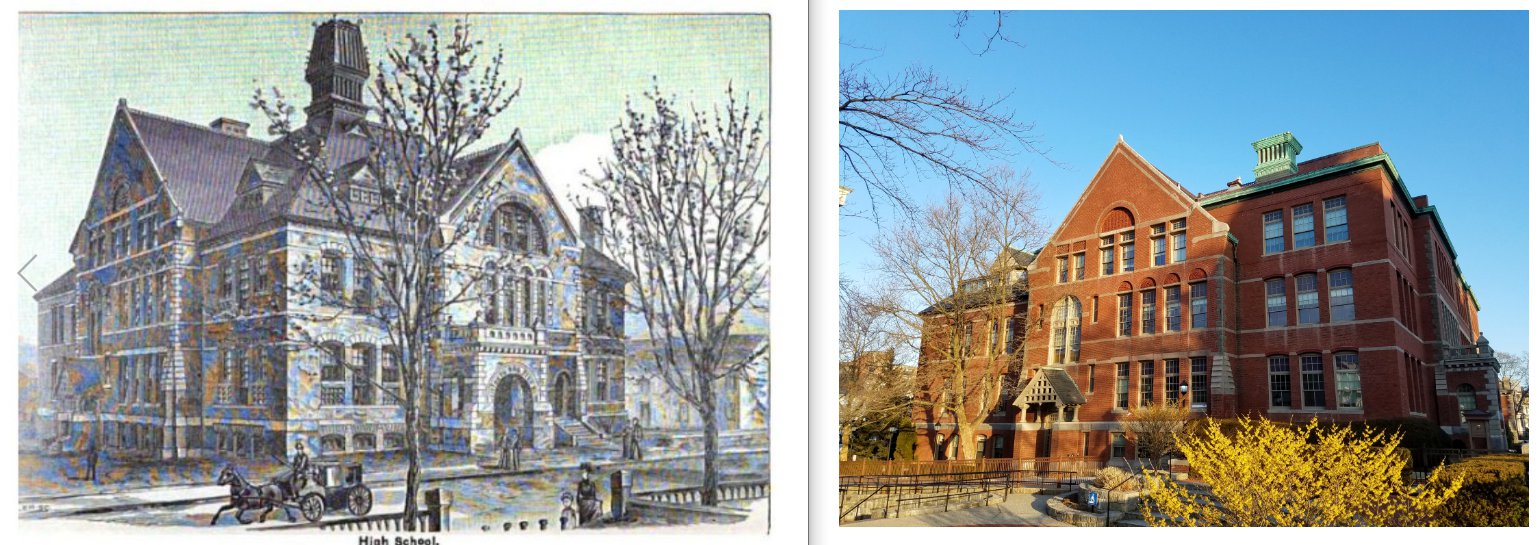
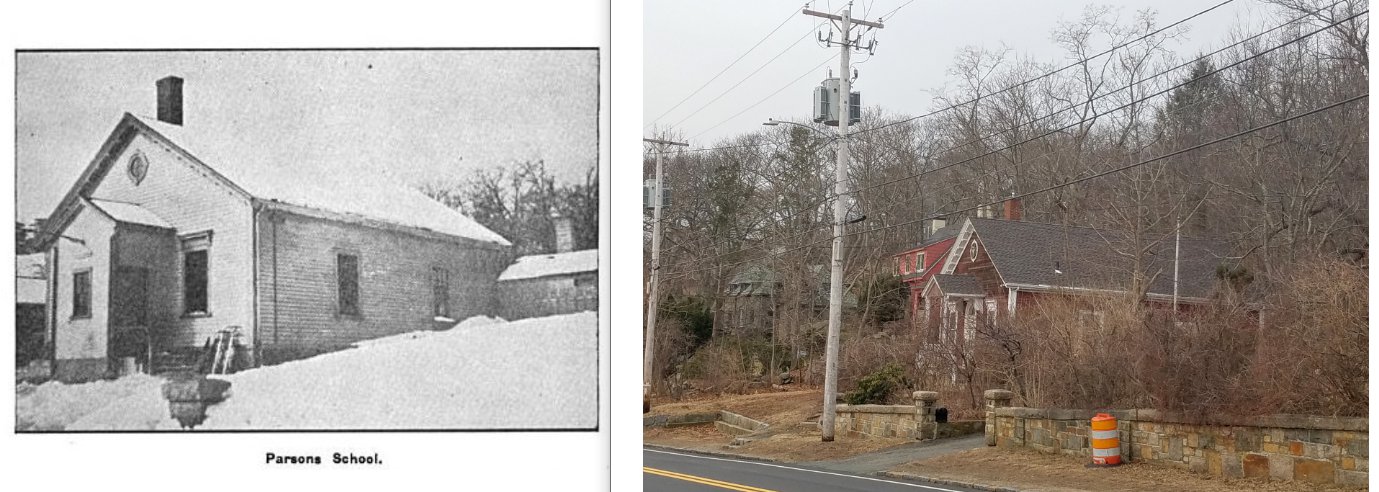
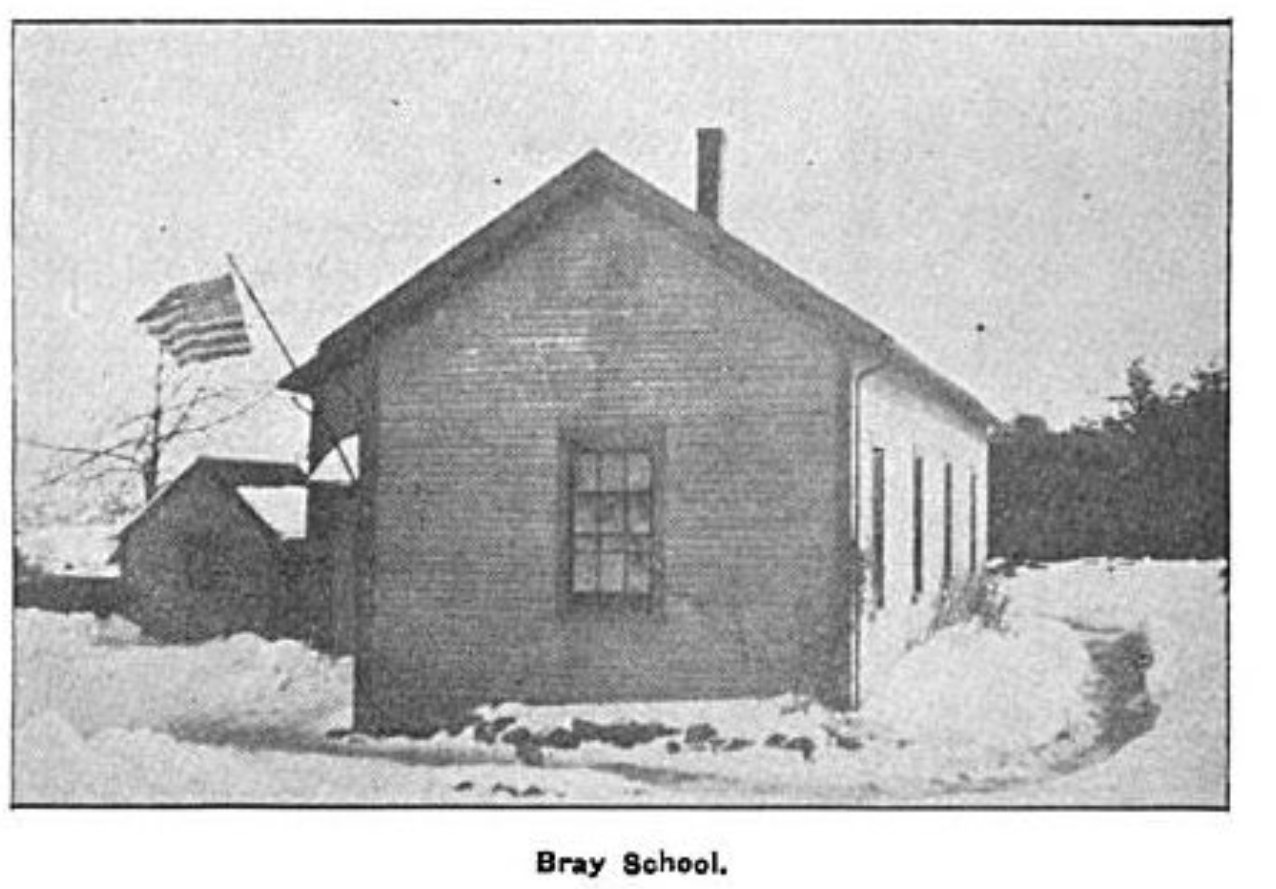
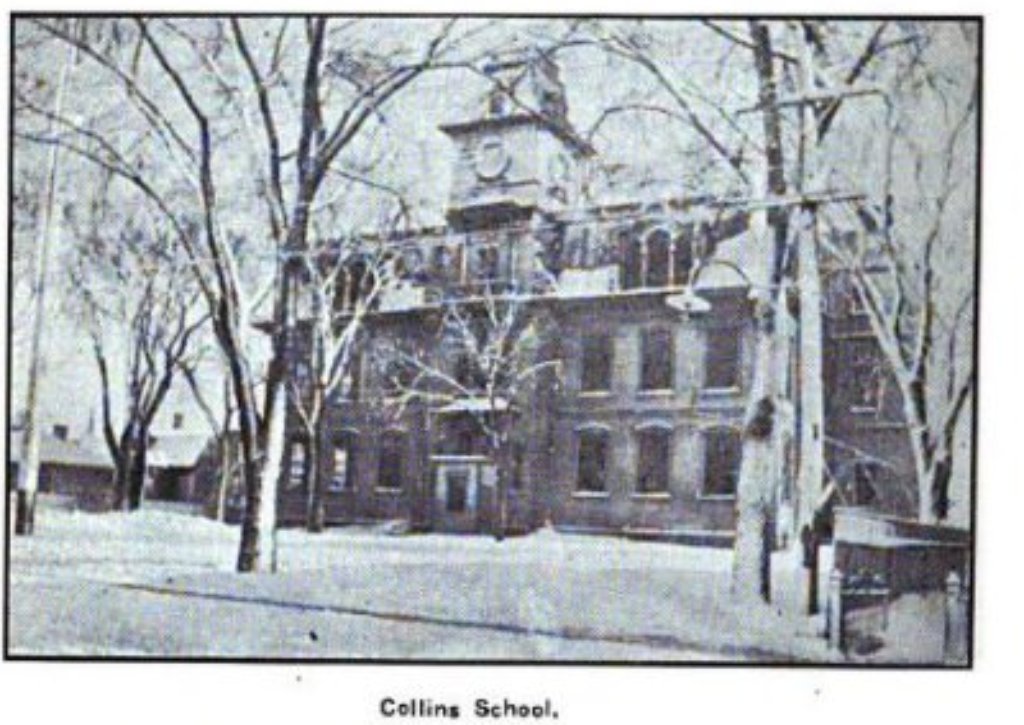
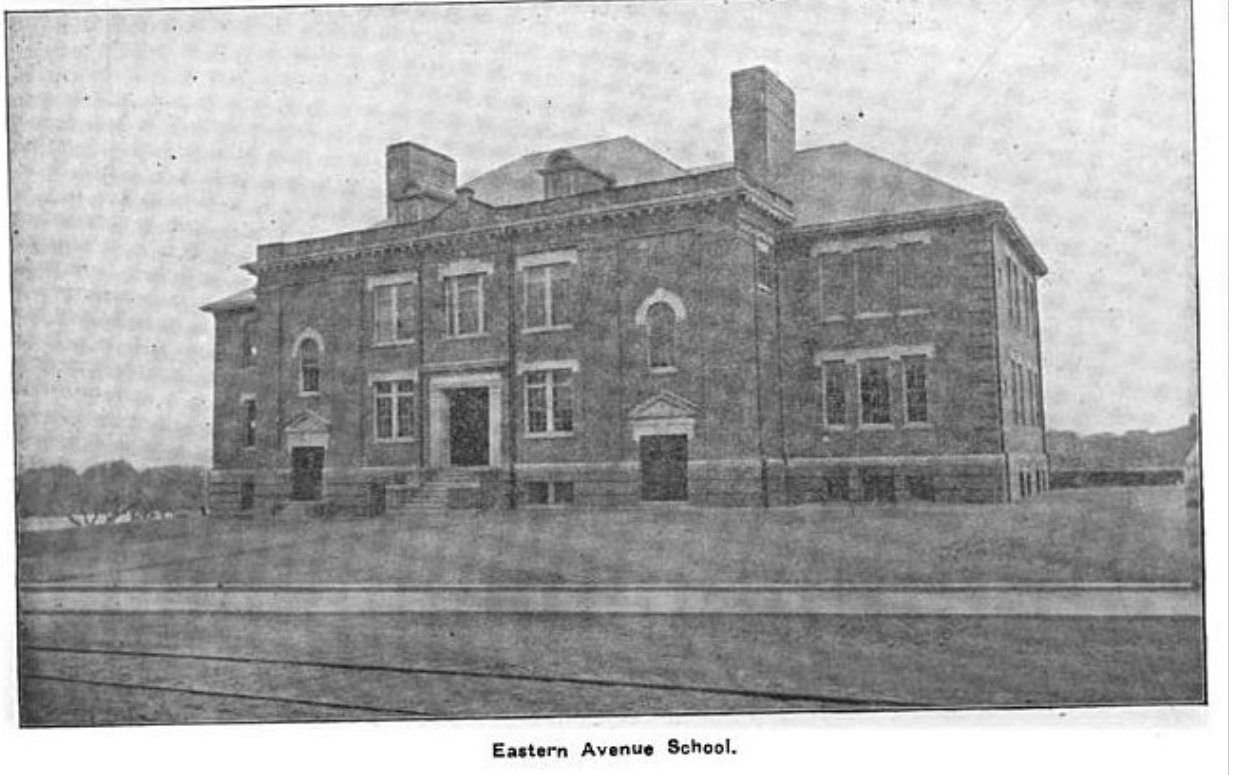
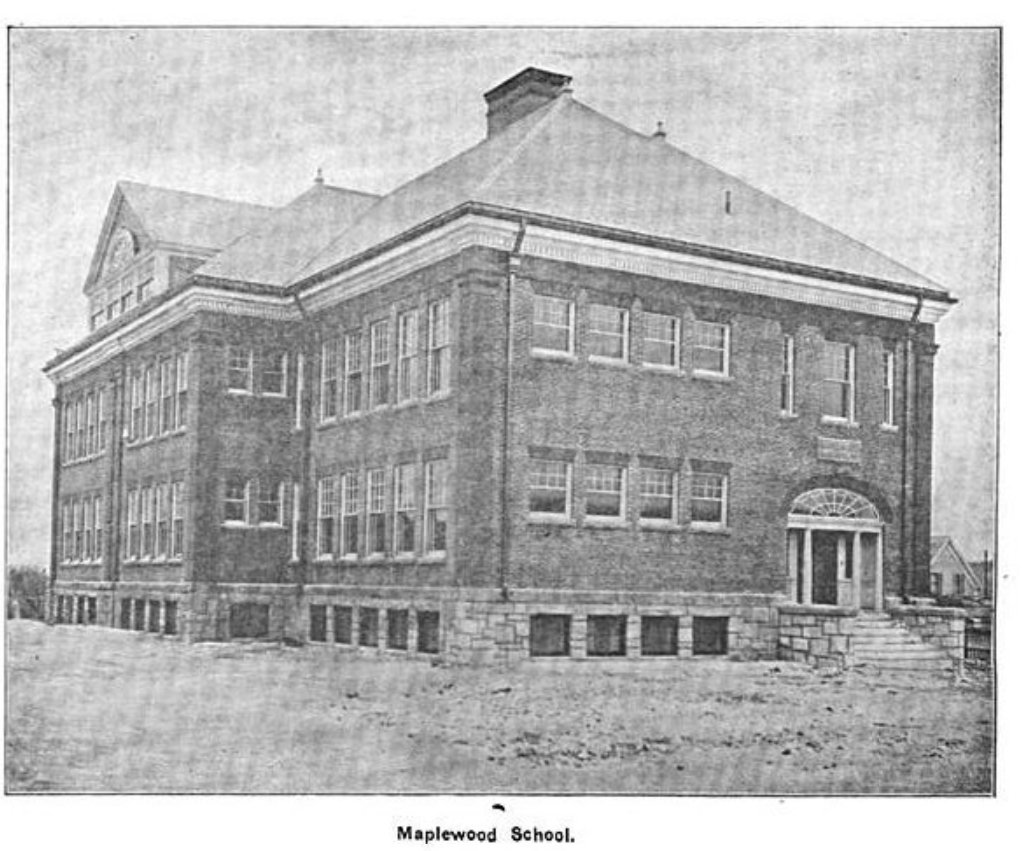
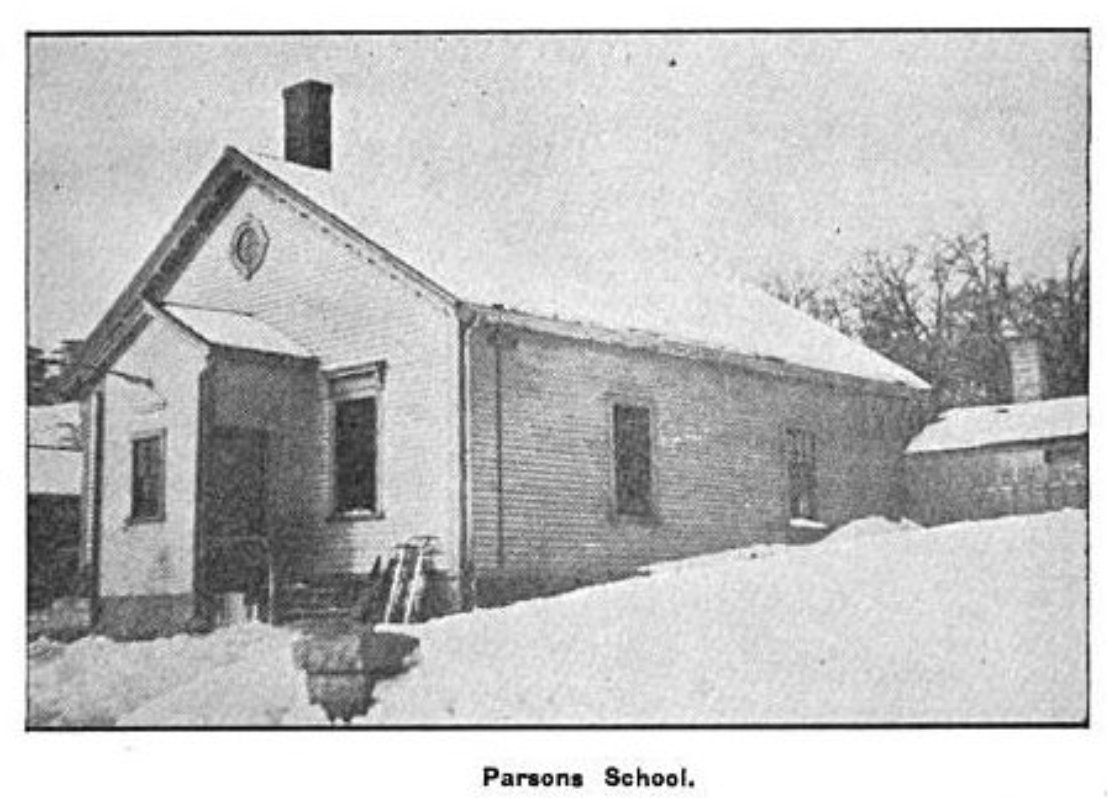
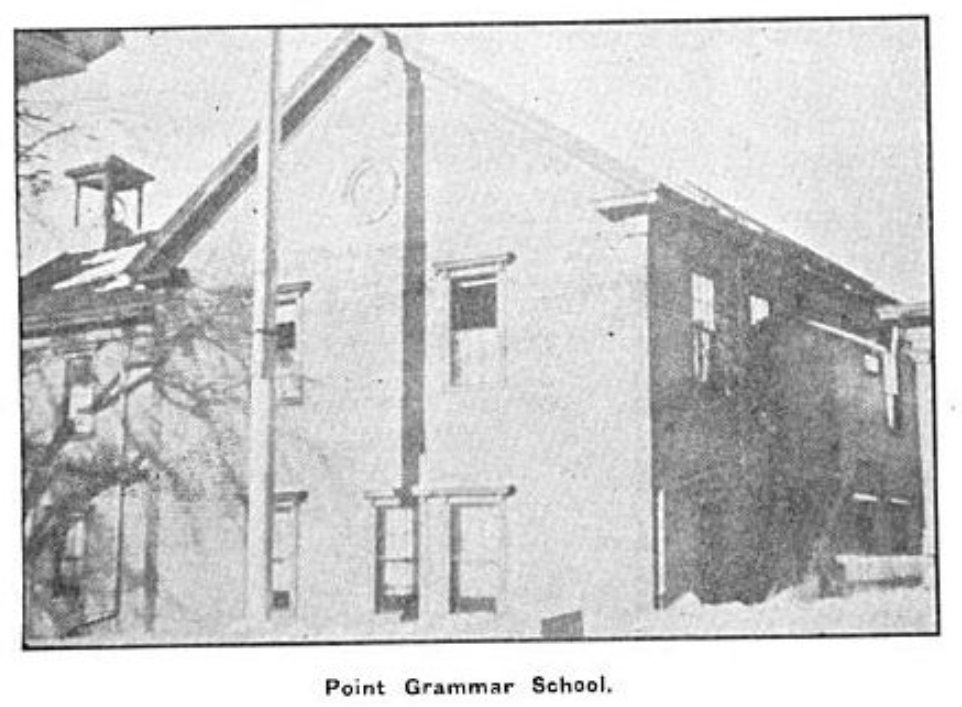
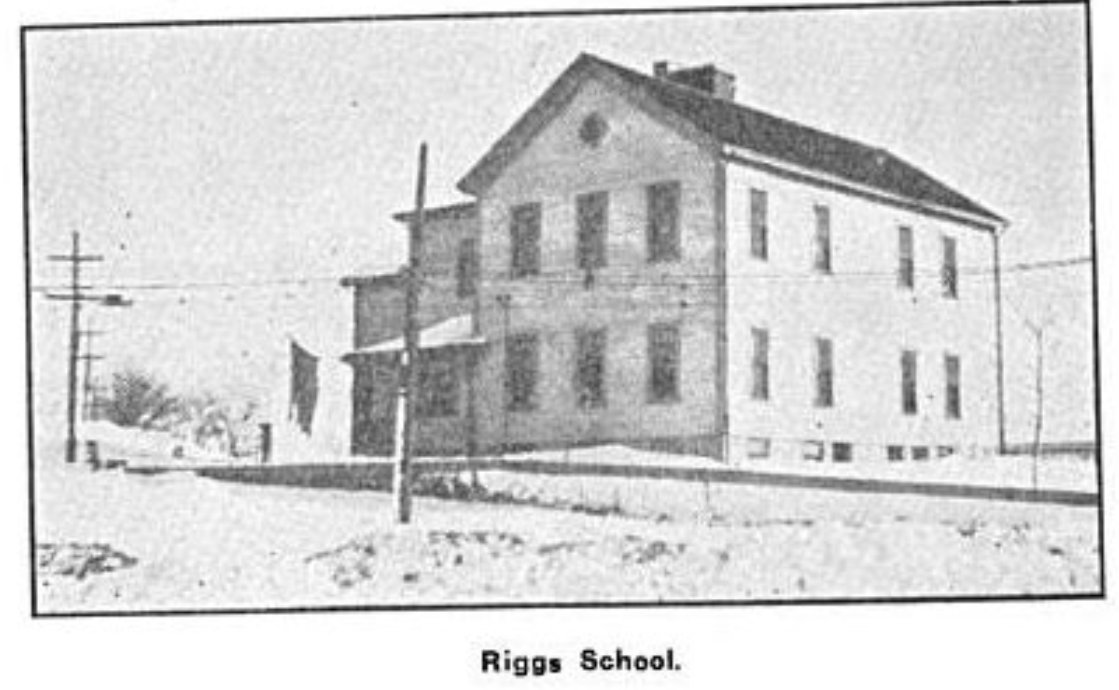
Explore a selection of Gloucester school house properties built circa 1800s-1920s. There is a greater quantity of structures still standing than not.
Note: Pinch and zoom and/or click to enlarge photographs, depending upon your device. There are three galleries of images (side by side comparisons; all vintage; and all contemporary), a self-guided map for a driving tour, excerpts from James Pringle 1892 Gloucester history, and newspaper coverage of then “new” schools. Don’t miss the Boston Globe feature about the Eastern Avenue school published in 1905. There’s another wonderful piece about a very special elementary school class –which enrolled more girls than boys–offered at Sawyer school on Friend Street.
Student enrollment in 1892 was 4196
Side by side then vs. now views:
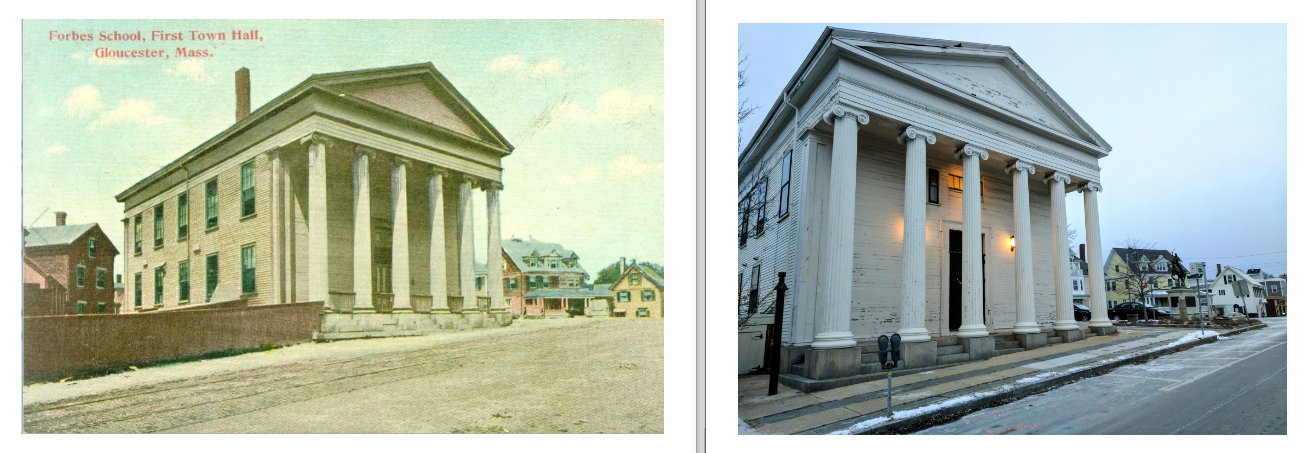
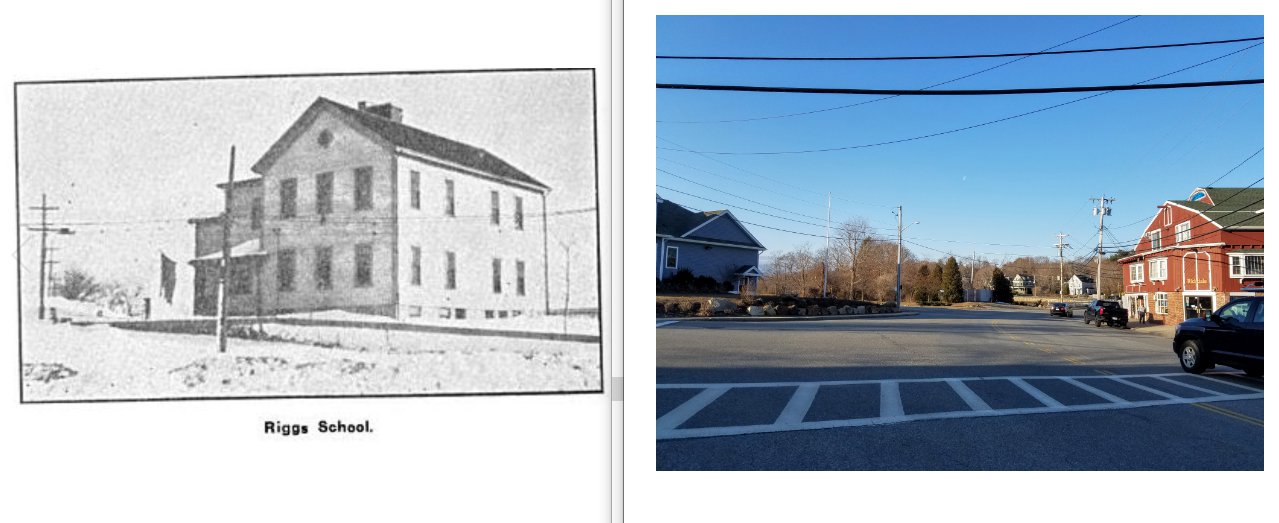
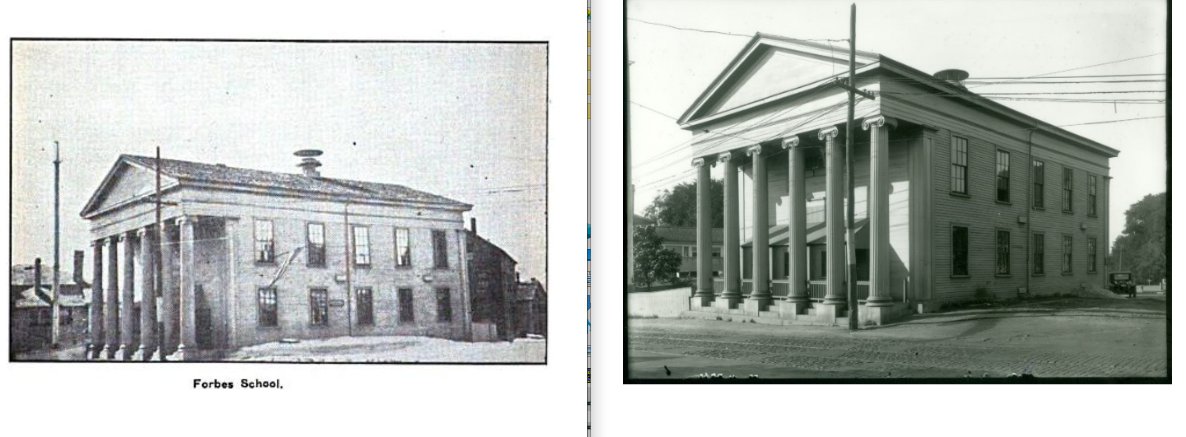
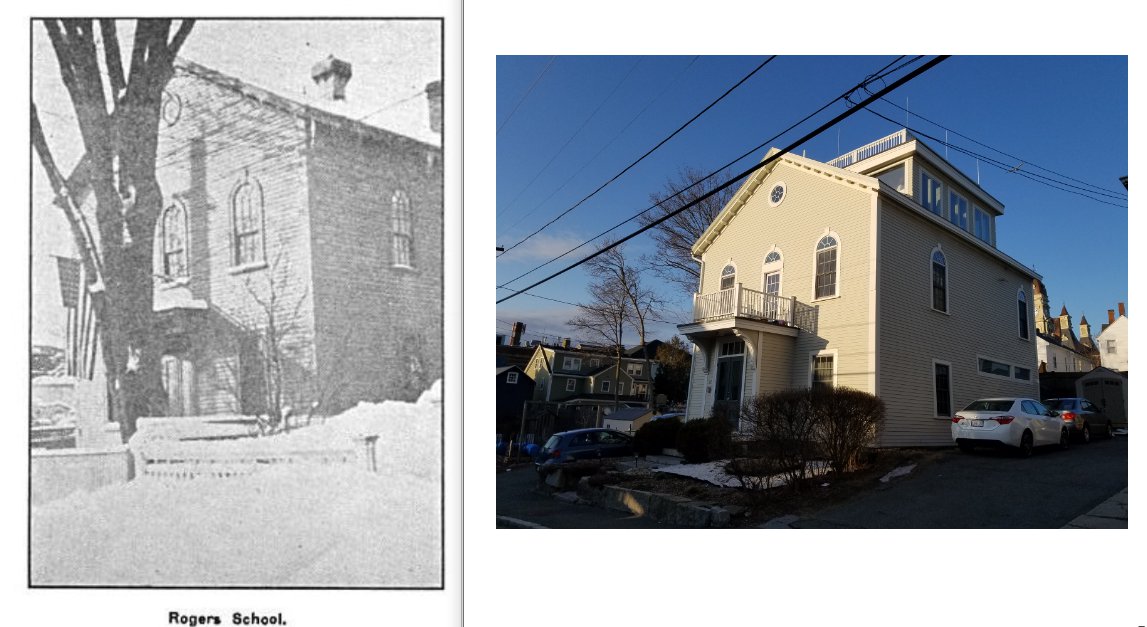
School name, year built, 2021 status
Bold indicates extant structure; italicized indicates structure no longer there; GLO = MACRIS id state’s archives- “The Massachusetts Cultural Resource Information System (MACRIS) allows you to search the Massachusetts Historical Commission database.”
Leonard 1834 (GLO.701), reverted to city in 1953, now Annisquam Exchange (since 1955)
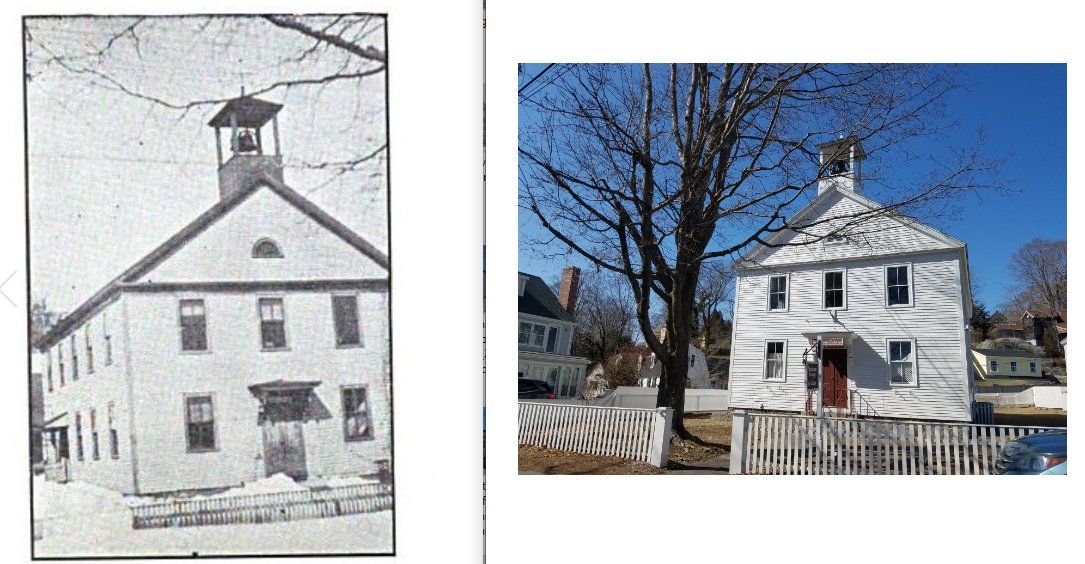
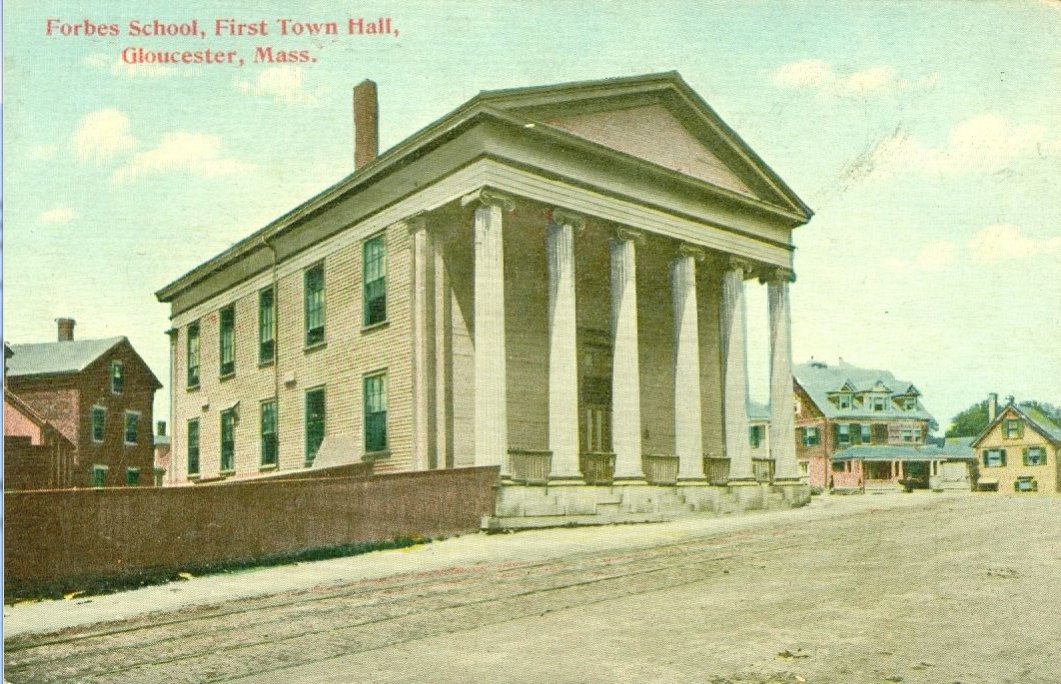
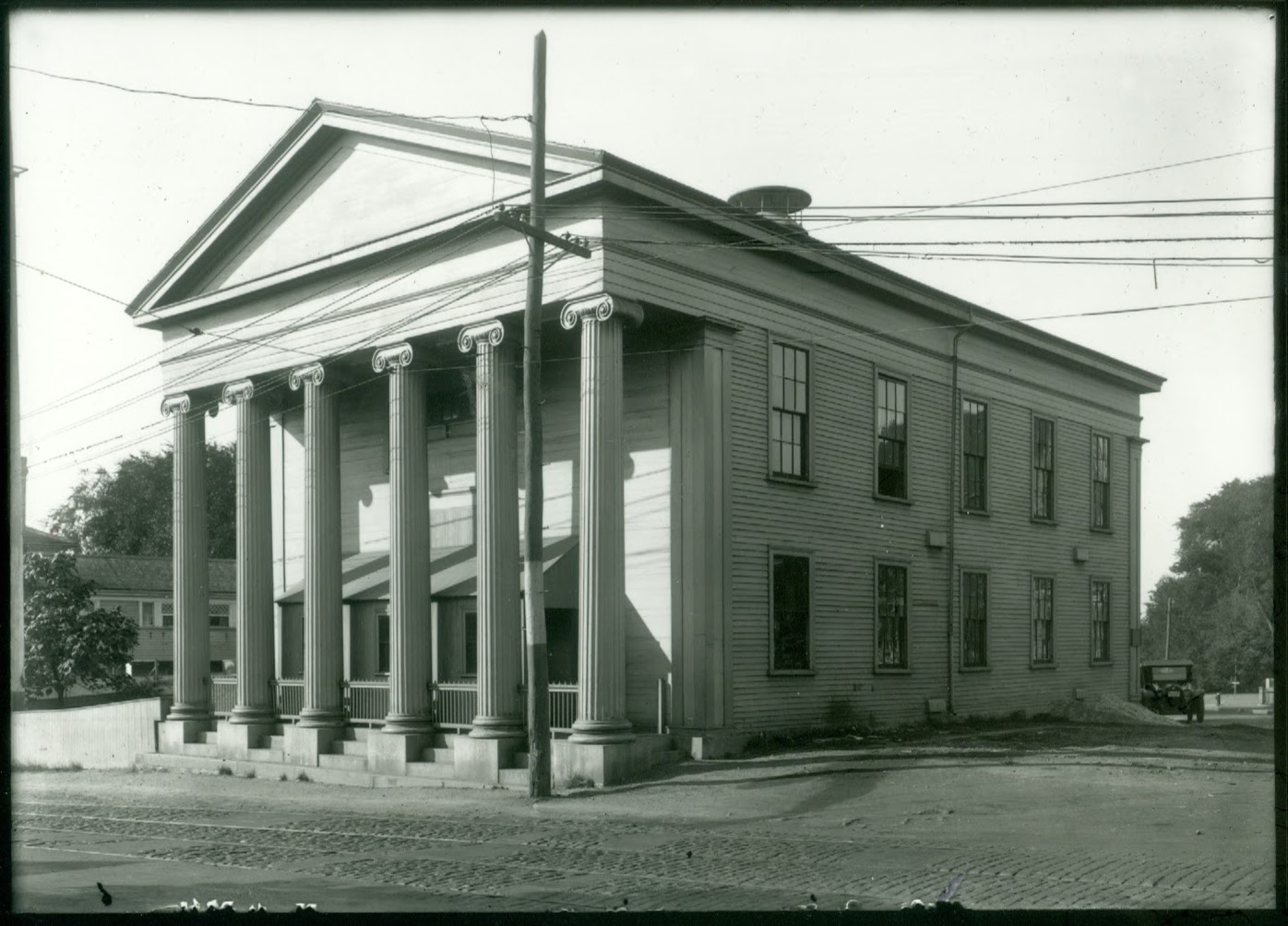
Forbes 1844 (GLO.390), (Old Town Hall), now Lester S. Wass American Legion Post 3
Forbes Extension, 1851 (GLO. 417, architect Gridley JF Bryant also co-architect for City Hall 1869), leased to Gloucester G.A.R. Hall 1897; now Action, Inc 47 Washington St.
Forbes Extension, (GLO.414) , now Forbes apartments 37 Washington St (restored 1996)
Bradstreet and annex in Bayview 1850, back to city in 1956, demolished, now private home, (some old stone, grounds)
Parsons on Western Ave. 1850, now Girl Scouts (gsema) since 1957
Rogers on Elm St. 1850 (GLO.416), now private home
Riggs Wash. at Reynard, 1850, sold at auction in 1894
Bray1852 (GLO.1068), discontinued 1949, now BSA Troop 60
Point Grammar Plum Street 1852, reverted to city 1955
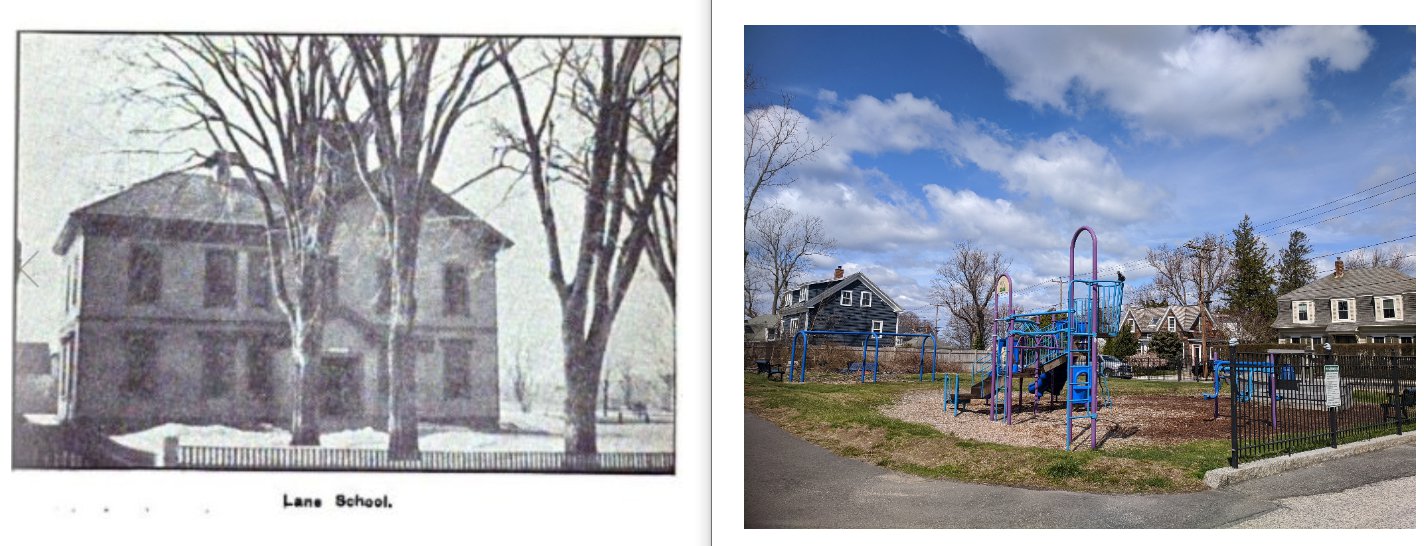
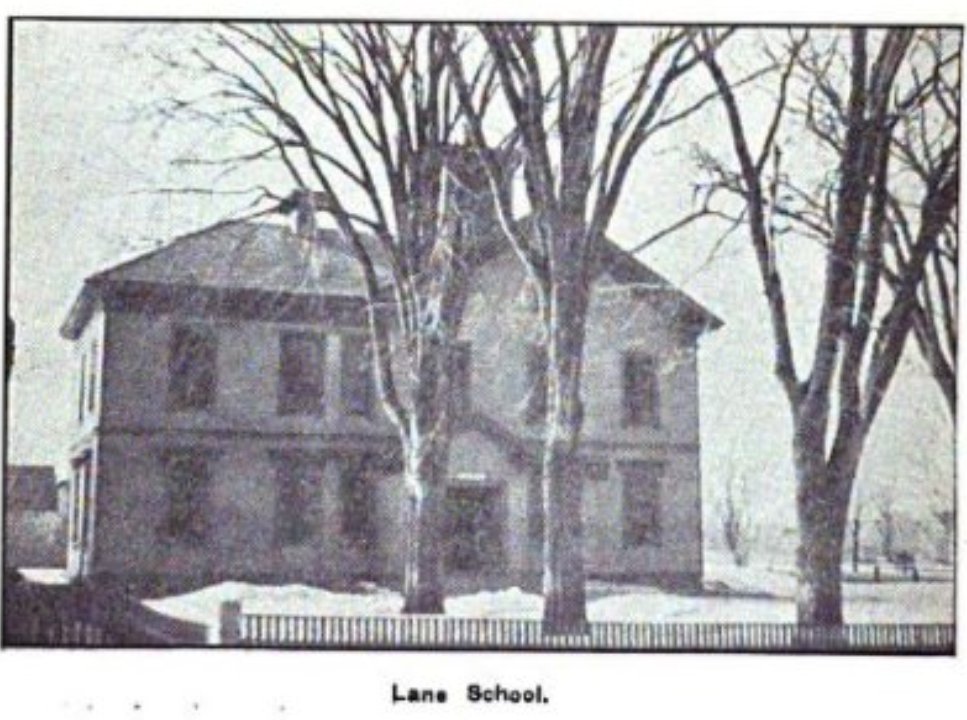
Lane 1860, abandoned and turned back to city in 1966, now Rebecca’s Playground
Mt. Vernon 1860, reverted to city in 1958, now church real estate
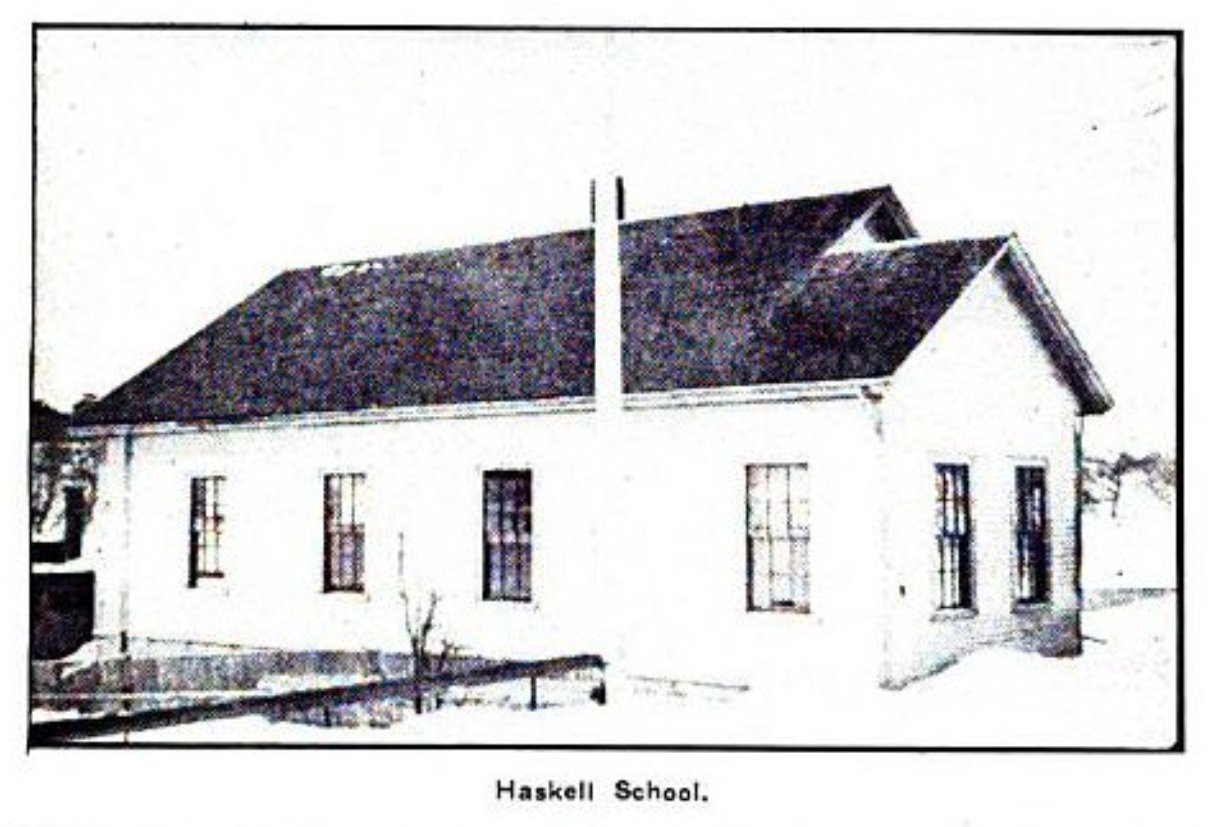
Haskell 1862, discontinued 1949
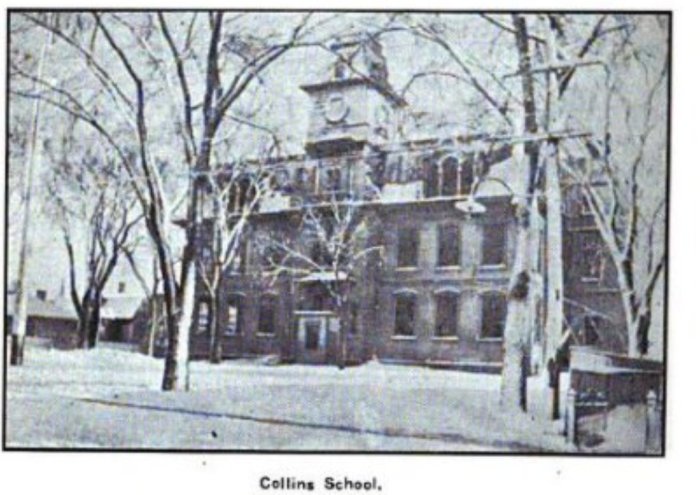
Collins 1864, turned back to city 1941, McPherson Park apts.
Point Primary on Chapel 1867, discontinued 1946, now private home
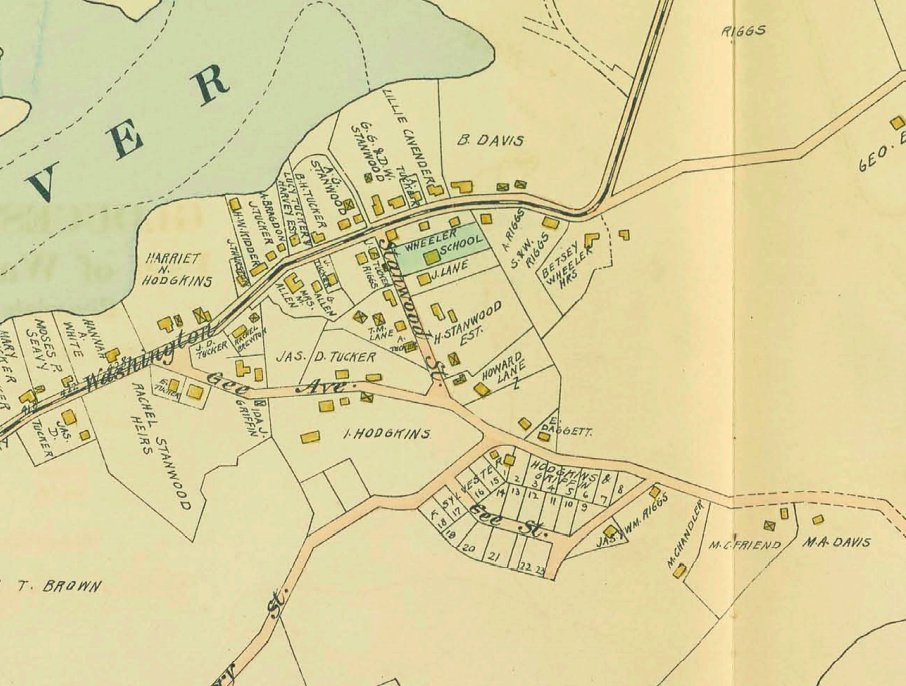
Wheeler School at Stanwood 1867, now cape ann amateur radio communication center (CAARA) purchased from City in 2013
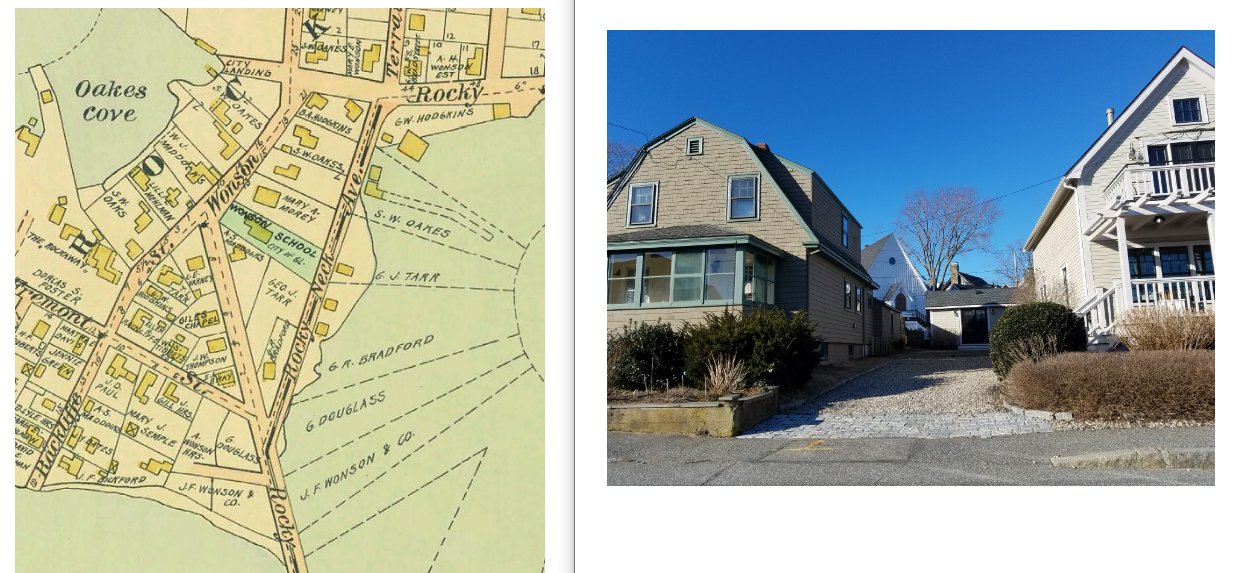
Wonson School on Rocky Neck 1867, Wonson School Cartesian Society in 1925, now private home(s)
Sawyer 1869, turned back to city 1941, now no structure, a section dedicated as playground: Edward “Gint” Middleton Playground, 1974
Babson 1880 Pleasant St (at time “park street”), now John W. Sheedy apts.
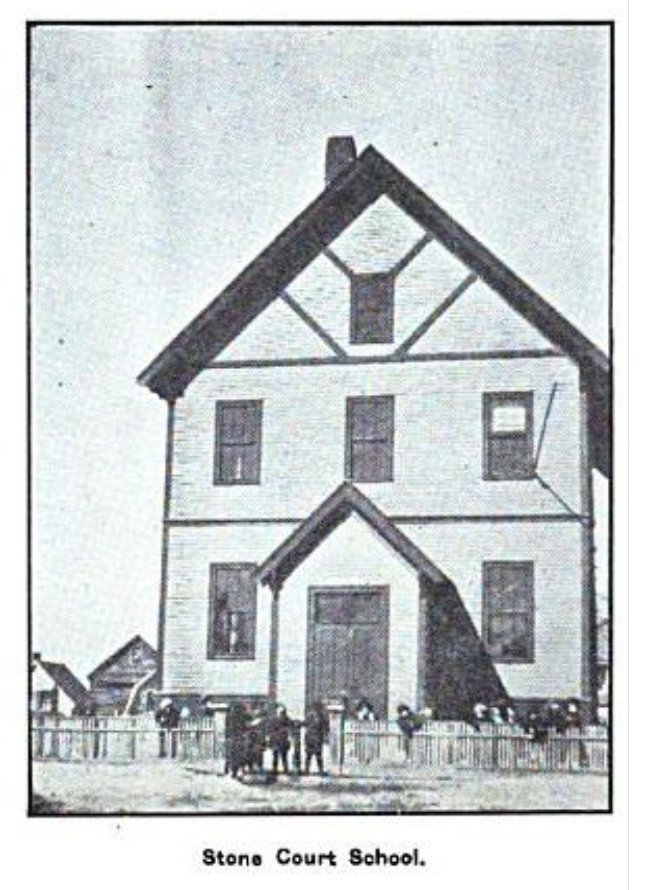
Stone Court 1882, discontinued 1946, now Stone Court apts.
Hildreth 1884, reverted to city in 1958, now Masonic Lodge
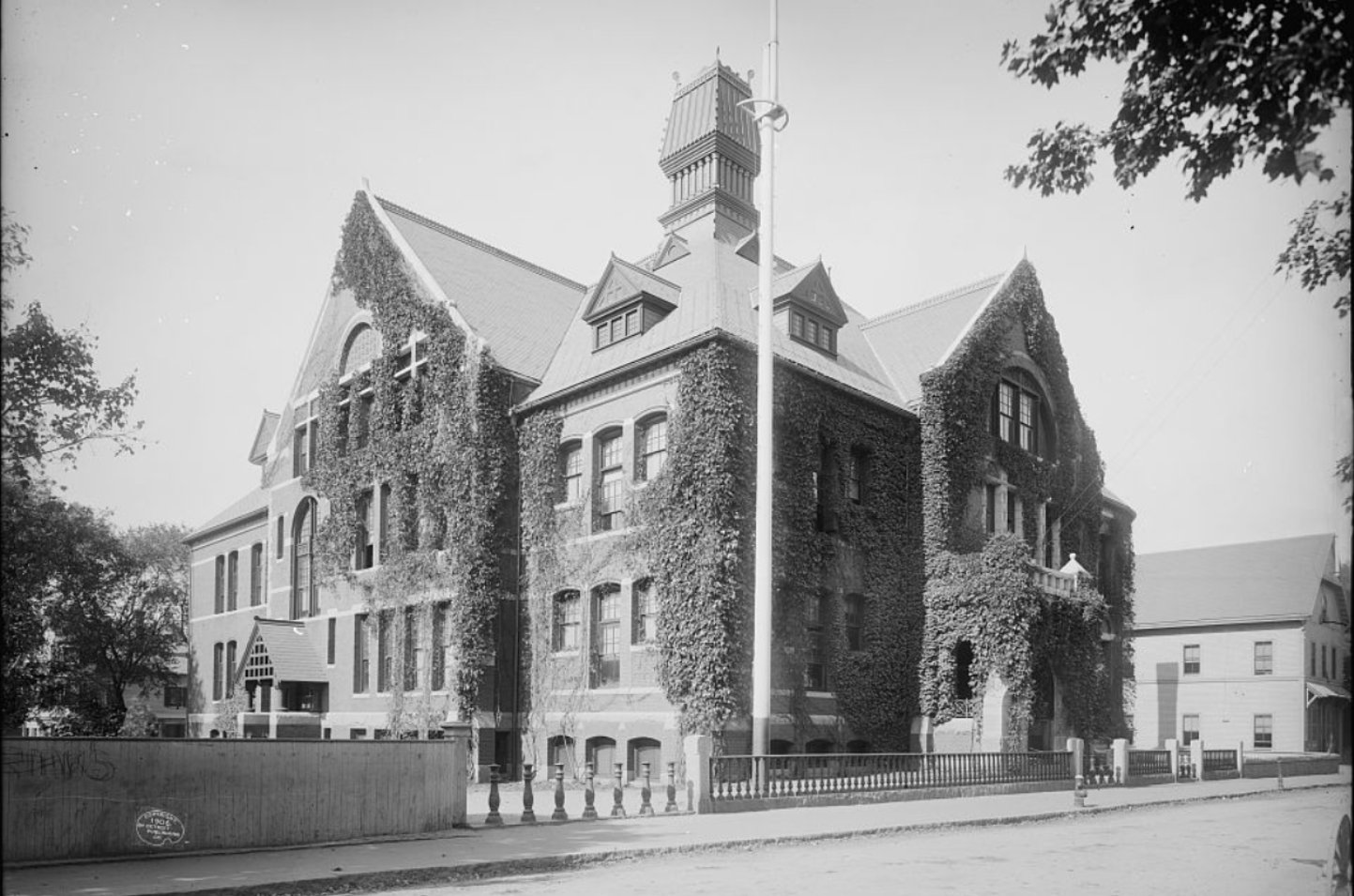
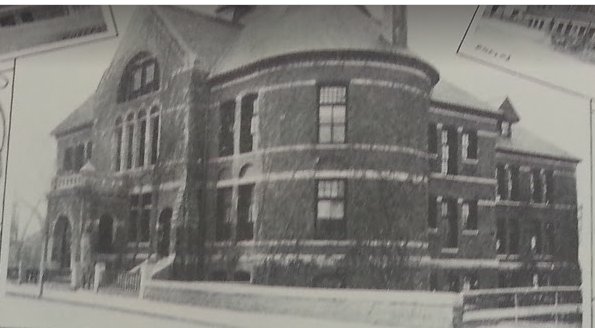
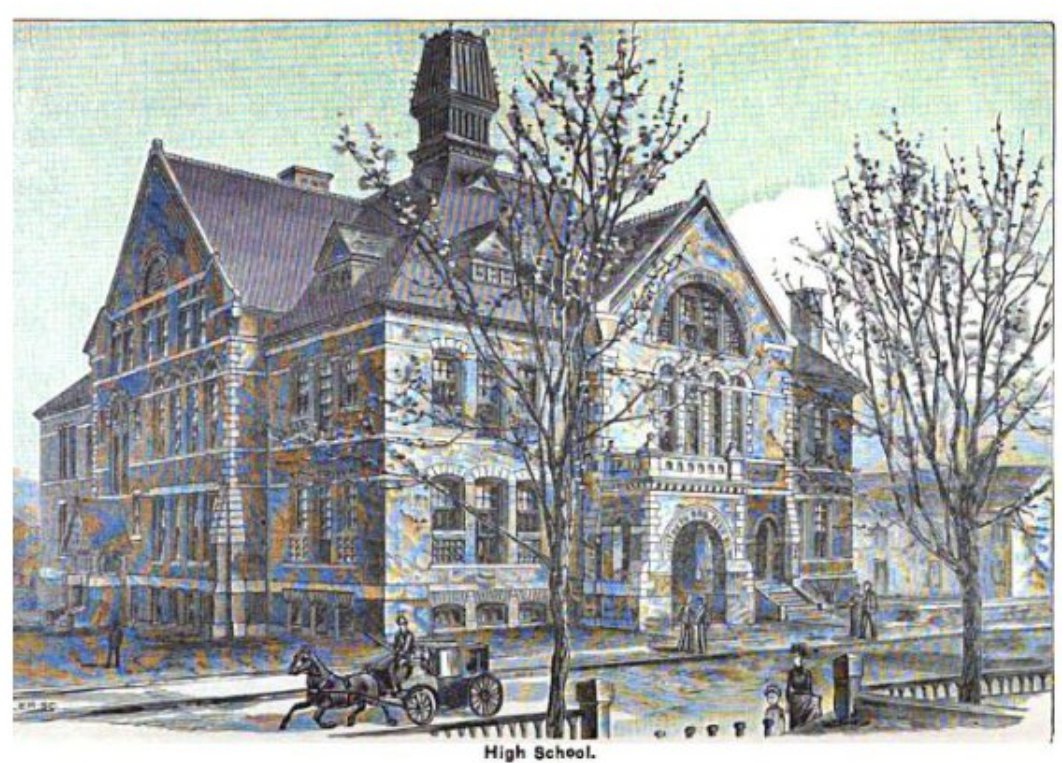
High School 1888 (GLO.317) (Principal Albert Bacheler), now Central Grammar apts.
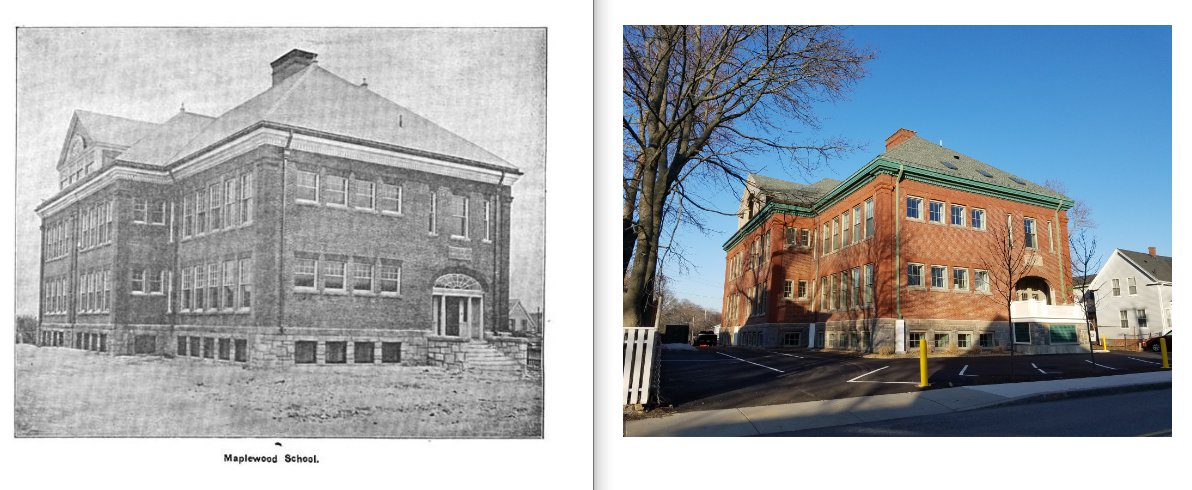
Maplewood 1889, now Maplewood apts.
Blynman 1895 (GLO.112) new Blynman replaced old one; reverted to city in 1956; community center 1956-64, now Magnolia Historical Society purchased from city $1000 in 2013
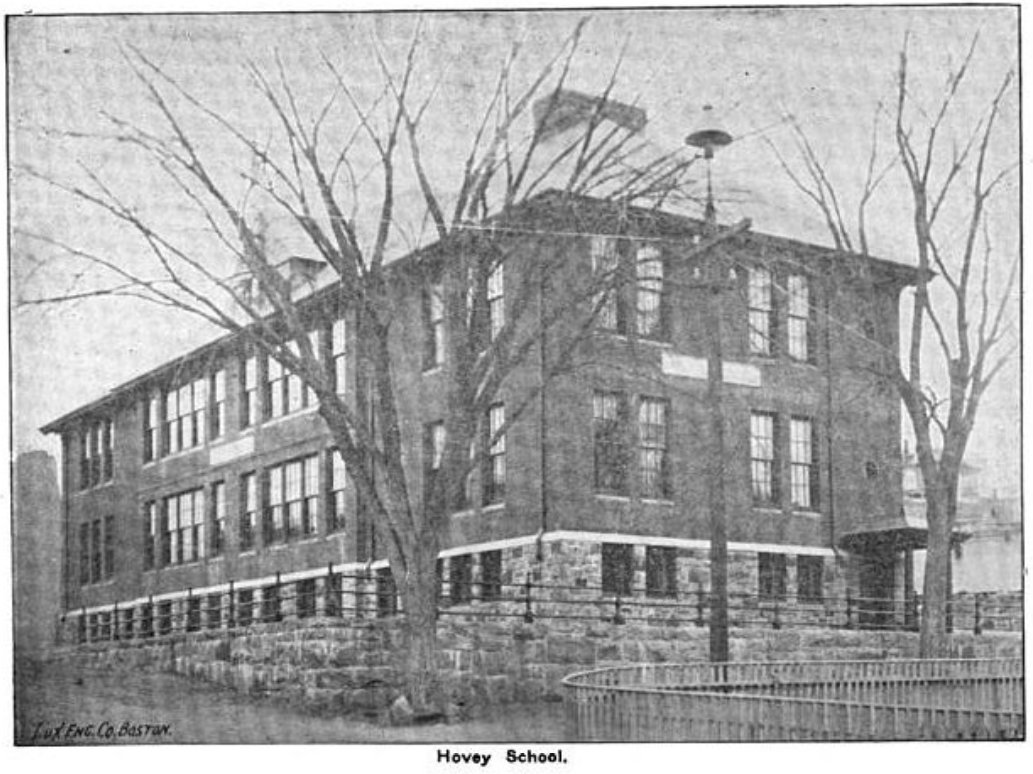
Hovey 1896, now apts.
Eastern Avenue 1907, now commercial real estate
Then
Now
1892 School notes from Pringle
“The High school-house on Dale Avenue was erected in 1888 and ’89, the total cost, including land, being $100,000. This building, one of the most imposing and commodious of its kind in New England, is built of brick with granite trimmings.” and “The first High school-house was erected in 1851 on the southwestern corner of the present lot at a cost of $3,100 including the land. It was enlarged in 1870 and 1878, and was destroyed by fire May 11, 1887.”
“The Hildreth school-house on Eastern Avenue was erected in 1884, at an outlay of $18,000 for building and furnishing and $4,000 additional for grading.”
“Lord Bros, were awarded the contract to build the Babson school-house on Park Street for $17,498. This edifice was erected on site of an old burial ground.” and “The first brick structure, the Babson school house, was built in 1881, the entire expenditure including heating, etc., being $25,944.”
Washington St. at “the crotch of ye old highway”- Townhall | Forbes School | Legion
The frame was purchased from Rockport. The citizens of that town intended to build a town house before Gloucester, but decided to abandon the idea on economic grounds. It was occupied March 17, 1845. Previous to this, town meetings had been held in the First Parish Meeting House, Union Hall, the old Collins’ school-house and other places and at Sandy Bay before it was set off. Its cost was $4200. At a town meeting held in February, 1866, it was voted by a large majority to erect a new town house.
According to Pringle the frame of school then 1844 Town Hall / School House / now Legion was purchased from Rockport
Collins School
The Universalist edifice, as it stands now, the old First Parish church, with its pagoda like steeple, and the old Collins school house, standing on the site now occupied by the building of the same name, and the pride of the town, Tappan’s Hotel, were among the more noticeable features. Its name, like its predecessor, was derived from Madame Collins, who in the early part of the century gave the land upon which the building stands.
Pringle, 1892
1896 Sawyer School
“Grammar Pupils Taught How to Box Compass
If one were to look for a school for skippers he would naturally turn to Gloucester, but he would hardly expect to find the rudiments of the fishermen’s art taught in the public schools. But such is the fact. This “skippers’ class” has been for some years part of the regular course of the Sawyer grammar school, the progressive principal of which is N.D. Tingley…The skippers recite in one of the halls of the school, in the center of which is drawn a large compass encircled by an iron railing. This compass is some four feet in diameter, and all the points are given by their abbreviations in the same manner as on the regular mariner’s compass. In addition to the pole, as given by the needle, the true north is also indicated by a black line, the variation of the needle in Gloucester being quite marked, some 13.5 degrees…The class numbered a dozen, three quarters of whom were girls from 7 to 12. But before they had finished their lessons they demonstrated that they could give their brothers “points” in every sense concerning the boxing of the compass. Possibly Principal Tingley was giving a class of new women instruction in the art of navigation, for one of the first new women of recent times is a pilot on the Mississippi, and perhaps one may officiate in a like capacity aboard of a cape Ann fishing steamer… What is one point west of south? Five pointes east of north? Six points west of south, etc…After the skippers have become proficient and have been graduated they pass the “board.” The board in this case is Mr. Tingley, and he issues to the proficient graduate this certificate, which is highly prized by the holders, as it is printed on cardboard in gilt letters as follows:
Sawyers School Skipper’s Certificate–The Bearer, John Smith, having successfully boxed the compass and answered the required practical questions upon the same is herby awarded this Certificate of honor.–Gloucester, Mass., 1996.”
Boston Globe, 1896
1905 Eastern Avenue School
“Proposed New Grammar School in Ward 2, Gloucester
After much discussion the school committee and the public property committee have selected plans for the proposed schoolhouse in ward 2. The lot where the school is to be built is especially adapted for the purpose. It is on Eastern avenue nearly opposite Day’s pond, and commands a magnificent view in all directions, including an outlook of Little Good harbor beach and Bass rocks, which, from the contour of the lands, can never be shut out by building operations. The building will be 60 x 125. it will contain two main floors and a roof section, the latter being designed for a gymnasium or large hall should such be needed. In the basement will be the usual heating apparatus, the janitor’s room and separate playrooms, with accessories for boys and girls. On the two main stories there are eight rooms…On the second floor, besides the four main rooms, there is a library and teachers’ room…The exterior will be of the colonial style, the material being red brick, with stone trimmings. The estimated cost above ground clear of the furnishings is $31,000. It is intended to have the building ready for occupancy sometime next year. Taking the cost of furnishings and everything it is estimated that the entire cost will approximate 45,000.”
Boston Globe 1905
1920 46% of Fathers of Public School Children are Foreign-Born
Gloucester history 1920 may just be as much if not more current than 2021
Furthermore, whereas formerly the majority of the people in Gloucester were native born, now 46.6 percent of the fathers of public school children are foreign-born: 19 nationalities are represented. They include the following countries, Canada, Denmark, England, Italy, Ireland, Finland, France, Germany, Greece, Iceland, Holland, Newfoundland, Norway, Nova Scotia, Portugal, Russia, Scotland, Spain, Sweden. The largest number are from Portugal, Italy, Finland, England.
From the standpoint of the school, this means that the educational problem is far more difficult than formerly. It means that the school must now not only teach the three R’s, but to use a much over-worked term, it must really be the “melting pot” of all these diverse elements. It must be a social agency in the community where all elements may meet on a common footing. It must be a school where the children may have the opportunity to develop the particular gifts, which all these different nationalities bring to America, rather than a dye vat where all these different vivid colors from all over the world are dyed into one monotone.
In other words, although Gloucester is a small town of only a few thousand inhabitants, yet from an educational standpoint it is faced with the same problems which confront school systems in the average city…”
1922 January
Regarding the high school on Dale and Forbes School Branches (multi building complex)
High School I claim for my administration a savings of $250,000 on the high school alone, and when completed we will have a high school building second to none in Eastern Massachusetts and at a cost of less than half what other cities are paying. And right here I wish to publicly commend and thank the teachers and scholars of our high school for the splendid spirit of co-operation and patience they are exhibiting in cheerfully walking back and forth through mud and rain. The school displaying such fine spirit deserves a good building, and I shall never forget their good and fine cooperation. Money cannot pay Mr. Ringer for his fine leadership in this school under very trying conditions, but now I wish he would confine his activities to the position he was hired for.
I think our school troubles are soon to be relieved. Mr. Fellows, our new superintendent, will, I hope, prove a second Putney. I hope to see our small neighborhood schools again running as under Mr. Putney. I believe, and I have letters from educators that agree with me, that a small school with two or three grades offers equal advantages to small children as single grade schools, as the lower grade pupils are all the time learning something from the higher grade recitations. With the completion of the Washington Street primary school, both the high and primary situation will be relieved, and those garages on the town landing will be taking out of our schools forever. And now with that building on the lot standing the city $5,000 (the cost of moving), does anyone think it should have been given away? For that is all the building stand the city—the cost of moving—for a foundation would have to have been built anyway.
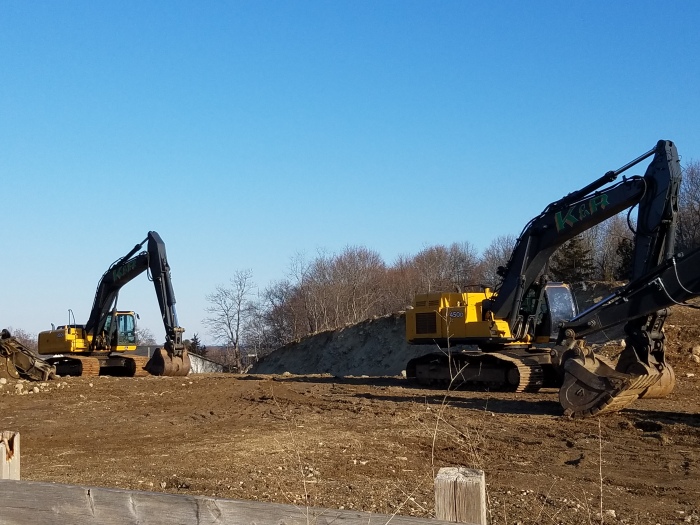
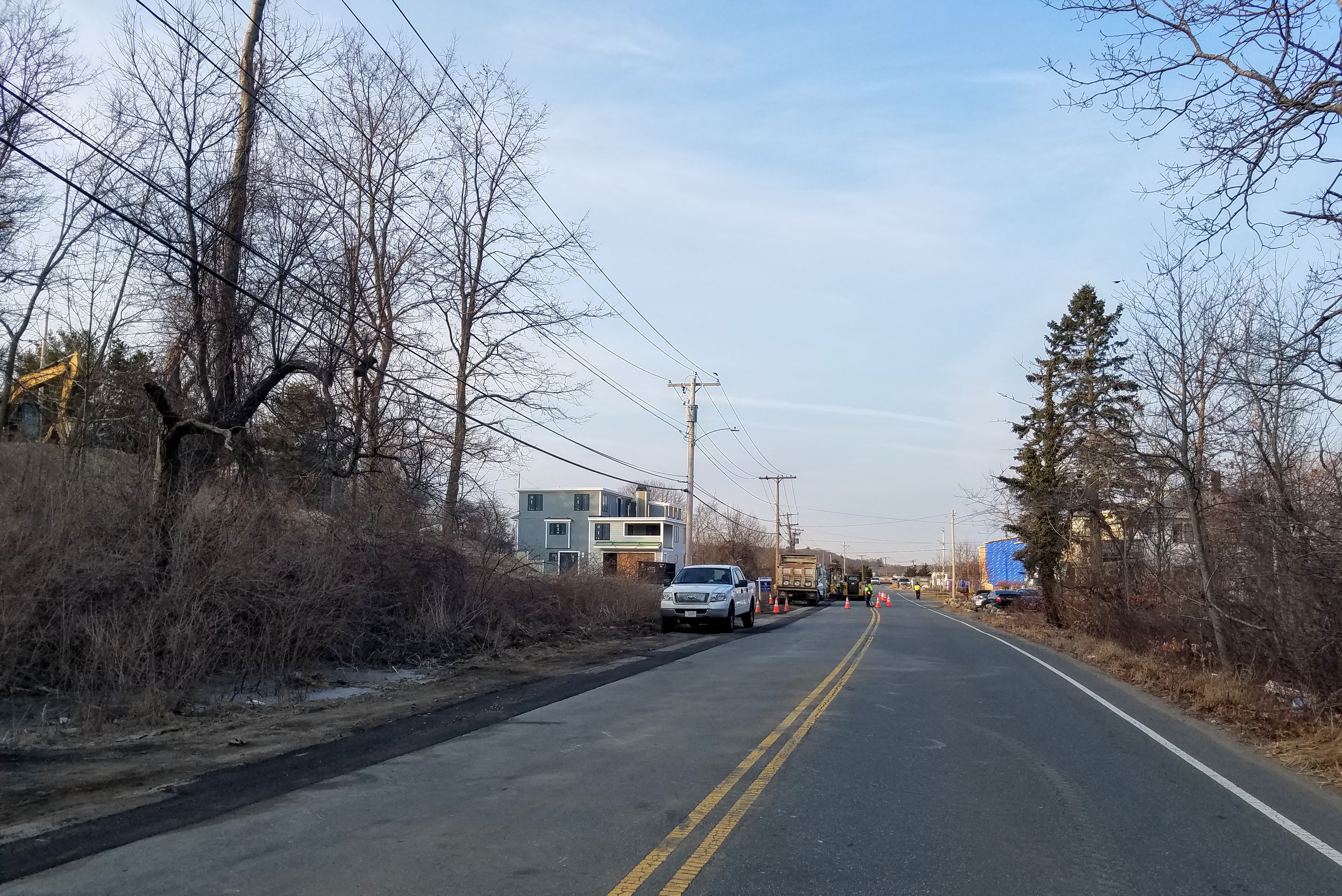
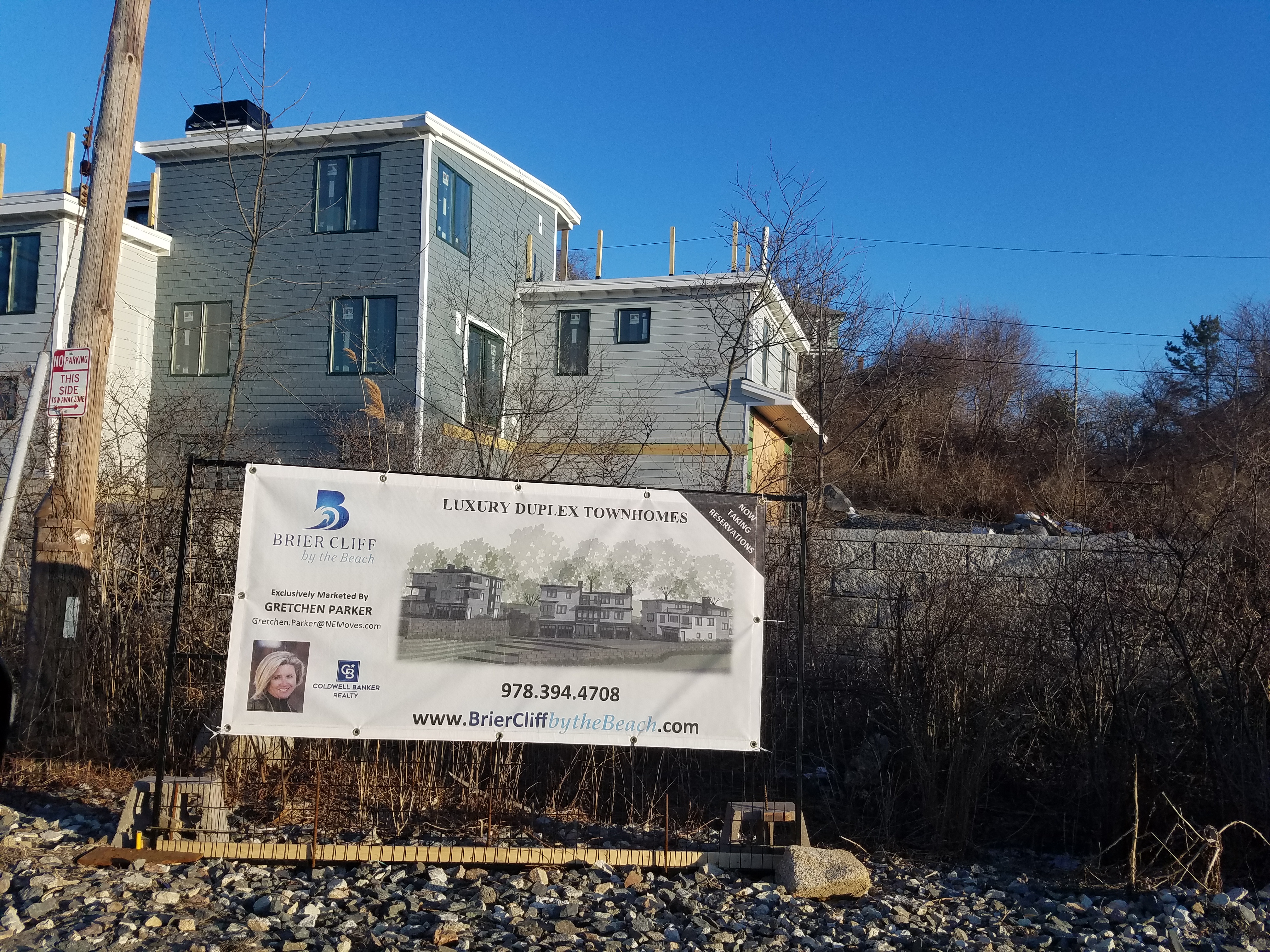
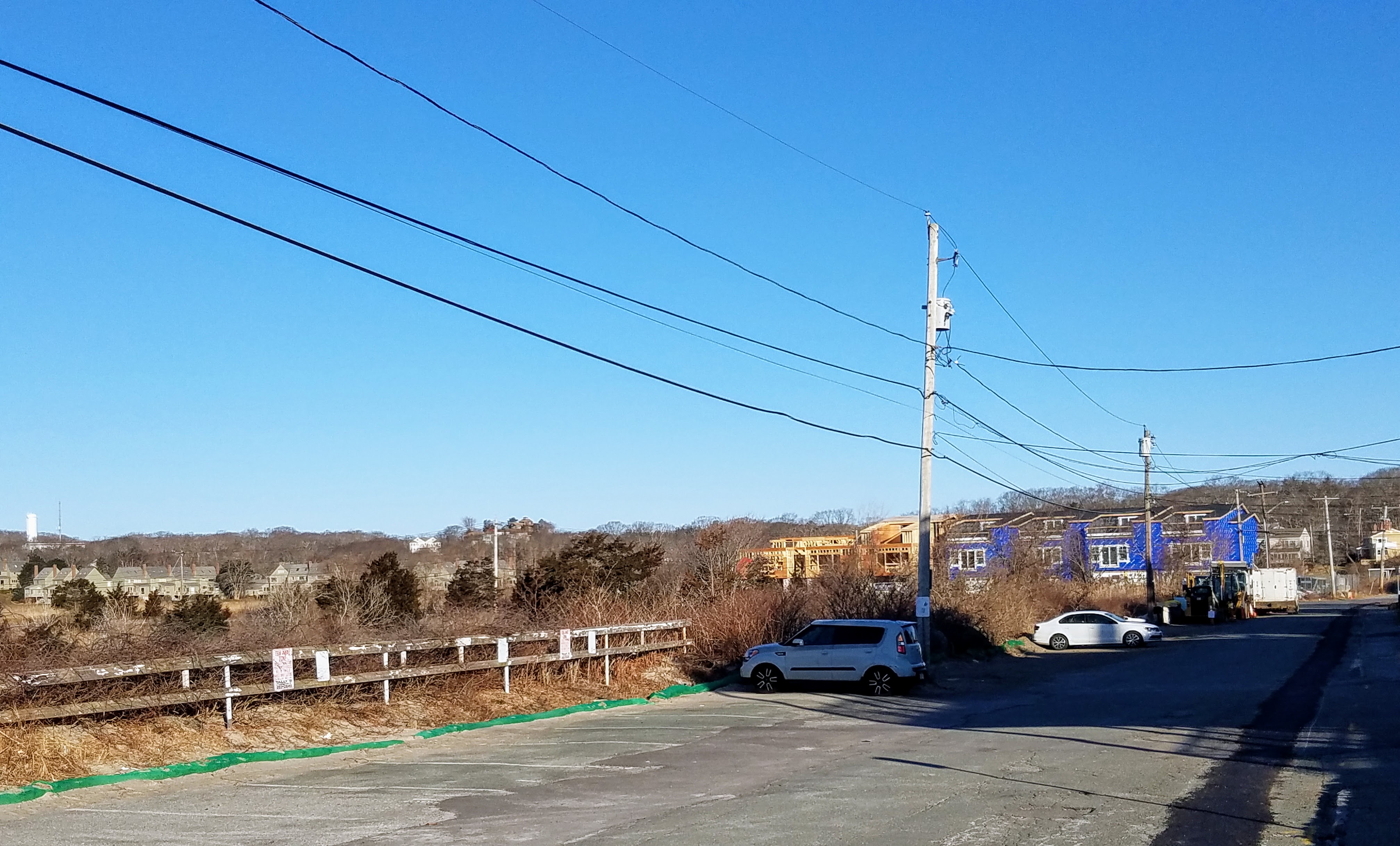
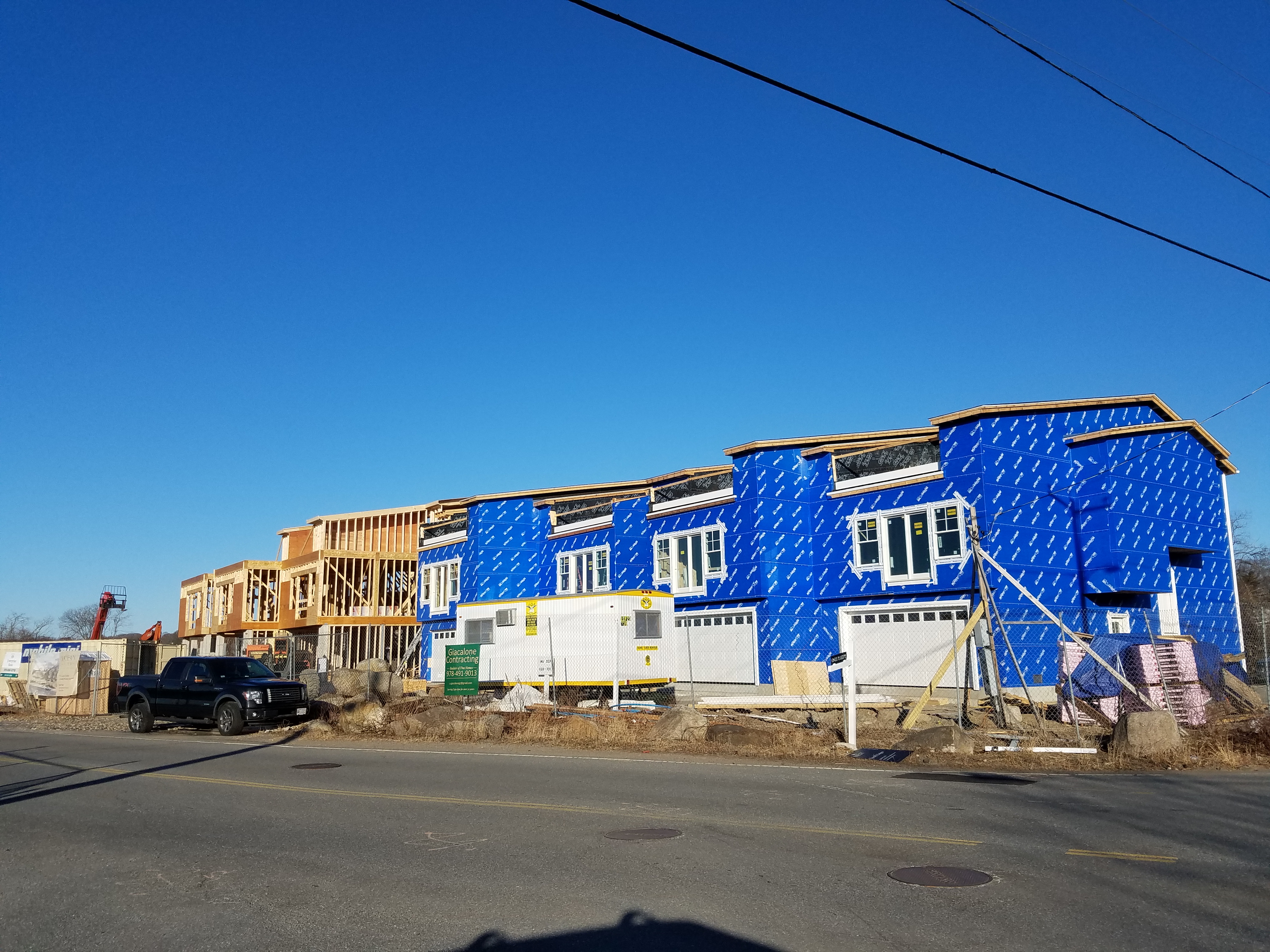
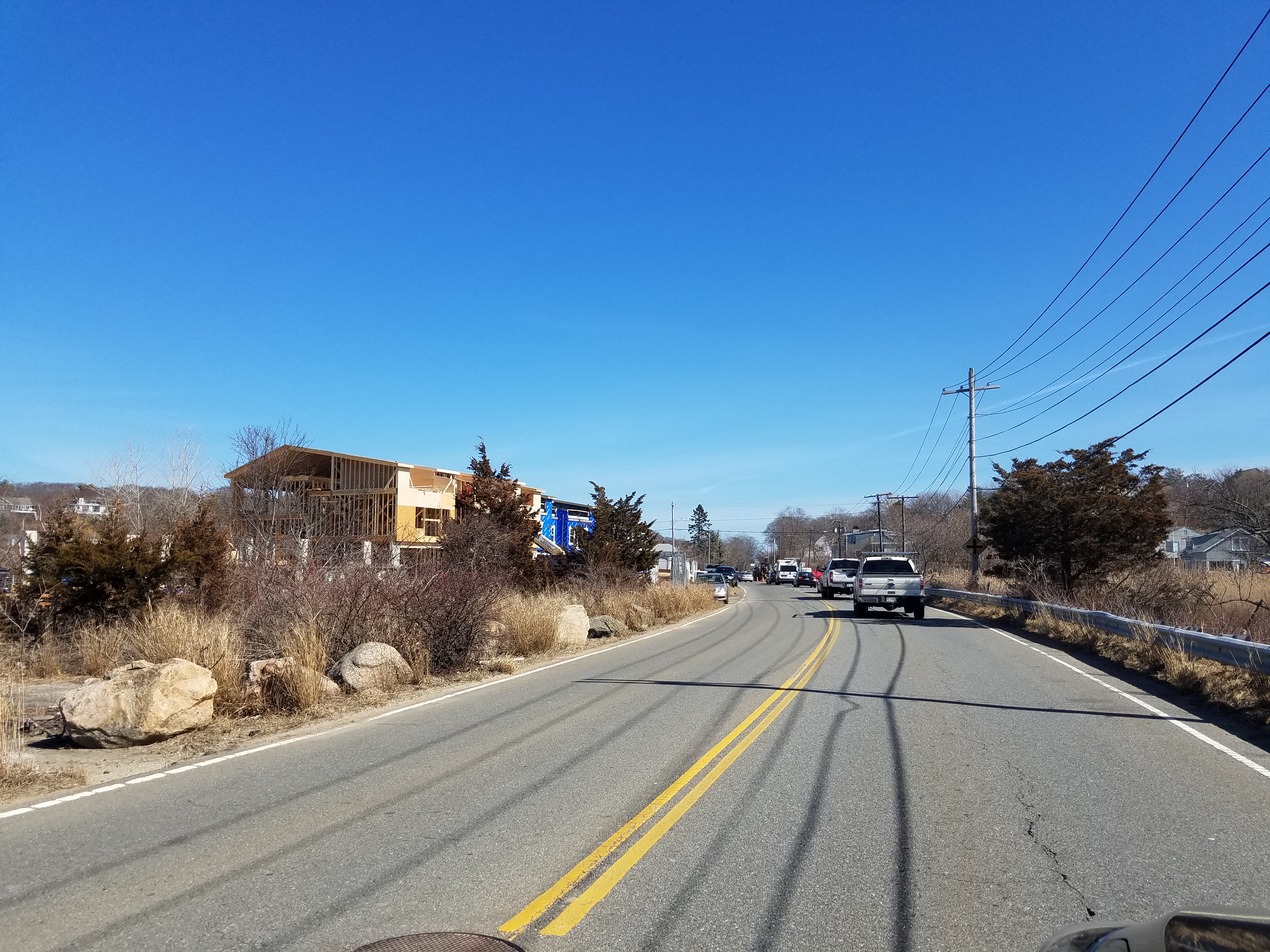
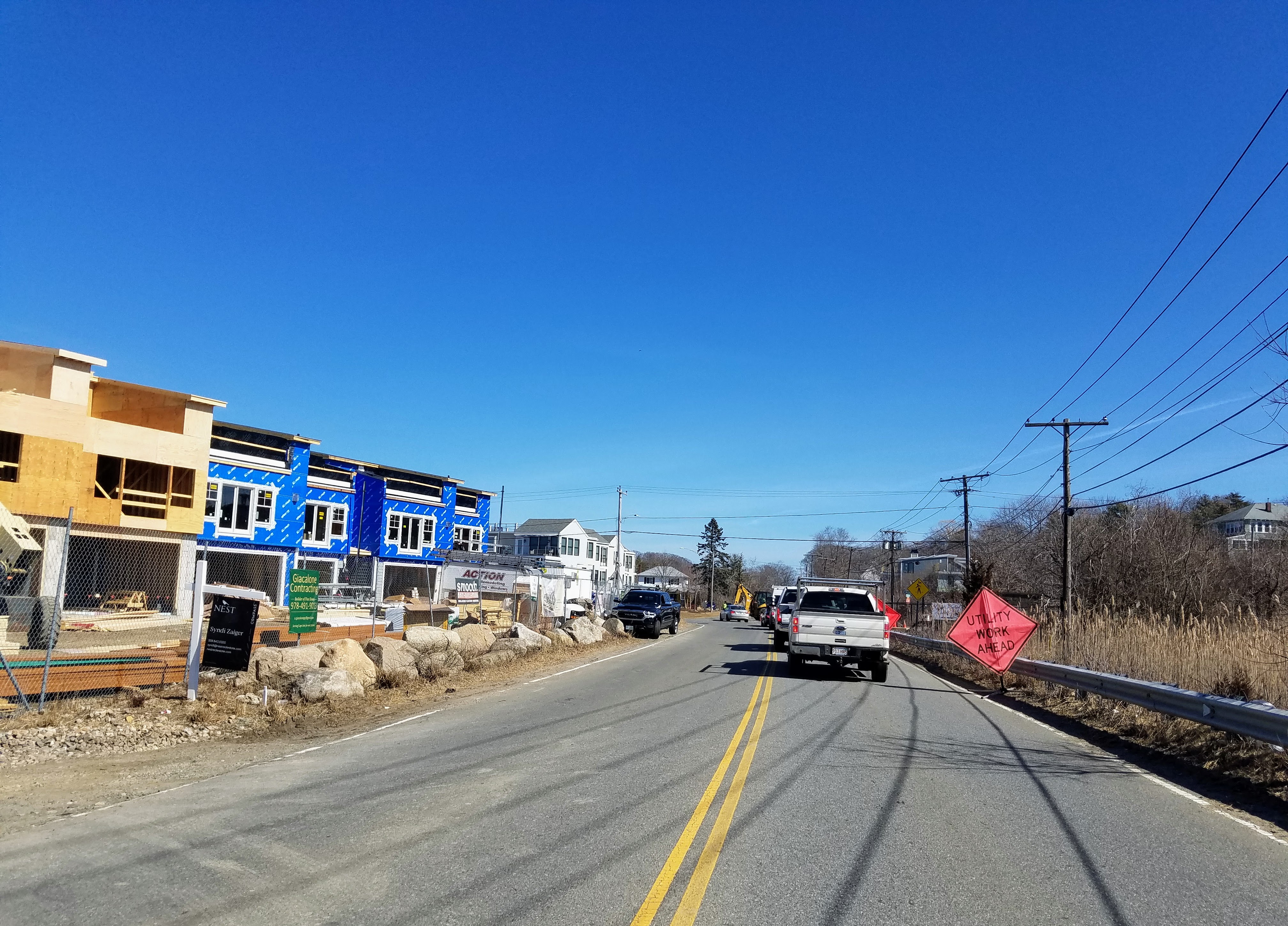
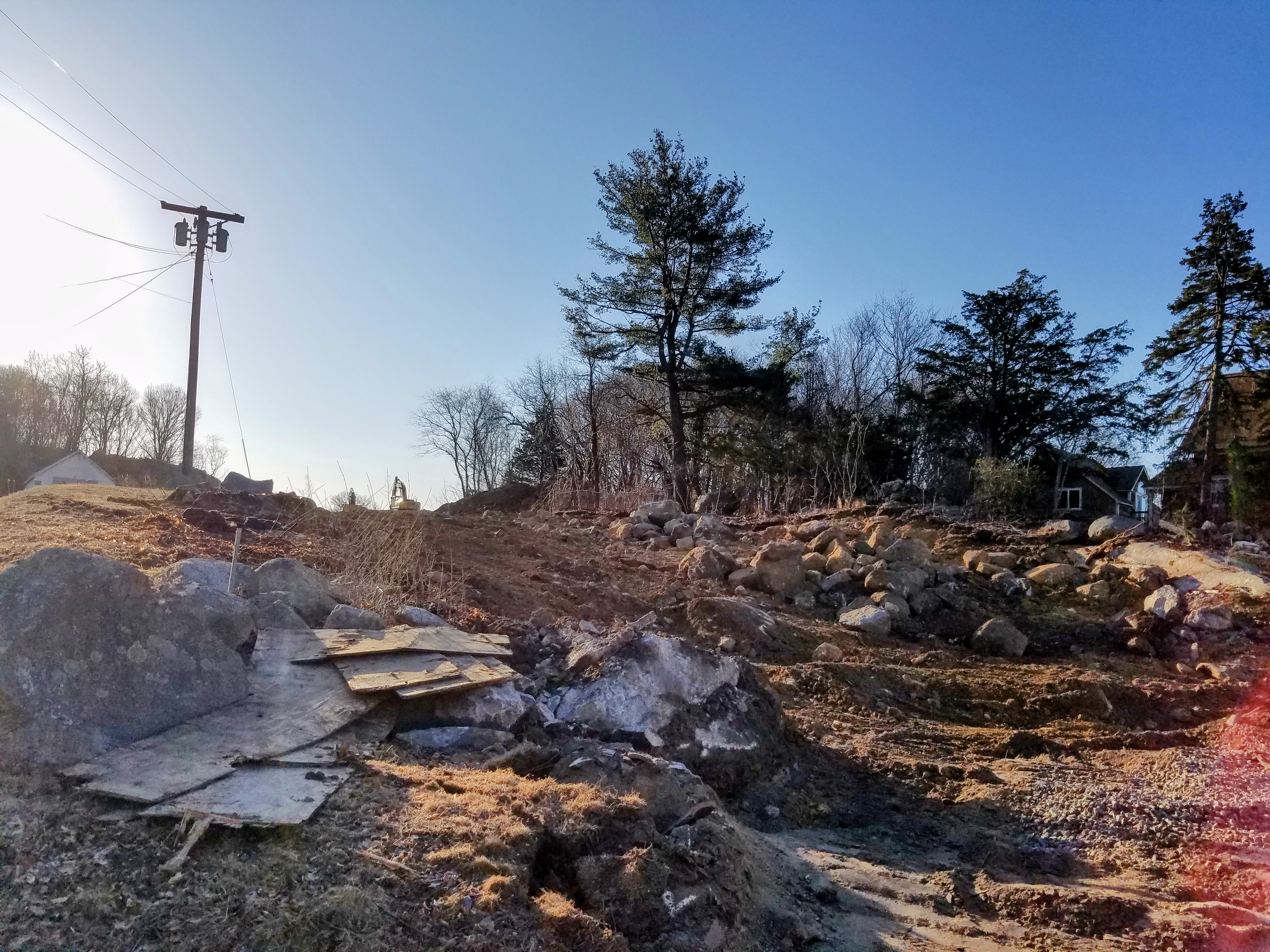
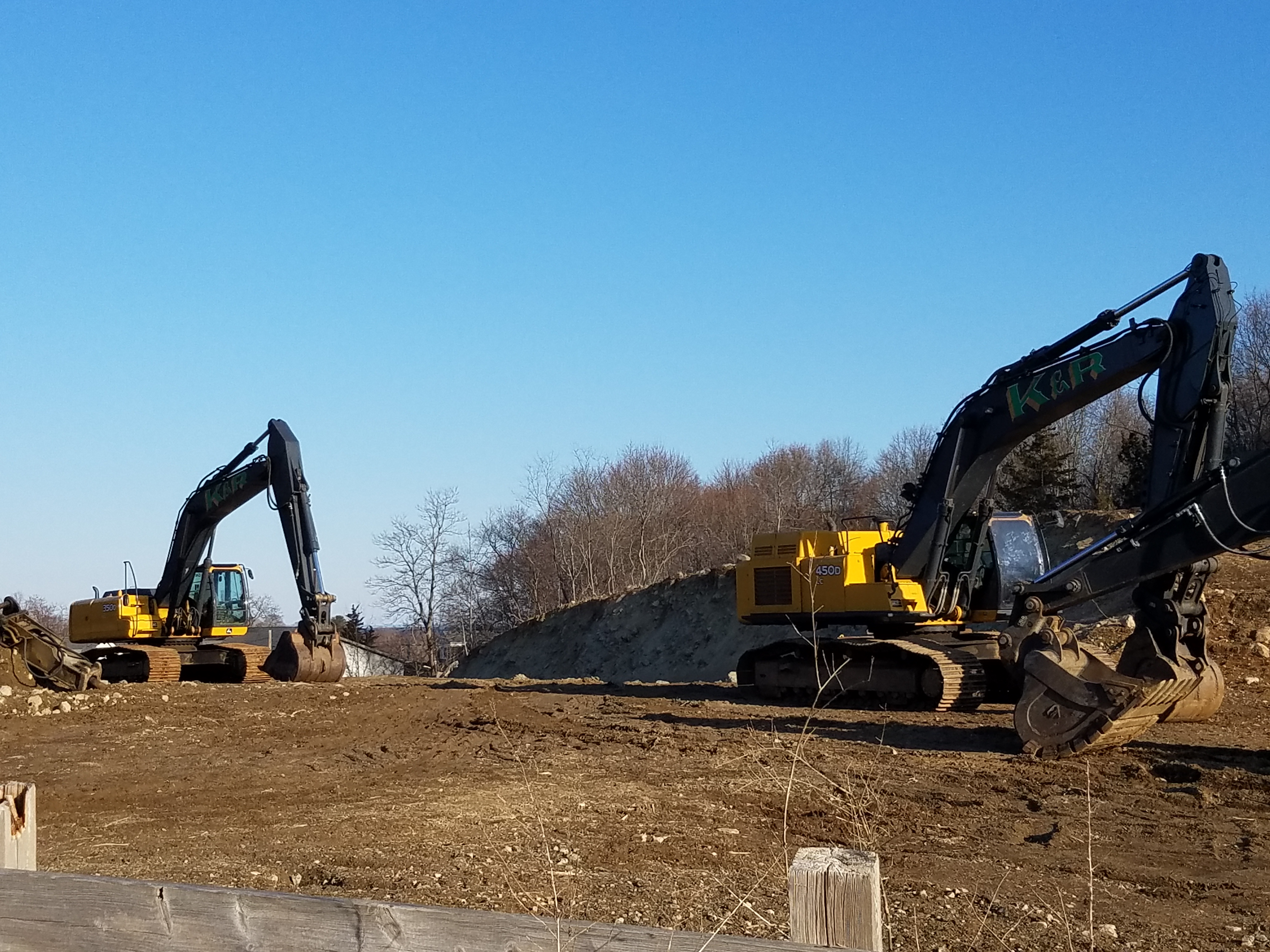
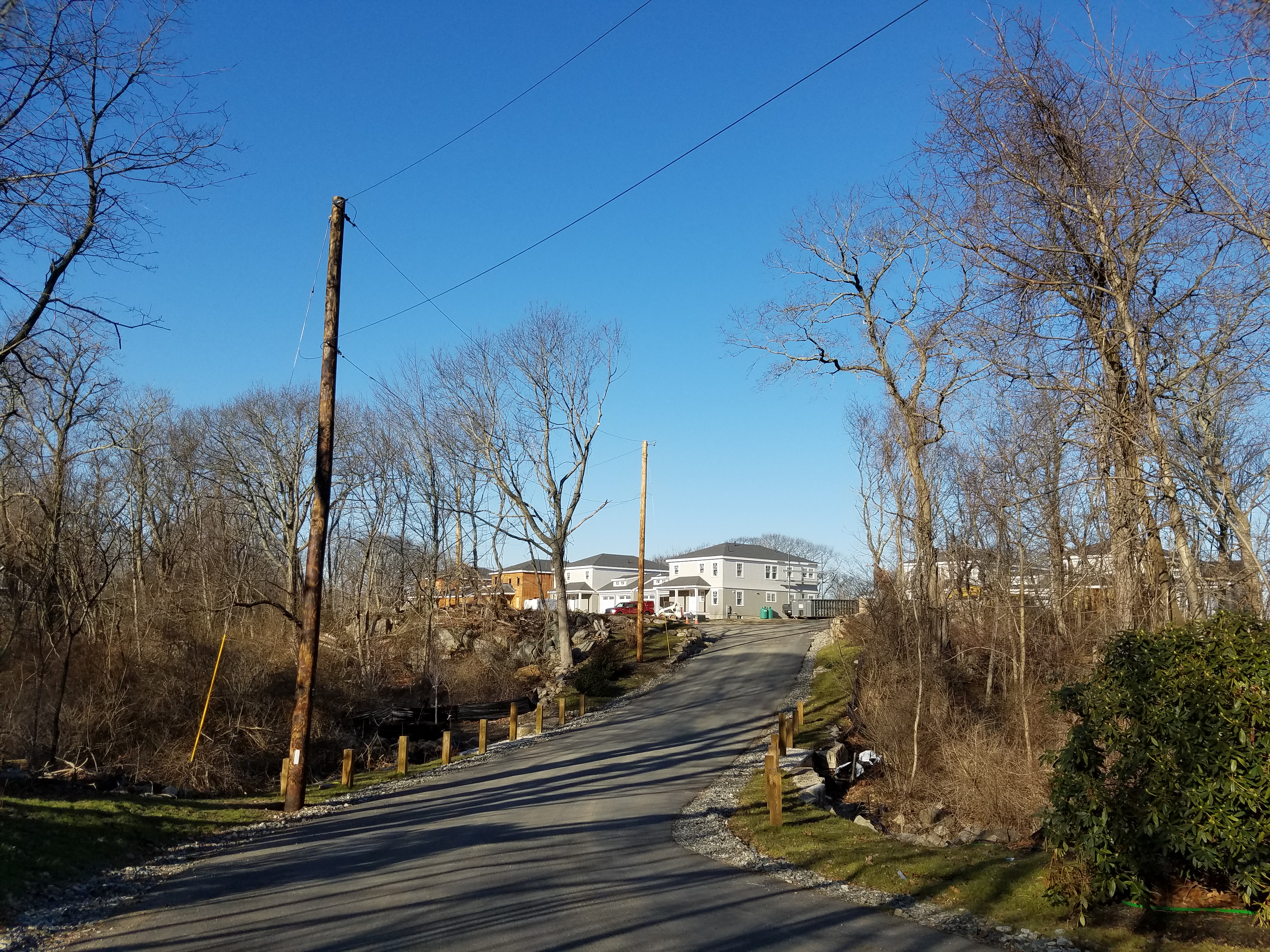
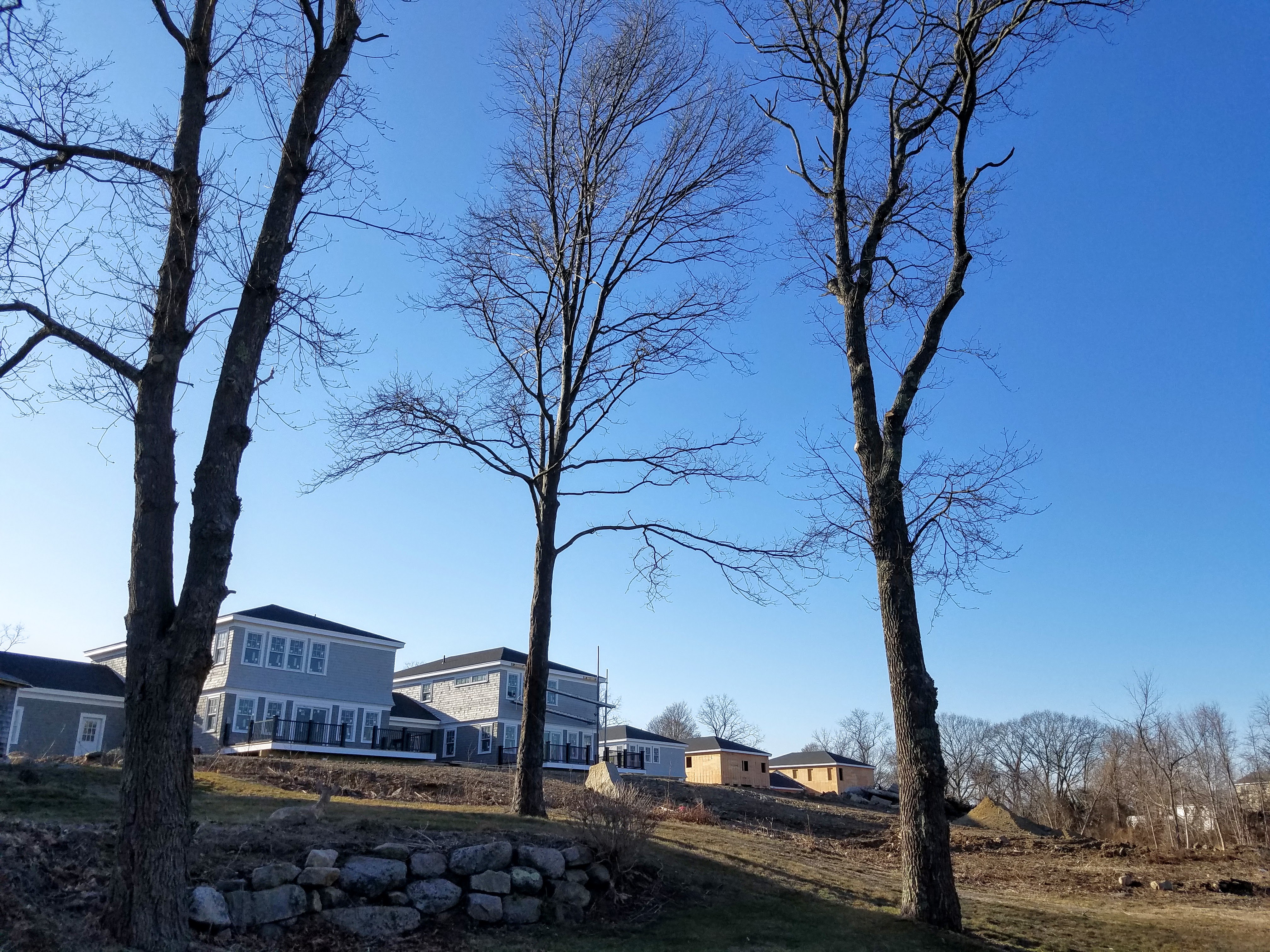
March 2021 construction status. Two projects near Good Harbor Beach at the four corners of Thatcher and Witham, and two projects in Riverdale off Washington Street.
pinch and zoom or double click to enlarge photos
Thatcher Road and Witham – 6 townhouses “Brier Cliff by the Beach”
Between Thatcher and Cliff Road
Thatcher Road and Witham – 12 condos “Ocean View at Good Harbor Beach”
*formerly Brier Neck shores
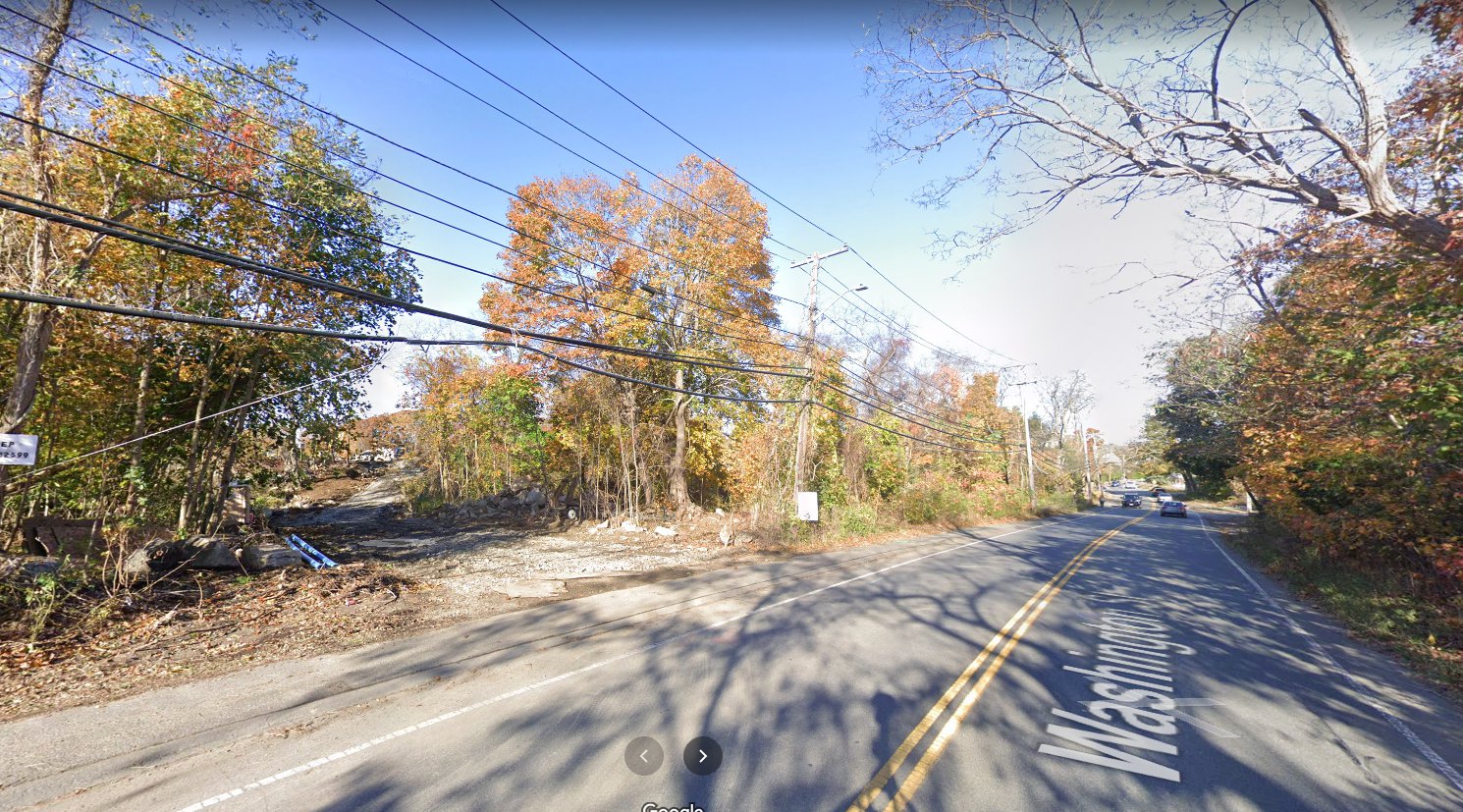
Between Washington Street by Piraino Street and Thornhill Way
(before Willow Rest)
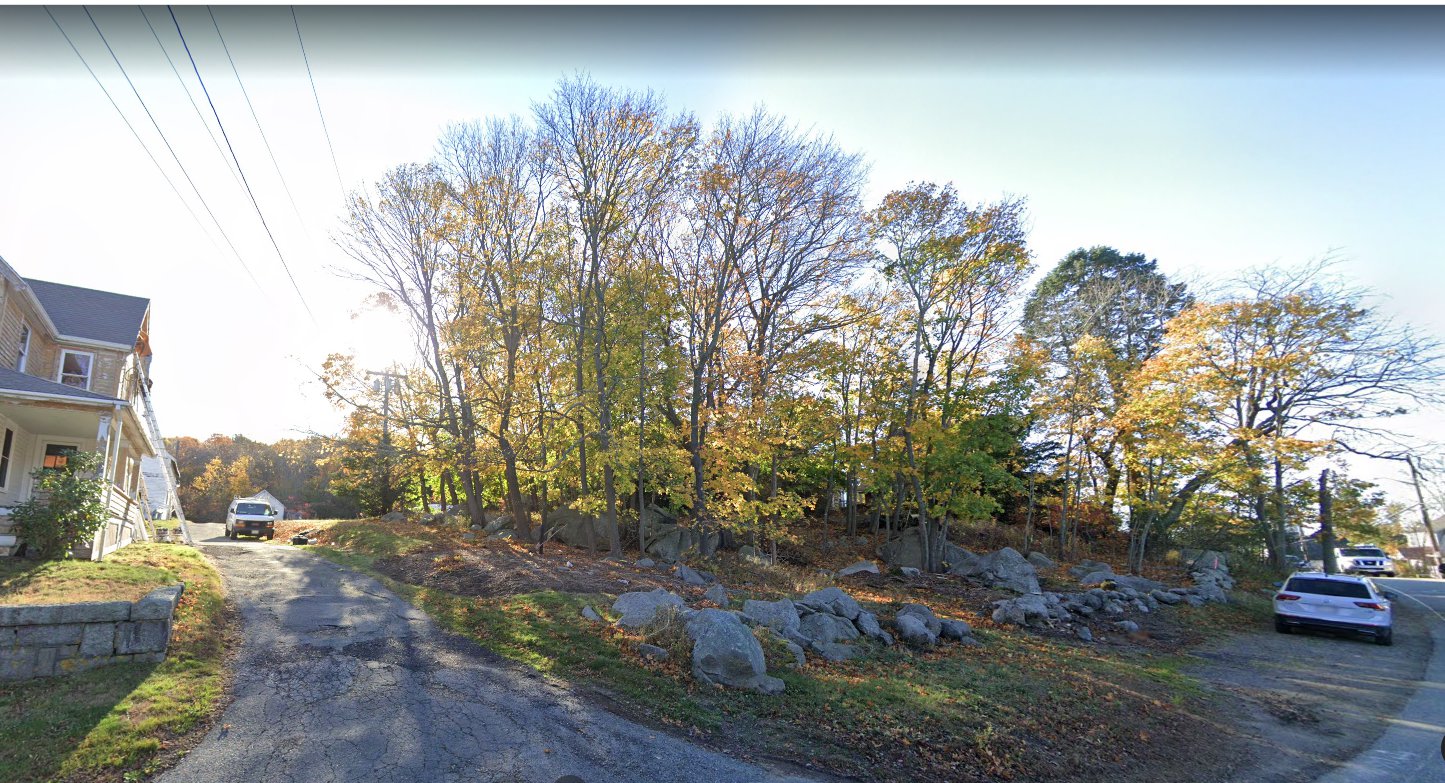
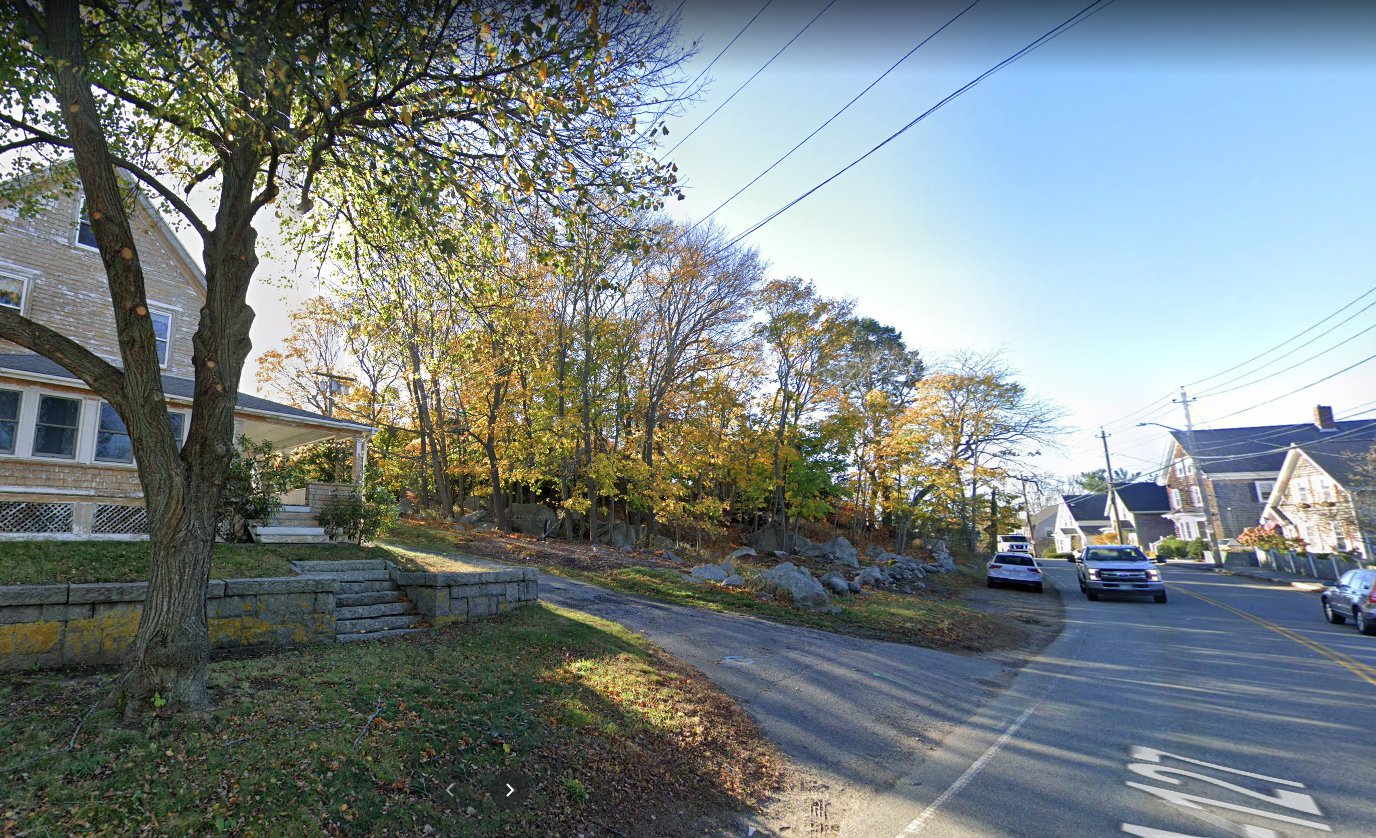
Google street view Nov. 2019Google street view Nov. 2019view from Washington back to Thornhillview from Thornhill down to Washington
Washington Street past Willow Rest – Sea Glass Lane
Google Nov. 2019
Spread The GMG Love By Sharing With These Buttons:
Mayor Wheeler credited women for his re-election. Highlighted equal rights in his inaugural address in1922.
“…I was re-elected by the largest vote and the largest majority ever given a mayor, and our city has made the best showing of any city in the state…
“…The time has come when the women must be recognized in our body politic. This year I have put on the ward officers several women and anyone visiting the polling places where ladies were working could easily see a cleaner influence was at work. It has been freely said that the women of Gloucester elected me. Very well, I am proud of it and I hope to make them proud of it, too.
“And I will say right here at this time, there are some offices in City Hall that would be better run if the lady assistants were the heads and the heads the assistants,
and the organization of women in this city I predict will do more for the advancement of our city and the cleaning of our politics than a dozen boards of trade or chambers of commerce. Yes, if I am a women’s mayor, I am proud of it and I thank them one and all for their support, and I will turn around and help one of them to be Mayor if you men don’t fight cleaner than some of you do now.”
Hon. Percy Wheeler, Mayoral address following re-election, Jan. 2 1922, Gloucester, MA
Spread The GMG Love By Sharing With These Buttons:
woodcut illustration for 1890 Boston Globe article | photos: c. ryan, mostly 2021
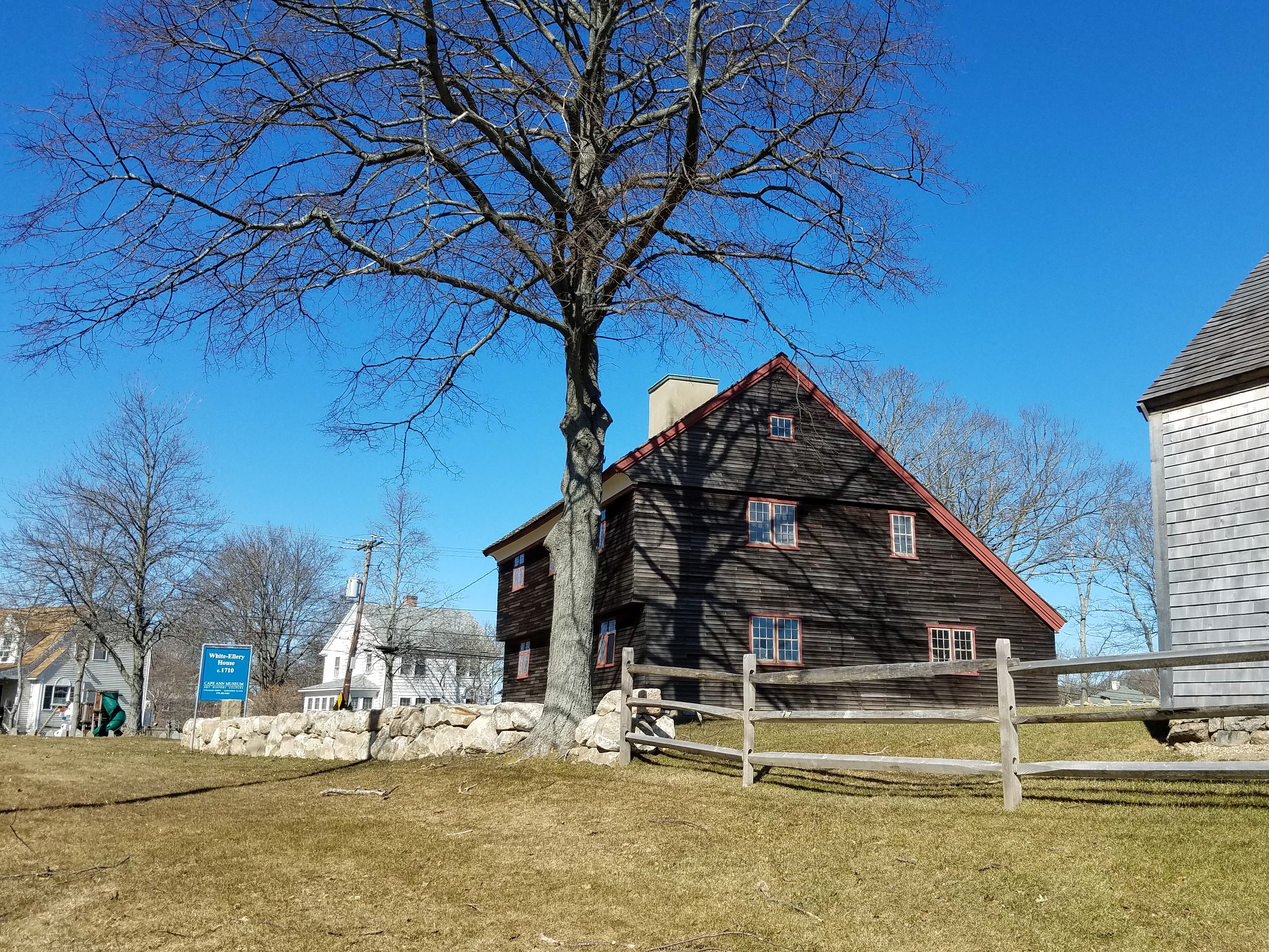
The first Massachusetts home featured in this Boston Globe historic house article was Gloucester’s “Ellery house”, as a classic First Period saltbox:
“OLD HOMES, OLD FAMILIES. Houses in New England, Each of Which Has for Three or More Generations Sheltered the Same Race. Romances Drawn from Wood and Brick
The Sunday Globe begins today to publish stories and pictures of old New England homesteads which have sheltered at least three generations of the families now living in them.
This is not so endless a task as some may suppose it to be. New England, no doubt, contains a greater number of old houses than any other division of the country, but it is rare indeed to find one among those that has been long in the possession of the same family. Such a shifting of ownerships may reflect the growing prosperity of the original occupants who perchance have built greater homes than those of their fathers, but often the disappearance of the inheritors of these ancestral houses signifies either the utter extinction or the scattering and breaking up of the family.
The sketches in this series opening today appeal, therefore, in a peculiar way to the public curiosity, and the Sunday Globe would thank any of its readers if they would call attention to any houses within their own knowledge which may be occupied by a family who have possessed the property through three or more generations continuously or otherwise.
There are various periods in the history of Gloucester house building, each marked quite as distinctly to the architectural student as the different strata of the earth’s crust indicate to the geologist the various periods of formation. In the case of the old houses of note it may be said that they all belonged to the upper crust.
The houses of the first settlers of Gloucester, with rare exceptions, have long since been replaced by others of more elaborate design, and the few remaining in the suburbs are small one-story edifices of no particular architectural pretensions.
In common with Boston, Salem, Newburyport and other colonial seaports, Gloucester once owned a large fleet of ships, brigs and barks, that sailed to foreign ports, exchanging the products of the town and of the county for Spanish gold and Surinam molasses, which was converted into New England rum.
These merchants built commodious residences and dispensed a hospitality commensurate with their position as leaders of the social and intellectual life of the town.
The most historic edifice in town is the Ellery house, which stands just below the old meeting house green on Washington street in Riverdale, a suburb of the town.
It was built by Rev. John White shortly after he came here in 1702 to minister to the spiritual wants of the First Parish, receiving a grant of land from the town on which to build his home. At that time the main settlement was in that portion of the community, but the necessities of commerce and fishing made it convenient for the inhabitants to remove nearer the seashore, deserting their first habitations on what is now known as “Dogtown Common,” where the remains of their cellars can still be traced today.
The type of architecture is well portrayed by the accompanying cut. On the projection which overhangs the lower story in front there were four balls pendant, a style of decoration of the times, which have long been removed.
Inside, the old-fashioned low studded style of room is at once apparent, and the antique furnishings and general air of the place make one realize more vividly the age of the house and fixtures, which are of a nature to bring joy to the heart of an antiquarian.
Some of the furniture in the parlor is about 200 years old. The house was bought in 1710 by Capt. William Ellery, and it still remains in the hands of his direct descendants, the occupants being John Ellery and his wife. Thus it will be seen that it has been in this family 150 years.
The purchaser of the house was a son of the original settler, William Ellery. The Ellery family were prominent in the social and intellectual life of the place from the first, being leading merchants. Hon. Benjamin Ellery, called in the family “Admiral,” was the eldest brother of William. He went from Gloucester and settled in Rhode Island and was the father of Deputy Gov. William Ellery and grandfather of William Ellery who signed the Declaration of Independence, the signer being a grandnephew of the first owner of the house.”
The White Ellery House is part of the Cape Ann Museum collection. There are inaccuracies in the 1890 nutshell above. James Stevens and the tavern he operated is absent. The rum trade is acknowledged; any NE slave trade economic connections are not. [Massachusetts was the first colony to legalize slavery. Vermont was the first to abolish (VT 1777 vs. MA 1783).] The article predates the build out of Rt. 128 which rallied a preservation relocation.
Maybe CAM might commission a set of woodcuts of the historic properties as they are now by various local artists.
Beautiful improvements on the grounds of Cape Ann Museum
note: pinch and zoom or double click to enlarge photos.
Spread The GMG Love By Sharing With These Buttons:
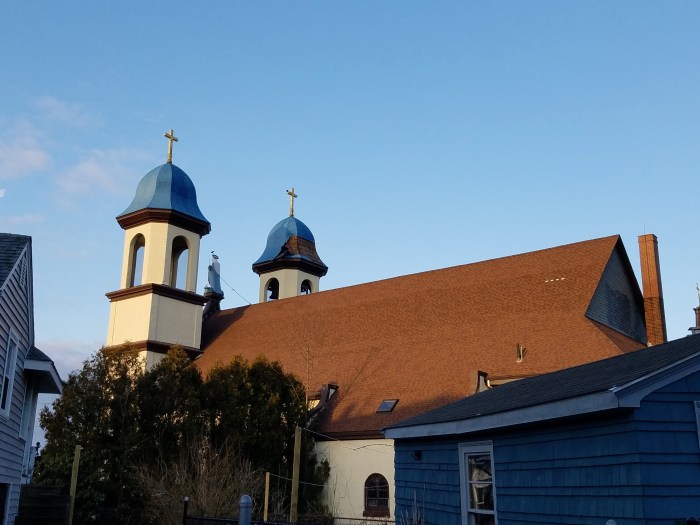
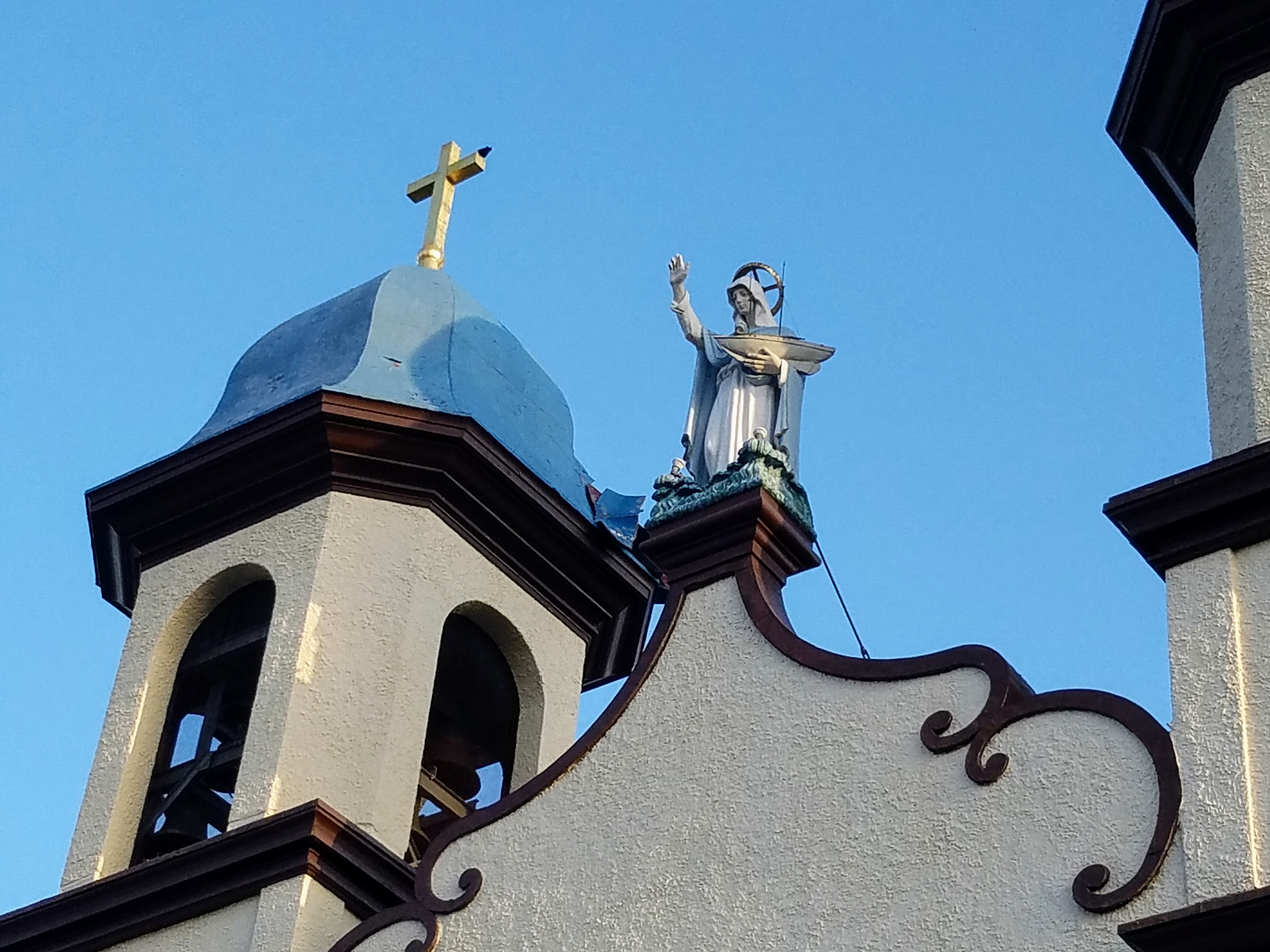
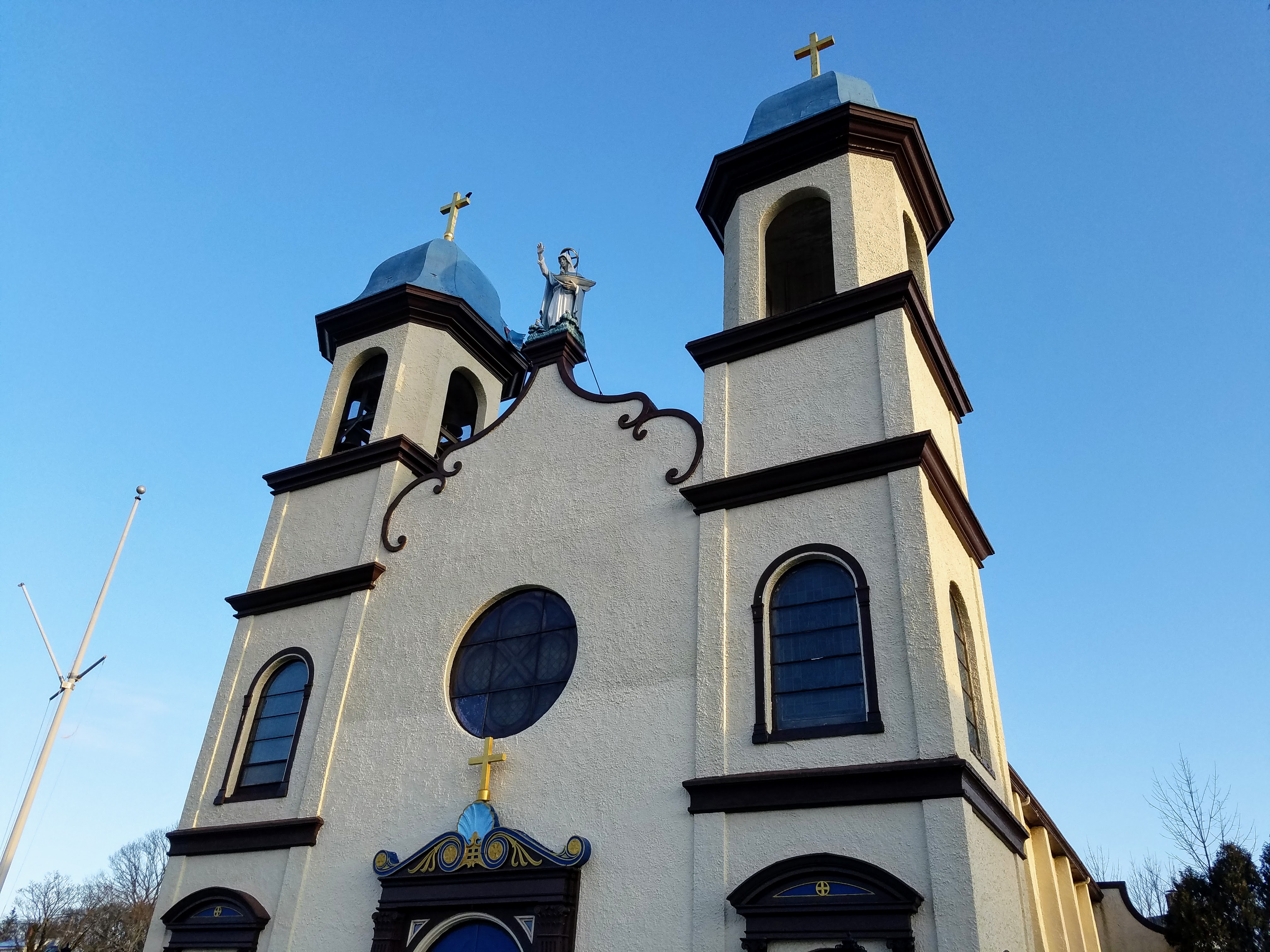
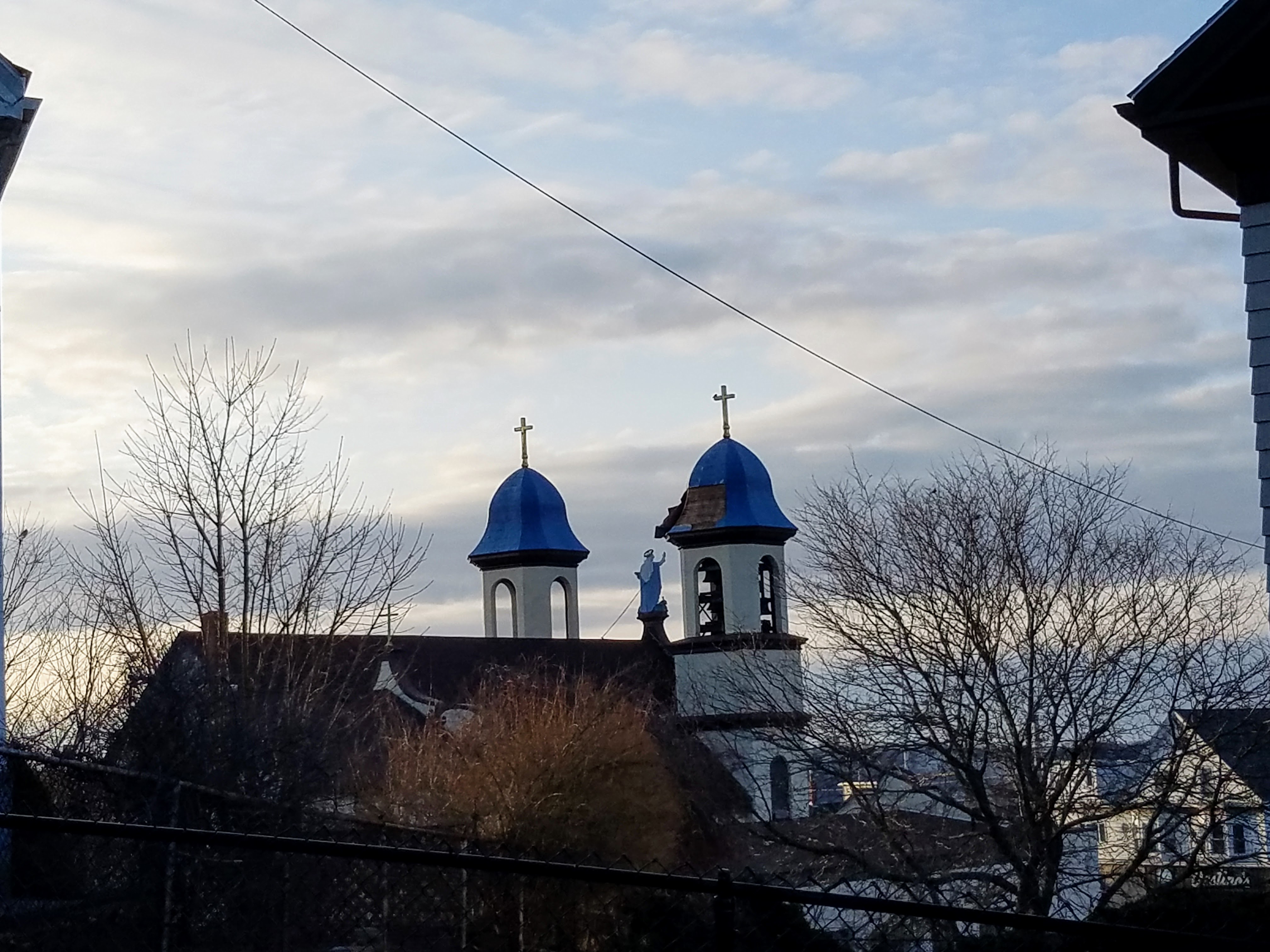
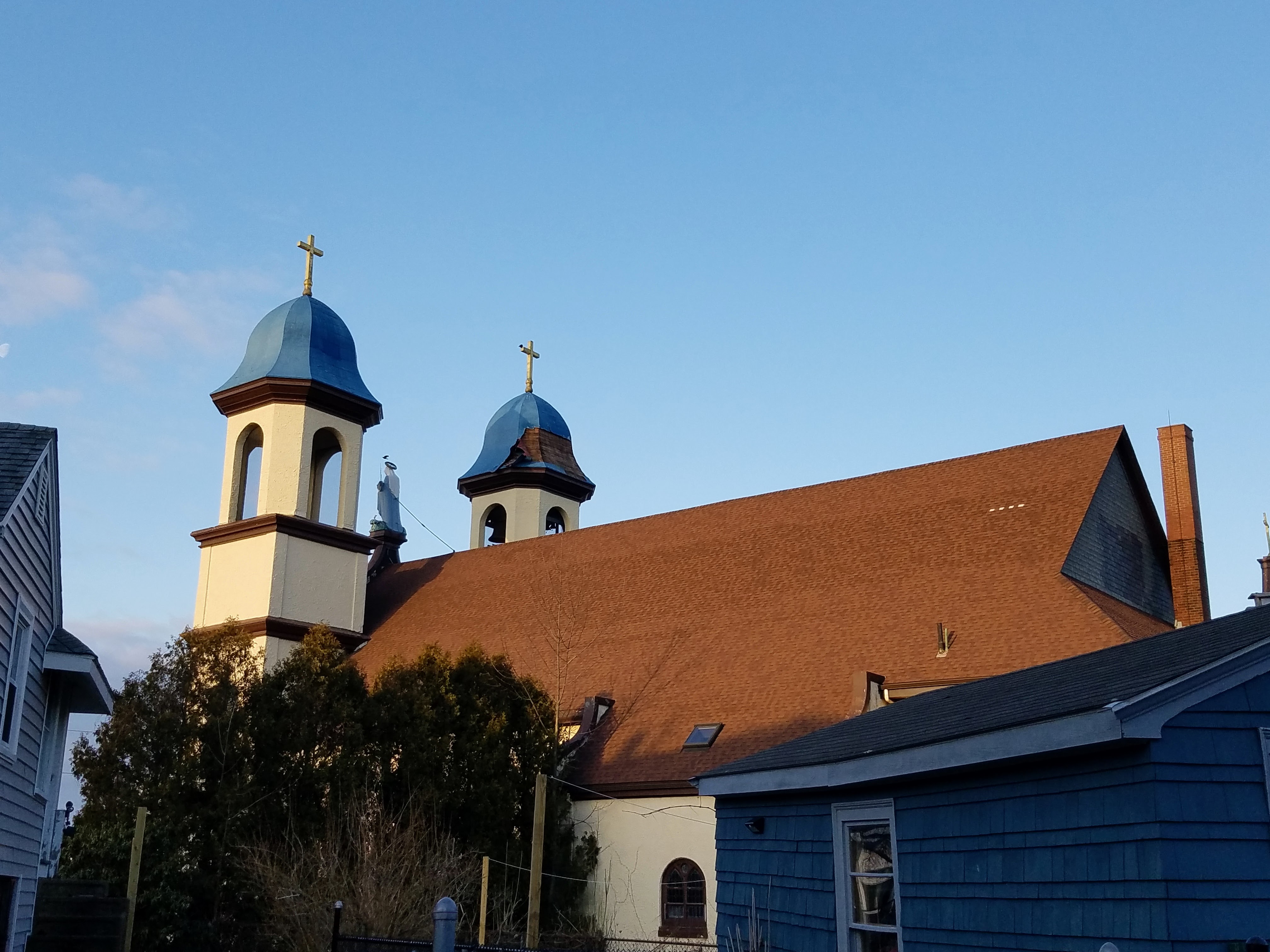
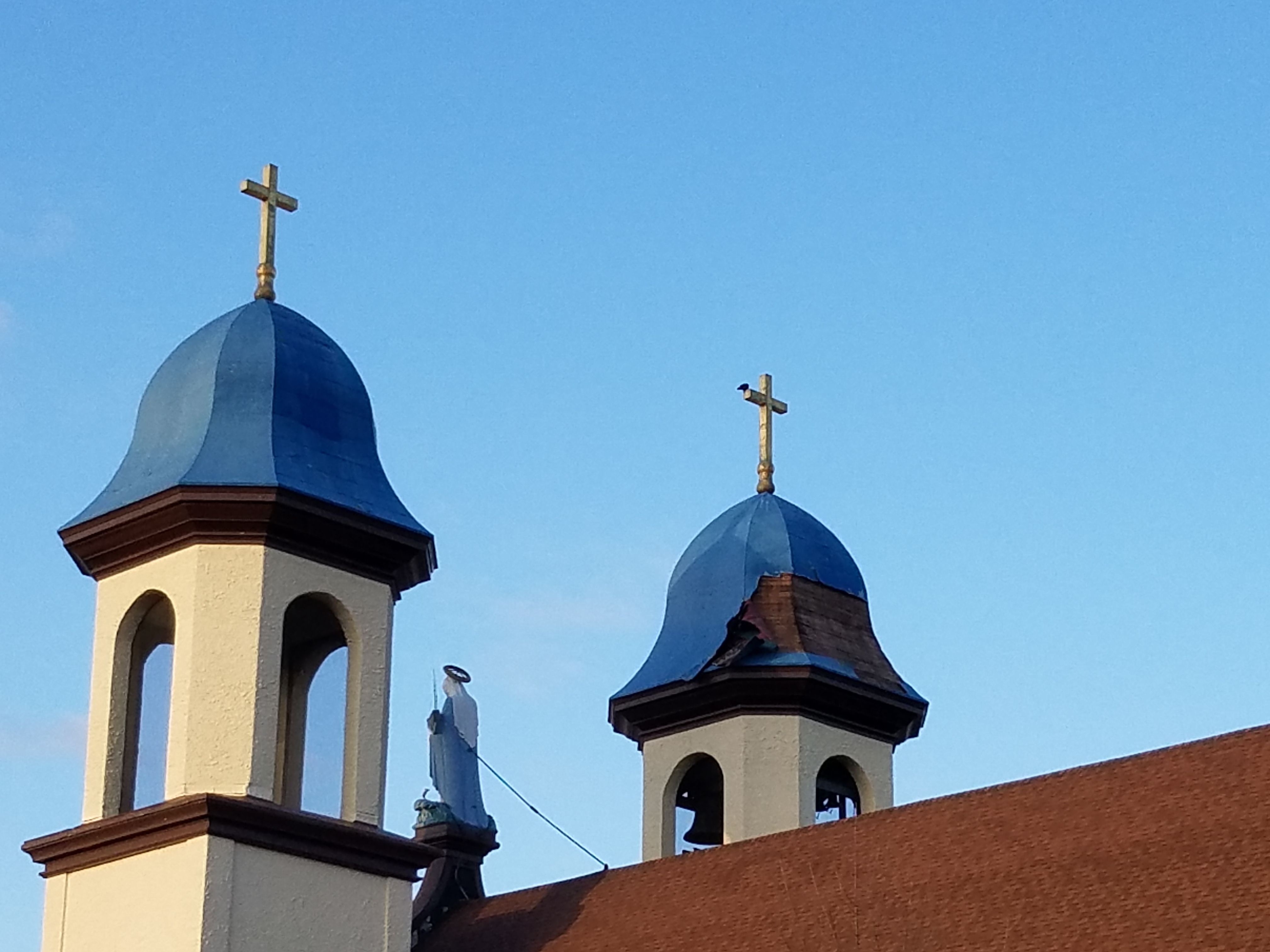
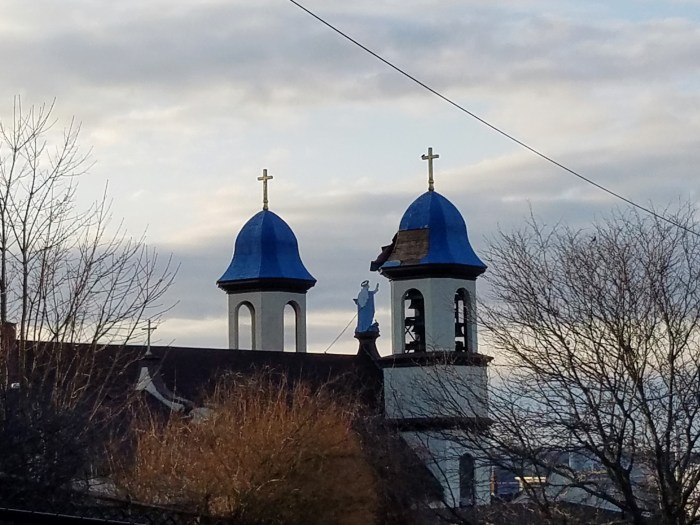
Efforts to mobilize repairs on the west tower blue dome of Our Lady of Good Voyage are underway. Photos show some of the damage to the inspiring tower that was sustained after the windstorm this week. If you wish to help the cause to restore, on line donations can be made at the church: https://ccgronlineolgv.churchgiving.com/ The Church, all of Gloucester & greater Cape Ann, and all the artists and admirers of Our Lady of Good Voyage around the world would surely appreciate the support!
The Portuguese church of Our Lady of Good Voyage on Prospect Street in Gloucester is resilient. The church was re-built after a catastrophic fire in 1914. Thousands attended the laying of the cornerstone on May 24, 1915. (Less than ten years later, during the year of the city’s tercentenary, parishioners celebrated the mortgage liquidation.) One of our city’s most cherished buildings, the landmark was added to the National Historic Register of Historic Places in 1990.
helping an icon people hold dear
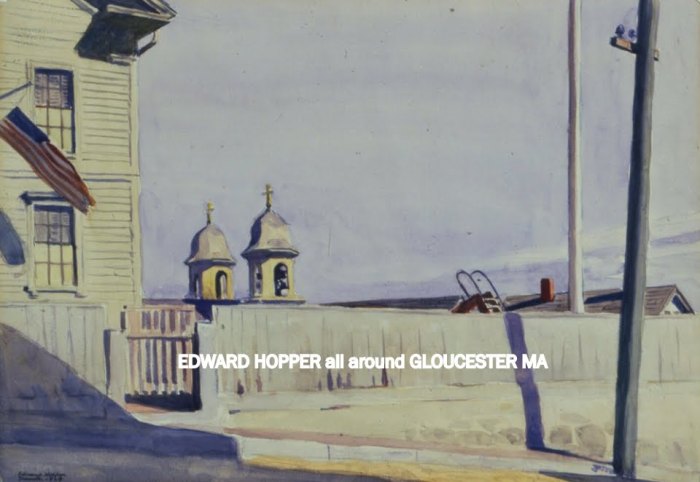
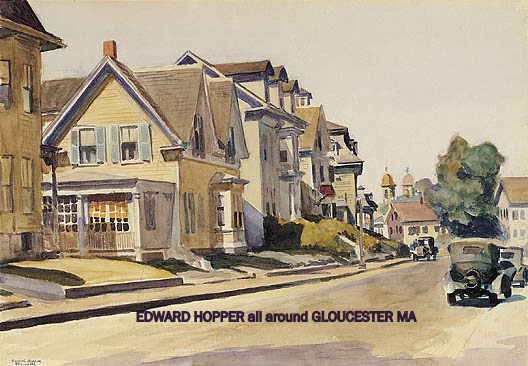
For more about Edward Hopper work in Gloucester, Mass. see here
For more about Gordon Parks work in Gloucester, Mass. see series 2012-14 here
Spread The GMG Love By Sharing With These Buttons:
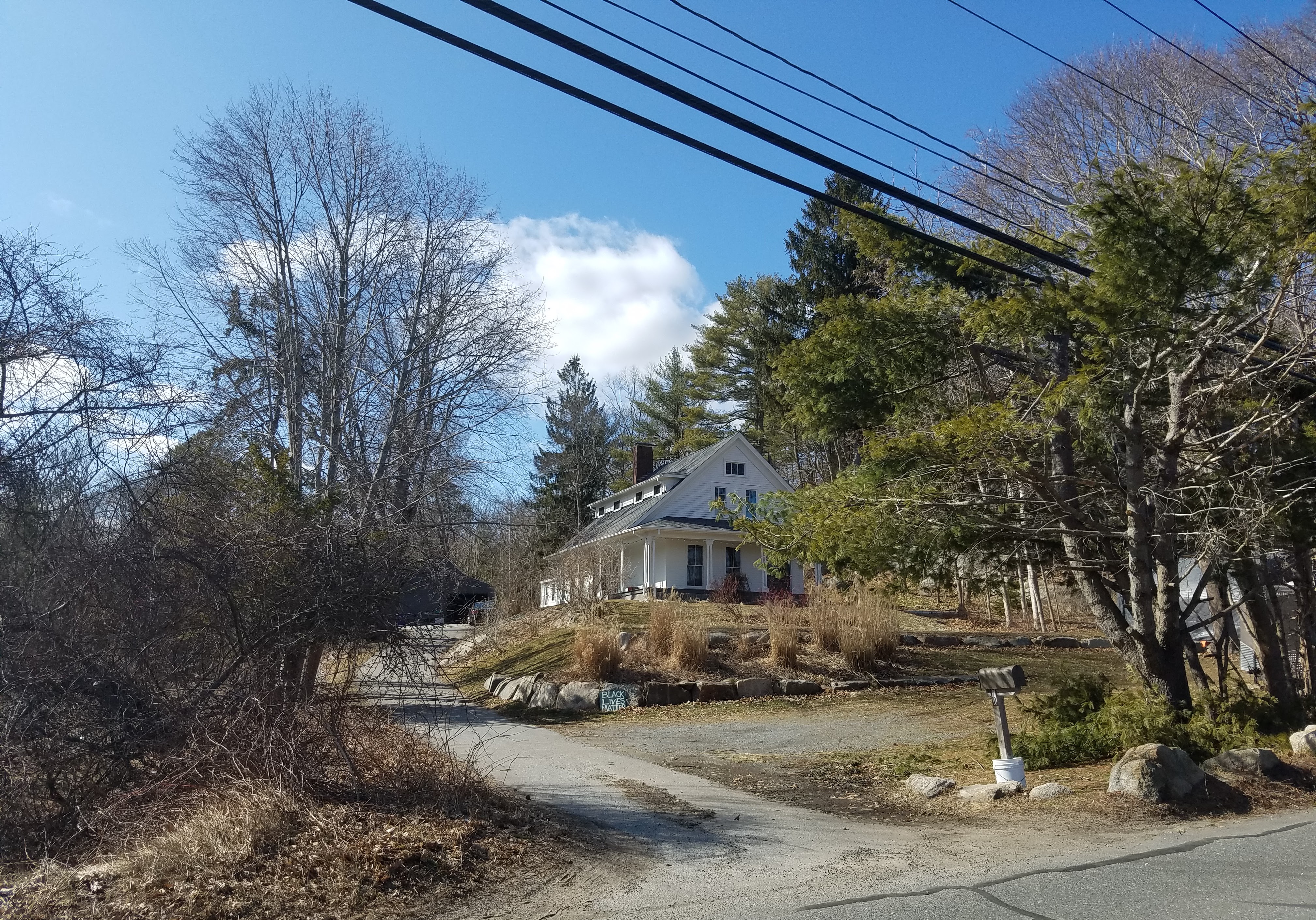
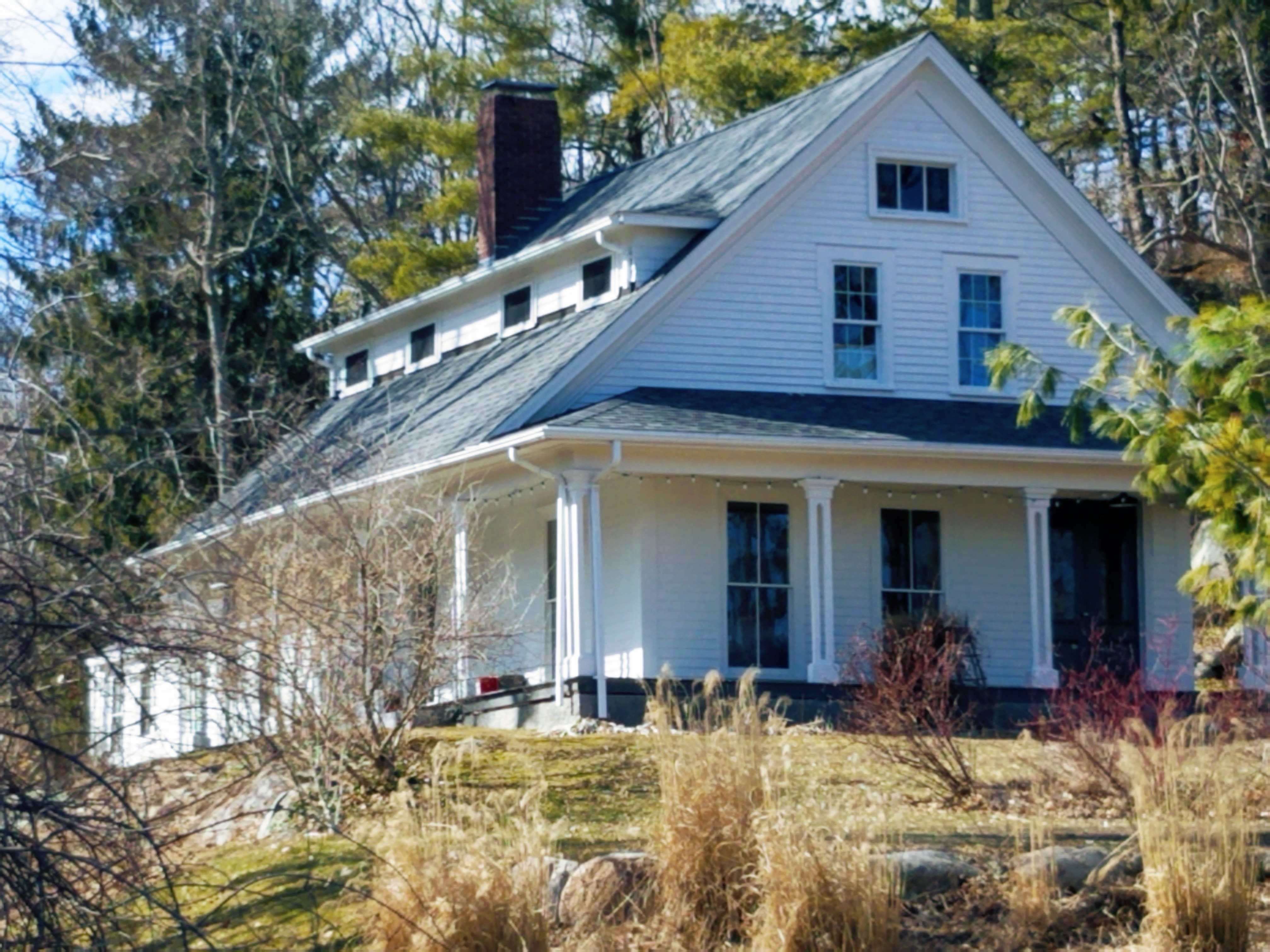
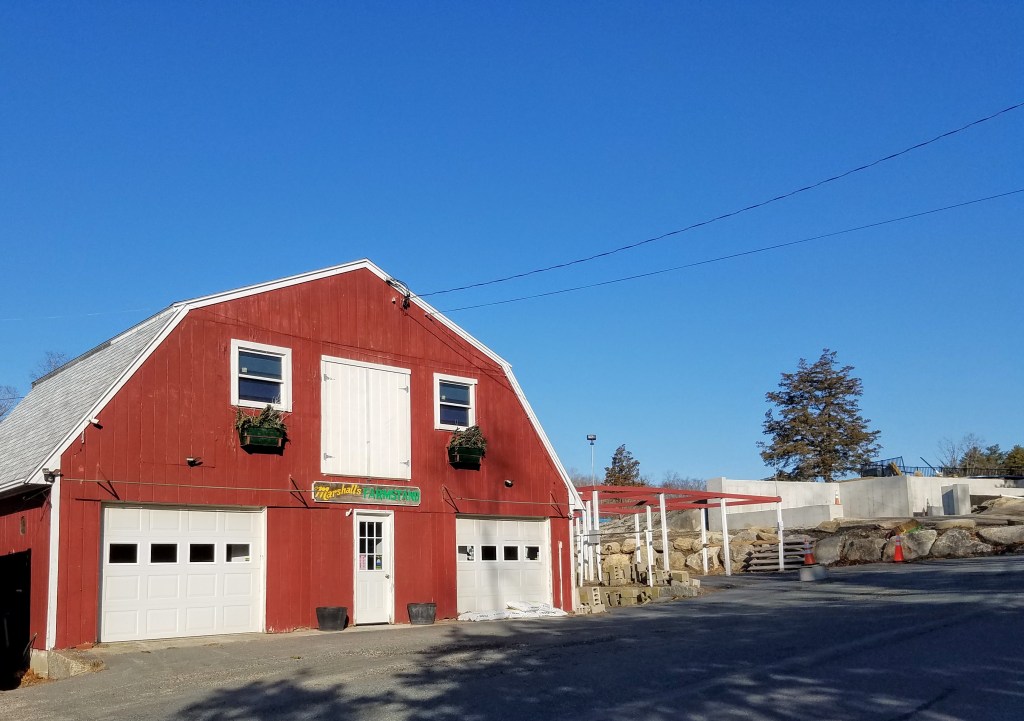
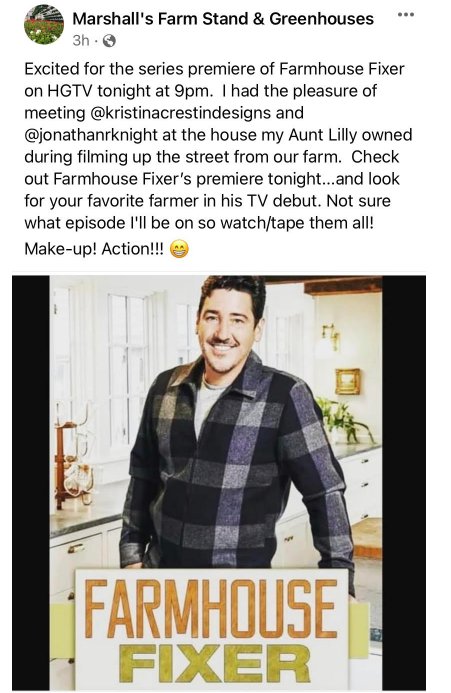
Marshall’s Farm Stand family history has a connection to a West Gloucester property that was chosen for the new HGTV show, Farmhouse Fixer. Partners Jonathan Knight and Kristina Crestin developed select properties within 50 miles of Ipswich for this new show.
“HGTV and High Noon Entertainment are casting homeowners within 50 miles of Ipswich, MA for a new show with renovation expert Jonathan Knight (best known as a Grammy Nominated member of New Kids on the Block) and his partner, local renowned designer Kristina Crestin.”
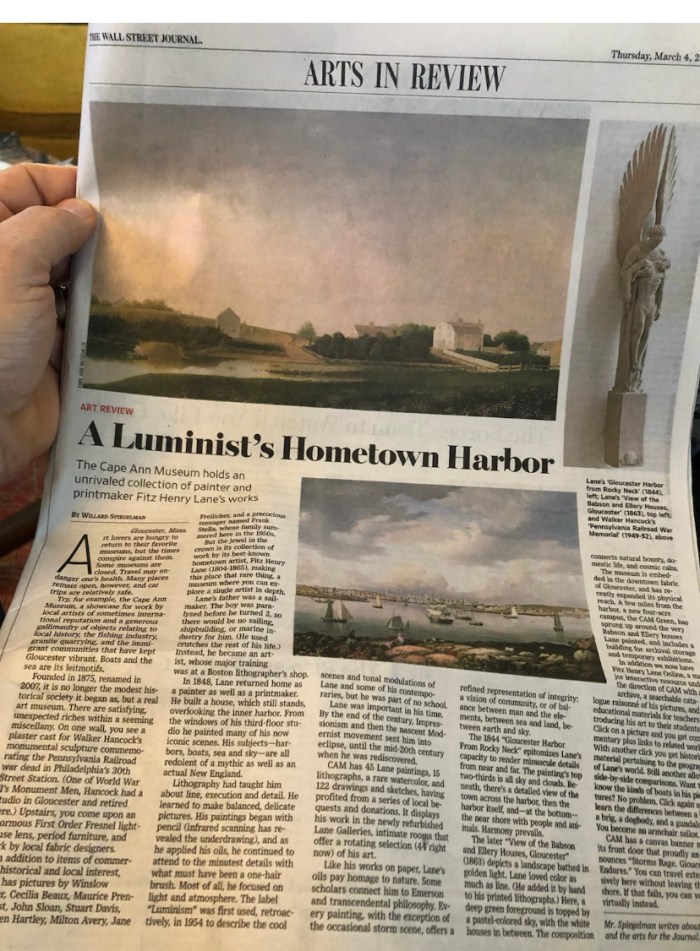
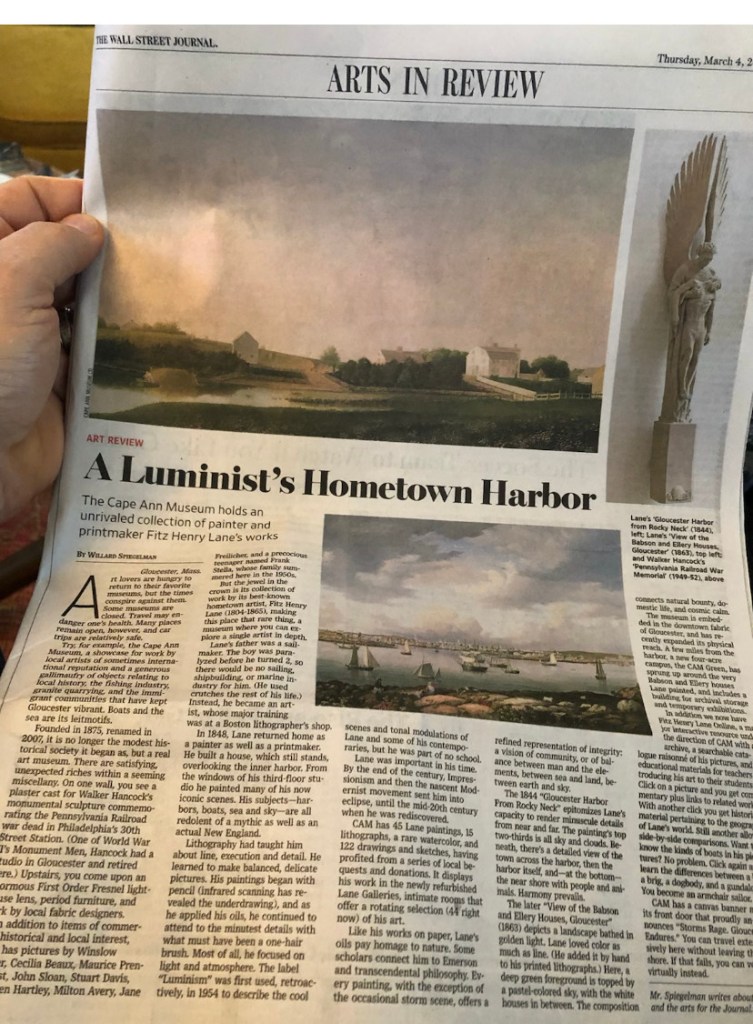
“the Cape Ann Museum, a showcase for work by local artists of sometimes international reputation and a generous gallimaufry of objects relating to local history, the fishing industry, granite quarrying, and the immigrant communities that have kept Gloucester vibrant. Boats and the sea are its leitmotifs.
Founded in 1875, renamed in 2007, it is no longer the modest historical society it began as, but a real art museum.”
Willard Spiegelman WSJ article published 3/4/2021
courtesy photo Pauline’s friend Gary
Spread The GMG Love By Sharing With These Buttons:
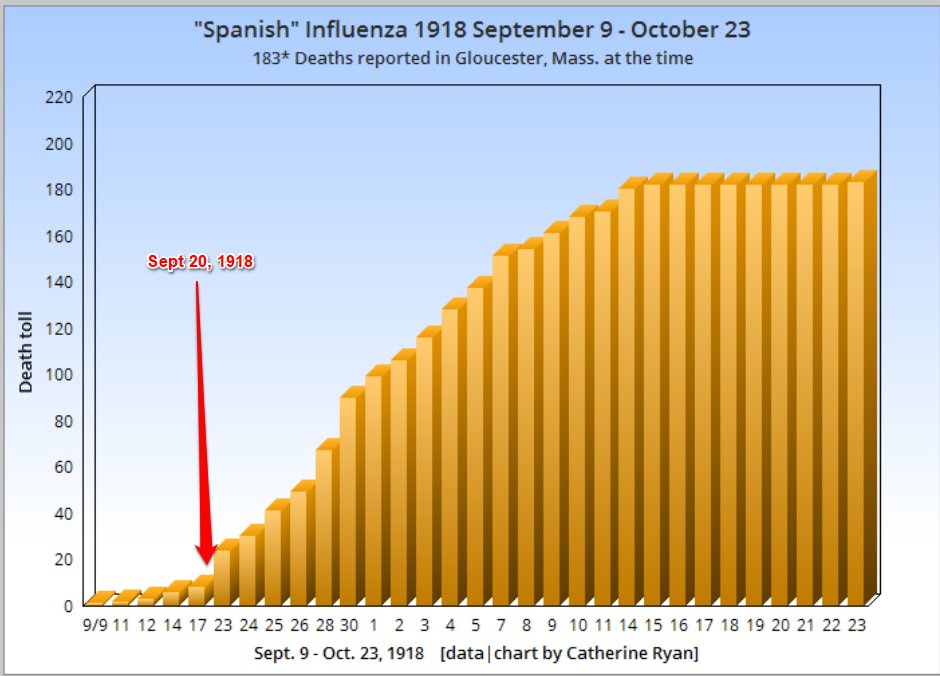
The United States reached a devastating milestone of 512,000 deaths claimed by Covid-19 on February 28, 2021. A year ago when I wrote about the impact of the 1918 Flu Pandemic through a Gloucester lens, the potential lethality of Covid-19 was sobering and hard to fathom. In modern times, deaths caused by Covid-19 in the United State could never climb as high as the 1918 Pandemic, right? Wrong. In this year of living grievously, 500,000 deaths is a grim new record. We are so deeply sorry to all who endure the loss of someone close, to long haulers struggling to heal, and to caregivers who face so much.
As the death toll doubled, the local paper tried to keep pace with death notices and tributes. One week after an outbreak at the post office, the paper published an obituary for William L. Jeffery, the first local shop owner to die from influenza. His stationery store was located on Pleasant street, same as the Post Office. Another man known to many in town, George Goldthwaite, a salesman for the Gloucester Gaslight Company who acted in community theater, succumbed. “Only last July he took part in the play “Two Burglars and a Lady” at the Playhouse-on-the-Moors.”
Mr. and Mrs. Martin on Fort Square died from influenza within three days of each other. “The family came to this city a few years ago when the gill netter fishermen from Michigan took up their residence here.”
“The couple are survived by four children Violet, aged 9 years, Gladys, aged 7; Lilian, aged 5, and Delores, 3 years of age.”
Four orphans- sad death notice for Mr. and Mrs. Martin – September 20, 1918
September 23, 1918
On September 23, 1918 Boston reported 23 new deaths from influenza; Gloucester, 11.
Cases in East Gloucester ramped up September 24th. A few vessels returned with sick crew. Sawyer Free Public library closed. Physicians and nurses from other towns arrived to help. Polling locations were open for the primary, but voter turnout was the smallest on record. Church attendance was small, “on account of the large number of persons afflicted and those who kept away.”
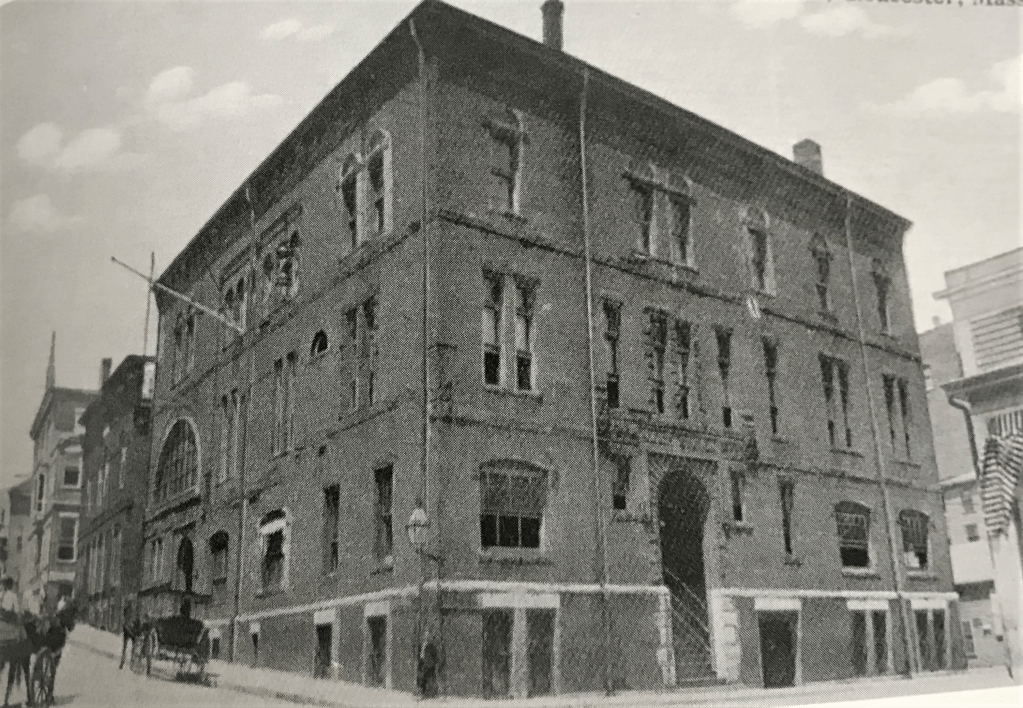
There were so many new cases in Gloucester, officials enlarged the temporary Red Cross emergency hospital at the police station (and would again), clearing out the District Court floor.
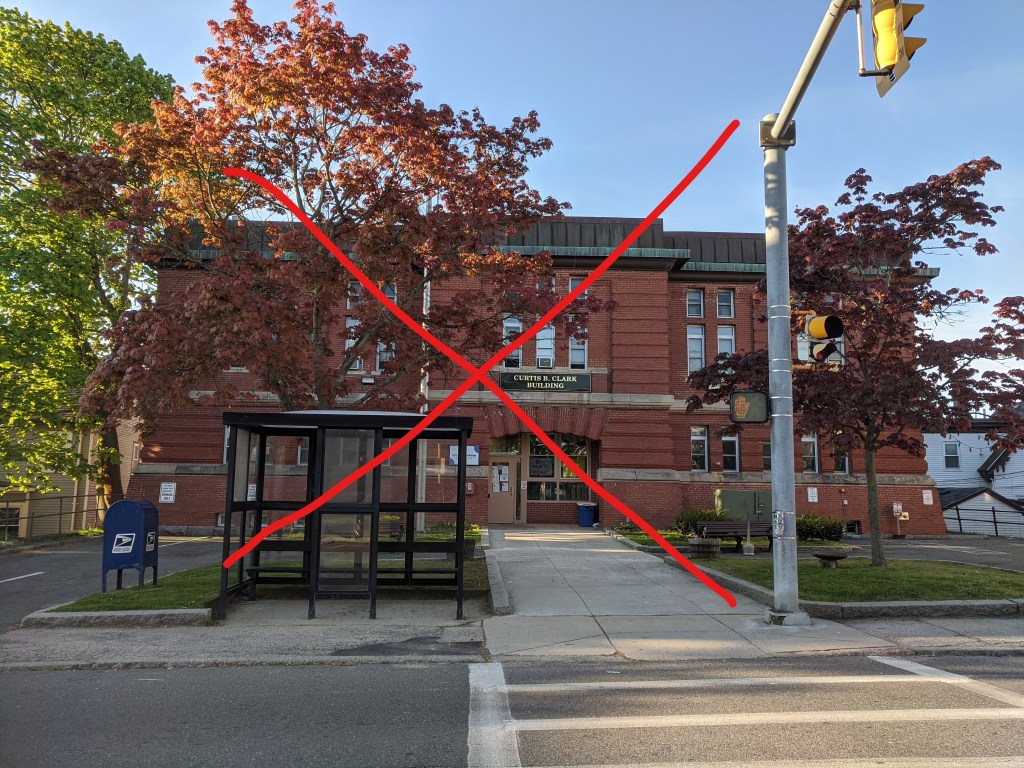
Police station at the corner of Duncan and Rogers. Top two floors were transformed to accommodate the Red Cross Emergency Hospital during the pandemic
Still, more hospital beds were necessary. The State Armory on Prospect Street seemed the ideal site to ready, however the State refused the request.
Alderman (City Councilor) Poole headed to Boston with Osborne Knowles, Christian Saunders and John Radcliffe, representatives from Gloucester’s Board of Health and Public Safety, to negotiate with state and federal officials in person.
“That the authorities were fully cognizant of conditions in Gloucester was evident from the statement of Mr. Long, who said that Revere, Quincy and Gloucester were the most infected of any in the state. Mr. Long offered the committee every assistance and relief that could be given to handle the situation…In the opinion of state officials and leading physicians the out-door method of treating the disease is the most effective and successful. So interested were the officials in the local situation that the surgeon-general’s department yesterday afternoon notified Capt. Carleton H. Parsons, senior officer of the local state guard units; instructing him to present to the local authorities the offer of the state to send to Gloucester a military hospital unit to cope with the situation.”
Lieut. John A. Radcliffe, State Guard, resident, and veteran Gloucester Daily Times (GDT) reporter of nearly 20 years & volunteer on the Board of Health for 15 prior to the pandemic
The state discussions prompted additional protective measures, informed by the best doctors in the armed services. There were more cases in Massachusetts by then than all the other states combined. Influenza cases at Camp Devens had already climbed to 11,000.
The Gloucester contingent left the Boston conference armed with a state of the art plan for a crisis team to be deployed in Gloucester: a military unit of doctors, nurses and multiple local State Guard companies. It would be the first one established for care of civilians.
All necessary presentations and votes were sorted by nightfall.
“The adjutant general’s department in Boston was immediately communicated with, and arrangements made to send tents, physicians, nurses’ field kitchen, military equipment and supplies to this city.”
John Radcliffe, Gloucester Daily Times
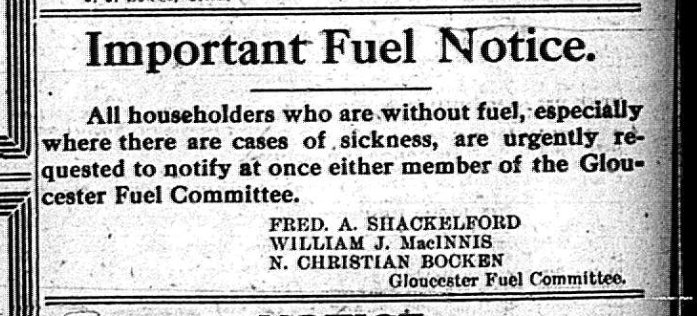
Meanwhile, another floor was added to the Red Cross Emergency Hospital, State Guard called out, and police instructed to enforce any Board of Health recommendations such as the anti-spitting rule and fruit stand closures. Various strict fumigation requirements were put into immediate effect and there would be no crowding on street cars. Police officers were dispatched to The Fort and to investigate sanitation conditions.
Without calling it a quarantine, mighty efforts to effectively shut Gloucester down ensued. Cancellation and support notices landed on the front page.
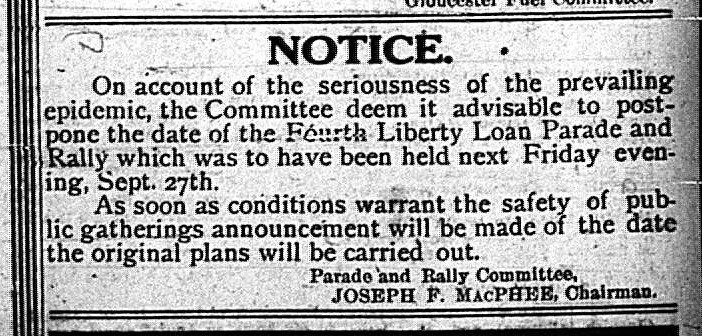
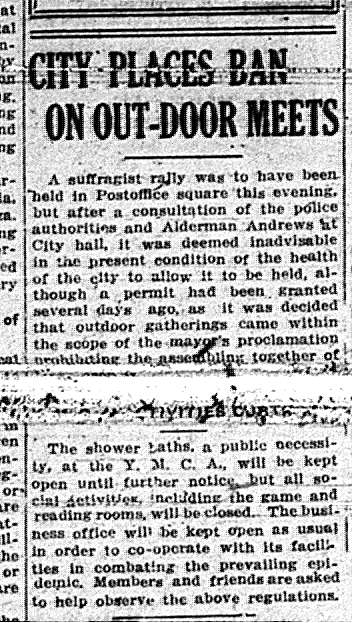
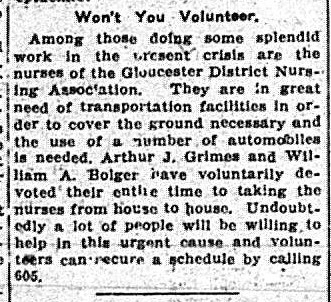
The City banned outdoor gatherings now, too. A women’s suffragist meeting and Liberty Loan rallies were among the first cancellations. Gloucester District Nursing Association sought volunteer drivers.
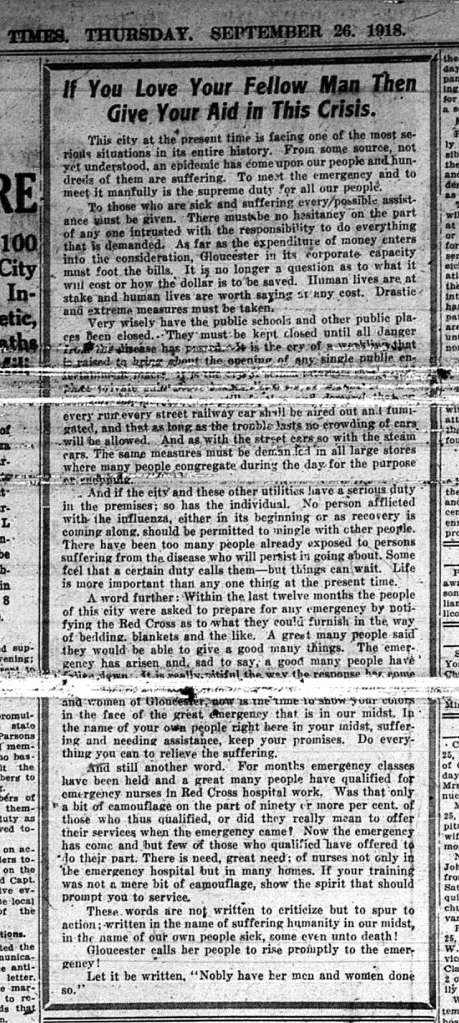
“Gloucester calls her people to rise promptly to the emergency!” urged the Gloucester Daily Times Op Ed.
In local war news at this time, Gloucester advocates were seeking reimbursement from the federal government for vessels sunk by submarine– while pressing for flu support.
Statewide the precise number of infected cases was a guess at best. It would be a week before reporting deaths was required by state law, ten days after Gloucester so ordered.
September 25, 1918
Massachusetts established an Emergency Public Health Committee on September 25, 1918. Their first order of business was to ban all public gatherings especially in light of the upcoming liberty loan rallies and parades. It was suggested that the Federal Government was likely to take charge in Massachusetts as a war measure.
The State Board of Health published treatment guidelines the next day because of the scarcity of physicians and nurses, and push back after bans and restrictions, which Henry Endicott defended mightily:
“…There are undoubtedly towns and cities in the Commonwealth from which the influenza has not been reported, but of course we must face the fact that the chances are very much in favor of the spread of the disease. I urge such communities to assume their part of the common responsibility, and to act as if they were already in the midst of the epidemic.
The doctors and nurses of Massachusetts who are devoting themselves to the care of the sick in this emergency are all heroes and heroines, and many of them have paid the penalty. Not one of them, as far as I am aware, has shirked in any way; they have overworked; they are without sleep—yet, still they go on. Massachusetts can never repay its debt to this noble band of men and women. We are using every effort, both through the government and outside the State to get additional help for these people… (Regarding) Cancellation of the Liberty loan meetings… It will never be said of Massachusetts that she was so immersed in her own private troubles that she for one moment failed to heed the Nation’s call to practical service. Massachusetts must and will do her part.”
Henry B. Endicott, Chairman Massachusetts Emergency Public Health Committee, established Sept. 25, 1918
Dr. Kelley, Massachusetts Commissioner of Health and a member of the state’s Emergency Public Health Committee, reached out to U.S. Surgeon General Blue. The Federal government lent army and navy doctors to take over doctor assignments. Kelley appointed a nursing Commission and assigned Miss Billings from his department as chairman. They hired 100 nurses to serve in case of emergency in the Massachusetts State Guard. Fifteen were deployed to Gloucester.
“These nurses were given the rank and pay of Lieutenant. It is believed that this is the first time such rank and pay have been given to women in the United States…”
The state assigned about 10 more registered nurses to Gloucester as well.
September 26, 1918
The federal government released a detailed “Influenza” circular September 26. By then forty percent of Gloucester’s telephone company were absent “on account of sickness either of themselves or relatives whose care is devolving upon them.” The Gloucester Manufacturing Company “closed their plant indefinitely,” and the Ipswich mills announced a shut down. There were 49 deaths in the city, up from 11 three days prior, among them Laura Silva, Alderman Silva’s sister, who died that morning from “pneumonia following an attack of the prevailing influenza.”
Acting Governor Coolidge appealed to the President, select neighboring states, and the Mayor of Toronto for physicians and nurses:
“Massachusetts urgently in need of additional doctors and nurses to check growing epidemic of influenza. Our doctors and nurses are being thoroughly mobilized and worked to the limit. Many cases can receive no attention whatever. Hospitals are full, but arrangements can be made for outside facilities. Earnestly solicit your influence in obtaining for us this needed assistance in any way you can.”
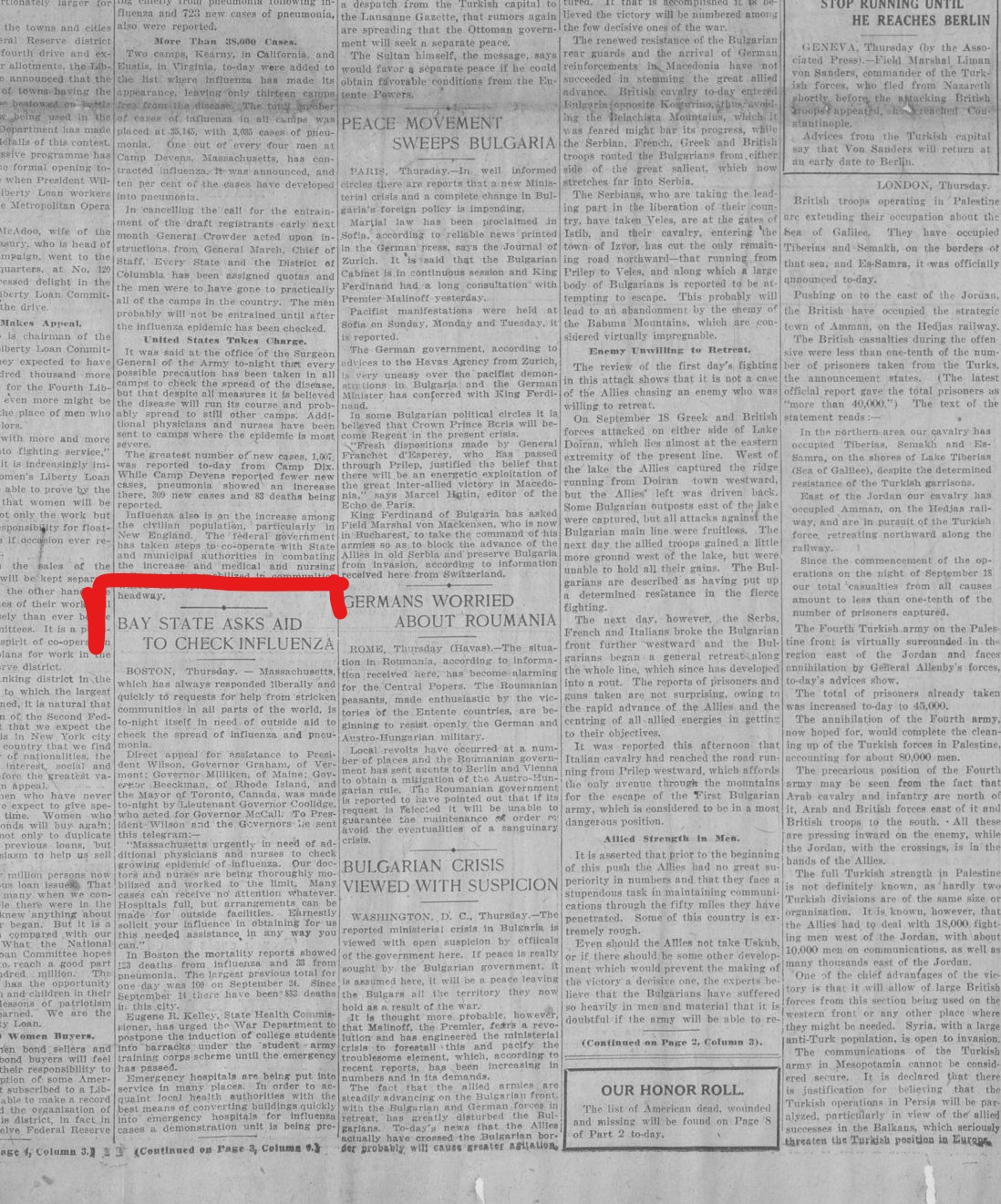
Governor urgent telegrams disseminated 9/26/1918
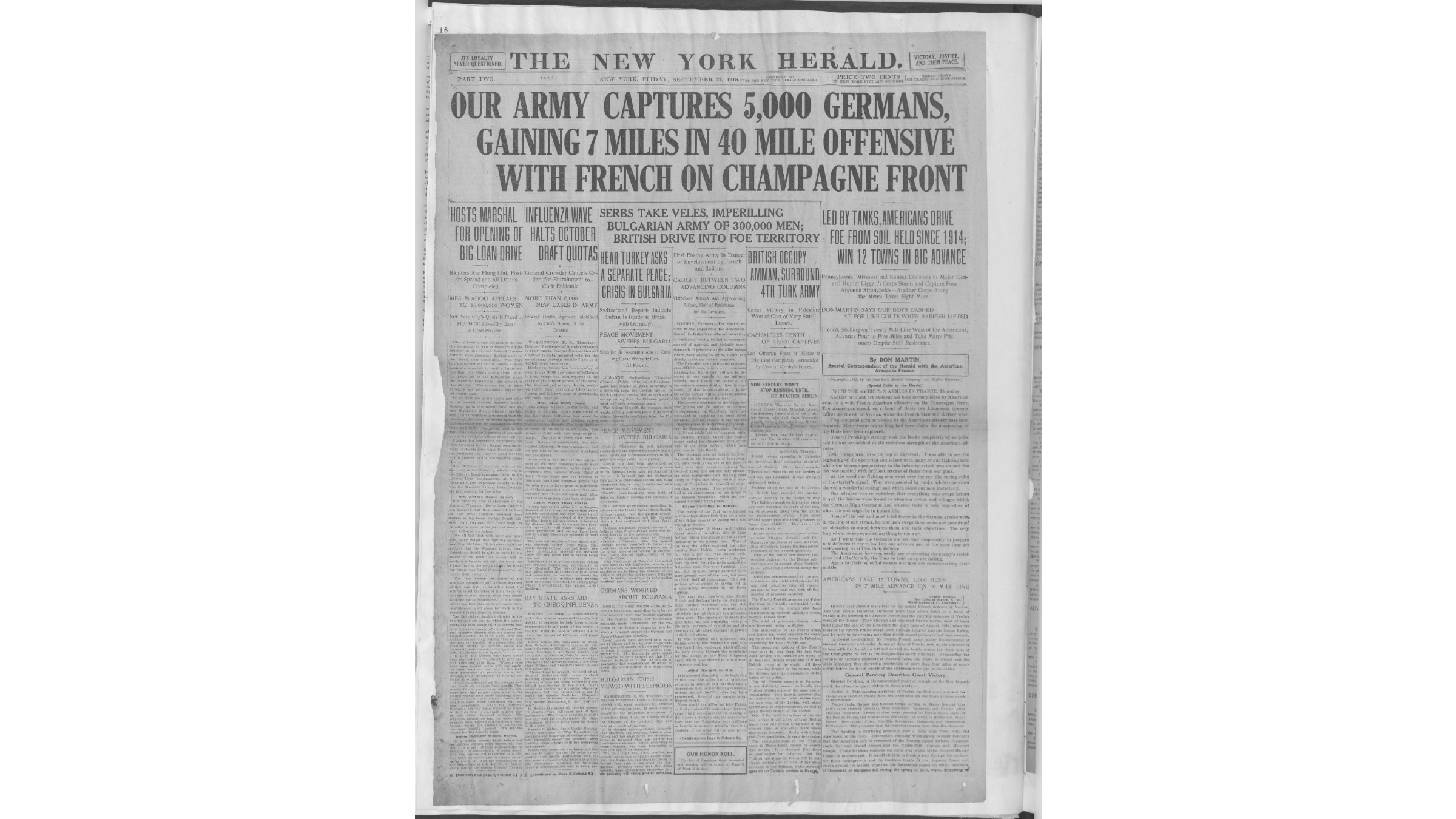
The notice was carried in the Gloucester Daily Times and national papers the following day. New York Herald led with the capture of 5000 Germans and Bay State Governor asking for help on the front page; the New York Times published a notice on page 6.
The local paper featured its editorial: If You Love Your Fellow Man Then Give Your Aid in this Crisis;
September 27, 1918
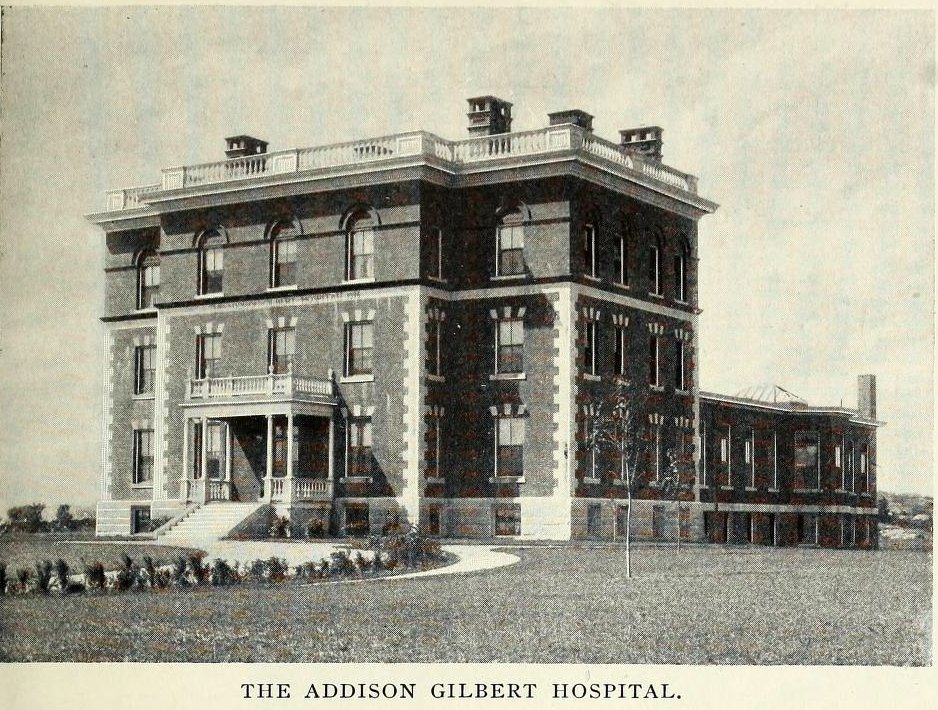
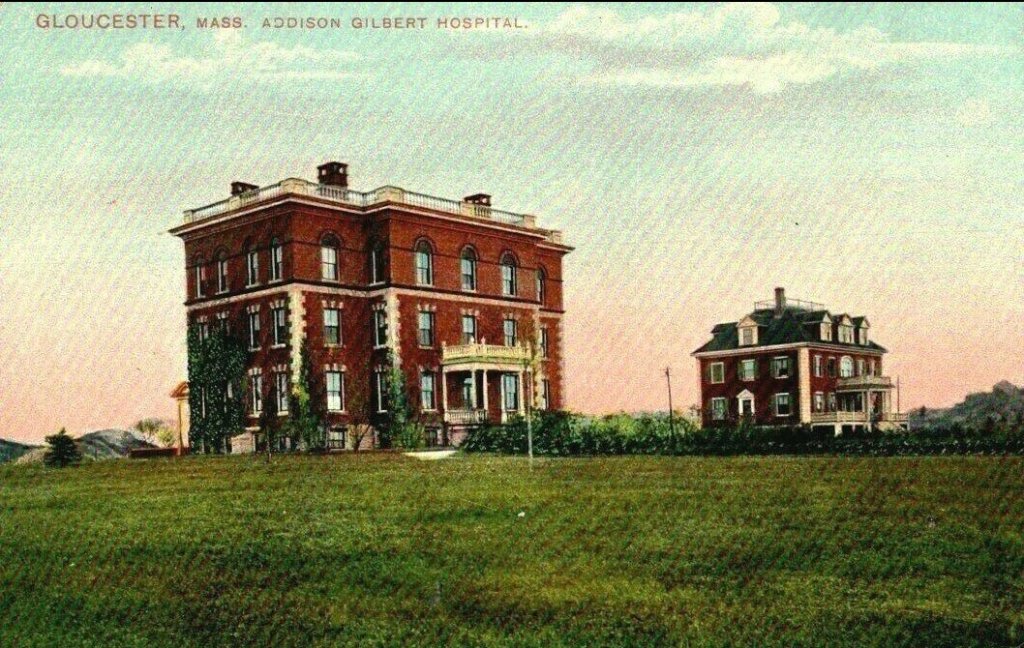
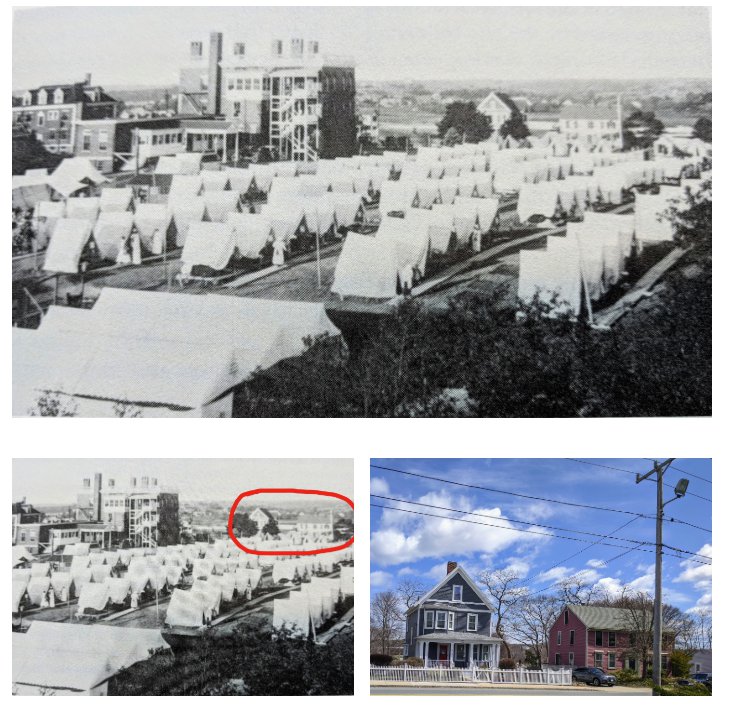
With no time to spare, the State Military Unit was installed on the grounds of Addison Gilbert Hospital Friday September 27, 1918, and completed before sundown Saturday.
Addison Gilbert Hospital grounds during the flu epidemic 1918. Homes on Washington Street still there.
“In a remarkably short space of time the tents were up and the unit well established, so that this afternoon it will be ready for patients. There are 100 tents for patients, each waterproof, provided with board floor, cot and other essentials for the proper care of the sick…The field hospital is a wonderful institution and shows in a large measure what the State Guard can be depended upon to bring about. Day and night the men have worked to put the hospital in shape and to look out for the sick ones. It is simply remarkable the way the many details have been arranged to establish such a wonderful institution well worthy of the name. Electric lights, water, sewerage and floors in the tents have all been put in, chiefly through the efforts of the fine types of men that compose the State Guard.”
John Radcliffe, GDT
Another 100 tents for the state guard, plus any necessary for administration and operations, were installed as well.
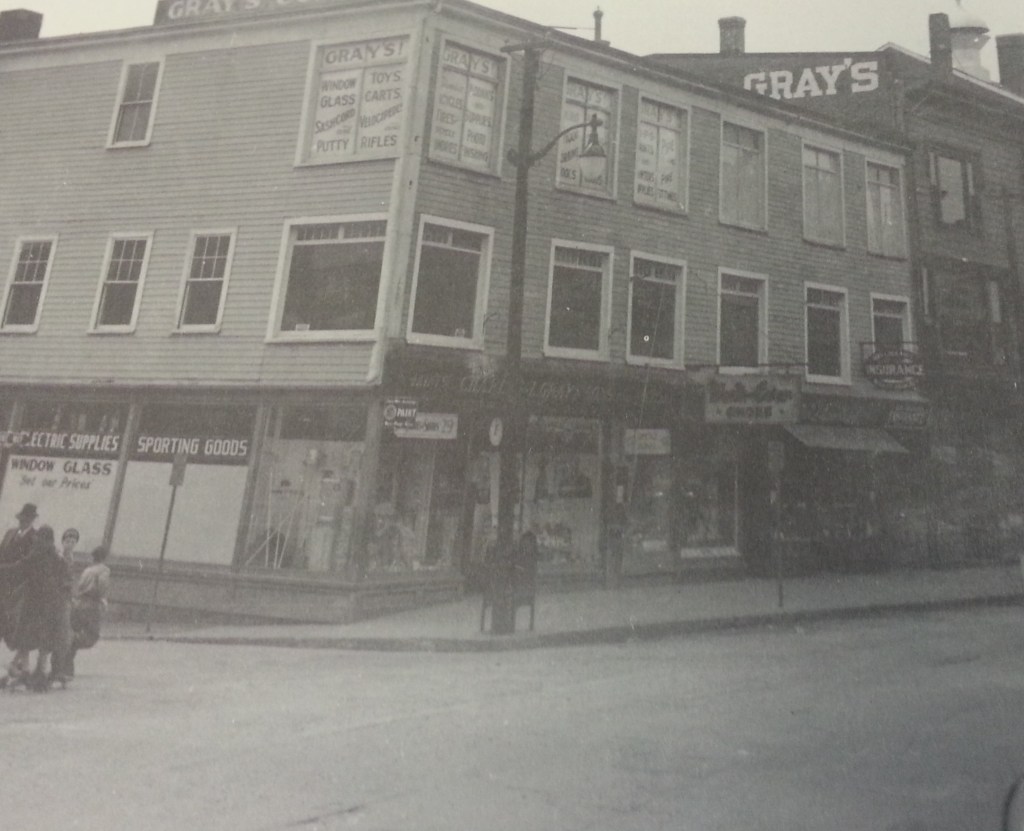
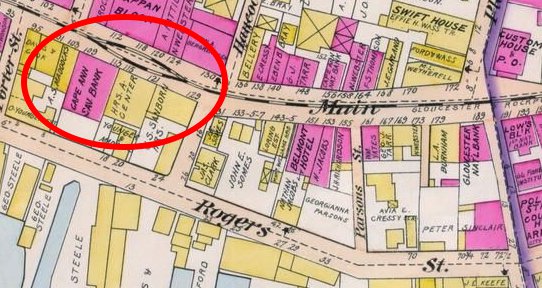
Over on Main Street, the Red Cross established a children’s hospital in the Girl’s Club over Gloucester National Bank.
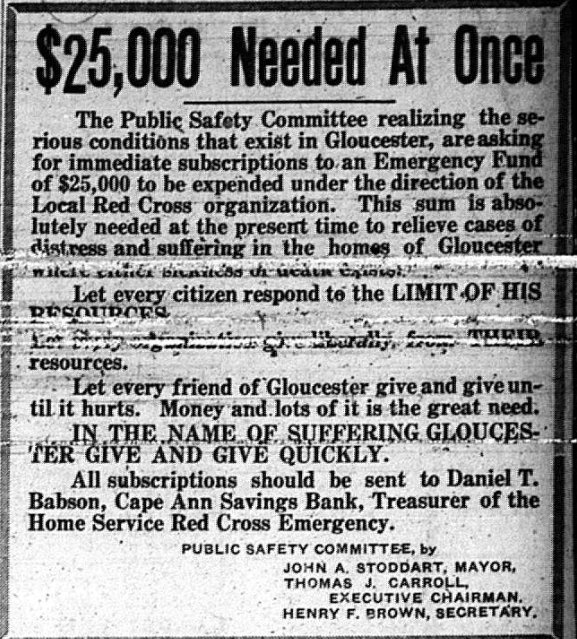
Anticipating great need, the public safety committee announced an Emergency Fundraising drive for the Local Red Cross administered by Cape Ann Savings Bank.
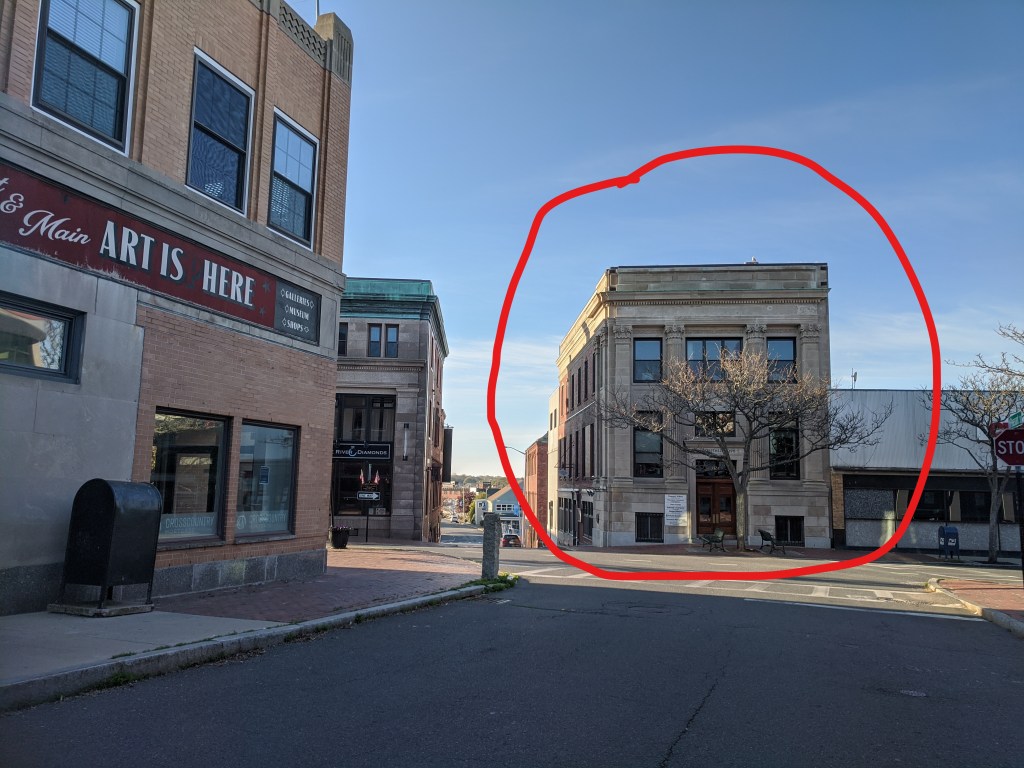
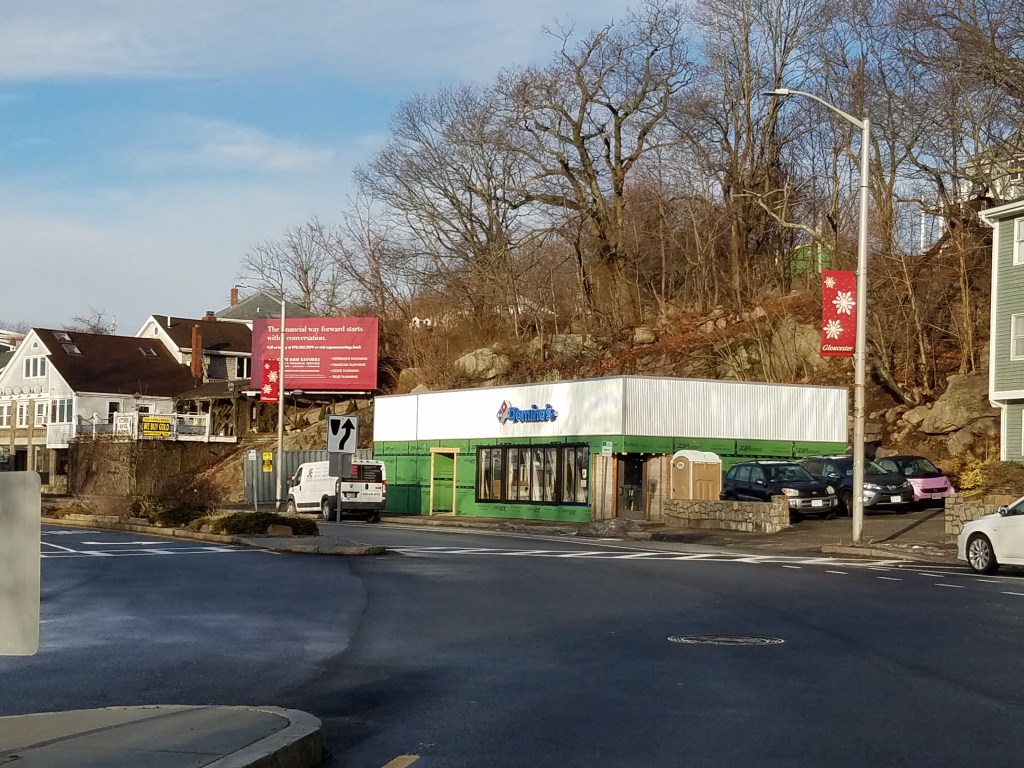
Cape Ann Savings Bank still at the end of the block on the left
Cape Ann Savings Bank
The Mayor and all but one Alderman were struck by flu—all those meetings! — and still that Monday they brought forth more precautions, seizing any and all educational opportunities and community measures possible to halt the spread. Public funerals were banned and soda fountains closed, though the latter was rescinded in one day.
“Every house whether a case of disease has existed or not, should be thoroughly aired during the day…Clean up the back yards, dumps and filthy places. If your neighbor will not act, consult the Board of Health or its emergency agents and prompt action will be taken. Let everyone co-operate and assist our health officials in the excellent work they are doing.”
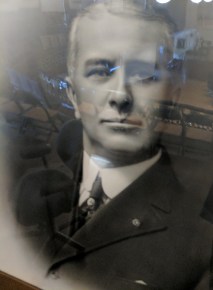
Mayor Stoddardt, September 30, 1918
Mayor John Stoddart served 1917-19
The deadline for the Draft Registration questionnaire was postponed until a future time when influenza was vanquished. One bright note that bleak weekend: ten “angel” nurses arrived from Ontario, Canada, and five from the state thanks to the commonwealth’s plea and Gloucester’s hustle. Unlike other locations during the 1918 Flu Pandemic, folks rushed here to help rather than away.
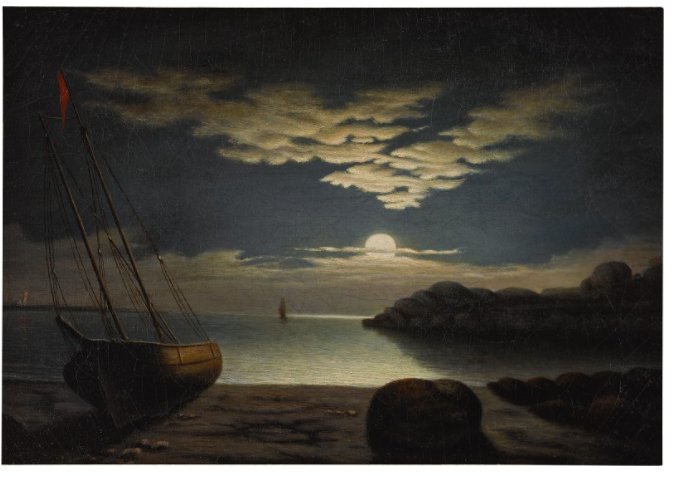
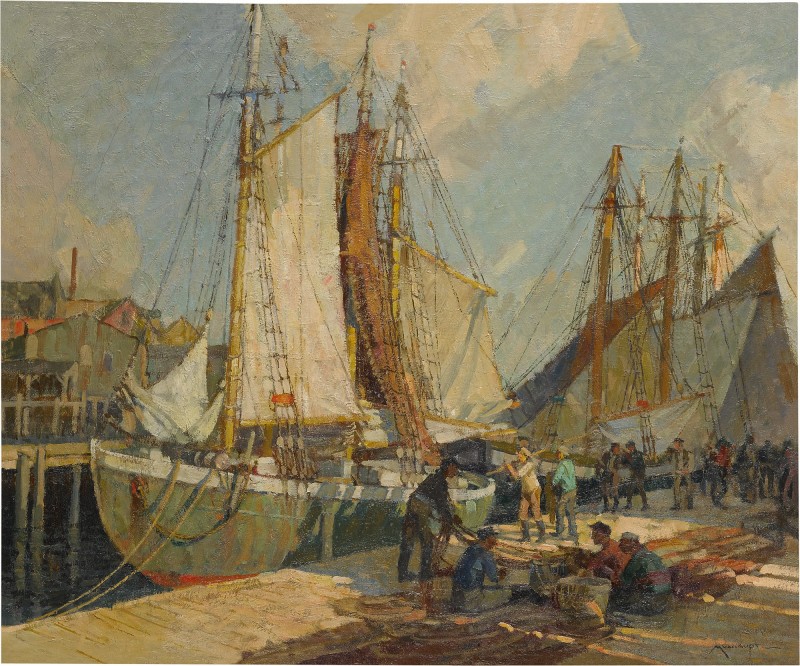
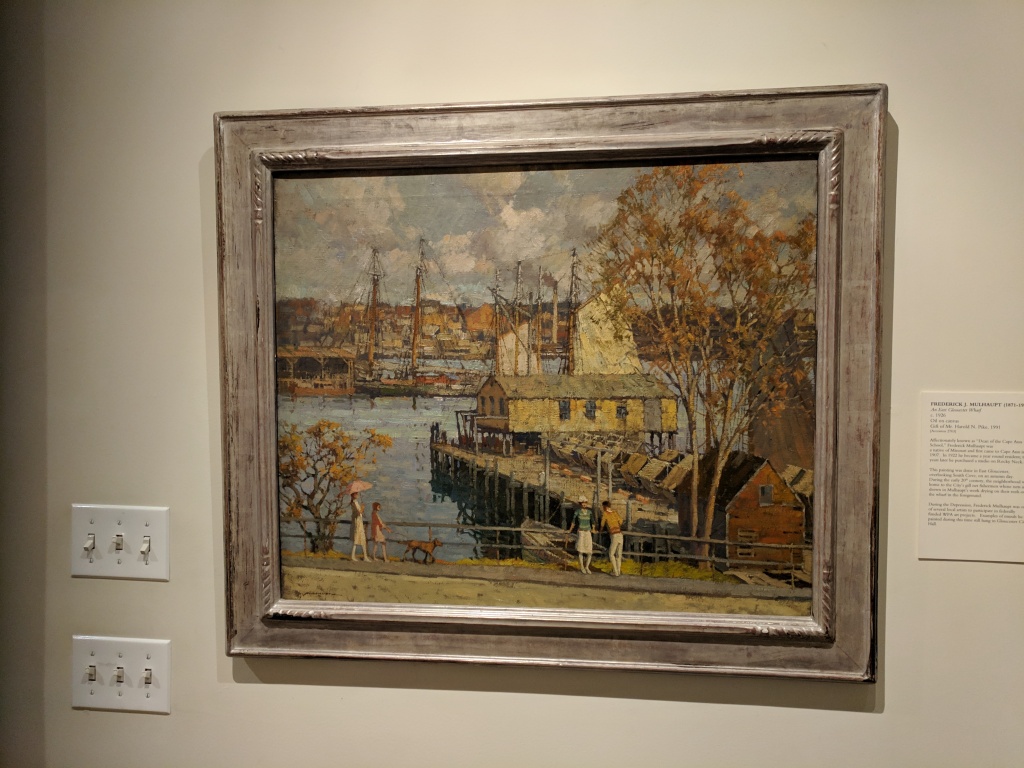
The Sotheby’s sale Two Centuries American Art closing March 3, 2021 highlights work by artists inspired by Gloucester and/or with Gloucester ties including these few: illustrations for Harper’s and Redbook by Frank E. Schoonover; work by Leon Kroll including a Good Harbor Beach scene; and views of Gloucester harbor by Frederick John Mulhaupt and Mary Blood Mellen:
Lot #16: Leon Kroll Figures on a Beach, o/c, circa 1919 (about 9″ x 11″ unframed), pre sale est. $3,000-$5,000Lot #87 Frank Earle Schoonover Approaching Camp oil on canvas 1924 31″ x 25″ unframed auction presale est. $15,000-$25,000 Lot #58: Frank Earle Schoonover 1877 – 1972 “Take Her!” 1914 oil on canvas 25 x 34 unframed – (illus. for WD Steele story in Harper’s published 1915) presale estimate $4,000-$6,000Mary Blood Mellen, Moonlight Seascape, Gloucester Harbor, oil on canvas, 12 ¼” x 17 ¼” unframed, presale estimate $10,000-$15,000Lot #33: Frederick John Mulhaupt, Harbor Scene, oil on canvas, approx. 25 x 30 unframed presale estimate $30,000-$50,000
More Mulhaupt Gloucester Harbor
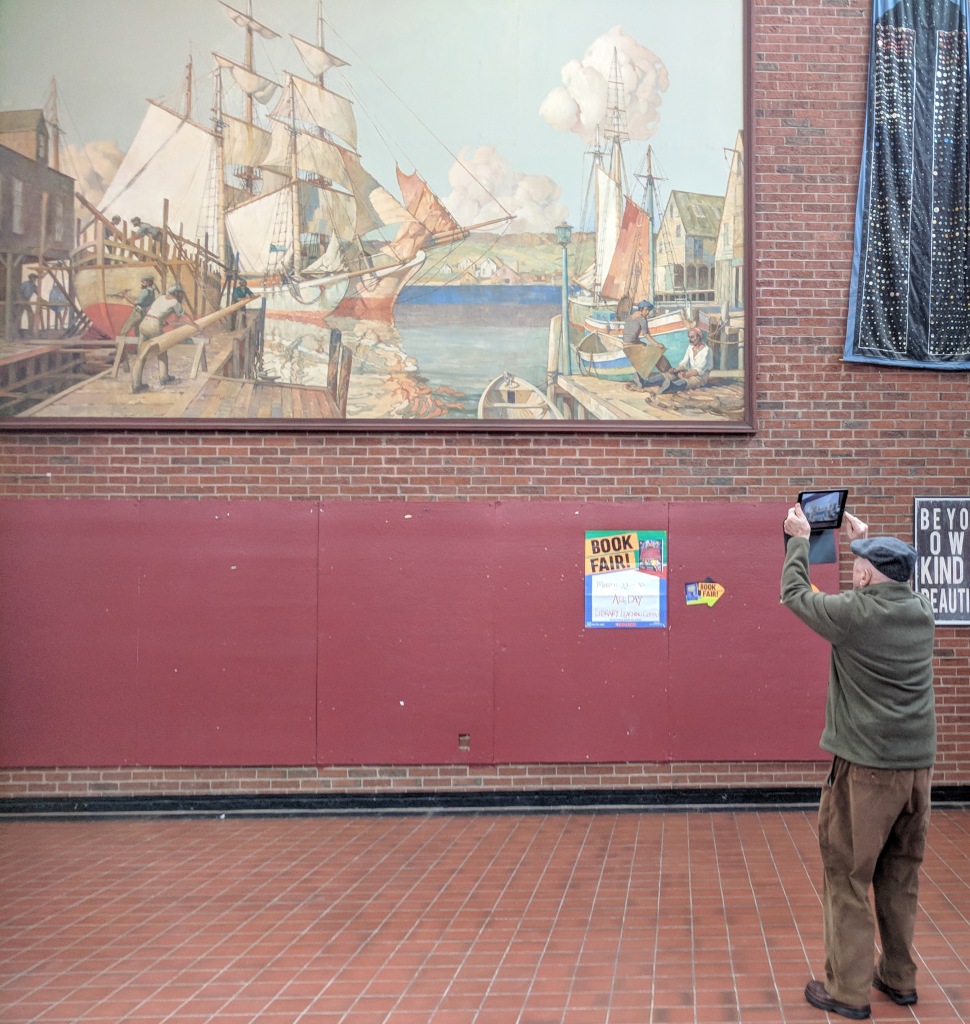
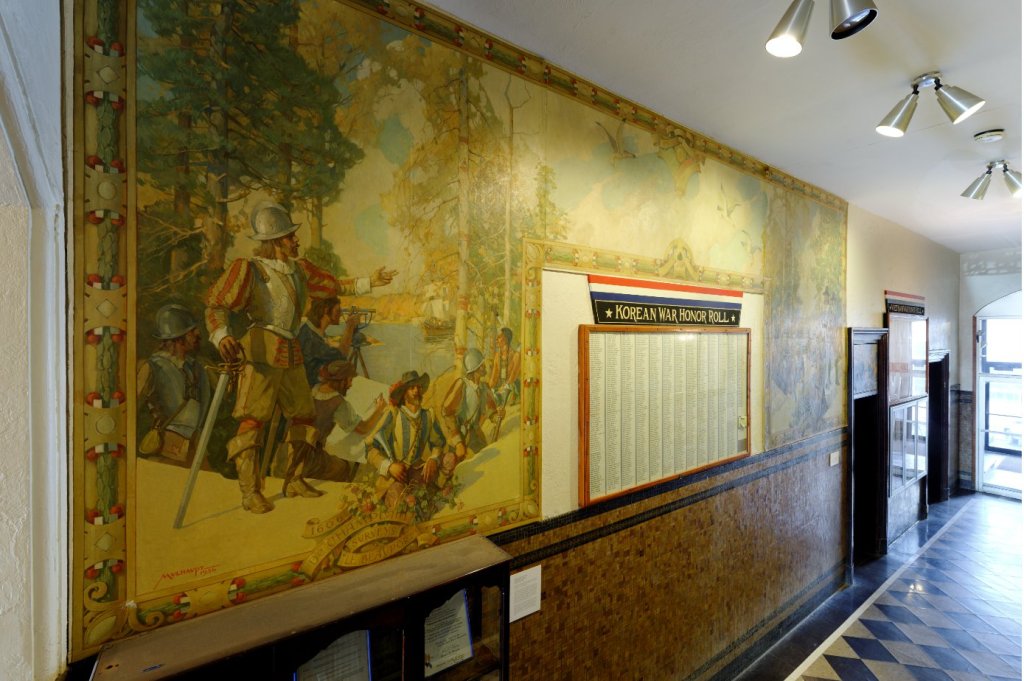
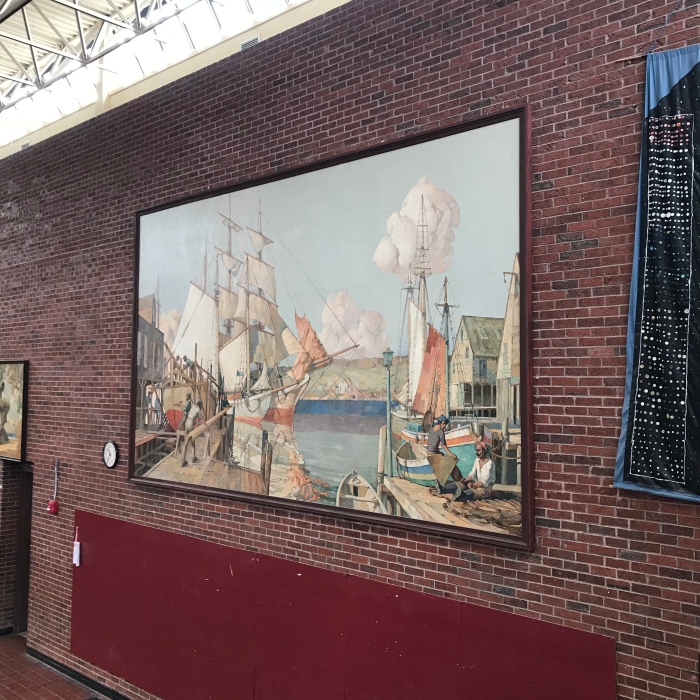
Gloucester Harbor, a central panel from one of Mulhaupt’s monumental mural masterworks, has been on display at Gloucester’s O’Maley school for decades. The center panel was commissioned under the auspices of the WPA-era programs and ultimately moved from its original site at Central Grammar to City Hall in 1972, and then again to O’Maley. Other sections of this mural were disconnected and dispersed within City Hall in 1972, and not all on display, which has confounded understanding of the sections individually and as a whole. All will be reunited one day–temporarily or permanently– back to the artist’s original, immersive art experience intent. Here are several photos of the mural to compare with the artist’s treatment of the harbor scene at auction.
Photo of Gloucester Daily Times article – Catherine Ryan research
photos L-R Catherine Ryan: Ron Gilson photographing Mulhaupt section at O’Maley 2018- note monumental scale of art; Mulhaupt unmoored panel and natural lighting 2017; and Mulhaupt deliberately stylized panels at City Hall, disconnected from their scope
courtesy photo Williamstown Art conservation Center 2019
Sections of Mulhaupt mural- courtesy photos- Williamstown Art Conservation Center 2019
Head to Cape Ann Museum
Fine examples by all the artists coming up at auction can be found at Cape Ann Museum within the permanent collection and/or special temporary exhibits.
photos c ryan: installation views at Cape Ann Museum (double click or pinch and zoom depending upon your device; right click to see credit info)
Spread The GMG Love By Sharing With These Buttons:
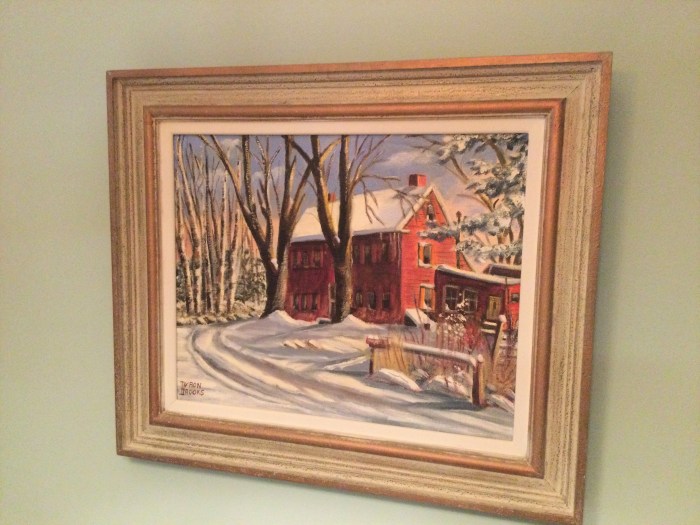
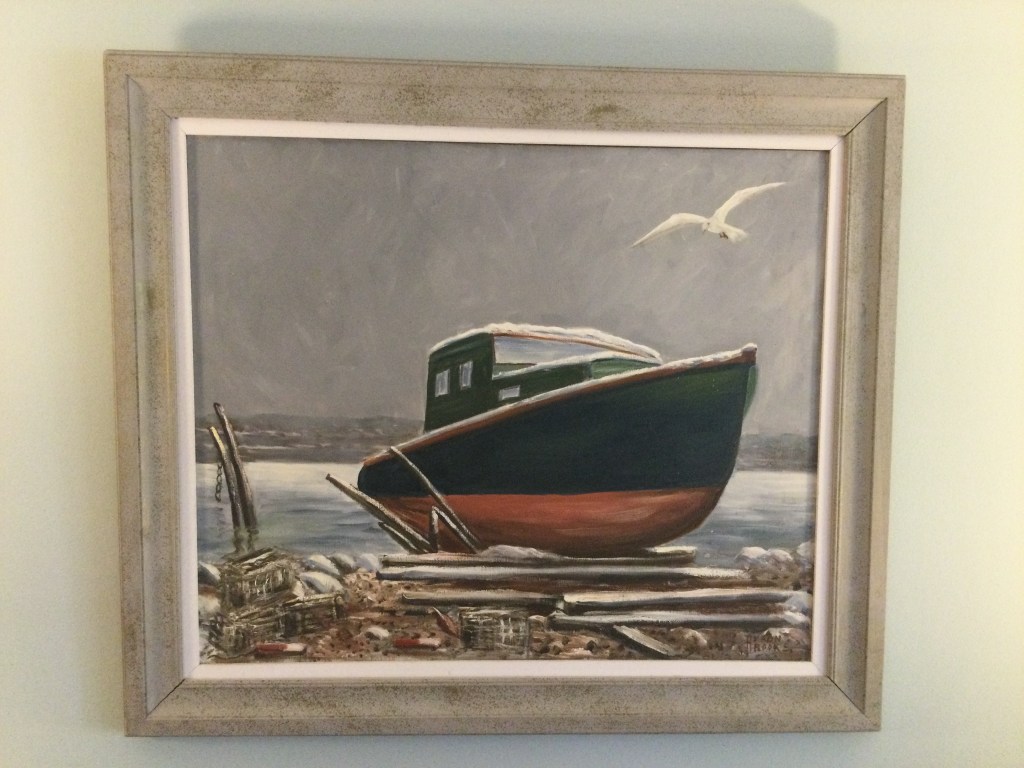
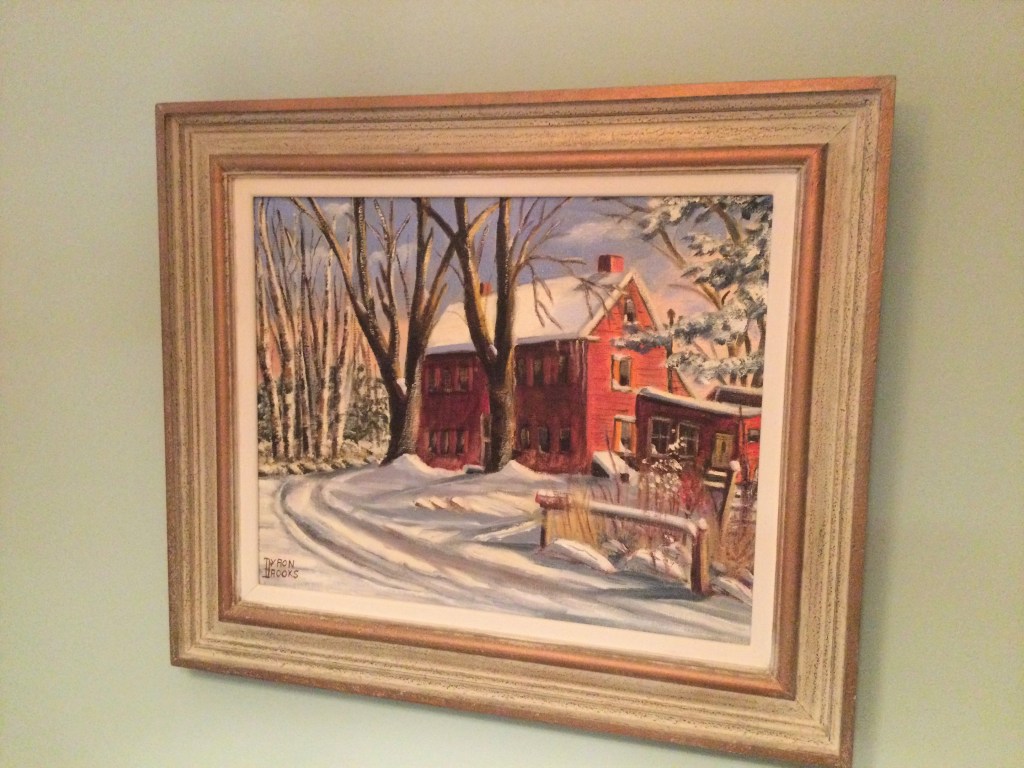
People continue to share photographs of Byron Brooks oil paintings since a request back in 2016. Some images show paintings that were bought directly from the artist at his gallery in East Gloucester. Others were passed down through a family for generations. Still others were discovered at auction or estate sales across the country. One turned up in Arizona.
People google the artist and find their way to Good Morning Gloucester in search of biographical information. As more and more people share snapshots, a fuller picture of the artist and favorite motifs began to emerge. For instance, because of new additions from one collector, it’s clear that Brooks painted favorite scenes beyond Gloucester, “greater Cape Ann”, and in all seasons. Besides photographs, GMG readers have expressed memories of the artist, as well as Gloucester and relevant neighborhoods at the time he was active here. These contributions help us to have a better understanding of what it was like to visit his home studio gallery and learn more about him as a person.
selection snapshots from new contributions:
Byron Brooks, Lobster Boat, Rockport, private collection, courtesy photoByron Brooks, Harvey House, West Gloucester, oil on canvas, circa 1960s, private collection, courtesy photo
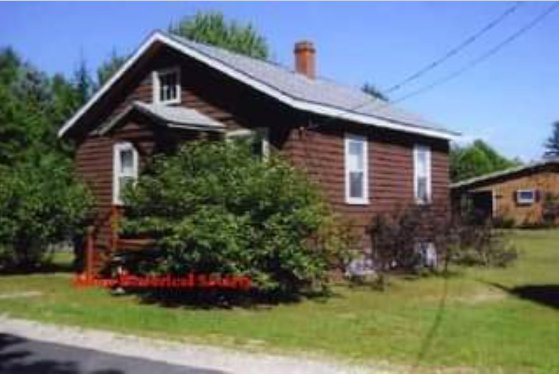
GMG reader Carolyn R. passes on more local history from Alton Historical Society, Alton, NH
Alton Historical Society, Alton, New Hampshire – This building was for the workers at the Cape Pond Ice House, Mt. Major Park at Woodmans Cove. The photo was taken a couple of years ago.
This is a friendly reminder that the Bruce J. Anderson Foundation’s application deadline is Monday, February 15, 2021. Applications must be submitted online. Please find the application and a list of prior grants made from the Bruce J. Anderson Foundationhere.
We hope you will consider taking advantage of this Bruce J. Anderson Foundation funding opportunity. Questions regarding program eligibility can be directed to the attention of Kristen Whelan at kwhelan@tpi.org.
Have a great weekend,
Paola Villatoro
Spread The GMG Love By Sharing With These Buttons:
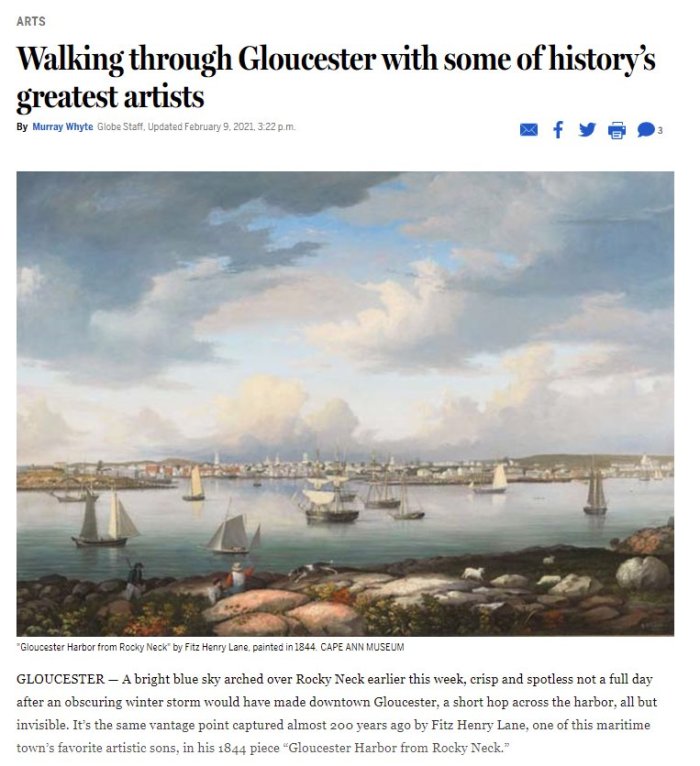
“Gloucester’s rich history feels carved into the very stone that lines its harbors, and the Cape Ann Museum has done well to seize on all of those elements this winter to craft a series of walking tours that fix the town firmly with its cultural heritage.”
Murray Whyte for Boston Globe on Cape Ann Museum winter walking tours, 2/9/2021
“…an around-town stroll to the many houses and scenes painted by Edward Hopper on his five extended painting journeys here. They’re captivating, and in one case, crushing: The spectacular mansard-roofed captain’s house perched high on a Rocky Neck cliff that Hopper painted in 1924 now shares its view of Gloucester Harbor with a sprawling McMansion next door whose aesthetic might best be described as haute Florida strip mall.”
Register for Cape Ann Museum upcoming walks like Feb. 20 (Spiritual history) and Feb. 27 (Edward Hopper) HERE
Happy to see the Cape Ann Museum guided walking tours featured!
Not to worry! The historic house on Clarendon is gorgeous. Edward Hopper customized his take on Gloucester vistas, as did artists before him.
Here is the Gardner Wonson home (built circa 1873) in horse and buggy days, a scene cropped for commercial keepsake photographs published by the Procter Brothers who were flying high in the 1870s [collection New York Public Library].
This home was an architectural attraction Hopper may have seen before he stepped foot off the train for his first visit to Gloucester.
In 1846 entrepreneurial publishing dynamos and developers, brothers Francis with George H. Procter, set up a book and printing shop. By 1850 they moved to Main Street. As the business grew, their news dispatch morphed from “Procter’s Able Sheet” to “Gloucester Advertiser” to “Cape Ann Advertiser”, and then in 1888 to “Gloucester Daily Times”. By 1892 the printing press for the newspaper branch alone could churn out 4000 papers, eight pages long, every hour (see Pringle). Any small business operating for decades and successive generations will suffer its share of adversity. Procter Brothers was leveled not once but twice by fire, and rebuilt. They published or were the go to printers for all manner of media: books, periodicals, photographs, lithographs, even a circulating library from their headquarters in 1874; building back and then some after that 2nd conflagration. The Wonson home was featured in a tourist photograph series, “Cape Ann Scenery”.
Spread The GMG Love By Sharing With These Buttons:
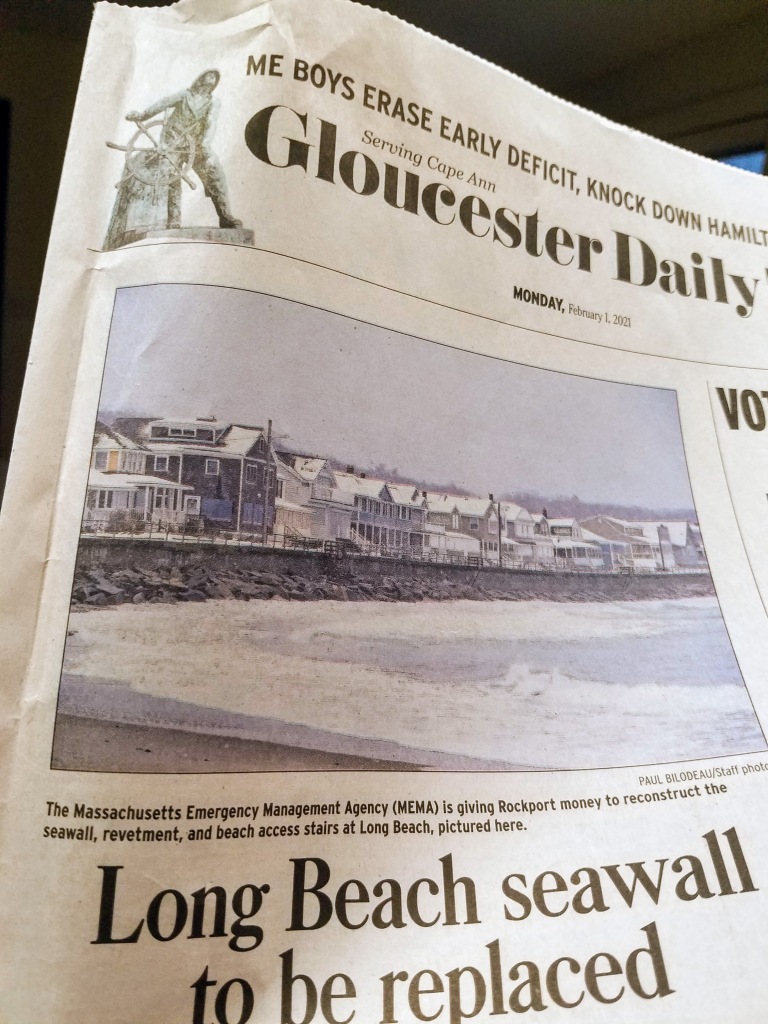
Michael Cronin piece in today’s Gloucester Daily Times, “Long Beach seawall to be replaced: Rockport must pay 25% of $2.6M Long Beach project”- here
ROCKPORT — Work to replace more than 400 feet of Long Beach’s dilapidated seawall is expected to start next year.
The Federal Emergency Management Agency announced last month it will cover 75% of the project’s estimated $2,580,000 cost through Public Assistance Program funding via the Massachusetts Emergency Management Agency “to reconstruct a seawall, revetment, and beach access stairs.”
“The 25% matching funds will need to be approved at Town Meeting,” said Rockport Public Works Director Joe Parisi. “It will be included in an article at this spring’s Town Meeting.”
From there, the town will pursue hiring a construction company to do the work. Parisi said design and permitting would begin this year and construction will most likely start in 2022.
Michael Cronin reporting for Gloucester Daily Times 2/1/2021
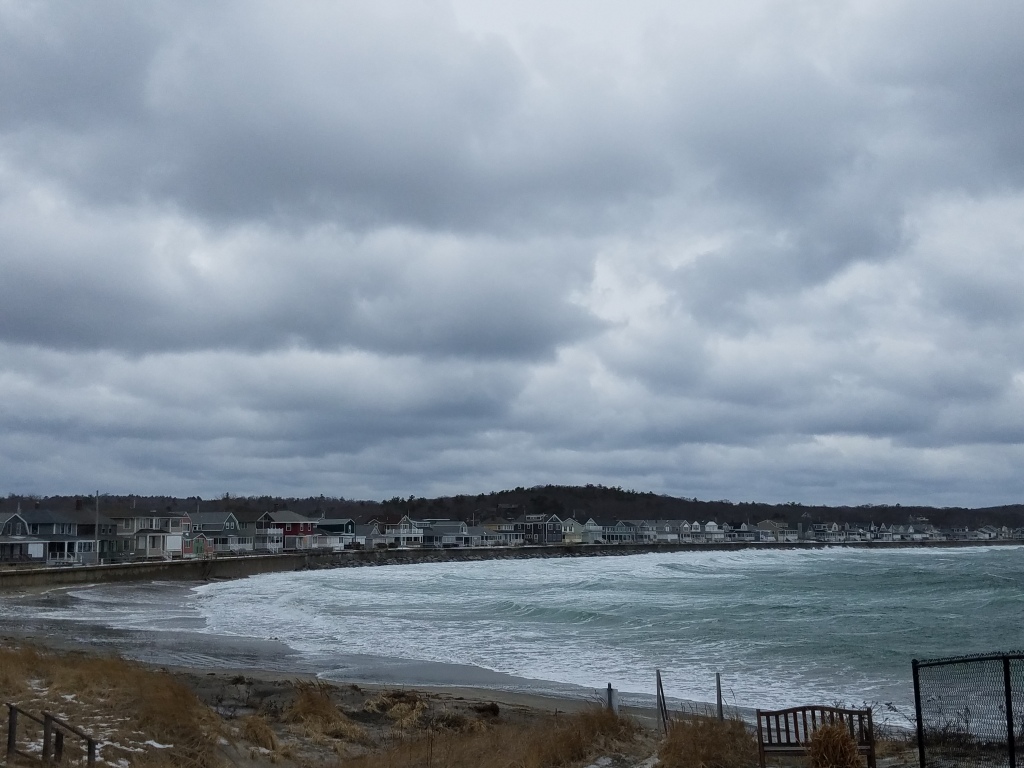
photos below – looking back – selection Long Beach seawall maintenance series, c. ryan
photo: Feb. 1, 2021- sand covers rip rap come summer
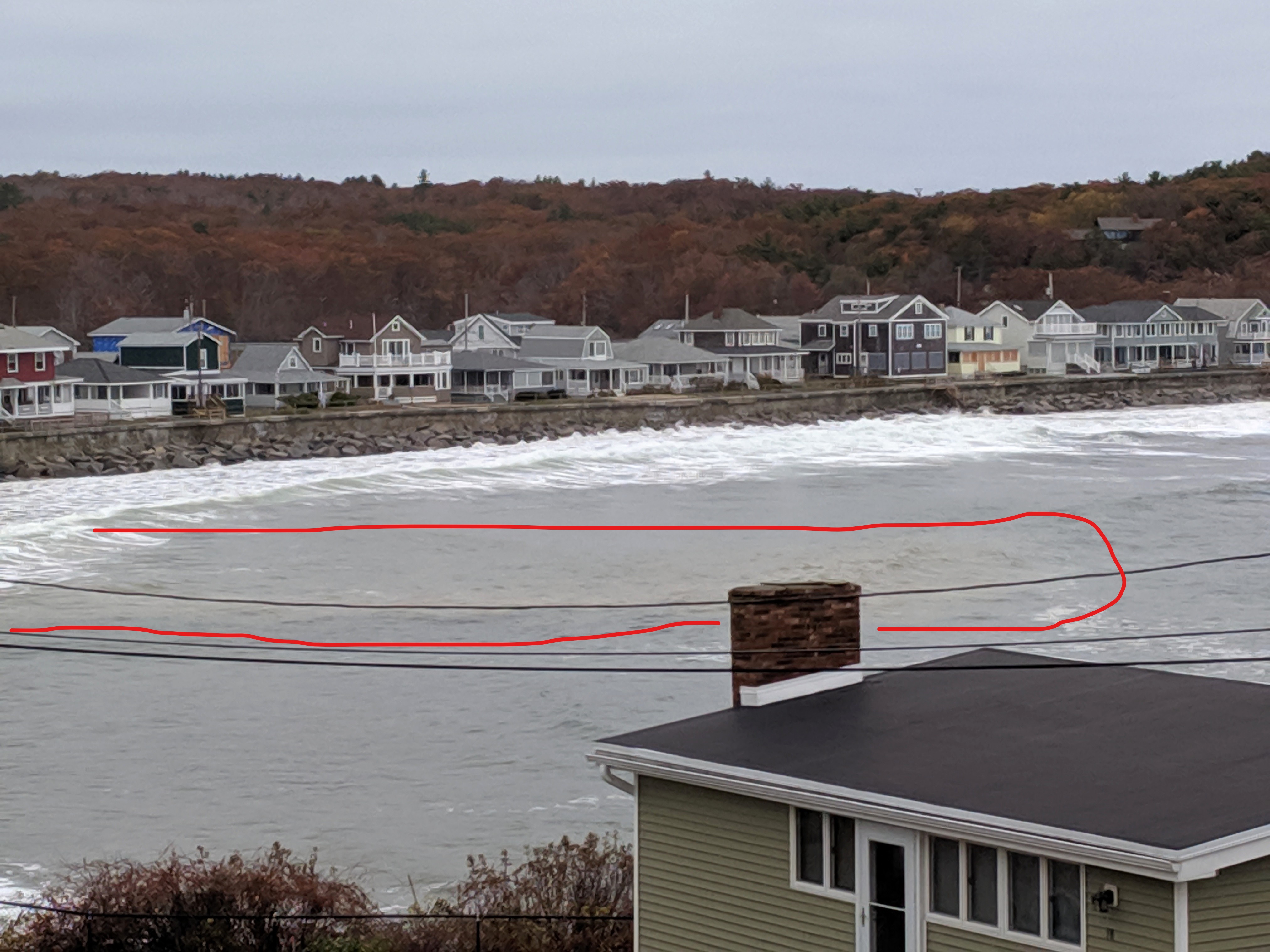
Sand Streak- Oct. 29, 2019
cute little digger racing the tide- see BEAT THE CLOCK | ADDING SAND TO SHORE UP LONG BEACH AND SEAWALL posted on
The sand came by rail from NH then by truck (carted by Bentley Warren trucking, Ipswich). The staging was from the Gloucester edge.
November 2019
2020 June
I find the annual sand migration on Long Beach a fascinating natural mystery. It’s dramatic every year.


































































 Good Morning Gloucester