To my friends, neighbors, fishermen, fishing families, and everyone who has supported my effort to bring Mark Doughty home:
I want to personally update everyone who has been following my effort to have Mark E. Doughty’s name added to the Gloucester Fishermen’s Memorial Cenotaph Tablets.
Last Monday, I met with Mayor Paul Lundberg, Senator Bruce Tarr, Representative Dru Tarr and Al Cottone. On Wednesday, I sat down with the Cenotaph Committee and personally presented Mark’s case.
After Mark’s request had already been denied, I was reluctant to put myself through another meeting. This is not simply a disagreement over a name on a stone for me.
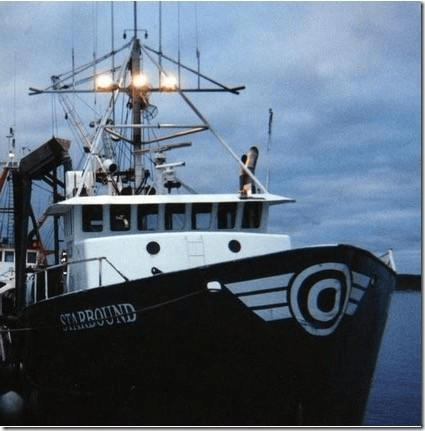
I was the captain of the Starbound.
On August 5, 2001, I survived. Tom Frontiero, Jimmy Sanfilippo and Mark Doughty did not.
Going back through what happened and talking about those three men is difficult for me. But I went to the meeting, and I am glad I did.
For the first time, I was able to sit across from the Committee and lay out the complete case, from beginning to end, with the documents in front of us.
I want to explain that case here in simple terms so everyone understands exactly what I am asking the Committee to decide.
The rule
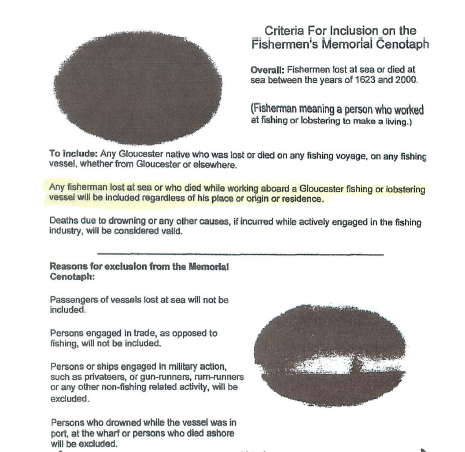
The Cenotaph has written eligibility criteria.
One of those criteria essentially says that if a fisherman is lost while working aboard a “Gloucester fishing or lobstering vessel,” that fisherman may be included on the memorial regardless of where he came from or where he lived.
That is important because Mark did not live in Gloucester.
So the central question isn’t whether Mark Doughty was a Gloucester resident.
He wasn’t.
The question I put before the Committee was:
Should the F/V Starbound be considered a “Gloucester fishing vessel” for purposes of the memorial and its existing eligibility criteria?
That is my case.
I am not asking for a new rule.
I am not asking for a special exception for Mark.
I am asking the Committee to look at the complete history of the Starbound and decide whether she fits words that are already in its criteria.
Why I believe the Starbound qualifies
This part requires understanding how our fishery actually worked.
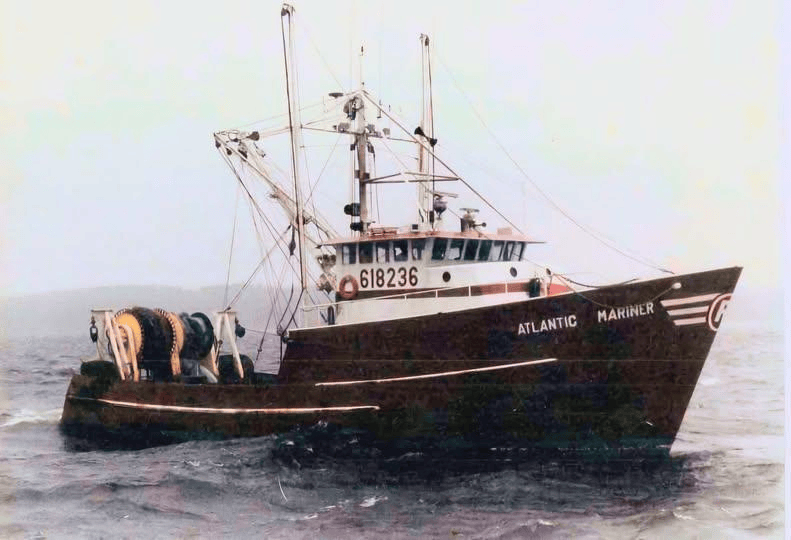
When we originally purchased the vessel from Stinson Seafood, she was named the Atlantic Mariner. We later made substantial changes to her, repainted her and renamed her the Starbound.
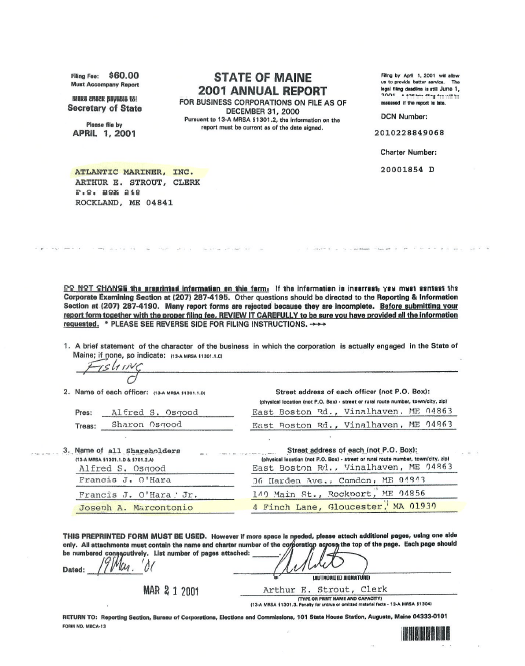
I was a Gloucester resident, captain of the Starbound, and one of four owners of the corporation that owned the vessel. My ownership interest was 25 percent.
The corporate records I brought to the Committee identify me as a shareholder and list my Gloucester address.
But ownership is only part of the story.
We were fishing for Atlantic herring, and herring fishing was migratory.
For somebody outside the fishing industry, the easiest way I can explain that is this:
We followed the fish.
The Starbound didn’t spend an entire year operating from one dock because the fish didn’t spend an entire year in one place. As the herring moved along the coast, so did we.
We worked from different ports.
Gloucester was one of those ports.
We fished from Gloucester and spent significant time here. I was from Gloucester. I captained the vessel. I was one of her owners.
So when the Starbound has simply been described as a boat “based” somewhere else, I believe that leaves out an important part of her actual history.
Commercial fishing—especially a migratory fishery—is more complicated than a single home-port label.
The sea has never recognized city limits. Neither has commercial fishing.
Then I asked the Committee an important question
During my presentation, I stopped.
I asked the Committee directly whether there was another document, another criterion, or another written definition that I had not seen that defined what constitutes a “Gloucester fishing vessel” for purposes of the memorial.
They told me there was not.
That moment was important to me.
Because if there is no additional written definition, then I believe the fair thing to do is look at the entire relationship between the vessel and Gloucester:
I lived in Gloucester. I captained the Starbound. I was one of the owners of the corporation that owned her. We participated in a migratory fishery. We operated from Gloucester as part of that fishery.
And three members of my crew died together aboard that vessel.
The history of the memorial matters too
I also brought original records from the Gloucester Archives concerning the development of the Fishermen’s Memorial criteria.
Those records were particularly meaningful to me because the people involved in creating this process understood that circumstances would arise that they hadn’t anticipated.
They wrote about the importance of considering “new perspectives” and “adapting to the unexpected.”
They also wrestled with difficult questions about who should be remembered and considered what exclusion could mean to the families left behind.
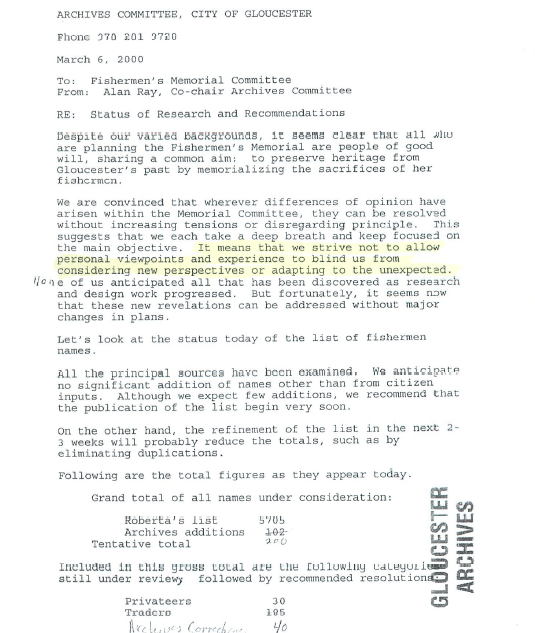
I don’t believe anyone writing those words more than twenty-five years ago could have anticipated every way the fishing industry would change or every circumstance that would eventually come before the Committee.
That’s exactly why those words matter today.
I believe the Starbound presents one of those circumstances.
Where things stand today
The meeting was emotional for me.
I had to stop several times while reading my presentation. But I finished it.
And I want to thank the members of the Cenotaph Committee for giving me the time to do that and for listening.
I have since heard from Committee Chairwoman. She told me that the Committee intends to meet again and further discuss Mark’s case.
The Committee Chairwoman told me they would not let this hang out there for too long.
I respect that.
I’m going to give them the time and space to consider everything I put before them.
And I need to say thank you
There is something else I don’t want to get lost in all of this.
I am incredibly grateful.
So many people have helped me get to this point.
Some spoke publicly when I needed a voice. Some researched records and found documents. Some made telephone calls, wrote letters, opened doors or helped me understand the history. Some attended meetings. Some stood beside me without saying a word because they knew I needed them there.
I’ve heard from fishermen, fishing families, friends, elected officials, people in City government and people who simply care about Gloucester and what this memorial represents.
Some of you have helped publicly.
Others have helped quietly behind the scenes.
Please know that I see it. I remember it. And I am deeply grateful for every bit of it.
There were times during this process when I wondered whether I had the strength to keep reopening something that happened twenty-five years ago. Having people stand beside me made a difference.
When this is finished, I want to properly recognize the people who helped along the way individually. There are people who deserve that.
I haven’t forgotten any of you.
But right now, I want the focus to stay where it belongs.
Mark
Twenty-five years ago, Tom Frontiero, Jimmy Sanfilippo and Mark Doughty died together aboard the Starbound.
I survived.
Tom and Jimmy are remembered on the Gloucester Fishermen’s Memorial.
Mark is not.
After twenty-five years, I am not asking anyone to rewrite history.
I’m asking them to look at all of it.
Look at the written criteria.
Look at the ownership records.
Look at my Gloucester residency.
Look at who captained the vessel.
Look at how a migratory herring vessel actually operated.
Look at the Starbound’s relationship with Gloucester.
Look at the original words of the people who helped create the memorial.
And then apply the existing standard to the complete facts.
I hope the next update I write isn’t about criteria, corporate records, meetings or arguments.
I hope it’s simply a thank-you.
And I hope that, after twenty-five years, I can finally look at that memorial and see the three names where I believe they belong:
Tom.
Jimmy.
Mark.
Together.
I brought my crew home once.
I’m asking you to help me bring the last one home.
With gratitude,
Joseph A. Marcantonio
Captain and Co-Owner, F/V Starbound
Sole Survivor