 CAPE ANN SYMPHONY
THE 66th SEASON
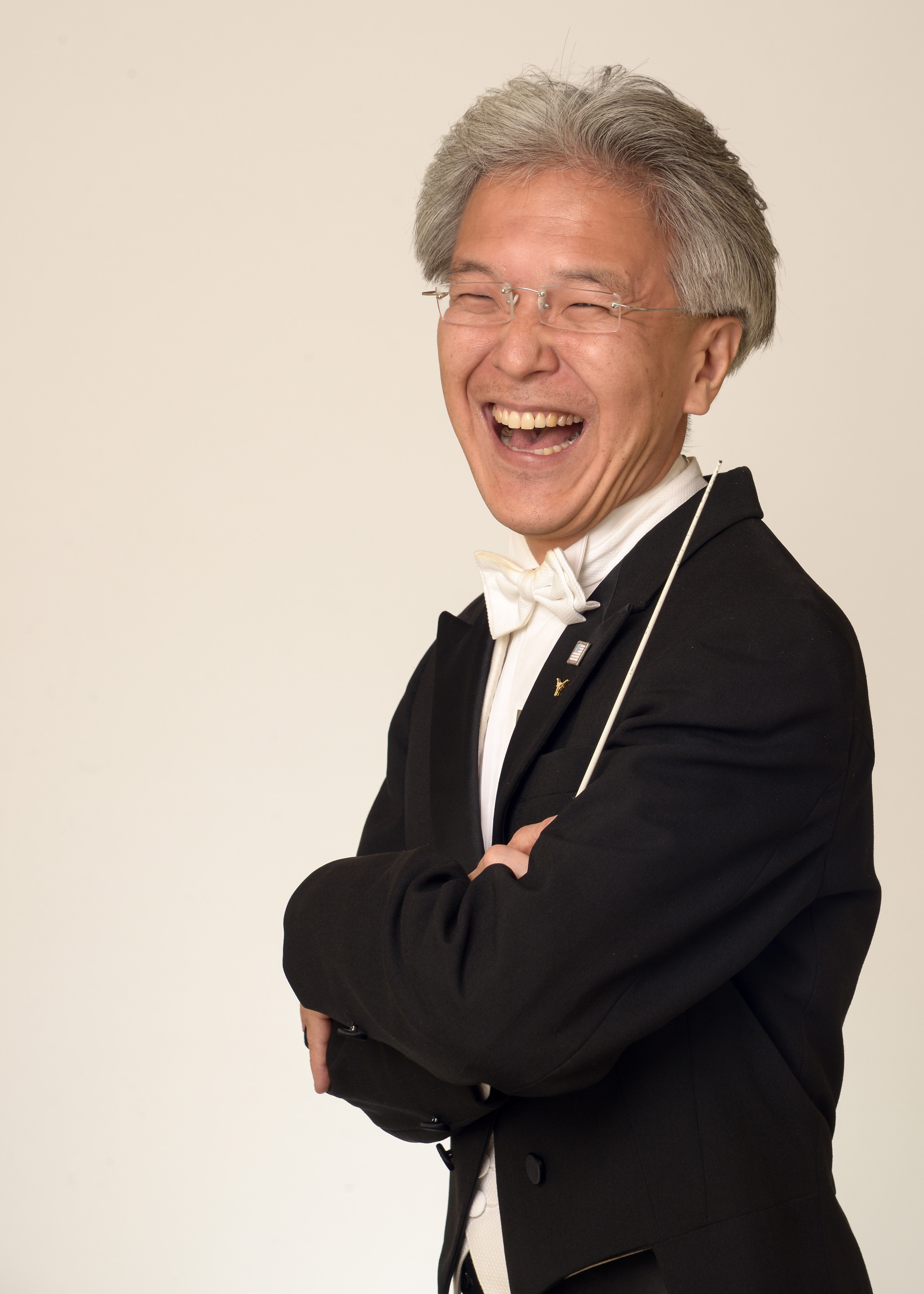
Yoichi Udagawa, Music Director
CAPE ANN SYMPHONY CLOSES THE 66th SEASON ON
SATURDAY, MAY 19:
An Evening of Passionate Orchestral Music
From the World of Opera :
ORCHESTRAL OPERA GEMS
Verdi, Puccini, Wagner, Bizet, Weber, Tchaikovsky, Leoncavallo, Mascagni, Ponchielli
Orchestral Opera Gems close the Cape Ann Symphony’s 66th Concert Season on Saturday, May 19 at 8 pm at the Manchester-Essex High School Auditorium on 36 Lincoln Street in Manchester-by-the-Sea, MA. A romantic and moving program, Orchestral Opera Gems features orchestral masterpieces from renown and beloved operas by Wagner, Puccini, Verdi, Leoncavallo, Mascagni, Ponchielli, Weber, Tchaikovsky, and Bizet. For tickets and information, call 978-281-0543 or visitwww.capeannsymphony.org.
Famed composers Wagner, Puccini, Verdi, Leoncavallo, Mascagni, Ponchielli, Weber, Tchaikovsky, andBizet take center stage for the CAS Orchestral Opera Gems Concert on May 19. Cape Ann Symphony Conductor and Music Director Yoichi Udagawa points out, “Some of the most passionate and emotional music written for the orchestra comes from the world of opera. The stories of love, jealously, loss, longing and romance were captured in music by great composers such as Verdi, Puccini, Mascagni, Leoncavallo, Bizet and Wagner. Many of these operas feature interludes of incredible symphonic music, and we’ve selected some favorites for the May concert.” The Orchestral Opera Gems program includes Leoncavallo’s Intermezzo from I Pagliacci; Tchaikovsky’s Polonaisefrom Onegin; Mascagni’s Intermezzo from Cavaleria Rusticana; Puccini’s Intermezzo from Manon Lescaut; Ponchielli’s Dance of the Hours from La Gioconda ; Verdi’s Prelude to Act 3 from La Traviata; Bizet’s Carmen Suite No. 1; Weber’s Overture to Oberon; and Wagner’s Meistersinger Overture and Siegfried’s Rhine Journey from Götterdämmenrung. Udagawa adds, “Make sure you come to this very romantic concert with someone you’re madly in love with.”
In July of 1888 Mascagni entered a competition in Milan open to all young Italian composers who had not yet had an opera performed on stage. One-act operas would be judged by a jury and the three best operas would be staged in Rome. Mascagni chose Cavalleria Rusticana, a popular short story and play and in two months, he composed the opera. Among the 73 operas submitted,Cavalleria Rusticana was chosen as one of
the three to be produced. The opera premiered to huge success on May 19, 1890 with Mascagni taking 40 curtain calls.
READ MORE HERE
Composer Leoncavallo was so inspired by Mascagni’s Cavalleria Rusticana that he decided to compose an opera. Leoncavallo’s I Pagliacci premiered to instant success in Milan in 1892. It was later performed at the Metropolitan Opera on a double bill with Cavalleria Rusticana and even today the two operas are often performed together.
In 1845, Wagner began reading the History of German Poetry. The book included information on Meistersingers (mastersingers), members of a guild of amateur poets and musicians who developed a craftsman like approach to developing and composing songs and Hans Sachs, a German Meistersinger, poet, playwright, and shoemaker who lived during the late 1400’s and 1500’s. Wagner was inspired to conceive a comic story revolving around the historical figure, Hans Sachs as the basis for his opera Die Meistersinger von Nurnberg. This opera is the only comedy among Wagner’s mature operas and the only Wagner opera based on an entirely original story in which no supernatural, magical powers or events take place.
Wagner’s Götterdämmerung, or Twilight of the Gods, is the last in the cycle of the four operas entitled The Ring which premiered in 1876. In this innovative work Wagner wrote for a very large orchestra using the whole range of instruments singly or in combination to express the wide range of emotion and events of the drama. He even commissioned the production of new instruments to fill in for gaps in tone between existing instruments such as horn and trombone.
Manon Lescaut is a French tale of a beautiful woman destroyed by her conflicting needs for love and luxury written by the Italian composer Puccini. Composed between 1890 and 1893 and based on a 1731 novel by French author and novelist Abbe Prevost, Manon Lescaut was Puccini’s first great success. His operas went on to be celebrated for their mastery of detail, sensitivity to everyday subjects, copious melody, and economy of expression.
In 1877 Tchaikovsky’s acquaintance famed Russian opera singer Yelizaveta Lavrovskaya suggested he write an opera based on the novel Eugene Onegin by Russian poet, playwright and novelist Alexander Pushkin. Tchaikovsky developed the opera in three acts and seven scenes using original verses from the novel and choosing only certain scenes. The opera was first performed in Moscow in 1879 by the students of the Moscow Conservatory and grew slowly in popularity throughout Europe. A performance in Hamburg in 1892 conducted by Gustav Mahler received great acclaim. Tchaikovsky was applauded after each scene and
received curtain calls at the end. The first performance in the United States wasn’t until 1920 with the Metropolitan Opera in New York.
Composer Weber’s tuberculosis had become acute by 1824, making him anxious to provide for his family. Thus, he accepted the suggestion (against his doctor’s advice) by Charles Kemble, proprietor and manager of the Theatre-Royal at Covent Garden, London, to write an opera. Weber chose the story of Oberon as the subject and completed a three act opera with spoken dialogue. The story of Oberon dates back to a thirteenth
century French epic story with romance elements. Weber composed the overture to Oberon in just three days, just before the premiere.
Verdi’s La Traviata is based on the novel The Lady of the Camellias written by Alexandre Dumas. Verdi began writing the opera after seeing a stage adaptation of the novel in Paris. Despite an unsuccessful premiere in March of 1853 at the La Fenice opera house in Venice, La Traviata went on to become one of the most performed opera’s worldwide.
Italian composer Ponchielli based the opera, La Gioconda on the play Angelo, Tyrant of Padua, by French poet, novelist, and dramatist Victor Hugo. The opera has been revised several times and the one popular today was first performed in 1880. Dance of the Hours which Cape Ann Symphony performs in the Orchestral Opera Gems Concert is a ballet that lasts about ten minutes and happens at the end of the third act of the opera. The music and choreography represent the hours of the dawn, day, twilight, night and morning symbolizing the eternal struggle between the forces of light and darkness. Ponchielli’s work greatly influenced rising composers including Puccini and Mascagni.
Founded in Gloucester in 1951, the Cape Ann Symphony is a professional orchestra of over 70 players from throughout the New England area. They perform a subscription season of four concerts per year plus several Pops and youth concerts. The Symphony Board of Directors named Yoichi Udagawa the Music Director and Conductor of the Cape Ann Symphony in the summer of 2000 after a yearlong search. In addition to his leadership of Cape Ann Symphony, he is Music Director and Conductor of the Melrose Symphony Orchestra, and the Quincy Symphony Orchestra and a cover conductor at the Boston Pops Orchestra. Maestro Udagawa is on the faculty of the Boston Conservatory where he teaches conducting. Frequently invited to guest conduct, Maestro Udagawa has worked with many different orchestras including the Boston Pops Esplanade Orchestra, Nobeoka Philharmonic Orchestra, the Pro Arte Chamber Orchestra of Boston, the University of Texas Symphony Orchestra, the Indian Hill Symphony, the Garden State Philharmonic, the Brown University Orchestra, the Syracuse Society for New Music, the Boston Conservatory Orchestra, the Midcoast Symphony Orchestra, the Newton Symphony, the Austin Civic Orchestra, and the Mid-Texas Symphony. Maestro Udagawa is at home in popular and contemporary music as well as the standard symphonic repertoire. He is known for his relaxed manner and ability to speak from the podium which has helped new audiences as well as enthusiasts gain a greater appreciation for symphonic music. His programs often include premieres of new works – some specially commissioned for the orchestra — as well as great orchestral works across the symphonic repertoire and lively Pops programs. He is also an integral part of the Cape Ann Symphony Youth Initiative. Yoichi Udagawa, the son of a nuclear physicist father and singer/artist mother, was born in Tokyo, Japan in 1964. His family immigrated to the United States soon thereafter. He began playing the violin at age four and made his conducting debut at age fifteen. After receiving a music degree from the University of Texas at Austin, he continued advanced studies in conducting with Gunther Schuller, Seiji Ozawa, Morihiro Okabe, and Henry Charles Smith. A fan of many different styles of music, Mr. Udagawa also enjoys performing gospel music in addition to his conducting activities. He is also an accomplished violinist and an avid fan of exercise and yoga.
The Cape Ann Symphony’s Orchestral Opera Gems Concert is Saturday, May 19 at 8:00 pm at the Manchester-Essex High School Auditorium on 36 Lincoln Street in Manchester-by-the-Sea, MA. Single ticket prices are $43 for adults, $38 for senior citizens, $15 for Students of any age; $5 for youth 12 years old and under. For information, call 978-281-0543 or visit http://www.capeannsymphony.org


 Good Morning Gloucester