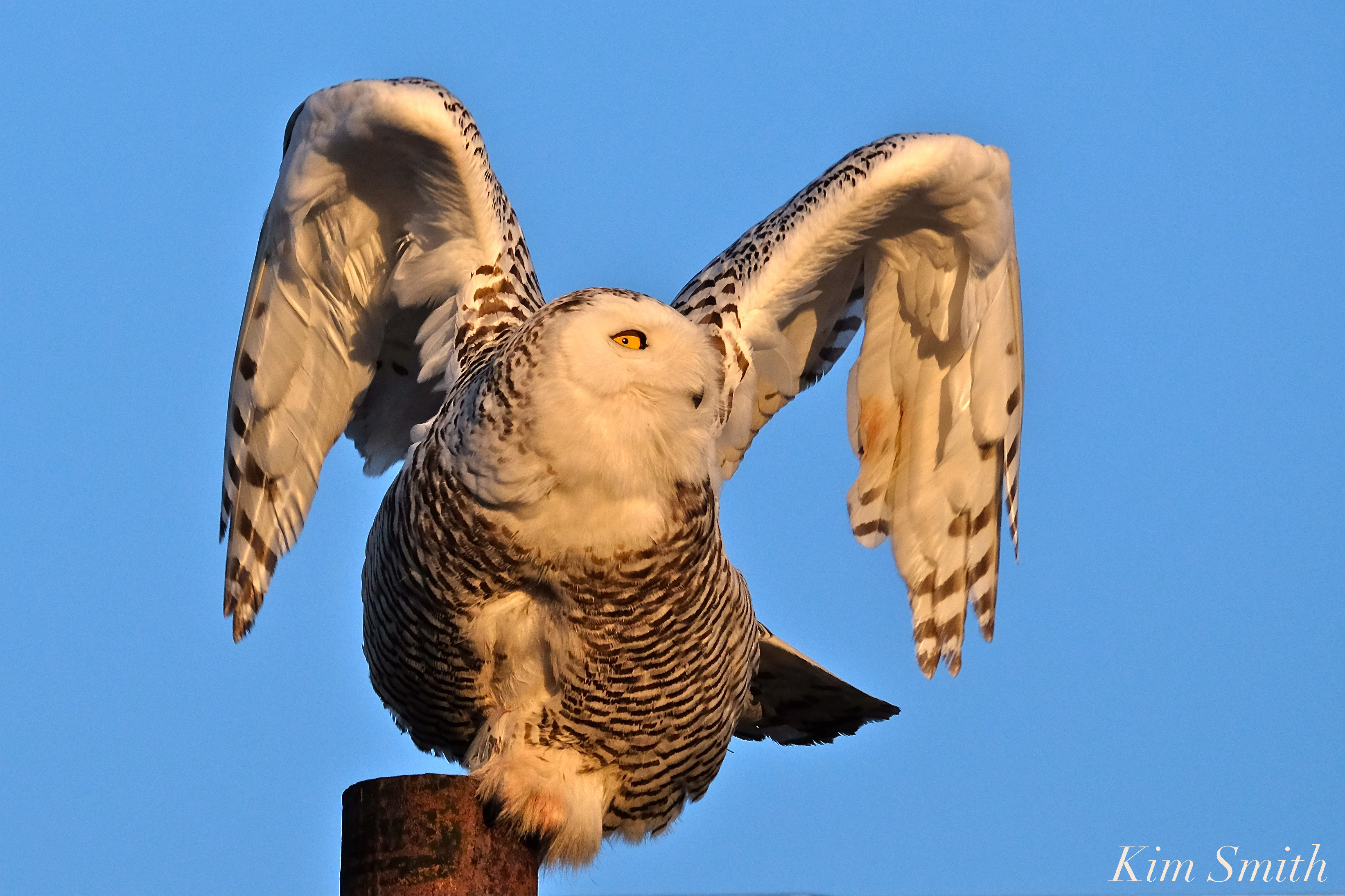
 Snowy Owl Hedwig Preparing for Take-off
Several times Hedwig has flown so close that I can feel the swooshing wind around her, but I wondered, why her wingbeats are virtually soundless. I have audio recordings of comparatively tiny Monarchs, whose wingbeats are a thousand times louder than that of Hedwig’s wingbeats.
Snowy Owls, like all owls, have evolved with specially designed wings that enable them to fly soundlessly, a necessary feature for stealth hunting of small mammals such as mice, lemmings, voles, shrews, and rats. Their wings are disproportionately large to their body mass, which allows for slow flying, as slowly as two miles per hour, a sort of glide-flying, with very little flapping needed.
Additionally, comb-like serrations on the leading edge of an owl’s wingtips break up the air that typically makes a swooshing sound, creating a silencer effect. And, too, the streams of air are softened by a velvety texture unique to owl’s wings and because of the feathery combs of the wing’s trailing edge (see illustration below).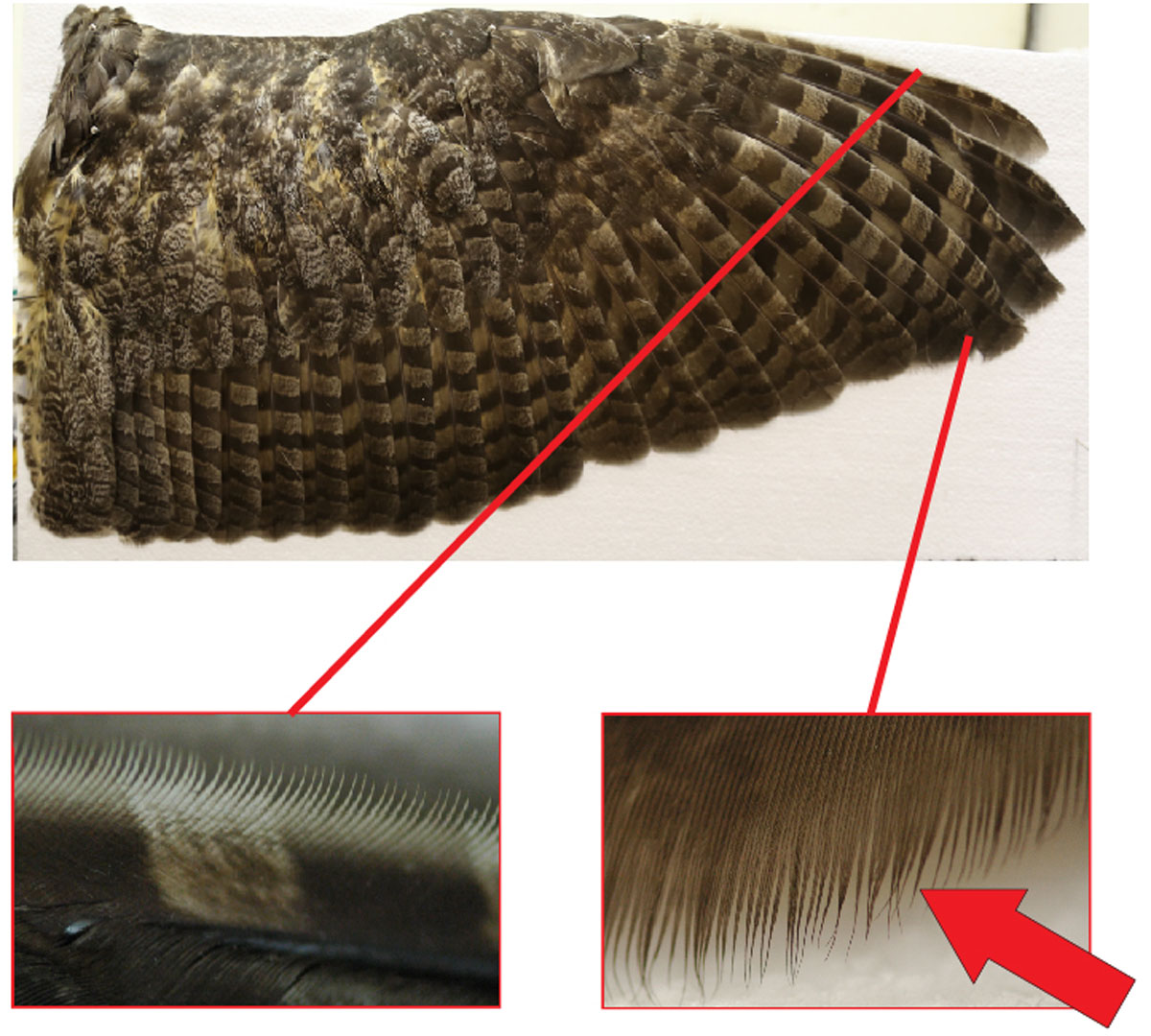 Close-up images of a Great Horned Owl’s wing. On the left, you can see the leading-edge comb; it’s this width that Le Piane measured for her study. On the right, the trailing-edge fringe. Diagram: Krista Le Piane.
Image of a Great Horned Owl’s wings from Mass Audbon. READ MORE HERE.


 Good Morning Gloucester
Just beautiful. The karate Owl.
LikeLiked by 1 person
Blessed to have her here for the winter 🙂
LikeLike
Because a butterfly does not need to sneak up silently on its dinner.
LikeLiked by 1 person
I hope you read the post E.J 🙂
LikeLike
This is REALLY interesting Kim, THANK YOU!!!
LikeLiked by 1 person
Very welcome Lois, so interesting observing and documenting this wonderful creature, over so many weeks, very happy occurrence.
Thank you for continuing to take such good care of our Buddy ❤
LikeLike
Very stealth and such a beautiful feathered friend! 🙂 Dave & Kim 🙂
LikeLiked by 1 person
Yes she most definitely is Dave!
LikeLike