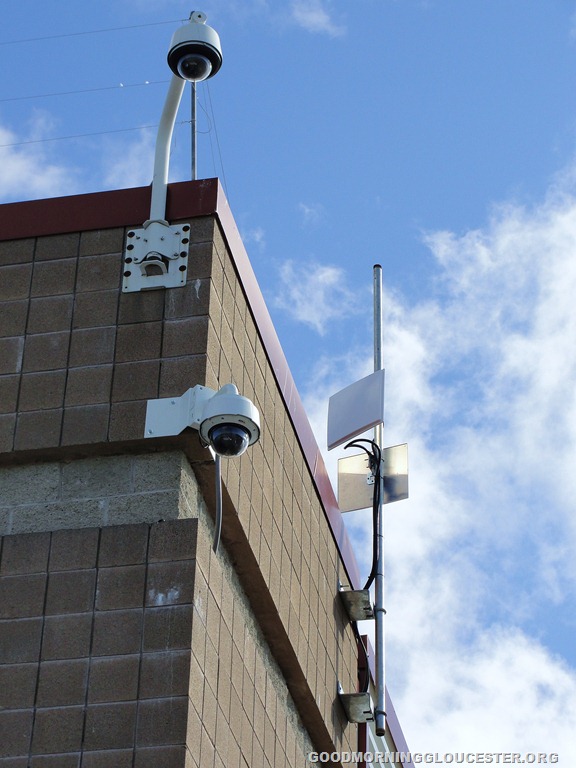
I think this guy didn’t get the message there are cameras watching their every move down at the State Fish Pier.

My View of Life on the Dock
I think this guy didn’t get the message there are cameras watching their every move down at the State Fish Pier.

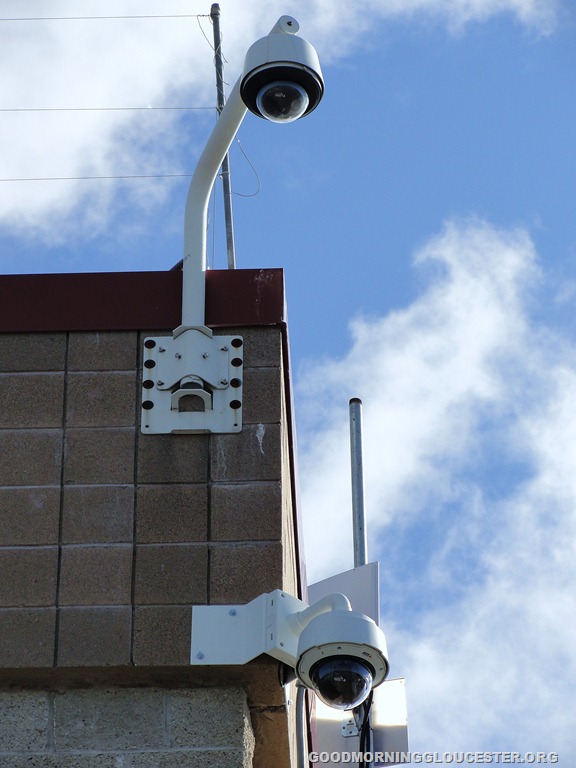

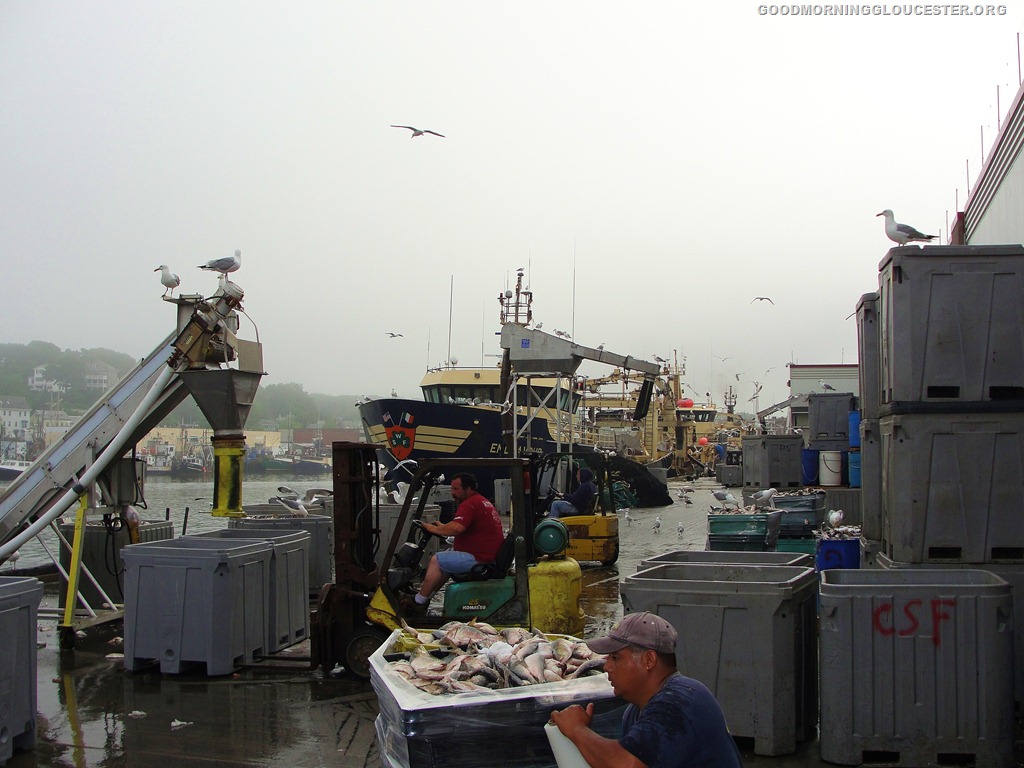
It has been a long while since I’ve seen this much activity on The State Fish Pier.
It seems like fishing seasons get shorter and shorter and the fleet gets smaller and smaller. Hopefully someone has a plan for the Harbor once our fleet gets even more drastically reduced with not only the number of boats that can fish but the amount of fish they are allowed to land.
In John Norris’ Alone At Sea book about the heyday of Gloucester fishing there is a picture of over 500 huge schooners on moorings in the outer harbor. Over 500! And that had nothing to do with the amount of fishing boats in the inner harbor where the large boats would raft up 6 or 7 abreast. Now there will be less than that number of commercial fishing permits dedicated to the entire northeast from Maine down to Virginia. Crazy.
When I was graduating from college and deciding whether I’d come down the dock to work or pursue my passion for economics at Bentley I remember my father saying to me- “Joe there will always be fish and they will always need a place to unload them.” Neither one of us could have imagined the drastic reductions in fleet and landings and the Auction coming to town and how much over capacity there is in the harbor dedicated to offloading what little product comes in today compared to even 20 years ago.

Here’s how they set the flags for yesterdays Dory Races.
You’ll hear some Marine Radio traffic of the Race Committee and random Boat communications.
2010 International Dory Races

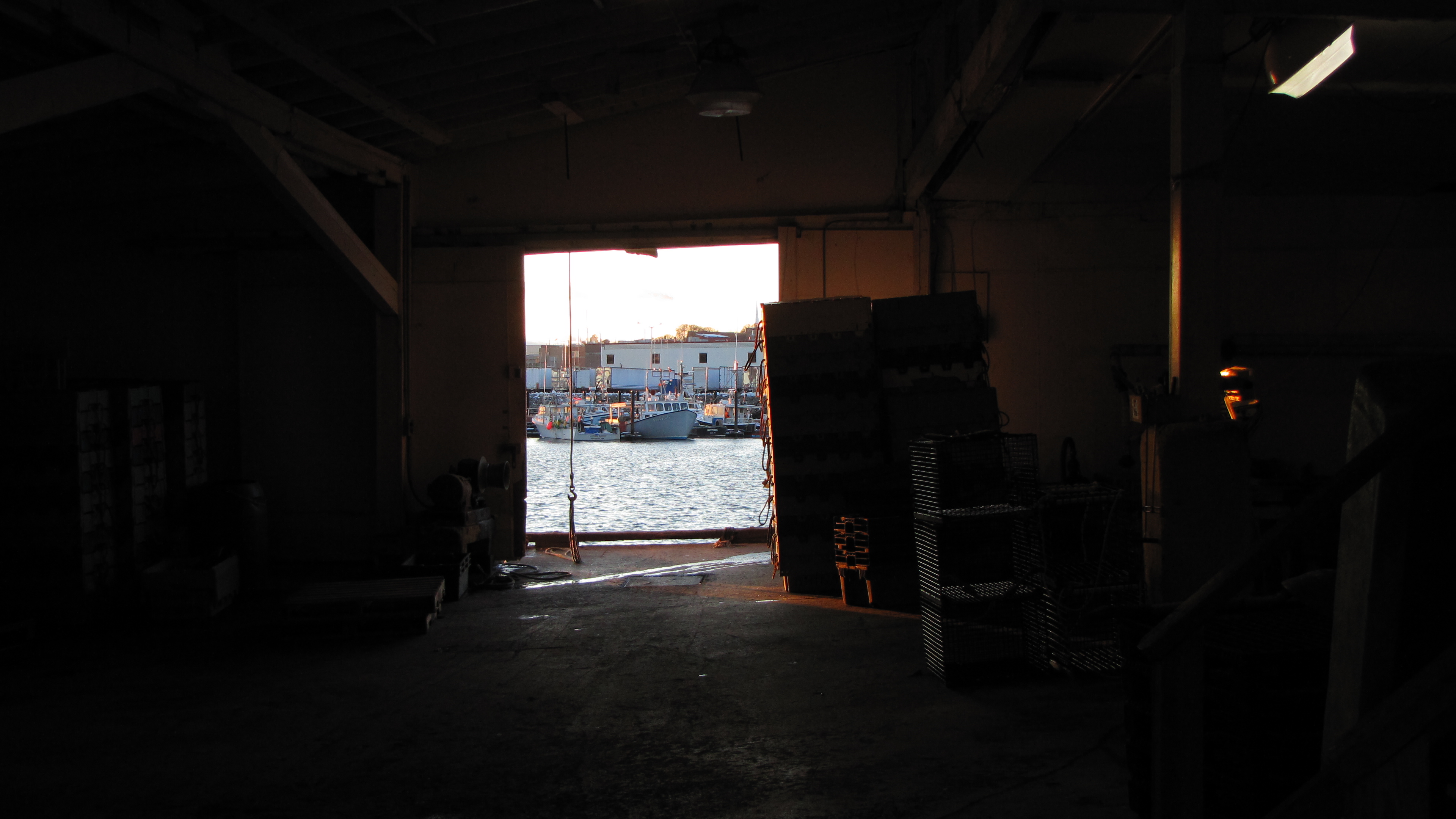
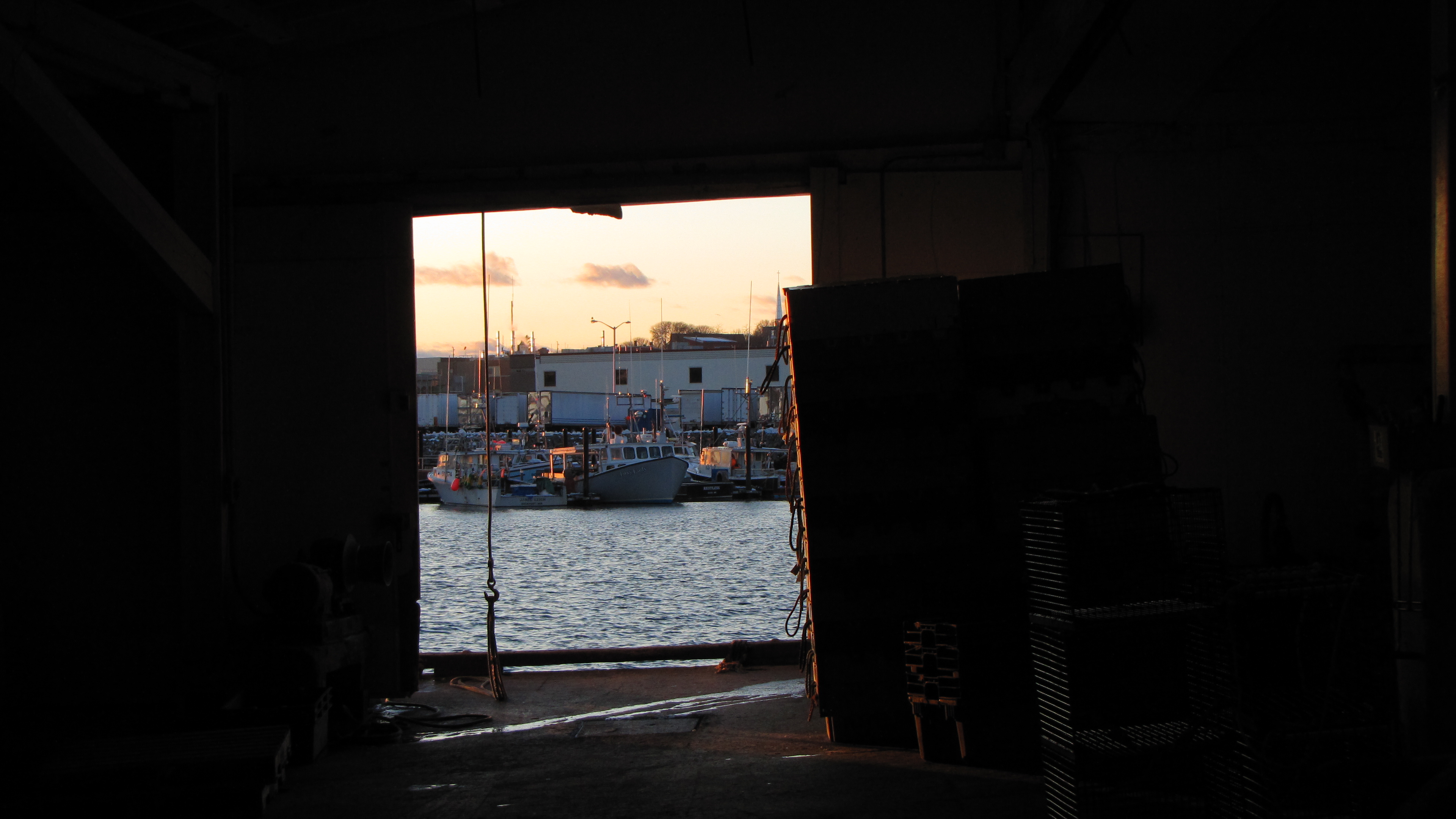
View from Inside Capt. Joe’s

How Do you get acetylene tanks aboard a fishing boat at low tide?
Very Carefully.
Click Pics For Larger Versions
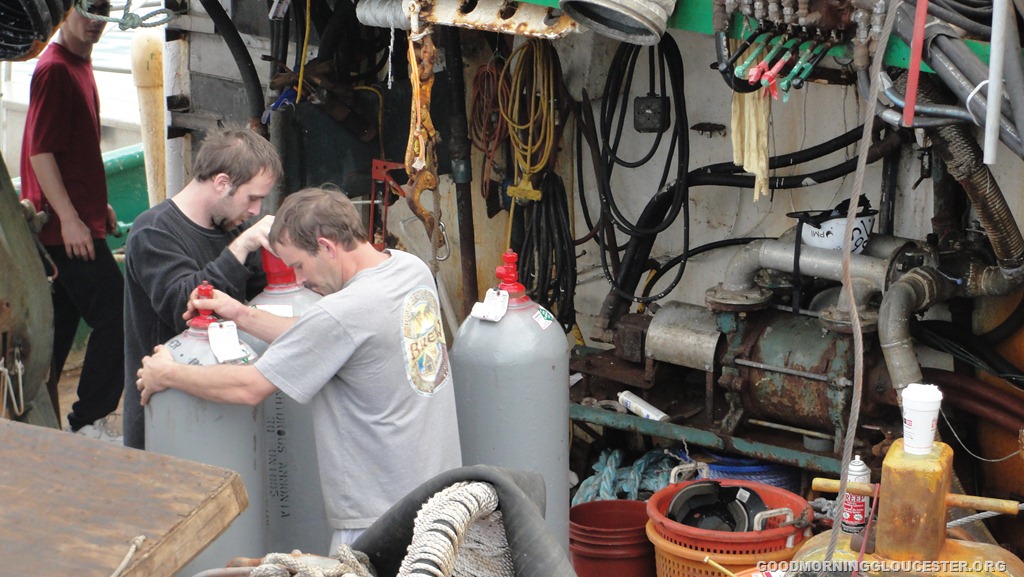
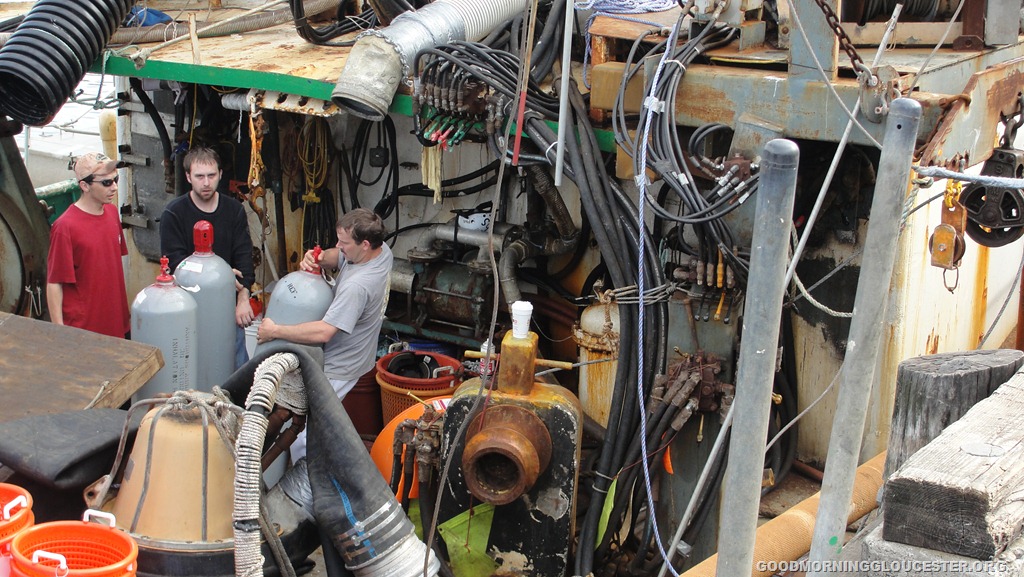
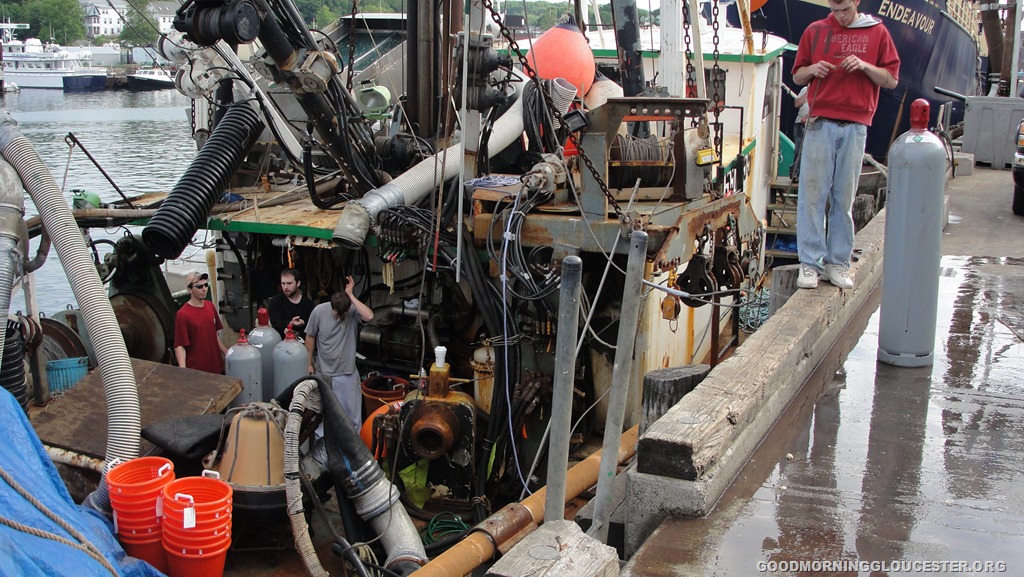
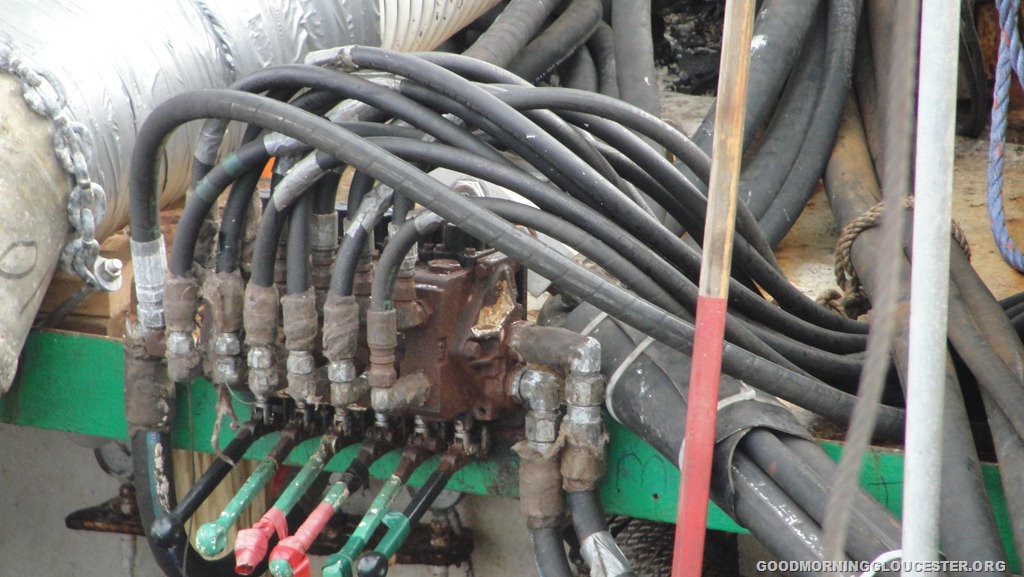
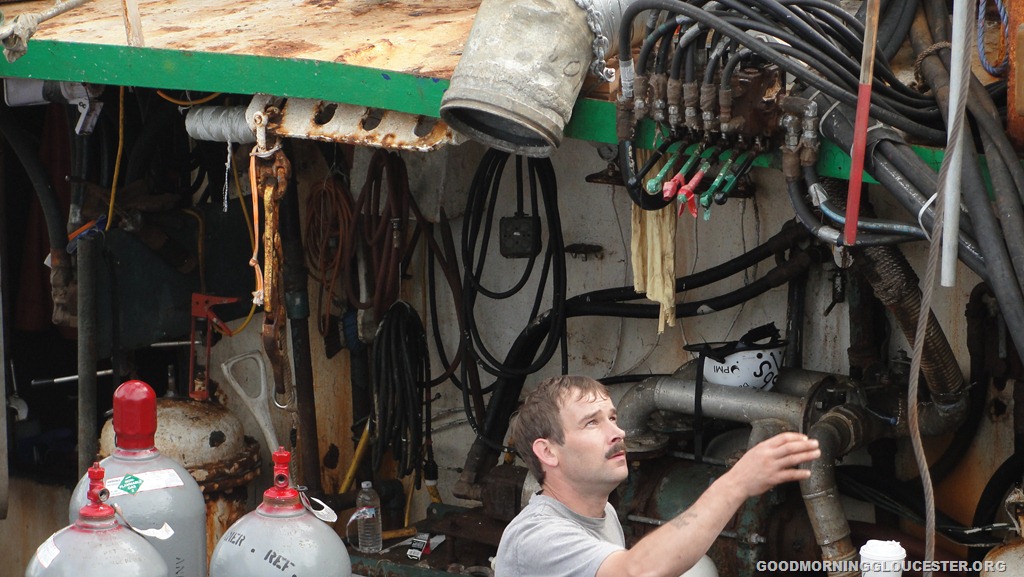

Gloucester Zen The Plan B Loads Welding Tanks
Minimal Editing- Minimal Commentary- Just A Slice of Time On Gloucester Harbor
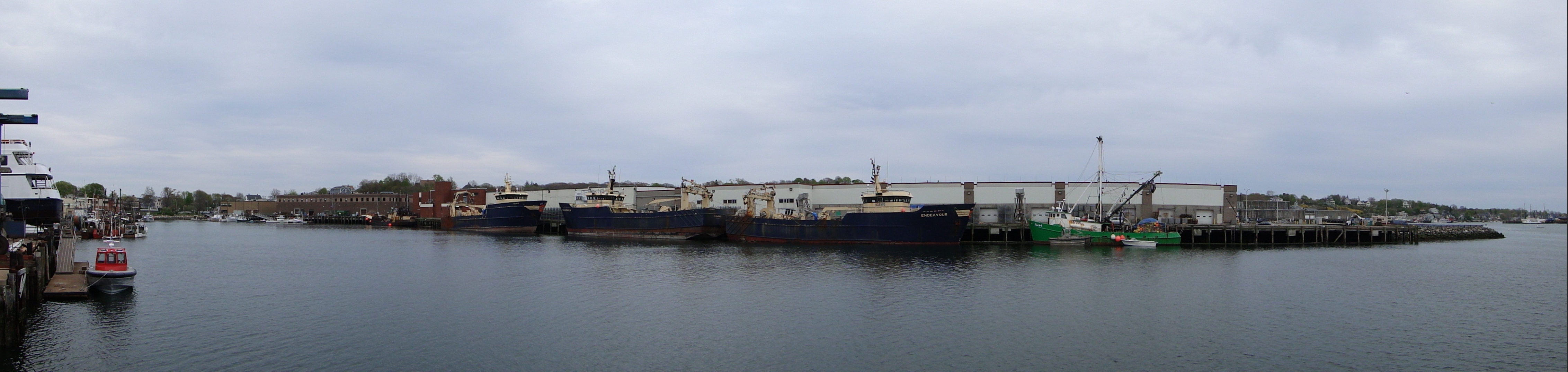
CLICK ON PHOTO FOR LARGER VIEW
Standing on the LNG Tug Ramp Panning Right

Have You Made Good Morning Gloucester part of Your Daily Routine? Do you appreciate the energy and positive spirit that all our contributors put into our blog?
If you do why not subscribe for free and get the daily scoop delivered to your inbox? If you already do subscribe how about passing on the link to subscribe here-
Subscribe to GoodMorningGloucester by Email
Thanks for being part of the GMG community- Joey

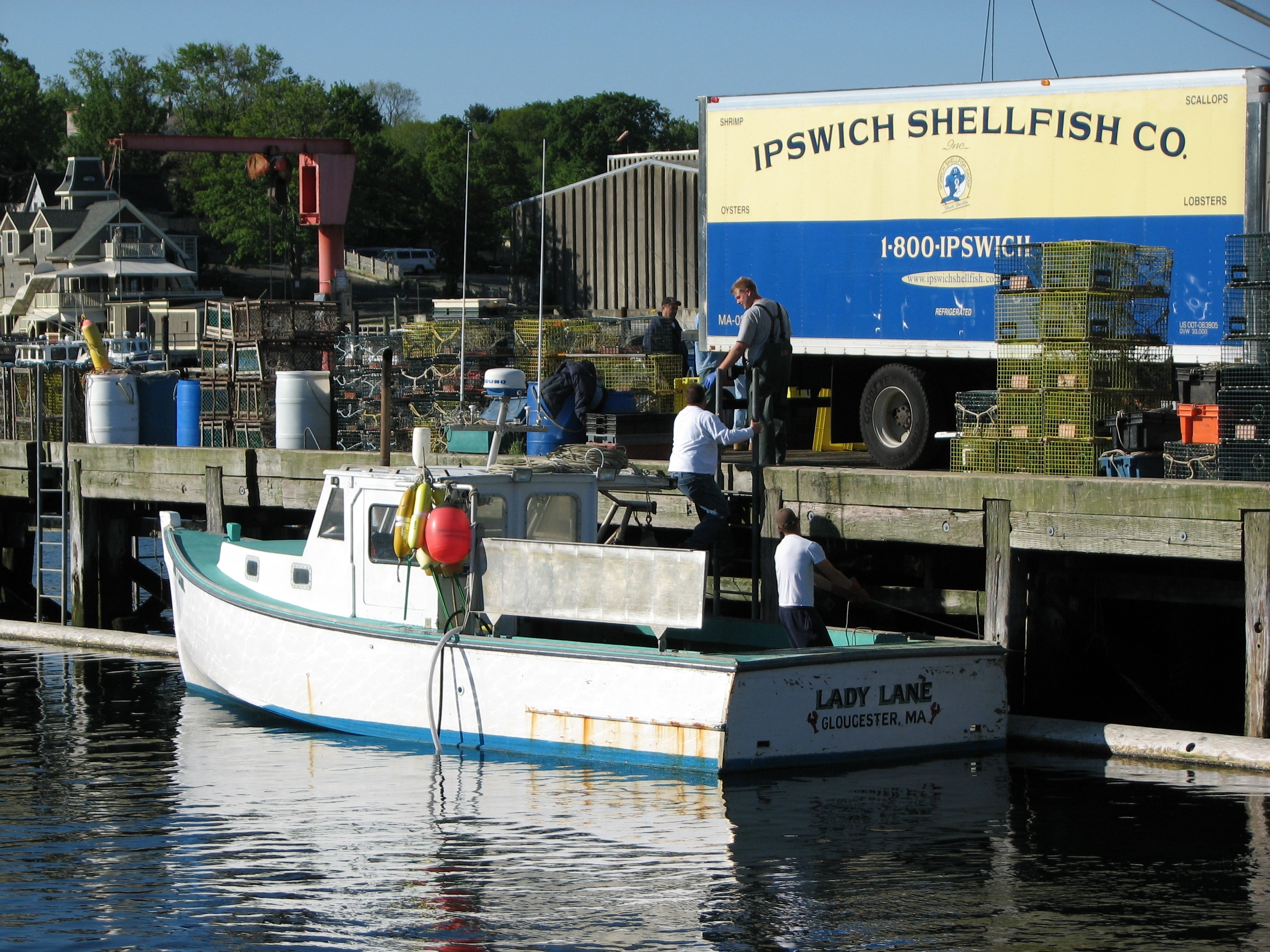
The Lady Lane Unloads
Here’s a Reference Photo I took and Small Painting I did on Location at the State Fish Pier.
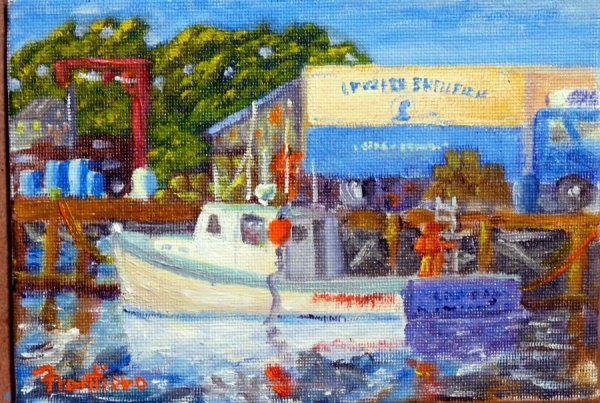
http://www.FrontieroGallery.com


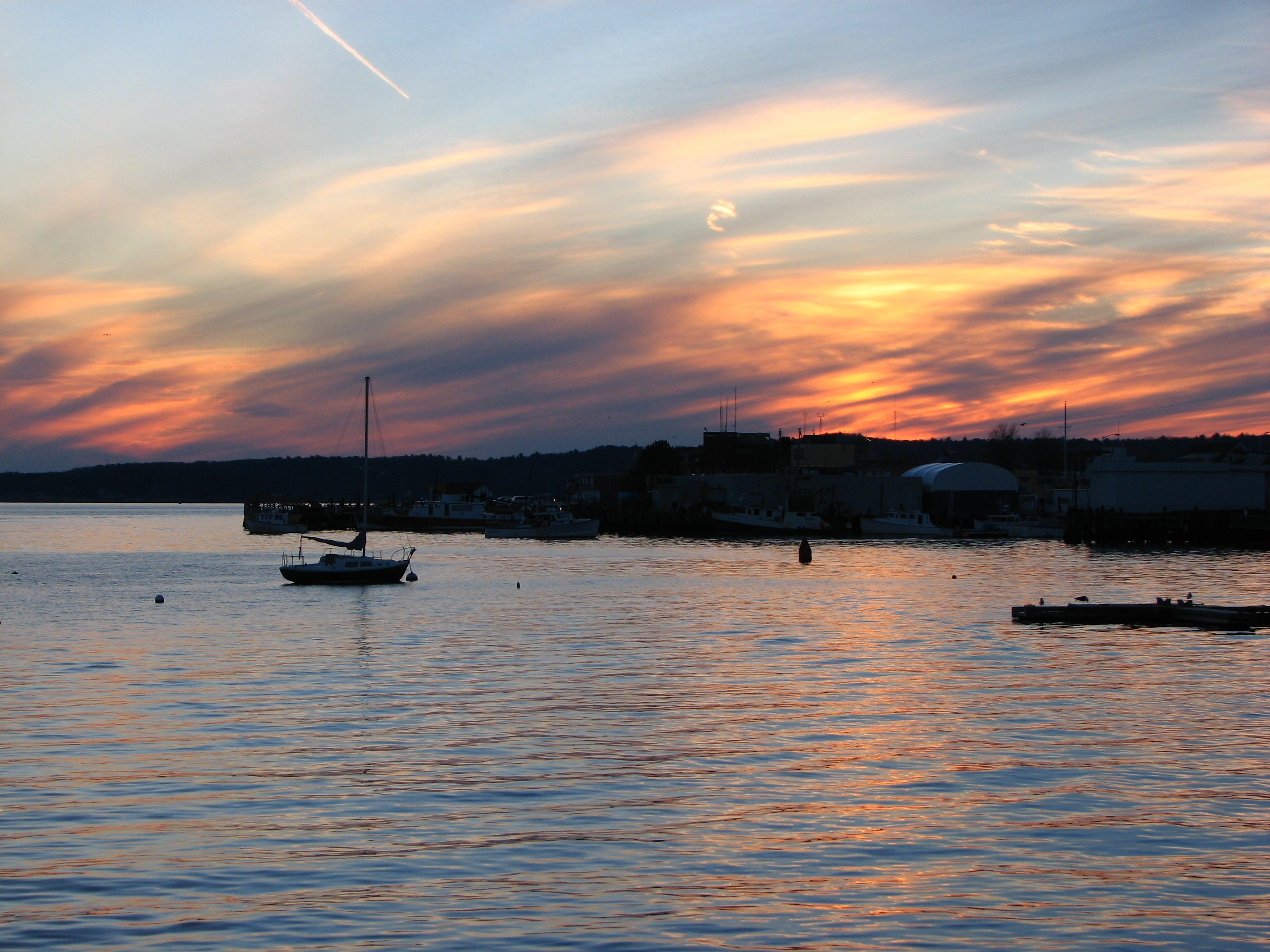
Http://www.FrontieroGallery.com






Last week herring was scarce with some bait companies completely sold out. Yesterday the Cape Seafoods boats came in loaded. Feast or famine. Yesterday was feast. It was all asses and elbows as the Cape Seafood Crew earned their pay offloading a whole buttload of fish.

Vats Of Herring At The State Fish Pier, originally uploaded by captjoe06.


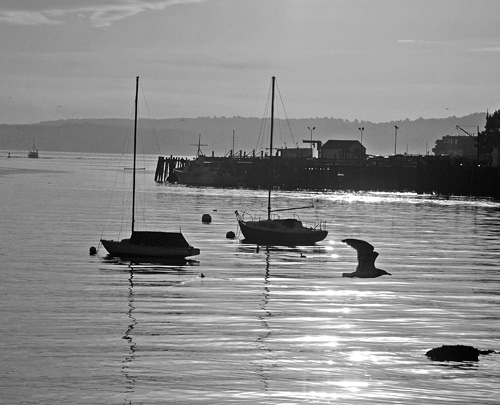
Gloucester At Dawn- From Captain Joe and Sons Dock 4:50AM 8/6/09, originally uploaded by captjoe06.

The Kalmar Nyckel is a full‐ scale re‐ creation of the original 17th‐ century ship, whose historic significance rivals that of the Mayflower. The present day Kalmar Nyckel serves as the Delaware region’s floating Academy and Goodwill Ambassador. The ship provides a unique platform for the Foundation’s educational programs, offering the best in recent scholarship and experiential learning. Students get to experience the “Age of Sail” first‐hand during the Kalmar Nyckel’s floating classroom programs, helping to set sails, heave cannons, steer the ship, navigate with 17th‐century instruments, and learn about America’s maritime and colonial history.
The original Kalmar Nyckel was built by the Dutch in or about 1625 as a “Pinnace” – a class of vessels that could operate either as small warships or as armed merchantmen. This was the “Golden Age” of Dutch naval power and seaborne world trade, and the Dutch were the most advanced naval architects and shipbuilders of the 17th century.
photos by Sharon Lowe
Measuring 93 feet on deck and with a sparred length of 141 feet, she was stoutly built and remarkably seaworthy, characteristics that would serve her well throughout her long and remarkable career. Her original armament probably consisted of 12 six‐pounder cast iron cannon, with two smaller swivel guns attached to the quarterdeck rails.
The Kalmar Nyckel was purchased from the Dutch in 1629 by the Swedish cities of Kalmar and Jönköping and given her new name. The name means the “Key of Kalmar,” which derives from the 12th‐century castle that guarded Kalmar harbor, a fortress defense the ship was meant to honor and augment.
The Swedish Empire reached its zenith under King Gustavus II Adolphus (1611‐1632), the greatest war leader of his age, known as the “father of modern warfare,” whose battles are still studied in military schools. Gustavus wanted to enhance Sweden’s position as a Great Power and to secure his recent territorial additions around the Baltic. This would require the building of a navy to match his powerful army.
 Good Morning Gloucester