Saturday May 6, 2017 is the official ribbon cutting re-opening of Stacy Boulevard by Mayor Romeo Theken. Thanks to the Mayor, Mike Hale and all Gloucester DPW, GZA, Essex County Landscape Assoc, Gloucester Community Preservation Act, Ann Giraldi Johnson, GFWA, Lieutenant Governor Karyn Polito, and groups like the Seaport Economic Council and Dir Carolyn Kirk, Department of Conservation and Recreation (DCR), Joe Lucido, Ed Parks, Mike Linquata, Donna Ardizzoni and One Hour at a Time Gang, Ringo Tarr, Bobbie Turner, YMCA and summer help, Wolf Hill, Generous Gardeners, and other volunteers!
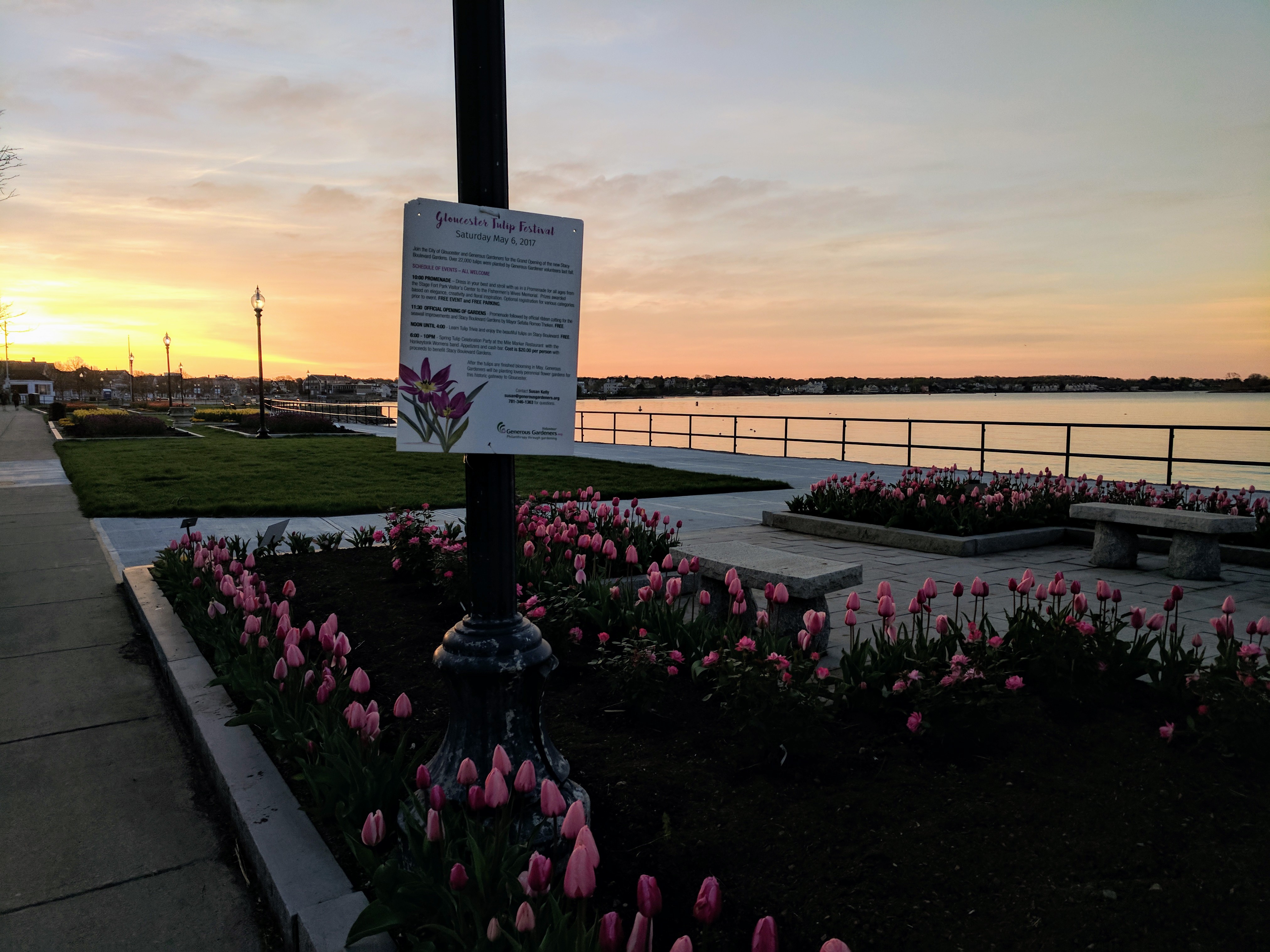
Tulip Festival and bonnet parade Saturday 10AM
Ribbon Cutting 11:30AM
Party at Mile Marker Restaurant 6-10PM
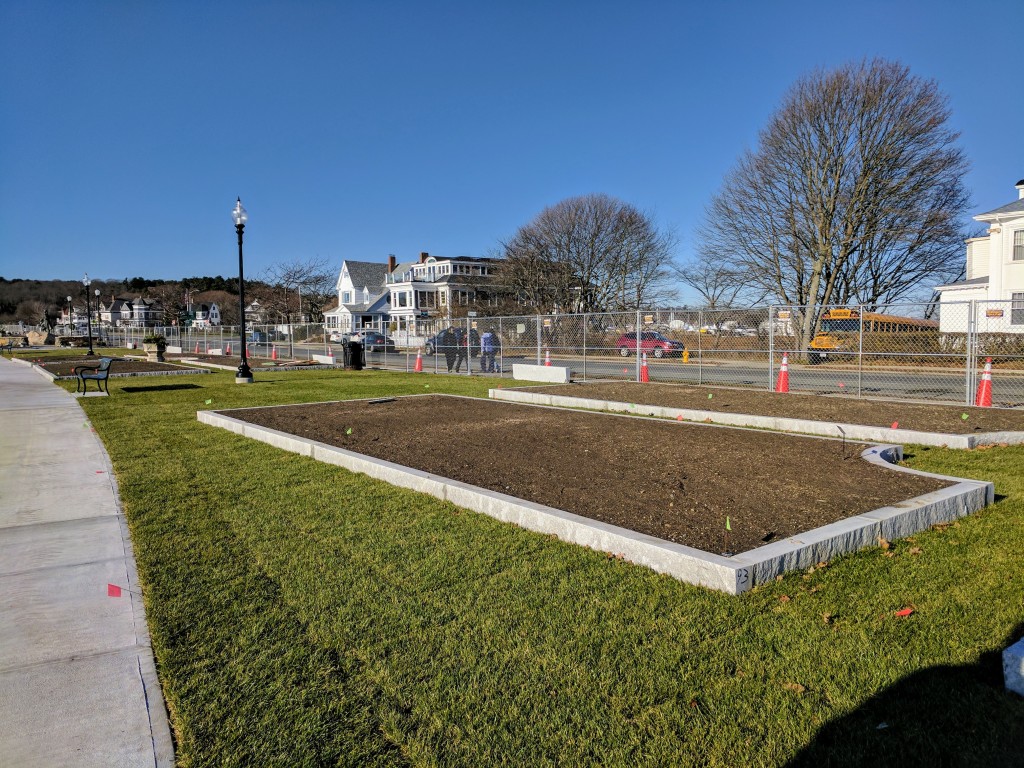
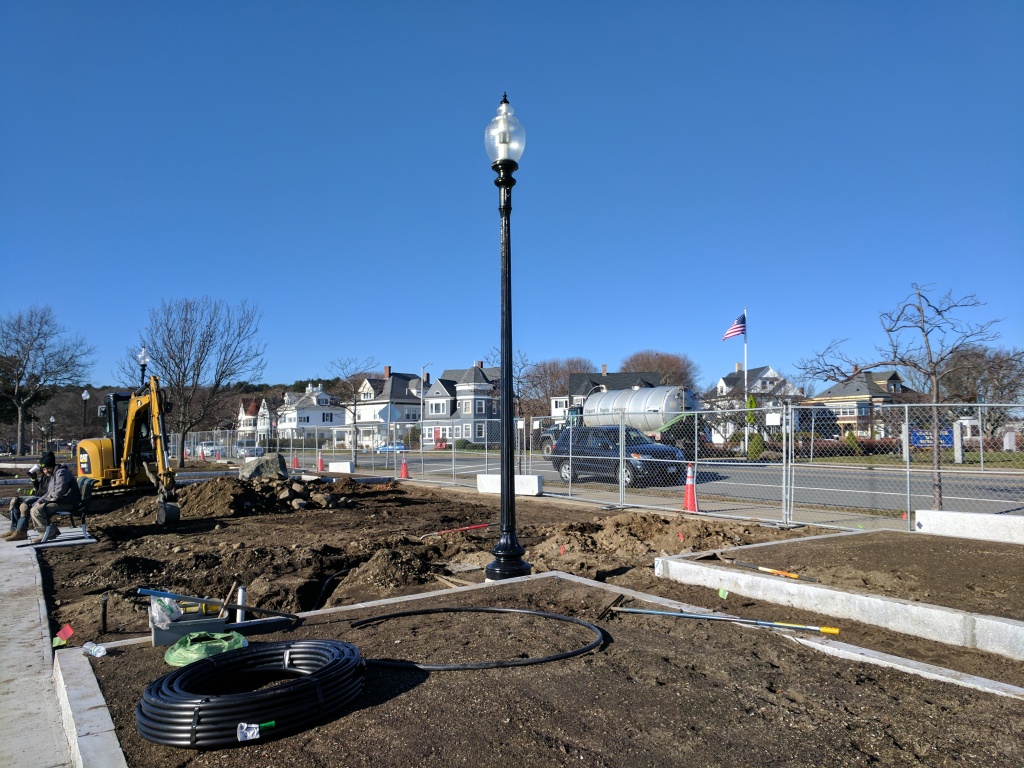
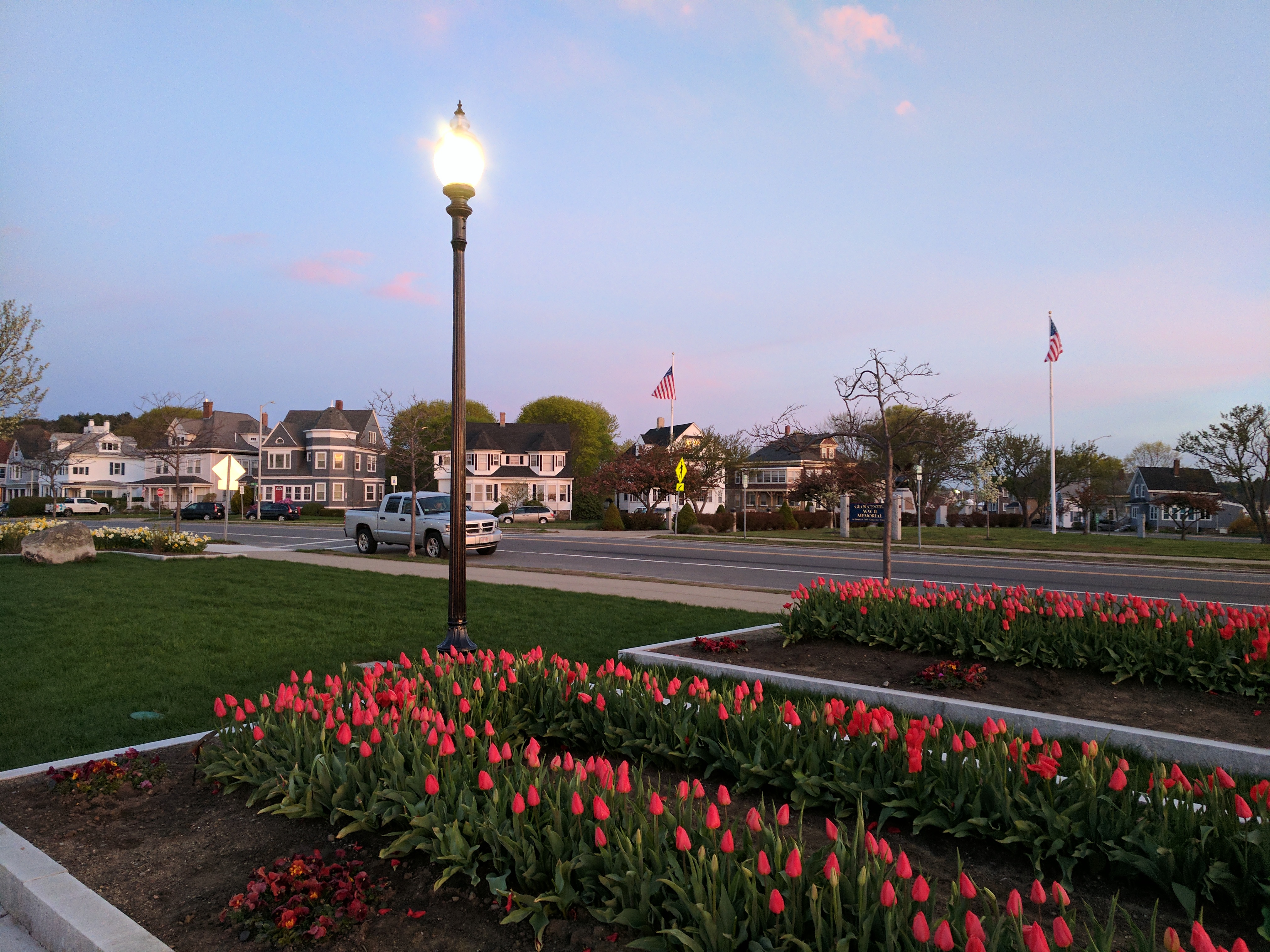
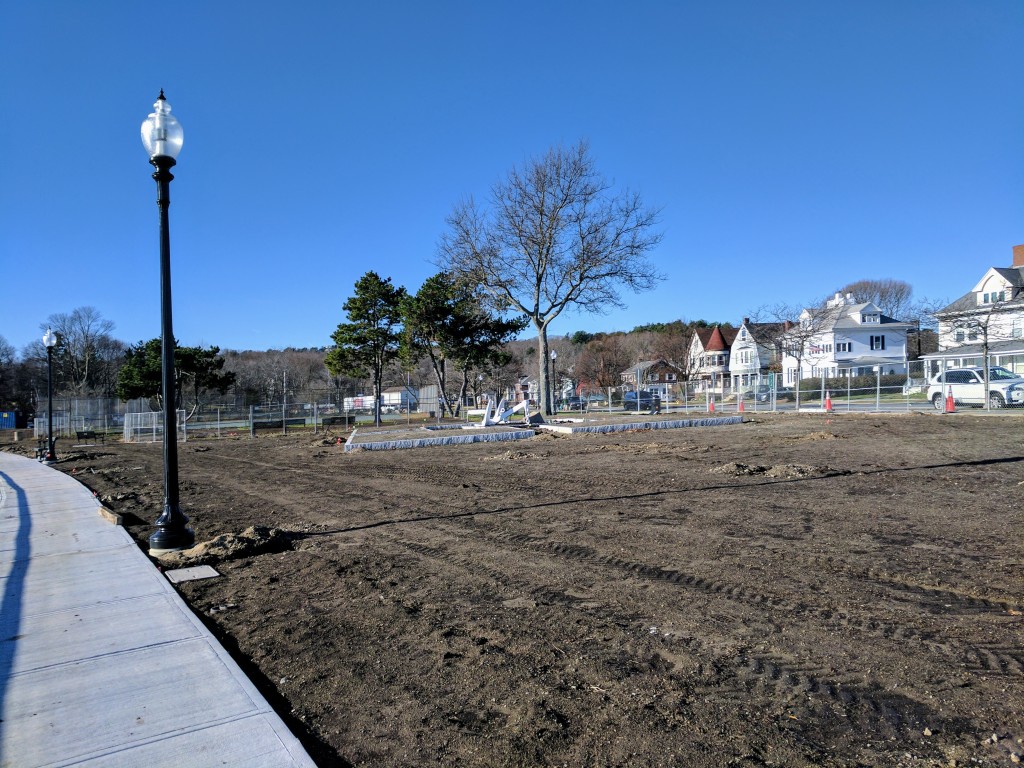
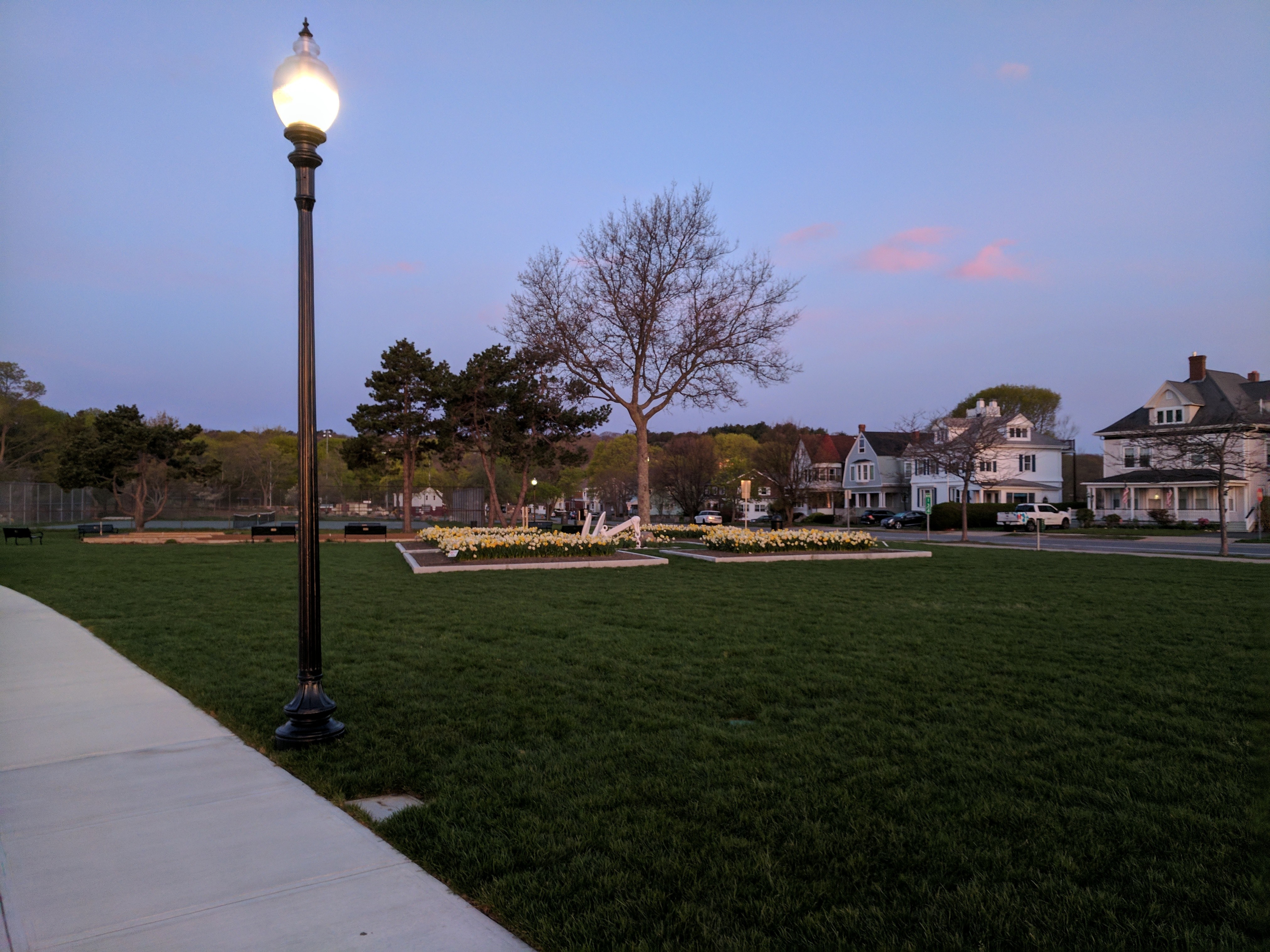
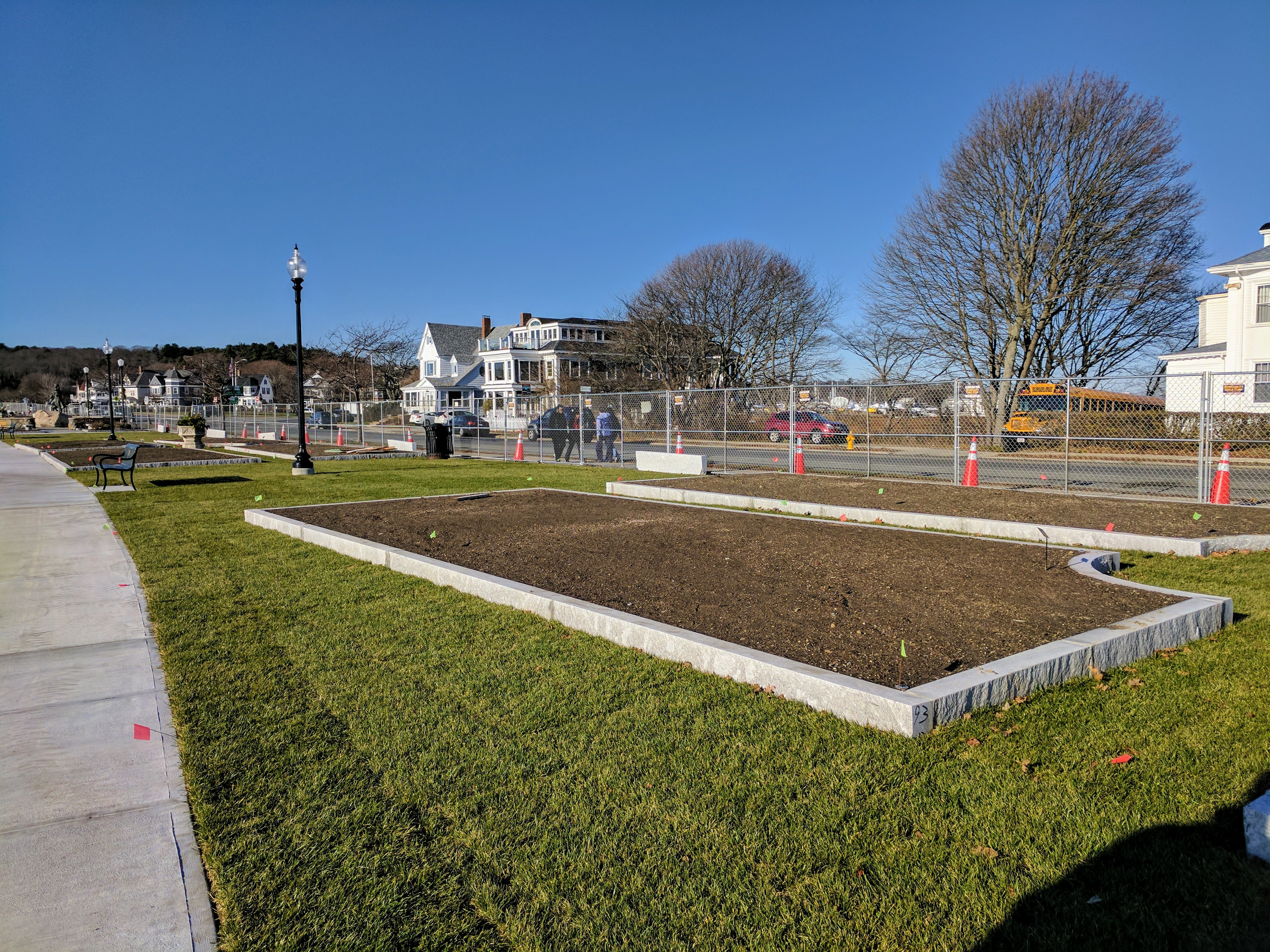
Enjoy a closer look at the engineering and landscape plans for the expanded gardens and before/after comparisons.
Before April 2017 | After May 2017
Funding for future perennials funded in part by the Gloucester Community Preservation Act
CPA grant towards new gardens summary of design and details
Contractor:Newport, Nashua, NH, Brian McCabe is the Project Manager Status: in progress Progress April 2017: nearing finish line Project start (historic): pre 1900 Modern project start: 1999 Funding Awarded: 2013
from State:$5,600,000 Seaport Advisory Council
from City:$1,120,000 + contingencies
Funding in place: 2015
Gloucester seawall grants over the last 18 years include: Cripple cove/ Robinsons landing; small sea wall by beacon marine and pirates lane; fort square; Stacy (Stage Fort through Blynman); plus emergency work on Blynman collapse
Bid Open and contract amount: 2/24/15 approx $7 million Contract completion: on schedule, estimated spring 2017 Locations: Stacy Boulevard and Blynman Priority:Top Level! Unique and exceptional project– Mayor’s Office considers seawall boulevard a priority necessity, for safety, a centuries infrastructure project with immeasurable quality of life benefits for residents and visitors and essential to economy Temporary work site chain link fence: Required. The chain link fence is installed by the contractor to protect the work zone and define it better. Tender house at Blynman and bridge: These are State not city/DPW purview. The new bridge house is temporary (thankfully). The entire bridge needs to be replaced and when it is a new tender’s house will be constructed. I will write more about the bridge house and Blynman in other posts. Local jobs– scroll below
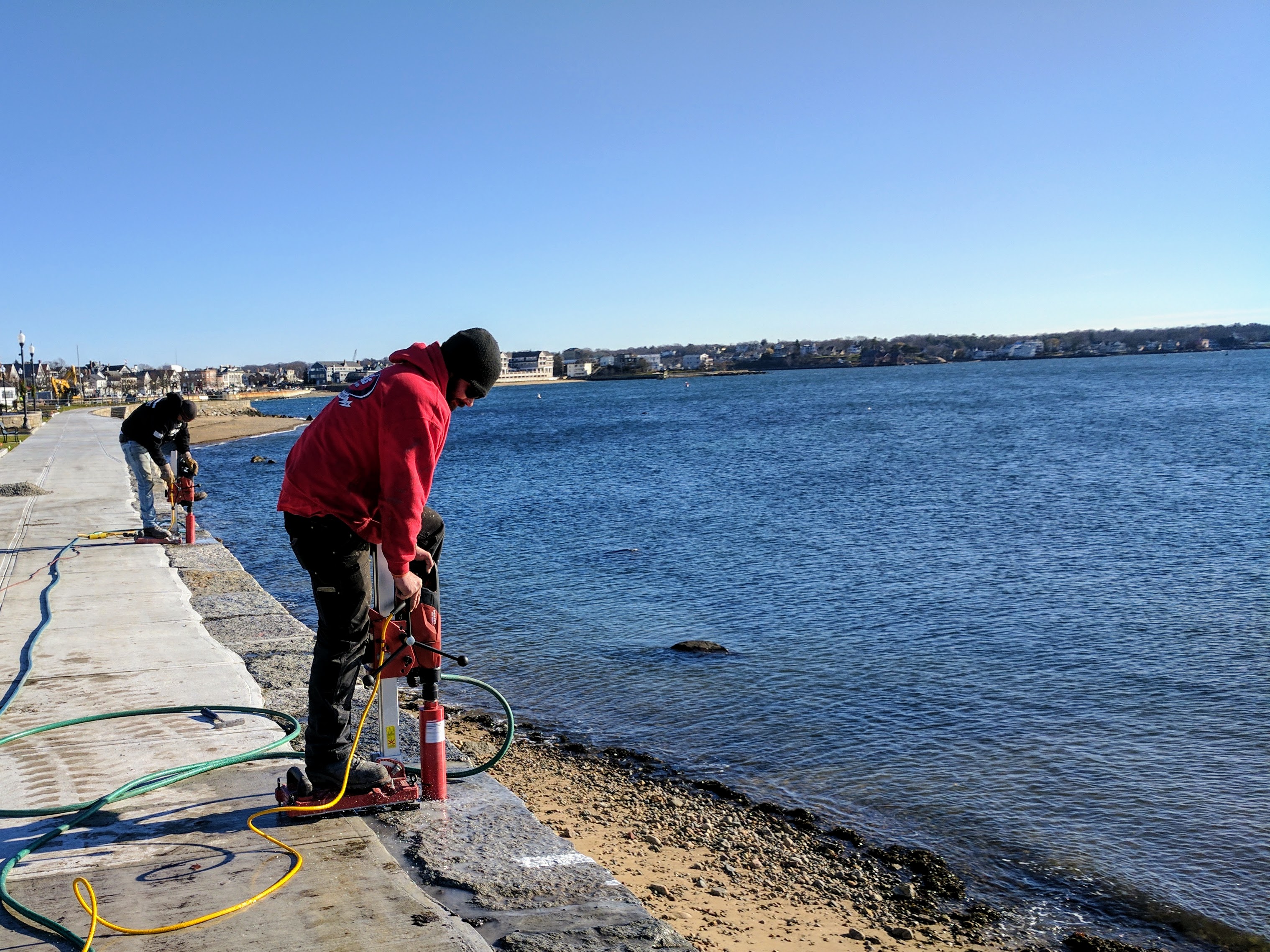
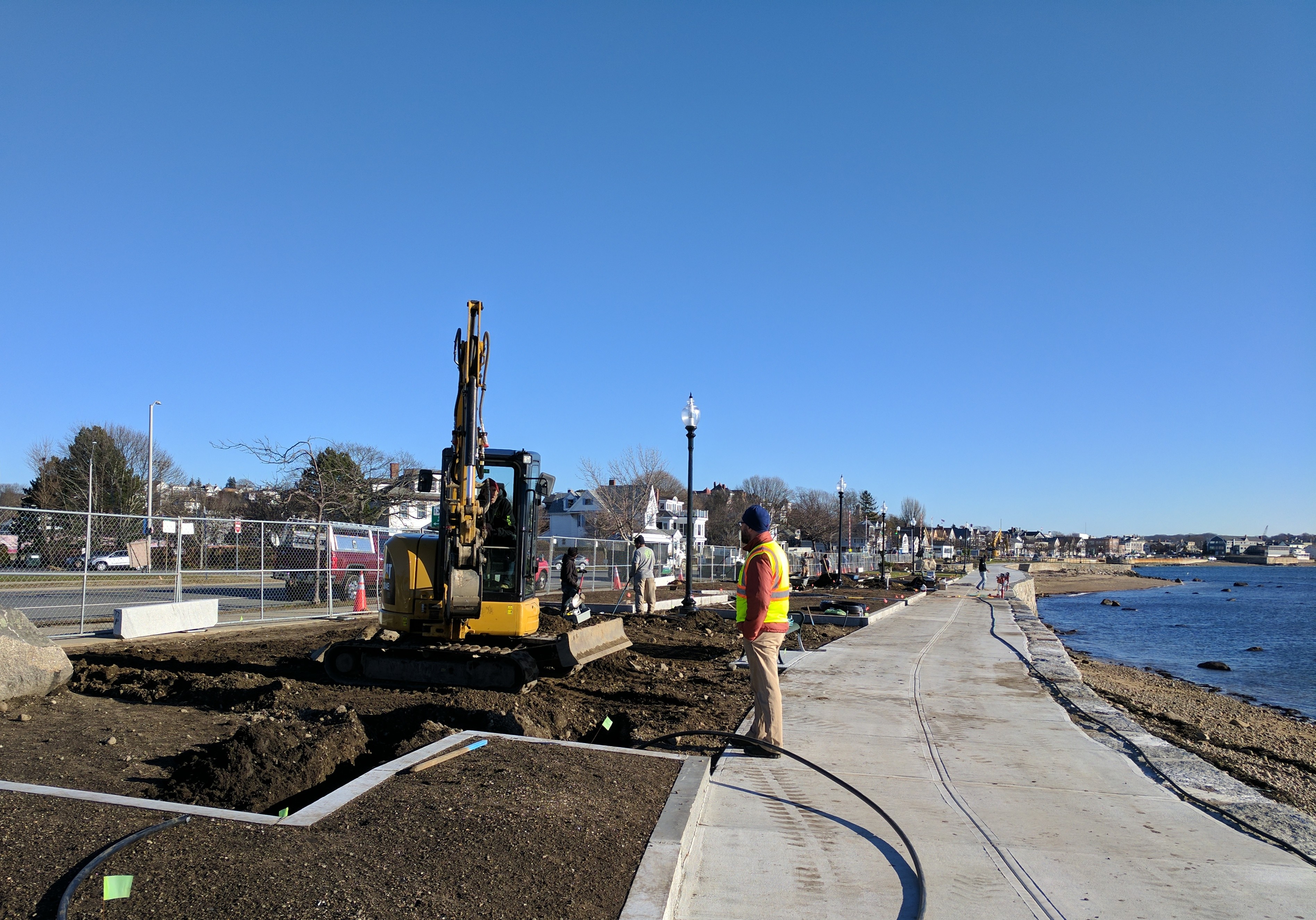
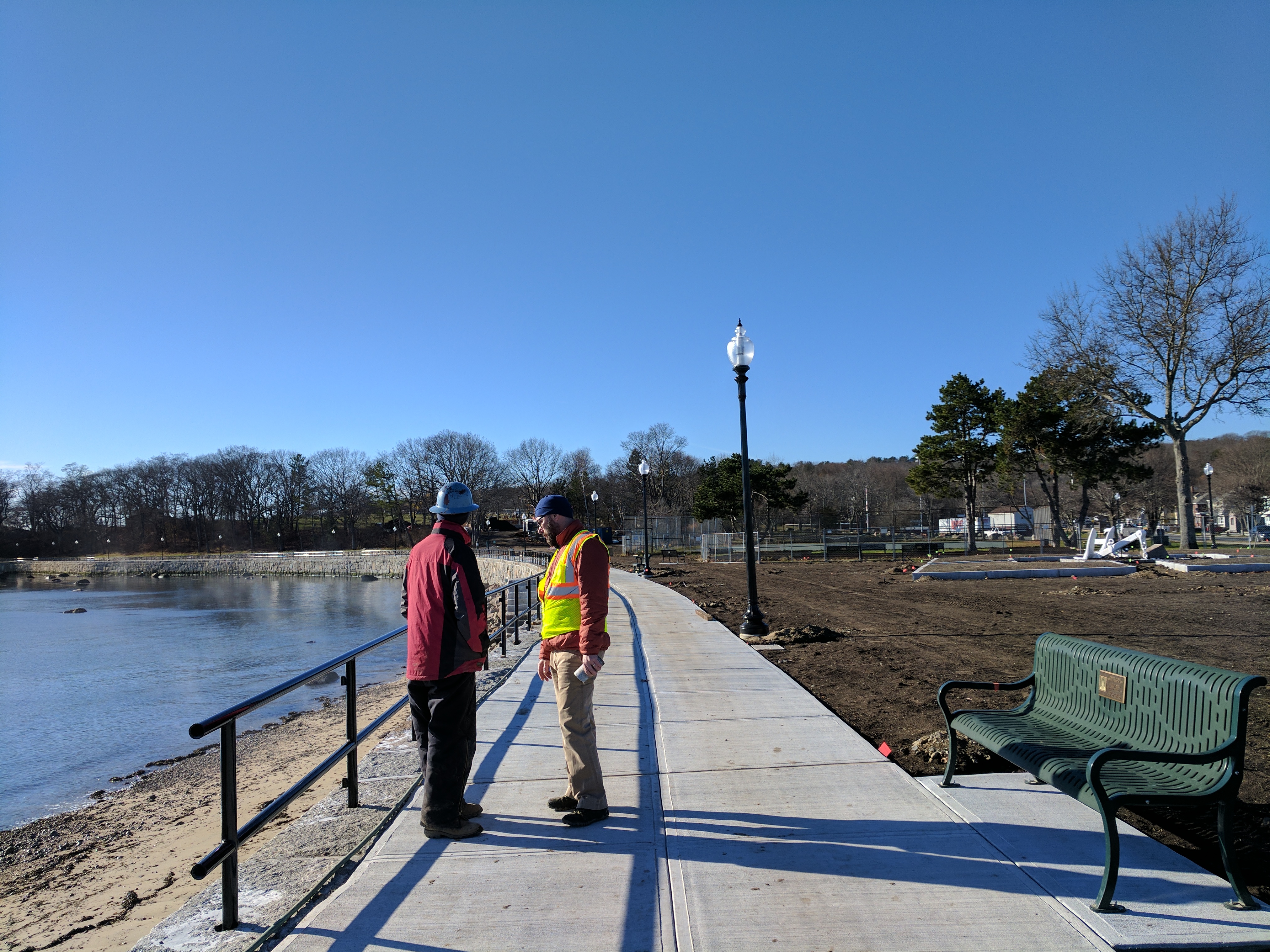
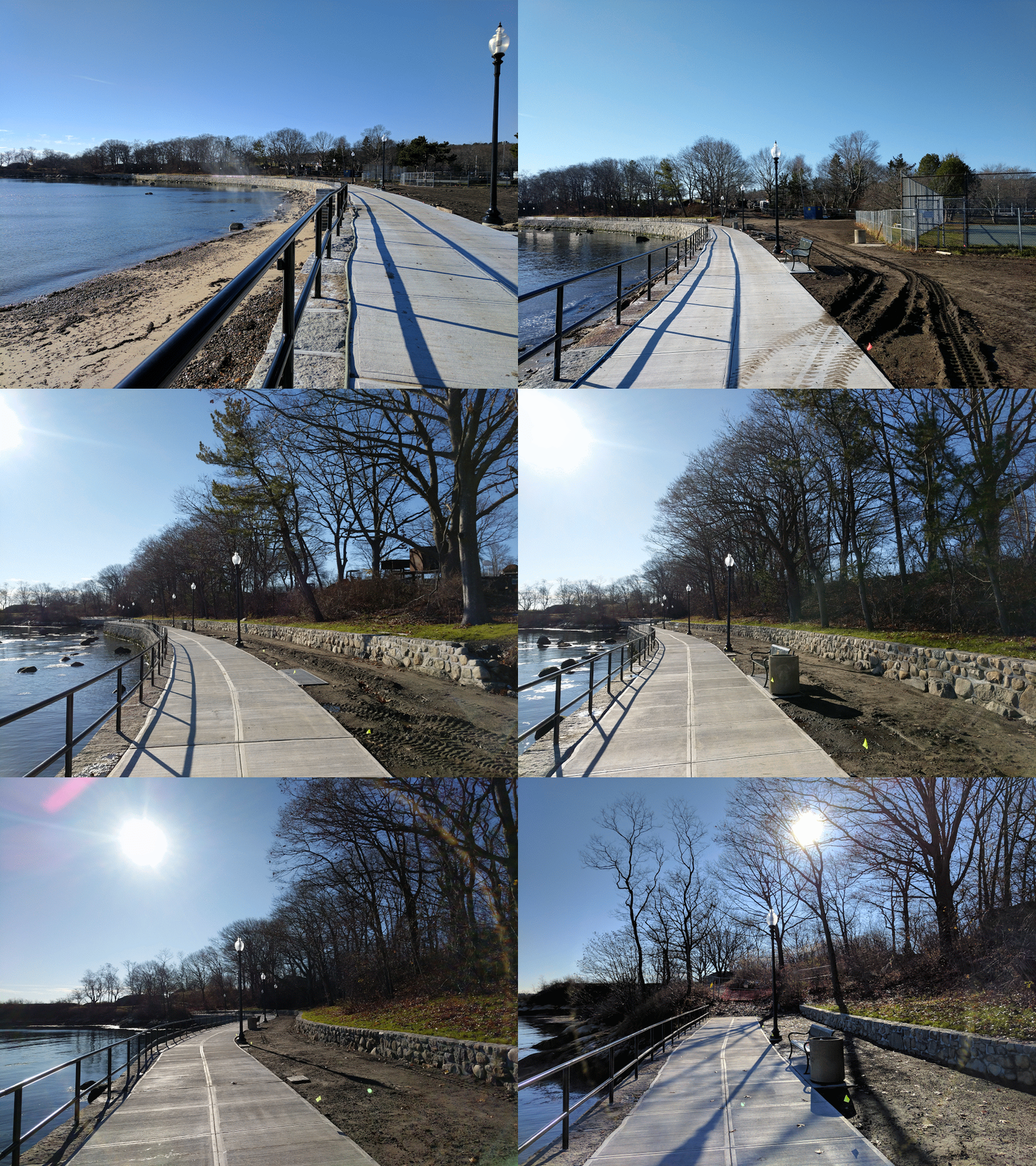
photo above: fencing subcontractor on a beautiful work site readying for railing. Railing required diamond coring like old granite quarrying. Stacy Boulevard December 2016.
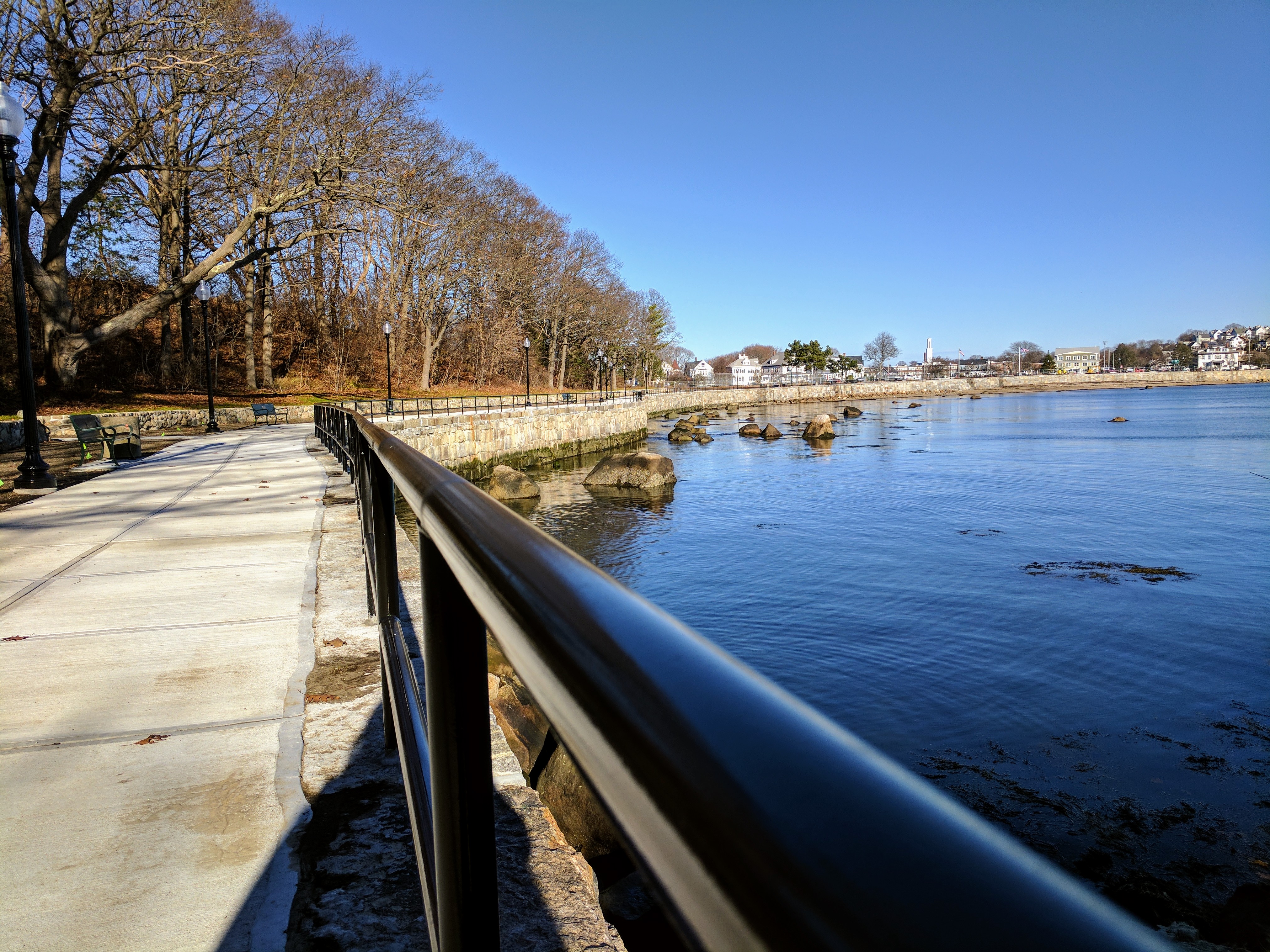
photo caption: Railing! 2000 feet of new galvanized railing. (The replaced railing was not galvanized. DPW replaces railing: it’s simply a matter of funding.)
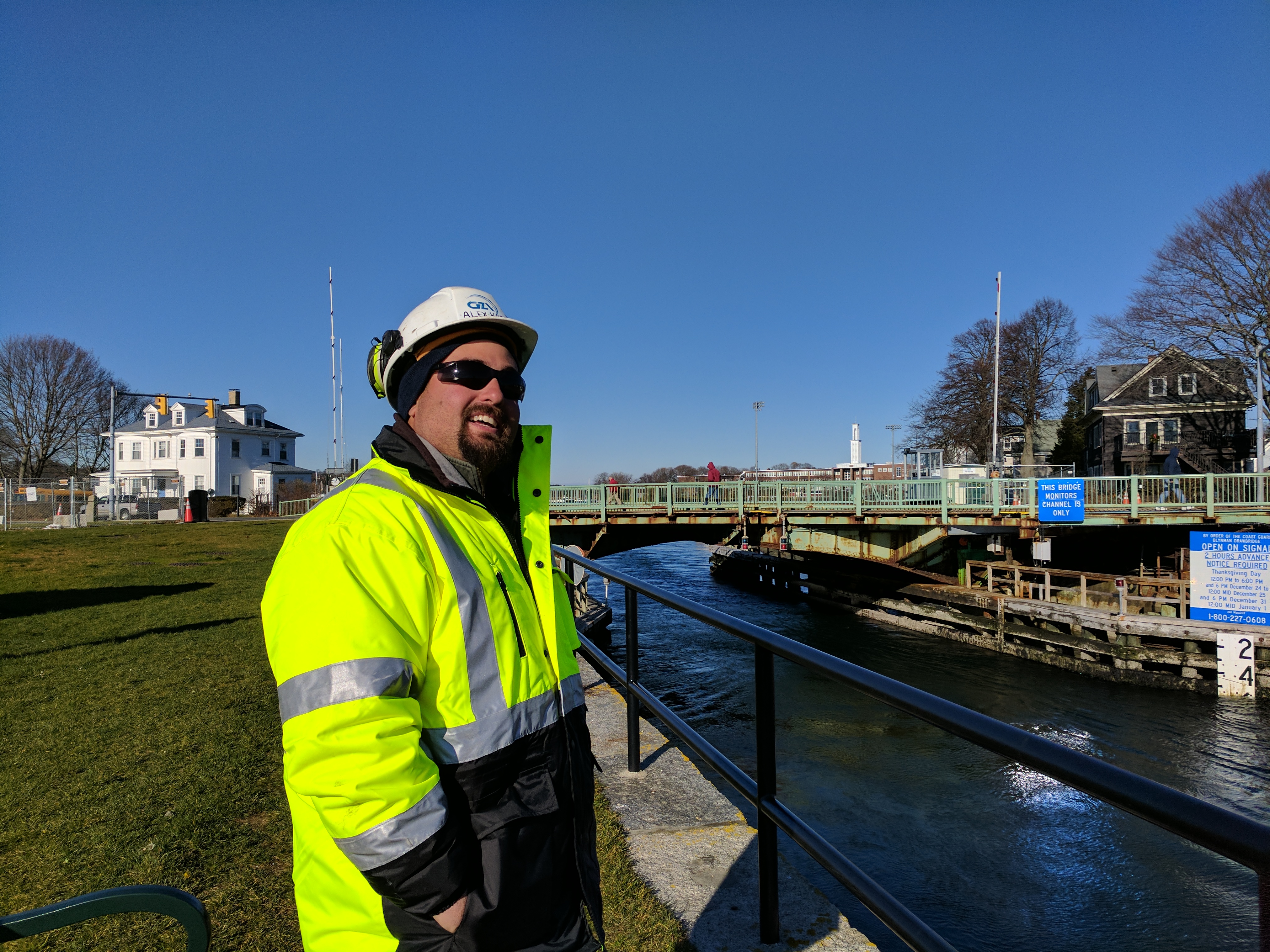
photo caption: Alex Karp – GZA Field Engineer Boulevard construction. The GZA company acquired (David) Vine Associates. GZA is the design engineer for the boulevard project. David Smith at GZA (formerly Vine) has worked with Gloucester since 1999.
photo caption: Gloucester’s DPW construction along the Boulevard
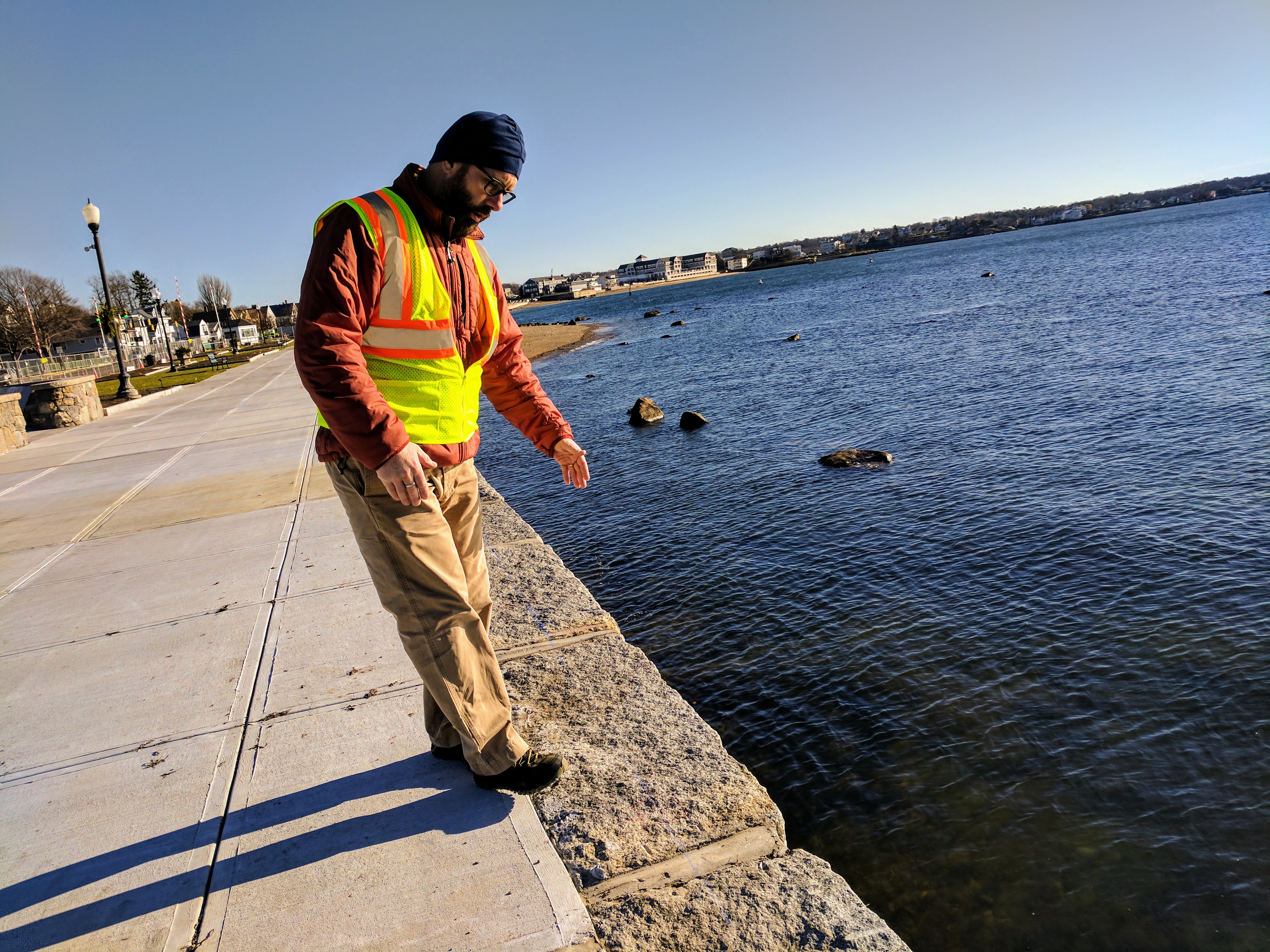
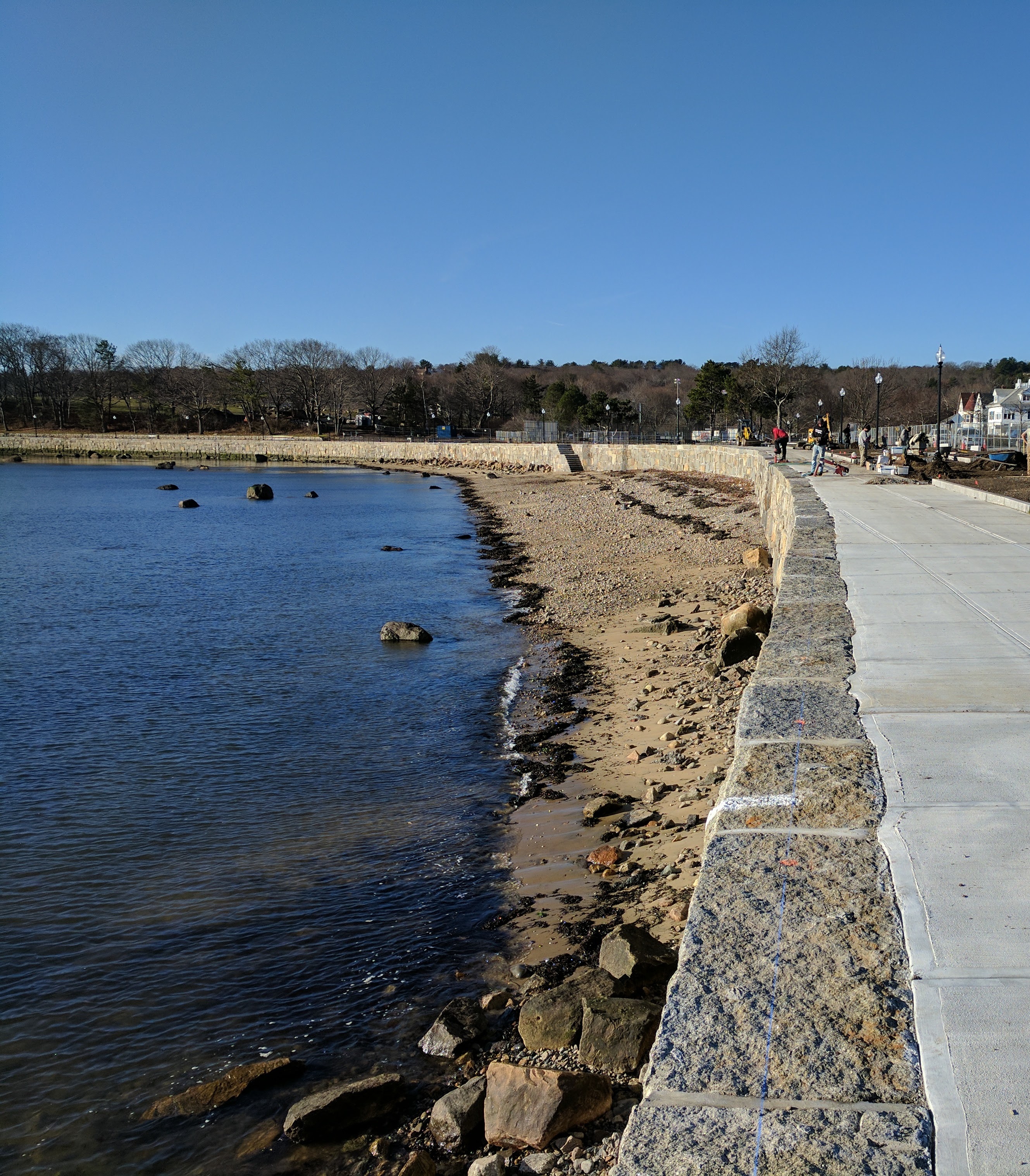
photo caption: CAP STONE! It’s more than decorative. It has two exposed sides that need to be trimmed to look perfect. Mike Hale, Boulevard construction, November (of course note beard) 2016
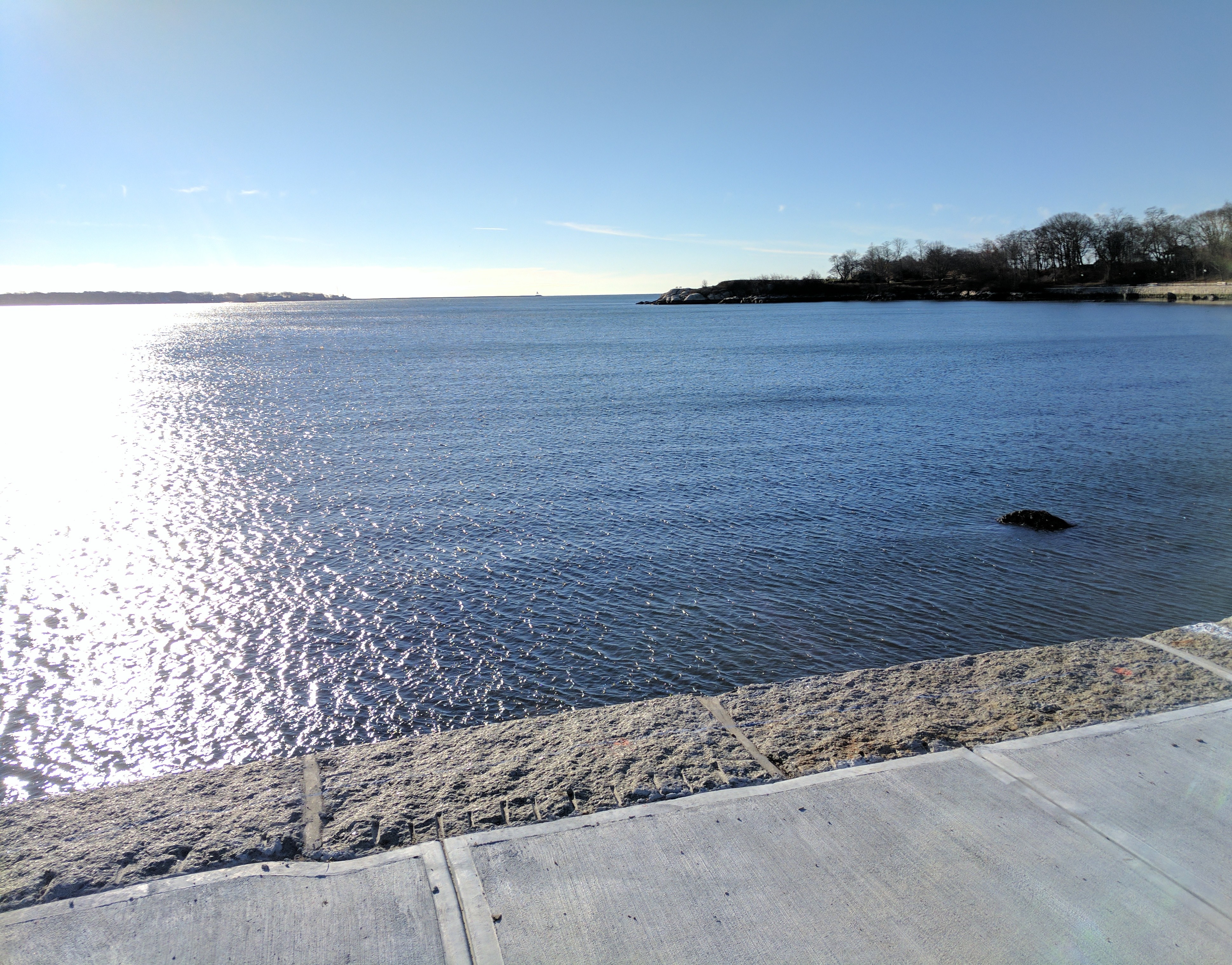
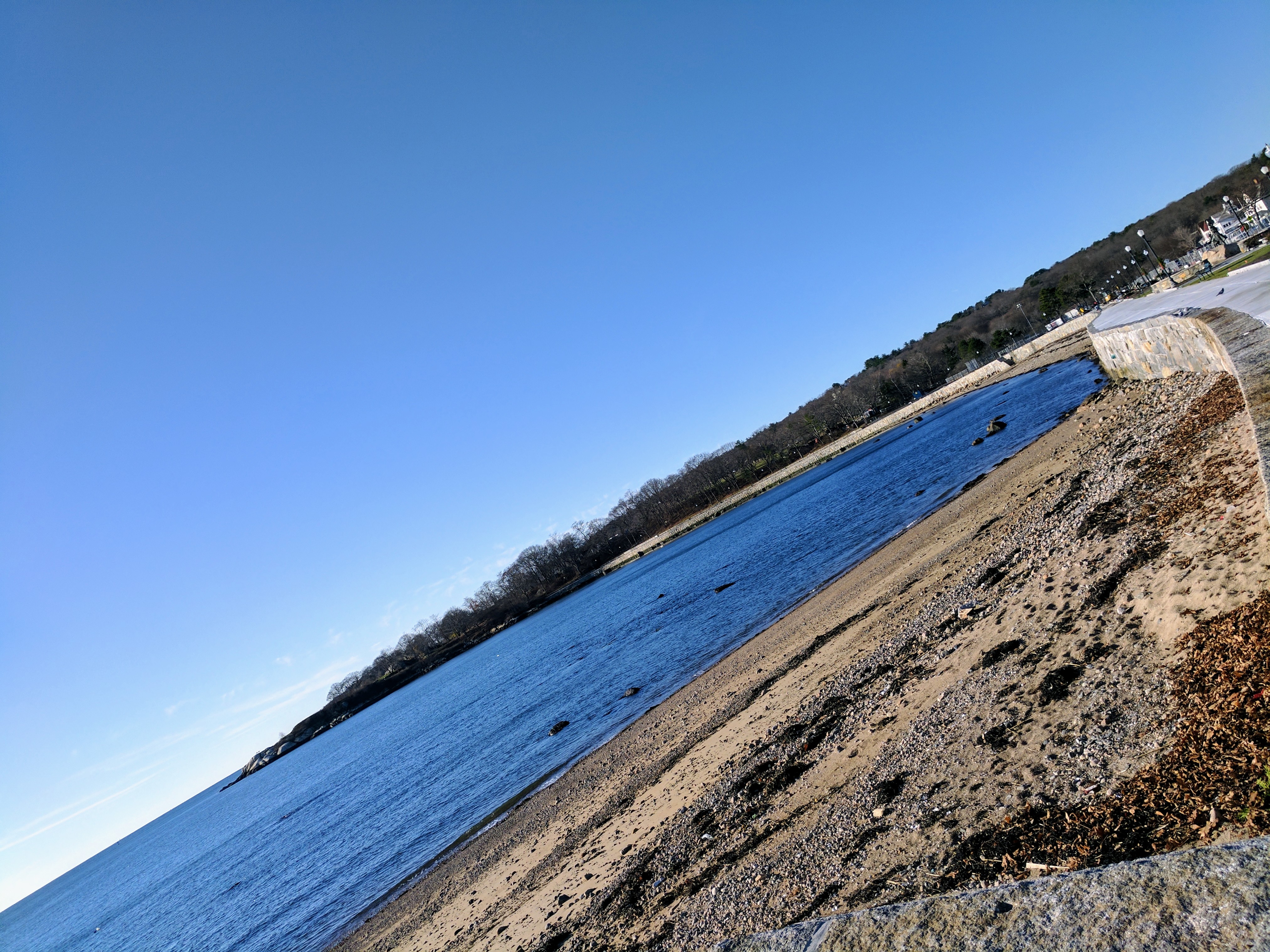
photo caption: Stacy Boulevard contruction capstone and harbor
photo CAPtion!: Stacy Boulevard dazzling dizzying scope of ocean and capstone as far as the eye can see
photo caption: Mike Hale with Brian McCabe, Project Manager, Newport construction, November 2016, Gloucester Boulevard
LOCAL JOBS
Along with the Mayor’s office and current administration, Gloucester’s DPW and Newport Construction work with subcontractors including local ones such as:
GZA – national with corporate headquarters in Norwood, MA – Engineering
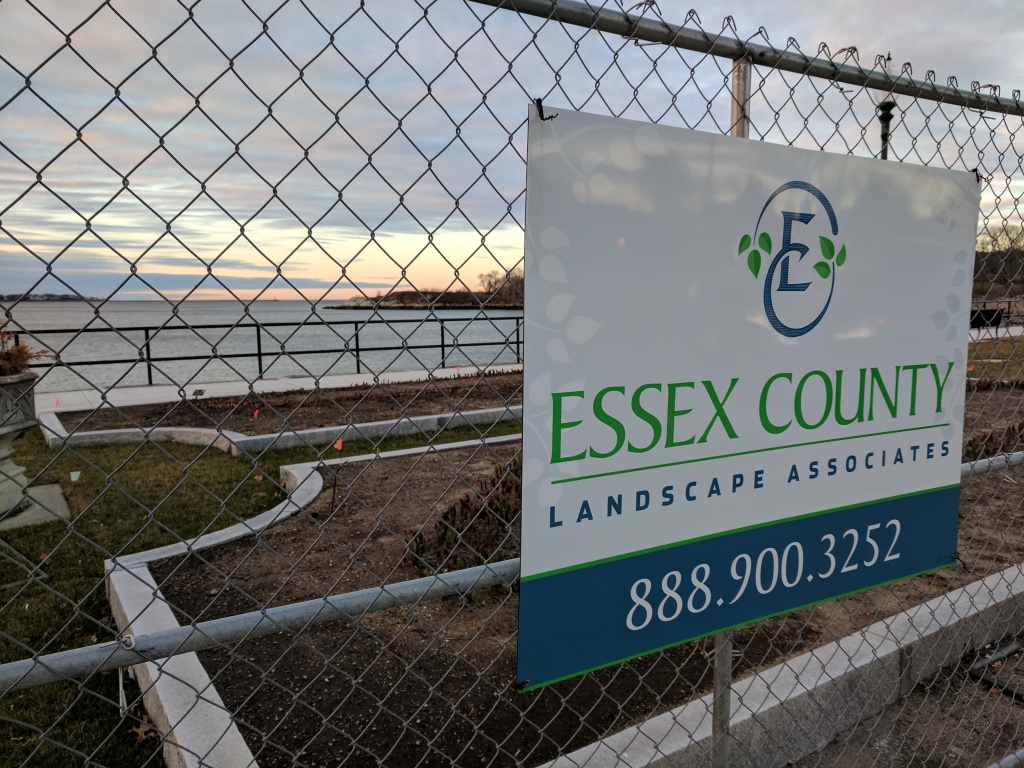
Anne Gilardi Johnson – additional new gardens, site and landscape design for the Boulevard (building upon the successful Gloucester Fishermen’s Wives Memorial)– Johnson , a Gloucester native and multi award winning landscape architect, was commissioned by the Fishermen’s Wive Memorial board back in 2000 to design the landscape for Morgan Faulds Pike bronze sculpture, dedicated August 2001. “A series of design plans, and finally a study model, was produced as part of an interactive process between the designer, sculptor, and the Gloucester Fishermen’s Wives Association.” Johnson is a member of the Boston Society of Landscape Architects (largest chapter of the national organization), “known for her design of urban spaces including parks, playgrounds, memorials and streetscapes in Boston,” Worcester, and Gloucester. Her award winning designs include Boston’s (James) Hayes and Childe Hassam Parks in the South End. Generous Gardeners is planting the new beds on the Boulevard: thousands of tulip and daffodil bulbs were planted by many volunteers last fall to bloom this spring!
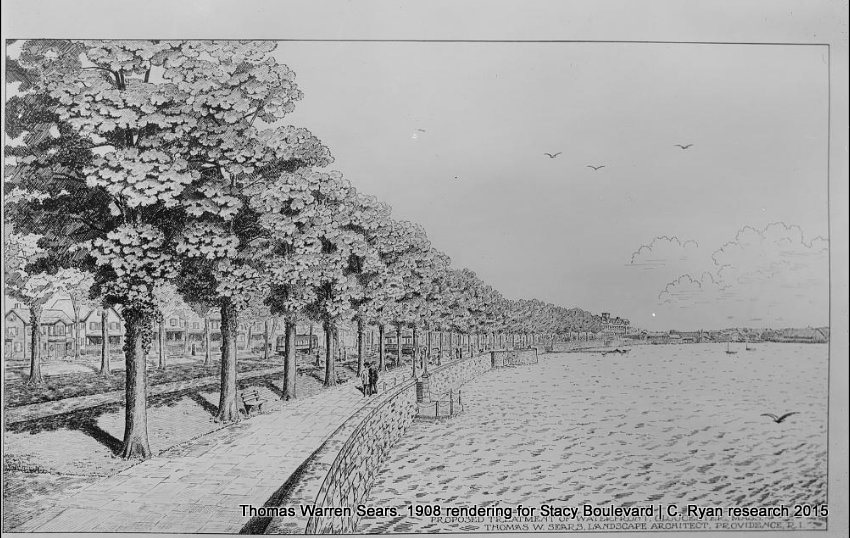
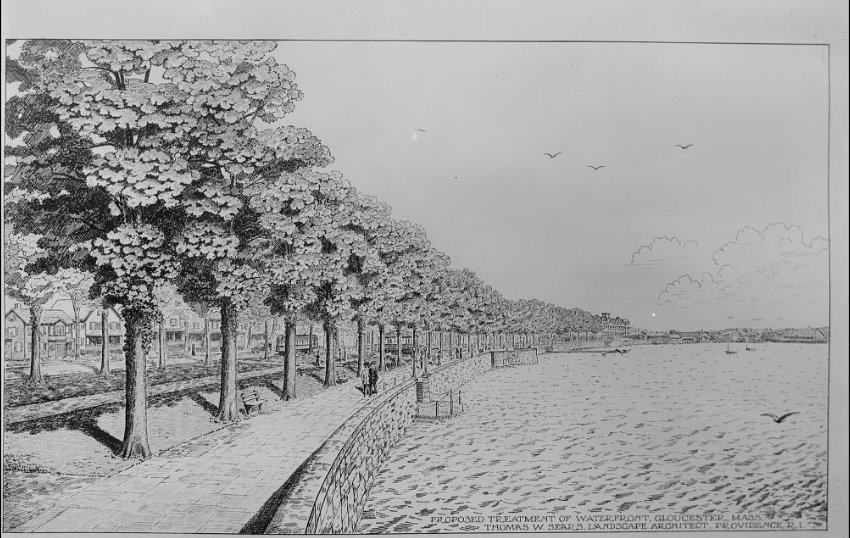
The Gloucester Daily Times published this image in 1923 with the photo caption: “Now Under Construction on the Southern Side of Western Avenue, this Project When Completed Will Give Gloucester one of the Finest Approaches of Any City on the Atlantic Seaboard.” The meticulously hand drawn credit within the drawing itself caught my eye as much as the drawing: “Proposed Treatment of Waterfront, Gloucester, Mass. Thomas W. Sears Landscape Architect, Providence RI”. Thomas W. Sears was a remarkable 20th Century landscape designer. The modern Boulevard work completed in 2014-17 gracefully carries out and returns to the original dreams for the Western Avenue highway and park that are more than a century in the making.
Thomas Warren Sears (1880-1966) preliminary designs for Gloucester’s future Boulevard
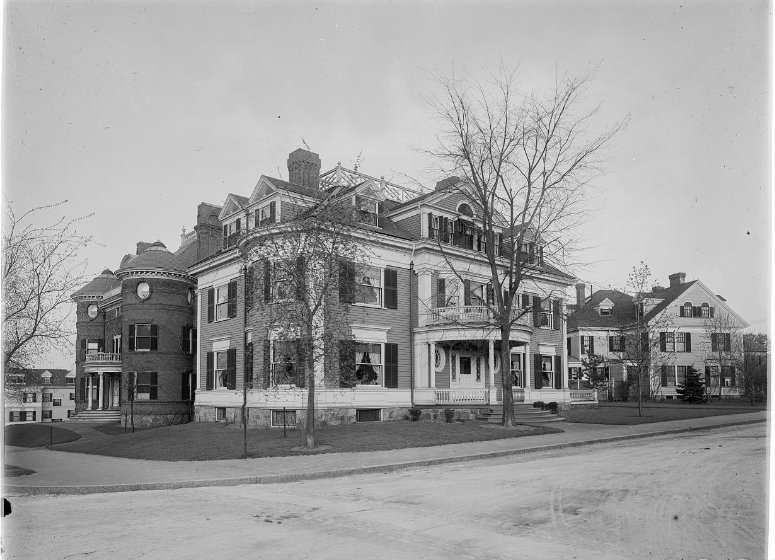
Thomas Warren Sears was born in 1880 in Brookline, Massachusetts, and grew up in this elegant abode at the corner of Beacon and Charles Street. This black and white house portrait was shot in 1897.
Here’s a Google street view photo for comparison today.
After being ousted from the New York City parks department, the ‘father of American landscape design’, Frederick Law Olmsted (1822-1903), launched his business a ten minute walk from the Sears family home. The headquarters at 99 Warren Street was named “Fairsted” and was in operation until 1979 when it was declared a National Historic Site and transferred to the National Parks.
If there was no neighbor connection early on, a professional one came soon: Sears worked for the Olmsted Brothers immediately after receiving two degrees from Harvard– his BA in 1903 and his BS in 1906. (There may have been an earlier Brookline connection.) Rather quickly Sears left to set up his own firm: first in Providence, RI, when he did work for Gloucester’s Boulevard, and not long after in Philadelphia. In 1911 he gave a talk for the Proceedings of the Engineers’ Club of Philadelphia 28 (April 1911):147-158., “The Functions of the Landscape Architect in Connection with the Improvement of a City”available online as part of an urban planning anthology compiled by John W. Reps, Professor Emeritus, Cornell University. I wonder if he shared his Gloucester photographs as part of his talk?
“There are two main approaches to cities: (1) On water by boat, and (2) on land by railroad. Along both of these lines of approach land should be taken for public use, and for very different reasons. Take first the use of water fronts: Unless some provision is made for the public, the whole water front, whether it be river or harbor, may be usurped by commercial enterprise and the public deprived of ever seeing the water except when aboard a boat. In certain cases, as in New York, where the water front must of necessity be utilised for dockage, a combination of commercial and public use may be successfully employed. There the docks are owned by the city and leased by the steamship companies; in this way their appearance can be controlled. At present it is planned to build on the tops of these docks huge recreation parks which may be used by the public.”- 1911 Thomas W. Sears
Mike Hale’s contemporary perspective shares a similar philosophy with Sears:
“An effort has been made in this paper to show clearly that landscape architecture is utilitarian quite as much as esthetic; that whatever one is designing, whether it be a city plan or any of the elements in a city, the design should be governed by use as much as beauty.” – 1911 Thomas W. Sears
By 1917 Sears was commissioned regularly and had a long, full career including notable designs for the Reynolda estate now part of Wake Forest University, Winston-Salem, North Carolina, and the wildly influential outdoor amphitheater for Swarthmore College, the Scott Outdoor Auditorium. His work in Gloucester is rarely mentioned.
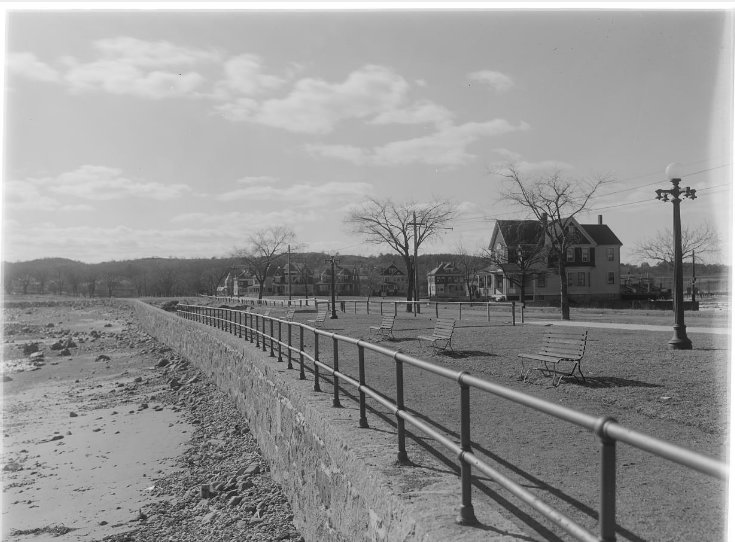
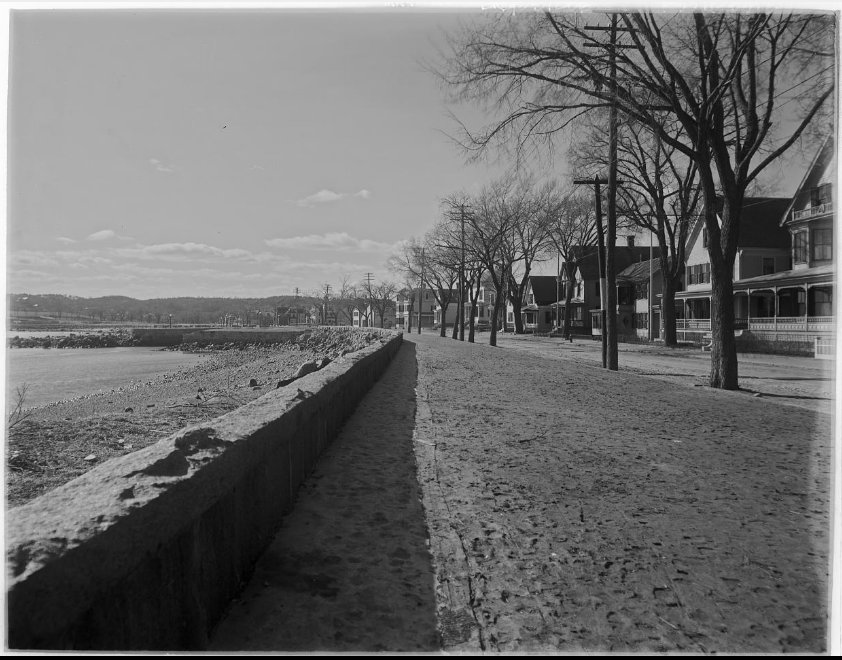
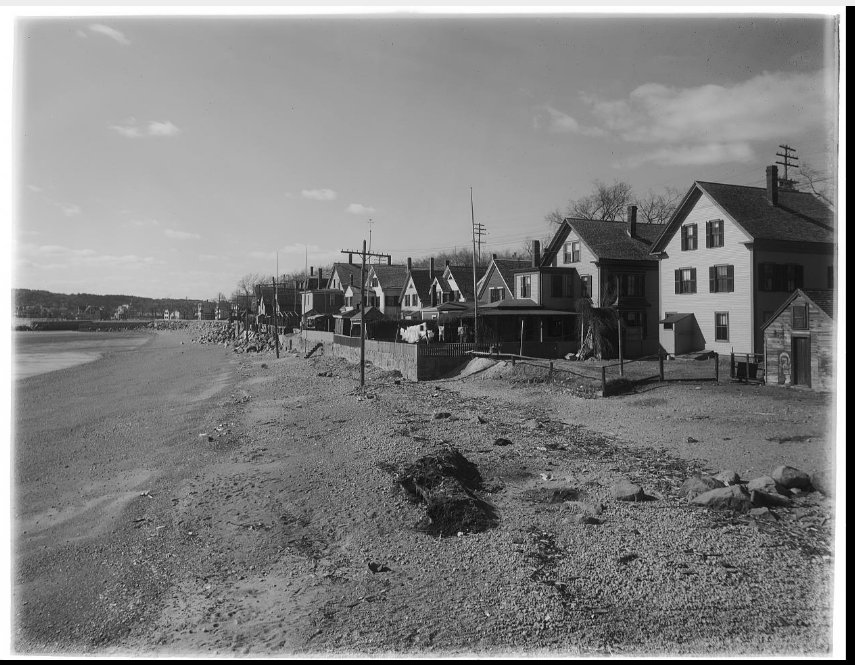
Since the Gloucester drawing was marked ‘Providence’, I knew the drawing was done long before the 1923 construction. I tentatively dated the schematic ca.1910. Thankfully Thomas Warren Sears was a photographer, too. Turns out that this image is a Sears’ photograph of a lovely Sears’ design. The glass negative is dated 1908 which squares with his professional career timeline.
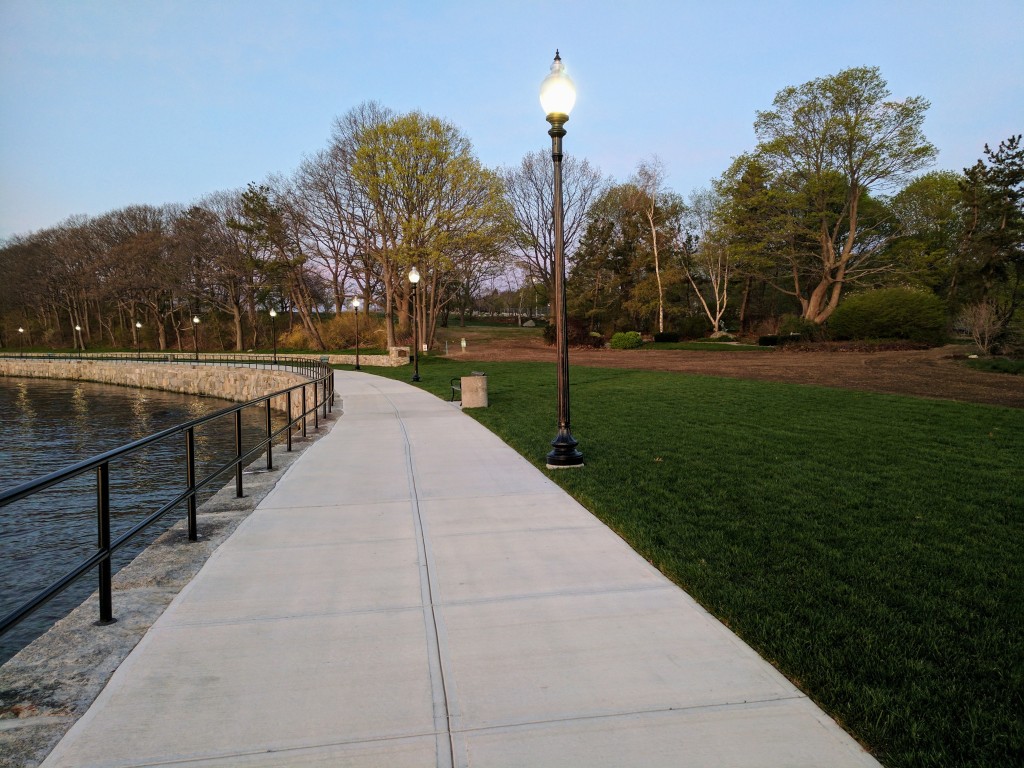
ALL NEW LED LIGHTS
One of the modern design elements is the welcome ornamentation of lights. They feel like they were always here because line is such an essential part of design and they add the vertical visual interest. When I saw the new light bases I thought of the line of trees in the Sears drawing. I love the mix of natural and formal design in his rendering, but am equally gobsmacked by the sweeping open vista. Both are sensitive approaches and part of the context of the Boulevard’s build.
Thomas Warren Sears photographed Western Avenue for his preparatory work. See the homes along the beach that were later removed for the construction of the Boulevard; distant vistas to the Surfside Hotel (built after Pavilion burned) and Stage Fort park; and Western Avenue street scenes looking east and west before the road was widened.
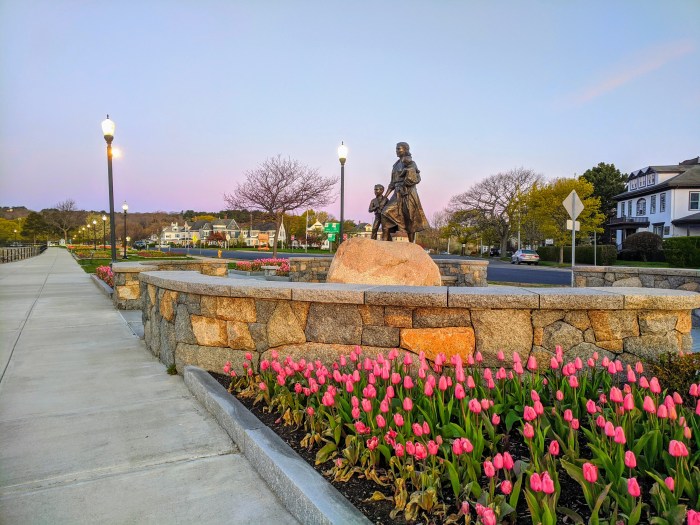


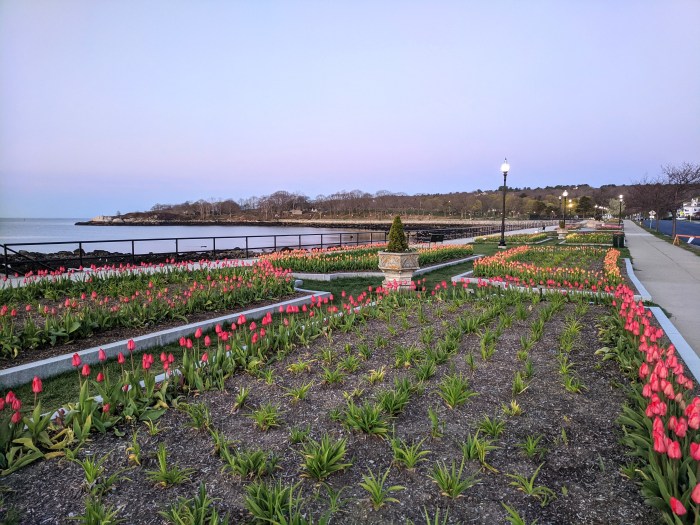


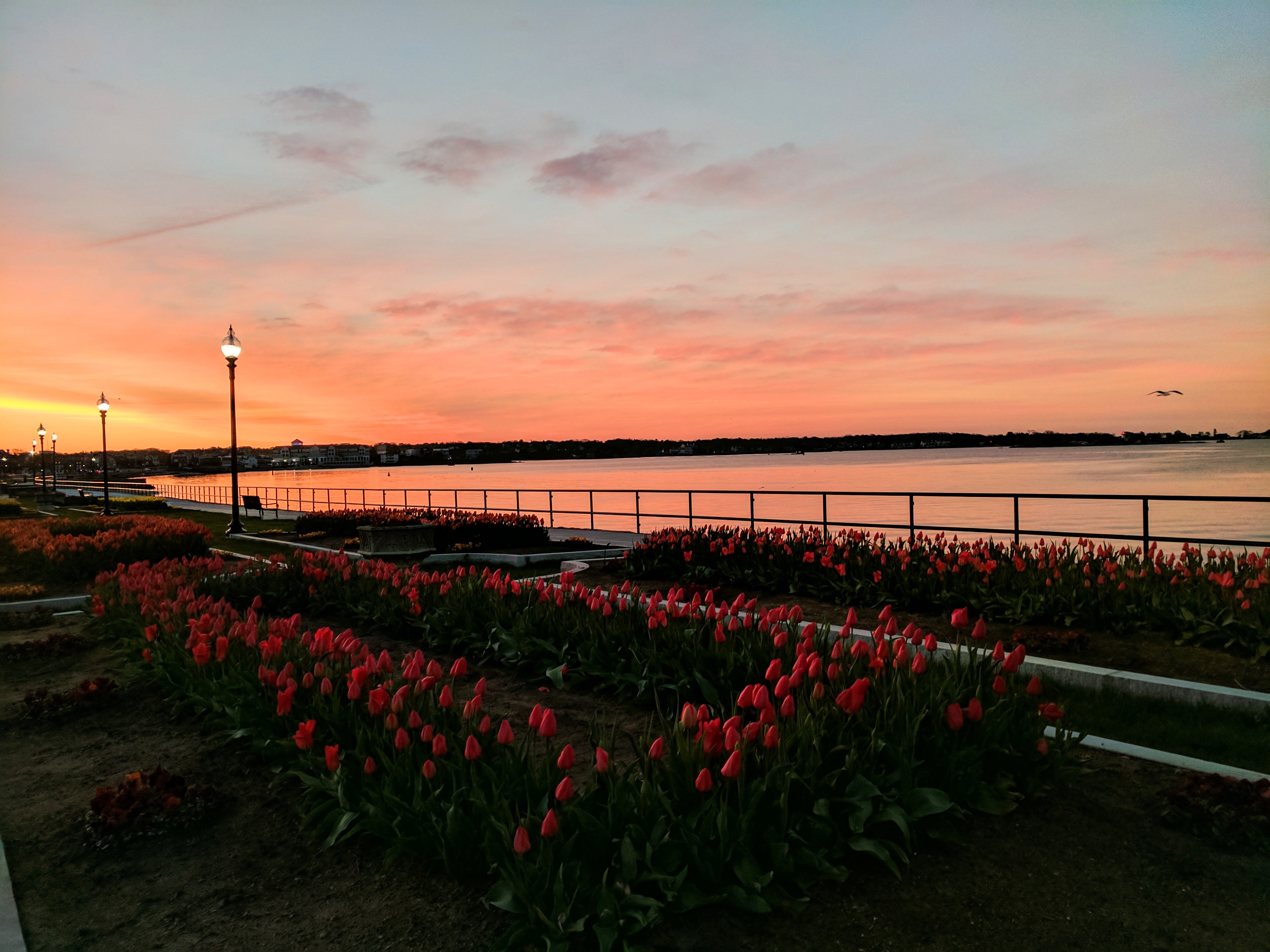


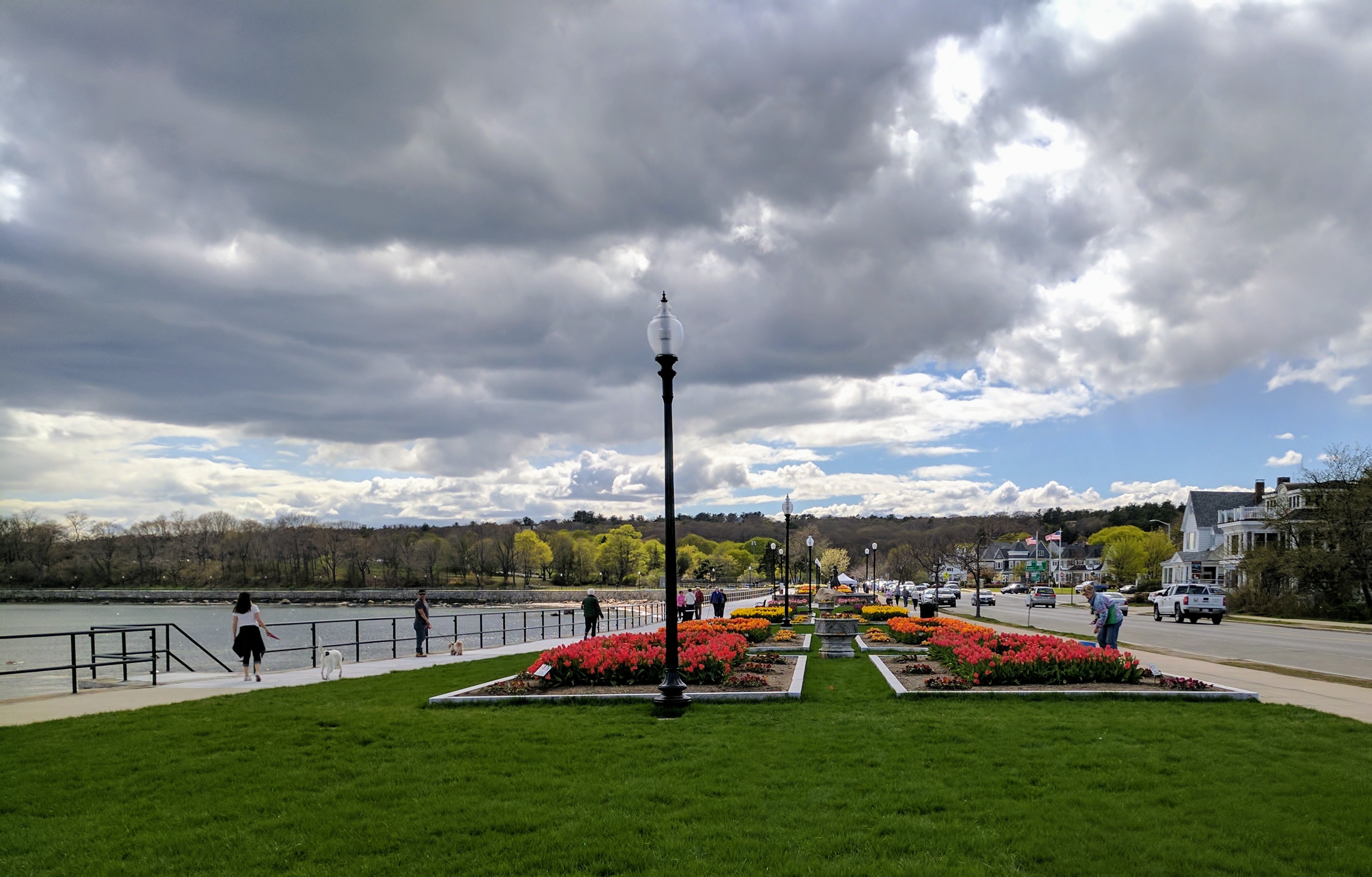







 Funding for future perennials funded in part by the Gloucester Community Preservation Act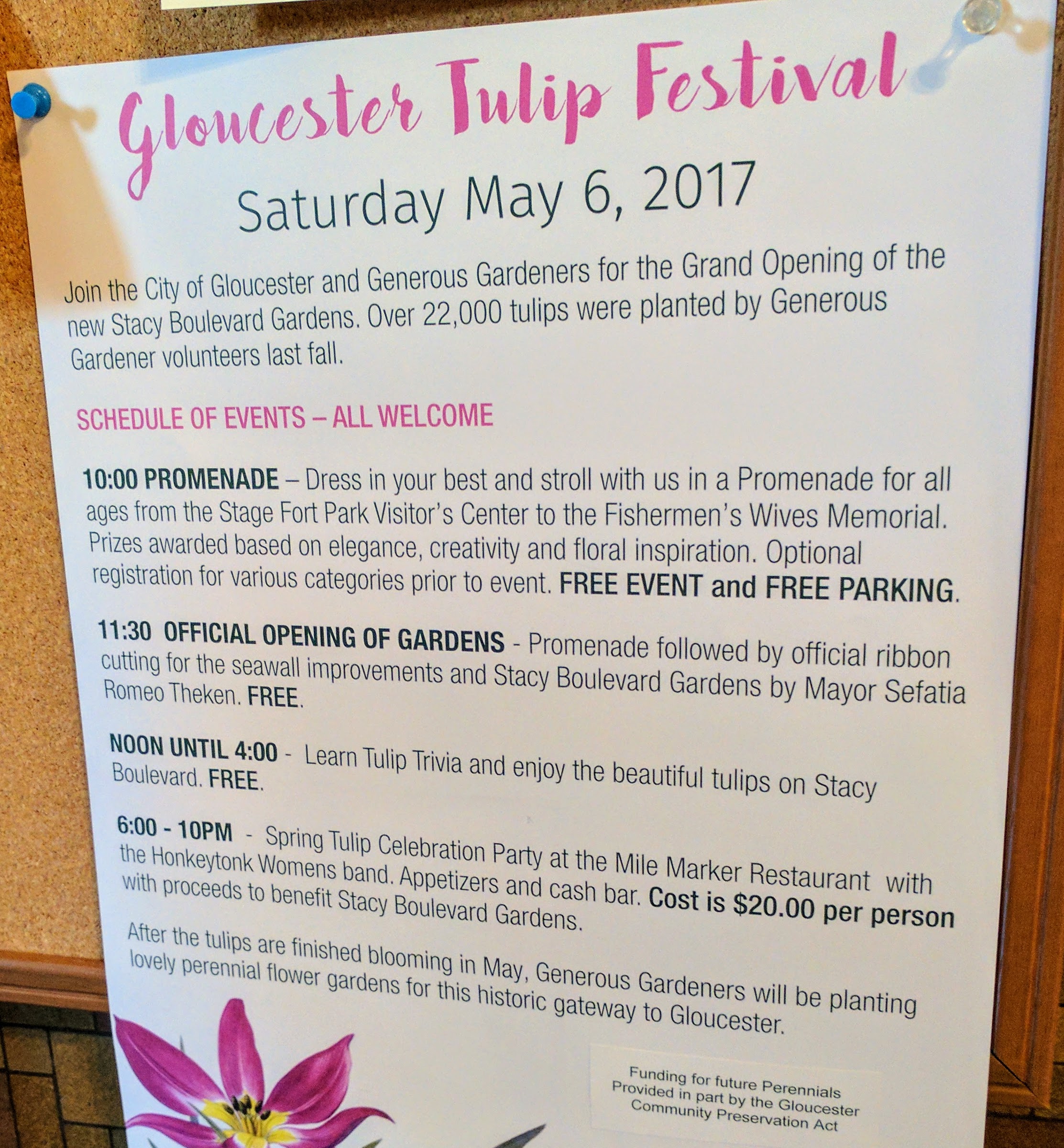







 Good Morning Gloucester