Best Deal on the Harbor!
“Water Shuttle Seasonal Passes”
only $60 before June 30th.
email us at harbortours@gmail.com
http://www.capeannharbortours.com/shuttle.html
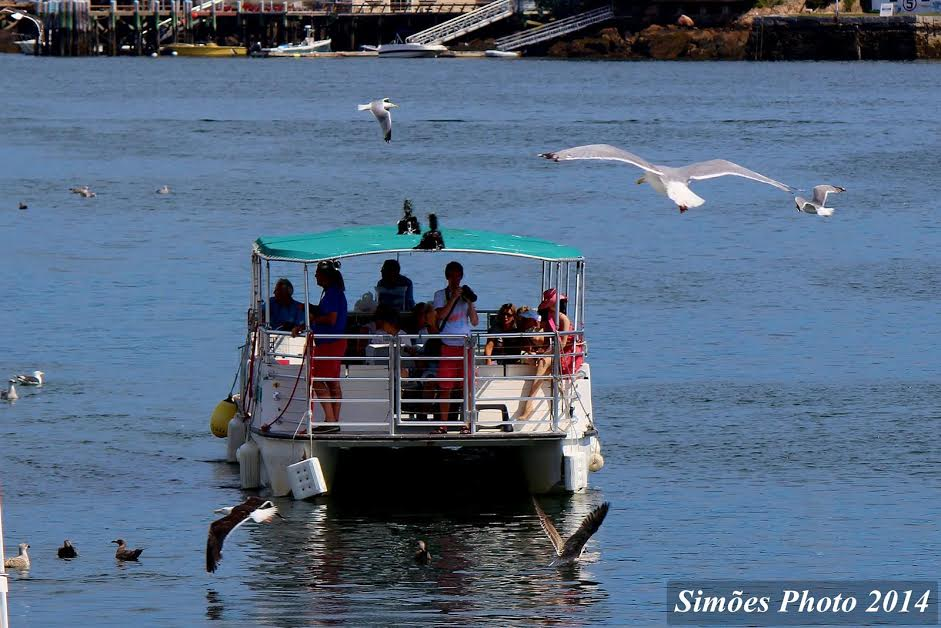
My View of Life on the Dock
Best Deal on the Harbor!
“Water Shuttle Seasonal Passes”
only $60 before June 30th.
email us at harbortours@gmail.com
http://www.capeannharbortours.com/shuttle.html

Really looking forward to seeing Lettice and Lovage tonight at the Gloucester Stage Company. For more information about showtimes visit their website here: Gloucester Stage Company

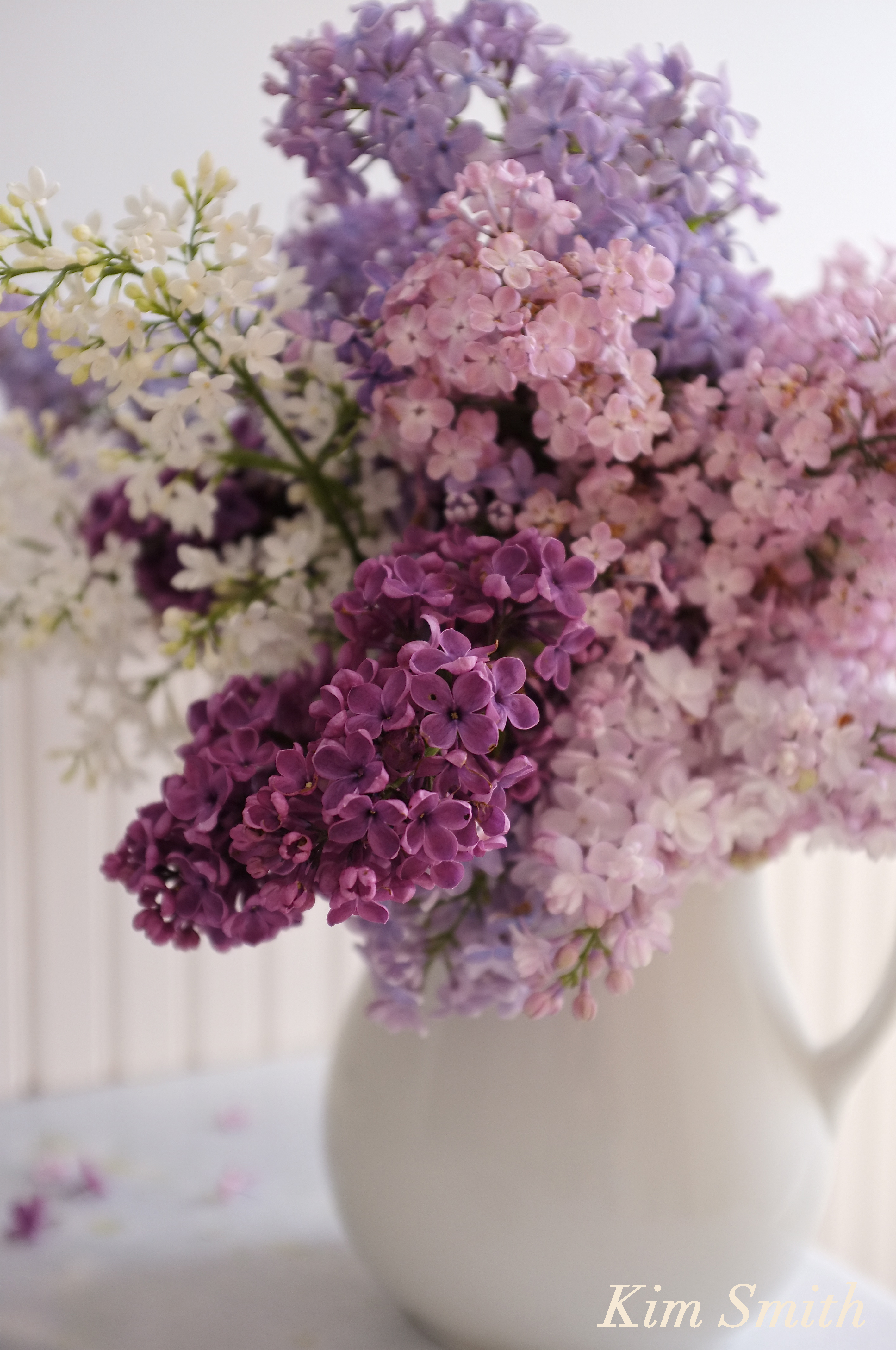
Lilacs from our garden blooming in shades of pink, purple, blue, white and lavender
With our lilacs in full glorious bloom, and nearly knocking me out with their wonderfully delicious fragrance when walking down our garden path, I thought I’d post this excerpt from my book Oh Garden of Fresh Possibilities ~ Notes from a Gloucester Garden. Not all lilacs are fragrant and some not at all. Based on my years of planting lilacs for client’s gardens, and my own garden, with any one of the lilac cultivars listed here, you will not be disappointed. For information on how to grow lilacs, the chapter devoted to lilacs in Oh Garden! goes into greater detail.
Lilacs
False blue
White
Purple
Colour of lilac
Heart-leaves of lilac all over
New England,
Roots of lilac under all the soil
of New England,
Lilacs in me because I am
New England,
Because my roots are in it,
Because my leaves are in it,
Because my flowers are for it,
Because it is my country
And I speak to it of itself
And sing of it with my own voice.
Since certainly it is mine.
—from Lilacs by Amy Lowell (1874–1925)
Surely at the top of the list of shrubs to grow for creating the framework of an intimate garden or garden room are lilacs, in particular Syringa vulgaris and their French hybrids. Syringa vulgaris are grown for their exquisite beauty in both form and color of blossoms, although it is their fragrance flung far and throughout gardens and neighborhoods that make them so unforgettable.
Not all species of Syringa and cultivars of Syringa vulgaris are scented. The early French hybrids and hybrids of Leonid Kolesnikov have retained their fragrance. Syringa oblata has a similar fragrance, though is not nearly as potent. Several of the Chinese species have a spicy cinnamon scent, while many of the Asian species and their hybrids have very little, if any, fragrance. To find your personal preference, I suggest a visit to a local arboretum, or take your nose to the nursery during the extended period of time (six to eight weeks, or so) in which the different cultivars of S. vulgaris are in bloom.
Nearly everywhere lilacs are grown (and here I am only referring to S. vulgaris), they are called by some variety of the word lilac. Perhaps the word lilac stems from the Persian word Lilak or Lilaf meaning bluish. The French say Lilas, the Spanish say Lila, and the Portuguese Lilaz. In old English lilacs were called Laylock, Lilack, and Lilock.
Lilacs are native to and found growing among the limestone rocks on the hillsides and mountainsides throughout southeastern Europe, in the Balkans, Moldavia, Serbia, Macedonia, and Yugoslavia. Cultivated by local mountain herdsmen, they were taken from the peasant villages of central Europe to the garden courts of Istanbul. In 1563, the Flemish scholar and traveler Ogier Ghiselin, Count de Busbecq, Ambassador of Ferdinand I of Austria to the court of Suleiman the Magnificent, brought back to Vienna gifts from the sultan’s garden. Attracting much attention was the lilac. Seven years later, in 1570, Ogier Ghiselin, Count de Busbecq, and then Curator of the Imperial Court Library, accompanied the Archduchess Elizabeth from Vienna to Paris where she was betrothed to King Charles IX of France. Count de Busbecq journeyed to France with a shoot of Syringa vulgaris, where it soon began to fill the gardens of Paris.
Two color variants sprang up in European gardens beside the wild blue- flowered lilac, a nearly white flowered variant with lighter foliage and a taller- growing variant with deeper purple flowers. Hybridizers quickly set about to create different forms and color versions from these two variants.
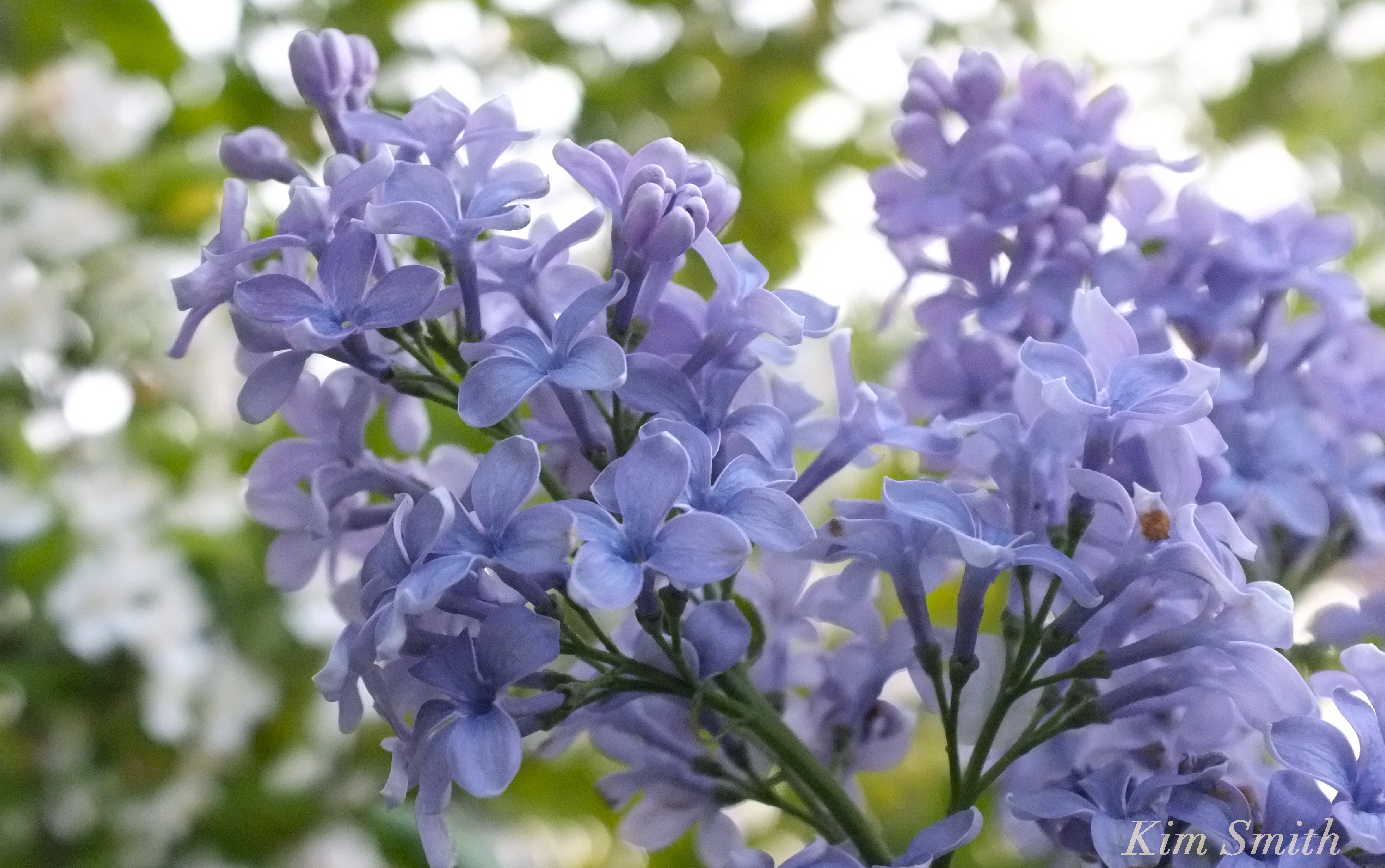
Blue lilac – ‘President Grevy’
Victor Lemoine of the famed nursery Victor Lemoine et Fils at Nancy in Lorraine Province continued the work of hybridizing lilacs. From 1878 to 1950, Victor and his wife, their son Emile, and their grandson, Henri, created 214 lilac cultivars. The cornerstone of the Lemoine’s lilac hybridizing program was a nat- ural sport that bore two corollas, one inside the other, making it the first dou- ble. This double was subsequently named ‘Azurea Plena.’ Because of the Lemoine family’s success in turning ordinary lilacs into fancy double-flowered lilacs in nearly every hue imaginable, they became known as the “French lilacs.” Spreading throughout Europe, the French lilacs were brought to the Russian court by French travelers. Well suited to the soil and climate of Russia, they soon spread far and wide. Several decades later, the Russian hybridist Leonid Kolesnikov continued the successful work of the Lemoines with his own exquisite variants.
The French and Dutch colonists transported lilacs to North America. These cherished cuttings, wrapped in burlap and wet straw tucked into suitcases for the long journey across the Atlantic, traveled well and were soon growing throughout the colonies. By 1753 the Quaker botanist John Bartram of Philadelphia was complaining that lilacs were already too numerous. One of two of the oldest col- lections of lilacs in North America are at the Governor Wentworth home in Portsmouth, New Hampshire, planted by the governor in 1750. The second collection, perhaps one hundred years older, is at Mackinac Island in Michigan, where French Jesuit missionaries living in the area are thought to have planted them as early as 1650.
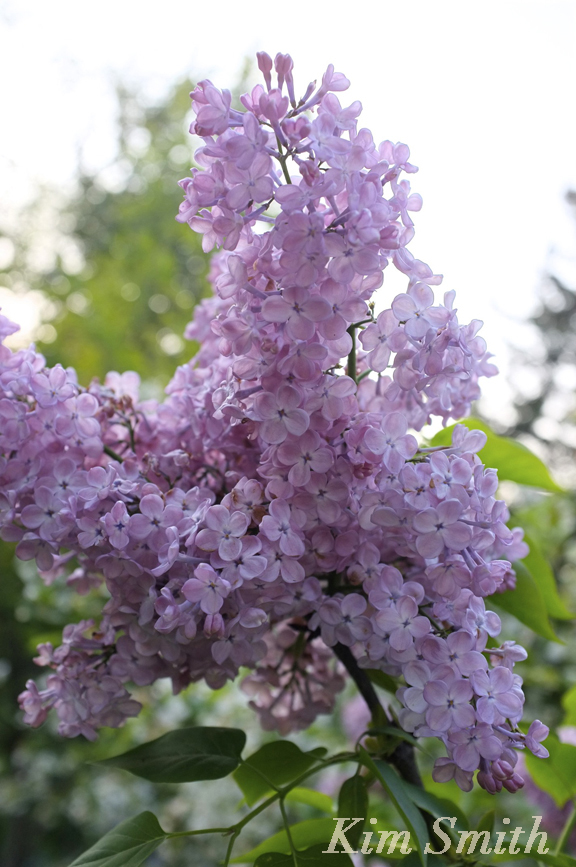
Pink lilac – ‘Maiden’s Blush’
With their traveling fragrance, versatility in the landscape, and their ability to live tens, perhaps even hundreds of years, lilacs are garden heirlooms. When selecting lilacs to grow for creating the framework of the garden, take the time to choose wisely. Some lilacs grow readily into a tree shape (‘Beauty of Moscow’), while others are somewhat relatively lower growing cultivars; ‘Wedgwood Blue’ comes to mind, and still others, the common white lilac (Syringa vulgaris var. alba), sucker more freely. And bear in mind that different lilacs bloom over an extended period of time. If you wish to have a blue lilac blooming simultaneously with a white lilac, then it is worthwhile to determine whether a specific cultivar is an early, mid, or late season bloomer. The following is a selection of lilacs growing in our garden, arranged in their sequential progression of flowering, with considerable overlapping. They are all highly scented or we wouldn’t grow them. The last photo below shows the different colors in lilac blossoms of white, pink, blue, lavender, magenta.
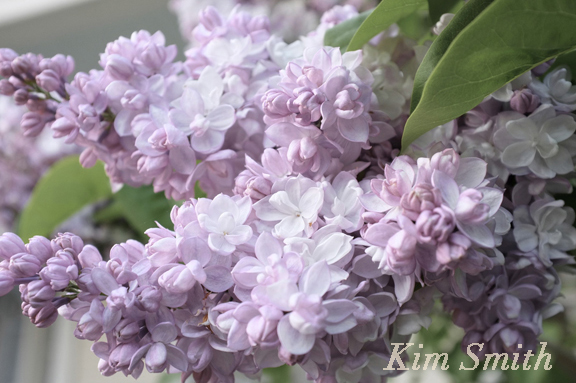 Syringa x hyacinthiflora ‘Maiden’s Blush’
S. x hyacinthiflora ‘Maiden’s Blush’ (1966) Skinner ~ Single, pale rose pink; shows different colors of pink under different soil conditions. In a warmer climate and lighter soils it is a paler shade of pink, in heavier soils ‘Maiden’s Blush’ has more lavender undertones.
‘Krasavitsa Moskvy’ translated to ‘Beauty of Moscow.’ Leonid Alexseevitch Kolesnikov (1974) ~ Double, lavender-rose tinted buds opening to white-tinted pink. Grown throughout Russia. Vigorous upright habit, useful for growing into a tree-shape. Very extended blooming period.
Syringa vulgaris var. purpurea. Common purple lilac ~ Lavender, the wild species seen growing throughout its native land. The common purple is the most widely distributed form of lilac. The lilac of old gardens.
‘Wedgwood Blue’ John Fiala (1981) ~ Hanging panicles of beautiful true blue florets. Lilac-pink hued buds. Somewhat lower growing.
‘Madame Florent Stepman’ (1908) ~ Satiny ivory white florets from rose- washed buds. Pure white when fully opened. Tall and upright growing. One of the most extensively cultivated for the florist trade.
‘President Grevy’ Lemoine (1886) ~ Pure blue, immense panicles of sweet starry florets.
‘Marie Legraye’ (1840) ~ Single, diminutive florets, radiant white, lighter green foliage.
‘Monge’ Lemoine (1913) ~ Vivid, intense plum wine fading to deepest rose.
‘Andenken an Ludwig Spaeth’ Nursery of Ludwig Spaeth (1883) ~ Single, rich purple-violet with a smaller pointed-head panicle.
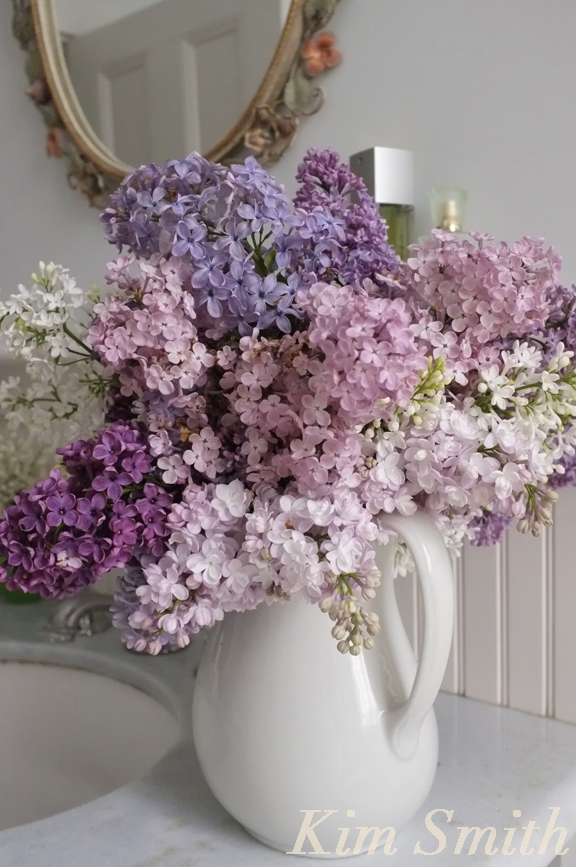 Clockwise from upper right: Pale pink ‘Maiden’s Blush,’ common white, double-flowered ‘Beauty of Moscow,’ ‘Monge,’ common white, ‘President Grevy’ (blue), and common purple.
Above excerpt from Oh Garden of Fresh Possibilities! Notes from a Gloucester Garden (David R. Godine, Publisher), written and illustrated by Kim Smith.
Link to David R. Godine website for more information Oh Garden of Fresh Possibilities ~ Notes from a Gloucester Garden
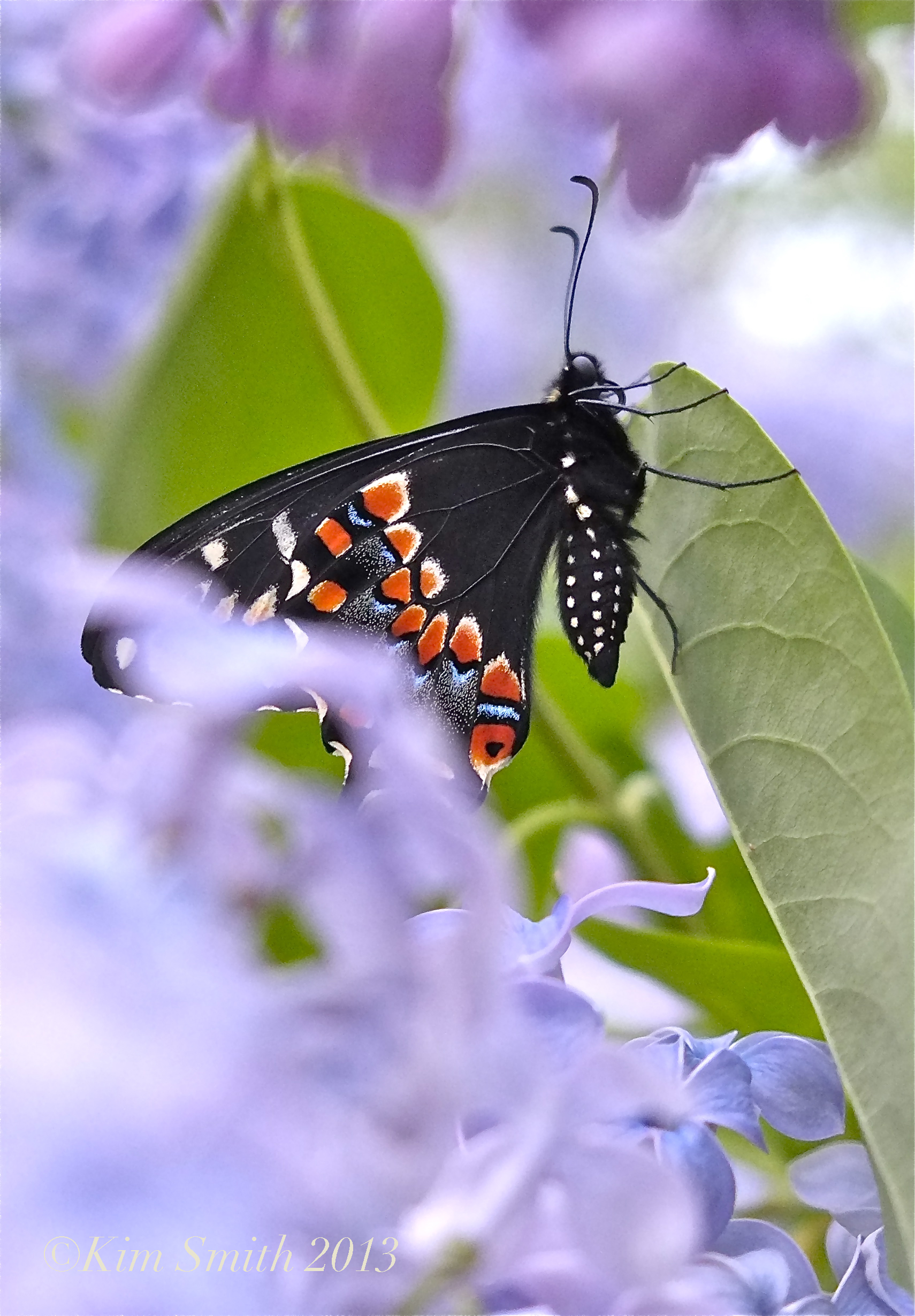 Newly emerged male Black Swallowtail Butterfly and ‘Wedgwood’ blue lilac.

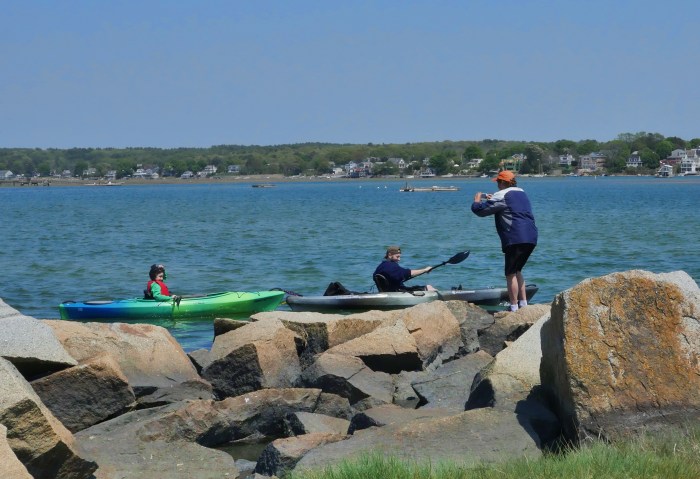

The North of Boston Convention and Visitors Bureau (NBCVB) and Cape Ann Chamber of Commerce co-hosted a special visit featuring Lisa Strout, the Director of the Massachusetts State Film Office.
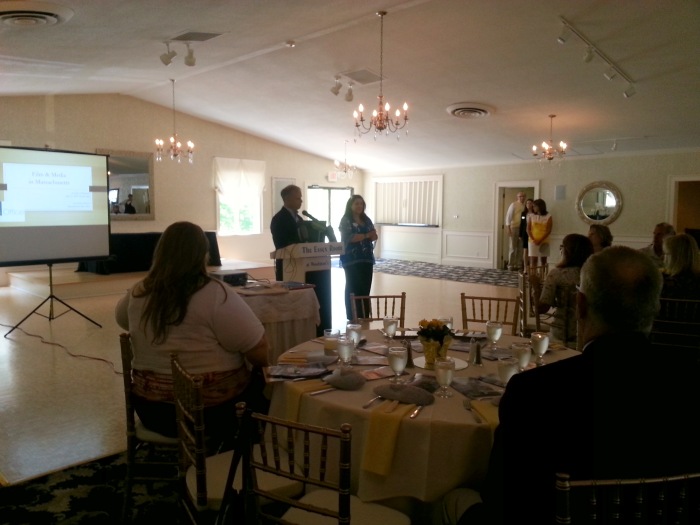
Woodman’s Essex Room served a lovely luncheon– great chef and venue for events. (I wish I had a second raspberry tart.)
Lisa talked about film and media production in the state and how her department works with cities and towns. The crowd was mostly North Shore but I did speak with people who drove from Lowell, the Cape and western Massachusetts.
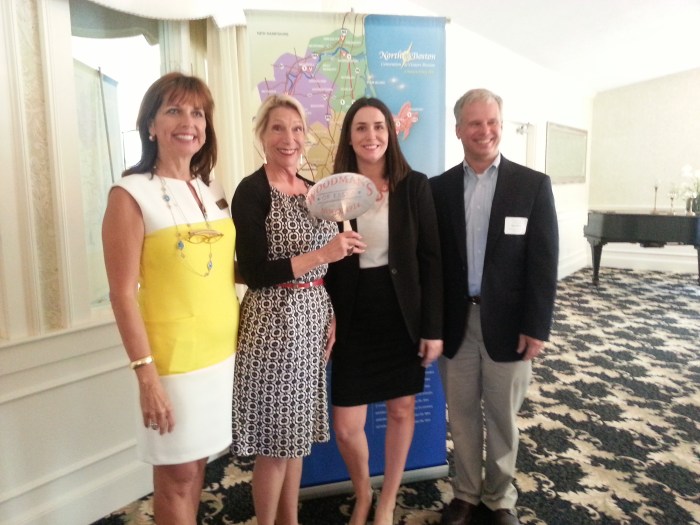



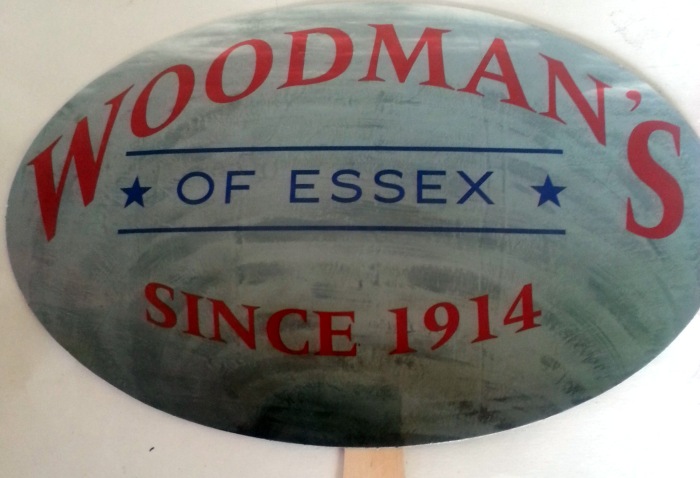
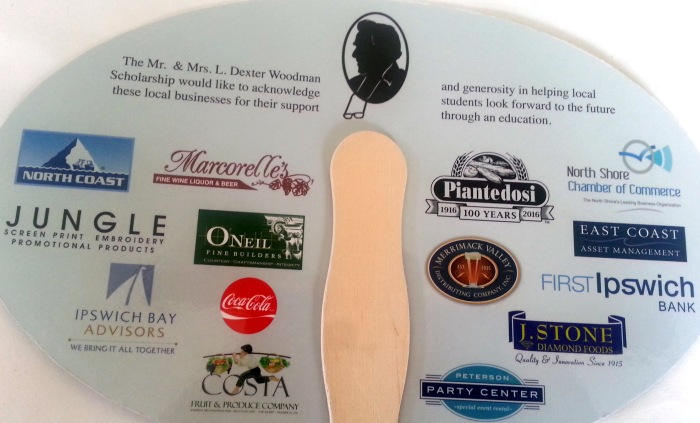
Speaking of vendors: Woodmans called out a list of vendors they work with who have generously contributed to their scholarship fund. You can see that on the back of their anniversary clam sign.

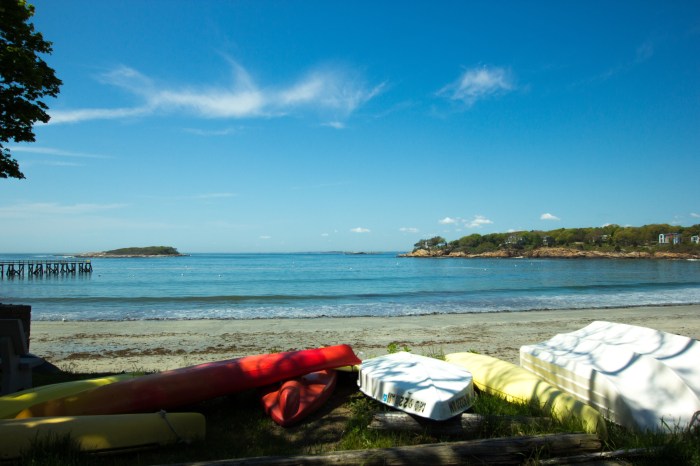


The highlight of this weekend is the Harbortown Arts Market, an eclectic open-air marketplace to be held at I4C2 (65 Rogers Street) on Saturday, May 28th from 10:00 am to 4:00 pm. Harbortown Cultural District is proud to produce this event in collaboration with Gloucester’s own Rusty and Ingrid Creative Company and Mill Gypsies, an art market producer. This novel market brings the best of New England’s vibrant indie-maker scene to Gloucester’s inner harbor with over 30 designers, artists, and vintage curators from Cape Ann and across Massachusetts to sell their handmade wares and hip vintage finds. In addition to free on-site parking, this market will feature a gourmet BBQ food truck and an Asian-fusion food truck.
This weekend Arts Festival will also include numerous festive events hosted by downtown businesses and cultural organizations, including Music in the Courtyard with Henri Smith at Cape Ann Museum; the installation of monumental banner image of a painting by Laureen Maher on the harbor-side of 189 Main Street, which houses Trident Gallery and Wisdom’s Heart; an origami master class at Law & Water on Pleasant Street; the grand opening of Art @ The IceHouse at Cape Pond Ice; and, many more engaging activities for the whole family. The complete calendar of events is below.
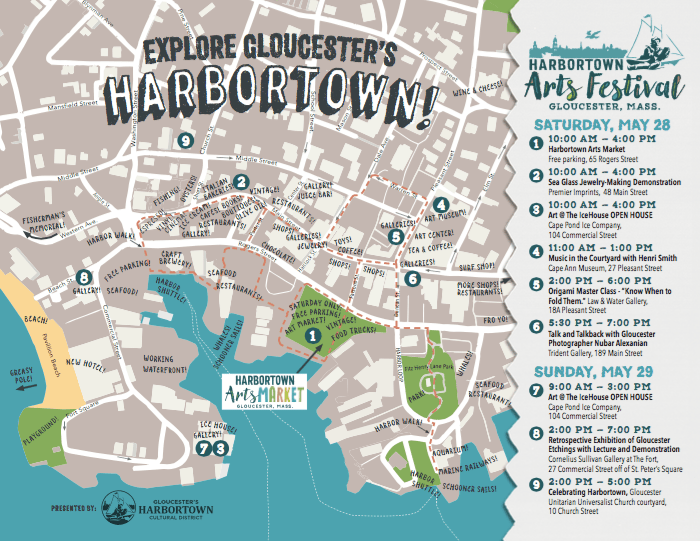
The Harbortown Arts Festival is made possible by funding from the Cultural District Initiative of the Massachusetts Cultural Council.

We will be hosting an Open House / Gallery launch Saturday, Sunday & Monday, May 28 – 30, from 10 am – 3 pm. A special retrospective of the paintings and art of Sue Memhard (1941-2011) will be featured. www.SueMemhard.com for more information about Sue’s life, creative passions, work and art.
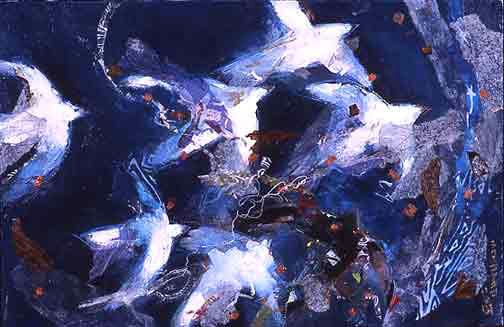
Gallery space to exhibit is also available – painting, pottery, sculpture & photography – so please contact us if interested in showing with us this summer. email: office@capepondice.com Fort Wharf Arts Collective, Gallery @ Cape Pond Ice


This week, dinner special trifecta!
BBQ Beef Brisket Sandwich w/Fries – $10.95
Southwestern Veggie Wrap – $8.95
Vegetable Terrine – $9.95
Wednesday, May 25th – 7pm
Musical Guest: RON SCHRANK!
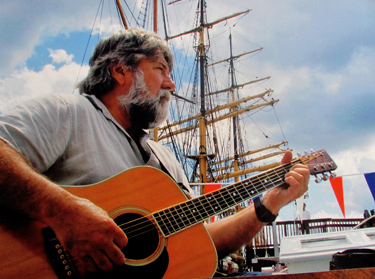
He’s not as grim as he looks here, folks. Ron Schrank is just
about as warm and gentle as a musician can possibly be. We
love him dearly. Don’t miss it! ~ Fly
Dinner with great music!
*Each week features a special, invited musical guest
The Rhumb Line Kitchen…
…now features Janet Brown with some new and healthy ideas!
Plus a fine, affordable wine menu!
The very near future…
J.B. Amero
Liz Frame & The Kickers
Jon Butcher
Visit: http://www.therhumbline.com/
Looking forward……to seeing you there 🙂

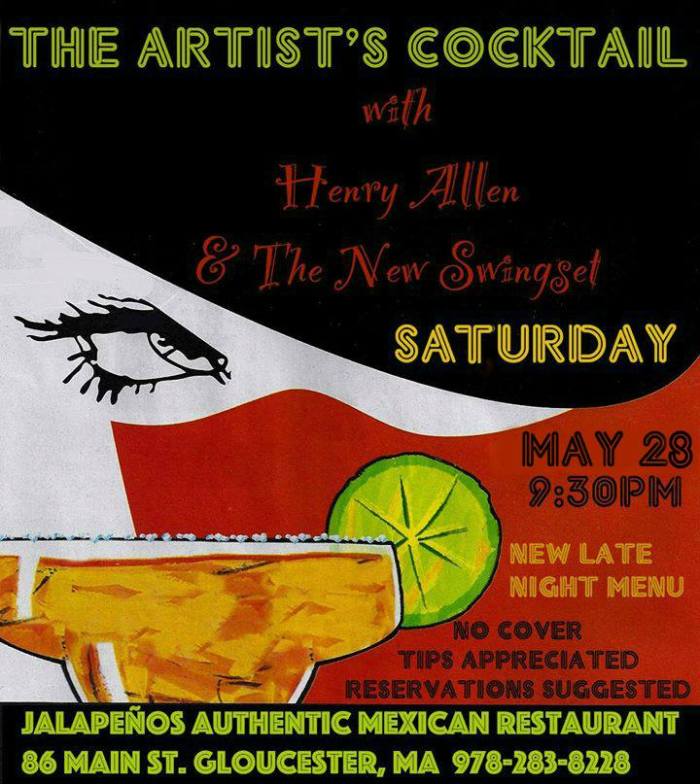
Excited to welcome Noah Harrington, Derek Dupuis, & Shane Dähler to The New Swingset! Join us!
https://www.facebook.com/HenryAllenandtheNewSwingset/timeline

Good day kids:
Hope this day finds you all well.
When: Saturday, May 28, 2016
Time: 8:00 – 9:00
Where: Rogers Street
We can park at the St. Peters Square. We would like to clean for the Harbortown Arts Festival.
Please bring gloves and I will have bags.
Thanks
Donna




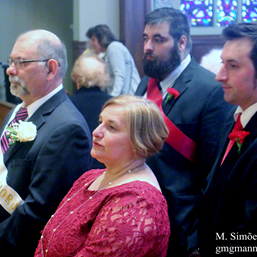
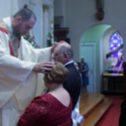
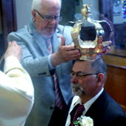
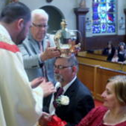
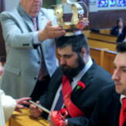
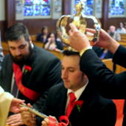
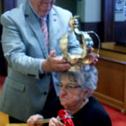
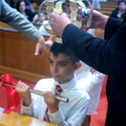
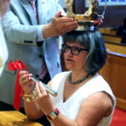
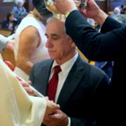
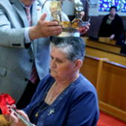
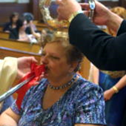
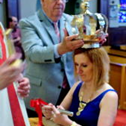
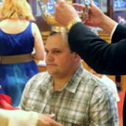
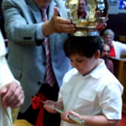
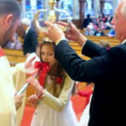
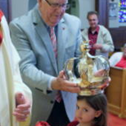
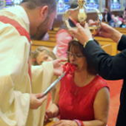
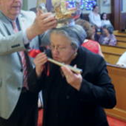
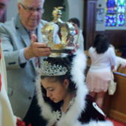
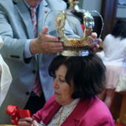
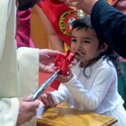
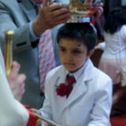
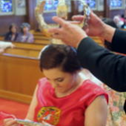
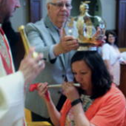
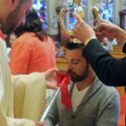
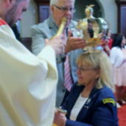
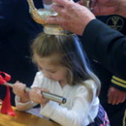
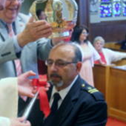
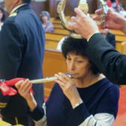
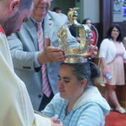
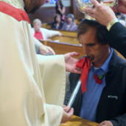
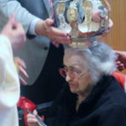
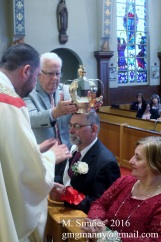 The Crowning (Coronation) concludes the principal religious ceremonies and involves the placement of the silver crown on the head of the individuals. Each person crowned has a personal reason or a promise they made to God.
Manuel and Alexandria Nunes, the Mordomos for this year, also celebrated their 40th wedding anniversary, and received blessing by Father Jim Achadinha.





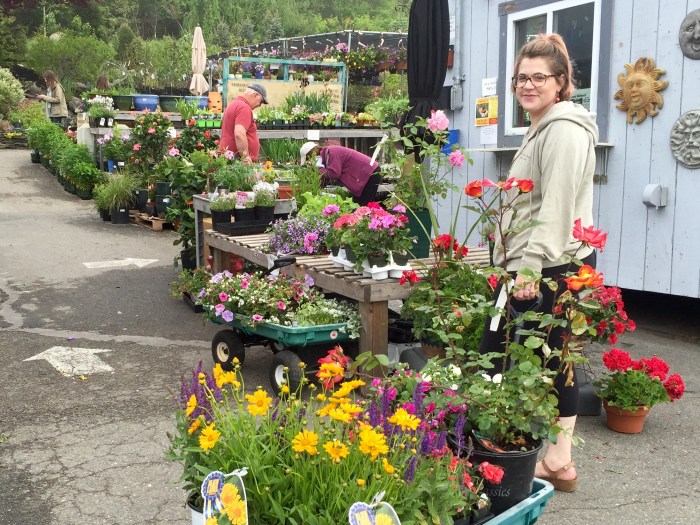
My youngest daughter Melodey asked if she could take over the planting of our humble garden this year and of course I said ABSOLUTELY! So being “THE” garden planting week of the year, she and I ventured off to Wolf Hill to pick out some flowers to spruce up our yard! Let’s hope she helps with the watering all summer too!!!
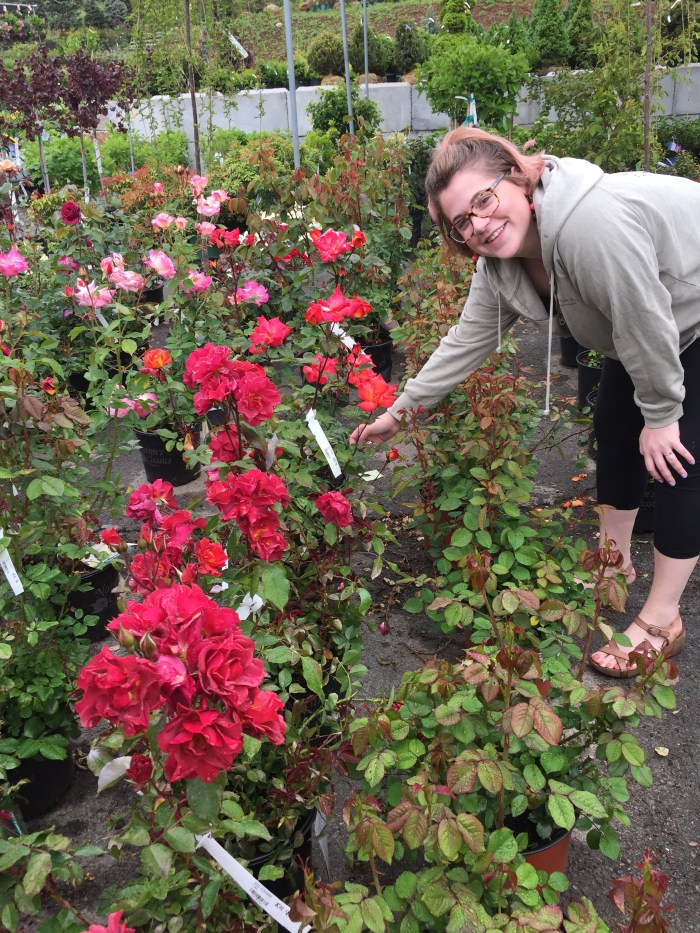
Mel with our bounty!
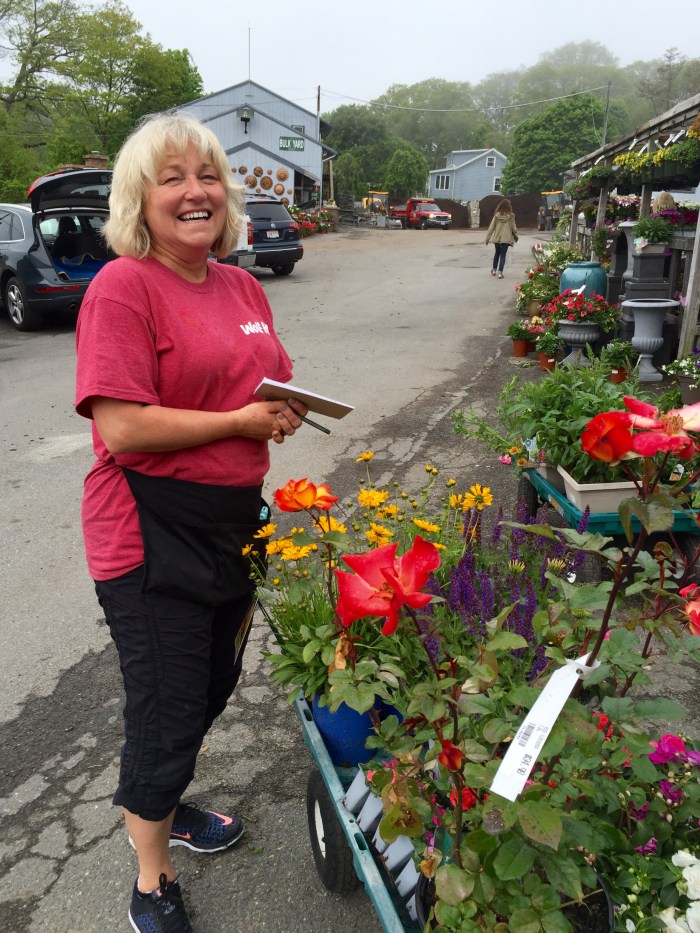
Rebecca at Wolf Hill was ready with a smile to help us check out…thanks Rebecca!!
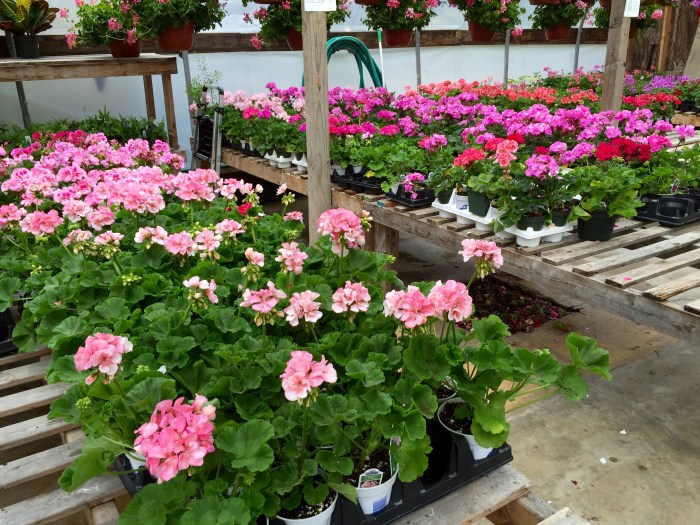
Wolf Hill is all stocked up and ready to roll for the weekend! So stop on up!


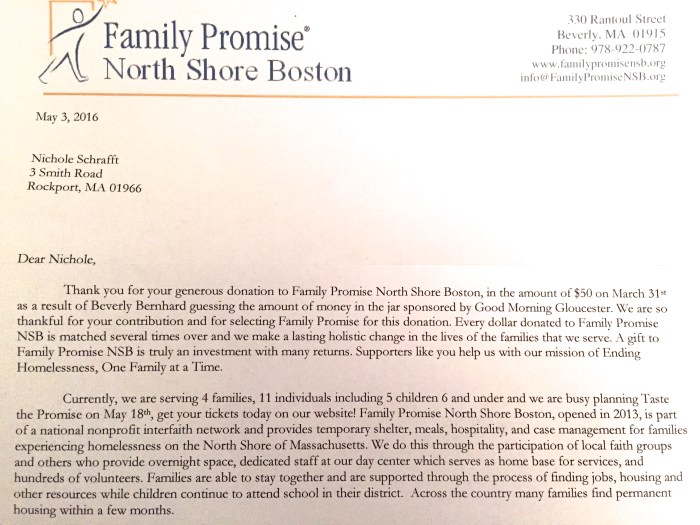
A shout out to my “How much money is in the money jug” winner, Beverly Bernhard, for fulfilling her promise of sending 1/2 of her winnings to the charity of her choice.
Beverly selected Family Promise North Shore Boston and they were very happy to receive her donation.
They do great work and I am thrilled that GMG could help with a small donation to support all that they do for the families they serve.


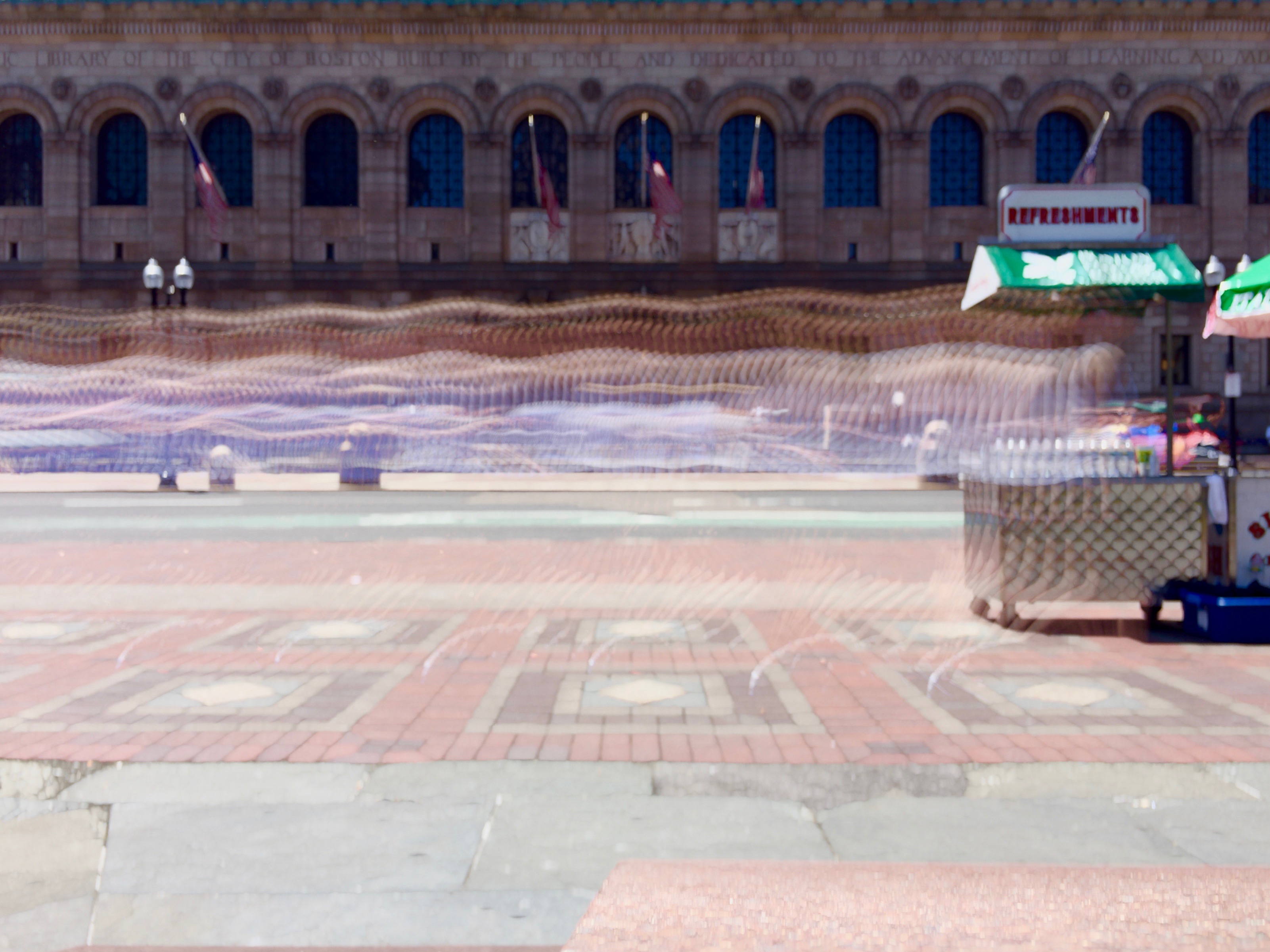
Available to purchase as a canvas wrap contact James Eves III from www.capeanngiclee.com for details



 Good Morning Gloucester