
Category: Chickity check it!

Gloucester Mill Pond Earth Day Cleanup Saturday April 13th
In support of the City of Gloucester’s Earth Day activities, NOAA Fisheries is sponsoring the volunteer cleanup of the upper section of the Mill River between 8 – 10 am on Saturday, April 13th. The 30 acre upper section of the Mill River was collaboratively restored in 2011 by the City of Gloucester, NOAA Fisheries and a host of other project partners, in part to restore habitat for the fish that provide the basis of the food chain for fish stocks that are important to Gloucester’s commercial fisheries. Anyone who wants to learn more about this project and pitch in a little volunteer time to further the recovery of this important estuary please meet at the tide gate located at approximately 400 Washington Street anytime between 8 – 10 am. Wear shoes that can get muddy. The city of Gloucester will provide bags. Bring a 5 gallon bucket if you have one. For more information please contact Eric Hutchins at 978-281-9313.
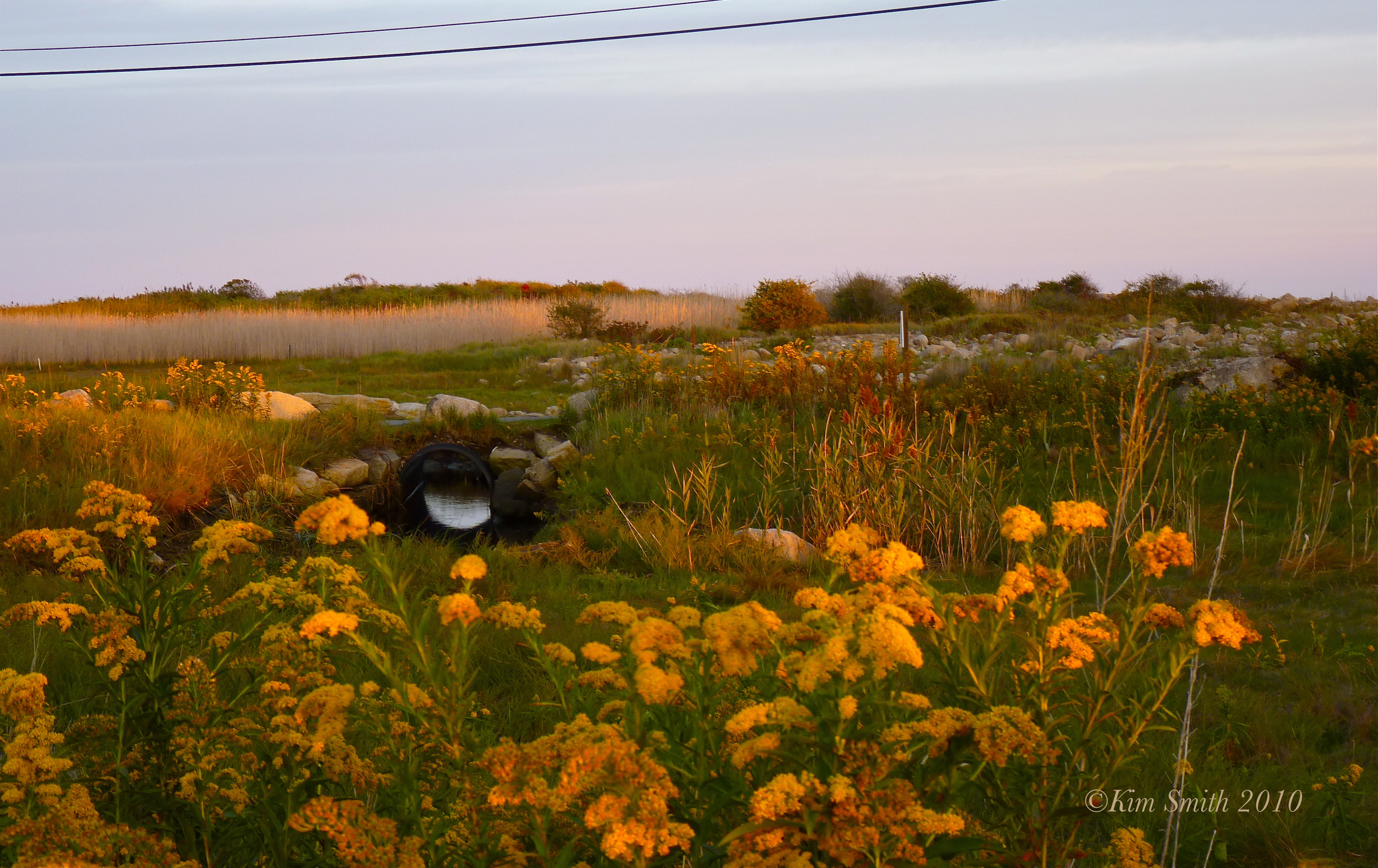
Ed. Note: Eric Hutchins and his organization were also the group responsible for the restoration of the culvert at the Eastern Point Lighthouse.
Spread The GMG Love By Sharing With These Buttons:

Shout Out to Professor Gandhi
So many, many thanks to my former botany professor, Dr. Kanchi Gandhi, who sent my BomBom Butterflies video to many of his colleagues, friends, and students. My video is getting a growing number of hits in India! I loved every second of Doctor Gandhi’s class and wished often I could be his full time student. Professor Gandhi’s classes are held at the Harvard University Herbaria, with more than 5 million plant specimens. Along with its library, the Herbaria forms the world’s largest university owned herbarium.

Doctor Gandhi’s interests are in the areas of plant nomenclature, plant morphology, and plant taxonomy. He is currently working on the International Plant Name Index, the HUH lookup tables, and Flora of North America project. In 2010 he was awarded the American Society of Plant Taxonomist Distinguished Service Award, which is only given occasionally and reserved for individuals who have made exceptional efforts for ASPT or the plant-systematics community in general.

India is a country rich in flora and many species of butterlies. A beautiful Indian butterfly we on Cape Ann may find particularly interesting is the Blue Tiger Butterfly (Tirumala limniace).
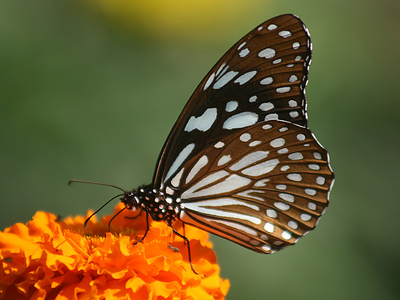
It bears a striking resemblance to our Monarch Butterfly (both members of Nymphalidae, sub-family Danainae, or Brush-foot Family of butterflies) with the clearly defined mitten-shaped cell on the underside of the hindwing. And like our Monarch caterpillars, Blue Tiger caterpillars generally feed on the milkweed family of plants (Asclepiadaceae). Another similarity is that the Blue Tiger migrates through Southern India, although the distance traveled is not quite as long as that of the Monarchs.
Images Courtesy Google Image Search
Spread The GMG Love By Sharing With These Buttons:

Protected: Greatest Cooking Blog In The History Of Cooking Blogs- www.thugkitchen.com End Of Story. Password to access post- “password” caution:swear words for those easily offended by swear words
Save the Date!

Spread The GMG Love By Sharing With These Buttons:

Cape Ann Community Cinema



Spread The GMG Love By Sharing With These Buttons:

April 2013 Soundings Magazine: Redesigned for 2013!

Spread The GMG Love By Sharing With These Buttons:

Coyotes, Red Foxes, and Lyme Disease in Massachusetts
Are Coyotes the Cause of an Increase in Lyme Disease?
Struck by the recent interest in coyotes after the fascinating video Two Coyotes Versus One Deer by Shawn Henry was posted on GMG, I became interested in reading various studies and reports about coyotes, wolves, and foxes in Massachusetts and the Northeast. My primary interest at the onset was of concern for the Red Fox (Vulpes vulpes), which has seen a tremendous decline in numbers. I wondered if the presence of coyotes (Canis latrans) was negatively impacting the Red Fox. In the past, I often saw a Red Fox in the early morning hours trotting along the shoreline at Brace Cove. I wish so much that I had filmed the last one that I saw because it was a gorgeous scene; a strikingly beautiful creature so completely unaware of my presence and so at home in its realm, investigating rock and seaweed, pausing to sniff the air, and then resuming its journey. The last time I saw a Red Fox in our neighborhood was over three years ago. As I was reading about coyotes I learned the findings of some of the most recent studies indicate that because Eastern Coyotes out-compete the Red Fox, the coyotes are the cause of an increase in Lyme disease. More on that in a moment.

The coyotes that now inhabit every region in Massachusetts are an invasive species. They are a hybrid cross species of the Western Coyote (found west of the Mississippi) and Red Wolf (Canis lupus rufus). “Researchers now believe that the Eastern Coyote is a hybridization between the Western Coyote and Red Wolf many generations ago in the upper Great Lakes region of the United States. It is theorized that as populations of the Western Coyote increased, they were forced to move east and north in search of food. As they moved into Minnesota they crossbred with Gray/Red Wolves and produced a genetically hardy animal able to sustain itself through New England winters.” (Mass Audubon)
Coyotes are not “re-populating” this region because this new species was never in our region.
Eastern Coyotes have extremely broad food habits and many factors affect the coyotes’ diet, including competition with other mammals, abundance of prey, season, and weather. In the Northeast, their diet consists of shrews, rabbits, voles, woodchucks, mice, deer, beaver, muskrat, weasels, squirrels, and carrion. And according to Mass Audubon, “They eat ground-nesting birds and their eggs, as well as reptiles and amphibians. When other prey is scarce they will eat a variety of insects including grasshoppers, beetles and cicadas. When animal matter is scarce, they will eat available fruits including apples, cherries, grapes, and strawberries.”
The rapid invasion of the alien Eastern Coyote has negatively impacted many sympatric native species, as the coyote has assumed the role of top-order predator. The coyote has fundamentally altered the existing ecosystem and various species have experienced population declines as a direct result of their role as coyote prey or from direct competition for food. “Culturally and ecologically significant species including Red Fox decline dramatically in response to increasing coyote populations. Eastern Coyote and Red Fox share many common habitat requirements and occupy overlapping niches. Through time, the larger and more resilient coyote is able to out-compete and displace resident fox populations.” (Department of Natural Resources, Maryland.)
Studies have shown repeatedly that Eastern Coyote predation on deer is minimal. Most herds can handle the coyotes. Typically coyotes have success with fawns that are 4-5 weeks old (after they have become more active and are not by the mother’s side), weakened and sickly adults, and deer separated from the herd. These targets represent approximately one or two percent of the total deer population. While coyote diet studies show consistently the use of deer for food, it does not appear that coyote limit deer population on a regional scale.
Although the population of White-tailed Deer has stabilized, Lyme disease continues to increase. In June of 2012 researchers at the University of California Santa Cruz published their findings from the study “Deer, Predators, and the Emergence of Lyme Disease.” (Taal Levi, lead author.)
The study found that once where there was an abundance of Red Foxes, there is now an abundance of Eastern Coyotes. Even more significantly, fewer coyotes will inhabit an area once populated by more foxes. The greater number of foxes would have consumed a larger number of small tick-bearing animals, primarily White-footed Mice, Short-tailed Shrews, and Eastern Chipmunks, all of which transmit Lyme disease bacteria to ticks. It appears as though it is the Red Fox that once kept the population of these smaller rodents under control.
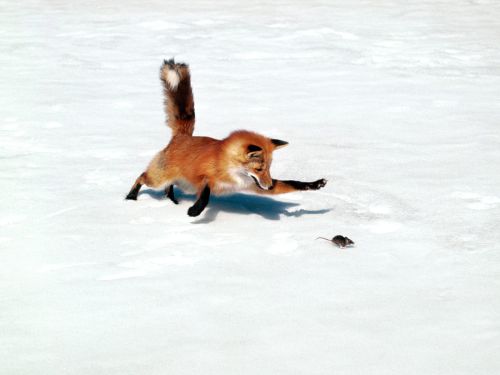
Even when there is a threefold rise in deer population, study after study now shows that the strongest predictors of a current year’s risk of Lyme disease are an abundance of acorns two years previously. How does that work?
Many acorns = many healthy mice and chipmunks.
Many healthy mice and chipmunks = many tick nymphs.
The following year when it may not be a bumper acorn crop = fewer mice.
Fewer mice and chipmunk = dogs and humans become vectors for the ticks.
While acorns don’t serve as a universal predictor because Lyme disease can be traced to forests where there are no oak trees, the data suggest that food sources and predators of small forest mammals are likely to be valuable in predicting Lyme disease risk for humans.
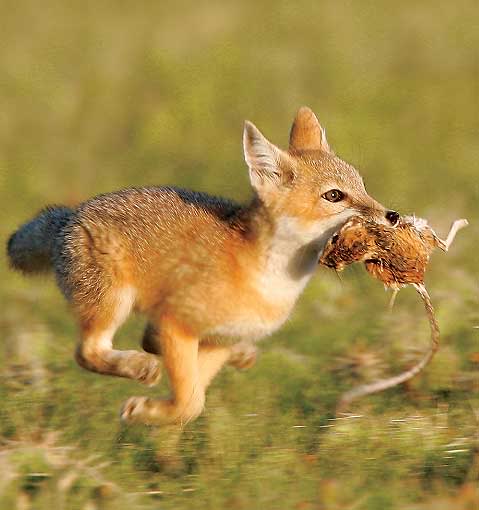
To summarize, multiple studies suggest that the invasive Eastern Coyote out-competes and kills the native Red Fox population, which leads to a rise in the number of small animals particularly the White-footed Mouse and Eastern Chipmunk, which in turn leads to an increase in ticks that carry Lyme disease. The impact of the Eastern Coyote on native deer population is negligible. And, as many family’s can attest, the impact of the Eastern Coyote on populations of domestic cats and small dogs has been devastating.
Typically the excuse given for unwanted encounters with wildlife is that people are encroaching on the animal’s habitat. That simply is not the case with the Eastern Coyote. The Eastern Coyote is advancing on humans–and they like what they see; no large predators, a reluctance on the part of people to hunt and trap, and an abundance of food. The environmentally and culturally destructive chain reaction caused by the Eastern Coyote invasion is taking on added urgency as the coyote strikes closer and closer to home.
It is legal in the state of Massachusetts to shoot and kill a coyote from your home. If confronted by a coyote, make as much noise as possible, if attacked, fight back aggressively.
Images courtesy Google image search.
Spread The GMG Love By Sharing With These Buttons:

Color Collision
My friend Jessie Morgan is part of the upcoming Color Collision Exhibit at the Clark Gallery, owned and operated by Gloucester residents Dana Salvo and Dawn Southworth. To read more about Jessie.
Spread The GMG Love By Sharing With These Buttons:

Good Morning Gloucester FOB Virtual Online Gallery and Pop-Up Shop Now Live
Good morning Joey,
We have set up the Good Morning Gloucester FOB Online Gallery and Pop-Up Shop on our site at http://capeanngiclee.com/blog/good-morning-gloucester-fob-show-online-store where people can go and see all the artwork that is is in the show and all the prints are available for purchase.
For those who can make it in to see the show we are open 10 – 5 thru Saturday please come on by and browse the gallery.
And don’t forget to VOTE for your favorite print in our studio – the winner will receive a $100, 2nd place $50 and 3rd place $25 gift certificates to Cape Ann Giclee. The winners will be announced on Saturday.
Thank you to all the artists who displayed work and everyone who has come to see the show!

Spread The GMG Love By Sharing With These Buttons:

Chickity Check It! WOODCARVING WITH DAVID CALVO In North Shore Magazine
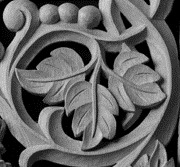
Woodcarving With David Calvo
February 25, 2013
Ask David Calvo if he thinks woodcarving is a dying art and he’ll cut through the suggestion like a bandsaw through birch. By Andrew Conway- photograph by Joel Laino
“I’ve taught students from every state, as well as Canada and Mexico,” he says, referring to his ever-growing network of passionate craftsmen and women who come to his renowned woodcarving and sculpture studio and school in Gloucester to learn the ancient art for themselves.
To view the entire article at North Shore Magazine follow this link
Spread The GMG Love By Sharing With These Buttons:

Gloucester Reads Poetry at the Sawyer Free Library ~ Thursday April 4th at 7:00pm

Spread The GMG Love By Sharing With These Buttons:

NBC Casting Is Calling And If This One Wasn’t Made For Sista Felicia They Ought To Get New Casting Agents
NBC is casting a BRAND NEW prime-time cooking competition show and we are looking for the best home cooks in Boston!

Do you have a handful of dishes in your back pocket that are so good you think you can beat a professional with them? Have you had recipes passed down through generations of family members that you’ve honed and perfected!? If not, do you know of the best home cook in Boston! Is there someone you know who makes the best mac and cheese of chili you’ve ever had?! Nominate someone today!
We are looking for amateur chefs to take on professionals in a new cooking showdown! As an amateur chef on our show, you get to use your own tried and true recipes! And there is life-changing cash on the line!
For more info, visit www.nbc.com/casting (FOOD FIGHTERS) and email us at this address with the following info:
-Your name
-Occupation
-Contact information (including phone number and email)
-2 to 3 photos of you
-2 to 3 photos of your best homemade dishes
Spread The GMG Love By Sharing With These Buttons:

Lecture Tuesday: The Fragrant Garden

The Most Highly Scented Lilacs
Tuesday, April 2nd, I am presenting my lecture The Fragrant Garden from 10:00am to noon for the Andover Garden Club. For more information see flyer: The Fragrant Garden.
Spread The GMG Love By Sharing With These Buttons:

BREAKING NEWS: GMG to be the Boston area’s first Slog (Smell Blog)
Keeping up with bleeding edge technologies has always been Joey’s passion, so it was no surprise when he told me he had already been approved by Google to be the first Boston Area blog to get his smell into their new Aromabase.
Just in case you didn’t know, Google introduced smell search today under the moniker Google Nose, which has been hailed as the latest scentsation in search — and as you might expect, Our Boy Joey is right on top of things.
We all know that email is for old farts. Facebook’s already in decline. Joey’s interviews with people who tweet are all done. Now it’s time for the next big thing… and here it is:
Watch the video and you’ll see how to get the full aroma of Joey’s dock right at your computer, tablet or smart-phone. GMG’s new tag My Smell on the Dock will debut next week after the rest of you FOBs watch the video and follow instructions for getting your smells into Google’s Aromabase too.
Let’s make GMG one of the first blogs to adopt this new cutting edge technology with every post. Perhaps next year BONS will nominate GMG in their new “Smell” category.
Vickie and I are doing our part this afternoon. We’re bringing our smell phones to The Cave’s wine & cheese tasting at 4pm. With any luck, you’ll be able to get the full aroma from our post tomorrow.
Spread The GMG Love By Sharing With These Buttons:

BomBom Butterflies Video
BomBom Butterflies ~ Featuring Black Swallowtail Butterflies and Common Milkweed at Good Harbor Beach
Scenes from my forthcoming film Life Story of the Black Swallowtail Butterfly set to “BomBom” by Macklemore and Ryan Lewis, featuring the Teaching, from the album The Heist by Macklemore and Ryan Lewis.
When you have a moment, please watch my newest video. I have submitted it to a video contest sponsored by Macklemore and Ryan Lewis from their debut album The Heist. Macklemore and Ryan Lewis created the beautiful Same Love video that I posted about last week. If you like my video please share the link; I think the more clicks received, the more notice gained. The winner will be announced on April 8th.
Spread The GMG Love By Sharing With These Buttons:
Lecture Monday at Tower Hill Botanic Garden: The Pollinator Garden
Tomorrow, Monday, April 1st, from 10:00 am – 12 noon, I am the guest speaker for the The Garden Club Federation of Massachusetts. The event will be held at the Tower Hill Botanic Garden and, although this is a state Garden Club Federation lecture, everyone is welcome. A five dollar donation at the door is requested, but not required. Refreshments are provided for all attendees. I hope you can come!
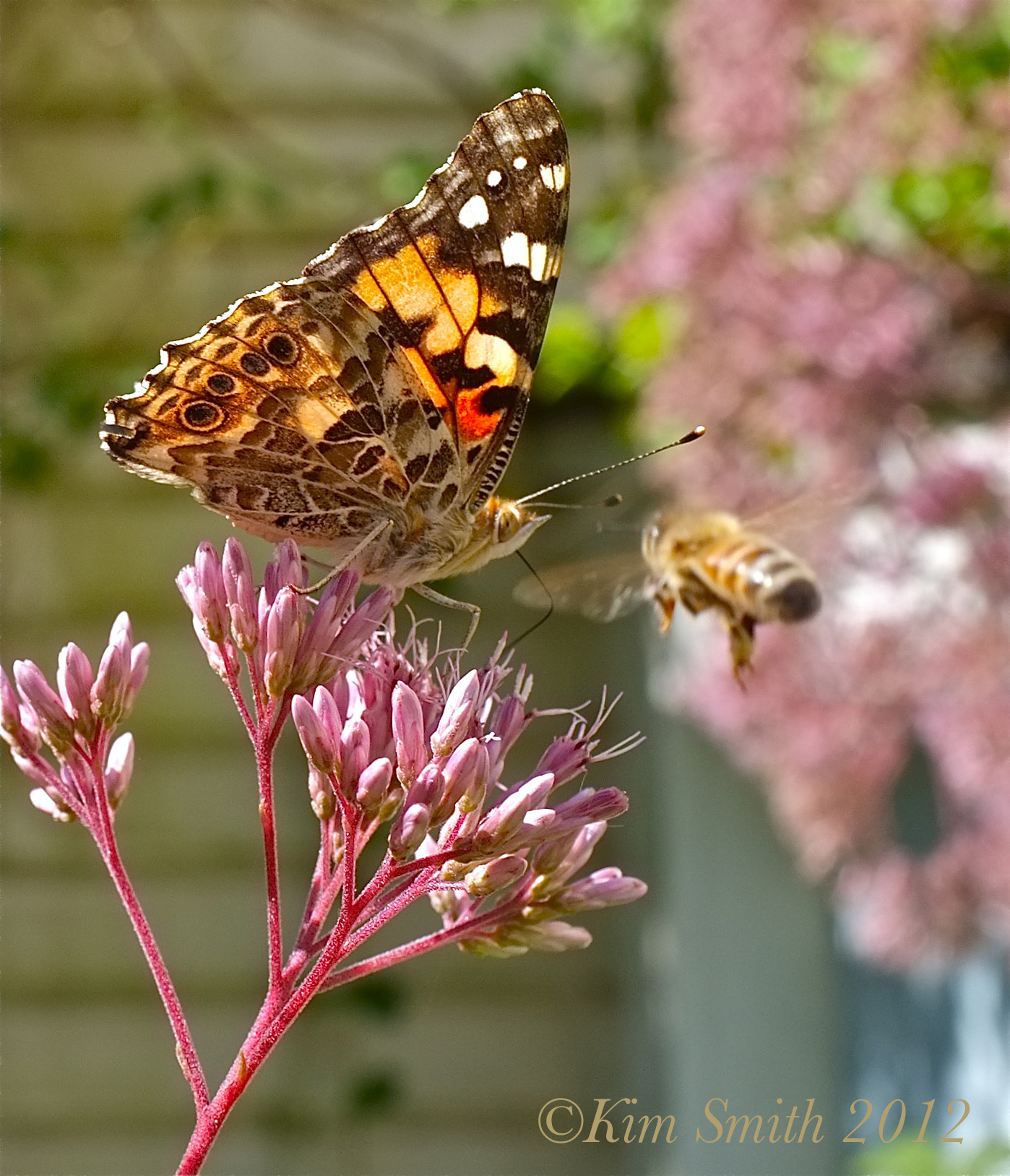
Painted Lady Butterfly Nectaring at Native Joe-Pye Weed
Spread The GMG Love By Sharing With These Buttons:

Thank you Anna and James Eaves for Hosting the First Ever GMG–FOB–Cape Ann Gilcee Photography Show!

Snapshots from last night’s fabulously fun opening at Cape Ann Giclee.


Eaves Family left to right ~ Yianni, Anna, Dimitri, and James
Thank you Anna and James Eaves for hosting the First Ever GMG/FOB/Cape Ann Gilcee photography show, running now through April 7th. The quality of work in the show is simply outstanding. Come on over and have a look, meet Anna and James, and learn about the services Cape Ann Giclee provides for all your photography and fine art reproduction needs. Cape Ann Giclee is open Monday through Friday from 10am to 5pm. While the GMG show is up through April 7th, they are also open on Saturdays from 10am to 5pm.

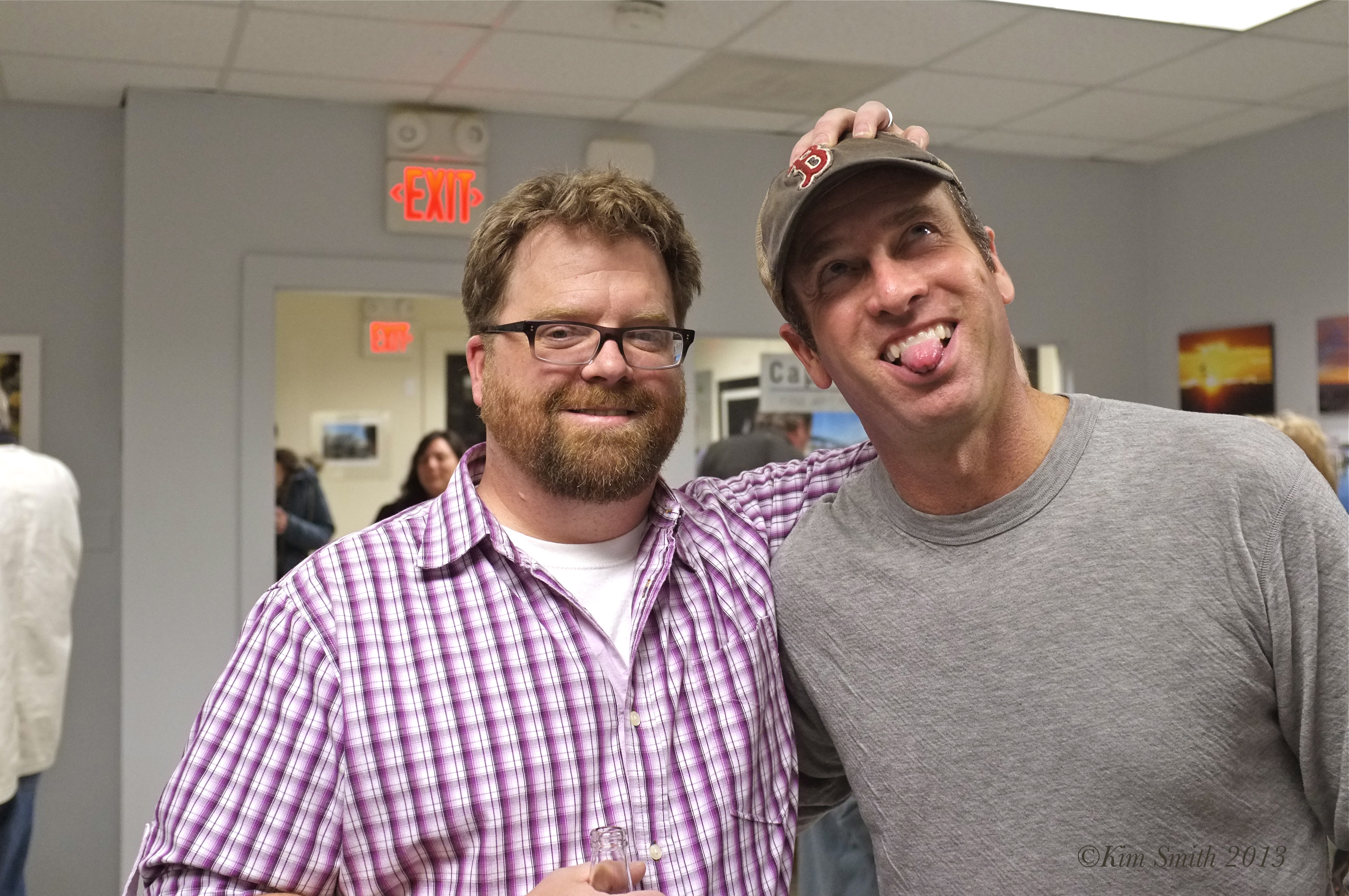
Craig and Joey
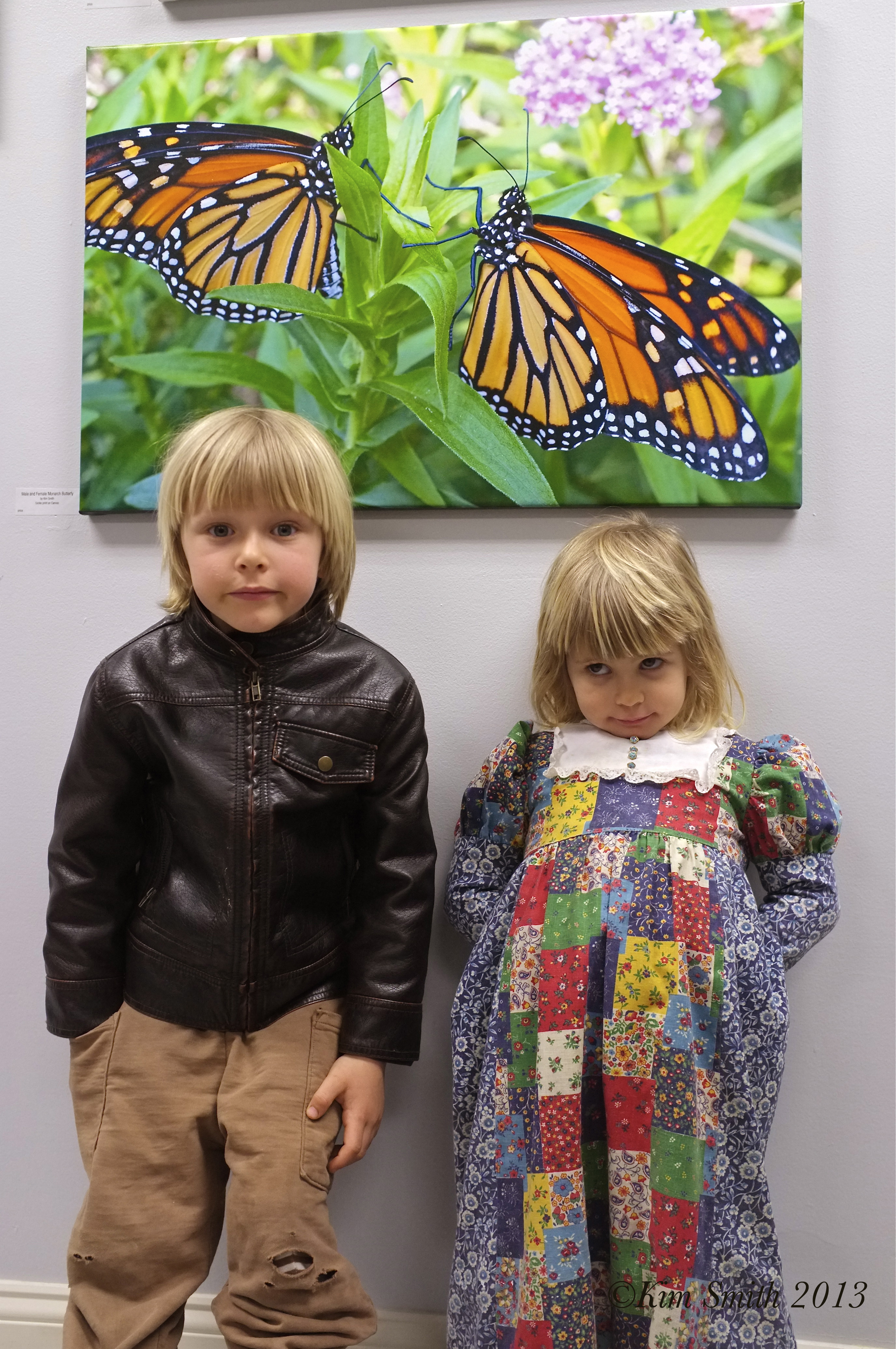
Atticus and Meadow
Spread The GMG Love By Sharing With These Buttons:

Cool stuff reminders and a rising star video
Amid the flood of info that washes over us every day, it’s often refreshing to get a reminder of some cool stuff we might have missed. Here goes:
- Espressos has jumped into the live music scene. Check out their lineup.
- Live music starts at 6 tonight and 11:30 am tomorrow (see schedule here). Plenty of good shows you can take your kids to all over Cape Ann.
- Seasonal wine and beer licenses kick in on Monday (April Fools Day — seems fitting somehow). So The Cave, which is usually closed Mondays is having a wine tasting 4-6pm (more about that here).
- You can help support Cressy Beach Restoration at the CPA meeting on Tuesday (4/2) 6pm at City Hall First Floor Council Conference Room (more on that here).
Here’s a very good music video by rising star Brendan James. You can see him at Crowell Chapel tonight with guests Brian Jarvis, Charlee Bianchini & Dave Brown. Tickets & details here.
Spread The GMG Love By Sharing With These Buttons:
How Exactly is Monsanto’s Roundup Ravaging the Monarch Butterfly Population?
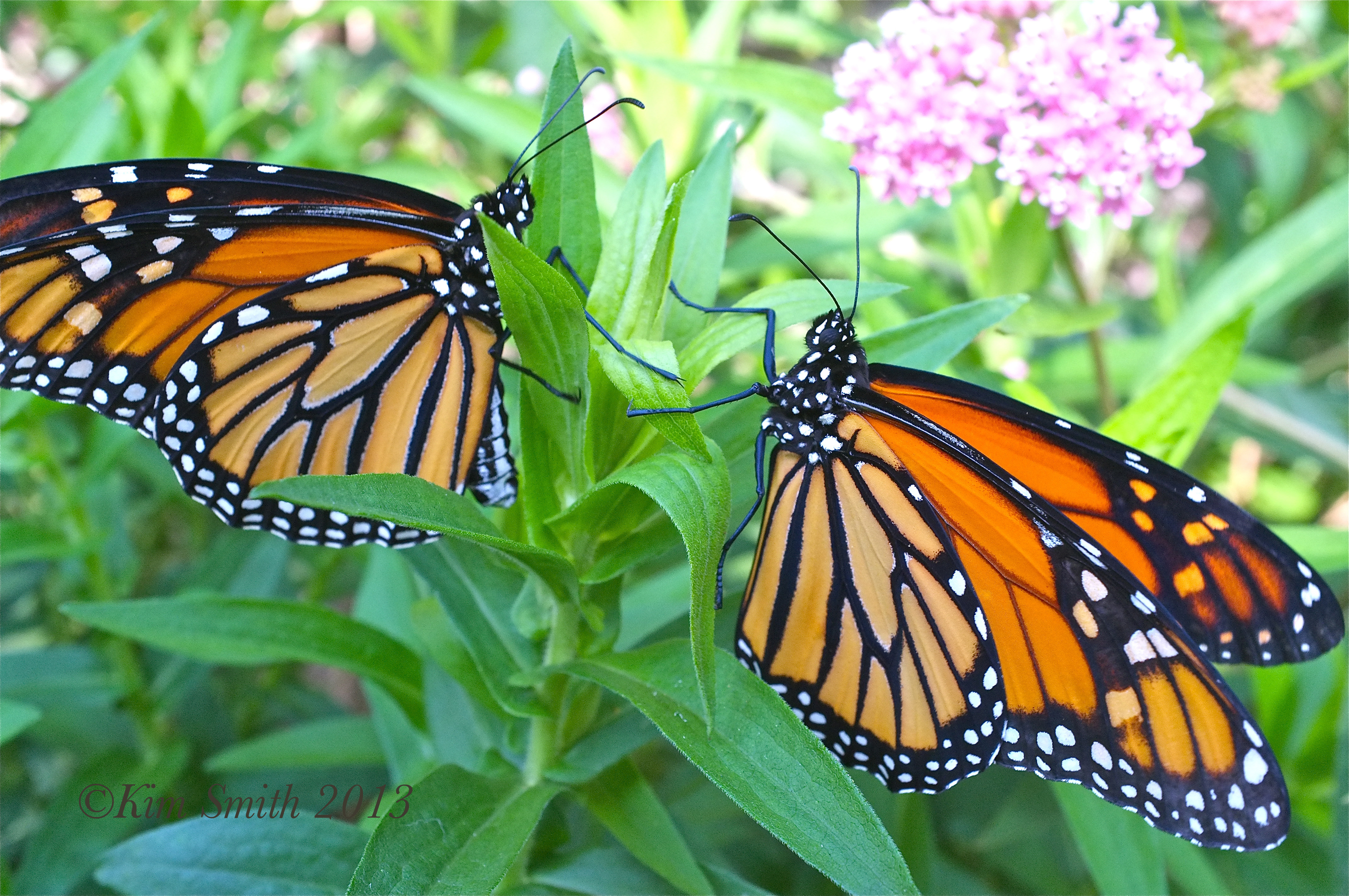 The above photo of a male (right) and female (left) Monarch Butterflies on Marsh Milkweed is part of the GMG/Cape Ann Giclee show opening tonight.
I am often asked the following question at my butterfly and pollinator garden design lectures. How exactly are Monsanto’s products ravaging the Monarch Butterfly population?
First, it is important to understand that all butterfly caterpillars rely on plant foods specific to each species of butterfly. For example, Monarch caterpillars only eat members of the milkweed family, Black Swallowtail caterpillars eat plants in the carrot family, and Heliconian butterflies eat plants in the passionflower family. Some caterpillars, like the larvae of the Eastern Tiger Swallowtail eat plants from a wide range of plant families. That being said, it is worth repeating that Monarch caterpillars only survive on members of the milkweed family.
Imagine a farm with row upon row of corn. Growing amongst and around the edges of the cornfields are wildflowers of all sorts, including milkweed. The wildflowers draw to the fields myriad pollinators such as bees, butterflies, and birds.
Monsanto has genetically modified the seed of corn and soybeans so that it will withstand extremely heavy doses of its herbicide, called Roundup. Monsanto’s corn and soybean seed is actually called Roundup Ready. Roundup Ready plants can withstand massive doses of the herbicide Roundup, but the milkweed and other wildflowers growing in the corn and soybean fields cannot.
Each year massive amounts of Roundup are sprayed on the corn and soybean fields, killing everything in sight, except the Roundup Ready corn and soybean. Additionally, Monsanto’s Roundup contains the active ingredient glyphosate, which has been tied to more health and environmental problems than you can possibly imagine.
Now imagine you are a Monarch Butterfly, having flown hundreds of miles northward towards breeding grounds of milkweed. But there is no milkweed to deposit your eggs. The circle in the chain of life is broken.
Since the use of genetically modified Roundup Ready began, milkweed has disappeared from over 100 million acres of row crops, or a roughly 58 percent decrease. Milkweed is not only the Monarch caterpillar host (or food) plant, the nectar-rich florets provide nourishment for hundreds of species of bees and other Lepidoptera.
The Monarch Butterfly migration is one of the great migrations of the world. Climate change and the loss of habitat are also factors in the decrease of butterflies. The Mexican government and the people of Mexico have enacted policies to help protect from logging the remaining oyamel fur trees in the Monarchs winter habitat.
There are several steps that we in the United States can undertake. 1) Avoid as much as possible genetically modified food, especially corn and soybean products. 2) If you own shares of Monsanto stock, get rid of it (Monsanto also developed Agent Orange). Thirdly, we need to start a national movement to cultivate milkweed and to create awareness about the important role wildflowers play in our ecosystem.
Calling Everyone: Plant Milkweed! No matter how small or large your garden, give a spot over to milkweed and watch your garden come to life!


