Author: Kimsmithdesigns
FANTASTIC IDEAS: STRAWS MADE OF PASTA – SHARED BY MEGAN WOLF!
To follow up on where to purchase straws not made of plastic, Ainsley Smith shared that craft stores carry paper straws, and that Common Crow and REI have metal straws. Megan Wolf has found paper straws multiple times at Marshalls.
Ainsley sent a link to 100 percent biodegradable rainbow straws on Amazon and also a five piece metal rainbow straw set from Kleen Kanteen. She writes, “also check out @CleanGloucester on Saturday’s for#StrawFreeSaturday tips.

Megan shares the following, ” I wasn’t served a single straw on my entire 28 day tour throughout Europe. I have since been very mindful not to use any and am sure to ask my server “no straw, please.” I’ve noticed a lot more establishments have become aware of this issue and are incorporating alternatives.” She included the video. Love this idea-pasta straws are the way to go!
Thank you Ainsley and Megan for your ideas and input!
CINCO DE MAYO FIFTH ANNIVERSARY FIESTA AT SHORT AND MAIN!
FIFTH ANNIVERSARY FIESTA!
SATURDAY, MAY 5TH, SHORT AND MAIN IS TURNING FIVE!
We invite you to celebrate with us at Watson & the Shark bar
for complimentary Cinco de Mayo inspired snacks.
*Margaritas & Dancing to begin at 8pm*
And we can’t forget Derby Day!!
Drop by early to watch the race and enjoy a mint julep and our delicious dollar oysters.
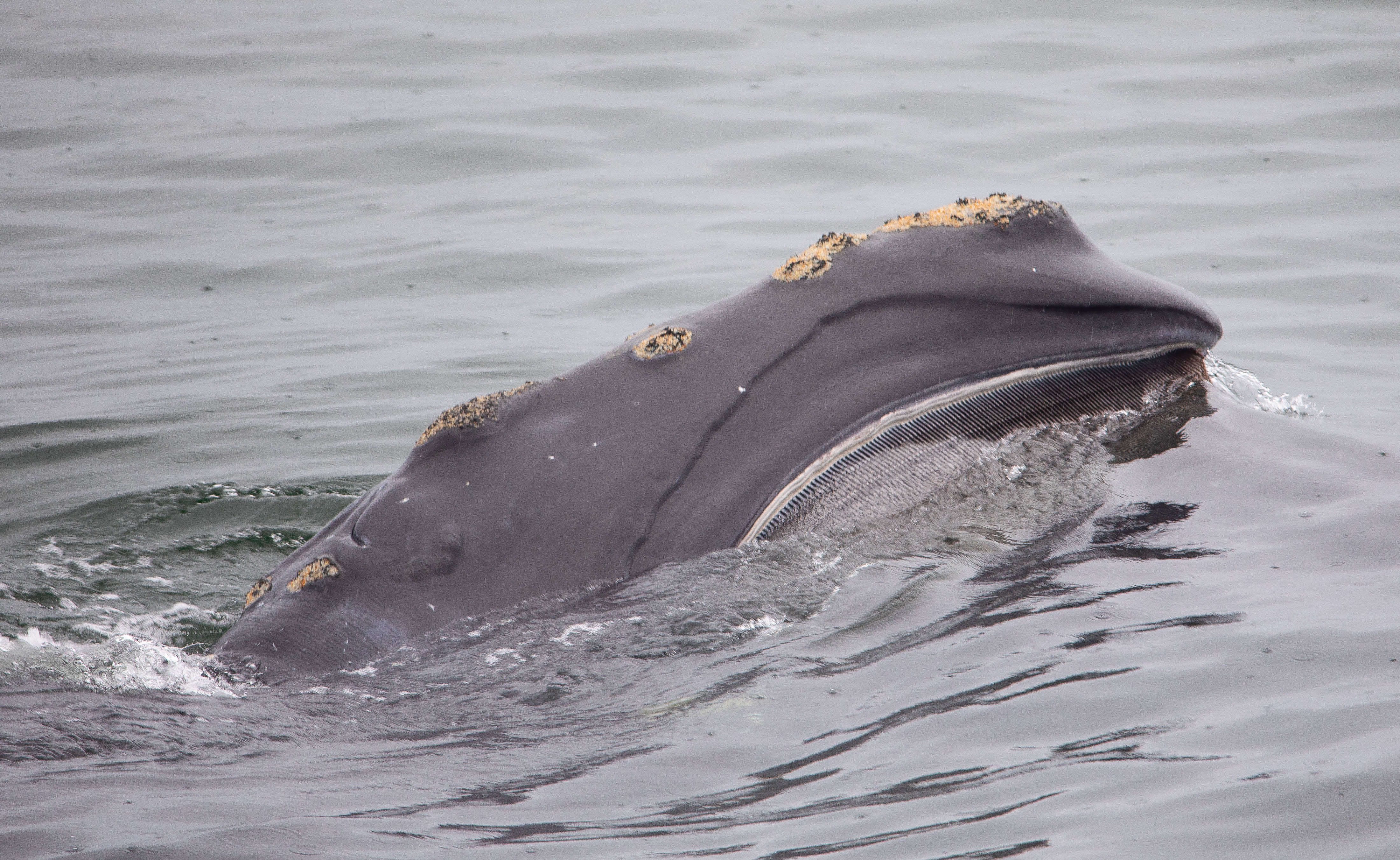
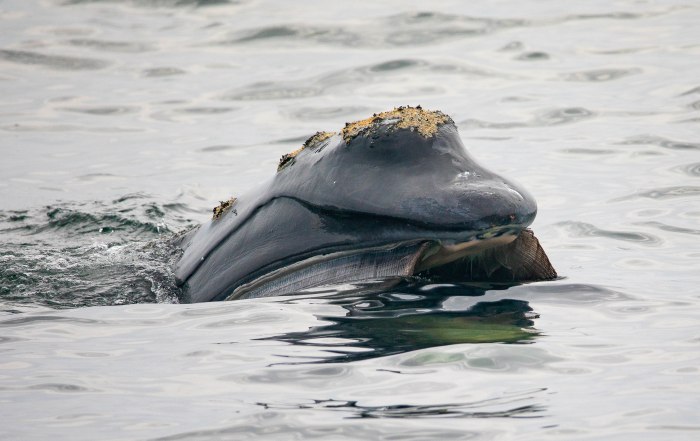
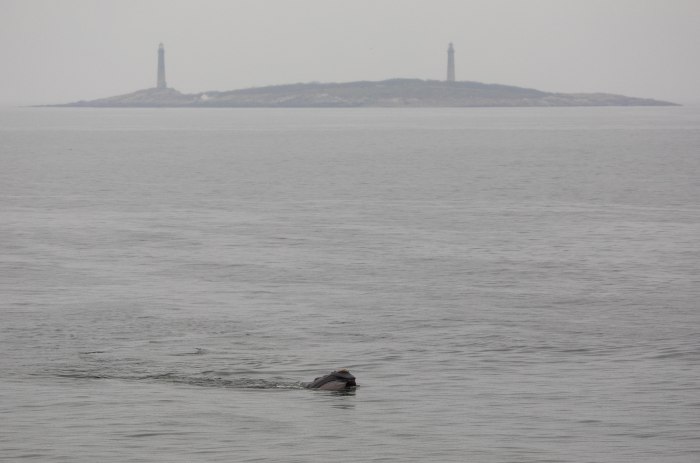
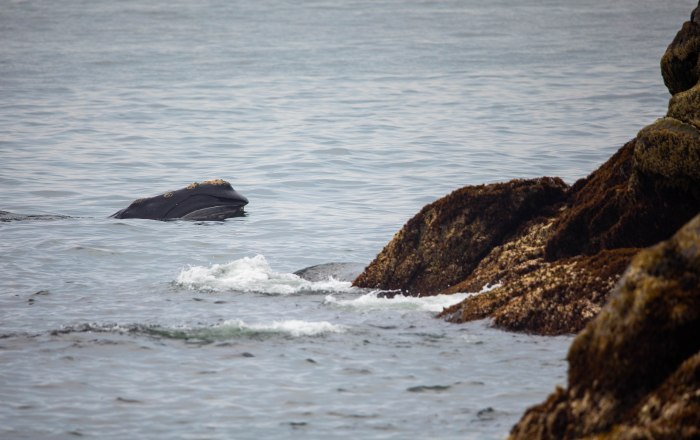
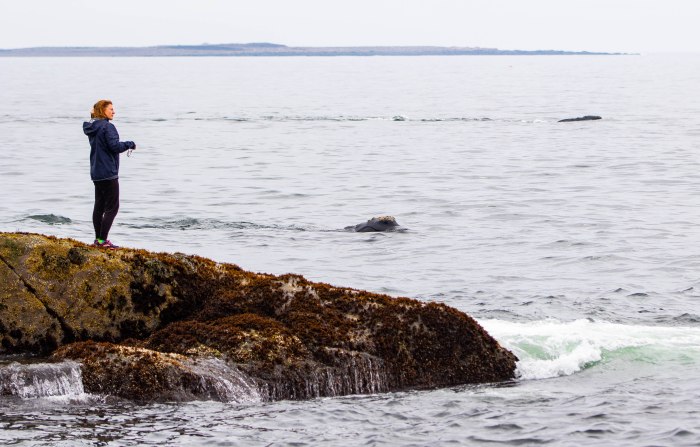
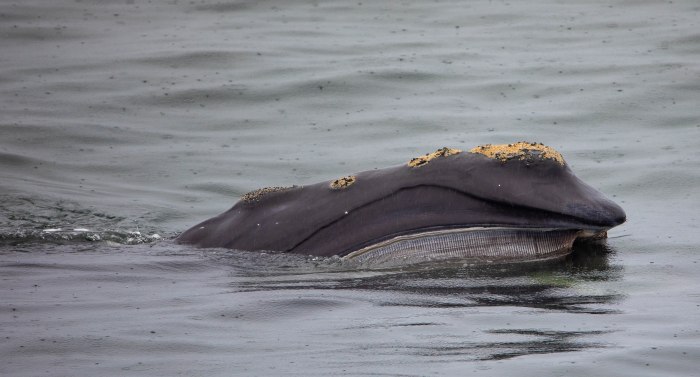
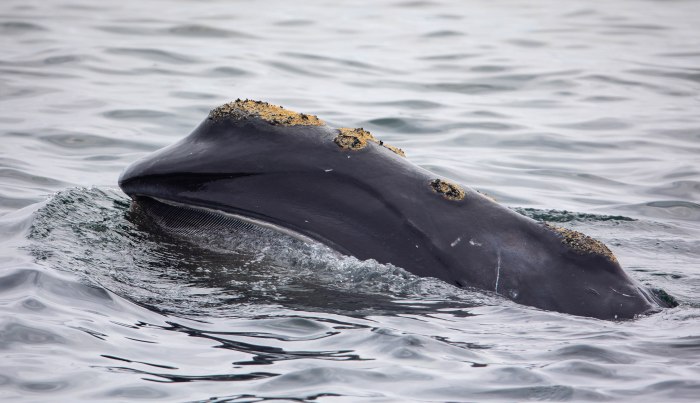
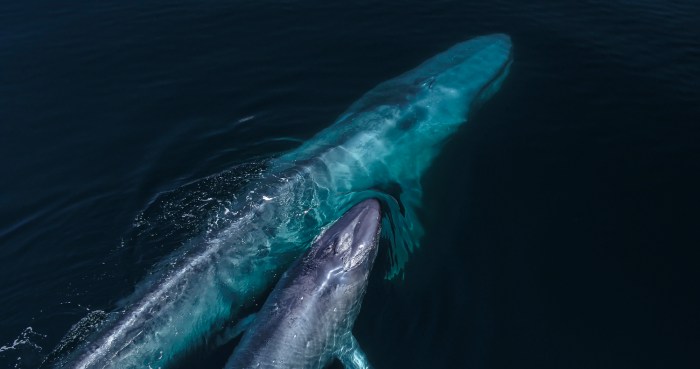
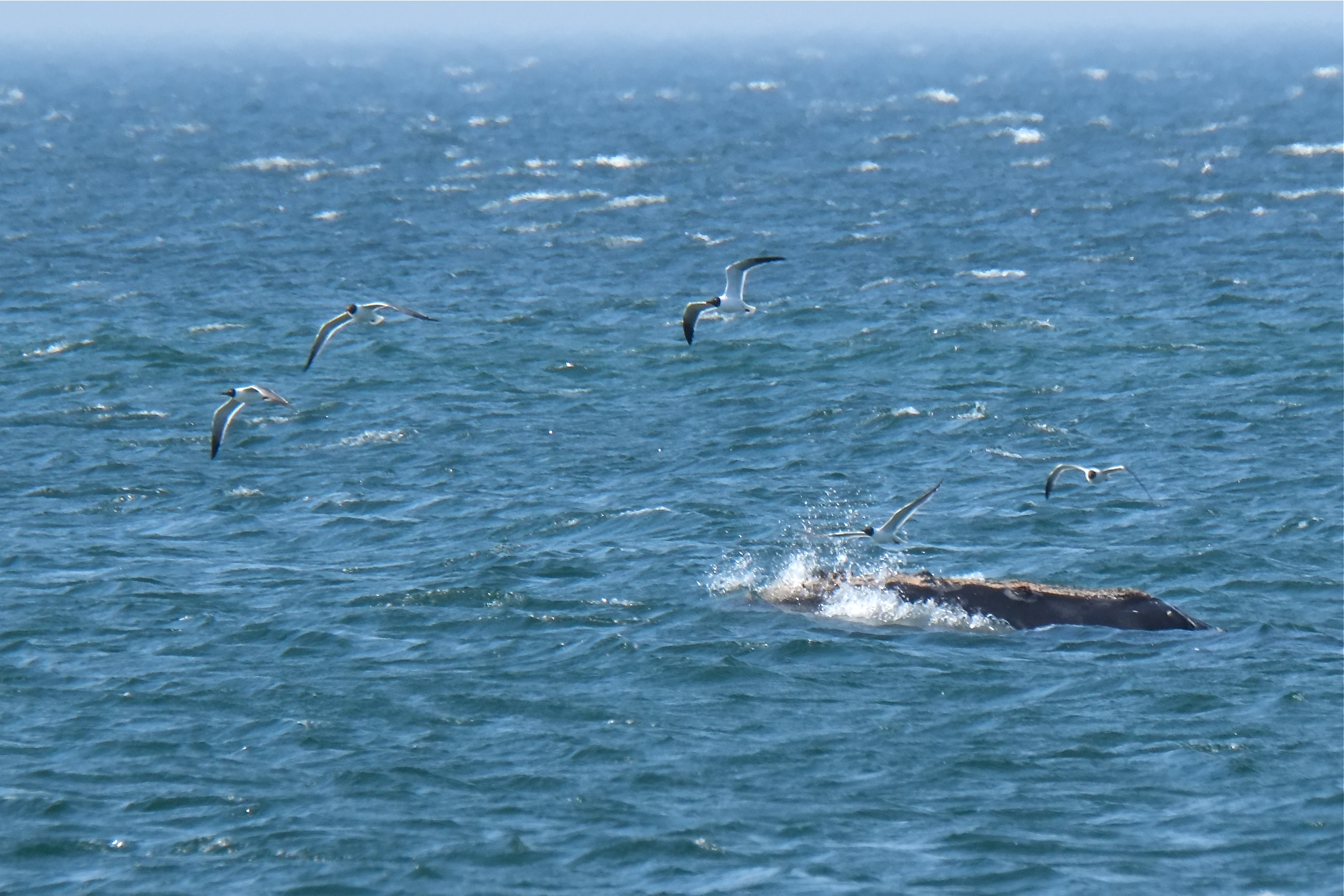
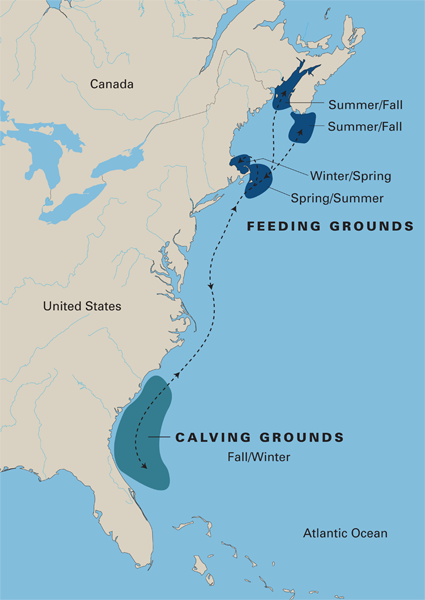
STUNNING CLOSEUP PHOTOS RIGHT WHALES FEEDING OFF LONG BEACH FROM MARTIN DEL VECCHIO
Martin writes, “The North Atlantic Right Whales that have been spotted around Gloucester spent the morning feeding just off Long Beach. And I mean just off; in some cases, within 20 feet of the rocks.
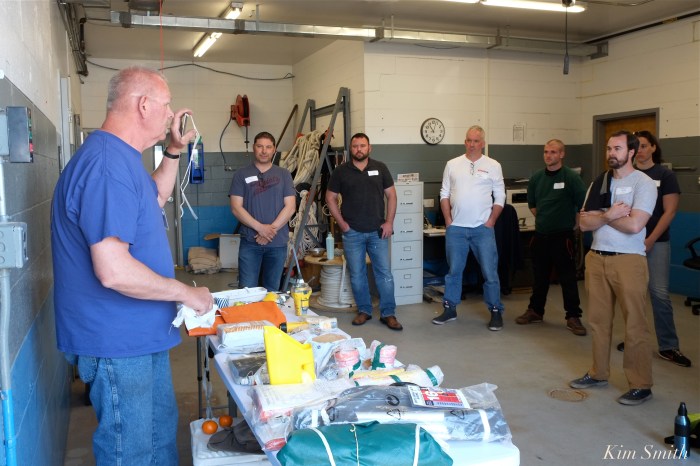
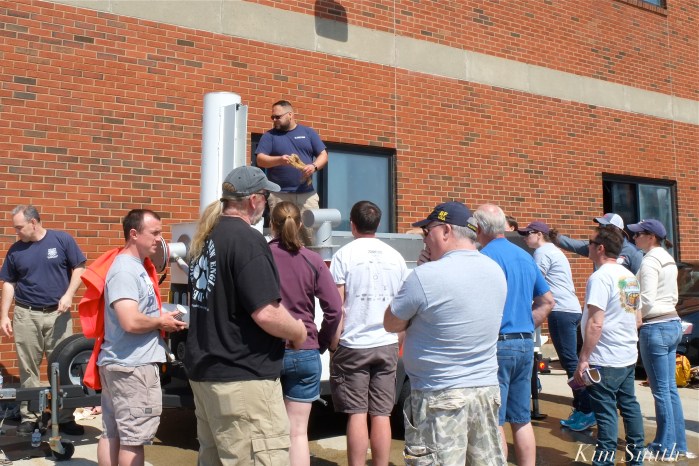
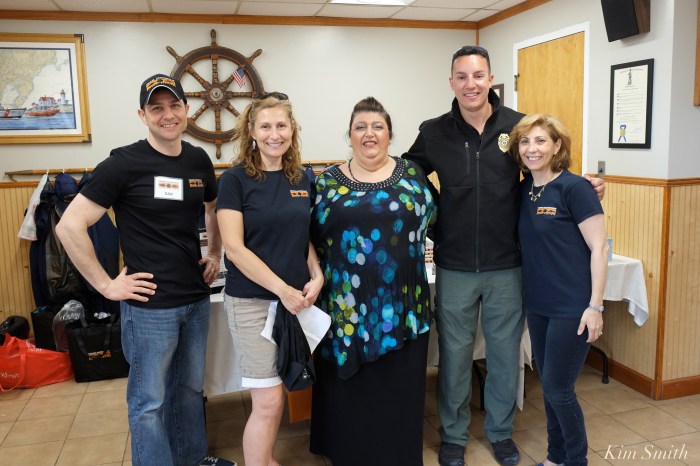
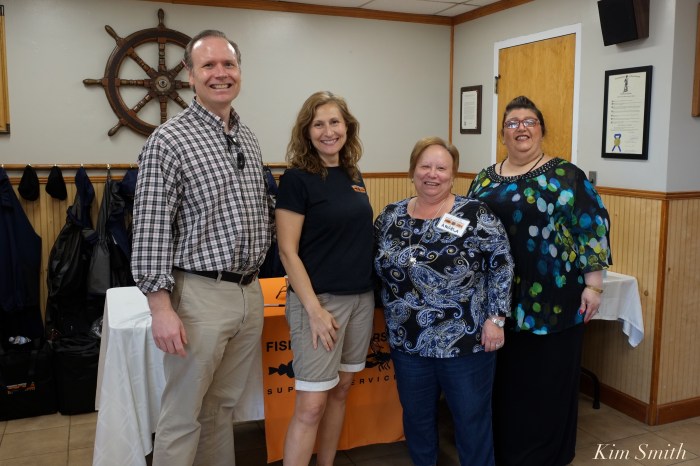
TREMENDOUS DAY OF SAFETY AND SURVIVAL TRAINING AT THE USCG WITH THE FISHING PARTNERSHIP SUPPORT SERVICES
A full day of Safety and Survival Training was held today at Gloucester’s Coast Guard Station. SST is cosponsored by the Fishing Partnership Support Services, Division of Marine Fisheries, and the USCoast Guard. “Fishermen are 37 times more likely to die on the job than policemen. And on top of that, New England’s waters are the most dangerous in the country. Safety and survival training is not something to ignore—it’s desperately needed and can truly be life-saving for everyone on your boat.” Training was conducted in these vital areas:
- Man-Overboard Procedures
- Fire Fighting & Emergency Communications
- Flooding & Pump Operation
- Flares & EPIRBs
- Survival Suits
- Life Raft Equipment
- Helicopter Hoist Procedures
- Basic First Aid
To learn more about the Fishing Partnership Support Services Safety and Survival Training, and all the services provided to fishermen, visit their website here.
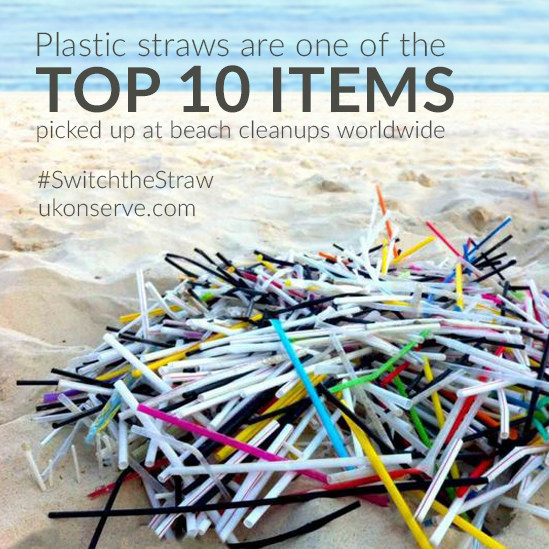
WHERE TO PURCHASE PAPER STRAWS ON CAPE ANN?
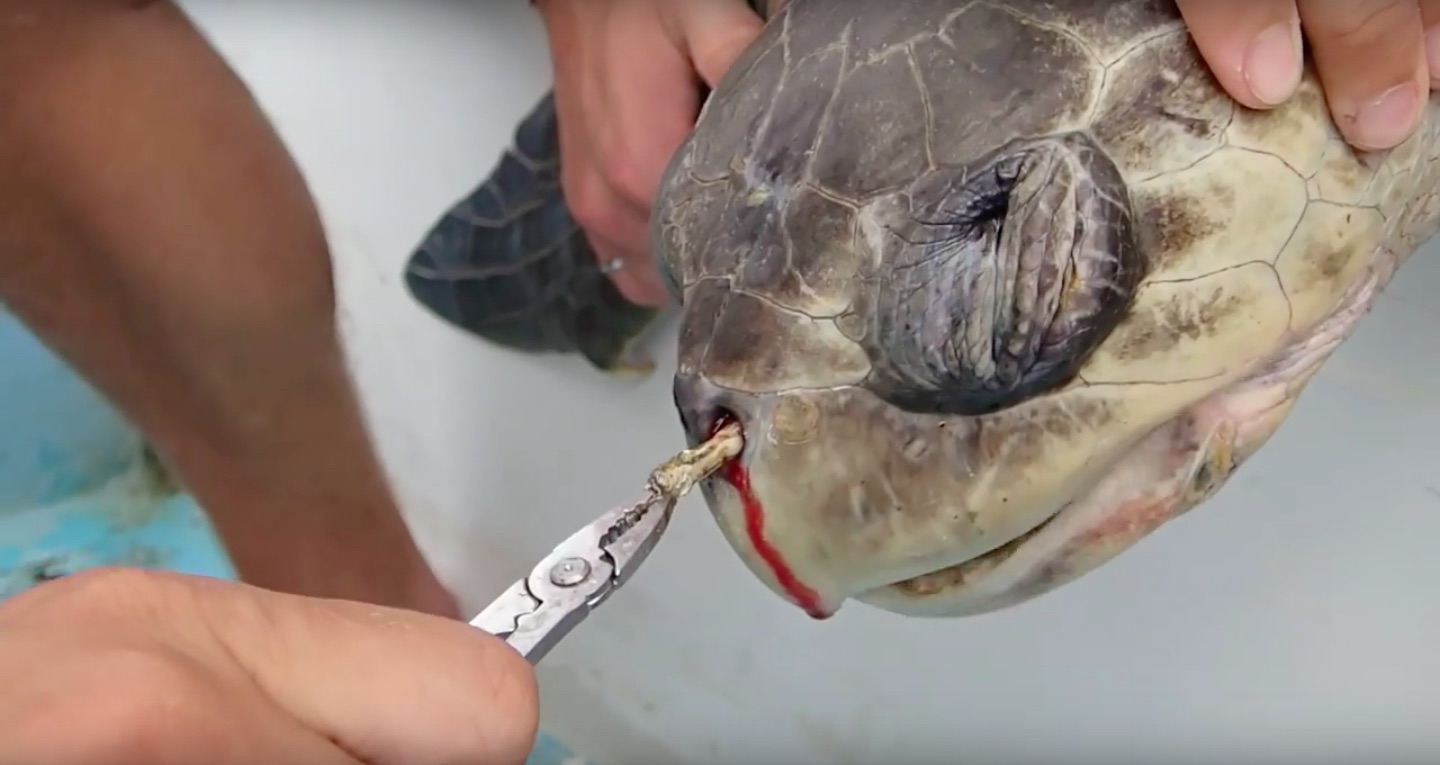
Plastic straw stuck in a turtle’s nostril.
Have you made the switch to glass, paper, bamboo, or metal straws? I love paper straws, they are much easier on wildlife and the environment, and am looking for a local place to purchase. Paper straws are carried randomly at the grocery market and I can find them online, but I was wondering if our readers know who might carry them locally, and with consistency, which led me to wondering also, have any of our local restaurants made the switch to anything-but-plastic straws?
We would love to support these businesses. Please write and let us know if you know of a source and/or of a restaurant. Thank you! 
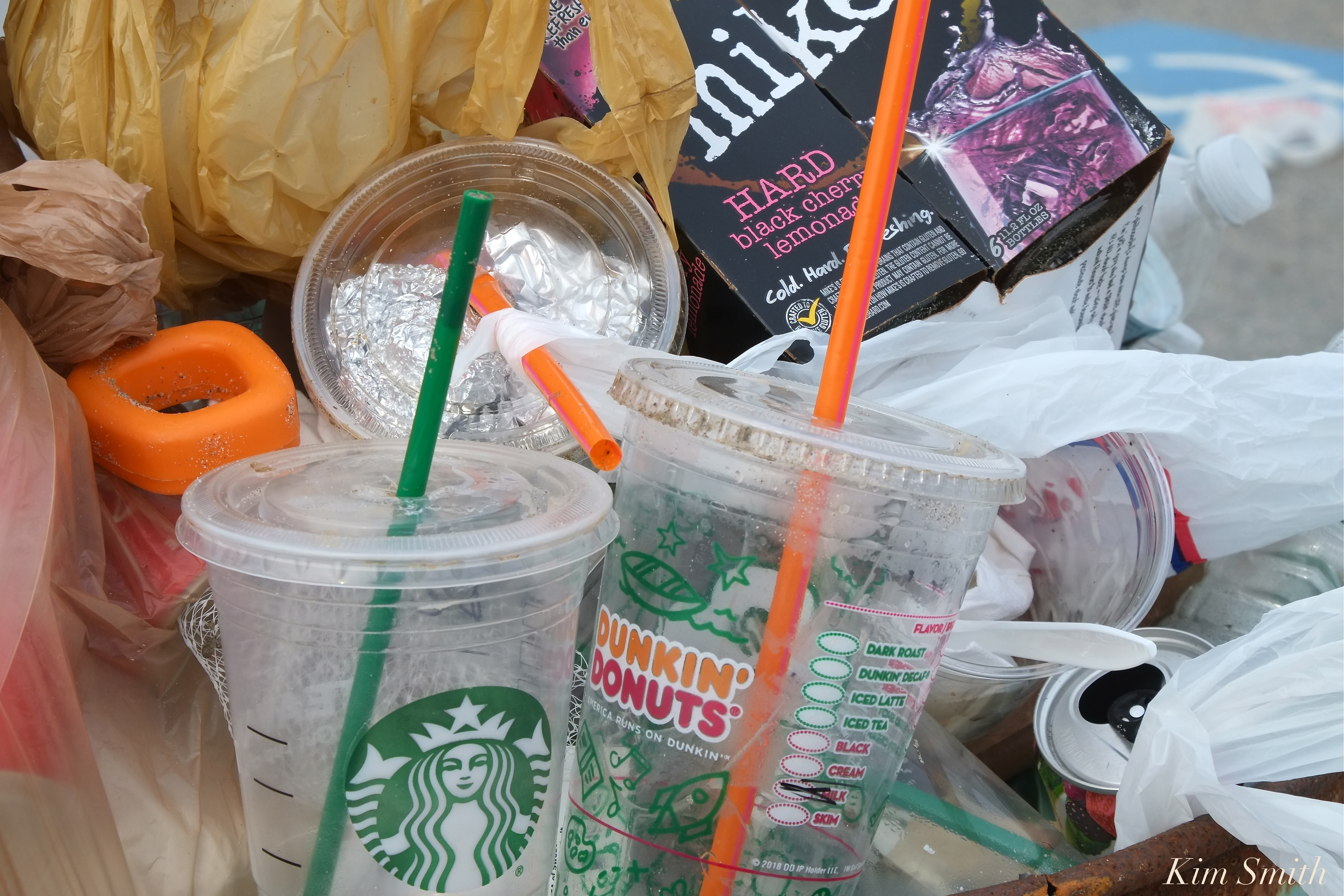
Garbage left on the beach becomes garbage polluting our ocean.
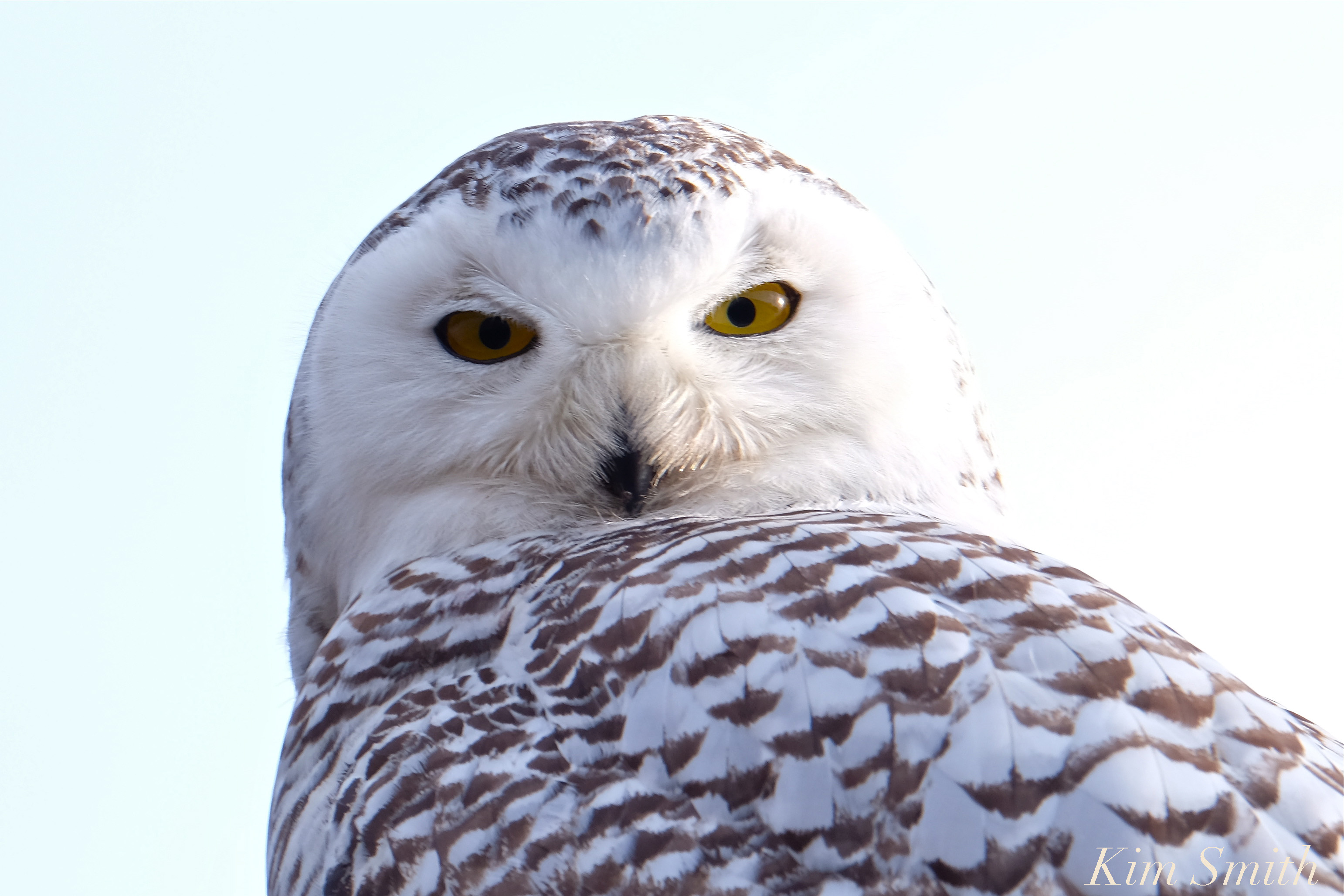
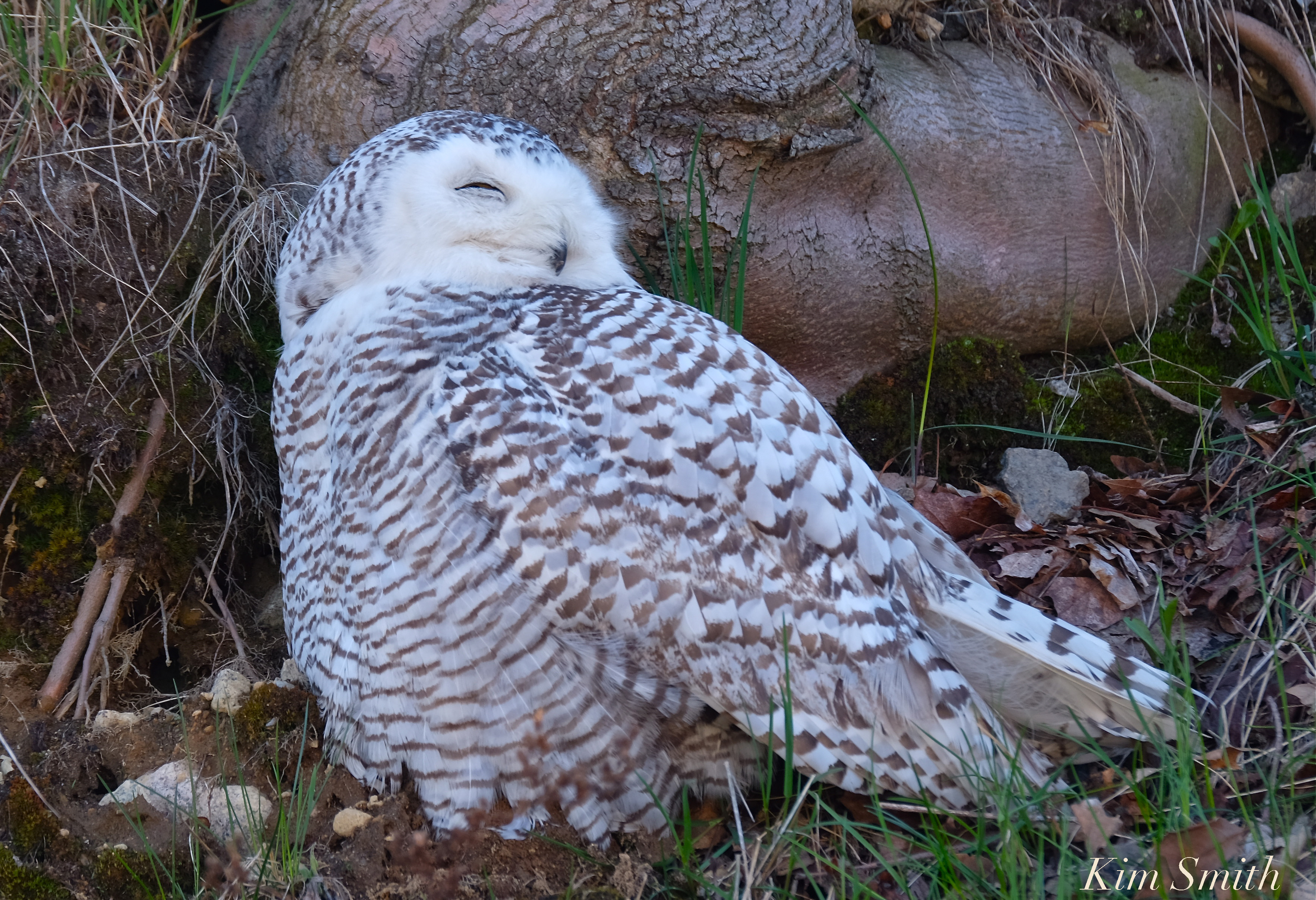
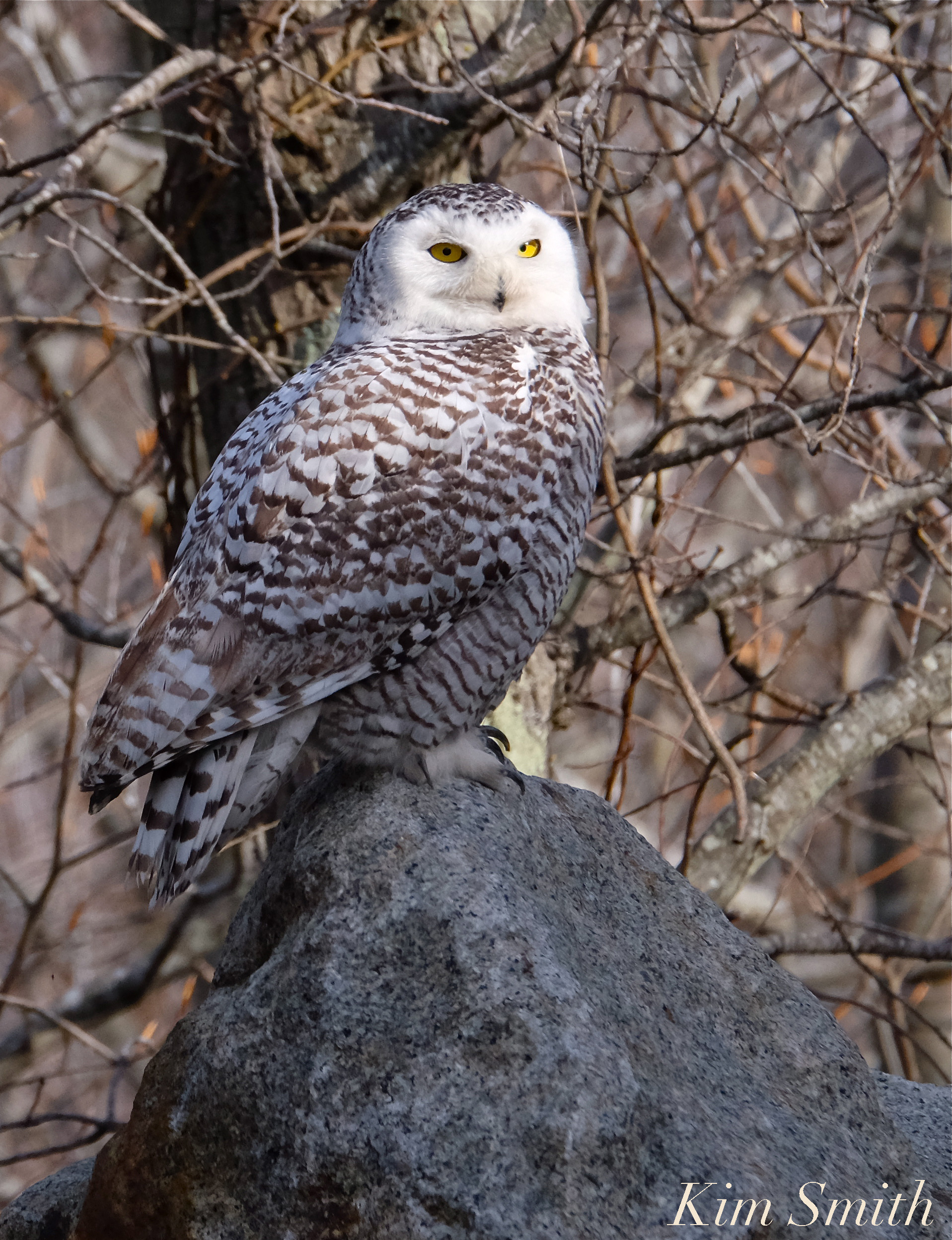
THE RETURN OF OUR SNOWY OWL HEDWIG!!!
At least, I think she is our Hedwig–Betty G. and Dave Fernandez, what do you think? Comparing photos from last winter, the feather patterning around her face looks to me identical.
With thanks and gratitude to Bob and Doug Ryan from Ryan and Wood Distilleries. Bob emailed yesterday afternoon that a Snowy Owl was being dive bombed by crows and gulls. I raced over and she had tucked in under the rocks at the base of a tree.
I took several photos and footage, and just as I had packed up to go, she flew to a large boulder. Immediately, within thirty seconds, a noisy flock of gulls were harassing her from overhead once again, and a few crows dove at her. She then flew to the nearest building. The crows and gulls pestered her for another fifteen minutes, while she quietly perched.
To write “return” is not entirely accurate. She was probably here all along. As soon as work began on the Atlantic Road hotel roofs, we no longer saw her at the back shore. I thought Hedwig might still be here last month, but wasn’t positive, and then Alicia wrote to say she had seen a Snowy and thought it could possibly be Hedwig. It was difficult to confirm without looking at closeups from a long lens. I searched around Alicia’s location for several days but could not find.
Considering most Snowies have left Massachusetts by April, it’s wonderful to have a record of her here in Gloucester in early May. I am elated, and grateful, to Bob and Doug for the call, because now we have footage of her in a rocky woodland Cape Ann setting! Thank you, thank you!
The reason crows mob owls is because some owl species, like the Great Horned Owl, eat crows. Snowy Owls (Bubo scandiacus) and Great Horned Owls (Bubo virgianus) are closely related.
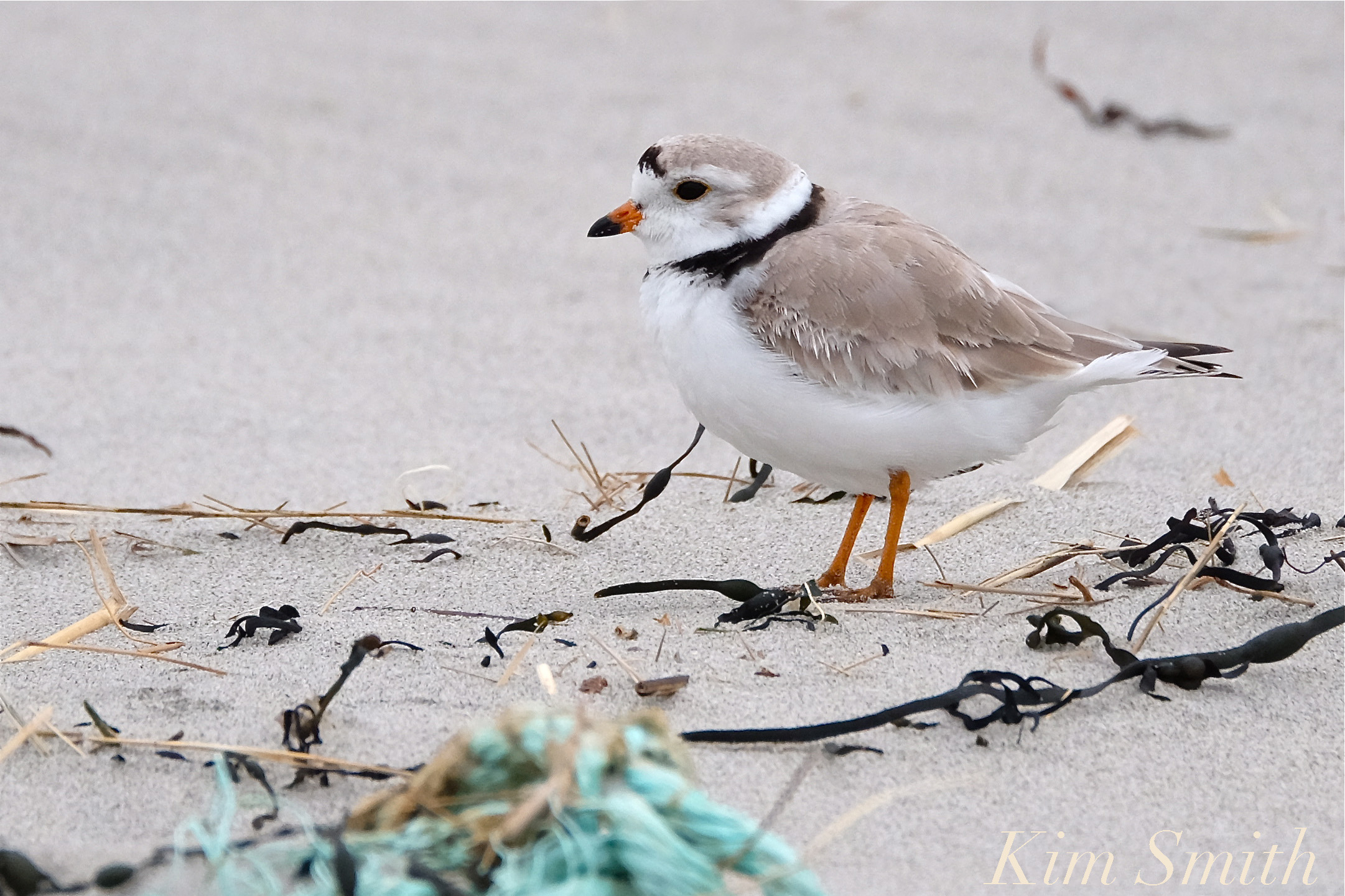
BEAUTIFUL MORNING AT GOOD HARBOR BEACH WITH THE PIPL!
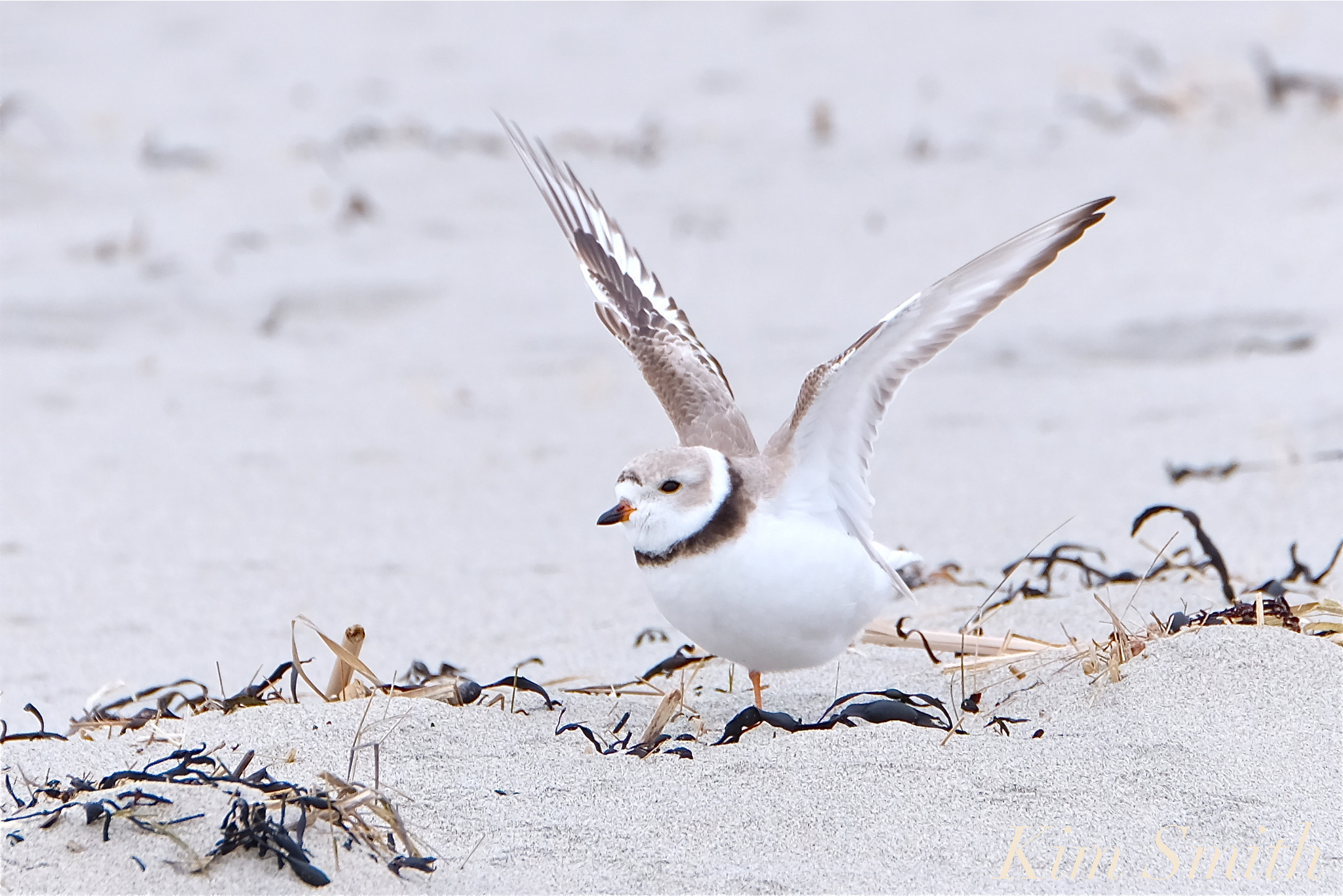
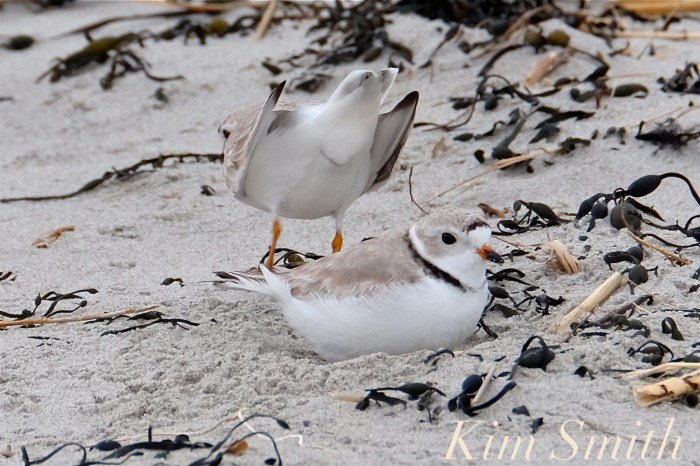
Mama PiPl stretching her wings before flight
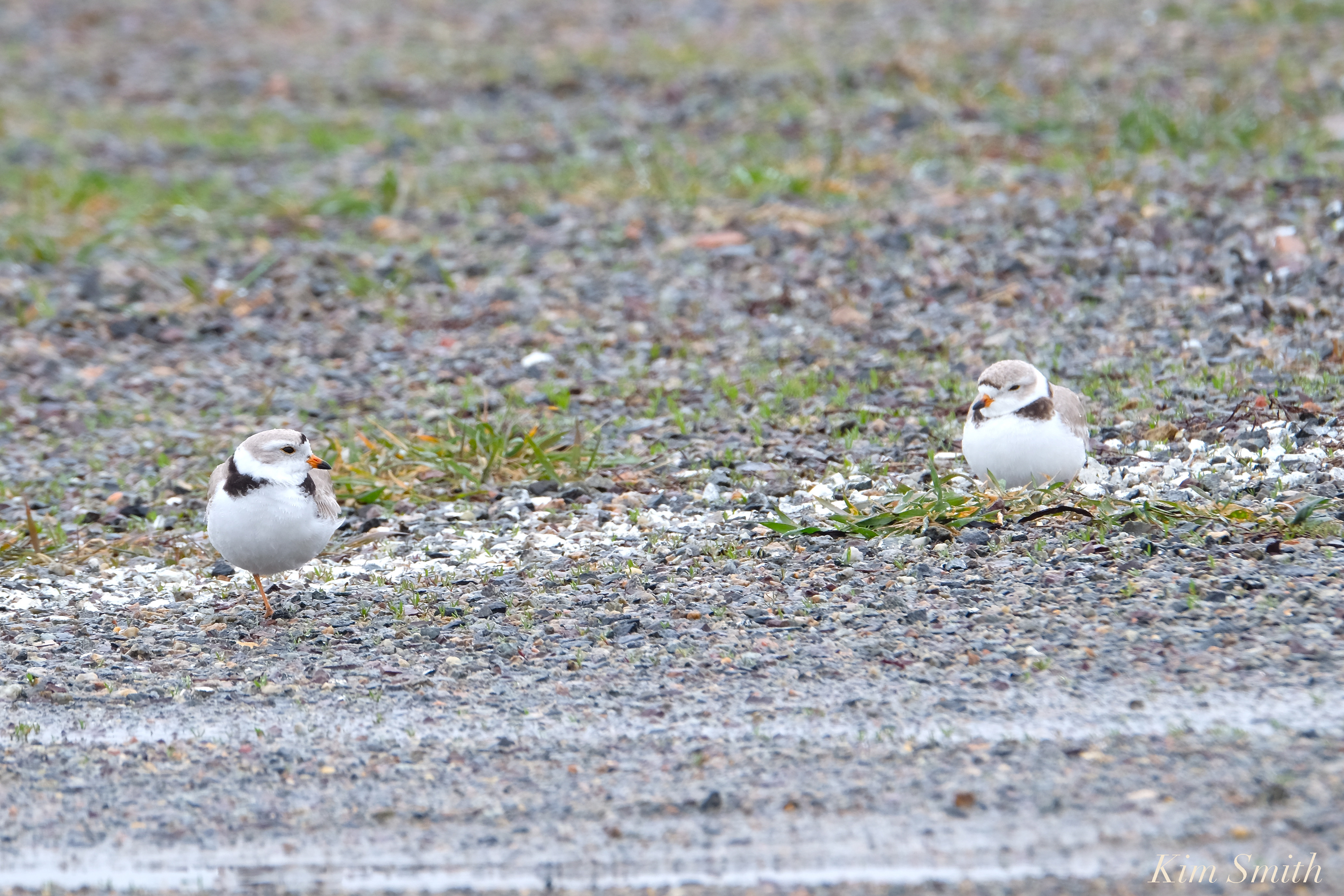
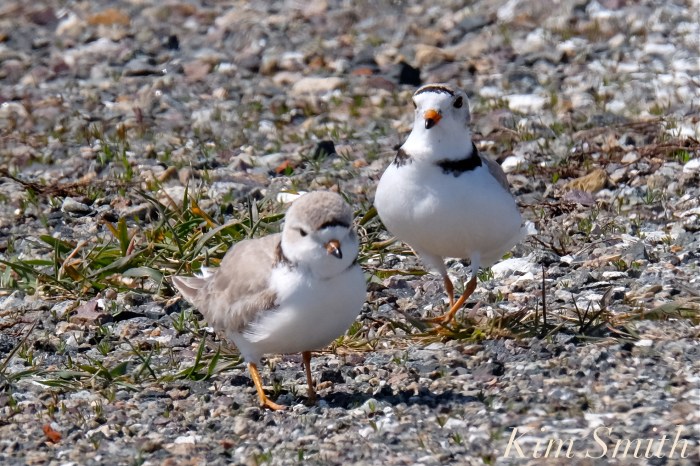
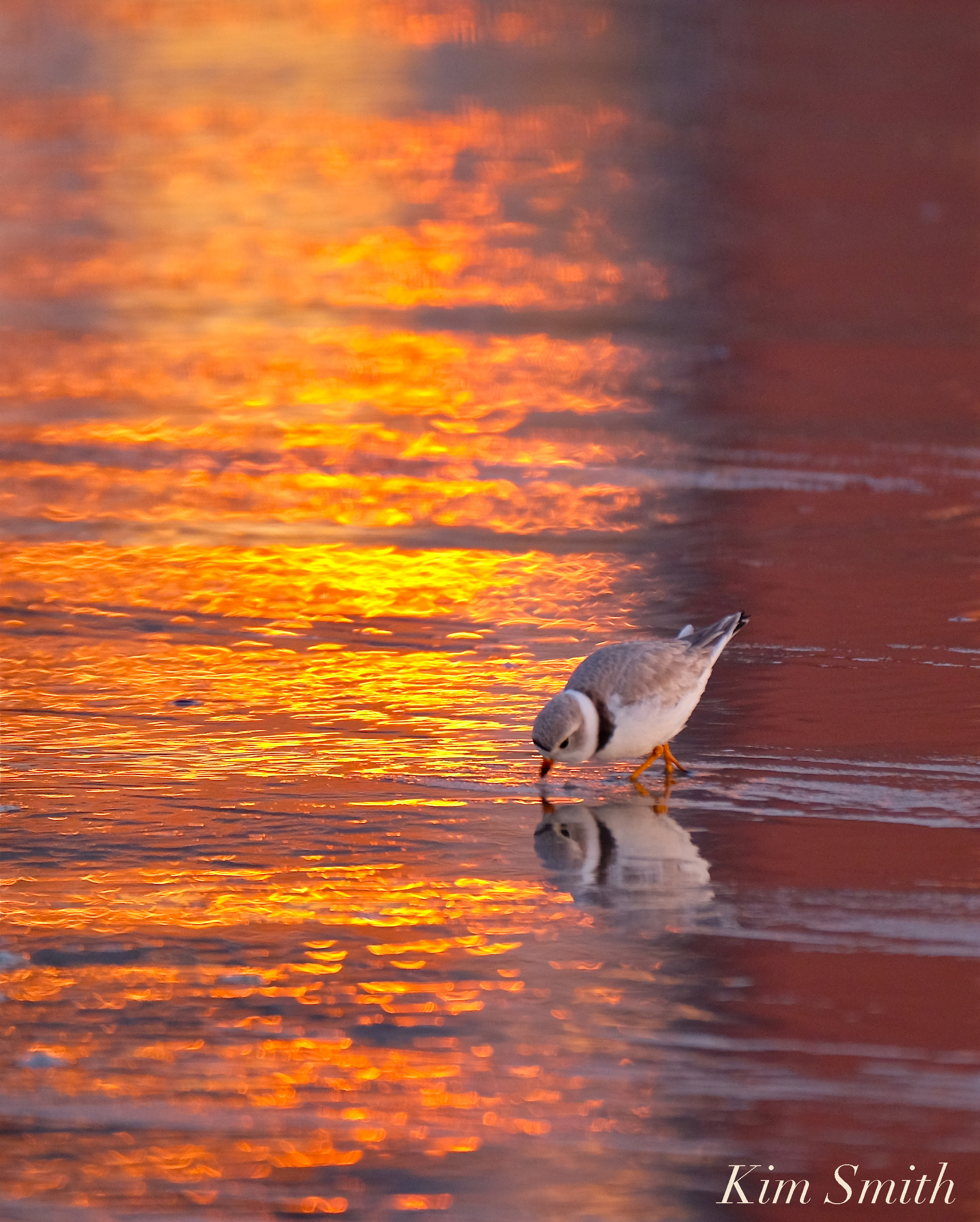
Just a very brief update about the PiPl, more tomorrow–but to let you know, today was heaven on earth for the Plovers. All three were spotted feeding without interruption in the tide pools and in the nesting area. Mama and Papa are still spending some time at the parking lot nest, but not twelve hour shifts as has been the case. I think it will take a few calm days to get them back to the beach full time. And our awesome Officer Teagan was on the job today handing out tickets!
Helpful tip for watching and photographing the Piping Plovers: PiPl are not like Snowy Owls, which unlike our Hedwig, did not mind crowds. PiPl flush much more easily. While we are trying to help the PiPl return full time to the beach especially, if you come to GHB to see the PiPl, please stay a good distance back. The roped off area is much narrower than the past two years. Deeper is better, but because we have lost so much beach to erosion, the nesting area is as wide as possible, but not quite wide enough for the comfort and safety of the PiPl. Approach singularly, quietly, and slowly, stay a few moments and then retreat. Additionally, too much attention to the PiPl draws the crows and gulls as well.
https://www.instagram.com/p/BiPFy92nvk2/
HELP BACKYARD GROWERS WIN $5,000.00!
Hello Friends of Backyard Growers,
Backyard Growers is on BankGloucester’s voting ballot for the first time for a chance to win up to $5,000!
Please help us rake in the votes!
Voting is from 5/1-5/31. You just need to vote once. And please share this opportunity with your networks!
VOTE HERE: https://bankgloucester.com/ballot
Many thanks,
Lara
Gloucester Civil War Coat Update from George and Charles King
Update about the Bacheler Civil War coat from the irrepressible brothers Charles and George,
“Hello,
ORCHESTRAL OPERA GEMSFROM THE CAPE ANN SYMPHONY: Verdi, Puccini, Wagner, Bizet, Weber, Tchaikovsky, Leoncavallo, Mascagni, Ponchielli
THE 66th SEASON
Yoichi Udagawa, Music Director
CAPE ANN SYMPHONY CLOSES THE 66th SEASON ON
SATURDAY, MAY 19:
An Evening of Passionate Orchestral Music
From the World of Opera :
ORCHESTRAL OPERA GEMS
Verdi, Puccini, Wagner, Bizet, Weber, Tchaikovsky, Leoncavallo, Mascagni, Ponchielli
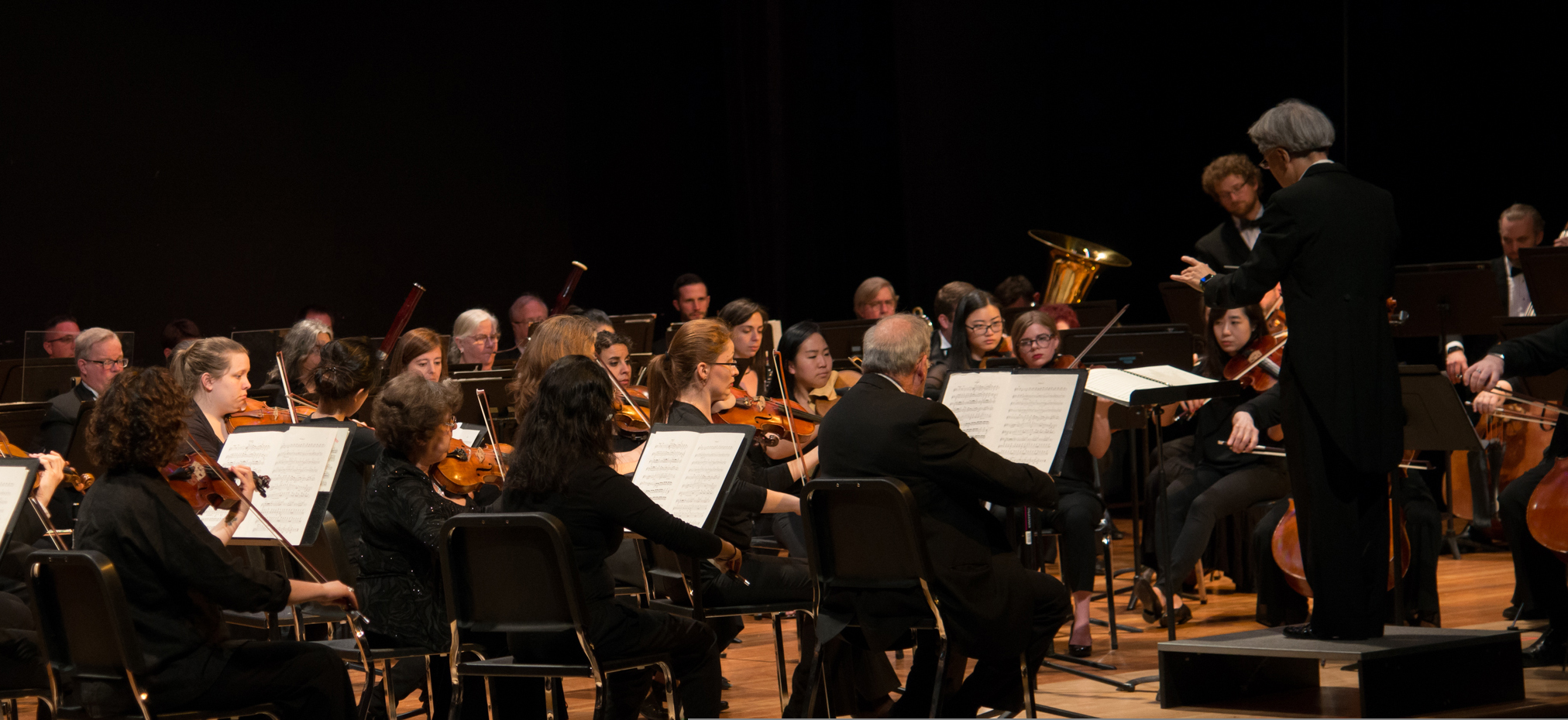
Orchestral Opera Gems close the Cape Ann Symphony’s 66th Concert Season on Saturday, May 19 at 8 pm at the Manchester-Essex High School Auditorium on 36 Lincoln Street in Manchester-by-the-Sea, MA. A romantic and moving program, Orchestral Opera Gems features orchestral masterpieces from renown and beloved operas by Wagner, Puccini, Verdi, Leoncavallo, Mascagni, Ponchielli, Weber, Tchaikovsky, and Bizet. For tickets and information, call 978-281-0543 or visitwww.capeannsymphony.org.
Famed composers Wagner, Puccini, Verdi, Leoncavallo, Mascagni, Ponchielli, Weber, Tchaikovsky, andBizet take center stage for the CAS Orchestral Opera Gems Concert on May 19. Cape Ann Symphony Conductor and Music Director Yoichi Udagawa points out, “Some of the most passionate and emotional music written for the orchestra comes from the world of opera. The stories of love, jealously, loss, longing and romance were captured in music by great composers such as Verdi, Puccini, Mascagni, Leoncavallo, Bizet and Wagner. Many of these operas feature interludes of incredible symphonic music, and we’ve selected some favorites for the May concert.” The Orchestral Opera Gems program includes Leoncavallo’s Intermezzo from I Pagliacci; Tchaikovsky’s Polonaisefrom Onegin; Mascagni’s Intermezzo from Cavaleria Rusticana; Puccini’s Intermezzo from Manon Lescaut; Ponchielli’s Dance of the Hours from La Gioconda ; Verdi’s Prelude to Act 3 from La Traviata; Bizet’s Carmen Suite No. 1; Weber’s Overture to Oberon; and Wagner’s Meistersinger Overture and Siegfried’s Rhine Journey from Götterdämmenrung. Udagawa adds, “Make sure you come to this very romantic concert with someone you’re madly in love with.”
In July of 1888 Mascagni entered a competition in Milan open to all young Italian composers who had not yet had an opera performed on stage. One-act operas would be judged by a jury and the three best operas would be staged in Rome. Mascagni chose Cavalleria Rusticana, a popular short story and play and in two months, he composed the opera. Among the 73 operas submitted,Cavalleria Rusticana was chosen as one of
the three to be produced. The opera premiered to huge success on May 19, 1890 with Mascagni taking 40 curtain calls.
READ MORE HERE
HEARTBREAKING TO SEE PIPING PLOVERS NESTING IN THE GOOD HARBOR BEACH PARKING LOT
THE PIPING PLOVERS HAVE GIVEN UP ON THE BEACH AND ARE NESTING IN THE PARKING LOT.
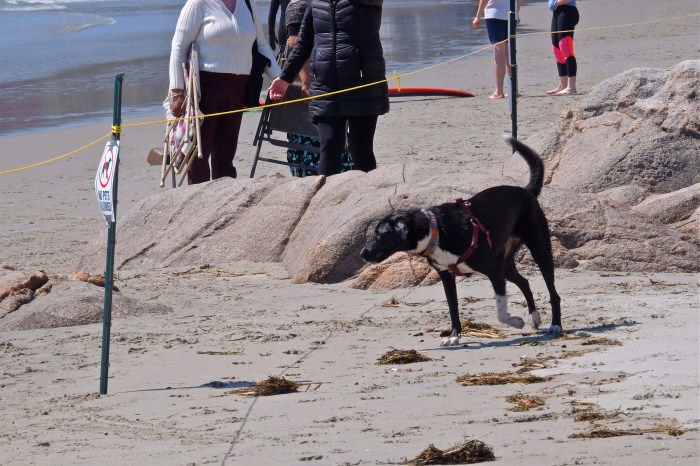
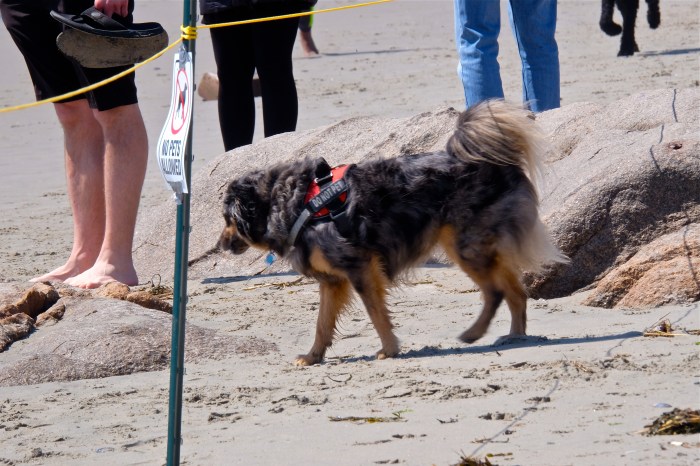
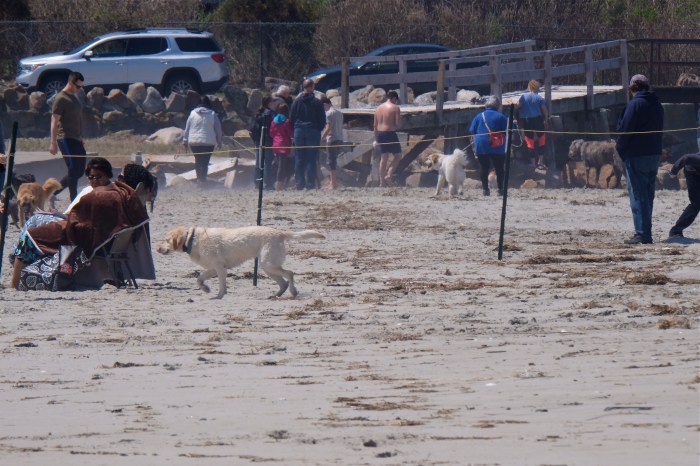
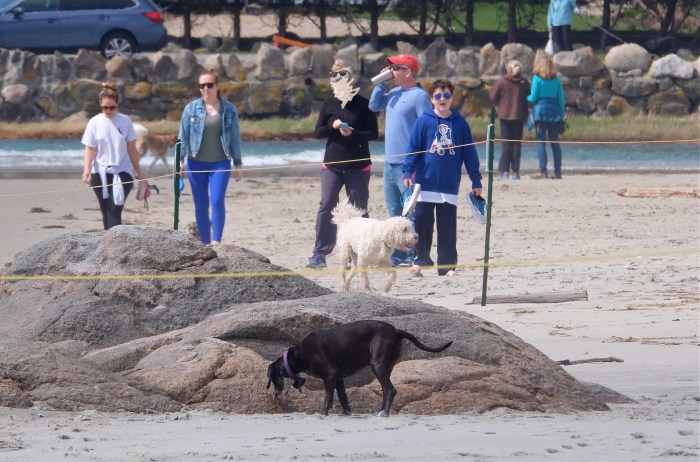
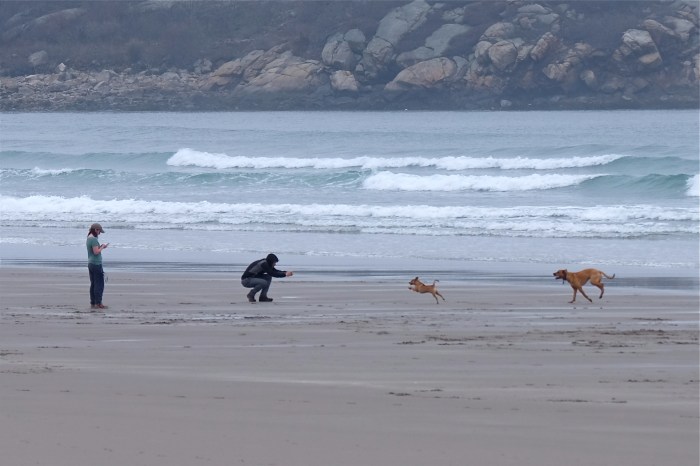
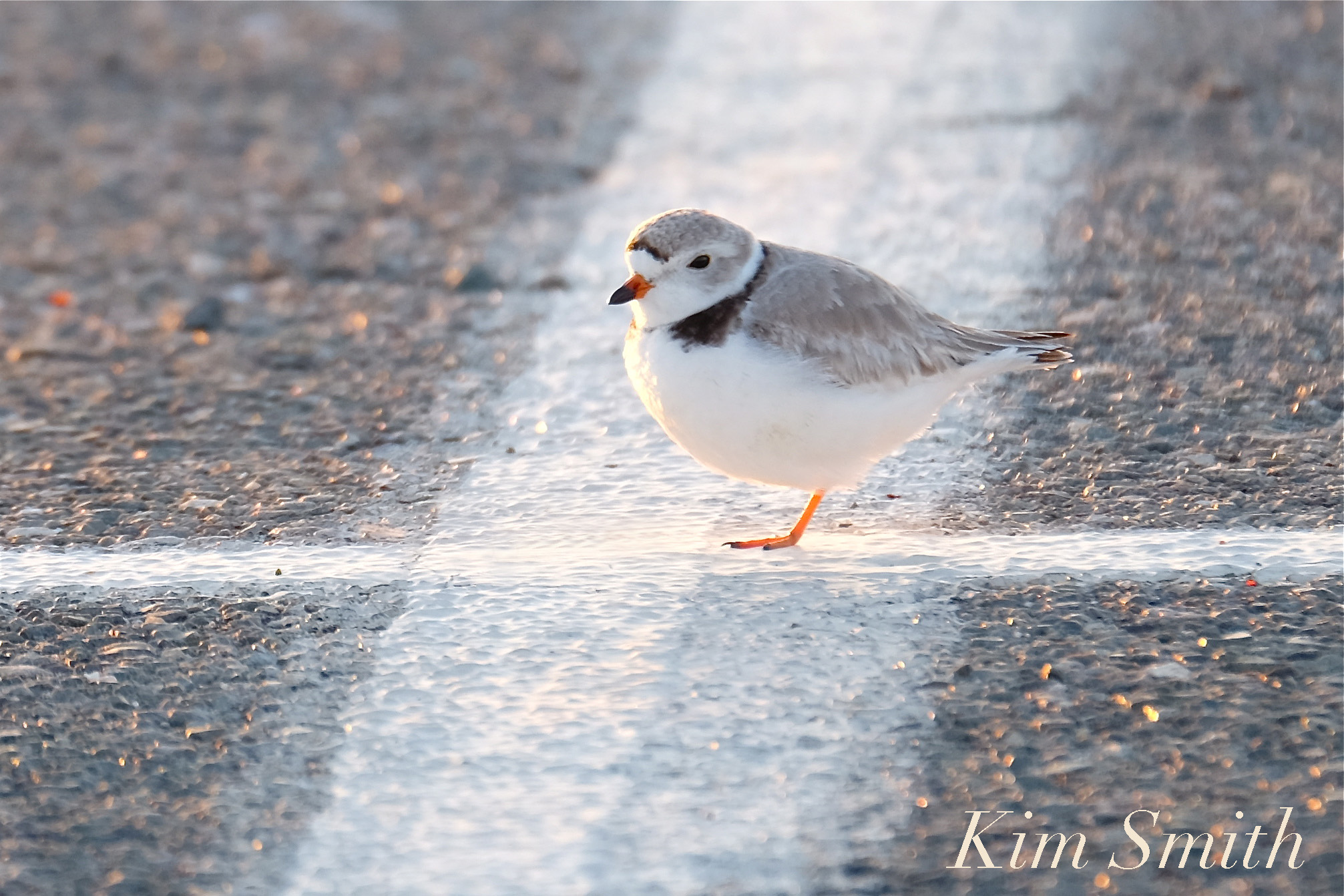
During some part of each of the past four off leash beach days, the Piping Plovers have been found in the parking lot, forced off the beach by a barrage of dogs in the nesting area, and dogs chasing them up and down the beach. For the first three of those four off leash days that they were driven off the beach, the PiPl spent a good part of the time going from white painted line to white painted line, using the color white as camouflage against predators such as hawks, crows, and falcons. They are miniature “sitting ducks” when in the parking lot, not only to natural predators, but because they are so well camouflaged, and so tiny, they are in tremendous danger from car and truck drivers who would not see them until it is too late.
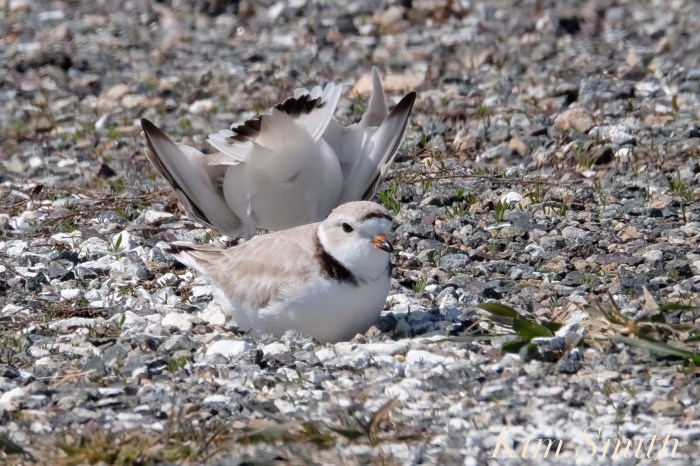
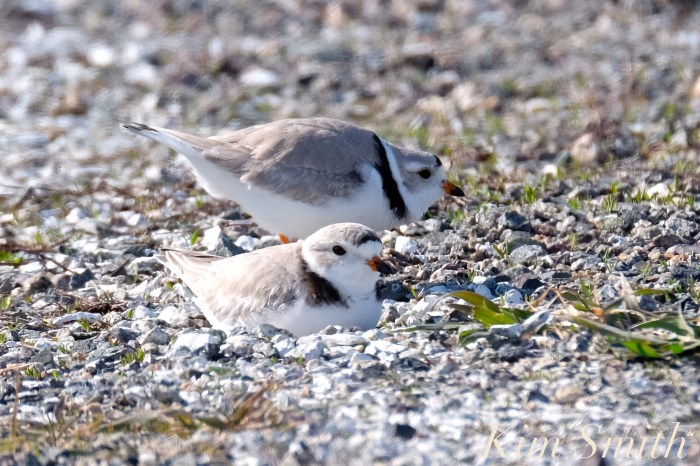
Nesting and courting in the parking lot.
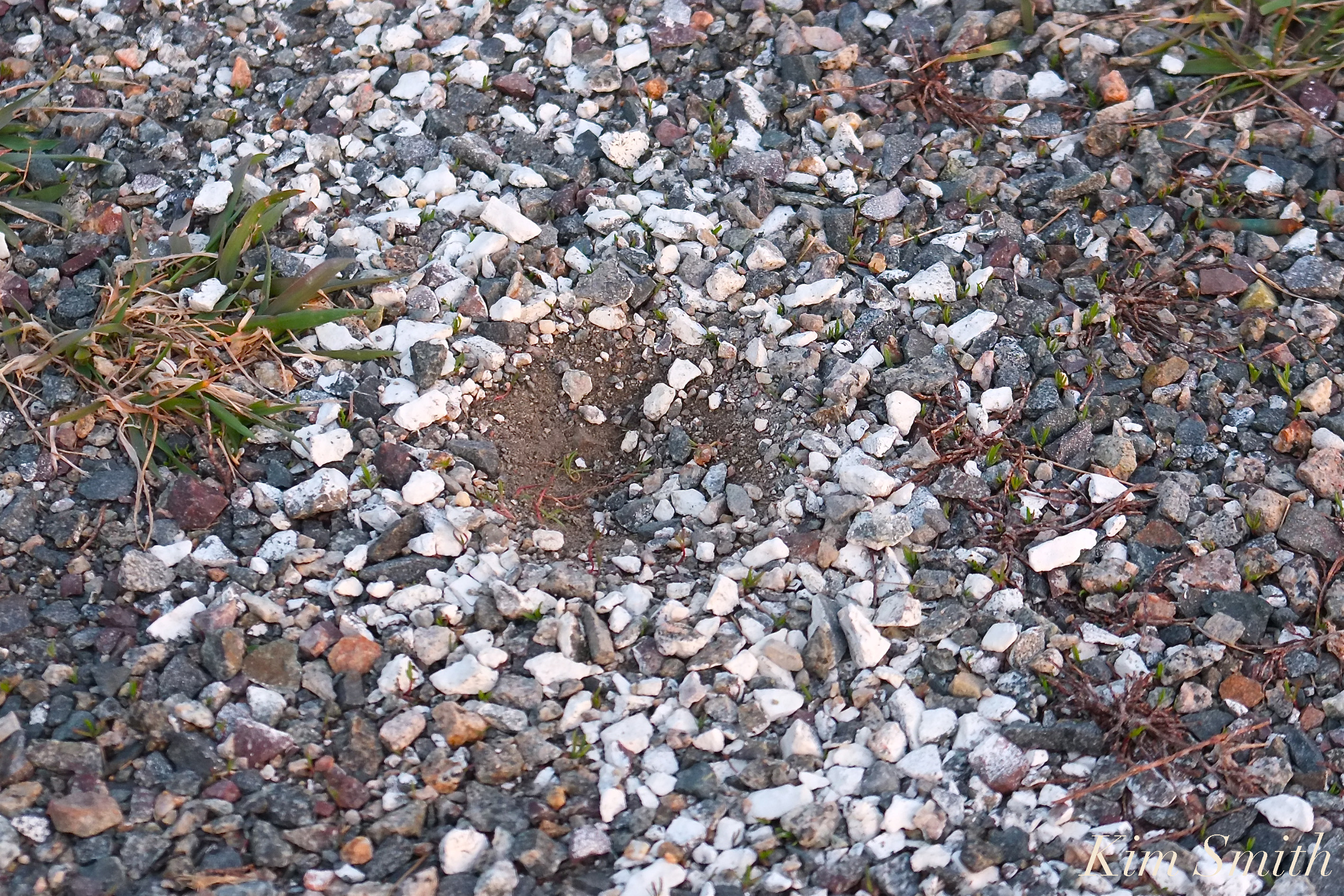
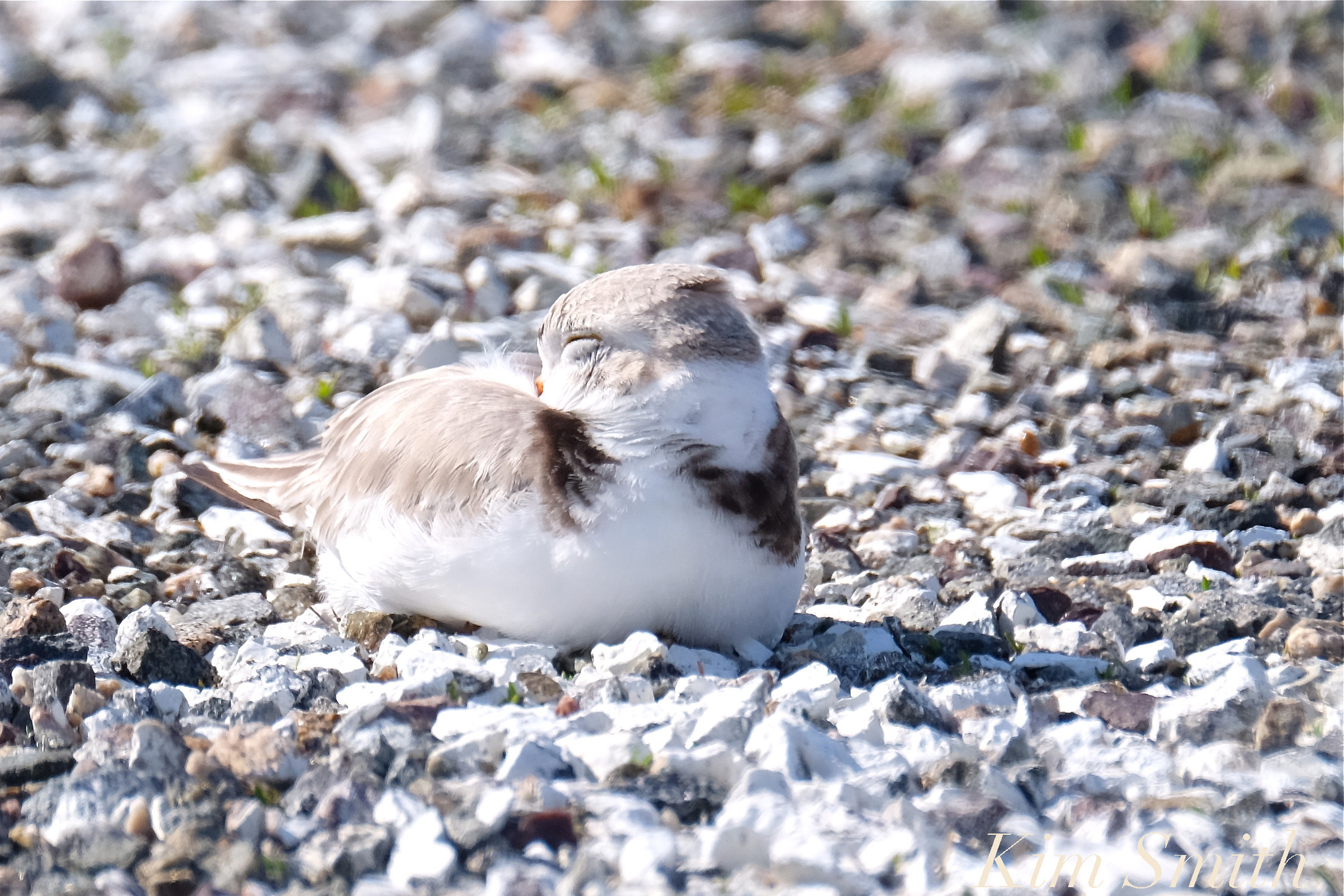
Yesterday morning at 7am, an off leash day, the PiPl were chased off the beach by a dog and its owner. They flew to the parking lot. For the next twelve and a half hours, Mama and Papa did not leave the parking lot. They did not eat or drink, but spent the entire time courting, mating, and building a nest scrape in the gravel, traveling from white line to white line. It was sadly beautiful and heartbreaking to watch. Beautiful in the way that no matter what obstacles they face, the little pair’s desire to reproduce is so powerful that they will continue to try, even in a habitat that is so wholly unsuitable for raising chicks. Sad and heartbreaking because this scenario was unquestionably and completely unnecessary.
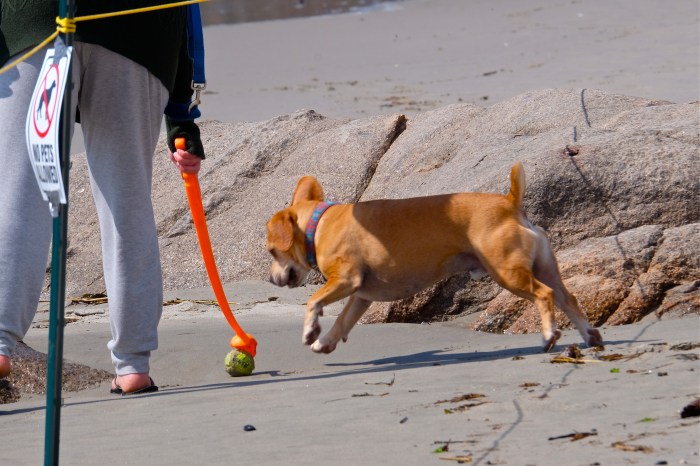
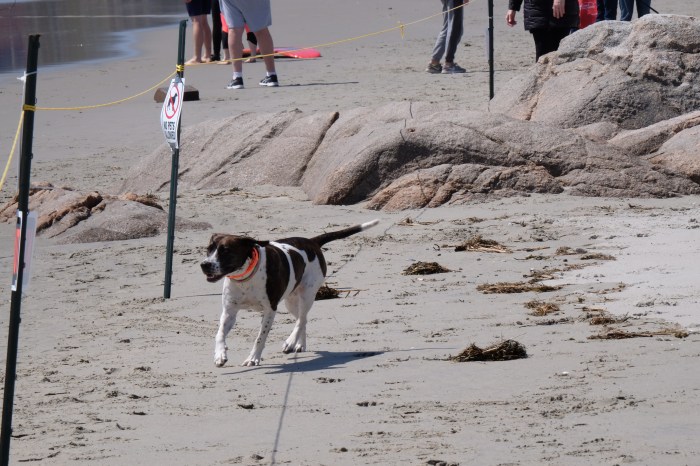
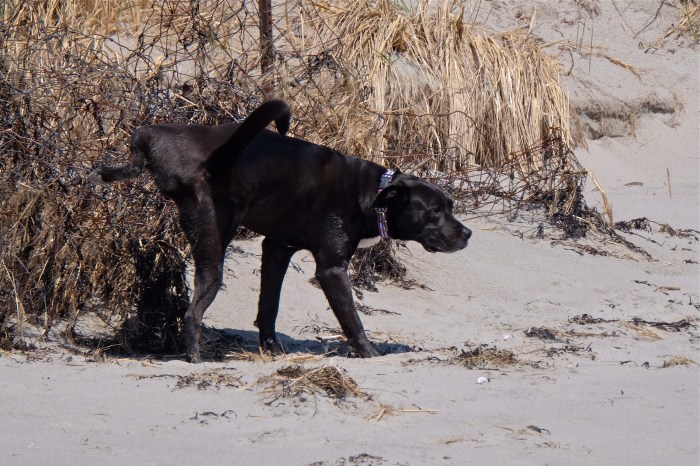
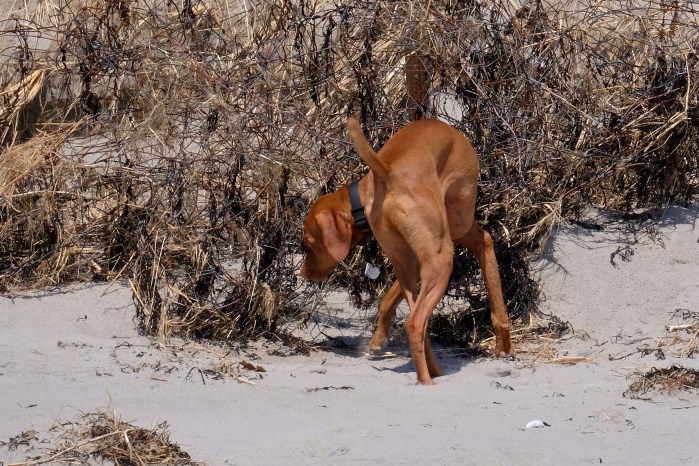
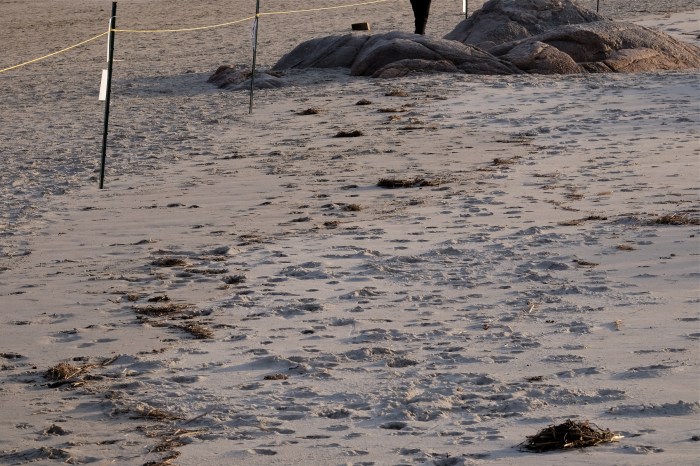
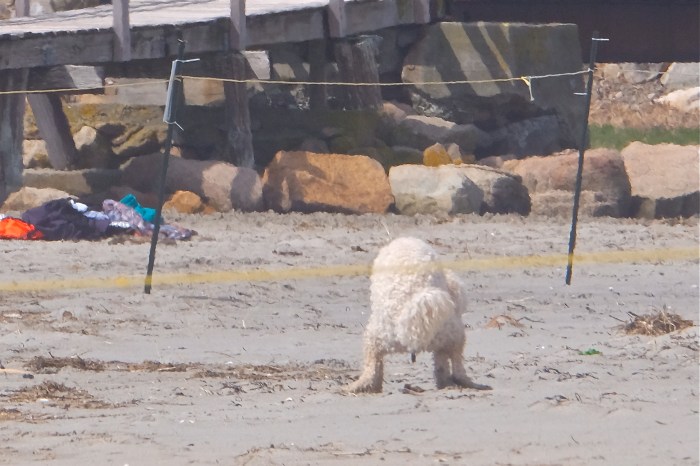
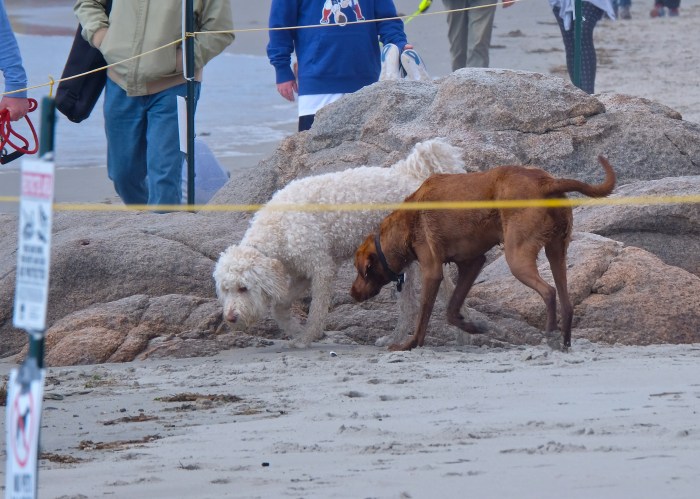
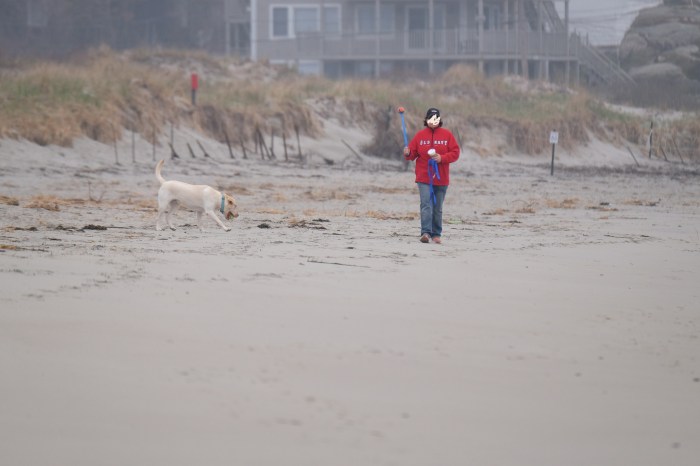
Yesterday the dogs were in the nesting area, poohing, peeing, romping, and digging. It happened throughout the day, from 6:30am to 8pm, but was especially challenging during high tide, when so little beach remains. The following batch of photos was taken in the short period of time that I was on the beach and not in the parking lot, as the tide was receding.
When dog owners were asked by volunteer Preston if they were aware of the PiPl–most said yes–as they allowed their dog to wander into the nesting area.
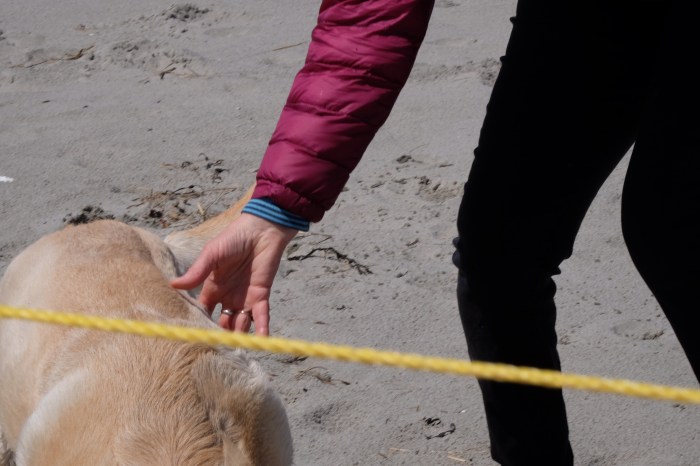
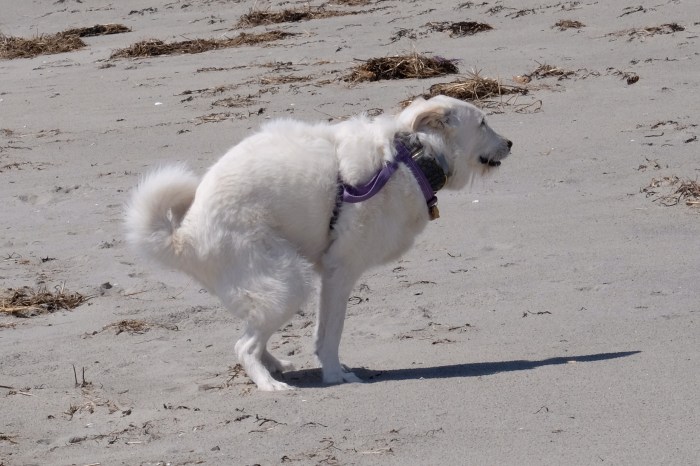
Dog runs into nesting area, dog goes poop, owner enters nesting area to clean up poop, can’t find poop, has to muck around in nesting area to find, finally finds poop, cleans up, dog meets a new friend in the nesting area.
Last night Mama and Papa flew back to the beach after the coast was clear, at sunset. As you can imagine, they were ravenous, and ate with great gusto at the water’s edge.
The Bachelor returned to the nesting area at sundown, too.
Early this morning I found all three eating and bathing in the tide pools, before they were chased off again later in the morning. As I write this, the Mama and Papa are taking turns sitting on their nest scrape, in the rain, in the parking lot.
The Piping Plovers can’t catch a break – off leash dogs this morning on an on leash day.
It is difficult for the animal control officers to give out tickets as the ordinance is written, when it is an off leash day, especially when the dogs are running willy nilly and far away from their owners. And it is impossible for them to be there 24/7.
Early this morning, which is an on leash day, Officer Dolan was handing out tickets.
https://www.instagram.com/p/BiJ6B7DH765/
Call your councilors and Mayor Sefatia’s office and let them know your thoughts on protecting the Piping Plovers. Tomorrow is the last day of the spring summer season 2018 that dogs are allowed on the beach. But they are not allowed under ANY circumstances in the nesting area. If you see a dog on the beach at any time of day or night after April 30th please call the dog officer at 978-281-9746. Thank you.
I have an idea to make a brochure to not only hand out to people at the parking lot entrance to the beach, but to circulate door to door around the neighborhood. We need to help folks understand why it is so important that we help the PiPing Plovers.
Thank you to all the volunteers who helped yesterday. If you came and I unfortunately did not see you it is because most of the day was spent in the parking lot. Thank you to Lillian and Craig, Leontine, Deborah, Heather, and Preston for your good work!!
Mama sleeping on the white lines in the parking lot
THE ESSEX SHIPBUILDING MUSEUM ANNUAL DIGITAL PHOTOGRAPHY WORKSHOP
CAPE ANN SYMPHONY PRESENTS ORCHESTRAL OPERA GEMS ON SATURDAY, MAY 19
THE 66h SEASON
Yoichi Udagawa, Music Director
CAPE ANN SYMPHONY PRESENTS
ORCHESTRAL OPERA GEMS
ON SATURDAY, MAY 19
Passionate Works from the World of Opera by Composers:
Verdi, Puccini, Wagner, Bizet, Weber, Tchaikovsky, Leoncavallo, Mascagni, Ponchielli,
Close 66th Concert Season
Cape Ann Symphony wraps up the orchestra’s 66th Concert Season on Saturday, May 19 at 8 pm at the Manchester-Essex High School Auditorium on 36 Lincoln Street in Manchester-by-the-Sea, MA with Orchestral Opera Gems, a program featuring romantic and stirring works from the world of opera. Cape Ann Symphony celebrates orchestral masterpieces from renown and beloved operas byWagner, Puccini, Verdi, Leoncavallo, Mascagni, Ponchielli, Weber, Tchaikovsky, and Bizet. Accordingto Cape Ann Symphony Conductor and Music Director Yoichi Udagawa, “The May concert features some of the most passionate and incredible music written for orchestra from the world of opera. It’s gorgeous music, and the musicians of the orchestra and I can’t wait to present it to our audiences!” The May concert program includes Leoncavallo’s Intermezzo from I Pagliacci; Tchaikovsky’s Polonaise fromOnegin; Mascagni’s Intermezzo from Cavaleria Rusticana; Puccini’s Intermezzo from Manon Lescaut; Ponchielli’s Dance of the Hours from La Gioconda ; Verdi’s Prelude to Act 3 from La Traviata; Bizet’s Carmen Suite No. 1; Weber’s Overture to Oberon; and Wagner’s Meistersinger Overture and Siegfried’s Rhine Journey from Götterdämmenrung. Cape Ann Symphony presents Orchestral Opera Gems on Saturday, May 19 at 8 pm at the Manchester-Essex High School Auditorium on 36 Lincoln Street in Manchester-by-the-Sea, MA. For tickets and information, call 978-281-0543 or visit www.capeannsymphony.org.
Photos by Jeph Ellis
WE NEED VOLUNTEER PIPING PLOVER MONITORS SATURDAY AT THE PIPL NESTING AREA #3
No one paid attention to our signs that we added to the nesting area yesterday. My friend Deborah Cramer stopped by to see the PiPl and watched half a dozen dogs running through and playing in the nesting area. When I returned to the beach at 6:30, the PiPl were in the parking lot, again driven out of the nesting area by off leash dogs. Very frightening when an SUV drove past and they didn’t budge.
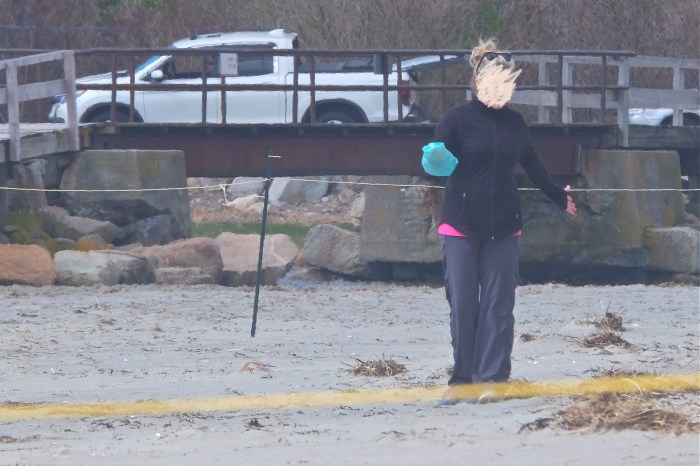
While the PiPL were in the parking lot, I thought would be good time to reinforce the signs with duct tape. When at the nesting area adjusting signs, there were more dogs owners allowing dogs to run through and completely ignoring the signs.
Reading the federal regulations from the USFWS:
“Pets should be leashed and under control of their owners at all times from April 1 to August 31 on beaches where piping plovers are present or have traditionally nested. Pets should be prohibited on these beaches from April 1 through August 31 if, based on observations and experience, pet owners fail to keep pets leashed and under control.”
All the signs in the world won’t make people who don’t care, care.
Tomorrow, especially at high tide, and as the skies are clearing, I am afraid will be another terrible situation for the PiPl. If you would like to lend a hand, please email me at kimsmithdesigns@hotmail.com or just come. I will be there for the better part of the day and will show you what to do. High tide tomorrow is at 10:54 am. Thank you!
OCEAN ALLIANCE APPEARING ON NATIONAL GEOGRAPHIC AND RECEIVES A WEBBY ALL IN ONE WEEK!
Congratulations to Iain Kerr and Ocean Alliance!
Iain writes,
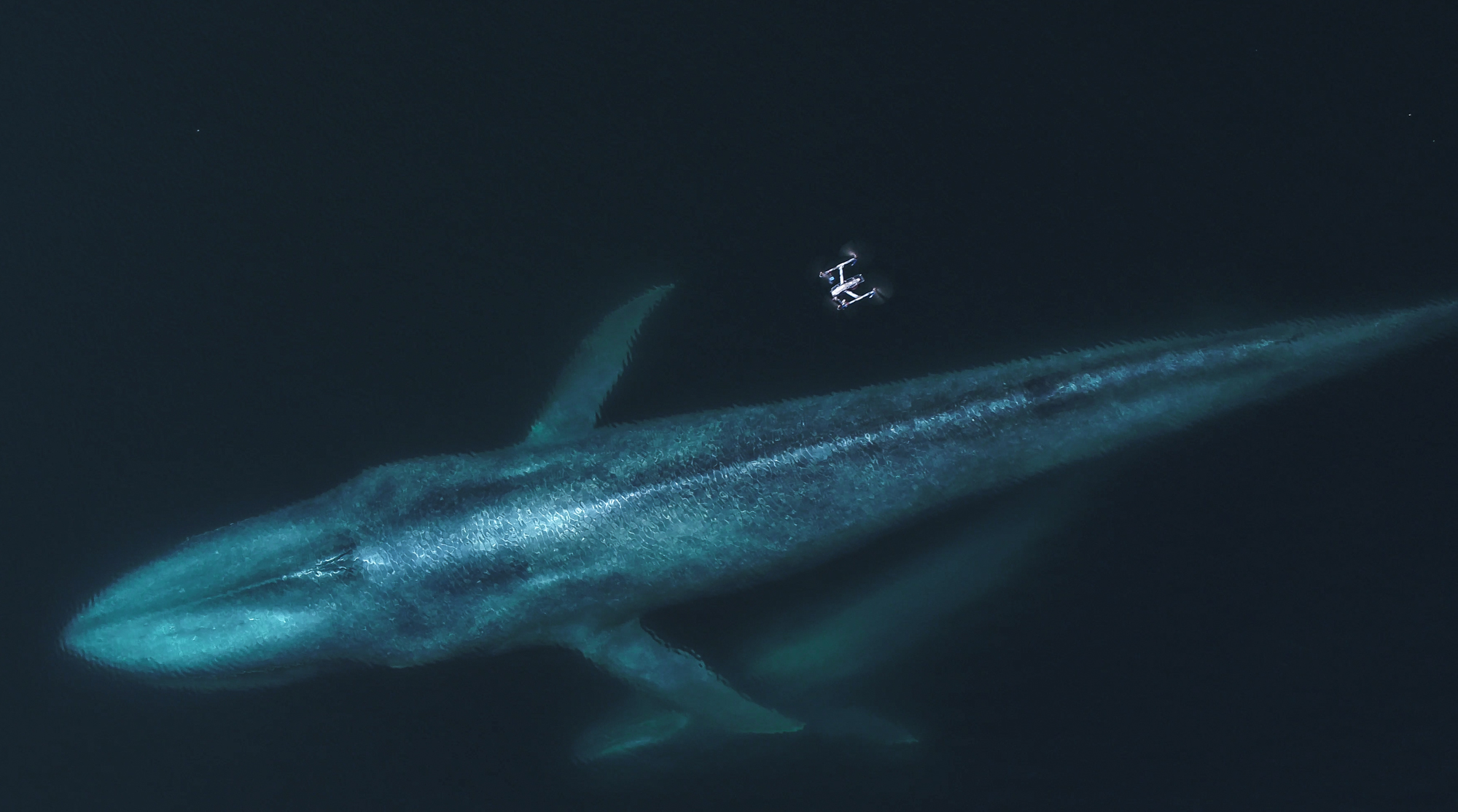
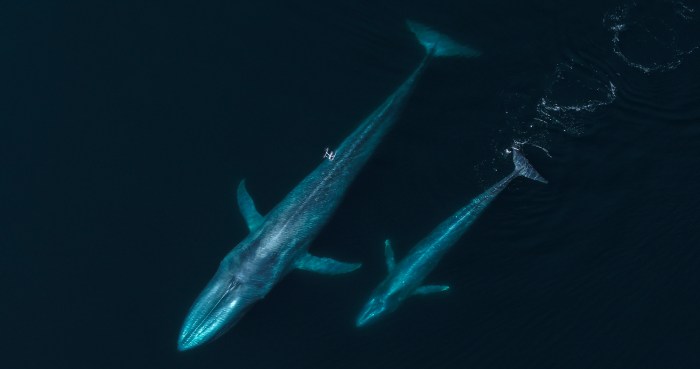
“On Monday April 30th 10:00 pm East Coast time our 2017 Sea of Cortez, Parley SnotBot field season will be featured in the National Geographic channel show. One Strange Rock.
I think that our presence in this show will be brief.
Yesterday we learnt that our Intel / Parley SnotBot production Below the Surface won a webby (this is like an Emmy but for web produced products).
Onwards Upwards.
PHOTOS BY CHRISTIAN MILLER
Lyricora Returns to the Annisquam Village Church
Lyricora returns to the Annisquam Village Church
|
|
Beautiful Fish: Snipe Eel
The Snipe Eel has been taken in deep water at many stations off the east coast of North America between latitudes 31° and 42°N., longitudes 65° and 75°W. Capture near Bermuda of a snipe eel clinging by its jaws to the tail of a large red snapper has suggested that such may be a regular habit of this curious species. Maximum length about 3 feet.
One specimen taken from the stomach of a codfish caught on Georges Bank in 45 fathoms is the only Gulf of Maine record, but several have been taken in depths of from 300 to 2,000 fathoms on the seaward slope of the bank.
From Fishes of the Gulf of Maine by Bigelow and Schroeder (1953) online courtesy of MBL/WHOI http://www.gma.org/fogm/Nemichthys_scolopaceus.htm
Al Bezanson
PIPING PLOVERS AND THOUGHTS ABOUT SIGNS, DOGS VS PLOVERS, AND WHY WE ARE IN THIS PREDICAMENT
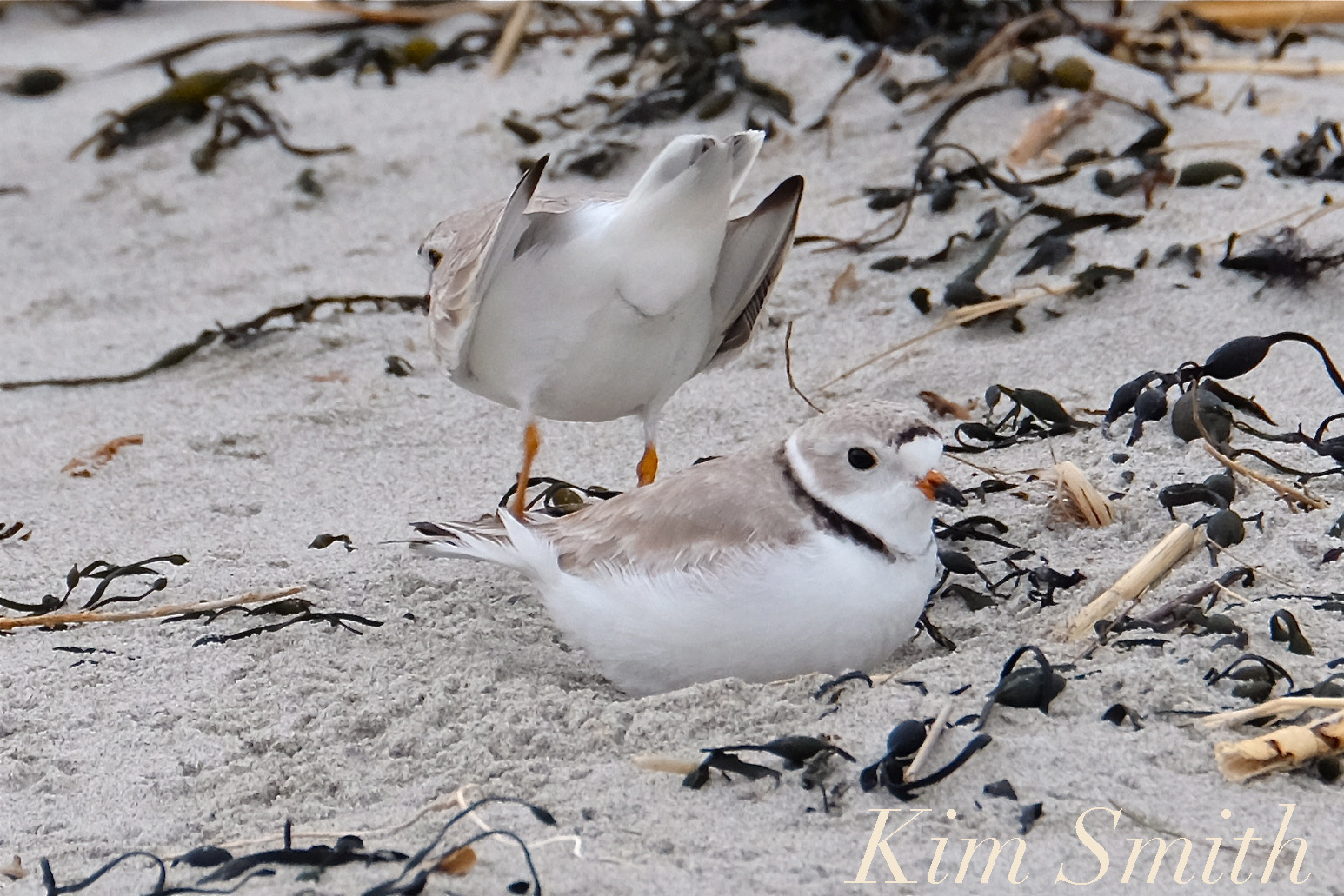
Mama Plover sitting in and checking out Papa Plover’s perfect little nest scrape.
My friend Lauren Mercadante from Manchester stopped by today to volunteer with the Piping Plovers and we added twenty signs on the posts surrounding the roped off area at boardwalk #3.
https://www.instagram.com/p/BiClNEtnD3K/
We had a new group of Piping Plover travelers fly in overnight, earlier in the week, but since that one-day stopover, where they rested and foraged at the nesting area around boardwalk #1, the travelers have not since been seen. If we see evidence of PiPl tracks at #1, we can add more signs there, too.
https://www.instagram.com/p/BiCmNuanx9t/
There has been tremendous criticism regarding signage. The signs that Greenbelt posted at Good Harbor Beach are similar in size and scope of information to signs used up and down the East Coast, and on the West Coast, too, for Snowy Plovers, a similarly threatened species. I especially like the first one and the second sign in the gallery and would like to design one for our Good Harbor Beach similar to one of these.
Kind folks have suggested adding banners to the posts, which I am afraid would only serve to attract gulls and crows, and would also disturb the PiPl. More kind folks have suggested fencing. I think that conservationists don’t use dune fencing for several reason. The adults (and chicks) need to run freely to and from the water’s edge to forage, the fencing would be disruptive to install, in our case, part of the fencing would need to be in the tidal zone and would easily be damaged during high tides, and because it would trap small predatory mammals within.
Regardless of whether or not we have adequate signs, we find ourselves in the struggle of Dog Owner versus Piping Plover. It’s partly because the Plovers have arrived a full month earlier than in previous years. In 2016 and 2017, they arrived at Good Harbor Beach when the beaches are closed to dogs for the season, on May 15th, and May 3rd, respectively. This year, the PiPl arrived on April 3rd. I know this for certain because this spring I had been checking everyday since mid-March.
There are many, many dog owners who are keeping their dogs leashed when at Good Harbor Beach and many who are walking their dogs at alternative locations during this last week in April. We should all be grateful and appreciative to these friends of the PiPl, I know I sure am!
The struggle of Dog Owner versus Plover is not simply an issue at this time of year, with dogs off leash during the month of April, but is consistently challenging throughout the summer during the entire nesting season. Yes, there are folks from out of town who aren’t familiar with our no dogs on the beach between May 1st through October 1st ordinance, but the folks who most frequently ignore our ordinances are people who live here and are aware of the rules. This is especially apparent in the early hours of the morning and after five, when people know there are few enforcers on duty at those times of day.
https://www.instagram.com/p/BiCnOx4nvFy/
Another threat to Piping Plovers, again created by humans, are people that leave their trash on the beach. Good Harbor Beach looks pristine and incredibly beautiful after the tremendous job done by the Clean City Commission’s Great Gloucester Cleanup volunteers. Daily there are typically only a handful of crows and gulls. Soon that will change. People will leave their trash on the beach, which attracts a plethora of hungry gulls and crows, which eat baby chicks.

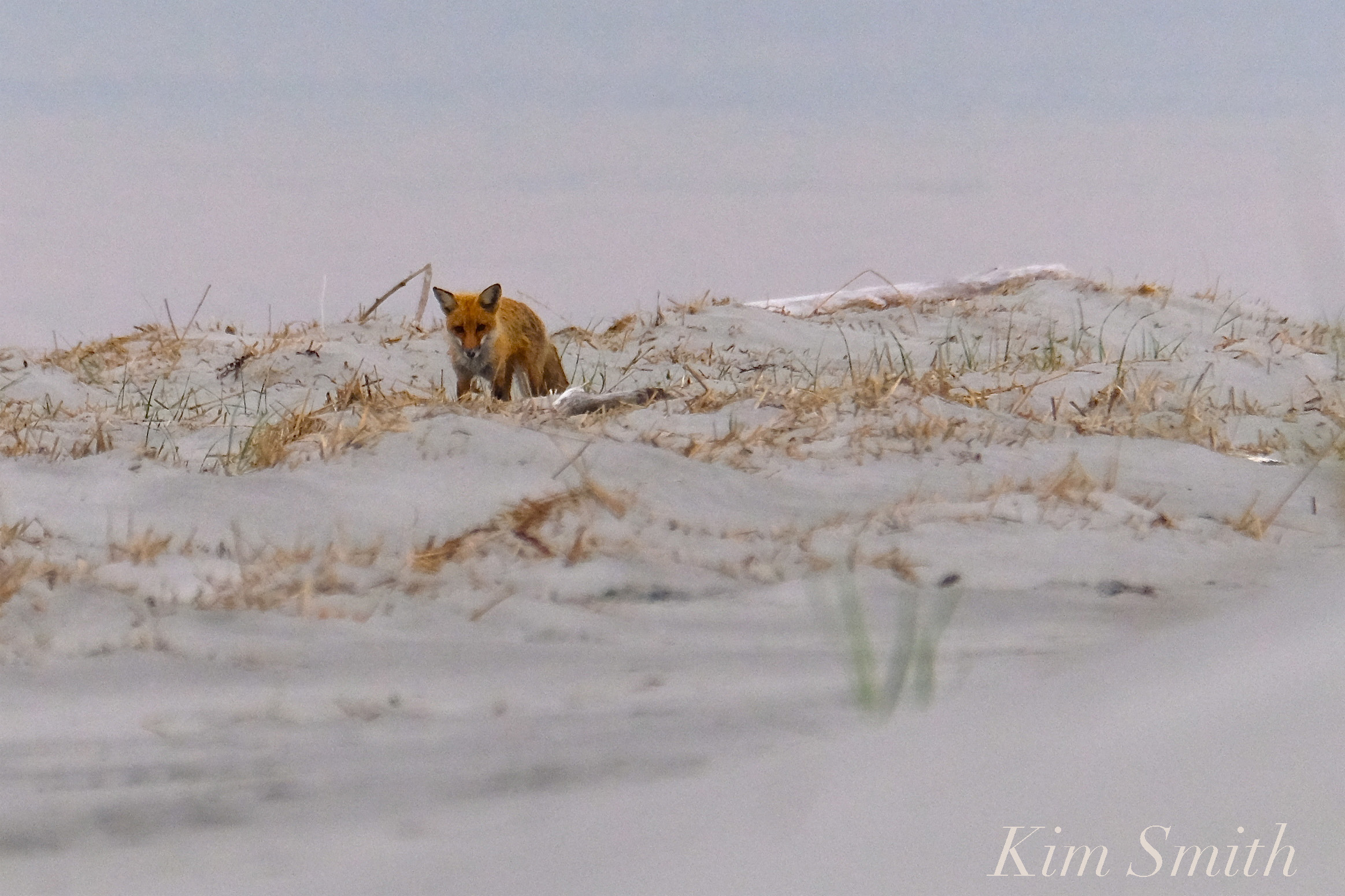
Red Fox foraging for shorebird eggs, West Gloucester
Piping Plovers face many other threats including fox and coyotes that forage on eggs, large predatory birds such as Great Horned Owls, plastic pollution, loss of habitat, and rising sea level. But the two threats that are under our immediate ability to manage are preventing dogs and people from disturbing the nesting sites, and keeping the beaches super clean of trash.
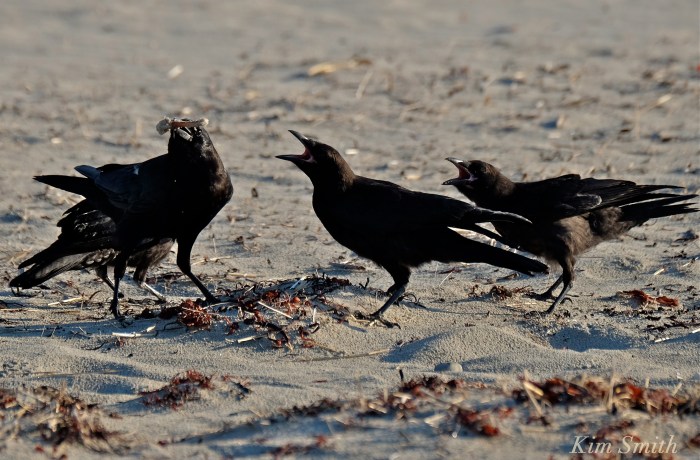
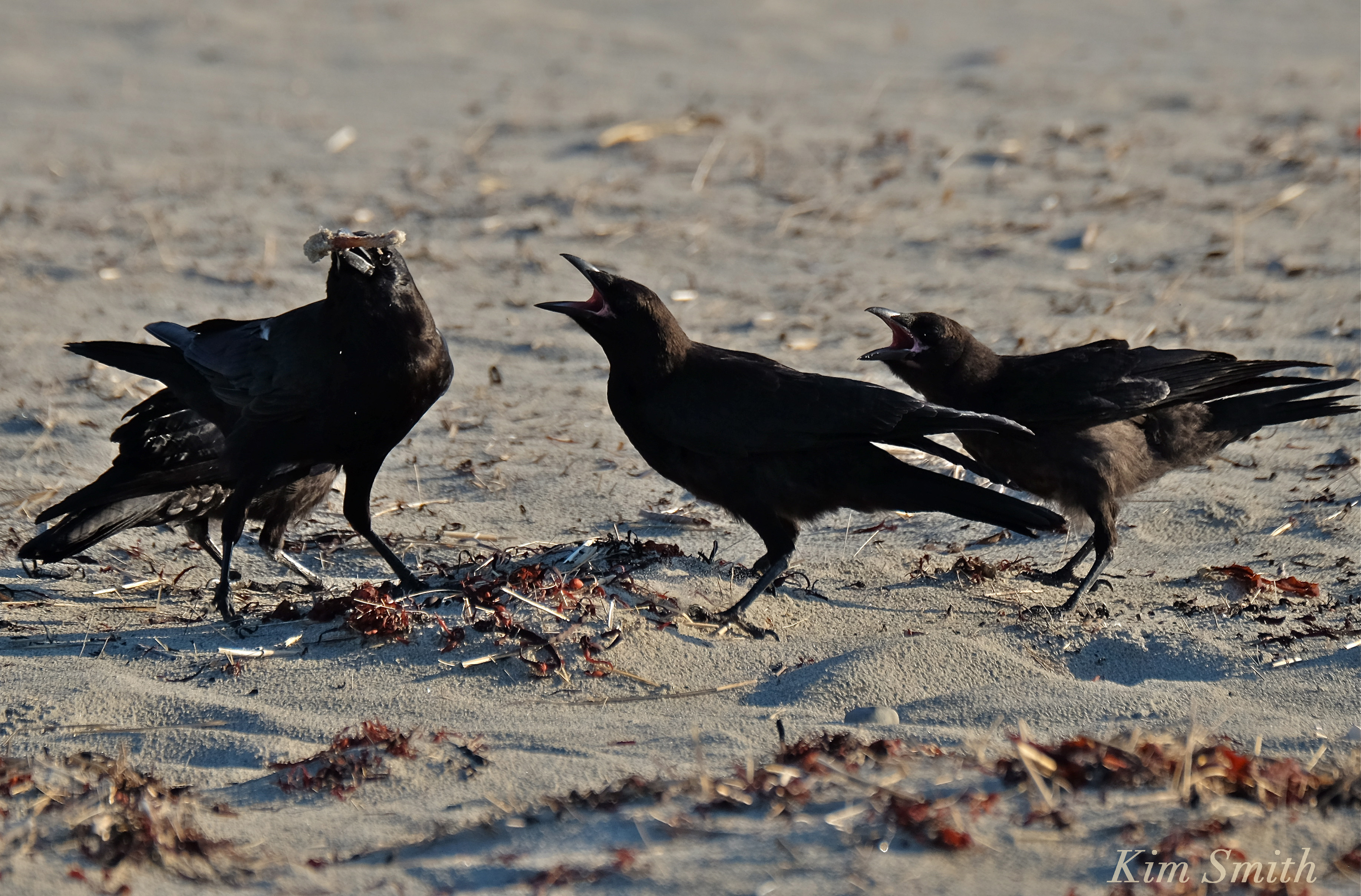
Crows in the PiPl nesting area, fighting over chicken bones left on the beach, 2017.
Many North Shore beaches that find themselves home to the Piping Plovers are also under the management of federal and state organizations. Plum Island is a US Fish and Wildlife Refuge, Nahant and Revere Beaches are managed by DCR, and Crane Beach is managed by the Trustees of Reservations.
Gloucester has none of the daily oversight and funds provided by federal and state organizations. The Piping Plovers need our help and so it is up to we citizens of Gloucester and Cape Ann to do all we can.
Piping Plovers are facing extinction. There are approximately only one thousand five hundred breeding pairs in the world, and that simply isn’t enough to sustain the population, especially since the rate of fledging has recently dropped precipitously. Conservationists hope to raise the number to at least two thousand five hundred pairs, and the bird will not be taken off the threatened species list until that time.
The early arrival of the Piping Plover this year signals a success of sorts. The pair successfully fledged one chick last summer, which is better than the current overall Massachusetts state average of .6. The birds are maturing and finding their way more easily to GHB.
This year, there simply wasn’t enough time to change the dog ordinances, which as they are currently written, allow dogs off leash fifteen days out of the month of April. Because the leash ordinances at this time allow dogs off leash, the only way we are going to help the Plovers is if we work together as a community, to help each other understand what is happening with the PiPl, and do all we can to protect this tiniest of shorebirds on the busiest of our beaches.
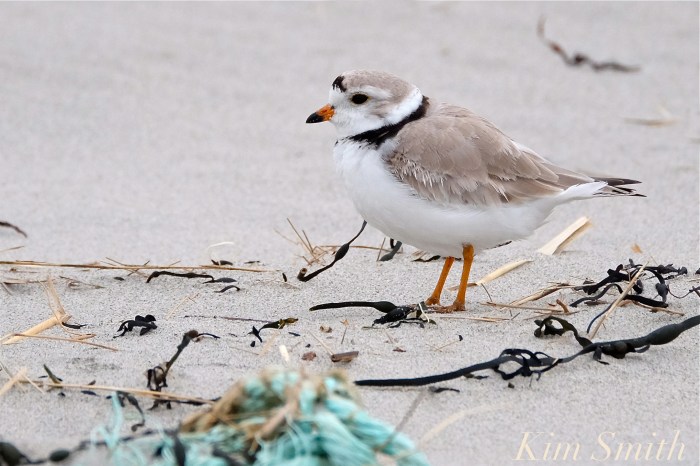
The Lonely Bachelor
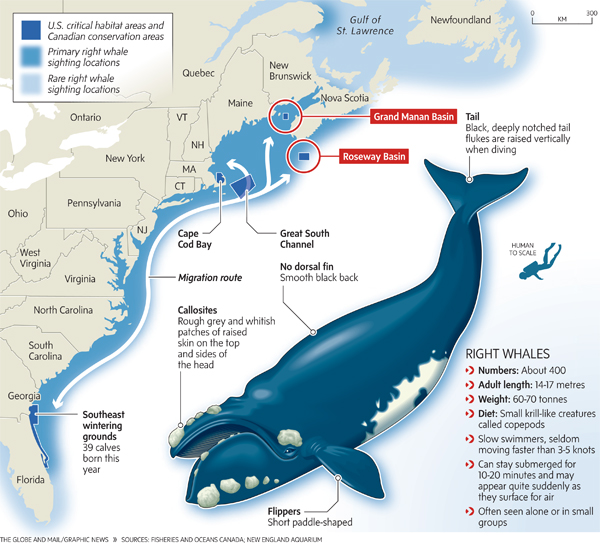
RIGHT WHALES RIGHT NOW OFF OUR COAST!
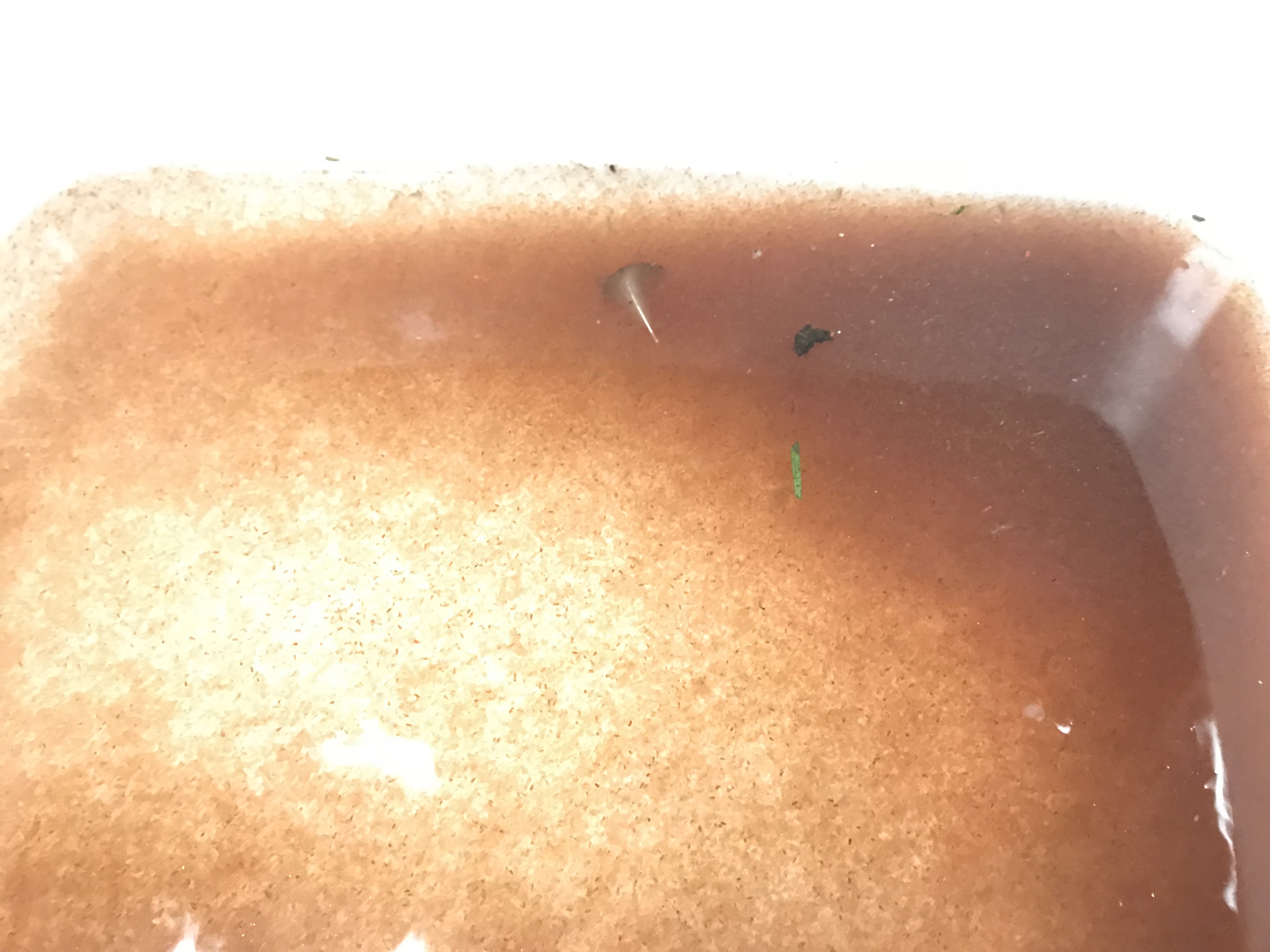
Amanda Maderia, director of education programs at Maritime Gloucester writes, “Confirming Iain’s comments about believing the whales seen off our coast are likely Right Whales: We have observed some incredible plankton tows the last two days. From a few passes from our docks with our net, the sample has looked pretty clear most of the winter, but as you can see from yesterday’s sample, it looks almost blood red thick with Calenoid copepods, a huge food source for the North Atlantic Right Whale.
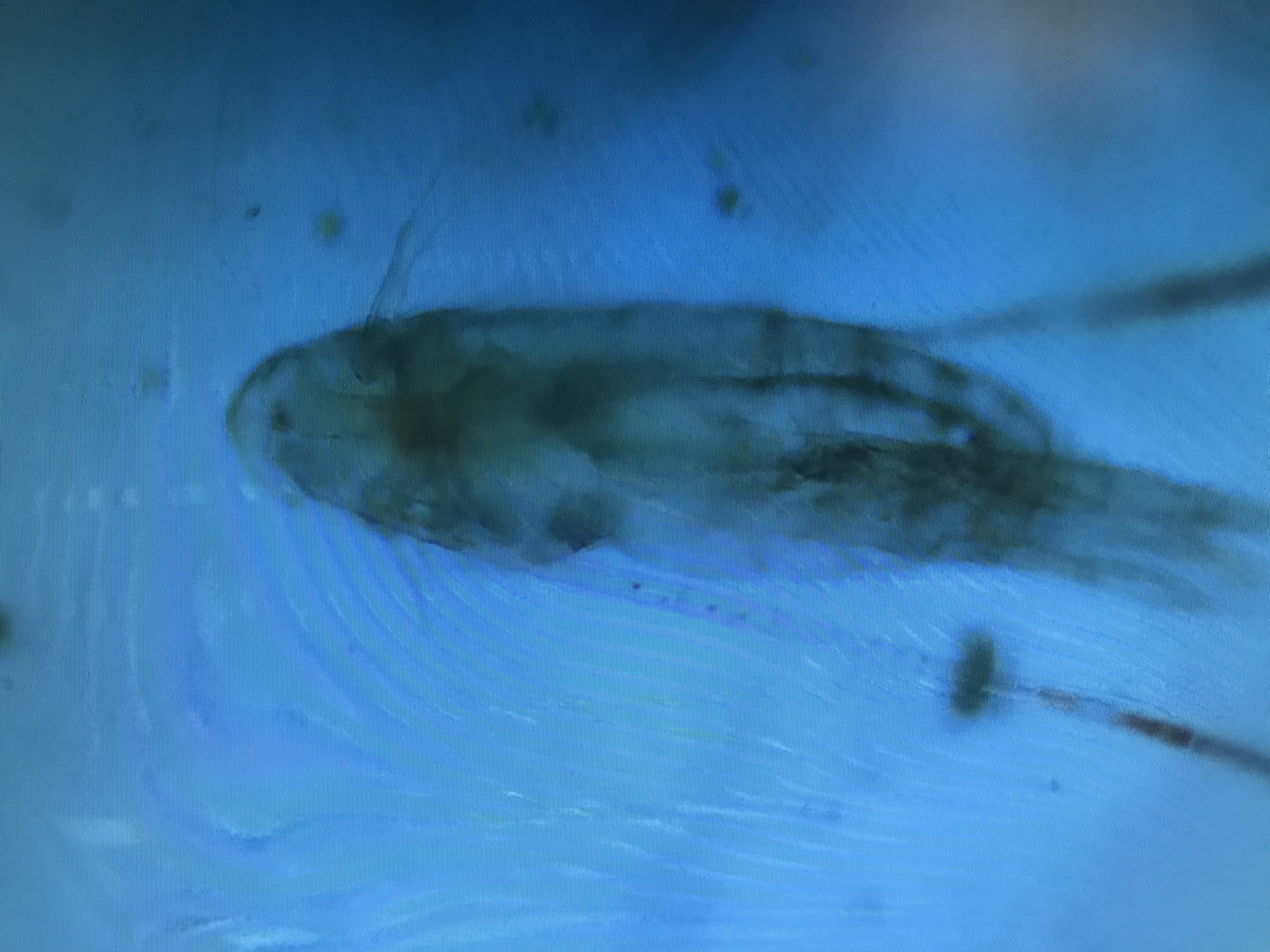
Looking at the overhead shot, the bucket on the left is from our plankton tow, and a close up of that to follow. This is what one looks like under the microscope.
The plankton haul was discovered by Waring School students who come to Maritime Gloucester once a week for the spring semester. They use it as their field station for John Wigglesworth’s oceans and climate course.