


Author: Kimsmithdesigns
Documentary filmmaker, photographer, landscape designer, author, and illustrator. "Beauty on the Wing: Life Story of the Monarch Butterfly" currently airing on PBS. Current film projects include Piping Plovers, Gloucester's Feast of St. Joseph, and Saint Peter's Fiesta. Visit my websites for more information about film and design projects at kimsmithdesigns.com, monarchbutterflyfilm.com, and pipingploverproject.org. Author/illustrator "Oh Garden of Fresh Possibilities! Notes from a Gloucester Garden."

Coyotes, Red Foxes, and Lyme Disease in Massachusetts
Are Coyotes the Cause of an Increase in Lyme Disease?
Struck by the recent interest in coyotes after the fascinating video Two Coyotes Versus One Deer by Shawn Henry was posted on GMG, I became interested in reading various studies and reports about coyotes, wolves, and foxes in Massachusetts and the Northeast. My primary interest at the onset was of concern for the Red Fox (Vulpes vulpes), which has seen a tremendous decline in numbers. I wondered if the presence of coyotes (Canis latrans) was negatively impacting the Red Fox. In the past, I often saw a Red Fox in the early morning hours trotting along the shoreline at Brace Cove. I wish so much that I had filmed the last one that I saw because it was a gorgeous scene; a strikingly beautiful creature so completely unaware of my presence and so at home in its realm, investigating rock and seaweed, pausing to sniff the air, and then resuming its journey. The last time I saw a Red Fox in our neighborhood was over three years ago. As I was reading about coyotes I learned the findings of some of the most recent studies indicate that because Eastern Coyotes out-compete the Red Fox, the coyotes are the cause of an increase in Lyme disease. More on that in a moment.

The coyotes that now inhabit every region in Massachusetts are an invasive species. They are a hybrid cross species of the Western Coyote (found west of the Mississippi) and Red Wolf (Canis lupus rufus). “Researchers now believe that the Eastern Coyote is a hybridization between the Western Coyote and Red Wolf many generations ago in the upper Great Lakes region of the United States. It is theorized that as populations of the Western Coyote increased, they were forced to move east and north in search of food. As they moved into Minnesota they crossbred with Gray/Red Wolves and produced a genetically hardy animal able to sustain itself through New England winters.” (Mass Audubon)
Coyotes are not “re-populating” this region because this new species was never in our region.
Eastern Coyotes have extremely broad food habits and many factors affect the coyotes’ diet, including competition with other mammals, abundance of prey, season, and weather. In the Northeast, their diet consists of shrews, rabbits, voles, woodchucks, mice, deer, beaver, muskrat, weasels, squirrels, and carrion. And according to Mass Audubon, “They eat ground-nesting birds and their eggs, as well as reptiles and amphibians. When other prey is scarce they will eat a variety of insects including grasshoppers, beetles and cicadas. When animal matter is scarce, they will eat available fruits including apples, cherries, grapes, and strawberries.”
The rapid invasion of the alien Eastern Coyote has negatively impacted many sympatric native species, as the coyote has assumed the role of top-order predator. The coyote has fundamentally altered the existing ecosystem and various species have experienced population declines as a direct result of their role as coyote prey or from direct competition for food. “Culturally and ecologically significant species including Red Fox decline dramatically in response to increasing coyote populations. Eastern Coyote and Red Fox share many common habitat requirements and occupy overlapping niches. Through time, the larger and more resilient coyote is able to out-compete and displace resident fox populations.” (Department of Natural Resources, Maryland.)
Studies have shown repeatedly that Eastern Coyote predation on deer is minimal. Most herds can handle the coyotes. Typically coyotes have success with fawns that are 4-5 weeks old (after they have become more active and are not by the mother’s side), weakened and sickly adults, and deer separated from the herd. These targets represent approximately one or two percent of the total deer population. While coyote diet studies show consistently the use of deer for food, it does not appear that coyote limit deer population on a regional scale.
Although the population of White-tailed Deer has stabilized, Lyme disease continues to increase. In June of 2012 researchers at the University of California Santa Cruz published their findings from the study “Deer, Predators, and the Emergence of Lyme Disease.” (Taal Levi, lead author.)
The study found that once where there was an abundance of Red Foxes, there is now an abundance of Eastern Coyotes. Even more significantly, fewer coyotes will inhabit an area once populated by more foxes. The greater number of foxes would have consumed a larger number of small tick-bearing animals, primarily White-footed Mice, Short-tailed Shrews, and Eastern Chipmunks, all of which transmit Lyme disease bacteria to ticks. It appears as though it is the Red Fox that once kept the population of these smaller rodents under control.
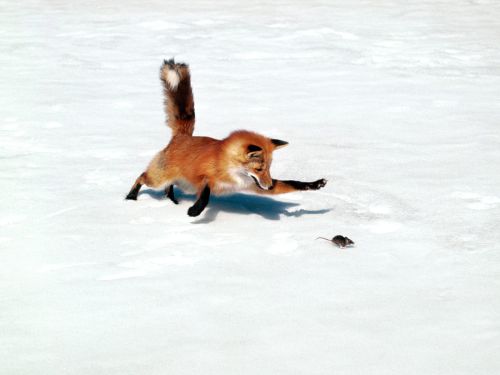
Even when there is a threefold rise in deer population, study after study now shows that the strongest predictors of a current year’s risk of Lyme disease are an abundance of acorns two years previously. How does that work?
Many acorns = many healthy mice and chipmunks.
Many healthy mice and chipmunks = many tick nymphs.
The following year when it may not be a bumper acorn crop = fewer mice.
Fewer mice and chipmunk = dogs and humans become vectors for the ticks.
While acorns don’t serve as a universal predictor because Lyme disease can be traced to forests where there are no oak trees, the data suggest that food sources and predators of small forest mammals are likely to be valuable in predicting Lyme disease risk for humans.
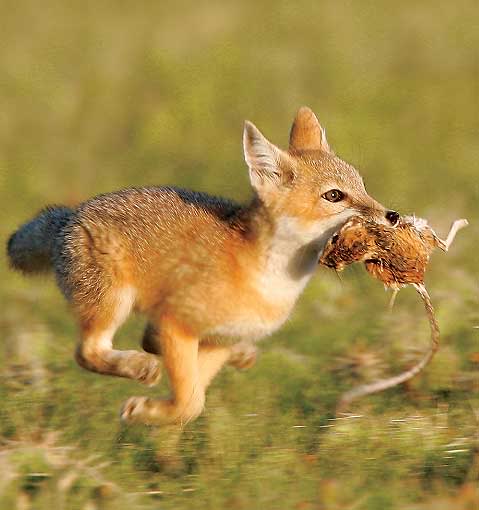
To summarize, multiple studies suggest that the invasive Eastern Coyote out-competes and kills the native Red Fox population, which leads to a rise in the number of small animals particularly the White-footed Mouse and Eastern Chipmunk, which in turn leads to an increase in ticks that carry Lyme disease. The impact of the Eastern Coyote on native deer population is negligible. And, as many family’s can attest, the impact of the Eastern Coyote on populations of domestic cats and small dogs has been devastating.
Typically the excuse given for unwanted encounters with wildlife is that people are encroaching on the animal’s habitat. That simply is not the case with the Eastern Coyote. The Eastern Coyote is advancing on humans–and they like what they see; no large predators, a reluctance on the part of people to hunt and trap, and an abundance of food. The environmentally and culturally destructive chain reaction caused by the Eastern Coyote invasion is taking on added urgency as the coyote strikes closer and closer to home.
It is legal in the state of Massachusetts to shoot and kill a coyote from your home. If confronted by a coyote, make as much noise as possible, if attacked, fight back aggressively.
Images courtesy Google image search.
Spread The GMG Love By Sharing With These Buttons:

Color Collision
My friend Jessie Morgan is part of the upcoming Color Collision Exhibit at the Clark Gallery, owned and operated by Gloucester residents Dana Salvo and Dawn Southworth. To read more about Jessie.
Spread The GMG Love By Sharing With These Buttons:

Marie and Carl Silva Family
Many, many thanks to the Carl and Marie Silva Family for sharing their story about the origins of their altar, family traditions and celebrations for the St. Joseph Film Project. As are all the altars, Marie’s is beautiful, and I especially love the added touch of the vine covered trellis.

Back row left to right ~ Lily, Linda, Carl, Marie, Jennifer, and Eric; front row Sylvia and Luke. Click image to view larger.
Spread The GMG Love By Sharing With These Buttons:

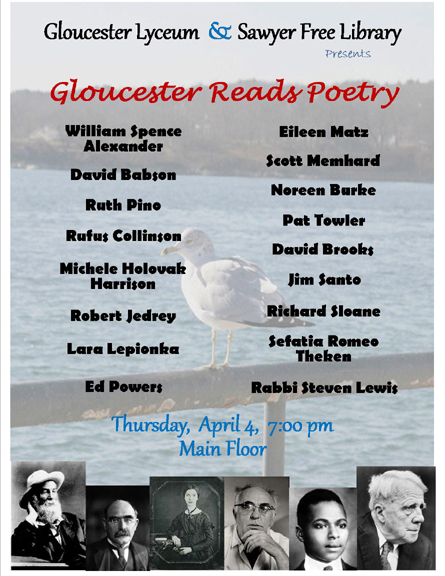
Gloucester Reads Poetry at the Sawyer Free Library ~ Thursday April 4th at 7:00pm
Spread The GMG Love By Sharing With These Buttons:

Mary Russo Family
With thanks and much appreciation to Mary, Connie, Roy, and Onofrio Joseph for sharing their traditions and stories of celebrations past and present for the St. Joseph Day film project.

Left to right: Onofrio Joseph Russo, Connie Orlando, Mary Russo, and Roy Milone
Spread The GMG Love By Sharing With These Buttons:

Reminder: Andrew’s Workshop Tonight ~ Turn Your Camera Into a Canvas with Cape Ann TV’s Andrew Love
Turn Your Camera into a Canvas
Join Cape Ann TV’s staff member and videographer Andrew Love for a video composition workshop on Tuesday, April 2 from 6:00 p.m. to 7:30 p.m. This class is for the novice filmmaker who wants to take their project to the next level by covering the rules and aesthetic guidelines industry professionals follow when crafting their camera shots.
Your camera is your paintbrush. Whether it cost $300 or $30,000, use it to mold the emotions and perspectives of your audience. In this workshop you will learn how to make your subjects powerful, vulnerable, attractive, interesting, and identifiable using only your zoom rocker and a tripod.

This video composition workshop is open to the public for a fee of $10 and is free for Cape Ann TV members.
To sign up for this class email Andrew at alove@capeanntv.org or call 978-281-2443.
Time: 6:00 p.m. on Tuesday, April 2
Place: Cape Ann TV, 38 Blackburn Center, Gloucester, MA
Fee: $10 (free for Cape Ann TV Members)
Spread The GMG Love By Sharing With These Buttons:

Lecture Tuesday: The Fragrant Garden

The Most Highly Scented Lilacs
Tuesday, April 2nd, I am presenting my lecture The Fragrant Garden from 10:00am to noon for the Andover Garden Club. For more information see flyer: The Fragrant Garden.
Spread The GMG Love By Sharing With These Buttons:

BomBom Butterflies Video
BomBom Butterflies ~ Featuring Black Swallowtail Butterflies and Common Milkweed at Good Harbor Beach
Scenes from my forthcoming film Life Story of the Black Swallowtail Butterfly set to “BomBom” by Macklemore and Ryan Lewis, featuring the Teaching, from the album The Heist by Macklemore and Ryan Lewis.
When you have a moment, please watch my newest video. I have submitted it to a video contest sponsored by Macklemore and Ryan Lewis from their debut album The Heist. Macklemore and Ryan Lewis created the beautiful Same Love video that I posted about last week. If you like my video please share the link; I think the more clicks received, the more notice gained. The winner will be announced on April 8th.
Spread The GMG Love By Sharing With These Buttons:

BomBom Butterflies
Happy Easter! Happy Spring! Happy Passover! and
Happy Warm Weather!
BomBom Butterflies ~ Featuring Black Swallowtails and Common Milkweed at Good Harbor Beach
Scenes from my forthcoming film Life Story of the Black Swallowtail Butterfly set to “BomBom” by Macklemore and Ryan Lewis, featuring the Teaching, from the album The Heist by Macklemore and Ryan Lewis.
When you have a moment, please watch my newest video. I have submitted it to a video contest sponsored by Macklemore and Ryan Lewis from their debut album The Heist. Macklemore and Ryan Lewis created the beautiful Same Love video that I posted about last week. If you like my video please share the link; I think the more clicks received, the more notice gained. The winner will be announced on April 8th.
Spread The GMG Love By Sharing With These Buttons:
Lecture Monday at Tower Hill Botanic Garden: The Pollinator Garden
Tomorrow, Monday, April 1st, from 10:00 am – 12 noon, I am the guest speaker for the The Garden Club Federation of Massachusetts. The event will be held at the Tower Hill Botanic Garden and, although this is a state Garden Club Federation lecture, everyone is welcome. A five dollar donation at the door is requested, but not required. Refreshments are provided for all attendees. I hope you can come!
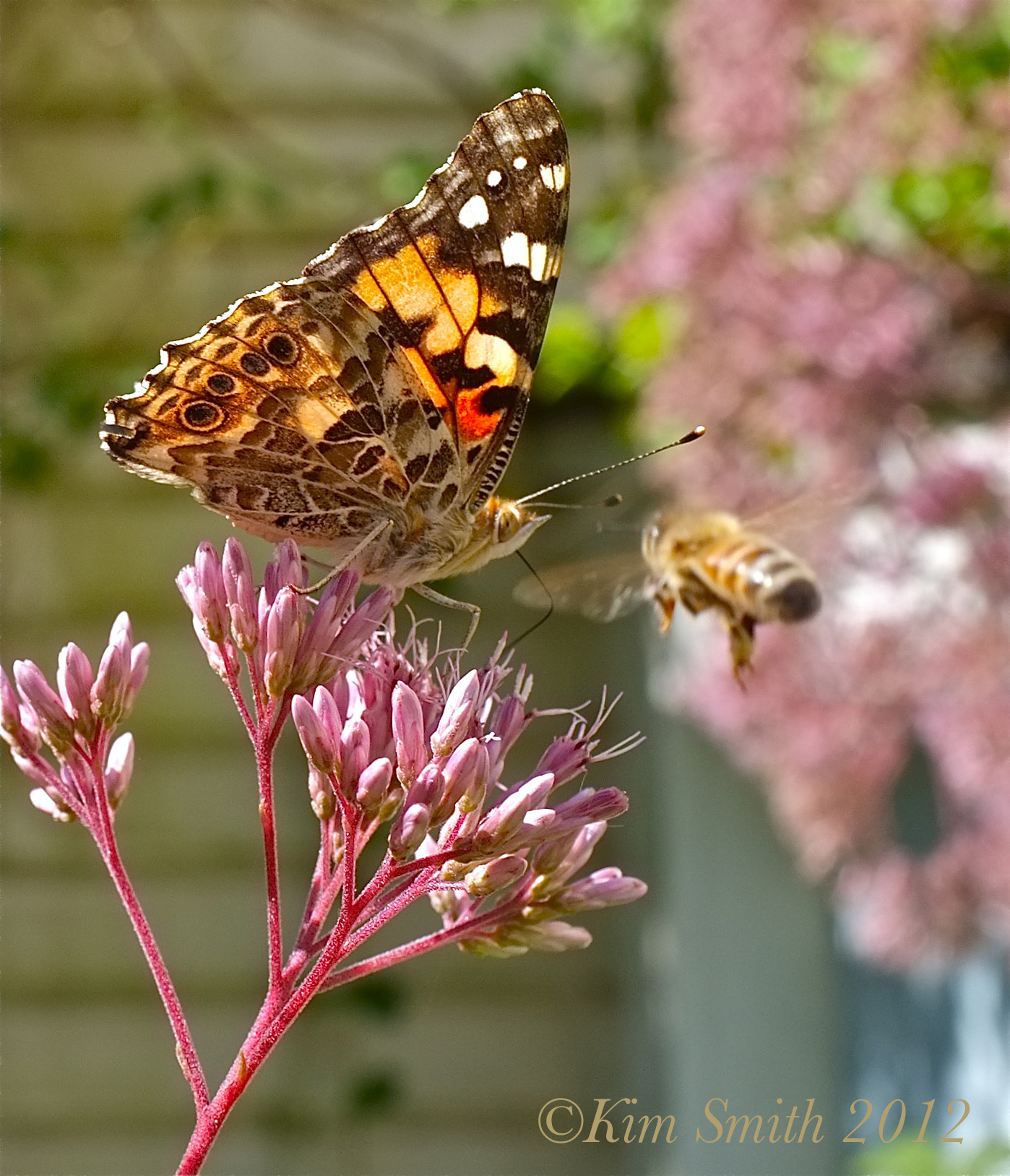
Painted Lady Butterfly Nectaring at Native Joe-Pye Weed
Spread The GMG Love By Sharing With These Buttons:

Thank you Anna and James Eaves for Hosting the First Ever GMG–FOB–Cape Ann Gilcee Photography Show!

Snapshots from last night’s fabulously fun opening at Cape Ann Giclee.


Eaves Family left to right ~ Yianni, Anna, Dimitri, and James
Thank you Anna and James Eaves for hosting the First Ever GMG/FOB/Cape Ann Gilcee photography show, running now through April 7th. The quality of work in the show is simply outstanding. Come on over and have a look, meet Anna and James, and learn about the services Cape Ann Giclee provides for all your photography and fine art reproduction needs. Cape Ann Giclee is open Monday through Friday from 10am to 5pm. While the GMG show is up through April 7th, they are also open on Saturdays from 10am to 5pm.

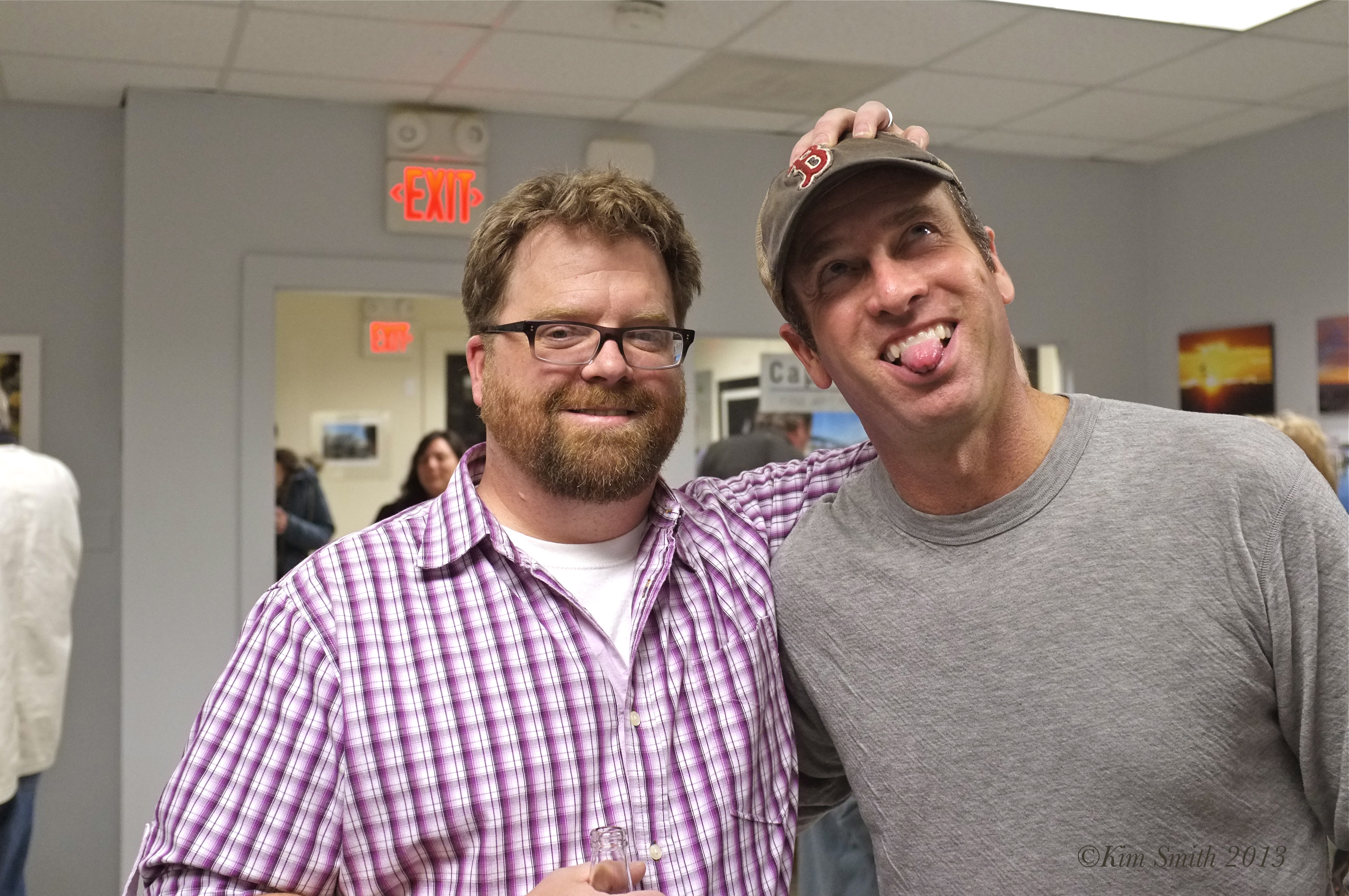
Craig and Joey
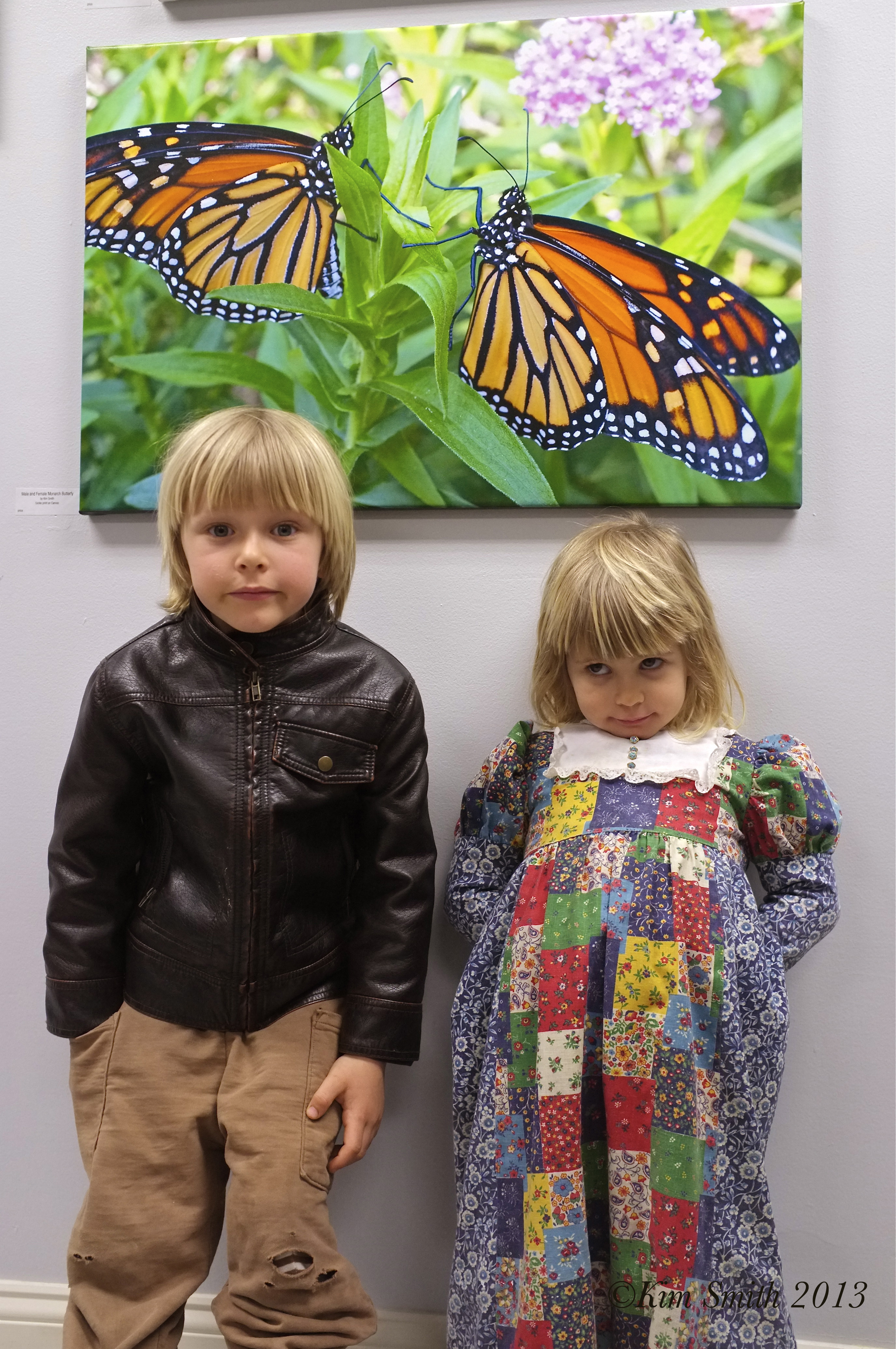
Atticus and Meadow
Spread The GMG Love By Sharing With These Buttons:

News Release: MONARCH WATCH ANNOUNCES ‘BRING BACK THE MONARCHS’ CAMPAIGN
I am going to look into purchasing a large quanity of milkweed seedlings at wholesale prices for anyone in our community interested in cultivating milkweed. If interested, please leave a comment in the comment section, which will help give me an idea, very approximately, on how many plants to order. You can also wait until the fall and sow ripened milkweed seedpods. (Note: Please do not dig up any wild milkweed).
The following timely news release was in my inbox this morning!
MONARCH WATCH ANNOUNCES
‘BRING BACK THE MONARCHS’ CAMPAIGN
“In real estate it’s location, location, location and for monarchs and other wildlife it’s habitat, habitat, habitat”, said Chip Taylor, Director of Monarch Watch. Monarch Watch (www.MonarchWatch.org) started in 1992 as an outreach program dedicated to engaging the public in studies of monarchs and is now concentrating its efforts on monarch conservation. “We have a lot of habitat in this country but we are losing it at a rapid pace. Development is consuming 6,000 acres a day, a loss of 2.2 million acres per year. Further, the overuse of herbicides along roadsides and elsewhere is turning diverse areas that support monarchs, pollinators, and other wildlife into grass-filled landscapes that support few species. The adoption of genetically modified soybeans and corn have further reduced monarch habitat. If these trends continue, monarchs are certain to decline, threatening the very existence of their magnificent migration”, said Taylor.
To address these changes and restore habitats for monarchs, pollinators, and other wildlife, Monarch Watch is initiating a nationwide landscape restoration program called “Bring Back The Monarchs.” The goals of this program are to restore 20 milkweed species, used by monarch caterpillars as food, to their native ranges throughout the United States and to encourage the planting of nectar-producing native flowers that support adult monarchs and other pollinators.
This program is an outgrowth of the Monarch Waystation Program started by Monarch Watch in 2005. There are now over 5,000 certified Monarch Waystations – mostly habitats created in home gardens, schoolyards, parks, and commercial landscaping. “While these sites contribute to monarch conservation, it is clear that to save the monarch migration we need to do more,” Taylor said. “ We need to think on a bigger scale and we need to think ahead, to anticipate how things are going to change as a result of population growth, development, changes in agriculture, and most of all, changes in the climate,” said Taylor.
According to Taylor we need a comprehensive plan on how to manage the fragmented edges and marginal areas created by development and agriculture since it is these edges that support monarchs, many of our pollinators, and the many forms of wildlife that are sustained by the seeds, fruits, nuts, berries, and foliage that result from pollination. “In effect,” Taylor argues, “we need a new conservation ethic, one dealing with edges and marginal areas that addresses the changes of the recent past and anticipates those of the future.”
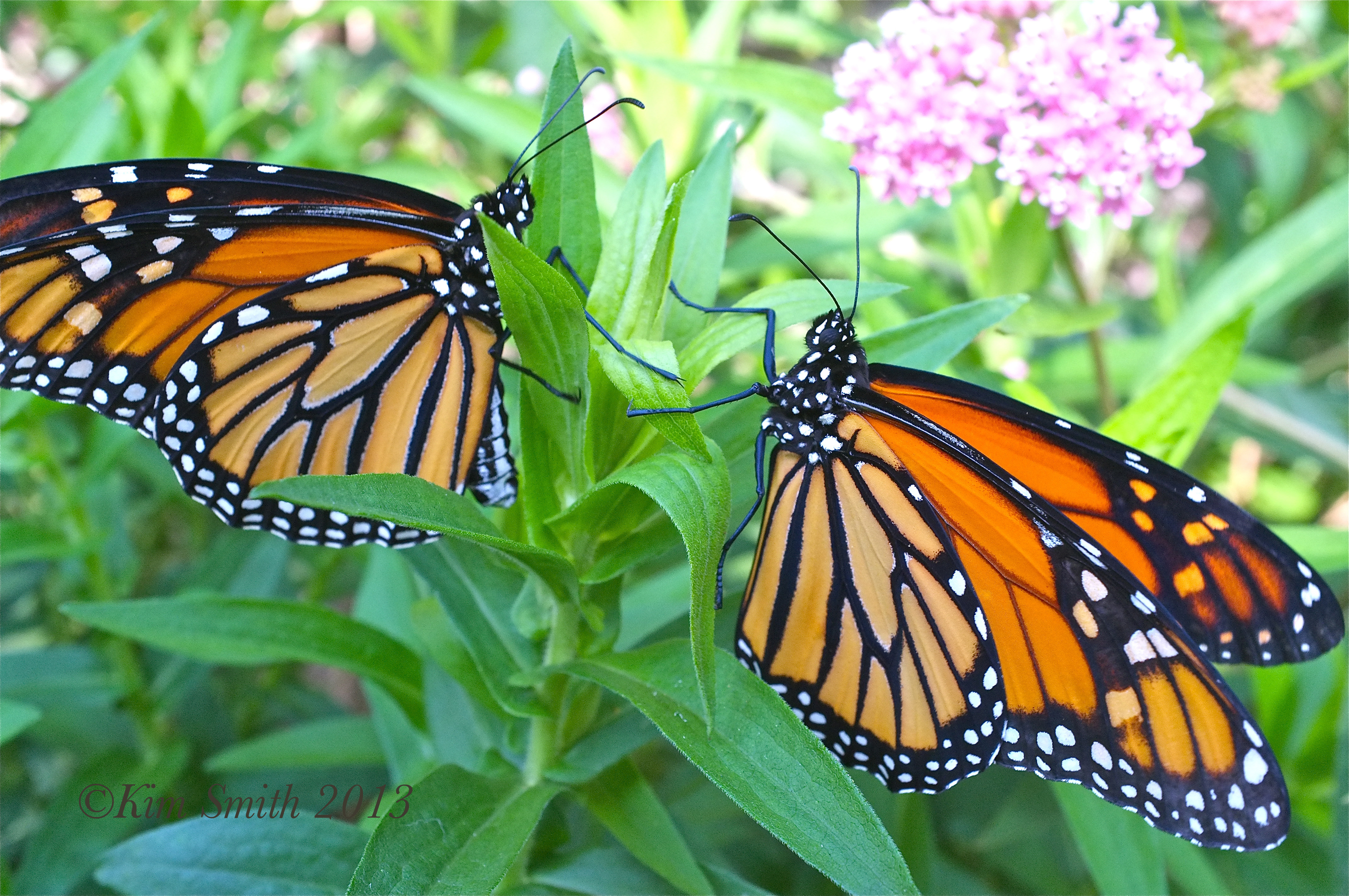
The above photo of a male (right) and female (left) Monarch Butterflies on Marsh Milkweed is part of the GMG/Cape Ann Giclee photography show, currently on view at Cape Ann Giclee.
Spread The GMG Love By Sharing With These Buttons:

How Exactly is Monsanto’s Roundup Ravaging the Monarch Butterfly Population?
The above photo of a male (right) and female (left) Monarch Butterflies on Marsh Milkweed is part of the GMG/Cape Ann Giclee show opening tonight.
I am often asked the following question at my butterfly and pollinator garden design lectures. How exactly are Monsanto’s products ravaging the Monarch Butterfly population?
First, it is important to understand that all butterfly caterpillars rely on plant foods specific to each species of butterfly. For example, Monarch caterpillars only eat members of the milkweed family, Black Swallowtail caterpillars eat plants in the carrot family, and Heliconian butterflies eat plants in the passionflower family. Some caterpillars, like the larvae of the Eastern Tiger Swallowtail eat plants from a wide range of plant families. That being said, it is worth repeating that Monarch caterpillars only survive on members of the milkweed family.
Imagine a farm with row upon row of corn. Growing amongst and around the edges of the cornfields are wildflowers of all sorts, including milkweed. The wildflowers draw to the fields myriad pollinators such as bees, butterflies, and birds.
Monsanto has genetically modified the seed of corn and soybeans so that it will withstand extremely heavy doses of its herbicide, called Roundup. Monsanto’s corn and soybean seed is actually called Roundup Ready. Roundup Ready plants can withstand massive doses of the herbicide Roundup, but the milkweed and other wildflowers growing in the corn and soybean fields cannot.
Each year massive amounts of Roundup are sprayed on the corn and soybean fields, killing everything in sight, except the Roundup Ready corn and soybean. Additionally, Monsanto’s Roundup contains the active ingredient glyphosate, which has been tied to more health and environmental problems than you can possibly imagine.
Now imagine you are a Monarch Butterfly, having flown hundreds of miles northward towards breeding grounds of milkweed. But there is no milkweed to deposit your eggs. The circle in the chain of life is broken.
Since the use of genetically modified Roundup Ready began, milkweed has disappeared from over 100 million acres of row crops, or a roughly 58 percent decrease. Milkweed is not only the Monarch caterpillar host (or food) plant, the nectar-rich florets provide nourishment for hundreds of species of bees and other Lepidoptera.
The Monarch Butterfly migration is one of the great migrations of the world. Climate change and the loss of habitat are also factors in the decrease of butterflies. The Mexican government and the people of Mexico have enacted policies to help protect from logging the remaining oyamel fur trees in the Monarchs winter habitat.
There are several steps that we in the United States can undertake. 1) Avoid as much as possible genetically modified food, especially corn and soybean products. 2) If you own shares of Monsanto stock, get rid of it (Monsanto also developed Agent Orange). Thirdly, we need to start a national movement to cultivate milkweed and to create awareness about the important role wildflowers play in our ecosystem.
Calling Everyone: Plant Milkweed! No matter how small or large your garden, give a spot over to milkweed and watch your garden come to life!
Spread The GMG Love By Sharing With These Buttons:

Wind Turbines 101 Tonight at the Sawyer Free Library

Spread The GMG Love By Sharing With These Buttons:

Frances and Ann Margaret Ferrante

Our deepest thanks and appreciation to Frances and Ann Margaret Ferrante and friends for welcoming us to film and photograph an interview with their exquisite St. Joseph altar.
Frances and Ann Margaret Ferrante

 Zina Saputo and Felicia

 Ferrante St. Joseph Altar
Spread The GMG Love By Sharing With These Buttons:

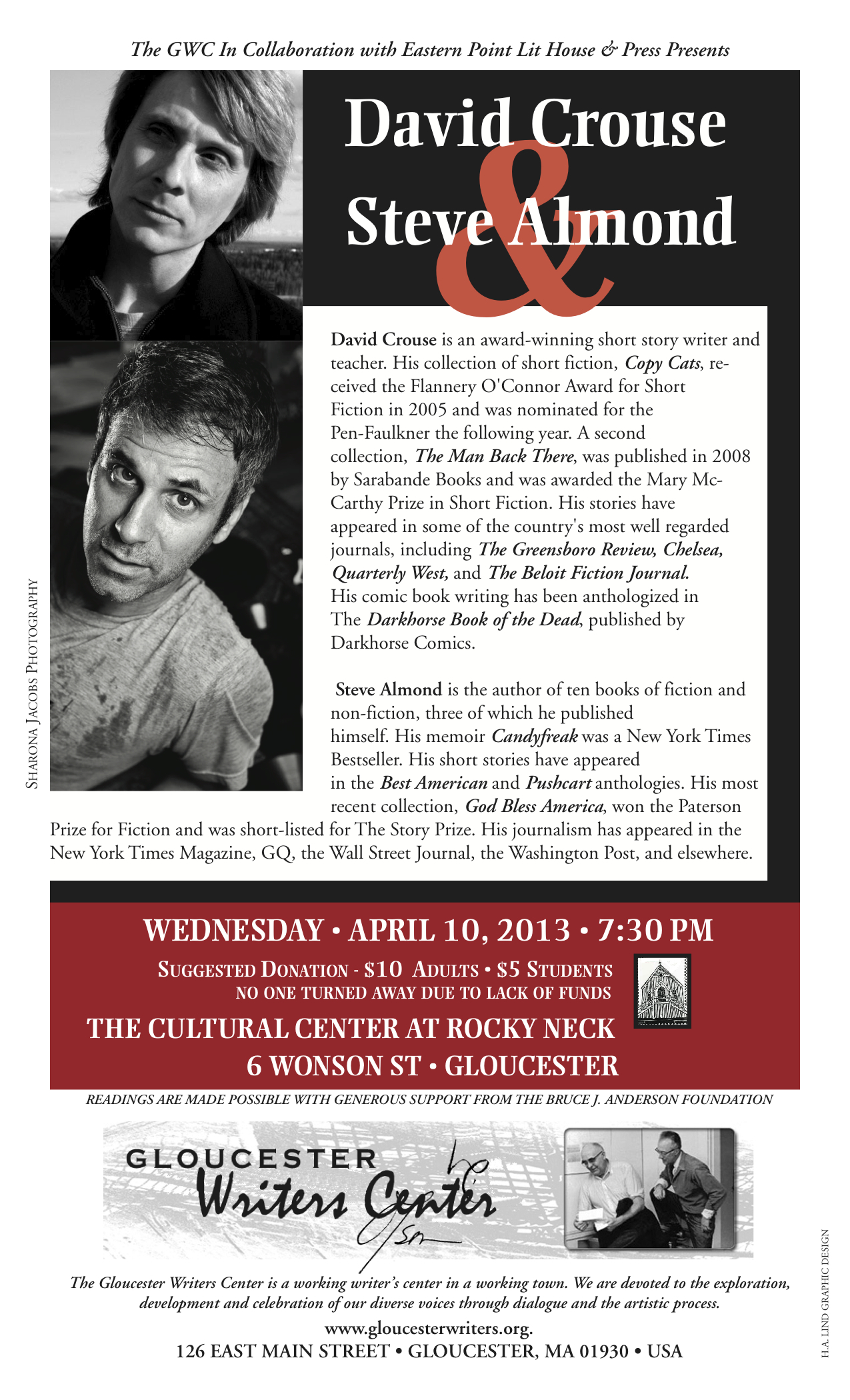
Writers David Crouse and Steve Almond at the Rocky Neck Cultural Center April 10
Chris Anderson writes:
I wanted to see if you guys could help get word out about this killer event at the Rocky Neck Cultural Center on April 10 @ 7:30 PM. Two literary rock stars, Steve Almond and David Crouse, will be reading from their work and discussing the craft of writing, rock and roll, parenthood, and anything else that might come to mind. These guys know how give a great reading, so this is not to be missed! The event is co-sponsored by The Gloucester Writers Center and Eastern Point Lit House & Press, my new venture.
Eastern Point Lit House & Press is a grass roots literary experiment that includes Extract(s) Daily Dose of Lit (featured on GMG last month), a small press, events, workshops, manuscript consultation, and anything else we can dream up. I hope to have formal announcements soon regarding a new author hosted book club series taking place at Duckworth’s Bistrot beginning in May. The host, a writer, chooses the book to be discussed. A great book, fine wine, and light snacks. It’s going to be ridiculously fun. I’ll have the entire summer calendar and ticket info very soon. You can find more information on all of this here:
and on FB: https://www.facebook.com/EasternPointLit
Thanks for everything!
Cheers,
Chris
PS. Hope to see you Friday. I plan on bringing the kids down for a little while to check out the show. Congrats!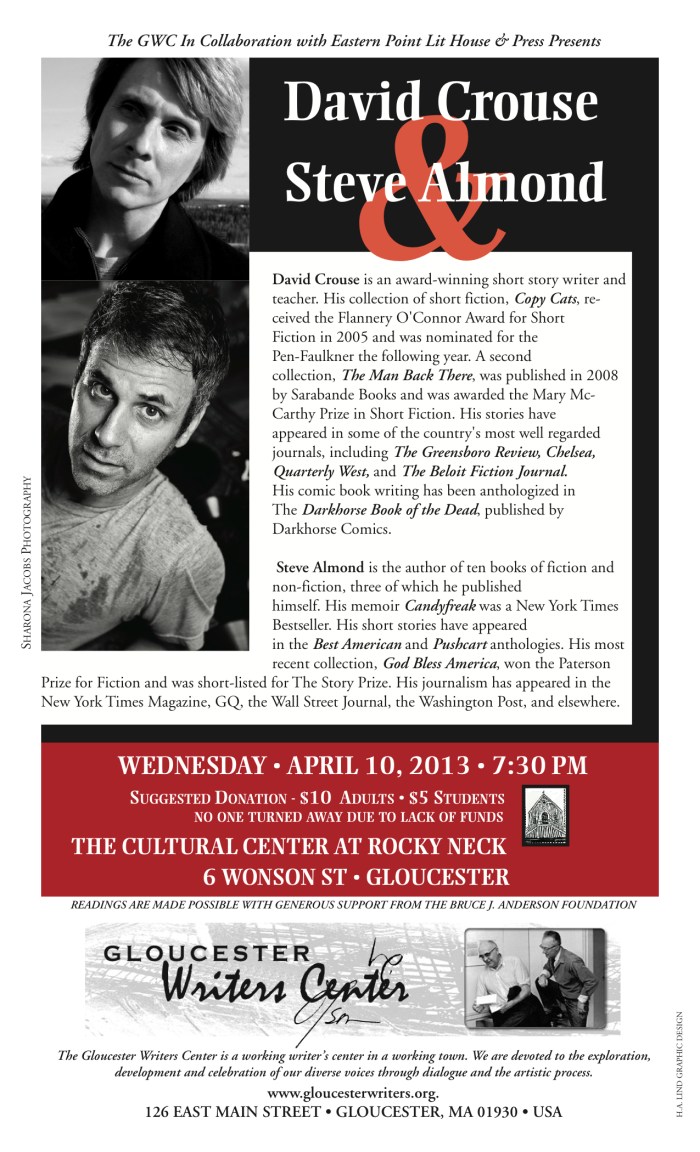
Spread The GMG Love By Sharing With These Buttons:

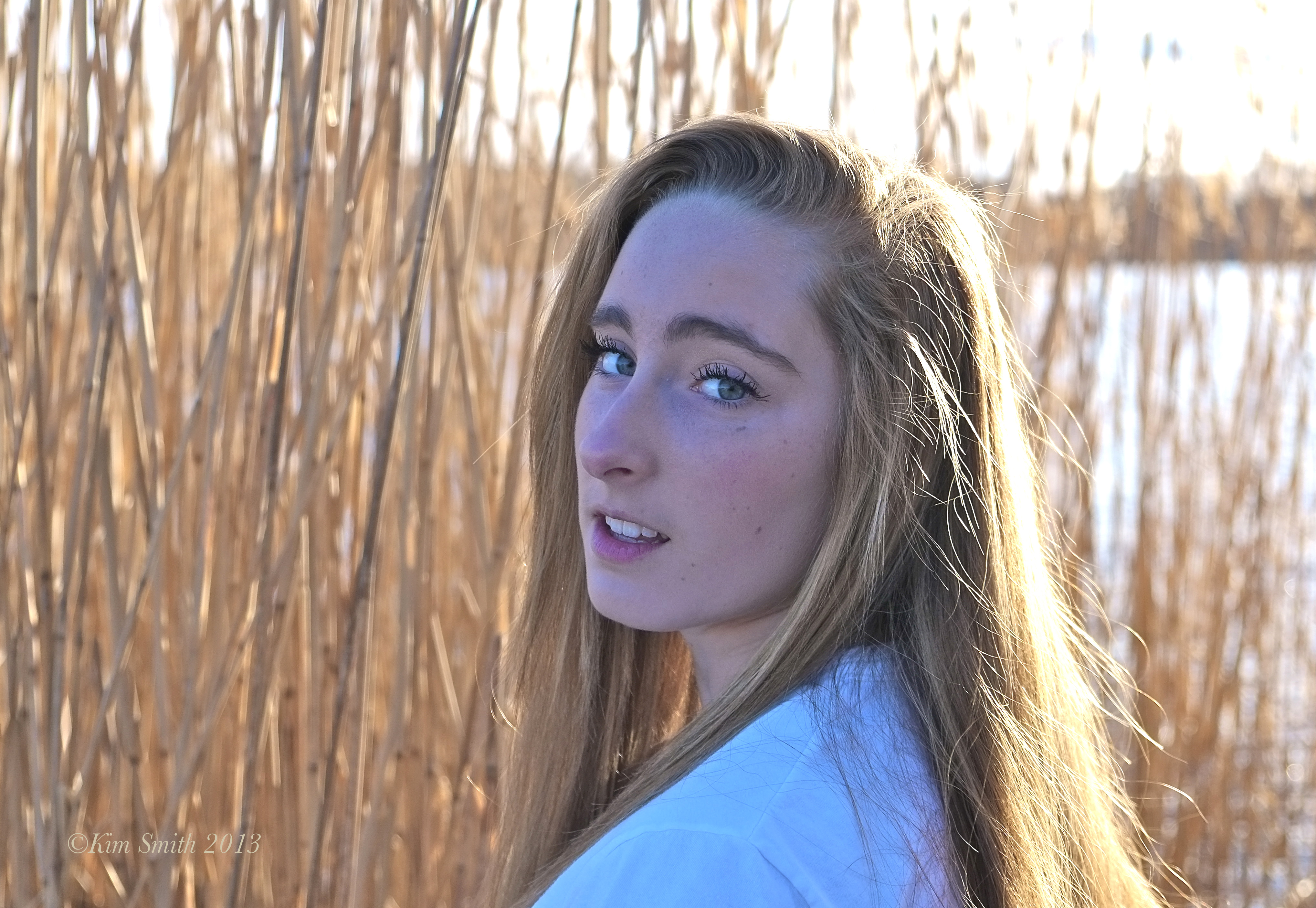
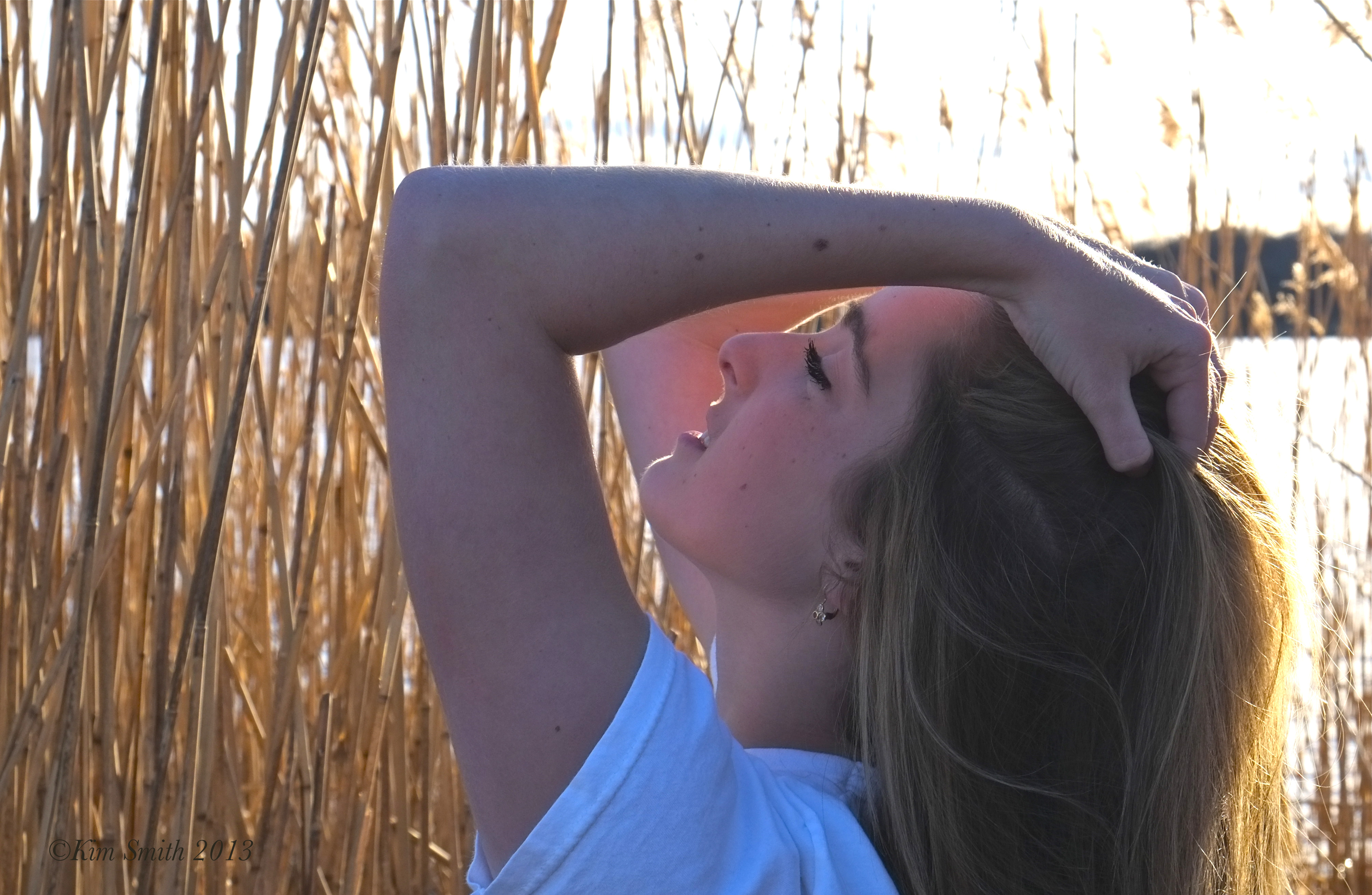
Beautiful Amanda Mohan
Amanda (Felicia’s daughter and Joey’s niece) is a positively wonderful young woman. She is a freshman in high school at Governors Academy and studying photography. Amanda asked for some help with a photography project for school and we had lots of fun exploring the shoreline.

 Amanda Mohan
Spread The GMG Love By Sharing With These Buttons:

Turn Your Camera Into a Canvas with Cape Ann TV’s Andrew Love
Turn Your Camera into a Canvas
Join Cape Ann TV’s staff member and videographer Andrew Love for a video composition workshop on Tuesday, April 2 from 6:00 p.m. to 7:30 p.m. This class is for the novice filmmaker who wants to take their project to the next level by covering the rules and aesthetic guidelines industry professionals follow when crafting their camera shots.
Your camera is your paintbrush. Whether it cost $300 or $30,000, use it to mold the emotions and perspectives of your audience. In this workshop you will learn how to make your subjects powerful, vulnerable, attractive, interesting, and identifiable using only your zoom rocker and a tripod.
This video composition workshop is open to the public for a fee of $10 and is free for Cape Ann TV members.
To sign up for this class email Andrew at alove@capeanntv.org or call 978-281-2443.
Time: 6:00 p.m. on Tuesday, April 2
Place: Cape Ann TV, 38 Blackburn Center, Gloucester, MA
Fee: $10 (free for Cape Ann TV Members)
Spread The GMG Love By Sharing With These Buttons:

Scott Alarik at the Writer’s Center Tuesday, March 26th
Seating is limited. To R.S.V.P. or for more information, please call Terry Weber at 978.559.1712

 Good Morning Gloucester