
City Councilor Steven LeBlanc
On Monday night at City Hall a packed audience attended the “Living with Wildlife” coyote meeting. Recognizing the exploding population of coyotes on Cape Ann, City Councilor Steven LeBlanc had requested the forum. Approximately 250 people were in attendance, which is an unusually large number for a meeting of this nature and speaks to the general concern by Cape Ann residents to the growing number of coyotes now living amongst us.
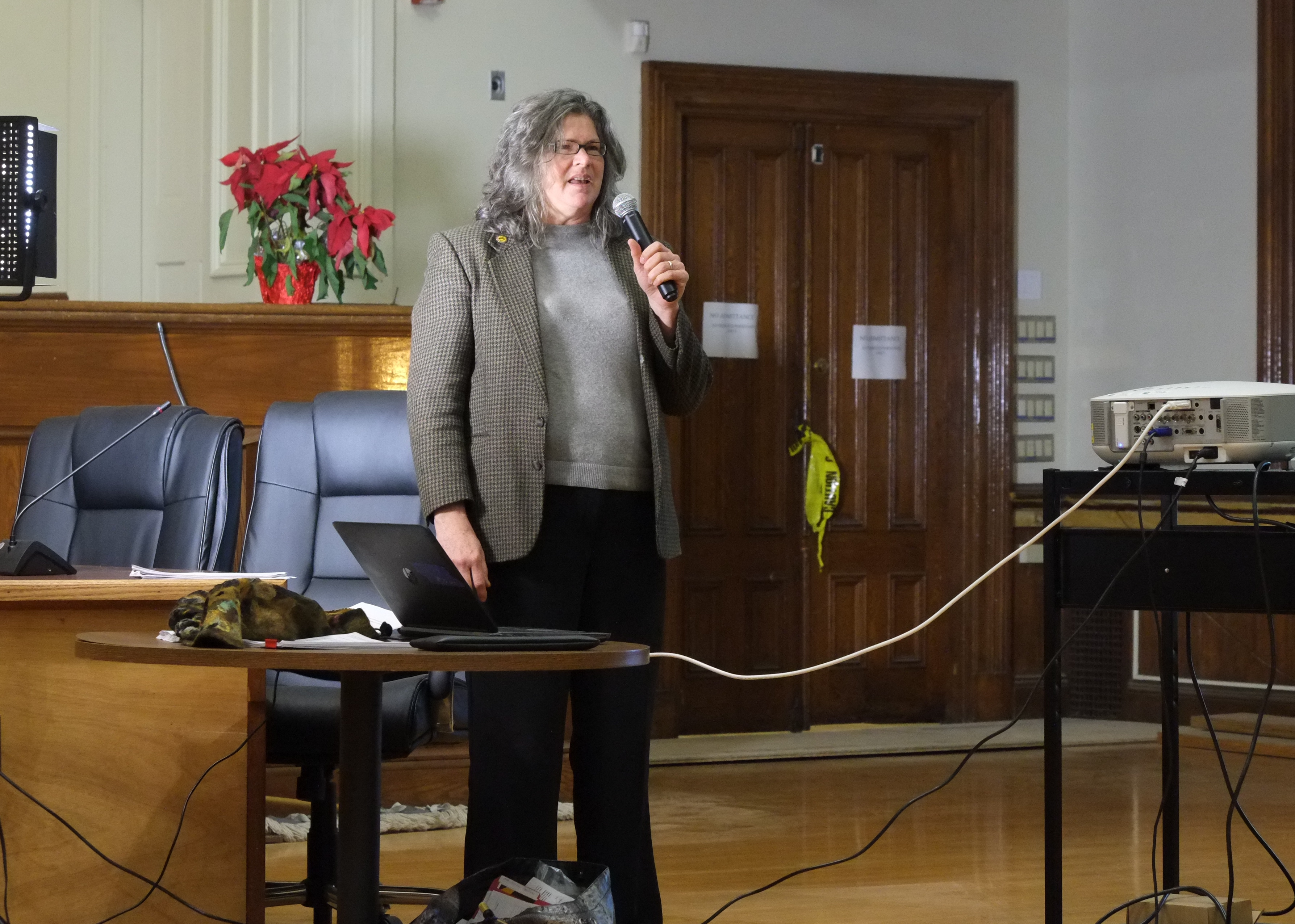 Pat Huckery
The informational meeting was conducted by Pat Huckery, the northeast district manager for the Massachusetts Division of Fisheries and Wildlife and she is herself a wildlife biologist. Pat presented the life history of the coyote as well as a number of methods for lessening human encounters with coyotes, most notably to cut off their food supply. Humans providing food to the coyotes directly and indirectly is the number one culprit and at the top of the list states Pat is bird feeders. She recommends that if you do have a bird feeder, at the very least, clean up the daily mess underneath the feeders. Spilled bird food attracts rodents and small mammals, which in turn attracts coyotes. Unsecured garbage as well as pet food left outdoors are also strong coyote attractants.
The very specific and unique ecology of Cape Ann, in relation to the coyote, was not discussed. Cape Ann’s coyote population has mushroomed in part due to the wealth of food that can be scavenged along our shoreline, marshes, and wooded habitats. One East Gloucester resident attending the meeting reported that she lives with a pack of twenty in her backyard. Hunting as an approved option for reducing the coyote population was discussed and is also believed to help create a healthy fear of humans on the part of the coyote. Local licensed hunter Sam Holmes was in attendance and he can be reached at 978-491-8746. Communities such as Middleton, Rhode Island, have an expanded hunting season to manage the population of specifically coyotes that have lost their fear of humans. Pat also debunked the highly romanticized term coywolf, and disputes the concept that by hunting coyotes, the reverse occurs and the overall population increases.
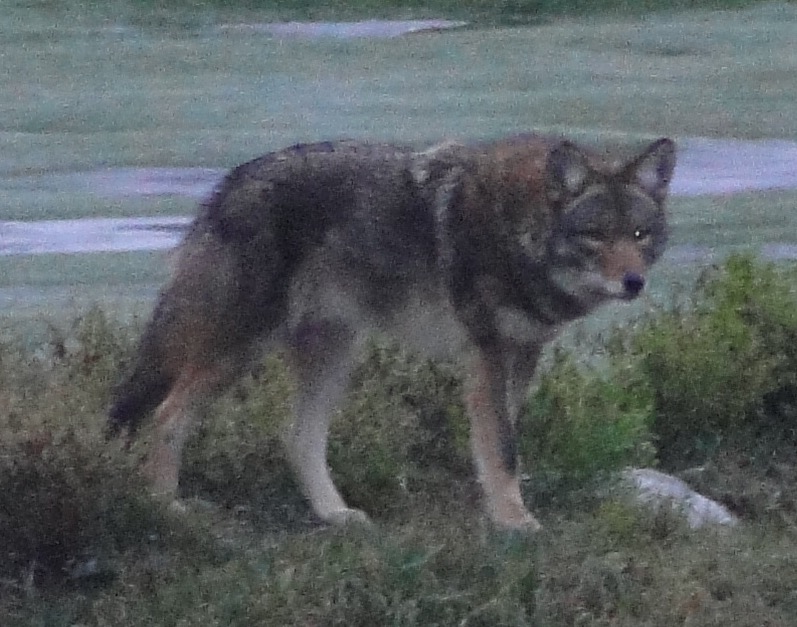
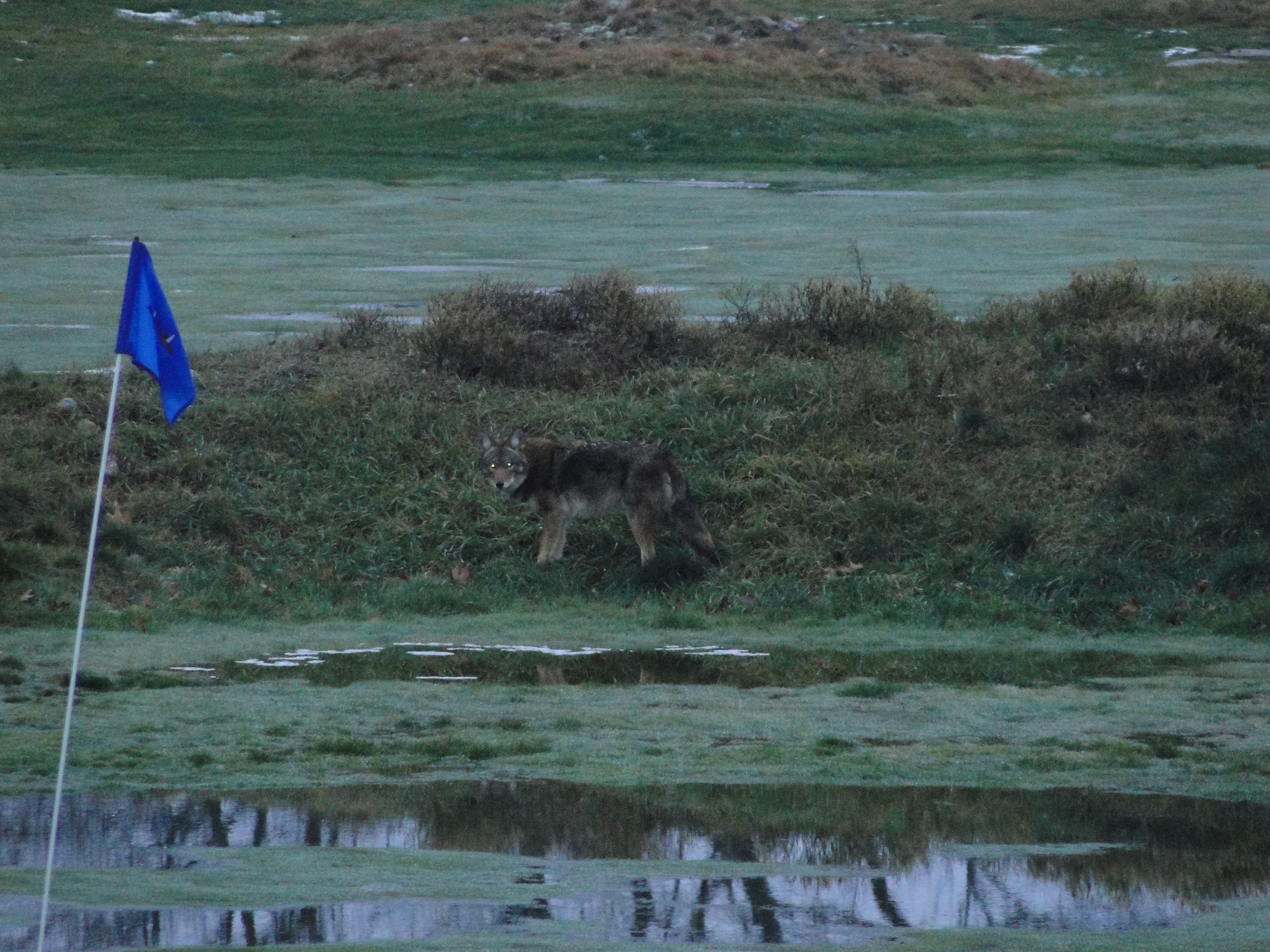
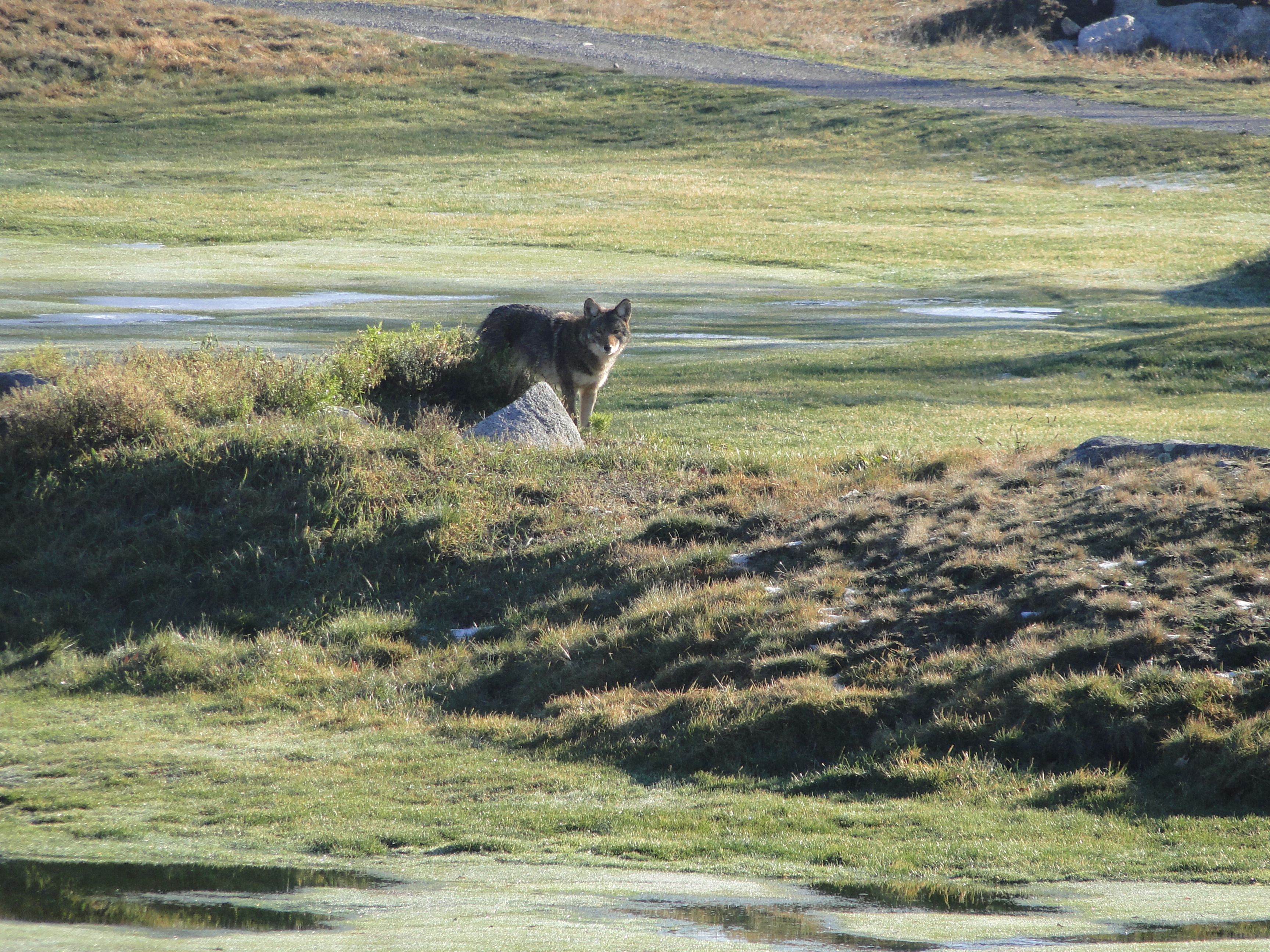 These photos were taken by Pat Halverson and submitted by Peggy Matlow, our new Good Morning Gloucester FOB . Peggy and her family will soon be permanently relocating to Gloucester, from the Berkshires, and these photos were taken from their new home in East Gloucester.


 Good Morning Gloucester
Great attendance last night. I’m the person who asked about the term coywolves – however, I asked from a scientific perspective and not a romanticized one. Specifically, since all our eastern coyotes supposedly contain some wolf DNA (according to coyote researcher Jon Way, http://www.easterncoyoteresearch.com/), I was curious if it was possible to say what percentage of our local animal is coyote and what percentage is wolf. I assume from the answer given, “there is no such thing as a coywolf,” that the percentage of wolf is insignificant. It was good to learn that coyotes aren’t currently mating with wolves.
I also found it interesting that the Gloucester Times quoted Pat Huckery as saying, “I don’t think Gloucester has a coyote problem.” I think she stated that coyotes aren’t generally a problem, but sometimes, there is a problem individual (coyote) due to habituation. And the unknown is scary. So the more we can learn about these creatures, their life cycles and behavior, the more we can modify our personal outdoor spaces (trash, birdseed), the easier it will be to live among them peacefully and humanely.
LikeLiked by 1 person
Thank you for writing Nancy. Were you the attendee from Salem or was that someone else? The DNA of coyotes from western Massachusetts was tested several years ago. The percentage of wolf was equal to or less than the percentage of domestic dog, roughly 9 percent. However, wolves have been known to escape from Wolf Hollow so perhaps we are dealing with a greater percentage on the North Shore. Your questioning the term coywolf was not to suggest that you individually have romanticized the term, but that it has been romanticized repeatedly in the media and other sources, which only increases confusion.
Cape Ann has an undeniable coyote problem with coyotes that have become habituated, case in point is the woman who was attacked in her backyard several months ago.
LikeLike
Thank you Kim, yes, that was I. I became interested in this subject last year when I noticed people were fearful – it made me want to learn more about coyotes, because it’s more fun to be fascinated than afraid. We hear them howling most nights in Salem, but incidents are few. It seems like Gloucester could benefit from a city-sponsored hazing education program. I do believe that coyotes are here to stay, and hunting is only a temporary solution, while education is long-term. Thanks for covering this topic!
LikeLike
Actually john way dna tested coyotes from Boston and cape cod and they were around 30% eastern grey wolf
LikeLike
Interesting article that explains clearly why coyotes are thought to be the canid soup that they are, from Earth Sky: Eastern Coyote is a Hybrid, But Coywolf is not a Thing
http://earthsky.org/earth/eastern-coyotes-a-hybrid-but-coywolf-is-not-a-thing
LikeLike
Hi Nancy! You asked the very question I was going to ask and when she looked down and said “that not what our research shows” I knew it was a biased lecture and research from eastern coyote research and project coyote were not going to be included as part of the educational lecture.
That’s when I left
LikeLike
funny, the night before i was attacked by a pair of dogs, shook me up so much i wanted to strangle them. so it goes. I asked Pat at the meeting about getting a population count around the cape. She said it was very difficult. Perhaps I will look into it more.
LikeLike
I don’t think there has been any official population count and no official statement from anyone in the know ( like fish and wildlife) aside from private citizens that they are over populated.
LikeLike
This is the humane society official stance on hunting and why it doesn’t work
http://m.humanesociety.org/animals/coyotes/tips/against_killing_coyotes.html
LikeLike
Kim,
Thanks for the updates on this issue. I have sent some items to your email…I grew up with native Indians out west and taught many things about wildlife and balance (Pro-Con). Educational endeavors and awareness are vital and you and (GMG) are taking a lead on this! When it comes to wildlife in their traditions there are many rituals prayers etc also prior to hunt during the hunt after the hunt and prayer’s for the spirit of animal…And yes even rattlesnakes were rarely killed rather relocated I know saw this first hand 🙂
Larry Little-Birds tiny book (Hunting Scared Everything listens) provides more on that.
“Larry is the author of Hunting Sacred—Everything Listens: A Pueblo Indian Man’s Oral Tradition Legacy, which introduces readers to a timeless story of living in correct relationship with all life and is Littlebird’s personal legacy of story, song and art from his rich oral tradition.”
http://www.hamaatsa.org/LarryLittlebird.html
LikeLike
Interesting how personal opinion and perception can come into play with this topic.
I stayed late to speak to Ms. Huckery and asked how is it determined that there is indeed a “coyote problem” when no official count or tagging has been done. She admitted that they get their data from residents calling to say that they saw a coyote in the area. This information is flawed because from 10 calls it can’t be determined if there were 10 different coyotes or 10 sightings of the same one. Seeing coyotes often doesn’t make for a “coyote problem”.
Missing cats doesn’t make for a coyote problem either as they are more likely to be hit by a car than eaten by a coyote. Back in November I saw a cat get hit and killed on East Main St on my way to dinner. On my way back the body was gone, probably taken by a coyote. Not only a very sad ending for the cat but the poor driver was devastated and traumatized because of an irresponsible owner. But I digress…
Regarding the Eastern Point woman who had what I refer to as an “encounter ” with the coyote in her yard- I have also spoken to her at length and she was certain that the coyote was going after her small dog, not realizing that she was there. While it’s still a disturbing situation it’s far different than a deliberate attack on a human. It’s also worth noting that she has backyard chickens, a popular fad but perhaps not the best idea for densely populated residential areas.
I’m glad the the police chief stepped forward after the hunter in the audience offered his killing services. I had a hard time hearing but I thought he wasn’t exactly encouraging residents to take to the woods with guns.
LikeLiked by 1 person
When an adult woman is sitting in a fenced in yard (with the additional protection of an electric fence, with their chickens and dogs housed in large protective cages) and a coyote jumps on her back that is an attack, not an “encounter, ” whether or not the coyote thought it was attacking a person or a dog.
I apologize for bringing up the Eastern Point attack and so as not to further victimize the victim, this specific part of the conversation is closed to comments.
LikeLike
When its imprudent to let your small children play in their own back yard because wild animals may attack you have a problem.
I agree wild animals have drifted into hundreds of cities from here to Edinburgh Scotland where fox roam the garbage bins, but as their diet changes so does their natural behavior. Coyote hunt in pairs at night in nature , they prowl around anytime in urban landscapes. They would rather catch a small dog or cat than go after a fast running deer, they have been changed from wild animals to feral dogs.
Kathy Slifer
LikeLike
Clearly this is an issue that gets people heated up. I’d like to reiterate what our speaker conveyed: that coyotes in general are not problematic, but occasionally you have a problem individual. One bad individual does not make a bad species. One rabid raccoon does not mean we kill all raccoons. I believe it is up to Animal Control to deal with the problem animal. Then it is up to us to learn how to live with these beautiful creatures who are here to stay.
I do wish Monday’s speaker had given me better feedback to my two questions. When I’d asked if she could say what percentage of our Eastern Coyote is coyote, and what percentage might be wolf, and is that percentage changing — to receive an answer that “there is no such thing as a coywolf or coydog” left me no more educated than when I arrived. Clearly there is research on this subject, as others have stated here. Since many others use “coyote” and “coywolf” interchangeably, I would have learned more had she responded, “I choose to not use that term because ____________.”
When I asked about research showing that hunting / killing can have the opposite of the desired effect, causing populations to rebound (when an alpha female is killed, all the female pups go into heat), our speaker acted as if she’d never heard this before. Again, this topic has been discussed widely, and to have a biologist not counter this argument with pro-hunting research did not help her credibility.
The other part of the presentation that was lacking is that coyotes are really cool! They are smart, playful, important predators, and offer us so many opportunities to learn about and appreciate the natural world.
Why not implement a one-year plan of ongoing education using the press and social media? Teach people how to haze, how to remove the indirect food sources, and maybe allow residents to track sightings. The coyote population will not grow indiscriminately; it will stabilize when the territory and food supply is maxed out. Humane solutions are possible.
LikeLike
http://earthsky.org/earth/eastern-coyotes-a-hybrid-but-coywolf-is-not-a-thing
LikeLike
Well-said, Dawn. I’ve lived with Coyotes in my neighborhood for 15 years and we’ve not had one incident. Of course, my neighbors prefer to live and let live and don’t panic at the occasional sighting. Therefore, we’ve managed to coexist nicely. Most Coyotes would rather not be in contact with humans, since of the two species, we are the much more savage of the two.
LikeLike