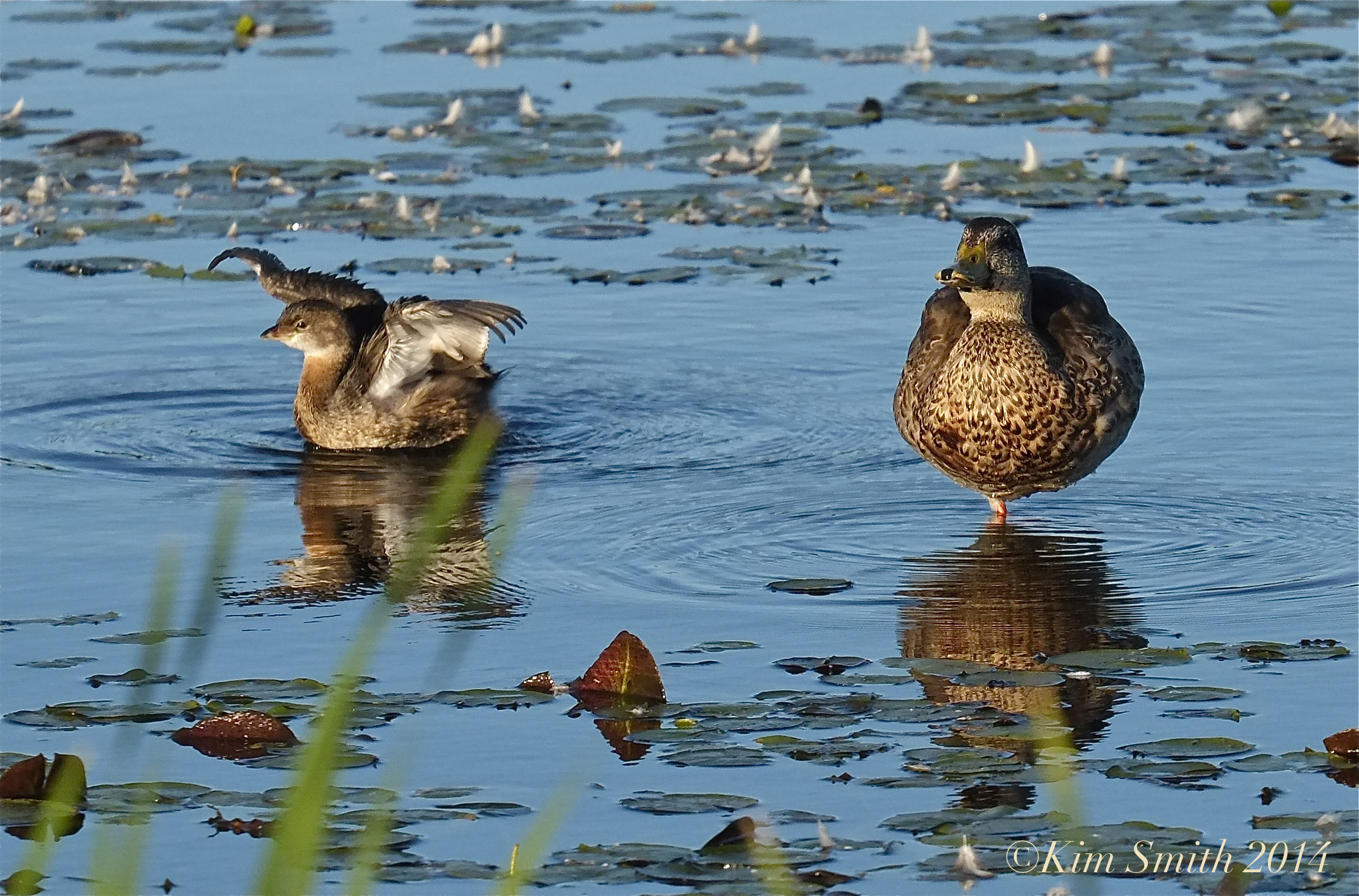
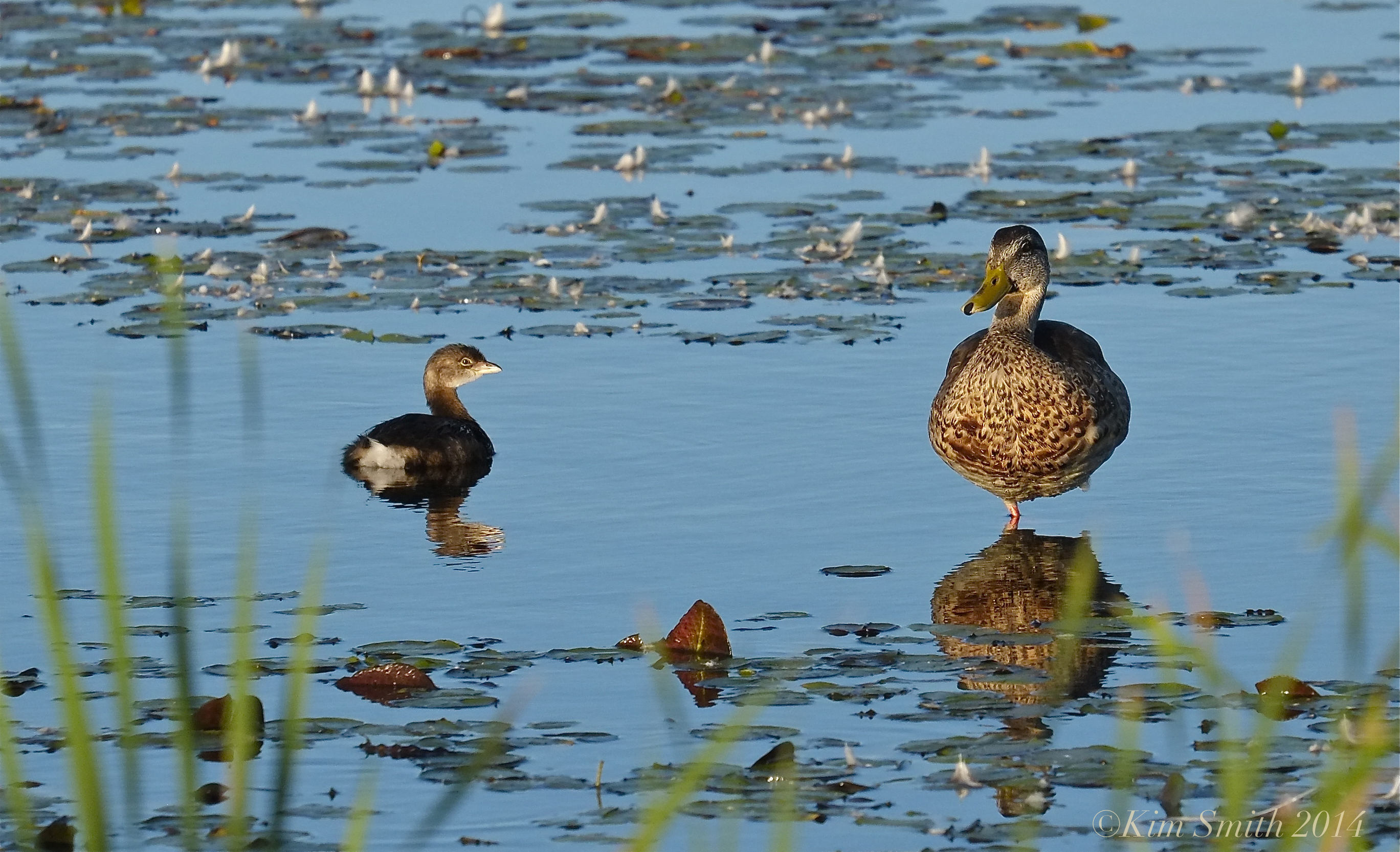
In the dim light of daybreak at first glance I thought the diminutive duck was somehow related to the female mallard. Both were inconspicuous and camouflaged amongst the cattails. Mrs. Mallard was preening and standing on one leg, a thing birds do to regulate their body temperature, and Mystery Duck was actively diving all around her. As the light grew brighter with the rising sun it was easy to see that they weren’t at all akin; Mystery Duck’s bill was shorter and chunkier when compared to the Mallard’s bill, Mystery was half her size, and its perky cotton white tail feathers were unmissable. The Mallard flew off eventually and our Mystery then traveled away, deeply diving and then reemerging some distance further, staying close to the shoreline and always well hidden.
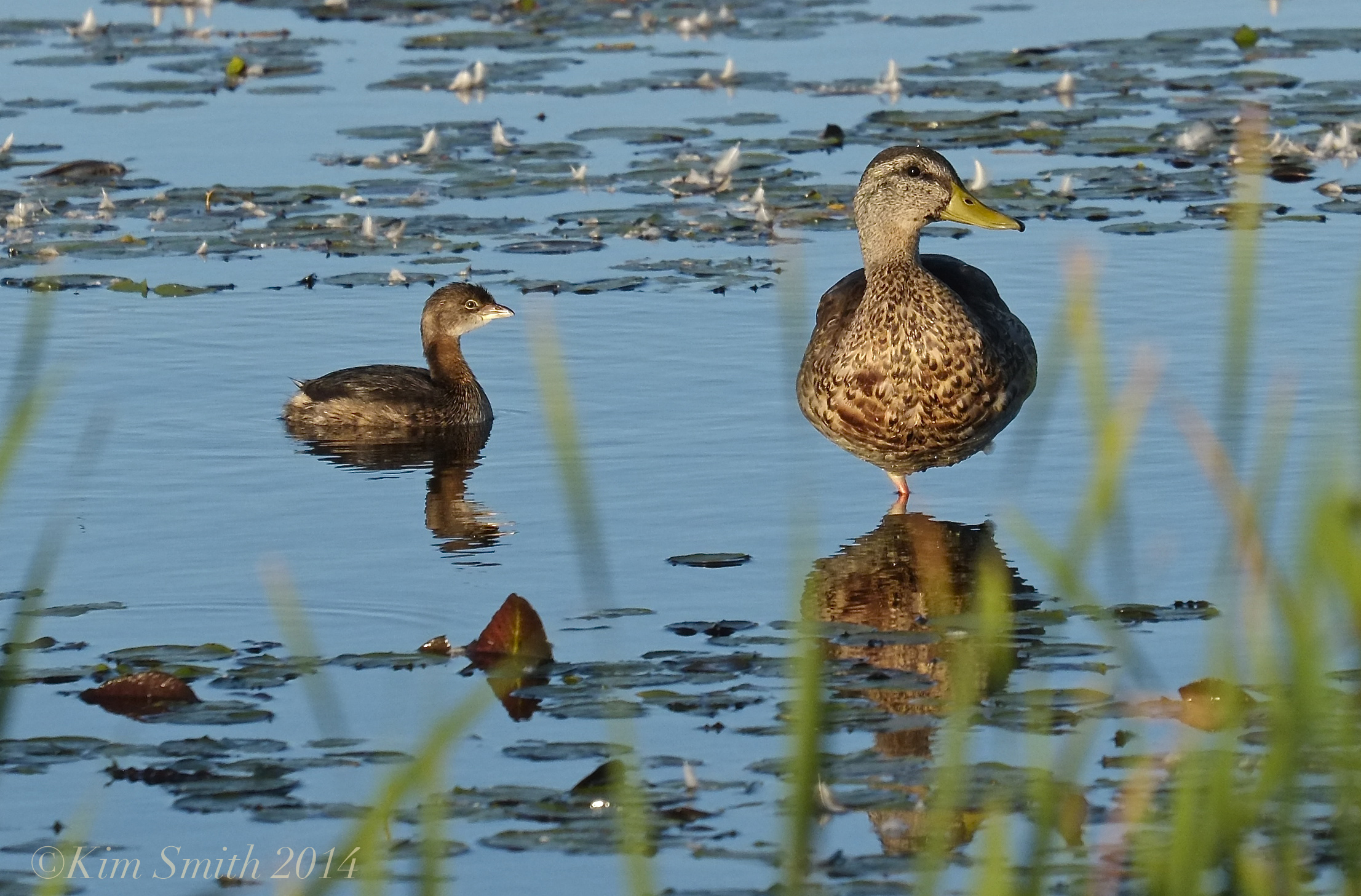
Side-by-side comparison: Pied-billed Grebe, left, female Mallard, right.
The Pied-billed Grebe is rarely seen breeding in Massachusetts any longer and is listed as endangered in nearly every New England state. Rhode Island considers the Pied-billed extirpated (locally extinct). The reason for their decline is low breeding numbers and wetland degradation. Their feathers are thick and soft and were used to make hats and earmuffs during the 19th century. Wantonly hunted to near extinction, Pied-billed Grebes never fully recovered in our region. As wetlands have given way to development, the Pied-billed Grebe’s numbers continue to decline dramatically. They are extremely sensitive to human disturbances, and, too, are less likely to be seen as it is a nocturnal bird, traveling mostly during the night.
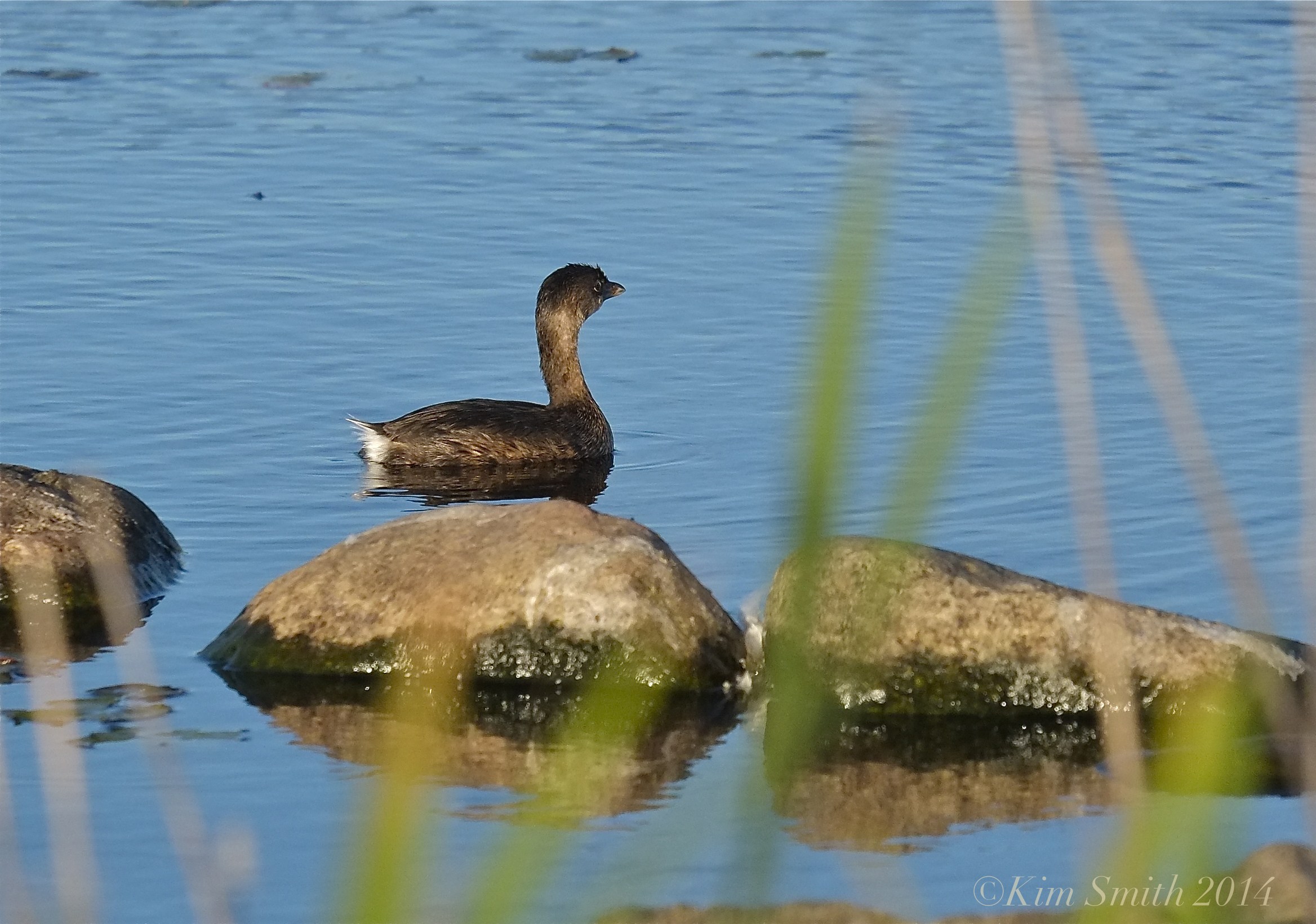 Fluffy Cottontail
A fun fact about the marsh-nesting Pie-billed is that both male and female contribute to building what at first appears to be a floating nest in vegetation, near open water. The nest is actually a platform anchored to plant stalks.
I wonder if this Pied-billed is a fall migrant or if on Niles Pond, Pied-billed Grebes were nesting this season. Has anyone else documented or seen a Pied-billed Grebe at Niles Pond during the past few months?
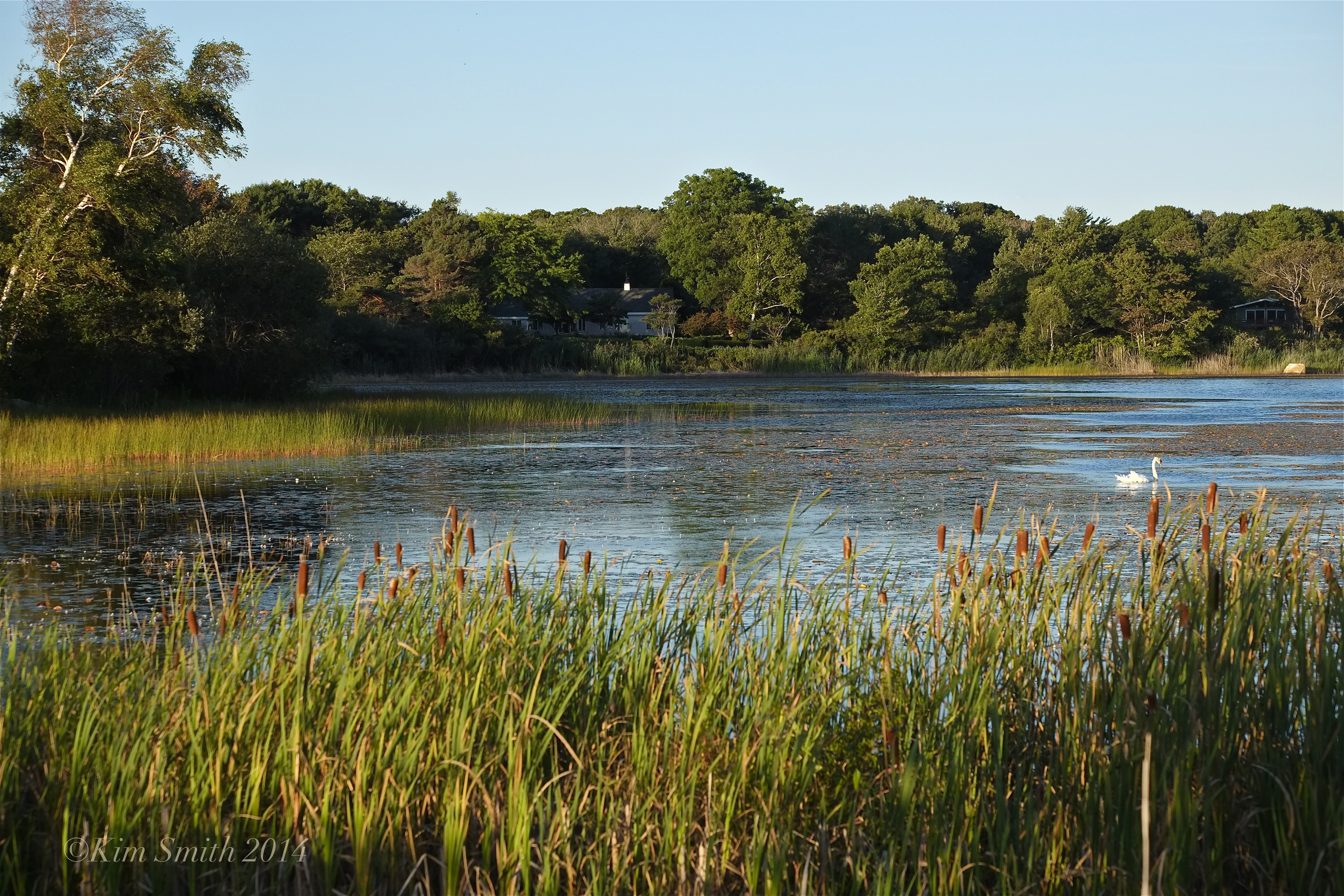
Niles Pond is Ideal Pied-billed Grebe Habitat
See previous GMG post for more information about why birds stand on one leg.
See more photos and audio links here ~


 Good Morning Gloucester
Think you will be seeing more of these during this time of year on there journeys and migration very nice Thanks! 🙂 Dave & Kim:-)
LikeLike
That would be a treat!
LikeLike
Kim — I so appreciate the information that you include with your posts — it’s so much more than a bird that’s to be checked off on a Life List. Thanks for your informative posts and great pictures.
LikeLike
Thank you Jane for taking the time to comment–I am glad you think so and your good words are very much appreciated.
LikeLike
Great sighting and post!
LikeLike
Thanks sagamorgan–it was a lucky early morning, to film both the swans earlier in the moonlight and the Pied-billed at daybreak!
LikeLike
Reader CH writes: Saw your post re the pied billed grebe. I have frequently seen them in Niles pond during migration, but, although we are in their breeding range, I have never seen them breeding here. You can check the Massachusetts Breeding Bird Atlas, released last year by Mass Audubon to see if they have been documented breeding on Cape Ann.
Thanks Caroline for the great info!
LikeLike