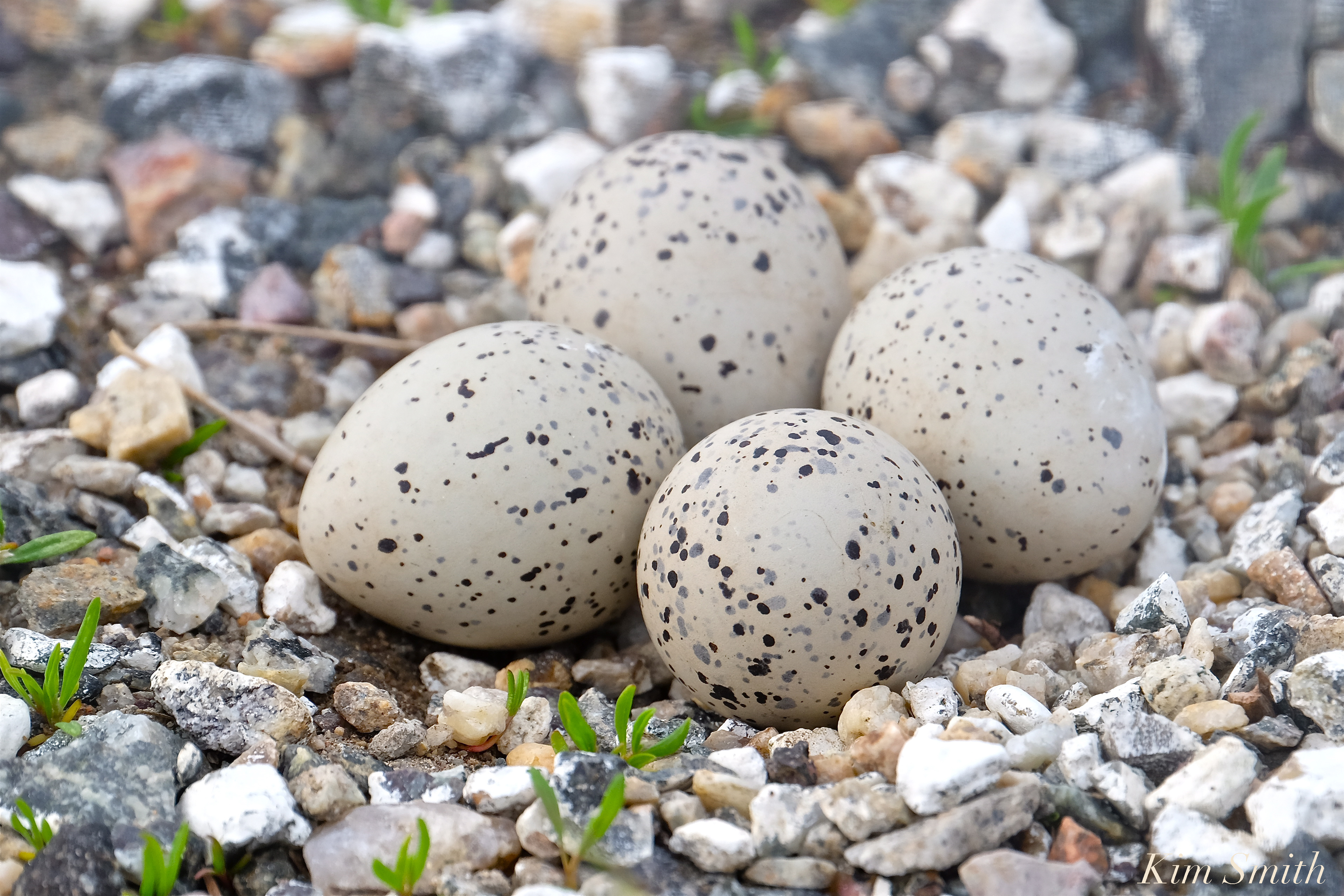
 Four Piping Plover eggs in the Good Harbor Beach parking lot nest!
Tag: Piping Plovers

LEARNING ABOUT HOW MASSACHUSETTS COMMUNITIES MANAGE NESTING PIPING PLOVERS
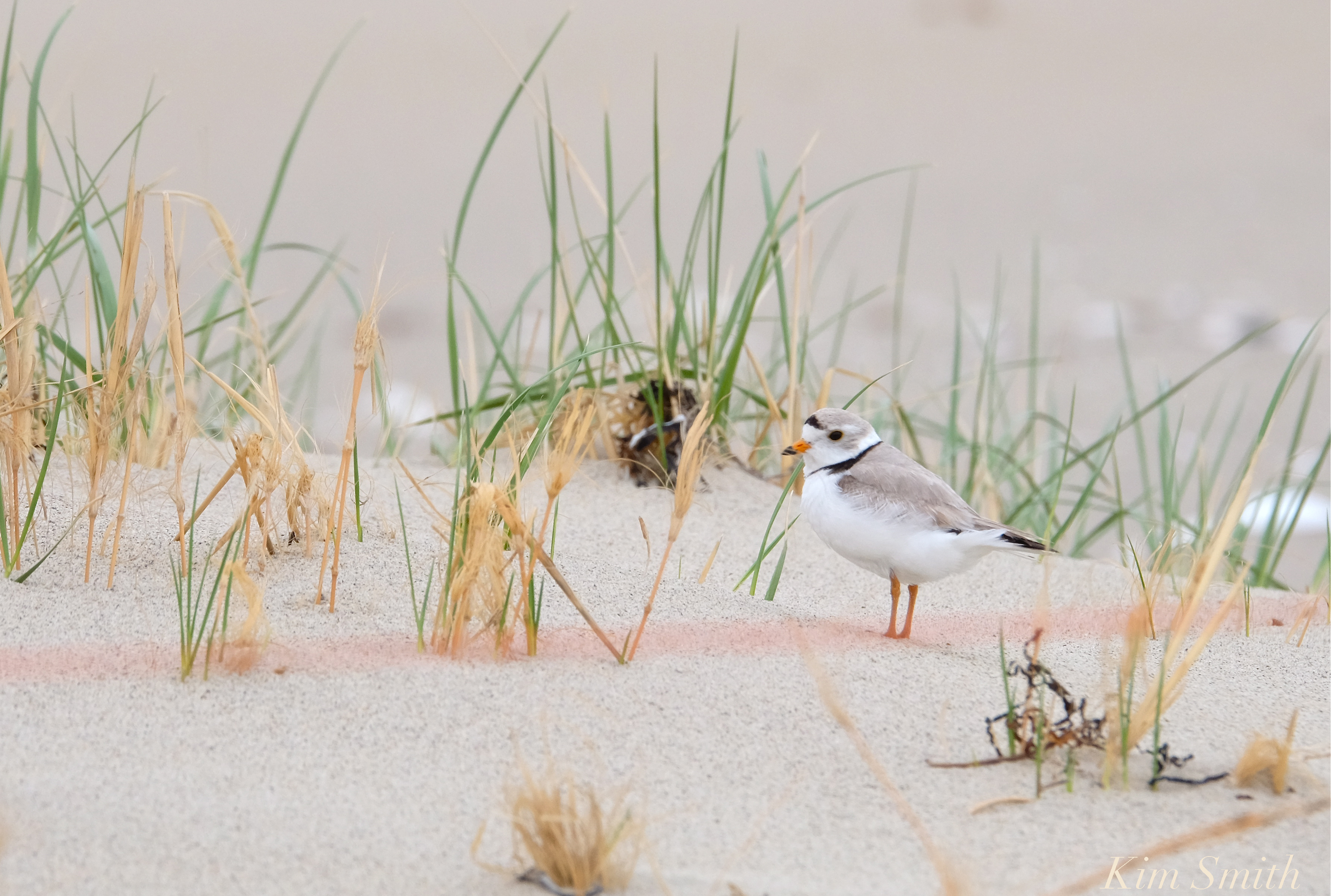 To better understand how to help Gloucester’s Good Harbor Beach Piping Plovers survive nesting at our most well loved and highly trafficked beach I have been following a little Plover family at Revere Beach.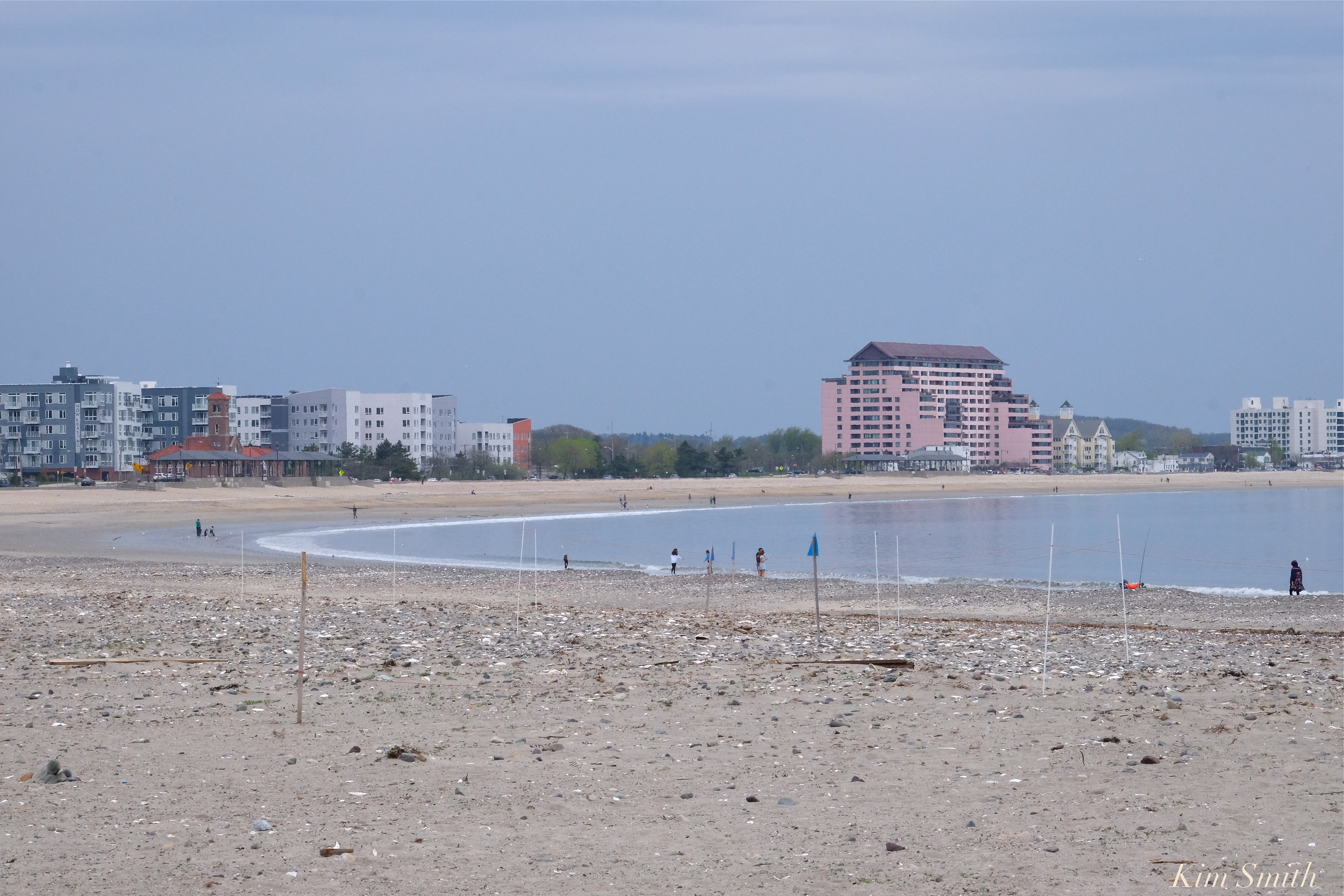
Like Gloucester, Revere is a city north of Boston. Only ten square miles, with six miles of land, four miles of water, and a population of 52,000 people, Revere is a much more densely populated city than Gloucester. Gloucester’s year round population is 28,000, covering an area of 41 square miles, with 26 miles of land and 15 miles of water.
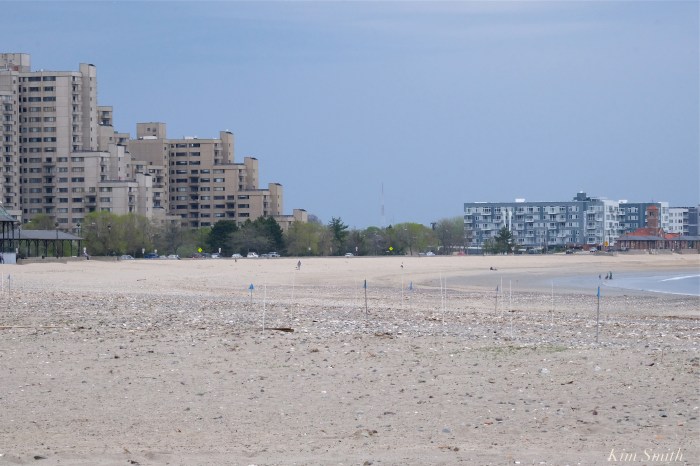
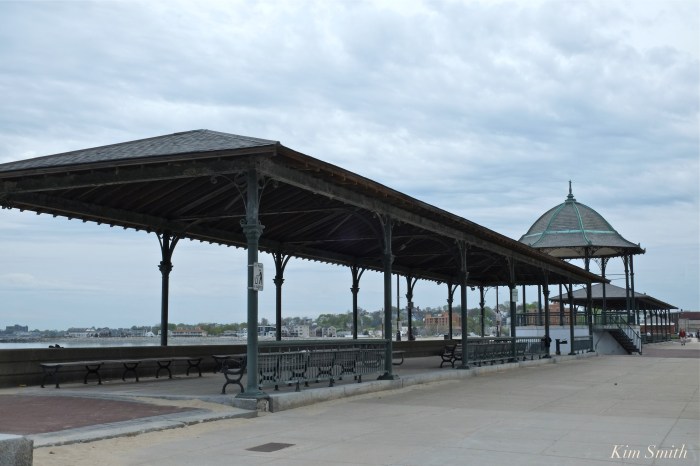
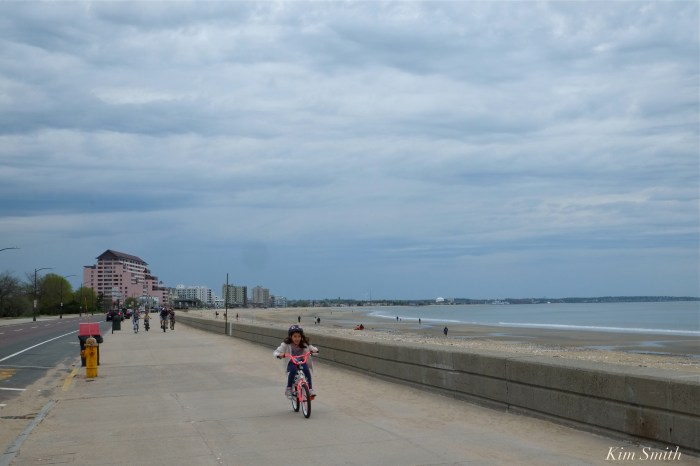
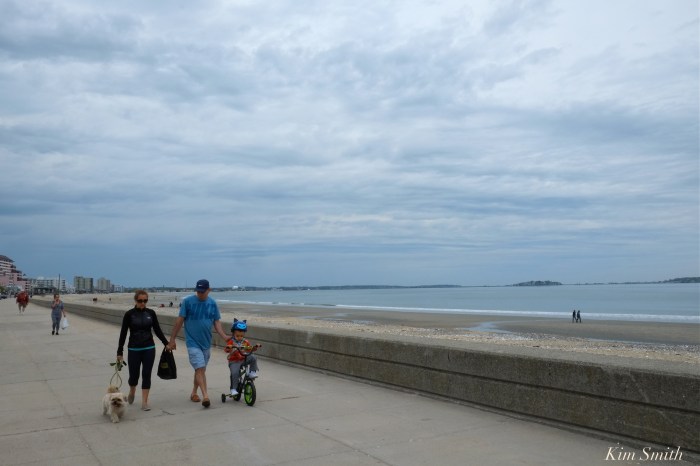
Revere Beach is the first public beach established in America (1895). Misperceptions about a needle and trash littered shoreline are deeply held but in reality, Revere Beach is a beautiful beach, beautifully maintained.
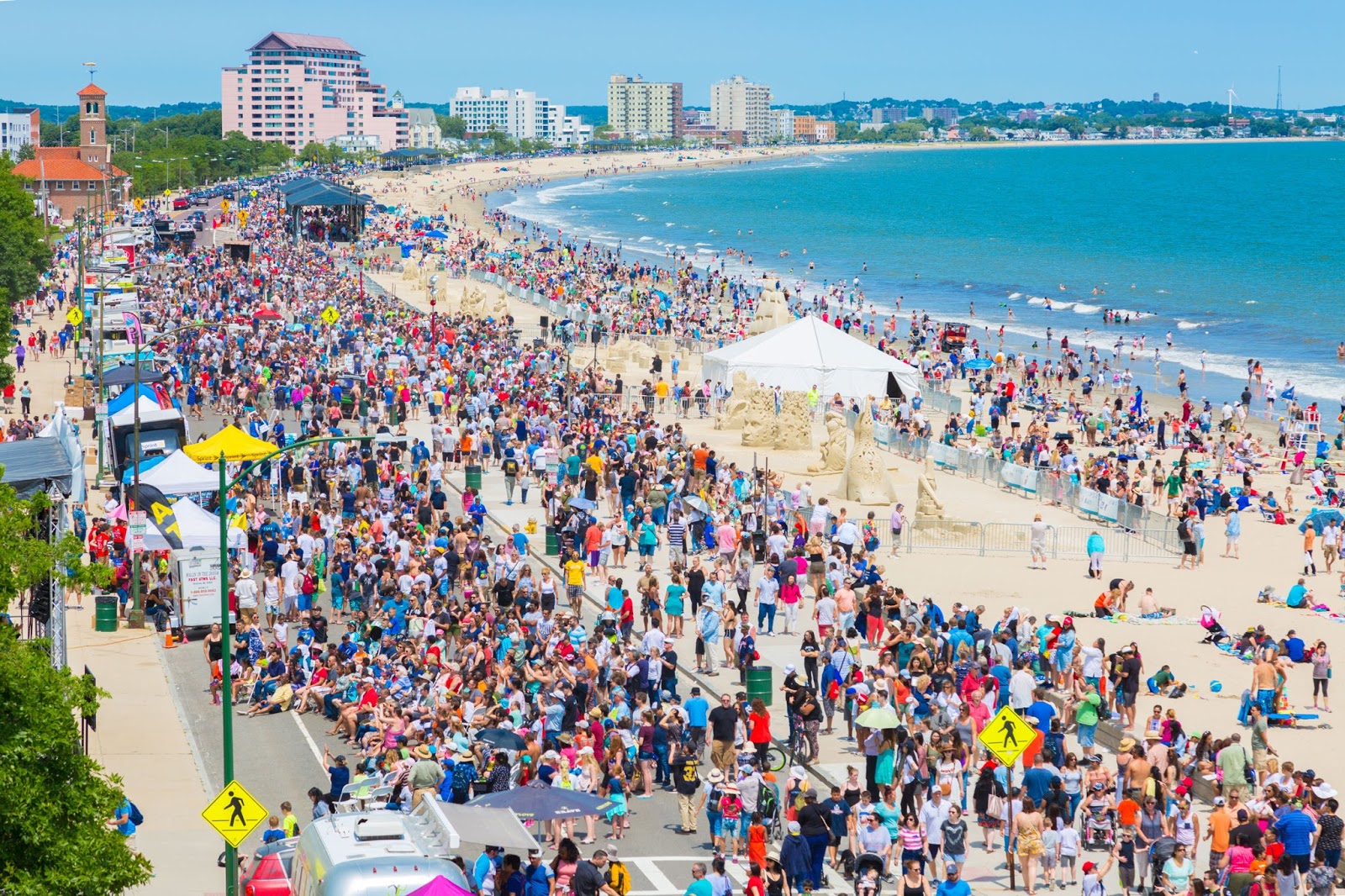 Each year Revere Beach hosts the International Sand Sculpting Festival, with amazing sculpting competitions, amusements, food, and fireworks. This year’s festival will be held on the weekend of July 20-July 22nd (photo courtesy wiki commons media).
Piping Plovers began arriving at Revere Beach at the same time the GHB PiPl arrived, in late-March and very early April. There are at least half a dozen nesting areas cordoned off for Piping Plovers. Revere has had excellent success with fledging Piping Plover chicks because the PiPl are allowed to establish nests early in the season, without disturbance. From decades of field work, it is known that the earlier the chicks hatch, the greater their chance of survival.
I stopped by to check on the Revere Beach PiPl family on a recent Sunday afternoon; it’s not that out of the way to make it part of my regular routine coming home from Cambridge and Boston jobs. And then stopped at Good Harbor Beach. The difference was astounding. There wasn’t any trash or dog poop on Revere Beach, and there wasn’t a dog anywhere along the five mile stretch of beach. There were however six dogs off leash at Good Harbor Beach within the twenty minutes that I was there to say hello to PiPl monitor Heather and to check on our PiPl parking lot family.
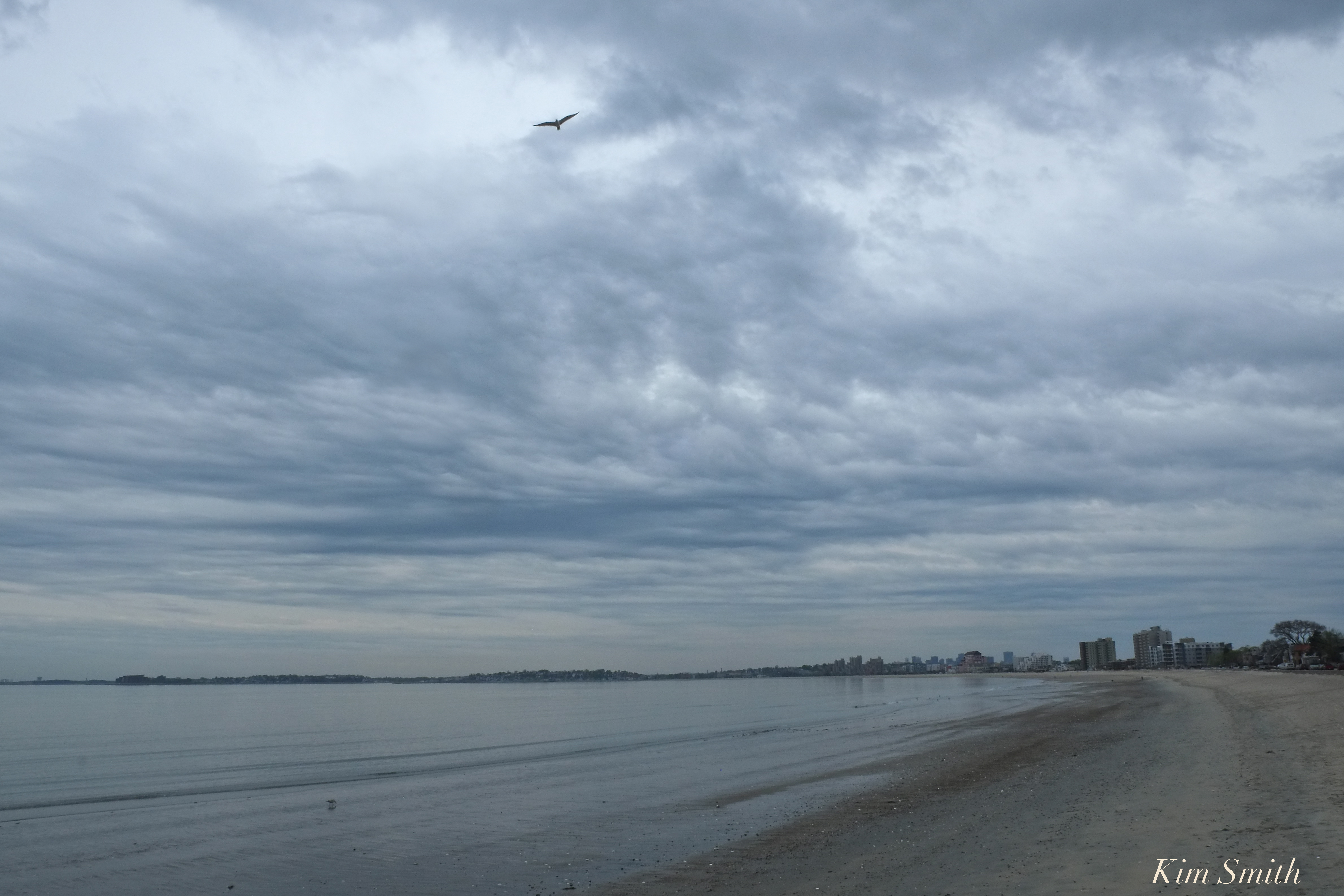 Perhaps you might not think a fair comparison; Revere Beach is much longer than GHB, and it is under the management of the Massachusetts Department of Conservation and Recreation but I did not see a single DCR employee or officer policing Revere Beach that dog-and-trash-free Sunday afternoon.
Over the past several decades, communities throughout Massachusetts have been learning how to live with Piping Plovers. I am hopeful that the more we learn about the issues confronting the Piping Plovers, the Gloucester community will come together to take the steps to insure their safety and successful nesting.
There are a great number of helpful signs at Revere Beach.
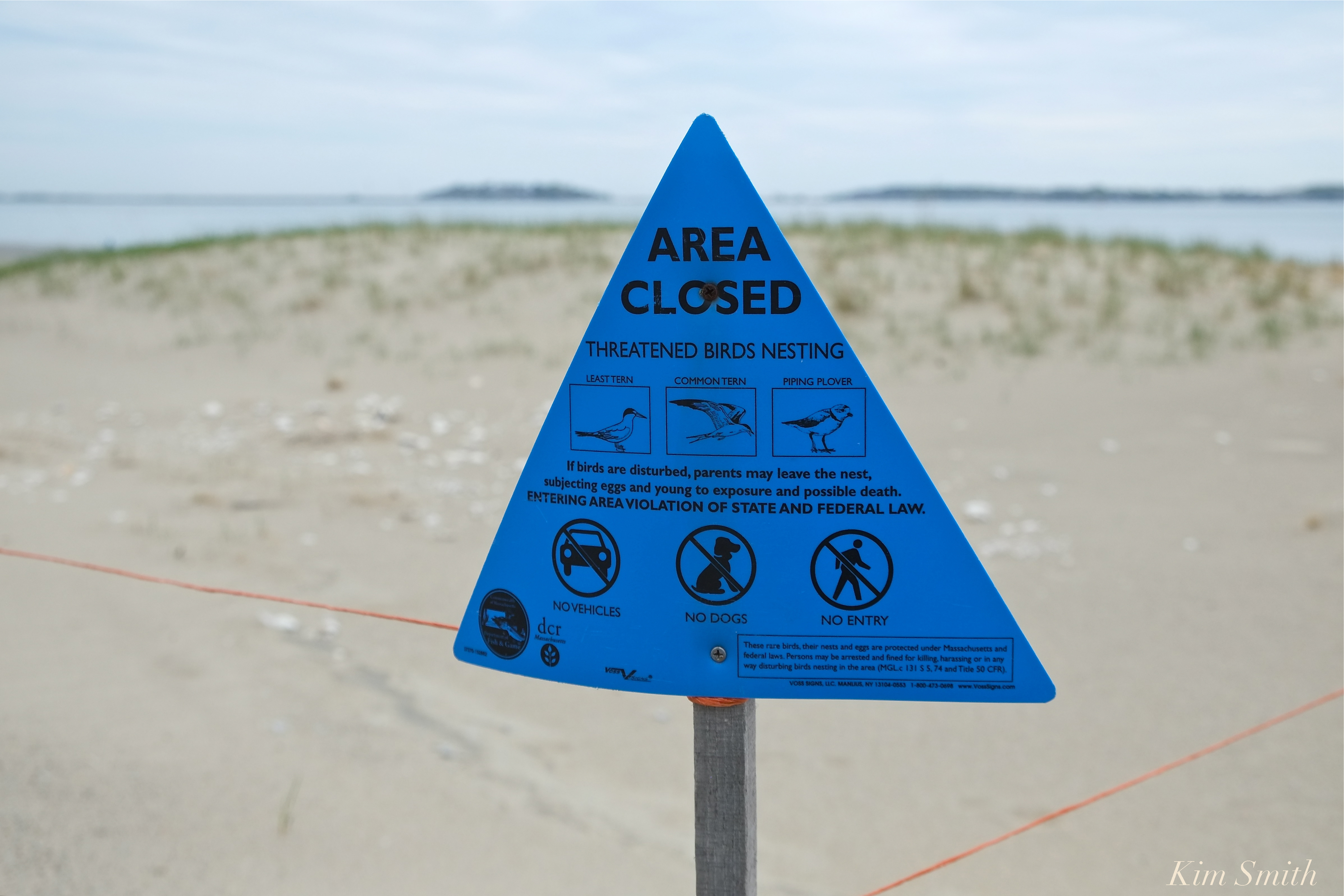
The triangular-shaped signs that are posted at the PiPl nesting areas are on the small side, only about 8 inches. 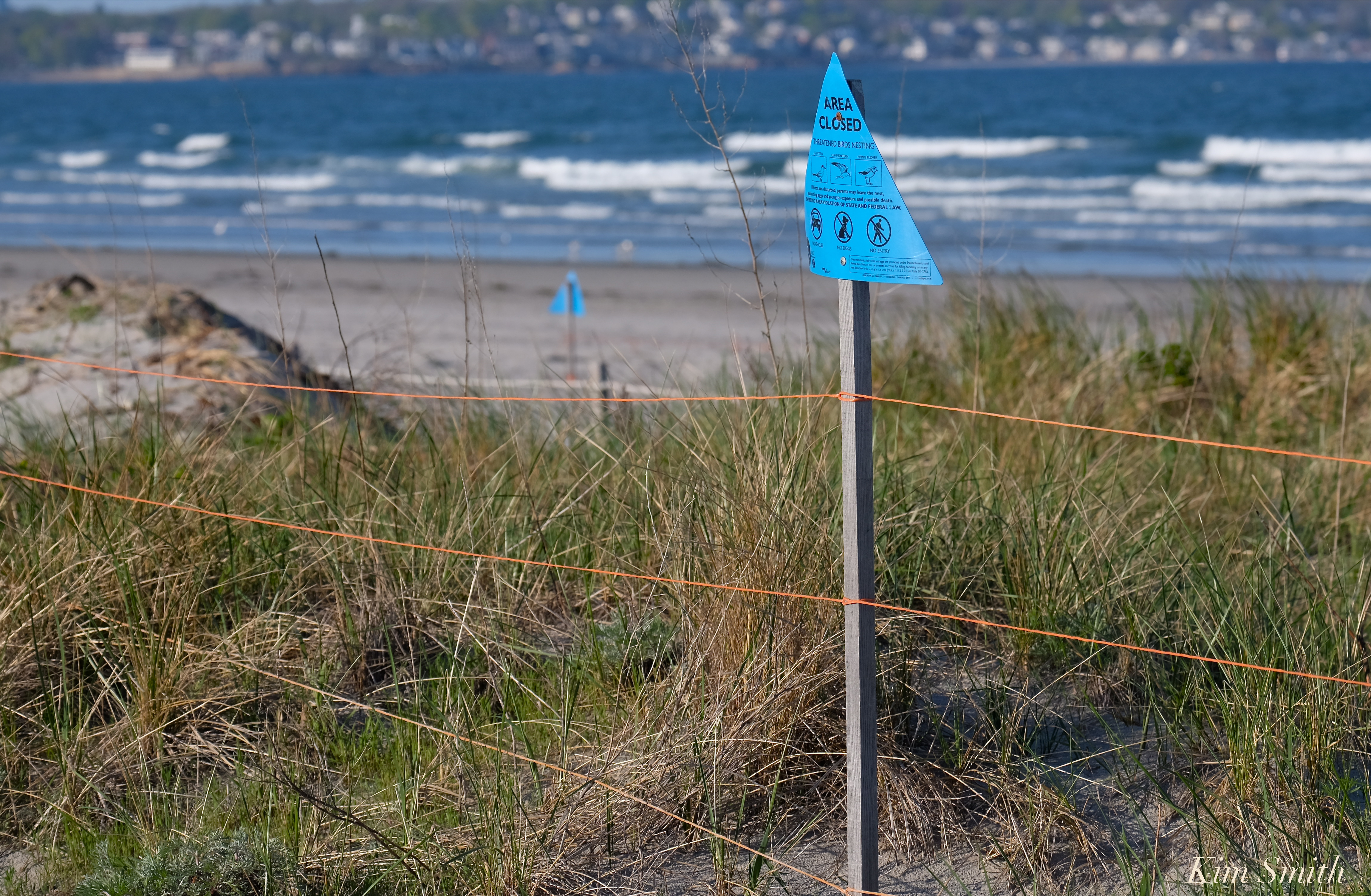
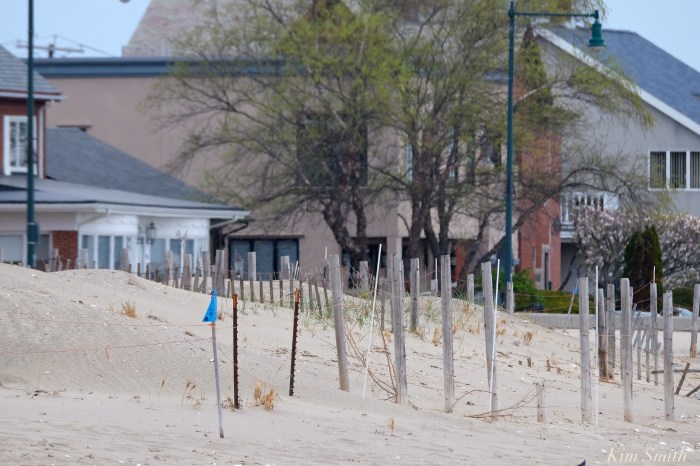
Just like at Nahant Beach (above) many of the roped off areas at Revere Beach have three rows of roping.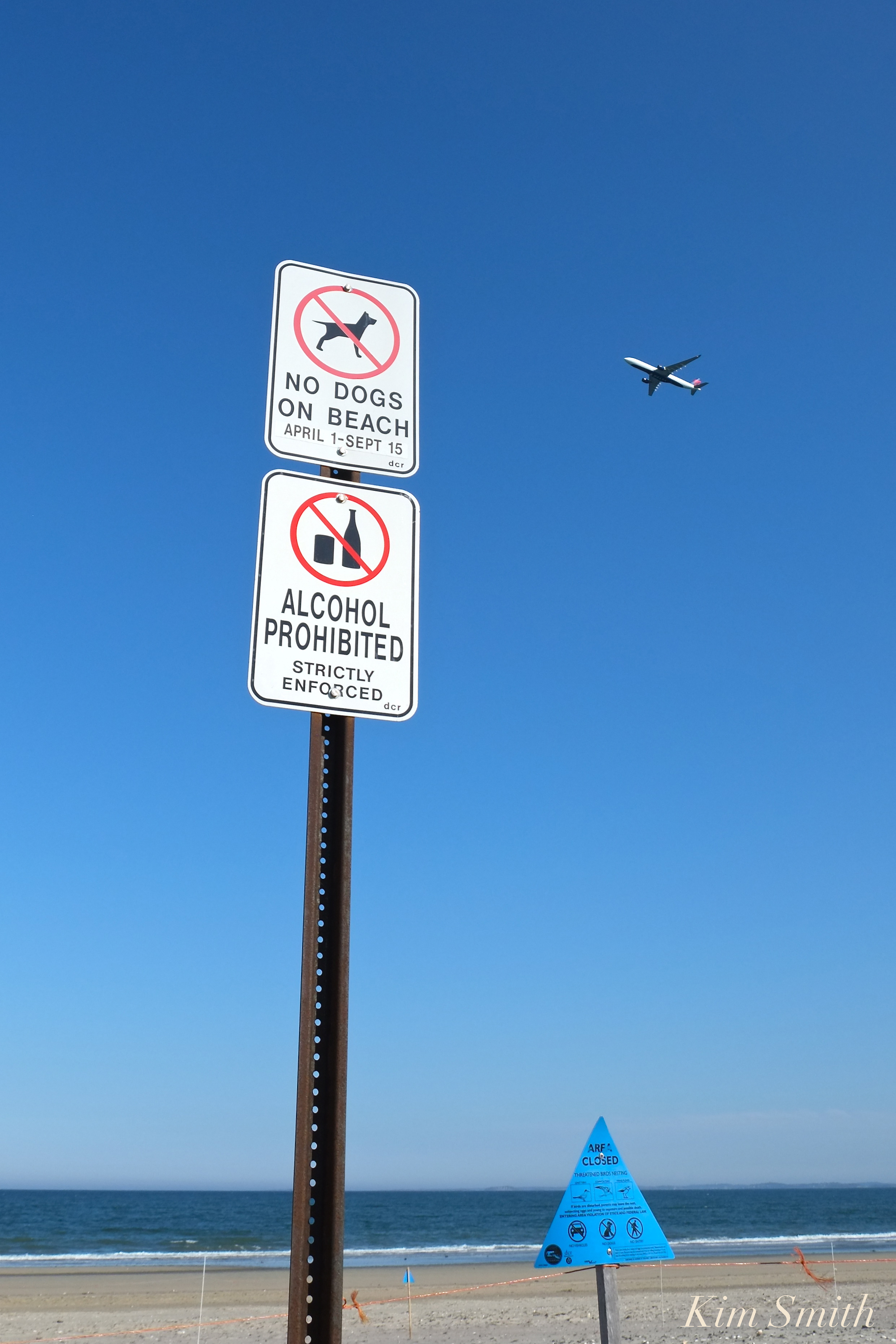
At Revere Beach dogs are not allowed on the beach beginning April 1st. The rules are clearly posted at each and every entry to the beach. The signs and poles aren’t fancy and I imagine would be affordable and easy to obtain.
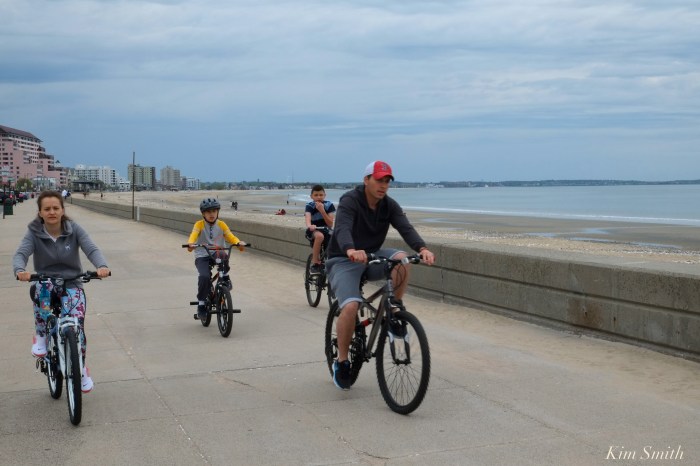
The Gabe and Gabby Family with their leashed dog on the boulevard, sitting next to a PiPl nesting area–no problem for this family to keep their dog off the beach during nesting season.

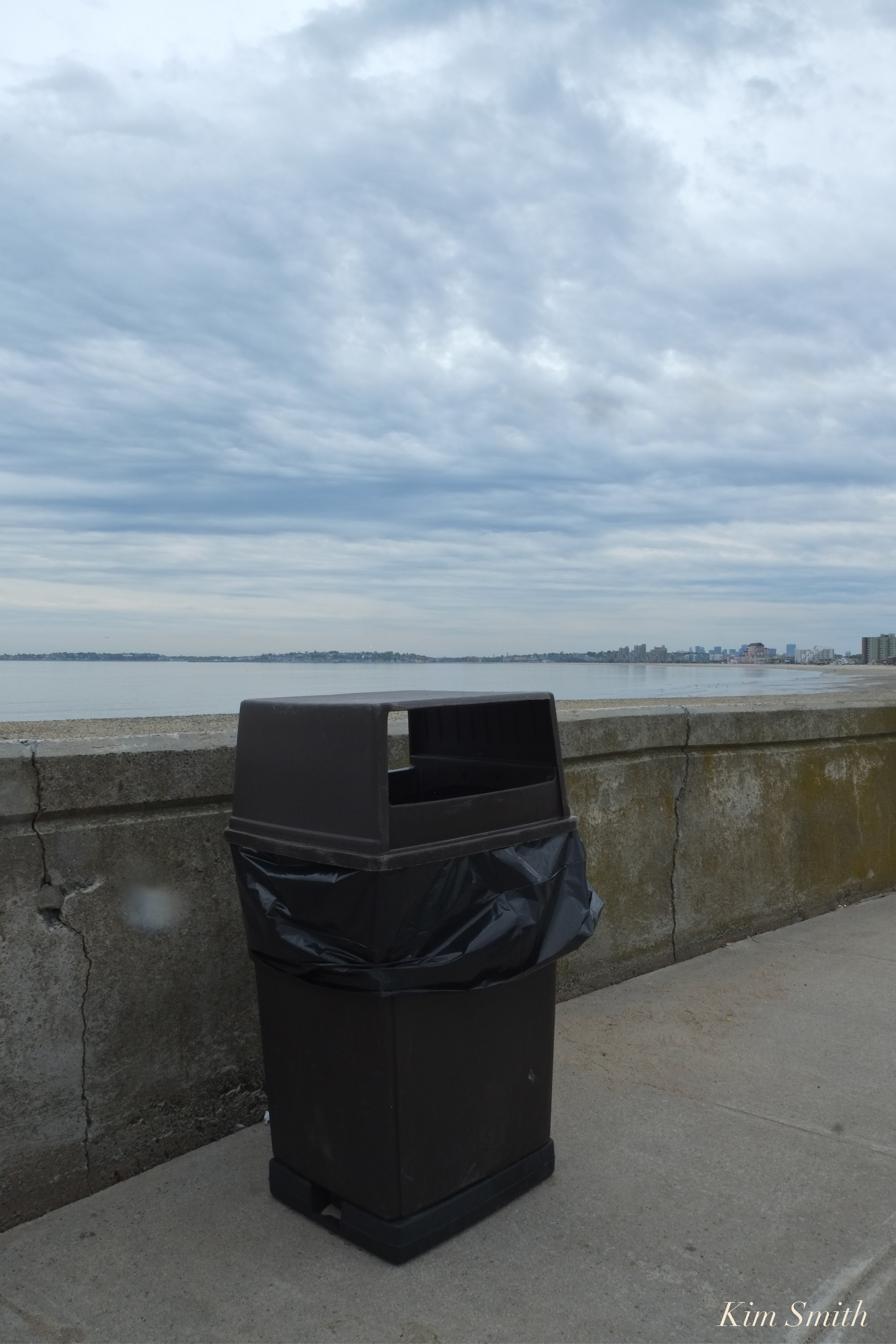 Plenty of trash barrels.
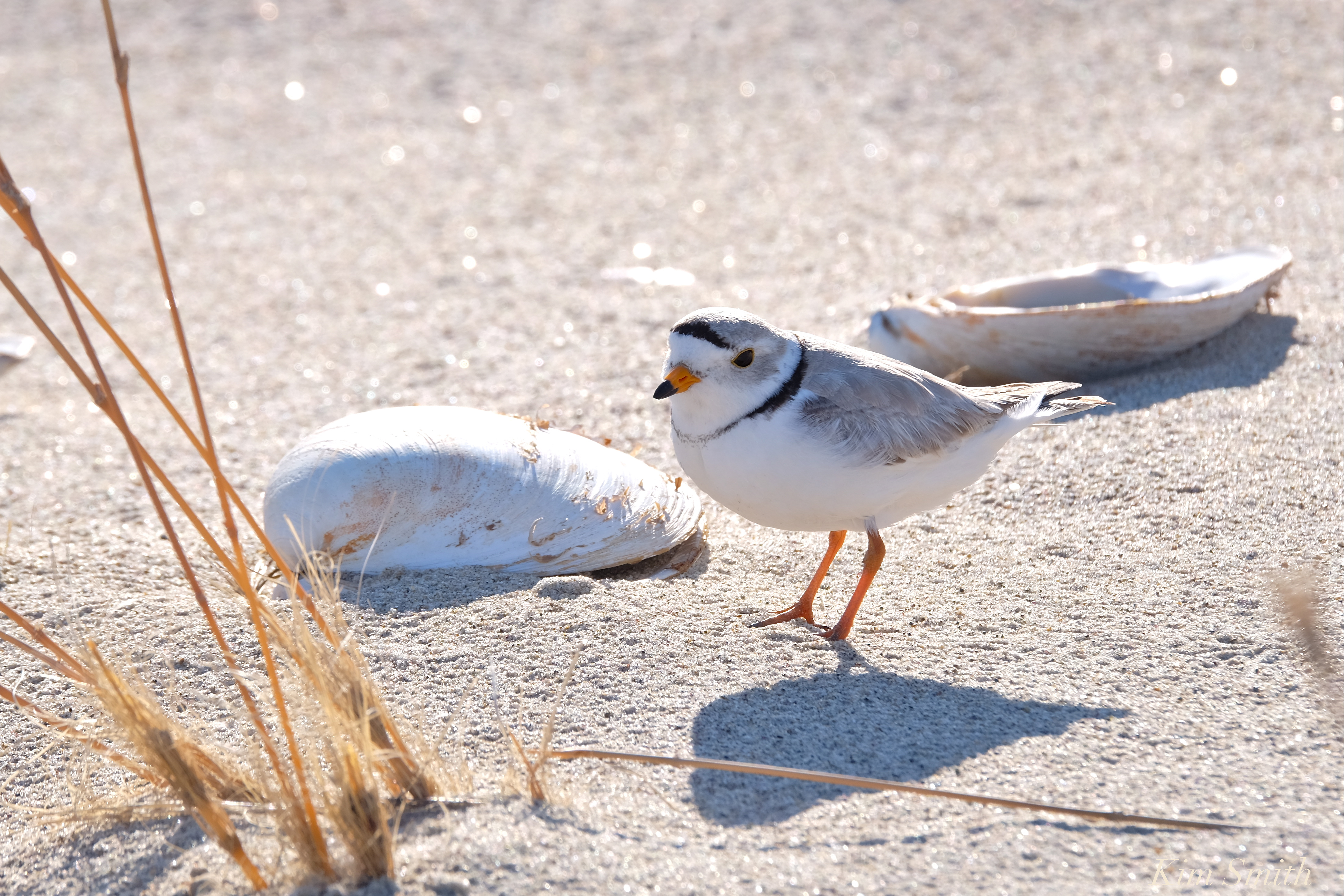 Some folks are under the false impression that the reason our GHB PiPl are nesting in the parking lot is because when they arrived it was cold and the parking lot hard pack is warm. Factually speaking, Piping Plovers arrived at beaches all along the Massachusetts coastline in mid-March and early April. As far as we know, the Good Harbor Beach PiPl are the Only Piping Plovers nesting in a parking lot.
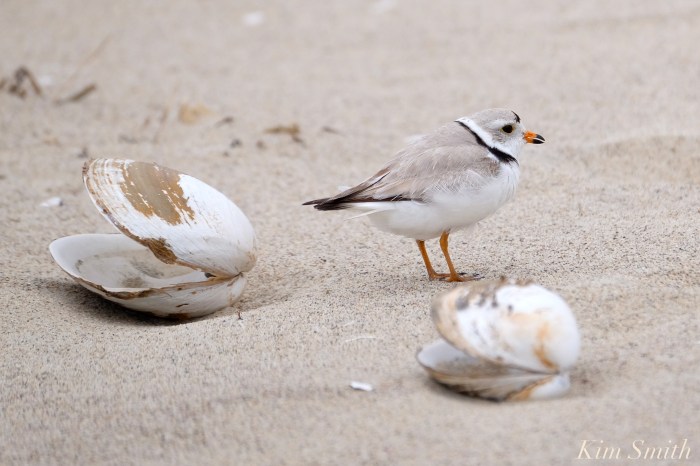
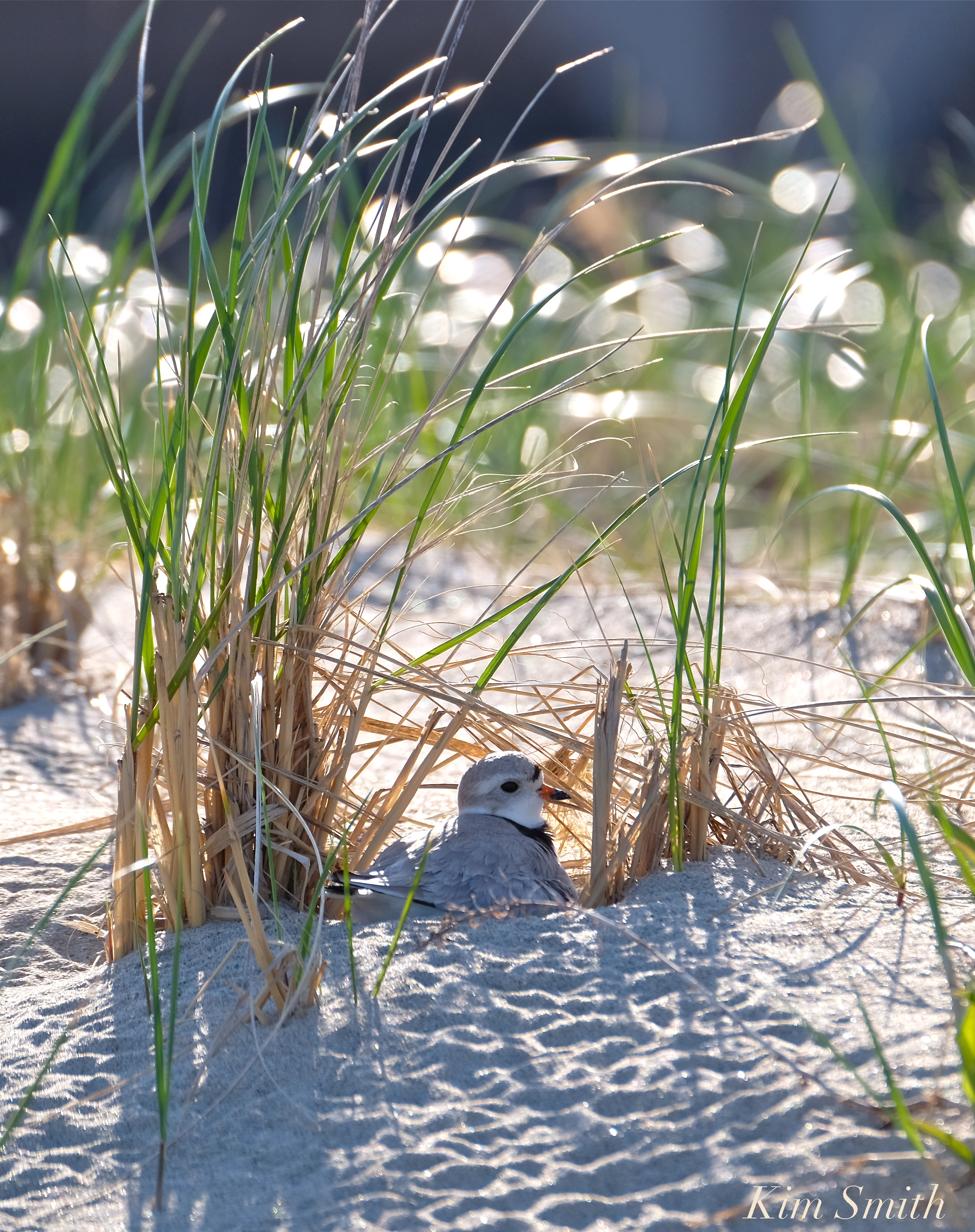 Male Plover nesting at Revere Beach. The Revere Beach PiPl were creating their nest scrapes on the beach at exactly the same time our GHB PiPl were trying to establish a nest on the beach.
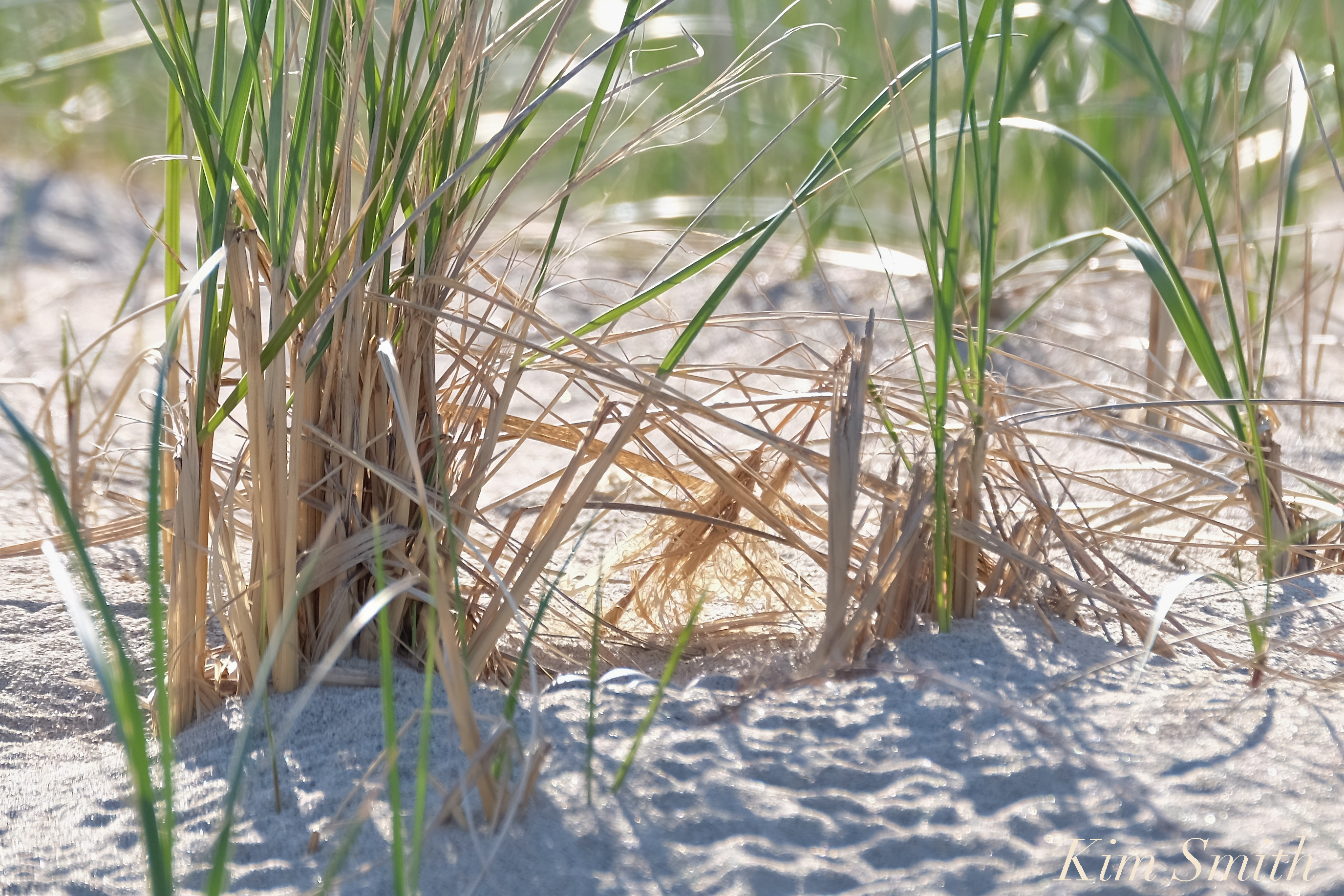
Just like our GHB PiPl family, it looks like there are four eggs in the Revere Beach nest!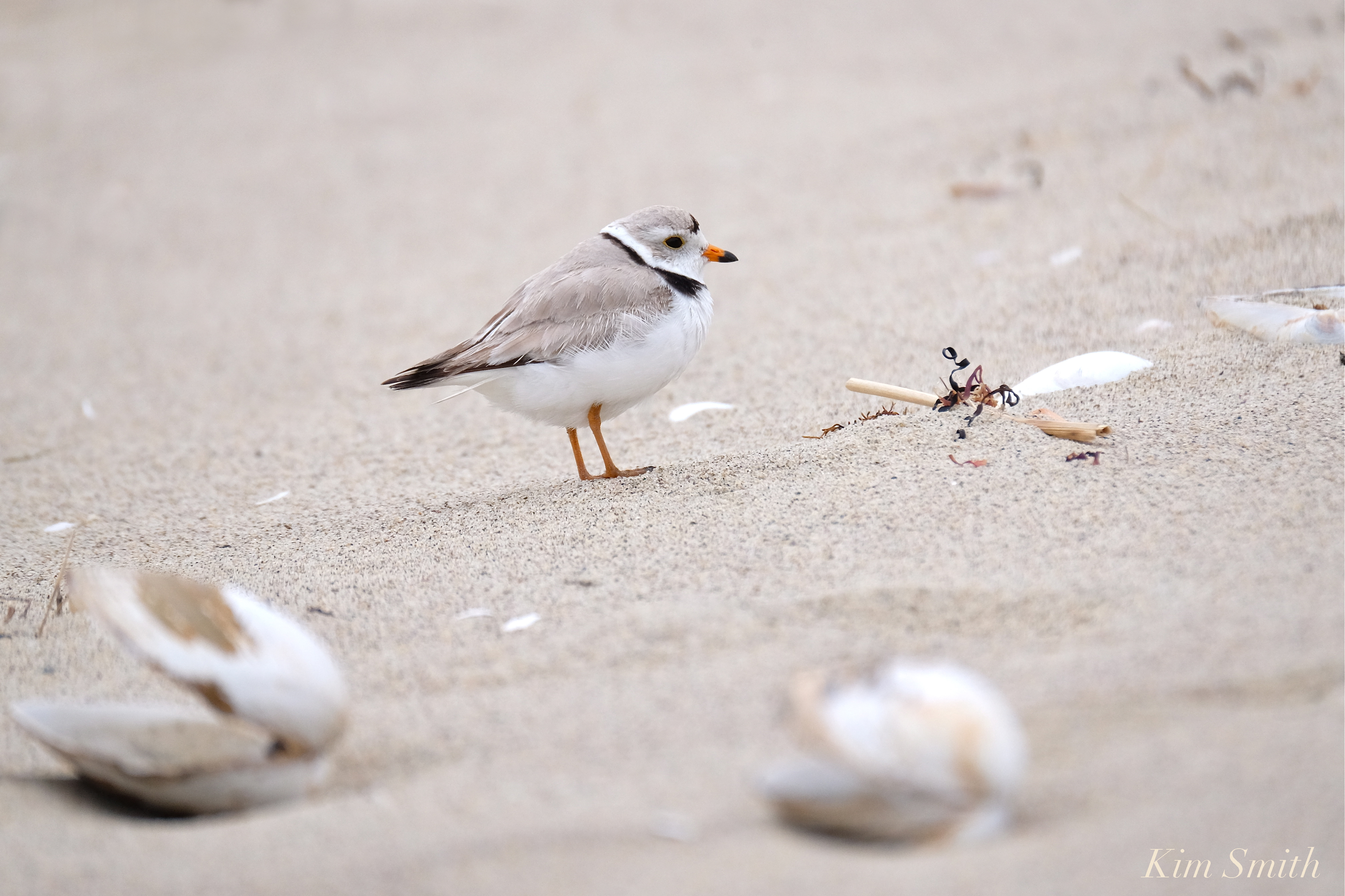
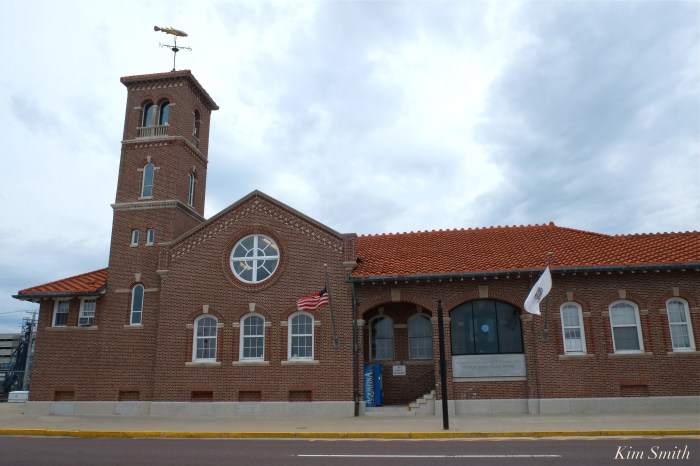
 Next time I stop to visit the Revere Beach PiPl family, I am going to have to bring home some Kelly’s roast beef sandwiches for dinner. I’ve heard the seafood is pretty good at Kelly’s, too!
Spread The GMG Love By Sharing With These Buttons:

Thunderstorm on the Horizon
We hope the Piping Plover eggs survive the storm. The parking lot hard pack does not drain that well. After they built their first nest scrape in the parking lot, I checked on it the next day following a rainstorm and the scrape was filled with water. Let’s hope for the best with this second parking lot nest.
https://www.instagram.com/p/Bi0Ec0_nffX/
Spread The GMG Love By Sharing With These Buttons:

GloucesterCast 276 With Kim Smith and Joey Ciaramitaro Taped 4/22/18

GloucesterCast 276 With Kim Smith and Joey Ciaramitaro Taped 4/22/18

When you subscribe you need to verify your email address so they know we’re not sending you spam and that you want to receive the podcast. So once you subscribe check your email for that verification. If you don’t see it, check your spam folder in your email acct so you can verify that you’d like to get the GloucesterCast Podcast sent to you for listening at your convenience..

Topics Include:
Free Tickets To Cape Ann Community Cinema – Share this post on Facebook for a chance to win two free tickets to Cape Ann Community Cinema, The Cinema Listings are always stickied in the GMG Calendar at the top of the blog or you can click here to go directly to the website
Plover Porn
Haters Gonna Hate
The Crows Nest vs Pellana
$1 GMG Oyster Quest a Big Hit Update from Short and Main-shortandmain@captjoe06 yes, we have it regularly every day! We currently have dollar oysters every day from 5-6PM, and again from 9-10PM Sunday, Monday, Wednesday and Thursday, and 10-11PM Friday & Saturday. Closed Tuesdays
Piping Plover Exclosure Coming
New Animal Control Officer Teagan Dolan Gets Praise From Kim Smith
Swan Release
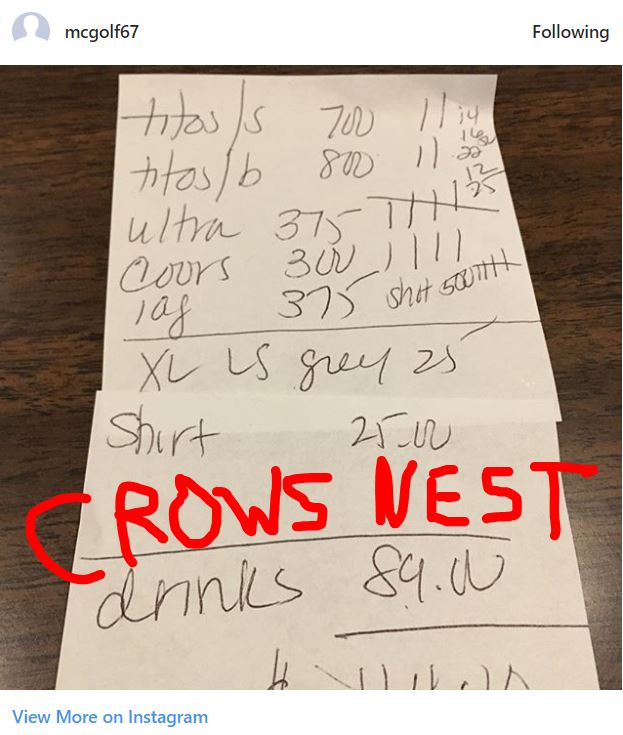
Crows Nest bill for like a bazillion drinks –
Spread The GMG Love By Sharing With These Buttons:

PIPING PLOVERS AND SANDY POINT BEACH NEEDS HELP! -By Kim Smith
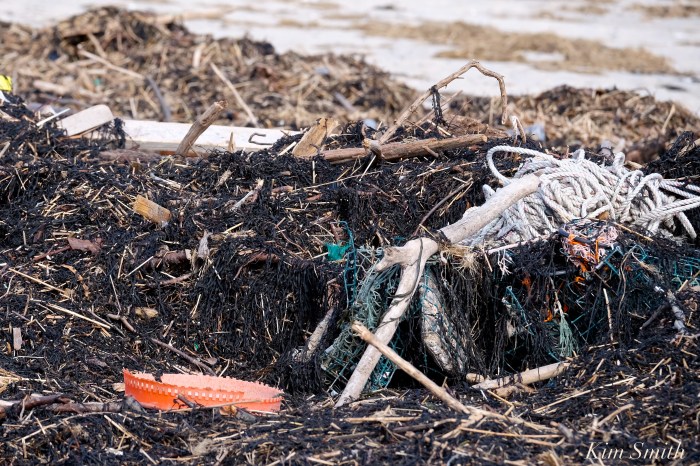
The storm devastation at Sandy Point Beach on Plum Island is alarming. The thing is, exactly where the debris pile-up is the densest, is precisely where the Piping Plovers nest. These photos were taken several weeks ago, and the mass of garbage has only grown greater with two subsequent storms.
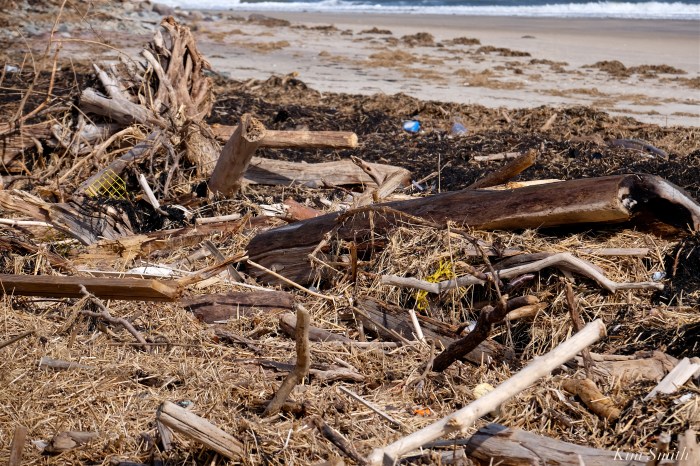
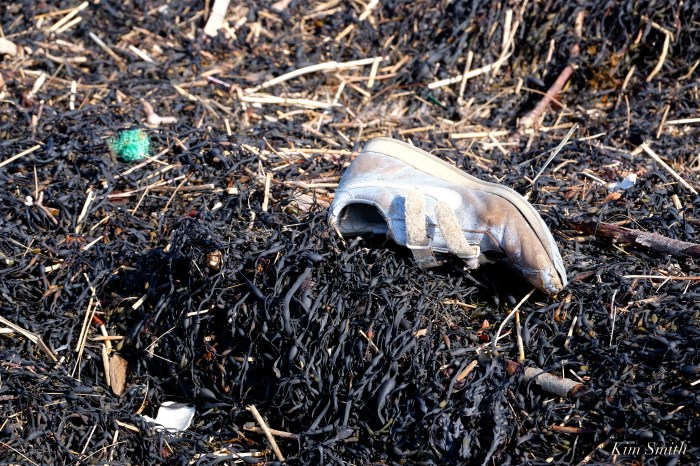
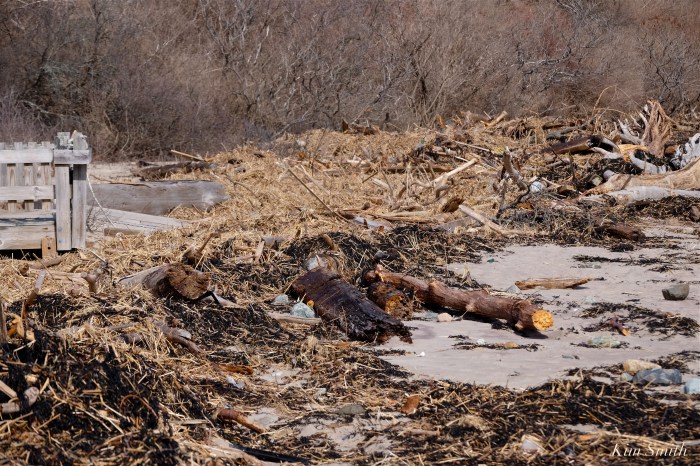
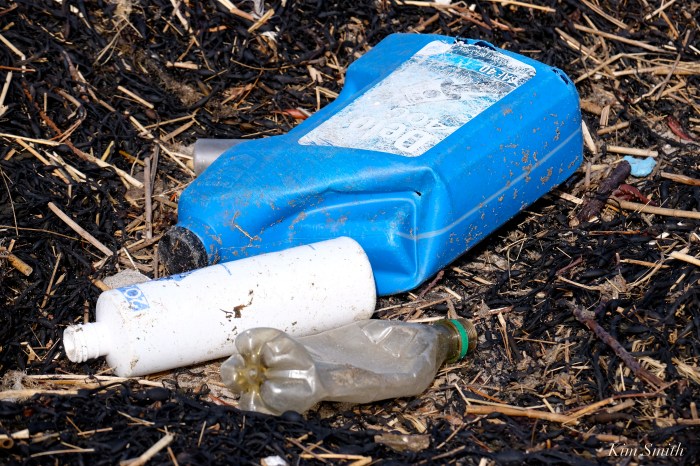
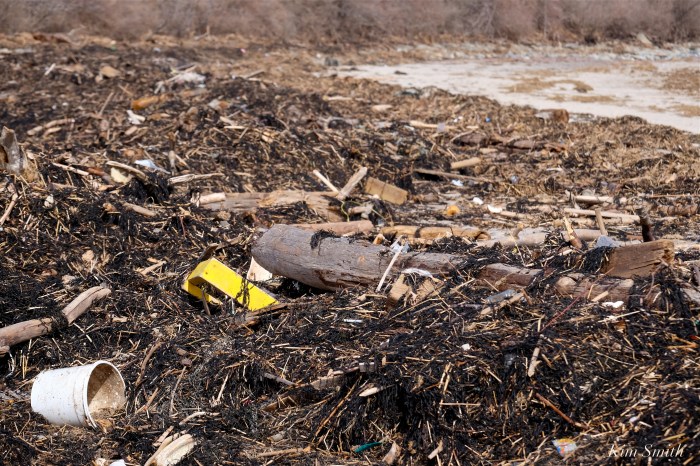
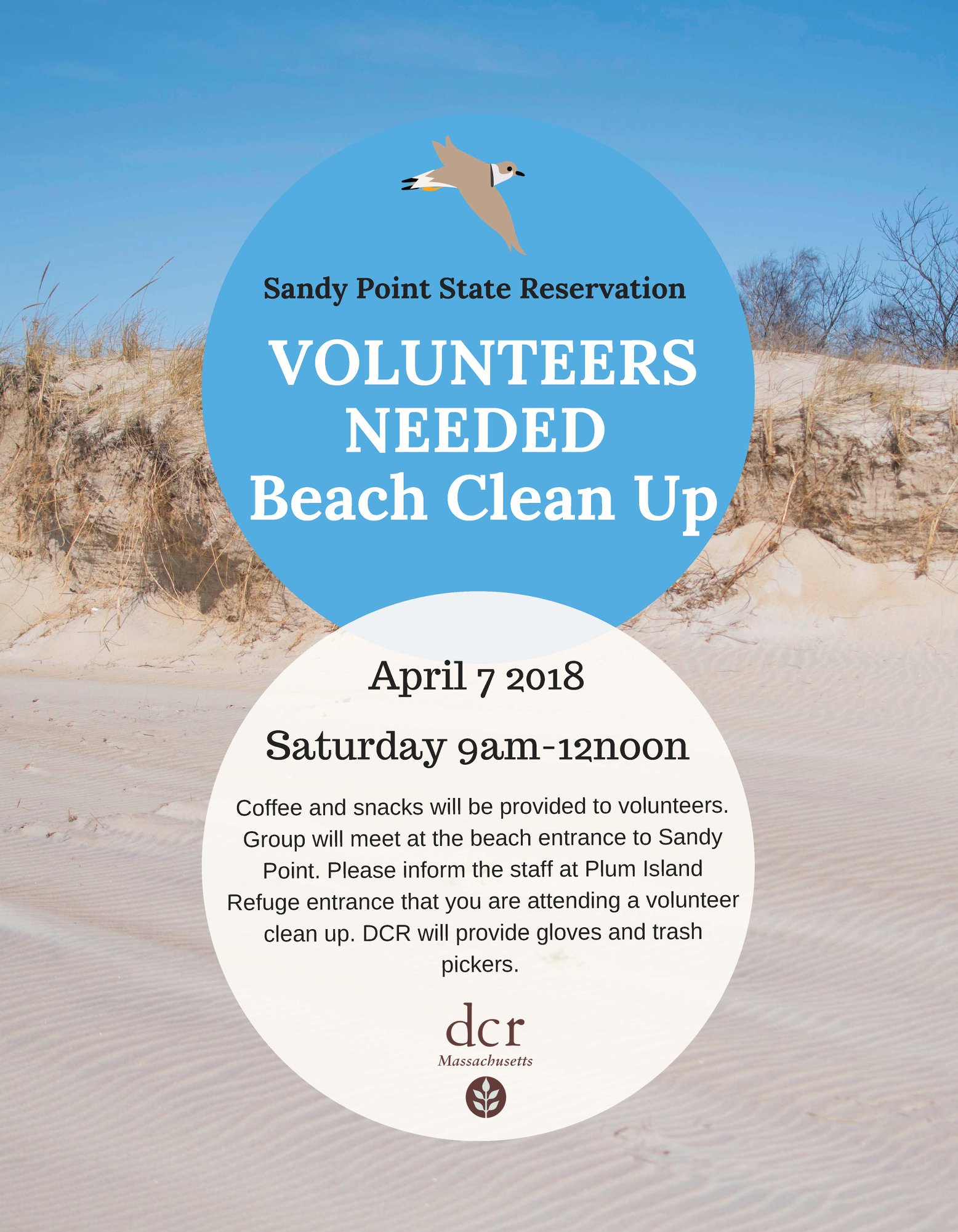 From PRNWR, “Although the refuge isn’t hosting a spring beach cleanup this year, Sandy Point State Reservation is! Join DCR on April 7th to clean up the southern tip of the island. Parking is limited, so carpooling from the refuge Visitor Center is encouraged.”
Spread The GMG Love By Sharing With These Buttons:

THANK YOU DIANNE CORLISS FOR ALL YOUR PIPING PLOVER LOVE
Wishing Dianne much success on her new path. Our deepest thanks again for all that she did to keep the Good Harbor Beach Piping Plover family safe last summer.
https://www.instagram.com/p/BbpTIJtFds9/
Spread The GMG Love By Sharing With These Buttons:
HOW DO HURRICANES AFFECT MIGRATING SHOREBIRDS LIKE LITTLE CHICK?
We can hope our Little Chick is taking his time migrating southward. Perhaps he has traveled only as far as Cape May, New Jersey, or maybe he has already migrated as far as Cape Lookout, North Carolina. Migrating shorebirds often travel shortly after a low pressure system and hurricanes are a part of the environment to which wildlife like Piping Plovers have adapted. However, no wildlife has in the recorded history of the world had to cope with a storm the magnitude of Hurricane Irma.
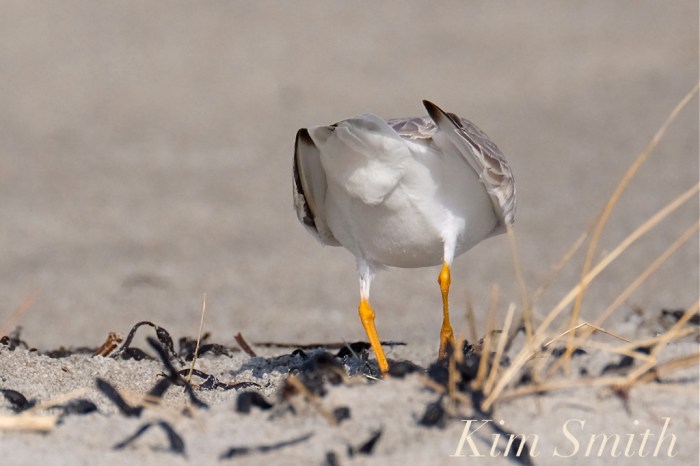
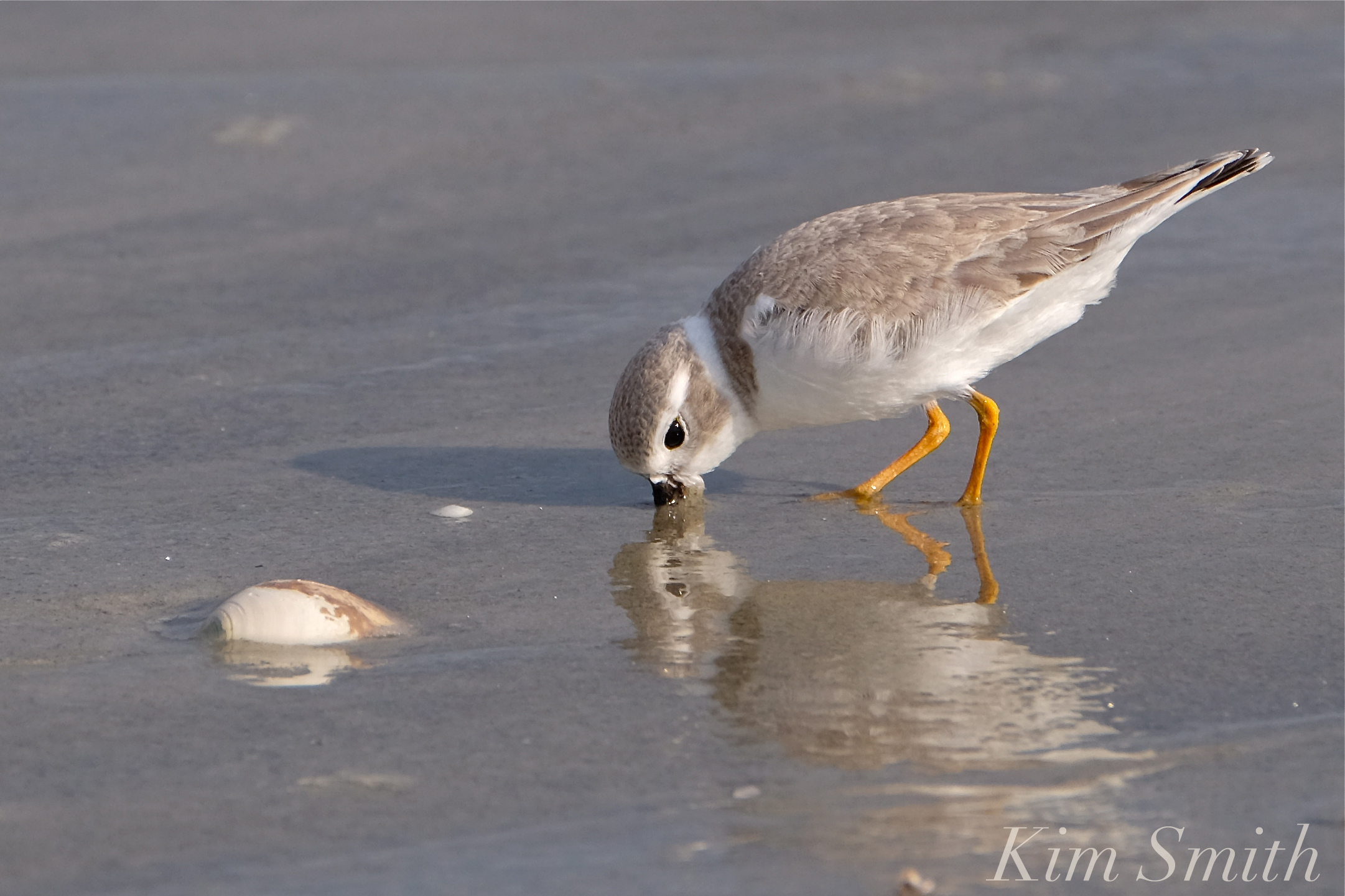 Piping Plover foraging, building fat reserves for the southward migration. The above PiPl was one of four of a small flock traveling in Gloucester, spotted on August 24, 2017.
Extraordinary weather events can push endangered species over the brink. High winds, storm surges, and wave action destroys coastal habitats and flooding decreases water salinity. Songbirds and shorebirds are blown far off course away from their home habitats, especially young birds. A great deal of energy is expended battling the winds and trying to return to course. Songbirds have it a little easier because their toes will automatically tighten around a perch but seabirds and shorebirds are the most exposed.
 Shorebirds like Piping Plovers feet have evolved to run over sand easily and do not grip well with their toes.
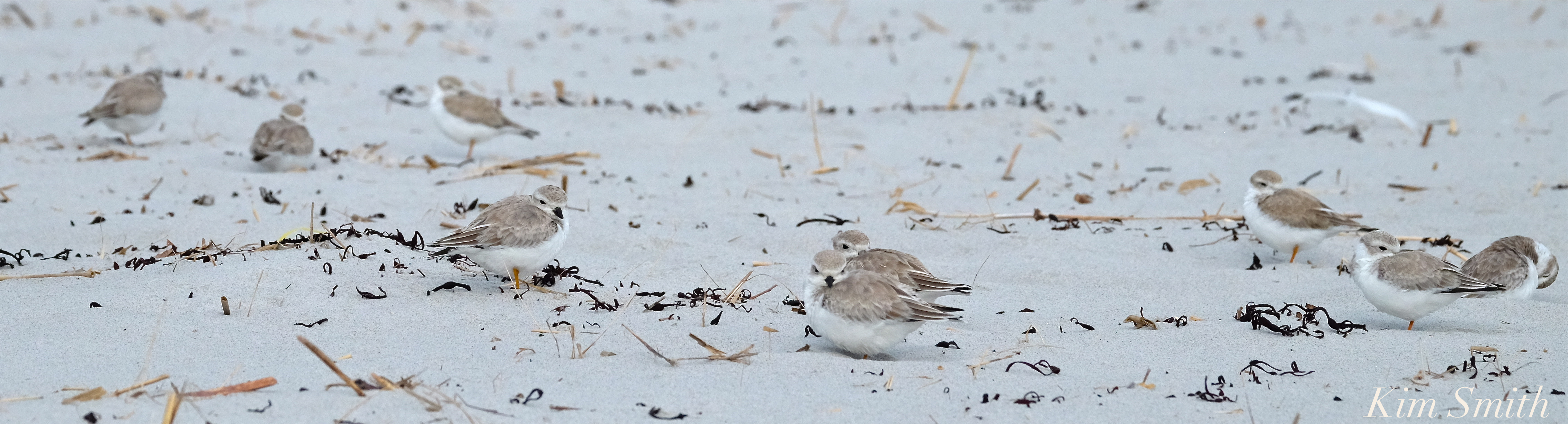 Numerous Piping Plovers winter over in the low-lying Joulter Cays, a group of sandy islands in the Bahamas, and one of the areas hardest hit by Hurricane Irma. Perhaps migrating PiPl sensed the pending hurricane and held off before crossing the Atlantic to reach the Bahamas and other Caribbean Islands. The flock of nine PiPl in the above photo were seen last year at the end of August in Gloucester (August 29, 2016.)
One famous shorebird, a Whimbrel named Machi, who was wearing a tracking device, became caught up in the eye of a powerful storm but made it through to the other side of the storm. Tragically, he was subsequently shot dead in Guadeloupe. Many migrating birds like Whimbrels know to avoid places like Guadeloupe where unbridled shorebird hunting is allowed, but Machi had no power over where he made landfall. Sea turtles too are severely affected by the loss of barrier beaches. Staggering loss of life has been recorded after recent powerful hurricanes–fish, dolphins, whales, manatees, baby crab and lobster estuaries, insects, small mammals, all manner of birds–the list is nearly as long as there are species, and nothing is spared.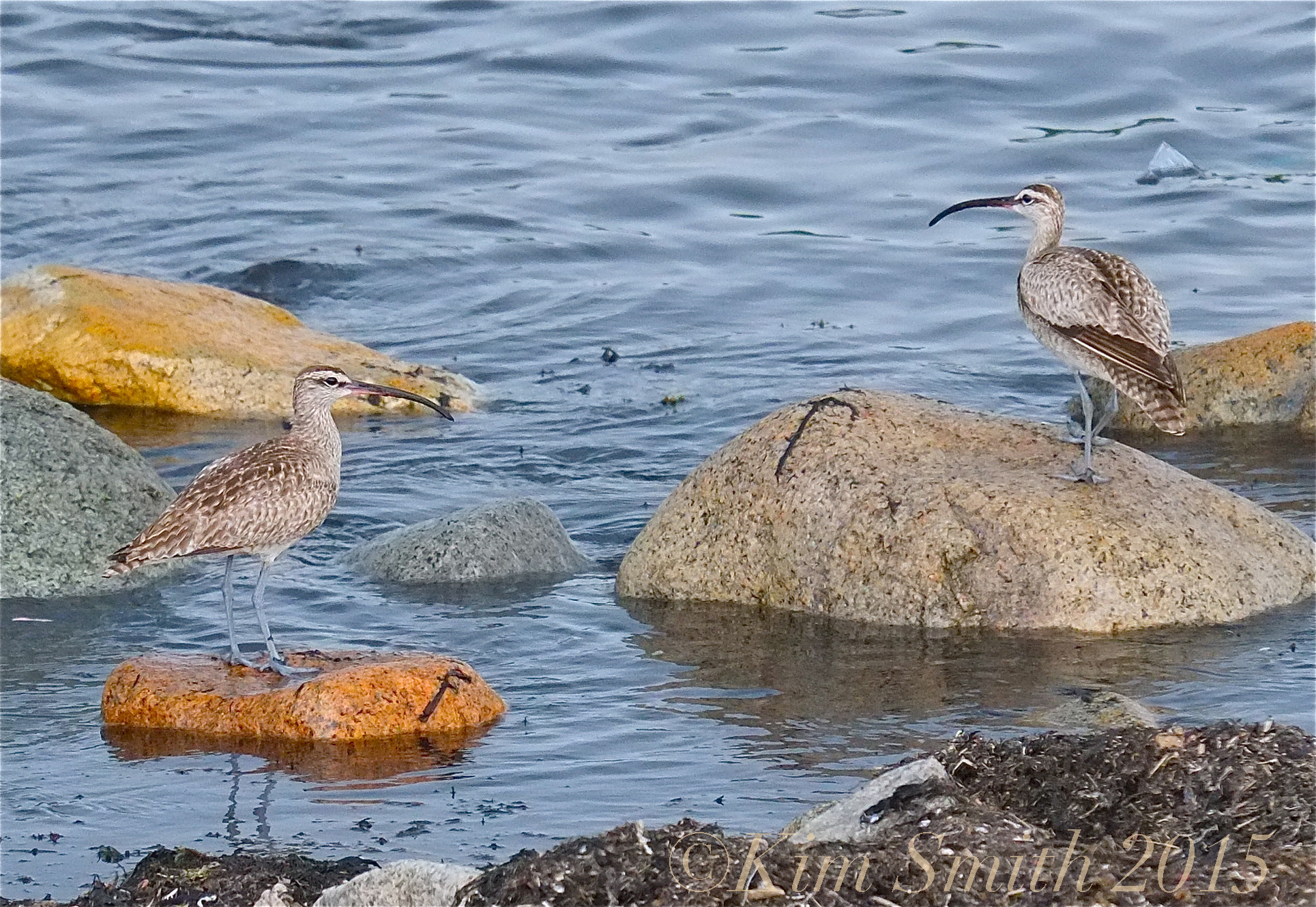
A pair of Whimbrels at Brace Cove in July 2015
If you see rare or an unusual bird after a storm or hurricane, please let us know and we can contact the appropriate wildlife official.
https://www.instagram.com/p/BY5x54fFMFBQigucWeo1zl5IpicgibKOr-SUjU0/
Spread The GMG Love By Sharing With These Buttons:

HAPPY ONE WEEK OLD BIRTHDAY FOR OUR PIPING PLOVER CHICKLETS, ALL FOUR!!! – AND VOLUNTEER HELP IS MUCH NEEDED FOR THE COMING FOURTH OF JULY WEEKEND
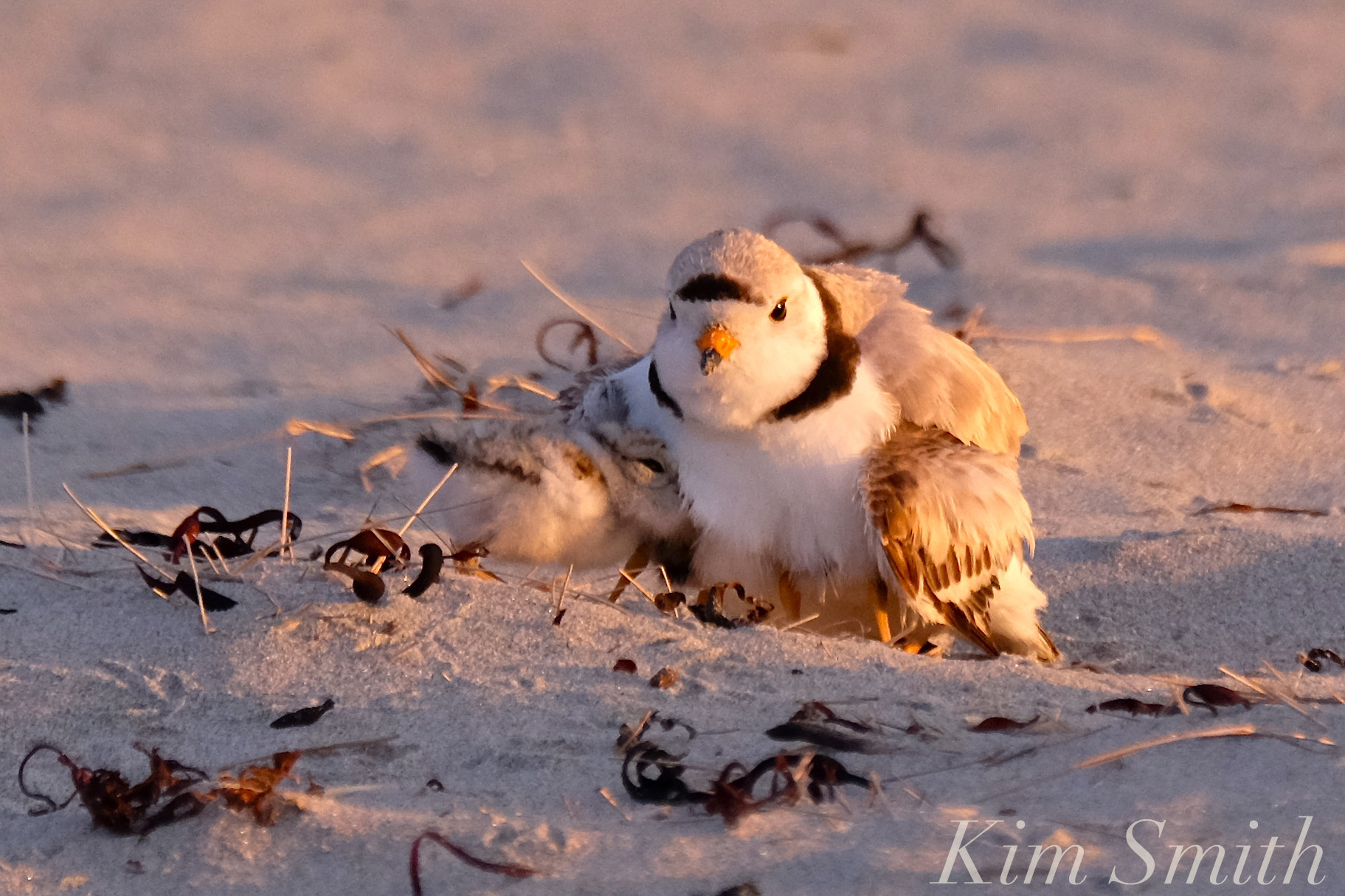 Good Morning Sleepy Head ~ Seven-day-old Piping Plover Chick Snuggling Under Dad
Happy Birthday to our Good Harbor Beach Piping Plover chicks! All four have made it to the one week birthday milestone and that is nothing short of a miracle (born Thursday morning, June 22). The volunteers are making a tremendous difference, the trash situation is being managed by the DPW and volunteers, and fewer dog owners are bringing their dogs to the beach. Thank you to everyone for taking such great care. If the PiPl can survive the first two weeks, their chance of survival increases exponentially.
This weekend is not only the fourth of July, but a heat wave is predicted. Volunteers are much needed on Saturday, Sunday, Monday, and Tuesday, especially between the hours of 11:30 to 3:30. If you can spare some time and would like to spend an hour at Good Harbor Beach being a Piping Plover ambassador, please email Ken Whittaker at kwhittaker@gloucester-ma.gov.
Our East Gloucester neighborhood kids named the Piping Plover parents Papa Joe and Mama Joy. This year’s chicks hatched during Fiesta and an anonymous reader suggested we name the chicks Me chi, Samiou, Tutti, and Mutti. I kind of love that!
After first snuggling under Dad’s wing, the little seven-day old chick popped up and immediately began to scratch an itch. He scratched so hard that he knocked himself over. Then off he ran pell mell for a yummy breakfast of sand fleas.
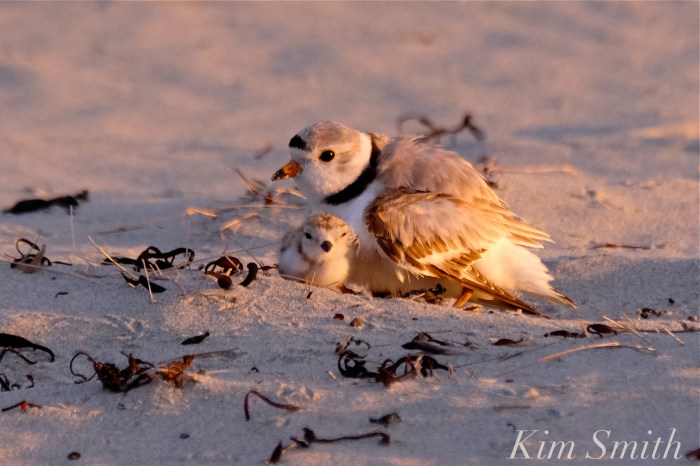
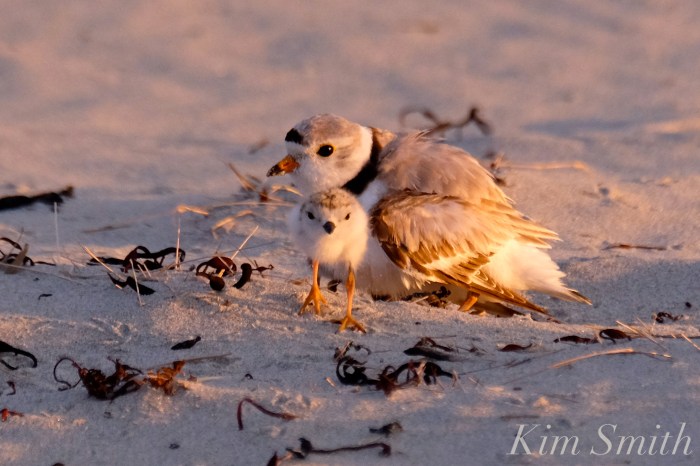
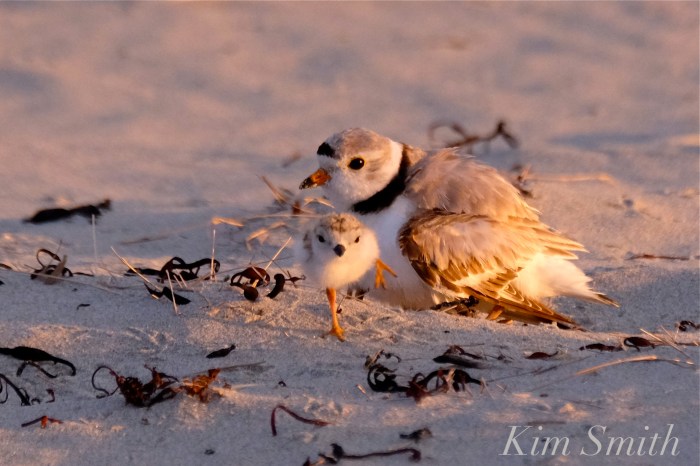
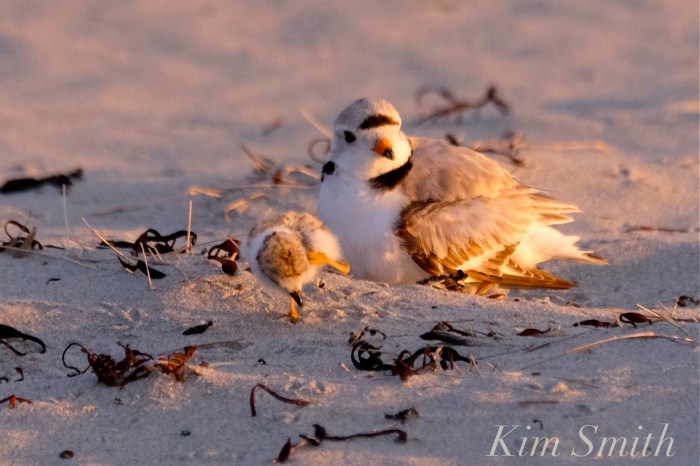
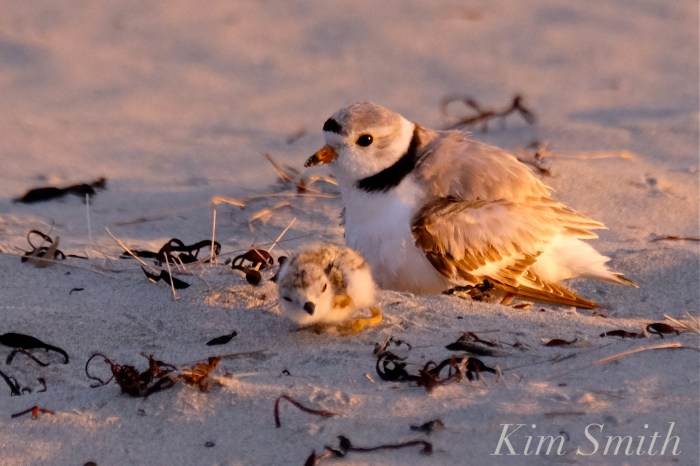
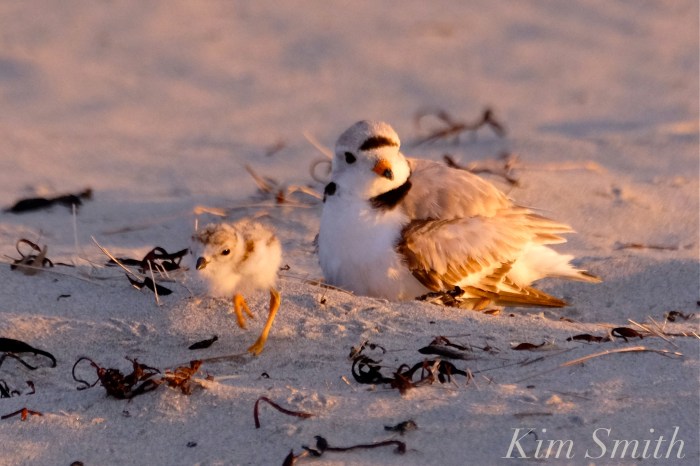
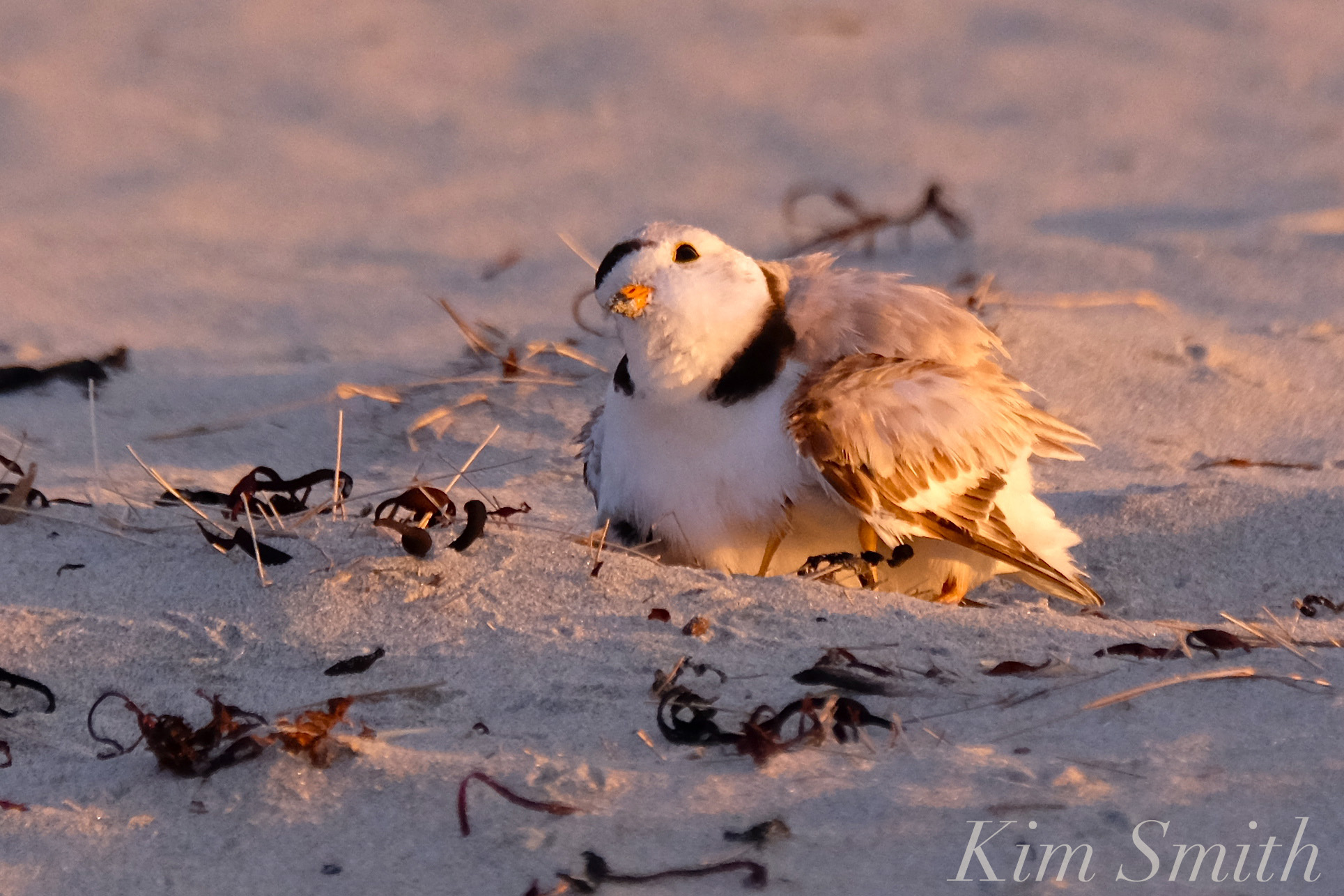 Papa Joe making room for one more under his wing.
Spread The GMG Love By Sharing With These Buttons:

PIPING PLOVER FLYER FOR ANYONE TO PRINT!
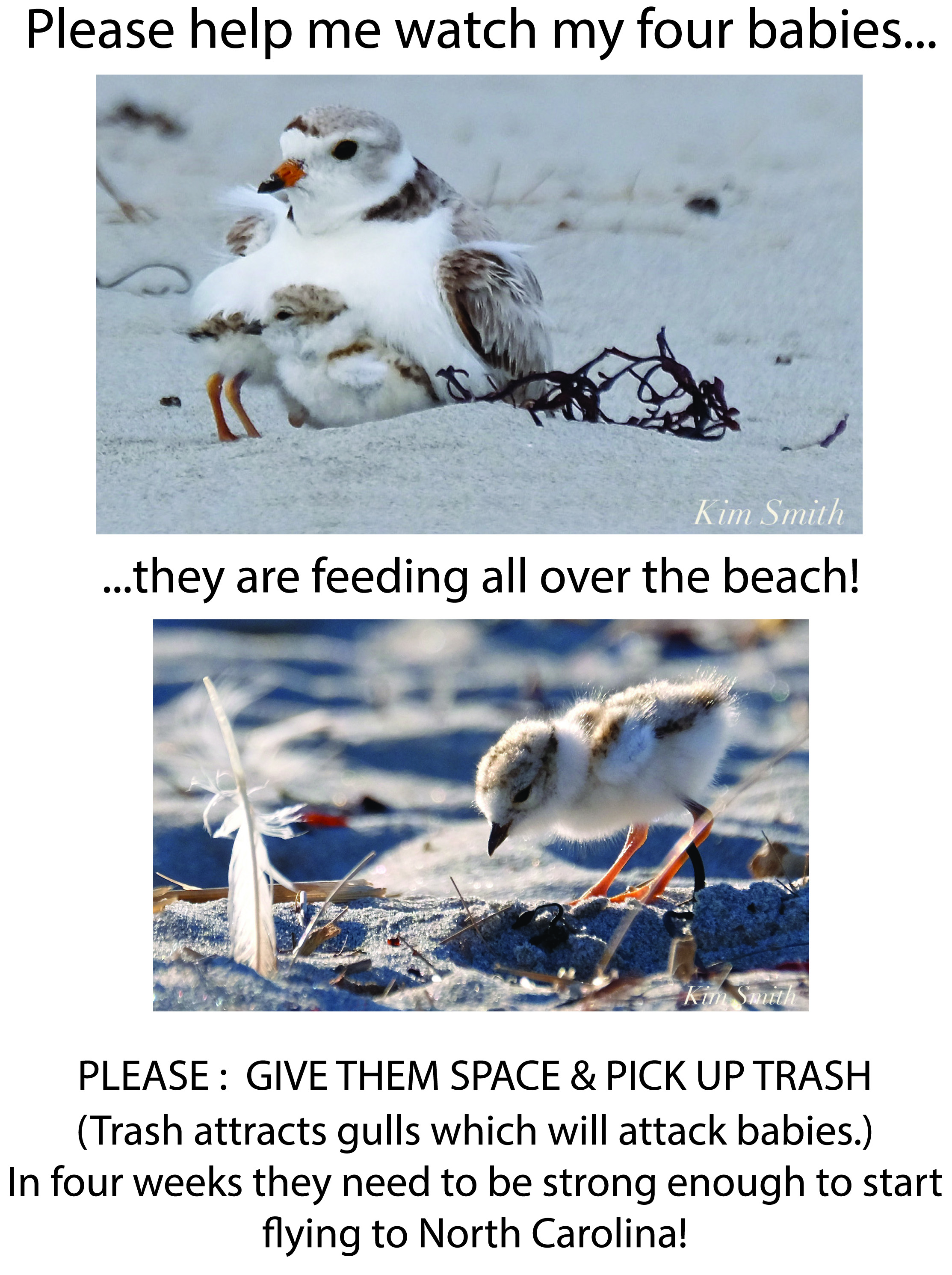
Piping Plover super volunteer Hazel Hewitt made this helpful flyer to give visitors to Good Harbor Beach a quick and general idea of what the PiPl look like. Volunteers, or anyone for that matter, are welcome to print and post around the entrances to Good Harbor Beach.
THANK YOU HAZEL!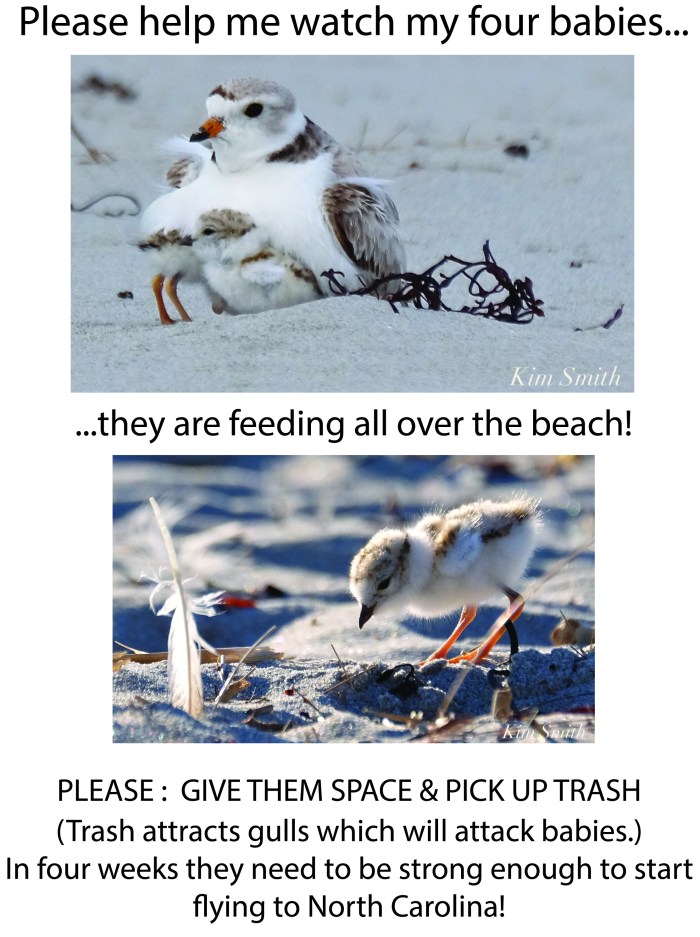
Spread The GMG Love By Sharing With These Buttons:

AWESOME VOLUNTEERS MONITORING THE PIPING PLOVER CHICKS AT GOOD HARBOR BEACH!
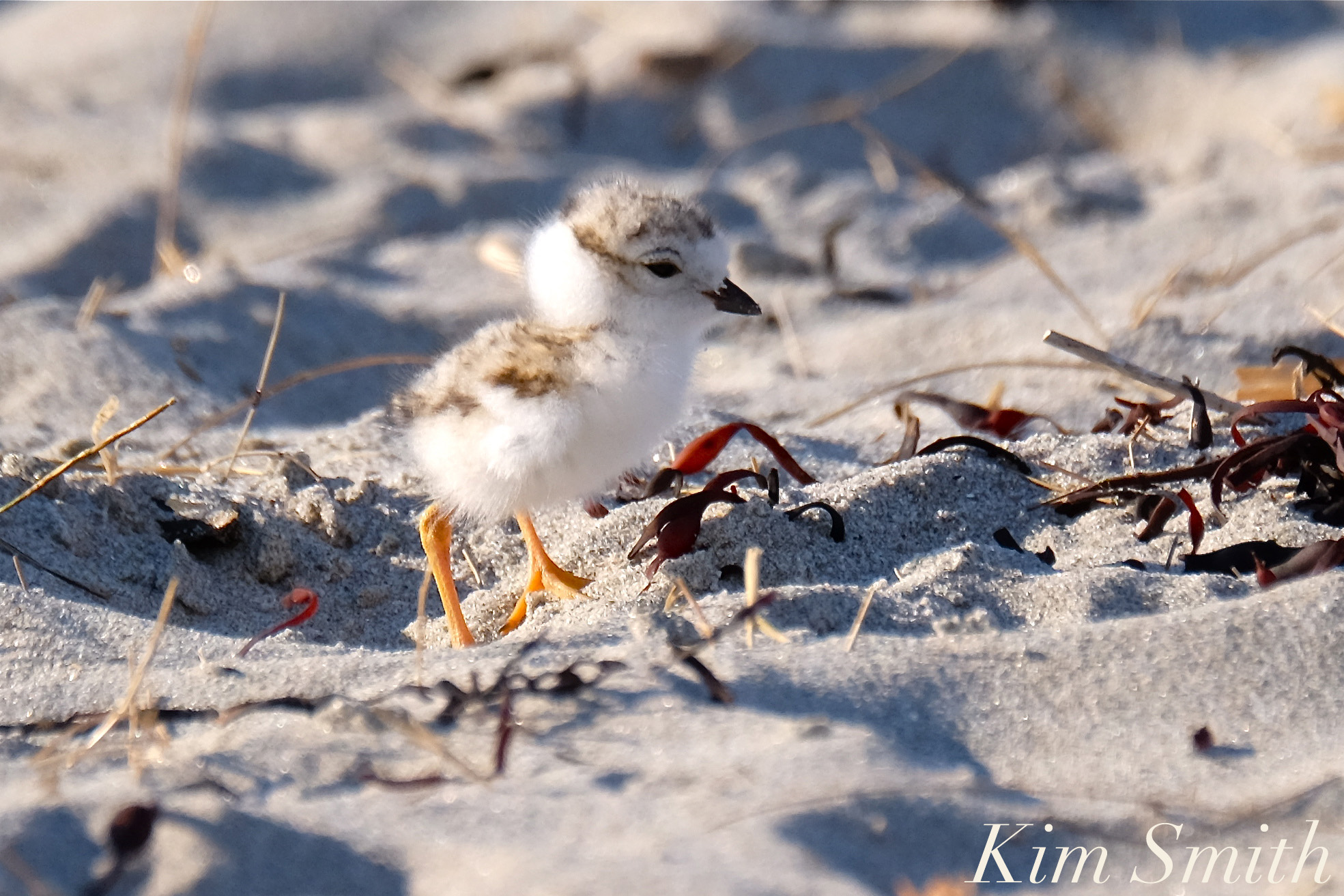 Day six, and all four Good Harbor Beach Piping Plovers are thriving! Their survival is in large part due to the efforts of Ken Whittaker, Dave Rimmer, and a growing assemblage of wonderful volunteers. If you would like to volunteer to take a shift babysitting the PiPl, please email Ken Whittaker at kwhittaker@gloucester-ma-gov. Ken is meeting groups on the beach to explain the protocol. The shifts are brief and it’s great fun to be at GHB as an ambassador for the Plovers while monitoring and answering questions.
https://www.instagram.com/p/BV44XOzF3s4/
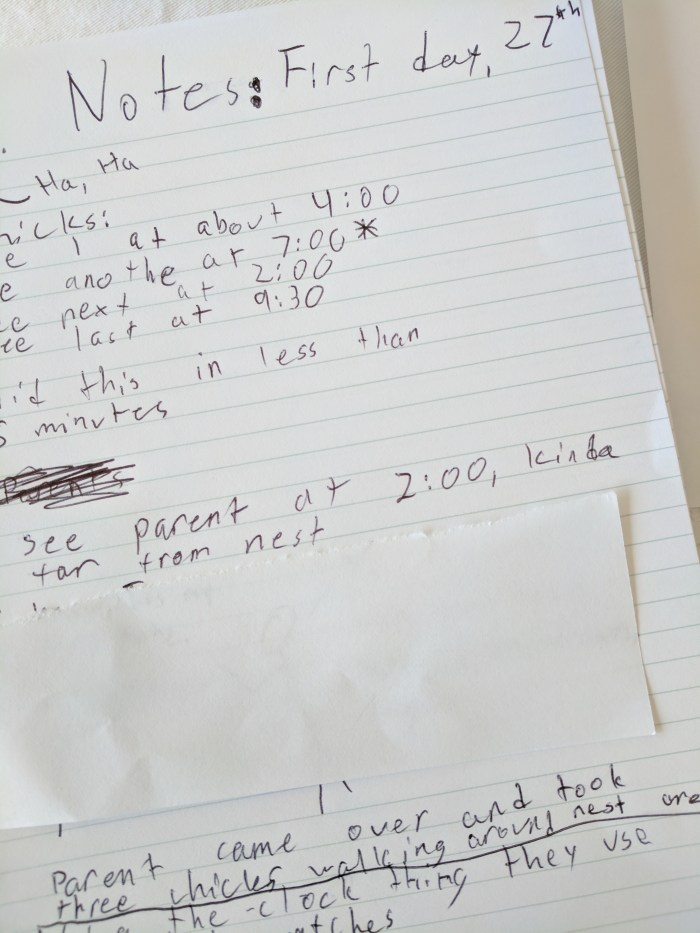
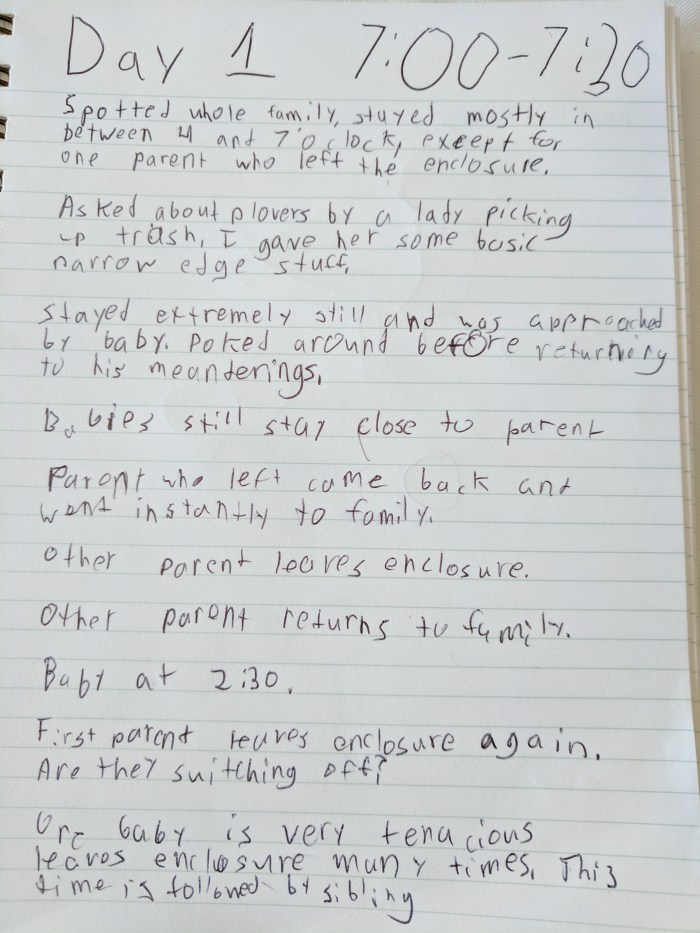
Catherine Ryan and her sons Charles and George King have the early morning shifts, from 6am to 7:30, and they are splitting it three ways, each taking a half hour. Piping Plover watchers are invited to take notes–here are one of the volunteers, Hazel’s, excellent notes:
“I was there from about 11.30 to 1 pm today June 26..
During that time I only saw one adult at a time, probably about once every 20 minutes, not doing much – preening, sitting on the sand, resting under a bush, moving around relatively slowly. I also saw one baby at a time moving about – except for the last 20 minutes when I saw 2, possibly 3, moving around at the same time (I had lent my binoculars to some interested bystanders so not sure of the number).
I spoke to 2 groups of young people playing with a ball and a frisbee – they were unaware of the plover nest and very agreeable to moving further away. One couple were seated very close to the rope, and also unaware of the plovers. They said they would watch out for babies coming outside the enclosure, and later had been watching one of the babies moving around inside.
Two other groups were close to the enclosure and already aware. The second group arrived when two or three babies were moving around and excited to see them through binoculars.
I will be back tomorrow from 11 to 1 pm.
Hazel”
Loved reading the King brother’s notes. Great job Charles and George!!
https://www.instagram.com/p/BV45kMdlCg_/
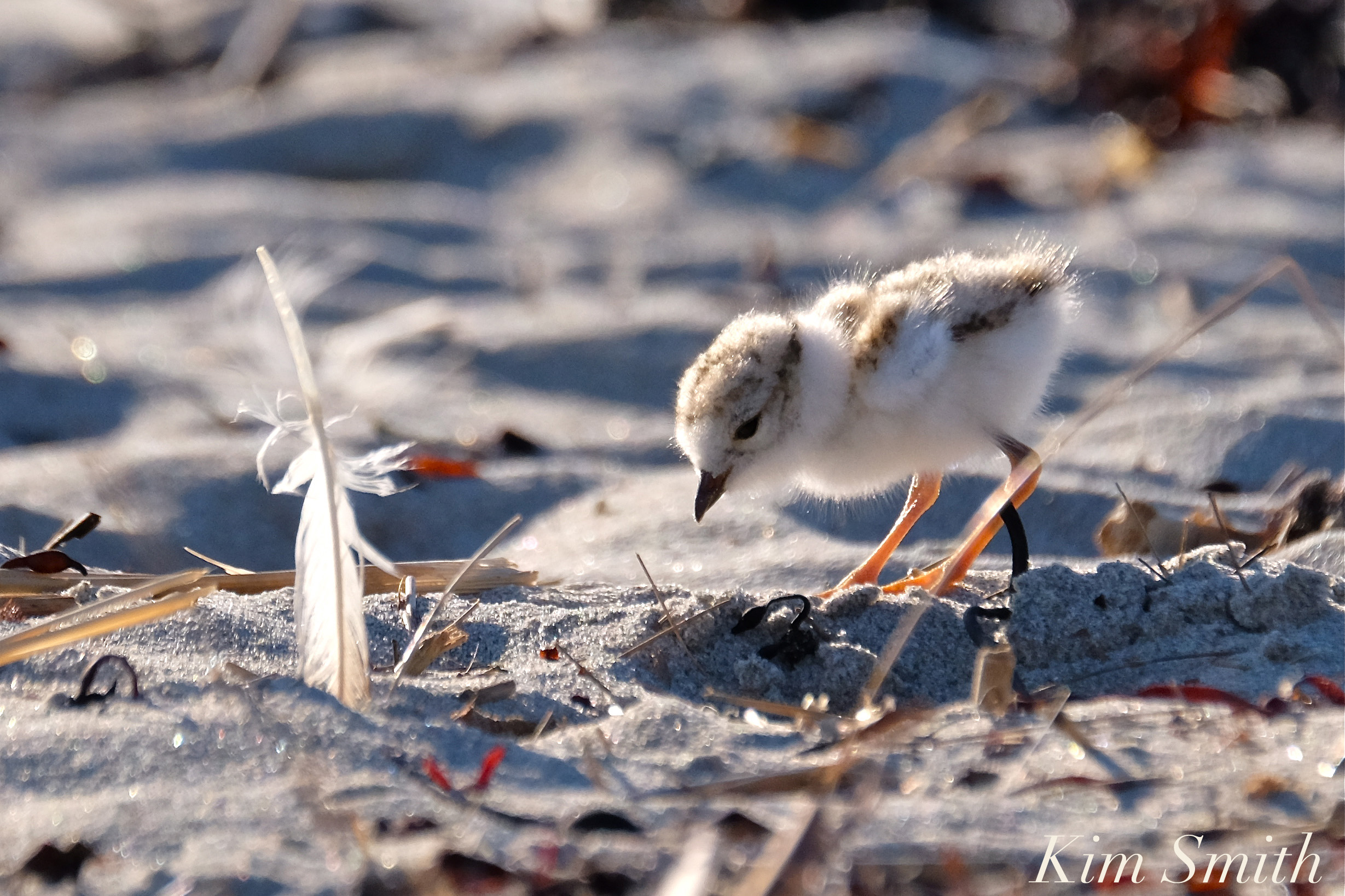 Five Day-Old Piping Plover Chick Foraging for Insects
While walking through the dunes on boardwalk 3 at Good Harbor on the way to volunteer, or simply to visit the PiPl, notice the Common Milkweed that is in full glorious bloom. You may catch a whiff of its wonderful honey-hay scent. And quite possibly, a Monarch sighting, or two!
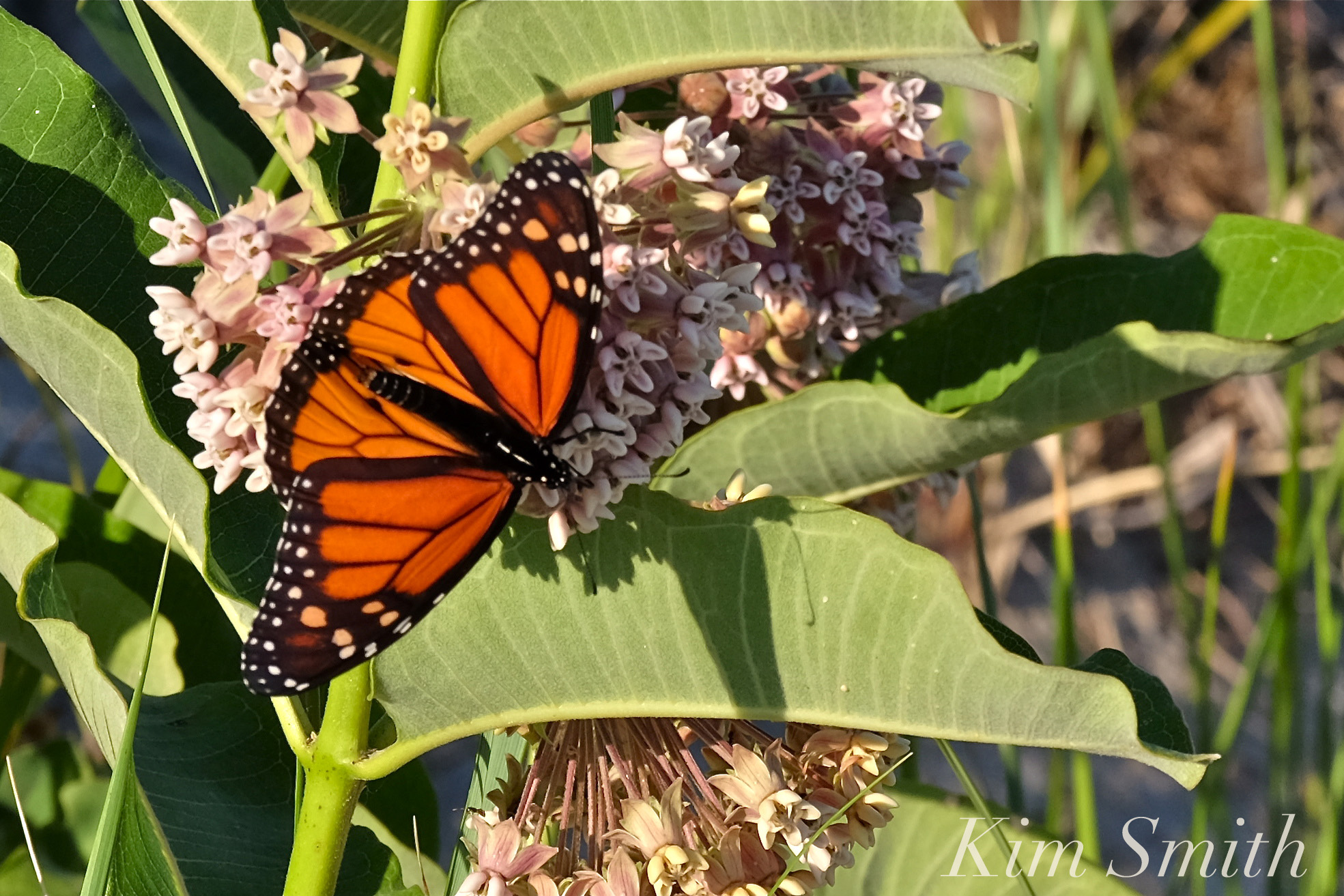 Male Monarch Nectaring from Common Mikweed, Good Harbor Beach Dune
Spread The GMG Love By Sharing With These Buttons:

WHAT ARE THOSE CRAZY BIRDS RUNNING AROUND GOOD HARBOR BEACH PARKING LOT?
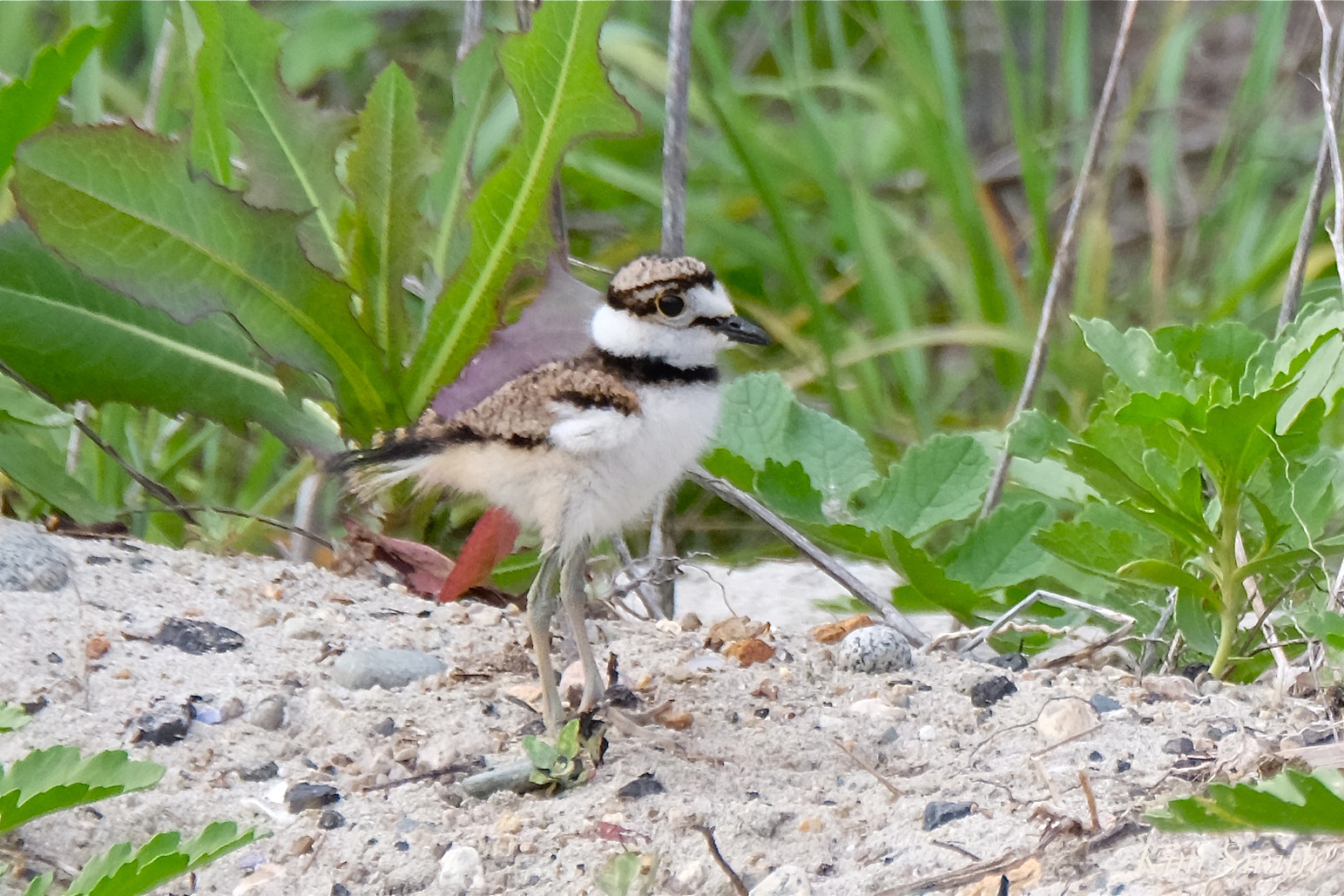 Killdeer Chick
Lost of folks are asking, are the Piping Plovers nesting in the Good Harbor Beach parking lot? The answer is no, the Piping Plovers are nesting on the beach near boardwalk #3. The mama and papa, and now chicks, that are running all around the GHB parking lot are a shorebird named Killdeers. Comparatively quite a bit larger, and more commonly seen, Killdeers are related to Piping Plovers, but are a different species.
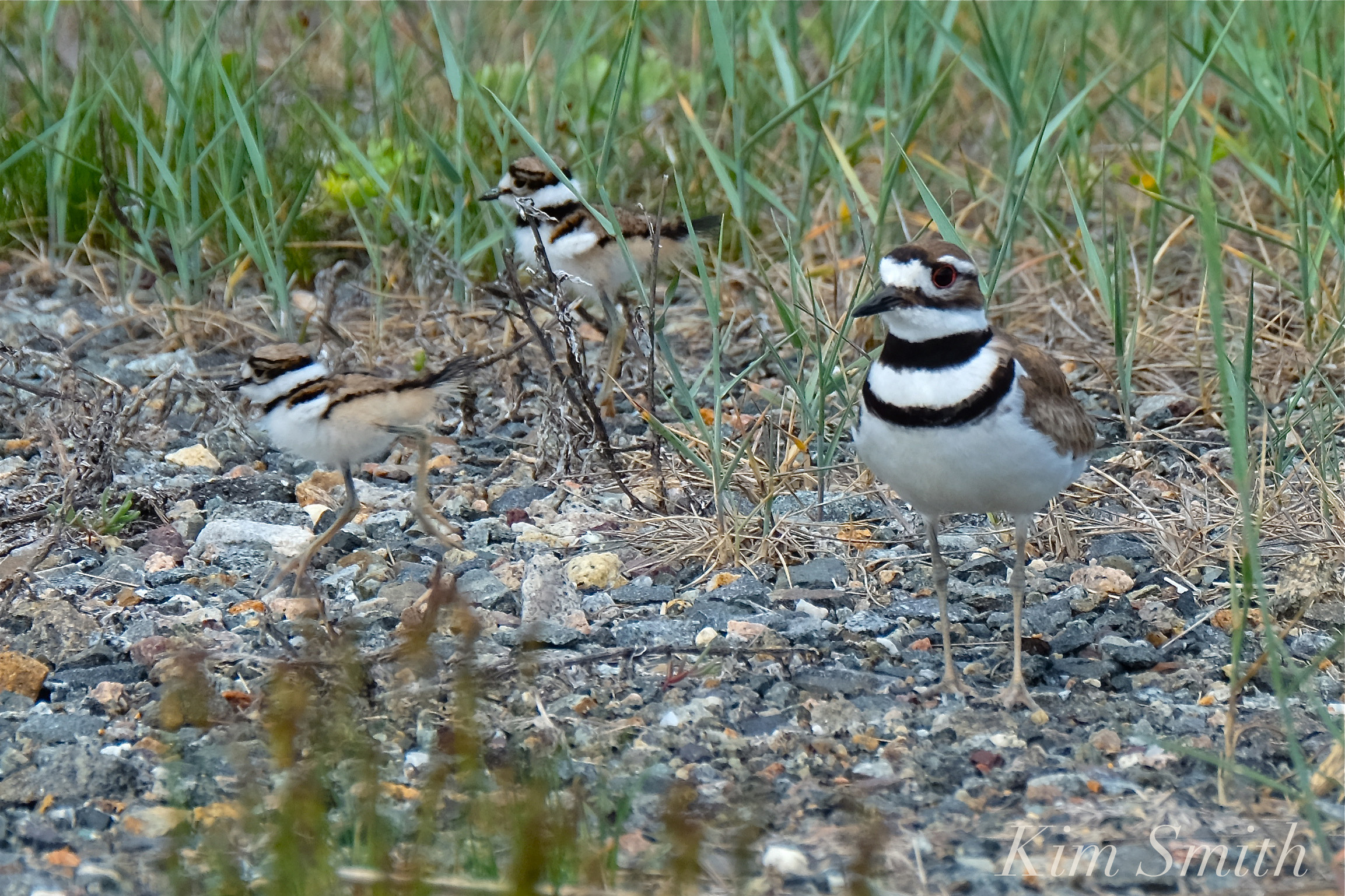 Killdeer Chicks and Parent, Good Harbor Beach 2016
That I am aware of, this is the second year in a row Killdeers have chosen to nest at the Good Harbor Beach parking lot. It is frightening to see the babies zoom in and out between the cars. The mom and dad give vocal cues to the chicks, but still they run willy nilly. Killdeers have a fondness for human modified habitats, such as the GHB parking lot, and a willingness to nest close to people.
Like Piping Plover chicks, Killdeer chicks are precocial. That is a word ornithologists use to describe a baby bird’s stage of development at birth. Precocial means that shortly after hatching, the bird is fully mobile. Plover chicks are not completely mature, they still need parents to help regulate their body temperature, but they have downy feathers and can run and feed themselves within moments after emerging. The opposite of precocial is altricial. Birds that hatch helpless, naked, usually blind, and are incapable of departing the nest are altricial. Robins and Cardinals are examples of altricial birds. 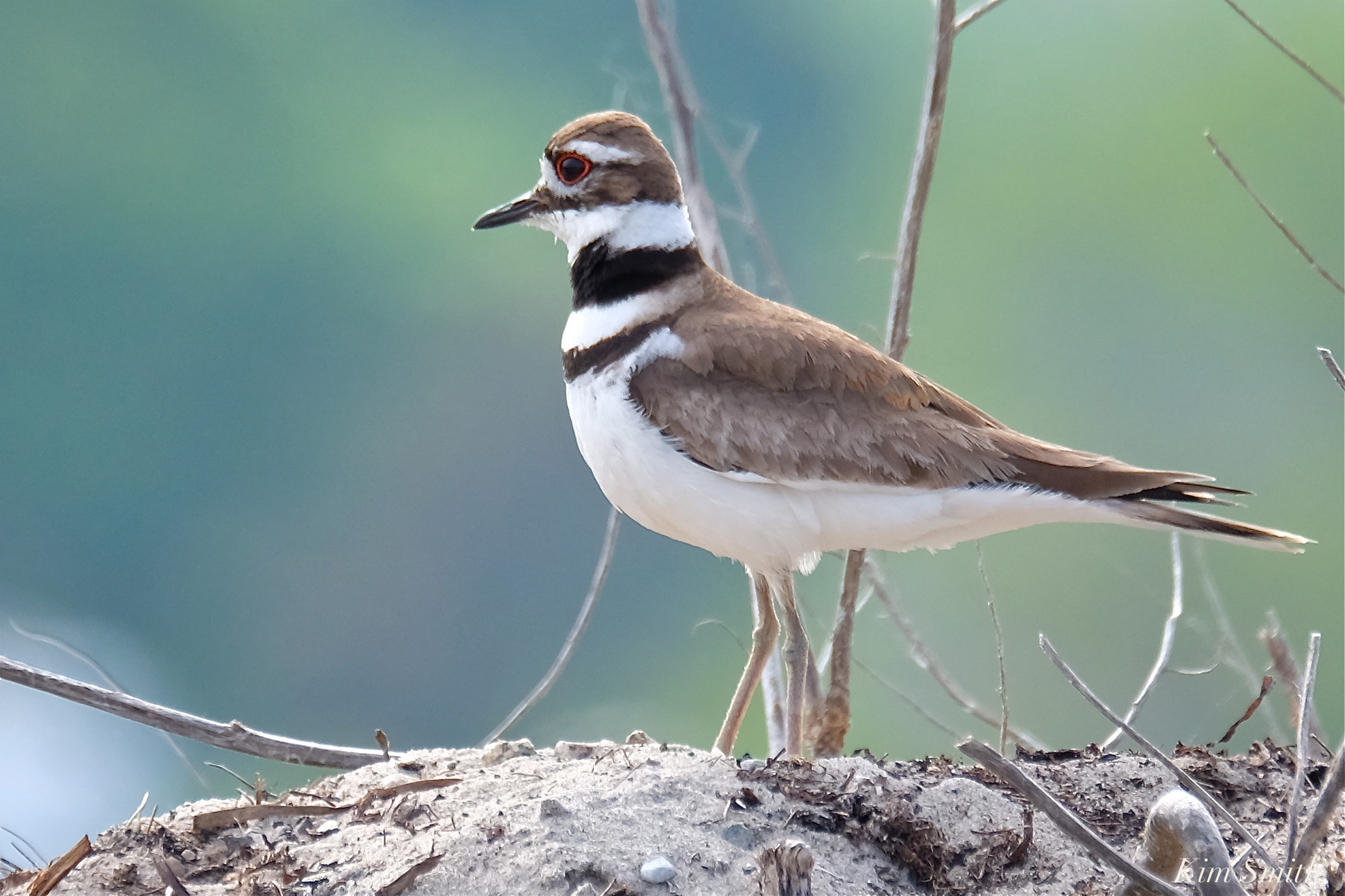
Adult Kildeer
If you encounter the Kildeer family and would like to take a photo, or simply observe these adorable babies on-the-go, my advice is to stand quietly and don’t chase after them. Running after the chicks will put the parents into panic mode and they may lose sight of the other siblings. As the chicks mature, they will spend less time in the parking lot, and more time in the marsh and at the tidal river edge. Kildeer adults, and even the chicks, are actually good swimmers. Last year the Kildeer family crossed the tidal river and spent the second half of the season on the opposite side of the marsh.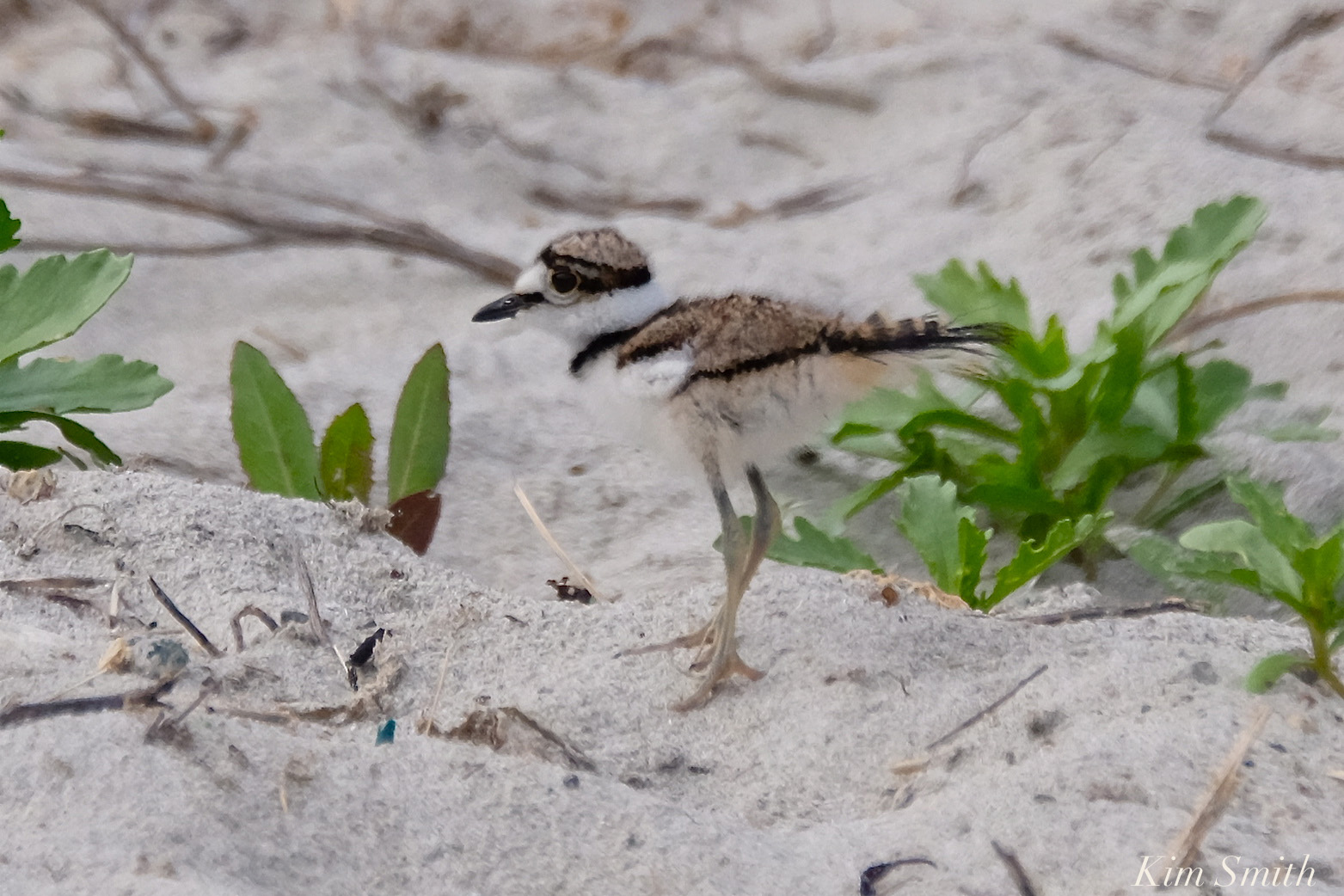 Compare the Killdeer chick above, to the Piping Plover chick below.
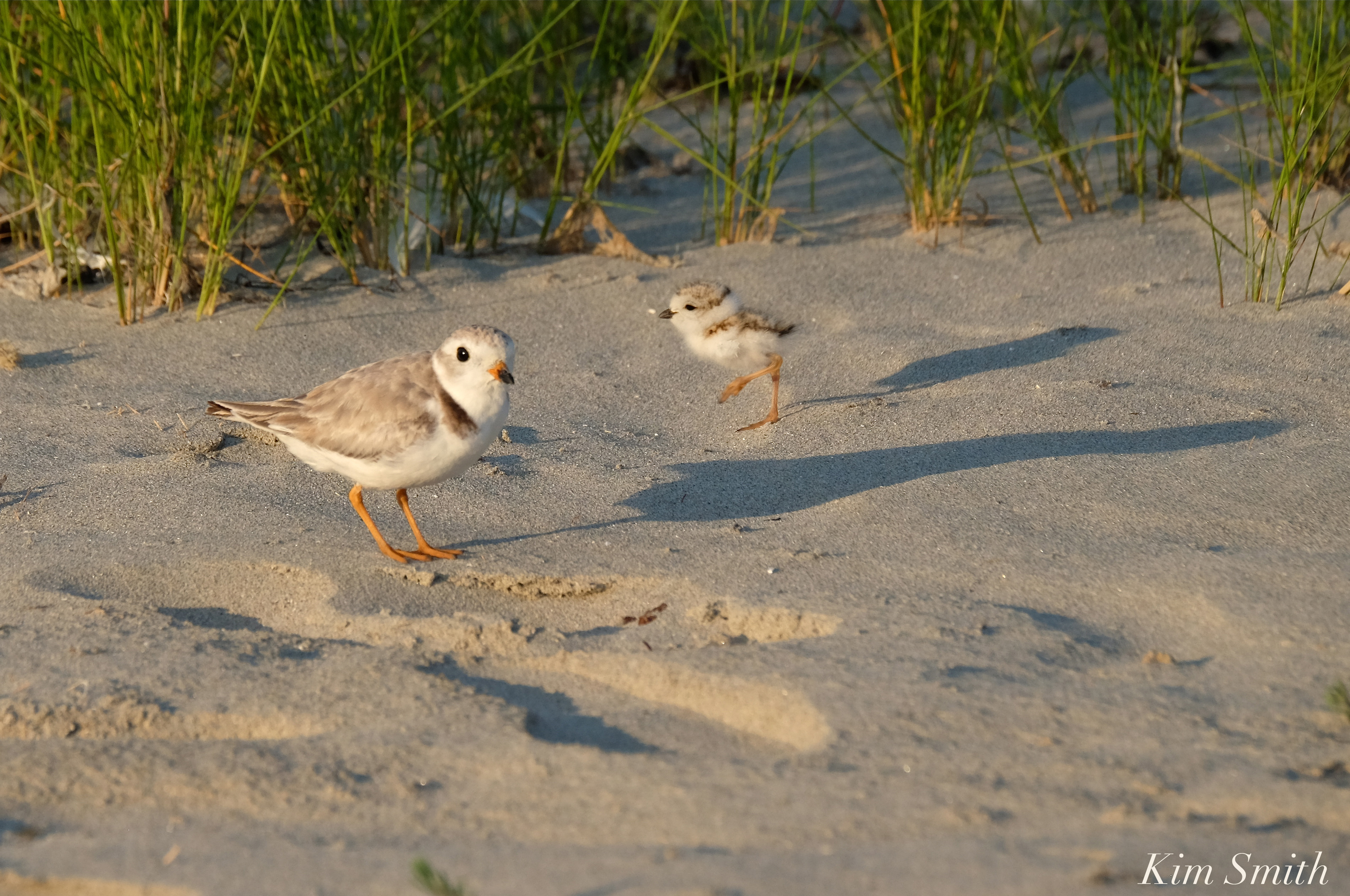 Piping Plover Chick and Mom
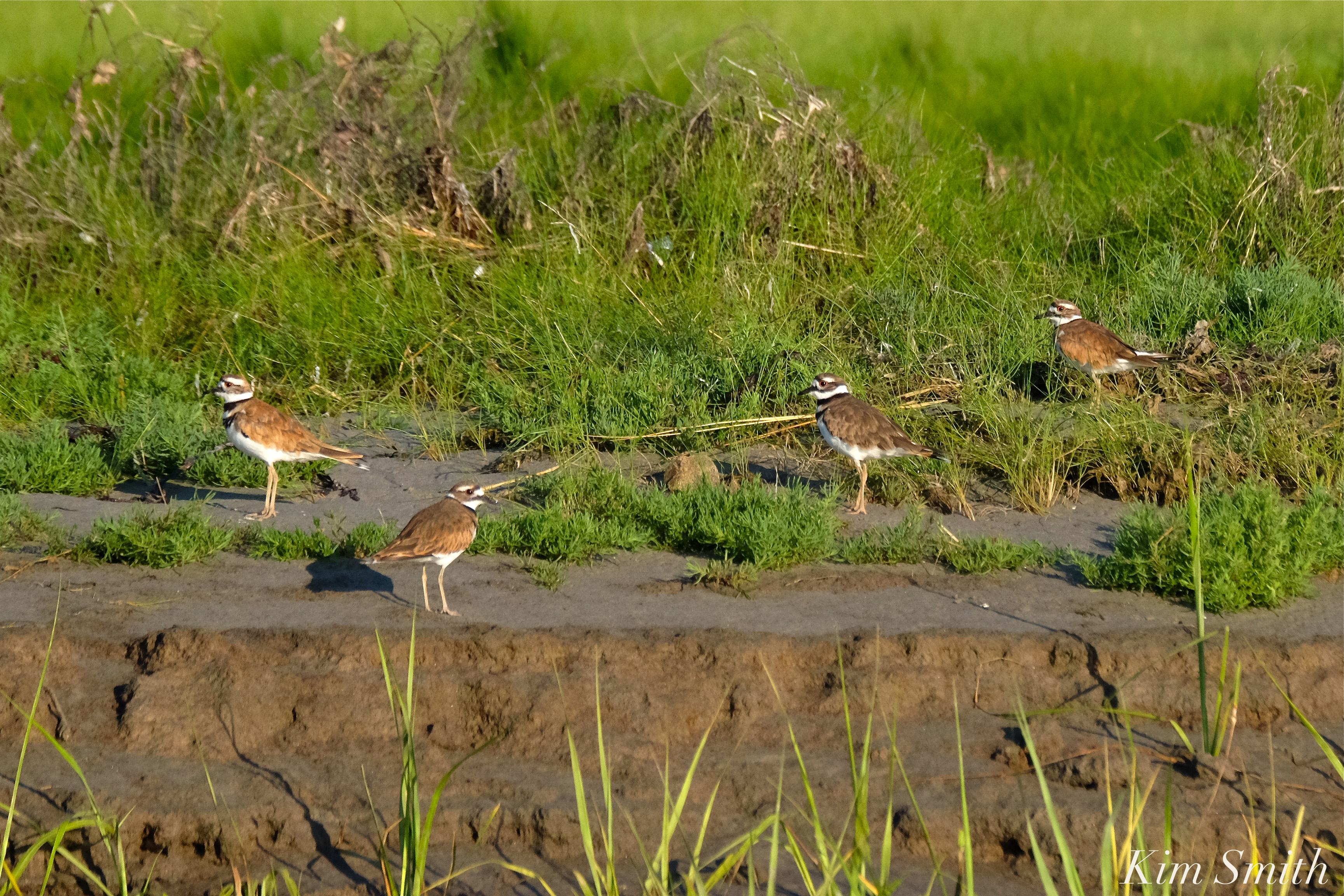 Killdeer Family all grown up, September 2016
Spread The GMG Love By Sharing With These Buttons:

RED KNOTS OR WHITE-RUMPED SANDPIPERS?, PIPING PLOVERS, BLACK BELLIED PLOVERS, YELLOW LEGS, MONARCHS, AND MORE: CAPE ANN WINGED CREATURE UPDATE
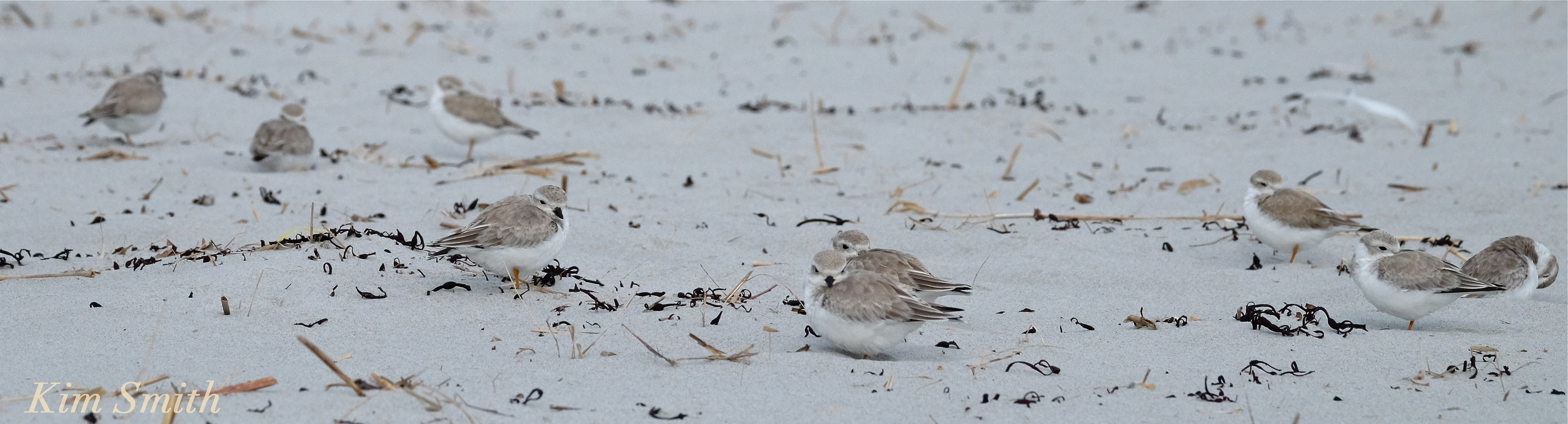 Nine Piping Plovers Napping
WONDERFUL creatures are currently migrating through our shores. How blessed are we who live along the Atlantic Flyway. Whether traveling by shore or by sea, there is this great and continual movement of life happening always in our midst.
Many thanks to my friend Jeff Denoncour, Trustees of Reservations Ecologist for the Northeast Region, for assistance with identifying the birds. I met Jeff earlier this summer when he kindly took me out to the tippy far end of Cranes to film the Piping Plovers nesting there.
Additionally we have seven tiny Monarch caterpillars in terrariums. It’s so late in the season for these teeny ones. Last year at this time we were releasing adult butterflies and I worry that they are not going to pupate in time to successfully migrate to Mexico. The caterpillars are too small to handle, but if any of the kids in our community would like to come see, please comment in the comment section or email me at kimsmithdesigns@hotmail.com. The last of the Cecropia Moth caterpillars has not yet pupated and he is fun to watch as well.
Here are some photos to help you identify our migrating feathered friends.
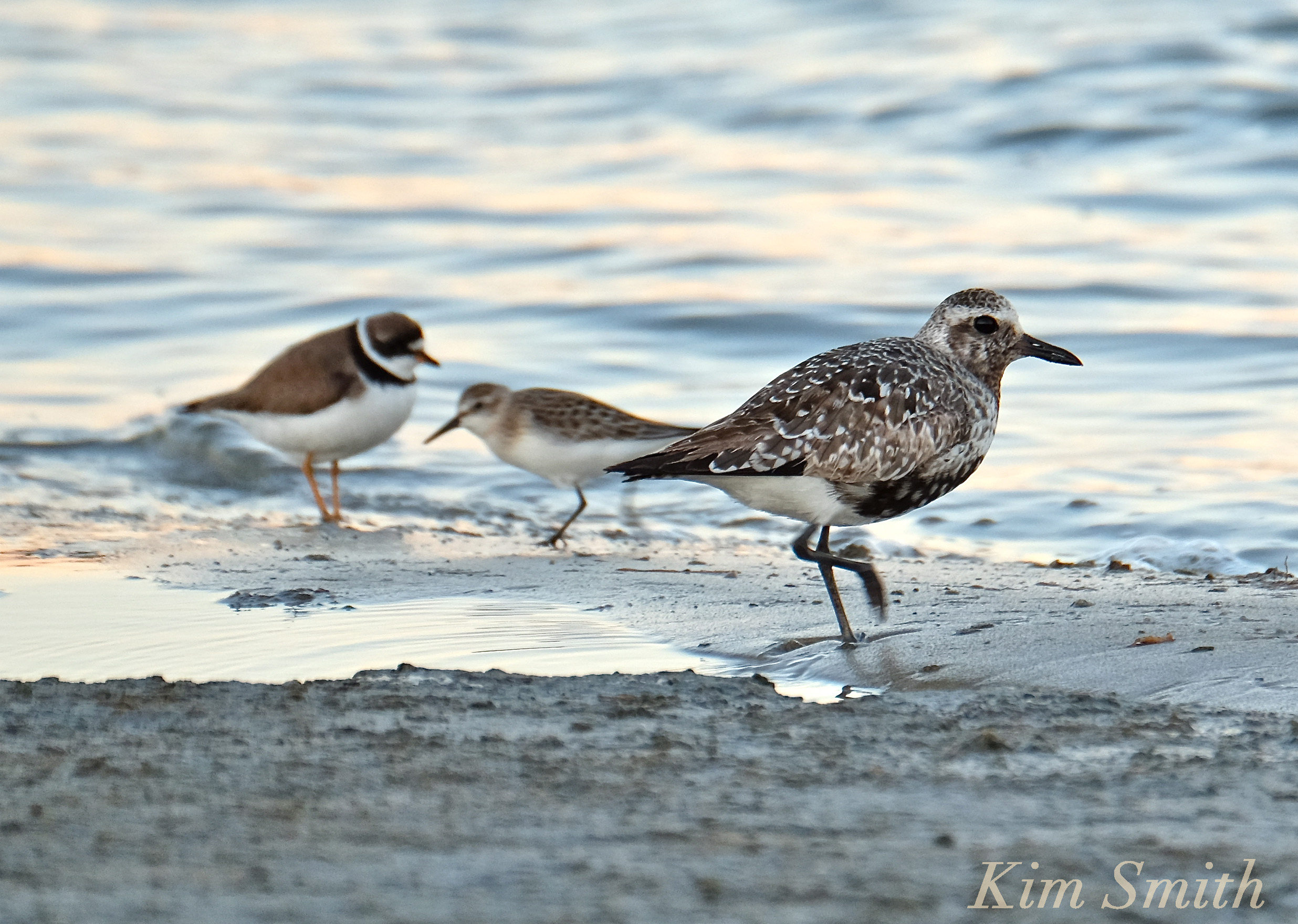
Compare the larger size of the Black-bellied Plover in the foreground with the Semipalmated Plover and Semiplamated Sandpiper in the background
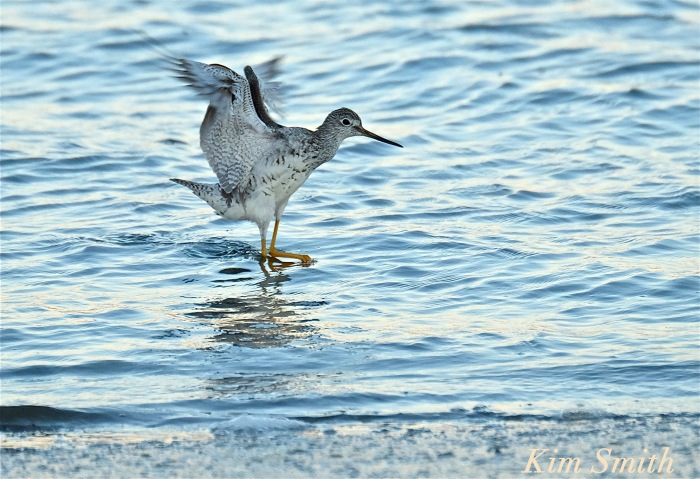
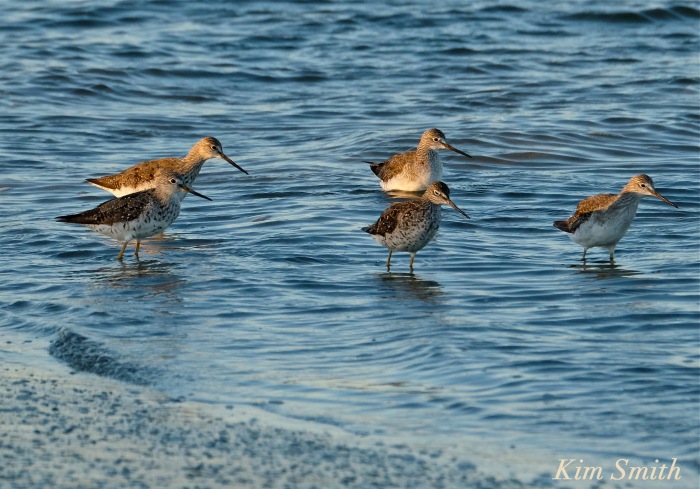
Yellow Legs


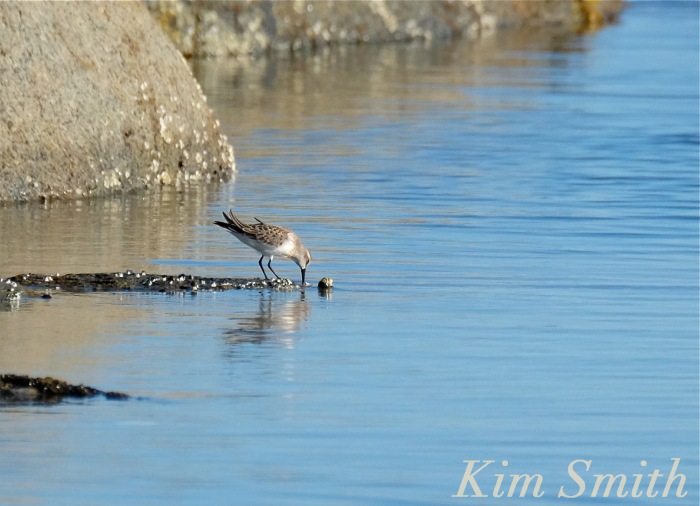
The above group of four photos are of either a pair of Red Knots or White-rumped Sandpipers in non breeding plumage. The White-rumped Sandpiper is thought to migrate an even greater distance than the Red Knot, from Canada’s Arctic Islands to the Southern tip of South America, and some further still to islands near the Antarctic Peninsula. These shy birds did not allow for human interest and the photos were taken at some distance.

Juvenile Laughing Gull
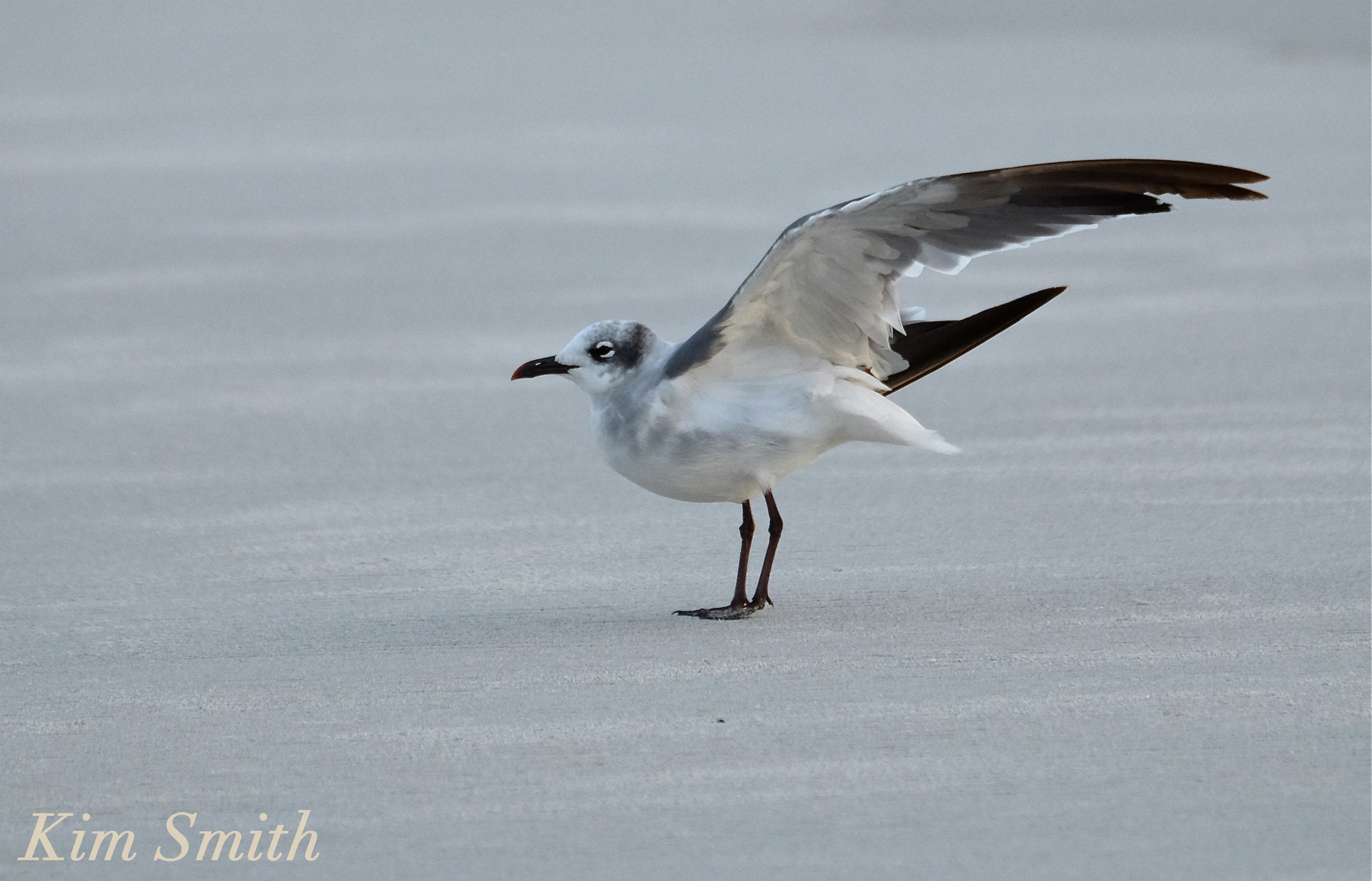 Adult Laughing Gull
READ MORE HERE
Spread The GMG Love By Sharing With These Buttons:

AT GOOD HARBOR BEACH – PLOVERS HERE THERE AND EVERYWHERE! – TIPS ON HOW TO ID PIPING PLOVERS, SEMIPALMATED PLOVERS, AND KILLDEERS
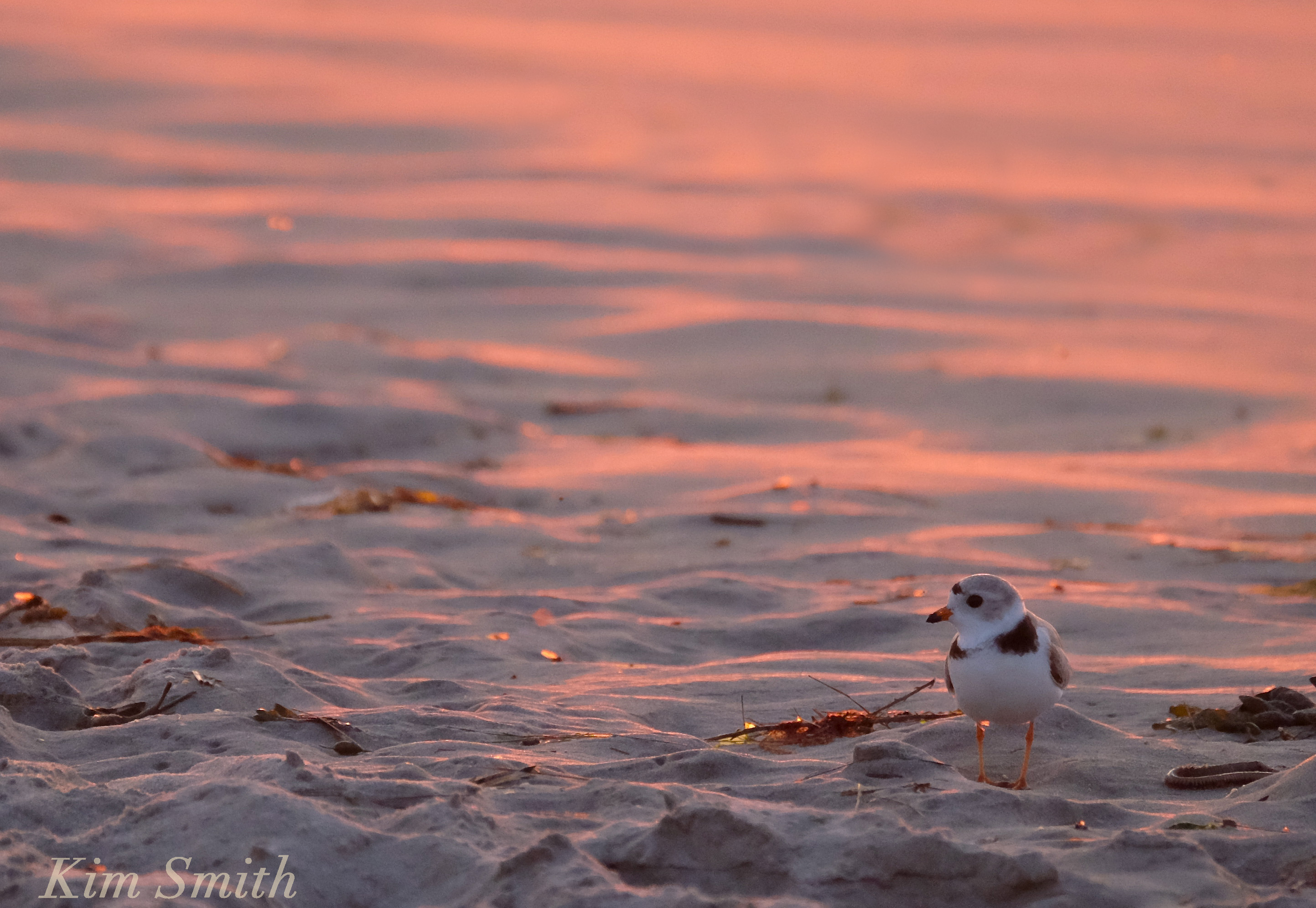
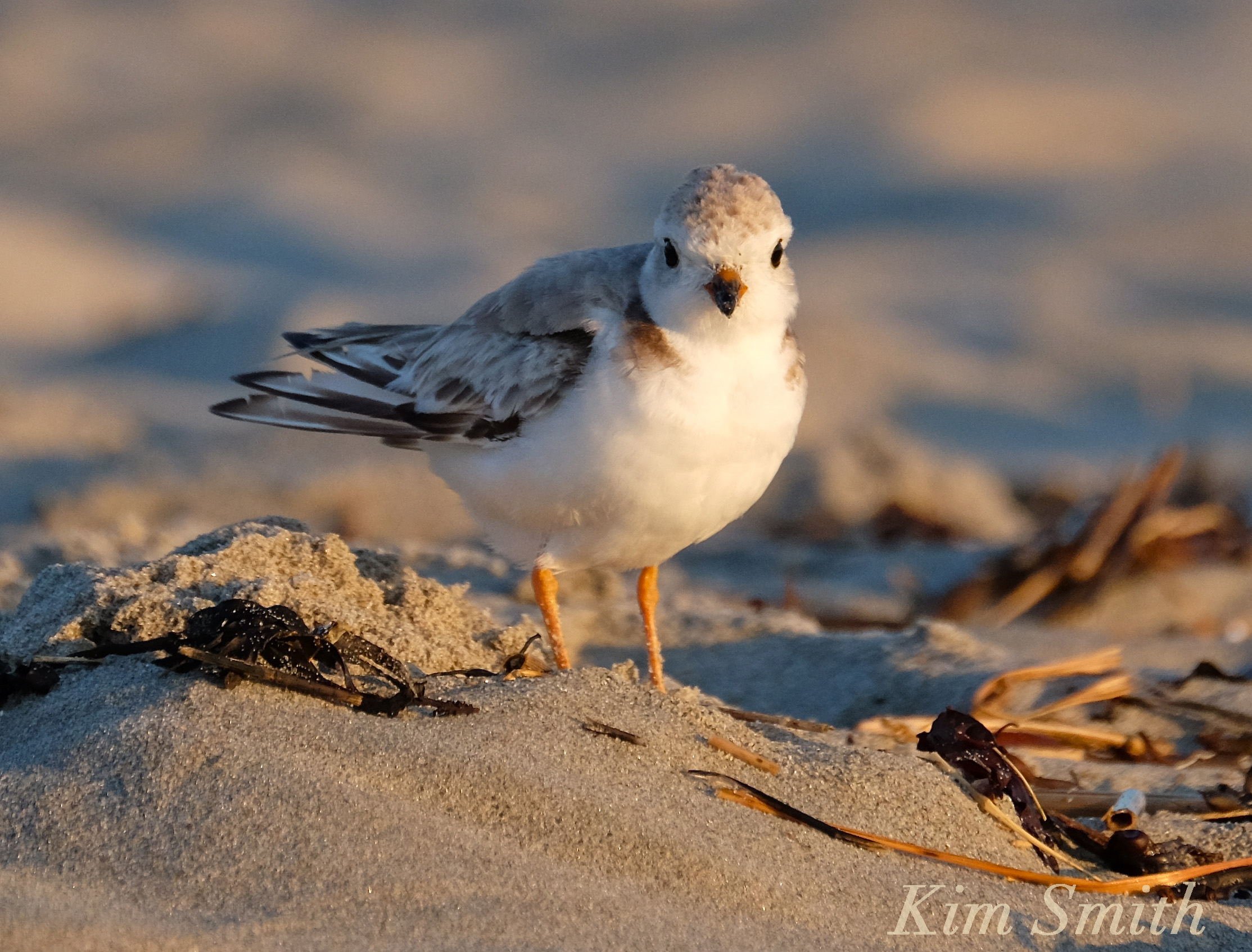 For the past ten weeks, each morning very early before work I have been filming the Good Harbor Beach shorebirds and their habitat, and when not too tired from work, would go back again at the end of the day. For the most part, it has been a tremendously educational and rewarding experience, and I love Good Harbor and its wild creatures even more than when I began the Piping Plover project. We are so fortunate to have this incredibly beautiful and beloved treasure of a beach in our midst, and so easily accessed. As much as I have enjoyed filming the wildlife, it has been equally as fun to observe the myriad wonderful ways in which people enjoy the beach recreationally and that too is part of the Good Harbor Beach Piping Plover story.
Take a closer look at the shorebirds next time you are at Good Harbor Beach. Small and swift, they can look similar, but once you begin to study their behaviors, each species becomes easier to identify.
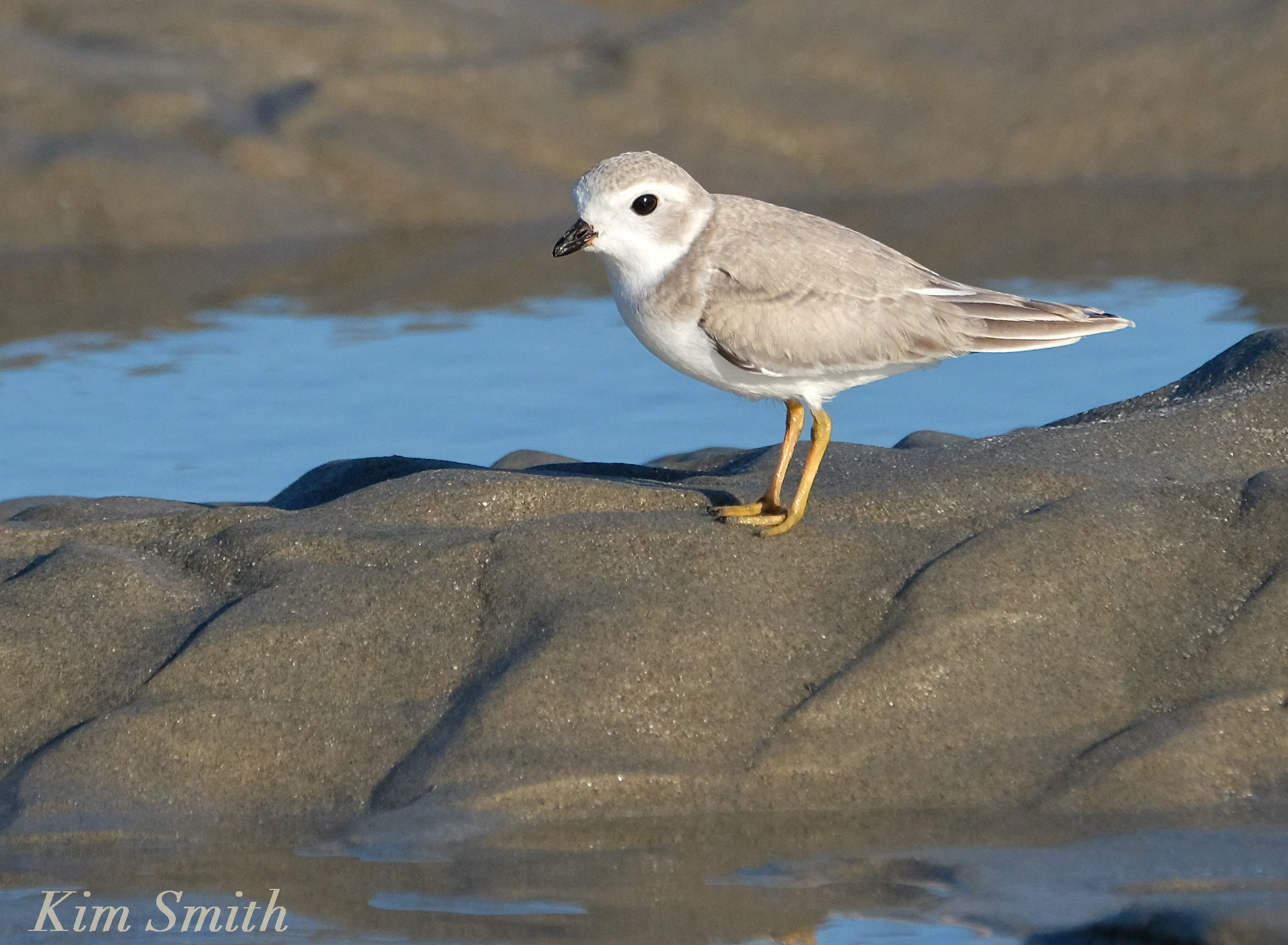 New female Piping Plover on the scene with very pale coloring
Good Harbor Beach is currently home to three different species of plovers. We all know about our beautiful Piping Plover family. The lone surviving chick and Dad were last seen heading deep, deep, deep into the salt marsh. Since that time, several new Piping Plovers have joined the scene, two females and a male. We can tell they are different from our original mated pair by their feather pattern and bill color.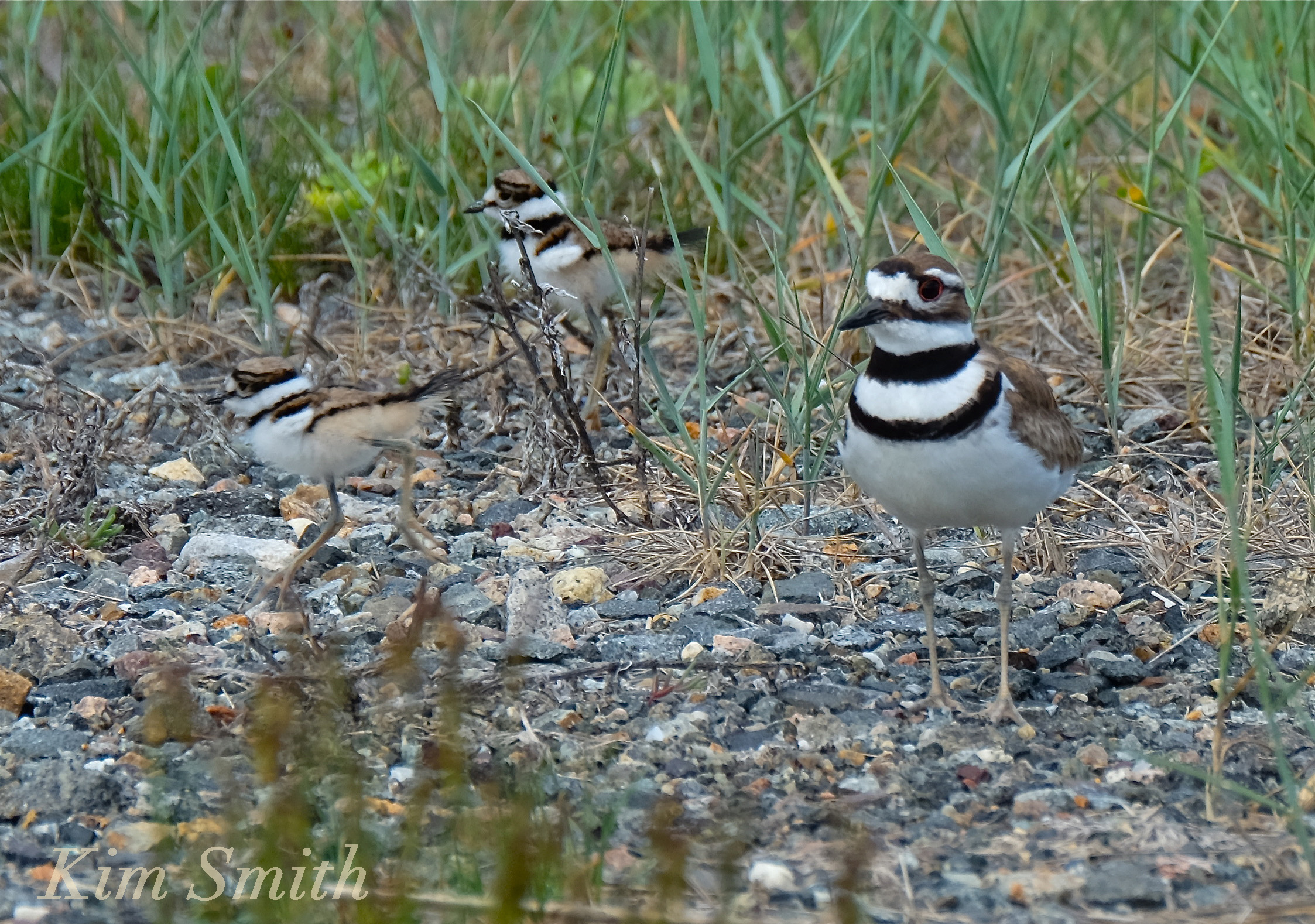
Earlier in the summer, four Killdeer chicks hatched at the edge of the GHB salt marsh. It was pretty scary filming the Killdeer family because all six were running willy nilly every which way throughout the beach parking lot on a very busy weekend morning. In the next photo, taken several days ago, you can see that the family has grown quickly.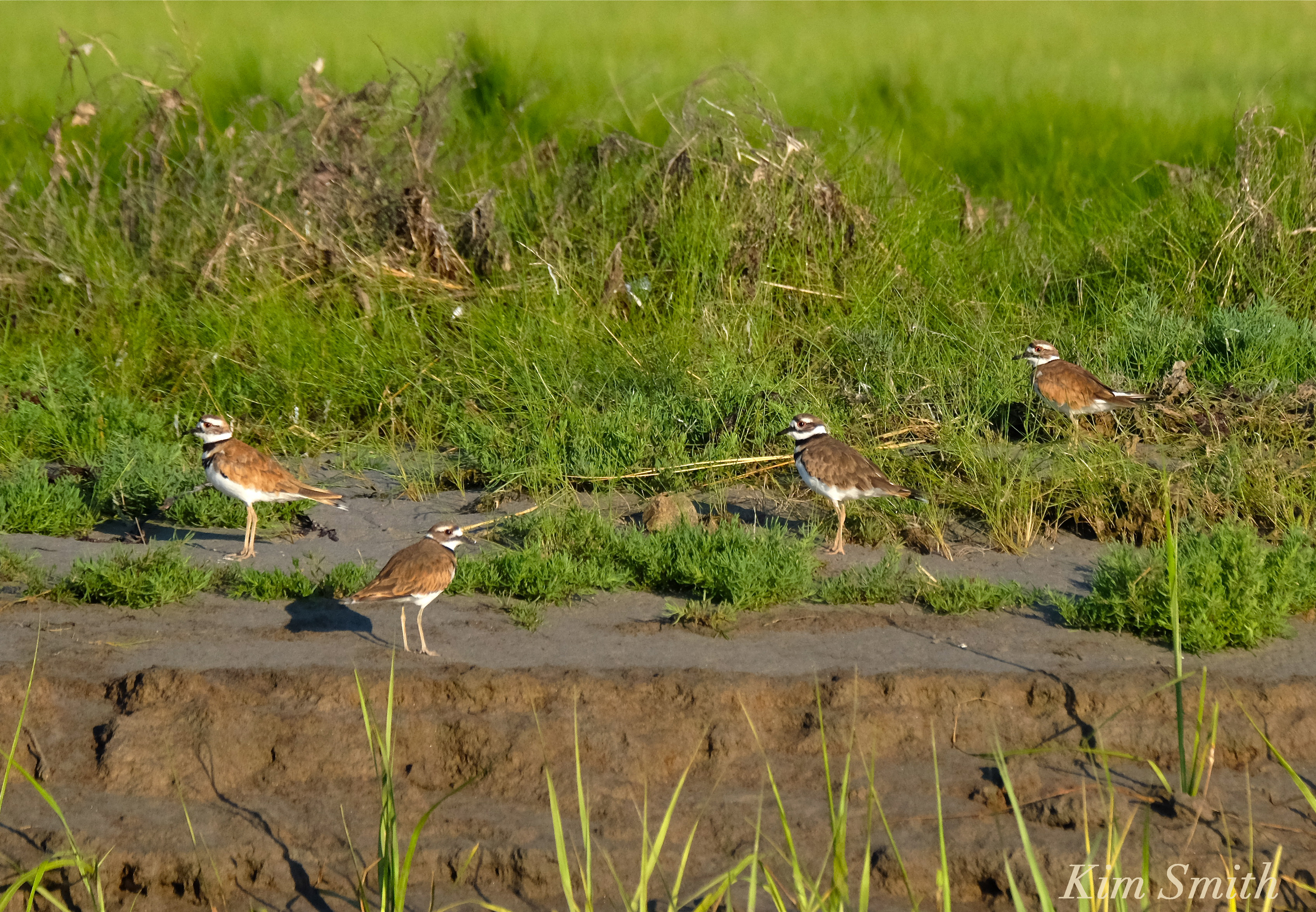
Killdeers are the largest of the the three species of plovers seen in Massachusetts, nearly twice as large as the pocket-sized Piping Plover. That fact didn’t stop the male Piping Plover from defending its nesting territory. Notice the two dark bands around the neck and chest of the Killdeer.
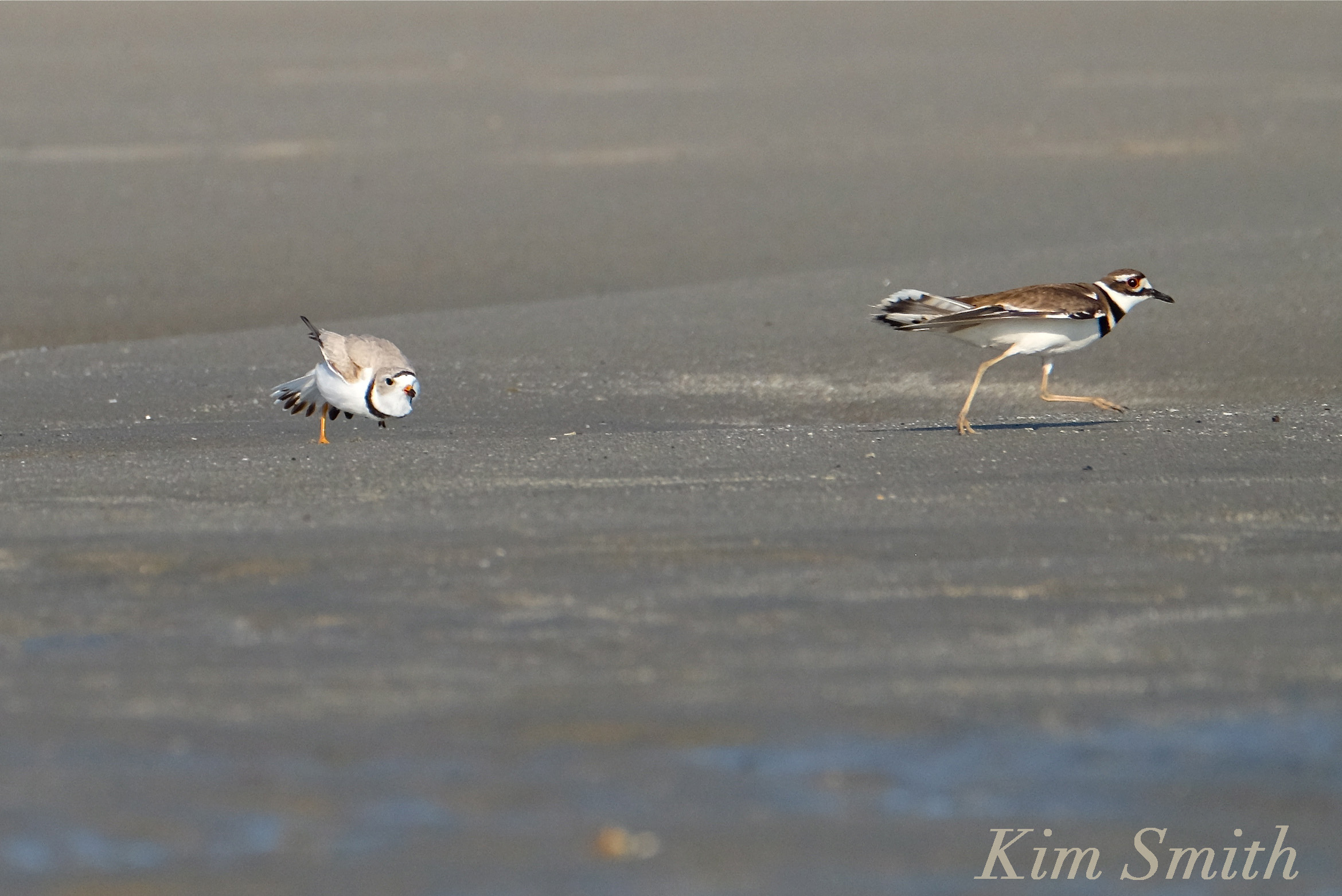
Half the size of his foe, our male Piping Plover is vigorously chasing the intruding Killdeer from his nesting territory
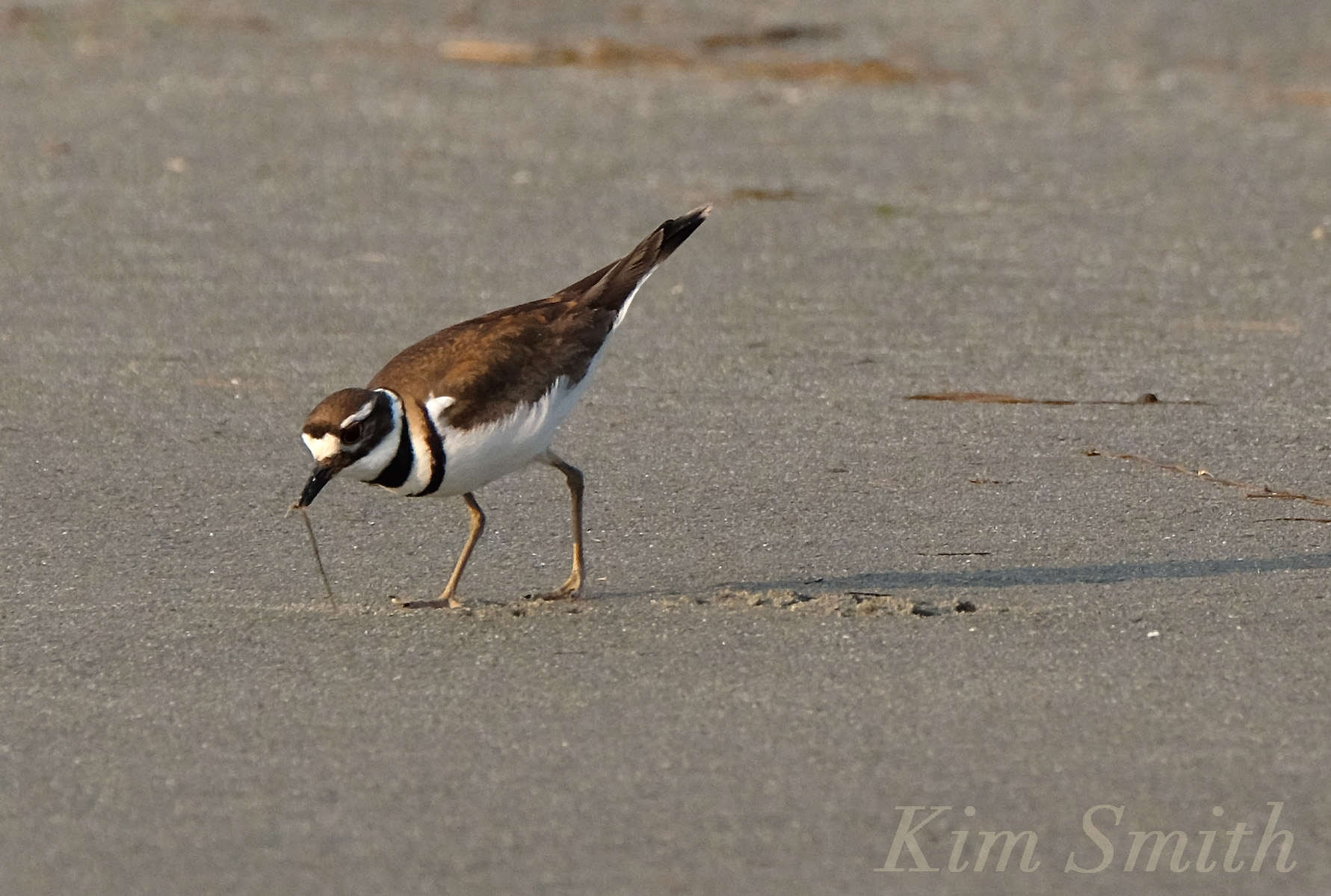
The Killdeer has a dark band encircling its neck and a second band across its chest
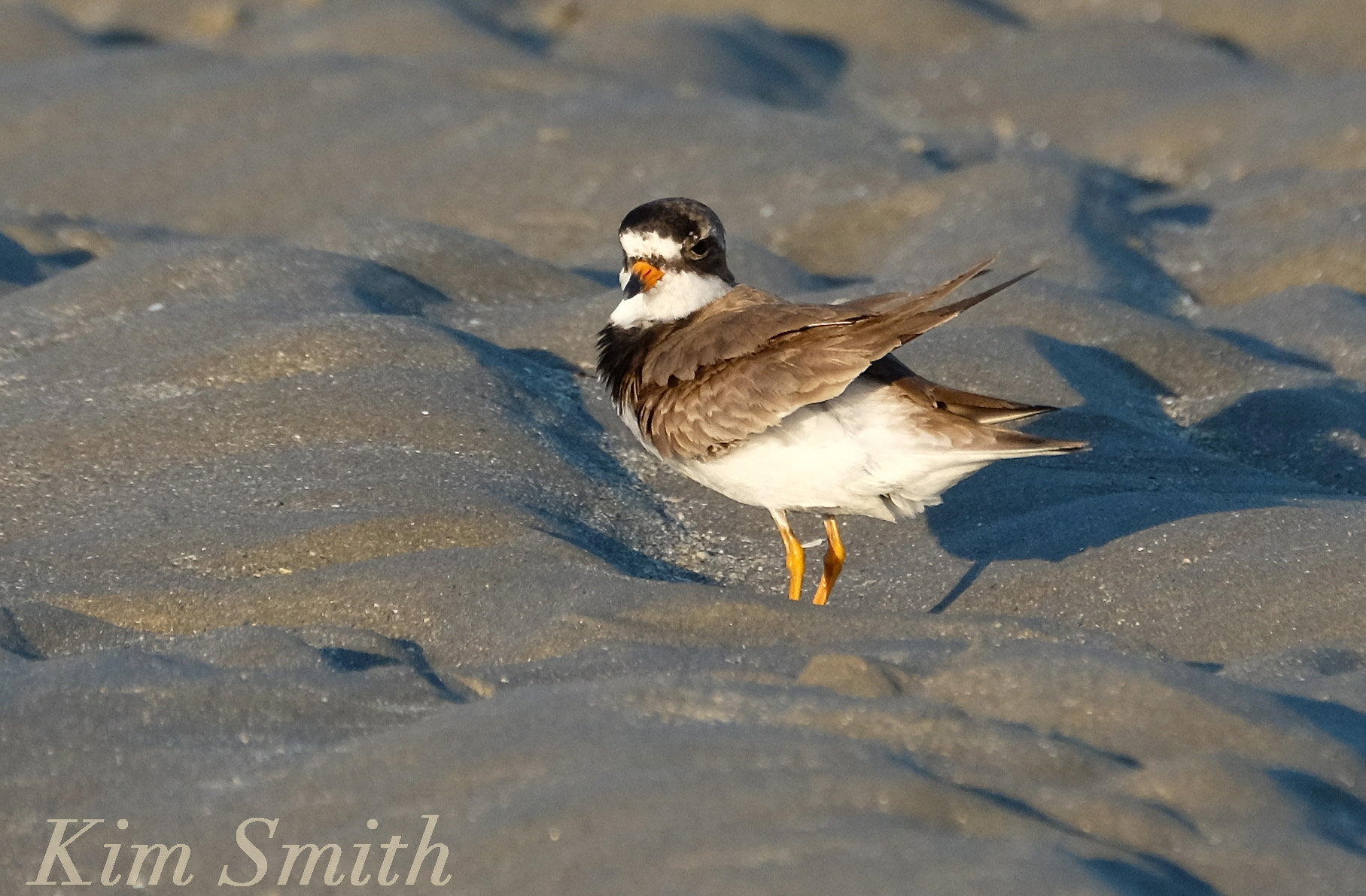
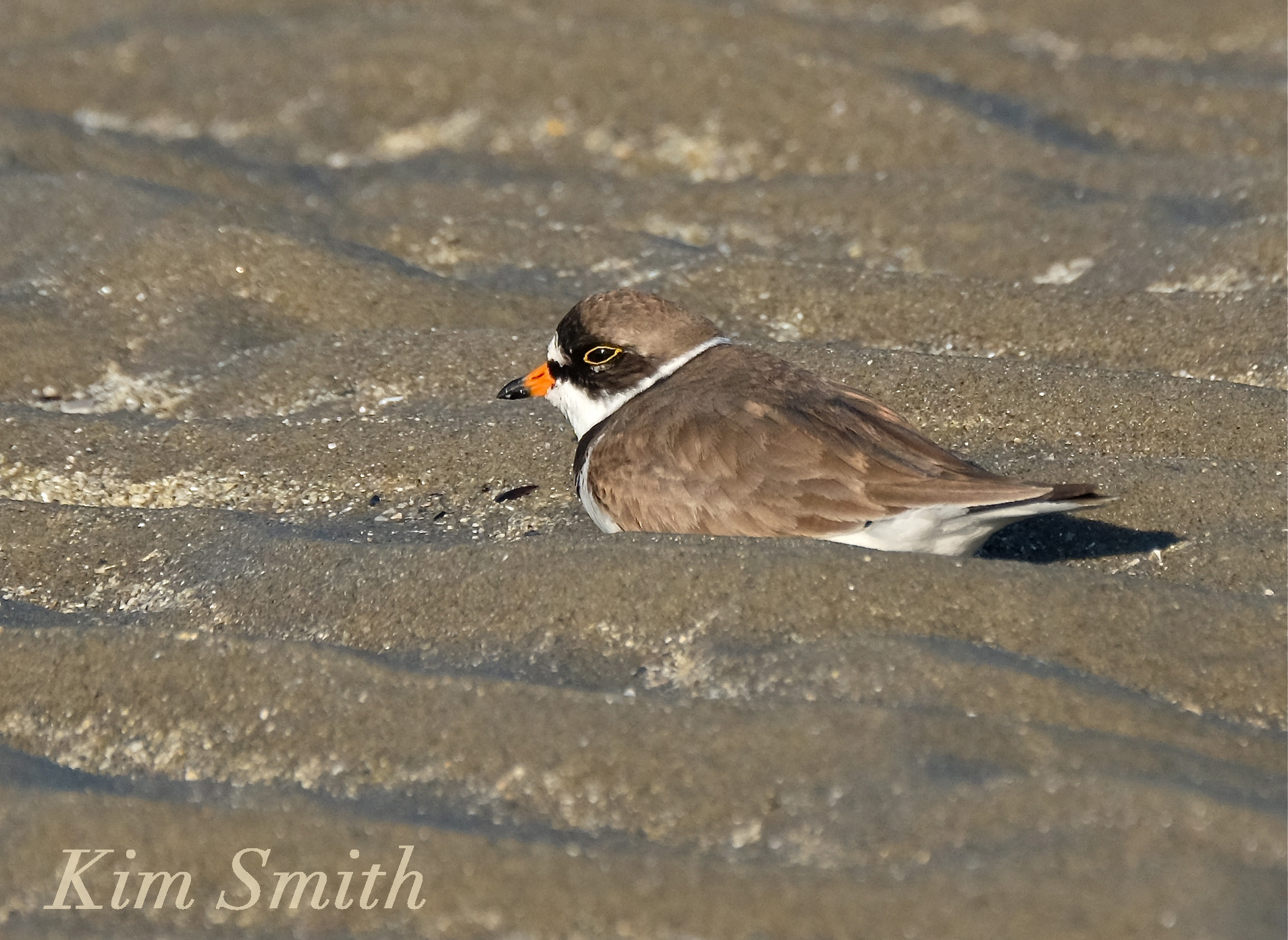
The third species of plovers at GHB is the Semipalmated Plover. Although only slightly larger than the Piping Plover, the difference is easy to spot by the darker brown wings. Compare the single neck ring of the Semipalmated Plover to that of the Killdeer’s double set of rings. Unlike Piping Plovers and Killdeers, Semipalmated Plovers do not breed in Massachusetts but in northern Canada and Alaska. At this time of year we are observing their southward migration to the southern United States, Caribbean, and South America.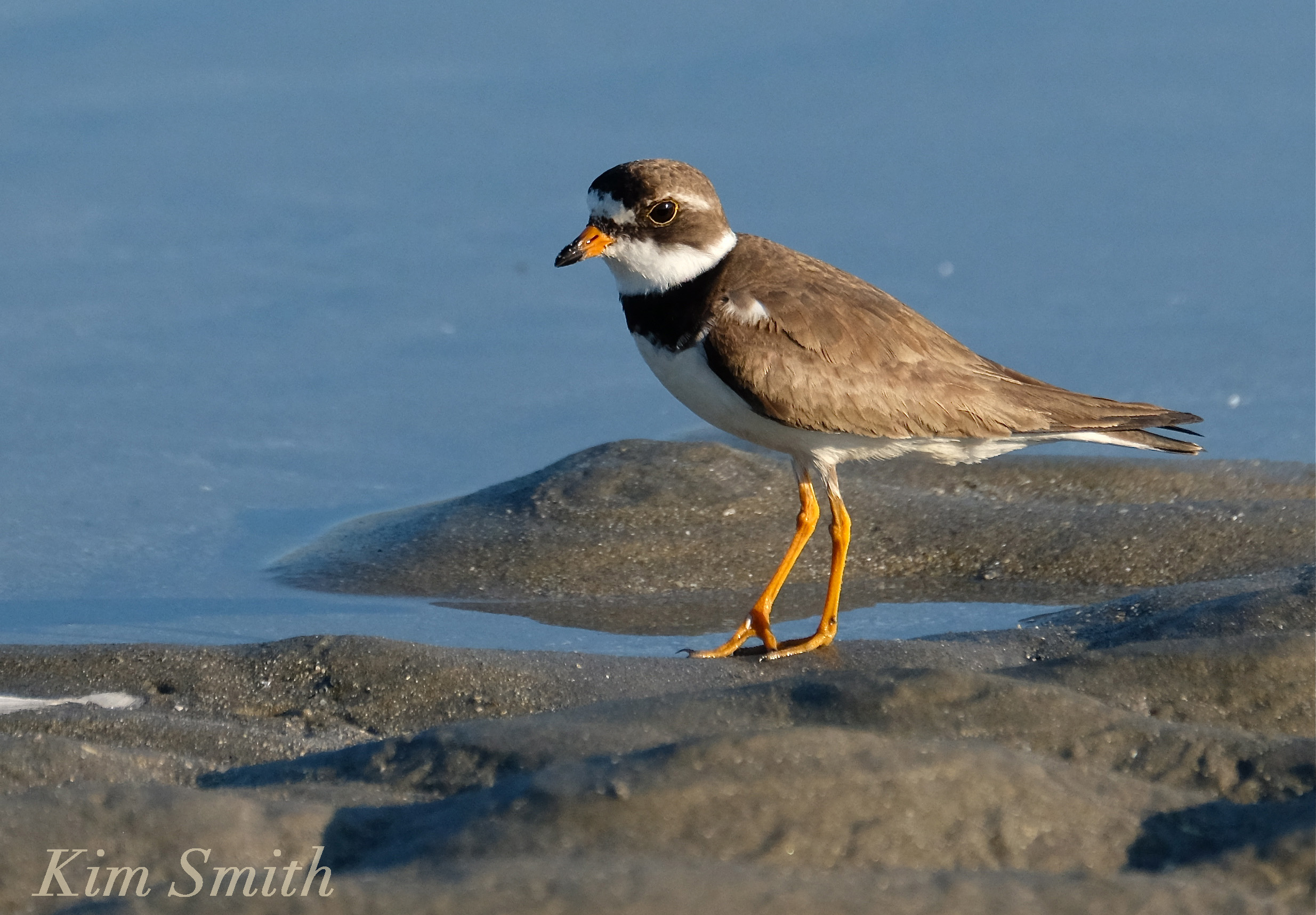
Semipalmated Plover
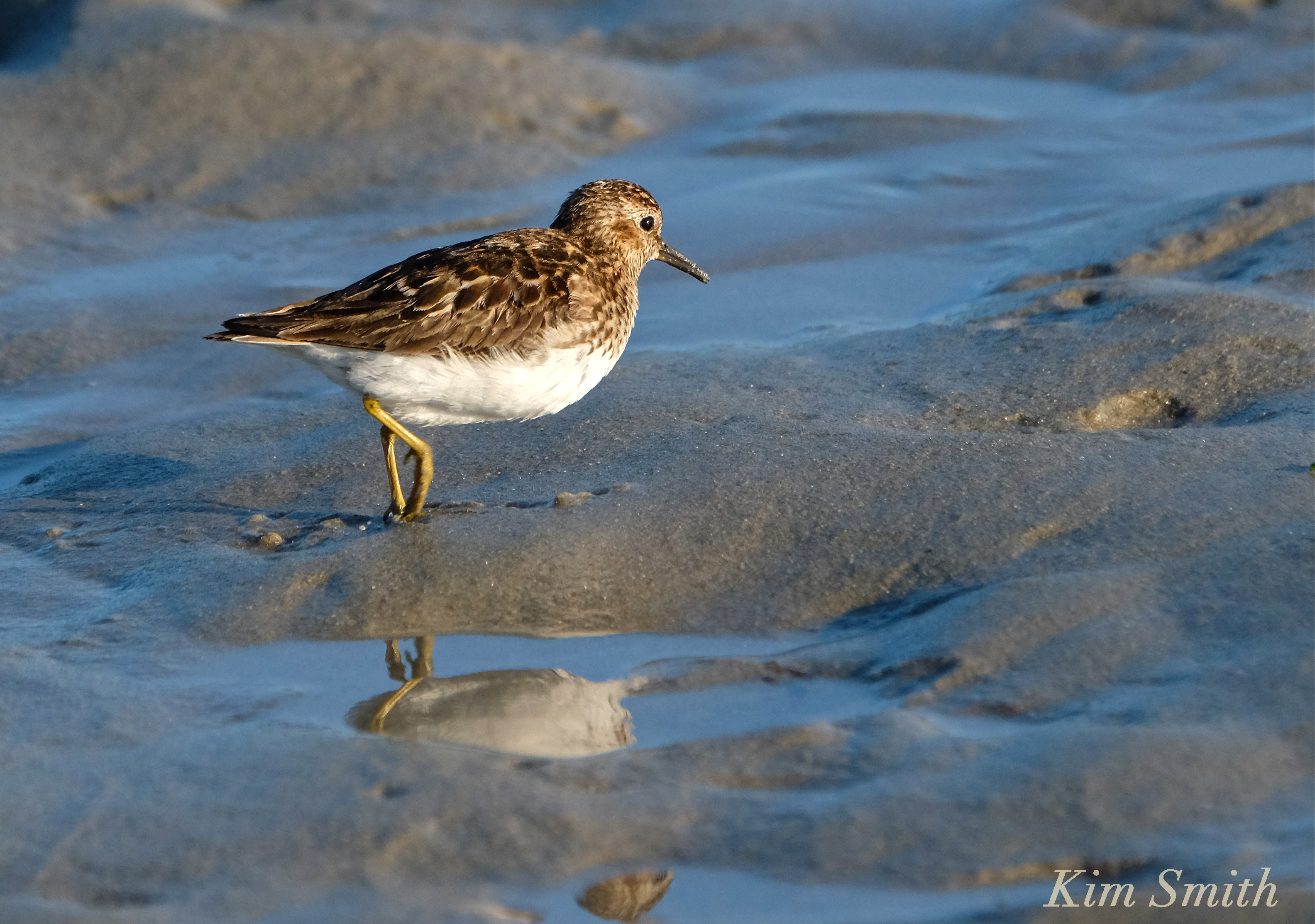
Semipalmated Plovers are often seen in mixed flocks with Semipalmated Sandpipers and Least Sandpipers. Semipalmated Sandpipers have black legs. Least Sandpipers have distinctly colored yellowish legs.
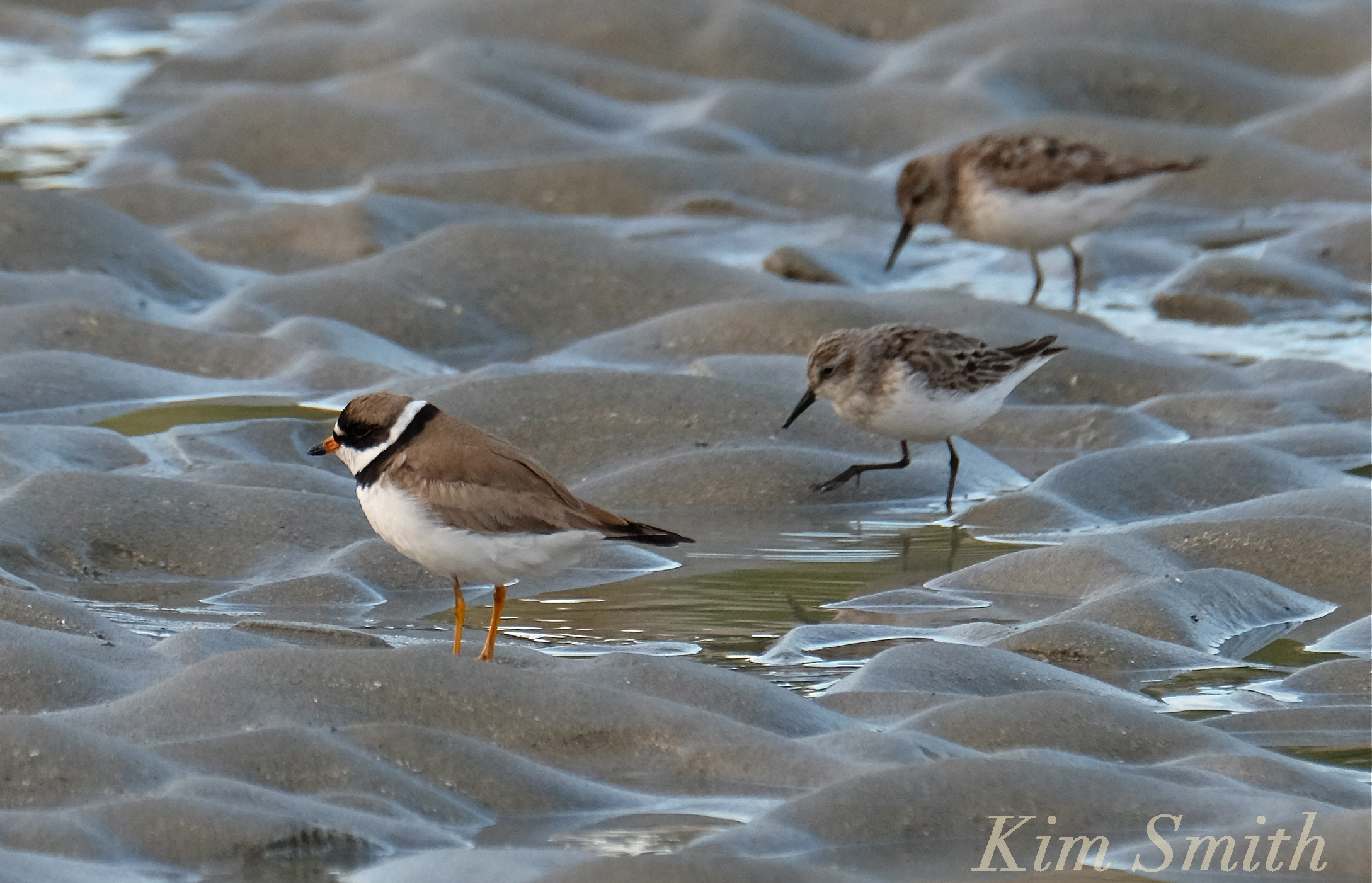
Semipalmated Plover and Semipalmated Sandpipers
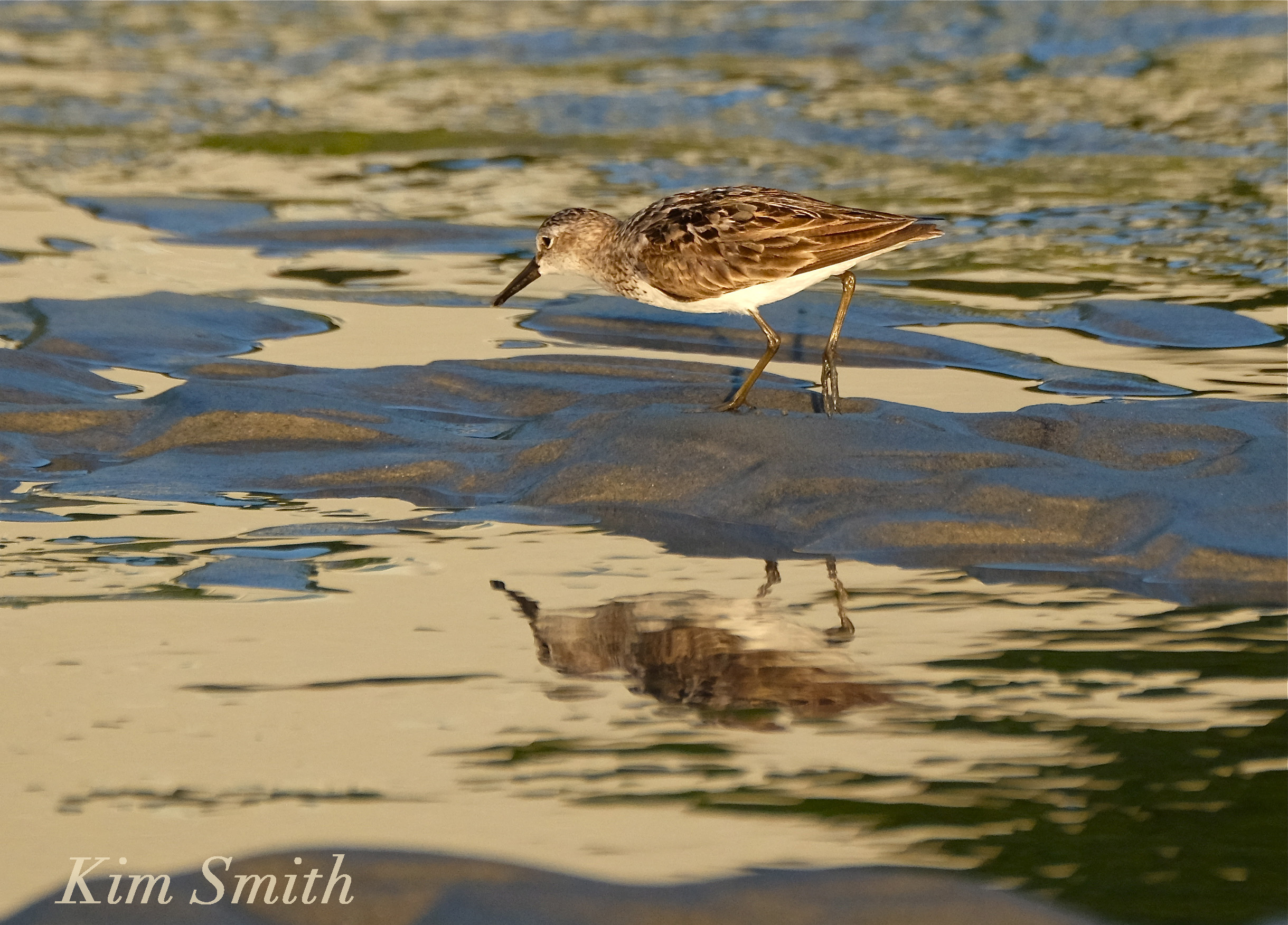
Least Sandpiper
Note that all of the shorebirds mentioned here are also currently at Wingaersheek Beach.
Spread The GMG Love By Sharing With These Buttons:

CAPE ANN’S WINGED CREATURE UPDATE
As you’ll hear in Sunday night’s podcast (our 191st!!), the Piping Plover’s nesting continues. The Plovers are defending their territory against predators, using the “injured wing” trick. Learn more about this defensive behavior in the podcast.
In this batch of photos you can see how to tell the difference between the male and female.
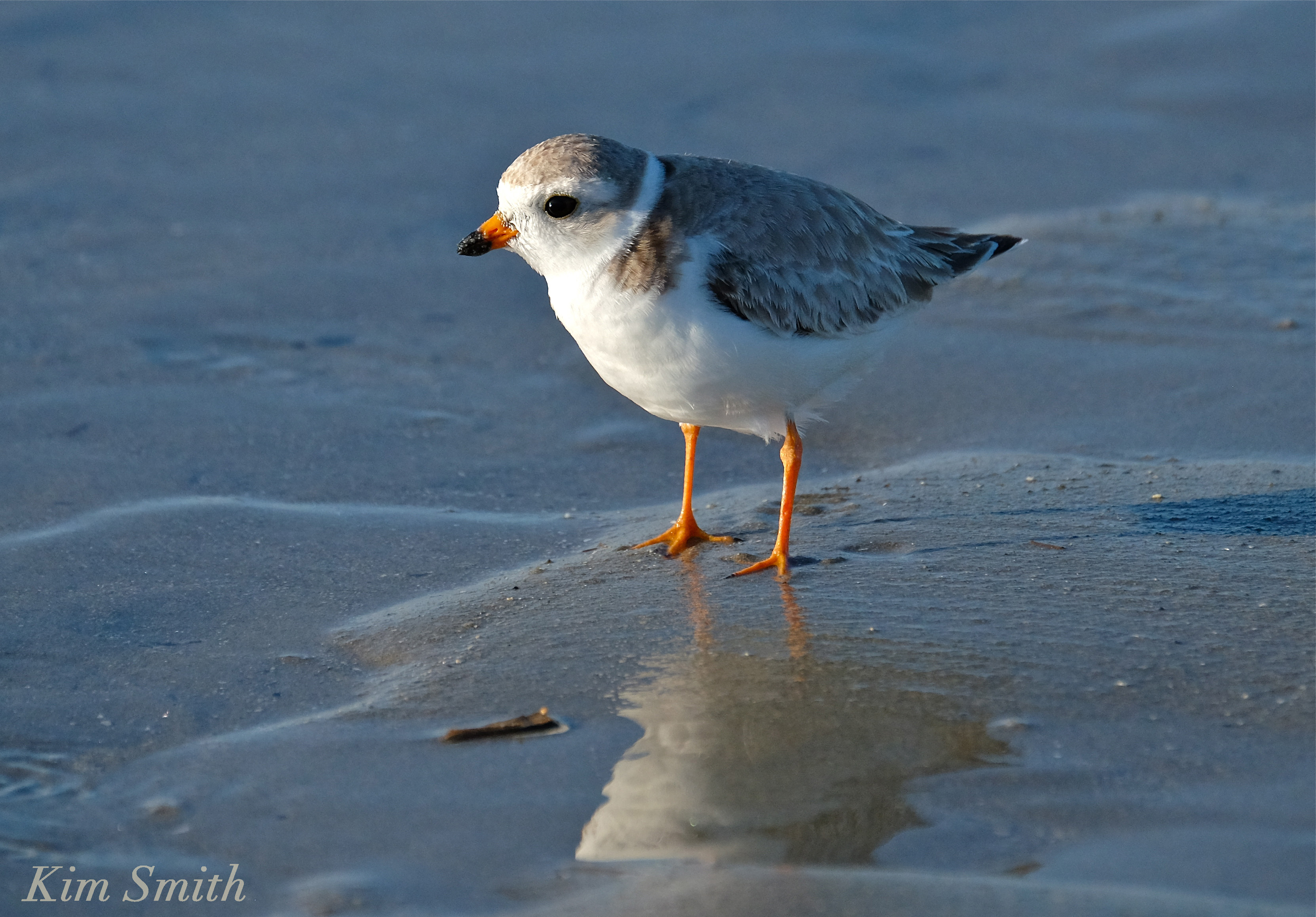 The female’s neck collar, or band, is broken in the front and is paler in color.
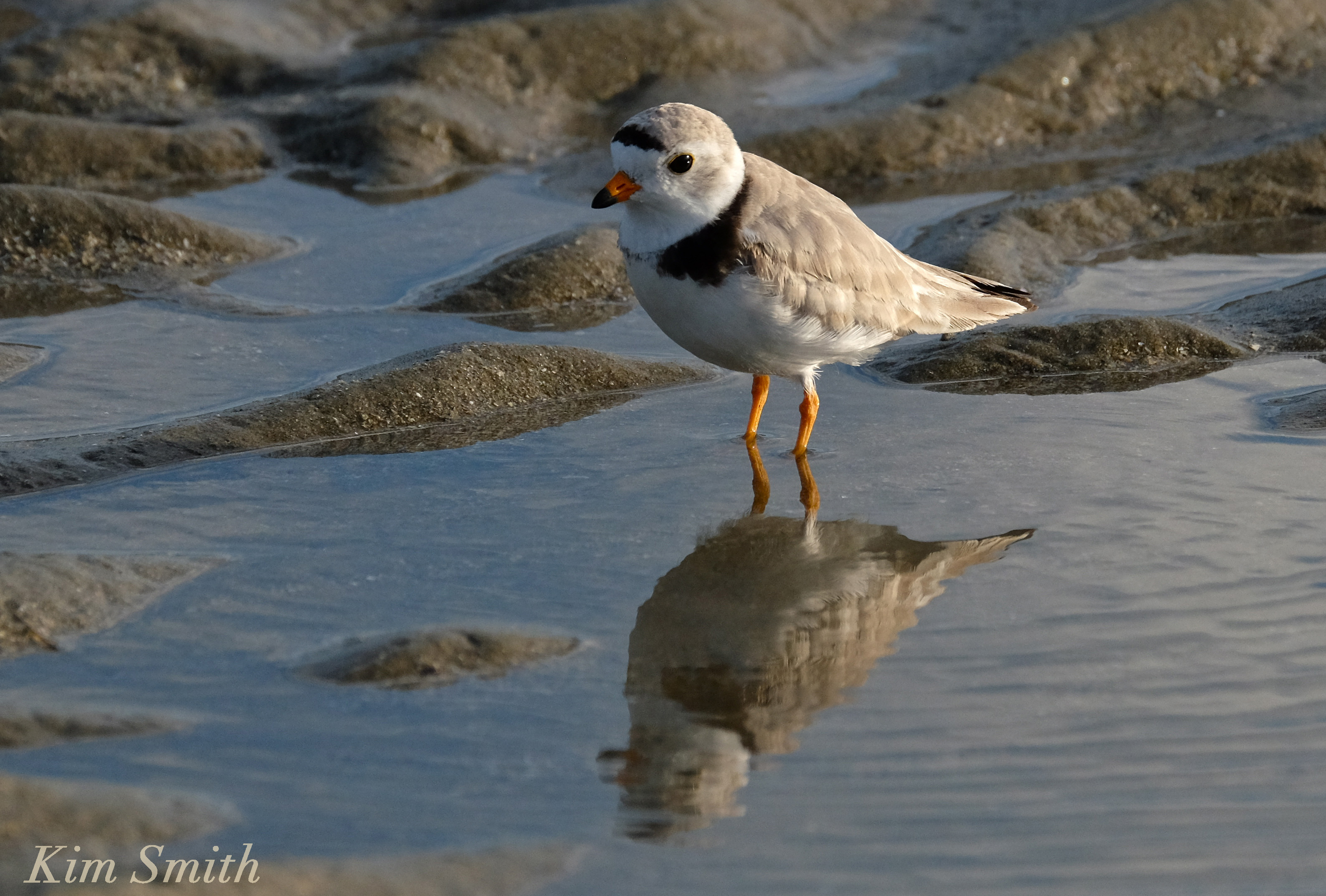
The male’s neck collar is darker and goes nearly all the way around. Note too the black bar across his forehead.
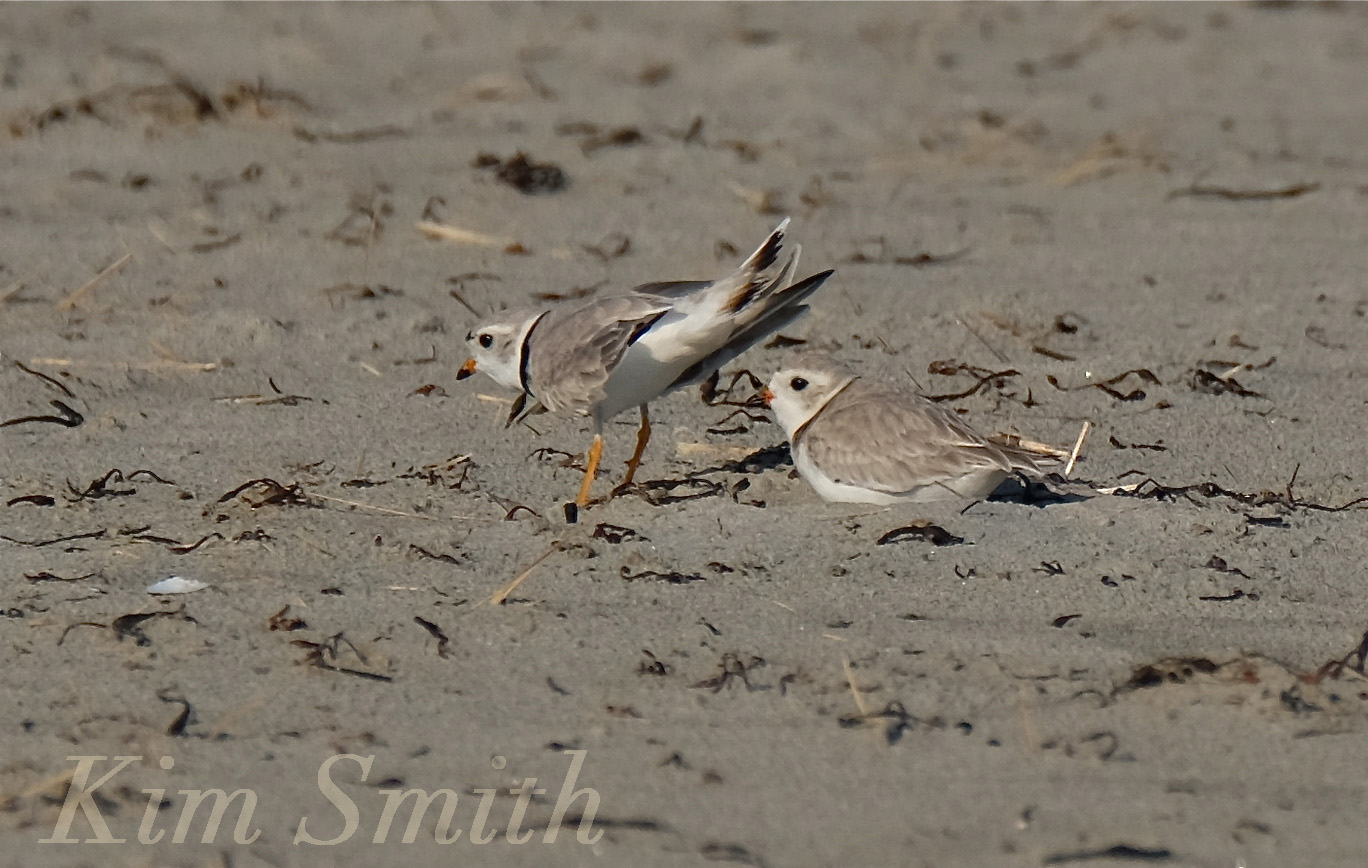 Generally speaking, the male is a bit larger and the bill a bit brighter orange (male left, female right). After the breeding season, the plumage of both male and female will become paler.
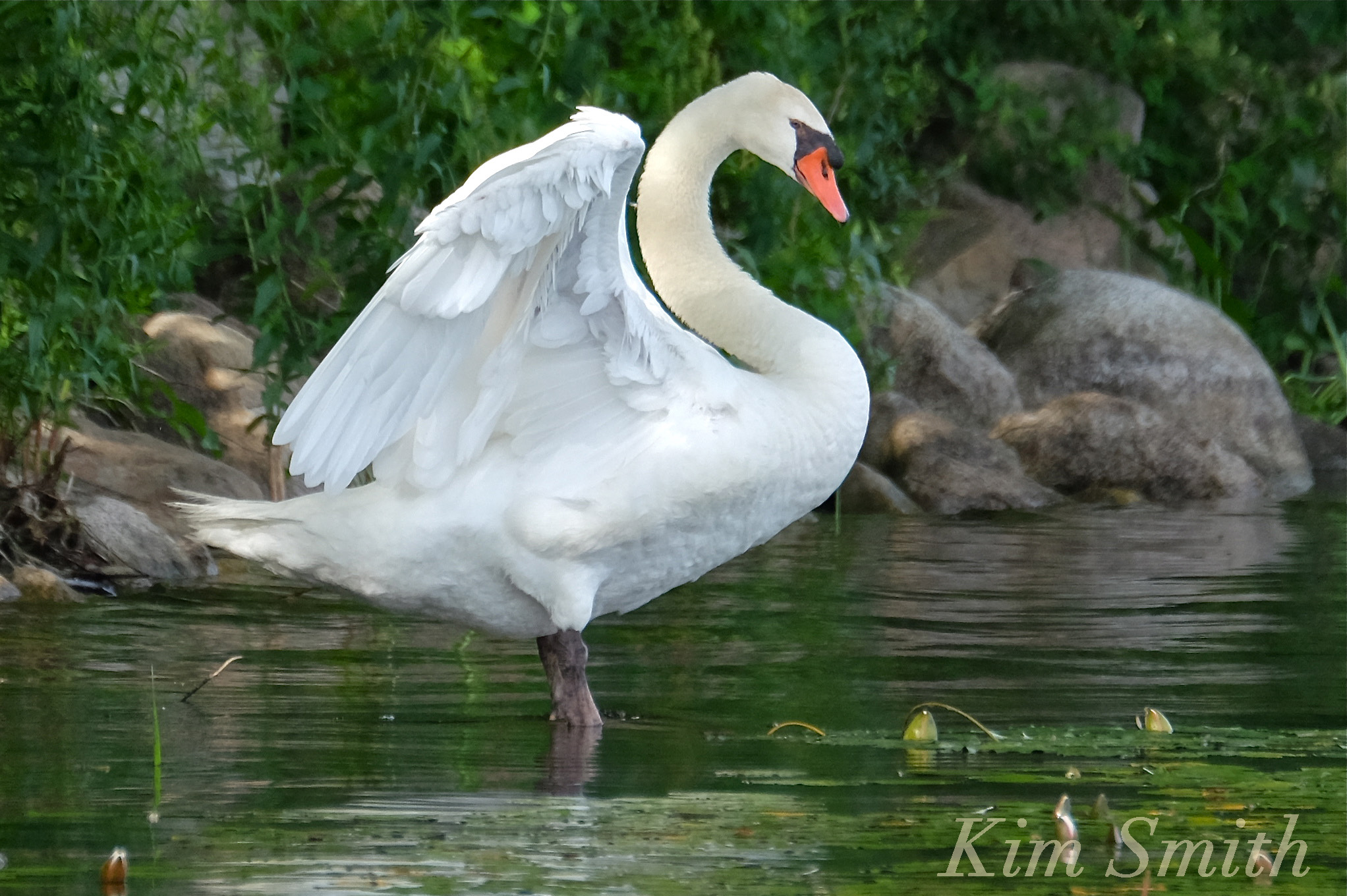
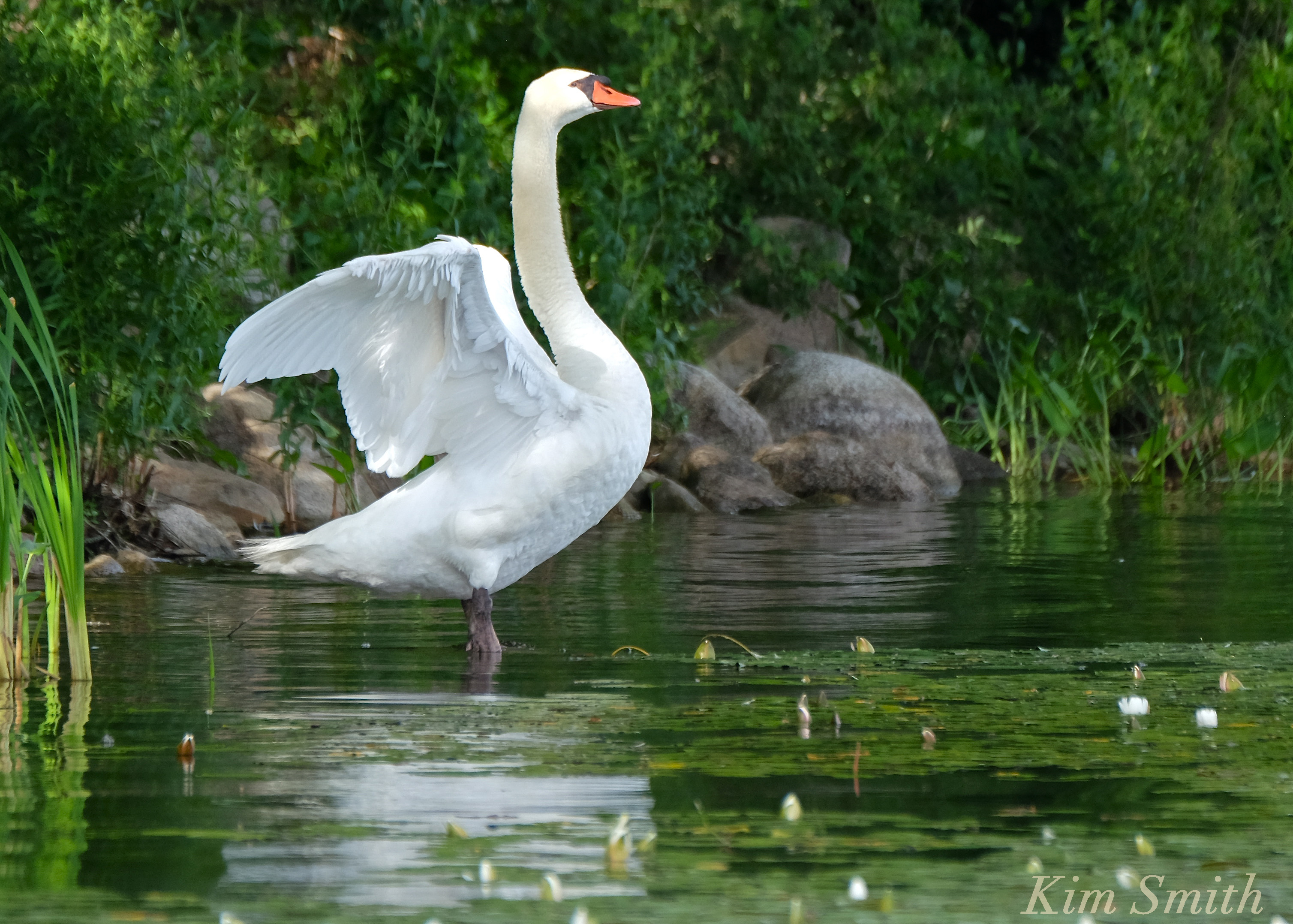
Mr. Swan is doing well and looking very healthy, but with no signs of a new Mrs. on the horizon. Here he is enjoying a stretch in the sun.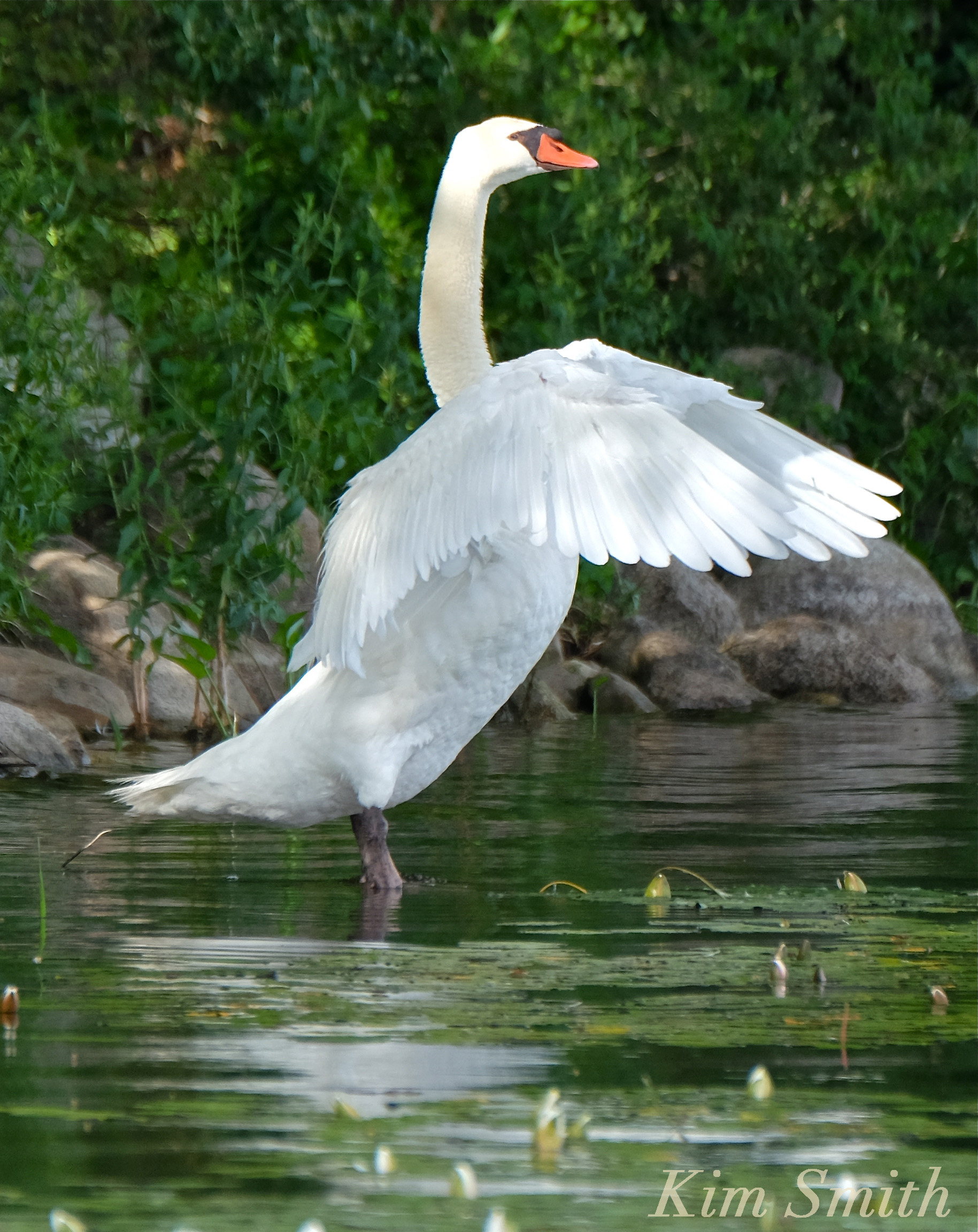
Our caterpillars of the beautiful Cecropia Moth, given by friend Christine, are in their second instar and growing rapidly on a steady diet of birch leaves. The Cecropia Moth is just one of the many reasons why we would never spray trees with pesticides and herbicides.
A HUGE SHOUT OUT to Gloucester’s drinking water chief engineer Larry Durkin and to Senator Bruce Tarr for working hard to keep glyphosate (Monsanto’s Roundup) out of our water supply. Glyphosate is a known carcinogen and extremely bad news for bees, butterflies, and all pollinators. Durkin is pressing Keolis, the company that operates the MBTA commuter rail track service, to cut its use of glyphosate along the track adjacent to the Babson Reservoir and to manually cut back the growth. Read the full story here in the Gloucester Times.
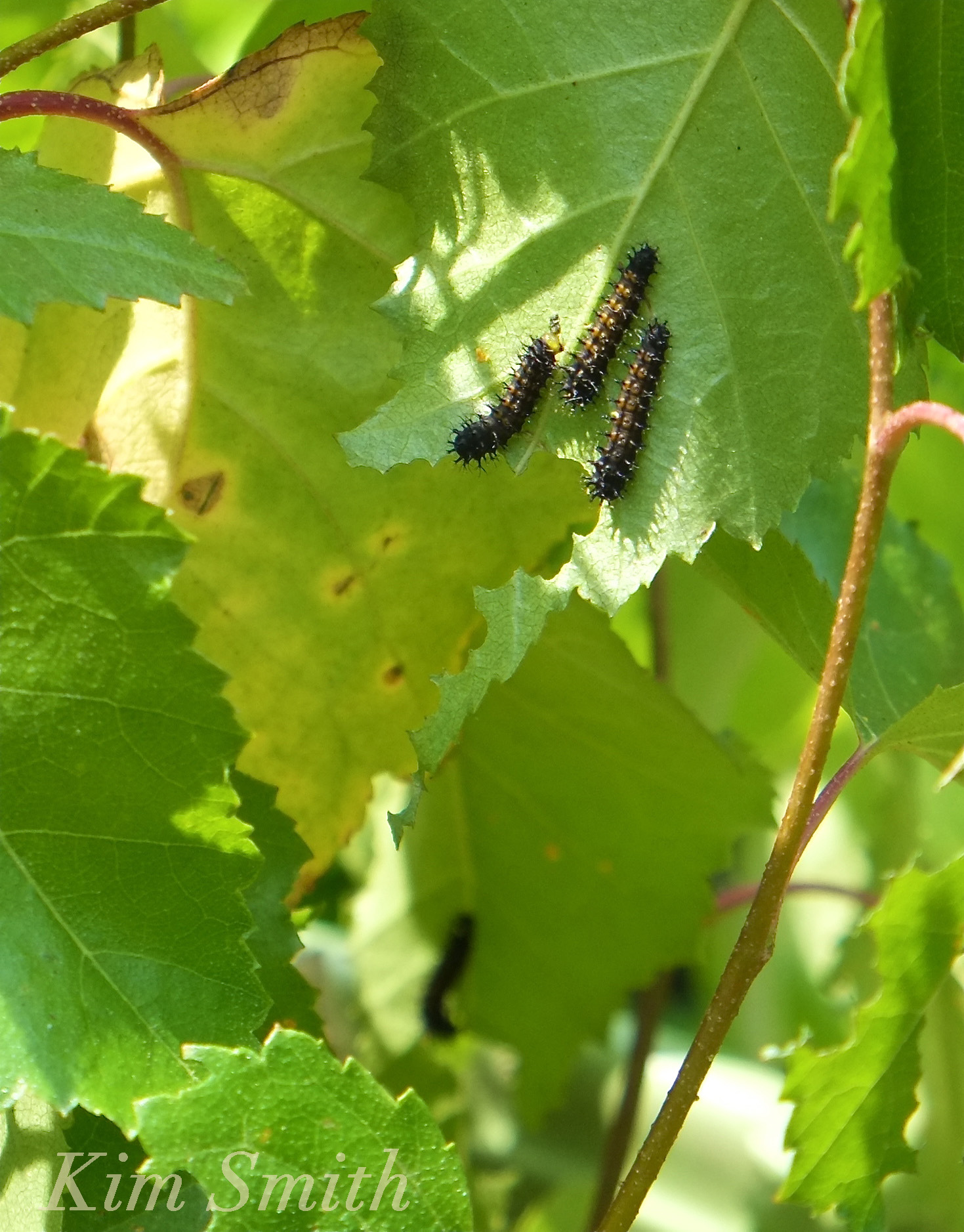 Cecropia Moth Caterpillars
Spread The GMG Love By Sharing With These Buttons:

A GOOD HARBOR BEACH GOOD MORNING
The Piping Plovers thank you!
https://www.instagram.com/p/BG31287DyiV/
Spread The GMG Love By Sharing With These Buttons:
Piping Plovers at Good Harbor Beach – Fenced Off Area
For Immediate Release from Mayor Sefatia Romeo Theken
Public Works in conjunction with our local Conservation Commission, MA Dept of Wildlife and Fisheries and Mass Audubon have been following the activities of Piping Plovers on Good Harbor Beach for the past 4 weeks. The birds have shown signs of nesting activities in this area.
On a recommendation of the state we have fenced off an area approximately 200 feet by 200 feet – southwest of board walk number 3. This area starts at the base of the dunes and extends to the high tide rack or water line. This area is to be off llimits to all humans as well as any domestic pets. These birds are listed under the State and Federal Endangered Species Acts and are granted special protection.
We will continue to work with all agencies to provide the support they need to let nature take its course. We ask for the support of the general public to adhere to the regulations set forth. Any questions should be directed to the Department of Recreation and Conservation (DCR) and/or Mass Audubon.
Thank you in advance for your cooperation.
* * *
A little background information from Dave Rimmer, Director of Land Stewardship Greenbelt
There are clearly at least 2 pairs of Piping Plovers scoping out the upper beach for nesting. But no nests with eggs yet. Someone will get back to check the site Mon/Tue next week. If we find a nest that will trigger the following:
- The nest site will be surrounded by a single strand fence with a few signs staying it is a RESTRICTED AREA. Usually on beaches like GHB, we try to keep this fencing to a minimum, but if it appears the birds are still being disturbed after the fence is in place, it may need to be expanded to provide an additional buffer.
- Information will be provided to help beach staff understand Piping Plovers so they can communicate on some level why the area has restricted access.
Piping Plover Quick Facts:
- they are a shorebird that is on the US Endangers Species List as a threatened species
- they nest right on the sand, laying 4 light brown speckled eggs.
- it takes them about 4 weeks to incubate and hatch the eggs.
- Chicks are precocious and leave the nest immediately to begin foraging on the own for food. They may stay within fenced area for first day or so but eventually they will wander beyond the fence either along the high beach or down to the waters edge. They are extremely vulnerable during this time, so beach scraping may need to be curtailed. In addition, ATVs driving on the beach will need to be extremely careful.
- chick fledge (fly) in about 25 days
- So total time from egg laying to chicks fledging is about 8 weeks.
As I mentioned, the US Fish and Wildlife Service administers the US Endangered Species Act and enforce laws related to the “take” of listed species, inadvertent or deliberate. So during the chick phase, a high level of sensitivity it required.
It means you have a healthy well managed beach if you are attracting Piping Plovers. That’s the good news. Having Piping Plovers nesting on any beach requires some change, which I can be challenging. Drew and I (and Erik Amati from MADFW) stand at the ready to help in any way we can to make this work. If we find a nest next week we will let you know immediately. And from there, we just need to figure it out. Every beach is different.
Ken – Let’s coordinate your efforts. It will be a big help for you to go to the site from time to time to monitor Piping Plover activity.
Thanks all,
Dave
Dave Rimmer
Director of Land Stewardship
Greenbelt | Essex County’s Land Trust
82 Eastern Avenue
Essex, MA 01929
dwr@ecga.org
(978) 768-7241 x14
Greenbelt | Essex County’s Land Trust
82 Eastern Avenue
Essex, MA 01929
dwr@ecga.org
(978) 768-7241 x14
 Good Morning Gloucester